Cycle promotes the work of Cycling UK. Cycle’s circulation is approx. 51,000. Cycling UK is one of the UK’s largest cycling membership organisations, with approx. 70,500 members and affiliates.
Chief Executive: Sarah Mitchell. Cyclists’ Touring Club, a Company Limited by Guarantee, registered in England No 25185, registered as a charity in England and Wales Charity No 1147607 and in Scotland No SC042541.
Publisher: James Houston. Cycle is published six times per year on behalf of Cycling UK by James Pembroke Media: Ground Floor, Riverside North, Walcot Yard, Bath, BA1 5BG. T: 01225 337777
Cycle is copyright Cycling UK, James Pembroke Media, and individual contributors. Reproduction in whole or in part without permission from Cycling UK and James Pembroke Media is forbidden. Views expressed in the magazine are those of the individual contributors and do not necessarily reflect those of the editor or the policies of Cycling UK. Advertising bookings are subject to availability, the terms and conditions of James Pembroke Media, and final approval by Cycling UK.
From the editor
From a distance – across the North Sea, let’s say – cycling utopia looks unattainable. In the UK, cycling infrastructure often means painted lanes on roads with cars parked in them, or pavements accessorised with blue signs. A cycling revolution couldn’t happen here, people say.
Yet when would-be cyclists aren’t forced to share space with impatient motorists – and I use the word ‘share’ loosely, given the behaviour of some drivers – they do actually get on their bikes.
You don’t just see it in the Netherlands or Denmark. We saw it here in the Covid lockdowns when cars were largely removed from the equation. You see it in Paris and London, which in recent years have been transforming themselves into more cycle-friendly cities. If you build it, it turns out, they will come.
That’s how the Netherlands did it. The Dutch haven’t always been a nation of utility cyclists. In the 1970s, Dutch transport infrastructure was like ours: roads, roads, roads; cars, cars, cars. The difference is that they decided that this wasn’t sustainable. Too many children were being killed by drivers. Outraged parents protested and the government responded. The rest is not just history but cycle-path geography. Separated cycle routes are everywhere.
QUICK RELEASES
04 Freewheeling
Bits and pieces from the bike world
07 This is Cycling UK
The Cyclists’ Defence Fund needs you; bike servicing with the Big Fix; Bikmo’s insurance benefits; and more
14 Summer raffle
Win great prizes –including £2,000 cash and a bike
16 Gallovidian Gravel
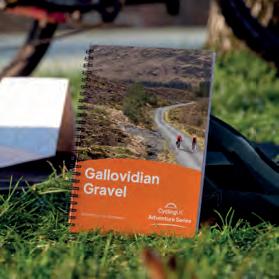
The new route’s guidebook and GPX are now available
The idea that it could never happen here is largely an excuse for not doing enough now. The Netherlands doesn’t have a long list of advantages the UK lacks. It rains there, too. Space is at even more of a premium. Sure it’s flat, but so are many parts of the UK. For the places that aren’t, there are e-bikes. It did happen there. It could happen here.
DAN JOYCE Editor
TOUR & EXPLORE
20 A spot of bothying
No electricity, no sink, no beds – no problem
26 Weekender
An 88−mile taster of the Old Chalk Way
28 EuroVelo 7 heaven
Berlin to Copenhagen on cycle paths
FEATURE
32 Never Netherlands? Challenging the idea that the UK can’t go Dutch
OVER TO YOU
63 Letters
Your feedback on Cycle and cycling
66 Profile
Linskill Riders CCC
68 Q&A
Your technical, health and legal questions answered
70 Bike finder
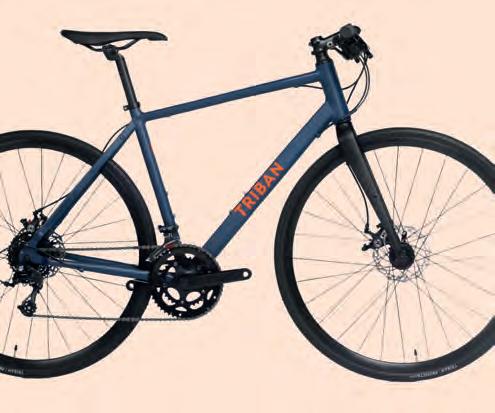
Which £500 hybrid?
73 Travellers’ tales
Cycling UK members’ ride reports
Founded in 1878
Top: Robyn Furtado
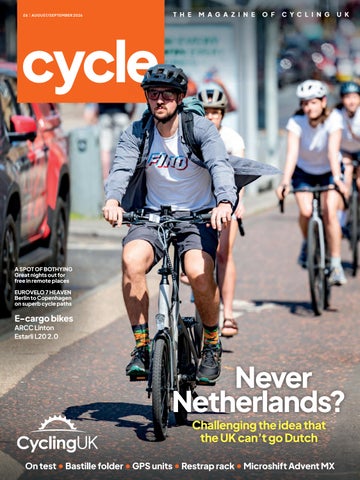
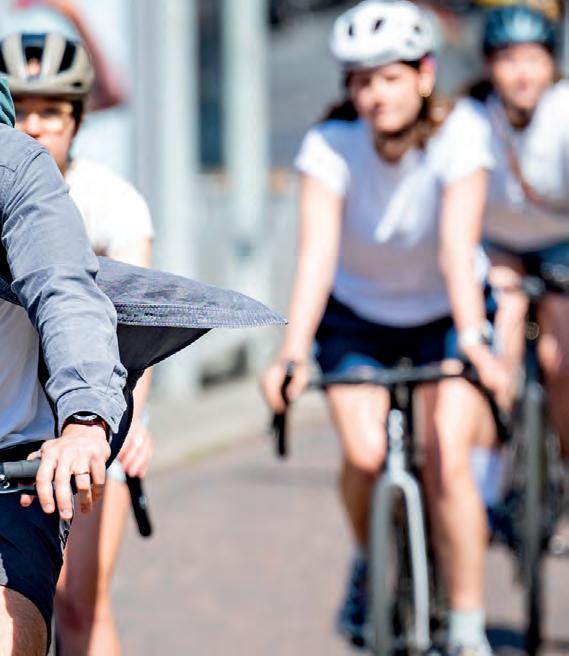
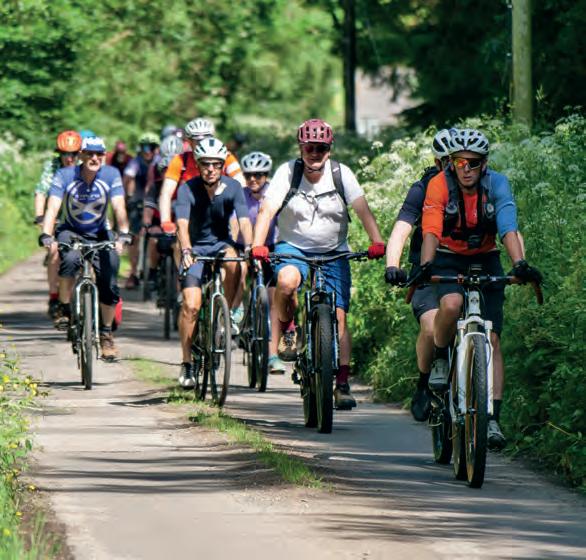
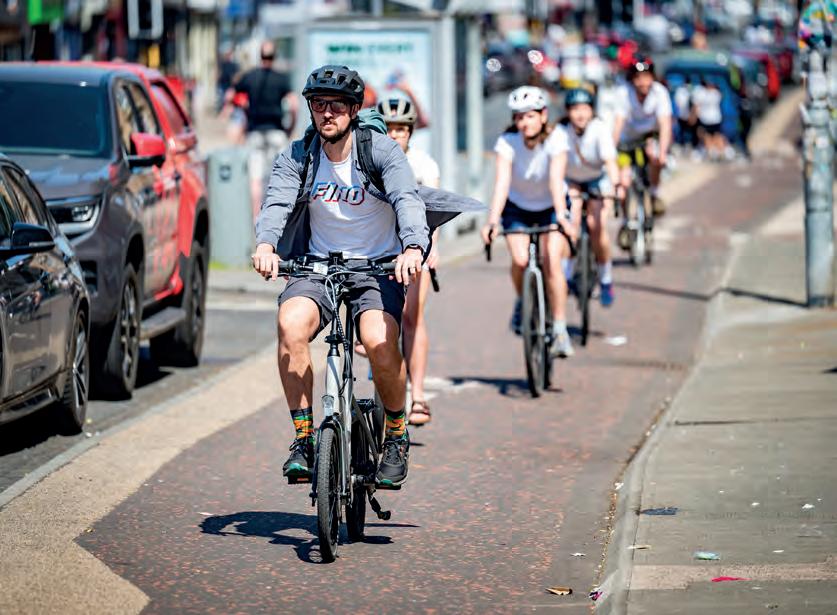
Cover photo: Cyclists on Glasgow’s segregated South City Way cycle path. By Andy Catlin
Watch this
Room to Ride is a short road safety film, produced by Worcester cycling advocacy group Bike Worcester and directed by Michael B Clifford. It’s intended as an educational resource to improve driving behaviour around vulnerable road users across the West Mercia region. At the heart of the film is Worcester’s bike bus, a community-led initiative in which children cycle to school in organised groups. Watch it at www.bikeworcester.org.uk
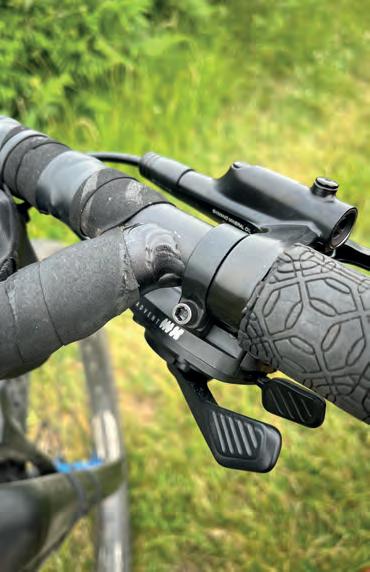
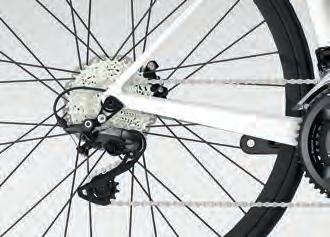
CUES 9−speed hydraulic
Groupset manufacturers sometimes take a Spinal Tap approach to gearing: “This one goes to 11/12/13!” So it’s nice to see Shimano launching hydraulicbrake versions of its 9−speed CUES brifters. The new CUES U4030 controls are available in 1×9 and 2×9 setups. The gear-shifting levers are £119.99 each, while the left-hand brake-only lever for 1× is £99.99. shimano.com
Find a local group near you and enjoy a ride this weekend: cyclinguk.org/ group-listing
Freewheeling
A short tour around the wonderful world of cycling
Alan Goodman
Chair of the British Human Power Club (BHPC), a Cycling UK affiliate group
Why do you cycle?
For my physical and mental health. I can’t even begin to imagine life without cycling. How far do you ride each week?
It varies but usually 100 miles or so per week.
Which of your bikes is your favourite?
I like them all but the Kingcycle is the one I ride most. It’s not the fastest but it works well in traffic as well as on the open
road, and it climbs better than most recumbents.
What do you always take with you when cycling?
Spare innertubes, a multi-tool with a chain breaker, tyre levers, a pump and a smile.
Who mends your punctures?
I do. If you cycle you’ll get a puncture sooner or later so it’s something most cyclists should be able to do.
It’s raining: bike, public transport or car?
It depends where I’m going and what I need to carry. Cycling is always my preferred option if possible.
Lycra or normal clothes?
Lycra. It’s the best tool for the job. If you had £100 to spend on cycling, what would you get?
Onmy bike
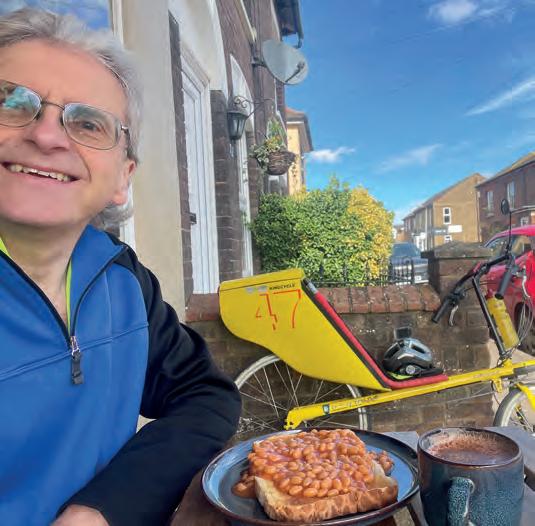
Alan with his Kingcycle, refuelling at Curiositea Rooms in Edlesborough, near Luton
Sarah Ruggins’ new record
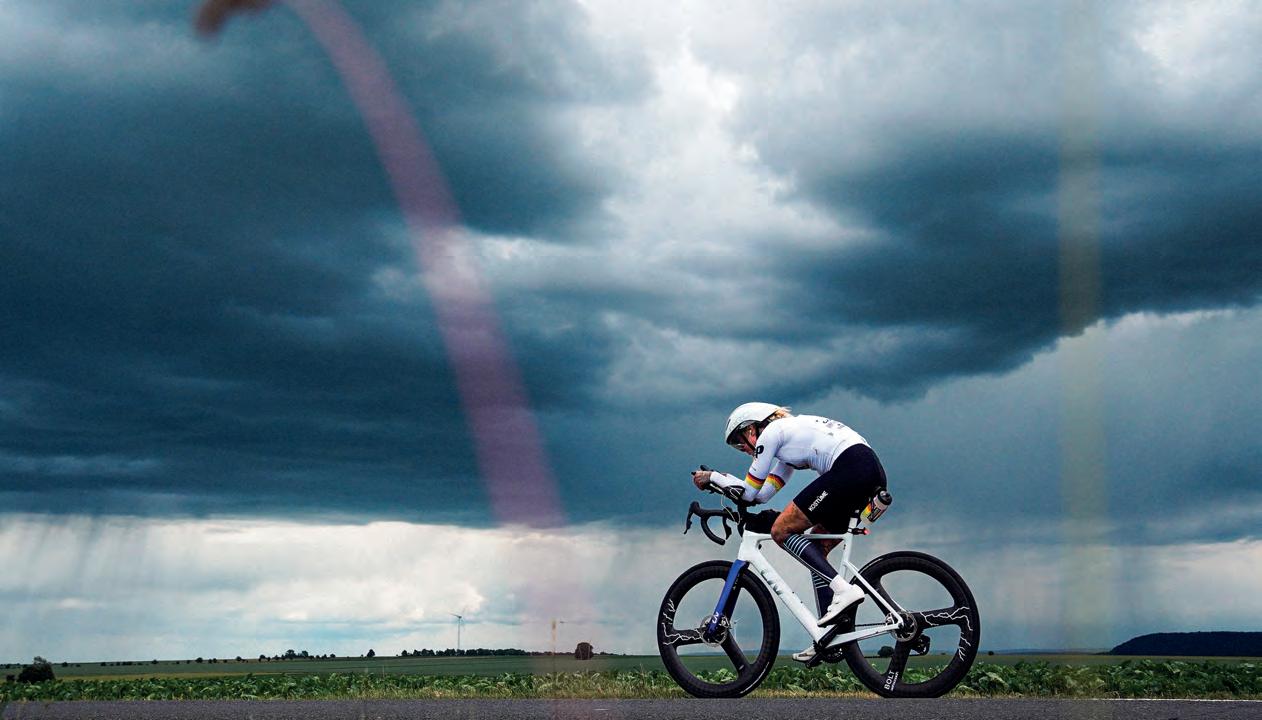
Last year endurance cyclist Dr Sarah Ruggins broke the overall record (men’s and women’s) for the double end-to-end, Land’s End to John o’ Groats to Land’s End, with a time of 5 days 11 hours and 14 minutes. This summer she set an overall record for cycling the length of mainland Europe, riding more than 6,000km from Tarifa, Spain to Nordkapp, Norway in 13 days, 20 hours, 27 minutes. She beat Dr Ian Walker’s 2019 record by three days.
Freewheeling
A BHPC membership and entry to 10 BHPC events. Amazing value! What’s your favourite cycle journey?
A ride over my local hills – Ivinghoe Beacon and/or Dunstable Downs – to my favourite cafe, Curiositea Rooms.
What single thing would most improve matters for UK cyclists? Fill the potholes!
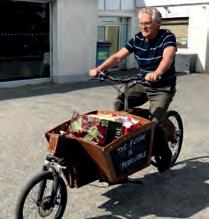
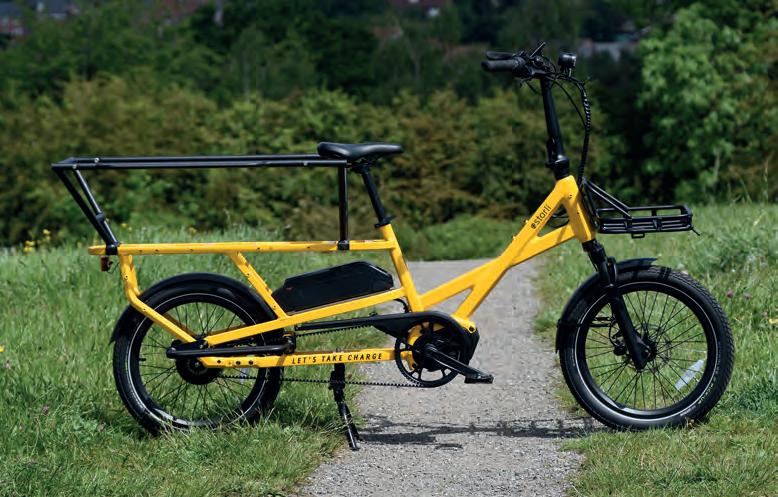
Wik-e-cargo bikes
Your ride
Paul Humphreys
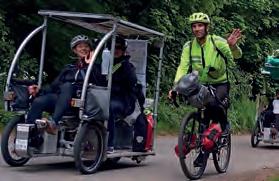
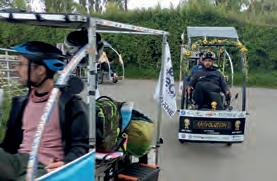
Paul took part in a unique cross-Channel event in May, helping French cyclists on solar-power-assisted tricycles to pedal around East Sussex in a celebration of Norman heritage. It was a test event for a larger ride in 2027.
This year there were around 80 cycles, including a dozen Vhélio tricycles. From the ferry at Newhaven, their route followed William the Conqueror’s historic journey, stopping at Pevensey Castle, where the Normans landed in 1066, before finishing in Battle, where they were met by local officials.
The French cyclists were supported on roads by a motorcycle safety team. For the off-road sections, marshals on bicycles were required. Paul, who is chair of Cycle East Sussex, was one of them.
The Vhélio itself is a solar-assisted utility tricycle, designed for everyday transport using low-tech, repairable components. Most of them this year were built before the event by teams using freely accessible 3D plans. The Vhélio’s solar canopy extends the range while providing shelter, making it an ideal symbol of sustainable travel.
There’s a short video of part of the ride on YouTube: bit.ly/youtube-vhelio-ride-2026
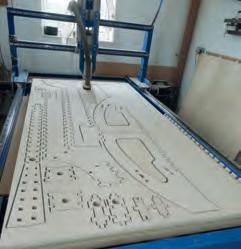
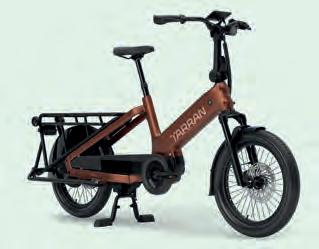
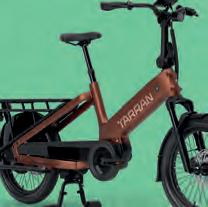
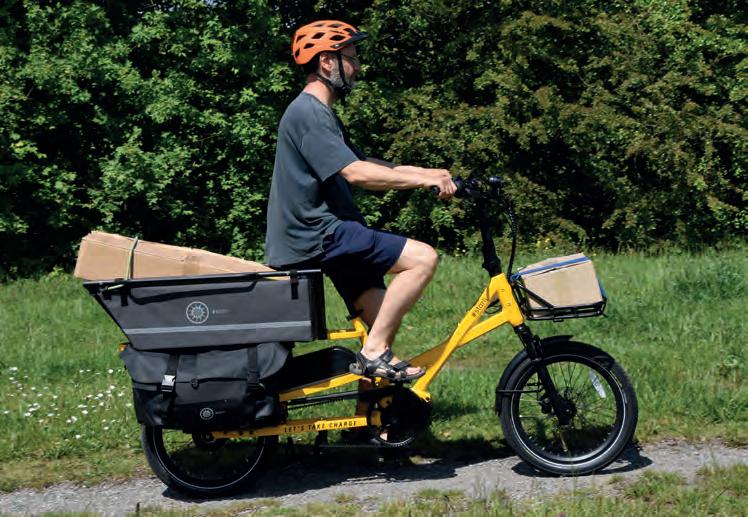
E-cargo bikes like the two reviewed this issue are great, but the purchase price can be barrier during a cost-of-living crunch. There is a cheaper option: make your own from plywood and other parts using the plans on Aaron Moore’s website. There are open-source CAD files (librecad.org) and PDF instructions for three different plywood e-cargo bikes and a plywood trailer, all free to download. Alternatively, and for a fee, Aaron will cut out and send you the plywood and aluminium parts. cnccraft.co.uk/cargo-bike
Quick releases
Cycling news and views from around the UK
CAMPAIGNS
Help us in stopping injustice
Imagine having your bike seized and destroyed by the police, then being penalised for riding an illegal vehicle – even though the evidence suggests it was, in fact, road legal. That’s the reality facing a rider involved in a case currently being supported by Cycling UK’s Cyclists’ Defence Fund (CDF).
An e-bike loaned through a Birmingham community cycling scheme was taken and crushed by police on the basis of a questionable roadside examination. The rider now potentially faces a fine and points on their licence, while the community organisation that supplied the bike has lost an asset worth over £6,000.
This isn’t just about one bike or one rider. Legal e-bikes help make cycling accessible to more people, removing barriers and enabling people of all ages, abilities and backgrounds to travel by bike. When legal e-bikes are wrongly identified as illegal, the consequences can be far-reaching for individuals, community cycling schemes and even public confidence in cycling.
That’s why Cycling UK has stepped in. Through the Cyclists’ Defence Fund, we’re supporting those affected
by this case and investigating whether a legal e-bike was wrongly identified and destroyed. We’re raising concerns about the testing methods used, engaging with those involved and pressing for accountability. We’re also working with partners to help ensure police forces have clearer guidance on identifying legal e-bikes correctly, so other riders don’t face the same experience.
Most importantly, we’re determined to prevent a damaging precedent being set. This case could affect accessible cycling schemes and the thousands of people who rely on e-bikes every day. This is exactly why the Cyclists’ Defence Fund exists. It enables Cycling UK to respond quickly when cases arise that could have wider consequences for cyclists across the UK.
A donation today will help keep the Cyclists’ Defence Fund ready for the next case. As a thank you, supporters who donate will receive a limited-edition Cycling UK mug. Please donate today and help us fight the next cycling injustice. Because when one decision could affect thousands of cyclists, doing nothing isn’t an option.
cyclinguk.org/cdfappeal-2026
Lower speeds for rural roads
Nearly four in five people support safer rural speeds. Polling commissioned by Cycling UK found that 79% of people in the UK would like to see speeds on single-lane rural roads that pass through hamlets or villages reduced from 60mph. Of those, 78% said speeds should be reduced to 30mph or lower on such roads. Sarah Mitchell, Chief Executive of Cycling UK, said: “This should give the government the confidence to move forward and ensure that different speed limits apply on different types of rural roads.”
Pedal on Parliament
Scan the QR code below to make a donation to the Cyclists’ Defence Fund
Pedal on Parliament (PoP) returned to Edinburgh in May after a three-year hiatus. More than 1,000 riders took part, gathering in the Meadows before riding down the Royal Mile and assembling outside the Scottish Parliament at Holyrood to demand a cycle-friendly Scotland. The aim was to draw the new parliament’s attention to the widespread support for cycling across Scotland, which the organisers demonstrated with a joyful, wheel-powered celebration. cyclinguk.org/ pedal-on-parliament
Quick releases
01
Campaigners heading for Reading
How do you talk about cycling in a way that appeals to the person you’re speaking to? Cycling UK and Reading Cycle Campaign invite you to find out by joining us in Reading on Saturday 14 November. Through expert speakers and interactive workshops, this in-person event will explore how to engage politicians, persuade sceptical neighbours and communicate the benefits of cycling and walking in a positive, inspiring way. It’s a chance to connect with fellow campaigners and gain practical skills to help create change locally. Spaces are limited, so book early. cyclinguk. org/reframingmessage
Jump into fundraising
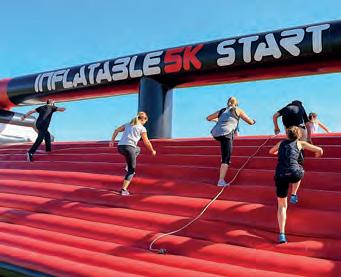
Looking for a fundraising challenge that’s more fun than fear? Take on Cycling UK’s inflatable obstacle course and bounce your way through the world’s biggest inflatable event. Packed with giant slides, bouncy obstacles and plenty of laughs, it’s the perfect challenge for friends, families or colleagues. Choose from distances between2.5km and 15km at locations across Britain until October - from Bakewell to Bournemouth and beyond. Sign up for just £10 and pledge to raise £100 for Cycling UK. Every pound you raise will help more people experience the joy and benefits of cycling. Ready to jump in? Visit: cyclinguk.org/inflatable-obstacle-course
Enjoy a spell of tough cycling this autumn by signing up for The Pendle Witch Trial audax in Lancashire on 12 September. The 130-mile (209km) event starts in Lancaster and takes in Hebden Bridge and the Forest of Bowland. Entry is £19 or £16 for members of Cycling UK or Audax UK. cyclinguk.org/pendle-witch-trial
03
Clecs ar Feics / Chat on bikes
Ydych chi’n hoffi reidio’ch beic a sgwrsio yn y Gymraeg? Teithiau beicio i ddysgwyr a siaradwyr Cymraeg o bob lefel. Clecs ar Feics, set up by Cycling UK affiliate Menter Iaith Bangor, is a monthly leisurely ride of around 10 to 15 miles for Welsh language learners and speakers of all levels. The rides take place on cycle paths and quiet lanes around Bangor and always include a café stop. Find out more at cyclinguk.org/ clecs-ar-feics
04
Scotland Annual Gathering
Cycling UK hosts its Scotland Annual Gathering in Edinburgh on 31 October. Speakers include endurance cyclist Christina MacKenzie, mountain biker Kerry McPhee and Cycling UK Chair of Trustees Ashley Wheaton. A panel of experts will discuss what’s happened in advocacy lately. The Gathering is free to attend but registration is needed for catering numbers. Donations to cover lunch costs are welcome. cyclinguk. org/scotland-annualgathering-2026
Quick releases
The Big Fix gets the UK rolling
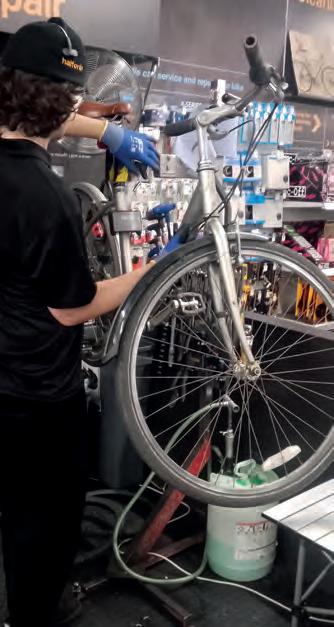
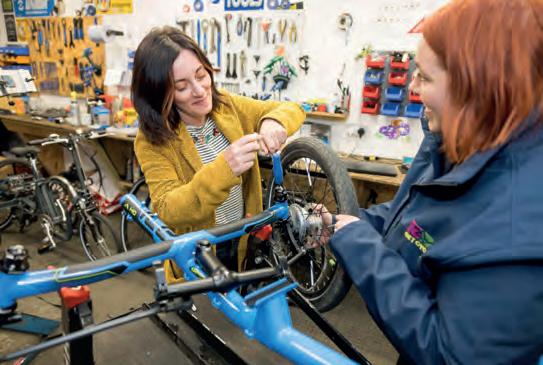
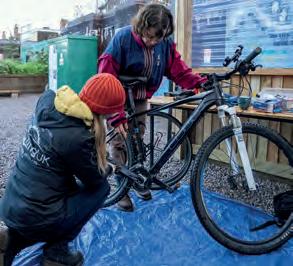
People across the UK got back in the saddle this summer as our Big Fix campaign showed how a simple check or repair can help make everyday journeys more affordable. Held over the weekend of 3–5 July, more than 1,200 Big Fix events took place at 452 locations across the UK, bringing together bike shops, community groups and cycling organisations with one simple aim: helping people get their bikes roadworthy and ready to use again.
From quick safety checks and simple adjustments to practical maintenance advice, the events gave riders the confidence to dust off neglected bikes and start using them for journeys they may have taken by car. Whether it was a family bike that’s been sitting in the shed, a commuter’s work bike or a child’s first set of
“The campaign was created in response to rising fuel and transport costs… Cycling offers a practical way to cut travel expenses”
wheels, it was fantastic to see so many people taking the first step towards riding more often.
The campaign was created in response to rising fuel and transport costs. As households continue to feel the pressure of the cost-ofliving crisis, cycling offers a practical way to cut everyday travel expenses while improving health and wellbeing. Swapping even a handful of short car journeys each week for cycling can make a noticeable difference to fuel bills, parking costs and vehicle wear and tear, proving that cycling really is one of the smartest investments you can make.
The success of the Big Fix weekend also highlighted the power of local partnerships. With support from bike shops, volunteers and community organisations across the country, people were able to access free bike checks, expert advice and encouragement to keep pedalling long after the weekend ended.
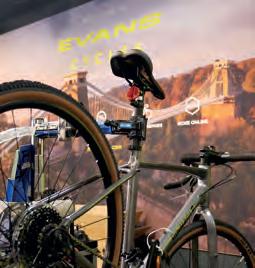
If you missed the Big Fix, there’s still support available. Cycling UK members can take advantage of a free 10−point bike health check at Evans Cycles stores, helping to keep their bikes safe, well maintained and ready for the next ride. For details, see cyclinguk.org/evans-bike-check
How to vote at Cycling UK’s 2026 AGM
Cycling UK’s 2026 AGM will be held online at 11am on Friday 18 September. In order to attend the meeting, you must register before 9am on Friday 11 September at cyclinguk.org/ agm-2026
Your ballot papers are included with this issue of Cycle. You don’t need to attend the meeting in order to vote: you can vote online or by post, and voting will take less than five minutes. Full details are given in your papers.
Leading lights
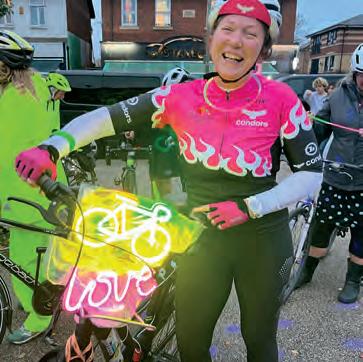
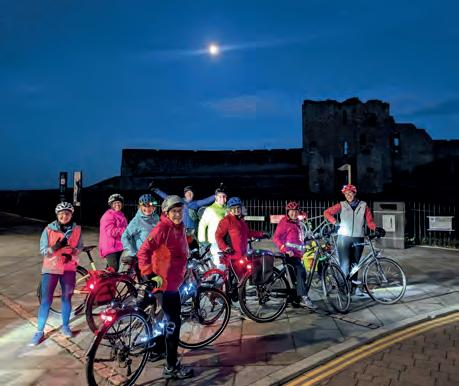
Glow rides are back on Wednesday 22 October. Last year, 3,000 of you took part in 69 mass rides across the UK to call for safer cycle routes for women riding after dark. MPs even spoke about your rides in Parliament. Put your town on the map this year by organising your own ride. Find a detailed how-to guide, Q&A session with previous organisers and more at cyclinguk.org/glowrides.
Left: Morever, Cycling UK and Evans Cycles
Quick releases
Cycle SOS has got your back
Read our guide to insuring your bike: cyclinguk.org/ insuranceguide
Bike cover when budgets matter
With the cost of living squeezing household finances, your bicycle isn’t just a hobby – it’s a vital, cost-saving asset for commuting, everyday transport and running errands. Swapping four wheels for two is one of the smartest ways to cut down on daily expenses. However, hitting bad luck with theft or an accidental crash could instantly set your budget back hundreds or even thousands of pounds. While many cyclists assume their home insurance provides adequate cover, standard policies often leave bikes heavily depreciated, exclude them when away from the home or demand high excess fees that wipe out any savings. That’s why an exclusive 10% member discount on comprehensive bike insurance with Bikmo is one of the most practical financial tools in your Cycling UK membership. Built by cyclists, for cyclists, it is designed to protect your wallet when every penny counts.
Why Bikmo Complete Bike Insurance makes financial sense:
• New-for-old cover. No depreciation based on age. If your bike is stolen or written off, you are covered for its full replacement value.
• Multi-bike savings. Got a household of
riders? Save 50% on additional bikes added to your policy (applied to all the lower-value models).
• E-bike discount. If you ride an electric bike to save on fuel or transit, enjoy an automatic 25% lower premium compared to regular bikes.
• Kit and accessories included. Your policy automatically includes cover for your clothing, headgear and accessories (minimum £250 or 10% of your bike’s value) so your gear is protected too.
• No claim penalties. Unlike car or home insurance, your premium won’t spike or penalise you if you have to make a legitimate claim.
Don’t forget that, alongside your 10% discount on bicycle cover, your Cycling UK membership includes £10 million in third-party public liability insurance with zero excess. Together, they form the ultimate safety net - protecting both you and your bike on every single ride. bikmo.com/uk/cyclinguk
As the official legal partner of Cycling UK, Cycle SOS (part of Fletchers Solicitors) provides members with access to specialist legal support from a team that has been championing cyclists’ rights for decades. Our partnership combines Cycling UK’s commitment to safer cycling with legal expertise in handling cycling-related claims, ensuring riders receive expert guidance when they need it most. As a member you benefit from keeping 100% of your compensation, with no deduction of legal costs from damages. For more information visit cyclinguk.org/ incident-line
Plan your life’s journey with M&G
Cycling UK’s Big Fix (p10) helped lots of people get their bikes back on the road, enabling them to save money on everyday journeys. If you’re thinking about what’s next in life, a chat with a financial adviser from our partners at M&G Advice could help you plan for the future with greater confidence. More time to ride, more freedom to enjoy life. Arrange a chat via cyclinguk.org/mgadvice M&G Advice offer a restricted advice service.
New 2027 group road cycling adventures in Spain
Halcyon Cycling Holidays has partnered with some of the best small and independent accommodation providers and road cycling guides to offer a select number of small group cycling trips to Andalucia, Costa Blanca and Costa del Azahar, the Orange Blossom Coast in Spain during the cooler months.
The trips are designed exclusively for us, and all offer excellent accommodation and facilities, superb road cycling and guiding, and an opportunity to explore the very best places these destinations have to offer, and all Cycling UK members enjoy a £125 discount on website prices.
Spain is well known as the premier cycling destination in Europe, offering exceptionally smooth tarmac, some iconic climbs, a warm climate and drivers who are highly respectful of cyclists. The premier regions include Andalucia, Costa Blanca and Costa del Azahar.
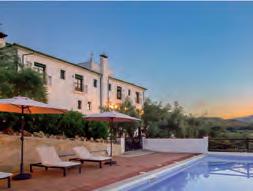
In Andalucia, Spain you will be staying at Casa Olea, a premium, boutique B&B and hidden gem near Cordoda, owned and run by Tim and Claire and expertly guided by local guide and passionate road cyclist Phil, one of the team looking after you during your stay. Cycling in Andalucia is unique because it combines dramatic contrasting landscapes – from sun-drenched Mediterranean coastlines and arid deserts to snow-capped peaks – with a rich, slowpaced Moorish cultural heritage, pristine tarmac, and near-perfect year-round riding
weather. We have trips available in March and October 2027.
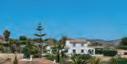
In the Costa Blanca, our accommodation is Finca de La Pansa, near Benissa, is a small five-star reviewed accommodation, offering superb en-suite rooms, excellent customer service and a host of services. You can fully unwind at Finca de la Pansa, translated as ‘farmhouse of the raisins’, owned and run by Kristien and Steven. Steven is also a passionate road cyclist and your guide for the week. As the founder of Antwerp Bike Tours, Steven is known for his endurance, discipline, planning and determination. As a former member of the Giro del Mondo cycling team, he regularly participated in long-distance rides and challenging cycling events. In recent years, Steven has also become familiar with the region around Benissa, Costa Blanca. With his passion for climbs, descents, and scenic roads, he knows how to uncover its hidden gems. Steven has meticulously planned and designed our cycling programme with planned trips from February to October 2027.
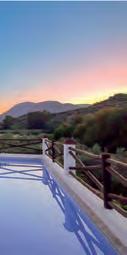
In Costa del Azahar, the Orange Blossom Coast, we offer road cycling trips in April and October 2027, staying in a private villa with a pool in Benicàssim, expertly hosted and guided by David and Paloma. The villa is top quality with panoramic views over the coast and offers comfortable accommodation. We also offer a womenonly tour for the very first time.
a fantastic week’s cycling waiting to be discovered.
Cycling in Costa del Azahar offers a mixture of flatish routes, coastal views and some challenging climbs. It’s a little quieter than some of the more popular cycling destinations further south, and David and Paloma have designed
All our guided road cycling trips are based on half-board and offer return transfers from the airport to your destination, expert guiding throughout your stay and an opportunity to enjoy some fantastic small group road cycling. For further details and availability check out our website halcyoncycling.co.uk
From left to right: Phil, your guide in Andalucia; Steven, your guide in Costa Blanca; David and Paloma, your guides in Costa del Azahar
Finca de La Pansa
Casa Olea
Women’s road cycling tour available
All year sunshine
Quick releases
1st prize
SUMMER RAFFLE
How to play
Win big in our summer raffle
Cycling UK’s summer raffle is now open, with tickets costing just £2. Get yours for a chance to win one of 20 fantastic prizes.
This year’s top prize is our biggest yet: a £2,000 cash prize plus any Vitus or Pinnacle bike up to the value of £800, courtesy of Evans Cycles. Whether you’d spend the cash on a cycling adventure, new gear or something completely different, you’ll also ride away with a brand-new bike of your choice.
Second prize is a £1,000 Saddle Skedaddle holiday voucher. It’s an ideal opportunity to enjoy a cycling getaway with one of the UK’s leading cycling holiday specialists and explore somewhere new on two wheels.
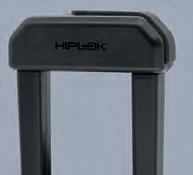
Third prize is a Hiplok D1000 anti-angle grinder D-lock worth £249.99, plus the BR1000 bracket to attach it to your bike. Offering marketleading security, it’s a prize any cyclist would be delighted to win.
And we’ve also got plenty more prizes up for grabs, featuring top brands such as Ortlieb, Beeline, Gtechniq and Carradice. From premium
2nd prize
luggage systems to navigation tools, bike care products and outdoor gear, there’s something to suit every type of rider. By taking part in Cycling UK’s summer raffle, you’ll also be helping to support our charitable and campaigning work, making a difference for cyclists and communities across the UK. Our raffle-playing community enables real change to happen across the UK. Since 2018, you’ve raised more than £290,000, resulting in:
Scan the QR to play
Enter online at cyclinguk.org/ summerraffle or scan the QR code for tickets. Entries must be made by 11:59pm on 20 September 2026. If you have difficulty entering online, you can place a raffle ticket order by phone on 01483 238301. Your raffle ticket numbers will be emailed to you after purchasing. The draw will take place on or before 23 September 2026. Winners will be notified by email or telephone within a working week.
How to donate
• More campaigning for better infrastructure for cycling.
• More project work to educate and enable cycling for all across the UK.
• More work creating and promoting new longdistance cycling routes for everyone to enjoy.
To buy your tickets, scan the QR code or visit cyclinguk.org/summerraffle. By taking part in this online raffle and encouraging your cycling friends and family to join in, you’ll help support our vital charitable and campaigning work.
3rd prize
If you’d like to support us but don’t want to play the raffle, visit: cyclinguk.org/ donate
The Cycling UK summer raffle is open to all England, Scotland and Wales residents on or over the age of 18. Please gamble responsibly. Full terms and conditions can be found at cyclinguk. org/raffle-terms
ROUTES
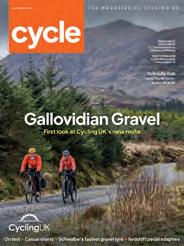
Gallovidian Gravel launched
Gallovidian Gravel, Cycling UK’s newest long-distance route, was officially launched on 25 June, a few weeks after the member-only preview last issue. And what an opening day it was: blue skies and 35ºC sunshine that felt more Mediterranean than Scotland. The route’s shady forests, sparkling lochs and café stops were even more appealing than usual.
The launch event in Dumfries brought together donors, partners and stakeholders, including representatives from VisitScotland, the South of Scotland Destination Alliance (SSDA) and local tourism businesses, to celebrate a new
route that showcases the very best of Dumfries and Galloway.
Many guests took part in a short preview ride led by Cycling UK’s Routes and Training Programme Manager, Ross Adams. The ride followed the River Nith to Mabie Forest for a taste of what makes Gallovidian Gravel so special – including the ice cream at the on-site café.
Gallovidian Gravel is already proving popular, with more than 2,521 GPX downloads in the first 72 hours. The first guidebook was sold at 6.32am on launch day to one particularly eager rider. If ever there was proof that people have been
GALLOVIDIAN
GRAVEL IN NUMBERS
331km of adventure riding 4,002m of climbing 3 linked loops for shorter rides 1st Cycling UK route entirely in Scotland
waiting for a Scottish addition to Cycling UK’s route collection, that was it.
A journey through SW Scotland
Gallovidian Gravel is a new 331km circular route starting and finishing in Dumfries in south-west Scotland. Designed to be ridden either in one go or as three shorter, interconnected loops, it offers plenty of flexibility for riders looking to tailor the experience to the time they have available. Along the way, the route links rugged coastlines, ancient woodland, quiet back roads and some of the country’s finest gravel riding.
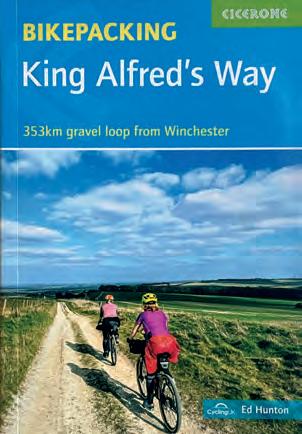
Developed by Cycling UK in partnership with route designers Guy Kesteven and Kieran Foster, it joins a growing collection of long-distance routes that includes King Alfred’s Way, Royal Chilterns Way and Traws Eryri. What makes Gallovidian Gravel special isn’t any single landmark but the sheer variety packed into a compact corner of Scotland. Within a few days’ riding, you’ll roll from traffic-free forest trails to wavelashed shores, from bustling market towns
Photos: Robyn Furtado
to some awe-inspiring remote landscapes.
Leaving Dumfries, the route heads straight into Mabie Forest, where gravel tracks meander beneath the pines and views stretch across the Solway Firth towards the Lake District fells. From there it makes for the coast through Rockcliffe, with its sandy beaches and rocky coves, before reaching the secluded beauty of Balcary Bay, which was once associated with smugglers.
The route then visits some of Galloway’s best-known cycling destinations. Dalbeattie offers world-class riding among distinctive granite outcrops, while Kirkcudbright’s colourful harbour and thriving arts scene provide a memorable stop. Further west, Gatehouse of Fleet combines a strong cycling culture with welcoming cafés and independent businesses.
Beyond the coast, the landscape begins to feel wilder. Ancient military roads and quiet gravel tracks lead deep into Galloway Forest Park, the UK’s first Dark Sky Park. Here, the route passes remote stretches of water such as Loch Dee and winds through vast forests where red squirrels, wild goats and red kites are often spotted.
You follow the legendary Raiders Road, one of Scotland’s classic gravel rides, before crossing beneath the towering Big Water of Fleet Viaduct and tracing former railway lines through the heart of Galloway. From there, the route sweeps back east through rolling
Your next adventure
Route: Gallovidian Gravel is available as a free GPX download from the Cycling UK website (cyclinguk.org/gallovidiangravel), alongside route information and planning advice. The official guidebook (shop.cyclinguk.org) contains everything you need to plan your ride. The route is split into eight sections, featuring detailed 1:50,000 Ordnance Survey mapping and points of interest along the way. It also includes practical advice, suggested itineraries and route options. Need to know: The terrain is predominantly unpaved surfaces. Start/finish – Dumfries. Best bike – gravel, adventure or touring. Format – three connected loops that you can ride in one go or as separate sections.
countryside and cycling-friendly communities, eventually returning to Dumfries.
Off the beaten path
For route creator Guy Kesteven, Gallovidian Gravel reveals a side of Scotland that many riders have yet to discover. “We’ve worked hard to create a moving story of an adventure that takes in traffic-free paths and quiet back lanes, linking trail centres, craggy coasts, smugglers’ coves, seemingly endless forests and wild mountain landscapes,” he said.
Gallovidian Gravel is a journey through one of Scotland’s most overlooked cycling regions. Rich in history, wildlife and welcoming communities, it encourages riders to slow down and explore beyond the familiar tourist hotspots.
Getting there: The route starts and finishes in Dumfries, which has good rail connections. For those driving, Dumfries is easily accessible from the M6 and M74 motorways, or the A74 if travelling from Northern Ireland. Galloway Gravel Escape: For riders seeking a fully supported experience, Saddle Skedaddle has developed the Galloway Gravel Escape. The holiday includes carefully selected accommodation, seamless logistics and local expertise, so you can focus on enjoying the ride while everything else is taken care of. skedaddle.com
A ride to remember
Celebrate your Gallovidian Gravel adventure with an official A3 art print of the route. Produced in collaboration with Ordnance Survey, the artwork is available in light and dark designs. It features the complete route and elevation profile alongside key locations, total distance, elevation gain and descent, creating a lasting record of your ride. To order a Gallovidian Gravel art print – or artwork from any of our long-distance cycling routes – visit the shop: shop. cyclinguk.org
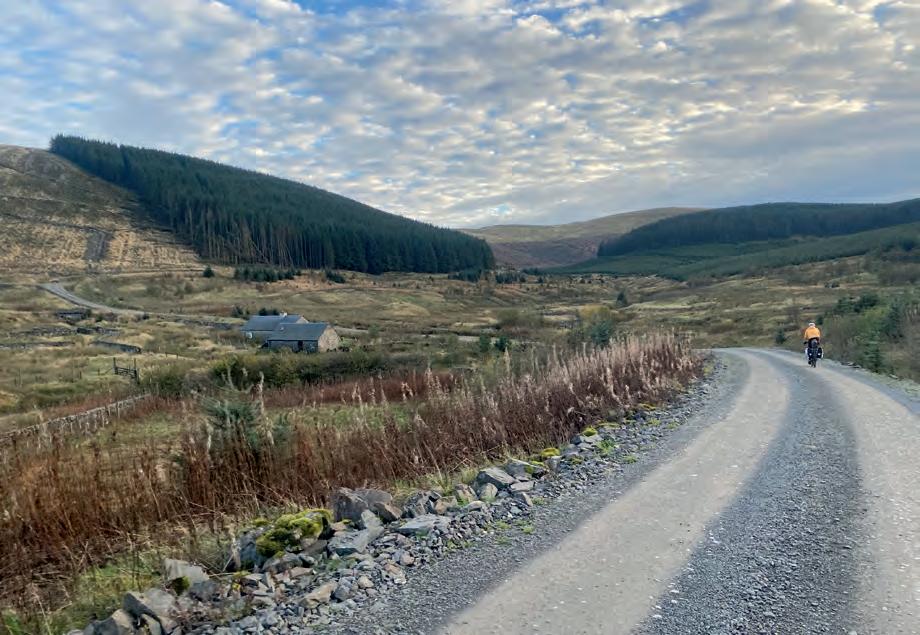
The route includes quiet roads as well as unpaved tracks
Great rides
A spot of bothying
No wi-fi, no electricity, no sink, no beds: bothies are back-to-basics shelters in remote countryside. Tony Dabb and his son Jacob visited two of them last autumn
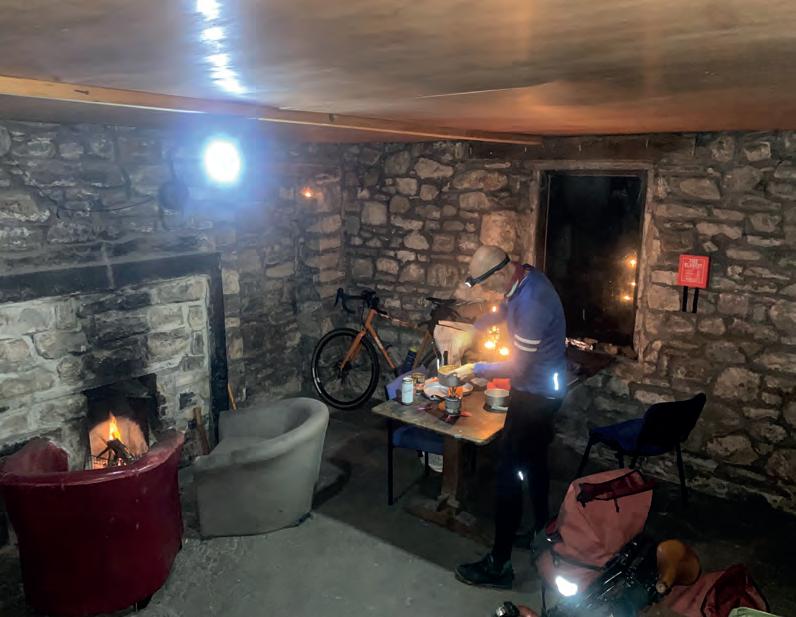
It is dark. Really dark. You have pedalled along a disused railway track, far away from any road, never mind civilisation. Your heartbeat quickens as you turn off the path and descend into the trees along a narrow track. The forest throws back a forbidding blackness as an affront to your puny light. At the end of the track is a near-derelict stone hut, its silhouette against the
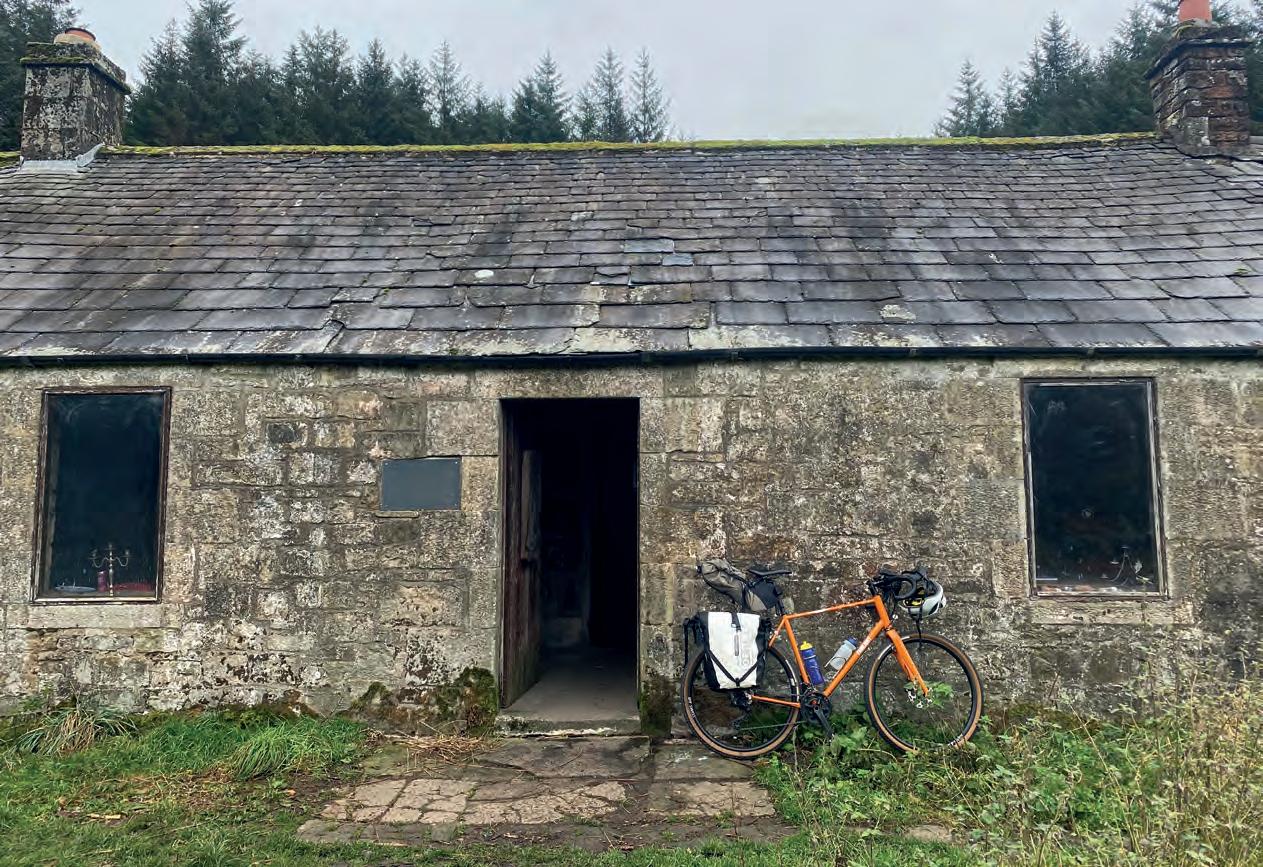
night sky. Wait! There is a sound coming from inside. You are not alone. Tentatively, you push the creaking door. There is a man. With an axe. A scene like this in a film would have any survivors running and screaming through the woods, Blair Witch-style. But we’re actually pleased to see the axe-wielding stranger. It’s a freezing cold night at the end of October, and David, who is actually a cheerful paramedic, has been busy chopping a small mountain of logs and firing up the stove to make Leyburnsfoot Bothy warm and cosy for him and his pal Kieran – and for anyone else who might happen to seek shelter from the elements. This is the ‘bothy code’ and David is an excellent ambassador.
It’s our first time bothying. In spring I’d fallen into conversation with Brian who, at almost 70, still spends three weeks each April covering hundreds of kilometres across Scotland. “You should try the bothies”, he said.
“Unlike a lot of things in Scotland these days, they’re free.”
Spring turned to summer, then the leaves began to fall. It was late October before I could get around to organising a short half-term trip with my son, Jacob. While camping was still just about an option, the promise of a dry place to sleep, an actual roof, and smoke curling from the chimney of a stone cottage in a forest clearing began to take on a certain romance.
A sky full of stars
Leyburnsfoot Bothy is near Riccarton Junction, a former station on the disused Waverley Route between Edinburgh and Carlisle. To get to it, we left Newcastle and followed part of the Reivers Route (NCN 10) northwest through the ‘debatable lands’, which were once ravaged by warring Armstrongs, Thompsons, Carrs and other clans.
We cycled through pretty villages with church spires and cricket greens,
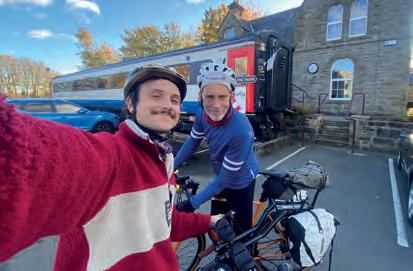
like Stamfordham and Matfen, then reached wild moorland and rugged sandstone crags. At Bellingham, just over halfway between home and the bothy, we ate well in a superb repurposed railway carriage (‘Tea on the Train’). We also visited the appropriately named, for this frontier land, First & Last Brewery taproom.
Our plan was to skirt the edge of Kielder Water, eventually crossing the border through an unlikely gap in the trees to follow the North Tyne through Saughtree (blink and you’ll miss it). From there a winding gravel track rises away from the valley to reach the Waverley Route, a line that last saw service at the end of the 1960s.
While that is indeed how the journey unfolded, we may have spent a little more time in the taproom than we had intended. We pedalled through and out of Kielder Forest as twilight turned the sky rose gold, and a waxing moon, purple at the edges, appeared in the firmament like a sci-fi backdrop.
It’s difficult not to think of space, in every sense, in this part of the world. Kielder Observatory has the darkest skies in England and has been named as a Gold Tier Dark Sky Park because of the clarity of its sky. As we tilted our heads in slack-jawed amazement, it positively glowed with wispy nebulae tracing between uncountable stars.
The bothy code
“We pedalled through Kielder Forest as twilight turned the sky rose gold and a waxing moon appeared”
The Mountain Bothies Association maintains eight bothies north of the Tyne Valley and into the Scottish Borders. There are plenty more (about 100 altogether), often in some of the most remote and most beautiful places in Scotland, Wales and northern England. Yet there is no guarantee that you will be able to find
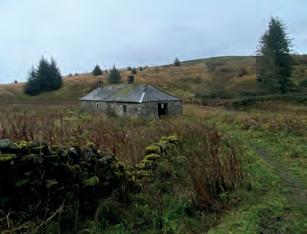
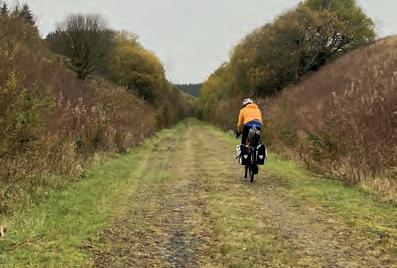
Clockwise from far left: Leyburnsfoot Bothy, near the abandoned Riccarton Junction station. Staying at a bothy is like indoor camping. Departing Leyburnsfoot. The Waverley Route was once a train line between Edinburgh and Carlisle
splendid isolation. Bothying can be a very sociable experience. Within 10 minutes of setting foot in Leyburnsfoot Bothy (also known as Will’s Bothy, in memory of a much-missed young man who died tragically young in a climbing accident), we were sharing beers around a travel-sized Monopoly board. There is a sort of frisson from being beyond the reach of the law when bothying. While some bothies do have signs warning partying ‘ne’er do wells’ that police visit the bothy from time to time, Leyburnsfoot has been the victim of vandalism.
There is no booking, reception or money changing hands. The whole premise runs on a reassuring reliance on human decency: keep the place tidy for other people; be nice to whoever puts their head through the door; leave some candles or firelighters for the next visitors; and chop plenty of wood.
Fact file
A spot of bothying
Distance: 318km (196 miles) over three days.
Below:
Phawhope
We left early the next morning in the rain and headed first for breakfast in Hawick, which was once the centre of the Borders textile trade and is still home to Pringle sweaters. Then we followed the River Tweed to Peebles, where we stayed very comfortably at the Neidpath Inn.
One of us needed wi-fi for work and both of us decided there was no shame in having one warm shower this trip. You can expect a raised wooden sleeping platform at most bothies, and a multi-fuel stove if you’re lucky. But plumbing is usually a toilet and a bucket filled from the stream.
Over the hills to Over Phawhope We made a clean start the next morning in the direction of Over Phawhope Bothy, at the far end of the valley made by Ettrick Water. The road south of Innerleithen took us over the beautifully named ‘Paddy Slacks’ climb. The name is a corruption of Pas du Lacs, due to its proximity to St Mary’s Loch and other waters. It’s a gentle, Continental-style pull over more than three kilometres which, with panniers and gear, is merciful going up and gleeful going down, with sweeping curves and thrilling views of heather-clad mountains slashed with the silver of water.
Turning onto a dead-end track, occasionally stopping to let forestry
Route: Leaving Newcastle, we followed the Reivers Route (NCN 10) north-west through Northumberland, crossing the Scottish border north of Kielder Forest to reach Leyburnsfoot Bothy at Riccarton Junction. We continued north through to Hawick and Peebles, then turned south to Ettrick, staying in the second bothy at Over Phawhope. We crossed back into England and caught a train at Brampton, near Carlisle.
Conditions: Late October, so the weather was mixed. Cold, bright blue skies followed by drizzle. Near freezing overnight. Layers and a good sleeping bag were essential. Best of all: no midges.
Bikes: Jacob rode his Genesis Croix de Fer. I rode a Fairlight Secan. We both carried panniers and a seatpack.
Navigation: Komoot.
I’m glad I had: Good lights and a battery pack. You’re miles from anywhere and, especially in the winter, the nights are long. Bothies do not have electricity.
Next time I would: Take some extra candles to brighten the place up, and also to leave some for the next visitors. Further info: mountainbothies. org.uk.
Above: Over
Bothy, at the far end of the valley made by Ettrick Water
Refuelling at Tea on the Train café in Bellingham, en route to Kielder Forest
lorries past, we traced the river, Ettrick Water, higher and higher up the valley until, finally, we crested a hill and saw Over Phawhope nestled between two burns. This stone hut was described by poet James Hogg, ‘the Ettrick Shepherd’, whose grandfather had lived in it, as “one of the most lonely and dismal situations that ever was the dwelling of human creatures”.
Yet when we rolled up to the front door, just as the late autumn sun threw the last of its rays, smoke was already rising out of the chimney, thanks to the wood-cutting labours of two more bothy dwellers, Aaron and William. Rosy cheeked, they sat by the multifuel stove with whisky glasses in hand. It looked far from dismal.
We cooked sausages on the stove. Two more hikers joined us. There was room for everyone and the conversation was easy. The lack of any internet signal in most of these remote places is a blessing and means that you either make your own entertainment or get a nice early night. Notwithstanding the earlier comments about plumbing, Over Phawhope is blessed by having not one but two toilets. One of them
is outside, open on all sides to views of the valley and the forest beyond. There can hardly be a better place for your morning contemplation.
Meditating on the trip
Well, perhaps there is. Retracing our route as far as the River Esk, we turned south and had not gone very far before the sight of multi-coloured prayer flags led us towards a dazzling gold stupa and, beyond it, a multistoried temple bedecked with yet more flags.
We had chanced upon the Kagyu Samye Ling Monastery, which has offered a retreat in a tiny Tibetan corner of Dumfriesshire since 1967. It claims to be the first traditional Buddhist monastery in the West. The centre welcomes visitors who want to enjoy the quiet of its gardens and the atmosphere of reflection. The rain stopped and the sun shone. We admired a golden Buddha. Tibetan monasteries have prayer wheels that turn continuously, emanating blessings and removing barriers to enlightenment. I’ll leave you to draw the appropriate parallels with cycling.
“The lack of any internet signal is a blessing”
Nearby Eskdalemuir Community Hub provided lunch, while Pelosi’s Corner Café did terrific coffee in Langholm. We crossed the border back into England and
Staying in a bothy
Bothies are free and cannot be booked. There are minimal facilities. You can expect to find a raised sleeping platform. Most have a stove or open fire. Your stay will be more comfortable if you take the following: sleeping bag; firelighters and matches; camping stove; head torch; toilet roll; wet wipes (carry them out).
The Bothy Code is common sense and good manners: leave the bothy at least as tidy as you found it; respect the local surroundings; take your rubbish away with you.
Many bothies are on private land, to which the owner allows the Mountain Bothies Association (MBA) access. Don’t go in groups of more than six. Expect to meet other travellers. It is because they may be the only shelter for miles that they are so popular with walkers and cyclists.
The MBA website has all the information you need to plan a trip. Locations are easy to find. Before you go, download routes to access them offline. The website is regularly updated to advise you if a bothy is closed for maintenance. mountainbothies.org.uk
dropped down to Brampton, east of Carlisle, where we hopped on a train back to Newcastle.
The Mountain Bothies Association has been running for 60 years now. It feels like a miracle that, in an age of commercialism and individualism, a group of people keep these refuges going for long-distance walkers and adventure cyclists to enjoy for free.
The MBA’s mission is “to maintain shelters in remote places for those who love wild and lonely places”, which it accomplishes marvellously. Yet in the best possible way, our experience was the very opposite of ‘wild and lonely’.
Left: The stupa (Buddhist shrine) at Kagyu Samye Ling Monastery in Eskdalemuir
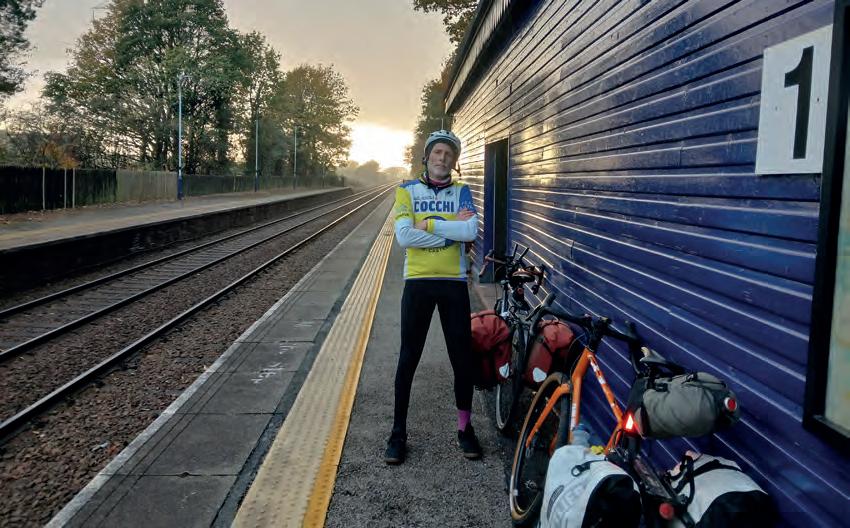
Above: Tony at Brampton Station, waiting for the train home to Newcastle upon Tyne
Weekender
Chalk Way taster
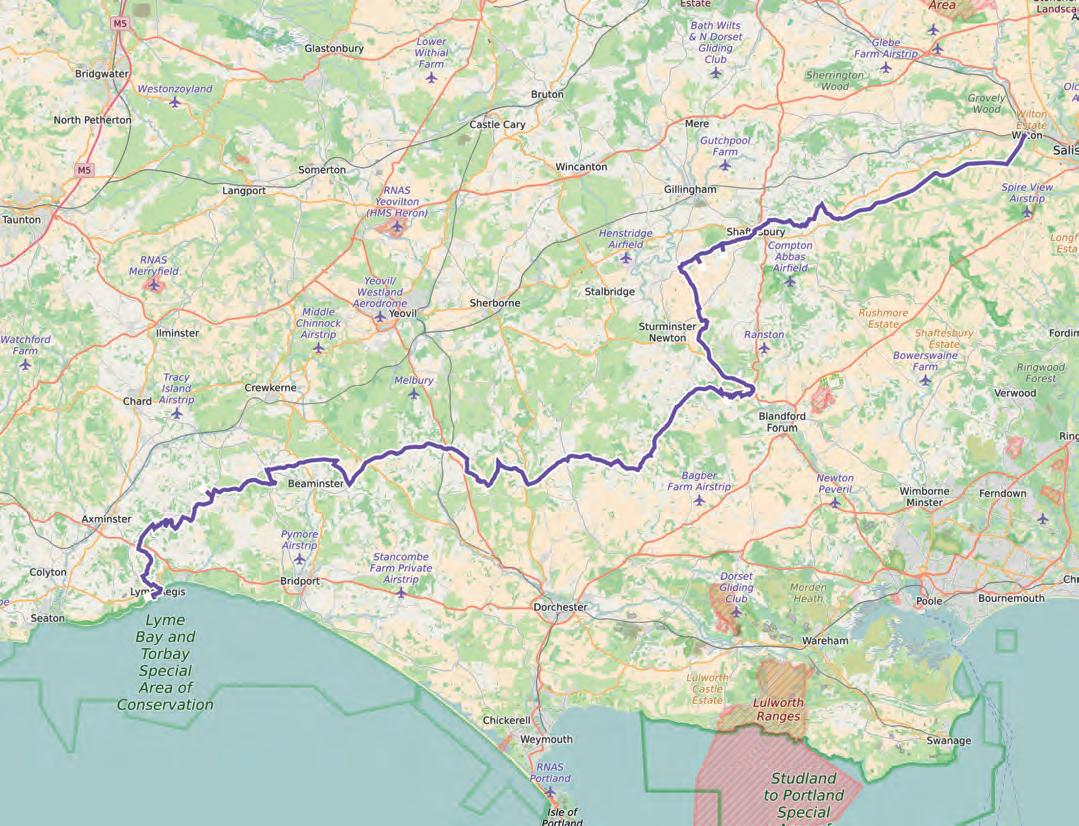
The complete Old Chalk Way runs more than 350 miles from Dorset to Norfolk. Alf Alderson rode an 88-mile section from Lyme Regis to Salisbury
This ride makes for a great escape into some of the quieter corners of busy southern England. Part of the Old Chalk Way, a 576km gravel biking trail put together by cycling duo Ben Wormald and Chris Hunt, it follows the rocky spine of chalk running southwest to north-east from the Dorset coast to the Norfolk coast.
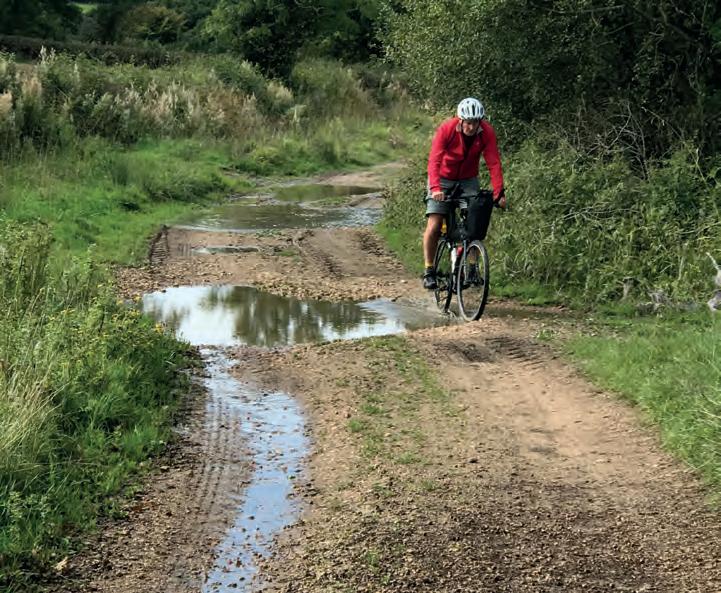
Since you’re riding on chalk, you’ll find that the route has the advantage of draining well, even after heavy rain. Indeed, when I rode it we’d endured a number of days of intense downpours prior to setting off but, other than a couple of short wet and muddy sections that were easily negotiable, the ride was dry and totally rideable.
In some places the route has been in use for millennia, following a mix of well-graded gravel trails, farm tracks, bridleways and minor country roads. This particular stretch starts on the spectacular Jurassic Coast and takes in some short but steep climbs, including Shaftesbury’s infamous cobbled Gold Hill, where you needn’t be ashamed if you end up pushing like the boy in the old Hovis advert!
The fact that you’re having to make a few steep climbs also means you’ll enjoy some great panoramas from the high points you attain, including fine views across the Dorset coast. When you get up onto the Ridgeway proper, just after Shaftesbury (another stiff – but short – climb) you’ll enjoy a glorious high level, off-road blast that’s often enhanced by having the
prevailing south-westerly wind at your back. This is, in fact, one of the best sections of the Old Chalk Way. Keen riders could complete this 88-mile section in a day, although it’s
“It takes in some steep climbs, including Shaftesbury’s infamous cobbled Gold
Hill,
where you needn’t be ashamed if you end up pushing”
probably more enjoyable and certainly less rushed if spread across two days as that gives you more time to enjoy the sights along the way (as well as the cake and coffee stops). Since you’re never far from civilisation, it’s no problem to find accommodation, whether under a roof or under canvas. This leg of the Old Chalk Way starts in Lyme Regis and finishes in historic Salisbury. It can be accessed by from the train station at Axminster (six miles from Lyme Regis), which has good rail links to Salisbury.
The Jurassic Coast
Old Chalk Way
ALF ALDERSON
Alf is a travel and adventure sports writer
Route name: Chalk Way taster Start/finish: Axminster station/Salisbury station Maps: OS Landrangers 193 Taunton & Lyme Regis, 194 Dorchester & Weymouth, 183 Yeovil & Frome, 184 Salisbury & The Plain Ride length: 142km (88 miles). Climbing: 2,050m (6,725 ft)
Bike type: Gravel bike or hardtail mountain bike Ride level: Regular GPX file: cyclinguk.org/ weekender-chalkway
01
Take a dip in the sea at pretty Lyme Regis before setting off. You may even have time to wander along the coast in search of fossils – the Jurassic Coast is famous as one of the best fossil-hunting grounds in Britain.
Cerne Abbas Giant
02
The route passes close to this 55m-high chalk hill figure whose most prominent feature, to quote Wikipedia, is “a notably vertical erection, some 11 metres (36 feet) long”. The figure appears ancient but may only date back as far as the 17th century.
03 The Ridgeway
Used by travellers for at least 5,000 years, the Ridgeway is often called ‘Britain’s oldest road’. The high, dry ground isn’t just ideal for bikes but in the past provided a reliable trading route between the Dorset coast and the Wash in Norfolk, giving travellers
commanding views from which they could spot potential attackers.
Gold Hill, Shaftesbury
04
Readers of a certain age may remember the famous Hovis bread advert, which was shot on the cobbled Gold Hill. It’s been named as Britain’s favourite ever TV advert, a fact you’ll probably forget when riding (or pushing) up its punishingly steep incline, which reaches 25% at its worst.
05 Red kites
You’ll almost certainly see red kites soaring gracefully overhead as you’re riding along; they’re easily identified by their forked tail. This magnificent raptor was almost driven to extinction in Britain but, thanks to various incredibly successful reintroduction projects, numbers increased by 2,464% between 1995 and 2023. The UK is now home to about 17% of the world’s population.
Great rides
EuroVelo 7 heaven
Hoping to avoid the heat, novice tourers
Fiona and Colin Daborn rode the cycle paths of EuroVelo 7 from Berlin to Copenhagen last summer
Unbelievable. Let’s hear what these British cyclists are planning to do in Berlin’s heatwave…”
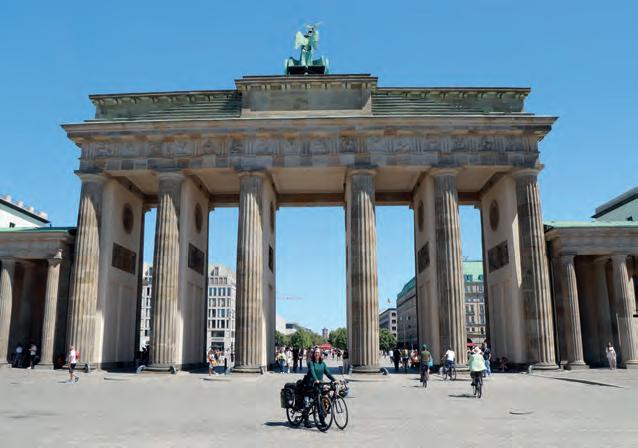
The German TV crew swooped while we posed for a quick photo underneath the Brandenburg Gate, their camera zooming in on our sweaty faces.
It wasn’t quite the start to our Berlinto-Copenhagen tour that we had
expected. Arriving in Berlin ‘fresh’ off the delayed Good Night sleeper train from Brussels with fully loaded bikes, it was already midday and 39ºC. How would we keep cool, the presenter asked us.
“Carrying plenty of water, swimming in lakes, finding shade and planning shorter days on the bikes” was the best I could manage with my rusty A-level German. Being new to cycle touring, we had in fact chosen this
route going north to avoid heatwaves, so I hadn’t even given it much thought in English, let alone German.
Cycle-friendly cities
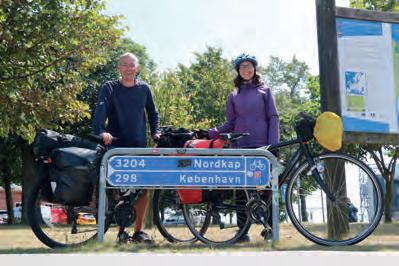
Preparing for the trip, I had found the thought of cycling in a big city like Berlin terrifying. In reality it was a highlight of the whole ride: we cruised into the city like royalty. A wide cycle lane, equal to the size of the adjacent bus and car lanes, swept us along Unter Den Linden, the beautiful treelined approach to the Brandenburg Gate. After finishing our unplanned TV interview, we located the Berlinto-Copenhagen signpost, alongside EuroVelo 7 signage, and headed north-west to our first campsite, 14km from Berlin.
I wouldn’t call myself a cyclist. I’ve always used a bike to criss-cross our small seaside town for convenience, but until Covid and lockdown I hadn’t attempted any longer rides. Quieter roads tempted me out. With my 50th birthday fast approaching, I wanted a challenge. The flat profile of the Berlinto-Copenhagen route appealed.
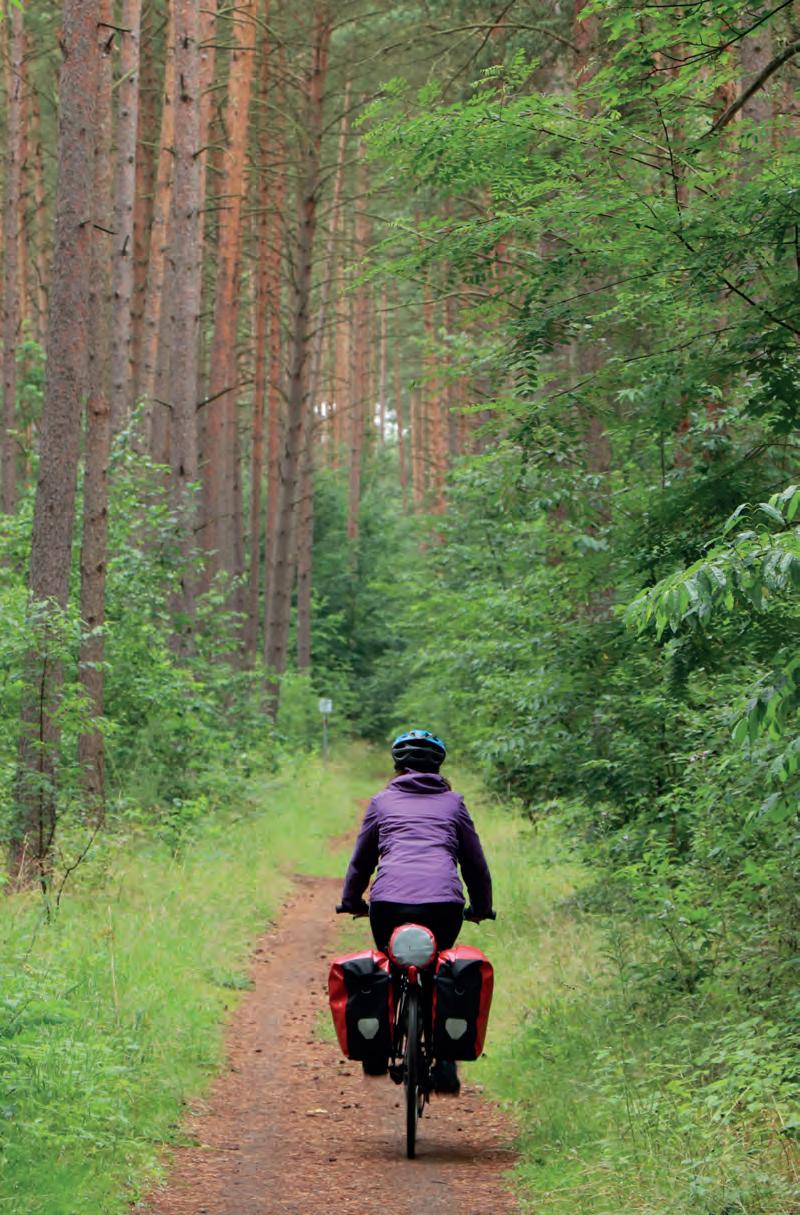
As we set off, we were amazed at how quickly the city faded into peaceful countryside. We followed paved forest tracks through pine forest and under beech and oak trees. The only real downside of this section was that many of the traditional villages we passed through had cobbled streets, which almost brought me to standstill on my narrowtyred hybrid.
I was in charge of analogue navigation: looking out for BerlinCopenhagen or EuroVelo 7 signage, as well as getting the overview each morning on our paper map. Colin was in charge of digital navigation, following every twist and turn on our downloaded GPS files on Komoot.
Land of a thousand lakes
Every now and then the route would emerge from the forest at a town. We often saw a cluster of cyclists before we spotted the grocery shops and bakeries they’d stopped at, and soon got into their habit of stuffing both our panniers and ourselves whenever
possible! The route is busy with cyclists going both north and south, and it was handy to swap tips with tourers going in the other direction.
Following the forest section, the route enters Muritz National Park, known as the land of a thousand lakes. By now I was feeling more confident riding the fully loaded bike. At times the path through the national park was gravel or sandy but it was all passable. Putting up our tent next to a different lake each night, we found that the campsites were happy to make space for cycle tourers, even in high season.
“Arriving on the delayed sleeper train from Brussels, it was already midday and 39ºC”
white-tailed eagle circling above us. The sun was shining as we docked. Pedalling off the ferry, we passed an equivalent group of cyclists waiting to make the return journey to Germany. There was a cheerful, spontaneous ringing of bike bells as our paths crossed.
The sun stayed with us for the next few days and I made good use of our tiny solar panel to charge up the phone for navigation. We enjoyed a rest day among the white sand dunes of Marielyst beach while staying at a campsite which offered direct access to the sea.
Fact file EuroVelo 7 heaven
Distance: 729km (453 miles). Route: Berlin-Copenhagen long-distance cycle route, part of EuroVelo 7.
Time: 14 cycling days.
Conditions: Both dry and wet days. Average temperature in Germany was 26°C, in Denmark 19°C. About 80% on paved traffic-free cycle paths, with occasional rougher sections. Some stretches of quiet roads. Bikes: Wilier Asolo hybrid, Merlin gravel bike.
Luggage: Each bike had two Ortlieb 20L rear panniers and one 5L Topeak handlebar bag. We had one 20L dry-bag for the tent and one 5L dry-bag for cooking pots and food.
Maps/guides: GPS routes available at: bike-berlincopenhagen.com. Paper map: Leporello Radtourenkarte, Cycle Route BerlinCopenhagen (freytagberndt. com).
After a leisurely eight days of cycling north from Berlin, we reached the Baltic coast at Rostock. I was surprised at how quickly I had slipped into the routine of cycling 50km each day and how much I was enjoying the simple life: every morning packing up the tent and cycling north, no decisions to make. At Rostock the route continues via a two-hour ferry ride to Gedser, on the Danish island of Falster.
Island hopping in Denmark
A cycle path swept us safely through Rostock’s busy port, separate from vehicles, and into a holding area where we were joined by 50 or more cyclists waiting to board. It was a great moment of camaraderie, especially when the clouds opened and we all scrambled to get under cover and put on a multitude of colourful waterproofs.
The rain stopped in time for us to sit outside and watch the German coast disappear. We even spotted a
Continuing up the east coast to Stubbekøbing, we joined a gaggle of cyclists waiting for one of Denmark’s oldest wooden ferries to Bogø. At this point the rain caught up with us. The ferry dated from 1959 and was a beautiful boat but provided little shelter for the 20−minute crossing. Soaking cyclists squeezed into
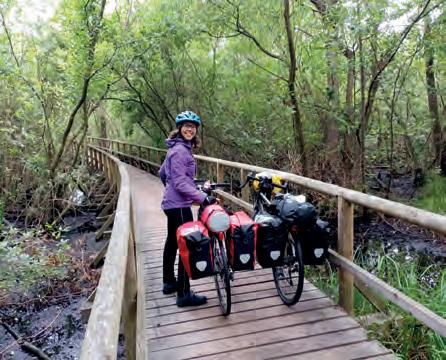
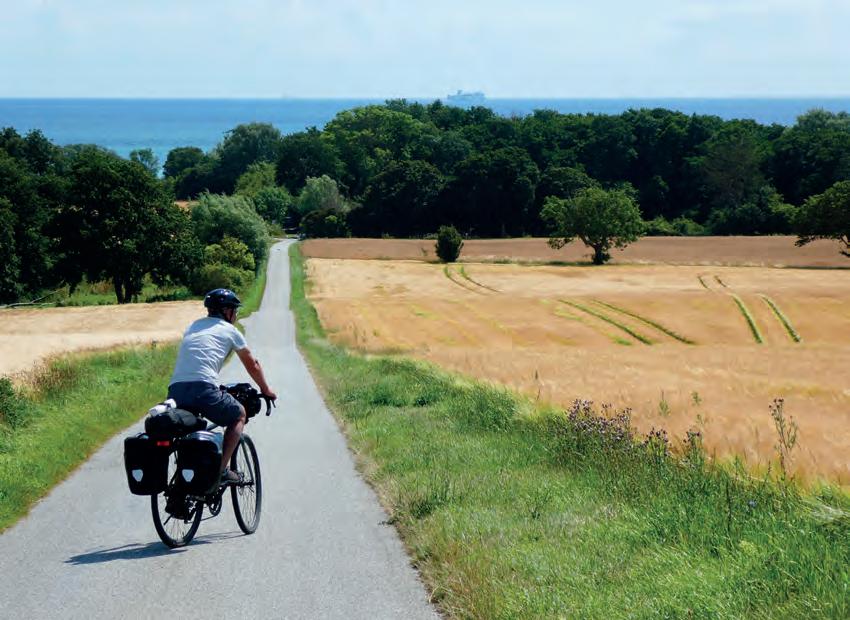
Opposite: German cycle paths quickly left urban areas behind Top: Berlin’s Brandenburg Gate, just before the TV crew arrived Below left: Rural infrastructure was as good as that in towns and cities
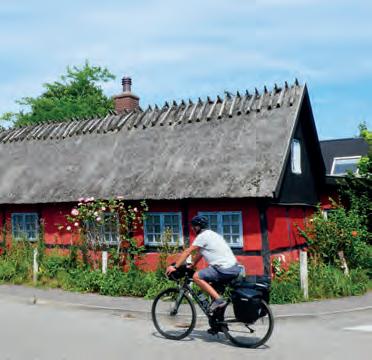
Below right: Traditional Danish thatched cottage
Accommodation: We took a tent and camped every night but didn’t book ahead. The only time we encountered a ‘full’ campsite was central Copenhagen I’m glad I had: A detachable shoulder strap for my handlebar bag made it easy to take valuables with us when sightseeing.
Next time I would: Take a solar panel that could be strapped to the panniers while cycling.
the steaming Bogø bakery café, where coffee and cinnamon buns passed the time until the rain eased and we could pedal across the causeway to the island of Møn.
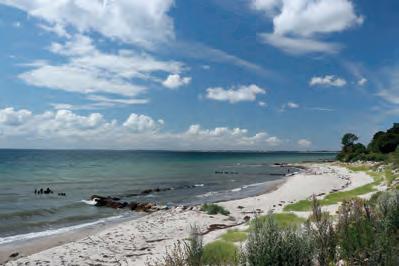
The official route makes a loop around the island, which would be easy to miss out if you were short on time, but Møn turned out to be one of the highlights of the trip. This tiny island had gentle hills to stretch our muscles, and the roads were lined with pop-up stalls selling honey, jam and vegetables. Rabylille Strand provided the perfect cyclist’s combination of loo, bench and sea view for a morning break. We tucked into rhubarb pastries and mingled with the locals coming down in white dressing gowns for their morning swim.
At the end of the day, we made the most of one of Denmark’s designated free camping spots at Kranelad beach. We set up our tent and plunged into the sea for a swim before cooking dinner on the beach.
For advice on riding in the heat, visit: cyclinguk.org/ cycling-heat
The
last leg to Copenhagen
The far eastern end of the Møn loop takes you to Møns Klint, a UNESCO heritage site of limestone and chalk cliffs that loom above a milky green sea. There was a field full of bikes parked up, so we added ours and set off to enjoy the novelty of finding a high vantage point in Denmark. Hiking along the clifftops, we enjoyed impressive views before descending via 500 steps to the beach below. The next day we continued the Møn circuit, heading west through the lovely arch and old town of Stege, before pedalling 746 metres across the impressive Queen Alexandrine Bridge onto the island of Zealand.
Danish cyclists riding south had tipped us off about a short diversion to see the UNESCO heritage site of Højerup church perched on top of the cliff. Erosion has worn away the cliff and caused the church altar to drop into the sea in the 1920s, leaving an airy
viewpoint where the altar should be. Copenhagen welcomed us on the last morning with a long smooth traffic-free route into the city centre. A digital bike counter flashed up, registering me as the 155th bike to pass that morning. It occurred to me that maybe I am a cyclist after all!
Getting there & around
Trains
It wasn’t a simple option going by train, but it did all work out and the sleeper train was a fun experience.
• South Western Railway: WeymouthLondon. Assembled bikes not allowed during rush hour.
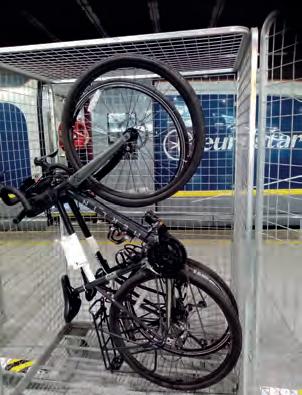
• Eurostar: LondonBrussels. At the time of writing, you can only take a fully assembled bike on the LondonBrussels route, and only on trains leaving at certain times. Spaces are limited. Book your train first, then request a bike space afterwards and wait 10 days for confirmation. On departure, check your bike in at a separate office (allow extra time to find this). The bikes travel in cages.
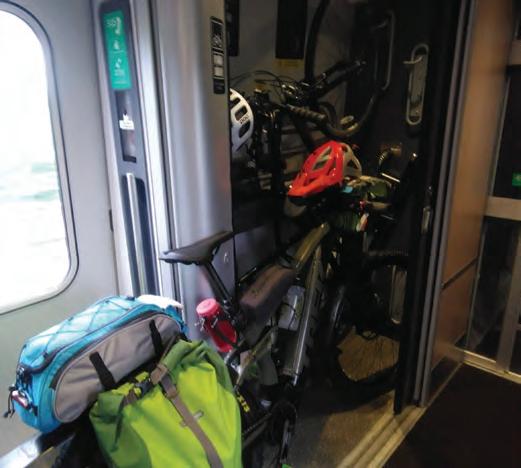
• Good Night Sleeper: Brussels-Berlin. Book your bike spot at the same time as your ticket. There is a designated bike carriage but this was out of order when we travelled so bikes were just transported in an empty compartment.
Ferries
We booked the RostockGedser ferry online but this wasn’t really necessary as bicycle passengers. All other Danish ferries were just turn up and ride on.
Right: Heading to Kranelad beach, which had a designated free camping area
Below: Rabylille Strand, where locals in white dressing gowns came down for a morning swim
Below that: Arrival in Denmark. The full EuroVelo 7 runs from Malta to Nordkapp – 7,650km
Never Netherlands?
The suggestion that we can’t create Dutch-quality cycle infrastructure here is a cop out. Sophie Gordon spotlights some inspiring UK examples
YOU’VE HEARD IT OFTEN ENOUGH: “You’ll never get lots of people cycling here. We’re not the Netherlands.”
You might have even thought it yourself, after tangling with a poorly designed cycle route that rudely spits you out into busy traffic.
It’s easy to forget that even the Netherlands wasn’t always the cycling haven it is now. In the 1970s, the Dutch were headed in a very different direction. The car was the symbol of the modern age, and multi-lane highways were sprouting everywhere. That was until the parents got stuck in, protesting about the numbers of children being killed on the roads. They created the political will to reimagine how people would move around the streets.
Change is possible. In the run-up to the 2024 Olympics, Paris built 60km of cycle lanes linking all the venues. The number of daily cycle trips has more than doubled since 2019. In the early 2000s, Seville embarked on an ambitious construction programme, building 80km of protected cycle lanes within just a few years. The results are striking: the number of daily cycle trips increased 11−fold, from 6,000 to 70,000.
encounter a big multi-lane road.
I don’t need to worry. Suddenly he turns onto a two-way separated cycle path alongside the main road, and I feel myself relax. We have our own cycle traffic lights to cruise across two lanes of traffic, and then we ride down the A38’s central reservation through an avenue of trees. It’s amazing.
We’re riding on one of Birmingham’s ‘Blue Routes’, completed in 2019. The route is now used by around 500 people a day, with year-round use even in bad weather. Khalda Begum is one of them. She says the route has made a huge difference for her.
“It’s lovely cycling around the park, but if you want to incorporate cycling into your everyday living then you do need to get out onto the roads and be able to use it to get from A to B. The Blue Route connects to so many places in the city centre, including the university, hospital and shops.”
“We ride down the central reservation through an avenue of trees. It’s amazing”
Khalda is a ride leader, and she uses the route to introduce new or less experienced riders to road cycling. “Because it is in the middle of the road, it gives you a feeling of being on the road, with cars near to you. But you have the safety and comfort of being separated from the cars.
All right, you might say – but it’s different on the Continent. Can the UK really experience a cycling revolution?
Birmingham’s Blue Routes I struggle to keep up with my friend Jethro as he weaves through central Birmingham’s slow-moving traffic. He’s used to busy urban cycling, whereas I’m just visiting for the weekend before the two of us set off on a cycle trip. We follow a sign for the A38 and I brace myself, expecting to
“It’s really sad that, in this day and age, so many women are still fearful to cycle. So many of them feel intimidated on the roads. But you see their confidence build as they start to know their rights on the road and feel comfortable among the traffic on a route like this.”
Photos this page:
Joolze
Dymond
Main image: This separated cycle path by the A38 is one of Birmingham’s Blue Routes, which are similar to London’s Cycleways
Glasgow’s South City Way
It’s not just in Birmingham where new cycle paths have encouraged a more diverse range of people to cycle. Glasgow’s South City Way connects the Southside with the city centre using 3km of protected lanes. Resident Katherine says the cycleway “has transformed some journeys that I can do with my kids”.
The route has made regular cycling journeys possible – such as trips to parks, shops, classes and the city centre – that the family might otherwise have made by car or public transport, or perhaps not done at all. Katherine emphasises that the protected, continuous nature of the route has enabled her children to experience safe, low-stress cycling, increasing their confidence and enthusiasm.
Last summer, she also noticed “seeing a lot more women that are not wearing cycling gear. You know, they’re just wearing normal clothes, which is how it should be. In other European countries, it’s like that. We had a really nice summer here and the bike lanes were just so busy with people in dresses.”
The numbers are impressive too. On sections such as Victoria Road, cycling accounts for around 15–20% of all journeys, with more bikes than cars during rush hour. More than half of nearby residents said they cycle more since the route was built.
Waltham Forest’s Mini Holland Of course, one linear cycle track is great if you’re going that way. But calming motor traffic over a wider area can benefit even more people. Waltham Forest in London is the classic example of that. Its 2014 MiniHolland scheme is the original UK lowtraffic neighbourhood.
Before the changes, Waltham Forest faced significant transport and environmental challenges, including high traffic volumes, road safety concerns and poor air quality. The scheme involved a combination of separated cycle lanes, filters to reduce through-traffic, improved crossings and pedestrianisation, to create a
borough-wide cycling and walking network.
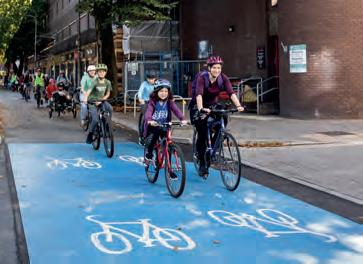
Below: Glasgow’s South City Way, a 3km corridor of separated cycle paths into the centre
It was controversial at first, but over time it led to an overall reduction in motor traffic and sustained increases in cycling, with an estimated £1 billion of health benefits. Local parent Sarah is seeing the benefits now the scheme is being expanded to where she lives.
“It’s so much nicer for the kids. I
mean, I would never have let my kids cycle to school before. I didn’t think it was safe. And now we cycle every day, which is amazing. It’s a nice part of everyone’s day, and on a practical level it’s much quicker.”
In densely populated cities, she says, the increased number of secure cycle storage hangars is also really important, because “it makes it way
more accessible to not be dragging bikes in and out of your house.”
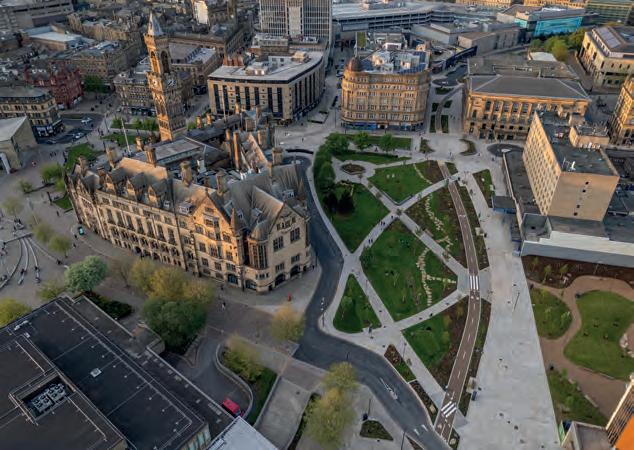
More recently, Bradford city centre has experienced its own transformation. A large part of the central shopping area has been pedestrianised, with 2.4km of cycle tracks added and 12,000m2 of new green spaces created. Combined with Bradford’s City of Culture events, the changes contributed to a 25% boost in footfall during early 2025 compared to the same period in 2024.
Norah McWilliam often walked through the centre before the transformation, and she explains it is “so much nicer now. The landscaping is attractive, the wildflower planting is lovely. And you can now walk or cycle right through the city centre without traffic, without worrying about traffic. So that’s a really, really big improvement. You also notice that the cafés are starting to put tables out on pavements now. It makes the centre feel really different.”
Potholes and Pavements, author and journalist Laura Laker described it as “possibly the best rural cycling and walking route in the country”. Fellow cycling journalist Carlton Reid waxed lyrical about the “butter-smooth” path in his ride blog, calling it “a glorious route, super wide and wonderfully separated from the busy A27”.
That’s what happens when National Highways decides that instead of the usual solution of dualling the road to address congestion problems, it will build a gold-standard cycle track to give people alternative transport options.
“I would never have let my kids cycle to school before… Now we cycle every day”
When it opened in 2023, Paul Humphreys, chair of Cycle East Sussex, described it as “a game changer for ramblers, cyclists, wheelers and horse riders”. Before, the only people who would dare to ride along the A27 were brave, speedy road cyclists. Now, the new cycle track is used by families, commuters and tourers.
East Sussex’s A-grade rural route
High-quality cycle routes aren’t confined to urban areas. One of the best I’ve ever cycled on is the 13km path beside the A27, between Polegate and Firle in East Sussex. Don’t take my word for it: in her book
No one swims across the river The Sussex path reminds me of a response cycle campaigners love to use when someone asks, “Why would we need a cycle path here? No one cycles along this road.” In the
Paving the way
Councils fear a backlash from creating new cycle routes. Proposals get watered down. Cyclists get frustrated. Sound familiar?
Transformation takes political bravery, and a conviction that it will benefit residents in the long run. We need to give councils that courage to make things happen.
That’s why we’re collecting these cycling success stories from around the UK. Together, they prove that these schemes work – and what’s more, that they’re popular. They improve people’s lives, boost local businesses and create nicer places to live.
In September we’ll be publishing these stories in a report, along with short videos to bring them to life. The evidence and the detail will be useful for council officers trying to make the case for a new scheme. But we hope the summary report and videos will also be useful tools for you to share with your local councillors for inspiration. It’s a way to show them what’s possible, and even create some healthy competition with other areas.
If it can happen in Glasgow, Bradford and Cornwall, why not where you live?
Above: A mass ride to celebrate Cardiff’s new cycleways
Far left: Bradford city centre has been transformed by pedestrianisation and active travel provision
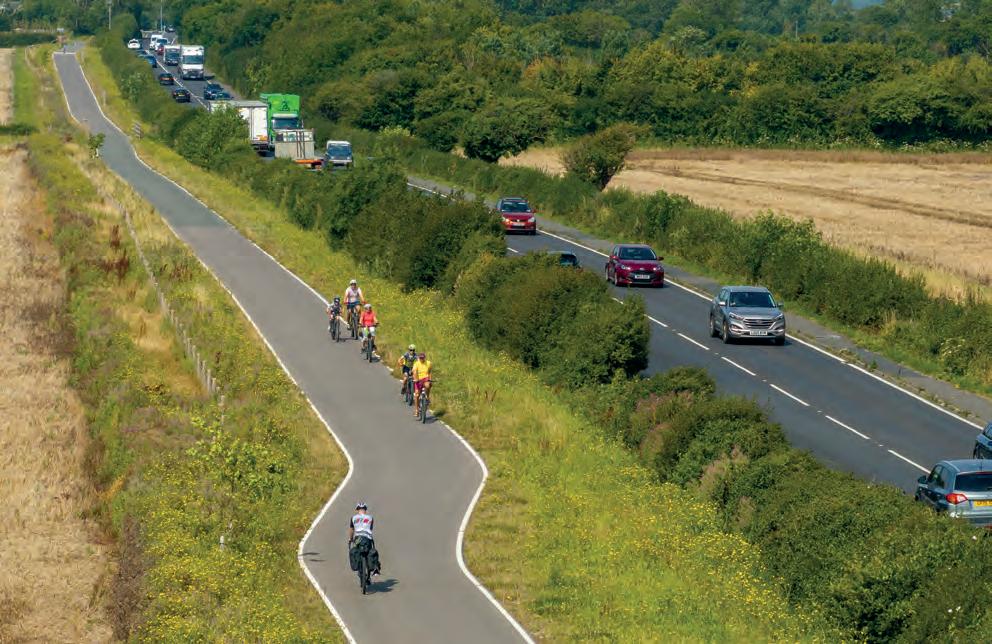
Left: The 13km East Sussex A27 cycle path – one of the best in Britain
words of urban planner Brent Toderian: “You can’t justify [building] a bridge by the number of people swimming across a river.” In other words, there’s usually a hidden demand. It only reveals itself once something feels safe and easy.
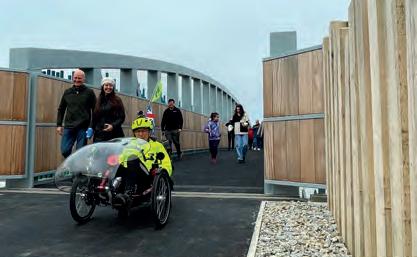
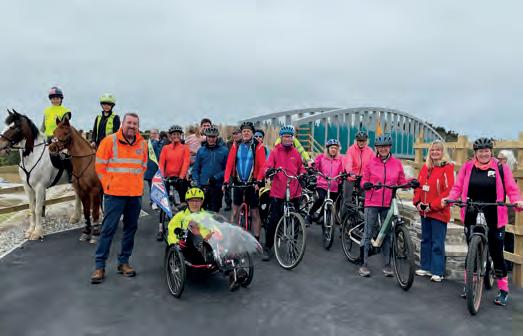
We saw Brent Toderian’s maxim demonstrated in a literal sense this summer, when the first new bridge over the River Trent for 70 years opened in Nottingham, after 12 years of pressure by campaign group Pedals and many others. Judging by the volume of people gathered to celebrate the opening day, they were quite keen on a new cycling and walking bridge – and they hadn’t been swimming across the river beforehand. It’s a similar story with the Chiverton Bridge near Truro in Cornwall. Previously, people wanting to cycle between Truro and St Agnes were completely cut off by the A30
“You can’t justify building a bridge by the number of people swimming across a river”
dual carriageway. It was another impassable barrier with a latent demand for a way to circumvent it. It took Truro Cycling Campaign years of persistence, but they managed to convince the council to include a wide, welcoming bridge over the A30 as part of the new Saints Trails routes, instead of a long detour to a tunnel-like underpass.
Sarah Wetherill from the group says: “The St Agnes to Truro Saints Trail represents a big step forward for intersettlement cycling, enabling people of all ages to cycle from St Agnes to Truro. Count data from sensors on the bridge are already showing healthy levels of use. Its popularity is also evident through the number of local people using the St Agnes village sections for circular rides and walks.”
Yet she also points out: “Truro Cycling Campaign is still keen to see the Teagle Straight off-road route
delivered, as we think this could significantly improve usage rates of the Saints Trail.”
Showing councils what works
That’s one of the difficulties with cycle campaigning. We have a long way to go to become a cycling country, and there’s always more to do. We’re never satisfied. Both of those new cycling bridges happened thanks to determined local people getting together and saying persistently: we want this to happen.
When change takes a long time, it’s easy to forget to celebrate the good stuff. That’s why Cycling UK is collecting examples of places across the UK that have been transformed for cycling, to show what’s possible and to highlight the progress made.
By bringing together evidence and personal stories into a new report and video content, we’ll convince councils and politicians that investing in these schemes works to get more people cycling. We want to give them a positive vision that inspires confidence to make bold decisions. Such schemes might seem controversial, but once people start to see the benefits, the impacts are transformational.
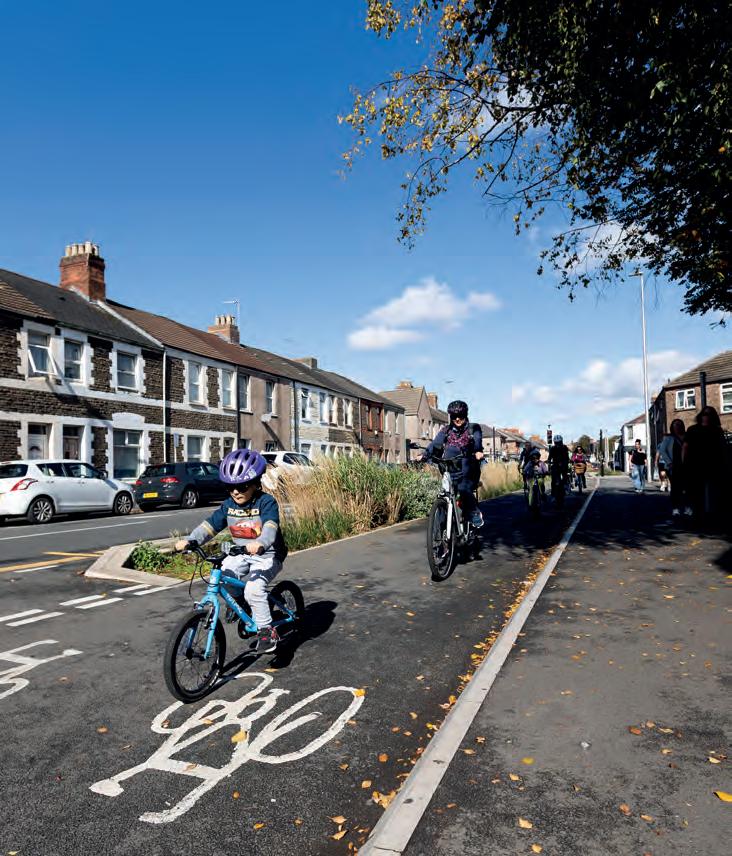
Above left: Separated cycling in Cardiff Above: Chiverton Bridge near Truro gives cyclists, horse riders and walkers a way to cross the busy A30
In the frame
Bikes, components, kit and media reviewed by journalists and staff
Gear
Other options
TAILFIN CARGOPACK SYSTEM
£130+
Alloy rack £130, Cargo Pack £190, 10L Mini Panniers £80 each. A similar system, with upgrades available to take normal panniers. tailfin.cc
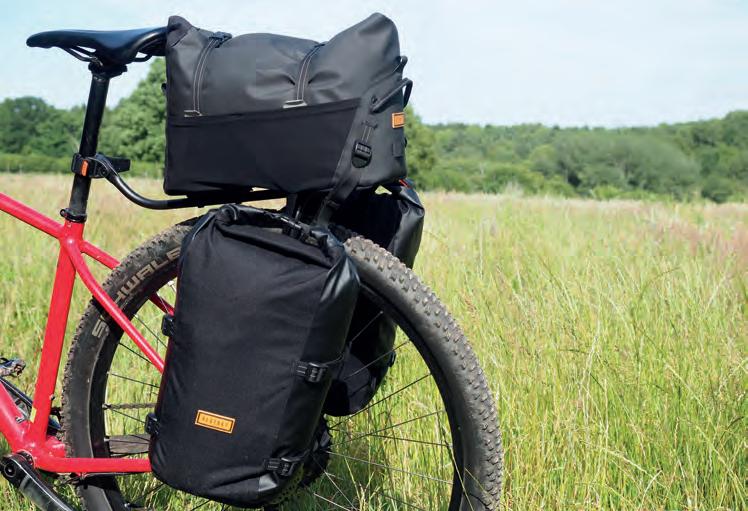
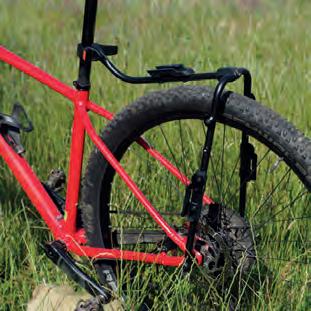
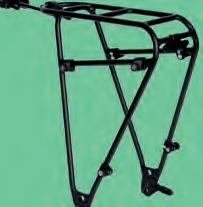
Restrap’s Switch system works for road, gravel and mountain bikes alike, thanks to a thru-axle mounting system. The system comprises: an aluminium rack (£124.99); a separate, curved, top plate (Switch Rack Cage, £39.99); a 15−litre top bag (£174.99); and 5− and 10−litre panniers (£64.99 and £79.99 respectively). Note that members can claim a 10% discount; details at cyclinguk.org/restrap.
The rack won’t take normal panniers. It’s formed of a single
Verdict
The Switch system – particularly the rack and top bag – suited my cycling needs well. It’s good for bikepacking, commuting, long day rides and hotel overnighters, and easy to swap between modern on- and off-road bikes. Tourers wanting lots of storage may prefer more conventional setups.
15mm-thick bar across the top, which, with a hinge, joins a single bar bent into two legs. The top bar has two bolt holes for either Restrap’s top bag or the top-cage mount. The legs have three bolt holes spaced at the industry standard 64mm, which can take the Switch panniers, bottle cages or ‘anything’ cages.
To fit the rack, you replace your bike’s thru-axle with the Restrap one. (There’s also a version for bikes with normal rack eyelets.) The rack clips and bolts to the ends of the new thru-axle, and the end of the top bar straps to your seatpost or seat tube. There are bolt-on backing plates for specific accessories; the latter then slide into place.
In testing, the 15−litre Switch Top Bag was a standout. For bikepacking, it was as spacious as most seat packs and utterly stable.
ORTLIEB QUICK-RACK £105
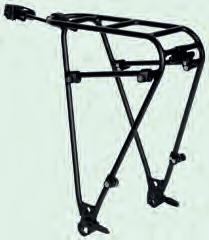
A quick-release rack that’s compatible with a wider range of conventional bags, but without bikepacking accessory mounts. A thru-axle adapter is £35, or it can be mounted to rack eyelets or seatstays. uk.ortlieb.com
But it was great for commuting too, probably the best pack I’ve tried for a laptop, clothes and lunch. The 10−litre panniers were quiet and secure off road. They did wobble, being fixed only by a slender centre mount; Ortlieb’s Fork Packs, with their bigger mounts, were more stable on the same rack. The pannier weight felt quite far back on the bike until I flipped the rack’s top bar, so it attached lower down, making the rack legs more vertical.
Sean Fishpool
In the frame
This is the 11−speed Advent MX. It’s also available as 10−speed
MICROSHIFT
£224.99, microshift.com
+ PRICE
+ LIGHT-ACTION SHIFT
+ CHAIN RETENTION
Other options
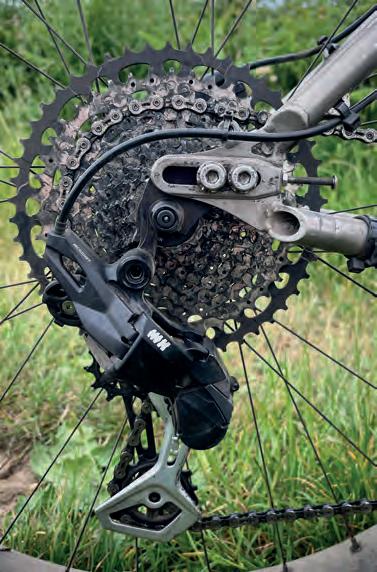
Not all new drivetrains involve batteries or £300 cassettes. Microshift Advent MX is billed as the company’s highest-performance groupset yet, but it’s still mechanical and still relatively affordable.
Advent MX is aimed at mountain bikers running 1× setups. It consists of a shifter (£34.99 for 11−speed, £29.99 for 10−speed), the same derailleur for both 10− and 11−speed (£69.99), and a cassette (£119.99 for 11−speed, from £84.99 for 10). You add your own 10− or 11−speed chain and narrow-wide chainring.
The cable-pull ratio for MX is the same as Microshift Advent X and Sword, so it’s backwards compatible. The derailleur cage is easily replaceable. And the shifter pod has 12mm of side-to-side adjustment so doesn’t have to fight for space with your front brake lever.
Compared with 9−speed Advent and 10−speed Advent X, the derailleur has the most obvious
changes. A pulley routes the gear cable around the mech to reduce friction. The parallelogram only moves horizontally so doesn’t get jerked about by big hits through the back wheel, which should help with chain retention. The clutch is beefier.
The cassette – 11−50 for 11−speed, 11−48 for 10−speed – has also changed. The standard 11−speed version (EG116) uses hardened chrome-moly steel for the seven smallest sprockets, while the spider and big sprockets are aluminium. It’s 485g, which isn’t bad. I tested the EH116 cassette, which uses steel for nine sprockets and aluminium only for the 42 and 50 sprockets. It’s heavier at 655g, but should last even longer. (Derailleur and shifter are 358g and 134g respectively.)
SRAM NX EAGLE
The 12−speed cassette is £110, derailleur £117 and shifter £38. Unlike SX, which I’ve found fragile and unreliable, NX seems to work well enough.
sram.com
SHIMANO DEORE M6200
Also 1×12. The cassette is £109.99, derailleur £69.99 and shifter £39.99. If I weren’t running Microshift, I’d probably fit Deore or 9−speed Box Two Prime. shimano.com
Verdict
Light-action shifting and bombproof chain retention make MX a step up for mountain bikers from Advent X. Although the 11−speed MX is well priced, I’d prefer the 10−speed as it’s cheaper still and compatible with Advent X, which I also use.
In four months of use, I’ve yet to drop the chain with MX Advent. Shifting has the lightest action I’ve felt with mechanical gears, especially inboard to the larger sprockets. It’s not as snappy as Shimano Deore; I presume, like SRAM, that it pulls more cable per click. But it shifts reliably and needs negligible cossetting to continue working well.
Dan Joyce
In the frame Gear
Other options
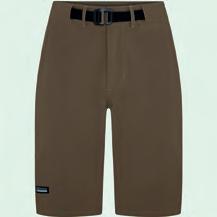
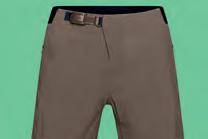
MADISON ROAM STRETCH SHORTS
£49.99
Reviewed in the previous edition of Cycle, these shorts are basic but versatile. I’m wearing them on a cycle trip in Albania at the time of writing. madison.cc
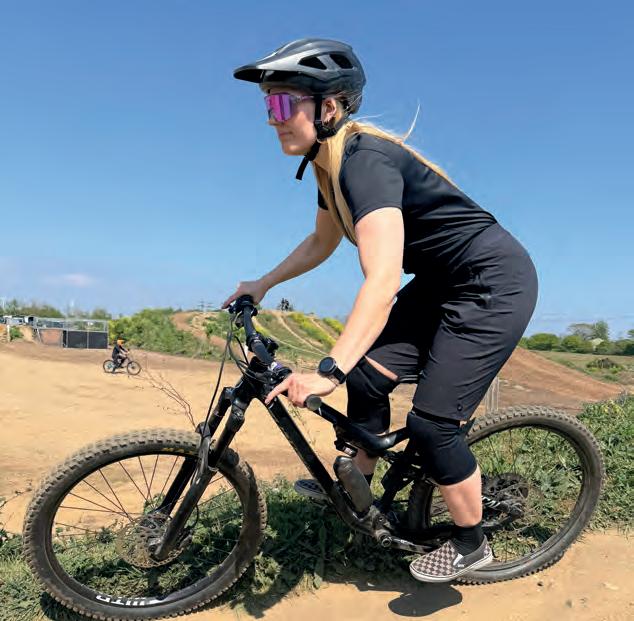
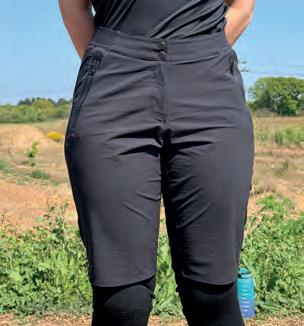
FOX FLEXAIR WOMENS
£99.99
Expensive but worth it: ultra lightweight, fit with kneepads, and suitable for everything from gentle weekend touring to Alpine downhills. foxracing.co.uk
Unlike some shorts, these are well cut for women. And the size range is great
+ TRULY FITTED TO A FEMALE BODY + INCLUSIVE SIZING – BASIC FABRIC AND FEATURES
I’ve been really impressed with these Trailbloom women’s shorts. They strike a great balance between comfort, practicality and style. After struggling with the fit of the three shorts I reviewed in the previous edition of Cycle, it was a treat to put these on and feel comfortable straight away.
The waistband stands out, sitting snugly above the hips without digging in when riding – clearly designed with wider-set hips in mind. It’s elasticated, which wasn’t my favourite aesthetically when first assessing them, but the fit more than made up for it. That thoughtful approach carries through: these are genuinely baggy shorts that comfortably cover knee pads without riding up or leaving gaps.
I’ve worn them on trail days, pumptrack sessions and gravel rides, and they’ve stayed put throughout. It’s good to see zips on the pockets: I like the reassurance that essentials are secure on the move. There are three generously sized pockets with mesh inners. While editor Dan flagged this as an issue in the group test, I’ve had no trouble with keys snagging.
I haven’t crash-tested them but they feel tough. The rip-stop fabric has shrugged off summer brambles and bracken, yet remains impressively lightweight – ideal for warmer weather or more active rides. The small inner-thigh vents are a welcome touch, too.
It’s great to see a brand catering to a wide range of body types. With sizes 6–26 available, having recently expanded upper sizing, Trailbloom is helping as many women as possible get out on the trails. This inclusive attitude is reflected in the sensible pricing and no-nonsense approach to function: they feature a basic zip and two poppers around the waist.
The second one allayed my usual fears around a single popper coming undone.
Jaz Morse
Verdict
These are nice, easy-to-wear shorts. They fit well and score highly for both form and function. While lacking the bells and whistles of some competitors, this is reflected in the accessible price. They have become a go-to pair for me.
01
Lezyne Road Drive 500 £60
At 87×54mm (and less than 18mm deep), Lezyne’s new rechargeable light is the size of a credit card yet emits up to 500 lumens. It comes with a quarter-turn mount GoPro mount adapter. ride.lezyne.com
04
Surly Steamroller frameset
£699.99
Surly has released a limited run of its venerable fixed-gear/singlespeed frameset in ‘anxious lavender’. As before, it takes 38mm tyres – or 32mm with mudguards. Sizes: 49−62cm. surlybikes.com
02
Ridgeback Voyage
£1,449.99
One of three additions to Ridgeback’s touring –sorry, ‘trekking’ – range, the fully equipped, flat-bar Voyage has 2×10 Shimano CUES gearing, hydraulic brakes and an open-frame option. ridgeback.co.uk
05
Van Rysel EDR Period Protection Shorts
£34.99
Save money
These women’s waist shorts have a special multilayered seat-pad with moisture absorption and a one-way membrane. They also have two cargo pockets. vanrysel. com
03
Don’t forget your exclusive member savings, with up to 50% off cycling products and services. Visit cyclinguk.org/ member-benefits
Continental Dubnital 50−622 £66.99
Continental has added a narrower (50mm) version of its Dubnital MTB XC race tyre, which already came in 55 and 60mm. The 545g tyre is for gravel riders. continentaltyres.co.uk
06
07
Zéfal Gizmo
Universal Bottle Cage Mount £10
Need to carry another water bottle on your bike to cope with the summer heat? Zéfal’s inexpensive Gizmo will fit frame tubes, fork, stem, handlebar or seatpost. zefal.com
Apidura Expedition
Bolt-on Top Tube Bag (1L) £56
Top-tube frame mounts are increasingly common, and this one-litre waterproof bag makes use of them, storing electronics, snacks and more in a frame-rub-free way. apidura.com
Tenways come of age with the AGO performance
Tenways partners with Bosch, the e-bike benchmark of reliability, to make e-biking as easy as it gets
Tenways’ newly released e-bike, the AGO Performance, is the European e-bike specialist’s first model to harness the legendary performance and reliability of high performance motor system market leader Bosch. The Bosch motor system was first introduced in 2011 and has taken the e-bike world by storm, with one study showing that around half the high quality e-bikes in Europe use Bosch motor systems.
The Tenways AGO Performance uses one of the more powerful Bosch motors, the Performance Line, but the power remains smooth and easy to use and can be dialled up and down at the touch of a button. It’s allied to a low-step frame and upright riding position with comfort saddle and front suspension for a luxurious riding experience.
It’s a bike for everyday use in all conditions and weathers, featuring an oil-free belt drive, twist-grip ‘no click’ Enviolo gearing and full equipment including front suspension, a bright, easily visible full colour LCD display,
removable large capacity battery for plenty of range, a 27kg rated rear rack, push-button powerful lighting, full-length mudguards and a sturdy kickstand.
Wherever and whenever you want to ride, the AGO Performance makes it as easy as can be. The advanced electronics means an ultra-capable yet super-controllable ride on a range of surfaces and the easy pedelec power will allow you to glide up hills on your urban commutes and leisure rides.
It’s not just about the Bosch hardware and Tenways’ reputation for affordable high quality e-bikes with the AGO Performance. The Bosch system is a market leader because it marries outstanding performance and reliability with a truly comprehensive back-up package that offers:
AGO performance
The tech stuff in brief
• Bosch Performance Line mid-drive with 75 Newton metres of torque
• Bosch PowerTube 540Wh battery
• Kiox 300 display - Smart System compatible for customisable riding, fitness and navigation data
• Rear rack MIK HD compatible for a huge range of accessories
• Bike weight including removable battery: 26.95kg
• Diagnostic tools: Dealers use proprietary diagnostic hardware and software to read system data, run battery checks, and detect faults. Software updates: Shops apply continuous over-the-air updates to the Bosch Smart System so your e-bike has access to the latest digital features.
• Software updates: Shops apply to the Bosch Smart System so your digital features.
• dealers source official replacement
Through the Bosch e-bike B2B Shop, dealers source official replacement motors, batteries, and displays.
• Annual training: Bosch runs a for mechanics who can course.
Annual training: Bosch runs a yearly training programme for mechanics who can complete the Expert course.
uk.tenways.com display,
The AGO Performance launch offer price of £2,799.
The AGO Performance has a very competitive launch offer price of £2,799.
The AGO Performance is the latest new bike in a series of summer releases from Tenways that have seen the introduction of the lightweight yet child-carrying capable CGO Compact, the super convenient and powerful but low-maintenance AGO Air belt drive and the redesigned edition of Tenways adventure bike, the AGO X.
Kiox 300 display
Twist-grip ‘no click’ Enviolo gearing
In
Bikepacking King Alfred’s Way
Details
By: Ed Hunton
Publisher: Cicerone Press
Price: £16.95
ISBN: 9781786312389
As a recent convert to bikepacking, I rode King Alfred’s Way last September and loved it. It’s a part of the country I’ve never really explored before, one that’s rich in history. I used the GPX file and the excellent Cycling UK guidebook, written by Guy Kesteven.
Like Guy’s book, Ed Hunton’s includes schedules to help plan your route from various starting points, with time scales ranging from three to seven days, as well as a list of accommodation options (B&Bs, campsites, wild camping).
The key difference is that the Cicerone guide has maps on every page, making navigation easier. Also,
“I’d recommend reading the Cycling UK guide before you go, whereas the Cicerone guide is handier for referring to during the ride”
this guide features green arrows for directions rather than instructions to ‘turn left’ and so on, which makes it easier to follow. Campsites, accommodation and food stops are shown on the maps. This avoids the need to flip back and forth to cross reference. There are historical sidebars, although much less history than in the Cycling UK guide. The Cycling UK guide has more comprehensive directions and a lot more on points of interest en route, and the maps are on separate pages at the back. As a result, I missed Stonehenge and the White Horse of Uffington and had to double back. Overall, I’d say both guidebooks are great in their own way. I’d recommend reading the Cycling UK guide before you go, or before you set off each morning, whereas the Cicerone guide is handier for referring to during the ride. Or, if you want to decide using the ‘universal laws of bikepacking’: the Cicerone guide is 126g and 102cm3; Cycling UK’s is 630g and 630cm3
Ian Small
Print queue Cycle receives more books for review that we have space to feature. Publishers: you can get a good idea of whether your book will appear – yes, no or maybe – by emailing the editor first: editor@cyclinguk.org
Cycling UK members get 20% off guidebooks from Cicerone. For details, see cyclinguk.org/ cicerone
Riders Of The Storm
By: Rob Skinner
Publisher: Self-published
Price: £8.99
ISBN: 9798250970761
If you’ve ever wondered about the highs and lows of ultra-distance riding, this book is a simple, honest place to start. Rob Skinner was one of 2,300 riders who took on the 1,500km London Edinburgh London ride in 2025, which was cut short as Storm Floris raged. Balancing snapshots of the British landscape with the challenges of logistics, it’s prosaic in places but includes accounts from other riders and organisers, plus some useful tips.
Sean Fishpool
Cycling Climbs of Scotland
By: Simon Warren
Publisher: Vertebrate
Price: £16.95
ISBN: 9781839812835
This wee book is the second edition of a guide to conquering 60 lung-bursting climbs around Scotland. I was surprised to see I had ticked off a few, including Bealach na Bà. Each climb gets a description, a map, a gradient graph and a 1−10 difficulty rating. If you love hills and enjoy a challenge, this book is for you. Even if you end up pushing your bike, at least you will be in Britain’s most epic scenery.
Jim Densham
Gravel Rides Northumberland
By: Jordan Matthews
Publisher: Vertebrate
Price: £15.95
ISBN: 9781839812859
Years ago, I rode some sections of the incredible routes in this guide on a mountain bike or a road bike with fatter tyres. I wish I’d had a gravel bike and this guide back then, because it stitches together some of the finest gravel, singletrack and forest road riding in England. Northumberland is wild, remote and full of history, and Jordan’s guide takes you to its hidden corners by bike with something for everyone in the graded routes.
Duncan Dollimore
In the frame Bike test
Loaded with potential
E-cargo bikes can replace cars for many load- and child-carrying journeys.
Richard Peace tests an ARCC
Linton and an Estarli L20 2.0
The ARCC Linton and new Estarli L20 2.0 look superficially similar: they’re e-cargo bikes that are made in Britain, using the typical longtail format. Those stretched-out rear frames and racks will carry children in seats, cargo in boxes, shopping in huge panniers, and more. Yet the two bikes’ spec sheets show notable differences in design and intent.
Frame, fork & cargo racks
The Linton’s frame and fork are hand built in Cambridge from 4130 chrome-moly steel. All aspects of the Linton conform to the groundbreaking German cargo bike standard DIN 79010, as well as the EU equivalent, BS EN 17860.
The Linton’s top tube is actually two thinner tubes with cross members, which looks elegant and is clearly stiff enough. By contrast, Estarli’s L20 is made from chunkier aluminium alloy tubing and has a lower step-through.
The rear load areas are similar: both bikes will carry around 80 litres in the rack-top boxes supplied. Longtail panniers with a capacity of 50 litres each can also be fitted. Estarli supplied its own, while I fitted Decathlon Longtail Panniers to the Linton. Finally, both came with their
optional front racks, The Estarli’s gross weight capacity (including rider) is 250kg. The Linton’s is 200kg.
The Linton model I tested with an 8−speed hub weighed 35kg but the range starts at 24kg for the stripped-back singlespeed. At 37kg, the Estarli is heavier but not hefty in e-cargo bike terms. It does have a weighty Enviolo hub, however, as well as a larger-capacity battery.
Both are by definition fairly large bikes, especially with the optional foot rails and safety cages. The Estarli has a fold-down handlebar and pedals to help with storage.
Electric components
The Linton uses widely available Bosch power tool batteries, combined with a Bafang front hub motor. The test bike came with two 216Wh batteries and a fast charger. You can select 144Wh or 324Wh batteries if you prefer.
The use of power tool batteries may sound basic but is actually very sophisticated. ARCC’s Intelligent Drive System consists of: the
ARCC Bikes IDS Pod, a battery mounting/control unit with three USB outlets (one 1.5A, two 0.5A); and a handlebar-mounted ARCC Bikes IDS Wireless Remote that can be removed from its magnetic cradle. It’s proprietary tech designed and made by ARCC. The only jarring note for me was the plethora of key systems involved.
The ARCC system can be retrofitted to other bikes, although the company insists on doing the work. The advantage of bike and electric components being ‘separate’ is sustainability. The electric parts can be upgraded or replaced, while the bike itself may last a lifetime.
The Estarli L20 takes a more conventional approach. It has an own-brand, mid-drive motor with 110Nm torque and a highcapacity 600Wh or 820Wh battery. The battery is well positioned midframe and is removable with one key.
The ARCC system now features powerful hardwired lights. There is also an app that lets you see the charge remaining in percentage terms instead of battery-level LEDs.
The Estarli is again more mainstream, employing an easy-toread central display that shows all the usual metrics. This L20 2.0 has front and rear hardwired lights. The rear is very bright indeed.
Other components
I’m going to focus mostly on cargo accessories. For the weekly shop,
In the frame
Tech spec
ARCC Linton
Price: £5,729 (from £4,499).
20kg Below: Bafang front hub motor. It’s lightweight but lacks the torque of the
“I COULD SEE THE LINTON BREEZING THROUGH CYCLING CITIES LIKE YORK
longtail rear panniers should suffice. Both pairs here have internal pockets and fold flat when not in use. Optional footrests effectively support the larger-than-average weights you are likely to put in them. The Estarli bags go on and off more easily using straps around the frame. The Linton uses panniers just like Decathlon’s; they’re bolted to the rack via lugs on the panniers.
For the rear loading area, the Linton uses a friction-fit plastic box sitting inside the safety rails. The Estarli has a reinforced canvas bag inside the rails with Velcro fasteners. While the safety rails will be appreciated for child carrying, I’d like a way to fix cargo boxes to the rear rack without them. Rain covers for cargo would be nice, too; these have open tops.
With the right accessories, these bikes can also carry passengers. The Linton will carry an adult or two children at the rear, while a frontmounted child seat enables a toddler to be carried there. The Estarli is capable of carrying ‘up to
Sizes: One (4ft 9in-6ft 4in).
Weight: 35kg (as shown).
Frame & fork: Chrome-moly frame with stainless steel rear rack. Fittings for belt drive, front rack, footrests, kickstand, mudguards and two batteries. Chrome-moly fork with mudguard fittings.
Electronics: Bafang front hub motor, 216Wh Bosch battery, torque and cadence sensors, ARCC Bikes IDS Wireless Remote Control, ARCC Bikes IDS Pod.
Braking: Magura hydraulic discs with 4−pot callipers and 180/160mm f/r rotors.
Steering & seating: Brooks Cambium grips, 22.2mm swept-back steel riser bar, 300mm-tall quill stem, threaded headset. Madison saddle, 400mm seatpost. Equipment: Mudguards, wheel guards, lights, locking kickstand, footrests. Test bike extras: 2nd 216Wh battery (£280), low-rise front basket (£325), rear rack safety frame (£225), locking spare battery holder (£175).
arccbikes.com
Left: The LInton’s rear rack carries up to 100kg, the front
Estarli’s mid-motor
three children or two bigger kids comfortably’.
I was glad to see strong central kickstands to help with loading. The Linton’s locks in place and requires a cable-operated switch on the bars to release it – a great safety touch.
Ride
The riding position on both bikes is ‘sit up and beg’. With its sweptback handlebar, the Estarli feels particularly short reach, although a flat bar can be specced instead. By contrast, the Linton has a more relaxed riding position. It handles beautifully even with a heavy load. I tested the bikes with at least 50kg on the rear and 15kg at the front. Both will carry more. The Estarli rear rack is rated up to 110kg, the Linton’s 100kg.
Although both bikes have a torque sensor, the Estarli’s assistance kicks in sooner. The motor provides abundant power in Boost mode. If you want immediate power on the Linton, you need to depress both brake levers when stopped to activate three seconds of ‘Launch Control’ full power. As in other scenarios, you get quite a lot less power than you do with the Estarli.
In the frame
test Tech spec
Estarli L20 2.0
Price: £3,695 (from £2,995).
Sizes: One (5ft-6ft 5in).
Weight: 37kg (as shown).
Frame & fork: 6061 aluminium frame with integral rear rack, mid-motor housing and fittings for battery, belt drive, front rack, footrests, kickstand, mudguards, wheel guards, one bottle. RST coil fork with 50mm travel.
Electronics: Estarli mid-drive motor with 110Nm torque, torque sensor, 600Wh battery, TFT display.
Right: The test bike came with a big 820Wh battery. A 600Wh battery is standard
Below right: Belts can’t be split like chains so the frame has to separate instead. The side rails are footrests or help support cargo
The Estarli is a star performer on hills. I rode it up a long 25% climb several times, adding weight for each run. I got to around 65kg of cargo before it started to feel too much. In Boost mode – the top power level out of five – the display showed a peak motor power of 870 Watts. Bosch voluntarily caps peak motor power at 750 Watts.
The Linton is more suited to moderate hills. The motor and gearing combo is sufficient for
Wheels: 60−406 Schwalbe Pick-Up tyres, 20in aluminium rims, 36 spokes, front 100mm QR disc hub, rear 135mm Enviolo Heavy Duty hub (with spacers).
Transmission: Folding pedals, 170mm Gates cranks with 63t CDX beltring, belt & 22t sprocket. Enviolo Heavy Duty hub gear and shifter. Stepless ratios, 30−116 in. Braking: Tektro hydraulic discs with 160mm rotors. Steering & seating: Velo ergonomic grips, swept-back 31.8×630mm handlebar, fold-down stem, 1 1/8in threadless headset. Estarli saddle, 400mm seatpost. Equipment: Mudguards, hardwired lights, centre kickstand. Test bike extras: the Family Pack Loaded Pannier kit (820Wh battery, front rack, gated family cage, passenger footrests, rear basket).
estarli.co.uk
In the frame Bike test
Other options
TERN GSD GEN 3
£4,700+
The bike that set the template for high-quality cargo hauling and kiddy carrying, the GSD has a Bosch mid-drive and a huge array of accessories. ternbicycles.com
TARRAN L1 SERIES
£3,799+
The latest challenger to Tern’s crown. Premium models are crammed full of high tech, including an automatic, electronically operated kickstand and a rear-view camera. uk.tarranbikes.com
gradients up to 15% or so with a load of 50kg. There are six power levels and an intriguing automatic mode, which lets an inclinometer ramp up the power as the hill steepens. The Bafang hub motor can’t equal the Estarli’s mid-drive but the autoboost is noticeable and welcome.
In hilly Pennine country with a modest load, the Linton’s range was around 12 miles per 216Wh battery. While I’d expect a lot more in flatter areas, many riders will want the optional extra battery – or perhaps two 9Ah (324Wh) batteries. The Estarli’s larger-capacity battery results in a longer range, and I never got close to running it flat.
I preferred the stepless Enviolo gearing of the Estarli. The 8−speed hub of the Linton feels a little clunky in comparison – although it never
Above: A mid-motor with 110Nm torque makes light work of loads and gradients Left: Both bikes have hardwired lights
missed a shift. A smaller beltring is an option for the Linton, and I would have liked to try that in lumpy West Yorkshire. Going down hills, the hydraulic disc brakes were more than capable of keeping both loaded bikes under control.
The walk-assist function these bikes have is helpful when pushing. A low-speed throttle would make this function easier to use. I’d also like to see the option of a heavier-duty, higher-torque motor for the Linton for those living in hilly areas.
Verdict
The choice here is between the Estarli’s outstanding hill-climbing power and the lower weight, sophisticated technology and longterm sustainability of the Linton. But both are capable load haulers over more moderate terrain, and both feature a range of well-thoughtout bag, box and rack accessories to make the most of their longtail layouts.
I could see the ARCC Linton breezing through cycling cities like York or Oxford, while the Estarli felt better suited to the challenging terrain of my Pennine testing ground.
Bastille E folder
This
new French folding bike is
one
of
the few with large wheels. It comes in ‘manual’ and electric versions. Dan Joyce tested the latter
All folding bikes involve compromises between portability and rideability, the most significant of which is wheel size. Most manufacturers settle on 16 or 20in. The Bastille is an outlier with 27.5in (ISO 584) wheels. As well as this singlespeed electric-assist version, there are pedal-only Bastilles with 3− and 7−speed hubs.
Frame, fork & folding
The bikes are designed and built in France, with aluminium frame tubes bonded into aluminium lugs. No welding means no risk of heat distortion for the frame, whose fold requires precise alignment.
There’s a hinge inside each corner of the main triangle and a fourth halfway along the down tube. These enable the frame to fold in on itself, so the right leg of the fork can click into place by the non-drive-side dropout.
The procedure is ingenious and takes seconds. Video is the best way to understand how the Bastille folds (bit.ly/fold-bastille-e) and unfolds (bit.ly/unfolding-bastille-e).
Frame and fork: Folding aluminium frame with fittings for Bastille mudguard and rack (no bottle mounts).
Carbon fibre fork with 100×5mm Thru-Skew axle, dynamo routing and fittings for Bastille mudguard.
Electric assistance: 250W rear hub motor with 25Nm torque and 210Wh battery. Controlled by phone app. Wheels: 42−584 Continental Urban tyres, 584×21mm Mach 1 aluminium rims, 32×2 spokes (front), 32×1 spokes (rear), SP PD-8 dynamo front hub.
Top: The Bastille is also available with a flat bar, which would give a slightly smaller folded package
button press lets it pivot in its cradle, while freeing the seatpost to slide down the seat tube. You then turn the cranks until the left one is at six o’clock and fold the pedals.
Next open the down-tube catch. Applying the front brake with one hand and holding the frame handle with the other, you roll the rear wheel forward and lift the front wheel up, tipping the bike so it folds and comes to rest on the rear mudguard bumper. Pressing down on the frame handle clicks the fork and frame catches together. The stem is then rotated 90 degrees. This is the T position, in which you can roll the bike along.
For a smaller fold, remove stem and bar and fix them to the frame. This reveals a grooved plastic ‘dock’ on the steerer, fitted with an expander bung like a top cap. It seems wear prone but is easily replaceable.
Components
Aside from this bike’s alarming Euro brake setup, the spec is fine. I liked the backswept bar, 165mm cranks and easy-rolling tyres. The belt
Steering & seating: 600×31.8mm bar, 110×37º Bastille QR stem, threadless headset, DDK Pro Active saddle, 27.2mm Bastille seatpost with height stop. Equipment: Mudguards, Spanninga dynamo lights, bike cover (not supplied). Options: pannier rack (£89); kickstand (£35).
In the frame Bike test
Other options
MIRIDER 24 GB3
£2,995
Folding handlebar/stem, telescopic seatpost and folding pedals make this 24in-wheel e-bike stowable in a hallway or campervan, but it’s not a public transport companion. mirider.co.uk
BROMPTON ELECTRIC G LINE
£3,449
Despite having only 20in wheels, the 19.5kg G Line rides more like a hybrid than a folder. This version has an eMotiq rear hub motor, 4−speed derailleur gearing and the SuperRoll rack. brompton.com
drive is maintenance free and silent.
The lights are powered by a Shutter Precision dynohub as the battery is inside in the rear hub with the motor, with no wires emerging. While the rear wheel is heavy, it’s a lightweight, simple system overall.
There’s no control screen. You choose assistance settings – Off, Eco or Max – using a phone app (Android or iOS). This communicates with the motor via Bluetooth, and also shows the battery level and distance ridden. Motor assistance is provided by cadence rather than torque sensing. Power kicks in automatically after most of a crank revolution, and the battery turns off after 10 minutes of inactivity. The hub has an inclinometer inside to boost power on hills.
Ride
The Bastille rides how it looks: like a hybrid. Other things being equal, bigger wheels have better rolling performance, stability and comfort. This is especially true on rougher
surfaces. Potholes weren’t the terror they are on my Brompton.
The Bastille E is peppy around town, its natural habitat. Longer rides will soon run down the 210Wh battery, while hills steeper than 8% or so can be a struggle for the 25Nm motor.
Bastille quotes a range of around 25 miles. My longest single ride was 11 miles, with 794ft (242m) of climbing. On Max power, that drained the battery from 100% to 40%. It was surprisingly quick, however. I rode that 11−mile loop at an average of 17mph – as fast as I would on my road bike for far less effort. You can pedal or freewheel above 15.5mph with minimal resistance.
Verdict
Merveilleux! The Bastille E is a folding e-bike for urban and inter-urban cyclists happy to trade folded bulk for better rideability. It handles like a hybrid, and once fitted with a rack and kickstand would tackle most utility trips. Folding is clever and quick, and just about compact enough for a train.
The minimalist electric assistance best suits shorter-distance riders wanting a sweat-free commute. Bigger-mileage riders would be better off with a non-electric Bastille. I’d like to see the option of an unpowered singlespeed, which might weigh a more manageable 12−13kg.
Left: I found the Bastille taller and deeper than quoted, but it did just fit in a train luggage rack
GPS computers
Mapping clarity and battery life are better than ever now
Satnav-style bike computers have made on-thego bike navigation easier than ever. Guy Kesteven tests six units from £230 to £450
Bike computers using satellite GPS (Global Positioning System) technology have revolutionised navigation on your bike. Whether you’re following a pre-plotted GPX route file that you’ve uploaded to the GPS unit – such as those on the Cycling UK website (cyclinguk.org/ routes) – or just making up your ride as you go along, being able to follow your position on screen makes plotting progress far easier.
To make choosing the best GPS for how you ride easier, I’ve assessed them on every relevant aspect from size and price to ‘smart’ features and their inevitable partner phone apps. To reflect the recreational needs of Cycling UK members, I’ve prioritised mapping and navigation features but
have mentioned race and training aspects where relevant.
A dedicated computer isn’t the only way to get GPS mapping on your bike: smartphones can be enhanced with bike navigation apps (cyclinguk.org/ navigation-apps). Phones are bigger and bulkier than a GPS computer, however, and the consequences of an accident are more expensive. That makes simple phone-driven head units like the Beeline Velo a potential hybrid win (cyclinguk.org/velo-2). Whichever GPS you choose, I’d still recommend learning how to use a paper map and then taking one (or at least a printout of the bit you’re using) on any routes you don’t know well. A flat phone or computer battery could leave you lost otherwise.
What to look for
Mapping
Simple line diagrams with no right of way or road/track differentiation are OK for areas you already know but high-quality native or uploadable mapping is essential for proper exploring.
Battery life
All the fancy features you could want are no use if the battery doesn’t last as long as your ride. Thankfully most units now last into double figures. Integral solar panels can provide almost indefinite runtimes.
Mounting
Most computers use a quarter-turn ‘Garmin’-style mount, but they’re not all cross compatible. If you’ll use the computer on multiple bikes, extra mounts are handy.
Partner apps
How much computers rely on partner apps for setup, interactivity and data download can vary significantly – as can reliability and user friendliness.
Interactivity
Most computers sync with phones, heart rate monitors and power meters as standard. Some can also ‘talk’ to e-bikes, electronic gearing or even electronic suspension systems and ‘radar’ warning lights. Actual ease of use isn’t always so synced, however.
Ride data
Time, distance and speed data are givens, but top options can give you the bike and biometric equivalent of the FTSE index. Be honest about what you’ll actually use and be wary of generic ‘coaching’.
Garmin Edge Explore 2
The Edge Explore 2 takes the navigation features of Garmin’s most expensive computers, adds a few more and displays them clearly, brightly and reliably. It might be relatively small but the rounded white body still has a 3in full-colour screen and its 16GB memory stores up to 100 routes.
Multi-platform GPS triangulation means fast startup. While the native maps (which even include street names) are good enough for most purposes, TalkyToaster (talkytoaster.me.uk) offers super-detailed options. Even the rerouting features are good enough to rely on in most cases.
Setup, customisation and syncing to other devices (including Garmin’s Varia radar) is easy, and there’s even a direct-connect e-bike Power Bundle (£319.99).
However, it only uploads/downloads via the Connect phone app, doesn’t collect advanced training data and comes with a simple O-ring-attached bar/frame mount. (A bolt-on Out-Front Mount costs an extra £29.99 or £34.99.) The base buttons can be fiddly to press while riding, but the touchscreen tech is very responsive.
Great value for great navigation features and a bright, clear screen – if you’re not fussed about training data, direct uploading or a bundled outfront mount
Coros Dura £249, madison.co.uk
Adding a solar panel ‘forehead’ to an already compact computer means the Dura display is on the small side. Mapping is rudimentary rather than rich so it’s better for pre-loaded routes than exploring. The upcominggradient feature resets colours for each climb rather than giving a consistent percentage-equals-colour context.
Screen size also makes the touchscreen harder to use. While I’m a fan of the single scroll dial, especially in winter gloves, it’s easy to knock accidentally or over-scroll on bumpy ground. The companion app and screen prompts feel basic too, but there’s actually a good depth of information available once you know how to find it.
It can take a few seconds to find satellites but connectivity to sensors and phones is fast and very reliable. Google-Maps-based rerouting is accurate when you need it and it’s not constantly trying to overshare how clever it is. Best of all, that small screen and solar panel means I’ve actually had net gains in run time even on 14−hour rides. I’ve only recharged it once (from 40%) in nearly two months of use.
Basic mapping and features but excellent reliability and potentially endless run times make the Dura an outstanding long-distance data display
£249.99, extrauk.co.uk
Despite being a similar size to the Garmin and Coros computers, the Bryton has a much bigger screen. Clarity and brightness sit between the two in quality, and you can display up to 12 data cells on each grid.
Native mapping is basic rather than nuanced so again it’s best for preloaded rides than rummaging round rights of way en route. Rerouting, sensor syncing and customising are all self sufficient now rather than relying on the Bryton Active app like previous versions. Touch screen sensitivity is good, and the hidden function buttons are textured now too – but you’ll still need the front face icons to find them in gloves.
Screen prompts and the app are definitely more ‘ATM screen’ than state of the art. Default screen settings are worth fettling to your preference so that features like the gradient projection are usable. Picking up satellites and sensors can also be slow or reluctant. Multiple connected devices also drains battery life significantly but run times are still very impressive. While the 1/4 turn mount isn’t quite Garmin compatible, a converter plate is included.
Weight: 117g. Size: 103×59×17mm. Screen: 77×47mm. Battery life: 30hr+ Bryton’s best GPS unit yet has less phone reliance plus a big display and impressive battery life. Mapping and software are still simplistic
Bryton Rider S810
Wahoo Elemnt Roam 3
£399.99, wahoo.com
Compared to the Roam 2 you get a bigger display (with 16 million colours), as the unit is bigger and lacks LEDs. It’s still not as clear at all angles as Hammerhead and Garmin. The buttons at the bottom of the screen remain, as do zoom buttons on the side that are handy when wearing gloves.
Navigation is detailed and the pointsof-interest function is great for food stops. Turn notifications and the like play nicely with the map displays. Rerouting is smarter and more reliable than before, and it works with Strava, Komoot, Google and Apple Maps input.
The ‘Ready To Ride’ dashboard potentially makes click-and-go riding easy but sensor/satellite pick up can sometimes be slow or patchy.
Still some software and app glitches, but overall a more vivid, longer-running, improved-navigation version of Wahoo’s intuitive and practical mid-sized GPS
Verdict
The main takeaway from this test is that prioritising what you want and need rather than following the hype will always get you the best result and best value.
If that means maximum integration with all the latest electronica, then Hammerhead’s latest Karoo and Wahoo’s
TwoNav’s Terra is the ideal GPS for riders brought up on OS mapping and wanting a self-contained unit for exploring. The large size gives space for a big Gorilla Glass screen with excellent resolution and touchscreen sensitivity. There are +/-, mode and scroll buttons. Trad navigators will love the compass and barometer features.
The TwoNav 6 software makes on-device route creation easy. It supports OS, OSM and 3D maps. One UK region (of 10) of 1:50k OS mapping is included in the £299 base price. The fullyloaded version (tested) is £150 more.
Screen size and computing power means that battery life won’t be audax proof. It’s bulky too, and the mount is TwoNav’s own specific design. An outfront mount is an extra £20.48.
Weight: 209g. Size: 126×71×20mm.
Screen: 76×57mm. Battery life: 14hr+.
Big screen and excellent exploring features based around the best mapping available. But it’s bulky, and adding maps escalates costs
Elemnt 3 both prove that third time really can be the charm when it comes to GPS evolution .
If it’s ultra-detailed mapping with compass and barometer bonuses, then TwoNav’s distinctive approach definitely delivers. If you want run times so long
Hammerhead Karoo 3 £450, hammerhead.io
Hammerhead’s Karoo 3 adds improved battery life and navigation detail to the excellent graphics and smart features of the Karoo 1 and 2. It’s still training and tech focused, which adds extra cost for features you might not need.
Free map downloads cover the globe and it’ll upload from raw GPX files and all major training/mapping apps I tried. It’s easy to view turn-by-turn or gradient information, and pointsof-interest prompts are available. Rerouting and auto route creation on the unit are better now. Chunky side buttons augment the touchscreen. It syncs deeply with SRAM’s AXS gears and Flight Attendant suspension but is less cooperative with Shimano. It takes several seconds to turn on.
The third generation Karoo is a polished and easy-to-use computer with the long battery life it deserves, but its smart features come at a price
they’re effectively infinite, suck up the simplicity of the Coros Dura 2 and never worry about battery life again.
But ultimately, for excellent navigation and easy use at an excellent price, there’s one clear winner: Garmin’s well-proven Edge Explore 2.
Go by train, take the strain
I recently spent a wonderful couple of days cycling the western half of the Ridgeway. It was a fantastic introduction to off-road cycle touring and it got me thinking about Cycling UK’s various off-tarmac adventure trails.
To get to the start, I took a GWR train. The Trainline website assured me that there were two bike spaces available. But when I boarded the train, I was dismayed to find that I was supposed to hang my 27kg Trek Rail e-MTB upright in a space the size of a domestic shower cubicle! Clearly this was a non-starter, especially as there was a road bike already in there.
My bike ended up half in and half out of the cubicle, presenting an obstacle to passengers.
This state-of-the-art, 21st-century train was only capable of accommodating steam-age bicycles! This experience has made me think twice about planning more multi-day tours. I know from other rail journeys that not all trains offer such laughable bike spaces, but how do I find out how much space a particular rail service offers?
I wonder if Cycling UK could undertake an audit of cycle storage space on train services, and make the information available on the website to assist members planning similar journeys? Mike Taylor
WIN AN ORTLIEB VELO-SLING FLEX AND MOUNTINGSET WORTH £110
THE LETTER OF THE MONTH wins a 2.5−litre Velo-Sling Flex courtesy of Ortlieb. Ideal for valuables and anything you want to keep handy, it’s a versatile, waterproof shoulder bag that can be quickly and securely attached to your bike using the Handlebar Mounting-Set. For more about Ortlieb products, visit uk.ortlieb.com. And don’t forget that, as a Cycling UK member, you get a 10% discount on Ortlieb products bought online. See cyclinguk.org/ortlieb for details.
Safe in the sun
In the magazine a month or two ago, I spotted photos of riders wearing sun visors under their helmets.
“What a brilliant idea!” I thought, and I have taken it up. I’d been having problems seeing where I was going in bright sunshine. Riding on rougher trails was dangerous, because of hidden potholes and tree roots. I have developing cataracts, which doesn’t help. Keep the great ideas coming.
Joan Gibson
On that note: Isla Rowntree had a Da Brim visor (dabrim.com) on her helmet for the Gallovidian Gravel launch (pictured above), and for her tour following that. “It was a godsend on the first few heatwave days,” she told me.
SOS response
In August last year I was hit by a car after the driver failed to give way at a mini-roundabout. I suffered two fractured vertebrae, whiplash injuries and numerous scrapes and bumps. Fortunately the driver, a woman with a child in the back, stopped and gave a statement to police – as I did in the back of an ambulance.
As luck would have it, the incident happened 100 yards from the local hospital, where I received first-class care. I spent six weeks in a back brace and am still having regular physio sessions.
I would like to thank the team at Cycle SOS, part of Fletchers
solicitors, for taking up my case. This week it reached a satisfactory conclusion. Thank you.
Ross Crawford-Paul
Stop thieves
I read another letter on theft in the June/July issue and suggest that a full article would be helpful. Recently, our lock-up garage was broken into and three bikes were stolen, two of them e-bikes. Several other local thefts have since been reported to us.
I suspect that the theft is related to several builders’ vans parked in front of or near our garage, as the workers could see the bikes in use. Scaffolding workers adjacent to friends’ houses have also been linked to thefts.
An article covering aspects of security, bike ID details, insurance,
Left: Getty Images. Top right: Robyn Furtado
Over to you
police responses and so on would be helpful. It would also be good know the volume of thefts and where the stolen bikes end up.
Steve Richards
Hunting and cycling?
I took a photo of this old map advert on the wall of the King’s Arms in Oxford during a recent holiday there. Can anyone shed some light on why someone might have wanted a hunting and cycling map, which I assume was sponsored by the local brewery?
Richard Peace
Joining the club
Pain in Spain with trains
Call me naive, but in May I was refused from boarding a train from Santiago da Compostela to Malaga because my bike wasn’t bagged. I had bought the seat and bike tickets from Trainline. I had checked ahead that the bike was booked, and I had collected the tickets in person.
I’ve always owned a mountain bike but only recently discovered road riding and Cycling UK. My dad loaned me his copies of Cycle, which I think is excellent, well written, informative and full of ideas and inspiration for the long-distance bike rides I dream about. I became a fully paid-up member when Dad stopped lending me his magazines, as I usually forgot to give them back. Dad put me in touch with a neighbour, who sold me his vintage road bike. I now ride Lycra-clad and clipped into SPD pedals, both of which I was nervous about. I am grateful to two cycling mates, Trig and Cobb, who have helped me take to the tarmac, and to Johnny, who cycles everywhere and owns more bikes than I can count. I’m also grateful to my wonderful wife, who is no fan of the bikes, bits of bike and kit now cluttering the house.
Ben Phelan
Get in touch Letters are edited for space and clarity. The editor reads and automatically acknowledges all letters but publishes only a selection. Please include your membership number. Write to: Cycle Letters, Cycling UK, Parklands, Railton Rd, Guildford, GU2 9JX or email editor@cyclinguk.org.
At no point did the Trainline assistants, tickets or ticket office guy say anything about a bag. RENFE (the Spanish operator) blamed Trainline, and Trainline, after several jobsworth emails, dug out some small print that Sherlock Holmes would have trouble finding. Result? Several hundred euros spent finding another route home.
Now compare this with low-cost airlines, who remind you of their baggage rules at every turn. It was a sad end to a bike ride from Faro to Santiago, and a warning for fellow cyclists. Andy Crowe
Woof and ready
We had a fabulous club ride to the coast at Kidwelly recently with Swansea and West Wales CTC. We were joined by Molly the dachshund on the tandem. She was the star of the show, adding to the inclusivity and diversity which is rapidly growing within of our group. A second tandem also joined the ride.
Adele Stuart
Cycling UK forum
Get immediate feedback from other members at forum.cyclinguk.org
Here’s an abridged extract from a recent thread: cyclinguk.org/forumheatwave-cycling
DO YOU RIDE IN HEATWAVE WEATHER?
slowcyclist: I’ve found that so long as there are some downhills, the breeze can actually be better than standing still, though of course not better than being in the shade somewhere.
TrevA: I’ll ride, but usually in the morning so that I’m finished just after midday. Take plenty of water/electrolytes, slap on plenty of sunscreen, don’t ride too hard, don’t sit out in the sun if you stop. Morzedec: Riding down to our French home last summer we had three days of 45−degree heat, and (well hydrated)
rode through them. We had two days of acclimatisation as the heat increased. rareposter: Acclimatisation is key – most people in the UK never get the chance to acclimatise because genuinely hot spells are so infrequent and so short-lived. Carlton green: It’s important to listen to your body and what it’s comfortable with. I’ve had heatstroke a couple of times and it’s neither pleasant nor safe. Nearholmer: I find the key is to start stupidly early, then have a siesta in early/ mid afternoon.
eileithyia: What heatwave? Oh, the slightly warmer than recent average temperatures? It feels like a normal summer to me, like some of the summers we had in the ’80s.
Grandad: Are your sunglasses rose tinted? :)
PHOTO OF THE MONTH
Linskill Riders
This North Shields based Community Cycle Club won our our recent photo competition. Senior Project Officer Lynnette Evans spoke to Lucy Fenwick and Annie Hodgkiss from the group
WHEN CYCLING UK launched our Community Cycle Club photo competition at the beginning of this year, we were looking for images that best showed the club to the world. The entry from Linskill Riders (cyclinguk.org/group/linskill-riders) captured the atmosphere of a night ride with riders lit up by their lights and jackets, a sense of place with the backdrop of Tynemouth Priory, and the impressive composition of the moonlit sky.
Lucy Fenwick is a group leader with the club, while Annie Hodgkiss volunteers as a ride leader. Based at the Linskill Centre in North Shields, Linskill Riders became a Community Cycle Club in 2021. The club’s work is designed around ‘the five ways to wellbeing’ and aims to reduce social isolation for older people. The club’s cycling activities started in earnest during the Covid lockdowns when they found they could safely offer socially distanced rides, and it grew from there.
Lucy, who works for the Linskill and North Tyneside Development Trust, says: “We now have eight active volunteers supporting our Community Cycle Clubs and Big Bike Revival activities and offer at least one ride a week throughout the year. I couldn’t do with without my volunteers! They make the whole thing happen; I would be lost without them.”
The club offers local rides across North Tyneside. Most start from the Linskill Centre, with starting points in Whitley Bay and Tynemouth too.
Profile
Join the club
Lucy explains that the rides are aimed at beginners or those returning to cycling “who want to build their confidence, fitness and route knowledge while meeting like-minded people”. So they’re never longer than 16 miles and usually have a café stop.
One of Lucy’s favourite rides involves taking the ferry across the Tyne, then cycling through South Shields along NCN 1 towards Roker.
Annie loves riding the 19th-century Waggonways, which are a legacy from the area’s mining history.
“My favourite is one I call ‘Paths a-Plenty’,” she says. “It’s a 15−mile circular route which includes a country park, some roads and junctions, a midway coffee stop, ponds, wildlife and short hills. It’s perfect for our more experienced riders, who are often unfamiliar with parts of the route, and
Community Cycle Clubs are affiliated under the Cycling UK Community Cycle Clubs programme, which has helped clubs develop and thrive across England. They are set up in a range of situations, from faith groups and community centres to veterans’ organisations and health and wellbeing groups.
You don’t need to be a confident cyclist to take part, and some clubs will provide bikes to borrow. Participants say they ride more, feel healthier, happier and better connected with their community.
Clubs are supported by Cycling Development Officers who enable clubs to grow by training volunteers in ride leadership and ensuring that clubs deliver safe activities that are welcoming and inclusive.
To find out more, visit: cyclinguk. org/community-cycle-clubs.
it gives them new options when they go out independently.”
Lucy urges anyone thinking about joining or volunteering at a Community Cycle Club to give it go. Annie agrees.
“Try it and see,” she says. “I’ve made new friends, learned new skills and explored many new local routes. I’ve gained confidence as a cyclist and ridden in more weather conditions and on different surfaces than I ever would have if I hadn’t volunteered.”
Support from the Community Cycle Clubs project has been invaluable. Lucy describes Cycle Development Officer Jordan Matthews as “brilliant”. She adds that he is “extremely supportive of what we are trying to do and always has great suggestions in terms of routes and networking. It’s also reassuring to have the support of Cycling UK behind us in terms of insurance and guidance.”
Clockwise from top left: Lucy Fenwick (centre). Café stop at The Hive. The winning photo
Q&A
Your technical, health and legal queries answered by Cycle’s experts
QI found a mouse dropping in a water bottle I’d left outside. Should I still use it if it’s disinfected? Will swilling with boiled water be enough to rid any nastiness from it? It will be a bit icky drinking from it again at first. slowcyclist, on the Cycling UK Forum
What a nasty shock. I would be scrubbing that bottle energetically!
Carrying water or electrolyte drinks while cycling is vital in hot weather and on longer rides. Ensuring that the fluid is clean and doesn’t cause gastrointestinal problems is important. Firstly, the bottle must be clean. You can use hot, soapy water and a bottle
brush to scrub it out, or a sterilising solution such as Milton that is used for baby bottles. Boiling water might damage a plastic bottle.
Sugary drinks can encourage growth if left for a few days, so empty them out promptly and scrub out any black residue that builds up.
If you are riding through mud or a country lane, there may be dirt from the road on the outside of your bottle which can carry pathogens. Some bottles have a cap covering the top; others will need a wipe or a rinse before drinking and a good scrub afterwards.
If you are careful you can avoid problems with contaminated water. Good luck getting rid of the mice!
Dr Kate Brodie
QI’ve just read about the new Tiagra groupset in the April/May issue of Cycle. Will the 11-36 cassette work with 105 or Ultegra 11-speed mechanical groupsets or is the spacing Tiagra specific? Garry Jenkinson Thorne
Few if any details on intergroupset compatibility are currently available. It may be that the 11-speed Tiagra derailleur and control levers will use cable-pull ratios specific to the groupset. The cassette, however, will almost certainly have the same sprocket spacing as other Shimano 11-speed offerings. Richard Hallett
QWhat’s the best way of chopping off excess steerer tube from a fullcarbon fork? I’ve bought a cutting guide but wondered if there’s anything to be wary of when cutting carbon fibre? Raph, on the Cycling UK Forum
Ideally, use a dedicated carbon-cutting hacksaw blade (search online). This uses carbide particles embedded in the surface of a steel strip as the cutting medium. Cutting will produce dust composed of the carbon-fibre material itself and the resin that bonds it. Neither is seriously hazardous when cut using hand tools, but both can cause eye, skin or lung irritation.
Suitable protection should be worn: a P1 or better dust mask, safety eyewear and thin rubber gloves as a minimum. Clean up the dust pile using a vacuum cleaner. Wash skin after completing the job. Richard Hallett
QA car pulled out as I was on a roundabout and hit the back of my bike, sending me tumbling into the road. I have cuts and grazes, and my bike is unrideable. The driver gave me their car insurance details, name and so on. When I got home I reported the incident to the police. Can I claim for damages to my bike on the driver’s car insurance, even though I don’t have cyclists’ insurance myself? Leard, on the Cycling UK Forum
Yes, you can claim against the driver’s insurance policy for the damage to your bike. Depending on the value of your claim, you might be able to use the legal team at Cycle SOS (Fletchers Solicitors),
QMy wife and I inherited an
who operate the Cycling UK Incident Line. I’d recommend you have your bike assessed to see how much damage has been caused. Then you can contact the driver and let them know. They might be prepared to deal with the claim without involving their insurance company.
Cycling UK members with injury and damage claims have access to legal help and a claims service which entitles them to keep 100% of their compensation. This operates via the Incident Line number: 0330 107 1789. If you have a low-value, damage-only claim, you will be sent a small claims guide from the staff at Cycle SOS.
In view of your injuries, I would advise that you seek medical attention, just to be checked over. If you have an injury claim, the Incident Line managed by Cycle SOS (Fletchers Solicitors) can help with organising treatment for your injuries and can also deal with the claim arising from damage to your bike.
One final point: Cycling UK membership provides third-party liability insurance cover with Bikmo in the event that you are blamed for an incident.
Nadia Kerr
old Pashley
tandem. We want to transport it short distances by car and don’t want to dismantle it to squeeze it inside. What is the best option? I can’t find (since Covid) any roof-mounted carriers for a tandem.
Mark Holland
SJS Cycles (sjscycles.co.uk) lists a tandem roof rack (pictured) but it’s more than £600. A less costly option is to lie the machine on its side on a regular roof rack, having first removed the pedals on the side that will face the car roof to avoid contact. The handlebars should be turned to the side, and those for the pilot strapped to the top tube to keep the front wheel from flopping around. Wrap either the roof bars or any cycle part that might rub them with plumber’s pipe insulating foam. Strap everything securely to the rack before driving off.
Richard Hallett
Meet
Get in touch Email your technical, health or legal questions to editor@cyclinguk.org or write to Cycle Q&A, Cycling UK, Parklands, Railton Road, Guildford, GU2 9JX. Please include your membership number. Cycle cannot answer unpublished queries. Note: Cycling UK has an advice line for members’ personal injury claims, t: 0330 107 1789.
Dr Kate Brodie Retired GP HEALTH
Richard Hallett Cycle’s technical editor TECHNICAL
Bike needs: Hybrid for fitness, leisure and taking part in cycling events of around 30 miles, on rural roads and lanes with hills. It’s to replace my 12−year-old Carrera hybrid. Must: Be lighter. Have more gears. Budget: £500.
HANNAH COLLINGRIDGE
Hybrids are very varied. Some are designed primarily for road use, others for a mix of road and off-road use. For mixed use, manufacturers often include a cheap and heavy suspension fork. As you say you’ll be riding on road, you don’t need this. A rigid fork will save weight.
The other decision is between disc and rim brakes. At this price point, disc brakes are often mechanical rather than hydraulic, and don’t offer much better braking performance than a well-set-up rim brake. ‘More gears’ could mean more ratios or a wider range. I’ll assume you want both, which rules out 1× drivetrains in favour of a 2× or 3× setup.
At £499, the Liv Alight 3 (liv-cycling.com) comes in right on budget. While the Liv website is coy about weight, internet searches suggest that it’s around 12kg. The bike has an aluminium frame, a rigid steel fork, Tektro V-brakes, and 3×7 gearing with a wide range: a 14−34 cassette and a 48−38−28 chainset. This will make climbs manageable and still enable you to pedal easily at high speeds. The tyres are 38mm wide, which should improve ride comfort. Plus it has rack and mudguard attachment points.
The Marin Fairfax 1 (£479, marinbikes.com) has a similar spec to the Liv. It too has an aluminium frame (with a stepthrough option), a steel fork and 3×7 gearing. The main difference is that it has mechanical disc brakes. It will likely be a bit heavier.
Triban Road Bike RC120 Flat Bar Disc Brake £399.99 through option), a steel fork and 3×7 gearing. The main mechanical disc brakes. It co.uk), then paying your local shop to fit it. This should be available in your size. If it’s not, I’d recommend the tyres, but it’s versatile and has excellent brakes and
Liv Alight 3
£499
DAN JOYCE
Decathlon is usually your best bet for any new bike costing £500 or less. It is here. The Triban Road Bike RC120 Flat Bar Disc Brake (decathlon.co.uk) is £399.99 – reduced to just £299.99 at time of writing.
For that you get a carbon-forked, aluminium hybrid that weighs 11.25kg (size M, no pedals). It has mounts for mudguards and a rear rack. The cable disc brakes are improved by Jagwire compressionless housing. Wheels are tubeless ready and are fitted with, compared to other hybrids, fast-rolling road tyres. They’re only 28mm wide, however; I’d suggest switching to 32mm eventually to improve comfort. Fit bar-ends for the same reason. Decathlon City Trekking Bike Grips with Bar Ends are £14.99.
This bike likely has more gears than your old Carrera: 16 ratios from a 2×8 Microshift setup. Although the range is good, it’s biased towards higher gears as the sensible 11−34 cassette is driven by a roadie-style 50−34 chainset. I’d recommend buying a Spa Cycles TD-2 Super Compact Double chainset with 40−24 chainrings and 165mm cranks (£79.99, spacycles. co.uk), then paying your local shop to fit it. This should come in well under budget if you manage to pick up the bike for £300.
The only caveat with the Triban is that it needs to be available in your size. If it’s not, I’d recommend the Pinnacle Cerium (evanscycles.com). Nominally £699, it’s reduced to £479 at time of writing. It will be heavier than the Triban as it has a steel fork and bigger (45mm) tyres, but it’s versatile and has excellent brakes and gears for this price.
Devonian C2C
Who: Richard Scrase
Where: Devon
When: Spring 2026
Heading north from Plymouth, NCN 27 follows old train lines for much of its route. That makes it wonderfully traffic free for many miles, as well as giving a gentle gradient up into Dartmoor.
Railway paths through woods create peaceful green corridors. Ours was bedecked with primroses and occasional wood anemones. A yellow brimstone butterfly kept pace with us. Wild garlic buds were just opening, revealing the white petals underneath. Bluebell spikes were up but the bells hadn’t yet unfolded.
It wasn’t long before we rode over the first of many dramatic viaducts, which crossed steepsided valleys at the same height as or above the crowns of the trees growing below.
As we reached the highest points, we entered pony-grazed moorland, the landscape glowing with yellow light from the gorse that not even Dartmoor ponies will eat. Then it was downhill to Tavistock through railway tunnels.
This route had been one of two railway lines connecting Plymouth to the rest of the
country. The remaining Great Western route skirts the sea soon after leaving Exeter on its way to Plymouth. This coastal line has been broken by storms often enough in recent years that some think the old London and South Western railway route we were following should be reinstated. Feasibility studies flagged up that some of the viaducts we were crossing, while strong enough for cyclists, would need to be totally rebuilt for trains. So it’s not going to happen soon.
We cycled 20-30 miles each day. We stayed in a hotel in Tavistock, a YHA hostel in Oakhampton, a super, small hostel right on the route in Yarde, and then we had a long day to get to Ocean Backpackers in Ilfracombe.
The section from Yarde to Barnstable was bliss: wellsurfaced cycle track on an old railway, going gently downhill alongside a river that opened into an estuary at Bideford. From there the route continues around the estuary to Barnstable, whose station we left from the next day.
L’Avenue Verte
Who: Tom Alderson
Where: Northern France
When: April 2026
Both aged 65 and having had heart surgery, my best man Richard and I thought we’d better get on with cycling to Paris and back on the Avenue Verte while we were still young.
We began on the beautifully repurposed railway from Dieppe to Forges-les-Eaux. The next day, the route split and we chose the western loop to Gisors. The terrain became hilly, which was a challenge to us East Anglians, but the scenery made up for it. The next day we diverted to Monet’s Garden in Giverny. From there we went on to Maisons-Laffitte before the final ride into Paris.
After a rest day we headed back, taking a shortcut via the Champs Elysées to Auverssur-Oise on the eastern loop, the site of Van Gogh’s grave, then on to Senlis the following day. The trip to Beauvais was hillier but the reward was a magnificent cathedral.
The route runs through forests and along the Seine and Oise rivers, past stunning chateaux and through small, unspoilt French villages with local bars for refreshment. The final day into Dieppe was mostly downhill and a wonderful way to end the trip.
Rebellion in reverse
Who: Rich Burrough
Where: Norfolk
When: June 2026
Share your story
We’d love to hear your Travellers’ tales! Email: editor@ cyclinguk.org
River Waveney ford couldn’t dampen my spirits, and a stop to imagine Venta Icenorum capped a fine first day.
Western Isles smiles
Who: Nicki Calcutt
Where: Outer Hebrides When: May 2026
For my 70th birthday last year, I was lucky enough to be given a Brompton Electric P Line. I christened her Dora the Explorer and decided we’d ride the Hebridean Way together.
Each summer I take on one of Cycling UK’s long-distance routes. This June I set my sights on Rebellion Way. For practical reasons, my trip would begin and end in Oxborough. I would stay with friends in Norwich, then spend a night near the aptly named Great Snoring.
The only disadvantage of riding anti-clockwise would be that I would have to follow the Cycling UK route guide backwards. But with four weeks to go – disaster! A cracked and stuck carbon seatpost meant a race against time to have it repaired. As I waited, the changeable forecast gave me further cause for concern.
I needn’t have worried. With the weather improving and a more solid post installed, I set off. Not entirely trusting the bike over the bumpier trails through Thetford Forest, I didn’t enjoy this stunning section as much as I should have. However, any doubts were soon forgotten as forest gave way to quiet lanes and picture-postcard villages. Misjudging the depth of the
Defying the forecast, the skies were blue as I weaved along Norwich’s cycle paths and out into more glorious countryside the following morning. The Bure Valley Path was a joy, and I was soon in Aldborough, where a cricket match was about to commence. Could things be any more English? I had a photo stop at Blickling Hall and a well-earned ice-cream at Sheringham. A diversion to the fascinating Baconsthorpe Castle rounded out day two. Though it was too early for the devout to be out in Great Walsingham early on day three, there were plenty of tourists enjoying the sunshine by the time I reached Wells-nextthe-Sea. Then I took in the splendour of Holkham Estate. After diversions into Sandringham Estate and Castle Acre, I tackled the long gravel section to Swaffham – now with full confidence in my bike. Before I knew it I was back in Oxborough, with wonderful memories to keep me going until next year.
• Read more about Rebellion Way: cyclinguk.org/rebellionway-route
I reckoned that by travelling light and going with the prevailing wind, I could cover the 185 miles – consisting of 10 islands, six causeways and two ferries – in four or five days. In the event, a strong northerly blew all week. But it didn’t rain, and I happily pedalled from Vatersay to the Butt of Lewis, with time to explore and take in the beautiful surroundings: beaches, machair, standing stones, mountains and almost continuous cuckoo calls.
I stayed in excellent hostels, bunkhouses and a comfortable B&B. I enjoyed the solo riding yet the opportunity to meet up with fellow travellers each day.
The Brompton’s battery is housed in the front pannier so to the casual observer it is an ordinary folding bike. Speeding along with the occasional boost of zoom assist, I became a familiar figure: a grey-haired granny making light work of the Harris hills on a Brompton.
I think Dora and I might tackle the Orkneys next year.