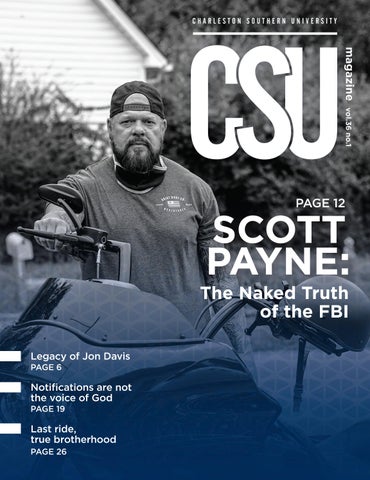
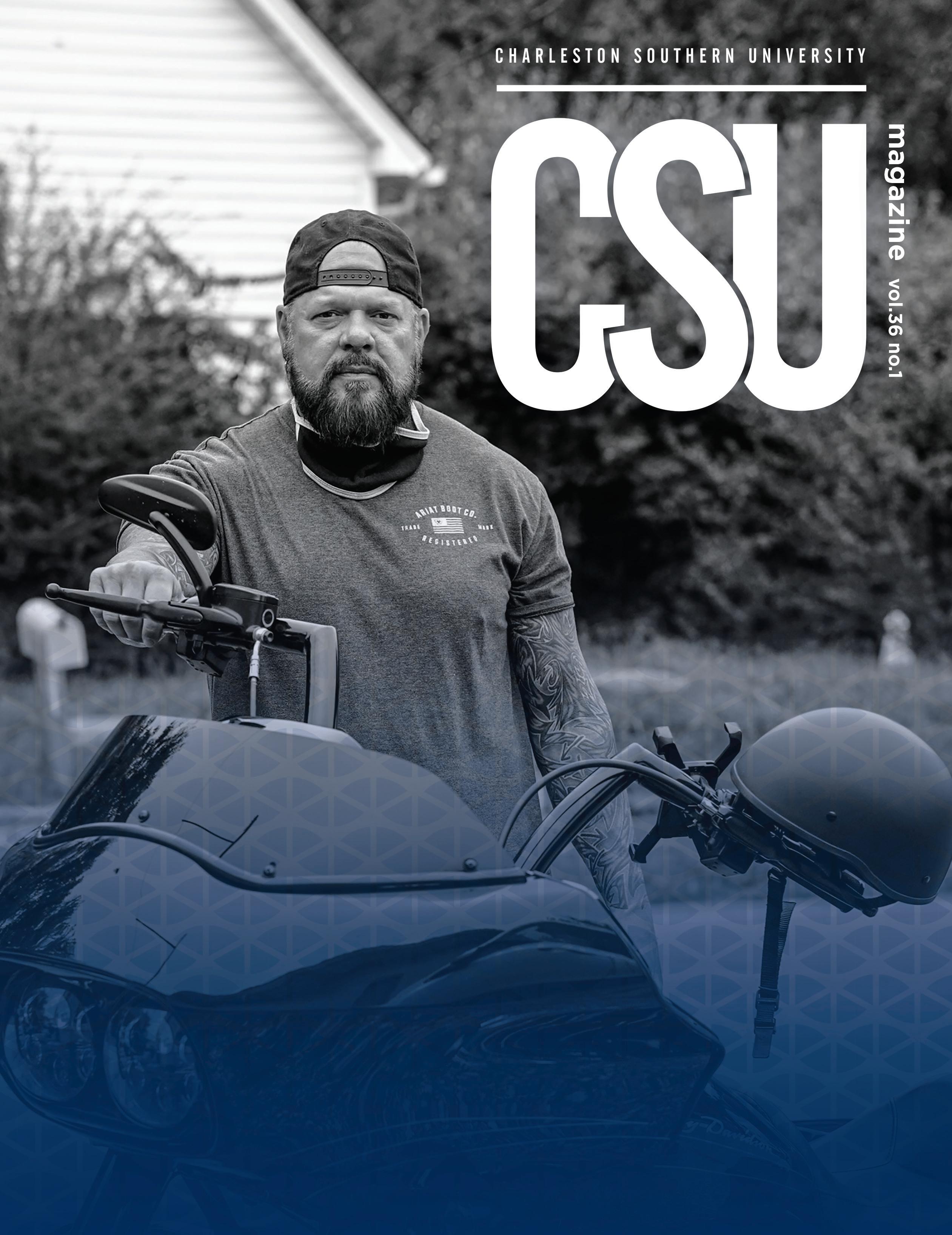
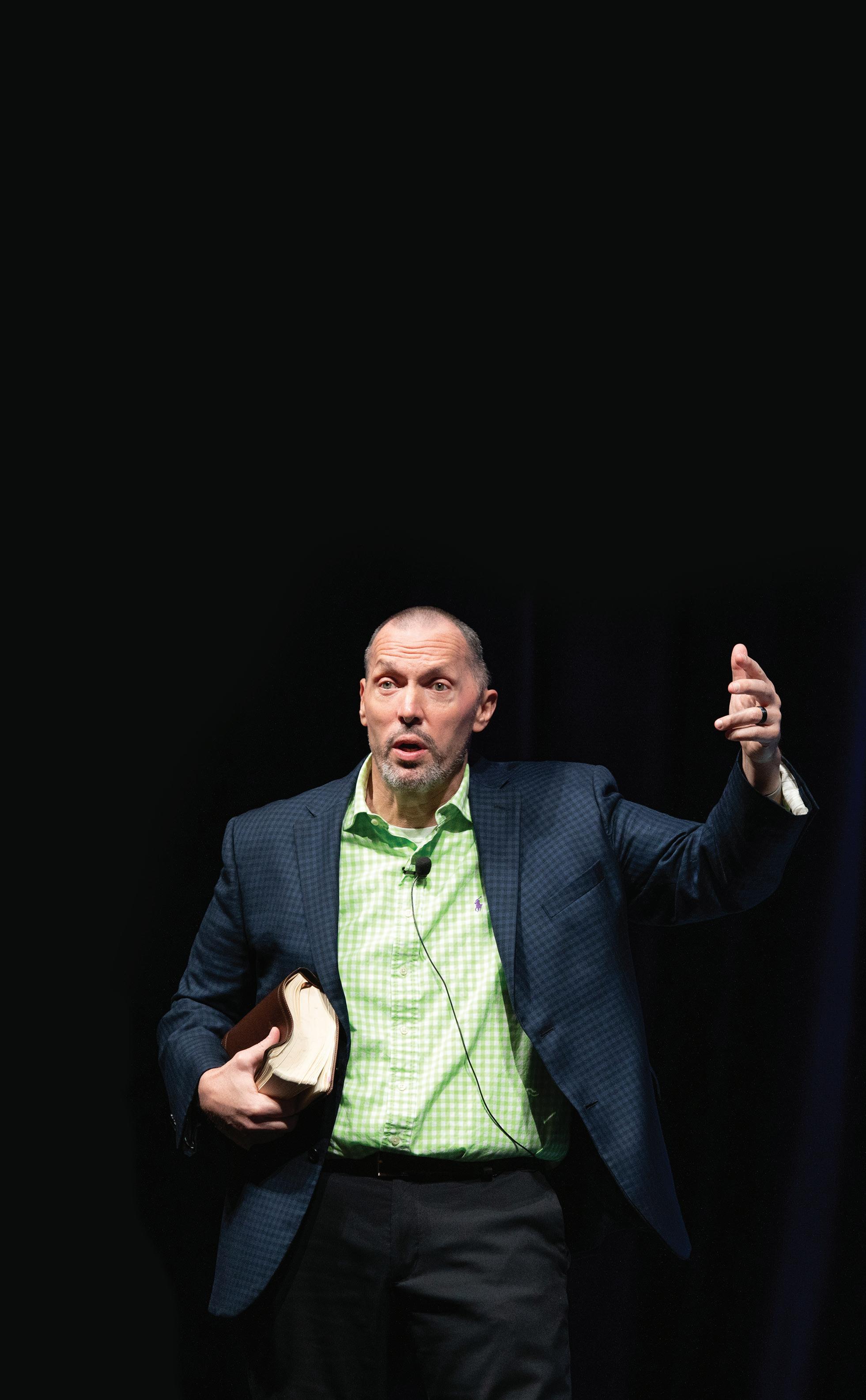
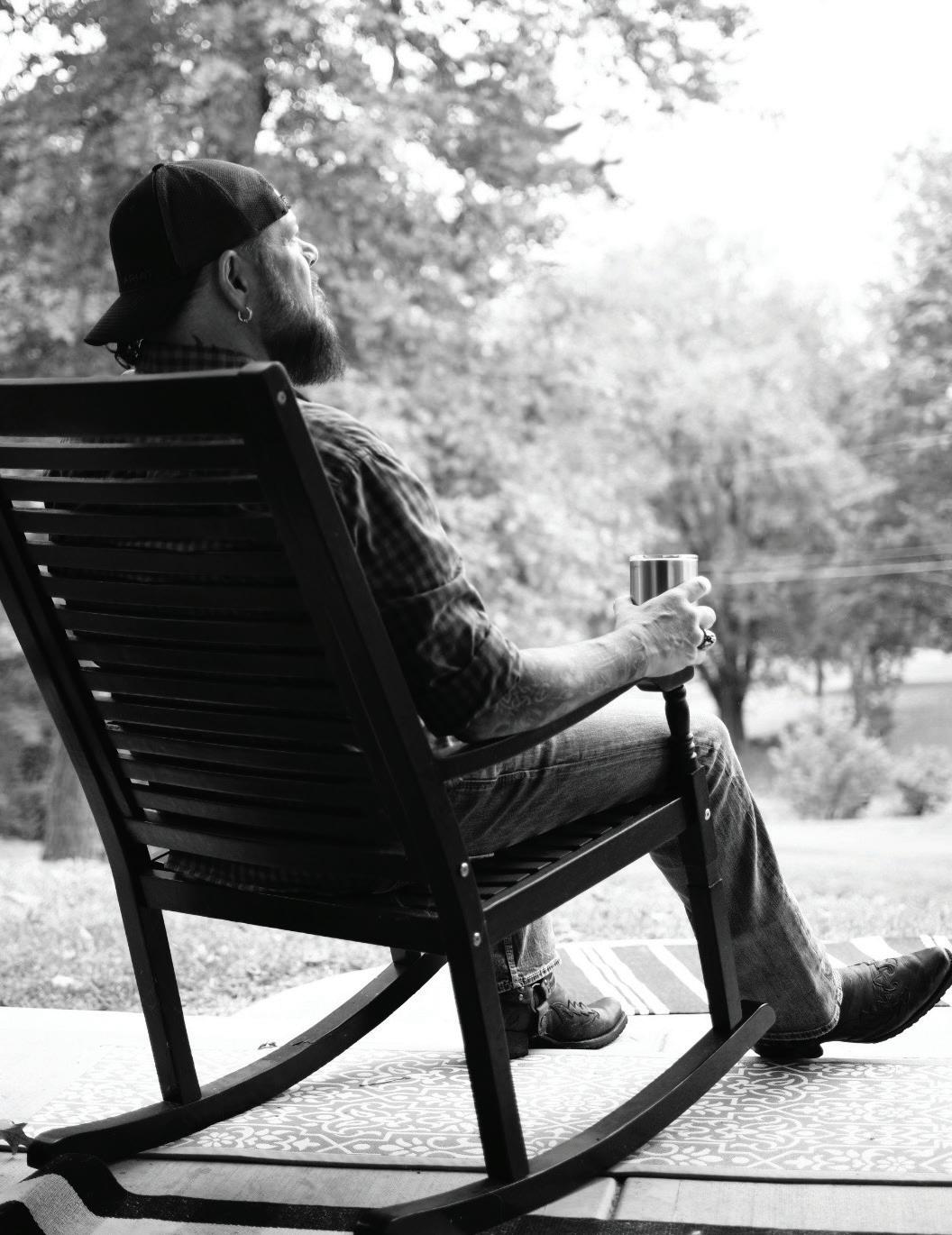
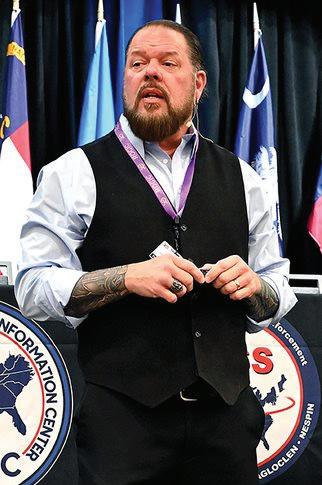
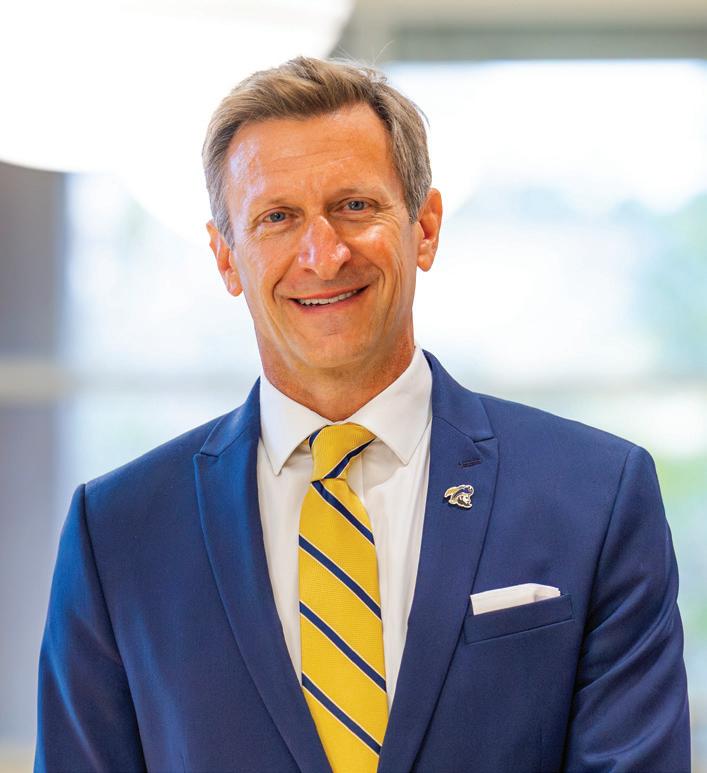
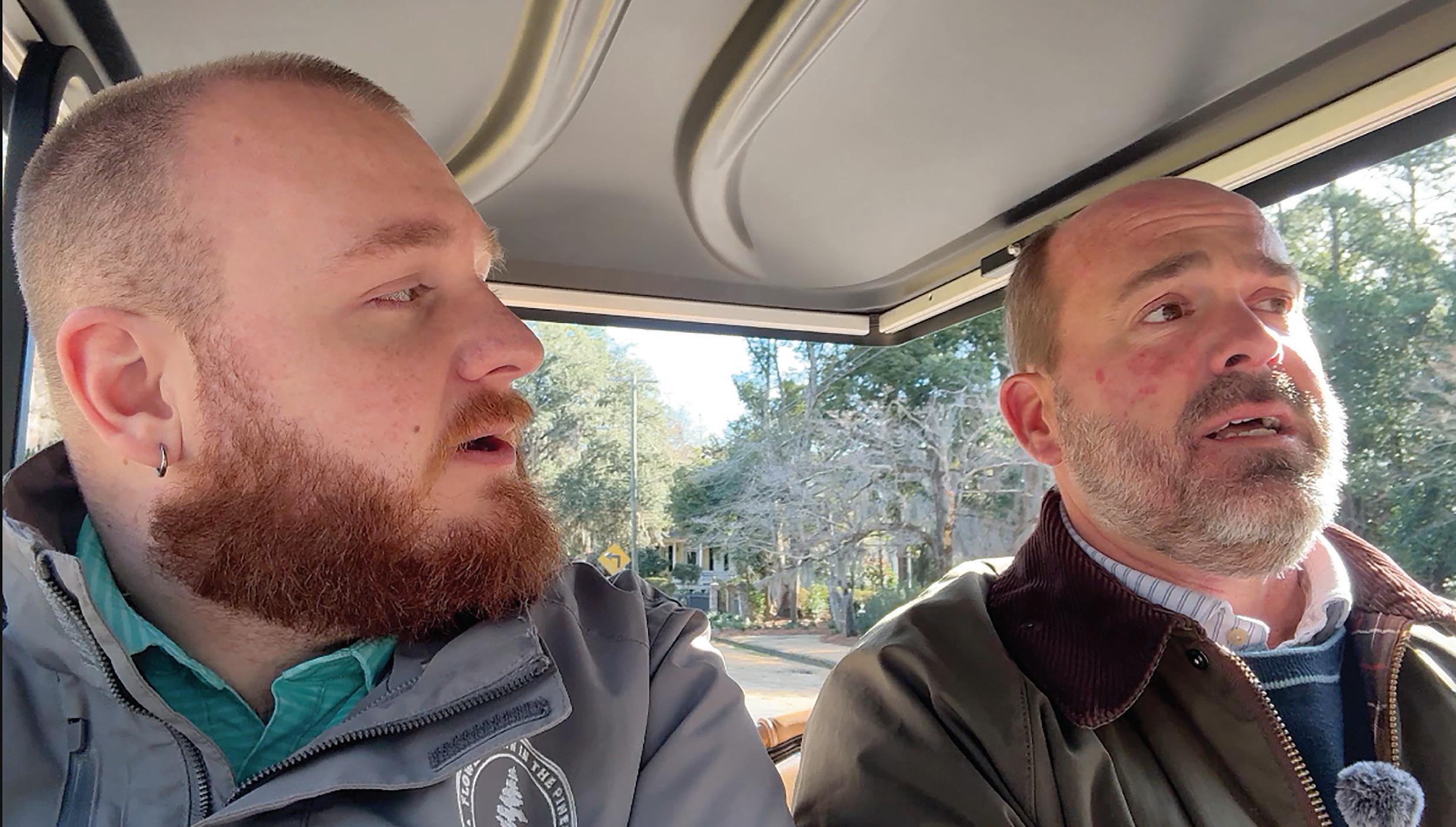
On the cover: Scott Payne, 1993 graduate, is a retired FBI undercover agent investigating some of the most dangerous groups in the country.
CSU Magazine is published by the Office of Marketing and Communication for alumni and friends of Charleston Southern University. Contact us: magazine@csuniv.edu
Address changes: csuadvancement@csuniv.edu
EDITORIAL STAFF:
Jan Joslin ’82, Editor | Content Director
McKenzie Barker, MBA, ’24 MS, Content Strategist
Miranda Briscoe, Creative Director
Zoe Ganiszewski ’24, Junior Graphic Designer
Jenna Johnson ’21 MBA, Executive Director of Marketing & Communication
Dan Steffy ’21, Multimedia Specialist
Daniel Taylor ’22, Lead Graphic Designer
Design and layout by: Bob Durand Design facebook.com/bobduranddesign Bob Durand DESIGN Printed by: Knight Printing and Graphics knightpandg.com
CONTRIBUTORS:
Katelyn Barwick ’19
Chase Beckham
CSU Athletics Communication & PR
Denise Dawson ’93, ’23 MA
John Strubel ’11, ’14 MS
Dr. Jennifer Zakrzewski
ACADEMIC DR.
ALUMNI DR.
Class Notes
Campbell’s educational research
Summey family
Makowski emerging leader
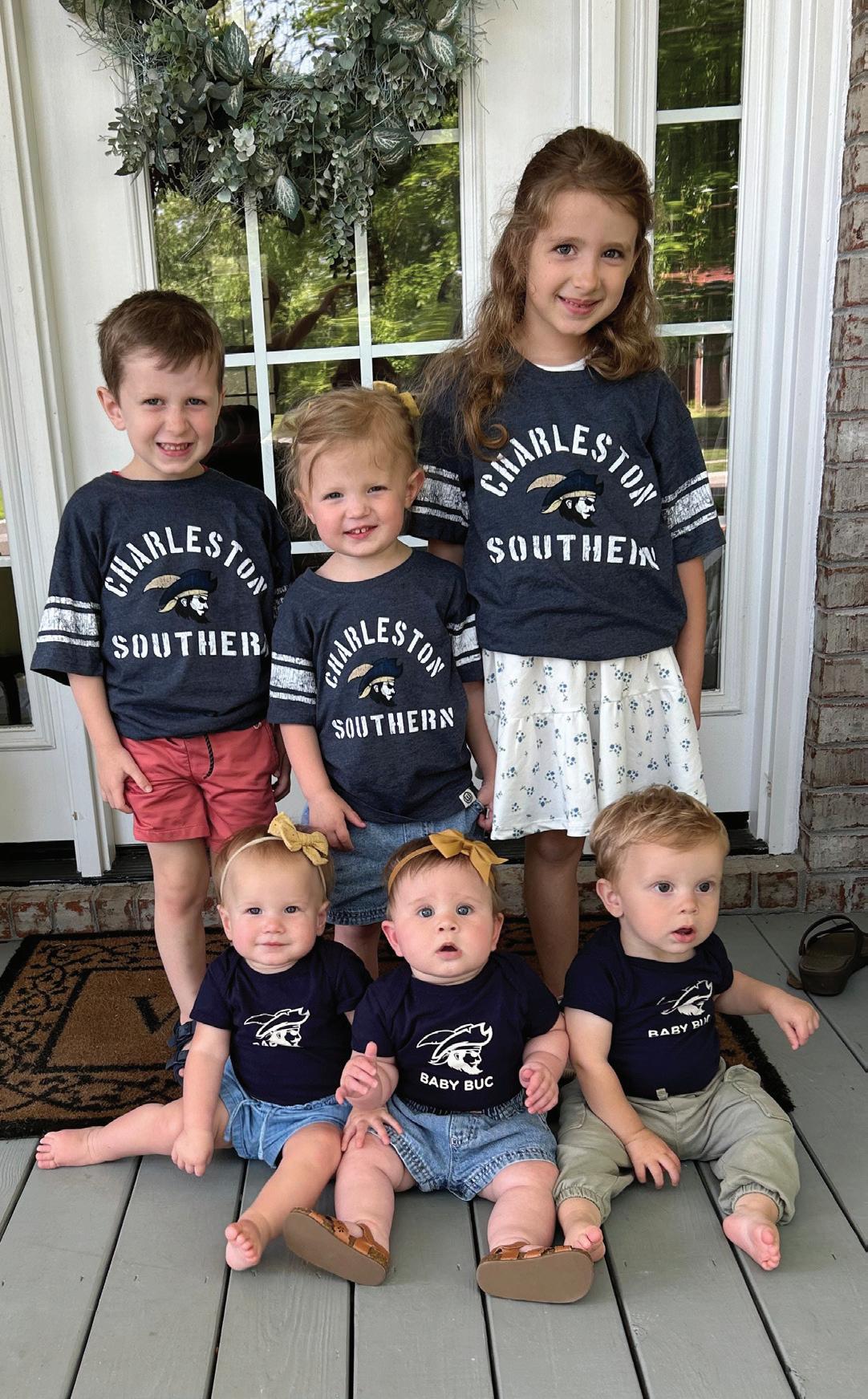
Baby Bucs
In memory
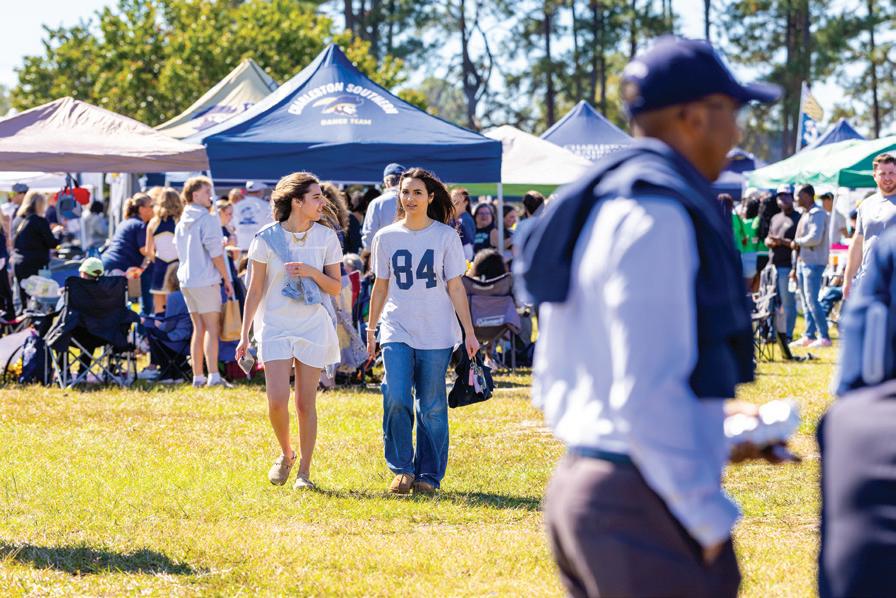
Homecoming 2025 recap
Alumni awards announced
Alumni question answered
Pinkerton’s Buccaneer journey
Spring in New York City
The
performance this
annual musical theatre
spring was Leonard Bernstein’s “On the Town,” directed by Dr. Jennifer Luiken and Professor Thomas Keating.
Photo by Dan Steffy
President’s message
Together we’re mapping CSU’s future
By B. Keith Faulkner
What does it look like to plan where Charleston Southern University will be 10, 20, 30 years from now? It is campus leaders, the senior team, and the Board of Trustees dreaming, planning, praying, and then leaning in and moving forward.
To launch CSU Rise – the university’s future plan – we’ve spent countless hours listening, praying, and strategizing to build the future of Charleston Southern. With the assistance of The McNair Group, we have examined where we are, where we are going, and figuring out how we are going to get there.
We don’t have it all worked out yet, but we do know one thing. It’s going to be big! You can read more about the specifics of CSU Rise on page 10. The plan, in a nutshell, is based on three pillars – inspire, innovate, and impact –reinforced by a foundation of investment.
CSU Rise officially rolls out June 1. We have
a plan that is Christ honoring and will lead us into the future. We’ve been leveling up, improving neglected areas of campus, building new spaces, renovating others, and fundraising for new projects. A recent example is working with the Board of Trustees to buy out the Wingate franchise of the on-campus hotel to permanently turn the building into student housing.
I recently shared with our students from Psalm 103. It is a great Psalm to read when you need encouragement. David wrote Psalm 103 as he was looking back on his life. I encourage you to use it to look forward. It contains the unshakeable truth that forgiveness brings us to a place of great confidence and praise.
Praising God is not a denial of hardship, rather praise defies despair. We have the holy choice to praise His name. When you are facing a difficult season, list your blessings. When
anxiety presses in, count your blessings, close your eyes, and thank Him.
As we continue to build our future plan, renovate and refresh older facilities, bring new facilities online, and strive for excellence, we are committed to creating a vibrant campus culture, advancing academic excellence, and empowering every student to thrive.
As the university rises to meet new challenges and develop future-focused academic programs, we will continue to graduate lifelong learners who are integrating faith and vocation.
Psalm 103:1-2 says, “My soul, bless the LORD, and all that is within me, bless his holy name. My soul, bless the LORD, and do not forget all his benefits.”
Be encouraged, and join us as together we Rise!
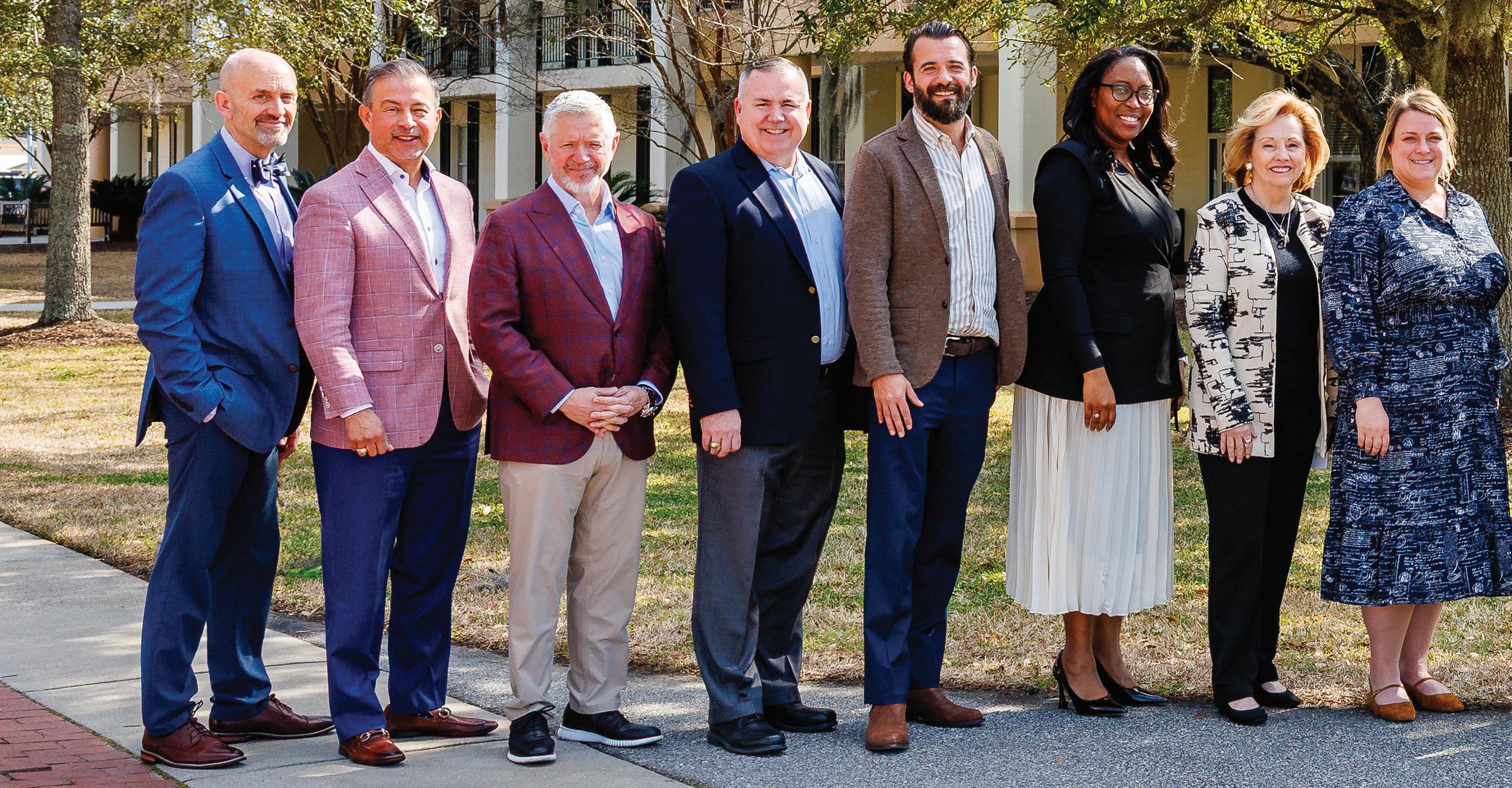
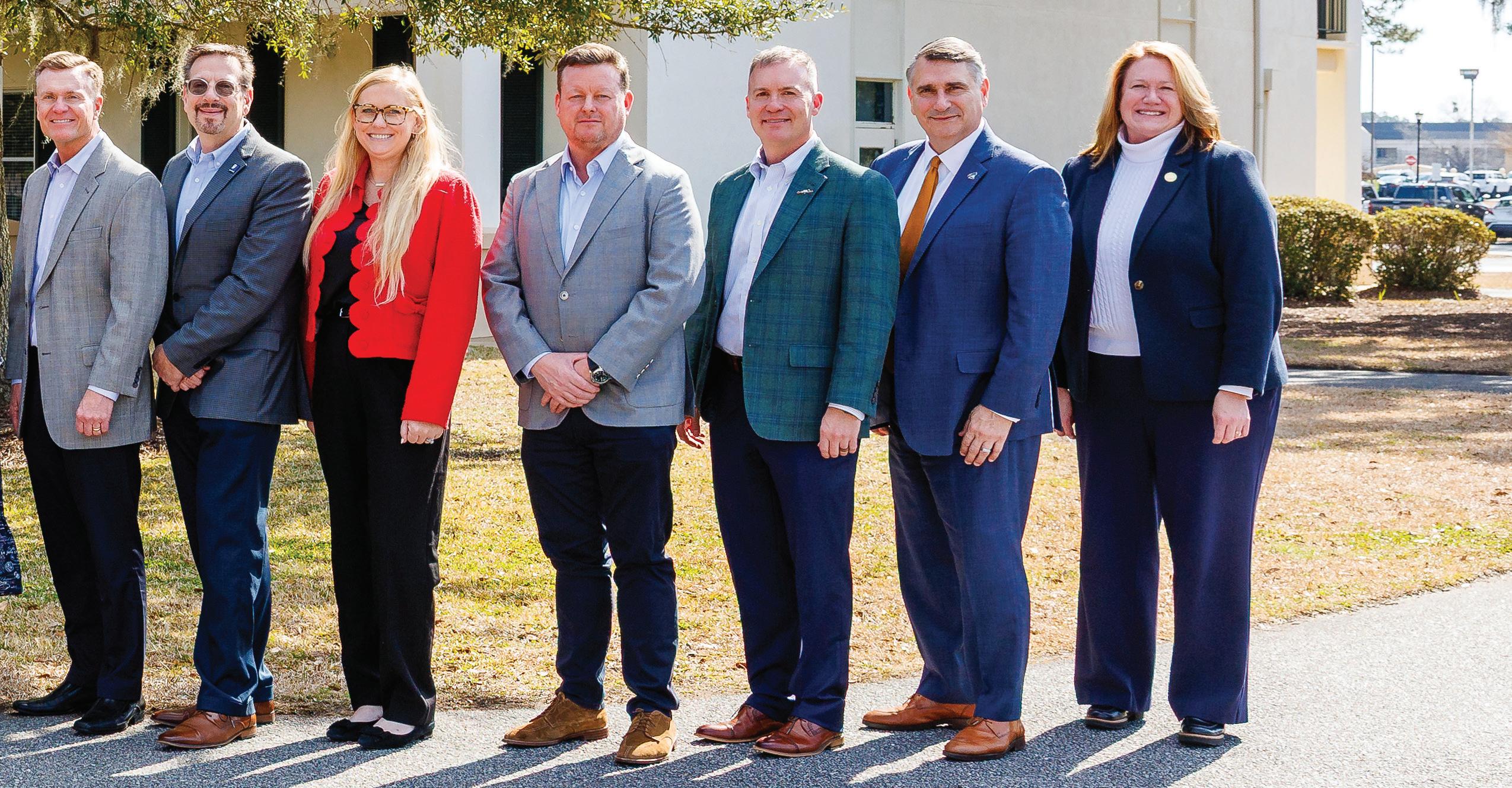
President’s Roundtable created
By CSU Media
The President’s Roundtable held its inaugural meeting in February and provides strategic insight and counsel to President B. Keith Faulkner. The advisory group provides guidance on emerging technology and insight into strategic relationships.
Faulkner said, “I am excited to work with these business leaders and look forward to learning their insights into workforce trends, industry needs, and opportunities and challenges in our region.”
Roundtable members will:
• Provide the university with critical information and developments in their respective fields.
• Assist in identifying and implementing best practices for new and existing programs.
• Assist in ensuring that programs are current and relevant to business, industry, public sectors, and professional development practices.
• Evaluate the labor market and potential demand for new programs.
• Engage in other areas of programming, including marketing, promotion, fundraising, and expanding opportunities for graduates.
BELOW Left to right: David Baggs, Charleston Southern; Joseph DeLeon, Roper St. Francis Healthcare; Michael Stavrinakis, Stavrinakis Franchise Consulting and Business Brokers; Scott Swartzwelter, Elbit America; Fabian Grimm, Mankiewicz Coatings USA; Ashely Teasdel, South Carolina Department of Commerce; Mary Propes, VDV Management; Taylor Jackson, Maritime Association of South Carolina; Rick Redden, R3 Advisors; Brian Itzkowitz, Palmetto Goodwill; Brittney Knisley Lawler, Mediterranean Shipping Company; Brian Carter, Keel; Reed Koepp, Community Leader; Keith Faulkner, Charleston Southern; Stephanie LeVan, Charleston Southern. Photo by Dan Steffy
The legacy of the Rev. Jonathon “Jon” D. Davis will only be fully known when we get to heaven, but his impact on the Charleston Southern family is undeniable.
The legacy of beloved campus pastor, Jon Davis
May 8, 1967 – March 9, 2026
Jon was diagnosed with glioblastoma in 2021 and lived the last five years continuing to minister on campus and to the many medical personnel he met while receiving treatment at MUSC Hollings Cancer Center.
He first came to CSU as an assistant football coach in 1991, and held numerous positions, the most recent as associate vice president for spiritual life. He also served as an adjunct professor of Christian studies. He was a full-time minister at Summit Church.
President B. Keith Faulkner: “Jon Davis led spiritual life on this campus for years, shining the light of Christ. His authenticity and strong desire to share the gospel with every person he met brought joy to our community. There are hundreds of stories of Jon leading students to the Lord, and the impact of his life on God’s kingdom and so many lives is immeasurable.”
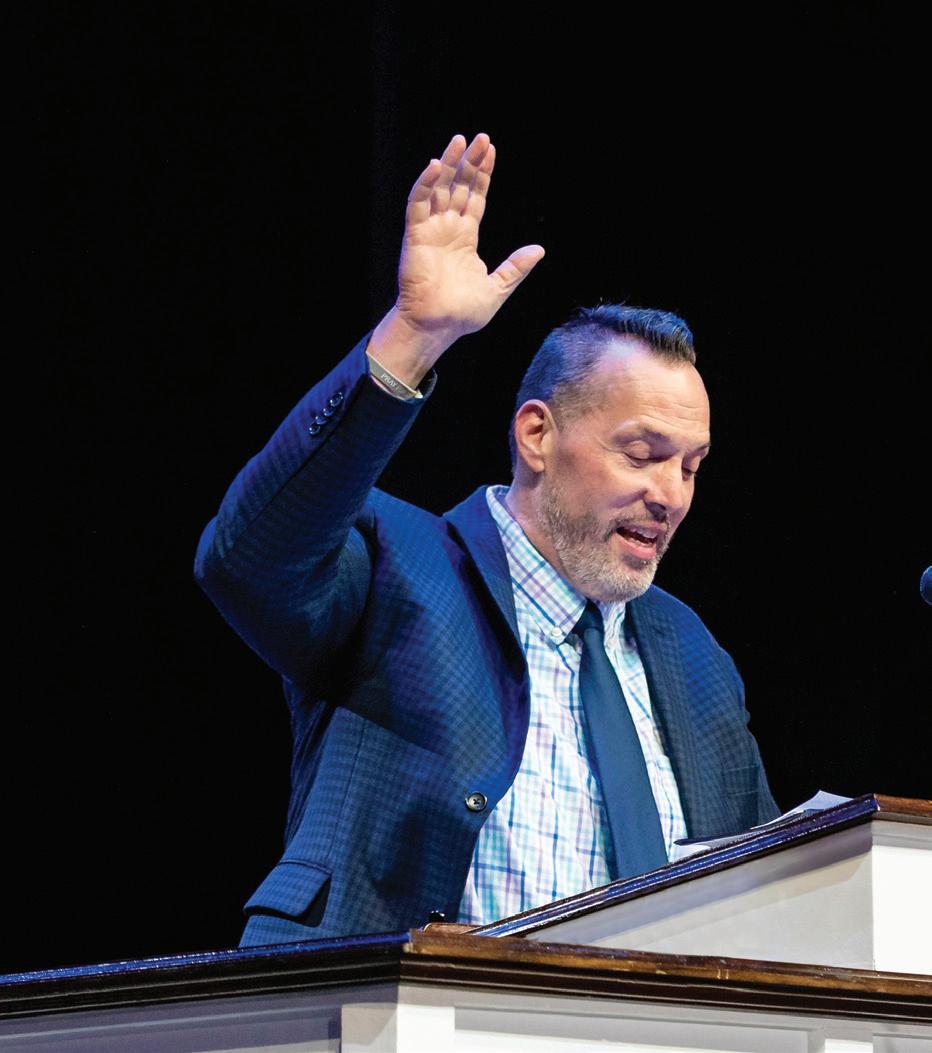
LEFT: Preaching at Chapel.
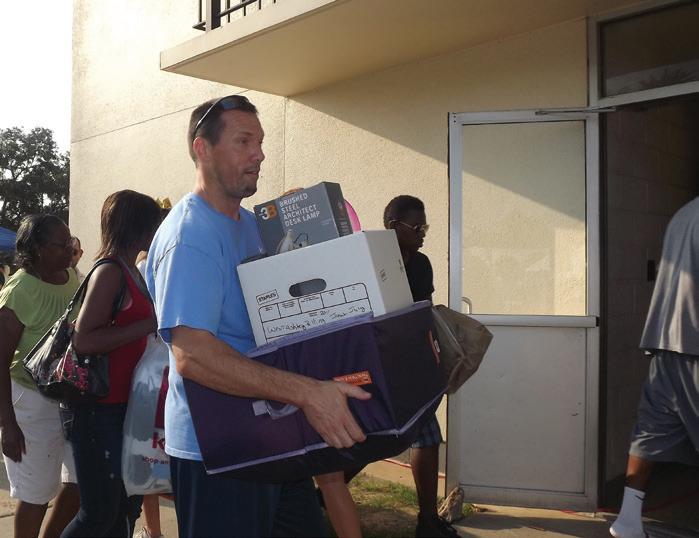
ABOVE: Move in day was a chance for Jon to show off his personality.
Photos from CSU Marketing & Communication files
Read his full obituary at charlestonsouthern.edu/campus-mourns-passing-of-pastor-jon-davis/.
AJ Rankin: “I had a blast taking Evangelism and Baptist History with him as my professor. He gave all the historical figures nicknames to help us remember them – and did so in a way that only Jon could do. As each class began, he would take a few minutes to share something fresh he was learning from God’s Word. That had such a huge impact on me.”
Matt Davis: “You couldn’t help but to be excited crossing paths with Jon. He made sure you knew he loved you and that Jesus loves you.”
Betsy Bolick: “I am serving Christ in college ministry today largely because of the Spirit of God in Jon Davis! A hero in the Faith, a warrior for the Kingdom, a spiritual father to thousands, and a faithful friend through the flames.”
Ebony Ruhe: “Pastor Jon was such a huge part of our lives. He was always so fired up about Jesus, and we loved that about him. So many of our memories from our collegiate years are centered around Bible studies with other athletes. He baptized both me and Michael, along with some of our teammates. I’ll never forget how excited he was when he told me that Michael had given his life to the Lord. That excitement, that passion for people knowing Jesus, that was who Pastor Jon was.”
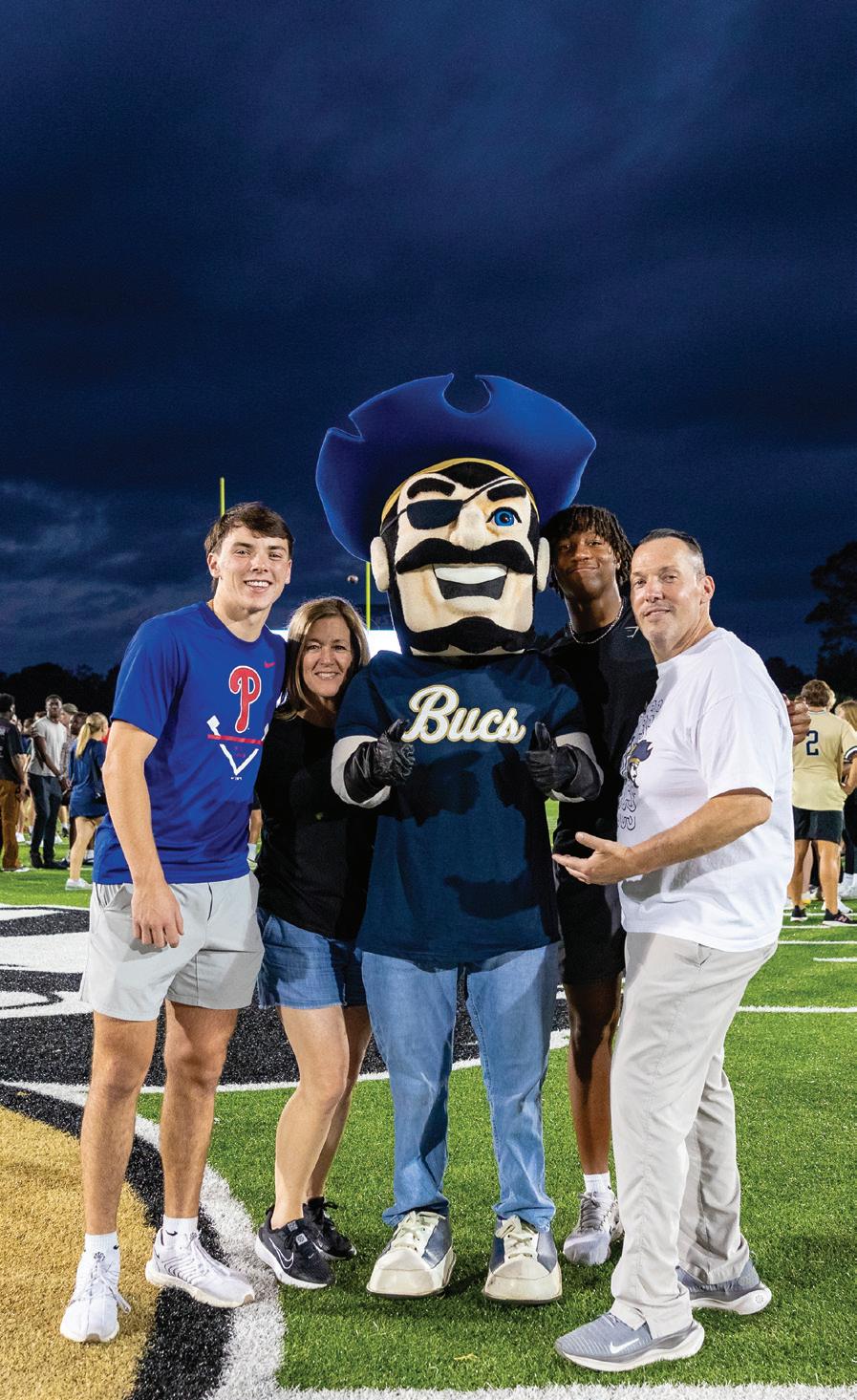
Greeting new students at Bucky’s Welcome with Lynette and Bucky.
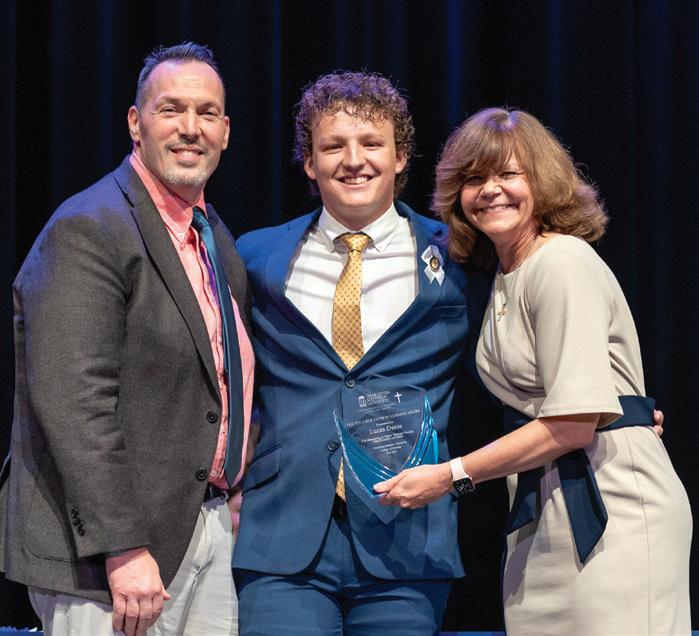
Inspired by Jon’s faith while battling cancer, the College of Nursing established the Jon Davis Faith in Nursing Award.
Lending a helping hand during Move in in 2012.
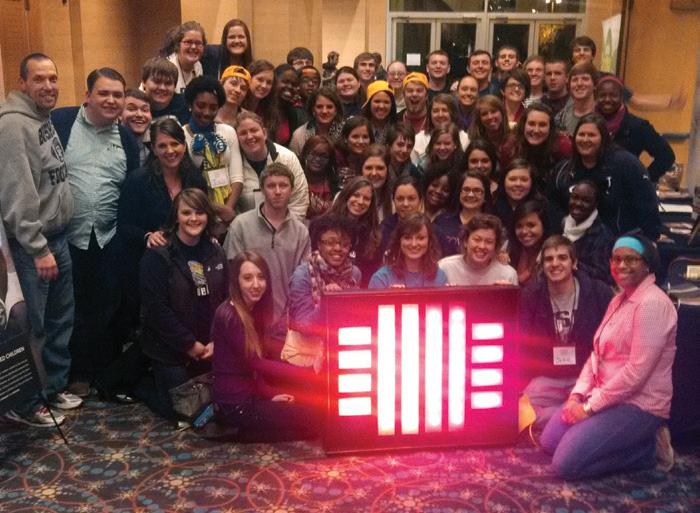
Leading a CSU student group at the annual S.C. Collegiate Ministries’ Converge Conference.
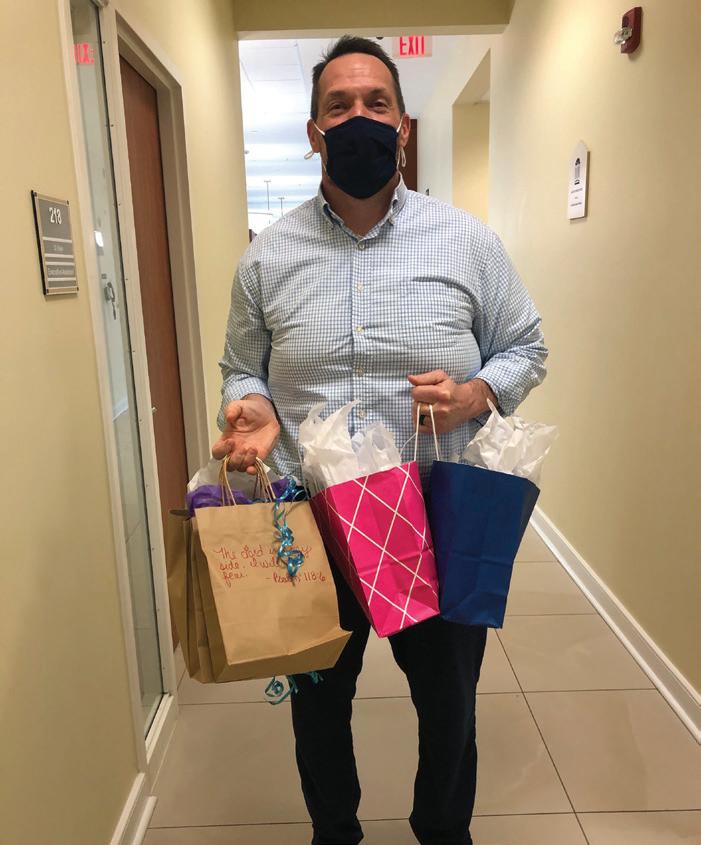
Delivering care packages to students in isolation during COVID.
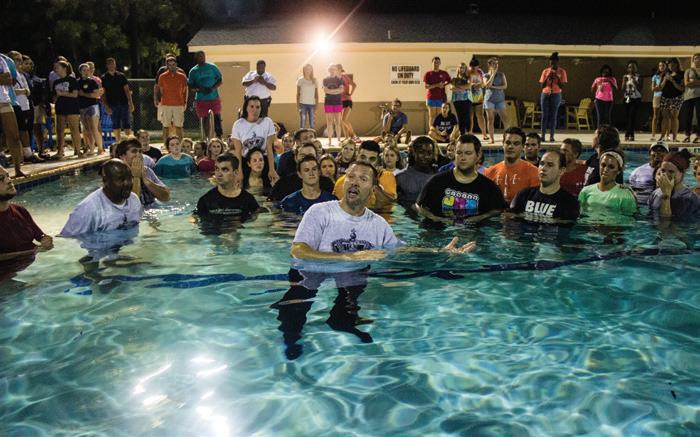
Jon loved sharing Christ and baptizing students in the campus pool.
CSU earns 2026-2027 Military Friendly® Gold School
By Jan Joslin
Charleston Southern University has earned the 2026-2027 Military Friendly® Schools Designation as a Military Friendly® Gold School and a Military Friendly® Spouse School. Charleston Southern has served veteran students for more than 50 years and currently has approximately 700 military connected students—which includes active duty, veterans, and dependents, representing nearly 20% of the CSU student population. U.S. Air Force ROTC Detachment 772 at Charleston Southern has graduated military leaders since the 1970s.
Bell Tower Project
Angelyn Taylor, CSU director of military services, said, “We are proud to announce our designation as a Gold status Military Friendly School®. This top-tier classification indicates our school ranks in the top 10% nationwide for military-connected student support, retention, and graduation outcomes. We hold ourselves to a high standard, ensuring that our militaryconnected students receive the best return on their educational investment, and that they feel seen, supported, and appreciated.”
Taylor said, “At CSU we are not only welcoming our military-connected students but also enabling their success from enrollment through graduation and into their civilian careers. Gold means excellence, and our veterans, service members, and military families deserve nothing less.”
Charleston Southern is in the process of raising funds to build the P. Cecil Patrick Jr. Family Veterans Center, named for the transformational seven-figure gift from the Patrick family, to serve the needs of militaryconnected students.
New era in CSU online education
By Jan Joslin | Photo by Dan Steffy
CSU has long been committed to meeting students where they are—academically, professionally, and personally. As higher education continues to evolve, the university is taking an important step forward in the structure and deliverability of its programs for adult and online learners.
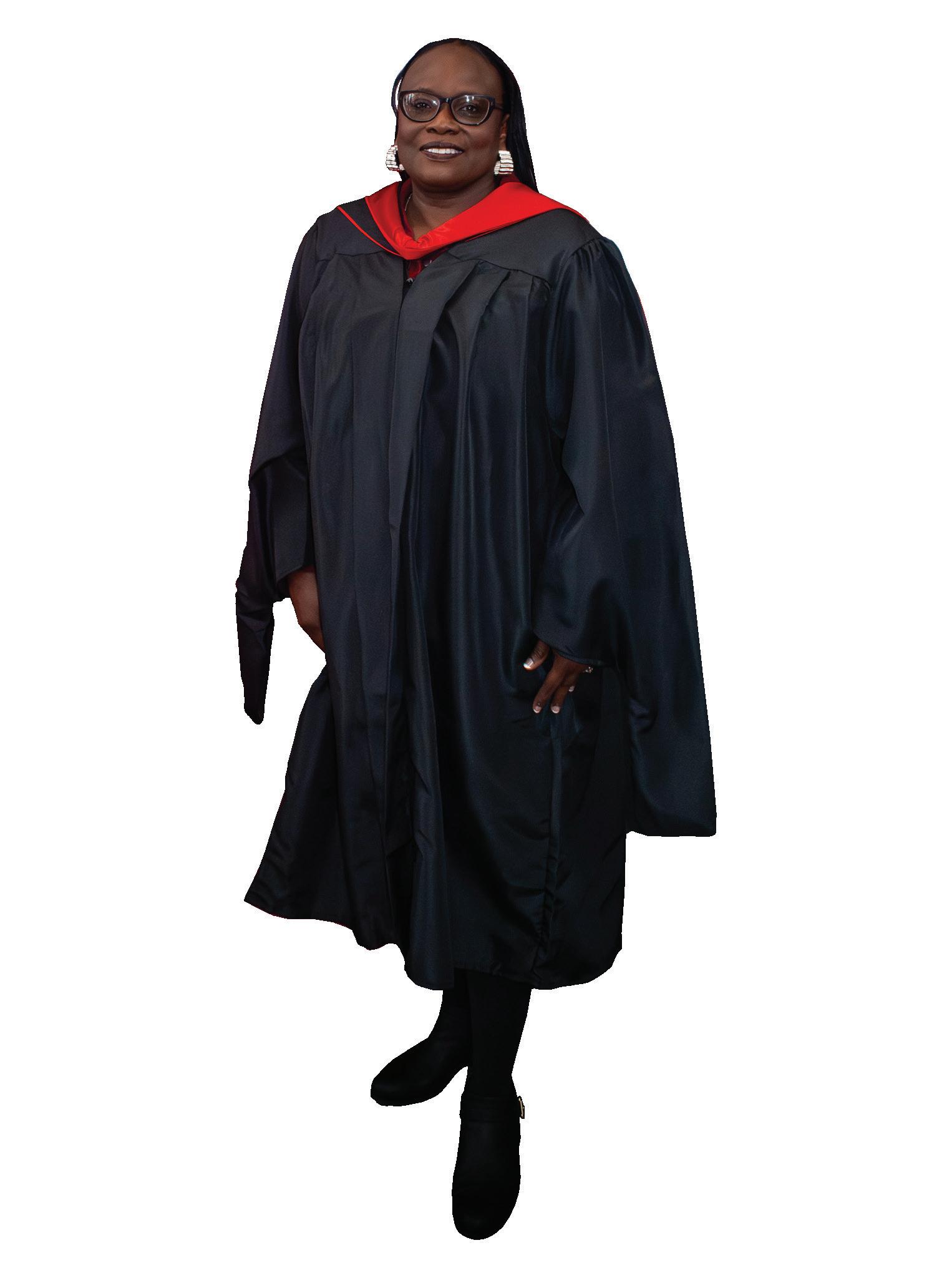
Effective June 1, 2026, the university will sunset the College of Adult & Professional Studies as a standalone college, and the degree programs will move operationally under the Nielsen College of Business. These degree programs include bachelor’s degrees in healthcare administration, hospitality and tourism management, human resources, management, professional studies, project management, and supply chain management. Master’s degrees moving to NCOB include business analytics, management, project management, and supply chain management.
While some organizational transitions have already begun to help position CSU well for the coming academic year, a full curricular review will take place during the 2026–27 academic year.
This transition marks a new chapter, but it is also an opportunity to recognize the
tremendous legacy of CAPS. For many years, the program served as Charleston Southern’s evening college, opening doors for working professionals seeking career advancement, those pursuing career changes, and individuals determined to complete a bachelor’s degree but unable to attend a traditional daytime classroom setting. CAPS was also an early adopter of online degree programs, helping pave the way for CSU’s expansion into digital learning and serving as a catalyst for growth across the university and the establishment of CSU Online. CSU will continue to offer online degrees across multiple disciplines and colleges, further extending the university’s reach and reinforcing its commitment to accessible, flexible education.
Functionally, the transition of CAPS programming includes six full-time and 10 parttime faculty members, and two staff members who will now operate under the Nielsen College of Business—led by Dr. David Palmer. Dr. Marc Embler, who has served as dean of CAPS and associate vice president for academic affairs, will bring his deep expertise in online education to a new role as coordinator of the online criminal justice and psychology programs.
Historic Giving Day tops
$1.7 million
Thank you for being part of CSU’s historic giving day on March 26 and investing in CSU’s future. Your generosity is shaping lives in ways that will be felt for years to come.
Because of His faithfulness and your incredible generosity, CSU experienced a truly record-setting day—surpassing our $1 million goal and making a lasting impact on our students’ lives. Your willingness to give, support, and believe in this mission is something we do not take for granted.
2026 GIVING DAY
$1,731,731.90
1,065
CSU Rise marks a new day for the university
By Jenna Johnson | Graphic by Daniel Taylor
Multiple people and departments have worked for months to establish a future plan for Charleston Southern University. The result is CSU Rise.
RISE marks a new day for Charleston Southern. Just as the sun rises each morning with promise and purpose, this plan for the future signals a fresh season for CSU. One filled with light, momentum, and the courage to grow.
In scripture, rising is both a command and a calling. It means to awaken, to advance, to step forward in faith. Through this plan, we rise together to build a university that reflects Christ more fully, serves students more deeply, and impacts the world more boldly.
Learn more about the university’s future plan at charlestonsouthern.edu/RISE.
RISE captures a spirit of renewal and readiness.
We are rising to meet the moment and step further into our role in a region bursting with opportunity. This is not just about planning for the future. It’s about creating a tangible roadmap for CSU’s rise to the next level of excellence.
RISE is anchored by three strategic pillars: Inspire, Innovate, and Impact. These pillars give shape to how we grow individually and institutionally and provide the foundation for CSU’s rise to the next level of excellence.
Inspire: We strive to integrate faith into every aspect of our organization so that Christ is reflected in all we do. This commitment creates a culture that uplifts, encourages, and
equips students and team members to pursue excellence with purpose.
Innovate: Innovation is a bold, faith-driven commitment to progress. It means embracing forward-thinking strategies with the goal of strengthening our mission and expanding our reach. At CSU, innovation empowers creativity and faithful experimentation.
Impact: Impact is measured by lives transformed. We are called to be ambassadors of good—on campus, in our communities, and around the world. Through trusted relationships, service, and a commitment to growth and well-being, we advance God’s Kingdom in lasting ways.
Board of Trustees welcomes new members
By Jan Joslin | Photos by Dan Steffy
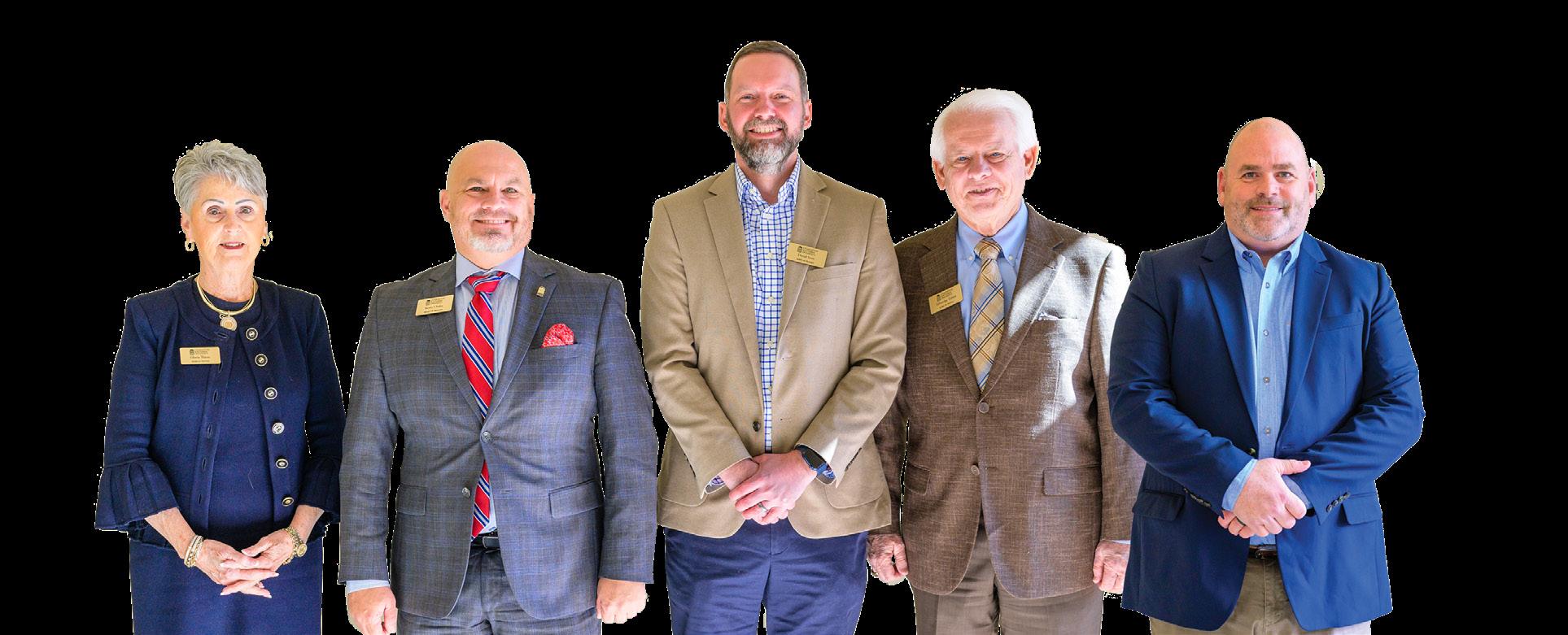
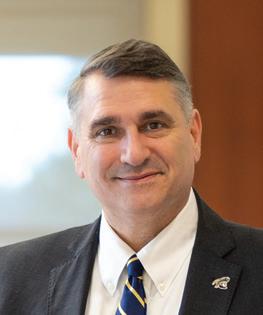
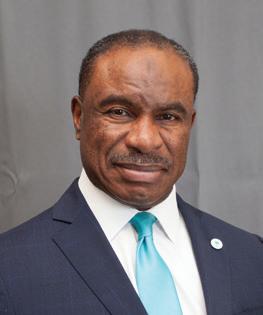
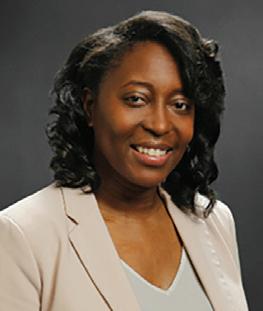
Five new members of the Charleston Southern University Board of Trustees were welcomed at the January 2026 board meeting and will serve until 2030. New members of the board:
David Sons, serving his first term, is senior pastor of North Augusta First Baptist Church in North Augusta.
Gloria Thiem, serving her seventh term as a CSU trustee, is a retired business owner.
Talmadge Tobias, serving his first term, is the retired city manager of the City of Sumter.
Stacy Wiggins, owner of Stacy E. Wiggins, CPA, PC in Charleston, is serving his first term on the board and holds a BS and MBA from Charleston Southern.
Pictured left to right: Gloria Thiem, Kevin Chafin, David Sons, Talmadge Tobias, and Stacy Wiggins
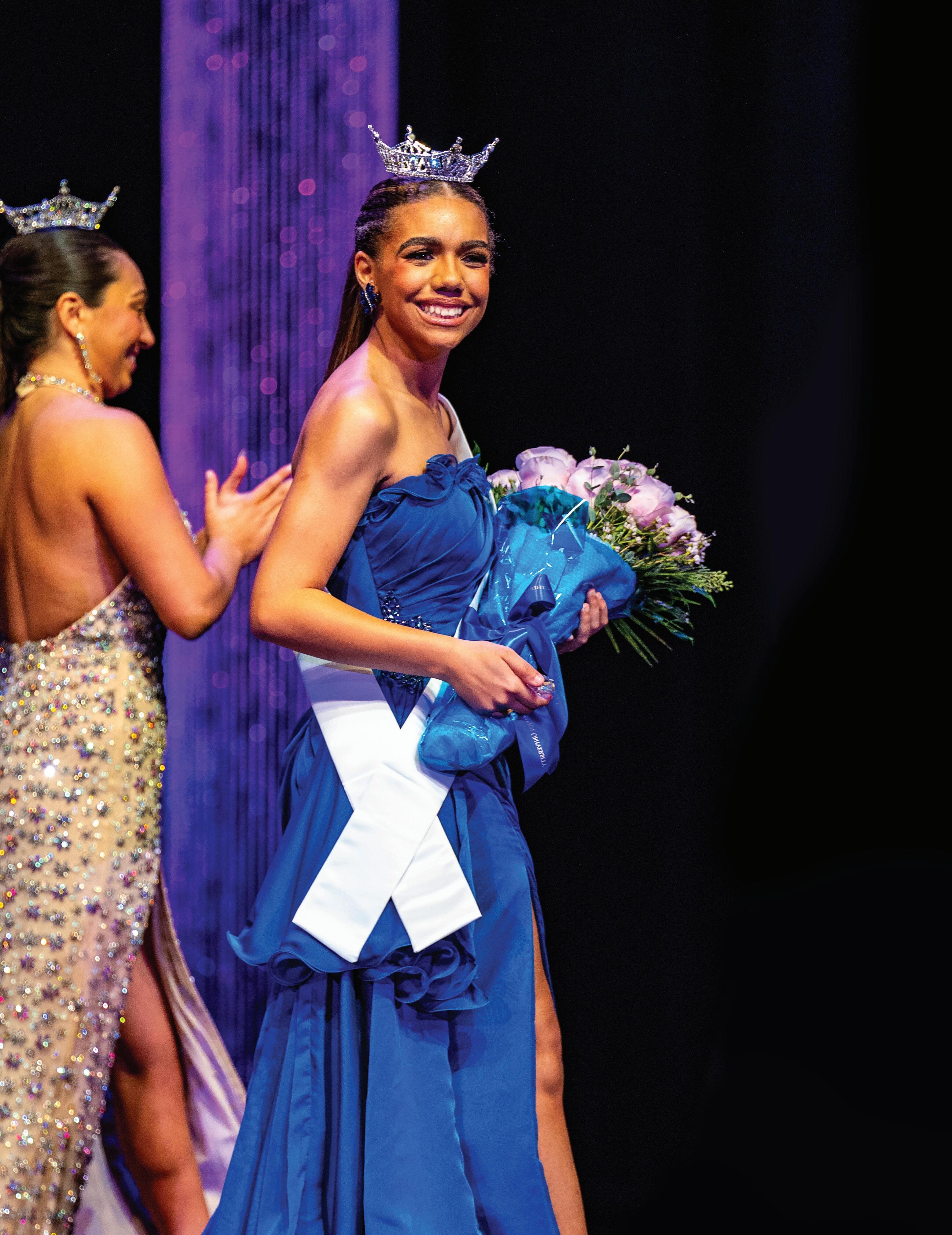
Miss CSU 2026
Anaya Wallace, a freshman communication major from Jesup, Georgia, will represent CSU at the Miss South Carolina pageant this summer.
Photo by Katelyn Barwick ’19
SCOTT PAYNE:
The Naked Truth of the FBI
By John Strubel | Photos provided
It is really like a Bugs Bunny cartoon. You got Ralph, the sheep dog, and you got Sam the coyote. They clock in every morning. Morning Ralph. Morning
Sam. All day long, the coyote tries to steal sheep. The sheep dog tries to protect the sheep. At the end of the day, they clock out, “See you tomorrow, Ralph. See you tomorrow, Sam. It’s a cat-and-mouse game. They’re trying to break the law without getting caught, and we’re trying to enforce the law. – Scott Payne (’93)
After 28 years as an FBI Special Agent, you’d think Scott Payne might be a little jaded, or maybe a bit pessimistic about life, but no.
Payne, who retired from day-to-day law enforcement in 2021, is a gregarious character.
“If I didn’t have faith — and a sense of humor — and if I weren’t an optimist, I’m not sure I could have seen and done what I’ve done,” he said.
Payne, a 1993 graduate of Charleston Southern University and a member of the CSU football team, earned his degree in criminal justice. After college, he pursued a career in law enforcement and quickly moved through the ranks.
He spent three years as a uniform patrol officer before being promoted to vice narcotics investigator. “Then I applied to the FBI, got hired, and my first office was in New York City,” he said.
Payne eventually transferred to McAllen, Texas, before becoming an FBI case agent in East Tennessee. When he retired (2021), Rolling Stone magazine published a raw, behind-the-scenes story about Payne’s undercover career.
“That’s when literary agents started contacting me, saying they wanted to talk about a book,” he said. “I really didn’t want to do the Rolling Stone article.” >>
“If I didn’t have faith — and a sense of humor — and if I weren’t an optimist, I’m not sure I could have seen and done what I’ve done.”
— Scott Payne
The idea of writing a book seemed a bit of a stretch for Payne. “But they pitched me on it, and essentially, it was going to be doing the same thing I’m doing now,” he said. “I’m going to be telling these stories, everything I learned, good, bad, and ugly, to a co-writer.”
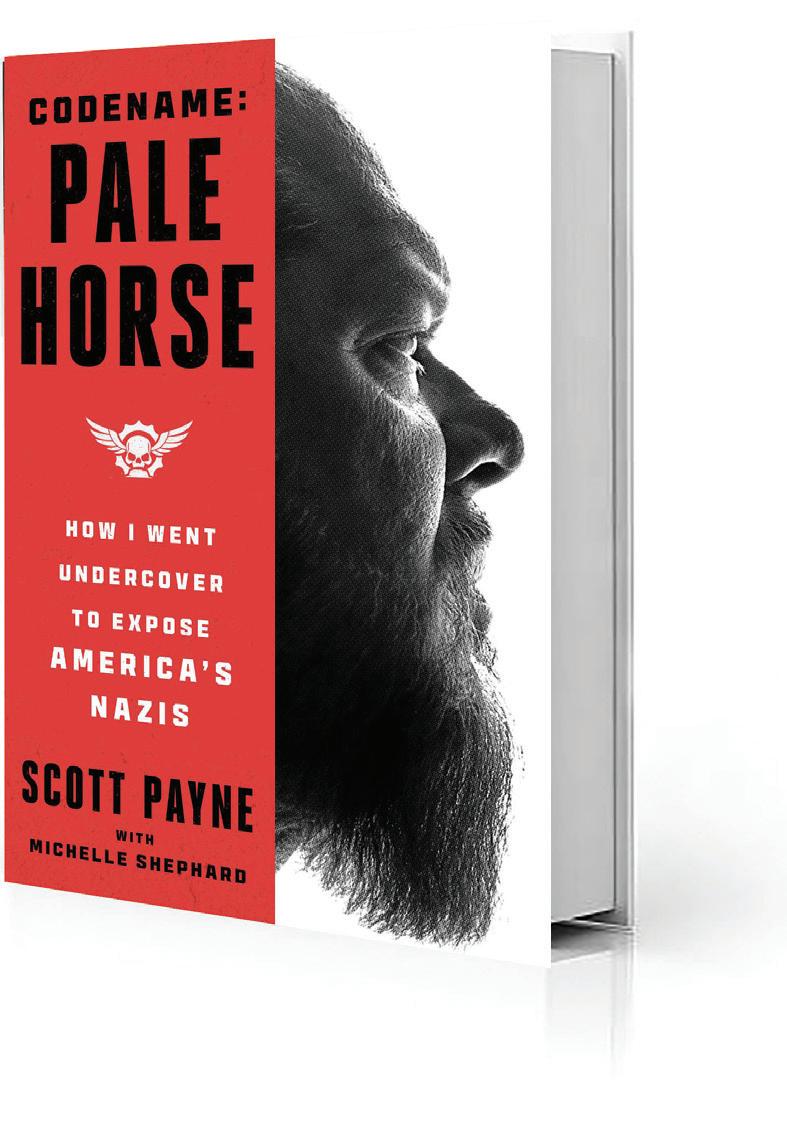
Last March, Payne (and his co-writer Michelle Sheppard) published Code Name: Pale Horse, How I Went Undercover to Expose America’s Nazis. By May, the book hit No. 4 on the New York Times bestseller list.
If you are a fan of the dramatic undercover stories produced by Hollywood – The Town, Point Break, or American Hustle – then Payne’s undercover exploits will transform your understanding of the work.
In one scene from the book, Payne describes in detail working undercover with the Outlaws Motorcycle Club, the second-largest biker gang in the world.
“A one percent club,” noted Payne.
OPERATION ROADKILL
Payne spent 18 months on Operation Roadkill, an FBI undercover sting, developing evidence of illegal activity (insurance fraud, vehicle theft, carjackings, home invasions, drugs, extortion), building a case.
The Outlaws were looking to score a massive haul of drugs that included 40 kilos of cocaine and a thousand pounds of marijuana. The night before the scheduled operation, Joe Doggs, president of the Outlaws, called and asked Payne to meet him at the “clubhouse.”
“… And it’s just a weird exchange from the beginning,” remembers Payne. “I’m knocking on the door, and he’s not coming. Then he peeks his head out and tells me we’re not ready yet.”
What Payne described next is an experience that even the best Hollywood writers couldn’t create.
When he entered the clubhouse, it was full of members of the Outlaws. He sat down and was making small talk when “Clothesline” (road name) approached him and asked, “Tex, you got a minute?”
“In the clubhouse, there’s one door I’d never gone in,” remembers Payne. “That’s the door we went in. It led to a tiny crawl space. They brandished their pistols and let me know that I’m not free to leave.”
Payne was instructed to write down his full name, date of birth, social security number, address, and family names.
“I’m freaking out,” said Payne. “As soon as I went down that stairwell, I started to freak out because I knew it wasn’t good. When Clothesline went in, I walked behind him, and another outlaw came in right behind me, and I thought, ‘Oh boy, this isn’t good.’”
Payne was told to take all his clothes off so they could check him for a wire.
“Well, the problem was, I was wired to the hilt,” said Payne. “I had two recording devices and a transmitter on. They checked on me and didn’t find anything.”
The stress began taking over, which Payne says led to a nervous system adrenaline dump. “You get auditory exclusion. You feel like you’re underwater. Everything you hear is going, whoosh, whoosh. Real slow. Your eyes dilate, and everything you’re looking at is like screen grabs. It’s not smooth when you move left or right; it’s just click, click, click.”
His heart raced. His throat tightened, and his hamstrings were “rubbery.”
“My training kicked in,” he said. “Don’t vapor lock. Keep working, find more intelligence, and figure out a way to get out of it. What my face is saying to Clothesline is, ‘Tell me I’m going to be okay,’ and what his face is saying back to me is, ‘You’re going to be okay.’ But he didn’t know I was wired or that I was an undercover FBI agent. I’m sure his answer would be a little different.”
Clothesline grabbed his jacket and began kneading the sleeves with his fingers.
“Hey, I’m not going to find anything in here?” his fellow Outlaw asked.
“I know that piece of clothing is one of my recording devices,” said Payne. “I know he is getting close. You hear an audible sigh from me. He stops, misses it, and I live to fight another day.”
Operation Roadkill led to the arrest and imprisonment of 15 members of the Outlaws Motorcycle Club.
The day after the book was released, Payne appeared on Joe Rogan’s podcast, and the floodgates opened. “Since I did Rogan, some of the guys have called me to say, ‘no hard feelings, I know you were just doing your job,’ and others reach out and blast me,” said Payne. “I laugh and block them.”
The former FBI agent insists he has no fear of those he’s arrested and sent to jail. “I was a uniformed cop,” he said. “How many people do you lock up in a year? They’re going to get back out of jail. I would always just go up and talk to them. My best defense is a good offense. It’s not personal. It’s a job. It’s a calling. But I try to treat people with respect.”
A SERVANT’S HEART, A SHEPHERD’S MENTALITY
“For Charleston Southern and Christ followers, when the Lord is blessing you and when you’re on the front line, whether you’re a worship leader, whatever you’re doing, that angers the enemy, and the enemy’s going to attack. The enemy came and attacked. I’m just trying not to let the enemy win.
“I’m a believer,” said Payne. “I do believe God put me on this earth to serve.”
Payne, who received the Charleston Southern University 2025 Distinguished Alumni
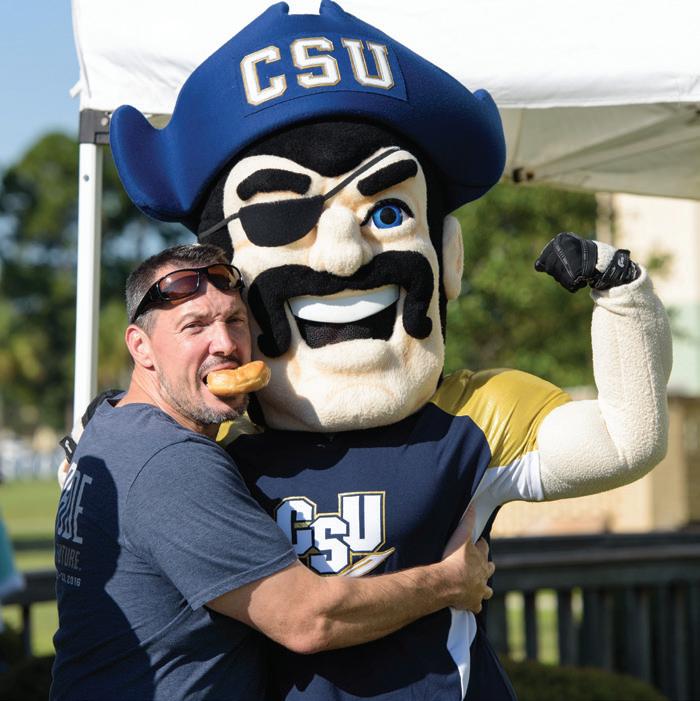
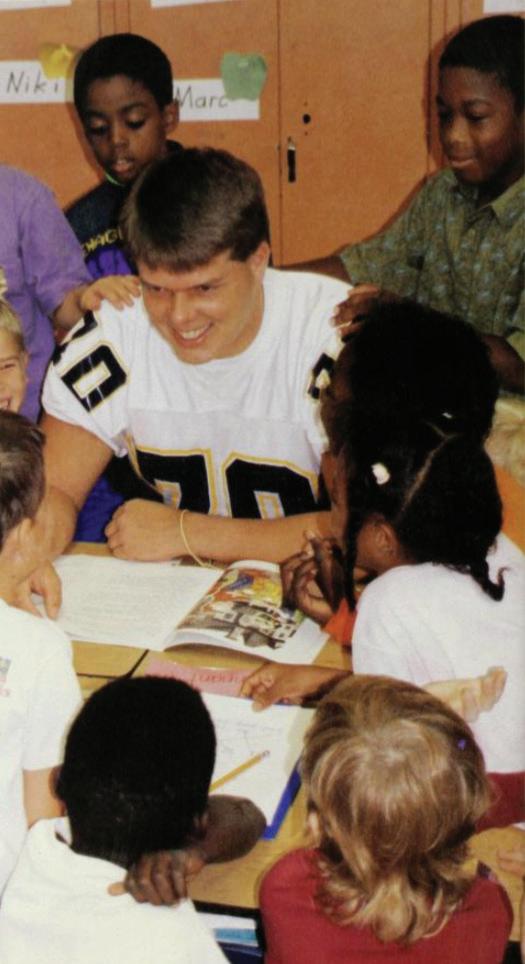
As a member of the CSU football team, Scott Payne reads to students in a local elementary school. CSU file photo
Award, uses his platform not only to share his story but also to show how his faith has placed a hedge of protection around him, even in the darkest hours.
“There will be bumps in the road, but I try to serve God, my family, and the public,” he said. “I’ve got a servant’s heart. You got that shepherd mentality. I’ve always been a bully of bullies. I took up for the underdog, and that just went with that shepherd’s mentality.”
Despite the threat of anger for convicts, Payne has remained faithful in his walk and
his worship. When Payne moved to Tennessee, he was working undercover and a member of his church. He served on the worship team and attended weekly small group meetings.
“The big thing for me was being involved with my church,” he said. “My small group helped me stay grounded. Even when I couldn’t tell them about the case I was working on, I let them know when I was hurting. They would lay their hands on me and pray over me. I just don’t know if I’d have made it through without prayer.”
PAY IT FORWARD
Since retiring, Payne has continued to share his experience as an instructor at Texas Tech University’s Advanced Law Enforcement Rapid Response Training (ALERRT), a program that attracts 400+ law enforcement professionals to its annual conference.
“My mentors — Joe Pistone and Donny Brasco — reached out,” said Payne. “They told him to put pen to paper about everything you’ve learned through this process — good, bad, ugly — that’s how you pay it forward. That’s how we teach and keep this from happening again. That’s how we get great blocks of instruction.”
Payne said four chapters of the book represent three years of his life as an FBI undercover agent. He’s been sharing his experience with law enforcement groups and conferences for nearly two decades, reaching thousands of law enforcement officers. He has recently expanded his curriculum to include domestic terrorism and the development of confidential sources.
“I don’t believe you can be a good instructor and give good instruction without transparency,” said Payne. “I heard that after the book came out, people were shocked by how vulnerable I was. When you stand in front of 400 narcotics or gang investigators and break down crying when you’re telling a story — a 6’ 4”, 260-pound guy, all tatted up with earrings — it gets real.”
In retirement Scott Payne uses the lessons he learned throughout his career to train law enforcement professionals.
CSU packs most OCC boxes nationally, 7th year in a row
By Jenna Johnson | Photos by Dan Steffy
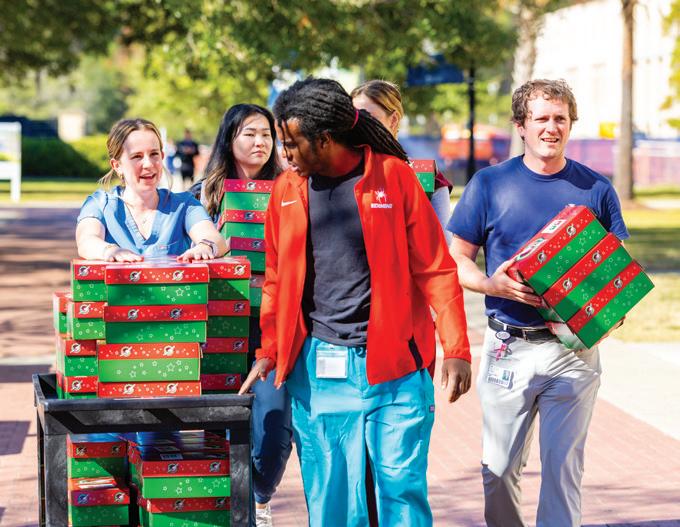
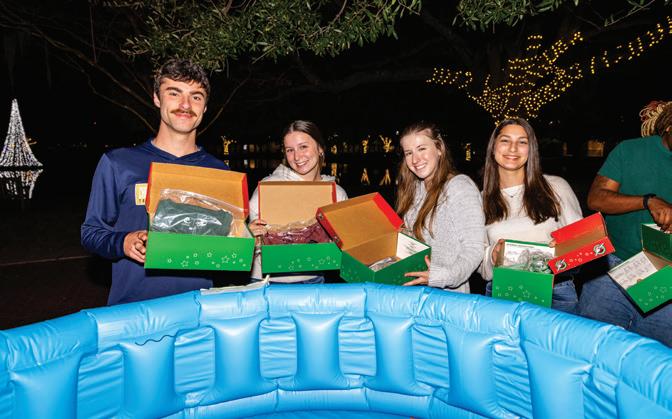
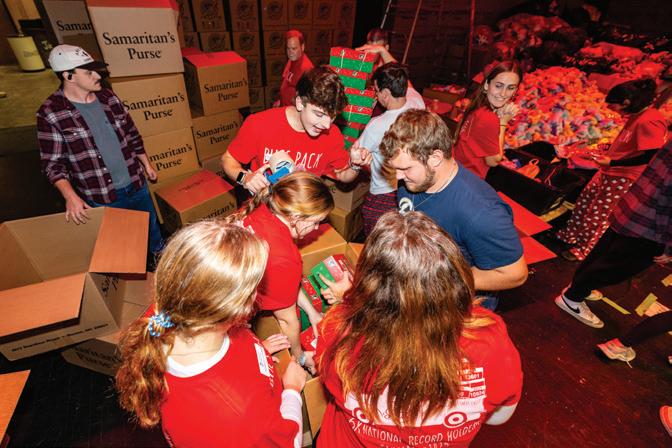
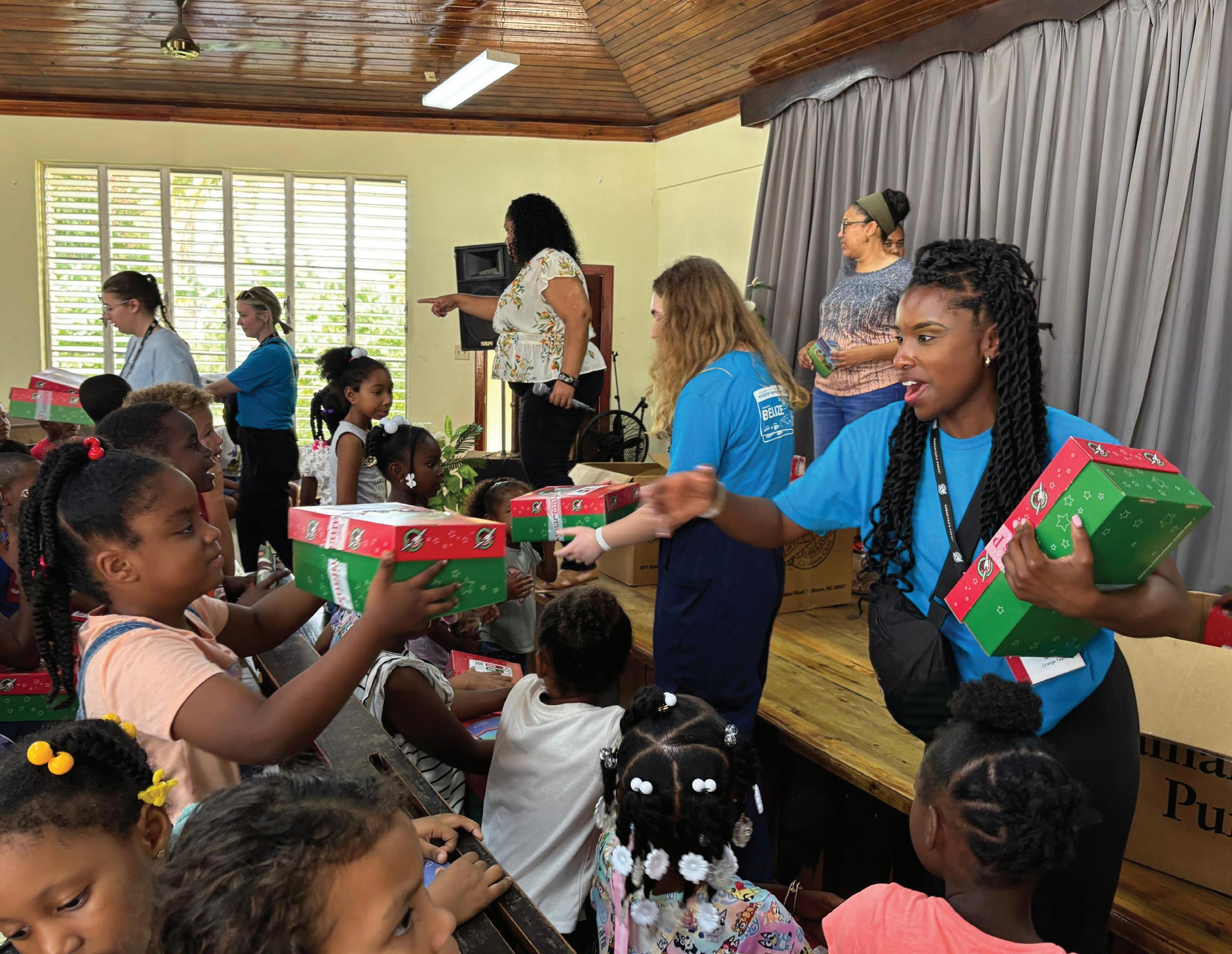
It’s official – Charleston Southern University has packed the most Operation Christmas Child shoeboxes of any college or university in the U.S. for the seventh year in a row.
This year is Charleston Southern’s 14th year of packing the red and green shoebox gifts as a university. Since 2019, the CSU family has packed 77,488 boxes for children around the world. Total number of boxes packed for 2025 is 14,100.
The campus works on collecting supplies and donations throughout the year. Students, clubs and organizations, residence halls, and faculty and staff departments bring their boxes on OCC Collection Day, and the remainder of the shoeboxes are filled at the OCC Packing Party.
Top Individual Student Packers:
• Amy Francis, freshman – undecided
• DJ Brummett, senior aeronautics –professional pilot major
• Graycee Dorner, junior – prelaw & legal studies major
Top Staff Packers:
• President’s + Provost’s Offices — averaged 108.5 boxes per person for a total of 651 shoeboxes
• Marketing and Communication (MarComm) — averaged 72.1 boxes per person for a total of 505 shoeboxes
• Enrollment — averaged 30.5 boxes per person for a total of 914 shoeboxes
Top Faculty Packers:
• College of Nursing — averaged 12.7 boxes per person for a total of 267 shoeboxes
• College of Education — averaged 8.4 boxes per person for a total of 202 shoeboxes
• College of Health Sciences — averaged 3.8 boxes per person for a total of 123 shoeboxes
Charleston Southern University is grateful for the 40-plus companies and groups who partner with CSU to support this initiative, including PetSmart, Extra Room Storage, Ecclesia Construction Company, HisRadio, Cumulus Media, Mt. Holly Century Aluminum, Kion, Professional Builders Supply, and more.
To support this ministry in 2026 and to learn more, go to charlestonsouthern.edu/ OCC.
CSU graduates named to South Carolina 500
SC Biz Magazine names professionals to The South Carolina 500 each year. According to SC Biz, “The South Carolina 500 is a premier recognition program celebrating the most influential and accomplished professionals throughout the Palmetto State.”
The university is proud to announce that three individuals on the list are CSU graduates:
B. Keith Faulkner ’98, president, Charleston Southern University, in the education category
Bernie Mazyck ’82, president and CEO, South Carolina Association for Community Economic Development, in the economic development category
Ashely Teasdel ’05, deputy secretary of commerce for the state of South Carolina, in the government category
CSU honors veterans with the announcement of the P. Cecil Patrick Jr. Family Veterans Center
By Jenna Johnson
On Veterans Day 2025, Charleston Southern proudly paused to honor those who have served our nation. The day also celebrated our military community and the launch of a visionary initiative that will strengthen support for our veterans for generations to come.
Charleston Southern is proud to announce a transformational seven-figure lead gift establishing the P. Cecil Patrick Jr. Family Veterans Center.
This new center reflects CSU’s deep commitment to serving those who have served our country. Nearly 20% of CSU students are veterans, active-duty service members, or military family members. Their courage, discipline, and faith enrich the campus and embody the university’s mission.
“As a Navy veteran, this vision is deeply personal,” said President B. Keith Faulkner, a 1998 CSU graduate. “Charleston Southern has a proud tradition of serving those who have served our country. This new center will be a home for our veterans—a place of com-
munity, support, and purpose where they can gather, grow, and thrive.”
The center will house the Office of Military Services, provide an expanded lounge with a kitchen and food pantry, and include study areas, a computer lab with CAC readers, seminar space, and an outdoor gathering area. Its location near the Hunter Center places it at the heart of campus life.
Faulkner continued, “This transformational gift launches the Veterans Center vision in a powerful way—and sends a clear message to every veteran who walks onto our campus: You belong here. Just like the Buccaneer Center, this project isn’t just about bricks and mortar—it’s about legacy, it’s about lives changed, and it’s about living out our vision to integrate faith in learning, leading, and serving—including serving those who’ve served us.”
Cecil and Barbara Patrick, inspired by their faith and a desire to steward God’s blessings, have made this transformative naming gift to CSU. Their family’s connection to CSU began
through their daughter, Dana Patrick Painter, a 1984 graduate and devoted supporter. The gift honors the Patrick family and reflects their enduring commitment to service, education, and faith, trusting CSU to carry forward their legacy for generations of veterans and students.
“Our veterans need a dedicated space where they feel safe, seen, and supported—and where they’re set up to thrive,” said Angelyn Taylor, CSU’s director of military services. “The Patrick Family Veterans Center will make that vision a reality.”
While there is no set timeline for construction, architects are currently developing renderings of the building and surrounding landscape. Completion will follow the fundraising campaign now underway to bring the project to life.
“This is the kind of leadership gift that builds momentum,” Faulkner said. “And it’s the kind of vision that brings our mission to life in a tangible way.”
Chmieleski is new VP for student life/ dean of students
By Jan Joslin | Photo by Dan Steffy
The Rev. Dr. Guy M. Chmieleski joined the CSU family as the new vice president for student life and dean of students in the fall.
Most recently Chmieleski was vice president of student affairs and church relations at Friends University in Wichita, Kansas.
With more than 25 years of leadership experience in Christian higher education, Chmieleski has faithfully served at five universities. His career reflects a deep commitment to the spiritual formation, leadership development, and holistic growth of students.
Chmieleski said he has learned to pay attention when God begins to stir him to take a leap of faith to make a move. He said, “I have learned to do the right, next best thing.”
Chmieleski said, “For students, there is so much to the college experience in conjunction
with the degree. We may be planting seeds that God will bring to fruition long after they graduate. We walk alongside, watch them grow and blossom, and it doesn’t just happen in Bible study and chapel. God can use all corners of a student’s life to grow them spiritually.”
He holds a Doctor of Ministry in leadership and spiritual formation from George Fox Evangelical Seminary, an MBA from Friends University, a Master of Arts in ministry from Palm Beach Atlantic University, and a BA in youth ministry from Bethel University.
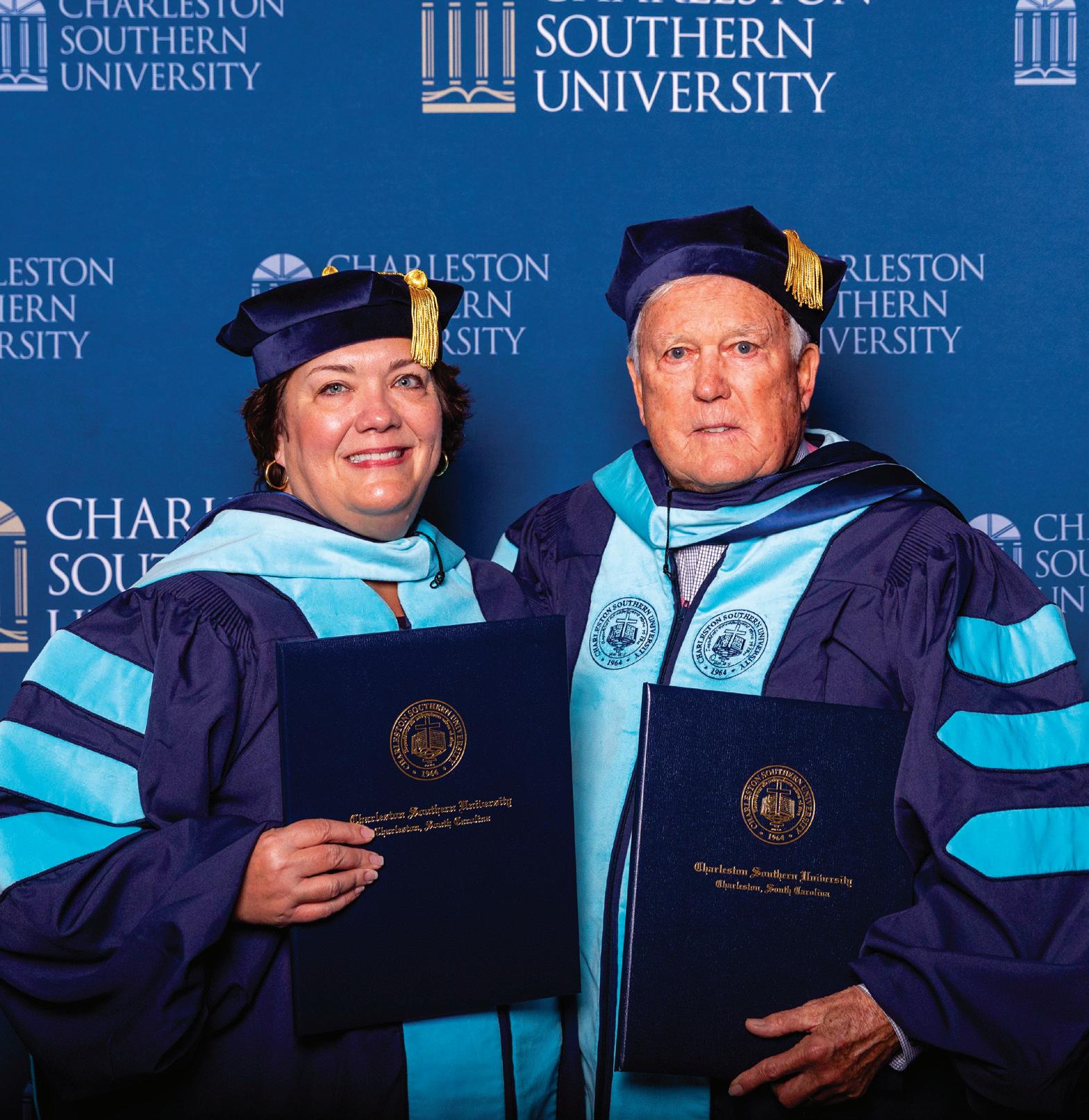
He is the author of three books. His newest book is Radical Leadership: Leading with Love, which he co-authored. He and his wife, Heather, have five children between the ages of 12-21.
A new chapter in generosity begins
The CSU Society represents the next step in CSU’s journey of faith and forward momentum. Uniting the Board of Visitors and the President’s Club under one new identity brings the university’s most committed supporters into a single, dynamic community. Members of The CSU Society — donors who give $1,000 or more annually, including Buc Club supporters — are the foundation of CSU’s mission. Donor’s generosity is not just a dollar amount but a powerful force that shapes
the future of CSU, empowering students and strengthening the university’s impact for generations to come.
The CSU Society is more than a giving club. It’s a society designed to influence, inspire, and impact — uniting all who believe that faith with action can change the world. While your contributions will continue to fund scholarships, they will also fuel innovation across the university – new academic programs, endowed positions, facilities like the Buccaneer Center and Veterans Center, and all the growing needs of our thriving campus.
Members of The CSU Society will engage directly with university leadership, connect with other members and play an active role in shaping the future of CSU. For less than $100 per month, you can join a community of believers making a lasting impact on CSU students.
CSU Society Levels
Cornerstone Circle - $100,000
Founders Circle - $25,000
Presidential Circle - $10,000
Executive Circle - $5,000
Leadership Circle - $2,500
General Membership - $1,000
As a member, you will receive:
• Recognition in CSU’s Honor Roll of Donors and at university events
• An invitation to the President’s Circle Dinner
• Insider campus updates and stories of student impact
To learn more about The CSU Society, contact the Office of Advancement at csuadvancement@csuniv.edu.
By CSU Advancement | Photo by Dan Steffy
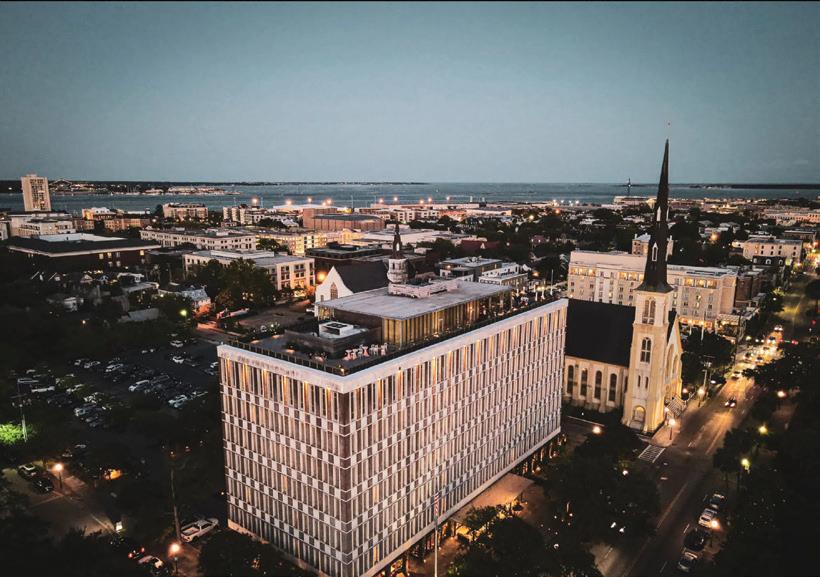
ABOVE: President B. Keith Faulkner welcomes members of The CSU Society to the President’s Circle Dinner, held at The GRAND at 81 Mary in downtown Charleston.
Rev. Dr. Guy M. Chmieleski
Notifications are not the voice of God
By Dr. Jennifer Zakrzewski | Photo by Dan Steffy
I
f asked, most of you would probably say the first thing you do in the morning is look at your phone. Often, it is used as an alarm, to check the weather and determine how to dress for the day, or just to see what we missed overnight on social media. Your day begins with the usual rush of the morning, and before you know it, you are out the door. Imagine that you get down the street and realize that you forgot your cell phone at home. Would you turn back? I would venture to say that most of us would. The deeper question here is how many of us would turn back if we realized we missed an opportunity to connect with God before leaving the house?
As a university professor, I often hear students say that they are overwhelmed and busy. They have assignments to complete and, as education students, practicum hours to complete. Some have jobs or other responsibilities outside of school. When asked about downtime, many say they do not have time for it, let alone time to connect with God regularly. I had heard this so often that I began to question why.
Upon speaking with another professor, I learned about a book titled Reconnect: Spiritual Restoration from Digital Distraction. After reading the text, I decided to incorporate it into my undergraduate technology course. Once students read the first chapter, I started engaging them with some challenges to build upon the text. The first challenge was to review their daily and weekly screen time. At first, they would make comments about it being high because of coursework and so forth. However, when I had them look into the application use, they were speechless.
Many discovered they were spending hours on TikTok or other social media applications each day. It was truly eye-opening for students to look at their own data and realize how much time they lost to social media that could have been spent on other things, such as assignments, time with friends, or time with God. Though this is a college population being considered, their data usage is unlikely to
differ much from that of the adult population. If you checked your screen time by application, what would you find?
Sadly, device addiction is a real thing. There is little time for quiet fellowship with God. We are either talking on the phone, texting, scrolling through social media, or listening to something on our phones. Where is the silence? Where is the time to hear the small prompts of the Holy Spirit? John 10:27 (NIV) says, “My sheep listen to my voice; I know them, and they follow me.” Sheep recognize the shepherd’s voice and feel comforted and safe by it. We can’t follow the shepherd if we don’t know his voice. With all of the distrac-
tions from our phones, when is there time to hear from the shepherd?
While technology is important and ever evolving, we must remember its place in our lives. It is not to become a new idol in our lives. However, because technology is so prevalent and widely accepted, it is challenging to disconnect from it. My challenge to you, my dear reader, is to be different. Break from your phone and listen to the voice of the shepherd. I promise you it will be worth it.
Dr. Jennifer Zakrzewski is an associate professor of education and coordinator of ECE/ELEM and Child Development Programs.
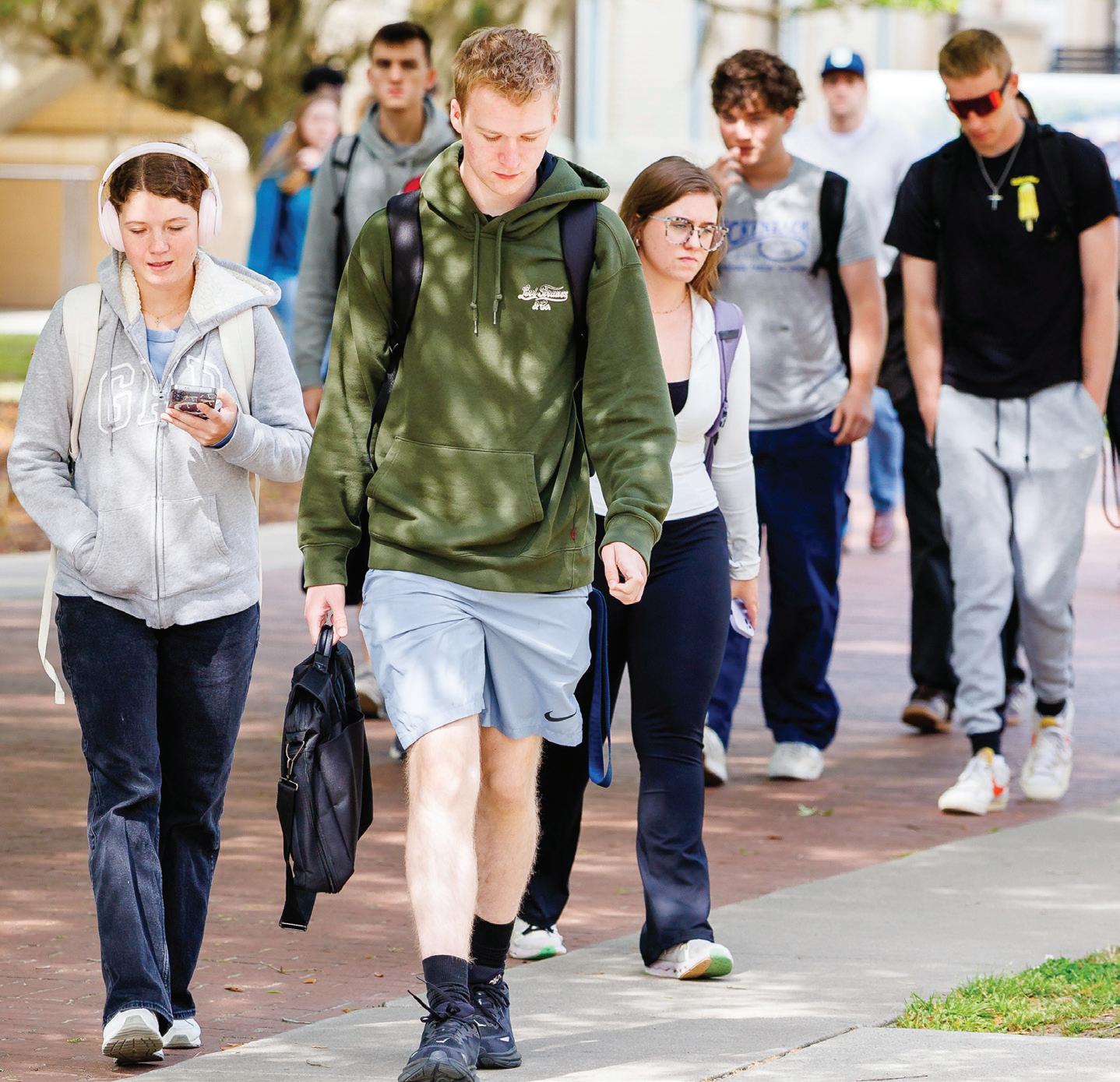
ABOVE: Some students check their phones as soon as they leave class.
CSU ranks best private university for veterans in S.C. by Military Times
By Jenna Johnson | Photo by Dan Steffy
Charleston Southern is recognized by Military Times as the best private university for veterans in South Carolina, the best in the Lowcountry, and fourth overall in the state. This highly comprehensive ranking examines the resources provided to service members and veterans, from career support to educational benefits and beyond.
With Military Friendly®, Military Spouse Friendly®, Yellow Ribbon, and Purple Heart University designations, CSU also ranks #36 amongst private, nonprofit universities nationwide.
Angelyn Taylor, director of military services at CSU, said this ranking underscores the university’s unwavering commitment to pro-
viding exceptional support and resources for military-connected students. “Our militaryconnected students bring unique experiences and perspectives to our campus, and we are committed to ensuring that they receive the support they need to thrive academically and personally. The Best for Vets recognition not only highlights CSU’s commitment to its military-connected population but also enhances the university’s reputation as a leading institution in higher education,” she said.
Charleston Southern has served veteran and military-associated students for more than 50 years. CSU’s U.S. Air Force ROTC Detachment 772 has graduated military leaders since the 1970s.
Academic offerings growing
These additions reflect our commitment to innovation, workforce readiness, and mission-driven excellence.
Launching in fall 2026:
• BBA in sport management
• BS in engineering with biomedical concentration
• BS in biomedical sciences
• BS in aeronautics: air traffic management
• Preactuarial studies minor
• BA in musical theatre
• BS in kinesiology to DPT (3 + 2.5 early acceptance program)
• French minor
Launching in fall 2027:
• Doctor of Philosophy in counselor education & supervision
• Master of Education in special education
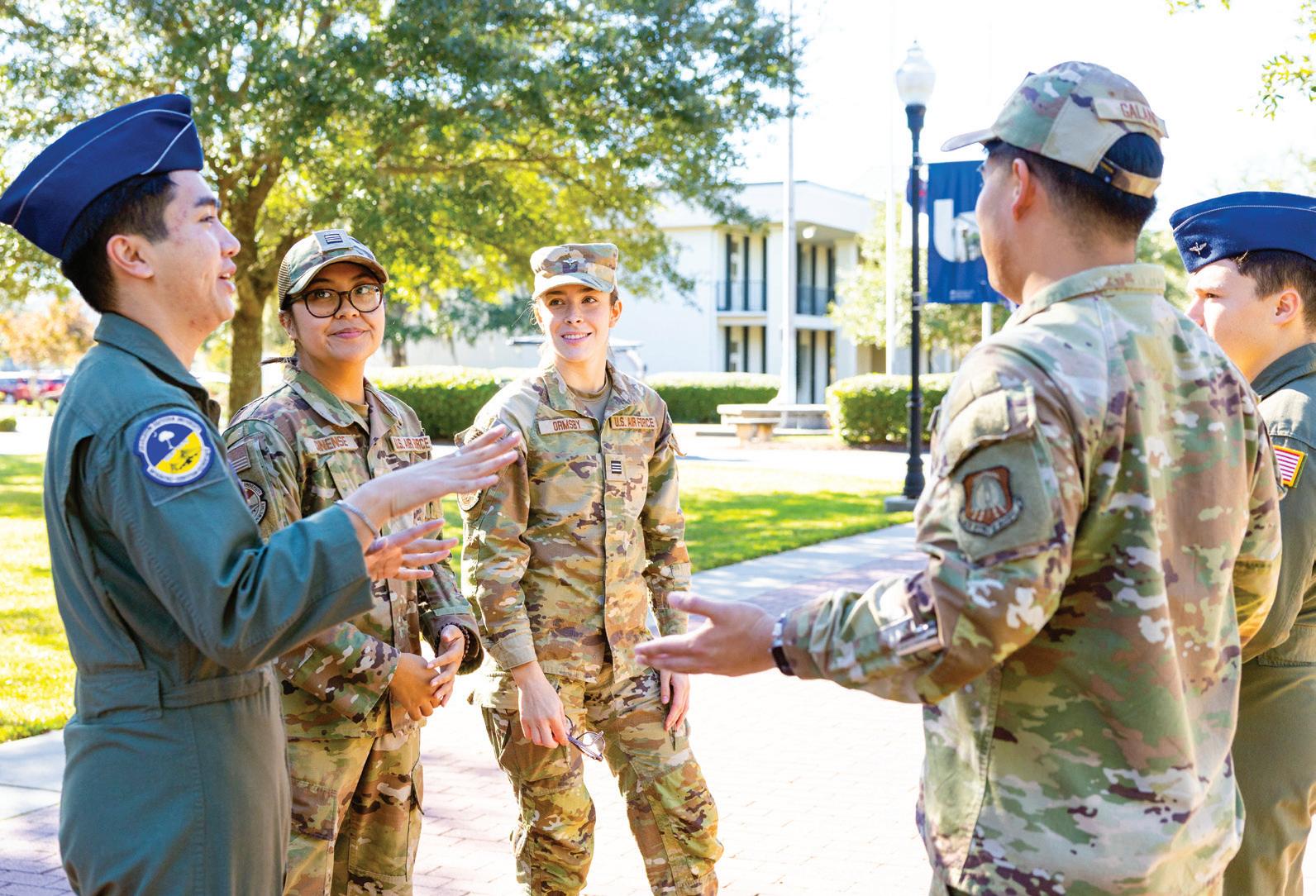
ABOVE: CSU’s U.S. Air Force ROTC Detachment 772 has been graduating Air Force officers since the 1970s.
DID YOU KNOW?
Students pursuing the Doctor of Physical Therapy can simultaneously earn a Master of Business Administration!
Nate Tschannen,
a DPT student, earned his MBA online while attending DPT classes. The MBA degree is self-paced, and DPT students can begin at any time during their degree program, ultimately shortening the total time it takes to obtain both degrees.
Next stop – Doctor of Physical Therapy graduation!
Nate Tschannen | Photo by Zoe Ganiszewski
Beverly and Bruce Hardin earn doctorates together
Compiled by Jan Joslin | Photo by Zoe Ganiszewski
Beverly and Bruce Hardin earned their Doctor of Education in leadership degrees in fall 2025, together, a common theme that runs through their lives.
“One of the most rewarding parts of the program at CSU has been the chance to grow spiritually, through our coursework and with our cohort,” said Bruce. Beverly added, “As
proud as I am of this degree, what matters most is who I have become in the process. The CSU EdD program not only prepared me professionally but also strengthened my faith and clarified my calling. It has given me new ways to integrate my faith into my work so that I can more fully live a life of service to God’s kingdom. This milestone is not an ending, it’s a beginning.”
Beverly is the executive director and chief philanthropy officer of the USS Yorktown Foundation and has worked in the nonprofit sector for 24 years. She serves on the University of North Georgia’s National Security Advisory Board. Bruce is a retired teacher, coach, and school administrator at the middle and high school levels. He also coached college football at The Citadel and the United States Military Academy at West Point. He is the father of twin sons, both of whom are coaches and educators, and grandfather to five granddaughters. The Hardins are active in church, love to travel and spend time with family and their sweet dog, Brady.
How did you decide to pursue your doctorates at the same time?
Bev: I think I speak for both of us when I say that COVID was a turning point. That season left us feeling disconnected, isolated, and weary. We knew we needed to do something different to re-engage with renewed purpose. I received an unexpected invitation to an open house for the EdD program at Charleston Southern. It felt like it might be just the change we needed. The chance to complete the program as a couple helped us grow together in a whole new way.
Bruce: Earning a doctoral degree has been on my bucket list, but life kept getting in the way. Either the timing was not right, my career was too demanding, or I was not sure which program to pursue. At CSU, all the pieces just fell into place.
My longtime motto has been, Ancora Imparo, loosely translated as “still, I am learning.” This phrase has been attributed to Michelangelo who is said to have carved these words into a sculpture he completed in his 80s. This call to action, along with the influence of my father and grandmother, shaped my commitment to lifelong learning and servant leadership. In my retirement, I want to continue to contribute to my community in a positive way, and I love to write. CSU’s EdD program seemed like a fitting challenge for me as I approached my 80th birthday. This was also a chance for me to model lifelong learning for my children and grandchildren. The opportunity to pursue the program at a Christian university was an extra bonus and blessing.
ABOVE: Dr. Beverly and Dr. Bruce Hardin at commencement.
Did going through the EdD program together make it harder or easier?
Bruce: Going through the program together definitely made it easier and far more enjoyable. That’s not to say it wasn’t demanding. There were many days when I wondered how we could possibly complete everything in front of us. The workload was rigorous, and our expectations for each other were high. We were able to talk through complex ideas, problem solve and encourage one another when the pressure mounted. Together, we found our way and finished strong. I am proud that we earned our doctorates, but I am even prouder that we did it together.
Bev: Because I was working full-time, I completed most of my reading and assignments before work or over the weekend. Bruce worked hard to get his assignments and reading done while I was at work. He even learned to cook, which was a big help!
In classroom discussions and presentations, we saw strengths and perspectives in one another that we may not have otherwise discovered. We supported each other through courses that stretched us – especially technology, statistics, and research design.
We laughed; we cried; we prayed, and sometimes we stressed ourselves out over seemingly impossible deadlines and exams. But we persevered together. Some of our favorite memories are simple ones: studying together across the dining room table covered with research articles and books, and sharing insights and ideas during car rides to and from class.
How has obtaining your EdDs assisted you in your work?
Bruce: Even though I have officially retired three times over the course of my career, I still feel a deep desire to contribute meaningfully to the profession of coaching and to the world around me. One of my long-term goals was to publish a book. It is gratifying to know that my dissertation now lives on a shelf at the CSU library and contributes to a broader body of research. Through my research exploring the experiences of Christian coaches in public high schools, I had the privilege of interviewing coaches which reinforced for me just how influ-
ential coaches are in the lives of young people. In my study, I observed many coaches in our community who strive to live out their faith in positive and appropriate ways. Strong faith and self-awareness seem to be keys. My hope is that my research and writing will serve as a guide for other coaches from around the country who want to honor their faith while remaining professional and respectful.
Bev: A strong understanding of the research process has equipped me with new tools to advance my mission and improve my work. Since our graduation, I have been invited to turn my dissertation into a white paper for a national audience. The program has helped me to remain relevant in my industry, and the credentials add credibility to my voice and leadership. Ultimately, I hope my research will serve as a guide to other nonprofit leaders seeking to create intentional impact. By strengthening leadership practices across our sector, we can collectively address social challenges and strengthen the fabric of our communities.
What do you think has driven your passion for serving others through your work?
Bruce: As I have grown and matured in my faith, my passion for building meaningful relationships and serving others has also grown alongside it. Men I coached years ago still reach out, sometimes to share a memory, sometimes just to say thank you. Rarely are the calls about wins or losses. More often, it’s about the relationship we built as a team and the lessons they learned from our shared experiences.
Bev: We have both been given the ability to help others, and with that ability comes responsibility. It is also a call to action that is rooted in core values and grounded in faith. My parents modeled lives of service, and, from a young age, I learned that our purpose is greater than ourselves. We are called to love God, then to love one another. To me, service is one of the most meaningful ways we can live out that purpose.
U.S.S. L. Mendel Rivers china added to library collection
The Rivers Library recently received a donation of china after the decommissioning of the nuclear submarine U.S.S. L. Mendel Rivers. The library added it to the collection of memorabilia related to the life and work of Mendel Rivers, who was known as “The Serviceman’s Best Friend.”
Physics professor researching food security
Compiled by Jan Joslin | Photo by Dan Steffy
Assistant Professor of Physics Dr. Andre Tavares and researchers in the United States and Brazil recently studied a hypothetical radiological dispersion event to assess the implications for food safety and public health.
Researchers from Instituto Militar de Engenharia, Instituto de Estudos Avançados, and Universidade do Oeste Paulista in Brazil, Charleston Southern University, and Gordon
College in the U.S. used computational modeling to study the threat posed by radiological contaminants in food chains and underscored the importance of surveillance measures in protecting public health.
How did you become interested in researching food security?
Tavares: In 2024, I was invited to be part of a research group that is composed of scholars and PhD students. The two main topics researched by this group are Nuclear Defense and Radiological Protection. Since then, we have been working with simulations using disruptive scenarios where a hypothetical radiological dispersion event is used as a starting point. For instance, one scenario can be a contamination of a farmland by a radiation source such as Cs-137. For this specific paper, we used sweet potatoes. Primarily, sweet potatoes grow in tropical areas. The average productivity per hectare (approximately 2.5 acres) in tropical farmlands is quite low, owing primarily to poor soil conditions. Tropical soils are low in organic matter and available nutrients, and as a result, productivity and sustainability decrease over time. One specific element that is transferred from the soil to the plant is potassium. The problem with potassium is it belongs to the same periodic column as cesium. Why is this a problem? If the soil is poor in potassium, the plant tends to absorb an element that behaves like this one, in this case cesium. The model developed assesses the transfer of radioactive material to crops and the potential health risks to consumers.
What are some of the concerns about the expansion of nuclear energy in relation to food supplies?
Tavares: Excellent question. The potential risks linked to radiological events have drawn considerable attention, mainly due to the swift growth and expansion of nuclear energy production spurred by the rising energy demands associated with Artificial Intelligence (AI) platforms. Global energy demand is projected to surge 50% by 2050, putting nuclear energy in the spotlight. Because of this growing demand, one option is the implementation of Small Nuclear Reactors. SMRs are small nuclear plants that can be used by companies to supply energy for a specific region. Over $8 billion has been invested in SMRs since 2024. The first implementation is expected around 2030. One area of specific concern is agricultural production. The reason is, if the regulations for such equipment as SMRs is not strong enough, like those applied to a regular nuclear power plant, the risk for an accident or an incident is high.
Are there things the public can do to help protect public health and our food?
Tavares: What I can say is related to radiological protection. Many radiological accidents happen because people don’t follow rules or the warnings provided by equipment. For instance, in 1987 in Brazil a radiation source of Cesium-137 (powder form) was found by two men. The small capsule contained 3.3 oz (93g) inside a shielded sphere made by lead. This radiation source was supposed to be returned to the government after a health center finished its operation. The men took it home, and because of how this powder glows bright blue, they started to distribute it in their neighborhood as a gift. Because of this, four people died and several more were exposed and contaminated by Cs-137.
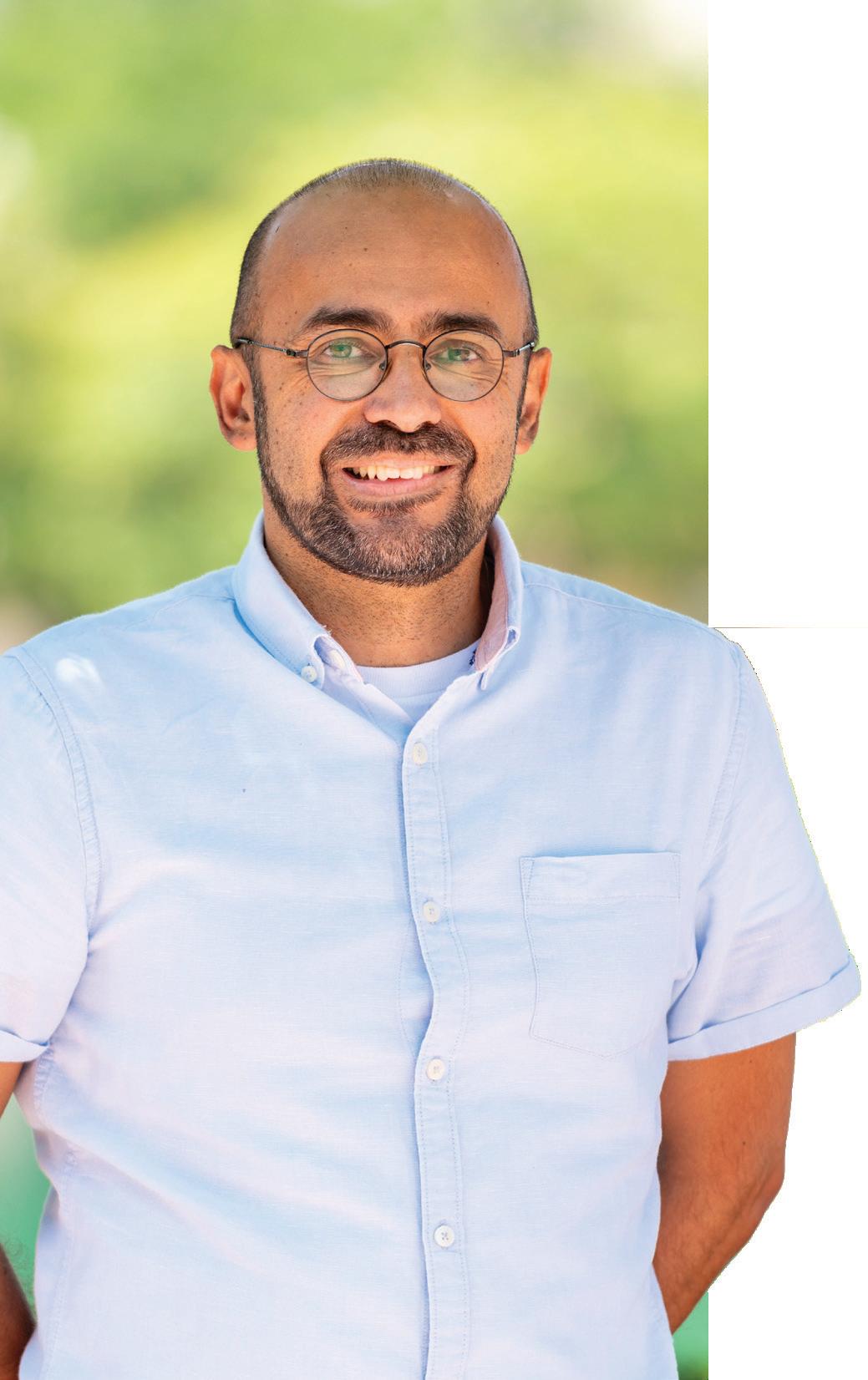
Assistant Professor of Physics
Dr. Andre Tavares
Beck’s new book addresses suffering and faith \
By Jan Joslin | Photo by Ty Cornett
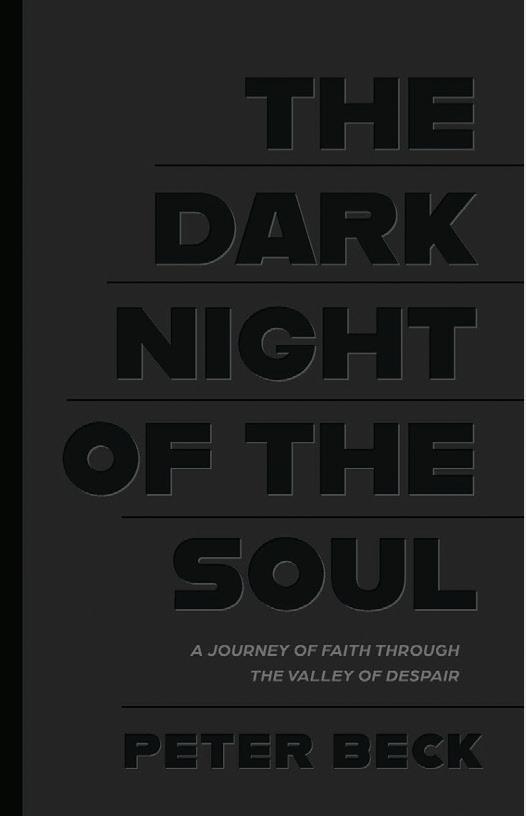
Dark Night of the Soul, A Journey of Faith Through the Valley of Despair is Dr. Peter Beck’s recently published story about his struggle with PTSD and depression and its intersection with faith.
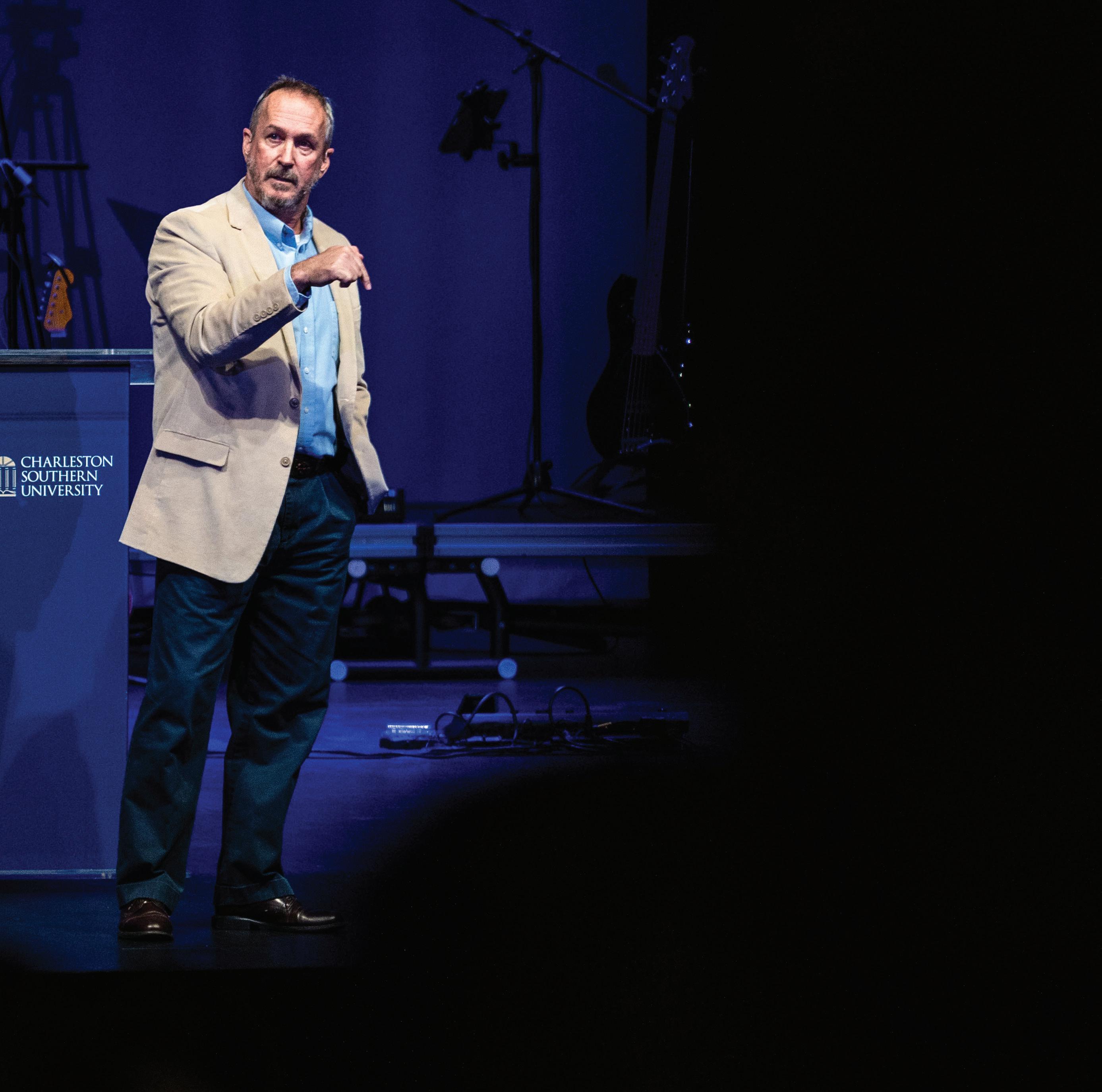
Beck, professor of Christian studies and director of the CSU honors program, said, “Nearly 40 years after I joined the Army, I experienced a mental health crisis that resulted in my being diagnosed with PTSD and depression. The Dark Night of the Soul describes the first year after my diagnosis and the emotional and spiritual crises that arose.”
Beck said his hope for the book is that others on a similar journey, whether it’s from PTSD or some other trial, will find encouragement by reading about the struggles of a fellow traveler facing the same challenges. He said, “It is not so much about my story but the hope we all share in the Gospel.”
Beck was a U.S. Army Ranger medic and has spent the last few years studying military and pastoral suicide.
These days Beck travels the campus with his therapy dog in training, a happy pup with enormous paws who is eager to greet everyone in his path. Beck is open to telling his story and used the book in a class on suffering he taught last year.
Dark Night of the Soul, A Journey of Faith Through the Valley of Despair is available from Amazon and Barnes and Noble online.
LAST RIDE TRUE BROTHERHOOD:
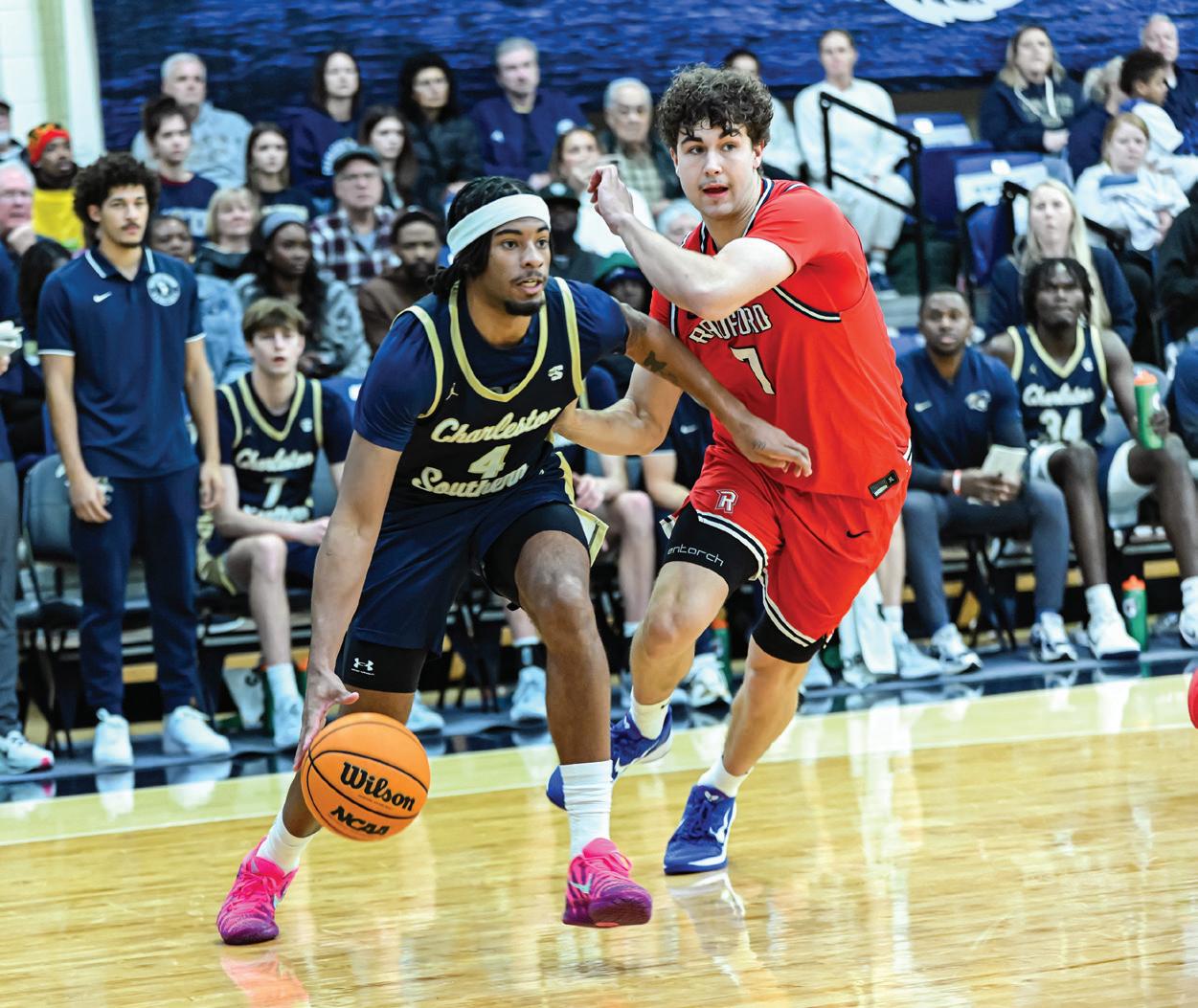
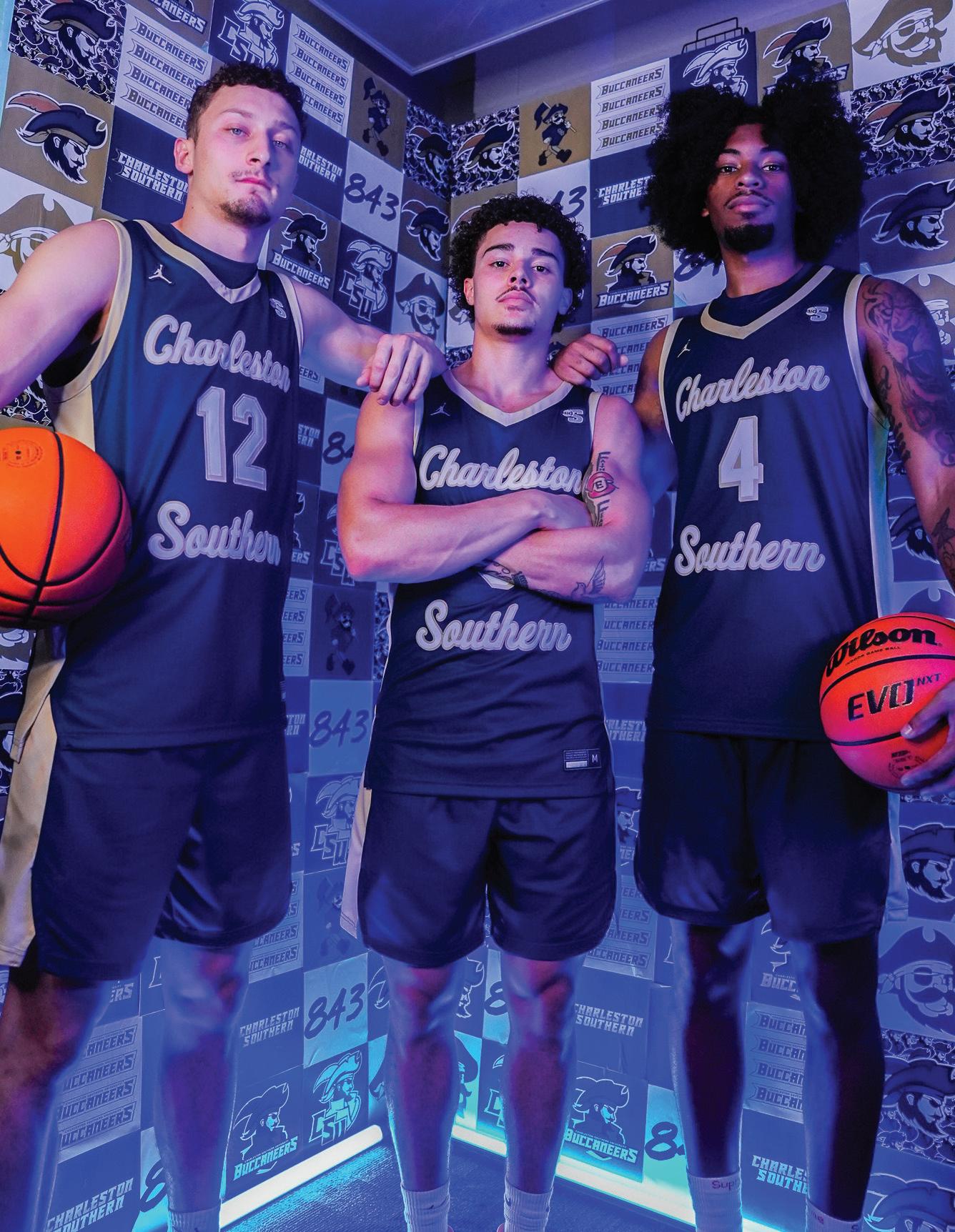
The story of CSU men’s basketball’s three graduate transfers
By Chase Beckham | Photo by CSU Athletics
In the era of modern college basketball, where rosters flip like calendar pages and loyalty is often transactional, true brotherhood can feel like an artifact. Yet inside the locker room at Charleston Southern, three graduate transfers built something far beyond a one-year partnership.
From a distance, there could not have been three more different student-athletes joining the CSU program ahead of the 2025-2026 season. A point guard from Kansas who began his career in junior college. A classic rock–loving sharpshooter from New Jersey, armed with a decorated Division III résumé. And a Division II double-double machine from the heart of Mississippi.
Different paths. Different skills. Different frames and personalities. But the closer you look at Luke Williams, Jesse Hafemeister, and Trent Coleman, the more their shared values come into focus.
The story began in March 2025, when Coleman and Hafemeister arrived in the Palmetto State for a joint official visit. Neither knew quite what to expect—from the campus, the city, or each other. They remember their first meal vividly. Not because of what was ordered, but because of what was initiated.
“I could quickly tell Trent was a social guy with good values. We were both glad to have each other on the visit since neither
one of us knew exactly what to expect,” Hafemeister said.
A successful lunch would later be followed by a workout—an event each player was grateful they had a partner to complete with.
“When we worked out together during the visit, I think both of us were coming off our spring break weeks. So, we definitely were glad we had each other to get through it together,” Coleman said.
Hafemeister still laughs at the memory.
“We did this passing and shooting drill and once we got done, we were so exhausted. It was cool to share that experience with someone from the very start like that. We were talking and laughing for a while in the locker room after.”
Both Coleman and Hafemeister committed to the Buccaneer program during their official visits, and nearly three months later, they would arrive in the Holy City ready to move into what would be their home for their final year of collegiate eligibility.
On move-in day, they would meet their third roommate, Luke Williams.
“When I met them, I could tell they were chill guys who would be easy to get along with. We were all really eager to get to know each other, and it’s only gotten better since,” Williams said. >>
FACING PAGE: The Brotherhood –Jesse Hafemeister, Luke Williams, and Trent Coleman.
In an era of modern college basketball, true brotherhood can feel like an artifact. Yet inside the locker room of Charleston Southern University, three graduate transfers built something far beyond a one-year partnership.
Their first night together unfolded like so many college beginnings do—with a trip to Walmart and Cook Out.
Since furniture hadn’t arrived yet, the apartment floor was scattered with grocery bags and trays of food. The three sat each with their back on a wall, talking for hours.
Hafemeister remembers a specific thought he had during that night on the floor.
“I remember feeling very lucky that these were the two guys I got to room with for this journey. I’m a quieter person by nature, but with them everything was immediately comfortable.”
For Coleman, it marked the foundation.
“Our relationship was able to get so strong I think because we built chemistry from the very start,” he said.
That chemistry, all three agree, was accelerated by Coleman’s extroversion.
“I feel like our relationship is cool because Jesse and I are quiet, but Trent being so sociable helped each of us open up to each other quicker,” Williams said.
Coleman didn’t dispute the claim.
“I’m never going to be the shy one. I talk a lot on the court especially. No matter the situation, I’m going to bring some sparks to it. If I was quiet, I don’t know how our relationship would look, but it definitely would be different.”
Their differences show up on film as clearly as they do off the court. Williams is the steady floor general—ultraconsistent, resilient, almost mechanical. Hafemeister is the shot-maker, the one who lets the ball fly when most would doubt themselves. Coleman is the enforcer, the emotional current—”the guy you want in the trenches with you.”
And yet, like their personalities, their games interlock.
“I love being on the court with those two,” Hafemeister said. “Luke is one of the most impressive players I’ve ever played with. His ability to always do the right thing even through fatigue is insane. You never stop trusting Luke when he’s out there with you. Trent’s energy is incredible. He’s someone you want to fight with, someone you want in the trenches with you. He’s just so positive and during all those moments when you need some confidence, he can make you feel way better about yourself. Both on the court and in life.”
Coleman echoed the praise for Williams’ command. And when Williams was asked about his fellow veterans, he emphasized maturity.
“Since Jesse and Trent are both older guys, their games are very mature. We each have our own skill sets, and they mesh super well. When I’m on the court with them, there’s a different type of chemistry because we spend so much time together in and outside of basketball.”
At one point during the construction of this story, Coleman offered a line that felt almost accidental in its poetry:
“Our games complement each other as people.”
It was less a scouting report than a thesis statement.
The season has not been without turbulence. Graduate transfers rarely arrive with guarantees—only experience. But perspective has been their stabilizer.
“Through the ups and downs this year, we’ve been able to have a shared perspective,” Hafemeister said. “We have all won and lost during our college careers and even though they’re different, we bring a lot of experiences to the table. Nothing we experienced this season was our first time going through something like that, and that has been something we’ve been able to share with each other and
Our games complement each other as people.
— Trent Coleman
help the team with. We have grown as men together during this ride just as much as we have as teammates.”
In addition to a wealth of basketball experience, the trio has another thing in common this year. They are all playing their last season of collegiate hoops. Each player reflected on how the others impacted their last ride in college athletics.
For Williams, the memories won’t just be the bright lights.
“It’s good to have people you relate to. We’ve all shared similar situations coming from lower levels before CSU, so as far as the moments I’ll remember with these guys, it’s the little things we get to go through together every day. Being able to go home and talk to them after games and practices, stuff like that. It has been easier to keep fighting when you are on the same page like we are.”
Hafemeister didn’t hesitate when asked how the year will stay with him.
“They have improved my experience more than I could’ve imagined. I’m able to trust and lean on both of them, and that’s something I’ll smile about for a long time – getting to call those guys brothers.”
Coleman’s reflection circled back to the offseason grind—the Sunday workouts, the extra reps, the consistent proof of commitment.
“All I see is two brothers that will be there for me through the good and the bad. We used to work out every Sunday together in the off-season. We would get extra workouts in whenever we could. They’re just straight up good dudes. They’re always there for you.”
Years from now, when their playing days are behind them and the arenas are replaced by wherever life leads, Williams, Hafemeister, and Coleman will still have two names they can always call and count on.
The college basketball world is a rapidly evolving planet, but despite the speed of that evolution, a rose in the shape of brotherhood was able to grow in Charleston. And in the words of the kid from the Garden State, Jesse Hafemeister:
“When you get ready for this grad-transfer year, you know it is going to be a quick experience. At first you do not know if you will find teammates that you can get this close with, but when I think about Luke and Trent, there is no hesitation. Those are my guys.”
CSU adds women’s flag football as 17th varsity sport
By CSU Athletics Communications
CSU Athletics announced Jan. 27 the addition of Women’s Flag Football as a varsity intercollegiate sport with the first competitive season in spring of 2028. This will bring the total varsity sport program count to 17, and the women’s athletics teams count to 10.
The Buccaneers are the 14th NCAA Division I athletic department to announce flag football at the varsity level. Earlier in January, the University of Nebraska announced plans to add the sport, becoming the first Power 4 school to declare its intention.
On Jan. 16, the NCAA announced that women’s flag football was added to the Emerging Sports for Women program, making way for the sport to be eligible to pursue championship status and host its first season as soon as spring 2028.
Vice President for Intercollegiate Athletics Jeff Barber said, “As an NCAA emerging sport for women, flag football has experienced monumental growth over the past couple of years. We are thrilled about this for our campus and the community. We look forward to building this program that will assist with Title IX requirements, and at the same time provide an outstanding academic and athletics experience for future CSU student-athletes.”
NCAA sponsorship data showed that more than 40 schools across all divisions planned to sponsor the sport in the 2025-26 academic year. The NCAA expects increases in sponsorship, including the possibility of as many as 60 schools announcing plans to participate in the sport.
“The addition of women’s flag football to Division 1 sports at CSU expands opportunities and positions CSU to attract the best and brightest talent in this rapidly growing sport,” said CSU President B. Keith Faulkner. “As the first Big South Conference school to make this announcement, we are proud to lead the
way and help shape the future of women’s athletics in our conference.”
The growth of flag football has happened the most in the high school level. Seventeen states have it sanctioned by their high school league, including Georgia, Florida, Tennessee, Alabama, and Mississippi. There are another 21 in the piloting phase, including South Carolina, North Carolina, and Virginia.
It is one of the fastest growing sports in the world and is set to make its Olympic debut in 2028 at the Los Angeles Summer Olympics. In terms of players, there are 20 million worldwide, with 3.6 million in the U.S. between the ages of six and 17. At the high school level, 69,000 girls play the sport.
“The launch of CSU’s women’s flag football program marks an exciting step forward for collegiate athletics,” said Jesse Schulman, NFL Manager of Flag Football. “By embracing this opportunity, CSU is helping accelerate the growth of flag football and expanding access to the sport for female student-athletes.”
“Women’s flag football is creating one of the most important new pipelines in sports today, not just for competition, but for leadership, education, and long-term opportunity,” said Izell Reese, CEO of RCX Sports. “When universities like CSU step forward at the varsity level, it sends a clear signal to young women that this sport has a real future. Programs like this accelerate access, scholarships and visibility, and ultimately help legitimize flag football as a sustainable pathway from youth to college and beyond.”
Recently, NFL clubs voted to support the development and launch of a professional flag football league financially. All 32 NFL clubs support and participate in youth flag football programming.
Charleston Southern Flag Football Q&A
When will the first season of Charleston Southern Flag Football be played?
The academic year of 2027-28.
When is the women’s flag football season played and how many games will be played?
Women’s flag football is a spring sport. There will be a minimum of 12 games per season (maximum is 24).
Will Charleston Southern recognize this as a varsity sport and will student-athletes receive scholarships and athletic department support?
Yes, this will be CSU’s 17th varsity sport, 10 for women and 7 for men. Women’s flag football students will receive and have access to the same student-athlete support services as other Buccaneer student-athletes.
When do you plan to hire a coach?
The nationwide search for the program’s first Head Coach will begin immediately with the plan to have them in place as soon as possible.
What schools do you expect
Charleston Southern to play?
With the NCAA’s announcement of flag football as an emerging sport, it is expected that several schools will add this as a varsity sport in the coming months. Charleston Southern can now begin discussing a schedule for the inaugural season, starting with Division I schools with existing flag football programs, and engaging with other programs as they add the sport.
Where will you play home games?
The plan is for games to be played on the CSU intramural field.
What is the size of the playing field?
The playing field for flag football is 80 x 40 yards.
What are the playing rules?
Games consist of 4, 12-minute quarters.
Players wear flag belts with sockets and 2 pop-up flags on either side of their hips. Teams score 6 points for a touchdown, and after a TD can gain an extra 1 or 2 points with a set play from the 5 or 10-yard line.
Athletic Highlights
Tuupo sets career RBIs record early in baseball season
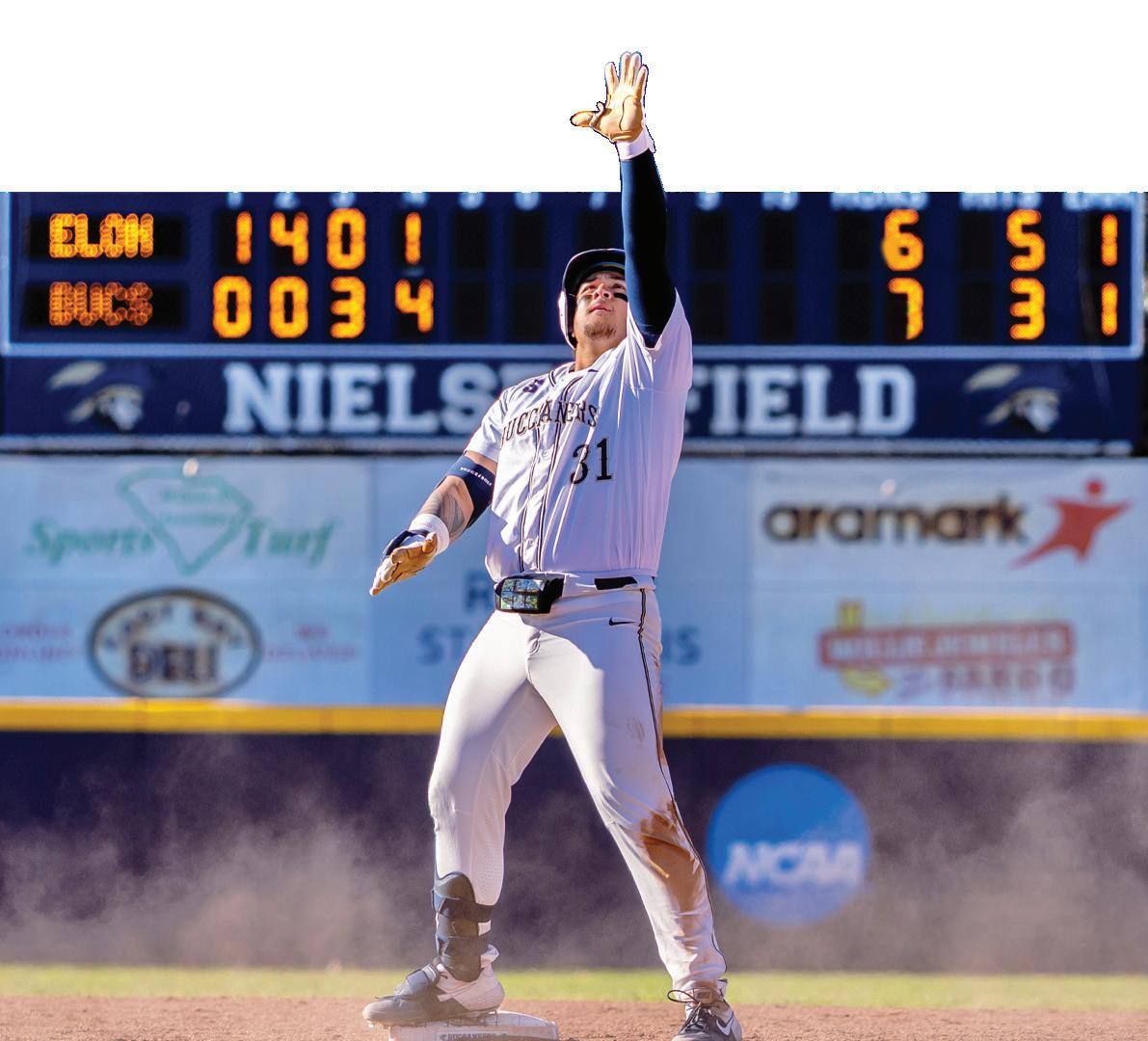
The Buccaneers extended their historic start to the year by defeating Elon on Feb. 22 by a final score of 12-7 to sweep the series with Chandler Tuupo setting the career RBIs record in the contest. Charleston Southern started the season at 7-0, a record that they have never held before in school history.
In the bottom of the third, Blake Edgmon and Kain Collins led the frame off with walks and the bases got loaded with Caden Wolfley getting a single. Tuupo cleared the bases with a double to right and broke the school record for career RBIs on the play, passing Jordan Haar who had 147 in his playing career from 2002-05 with Tuupo now having 149.
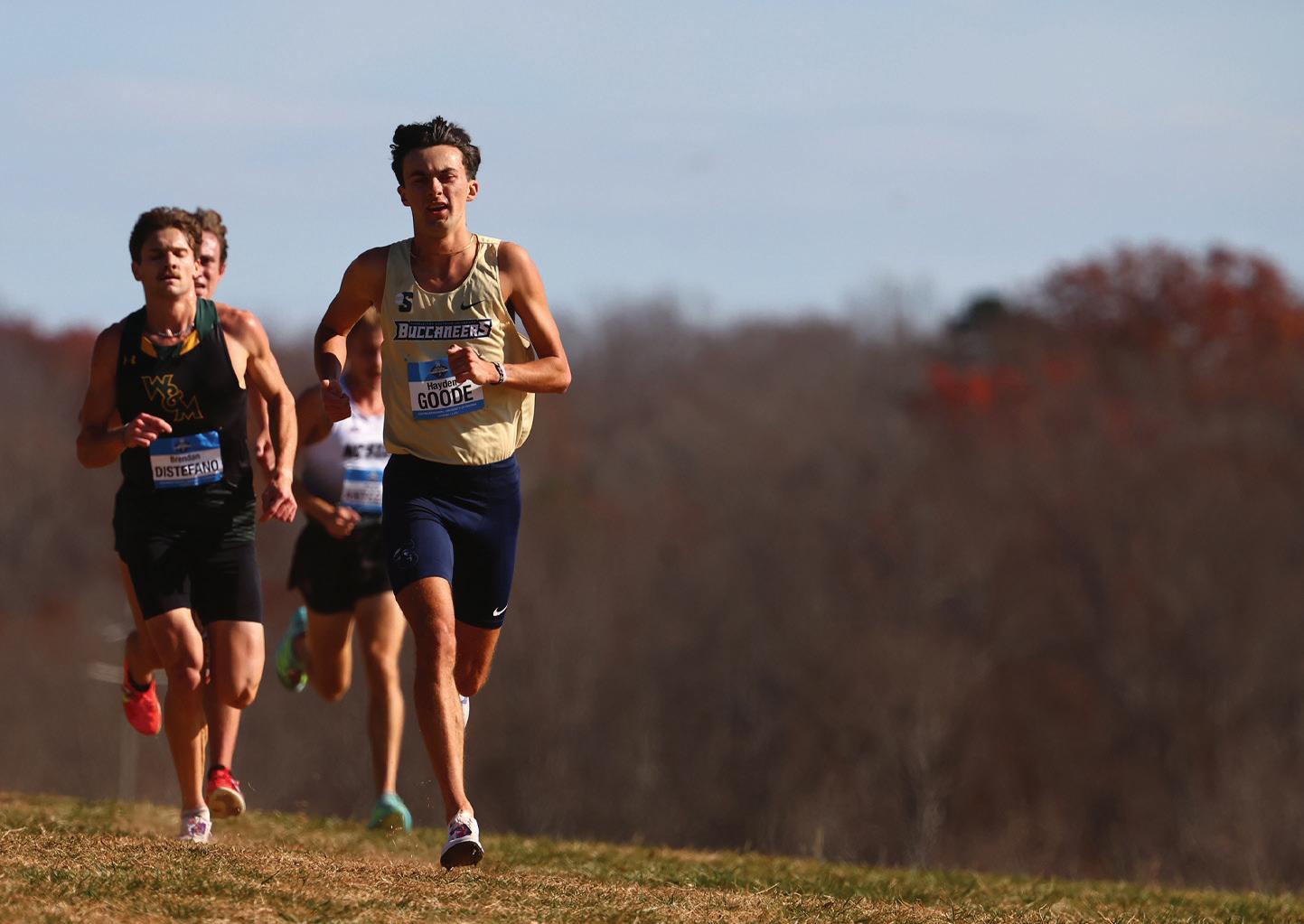
Goode named Big South male runner of the year
The Big South Conference named Hayden Goode as the recipient of the men’s Cross Country Runner of the Year award. Goode claimed 62nd overall at this year’s NCAA Southeast Regionals, being the top finisher among all the competitors from the Big South at the meet. He ran a personal best time in the 10K with a 31:04.4.
Earlier this fall, he claimed second overall at the Big South Championships with a time of 25:01.0 to help the squad to their sixth consecutive conference championship. His placement earned his First-Team All-Conference accolades as well. He set a personal best time in the 8K at Panorama Farms Invitational to conclude his regular season with a time of 24:38.8. He raced in five meets during the fall, serving as a top four finisher amongst the CSU competitors at each.
Chandler Tuupo
Hayden Goode
Bucs defeat ACC foe Notre Dame at SpaceU Classic
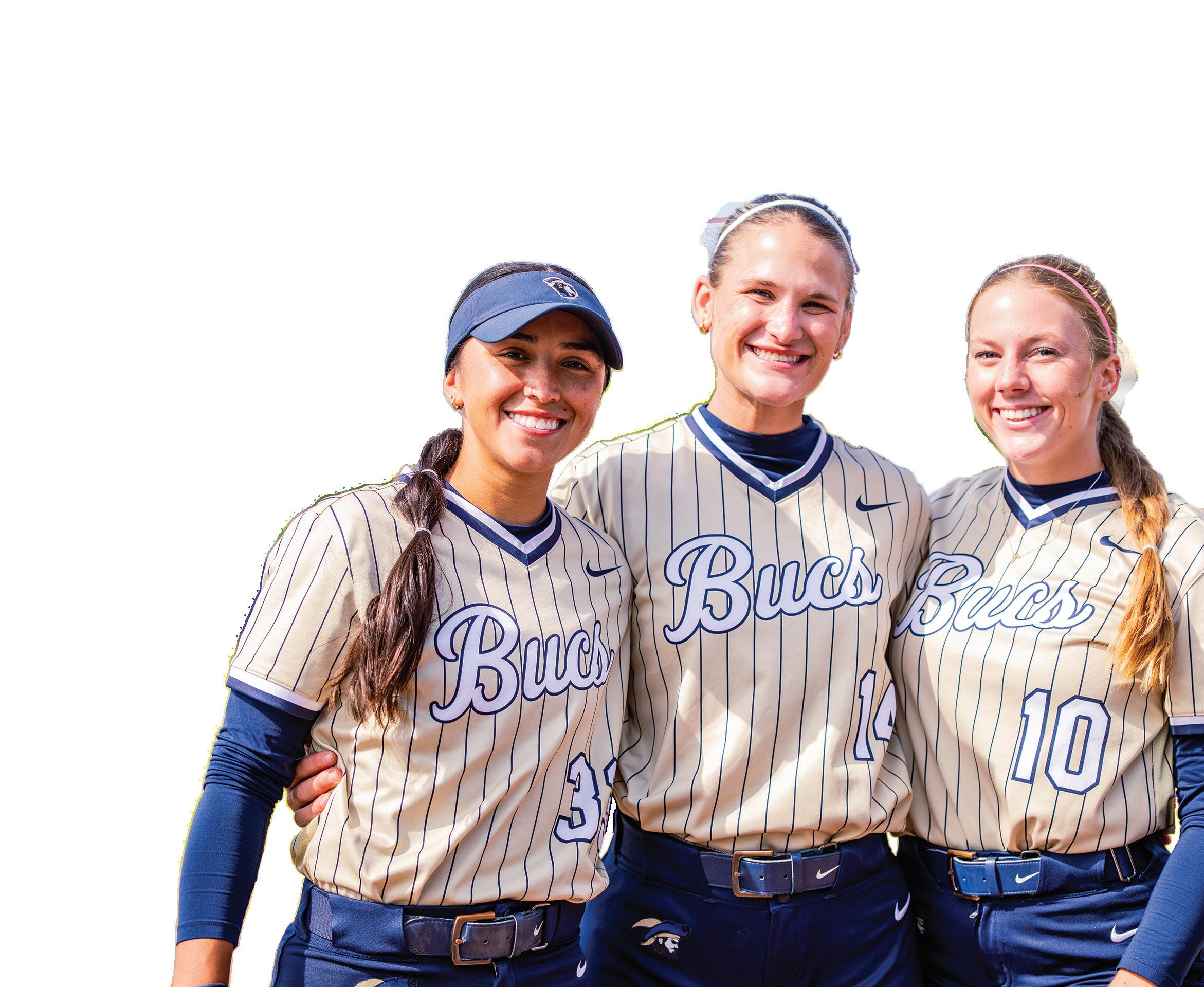
Charleston Southern softball knocked off Notre Dame Feb. 20 at UCF’s SpaceU Classic. The Bucs took down the Irish by a final score of 5-4, the first time they have won over a Power 5 opponent since Virginia in 2022.
As a team, CSU posted nine hits with Emma Smith leading the squad with three. Jordyn Di mond and Charlee Yourman also had multiple as they finished with two. Dimond scored twice and drove in a pair to lead the team in each category as well. Blakley Kingsmore and Di mond both stole a pair of bases in the contest to continue their hot start on the basepaths. Riley Lauffer had the start and threw a complete game, going for all seven in nings. In the start, she struck out just one batter and allowed nine hits, four walks and four earned runs, working out of jams in nearly every inning and keeping the Notre Dame hitters at bay.
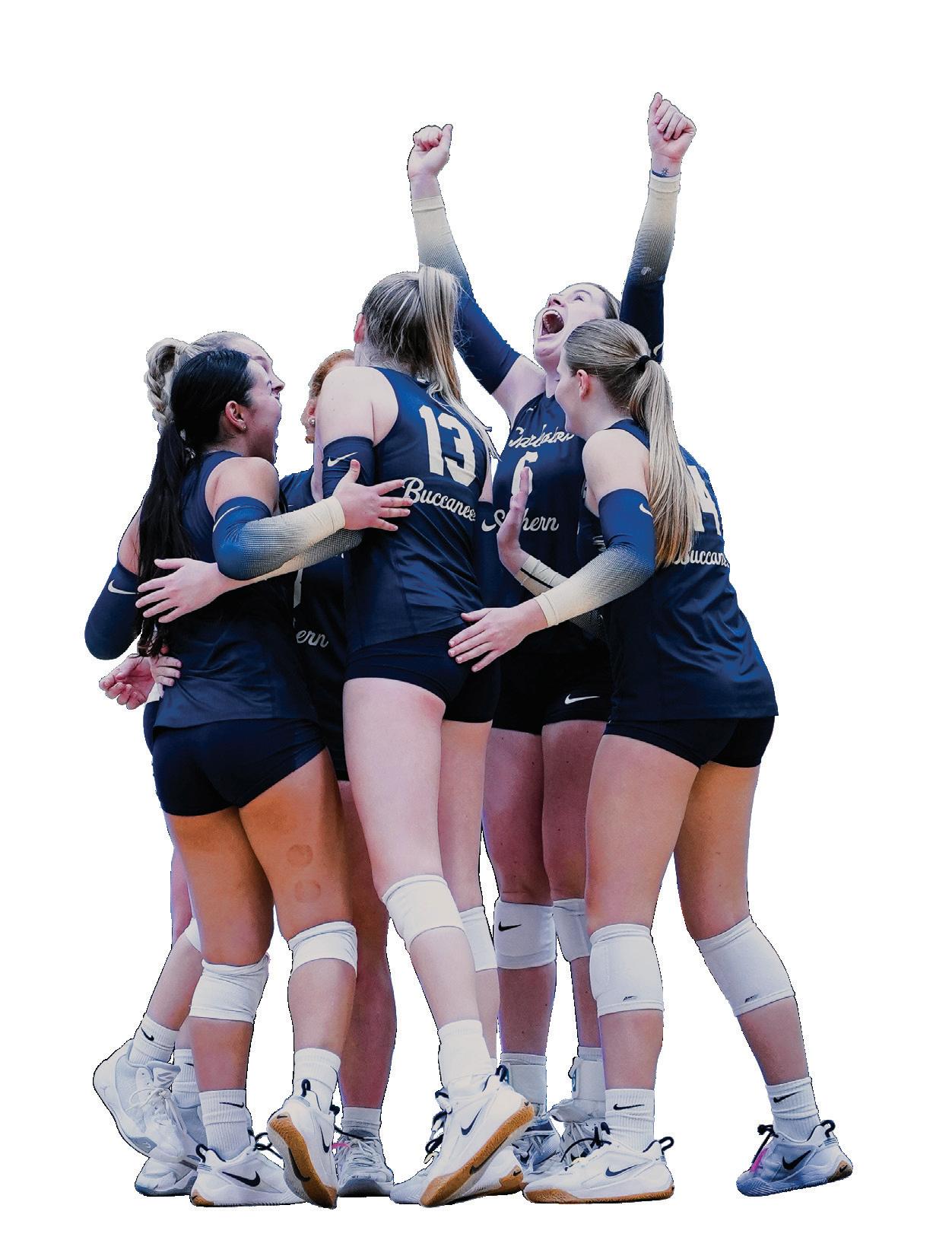
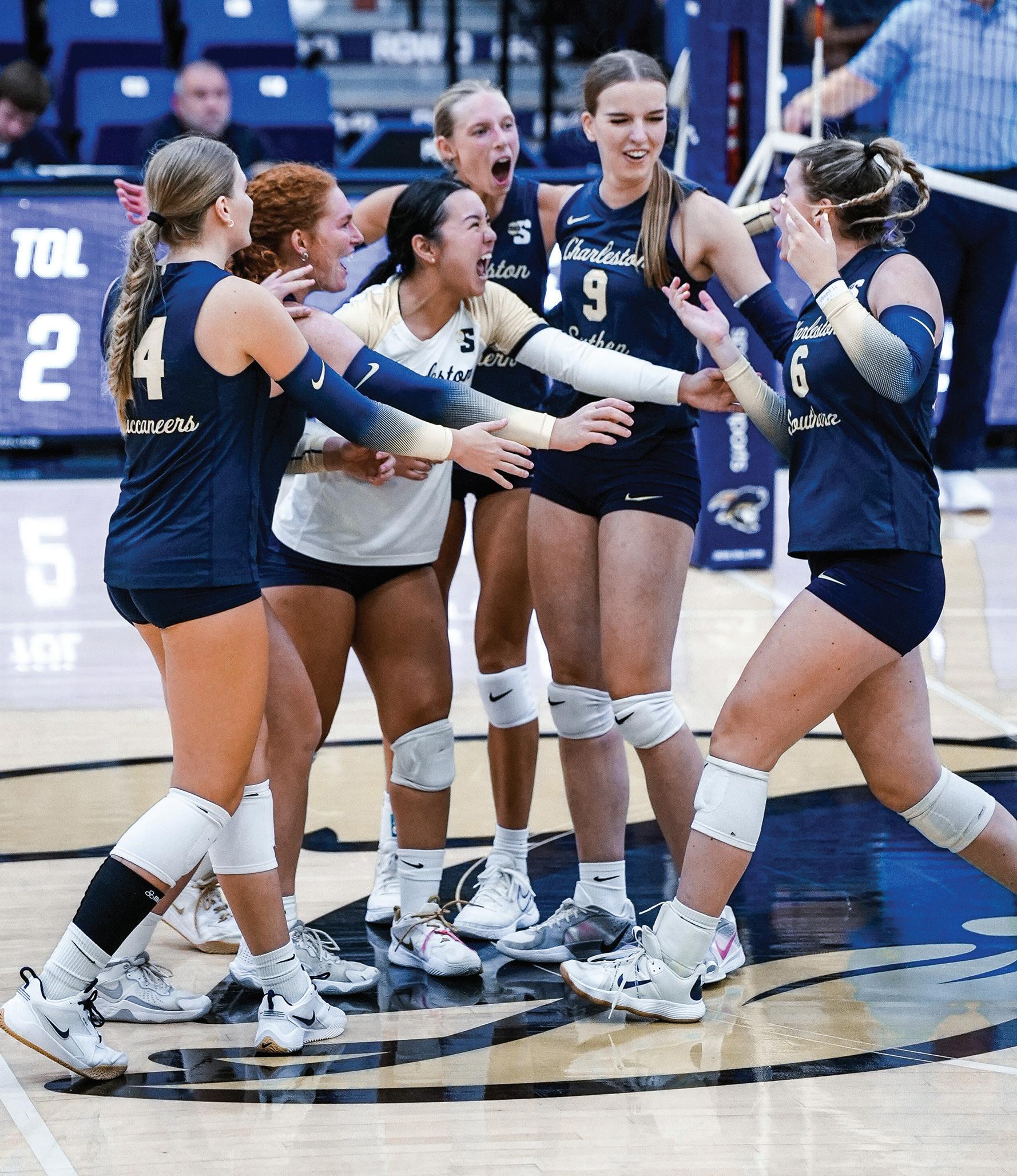
Volleyball finishes regular season with highest win total in 16 years
In the final match of the 2025 regular season, the Bucs swept Presbyterian College on Senior Night in straight sets (25-15, 25-20, 25-13).
CSU jumped out early and set the tone – racing ahead 4-0 behind a service ace by Skylar Yates. This ace would not only be the first Buccaneer point of the night, it would mark an unconquered milestone for one of Head Coach Carry Brown’s four true seniors. Yates’ ace was the 149th of her college career – an amount no CSU player has ever achieved.
1980s
Danny Nicholson ’84, president of Connie Maxwell Children’s Ministries, announced CMCM’s short film series, “For the Dreams of Children,” won a 2025 Southeast Regional EMMY in the category of Outstanding Public Service Announcement campaign. You may view the film series at conniemaxwell.com/videos/. He is married to fellow alumnus Deborah Wooten Nicholson ’86. Danny also received the E.A. McDowell Award from the S.C. Baptist Convention’s Christian Life and Public Affairs Committee in 2025. The award is given to an individual who embodies Christian action in the public arena.
1990s
Vanessa Brown ’98 MAT, ’07 MEd was one of six Star Principals of the Year from Charleston Coun ty School District for 2025. She is principal at the Cooper River Center for Advanced Studies and was named Star Principal for the High School Learning Community.
Rev. Karen Lewis Crawford ’99
Master of Divinity with an emphasis in Christian The ology from Wesley Semi nary at Indiana Wesleyan University on Dec. 13, 2025. She currently serves as an assistant pastor of discipleship at Illuminate Church in Ladson.
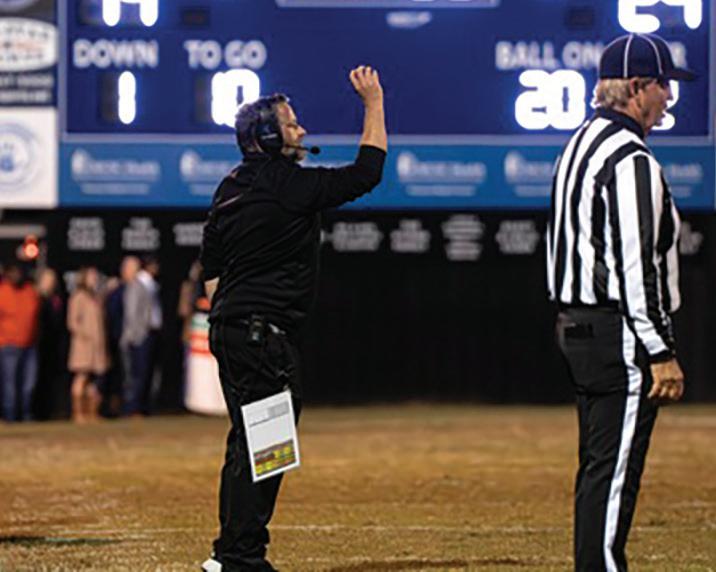
Dennie McDaniel ’99 named 5A Region 7 Coach of the Year. He is the head football coach at Stratford High School in Goose Creek.
Class notes
2000s
Andrea Jeffcoat ’00 was the winner of the $250 Homecoming Giveaway. She hopes her son, Theron, will follow in her footsteps at CSU.
Ronnie Daves ’01 is the new chief executive officer of McLeod Health Clarendon in Manning. He has 15 years of experience in healthcare leadership. He formerly served as an administrator of Prisma Health Baptist Parkridge in Irmo. He earned a Master of Health Administration from Medical University of South Carolina. He and his wife, Brandi Daves ’03, have two children.
STAY CONNECTED!
Compiled by Jan Joslin
Send us news about family additions, job changes, community involvement, etc. To include a photo, email a high resolution jpg - 800kb or larger. (If you send a professional photograph, please include permission to print from the photographer.)
Class Notes: magazine@csuniv.edu
Address change: csuadvancement@csuniv.edu
Name change: register@csuniv.edu
Follow the Alumni Association on Social Media:
CSU Alumni Association alumni_csu
Ashely D. Teasdel ’05 recently The Steward’s Seat: 12 Anchors for Bridging Faith and Lead. She said, “This devotional journal is written for the steward leader who carries real responsibility without always carrying the spotlight, and for those who are aspiring to lead with integrity long before the title arrives. You are the integrator, the implementer, the steady presence translating vision into execution and holding systems and relationships together with trust. You lead through commitment, not position, and while your name may not always be front and center, your fingerprints are everywhere. Scripture reminds us that a steward is defined by trust, not control, entrusted to manage what ultimately belongs to God. That same calling shows up today as you guide teams, navigate complexity, protect culture, and carry the weight of a mission bigger than yourself.”
Teasdel is president and CEO of Seeds of Leadership: Sowing Today for Tomorrow’s Harvest and deputy secretary of commerce for the state of South Carolina. The book is available at Amazon, Barnes and Nobel, and Apple Books.
Marvin McHellon ’07, ’09
MBA is the North and East Dallas Market President for Truist Commercial Banking. He has been in the banking industry for more than 12 years.
Paul Pallagi ’09, ’13 MEd, principal at Pinehurst Elementary School, was named Star Principal for the Elevation Learning Community. He was one of six Star Principals for the Charleston County School District for 2025.
Rev. Karen Lewis Crawford ’99
2010s
Corey Simmons ’10 and business partner, Ramone Dickerson, opened a food truck in Columbia named 2 Fat to Fly featuring stuffed wings in 2010 and eventually a restaurant in Columbia that closed in 2015. The duo has been experimenting with ways to bring back the popular wings in a costeffective manner. Follow their journey on Instagram @2fat2flywings.
Katie Lee DePoppe ’11 is the first director of people and culture for Vicious Biscuit. She most recently served as executive partner and COO for two Chick-fil-A franchises.
Shawn Fagan ’11 is the new head football coach at Trinity Collegiate School in Darlington. He brings 14 years of coaching experience to the new job and serves on the American Football Coaches Association Registration Committee. He and his wife have three children.
Hannah Embler Studemeyer ’12 is the 2026 South Carolina Association of Secondary Administrators Secondary Assistant Principal of the Year. She serves as assistant principal at North Charleston High School. Noted for innovative ideas and leadership, she also helped North Charleston High capture the distinction of being the first high school named as a School of Innovation by the South Carolina State Board of Education. She is representing South Carolina at the National Assistant Principal of the Year contest.
continued >>
Contributing to educational research
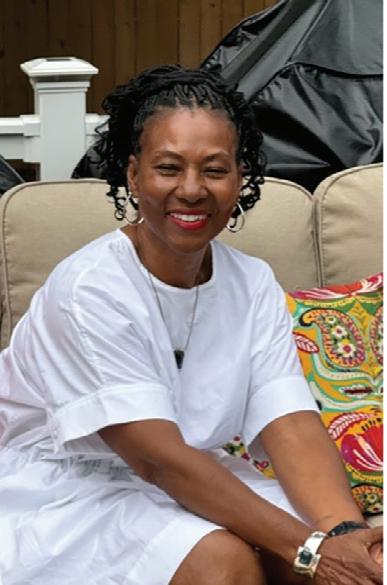
Dr. Mahalah Bowman Campbell’s ’82 research and scholarship has been recognized with a second Seed Grant in three years from Claflin University where she teaches.
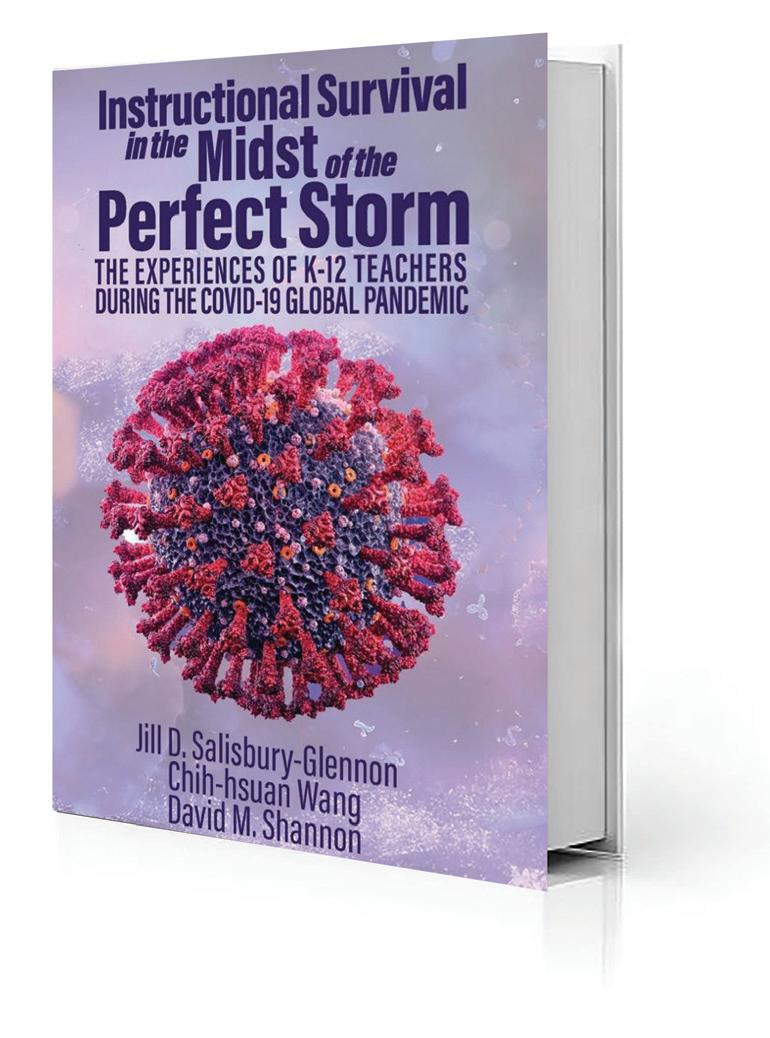
She coauthored the Attachment, attention, and achievement during the COVID-19 pandemic: A conceptual literature review chapter in the recently published Instructional Survival in the Midst of the Perfect Storm: The Experiences of K-12 Teachers during the Covid-19 Global Pandemic
Campbell is an assistant professor of psychology at Claflin. Campbell said she is grateful for Claflin’s ongoing support of faculty scholarship and mentoring future scholars through research. She also acknowledged the support of faculty colleagues at the University of Arizona for their collaboration in developing the contributing chapter.
LEGACY FAMILY
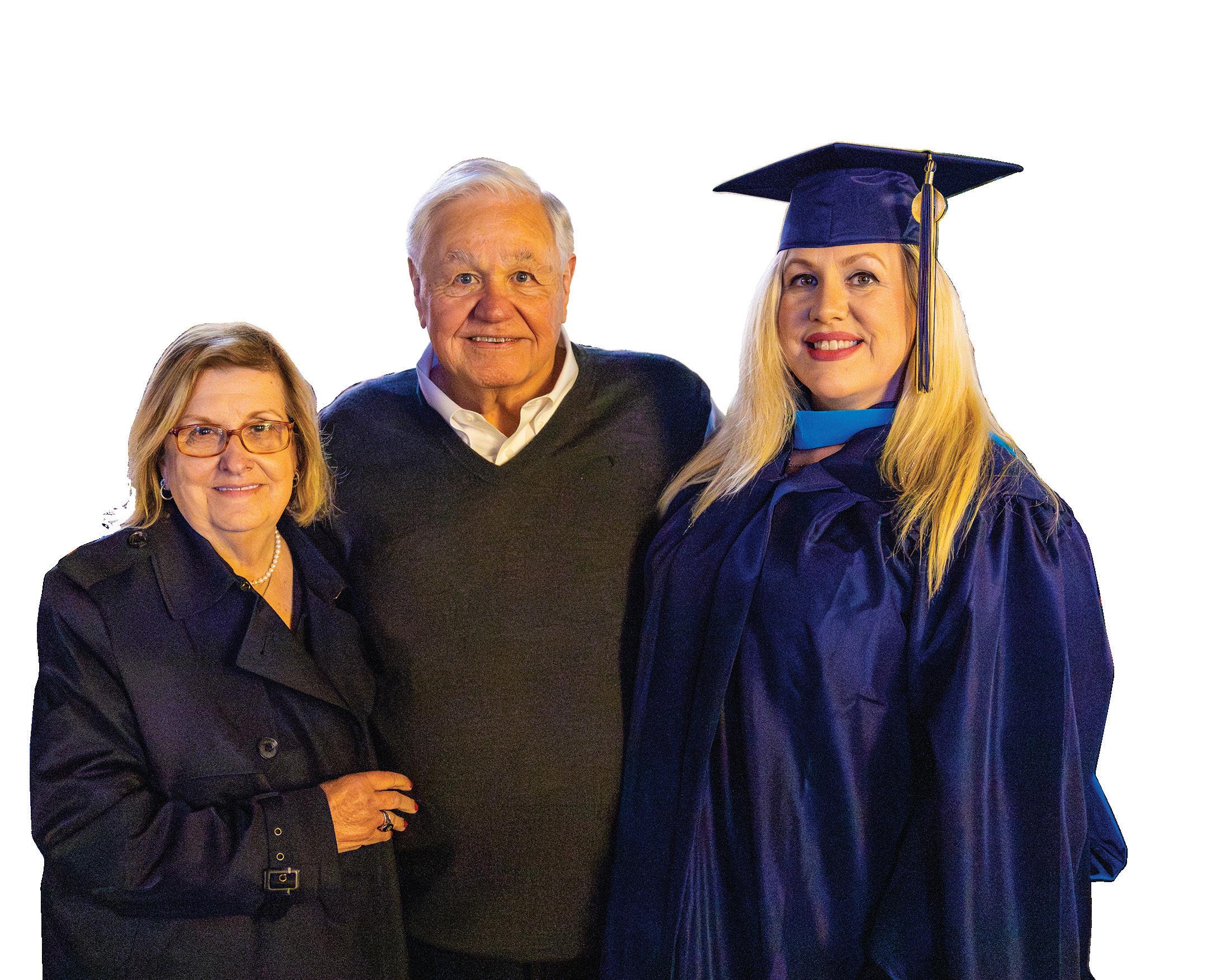
Deborah Summey ’70 and Keith Summey ’69 congratulate their daughter, Joanna “Annie” Summey Hayes MS ’25, after fall commencement. Hayes, a local judge, earned a Master of Science in criminal justice.
Photo by Dan Steffy
Class notes continued
Steve Subkoff ’14 has been promoted to the rank of lieutenant with the Berkeley County Sheriff’s Office. He is a supervisor in the Training Division and also a member of the Special Response, Dive, and Bike Patrol teams.
Frank Staropoli ’15 is the new corporate director of human resources, safety, and business development at Black Diamond Industries.
Ingrid Bonilla Valente, MD ’16 has joined Pediatric Associates Greenwood at Self Regional Healthcare.
Emily Marshall Johnson ’17 announces her marriage on April 12, 2025, to Mills Johnson, a family medicine resident at Oconee Me-
morial Hospital. She said, “In May of 2020, I earned my master’s in elementary education with an emphasis in literacy at Ball State University. I credit Dr. Christy Winchester for instilling a love of literacy in me while I was at CSU. Her influence has directly shaped my career path. Because of this degree, I am able to work as the youth services librarian (in other words, the children’s librarian) at Oconee County Public Library, a job which I adore! I worked in education for six years before taking this job, and I also spent several years as a proofreader of direct mail. While at CSU, I worked in the Writing Center under Dr. Britt Terry, earned the Romein and Gilmore Awards for academic and creative writing, and acted as president of Sigma Tau Delta, the English honor society, my senior year. I graduated
as a Teaching Fellow and as part of the Honors College. My parents both graduated from CSU, Sherry Mathis Marshall ’89, and Cliff Marshall ’91, and so did my sister, Grace Marshall ’22.” The Johnsons live in Senecca with their two dogs, Beckett and Basil, and two cats, Fred and Franklin.
Bobby Ruff ’18 is the new head football coach at Liberty High School in Liberty. He was the linebacker coach for three years at Liberty University.
2020s
Jenna Bernadyn ’20 is the social creative manager at KPS3, an agency in Reno, Nevada. She formerly worked for several hockey teams, helping to launch one of them.
Amanda Maxwell Parker ’20 is the new vice president of marketing for Vicious Biscuit. She formerly served as director of marketing and area director in Charleston for the company and previously worked for Chick-fil-A.
Kevin Butler ’21 MEd has been named the 2025-2026 Teacher of the Year at Baptist Hill Middle School in Hollywood.
Travis Boyd ’22 MA now teaches in the Charleston Southern University undergraduate leadership program, beginning with the spring 2026 semester. He earned an EdD in Christian leadership with a concentration in ministry leadership from Liberty University.
Grace Marshall ’22 graduated in May 2025 with a Master of Social Work from the University of Kentucky. She said, “I passed my licensure exam and am now an LMSW. I’m working as a substance use therapist at the jail for Charleston County and leading worship at a church plant in Nexton. I’m in the process of getting my ADC (alcohol and drug counselor certification) and my LISW-CP (licensed individual social worker - clinical practice).
Elizabeth England ’25, is participating in the Disney College Program in Orlando. She’s training at the Gasparilla Island Grill in the Grand Floridian Resort & Spa at Walt Disney World.
Caroline Jacky ’25 is pursuing a PhD in pharmaceutical sciences with a concentration in medicinal chemistry at the University of Florida. She is involved in smallmolecule drug development, with her research focus having the potential to advance Alzheimer’s treatment.
Emily Marshall Johnson ’17 and Mills Johnson
Chris Makowski ’20 wins emerging leader of the year
The Town of Summerville’s Public Information Officer Chris Makowski ’20 won the 2025 Emerging Leader of the Year Award from the Greater Summerville/Dorchester County Chamber of Commerce.
Makowski has served Summerville for three years and spearheaded a complete overhaul of the Town’s communication strategy. His focus has been a move toward radical transparency and the humanization of local government.
His communication efforts include:
• Multimedia Storytelling: Launching the Good Morning, Summerville series, the Cruising with the Mayor videos, and the Town’s first official podcast to keep residents informed and entertained.
• Modernized Crisis Communications: Implementing streamlined, real-time update systems to ensure public safety and clarity during weather events and town emergencies.
• Enhanced Social Media Presence: Growing the Town’s digital footprint, fostering a two-way dialogue between staff and citizens.
• Interdepartmental Collaboration: Working across all Town departments to ensure consistent messaging and a unified brand identity for the Town of Summerville.
A longtime drone flyer, Makowski recently began a part-time venture, AeroVision 360, which provides 360-degree imaging using innovative technology. To learn more about the technology and his company, visit www.aerovision360.com.
ABOVE: Chris Makowski interviews Mayor Russ Touchberry during a Cruising with the Mayor segment. Photo provided.
RIGHT: Example of Makowski’s work with AeroVision 360. Photo by Chris Makowski
Baby Bucs
To Order a Shirt:
CSU graduates, if you have a child under the age of 2, let us know at alumni@csuniv.edu, and we will send a CSU onesie for your Baby Buc. The shirt is free; all we ask in return is a photo of your Baby Buc for the magazine.
To Submit Your Baby Bucs Photo:
Email a picture of your Baby Buc wearing the shirt to alumni@csuniv.edu. Pictures should be 800kb or larger in size, jpg format.
1. Everleigh Marie Salley, daughter of Alicia Marie Terwilliger-Salley, ’03, ’17, and David Salley
2. Grandchildren of Jenna Carpenter ’11 MEd and Bill Carpenter ’84
3. Murphy Lynn Johnston, daughter of Maggie Murphy Johnston ’14 and Zac Johnston ’14
In memory
Jared L. Dingus ’02, age 49, died Oct. 14, 2025, in Goose Creek. He was an IT professional with United Health Care, supporting their hospice program.
Jacqueline “Jacquie” LaVone Jones ’06, age 74, died Oct. 17, 2025, in Summerville. She was a nurse and later returned to college to earn a degree in piano performance, serving as the accompanist for Bel Canto for 18 years at CSU.
John Franklin Kennerly Jr. ’92, age 54, died Jan. 26 in Bennettsville. He worked at Erskine College for 28 years,
eventually becoming associate dean of the library and institutional effectiveness. He was also the Baptist Collegiate Ministries faculty leader. In 2024 he became director of library services at Richmond Community College.
Hugh Long ’74, age 75, died Dec. 3, 2025, in Daniel Island.
Terrill “Terry” Wesley Lowe ’86, age 70, died Feb. 2 in Charlotte, North Carolina. He is a U.S. Navy veteran, and served as a director of music at several churches. He was one of the founders of Metro North Church in Goose Creek,
and worked for the South Carolina department of employment.
Margaret Lightsey MacMillan Payne, age 91, died Feb. 17 in Columbia. A long-time supporter of CSU, she funded The Margaret Lightsey MacMillan Payne Nursing Endowed Scholarship, was a member of the CSU Legacy Society, and the Board of Visitors.
Timothy “Tim” Craig Payne Sr. ’71, age 76, died Dec. 18, 2025. He had a 35-year career in the public school system. His final job was as principal at Fort Dorchester High School in North Charleston.
Stephen “Steve” J. Quinn ’74, age 73, died Feb. 16 in New Jersey.
Carol Ann Norton Tuzo ’80, age 87, died Oct. 10, 2025, in Mount Pleasant. She was a nurse at Trident Medical Center and a nursing instructor at Trident Technical College. She also coauthored several nursing textbooks.
Karen Berry DeCosta ’87, age 60, died Feb. 9 in Alcolu. She was retired from the Clarendon County Sheriff’s Office.
CSU remembers faithful board of trustees members
By Jenna Johnson
Charleston Southern University is mourning the passing of Larry T. Driggers, a current member of the Board on Jan. 29, and the Rev. Chester “Sonny” Holmes Jr., a former Board member, on Feb. 11.
Larry generously invested his time, wisdom, and resources to help CSU thrive. He was serving in his second term on the CSU Board of Trustees at the time of his death. Larry’s commitment to CSU was evident in his genuine care for students, faculty, staff, and the mission of the university. Larry will be remembered for his biblical wisdom, kindness, quiet strength, and unwavering faith.
A respected business leader and owner of Larry T. Driggers Construction, Larry lived out his faith through service and generosity. Alongside his wife, Sallie, they established the Driggers/Schutz Family Scholarship, honoring the lives and legacies of those they loved
deeply—Larry’s mother, Dorothy D. Driggers; their son, Thomas “Tad” A. Driggers; and Sallie’s parents, Frank Abbott and Eddie Lou Garvin. Through this endowed scholarship and years of faithful support, Larry and Sallie created a lasting impact for generations of students. CSU President B. Keith Faulkner shared, “Larry Driggers exemplified what it means to lead with a servant heart. His generosity, humility, and steadfast faith shaped Charleston Southern University in ways that will endure far beyond his years of service. We are profoundly grateful for his life, his leadership, and his love for CSU. I have no doubts that he heard, ‘Well done, good and faithful servant’ when he entered Heaven.”
Sonny Holmes, a former member of the Board of Trustees and beloved retired pastor of Northwood Baptist Church, was a dynamic and visionary leader. Sonny wisely guided
Northwood Baptist Church through seasons of growth and change that helped shape it into the thriving congregation it is today. He served there for 13 years of his ministry career. He was widely respected across the state, serving as president of the South Carolina Baptist Convention and offering trusted counsel to pastors, ministry leaders, and university presidents alike.
Sonny also held a special place in the life of CSU. As a former trustee, valued advisor, and beloved adjunct faculty member, he mentored generations of students while teaching Old and New Testament Survey.
Sonny’s legacy is one of faithful service, bold leadership, compassionate care, and unwavering love for Christ and His people. We join with his family, church, and the broader faith community in grieving this great loss while rejoicing in the promise of eternal life.
HOMECOMING 2025
Seven graduates receive alumni awards
By Denise Dawson | Photo by Dan Steffy
Seven alumni were honored at Homecoming as the 2025 Alumni Award recipients. Alumni are nominated by their peers and/or university officials.
Distinguished Alumnus –
Scott Payne ’93
Payne, a retired FBI special agent, dedicated more than two decades to dismantling violent criminal and extremist organizations through courageous undercover work. A nationally recognized expert, author, and speaker, he continues to mentor and inspire others with his message of integrity, resilience, and service.
Outstanding Alumnus –
Dennetta Dawson ’90
Dawson is a trailblazer in law enforcement and made history as the first Black female officer commissioned by the South Carolina Department of Natural Resources. Rising through the ranks to Region 4 captain, she has led with courage, vision, and a deep commitment to conservation, public safety, and education. From advancing boating safety and
fisheries enforcement to launching the National Archery in the Schools Program—now reaching thousands of students across South Carolina—she is leaving a legacy of mentorship, innovation, and service.
Outstanding Young Alumnus –Matthew Pettersen ’22
Pettersen has quickly distinguished himself through professional excellence, civic engagement, and faithful service. As a product owner consultant with Booz Allen Hamilton and a leader with Turning Point USA during the 2024 presidential campaign, he has demonstrated vision, initiative, and impact in both the workplace and the public square. His continued service in his local church reflects his character and commitment to living out his faith in every sphere of life.
University Mission –Phillip Wilson ’08
Wilson lives out Charleston Southern University’s mission through both professional excellence and faithful ministry. As vice presi-
dent and client service advisor at Pinnacle Financial Partners, he models integrity and servant leadership in the marketplace, while his pastoral roles—including church planting and discipleship leadership—demonstrate a deep commitment to advancing God’s Kingdom. His service as board chair for Dorchester Habitat for Humanity and with Charleston Legal Access further reflects his dedication to compassion and justice in the community.
Community Service Award –Taylor “Cheyenne” Huber ’18
Huber is now the lead court advocate with My Sister’s House, where she ensures that victims receive counsel and support through court proceedings and also obtain any resources that may be needed. Her success is a clear reflection of God’s hand upon her career, where her education and servant heart is being used for Kingdom service.
Alumnus Service Award –Esther Wilkins ’91
Wilkins is a devoted graduate whose service and leadership have strengthened the Charleston Southern community. As an active member of the Alumni Board and the Board of Visitors, she has invested her time, talents, and influence to deepen alumni engagement, support CSU’s mission, and encourage future growth. Her faithful presence at university events and her Christ-centered example reflect a genuine love for CSU and a desire to see it thrive.
Military Service Award –Joseph Tallon
’69
Tallon exemplifies courage, sacrifice, and faithful service through his life as a soldier, educator, author, and devoted alumnus of Charleston Southern University. A U.S. Army officer and OV-1 Mohawk pilot in Vietnam, he was shot down on the final day of ground combat, surviving with serious injuries and later advocating to honor his fallen comrade. His memoir, 100 Days in Vietnam, co-written with his son, testifies to the love, loss, and faith that shaped his journey. Beyond his military service, he has given generously to CSU as a member of the Board of Visitors, The Legacy Society, and as honorary commandant of cadets for the CSU Air Force ROTC Detachment 772.
Pictured: Scott Payne, Cheyenne Huber, Dennetta Dawson, Phillip Wilson, Matthew Pettersen, Joe Tallon, and Esther Wilkins.
Alumni Question
If you could go back and relive one day on campus, which day would it be?
The day that I met my best friend Lindsay Walsh Lebby. It was before Old Testament with Mr. Kebede. It was after that day we both knew we would be inseparable.
Alexandra Virnig ’09
If I could relive any day on campus, it would be my birthday, September 28, 1989. I would like to relive it because I actually didn’t get to live it because Hurricane Hugo hit. As a freshman I couldn’t wait to get thrown into the Reflection Pond, and Hurricane Hugo totally messed that up, so I never got thrown in the pond. I was a disappointed freshman! lol
Tiffany Brewer Carroll ’97
If I had the opportunity to relive one day on campus, it would be the day I changed my major in my freshman year. Originally, I was a Physical Education major working towards Teacher Certification; however, a pivotal meeting inspired me to change my major to Kinesiology. The professors I encountered in this field were outstanding. Given the chance, I wouldn’t change anything.
Zeni Freeman ’12
<< Congratulations to Tiffany Brewer Carroll on winning the CSU swag package contributed by CSU Alumni.
Our Buccaneer Journey
Paula Baker Pinkerton ’81 and Mark Pinkerton ’80
After graduating, Mark attended New Orleans Baptist Seminary. I followed a year later. Mark received his master’s in theology. He went on to do some doctoral work until God called us to leave seminary and go into the church field. Our first church was in Louin, Mississippi. We served there a little over five years before being called to a church in my hometown in Georgetown, South Carolina.
We served there for nearly eight years before being called to serve in the Middle East. That was in 2000. We are still here, 26 years later but look forward to retiring this August. We have two children and four grandchildren.
Mark Your Calendars for
October 10, 2026
Know a BCC/CSU alumnus who is doing great things? Nominate them for an Alumni Award at charlestonsouthern.edu/alumni/alumni-recognition/.
Deadline for nominations is June 30.
Annual Alumni Meeting, Alumni Awards, Tailgating, Football vs. S.C. State at 6 p.m., and more!