Is your print and mail vendor still the right fit?
Print and mail is not going away. But the way organizations manage critical customer communications is changing fast.
Customers expect clearer communications. Regulators expect stronger controls. Operations teams need more visibility. And business leaders want print, digital, and payments to work together, not sit in disconnected workflows.
For many organizations, the question is no longer whether print and mail still matters. It does.
The better question is whether your current provider can support what the business needs next.
Isn’t our current vendor good enough? Maybe.
But “good enough” becomes harder to defend when your team is dealing with:
Slow document or template changes
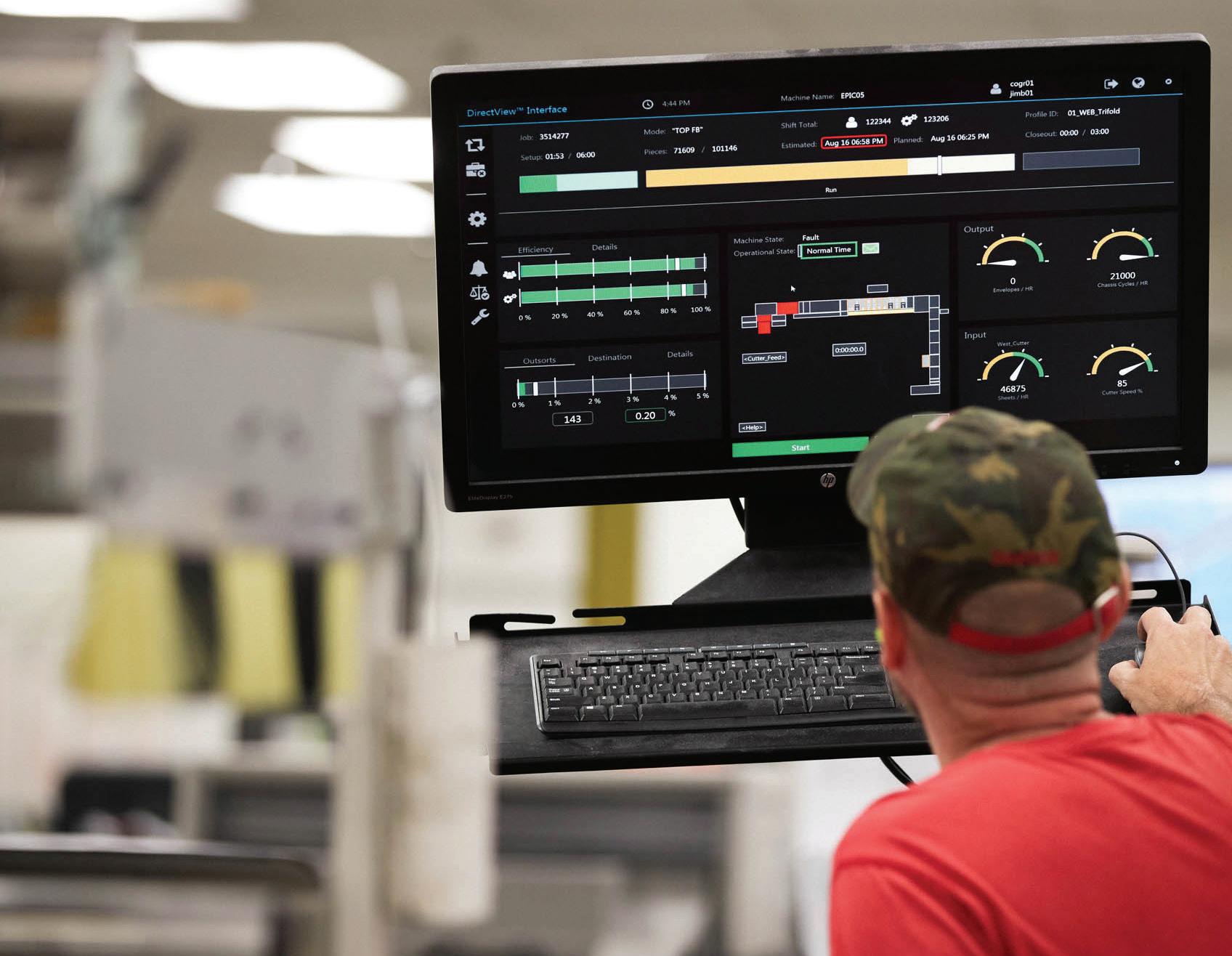
Limited visibility into job status and exceptions
Manual workarounds that have become normal
Rising internal effort to manage the provider
Compliance evidence that is hard to access
Delayed or inconsistent communications
A print and mail model that does not connect well to digital, payments, or broader customer communications
Staying with the incumbent can feel safer because the vendor is familiar. But familiar does not always mean controlled.
What does it really mean to be migration-ready?
Many organizations believe they are not ready to switch print and mail vendors because they assume migration will be too risky. That concern is valid.
Print and mail migration touches customer data, business rules, document templates, production workflows, approval processes, compliance requirements, and delivery timelines. A mistake can affect customer trust, payment behavior, regulatory exposure, and call center volume.
But the risk is not the move itself.
The risk is moving without the right plan, controls, testing, and governance.
What’s happening?
Organizations are rethinking print and mail because the old model is under pressure.
Critical communications now need to be:
Produced reliably
Changed quickly
Tracked clearly
Audited easily
Delivered across the right channels
Connected to digital, payment, and customer engagement strategies
Print and mail is still essential, especially for regulated, high-volume, and mission-critical communications.
But it cannot operate like an isolated production function anymore.
Why this matters
A poorly managed migration can create real business risk. A well-managed migration can reduce it.
The goal is not to move documents from one vendor to another and call it success. The goal is to protect continuity while creating a stronger operating model for critical communications.
That means better control, clearer visibility, stronger accountability, and a more practical path to long-term modernization.
Personalized Contact Points
The risk of staying put
Delaying a vendor move may feel like the low-risk option. But the cost of inaction builds over time.
If you stay with the wrong provider
Change requests take too long
The business risk
Slower response to regulatory, product, or customer needs
Reporting is limited
Exceptions require manual work
Less control over service performance and issue resolution
Higher internal cost and more operational drag
Compliance evidence is hard to produce
Greater audit and regulatory pressure
Print is disconnected from digital
Less customer choice and weaker communications strategy
Vendor knowledge is concentrated
More dependency and harder future transition
The 5 migration risks every buyer should plan for
Data and file integrity
Projects drift when ownership, approval paths, sign-off criteria, and escalation processes are unclear. 1 2 3 4 5
Bad inputs, missing fields, weak mappings, or poor validation can create output errors and compliance risk.
Document and template complexity
Statements, notices, letters, versions, business rules, and legacy logic are often more complex than expected.
Production and delivery continuity
Cutover must protect production schedules, SLAs, print quality, mailing timelines, and exception handling.
Compliance, privacy, and audit exposure
Regulated communications need strong controls around data handling, approvals, retention, accessibility, and proof.
Governance and change control
Is your current provider helping you move forward?
It may be time to reassess your print and mail vendor if:
Limited visibility into job status and exceptions
You do not have clear visibility into production status
Your team spends too much time chasing updates or resolving exceptions
Your provider has limited Business Continuity and Disaster Recovery capabilities
Document changes take longer than the business can tolerate
Compliance reporting is manual or difficult to produce
You are locked into legacy workflows or limited reporting
Your provider cannot support broader customer communications needs
You are staying just because switching feels too risky
That last point matters.
Fear of migration should not be the reason to stay with a model that is already creating risk.
How CSG helps reduce migration risk
CSG helps organizations move critical print and mail communications with more control.
A controlled migration should include:
Current-state assessment
Document, template, workflow, and dependency inventory
Data and file mapping
Business rule validation
Output testing
Compliance review
Cutover planning
Defined governance and approval gates
Post-go-live optimization
Dedicated implementation teams with a consistent point of contact and industry-specific expertise
The strongest migrations do not try to change everything at once. They protect continuity first, then create room to improve.
What a safer migration path looks like Migration Steps 1 2 3 4 5 6
Discover
Understand the current environment, including vendors, volumes, documents, files, workflows, SLAs, approvals, and pain points.
Map
Document the data, templates, business rules, dependencies, exceptions, and compliance requirements.
Validate
Test files, outputs, document versions, inserts, suppression logic, postal rules, and exception handling.
Control
Use clear governance, decision rights, approval gates, cutover plans, and escalation paths.
Stabilize
Monitor performance after go-live, manage issues quickly, and confirm the new operating model is working.
Improve
Once the migration is stable, identify opportunities to simplify templates, improve reporting, reduce manual work, and connect print and mail with broader communications strategy.
CSG delivers this approach through dedicated implementation teams with industry-specific expertise, clear migration planning, and phased transitions. This helps organizations identify risks early, mitigate disruption, track performance and identify opportunities for ongoing optimization.
Why organizations move print and mail to CSG
CSG supports high-volume, mission-critical customer communications where accuracy, reliability, compliance, and visibility matter.
With CSG, organizations can move from a print and mail model that feels hard to manage toward one that gives the business more control.
CSG can help organizations:
Reduce migration risk with a structured approach
Protect continuity with secure production environments with redundant print facilities
Improve visibility into production, exceptions, and performance
Support regulated communications with stronger controls
Reduce operational dependency on manual workarounds
Connect print and mail into broader communications, digital, and payment strategies
Build a stronger foundation for future customer communications improvement
The move does not have to be the risk
The real risk is staying with a model that is already too slow, too opaque, or too hard to control. A safer migration is possible when the plan is structured, the controls are clear, and the partner understands both the operational discipline of print and mail and the future of customer communications.
Ready to assess your print and mail migration risk?
Talk to CSG about a controlled migration plan.
About CSG
CSG empowers companies to build unforgettable experiences, making it easier for people and businesses to connect with, use and pay for the services they value most. Our customer experience, billing and payments solutions help companies of any size make money and make a difference. With our SaaS solutions, company leaders can take control of their future and tap into guidance along the way from our fiercely committed and forward-thinking CSGers around the world.
Want to be future-ready and a change-maker like the global brands that trust CSG? Visit csgi.com to learn more.