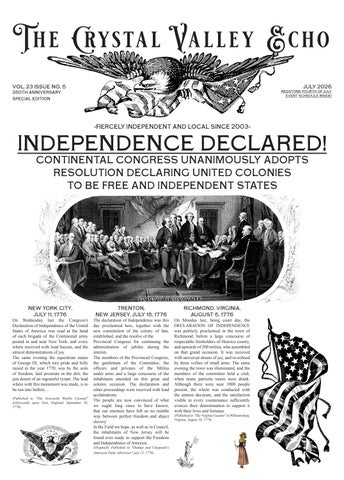
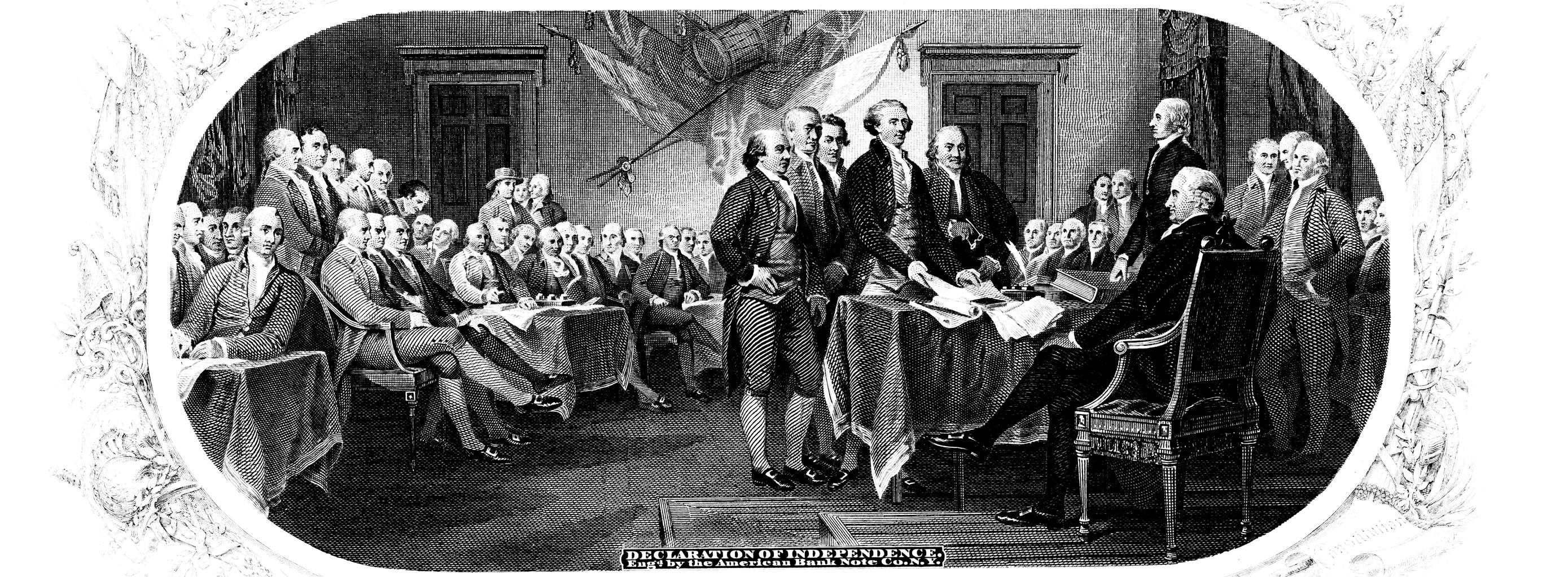
Continental Congress unanimously adopts resolution declaring united colonies to be free and independent states
New York City, July 11, 1776
On Wednesday last the Congress's Declaration of Independence of the United States of America was read at the head of each brigade of the Continental army posted in and near New York, and every where received with loud huzzas, and the utmost demonstrations of joy.
The same evening the equestrian statue of George III, which tory pride and folly raised in the year 1770, was by the sons of freedom, laid prostrate in the dirt; the just desert of an ingrateful tyrant. The lead where with this monument was made, is to be run into bullets....
(Published in "The Newcastle Weekly Courant" inNewcastle upon Tyne, England, September 28, 1776)
Trenton,
New Jersey, July 15, 1776
The declaration of Independence was this day proclaimed here, together with the new constitution of the colony of late, established, and the resolve of the Provincial Congress for continuing the administration of jubilee during the interim.
The members of the Provincial Congress, the gentlemen of the Committee, the officers and privates of the Militia under arms and a large concourse of the inhabitants attended on this great and solemn occasion. The declaration and other proceedings were received with load acclamations.
The people are now convinced of what we ought long since to have known, that our enemies have left us no middle way between perfect freedom and abject slavery.
In the Field we hope, as well as in Council, the inhabitants of New Jersey will be found ever ready to support the Freedom and Independence of America.
(Originally Published in "Dunlap and Claypoole's American Daily Advertiser" july 15, 1776)
Richmond, Virginia, August 5, 1776
On Monday last, being court day, the DECLARATION OF INDEPENDENCE was publicly proclaimed in the town of Richmond, before a large concourse of respectable freeholders of Henrico county, and upwards of 200 militia, who assembled on that grand occasion. It was recieved with universal shouts of joy, and re-echoed by three vollies of small arms. The same evening the town was illuminated, and the members of the committee held a club, when many patriotic toasts were drank. Although there were near 1000 people present, the whole was conducted with the utmost decorum, and the satisfaction visible in every countenance sufficiently evinces their determination to support it with their lives and fortunes.
(Published in "The Virginia Gazette" in Williamsburg, Virginia, August 10, 1776)
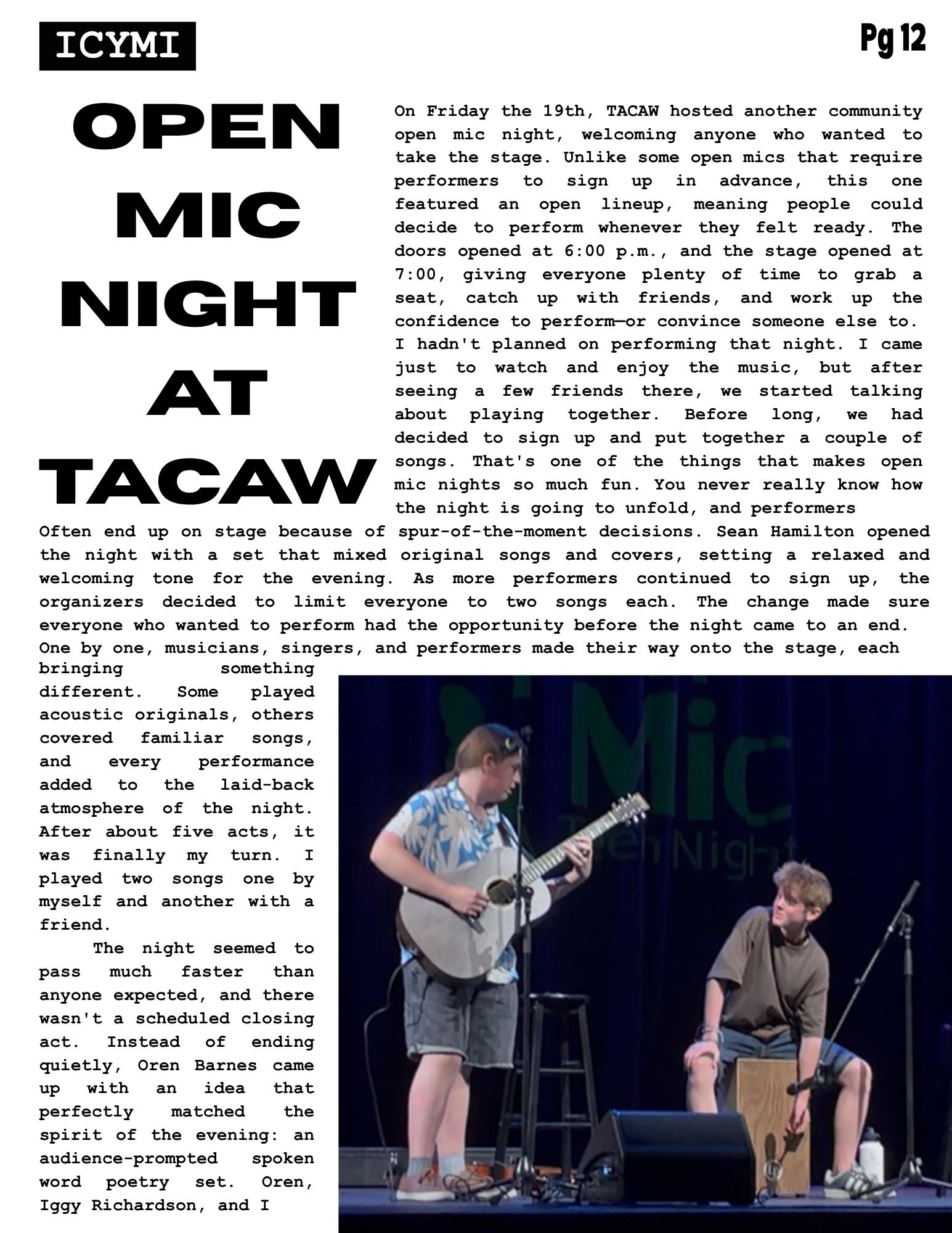
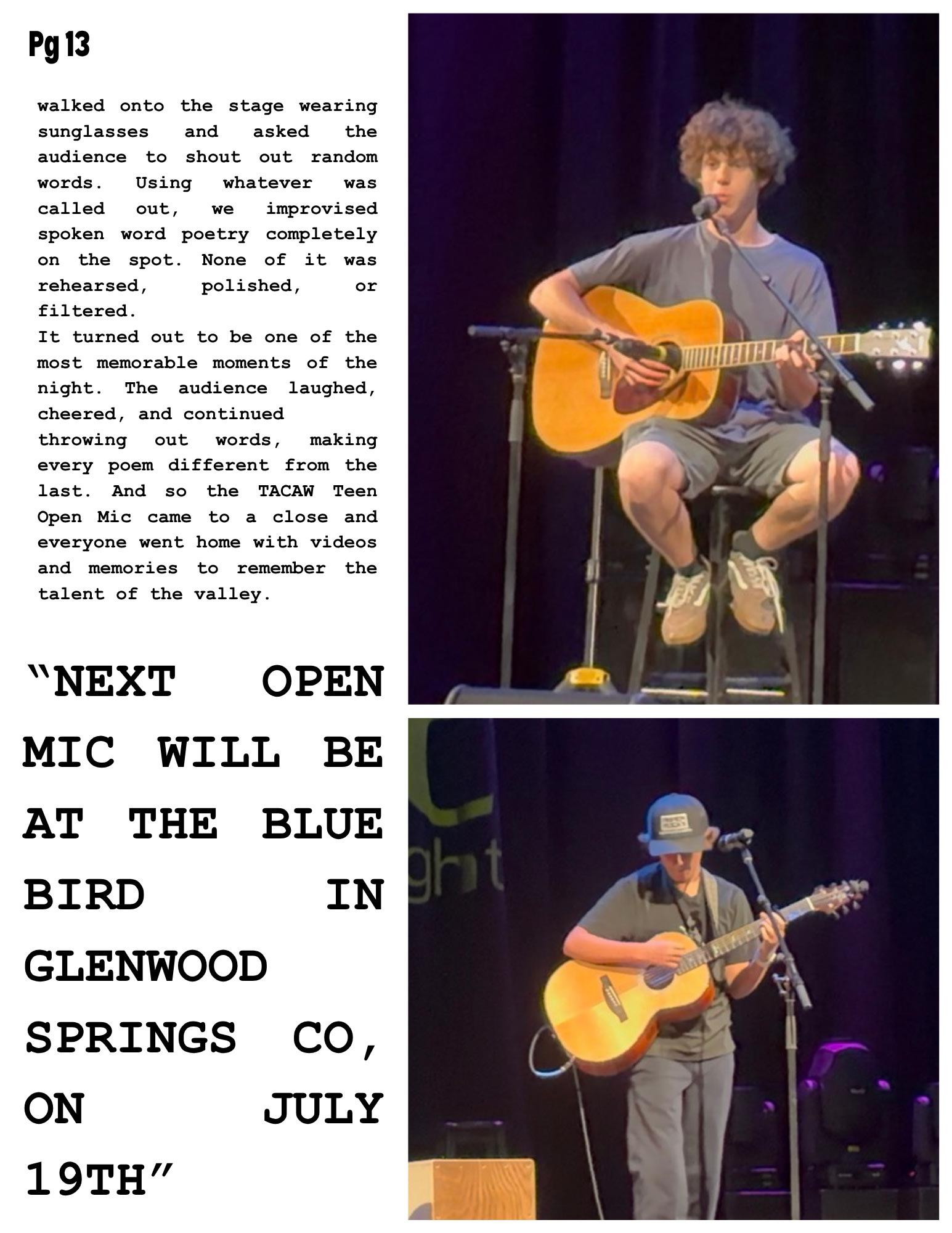
2026 Community Happenings
Tuesday July 14th, 3:00pm-4:00pm Alzheimer’s and Dementia Caregiver Support Group @Sopris Lodge, Carbondale
July 24th-26th 55th Annual Carbondale Mountain Fair @Sopris Park in Carbondale info at www.carbondalearts.com Look for the Program in the Sopris Sun!
& The Clever Few, July 30th: Clay Street Unit
Monday July 6th, 6:00-9:00pm Roaring Fork Valley Ultimate Frisbee Summer League hosted by Elk Mountain Ultimate @ Crown Mountain Park every Monday night: Register here: https://shorturl.at/Hw3No
Thursday July 9th, 5:00-9:30pm, Save the Land, an evening with Aspen Valley Land Trust @T-Lazy-7 Ranch, Tickets here: https://shorturl.at/IurzF
Friday July 10th, 7:00-10:00pm Live at Towline Trucks: The Intaglios, 111 Main Street Carbondale
Saturday July 11th, 08:00am, Garfield County Libraries Hiking Club: History Underfoot @ Babbish Trail, Sunlight Mountain Resort, Register here: www.gcpld.org/summer-reading
Saturday July 11th, 09:00am-11:00am @ Coal Basin Ranch History Coffee Talk: Coal Basin Reclamation with Steve Renner. Free Event, Donuts and Coffee. RSVP to info@coalbasinranch.com
Saturday July 11th, 6:00-8:00pm Redstone Magical Moments Summer Concert Series: Delta Sonics @Redstone Park
Friday July 17th, Music Under the Bridge: The Queen Bees Band, music starts 4:30pm in Bethel Plaza underneath the Grand Avenue Bridge
Friday July 17th Cary Morin Duo at Steve’s Guitars, Carbondale Doors @ 7:00, Tickets: https://shorturl.at/R6YAm
Saturday July 18th, 6:00-8:00pm Redstone Magical Moments Summer Concert Series: Mai Ty @Coal Basin Ranch
Sunday July 19th 5:00pm-8:00pm, Carbondale Music in the Park 2026: DJ CAMO, Dank Cilantro, King David James & The Love Free and open to the public, also broadcast live on KDNK Radio
Tuesday July 21st, 06:00-08:00pm Roaring Fork Drawing Club Potluck @Coal Basin Ranch
Saturday July 25th, 10:00pm @ El Dorado Carbondale: Official Mountain Fair After Party ft. Marfa Tickets: https://shorturl.at/IGiCg
Friday July 24th, 10:30am-2:15pm Blood Drive @Sopris Lodge Carbondale
Thur. July 30 & Fri. July 31 Ages 12-18 BORN TO ROCK: Vocal Camp-The Master Technique with Gonzalez 9:00am3:00pm @ TACAW Find tickets here: https://shorturl.at/i7yvT
Thur. July 30 09:00am-5:00pm Paws for a Cause: Summer Pet Food & Supply Drive @Sopris Lodge, Carbondale
Thur. July 30th 10:00am-7:00pm End of Summer Reading Scholastic Book Fair @ Basalt Regional Library
To Submit Events for the Community Happenings Section, Email Details to: editor@CrystalValleyEcho.com Include Date, Time, & Location
The Crystal Valley Echo & Marble Times
Mission Statement: To provide a voice for the residents of the Crystal River Valley; to bring attention to the individuals and local businesses that are the fabric of the Crystal Valley region; to contribute to the vitality of our small town life.
Editor-in-Chief: Tucker D. Farris Editor@crystalvalleyecho.com
For advertising sales contact: Advertising@crystalvalleyecho.com Or call our advertising manager at +1(970)618-6812
The Crystal Valley Echo is published monthly, And is distributed in print and digitally throughout the Crystal Valley.
The Crystal Valley Echo is 100% Human-Created And does not condone, elicit, perform, or implement creative, Journalistic, or logistical usages of generative artificial intelligence.
No part of this newspaper may be used in the training Of artificial intelligence, doing so will result in legal action.
All rights of works by contributing authors and photographers Remain the sole property of their creators in perpetuity.
In Print...
A Monthly Literature Column by Izzy Stringham
We are approaching the 250th anniversary of the Declaration of Independence in hyper-partisan times. While division in the United States is nothing new, the time we are now living in feels especially fraught; there is so much animosity and so little coming together. When the highest office in the land is filled with grift and corruption, it’s hard for the rank and file to feel their voices are heard, their problems recognized, or to experience the pride of a common identity to see us through hard times together. Who gets to be American is being ever more narrowed and has once again become exclusive and defined by xenophobia.
This is where literature comes in, with its imagination and scope, variety and empathy. So many different takes, so many stories and experiences are captured by the pen that there is truly something for everyone. The vast body of work we have by American authors is something to celebrate and find solace in. The diversity of actual Americans is so huge, and the points of view and experiences so wondrously varied, we can’t help but feel expanded and nourished when we read American stories.
In this summer of the 250th American anniversary, here are a few terrific homegrown authors to take note of.
Percival Everett won the National Book Award for James in 2024, but for four decades, he has been putting out novels with the same quick wit, biting satire, and critical eye toward race and the duplicity of a system that preaches equality, but keeps people out based on color. His books are also just incredibly funny. Try a few of his earlier titles like Watershed or God’s Country, for a rollicking adventure and hilarious side characters
Colorado poet Andrea Gibson died in 2025, but not before leaving the world with a stunning collection of poetry. Their work focused on social justice, self-acceptance, and gender norms, and Gibson understood how just being a human living in the world can be so complicated and painful. Pick up You Better Be Lightning or Lord of the Butterflies for a taste of Gibson’s work. They also had new work published posthumously in the Anthology of Colorado poets Begin Where You Are, released in January of 2026.
As one of the most prolific writers in the American West in both fiction and nonfiction, Stegner produced an accomplished body of work. His best known fiction, Angle of Repose and Crossing to Safety are now American classics. Some of Stegner’s nonfiction works include Where the Bluebird Sings to the Lemonade Springs, Beyond the Hundredth Meridian and Mormon Country. He was a master of the essay, and a keen observer of life. Even 34 years after his death, his books remain relevant to understanding the western United States.
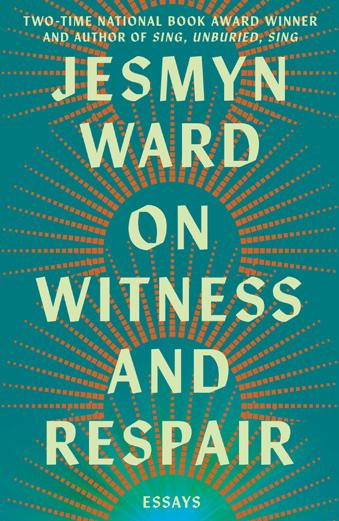
Mississippi writer Jesmyn Ward has a brand new title out called On Witness and Respair in which she honors a promise to her grandmother to “Tell it straight. Tell it all.” This collection of creative non-fiction highlights many topics; parenting, grief, the power of fiction, poverty, and riding out Hurricane Katrina on the Mississippi coast. Her clear prose and sharp eye are reminiscent of her past novels like Sing, Unburied Sing, and Salvage the Bones, both of which were winners of the National Book Award.
There is no better living writer than Indigenous American Louise Erdrich, to describe with gentleness and humor, all the quirks and eccentricities of everyday people. She finds miracles in the ordinary, and treats her characters with immense kindness. Her latest book, Python’s Kiss, is a collection of short stories written over the last 20 years. Similar to her recent novels, The Mighty Red and The Sentence, Erdrich finds transformative moments among the day to day grind. She is delightful and wry, always extending the utmost compassion to everyone she writes about, exemplifying the vast distinctiveness of Americans and American storytelling.
Carbondale's Top-10 Books in June:
Theo of Golden by Allen Levi
Yesteryear by Caro Claire Burke
Land by Maggie O’Farrell
Whistler by Ann Patchett
The Calamity Club by Kathryn Stockett
Things We Never Say by Elizabeth Strout
Lonesome Dove by Larry McMurtry
The Midnight Train by Matt Haig
Go Gentle by Maria Semple
Land and its People: Essays by David Sedaris
Redstone
Senior Days
RSVP: (970) 920-5432 Redstone programs are open to all!
TUESDAY, JULY 7
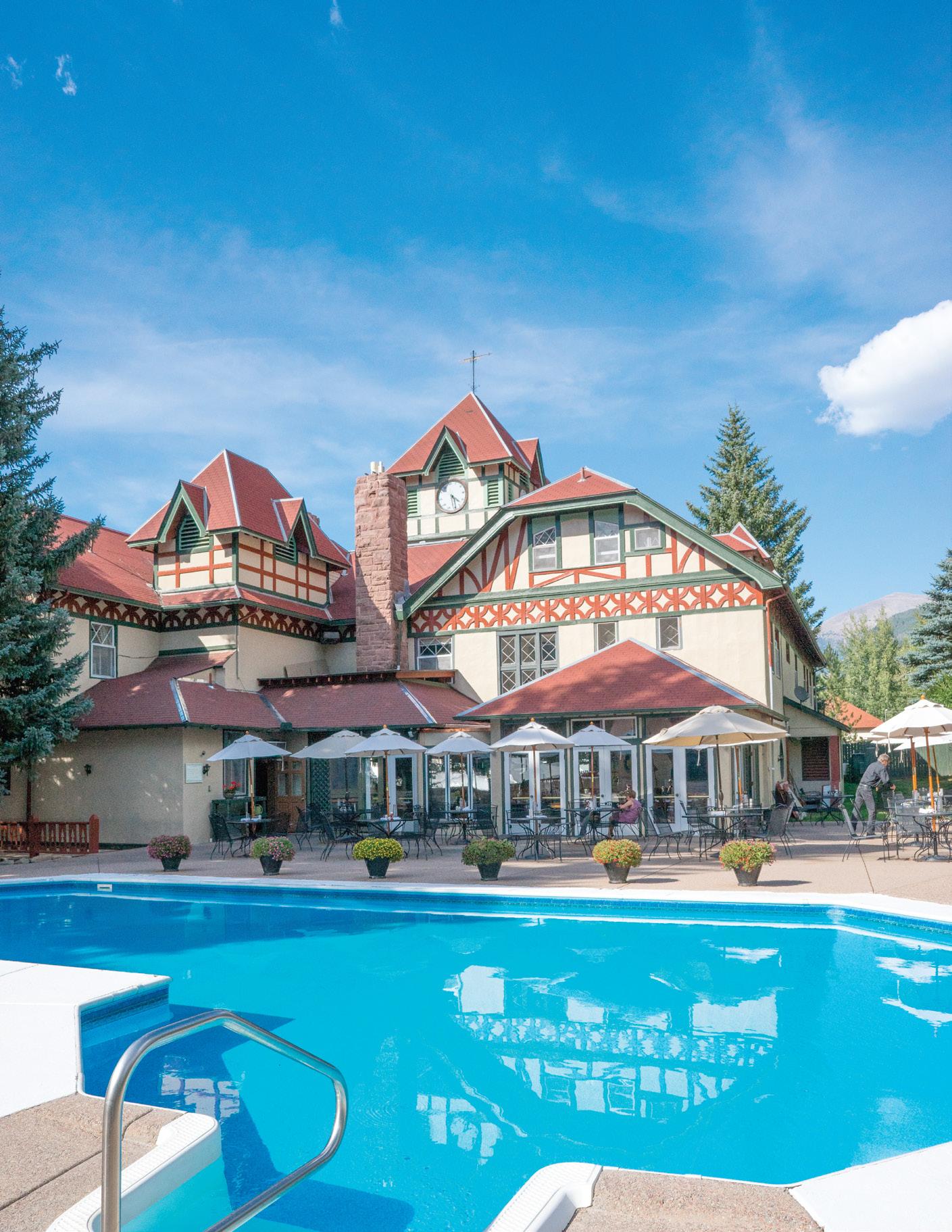
At the Redstone Inn
11:00 a.m. – Yoga ($5)
12:00 p.m. – Lunch ($10)
RSVP by noon the Friday prior – space is limited. Plated lunch served.
12:45 p.m. – Program: Cowboy Corral Ride into summer with songs, stories, and poems from the Old West. Enjoy favorites like Home on the Range, Rawhide, and Ghost Riders in the Sky while tapping your boots along.
TUESDAY, JULY 21
Marble Day!
11:30 a.m. – Meet at Slow Groovin’ Enjoy lunch at Slow Groovin’ Barbecue (vegetarian option available), followed by a visit the MARBLE/marble SYMPOSIUM
WANT TO BE KEPT IN THE LOOP?
Send us your email address: (970) 920-5432 • seniors@pitkincounty.com
Wallace Stegner once said “We simply need that wild country be available to us.”
‘Good’ Medicine;
Living the Good Life; Finding meaning and purpose in the Coast Salish Way
Musings by Melissa Forsyth on Indigenous healing and Circle medicine
I am choosing a topic for this month's entry that may feel uncomfortable: death by suicide. The reason I am going to write about it is that I am called to initiate healing in First Nations communities here in BC, that are suffering, losing their youth and families, to suicide in alarming numbers. Indigenous people in Canada have the highest rates of loss by suicide and addiction than any other group, and yet they are only 5% of the population. I have been asked to develop and implement workshops in communities to help prevent risk for suicide. As suicide is a tragic and all too common outcome of colonization, racism and intergenerational trauma. How do we support those who may be struggling to live a good life? How do we share the collective knowing that life is sacred? Honoring traditional teaching about how to live a good life fosters a knowing that life is sacred, and that connection is the antidote.
The best way to prevent suicide is to promote protective factors such as family connectedness and emotional safety. Eliminating suicide requires the concerted effort of our relations; it’s a community responsibility (FNHA Hope, Help and Healing 2020). As I am writing this, I want to add that I feel the Coast Salish approach to living a good life provides insight into redressing many social problems caused from disconnection, alienation, isolation, manifesting in alarming increase of mental stress, emotional dysregulation,escalated harm and violence, including suicide risk for youth and family members. While my experience is in BC with First Nations, marginalized populations in the North American and Global context have many parallels. A brief narrative synthesis of contemporary research on Indigenous suicide intervention models in Australia, Aotearoa New Zealand, the United States and Canada, focused on key characteristics of interventions and a selection of Indigenous community-driven projects. These characteristics are: cultural and collective approaches as protective factors; recognising social determinants of health and the impact of colonisation; community control and governance; evaluation and available research; and relationships and connection (Brooke, J., Lenette, C., Wobcke, M., & Wells, M. (2025).
This is also corroborated after two decades of research by University of Victoria psychologist Christopher Lalonde, who says the key to tackling suicides is a communitybased approach rooted in Indigenous culture and values. Solutions come from communities taking ownership. Suicide is not a universal epidemic amongst First Nations. Rather, a tiny fraction of communities bear the heaviest risk. Amongst First Nations in B.C., more than 90 per cent of suicides occur in only about 10 per cent of communities. Surprisingly, suicide rates aren't necessarily linked to the "usual constellation" of socioeconomic and psychological risk factors that plague many First Nations such as high unemployment, low education levels or inadequate housing. Instead, Lalonde's research suggests, communities with epidemically high suicide rates tend to have one major thing in common: They're the least "culturally healthy."
"What we found is that when communities have a sense of their collective past and have the tools and resources to navigate toward their future, those are the places that support youth health and well-being better than others.The notion that 'My culture is alive, and I am my culture' is just deeply important." Suicide prevention and life promotion are interconnected: everything that promotes life can also prevent suicide. Historically suicide prevention focused more specifically on preventing suicide, for example, by intervening with someone who is in crisis. Life promotion and suicide prevention are broad terms that can include things like healthy living activities. Life promotion practices are most effective when they are developed and implemented by Indigenous communities themselves (Wise Practices, 2021).
To summarize, the Good Life and Circle Medicine, when it comes to suicide and mental illness risk in communty, understanding the deep human need for connection, purpose and meaning is paramount. When Tucker and I used to teach Sociology of Death and Dying, we taught about what allows one to live a good life, a meaningful life and one that leaves a legacy after death. The Coast Salish teachings are similar, as connecting to history, culture and ancestry allows one to feel rooted in belonging, and find a spiritual path within that sense of identity. When I was a young Mother in my early twenties, raising two children on my own and feeling the weight and burden of all that entails in a colonial culture that I frequently felt disconnected and alien from, I had a bumper sticker on my car that said, “It takes a village to raise a child”; I am still longing for that village, one that can hold us like a circle of care and continuity for wellbeing, healing and living a good life. It's from this lens of the circle, the foundation of knowing that we are all interconnected, that can reduce suicide risk and emotional, spiritual, mental harm for people. From the lens of decolonization, the way forward is best described with the image of a canoe; we are ‘paddling together’, toward a new life that centers interconnectedness, wellbeing and thriving. What makes a good life? This is the central question to ask ourselves, whatever the problem may be. I think of my client Lucy, in her sixties, who found her sister after she had died by suicide; both were young teenagers at the time of the tragedy. She held this trauma for years until being in the circle, she was finally able to release this unbearable pain, held and connected to the others in the circle.
She left the program with a renewed sense of purpose, a yearning to participate in culture and community in recovery work and ongoing healing. Witnessing someone move through paralyzing grief to inspired hope and action is a testament to the human spirit and the capacity for people to indeed claim the Good life. Hope can be renewed, no matter what tragedy has been experienced; purpose can be reclaimed, and life can be held sacred once again. Find the meaning and purpose in your life, and form your circle; find your ‘tribe’ as the good life is calling you by name, and Creator and the ancestors are also.
For privacy reasons, certain names and details have been modified.
Melissa Forsyth is a Trauma Counsellor and Community Wellness Coordinator at a Coast Salish Indigenous healing Centre on Vancouver Island BC, and a sociologist trained in social theory, midwifery and Indigenous health. Her ancestry is Metis, Scottish and English.
Sources:
Brooke, J., Lenette, C., Wobcke, M., & Wells, M. (2025). Revaluing Indigenous Models in Suicidology: A Brief Narrative Synthesis. Social Sciences, 14(4), 229. https://doi. org/10.3390/socsci14040229
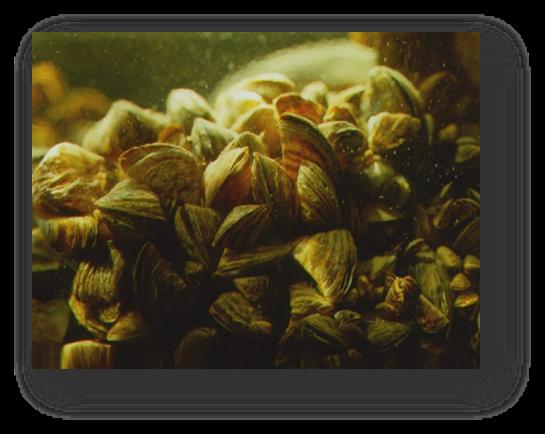
Our rivers have zebra mussels and New Zealand mudsnails Only you can prevent their spread.
Don’t take them home with you and don’t bring any other invasive species here, either!
Protect our rivers Clean, drain, and dry all water-related gear
Keep your distance from storm drains and new bodies of water while cleaning all equipment
Remove all visible plant material, animals, and mud from the board, fin, and associated plugs
Clean all equipment used including paddles, personal flotation devices, and leashes.
Ensure all water is drained from your watercraft Sponge or towel dry areas where water is unable to drain.
Find a place where the watercraft can continue to dry completely.
Photo: Colorado Parks & Wildlife
News Briefs
History Coffee Talk July 11 Covers State Reclamation at Coal Basin Ranch
Coal Basin Ranch in Redstone will host two place-based history coffee talks this summer to highlight the region’s human imprint on the landscape: July 11 with reclamation specialist Steve Renner and August 1 with former Mid-Continent Coal & Coke Company employee Jeff Bier.
The place-based history talks are intended to provide background information about the Coal Basin region with experts who can reference place-names and geography while discussing their areas of expertise. The talks will take place from 9-11 am near the Coal Basin Ranch kiosk. Coffee and donuts will be served.
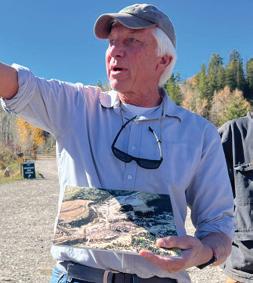
Renner’s talk takes place on Saturday, July 11, and will cover the Colorado Division of Reclamation Mining and Safety’s Coal Basin Reclamation Project in the early 1990s, which aimed to clean up the landscape after the departure of MidContinent Coal & Coke in 1992. Renner was the project manager for the clean-up initiative from its inception in 1993 through completion in 2001. For the history talk, Renner will provide an overview of mining history and discuss the reclamation efforts, including goals, strategies and processes.
A geologist by training, Renner has more than 35 years’ experience pertaining to evaluation of mining related environmental impacts and abandoned mine land restoration. He worked for the Division of Reclamation Mining and Safety as administrator of the Colorado Coal Mine regulatory program before managing the Coal Basin Reclamation Project. After completing that project, Renner was involved in other mine restoration projects, including evaluation and abatement of fires at abandoned coal mines. Renner went on to establish an abandoned uranium mine assessment program for the U.S. Department of Energy. He is an adjunct professor at Colorado Mesa University, teaching a course in Mined Land Rehabilitation. Renner, his wife Mimi, and dog Sprocket live near Grand Junction where they enjoy the outdoors and being near their sons and grandchildren.
Although not necessary, RSVP is preferred for the July 11 history coffee talk to: info@coalbasinranch.com or by texting 970-274-1861.
Gentrye and Ryan Say Goodbye
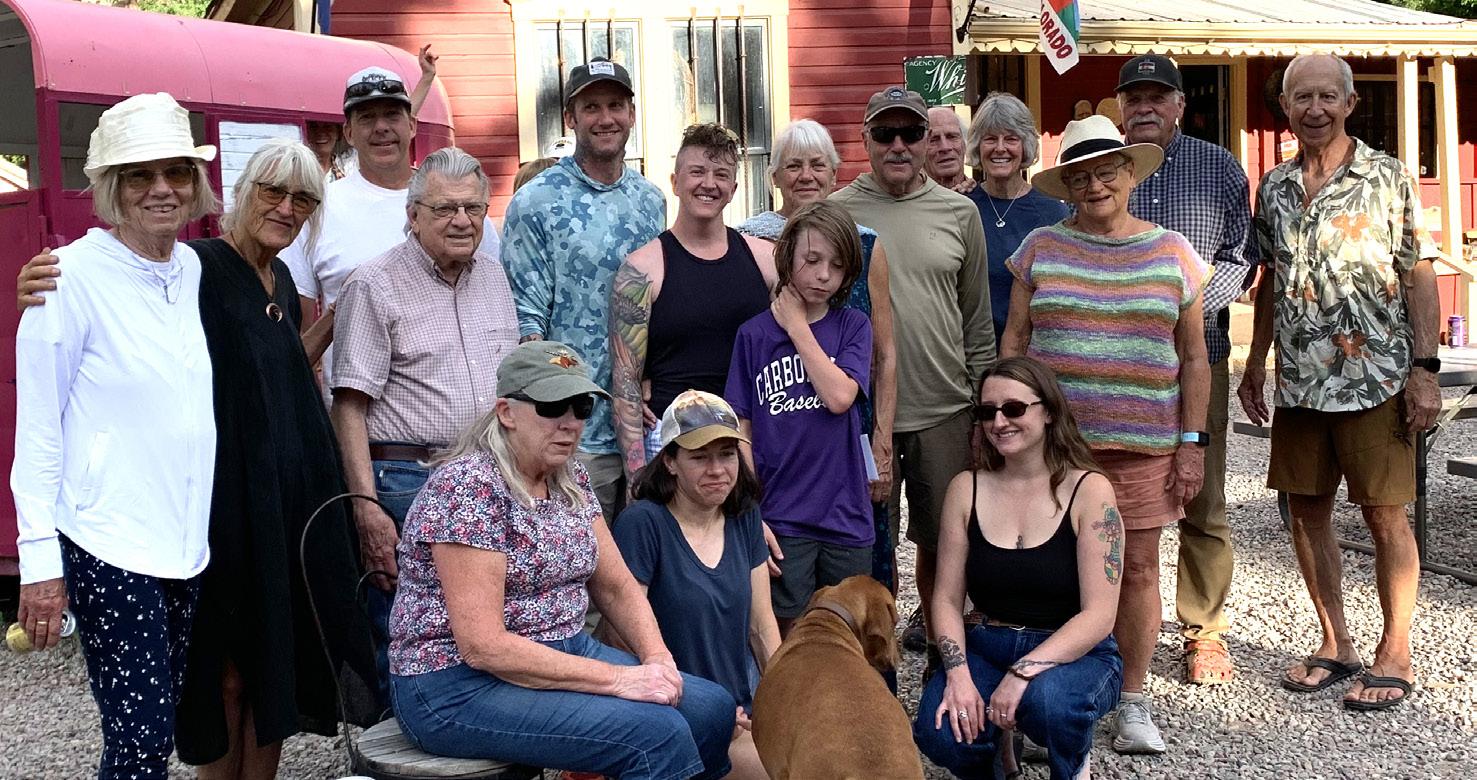
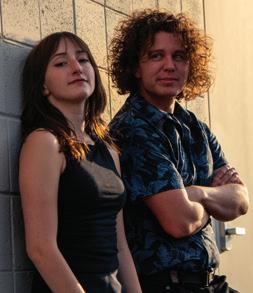
Friends and neighbors gathered at the Redstone General Store to say a last minute good-bye to Gentrye Houghton and Ryan Kenney on June 19 as they pack up for their next adventure. They are off to the Olpmpic Peninsula to live and travel on their boat. Ryan worked for the Redstone Water District and Gentrye was the ownereditor of the Crystal Valley Echo for over five years. Thank you for all that you have done for Redstone and The Echo!
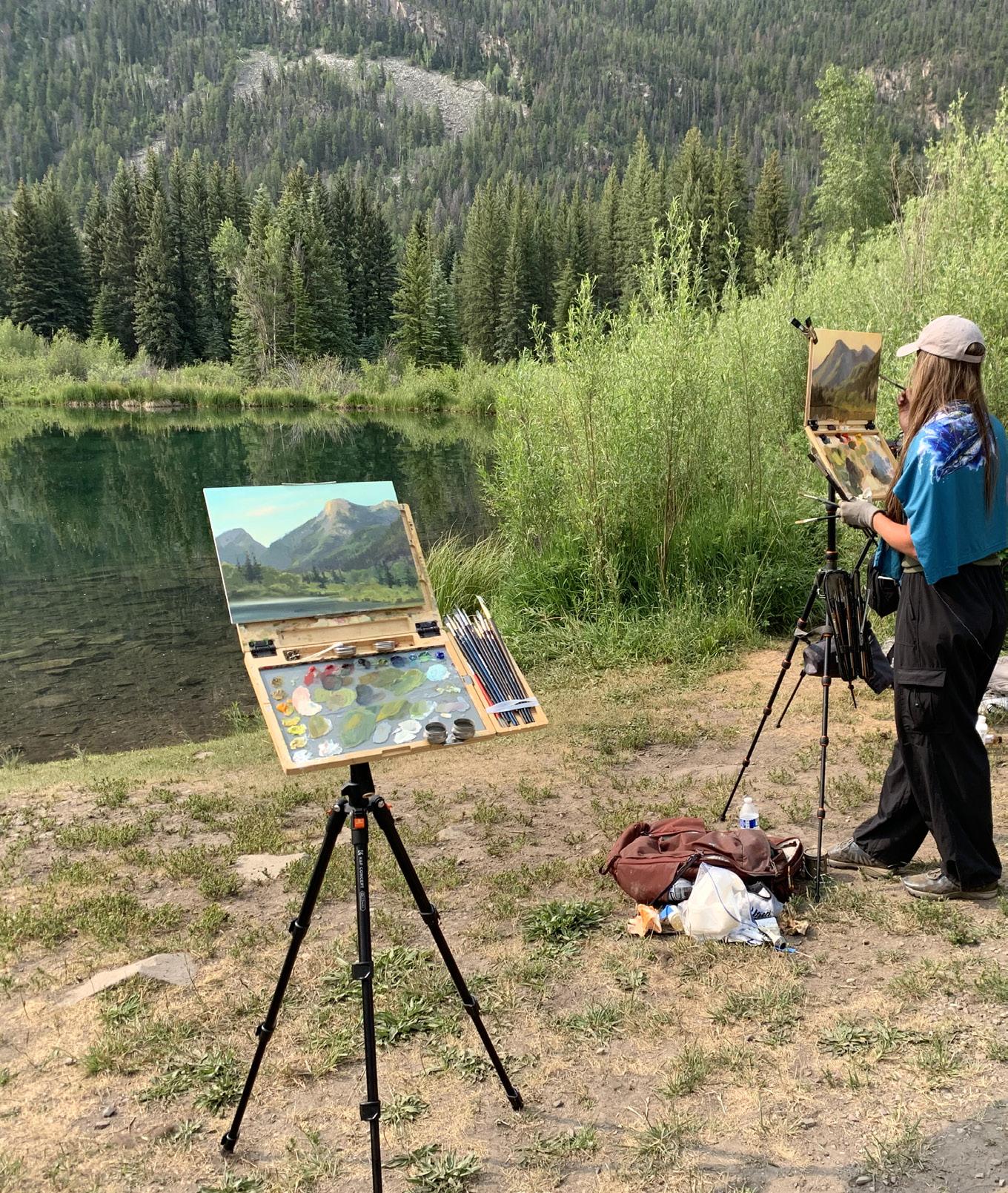
Redstone Art Foundations hosts their annual Plein Aire Event.
Sponsored by Joy & Wylde, Redstone Art Gallery. Artists from as far as Tennessee and Georgia gathered with local artists for this event.
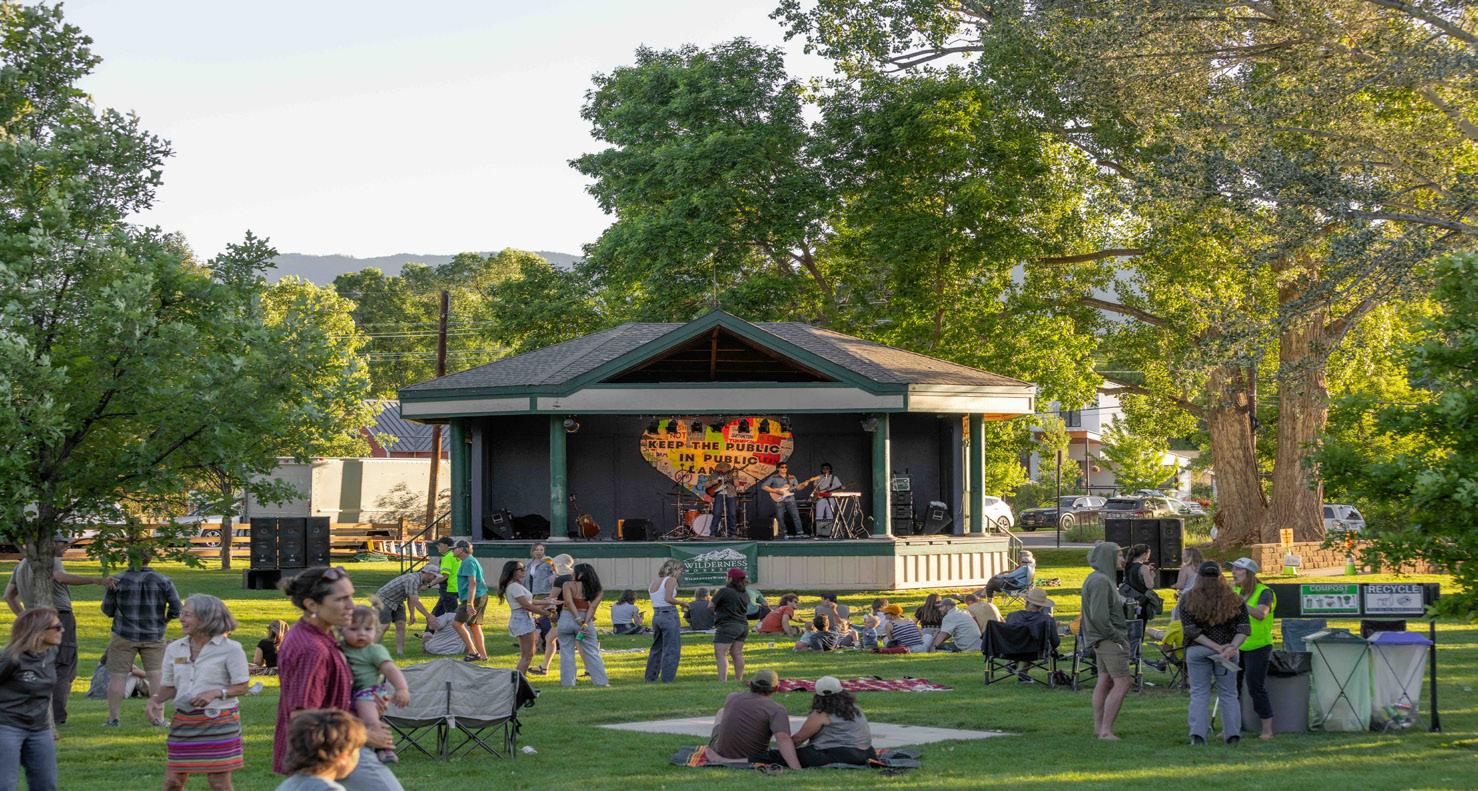
Wilderness Workshop Hosts Annual Community Party
On June 11th, Wilderness Workshop hosted its annual community party to celebrate public lands and the people who protect them. Ahead of the event, Executive Director Will Roush said: "
“At a time of unprecedented threats to our public lands, I’m looking forward to gathering as a community with friends and family to celebrate these special places. Together, we’ll build connections, share opportunities to take action, and advocate for the lands we all cherish. Our dedication to keeping the public in public lands has never been more important.”
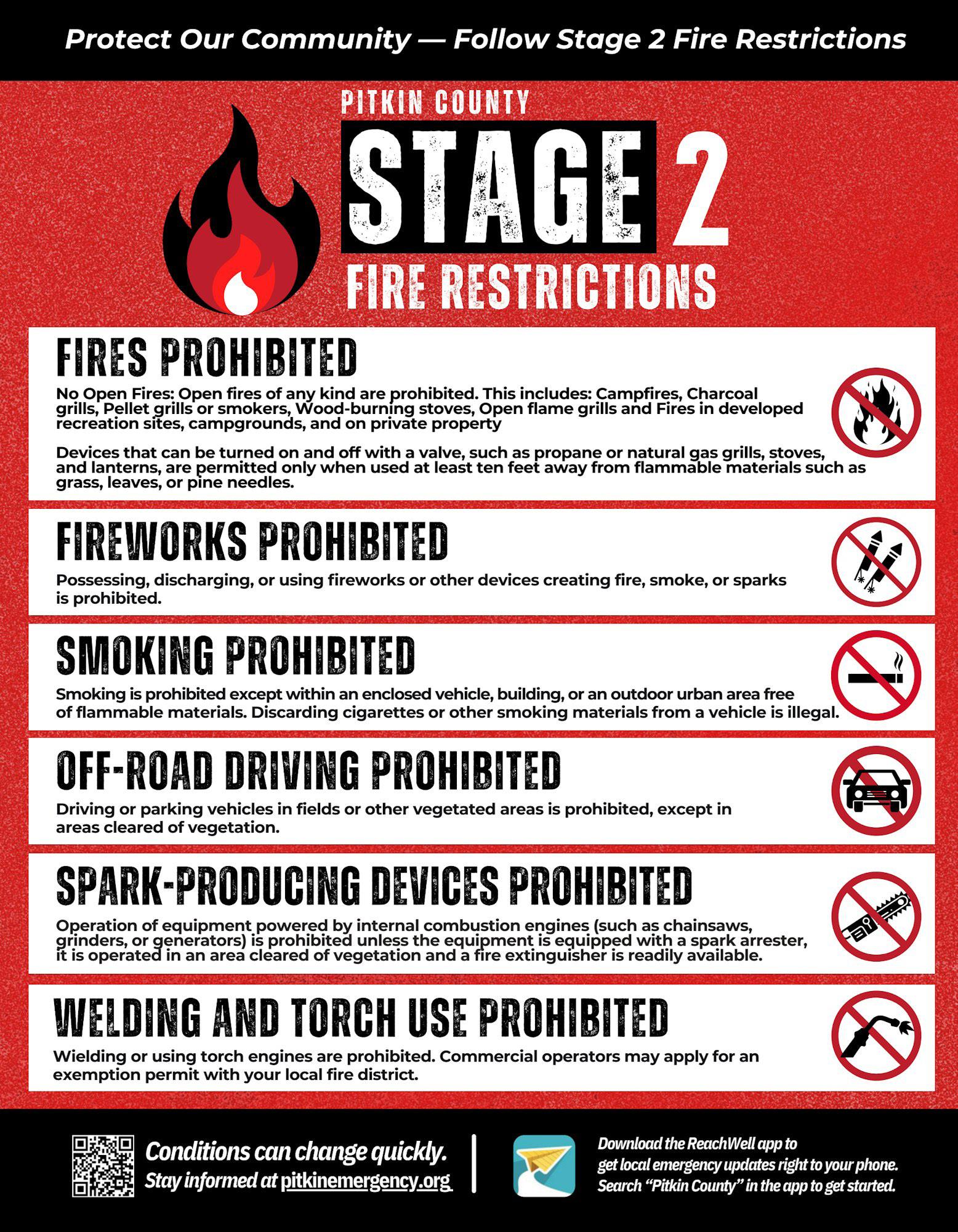
Pitkin County Enters Stage 2 Fire Restrictions June 26th
FIRES PROHIBITED:
No Open Fires: Open fires of any kind are prohibited. This includes: Campfires, Charcoal grills, Pellet grills or smokers, Wood-burning stoves, Open flame grills and Fires in developed recreation sites, campgrounds, and on private property
Devices that can be turned on and off with a valve, such as propane or natural gas grills, stoves, and lanterns, are permitted only when used at least ten feet away from flammable materials such as grass, leaves, or pine needles.
FIREWORKS PROHIBITED:
Possessing, discharging, or using fireworks or other devices creating fire, smoke, or sparks is prohibited.
OFF-ROAD DRIVING
PROHIBITED:
Driving or parking vehicles in fields or other vegetated areas is prohibited, except in areas cleared of vegetation.
SMOKING PROHIBITED:
Smoking is prohibited except within an enclosed vehicle, building, or an outdoor urban area free of flammable materials.
SPARK PRODUCING
DEVICES RESTRICTED:
Operation of equipment powered by internal combustion engines (such as chainsaws, grinders, or generators) is prohibited unless the equipment is equipped with a spark arrester, it is operated in an area cleared of vegetation and a fire extinguisher is readily available.
WELDING AND TORCH
USE PROHIBITED:
Welding equipment, torches, and engines without spark arresters may only be used when:
Operated in a cleared area free of flammable materials, and a fire extinguisher is readily available.
Commercial operators may apply for an exemption permit with your local fire district.
Photo Captions:
Top:Redstone friends gather to bid Gentrye Houghton and Ryan Kenney happy trails and best of luck in their new Pacific Northwest Adventures at the Redstone General Store. Photo courtesy of Deb Strom
Middle: Wilderness Workshop's Community Party took place June 11th in Sopris Park in Carbondale. Photo Courtest of Wilderness Workshop
Bottom: Artists Participate int he Redstone Plein Aire Festival painting on the shores of Island Lake in Marble. Photo: Deb Strom
by Saffron Branson
Mental Health Matters
It’s inevitable. If you’re already cutting it close to get somewhere on time, you’re going to end up behind the slowest driver in the valley. Your eyes alternate between trying to burn a hole in the back of the driver’s head and watching the precious minutes tick by on your dashboard clock. Like a pot coming to a simmer, you can feel your blood pressure begin to rise, and the tension in your jaw and shoulders tighten. By the time you’ve passed the third pull-out in a row where they could have given you and the six other stacked-up cars a chance to actually get somewhere important in something resembling a timely manner, that frustration has come to a full boil. Ready to beat your forehead against your steering wheel and let loose a string of obscenities that would mortify your mother? Every day, we face various mild-to-moderate aggravations as a result of sharing the planet with several billion other humans who are obviously much less conscientious than we are. What is happening in our brains when we have these moments of frustration, and how do we keep them from ruining our entire day?
Deep inside the temporal lobes of our brains, there is a small almond-shaped bundle of neurons called the amygdala. This bit of brain tissue, not even quite the size of a thumbnail, is where anger and fear come from. Input from the world around us gets processed here, and anything potentially threatening is flagged for immediate reaction. This reaction is most commonly called the fight or flight response. The amygdala orders a dose of adrenaline to kick up our heart rate, slow unnecessary bodily functions, and focus in on the impending doom. The problem is that because it is part of the “lizard brain” or the oldest, most primitive bits of our central nervous system, it is not always clear what is a real threat worth an extreme reaction and what is simply a minor inconvenience. The amygdala might send the same alarm racing through us in response to a bear chasing us or receiving a text from our partner that says “we need to talk.”
When our amygdala is running the show, function of our prefrontal cortex, the part of the brain associated with higher reasoning and logic, is diminished. Luckily, we are mammals of reasonably high intelligence and can influence what happens in our bodies and minds. It takes practice and diligence, but once we learn to recognize the signs of unhelpful fear or anger, we can learn techniques to help bring our logical brains back online. One doesn’t have to be a meditation master or have the patience of a saint to learn the basic skills of self-soothing. These calming strategies calm help bring us back to a clearer state of mind, reduce stress and make us all a little less likely to run screaming into the woods. As an added bonus, many of these skills are simple enough that even young school children can be taught and utilize them. And these 3 easy ways to soothe body and mind can be yours for just three easy payments of $49.99! No? Worth a shot.
One of the easiest ways of regulating the body’s stress response is breathing. It’s easy, it’s free and you hopefully already have some experience doing it. Taking a few deep breaths often gives the brain time to register that an experience is not life-threatening. Inhaling in through the nose and out through the mouth is typically the most effective for calming. Additionally, exhaling for a longer amount of time than you inhaled acts as a signal to your brain to calm down. Another tried and true favorite is called square or box breathing. Imagine your breathing pattern like a square - four equal sides. Inhale, hold, exhale, hold, each for 4-6 seconds. Try to repeat this several times and check in with yourself. Still feeling like your brain is full of angry red TV static?
When we have hit a level of anger or fear that makes it hard to bring ourselves back to the perfectly reasonable, rational people we usually are, more drastic measures sometimes need to be taken. Abandoning our responsibilities, going completely feral and roaming the mountains mauling the occasional hiker may sound very tempting at this point. However, this lifestyle is not feasible for all individuals. Some common, but perhaps less fun, coping mechanisms are found in grounding techniques. The most popular of which is a simple 5,4, 3, 2,1 sensory grounding exercise. Each number corresponds to one or our physical senses. Find 5 things you can see, 4 things you can touch, 3 things you can hear, 2 things you can smell and 1 thing you can taste.
If you’re anything like me, you are unlikely to remember which sense goes with which number. Feel free to reorder them to whatever makes the most sense for you at the time. The point here is to force your brain to take in a variety of sensory information that proves you’re just sitting in your car, not in fact being eaten by a tiger.
The last tip I have for you this month is do a quick physical check in with yourself. Unclench your jaw and gently roll your neck in a few slow circles. Drop those shoulders down and give your arms and legs a quick shake. Stretch your body. If you’re able, put on your favorite rump shaking tune and have a 2 minute dance party.
Did you learn something new today? Do these tips help? Check back next month for our next Mental Health Matters where we discuss the psychology of gratitude and how being thankful might help you improve physical health, live longer and even make people like you better!
Mental Health Matters is written by Saffron Branson. Saffron is a senior at Colorado Mountain College pursuing a degree in Human Services and will soon be headed to graduate school for a Master's in Clinical Counseling. No information found in Mental Health Matters should be considered clinical or medical advice from a licensed professional. These are just musings from your friendly local psychology enthusiast.
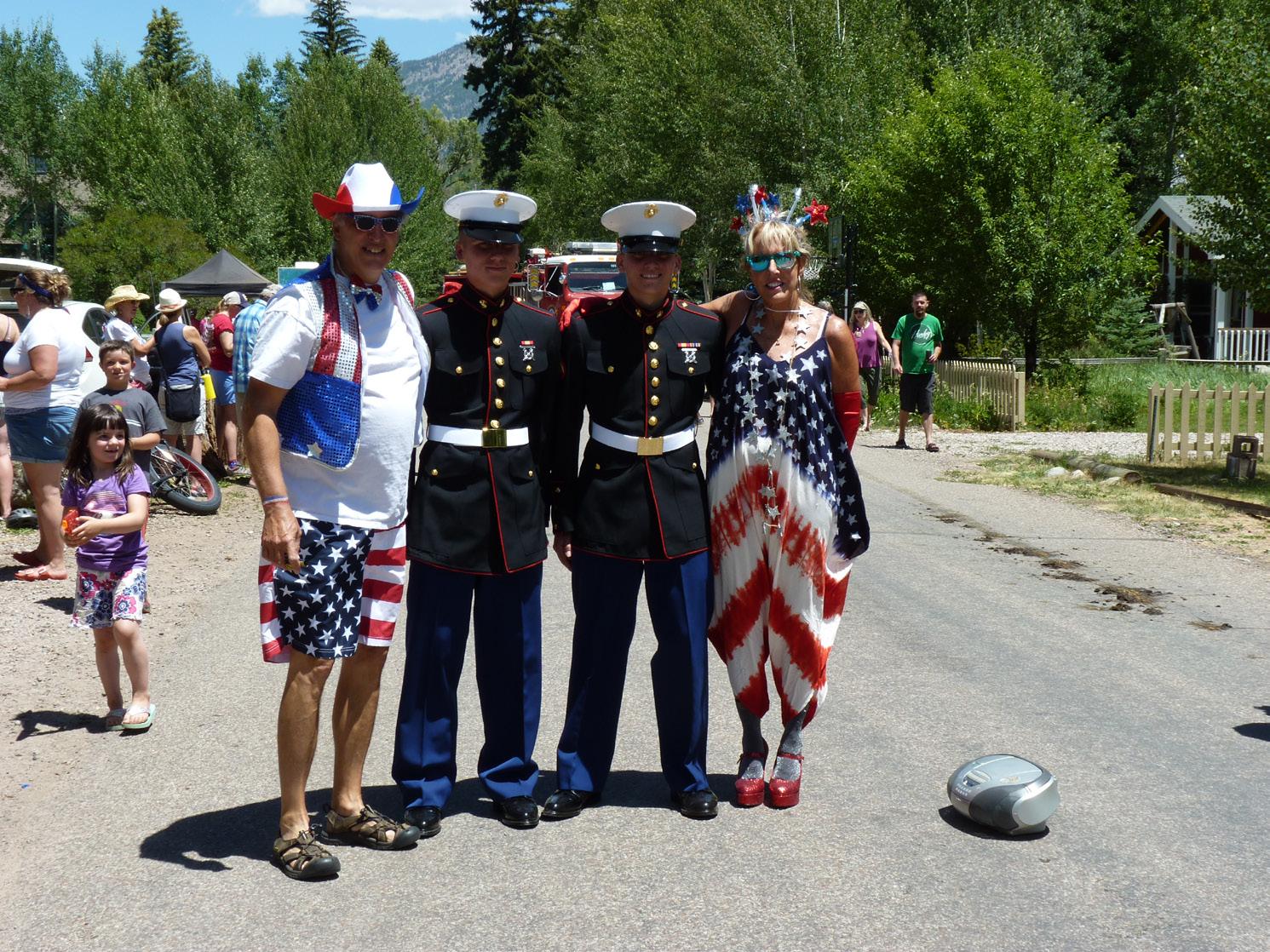
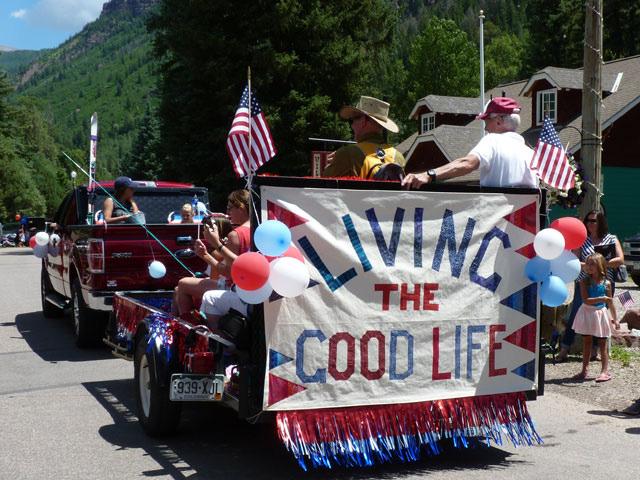
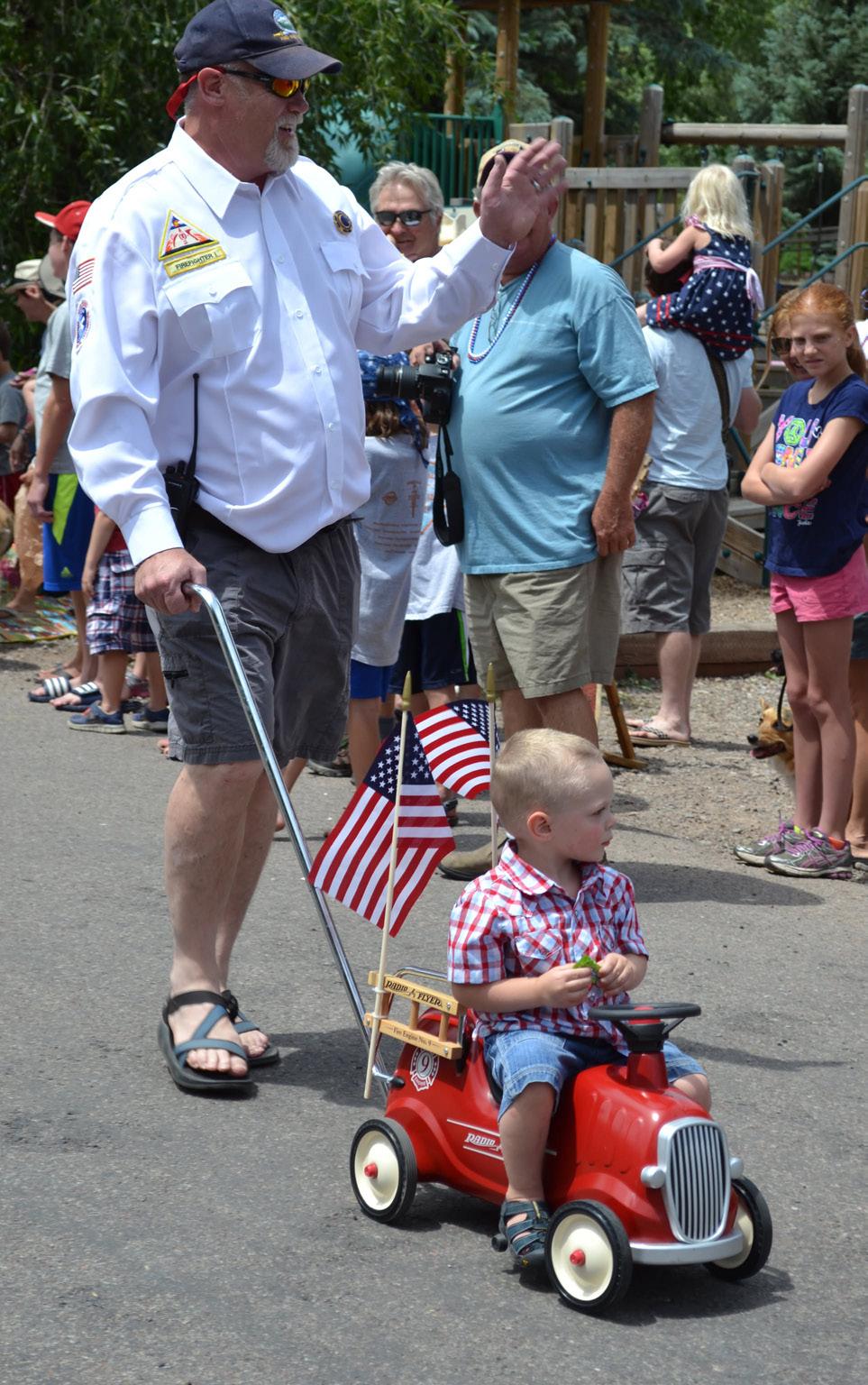
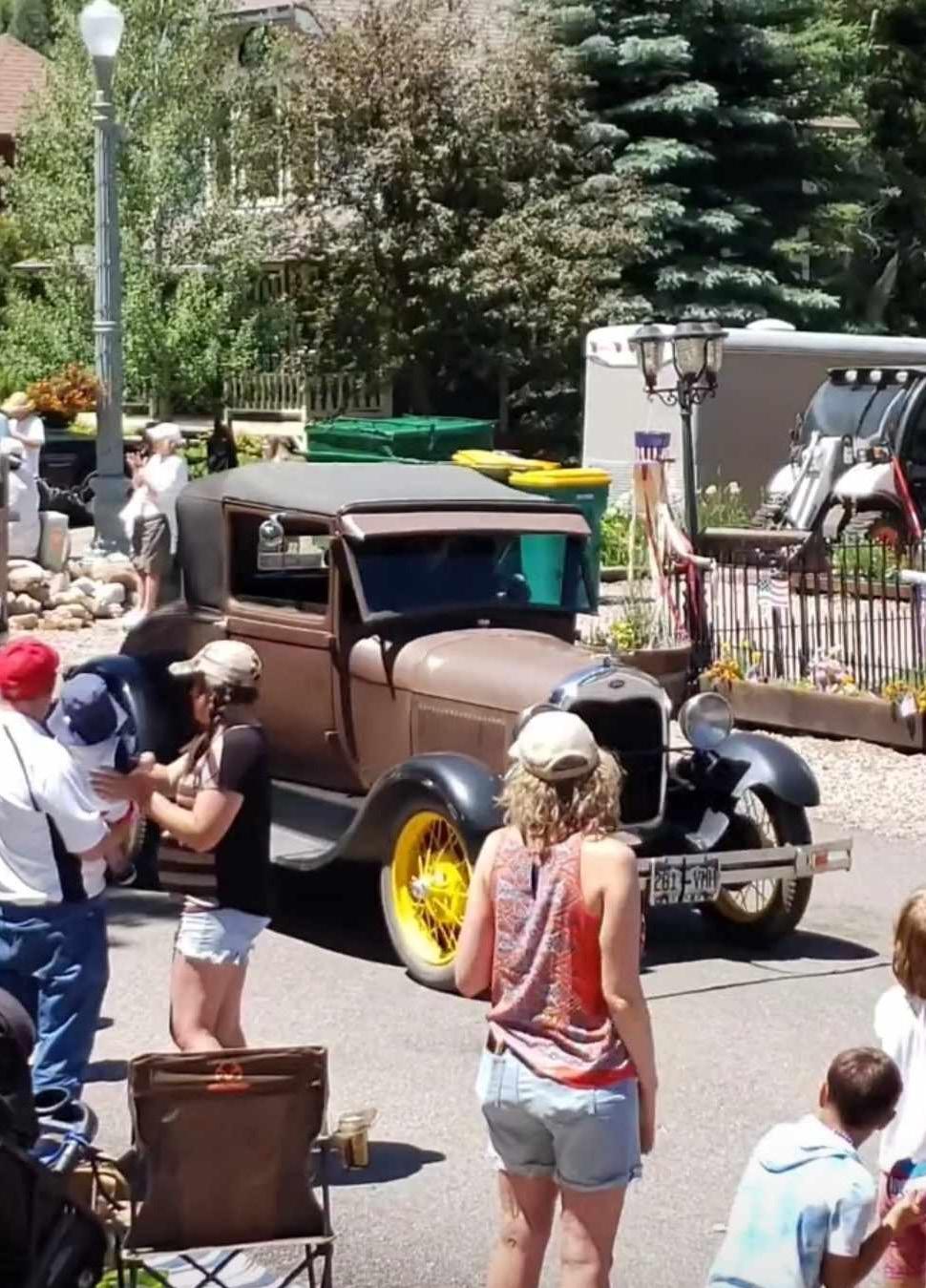
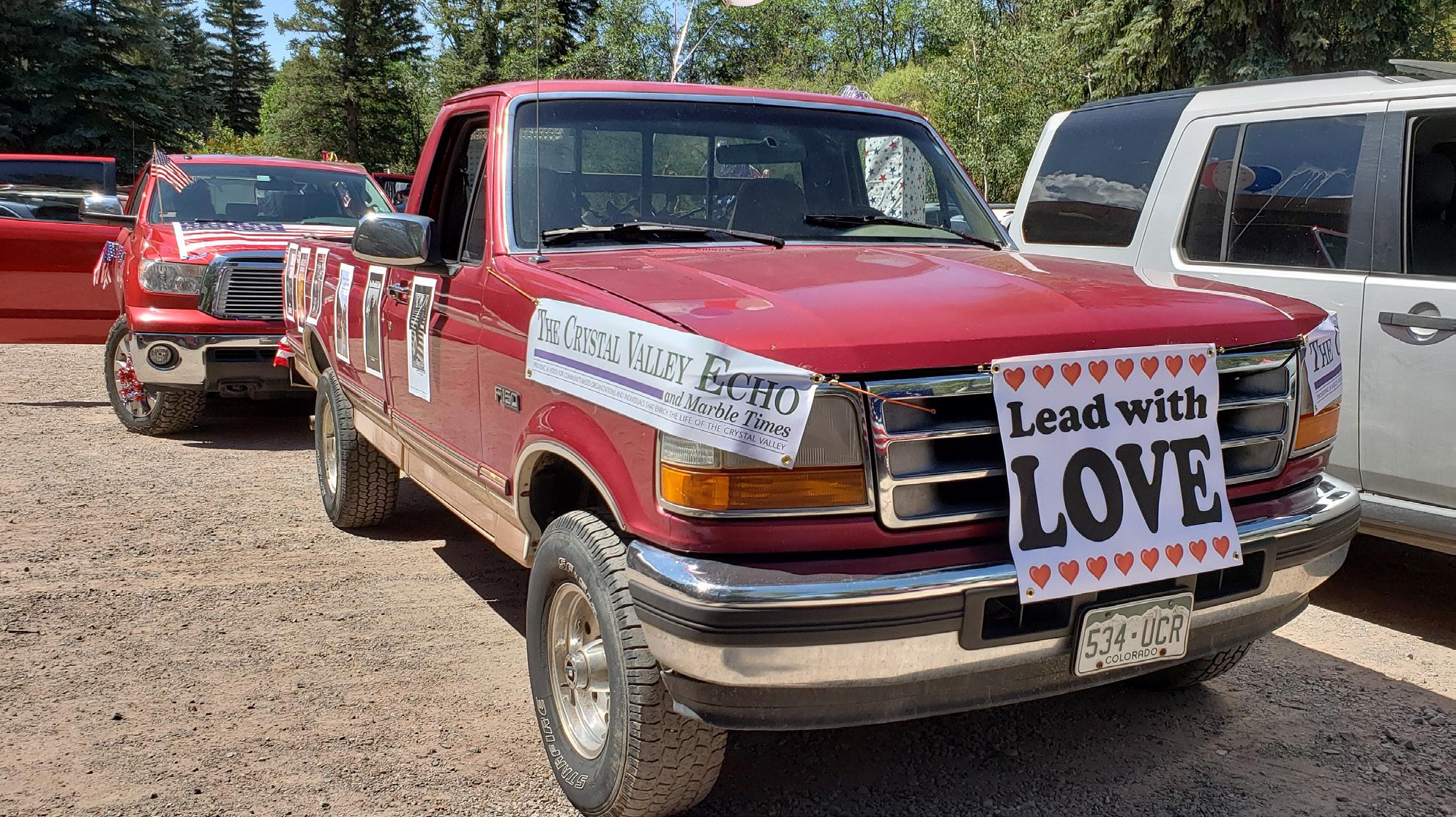
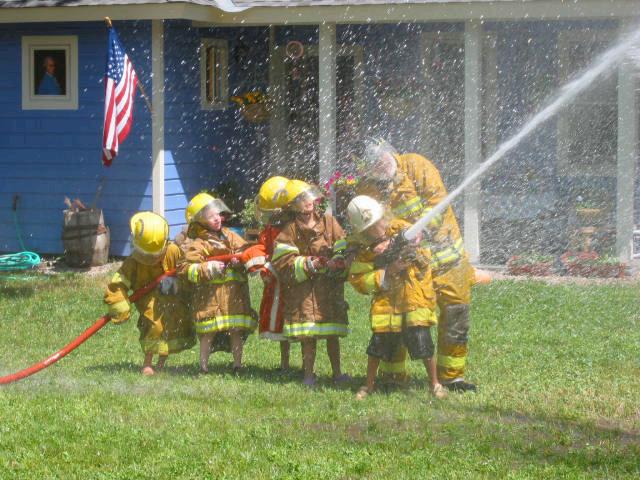
Fourth of July in Redstone:
The Crystal Valley Echo would like to extend our warmest gratitude to our community for the many photos submitted for this retrospective, we are sorry we cannot publish all of them, but we enjoyed the trips down memory lane each of you provided and we wish you all a very happy and safe Fourth of July
With special thanks to:
The Redstone Historical Society archive, Deb Strom, Alyssa Ohnmacht, Holly Walter, Lisa Wagner, and Alicia Collopy Benesh for this year's submissions!
A Photographic Retrospective
&
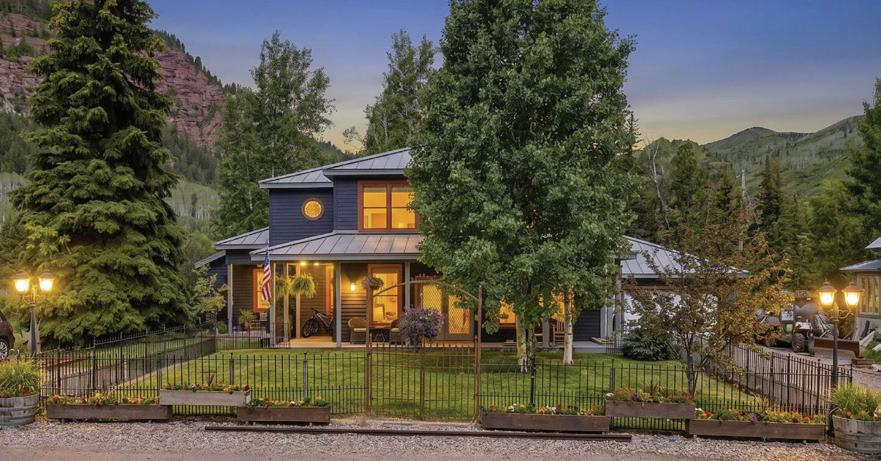
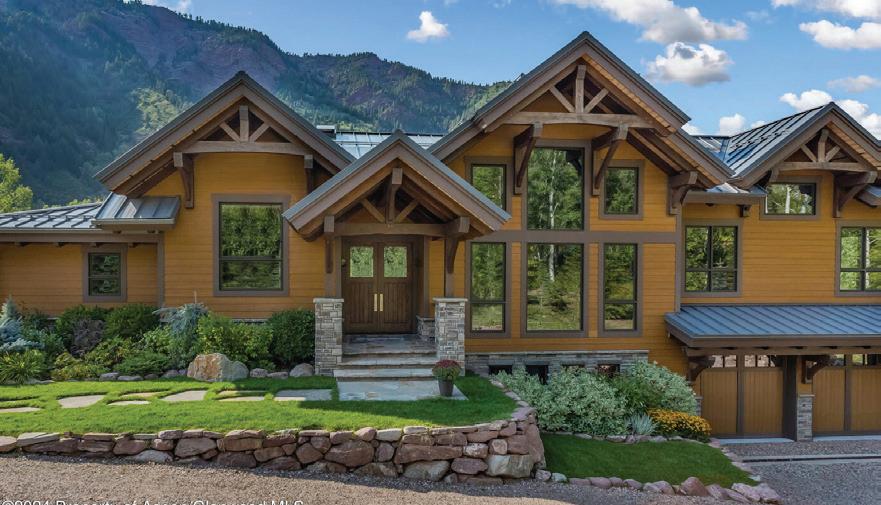
Residential, commercial, and mixed use possibilities await at this unique riverfront property on Redstone Boulevard. Creative uses for a buyer with vision combines with a 3 bedroom residence, a two-car garage, and ample parking. Priced at under $500 per square foot.
3 BD | 3 BA | 3,888 Sq Ft | Redstone, CO
$1,795,000 | MLS#: 192065
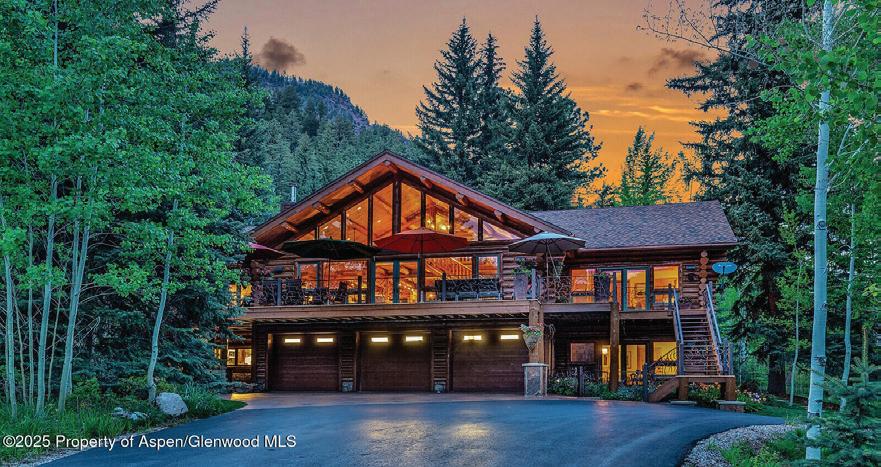
This newer build log home is an exceptional value! Set on nearly 4 acres high above where Hawk Creek meets the Crystal River, this expansive 5,000 plus square feet residence offers Aspen elegance amidst the serene and untamed beauty of Redstone.
4 BD | 4.5 BA | 5,165 Sq Ft | Redstone, CO
$2,500,000 | MLS#: 192918
Riverfront elegance and elevated craftsmanship are paired with an enchanting setting at this “one of a kind” timber frame home located within walking distance of Redstone. 350 Feet of pristine Crystal River frontage, 3 plus acres of tranquility, and a spacious 4 bedroom, 4 bath home designed with luxury in mind.
4 BD | 4 BA | 3,720 Sq Ft | Redstone, CO
$3,900,000 | MLS#: 192090
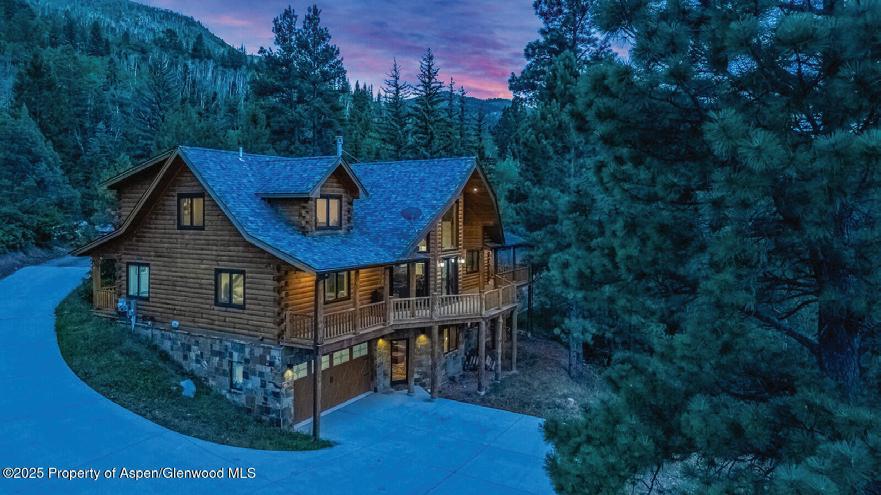
This retreat less than a mile from Redstone has everything you need to make the mountains your own. Includes a main “lodge style” log home, guest cabin, and remote camp cabin. 1,000 sq ft garage, separate workshop, commercial greenhouse and large Weatherport shop.
4 BD | 4 BA | 3,492 Sq Ft | Redstone, CO
$3,500,000 | MLS#: 193143
LIVE
WORK IN REDSTONE
CUSTOM TIMBER FRAME ON THE CRYSTAL
LOVELY HOME, FABULOUS SETTING
MOUNTAIN RETREAT ON 32 ACRES
On Bandit Trails
A Column by ted Benge
The rider feigned confusion. “Oh, we didn’t know,” he said.
I patiently produced my map to prove unequivocally that the mountain bikers, one of whom I knew personally, were in Wilderness. Not that it was necessary; they had ridden past four signs demarcating the boundary and expressly prohibiting bikes.
“Well, rules are rules,” he said. “I guess we should turn around. Sorry!” As a local outfitter, I was on horseback, checking a camp in my Forest Service permit area beneath Sopris. As a wrangler and I rode away, the two riders made a show of turning around, but their tire tracks showed that, once we dipped from view, they proceeded back up the trail, further into the Wilderness.
“I can’t believe they lied about that and rode right past the signs,” I raged to the wrangler behind me, seated on his trusty mule, Pete, “and then kept going even when they were caught!” How could people be so entitled as to simply violate Wilderness protections because they felt like it?
As Americans, we enjoy access to 640 million acres of public land, much of which comprises the deserts and mountains of the West. We the people own this land, which different federal and state agencies manage on our behalf for a variety of objectives, from recreation to mineral extraction. As users, we find solace, adventure, and respite in these wilds, and their protection is vital as the pace of development accelerates.
The public lands we enjoy here in the Roaring Fork Valley are primarily managed for recreation and Wilderness. They are natural strongholds, where an abundant network of life thrives despite human proximity and visitation.
We cannot take these lands for granted: they are under constant political attack. At the Federal level, Senator Mike Lee of Utah has repeatedly tried to bypass public opposition to sell off our heritage and the endowment of the next generation to the highest bidder. Privatization would be essentially irreversible, and would benefit small interest groups and the ultra wealthy. Legislative attempts to sell public land will continue, and we must remain vigilant in opposition.
But these lands also face threats from local abuse. Constructing illegal mountain-bike “bandit trails” and flouting closures and restrictions in this valley is rampant and destructive.
Illegal trails are built with complete disregard for ecosystems and wildlife. They destroy flora, fragment habitat and displace fauna. Their development also skips important democratic procedural steps, such as public comment and environmental review. Many of us value undisturbed lands and healthy wildlife more than one more trail in an area that already boasts a plethora.
Once, on the way home from Aspen after a great day of skiing, I was admiring the huge herd of elk in Woody Creek when someone in the back seat said, “I would love to build a bike trail through there.”
I couldn’t believe what I had heard, that someone’s first reaction to seeing an elk herd would be a desire to build a trail through the middle of their winter grounds, which have already shrunk. Upon reflection, I realized that he simply didn’t understand the impact that repeated human trail use has on a range of animals. As I have discussed in previous issues of this esteemed paper, our presence causes habitat fragmentation and animal displacement, and directly affects wildlife health and abundance. New trails, therefore, must incorporate feedback from biologists and land managers, and be carefully planned alongside existing infrastructure, with appropriate use type (motorized, non-motorized, bicycles, etc.) and seasonal restrictions.
If you build bandit trails, I implore you to consider the effects of your actions not only for your community, but on the forest community.
If you use bandit trails, you are equally culpable, and you encourage the builders and amplify the disturbance.
The misuse of Wilderness remains problematic, even in a community whose values include environmental stewardship.
The Wilderness Act of 1964 established the National Wilderness Preservation System, and authorized Congress to designate federal properties for strict protection. The act reads “to assure that an increasing population, accompanied by expanding settlement and growing mechanization, does not occupy and modify all areas within the United States and its possessions, leaving no lands designated for preservation and protection in their natural condition.”
Motorized vehicles, including bikes, are strictly forbidden in Wilderness. And yet, bike tire tracks abound in wild and off-limits places.
Just like blowing through a winter closure, which I have previously written about in the Crystal Valley Echo, when you violate Wilderness, you not only transgress against your fellow humans, but desecrate the natural systems of life whose protection is already so tenuous in a society driven by economy.
Another friend, who loves living here, once told me that when he first moved to the Valley from the East Coast, he routinely rode his bike in Wilderness. He figured that any place cows were permitted to graze was no wilderness, and that he deserved to bike there. But as he learned about the impact of his actions, and as his connection to place deepened, he stopped.
“Even ten years ago, you never would have seen that kind of behavior. People knew and respected Wilderness boundaries,” said my dad, who has lived in the Valley for nearly 40 years.
I understand the appeal of novelty, and the rebellious excitement of building or riding secret trails, but they impact other people and the environment immediately. Safeguarding our wilderness and public lands starts with respect.
Ted Benge was born and raised in the Roaring Fork Valley and is a lifelong hunter, skier, and hiker. He owns Capitol Peak Outfitters and works as an AVSC ski coach. He lives in Carbondale with his fiancée, Aisha Weinhold.
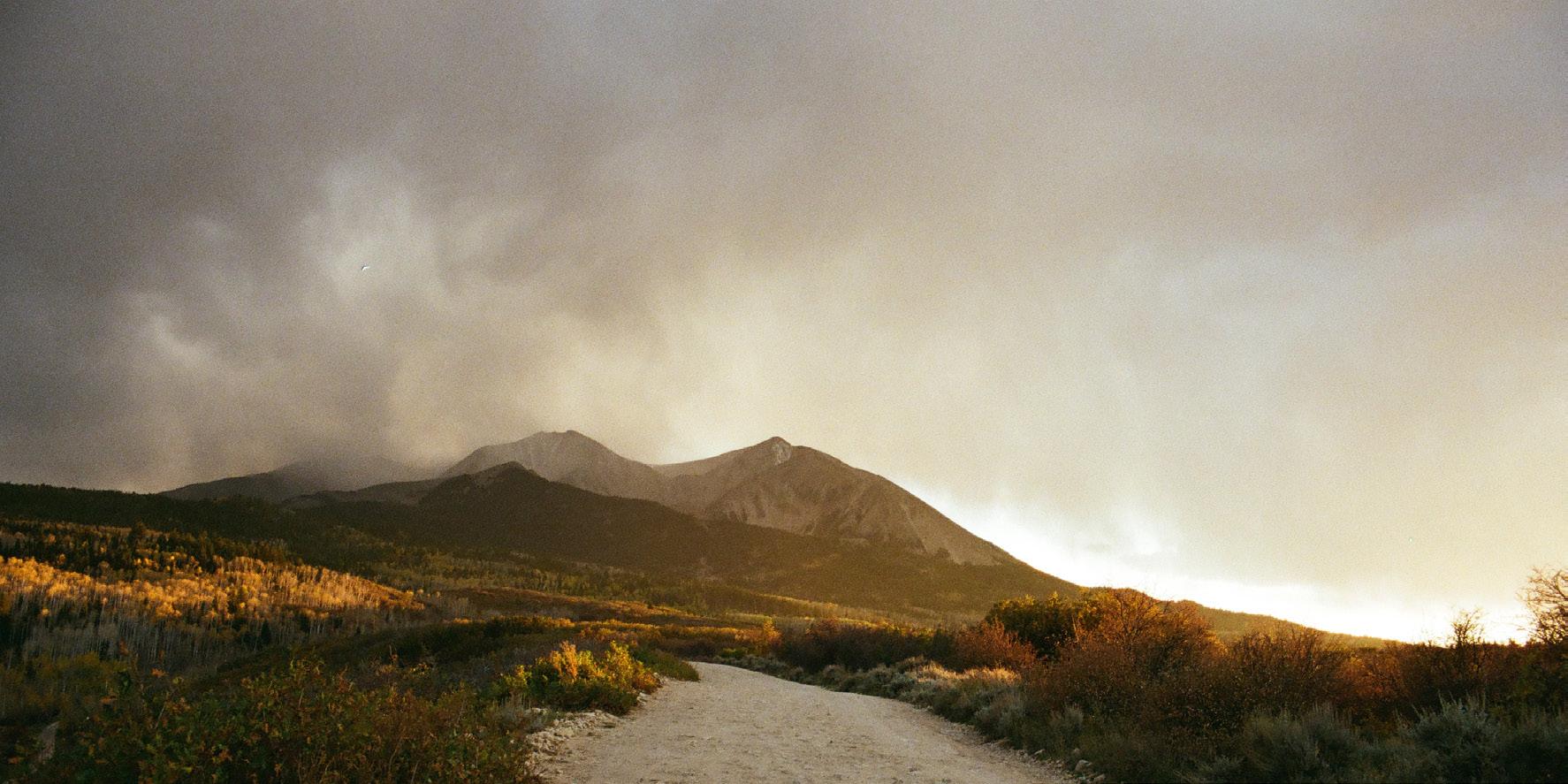
Below: Mount Sopris During an Autumn Rainstorm, Crystal Valley Echo File Photo; Kodak Gold 200
Echoes of a Life: Wanda Claudette Burkett Stewart Mainer
December
In Loving Memory of Wanda Claudette Burkett Stewart Mainer, December 2, 1940 – June 5, 2026 by
Kevin Stewart
Wanda Claudette Burkett Stewart Mainer passed away peacefully on June 5, 2026, at the age of 85, with her son Kevin Stewart by her side. Claudette was defined by her beauty, friendliness, and dedication to her family. She was an adventurous spirit whose favorite motto was "OK, let’s go!"—always eager to include family and friends on trips that could last a week, a month, or a lifetime.
Family
Early in life, Claudette suffered the tragic loss of her first husband, Les Stewart. She later married Tom Mainer III of Lovelady, Texas. Bringing together her four children and his three children, Claudette and Tom successfully built a unified family that remains close after more than forty-five years.
Claudette was a natural caregiver who supported her extended family even through her own final illnesses. She is survived by her children: Corlene (Kevin) Lilley, Tom (Laura) Mainer IV, Cindy Morgan (Brett Rohloff), Kevin Mainer, Susie Mainer, Cari (Gene) Womack, and Kevin (Carrie) Stewart. Her legacy lives on through her 15 grandchildren and 14 great-grandchildren.
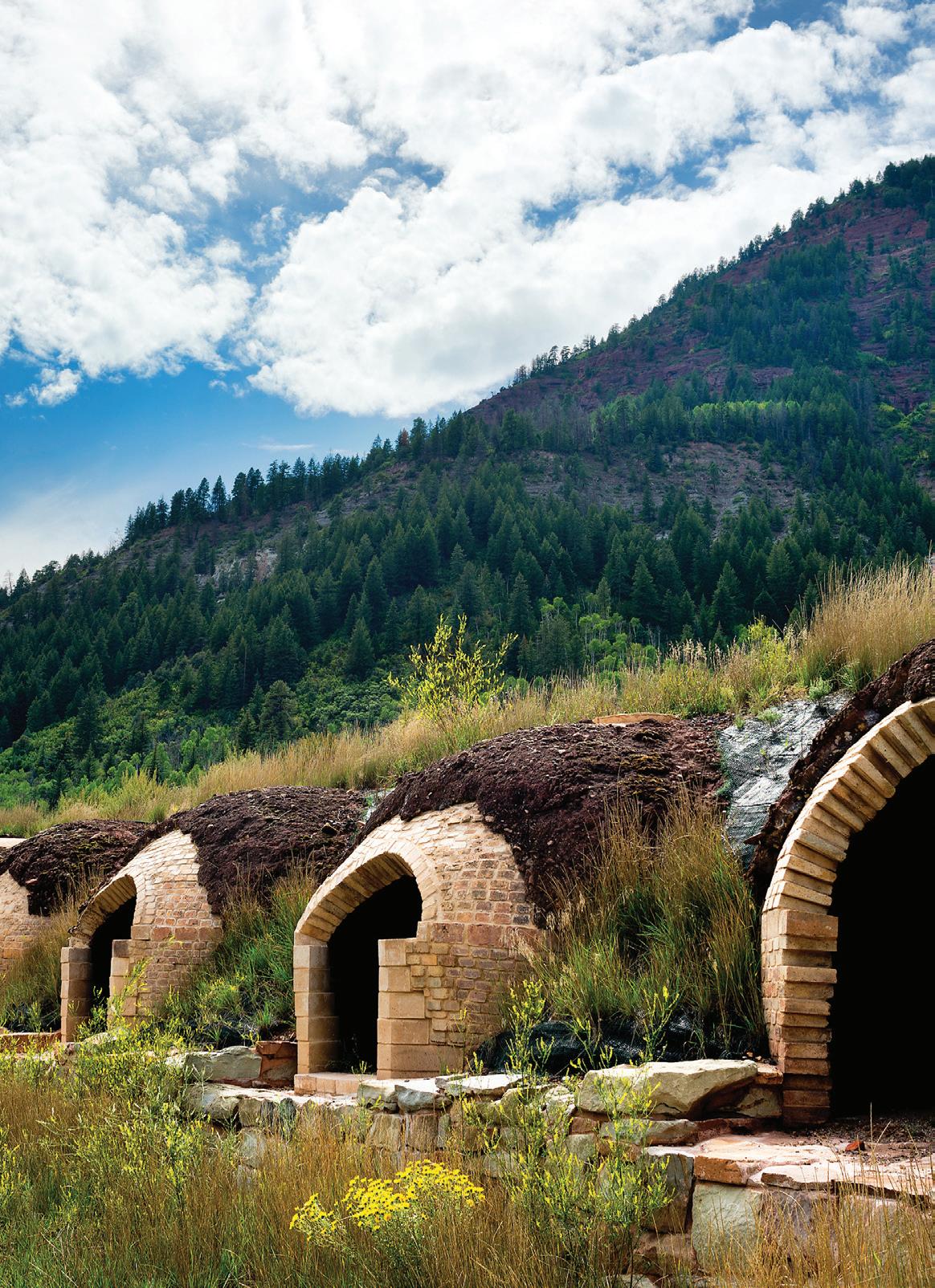
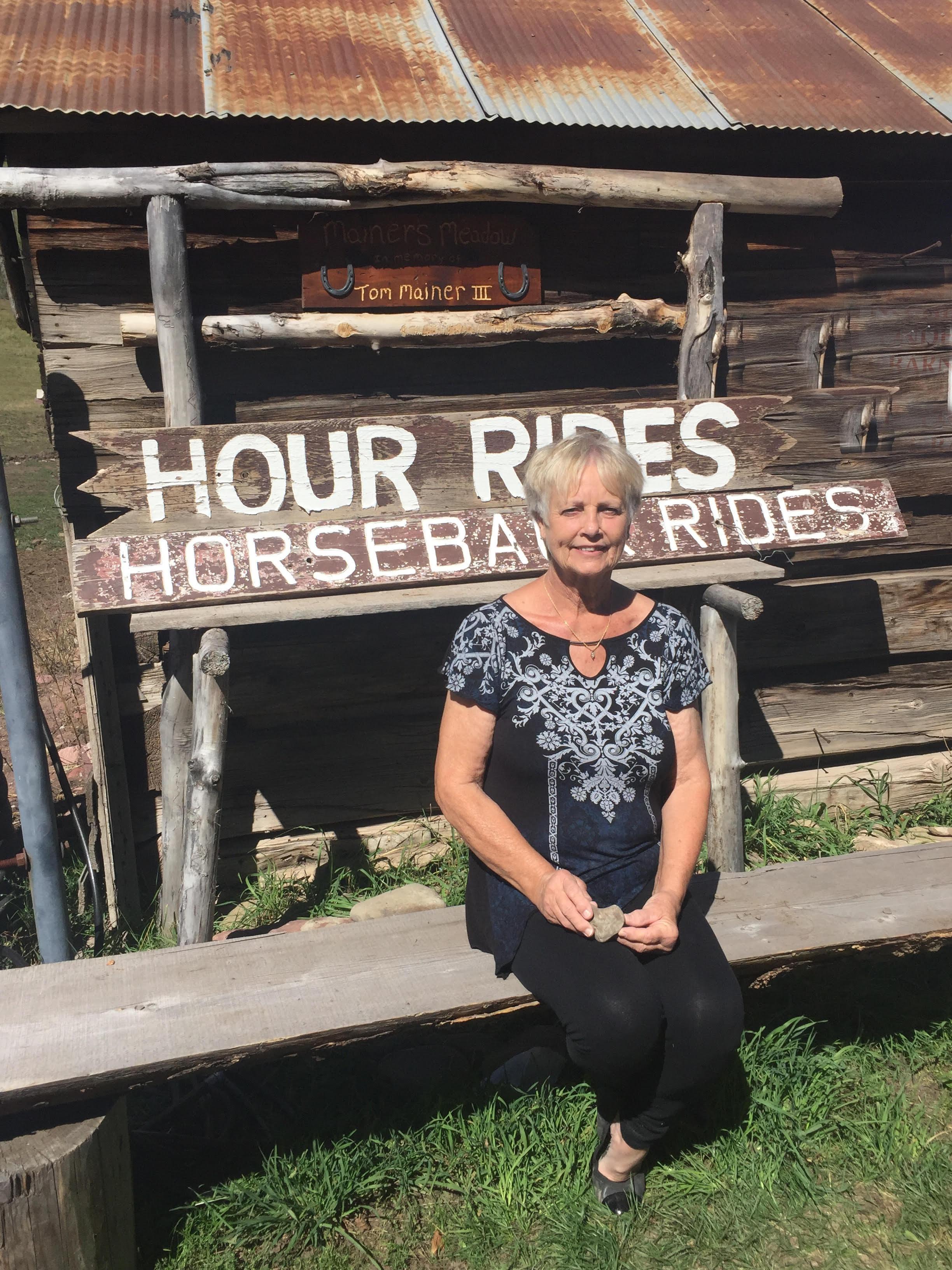
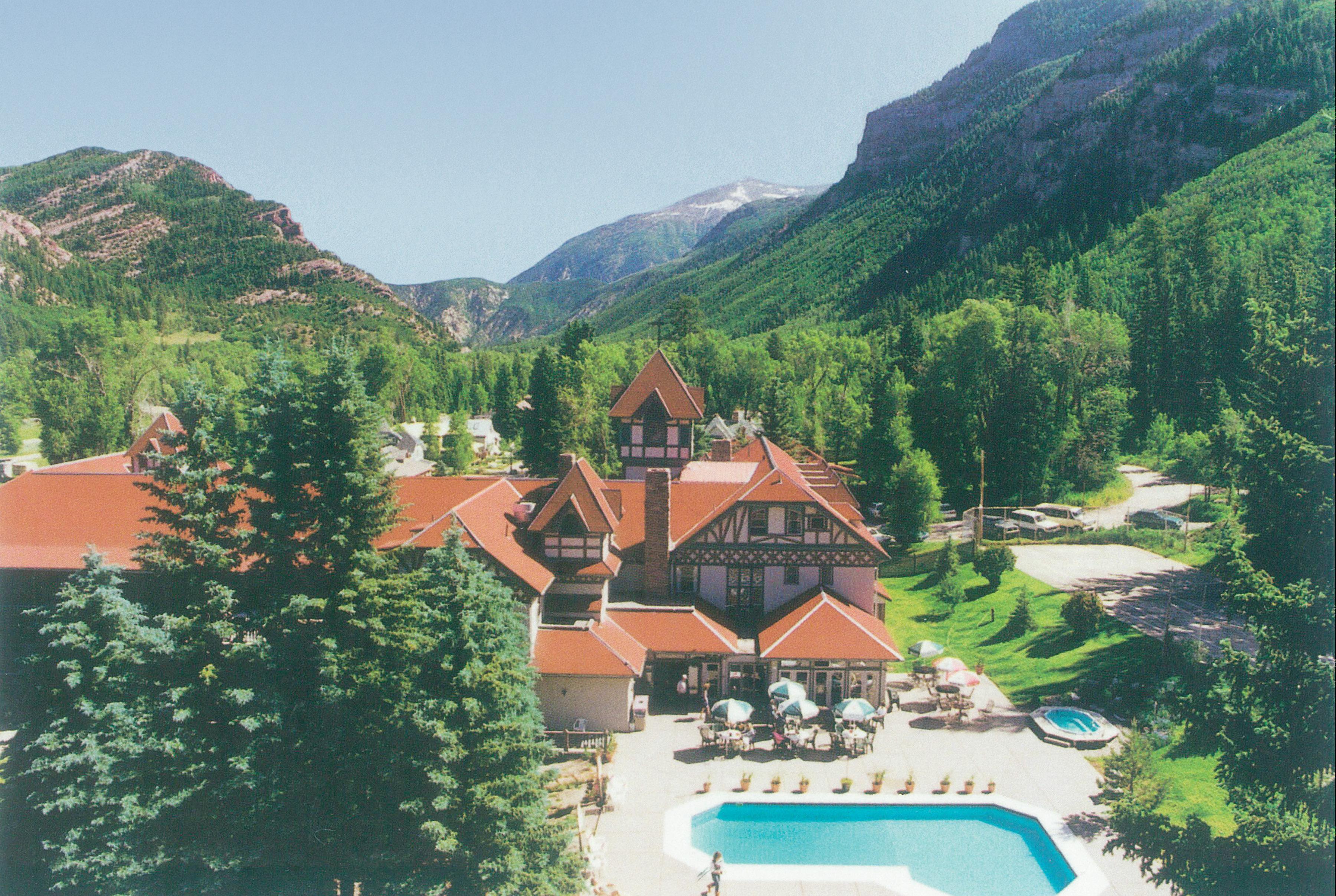
The Marble, Redstone and Carbondale Era Claudette’s love for Colorado began as a young girl in the 1950s. In the mid-1980s, at the age of 45—a time when many prepare for retirement—she chose a new adventure. She and Tom moved to Colorado to open and operate Chair Mountain Stables, a dude ranch located between Marble and Redstone, which later moved behind the historic Redstone coke ovens.
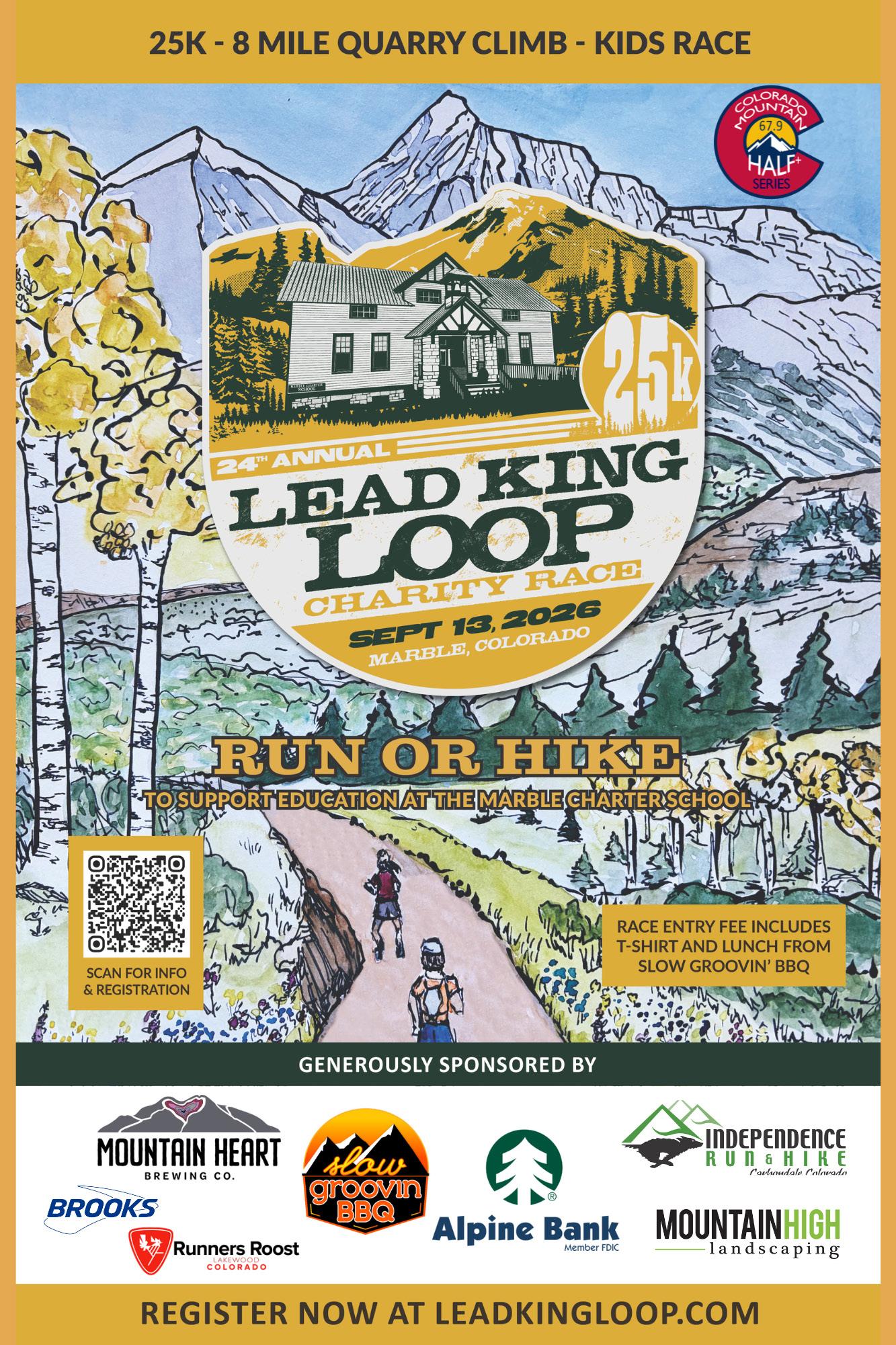
The business was a family effort. Their sons Tom IV, Kevin Mainer, and Kevin Stewart worked the stables, their daughter Cari worked part-time, and Corlene and her husband Kevin Lilley joined the operation for a short time as well. Claudette embraced the mountain life. She regularly guided and cooked for guests on hourly, day, and overnight horseback trail rides into the backcountry. During big game hunting seasons, she rode alongside hunters through the snow, wind, and deep aspen forests. In the summers, she drove guests in a Jeep along some of the most dangerous mountain passes in the state, including the Lead King Basin Loop, driven by a desire to see what was around the "next bend.”
Regardless of the snow and ice, the rockslides or landslides on McClure, or distance required to get to the next town, Claudette never missed one of Kevin’s high school games, any of the grandkids’ activities or the needs of a family member. Somehow, she was always there.
Claudette and Tom made wonderful friends up and down the valley for the 20 years they lived there. They worked at the ranch together, at the stables together, at the Redstone Inn together, and in Aspen together.
From Texas to the Crystal River Valley and all around the world, she had an amazing adventure. She had an impact on untold family and friends. We can be only so lucky, to be so important in the lives of so many.
She is loved and will be missed by all.
2, 1940 – June 5, 2026
Above: Claudette in Redstone; Family Photo
THE MARBLE TIMES
Ecosystems- the Pieces of the Puzzle
By Zach Third Grade
There are a lot of parts of an ecosystem. Did you know that there are ecosystems that are very different in the United States of America. Have you ever stopped to think about whether all the pieces matter? Wolves in Yellowstone National Park, the Burmese Python in the Everglades, and Sea Otters of the Pacific Ocean are all pieces of the puzzle.
One of the invasive species of the Everglades is a Burmese python which people released due to the fact they outgrew their household cages. Now in the Everglades National Park you can get a job to hunt Burmese pythons. To hunt them, you have to go through training.
Fun Fact- in Yellowstone there were wolves there but the people did not like the wolves and they killed all of them. But the elk and deer population grew higher grazing on the trees, and other animals that were in the trees had to find new trees. And then scientists wanted to reintroduce wolves so the trees would grow healthy. So when the wolves were reintroduced the whole ecosystem grew healthier including beavers, squirrels, birds, and fish. Rivers got cleaner and the grass grew back.
In the 1700’s and the 1800’s, sea otters were hunted for their fur. When the sea otter population went down the sea urchins population grew. The sea urchins ate the kelp forests which destroyed the habitats for sea lions, crabs and sea snails. Think about this: if you knock over a single domino in a chain reaction, all of the dominos fall exactly like an ecosystem. So when you go home from school vacation, pick up trash, and make the ecosystem beautiful.
Ecosystems and their Changes
By Jade 3rd Grade
Many people hunt for elk, deer, mule deer, white tailed deer, pronghorn, black bears, moose, and mountain lions for food. But have you ever wondered why you have a certain amount of animals and a limited timeframe known as seasons. Well, if everyone in the world killed 20 elk every year the elk family would be extinct. We rely on elk. There have been three ecosystems that have been affected either by animals being killed, or by animals being introduced. One of the ecosystems is the Kelp Forests of the Pacific, and Wolves in Yellowstone, and lastly Burmese Pythons invading the Everglades. First I’ll start you off with the story of Wolves in Yellowstone. In the 1920’s people started killing the wolf species in Yellowstone for their harm to other animals living in Yellowstone. Then, the elk population started rising and that was affecting Yellowstone even more because elk were eating many trees, food, and homes that other animals needed. After scientists started noticing that they needed wolves in Yellowstone they brought 8 wolves back and the elk population declined. Willow, cottonwood, and aspen trees grew healthier and there was less river erosion, and healthier rivers for fish and beavers.
Now I am going to tell you about the story of burmese pythons in the Everglades. Everglades National park is one of the world's most important wetlands. In 1979 the first burmese python was found in the Everglades by Tommy Owen, a tour guide who saw the animal and immediately went after it.
The tourists riding in the boat were scared when it wrapped around his arm. He struggled getting a hold of it but after several minutes he found a strong grip. Over time they realized that there was more than one burmese python in the Everglades. People started thinking that the pythons would eat everything. From January 2013 to February 2013, the Florida Fish and Wildlife ran a contest called the 2013 Python Challenge; the goal was to hunt the most burmese pythons. Today people are still hunting for burmese pythons. “The South Florida Water Management District” is responsible for giving people jobs to hunt burmese pythons.
Lastly, I am going to describe how the Pacific was harmed where many sea otters were taken out of the Pacific. In the 1700’s and 1800’s sea otters were hunted from Alaska to Baja Mexico. People were killing sea otters for their fur. As more sea otters died, the sea urchin population grew and since sea urchins eat kelp forests, then the kelp forests would decline. Every day the kelp forests were getting smaller and smaller and smaller; there would be less habitats for animals such as whales, crabs, and sea lions. After several years in 1911, sea otters became protected by “Endangered Species Act.”
In conclusion, if there is an ecosystem that you think is being affected by a certain animal or you think needs an animal, then wait awhile to see if the ecosystem seems to be really affected. I have learned that changing the balance of animals in an ecosystem can have negative or positive consequences.
Crystal Valley Echo staff.
Bureau of Land Management proposes new oil and gas leasing on Colorado’s iconic Roan Plateau
December 2026 lease sale proposes drilling in priority wildlife habitat and ecologically significant landscapes
From Wilderness Workshop
RIFLE, Colo. — A coalition of western conservation organizations strongly condemned the Trump Administration’s Bureau of Land Management (BLM) for proposing new oil and gas leases on Colorado’s iconic Roan Plateau today. Wilderness Workshop, Conservation Colorado, and The Wilderness Society warned that moving forward with new fossil fuel development threatens one of Colorado’s most biologically rich landscapes and undermines decades of collaborative planning, legal agreements, and public processes.
The Roan Plateau, towering 3,000 feet above the Colorado River Valley just outside Rifle, is a vital haven for wildlife and home to some of the state's most celebrated public lands. The region supports genetically pure populations of Colorado River cutthroat trout, is a crucial winter range for the state's largest elk and mule deer herds, and hosts unique plants found nowhere else on earth. It is treasured by hunters and anglers for its exceptional backcountry recreation experiences.
"The BLM is in a mad rush to sacrifice western Colorado’s most cherished landscapes to the fossil fuel industry no matter the cost," said Juli Slivka, Senior Policy and Program Director for Wilderness Workshop. "West Slope communities fought for more than a decade to secure protections for the Roan Plateau and its sensitive wildlife habitat and watersheds, and we remain invested in sound stewardship of these incredible public lands in our backyard. Wilderness Workshop has partnered with our local BLM land managers on habitat restoration projects in the same areas the Trump administration is now proposing to open for drilling."
This latest BLM leasing proposal reopens years of intense conflict over the Roan Plateau, which had been put to rest. After all of the federal lands on the plateau were leased for drilling in 2008, a historic 2014 legal settlement canceled dozens of controversial leases on top of the plateau and put significant development conditions on neighboring lands to protect critical environmental values. In 2024, the remaining two leases on top of the plateau were relinquished by the leaseholders after no development occurred.
Despite the decades of legal battles and collaborative agreements, the BLM is now rushing head first into stirring up the controversy of the past by putting high-priority wildlife habitat, outstanding waters, and outdoor recreation opportunities in the crosshairs.
"BLM’s aggressive oil and gas leasing program doesn’t benefit Coloradans. It doesn’t benefit our climate, our wildlife, our recreation opportunities or the health of our communities,” said Brien Webster, Senior Public Lands Campaign Manager for Conservation Colorado. "The Trump administration is imposing a Washington D.C. driven agenda of energy-dominance that not only disregards the perspectives of Coloradans, it disregards all facets of common-sense.”
Drilling on the plateau risks irreversible damage to ecological and recreation resources:
● Pristine Watersheds: Runoff and industrial activity threaten waters that provide drinking water for communities and support aquatic life and native trout. The proposed lease parcels include Outstanding Waters designated by the State of Colorado for their high water quality and ecological and recreational significance.
The BLM’s proposed December 2026 lease sale is the latest in an unprecedented surge in federal public land giveaways in Colorado following the passage of the "One Big Beautiful Bill Act" in 2025. This includes BLM lease sales in March and June of 2026 that saw nearly 200,000 thousand acres offered across the West Slope—marking the highest volume of public lands leased to oil and gas corporations in years. Adding the environmentally sensitive Roan Plateau to this relentless leasing schedule places corporate profits above the health of wildlife, water, and local communities.
The proposed leases on the Roan Plateau are part of BLM’s 30-day public scoping period to receive public input on 114 oil and gas parcels totaling 126,744 acres slated for a December 2026 lease sale. The scoping period ends July 9, 2026.
Meetings and Legal Notices:
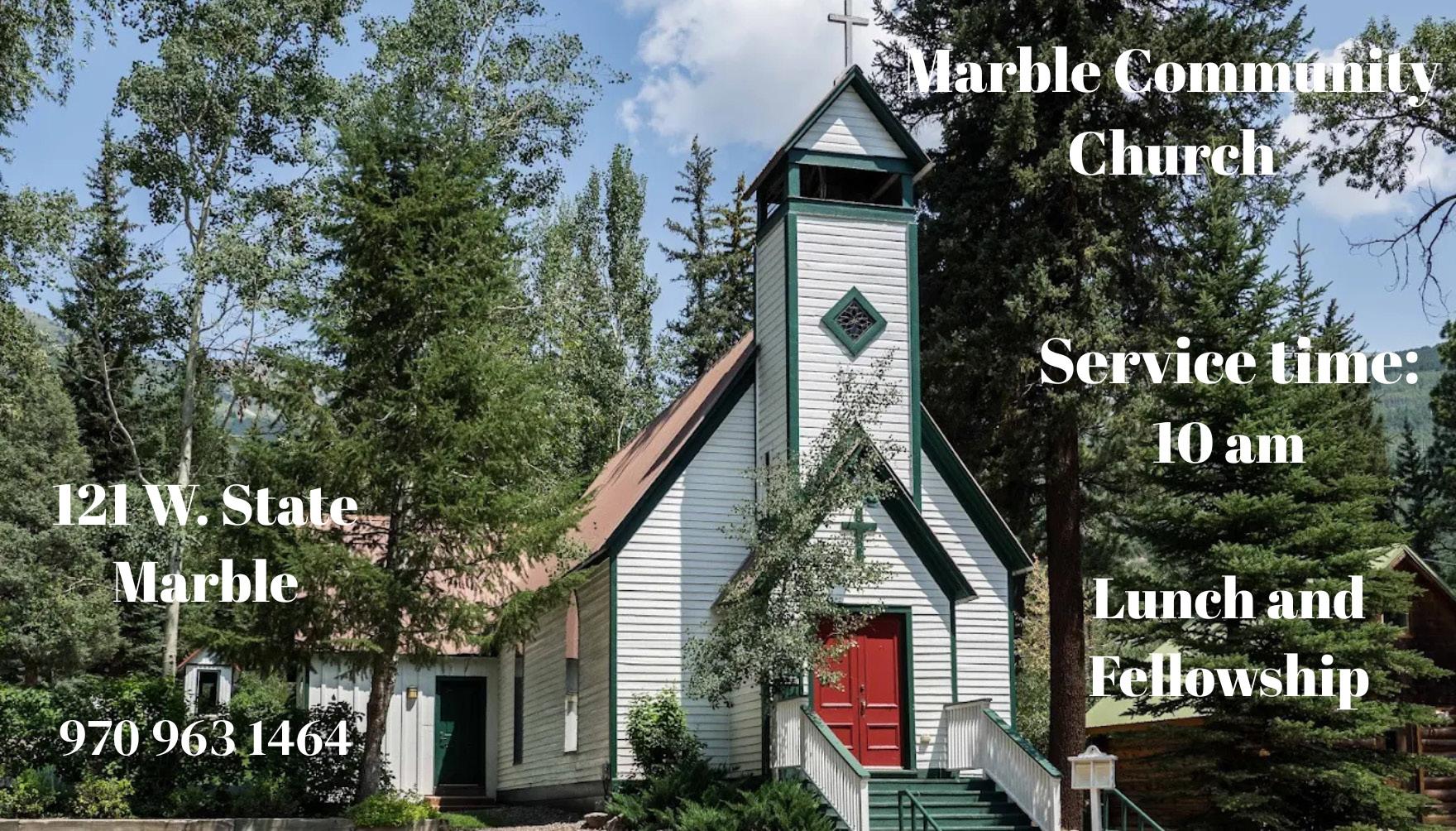
Town of Marble: The Marble Town Council meets the first Thursday of each month at 7:00 PM at the Marble Community Church Fellowship Hall. This Month's Meeting will take place Thursday, July 2nd.
Crystal River Caucus: Meetings are held on the second Thursday of odd-numbered months at 7:00 p.m. at the Church of Redstone, 213 Redstone Blvd, Redstone, CO 81623. Virtual attendance is available, and meeting links will be sent to everyone on the Caucus email list. To join the email list, send a message to crcaucus@gmail.com.
Redstone Community Association: Meets the first Tuesday of Each month at 5:30 pm in the Redstone Inn Library
● Crucial Wildlife Habitat: Heavy machinery disrupts migratory pathways for large elk and deer herds. The lease parcels are mapped as high-priority habitat by Colorado Parks and Wildlife for elk production.This landscape is critical to supporting what was once North America’s largest herd of migratory Mule Deer, a population that is now in steep decline due to habitat fragmentation elsewhere across their range. The Roan plays an equally important role for discrete populations of greater sage grouse and cutthroat trout.
● Recreation Experiences: Industrialization will harm well-established hunting, fishing, and backcountry recreation opportunities. A broad coalition of sporting organizations came together to protect the Roan from drilling when this conflict erupted previously.
"Communities across Colorado and the American West have worked tirelessly for decades to defend places like the Roan Plateau to protect wildlife habitat and our freedom to access these lands. Now we are witnessing a deliberate policy shift that would let oil and gas companies have unlimited reign over our public lands, regardless of the public’s voice," said Jim Ramey, Colorado State Director for The Wilderness Society. "The Roan Plateau is a settled matter. Reopening it to drilling during an already unprecedented leasing frenzy risks destroying the Roan Plateau for generations to come."
Tuesday, July 14 | 4.30pm - 6.30pm
We’ll bring materials and you bring your project or get inspired by one of ours! Work at your pace with personalized guidance from sewing expert Jennifer Hanson! Redstone Inn Conference Room 82 Redstone Castle Drive, Redstone, CO 81623
jennifer.hanson@pitkincounty.com
From Movieland to Marriott: Understanding the Proposal, the Questions, and the Community Conversation
A Community Shows Up to Discuss the Future of a Familiar Movie Theater Property
Guest Column by Miriam Fennell
On June 16, the Town of Basalt Planning and Zoning Commission held a public hearing regarding the proposed redevelopment of the former Movieland property. The meeting room was filled with community members who came to listen, learn, and share their thoughts about the future of a property many in the community know well. One commissioner acknowledged the strong public turnout, noting that public meetings can sometimes feel “lonely” with few participants and that it was encouraging to see so many residents engaged in this discussion. The evening was not simply about one building or one business proposal. At the center of the discussion was a larger question: What changes are being requested for this property, and are those changes the right fit for Basalt at this time?
From Movie Theater to Marriott: What Is Being Requested?
The Movieland property was originally approved under development agreements with Basalt that centered around a movie theater use. The current proposal is substantially different: a Marriott Residence Inn hotel. Although the proposal carries the Marriott name, Marriott International is not the property owner. According to the development application, the property is owned by MVDC, LLC, an entity associated with Bow Tie Cinemas. The redevelopment proposal is being advanced by Bow Tie Partners in partnership with WalshDuPart, a Denverbased hospitality developer. Marriott serves as the hotel brand affiliation for the proposed Residence Inn.Because the proposed hotel use differs from the property's original approvals, the developer is asking the Town of Basalt to approve significant changes to existing development agreements related to: Permitted land use, building size, building height, and signage standards. In other words, the hotel cannot simply be built under the property's existing approvals. The proposal requires the Town of Basalt to determine whether those original development standards should be modified to accommodate a substantially different use. Several residents and commissioners focused on that question throughout the hearing.
The Question of Scale: Beyond Height
While building height was discussed during the hearing, the larger question before the commission is the overall size and scale of the proposed development. The current height standard for the property is approximately 35 feet. The proposal requests a three-story hotel with a primary building height of approximately 36 feet, along with architectural features that would extend portions of the structure to approximately 46 feet. During the hearing, commissioners asked whether a two-story hotel could be considered instead of a three-story structure. The developer explained that a hotel of this type and size is generally designed as a three-story structure in order to provide the number of rooms needed for the project to be financially feasible. However, the more significant change being considered may be the amount and size of development proposed on the site. Existing Movielandspecific agreements limit the property to approximately 15,000 square feet of building area. The proposed Marriott Residence Inn would contain approximately 65,597 square feet, more than four times the amount of building space allowed under the existing agreement. To accommodate that increase, the developer is asking the Town of Basalt to remove the property's existing floorarea limitation and instead evaluate the project under the broader standards of a C-3 zoning district.
The C-3 zoning district is a commercial zoning category that allows a broader range of uses and development standards than the property's existing Movieland-specific approvals. For comparison, the Willits commercial area — including Willits Town Center — is also located within a C-3 zoning district and includes a mix of uses such as retail, restaurants, grocery, office, and residential development.
The question before the Town is whether applying those broader C-3 standards to the former Movieland property is appropriate for this particular location and the surrounding neighborhood, and whether this approach could influence how similar redevelopment proposals are evaluated in the future. One way planners measure the scale of a development is through Floor Area Ratio (FAR), which compares the size of a building to the size of the property it sits on. Under the existing Movieland approvals, the property has an FAR of approximately 0.16. The proposed hotel would increase that to approximately 0.74, allowing substantially more building space on the same site. This difference reflects the broader question at the center of the discussion: how much additional intensity of development is appropriate for this property? The discussion before the commission is therefore not simply about a height difference. It is about whether the substantially larger scale of development proposed for this property is the right fit for this location.
What Else Is Included in the Proposal?
The proposed hotel would include: 94 guest units two deed-restricted workforce housing units, approximately 20 projected jobs, a figure that some community members questioned during the hearing given the size and scale of the proposed hotel. The proposal would also require infrastructure improvements along East Valley Road, including reconstruction of sidewalks to meet current ADA standards. In addition, the applicant would be required to assume responsibility for maintenance of portions of the adjacent multi-use trail, including landscaping, repairs, trash removal, irrigation, and snow removal. Because the project utilizes wood-frame construction, reviewing agencies have also required enhanced fire-protection measures, including additional water-supply and firesuppression infrastructure.
Traffic Remains a Major Topic
Traffic emerged as one of the most frequently discussed issues during both public comment and agency review. Several residents questioned whether existing traffic studies fully capture the potential impacts of a hotel at this location. Review comments from both Town staff and state officials indicate that transportation questions remain unresolved and continue to be under evaluation. According to Town staff comments, questions remain about how vehicles, including semi-trucks making deliveries and construction vehicles during the building process will enter and exit the site, and how those movements could affect traffic flow along East Valley Road.
Town reviewers noted that large delivery vehicles may have difficulty entering and exiting the site without affecting traffic flow, leading staff to recommend modifications to the proposed access configuration. The Colorado Department of Transportation has also identified traffic impacts as an issue requiring further review. If the proposed hotel generates a significant increase in vehicles using nearby intersections, additional analysis may be required to better understand how the project could affect traffic flow in the area. While no final conclusions have been reached, transportation impacts are expected to remain an important part of the review process as the proposal moves forward.
Residents Share Their Questions and Concerns
One of the most meaningful parts of the hearing was hearing directly from community members who took the time to speak. Public comment reflected a wide range of perspectives and concerns. The HOA president for Sopris Village shared concerns regarding potential impacts to water quality and nearby residents. Other residents spoke about preserving Basalt's dark skies and questioned how additional lighting associated with hotel operations could affect the character of the area. A nearby UPS Store owner described receiving requests from more than 60 community members to reduce lighting associated with a business sign, sharing the experience as an example of the community’s strong interest in preserving dark skies. Traffic, neighborhood compatibility, and future land use were recurring themes throughout the evening. Several residents also referenced earlier community discussions in which recreational or community-oriented uses had been considered for the property. While comments varied, many reflected a common question: Before deciding what this property should become, have all potential community needs and alternatives been fully considered?
Looking Beyond a Single Property
While the hearing focused on a single development proposal, several issues discussed throughout the evening, including traffic, housing, infrastructure, and water resources, are challenges shared across Pitkin, Eagle, and Garfield counties. Although development proposals are reviewed locally, many of their impacts extend beyond individual city and county boundaries, prompting ongoing conversations about whether a broader regional perspective may be helpful when considering growth and cumulative impacts across the Roaring Fork Valley.
Thoughtful Questions
from the Planning Commissioners
Throughout the hearing, Planning and Zoning Commissioners asked questions regarding the project's size, compatibility with surrounding development, traffic impacts, and the requested changes to existing approvals. Their questions reflected the purpose of the public review process: gathering information, evaluating potential impacts, and determining whether the requested changes are consistent with the community's goals and regulations. No decisions were made during the June 16 hearing.
What Happens Next?
The Planning and Zoning Commission continued the public hearing to Tuesday, July 7, 2026 when discussion of the proposal is expected to resume. The question before decision-makers is not whether redevelopment should occur. Rather, the commission must determine whether the specific changes being requested, including modifications to the existing development agreements and allowances for a substantially larger hotel project, are appropriate for this property and for Basalt's long-term future. Whatever the eventual outcome, the June 16 hearing demonstrated that residents remain deeply engaged in conversations about growth, land use, and the future character of their community.
Public participation remains one of the most important parts of that process.
On the Little Everydays of America A Reflection
by Tucker D. Farris
"Substantial progress toward better things can rarely be taken without developing new evils requiring new remedies."
-President William Howard Taft
I have been composing this piece of writing for quite some time, preparing it for the commemoration of the 250th anniversary of the founding of The United States of America. Prior to taking up the position of editor of The Echo, I had originally planned to publish it in my usual spaces, but with the journey of newspaper publishing now upon me, it has slowly dawned on me that this essay instead feels more at home between these pages as we come together to celebrate, reflect and experience this point in history.
To begin, I will say that my relationship with “America the Idea” is different from my experiences with “America the Place”. In my academic work, this division of experiences is deeper, where my work often takes a critical approach to the analysis and exploration of certain parts of our country as a collective, abstracted whole. This is, for better or worse, unavoidable when we take such a lens to any nation, but it is a unique reality when that lens happens to be turned to the country of our birth, which we still call home. As such, I see these two versions of America to be their own distinct things. America the Place refers to the real world we inhabit in our day-to-day lives in this country, while America the Idea refers to a more abstract concept of The Nation as a whole. The latter I critique often, the former I cherish frequently.
There is a quiet difficulty in exploring the good and bad of one’s home as someone still residing there. Our lenses can get foggy either in frustration, or in inspiration, but the journey itself remains a difficult one to understand. The breadth of experiences that make up our home nation are so varied and unique that studying “America” in its entirety is nearly impossible, and so we must pick and choose the arenas we throw our hats into. Sometimes this lands us in uncomfortable territory, sometimes it draws a tear to the eye midway through a sentence, and that, I think is the beauty of this place, where despite the zoomed out lens and the noise of all the many points of discussion, there are moments that happen between rest areas on a road trip or in search of a good sandwich that lead us to a reality where the America we all experience has its shining moments irrespective of the America that exists as an idea out in the political or diplomatic conversations. As such, the goal of this reflection is not to explore America as an idea, an abstraction or a nation as a whole, but rather to reflect upon the moments of “our” America, the ones that make up our everyday lives together here.
In journeying abroad, this unique relationship with my home nation manifests in amusing ways sometimes. When I first arrived in Canada to study for my PhD,
I was told by a colleague that my sociology is “definitively American” and in my first weeks there, working in my office one weekend with the door open and “Ramblin Man” by the Allman Brothers Band blasting on the radio, another colleague popped his head in and said “Allman Brothers?! You are a real American aren’t you!”
In another conversation with another colleague in that department, he said to me that he was the only one in the department with “real country roots”, being from a city in a more rural area of Canada than where we worked. I couldn’t help but reply that I grew up outside of any towns, up a dirt road in the Wild West, where my first vehicle was my dad’s 1976 Canary Yellow and Arctic White Dodge Power Wagon pickup truck (with the 440 engine and real ZG plates for those keeping score), and I routinely blasted the Chronicle album by Credence Clearwater Revival over the roar of the straight pipes. When called upon, my rural American roots come screaming out even in the halls of madness that make up the ivory tower of academia.
Elsewhere in my travels the idea of America was often discussed. While living in Lithuania studying the Soviet Union, I had many conversations about where I was from with everyone from fellow patrons in coffee shops, other students, and even some professional philosophers. It is difficult when you live outside of the US to understand it fully, and it is unfortunately easy to fixate on the extremes of darkness and light that come from it, as with any nation, we cannot know it unless we experience it. So conversations of this type would filter between separating the realities of everyday life in America with the myths that grow out of the distance between experience and knowledge.
When people would ask about where I lived and where I was from, I found many times that what I was describing wasn’t “America” in a general sense, but the America that I had experienced, and as a byproduct of this, I found that I would often unintentionally be speaking of my home here in Colorado because by and large, this is what constitutes my America.
Colorado has a wide audience of admirers across the globe. Last summer, while standing next to my brother in Wembley Stadium in London to see the Britpop band Oasis, the lads in front of us asked me where I was from and once the word “Colorado” came out, the instant response was “That’s God’s country!”
The Centennial State has been in my heart in all my travels where, no matter where I am it seems that home is always there with me. While sitting on an airplane travelling from Chicago to Lithuania for an academic conference, I noticed that the in-flight entertainment console had a series of videos of natural landscapes from across the US, presumably to show incoming visitors some of the best of what we can offer.
To my surprise, they had a “Colorado” video and after only 30 seconds of beautiful nature footage lo and behold, home came across my screen at 30,000 feet somewhere over the Atlantic in the form of a video of the sunset at the Crystal Mill in the fall. The things from home that we carry with us abroad ground us back to this place in the most wonderful of ways more often than not, be that my faded ZG sticker on my laptop, or my Aspen State Teacher’s College sweater that would often spark the interest of my Canadian students, or my dog’s Colorado flag collar once drawing the question “Is that for the Chicago Cubs, that big red letter C?”
I have been lucky in my wanderings to find even more love for my home in my conversations with people who have never been there, and to know that, in paraphrasing a former Gonzo neighbor, that no matter what goes on out there in the big world, when you take that sharp curve onto your own home road in this valley, surrounded by good friends, and good neighbors, that everything will be alright somehow.
This is only a small slice of what it means to experience America, and really, not what this reflection is truly about. These moments are lovely, but where we experience America is here at home. Not the idea of the place, but the place itself, built not by abstract concepts and critiques, but by the reality of everyday life as it forms between the average people that truly constitute what America really means as a place to call home.
This past month I did a road trip out to the Pacific Northwest to visit family and attend my partner’s college graduation and along that journey there and back again, so many little instances filter into my mind as examples of the spirit of this country that I think get lost in the static when we consider the big picture from a couple lightyears back.
It began at three in the morning, flying West on I70 with my sister, windows down, blasting classic rock to the absolute upper limit of the speakers in her car. I have long held the belief that to understand America you must take a long road trip, you must do so with at least some instances of driving a little too fast, and you must do so with a well-curated rock n roll soundtrack. While I am not going to enter the genre wars in the musical space, there is something undeniably, spiritually American about flying across the Utah desert as the sun rises to Magic Carpet Ride by Steppenwolf, or Wouldn’t it Be Nice by the Beach Boys.
As the summer sun warms the car you switch it up and cross over into The Kinks, The Stones, and The Beatles and by 2pm the delirium has set in and you’re adding a Paul McCartney style “woooooo” to every song that comes up on the playlist.
The road trip is not just about the music, while that is a crucial ingredient, it is really the way to see the real America.
When you ask what America looks like to someone, while they might describe a national park or a city in vague terms, so many of us live in places along the highway corridors across the continent. As a result, a version of the real America, I would argue is found more closely nestled to exit signs at the end of long stretches of desert on Highway 6 than it is in some more urban places, but this is my small town heart speaking more than anything. In my experience the story of America is told in the interactions in the countless small towns we cross into with much more heart and soul than in any retrospective or large-scale reflection.
When I think of how to try to reflect on this country on this anniversary, these are the interactions that come to mind much more readily than anything else. The brief moment of small talk with the cashiers at a gas station in Helper, Utah as you fuel up and recharge after the long stretch between there and Grand Junction is as American as it can be, infinite kindness and a curiosity about where you’re coming from, and where you’re going, punctuated with a warm “drive safe, hon” as you shuffle back to the driver’s seat, coffee in tow. As you take the on-ramp back up into the fast lane and point the car West it happens again and again at every curve, rest area, gas station and the eventual hotel front desk between home and the Pacific. You glide into and out of the radius of streetlights, see each town’s welcome sign and local advertisements pass you by in the window while Hot Dusty Roads by Buffalo Springfield serenades the coming night.
The nocturnal stretches of the American road trip have always been my favorite, where the coolness of night slowly takes over the bright sunny days and the traffic fades away to those of us on the road who are all either on our way home, or somewhere very far from home. The “pros,” in a sense. America glistens in these moments too as you see the stars dot the sky over Eastern Idaho and trade headlight flashes with the truck drivers in the right lane to signal one another when it’s a good time to pass, as you tune the radio to the local station and hear the DJ dial up something to punctuate the night they’re having under their own town’s streetlights.
You hear the little moments of real life in between those airwaves, where if you’re lucky enough to find a human DJ at that hour you’ll hear requests, dedications, updates on the weekend fair or the high school’s bake sale, local ads for such-andsuch restaurant or so-and-so’s hardware store.
The Everydays Continued...
When we speak of the larger picture of America, it is easy to say that these moments of times gone by are simply not around anymore, or to dismiss these instances as nostalgic reminiscing or romanticism, but they still exist out there on the road between here and there. By and large we still live simply, small, and together, but it is easy to miss these moments when our lenses are tuned to the big pictures. Neighbors still greet each other in grocery stores, see one another in line for coffee in the morning, trade steering wheel waves on backroads or side streets, borrow sugar, dedicate love songs to one another, and so on, whether they live in the busiest city or the smallest village. Those moments are out there for us to see and experience given we are open to noticing them.
To me, this is America the Place, not because these things are remnants of some ‘better’ time, or because they are ‘American values’ but because to experience America is to have human experiences. These experiences are timeless, unbound by ideologies, and entirely, purely unique to our own sphere of the world. While human experiences are found everywhere there are humans, those uniquely American ones are those I invite you to treasure with me in this reflection. They can be the simplest thing like a conversation with a gas pump attendant in Pendleton, Oregon about the forthcoming Round Up, or the anxious trepidation of waiting on a slice of sour cream raisin pie that you’ve been assured is very, very good by the waitress at a truck stop café outside Boise Idaho, only to find that she was more right than you could have even imagined.
Across many such interactions across the country, I have developed a deep love for this place. Not the love that is marketed to us in the media, or even really a sense of ‘patriotism’ as it is laid out by people with far more professional job titles than me. It is not a love of the idea of America, but of its people and the humanity that comes from the time we spend with one another. There is an undercurrent of kindness across this country in many people, and when we separate ourselves from largescale demographic measures and general assumptions, most of the folks we cross paths with on a random Tuesday anywhere on the map, it becomes abundantly noticeable; and I think that this is really what unfolds as the true ‘great experiment in democracy’ that defines our national identity. For me, that is the real object of our celebration after 250 years of this experiment.
While it is fascinating, inspiring and sometimes horrifying to read and reflect and remember the fiery origins of our shared nation, and our collective history, there is something to be said about the mundane moments between the beats of the revolution and today. This is not to say that we ought not reflect on history, or that we should bypass an honest understanding of our past, but rather that we can simultaneously smile with a sense of pride in the world of our everyday American experiences that might not have the scale and scope to make it into the history books.
In composing this reflection, I thought for a moment of focusing it on the extraordinary origins of this nation, of the fascinating moment in world history when enlightenment philosophy melded with so many various social, cultural, political, spiritual, and historical spheres that it created the perfect point of origin for what has grown to be The United States as we now know them. While we have included some selections of newspaper content from the founders of the United States to illustrate the 250-year marriage between the printing press and democracy, I believe it is easy to get lost in the trenches of philosophy and it leads us to a point where we are again reflecting on ideas rather than experiences.
I heard somewhere once that more “real” history is found in the pages of diaries, journals, and of course, newspapers kept by ordinary people than in the pages of books written by the titans of the day. There is a happy medium between these two without a doubt, but I am often more drawn to the realities of the everyday life of the everyday person than I am to the musings of the titans.
This does not mean we should not read these great works, and I encourage each of our readers to seek out such works, many of which are freely available online in many forms. I did not want to subject you to a treatise on revolutionary era American philosophy, as fascinating as it is. I am certain there will be far better accounts of these ideas shared around this anniversary than I could write in these pages. This is not to discount it, as someone who works on the inky outer edges of philosophy in my ‘day job’ I find it beyond captivating to read and reflect on these works and just how truly utterly radical they were for the time. But, in the moments when I have felt closest to the country of my birth, my mind has not fallen back to the words of Benjamin Franklin, Thomas Jefferson or Alexander Hamilton, but instead to the memories of these little American moments. Hamilton, ironically comes to mind in this moment to support this idea, writing in 1775 in The Farmer Refuted he said: “The sacred rights of mankind are not to be rummaged for among old parchments or musty records. They are written, as with a sunbeam, in the whole volume of human nature.”
Irony aside, this is the crux of this reflection for me, that while we must know our history, and understand the monumental ideas behind its course, I think we find what truly marks our experience of this nation is in the moments we experience. This is not fixed in a given time or place, but rather that it demonstrates an idea that supports my love for this unique country, that America the Place is a timeless collection of experiences, and each of these moments strongly defines the momentary America any given person may come to know.
By this I mean that the conversation I have with an old friend of my dad’s at the Co-Op in Carbondale while buying work gloves and a coffee defines my America just as my great-grandfather, outfitted in a worn
duster coat and faded hat riding his horse up Sopris with his cows defined his America. At the center of understanding this place, there is the reality that it is built up in our time spent among others irrespective of the period in history we occupy, and for better or worse. We have that unique shared history of having seen triumphs and tragedies together since that fateful Fourth of July 250 years ago, and the even more unique history of having celebrated those triumphs and shed collective tears at the tragedies side by side with one another.
Together, across time and space on this continent we have seen moments wholly American without any other point of reference in history. Some have left lingering points of pride, and some have cast long shadows, but what has been the defining factor is that despite the duality of these beats of history, we never stop changing. This nation has been a 250-year experiment in the radical idea of placing our faith in one another to do what is right for all. The road has been rocky in moments, but the subtle splendor of this experiment between the noise is that we continue to better ourselves, incrementally at times, monumentally in others. This is not a reflection on policy or ideology, but on the indominable human spirit each of us possess to learn, to grow, to reflect and change as the times demand of us.
There is a perpetual discussion of division today, and it seems almost inescapable in our daily navigation of our world, but I will propose a radical sociological theory within these pages in one of the few times (I promise) that I’ll embed my other professional work onto these pages. I cannot discount the gravity of division, and I cannot say that it does not exist, nor that everyone exists freely without fear of being a victim of this division, to do any of this would be grossly irresponsible and ignorant of reality. But, what I can offer is this reflection both from our history and from my experiences in America the Place: While we may be divided in terms of ideas, opinions, or political ideologies, we are far, far more unified in our humanity on a person-to-person scale than we give ourselves credit for.
This is the approach I take when I discuss this reality with my students, that while on some spectrum there is indeed a deep division and a strong need to have larger national conversations to heal that divide, there are far many more instances of the direct opposite reality in our day-today moments where unity, compassion, empathy, care and collaboration are the strongest chord echoing in the rhythm of American life, and most of the time, we never take the time to notice them.
We see this in nearly every sphere of life, from those small moments from finally watching the next town on the interstate’s lights fade into view on the horizon, to stories of neighbors coming together to battle a wildfire, to buy their mobile home park together, to take care of a sick community member, to celebrate the life of a deceased relative, or to offer aid to those in need, that the little moments of collective
care come to outshine the broader issues we face on a national level. That to me, is the complexity of experiencing America from within. Where even if the news is worse than you have ever expected to hear, if America the Idea’s problems are so intense that they weigh heavily on your heart and mind; all it takes to instill a sense of hope for where our shared road is taking us is witnessing one of these little moments. Where despite what is happening beyond our scope and control, the community we share still has its shining moments of humanity.
By the very nature of these small moments, they occupy far less bandwidth in our broader media streams. We would call it a slow news day if we shared a story about someone jump-starting their neighbor’s car, or a student tutoring another student in calculus. By virtue of their frequency these moments cannot all be cataloged, but I think, without discounting the big events of our history, that they are more indicative of the under-discussed and ongoing success of the American experiment of these 250 years than famous battles, or the philosophies that led to Boston Harbor being filled with tea.
This July, these moments are what I am reflecting on. The little slices of America that reassure me across this nation that somewhere in our hearts we are here for one another in our own ways. We do not always recognize these experiences as they happen, and they are not simply ‘random acts of kindness’ but instead a deeper, warmer sense of looking out for one another. They are sometimes so small that they barely register as any grand act.
Once, for instance, when my brother and I were very small kids in the late 90s in Carbondale, we lost a yellow plastic bucket in the ditch in our yard and being that this was a big deal to us, our mom led us on an expedition downstream to see if anyone had seen the little 50 cent bucket and by chance a neighbor several streets down had indeed seen it, grabbed it and reunited us with it.
I have witnessed no shortage of these little acts of community growing up in this valley, from the smallest gesture of snagging a bucket out of the ditch, to spotting someone $2 in line at Peppino’s to ensure they didn’t have to put back their chocolate chip cookies. Some could argue this is unique to our valley, and while I do believe there is something magic here that draws us all out to help one another, this is something widespread across the nation in the smallest towns and the largest cities. We help how we can. We give directions, we pick up a piece of litter, we ask each other how we’re doing, we wave to our letter carrier, we share spaces where the differences that define us melt away and instead foster a knitted sense of connection.
The Everydays Continued...
We honk our car horns when the high school sports team procession passes on the way to state playoffs, we chat in passing over our various midnight snack choices in the convenience store, we help when we’re asked to, often without questioning it. That is the America I have lived in, the one I have looked back upon with pride, and the one that instills a hope in my mind that in spite of the darkness surrounding us, there is a robust light at the end that we’ll somehow find together.
What inspires me as I write these words is that I know that this is a reflection of how we have always been in one way or the other. That despite the turmoil befalling the world, there is still humanity in small and inspiring pockets that ultimately prevail to define the march of progress and history.
Together, we are no strangers to struggle and strife, to fighting for what is right whether or not it directly benefits us, or to embodying the ideals of those radical philosophers who, 250 years ago set forth on this continent a nation conceived in the idea that the struggle for freedom from oppression, for liberty and equitable justice, for the opportunity for anyone to pursue happiness. We face that struggle and strife as we always have, with the solemn understanding that we will make mistakes along the way, that we will fall victim to our humanity, and that despite the mistakes there exists the lasting hope that ultimately, we will return to that path forward from which we have strayed.
The American experiment for these past 250 years has been a testament to that humanity, to the duality of it, where dark times coexist in contrast to the brighter ones, and where ultimately the spirit of America the Place embodies the ideal of the American Idea. Division can, in its way be an obstacle in this great pursuit we share, but what we must carry with us from now into the future is that division is itself as much a part of our history as our moments of solidarity, and it is in these contrasts that we eventually find our ways back to one another. President Franklin Pierce said that “Frequently the more trifling the subject, the more animated and protracted the discussion” whereupon that which divides us and harms us, ultimately lays the foundations for the work we must do together to grow beyond our struggles together which itself is more strongly reflective of the American Experiment than any political ideology can claim.
I do not believe for a moment that this experiment is a lost cause or one that ought not to have existed in the scope of the course of human history, we cannot disregard where we have gone astray, and we cannot deny that there are moments in the present that feel as though we may never find our way home, but what we must do is take shelter in the simple reality that where there is a sense of compassion between one another in the smallest and seemingly most insignificant places, that is where the key to continuing the march forward ultimately lies. This is not the idea
that we must ‘agree to disagree’ but rather that the countless miniscule moments in my life that I have experienced America the Place instills in me a sense of pride and faith that beneath the surface, our humanity outshines the atmosphere of discourse that happens at levels far above our heads. These moments have taught me that the reflection of the loftiest ideals of the Founding Fathers are not lost, nor are they obsolete, but they exist out there in the tiniest of gestures between real people who also happen to live in this nation together.
All of this to say that on this anniversary I choose to reflect on that American ideal that wherever we find ourselves across the continent, there is still that unique human kindness, human empathy and that special sense of total community that only rears its head in the unnoticeable moments.
It is incumbent on each of us to embody that American ideal, to reflect upon it, and to actualize a performance of it where no matter who we encounter, we offer out that little moment of help, of friendliness, of connection even if it is as fleeting as a smile and a nod of the head as we pass someone on the sidewalk.
What instills me with pride as we consider our 250-year journey from 1776 to today, is that I believe that for the vast majority of us Americans, this embodiment of the American ideal is already a regular beat in our daily rhythms. What may guide us to a place of warmer reflection in a time of
SUMMER HAPPENINGS
SATURDAY, JULY 11 • 9-11 am
History Coffee Talk: Coal Basin Reclamation
With Steve Renner, who led the Colorado Division of Reclamation Mining and Safetyʼs Coal Basin Reclamation Project in the early 1990s. Donuts & coffee. Free. RSVP to info@coalbasinranch.com.
SATURDAY, JULY 18 • 6-8 pm
Redstone Magical Moments Live Music @ the Ranch: Mai Ty
Keyboardist and Carbondale native Tyler Treadway is joined by singer and Edwards native Madi Raichart. Their small-town upbringing collides with music of the city, blending jazz, pop, R&B, and country. Free.
TUESDAY, JULY 21 • 6-8 pm
Roaring Fork Drawing Club Potluck
Bring your art supplies and dish to share for a creative community gathering.
SATURDAY, AUGUST 1 • 9-11 am
History Coffee Talk: Coal Mining in Coal Basin
With storyteller, Redstone resident, president of the Redstone Historical Society, and former Mid-Continent Coal & Coke worker Jeff Bier. Donuts & coffee. Free. RSVP to info@coalbasinranch.com.
SATURDAY, AUGUST 22 • 6-8 pm
Redstone Magical Moments Music @ the Ranch: StarFish Enterprise
Roaring Fork Valley-based StarFish Enterprise is a five-piece groovy rock band with two electric guitar players, a flute player, and a funky rhythm section. Free. BYOB picnic and camp chair.
SATURDAY, SEPTEMBER 12 • 9am - 3pm
Restoration Work Day w/ Roaring Fork Outdoor Volunteers
Plant trees, mitigate invasive species, spread soil and seed. Propaganda Pie at the end of the work day. Free Little Explorers program for families. RSVP to rfov.org.
SATURDAY, OCTOBER 3 • 10am - 1pm
Take A Kid Mountain Biking Day w/ Roaring Fork MTB Assc. Share your love for mountain biking with children at this free event. Coach-led programs and lunch. More details and RSVP at rfmba.org.
4180 Coal Creek Road, Redstone • info@coalbasinranch.com • 970-414-0109 Instagram: @coalbasinranchmtb • Facebook: Coal Basin Ranch Community Trail System
division is an openness to noticing these moments, to reframing them as America the Place, and separating the conversations about America the Idea from how we move throughout the days with jokes and meals shared, with compliments levied, and with a helping hand offered in a moment of need. Ultimately, I do believe that if we take the time to notice and cherish these moments of mundane humanity, it will lend a warmer collective sense of those lofty American ideals in each of us.
Finally, a celebration of America can indeed be both a veneration of the moments of our history that shaped us, and the moments of our own histories that shape a sense of community and solidarity between us all in these little fleeting events between one another. We are our history, from the extraordinary moments that made headlines in newspapers across the world, to the barely perceptible acts between ourselves that may not even have been meaningful enough to include in the margins of a diary entry, but meant all the same in the scope of the everyday life of the individual American.
“Freedom is the open window through which pours the sunlight of the human spirit.” – Herbert Hoover
Steve Renner
Mai Ty
RFOV work day
StarFish Enterprise
The Crystal Valley Echo
Extends our deepest and most solemn condolences to the families, friends, crewmates and loved ones of firefighters:
Emily Barker of Michigan
Nick Hutcherson of Arizona
Sydney Watson of Alabama
Who died heroically fighting the Knowles Fire on Saturday June 27th, 2026 in Mesa County.
Your sacrifice will always be remembered, your bravery and selfless dedication to our protection will never be forgotten.
We invite readers to honor their memory with a donation to the Wildland Firefighter Foundation, a 501(c)(3) nonprofit that has directly supported injured wildland firefighters, their families, and the families of fallen wildland firefighter since the 1994 South Canyon Fire in Glenwood Springs, and to consider joining The 52 Club, where for the equivalent of 1 dollar per week for a year, you can provide direct, meaningful and professional support for wildland firefighters, remember the fallen, and give thanks in memory of these true heroes.
Scan the QR code below or log on to: https://wffoundation.org/ for more information
About the Wildland Firefighter Foundation:
“The Wildland Firefighter Foundation is dedicated to supporting the brave men and women who risk their lives to protect our forests, homes, and communities. We provide assistance to firefighters and their families in times of need. Our mission is to honor, support, and assist wildland firefighters and their families through financial aid, physical and emotional support, advocacy, and community.”
Colorado’s 100-Year Journey to Statehood
The Redstone Historical Society's Vintage Valley
By Darwin Cooper
2026 marks an important milestone for our state. This year is the 150th anniversary of Colorado’s admission to the United States as the 38th state.
The story of Colorado's journey to statehood begins in 1803 with the Louisiana Purchase, when Thomas Jefferson, the third president of the newly formed United States, acquired the Louisiana Territory from Napoleon’s French First Republic for approximately $15 million or roughly four cents an acre. The territory consisted of the Mississippi River’s drainage basin west of the river itself, which included the land in what would become Colorado east of the continental divide. It essentially doubled the size of the United States.
The Western Slope, including what would become Redstone, would remain part of Spain and then Mexico for 45 years following the Louisiana Purchase. In 1846, the United States would pursue a war of expansion against Mexico, kicking off the Mexican-American War. The war would come to a close with Mexico and the United States signing the Treaty of Guadalupe Hidalgo, which ceded to the United States the Mexican territories of
Alta California and Santa Fe de Nuevo México, as well as Texas, which had been disputed between the two countries prior. The territory of Santa Fe de Nuevo México included the Western Slope of what would become the state of Colorado, bringing the other half of the future state under United States jurisdiction.
Following the Treaty of Guadalupe Hidalgo, the land that would become Colorado became part of other surrounding territories, including the Kansas, Nebraska, Utah, and New Mexico Territories. In July 1858, gold was found by Euro-American prospectors near Pike’s Peak in what was at that time the western part of the Kansas territory. After news spread of the gold at Pike’s Peak, a gold rush ensued, with a massive influx of Euro-American settlement in the southern Front Range. As with the larger push west of Manifest Destiny, the Pike’s Peak Gold Rush would start the trend in Colorado of Native American displacement by Euro-American settlers looking to exploit the land they had called home for centuries. Specifically, the Cheyenne and Arapahoe would see their land in the Front Range occupied and the former treaty guaranteeing them that land be rewritten, confiscating it from them and giving it to these new settlers.
Prior to the Pike’s Peak Gold Rush, the United States government and many Euro-Americans viewed Colorado as an unprofitable wasteland, too mountainous to truly capitalize on, and thus, they were happy to leave it to the Native American tribes that called it home, treating it as another Indian Territory.
Ambitious Euro-American prospectors took over the Front Range quickly, setting up “boom towns” to accommodate their ventures. It is through this boom town wave that we see many of Colorado’s biggest cities first appear, including Denver and Boulder. The influx of migrants would stoke desires for a territorial government of their own. On February 28, 1861, towards the end of the gold rush hysteria, the Colorado Territory would be formed, with the new territory’s borders being the same as the future state’s borders.
When people think of Colorado history, they often do not think of the American Civil War. However, the war back east had a great deal of influence on Colorado’s bid for statehood. During the American Civil War, Colorado's statehood took a backseat as Washington felt it had more pressing issues at hand. The Colorado Territory was aligned with the Union and even sent
two territorial regiments of Coloradans to halt a Confederate expeditionary force attempting to traverse the New Mexico Territory. The Colorado regiments confronted and routed the Confederate force at Glorietta Pass east of Santa Fe.
While the Civil War raged on in the East, the Colorado Territory was waging its own war. The Colorado War lasted from 1864 to 1865 and saw the eastern plains tribes of the Cheyenne and Arapaho form an alliance in an effort to defend against Euro-American encroachments. It was in the midst of this conflict that the infamous Sand Creek Massacre was perpetrated by the 3rd Colorado Cavalry under the command of Colonel John M. Chivington. More than 230 Cheyenne and Arapahoe people were killed and mutilated in the massacre; most of the victims were women, children, and the elderly. Chivington, who had led the attack and John Evans, the territorial governor who supported the massacre, were both proponents of statehood. Chivington hoped to become a representative in the House, and Evans wanted to become a senator for Colorado. However, the two men would face scrutiny for their roles in the Sand Creek Massacre, with Evans being forced to step down as territorial governor.
Vintage Valley Continued...
Despite Colorado’s becoming a state, the two men would never achieve the positions they had hoped for due to their unapologetic promotion of and roles in the Sand Creek Massacre.
After the Civil War, a desire for statehood would reignite in the Colorado Territory. Coloradans voted to pursue statehood in 1865; however, after Colorado statehood passed both chambers of the Republican held Congress, it was vetoed by President Andrew Johnson. Johnson, a Democrat with sympathies for the Confederacy, feared that a Colorado state would mean two new Republican senators. It is important to remember that the Republican and Democratic parties of the post-Civil War era were very different from the parties we know today, with different ideologies and platforms.
Johnson justified his veto by citing that statehood was not unanimously popular in Colorado, and the territory did not yet have the population necessary for statehood. Both these points were disputed by Republicans, both in Congress and in Colorado. An example of the disagreement with statehood came when 600 miners in Colorado signed a pledge promising potential tax collectors from a new state “bullets instead of dollars.” Many Coloradans enjoyed the territorial status, as it meant they only had to pay federal taxes. While some Coloradans objected to statehood, many others were excited at the prospect, as it would mean more autonomy and representation in the federal government. It would also allow for more local administration. Johnson would leave office in 1869, and Ulysses S. Grant would become President. Grant, being a Republican, looked more favorably on Colorado statehood. However, Colorado’s several statehood attempts early in the Grant administration would fail to pass both houses of Congress. This was because now that Republicans held the presidency and both Houses of Congress, there was less fervor to add new Republican states and senators. The tide would change when Jerome Chaffee, who would soon become one of the first senators for Colorado, convinced Congress that Colorado would reach the population requirement by 1875.
On July 1, 1876, through the combination of a Presidential proclamation, an act of Congress, and a popular vote in the Colorado Territory, statehood would pass, with the vote in Colorado being 15,443 to 4,062 in favor of becoming the 38th state. Colorado had now completed its 100-year journey to statehood from the country's founding in 1776 to our state's admission into the union in 1876, making Colorado the Centennial State. Colorado is a unique state of breathtaking natural beauty and rich history. There are a record fifty-six 14,000 ft peaks in our state. Colorado is one of the Four Corners states along with Utah, New Mexico, and Arizona. One-third of the state is public land, including national parks such as Rocky Mountain, Great Sand Dunes, Black Canyon and Mesa Verde.
As we reflect this year on 150 years of Colorado statehood and 250 years of American history, we must remember that history rhymes, and we are obligated to learn from our past if we are to build a brighter future.
Previous Page:
Photo Captions:
Above: Pike's Peak Gold Rush Prospector
Right: The Original State Banner of Colorado
Left,
Painting "Admission of Colorado to the Union" by Joseph Hitchins
In Congress, July 4, 1776
The unanimous Declaration of the thirteen United States of America,
When in the Course of human events, it becomes necessary for one people to dissolve the political bands which have connected them with another, and to assume among the powers of the earth, the separate and equal station to which the Laws of Nature and of Nature's God entitle them, a decent respect to the opinions of mankind requires that they should declare the causes which impel them to the separation.
We hold these truths to be self-evident, that all men are created equal, that they are endowed by their Creator with certain unalienable Rights, that among these are Life, Liberty and the pursuit of Happiness.-That to secure these rights, Governments are instituted among Men, deriving their just powers from the consent of the governed, --That whenever any Form of Government becomes destructive of these ends, it is the Right of the People to alter or to abolish it, and to institute new Government, laying its foundation on such principles and organizing its powers in such form, as to them shall seem most likely to effect their Safety and Happiness. Prudence, indeed, will dictate that Governments long established should not be changed for light and transient causes; and accordingly all experience hath shewn, that mankind are more disposed to suffer, while evils are sufferable, than to right themselves by abolishing the forms to which they are accustomed. But when a long train of abuses and usurpations, pursuing invariably the same Object evinces a design to reduce them under absolute Despotism, it is their right, it is their duty, to throw off such Government, and to provide new Guards for their future security.--Such has been the patient sufferance of these Colonies; and such is now the necessity which constrains them to alter their former Systems of Government. The history of the present King of Great Britain is a history of repeated injuries and usurpations, all having in direct object the establishment of an absolute Tyranny over these States. To prove this, let Facts be submitted to a candid world.
He has refused his Assent to Laws, the most wholesome and necessary for the public good.
He has forbidden his Governors to pass Laws of immediate and pressing importance, unless suspended in their operation till his Assent should be obtained; and when so suspended, he has utterly neglected to attend to them.
He has refused to pass other Laws for the accommodation of large districts of people, unless those people would relinquish the right of Representation in the Legislature, a right inestimable to them and formidable to tyrants only.
He has called together legislative bodies at places unusual, uncomfortable, and distant from the depository of their public Records, for the sole purpose of fatiguing them into compliance with his measures.
He has dissolved Representative Houses repeatedly, for opposing with manly firmness his invasions on the rights of the people.
He has refused for a long time, after such dissolutions, to cause others to be elected; whereby the Legislative powers, incapable of Annihilation, have returned to the People at large for their exercise; the State remaining in the mean time exposed to all the dangers of invasion from without, and convulsions within.
He has endeavoured to prevent the population of these States; for that purpose obstructing the Laws for Naturalization of Foreigners; refusing to pass others to encourage their migrations hither, and raising the conditions of new Appropriations of Lands.
He has obstructed the Administration of Justice, by refusing his Assent to Laws for establishing Judiciary powers.
He has made Judges dependent on his Will alone, for the tenure of their offices, and the amount and payment of their salaries. He has erected a multitude of New Offices, and sent hither swarms of Officers to harrass our people, and eat out their substance.
He has kept among us, in times of peace, Standing Armies without the Consent of our legislatures.
He has affected to render the Military independent of and superior to the Civil power.
He has combined with others to subject us to a jurisdiction foreign to our constitution, and unacknowledged by our laws; giving his Assent to their Acts of pretended Legislation:
For Quartering large bodies of armed troops among us:
For protecting them, by a mock Trial, from punishment for any Murders which they should commit on the Inhabitants of these States:
For cutting off our Trade with all parts of the world:
For imposing Taxes on us without our Consent:
For depriving us in many cases, of the benefits of Trial by Jury:
For transporting us beyond Seas to be tried for pretended offences:
For abolishing the free System of English Laws in a neighbouring Province, establishing therein an Arbitrary government, and enlarging its Boundaries so as to render it at once an example and fit instrument for introducing the same absolute rule into these Colonies: For taking away our Charters, abolishing our most valuable Laws, and altering fundamentally the Forms of our Governments:
For suspending our own Legislatures, and declaring themselves invested with power to legislate for us in all cases whatsoever. He has abdicated Government here, by declaring us out of his Protection and waging War against us.
He has plundered our seas, ravaged our Coasts, burnt our towns, and destroyed the lives of our people.
He is at this time transporting large Armies of foreign Mercenaries to compleat the works of death, desolation and tyranny, already begun with circumstances of Cruelty & perfidy scarcely paralleled in the most barbarous ages, and totally unworthy the Head of a civilized nation.
He has constrained our fellow Citizens taken Captive on the high Seas to bear Arms against their Country, to become the executioners of their friends and Brethren, or to fall themselves by their Hands. He has excited domestic insurrections amongst us, and has endeavoured to bring on the inhabitants of our frontiers, the merciless Indian Savages, whose known rule of warfare, is an undistinguished destruction of all ages, sexes and conditions.
In every stage of these Oppressions We have Petitioned for Redress in the most humble terms: Our repeated Petitions have been answered only by repeated injury. A Prince, whose character is thus marked by every act which may define a Tyrant, is unfit to be the ruler of a free people.
Nor have We been wanting in attentions to our Brittish brethren. We have warned them from time to time of attempts by their legislature to extend an unwarrantable jurisdiction over us. We have reminded them of the circumstances of our emigration and settlement here. We have appealed to their native justice and magnanimity, and we have conjured them by the ties of our common kindred to disavow these usurpations, which, would inevitably interrupt our connections and correspondence. They too have been deaf to the voice of justice and of consanguinity. We must, therefore, acquiesce in the necessity, which denounces our Separation, and hold them, as we hold the rest of mankind, Enemies in War, in Peace Friends.
We, therefore, the Representatives of the united States of America, in General Congress, Assembled, appealing to the Supreme Judge of the world for the rectitude of our intentions, do, in the Name, and by Authority of the good People of these Colonies, solemnly publish and declare, That these United Colonies are, and of Right ought to be Free and Independent States; that they are Absolved from all Allegiance to the British Crown, and that all political connection between them and the State of Great Britain, is and ought to be totally dissolved; and that as Free and Independent States, they have full Power to levy War, conclude Peace, contract Alliances, establish Commerce, and to do all other Acts and Things which Independent States may of right do.
And for the support of this Declaration, with a firm reliance on the protection of divine Providence, we mutually pledge to each other our Lives, our Fortunes and our sacred Honor.
Georgia
Button Gwinnett
Lyman Hall
George Walton
North Carolina
William Hooper
Joseph Hewes
John Penn
South Carolina
Edward Rutledge
Thomas Heyward, Jr.
Thomas Lynch, Jr.
Arthur Middleton
Massachusetts
John Hancock
Maryland
Samuel Chase
William Paca
Thomas Stone
Charles Carroll of Carrollton
Virginia
George Wythe
Richard Henry Lee
Thomas Jefferson
Benjamin Harrison
Thomas Nelson, Jr.
Francis Lightfoot Lee
Carter Braxton
Pennsylvania
Robert Morris
Benjamin Rush
Benjamin Franklin
John Morton
George Clymer
James Smith
George Taylor
James Wilson
George Ross
Delaware
Caesar Rodney
George Read
Thomas McKean
New York
William Floyd
Philip Livingston
Francis Lewis
Lewis Morris
New Jersey
Richard Stockton
John Witherspoon
Francis Hopkinson
John Hart
Abraham Clark
New Hampshire
Josiah Bartlett
William Whipple
Massachusetts
Samuel Adams
John Adams
Robert Treat Paine
Elbridge Gerry
Rhode Island
Stephen Hopkins
William Ellery
Connecticut
Roger Sherman
Samuel Huntington
William Williams
Oliver Wolcott
New Hampshire
Matthew Thornton
Apology for Printers
By Benjamin Franklin
Originally Published in The Pennsylvania Gazette, May 27, 1731.
Being frequently censur'd and condemn'd by different Persons for printing Things which they say ought not to be printed, I have sometimes thought it might be necessary to make a standing Apology for my self, and publish it once a Year, to be read upon all Occasions of that Nature. Much Business has hitherto hindered the execution of this Design; but having very lately given extraordinary Offence by printing an Advertisement with a certain "N.B." at the End of it, I find an Apology more particularly requisite at this Juncture, tho' it happens when I have not yet Leisure to write such a thing in the proper Form, and can only in a loose manner throw those Considerations together which should have been the Substance of it.
I request all who are angry with me on the Account of printing things they don't like, calmly to consider these following Particulars
1. That the Opinions of Men are almost as various as their Faces; an Observation general enough to become a common Proverb, "So many Men so many Minds."
2. That the Business of Printing has chiefly to do with Mens Opinions; most things that are printed tending to promote some, or oppose others.
3. That hence arises the peculiar Unhappiness of that Business, which other Callings are no way liable to; they who follow Printing being scarce able to do any thing in their way of getting a Living, which shall not probably give Offence to some, and perhaps to many; whereas the Smith, the Shoemaker, the Carpenter, or the Man of any other Trade, may work indifferently for People of all Persuasions, without offending any of them: and the Merchant may buy and sell with Jews, Turks, Hereticks, and Infidels of all sorts, and get Money by every one of them, without giving Offence to the most orthodox, of any sort; or suffering the least Censure or Ill-will on the Account from any Man whatever.
4. That it is as unreasonable in any one Man or Set of Men to expect to be pleas'd with every thing that is printed, as to think that nobody ought to be pleas'd but themselves.
5. Printers are educated in the Belief, that when Men differ in Opinion, both Sides ought equally to have the Advantage of being heard by the Publick; and that when Truth and Error have fair Play, the former is always an overmatch for the latter: Hence they chearfully serve all contending Writers that pay them well, without regarding on which side they are of the Question in Dispute.
6. Being thus continually employ'd in serving all Parties, Printers naturally acquire a vast Unconcernedness as to the right or wrong Opinions contain'd in what they print; regarding it only as the Matter of their daily labour:
They print things full of Spleen and Animosity, with the utmost Calmness and Indifference, and without the least Ill-will to the Persons reflected on; who nevertheless unjustly think the Printer as much their Enemy as the Author, and join both together in their Resentment.
7. That it is unreasonable to imagine Printers approve of every thing they print, and to censure them on any particular thing accordingly; since in the way of their Business they print such great variety of things opposite and contradictory. It is likewise as unreasonable what some assert, "That Printers ought not to print any Thing but what they approve;" since if all of that Business should make such a Resolution, and abide by it, an End would thereby be put to Free Writing, and the World would afterwards have nothing to read but what happen'd to be the Opinions of Printers.
8. That if all Printers were determin'd not to print any thing till they were sure it would offend no body, there would be very little printed.
9. That if they sometimes print vicious or silly things not worth reading, it may not be because they approve such things themselves, but because the People are so viciously and corruptly educated that good things are not encouraged. I have known a very numerous Impression of "Robin Hood's Songs" go off in this Province at 2"s". per Book, in less than a Twelvemonth; when a small Quantity of "David's Psalms" (an excellent Version) have lain upon my Hands above twice the Time.
10. That notwithstanding what might be urg'd in behalf of a Man's being allow'd to do in the Way of his Business whatever he is paid for, yet Printers do continually discourage the Printing of great Numbers of bad things, and stifle them in the Birth.
I my self have constantly refused to print any thing that might countenance Vice, or promote Immorality; tho' by complying in such Cases with the corrupt Taste of the Majority, I might have got much Money.
I have also always refus'd to print such things as might do real Injury to any Person, how much soever I have been solicited, and tempted with Offers of great Pay; and how much soever I have by refusing got the Ill-will of those who would have employ'd me. I have heretofore fallen under the Resentment of large Bodies of Men, for refusing absolutely to print any of their Party or Personal Reflections. In this Manner I have made my self many Enemies, and the constant Fatigue of denying is almost insupportable. But the Publick being unacquainted with all this, whenever the poor Printer happens either through Ignorance or much Persuasion, to do any thing that is generally thought worthy of Blame, he meets with no more Friendship or Favour on the above Account, than if there were no Merit in't at all. Thus, as "Waller" says,"Poets loose half the Praise they would have got Were it but known what they discreetly blot;"
Yet are censur'd for every bad Line found in their Works with the utmost Severity.
I come now to the particular Case of the "N.B." above-mention'd, about which there has been more Clamour against me, than ever before on any other Account.
-- In the Hurry of other Business an Advertisement was brought to me to be printed; it signified that such a Ship lying at such a Wharff, would sail for "Barbadoes" in such a Time, and that Freighters and Passengers might agree with the Captain at such a Place; so far is what's common: But at the Bottom this odd Thing was added, N.B. "No Sea Hens nor Black Gowns will be admitted on any Terms." I printed it, and receiv'd my Money; and the Advertisement was stuck up round the Town as usual. I had not so much Curiosity at that time as to enquire the Meaning of it, nor did I in the least imagine it would give so much Offence. Several good Men are very angry with me on this Occasion; they are pleas'd to say I have too much Sense to do such things ignorantly; that if they were Printers they would not have done such a thing on any Consideration; that it could proceed from nothing but my abundant Malice against Religion and the Clergy: They therefore declare they will not take any more of my Papers, nor have any farther Dealings with me; but will hinder me of all the Custom they can. All this is very hard!
I believe it had been better if I had refused to print the said Advertisement. However, 'tis done and cannot be revok'd. I have only the following few Particulars to offer, some of them in my Behalf, by way of Mitigation, and some not much to the Purpose; but I desire none of them may be read when the Reader is not in a very good Humour.
1. That I really did it without the least Malice, and imagin'd the "N.B." was plac'd there only to make the Advertisement star'd at, and more generally read.
2. That I never saw the Word "Sea-Hens" before in my Life; nor have I yet ask'd the meaning of it; and tho' I had certainly known that "Black Gowns" in that Place signified the Clergy of the Church of "England", yet I have that confidence in the generous good Temper of such of them as I know, as to be well satisfied such a trifling mention of their Habit gives them no Disturbance.
3. That most of the Clergy in this and the neighbouring Provinces, are my Customers, and some of them my very good Friends; and I must be very malicious indeed, or very stupid, to print this thing for a small Profit, if I had thought it would have given them just Cause of Offence.
4. That if I have much Malice against the Clergy, and withal much Sense; 'tis strange I never write or talk against the Clergy my self. Some have observed that 'tis a fruitful Topic, and the easiest to be witty upon of all others. I can print any thing I write at less Charge than others; yet I appeal to the Publick that I am never guilty this way, and to all my Acquaintance as to my Conversation.
5. That if a Man of Sense had Malice enough to desire to injure the Clergy, this is the foolishest Thing he could possibly contrive for that Purpose.
6. That I got Five Shillings by it.
7. That none who are angry with me would have given me so much to let it alone.
8. That if all the People of different Opinions in this Province would engage to give me as much for not printing things they
don't like, as I can get by printing them, I should probably live a very easy Life; and if all Printers were every where so dealt by, there would be very little printed.
9. That I am oblig'd to all who take my Paper, and am willing to think they do it out of meer Friendship. I only desire they would think the same when I deal with them. I thank those who leave off, that they have taken it so long. But I beg they would not endeavour to dissuade others, for that will look like Malice.
10. That 'tis impossible any Man should know what he would do if he was a Printer.
11. That notwithstanding the Rashness and Inexperience of Youth, which is most likely to be prevail'd with to do things that ought not to be done; yet I have avoided printing such Things as usually give Offence either to Church or State, more than any Printer that has followed the Business in this Province before.
12. And lastly, That I have printed above a Thousand Advertisements which made not the least mention of "Sea-Hens" or "Black Gowns"; and this being the first Offence, I have the more Reason to expect Forgiveness.
I take leave to conclude with an old Fable, which some of my Readers have heard before, and some have not.
"A certain well-meaning Man and his Son, were travelling towards a Market Town, with an Ass which they had to sell. The Road was bad; and the old Man therefore rid, but the Son went a-foot. The first Passenger they met, asked the Father if he was not ashamed to ride by himself, and suffer the poor Lad to wade along thro' the Mire; this induced him to take up his Son behind him: He had not travelled far, when he met others, who said, they were two unmerciful Lubbers to get both on the Back of that poor Ass, in such a deep Road. Upon this the old Man gets off, and let his Son ride alone. The next they met called the Lad a graceless, rascally young Jackanapes, to ride in that Manner thro' the Dirt, while his aged Father trudged along on Foot; and they said the old Man was a Fool, for suffering it. He then bid his Son come down, and walk with him, and they travell'd on leading the Ass by the Halter; 'till they met another Company, who called them a Couple of sensless Blockheads, for going both on Foot in such a dirty Way, when they had an empty Ass with them, which they might ride upon. The old Man could bear no longer; My Son, said he, it grieves me much that we cannot please all these People; Let us throw the Ass over the next Bridge, and be no farther troubled with him."
Had the old Man been seen acting this last Resolution, he would probably have been call'd a Fool for troubling himself about the different Opinions of all that were pleas'd to find Fault with him: Therefore, tho' I have a Temper almost as complying as his, I intend not to imitate him in this last Particular. I consider the Variety of Humours among Men, and despair of pleasing every Body; yet I shall not therefore leave off Printing. I shall continue my Business. I shall not burn my Press and melt my Letters.
THE NATION’S CAPITOL.
As Originally Appearing in The Crystal River Current, Saturday, July 9th, 1887 in Crystal Colorado
Editor's Note: This article from The Crystal River Current presents a contemporary account of a massive project to modernize and revitalize the National Mall in 1887, it has been selected for inclusion in this month's Echo as an homage both to the trailblazing local journalists of the Crystal Valley, and as a reflection in honor of the 250th birthday of the United States.
Author Unknown
The Structure Will be the Most Beautiful and Extensive in the World—Building the Marble Terrace and the Grand staircase.
The marble terrace and grand staircase which are to complete the imposing western approach to the capitol of the United Slates, with the return of the balmy days of spring presents once more a scene of busy energy among the scores of workmen who with crane and trowel are placing the huge blocks of polished marble and granite in their assigned places on the master builder's plan. A procession of carts simultaneously carry away the excavated earth as the foundation of the extension of the gigantic work goes on. When the French engineer, under instructions from President Washington, in the summer of 1790, made a reconnaissance of the gracefully undulating lands in the forks of the Potomac and the Anacostia as the site of the proposed seat of government, he pointed out on his crude field sketch a conspicuous eminence, then called Jenkins' Hill, as the most proper site for “the federal house where congress should meet.” Three years later Washington laid the cornerstone of the original edifice, which is now little more than the foundation for the beautifully pro-portioned iron dome towering over the balustraded marble walls and Corinthian porticoes which today enclose the four acres of frescoed and gilded anterooms, corridors, committeerooms, and great halls occupied by the business of legislation.
The pure white marble walls and surmounting balustrade, with pedestals for statues in the future, which have supplanted the primitive turfed slopes of the terrace on the north and southsides of the edifice, have been finished. The western portion from the angles to the grand staircase is nearly so, which leaves nothing to consummate this im-posing piece of architectural beauty and solidity but the grand staircase it-self. This will be far toward completion before the close of the present working season.
Though but five years less than a century have elapsed since the corner-stone of the president’s house, the first of the public buildings in the federal city, was laid, Washington, the capital of the United States, can boast, of the loftiest structure extant reared by man in the marble obelisk to the memory of “The Father of His Country.” It has the largest and finest legislative and government buildings on the globe. It has more equestrian statues and as a rule of equal merit than all the other capitals of the world combined, and its open-air and indoor statues number upward of a hundred. Its national museums are the greatest and finest in the economical, ethnological, and medical affairs of mankind of any in existence. Its new library building will eclipse in beauty all structures of the kind now in existence. Its new observatory will surpass all others. The extension of its water-supply will exceed the great aqueducts of Rome. The latest triumph in the world of wonders of the American capital will be this grand staircase. Nothing of equal magnitude can be found in the great capitals which date back to the infancy of nations. The grand terrace at Dresden, the famous gardens of Italy, the staircase of Sans Souci at Potsdam, the Vatican at Rome, or the terrace and staircase at Central Park, New York, do not even approach it in dimensions, architectural symmetry, and elaboration of detail and finish.
Some idea of the grandeur of this work may be formed by a reference to its dimensions. The north terrace, of Maryland, and south terrace, of Massachusetts white marbles, and each 304 feet in length and 20 feet high, each terminating on the east in a massive marble blocked and paved approach to the port cocheres respectively of the senate and house porticoes of the eastern facade of the capitol. The terrace walls are capped with a beautiful marble balustrade and rail, with blockings serving at intervals for superb bronze lamp-posts and pedestals for statues, of which there would be ten on each side. The walls of the western terrace and grand staircase are 918 feet in length or aggregating a richly-paved wav over 1500 foot long, extending at the base of the lofty Corinthian porticoes of the northern, western, and southern fronts of the vast structure. Highly polished Aberdeen granite parterres break the terrace platform into two levels.
The grand staircase projects 112 feet and consists of 4 double flights of steps 44 and 48 feet wide, with 4 landings. The distance between the flights of steps is 29 feet.
At the foot of the staircase, facing on the semi-circle walk, fronts Story’s heroic bronzed statue of Chief Justice John Marshall, in the rear will be a beautiful fountain, and in the face of the connecting wall forming the middle landing will be niches for ivy. From this platform will be five arches forming an arcaded way into the sub-basement of the building. At each landing will be imposing cheek blocks, which will support ornate bronze lamps and statues. The steps will end on a broad platform of 129 feet deep and will be connected by a balustrade over the arcaded front beneath and blockings for statues and lamps.
The western central portico, which projects here, will be extended in symmetrical proportions to the approach. The entire exterior of the original capitol which is now the center and of gray freestone painted white, will lie faced with marble to correspond with the senate and house extensions. In order to utilize the space within the terrace walls ninety-two vaults have been constructed, and twenty-eight large apartments suitable for occupancy of committees will front on the open spaces toward the building. The terrace walls are constructed of alternate blocks of marble, 5x8 feet and 19 inches high and 1 to 3 feet thick, fine rubbed cut work, and all resting on a base of Pennsylvania granite similarly treated. The completion of the work will cost upward of $1,000,000.
Looking from the upper platform, which begins at the base of the western central portico of the capitol, the eye rests in receding vision upon the polished while marble descents of the staircase itself, the paved platform at the foot with the Marshall statue, the sweeping lawn enclosed by granite co-pings, which form the broad paved! walks which make their exits on the right at the beautiful statue of Peace, which stands at the head of Pennsylvania avenue, and 011 the left at the site of the new statue of President Garfield, which will be unveiled on the 12th of next mouth, and which looks down Maryland avenue, while between these two broad thoroughfares sweeps the mall with the glass domes of the botanic garden, the pointed pavilions of the National museum, the byzantine towers of the Smithsonian institution, the rigid mansards of the agricultural department, and the dizzy pyramidal apex of the Washington Monument.
The completion of the terrace and grand staircase will make the American capitol as a symmetrical whole the most extensive and beautiful structure in the world, and the view from its elevated seat an array of unrivaled beauty in architecture, art, and nature.
Amped Magazine an entirely independent local youth music publication
Volume 9
About Amped
Amped is a 100% youth-created and run music journalism publication covering the youth music scene in the Roaring Fork Valley. To date, they have produced over 100 pages of local youth music journalism entirely one their own including concert photos, album reviews, gig coverage and much more. Amped follows the youth music scene from Aspen to Grand Junction and is 100% edited, formatted, produced and written by their own staff. The Crystal valley Echo is proud to offer Amped a permanent physical home in print and expansion to wider audiences as part of our regular distribution. We care deeply about supporting youth journalism, youth music, and the rights of all people to share their voices through creative expression. The Echo does not impose any editorial control or oversight to the production of Amped. Amped is sponsored in part through advertising revenue from The Echo with the staff of Amped receiving 75% of all sponsorhip revenue (25% goes to printing costs). If you are interested in sponsoring local youth music journalism please write to editor@crystalvalleyecho.com for an updated rate sheet. Additional donations to support Amped may be done via the gofundme QR code on this page. Thank you to our generous supporters for their help in fostering a vibrant scene of youth music, creativity and journalism.
Amped in the echo is generously sponsored in part by:
Fourth of July
Start
Funnies, Features, Puzzles and Oddities
The Fog & Folly Crossword Vol. 5
Across 2. National bird featured on the Great Seal. 3. Colonial supporter of independence.
4. Patriot whose oversized signature became legendary.
7. City where the Declaration was adopted.
8. Commander of the Continental Army and First U.S. President
9. Diplomat whose work in France helped secure American victory
12. The philosophical idea celebrated on Independence Day 13. The formal term for a 250th anniversary.
15. Colorful nighttime tradition on the Fourth of July
Down
1. “Father of the Constitution” and fourth U.S. President 5. Surname of the nation’s second and fourth presidents.
6. Principal author of the Declaration of Independence.
10. What America celebrates on July 4th 11. The famous cracked symbol associated with American independence
14. The Continental body that adopted the Declaration
The Inky Ledger...
The Inky Ledger is a monthly feature of historic comics and comic strips from the early 20th century. Each month, a new artist or series is featured as a way to reflect on the timeless movements of satire, comedy, critique and caricature.
Of note for this month's featured panel of Private Lives, Boston Red Sox Catcher Moe Berg, having already achieved celebrity status as a professional athlete would go on to be one of the first officers in the Office of Strategic Services (OSS) upon its foundation in World War II which would eventually be renamed The Central Intelligence Agency.Berg began his intelligence career in the Special Operations Branch which would evolve into the modern Special Activities Division. He then moved to the Secret Intelligence Branch running the Balkan Desk where he planned operations to aid in the liberation of Yugoslavia from Nazi Germany. This comic was published and enjoyed before Berg's intelligence career began. He has the unique position in history of being one of the few (known) US intelligence officers to feature on an official baseball card, and in at least one satirical comic strip.
This summer's features are from a comic strip titled "Private Lives by Edwin Cox. Candid Cartoons of the World's Celebrities. The Unconventional News of the News-names". It was syndicated to American newspapers by Edwin Cox and Jack Bliss from November 1938 to May 1943. Jack Bliss was the artist for the complete series. It consists of a single large cartoon panel surrounded by smaller cartoon boxes. It features famous people of the the day, including politicians and media celebrities.
To submit art, features, or other oddities to adorn this page, Kindly send word to The Echo at: Editor@CrystalValleyEcho.com
All submissions considered. Few accepted.
A Tasting of Prose:
“Freedom is not merely the opportunity to do as one pleases; neither is it merely the opportunity to choose between set alternatives. Freedom is, first of all, the chance to formulate the available choices, to argue over them—and then, the opportunity to choose.” -C. Wright Mills, The Sociological