U.S. $7.99 / Canada $8.99 On-Sale Through February 27, 2023 #41 Winter 2022-23


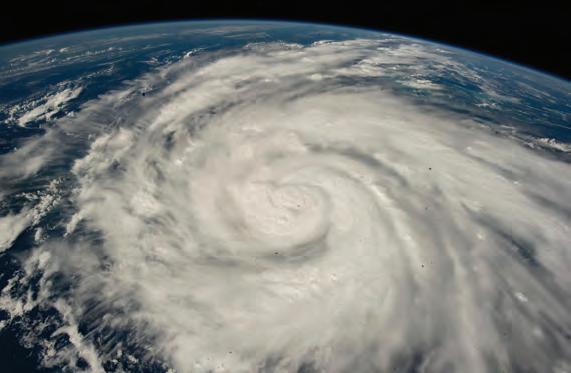

#41 • Winter 2022/23 Bob Bitchin’s Attitude 12 Another Way: History in the Making 32 Cruising Puerto Rico 48 Stranded in Ile-a-Vache, Haiti 54 Winning the Jackpot 64 Yet Another Boat! 96 Staircase to Paradise 66 Skirting the Shoals 110 Life Aboard: Gardening Aboard 128 Let’s Talk Safety! 132 Sailing on a Budget 136 The Great Paddle Scavenger Hunt 144 (Unwritten) Rules of Sailing 72 FEATURES 35 THE LAST ROWING DINGHY IN THE CARIBBEAN 76 HURRICANE IAN 42 A TRIP TO MEXICO

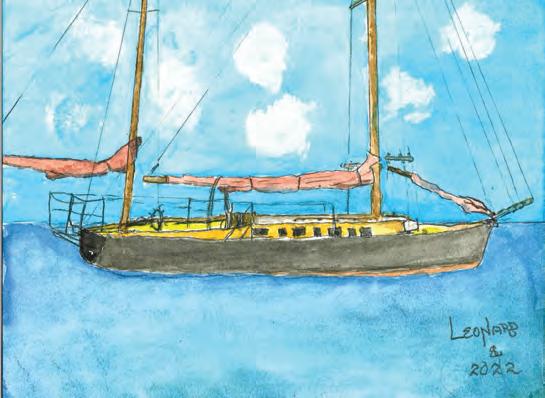

Cut Corners While Enjoying Your Holiday Cruise 104 The Cruising Hobbies Underway 116 A Case for Trailer Sailing 120 The Story of the Sailboat Esperanza 108 84 UNDERWAY 104 LIFESTYLES 122 VIRTUAL CRUISING DEPARTMENTS 150 I FOUND IT AT THE BOAT SHOW Talk of the Dock 102 Scuttlebutt News 19 Book Review 142 Share the Sail 168 Advertiser Spotlight 178 Bosun’s Bag 171 Word Search 174 Zoo Crew 170 Boat People 180
ON THE COVER
Publisher | Erik Kyle erik@kylemediainc.com
Associate





Latitudes & Attitudes Division of Kyle Media, Inc. (ISSN 2767-8954-PRINT / ISSN: 2767-8962 On-Line) (USPS 011-950) is published quarterly by Latitudes & Attitudes 7862 W. Central Ave., Suite F, Toledo, OH 43617. Periodical Postage paid at Toledo Ohio, and additional mailing ofces. Copyright 2022 Postmaster: Send address changes to Latitudes & Attitudes, 7862 W. Central Ave., Suite F, Toledo, OH 43617

This issue’s cover shot is from the new publisher’s recent trip to Bora Bora, and shows them soaking up the French Polynesian sun aboard a Sunsail 454.

Publisher | David Levesque david@latsatts.com
Offce Winch | Mindy Leppala mindy@kylemediainc.com
Window
Boat
Staff Infection |
Olivia
Shane
Suzy
Ed
John
Tim
Kia
Todd
Susan Koning “Squints” Palledorous Chuck Noland Betty Crocker Captain America Javier Baez The Steve Miller Band Will Smith Chuck Norris Wilson PEOPLE WHO HELPED US CREATE THIS ISSUE PEOPLE WHO DIDN’T HELP US WITH THIS ISSUE Contributor | Zuzana Prochazka Life Aboard Queen | Robin Stout Office Mascots | Jessie & Katie Bitchin & Eddie Levesque Buffalo Sabres Mascot in Training | David Levesque WE SUPPORT BOATING PRINTED IN THE USA 7862 W. Central Ave., Ste. F, Toledo, OH 43617 Ph: 877-775-2538 | Fax: 877-373-8177 www.latsatts.com SUBSCRIPTION INFORMATION Latitudes & Attitudes 7862 W. Central Ave., Suite F, Toledo, OH 43617 SUBSCRIBER SERVICE 877-775-2538 latsatts.com/magazine
Professional Grammar Guru | MM Frances Krutsch editorial@kylemediainc.com Deep Sea Designer | Sonia De Leon design@kylemediainc.com
Washer Emeritus | Bob Bitchin bob@latsatts.com
Show Queen | Jody “Bitchin” Lipkin jody@latsatts.com
Tania Aebi Adam Cove
De Soria
McClellan
Carmody
Varano
Simpson
Millof
Koropp
Duf

 By Bob Bitchin

Why didn’t I pay more attention when I was in school? Sometimes I wish I could go back in time and bitch-slap myself when I was a teenager. If I’d just listened to Mrs. Canavan when she tried to explain the importance of The Rock Of Gibraltar, or why the islands of the Caribbean are distributed amongst the nations that were in power during the exploration of the area. And maybe I shoulda paid a little more attention during math period instead of sitting there daydreaming about Martha Pavoni. I didn’t realize what a numb-nuts individual I was until I was sailing into the Mediterranean for the very first time.
We’d left the Azores as a storm was waining, and we acceoted a challenge from the s/v Ticonderoga to head out in the a.m., regardless of weather, and head for “The Rock.”
Now for those of you who don’t know s/v Ticonderoga, let me fill you in: she is probably the most beautiful yacht I’ve ever seen, she was built in 1936 by the Quincy Adams Boat Yard, she was originally designed as a family day-sailer.
We were on the morning SSB net listening to the weather when “Ti” ( I felt I could call her that now that we were dockmates!) mentioned their weather forecaster said the storm would be letting up the next morning, and they said they were going to go for it.
This was my chance! I jumped on the radio and asked if they’d like to “race to Gibraltar.”
I could almost hear the stiffled laughs. Here we were, a 1981 Formas ketch, cruising speed a little faster than a mouse can run, and we were going to race one of the most famouse boats in the world.
The next morning at dawn we untied the docklines and headed out. Ti said she was going to “have breakfast” and would see us out there.
That aftrenoon at about three p.m. we saw Ticonderoga coming up behind us. By 3:15 she was passing us, and by 4:30, we could barley make her out on the horizon.
Four days later, we arrived at the Queensway Quay Marina to join Ticonderoga. She’d beat us in by a little (three days!) but still invited us aboard for a party (we supplied the beer!)
While we were aboard Ticonderoga we saw the 1930s yacht Altair enter the marina. Ticonderoga was a beautiful boat, but Altair took things to the next level. They had just sailed across the Atlantic to join the concours d’elegance in St. Tropez. That was where Ti was heading as well.
Altair had just finished a $2 million refit. The skipper of Ti waved them into the slip next door. You see, the former cook on Ti was now married to the skipper of Altair. The superyacht family is kinda incestuous. Crew move between superyachts pretty regularly.
We watched as Altair’s crew took off the stainless sailing trim and put on the gold plated show trim. As they washed her down, we saw her transformed into one of the most beautiful pieces of art you could imagine!
Of course, today, a seventy-two-foot “day-sailer” might seem a little much, but you gotta remember, this was back in the day when they said, “If you have to ask the price, you can’t afford it.”
Now, jump ahead a few decades. A storm was blowing thru the Azores for a week or so, holding back the boats that were heading to the Med for the season. s/v Lost Soul is sitting side tied to the two-hundred-and-three-foot Feadship “Virginian” who we’d sailed with in Tahiti the previous season, and we bumped into on our way across the pond. The marina was full in Horta, so they invited us to side-tie to them. That made it most kewl, as they gave us a jacuzzi to use, as well as one of their three washing machines.
So here we are sitting and waiting out a small storm, and Ticonderoga pulls in. I can’t tell you how many years I have drooled over that boat. And here we were, sitting right next to her.
Cruising has to be one of the best lifestyles there is. What other lifestyle would allow a tattooed biker from California to party with the crews of some of the most famous yachts in the world?

The sailing and cruising community is a very close-knit community. It seems our moral values seem to click, and we find joy on some of the most esoteric pastimes.
Drifting downwind as you sail across an ocean, waving as you are passed by world famous yachts, it all just seems to be a part of your regular day. The lines between classes dissappear. Out there, we are all just “sailros.”
So the next time you are “out there” sailing, and you see another sailboat on the horizon, be sure to wave. You’ll be surprised at the surge of good feelings that will well up inside of you! Once a king, always a king. But once nights enough!
12 Latitudes & Attitudes | #41 Winter 2022/23


Issue #41
Atts Lats Scuttlebutt&
If
It’s Gonna Happen, It’s Gonna Happen Out There
All the News That Fits Between the Sheets
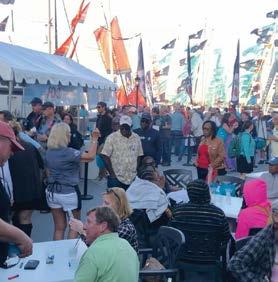
Saturday, the fifteenth of October, brought the long-awaited return of the Lats & Atts Cruisers Party to the Annapolis Sail Show. Under clear skies and warm temps, an estimated crowd of five hundred ate, drank, danced and rocked the Pusser’s Rooftop Patio. It’s been fifteen years since Lats & Atts held a cruisers party in Annapolis, and from all accounts, we’ll be rocking it every year to come. To celebrate the twentyfifth anniversary of the magazine and exciting change of ownership, what originally set out to be your everyday run-of-the-mill boat show party quickly outgrew the show walls during the planning, and we’re grateful to Pussers for opening their rooftop to our festive revelers. Cruisers sporting souvenir wristbands lined up end-to-end on the rooftop well ahead of the 5:30 PM start, purchasing their arm’s length tickets for the multitude of incredible raffle items provided by sponsors. Commemorative cups with sponsor logos were handed out along with food and beer tickets, Lats & Atts veteran cruiser party staple Eric Stone officially opened the party with his signature Latitudes & Attitudes theme song, and Bob Bitchin gave the welcome to all.
The band Final Faze, sponsored by the BVI Tourist Board, kicked ass and kept the crowd dancing and rocking from 7:00-9:30, and Eric Stone closed out the night in usual fashion with raffles and shenanigans all around. We had said this was going to be a cruiser party unlike any other, and it certainly was. Many in attendance were blown away by the venue, the food and beer selections, and of course, the music!
Winter 2023
We couldn’t have pulled it off without the help of these valuable sponsors:
– The Moorings
– S&J Yachts

– ICOM
– Bitter End Yacht Club
– Captain Boomies
– Kanberra
– LTD Sailing

– Scuttlebutt App – UGO
– Aquatabs

– Coppercoat – Forespar
– Lasdrop

– Mack Boring & Parts Co.
– Mack Sails
– Maptech
– Mantus Marine – Navtec Hydraulics
– Offshore Passage Opportunities – Offshore Sailing School
– Pyrate Radio – Sunshine Cruising Yachts – Vetus
We sincerely appreciate all the patience from the attendees and sponsors as we worked through our first go-round as party planners and are already looking forward to next year!
www. LatsAtts .com 19
BOAT RESTORATION UNDERWAY AT KĀPITI COLLEGE, NEW ZEALAND
A group of Kāpiti College students are working on the ultimate school project…restoring a twenty-eight foot wooden ketch!
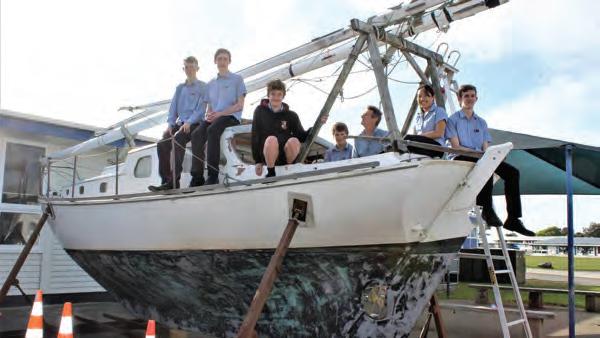
The vessel, Desiree, was donated to the college by a local resident in 2018, and students are now work ing to restore the Hereshof 28. It’s currently being worked on by construction students, and is in a cradle at the heart of campus for all to see. Check out some of these action shots and see the work the students are doing!
SAIL THE WIND
By Samuel “Andy” Leonard
When you sail from here to there, And at the charts you stare, You and your boat are bound to the trip, But not to how you get there.
Freedom, you will not know If you follow the land. Sailing the wind is not to a place, It is just to the wind at hand.
You do not have to set a course, The course is set for you Who knows what magic you may fnd When your cruise is through.
20 Latitudes & Attitudes | #41 Winter 2022/23
SPOTS ARE FILLING UP FAST FOR boot DÜSSELDORF!
Who’s ready to go to the world’s largest boat show?! boot Düsseldorf is happening again on January 21-29, 2023! We’ve made arrangements to hold rooms at the Leonardo Hotel for Lats & Atts readers who want to see the show and we have free admission tickets for those who join us!
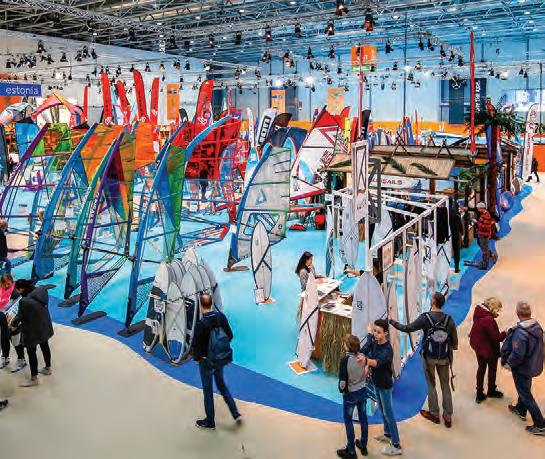
It’s simple: just contact the travel agent for the show and then email bob@LatsAtts.com to let us know that you will be joining us. We’ll get you the info you need for the free passes, the group dinner, and kewl nametags that identify you as part of the L&A Group. Spots are flling up FAST, so contact us sooner rather than later!

To hold your room(s) contact Carol Brodsky, at TTI Travel Inc.: cbrodsky@ttitravel.net or call (866) 674-3476.
www. LatsAtts .com 21
HONORING NELS NEUMANN
Bob,

I wanted to say “thank you” for everything that you have unknowingly done for my brother in his life. My brother, Nels Neumann, and I watched my dad spend his life in the US Navy. As such, both of us dreamed of living on a ship. Pirate ship, whatever ship, preferably a tall ship. As Nels became an adult, he joined the Army which took him away from the ocean. His powerful drive for adventure and exploration that he found in the dream of boating, was fulflled with Easy Rider and motorcycles. His need to be in touch with the world around him, selfsufcient, and a minimalist life of discovery lead him to a Harley Davidson Dyna, a Softail, and eventually an Indian Chieftain. He followed you in his motorcycle magazines for years. He never lost his dreams of living on a boat. Your creation of Latitudes & Attitudes just fulflled his world. He drew me into your maga zine to fll a hole in my world that I didn’t know I had. With that inspiration, he got his captain’s license, and shortly after he bought a Catalina 39, named her Deaconess, and sailed out of San Diego. He started bringing me out of my home in Arizona to teach me how to crew his boat. The frst time the wind snaps the sail forward and the ship lurches under the power of the wind and sea is amaz ing. I can’t tell you how happy he was when you brought the magazine back in all of its forms, and in all your books.
On September 21st, you lost a lifetime subscriber of multiple magazines when a driver ran a red light, killing Nels. You inspired him, and through him, you have inspired me. You helped a man teach three beautiful girls and myself a love of boats, motorcycles, adventure, and exploration in all of its forms.
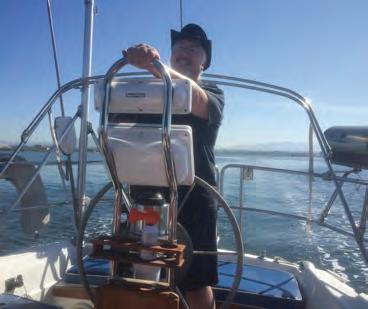
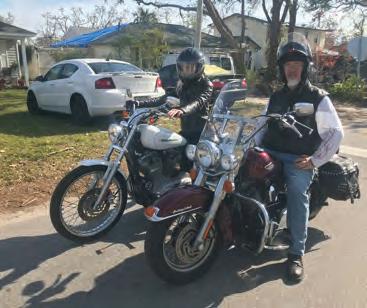
You even published a picture of Nels and his three dogs a few years ago. I can’t fnd it, but I remember seeing it in the magazines I buy. Thank you for creating that memory.
With a heavy heart, Nath Neumann
We here at Latitudes & Attitudes are honored to have touched Nels’s life. We’ve also included the photo of Nels’s dogs in this issue’s Underway section, page 85.
22 Latitudes & Attitudes | #41 Winter 2022/23
This reader “thank you” was sent in to Bob Bitchin from Nath Neumann:
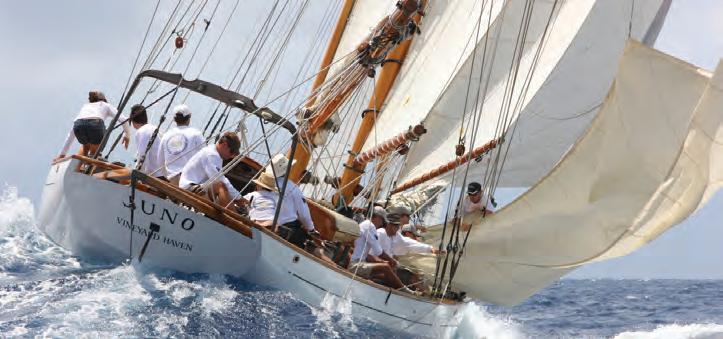
THE RETURN OF THE SPIRIT OF ANTIGUA CLASSICS!
Founder Kenny Coombs’ underlying premise for the original Antigua Classic Yacht Regatta was to create a group of people who shared the same passion for racing vintage and classic yachts in the ideal sailing conditions of Antigua, with its amazing and unique historic background. The resulting camaraderie between this group, which varied from year to year as diferent yachts and sailors took part, became legendary, and was one of the chief reasons for the Regatta’s success. Whether you arrived in fip-fops or on a private jet, it was a great leveler.
The new Classics Team aims to restore the original spirit of the Event, which will now take place April 19-24, 2023, during the traditional period prior to Sailing Week. Most events, including registration and dockage, will be in Nelson’s Dockyard. These will include the Single-Handed Race and the Concours d’Elégance, followed by three days of glorious racing, culminating in the famous Parade of the Classics in English Harbour after the last race on the Sunday followed by Prize Giving 6-8 PM. Monday will be for rest, relaxation, and fun, with the restoration of Gig Racing at the Admiral’s Inn and thirst being slaked by Cream Teas served by elegant ladies in fowery hats and frocks (stronger beverages will also be available at the bar). A new, slimline version of our famous Programme is also being prepared.
The classes of participating yachts will remain the same - Vintage, Classic, Spirit of Tradition, Traditional and Tall Ships – but the former Historic Class has been renamed Modern Classics, defned as monohulls built of any material, with a modern underwater profle such as fn and skeg, and designed over thirty-fve years ago.
And last but by no means least – after all, the whole point of a regatta is to race – the courses, yet to be determined in detail, will be based on the original ones, such as Old Road and the Butterfy, and a modifed Kenny Memorial Cannon, with an emphasis on reaching, with some Windward/Leeward legs for the Spirit of Tradition and Modern Classics classes.
Despite the late change in dates, we hope to attract participants who share the values of the new Classics Team and would like to join in re-creating the original spirit of this illustrious Regatta. Several boats have already expressed interest in participating including the elegant Adix, the biggest sailing yacht in the world.

We therefore invite any boat interested in taking part in 2023 to email our Regatta Organizer Robin Stout at antiguaclassicsregatta@gmail.com Similarly, anyone wishing to volunteer their services (the Regatta is largely run on their good will!) should also contact the Regatta Organizer at the same address, together with anyone wanting further information.
Photographers and journalists are invited to contact antiguaclassicsregatta@gmail.com too.
We are looking forward to welcoming you all next year to the 34th annual Antigua Classic Yacht Regatta in Nelson’s Dockyard for some wonderful rac ing and plenty of celebrations, fueled by local beer and the typical tipple of the Caribbean: rum!
www. LatsAtts .com 23
Photo by Tim Wright
NAUTICED AND MARINEVERSE’S NEW VIRTUAL REALITY SAILING COURSE
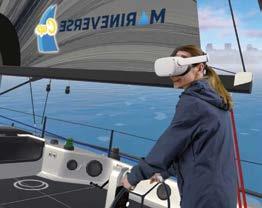

How do you make sailing less intimidating for new sailors? Make it into a game! NauticEd, the world leader in on-the-water and online sailing training, has partnered with MarineVerse, an Australian-based pioneer of virtual reality (VR) sailing simulation, to offer the first ever sailing course that combines VR gaming with sailing training. We really are living in the future!
You can check out the “Self Mastery” course now for free at www.nauticed.org – all you need is the Meta Quest VR headset.
26 Latitudes & Attitudes | #41 Winter 2022/23
28 Latitudes & Attitudes | #41 Winter 2022/23

Active Report PIRACY
SEPTEMBER 9, 2022: SINGAPORE STRAITS.
Two robbers wearing face masks armed with long knives boarded a bulk carrier underway and entered the engine room. Alarm raised, crew mustered and VTIS informed. Seeing the alerted crew the robbers escaped with stolen ship’s stores.
SEPTEMBER 7, 2022: SUEZ CANAL SOUTHERN ANCHORAGE, EGYPT.
Alert duty crew onboard an anchored container ship noticed two unauthorized persons attempting to board via the anchor chain and directed the searchlight towards the persons resulting in the boarding attempt being aborted and the persons moving away.
SEPTEMBER 17, 2022: SINGAPORE STRAITS.
Around 10 unauthorized persons in wooden sampans came alongside and boarded a laden barge under tow. The crew noticed that the persons stealing cargo and raised the alarm. VTIS informed, and a patrol boat was sent to investigate. Seeing the patrol boat, the persons escaped with the stolen cargo.

SEPTEMBER 19, 2022: TAKORADI ANCHORAGE, GHANA.
Four unauthorized persons boarded an anchored refrigerated cargo ship, stole ship’s stores and escaped. Incident reported to Takoradi port control and coast guard. A patrol boat was dispatched to search the waters around the ship and remained in the vicinity of the ship until daybreak.
30
From the International Commercial Crime Services A Narrative of the Most Recent Attacks
Latitudes & Attitudes | #41 Winter 2022/23

History in the Making ANOTHER WAY:
By Tania Aebi
For those of us who don’t live on boats and sail on grand adventures year round, there are seasons of downtime, perfect for magazines and books. So, for this magazine, here is a little something about a book providing a soaring armchair ride through the history of sailing just for the fun of it, through the lens of the Cruising Club of America.
Gaze out over any anchorage or marina nowadays, and you will see many diferent kinds of sailboats. How often have you spent a few moments or hours doing this with friends, pointing out the ones you do or don’t like? Monohulls, catamarans, trimarans, fberglass, steel, wood, aluminum. These sloop, cutter, ketch, yawl, and schooner rigs come in all shapes and sizes, and each meets a diferent need, suits a diferent taste, and tells a diferent story about current and past owners.
As is true about most things, every boat also has a history stretching back to before it was built, to the inspiration for its design, and the stories of its designers. If you look a little further, you will arrive at the origins of cruising, to the time when sail went from being the primary source of propulsion to a sport and a way of life.
In the big picture, that didn’t happen very long ago. At the end of the 1800s, Joshua Slocum, a sailing captain who had become jobless with the advent of the steam engine, sailed alone around the world and into the books as the proto-sailing adventurer and cruiser. Then, he and his boat

disappeared in the Bermuda Triangle.
If you think about it, since Slocum’s epic voyage, cruisers and racers sailing across oceans just for adventure have only existed for a hundred and twenty years or so. And, it was mainly in the decades following WWll that the industry really swelled. Boy, has a lot happened in that time. None of those greatest generation guys peddling sporty and classic sailing designs — Alden, Rhodes, Atkins — could have ever imagined the massive business it would become for the baby boom. After WWII, shipbuilders thrived in New England until the seventies, ushering in the middle-class surge in sailing. From wood to fberglass to carbon fber, marinas mushroomed, anchorages flled. With GPS, the industry kept expanding, right down into the pages of this very magazine.
In 1922, a small circle of mostly racing and some cruising sailors gave birth to the Cruising Club of America, an organization unfamiliar to many of us, even though it has played an outsized role supporting sailing life as we know it. Recently, Tim Murphy, a sailor and journalist, pulled together a book with editor Sheila McCurdy, telling this hundred-year-old history: Adventurous Use of the Sea: Formidable Stories of a Century of Sailing from the Cruising Club of America.
Read past the introduction describing the origins of the Cruising Club of America (an America that included Canada,
where the frst boat of the frst founder was frst drawn), and you get sucked into the pages of stories about a very rarifed group of men, and later, women, who designed and built boats to cross oceans — from doing it just for the adventure, to purpose-driven voyages meant to win races, break records, share amazing experiences with families, introduce the sea to others, educate youth, and help the unfortunate along the sailing routes they plied.
In those early days, a certain class of people dominated the sailing world and carried the CCA fag, almost always tied to fnance, law, or engineering, New England, Harvard, or some other Ivy League institution of brainiacs competing for coveted Bermuda Race and America’s Cup prizes. These people were born into loving sailing, who either had money or knew people with the money they needed for experiments, prototypes, and programs.
They have names like William “Bill” Nutting, who built a forty-fve-foot Atkins-designed ketch named Typhoon in 1919 and sailed her from the East Coast to England and back in 1920. He and his crew did it with no bets, no advertisers, no challenges, no desperation — just to see if they could do it and have fun. And they did.
When home again, an editorial in the Tribune questioned the wisdom behind the hair-brained pursuit of crossing an ocean on such a small boat. Nutting indignantly replied: “Now, apart from the question of the risk involved, which is largely a matter of personal opinion, I feel that what American yachting needs is less common sense, less restrictions, less slide rules and more sailing.”
Then, he and his next boat disappeared somewhere between Iceland and the East Coast, but not before he and a few friends formed the CCA in a New York City apartment. And, not before he did some back-of-the-envelope drawings scaling down the Colin Archer forty-seven-foot North Sea lifeboat to the once popular Westsail 32, a boat close to my heart that tangentially launched my ship of life.
Sixty-odd years later, and after some avoidable maritime tragedies, another CCA member developed the Life Sling, a piece of equipment now found on most boats. And this led to Safety at Sea Seminars, established by a cohort of experienced CCA members, courses now taken by most sea-bound sailors.
All along, CCA also governed rules on racing, design, and rating formulas. Every race that ever existed is mentioned, alongside the designers who worked endlessly on ratios, materials, and math I don’t understand that resulted in boats I don’t know in many races I’ve never heard of. This doesn’t really mean much, as understanding designs and racing complexity has never been my thing. Just as well.
Women were not accepted as CCA members until 1994, so this is a very male-dominated history. Still, women are featured in the stories of many couple-driven adventures, such as Irving and Exy Johnson, who circumnavigated their training ship, the Yankee, seven times between 1933-1958, introducing a pantheon of well-known later adventuring sailors and couples to the sea.
Many of these characters were also writers, and the book contains an accumulation of quotes nicely summing
up every description and feeling one can have out there, whether cruising or racing. I didn’t think I’d care for the parade of yachting elite, but they command respect for paving the way with eloquence, intelligence, and mastery of whatever they were bringing to the art of sailing, cruising, and ultimately, living.
Members of the CCA make for an organization steeped in seagoing lore and achievement. Cumulatively, they’ve sailed millions of miles. The Capes, Antarctica, Greenland, Alaska, the Northwest Passage, Indian Ocean, Mediterranean, Caribbean, North and South Pacifc, there is very little of the planet that CCA people haven’t visited, no sailor their ripples haven’t inspired or touched. Honestly, it’s hard to feel singularly accomplished faced by all that accomplishment.
At the very beginning of the book, Tim says that during fnal edits, he realized the phrase “launched a thousand ships” was used about a thousand times, so other words were found as substitutes. But, as a reader, I stumbled over the ghost of those words. Many people, boats, books, and articles launched a thousand ships and ancillary sailors, businesses, materials, and equipment. One after the other, stories within stories that became the stuf of legend would remind me of the phrase.
You don’t have to read it word for word as there are also plenty of beautiful and illustrative pictures, going from grainy black and white to color. But, whether you were born to love sailing or came to love it otherwise, no matter what your ride looks like or when and where you hoist your sails, you will fnd connection to something in this book.
ABOUT THE AUTHOR
In May of 1985, an eighteen-year-old Tania set sail from Manhattan, New York, and became the frst American woman and youngest sailor at the time to circumnavigate the globe. Upon her return to Manhattan in November 1987, Tania had visited twenty-three countries and sailed 27,000 miles. Nowadays, Tania runs charters and delivers boats all over the world when she’s not at home helping with her granddaughter, battling snow in the winter and weeds in the summer, or dreaming about writing her next book.

LatsAtts .com 33
www.
Rowing Dinghy THE LAST IN THE CARIBBEAN
 By Adam Cove
Tanner at the dinghy dock in Great Harbour, Jost Van Dyke, BVI
By Adam Cove
Tanner at the dinghy dock in Great Harbour, Jost Van Dyke, BVI
The Last Rowing Dinghy in the Caribbean
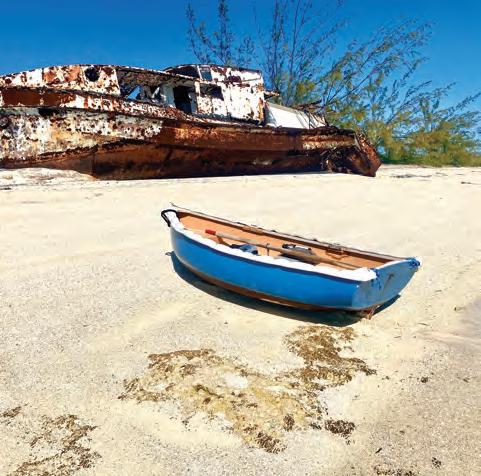
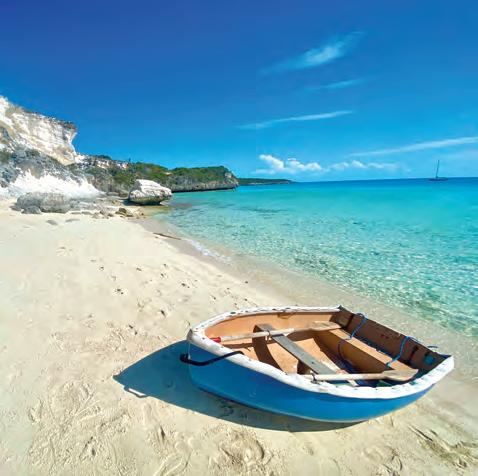
Meet Tanner. She’s a tough girl from Maine, with pretty lines and a determined attitude. A dusty blue color mates her up nicely with her companion Ben-Varrey, our 1969 Luders 33. A few scratches in the paint and scufs on the rub rail indicate that she is well-traveled, but all else shows that she is well-loved. She earned her name from the previous owner. Actually, it is the name of the previous owner. It was well marked on her aft seat, and after leaving it there for a few seasons, it grew on us and she is Tanner.
We’ve rowed hundreds of miles together, and she has been along for the ride, cabin top and towed, for thousands more. Some days are picturesque, and she glides efortlessly through a calm sea, and other days Tanner fghts for every inch through gnarling chop. She always delivers and is right there with us, working hard through each new adventure.
In our home port of New Bedford, we share the harbor with other rowing dinghies. We even have the pleasure of frequently crossing paths with traditional and replica rowing whaleboats: fve people pulling hard together, with a long sweeping oar trailing aft from the hand of the boat steerer. The steerer’s other hand is sure to give a friendly wave as we exchange pleasantries. In some instances, I’m on those whaleboats, and it is a similar exchange with someone else.
As we have sailed north and cruised through Maine waters, rowing dinghies become even more abundant and passing by others is an opportunity to get to know one another or exchange helpful information. Once Tanner even had a free lobster tossed her way just because we could have that nice conversation.

Rowing provides connection
with the ocean. It brings you close to the water, in sync with the rhythm of the waves, and forces the pull of each arm to balance with the wind abeam of the hull. You can hear and smell the sea around you. It is not a disruption to the nature, but rather a part of it, which allows you to take it all in.
Anyway, more about Tanner: this past winter was going to be diferent for our rowing dinghy. She wasn’t going to sit on the hard, looking like a beached sea turtle covered in snow. She was going to warmer waters. Tanner was going to hang out with real turtles! We were cruising down to the Caribbean together.
The trip there would be a new challenge – it would be a singlehanded journey. Alison would meet me in St. Thomas. Tanner and I warmed up with an ofshore trip from New Bedford to Annapolis. The limited range of Ben-Varrey’s electric inboard, and because I prefer to sail the entirety of every passage, meant we took the scenic route and sailed to the mouth of the Chesapeake and then worked our way back North through the bay. Light air sails, like a drifter, help to curb any frustration, and so did tasty meals underway. Getting rest while single-handing is tricky in these confned waters with fast-moving commercial trafc. So, dropping an anchor when the current turned and getting some sleep proved a solid strategy. Tanner enjoyed a nice long nap on the cabin top throughout all of this!
The excitement of fnally getting to catch up with certain pandemicseparated friends at the boat show had a gravitational pull. A beautiful ffteen knot westerly breeze flled in as the sun set and I pushed all the way through the last night and dropped anchor of Annapolis a couple hours before sunrise.
This was a new scene for Tanner and it became evident rather quickly that she was unique. There were a few kayaks and SUPs, but every other small craft was propelled by the puttering of an outboard. It was a bit
Tanner paying respects to vessels left behind on Great Guana Cay, Exumas
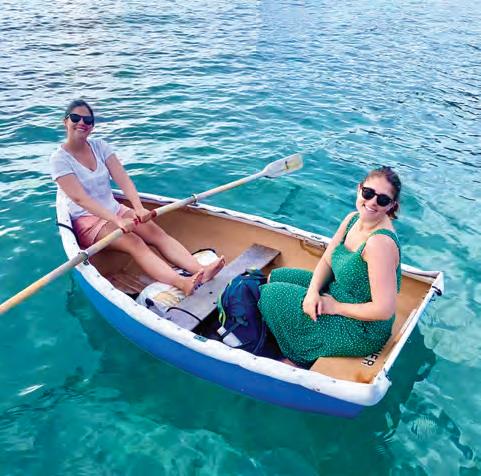
Alison and Emily rowing around Great Harbour, Jost Van Dyke, BVI
Adam, Emily, and Alison wandering through the Baths, Virgin Gorda, BVI
of a shame given the calm waters. In another season, there may have been some row boats, but not now.

The waters of the Chesapeake weren’t for Tanner. It wasn’t they were too rough or too cold yet. They just weren’t the crystal clear waters that lay ahead. Winter weather came in early, and on a refreshing November day I set sail for the US Virgin Islands.
Weather windows were challenging. A number of boats never left. I had waited out the system that had sixty knot winds opposing the Gulf Stream and opted for the front that would blow through quickly, but give me forty knots from the South. It turned out to be forty-fve, but Tanner was having a blast riding on the cabin top and only getting hit with spray. Getting far enough east through this one meant that the next front wasn’t as powerful and we missed the high pressure system that then settled in over the Chesapeake Bay entrance, and left it without wind for a while.
The breeze didn’t drop below twenty-three knots for the frst nine days ofshore. That meant this over ffty-year-old boat was ticking of miles faster than I had seen her do before on a passage. She was in her element.
After sailing alone about 1650 nautical miles, I faced sensory overload when approaching land again. I nearly got whiplash as I was dropping anchor in Cruz Bay, St. John from just watching all the dinghies blasting around. I suspected that the only thing not running on island time was the dinghies. After some time ashore, it turned out that I was right.
The rest of the USVI spelled out the same story. It was the Caribbean’s version of Maine’s twilight mosquitos buzzing around. These powered dinghies even had that same physical annoyance factor, except instead of an itch, it was in the form of a wake threatening to spill over a beer or cocktail. To be fair, those people
seemed nice enough on shore. A few even dropped to an idle as they neared and asked if I needed a tow in. I politely declined each time. You see, as their bellies grew bigger and what was left of their arm muscles began to wobble in the wind, I was staying strong with each stroke.
It’s challenging to stay ft on a boat: it’s impossible to walk more than your boat length in a straight line, and even the constant tweaking of sails doesn’t add up to much upper body work. Regular rowing combined with hiking and some short workout routines kept me feeling great without even noticing I was exercising. And, it can all be done on island time to keep from getting too warm. Just make sure to bring a big straw hat. If you forget one, the locals can even weave one for you!
From Water Island to Coral Bay, we never saw another rowing dinghy underway. As we sailed into the BVI, it became apparent that a rowing dinghy carried an entirely diferent set of perks. Since we continued to be the only boat with one, we were recognizable in any harbor. We made friends faster because we could chat with moored or anchored boats as we rowed by. We even received special consideration from our favorite beach bar. On New Year’s Eve, when the dinghy dock was full and everyone else was instructed to pull their dinghy onto the beach, a hole was made for us at the dock and encouraging smiles and waves brought us over. Perhaps the respect from the locals was from earning our way to shore, or maybe it was because we could extend the courtesy of a conversation anytime from our dinghy.
We perfected our synchronized water entries while tied up of of the Baths of Virgin Gorda. Simultaneously falling backwards of each side of Tanner would leave her entirely level as we swam of to explore. We would do nearly the opposite to get back in. And,
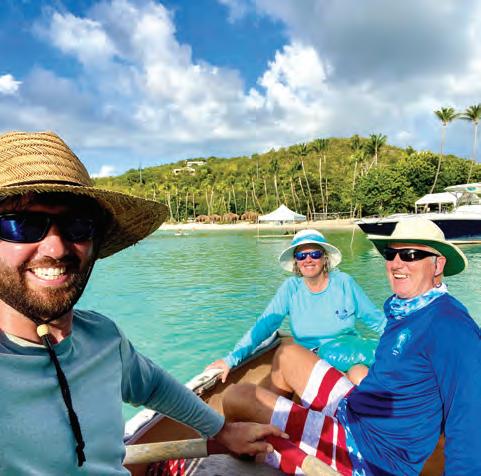 Adam and parents, Veronica and Paul, departing with Tanner from Dinghies Bar, Water Island, USVI
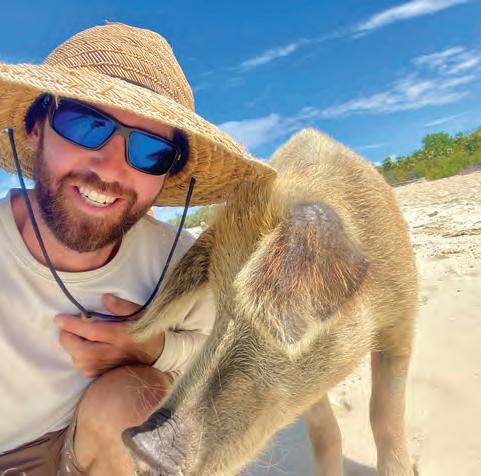
Adam sunbathing with beach pigs in the Exumas on Big Major
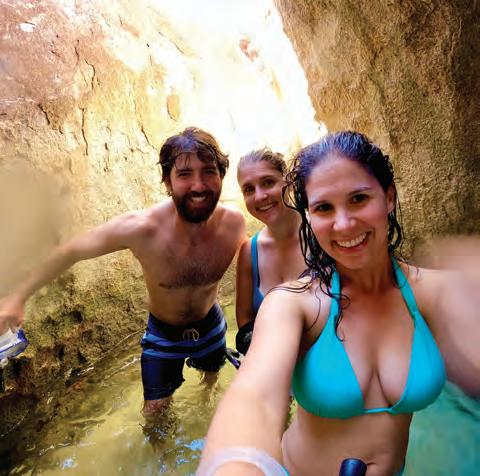
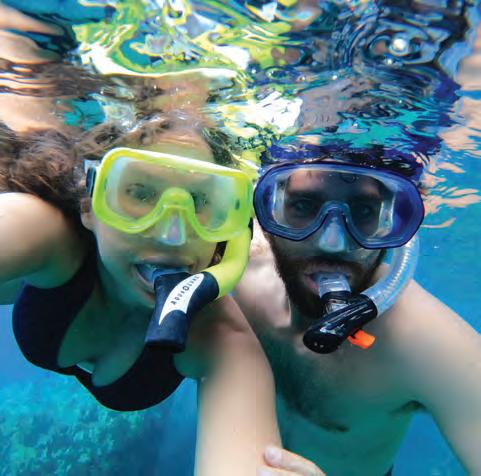
Alison and Adam snorkeling in the caves of Norman Island, BVI
Adam and parents, Veronica and Paul, departing with Tanner from Dinghies Bar, Water Island, USVI
Adam sunbathing with beach pigs in the Exumas on Big Major
Alison and Adam snorkeling in the caves of Norman Island, BVI
The Last Rowing Dinghy in the Caribbean

wherever we left her, we were never worried about theft. The simplicity of Tanner left nothing to be scavenged. She held up strong against any dock and we never had to disrupt our fun to track down fuel.
In full disclosure, Tanner was not exactly the only rowing dinghy in the Caribbean, as the title of this article suggests, but it was close. From the Grenadines to St. Lucia, we were still out of luck, but a passage to Carriacou showed us one other active rowboat in Tyrrel Bay. She was skillfully handled and naturally crossed paths with Tanner. It almost seemed that everyone else looked down on us for not having outboards, as if it was some sort of status symbol. However, I was quickly able to turn those situations into fun interactions. In one instance, there was a taunt from a nearby dock asking if we could use a bit more horsepower.
I stopped rowing, rested my oars, rolled up my sleeves, fexed both biceps, smiled, and replied that I had plenty! We all shared a good laugh.
Bequia features a maritime museum on a hill that houses some whaleboats, but they have all been on the hard for some time, and the few that supposedly remain in use were nowhere to be seen. Grenada remained under the power of gasoline, as did Martinique, but Dominica carried the rowing tradition in a couple parts of the island, like the Indian River. I was even fortunate enough to cross paths with a sistership of Ben-Varrey there. This Luders 33 was nicely outftted with a wooden rowing pram too! Given our feet of row boats (yes, I believe two can be called a feet), we gained momentum in the harbor and got a few others to start rowing their dinghies, despite them being infatables. It was quite a scene in the calm waters of Prince Rupert Bay. Life slowed down a bit again
and the anchorage became even more of a community. We all stayed well beyond our intentions, and explored the waterfalls, canyons, and mountains together.
Sailing north, Guadeloupe proved another advantage for Tanner. Beach landings and departures in surf were far more manageable under oar power than with an outboard. While infatable dinghies tumbled upside down, our rowing dinghy was agile and didn’t make us sufer more than a splash here or there. I wouldn’t argue that it doesn’t take some practice to be able to handle situations like this, but with rowing every day, most people would be surprised at how comfortable they become with rowing. The oars become extensions of arms and the hull is nothing more than the broadening of the lower body that can be gently trimmed or pitched at the rower’s whim. It is as much an art as it is a skill, and you can bet there is much more sex appeal to a smooth rowing maneuver into a dock than there is with an outboard, no matter how much horsepower it has.
Now for a technical interlude. I thought it prudent to include a fuel efciency calculation. The average dinghy ride to shore was about a quarter mile. This wouldn’t take long, but a half beer could be consumed in this length of time. That’s somewhere less than a quarter gallon per nautical mile. A 9.9 horsepower outboard is consuming around a gallon of fuel per hour at full throttle, the only speed anyone goes in the Caribbean. Call it ffteen knots boat speed and that’s about one-third the fuel volume usage as rowing. However, keep in mind that gasoline is also about a third of the price of beer for the same volume. So, from this standpoint, operating an outboard starts to make a lot more sense. Perhaps my mistake was rowing with beer and not rum… the
Ashore with Tanner on Bitter Guana Cay, Exumas
Ben-Varrey reaching North in the Atlantic
Playing with sea turtles in Tobago Cays, Grenadines
The Last Rowing Dinghy in the Caribbean
economics might have worked out better. In either case, better not to row too long on either fuel source.
That brings me to my next thought: nighttime navigation. The amount of alcohol consumed in the Caribbean can make for a treacherous ride back to the boat. Most people are fairly responsible, but there’s always one boat going full throttle, playing pinball across the harbor. You need to watch out for them. Doing this in a rowboat is considerably easier because you can hear them and use other boats as a shield at the opportune moments. That also reminds me why listening for them is so important: a lot of dinghies run without lights, the rest just have a fashlight that could be pointed in any direction. It’s a bit like listening for lobster boats in the Maine fog when sailing. Maybe that’s why it feels so familiar.
As we continued along the island chain, Antigua, Saba, and Sint Maarten were full of powered dinghies. Occasionally, we’d notice a wooden rowing dinghy on shore, but those were long forgotten and would not serve to keep anyone afoat for long. Antigua’s classic yacht regatta did host some decorative rowing craft, but they were simply ofoaded to make space for racing crew. We were too late to see the arrival of the ocean rowing boats from the Atlantic Challenge, but one on display served as a reminder of how Antigua serves as the fnish line of this transatlantic endeavor. This is rowing to an entirely diferent level.
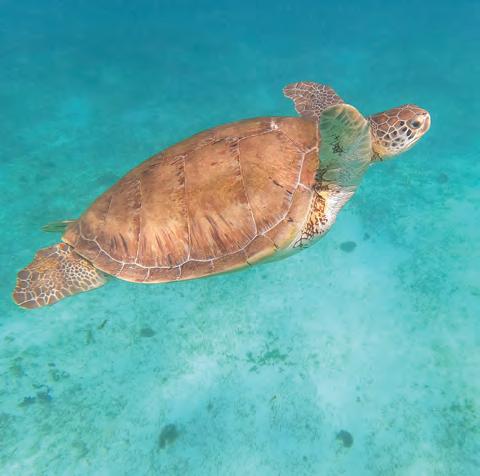
Puerto Rico, Turks and Caicos, and the Exumas appeared void of any rowing brethren. While in the Bahamas, we joined other cruisers in exploring the tidal passages within the mangroves of Shroud Cay. Tanner drifted across the shallow water quite well, where an outboard simply became an anchor. We suspect the sea turtles enjoyed coming closer to us than to the whirling propeller and underwater fumes of an outboard: they dashed back and forth under the dinghy and enjoyed the protected waters. The stronger currents in this region tested our navigation intuition while also adding to the daily workout.
Departing Nassau, and passing by the Abacos, there were no more tropical islands between Tanner and New Bedford. I was alone again. But not, really. Tanner was on board, and Jack the windvane autopilot was holding a steady course. Bermuda called of to the east, but I would be racing there once again in about a month and opted to sail the shorter distance and enjoy the gulf stream push.
For those that do row in the Caribbean that went unmentioned, I’m sorry that we didn’t cross paths. I’ll look forward to another opportunity. Perhaps we will have collectively inspired others and there will be a few more rowing dinghies when either of us return.
Tanner is now back in New England waters. Despite the numerous warnings I received about taking a rowing dinghy to the Caribbean, Tanner was perfect and I wouldn’t have done it any other way. She created lasting memories for me and all of my friends along the way. With any luck, she will be returning to those warm shores again, and I’m sure she will be recognized and welcomed back.
There is something about carrying on a tradition that runs quite deep in sailors. As I watch my father row out to his boat at age sixtyseven, with no intention of stopping anytime soon, all I can do is hope that I will be doing the same when I am his age, and well beyond.
A Trip to

Mexico
by Olivia de Soria
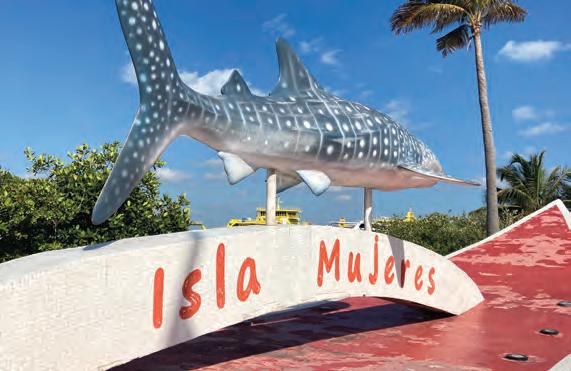
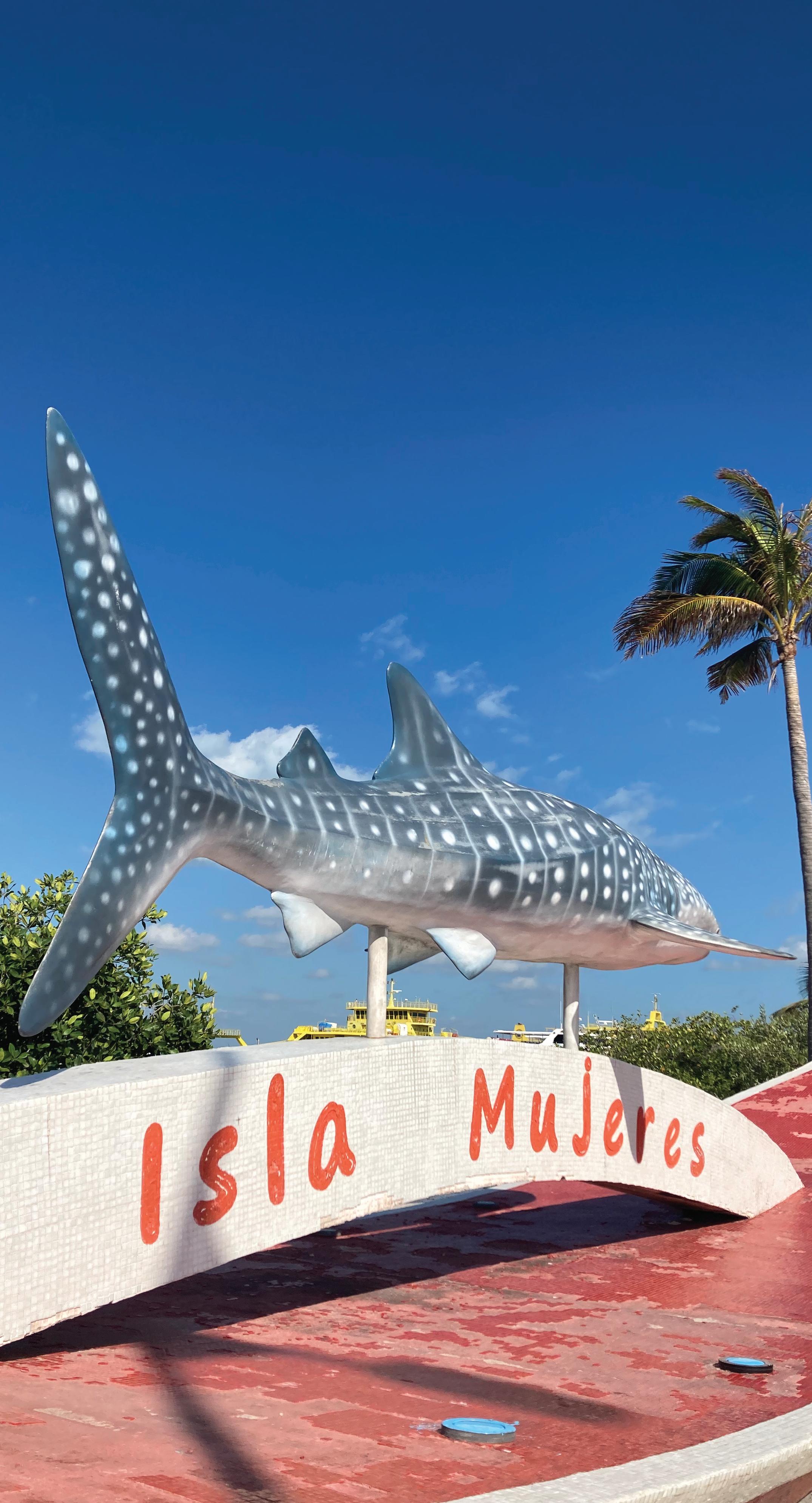
 Isla Mujeres, Mexico
42 Latitudes & Attitudes | #41 Winter 2022/23
Mexico
It’s a bit of a curve ball from the sticky bottoms of Boot Key Harbor, but spontaneity goes with the sport. The title gives away our landing spot, but I ask you to sit tight while I dissect the juicy innards of our adventure.
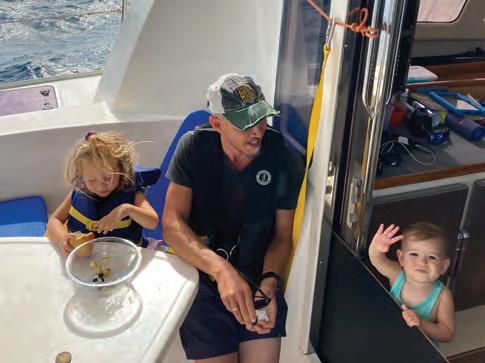
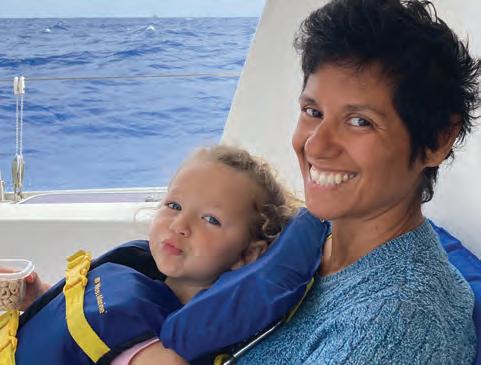
My husband Adam and I met fellow cruisers Nate and Maryam during happy hour at the Boot Key Harbour tiki. My toddler, Emilia, was happy as the sun while running around with her little boat pals. She had all the bean bags for cornhole hoarded up in her arms. Nate and Maryam, smiling, approached her at toddler-height and managed to peel the bean bags away from her kung fu grip. I was struck by their positive directness as they explained to Emilia that, yes, they needed all of the bean bags to play corn hole. For once, I didn’t have to intervene. Emilia didn’t leave their side for the entirety of the game.
After speaking with them, we learned that Nate and Maryam have basically the same boat as ours, a Leopard 40, two feet longer than our 38.
They only go ofshore in their boat, and their cruising plans are exotic and enticing. Maryam explained, “I want to be somewhere where people look at me funny, and I look at them funny.”
So, not the Bahamas. More like the Solomon Islands, Sri Lanka, somewhere I probably can’t pronounce. Far away places I could only dream of sailing to. I explained to Maryam that, no, we haven’t really been anywhere in our boat. Our grand sailing adventures after the procurement of our catamaran, Kikio, have stayed within the confnes of the ICW from Oriental, North Carolina, to Boot Key Harbor in the Florida Keys. In addition to our toddler Emilia, we are cruising with our one year old, Pepper. “We just don’t have the experience we need, to get the experience we need, to take the kids anywhere ofshore safely.” (The redundancy is intentional).
To which Maryam replies:
“Well, why don’t you crew with us to Isla Mujeres on Tuesday?”
Long. Dramatic. Pause. “Are you serious?”

Adam and I looked at each other, silently asking, should we? I zipped over to our boat in the mooring feld, ran down the companionway and rufed through all the places I remembered putting important documents, and there, with my unmentionables, were our passports. I remembered to bring them!
Two seconds later back at the tiki, we said, “Yes!”
Nate and Maryam have oceans of sailing experience, and their boat is just like ours. This could be a huge game changer for us.
We had dinner on their boat Ooga Chaka that night, and made plans to set sail Tuesday for the Dry Tortugas, and
www. LatsAtts .com 43
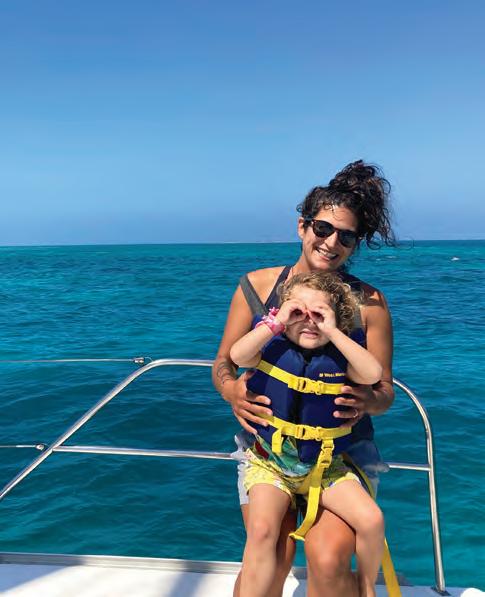
Olivia and Emilia sailing the high seas
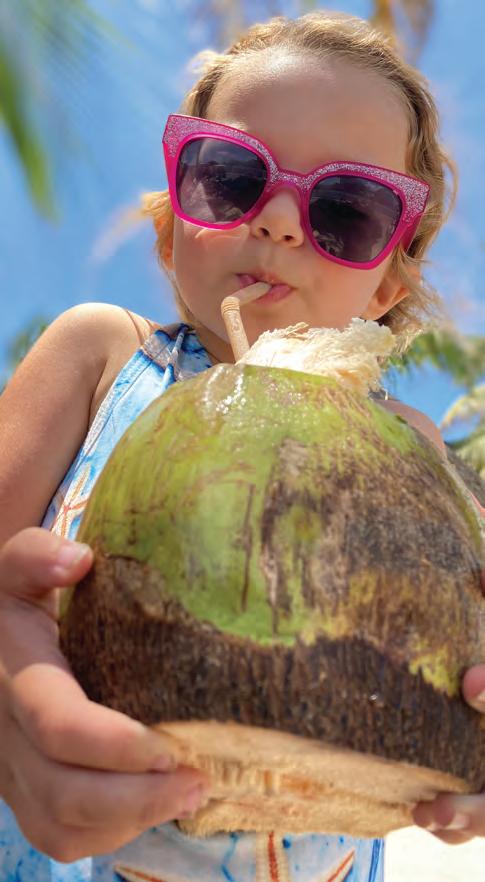
Emilia enjoying a refreshing beverage
then went straight to Isla Mujeres.
I should mention, for those of you that think we are crazier than coconuts, that we had some mutual friends in Boot Key Harbor who could vouch that they were not going to murder us in our sleep in the middle of the Gulf of Mexico. Check.
We set of on Tuesday for the Dry Tortugas. The seas were mild, four to six feet, but the short interval between chops had me gripping the rails with white knuckles.
It’s one hundred thirty miles from Marathon Key to the Dry Tortugas. As the waters turned from light green to a royal blue, I began to turn from my olive brown to an awful shade of olive green. Maryam made a delicious white bean soup which I threw right back into the puke bucket. Trying to do anything down below, or even worse, trying to use a newly-designed (and not perfected) composting toilet while getting sloshed in all directions like a washing machine, is really uncomfortable.
But anyway, it’s worth mentioning that Maryam and Nate were serious about sailing. So serious, in fact, that they converted their motors to electric, powered by a mountain of solar. The motors can only run for short bouts before needing a full day to charge again, making our trip all the more exciting.
We sailed through the night taking three hour shifts. Sleep was not paying me a visit that frst night. The winds died and without the luxury of motor-sailing, we were at the mercy of foppy sails. Sexy, huh?
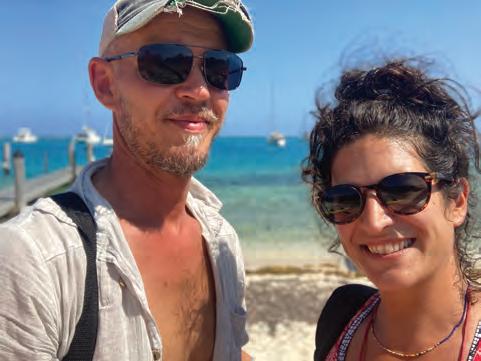
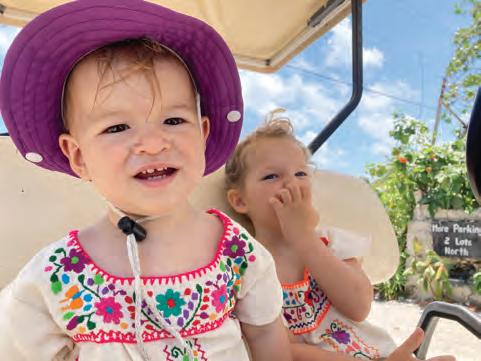
The next day the winds picked up and we sailed into the blue green waters of the Dry Tortugas like a postcard. Lobsters are dying of old age in the pristine reefs here.
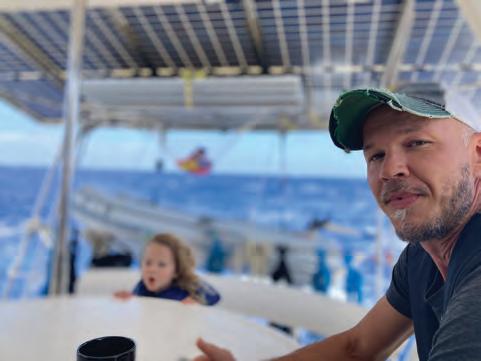
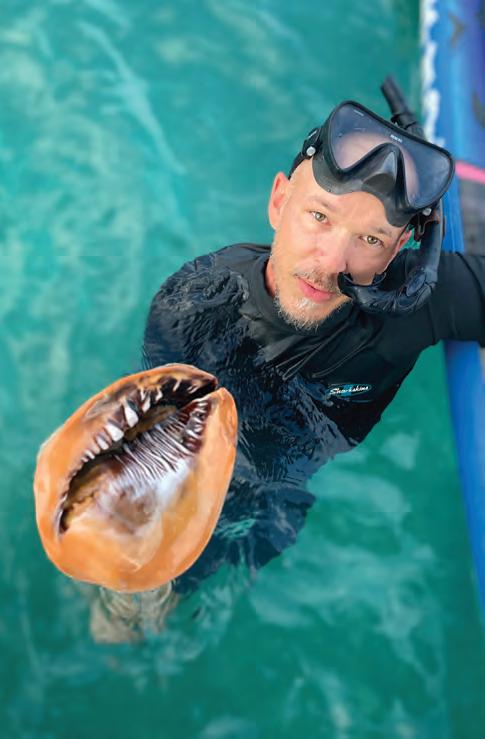
Adam was itching to put his lobster tickler to use, but they would probably lock us up for life if we ate a lobster out of the national park.
After snorkeling our faces of, we watched the night aquarium come into focus around the illuminated underbelly of Ooga Chaka. A goliath grouper and nurse shark swam underneath us for hours amidst schools of snappers and some mysterious unidentifed swimming objects.
It didn’t take long for the confict bus to pay us a visit, thanks to yours truly. The original plan was to sail Tuesday to the Tortugas, arrive Wednesday, and sail to Mexico Thursday. Windy and Predict-Wind are the apps that we used to check weather for excursions like this. We had no service to check them once we got to the Tortugas. We had to fall back on the previous report. After getting a taste of the lovely reef behind our boat, Nate and Maryam decided to stay another day. And then another. At this point, I knew the weather we checked Tuesday wasn’t going to hold true.
Nate was able to check the Garmin for local weather, but not what was happening in the Gulf. I started to push back without a reliable weather prediction. Nate’s argument was that I didn’t trust his judgement, and my argument was
44 Latitudes & Attitudes | #41 Winter 2022/23
A Trip to Mexico
Adam and the girls
Baby Pepper and Emilia
Adam and Emilia underway
Adam and Olivia on the beach
that there was no judgement to trust if he didn’t look at a weather report.
I wasn’t so much advocating that we leave early, as much as I was advocating that we leave informed. Our crossing was intersecting the Gulf Stream twice, with up to a four knot current pushing against us.
I don’t want to blame it on my kids, but yeah, it’s their fault. If it weren’t for them I would row across the Gulf of Mexico in a canoe if that’s what Nate wanted to do. But I’m not about to look back on this and regret any decisions I made as a mother. That’s mommy kryptonite right there.
Then… Chris Parker came to mind. He ofers specialized weather reports via Garmin In Reach for situations like this.
I didn’t need the Internet for that. Chris Parker is the man.
I sent the request via Garmin, and since I’m already a subscriber to his reports, it was easy peasy getting the individualized report back.
The winds were good, nothing exceeding thirty knots. Although Nate kept saying, “even if it does blow over forty knots, the boat can take it.”
Yes, I know it can, but can I? Report in hand, I was satisfed. I wish I could have gotten it without saying anything to them at all, since I know it made them feel scrutinized. But I couldn’t see a way around it while maintaining at least some semblance of caution. Although, according to Adam, the time to second guess any of the captain’s decisions was before I stepped onto his boat.
He’s probably right. Damn.
But being the wonderful communicators and brilliant strategists that Nate and Maryam are, they were more than accommodating and helped me get my weather report without any complaint. With the next morning came the cold winds from a northerly front, kicking up sand and ruining snorkeling visibility. We decided to leave then, on Friday.
I was beside myself with anticipatory anxiety, but most of that evaporated on the winds of our departure.
But, just as I was beginning to relax…
An ominous sight caught all of us of guard as we hit the big, open water. Adam pointed of the bow and shouted as we an up to see a dinghy adrift, slapping up and down the waves.
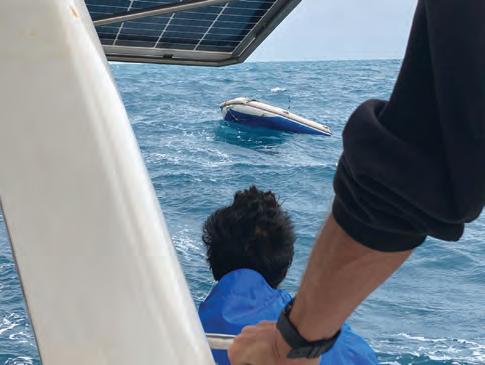
“Is there anyone in it?” Nate yelled as we struggled to get a plan in action. I grabbed the binoculars and confrmed that it was empty. There was a motor on the back, and some fshing poles.
Adam grabbed the boat hook and tried to catch the lines running alongside it but missed. Lucky he did, because frst of all, what were we going to do with a partially defated dinghy? And second, the weight of the dinghy would have pulled the boat hook out of his hand if it didn’t pull him completely of the boat.
www. LatsAtts .com 45
Adam posing with his catch
The dinghy lost at sea
Maryam and Emilia
Years ago, I traveled to Cuba, and got to know many local artists while I was there. I wouldn’t put it past any of them to take whatever foating vessel they could get their hands on if it had a chance of bringing them stateside. They were all miserably desperate to come to Floridian shores. I tried to shake of my morbid imaginings, and looked ahead towards our destination. But try as I might, it felt like the start of a really bad movie. You know the kind; one of those sailing movies where the title gives away the ending. Most likely the dinghy came of the back of someone’s tow line before they knew it was gone. Seeing that dinghy out there, unmanned and defating, riding up and down the swells in the middle of the ocean, well… It was a cold realization of just how small and insignifcant we are. And I shit you not, about fve minutes later, Adam spotted a fip fop trailing along behind the dinghy. Seriously? I couldn’t make this up if I tried.
Hours into our journey the swells inspired a fearsome awe that was equal parts amazement and disquiet. I gave my friends back home a watery eyed hug in my mind, as we ascended and descended the frst of many hills on the aquatic landscape. We had a steady breeze around twenty knots gusting twenty-fve for the frst twenty-four hours. The swells eased by the second day. It felt warm and less isolating knowing that we had some friends watching our progress on the Garmin. It sends out little bread crumbs of GPS coordinates that others can follow.
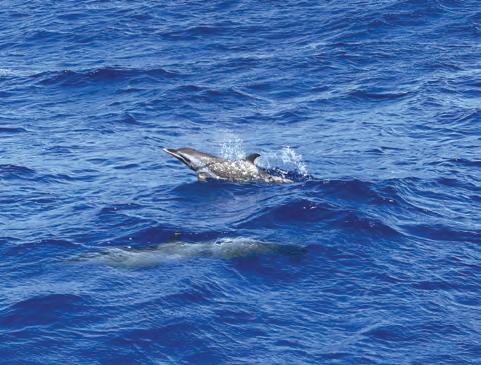
Spotted dolphins appeared at the bow, bursting with playful energy. They came in groups of twos and threes from their villages in the sea, until a huge gathering of mammals preceded us. I’m not sure what the occasion was, but Emilia was convinced that they came to have a party for my birthday. What a place to turn thirty-fve!
The sun went down and I went out to feel the night sky cover me up in a blanket of vastness peppered with stars.
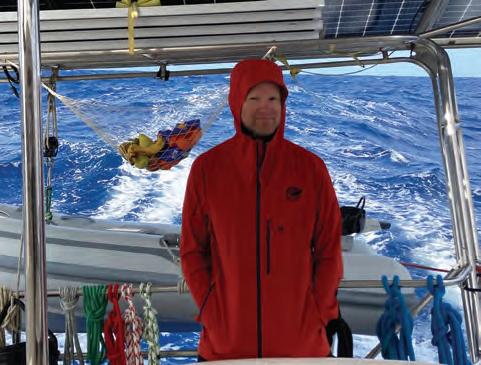
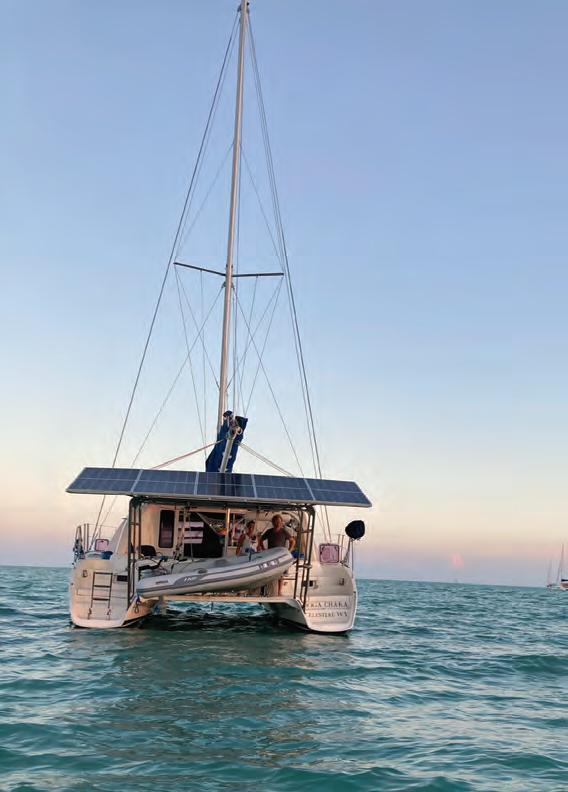
Late that night I contemplated the boat in the middle of the ocean: a lone rubber ducky bobbing around in the big bad blue. The water slapping the hulls of the boat with a force like Solomon’s judgement. Quite a spanking.
I woke up later in the wee hours of our second night. Adam and Nate were rushing around the cockpit in a less than relaxed manner. This is saying a lot for Nate: he’s cooler than a cucumber in the Arctic Tundra. The look in Adam’s eyes was full to bursting with a story that he couldn’t tell me yet.
The next day over breakfast, after a good night’s sleep, I was an attentive audience while Adam debriefed his harrowing tale from the night before. Here it is in his words: “I could see the lights materialize on the horizon, dimly lit against the surface of the ocean. I’ll need to keep an eye on that. The spacing of the two deck lights were unusually close together. A few minutes later, I could still see the lights, in the same place, but brighter. Hmm… There’s a small chance this ship might be headed right for us. It’s hard to tell in the dark, and this particular night was well lit with
46 Latitudes & Attitudes | #41 Winter 2022/23
A Trip to Mexico
Nate at the stern
s/v Ooga Chaka
A dolphin at play
container ships.
“Minutes passed and the ship’s lights were bigger still, I started to get the feeling that this wasn’t going away. I didn’t really know what I was looking at, but it wasn’t a comfortable feeling, that’s for sure.
“Minutes passed and I knew that Nate would probably need to get involved, but I didn’t think it was necessary yet. I’ll wait another minute just in case I’m wrong about this. It’s late, I’m tired, it’s dark. It’s really unlikely that this ship is actually headed right for us, isn’t it? A moment later, and I mean literally ffteen seconds later, I see the lights are very close, clearly spaced, creating a clear silhouette with their position; and now I know this is actually happening. I’m hovering over Nate’s window, ready to knock and wake him but still unsure. With that, the AIS alarm goes of and I frantically wrap on the Captain’s window. In less than two seconds he was there, and I said, ‘uh, there’s a ship, and I think it’s getting really close to us.’ He confrms that it is in fact very close, and he’s not sure which ways it’s actually going. Looking through the binoculars, trying to see port or starboard lights with no luck. ‘Do you see a red light?’ he asks. ‘No, I don’t.’ We were pretty on edge at this moment trying to guess where this ship was headed. It’s dreadfully close, but still cloaked in complete darkness except for its array of dull yellow lights that tells us nothing about its direction.
“Just then, Nate says, ‘There! I see a green light,’ as the ship starts to turn to port with a bright green spot growing from its side. Earlier, the ship was looking dead at us, so no green or red had been visible, until it altered course presumably to avoid hitting us. Suddenly, I could see the enormity of this ship, a dark black shadow, darker than the moonlit sky and black water. A terrifying ghost ship made of steel no less than fve stories tall coming straight at us without care or feeling.
“Holy shit, I thought. That’s f@#%ed up. The wind continued to blow calm and gentle, completely unaware, or unsympathetic of our situation.
“‘That was close,’ Nate said. I felt responsible for the calamity, but also relieved that we were safe again. The ship continued on behind us, passing about eight hundred feet from our stern. I could smell the diesel from its engines, and feel the vibration of its motors as it changed course. With no communication to or from the ship throughout the entire event, it felt strange that we were still holding our course. Once the ship was in close range, we were robbed of any maneuverability. If we go left, he might also go left, but faster. It didn’t help that the wind died earlier, giving us only about two knots of speed and not enough motor power to fall back on. I made a point
to learn the light display and red and green indicators of direction over the next two minutes of my life, so as to prevent that from ever happening again. Next time I see a big boat and I’m unsure of its direction, I am going to get on the radio and f@#%ing ask.”
In addition to a more proactive use of the VHF, I think that more warning from the AIS couldn’t hurt.
I can’t relay the true story of this trip without giving some credit where credit is due. From start to fnish, our kids were absolutely amazing. While I was trying not to shit my pants on this epic journey, our little adventure biscuits were having a grand time doing what the heck ever, and adapting to all the changes around us like space pilots. Pepper learned to walk on our boat earlier in the year, and now she has got sea legs like a cormorant.
I had no expectations for this trip. There wasn’t time! We met Nate and Maryam on Saturday, and left the next Tuesday. There was barely time to get groceries and diapers for our upcoming journey. But I’ll tell you what I didn’t expect: I did not expect the camaraderie of this trip to be as amazing as the trip itself. I had someone tell me once, critically – and they weren’t far of the mark – that I made having fun my “job,” as if that were a bad thing. Well, I’ve met my match! These two brilliant mold breakers have made a career of having fun.
We approached Isla Mujeres the afternoon of our third day. The water was a fuorescent shade of aquamarine. It enticed us with snorkel magic. We couldn’t wait to get our heads in that. And when we did, it did not disappoint.
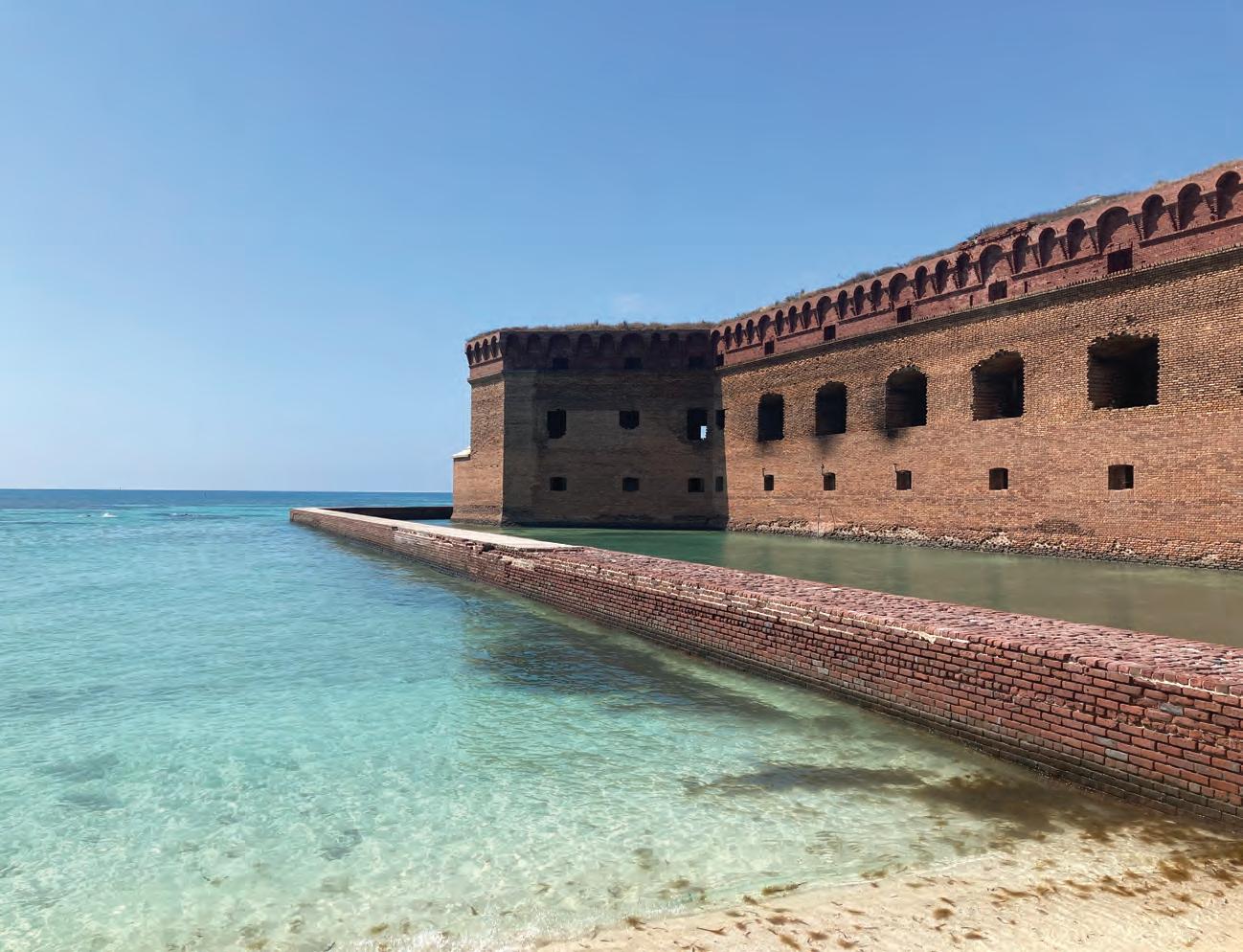
We went to shore and walked around, I was immediately hit with nostalgia of Latin American travel. I forgot how much I love hearing the language and music, seeing the colorful shacks, concrete structures, and smelling the wood fred ovens and unmistakable scent of pork on the fre where motorcycles turn into trucks.
And driving down the winding roads, getting passed by two guys on a scooter, one of them balancing a twenty foot ladder on his shoulder without a care in the world… Well, it’s inspiring. We left after a few days of sightseeing, right before the kids started to get on everyone’s nerves. They just barely kept their good impressions in tact.
Our adventure ended as we parted ways in Cancun to make the grueling trip back to our boat in Boot Key Harbor by air and land.
It was an experience that will last a lifetime, and has given us the confdence and tools we needed to continue our journey on our own boat, with our growing family.
47
www. LatsAtts .com
Puerto PuertoSouthernRico’sCoast CruisingSouthernRico’sCoast Cruising

 By Capt. Shane McClellan, s/v Guiding Light
I am sure many of you are wondering why we skipped the amazing islands of Culebra and Vieques along with the east coast of Puerto Rico. Simply put, I have spent months in the Spanish Virgin Islands over the last decade, and I wanted to go somewhere new. Plus, we had a wonderful surprise pop up a week or two before: Lily’s daughters (age twenty-seven and twenty-one) would be joining us for ten days.
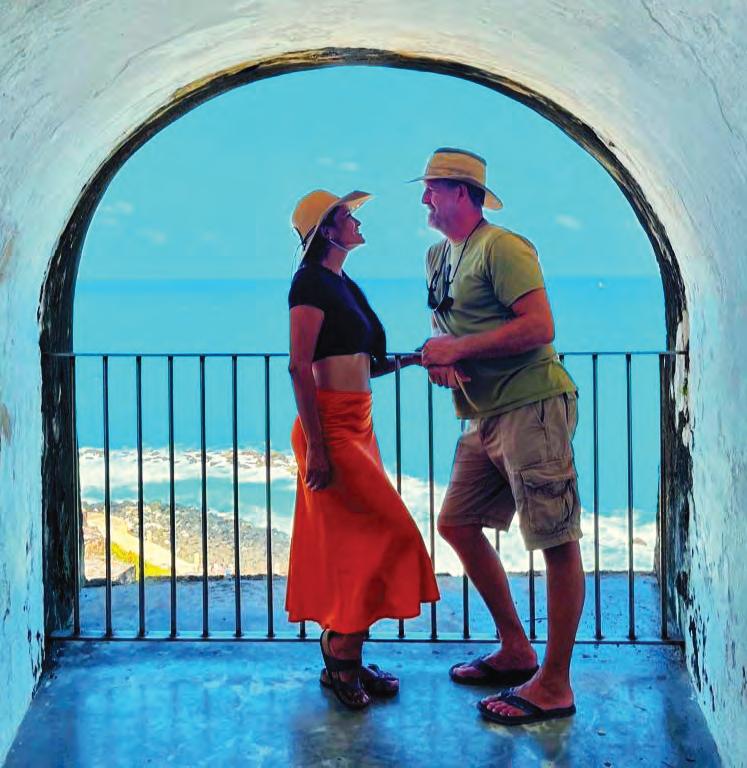
We sailed the forty-plus miles from St. Thomas to Palmas Del Mar Marina in order to leave the boat secured while we drove a rental car to San Juan to pick up the girls. Having spent some time each year in Puerto Rico, I knew I must show them Old San Juan and the El Yunque rainforest. Both were major hits and well worth the three days we spent away from the boat, but it was time to get back aboard and set sail.
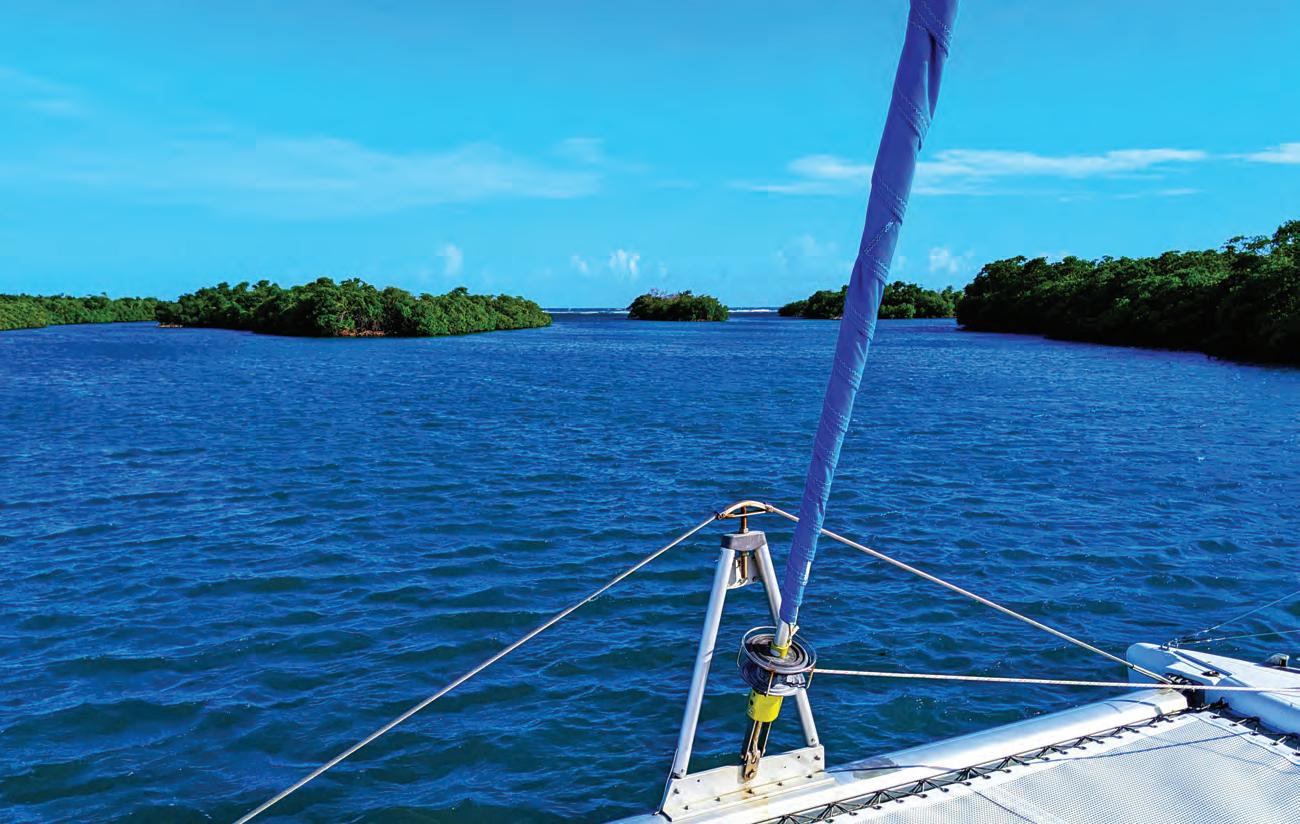
We left on the fourth morning of their visit and raised the spinnaker for a fast thirtymile run to Bahia de Jobos and topped it of by entering the bay at the eastern entrance called Boca del Inferno (Mouth of Hell in English) in twenty-fve knots of wind. Despite the ominous name, I was not that worried because it was supposed to be a fairly well-defned gap in the reef, and if I did not think it was safe to enter, we would just go another fve miles and enter the bay on the leeward side of the reef. It turns out it was no big deal even in the high winds, and we anchored between the mangrove islands to the east, which turned out to be right next to Cayo Caribe State Park. Everyone loved exploring all the diferent mangrove

www. LatsAtts .com
For the last 11 years, I have run crewed charters aboard Guiding Light, a Lagoon 410, in the Virgin Islands and several years in the Leeward and Windward Islands.
49
In February of this year I decided it was time to point the bows westward to see new cruising grounds, and my girlfriend, Lily, and I did just that. Our frst stop would be the southern coast of Puerto Rico.
very well protected and ofers many diferent anchoring opportunities. I would have loved to spend more time exploring the entire bay, but we had limited time with the girls and needed to move on. With that said, we set sail for Cayos de Ratones at the west end of the bay. My guide book said this was a very protected anchorage, but when we got there, it was flled with local boats all tied stern to the mangroves (this is the way most Puerto Rican captains prefer to anchor), so we pressed on for another four miles until we came to Cayos de Caracoles. I am going to admit there are not a lot of reasons to stop here. The main reason we did, was that we were running out of daylight, and the girls wanted a beach….even if it was only a tiny one on the northwest end of the cay.
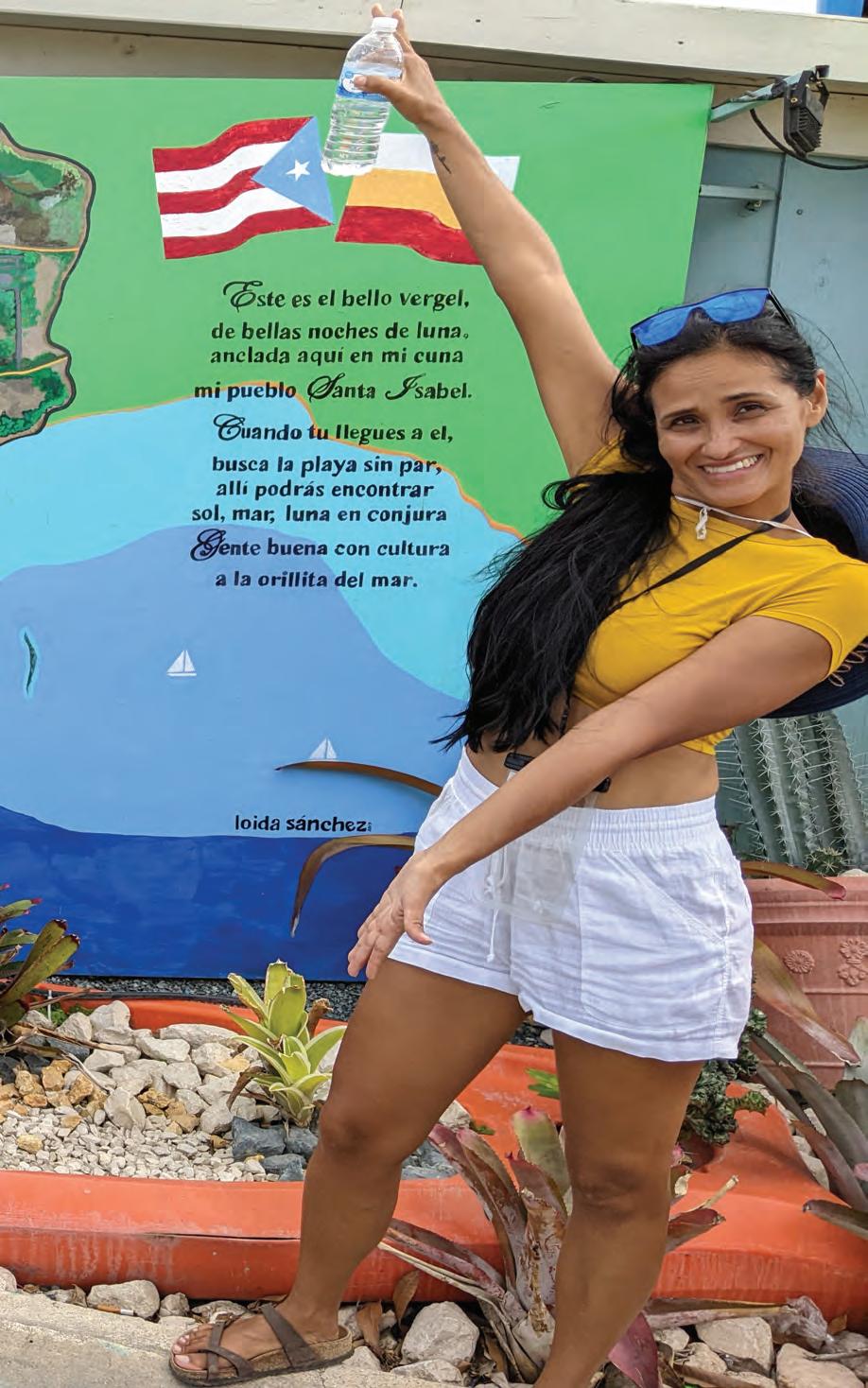
The next morning we ate a leisurely pancake breakfast before we moved a whopping two and a half miles to the town of Santa Isabel. By the time we arrived, the winds were blowing a good twenty-fve knots, so it was very nice to be in the amazingly protected little creek-like bay. I am not sure you can take much more than a six-foot draft over the bar at the entrance, but once inside, we anchored in line with the local boats. If you stray too much out of the
on the other side of the anchorage. Turns out the shallow sandbar going from one beach to the other was actually a sandy layer over a black mud that squished between your toes. Having three women with me, I was not the hero for taking them there. Haha.
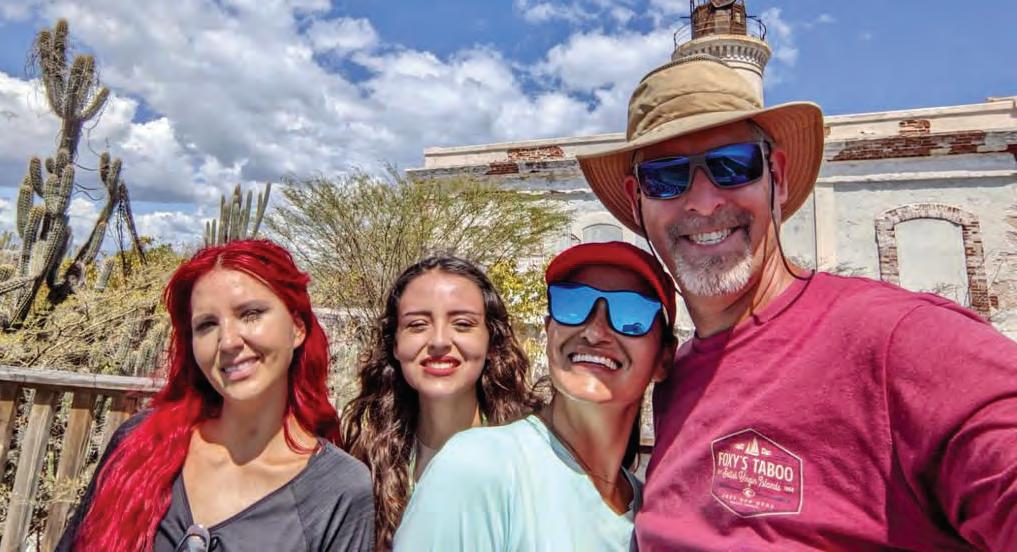
Lucky for me our next stop was Isla Caja de Muertos (Cofn Island), eight or nine miles to the southwest. This island was owned by Tito Wirshing “back in the day,” and island lore says he threw some legendary parties. Once he passed away, it was gifted to the Ponce Yacht Club and is now part of the Puerto Rico Parks Department. It used to be a major tourist destination for day-tripping Puerto Ricans, but it was destroyed by Hurricane Maria in 2017 and has not reopened. That meant we had the island to ourselves and Lily’s daughters loved playing on the beach, trying out snorkeling for the frst time, and of course, having a photo shoot as girls in their twenties like to do. For Lily and me, the hike to the lighthouse was the highlight of the day. With all the exploring we did on this island, I never did fnd out the origin of the island’s name. It has to be a gruesome story, right?!
Seven miles to the northwest of Isla Caja de Muertos
50 Latitudes & Attitudes | #41 Winter 2022/23
Cruising Puerto Rico’s Southern Coast
is Ponce, the second largest town on the island of Puerto Rico. The problem with Ponce is that being such a large city, it is not great for boats. Don’t get me wrong; you will fnd grocery stores, laundry, parts, and rental cars, which is what we needed because, sadly, the girls’ time with us had run out, and we needed to get them to San Juan for their fight. The problem is that even though Ponce is on a two-and-a-half-mile-long bay, there is only one good spot to take your dinghy ashore. That spot is next to the yacht club, but don’t try to use the yacht club because they are not very welcoming to visitors. Instead, there is a fshing cooperative deeper into the bay that told us it was no problem to leave the dinghy for the day. From there, you can get an Uber into town for ten to ffteen dollars. Once in town, there are a few sights to see, including cofee plantations and a hundred-and-ffty-plus-year-old frehouse still in service.
After dropping the girls of and driving back, we took advantage of the rental car by doing laundry and getting provisions before setting sail ffteen miles towards Cayos de Cana Gorda, where Gilligan’s Island can be found. Obviously, it’s not the island from the TV show, but it kind of felt that way. The best part of Gilligan’s Island was the large waist-deep, white sand, a pool-like area in front of the dock, and snorkeling the mangrove channel leading away from it. You will be fghting the current in the twenty-foot wide channel, but it was ten-plus feet deep and had lots of fsh to see. The coolest part is that when you turn around or round the corner to circumnavigate the island, you will zip along like you are on a conveyor belt. Very cool and a place we relaxed for a few days since it was also well protected.
When we did leave, it was to sail ten miles west to Bahia Fosforescente because I had a surprise for Lily. The bay is quite protected because you have to sail through a fairly narrow channel before it opens up into a decent size bay. Lily was wondering why we were there since it is totally mangrove-lined, and there is absolutely nothing around. I asked her to be patient, and once the sun totally set around seven p.m., tour boats started entering the bay for thirty minutes to an hour, and it was then that I showed Lily her surprise. You see, this is one of several bays around Puerto Rico that is known for bioluminescence and the only one where you can swim. Bioluminescent is the term used to describe the tiny sea creatures that glow when agitated. Imagine lighting bugs but in the water. It was an absolutely amazing sight, and skinny dipping with glow-in-the-dark glitter all over us will go down as one of my most romantic memories ever. While the tour boats came and went with barely any time to enjoy the experience, we spent the better part of two hours soaking it

51
www. LatsAtts .com
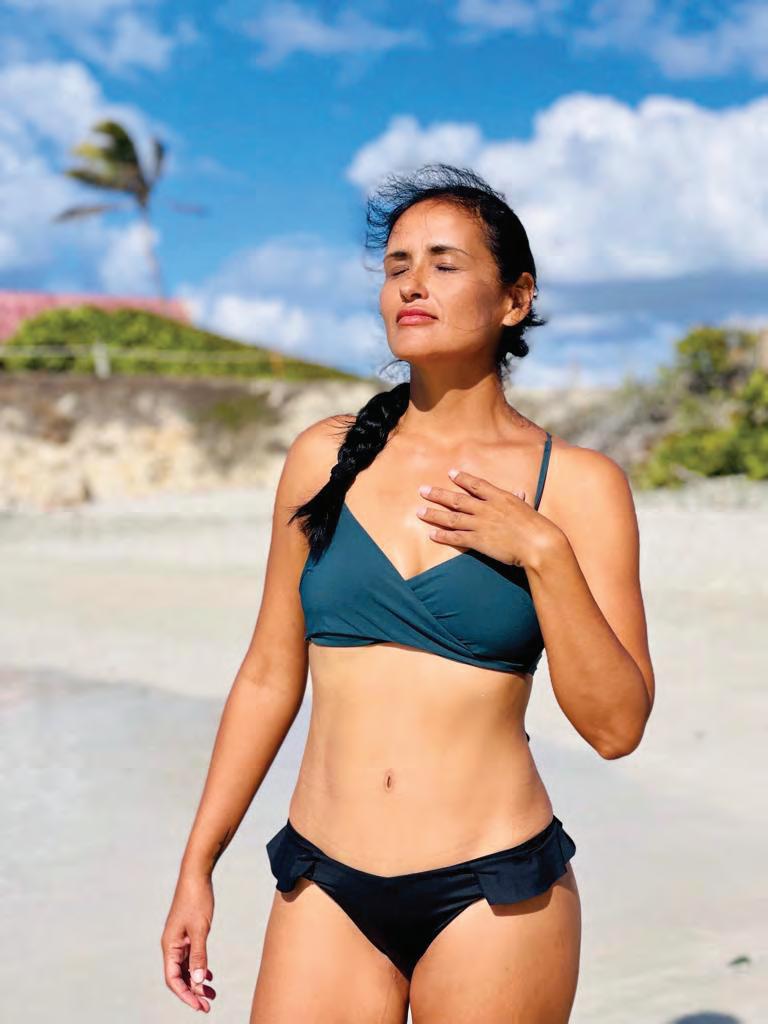
Lilly and Shane enjoying the view and each other
Lilly taking in the sun
all in. Needless to say, Lily loved the surprise!
Bahia Fosforescente is a bay within a larger six- or sevenmile-long bay surrounded by diferent reefs and small islands. I feel like it would be possible to anchor in a diferent spot each day for a week inside this larger bay.
The two anchorages we checked out were Arrecife Enmedio and Arrecife Laurel (Arrecife means reef in Spanish). Both of these gave pretty good protection, and you can enjoy them as a day anchorage and quite possibly overnight, depending on the weather. The reef knocks down the waves, but not the breeze. We found the snorkeling around both to be enjoyable.
From Arrecife Laurel, it is a quick fve-mile downwind sail to Cabo Rojo and then another fve miles up the west coast to Boqueron. While it was fun sailing around the southwest corner of Puerto Rico, and the charts show an anchorage on the leeward side of Cabo Rojo, we did not stop. From what I read and saw, this anchorage gets quite rolly, and we decided, why anchor there since Boqueron is such a beautiful and protected bay? We basically were able to choose anywhere along a mile-long beach to drop the hook with no one to bother us. Of course, that isolation was part of the problem when we went to leave Puerto Rico. You see, even though there is a small yacht club, there is no fuel in Boqueron. For that, you have to sail three miles north to the next bay, Puerto Real. The other issue is that Mayaguez, ten miles north, is the port of entry instead of Boqueron. Luckily, we simply submitted a form online and had a video call to depart. Since we were setting sail for the Dominican
Republic, one hundred plus miles to the west, we had to ensure we got our exit papers emailed to us to give to the DR ofcials.
What about making this a colored box at the end that says Tips from Captain Shane: We loved our westward cruise along the southern side of Puerto Rico and are excited that it was the frst in many new adventures as we head westward to Central America and then down to Panama over the next couple of years. Before I sign of, I want to impart one piece of advice to anyone wanting to sail here: Puerto Rico is big enough that the island creates its own wind. Overnight and in the morning, the cold air settles down the mountains and pushes against the trade winds. This means you will fnd north winds more often than east, and it will be lower than the trades. Conversely, from late morning until sunset, warm air rises up the mountains and pulls the trade winds with it. This means the typical ffteen knots can climb as high as thirty knots. With this knowledge, I recommend anyone trying to go upwind to get to the Virgin Islands leave each day before sunrise and anchor no later than noon. This will give you smooth seas and possibly some sailing opportunities. If you are headed westward like we were, then you will want to wait a bit longer before heading out so you can get more wind for the downwind sails.
Join the adventures on Guiding Light as Captain Shane & Lily continue westward along the Greater Antilles. Simply look for @svGuidingLight on your favorite social media or on the web.
52 Latitudes & Attitudes | #41 Winter 2022/23
Cruising Puerto Rico’s Southern Coast
Enjoying our time together L to R: Celeste, Abril, Lilly & Shane
Marinas in Puerto Rico
Palmas del Mar Yacht Club & Marina 787-656-7300 www.theyachtclubmarina.com
Marina de Salinas 787-824-3185 www.marinadesalinas.com
Club Náutico de Ponce 787-842-9004 www.ponceyachtandfishingclub.com
Caribbean Images Marina 787-233-4114 www.caribbeanimagespr.com
Marina Puerto Real 787-827-6300 www.marinapescaderia.com
53
www. LatsAtts .com
Stranded in
Île-à-Vache,Haiti
 By Suzy Carmody, s/v Distant Drummer
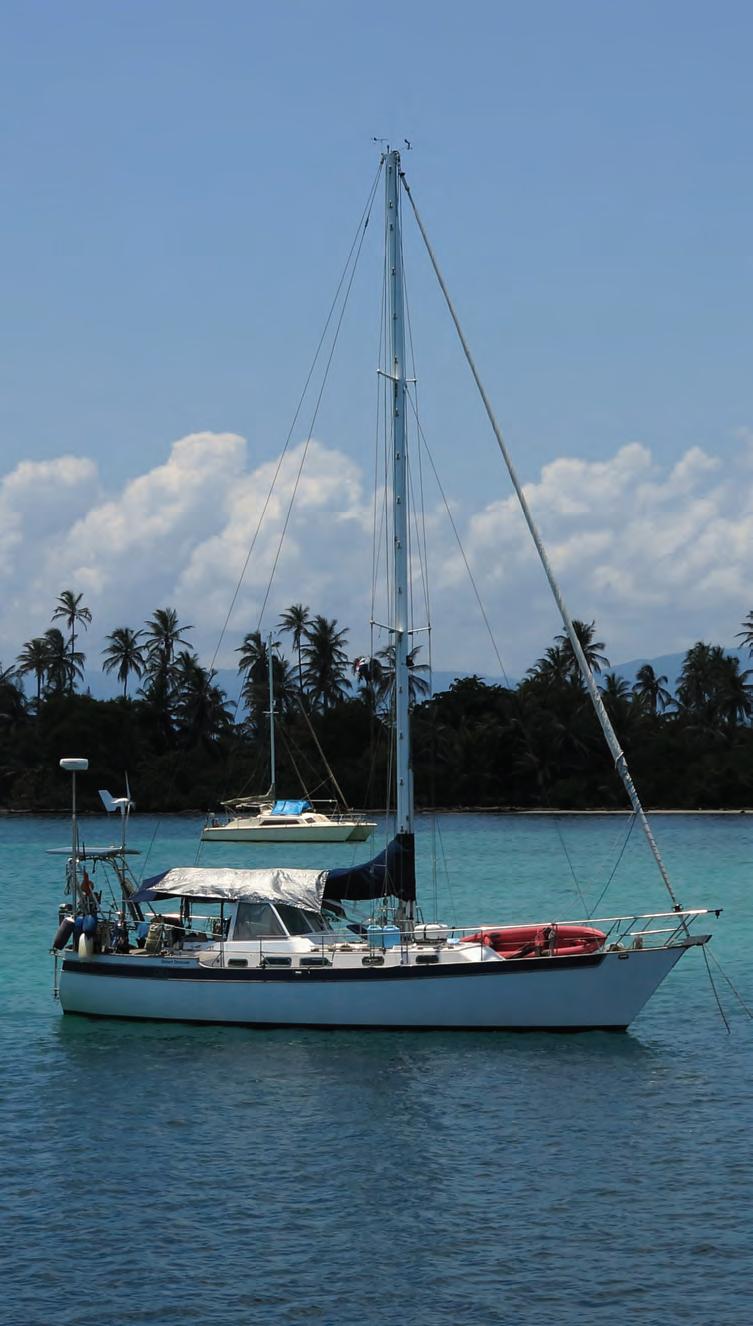
We were in Santiago de Cuba on board Distant Drummer, a Liberty 458 cutter rigged sloop, hoping for a lull in the wind. We planned to cross to Haiti and spend a few days at IÎleà-Vache, a small island on the south coast that is popular with cruisers waiting for fair winds to sail east to the Dominican Republic.
The eastward route along the south coast of Hispaniola is renowned for strong headwinds and counter currents. We knew we were in for a difcult passage, but a season cruising south through the Lesser Antilles to Grenada was our reward for a few days of hard sailing.
Cuba to Haiti
Eventually, the break came, and we departed Santiago passing through the narrow entrance beneath the magnifcent Castillo del Morro, which guards the entrance to the bay. We had a fabulous beam reach across the Windward Passage to Tiburon at the west end of Haiti. In the lee of the island, the wind veered, and we picked up a west-setting counter current, the second night of the passage was spent motor-sailing slowly into a headwind.
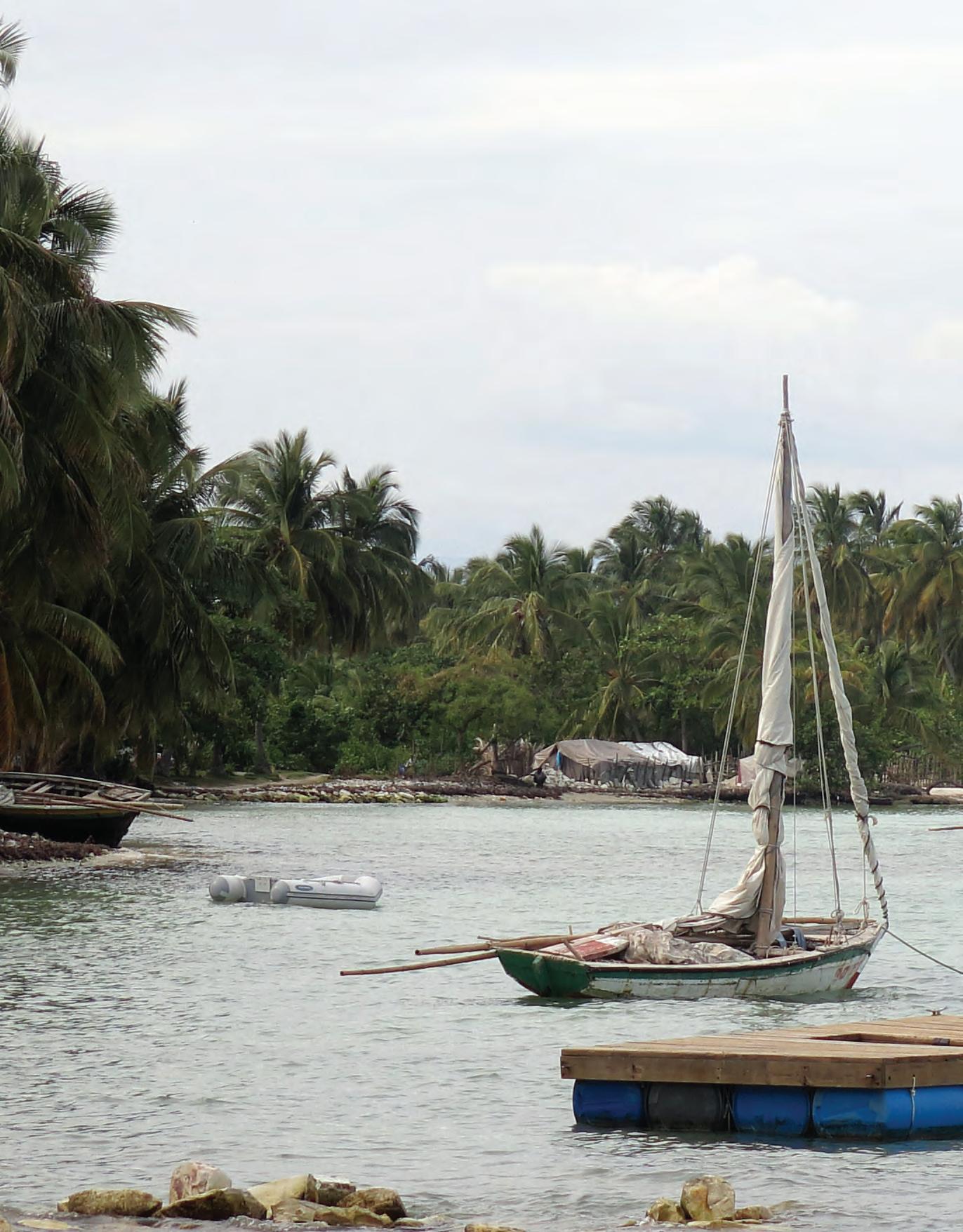
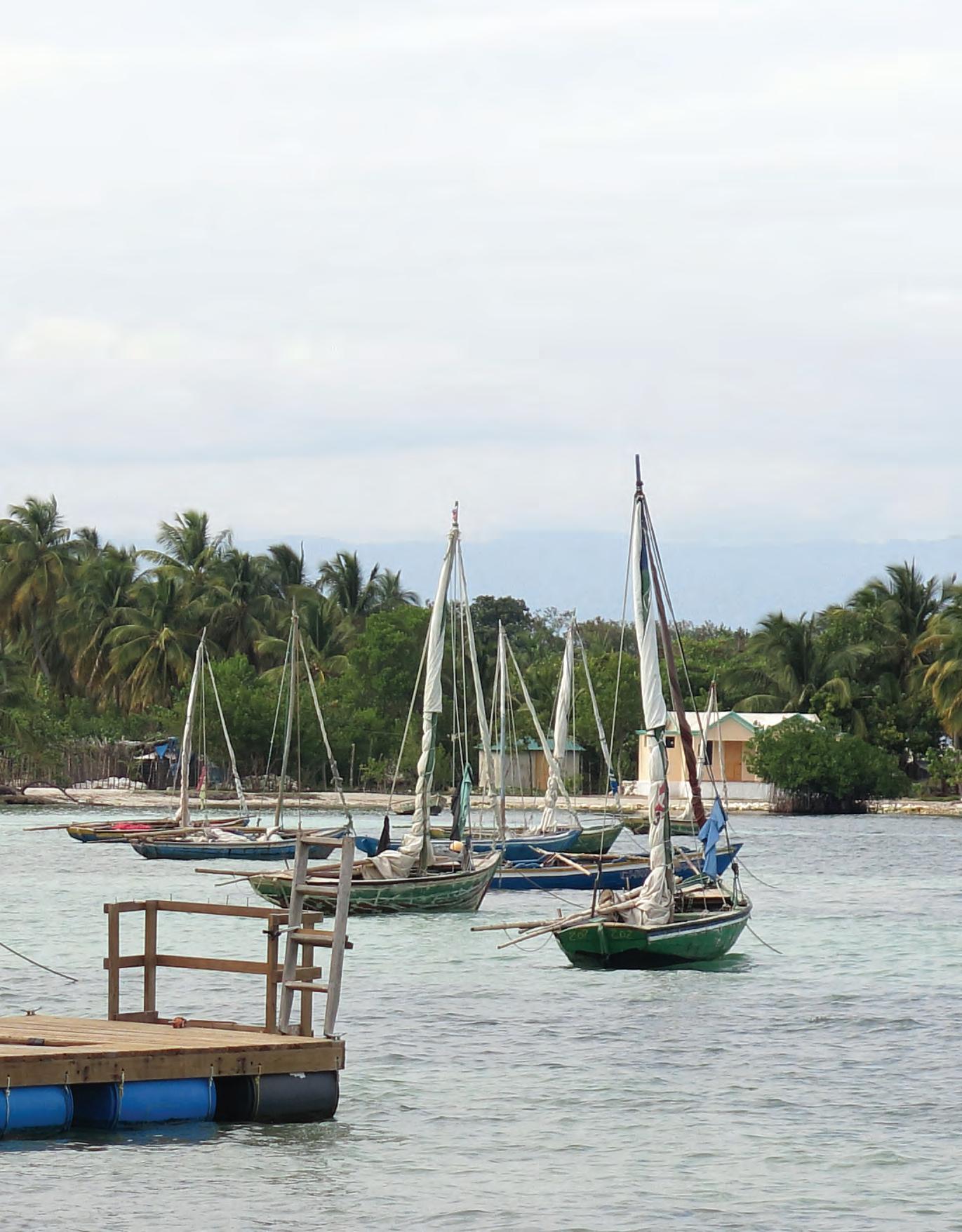
The next morning we entered the channel between Haiti and Îleà-Vache. The passage meanders between shoal reefs and is peppered with buoys and plastic bottles marking fshing nets and lobster pots. As we approached the island a dinghy came out from the shore and hailed us then motored close by alongside. The local men on board, Felix and Pipi, had come out to welcome us and guide us into Baie à Ferret, where we planned to drop the pick.
I was on the helm while Neil had gone forward to keep lookout and prepare the anchor. As lookout, we have agreed upon warnings for imminent danger in our path: “neutral” is used to stop the prop if we are about to catch a fshing net or lobster pot, and “reverse” is used

When a winter norther blows through the Bahamas, the northeast trades reach gale force as they funnel through the Windward Passage between Cuba and Haiti.
56 Latitudes & Attitudes | #41 Winter 2022/23
Distant Drummer at anchor in Baie à Ferret
to stop the boat quickly to avoid collision with something hard – usually rocks or a coral reef.
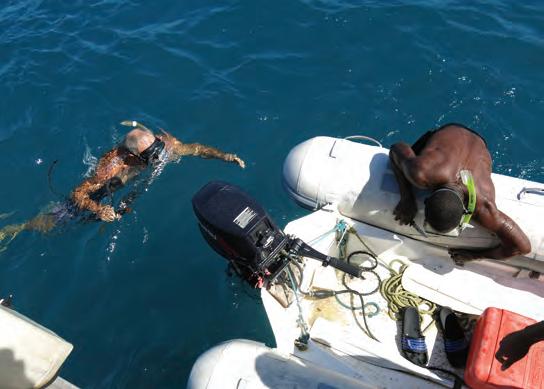
We were motoring with our guides alongside when suddenly one of the men cried out “reverse, reverse!” and “reverse now!” To me, this meant only one thing – we were about to hit a coral head. I quickly shifted into reverse and revved hard to stop the boat as rapidly as possible. Neil came running aft, wondering what was going on, as he had seen nothing ahead and told me to put the engine in neutral. We looked over the transom; a white fshing buoy was foating on the surface, and a black spurt fushed out with the exhaust water from the engine.
Engine Trouble
Our hearts sank; after thirteen years of cruising, we had fnally snagged a lobster pot. The rope had wrapped tightly around the propeller, and Neil hopped into the water to cut it away. Eventually, the rope came free, but we then found we were getting no drive from the engine to the propeller – something was wrong with our drive train. Luckily, Felix’s dinghy had a ffteen horsepower outboard. We tied the dinghy to the starboard side of Distant Drummer, and they slowly drove us into Baie à Ferret, where we fnally dropped anchor. It was a very distressing end to the voyage.
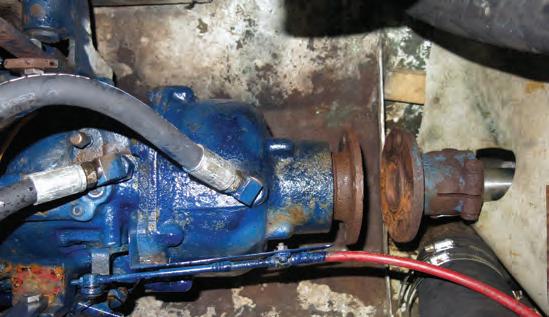
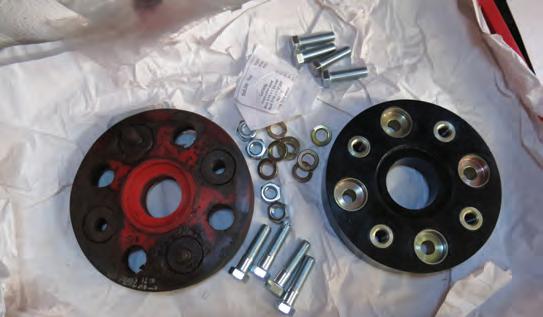
Neil spent the next couple of days “head down, arse up” in the engine room, trying to assess the damage. Eventually, he found a broken coupling between the transmission and the prop shaft had acted as a weak link and prevented the locked prop from causing any serious damage to the engine.
Surprisingly Île-à-Vache had good internet coverage, and we were able to get in touch with a Perkins specialist who had worked on DD back in British Columbia three years ago. He sourced a replacement part and had it on its way within a few days.
Logistics in Haiti are fraught with problems: theft is not uncommon, corruption is endemic, and anything (goods or people) transported by road has a high chance of being intercepted by bandits. Again, local help was at hand; we arranged delivery by DHL into Port-au-Prince, and our new friend Marc coordinated with DHL to have the package delivered to an address in Les Cayes, a nearby city on the mainland. We settled in for a long wait.
Les Cayes
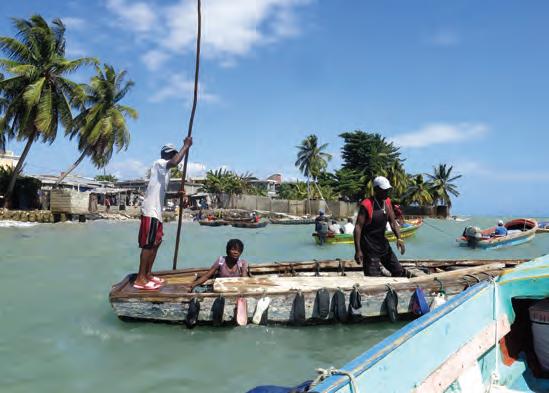
To complete Immigration formalities, we needed to visit Les Cayes, the nearest city to Île-à-Vache on the mainland of Haiti. Karma, one of the islanders, helped us with arranging a taxi boat to cross the channel and came with us to show us around and assist with the bureaucracy. Packed in like sardines on the hard wooden seats, crouched down under a tarpaulin to protect us from the seaspray splashing over the sides, it felt more like a refugee boat than a ferry into town.
As we arrived, the wind picked up, and it was too rough for the taxi boat to approach the shore. Dirty grey waves were breaking on the rocks, which were littered with conch shells, plastic bottles, and heaps of discarded clothes. We were poled into shallow water in a small skif, then carried
The landing point where passengers from Île-à-Vache are carried ashore The transmission in question
www. LatsAtts .com 57
Stranded in Île-à-Vache, Haiti
Neil and Felix cutting the rope from the prop
Swapping out the old for the new
on the shoulders of the porters and gently set down on the shore.
Karma led us to the bank, where the security was pretty tight. Uniformed guards with pump-action shotguns checked our papers but once inside, withdrawing Haitian gourdes or US dollars on a visa card was fairly hassle-free. Without Karma, it would have been impossible to fnd the Customs and Immigration ofce up the back stairs of an unmarked building on a sidestreet. He helped us with our French and our paperwork, and we were soon welcomed into Haiti.
Île-à-Vache
Life on Île-à-Vache moves at a very leisurely pace. The village of Caille Coq in Baie à Ferret has a school, a church, and a community center that pumps out a mixture of evangelical music, Calypso rhythms, and funky Haitian tunes. When the kids aren’t in school, they paddle out in their canoes, dug out from the trunks of huge mango trees, to knock on our hull and ask for bonbons, pens, and notebooks. The fshermen also come by to sell us their catch. The problem of overfshing is very apparent in the small lobster and tiny fsh that they ofer us. Other men visit to ask for jobs cleaning the hull, polishing, or guiding us to the market or a nearby beach; anything to earn a few Haitian gourdes.
The poverty on the island is appalling. The tourists who used to visit in the past have been scared away by the unpredictable violence and instability on the mainland. COVID-19 and recent hurricanes have also taken their toll. The three hotels on the island are either struggling or closed, and the trickle of income provided by visiting cruisers is warmly welcomed by the villagers. We found it safe to travel around Île-à-Vache, and we often left the dinghy unlocked on the beach. For a small fee, the locals will look after it.
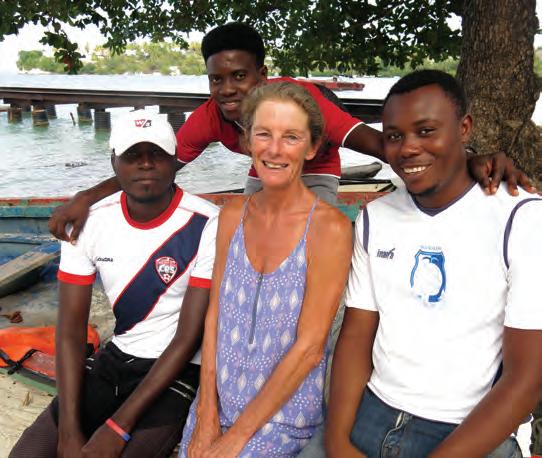
Market days in Madame Bernard, the largest village on Île-à-Vache, are Monday and Thursday, and the walk there follows a muddy footpath along the coast through several fshing villages. The solid-looking houses are built of stone with rusty corrugated iron rooves. They are beautifully painted, with each stone picked out in gentle pastel colors. The market is very rustic, with small piles of produce laid out on rickety wooden tables or the ground on plastic sheets. Sacks of rice or maize are doled out with a tin can, and red chunks of goat or beef are prodded and haggled over in shrill, strident voices.
The local men are fantastic sailors, and a fotilla of white sails can be seen daily crossing the channel to fsh or visit Les Cayes. The large, lateen-rigged sails (often made from tarpaulins reused from Unicef or USAID deliveries) are supported by long bowsprits and booms that look oversized for the small wooden boats. The men stand on planks and skillfully navigate the boats across the bay even in the stif breeze, which blows up to twenty knots in the afternoons. The infamous pirate Henry Morgan was also a big fan of Îleà-Vache and frequently used it as a base for his operations. In 1669 he gathered a feet of ten ships in Baie à Ferret for a raid on Cartagena, a wealthy town on the coast of Colombia
where Spanish galleons arrived to transport gold and treasure back to Spain. During a night of drunken revelry, a spark hit the ship’s gunpowder magazine, triggering an explosion aboard Morgan’s fagship Oxford. He and the captains seated on one side of the table were blown into the water and survived. Those on the other side were killed along with about two hundred of his men.
Carnival is also celebrated all over the Caribbean and lasts for three to fve days before Ash Wednesday and the start of Lent. We went with some of our local friends from the village to celebrate Carnival in Madame Bernard. The Carnival parade was very simple; a truck loaded with throbbing loudspeakers and gaudily dressed dancers. The pick-up carrying the Carnival king and queen kept breaking down, but the crowd dancing along behind the procession were lively and happy, excited to have a three-day party to hang out with their friends.
Cruising Again
Unfortunately, the frst day of Carnival in Port-au-Prince was marked by a shootout between the police and the army. Looting and chaos ensued, a state of emergency was declared, and all roads out of the city were closed for several days. Our new coupling, which had arrived in the city the day before, was stuck. Marc closely monitored the situation, calling the DHL ofce every day, and then, success – he delivered the package to our boat nine days later.
Carefully reversing the extraction process, Neil had the coupling in place the next day. Then we delicately hand-turned the prop shaft while checking the clearance between the prop shaft fange and the transmission fange, and when the prop shaft alignment was acceptable, the fnal bolt-up was completed. Finally, we were mobile again! After three weeks, we learned to love Île-à-Vache and the warm, friendly people we met there. The continuous knocking on the hull often became a bit tiresome, but the visitors were asking for work, not handouts, with courtesy and dignity. Nonetheless, after fond farewells, we were overjoyed to feel the wind in the sails and hear the water rippling past the hull – happiness is cruising again.
58 Latitudes & Attitudes | #41 Winter 2022/23
in Île-à-Vache,
Stranded
Haiti
The author going to Carnival with local friends
Beautiful smiles from the children

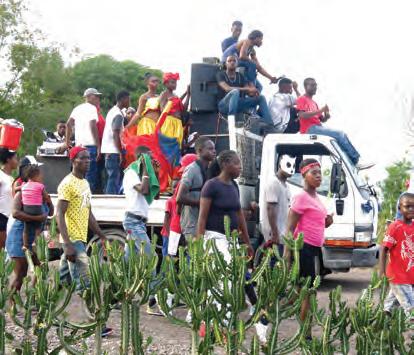
Carnival celebration: Haiti style
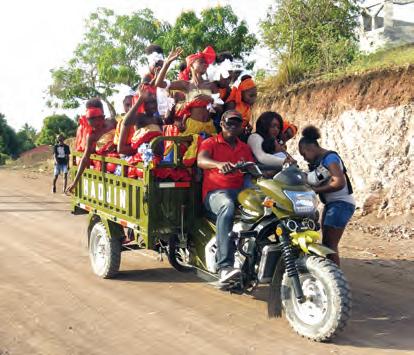
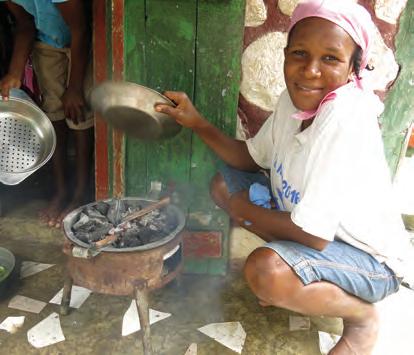
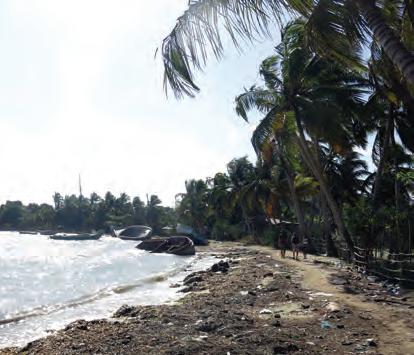
Happiness is Cruising Again
A lesson for cooking conch

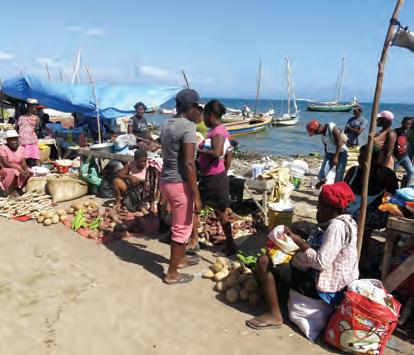
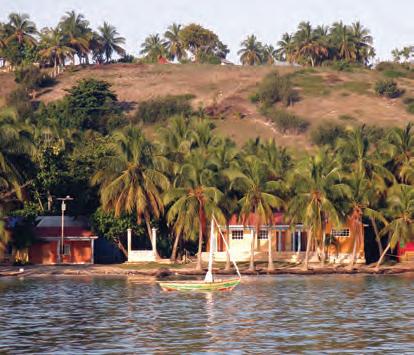
The market in Madame Bernard
Many boats stranded on the beach by Hurricane Irma
Dancers and very loud speakers entertain the crowd at Carnival
Preparing vegetables for a stew
The Community Centre in Caille Coq
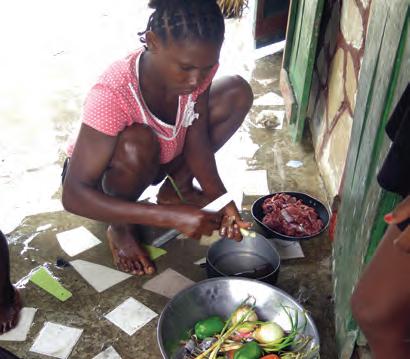
Guide Gift
BACON SAILS MARINE SUPPLIES
GIVE THE GIFT OF SAILING


TShirt - $20

Long Sleeve - $25 Tanks - $19 Hoodie - $39 Hats - $27 Canvas Bag - $19 “mention this ad for 10% of Bacon Swag” www.baconsails.com


GREATLAND LASER
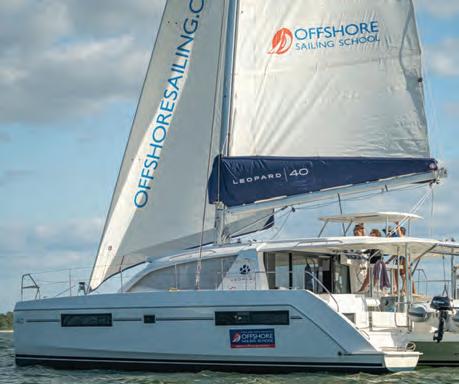
America's #1 Sailing School ofers gift certifcates or purchase an autographed copy of OFFSHORE High, the biography of Steve & Doris Colgate and Ofshore Sailing School.
Email request to: Info@OfshoreSailing.com
TOADFISH NON-TIPPING CAN COOLER
Rescue Laser™ emergency signaling devices provide a convenient, efective way to signal for hours on replaceable batteries. Compact, waterproof, rugged, and environmentally safe. Make sure your loved one is ready to Brave Any Adventure: “Always be prepared. Always be found. Always come home”.
Buy Now: Rescue Laser™ emergency signaling devices (greatlandlaser.com)
The Toadfsh Non-Tipping Can Cooler is the frst of its kind un-spillable beverage cooler. Innovative SmartGrip technology allows the Can Cooler to stick to any smooth surface.
www.toadfsh.com
Latitudes & Attitudes | #41 Winter 2022/23
60
Aumaris’ new generation of Turk’s head earrings, handcrafted in yellow gold.; these unique earrings are designed to match her style. The quality is superb, the style is timeless, and the price is right
14K $950 18K $1300
New Turks head petite cuf bracelet ofers comfort and classic style that will last for generations, with the timeless beauty of the beloved Turks head braid, a perfect gift for the holidays.
14k $2200 18K $300
Guide Gift
For those who prefer the naked style, we ofer this two-stand ring; the quality is superb, and the style is a beloved classic. Order now.
14K $1300
18K $1600
The Gold Sloop an intricate 3-dimensional sailboat pendant, handcrafted with the wind in her sails; it makes a perfect gift for avid sailors.
14K $650 18K $950
Shop Nautical jewelry from Aumaris for the best holiday gifts from the hand and heart of our jewelers, handmade one piece at a time on the beautiful island of Oahu. We use the best materials to create the fnest quality and style and include a Lifetime Warranty. Explore now.


Call us to order: 855-353-9995 Online: www.aumaris.com
Our new Turk’s head ring Quattro is excellent for active sailors. Heavier strands and a solid sleeve provide comfort with unmatched quality.
Sterling $400, 14K $2100, 18K $2400

Shop Anchor chain bracelet designed for sailors. The links are solid gold crafted one at a time, and the style is authentic. 7-inch long 14K $3000, 18K $3750


Sailors’ most popular earring is the nautical shackle: these pair of twisted shackle earrings are handmade with solid gold. Shop now, Sterling $200, 14K $500 18K $700
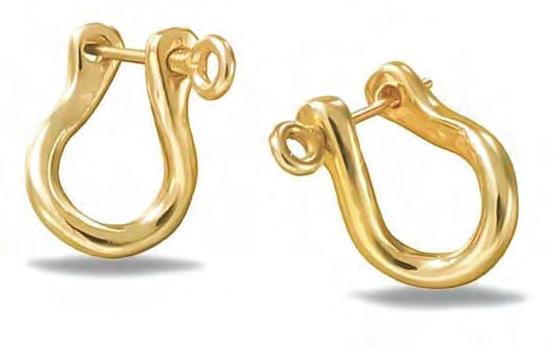
Turks head gemstone rings, these emerald, diamond, and ruby beauties are perfect for ringing in the holidays. Order one or a set of three. Price per ring
14K $700
18K $900
Set of three rings
14K $2000 18K $2600
New Turk’s head petite ring ofers comfort, a unique style that will last, and is a great gift for the Holidays.
14K $850 18K $1050
www. LatsAtts .com 61
Guide Gift
MANTUS NAVIGATION LIGHT
For Boat Bow or Engine Cowling The Mantus Navigation Light is designed for life on the water!

www.mantusmarine.com/mantus-navigation-light/
CHART METAL WORKS
MANTUS QUICK CONNECT
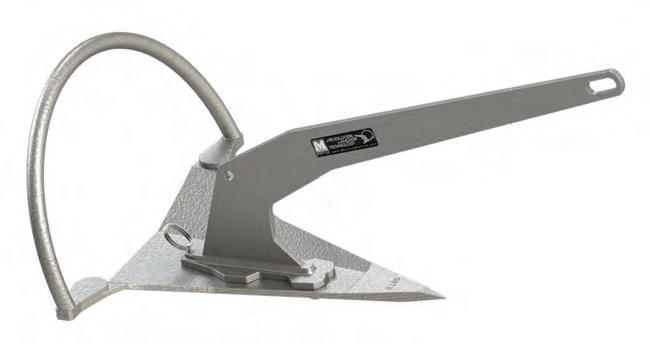
Small boats require a small, lightweight anchor that sets reliably in a variety of bottom soil conditions, and none of the currently available small anchors ofer this level of performance.
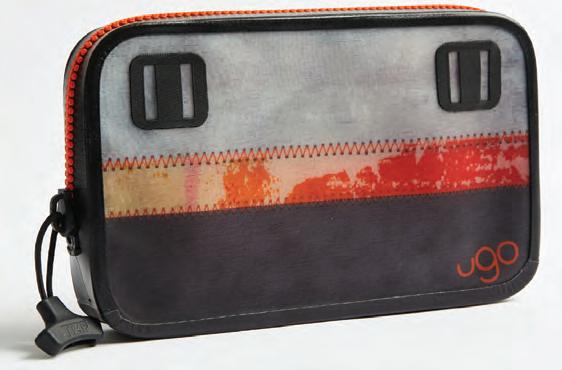
www.mantusmarine.com/mantus-quick-connect-anchor/
UGO WATERPROOF DRY PACK
Nautical Signal Flags Charm Bracelet: Let us know your letters, and we will handmake your signal fags and assemble them onto our beautiful Nautical Signal Flag Pewter Mini Charm Bracelet for you to wear. Starting at $45.
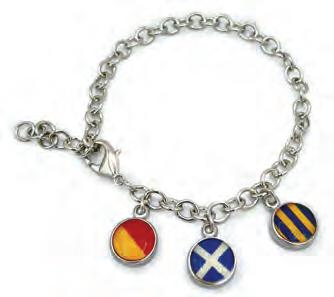
Cribbage Board: Cribbage is a New England staple and loved worldwide for centuries. Our handmade Cribbage Board keeps that special camp or travel adventure near in our custom Peg Keeper Box and Engraved Plate. $105
www.chartmetalworks.com
Floats and fully submersible. 100% water, dirt and sand proof. Electronics function while inside. www.ugowear.com
62 Latitudes & Attitudes | #41 Winter 2022/23
TEMO.450
Guide Gift
STRONG FIRE ARMS
Lightweight, reliable and ergonomic design. Responsible, universal and light, the TEMO·450 propulsion solution looks after both boaters and the environment.
www.temofrance.com
BOOKS
BY BOB BITCHIN
All the books are available at Bobbitchin.com as signed hard cover collectors edition. Perfect for Xmas. All books are $24.95





www.bobbitchin.com
Our beautiful Saluting Cannons are all handcrafted in the USA, not far from where the original Strong Cannons were made more then a century ago. Strong Cannons make a perfect gift and will bring decades of fun to you and your family. With prices starting at $650.00

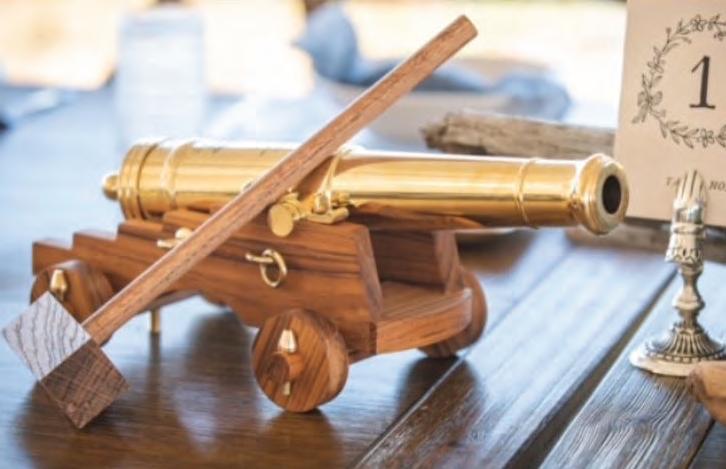
strongfrearms.com
INDIE MARINE
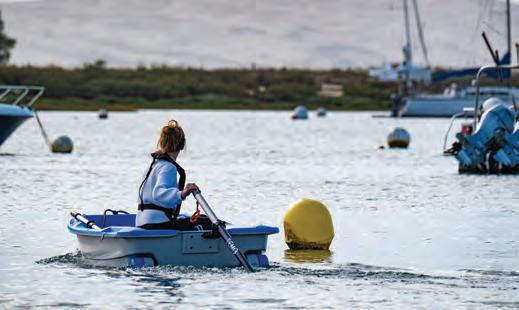
Starting From $19.95Made in France these soft shackles and fttings are load tested for every boater that wants durable, long-lasting fttings that save weight, solve challenges, and won’t rattle on their deck!
$256.00 - For man overboard safety this made-inFrance durable ladder has steps are semi-rigid, and with a quick pull of the cord from the water will allow for a fast acting reboard onto your boat.

Visit IndieMarine.com to fnd a retailer near you.
63
www. LatsAtts .com
Winning JACKPOT the
By Tim Millof
Several years ago –around 1995, to be exact
I was in Annapolis, Maryland, and decided to take a boat ride from the harbor out to Thomas Point Lighthouse. I was no stranger to boats, as I had a hobby of fshing as a child and as a young man. As I was enjoying the boat ride, I discovered something fresh and new that appealed to me. Sailboats. I mean, this was, after all, Annapolis, where several of the gift shops on the main street sell hats and shirts that read, “Annapolis: A drinking town with a sailing problem.” Honestly, I had never seen so many sailboats before on the water so close like this. I became instantly hooked.
A few weeks later, I was at the beach in North Carolina, and a sign caught my eye. The sign advertised sailing charters. Two days passed, and I decided to drive to the sailing marina and ask about the sign. A very friendly and helpful man advised me that for a price, I could hire a certifed captain to give me a four-hour basic sailing lesson on a twenty-six-foot sailboat. I booked this for the following day around ten a.m.
The boat was a Columbia 26 sloop. We only used the outboard motor to get in and out of the actual slip and narrow channel from the marina, and the rest of time we spent totally under sail. I was once again hooked, and this time reeled in!
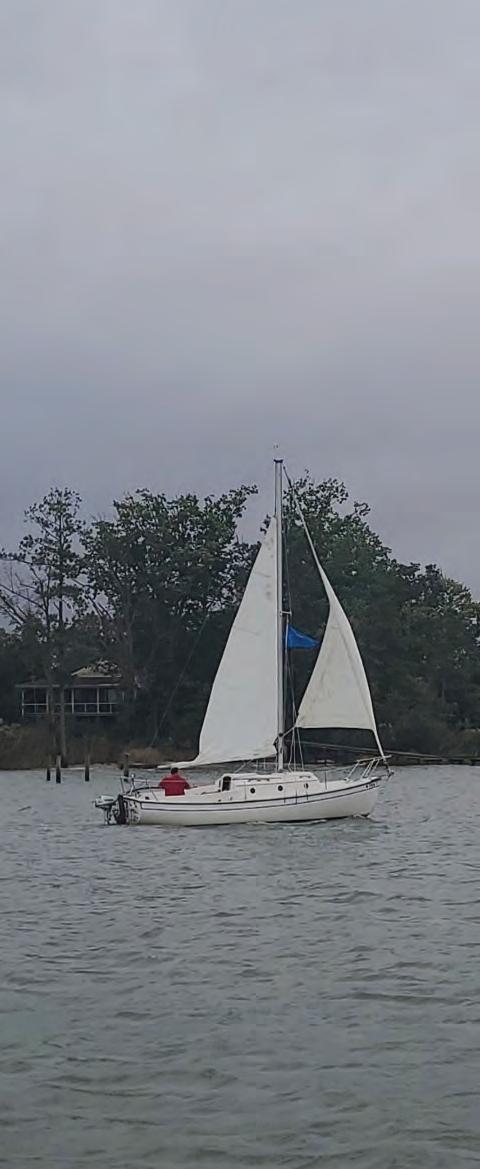
As soon as I returned home, I started searching through the old Penny Saver want ads, and I circled a couple of used boats for sale. The one that I would decide to purchase was a Chrysler 26, which was an older boat, but she had an almost brand-new Honda outboard motor. Her name was Jackpot. A friend of mine who knew boats better than me, explained that for the price, I was essentially purchasing a new motor, and someone was throwing in a free boat.
I still remember the feeling of excitement as I took possession of the boat and started planning and preparing for what would come next. The boat had a swing keel with heavy ballast, which I quickly discovered was stuck in the down position and prevented the boat from leaving the slip at low tide. It would turn out that the pivot pin on the wind-up keel was bent and this caused the wood holding the winch for the keel to crack and foul the winch.
The frst order of business was to convince my buddy to help me replace the winch mounting boards under the cabin table. Next, I called around and found a marina that could haul out my boat and repair the keel pivot pin for an afordable price. It would be Whitehall Yacht Yard on Whitehall Creek near Annapolis. We left my marina a high tide with me at the helm and my brother as the frst mate. Neither of us had any real sailing experience, but hey, we were running my almost new Honda motor, so easy peasy, right?
64 Latitudes & Attitudes | #41 Winter 2022/23
Everything was going great as we motored up the Severn River and past the Naval Academy. I had an old chart left behind on the boat from the previous owner. I had it laid out with a pencil line showing the route out the Severn River, past Annapolis into the Chesapeake Bay and then to Whitehall Bay and fnally to Whitehall Creek to haul out at the Whitehall Marina & Yacht Yard. I felt like a true sea captain, and I was standing on the deck in the cockpit with the tiller in hand with a smile on my face that could light up the world. Suddenly in the Chesapeake Bay, short of making it to Whitehall Bay, I lost steerage. Was it the current? My brother looked over the rear stern of the boat and asked, “what is that foating in the water away from us?” “That” would be our rudder.

Not really knowing what I should do, I quickly deployed the anchor. With the boat anchored we thought we would try to get the attention of a passing boat for help. After about an hour it seemed that no boat would get close enough to assist us or even know we were in trouble. Luckily, the boat also came with a VHF radio, and it worked. As I called for assistance on the VHF CH 16, Sea Tow responded and sent us a tow boat. We were towed into Whitehall Yacht Yard, and I learned another valuable lesson: pay for tow insurance! As I stood on the dock at the yacht yard, looking at my boat tied to the dock, my brother walked up behind me and said, “At least you got to play with your anchor!” It is a moment like that and a humorous perspective that you realize it is best to make the most of life, both during fantastic moments as well as not-soperfect moments. Sailing is, after all, an adventure Long story short, Jackpot was hauled out, the yacht yard fxed my pivot pin, and I painted the bottom of the boat before we relaunched. I found a private slip around the
corner from Cantler’s Riverside Inn in Annapolis, and over the course of a year, I sailed all around Annapolis and the Chesapeake Bay. I even made an overnight trip on the Fourth of July to Annapolis Harbor where I was on the hook. I saw the most impressive display of freworks over the harbor, laying down on the foredeck of the boat and looking straight up at the freworks. From 1995 to 2003, I had many adventures and honed my sailing skills, improving with each sail.
One day, looking back on the frst lost rudder incident and remembering my brother’s comment, as I read a passage in a sailing book, which was something to the efect of the author describing that standing on the foredeck of his sailboat, pulling in the anchor rode, he felt like he was holding the reins to the world. I thought in my head, “Mine felt more like trying to unlock a car door through a cracked window with a coat hanger!” The reins of the world feeling would come a little later for me.
I have not lost my passion for sailing. Today, twentyseven years later, I am still on the water, now sailing a Com-Pac 23 sloop named Freedom and Firefies, on the Coan and Potomac Rivers on the lower Chesapeake Bay. I still occasionally get that “locked-door-coat-hanger” feeling when things do not work out as I pictured in my head, but I have not lost a single person on any sail over the years, so I guess I am doing alright at the tiller. My favorite author of all time is Ernest Hemingway. In The Old Man and the Sea, Hemingway wrote, “A man is never lost at sea.…” Over the years, sailing has been my release from stress and my getaway from the problems life throws at me, and like Hemingway so wisely wrote, “I never feel lost on my boat.”
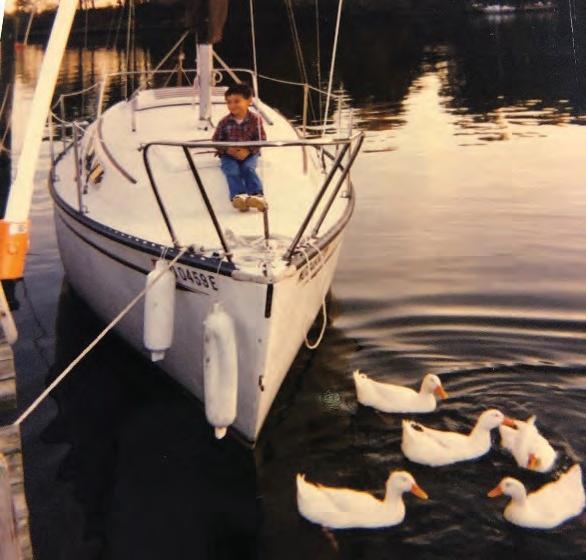
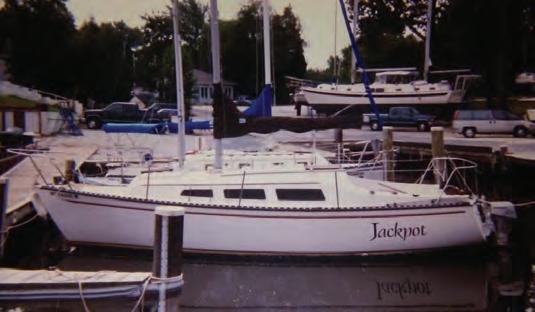
STAIRCASE
to
Paradise
by Kia Koropp
The clear waters, isolated islands and isolation of the Ha’apai Islands
What do you say when you leave one group of islands that have registered top of the A-List, only to discover the next group far surpasses? Having departed the Vavau group in northern Tonga on a high, we sailed south to the Ha’apai Islands, Tonga’s central group.
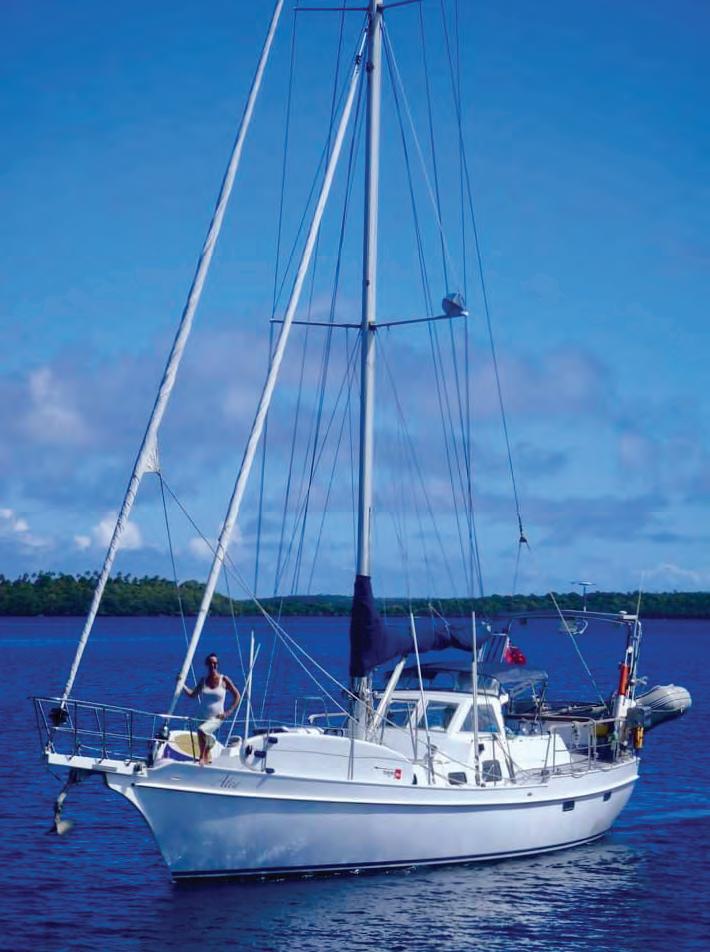
Every island we visit looks like it has been prepared for a photo shoot. Not one island pales to its neighbor, sitting quietly amongst swaying coconut palms and dense green foliage, fringed with white sand beaches and dotted by coral reef. What makes these isles so unique is the paucity of other sailboats, the fne white sand clear of any other footprints, the pristine reefs uncrowded by masked intruders, the friendliness of the locals, and the quaintness of the villages. When considering each subsequent island we visit in Tonga, I wonder just how far we will climb on this staircase to paradise.
Not that we stayed in many villages during our stay — most of the islands we visited were isolated havens of tropical bliss. Of the Ha’apai’s sixty-one islands, only seventeen are inhabited. The locals are very pleasant, upholding the name Friendly Islands attributed to this area by Captain Cook in 1777. Villages are typically surrounded by a fence intended to keep the pigs in – not out. Inside these villages are houses lined with neat gardens and several churches for diferent denominations. Ha’afeva, for example, has fve churches to support the island’s two hundred inhabitants. We were able to purchase a variety of goods at the main port of Pangai, but otherwise, the only food supply was acquired directly through the locals, most of whom were more interested in trade than money. Snorkel and fns are the hot commodities, but rope, line, and tackle can also be exchanged for lobster and fruit. Locals often invited us into their homes to socialize over lunch, and they smile, wave, and stop to exchange a few pleasantries in passing. It is easy to feel welcomed here, and a short stay will fnd a traveler quickly accepted.
That is when there is a village to accept you. Most of our time was spent in what we coined the Naked Isles, a term frst attributed to the area by John and Kia in 2011. This isn’t because the islanders are fond of the display of bare fesh; the typical clothing for women has covered shoulders and long wraps over legs, often under the traditional ta’ovala (waist mats made of woven pandanus). When you have entire island groups that leave you the sole king of the domain and completely separate another human company, why be constrained by social custom? We spent weeks completely removed from other human contact, free

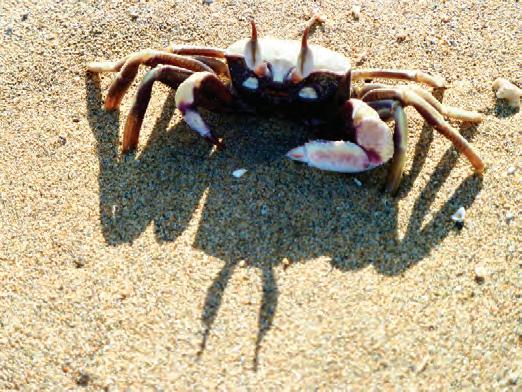
The Ha’apai Islands consists of a long string of predominately uninhabited
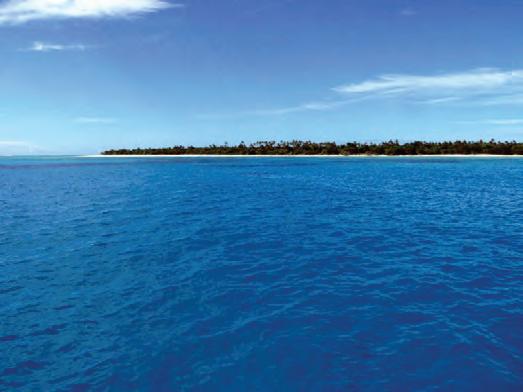
www. LatsAtts .com 67
Ātea departing Vavau for the Ha’apai Islands
Footprints: The only other creature making prints in the sand
to explore, play, and relax in our topical island oasis. For both John and I, this solitude felt like the pinnacle of the cruising experience, as it is rare to fnd a place in the world so void of human contact, hidden from the infuence of tourism and free from the structures and demands of society.

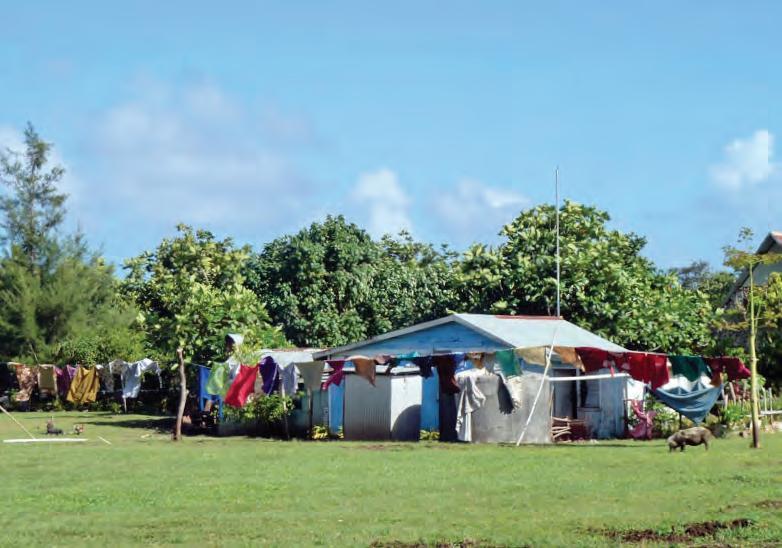

This lack of human trafc was most notable in the corals that surround the islands. The Ha’apais have some of the most prolifc, colorful, and healthy corals we have ever seen, flled with a variety of reef fsh dodging around in their assorted schools. In addition, we sighted turtles, dolphins, humpback whales, and a variety of shark species, their presence indicating a healthy marine environment. As for life on the boat, we fully settled into a lifestyle of self-sufciency. As there are very few markets to provision from, we were reliant on our stores that were purchased prior to arrival or plucked from the native bush. Neither of us bakers by habit, we’ve been testing our ingenuity in making bread without white four: tapioca, mashed potato, breadfruit, and chickpeas make poor substitutes. But at least we have options — options that usually yield bread bricks but are worth the experimentation regardless. My pregnancy is rounding up on seven months, and I am fortunately still craving-free. John, being the bigger foodie, catalogs his cravings: ice cream, chocolate, sugared biscuits, café lattes, bacon, and of course, gluten-flled plain white four. I, on the other hand, am enjoying what we do have, which is fresh tuna at our beck and call. I do not fancy myself a competent fsherman, and John even less (he claims a fondness for the eating of, not the capturing of fsh); however, the Ha’apais easily give a false sense of skill. We do no more than dip the lure in the water, and we get a strike, and a quick fick lands a sizeable meal on the deck. Tuna has always been my eye-fllet of seafood options, and so it is awesome to be able to call out, “just another tuna!” as easily and regularly as I would pick up a fsh in the seafood aisle of my local grocery store.
As I look at the rungs we’ve just climbed on our Staircase to Paradise, there is nothing but awe that we feel in the experiences we’ve had in Tonga. The world around us is breathtakingly beautiful, and the life we are living is flled with an appreciation for all that we have: a sound boat, fantastic cruising grounds, and a loving partnership. We have time to ourselves to do as we choose and a lack of constraints that turn days into routines. I can hear my mother’s mantra, “live in gratitude,” and there is so much around us to be grateful for. The problem is knowing just where to start.
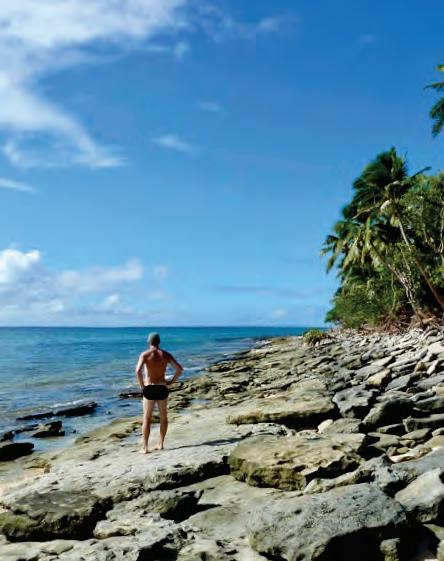
68 Latitudes & Attitudes | #41 Winter 2022/23
STAIRCASE
PARADISE
Local home with compulsory pig grazing in the yard
TO
Church and religion are central to the Tongan way of life
John enjoying a leisurely stroll down the beach in “The Naked Isles”
Hunting in the bush for provisions, as markets were few and far between
John attempting his obligatory fshing duties, thwarted by a shark that caught the lure and broke the line

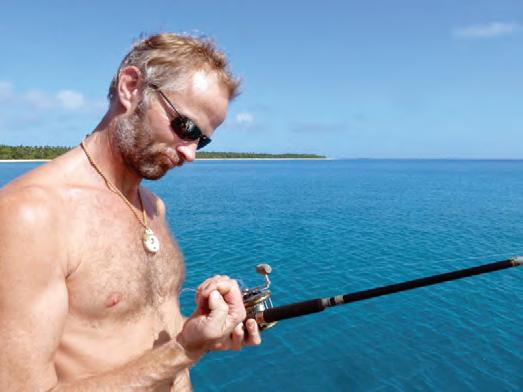
ABOUT THE AUTHOR
Kia Koropp and her husband, John Daubeny, have been cruising onboard s/v Ātea, a 49’ Ganley Solutions steel cutter rigged sloop, since departing New Zealand in 2011. Starting as a team of two, they have grown to a family of four and spent the past eleven years transiting three oceans and sailing 55,000 miles together.
www. LatsAtts .com 69
Enjoying a midday swim in the clear blue waters under clear blue skies
Kia fshing of the aft deck of Atea, and easy feat in Tonga’s well-stocked waters
John enjoying stressfree afternoons under a full kite


The ( Unwritten ) Rules of Sailing:
Newbie Sailing Lessons with Editor Frankie Krutsch
It’s a cruel irony, right? A twenty-fvesomething who has lived a majority of her adult life less than an hour from Lake Erie, who loves relaxing and enjoying life as much as anyone else, and who edits a magazine about sailing, knows almost nothing about sailing.
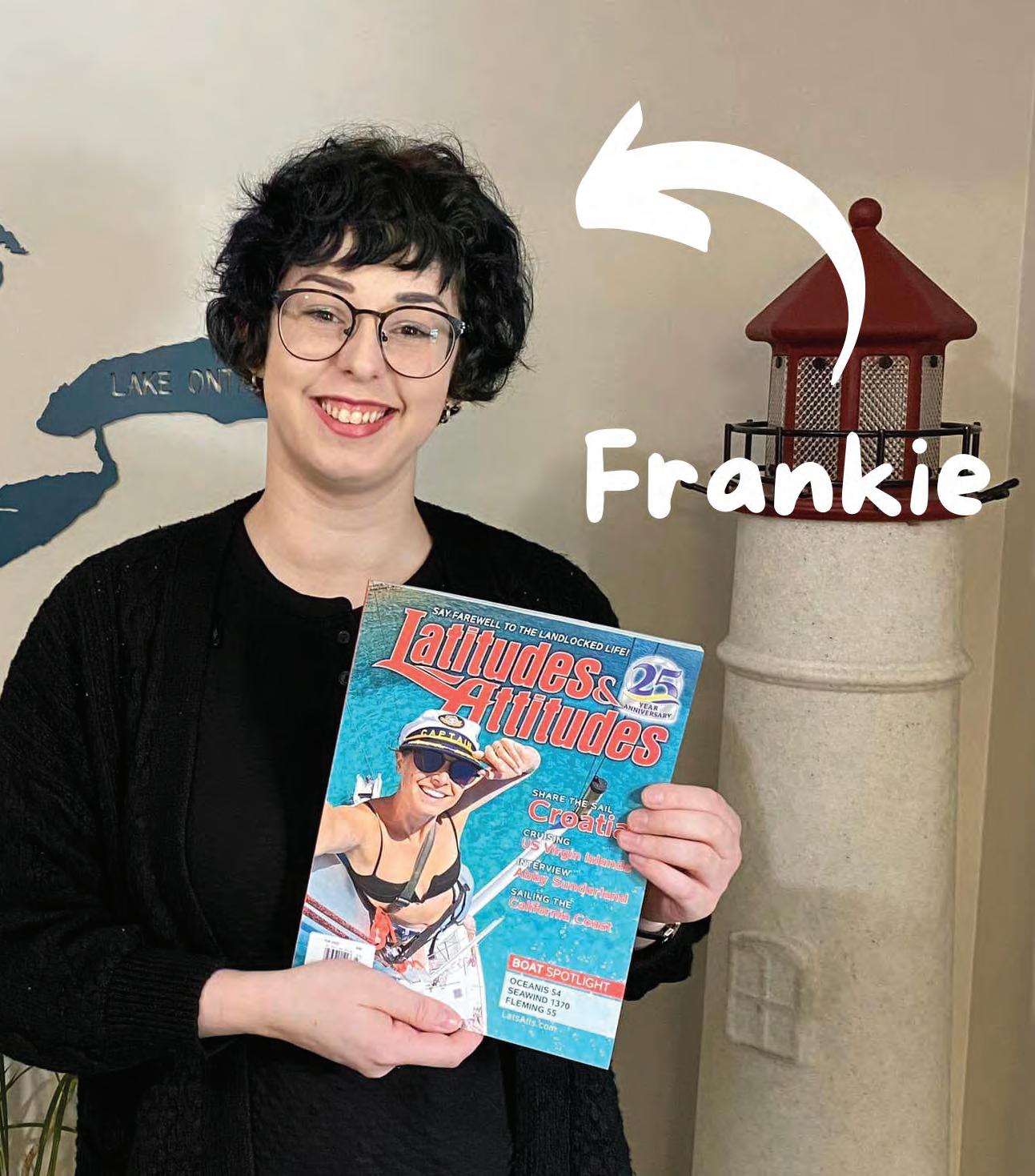
In fact, I don’t know much about anything.
I’ve been at this posting with the magazine for less than a year by the date of this issue’s publication, having started in May of 2022. I think it’s safe to say that I’m the baby of the Lats&Atts family. The crew have all been encouraging, reassuring me that I’m learning the ropes and acclimating myself to the world of boats and this publication quickly. I’m supported constantly by Erik, David, and the man himself, Bob Bitchin.
However, anyone who knows me knows that being told I’m doing good enough from behind a desk is not good enough for me. If I’m going to be editing the stories for the best damn cruising magazine on the planet, I should probably know more than what you can get while sitting at a chair. I want to learn how to sail so that I can
72 Latitudes & Attitudes | #41 Winter 2022/23
I, Mary Martha Frances Krutsch, do solemnly swear that I know absolutely nothing about sailing.
connect with you, the readers, better and know frsthand what makes the cruising lifestyle so appealing to thousands of people.
Enter: you, the readers!
Not long ago, we asked you to share your “unwritten” rules of sailing in a series of social media posts. These were pieces of advice and wisdom that a newbie like me couldn’t learn from a textbook, a sailing course, or the Internet. I’m going to be going through them and responding to the ones that strike me as the most unexpected, the most intriguing, and the most likely to prevent me from being banned from someone’s vessel for the rest of my life.
So, relax, sit back with your favorite libation (I’m going with a pitcher of sangria), and peruse these responses with me as I bring to light the obvious for the oblivious (read: me). I know that these will be illuminating and thoughtful.
Mindy G. starts it of with the basics: “Always make sure you are in water before setting sail.”
Okay, I probably would have fgured this one out, but it’s always nice to have someone explain these things to me. As you can see in the photo next to this paragraph, our poor ofce manager and sail racer Mindy Leppala had to explain to me the diference between the bow and the stern. Yes, folks, that’s our baseline –the front and back of a boat. I also learned, after much confusion, that sidelights don’t work like turn signals on a car and that the “head” is both the front of the boat and the toilet. I have a lot to learn…
Adam L. chimes in with another useful comment, which is truly an unwritten rule of sailing: “When the captain passes wind, it may be appropriate to go forward and check on the jib, but it is very rarely a good idea to suggest adjusting the sails on the grounds of how long it is lasting.”
Ha-ha! Okay, let’s see if I get this one. The jib is at the front (bow) of the boat, right? You’re not going to want to be downwind, so to speak, from anyone who is “passing wind.” But the mainsail and whatnot are at the back, so… uhh…I’m going to double-check this one.
Update after talking to Sail Racer Mindy: So, the jib is at the front by the bow – got that. The mainsail is near the companionway and goes toward the stern, where the crew hangs out – did not get that. But I did get the pun about “passing wind” – if the “wind” is coming from the bow and going back, you’re fne, but if you’re at the bow and the wind is coming forward, from the side, or not at all, well…you know what I’m saying. Odds are, you’re going to smell whatever wind is passing if you’re anywhere other than the jib. Adam –I’m saving this one in my back pocket for later!
Jerry R. contributes the following tip: “When walking down a dock checking out the boats, never look directly down below or through an open port.”
Okay, I need help with the signifcance of this one. MINDY!

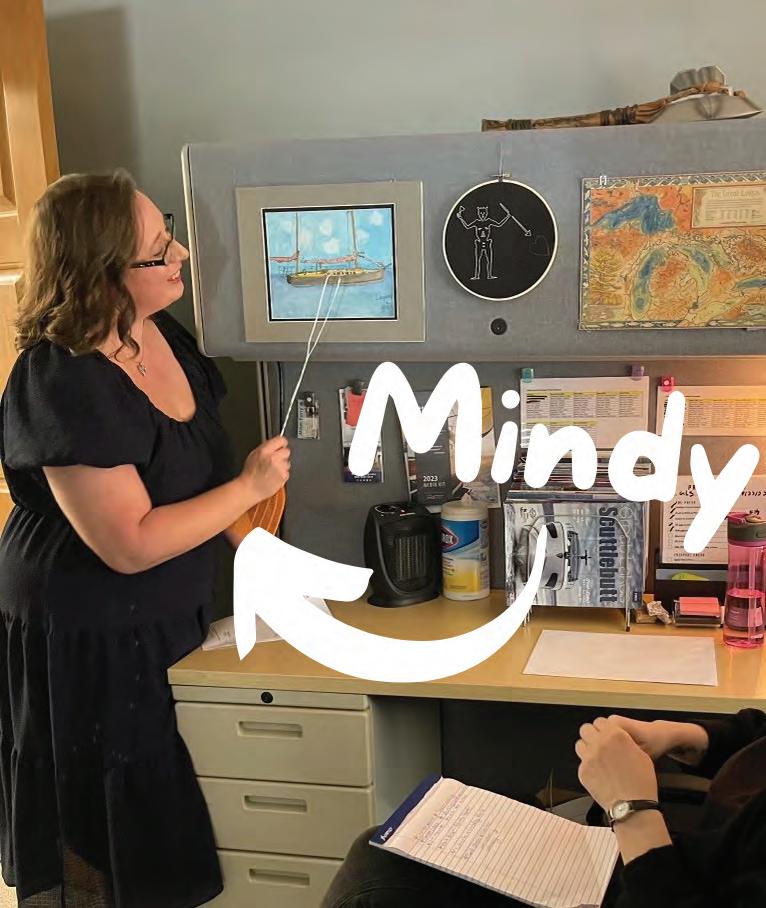
www. LatsAtts .com 73
A simple update after talking to Mindy: “you never know what’s going down below.” I would have learned that one the hard way. Ruh-roh.
Up next, Mark P. provides an exceptionally useful tidbit of advice: “Learn to tie a bowline with your eyes closed, and a fgure eight and a rolling hitch for good measure. Never put your fngers between the winch and the line.”
Knowing how to tie knots is always a good idea if you’re a sailor; this much I know. The bowline, as I understand it, is one of the most secure, as are fgure eight and rolling hitch knots. I’m not going to lie; I’m actually really excited to learn how to tie knots! It’s a useful skill even on land.
Fun fact about me: as a kid, I learned how to make balloon animals. I could make a few diferent animals, like dachshunds and bunnies, as well as swords and fowers. I sold them for a buck a piece on the playground before the recess supervisors put a halt to my little racket. Maybe that skill will translate?
Donna P. takes things to the lighter side: “If you’re racing, you never know how long you will be out there, so don’t make plans for later. If you’re cruising and the conditions are nice, you won’t want to come back to the dock, so again, don’t make plans for later.”
Fair enough! Ahh, maybe I can convince Bob and Jody et al. that I wouldn’t be a total detriment to the next Share the Sail. Wouldn’t that be nice, just hanging out on a boat with a fotilla in the Bahamas? Even if I can’t, you guys should…wink, wink…
Racing, however, still scares me. I’m sure I’ll encounter it in the future, though.
Mary E. makes a suggestion that’s a little bit concerning as well: “Always puke over the leeward side of the boat.”
Duly noted, Mary.
JB ofers this advice: “Don’t be a perfectionist when it comes to anything that keeps you from sailing. The term analysis paralysis isn’t your friend!”
Easier said than done, JB. Anyone who knows me knows
I’m a perfectionist, to the point of being almost insuferable to be around. Hopefully, sailing and eventually cruising are activities that will get me to loosen up a little. Getting out on the water and learning a skill away from all the hustle and bustle of everyday life will surely be good for me. And last – but certainly not least – is Tricia R. While I don’t want to play favorites, this one comes pretty close to being a favorite of mine: “You can’t be an old salt without being a newbie frst. Get out there and have fun!”
“Get out there and have fun.” Hey, isn’t that what this magazine is all about?
Bob says that “attitude” is the diference between an ordeal and an adventure, and I look forward to all the adventures that will be coming my way as I go on this journey. I’m thrilled by the prospect of becoming a seasoned, salty sailor someday.
I also think that JB’s other comment really gets to the heart of it all:
“Honestly, I envy you and the journey and adventures that await you in the coming years. Here, where I’ve used up my freedom chips and sunsets and still cry on the anniversary of my sailboat’s demise, I genuinely envy the sailing dreams you’ve yet to dream. The only advice I can give is this, Dream great dreams, chase them with every fber of your soul, and don’t ever be afraid to live, laugh, and love with every breath and every heartbeat; be afraid – be very afraid – to not.”
As much as I’m intimidated by learning to sail, I sense myself growing more intimidated by NOT learning to sail. I appreciate all the sage advice that the so-called “old salts” of the Internet have contributed, and I look forward to learning more about the cruising lifestyle as my time with Lats & Atts continues.

74 Latitudes & Attitudes | #41 Winter 2022/23
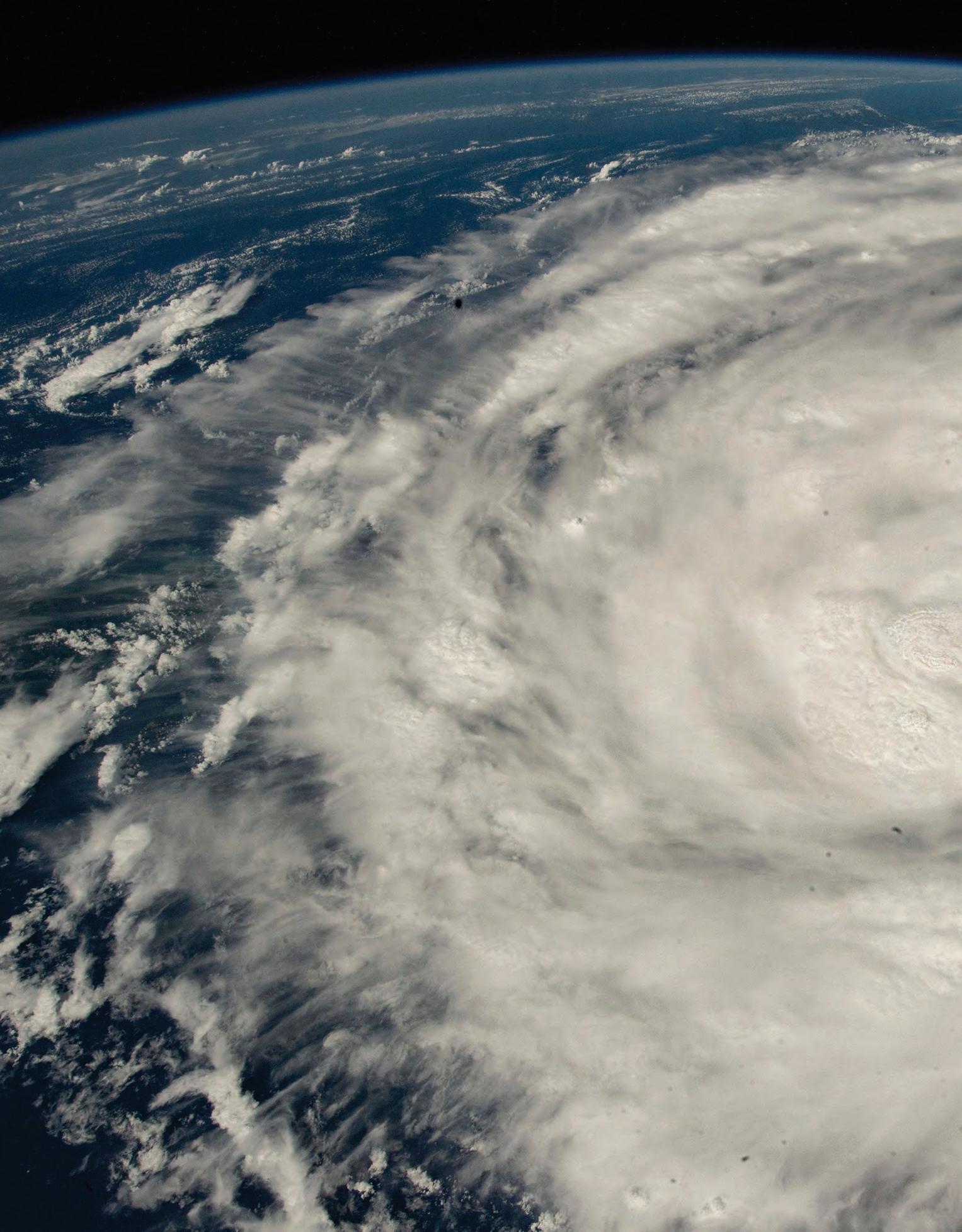 From NASA
Hurricane Ian
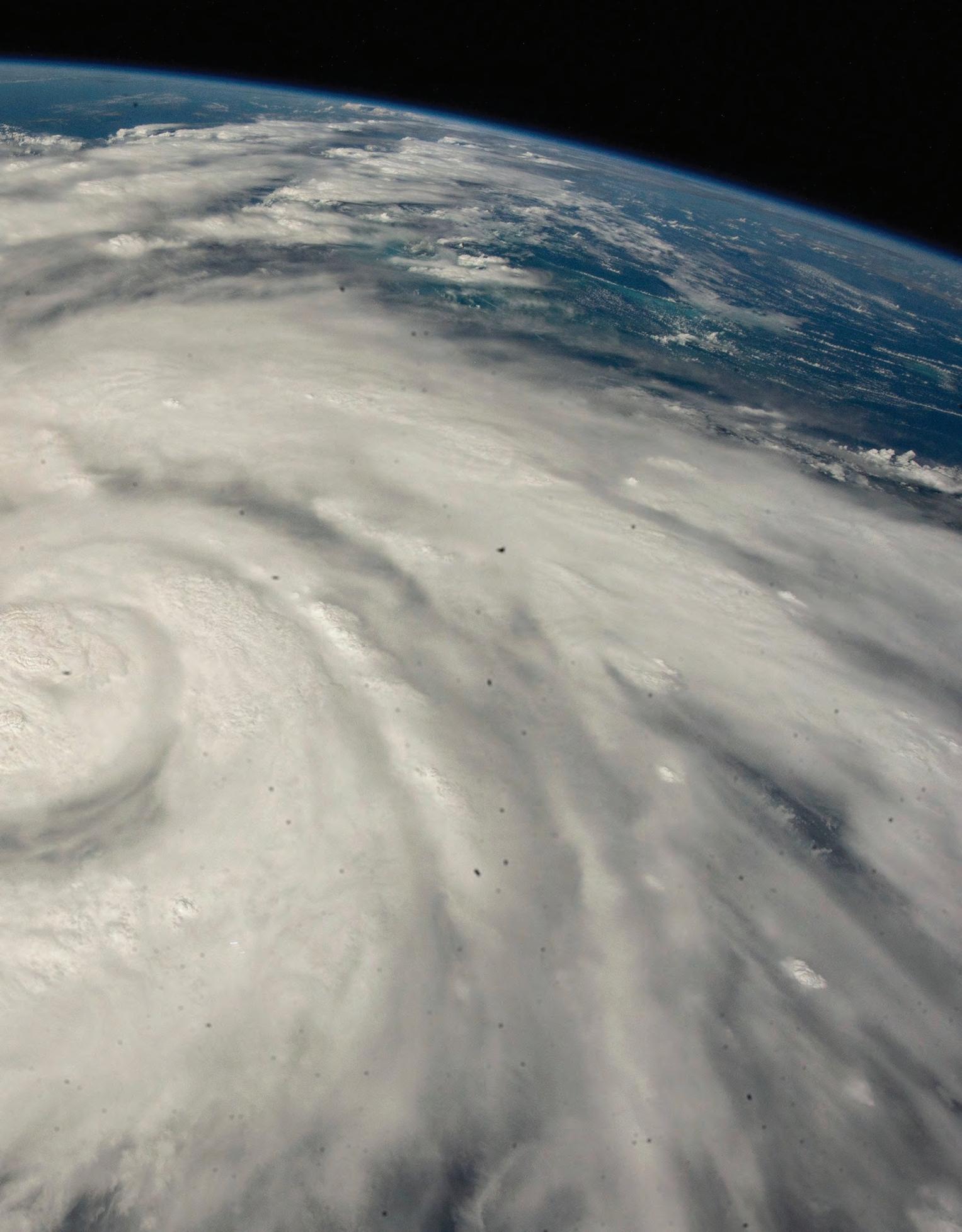
Honoring Those Impacted by Hurricane Ian
Normally, in the What’s Out There section of the magazine, we feature three exciting models of boats and the information you wish to know on them. However, we here at the Lats & Atts ofce, after watching the destruction and hearing from colleagues and friends, have decided it would be ftting to designate this space to those impacted deeply by Hurricane Ian.
From September 23rd to October 2nd, 2022, Hurricane Ian ravaged the Caribbean and the southeastern United States, especially Cuba and the Gulf Coast of Florida, left its mark inland Florida and up into South Carolina. The hurricane caused a catastrophic amount of damage in these areas, reaching a Category 4 status before dissipating and resulting in devastating losses in the areas that fell in its path.
Countless individuals and families, from the Cayman Islands to Cuba, from Fort Myers Beach to Sanibel, have been impacted. Images of homes leveled, businesses fooded and many vessels and marinas destroyed have left us speechless and overwhelmed. It is our hope that the images on the following pages will help not only to draw attention to the damage caused by Ian and to bring further awareness to proper hurricane preparedness, but also inspire the cruising community to come together and support all who have sufered due to this catastrophic event.
Our cruising community is just that: a community. Regardless of where we are on the planet, we come together to help those among us in need, because our ties to our love of cruising, adventure and nature exist beyond any physical boundaries. Many readers have written us asking how they can help, and what they can do to support those who are struggling to overcome the battery caused by Hurricane Ian. At the end of this section, you will fnd a list of some of the organizations seeking contributions, courtesy of Charity Navigator (www.charitynavigator.org) and the National Marine Manufacturers Association (www.nmma.org).
We here at Latitudes & Attitudes are heartbroken by the losses caused by Hurricane Ian, but we are also deeply moved by how many in our global community have come together to rebuild lives and hope in the wake of this disaster.
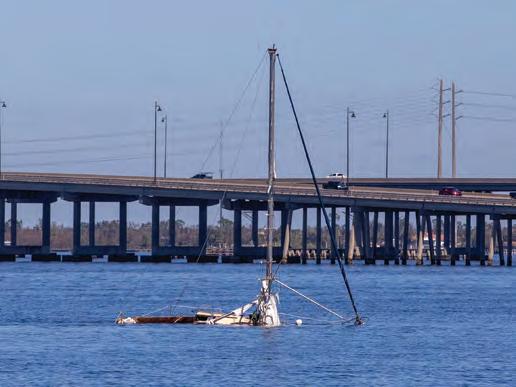
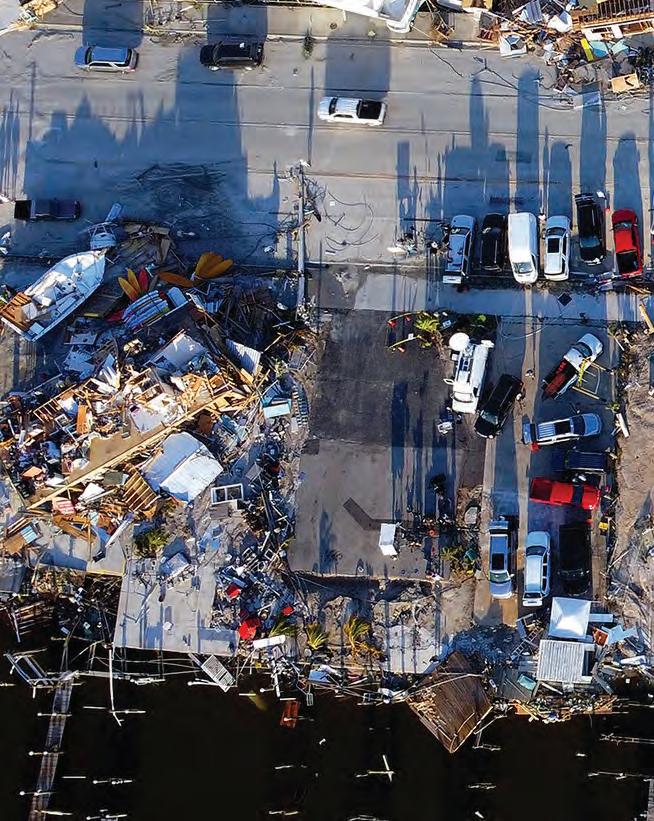
Credit for these images is provided alongside each one.
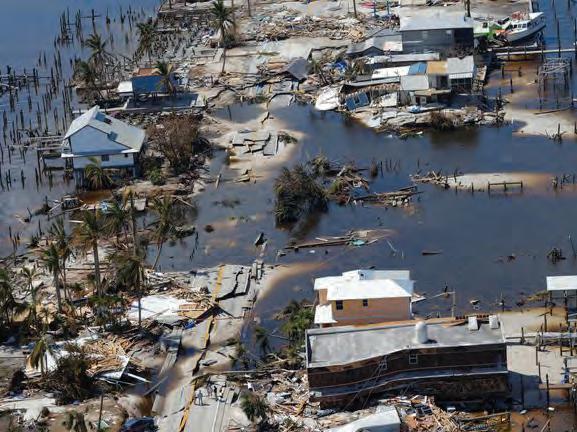 From Exteme Storm Recovery
78 Latitudes & Attitudes | #41 Winter 2022/23
From Carlos Osorio
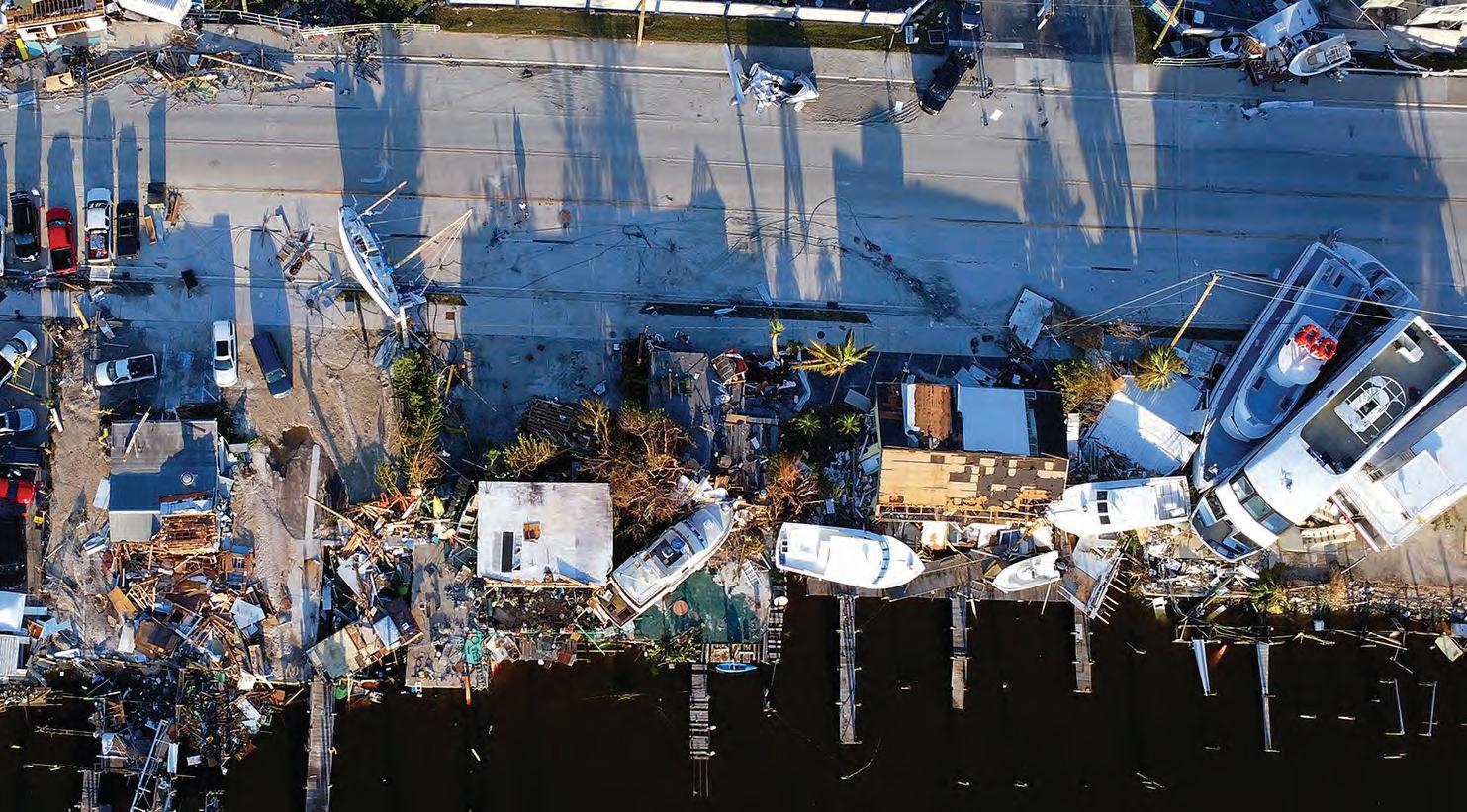
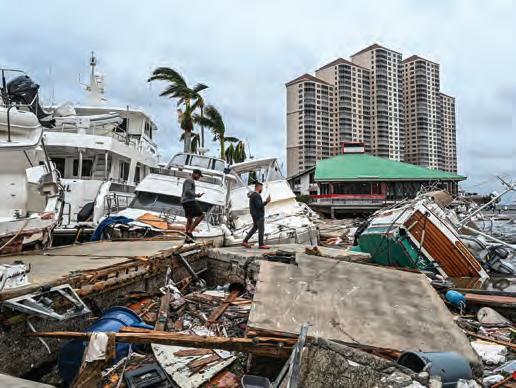
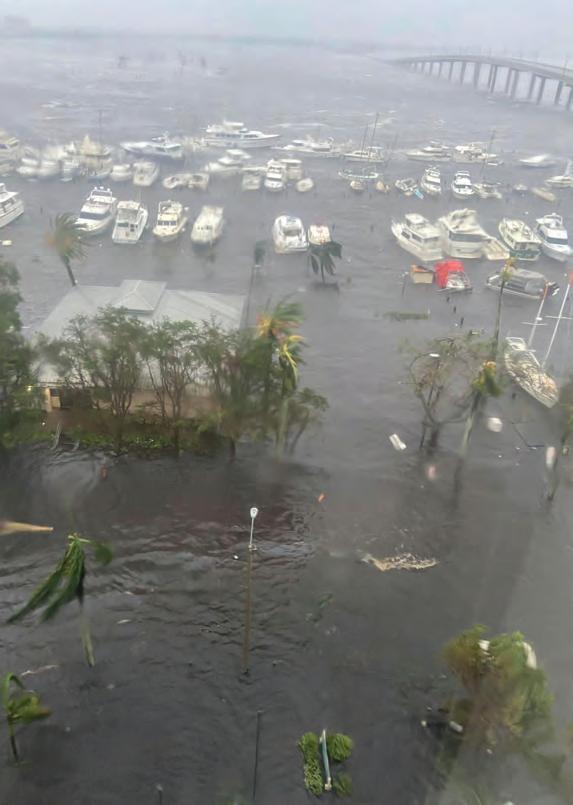
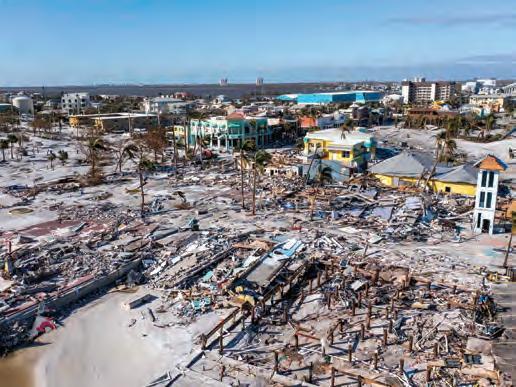
www. LatsAtts .com 79
From Ted Richardson
From Giorgio Viera
From Greg Lovett From Joy Hendry
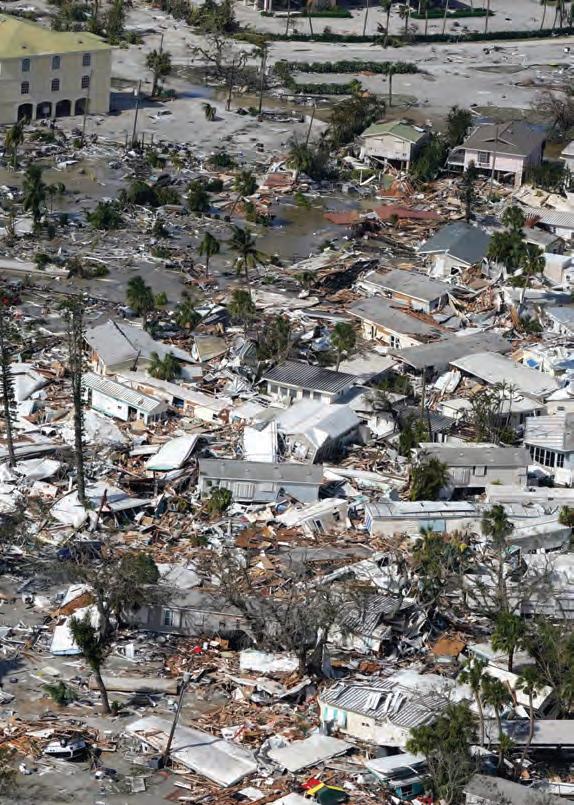
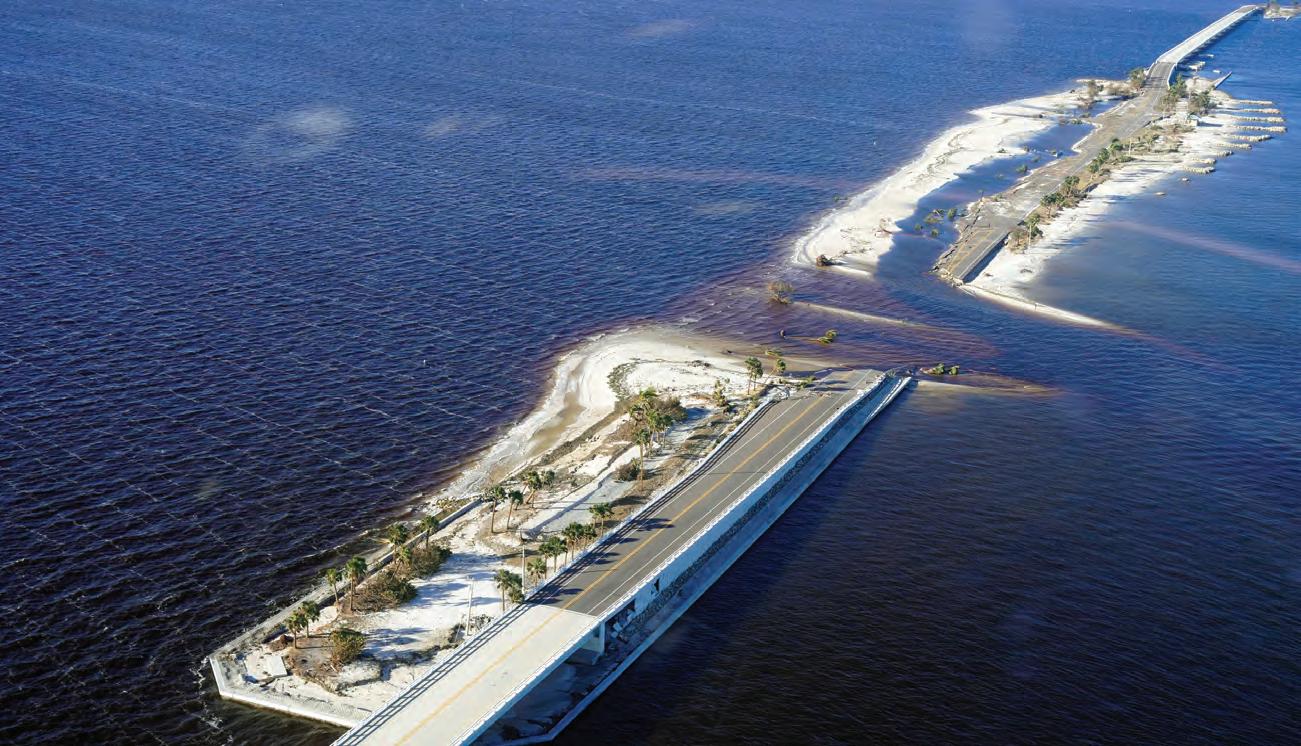
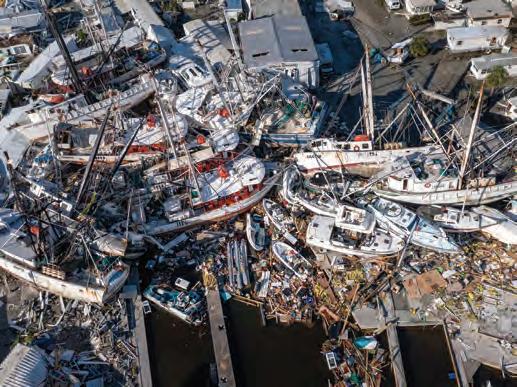
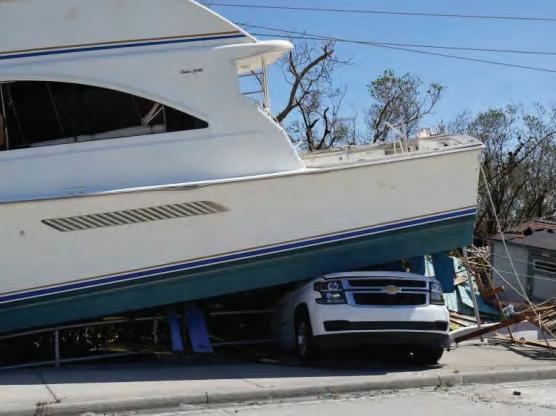
80 Latitudes & Attitudes | #41 Winter 2022/23
From Wilfredo Lee
From Thomas James
From Greg Lovett
From Lokman Vural Elibol
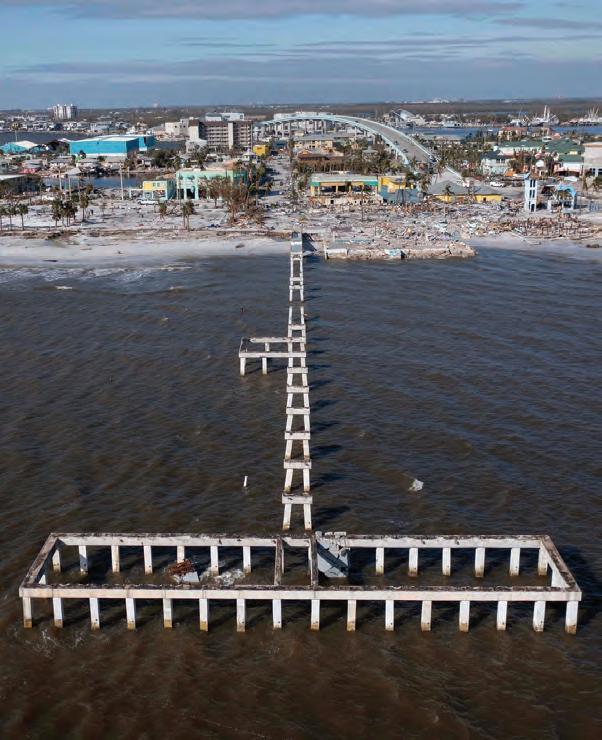
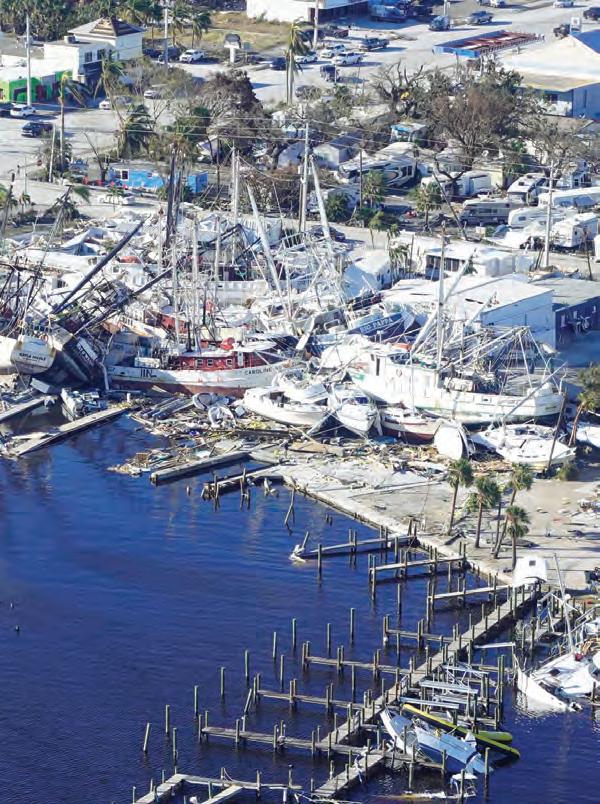
www. LatsAtts .com Below is a list of organizations seeking contributions. United Way of Florida www.uwof.org/hurricaneian Collier Community Foundation www.colliercf.org Save the Children www.savethechildren.org SBP www.sbpusa.org Direct Relief www.directrelief.org All Hands and Hearts Smart Response www.allhandsandhearts.org Family Promise www.familypromise.org Mercy-USA for Aid and Development www.mercyusa.org The Humane Society Naples www.hsnaples.org Matthew 25: Ministries www.m25m.org Good360 www.good360.org American Red Cross www.redcross.org Center for Disaster Philanthropy www.disasterphilanthropy.org GlobalGiving www.globalgiving.org Feeding the Gulf Coast www.feedingthegulfcoast.org Americares www.americares.org Heart to Heart International www.hearttoheart.org Convoy of Hope www.convoyofhope.org
From Thomas James
81
From Greg Lovett


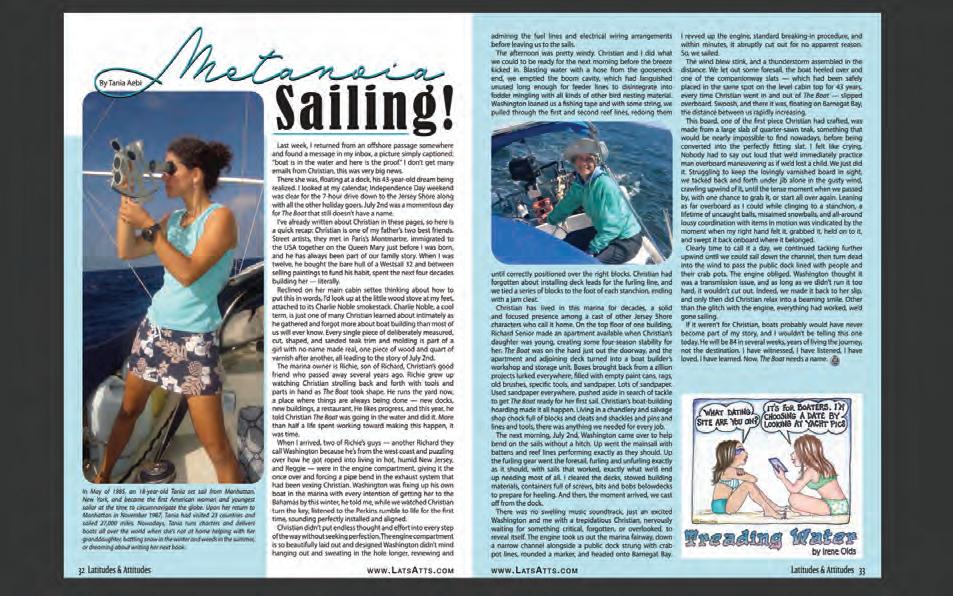
82 Latitudes & Attitudes | #41 Winter 2022/23 4 issues /year DO NOT MISS OUT – SUBSCRIBE NOW • Access the Lats & Atts Digital Magazine with tons of great stories • Download the current issue for offine reading • Get 10% off at the Lats & Atts store for gear and apparel www.latsatts.com/magazine Online Digital Magazine or per issue $ 4.99 Now$ 14.99


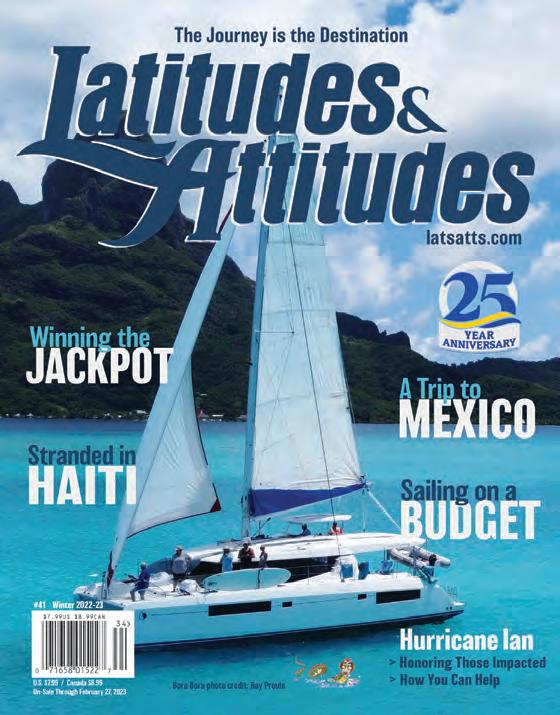
FULL YEAR GET A OF GIANT PRINT ISSUES FOR ONLY $ 25! SUBSCRIBE NOW! Delivered directly to you! www.latsatts.com/magazine Name Phone Address City State Zip/Country Code Email □ Check Enclosed □ Bill to my credit card (Visa/MC/Amex/Discover) Card # Exp. Date / CVV Signature Date signed / A09/22 □ 4 issues (One full year!) delivered to you $25 □ 8 issues (Two full years!) delivered to you ........................... $45 □ 12 issues (Three full years! Best deal!) delivered to you $65 □ 4 issues DIGITAL .......................................................... $14.99 Access online e-zine versions at no additional charge. Get the print magazine in your mailbox, read online on your boat! OUTSIDE OF USA & CANADA Please Add $10 per year for additional postage Print Magazine
Underway!

Ever wonder why people love the boating lifestyle? Well, here in the Underway section, folks from all over the world show us what it’s really like out there. If you have a photo you think tells a good tale, why not send it to us? Tell us who took the picture and where it was taken. We will probably throw it into our “digital pile” and use it some day. We won’t send you any money, but you will be famous worldwide! Email to: submissions@latsatts.com
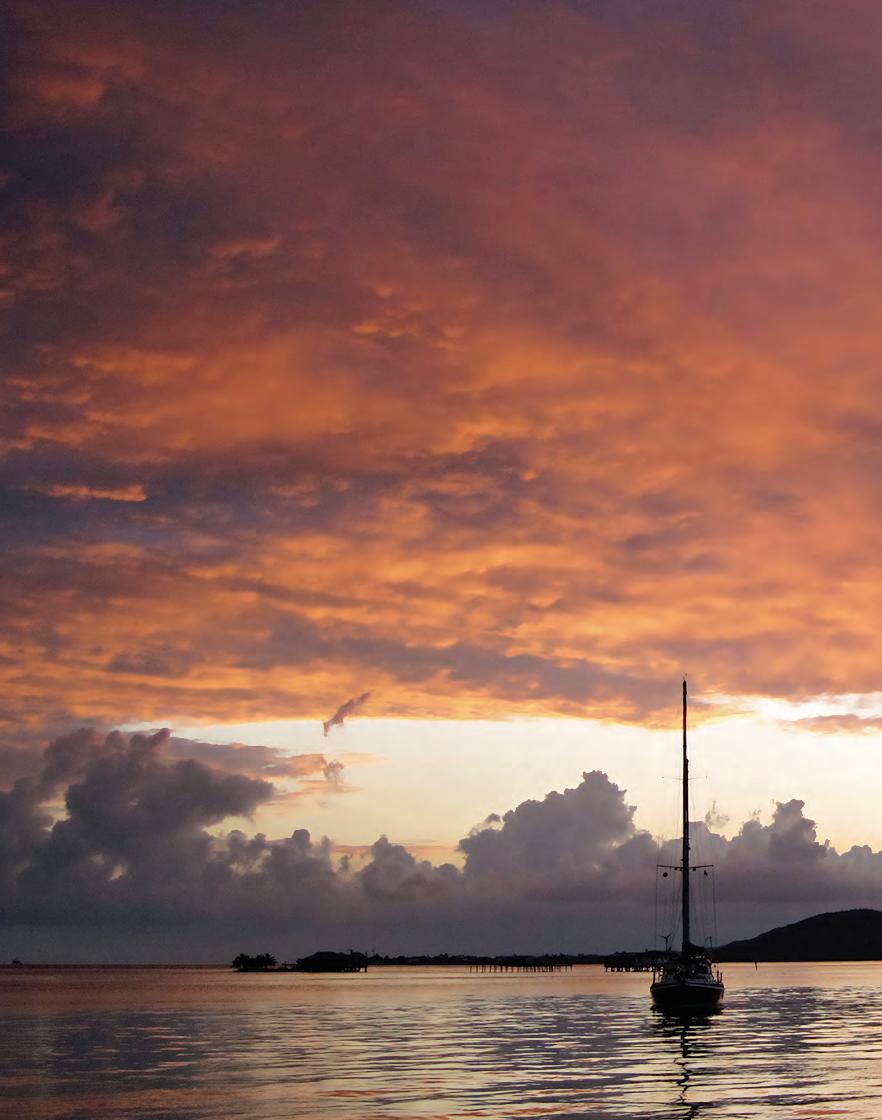 By Charlie Rakes - s/v Tika-too in Guanaja, Honduras
84 Latitudes & Attitudes | #41 Winter 2022/23
Underway! critters
By Nath NeumannNels Neumann’s dogs Snickers, Coda and Hanse


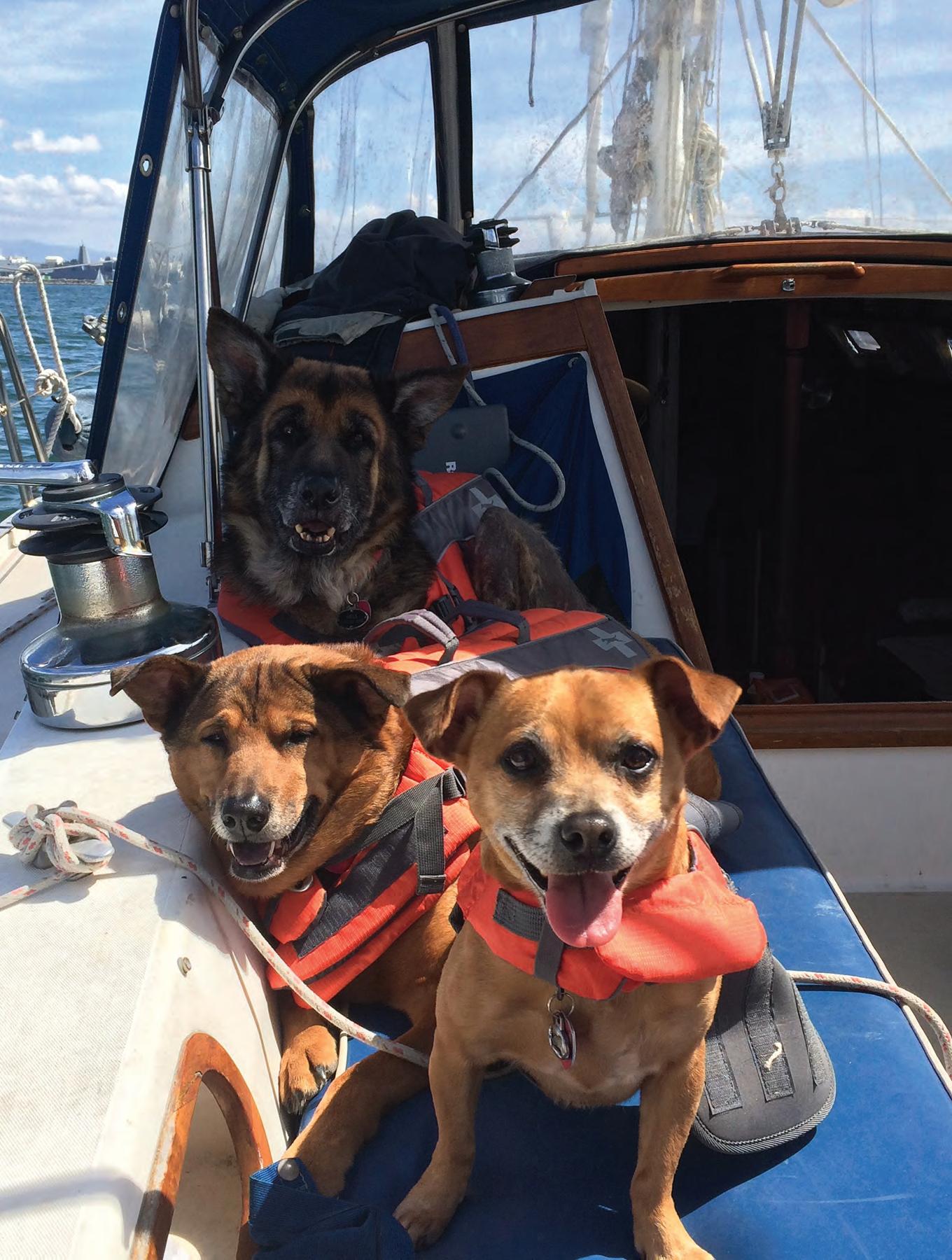
www. LatsAtts .com 85
By Chrystal Hendrix -
By
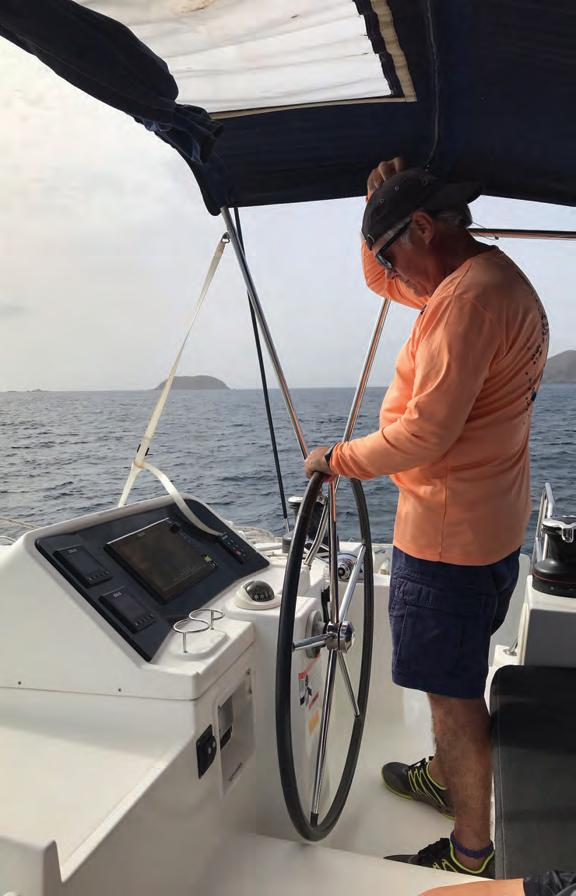
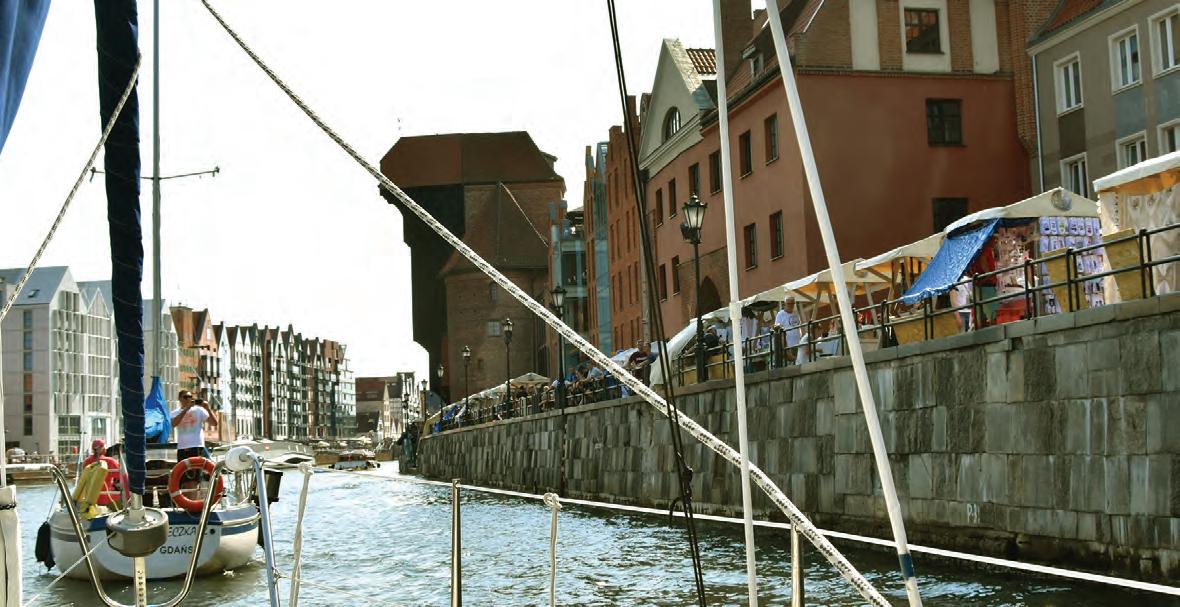
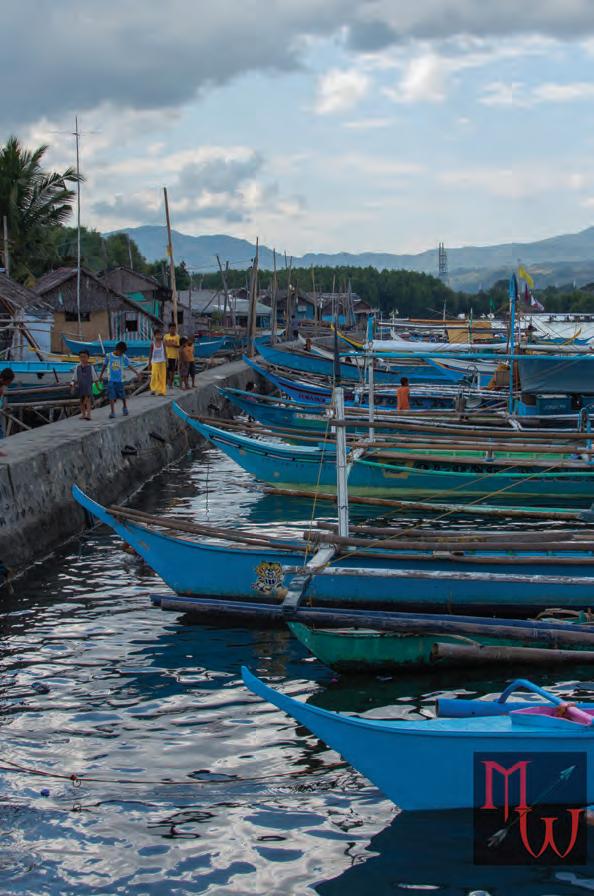
86 Latitudes & Attitudes | #41 Winter 2022/23
The captain has it covered? Of husband Doug, of Norman Island
Michael A. Williams - Wawa, Luzon, Phillippines
By Adam - The historic port of Gdańsk on the Motława River
By Sandy Edmonson
By
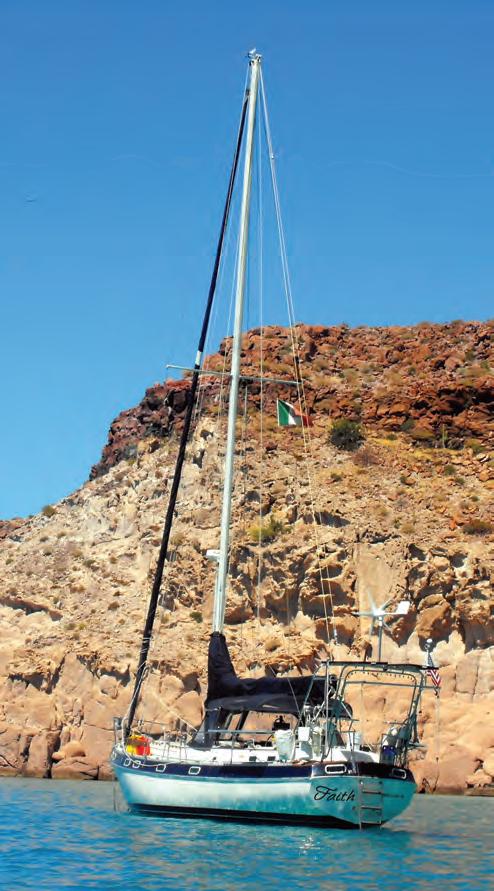

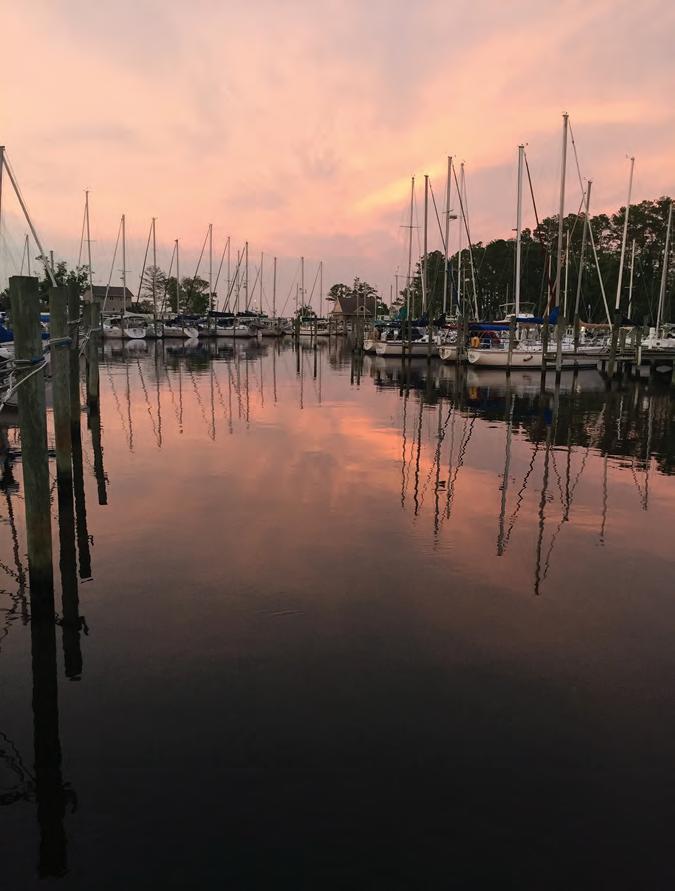
www. LatsAtts .com 87
By Dave Debus - Taken during sunset at Pecan Grove Marina in Oriental, North Carolina
Chris Dodgen - In Great Exuma, Bahamas
By Kim Browne - Denny and Tristian on Lake Erie
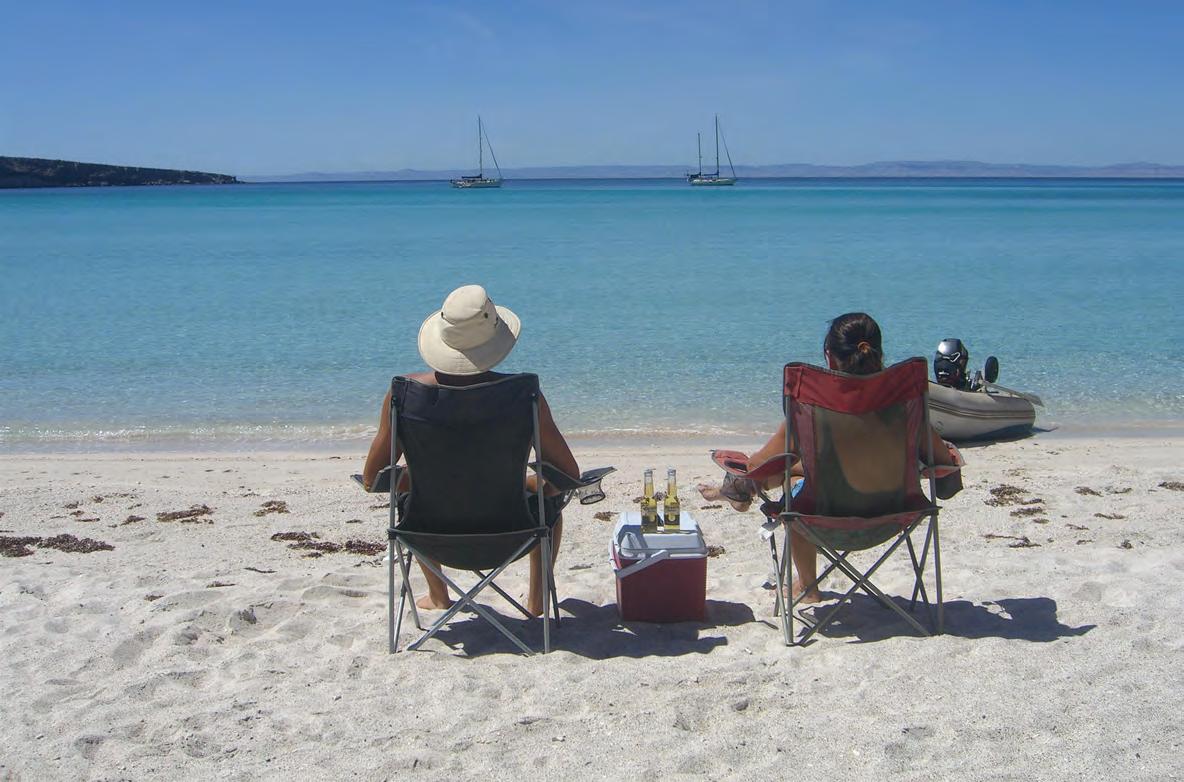
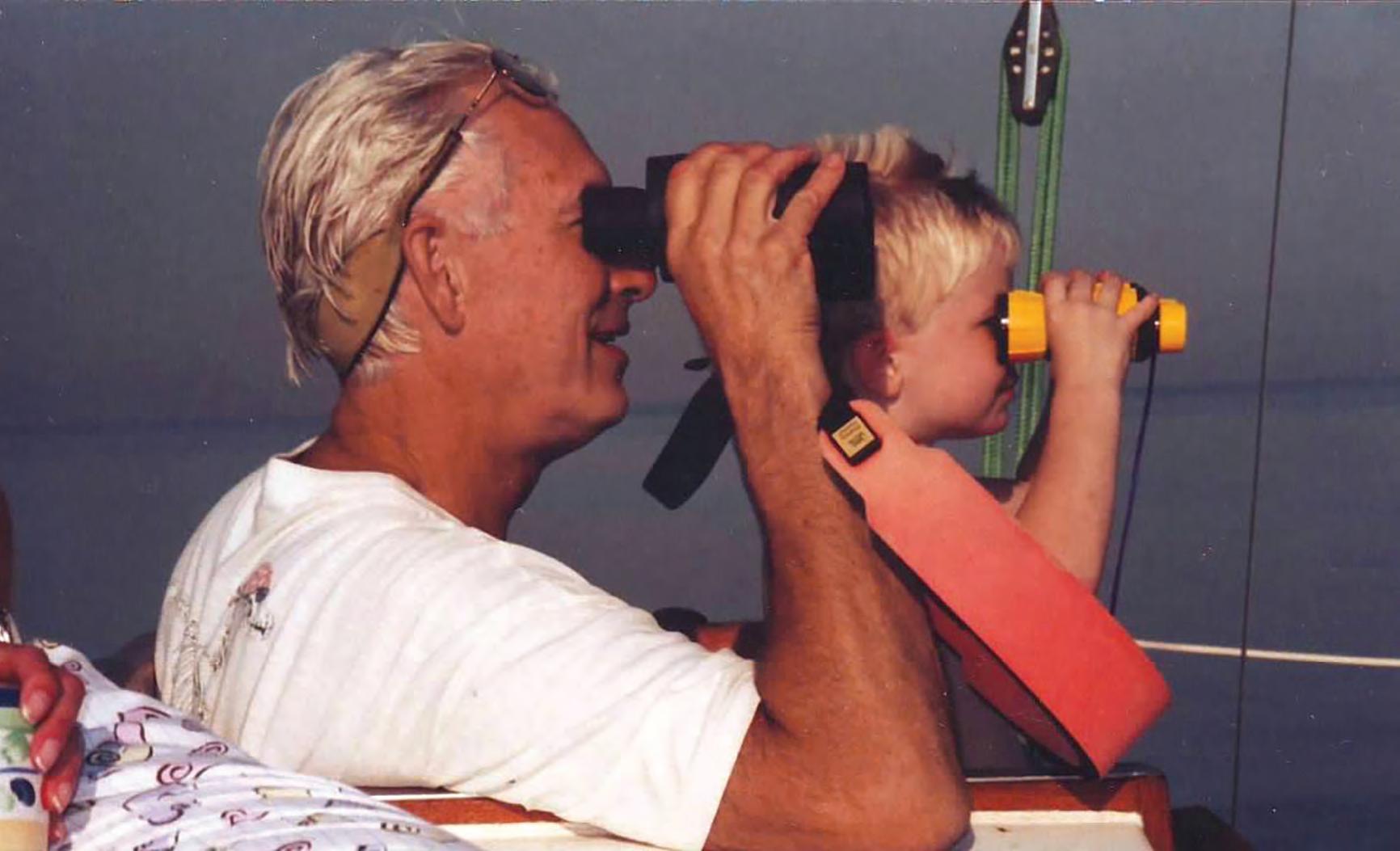
88 Latitudes & Attitudes | #41 Winter 2022/23
Richard Kirwan and girlfriend in Sea of Cortez, Mexico
Robert and Cindy aboard Tenacity in Horta, The Azores
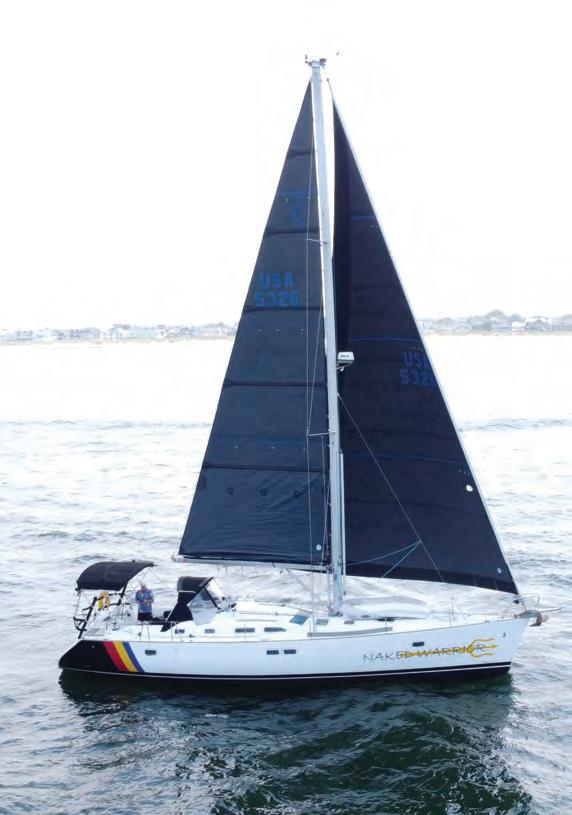
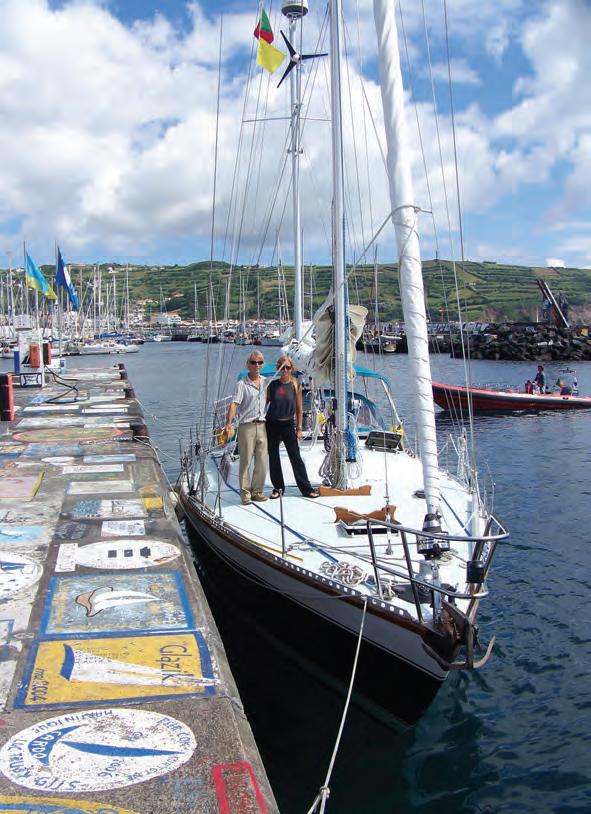 By Bill Hellman -
Former Silent Option now Naked Warrior. Taken of of East Beach, Norfolk, Virginia
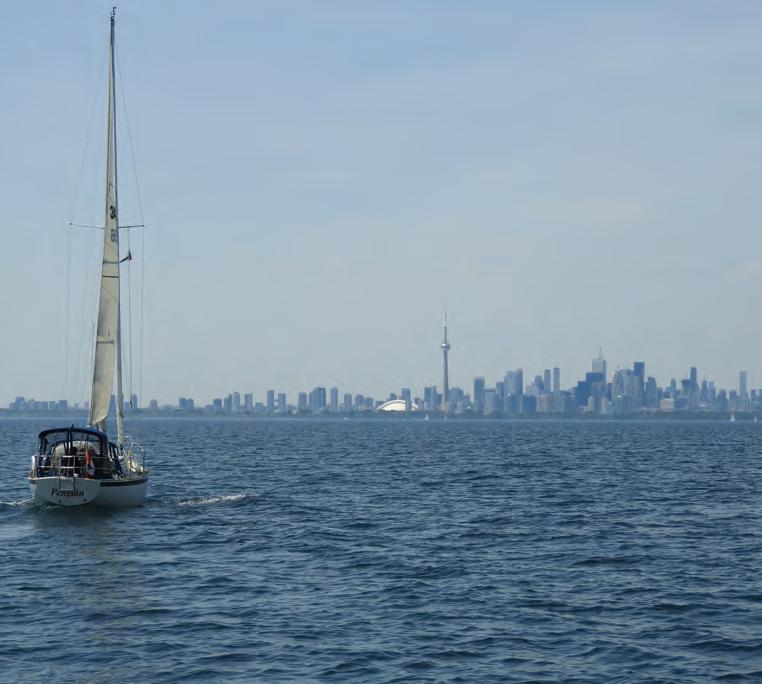
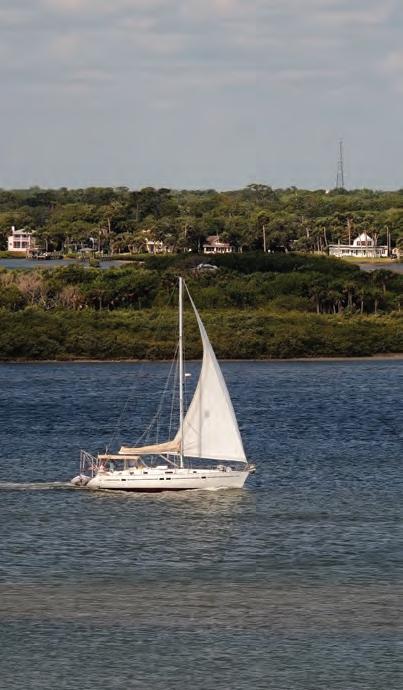 By Patrick Hill - Sky One Hundred anchored in
By
-
By Patrick Hill - Sky One Hundred anchored in
By
-
www. LatsAtts .com 89
Ray Muzika
In Port Orange, Florida
Glacier Bay
By Erik KyleBANZAI! Taken at Lake Erie at sunset
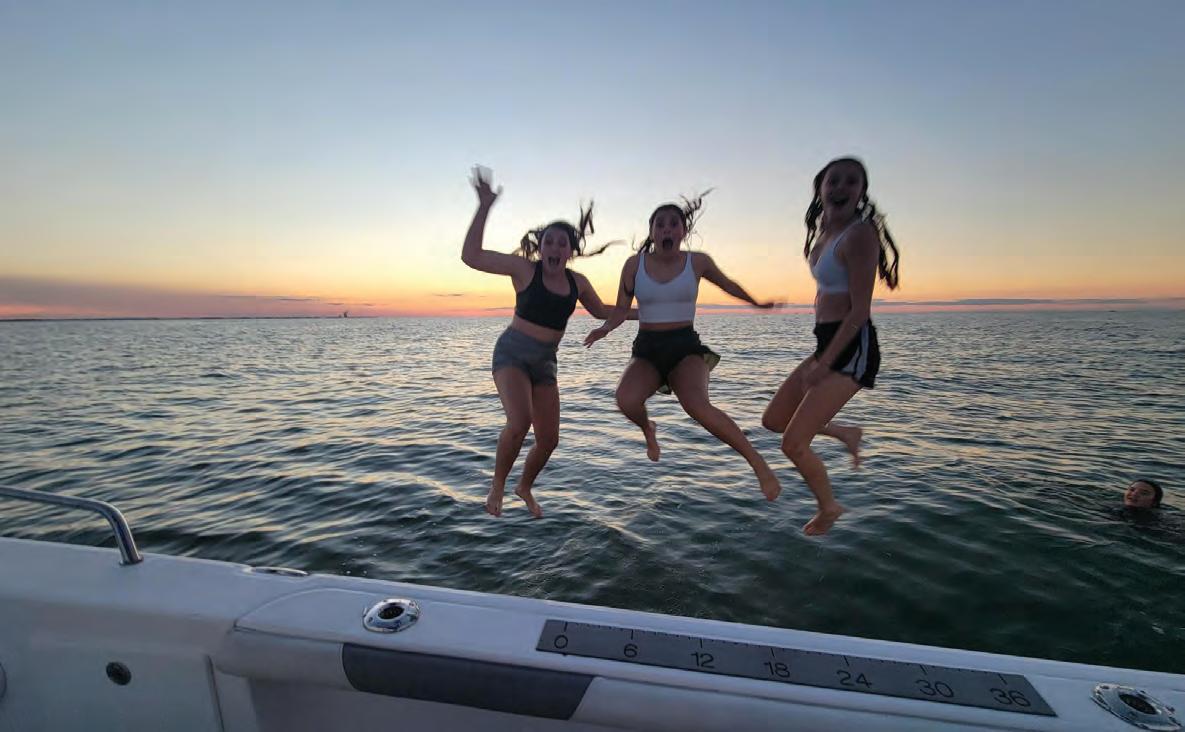
Kevin and
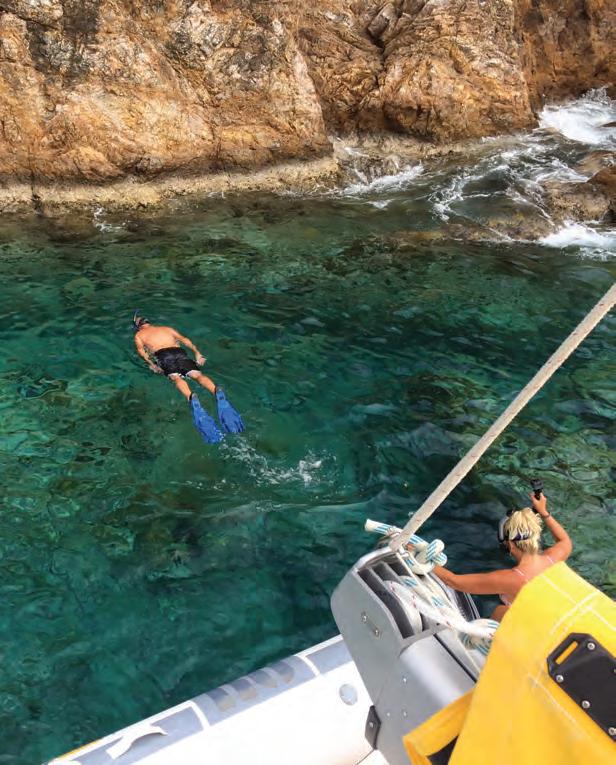
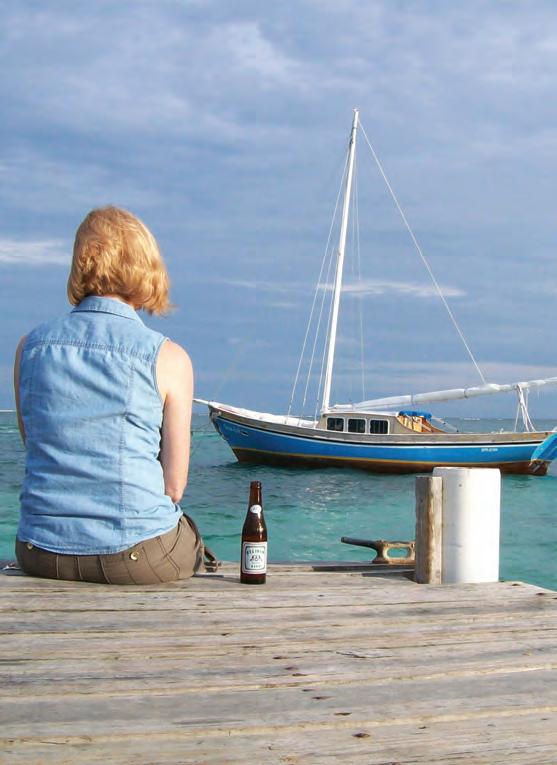
in the BVI
By
90 Latitudes & Attitudes | #41 Winter 2022/23
Andrea
Tom - Jean in San Pedro, Belize
By Richard Frankhuizen - Atop the mast
By Michelle Bennett - s/v Aquamarine near Green Turtle Cay
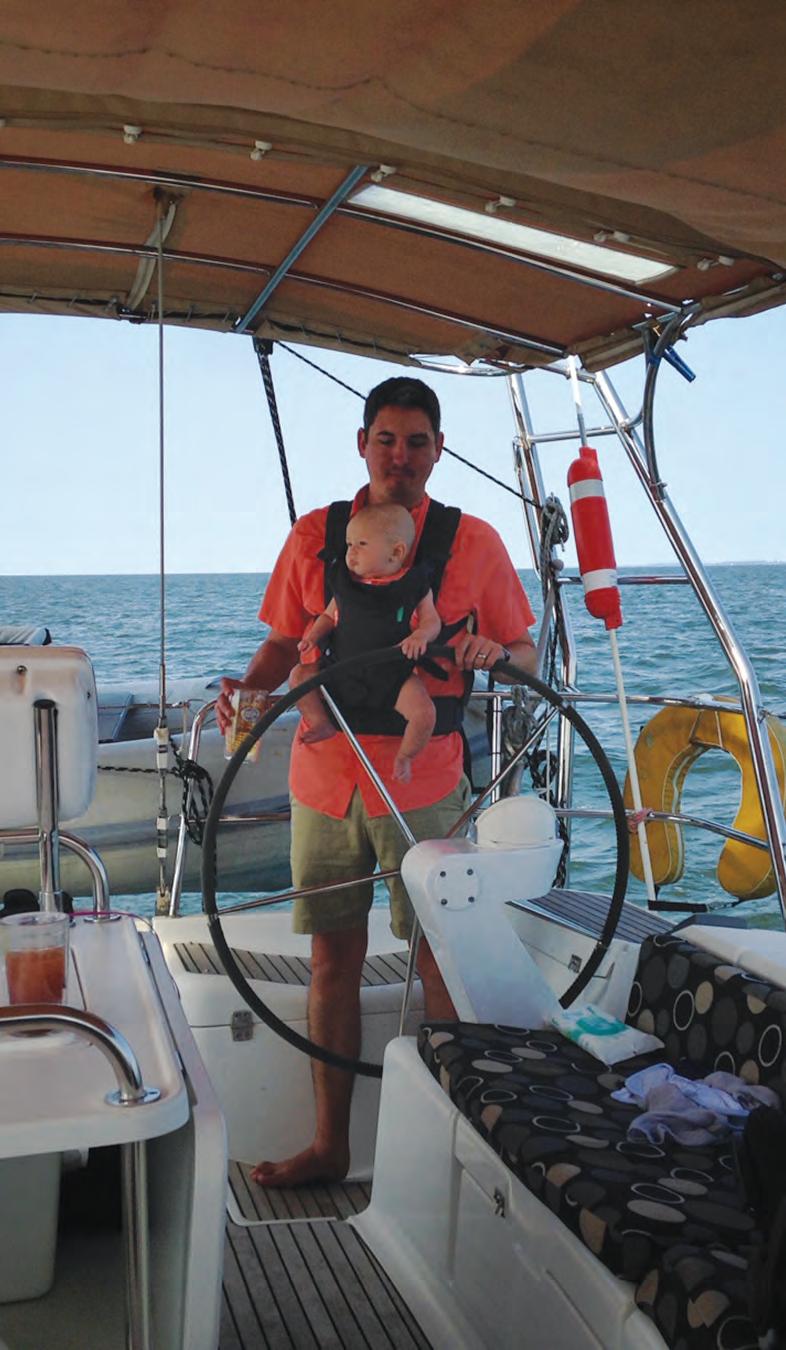
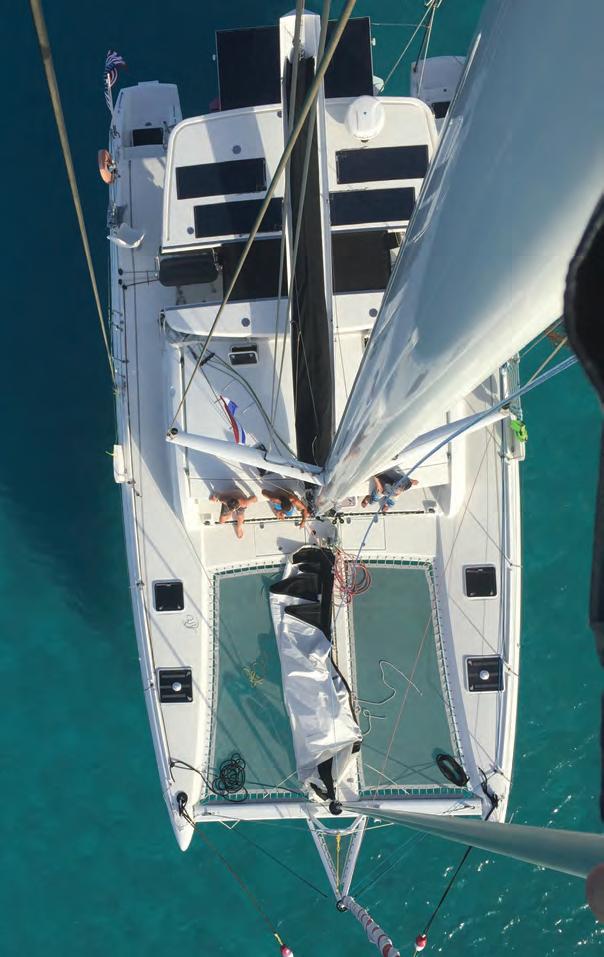
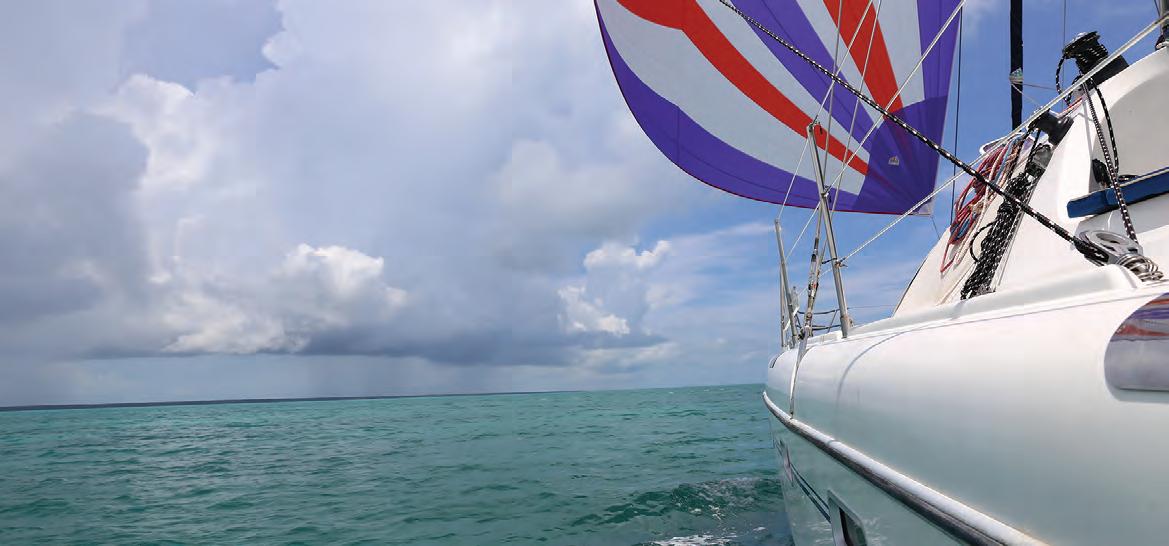
www. LatsAtts .com 91
By Tom Fleming - Tom’s son and grandson at the helm
critters
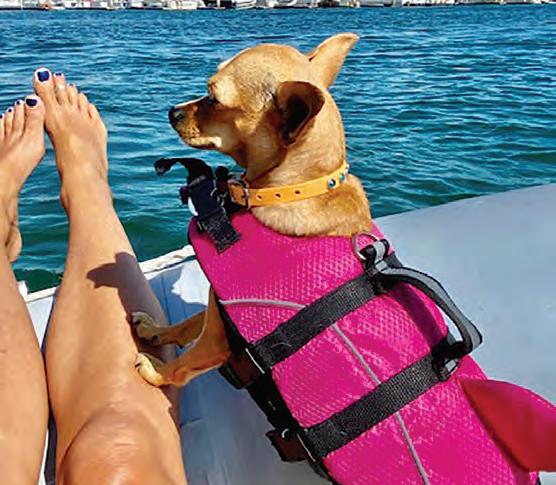
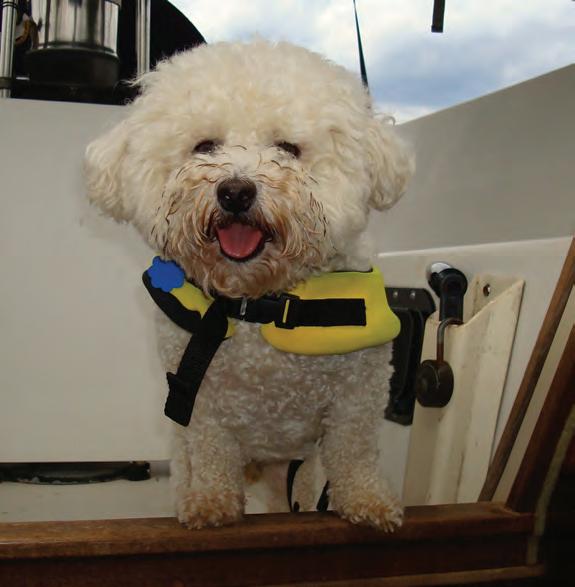
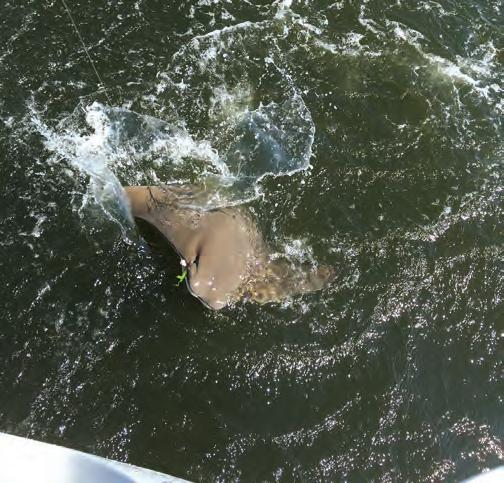
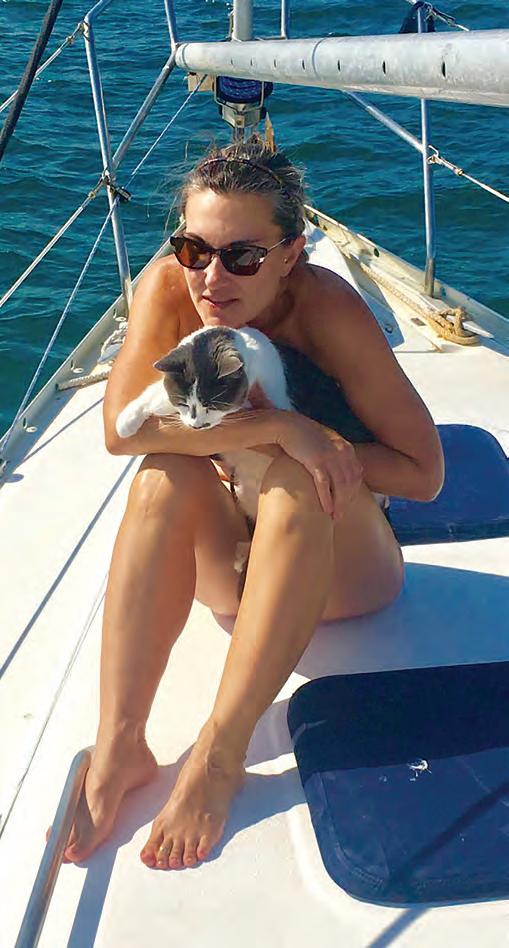




92 Latitudes & Attitudes | #41 Winter 2022/23
By Jim - Skate caught by Thomas Point Lighthouse
By Kirk WagnerAboard s/v Freedom Kirkland, on the way to Zihuatanejo, Mexico
By Cork Wherret - Crewman Booger aboard WINDWALKER on Lake Hartwell
By Tammy
By Murray Abbottin Toronto, Canada
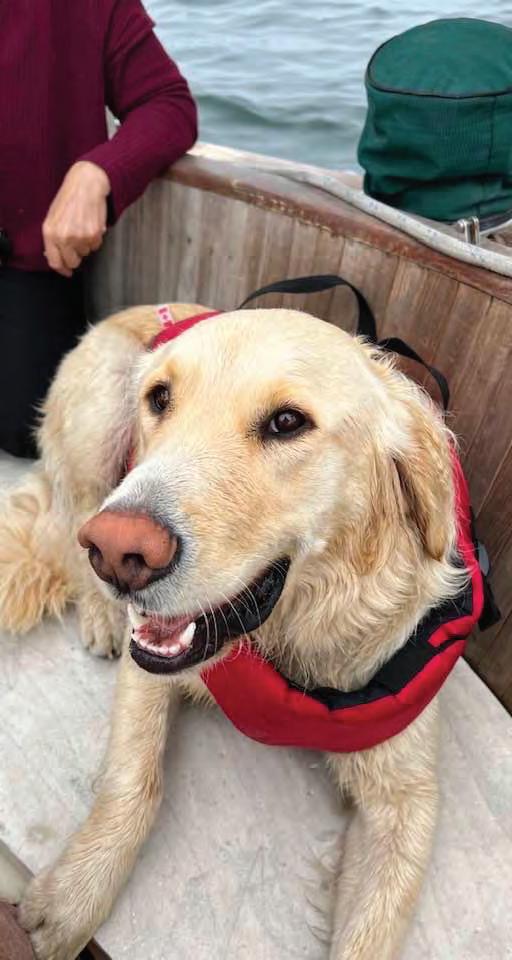

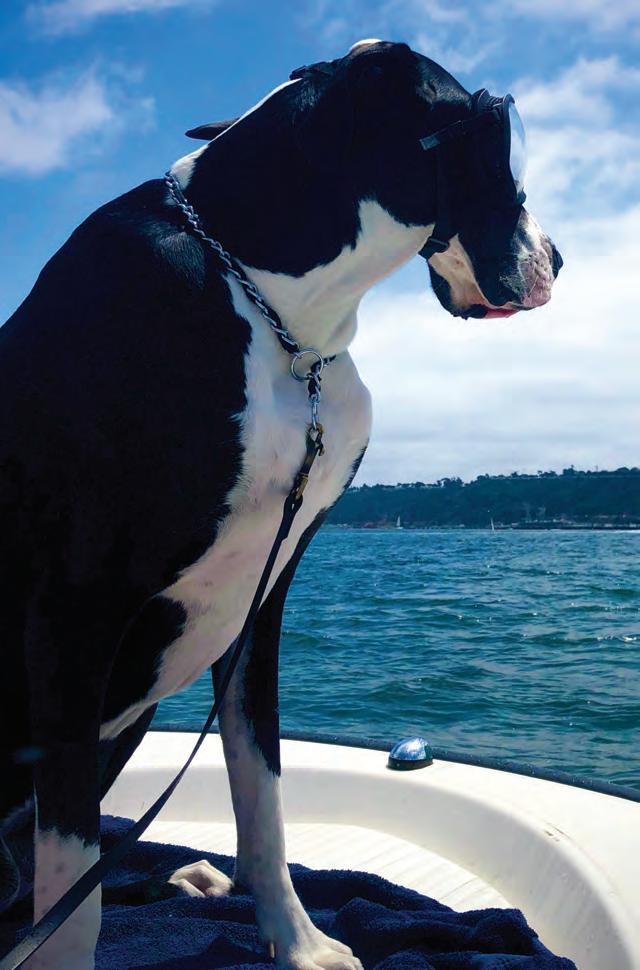
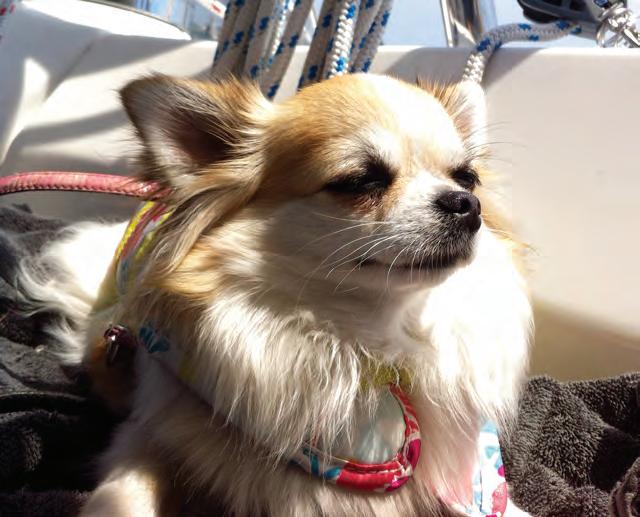





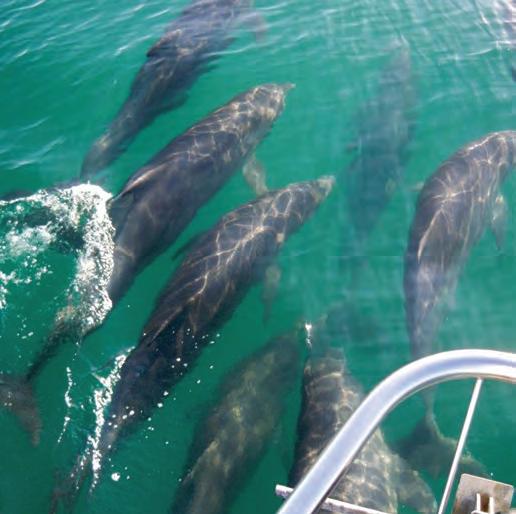 By Samuel DaleLady Dane
www. LatsAtts .com 93
By Mark Mason - Kona the Retriever LOVES being on Chiliad Falcon. Taken near Bodega Bay, CA
critters
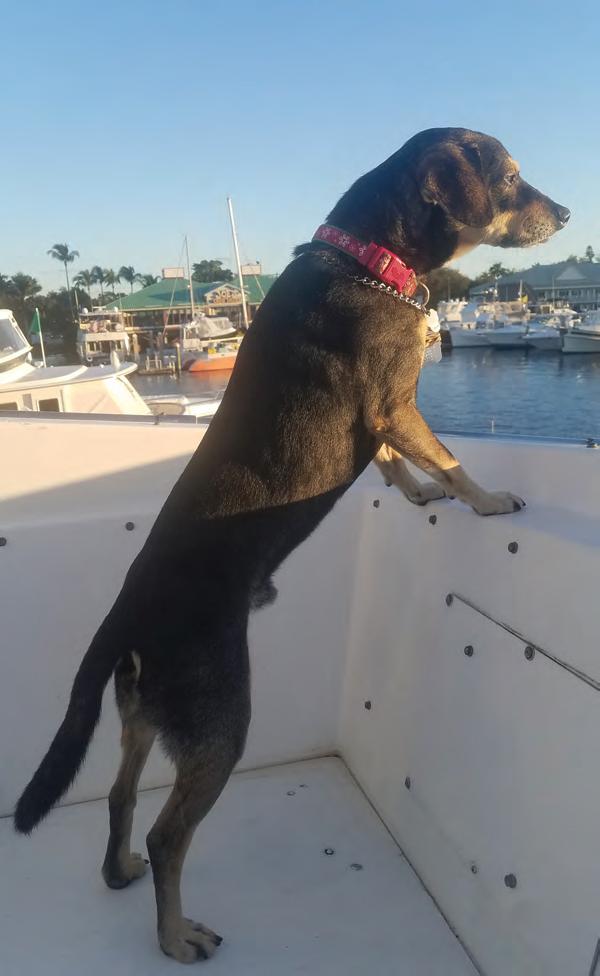
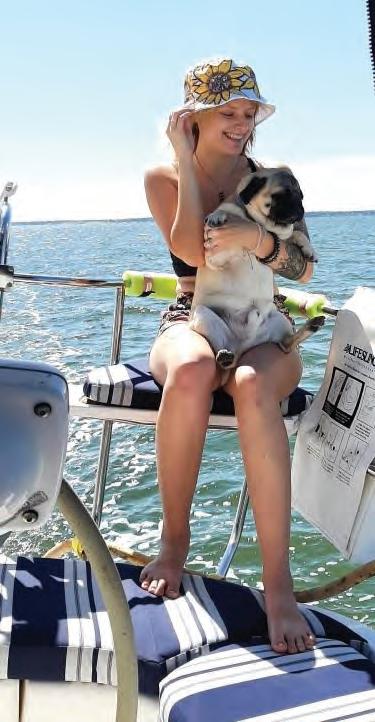
Underway!
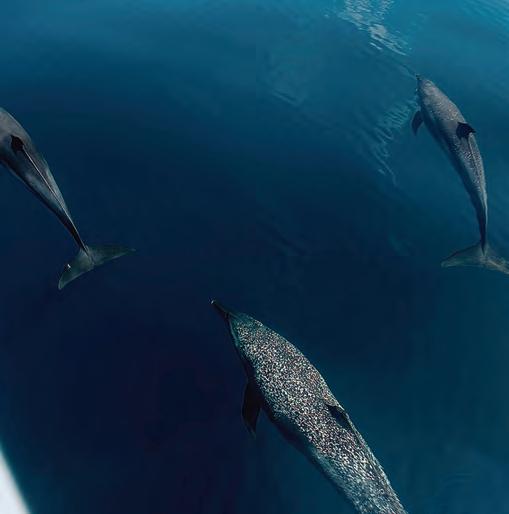 By Lauri - Ofshore of Barra de Navidad, Mexico
By
By Lauri - Ofshore of Barra de Navidad, Mexico
By
94 Latitudes & Attitudes | #41 Winter 2022/23
Christopher Mullins - Emily and Charlie the pug on s/v Barefoot Journey, out on the Chesapeake Bay
By Robert WaldropChecking out the sunset over the marina, on m/v Pau Hana
By Tim Putnam - First mate Elsa helping adjust the main

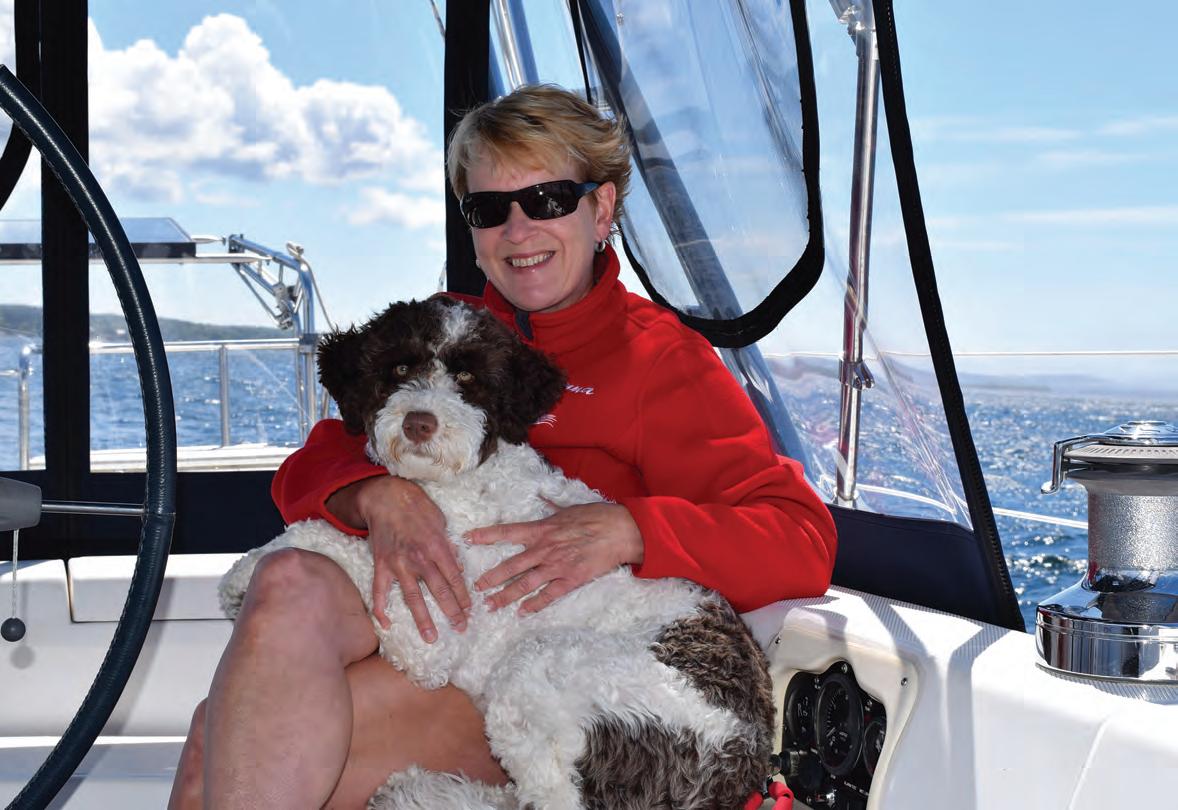
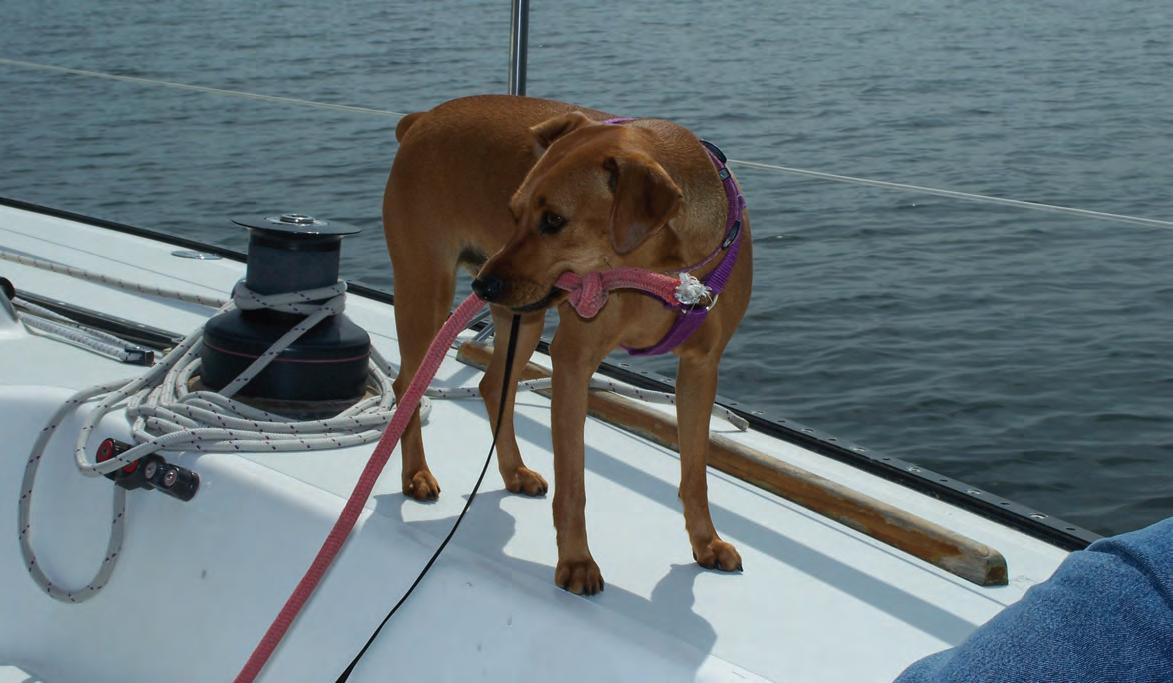
www. LatsAtts .com 95
Mary and pooch sailing on St. Margaret’s Bay, Halifax, NS
Yet Another Boat! Yet Another Boat!
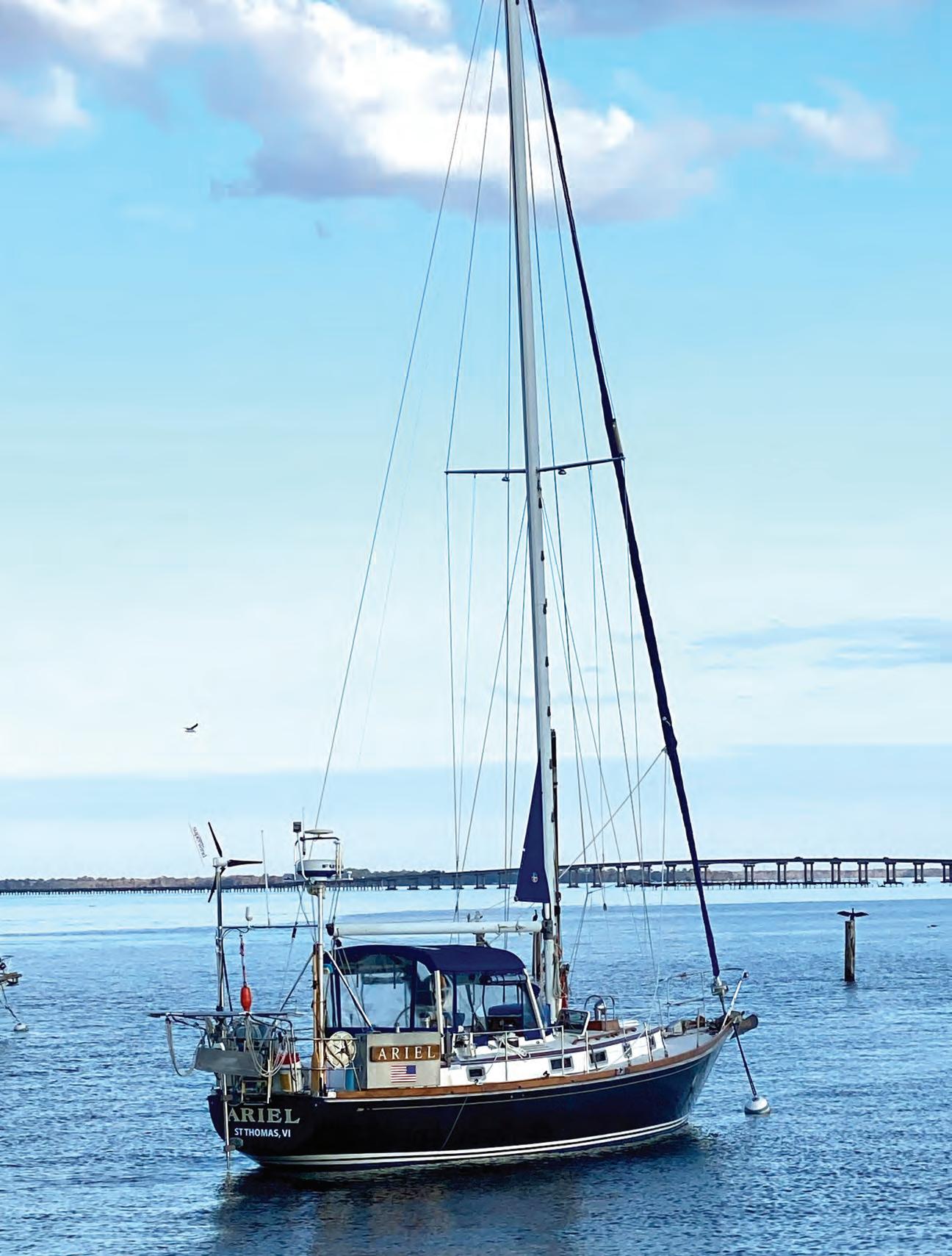 By Todd Duf
After four decades of having many diferent sailboats, one day I began to think of all of the vessels I’ve owned and realized that I had trouble remembering them all.

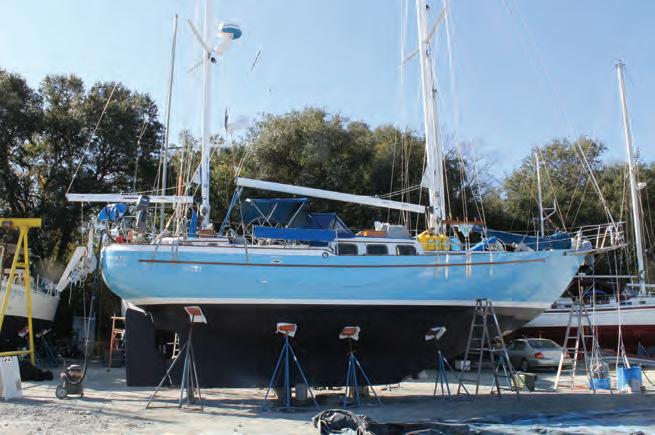
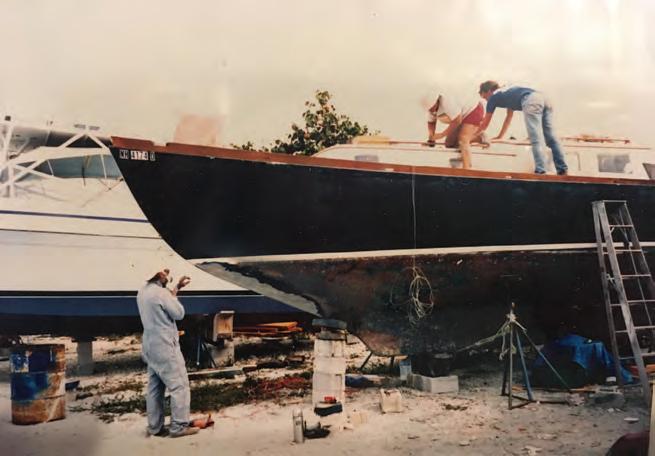
I decided to sit down and make a list of all these fne craft. As I began to write my recollections down, I realized that I couldn’t even remember all their names, which is kind of bad… kind of like an 1980s rock star trying to remember all the women they have slept with, I suppose… but I do certainly remember the details of the most memorable ones!
I bought my frst sailboat in my early twenties. She was a sixteen-foot comet class wooden daysailer/racer, well past her prime and no longer competitive. I sailed her for the spring and summer, every chance I got, and, by the end of the season, I decided I wanted something bigger.
Searching for-sale ads in the regional newspapers, I found a boat that had two pipe berths and a porta potty. She was a 1954 twenty-sixfoot Luders molded mahogany sloop with a fve-and-a-half-foot beam, which I bought at a bargain price after the previous owner’s sander went through the hull, leaving a square foot hole. “I can fx that,” I thought, and I did!
I remolded the stern quarter, restored her to museum condition, and kept her on an inland lake at a mooring feld. I had to buy a sailing dinghy to get out to her. I sailed her for two seasons and although she was a great overnighter, she was too narrow and small below to really cruise comfortably and with her non-self-bailing cockpit. However, she would have been a bit sketchy in big waves on open waters.
I sold her with the dinghy and bought a “real” cruising boat: an Amphibicon 25 which was reputed to be the frst trailerable production cruising boat design. When she was built back in the 1960s, she was an amazing piece of engineering; a strip planked cedar twenty-fve-footer with
a self-bailing cockpit, outboard motor in a well, and a pop top to allow standing headroom at anchor. That boat had four berths, cooking facilities, and even an enclosed head.
I sailed her for two seasons and bought a newer sailing dinghy to be her tender, but then needed money for a down payment on a house. So, I trailered her out to Maine and sold her to one of my best friends, who eventually took her on a long voyage south over the ensuing years.
Before long, I regrouped and bought a beautiful little Lyle Hess-designed Balboa 20 trailerable sailboat. This was my frst “plastic” boat. She was quite charming and, now with two young boys and wife as “crew,” I took her on a long summer trip around Lake Michigan’s Door County peninsula and outlying islands.
Sailing that little Balboa 20 in big waters made me want something more substantial, so I sold her to my family doctor and bought a fberglass Rhodes 28R. I enjoyed some great sailing with that vessel and built a sailing dinghy to ft on her deck. But then, after my frst marriage dissolved, I became involved with a woman who said she wanted to sail the world. Soon, we became engaged and decided to take of and go on a long cruise to the ocean, so I sold the Rhodes to a friend of mine and we searched around for something bigger.
I was probably somewhat distressed after a few weeks of being “boatless” and when I stopped by a local marina for some line, I spied a twelve-and-ahalf-foot trailerable cruising keelboat with two berths and a porta potty called a Sparrow for sale. I charged it on my credit card and trailered it home. We actually took our honeymoon cruise on that little boat!
Then along came a Morgan Out Island 33. It wasn’t the prettiest boat on God’s blue planet, but it was not very old, and my new bride said it was the smallest boat she could live on full time. It was also the biggest one in good condition that we could aford and so on that boat, I fnally
made my escape from the land of ice and snow and made way to Florida.
In Florida, my wife fell in love with a little Far East Yachts Mariner 31. It was indeed a beautiful boat with fantastic joinery work and salty lines – much prettier than the Morgan. Never mind that it had no engine or fuel tank and needed an entirely new deck. We paid for it with cash on hand and sold the Morgan which had a mortgage. A few months of hard work and that boat brought us up north to Annapolis, Maryland where my daughter was born.
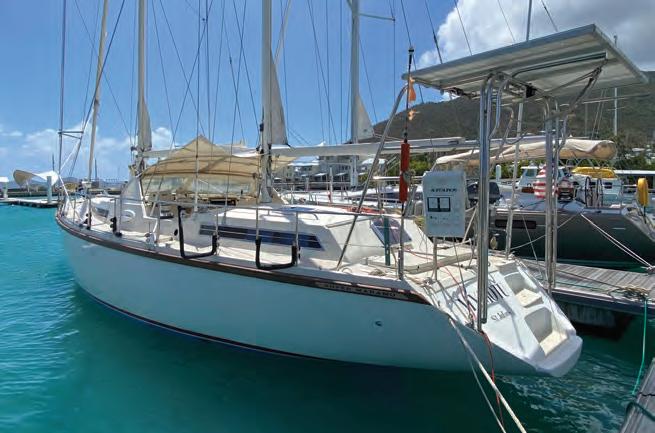
Now with a tiny baby and two young boys, we realized the thirty-one-foot boat was not going to work for a large family, and we somehow ended up with a bank repo Roberts 45 ketch that was in such a state of disrepair that it caused my wife to cry when she spent her frst day alone aboard. However, after two years of hard work, it became quite valuable. In the meantime, we had purchased a nineteenfoot Bristol Corinthian daysailer to go out on in the evenings which we sailed a lot because it was easier to go out on that than getting the big fortyfve-foot ketch, which had all hank-on sails, of the dock just for a short evening sail.
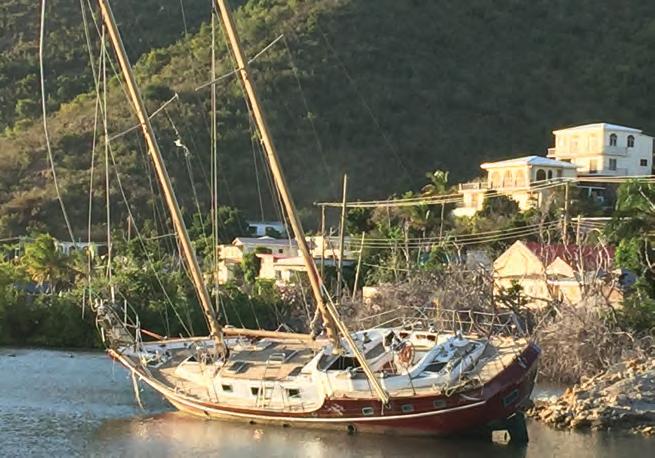
While we both worked full-time jobs, we spent all our spare time and money fxing up the big ketch for our eventual return to the cruising lifestyle. But, after two and a half years, we realized it was going to be a long time before we’d ever be able to aford to take of again, and so we decided to sell the ketch (and the daysailer) and just buy a smaller, newer boat that was more “ready to go.” This was a Westsail 32 and with another son born, we once again sailed away from the cold and cruised to thirteen countries with my troupe of little kids aboard. Returning from that voyage, my wife rebelled against the cruising lifestyle and demanded to buy a house. I sold the Westsail to one of my best friends and that boat went on to round
Cape Horn and even won the Annapolis-Bermuda race in her class under her new owners.
It was on to another succession of “dates with boats.” This included one design sailing dinghies, daysailers, small and large cruising boats and even a pretty cool all-out Frers designed and built thirty-nine-foot racer in which you couldn’t even stand up below decks… none of which I really bonded with, but all of which I had a lot of fun sailing! After a few years, while I was feeling stranded ashore, my wife decided she needed to return to the frozen north and moved to Alaska, so I set about fnding a way to return to the sea. With little money but with a lucky break, I ended up with a fabulous but nearly derelict Colin Archer ketch. My cousin had found that project boat where she’d been lying in crumbling disrepair in an industrial boatyard near Baltimore with vines growing over the rotting deck and carpenter bees living in the bowsprit. Despite the boat’s atrocious appearance, she had beautiful lines and to me she was the epitome of seaworthiness and salty looks! My cousin got discouraged with the enormity of the project and left to fnd a boat she liked better, so I bought the boat and hired a couple of full-time shipwright employees to completely rebuild her. They, in turn, hired my then ffteen-year-old eldest son to work as an apprentice. When the ketch was completed, I loaded the kids aboard and we proceeded to sail her to nine more countries. She was fnally sold when it was time to go back to work.
A succession of interesting but “not-quite-right” boats followed. First, there was a Wauquiez 43. Then, a couple of Morgans – a 416 and 46, both of which I owned at the same time. I was working in both Florida and Maryland, and this saved on hotel rooms and was a whole lot more fun than an apartment! Then there was a Downeaster forty-fvefoot schooner which brought me back to the Caribbean.
98 Latitudes & Attitudes | #41 Winter 2022/23
YET ANOTHER BOAT!
She was followed by a fabulous ffty-eight-foot schooner named Kai Kanani which was often seen sailing Caribbean waters until she was lost in Hurricane Irma in 2017. I had sold her to downsize and had decided to take another long world cruise, but after buying and outftting a perfect little center cockpit Corbin 39, I met an English woman with three kids who wanted to go cruising too… so I sold that boat and bought a sixty-four-foot steel brigantine with room for all the children! I took that one on a cruise to most of the countries in the Eastern Caribbean, but eventually the lady left and took part of my crew away. As providence intervened, I re-met a real sailor lady, an old friend I’d known from the 1980s who had lost her husband to cancer a couple of years before.
We then took the ship back across the Caribbean, through the Panama Canal, into the Pacifc, and eventually back to Panama. By then, all my kids were grown and had left the forepeak, so I sold the brigantine in Panama and we bought a Westsail 42 up on the East Coast that my new lady just never bonded with and so after two trips through the length of the Bahamas and fnally back to the Eastern Caribbean, we sold that one in St. Thomas, few a third of the way around the world and bought a ffty-foot Flying Dutchman cutter in Hawaii, on which we made a major of-the-beatentrack Pacifc cruise. I was once again starting to run low on funds, so when I was ofered my old position back in the British Virgins, I agreed to return to work. But the stipulation was that I needed to be back in nine months’ time, so we set about getting the boat ready to make a marathon voyage to the Caribbean from halfway around the world.
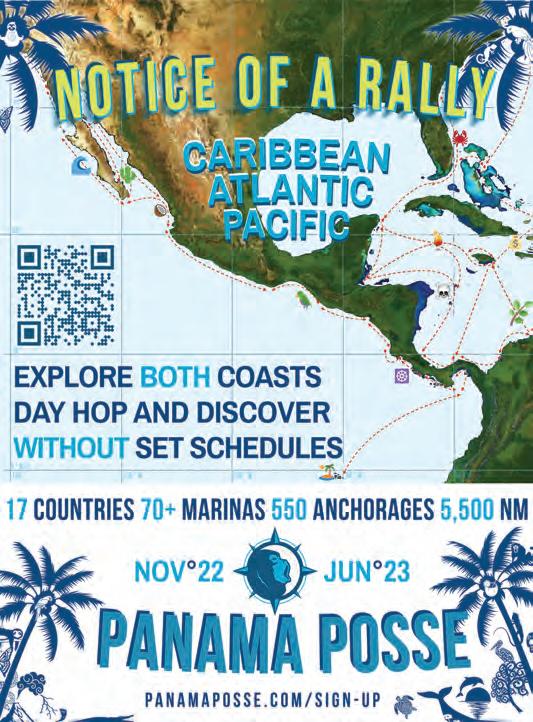
I had also, just as an experiment, put an ad in one of the Australian boating magazine. From that ad, a Canadian engineer living in Thailand stepped up and bought the boat sight-unseen just based on photos and my conversations with him on the phone. Luckily, when he showed up, he loved the boat and he then jumped aboard and sailed her fve thousand miles to the Philippines where she still sails today out of the yacht club in Manilla.

After we sold the Flying Dutchman in Fiji, we decided to look for a slightly smaller boat that was within reasonable sailing distance of my job in the Caribbean, but after a couple of months living out of suitcases while searching all over southern Europe and the Eastern Seaboard of the US, we became mesmerized with an Amel Super Maramu ffty-three-foot ketch in Antigua. We bought that boat and spent the summer sailing the Eastern Caribbean islands and then I started the new work situation in the BVI. After two years sailing locally in BVI waters, we realized that the fftythree-foot boat was too big for just two people and so after searching around a lot, we found a super nice forty-six-foot Amel which we decided was going to be our retirement boat.
We were about ninety percent of the way into reftting her and having her exactly like we wanted when Hurricane Irma came along…
Irma’s over-two-hundred-mile-per-hour winds took my job, my car, our boat, and much of my enthusiasm for living in the Caribbean away with it. It took me six months to fnd another boat I liked well enough to own, and in the meantime, we had decided to try to take of for the South
Pacifc again, right away.

Seven months into the ownership of a beautiful Hallberg Rassy 42 and while back in Grenada, we realize that with both of our mothers in quite frail condition, and having lost my lucrative job over a year before, that we really could not justify taking of to go cruising full time again just yet, and so we decided to make another change and sold that boat while she was still in near perfect, ready to go condition. We advertised her with my oldest son’s brokerage in the BVI and she was under contract within 48 hours!
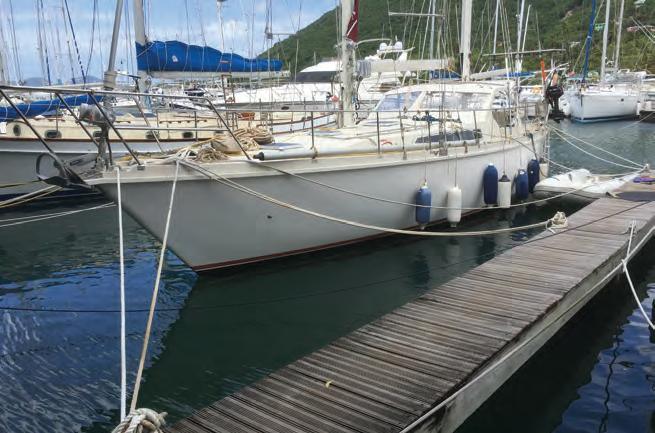
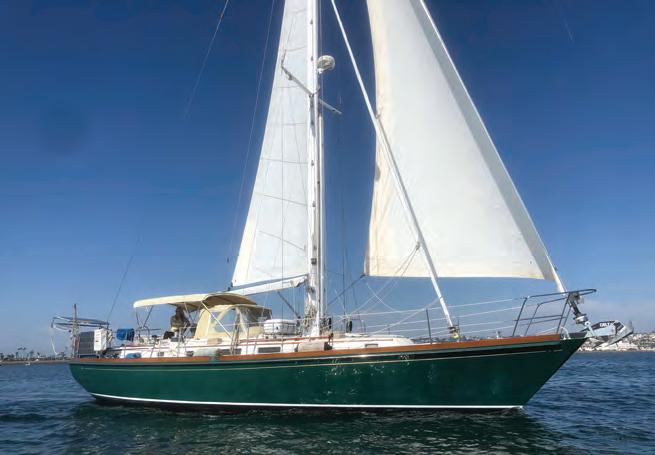
We then decided to try to fnd an older, less valuable boat on the West Coast, so we few to Mexico and set out on a threemonth search for a suitable vessel. In the meantime, my son at the brokerage told us about a center cockpit Alden 50 in the BVI which needed a new mast but had been largely undamaged from hurricane Irma. We bought that and few back to the Caribbean to set it right. We also ended up fnding a mast from the wreck of my old schooner, Kai Kanani! After many months of work, the boat was relaunched and looked great, but I was not in love with it, and it was still too big for us. Remember, we had been trying to downsize, and yet it seemed like we kept being lured to these larger vessels!
We sold that boat and once again returned to the West Coast to try to fnd a smaller vessel. Four more months of looking and driving our small RV from southern Baja Mexico all the way to British Colombia turned up a few interesting, but not quite right vessels. Then I found a good-looking forty-seven-foot Bristol for sale in Florida, so we few back east and bought her and although it was still a little larger than what we had been hoping for, we spent four months reftting it and trucked it to California with plans to cruise the Pacifc again. Then, COVID-19 happened, along with the closures of most of the island nations in the Pacifc, and the stress of those times caused a change in our direction.
My girlfriend and frst mate of ten years had decided she wanted to fnd a new place to live ashore, so we sold that boat and once again, this time as a single man, I found myself searching for the ideal boat in which to undertake further sailing adventures. One coast-to-coast trip of looking at boats all along the Eastern Seaboard and in the Caribbean brought me to eventually fnding a beautiful Tayana 42. It was a vessel I had actually sold back when I was an Annapolis broker to the now aging owners some twenty-one years before. They had enjoyed a wonderful two decades aboard, but were retiring to land life. I travelled back to the Caribbean and set about reftting this “new-to-me” boat for further adventures. Because all my connections with contractors and shipwrights were in the Virgin Islands, I decided to sail her over to St. Thomas where my ex happened to own a house. I put the boat in a nearby marina there and went to work setting it right and over the next four months, she and I gradually came back together. Then, in the spring, she sold her house and moved aboard. We went sailing westward and got the boat up to Florida where we decided that, with our fve adult kids and three grandchildren between us, we really needed a boat with two heads and a better layout for two couples and children. Plus, we realized that we really had liked that Bristol 47 we had owned. Unfortunately, none of those were available and, with COVID in full swing, many of the boats that we might have been content with had been sold and in general, boat prices had gone through the roof.
So, we went on another worldwide expedition trying to fnd a boat we both liked which was not overpriced. We had a contract on a beautiful Oyster 435 in Tahiti and almost closed on that, but the owners had ‘stripped the boat’ and it also needed some work, and we realized that reftting and equipping a boat in French Polynesia was going to be both
YET ANOTHER BOAT!
expensive and difcult. We traveled coast to coast searching for a decent vessel and after a lot of miles looking at quite a few “lost causes,” we happened on a “for sale by owner” Bristol 43.3 which was super well equipped, but in need of extensive cosmetic and general maintenance work. We made a low but fair ofer which the owner accepted, and we had another great boat! The owner was very knowledgeable and had equipped the boat nearly as we would have done, and I think he was relieved that he could pass her along to experienced sailors who would continue to cruise her internationally.
On that vessel we are now traveling and fnally fully retired. She’s a terrifc cruising boat and we feel she’s the perfect size, as well as something that should be afordable to maintain in what we hope with be the long term. I realize that it seems like I’ve had a lot of boats, but I have also had a blast playing with all these vessels over the years. I guess you could call me a “sailboat playboy.” Looking back at all these boats I know that they have all had their good and bad points and there are some I wish I had never sold, while there are a couple that I wish I had never owned! I also know that there is no perfect boat, but that each time I own a diferent vessel, I get a little closer to fnding the perfect set of compromises.
A nice byproduct of my fckle life of boat ownership is that every so often I sail into a harbor and there at anchor is a boat I used to own, or at least a sister ship. Memories food back and sometimes I become wistful remembering all of the blood and sweat it took to bring a boat back to its former glory, and of all the good times had aboard. Many of my former vessels’ owners have kept in touch with me. I hope that overall, they’ve appreciated what I have done on each boat I’ve owned. I’ve always tried to spend what is required and to do what is right for the various vessels in order to preserve them, improve them and keep them in ocean worthy condition.

ABOUT THE AUTHOR Todd Duf has owned ffty-six sailboats, has sailed to over thirty countries and as an accredited marine surveyor and former yacht broker, he has sailed on many hundreds of other vessels. He is also a writer for many of the popular sailing magazines and author of Bargain Boats and Budget Cruising, a primer on how to fnd and buy a great boat and prepare it for cruising on a minimal budget and Kidnapped from the Caribbean, an adventure novel currently under negotiation to be made into a major TV mini-series.
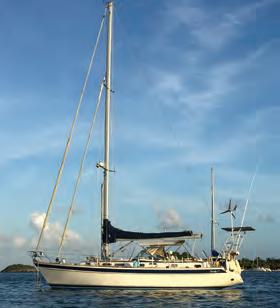
www. LatsAtts .com 101
Technology and Gear Trends
I’m part of a lot of judging panels in the marine industry, so I get to see some of the most innovative technology up close and frsthand.
The prestigious NMMA IBEX Innovation Awards, held every September, generate interesting products each year – some geared toward the industry (as in how to build boats and parts) and some toward the consumer (as in used by boaters). This year I few to Tampa only to turn around and get out of dodge as Hurricane Ian barreled down on us. The show was canceled, but the awards carried on virtually, so here are some curated choices to arm you with facts for rousing cockpit cocktail conversation that will make you look so “in-the-know.”
PYI REVOLVE
By Zuzana Prochazka
This one really had us tickled. Revolve by PYI is the world’s frst rollable boat hook – that’s right, a boat hook that can roll up for storage. Rolled up, it’s about the size of a large mug and weighs under one pound. Deploying one is like waving Luke Skywalker’s lightsaber. With a fick of the wrist, the handle of the hook extends, becomes rigid, and morphs into a six-footlong handle. Then you attach the actual hook part, and it’s ready to go. When you’re done, just peel the sides apart and roll the hook back onto itself. Magic.
The whole thing is made of non-corrosive composite and has a sixty-six-pound working load when pushing and pulling. I tried to punish it, but it held up nicely, and it’s quite lightweight. The drawback is that it doesn’t telescope beyond six feet, but it will get most jobs done. Other attachments are soon to be disclosed.
102 Latitudes & Attitudes | #41 Winter 2022/23
THE DOCK
TALK OF
THERMICA CUPHOLDER
Cupholders have proliferated onboard boats, and now there’s one that will keep your beverage hot or cold. Gussi Italia (resold by Syntec Industries) has developed an electric cupholder for the thermal regulation of your drinks. We’ve seen cupholders that cool before, but never one that does both heating and cooling, and never one that didn’t require a remote compressor installed somewhere else. The Thermica cupholder is an all-inone compact unit, and if you cut a hole in a dash or cockpit coaming and run power to it, your cofee will be hot and your beer cold.
GARMIN VOICE CONTROL
Voice assistants (Alexa, Siri, etc.) are making consumer electronics easier to use, and the technology is fnally seeping into the marine industry. With a free software update, compatible Garmin chartplotters can support voice commands when a user’s compatible wireless headset or speaker is paired with Garmin’s Voice Control USB module.
Instead of “Alexa,” you say “OK Garmin,” followed by a question or command like, “What is the depth?” and the unit responds with “The depth is ffty feet.” Other uses include changing pages on an MFD (say, from radar to a chart), adjusting screen brightness, taking screenshots, and providing information for tides or fuel levels. No cellular connectivity is required, you can select the language you prefer, and it’s all hands-free, so you can concentrate on the task of driving the boat.
The technology is tuned to work in diferent environments (inside a boat or out) and with background noise like wind and water. Various wireless headphones (like Apple AirPods) are compatible with the Voice Control module – all you need is a Garmin electronics suite –check your model with Garmin’s list. No Garmin? Well, stay tuned; I’m sure voice control is on the way in more ways than one
The marine-grade, rugged stainless-steel cup has a low profle and can be fushmounted. It accommodates cans, bottles, glasses, and cups up to four inches in diameter and has a built-in drainage hole to manage condensation and spills. When it’s cooling, the rim is blue, and when heating, it’s red. You change the setting with the press of a button, and if you press three times, you turn the unit of. If you don’t like to cut holes in your boat, I suppose you could just wire one or two of these up in a decorative box to keep near the helm.
COOL STUFF
These are just three of the seventy products we reviewed from this year’s awards. Many others were oriented to the process of boat building, so not terribly useful for Lats & Atts readers, but let me leave you with this: Massivit is a company that does custom FRP 3D printing – of all kinds of boat parts from radar mounts to swim platforms. This year, they introduced mold-making that cuts the production process from nineteen steps to four so molds for parts can be made faster, cheaper, and with less waste and more accuracy. Mind blown.
Now you can invite friends, grab some beers and enjoy a hearty discussion on how all this makes you feel old.
103
www. LatsAtts .com
By John Simpson
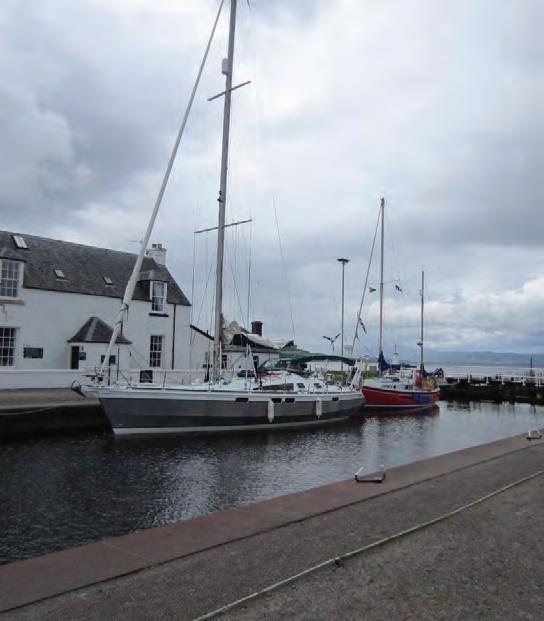
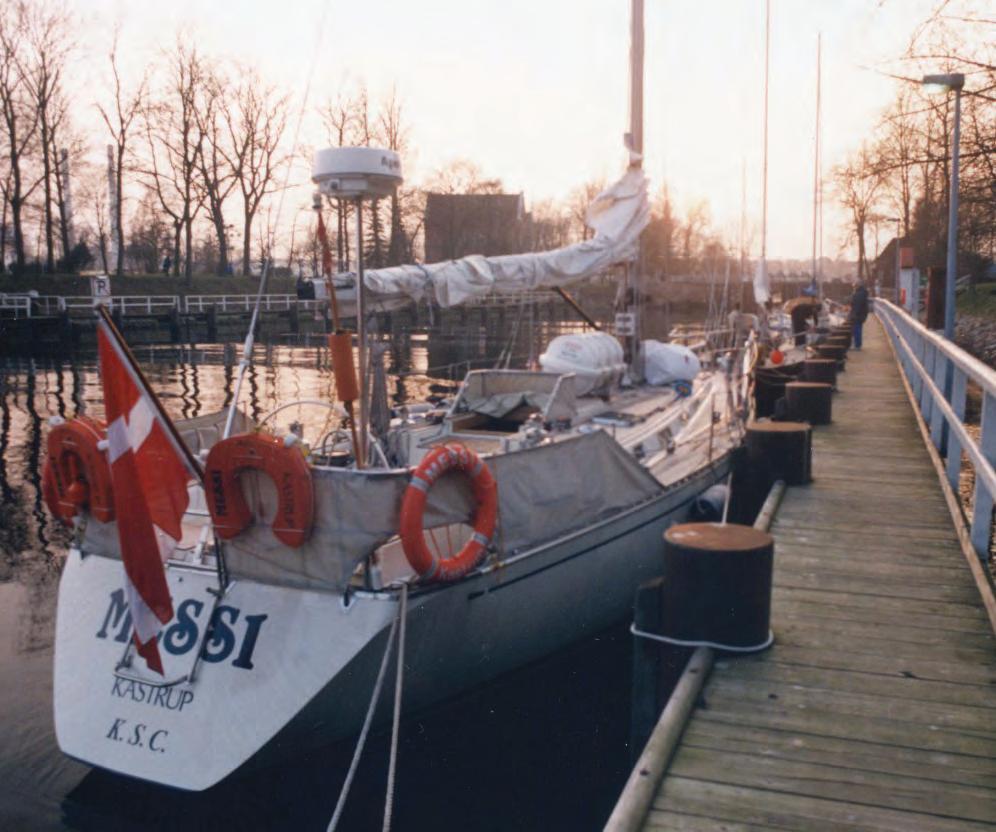

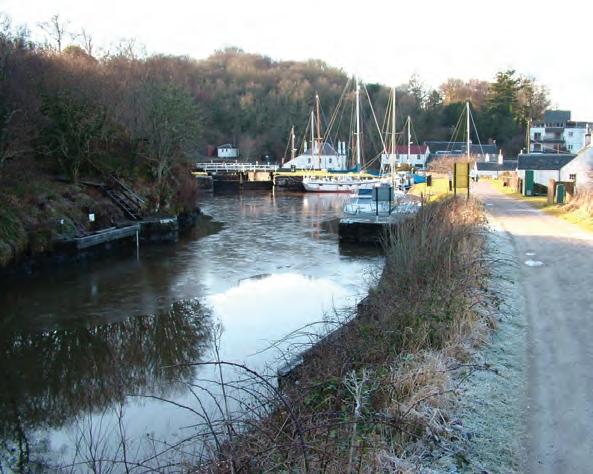
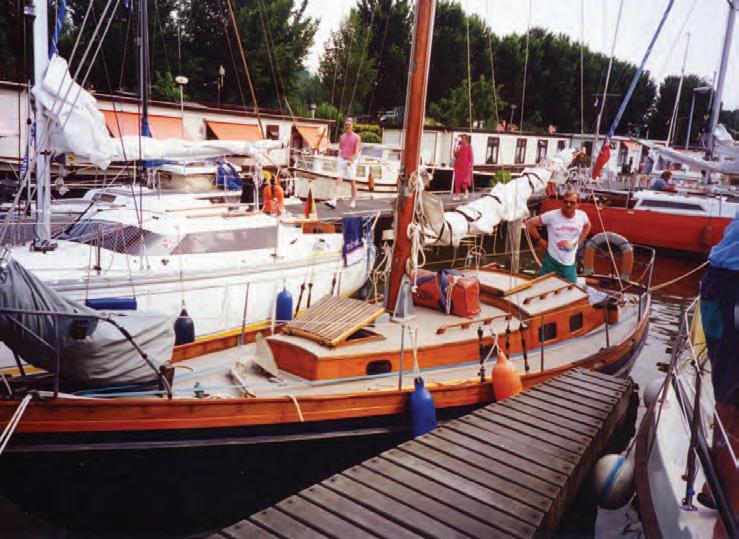
While Enjoying Your Holiday Cruise CUTTING CORNERS
Lifestyles
My parents taught me this when I was a nipper. Keeping their boat on the River Crouch, they went “foreign” to visit France, Belgium, and Holland, crossing the North Sea during the mid-ffties through the early sixties. My father saved all his annual holidays, which gave them a month to do so. We were often back late, extending our cruising to fve or six weeks. My mother was extremely seasick when we were ofshore. Half of my schoolboy summer holidays were spent in Dutch canals. Maybe because of these amazing holidays, I’ve spent a large part of my life sailing, coaching, or examining on yachts.
What I have learned from my dad’s thoughts was how often to save time when cruising, by using a canal or waterway to get where you want to get quickly, without losing or putting of my mom.
Most sailors cruising around the world don’t want to go around Cape Horn or Cape Aguilas, when they can avoid most of South America or most of the African Continent. Most leisure yachtsmen use both these canals to go around the world efciently. Many other canals in Europe or North America. Such as heading down to the Mediterranean through France on the Canal du Midi, avoiding the Skagerrak by using the Keil Canal, or going south or north on the east coast of the States by using the ILW.
There are many of these manmade shortcuts that are brilliant to use, such as the Caledonian. Corinth, Cape Cod, or Crinan. (Some of them, like the Corinth and Cape Cod, are waterways, having no lock gates).
When I grew much older, my parents set of to visit my sister in Strasbourg on their old motorboat, Ronjo 11. My sister lived aboard on large French barge in France called Audace in Strasbourg for many years. With our family history, they were stressed at times, but they also enjoyed their last adventure.
Some years ago, my wife Janet and I had just fnished a long reft on our 26 ft. Dutch boat and decided to try and take her back to Kampen, Holland, where she was built. We’d bought her on the Hamble from a broker after I’d recognized she was a Kroes. George Kroes had become a friend of my parents when we cruised the Dutch canals; I’d fallen in love with his yachts as a kid.


We were unable to aford more than sixteen days’ break. Plus, our daughter Kyra didn’t like sailing, especially in Northwest Europe. She’d had organized a holiday in the Mediterranean with a school friend on a much larger
www. LatsAtts .com 105
“If you’re off on your boat for a family holiday, it makes sense to cut diffcult corners by using shortcuts. They usually save time if you have some particular destination in mind.”
catamaran. Her brother Wes would be coming with us, but he would have preferred to have a friend along. But our dates didn’t ft with his pals.
Our large brown spotted Dalmatian Simmy and his lifelong female tortoiseshell cat and companion Jessy were put into a local kennels/cattery in Lymington. This family organization does make holidays slightly stressful before starting, but then you’re away…
After several days of quick passages via Newhaven, Ramsgate, and after anchoring of the Naze tower before reaching Southwold, we had a day’s break with a few good ales from Adnams.
We crossed the North Sea to Ijmuiden in thick fog. Janet has now gone, but she never forgave me for this passage. She felt I was pushing too hard to get to Kampen. But after a week’s sailing, we’d reached Amsterdam via the Noord Zee canal, locking in there after a nasty overnighter.
It was busy with many Dutch yachts. One cloggy yachtie waved and came aboard Blauwe. He asked, “is this a Kroes yacht?” (We were the only wooden boat in a full lock of plastic!) “Yes,” I said. Then he remarked, “She should never be allowed into English hands,” which upset me slightly. Or my son Wes remarked, “Good job. You were very tired, John. Otherwise, he’d probably be swimming.” He knew well I wouldn’t put up with any rudeness about our fne boat…

To cut this yarn short, both Janet, Wes, and I realized we all needed to enjoy Amsterdam. It’s a lovely city. We didn’t have enough time to go to Kampen. We returned via The Hague, Flushing, Ostend, Gravelines, and down a windless south coast (motoring). A huge high after Ostend enabled us to keep having fun. We had to use our fubber to get in for more fuel at Newhaven; then reached
CUTTING
WHILE ENJOYING YOUR HOLIDAY CRUISE
CORNERS
Littlehampton quite late. Finally, we arrived at our mooring at Marchwood in Southampton Water with almost a day in hand. Our small Clinker Jupiter sloop had eaten up many miles quickly.
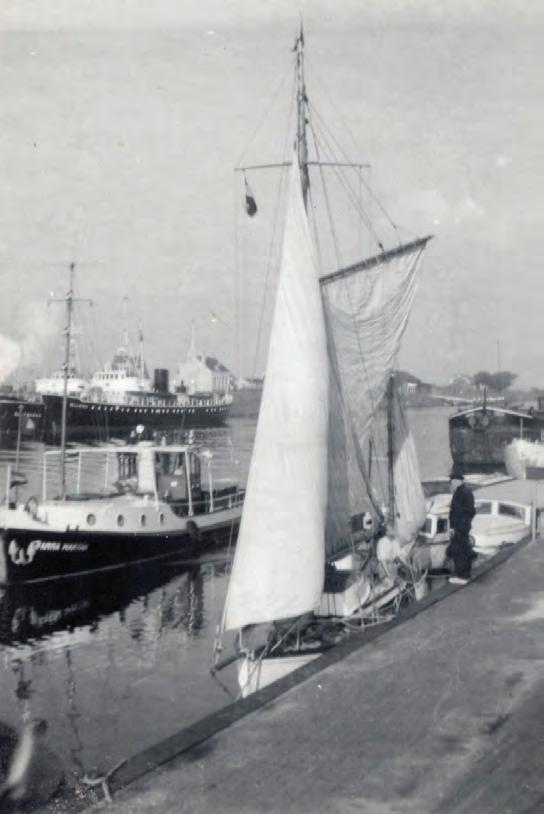

When I did fnally meet Mr. Kroes a couple of years later, he remembered our boat. “She was called Apollonius originally, John,” He told me. “Her owner won several North Sea races with her. We built composite iron frames around her the mast to make sure the rig stayed tight, but then found they weren’t necessary.”
I breathed in very slowly. “Oh, okay, I replaced them. It took me some time-bending, ftting, and getting them galvanized”. I mentioned if he remembered my mum, dad, and sister, but he didn’t. Forgive him; he was ninety-four and still cruising with his daughter and grandkids.
You can extend your holiday aspirations by cutting corners. Some of them are very beautiful places with remarkable trees, plants, wildlife, etc. These can and do add quality time aboard, making it diferent from just bouncing around ofshore. Too many crowded locks can also slow your passages down, though. Hence, using them must be a balance as to what you’ve understood about staying ofshore or cutting out some places by going inland.
www. LatsAtts .com 107
The Story of the Sailboat Esperanza
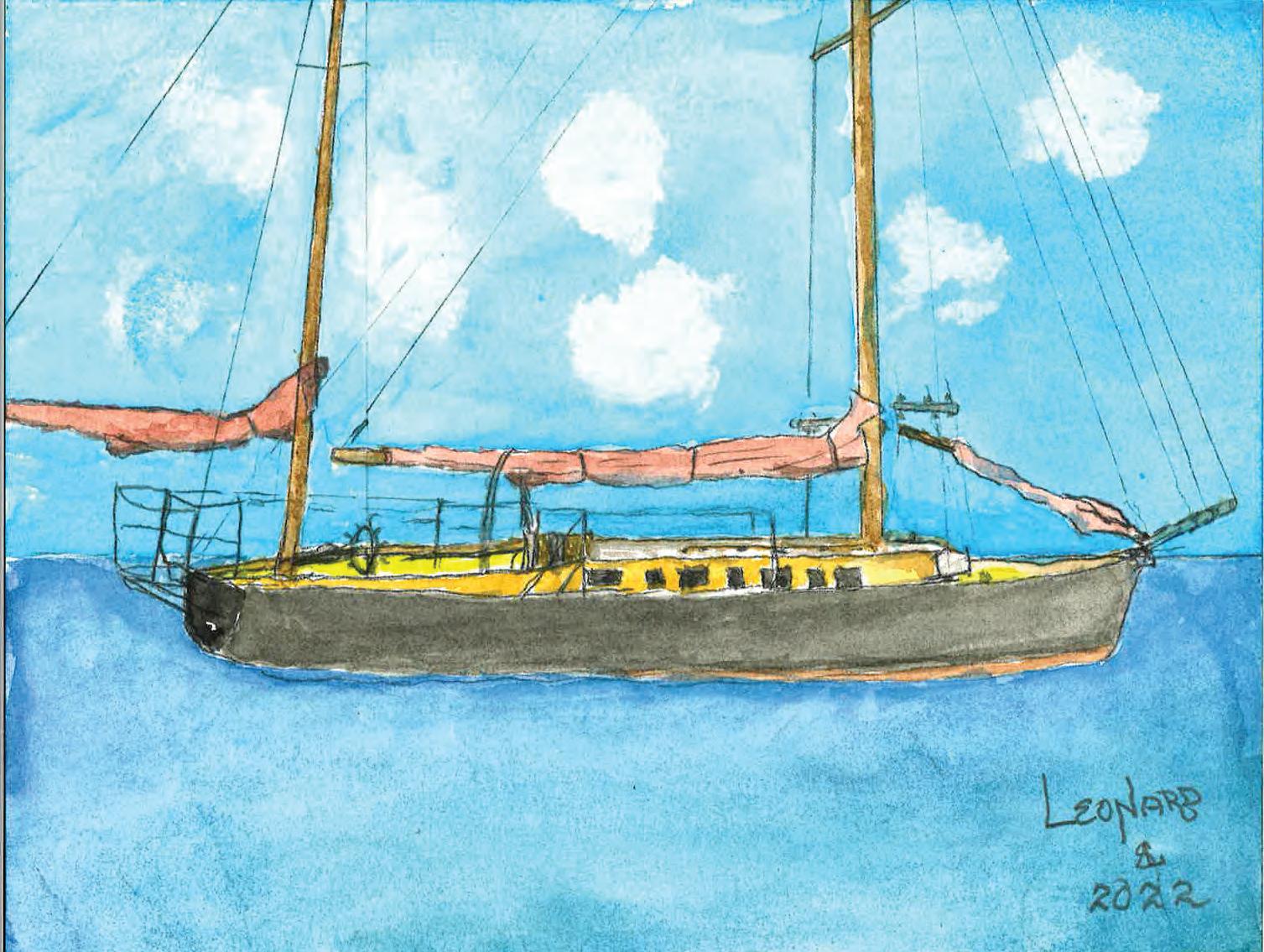 By Samuel Leonard
She was the sailboat of my dreams.
I frst saw her when I was twelve years old. When I found out my family owned her, I was in heaven! She was a type of boat with two masts known as a yawl. Her length was about ffty-fve feet, plus a very short bowsprit. The hull was black, and her sails were red canvas. Can you just imagine how that looked to a twelve-year-old?
So, what about the nautical terms for your landlubbers? Sails and masts should be self-evident. A yawl has a very tall main mast toward the front
(bow) or near the middle of the vessel and a shorter mizzenmast close to the back (stern). We identify a yawl when the person steering the vessel (the helmsman) is in front of the mizzenmast. Ketches and sloops are diferent. A sloop has only one mast. A ketch has two masts, but the mizzen or second mast is in front of the helmsman and somewhere nearer to the middle of the length of the boat. A bowsprit is the piece of wood pointing forward of the bow and is attached to a cable that keeps the masts from falling backward.
108 Latitudes & Attitudes | #41 Winter 2022/23
Lifestyles
You now know everything there is to know about boats that sail.

So, where did the Esperanza come from? This history is all from memory. It is fragmented but still useable. I was told she was originally owned by the American Ambassador either to or from Cuba. This was in the early 1900s. When World War I started, she was commandeered by the U.S. Navy and outftted as a “Q Boat,” or quiet boat to be used as a submarine hunter. They installed a single diesel engine. The idea was to run out into the ocean or the Gulf of Mexico using the noisy diesel and, when on the station, shut down the engine and silently sail along, using listening devices to hunt for enemy submarines. This was long before sonar. You must admit that is an exciting history.
The years between the two world wars are blank to me regarding the fate of the old Esperanza, but as the Second World War started, she was once again in the hands of the navy, searching for submarines. When the war ended, she became salvage, and our family in Pensacola bought her. We fxed her up, and with the reftting, she became lovely again.
We sailed on occasional weekends. Mostly when we could round up a crew, for it took a few experienced hands to make it all work. We would sail around Pensacola Bay and usually past Forts McRee, Pickins, and Barrancas and head into the Gulf of Mexico. We often went to the wreck of the Battleship Massachusetts that was scuttled at the end of the First World War as part of the disarmament plan. I don’t think it stopped many wars.
So why the long harangue about an old sailing boat we had for a few years? Well, as a pleasure yacht, she did her job for a diplomat and for some other families. When called upon, she did her part to help us in two wars. I wonder if those young navy men who crewed her were bored and unhappy, or did they know they were having a signifcant adventure of a lifetime? I don’t know if they ever found a German submarine, but I know that she and her crew tried very hard to do so.
We also do not now know what happened to her. Is she sailing some were with pride, or is she a derelict and forgotten, or is she just gone? We do not know. I heard a rumor that after we sold her, they re-named the Shalimar. I just do not know. But this I know: she should not be forgotten.
ABOUT THE AUTHOR: Samuel “Andy” Leonard is a new author but a lifelong sailor. He started sailing at age thirteen and cherishes his experiences. He plans on sharing some more of them with you in the future.
www. LatsAtts .com 109
SKIRTING THE SHOALS
 By Ed Varano
From the marina to the end of the Sound is fourteen miles, and then it’s another twelve miles of a narrow ofshore inlet that heads due South to get to the deeper waters. As we entered the expanse of the Sound, we were burying the bow of my thirtyone-foot sloop in a steep chop that was whipped up by the opposing forces of a fast current and a strong breeze. Since I was on the bow hanking on the jib at this point, I was not only getting
soaked in the plunges, but I was experiencing the queasiness of elevator sensations on the drastic rises. Similar to the challenge of holding onto the neck of a bucking hobby horse, this was not the way I intended to start the ofshore leg of a two-week delivery from South Carolina to Maryland.

My brother and I, who were the crew for the start of this journey, gladly accepted the denial of our frstday plans to sail into the night. We were already
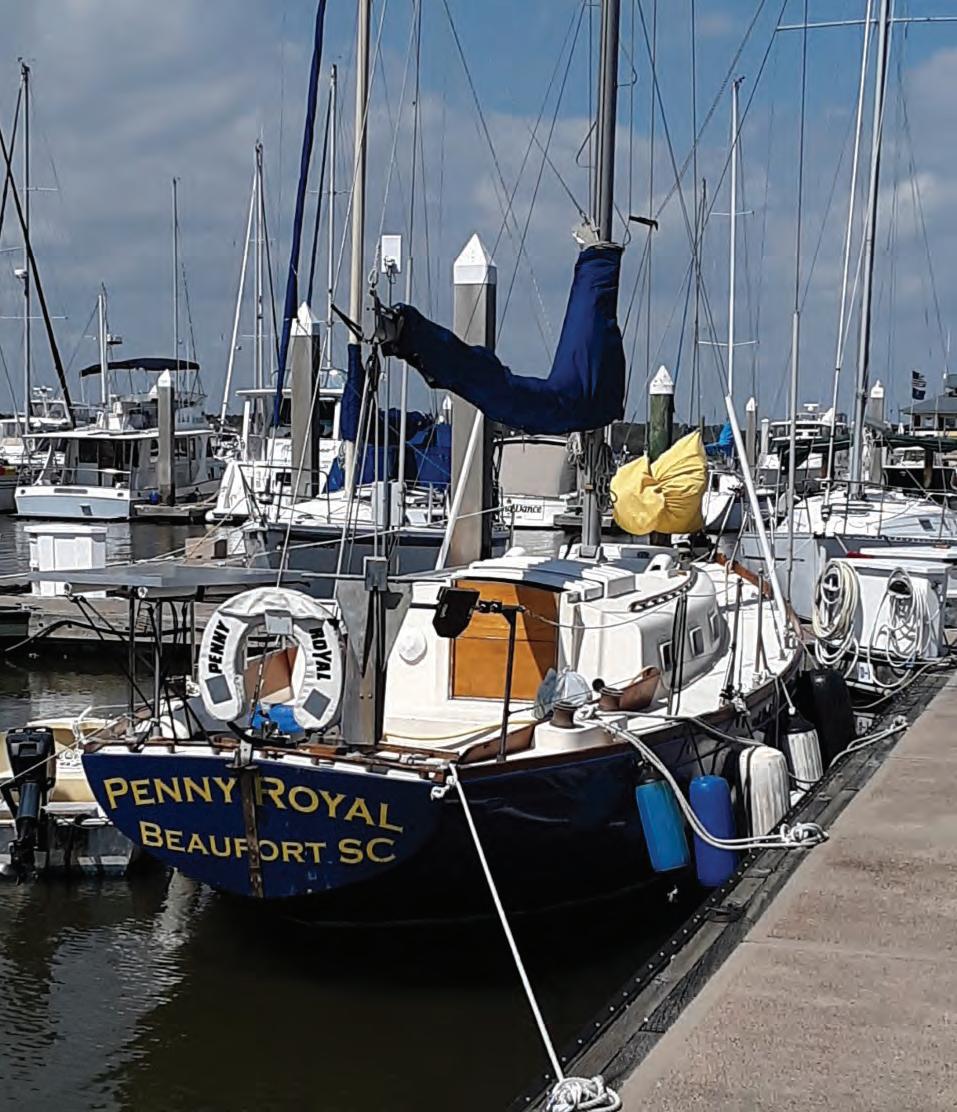
In order to ride the outgoing tide that sweeps the Beaufort River through to the Port Royal Sound and into the Atlantic Ocean, we had to leave the Downtown Marina at one o’clock in the afternoon.
Lifestyles
exhausted after the long drive from Pennsylvania to South Carolina, and then we were scurrying around for two days stocking and prepping the boat, all while partying like pirates in the bars of Beaufort. Having dropped the anchor in the widely exposed Sound, it was a bouncy stopover; but we slept well and woke up to a calm and sunny day to head ofshore for the
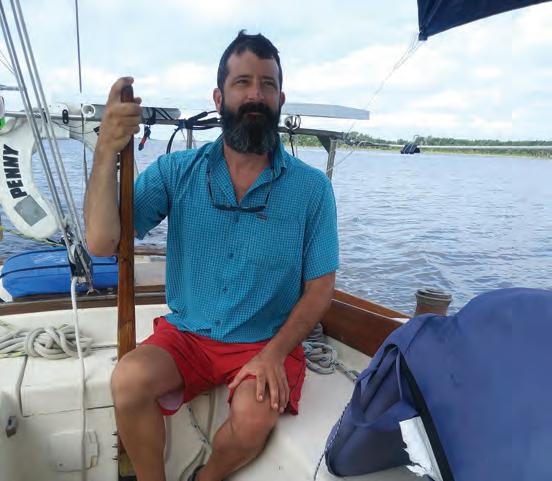
three hundred-mile jaunt northward to Moorhead City, North Carolina.

We were planning on roughly a sixty-hour trip with the forecasted Southerly ffteen to twenty-knot winds; but as usual, once you’re ten or more miles ofshore, the forecast, like the sight of land and cell phone service, fades into the distance, and the independent personality of nature takes over. The breeze on the frst day was very light, so we kept the engine running all day. It wasn’t until 7:30 PM that the winds flled in,

which was right when one of the predator nomads of the deep grabbed hold of my brother’s fshing lure. Landing a scrapper and gutting up the cockpit isn’t the ideal use of the last half hour of daylight, but hey, it’s all part of the fun.
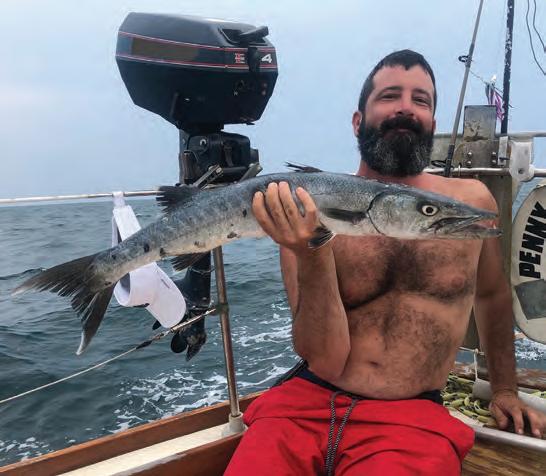
I had reluctantly made the decision to ignore discipline and tow my eight-foot fberglass dingy on the ofshore leg. I mainly wanted to keep the deck space open and diminish any windage in case we needed to beat into the wind, but the dingy was also a convenient place to store the collection of lost fenders
I had amassed in recent years. It wasn’t long after the freshening of the winds and seas that the unsettling swishing sounds of the dingy outpacing us became frequent. The loud smack as it occasionally rammed the stern wasn’t cool either. Even though I had a rubber snubber in use, the half-inch nylon tow line soon chafed through; and my loyal companion, while living aboard for the last seven years, disappeared on its own journey to somewhere.
One drawback to our plans being delayed was that we would be going through the Charleston shipping lanes at night. Due to some harrowing past experiences of traversing the ofshore parking lots of the container ships in the dark, I have since avoided this at all costs. We had no choice this time, so we decided to stay closer to shore in order to avoid the bulk carriers further out.
With the strong and variable winds pushing up the waves, the swirling currents and tides, and all the tanker and pilot boat trafc, this was quite a jarring ride. As we approached the gauntlet of crossing the long ofshore inlet, I could hear a crackling voice coming from the radio trying to raise the sailing vessel that was heading north; but in this confused sea, bodily movement was being reserved for critical tasks only. Of course, the pilot boat captain was trying to warn us of the outgoing tanker barreling down the inlet on a clear collision course with us, so we tacked one hundred and eighty degrees until we could safely pass behind the behemoth that slows for no one. It was midnight at this point, and it took another fve hours until we cleared the tankers and reached the smooth swells of deeper water twentyfve miles ofshore. We ran the engine hard all night, and I’m sure we traveled as much distance pitching and tossing up and down, side to side, and every other possible direction, as we did actually making forward motion.
Except for a brief visit by a friendly tern, the morning was uneventful. Again, the forecasted southerly winds were traded in for ten knots coming out of the north. If the winds maintained their contrary direction, it would be possible that we would be short on fuel and
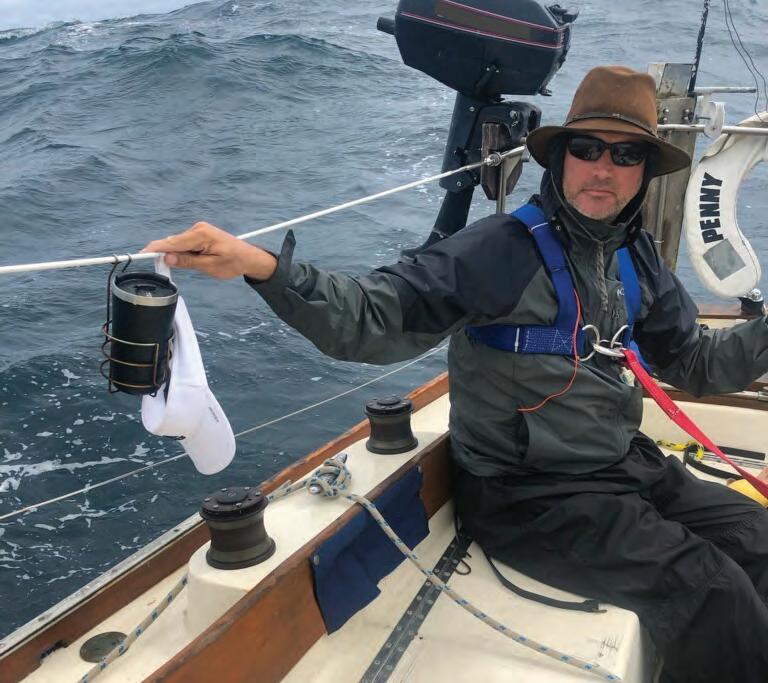
SKIRTING THE SHOALS 112 Latitudes & Attitudes | #41 Winter 2022/23
out of time to reach our scheduled arrival for Jim to get on the road and back to work in Pennsylvania.
It was around noon now, and we were sixty miles ofshore and one hundred and ffty miles from our desired landing. A heavy fog settled in, and as a compliment to undergoing an hour of the inherent hallucinations and sounds of ghost ships motoring by, a downpour as thick as Niagara Falls showed up and pounded us and the sea into a melancholy subservience. Out of sympathy and the civility of a captain to share in the plight of the crew, I left the dry cabin and joined Jim on his watch to participate in the drenching.
Soon after the fog lifted and the rain stopped, the forecasted Southerly breeze kicked in with a twentyknot attitude of the stern quarter. At about 2:00 PM, we decided, rather than stay out in the wildest land of unknowns for maybe another two or three nights, we would cut the ofshore part of the trip short, and head for Cape Fear instead of Moorhead City. We were looking at seventy-fve miles to landfall, which should put us there right before daylight tomorrow morning.
Penny Royal, the antique sailing vessel with long overhangs and no autopilot, couldn’t have been more excited at the prospect of ffteen hours of ripping winds and eight-foot-high following seas. This boat was made for these conditions, and once while checking the speed-over-ground on the GPS radio, I saw 9.4 knots as we surfed down a big wave.
Jim took the late afternoon watch for fve straight hours until night settled in. I can attest that his helmsmanship skills, even while he was steadily nipping on the prohibited fask, brought the graceful lines of the boat and the rhythm of the sea into a cooperating unity that every sailor dreams about experiencing.
Jim quickly hit the bunk after his watch, and when I took the helm around 9 PM, we were still about forty miles out. With the expectation of more container ship trafc to be encountered in the approach to the Cape Fear inlet that extends eight miles ofshore, I planned on coming underneath and west of the proceeding trafc separation scheme. And then, once clear of the danger zone, we would head northeast and enter the inlet about fve miles ofshore.
The idea of waiting for daylight to shoot the inlet was not the preferable option due to the present opportunity of carrying the ingoing tide. The sailing was intense, and other than the cloudy darkness and occasional sprinkles, all was just fne.
Around midnight I was beginning to spot what I thought was the outlying buoy to the inlet. It was difcult to consistently see the fashing light, but when I did see it,

www. LatsAtts .com 113
I would check our heading on the compass and then steer for that course. All I had for real-time navigation was a nav app on my cell phone, and with the battery running low and usage severely hampered by the need to keep it dry in a plastic zip-lock bag, the compass was the main tool to rely on. A strange illusion for the last hour or so was the utter blackness that covered the entire right half of the horizon. I could occasionally sense some stars and land glow to port, but the starboard side seemed like if there was an end to the universe, it was wholly impenetrable, and that boundary of pitch black void was surely it.
I would describe the frst few drops bouncing of the deck as pelts and then the instantly following rain as a deluge. Without easy access to the AIS on the radio, I had previously turned on the foredeck light and also a bright-white, three-hundred-and-sixty-degree light that was mounted on the stern rail to make us more visible to any other ships. The efect of these lights shining on the falling torrent and reciprocating splashes, along with the spray from the hull crashing into the waves, created a blurry scene of an allencompassing mess. It was similar to going through a drive-through car wash without the car. Along with the front came some ferce wind gusts. At times the tiller had lost all resistance in the whitewater, and at the fick of my wrist, we were of course by seventy degrees in one direction and then a few seconds later one hundred degrees in the other direction. The compass seemed to spin in circles, and there was no lufng of the sails regardless of our heading. Penny Royal didn’t mind; her bow rode high and skipped across the water like a kid pulling wheelies on a new dirt bike.
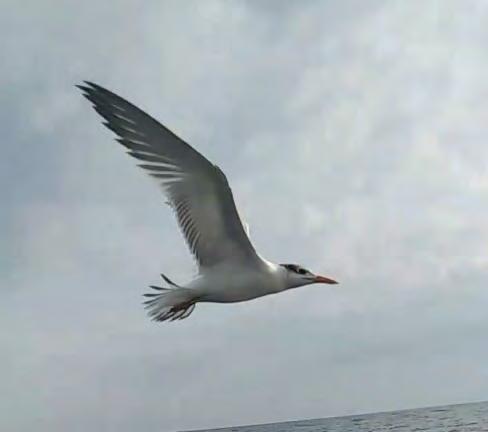
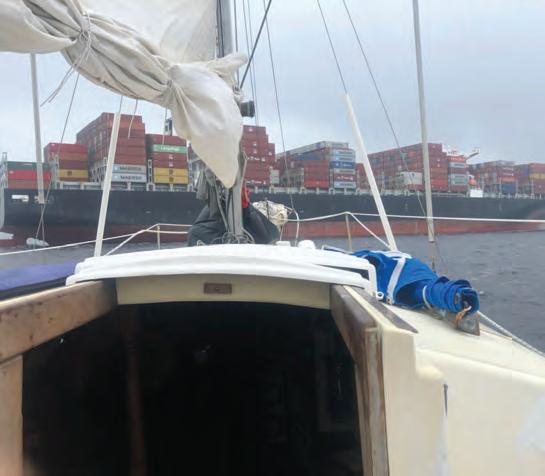

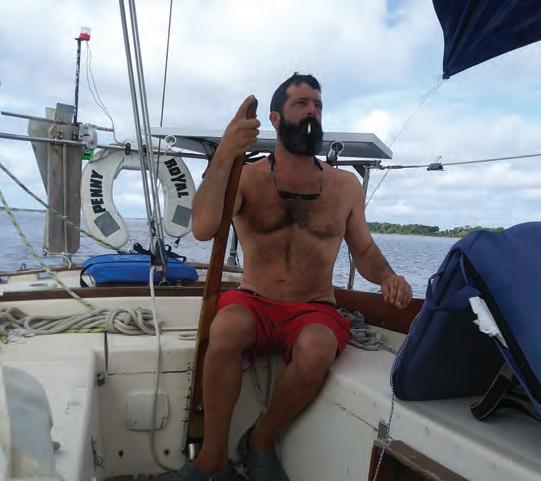
This went on for way too long, and it was during this frightening reality that for the frst time in my life, I wanted nothing to do with ofshore sailing, especially at night, ever again. And then, as if on cue, the plague of insects arrived. In the middle of this massive whitewash, alone, at a forsaken hour of the night, with ten feet of visibility, location unknown, and waiting to see the bow of a container ship that was about to smash us to smithereens; yes, a bombardment of large insects, thousands of dragonfies sent from the Creator peppered me and the boat. I decided to read this as a comforting sign that, indeed, I was not alone.
After a bit, the weather improved, and we were still heading towards the fashing light, which was now considerably brighter. I fgured it was time to rouse up the crew and retrieve my phone to see where we were after throwing it below when the downpour started. Jim, rubbing his eyes and munching on some
SKIRTING THE SHOALS Latitudes & Attitudes | #41 Winter 2022/23 114
jerky, took the helm. I was surprised to see the Nav app was saying we had passed the outlying buoys and were now about halfway down and a couple of miles west of the inlet. There didn’t seem to be anything over here according to the app, so I opened up the outdated paper charts and found the culprit. There was a fshing buoy in this area that was “Fl Y fours,” and the light we’ve been heading for is fashing four times every several seconds, so… close enough, I guess.


The bewildering thing was, there were a lot of other lights starting to appear around the fashing light as we made more distance. I was surprised to see this many boats out here fshing in bad weather on a weeknight. As we forged on, the buoy seemed to be getting brighter, yet we were never reaching it. Both of our nav apps were showing that we were surely getting closer to shore, but what about this buoy and the fshing boats out here? Could the GPS signals be temporarily inaccurate? With Jim’s urging and the sixth sense saying something wasn’t right, we ignored my confusion and decided to trust the GPS. At this point, we needed to turn the boat a hard ninety degrees to starboard and head due East to enter the inlet at about two miles from land – a course that would skirt us just above the Jay Bird Shoals that stretch of the coast.
As we fnally entered the Cape Fear River, the faint light of the inlet buoy I saw about four hours ago and then the feeing fshing buoy both turned out to be a big lighthouse on shore. Oak Island lighthouse, at one hundred and eighty-nine feet tall, did its job in bad nighttime visibility and provided a glimpse of the destination from about twenty miles ofshore. Due to our sudden change of plans, the excitement of the big seas, and some good ol’-fashioned complacency, I failed to properly survey the chart and note the landmarks. We were heading directly for the beach, but luckily, we paid attention and acted soon enough. Alongside the channel, we reached the frst opportunity to anchor shortly before daylight. After years of anchoring in the pluf mud of the South Carolina Lowcountry, the vibrations of the anchor scraping a hard and crusty bottom here were foreign to me. No matter how much we tried to secure a holding, the tidal current had no problem dragging us with it. The next option was another hour’s ride up the river. Finding the same type of bottom there, we simply let out all the chain and fgured maybe the weight will be enough to keep us local. It was seven in the morning now, and after forty-eight hours without sleep, it was also bedtime. Good night!
115
www. LatsAtts .com
Cruising
HOBBIES Underway
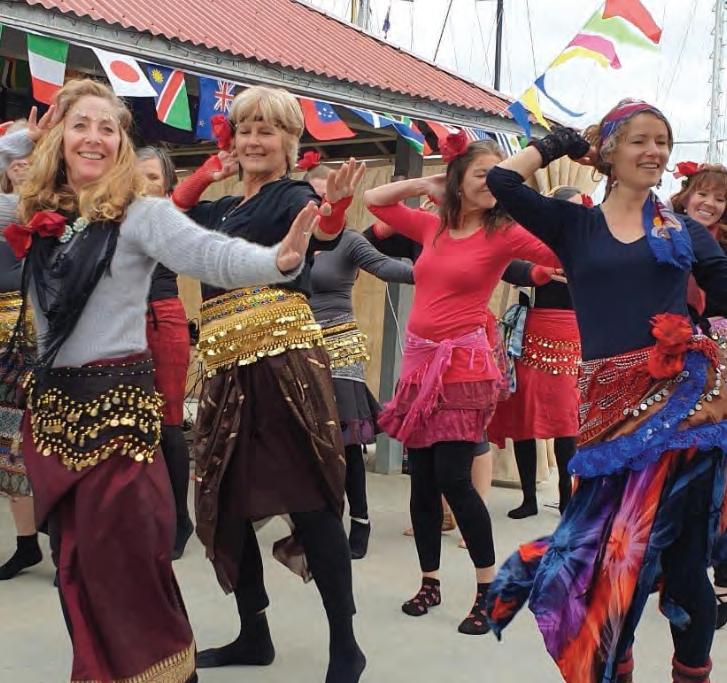
 Shenemere
Lifestyles
Latitudes & Attitudes | #41 Winter 2022/23 116
While I was working in corporate America, raising a family, and planning to sail away one day; I never found time for a hobby.

So, when I fnally threw the lines and set sail, I was grateful to be twice rewarded with a burst of creative inspiration while sailing. I now had time on my hands and was surprised by all the ideas and artistic outlets available to me; the only constraint I had was space onboard. My frst creative project was using silicone molds used in candy making that I poured epoxy and coloring into to make turtle pendants for jewelry. In any given anchorage, I am keen to get a few of the ladies aboard Shenemere for an afternoon of jewelry making – with wine, of course. It is a great way for the ladies to get a “boat break” and meet kindred spirits on the water. Through these creative sessions onboard, I learned about the neat hobbies others do while cruising. I also had many opportunities during my travels to learn new skills from the collective community of cruisers that are generous to share their knowledge. Many ladies I spoke to in the community have found their own pastimes aboard. French artist Sylvie on s/v Maitre D makes art out of hurricane debris and has a traveling studio, OCEAN ART REIS. Lauri is an artist on s/v Free Spirit and has a kiln onboard where she creates stunning glass and ceramic pieces. Sanne on s/v Incentive showed me how to make pearl necklaces with wire and crimping tools. Linda on s/v Linda Marie makes sea urchin ornaments and jewelry from the sea shells she collects. Lisa on s/v Harlequin produces sailboat-themed watercolors available online at Redbubble Canada. Julia on s/v Desiderata Is an interior designer, so her outlet underway is making “upcycle” designer clothing. Cindy on s/v Zensation makes intricate bags out of old sails, while Bronwen on s/v Sea Swan started repairing sails on her boat and now has a sail loft in Grenada, Island View Sailmakers. Anna on s/v Noomi teaches dance; she specializes in belly dancing and is an in-demand yoga instructor for us cruisers needing a good stretch. Elizabeth on s/v Rubicon is an accomplished writer and poet. Traci s/v Knot Home recently published a book, Cruising With Kids. Maria on s/v Maria publishes adult erotica and is always keen to provide palm readings. Shirley, a single-hander on the twenty-fve-foot junk rig sailboat s/v Speedwell, taught me how to make wine from juices in Indonesia, where wine was prohibitively expensive. Nicola on s/v FlipFlops was eager to have a group of ladies on board to demonstrate cheese making while we were in Fiji, and good cheese was scarce. In New Zealand, during the COVID lockdown, a group of international sailors combined resources to publish a cookbook, Appetizers Afoat, from which all the proceeds
LatsAtts .com 117
I always felt that a creative outlet was missing during that chapter of my life.
cont’d on page 119

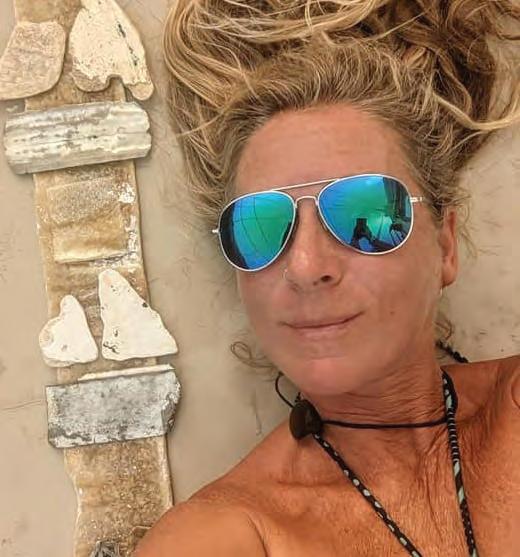
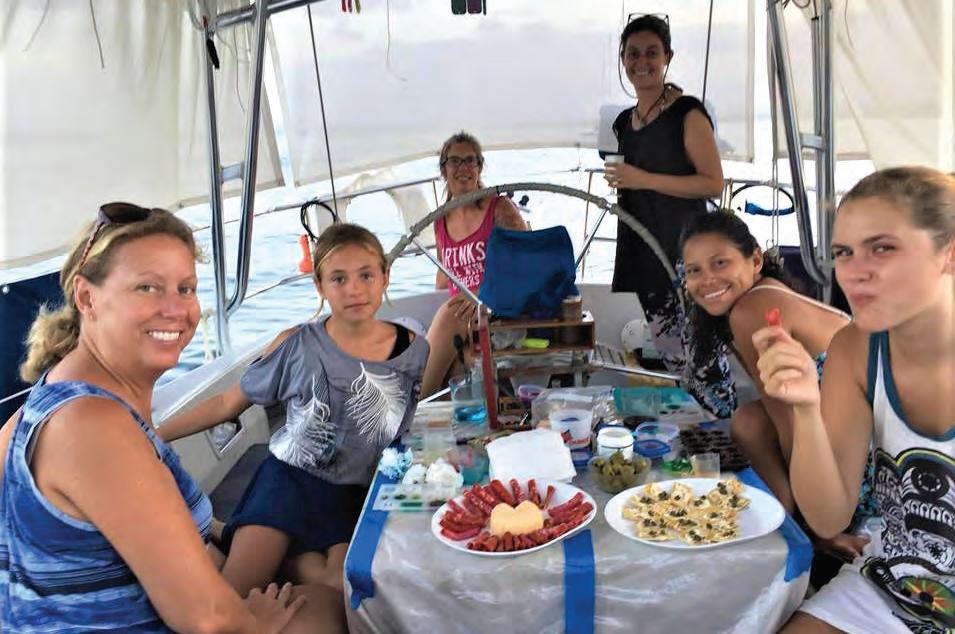
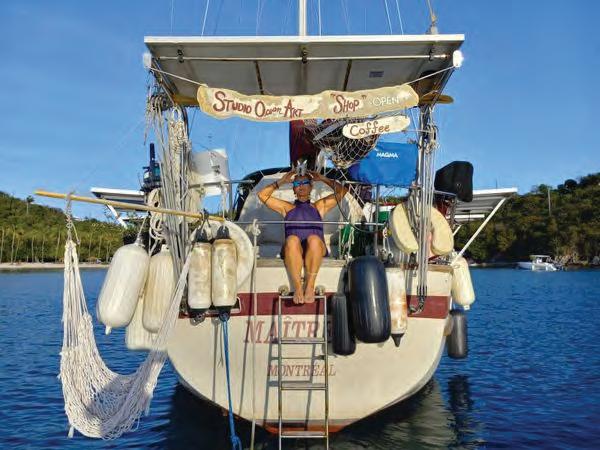
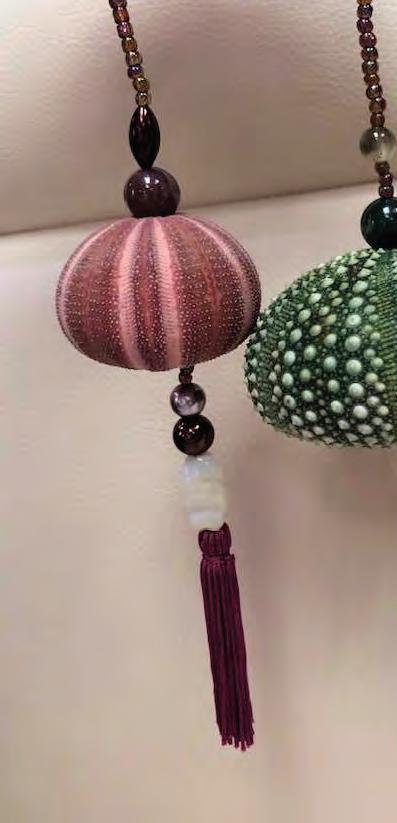
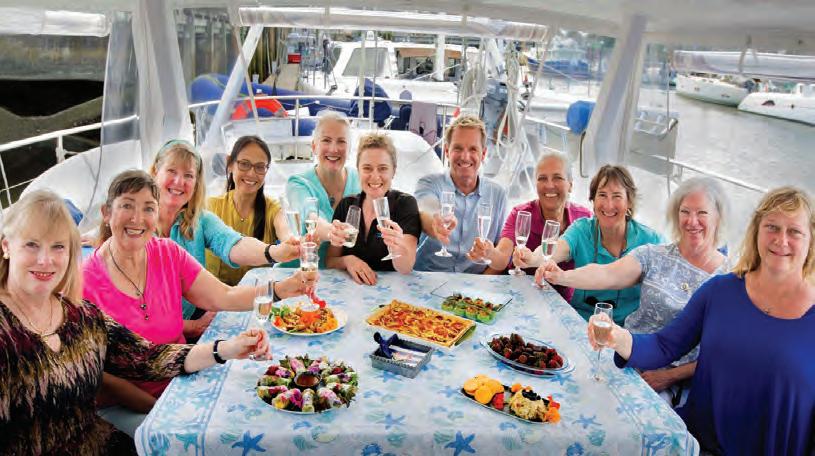
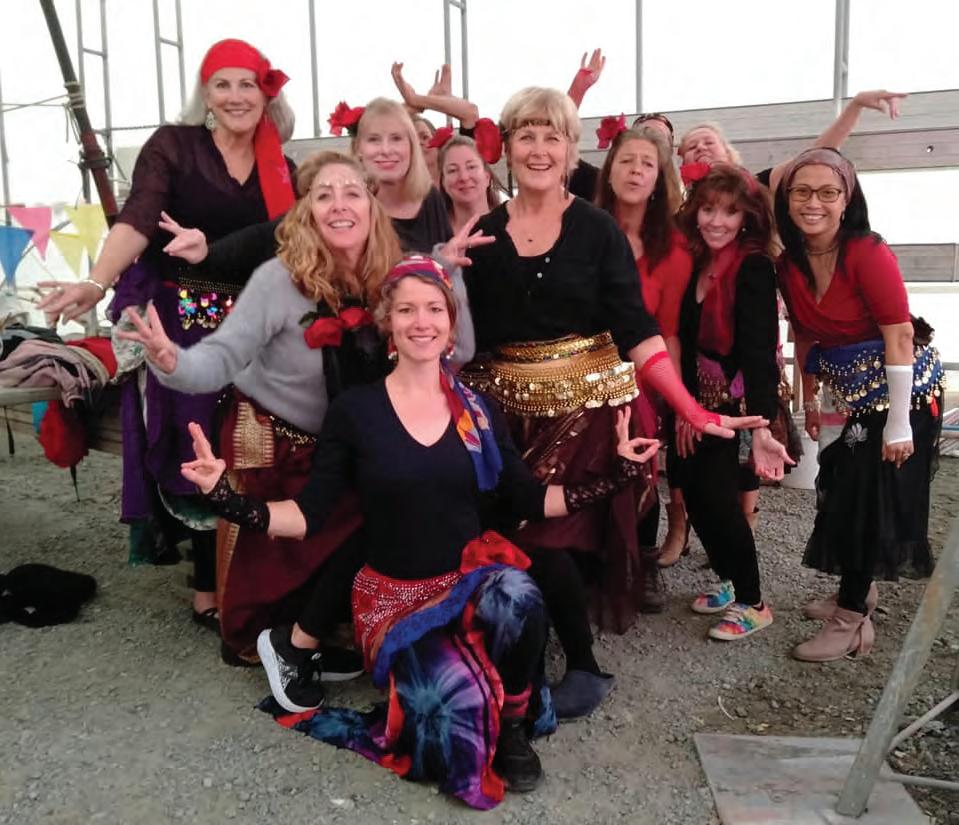
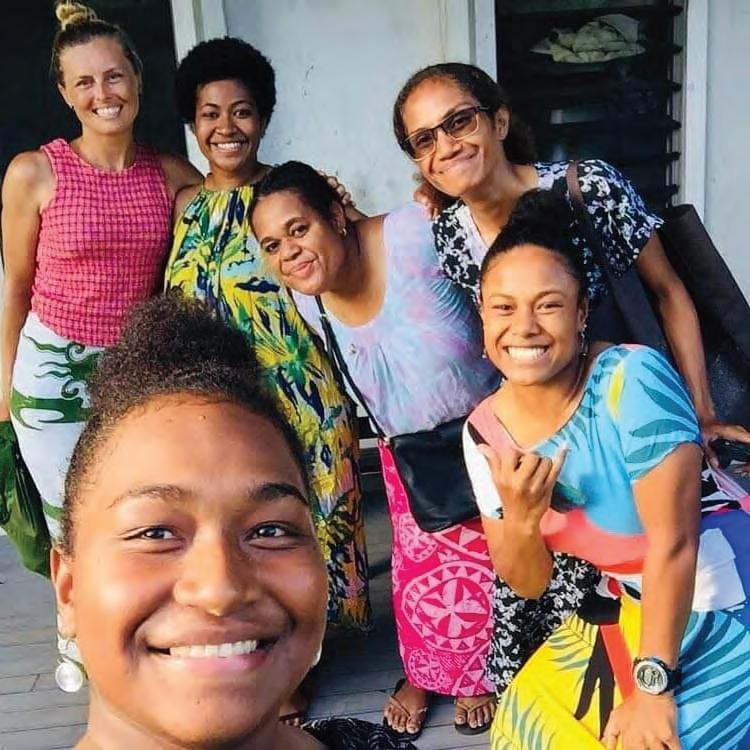
were donated to a maritime scholarship fund for students. Michelle on s/v Pogeyan is a professional photographer at Michelle Marshall Images and contributed the many gorgeous photos that went into making the Appetizers Afoat cookbook such a success. It’s not just the ladies; Dave on s/v Brave is an expert on baking bread and is always enthusiastic to share his trade secrets with us yachties struggling to get our buns just right. Max on s/v Y2K, along with Chef Giorgio Ridolf, hosted several cooking classes for the yachties in New Zealand.


Others took up interests ashore; Vandy on s/v Scoots is a nature lover and volunteered at the local Whangarei Native Bird Recovery Centre in NZ and even had a Kiwi “birdy” she rescued named in her honor. Michelle on s/v Pogeyan helped rescue street dogs as a volunteer at Animals Fiji Rescue during her season cruising in Fiji. While other boats with teenagers onboard volunteered at Reef Restoration eforts at Plantation Resort, Fiji to make an impact on the local reefs ravaged by the cyclones. I made lasting relationships volunteering at the New Zealand Red Cross when I got stuck in New Zealand during COVID. These are just a few of the hobbyists I have met along the way. I am always curious to see what activities cruisers are involved in, so I always ask. It’s a good icebreaker and I am never disappointed in what this fascinating community of sharing individuals has up their sleeve.
ABOUT THE AUTHOR:



Susan started crewing on sailboats in the 90s where she met a South African single-handed sailor in the Caribbean. They sailed together through the South Pacifc and got married in Fiji. After selling their frst boat in New Zealand in 1999, they went back to the United States and worked to get their current boat, a 51’ Beneteau Idyll, and set of again from Miami, Florida, fve years ago. They are currently in Tanzania, making their way to South Africa. Visit Susan’s blog at www.sailingshenemere.com

LatsAtts .com 119
Many cruisers maintain sailing blogs and/or do flm editing to chronicle their travels which is a worthwhile activity; you get to share your travels with your family and friends while preserving memories of a lifetime.
The friends arrived from Maryland, New York, New Jersey, and Pennsylvania to Janes Island State Park in Crisfeld, Maryland, on the eastern shore of the Chesapeake. The boats included my B & B Core Sound 20 Mark III, Skeena, two Joel White-designed Marsh Cats, a Handy Cat, a Crawford Melonseed, a Wellsford Navigator, a Rhodes 19, and an O’Day Mariner. The sailors included some retirees, some like me who wished they were retired, and my daughter, who I was happy to have with me for one last adventure before she headed of to law school.
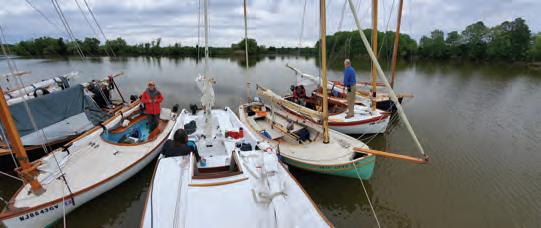
The May gathering was an annual tradition that brought friends from all over to sail together for a few days. Over the years, the gatherings had been on the Chesa peake in St. Michaels, the Piankatank River, the Sas safras River, and here at Janes Island State Park. Other gatherings had taken place in the Thousand Islands in New York, Lake Champlain, and various places along the coast of Maine.
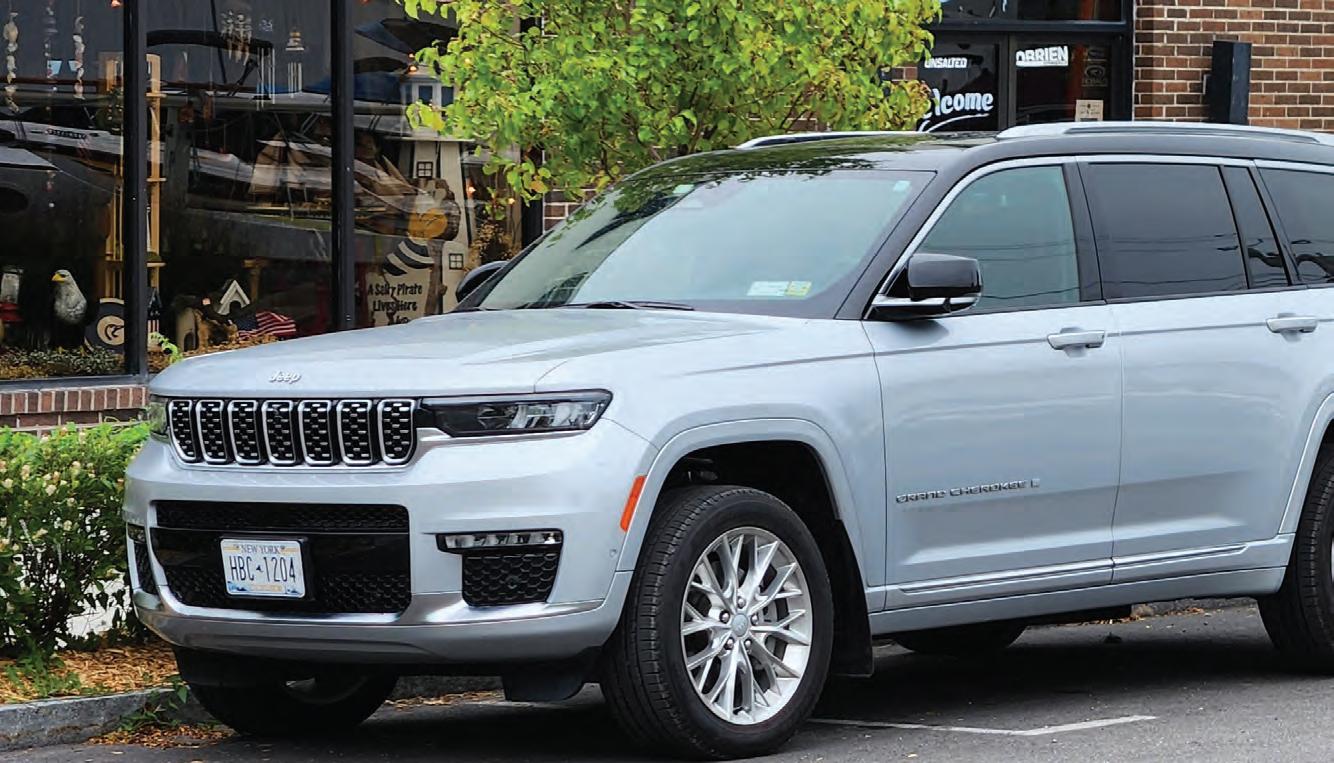
We used Janes Island State Park this year as a base camp, and each day began a diferent adventure, with the highlight a sail to Smith Island to walk around town and
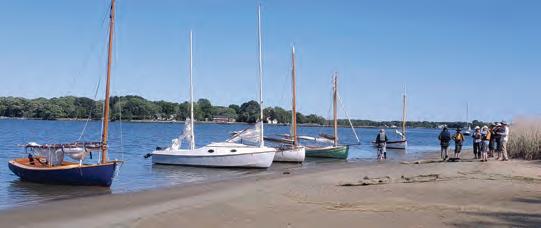
procure the famous Smith Island layer cake. Later, rafted together while tucked in the shallows of Smith Island, we cooked a variety of food, talked about life, and a lot of fun was had. Many among this group are musicians, and the songs rang out late. The next morning a fresh breeze had us reaching back to our base at Janes Island. When the wind piped up later in the week, some of us sailed north to the Manokin River and overnighted in the shallows of Wolftrap Creek. Back home in New York, the boat was tucked away to wait for the next adventure while I jumped on life’s treadmill, dreaming of the next adventure.
The way sailors arrive on the trailer sailor scene varies, but it all starts with the love of sailing. Some graduated up to big boats but found the spouse didn’t have the water gene. Some lack the time for full-time cruising because a family member needs care. For some, it’s the kids’ school, sports, or other time commitments. Others fnd the expense of a big boat sitting in a marina frustrat ing. For me, it’s all the above, combined with the desire to explore more places than I could get to on a week or two’s vacation going fve or six knots from the marina.
120 Latitudes & Attitudes | #41 Winter 2022/23
Trailer Sailing A Case for
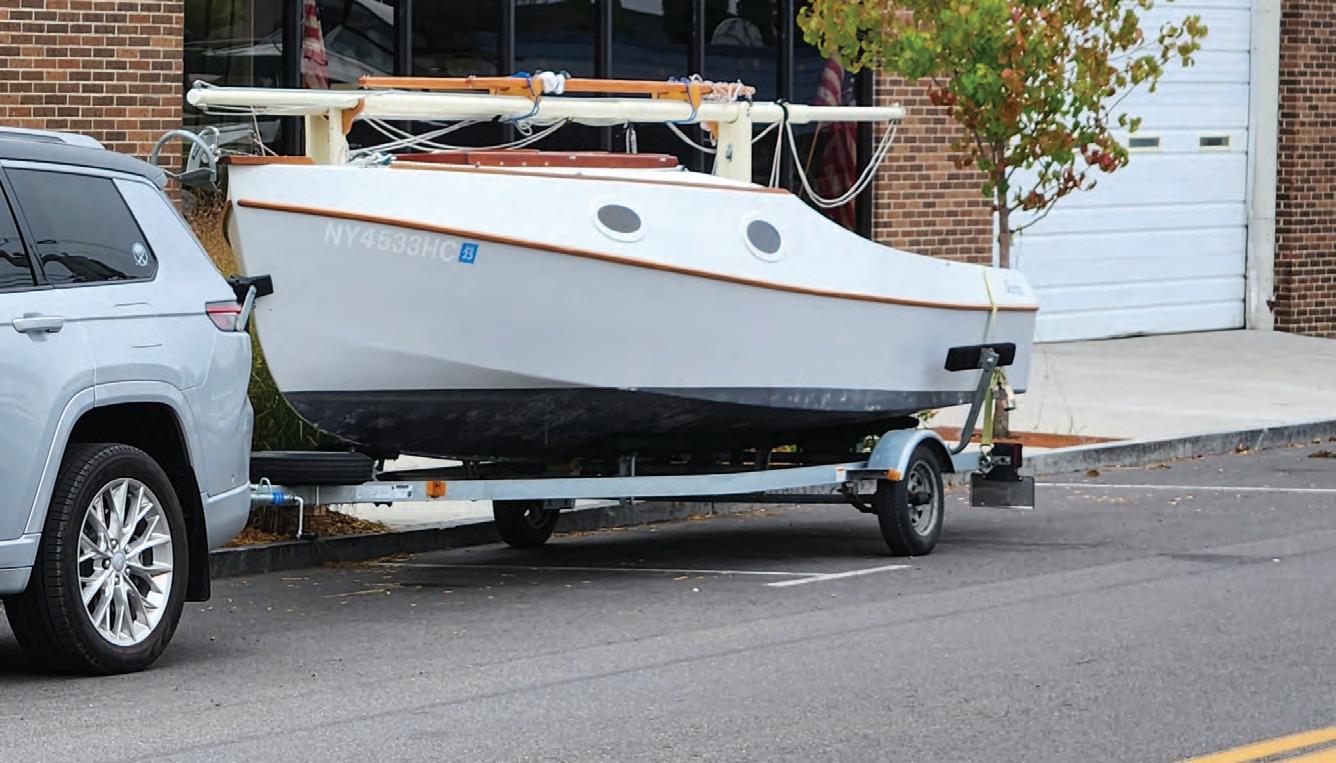 By Steve Warfe
Trailer boats are typically twenty feet or less and usually lightweight, making them perform more like a lively dinghy. The sails are smaller and easier to handle. They ft in a one-car garage and are easy to maintain. The lack of systems means there is less to break and maintain, and with only a boat launch fee, there isn’t much guilt if they aren’t being used.
Some of the boats have cabins with dedicated bunks, but many have cockpit tents that cover a sleeping pad/ bag spread out on the cockpit foor. This type of sail ing has a lot in common with backpacking. Many are less than ffteen hundred pounds on the trailer, which allows the family car/truck to tow them easily. The really small ones are propelled with oars, but most have a small outboard that sips very small amounts of petrol.
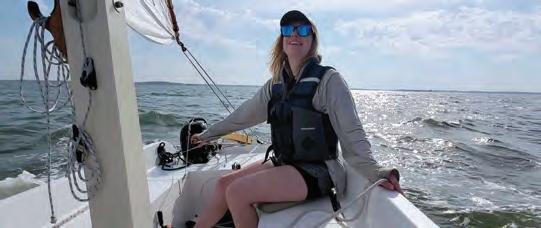
Many trailer sailors are centerboards that have drafts of less than a foot with the board up. This allows the boats to sneak into tiny bays a boat with a larger draft couldn’t go. I’ve shared spirits and songs in remote places I’d probably never get to in deeper draft boats.
There are tradeofs. Rigging and launching can take a bit of time, and having a bunch of friends over for
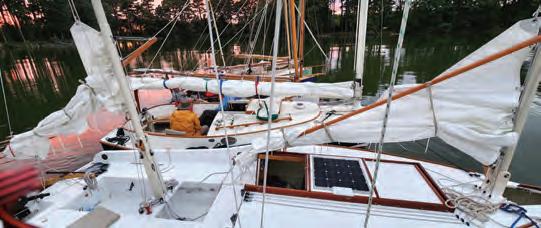
cocktails isn’t a reality. They aren’t foating cottages… there’s no air conditioning, refrigeration, or hot water tank. Think camping on the water. Ice chest, butane single burner stove, bucket, and wag bags (look it up). And the weather needs to be watched carefully. Many of these boats are reasonably sea-worthy, but blue water they are not.
Being on a trailer means the sailing water covered is only limited by drive time. Besides the previously men tioned places, I just joined a friend for a week who towed his boat from Maryland to Puget sound and is enjoying the summer there. I’ve got plans to go to North Carolina and Florida next year.
A part of trailer sailing is the gatherings that happen re gionally, many led by the Traditional Small Craft Associa tion (TSCA). These are a chance to gather and talk about all things sailing and, in some cases, race. If your happy place is near shore, exploring shallow water and anchoring in gunkholes where other boats dare not go, a trailer sailboat may be for you.
www. LatsAtts .com 121
VIRTUALCRUISING: Young Cruisers’ Association
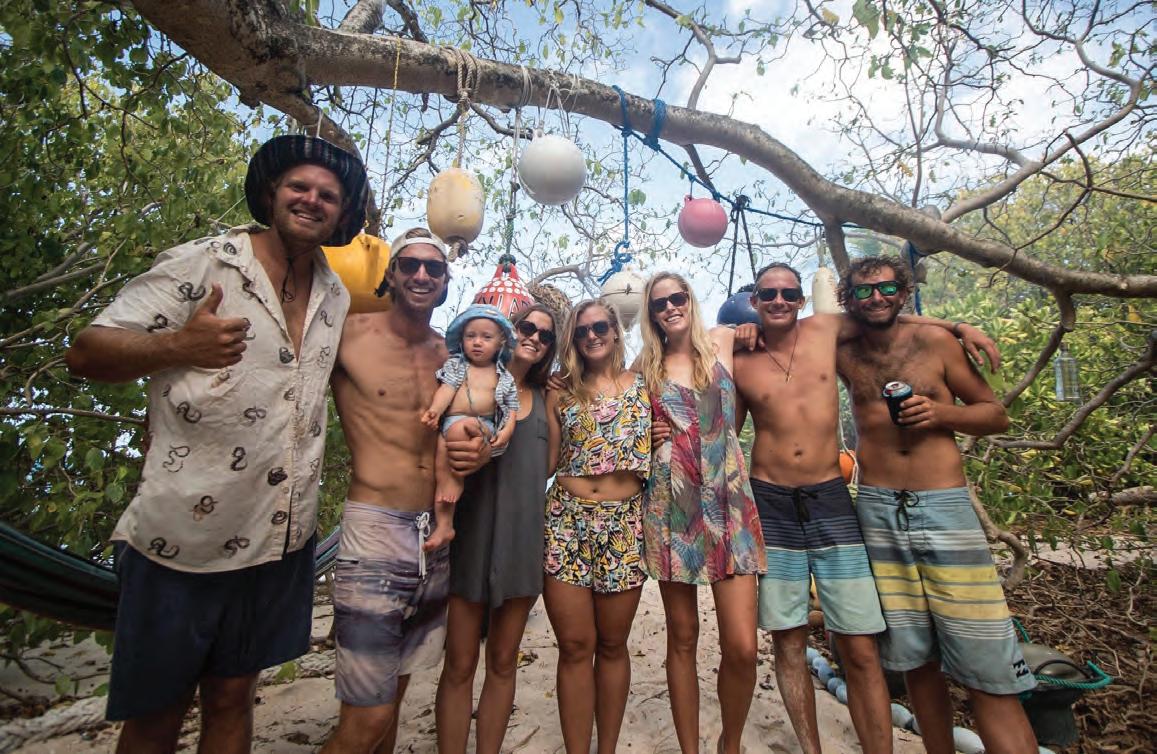
 By David Levesque
A magnifcently beautiful awakening occurs in a soul when one feels they have been met with acceptance. Some seek it, some ofer it, and many of us look to do both. Regardless of who anyone is – their social status, career achievements, outward appearance of confdence, ego, et cetera – I’ve always found it intriguing the inherent need to still be accepted on some level. And it’s perfectly okay. It has also been observed one can be welcomed yet not
quite fully accepted in some circles. There is a diference between being “welcomed” and “accepted.” But why should there be? We all want to feel welcomed, but do we then seek acceptance as well? What matters more? And do we place higher value on one over the other?
Okay, I’m getting in deep here..I’ll drop the psychol ogy discussion for now. The reason for these opening thoughts is since fnding myself in the marine industry in
122 Latitudes & Attitudes | #41 Winter 2022/23
Have A Seat At Our Table…
2009, meeting Bob Bitchin in Jack London Square in 2011, and now getting in volved in this fne publi cation, I am continuously intrigued by the dynamics which make boaters such a diverse community, yet curious why there are so many segments which still seem to be seeking accep tance, or are not welcomed among others. Ultimate ly, boaters are all bound by one common thread: the love of water and the need to be on it. So, why then should ones appear ance, the size or condi tion of their boat, or the amount of nautical miles under their belt make any diference in where they should be accepted or wel comed? If you answered, “it shouldn’t,” then you are damn right. It shouldn’t. But unfortunately in some areas it does. But not here. Everyone is welcome at our table.
Latitudes & Attitudes was started in 1997 after Bob Bitchin and lovely new wife Jody completed their jour neys aboard The Lost Soul, meeting countless cruisers around the globe and real izing the welcoming atti tude and acceptance they felt wherever they went… well, almost. You see, Bob was never one for polos and long sleeves. He’s the cutof t-shirt type. And, of course, then, there are the tattoos. And earrings, gold chains, and rings. There were stops along the way where Bob & Jody were not always welcomed in a harbor, a transient slip at a yacht club, or given a seat at the table. So they moved on and found another place to tie up. Sad, re ally, when you think about it. And as the magazine
grew popular with fellow cruisers and became an outlet to tell their stories of adventure and discovery, Bob and Jody still found themselves met in some places with a less-thanwelcome attitude. Bob told me once that it wasn’t until the magazine grew so large in popularity and the industry forced to take notice that he was suddenly welcomed into certain yacht clubs and social circles among peers. However, and I love this part, at this point Bob sim ply said, “screw it;” he didn’t want a seat at their table anymore. He had decided to make his own table and invite all cruisers to it.

All-Inclusive vs. Exclusive
I’ve never taken kindly to someone’s arrogance that I need them more than they need me. Whether it’s business or personal relationships, that mental ity just simply doesn’t fy with the cloth I’m cut from. We all need each other if we’re going to get of this rock in one piece and leave it in good shape for those following us. So, why is it that so damn many still don’t see that? Sad, really. Anyway, cruisers seem to get it, so let’s focus there.
In case you’ve had your head in the sand and have missed it, there’s a move ment happening in this industry which could quite frankly save it – not just in terms of economics, but perhaps saving it from itself. Sailing Channels, YouTubers, infuencers, creators, or whatever you wish to call them, are making an increasingly profound impact on the boating industry in ways
www. LatsAtts .com 123
never seen before. Video blogging, or “vlogging,” is not new, but how it is impacting lives of those doing it and those following it is inspiring to see, especially to those of us making a living within the boating industry. And it’s impressive just how much this movement is bringing inclusivity to all. We’re certainly not new to this trend and the pages of this Virtual Cruiser section in Latitudes & At titudes have focused on sailing and cruising channels and content creators for a couple years or more now but with the enormous rise in cruisers of all ages getting out there and sharing their lives for the world to see, I’d like to provide some background and try to tie together some pieces of this movement.
*Young - Those Who Don’t Wait for Retirement to Start Living
Those who have followed this publication for years know very well Bob Bitchin’s mantra, “Don’t dream your life, live your dream.” Walking the Annapolis show, I saw a similar saying on a t-shirt from SV Dauntless: “Die with memo ries, not dreams.” I love that. Awesome, isn’t it? Simple, yet perfect.
Show of hands: how many of us are going to die with dreams? …Really? Why? What’s holding you back? I know, I’ve heard the excuses before and even guilty of making them myself. Money, jobs, kids, house, etc. Excuses are like leaves; they eventually clog up the gutters of life. How about this one: “I’ll go cruising when I retire.” Do you realize putting something of that brings you joy until you retire is the ulti mate procrastination? News fash: you may not make it that far. Oh, to be young again, kid-free and able to set sail with friends and cruise the world. Stop! Take a look around at the cruising channels and pay attention to how many are families with kids of all ages making their living while mak ing their dreams happen. If COVID showed us anything it’s that social distancing rocks and this age of working remote is bitchin’. So, there goes that excuse.
Logan and Caroline Rowell, along with Brian Currier, found ed the Young Cruisers’ Association (YCA) in 2018, although they’ll tell you it’s been around forever. And it has, really. Lin Pardey and her late husband Larry along with their mantra, “Go Small, Go Simple, but Go Now,” inspired many for de cades from the 1970s on to get out and go, despite incomes and means. And then there’s Bob and Jody Bitchin who did… well, you know the rest.
But what Logan, Caroline, and Brian have done is bring young cruising into the digital age, without the digi tal interference of what truly matters. As their website, www.youngcruisers.org, aptly states, they are “exploiting technology to fnd each other, while not being exploited by technology.” Cruisers have been blogging for quite some time, yet OGs like Sailing La Vagabonde and SV Delos are largely credited with ushering in the cruising video-blog age. It’s here where we fnd some interesting angles between what YCA is all about and where the movement is going. True, technology can be used to fnd others of like mind and
Crusing: Young Cruisers’ Association 124 Latitudes & Attitudes | #41 Winter 2022/23
Virtual
www. LatsAtts .com 125
page on YCA’s site if you don’t believe me.
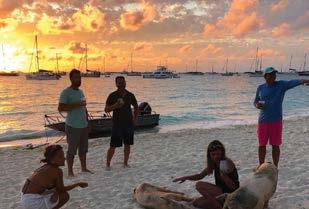
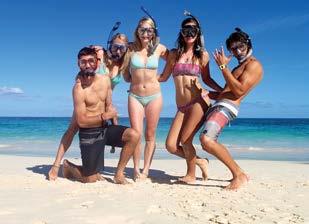
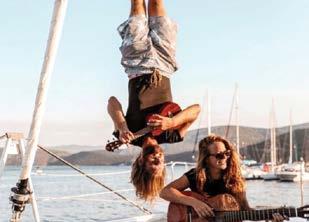

As mentioned earlier I’ve been in this indus try since 2009. For many years one common topic of discussion occurred in many peer circles: How do we attract younger boaters to a greying industry? One primary reason is the perception, founded or unfounded, that becoming a boater has a high price tag for entry. As the owner of a ’75 Sabre 28 I bought for $2,000 in 2017 (without any hull issues and holes, I might add), I can tell you that perception is bullshit. There are many bone yard boats out there screaming to be loved, cared for, and sailed to fulfill dreams. I follow Sailing Uma, as over four hundred thousand subscribers do, and I love the story of their Pearson 36 they picked up for $3,000, did a stellar job of remodeling, and used to make their dreams happen. And as Logan and Caro line testified at the recent International Cruis ers Awards in Annapolis, there does not need to be a huge investment. There just needs to be the will to go out and live before you retire.
Stoke [stōk]: add coal or other solid fuel to a fire, to encourage or incite.
Far too often along this journey of life personal fires are snuffed out, or threatened at least, by those who wish to see others languish in mediocrity, most likely just as themselves have. Yes I’ve taken it personal over the years those who have tried to stifle my passions or snuff out the fires which fuel them. How can I not? I have but one life to live and I’ll be dammed if anyone is going to control how I live it. Being told you don’t belong, you aren’t welcome here, or you don’t have a seat at the table is something we all can attest to feeling at one point. Back to that acceptance thing, right? It’s how we use that feeling of rejection or non-acceptance to motivate us and in turn inspire others which will ultimately define us. Those who have risen from personal ashes have a responsibil ity to stoke the fires of others so that we may all burn strong. YCA exists to do this much, as Lin and Larry Pardey and Bob and Jody Bitchin have done before. We are a global cruising community with a strong burning fire. Jump in, be part of the tribe and help stoke it hotter and stronger than ever.
“I picked up a boat off the scrapheap, fixed her up and went sailing…”
– Logan Rowe ll
Virtual Crusing: Young Cruisers’ Association 126 Latitudes & Attitudes | #41 Winter 2022/23
International CruisersAwards ANNAPOLIS
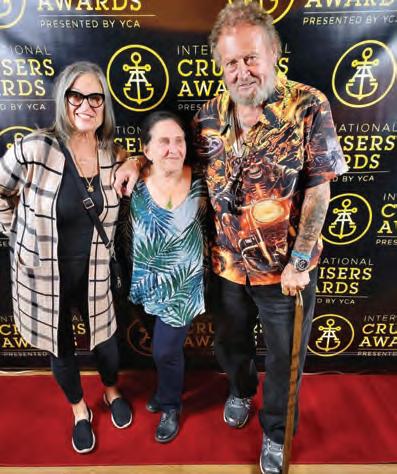
On a gorgeous fall Friday night in Annapolis the frst ever International Cruisers Awards presented by the Young Cruisers Association kicked of to a crowd of over two hundred and ffty people, and streamed to a worldwide audience. Bacon Sails & Marine Supply of Annapolis was a title sponsor and Latitudes & Attitudes sponsored the individual award of Best YouTube Channel, won by Sailing Parlay Revival, with Bob Bitchin honored to be the presenter. As Bob noted, “I feel weird presenting to young cruisers since I didn’t start sailing until I was thirty-two; but as they say here, ‘young’ is a state of mind anyway”.
Other highlights included Elayna and Riley from Sailing La Vagabonde as hosts for the evening, inspiring opening remarks from YCA founders Logan & Caroline Rowell and Brian Currier, and a fve-minute standing ovation for Lin Pardey as presenter, herself aptly referred to by Riley as the real OG when it comes to cruising. “It’s true Larry and I did it without an engine, at least the frst hundred and ffty thousand miles”, she quipped. I have to admit, being there and watching the respect showered on Lin brought tears.
Bob and Jody worked the crowd – or more accurately the crowd worked them, as many in attendance wanted pictures and any opportunity at all to speak with them. Bob put it best saying, “This is so incredibly inspiring. There was a time we were concerned sailing was greying out but this is the most energy I’ve seen in this industry in at least ten years.”
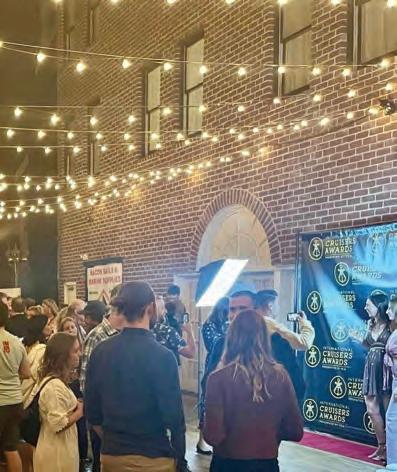
Speaking with Logan and Caroline after the ceremony, it was clear they are humbled and proud to see such response and energy themselves. We’re excited to be working with them to continuously provide platforms for cruisers to tell their stories, connect with others, and cultivate this lifestyle. We’re already looking forward to next years’ awards!
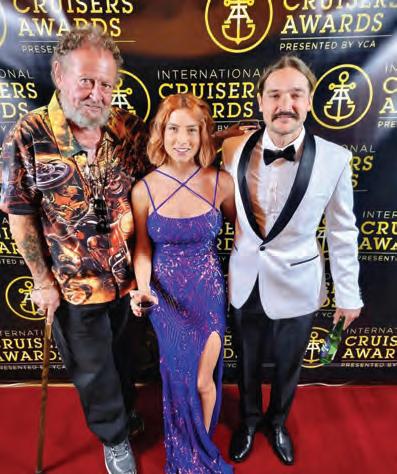
Here’s a list of this year’s winners, listed by Instagram account handle:
YCA Member of the Year: @taylorfrancis_ / @kiki_terrels
Photo of the Year: @laurenlanders / @samudrafow
Global Impact Award: @whitespotpirates / @inmoceanorg
Best Instagram: @sailingsonder
Waterperson of the Year: @sailingbeyondborders
Best TikTok: @hannahsailing
Remote Adventure of the Year: @claireamyv
Best Emerging YouTube: @spear_it_animal
Best YouTube Episode: @sailingmagiccarpet

Clip of the Year: @sailingyaba
Inspirational Cruiser of the Year: @allaboutspray
Best YouTube Channel: @parlayrevival_colin
www. LatsAtts .com 127
Gardening Aboard
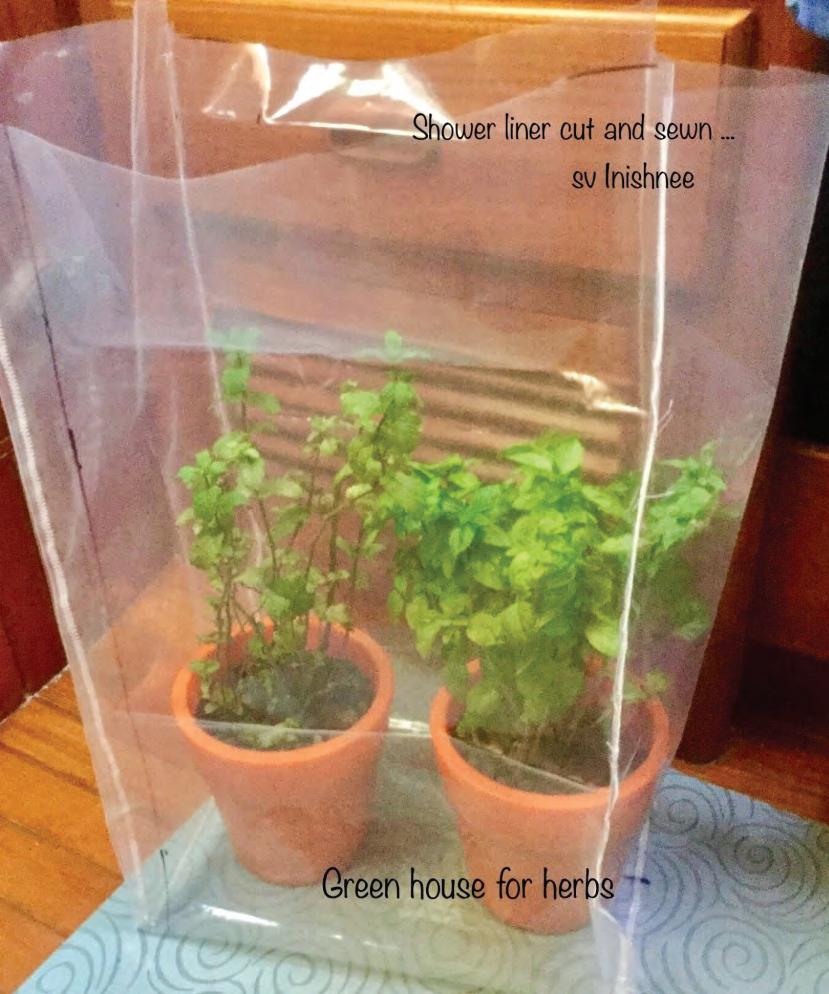 By Life Aboard Editor Robin Stout
Kathy Nee and her husband, Jim, have been living aboard s/v Inishnee, a Passport 40 sloop, since 2015. Kathy and Jim are from the Midwest of the United States, where they learned to sail on Lake Michigan. Upon retirement, they sold their home and cars, and Inishnee departed from their home port of Saugatuck, Michigan, navigating the Great Lakes and Erie Canal before heading south to warmer climes.
Aboard Inishnee, they traveled and explored the Great Lakes and Canadian waters and the eastern Caribbean island chain from Puerto Rico to Guyana. From the Caribbean, they made a transatlantic crossing and cruised the Mediterranean for three
seasons. While in the Med, they visited Turkey and North Africa before heading back across the Atlantic via Africa and the Canary Islands to the Caribbean in 2019.
Inishnee is currently in Curaçao for hurricane season, but Kathy and Jim plan to return to Inishnee and sail from Curaçao to Aruba, then on to Columbia after hurricane season ends.
Kathy is a retired art instructor, mother, grandmother, and wife who loves to travel, meet new people, and explore other cultures. She enjoys crafting, photography, and writing about their travels. Cooking is also one of her passions as it provides her immense

128 Latitudes & Attitudes | #41 Winter 2022/23
pleasure trying to recreate meals they’ve sampled on their journeys.

Gardening is another of her hobbies, and it’s always a treat to have fresh herbs and veggies while living aboard. When Inishnee left Michigan, Kathy had a small container of “kitchen” herbs. They survived until they sailed into the Atlantic, where they eventually withered from exposure to salt spray.
After that, Kathy gave up “gardening” for a few years. Focusing on sailing and travel and writing and photography flled her creative needs. While cruising and exploring the Mediterranean, though, Kathy decided to try growing herbs again using what she’d learned from the frst attempt, hoping they would do better and maybe even thrive. It worked! She had great success using small pots (with drain holes) with a couple of inches of volcanic stone in the bottom of each container and soil on top. Each pot contained separate herb plants: basil, thyme, mint, etc. She used a collapsible fabric bin to house the pots and also made a custom-ft “greenhouse” bag (cut and sewn) from a clear plastic shower curtain liner to protect the plants from temperature fuctuations and salt spray. She could clip it shut with a clothespin if needed to moderate temperatures, mitigate wind, or trap/allow rain water as needed. This was also helpful when things took a tumble, as the inevitable mess was somewhat contained. When sailing in lively conditions, she would move the whole setup to a secure location below, like the aft bunk or shower.
At anchor or in a marina, the greenhouse setup
was moved on deck to a location that best suited the plants for sun or wind: under the boom, the aft cockpit, under the dodger, etc.
Kathy found it necessary to use a liquid fertilizer in the water approximately bi-weekly because the local water seemed to lack nutrients, and the boat water was desalinated. Supplementing the plants’ nutrition also allowed her to grow plants in smaller containers with less soil. The setup worked great in the Med, but before the long Atlantic passage back to the Caribbean, Kathy gave away the plants since space was a premium and conditions can be challenging.
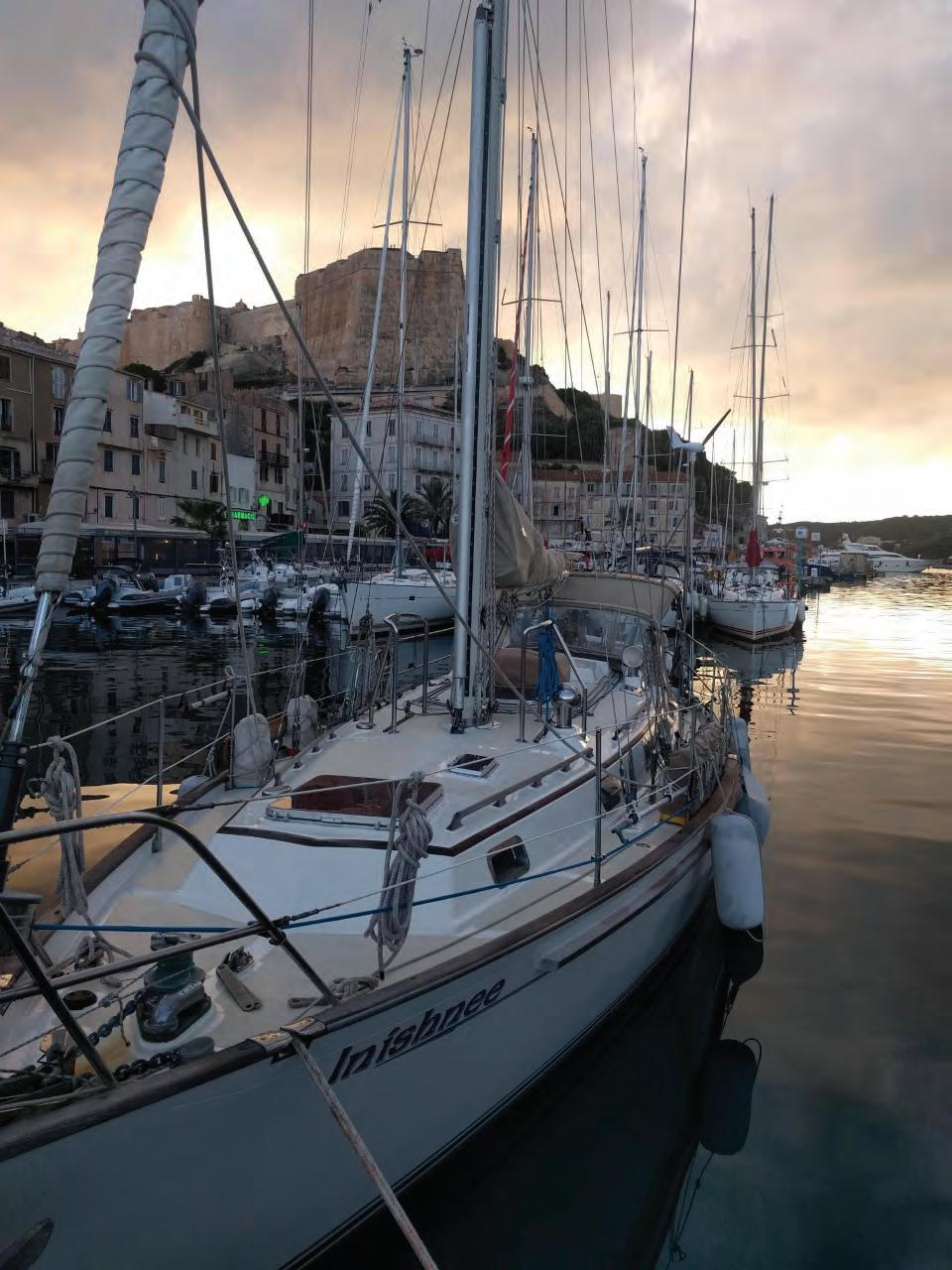
www. LatsAtts .com 129
Upon their return to the eastern Caribbean, they spent eighteen months in Grenada due to COVID restrictions on travel. While there, she reinvented her greenhouse and started using clear plastic bins. She had success rooting plants from cuttings and found big thyme, basil, mint, and rosemary easy to grow from cuttings. Again drawing on her experience, she tweaked her setup by using black, lightweight nursery stock for pots and a mesh material like a window screen to line the bottom and side of the pots to prevent the volcanic stones from migrating through the larger holes. The plastic herb bins were much easier to maintain, move, and harvest.

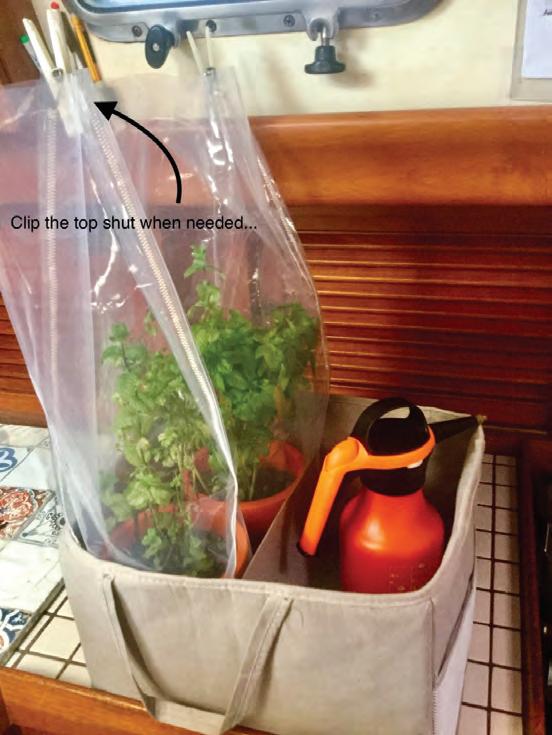
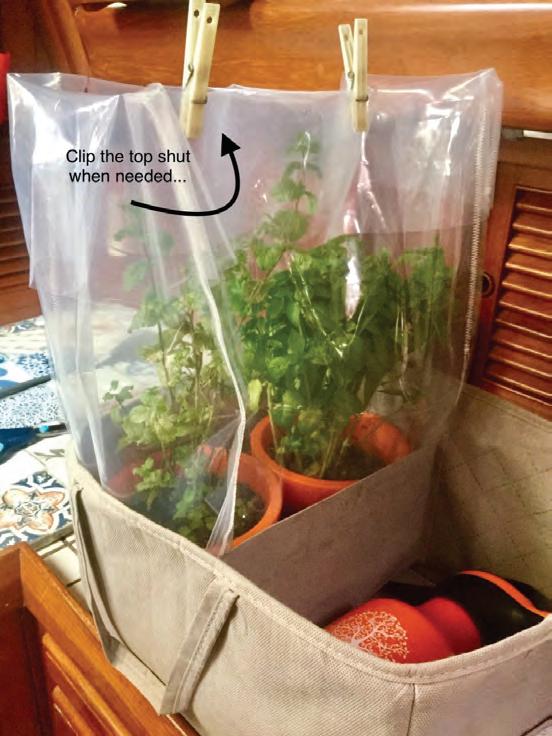
Throughout their travels, sampling local foods and cuisine fueled her culinary explorations in the galley. Having fresh ingredients/herbs on board has been instrumental. Fresh herbs onboard are useful in cooking and beverages and just make life richer. However, herbs are often hard to come by or are nonexistent in many parts of the Caribbean as well as other remote areas. To learn about the local cuisine and how the locals use herbs, Kathy hosted many cooking events on Inishnee, inviting local chefs, cooks, and friends aboard to instruct, give demos or share meals. One of her favorite discoveries was culantro, an herb that has a similar aroma and favor to cilantro and is often found in Caribbean markets. It grows well in tropical climates and is perfect for those who can’t eat cilantro due to its soapy taste. She was able to grow culantro easily, and it reseeded well. She’s looked for it in the United States, but Florida is the only place so far she’s found it in grocery stores.
Another herb she had success with in the Caribbean is big thyme. It was very easy to grow in the Caribbean heat. She used it for cooking but preferred North American thyme. She also grew green onions (from cuttings) and Caribbean oregano. Both Caribbean oregano and big thyme have much larger leaves than the North American versions, so you use much less, and both are easy to grow from cuttings.
Rosemary also loved the Caribbean and Mediterranean heat, and there are few things better than sipping a gin and tonic favored with a gently bruised rosemary spring while you watch the sun sink into the Caribbean. Although she didn’t grow it because it’s a large bush, Caribbean bay leaf was really nice to use in cooking. It’s excellent for keeping bugs (i.e., cockroaches or weevils) out of cabinets and foods like four and grains. However, not everything she tried took to the tropical climate.
It was very difcult to grow sage, and none of the plants lasted more than a month.
130 Latitudes & Attitudes | #41 Winter 2022/23
Gardening Aboard
When she started her garden, one thing that was a concern was customs regulations upon entering new countries, but that hasn’t been an issue. Kathy and Jim have traveled to dozens of countries in the eastern Caribbean, Europe, Africa, and South America with live herbs on board and have never had a problem with customs, government ofcials, or policies.
Here’s one of Kathy’s favorite recipes from her travels:
Marinated Eggplant - Shared from the galley of s/v
Inishnee
Prepare marinade in a small bowl, mix well, and set aside
Marinade consists of:
● 1 tsp red chili sauce
● 1 tsp herbs, dried. Oregano or Herbs de Provence
● 2-3 tablespoons fresh mint, chopped fne
● 2-3 tablespoons cilantro (In the Southern Caribbean, cilantro is called chadon beni or shadow beni)
● 1 garlic clove, minced
● 2 tablespoons olive oil

● 4 tablespoons red wine or cider vinegar
Slice eggplant into planks or circles
Heat nonstick skillet or grill
Place sliced eggplant on hot skillet or grill, cook each side till lightly browned and slightly tender.
Dip one side of each cooked piece into the marinade. Place on serving tray. Spoon a small amount of the herbs from the marinade on each cooked plank.
Serve warm or chilled.
The leftover eggplant also makes a nice bruschetta...
Eggplant Bruschetta
Mix chopped leftover eggplant with a small amount of extra virgin olive oil
Season with rosemary, thyme and/or oregano Toss together with the following add-ins as desired:
● Marinated or roasted red pepper
● Celery, garlic, and/or onion
● Feta or mozzarella bites
● Olives or capers
Serve on multigrain bread of crackers
www. LatsAtts .com 131
Let’s Talk SAFETY
by Bruce Brown & Associates

We were sailing in the 2019 Transpacific Race from San Pedro (CA) to Honolulu (HI) aboard Jim Pucket’s Amazing Grace , monitoring the VHF radio (Channel 16) early in the race one night.
We were over two hundred miles ofshore when we heard a form of a distress call on the VHF radio from a boat some miles astern. They reported having steering issues.
We heard the call, a PAN-PAN – and waited to see if anyone else replied to the call. After a few minutes, the watch captain called a reply to the frst call –by hailing the vessel that broadcasted the PAN PAN call. “To the vessel calling PAN-PAN on VHF 16, this is sailing vessel Amazing Grace in response on VHF 16.”
132 Latitudes & Attitudes | #41 Winter 2022/23
We waited for a reply. None came.
We called again with the reply – “to the vessel calling PAN-PAN, this is sailing vessel Amazing Grace in response on VHF 16.”
No reply.
After another fve minutes, we heard a call to us (Amazing Grace) on VHF 16 from the US Coast Guard Sector LA/Long Beach LOUD and CLEARLY advised us that they were in communications with the vessel and asked us to “stand by.” We asked if by “stand by,” they meant to hold our current position or to monitor the radio for further instructions while continuing our course to Hawaii. USCG Sector LA/Long Beach advised us to continue on our course and monitor the radio for further instructions.
A half-hour later, the USCG came back (again, LOUD and CLEAR) that we were released from monitoring the radio as the other boat was able to afect repairs.
Everyone had heard the term MAYDAY.
The good news is very few have had to broadcast it!
Every boater should understand the ways you can communicate in an emergency to alert anyone of a problem and, just as important, how to recognize and respond to a distress emergency signal.
So, the distress call we heard was not a MAYDAY call.
It was a lower level of distress.
MAYDAY calls are reserved for life-threatening emergencies. It is better to make a MAYDAY call early rather than wait for the situation to get worse!
The PAN-PAN call we received was the second level
of distress calling. PAN-PAN is for a serious emergency where the threat of the loss of life is not apparent.

Examples would be steering issues, loss of equipment (like a life raft that falls overboard or an EPIRB that fell into the water), or a medical condition that was not life-threatening. (I was aboard a boat where a person on board crashed a fnger causing the digit to separate from the hand. That was a PAN-PAN call to the local Search and Rescue Agency.)
The third level of emergency calls is SECURITE. This is used to broadcast information of value to all mariners using the hailing frequency of VHF 16. Examples of when to use a SECURITE call include reporting missing aids to navigation, debris in the water (shipping containers are around the Pacifc Ocean!), and local weather conditions that would afect other boaters (water spout, for example, or a lightning storm). Often local USCG Sectors will broadcast SECURITE calls when there is trafc activity that boaters in the area should note. The U.S. Navy will broadcast SECURITE calls when they are on maneuvers during training exercises.
The U.S. Coast Guard would like to see all boaters venturing ofshore to have a fxed mount VHF radio with Digital Selective Calling. These radios are small and can have a GPS in the radio unit to ofer position during a distress call. If the radio does not have an internal GPS – then the radio must be interfaced with an onboard GPS receiver.
The Digital Selective Calling element is a quick and easy way to send a distress call using the radio.
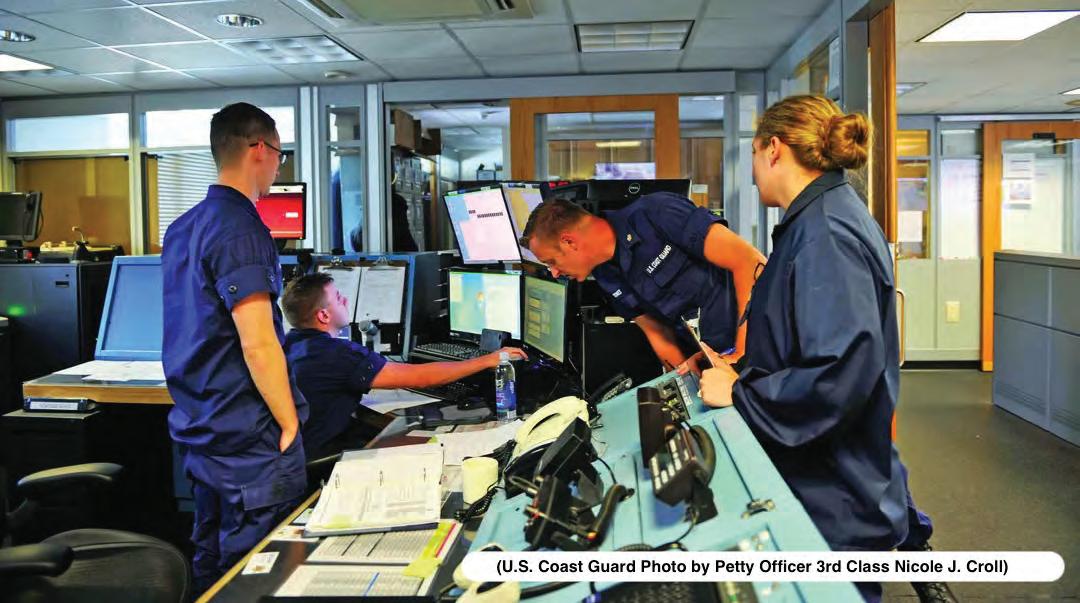
Let’s Talk Safety www. LatsAtts .com 133
First, the radio needs to be programmed with the boat’s Maritime Mobile Service Identity number. (MMSI) This number is unique to each vessel and is available from the Federal Communications Commission (FCC).
The U.S. has also set up other sources for obtaining the MMSI number for those who do not intend to sail in international waters. The MMSI numbers available through BoatUS or the U.S. Power Squadron. The MMSI numbers generated by these agencies are not recognized internationally. Be sure you obtain your MMSI number from the FCC if you plan to cruise/ race in international waters. WikiHow link to obtaining an MMSI number: www.wikihow.com/ Get-an-MMSI-Number
Once the VHF with DSC is programmed and installed, understanding how to use the DSC functions is important for everyone on board your boat! In an emergency, with the VHF radio on, locate the red door located on the VHF radio. Lift the door and push the button – holding it down for three to fve seconds. Release the button. You will hear an electronic alarm sound, and your VHF radio will transmit a distress call to all VHF radios within range of your location (with the Latitude and Longitude of the vessel transmitting the distress call!). This is done on a channel that overrides all other VHF channels during the distress broadcast. (VHF Channel 70).
There can be specifc information added to the message transmission (a pre-programmed list of potential emergency situations such as fre; fooding (threat of sinking); collision; grounded – are examples. The distress message is transmitted – and the radio program “waits” for a reply for four minutes. If there is no reply, the radio will rebroadcast the MAYDAY digital transmission fve times.
A USCG land station will wait for nearly three minutes before replying to the digital distress message to allow vessels in the area to respond if possible. The USCG station will respond if there is no response from another vessel.
It is important to also train everyone on board about how the VHF radio operates. Monitor VHF 16 at all
times when on the water. Train your crew and guests about the radio, how to use it, and how to broadcast a distress call using the radio. When making a VHF MAYDAY call, the procedure is:
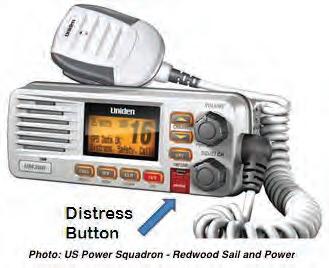
Be sure the radio is on Channel 16.
Be sure the radio is on full power (twenty-fve watts for a fxed mount and six watts for a handheld radio).
Hold the radio microphone to your lips.
Depress the transmit button
Say the following slowly: “MAYDAY, MAYDAY, MAYDAY. This is the vessel (give the name of vessel) calling MAYDAY on Channel 16. We are located at (give latitude and longitude in degrees, minutes, and seconds). We are a (describe vessel –length of the boat; sail or power; color of the boat; the color of distinguishing covers, tops, or deck). Give a description of the cause of the MAYDAY call – (we have a fre on board; we are taking on water; we lost a crew overboard; we have a medical emergency; etc.). Tell them how many people are on board (we have six souls on board – two are children). Tell them what safety equipment you have (life raft, EPIRB, life jackets, handheld VHF radio).”
Take your fnger of the transmit button and wait for a reply.
Rebroadcast the MAYDAY call after fve minutes if you hear no reply.
If you hear a MAYDAY call (or any distress call), you should write the information down as it comes in –
Let’s Talk Safety 134 Latitudes & Attitudes | #41 Winter 2022/23
and then reply to the call. (Good reason to have a pad and pencil near the VHF radio). I recommend having them give their vessel name and position. Determine how far away you are, and the time it would take to get to the vessel making the MAYDAY call. If multiple replies are heard, settle on a plan of action.
If there is no other reply to the distress broadcast, once you reply to the vessel in distress, re-transmit the distress broadcast as a MAYDAY RELAY.
Log your position and the time of receipt of the MAYDAY call and your reply to that call.
Log your intention, and then do what you agreed to do.
Your responsibility is frst to the safety of your crew/guests and your vessel. If you can proceed to ofer assistance, do so. All you may be doing is communicating with the vessel in distress while they fgure out what to do.
Our tax dollars were used to invest in a tremendous system used by the U.S. Coast Guard to receive and transmit VHF radio signals to coastal boaters in the United States. The RESCUE 21 system is a series of radio antennas connected to the robust USCG monitoring stations along the coastal US. (About ninety-seven
percent of coastal waters in the United States are covered.). The system design allowed the USCG to receive and transmit a minimum of twenty miles from any of their antennae/to a VHF radio antenna six feet of the water. It uses multiple antennas to be able to locate VHF radio transmission within a few degrees, and with triangulation of the signal reception from multiple antennas, a smaller Search and Rescue target can be defned.
The USCG transmissions can be directed to specifc radio towers to minimize the chaos that can occur during Search and Rescue missions so only those in the region of the SAR event would hear USCG radio transmissions.
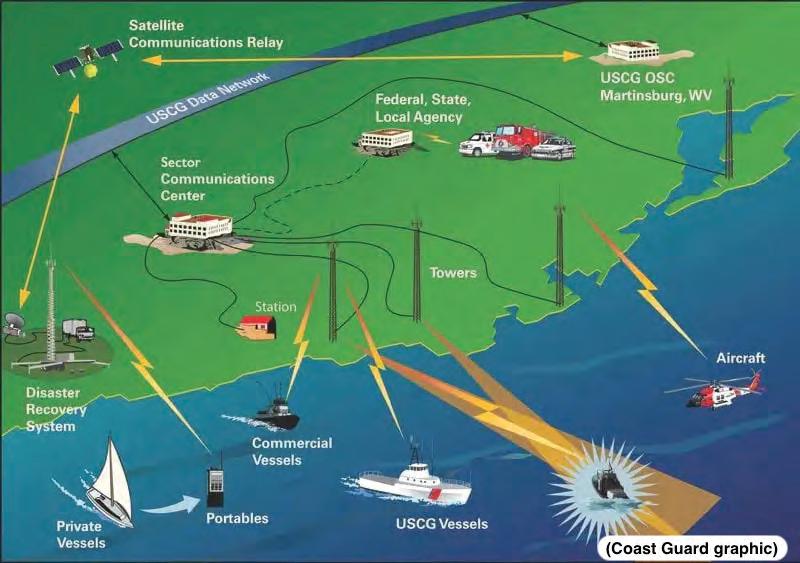
www.navcen.uscg.gov/?pageName=mtNds
The Rescue 21 system is a tremendous beneft to mariners!
Understanding the distress MAYDAY radio procedure can speed up rescue in an emergency!
Let’s Talk Safety www. LatsAtts .com 135
SAI LING
by Doug Crenshaw
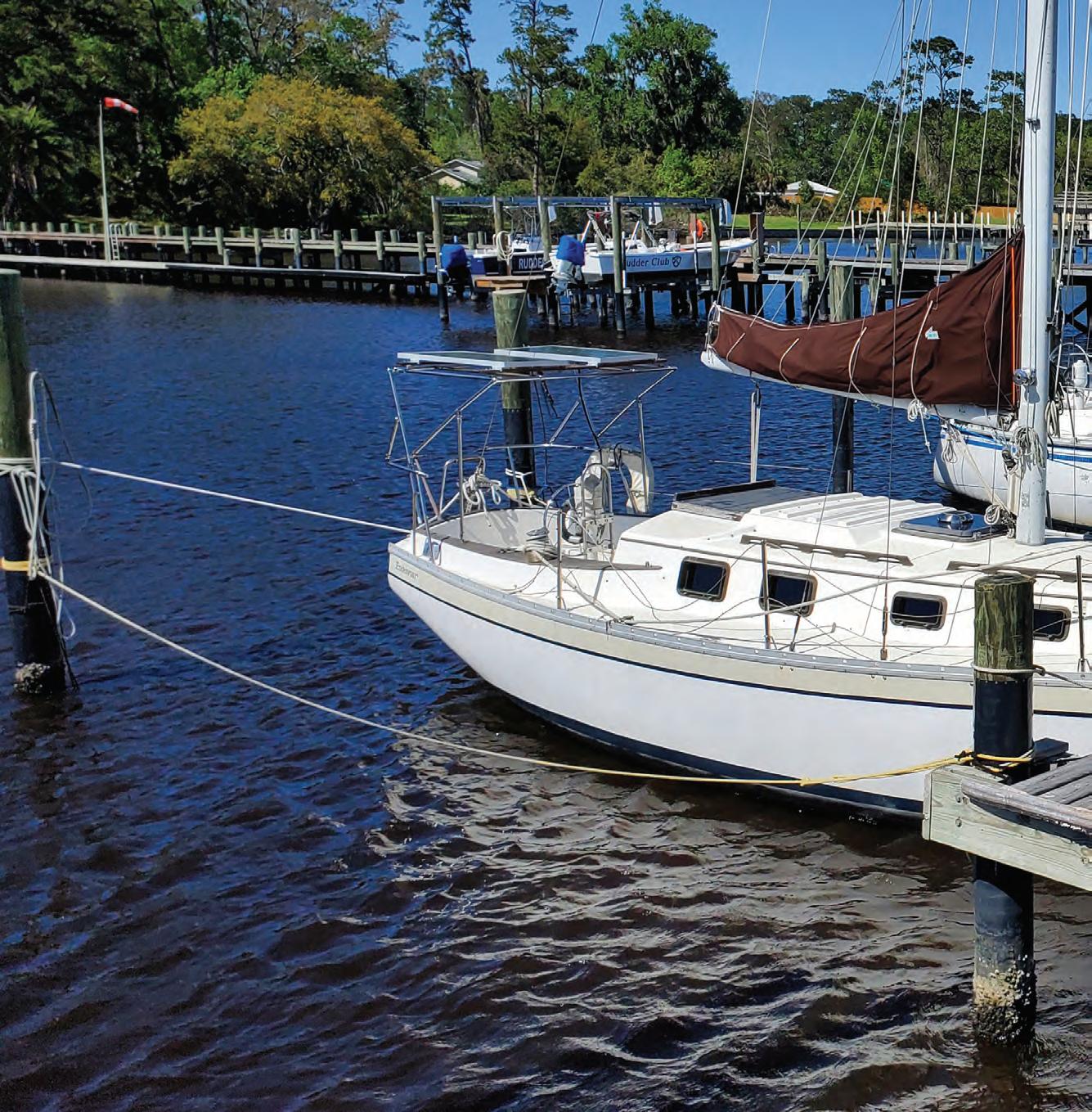
136 Latitudes & Attitudes | #41 Winter 2022/23
on a budget
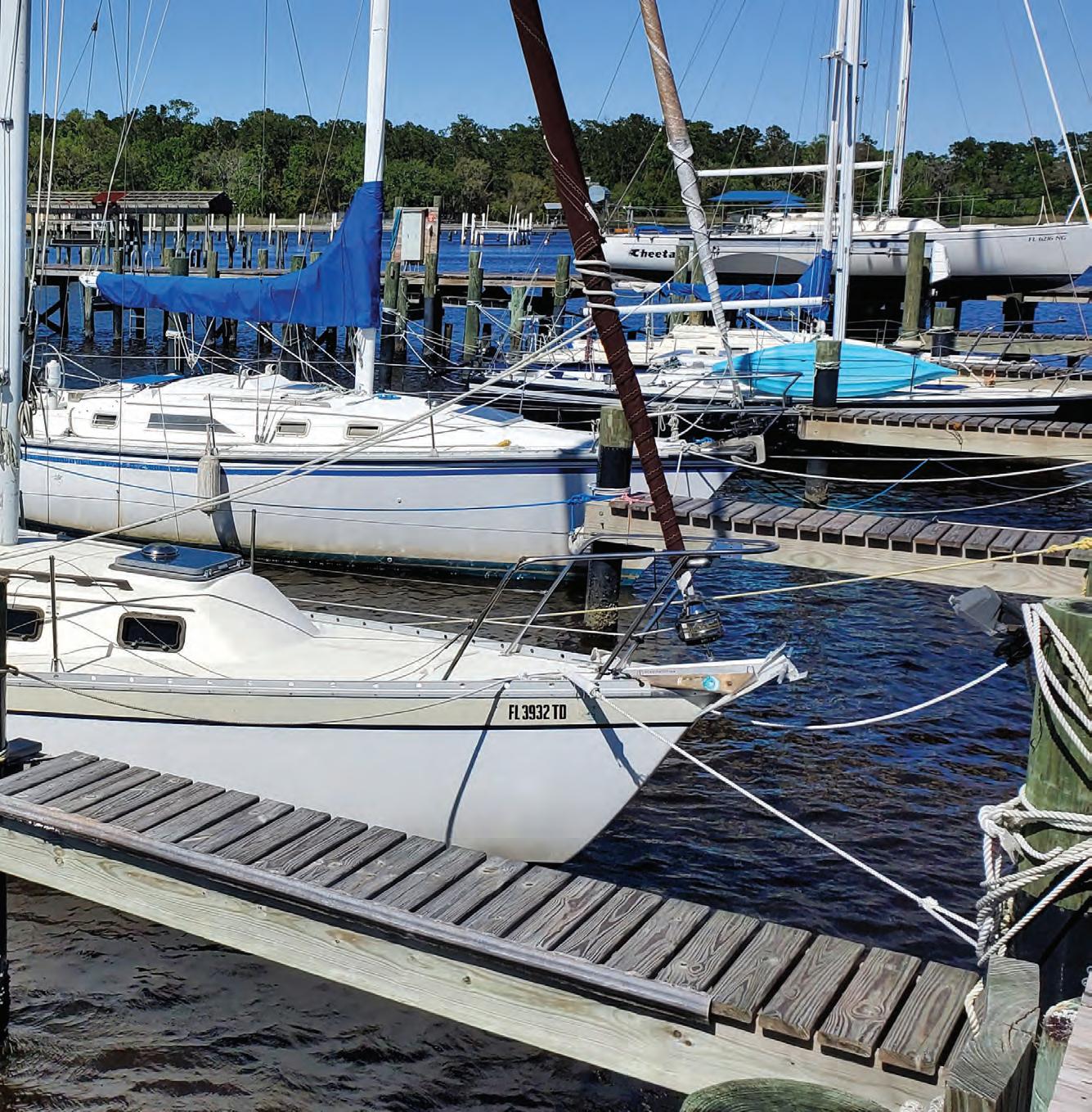
www. LatsAtts .com 137
Have you ever dreamed of buying a sailboat and setting off for distant shores and tropical waters?
My wife, Lisa, and I have been sailing for over thirty years around northeast Florida, and we are fnally getting close to making that dream a reality.
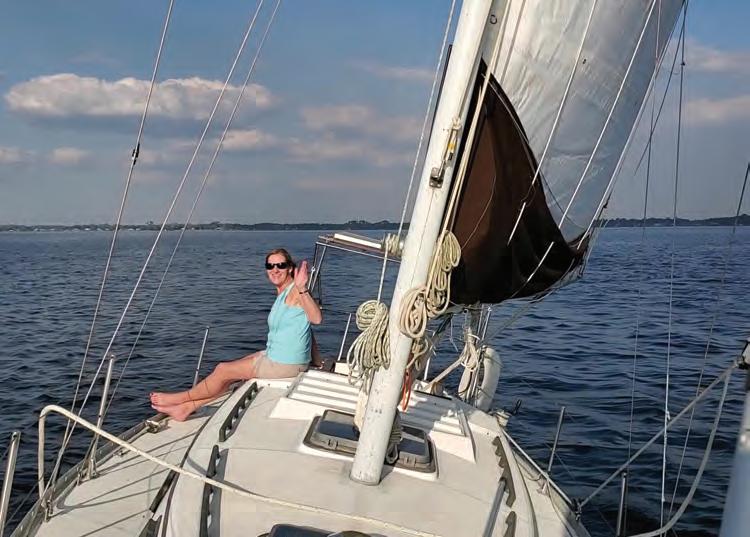
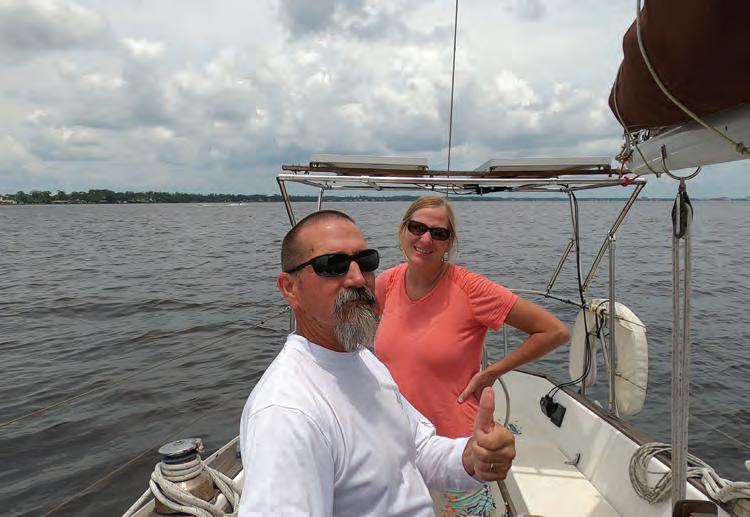
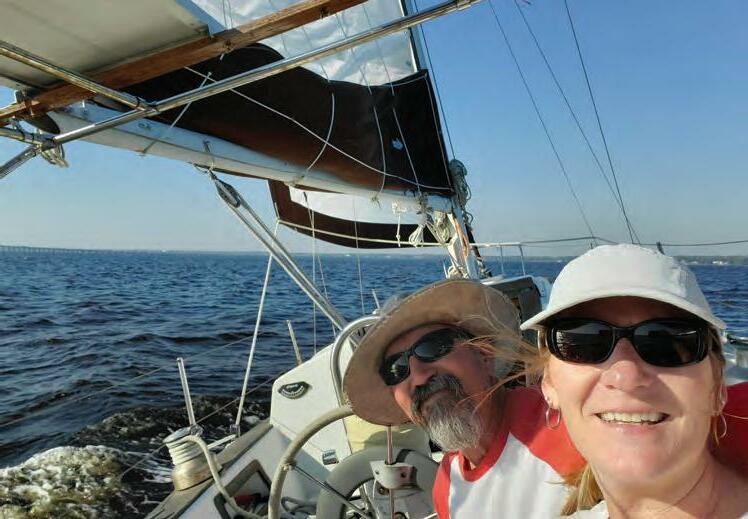
We’ve had a lot of boats, both sail and power. This time we wanted a boat big enough to go cruising but not so big that we couldn’t easily handle her. We both feel it’s important that either one of us be able to single-hand the vessel in case of an emergency. We also wanted enough room to be reasonably comfortable. We’ve been married a long time and get along well, so we don’t need a lot of space. Every vessel is a compromise in some way, and each sailor has to fnd what works for them. Our starting budget for this mythical cruiser was $16,000.
After a lot of searching and looking, in December of 2021, we found and negotiated the purchase of a 1980 Endeavor 32 for $13,000. Endeavors are good, sturdy boats that lend themselves well to cruising. This one seemed sound with almost new sails and upgraded bronze ports. It came from up north, which means it didn’t get used as much as a Florida boat might be, and this showed in its overall condition.

YMMV: Your Mileage May Vary
The total purchase price, including taxes and registration fees in Florida, came to $14,162. There’s not much you can do about that. The surveyor I found I considered a bargain at an even $500. As much as I think I know about boats after all these years, I still like a set of professional eyes taking a cold hard look. He pointed out only a few minor things in addition to one major issue we already knew about from our initial showing: the rudder.
The boat had been sitting on the yard for about a year and a half through two Florida summers. The consensus at the yard was the hot Florida sun had caused the back “seam” of the rudder to open. It was very small,
138 Latitudes & Attitudes | #41 Winter 2022/23
Sailing on a Budget
and since it had apparently happened very recently, there was no rot inside. We opted to allow a professional to do the repair. Could I have done it? I think so, but… It was the rudder! We felt better letting someone fx it who did glass work for a living. They also handled a gouge on the keel and some fairing of the shaft strut.
The yard we were at allowed us to work on the boat ourselves, but we only had so much time to do stuf. We focused on cleaning and doing the odd jobs we knew we could complete. We found the thru-hull valve for the head sink was frozen and again opted to let the yard handle it. We also let their diesel mechanic service the engine, but both items we could have saved money on if we’d had more time.
The total yard bill included other things to be aware of when planning a budget, such as moving the boat from the storage area and blocking it back up in the work yard for the repairs. Splashing the boat had already been paid by the previous owner, but all yards aren’t the same. We also paid for three nights at the dock because we had to wait for the weekend to move the boat home. The total yard bill came to — hold on to your Lats & Atts hat — $3,109. Ouch!
But wait — there’s more. Once in the water, we found the head did not work. It was forty years old so we opted to replace it, along with the anchor rode and a fresh length of chain. The key switch for the diesel was “hit or miss,” so it got changed out. A bow roller, safety placards, some paint, hose clamps, a diesel jug, and several other small items made their way onboard.
All in all, by the time we got the boat home to her new dock in Jacksonville, Florida, our grand total came to around $18,758. Experienced sailors will tell you to budget a good 20% over the purchase price when buying a sailboat, but we went a bit over that. Time is defnitely money, and our yard bill refected our lack of time. One item not in that total was fuel cost to and from the yard, which was ffty miles from us, but it’s something to be aware of, especially with today’s gas prices.
Next Projects Water
The frst major job we tackled once we got her nestled into her new slip was the water system. The boat had a ffty-gallon integral fberglass tank formed under the v-berth that was delaminating, and the fnish on the
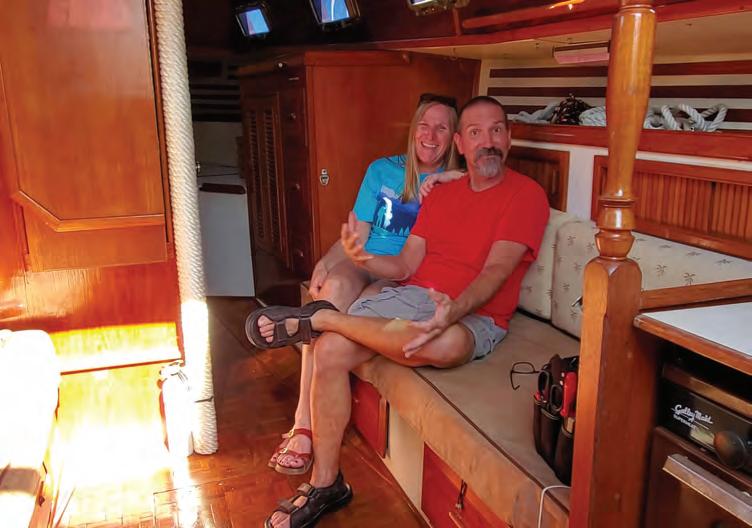
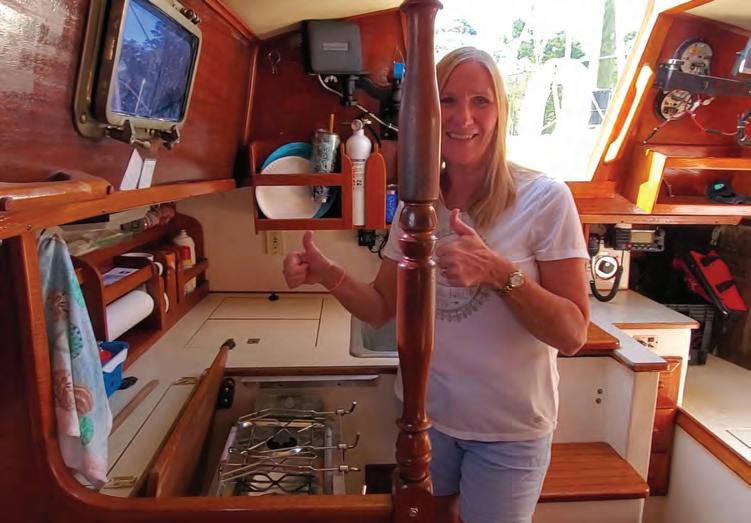
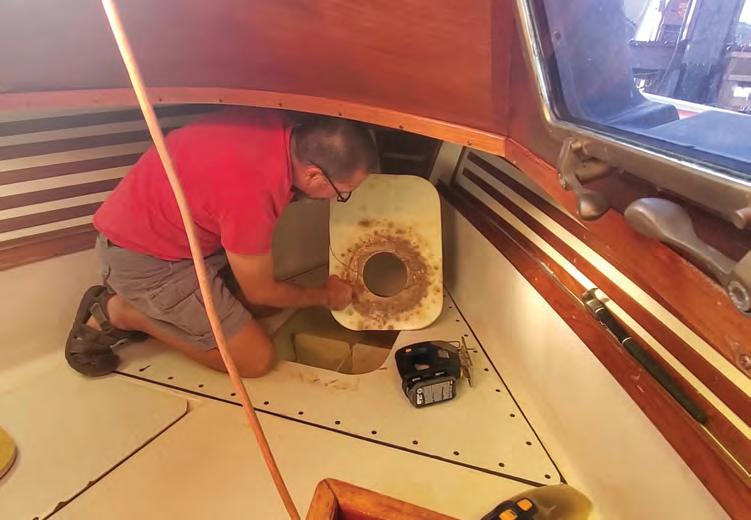
www. LatsAtts .com 139
inside was also compromised. We opted for a simple fx. We cut a large access hole in the top of the berth, cleaned it all up, and installed a thirty-one-gallon fexible water tank. We did lose some capacity, but future plans include a small DIY watermaker.
This job went well with one small setback when I tried doing the inside of the tank with a palm sander. I literally coated the whole interior of the boat with dust. That added an extra day! Needless to say, my wife was not happy – but hey, the boat did get a very thorough cleaning. We replaced all the hoses and faucets and simplifed the system by sticking with just cold water. If the budget lets us, maybe a water heater will be in the future, but it’s not a critical item for us. We are going to the tropics after all, and we’ve used a sun shower before.
Stove
Along with water, you need a way to cook all the fsh you’re going to catch while sailing to your island paradise, right? The original stove/oven was a pressurized alcohol type. These are well known for being fnicky even when working well. This one was forty years old and simply would not do the job. It was worn out, and parts were nonexistent. We got lucky and sold the stove to someone who wanted some of those nonexistent parts!
We were able to swap it out for an ultra-safe Origo 3000 non-pressurized model. We found one in like new condition at the Sailor’s Exchange in St. Augustine. These aren’t made anymore either, but they are so simple they are almost foolproof. This model has no oven, but we can learn to work around that. As a bonus, removing the “pressure tank” for the old stove gave us a place to put a propane cylinder for outdoor cooking in the cockpit. This is a much better option for the tropics because it keeps heat out of the cabin.
Batteries
Another important system for any cruiser is electrical power. In addition to electronics, lights, fans, and pumps, for us, refrigeration is a must-have. Not being able to have a cold “5 O’Clock Somewhere” drink would suck the fun right out! Being able to power a fridge means a good battery and solar setup. The boat came with a decent solar controller and two one-hundred-watt solar panels mounted on a sturdy stainless frame like a bimini top. But the battery situation needed work. Four diferent batteries are wired through two selector switches! This was too complicated.
In keeping with our modest budget, we opted for a pair of six-volt Duracell wet cell fooded golf cart batteries wired in series for twelve volts, giving a total of 230AH, or Amp Hours, as the “house bank” wired to Position #1 using just one selector switch. This type of battery usually lasts a minimum of fve or six years. And we added one Group 27 battery, also wet cell and deep cycle, wired to Position #2 as a backup for starting the engine just in
case we accidentally run the house bank too low. The solar controller allows us to keep both “banks” charged on separate circuits.
For refrigeration, we went with a portable unit, an ICECO 20. These types of little fridges are very cost-efective and draw minimal power. We’ve been experimenting and have found we can keep it running overnight along with fans and lights with the battery setup we have now. Will it be enough for full-time cruising in the tropics? We don’t really think so, but our future plan is to double the battery capacity and add at least one more solar panel before we head out. A remodel of the original icebox is also a possibility.
And there have been a lot of smaller accomplishments. We added a couple of fans to the main salon, and more are in the future. Lighting and wiring upgrades are a continual project. Some running rigging has been replaced with new line, and we still have to install a Barton Traveler Kit we bought for the mainsheet. We bought a new Rocna 15 after we had a little anchor dragging incident. We are working on redoing and upgrading the bilge pump setup to something much more capable and reliable. We replaced all the old hoses for the new head. We’re starting to work on the teak and putting fresh paint in many lockers and storage areas.
Going Forward
So how much does it take to get a forty-year-old boat ready for the Bahamas? As the saying goes, “How much ya got?” The simple truth is you will spend whatever you can. Figure out what you need for safety, and after that, comfort and convenience. We decided our budget can be $500/month, not including slip rental. We will spend that much every month until we feel the boat is as safe, sound, and comfortable as we can make her. Some months we’ll be saving up for bigger ticket items, such as a haul-out and bottom job, the DIY watermaker, and a dodger. At some point, we’ll have to buy a dinghy and outboard, most likely used. And sometimes I pick up side-work, and that goes into the budget as well.
How are we doing so far? As close as we can make out, we’ve spent about $4,450 in the six months since we bought her. That’s actually great. Our extra income has come from side jobs, so we are staying on track. The big plus is that we’ve gotten the boat into really usable condition so we can comfortably spend weekends on her, and this helps us fne-tune our plans going forward as we fnd out what works and what needs work!
Our goal is to have her ready to go to the Bahamas for the 2024 season. We still have plenty of things to do, and we promise to keep track and let you know what we spend.
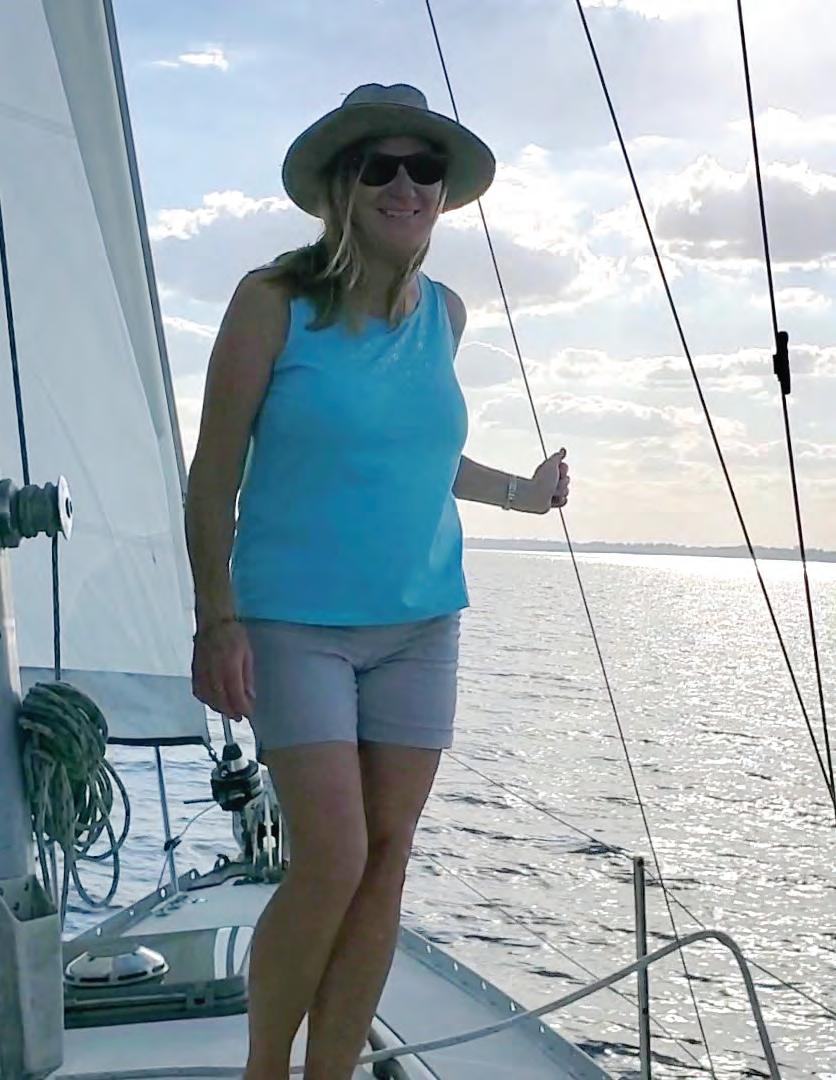
Sailing on a Budget 140 Latitudes & Attitudes | #41 Winter 2022/23
You can fnd us on YouTube as OldMan and Miss Mirage for a closer look at our latest projects!
BOOK REVIEW
 By Capt. James F. Cash
Jack Tar and the Baboon Watch: A Guide to Curious Nautical Knowledge
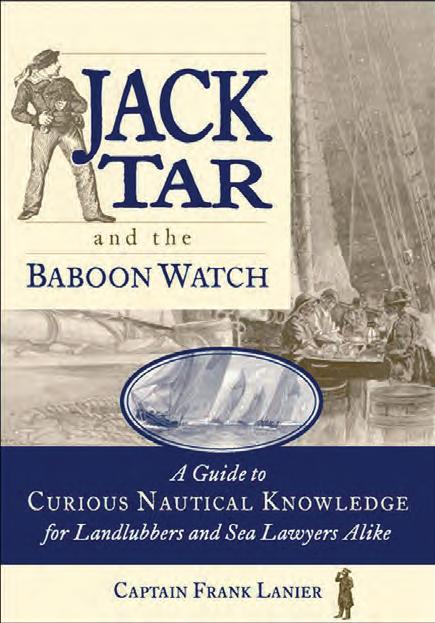 By Captain Frank Lanier
This review is a little out of the norm from most of the reviews I write for Lats&Atts. Captain Lanier is not sharing his current cruising adventures; however, given the book’s unique content, I thought you would enjoy learning about it. As the book states in the preface, Imagine a nautical equivalent of Ripley’s Believe it or Not
I thought I had heard it all over my years of sailing but was amazed how much I didn’t know and how our current English language has much of its base from maritime origins. We all know saying like Being Shanghaied, or Bottoms up. we’ve learned about Davy Jones and have heard the expression Three sheets to the wind or Over the barrel, but do we know the origins of these expressions? Captain Franks has done exhaustive research to bring us the foundation for many of the terms and phrases we use and have heard during our daily lives.
Captain Lanier started compiling these sayings and expressions while serving in the US Coast Guard and frst included them in the “plan of the day” published aboard the various ships he was stationed on over the years starting back in the 1980s. I am sharing a few of the ones that jumped out to me. I’m sure you fnd your favorites as well. Entries are listed in Alphabetical order. The book is also sprinkled with wonderful illustrations of old maritime paintings and drawings. The book’s title Jack Tar is from an English euphemism Jack for a “common man,” and sea men were known as Tars from the material they worked with to seal the seams of wooden ships. Hence, a common sailor is a Jack Tar
You have heard the expression Clean Sweep, which I understood as a team winning all the games in a series against their opponent, as in the “Yankee’s swept the series from the Red Sox,” but I learned it started as a nautical term meaning a wave came aboard and cleaned the deck of everything that wasn’t secure. However, another possible origin is during the sea battle between

the English and the Dutch feets in the 17th century. After a substantial Dutch victory, the Admiral hoisted a broom to the masthead, signifying he had swept the British from the sea. We know that in Homer’s stories, he told of a ferce tribe of women warriors called Amazon’s, correct? Well, When the Spanish explorer Orellana sailed up the famous Brazilian river, he was attacked by a native tribe where the women fought as fercely alongside the men; hence he named the river Amazon
I don’t know about you, but when I was a kid in elementary school (a long time ago), a very derogatory term used was to accuse a classmate of having Cooties. I learned it was nautical slang for lice, perhaps derived from the Polynesian term “kutu” meaning parasites or insect.
Most older nautical charts have the depth measured in Fathoms, six feet in length. Apparently, old English law decreed a fathom to be the length of a man’s arms
142 Latitudes & Attitudes | #41 Winter 2022/23
wrapped around an object of his afection, perhaps his wife. The word is derived from faethm or “embracing arms” and measures approximately 6’ in diameter for most men of the era. Who would have guessed?
Though rarely was the welfare of the crew or Jack Tars a concern by ship owners or ofcers, however, there was apparently a practice of creating a Slush Fund or money collected for the beneft of the crew. Slush is the yellow grease that collects from boiling pork in preparation for salting and preserving for a long voyage. The fat (slush) was saved in barrels, and after returning from the sea, it was sold to candle shops and soap makers, with the funds saved to an account or Slush fund for the beneft of the crew.
To strike a sail means to lower it, take down the yards, and thus the sail is not in use or not “working.” Occasionally, when there was a disagreement between the captain and the crew, the crew would be known to strike or remove the sail until their demands were met or an agreed settlement reached, thus giving us the phrase “Going on strike.”
Turning a blind eye is accredited to Admiral Nelson, who had lost an eye, along with several other appendages, in various naval battles during his career as a British naval ofcer. In the heat of a battle, he occasionally put the telescope to his blind eye, especially if he didn’t want to see the signal to retreat. Nelson was quoted as saying, “I possess a blind eye and reserved the right to use it on occasion.”
Finally, for my last selection, we have SOS. I always thought that was a signal via Morris code, meaning “Save Our Ship.” Well, apparently not. I learned it stood initially for nothing; it was simply easy to recognize and send via code. It replaced the original land-based radio distress signal CQD, which was adopted from the French CQ (sécu, from the French word sécurité), meaning alert or message of interest. CQ was a general call, sécuritė, sėcuritė, adopted for maritime use, then in 1904, the Marconi company announced the addition of the “D” for distress. Meaning “All stations, distress” The simpler SOS was adopted in 1906. Captain Frank tells us the radio operator of the Titanic sent out both versions, on that fatal night, to no avail.
I also liked the origin of Windfall and Tycoon and to learn that Popeye was originally a yachty, not in the Navy man as his nemesis Pluto. Enjoy your adventure into nautical phrase origins.
www. LatsAtts .com 143
THE
GREAT PADDLE SCAVENGER HUNT
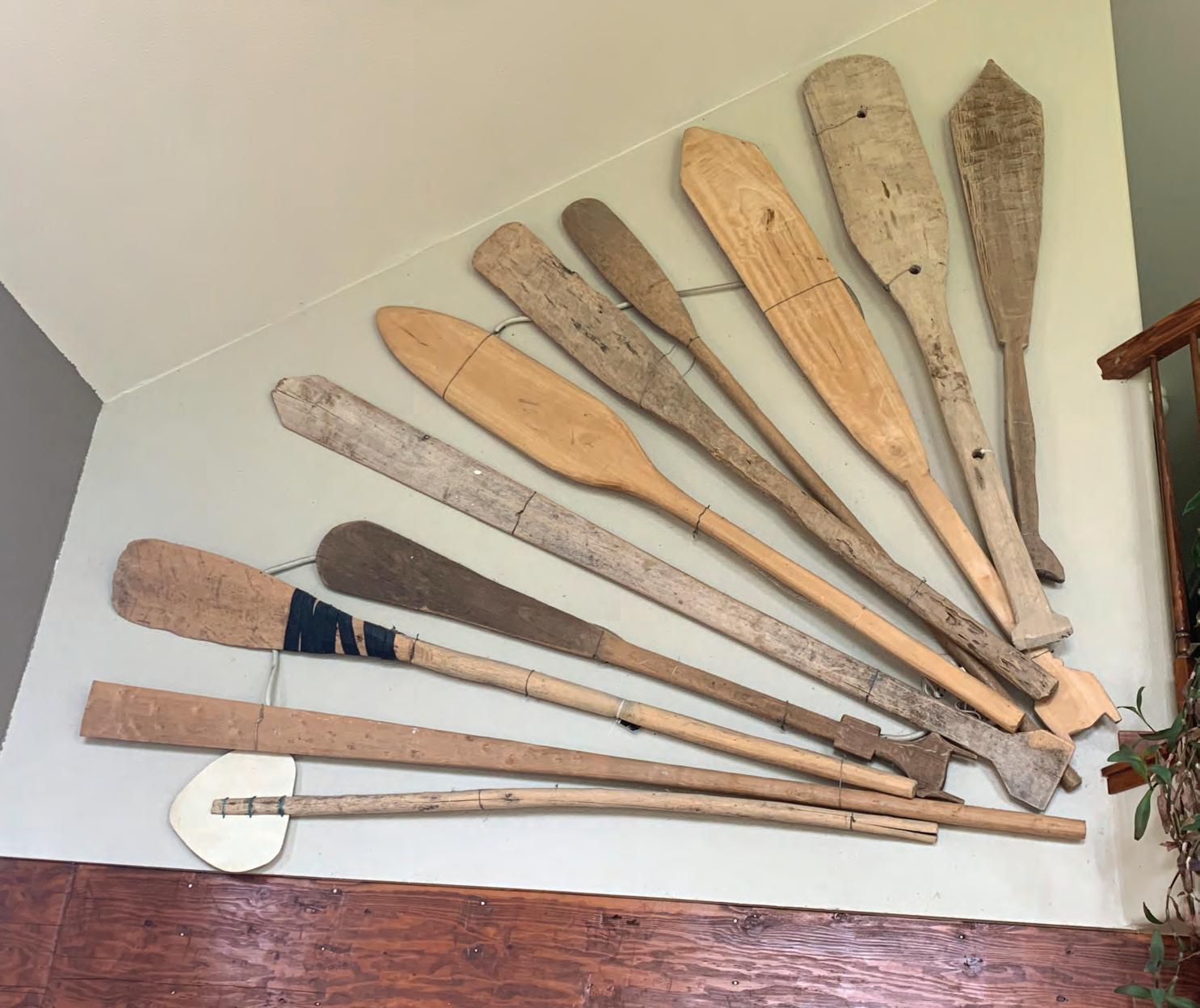 By Brad Modesitt
I like to travel the world; seeing, hearing, and feeling diferent cultures and people other than myself is what makes me grow as a person. How better to get to know people than by traveling to their homeland? Immersing yourself in other cultures is incomparable to reading books, newspapers, or, worse social media. If I have an extra dollar in my pocket, I will be traveling. One year, I ate rice for two meals a day so that I could ride a bicycle through South America. After over sixty countries, I have odd quirks that make my travel more wonderful.
It is really all my friend’s fault. A roommate in Denver, Aijaz, convinced me to leave America and travel to India with his outrageous stories intriguing my young mind.
I spent two months traveling around India, visiting his relatives. I loved the tourist spots, but the intimate moments with locals were the highlights. How could I replicate that when I usually don’t know a soul locally? How could I become part of the locals’ lives?
Many suburbanites tried the urban scavenger hunt accosting neighbors with the need for a lemon, egg, or unused book. I met neighbors and friends this way as a kid. Normally, I didn’t have a reason to knock on random doors unless I was trying to sell my snow shoveling skills. I traded the need for a lemon for asking random people on the streets if they had a paddle to sell. “No? Okay, do you know somebody who might?” That was the
144 Latitudes & Attitudes | #41 Winter 2022/23
hook. They want to help, and directions, whether good or bad, would follow. At the next door, when you say, “Sidra down the street said you might be able to help me,” you are now part of the community that people want to help. A discussion and questions about why you would need a paddle without a boat can bring lots of laughter.
More directions will probably follow as you wind your way through the local neighborhood. Then, you meet the person who sees your folly of a quest and says, “follow me.” Digging into an old boat or maybe a packed garage produces the paddle that started this mission.
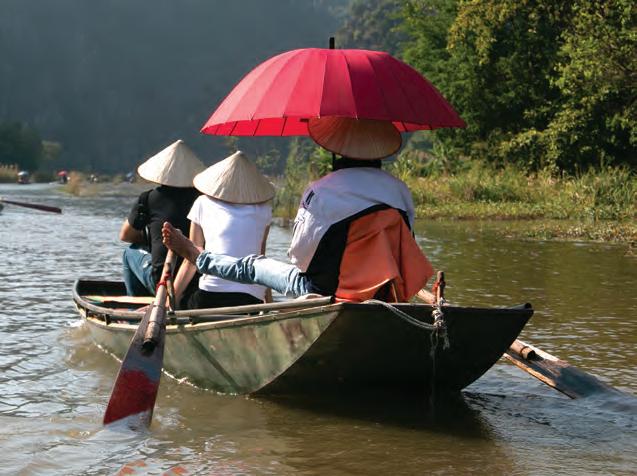
A ridiculously low price as to the value then needs to be settled. How valuable is talking to locals and having fun with them for an afternoon worth? To me, that is the essence of why I travel; I want to meet locals. The paddle is just a souvenir of another incredible place. Paddles are my hook into the locals’ lives.
My daughter says that I go to a dock or shore and look for the sketchiest person around and get talking. There is some truth to it, but not much. Mostly, people are just hanging out,
which to Americans, can look like idleness. I love hanging around docks, marinas, rivers, beaches, and boats. Never let contentment in one’s surroundings give a false impression of apathy. We should all be so lucky to hang out with our friends on a beautiful sunny day, listening to the radio and the waves. After a quick discussion, I disappeared into a local’s less-than-wellmaintained truck, screeching away at breakneck speeds, to jump a creek to talk to a neighbor who might have a paddle. So far, it has been great.
In Belize, a group of three locals in a faraway boatyard gave me a free paddle after laughing for a while. They were certain I was out looking for the local weed, and I apparently ft the profle. They were laughing because they had profled me so wrongly. Wrong stereotypes go both ways. At least in a foreign country, I won’t be looking for weed. Going to the local jail has never been a fun cultural experience. The pure scared-shit adrenaline shock greatly overrides the fun comradery a person can have.
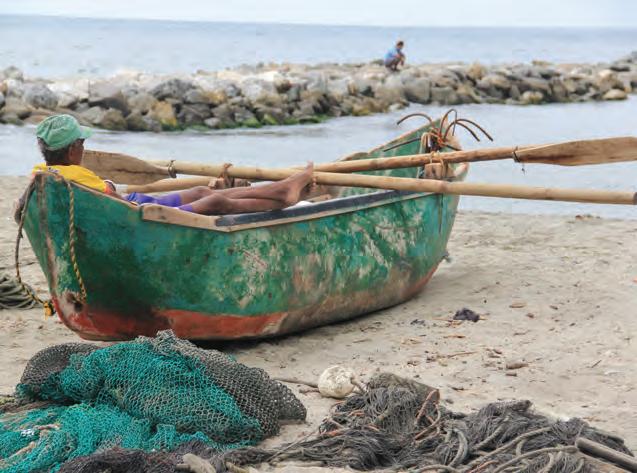
With the local church maintenance man, Jem, in Bequia (a Grenadine of St. Vincent and the Grenadines), I made an appointment to go home with him on the
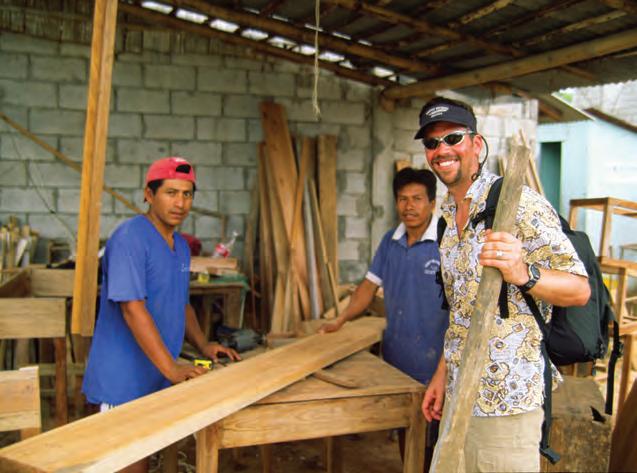
www. LatsAtts .com 145
bus the next day to fnd the perfect oar. I told my wife Lindsey that I would be back; I just didn’t know when. She supports my foolishness even when we had a fourand six-year-old on the sailboat. The local bus picked up and dropped of everyone on the island at least three times before we made it to his hangout bar near his home. The island is only seven square miles, yet the bus ride still took hours. The locals, one of three worldwide groups that can legally participate in whaling, caught a humpback whale that day by lifelong methods of sailing and rowing, then harpooning, and this was the frst caught in a couple of years. Everybody on the island was able to reap the rewards of this important catch. A local soccer match was on TV as well, and the bar crowd was electric. I had my local guide taking me to tables and friends as I tried to fnish chewing the tasteless whale meat. And Chewing. Buying a round of beers and then being presented with an oar used by the old proprietor’s Great Great Great grandfather is humbling. We settle on a price that we are ecstatic about as the local soccer team scores a goal. We are all cheering
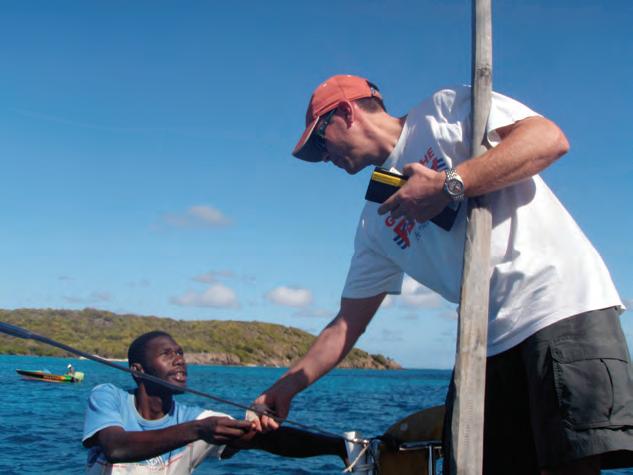
loudly. I made it home to our sailboat well after dark and with a worried wife. As usual, these excursions into the locals’ heart have always brought treasure and not trauma. While walking through the Bahamian island of Mayaguana with my six-yearold daughter, the scorching hot afternoon sun zapped our energy and sapped our thirst. A kindly old gentleman, Earil Cartwright, with thick bottle glasses, said, “Well, I sure am sorry that I don’t have a paddle, but how about a cool glass of lemonade?” Over the next hour, we hung out together in the shade of some trees, talking about life on a small island. I even was able to help him unjam the lawn mower he was working on when we walked up. As a neighbor comes by, our new friend asks about a paddle. Suddenly, we are following this tall, lanky guy a few houses over. Inside a garage with a life’s possessions in it, we start digging. Laughter at some of the crap he has amassed and a true look into a local’s life, we fnd an elevenfoot, ten-pound, easily sixty-year-old red oar. He wants to give it to us, but we can’t. It has been too fun.
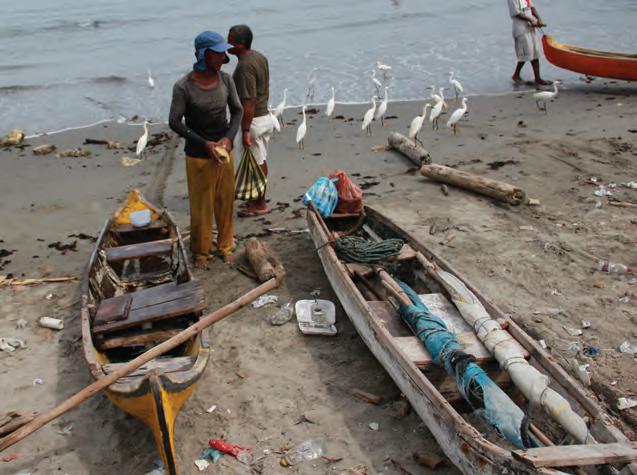
Ecuador was fun when the local
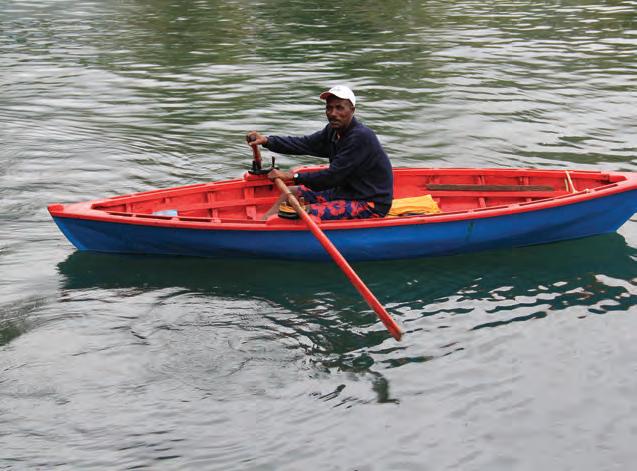
THE GREAT PADDLE SCAVENGER HUNT 146 Latitudes & Attitudes | #41 Winter 2022/23
craftsman heard my plea and took measurements of my height and arms. The resulting seven-pound paddle with an enormous ten-inch-wide and yard-long blade is spectacular. Panama has some of the strongest, heaviest, and most stylish paddles. When you are paddling a two thousand-pound dugout canoe over the open ocean, only a super strong paddle will do. The Guna Yala Indians of Panama bring fare, paint, and panache to their paddles.
The t-grip has tips to hold the hand secure on the paddle in salt water ocean paddling conditions. A short shaft is connected to a giant, increasingly large blade as it reaches full length meant to steer the heavy canoe while sailing through reefs, waves, and three hundred sixtyeight gorgeous islands. Crafted from a single piece of wood, they are works of art that range in weight from a couple of pounds to over ten.



India was really difcult because fnding the fsherman while at their boats was difcult. My twelve-year-old son, mostly willingly, accompanied me at 4:30 AM to go on the hunt. One of the problems is that I speak English and Spanish, certainly not some dialect of Hindi. Nowadays, I can use my phone to show pictures of our cool worldwide fnds. Immediately, they understand and want to have their paddle represent their country. The Indian fsherman started fghting over whose paddles we would take. “Two paddles for fve USD, please.”
The journey in Laos forced us into a secluded awkward spot over the river where twenty monks in orange cloaks started walking over a super sketchy one-hundred-footlong bamboo bridge. Their laughter roaring over the river below and acrobatics to stay on the swaying and the bending bridge was hilarious to witness. After traversing the bridge myself, less hilarious, (My apologies, my son says that this actually was the best part to witness and still giggles to this day – perspective once again crushes me), I meet with the paddle maker. The wood paddle made from a single tree to propel light, narrow boats up and down the local rivers weighs just over a pound, a little more than my carbon fber dragon racing paddle. Meeting a true oar craftsman in Venice, Italy, ended with a beautiful oar and some tears. Venice and its famous waterways made fnding an oar craftsman easy. Finding the shop of Saverio Pastor, the local remèr, a Venetian oar maker, that founded their own corporation in 1307, is easy as following the blue dot on my phone. He shows us his shop making Forcóle and oars using his heart as he shapes each piece with his hands. The Forcóle is what holds the oar to the boat using only friction on the Gondolas. Some older oars are perfect for us, so we settle on a price, and then I tell him the bad news. The eleven-foot oar is too long for the airlines; I am going to need to cut it in half, then glue it back together at home. This will render the oar useless in terms of function, but artistically it will be unharmed. He agrees but says we must come back tomorrow. We show up, but he does not. His apprentice explains that he just could not cut the oar
www. LatsAtts .com 147
in half. With centuries of past remèrs in this place, it is pretty awful when the saw slides through the oar. It feels like a death. I love the craftsmanship that the Guna Yala or Lao people can do with a single piece of strong wood. I also love seeing how people try to attach or fx their paddles where the blade attaches to the shaft of inferior paddles and oars. The Dominican Republic had a local fsherman, MeMe’ on the Rio San Juan, that rowed out to our sailboat. I negotiated to have him make some new oars to bring by the next day. When he showed up with some spectacular new handmade oars, it became awkward when I didn’t want those. I want the old ones. He understands, and it becomes more awkward. “This oar has a curve in it, and both blades are held together with bicycle innertubes… they are old,” he tells me. “They don’t have much life left.” Exactly. He rowed away with shiny new oars that steer straight and a little money in his pocket. My wife could not tell whose smile was biggest. A hand worn, loved tool like this paddle is art too. When your livelihood depends on a tool, you fgure out how to make it last to the
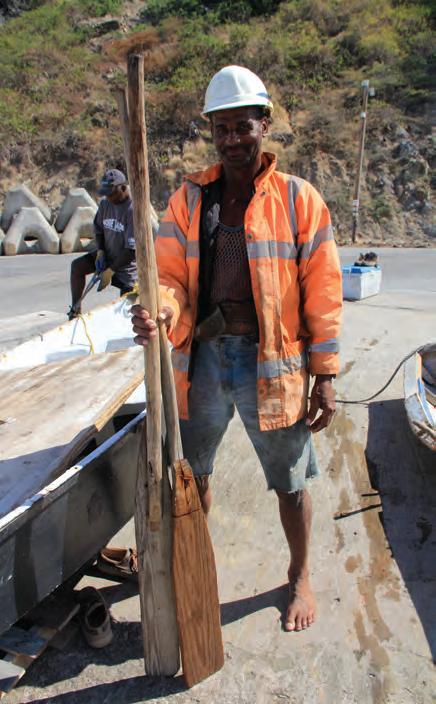
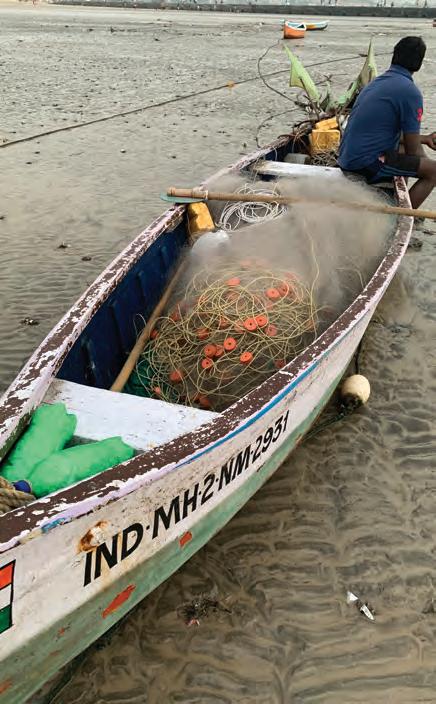
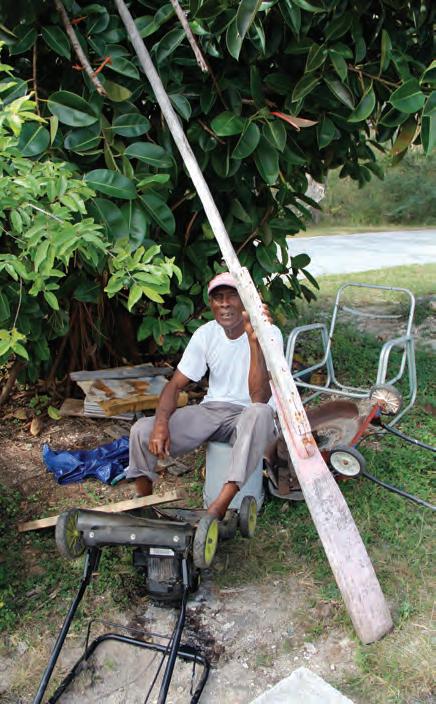
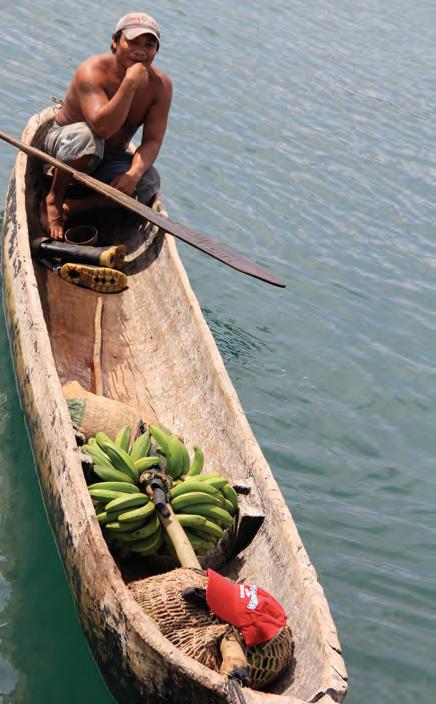
148 Latitudes & Attitudes | #41 Winter 2022/23
THE GREAT PADDLE SCAVENGER HUNT
end. We were able to talk to a local for an hour of fun and information.
Getting the paddles home can be a little tricky. Walking through Japan’s famous train stations that are so packed workers shove passengers into the train can only bring astonishment from the locals. No, we did not blend in. Not many people walk through there with six paddles and oars up to eight feet long. Luckily, silence is mandatory on those trains for someone to say, WTF? Those looks, though. Those looks.
The paddles will be x-rayed and tested for everything possible by the time they make it back to my home airport. My bags are always opened by TSA, and they leave nice little notes at the US inspections. I wonder what they thought upon looking upon the most rotted-out Bahamian oar just before becoming dust. That is all right. I never strove to be normal, and in that, I have easily succeeded.
Next time you travel, buy something absurd that you love. Sometimes hardships of inconsequential matters can bring years of joy. I left a paddle behind once. It’s ok. I was carrying the paddle over the isthmus of Panama through the jungle going from the Atlantic to the Pacific. Day three of vines catching the paddle attached to a heavy pack, I stopped. Unlatching the paddle, I threw it into the dark depths of the jungle floor. That moment brought joy too. Looking up at the 30 different artistic paddles on my wall at home brings me back to the engaging people I met in faraway lands - that is the purpose, isn’t it?

ABOUT THE AUTHOR
Brad Modesitt is the author of Taking the Old Highway: a twenty-four-thousand-mile canoe journey from Fort Collins to New Orleans and Around the Caribbean Clock, a fifteenmonth sailing journey with a three- and six-year-old aboard Rivers2Seas. Over a hundred paddles are on showcase at the paddle museum, Paddler’s Pub, in Fort Collins, Colorado. The heaviest item he has brought home is a six hundred and fifty-pound dugout canoe.
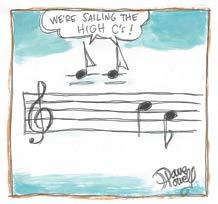
149
www. LatsAtts .com
I Found It At BOAT SHOWThe
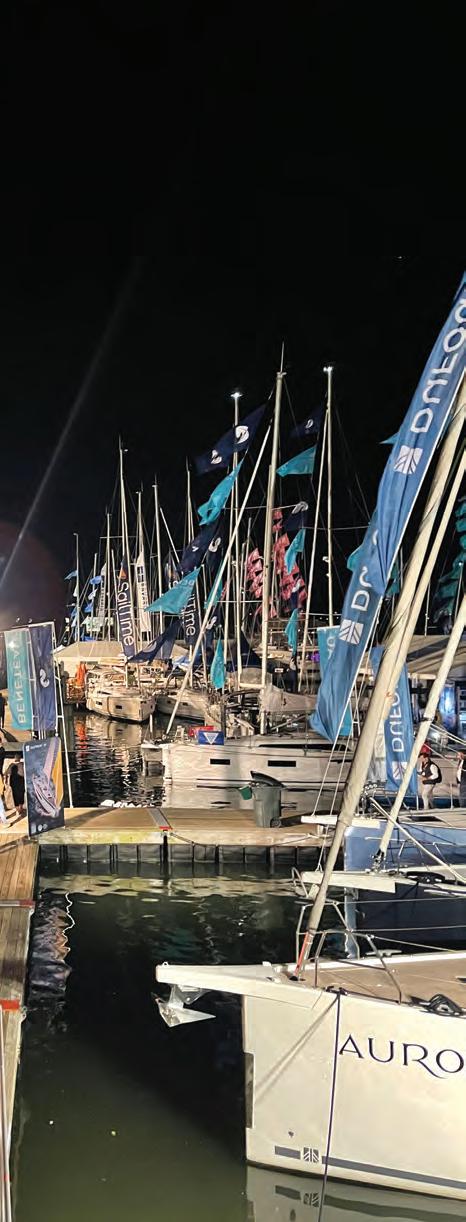
M&B Bag Company

shipcanvas.com
The A/O Sailor is a traditional seabag built from 15oz. canvas duck with oil-tanned leather and solid brass grommets. It features a vintage New England rope lanyard with a solid copper slider, which is fully adjustable and enables the bag to be carried in 5 positions:
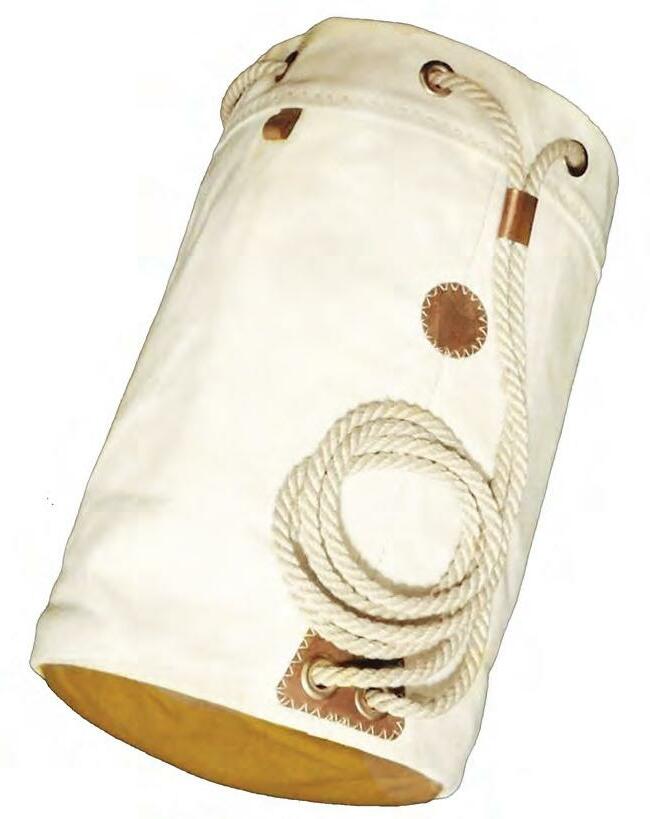
• Simple shoulder bag
• Crossbody / Messenger
• Backpack
• Dufel Bag
• Upright Tote or Tool Bucket
The interior has a full-size storm fap which prevents rain, fog and heavy sea spray from entering the bag. The storm fap also incorporates a cargo pocket for organizing
smaller, ‘quick reach’ items (phone, wallet, passport, GPS, etc).
There’s an external utility loop for attaching keys, fashlight or rigging knife, and each bag includes a marine snapshackle key FOB that can be snapped onto the bag or used separately.
Beautifully packaged for gift giving or presentation. Includes tags, signed Builder’s Certifcate, embossed Serial Number, Warranty Card, plus Care & Instructions Sheet. Also includes Snapshackle Key FOB.
Latitudes & Attitudes | #41 Winter 2022/23 150
Event &
Show
Boat
Section
Rust Blocker
magicarustremover.com
Introducing Magica Rust Blocker
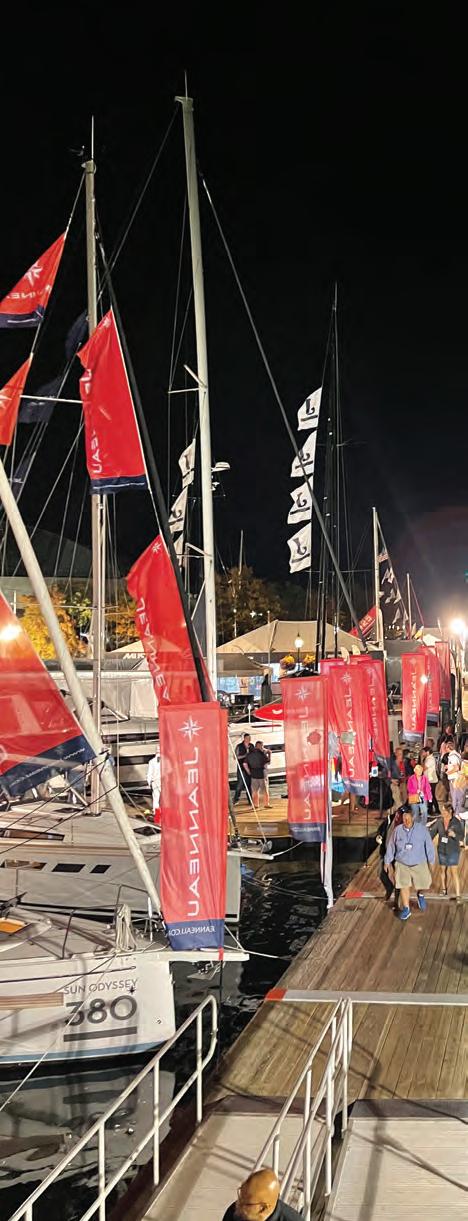
I Found It At BOAT SHOWThe
A new metal treatment that keeps rust from appearing on all types of ferrous metals. How does Magica Rust Blocker work? Unlike paint, this rust-blocking polymer chemically converts rust into a black protective coating. It eliminates existing rust and seals out the moisture that causes future corrosion.
Magica Rust Blocker is an excellent solution to your rusty metal problems. It’s great for autos and RVs, boat trailers, sheet metal, iron railings, farm equipment, metal tanks, fences, and more. Magica Rust Blocker has so many handy uses for preventing rust on ferrous metals, just like magic!

RUST NEVER SLEEPS!
Why let rust stains ruin your favorite belongings? Using Magica is the fastest, simplest way to make those rust stains disappear…like magic! Our special formula quickly and safely breaks down rusty stains, so they can be easily rinsed away with fresh water. No rubbing, no scrubbing! Try it on boats, clothing, canvas, concrete, vinyl siding, tools, sports equipment, antiques, patio furniture– you name it!
Unlike similar products, Magica Rust Stain Remover does not contain harsh, or abrasive chemicals. Magica is eco-friendly and biodegradable. You can order online or buy from our retail distributors worldwide.
www. LatsAtts .com
151
Event & Boat Show Section
I Found It At BOAT SHOWThe
PIY MAX PROP
PYIInc.com
The Max-Prop Easy is a step forward in Max-Prop design. This propeller replaces the well-known Max-Prop Classic, facilitating simplicity for the customer without sacrifcing performance. The Easy model’s main attributes over the Classic are: 1) ease of installation (simple bolt on to the shaft); and 2) fexibility of pitch adjustment without the need of a haul out.
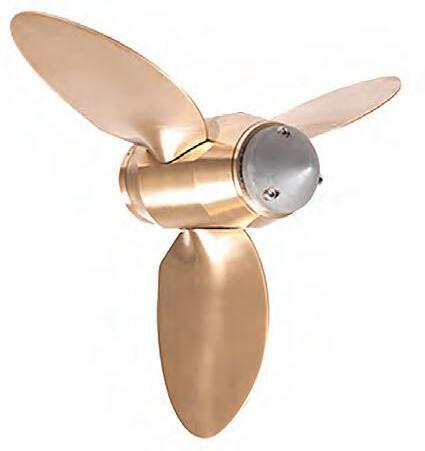
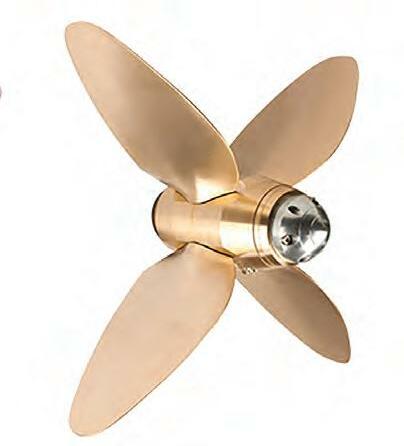
All the Easy models share the following features:
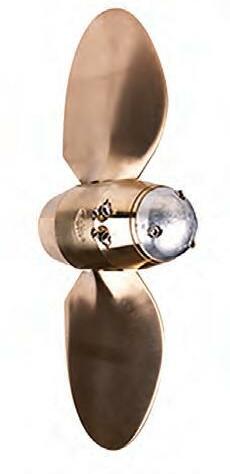
•Easy bolt on installation
•Externally adjustable pitch
•Outstanding reverse
•Low drag under sail
Two Blade Easy Features:
•Efcient forward power
•Very low drag under sail
•Available from 12” to 25” diameter
•For shafts 3/4” to 1-3/4”
•Best suited for all racing boats or smaller cruisers
Three Blade Easy Features:
•Added forward power
•Runs much smoother than a two blade
•Low drag under sail (slightly more than a two blade)
•Available from 12” to 25”
•For shafts 3/4” to 1-3/4”
•Best suited for 24’ to 55’ cruiser (medium desplacement)
Four Blade Easy Features:
•Outstanding forward power
•Very smooth running (no vibrations)
•Low drag under sail
•Available from 12” to 25”
•For shafts 3/4” to 1-3/4”
•Best suited for 40’ to 70’ cruiser (medium to heavy displacement)
Event
Latitudes & Attitudes | #41 Winter 2022/23
& Boat Show Section
152
Temo.450
www.temofrance.com
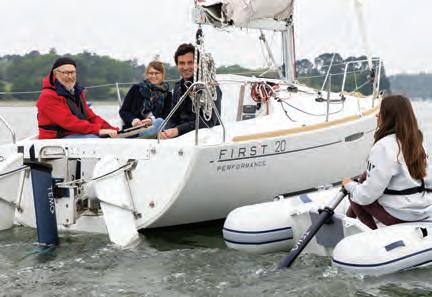

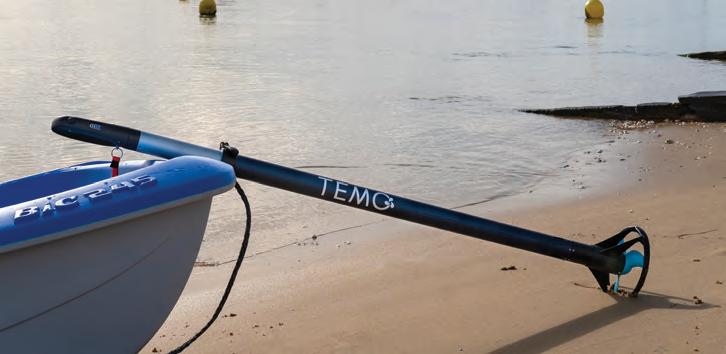
Designed

At
Event & Boat Show Section www. LatsAtts .com
I Found It
BOAT SHOWThe
Responsible, universal and light, the TEMO·450 propulsion solution looks after both boaters and the environment.
Unique combining motor, battery and control unit
1
speed •
reliable and ergonomic design 153
to correspond to all profles and practices, TEMO’s electric outboard motors allow you to do dinghy transfers and to maneuver in port or in an anchorage without straining your body or mind! •
• For small tenders up to 3 persons and small dinghies and sailing boats • Sold with a 110 VAC charger, a rowlock ftting kit and a security key • A weight of less than 5 kg (11 lb) • 100% Waterproof • 450W (equivalence 1.5hp) •
Hour range at full
Made in France Lightweight,
Balmar
I
Go-to
Charging Pros LLC will be featuring Balmar products. With the many years of Balmar sales and service Charging Pros has the experience to help you pick the right products for your DC charging system.
From alternator, regulator, pulley kits and battery monitoring systems.



Call Dale at 423-654-4711, or email us at dale@chargingpros.com or sales@chargingpros.com

Found It At BOAT SHOWThe Event & Boat Show Section Expert Dealer for
Balmar Expert Dale English Opens New Dealership chargingpros.com
154 Latitudes & Attitudes | #41 Winter 2022/23

www. LatsAtts .com 155
1982 53’ Mason - $169,000 Crystal Hanley - 407.247.8733
1980 45’ Seamaster - $59,900 Jason Hinsch - 410.507.1259 1990 43’ Slocum - $250,000 Jim Davis - 386.871.4959
1989 42’ Formula - $20,000 Lin Earley - 757.672.2778
1994 40’ J Boats - $135,000 Alan Hamilton - 360.220.1878
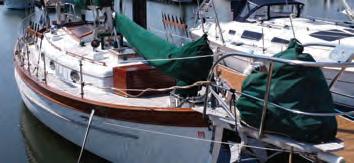
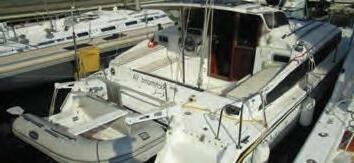
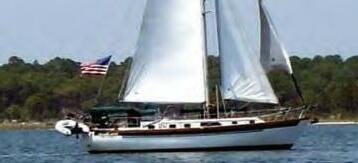
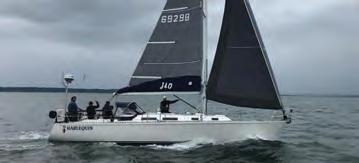
1980 40’ Custom - $34,500 Joe Evans - 843.813.8324
1983 40’ Passport - $138,000 Crystal Hanley - 407.247.8733
1989 38’ Sabre - $59,900 Lin Earley - 757.672.2778
1984 36’ Union - $70,000 Floyd White - 252.764.1222
1982 36’ Vancouver - $69,900 Floyd White - 252.764.1222
1966 36’ Cheoy Lee - $56,500 Robbins Flynn - 251.232.9717
156 Latitudes & Attitudes | #41 Winter 2022/23
1995 34’ Gemini - $69,500 Curtis Stokes - 954.684.0218 To see more details about these and all other yachts around the globe, please visit our website at www.curtisstokes.net
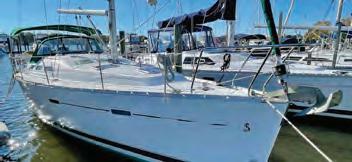
www. LatsAtts .com 157 Worldwide Yacht Sales Yacht Charters New Yacht Construction 1.855.266.5676 | 954.684.0218 | info@curtisstokes.net Thinking of selling your sailboat? List with us and join our SOLD list! 1983 36’ Union 1985 36’ Sabre 1994 37’ Hunter 1994 45’ Freedom 1994 35’ Beneteau 1994 36’ Sabre 2001 39’ Island Packet 2008 49’ Hunter 1989 36’ Pearson 1997 40’ Hunter 2004 31’ Beneteau SOLD! SOLD! SOLD! SOLD! SOLD! SOLD! SOLD! SOLD! SOLD! SOLD! SOLD! 2007 37’ Beneteau SOLD!





The Share the Sail team for an exciting 7-day charter throughout the Abaco Islands with Navigare Yachting.
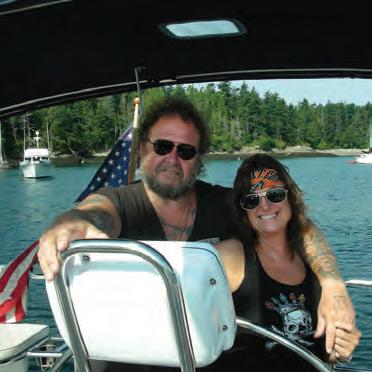
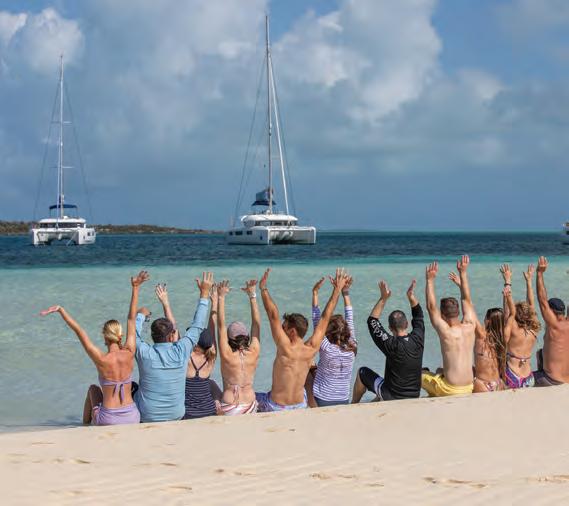
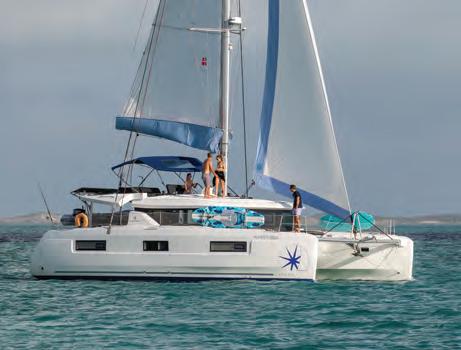
The Abacos have been The Bahamas’ boating capital since colonial times, and whether you are a sailing purist, willing to tack until the last gasp of wind, or just a sun worshiper joining the adventure to relax and explore with fns and snorkel, this is your paradise. The Navigare base is located in Marsh Harbor, right next to the Abaco Beach Resort, only ten minutes from the Leonard Thompson Airport.
Choose Your Catamaran
Select one of three sailing catamarans from Navigare Yachting.
40 Lagoon (4 cabins & en suite heads in all cabins): $2,500pp* 42 Lagoon (4 cabins & en suite heads in all cabins): $3,000pp*
450 Lagoon (4 cabins & en suite heads in all cabins): $3,500pp*
*Price includes: Provisioning for Breakfast, Snack and Lunch; Entertainment; Happy Hour Party; Welcome Dinner; Swag Bag flled with gear and gifts and of course lots of fun with the Bob and Jody crew. Please note this price does not include a captain. Single cabin occupancy available, please contact us for pricing. Other taxes & fees may apply.
Join
Join us for Share
Share the
the Sail
Sail November 4-11, 2023 Abaco Islands, The Bahamas
Itinerary – 7 Days




DAY 1: MARSH HARBOUR.
The third largest settlement in The Bahamas, Marsh Harbour is the commercial hub for the Abacos. With an airport served by international fights and a ferry service which allows island hopping the Abacos Cays. Visit the Neem farm and the Abaco National Park which features blue holes and the Abaco Parrot.
DAY 2: HOPE TOWN.
Settled by British Loyalists in 1785, the quaint Hope Town has a unique history and picturesque architecture like no other in the Abaco. Overlooked by the red and white stripes of the Elbow Reef Lighthouse, Hope Town is best explored on foot.
DAY 3: MAN-O-WAR CAY.
Discover the boat building capital of The Bahamas. The Albury family (who operate the Albury Ferry service) are still in the boat building business today, Joe Albury builds handcrafted boats from his workshop.
DAY 4: GREAT GUANA CAY.
Beautiful beaches, a picturesque settlement, spectacular sunsets and world-class sailing are thehighlights of Great Guana Cay. Nippers Beach Bar and Grill is a renowned beach hangout, particularlyon Sundays when they have their pig roast bufet.
DAY 5: GREEN TURTLE CAY.
Home to a population of around 450, New Plymouth is the main settlement on the island where you will fnd the Albert Lowe Museum and Loyalist Heritage Sculpture Garden. Tour New Plymouth historical village, a small, sleepy 18th century village by the sea, with several restaurants, galleries, and gift shops, a museum and a few historical sites. The architecture of the older homes that make up much of the village is largely unique to the Bahamas.
Green Turtle Cay has some great diving and snorkeling sites along its outer reef. A fantastic base for discovering the Abacos unique marine life, it is within close proximity to the sting rays and sharks found at Manjack Cay as well as the swimming pigs of No Name Cay.
DAY 6:
POWELL CAY & BONEFISH CAY.
If you venture out further north towards Spanish Cay, pristine white sand beaches and shallow creeks await. Your ideal stop to anchor and soak in the sun away from the crowds.
DAY 7: TREASURE CAY.
Adorned with a stunning three and half mile-long white sand beach with a beautiful backdrop of turquoise blue ocean. Treasure Cay is a small island resort destination with a full-service marina, golf course, water sports and beach service.
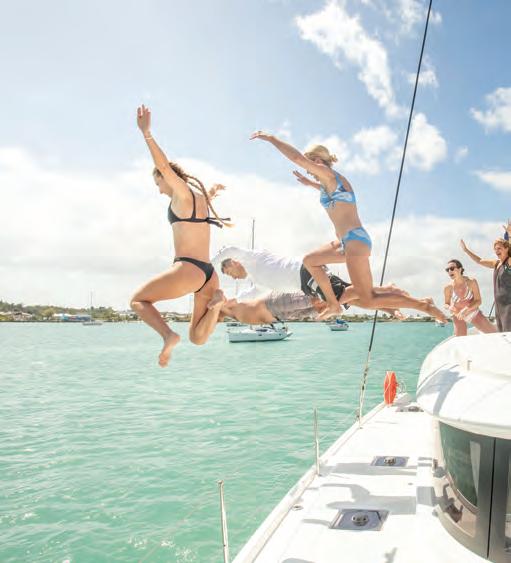
Itinerary may change slightly.
Act Now Secure your charter boat in the 2023 Share the Sail. Share the Sail Contact Us Toll Free: 877-775-2538 bahamas@latsatts.com latsatts.com/Bahamas
the ZOO
CREW
she·nan·i·gans
Silly or high-spirited behavior; mischief.
By now, you know I met Erik in 2010, met Bob at Strictly Sail Oakland in April 2011, and the universe connected all three of us knuckleheads at the Newport show in September 2011. Our story all centers around the boat show universe we love. And boy, how we do A LOT of shows and see many of the same industry people at every one! We joke we’re almost like carnies, only with better dental plans….
You see, it’s at the shows where it all comes together; our booth staf, fellow exhibitors, customers, and longtime friends. In fact, we’re blessed to call many of our fellow exhibitors and customers at these shows “friends.” Erik and I live close enough, Toledo and Bufalo, respectively, to have opportunities to hang out away from the shows. Taking our families boating or to Cedar Point, or that time my fourteen-year-old son gave Erik a beat-down on the golf course. And occasionally we get together on the holidays. One time I surprised Erik at one of his Detroit-area advertiser Christmas parties dressed as the “pink nightmare.” That was memorable…
As for Bob and Jody, since they live in northern California, we only see them at showtime. There was one year when he passed through Bufalo en route to Newport and did a meet-n-greet at RCR Yachts marina with local cruisers. What an awesome time that was. Anyone who hasn’t heard Bob & Jody speak on their adventures and “attitude” needs to make sure to hit up one of their show seminars.
We love the shows, and we love our “Show-nanigans.” Look for us out there in the coming months in Miami and Palm Beach, and if you see us be sure to say “hi!”
[SHəˈnanəɡənz] NOUN
170 Latitudes & Attitudes | #41 Winter 2022/23





www. LatsAtts .com 171 The Hard-to-Find “Stuff” for the Cruiser Bosun’s Bag




172 Latitudes & Attitudes | #41 Winter 2022/23


www. LatsAtts .com 173








Latitudes & Attitudes | #41 Winter 2022/23 To Donate, Participate, or Volunteer, go to:
Latitudes and Attitudes Word Search Find the words listed under the puzzle and circle each one as you find it. BREDDALWSZAVEYEXOVOGA OLNDUGBEHODRAOBNIVAUB OFURLNDKEJNUCUOKELSNE MCQAHINCBKQAHPSRLPDWA SJIBSWKAKRPGRPRELJOHM SOAPUOHJGEIOJEYIKOLAA WYOCLTFMLETDARCBLAPLP TTAESOLLWFCCGEWATCHEO TURTLEUTASHORELSEWISO XEWASHKRNNHARBORKNNSP EVEMNKEOEAKVESDYRCICD KALTNSCPAPMARINABAEHE AELSXKOAREPPINIWORPDC RHSRCVJMBOEIIQAILOOSK TOLIPPMSMBLRKHWNLHNEM SDRFFAGAEQULOSSGACTNM YTWINDLASSFFJFXHRNOIY AGAYYLCNSTFUMOORDAOLA WJKRMOHTAFNSIDCIMINTR SNEJNHVQFKDRAWDNIWMAD DRALONGSIDEQAHOYTHERE Abeam Furl Orlop Abeam Ahoythere Alongside Anchor Ashore Backstays Beacon Bollard Booms Bridge Chine Coxswain Decks Dolphin Dunnage Fathom Firstmate Flank Fluke Fore Furl Gaf Galley Gunwhale Harbor Heave Hold Hull Inboard Jack Jibs Junk Keel Ladder Luf Marina Mast Mess Moor Nipper Orlop Overreach Oxeye Pilot Pitch Pontoon Poopdeck Port Prow Quay Ratlines Reef Roll Scud Shakes Skipper Slush Sonar Spar Splice Strake Sway Topsides Towing Transom Trick Turtle Upper Wake Watch Weigh Wells Windlass Windward Yard Yawing Nautical Word Search Answers on page 176 174
CallOfTheSea.org



www. LatsAtts .com 175 12. Animal’s foot 15. Concert ending 16. Sports apparel giant 17. Travelocity’s spokesperson 20. Fall (over) 21. Historic building or popular natural feature 22. Wedding vow (2 words) 25. Where the river meets the sea 27. Added lure to a line 28. Navigable water bodies 30. Excitement 31. Weapon used by old naval ships 32. Spirits, slangily 33. Cadillac model 36. Scrooge 40. Lines to control sails 41. Taverns 44. Standing rigging running from a mast to the sides of the ship 46. Huge wine container 47. Independent, abbr. 49. Ventilate 50. Sheltered bays 53. Thus 55. Shallow waters that are a hazard to navigation 57. Manual boat movers 58. Crew members 59. Unprecedented 63. Foot-in-mouth incident 65. Windy day weather report word 66. Florida fruit 67. Early explorer of North America 68. Arrange 70. Italian car company 72. Easy golf shot, 2 words 73. Climber’s goal 75. Hold on tight 78. Overturn 79. Maui welcome 80. Close down 81. Very large 85. Compass point, abbr. ACROSS 1. Notorious pirate who had a base at New Providence Island 6. Devilfshes, 2 words 11. Hoppy brew 13. Out-of-the-way 14 . Large body of water, 2 words 18. Desire 19. Popular reef viewing activity 23. Method 24. Pelican’s pride 26. Trouble 27. Ancient time period, abbr. 28. Mammoth mammal 29. Roaming traveler 31. Tea, in England 32. Beach structures 34. Sport-___ (off-road vehicle) 35. Abound 37. Guitar hookup 38. One of the Virgin Islands, 2 words 39. Familial title, abbr. 42. Smallest state, abbr. 43. Ocean predators 45. Duck 48. Father of the Symphony 50. Curved letter 51. Massachusetts cape 52. North Atlantic archipelago 54. Top of a wave 56. Calm belt near the equator 60. Haul in the harbor 61. Pours out 62. Large aquatic mammal like a manatee 64. Moving back and forth 67. Golden state, abbr. 68. Sites for breakers 69. Forward edge of a sail 71. Calls out 73. Letter afterthought 74. Dried fruit 76. Enjoy a paella, say 77. Type of dolphin 81. Direction or relative position 82. Circle ratio 83. Engineer, for short 84. “Gimme ___!” (start of an Iowa State cheer) 2 words 86. Titanium symbol 87. Trash container 88. Part of the hull between the waterline and the deck 89. Bar supplies 90. Moving by DOWN 1. Enjoys the sun 2. Mooring places on a journey 3. Beer, for short 4. Help 5. Quick swim 6. Parrots 7. Smart and brilliant 8. One of the world’s oceans 9. Rainbow shape 10. Where the buoys and gulls are GIANT NAUTICAL CROSSWORD PUZZLE Wanna Cheat? The answers to these are on page 176 Created by Myles Mellor


176 Latitudes & Attitudes | #41 Winter 2022/23 BREDDALWSZAVEYEXOVOGA OLNDUGBEHODRAOBNIVAUB OFURLNDKEJNUCUOKELSNE MCQAHINCBKQAHPSRLPDWA SJIBSWKAKRPGRPRELJOHM SOAPUOHJGEIOJEYIKOLAA WYOCLTFMLETDARCBLAPLP TTAESOLLWFCCGEWATCHEO TURTLEUTASHORELSEWISO XEWASHKRNNHARBORKNNSP EVEMNKEOEAKVESDYRCICD KALTNSCPAPMARINABAEHE AELSXKOAREPPINIWORPDC RHSRCVJMBOEIIQAILOOSK TOLIPPMSMBLRKHWNLHNEM SDRFFAGAEQULOSSGACTNM YTWINDLASSFFJFXHRNOIY AGAYYLCNSTFUMOORDAOLA WJKRMOHTAFNSIDCIMINTR S NEJNHVQFKDRAWDNIWMAD DRALONGSIDEQAHOYTHERE Wanna Cheat? Here are the answers to this issue’s Extra Large Maritime Crossword Puzzle and The Word-Search Puzzle. Go ahead, no one will know... except you!



www. LatsAtts .com 177 Hungry for more sailing content online? Check out these fantastic sailing YouTubers! Captain Boomies: www.youtube.com/c/CaptainBoomies Out Chasing Stars: www.youtube.com/c/outchasingstars Sailing Delancey Street: www.youtube.com/channel/UCElDiciS1e2G27P4VYr77yA Sailing Accidental Gybe: www.youtube.com/channel/UC9_hzdo5-R2oZ5cd4_we1ew Sailing Zingaro: www.youtube.com/c/SvZingaro Sailing CAVU: www.youtube.com/c/SailingCAVU Woman Who Sails: www.instagram.com/womanwhosails/ Everyday Saturday: www.youtube.com/c/everydaysaturday
LATITUDES & ATTITUDES ADVERTISER SPOTLIGHT FEATURED
YEARS IN LATS & ATTS: 5

BUSINESS: S&J Yachts
LOCATION: MD, VA, SC, FL www.sjyachts.com
S&J Yachts is the dealer for Bavaria Sail and Power, Southerly Yachts, Bluewater Catamaran, and Makai Power Catamarans. Having grown rapidly over the past ten years, starting with just Sharon and Jack Malatich, to now ten locations with an incredible team of experienced brokers and support staff. That growth has been made possible by a love of boating and belief that we and our team share, that we all have a responsibility to conduct business in a professional manner and to remember that we are handling the dreams of our clients and must do so with care.
We advertise in Lats & Atts because they show the joy of yachting and introduce us to the people who are out there living life. Lats & Atts has launched the dreams of many that are now on the water and many yet to come. Their pages bring the yachting experience to their readers while introducing us to the people living their dreams – we think L&A are the perfect fit for S&J.
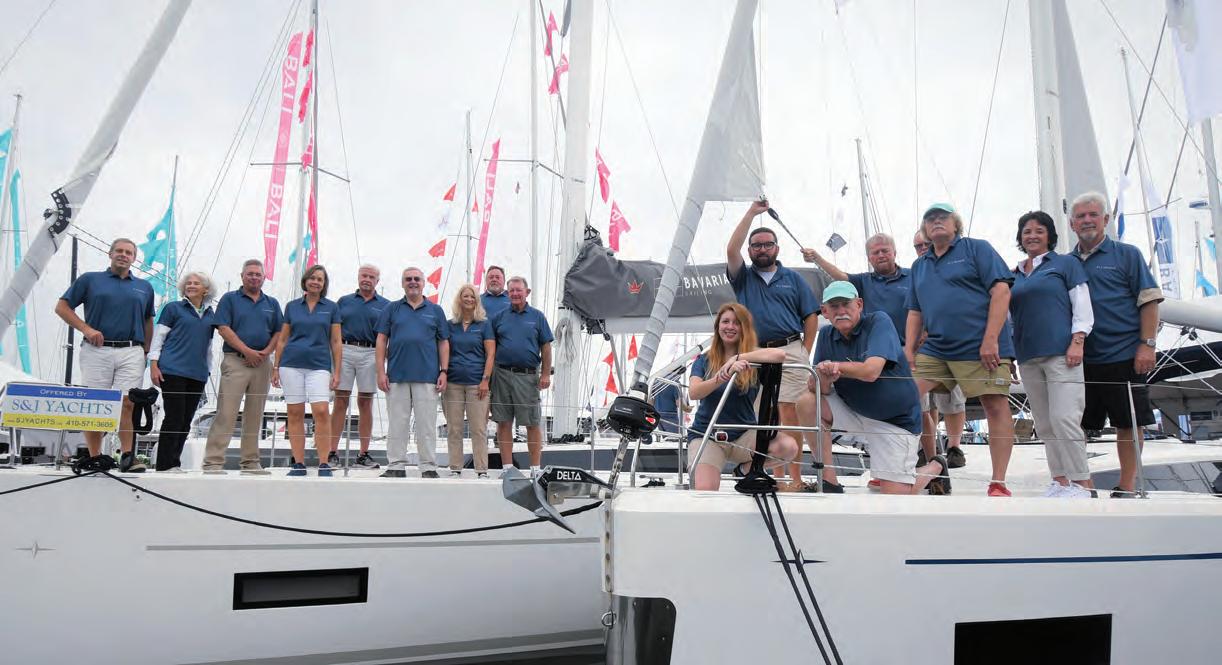
178 Latitudes & Attitudes | #41 Winter 2022/23
Sharon and Jack
INDEX
A A
Ad Strategies | 164
Aero Yacht Ltd | 20
Annapolis Hybrid Marine | 119
Aquamarine Water Solutions Inc. | 42
Atlantic Towers & St. Croix Marine Products | 149
ATN | 105
Aumaris Nautical Jewerly | 21, 61
B C F H
Bacon Sails | 60, 105
Banner Bay Marine | 171
Bavaria Sail & Power By S&J Yachts | 2
Beta Marina East | 28
Beta Marine West | 28
Blue Water Sailing School | 40
Bob Bitchin Books | 63
Bocas Marina | 107
BVI Yacht Sales | 160
Call of the Sea | 174
Charging Pros | 174
Chart Metal Works | 62
Conch Charters | 166
Coppercoat | 107
Curtis Stokes & Assocates | 156
Cruise RO Watermakers | 171
CS Johnson | 109
DockStar Thrusters | 172
e-Marine Systems - Air SilentX | 30
e-Marine Systems - Xantrex | 109
Eastern Yacht Sales | 162
El Cid Marinas | 28
Festiva Sailing | 131
Flexboat International | 181
Forespar Products Corportation | 111
Forget About It | 172
Foss Foam & Rudders | 173
Froli Sleep Systems | 147
Gig Harbor Boat Works | 172
GreatLand Laser | 60
Hamilton Ferris Co | 23
Hart Sytems | 173
HMC Handcrafted Mattress | 111
Hydrovane International Marine Inc. | 172
ICA Group - NuTeak | 113
Indiantown Marina | 113
Kanberra Gel | 26
Keenan Filters | 9
Keylime Sailing Club | 174
KISS-Radio Tek | 174
Lanex USA / Sensible Yacht Cordage | 99
Lasdrop | 101
Lithium Pros | 75
Little Yacht Sales | 163
M P N S Z
Little Yacht Sales | 155
M&B Shipcanvas | 172
Mack Sails | 29
Mack Yacht Services | 27
Magica Rust Remover | 171
MainSheet Manson | 147
Mantus Marine | 62, 115
MapTech | 141
MarTek Davits | 147
Marina Puerto Bahia | 143
Masthead Enterprises | 174
Mystic Knotworks | 173
Next Gen | 147
Novaluxe | 53
No Wear Guard | 174
OfShore Passage Opportunities | 173
Ofshore Sailing School | 13, 60
Panama Posse | 99
Passport Yachts | 10
Port Ludlow Marina | 119
Phiber Systems | 24
PYI | 115
PYI - Kiwi Grip | 117
Pyrate Radio | 132
Rainman Portable Watermakers | 31
Royal Cape Catamarans | 39
S & J Yachts | 158, 178
Sailmakers Supply | 174
Sailrite | 182
Sailtime | 16
Seabbatical Long term Charters | 155
Sea Frost | 22
Seawater Pro | 4
ScuttleButt - The App | 167
Shadetree Fabric Shelters | 117
Snap-A-Lot Inc. | 173
South Coast Yachts | 165
Spade Anchor | 149
Spurs Marine Manufacturing, Inc. | 101
Strong Firearms | 63
Sunsail | 34
Technautics | 171
TEMO | 63
The Moorings | 18
Toadfsh | 60
UGO | 62
Ultra Marine West | 14
Visar | 172
Wichard | 8
Zarcor | 173
www. LatsAtts .com 179
K
ADVERTISER
PEOPLE BOAT
Meet some folks who have managed to make a lifestyle out of most people’s dreams. Boat people can be found on oceans and seas, scattered around the globe. They can be spotted easily. They are the ones who have a glazed look in their eyes as they scan the horizons. Here are a few we’ve seen. Have you seen any lately? If so, email a photo and information to: submissions@LatsAtts.com
has been part of the Lats & Atts family for a long time. She has helped us at Cruiser’s Parties, and just went sailing with us in Croatia. Cheryl loves to sail and has been into the cruising lifestyle most of her life. This pic was taken while cruising on the Adriatic Sea.
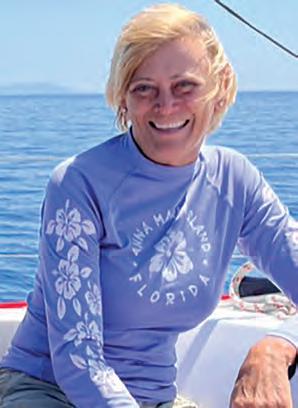
has been a sailing legend longer than she likes to admit. She and her husband Larry (1939-2020) have been the heart of the cruising lifestyle for decades. They have produced dozens of books and videos about the lifestyle. They were just inducted into the Sailing Hall Of Fame!
is seen here on Bob Bitchin’s Harley. They rode a couple hundred miles to Ft. Bragg, one of the best little fishing harbors on the California Coast. We were gonna use a picture of him on a boat, but couldn’t find one! Hey Ray, thanks for your help on the trip! It was a ball!
 Edit Olasz Harken, M.D., Ph.D.
This gorgeous lady besides being very attractive, is also a dermatologist. Yes, her last name is Harken, as she is married to Peter Harken. I think he got the best of that deal!!
has a good reason to be smiling. He is the Director of boot Düsseldorf, the world’s largest boat show held each year. 2023’s show runs from Jan 21st through 29th. He’s smiling here because he is enjoying a cocktail in San Marcos Square before walking over to the Venice (Italy) boat show. See you at boot!!!
has participated in more Share The Sail Flotilla Charters than just about anyone with her husband Tommy Brownell. She and Tom were on the very first one over twenty-five years ago in Tahiti, and have skippered Share The Sailboats ever since! She is also known to cook up great Massachusetts lobster-feeds!
180 Latitudes & Attitudes | #41 Winter 2022/23
Cheryl Kreider
Lin Pardey
Ray Payne Sharon Brownell
Petros Michelidakis