Beyond the rising sun: Reporting from Tokyo (2026)
REPORTING FROM TOKYO, JAPAN, 2026
ON THE
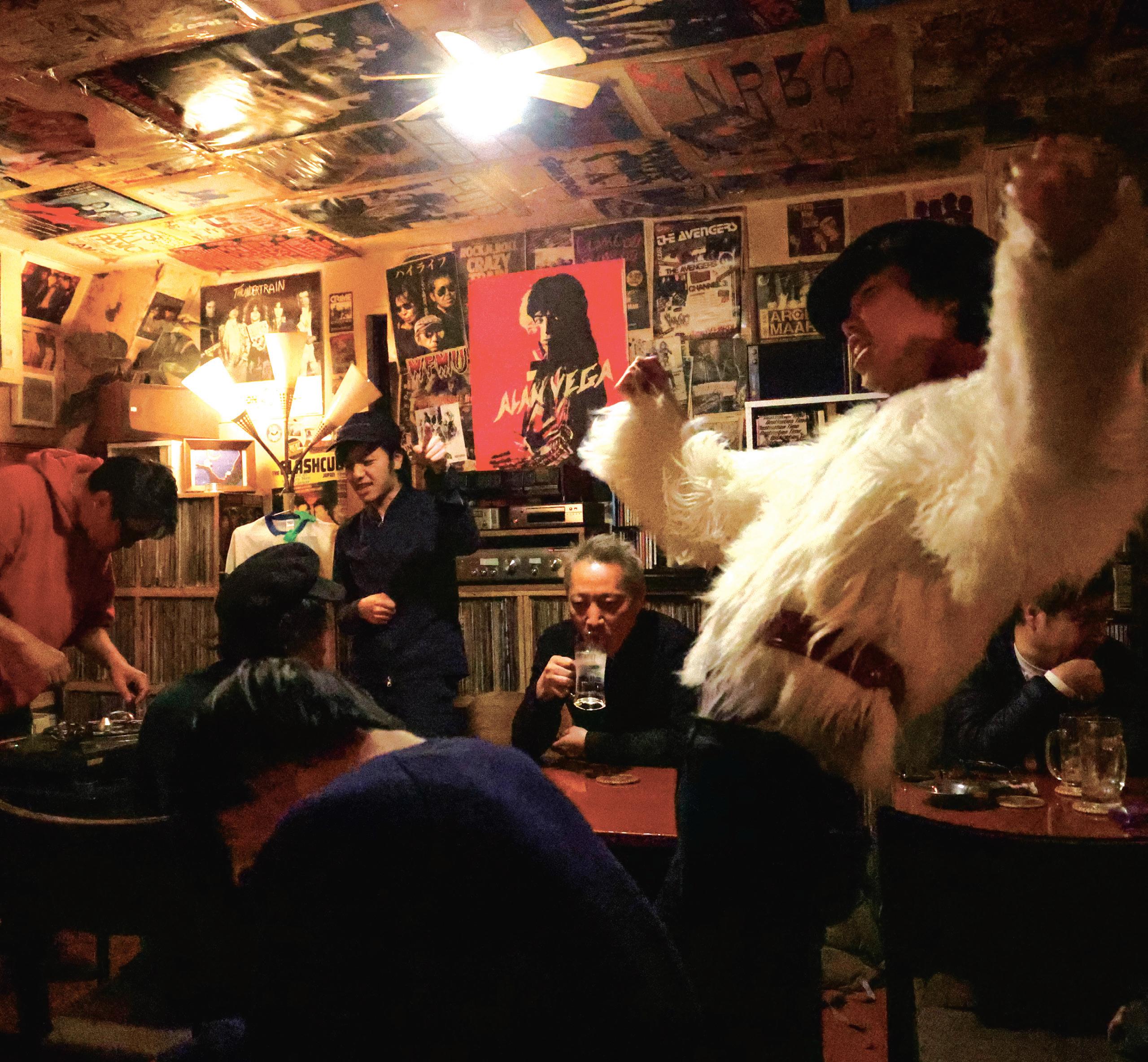
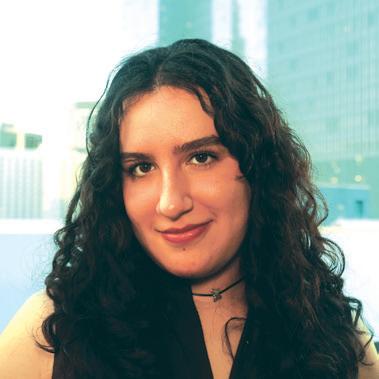
Musician Konosuke listens to music inside of the Poor Cow bar in Shimokitazawa on March 13, 2026, in Tokyo. (Photo by Abigail Wilt/Cronkite Borderlands Project)
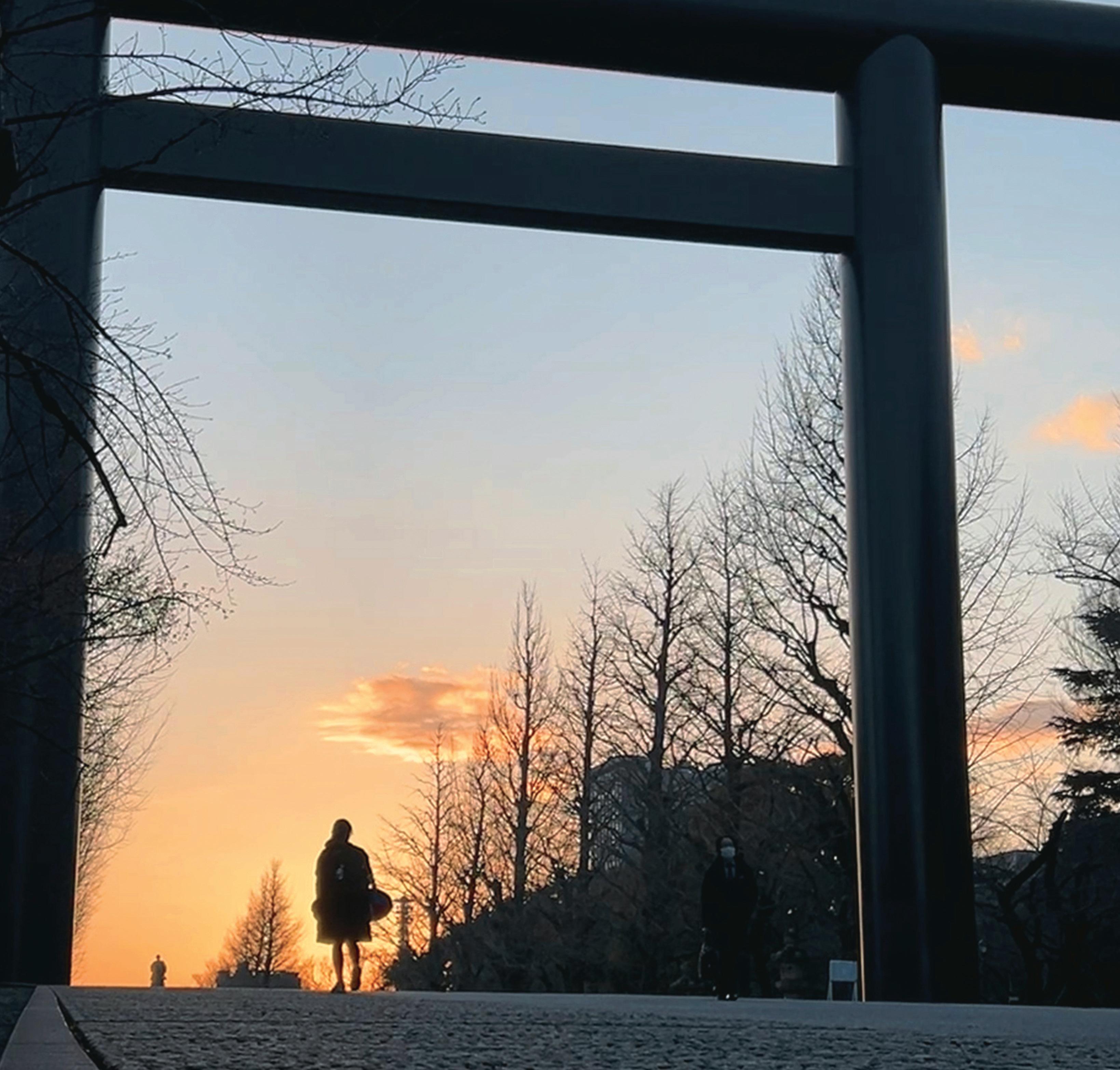
A commuter walks through the first torii at Yasukuni Jinja in Chiyoda City, Tokyo, on March 12, 2026. (Photo by Ian Brown/Cronkite Borderlands Project)
ABOUT THE PROJECT
EEach year since 2011, students at Arizona State University’s Walter Cronkite School of Journalism and Mass Communication visit a global border region to explore and report on its communities, conflicts and culture. The Howard G. Buffett Foundation Borderlands Project has covered Panama, Costa Rica, Nicaragua, Peru, Hungary and more; 2026 marks the first year the project has traveled to Asia, focusing on Tokyo, Japan.
“
Tokyo expanded the project’s understanding of borderlands beyond physical frontiers, examining how borders operate in an increasingly interconnected world.”
- Rodrigo Cervantes Editor, Cronkite-Howard G. Buffett Foundation Borderlands Project
FROM THE EDITOR
For the first time in its history, the Howard G. Buffett Foundation Borderlands Project traveled to Asia— specifically to Japan’s capital city, Tokyo.
Japan’s identity as an archipelago nation has historically shaped its relationship with the outside world, alternating between periods of isolation and intense international engagement. Its geographic, cultural and socioeconomic borders continue to define the country’s character.
Japan sits at the intersection of multiple geopolitical conflicts, facing pressure from the United States, tensions with China and concerns from its own residents. At the same time, the country faces internal and global challenges that resonate far beyond its shores, including demographic decline, emerging immigration, technological competition, supply chain disruption and environmental debates.
As one of the largest metropolitan areas in the world and a major global hub for trade, diplomacy and cultural exchange, Tokyo expanded the project’s understanding of borderlands beyond physical frontiers, examining how borders operate in an increasingly interconnected world. It is a place that illustrates the marvels of our world but also portrays our conflicts.
Master filmmaker Akira Kurosawa once said, “No matter where I go in the world, although I can’t speak any foreign language, I don’t feel out of place. I think of Earth as my home.”
In many ways, we carried that spirit with us as journalists for this project.
Our group found stories of xenophobia, fear, uncertainty and greed, but also of hope, solidarity, resilience and love. Tokyo was an ideal place for our students not only to report but also to understand, empathize, analyze and, in the process, become stronger journalists and better people—immersed in a reality that may seem distant, yet belongs to this same planet we all call home.
I would like to thank the leadership of our school and our gracious partner, the Howard G. Buffett Foundation, for it’s support. These programs happen because of trust, collaboration and a shared belief that journalism must be experienced, and that it can truly build a better world.
I extend my sincere gratitude to the many people at the Cronkite School and beyond who helped us throughout our journey, including Pacific Bridge Media and Consulting and the Foreign Correspondents’ Club of Japan. Most importantly, I would like not only to thank but also to congratulate our students for their remarkable work. No matter how chaotic or divided our world may become, may you continue building bridges across borders and breaking down barriers through your journalism.
Thank you. ありがと ございました!
Rodrigo Cervantes
Clinical Assistant Professor and editor of the Howard G. Buffett Foundation Borderlands Project
Rodrigo Cervantes is an award-winning journalist, media manager, strategist and educator with over two decades of international experience. He has contributed to NPR, Reforma (Mexico), The Atlanta Journal-Constitution and The Los Angeles Times. Cervantes is an active member of the National Association of Hispanic Journalists and leads the Howard G. Buffett Foundation Borderlands Project.
Andrés Cediel is an Emmy-award winning investigative journalist, documentary filmmaker and educator. His work for PBS has focused on the abuse of immigrants at work and in detention, human rights and climate change. Cediel is the Howard G. Buffett Foundation Visiting Professor of Visual Journalism at the Cronkite School, working with student journalists in News 21 and the Howard G. Buffett Foundation Borderlands Project.
Instagram: @andresacediel
E-mail: acediel@asu.edu
Regina Revazova is a journalist, audio expert and educator whose career spans international reporting, public radio and podcast entrepreneurship. While serving as the Robert Wood Johnson Foundation Professor of Practice, she led the Southwest Health Reporting Initiative in Cronkite news.
E-mail: rrevazova@asu.edu
LinkedIn: linkedin.com/in/regina-revazova/
THE RISE
OF ‘SANA-MANIA’: Is the popularity of Japan’s prime minister just a ‘honeymoon’?
by Aoife Kane
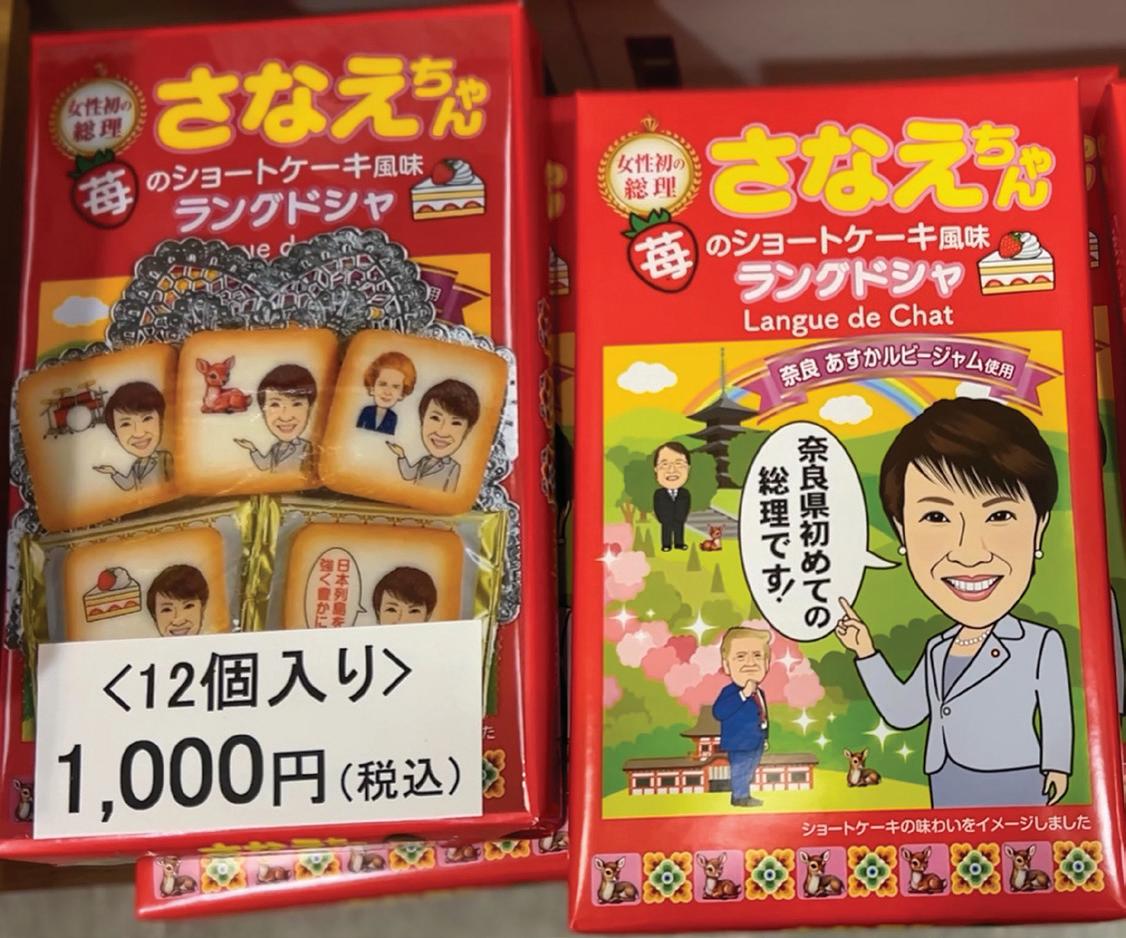
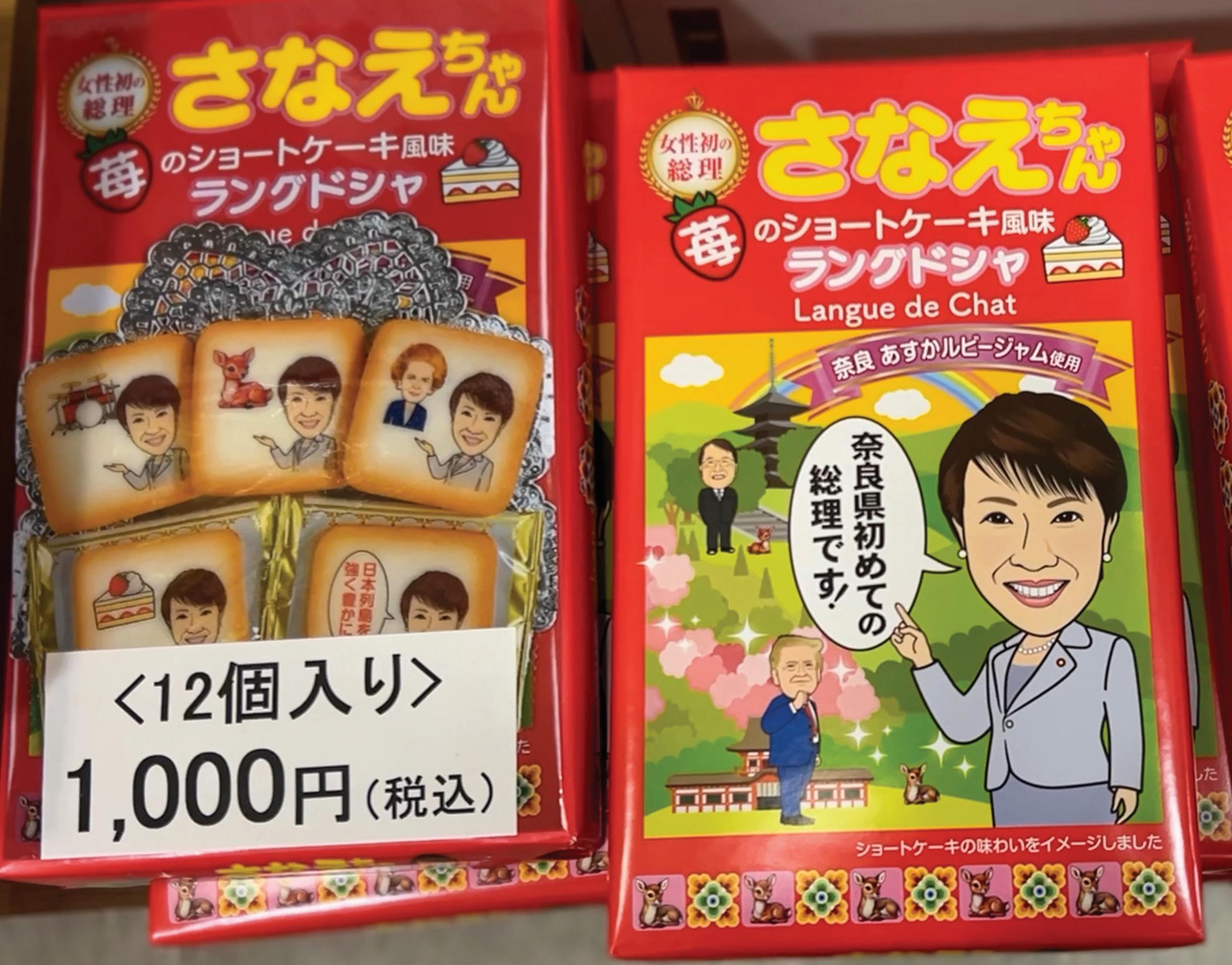
The cultural phenomenon of “Sana-Mania”– the term coined to describe the craze around the country’s first female leader – overtook the country. Takaichi’s handbag of choice, made by Japan-based company Hamano, is sold out until October 2026, according to a company spokesperson. The Mitsubishi Pencil Co. that makes the pens she uses saw a spike in sales, too. Cookies, keyrings and board games with her face on them can be found in the political-themed stores in Tokyo.
Her widespread following across demographics led to a supermajority victory in Japan’s Lower House elections in October. Her Liberal Democratic Party (LDP) won 316 out of a possible 465 seats.
According to political pollster Kunikazu Suzuki, her campaign promises – to make Japan strong and prosperous – combined with her bold personality are the reason she is so popular.
Her carefully crafted public persona won her a 70% approval rating at the time she called a snap election.
The conservative leader is particularly popular in Tokyo, Suzuki noted.
“Takaichi was very active, (for example) playing the drums with the Korean president. It plays so well with the media,” said Kiyoteru Tsutsui, director of the Shorenstein Asia-Pacific Research Center at Stanford University.
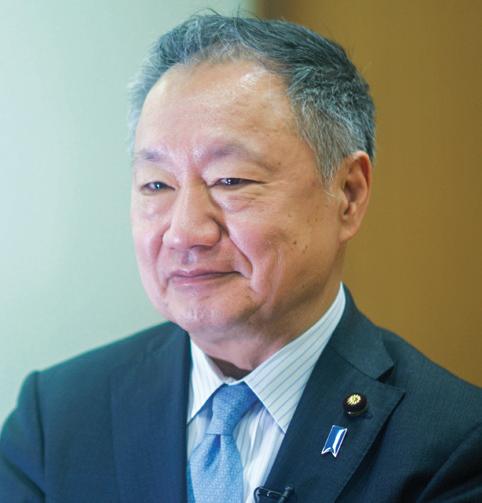
However, a member of her own party, Hiroshi Yamada, said she is in a “honeymoon” phase with the public that won’t last long.
Her carefully crafted public persona won her a 70% approval rating at the time she called a snap election. The conservative leader is particularly popular in Tokyo, Suzuki noted.
“Takaichi was very active, (for example) playing the drums with the Korean president. It plays so well with the media,” said Kiyoteru Tsutsui, director of the Shorenstein Asia-Pacific Research Center at Stanford University.
However, a member of her own party, Hiroshi Yamada, said she is in a “honeymoon” phase with the public that won’t last long.
In Japan, U.S. nationalism and conservatism has fed THE GROWTH OF A POLITICAL PARTY
by Ian Brown
As Sanseito, a right-wing populist party of Japan, gradually builds strength and influence, its members draw inspiration from figures in American conservative politics. Despite the parallels, Sanseito is working to adapt “Japanese first” to its own needs.
TOKYO — During Japan’s Feb. 8 national election, Sanseito, one of the newest parties, won 15 seats in the lower chamber of the National Diet, the country’s bicameral legislature. The election of those seats signaled that the fledgling political party would continue
to maintain a foothold in
Since emerging in 2020, Sanseito has embraced the ideal of “Japanese first,” a slogan that mirrors the “America First” nationalist movement.
While Sanseito may take strategic cues from the Make America Great Again conservative establishment in the United States, its politics are distinctly the party’s own. As the party has grown, certain policy ideals have taken shape, but its origins lie in standing against the status quo led by the Liberal Democratic Party (LDP). Sanseito is a right-wing reaction to economic stagnation, declining births, overtourism and immigrant inflows that the nation has recently faced, plus the potential threat that China represents to the country’s safety and the economy.
LEFT: Merchandise for fans of Prime Minister Sanae Takaichi in the Liberal Democratic Party Headquarters Gift Store on March 11, 2026. (Photo by Aoife Kane/Cronkite Borderlands Project)
BELOW: Hiroshi Yamada is a member of the Liberal Democratic Party in Japan’s House of Councillors. Photo taken March 13, 2026. (Photo by Aoife Kane/Cronkite Borderlands Project)
U.S. Republican Party and Make America Great Again memorabilia in Sanseito’s Councillor Sen Yamanaka’s office in the House of Councillors in Tokyo, on March 10, 2026. (Photo by Reuben J. Brown/ Cronkite Borderlands Project)
government.
HOW JAPAN BUILT A GLOBAL GAS EMPIRE
While Barely Producing a Barrel
by Reuben J. Brown
Japanese fear and American freedom have reshaped the global natural gas market.
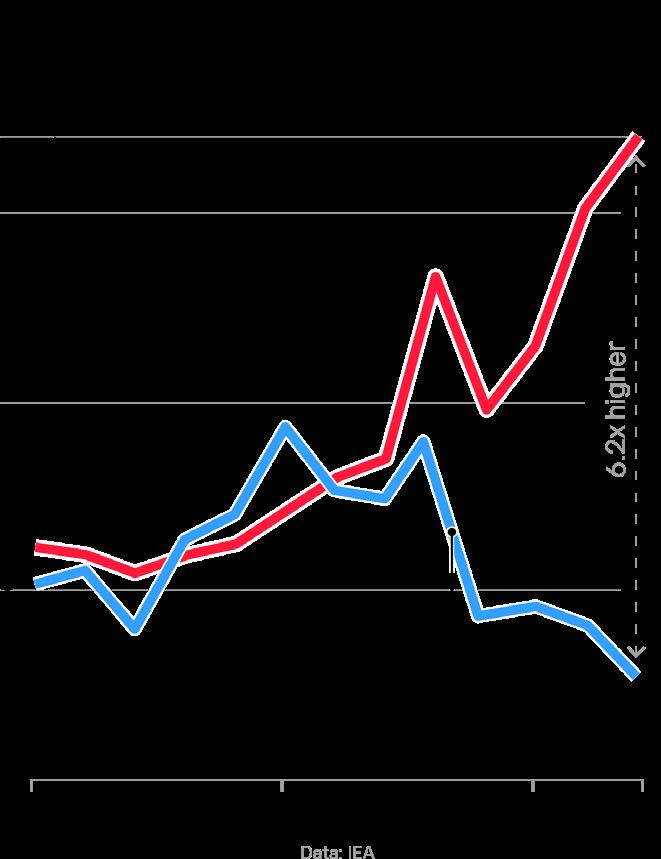
TOKYO – As Iran held the Persian Gulf under blockade in March, Japan was bracing for impact: 93% of the country’s oil came through the Strait of Hormuz. Just under two weeks into the war, which began with U.S. and Israeli strikes on Iran, Prime Minister Sanae Takaichi announced the country’s largest ever release from its strategic reserves.
It was a “sort of a deja vu moment,” said Yee Kuang Heng, an international security professor at the University of Tokyo. A seismic island with scant fossil fuel resources, Japan has been struck by a series of energy crises since World War II, shaping its energy policy around an
While Japanese banks invest in U.S. gas, A TEXAS COMMUNITY WILL PAY THE PRICE
by Gaige Davila
Some environmental groups in the U.S. and in Japan want the same thing: to stop a Japanese bank from investing in the Rio Grande LNG (liquified natural gas) plant in Port Isabel, Texas. Their main concern: pollution in the U.S. Gulf Coast.
ever-elusive goal of security. In the afternoon before she announced the emergency oil release, Takaichi had been attending a memorial to the Fukushima disaster that knocked out the country’s nuclear supply in 2011. No one knew how long this latest disruption would last or how painful it could get. In a skyscraper overlooking bullet trains entering Tokyo Station, Taishi Sugiyama, a Japanese energy researcher with three decades’ experience, said: “The system seems to be very fragile now.”
TOKYO — In November 2024, officials from the Japan-based bank Mitsubishi UFJ Financial Group (MUFG) made their way to Brownsville, Texas, to see the structural beginnings of their latest billion-dollar investment.
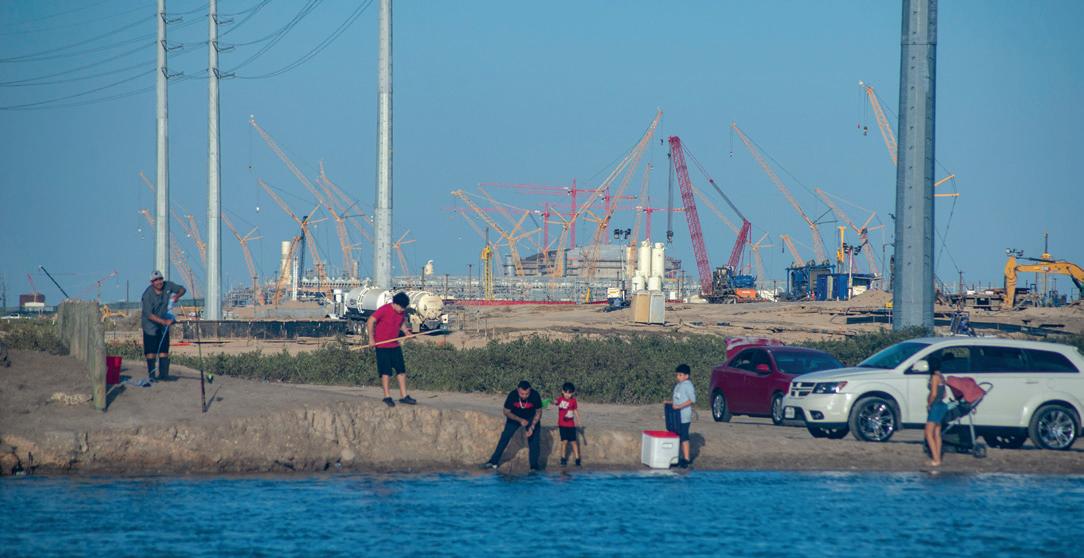
Spanning nearly 1,000 acres, that investment is the Rio Grande LNG project, a liquefied natural gas (LNG) export plant and pipeline that is under construction outside of Port Isabel, Texas, about 12 miles away from Brownsville. The facility is being built over wetlands along the Brownsville Ship Channel and is expected to be ready to operate by 2027.
Taking gas from the central part of the state, the facility will chill it into liquid form, load it onto ships and send it all over the world, where it’ll be used primarily for electric power. It will help MUFG, and Japan, become
major players in the international gas market, in line with the country’s multiyear strategy to import more fossil fuels. MUFG, as one of the project’s lead financial advisors, has handled the over $18 billion that’s been invested in the facility’s development, alongside other Japanese banks.
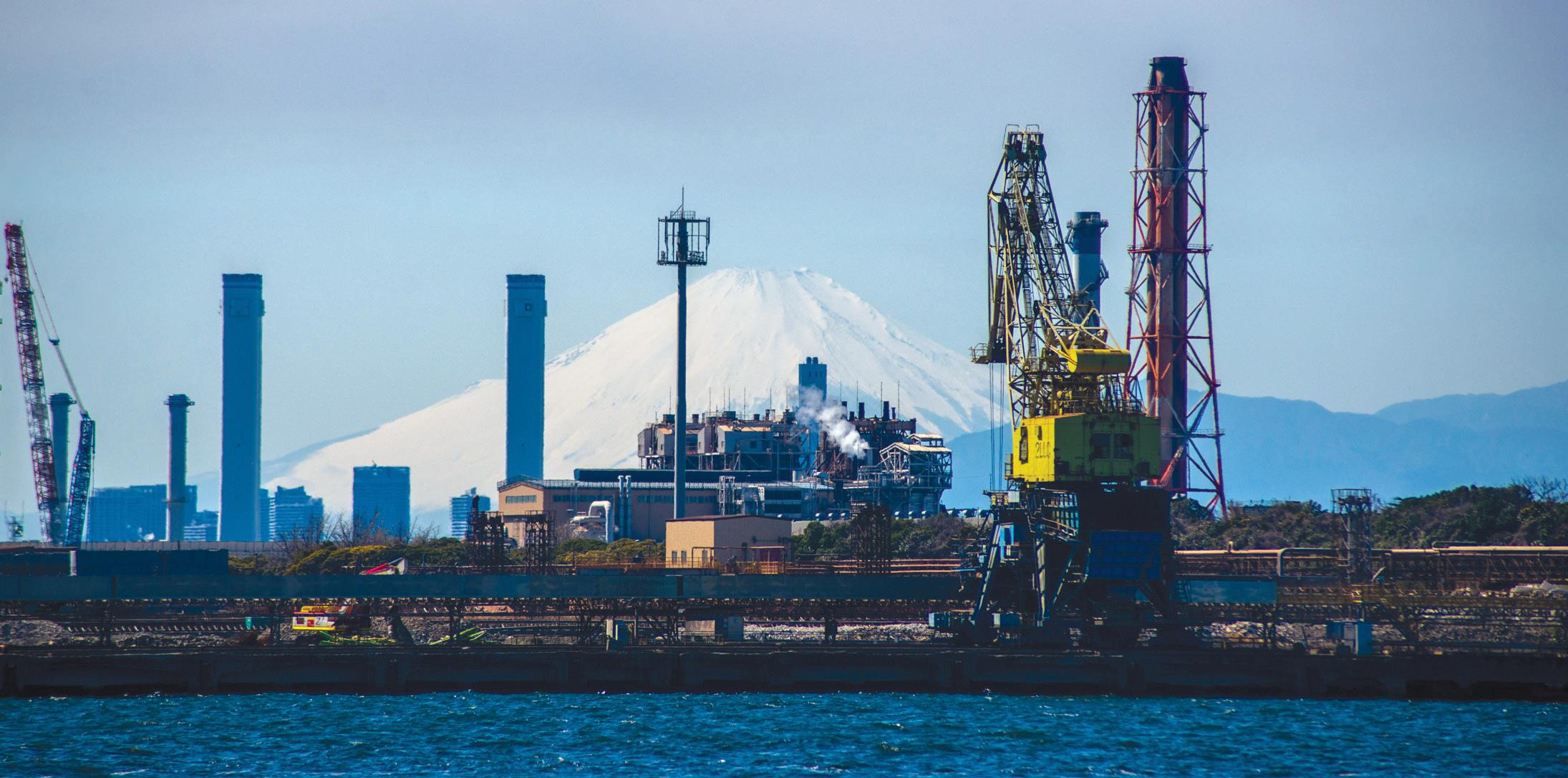
Mt. Fuji behind the industrialized Ogishima Island near Haneda Airport in Tokyo on March 14, 2026. (Photo by Gaige Davila/Cronkite Borderlands Project)
A family fishes near the Joe Gayman Bridge in the wetlands between Port Isabel and Brownsville, Texas, on Feb. 28, 2026.
The under-construction Rio Grande LNG facility is seen in the distance. (Photo by Gaige Davila/Cronkite Borderlands Project)
The Kawasaki oil refinery and natural gas power station near Tokyo Haneda Airport on March 14, 2026. (Photo by Reuben J. Brown/Cronkite Borderlands Project)
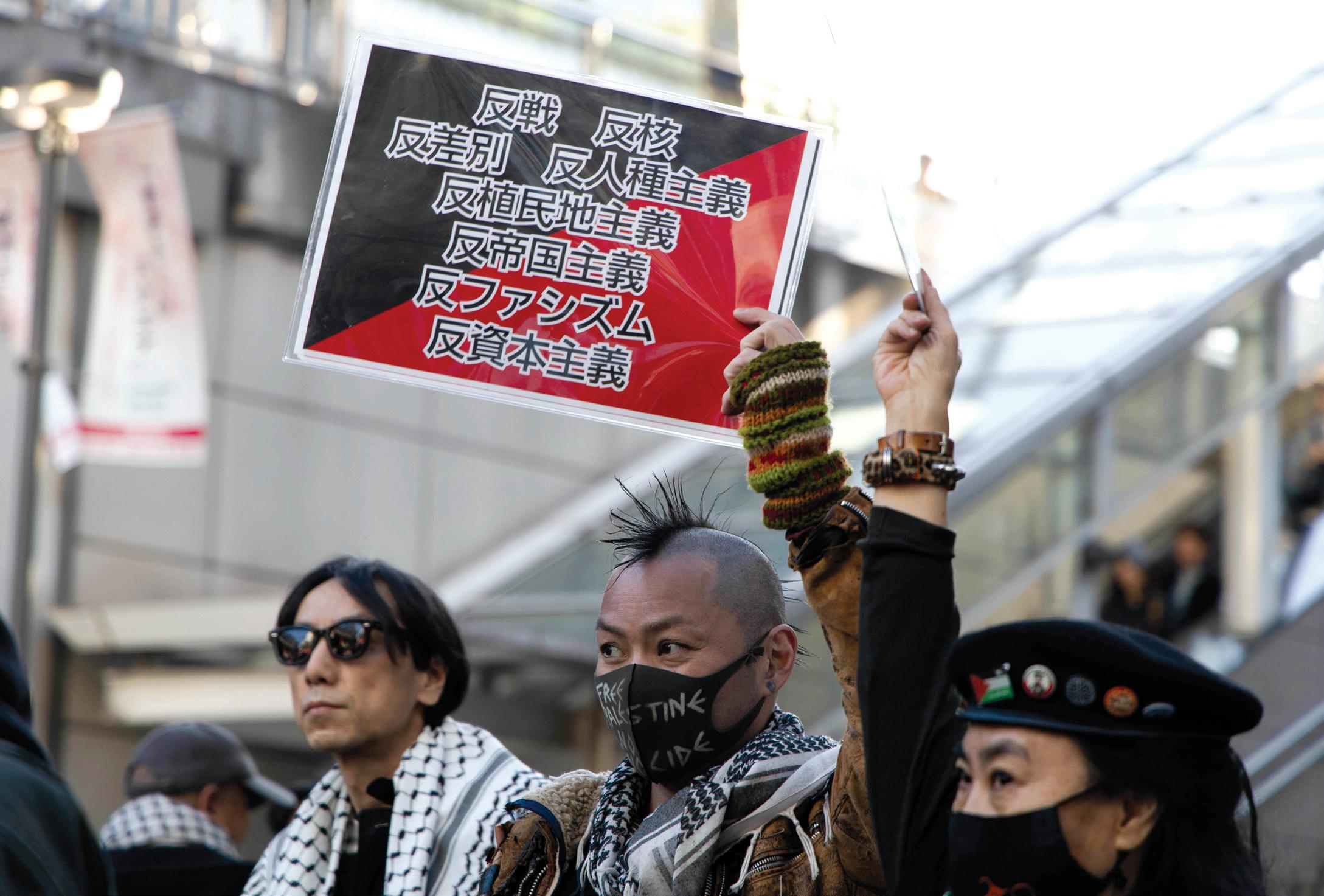
A protester holds a sign that reads “Anti-war, anti-nuclear, anti-racism, anticolonialism, anti-imperialism, anti-facism, anti-capitalism” at the Punks Against Apartheid noise demo outside of Shinjuku Station in Shinjuku City, Tokyo, on March 8, 2026. (Photo by Abigail Wilt/Cronkite Borderlands Project)
LET THEM MAKE NOISE: An exploration of protest punk music in Tokyo
by Abigail Wilt
In a society thought to be reserved, there is a thriving protest music scene in Tokyo.
TOKYO – You hear a heavy strumming of power chords from a guitar just loud enough to ring. On the mic, the singer screams. They’re singing about worldwide political issues with passion and anger. This is a protest, but with punk music. And in Tokyo, there is a community of people keeping this form of protest alive.
In the mid-1970s, a new kind of music was created. It was brash, loud, fast-paced and rebellious. It rejected mainstream conventions, polished rock bands like The Beatles and The Rolling Stones. Punk music was first popularized in New York with The Ramones and in London with the Sex Pistols. The bands gained attention for their music’s unconventionality but also its flagrant political messaging.
The genre spread all over the world, with a unique scene taking root in Japan. Here, it can be traced back
to bands like SS, G.I.S.M. and The Stalin, who took inspiration from Western bands, but fused it with their Japanese approach, with a direct rejection of an often reserved society.
SCAN TO READ THE FULL STORY
Before travelling to Japan to dig into the protest music scene, Coco Royal, a music influencer based in Tokyo, told me that it’s rare to find politicized artists in the current Japanese music scene.
“Japanese people don’t really like talking about politics,” said Tokyo music influencer Coco Royal. “Like, you can see they are holding back because you can see they can’t do anything about it or they feel like they can’t do anything about it, so they don’t want to talk about it.”
But, what I found in Tokyo was something else: a rich punk music scene where they aren’t afraid to share their thoughts on social issues, like opposing the war in Palestine, or to the rise of the far-right in Japan.
These Tokyo bookstores create havens for discussions and literature THAT ARE TABOO IN CHINA
by Katrina Michalak
Chinese bookshops have emerged in Tokyo that serve as social spaces and foster relations with the broader Japanese community amid political tensions.
TOKYO – A street sign points to a flight of stairs off the main road in the western ward of Nakano. It leads to a small hallway with a plain, white door and another sign posted off to the side: Nowhere Books.
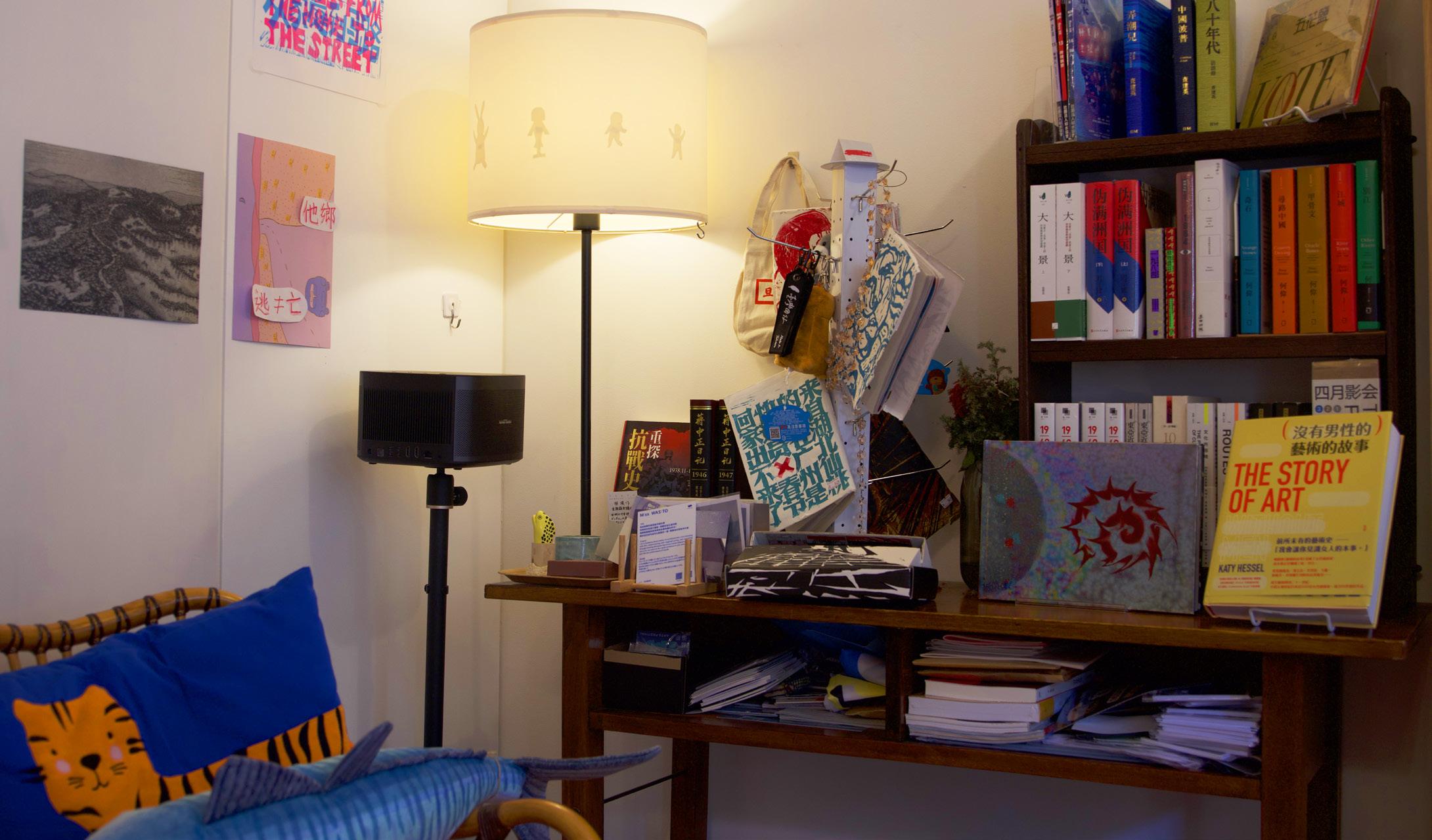
Inside is a colorful array of books in Chinese, Japanese and even English, and a bulletin board with handmade zines on display. One has a stormy gray cover and a title that reads “A letter from a Tehran prison,” with
the silhouette of a person with two fingers brought to their lips.
But the narrative isn’t really from a Tehran prison, but rather a Chinese one. The bookstore’s manager, Hakusai – who isn’t using her real name due to fears for her safety – said the author’s name, location and other details were changed so that it could be published on Chinese websites and avoid censorship from the Chinese government.
“Some Chinese people, when they’re in China, it’s hard to talk to others about political problems,” Hakusai said. “When people come to other countries, they need a place where they feel safe and we can talk about China.”
As of June 2025, the number of people from China who live
in Japan has grown to 915,499 residents, according to Japanese government data, making them the largest foreign population in the country. And with their presence in Japan, Chinese bookstores are flourishing. At least three Chinese-owned bookstores opened in 2023 alone, and another opened in 2025. These Chinese-founded and -owned bookstores in Japan have become not only literary hubs for the Chinese population, but also spaces that provide a sense of community despite overarching political unrest between the two countries.
The interior of Nowhere Books on March 10, 2026, in Tokyo. The store sells both Chinese and Japanese literature and hosts events for the Chinese community to connect. (Photo by Katrina Michalak/Cronkite Borderlands Project)
SCAN TO READ THE FULL STORY
by Gaige Davila
ORGULLO JAPONÉS (JAPANESE PRIDE)
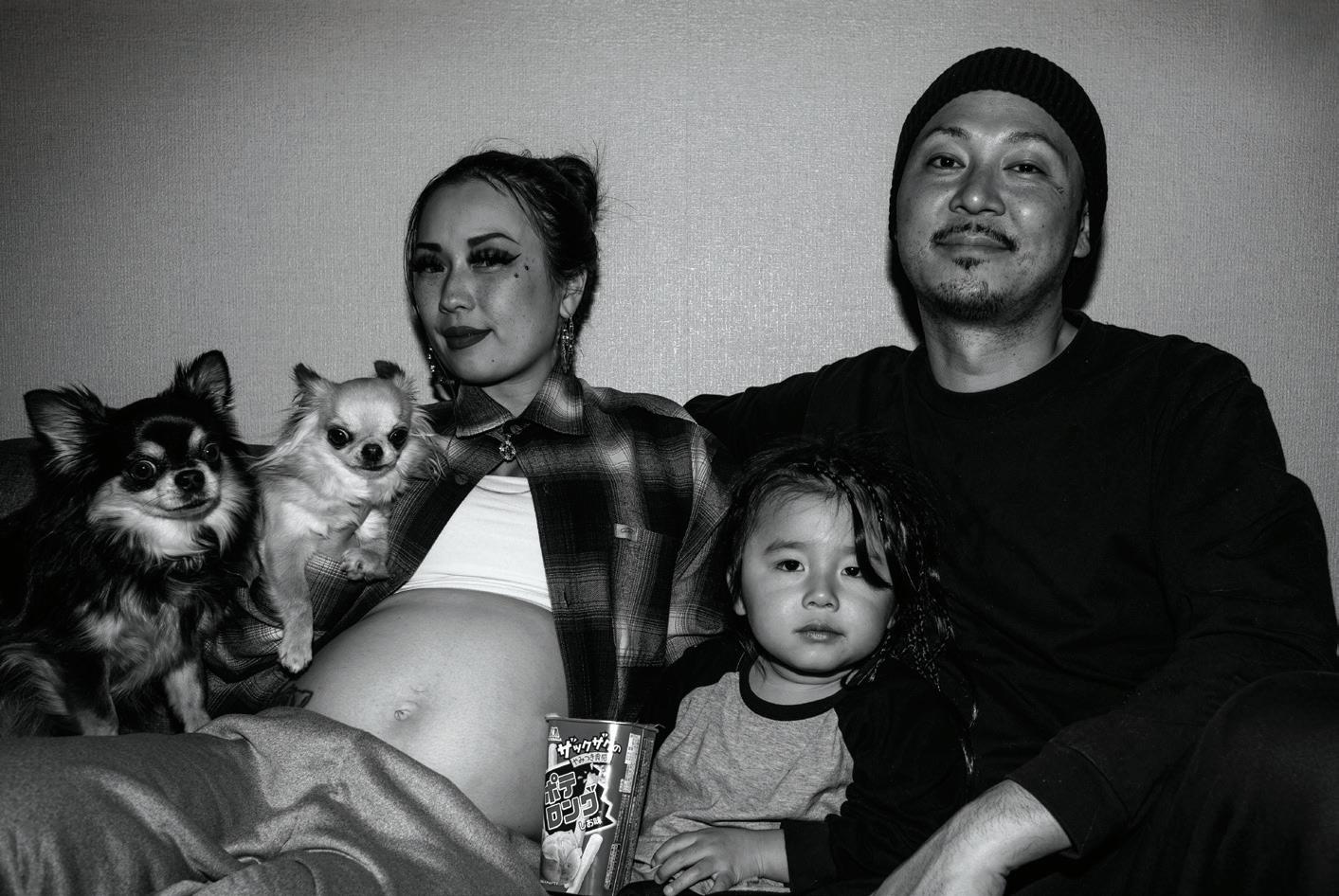
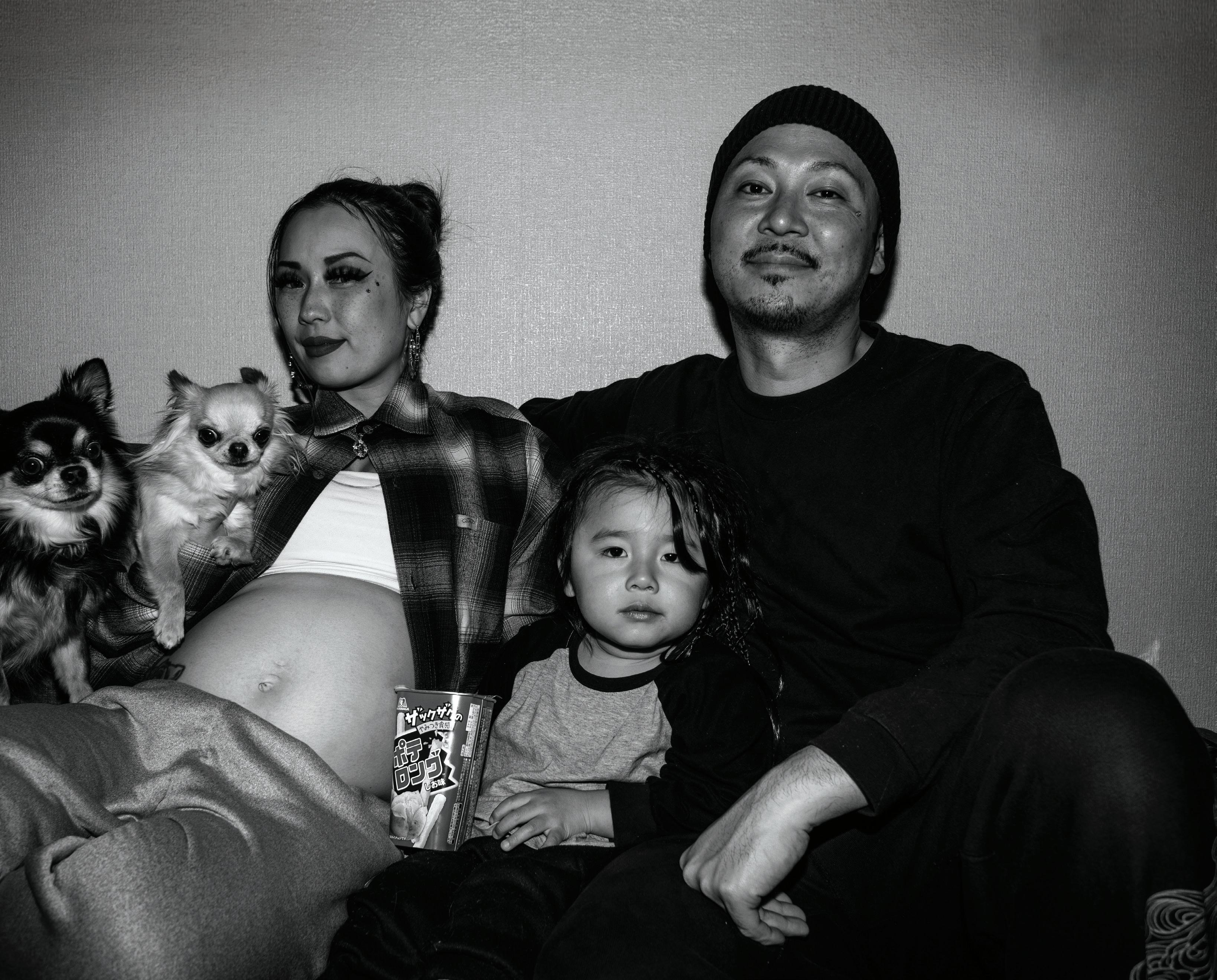
The Shiotas in Toyohashi have spent the majority of their adult lives embracing Chicano culture. With their family soon to grow, Ayaka and Fumiaki Shiota are only more resolute in their devotion to a culture that allows them to self-express in a country known for social conformity.
TOYOHASHI – On March 13, 2026, my last day in Japan, I took a train ride for a couple hours to meet in south of Tokyo Ayaka Shiota, a Japanese model and reggaetón dancer who has become internationally famous for her “Pinche Loca” tattoo.
I have a permanent devotion to the Chicano subculture, defined by political, ethnic and cultural liberation in the United States. I wondered what made Ayaka and her husband, from an ocean away, spend most of their lives embracing what was a part of my upbringing.
As I spent the afternoon with her, her husband, Fumiaki, and their 4-year old son, Kushu, in their home in Toyohashi, I found people that I felt at home with in a way I hadn’t for the entirety of my time in Japan. Despite the language barrier, I learned they resonated with the culture for the same reason I liked it, too: it was liberation from uniformity. It’s how we could be defiant when so little around us seemed to be in our control.
Ayaka is eight months pregnant, meaning the family will soon grow. Fumiaki, a perilla leaf farmer and a hip hop artist known as SURELO, has a tattoo across his chest reading “Orgullo Japonés,” or “Japanese Pride” in Spanish. And while Ayaka’s tattoo “Hecho en Shinovi” does not have a grammatical translation, I understood both of these pieces as their commitments to Chicano culture as craft. If I were to put it in Spanish and Japanese slang, they are bien gachi (ガチ) or bien michi (道), which both mean, in different ways, that their place in the culture is lifelong, just as mine is.
From left, Ayaka, Kushu and Fumiaki Shiota at their home in Toyohashi, Aichi, Japan, on March 13, 2026.
Ayaka Shiota, who is 8 months pregnant in this photo, holds the original stencils of her first tattoos, which were heavily inspired by Chicano-style tattoos from California. (Photo by Gaige Davila/Cronkite Borderlands Project)
Fumiaki Shiota’s tattoo bodysuit, with traditional half sleeves. Across his collar bones reads “Orgullo Japonés,” or Japanese Pride, and his chest bears the salutation “C/S,” for Con Safos, which is one of the most common phrases in Chicano culture. (Photo by Gaige Davila/ Cronkite Borderlands Project)
THE ZAINICHI:
How historic and modern Korea collide and survive in Tokyo
by Kyle Sekenski
The history of Koreans in Tokyo has changed and evolved throughout recent times, as the population and culture shift.
TOKYO — When the Korean YMCA was established in Japan in 1906, Koreans in Tokyo were in the unenviable position of being an oppressed minority whose homeland was about to be occupied by the country where they were living. But on Feb. 8, 1919, 11 students signed a declaration in this place, stating that Korea should be free from Japanese occupation.
But Japan colonized Korea from 1910 until the conclusion of World War II in 1945. “When the Korean population in Japan really spikes is in the colonial period,” said Cindi Textor, a professor of Japanese at the University of Utah who has done extensive research into the history and legacy of Japanese transnationalism and imperialism.
The Feb. 8 Independence Declaration would go on to inspire the independence movement across the East Sea — the preferred Korean term for the Sea of Japan— in March 1919.
Throughout the second half of the 20th century and until now, the story of the Zainichi – the Koreans in Japan and their descendants –changed, from a colonized people to a country influential in the region. South Korea, which was itself shaped by Japanese culture in the latter half of the 20th century, finds itself influencing Japan in the 21st century.
THE ZAINICHI’S HOME IN TOKYO
In the ward of Shinjuku is the Shin-Okubo neighborhood, Tokyo’s biggest concentration of Korean culture and population.
Decades ago, the area used to be known as a slum on the fringes of the Kabukicho red light district. The surviving pachinko parlors— a low-stakes, pinball-like arcade game exploiting a loophole around Japan’s strict gambling laws— give a clue to the area’s past.
“Immigrants who couldn’t find a path in this kind of more mainstream economy worked in this area of town where there’s more illicit activity going on,” Textor explained.
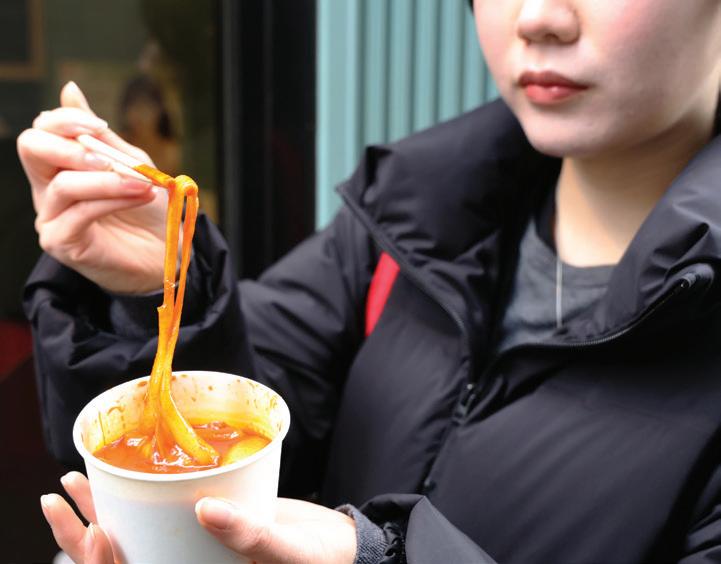
Today, Shin-Okubo is far better known as Tokyo’s Koreatown since it was settled heavily by Koreans following World War II. There are alleyways with Korean street foods made popular in K-dramas and music videos.
The transformation of Shin-Okubo has been profound, and reflects the evolving position of Korean culture in Japanese life as the decades have passed, Textor said.
Kurdish community in Tokyo faces ANTI-IMMIGRANT RHETORIC
by Abigail Beck
In the Japanese cities of Kawaguchi and Warabi, Kurdish immigrant communities have been the central target of a hate campaign against foreigners.
TOKYO – Just over an hour’s train ride outside of Tokyo are the quiet suburbs of Warabi and Kawaguchi, two neighboring cities that have been home to immigrant communities for decades.
Among them are the Kurds, who originate from a mountainous region in West Asia, residing in parts of modernday Türkiye (Turkey), Iraq, Iran and Syria. A majority of Kurds are Muslim, and they represent a minority ethnic group across those countries.
According to the Foreign Policy Research Institute, there are between 2,000 and 3,000 Kurds living in Japan – a fraction of the country’s population of a little more than 120 million people.
Inside the Tokyo Camii & Diyanet Turkish Culture Center in Tokyo on March 9, 2026, during Ramadan.
(Photo by Abigail Wilt/Cronkite Borderlands Project)
But this immigrant group has become the center of a political firestorm in recent years, as Kurdish communities find themselves a frequent target of anti-foreigner rhetoric. Many of them have reported facing rampant hate speech.
The organization Together with Kurds in Japan provides assistance to this community, like hosting affordable Japanese language classes on the weekends. The group leases a small classroom adorned with posters of
the Japanese alphabet and Kurdish films, bookshelves holding workbooks for the adults and picture books for children, with stuffed animals placed on top.
But they also have binders holding dozens of hate speech messages sent by email.
Nukui Tatsuhiro, the organization’s founder, said this rhetoric makes him feel unsafe in the work he does.
Several of the messages collected by Tatsuhiro call Kurds “pigs,” “garbage,” “criminals” and “insects.” Others go after the organization and its staff, stating that people who support this kind of work are traitors of Japan.
Vakkas Colak, the chairman of the Japan Kurdish Cultural Association, said he believes that the Kurds are just an easy target for creating a politicized immigrant issue.
SCAN TO READ THE FULL STORY
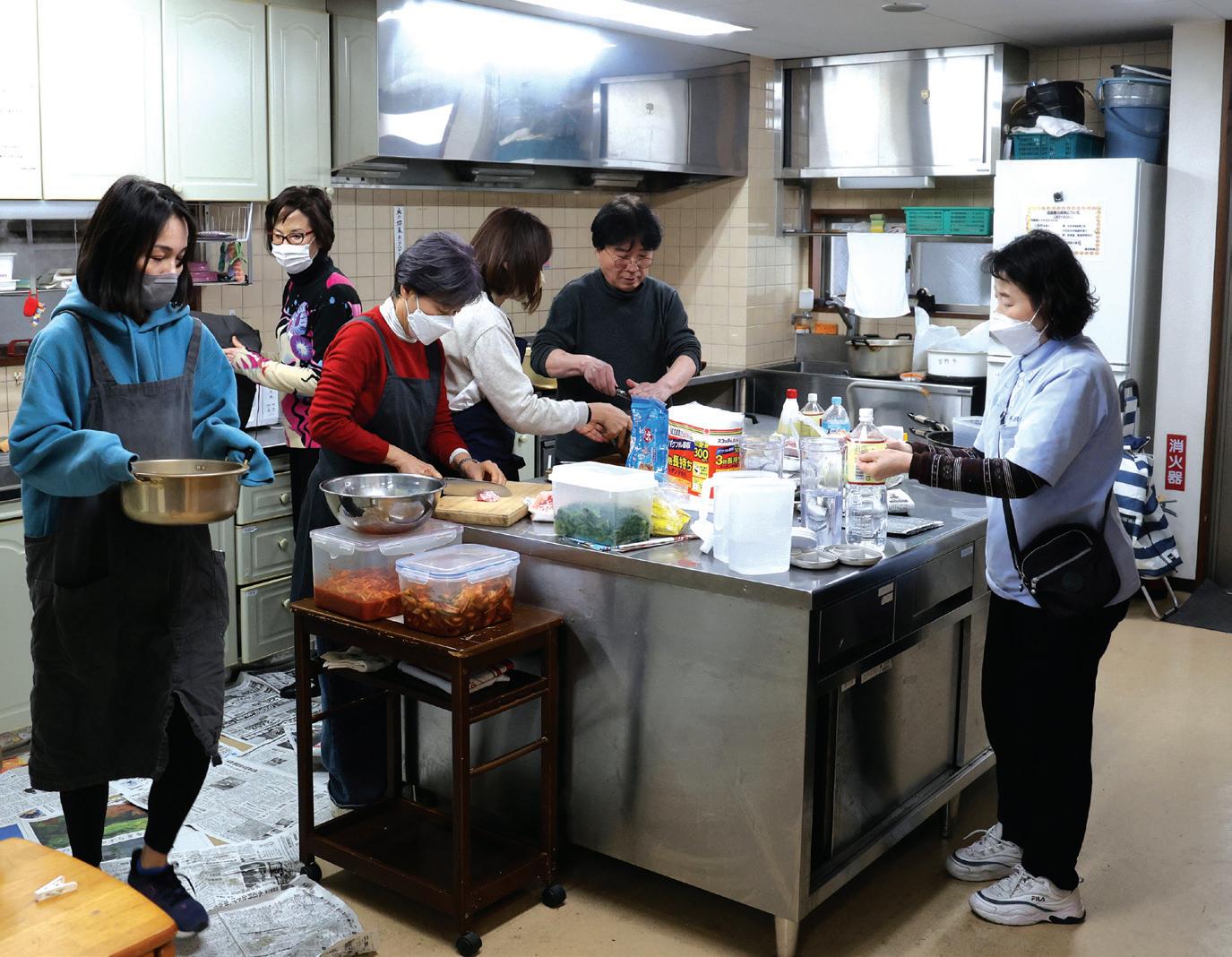
LEFT: Volunteers prepare lunch for the Korean Welfare Association in Japan in the kitchen at the Tokyo Lutheran Church on March 13, 2026, in Tokyo. (Photo by Kyle Sekenski/Cronkite Borderlands Project)
A Japanese student eats tteokbokki, a popular Korean street food, in the trendy Shin-Okubo Koreatown on March 10, 2026, in Tokyo. (Photo by Kyle Sekenski/Cronkite Borderlands Project)
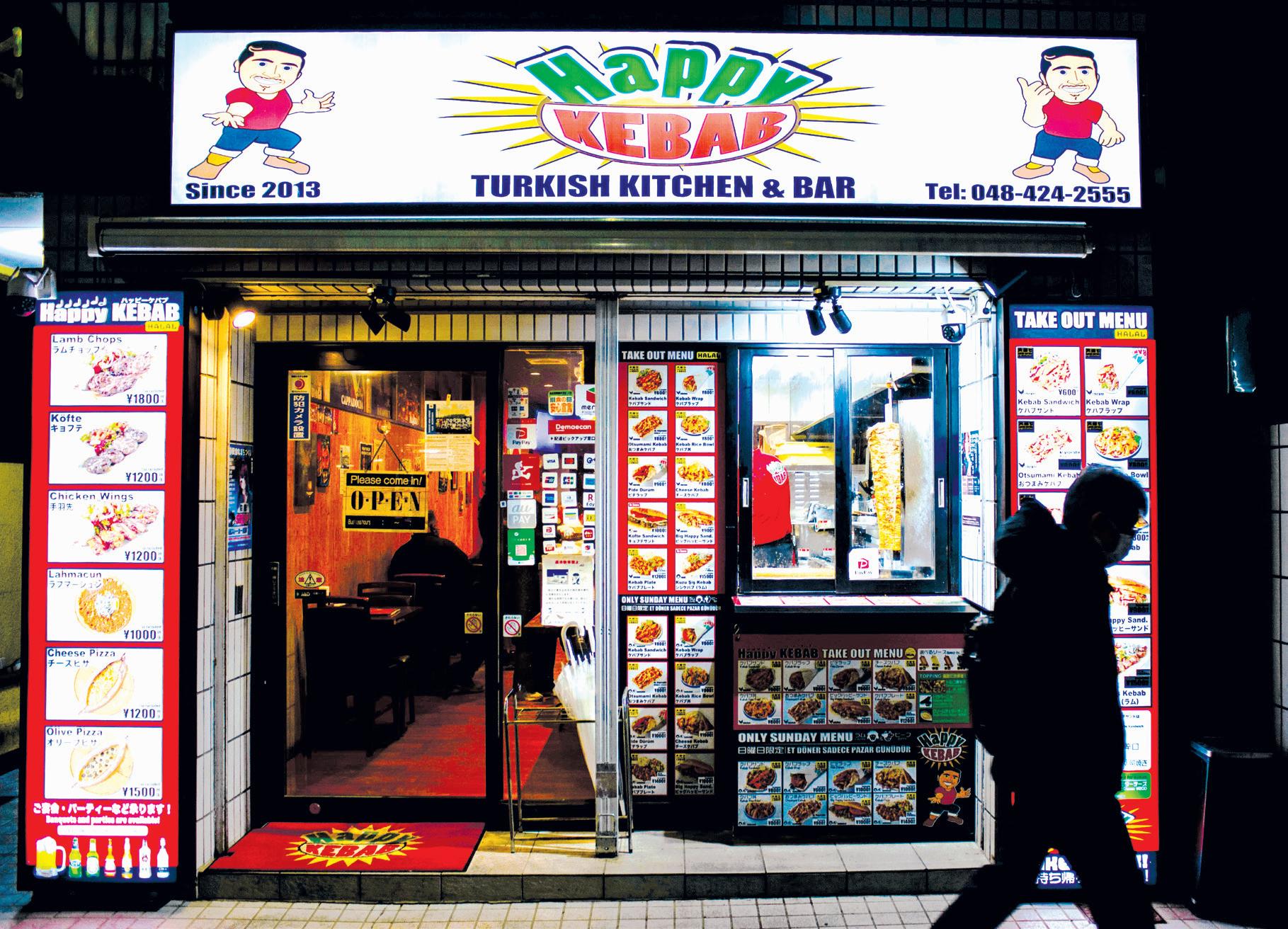
Man walks in front of Happy Kebab, a Turkish restaurant, in Kawaguchi, Saitama Prefecture, Japan, on March 11, 2026.
(Photo by Gaige Davila/ Cronkite Borderlands Project)
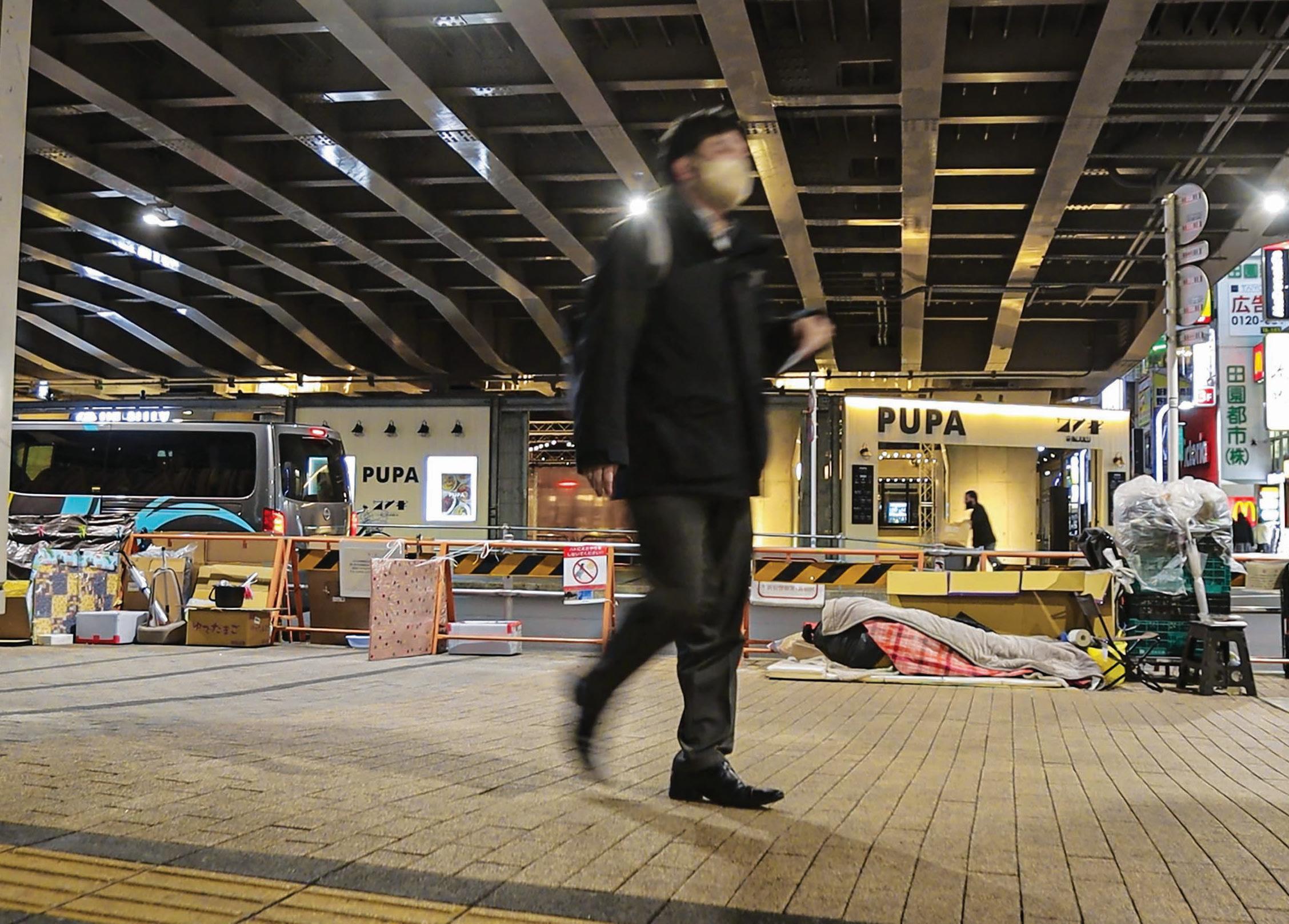
Behind Japan’s record-low homelessness count, a hidden POPULATION GROWS
by Grant Johnson
Japan’s official homeless count has fallen 90% since 2003. But thousands living in internet cafés, cars and friends’ couches are never counted.
TOKYO – Each January, government workers from Japan’s Ministry of Health, Labour and Welfare fan out across the nation’s parks, train stations and riverbanks, clipboard in hand, counting the country’s homeless population. The number of unhoused people they count has been falling almost every year for more than two decades. In January 2025, they recorded 2,591 people — a nearly 90% drop from the 25,296 counted in 2003. But if you are sleeping in your car, on a friend’s couch or in a private cubicle at an all-night internet café, you are not counted. Japan’s survey only captures people visible on the street.
THE TOYOKO KIDS
In Tokyo’s Kabukicho entertainment district in Shinjuku, a community of young runaways has formed in the shadows of one of the city’s busiest nightlife corridors. They are known as the Toyoko kids. Many of the teenagers have run away from home and gathered in the area, forming what one of their own describes as a “runaway community.”
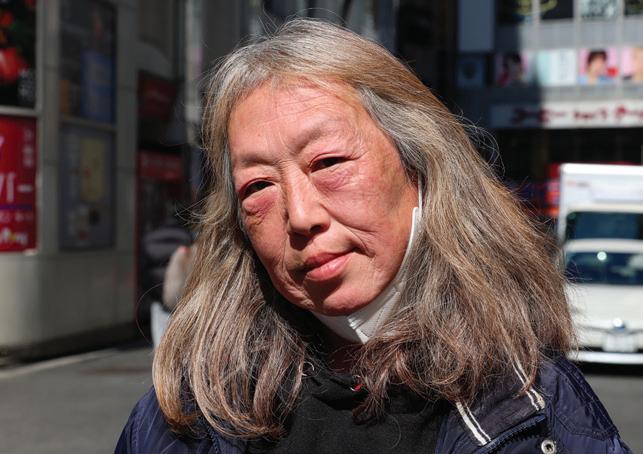
Among them is a woman who goes by Mira and has lived on the streets for six years. She asked to only be identified by her first name. Young people call her Mama. She has become an informal caretaker and advocate for the group, keeping watch over them in a city that largely looks the other way.
“It’s like a community. A runaway community,” Mira said. “The government cannot understand.”
“It’s true that the number of homeless people living in shacks or tents has decreased,” said Ayumi Kato, director of Moyai Support Center for Independent Living, a Tokyo-based poverty support center that has operated since 2001. “But other forms of homelessness have increased significantly.”
Japan’s government defines homelessness narrowly — only those living in public parks, roadsides, riverbeds, station buildings or similar public spaces qualify.
For Mira, the work is personal.
“I love them,” she said, her voice catching. “My purpose is only for children. They are the future. Children are the future. This is my task.”
Immigrants in Japan struggle TO KEEP BUSINESSES
OPEN after new visa rules
by Pippa Fung
Rules for obtaining or keeping a business manager visa in Japan were changed in October 2025, with a three-year grace period to meet the requirements for those who already have them. Some of these immigrants who own small businesses in Japan are no longer sure if they’ll be able to stay.
TOKYO – Off the coast of Imabari City, in the Japanese prefecture of Ehime, is a chain of islands connected by bridges and popular among bike tourists. There, on Omishima Island, is a small farm with vegetables, homemade bee boxes and a renovated guesthouse.
“As soon as we got here, it was just perfect,” Dani said.
But now, five years later, new immigration rules could change that.
The January survey is conducted by visual patrol during daylight hours in winter, a methodology Kato says misses a growing population living in the shadows of one of the world’s wealthiest nations. SCAN TO READ THE
Mira, who asked to be identified only by her first name, stands on a street in Shinjuku, Tokyo, on March 11, 2026. Mira has lived on the streets for about six years and is a maternal figure to the runaways known as the Toyoko kids. (Photo by Grant Johnson/ Cronkite Borderlands Project)
This is where Dani and Evan Benton have lived and built their produce business since 2021. They were interested in starting a farm somewhere with cheaper property outside the United States, their home country.
Since their guesthouse opened, the Bentons have hosted around 700 people, exceeding their expectations. They’ve grown closer to their community by providing fresh vegetables and honey to local restaurants. Even the only pizza place on the island has plans to name a pizza after the couple, since it uses a specific pepper grown by them.
As of June 2025, over 44,700 foreign nationals, including the Bentons, lived in Japan on business manager visas (BMV), which grant them a path to permanent residency while they start and grow a business.
The visas were designed to encourage foreign investment and migration in a country whose population is aging. But, according to some sources, concerns have grown in recent years over fake businesses created by certain BMV holders.
A
Shinjuku Station in Tokyo on March 10, 2026.
(Photo by Grant Johnson/ Cronkite Borderlands Project)
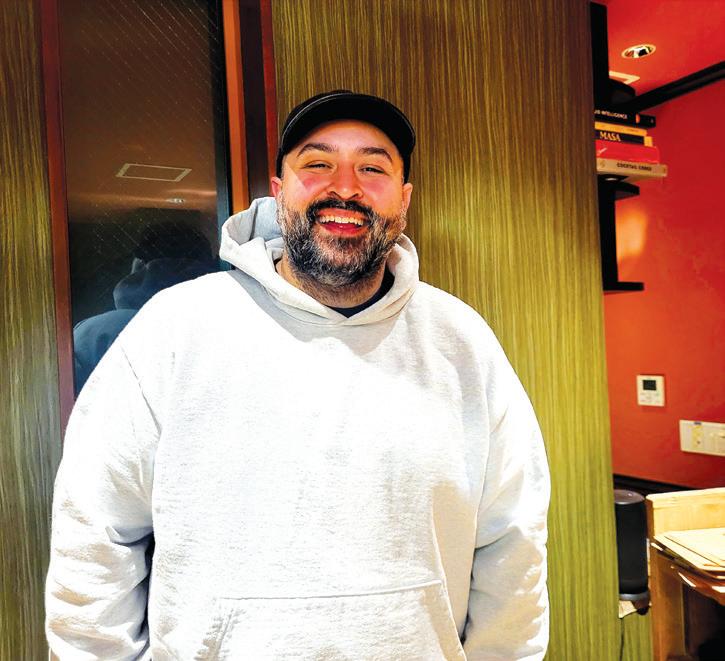
Daniel Valencia in his restaurant, Kuma Cantina, in Tokyo on March 11, 2026. (Photo by Pippa Fung/Cronkite Borderlands Project)
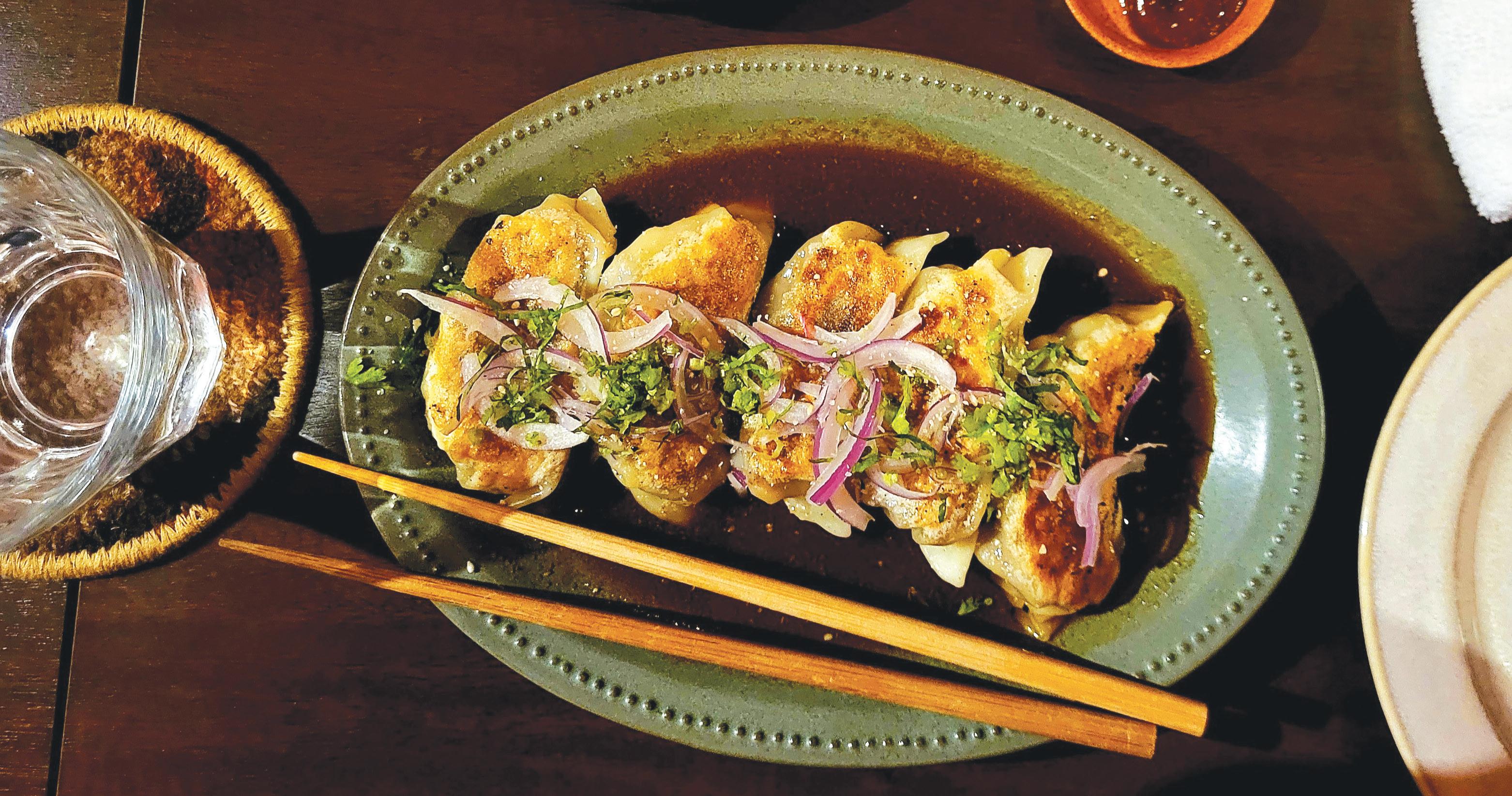
Birria gyoza, a signature Mexican-Japanese fusion dish, at Kuma Cantina on March 11, 2026.
(Photo by Pippa Fung/Cronkite Borderlands Project)
BARRED FROM FERTILITY CARE, Japan’s LGBTQ+
couples are forced underground
by Emily Mosier
Japan’s same-sex marriage ban and strict medical rules prevent LGBTQ+ couples from accessing fertility care. This systematic exclusion pushes hopeful parents to legally complicated alternatives: anonymous sperm donations via social media; international reproductive tourism; and a secretive domestic network of unaccredited clinics.
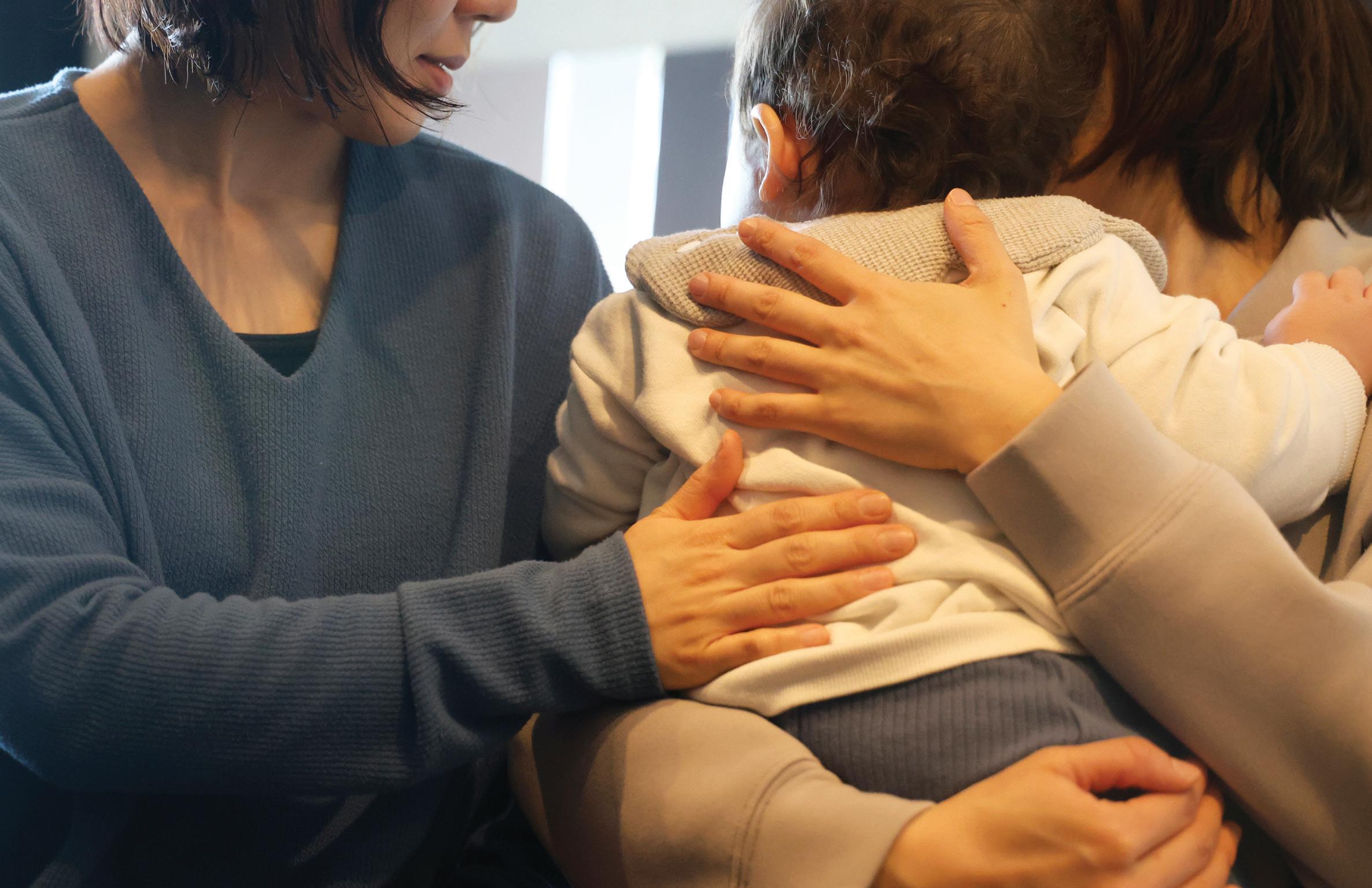
TOKYO – Yuri’s daughter sat in her lap, swirling a lollipop. Nearby, parents kneeled on a foam mat and played with their babies. They had come together through Rainbow Family, a support group for LGBTQ+ people raising children in Japan.
Yuri explained that, for her, the only safe way to have a baby was to lie.
“We don’t have the same rights, Yuri said.
“It’s really unfair.”
Every parent interviewed in this article, including Yuri, requested to be identified only by first name or initial in order to protect their identities.
In Japan, medical guidelines strictly limit fertility treatments to couples in legal or common law marriages. However, as the only G7 nation that does not recognize same-sex marriage, Japan effectively bars the queer community from using Assisted Reproductive
Technologies (ART) – this includes any laboratory procedure with human eggs, sperm or embryos.
So, Yuri lied. She entered a clinic with a male friend, and they pretended to be partners; this allowed her to use in vitro fertilization (IVF) with his sperm and pay for it with public health insurance, which – following a policy to combat Japan’s record low birth rate – pays for 70%.
“If I can use insurance or not, it really matters, so I wanted to do it,” Yuri said. “It made me feel a little bit guilty.”
The Japanese Supreme Court is expected to make a decision next year on the constitutionality of banning same-sex marriage. Meanwhile, exclusion from ART pushes hopeful parents to complicated alternatives, such as anonymous online sperm donation; international reproductive tourism; and a network of clinics secretly offering fertility care.
FOR SOME IMMIGRANTS IN JAPAN, ALTERNATIVES TO DETENTION bring release, but not freedom
by Natalia Rodriguez
The Japanese government introduced an alternative to detention called supervisory release in order to prevent long-term detainment and escape. Refugees and advocates say it places responsibility on citizens, ultimately leaving them in uncertainty.
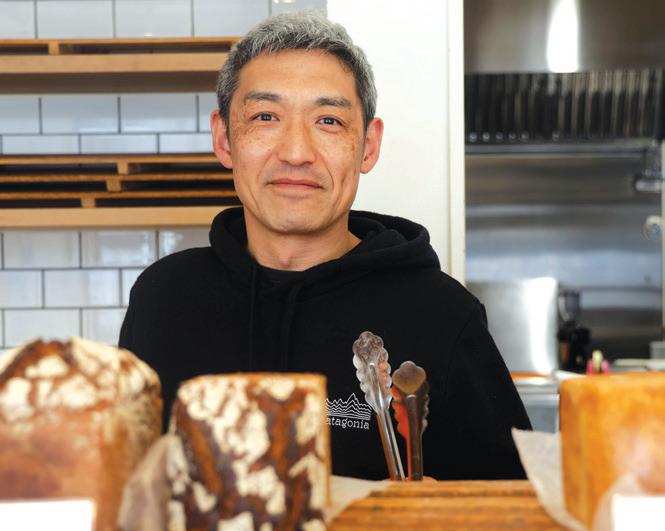
TOKYO – Every day at midnight, Daisuke Sugawara heads to his bakery northeast of Tokyo to start preparing the sourdough bread and sandwiches he will sell that day. Sugawara will work until the shop opens at 9 a.m. and then move on to his second, unofficial job: supervising 10 immigrants from across the globe.
Before COVID-19, Sugawara watched a movie about immigrants living in a detention center less than 30 minutes from his home and was shocked.
After the pandemic, he started volunteering every Tuesday to help immigrants in that detention center. Three years later, Sugawara still visits it weekly to speak with detainees and assist them in any way he can.
He is allowed 30 minutes to speak with each detainee, which is when he helps them reach out to their families in different countries for paperwork or secure temporary release via the supervision measures system.
Immigrants getting help from Sugawara are under a system called kanri sochi in Japanese, an alternative to detention for certain immigrants whose status doesn’t allow them to live in Japan, but may be authorized to do so under the supervision of a volunteer Japanese guardian.
Sugawara is the only supervisor of this kind in his prefecture. He essentially acts as a legal guardian, helping people released from immigration custody find housing and navigate immigration
paperwork. He also provides some financial support and is required to report any illegal behavior to the immigration authorities. He does not get paid.
Sugawara never expected to be responsible for 10 immigrants, but after countless meetings with them, he said he believes they are good people and wants to see them released.
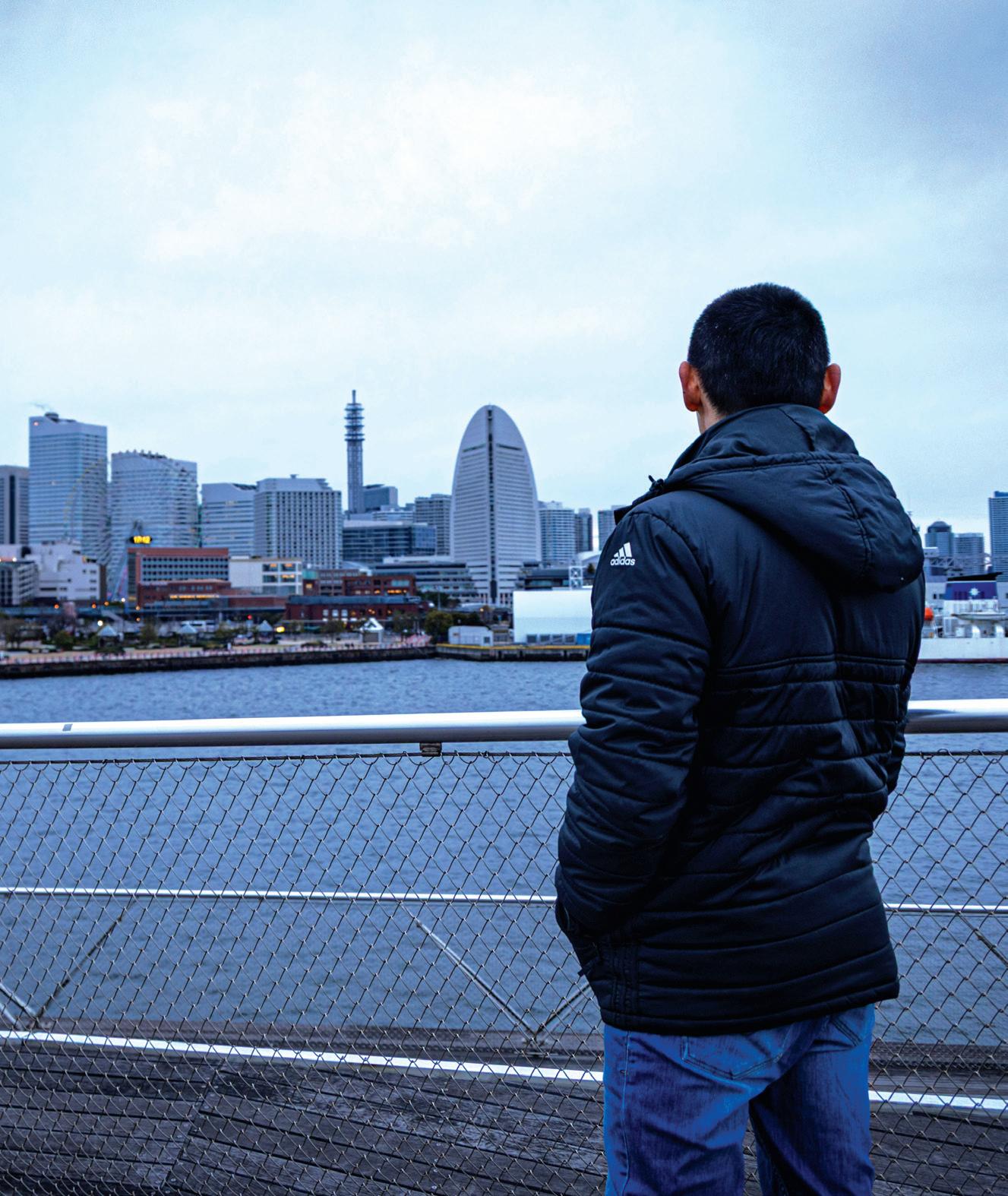
Carlos, an asylum seeker from Colombia on karihōmen standing on Osanbashi Pier in Yokohama, Japan, on March 13, 2026, (Photo by Natalia Rodriguez/Cronkite Borderlands Project)
N, left, and M comfort one of their two young children inside a Tokyo apartment on March 11, 2026. (Photo by Emily Mosier/Cronkite Borderlands Project)
Daisuke Sugawara at his bakery, Bäckerei Brotzeit, on March 14, 2026, in Tsukuba, Ibaraki. (Photo by Emily Mosier/Cronkite Borderlands Project)
SCAN TO READ THE FULL STORY
SCAN TO READ THE FULL STORY
MEET THE TEAM: REPORTERS
ABIGAIL BECK is an award-winning print and audio journalist born and raised in Arizona. Her work has been featured and republished in outlets all across the state, including NPR stations and newspaper front pages. Beck has worked for The Arizona Republic, Courier Newsroom, News21 and Cronkite News. She was also a managing editor at The State Press from May 2024 to May 2025.
LinkedIn: linkedin.com/in/abigail-g-beck
Portfolio: authory.com/AbigailBeck
“My favorite thing about my trip to Tokyo was experiencing Japanese culture outside of the city. loved going into the suburbs, where could witness the day-to-day lives of the country’s residents.”
GAIGE DAVILA writes about borders, coastlines and the people in them. He has reported for the Texas Observer, Deceleration, NPR, The Guardian, Mother Jones and more since 2019. He is the David McHam Fellow for the Texas Observer, is the author of Deceleration’s Coastlines/ Faultlines newsletter and is writing a book with Texas Tech University Press about the Laguna Madre area of South Texas, his home region.
Website: gaigedavilaphoto.com
“Japan is as far away from where I’m from as I’ve ever been. Could’ve fooled me: I felt at home there, thanks to some of the people met. And since home is people, my hope is that this reporting did will make people in Japan see their homes where I’m from, too.”
IAN BROWN is a master’s student pursuing a degree in investigative journalism. Brown is an Army veteran and has undergraduate degrees in political science and Spanish. Brown plans to graduate in fall 2026.
E-mail: iannbrown9@outlook.com
“The most rewarding part of the field work experience was the need to adapt to reporting in a foreign country. valued the opportunity to pursue a story covering international politics.”
PIPPA FUNG is a junior studying journalism, with minors in political science and German. She has also written for Boomtown Los Alamos, The State Press and the Los Alamos National Laboratory. Pippa enjoys reporting on immigration and health care, and would like to pursue investigative journalism in the future.
Instagram: @philippafung
LinkedIn: @Philippa Fung
“This trip was very eye-opening for me, and taught me a lot about reporting overseas and in the field. I enjoyed getting to meet so many people in Japan and am really grateful for the opportunity to share their stories.”
REUBEN J. BROWN is a multimedia journalist from Brighton, U.K. He works as a writer, photographer and editor on stories about very big systems, the people shaping them, and the people they shape.
Website: reubenjbrown.com
Linkedin: /in/reuben-j-brown
Instagram @reubenj.brown
“Global energy markets shape people’s lives in enormous ways. While they’re complex and highly technical systems, they’re also shaped by culture, memory and history. Without reporting in Tokyo, Fukushima and Shimizu for this story, I would not have come to understand the motivations of Japan’s energy policy to nearly the same degree.”
GRANT JOHNSON is a graduate
student pursuing a master’s degree in investigative journalism. His work focuses on investigative reporting and cross-platform storytelling that highlights underreported communities and engages Gen Z audiences. He holds a bachelor’s degree in television production from Ithaca College. He has worked with FOX, NBCUniversal, TEGNA and Gray Television, and is the creator of “News Disrupted,” a digital series exploring the future of journalism.
“Covering a sensitive topic in a country where didn’t speak the language forced me to be a more careful and deliberate reporter. I took home a stronger sense of how to cover communities that are not my own with the sensitivity they deserve.”
AOIFE KANE is from Kildare, Ireland. She is a graduate student and Howard Center for Investigative Journalism fellow. Kane is most interested in exploring the intersection between policy and people. She thinks that being a journalist is the best job in the world because it gives her the freedom and license to talk to people and be endlessly curious about how the world works. Kane is most passionate about producing video journalism and hopes to reach younger audiences through vertical videos on social media.
Instagram @aoifekanee
LinkedIn: @Aoife Kane
X: @Aoifekane32
“In Tokyo, learned how to conduct interviews through translators, set up interviews with sources on the other side of the world and pivot in real time as my story developed.”
MICHALAK is a senior majoring in journalism and mass communication. She previously interned with The Arizona Republic and Totally Dublin Magazine. She currently serves as executive editor for The State Press and is a reporter at the Howard Center for Investigative Journalism. Michalak aims to continue reporting, specifically national issues and foreign correspondence. She is from Boston.
LinkedIn: @ Katrina Michalak
X: @katrinamichalak
“The Borderlands trip sharpened my reporting instincts and reminded me to not be afraid of pivoting to another story angle. The sources developed all had impactful anecdotes to share and motivated me to deliver a compelling story.”
EMILY MOSIER is pursuing a master’s degree in investigative journalism as a Howard for Investigative Journalism Center Fellow. She grew up in Alabama and the Florida panhandle. In 2025, she graduated from Troy University with degrees in English and multimedia journalism. She is especially passionate about accountability reporting and public service, and she has freelanced for multiple news organizations, including NPR.
Instagram and X: @EmilyMosierNews
LinkedIn: linkedin.com/in/emily-mosier
“Covering reproductive inequality and LGBTQ+ oppression in Japan allowed me to learn in-depth reporting at an international level. As journalists, it is important to understand the weight of each story and handle the words of others with care – and this trip reaffirmed my goal of being a reporter who amplifies the voices of others.”
NATALIA RODRIGUEZ is a junior studying journalism and mass communication from Nogales, Arizona. She has written and edited dozens of articles for The State Press. She has also worked for LOOKOUT, a nonprofit news outlet dedicated to serving the LGBTQ+ community in Arizona. Rodriguez plans to pursue a career as a bilingual investigative journalist.
LinkedIn: @Natalia Rodriguez
“The key lesson I took away from this experience was that no matter how different a country is to your own, you can still experience similar issues presented in a different way. This trip truly made me mature and realize how capable I am, beyond just journalism.”
KYLE SEKENSKI is pursuing a master’s degree in mass communication, and is a native of Mesa. He holds a bachelor’s degree in linguistics from ASU. Kyle expects to graduate in summer 2026 after completing a capstone program at the Cronkite News Washington, D.C., Bureau, for which he is a Thomson Reuters Truth in Reporting scholar. He intends to pursue a career in investigative journalism and photojournalism, with an eye on foreign correspondence work.
“Reporting on this story helped me to think a lot more about the complexity of identity. Are we more a product of where we were born, where we grew up, or where our families came from? Exploring these questions while meeting people who make a difference in the lives of their local communities was a brilliant first taste of international reporting work.”
ABIGAIL WILT is an undergraduate student studying journalism and mass communication with a minor in English literature. She previously worked as a fellow for the Carnegie-Knight News21 initiative and as a health disparities reporter for Cronkite News. She currently serves as a managing editor for State Press Magazine and is an editorial intern for PHOENIX Magazine.
“I was nervous to report an in-depth story in a country where I didn’t know the language, but as I reported from Tokyo, was able to develop reporting skills that translated into a well-reported story that will stand out in my portfolio.”