Notes to the Financial Statements ..............................................................................35
Independent Audit Report Error! Bookmark not defined.
Additional Financial Information Disclaimer ...............................................................60
Detailed Statements of Surplus or Deficit ....................Error! Bookmark not defined.2
Welcome Letter
Critical Path’s Annual Report 2017 sets out the activities of the organisation in the last year, demonstrating the breadth and depth of the work that nurtures and extends the practice of independent choreographers from our base in NSW across Australia and internationally.
2017 was a big year for Critical Path with the extension of our Interchange program and the second Interchange Festival. In the second part of the year this project strand brought us connection and dialogue with International artists drawn from Canada, Japan, USA, France/UK and Taiwan. These artists came to Sydney but also ventured out to other parts of NSW and into other states, made possible by existing and new partnerships; The Mill in Adelaide, Tasdance, DIA Northern Rivers NSW, Ausdance QLD and QUT Brisbane, BMEC Bathurst NSW, Ainslie & Gorman Canberra, Mirramu Bungendore NSW.
As we came to the end of a period exploring the relationship of the body to choreography, our 2017 Question of Bodies program invited a number of artists to consider the scope and diversity of ways that these interact; the significance of the connection between land and body, the ways in which the body itself can act as a site for choreography, different bodies and different approaches through the body and the absence or shift from focus on the human body to objects.
Our program has been enhanced by multiple project funds, gained by ourselves directly (in particular from Australia Council for the Arts), and in partnership, and the continued support of Create NSW (formerly Arts NSW) as our main funder.
We also saw Meredith Brooks step down as our Chairperson after five years in the role. Meredith has been a stalwart ally of Critical Path, a support to myself as the new Director / CEO since September 2015 and before me to Margie Medlin and Justine Shih Pearson. Her generosity, wisdom and calm have been a gift to the organization, literally (demonstrating the importance of volunteers, primarily our Committee) and metaphorically.
The team worked tirelessly to ensure that artists and projects were well served, our existing team members Fabiana Serafim and Laura Osweiler being joined for Interchange by Margie Breen, and by Anna Grieg in a short-term trainee Coordinator role.
Above all Critical Path has been invigorated by our artists. We had 656 artist interactions over the year, ranging from one off workshops with International practitioners, to two-week labs and residencies for small groups, space ‘grants’ and research room time for individual or small sets of artists, alongside funded research projects and dialogue activities and the connection offered by longer-term visits from global choreographers. We continue to be a hub for creativity, innovation and knowledge exchange, a space that champions research and nurtures artists’ ongoing development.
Claire Hicks Director
Association Information
Registered Office & Principal Place of Business
The Drill
1C New Beach Road
Rushcutters Bay NSW 2011
Responsible Entities
Auditors
Mitchell & Partners, Chartered Accountants
Public Officer
Claire Hicks
Committee Members
The Committee members of Critical Path Incorporated present their Report together with the financial statements for the year ending 31 December 2017 and the Independent Audit report, covering those financial statements.
The following persons were committee members of Critical Path Incorporated during or since the end of the financial year.
The number of meetings during the year and the number of meetings attended by each member are as follows:
A: Number of meetings the Committee Member was entitled to attend B: Number of meetings the Committee Member attended
Lesley Power has been the Association’s Secretary since February 2014. Claire Hicks has been the Association’s Public Officer since June 2016.
Details of Committee Member’ qualifications, experience and special responsibilities can be found below.
MEREDITH BROOKS
CHAIR to December 2017
Meredith is a non-executive Director of BT Investment Management Ltd, non-executive Director of General Reinsurance Australia Ltd and General Reinsurance Life Australia Ltd and a Council Member of Glaucoma Australia. She is an APMA Level 2 Pilates Instructor.
SUSAN CARROLL
CHAIR
Susan has a professional background across Government, Law and the Arts. With substantial Senior Executive experience across the Commonwealth and high-level strategic advisory roles with the Department of Premier & Cabinet NSW, Susan has experience and expertise in strategic partnerships, policy development, government navigation and engagement.
SHANE CARROLL DEPUTY/ACTING CHAIR
Shane has worked in the arts sector as a performer, teacher, consultant, manager, researcher, advocate and advisor for around 40 years. Currently she supports artists
through strategic initiatives to create viable careers, and contributes to arts advocacy, funding and policy development.
THOMAS E. S. KELLY
ARTIST REPRESENTATIVE
Thomas is a performer, choreographer, and composer. He graduated from NAISDA Dance College in 2012. He is a proud Wiradjuri and Bundjalung man from QLD and NSW.
FENN GORDON
Fenn is an independent practitioner with her own company Tandem, working between Australia and New Zealand, specialising in strategic development, producing and international touring. She has worked as producer and strategic advisor with artists including the William Yang, Gavin Webber and Grayson Millwood (The Farm), Gravity & Other Myths, ILBIJERRI Theatre Company, and Nicola Gunn.
RAGHAV HANDA
ARTIST REPRESENTATIVE
Raghav is a performer and choreographer from Sydney.
NOELLA LOPEZ
Noella has extensive experience in strategy development, brand management, marketing and business development in both the private and government sectors. She is the Founding Director and Curator at Noella Lopez Gallery.
GENIA MCCAFFERY
Genia was Mayor of North Sydney from 1995 to 2012. She was President of the Local Government Association (NSW) 2004 to 2010 and President of Australian Local Government Association 2010 to 2012. She has extensive experience in working with Local, State and Federal Governments as well as with the community.
ANNABEL MILLET TREASURER
Annabel is a UK qualified Chartered Accountant and a senior management consultant at PwC. She has extensive experience across the private and government sector, helping clients to manage their Finance functions through business design, strategy and transformation programs.
LESLEY POWER SECRETARY
Lesley is a media, entertainment and arts lawyer. She is General Counsel of SBS and a member of their senior executive team.
SARAH-VYNE VASSALLO
ARTIST REPRESENTATIVE
Sarah-Vyne is a director, choreographer and teacher and has worked across commercial and contemporary dance, theatre, film, television and arts development spanning two decades. She is a recipient of a Winston Churchill Fellowship in the arts and a passionate leader in the field of integrated arts practice in Australia.
Organisational Structure and Key Responsibilities
COMMITTEE
Goverance and strategic development
DIRECTOR
Artistic vision, company management and strategic development
FINANCIAL CONSULTANT
Financial advice and reporting
PROJECT MANAGER
Management of Facilitated Program, communications and events
GENERAL MANAGER
Management of Responsive Program, business administration and publications
PROJECT COORDINATOR
Coordination of specific projects (2017 Interchange Project)
Staffing
In 2017, Claire Hicks continued in the role of Director (full time).
Fabiana Serafim continued Program Manager*
Laura Osweiler continued as General Manager**
Critical Path also continued to contract Karen Steainson a monthly basis as a financial consultant.
Margie Breen was engaged for a period of 6 months as a temporary Project Coordinator (2017 Interchange projects).
Financial Consultant***
Karen Steains Director
Claire Hicks
Program Manager*
Fabiana Serafim
General Manager**
Laura Osweiler
Project Coordinator
Margie Breen*
*part-–time (Three days per week)
**part–time (Four days per week)
***contractor
Governing Committee
In 2017 changes to the Committee are as follows:
Shane Batchelor joined the committee on 1 February. Susan Carroll also joined the committee on 15 May and subsequently became Chair on 4 December, when Meredith Brooks stepped down. In addition, Genia McCaffrey and Noella Lopez resigned from the committee on 21 May and 9 October respectively. Raghav Handa joined the committee as an Artist Representative on 1 February. Sarah-Vyne Vassallo (Artist Representative) stepped down on 9 October.
Activities Outside of Critical Path
Laura Osweiler co-produced the Austin Belly Dance Convention in the USA, June 2017.
Internships
In 2017 Critical Path had three interns: Natasha Almeida (BA in Dance, UNSW), twelve weeks part-time, from March to June.
Kathleene Capararo and Lucy Kearney (BA Design in Visual Communications, UTS), each undertook an eight weeks part-time internship.
Natasha assisted the Project Manager in Jonathan Burrows & Matteo Fargion (UK)’s residency with Critical Path, part of our Dancesites collaboration with Dancehouse and Strut.
Kathleene designed Critical Dialogues #7 “Claiming Spaces: Choreographers with Disabilities Redefining Dance” and designed Critical Path’s 2016 Annual Report.
Lucy was designer for the Interchange Festival, creating a festival identity based on our brand, e-marketing and information signage.
Volunteers
In 2017, volunteers continued to support our activity, in particular working on the festival weekend of Interchange and supporting public studio presentations. Anna Greig undertook a 10 week period as a volunteer supporting in the office 1 day a week.
Principal Activities
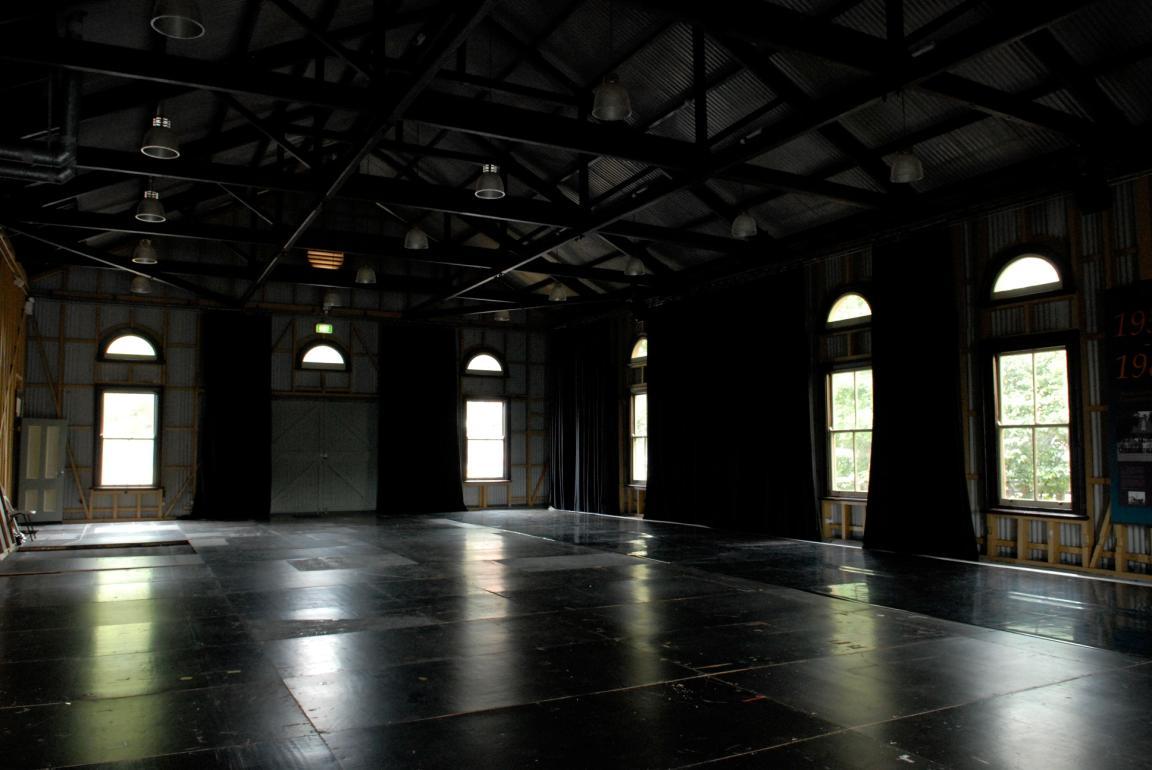
Critical Path is a choreographic research and development centre based at the Drill Hall, a large rehearsal space on the harbour in central Sydney, Australia. Our mission is to cultivate a program of research opportunities for choreographers and dance makers, nurturing diversity and excellence in a supportive critical environment which fosters creative risk-taking.
With a distinct focus on research and innovation, we support Australian choreographers to incubate new ideas and experiments in our studio so that excellent new work can make it to our stages. We aim to nourish a genuinely independent dance company as they push the boundaries of existing practice in relation to local and international fields, enhancing the vibrancy of the Australian dance sector.
We emphasise our role as a hub, a space for the independent artists to congregate, cross fertilise, debate, critique. A place connected into the broader arts sector through a host of partnerships.
Operating Result
The net profit for the year amounted to $12635 (2016 deficit: $5,161).
Critical Path has been serving the contemporary dance community for 12 years.
2016 Artistic Program Funding
In 2017, we continued to be supported by Create NSW (formerly Arts NSW) with triennial funding 2016-2018 (our majority funding), $280,000 per annum to cover the period January through to December each year.
Critical Path completed activities against a $149,043 artform development grant from the Australia Council for the Arts – Dance Board for a program of work that started in 2016 and ended in 2017. An ‘annual program’ grant focussed on A Question of Bodies, with Australia Council funds of $90,990. In addition the organisation embarked on its multi-year Interchange 2017-19 project; the total grant from Australia Council is $97,377.
For the first time Woollahra Municipal Council supported CP with a Cultural and Community Grant, for a small project ($5,000). Critical Path partnered with Mirramu Arts Centre (Bungendore) to secure a Regional Arts Fund NSW grant of $20,000 a year for 2 years to deliver regional residencies with Indigenous artists as well as a guest artist from Taiwan.
Additional income was raised through partnerships with University of New South Wales ($5,000). Other partners provided in-kind support or spent cash directly on joint programs; Performance Space, Sydney Festival, and Metal UK. Many international artists were supported by self- administrated International grants.
Total non-grant income came to Critical Path generated income through donations of $92,134 (consisting of individual donations, monies from foundations, partnership contributions cash and in-kind) and through casual hire of the Drill Hall raising $21,009. The hirers in 2017included a mixture of larger rehearsal and development periods for subsidised artists/companies with independent makers and commercial arts activity. WMC also continue to offer CP the Research Room at no hire cost to support our artistic program.
Critical Path auspiced projects for Mirramu Arts Centre (artistic partnership with Mirramu) and Now Project for Maggie Haertsch allowing a celebration performance with and by Eileen Kramer to mark her 103rd birthday.
These combined funds allowed Critical Path to deliver:
656 Total artist participation
857 Total live audience at activities hosted by Critical Path in 2017
5215 Online readership
RESEARCH
135 Artists participated in the RESEARCH Program
134 audience to RESEARCH sharings
35 RESEARCH programs:
12 Funded research projects
2 International funded research projects
1 Intercultural lab
6 Research Room residencies, 3 with International Artists
6 space supported projects, 4 open studio
8 Research Sharings
DEVELOPEMENT
259 Artists participated in our DEVELOPMENT Program
14 Artists contributed to Critical Dialogues (also above)
85 audience to DEVELOPMENT sharings
30 DEVELOPMENT programs: (not including Interchange Festival and Public)
4 Funded development programs
6 Artist development labs (1 curated by our Associate Adelina Larsson Artist and 4 with International artists)
1 Week-long workshop with international artist
9 Short workshops (less than 5 days) 7 with International artists
1 International residency projects for Australian artists
4 Archive residencies for Australian artists
1 Industry meeting (and related training) in partnership with Tasdance and Tracks
2 New editions of Critical Dialogues
2 New commissions through the Barco Dance Collection project
PUBLIC PROGRAMS
23 Public Events including Interchange Festival
262 Artists participated in our Public Program
638 Audience members across Public Program
1480 audience attended Critical Path partnership presentations at Liveworks.
1451 Digital – content driven digital audience
6 International sharings/presentations
6 Sharings partnered with other organisations and/or artist -led
1 Sharing with Interstate artists
5 Public Talks
213 Artists participated
Interchange Festival:
5 Public Events (including 16 public activities)
49 Artists participated
204 Audience members
3 artist Curated events
2 Talks
5 Forums
6 Workshops
Programs Result
2015
Responsive - 21
Facilitated - 14
Public events - 9
Shared - 6
Participants
Responsive - 61
Audience
Live - 671
Online - 566
2016
Responsive - 22
Facilitated -17
Public events -14
Shared - 8
Participants
Responsive -141
Facilitated -163
Public – 186
Audience
Live - 1588
Online – 1151
2017
2017
RESEARCH – 33
DEVELOPMENT 43
Public Events -14
Participants
RESEARCH – 135
DEVELOPMENT 259
PUBLIC EVENTS 262
Audience
Live – 638 plus 1480 partnership presentations Online – 1451
RESEARCH & DEVELOPMENT
Residencies
Labs & Workshops
Critique & Discourse
Studio
Presentations
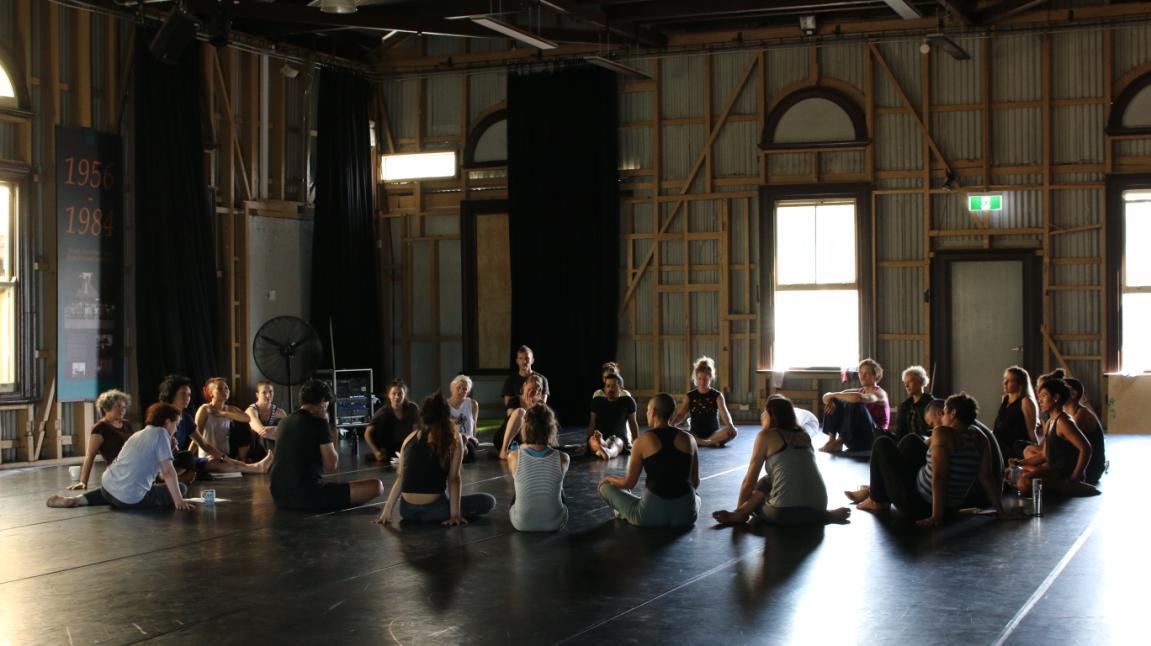
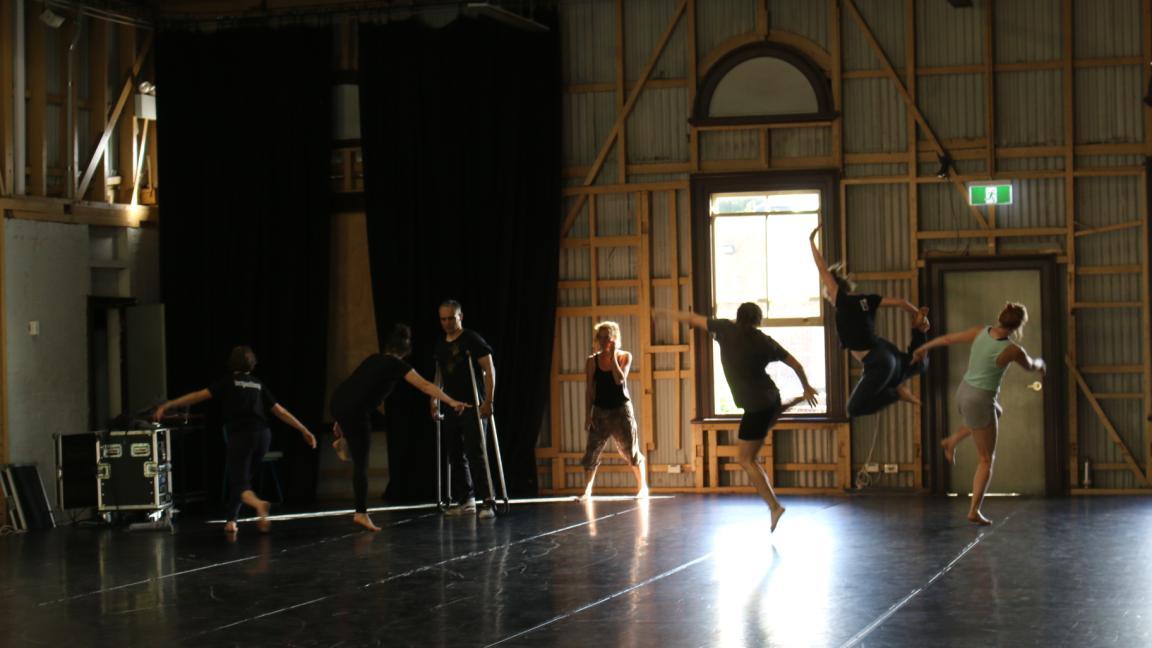
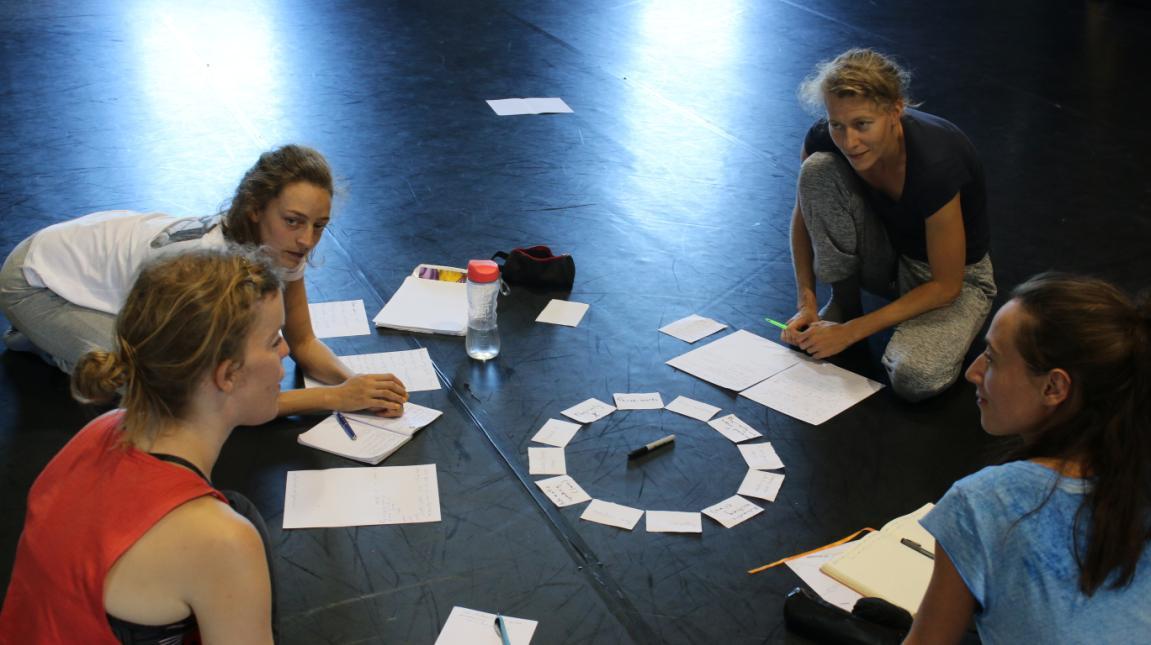
Independent choreographic artists are at the centre of all we do. Beside the more public development projects such as First Run (led by Brooke Stamp & Rhiannon Newton) or Dianne Busitill’s Nothing to buy, Nothing to sell, Nothing to lose, we have many artists working at the Drill throughout the year engaged in research on their own artistic practice. In the corner of the building (next to the kitchen), our Research Room artists work away exploring their ideas, reading, writing and inviting conversation. Artists come from far and near: Emily Johnson (USA), EkoSupriyanto (Indonesia), Margie Medlin (Germany/ Australia), Anna Konjetzky (Germany), Chloe Fournier, Stella Chen with Geraldine Balcazar and Rhiannon Newton.
EMILY JOHNSON
EKO SUPRIYANTO
MARGIE MEDLIN
ANNA KONJETZKY
CLOÉ FOURNIER
STELLA CHEN + GERALDINE BALCAZAR
RHIANNON NEWTON
ADAM WARBURTON
RYUICHI FUJIMURA + KATE SHERMAN
CAROLINE GARCIA
AMAARA RAHEEM (CP + UNSW)
TIMOTHY OHL (UNSW)
LIZZIE THOMSON
MAYA GAVISH
ATLANTA EKE
TAREE SANSBURY
ANTHONY COXETER
CARLY SHEPPARD
FIRST RUN
NOTHING #DIANE BUSITTIL
INDEPENDENT DANCE CLASS
JUSTIN SHOULDER (CP + PS)
KATHRYN PUIE
CLOÉ FOURNIER
PHILLIPE BLANCHARD
REINA KIMURA + ANNA KURODA
I-CHIN LIN + LISA MARIS MCDONNELL
GEUMHYUNG JEONG
BILL SHANNON
PHILLIPE BLANCHARD
ROS CRISP
ADELINA LARSSON
FRANK VAN DE VEN
HAPPY HOUR (CP + READYMADE)
ANANDAVALLI
BRANCH NEBULA
FRANCES RINGS
MARTIN DEL AMO
INTERCHANGE FESTIVAL
RESPONSIVE PROGRAM
RYUICHI FUJIMURA + KATE SHERMAN
‘We researched on ‘WabiSabi’, Japanese aesthetics as a source for choreography…. Every now and then, I felt uncertain whether these scores help to capture/embody the feeling of WabiSabi since the concept/aesthetics of WabiSabi itself is so elusive. However, it wasn’t until the last day of our residency when we invited a small number of peers for our sharing that the moment of revelation arrived. I saw so many possibilities unfolding before my eyes including some answers and more questions when our scores were translated into other bodies.’
‘It felt to me like a journey into an unknown destination.
- Ryuchi Fujimura
CAROLINE GARCIA
‘The main line of inquiry for this project was to question the idea of a choreographic interlude. The process of distilling and expanding on the choreographic interlude by employing the scaffolding of the Fly Girls’ dance routines, has been successful in
applying what an interlude is in this specific context, its significance and meaning in the wider framework of ‘In Living Color’, and therefore possible structures of how one can perform an interlude, before it is no longer considered to be an interlude anymore.’
I was able to deepen my understanding of the socio -political implications and historical context of the TV show , as well as its narrative in Australia .
- Caroline Garcia
AMAARA RAHEEM
‘My residency at Critical Path and UNSW has been in exchange with neurosurgeon and family friend, Dr BrindhaShivalingam. We’ve spent hours talking about movement, brain-surgery, life, death, love, and loss in relation to our pathways of migrating to Australia from Colombo, Sri Lanka in 1984 after the onset of the civil war. I’ve spent other hours in the studio processing these conversations, letting them meander in, through and across my own brain-body connectors allowing new, emergent understandings about neurons, muscles, wires to produce new ways of dancing and doing.’
TIMOTHY OHL
‘During the research residency *Alejandro Rolandi and I] explored three core questions: how can we create illusionary or ‘special’ effects in a live and performative context; how can we shift an audience’s perception with light and the body in space; how would these effects affect choreographic choices. [we] were... making new discoveries and developing methods for creating illusions that can be used in performance making.’
we experimented with ... methods to shift the audience ’s perception : transparency and reflection , saturated coloured light , depth perception and retina burn with an intense flash bulb
- Timothy Ohl
LABS & RESIDENCIES
ATLANTA EKE
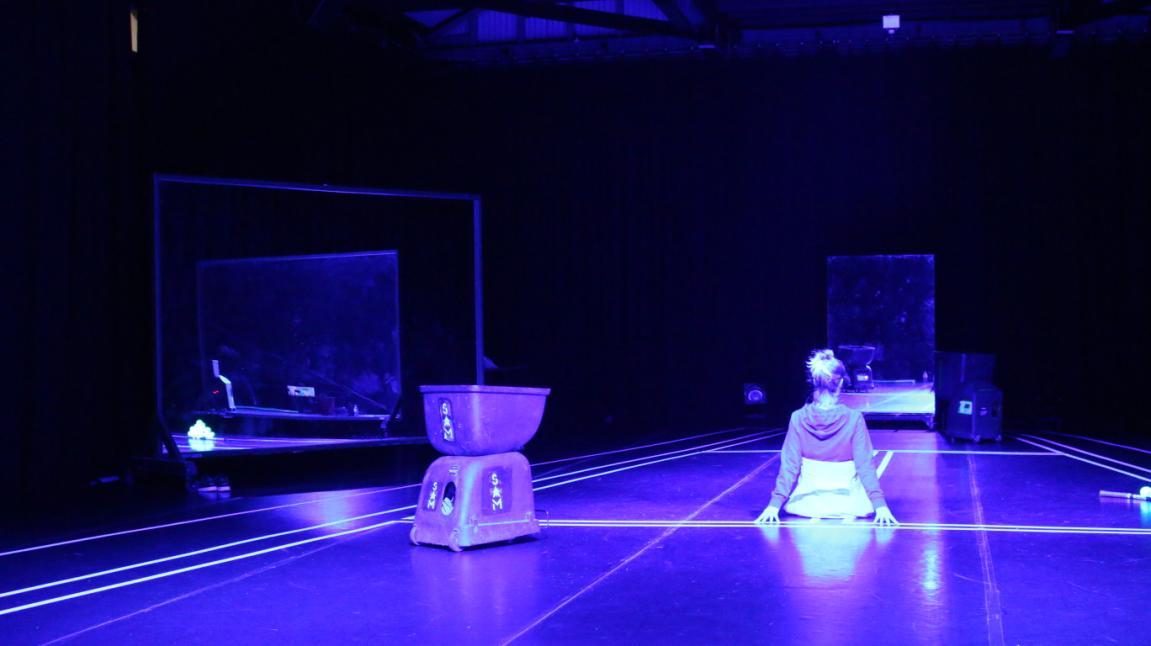
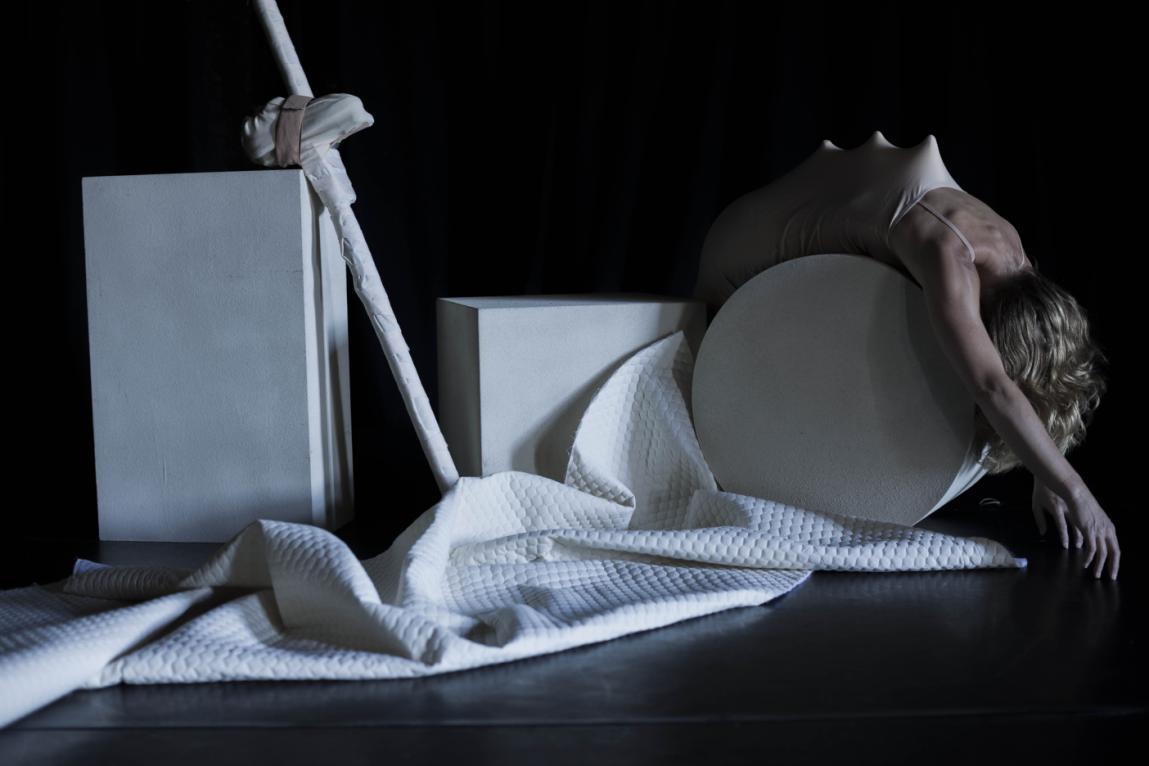
Atlanta was joined by composer Daniel Jenatsch and technologists Ready Steady Studio (Hana Miller and Jacob Perkins) to collaborate on a choreographic experiment that used a collection of programmed tennis ball machines. She utilised principles of game theory to structure the movements of the dancer, the machines and their relationship to one another and explore the fraught relationship between technological advancement and the growing obsolescence of the human body as a technology for movement production.
JUSTIN SHOULDER
Justin Shoulder was back at The Drill working on the final development of his new solo work ‘Carrion’ (premiere) before it was presented by Performance Space at Liveworks Festival. Justin’s development has been supported by Critical Path and Performance Space.
DANCING SYDNEY
Working with project partners Erin Brannigan (UNSW), Julie-Anne Long (Macquarie), Amanda Card (USYD), Critical Path has invited artists Anandavalli, Branch Nebula, Frances Rings, and Martin del Amo to consider their own archive/ing. This research project seeks to address ephemerality - its potentials and its problems - by finding, creating and reinvigorating old and new, public and private dance archives: not only the kind that exist in ephemera, text and objects, but also those that are produced and maintained within/through the body dancing.
GEUMHYUNG JEONG
Choreographer and performance artist GeumhyungJeong (South Korea) returned to The Drill Hall to run a two week-long development laboratory. In her work, she constantly negotiates the relationship between the human body and the things surrounding it. Geumhyung explores the potential of the body - its sensuality, power to change its surroundings, and ability to undergo transformations through the power of desire. Her projects combine dance and puppetry and bring attention to technical aspects of theatre.
BILL SHANNON
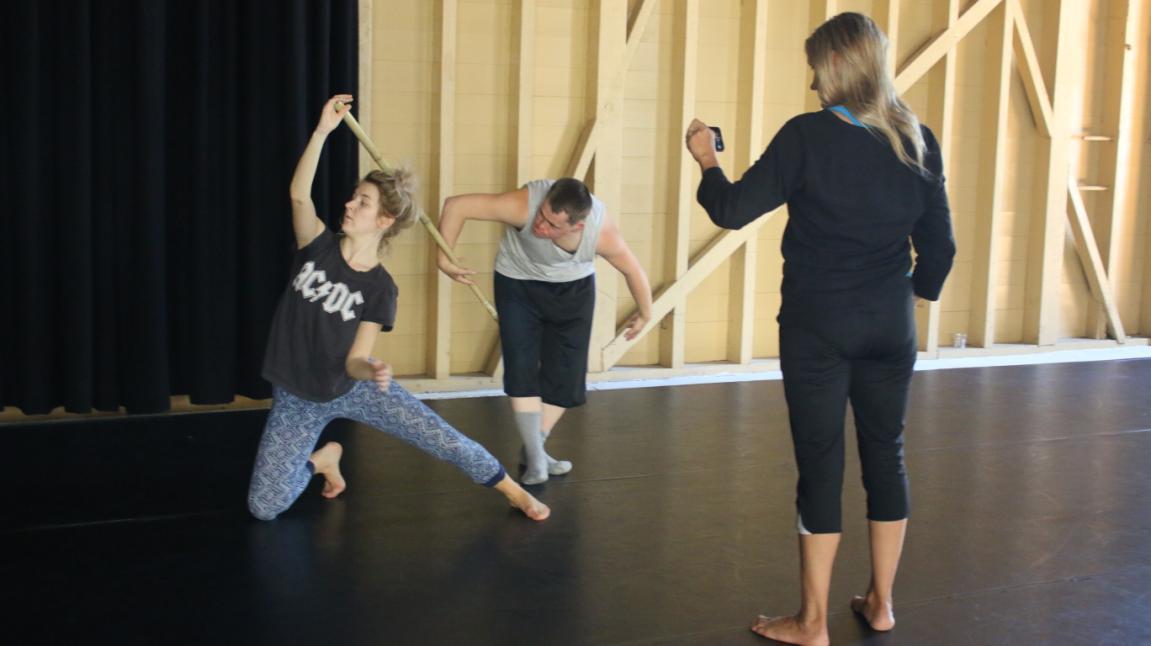
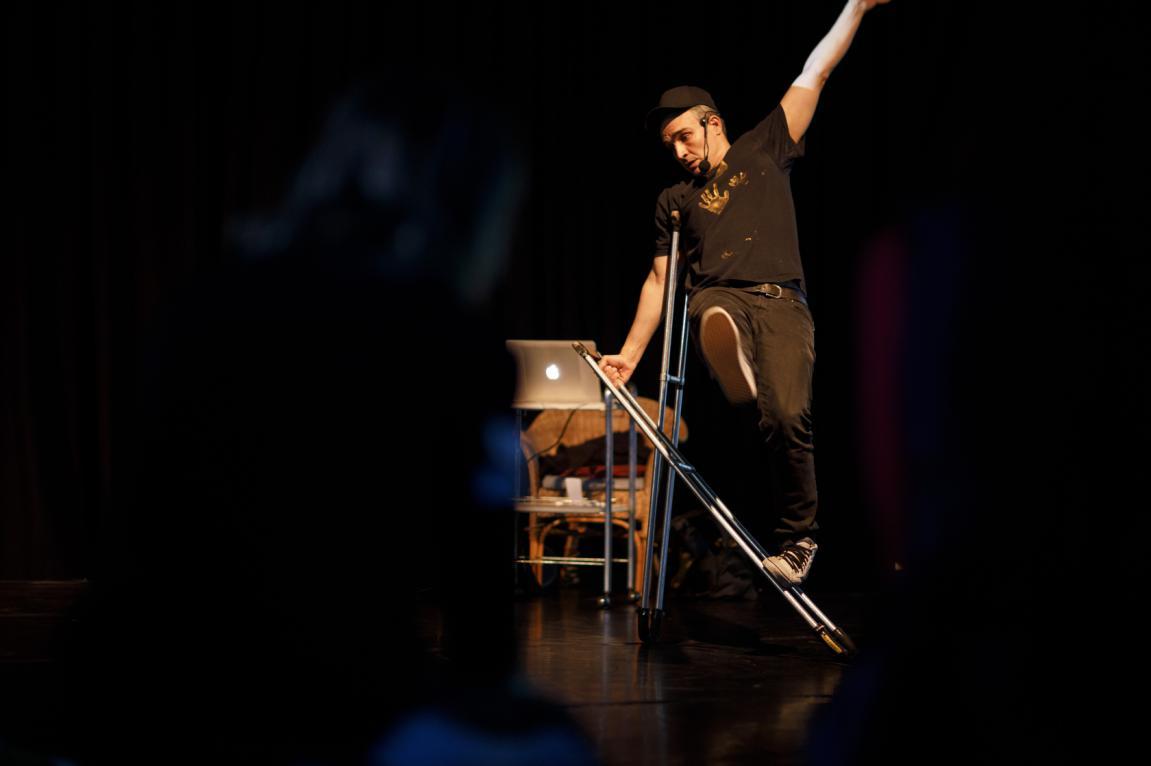
‘Translations’ was an intensive workshop facilitated by world-renowned multidisciplinary artist Bill Shannon (USA) for artists with physical disability. Bill invites participants to explore their individual movement patterns as the basis for a personal artistic language. In a second open workshop Bill invited participants to deconstruct his Shannon Technique, without the use of crutches. Bill is also delivered workshops in BrisbanewithAusdance QLD & QUT, and with DIA in Northern Rivers NSW, in partnership with Critical Path.
OUT & ABOUT
Outside of the Drill Hall, artists undertake research and creative development projects in other locations; at our partners’ spaces across NSW, and internationally. At the beginning of 2017, Matt Shilcock undertook his residency with Dance4 in the UK. Taree Sansbury investigated the simplicity and implications of physically weaving materials at Campbelltown Arts Centre and at UNSW. Katina Olsen was the selected artist for a two-week residency at Mirramu in Bungendore, NSW. Taiwanese artist IChin Lin also undertook a residency here in November, working alongside Lisa Maris McDonnell (part of Interchange 2017 program) - both artists explored their own enquiries but shared space, ideas and connected with the local artistic community.
TAREE SANSBURY
AME HENDERSON
KATINA OLSEN
I-CHIN LIN
LISA MARIS MCDONELL
MATTHEW SHILCOCK
ALISON PLEVEY
CHOREOGRAPHIC RESIDENCY
TAREE SANSBURY
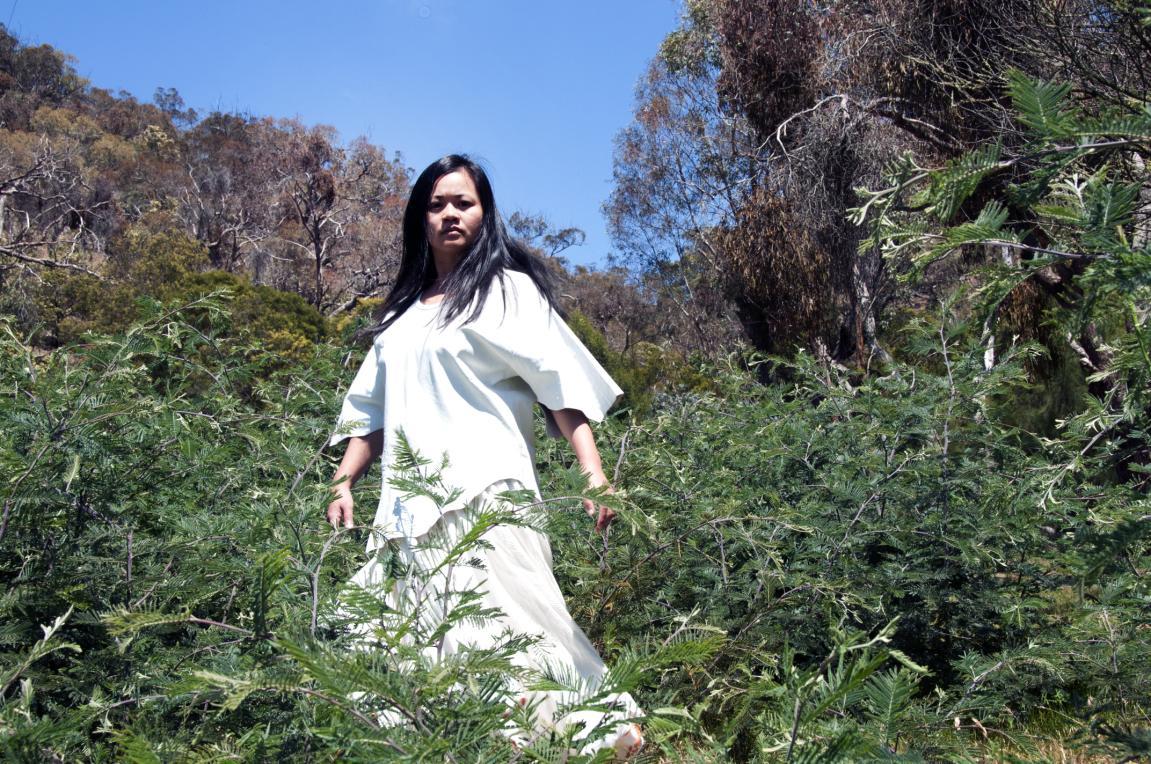
Taree used her residency to investigate the simplicity and implications of physically weaving materials and what is revealed from the practice of a tradition passed on through thousands of years to this present day. Her work explored mi:wi as a concept; intertwining contemporary Indigenous dance techniques and the traditional practice of weaving from the Ngarrindjeri people of South Australia.
Taree developed choreographic material for three performers, bringing together text, video, and movement. Her research explored how the temporalities of the weaving practice might be embodied in dance.
MATTHEW SHILCOCK
‘I was fortunate enough to be hosted by Dance4 (Nottingham, UK) in a month long research and development residency, further developing and compiling my movement language ‘Osteogenuine’. The immersive period allowed me to deconstruct and compile 6 years of research into an articulately defined structure; categorising information and exercises in digestible and deliverable packages.’
- Matt Shilcock
Matt returned to this material late in the year to rationalise and text this program with others. Research was divided and categorised in a system inspired by his studies in alchemy.
HERE WE ARE
Alison Plevey (Solo Practice Project - Body As Material 2016), Matt Shilcock (Dance4 UK Residency 2017) and Amaara Raheem (Responsive Research Residency CP & Creative Practice Lab, UNSW) shared where their research has taken them and where they are now.
DEVELOPMENT LABS & WORKSHOPS
The year kicked off with Critical Path hosting a workshop by Charles Koroneho. The week is offered in two different pathways: Movement & Hybrid Training only (mornings) or Full Week Performance Workshop, including Research & Movement Creation. By the end of September our Intercultural Lab had brought artists to undertake their own development processes and to engage with each others and that of guest workshop leaders. Adam Warburton with Elle Evangelista, Anandavalli with
Vicki van Hout, Nick Power with Alejandro Rolandi were joined by guests Laura (Amara) Osweiler, Annalouise Paul and WeiZen Ho. The lab was facilitated by Raghav Handa.
CHARLES KORENHO
SIONED HUWS + REINA KIMURA
KATE MARSH
TAKAO KAWAGUCHI
ROSALIND CRISP
JOSZEF TREFELI
JONATHAN BURROWS
BRIANNA KELL + SARAH HOUBOLT
DINIS MACHADO
INTERCULTURAL LAB 2017
CHARLES KORENHO
Charles Korenho (New Zealand) offered a week-long performance workshop for 30 choreographers, dancers, theatre directors, actors, performance artists, somatic practitioners, and dance & performance studies researchers. Participants collectively explored content around death, grief, Maori cosmology, and approaching performance from community-driven and ceremonial perspectives.
invaluable , life shifting ’ - lux eterna
KATE MARSH
In Partnership with Metal (UK) and Accessible Arts (Aus), Kate Marsh and Welly O’Brien facilitated Luke Campbell, Matthew Massaria and William McBride with supporting artists Elle Evangelista, Bonnie Curtis, Sandi Sissel, Sarah-Vyne Vassallo, Kelly Drummond Cawthon and Anna Vaisanen.
The three lab artists worked individually and collectively on their practices by defining and presenting a choreographic idea in progress and encouraging innovation within their craft.
‘Kate and Welly ... were attentive and hands -on when this was helpful , and they also encouraged and supported autonomy .’
- William McBride
TAKAO KAWAGUCHI
Takao Kawaguchi’s (Japan) ‘Body Sculpting’ workshop shared the creative process behind his performance: ‘About Kazuo Ohno’, including analysis of videos and images of the legendary Butoh dancer, Kazuo Ohno. This workshop was made possible through a partnership between Ausdance NSW and Critical Path.
‘learning about Takao ’s artistic process was great and gave me insights into how I might be able to apply this in exploring movement practice .’
- Kristina Tito
CRITIQUE & DISCOURSE
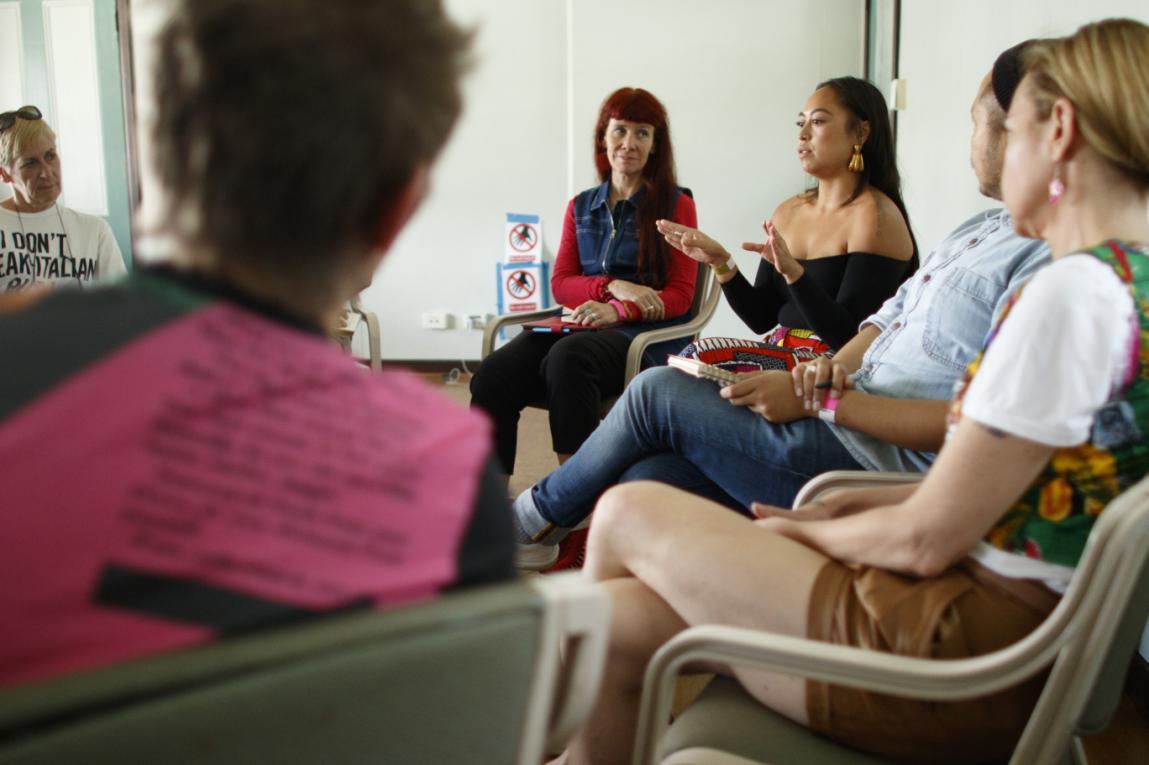
Two editions of Critical Dialogues, 7.2 and 8, were releasedthis year, focusing on Artists with Disability and Dance & the Environment respectively. As always these publications provideda rich array of perspectives from the local dance community, and those from further afield, around these themes. Multiple talks and forums also took place. Among these, three ‘Talking Dance’ talks stemmed from Critical Path’s partnership with Sydney Festival. Kate Marsh hosted a talk at the Drill Hall during her residency, while Rosalind Crisp led a discussion in the space the following month.
As well as Studio Presentations, TeitaIwabuchi and Kentaro!! held talks and forums during their time in Australia in partnership with the Japan Foundation, Sydney.
CRITICAL DIALOGUES #7.2
CRITICAL DIALOGUES #8
SYDNEY FESTIVAL: TALKING DANCE
KATE MARSH
ROSALIND CRISP: DIRt
CONVERSATION AT DANCE MASSIVE
TEITA IWABUCHI
KENTARO!!
CRITICAL DIALOGUES 7.2 + 8
Critical Dialogues 7.2 was ‘Claiming Spaces: Artists with Disabilities Redefining Dance’. Following the impact and continuing to meet the needs of artists with disabilities Critical Path produced this second volume of ‘Claiming Spaces’. It takes a ‘danceaturgical’ approach; offering choreographers space to think, reflect and create. Environmental Impact, co-edited by Liz Lea and Kyle Page examined the profound ways in which environment shapes experience and output in the creative realm. This discourse spanned physical, psychological, changing and remote & regional environments, connection to place, disconnection from place, vastness, intimacy and non-traditional spaces.
SYDNEY FESTIVAL: TALKING DANCE
At Carriageworks, a series of three conversations between Sydney Festival artists explored ideas about their performance works and broader practice. These ‘Talking Dance’ events were: ‘Global Indigenous Peoples’ Knowledges & The Environment’, ‘Beyond the Choreographer’ and ‘Handle with Care’. Participating were Wesley Enoch, Frances Rings, Taree Sansbury, EkoSupriyanto, LataiTaumoepeau, Jala Adolphus, Juliette Barton, Amber Haines, Amrita Hepi, Miranda Wheen, Jacob Boehme, Future Fidel, Amit Lahav and Jodee Mundy
KATE MARSH
This talk examined the position of disabled artists in both the UK and other geographical contexts. Drawing from her recent PhD research and ongoing shared practice with artist Welly O’Brien, Kate discussed how notions of ‘inclusion’ in dance have shifted, challenging pre-conceived ideas about access and participation. She explored how we use and disseminate the breadth of dance experience that exists in disabled artists and asking where the disabled leaders in dance are.
Kate also undertook a 3 week residency with Critical Path as part of a collaboration with Metal (UK).
ROSALIND CRISP
Melbourne choreographer Rosalind Crisp and collaborating artists Andrew Morrish, Peter Fraser and Vic McKewan led a seminar at the Drill Hall at the end of their research week. They explored ideas and methods for developing dance practice in relation to place. Titled ‘Dance in the Anthropocene’, the focus of seminar was developing a process and language for a dance practice that seeks to explore, embody, understand and connect to unfolding environmental devastation. Explorations and Showings from the DIRt artists laboratory in Orbost, Victoria also took place as part of the seminar.
STUDIO PRESENTATIONS
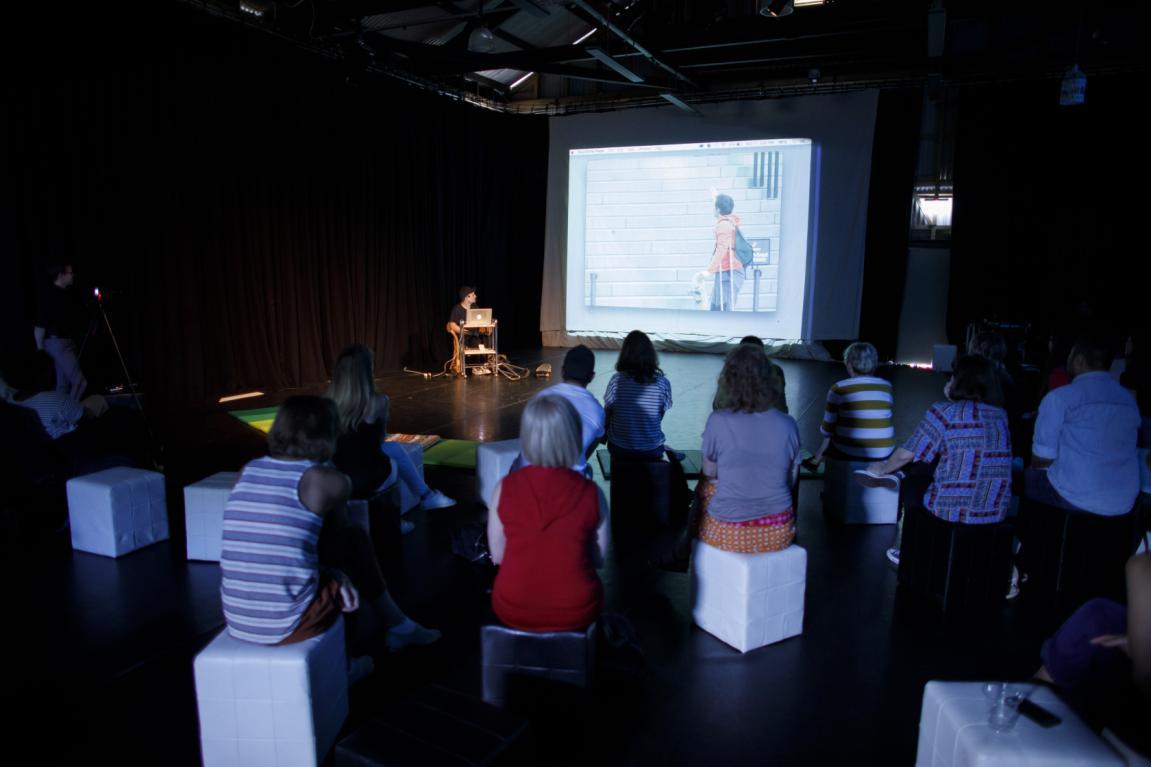
Critical Path has hosted a number of public studio presentations International artists from Japan, UK, Switzerland, Sweden/Portugal. The presentations run alongside or come out of research and development projects by these artists. Aomori Aomori, a project by Sioned Huws (UK/Japan) with Reina Kimura (Japan) was developed with artists and the local community in February. The project was shadowed by artists Anna Kuroda and Ryuchi Fujimura who were part of the final presentation.
SIONED HUWS + REINA KIMURA
JONATHAN BURROWS + MATTEO FARGION
JOSZEF TREFELI + GARBOR VARGA
DINIS MACHADO
TEITA IWABUCHI KENTARO!!
TEITA IWABUCHI + KENTARO!!IO PRESENTATIONS
TeitaIwabuchi’s (Japan) 30 minute solo presentation focused on the ‘structure of the human body’ and the ‘interaction of space, music, and human body’. Earlier Teita had led a workshop for 10 artists exploring the connection between physical movement and mental awareness. Kentaro!! (Japan) also presented his technique based primarily in hip hop dance. Kentaro!! creates unique and innovative works that transcend the patterns of conventional styles of dance. Hosted at Dancekool’s studios in Sydney’s CBD, the day included a workshop for 16 professionals drawn from Western contemporary and street dance backgrounds.
DINIS MACHADO
Dinis Machado (SE/PT) invited local choreographers Dan Daw (UK/AU) and Brooke Stamp (AU) to each create a short piece to be part of his ongoing project Barco Dance Collection. Barco is a research project that Dinis runs parallel to his activity as a choreographer to map and investigate the practices of others. Brooke and Dan were asked to think that the space where each dance happens is not in the room we are in but within the body itself. Dinis presented, for the first time, the entire collection of 16 pieces including the premiere of the two new Australian works at the Drill Hall.
JONATHAN BURROWS + MATTEO FARGION
Jonathan Burrows and Matteo Fargion presented three works at the Drill Hall, ‘Sitting Duet’, ‘Body Not Fit For Purpose’ and ‘Speaking Dance’ which showed their breadth of their work over the past ten years. Their duets mix the formality of classical music composition with an open and often anarchic approach to performance and audiences. Jonathan opened his process to twenty artists during a three day workshop. He focused on particular questions of time, form and composition which underpin their work, as well as the strategies they use to disrupt what they do and connect with audience.
JOZSEF TREFELI + GARBOR VARGA
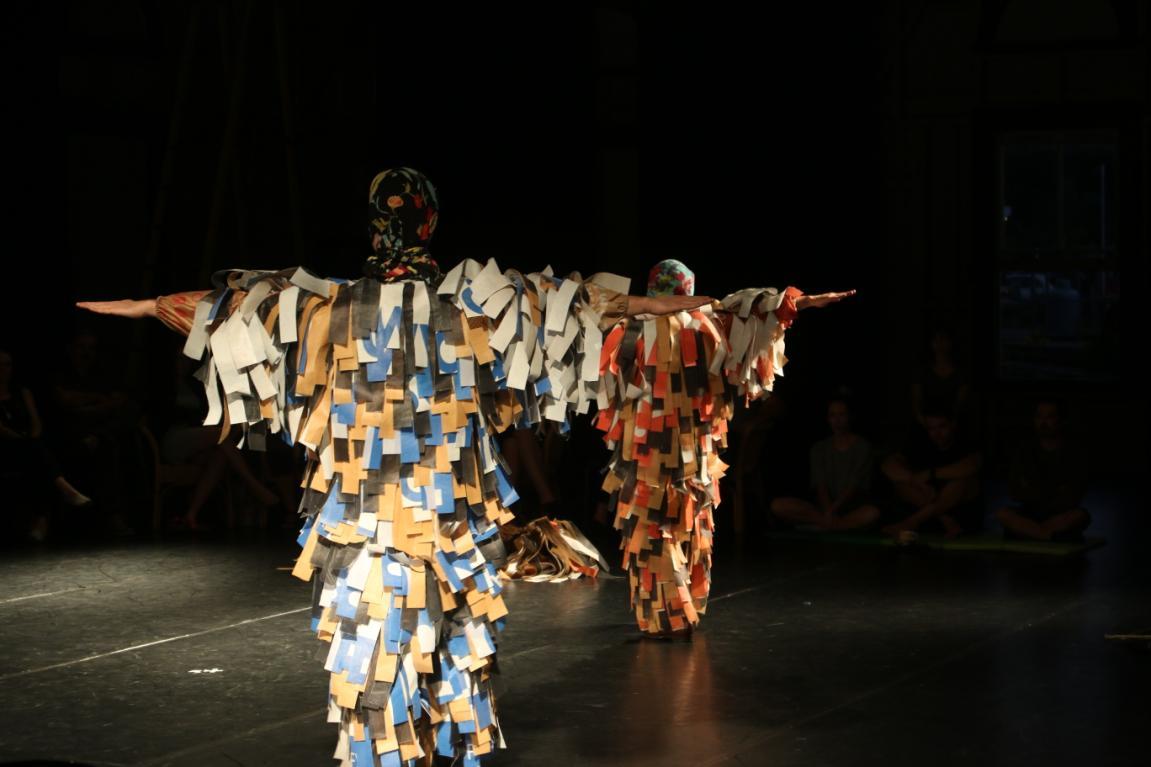
JózsefTrefeli and GarborVarga presented a studio preview of ‘Creature’ which tackles ethnographic material to place his contemporary choreographic practices under the magnifying glass of its archaic heritage. Creature shows us the kinship between the language of contemporary dance and the exoticism of folk dances. The result is a surprising piece, crazy with energy, rich with self-deprecating humour and spiced by extravagant costumes. During an intensive research residency JózsefTrefeli and collaborating artist, GáborVarga, engaged with Anja Mujic, Carl Sciberras, Eliza Cooper, Ryuichi Fujimura and Fiona Gardner to research their next creation focusing on couple dances.
ASSOCIATE ARTIST
ADELINA LARSSON
As one our initiatives to build leadership capacity within the dance sector, Critical Path invites an independent choreographer, with experience of supporting other
artists and initiating sector development projects, to be Associate Artist for up to two years.
Our 2017 Associate Artist, Adelina Larsson, is the founder and director of ‘Strange Attractor’, a choreographic development platform that offers infrastructure for independent artists to experiment and undertake artistic research. In 2017 she undertook her own research, as well as mentoring Brianna Kell and Sarah Houbolt during their Research Development Lab. Adelina is also curated the Saturday Evening of Critical Path’s Interchange Festival. Her next research residency is in late November.
INTERCHANGE PROGRAM 2017
Interchange is a five-year initiative that began in 2014 and which focuses Critical Path’s programming on the value of exchange opportunities. For 2017 this has meant residencies in Australia for International artists such as Phillipe Blanchard, IChin Lin and Reina Kimura, as well as workshops and Labs by Bill Shannon, Ame Henderson and GeumhyungJeong. The Interchange program also included our Interchange Festival, 10 - 12 November at The Drill Hall which included talks, workshops, sharings and presentations with a focus on process and practice.
AME HENDERSON
Critical Path sent Samantha Spurr, Ashley Dyer and Samantha Rochelle to the Mill, Adelaide, where Ame Henderson (Canada) engaged with artists on exploring how choreographic thinking – spatial, temporal and sensory – can enhance a diverse range of artistic practices. At Critical Path Ame engaged Ivey Wawn, Jessica Holman, Lisa Maris McDonnell, Nikki Heywood, Raynen O’Keefe and Wendy Morrow around
her investigations of how in re-performing text as gesture, the dancer elucidates historiography as a choreographic matter – and how dance can remember.
REINA KIMURA + ANNA KURODA
Reina (Japan) and Anna, a Sydney-based Japanese artist, collaborated on an exploration of their shared understanding of their practice in relation to their understanding of Japanese culture and the arts. Each emerging artist works in relation to place in their choreography and therefore the project takes both artists from their home location (Tokyo and Sydney) to explore what their work means in relation to an ‘unknown’ Australian place (Launceston, Tasmania). The two artists worked together and in parallel to explore these relations and presented their ‘findings’ to audiences in Launceston & then Sydney. Critical Path partnered with Tasdance for this residency.
INTERCHANGE FESTIVAL
The meeting and connection of different cultures was at the heart of Interchange Festival 2017; international and intercultural exchange as part of choreographic process, as part of artists’ practice. Each day has a different focus. On the Friday evening we were acknowledging Country, on Saturday we talked about the Political Body and on the Sunday we discussed the Start and End of the Body. The festival included workshops and talks by International artists. Over this weekend diverse practitioners joined us to share their experiences of working across and between cultures.
I-CHIN LIN
LISA MARIS MCDONELL
Our second residency at Mirramu in 2017 was with I-Chin Lin (Taiwan) and Lisa Maris McDonell (NSW). For two weeks, the artists worked alongside each other sharing the residency space, engaging with each other, with local artists and with the broader community as part of their process. Mirramu and Critical path are partnering to offer a two-year program (2017 & 2018) to support the development of connections between the local community around Lake George (Weereewa) and regional & international artists.
BILL SHANNON
In a high energy workshop in Sydney participants were mentally and physically challenged to improvise ways of recreating Bill’s dance on crutches in real time without their own use of crutches; offering able-bodied dancers an opportunity to experience the challenges of a physical translation process of an existing dance technique that is not based in the assumption or patterns of an able body. Bill joined Dance Integrated Australia in the NSW Northern Rivers region to participate in the RACONTEURS project November 2017, part of ‘The Corner Residency Program’. This skills development project traversed art forms was designed for cross-career artists. It provided access to journeying techniques, movement, physical theatre & interactive street workshops and performance.
PHILLIPPE BLANCHARD
Philippe (UK/FR/SW) undertook research in NSW and ACT connecting with different place, communities, artists and organisations. In Sydney he invited individuals to join his studio research. He gave talks and entered into conversation as he travelled.
I choose to come to Australia because of its history, its geographical scale and spaces between the communities, which is extremely different than in Europe or perhaps not. My visit in Australia is based on studying on that topic and the place of the body in modern society.
- Philippe Blanchard
Committee Member’s Report
Contributions in winding up
The Association is incorporated under the Associations Incorporation Act 2009. If the Association is wound up, the constitution states that each member is required to contribute a maximum of $10 towards meeting and outstanding obligations of the Company at 31 December 2017, the total amount that members of the Association are liable to contribute if the company is wound up is $80 (2016: $80).
Auditor’s Independence declaration
A copy of the Auditor’s Independence Declaration as required under s.60 40 of the Australian Charities and Not–for–profits Commission act 2012 is included in page 44 of this financial report and forms part of the Committee member’s report.
Signed in accordance with the resolution of the Committee Members.
Auditor Independence Declaration
To the Committee Members of Critical Path Incorporated:
In accordance with the requirements of section 60 40 of the Australian Charities and Not-for-profits Commission Act 2012, as the lead auditor for the audit of Critical Path Incorporated for the year ended 31 December 2016, I declare that, to the best of my knowledge and belief, there have been:
(i) no contraventions of the auditor independence requirements of the Australian Charities and Not-for-profits Commission Act 2012 in relation to the audit; and
(ii) no contraventions of any applicable code of professional conduct in relation to the audit.
Statement of Surplus or Deficit and Other Comprehensive Income
This statement should be read in conjunction with the notes to the financial statements.
Statement of Financial Position
This statement should be read in conjunction with the
Statement of Changes in Equity
This
Statement of Cash Flows
Notes to the Financial Statements
For the year ended 31 December 2017
Critical Path Incorporated
1. General information and statement of compliance
The financial report includes the financial statements and notes of Critical Path Incorporated.
These financial statements are general purpose financial statements that have been prepared in accordance with Australian Accounting Standards - Reduced Disclosure Requirements and the Australian Charities and Not-for-profits Commission Act 2012.
Critical Path Incorporated is a not-for-profit entity for the purposes of preparing the financial statements.
The financial statements for the year ended 31 December 2017 were approved and authorised for issuance by the Committee members.
2. Changes in accounting policies
2.1 There are no new and revised standards that are effective for these financial statements
3. Summary of accounting policies
3.1 Overall considerations
The significant accounting policies that have been used in the preparation of these financial statements are summarised below.
The financial statements have been prepared using the measurement bases specified by Australian Accounting Standards for each type of asset, liability, income and expense. The measurement bases are more fully described in the accounting policies below.
3.2 Revenue
Revenue comprises revenue from the sale of goods, services income, government grants, fundraising activities and client contributions. Revenue from major activities and services is shown in Note 4.
Revenue is measured by reference to the fair value of consideration received or receivable by the Association for goods supplied and services provided, excluding sales taxes, rebates, and trade discounts.
Revenue is recognised when the amount of revenue can be measured reliably, collection is probable, the costs incurred or to be incurred can be measured reliably, and when the criteria for each of the Association’s different activities have been met. Details of the activity-specific recognition criteria are described below.
Government grants
A number of the Association’s programs are supported by grants received from Federal, State and Local governments. If conditions are attached to a grant which must be satisfied before the Association is eligible to receive the contribution, recognition of the grant as revenue is deferred until those conditions are satisfied. Where a grant is received on the condition that specified services are delivered, to the grantor, this is considered a reciprocal transaction. Revenue is recognised as services are performed and at year–end until the service is delivered.
Revenue from a non-reciprocal grant that is not subject to conditions is recognised when the Association obtains control of the funds, economic benefits are probable and the amount can be measured reliably. Where a grant may be required to be repaid if certain conditions are not satisfied, a liability is recognised at year end to the extent that conditions remain unsatisfied.
Where the Association receives a non-reciprocal contribution of an asset from a government or other party for no or nominal consideration, the asset is recognised at fair value and a corresponding amount of revenue is recognised.
Donations and bequests
Donations collected, including cash and goods for resale, are recognised as revenue when the Association gains control, economic benefits are probable and the amount of the donation can be measured reliably.
Bequests are recognised when the legacy is received. Revenue from legacies comprising bequests of shares or other property are recognised at fair value, being the market value of the shares or property at the date the Association becomes legally entitled to the shares or property.
Interest income
Interest income is recognised on an accrual basis using the effective interest method.
3.3 Operating expenses
Operating expenses are recognised in surplus or deficit upon utilisation of the service or at the date of their origin.
3.4
Intangible assets
Recognition of other intangible assets:
Acquired intangible assets
Website construction costs as well as acquired computer software licences are capitalised on the basis of the costs incurred to acquire and install the specific website and software.
Subsequent measurement
All intangible assets are accounted for using the cost model whereby capitalised costs are amortised on a straight-line basis over their estimated useful lives, as these assets are considered finite. Residual values and useful lives are reviewed at each reporting date. In addition, they are subject to impairment testing as described in Note 3.14. The following useful lives are applied:
• Database development: 25%
• Software: 25% - 33%
• Website: 33%
Subsequent expenditures on the maintenance of computer software, brand names and website are expensed as incurred.
When an intangible asset is disposed of, the gain or loss on disposal is determined as the difference between the proceeds and the carrying amount of the asset, and is recognised in surplus or deficit within other income or other expenses.
3.5 Property, plant and equipment
Leasehold improvements, plant and other equipment
Leasehold improvements, plant and other equipment (comprising office furniture and equipment) are initially recognised at acquisition cost or manufacturing cost, including any costs directly attributable to bringing the assets to the location and condition necessary for it to be capable of operating in the manner intended by the Association’ management.
Leasehold improvements, plant and other equipment are subsequently measured using the cost model, cost less subsequent depreciation and impairment losses.
Depreciation is recognised on a straight-line basis to write down the cost less estimated residual value of leasehold improvements, plant and other equipment. The following useful lives are applied:
• Leasehold improvement: 20% - 25%
• Plant and equipment: 15% - 33%
In the case of leasehold property, expected useful lives are determined by reference to comparable owned assets or over the term of the lease, if shorter.
Material residual value estimates and estimates of useful life are updated as required, but at least annually.
Gains or losses arising on the disposal of property, plant and equipment are determined as the difference between the disposal proceeds and the carrying amount of the assets and are recognised in surplus or deficit within other income or other expenses.
3.6 Leases
Operating leases
Where the Association is a lessee, payments on operating lease agreements are recognised as an expense on a straight-line basis over the lease term. Associated costs, such as maintenance and insurance, are expensed as incurred.
3.7 Income taxes
No provision for income tax has been raised as the association is exempt from income tax under Div 50 of the Income Tax Assessment Act 1997.
3.8 Cash and cash equivalents
Cash and cash equivalents comprise cash on hand and demand deposits, together with other short-term, highly liquid investments that are readily convertible into known amounts of cash and which are subject to an insignificant risk of changes in value.
3.9 Employee benefits
Short-term employee benefits
Short-term employee benefits are benefits, other than termination benefits, that are expected to be settled wholly within twelve (12) months after the end of the period in which the employees render the related service. Examples of such benefits include wages and salaries, non-monetary benefits and accumulating sick leave. Short-term employee benefits are measured at the undiscounted amounts expected to be paid when the liabilities are settled.
Other long-term employee benefits
The association’s liabilities for long service leave are included in other long-term benefits as they are not expected to be settled wholly within twelve (12) months after the end of the period in which the employees render the related service. They are measured at the present value of the expected future payments to be made to employees. The expected future payments incorporate anticipated future wage and salary levels, experience of employee departures and periods of service, and are discounted at rates determined by reference to market yields at the end of the reporting period on high quality corporate bonds that have maturity dates that approximate the timing of the estimated future cash outflows. Any remeasurements arising from experience adjustments and changes in assumptions are recognised in profit or loss in the periods in which the changes occur.
The association presents employee benefit obligations as current liabilities in the statement of financial position if the association does not have an unconditional right to defer settlement for at least twelve (12) months after the reporting period, irrespective of when the actual settlement is expected to take place.
Post-employment benefits plans
The association provides post-employment benefits through defined contribution plans.
Defined contribution plans
The association pays fixed contributions into independent entities in relation to several state plans and insurance for individual employees. The association has no legal or constructive obligations to pay contributions in addition to its fixed contributions, which are recognised as an expense in the period that relevant employee services are received.
3.10 Provisions, contingent liabilities and contingent assets
Provisions are measured at the estimated expenditure required to settle the present obligation, based on the most reliable evidence available at the reporting date, including the risks and uncertainties associated with the present obligation. Where there are a number of similar obligations, the likelihood that an outflow will be required in settlement is determined by considering the class of obligations as a whole. Provisions are discounted to their present values, where the time value of money is material.
Any reimbursement that the association can be virtually certain to collect from a third party with respect to the obligation is recognised as a separate asset. However, this asset may not exceed the amount of the related provision.
No liability is recognised if an outflow of economic resources as a result of present obligation is not probable. Such situations are disclosed as contingent liabilities, unless the outflow of resources is remote in which case no liability is recognised.
3.11 Deferred income
The liability for deferred income is the unutilised amounts of grants received on the condition that specified services are delivered or conditions are fulfilled. The services are usually provided or the conditions usually fulfilled within twelve (12) months of receipt of the grant. Where the amount received is in respect of services to be provided over a period that exceeds twelve (12) months after the reporting date or the conditions will only be satisfied more than twelve (12) months after the reporting date, the liability is discounted and presented as non-current.
3.12 Goods and Services Tax (GST)
Revenues, expenses and assets are recognised net of the amount of GST, except where the amount of GST incurred is not recoverable from the Australian Taxation
Office. In these circumstances the GST is recognised as part of the cost of acquisition of the asset or as part of an item of the expense. Receivables and payables in the statement of financial position are shown inclusive of GST.
Cash flows are presented in the statement of cash flows on a gross basis, except for the GST components of investing and financing activities, which are disclosed as operating cash flows.
3.13 Economic dependence
The association is dependent upon the ongoing receipt of Federal and State Government grants and community and corporate donations to ensure the ongoing continuance of its programs and fundraising. At the date of this report Management has no reason to believe that this financial support will not continue.
3.14 Significant management judgement in applying accounting policies
When preparing the financial statements, management undertakes a number of judgements, estimates and assumptions about the recognition and measurement of assets, liabilities, income and expenses.
Estimation uncertainty
Information about estimates and assumptions that have the most significant effect on recognition and measurement of assets, liabilities, income and expenses is provided below. Actual results may be substantially different.
Impairment
In assessing impairment, management estimates the recoverable amount of each asset or cash-generating unit based on expected future cash flows and uses an interest rate to discount them. Estimation uncertainty relates to assumptions about future operating results and the determination of a suitable discount rate.
Useful lives of depreciable assets
Management reviews its estimate of the useful lives of depreciable assets at each reporting date, based on the expected utility of the assets. Uncertainties in these estimates relate to technical obsolescence that may change the utility of certain assets.
Long service leave
The liability for long service leave is recognised and measured at the present value of the estimated cash flows to be made in respect of all employees at the reporting date. In determining the present value of the liability, estimates of attrition rates and pay increases through promotion and inflation have been taken into account.
4. Revenue
The Association’s revenue may be analysed as follows for each major product and service category:
4.1 Net grant income
(174,968)
4.2 Grants
4.3 Grants received during the year
4.4 Grants received in advance – 31 December
4.5 Unexpended grants – 31 December
5. Cash and cash equivalents
Cash at the end of the financial year as shown in the statement of cash flows is reconciled in the statement of financial position as follows:
6. Trade and other receivables
7. Other assets
Other
Details
8 Property, plant and equipment
9 Intangible assets
Details of the company’s intangible assets and their
amounts are as follows:
10 Trade and other payables
Trade and other payables recognised consist of the following:
11 Employee remuneration
11.1 Employee benefits expense
Expenses recognised for employee benefits are analysed below:
11.2 Employee provisions
The liabilities recognised for employee benefits consist of the following amounts:
12 Grants liabilities
13 Other liabilities
Other liabilities can be summarised as follows:
14
Leases
Operating leases as lessee
The Group’s future minimum operating lease payments are as follows:
15 Related party transactions
The association’s related parties include its key management personnel and related entities as described below. Unless otherwise stated, none of the transactions incorporate special terms and conditions and no guarantees were given or received. Outstanding balances are usually settled in cash.
Transactions with related entities
No remuneration is paid to Committee member or their related parties for acting as Committee members. From time to time Committee members who are also independent artists may be engaged in our Research and Development program and are renumerated under normal industry terms.
Transactions with key management personnel
Key management of the Association are the Executive Members of Critical Path Incorporated’s Committee and members of the Executive Council. Key management personnel remuneration includes the following expenses:
Total key management personnel remuneration
2017: $78,280
2016: $76,154
16 Contingent Liabilities and Assets
No contingent liabilities and assets to report.
17 Subsequent Events
No significant events have occurred since the end of the reporting period which would impact on the financial position of the Company disclosed in the statement of financial position as at 31 December 2017, or on the results and cash flow of the Company for the year ended on that date.
18....Members’ Guarantee - Contribution in winding up
The Association is incorporated under the Associations Incorporation Act 2009. If the Association is wound up, the constitution states that each member is required to contribute a maximum of $10 each towards meeting any outstanding obligations of the Association. At 31 December 2017, the total amount that members of the Association are liable to contribute if the Association wound up is $110 (2017: $80).
19.....Charitable fundraising
The association holds an authority to fundraise under the Charitable Fundraising Act, 1991 (NSW) and conducts fundraising appeals throughout the year. Additional information and declarations required to be furnished under the Act are as follows:
All funds raised from fundraising activities, net of direct costs, were applied to the association's normal operations. The association did not conduct any appeals in which traders were engaged.
20 Company details
Critical Path Incorporated is a company limited by guarantee, incorporated and domiciled in Australia.
The registered office and principal place of business is:
The Drill, 1c New Beach Road, Darling Point NSW 2027
Committee Members’ Declaration
Critical Path Incorporated
In the opinion of the Directors of Critical Path Incorporated (‘the association’)
(a) Australian Charities and Not-for-profits Commission Act 2012, including;
(i) giving a true and fair view of the Association’s financial position as at 31 December 2017 and of it’s performance, for the year ended on that date, and
(ii) complying with Australian Accounting Standards (including the Australian Accounting Interpretations) and the Australian Charities and Not-for-profits Commission Regulations 2013; and
(a) there are reasonable grounds to believe that the Critical Path Incorporated will be able to pay its debts as and when they become due and payable. ( Refer Note 3.13)
Signed in accordance with a resolution of the Directors:
SHANE CARROLL COMMITTEE MEMBER
Sydney, 12 June 2018
Declaration by Chair, Finance & Risk Committee in respect of
fundraising appeals pursuant to the Charitable Fundraising (NSW) ACT 1991
Critical Path Incorporated
I, Annabel Millet, Treasurer of Critical Path Incorporated, declare in my opinion:
(a) the Annual financial report gives a true and fair view of all income and expenditure of Critical Path with respect to fundraising appeal activities for the financial year ended 31 December 2017;
(b) the statement of financial position gives a true and fair view of the state of affairs with respect to fundraising appeal activities as at 31 December 2017;
(c) the provisions of the Charitable Fundraising Act 1991 and Regulations and the conditions attached to the authority have been complied with for the financial year ended 31 December 2017; and
(d) the internal controls exercised by Critical Path are appropriate and effective in accounting for all income received and applied from any fundraising appeals.
ANNABEL MILLET TREASURER
Sydney, 12 June 2018
AUDITOR’S INDEPENDENCE DECLARATION
UNDER SECTION 307C OF THE CORPORATIONS ACT 2001 TO THE COMMITTEE OF CRITICAL PATH INCORPORATED
As lead auditor for the audit of Critical Path Incorporated (A.B.N. 12 049 903 261) for the year ended 31 December 2017, I declare that, to the best of my knowledge and belief, there have been:
(a) no contraventions of the auditor independence requirements of the Corporations Act 2001 in relation to the audit; and
(b) no contraventions of any applicable code of professional conduct in relation to the audit.
This declaration is in respect of Critical Path Incorporated and any entities it controlled during the period.
MITCHELL & PARTNERS
Chartered Accountants
Glenn Merchant CA Partner
Sydney, NSW
Dated this 13th day of June, 2018
INDEPENDENT AUDITOR’S REPORT TO THE MEMBERS OF CRITICAL PATH INCORPORATED
We have audited the financial report of Critical Path Incorporated (the association), which comprises the statement of financial position as at 31 December 2017, the statement of comprehensive income, statement of changes in equity, statement of cash flows for the year ended on that date, a summary of significant accounting policies and other explanatory notes and the committees’ declaration.
In our opinion, the accompanying financial report of Critical Path Incorporated is in accordance with Division 60 of the Australian Charities and Not for Profits Commission Act 2012 and the Corporations Act 2001, including:
giving a true and fair view of the association’s financial position as at 31 December 2017, and of its performance for the year then ended ; and
complying with Australian Accounting Standards, Division 60 of the Australian Charities and Not for Profits Commission Regulation 2013, and the Corporations Act 2001
Basis of Opinion
We conducted our audit in accordance with Australian Auditing Standards. Our responsibilities under those standards are further described in the Auditor’s Responsibilities for the Audit of the Financial Report section of our report. We are independent of the association in accordance with the auditor independence requirements of the Corporations Act 2001 and the ethical requirements of the Accounting Professional and Ethical Standards Board APES 110: Code of Ethics for Professional Accountants (the Code) that are relevant to our audit of the financial report in Australia. We have also fulfilled our other ethical responsibilities in accordance with the Code.
We confirm that the independence declaration required by the Corporations Act 2001, which has been given to the committee of Critical Path Incorporated, would be in the same terms if given to the committee as at the time of this auditor’s report.
We believe that the audit evidence we have obtained is sufficient and appropriate to provide a basis for our opinion.
Key Audit Matters
Information Other than the Financial Report and Auditor’s Report Thereon
The committee members are responsible for the other information. The other information comprises the information included in the association’s annual report for the year ended 31 December 2017, but does not include the financial report and our auditor’s report thereon.
Our opinion on the financial report does not cover the other information and accordingly we do not express any form of assurance conclusion thereon. In connection with our audit of the financial report, our responsibility is to read the other information and, in doing so, consider whether the other information is materially inconsistent with the financial report or our knowledge obtained in the audit or otherwise appears to be materially misstated. If, based on the work we have performed, we conclude that there is a material misstatement of this other information, we are required to report that fact. We have nothing to report in this regard.
The Responsibility of the Committee for the Financial Statements
The committee members of the association are responsible for the preparation the financial report that gives a true and fair view in accordance with Australian Accounting Standards, the ACNC Act, and the Corporations Act 2001 and for such internal control as the committee members determine is necessary to enable the preparation of the financial report that gives a true and fair view and is free from material misstatement, whether due to fraud or error.
In preparing the financial report, the committee members are responsible for assessing the association’s ability to continue as a going concern, disclosing, as applicable, matters relating to going concern and using the going concern basis of accounting unless the committee members either intend to liquidate the association or to cease operations, or have no realistic alternatives but to do so.
Auditor’s Responsibility for the Audit of the Financial Report
Our objectives are to obtain reasonable assurance about whether the financial report as a whole is free from material misstatement, whether due to fraud or error, and to issue an auditor’s report that includes our opinion. Reasonable assurance is a high level of assurance, but is not a guarantee that an audit conducted in accordance with the Australian Accounting Standards will always detect a material misstatement when it exists. Misstatements can arise from fraud or error and are considered material if, individually or in the aggregate, they could reasonably be expected to influence the economic decisions of users taken on the basis of this financial report.
As part of an audit in accordance with the Australian Auditing Standards, we exercise professional judgement and maintain professional scepticism throughout the audit. We also:
- Identify and assess the risks of material misstatement of the financial report, whether due to fraud or error, design and perform audit procedures responsive to those risks, and obtain audit evidence that is sufficient and appropriate to provide a basis for our opinion. The risk of not detecting a material misstatement resulting from fraud is higher than for one resulting from error, as fraud may involve collusion, forgery, intentional omissions, misrepresentations, or the override of internal controls.
- Obtain an understanding of internal control relevant to the audit in order to design audit procedures that are appropriate in the circumstances, but not for the purposes of expressing an opinion on the effectiveness of the association’s internal control.
- Evaluate the appropriateness of accounting policies used and the reasonableness of accounting estimates and related disclosures made by the committee.
- Conclude on the appropriateness of the committee’ use of the going concern basis of accounting and, based on the audit evidence obtained, whether a material uncertainty exists related to events or conditions that may cast significant doubt on the registered entity’s ability to continue as a going concern. If we conclude that a material uncertainty exists, we are required to draw attention in our auditor’s report to the related disclosures in the financial report or, if such disclosures are inadequate, to modify our opinion. Our conclusions are based on the audit evidence obtained up to the date of our auditor’s report. However, future events or conditions may cause the registered entity to cease to continue as a going concern.
We communicate with the responsible entities regarding, among other matters, the planned scope and timing of the audit and significant audit findings, including any significant deficiencies in internal control that we identify during our audit.
We also provide the committee with a statement that we have complied with relevant ethical requirements requiring independence, and to communicate with them all relationships and other matters that may reasonably be thought to bear on our independence, and where applicable, related safeguards.
The additional financial data presented in the following pages is in accordance with the books and records of Critical Path Incorporated (“our client”) which have been subjected to the auditing procedures applied in our statutory audit of the association for the year ended 31 December 2017. It will be appreciated that our statutory audit did not cover all details of the additional financial data. Accordingly, we do not express an opinion on such financial data and no warranty to accuracy or reliability is given. Neither the firm nor any member or employee of the firm undertakes responsibility in any way whatsoever to any person (other than our client) in respect of such data, including any errors or omissions therein however caused.
MITCHELL & PARTNERS
Chartered Accountants
Glenn Merchant CA Partner
Sydney, NSW
Dated this 13th day of June, 2018
Detailed Statements of Surplus or Deficit
For the year ended 31 December 2017
The above UNAUDITED detailed statement of surplus or deficit should be read in conjunction with the disclaimer.
SCHEDULE 2 – GENERAL OPERATIONS
The above UNAUDITED detailed statement of surplus or deficit should be read in conjunction with the disclaimer.