Jessie-Jade Witeri
Akoraka
Te Āwhina Brundell
Academic
Whanaukataka Relationships
Kai Tōtika Eating
Pūtea Finance
TautokotiaBrady Simeon Āwhinatia Iakē Advocacy
Queer Support
Maea Wikohik
Marutau Safety
Hauora Wellbeing
Tōku Kāika Flatting
OUSA Student Support Centre . 262 Leith Walk
help@ousa.org.nz . ousasupporthub.org.nz . 0800 12 10 23 ousastudentsupport . OUSA Queer Support
Te Wiki o Te Reo Māori ISSUE 22 14 September 2026 ĒTITA MĀORI Heeni Koero Te Rerenoa
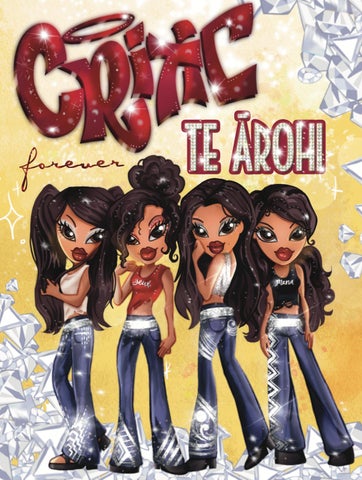
My mum was 18 when she had me. She liked the Bratz, and apparently knew I would too. So when it came time to name her first daughter, she had a plan. The only flaw in this master plan was that she was having a browneyed Māori girl in Whangārei, named after the whitest Bratz girl of the lot: Cloe. For most of my childhood, she made sure I understood the reference. I had Bratz dolls stacked to the ceiling, a Bratz-themed bedroom, lunchbox, games and movies. Twenty-something years later, Mum still calls me “Brat”, still buys me dolls, and this year surprised me with a Bratz birthday cake and matching paper plates.
EDITOR Hanna Varrs DEPUTY EDITOR Stella Weston
But a magazine is never just its design. To Hanna and the wider editorial team, thank you for your trust, unwavering support, and everything you do that I don’t see. To our guest contributors, illustrators and everyone who brought their flavour to these pages, thank you. Te Āwhina wrapped up her Master’s while caring for a sick toddler and still took on four pieces. Jessie-Jade balances a 9-5, several boards, two of which she chairs, motherhood and preparing for Matatini. Brady, in her final semester, is juggling study, her role at Te Rito and this issue. Te Awhirēinga and Maea, within their packed schedules, made deadlines look suspiciously manageable. You are busy, brilliant wāhine, and I’m grateful you made room for us.
And perhaps I w myself. They weras always a little Bratz being conventionen’t exactly celebrated for opinionated, wit al: loud, glamorous and features and a mh famously disproportionate grew up much th agazine of their own. I young girl with bi e same: a sassy, dramatic on pretty much g curly hair and an opinion that having som everything. I learned early ka people will appr ething to say doesn’t mean eciate hearing it . So when we mad e Br at z th e heart of this issue, it felt less coming home. Inlike a theme and more like magazines that spired by the 2000s girl a world of its owmade every issue feel like world tour. Jess n, this one takes you on a Coast of Te Waiie-Jade heads to the West n, thank absolute weapo ll-throttle r her 21st in Tōkypounamu, Brady invites us to ou , la el St to And ve leadership, fu Rapa Nui. Jess thō, and Te Āwhina meets us in u for your creati ncept and an execution yo en ta ke s us 200 co in time and acro embrace of this I could have imagined. ss the Pacific to years back Back home, Te Aw ng Ra‘iātea. hi yt an beyond burnout season hirēinga walks us through 30am on print , while Maea intr this at almost 5:, I’m reminded e rit w I As od uc es us to local artist Moe side Stella wai Rauputi Mar night, sitting be rarely realised alone. sh. e ar that dreams of a Bratz girl and got one. Mum dreamed is magazine, and found a I dreamed up th ing to make it real. When This issue is a full upheaval of Critic Te whole team willeam big, don’t cha? Te reo Ārohi. Stella has uprooted and redesigned ya dream, ya dr embellishment, but a little the magazine’s DNA, transforming a couple Māori needs no ng way. of design hui and plenty of back-and-forth sparkle goes a lo into something with a completely different Lata bo, heartbeat. Vivid recolouring, bedazzling and Princess Da North Island new layouts have breathed Bratz into the lungs of Critic Te Ārohi. Items Illustrated by Robin Simpson
Drama Mama
DESIGNER Stella Caulton VIDEO EDITOR Hunter Jolly, VIDEO CREW Ngākau Aporo NEWS EDITOR Gryffin Blockley FEATURES EDITOR Matilda Rumball-Smith CULTURE EDITOR Molly Smith Soppet SENIOR NEWS REPORTER Bella Bates SOCIAL MEDIA MANAGER Maddy Barnes STAFF WRITERS Harry Almey, Imogen Perry, Jesse Valpy, Te Awhirēinga Heperi, Saraia Allais CONTRIBUTORS Jessie-Jade Witeri, Te Āwhina Brundell, Brady Simeon, Maea Wikohika, Emily Ng, Stacy Gordeeva, RADIO ONE Ash McFarlane BOOZE REVIEWS Swig60 HOROSCOPES Otago Oracle ILLUSTRATION Gemma McKinney @worms.ink Jimmy Tannock @jimmydrawing Eddie Fenton @boyorfeo Eleanor Walker @furby_is_alive Robin Simpson Lizzie Jackson FRONT COVER Eddie Fenton CENTREFOLD Eleanor Walker, Stella Caulton ONLINE Charlotte Williams DISTRIBUTION Pedals Dunedin ADVERTISING SALES sales@planetmedia.co.nz 03 479 5361 READ ONLINE critic.co.nz Issuu.com/critic_te_arohi GET IN TOUCH critic@critic.co.nz Instagram/@criticmag Facebook/CriticTeArohi TikTok/@criticmag 03 479 5335 P.O.Box 1436, Dunedin Critic Te Ārohi is a member of the Aotearoa Student Press Association (ASPA). Disclaimer: The views presented within this publication do not necessarily represent the views of the Editors or OUSA. NZ Media Council: People with a complaint against a magazine should first complain in writing to the Editors and then, if not satisfied with the response, complain to the NZ Media Council. Complaints should be addressed to the Secretary: info@mediacouncil.org.nz.
CONTENTS Last Seen: 1 year ago in Champion One Day, Crumbling the Next & From Vegas to the Valley, A Taste of Mita
Nickname – Vegas Brat Zodiac Sign – Sagittarius Guilty Pleasure – Serial killer documentaries Fave Bratz Girl – Sasha Fashion Passion – Docs with oversized pants Fave Kai – Salmon and avocado sushi Shopping Splurge – Fenty Beauty Dream Destination – Japan Ngāti Whakaue, Te Whakatōhea, Ngāti Ranginui, Ngāti Whanaunga
Field of Study - Māori Mental Health
1 NEWS 05. Check Out These Articles! 06. EXPLAINER: University Proposes Changes to Senior Leadership Team 07. Couldn’t Get It Up: SGM For Changes to Exec Roles Fails To Meet Quorum
2 CULTURE 10. What's In My Kete?
Last Seen: 1 year ago in Te Reo o Te Moana
11. GRWM: Pounamu Palette
Nickname – Valley Gewl
12. Tipihaere In Tōkyō
Zodiac Sign – Libra Guilty Pleasure – Sorella’s peanut butter brownie gelato
14. Find Your Feel Good-Fit
Fave Bratz Girl – Yasmin
15. Are You Bound For Burn-Out?
Fashion Passion – Corporate Mommy Fave Kai – Beam Me Up Bagels or Asian Street Cuisine Shopping Splurge – Beauty treatments and fun drinks Dream Destination – Portugal Field of Study - Master of Peace and Conflict Studies
Ngāpuhi, Ngāti Kahu, Ngāti Hine, Te Hikutū, Te Whānau-ā-Apanui, Ngāti Porou, Kāi Tahu, Waitaha, Kāti Māmoe
Last Seen: 4 months ago in From The Pātaka
Nickname – Baby Girl Zodiac Sign – Pisces Guilty Pleasure – Jooni's crepes Fave Bratz Girl – Sasha Fashion Passion – Shoes Fave Kai – Pepperoni Pizza Shopping Splurge – Shoes
Ngāpuhi, Ngāti Hine
3 FEATURE 18. Not Sold Separately 21. Hot On Their Heels
4 COLUMNS 24. Carpool Confessions // Do's & Don'ts 25. Da Juicy Joint // What's Hawt?
Dream Destination – Greece
26. Radio One
Field of Study - Māori Studies and Indigenous Studies
27. Something Sweet From Te Rito 28. Written In The Stars
Ngāpuhi, Kāi Tahu, Ngāti Kahungunu, Samoa Zodiac Sign – Virgo Guilty Pleasure – Staying up late Fave Bratz Girl – Sasha Fashion Passion – Shopping Local Fave Kai – Ika mata Shopping Splurge – Makeup Dream Destination – Maldives Field of Study - English
Ngāpuhi, Ngāti Tūwharetoa Zodiac Sign – Aires Guilty Pleasure – ASMR videos Fave Bratz Girl – Jade Fashion Passion – Oversized jackets Fave Kai – Burritos or tiramisu Shopping Splurge – Recycle Boutique Dream Destination – Lisbon Field of Study - Law
News Illustrated by Robin Simpson
ISSUE 22
KAWEPŪRONGO
NEWS 5
14/09/2026
Check Out These Articles Online! The Green Party's Pitch to Māori Students
Nā Te Awhirēinga Heperi & Harry Almey Critic Te Ārohi got the chance to sit down with Dr Lisa, the Green Party candidate for Te Tai Tonga while down in Ōtepoti for Polyfest. For tauira registered on the Māori roll, this is one one of your options to give your vote for come November 7th. Read all about her pitch to voters here.
Y25 Changemakers Get Chatting By Hanna Varrs
This year, five out of the twenty-five young wāhine and gender-diverse changemakers from the Y25 Programme hailed from little ol’ Ōtepoti. In its seventh year, Y25 Programme is an annual leadership initiative that celebrates changemakers aged 25 and under in Aotearoa. Critic Te Ārohi caught up with gogetters Tunmise and Farwa to reflect on their journeys thus far.
ISA Annual Show Review By Andrea Austin
The Indian Students Association invited Critic Te Ārohi along to their annual show to review. This year, they’re putting on ‘Berry Complicated’. Expect friends, drama and even a love triangle. Read more to see how it all went down
6
Title EXPLAINER: University Proposes Changes to Senior Subheading Leadership Team Senior Leaders gear up for a glow-up
A Text ★
n anonymous source sent Critic Te Ārohi the proposed changes to the University’s Senior Leadership Team (SLT). Sparing students through trawling through pages of bureaucracy, here’s a summary of these changes, and what it means for your University experience. These changes were announced a few months ago, and consultation with University staff recently closed. Don’t get too used to the acronym SLT, though: part of the proposal is to rename the Senior Leadership Team to the ‘Vice Chancellor's Advisory Group’. Wait, what even is the SLT? Currently, the SLT are the key group of University staff who work with the Vice-Chancellor (that’s Grant Robertson, if you remember), to keep the Uni ticking along day-to-day. This is the more ‘managerial’ side of the University, while academic and learning policies are set by the Senate. Above the SLT and the senate is the University Council, who can be thought of as a Parliament or City Council, and our campus can be imagined as its own city state. So, basically these changes are around the structure of the group that liaises with the Vice-Chancellor on operational and management related things – but this proposal doesn’t affect the governing powers of the senate nor the council. Why were these changes proposed? These changes are being proposed to foster more coordination in implementing the University’s strategic goals. It’s hoped that clearer integration of University operational matters will allow more effective delivery of long-term plans for staff and students. Underpinning this all is Pae Tata, the University’s long-term plan to 2030. This basically lies out all of the Unis hopes, dreams and strategic priorities. New role just dropped: Provost Currently, leadership of the academic side of things lies with the Deputy Vice Chancellor (DVC) Academic. The University currently has lots of DVCs, who each work with the Vice Chancellor on a specific area of the University. Under this proposal, the DVC Academic role is going to be replaced with the ‘Provost’ (just a fancy title for the head of academic affairs). Confusingly, Otago already has a Provost, who is in charge of student discipline. As such, the current Provost role is now being renamed to Student Conduct Adjudicator. Under the proposal, an Establishment Provost will lead the transition to the new structure, where Pro-Vice-Chancellors (the head of each University division, such as Humanities or Health Sciences) will now report to the Provost. Currently, Pro-Vice-
@critic.co.nz
By Gryffin Blockley
News Editor//news@critic.co.nz
Chancellors report directly to the Vice-Chancellor. Other areas will be under the Provost’s portfolio now, including quality advancement, student experience, plus analytics and reporting, to name a few. Meanwhile, in the operations world… You may think our campus is just a collection of lecture theatres, but there’s a complex web of operational services that the University takes care of. Property services, sustainability, residential colleges and health & safety of just a few areas under this umbrella. Currently, the Uni has a Chief Operating Officer position, which is set to be replaced with a DVC Operations role. The new DVC Operations will also oversee the Chief People Officer and the new Chief Students Officer. The introduction of that latter role is intended to group together student-facing services staff members under one leader, rather than being divided across various departments. On top of all of this, a new (and yet to be named) role will sit under the DVC Operations, providing extra support with the complexity of operations. Health Sciences gets a special committee During staff consultation on the changes, it was noted that the Division of Health Sciences is a particularly complex case. With a presence across Dunedin, Wellington and Christchurch, lots of clinical and regulatory rules to follow and a sizable number of staff and students (thanks health scis) – there’s a lot going on. A new ‘Health Sciences Leadership Forum’ will be made and chaired by the Vice-Chancellor, allowing strategy and advancements of the Health Sciences to be taken into account by senior leaders across the University. Other swaps in leadership The changes don’t stop here – there’s quite a few smaller ones (that didn’t get their own subheading). The DVC Research & Innovation will now look after libraries, moving over from the academic division. Meanwhile, the Pathways and English Language Centre will now be looked after by the Humanities Division. The Director of Strategy, Analytics and Reporting role is getting retitled to the ‘Executive Director, Strategy and Government Relations’. The analytics and reporting side of that role will now be under the Head of Planning, Analytics and Reporting, who will report to the new Provost Role. This only very briefly scratches the surface of the changes proposed, so keep an eye out for more announcements as plans are finalised. As you can see, any organisation with thousands of staff and students find themselves in quite the bureaucratic maze trying to keep everything organised and running well. Get ready students – a grad role in an organisation just as complicated as the Uni awaits you. ★
NEWS 7 Couldn’t Get It Up: SGM For Changes to Exec Roles Fails To Meet Quorum OUSA suffers from electile dysfunction
L
ast Wednesday at 12pm, a Student General Meeting was held to consider a new roster of OUSA Executive roles. Except it technically wasn't held. To change the constitution, the meeting needed 112 (around 0.5% of the student body) to show up. A solid 80 did. Imagine having to watch your friend schedule a 21st on a Friday and watching everyone leave at 9pm because they have “plans tomorrow, sorry”. That’s kind of how it felt. It was looking a bit shaky from the get-go. At around 11:50, Postgrad Rep Fergus Parks was spotted putting up an OUSA banner, which then promptly fell over – a metaphor. Political Rep Flynn Nisbett came over and asked us to be “fair” in our reporting. Aw shucks, now we have to be. The OUSA Executive for 2026 has been working on this proposal for about 6 months. Most of them were pretty chuffed with the proposed changes, which they said were designed by drawing on what worked and didn't work from their time on the job. OUSA and the Exec turned up in force, and there was even a sausage sizzle to lure students in. But the 12-strong Exec, many of whom won hundreds of votes each last year, could not rustle up 112 students by the time the clock struck 12:15 – when quorum had to be met. OUSA just couldn't get it up, despite President Daniel Leamy begging anyone in the crowd with “30 friends” to invite them to the function. Administrative Vice-President Kamesha Jones told the crowd that "we really, really appreciate" everyone who’d come along, and encouraged them to run for next year’s Exec. "Being engaged in student politics is awesome." One student walked by Critic, muttering "I want my sausage." The SGM was originally scheduled for August 18th, and was intended to include a hybrid governing board proposal that was subsequently scrapped. As early as July 28th, concerns were raised within the Exec that they weren't giving students enough time to fully digest the changes. Despite that, the Exec pushed forward, despite warnings from the OUSA Secretary it was constitutionally "irregular" (translation: not on) to change the Exec roles mere days before people had to put their hands up for them next year.
By Harry Almey
Staff Writer//news@critic.co.nz
Daniel Leamy made a futile appeal to the lunch-goers of Auahi Ora, while students dodged OUSA Exec members, saying they had classes to go to right that second, or that they would come back in a few minutes after a piss. A likely story. There was some kōrero overheard, with students wondering why quorum was even necessary. As put by Daniel in last week’s Exec column, SGMs aren’t designed to be a “rubber stamp”. Constitutional changes require a two-thirds majority of students present, meaning the outcome depends entirely on who shows up. “Whether you think the proposed structure is a great step forward, have concerns about specific changes, or simply want to understand why the Executive believes reform is necessary, this is the forum to hear the arguments and make up your own mind,” he urged. But students weren’t convinced. There will be a lot of blame and pain going about, but Critic’s opinion is that the fault has to lie with poor advertising and marshalling toward students. After all, this was the first SGM to fail quorum since 2022 – which had to wrestle COVID-19 restrictions. The OUSA Executive bottled it, and a role that two consecutive OUSA referendums supported was a casualty. Liam Melvin, the "sort-of" President of a budding Otago Disabled Student's Association, was disappointed that "we didn't make quorum, particularly as the Disabilities representative would have helped ensure equity on OUSA." Hopefully this electile dysfunction doesn't extend to the OUSA Exec Elections that are fast approaching. Nominations open September 14th and close September 17th. Then campaigning begins. Voting opens online September 29th, and closes October 1st. Thankfully, voting is all online, so no need to wrangle 110 of your closest mates to the Main Common Room. ★
Throughout Exec meetings, there was an increasingly stressed acknowledgement from members that while the timing wasn't perfect, it was better to do something good now than have nothing to show for their work. Fair or not, the end result is the same. Now, any role changes will have to be carried out by the 2027 Exec, who will consist of people holding the current roles that this Exec just tried to restructure. Are you confused yet? The meeting-not-a-meeting was exciting in the same way dying in the desert must be. The headcounts crept up: 17, 23, 46 and then 76 students. The anxious, protracted countdown toward the inevitable outcome kept going and OUSA President
STUDENT DISCOUNT AVAILABLE
*not in conjunction with any other special www.cornerstoneink.co.nz | 324 George Street, City, Dunedin 9016 | 021 134 2604
8
Illustrated by Lizzie Jackson & Stella Caulton
9
1. Ready for the reins! 5. She comes with an outfit change! 6. South American country with a spicy name! 8. Seeing red. 9. There aren’t enough in a day! 11. Charmed, captivated. 14. Rapa… 15. Never leave home without it 16. Marked with tiny spots! 19. Oyster, in te reo Māori! 22. A cloudy, dreamy blue stone! 24. A good ol’ kōrero. 25. A shade of green!
1. Sun-powered! 2. Taonga are forever… 3. An all-season shoe brand! 4. A greeting in Spanish! 7. The land, in te reo Māori! 10. The dawn, in te reo Māori! 12. Water, à la Latin! 13. The feeling you’ve been here before! 15. Glam, in metallic form 17. Breakfast bowl staple. 18. Lined, winged or smoky! 19. Brady’s 21st party venue! 20. A woven carry-all! 21. Greenstone, Jess and a Bratz girl share this name! 23. Where the deadlines live!
Illustrated by Jessie-Jade Witeri
10
CULTURE
Photographed & assembled by Lizzie Jackson
Nā Jessie-Jade Witeri
Illustrated by Lizzie Jackson
CULTURE 11
Imagine the South Island launching its own eyeshadow palette. Crack open the compact, and you’ll find smoky forest greens, creamy blue sheens, leafy olives, and icy shimmers that easily double as highlight. Except this collection isn’t sitting beneath the fluorescent lights at Mecca; it has been forming beneath Te Waipounamu for millions of years. But before we swatch, let’s get the formula straight. Pounamu is not simply greenstone, nor is it just jade. Most pounamu is nephrite, a tough metamorphic rock formed deep underground under intense heat and pressure. So yes – the glow-up takes millions of years. The result is a stone that is exclusively sourced in Te Waipounamu (it’s in the name, duh), with major source pockets around Te Tai Poutini, South Westland and Wakatipu, while bowenite occurs at Piopiotahi. Limited edition is an understatement. But pounamu is more than a pretty colour story. It has been fashioned into tools, ornaments and weapons, traded between communities and gifted to strengthen relationships. In 1997, the Ngāi Tahu (Pounamu Vesting) Act returned Crown-held pounamu to Te Rūnanga o Ngāi Tahu. Yet illegal extraction and trade continue, while markets can obscure the provenance. After all, a convincing swatch doesn’t make the formula authentic, and “greenstone” is not one pigment. Jade, on the other hand, is a global category referring to two different minerals: jadeite and nephrite. Jadeite does not occur naturally in Aotearoa, while most pounamu is nephrite; bowenite and serpentine also make the legal cut. Think of jade as the beauty aisle, not the brand. Now, let’s swatch.
Tahutahi (Shade: Fairy Dust) Located on the Cascade Plateau south of Haast, tahutahi is the rarest pounamu in Aotearoa and the shimmeriest shade in the palette. Its vibrant green is pressed with glittery white flecks scattered throughout the stone. Talk about a natural highlight, nē?
Kawakawa (Shade: Pepper) Named after the kawakawa leaf, this medium-to-dark green nephrite is usually opaque and the most common variety. Consider it the everyday shade of the palette: rich pigment, low shine, and flattering on anyone. She may be a classic, but she never misses.
Inanga (Shade: Moonstone) Named after the native whitebait, the cool-toned pearl of the palette ranges from milky white to mottled grey-green and misted blue-grey. Some pieces are incredibly translucent, giving them the soft silvery glow of a moonlit stone.
Serpentine (Shade: Copycat) Serpentine brings a misunderstood matte finish to our palette. Sometimes called the “fool’s gold” of pounamu, she’s often dismissed as a cheap dupe. Māori made reels, pendants and taonga from serpentine long before Europeans' arrival, and the 1997 Act includes qualifying serpentine within its definition of pounamu. Respect the shade.
Kokopu (Shade: Freckle) Kōkopu doesn’t draw her freckles on – they’re natural, darling. Named after the native freshwater fish, this variety blends olive and green with natural speckles of cream, brown, white, red and blue. Like Fenty, kōkopu’s shade range is unmatched.
Aotea (Shade: Blue Dream) Soft, cloudy blue takes shape in this rare South Westland stone, where blue kyanite, green fuchsite and white quartz blend in a cool, silvery mix. Softer than nephrite, when it comes to formula this one is playing by different rules: its mineral make-up means it falls outside the three stone types legally defined as pounamu. Still, it’s proof that greenstone doesn’t always mean green. Kahurangi (Shade: Sparkle) Did somebody say flawless? Kahurangi is a vividly green, highly prized variety of nephrite, with a clarity that gives it an almost luminous quality. If you’re reaching for a sparkly shade that catches the light first, this is your match.
Tangiwai (Shade: Glass Slipper) Glossy and luminous, tangiwai shifts flawlessly from olive to blue-green when held to the light. Considered the earliest form of pounamu used by Māori, it is also the palette’s formula outlier: unlike most pounamu, tangiwai is not nephrite, but bowenite, a translucent form of serpentine. No filter required. She is sheer brilliance.
GRWM: Final Look So, what’s the final look? The swatch might be flawless, the pigment may have serious payoff, but what’s actually in the formula? With pounamu, geology tells us what’s in the formula, provenance is the receipt, and whakapapa and law are its authenticity sticker. Together, they tell you what the stone is, where it came from, and how it belongs to Te Waipounamu. Just like any good product, what’s behind the packaging matters. Pounamu worked by local carvers deserve more love than faceless, mass-produced greenstone churned out for the souvenir shelf. Go ahead and obsess over the rare shades, but don’t just stop at the swatch. Read the label, check the receipt, and know your formula. After all, trends get discontinued, but taonga are forever diamondz.
12
CULTURE
eon
Nā Brady Sim
Out of Office, Into Tōkyō Japan had been sitting on my list for years, and turning 21 seemed like a good enough excuse to finally go. The only catch? I’d be going alone, during the semester, for less than a week, to a country where I didn’t speak the language. There was something equal parts thrilling and pretty daunting about the idea of landing in a country where English wasn’t the primary spoken language. I liked that, though. If I were going to do something different, I might as well properly commit to it. As a small-town girl, touch-down in the city was everything I had imagined and, somehow, nothing like it. I had seen the neon lights, endless streets and thousands of trains that can get you almost anywhere, but seeing it in person was completely different. For a few days, mahi and study could wait. This week, I had swapped my usual rush between classes and work for the bustling technicolour of Tōkyō city. Wrong Turn, Right Place Like all good stories, there were plenty of hiccups. My first mistake was not keeping an international charger on hand. While adventures in Japan had topped everyone’s algorithm over the last year or so, my tipihaere was comparatively free-range. That much became clear when I stepped off the plane with a dead phone beyond resuscitation, a charger that didn’t fit the sockets, and a completely digitised transport system to navigate. Some people yearn for this kind of adventure. In my case, this could’ve gone a lot better.
There is something slightly unsettling about turning 21. Everyone makes such a fuss about it that you start wondering whether you’re supposed to feel different when the number changes. Spoiler: it doesn’t. I’d spent enough time imagining the usual party: a big venue, an even bigger yardie, a hundred-odd people, the 21st key, and remembering halfway through the night that you were supposed to be having fun. Cute, but not really me. What I really wanted was something that felt less like an event I had to host and more like a story I could keep. Something impulsive, thrilling and a little unhinged. So, I traded the yardie for a stamp on my passport and said ka keets to Ōtepoti for a few days.
Somehow, I had managed to combine every possible mistake into one very memorable birthday. The revered train system that I had been so excited about, coming from the humble waewae express in Dunedin, blurred into a maze of platforms, signs and people moving with much more confidence than I was. At that point, the scoreboard was simple: Tōkyō 1, Brady 0. All I had to do was get to Shinjuku, the busiest railway station in the city, but without a working phone, I realised I’d need to rely on my instincts. It wasn’t quite the birthday I had in mind, but if my ancestors could navigate the Pacific Ocean, the largest ocean in the world, surely I could find my way through a foreign city without Google Maps. After a few wrong turns, I started to get the hang of it. The more I found my way around, the more I realised that the point of the trip was never to have everything figured out, but to see what I could discover when I didn’t. And, as it turned out, there was plenty to discover with an empty stomach.
Table for One, Please From a potential party of one hundred to a party of one, I had to get comfortable with doing things alone. A party of one felt particularly ironic for a 21st, but I’d chosen the guest list and, frankly, she was pretty good company. And like in most places, kai quickly became the easiest way to make a strange place feel familiar. I’d arrived with a list of things I wanted to try and quickly abandoned any attempt at sticking to it. Why follow an itinerary when there are convenience stores, ramen shops and sushi trains waiting around every corner? Sometimes kai doesn’t need translating. Trust, bottomless sushi can bridge any language gap. There was something comforting about being able to walk into a 7-ELEVEN, pick up something that looked good, and just give it a go based purely on blind faith. I didn’t need to know exactly what I was getting every time. Most times, trusting the pictures and the process was good enough. I hadn’t come all this way to be picky. It was here that I began to truly embrace curiosity over sure certainty. I was learning in real time that growing up wasn’t about having it all figured out. Sometimes you just need to stop overthinking and order the mystery meal. Lost in Translation I realised pretty quickly that kia ora wasn't going to get me very far in Japan. Neither was confidently nodding at a sign and hoping for the best. At home, communication is something we rarely have to think about. You know how to ask for directions, read menus, order kai and understand the social cues that make everyday interactions run smoothly. But you don’t realise how much you rely on it all until you’re dropped somewhere that none of it comes automatically. In Tōkyō, I was the one trying to keep up with it all: gestures, expressions, translating in real time and learning a handful of Japanese phrases just to get by. Even the very simplest of interactions required far more concentration. Saying thank you wasn’t just a “ngā mihi” here, but a layered gesture that commands not only intention, but eye contact and a particular bow. There were moments when the language itself felt eerily familiar, too. Japanese and te reo Māori are completely
Illustrated by Stacy Gordeeva
CULTURE different languages, yet they share five basic vowel sounds, clear pronunciation and a plethora of words that move in open, vowel-heavy syllables. Their arigatō and tabemono, compared with our tamariki and tangata, could easily collide – different meanings and histories, but a rhythm my ear recognised. Their hai, meaning yes, mirrored our own āe. Our awa, for river, was their kawa. For both of us, ika referred to a different sea creature, as did kōura, referring to the crayfish. Perhaps they were only small linguistic coincidences, but after travelling eighteen hours to get there, they felt like threads of home. Who would think that, in a completely different time zone, in a different hemisphere, on a different continent, te reo Māori could still manage to close some of the distance between us? Maybe that was the thing about travelling so far from home: it made me notice how much of it goes with you. Short Stop, Long Story Most people spend their 21st surrounded by friends, drinks and the inevitably unfortunate camera roll evidence. I spent mine two flights away from home, dragging a suitcase through a foreign city with no clue of where I was going. There were wrong trains, colourful financial decisions and some seriously good kai. I guess I got my birthday wish after all – a birthday that felt like an escape, not an expectation. So I booked the flight, figured the rest out, and made it home with a passport stamp and a story, and way too many new outfits. And just like that, I’m finally 21 – definitely older, a little street-wiser, and with a suitcase considerably fuller than when I left. No yardie hangover required.
13
CULTURE
14 Let’s be real: exams are around the corner, and as a working student doing my master’s and juggling everything in between, I know how quickly hauora can slip down the priority list. And when life gets this busy, it’s hard not to look to the endless wellness advice filling our feeds for an answer. There’s an entire culture built around the pursuit of wellness. Right now, your algorithm is probably stacked with it: morning routines, fitness trends, iced matchas, supplements, cold plunges, skincare, protein goals and beautifully organised Sunday resets. Honestly, it’s nice to see looking after yourself become something worth talking about. But when every wellness trend comes with its own shopping list and an ironclad set of rules, feeling good can start to feel like another look you’re just expected to pull off. Te reo Māori offers an entire universe of kupu that speak to being well: ora, hauora, waiora, mauri ora, and toiora, to name a few. They overlap, but each brings a different facet of wellbeing into focus. So, consider this a styling session for your hauora. We’re building a wellness wardrobe that actually fits you, with the right basics, layers and finishing touches built for every season life hurls your way. Because feeling good should look good on you, too.
Accessorise Accordingly Then come the finishing touches. Toiora is about the everyday choices and ways of living that support your health, so there’s room here for the wellness habits filling your feed. And during exam season, this is exactly what you need. Move your tinana. Eat something that makes you feel good. Enjoy a lush morning routine. Buy the yummy vanilla syrup matcha if it makes an ordinary day a little sweeter. Wellness does not have to reject modernity to embrace tradition; it’s about learning what restores you. Just be wary of the knockoffs: wellness habits that look good on someone else but don’t fit your life. Sometimes, the best thing for your hauora is discipline, and sometimes it is rest. It could be getting up and moving your body, or it could be giving yourself permission to stay still and not feel guilty about it. The point isn’t to own every piece, but to know what works for you, and wear it well.
Start with the Staples
Dress for the Season
Every wardrobe needs a staple or two to anchor everything else, and mauri ora is yours. It's that spark of life within you – feeling alive, energised and switched on to life. Maybe you feel it when you kanikani, sing or run. It could be when you create something, get outside or are surrounded by your friends. Maybe it’s when you're at the gym lifting something ridiculously heavy or enjoying the protein hit afterwards. It could even be when you're in the kitchen cooking for everyone you love. When exams take over, it’s easy to forget these things matter as much.
Not every piece in your wardrobe needs to be worn every season, but every good fit responds to its surroundings. Waiora brings your relationship with the natural world into focus – especially when student life becomes a constant loop of lecture theatres, the library, your bedroom, and whatever screen is currently demanding your attention. Your brain might be thinking of the next thing on the list, but your body might just want to go outside. Ōtepoti isn't short of places to do this. Walk somewhere without headphones. Find the moana. Sit in the sun when it decides to make an appearance. Put your feet on the whenua and breathe in some of the fresh air. Sometimes, the best study break is simply getting out of the student bubble for a while. Think of it as dressing for the season you’re actually in, rather than the one you think you should be.
Self-care doesn’t always have to be a statement piece or catered to the ‘gram. Sometimes it’s an early night, a swim in the moana (that’s a cold plunge here in Ōtepoti), deep-cleaning your room, blasting your favourite waiata, a proper kai after a long day, or laughing around a table with people who recharge you. These are the pieces worth keeping in rotation.
Find Your Feel-Good Fit Wellness culture can sometimes look very individual: my routine, my goals, my body, my self-care. But that’s exactly where it falls short. Sometimes, other people restore us – through a shared kai, a good kōrero, calling home, or simply being around people we don’t have to perform for. Maybe that’s what te reo Māori offers in this wellness moment. So many kupu Māori relating to wellbeing point us back towards life – ora. Not perfection or perfect productivity. Not becoming the most optimised version of ourselves. But life with movement and rest. Purpose and play. Quiet days and very loud ones. Solitude and community. Personal style is about what makes you feel good in your own skin, what you reach for without thinking, and what can stay on the hanger. Your hauora still matters when the semester gets messy, deadlines pile up and the finish line blurs. So, before you tear another trend off the rack, turn and do a quick fit check: does it actually make you feel good? Look good, feel good.
Nā Te Āwhina Brundell Illustrated by Gemma McKinney
CULTURE 15
Nā Te Awhirēinga Heperi
Illustrated by Gemma McKinney
Your ala How do rm goes off at 8 you start am your day . A) Up an ? the wormd at ‘em! Early bird gets . B) Scroll get read for a little, the n slowly y for the day. C) Hit sn o o z e an back to sleep. d go straight
You head off to class for the day. How is your journey looking? A) You leave on time with plenty of time to spare before class. B) You’ll make it to your lecture, but it’s going to be a little rushed. C) You’re already late, so you'll watch the recording at 2x
speed later.
kend Your mates ask what your wee plans are. What’s going on? do, but A) You’ve got some mahi to too. you’ve made time for yourself ds! B) You’ve made plans with frien alising is After a long week, some soci just what you need. be C) Absolutely nothing. You will hibernating all weekend.
Library. You’ve arrived at the Central You… grab a A) Get there early enough to mahi! booth and get straight into the your B) Find a nice spot and set up ok scroll laptop. Maybe a cheeky TikT first. to sit C) Get there late, find nowhere use and realise you’re starving beca you skipped parakuihi.
Uni life can be a lot, but the end of the semester is drawing near – and so are those assessments and exams. Are you keeping your hauora in check, or are you one deadline away from a meltdown? Take the quiz, check in with yourself, and see where you’re at.
cture. your next le You head toare you sitting? Where k all , ready to as e front row th In ) A i. ta pā g your burnin iddle. re in the m exactly t B) Somewhe no t bu , ng ni You’re liste locked in. rner. Online the back co C) Right in ranga mai! shopping, ka
Your assignment is taking longer to finish than expected. You… A) Call it for the night when you’ve hit your limit and make a plan for āpōpō. B) Keep going for another hour or so. You’re tired, but you reckon you can push through. C) Keep going until it’s done. Sleep can wait, but the deadline can’t.
You an d
your fr iends d ecid ak What a ai together. e to grab re you getting A) You ? The Lin heat up som friendlyk – healthy b e meal prep in ut also . budgetB) A ric e b a ll fr Reka an om Sus d chea hi Stati p! on. C) Stra haven’t ight to Uncle H e o a ng's ten a serio us feed all day, and y . You ou nee . d
t It’s finally time to unwind. Wha does your evening look like? A) You chuck on your headphones and go for an evening hīkoi. B) You take a hot shower and r cozy up on the couch with you flatties. h C) Straight to bed for a muc
You go to the kitchen for parakuihi. What are you reaching for? A) An iced latte and avo on toast to start the day right. B) A bowl of cereal and milk – easy enough. C) No breakfast. I’m still in bed.
You meet your fri ends fo study wānang r a little What are you do a. ing? A) You’re all locke d in. No thing better than a stu dy buddy. B) You get some mahi done, but chat a little in be tween. C) You get abso done, but it’s niclutely no work e seeing your friends.
needed moe.
Mostly C’s – Burnout Bound, Bestie Mostly A’s – Not Today, Burnout You’re on fire! You’re getting your mahi done without completely forgetting about yourself in the process. You’re making time for the important things, feel motivated to achieve your goals and look after yourself in the process. You go, doll! NEXT MOVE: Keep doing what you’re doing – work hard, play hard and remember that sleep is not a suggestion.
Mostly B’s – You’re On The Edge, E Hoa You’re managing, but your battery is getting a little low. You might be keeping up with your mahi, but there are a few signs that your hauora could use some extra attention. Don’t forget to give yourself some awhi! Remember, rest is also part of the process. Kia tūpato! NEXT MOVE: Learn to say no when you have to – and if you can’t, say it in te reo Māori: Kāo!
Auē! You’re looking seriously low on fuel. If getting out of bed, keeping up with uni, seeing your friends or dealing with everyday things is starting to feel harder than usual, it’s worth taking a step back. The good news is that it’s only temporary. There is plenty of support available, including counselling and student support services. Kia kaha! NEXT MOVE: Now’s the time to slow down, set your sights on one goal each day, and reach out for tautoko when things feel too much. Kia tau te mauri.
18
FEATURE
By Name Illustrated by Emily Ng Nā Te Āwhina Brundell
s evitably ask in e n o e m o s a kid, ou were When you’reethings you’d take ifnyever expected what threon a remote island. I yed purely stranded t, so the question sta w, the remote to find ou cal. Until it wasn’t. Nolso known as hypotheti a name: Rapa Nui, a I’d need most island had nd. But the one thingted to pack at Easter Islathing I’d never expec was some o Māori. e, I all: tōku re es from hom tr e m o il ht with me. k g f u o Thousandsd how much of it I’d baro part of the discovere ori, it seems, comes asrately. And it Te reo Mā ckage – not sold sep ed at all. original pa at I wasn’t so strand turns out th
Inside The Box I knew I was taking my language with me long before I quite knew what I was taking it into. The rest of the contents were less certain. Just this past June, I was one of eight University of Otago students selected to travel to Rapa Nui through the Prime Minister's Scholarship for Latin America. The scholarship brought together tauira from across all disciplines at the University, and I was suddenly catapulted from knowing Rapa Nui through photos to standing inside the picture. The itinerary was simple: three weeks in Rapa Nui, followed by a week in Santiago, Chile. Known to much of the world for its remarkable moai, Rapa Nui is one of the most remote inhabited islands in the world, sitting far out in the eastern reaches of Te Moana Nui-ā-Kiwa – the Pacific Ocean. On paper, it was about as far from home as I could get. In practice, I was about to discover that distance is a funny thing. For three weeks on the island, I lived with a local host whānau, where I became close with my host mum, Laura Tarita Alarcón Rapu. Very quickly, though, she simply became Mama Tarita. I spent my days moving through her world: winding along volcanic roads, visiting whānau, sitting beside the moana, preparing kai and appearing wherever there was mahi to be done. Little by little, the unfamiliar became intimate. It was a vivid introduction to a life that, only weeks earlier, I had known only from the other side of the ocean. One day, her whānau hosted an umu at Hanga Piko Marae for a community celebration where I spent the day as a rikawera and kaiāwhina, helping to prepare kai for more than 600 people. The scale of it was dizzying: Kai being prepared, people moving, hands working, and several languages folding into one another. And yet, somewhere in the middle of all that movement came the strangest feeling of déjà vu. It was like being back in the wharekai at home. That feeling kept turning up. Culture was not something I was standing back to observe, but something I was moving through. It permeated everything – the way people gathered, the stories being told, the carvings and clothing, art and writing. And the longer I spent with Tarita’s whānau, the more I began to recognise myself in their technicolour. Maybe the ocean had something to do with it. Polynesians had been crossing Te Moana Nui long before the nations we recognise today existed. Perhaps, then, I shouldn’t have been surprised when I started finding that connection in places I could hear.
Contents May Vary For a speaker of te reo Māori, te re’o Rapa Nui sounds familiar and strange at once – close enough to keep up with, but slippery enough to resist easy understanding. With te re‘o Rapa Nui, I found myself listening differently. I would catch a word here, recognise a sound there, and use the context around me to piece together what was being said. It was part listening and part instinct. Slowly, I started collecting kupu. Each recognition arrived like a tiny spark. Haka, for
FEATURE example, immediately reminded me of whaka. Horo, meaning fast, sounded like horo. Tino meant body. Mahute recalled aute, while taoraha, whale, sounded remarkably close to tohorā. Other words became familiar simply because I heard them over and over again: taporo for lemon, miti for salt, kotikoti for cutting or chopping, mōrī for light. Sometimes I even heard echoes of the mita of Kāi Tahu. Their to’oku and to’ona sounded much like Kāi Tahu’s tōhoku and tōhona. As a Kāi Tahu descendant living and studying in Te Waipounamu, hearing those echoes on the other side of Te Moana Nui was electric. For a moment, the vast distance between us seemed to collapse. Then there were the conversations that seemed to contain half the Pacific. Spanish was deeply embedded in everyday life, alongside te re’o Rapa Nui and, for some, English as a third or fourth language. There were moments when a single conversation became almost kaleidoscopic: Spanish, English, te re‘o Rapa Nui and te reo Māori folding in and out of one another. Where someone would speak Spanish, another person would respond in te re’o Rapa Nui, I might recognise something through te reo Māori, and together we would somehow find our way to understanding one another. No single language carried us all the way; together they did. I had arrived thinking of te reo Māori as something that belonged to home. Instead, it had become part of my carry-on: something I could reach for when I needed to navigate somewhere thousands of kilometres away. It made the question of whether te reo Māori is ‘useful’ feel different. We often hear the argument in Aotearoa that te reo Māori “won’t get you anywhere,” and that English is the language you need if you want to travel, work internationally and engage with the wider world. But Rapa Nui offered an almost perfect antithesis to that argument. Te reo Māori had travelled across the moana with me, giving me reference points for another Indigenous language and a way to recognise connections I might otherwise have missed. Those connections were not only linguistic, though. Like te reo Māori, te re‘o Rapa Nui has had to survive the pressures of colonisation and the dominance of another language. María Virginia Haoa of the Rapa Nui Language Academy has described how, when formal education was introduced on the island in 1934, te re‘o Rapa Nui was excluded from schooling, and children were taught in Spanish rather than their native tongue. UNESCO records a dramatic decline in te re‘o Rapa Nui, particularly amongst younger generations, with a 2016 sociolinguistic survey finding that only 10 per cent of Rapa Nui school-aged youth spoke the Indigenous language, compared with 76 per cent in 1976. More than several decades later, the effects of that displacement remain visible in the intergenerational transmission of the language. Suddenly, the questions I was hearing on the island felt visceral in their familiarity: how do we keep our language alive? How do we create spaces where people feel safe speaking it? And how do we ensure that revitalisation does not create new divisions between those who speak fluently and those still finding their way around? I knew those questions because I had grown up inside them.
19
20
FEATURE Generations before me were punished for speaking te reo Māori; its transmission to their tamariki was disrupted. Like so many whānau Māori, that interruption meant my own parents were not raised with the language that belonged to them. Their response was to reach back for it: returning to their hapū, learning from elders, studying at university, and working to recover what colonisation had tried to sever. When they eventually had tamariki of their own, they made a deliberate decision that we would be raised in te reo Māori – an irrepressible act of reclamation. And so, my first language was te reo Māori. I had grown up learning that a language survives not only when it is spoken, but when it is lived.
Handle With Care That understanding came into focus in the simplest of places: a local Catholic primary school, where the children were practising kai kai – with pieces of string looped between their hands, they created different shapes and patterns, each accompanied by a story. Watching those little worlds appear between their hands, I was reminded of the many ways te reo Māori lives beyond ordinary conversation. It lives in waiata and mōteatea, kapa haka and karakia, mahi toi and whaikōrero, as well as the everyday practices handed down through generations. From there, I began to recognise the same principle throughout my time in Rapa Nui. Indigenous cultural arts are not simply ways of expressing a language; they can be the waka that carry it. Over the weeks that followed, I saw that waka everywhere: in carvings and traditional arts, in the making of cultural attire, in books and the translation of ancient manuscripts, and in both traditional and contemporary music. Language was not sitting still. It was dynamic, moving through hands, voices, pages, and generations. I saw it in the work of the Rapa Nui Language Academy, and in the many people who dedicate their lives to ensuring te re‘o Rapa Nui continues to be spoken by generations still to come. Every generation leaves its fingerprints on what it inherits. It’s no different with culture. Polynesians ventured across Te Moana Nui to both Aotearoa and Rapa Nui, carrying shared knowledge, traditions and language with them. But once they reached these vastly different landscapes, those shared foundations began to take on lives of their own. The inheritance was shared; the expressions became wonderfully and inevitably different – shaped, stretched, and coloured by the worlds that received them. Over hundreds of years, the forest, mountains and colder seasons of Aotearoa influenced one expression of Polynesian culture, while Rapa Nui’s volcanic landscape and extraordinary isolation shaped another. The traditions travelled, but they grew roots in different soil, becoming layered with the places and people that carried them. Language is kinetic, too. It refuses to sit still, gathering new words, new expressions and new contexts as the people who speak it move through the world. For te reo Māori to live, it needs places to live beyond
the classroom – in homes, on marae, and in everyday conversations. And in Rapa Nui, I began to see language and culture moving together. María Virginia Haoa, co-founder of the Rapa Nui Language Academy, describes te re’o Rapa Nui as inseparable from the ways people think, feel, and understand their world. When a language is endangered, she argues, the loss reaches well beyond its vocabulary; the cultural foundations carried through that language are placed at risk too. That made the revitalisation efforts I was seeing around me feel bigger than language lessons. They were about keeping the world and the words intact enough for the next generation to inherit. Language transmission keeps moving once the lesson ends – nothing can survive sealed inside a box. Now, the challenge is making sure there are always waka for them to travel in. While the similarities between te reo Māori and te re’o Rapa Nui were beautiful to discover, there was another connection between our stories that was harder to ignore: the languages we are still fighting to keep alive exist alongside dominant languages that can so easily crowd them out. Among the revitalisation initiatives supported in Rapa Nui is Hōnga'a Re'o, inspired by the Kōhaka Reo movement in Aotearoa and centred on strengthening te re‘o among preschool-aged children. In this mahi, I saw two Indigenous peoples, across opposite reaches of Te Moana Nui, recognising the same urgent truth: language has to live close enough to childhood that speaking it can become ordinary again.
Beyond The Box The further I travelled from home, the more magnetic its pull became. Two flights away from Aotearoa, te reo Māori unlocked another Indigenous language for me. Words I had carried from across Te Moana Nui became keys, turning in locks I never knew were there. Still, there will always be someone who asks where speaking Māori will “get you.” The better question is what it can open. English was not the language that connected me to the world this time. With te reo Māori in my back pocket, I found the experience of a lifetime thousands of kilometres from home, and somehow closer to it than ever. As a kid, I thought being stranded on a remote island meant choosing three things to take with me. I never imagined that te reo Māori would be one of them, because I didn’t have to pack it. It met me there, crossing the ocean before I did. Turns out, te reo Māori really is for every adventure – and, as the box promised, not sold separately.
FEATURE 21
Like a pair of hand-me-down shoes, te reo Māori is an inheritance. Well-worn, repaired when it needed mending and kept with its next wearer in mind. The leather may be scuffed and softened by another person’s feet, but when you put them on, they fit. Each generation leaves its mark on what is passed on – hot on the heels of whoever steps forward next. Imagine, then, that these shoes could take us further back. We step into them and find ourselves transported to Aotearoa before the words ‘New Zealand’ had crossed the ocean or existed on any map. The whenua is familiar through whakapapa, yet strange in almost every other way. Somewhere across it is an ancestor, recognisable despite centuries between past and present. The distance shrinks, and there is an instinct to speak, to introduce ourselves and say something that might bridge all those generations. But before the words come, hesitation arrives: would the words be understood? The language passed down over generations has not remained untouched. It has been adapted, protected and reshaped as each wearer found a way to carry it forward – always in fashion despite season or generation. But if the past could speak directly to the present, what would be understood, what would sound strange, and what might be mistaken for something entirely new?
Manufactured in Aotearoa
Nā Jessie-Jade Witeri Illustrated by Jimmy Tannock
The surprise is that the conversation would probably not sound foreign at all. Much of it would be pretty recognisable: familiar words, similar structures, and familiar ways of putting an idea together. Rather, the uncertainty would sit in the finer details: the words that no longer mean quite what they once did, an expression that has slipped from everyday conversation, or the turn of a phrase that sounds formal now but was once completely ordinary. This is part of what falls under the umbrella of te reo tawhito, and even that term comes with its own label. Depending on who is speaking, it might mean the Māori language spoken before the great urban drift, or further back, before Europeans arrived on these shores, and before that too. To work out what might actually be waiting on the other side of that linguistic distance, I spoke to Dr Anaha Hiini, a te reo Māori expert from Te Arawa. For him, the question begins with the word tawhito itself. “What’s tawhito? How tawhito are we going?” Rather than placing a hard date on the past, he thinks about linguistic
22
FEATURE distance through whakapapa. For example, a person might speak comfortably with a great-great-grandparent, who in turn could speak with the person before them. Each neighbouring generation would understand the one beside it. But leap across the entire chain and the resemblance becomes harder to follow. “I think if I went back 200 years to my ancestor Te Ohu, I would struggle to understand him,” Anaha says. Yet difficulty does not mean disappearance. Historical accounts from the nineteenth century preserve a language passed down by kaumātua born in the 1700s, while older forms of the Māori language remain untouched in other forms. “We still speak tawhito,” Anaha explains, “especially in karanga and whaikōrero. That reo tawhito was everyday to them [as it] was the only language they knew how to speak. We only speak it in oratory or when calling on our visitors.” Some of the language we now reserve for the marae may once have been ordinary conversation. That shift in where language lives is one small clue to a much larger story: understanding the Māori language of the past requires more than knowing which words have survived – it also requires stepping into the world that gave colour to those words.
Made To Measure Long before English entered the picture, the Māori language already sounded different from one place to another. The people who settled across Aotearoa did not leave their language untouched as they adapted to new landscapes and built lives around them. Over time, iwi developed distinct mita, with differences in pronunciation, vocabulary, expressions and the stories attached to particular places – a language anchored in character. For Tātai Henare, of Ngāti Hine and Te Whakatōhea, that character is inseparable from the environment. “When I think Māori, I think taiao,” he says. “One has to remember that all those little nuances around te reo Māori are based on the environment that their ancestors were brought up in.” The hills, waterways, forests, birds and coastlines of a particular place were not simply things to describe, but formed the architecture of how people understood and expressed the world around them. That relationship can be heard aloud in mōteatea – a traditional-style lament or sung poetry. Tātai describes a traditional composition method in which the shape of the whenua is reflected in the music: where the melody rises with the peaks, and dips where it mirrors the valleys. The relationship between place and language becomes especially clear when the same idea is expressed through different traditions; the words may belong to the same language, but the references, stories, and associations have been shaped by entirely different surroundings. Dr Anaha Hiini sees the same principle in the language of his own tūpuna. The world they knew, he says, was “the land and the sky”, “the trees and the birds” and “the waters and the fish”. That world flowed into the way people expressed and spoke about courage, memory, grief and love. Before a battle in which his own people were heavily outnumbered, his tupuna Te Roro-o-te-Rangi said: “Ruia taitea, kia tū ko taikākā, ko ahau anake.” The whakataukī evokes a tree that is stripped of its softer outer wood until only the hard heartwood remains: those without the courage to stand should leave; only the strongest should remain. “I believe because of the environment that he knew, that was the only way he knew how to talk,” Anaha says. “Whakataukī of today, from hundreds of years ago, was an everyday language back then.” What sounds poetic and ceremonial to us may once have been everyday communication.
Shoes Off At The Door, Please Even 200 years ago, there was never one national version of te reo Māori waiting to be streamlined. For generations, te reo Māori was learned through te reo o te kāinga: the language of home. Tamariki listened, mimicked and absorbed the environment around them. The language of the kāinga was not always the language of the marae, ngahere, moana or formal whaikōrero. Tātai describes those registers as clothes made for different occasions. “I liken it to a pōwhiri process and the food that precedes it. One is formal, and one is informal. So, ōkawa would be used in formal settings, such as pōwhiri. Ōpaki is used in general conversation.” In other words, knowing how to speak was also knowing where, when and with whom you were speaking. That relationship becomes harder to maintain when the first encounter with te reo Māori happens outside the kāinga. Today, many people learn through school, wānanga, university or language apps rather than those traditional settings. While these pathways are essential to revitalisation, formal learning can create the expectation that there is one correct way to approach and speak the language. And once one version becomes the default, everything else can start looking like the wrong size. But just like how it’s rude to tread through the whare with your shoes on, it’s just as rude to stomp the character out of te reo Māori. Leave it at the door, please. Standardised te reo Māori can operate like fast fashion: easy to produce, easy to distribute and designed to fit as many people as possible. The problem isn’t the pattern itself; it’s forgetting that it was ever only a pattern. When reach and convenience become the priority, the finer details can get lost: dialects, street knowledge and idioms that tell us where language came from and who carried it there. Like clothing stripped of its makers and environmental origins, the language may remain recognisable while becoming disconnected from the people and land that gave it shape. So, if standard te reo Māori, in all its glory, is off-therack, then te reo o te kāinga is tailor-made. It carries the measurements of a particular place and its history. While a standard pattern can help a learner follow the seam, the trouble starts when we mistake standard sizing for the only correct fit. Maurice Taia, of Te Whakatōhea, knows exactly what can get lost in the alteration. He contrasts te reo Māori learned through whānau and iwi with the standardised language of the classroom. Standardisation can make teaching more accessible, but it can also iron out the tribal differences that tell us where a speaker comes from. Maurice learned that lesson sharply after returning to Te Whakatōhea from university, where most of his kaiako had been from Tūhoe. During oratory, he used kokona instead of kokonga, only for Koro Teriaki Amoamo to correct him: “We do not say kokona. We say kokonga.” That correction might look small on the page. It isn’t. One sound can carry the expression of an entire whakapapa. Dialect is not an accent pinned onto the language as a finishing touch; it carries the sound of whenua and generations of tribal memory. When learners are told their whānau pronunciation is wrong simply because it differs from classroom language, revitalisation risks becoming another kind of erasure. If standardisation gives us a common wardrobe, mita tells us whose clothes we are wearing. That is why the answer is not to reject standardised language, but to know what it is – a shared foundation, not a replacement for what came before it. “Hold on to what you learned at the start,” Maurice urges learners. “Keep that as your tūāpapa (foundation) for your reo. Be aware of the] mita of other iwi. Maintain your own.”
Same Sole, Different Step The same distance between the ordinary and the unfamiliar appears when looking beyond our own shores. Five centuries of separation did not make Māori and people of Ra’iātea
strangers to one another, but it did give them entirely different worlds to describe. When Tupaia, the Ra‘iātea-born navigator, travelled aboard the Endeavour in 1769, he could converse with Māori despite the centuries-long separation between Māori and the Pacific. Joseph Banks recorded that their languages were similar enough for the two to “tolerably well understand” one another. Yet the Aotearoa in front of Tupaia was unlike anything he had known in Ra’iātea: fortified pā, vast kūmara gardens, and unprecedented forms of whakairo and tā moko particular to this whenua. Tupaia may have recognised the linguistic fabric Māori and Mā‘ohi inherited from common ancestors, but after centuries apart, that fabric had been repurposed. That difference became tangible when I travelled to Ra‘iātea with my kapa haka team, Waerenga Te Kaha, in August 2025. At home, rehearsals happen on patches of grass, concrete, or a wooden platform; in Ra‘iātea, our stage took the form of soft white sand. And the heat? Let’s just say our performance clothes went through menopause that week. The local Mā’ohi performers sang at a far higher pitch, with a brighter, more nasal quality, while our kapa is accustomed to drawing breath deeply into the stomach and using that air to project with power. In the heat and humidity, even breathing normally became harder, and the way we were accustomed to producing sound no longer came as naturally. The environment had changed the performance before any conscious decision to change it had been made. It offers a small glimpse of what centuries can do. Our performance sounded different almost immediately because the air itself demanded something different from our voices; five hundred years in another climate, landscape and way of life can only leave a deeper imprint. Tātai knows that inheritance intimately, describing it as te reo tuku iho, passed through an unbroken line of speakers. As a descendant of that line, he challenges the idea that language change began only after colonisation. Te reo Māori has always moved with its people; what changed was the scale and source of that movement, and whether Māori controlled it. Travelling to Ra’iātea made that continuity tangible. Despite centuries of separation and changes to both languages, enough remained recognisable to make the connection feel immediate. For Tātai, this reflects the wider continuity of te reo Māori across Polynesia. “There are similar threads throughout our connections [in Polynesia],” he says. “So yes, I would be able to understand my ancestors.” That understanding feels reassuring – until the question is turned around. “The bigger question is, would they understand me? Especially given that my worldview and context has changed so much.” Until now, the question has travelled backwards: could the language of the past still be understood today? But if we put the shoe on the other foot, what would happen if the person from the past had to make sense of the world – and the language – waiting on the other side?
Wear It Well The answer is probably both more reassuring and more uncomfortable than expected. An ancestor dropped into 2026 might recognise far more of the Māori language than we realise. The words, stories and relationships would offer varying points of entry, but the context around them could be almost unrecognisable. Korowai are a great example of this change. Today, the word korowai is often used as a blanket term for any Māori cloak, but that isn’t necessarily correct. A korowai is a specific type of garment, adorned with twisted flax fibre. What you might recognise at graduation ceremonies today as a vibrantlycoloured feather cape is not a korowai, but a kahu huruhuru. Knowing the word korowai without knowing the garment it describes is like knowing the word “shoe” but calling every pair of footwear a Reebok. The distinction matters. And just as te reo Māori has changed, so have the things it describes, and the world they belong to now. If we walked that ancestor through the world
FEATURE
23
we live in, there may be things they recognise, but perhaps not as their own. The kahu huruhuru might look familiar, but its production tells another story: work that once took several months of painstaking handwork can now be finished in a matter of days. The same goes for the language. We can inherit the words without inheriting the world that coloured them with meaning. Te Matatini also offers a runway of these tensions. The same ancestor who may or may not recognise the modern-day Māori language would most likely recognise the haka, waiata, weaponry, humour and collective force, but wonder at the meticulous grading system, Western melodies, plastic poi, matching stencil moko kanohi and machine-sewn kākahu. What now feels unmistakably Māori is the contemporary theatre aspect of it all: inherited forms tailored to the silhouette of this generation. That does not make them less Māori, though. If anything, it tells us something important about how culture survives. A garment cannot be worn forever in the same way. The danger is not change itself. It is assuming that everything Māori must look old – tawhito – to be authentic. Not everything labelled Māori carries a Māori worldview, just as not everything advertised as vintage is actually authentic. The question is not whether things have changed, but who has the right to change it. Artificial intelligence raises that question sharply. Feed enough taonga into a system, and it may reproduce the surface pattern of te reo Māori without inheriting its whakapapa. It can be dressed in Māori words while its thinking has been cut from a completely different cloth. Maurice Taia, of Te Whakatōhea, warns against this directly: “Stop putting our taonga into AI. That’s the only thing they can’t take from us, [is] our knowledge.” Anaha reduces the warning to two words: “Kia tūpato.” Be careful.
In Good Condition The thing with inheritances is that they aren’t always fair. They can skip over people, fall entirely into the hands of one person, or become lost before they ever reach the next generation. But if there’s a will, there’s a way, and this handme-down’s in pretty good nick. Te reo Māori has made it this far because, like a pair of handme-down shoes, someone kept wearing it. It’s well-worn, has been repaired when it needed mending and kept with its next wearers in mind. Sure, the leather is scuffed. Maybe the soles have been softened by another person’s feet. But when you put them on, they’re a perfect fit. Each generation has left something behind: a handful of expressions, a twang, a new way of making the old words fit the world in front of them. A set of footsteps that keep walking forward, and a path for you to follow heel to toe. So if the past could speak directly to the present, perhaps they wouldn’t ask us to keep things pristine. Wear them. Scuff them. Make them yours. Then, pass them down. Because if the shoes fits, step on in and wear it well – and leave it ready for the next wearer.
Kia Kaha te Reo Māori.
24
Nā Te Āwhina Brundell
I have a confession to make: Sometimes, speaking te reo Māori scares me more around other Māori than it does around anyone else.
carpool
We talk constantly about revitalisation. Kōrero Māori. Normalise te reo Māori. Use what you have, as much as you can. Kia kaha te reo Māori. I believe in all of it, but no one really wants to talk about what happens when the spaces created for te reo Māori start feeling intimidating to the very people trying to grow within it.
There is a strange kind of pressure that can come with speaking te reo Māori when you know someone in the room is listening for every misplaced particle, every kupu you should have known, every sentence that comes out slightly too Pākehā. Sometimes the whakamā arrives before the words do. And here's the part I'm probably not supposed to say, but someone has to: sometimes there can be an elitism around te reo Māori.
Congratulations, tauira mā. You survived another Ōtepoti winter. The days are getting longer, the flowers are popping up, and now and then the sun stays out long enough for us to remember that Dunedin can be quite beautiful. Unfortunately, we've also reached that point in the semester where the next stops are final assignments, exams, and for some of us, graduation. So, before you disappear into your study caves for the foreseeable future, consider this your reminder to defrost.
: Leave North Dunedin. I promise Ōtepoti continu es beyond the uni precinct. Be a tourist in you Saturday market, chase a r own town. Hit the beach, or finally make tha sunset at Blackhead you’ve been thinking about Peninsula mission t.
: Wait for the “perfect” Dunner Stunner. This is Dunedin. Four seasons in one day is part of the charm. If the sun is shining right now, haere. By the time you've finished deciding what to do, a southerly could be rolling in.
:Find the moana.
dell
Nā Te Āwhina Brun
Illustrated by Robin Simpson
Not everywhere. Not everyone. And certainly not because fluency itself is elitist. Kaikōrero, kaiako, and reo champions have carried an enormous burden to ensure te reo survives at all. Their mātauraka deserves respect. But if revitalisation is the goal, we also have to be able to question the culture developing around the language. Because even fluent speakers are still learning. There is always another whakataukī, another mita, another kupu, another depth of meaning waiting for us. Yet somehow we have created spaces where admitting “I don't know” can feel embarrassing. What's up with that? A living language needs excellence, but it also needs messiness. It needs learners to stumble through sentences. It needs cousins to throw Māori words into English conversations. It needs people getting things wrong, being corrected with manaakitaka, and trying again. Accessibility isn't just whether free classes exist. It's whether people feel safe enough to open their mouths once they get there. Maybe protecting te reo Māori doesn't only mean guarding its integrity. Maybe it also means guarding people's courage to speak it. A language cannot grow if everyone is terrified of getting it wrong.
St Clair, St Kilda, Aramoana, Brighton – pick one! Grab your mates, get some kai, walk barefoot in the sand, and watch the sun go down (or come up!). Bonus points if you're brave enough for a swim.
: Make having fun
expensive.
ks, good blanket, some snacn carry an A . ts en ud st e e'r W ewhere pretty ca ity needs to company, and som y wholesome activ er ev afternoon. Not cursion. become a $100 ex this before “after s.” m : Make plans a ex er ft becomes “a assignment” line. Spring, nother dead t you. Some a e b ys a lw There will a uietly carry on withou q e taking however, will memories were mad te ri u with friends. of my favo udy breaks st s u ro u nt adve
For some of us, plenty more Dunedin springs lie ahead. For others, this might be the last one before graduation takes us somewhere new. Either way, don't spend all of it looking forward to leaving. Go outside. Touch grass. Find the goodness out there and enjoy Ōtepoti while you're here. I promise it’s really special when you give it a proper chance. Illustrated by Robin Simpson
COLUMNS 25 Nā Maea Wikohika Illustrated by Robin Simpson
Some flowers bloom loudly; others take their time, unfurling petal by petal. Moewai Rauputi Marsh feels like the latter.
Island Gewl Ngā kai
1½ cups frozen pineapple ¼ cup vanilla high-protein yoghurt ½ cup coconut water 1 scoop protein powder ½ tsp chia seeds 4 ice cubes
Juicy Couture Ngā kai
¾ cup unsweetened almond milk ¼ cup plain or vanilla Greek yoghurt ¾ cup frozen peaches ¼ cup frozen banana ½ tbsp honey, plus more to taste ½ tsp vanilla extract ¼ tsp cinnamon Pinch of ground ginger Me pēhea te tuku Add everything except the ice to a blender and blitz until smooth. Add the ice and blend again until thick and creamy. Pour into a glass and get juicy.
An artist and arts facilitator based in Ōtepoti, Moewai is rooted in whakapapa, community and creativity. Of Kāi Tahu, Kāti Huirapa, Ngāti Kahungunu ki Wairoa and Tūhoe descent, she works primarily with earth pigments, returning to ancestral places such as Puketeraki to gather materials and learn from those who care for the whenua. This care extends to her work supporting others through creativity, where community remains especially central: “it took a village to raise me,” she says. That spirit of tending and togetherness flowers in Putiputi Pod, the podcast that grew from another longstanding connection. A childhood best friend had invited her to make a show for OAR FM – after moving back to Malaysia, the two had kept their friendship alive through snail mail. Those letters taught Moewai the beauty of making slowly and taking time to think about someone. Given space to let the podcast take shape, Moewai found herself reconnecting with her younger self. Childhood memories resurfaced, and flowers emerged within her art. Her childhood nickname, Puti, soon became part of the picture, and when someone remarked that her putiputi were blooming, the idea began to unfurl. Meaning “100 flowers on sleeping water”, her name itself evokes the quiet, often overlooked moments where something begins to grow. “Pod” is both a nod to podcasting and the pod of a seed: a small vessel holding the possibility of another bloom. Like Moewai, Putiputi Pod takes its time to bloom. It moves with the seasons and maramataka, deliberately avoiding a fixed release schedule and leaving room for rest, curiosity and the spontaneous connection that makes growth possible. In many ways, Moewai is a living expression of the whakataukī poipoia te kākano, kia puawai – nurture the seed, and it will blossom. A fitting reminder, perhaps, to stop and smell the flowers. Putiputi Pod is now available on Spotify.
Illustrated by Robin Simpson
26
COLUMNS
TOP 11
Seeing the increase in reo -is long over-due imo and warms my cynical wee cockles. Because I’m elderly and also lucky, I’ve known Geneva AM since she was a cute lil’ kid. So, seeing her blossom in this realm, fills me with totally unjustified pride. Her beautiful album Pikipiki has given her some welldeserved flowers. Fi introduced me to Kommi -who co-wrote Marlon Williams award winning album Te Whare Tīwekaweka; as well as an amazing body of work themselves. Check out their EP Tauwhenua (I love the track Taipō). They also feature on a new track from Delany Davidson ‘Tumbleweed’. Ōtepoti Hou
Geneva AM
There’s An FBI Office In Wellington
Ex Radio One Station Manager Sean Norling was the first to teach me the gospel of Mokotron. Bless. He then went and created album ‘The Ōtepoti Hou’ (in his new role at Ara Toi), featuring one of my Ōtepoti fav’s: Tough Guy (aka Tawhai Huriwai) and their track Whakapapa. I will not -nor will I ever!!! stop banging on about how much I love MĀ. Just MĀ in general, seeing her live (heart eyes), shameless skite ahead: twice now, thank you. There’s a deep beautiful groove with hard-hitting lyrics on ‘Blame It On the Weather’, the first single “pūhā me te porohewa” is a gem. But I can’t play favourites on that album tbh. And don’t get me started on Argon England… there’s soooooo much more to be found. Take friends reckons or check out our ever evolving ‘playlist’ on linktree with links to bandcamp. ntables
MOKOTRON
MĀ
By Tina Tur aka Kristina Simons er aka Station Manag aka nerd
linktr.ee/manager91
Becca Caffyn (Dn) Julia Roberts
SEEK HELP! (Dn)
GIG GUIDE PARAIRE 18TH
Compilation Album
REVIEWS
WAEREA
w/ Mads Harrop
No. 8 Distillery - 5 pm
On this work, Cloher reconnects with their language & culture, and honours their matrilineal of wāhine Māori across 10 tracks that oscillate between beautifully delicate and powerfully rich. Cloher affirms to us that home is not a physical place but instead the community you find and keep. By Lily Jane Fave waiata: Aroha Mai, Aroha Atu
Black Union Jack (The Vault Sessions) - Half/Time
A sick band from Kirikiriroa featuring members from fellow sick bands Mega Howler, Mooring, Chem Chain, etc. Black Union Jack provides a unique post-punk sound with powerful kupu about the colonisation of Aotearoa and the oppression of Te Reo Māori. This album is a must-listen for those who love a truly unique sound that delivers raw emotion through its waiata. ne Favourite track: Ōrākau By Kelsey Thor
the pink opaque (Dn) glow
Egenes and Dodd Inchbar - 7:30 pm
HATAREI 19TH
Hanover Hall - 5:30 pm
Jen Cloher - ‘I Am The River, The River Is Me / Ko au the awa, Ko te awa ko au’ LP
Way Too Frightened
Happy Hour Solo Sounds
Album Release w/ sloer
Blame It On The Weather
Boygirl
Sam Charlesworth (Dn)
The Broken Heartbreakers PIKIPIKI
1 2 3 4 5 6 7 8 9 10 11
It Always Rains on Fridays
Sivle Talk (Dn)
Te Reo Irirangi Kotahi It’s the 51st annual Te Wiki o te Reo Māori (Māori Language Week) this wiki. Radio One loves any excuse to learn more reo and play more waiata, so we’re upping the amount we play on-air this week. We also wanted to share some great tracks and albums with you’all, which we’ll also share on socials and on a linktree.
Achtung! (NZ)
Sick Of You!
w/ Deaf Raccoon, Talking Furniture
Pioneer Hall - 7 pm
The Tommy Gunners
Loa Loa (Dn) Jester
Vera Ellen (NZ) how we say goodnight
Ammonita (Dn) Righteous Socialite
20th Anniversary w/ The Tommy Gunners Chemical Damage, Serial Crush, Saurian, Sam Charlesworth, Grace Gemmell
Evie Bamford (NZ)
The Crown - 7 pm
AW (NZ)
Amped Music Project Gig 3 w/ Tiny Pieces Of Eight Yours - 1 pm
Otepoti Dunedin Whanau Refuge Fundraiser
w/ IVY, Minerva, Ammonita
Your Girl
Rhubarb
mazagran hit picks
Dolly Possum (Dn) Cow PocketLipps (Dn) What Did You Say (Haszari Remix)
Pearl Diver - 7 pm
How Get - Ka Mutu
How Get were an emo/punk trio from Tāmaki Makaurau featuring members of Long Distance Runner and Carb On Carb. “Ka Mutu” features fuzzy midwestern riffs, propulsive punk drumming, and emotive vocals sung entirely in Te Reo. At just three tracks, this EP features a condensed but beautiful mixture of moody swells and fast, punky goodness! Must listen for fans of midwest emo/ post-punky bands like Braid, Achtung! (NZ), and Marietta. r Favourite track: Ko te reo te taikura han Montañe By Et
RATAPU 20TH Amped Music Project Gig #4 w/ Dale Kerrigan Pearl Diver - 1:30 pm
Find more STREAM @ r1.co.nz/gig-guide! RADIO ONE!
27
For some tauira, connecting with te ao Māori is like finding your way home. For others, it can feel like turning up at the wrong house, standing at the front door and wondering if someone is gonna ask you who your parents are before letting you in.
• • •
University can be the first chance to reconnect with your whakapapa. Maybe you weren't raised on the marae, maybe you don't kōrero Māori, maybe you don't know tikanga or maybe you’ve always known you were Māori, but you’ve never really known what that means for you. You don’t need to be fluent in te reo Māori, have a perfect pepeha, or have memorised twenty waiata to prove that you belong. There is no secret Māori entrance exam. And if there is, then we definitely didn’t get the study guide. Start where you are. Ask questions, learn one kupu Māori, ask your whānau what they know. Go along to that hui, even if you’re nervous. If you get something wrong, learn from it and keep going. At Te Rōpū Māori, that's exactly where you can do that. You can come as you are, wherever you are on your journey. That's what this year's theme, Ake Ake Ake – A Forever Language, looks like to us. Reconnection doesn't have to happen overnight. It continues long after Te Wiki has finished. This Te Wiki o Te Reo Māori, give something a go. Come to an event. Learn a waiata. Try out some new kupu. Or just come hang out with us. You might arrive wondering whether you belong. You’ll probably leave having found your people. From all of us at Te Rōpū Māori – kia kaha, kia māia, kia manawaroa. Your journey is yours, and there is no wrong place to begin. Much aroha – Jarna xoxo
Help shape the future of walking, cycling and wheeling in Ōtepoti Dunedin. 14 September – 16 October 2026 VISIT www.dunedin.govt.nz/consultation
28
COLUMNS
Illustrated by Eleanor Walker
Our West Auckland gewl We$tside Whim$y has been staring deep into the crystal ball so you don’t have to. The stars have spoken, the omens are questionable, and frankly, it’s time to taringa whakarongo.
COLUMNS
Get your funky pāti glasses out of the drawer; it's time to go to a function or two. Just try not to get pushed through a window at the clurbs. Instead, make sure the pantry is fully stocked with 2-minute buldak noodles, so you're ready for when the 1am munchies inevitably hit.
A day of immense importance approaches, youngling. You’re about to turn another year older and somehow remain infinitely wiser than half the people in your life. Celebrate the fact that you are officially one year closer to retirement, where you will finally find peace. Wūhū!
Your Bratz doll: Cloe
Your Bratz doll: Phoebe
Word on the street is you're in an age-gap situationship; the pātai is whether you're drawn to the sweet candy under a wrinkled wrapper or just doing it purely for the plot. It’s prime time to lean into those fantasies and knock a few questionable items off your Rice Purity test.
You usually have more unhinged energy than a raccoon that's snorted a fresh line of coke, but recently life has been doling out one hit after the other. It's time to stock up on the cheapest energy drink you can find, and just keep swimming till the wīkene hits again.
You finally got the job you were praying for, only to realise it’s not all that. It’s time to draft up yet another two-week notice email, hit send, and spend the rest of your shifts skulking around trying to avoid eye contact with your manager. But don't worry, the crystal ball says that your next job won't be so shit. Your Bratz doll: Raya
Your Bratz doll: Felicia
Your Bratz doll: Tiana
Things are finally settling down after a few weeks of absolute chaos. Isn’t it nice to go back to your normal day-to-day life and be able to not be constantly hungover? I wish you luck on your journey of sobriety, as I know the road is not easy. Your Bratz doll: Dana
It's time to get those borderline mouldy panana out of your fridge and try baking some banana cupcakes. The lessons you learn about trusting the process while doing your baking may just give you a new outlook on life. Your Bratz doll: Jade
You’ve been rotting in your whare for way too long, and your friends are starting to think you’ve vanished into thin air. Pull on your least dirty socks and make the agonising, wind-swept trek down to civilisation before your metes forget what your face looks like. Your Bratz doll: Fianna
Homesickness is hitting you harder than any wave of fresher flu ever could. Calling your parents once a week isn’t cutting it anymore, and you’re probably going to spend a solid two hours on Skyscanner staring at inflated ticket prices in hopes of getting back home for a proper hug from Mum. Your Bratz doll: Nevra
Assignments are piling up, and with the absurd amount of responsibility you’ve taken on, it’s a miracle you’re still functioning. You don’t need to say yes to every committee, shift, or favour. Drop something before your back actually breaks under the weight of it all.
Your brain might be yelling at you to start early prep for finals, but your wairua is screaming to pick up a pencil, knitting needles, or literally anything with slightly more whimsy than grinding out Quizlet flashcards. Give in to the art before the study burnout sets in.
Your Bratz doll: Sasha
Your Bratz doll: Kumi
Don't get too whakahīhī and start slacking the basics of your routine. This week (and every other week), it's important to remember your meds, because they are not a placebo. So please don't ignore your 7pm reminder telling you to take them – unless you want a very expensive reality check. Your Bratz doll: Yasmin
29
30
NEWS The Languages Club is holding a Quiz Night on Wednesday 16th September from 4-5pm! Held in the Otago Room, OUSA with prizes up for grabs! Everyone is welcome.
The Otago University Poker Club is hosting a tournament on Sunday, 20 September, in the Evison Lounge, from 5:00pm to 9:00pm. Registration will be open in the evening at 5pm and closes at 6:00pm. There will be prizes for first, second and third place. Visit @otagounipokerclub on Instagram for more info.
Nominations are now open for the 2027 OUSA Executive! You have until 4pm this Thursday the 17 September to put your name forward for the best job in the world, representing and advocating for Otago students. There are 12 paid positions available on the 2027 Executive. Whether you want to make student representation your side hustle or go all in and run for President, there's a place for you.
APSA x ONSA are holding a pub quiz on the 17th of September, 5:30pm @ The Bog! All proceeds go to the Brain Injury Association of Otago & Canterbury. $5 per person, maximum of 8 people per team.
We're excited to announce that the 2026 Geology Ball will be held on Friday the 18th of September in the Moa Room at the Dunedin Railway Station! Mark your calendars and get ready for a fantastic night of great food, music, and celebrating with fellow geology students and staff. Tickets are on sale now! $30 for OSGS members, $40 for non-members. Your ticket includes one complimentary drink and plenty of food throughout the evening. Check out @otago_ rocks for more information.
Nearly 400 students were welcomed to Te Kunenga ki Pūrehuroa Massey University’s Ōtehā campus over semester break for Te Huinga Tauira – an annual gathering of Māori student associations in Aotearoa New Zealand.
In her second Koroneihana address, Te Arikinui Kuini Nga wai hono i te po called on Māori to change the trajectory for future generations, urging her people to move from the legacy of Raupatu to a future of Rauora.
ELECTIONS26
CHECKLIST TO GET YOUR PARTY THE THUMBS UP
CIE
On registration:
FORUM
Try and register as far in advance as possible. Know numbers of people attending. Social media is powerful; don’t advertise to everyone. Know the real reason for the party.
On the night It’s ok to call for help! Don’t tolerate bad behaviour from that “one guest” If you can’t walk through the crowd... there’s probably too many people in the room. Make sure you have more than one exit open from your flat.
Friday 11 September
Keep a few windows open, it’s getting hot in there! Keep the party on the ground floor. Music off, lights on to clear the room. Whoever’s the party contact – go easy on the bevs, in case we need to contact you. Noise regulations still apply, any time of day or night.
12-2pm | Main Common Room ousaexec
After the party
Campus Watch can help you out with free bins, trailers, a Good One, Register party which makes the clean-up easier. brushes your and shovels goodone.org.nz
REGISTER YOUR PARTY
www.facebook.com/goodonedunedin/
goodonedunedin
VOTE.NZ
OPEN 7 DAYS Phone 03 425 9487 www.themaharajas.co.nz 735 Great King Street, North Dunedin
$16 CURRY – SUNDAY NIGHT TAKEAWAY SPECIAL
$17.90 STUDENT WEEKLY TAKEAWAY DEAL BIRTHDAY SPECIAL – FREE MAIN *please vist our website for T&Cs
STUDENT BYO DEAL