
Monday 17th - Friday 21st August

Art Swap Board Art Swap Board


Monday 17th - Friday 21st August
Art Swap Board Art Swap Board
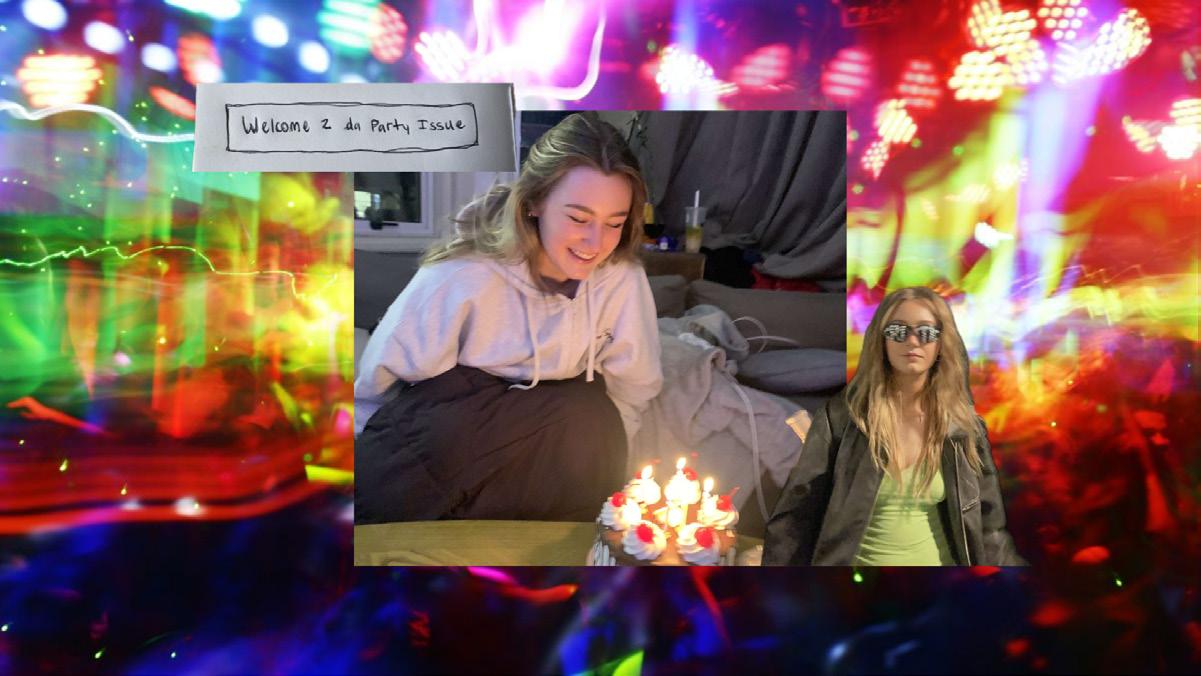

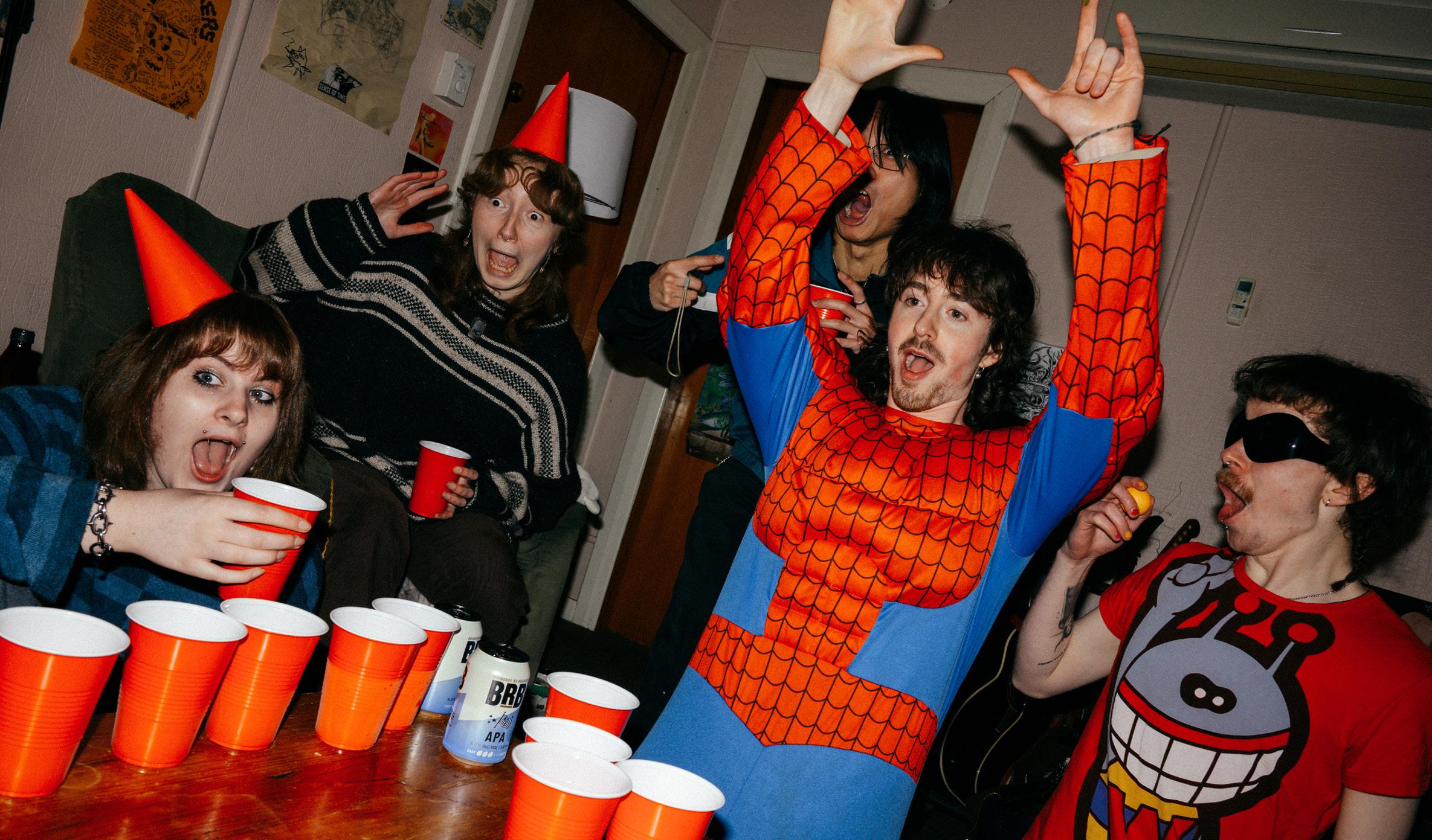
I went to high school in rural-ish Canterbury – Lincoln, to be exact. We didn’t really have a whole lot of parties, and the ones that were thrown were either crammed into cookie-cutter suburban houses, held in someone’s shed or, if things were really fancy, hosted by a local community hall. I actually became the delegated host for my friend group, and had some pretty successful gettogethers. The stories from those days are probably best left in the past, but the point is I’ve always been a party girl at heart.
I honestly always hated living out of the main thoroughfare that was Christchurch. Given it was a nearly half-hour drive to get into the city centre, I’d had next to no experience with town or bars, even though I’d turned 18 halfway through year 13. When I came to university, I quickly came to grips with what real party culture might look like.
Living in halls, town time disrupted any attempt of hosting a party, much to my disappointment. Big Warden wouldn’t have it, moving everyone out at 10pm sharp. Instead, you had to be lucky enough to be friends with revered second-years if you ever wanted to get to an actual function. While the freshers were stuck partying at the clubs, everyone else was making the real party happen. Town to them was a nightcap, while the fresher saw it as an end-goal. Chess and checkers.

Once I was out of halls, I was like a bat out of hell, which definitely sucked for my three med-student flatmates. To this day, I love a good party –and my definition of a party is wide. I love small parties (pres, flat bondings, bottomless brunches) and big parties (flat balls, housewarmings, 21st festivities). I love being on aux, mixing 3-week-old juice with even older wine, talking to randoms and manifesting Project X level turnouts. I do not discriminate when it comes to a party.
That’s why I’m proud of this issue. If you turn to the centrefold, you’ll see a party board game made by myself and my two third-year flatmates, Grace and Emmie. Bring it to your next party. I also made our dear readers a house/dance playlist, genres that were our favourite for pres at our flat. Listen to it at your next party.
Remember to stay off the roof, be mindful of overcrowding, have zero tolerance for weird behaviour and look after your mates. A good party is a safe party <3









Kia ora Critic,
So sad to hear Uni Bookshop building is being sold and the bookshop downsized.
But perhaps the bigger plan is using the money to buy a student bar? Or perhaps they'll turn the original building into a student bar? Maybe even they'll turn the new smaller bookshop into a bar. Y'know, come for the books, stay for the beer, that sort of thing.
Ale for thought,
Bar lover, and election promise remember-er
Send a letter to the editor at critic@critic.co.nz to be in to win a $20 UBS voucher.
Dear Critic,
My friends and I all love Te Ārohi, and we stick the covers/half-page spreads we like on our bedroom walls. I've collected every mag this year so far, and I only have one request: more blue/red covers please! Someone at the office definitely loves pinks and purples and I appreciate that. However, there's a whole colour spectrum out there we could be seeing out on the stands each week. No biggie ofc, this is just a suggestion. But I promise that if the next cover is properly blue and red, I'll hang it on my ceiling :) - girl looking for more room decor
Editor’s Response: Patience is a virtue! Last issue had some blue and red, and our Party Issue features a heap too. Thanks for the feedback!
Dearest Critic,
Today, I did something I have not done in a while. I sat in central library to do some work, and I immediately remembered why I hate it. I was there for a grand total of 45 minutes, and I took note of every (separate) cough that managed to make it though the white noise I was playing through my over-ear headphones. I counted 112. 112! That makes out to roughly one hacking cough every 24 seconds. Are you kidding me? No wonder everyone is always sick, basically no one knows basic decency and hygiene. I get that everyone has shit to do, but come on, you can do better than open-mouth ipad kid coughing in the middle of the busiest place on campus. I will not be returning to central library.
Sincerely,
A disgusted postgraduate student
Dearest Critic,
First thing is first, I would be remiss to not mention how morally dubious I find your publication. Paper? Really? That's the ONLY material you can print this crap onto? Tommyrot!
Wake up, The Critic, the world ain't getting cooler, and your use of paper has become inexcusable. I'm thinking make yourselves useful for once and think outside of the box, eh?
Maybe give the bloody trees a break and think about alternative solutions. Plastic may work a treat.
If I see another lot of paper magazines on the stands next monday, I will knock on the door and request a dialog with you and your goons. Fair warning: I have been known to raise my voice.

By Jimmy Tannock


For more than eighty years, the University Bookshop has been a fixture of student life, and a staple of the wider Dunedin community. When it first opened in 1945, under the management of the Presbyterian Book Room, the first page was turned in the University’s story following the Second World War.
The shop arrived during one of the university’s busiest years. Arana and Carrington Colleges both opened their doors, the Capping Show returned after a three-year hiatus, and an influx of returning soldiers drove enrollments to new heights. To support the unprecedented wave of students, the bookshop became part of a broader effort to help returning soldiers readjust to civilian life through education. Access to quality books was seen as a ‘kick-starting’ measure to the country’s post-war recovery.
As cohorts of students came and went, the bookshop steadily grew. Now owned by the Griffin family, it relocated from a converted two-storeyed house opposite the Captain Cook Hotel to its current site on Great King Street in 1962. The building, a former confectionery factory, came with a series of quirks that gave the shop a unique character. Among them was a hydraulic hoist, once used to move lollies between floors, repurposed to haul stacks of books.
The 1970s saw more shifts in ownership. Control of the bookshop passed from the Griffin family, to Whitcoulls and OUSA, with OUSA eventually taking full ownership of the store. However, as of the 27th of July, OUSA announced the relocation of the bookshop to a “smaller, student-focused” on-campus store on Cumberland Street, designed to “better

By Daniel Gray and Hanna Varrs Contributor and Editor // critic@critic.co.nz

serve students and ensure long-term sustainability.” The new location will not have postal services, and will primarily stock textbooks, essential stationary and academic resources.
"The relocation and refocus of UBS has been carefully considered; it is an important step in ensuring the Bookshop continues to serve students well into the future," said OUSA President Daniel Leamy. "The changes allow us to focus more directly on student needs and deliver a more targeted and sustainable offering." According to a press release, the relocation was a response to changing operating conditions, including “increased operating costs and changing consumer behaviour.” It supports a renewed focus on affordability, accessibility, and student-centred services.
Simon, a University staff member and student working towards his Honours degree in History, called the closure “devastating”. “An irreparable loss for students, for the campus,” he continued. In Simon’s eyes, losing an independent book store to source material would be a “dimming of academic life” and the “intellectual scene” at the University of Otago. Despite the closure, Simon pointed to the fact that the market for indie books still exists, but would drive buyers into ordering from Scorpio or Unity books, moving commerce away from the city. “It’s really frustrating,” Simon admitted.
Over the decades, the shop has welcomed countless students as well as literary figures including Janet Frame, James K. Baxter, Ruth Dallas, and Margaret Mahy. But now, after serving generations of students and becoming a respected part of Dunedin’s community life, the University Bookshop will enter a new, albeit quieter, chapter in its history. ★
Spoiler: everybody kept their pay
Time sure does fly when you’re having fun – how can it be quarterly report time already? In order for the OUSA Exec to get paid their honorariums (their equivalent of wages), each member must write a report of everything they’ve gotten up to in the last three months. The Exec will then approve these reports and decide whether each member has earnt their keep or not. Imagine if your co-workers had to give the final tick on your pay.
Here is Critic Te Ārohi’s summary of each report. Bear in mind that each report ranges from 1000-3000 words, so we can’t squeeze in every little detail. The full reports are uploaded to the OUSA website, so feel free to have a nosy if you’re a stickler for the details.
Daniel Leamy – President
“It’s fair to say that it has been an incredibly busy three months to now for the whole Exec,” Daniel wrote. Sitting on a whopping seventeen OUSA and University committees, he might hold the current student record for most meetings attended. If you think you’re having a busy day, at least you aren’t Daniel.
His key achievements for the last quarter include being the spokesperson for OUSA (which included being interviewed as a monkey on Hyde Street), planning advocacy with other student associations, and working on both the Dunedin by-election and upcoming general election. Looking ahead to the future, Daniel’s planning to increase his advocacy work, and take a closer look at the Executive’s governance structure.
Kamesha Jones – Administrative Vice President
As Administrative Vice President, Kamesha really is a jack of all trades. Picture many, many huis with fellow Exec members and University staff. Behind the scenes, proposals are being – for lack of a better word – proposed on the Executive’s structure, and Kamesha has had a big hand in consulting with current Exec members as they are developed, working closely with Daniel on the matter.
In the advocacy space, Kamesha noted that the cutting of the Fees-Free scheme has sprung OUSA into action, seen with last week’s protest spearheaded by the Education Action Group. Other work includes championing women’s safety on campus, where work is being done to strengthen the OUSA Clubs and Socs Sexual Misconduct Reporting Policy. As with many other Exec members, the OUSA election will bring even more focus on student advocacy and engagement as it draws nearer.
Troy Gibbons – Finance & Strategy Officer
Finance and Strategy Officer Troy had a stacked second
By Gryffin Blockley News Editor // news@critic.co.nz
quarter, getting involved in lots of different avenues. The ‘Gig for Gaza’, held in May, had a good turnout and raised an impressive $1400. Troy also helped organise an election debate for the Dunedin City Council by-election. Troy plans to work closely with Political Rep Flynn as the general election draws closer, trying to get as many students enrolled to vote as they can, and plan for the general election leader’s debate.
Looking ahead to the future, work is underway on various goals. Securing a student bar is still in the works, but is a long, long process involving OUSA, the University, and finding the golden-ticket venue. While work is also being done to try and repeal Voluntary Student Membership, Troy noted that it “seems to be here to stay, which sucks”. Troy also wants to push for more OUSA transparency, and plans to use the Exec column in Critic to do that. You heard it here first!
Some “epic papers” may be dropping soon, as Hansini hinted in her report, which is exciting news for students looking to spice up their degrees. Hansini has also been working closely with Student Voice (AKA class reps), trying to increase engagement with University policy around paper or course changes and proposals.
In the background, Hansini has also been chipping away with proposed changes to the University Assessment Policy, as well as improving its clarity and consistency. She wants the policy to incorporate the realities of education in this AI-era, and is paying particular attention to how assessments are changing in light of AI, noting the rise of group work in some papers. #Endgroupwork. An AI usage survey with 180 respondents was also undertaken, and the plan is to bring the proposal to the University senate in August or September.
Warsame – Welfare & Equity Representative
It’s been a busy quarter for Rihana as well, focused on advocating for an equitable and enjoyable university experience for all students. For quarter two, a big goal was trying to establish diversity, equity, and inclusion workshops in residential colleges. Meeting with key staff, Rihana noted it’s likely to be a “years-long process”, but she is aiming to set up a blueprint for Exec members in the next few years. Meetings with students and staff to understand hall experiences are also in the works for the next quarter.
Another key goal was re-establishing ODSA, the Otago Disabled Student Association. The ball is rolling on this, with funding to be finalised, but a first event and establishing an executive has been figured out. On top of that, she's been working hard on a proposal for a Disability Representative role on the Exec. Rihana has also been getting feedback on the recent Lecture Recordings Policy, and developing clearer action points for the Welfare and Equity Committee.


Fergus Parks – Postgraduate Representative Quarter two has meant wrapping up the final remains of the defunct Society for Postgraduate Students, which was shut down earlier this year as it didn’t get enough traction. Fergus has a new lease on life, focusing instead on liaising with postgraduate students directly.
Meeting regularly with the head of the Graduate Research School, as well as being present on many University academic committees, Fergus has been busy advocating for our unc students. Big priorities at the moment are voicing OUSA’s disapproval toward government cuts to university funding, and increasing advocacy for international postgraduate students.
Irfaan Ariffin – International Representative
Irfaan has two big projects on the go, planning for both the Multicultural Ball and the semester two international student’s orientation. Irfaan also made an appearance on the Connecting Cultures radio show, highlighting OUSA’s work advocating for international students around visas.
Irfaan’s also brainstorming an international student podcast and increasing the Otago International Student Association’s outreach, as well as trying to bring back the International Cultural Expo with the University.
Ella-Mary Sangster – Clubs & Societies Representative Quarter two has seen a major bump in engagement with OUSA’s many, many affiliated clubs and societies. While Ella noted that there were lots of “tricky” club affiliations in quarter two, this hasn’t stopped the grind for all things student club executives. She’s helped organise the Earth Day Market Day with environmental clubs, and Clubs Week money workshops to round off a busy quarter.
Looking ahead to the next quarter, plans are well underway to develop a shared clubs calendar to promote events in a singular place. How-to guides are in development around club elections, fundraising and events as well. Another affiliated clubs meeting is being planned (like a UN Summit but for OUSA clubs and societies), and Critic hopes that Ella orders hot chippies.
Flynn Nisbett – Political Representative
Flynn is the guy who has been spearheading the Exec’s social media presence, and they’ve certainly been putting out some content recently! Outside of this, he’s been busy in his role of Political Representative, especially with an election this year. A big effort has been sussing the general election leader’s debate, which will hopefully feature politicians from parties right across the political spectrum arguing in a room together. Another big organisational drive was toward the Student Strike last week – you might have spotted him in the Debt Monster outfit. God knows when that thing last went to the dry cleaners.
has also met with six MPs, been in touch with five more, and met with eleven of the fifteen Dunedin City Council councillors.
Zoe Eckhoff – Residential Representative
Zoe’s been a very busy bee, and admitted that she felt like she’d been doing more governance work than advocacy. Highlights have included a warmly received “pamphlet campaign”, distributing key tenancy/residential information to those in the student quarter. DCC councillors, property management agencies and students provided entirely positive feedback, and the pamphlets even found their way to a local MP’s office. Zoe’s also helped MBIE with organising ready-to-rent informative videos, and had consistent contact with the ODT to help bring media attention to tenancy-related issues.
Looking ahead to the rest of the year, a big goal is to get OUSA’s Residential Committee off the ground. This combines key groups around flatting, residential colleges and student voices to make living near campus the best experience it can possibly be. She’s also keen on a green sticker campaign, where tenants could place a green sticker on their door as an indicator of a positive flatting experience, visible for potential future tenants when flat viewing. Like many other exec members, the upcoming election will also be a big priority, with housing-related issues front of mind for many student voters.
Sami Harrison Dunn & Jarna Flintoff – Te Rōpū Māori
Tumuaki Takirua
The Tumuaki Takirua of Te Rōpū Māori (TRM) have had a busy quarter, continuing to “build a great relationship” with the Exec. Key events for the quarter include showing up at over fifteen kaupapa, engaging with University committees and organisational efforts for the upcoming Te Huinga Tauira (the National Māori Students' Conference).
During the quarter, TRM also established a Policy Kōmiti to review their policies. So far, the Investment and Dispute Resolution policies have been approved, with plans for the Grants Policy next quarter.
Adeleine Dunn – Pacific Islands Students’ Association
President
Heaps of engagement with member clubs of the Pacific Islands Students’ Association (UOPISA) drove home a productive quarter two. On the admin side of things, Adeleine’s been sussing the re-signing of OUSA and UOPISA’s memorandum of understanding. Extra information and funding matters have made it more complicated than expected, but plans are already in place to make the process easier in the future.
Another memorandum is in the works with the Pasifika Tertiary Network, an organisation that incorporates Pacific voices across all of New Zealand’s tertiary education institutions. As well as this, highlights for Q2 included the TRM x UOPISA Market Day, and many meetings with University staff aiming for better engagement between Pacific students and student services. ★

Four hundred students turn up to protest government cuts
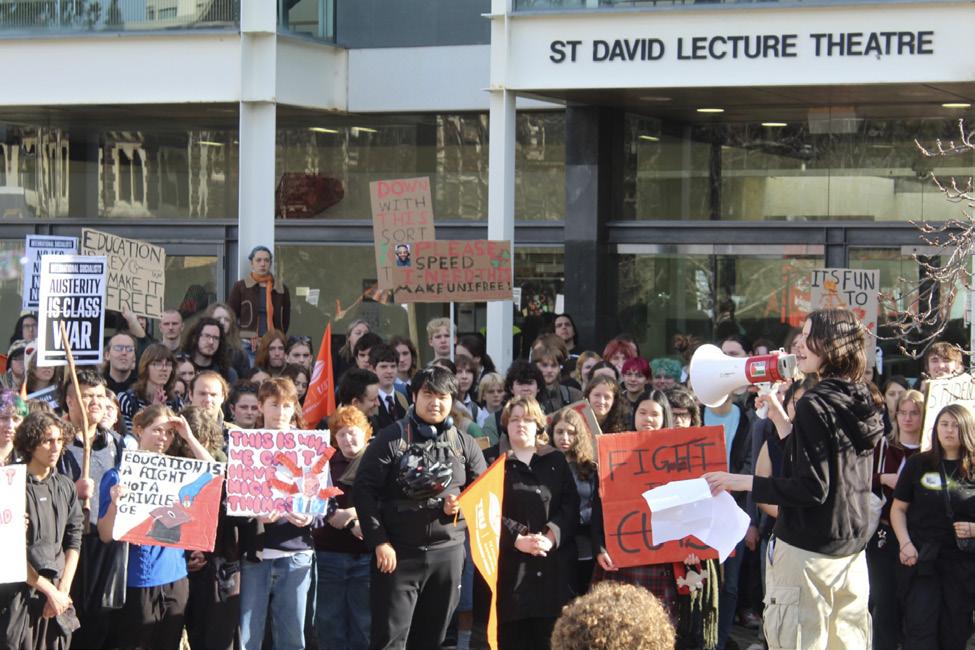
Hundreds of students marched through the University of Otago last Wednesday to protest the abolition of the Fees Free scheme. The campus-wide demonstration ended with the group occupying the St David’s building, protesting rising tertiary education costs and government funding cuts. According to the organisers, Education Action Group 26 (EAG26), around 400 students attended the Student Strike for Education, with approximately 250 taking part in the sit-in.
The strike was centred around seven demands directed at both the Government and the University Senior Leadership Team. Protesters called for the return of Fees Free education, increased tertiary funding above inflation, a universal student allowance, and the reinstatement of compulsory student union membership through the repeal of voluntary student membership legislation. They also urged the University to reject passing the costs of government underfunding onto students by opposing fee increases, prevent further cuts, and take a stronger stand against government austerity.
Demonstrators were seen carrying signs reading "Fund Fees Free! Stop the Cuts!", "Marx was right! Free education for all!" and "TAKE ME TO DINNER B4 YOU FUCK ME," while chants of "Austerity is class war!" and "No fees, no cuts!" echoed through the University.
Students were joined by members of the Tertiary Education Union (TEU), the Public Service Association (PSA), and a large contingent of local secondary school students, mainly from Logan Park High School. A few of these high school students addressed the crowd, arguing they would be among those most affected by rising fees and calling for the opportunity to attend university "without breaking my bank account". Strike attendee Alex told Critic Te Ārohi they attended in order to "make sure the next generation of students don't consider suffering the norm."
In a press release, EAG26 spokesperson Annabel Hankin rejected what she described as "a false narrative" that universities have no alternative but to increase fees and cut staff in response to chronic underfunding. "We reject the lie that this is anything but a bandaid solution that will decrease enrolments and damage the quality of our education," she said. At the rally, Hankin also pointed to the University's recent fee increases, noting course costs have risen by the Governmentset maximum of 6% in each of the past two years. Namely, if that continues next year, that's almost a 20% increase in fees over the course of a three-year degree. "That is hundreds of extra dollars spent on the same courses while we deal with the cost of living crisis."
Critic approached the University to ask whether they intended to make any commitments toward fees, staffing, or services. The University pointed to its scholarships and student support initiatives, including increased support for the Pūtea Tautoko
By Bella Bates Senior News Reporter // news@critic.co.nz
Student Relief Fund, but stopped short of ruling out fee increases, stating it “increases fees reluctantly” while facing financial challenges and reductions in government funding for research and tertiary education. The University said it was also pursuing greater collaboration across the tertiary sector and more strategic approaches to education, research and innovation, remaining committed to “delivering highquality education and research” in an environment where “government funding is declining.”
Annabel Hankin of EAG26 also drew attention to ViceChancellor Grant Robertson's autobiography, in which he argued universities needed to "make a stand" against government austerity during the 1990s. The sit-in was intended to pressure University leadership to do the same today, arguing management should resist shifting the financial burden of underfunding onto students through fee increases and staffing cuts. The sit-in at St David’s mirrors the protests Grant Robertson marched in as OUSA President in 1993, also protesting government cuts to the tertiary sector.
Following the march, protesters occupied St David Lecture Theatre, with the EAG26 describing the atmosphere inside the lecture theatre as "defiant" with students united in opposing recent changes to Fees Free policy and anticipated fee increases. "We are inspired by the actions of past students against the government attacks of the 1990s," spokesperson Petra Campbell said. "We want to show the University and Wellington that students are not afraid to exercise our right to protest, to disrupt, and to demand that our voices are heard."
The University spokesperson emphasised that “the University supports the right to peaceful protest and believes it is important for students and staff to be able to express their views on campus”, and then referred us to their Free Speech and Institutional neutrality policies.
The spokesperson also agreed that removing barriers to tertiary education was important, adding that the University had “been supportive of Fees Free as one of those initiatives.” The spokesperson said the removal of Fees Free would most immediately affect current students who will not complete their studies before the end of next year, as well as those planning to begin tertiary study in 2027. While the University said it was “difficult to say what the overall impact” would be, it acknowledged that “anything that increases costs on students will be unwelcome and challenging for some students.”
With an election on the horizon, the abolition of final year Fees Free, and massive policy changes in the University world, many tauira are wanting to make their voice heard. It’s likely this won’t be the last turn out for action, and Critic will keep you posted on any future developments. ★

By Paige Milburn
“We were just surprised by […] the amount of people that entered,” Martha admitted. “We thought [the] first event might be a little bit lackluster [...] We had faith, obviously, but you know – we were very happy with the response.” Several dancers had travelled all the way from Christchurch to compete, which Martha says “really shocked” her. From the judging perspective, Martha said they were looking for good musicality – how each dancer utilised the music. She noted that “freestyle is so interesting, because you can do such different things with the same piece of music”. Additionally, the judges were looking out for technique as an indicator of “how long someone has been training for”. Finally, Martha spoke of the performance element, how important it was to be entertained by dancers, and having those memorable moments that make people go “oh shit!”
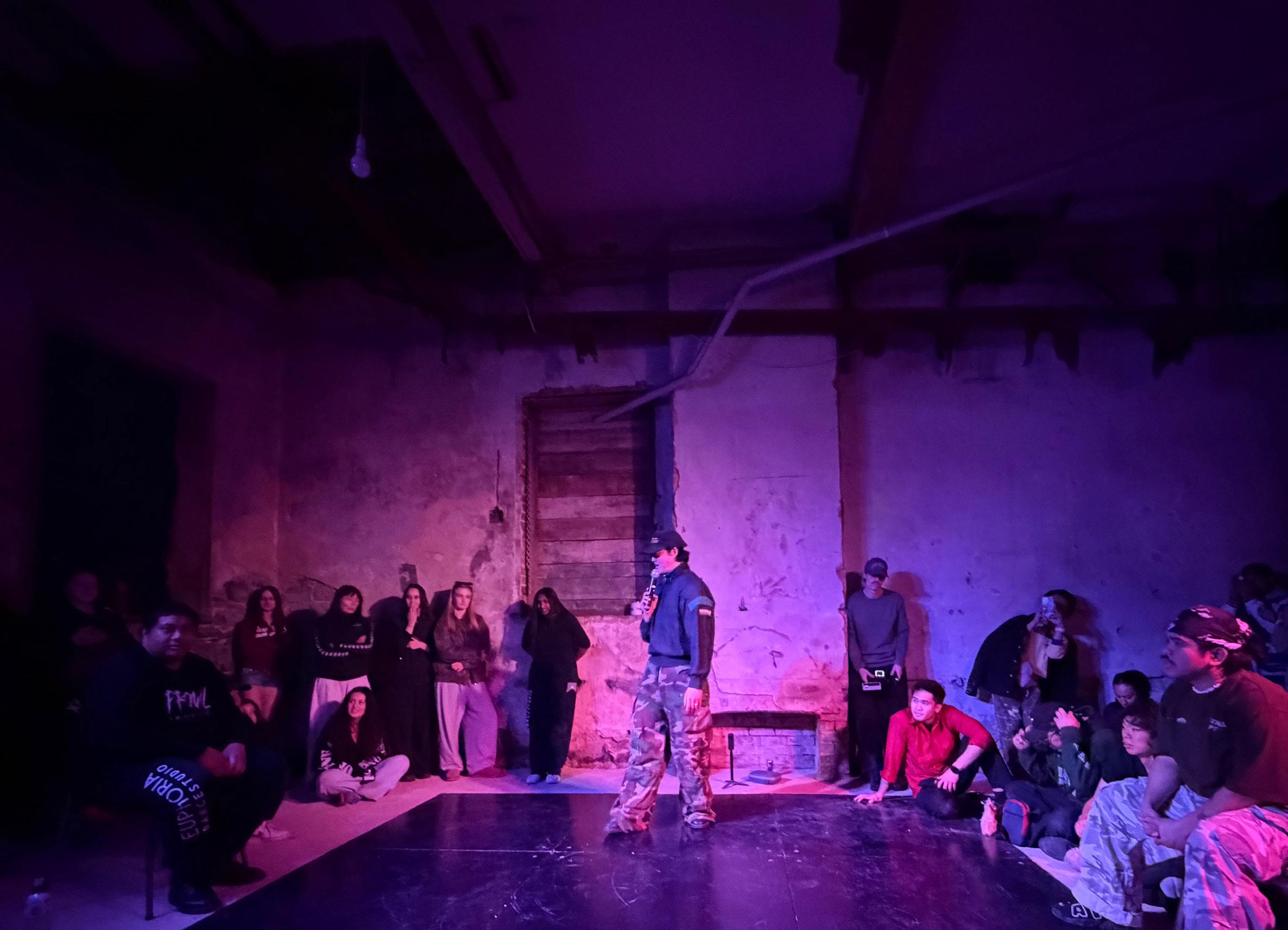
On the 11th of July, an exciting new event made its soldout debut in the Ōtepoti hip-hop scene: The Yard. Founded by third year Nutrition student and local hip-hop dancer
Martha McAuley, along with the creators of the Dunedin pre-loved clothing store 324 Central Market, The Yard is a street dance battle event, held underground in the Octagon’s New Athenaeum Theatre. Martha, who was also one of three judges at the event, said that The Yard “celebrates freestyle dancing and battle culture”.
Martha explained to Critic Te Ārohi that she and her co-founders noticed the lack of freestyle events in the Dunedin dance scene and just how many “really sick dancers” there were in Dunedin and wider Otago, and thought “why don’t we bring them together?” in order to connect and share their passion for dance. She also emphasised the importance of “creating a specific atmosphere that is just really ‘hip-hop’ [...] That underground vibe, that’s where hip-hop came from. It came from the streets.” It made perfect sense then, for the event to be held quite literally underground.
The battle categories consisted of 1v1 freestyle battles, 1v1 breakdancing, and Mini Crew – a battle between teams, each made up of two to five dancers, competing with pre-choreographed dances. In the freestyle battles, two dancers would compete against each other to the same song through improvised choreography. “They just dance at each other, and they can kind of feed off each other, imitate each other,” Martha explained. Participants are free to dance in any style they wish, under the hip-hop umbrella, of course. “It’s really open like that, you kinda just play it to your strengths.” The 1v1 breakdancing battle involved a lot of footwork, “toprocks”, “downrocks” and even head-spinning.
Martha herself has been dancing hip-hop since she was seven, and competing since the age of ten. “It has always been hip-hop for me” she said. Throughout the years, Martha has competed both regionally, and nationally. In fact, she and her crew, “Z1 Adults”, are currently representing Aotearoa at the 2026 World Hip-Hop Dance Championship in Phoenix, Arizona. “I’m just proud that Dunedin is getting on the world stage because that is an accomplishment in itself” she added. This is a big year for Martha, as she is also set to compete in the Hip-Hop Unite World Championships, held in Tauranga in October, and has also been coaching a team of her own, who were international finals wildcards for the Australian Dance Crew Championships. When reflecting on how she has managed to balance all of this alongside uni, Martha reckoned she’d picked up some pretty good time management skills now she was in her third year. As well as that, the things that keep her busy are “all stuff” that she loves. “I would not be as joyful I think, if I didn’t have so much dance in my life”.
When asked about plans for The Yard going forward, Martha said they hope to bring back The Yard some time in the near future, and potentially expand to other cities. When Critic asked if we would see The Yard returning to Dunedin, Martha was very enthusiastic in her reply. “Yeah! This was the place of origin. We’d love to bring it [back] here.”
Martha’s words of wisdom for those looking to get into hip-hop, or dance in general, is to just take that first step. “Take the first step into the dance class, onto the dance floor — that’s the hardest part I think.” She reassured that once you do, “you realise how awesome of a community it is”. She even revealed that her mum just went to her first dance class. “Bro, she’s like sixty. C’mon, it’s never too late to try. Take a leap of faith.”
So take that leap of faith, and check out The Yard on Instagram for their next endeavours! @theyardnz ★












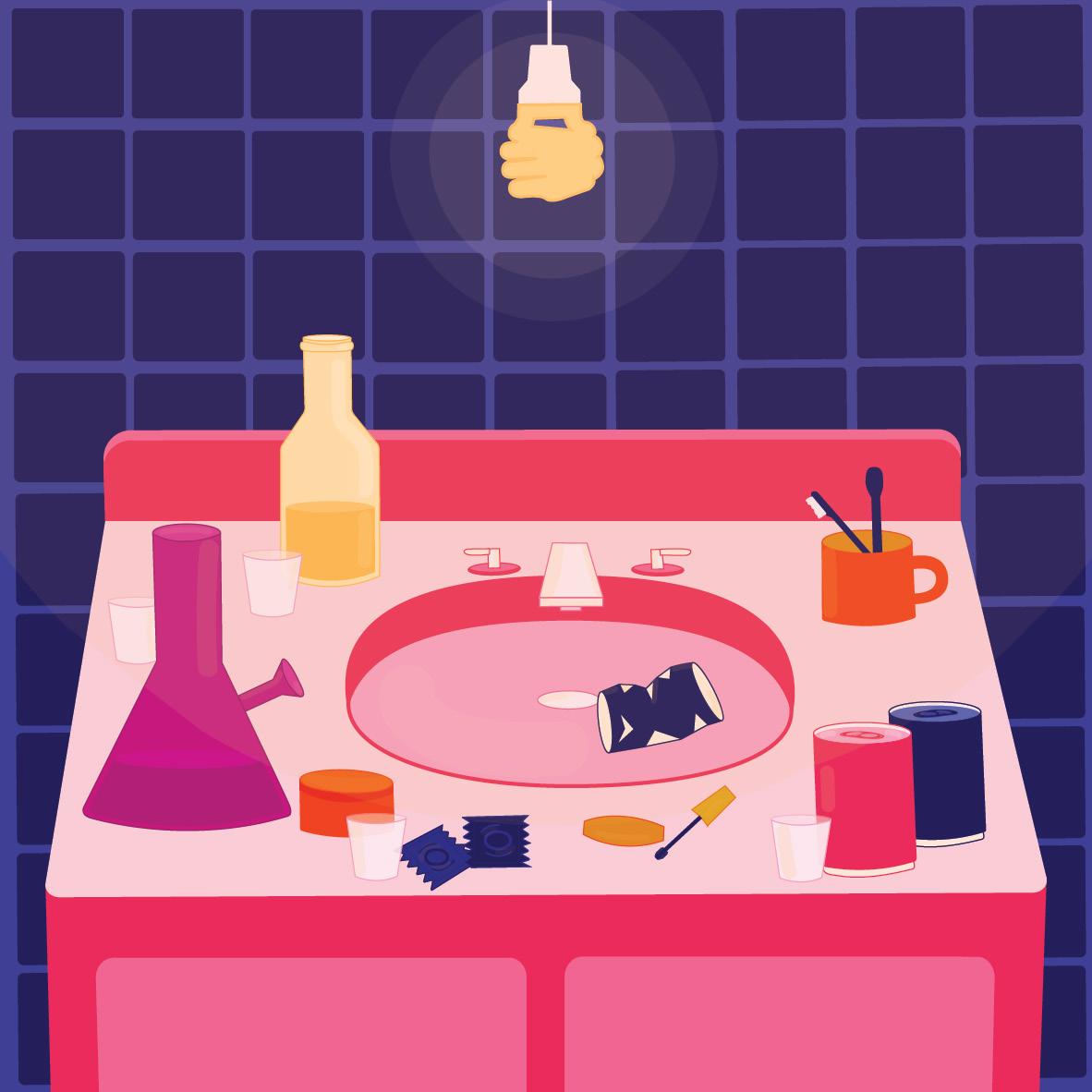



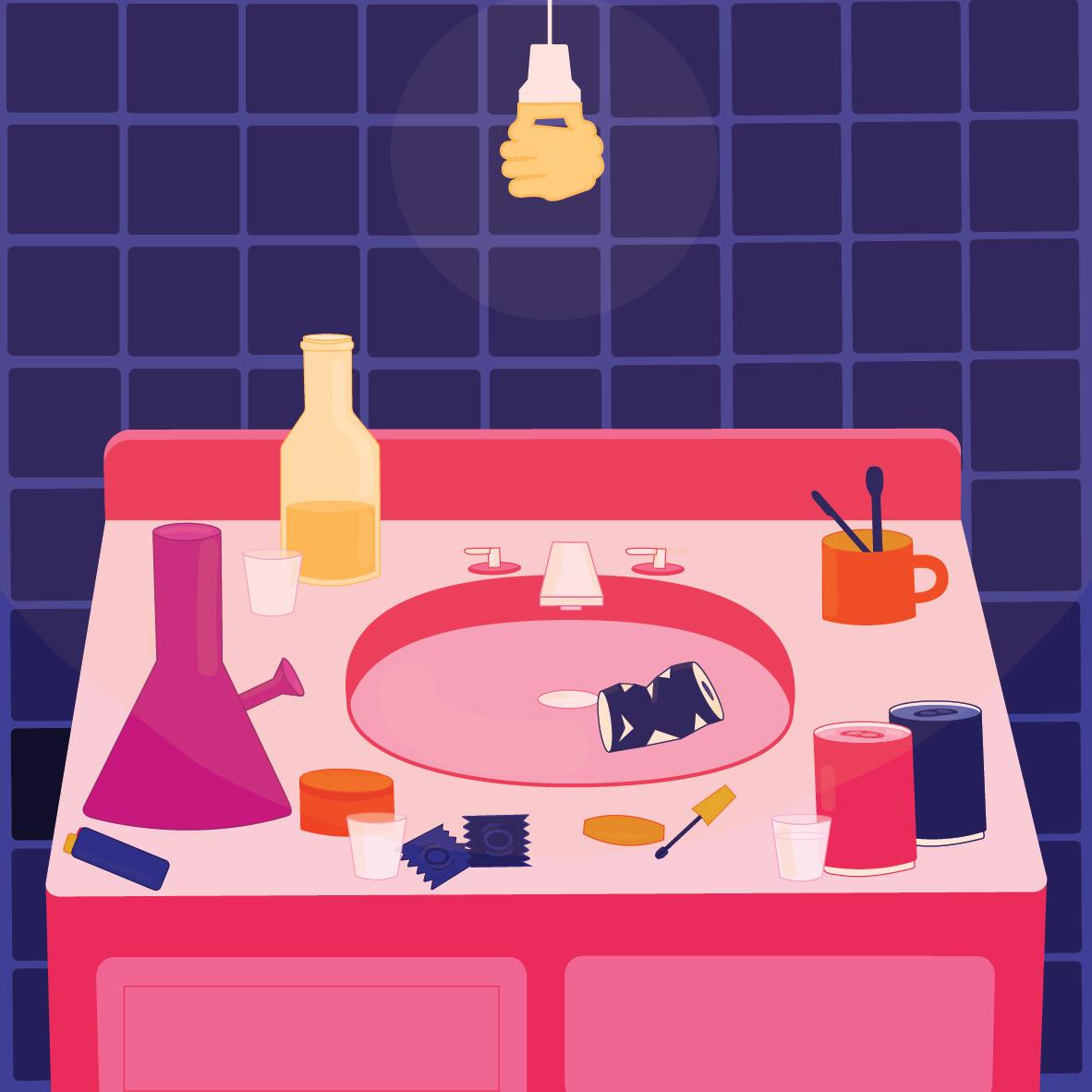
Let's be honest: nights out at the pub have gotten a little stale. After a few rounds of beating the same dead horse, someone inevitably ends up scrolling Instagram reels and suddenly the night feels less like a fun social outing and more like an obligation to live the “Scarfie lifestyle” while you’re still young.
Luckily, Dunedin – while still losing to Auckland in this one very specific category – has a few places where you can do more than sit around, eat hot chips, drink pints, and slowly become invested in a random French football game that for some reason is on every sports bar TV. We’ve ranked some of these lovely little bars with activities from cheapest to dearest, because your bank account deserves a little mindfulness.
Whether you're competitive, strategic, or just looking to spice up life outside the bedroom, Dunedin has plenty of choices beyond the old “meet at the pub?” plan. Grab your mates, an axe, microphone, or cue, and get ready for the night of your life.
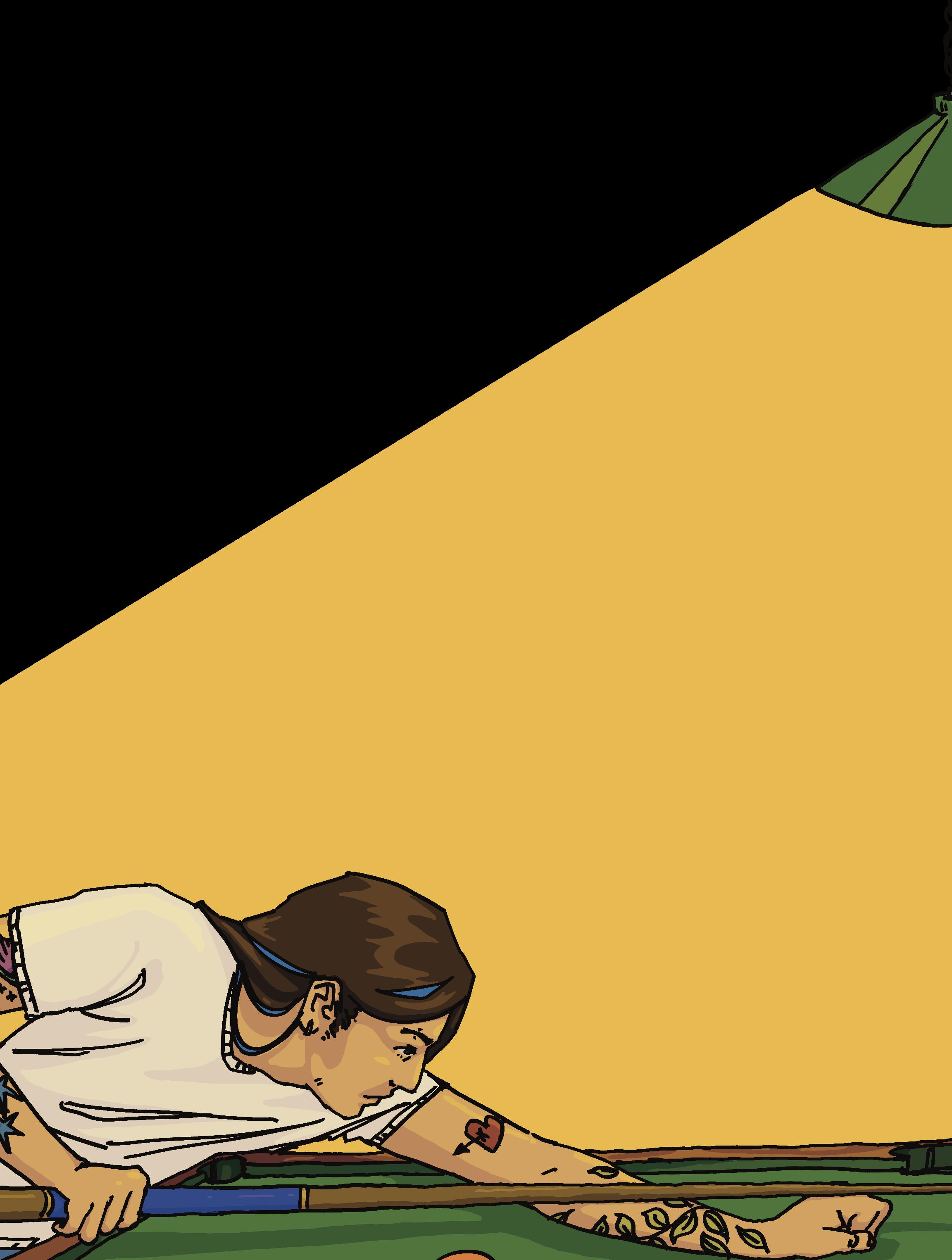
If you're looking for something casual that won't destroy your bank account, Poolhouse is a great choice. Buy a drink, grab a cue, and prepare to stand in a corner, menacingly chalking the tip and pretending like you know exactly what's going on. It's the perfect activity for challenging your mates, proving your stick handling prowess, and convincing everyone that missing the easiest shot of your life was actually part of the long-term
By Critic Te Ārohi Staff
strategy. For just $12 per hour per table (or $14 if it’s Friday or Saturday), it’s a super affordable option for a fun night out.
Poolhouse has that laid-back, slightly moody bar atmosphere that is equally as aesthetic on your Instagram story as it is in real life. It also has an incredible ability to inflate egos. Everyone either claims they “used to play heaps with their Dad”, or they suddenly start giving unsolicited coaching advice despite being on the verge of scratching every second shot. Plus, Poolhouse is beneath a backpackers, meaning that you’re sure to make friends with some international visitors. Perhaps you could convince them that your shooting fuck ups are just the way the game is played over here in little Aoteraroa.
For those who like their nights out with a side of intellectual circle jerking, pub quizzes are the perfect excuse to discover which of your friends are secretly geniuses, and which are just loud and wrong.
Quiz culture is strong in Dunedin, so you can literally head to a quiz nearly every night of the week if you wanted to. On Mondays, head to The Bog. Tuesdays are for Mornington Taphouse or Baaa Bar. Skip the Pint Night line on Wednesday – quizzing it up at Kensington or Cableways is a much better activity than unpeeling your feet from the U-Bar floor. On Thursday, hit the Rope & Twine, Moon’s Bar, No. 8 Distillery or ADJO. Take the opportunity to put your BA to use during the current affairs round – God knows when else it’ll come in handy.
Once you have sorted where you’re headed, the next biggest challenge is picking a team name that will make the host regret reading it aloud. Madeleine McCan’t is always a classic, but the true art is creating something just inappropriate enough to make everyone laugh without getting your team removed before round one even starts.
Just remember that most teams will eventually experience the classic ‘pub quiz’ emotional rollercoaster: confidence, confusion, blaming the questions or the host, and of course “we would’ve won if the music round wasn't all from the 70s, and if James hadn't gone off for a vape halfway through”. Once you get over that though, pub quizzes are the best week night fun you'll ever have!

Everyone has a main character moment waiting to happen, and karaoke is sure to bring it out. You will look so cool when your true self is reflected in a power ballad performed through a shitty karaoke mic. At least that's what Theatre students think. In any event, karaoke is one of the few activities where confidence matters more than talent. Embarrassing yourself is kind of the point: nobody remembers the person who sat quietly in the corner. Instead, they remember the person who gave the performance of a lifetime.
Pronounced vuh-vah-chee, Vivace Karaoke Bar is kind of shit in the best way possible. The downstairs part is a bar area where you can purchase a drink to get a song token. This is great, because you basically are required to get drunker to be able to sing, which in turn makes the singing easier. You then use that song token to join the queue to sing onstage.
The crowd in the downstairs bar can be a little dead, so going to Vivace works best when you bring your own group. If you’re a little shy, you can also book a private room for you and your friends to enjoy for $10 per person per hour. They’re open from 9pm-3am on Thursday, Friday and Saturday, so it’s the perfect activity to round off a late night. Just watch out for the stairs when you leave – they’ll be your enemy after a bottle of soju.
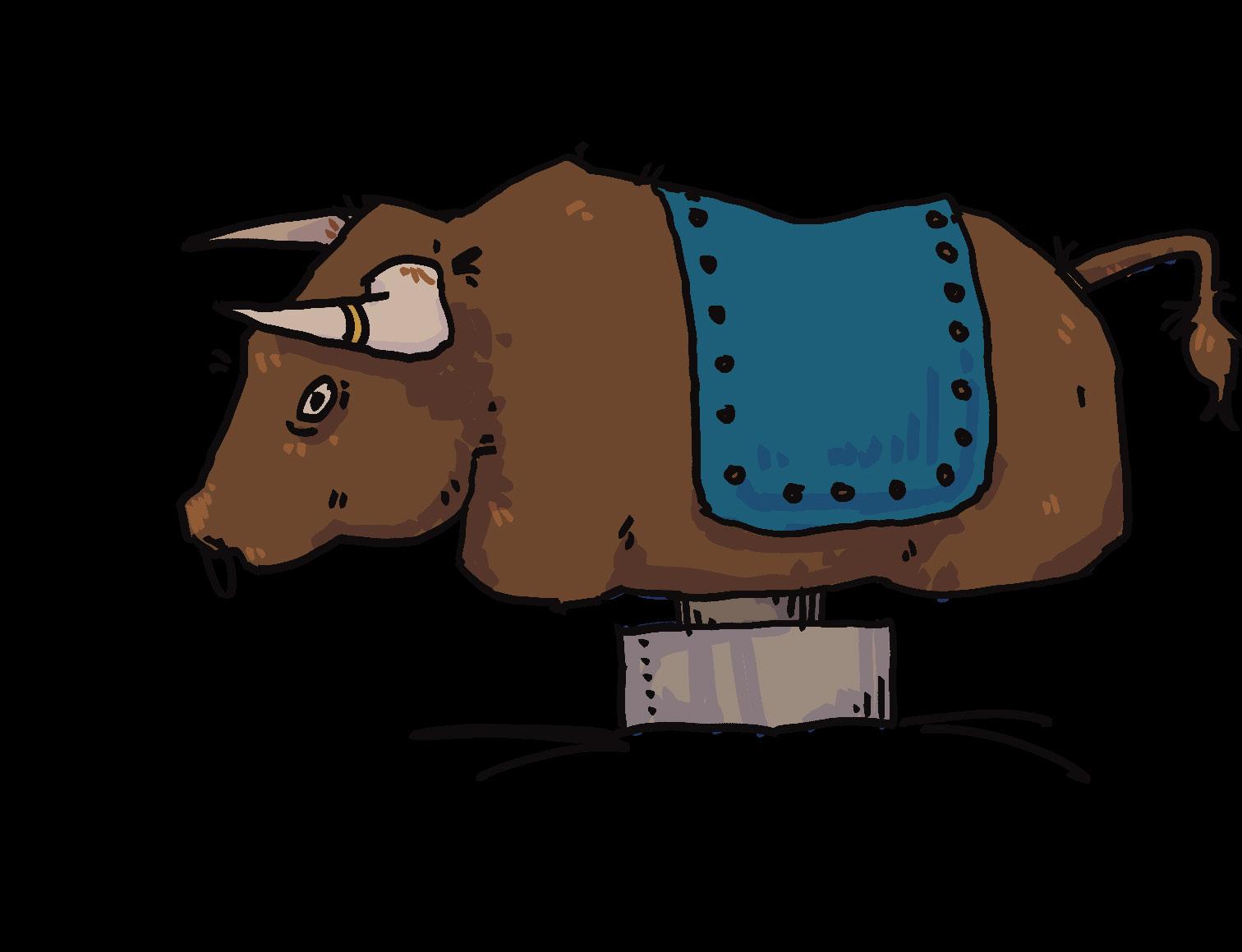
content for an embarrassing 21st speech. It doesn't matter how coordinated you think you are – after a couple of drinks, everyone eventually discovers that gravity is inescapable. Watching your mates confidently climb aboard before immediately being thrown sideways never gets old.
Who doesn't love knocking back a raspberry vodka lemonade, putting on someone else's shoes and throwing a ball down a freshly waxed lane? Literally no one. Bowling is also one of the easiest group activities to organise. You don't need to know the rules, you need very few skills, and after one game everyone will be convinced they can do better next round. Just keep in mind the classic fallacy of bowling: one round isn't enough, but two is somehow too much.
Bowl Line has an onsite bar, and they don’t bother putting the bumpers up once you’ve had a few. It’s a high trust model that just works. The place is stuffy, has way too many kids running around and the bowling screens have those wack-ass animations that make you wonder if you’re hallucinating. It’s pretty much the best place on Earth.
Ever wonder what it would be like to live out your cowboy, cowgirl, or cowperson dreams? Probably not. However, for just an additional $5 on top of any drink purchase or $10 for a wristband, you can enter the rodeo.
The mechanical bull is one of those activities that seems like a great idea until you’re actually on the beast. It’s unique, hilarious, and guaranteed to give your flatmates enough
Illustrated by Jimmy Tannock
If public humiliation and sore thighs isn't your thing, XYZ’s private karaoke rooms offer a slightly less dangerous alternative for $75 per hour. If you somehow manage to survive both the bull and karaoke in the same night, congratulations – you’ve completed the Dunedin nightlife equivalent of a duathlon.
Megazone is the ultimate “why choose” experience. With laser tag, mini golf, axe throwing and a bar all available under one roof, it's basically impossible to be bored. It's perfect for birthdays, flat bonding, or when your friend group has spent three weeks trying to organise a get together with nobody actually making a plan. Act out your viking movie fantasies while axe throwing, or get the WWIII prep in early with laser tag.
Megazone is practically neighbours with Emersons, which makes it even awesomer. Why not grab a tasting tray either before or after whipping your mate in mini golf? Alternatively, whichever team loses laser tag shouting the winning team a jug doesn’t sound too bad either.
A night spent at Megazone is a little more expensive, but you're getting a full night of entertainment rather than just a few hours sitting at a table pretending like you aren't checking the time. Megazone has heaps of packages you can get that include drink tokens too. For example, for $50 per person, you can get one laser tag game, one round of mini golf, half an hour of arcade play and two drink tokens. ★


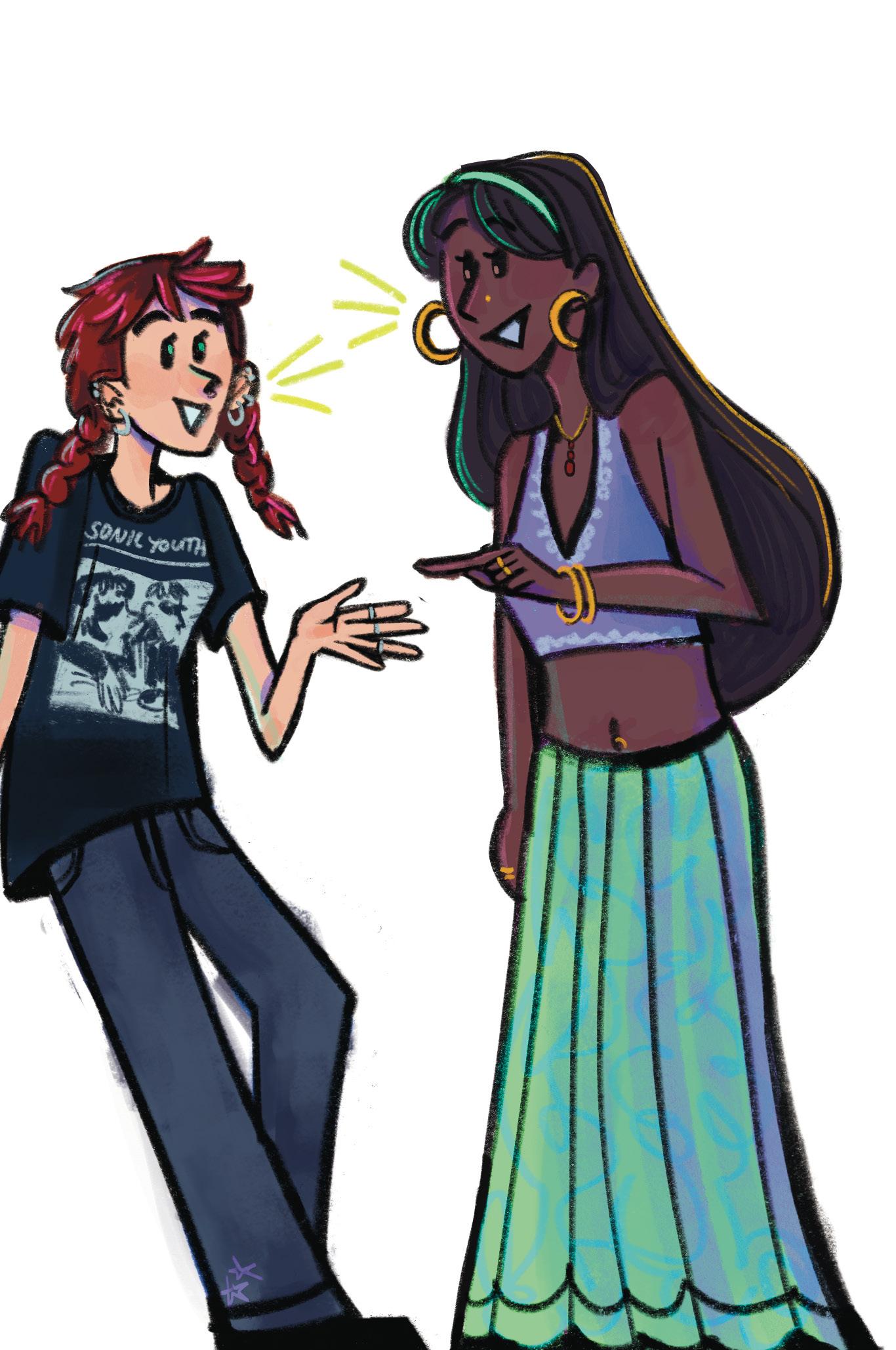
As many of you will have experienced recently, tutorials have just started back up. And with the return of tuts comes one of university’s most painful traditions: the dreaded ice breaker.
It always starts the same way. “Tell us your name, where you’re from, and what you did over the break.”
Suddenly, every interesting thing you’ve ever done disappears from your brain, and you’re left mumbling something like “I have a dog” or “I went overseas”. What's even worse is that the whole time you’re going around that circle, you can’t listen to anyone else. Instead, you’re utterly consumed by trying to come up with something to say. Everyone’s left feeling anxious, cursing themselves for having the EQ of a plant, and still not having any idea as to what anyone's name is.
As a student and a tutor, I get both sides of the coin. It’s hard to take that first leap and start talking to someone that you have nothing in common with other than the paper that you’re both taking. But when it comes to breaking the ice, I’m the fucking Titanic (if it was built for purpose). I pride myself on both my social skills and my interviewing capabilities, and that’s why I feel equipped to offer some conversational lube to get the kōrero flowing.
Here’s 40 Qs to ask when actually trying to converse with people at parties, tuts, dates and hangouts.


By Molly Smith-Soppet
1. If you could find out one statistic about your own life what would it be?
2. How many pairs of shoes do you own but never wear?
3. What is the most interesting piece of information you have learnt during your degree?
4. In what order do you put your socks and shoes on?
5. If you had to get a hashtag tattooed on you, what would it be?
6. Where is your favourite viewpoint in Dunedin?
7. What is on your anti-bucketlist?
8. If you had to spend $10,000 in one day, what would you buy?
9. What are you the best in the world at?
10. Who is your biggest ‘hear me out’?
11. Do you have a song that you use to get another song out of your head?
12. How many individual objects do you think are in your room?
13. Do you often think about how others perceive you?
14. What is the most niche thing you have an encyclopedic knowledge of?
15. Do you like coriander?
16. What order do you wash your body in the shower?
18. Describe your perfect fork.
20. If you could be anywhere but here right now, where would you go?
21. Is it about the journey or the destination?
22. Which young adult dystopian movie would you have thrived in most?
23. What is your favourite inanimate object you own?
24. Do you think a higher power exists? If so, tell me more.
25. Would you rather go on Survivor, Love Island, or The Chase?
26. What do you think is the most unexpected thing about you?
27. What was the first concert you ever went to?

28. Who was your favourite music artist in high school?
29. How would you describe your ‘perfect day’?
30. Are you an emoji person? If so, what's your favourite?
31. Does Lightning McQueen have car insurance, or life insurance?
32. If you were to be eaten, what meal would you want to be?
33. What movie are you most ashamed to admit you haven’t seen?
34. Do you think less of people that only drink coffee with whipped cream on it?
35. Which of your parents do you feel that you are closest with?
36. What’s the longest amount of time that you think you could live in Dunedin?
37. What’s your drink of choice on a night out?
38. Would you rather be stuck in a dark closet with ten, big, fuckoff spiders, a rat, or a mutant Castle Street seagull?
39. Have you ever had a recurring dream/nightmare?
40. What’s something that’s illegal that you wish was legal?


17. What made you choose to study your degree?
19. What is your most used word that isn't common?
Next time the conversation starts dying at a party, don't panic and resort to “So… what papers are you taking?”
Pull out a question that gets people thinking, possibly sparks a debate, or leads to you discovering that your mates are deeper than their Instagram stories suggest. ★




It’s been a long time since we were children. Somewhere between primary, intermediate and eventually high school, we put down our toys and picked up the phones. In high school, parties were all about drinking as much as possible and doing a quick tacky in the upstairs toilet, or clubbing until 2am with beer goggles strapped firmly on. Everyone was trying to look older, act older, and feel older. But at university, party games make a comeback.
Games we enjoyed as kids and hated as teenagers have been modernised and alcoholised. The same crumpled deck of cards we used to play family games of Go Fish with are repurposed, stomped beneath peoples shoes, splattered with red wine and collected up at the end of the night. In lieu of game tokens, can tabs, vapes, earrings and sticks of gum are used for hand painted board games. A flat is suddenly full of red solo cups that have never been used in the daylight.
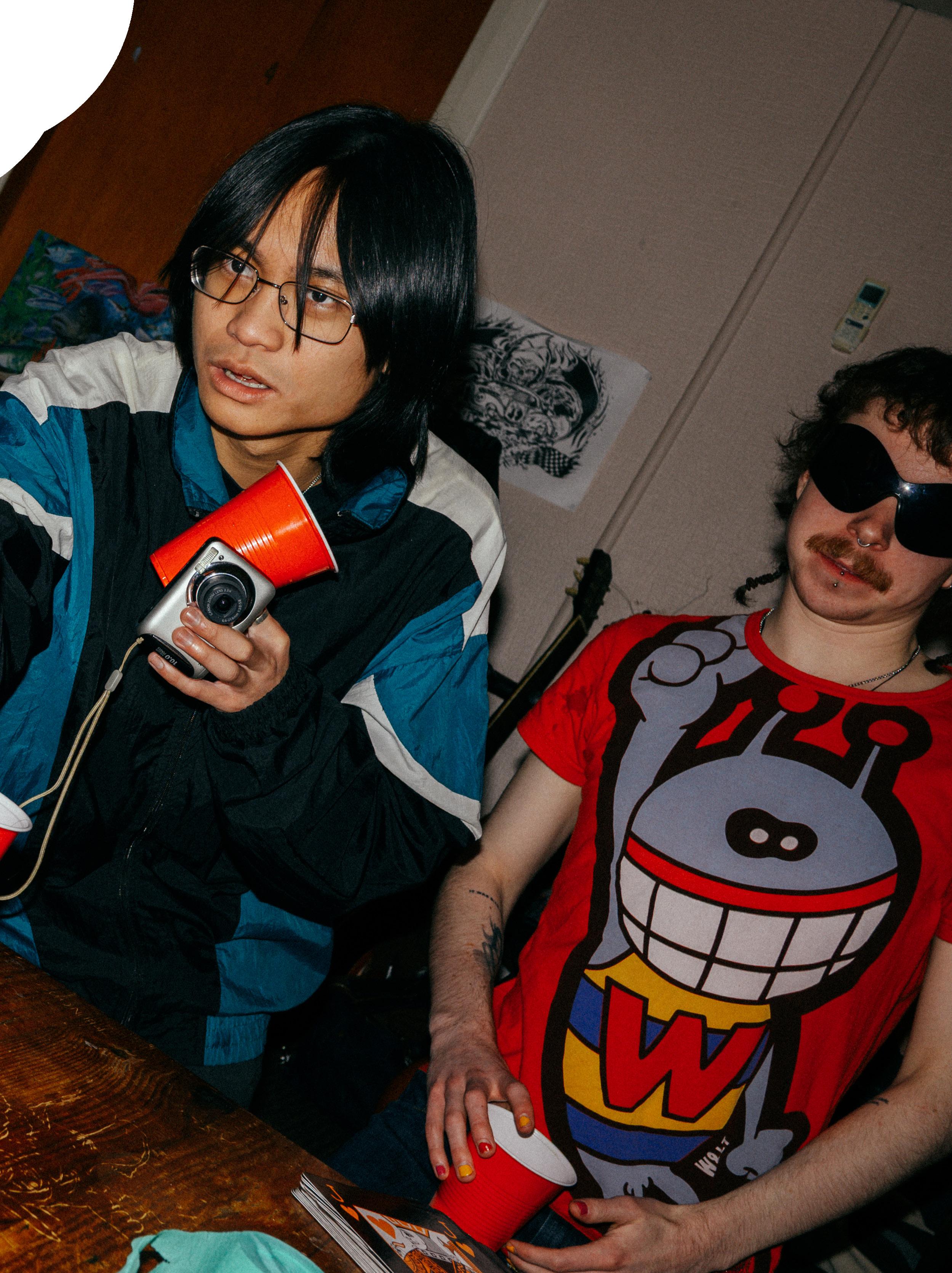
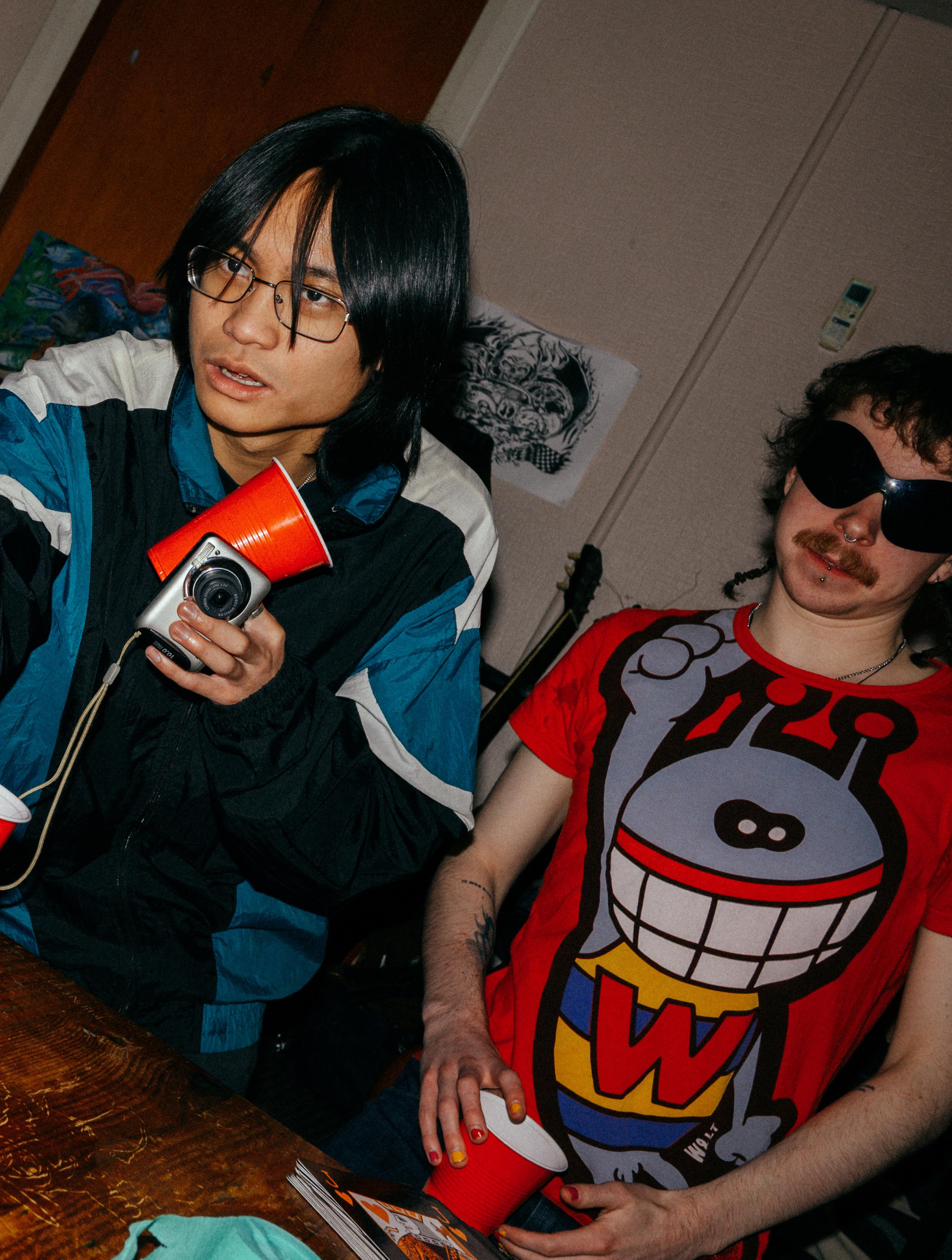
As an ode to the adult party hosted by the childlike spirit, Critic Te Ārohi has compiled six party games for you to pull out at your next red card, wine night, pre-game, or flat host.
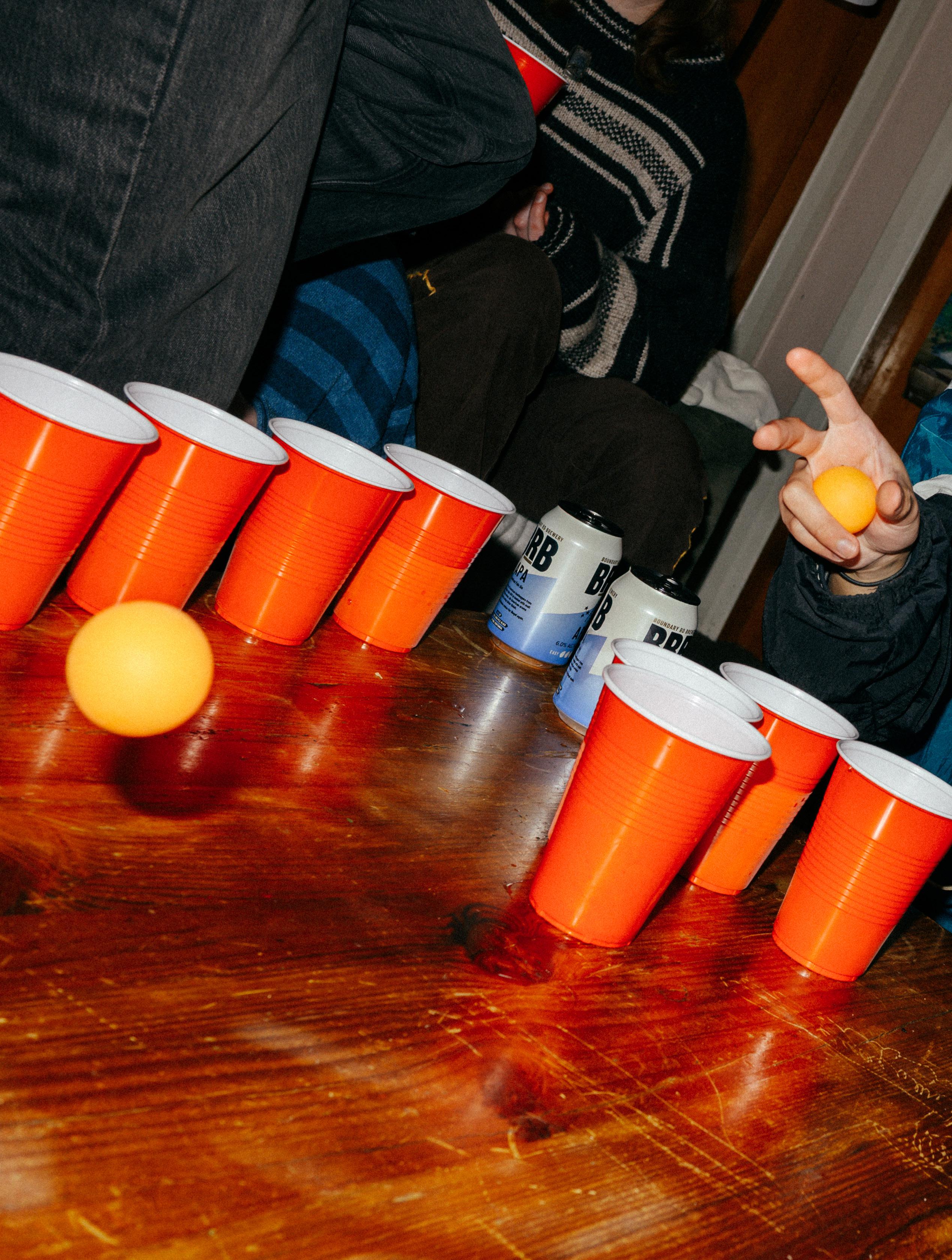
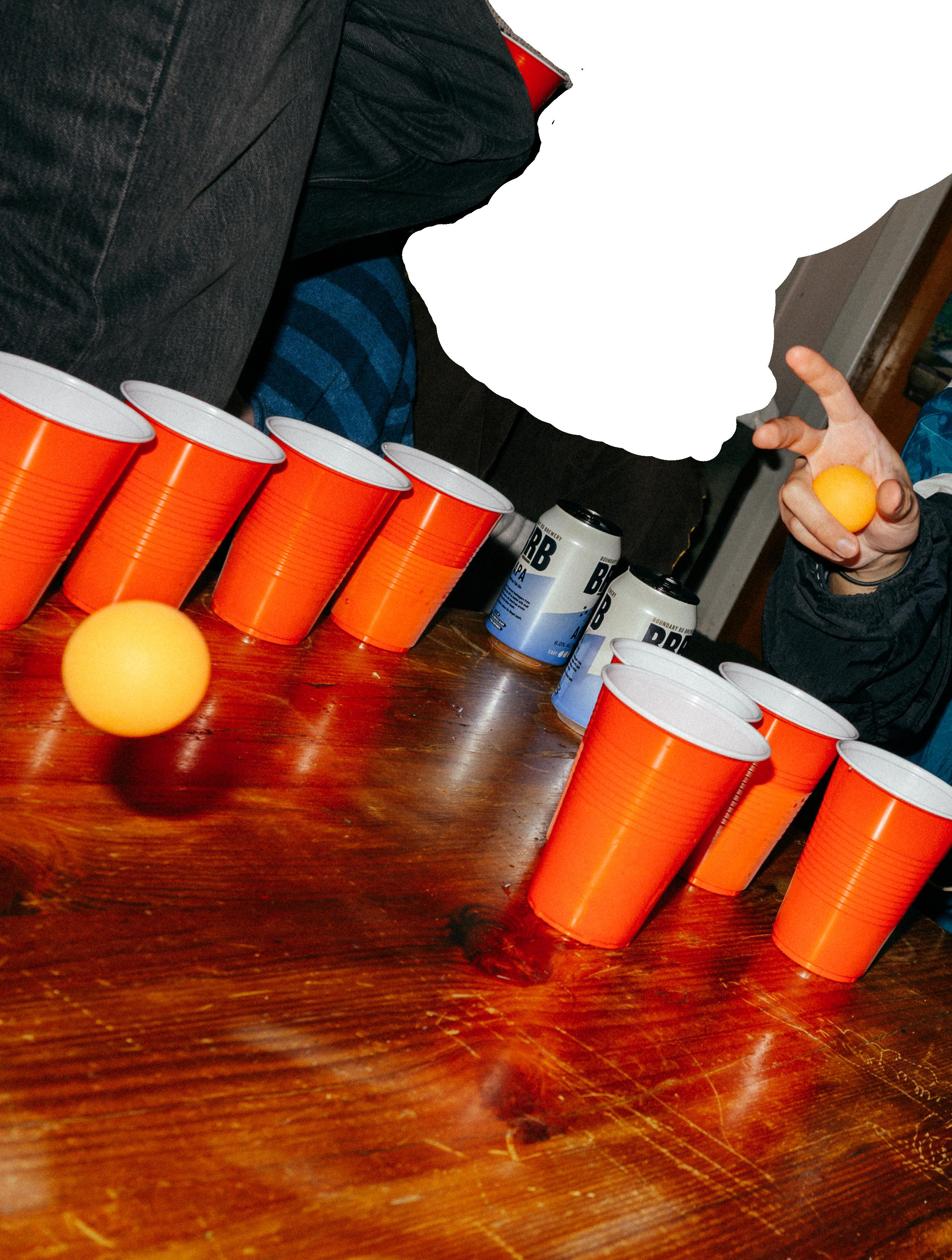

by Eleanor Walker
We stole and doctored these rules from the Critic Te Ārohi Beer Pong Handbook. If you prefer a painstakingly detailed guide on beer pong, check out the full article on our website. We’ve included most of the rules that were voted via census in 2023. There’s a lot of rules. If your flat doesn’t like a particular rule, feel free to cross it out. The beauty of beer pong is in its fluidity.
1. Equipment
1.1 Cups: Either 12 or 20 cups (the red solos work best), depending on whether you are playing a 6-cup or 10-cup formation.
1.2 Table: Any table will do, although the fold-out Night ‘n Day ones are the Holy Grail. Stickier the better to keep the cups in place.
1.3 Balls: 2 ping pong balls (preferably undented).
2. Players & Teams
2.1 A team consists of two players.
2.2 A player can only play for one team. No swinging.
3. Beverage
3.1 A team can choose what liquid to put in their cups, with the caveat that should it not be alcoholic they must be taking sips of an alcoholic beverage when a cup is sunk by the other team.
4. Starting Game & Etiquette
4.1 To decide which team starts, one player from each team must maintain eye contact with the other and shoot for a cup on the opposition's side of the table, known as “snake eyes”. If neither sinks a cup, their partners repeat. This continues until someone sinks a cup. The cup remains in the game, and the team of the player who sank it receives both balls to begin the game.
4.1.1 Snake eyes determine the starting team for every game, regardless of whether there was a game previously played on the table.
4.2 The elbow of a player must not extend over the table on their side whilst shooting.
4.2.1 Any player or spectator may call “elbows” if a player is in violation of rule 4.2. If a cup is sunk by a player in violation of “elbows”, it does not count and the cup remains in the game.
4.3 The contents of any sunk cup, or equivalent from a personal vessel, must immediately be drunk by a player on the opposing team.
4.4 If a team knocks over one of their own cups at any point during the game, that cup is taken out of the game, counting for the other team.
4.5 If at any point during the game a cup is knocked over by outside interference, it is refilled and put back in the game.
4.6 If at any point during the game a ball is spinning within a cup, a player on the team whose side it is on may attempt to blow it out.
4.6.1 Fingering a spinning ball is not allowed.


5.1 Each team may call for a “rearrange” once during the game, where the cups on the opposition’s side are rearranged into a formation of their choosing.
5.1.1 A rearrange may be called even if there are just two cups left.
5.2 At any point during the game, a team may request for the opposition to “fix” the alignment of their cups to the correct formation.
6.1 Any unsunk cups from the winning team's side must be drunk by the losing team.
6.2 Penalties apply if any player at the end of the game has not sunk any balls, regardless of whether they were on the winning team or not.
6.2.1 Sinking a redemption shot counts as a shot, meaning if a player only sunk a redemption shot the entire game, end of game penalties do not apply.
6.3 The official end of game rule is a naked run, whereby a player must strip naked and run a distance acceptable to the players and spectators of the game.
7.1 If both players on a team each sink a cup, they get their balls back for another turn.
7.2 Rim bounce: If a ball hits the rim of other cups before landing in a cup, those cups are all removed in addition to the sunk cup.
7.3 Grenade/Explosion: If two players hit the same cup, all the cups touching it are also removed from the game.
7.4 Graveyard: Any cup that is sunk during the game is put to the side into what is called the “graveyard”. If a shot lands in a graveyard cup, spectators drink.
7.5 Island: Each player may call “island” once during the game. They must select a cup that is isolated from the rest of the cups, and if they sink that cup one other cup is also removed from the game.
7.5.1 To call “island”, the player must name an island (e.g., Easter Island). No repeats.

7.6 Bounce Shots
7.6.1 A shot may be bounced off any surface and will count as two cups if sunk
7.6.2 A bounce shot only counts as one cup if there are only two cups left on that side.
7.6.3 If a bounce shot is taken, the opposing team may attempt to block the shot.
7.7 Celeb Shots
7.7.1 At any point during the game a team may call for a “celebrity shot” where a spectator takes the turn of a player.
7.8 Trick Shot
7.8.1 If a shot misses, the ball can be retrieved from anywhere by either the shooter’s team or a spectator for a trick shot.
7.8.2 What counts as a trick shot is determined by the players and spectators of the game.
7.8.3 A trick shot may not be blocked by the opposing team, unless it is a table-based bounce shot per rule 7.6.3.
7.9 Bitch Cup
7.9.1 The bitch cup is either the middle cup if playing with a ten-cup formation or the front cup if playing with a six-cup formation.
7.9.2 If the first cup a player sinks is the bitch cup, they must play with their pants down until they sink another cup (regardless of gender) This rule only applies if players are comfortable with it. Consent is key, kings and queens.
7.9.3 Bitch cup counts if the cup is sunk due to swatting from the opposition (swatting is only allowed for a bounce shot per rule 7.6.3).
8. Redemption
8.1 After a team sinks their final cup, the opposing team is able to call for “redemption” where both players attempt to sink a cup. If the opposing team sinks a cup, both cups sunk on each side remain in the game.
8.2 You are not allowed to call for a rearrange during redemption.

There are a million versions of King’s Cup out there. This list has been inspired by Critic’s 2020 King’s Cup census (yeah, we stole our own rules again – sorry) and may differ to your version of the game.
1. Equipment
1.1 Large cup: The King’s Cup. It’s in the name.
1.2 Card deck: 1-2 decks are good.
2. Players and Teams
2.1 A group of friends. The game gets better with more and more people.
3. Beverage
3.1 Anything, but the King’s Cup is usually alcoholic. If you are not drinking, we suggest you steer clear of drawing the last King or select a friend who will drink for you if you’re unlucky.
4. Setup
4.1 Arrange cards facedown in a circle around the King’s Cup.
5. Playing
5.1 Players take turns drawing cards from the circle. Every card in the deck has an instruction for the player to follow.
5.2 If you break the circle of cards when you draw one, you must finish your drink.
6. Card Rules


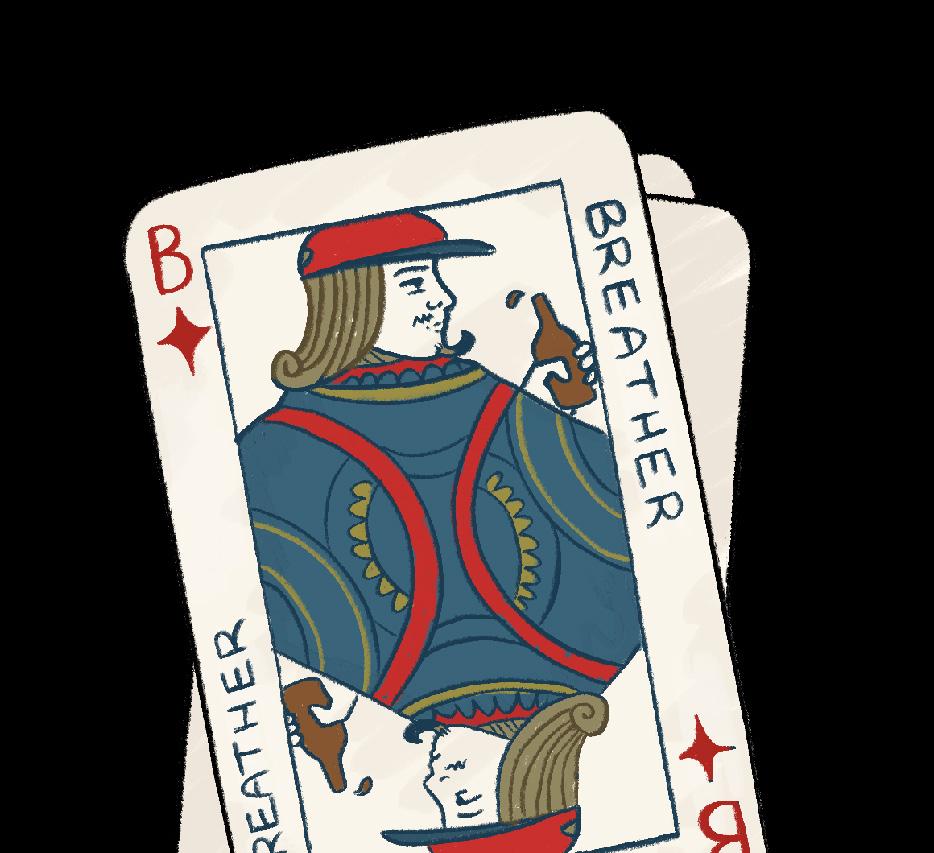
Ace = Waterfall: Start drinking. The player on your left follows, followed by the player on their left and so on. The rest of the players can only finish once the first player has finished.
Two = You: Nominate someone else to drink.
Three = Me: Drink.
Four = Floor: Last player to touch the ground must drink.
Five = Guys: All male identifying players must drink.
Six = Chicks: All female identifying players must drink.
Seven = Heaven: Last player to point up must drink.
Eight = Mates: Nominate a “mate” to drink when you drink. You can have more than one mate.
Nine = Rhyme: Pick a word. Don’t pick the word orange. Players go around the circle taking turns to say a rhyming word until a mistake is made or a word is repeated.
Ten = Categories: Like Rhyme, the player picks a category with an example going round the circle with players adding examples until a mistake is made or an example is repeated.
Jack = New Rule: The player chooses a new rule to last for the rest of the game. Alternatively, a 3-fingered game of Never
Have I Ever can be played. Drink if you’ve done something, the loser finishes their drink.
Queen = Question Master: Until someone else draws a Queen, you are now the question master. Anyone who answers a question must drink. If you ask a player a question, and they reply “Fuck you Question Master” you have to drink instead.
King = Kings Cup: The player must sacrifice a portion of their drink to the King’s Cup. If you’re the unlucky one to draw the fourth king, you have to down the cup and the game will come to an end.

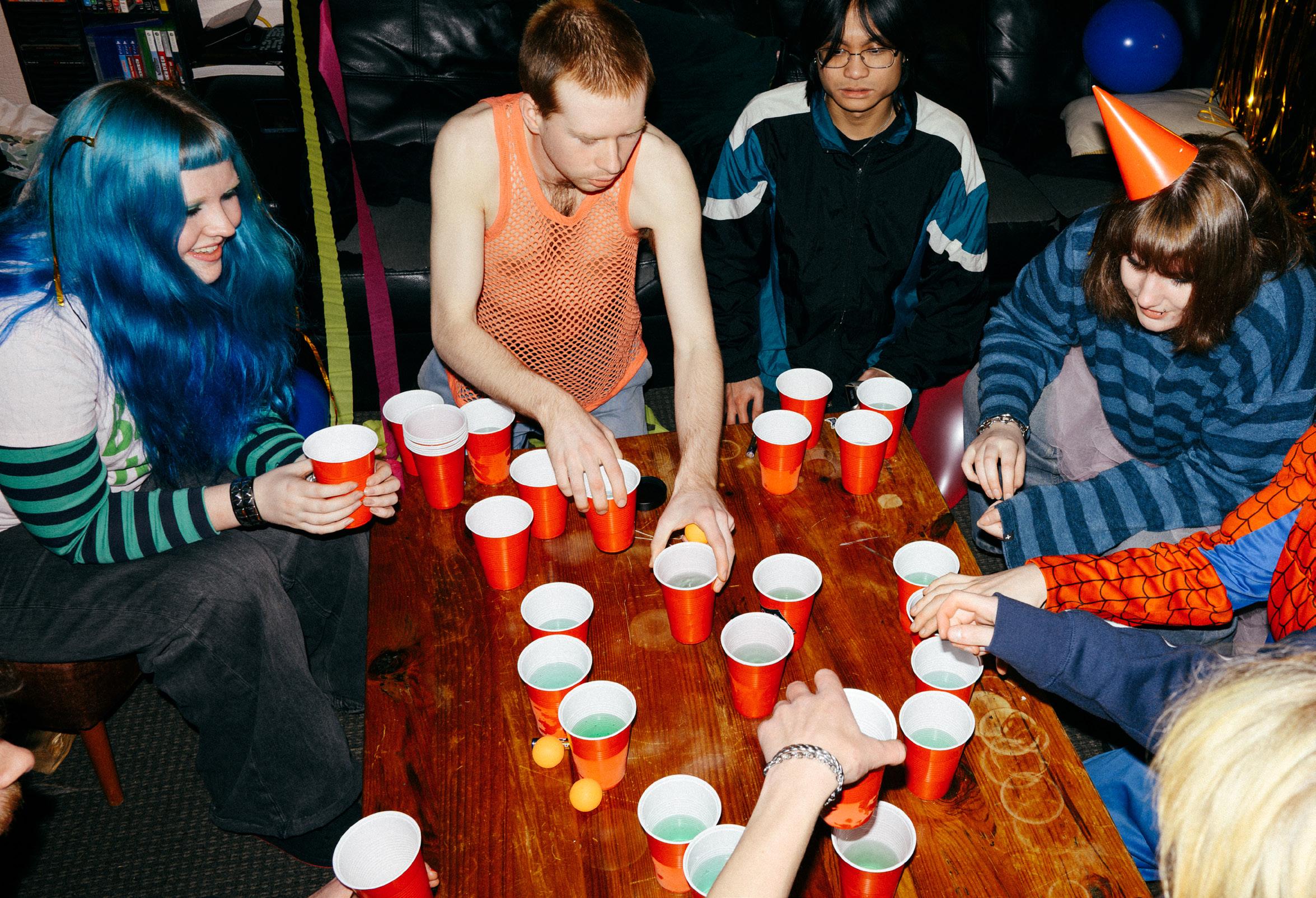
Your objective is to convince a group of adults that repeatedly bouncing a ping pong ball into cups of beer is a legitimate sport.
1. Equipment
1.1 Cups: One for every player.
1.2 2 Balls: 2 ping pong balls. As above, best if undented.
2. Players and Teams
2.1 Anyone you can find that fits around a table.
3. Beverage
3.1 Beer is the standard drink for this game. Unlike above, there is no caveat for taking sips between rounds.
4. Setup
4.1 Arrange cups in a circle around a central "power cup." Fill with beer.
5. Playing
5.1 The two starting players each grab a cup, drink it dry, and start bouncing a ball trying to sink it into their now-empty cup.
5.2 Land it? Pass your cup and ball clockwise to the next player. The chain has begun, and it will not stop for anyone.
5.3 Sink it on your very first try? Skip the queue entirely, pass your cup to any player at the table who isn't already midbounce.
5.4 If you land yours while the next person is still fumbling, you stack your cup onto theirs. They've officially lost that round: they pass the whole stack clockwise, grab a fresh cup, drink it, and start bouncing all over again. Their tower of shame grows.
5.5 Repeat until every cup at the table is gone.

When all you have is a card deck.
1. Equipment
1.1 Card deck: That’s it. Shuffle it.
2. Players and Teams
2.1 Dealer: Pick one player to be the dealer.
2.2 FTB works best with at least 4 people. It’s do-able with less.
3. Beverage
3.1 No standard drink for this game. Alcohol works best.
4. Setup
4.1 Pyramid: Deal out a 6-card wide pyramid facedown - 6 cards on the bottom, 5 in the second row, 4 in the third, 3 in the forth, 2 in the fifth and top it off with just 1.
4.1.2 Rows: Each row = a different # of drinks. Bottom row = 1 drink, second row = 2 drinks, third = 3 drinks, forth = 4 drinks, fifth = 5 drinks and sixth = 6 drinks.
4.2 Hands: Deal out 2 cards to each player. Players get ONE look at their hand of cards and then set them back facedown in front of them.
5. Playing
5.1 The dealer turns over one card one at a time, starting from the bottom row of the pyramid.
5.2 There’s two possible scenarios: depending if you’re bluffing or not. If you have a card that is the same number as one of the flipped cards, tell another player of your choice to drink. OR if you want to bluff, tell another player to drink.
1. Equipment
1.1 Any Nintendo console (Switch, Wii, DS, 64).
1.2 TV
2. Players and Teams
2.1 Minimum 2 players, and no teams.
3. Beverage
3.1 Any drink in a can or bottle will do. Obviously beer is more ideal considering this is Beerio Kart.
4. Setup
4.1 The most important step is choosing your character (obviously).
4.2 Choose your course and how many races you want to do. This will determine how turnt you get. Expect to sink a beverage for every race you complete – time is ticking! The bot drivers in the game do not come to play.
5. Playing
5.1 The premise is that your beverage needs to be empty by the time the 3 laps of your Mario Kart course is done.
5.2 No drinking and driving – if you want to take a swig of your drink, you must stop touching your controller or put your controller down.
5.3 Strategy is everything – try hitting a Banana Peel right before you drink because that will mean that your character is unable to drive for a few seconds anyway. You can chug your drink at the start of a game, or space it out throughout the laps. It’s up to you!
5.4 Turn on frantic item settings to make things extra chaotic.
5.3 If a player thinks you’re bluffing, they can challenge you.
5.4 If a player challenges you and you’re bluffing (i.e. you don’t have a card of the same number), you have to drink twice the amount assigned. If you’re not bluffing,

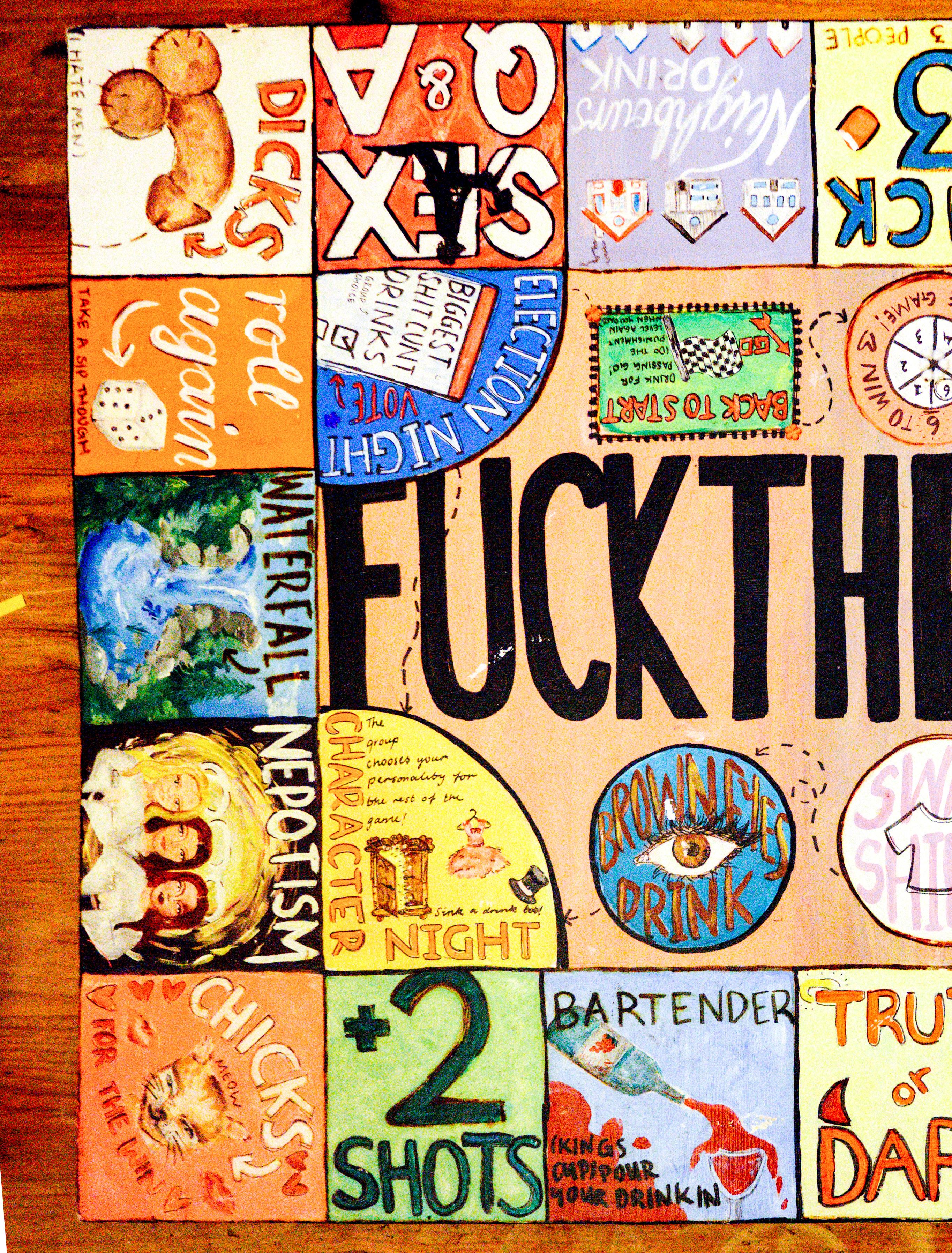
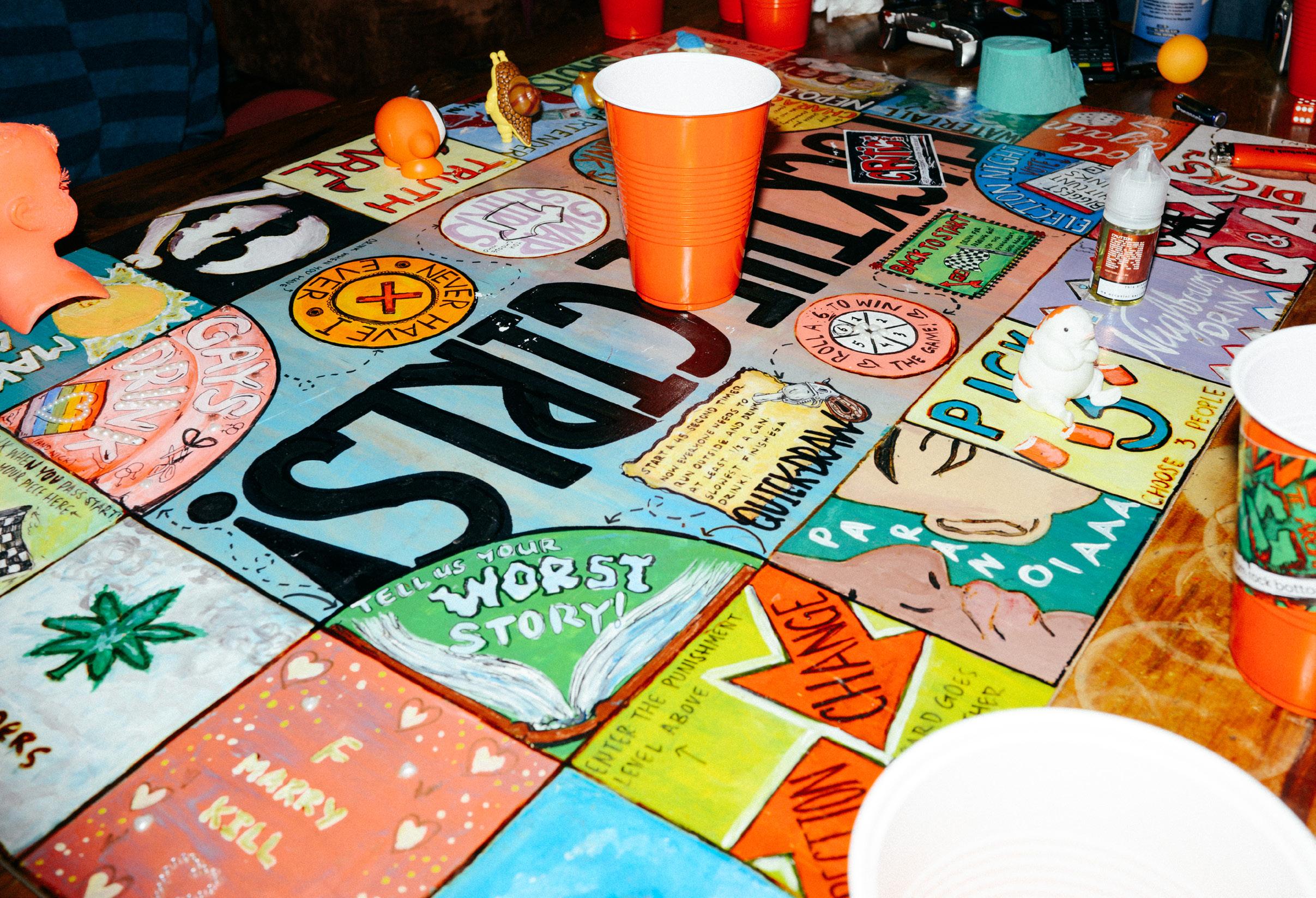
This game is a gift from past Critic contributors to your flat. The aim of FTG is to get the girls rinsed and break the ice at your next gathering. The tiles are designed to get people talking to one another, so playing with water instead of alcohol (or a mix of both) works just fine.

1. Equipment
. Can be physical, on your phone, whatever.
. Or a bowl, or a vase. Any vessel you don’t mind drinking out of.
A personal token. This could be your earring, bracelet, carabiner, ID or a coin – literally anything. Even the condom in your wallet will do in a pinch.
2. Players and Teams
Any amount of players. No teams.
Alcoholic. Or non-alcoholic, we guess.
Surprise, it’s the centrefold! Carefully pull it out and spread
The cup (the ‘King’s Cup’) is traditionally placed in the middle of the board. However, the centrefold is made of paper, and paper disintegrates when wet. Look around you. Are you playing with clumsy people? If so, place the King’s Cup to the left of the person reading out these rules (as they are usually the most onto it).


5. Playing
5.1 Players all move their tokens to the starting position, and the youngest rolls the dice first, moving clockwise.
5.2 To get out of doing any tile, you’ll need to drink the entirety of the King’s Cup.
5.3 The game ends when a player rolls a 6 on the Roll A 6 tile (see 7.2.8). That’s the only way that the game ends.
6. Tile Rules
6.1 Start: Drink when you pass start!
6.2 Singles: All singles drink.
6.3 Make a Rule: The person who lands on this tile needs to make a rule for the rest of the group to follow. For example, nobody is allowed to drink with their left hand. If someone is caught breaking the rule, they drink.
6.4 Blackout: Finish your drink (within reason).
6.5 Truth or Dare: The person who lands on this tile must ask someone else a truth or dare question.
6.6 Bartender: The person who lands on this tile must pour some of their drink into the King’s Cup. To get out of doing any other tile, you must drink the King’s Cup.
6.7 +2 Shots: Take a couple swigs of your drink.
6.8 Chicks: All chicks drink. If you’re non-binary/gender diverse, you’ll need to drink for both the Chicks and the Dicks tiles.
6.9 Nepotism: If your name starts with a G, E or an H –congrats! You’re a nepo baby. Nepo babies can make any one player do whatever they want. If no nepo babies are present, everyone drinks. Send your thanks to Grace, Emmie and Hanna!
6.10 Waterfall: The player who lands on this tile begins drinking, creating a domino effect. The person next to them starts drinking, and then the person next to them. Once the original player stops drinking, the person next to them stops, and so on.
6.11 Roll Again: Self explanatory. Don’t forget to take a sip of your drink!
6.12 Dicks: All men drink. If you’re non-binary/gender diverse, you’ll need to drink for both the Chicks and the Dicks tiles.
6.13 Sex Q&A: The group must ask the player who lands on this tile a sexy question.
6.14 Neighbours Drink: Players next to the player that landed on this tile drink.
6.15 Pick 3: The player that landed on this tile picks three other players to drink
6.16 Paranoia: The player who landed on this tile must whisper a question to any other player about any other player, making sure all other players do not hear the question. The player who got the question must say their answer out loud. The dice is then rolled. If the dice lands on an even number, the question must be said aloud. If the dice lands on an uneven number, the question remains a mystery – leaving all players in a state of paranoia.
6.17 Change Direction: The player must choose to either enter the Punishment Circle (which means that the player will need to tell the group their Worst Story) or change directions on the board, moving counterclockwise.
6.18 Safe: Safe – but not for long. Take a sip!
6.19 F, Marry, Kill: The player that lands on this tile must ask any other player to choose who they would fuck, marry or kill out of three people.
6.20 Stoners: If you’re stoned, you drink.
7. Punishment Circle
7.1 To get out of the Punishment Circle, you’ll need to go around it three times land on the Back to Start tile (see 7.2.7). Rolling a six on the Roll A 6 To Win tile (see 7.2.8) within the Punishment Circle is the only way to end the game.
7.2 Punishment Circle Tile Rules
7.2.1 Gays Drink: If you’re queer, take a sip.
7.2.2 Never Have I Ever: All players must put five fingers up. Starting with the player that landed on the tile, each player must go around and say one Never Have I Ever Question. If a player has done something, they must drink.
7.2.3 Swap Shirts: The player that landed on this tile must choose another player to swap shirts with.
7.2.4 Brown Eyes Drink: Unlucky!
7.2.5 Character Night: The group must choose a character for this player to impersonate for the rest of the game.
7.2.6 Election Night: All players must vote on who is the biggest Shit Cunt (ie. someone who isn’t playing the game right, or made a subpar decision lately). The Shit Cunt must drink.
7.2.7 Back To Start: Take a drink, and head back to the Start tile on the outside circle.
7.2.8 Roll A 6 To Win: Now’s your chance!
7.2.9 Quick Draw: Start a 45 second timer. Everyone needs to run outside (or inside if you’re outside) and drink at least half of their drink. The slowest must finish their drink, and everyone who hasn’t made it back inside after the 45 second timer is up must then take a big sip. ★


BRING YOUR ART TO OUR OFFICE TO WIN A FREE ADJØ COFFEE VOUCHER <3

WEDNESDAY 5TH
Future Sound Open Mic Acoustic Jam +
Heritage Coffee - 7 pm

“Delaney kept insulting the audience’s fashion and compared us to Hamilton. But it’s okay, the band were very tight.”
Sam Charlesworth + Friends @ Inch Bar
Four surf-bums / 5
“There seriously wasn’t an Inch of space. He got us to write down positive messages for one another - Sammy C is Dunedin’s most wholesome acoustic artist.”
Ammonita EP Release @ Pearl Diver
one million beers / 5
“I’M SORRY I WAS PARTYING TOO HARD AND ARRIVED LATE (see: front cover). BUT THE 30MIN OF MUSIC I SAW WAS SO GOOD. I WILL DO BETTER. - ETHAN”
Menzies @ Pearl Diver
5 ping-pong balls / 5
“Top 5 times I’ve seen a band command the audience to hunt for ping-pong balls hidden around a venue. Also that song that goes OOAWAHHOOWAHHOOOOO is genuinely tear-jerking.”
THURSDAY 6TH
DJ The Yemenite Pearl Diver - 4.30 pm
FRIDAY 7TH
The Wild Chitokakas & Dougie And The Moon
w/ DJ Ektopik Beats The Crown - 8 pm
SATURDAY 8TH
Francisca Griffin and The Bus Shelter Boys w/ SEEK HELP! and Rotom Washing Machine The Crown - 8 pm
Lunchtime Concert - Performance Students in Marama Hall - 1 pm 1 2 3 4 5 6 7 8 9 10 11
Ronnie Stash and The Resistance w/ Skin Thief and J Callander Dunedin Musicians’ Club 8 pm
The Daze - Send-Off w/ Purple Dog and Cleos Pearl Diver - 8 pm



For a long time, OUSA has been relatively apolitical in practice, on campus and in our strategic direction. However, over the last year, we have seen this idea begin to overturn. Seeds of political discourse internally, as well as better engagement with student politics, have grown into a more solid internal agreement that OUSA is failing to deliver politically for students of campus.

There are many reading this who will already agree, but for those who do not; OUSA as a union is inherently political. Free breakfast and cheap lunches/dinners? Political. Democratically electing representatives to advocate for student needs? Political. Sustaining student journalism and independent investigative media? Political.
On top of this, we do not owe anyone institutional neutrality. What we do owe is better representation, stronger voices and cohesive political action on behalf of and with students.
Coming up this semester is an OUSA Student General Meeting, Executive Elections, and an Annual General Meeting. We are also hosting enrolments to vote, and a party leaders debate for the national election. OUSA endorses candidates and policies that benefit students, like paid placements, independent student unions and universal student allowance. This semester is a chance for students of campus to help us achieve even the smallest cultural shift towards better engagement in student and national politics.
For those who disagree with what OUSA politically endorses (as mentioned above), feel free to let us know. Similarly, if you feel we don’t go far enough, I would love to hear more. Email yours truly @adminvp@ousa. org.nz, or Flynn @political@ousa.org.nz, or our one and only Daniel Leamy @president@ ousa.org.nz.
Thanks, Kamesha Jones









Te Waiariki
If there’s one thing a Ngāpuhi likes, it’s arguing a case. Unfortunately for everyone else, I’ve always got one.
Artificial intelligence is having a phenomenal year. Apparently, it can write your assignment, draft a CV, answer difficult emails, and plan your holiday, all before breakfast. At this rate, the only thing it can’t seem to do is explain why everyone is pretending this isn’t the biggest political shift of the decade.
What began as a novelty chatbot has become an inescapable software embedded into our phones, camouflaged within search engines and social media feeds until it stopped feeling like software altogether. Choosing to opt out now feels less like a preference and more like a political statement, and somewhere along the way, AI has just become an expected part of the furniture. More than that, it introduced itself as one of those things you’re expected to embrace before you’ve had any time to decide how you feel about it all. Fortunately, ChatGPT is more than happy to form your opinion for you.
What’s Free Costs More
What’s most impressive about artificial intelligence isn’t its capability of writing an essay or answering a question – it’s how quickly it convinced us that uncertainty was an inconvenience to eliminate, rather than a space to think. Before the rise of AI, there was a time when not knowing something meant opening another book, asking another person, or sitting with the all-consuming discomfort of not having an immediate answer. We used to Google a question, filter through searches, skim Wikipedia, disappear down a Reddit rabbit hole, and slowly piece together an answer. The process was clumsy, occasionally frustrating and long – but it was organic and it belonged to us. Now, uncertainty lasts about as long as it takes to open another tab and skim through an AI-generated summary.
Perhaps that is exactly why AI feels so irresistible. It promises not just speed, but relief – soothing a case of writer’s block, guiding the way through awkward emails, and carving a path through the messy process of thinking through an idea before arriving at a conclusion. But where exactly do we draw the line in consulting the model before consulting ourselves?
The Corporate Handshake
Of course, none of this is actually free, either. It never is. Nothing requiring billions of dollars in chips, colossal data centres and enough electricity to power entire cities accidentally becomes free; as though the world’s largest technology companies suddenly discovered philanthropy overnight. Every announcement arrives gift-wrapped in the same four words: innovation, productivity, investment, jobs and growth. It’s almost comical how billion-dollar infrastructure projects always arrive with vocabulary too positive to interrogate.
It’s not as though the most successful companies ever really sold one product. They have long understood that the easiest sale is the one that makes every alternative feel irrational. Fast-food chains sell meal deals for a reasonable price to make ordering separately feel wasteful at your own expense. Phone companies bundle unlimited data, and electricity providers bundle wifi. Likewise, one could say that artificial intelligence is simply bundling judgement, because the goal was never to make life easier, but to make dependence feel sensible.
Nothing is more unsettling than when artificial intelligence begins masquerading as expertise. Across every industry, AI-generated work is becoming incredibly difficult to distinguish from work produced by trained professionals, and Māori spaces aren’t exempt from that shift. If anything, they are especially vulnerable because te reo Māori, tikanga and whakapapa carry enormous cultural value, while much of the information itself remains publicly accessible through trusted organisations and public records.
People beginning their journey with organisations like Māori Land Court to access whānau records are increasingly confronted by people willing to package freely available information into polished AI-generated products and charge communities for receiving their own information back with better formatting. There is something deeply uncomfortable about charging families for public resources that have simply been repackaged by a chatbot. While using AI as a tool is one thing, quietly selling machine-generated cultural labour as though it were hard-earned expertise is another entirely.
Every generation has been promised that technology will save time. Washing machines, emails, smartphones and now artificial intelligence have all arrived with the same sales pitch: less work, more life. It’s a little like the plot of the Bee Movie. The bees finally free themselves from work, only to discover they’d accidentally outsourced the one thing keeping the entire ecosystem alive. We keep celebrating every task AI removes from our day without asking whether some of those tasks were quietly holding our own intellectual ecosystem together. But if we look around, somehow, we have never seemed busier. We answer more emails, attend more meetings, generate more content and produce more work, all of which we were told the technology was going to replace. If AI is buying us back our time, it’s worth asking who keeps spending it.

Illustrated by Stella Caulton




By Brittany Brew-ski
For Critic Te Ārohi’s inaugural Party Issue, Swig60 has outsourced their liver to a guest reviewer. Whether this was a strategic editorial decision or simply because the boys finally realised they had to pace themselves is unclear. Either way, someone had to answer the important question: is a bucket of sixteen shots the life of the party, or just sixteen tiny liquefied mistakes waiting to happen?
Forget tasting notes. Forget soft palate and acidic qualities. Forget everything you thought you knew about booze reviews. Because at the end of the day, a $32 Shot Bucket isn’t about appreciating the subtle oak undertones, or whatever people with functioning taste buds talk about. Packed with sixteen 30ml shots across eight flavours, there’s enough variety in this bucket to keep everyone happy.
Up first was Fireshot. I was down bad with the flu at the time of writing, so I was hoping some spicy liquor would fry the damn thing right out of my immune system. However, this was a weak imitation of Fireball and tasted like Christmas spent 50/50 between your divorced parents' houses or making a potion out of random pills from the medicine cabinet. 4/10.
Next was the big JD. Everyone knows that Jam Donut is the undisputed crowd favourite. It’s sweet, nostalgic, and dangerously easy to knock back, leaving me feeling as if I’d been pashed by Mr Dunkin Donut himself. Never misses. 7/10.
Salted Caramel does what it says on the tin. I was expecting this little number would be more sweet than salty,

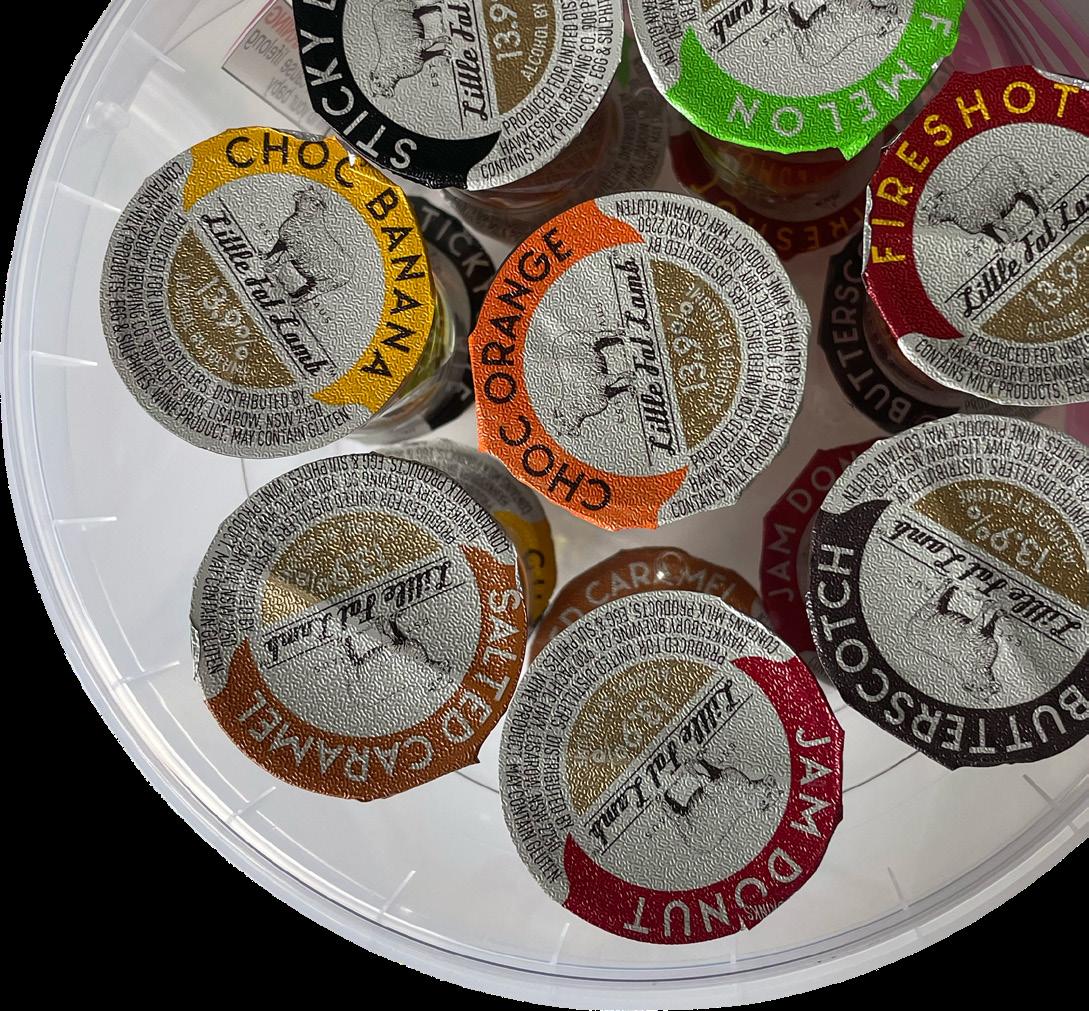
but fuck – I was wrong. Downing this left me feeling like I was a kid at the beach again, getting absolutely fucked up by a wave and waterboarded by salt water. The sweetness came slightly after, but I was seriously caught off guard. Jolly good show. 7/10.
And here comes the underdog! I feel like banana and chocolatey things get their fair share of shit, but people should call me Curious George the way I be loving that Choc Banana. This is way too easy to down, making it a super easy way to get in your 5+. Like they say: a Choc Banana a day keeps the doctor away. 9/10.
Then there’s QF, aka Quick Fuck: a name that tells you everything and nothing all at the same time. The way that Quick Fuck goes down is truly comparable to every quick fuck I’ve had: good, then not so good, and never ever great. The only way to describe its flavour is ‘vaguely melon’. My advice is to get on to the second QF in the bucket ASAP – the longer you wait, the less you’ll want to do the second. 5/10.
Legendary Butterscotch tastes like your nan’s Werther’s Originals and a family history of alcoholism. Yummy! Butterscotch is part of the ‘Big 3’ in this Shot Bucket, alongside Salted Caramel and Jam Donut – a trio which my 11-year-old nephew would call “peak.” Fuck, my age is showing – just like it was the morning after conducting the data collection for this review (also known as getting shit faced). 8/10.
Next was Sticky Date. What a let down! This was like Salted Caramel but slightly worse – the evil, twisted version of Salted Caramel. Sticky date pudding does nothing for me in its food form, and it unfortunately does nothing for me in its liquid form – even if the plastic packaging that keeps the creamy part from the liquor looks kinda neat. 4/10.
Choc Orange tasted like if lean and Jaffas had a baby. This is a no nonsense shot that knows that it works. Choc Orange is a classic, and I strongly advocate for it to be considered part of the Shot Bucket Big 3. If I had enough of these, I might just end up going for a roll down Baldwin Street myself. 9/10.
To conclude, 5.3 standards per bucket (working out at 0.33 standards per shot) is honestly a fucking joke. But I am also drinking pre-poured shots that I bought in a bucket, so maybe my life is a fucking joke. On that note, happy partying! ★


You've been blissfully neglecting coursework this sem, but the clock is ticking. Book a study room in Central and beg your A+ friends to help you lock in before you’re emailing your lecturer at 1:00 AM to beg for an extension you may not deserve.
Your party game: Spotlight
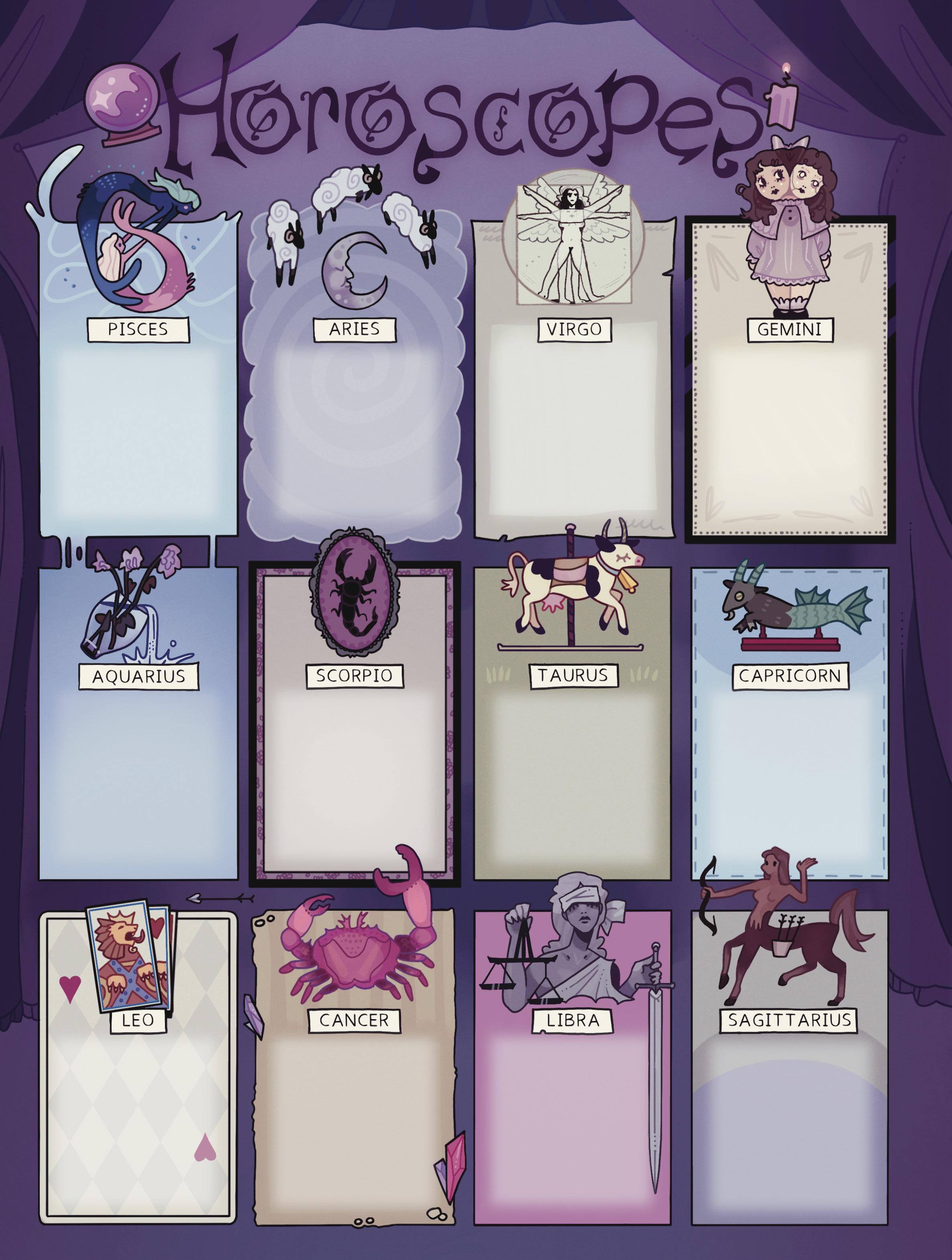
Seasonal depression is making its rounds in Dunedin.
The trees have been bare for weeks and the city is looking a little less than beautiful, but hold out! Spring is just around the corner, and Tinkerbell and her friends are almost here to defrost our freezing city.
Your party game: Dance Battle
It’s time to put yourself first and prioritise your own happiness. This week will give you a clear view of who uplifts you, and who doesn't give a fuck about you. Make sure to dodge the leeches and stop spending all your time making other people's lives easier.
Your party game: Strip Twister
You’ve been running on less than empty lately. Sleeping on your laptop in lectures just isn't the same as hitting your pillow at home, even if the lecture theatre is warmer and your lecturer’s voice is basically free ASMR. Go home and get some rest.
Your party game: Arm wrestling
It’s time for you to face that grisly task or problem that you’ve been sweeping under the rug. As harsh reality hits, you’re going to need to block out time in your calendar to repair the damage your neglect has caused.
Your party game: Comparing Rice Purity scores
I’m sensing your envy is going to spike hard this week. If you’re not careful, you’ll end up missing your old self. Instead of looking at others, count your own blessings and remind yourself of how green your own grass is.
Your party game: Spin the Bottle
You’re running a tad cashpoor as of late. You’ve scavenged every last coin from the car glove box, and those packet soups your mum bought when you moved into your flat are starting to look like fine dining. Godspeed.
Your party game: Strip Poker
You’re on a warpath this week – take no prisoners in the group chat. It’s fair enough that you’re completely done with the drama, and it’s time to put your foot down. Say your piece, and don't even think about feeling guilty afterwards.
Your party game: Stealing the host's belongings
Peace is finally falling over your flat as the partying starts to settle down and the lock-in begins. Silence fills Castle Street, and thus fills your lounge. The group chat lies hungry and drama-less because no one has the energy to cause a scene. Thank fuck!
Your party game: Drink or Dare
Energy is high for you this week. It’s time to leave behind the stress of whatever project you’ve been sweating over and go enjoy your social life. Grab your friends and drag them to whatever aesthetic café you’ve been eyeing up –it’s time to pretend to study.
Your party game: Rage Cage
You’ve had plans in the making for weeks, but something is about to bring them all grinding to a halt –sorry! Start rebooking your bus and flight tickets now, or else it’s going to get way too expensive.
Your party game: King’s Cup
A promotion is coming your way! After applying to what feels like every single job in Dunedin, finally securing one was a blessing. It’s only up from here! With this new payroll, you might finally be able to afford groceries on top of your cones.
Your party game: Beer Pong





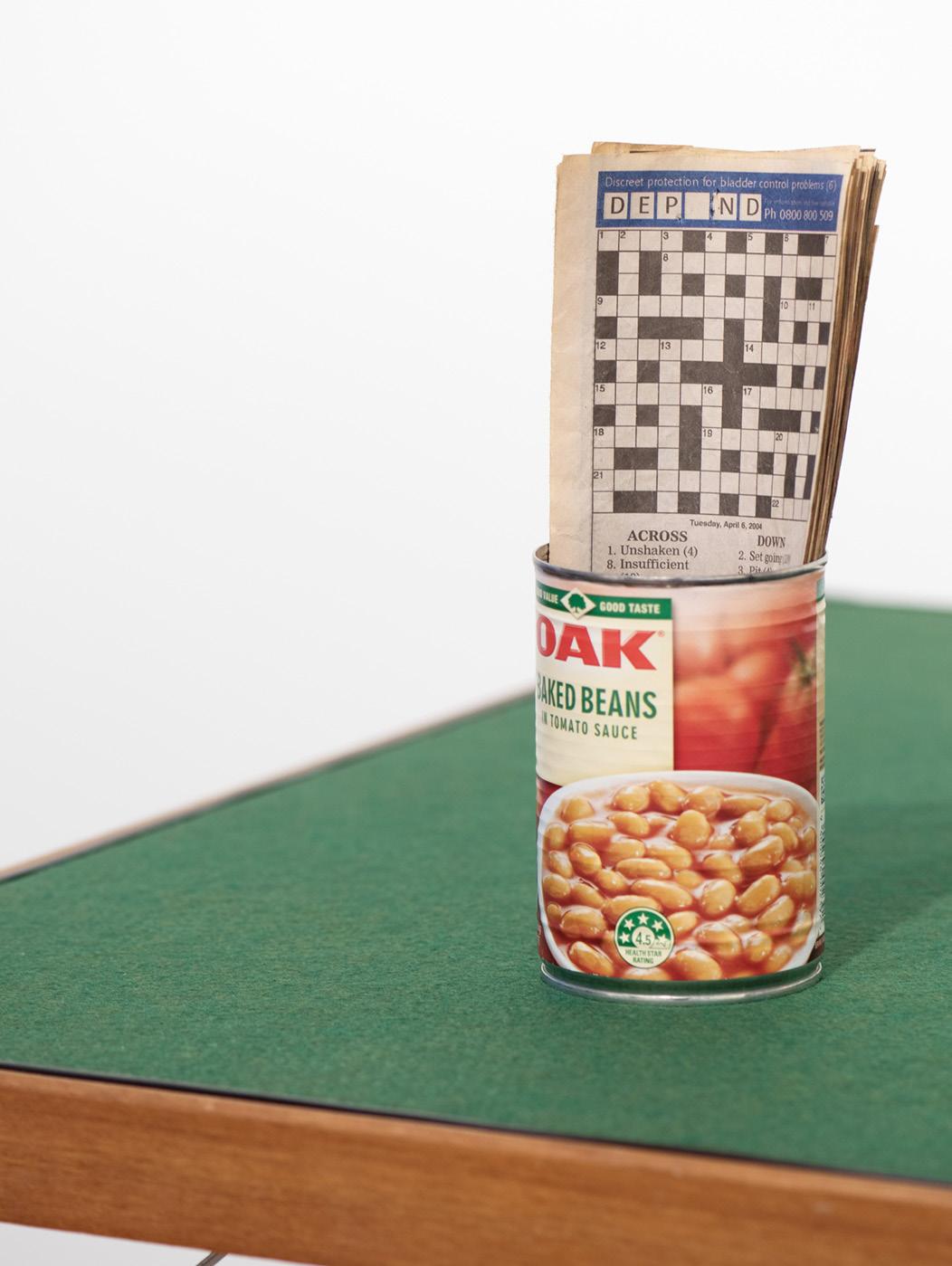



The City of Dunedin Pipe Band are hosting a Ceilidh Dance (party!) on Saturday 15th August in Union Hall. All are welcome for a fun evening of Scottish country dancing, drinks, and shenanigans. No skill preferred! Bar on site. Doors open at 6pm. Tickets are $35 per person. Check out Facebook or @codpb_ nz on Instagram.
Come along to Peace Sunday, hosted by Knox Church, on the 9th of August 7pm. The service will be led by Rev. Greg Hughson. All are welcome.

The Otago University Performing Arts Club has their mythical creatures themed ball coming up on September 11th. Find out more on their Instagram page @opac_otago.

The Otago Vietnamese Student Association is hosting a $15 Hotpot Night on Thursday the 6th of August. Check out their Instagram @ovsa_nz for more details.

Was that a Dunedin Herald face reveal?

Social Striders and ADJØ are hosting a walk/ run session, with a free porridge bar afterwards! Taking place at 9am on the 15th of August, meeting at ADJØ (333 George Street). Giveaways from Sterling Sports, muesli bags and coffee vouchers are up for grabs too! Check out @ socialstriders_nz for more details.
The New Zealand International Film Festival will run at Ōtepoti’s Rialto Cinemas and Regent Theatre from August 14th-30th. Over 80 screenings of films from around the world will be shown. Get tickets from nziff.co.nz or in person.
Someone pooed in Union Hall! Heavy metal band Devilskin truly performed in another layer of hell when a particularly devilish patron decided to unleash themselves on the floor. According to an eyewitness, the poo was a “solid log that got stuck [in thier] pants, and [they] had to shake it out”.
An RNZ investigation found uranium and lead in blackmarket tobacco products. Double Happiness contained tin, indium, caesium and uranium. Hongtashan 1956 contained antimony, lead, and bismuth. Stay safe out there!