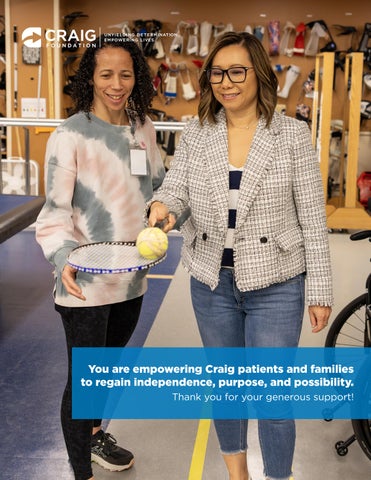
You are empowering Craig patients and families to regain independence, purpose, and possibility.
Thank you for your generous support!
Every day at Craig Hospital, individuals experiencing spinal cord and brain injuries engage in rehabilitation that supports the whole person, physically, emotionally, and socially. While clinical care lays the foundation, it is the generosity of donors like you that expands what is possible. Your giving empowers innovative programs and experiences that insurance does not cover, helping individuals gain independence, reconnect with their communities, and rebuild lives that are meaningful, active, and full. This report highlights just a few of the ways your support is transforming rehabilitation at Craig.
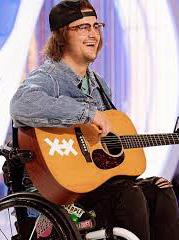
After my accident, I needed a creative and emotional outlet. Playing and singing kept me busy and really helped me focus on something that felt good.
- Sam, Craig Graduate
STRIKING THE RIGHT NOTE
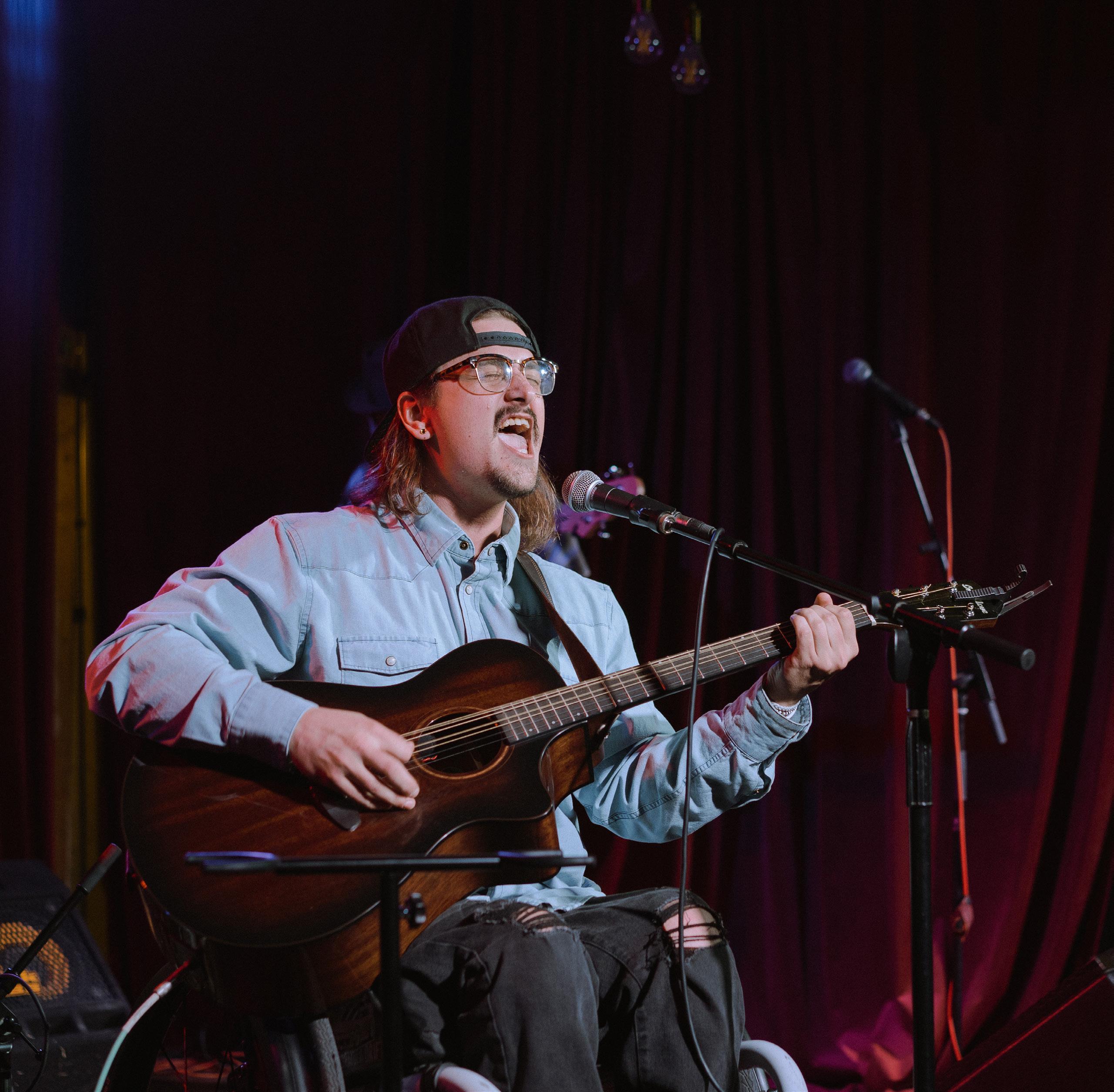
On October 30, 2024, Sam Sparks traveled to Nashville from his home in Dardanelle, Arkansas, to audition for Season 23 of American Idol. There, he performed his original song, “Colorado Gray,” inspired by a fellow patient he met at Craig Hospital. All three judges, including Carrie Underwood, Lionel Richie and Luke Bryan, voted unanimously to give Sam a “Golden Ticket” to Hollywood.
“I’m a regular guy who got to do a very cool thing,” he recalls. “It was a once-in-a-lifetime experience, and it felt great to be respected as an artist.”
Sam adds, “I wouldn’t be where I am today without Craig.” Sam adds, “Performing is something I never thought was possible after my car accident.”
A NEW PERSPECTIVE
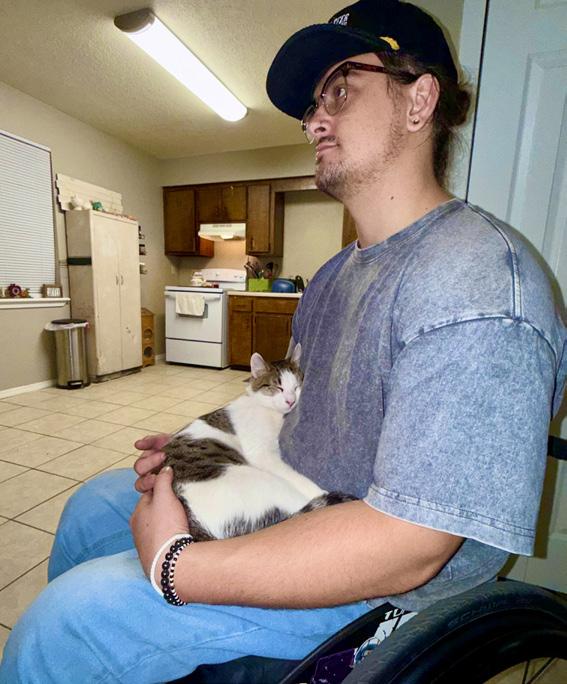
Sam’s life was forever changed in December 2022. A vehicle failure led to the 23-year-old losing control of his car, which flew 35 yards through the air before hitting a parked car head-on.
“I remember not being able to move my legs, and I immediately knew my back was broken,” he explains. “When I arrived at Craig, paralyzed from the waist down, I thought my life was over. But being at Craig taught me this was not true. I realized that I needed to change my outlook on life and focus on the positives. And part of this outlook was concentrating on my music, which has always been a very important part of my life.”
During Sam’s neurorehabilitation, he worked with Annamarie Engelhard, Craig’s neurologic music therapist, to learn how to play the guitar and sing while seated in a wheelchair. This meant adjusting his posture and working on breath control.
Program SpotlightNEUROLOGIC
MUSIC THERAPY
This innovative, donor-funded program harnesses the clinical neuroscience of music to help patients regain essential skills and achieve meaningful, functional outcomes in their neurorehabilitation recovery. Scientific and clinical research demonstrates that music affects human cognition, language, motor function, and psychosocial well-being.
Thanks to you, patients benefit from therapies that address:
• Expressive Aphasia
• Voice Dysfunction
• Impaired Breath Support
• Decreased Engagement
• Disorders of Consciousness
• Executive Function Impairment and movement disorders.
Your support brings this powerful, research-backed therapy to life.
“Because music was central to Sam’s life, I knew that needed to remain a part of him he felt comfortable and confident using,” Annamarie says. “Playing music provided that sense of familiarity and solace in the midst a life-changing situation. Sam could still play guitar and sing, so with some practice, we shaped it into something he could access whenever he needed at the hospital.”
After working with Annamarie, Sam recalls borrowing a guitar from the hospital’s Recreational Therapy department and taking it out to Craig’s parking garage to practice.
“I used to follow the nurses out of the hospital during the 7 p.m. shift change,” he says. “I played and sang in the deserted garage for several hours because the acoustics were great, and I knew I wouldn’t disturb anyone. After my accident, I needed a creative and emotional outlet. Playing and singing kept me busy and really helped me focus on something that felt good. There’s no question that music got me through an extremely difficult time in my life.”
RECOVERY IN ACTION Program Spotlight
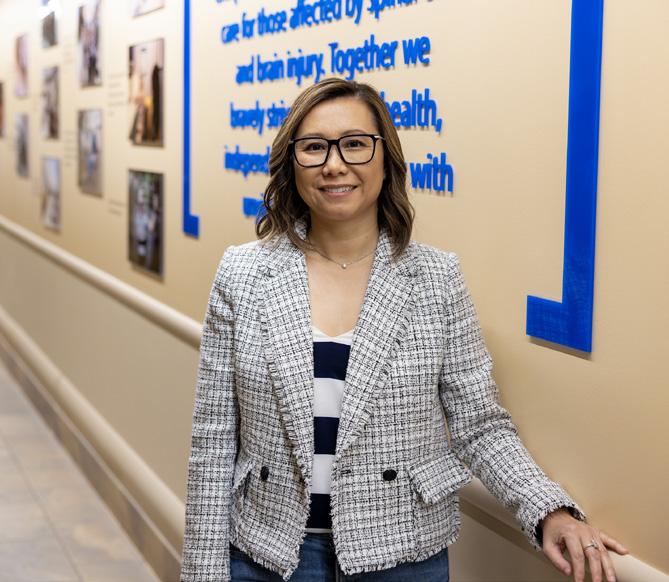
“I didn’t know much about Craig Hospital before I became a patient in February 2025,” explains 49-yearold Saeng Inthavong. “But as soon as I arrived, I realized that Craig was not a regular hospital, but rather, a working hospital.”
She adds, “Because my entire care team put so much effort into helping me recover, I realized that I also needed to put in the work. It was important for me to do my part, so I gave it 110 percent every day. I made an amazing recovery, and I have Craig to thank for my progress. I feel so grateful.”
AN UNEXPECTED CRISIS
In the fall of 2024, Saeng began to experience severe headaches and muscle spasms in her right arm, which led to numerous seizures. A battery of tests at the hospital confirmed that Saeng had sustained a stroke.
“I spent the next two weeks in a Colorado Springs hospital, while my family, friends and loved ones researched rehabilitation facilities,” she recalls. “A good friend strongly suggested Craig because her brother had a great experience there. When I heard that the hospital had an open bed for me, I felt extremely fortunate.”
WORKING TOWARDS INDEPENDENCE
As soon as Saeng arrived at Craig for neurorehabilitation, her care team was ready for her.
“I entered the hospital in a wheelchair, feeling terrified and overwhelmed,” she recalls. “Not only did I not know what to expect, but I didn’t know if I’d ever regain movement on my right side. However, my doctors and therapists were optimistic about my recovery. They gave me the hope I needed.”
I was so impressed with the 360 care at Craig. The hospital’s care team treats each person as a whole – and does not focus on just one aspect of recovery.
- Saeng, Craig Graduate
She adds, “From the very beginning of my stay, my care team asked me about my goals. I loved that they focused on me as a person – and not just a patient. My main objective was getting back to my life, which meant returning to work, running, and gardening. Being independent was vital to me.”
COMMUNITY REINTEGRATION
Thanks to generous donor support, the Community Reintegration program helps individuals rebuild their lives and rediscover their independence. Your investment makes it possible for patients to successfully transition back into meaningful community activities— like returning to work, school, and other purposeful pursuits. Together, we focus on what matters most to each person, helping them achieve financial stability, social connection, and lasting independence.
With your support, participants receive:
• Work and school readiness assessments that identify strengths and opportunities
• Partnerships with employers, schools, disability services, and volunteer networks
• One-on-one job coaching and career planning aligned with each individual’s goals
• Connections to community resources that foster long-term success
TURNING GOALS INTO REALITY
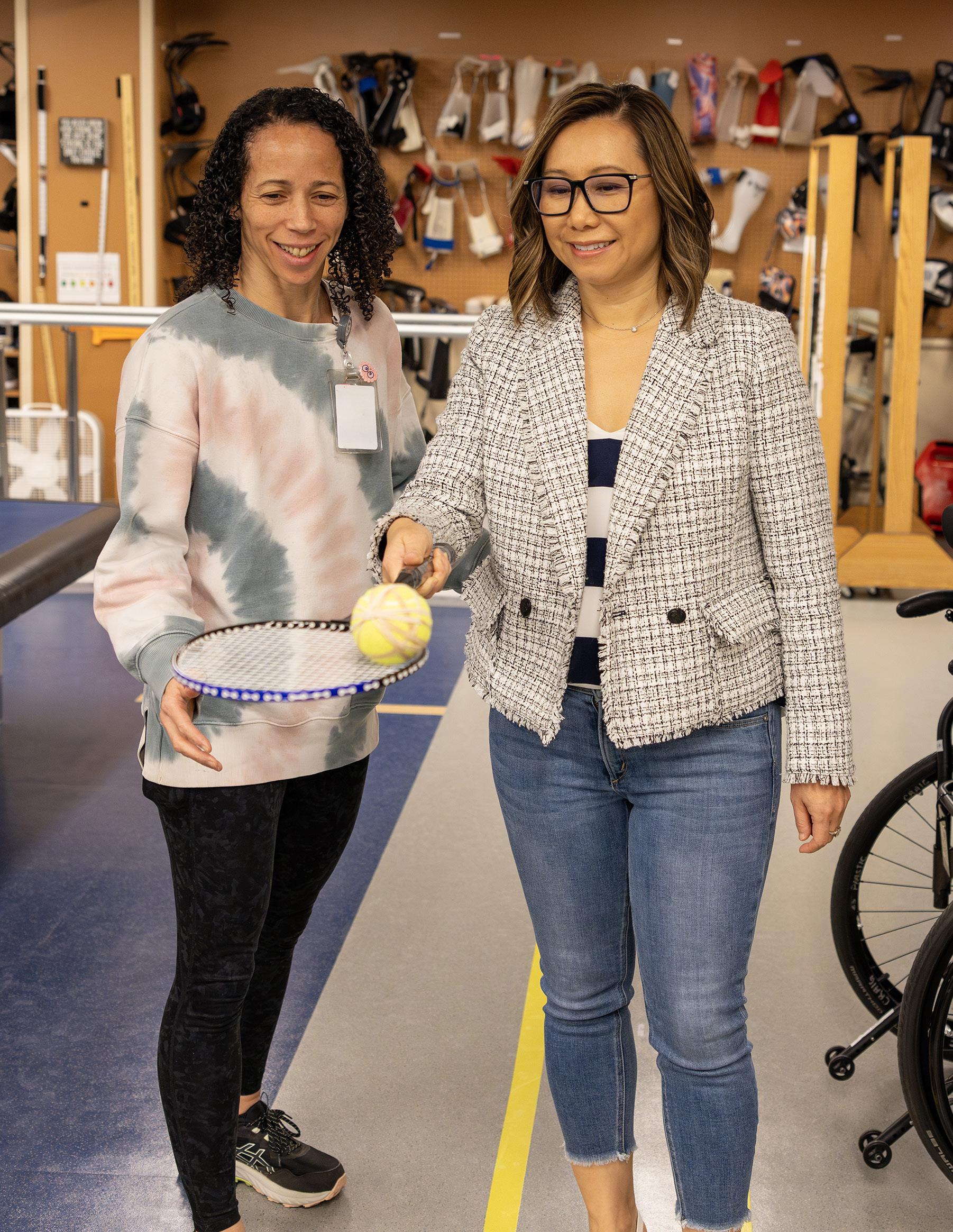
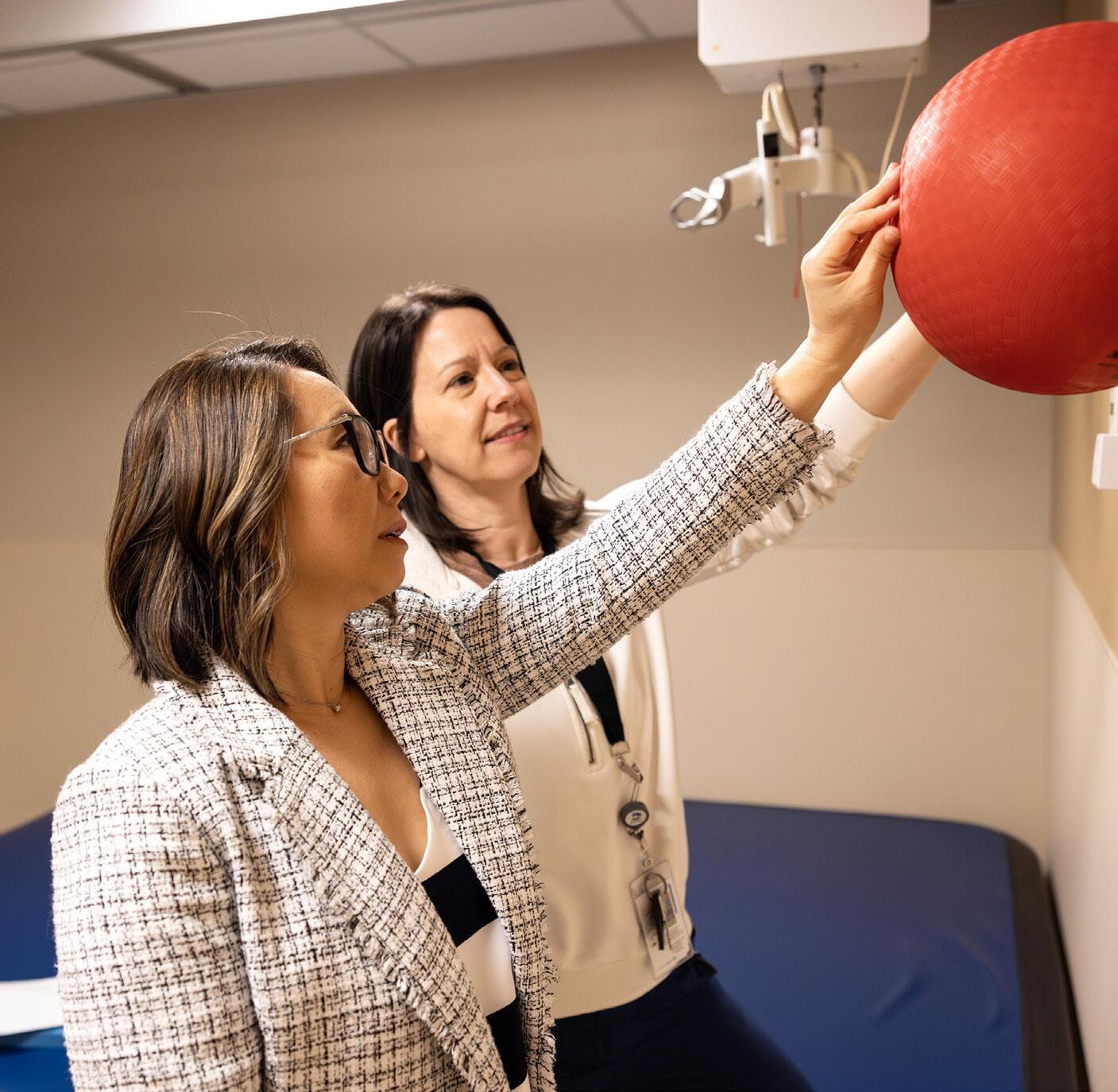
Shortly after arriving at Craig, Saeng began working with Hayley Medina, an occupational therapy specialist with the donor-supported Community Reintegration program. The program provides transitional services for patients returning to productive community-based activities, such as work, school or volunteering.
“Returning to work after an injury creates a sense of stability, confidence and enjoyment,” Hayley explains. “For some individuals, it’s an essential part of their identity, so helping patients return to that role is our main focus. And because this was so important to Saeng, the entire care team worked together to help make this a reality for her.”
She adds, “Depending on a patient’s specific needs and goals, our services include work readiness assessments, collaboration with employers, coaching and development, community resource connection, and career planning.”
While getting back to her job as a project manager on a full-time basis was Saeng’s long-term goal, she knew she needed to start slowly.
“It made more sense for me to return to work part time and slowly work my way back to 40 hours,” she says. “I wanted to return to my job, but I knew I couldn’t do it without Hayley’s help.”
This support included an assessment of return-towork readiness, employer communication assistance, determining accommodations and restrictions, and providing ongoing support to help increase hours and duties upon return to work.
“Hayley was extremely helpful when it came to learning how to manage my fatigue, pain and stress,” Saeng says. “Dealing with my memory and coordination limitations were also part of my time
with Hayley. She was instrumental in paving my way back to work.”
Hayley adds, “Returning to the workforce has been a significant milestone for Saeng. It’s a reminder of what can be achieved with tenacity, hard work and support.”
360 CARE
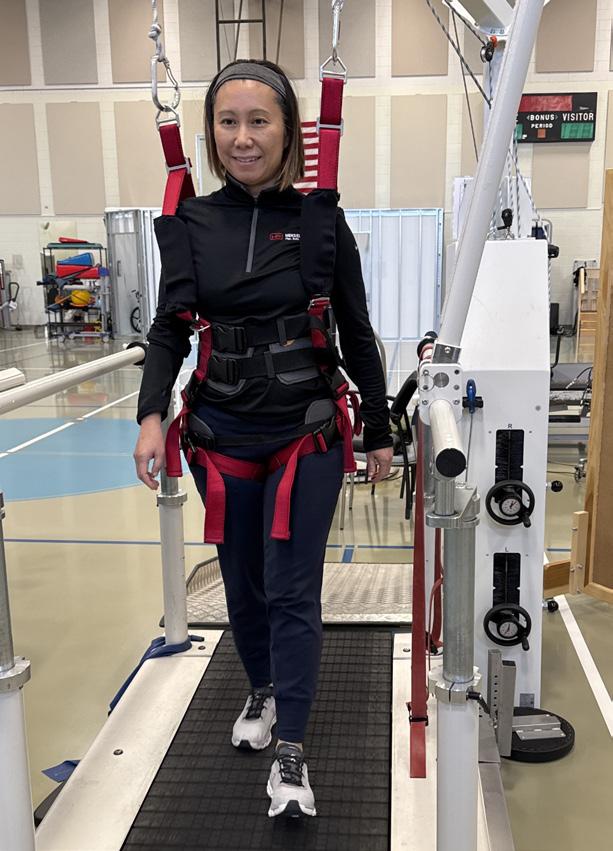
In addition to working with the Community Reintegration program, Saeng spent a great deal of time strengthening the right side of her body, which was affected by the stroke.
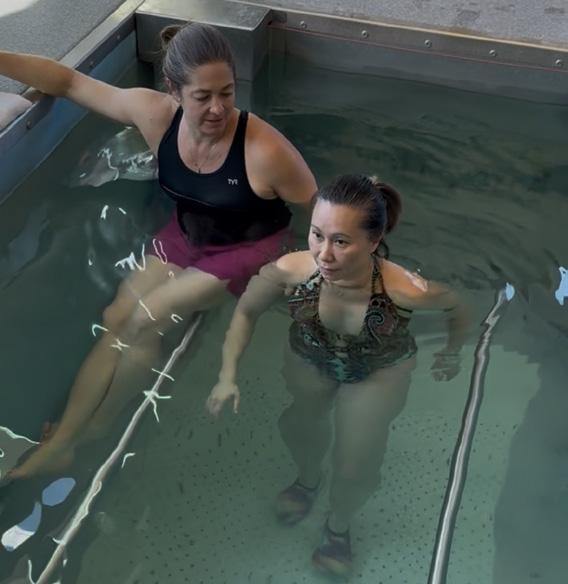
“Aquatic therapy was very helpful for my recovery,” she says. “The warm water soothed my muscles and removed the weight of gravity, which allowed for easier movement in the pool.”
Ashley Miller, Saeng’s physical therapist, adds: “The properties of water provide patients with a great environment for healing. Doing therapy in the pool improves strength and balance by using water’s buoyancy to provide support and reduce joint impact. The water offers a safe, supportive environment for relearning movement and meeting functional goals without the fear of falling.”
For Saeng, Craig’s focus on her mental health was equally as important as her physical health. “Recovering from a brain injury meant I had to navigate many highs and lows. While this was emotionally draining, working regularly with Craig’s psychology team helped me manage the ups and downs, as well as deal with my new reality.”
Saeng also spent time with her recreational therapy team, working in Craig’s greenhouse, playing the piano and scuba diving, which helped her physical and mental health.
“I was so impressed with the 360 care at Craig,” she explains. “The hospital’s care team treats each person as a whole – and does not focus on just one aspect of recovery.”
GAINING GROUND
Today, Saeng is back to work 20 hours a week and running 1½ miles several times a week.
“I live on my own, cook, drive, and grocery shop,” she says. “I am working remotely – for now – and using assistive devices to help me. Additionally, I work out at a gym and receive weekly outpatient physical and occupational therapy near my home.”
She adds, “My experience has been wonderful. The progress I’ve made has exceeded my expectations, and I’m deeply grateful for the rehabilitation I received at Craig. I tell everyone that this is the place to be, and every health care facility should have the same standard of care.”
STRENGTHENING THE BONDS OF FRIENDSHIP AT CRAIG HOSPITAL
On November 16, 2025, Ryan Zimmerman, a freshman at the University of Minnesota, and two close friends were exploring a Mississippi River overlook when Ryan slipped and fell.
“It was really scary,” recalls 19-year-old Ethan Francois, a friend of Ryan’s since middle school and his college roommate. “We raced down the path to the bottom of the overlook and found Ryan. Then, we quickly called 911 and waited for first responders to reach us by boat.”
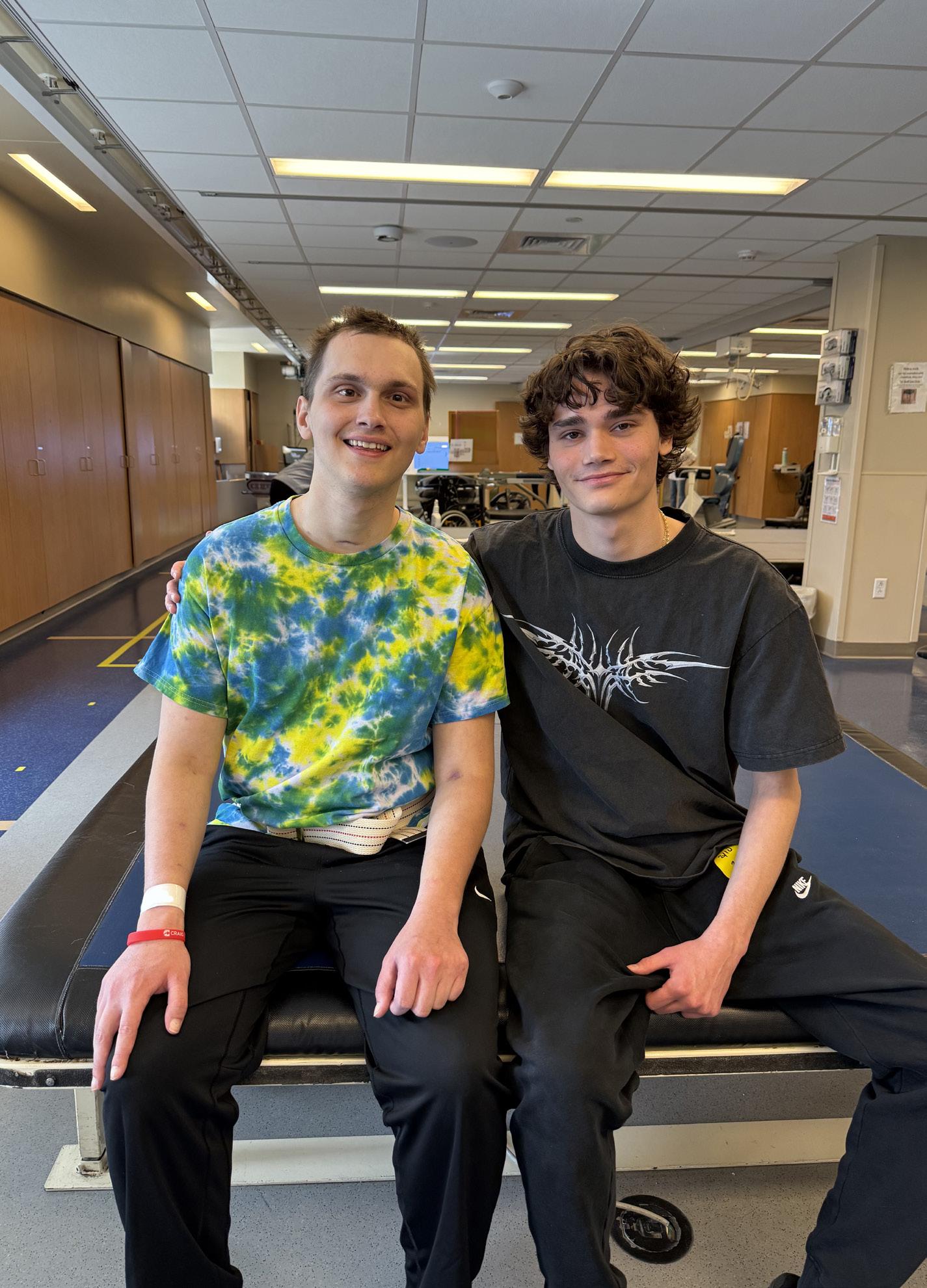
Fast-forward four months, and Ryan and Ethan are spending time together again—but this time at Craig Hospital as part of the Flying with Friends program.
“The progress that Ryan has made since getting to Craig in early January has been incredible,” Jen, Ryan’s mother, explains. “While he sustained brain injuries and numerous fractures in the accident, Ryan has progressed from being mostly nonverbal to full speaking, from tube feeding to independently eating full meals, and from using a wheelchair to walking with just a gait belt.”
She adds, “Spending a few days with Ethan really boosted Ryan’s mood and made him so happy. Flying with Friends is such a special program. We were grateful that Ryan and Ethan were able to participate in it together.”
EMPOWERING ADOLESCENTS
“The goal of Flying with Friends is to empower adolescents with spinal cord and brain injuries by giving them the support they need to thrive,” Kelsey Smith, a recreational therapist at Craig, explains. “This includes time with close friends.”
It was great to spend time together, just like we used to back home before my accident.
- Ryan, Craig Graduate
She adds, “Throughout the visit, the patient’s friend is provided with comprehensive training, which fosters independence and community integration, as well as ensuring that patients can transition home with support and confidence.”
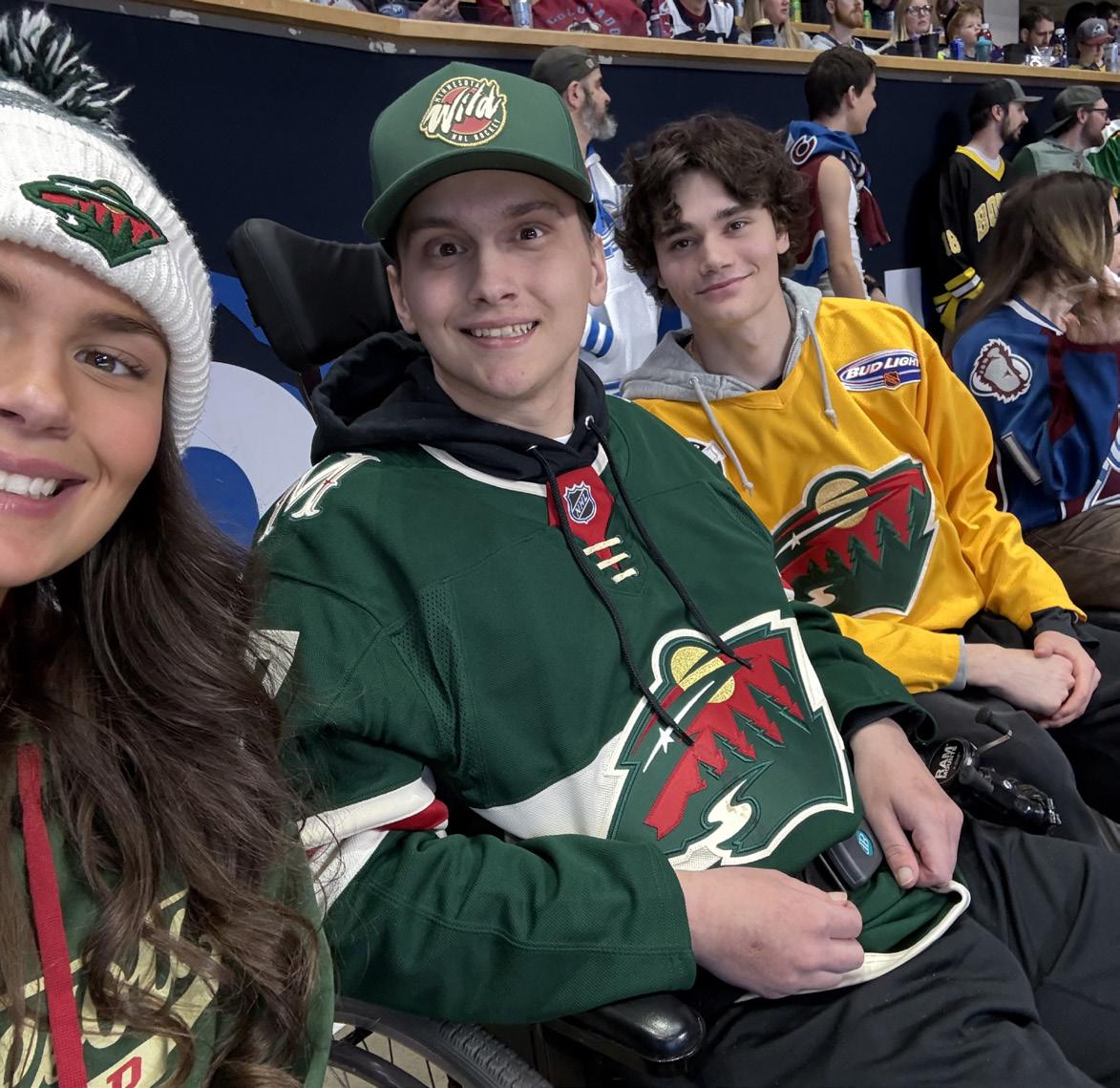
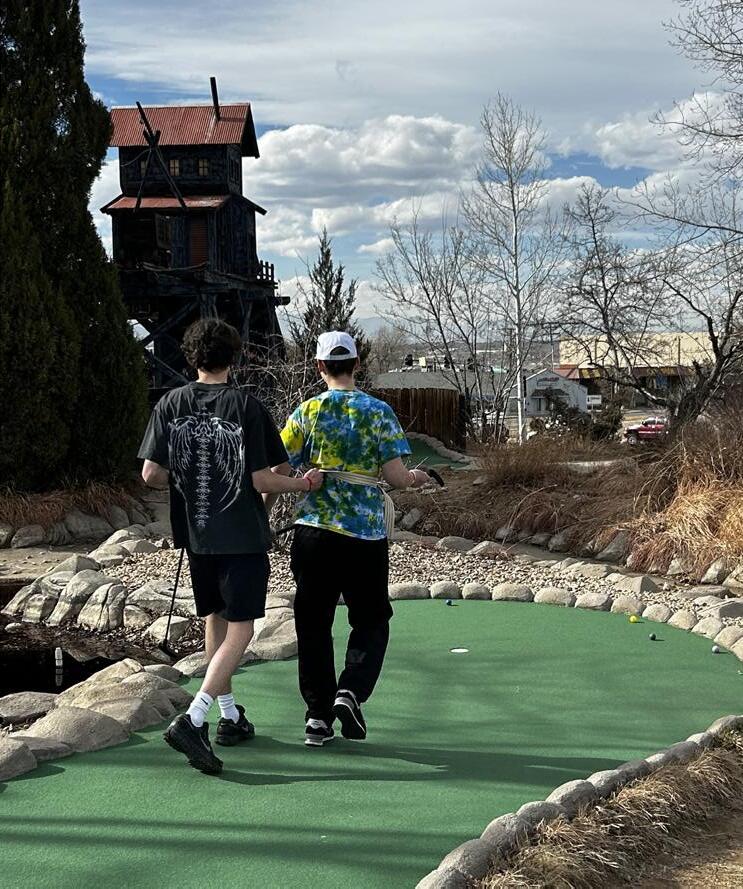
Ethan’s four-day visit included an afternoon of miniature golf, as well as board games, Chickfil-A, pizza, Taco Bell, and tickets to a professional hockey game, donated to the family via personal connections.
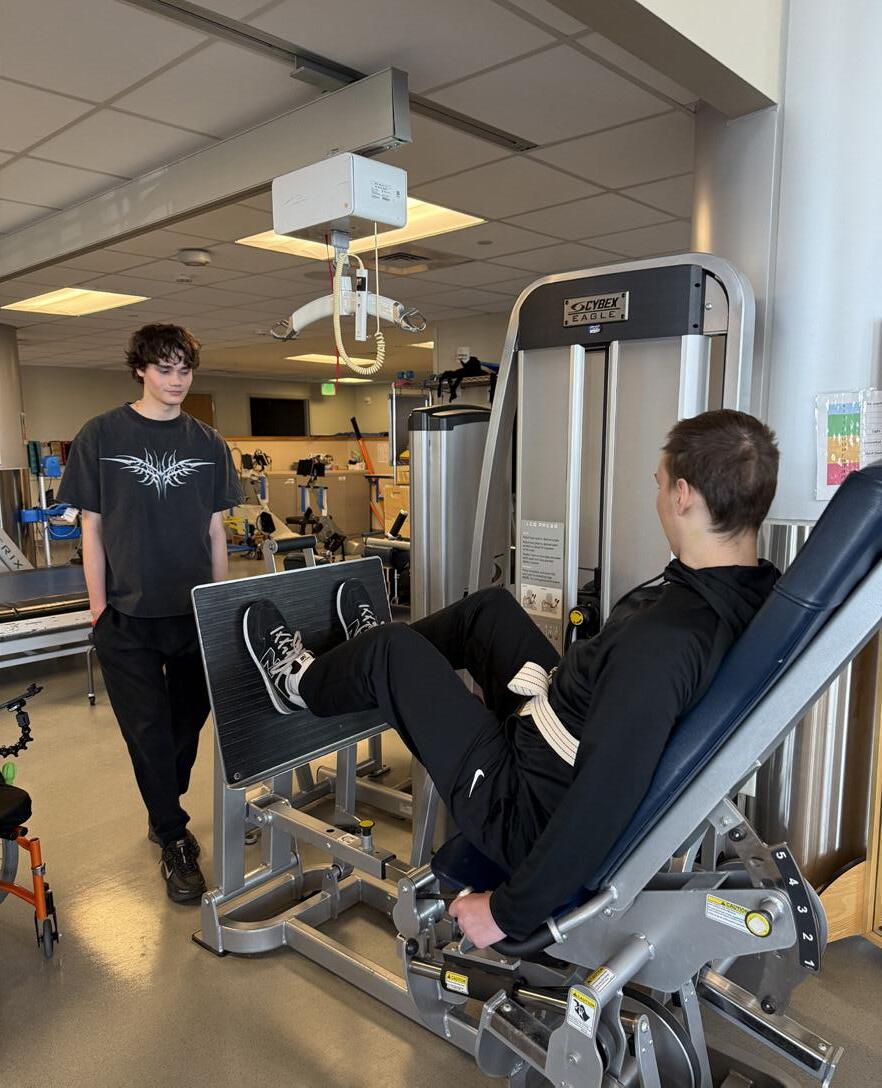
In addition, Ethan spent two days with Ryan while he participated in various therapies, including physical, occupational and speech therapy, as well as time spent participating in a high-intensity walking research study.
“My physical therapist taught Ethan how to put on my gait belt, and we practiced walking outside with the belt,” Ryan says. “By the end of the session, he felt comfortable helping me use it while we played mini golf. It was great to spend time together, just like we used to back home before my accident.”
For Ethan, the experience was extremely uplifting: “It was cool to see how much Ryan has improved. I got to see what he does every day and how much his therapies are helping him recover.”
He adds, “While it has been difficult being back at college without Ryan, my family has been very supportive and, together with therapy, have helped me get through the trauma of Ryan’s accident. Spending a few days with him in Colorado was awesome and made me excited to have him back home in Minnesota.”
Program
Spotlight FLYING WITH FRIENDS
Flying with Friends helps adolescent patients return home with confidence, independence, and a strong sense of connection.
Established in 2022, and made possible through donor support, this unique initiative ensures that patients don’t make that transition alone, by equipping a close friend with the training and experience needed to be part of their recovery journey.
Your support makes it possible for friends to join patients on campus, where they learn, grow, and prepare together for life after rehabilitation.
This experience includes handson training and resources to support independence at home, and meaningful outings that build confidence and real-world readiness.
Thank You
Because of you, Craig patients are able to build independence, reconnect with what matters most, and engage fully in their lives and communities. Your generosity makes a profound difference in rehabilitation at Craig Hospital. Thank you for making this work possible and for being an essential part of every journey forward.