THEGARDAN

This year’s issue of The Gardan Journal is filled with humanity and survival. Your submissions of poetry, stories, artwork, and craft are a mirror that reflects us back on ourselves. Issue 10 discusses death, and by contrast, life. It explores our memories and gives weight to those feelings that make us human - and mortal. Greg Amos shares that “grief is learned.” Together we grieve for our lost loved ones, our past lives, our broken pieces. Our world gone astray. Caperton Tissot writes:
Tell me, tell me, for I find it hard to find the sunshine, feel joy, believe
In “We are Living, We Are Dying,” Virginia Chang offers a new perspective on life and death. To find her own footing, she writes: “I stand, I begin to move. I return to the mindful movements which keep me grounded and centered. I brace, I reach, I surrender, I offer, I pray."
Jackie Hall continues her exploration of the doctrines of colonialism and yet… “The fact that we are still here speaking our languages, singing our songs, passing down ancestral knowledge to the next generation and instilling in the minds of our children the importance of leaving the land better than when we came; goes to show just how resilient we are as a people.”
And with her own personal story, Michelle Zelkowitz reminds us that we have a “Strength Lying Silently Within.”
We invite you to share your work with us anytime by submitting to The Gardan online at www.craigardan.org/gardan. Issues are published annually and directly reflect your collective voice.
Whatever this year brings for you, may you find comfort and joy in art and life.
— Michele Drozd Executive Director
11.5.25
Craigardan is a 501(c)3 nonprofit organization with a mission to encourage the human imagination to interpret the world with philosophical, ecological, and artistic perspective.
To fulfill our mission, Craigardan supports artists, chefs, craftspeople, farmers, scholars, and writers through residencies, social justice initiatives, our community farm, and other public programs.
Located in the heart of the Adirondacks, Craigardan’s artist-in-residence program strives to cultivate a rich and collaborative place-based experience for all people working in all disciplines. Our strong interdisciplinary foundation encourages creative thinking and collective problem solving by welcoming diversity in all of its forms.
Muriel Luderowski, President
Allison Eddy, Vice-President
Gayle Burnett, Treasurer
Erica Berry, Secretary
CRAIGARDAN
www.craigardan.org
info@craigardan.org
518.242.6535
The Gardan, a project of Craigardan, is an offering to our creative community near and far, delivering a small piece of our program — along with inspiration and ongoing support — to encourage you to self residency wherever you are.
The Gardan is intended to foster conversations about creativity and its processes among and across all disciplines. We welcome contributions from artists and thinkers, activists and farmers, environmentalists and chefs at any and all stages of creative development.
We hope that The Gardan will unite you with your extended family of creative thinkers and bring a breath of Adirondack air to your inbox.
Each issue can be found online at www.craigardan.org/gardan
We invite your contributions of
words, images, video, field notes, sound, and any other way you wish to connect to us, and to each other.
Issues are curated by our editors. Complete guidelines for content submission are online at www.craigardan.org/ gardan
The Gardan is guided by our staff and fully supported by Craigardan’s funding and the efforts of our board and volunteers.
Our programs are made possible by the generosity of participants, individual donors, and numerous foundations and grantors.
Craigardan’s Residency Program is made possible by the New York State Council on the Arts with support of the Office of the Governor and the New York State Legislature.
Erica Berry
Peter Beuf
Lu Chekowsky
Elise Jeanmaire
With special thanks to editors Mary Barringer and Kate Moses.
Loren Michael Mortimer
Michele Parker Randall
Lanse Stover
9216 NYS Route 9N, Elizabethtown, NY 12932
All artwork is used with permission of the artist, who retains copyright of their work



GREG AMOS
HANNAH APUZZO
MARIE BURDETT
VIRGINIA CHANG
LISE DEGUIRE
CHELSEA DODDS
MICHELLE LIZET FLORES
DUANNE L. HERRMANN
KAIA’TIHTAKHE (JACKIE HALL)
JAMES B. KOBAK JR
YUKO KYUTOKU
AMANDA LICHTENBERG
STEPHEN LONGMIRE
JASON LORD
HENDREE MILWARD
MARLENA MURTAGH
MARGARET NAPPER
GEORGE OKUDAYE-STEPENS
KATHERINE ORFINGER
MIKAYLA PLOOF
BETH REITMEYER
ROB ROGERS
ADAM SARLAN
CHASE TWICHELL
CAPERTON TISSOT
MARTHA VINING
KAYLEIGH WOODWARD
MICHELLE ZELKOWITZ
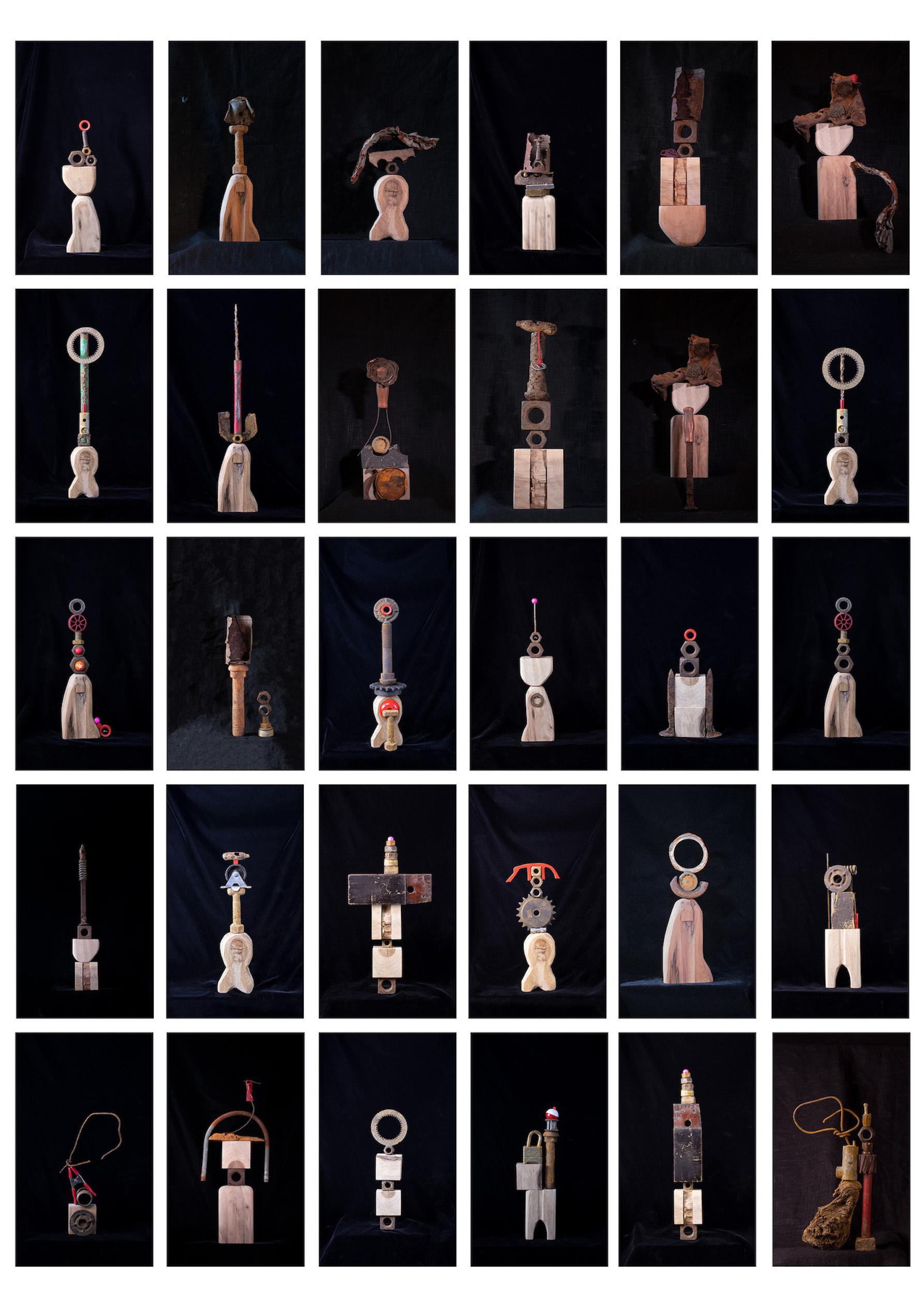
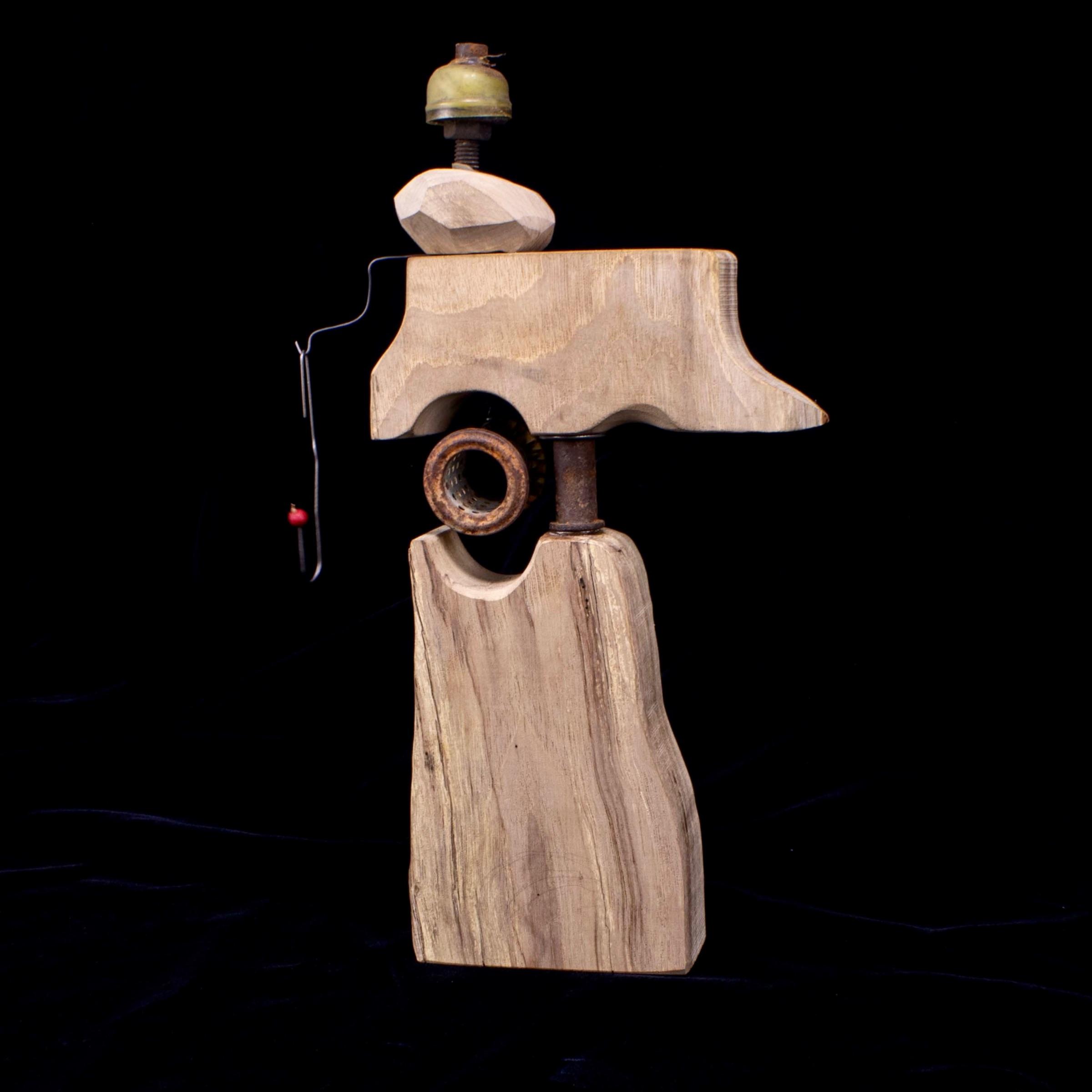
FRONT: “Pantheon” by Jason Lord. Digital photographic collage of wood and found object sculptures. Durham, NC
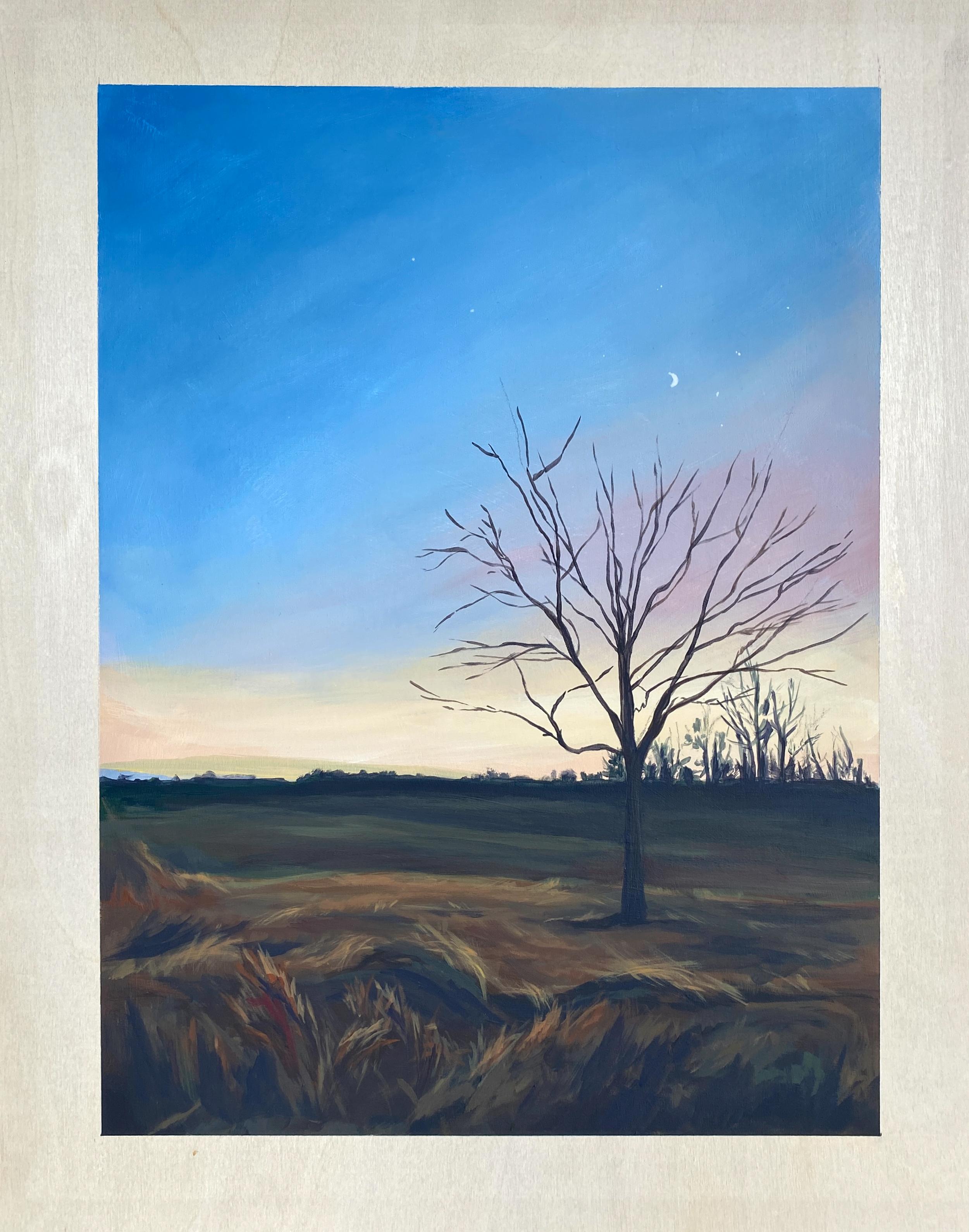
BACK: “Nighttime on the Farm” by Marlena Murtagh (’23). Acrylic on wood. New Park, PA
By Chelsea Dodds (’25) Clinton, CT
i wish you had lived long enough to paint the photos i brought back from out west. so you could study the folds of the tetons, like uneven page edges in a new hardcover book. so grizzly 399 and her cubs could grace fields of wildflowers and sagebrush. so the ridges of reds and oranges in bryce canyon at sunrise could pop off the canvas, off the wood-paneled living room where you spent too much time after the accident.
when you were dying i sat next to your hospital bed and grieved you would never see me get married. but after that day i stopped wanting a wedding. now i picture eloping atop a mountain in a cheap dress i will wear again and a wreath in my hair, with no human audience but surrounded by flora amongst the bears and bison and it will look like you painted the scene just for this occasion.
Segment from An Emigrant Son, a novel in progress
by Greg Amos (’25) Medellin, Colombia
Where is loss felt? The ashes of a cremated body take up less space. They may be displayed on a mantle in a box much smaller even than a cat’s burial knapsack or a child’s coffin. Ashes may be displayed in an urn that announces to visitors, “a loved one has left the world of the person who’s house you visit. Be respectful. Make a heartfelt comment as you stand nearby.” And you would. Well, and if you know that the wooden box on the mantle you’re next to was once a person of importance to the house you’re in, of course you would as well. Otherwise, you wouldn’t know or be expected to say anything. You might innocently comment, “this is a nice box” and unknowingly open a can of worms. Oh god, not literally. Or maybe you’re dumb and don’t recognize an urn when you see one. You say, “what’s this, an urn?” The answer is yes and without meaning to, you’re talking about the loss of someone, and it might be recent.
Then sometimes ashes are cast to the wind or sprinkled into that same ocean from whence we crawled millennia ago, amphibious lizards who one day just decided to not get wet anymore and then also decided to walk only on two appendages and then decided to become neanderthals and then modern people. The air, the oceans of this planet subsume those ashes. We return to become part of the world – ashes to ashes, dust to dust – its pollution, its garbage, maybe its forests as well, to be seen in the moonlight when the sky is clear. The body abandoned for garbage, discarded, albeit with reverence.
Where does the soul go? Is my cousin’s soul a spirit, a wisp, a part of this world still? I didn’t know him and only went to the grieving house because Mother knew him. Well also because of family connections and responsibilities. She went and took me with her.
Am I the only one still thinking about him? I don’t even remember his name.
Is Mother’s soul — separated, liberated, released from her body more than two decades ago because of cancer — a spirit that goes bump in the night, still keeping me company despite her physical absence? I miss Mother and think of her from time to time. She still takes up space to me, in me, around me, that space impossible to be measured. I could go on forever about Mother. She’s not the problem. Her story’s not the problem.
I hadn’t thought of Winthrop for years until CNN brought him up. Loss is felt everywhere. In the cup of coffee you drink in front of the person no longer there. Loss is felt in the walk to the store you took together to buy groceries. In the refrigerator door you hold open and remember when your mother yelled at you for looking in it too long. It’s felt inside too. In your heart you don’t think can keep beating, in your lungs that since the day of the funeral can’t get enough air. Loss makes its presence known in the laughing and crying, in the memory of when Mother walked by me as I watched TV, after I told her it was time for bed and I saw how thin she had gotten, impossibly thin because she was always fat. Cancer cured that and everything else. How do we ever make it to the next day?
Grief is learned. Mother taught me the expression of grief, at least. I just didn’t learn what she taught. She taught me the responsibility of family at that second funeral. I felt nothing for the distant cousin so distant I don’t remember who he was or how he was related to me. I only think he was a he. I just remember it as the first death in my life. The first of many to come. Uncle Lonnie, whose funeral I attended, was the first death where I felt something. Not as much as I was supposed to feel. How is that measured anyway? I responded to the responsibility, to the expectation of me. That one time anyway.
My father abandoned me and in response, I abandoned everything, everybody else. We feel grief in the body. We also feel it in the moments we move through without that person lost. Like
living in molasses, all movements more difficult, and with only muffled sounds and sensations. The absence of Leonard-the-Cat is felt through the presence of his red bowl and through the presence of Topaz, the other cat, who didn’t even like him.
And grief is earned. I do not plan to grieve my father. Grief pulls on invisible cords inside us, piano wires that stretch throughout our frames, from organ to organ, more than nerves because they don’t just connect and run signals to the brain. They connect heart to legs and make you walk unsteadily. They connect lungs to fingers and make you unable to breathe while your fingers fumble the keys and you can’t get the right one into the lock on the front door. You collapse right outside your own apartment, crying and sobbing and weeping, snot mixing with tears above your lips. Grief pulls on those piano wires until they strain and snap, the two severed ends recoiling back and then just hanging listlessly. We are forever changed.
Grief is pain too, isn’t it? I do know where pain is felt. It starts as an unease in the cells. The muscles in my thighs contract when I’ve worked them, or if they haven’t been stretched enough and there’s pain. My stomach tightens, cell by cell, into a knot and I can’t eat for weeks. My throat closes and it hurts to swallow. The food gets stuck in the constricted pipe, the stomach won’t let it in. I throw it up. That entire system of cells hurts. That physical, biological reaction makes itself known as electrical signals to the brain. We call it pain. The pain of loss is trickier to pin down.
The list isn’t complete, but it’s more than enough to package into this thing and present to you. The list makes me think and feel. The world is a subtly and not so subtly changing place and even that change is a relative thing. Sometimes the change is big. A building collapsing is monumental to those that lived in it. Some lose their lives. Their relatives changed forever. Those that escape rendered homeless and stuff-less. They’re gonna remember the day that building fell. While a city or country away, the loss of that building doesn’t even register. Then sometimes
the change in the world is small. A stray dog gets run over in Poughkeepsie. No one besides the dog and driver are affected. Or a cat gets buried on a woman’s property somewhere in Colombia. As much as the world may contract when someone leaves it, it also expands when a new person joins in. (The half-sister 30-odd years ago was the last birth in my composite family. I rejected it.) Anyway, expansion and contraction, like lungs inhaling and exhaling lives. Soon my run will end and I will be exhaled as dust into the universe.
Here’s the list. It contains those who have died that were somehow connected to me (close and not so close). These people (and the cat) no longer exist in the world. No where. They’re not on holiday in another city or country. They are no where to be found if one were to go looking. They are no longer anywhere in the entirety of the world. Too many people no longer exist in the world from one day to the next. I don’t know how the world doesn’t collapse in on itself, despite whatever births may happen as counterbalance. I don’t know how people continue with the weight on top of them, inside of them, all around them. The list: the student at university that I met only once, Boney Rhodes, Uncle Lonnie, Henry (I forget his last name), Maria Ambrose (Mother), Julia Hall (a paternal great grandmother), Queenie (one of Mother’s best friends), Ms. Marcia (a one-time mistress to my father), my grandmothers, the Rock (my maternal grandfather that served in World War II), James Ridley (an American I met recently arrived in Colombia), Rubén Pérez and Diego Pérez (unrelated, accidental adversaries in the Colombian armed conflict that ended a month before they killed each other in a battle that shouldn’t have happened in some rural Colombian township you’ve never heard of), the grandmother at the restaurant around the corner from where I live, the Taylors (a whole family over time, mother, father, Hank (my friend from grade school), Hank’s son), Franklin Winthrop (who would have been my younger brother if he had made it out of Mother’s womb). Then the day before yesterday, Leonard-the-Cat, and DeTraul Sinclair Winthrop... my father.
By Hendree Milward (’24)
West Hartford, CT
Far down the list of women you have known is a girl named Pia. She was strange, beautiful, artistic. She was the one who, on a whim, painted all the leaves of a lovely red maple green. The fight that ended your relationship started with that tree. At the time, you imagined yourself thoughtful. She was only ‘artistic’. Both of you had a little to drink and were careless with words. You told her it didn’t matter what she had done to the tree. The leaves were still red. She said the color depended.
“On what?” you said.
“If you love me, the leaves are green. If you don’t, they are red,” she said with tears starting in her eyes.
You blew up. Can’t even remember what you said after that. Some kind of horrible lecture about propositional logic? You might even have used the words “mutually exclusive”? What you do remember was at the end of the night, after yelling, crying, and eventually breaking up, was her saying that language is flexible like an artist, not uptight like a philosopher. Twenty years later in the doldrums of a long marriage with a degree or two in uptightness behind you, you are realizing she might be right. Pia!
Mother, I have tried hard to be good.
By Michelle Lizet Flores (’25)
Jacksonville, FL
Mother, I have tried too hard to be good but I am filled with want and loneliness.
Give me the freedom to feel. Give me the freedom to live.
I sit and ache for this expansion–a reach you taught me to run from.
Give me the hope of ignorance. Give me the hope of desire.
Mother, you didn’t prepare me for this heat laden sin. I am undone and unwell.
Give me the strength to indulge. Give me the strength to explore.
I walk and pray for this freedom–a journey you trained me to fear.
Give me the peace that comes with anger. Give me the peace that comes with shame.
Mother, I have tried hard to be good because I am filled with want and loneliness.
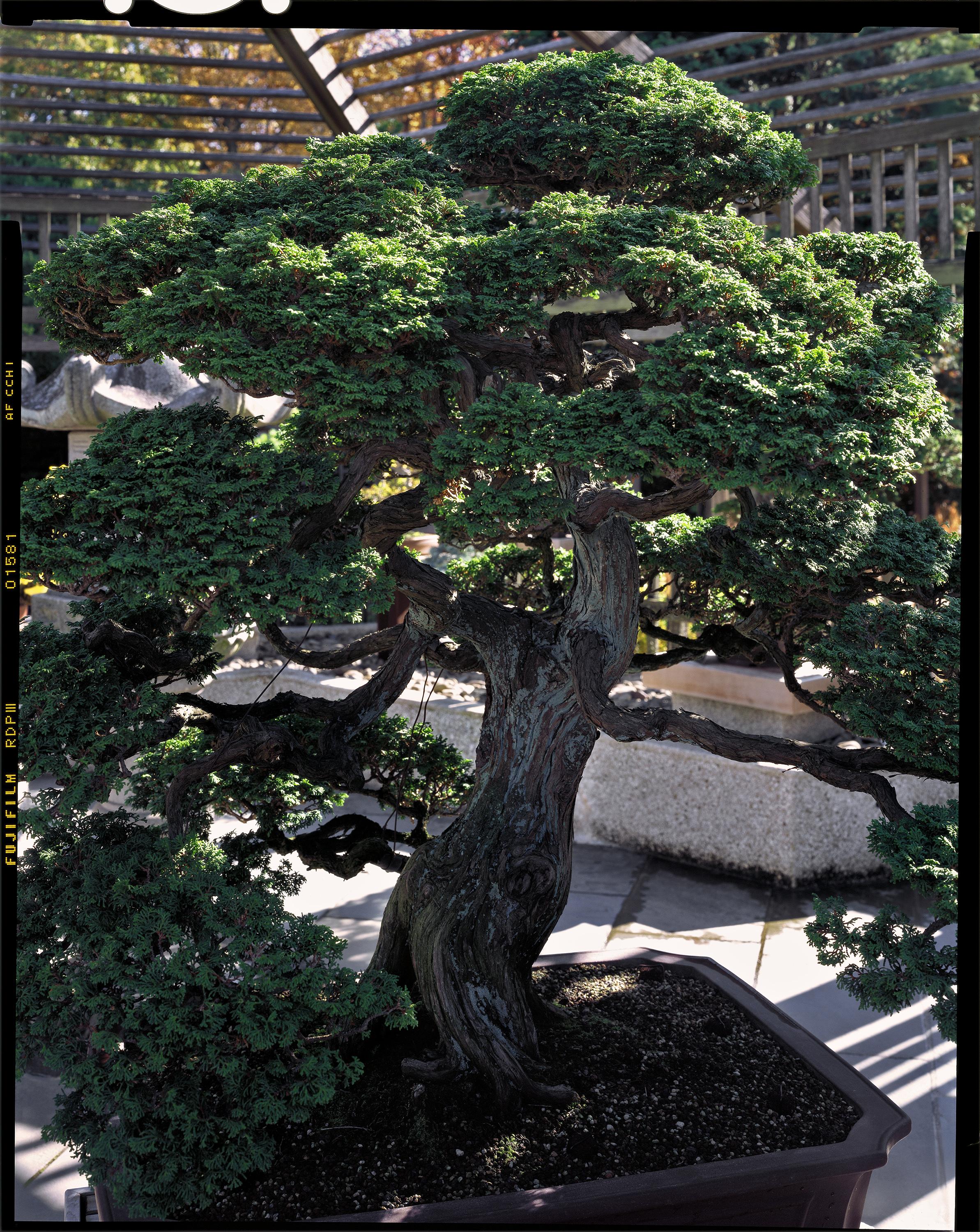
By Stephen Longmire North Haven, NY
In the summer of 1994, just over 30 years ago, I had an epiphany in the Maine woods that forever changed how I make pictures. Walking with my mother, on a trail I had walked several times before, I began to see strange things. First, some twigs laid across a Y-shaped branch growing out from a tree, just above my head, like a slingshot aimed at the sky, or the ground. Later, a teepee, no more than a foot tall, also made of twigs, set in a clearing well off the trail. Each blended perfectly into the forest, made from its discarded materials. Each left me wondering if someone had been there, made these things. We wondered who the builders might be. Nature, coincidence, or humans? Or perhaps forest sprites? Eventually, I spotted a doorway into a hollow at the base of a tree, with twigs for posts, a shard of bark spanning them for a lintel, quivering in the gentle breeze. “That couldn’t have just happened,” we agreed. Clearly, this was an enchanted forest. Through a week of wandering, I never saw construction underway, but learned it was a long-standing local custom for children to make “fairy houses” in these woods, on an island well off the coast, a world unto itself. I haunted them that summer and the next, recording these marvels. By the end of my first visit, even the peeled trunk of a downed tree looked like it had been unscrewed by a giant corkscrew, and left me wondering whose hand was at work.
There may have been simple answers to my question, but it gave shape and meaning to others I had been asking. Such as, why are most landscape photographs made with the assumption that people and place are distinct; that people are not part of the landscape? In those days, perhaps still, it was customary to remove human traces from landscape photos— power lines are the classic example, but people too, and all they bring with them. Of course, people have disrupted and destabilized wild places, especially in the industrial era, but that
does not change the fact that people are a part of nature. Missing this risks throwing the balance off further. Landscape construction — making places — is a defining feature of human culture. The playful little sculptures I photographed were visual poems, or koans, illustrating this truth.
My images of fairy houses were the first I made that required an audience beyond my friends and family. They were stories that needed to be told. I had been making pictures seriously for at least a dozen years before that, but although I exhibited some, they were made for myself, as one might keep a diary. These pictures needed to be seen, and some were, in the magazine DoubleTake in 1997. All the photographs I’ve made since, including two book projects, with a third underway, have come out of these dream houses — featuring buildings that belong in their settings, as if they had grown there; or a prairie cemetery where people become plants; or the effort to reimagine my current home, the Adirondack Park, as a wilderness, though it is an inhabited landscape, and has been for much longer than is typically acknowledged.
Last year I stumbled into another enchanted grove. This one, at the edge of Boston, boasts trees 300 years old no taller than my waist. The bonsai collection at Harvard’s Arnold Arboretum includes a core group of Chabo-hiba, ancient cypresses, imported by Larz and Isabel Anderson after he briefly served as U.S. ambassador to Japan. This was just after the Emperor Meiji’s reign (1913), during which Japan went from medieval to modern, and cast off many reminders of its traditional culture. These miniature trees once adorned temple gardens, then they adorned the Andersons’, and since Larz’ death they have lived in a public garden nearby. They have survived generations of gardeners, and periods of neglect. The Arboretum’s bonsai pavilion and its backstage rooms also include younger specimens, of many species. During an informal residency last year, I passed the time of day with them and their caretakers, and watched the seasons turn. Bonsai are not dwarf varieties of their species, but methodically pruned specimens. On some plants,
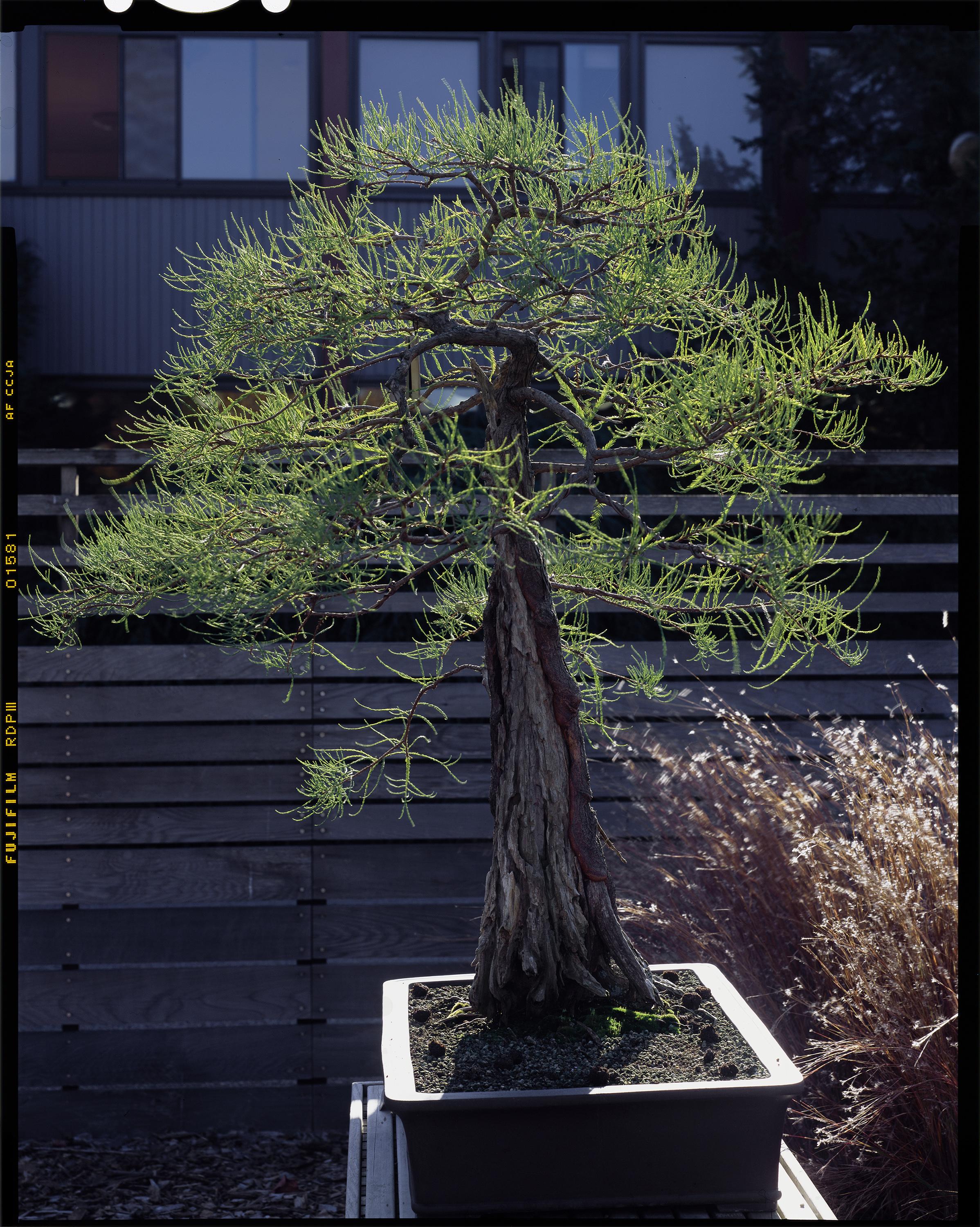
leaves may be pinched off so they grow back smaller. Branches may be removed, or trained to grow in a manner reminiscent of their larger cousins, growing in wilder places. Roots are periodically pruned to ensure a plant does not grow too large. Bonsai do not thrive without constant care. As in a Japanese garden, where a rock brought back from a mountainside is understood to be the mountain (perhaps visible in the distance), these tiny trees stand in for bigger ones, and for the wild places they came from, while allowing people to perform their care of the natural world in a considered way.
Here in the Adirondacks, we live in the largest tree sanctuary in the Northeast, a green space visible from outer space. The woods of New York’s Forest
“Bald cypress (Taxodium distichum), received by Arnold Arboretum 1991, age unknown, October 2024” by Stephen Longmire. Photo. North Haven, NY
Preserve are all around us. We live among them, in the Park’s patchwork of settled and wild lands — more like the British idea of a national park than the American one. It is illegal to cut a living tree in the Forest Preserve, with rare exceptions. Here, of all places, we should remember that people are part of nature. And here, of all places, bonsai raise awkward questions. To some, they suggest acts of violence, like binding a woman’s feet. But, seen from another angle, they also remind us how inseparably human culture and the culture of the wild are intertwined. So I offer these views of some of the oldest bonsai in this country to those sharing the Adirondack forest with me. You may find you start to see their kin as you wander our local woods. Like many of my fairy houses, they are object lessons, creative acts, and living beings.
By Adam Sarlan Chicopee, MA
Here she comes, I say to Winter, and my dog
bolts down the stairs and barks and shakes her
curly black fur with excitement at the bottom of the landing
while her best friend approaches. I am trying to find pleasure
in the simplest moments, to find a reason to dance
with glee, everyday. How sweet it must be for Winter
to yip with gladness while seeing her favorite person
walking down the hallway at seven every morning.
By Amanda Lichtenberg (’22, ’25) Jackson Heights, NY
Maggie Klee Lichtenberg. Maggie, Mom, Mags, Margaret.
Maggie Klee Lichtenberg. Maggie, Mom, Mags, Margaret.
Maggie Klee Lichtenberg. Maggie, Mom, Mags, Margaret.
Maggie Klee Lichtenberg. Maggie, Mom, Mags, Margaret.
Maggie Klee Lichtenberg. Maggie, Mom, Mags, Margaret.
Maggie Klee Lichtenberg. Maggie, Mom, Mags, Margaret.
Maggie Klee Lichtenberg. Maggie, Mom, Mags, Margaret.
Maggie Klee Mags, Margaret.
Maggie Klee MOM Mags, Margaret.
Maggie Klee 1941-2025 Mags, Margaret.
Maggie Klee Mags, Margaret.
Maggie Klee Lichtenberg. Maggie, Mom, Mags, Margaret.
Maggie Klee Lichtenberg. Maggie, Mom, Mags, Margaret.
Maggie Klee Lichtenberg. Maggie, Mom, Mags, Margaret.
Maggie Klee Lichtenberg. Maggie, Mom, Mags, Margaret.
Maggie Klee Lichtenberg. Maggie, Mom, Mags, Margaret.
Maggie Klee Lichtenberg. Maggie, Mom, Mags, Margaret.
Maggie Klee Lichtenberg. Maggie, Mom, Mags, Margaret.
By Michelle Zelkowitz Elizabethtown, NY
Why was I whining to the wind that cooled my parched lips? It was hard, too hard to continue bicycling uphill on this dirt road. My legs moved with the strength of a combat soldier stepping through a swamp. Sneakers, strapped in toe clips, pushed down deep and rose up slow, inching the 5-speed bicycle forward as its tires spit pebbles into the dusty air. Yelling into the breeze, my chest emptied and expanded, “I can’t do this anymore!”
Straddling his bike at the crest of the hill, Lenny waited, tall, slender, his hair blowing sideways, happy I was finally arriving. He had no idea how I was feeling. Suffering from the relentless sun, my face burning, I wanted sympathy, not smiles. Thirsty and perspiring, when I reached him, I grabbed my water bottle from its holder on the bike frame, opened it, and instead of taking a swig, chucked it at him.
How stupid of me! What a waste of water on this hot, dry, summer day on a back road on the outskirts of Fort Collins, Colorado.
We had been riding north on the highway with vehicles speeding by at over 60 miles per hour. As they passed, heavily loaded trucks were pulling us from the shoulder. I complained how unsafe it felt and Lenny had found this alternative route.
At first it seemed to be a very good plan to take a road in the Roosevelt National Forest as only campervans and pick-up trucks would be heading our way. In fact, we had the road mostly to ourselves, but what we didn’t plan on was how hot it would be. And for me that was almost as bad, if not worse, than being drafted by a big truck.
With my mouth dry and my face and skin from my bare knees to my white socks covered in grit, I required water. Lucky for me, Lenny still had some. He tossed his half-emptied bottle underhand. “Thanks,” I managed to say, barely catching it. After taking a long gulp, I soaked a
bandana and wiped the sweat and dirt from my red-peppered face.
I first met Lenny in the fall of 1970 at the beginning of my freshman year at Queens College. He had transferred as a sophomore from York College, a smaller city-run school, and restarted the outdoor club, which had been inactive for a few years.
Among the 30,000 students, Lenny didn’t stand out, though he was almost 6 foot 3. To me, his elongated face and neck, reminiscent of a Modigliani portrait, seemed disproportionate to the rest of his body. His thick and wavy hair strayed wildly upon the black wide-rimmed glasses positioned atop his large nose and ears. He was unattractive at first glance but that would change as we spent time in the outdoor club hiking together.
The club’s first outing was on a chilly Saturday morning in September. Having no car or license, I was at the mercy of others who did. I found myself squeezed in between two men in the backseat of a Volkswagen bug. As our driver maneuvered around double-parked delivery trucks, horn-honking taxis, and construction areas with flashing yellow lights, the men and I swayed left and right, rubbing thighs and elbows against one another. It felt like we were in a pinball machine until we were out of the city, traveling at a steady speed on the straightaway of the interstate highway.
When we parked at the trailhead in Harriman State Park, I darted out of the middle seat to the front of the line of hikers. Lenny was already leading others down the trail when I caught up to him. Even though, at 5 foot 2, I was over a foot shorter, I was also faster than bigfooted, size 13 boots Lenny. Walking beside him, taking two steps for each one of his strides, I asked, “Why did you pick this trail?”
“Because I haven’t been here before.”
My first inclination was to say you don't know what you're doing. You should, at a minimum, check the trail out for yourself before taking twenty people on it. Determined to show
him up, I walked past him. “I’m going ahead of you. I want to be in the lead.”
“I'd rather you take up the rear.”
“Why? You think people are going to get lost?”
"Probably."
I begrudgingly went to the back of the line of hikers thinking he had some nerve expecting me to go dead last. Yet, there was one big advantage. As sweeper, I could stop whenever I wanted, and I did. I stopped to examine the many long wavy veins of quartz in the granite rocks we passed, and the deep hollows in a dead standing tree which were most likely drilled by a yellow bellied sapsucker, and a cache of acorns a squirrel apparently had stored for the winter.
Lenny had inadvertently isolated me from the group to the serenity of the woods. He wasn’t a very good leader; however, I got to do what I loved. Hike in solitude.
My first impression of Lenny and his lack of experience leading hikes was exposed yet again on an easy walk along the Palisades, a row of steep basalt cliffs located on the western side of the Hudson River. Being less than an hour’s drive from the college on the New Jersey side of the George Washington Bridge, many club members joined the hike. I was near the rear when Lenny decided to scamper down through the forest to the shoreline trail. When I reached the turnoff, I realized that the 15 students ahead of me were in thigh-high vines of poison ivy.
At seven years old, alongside my cousin Tommy, I pulled what I believed were weeds from our Grandfather’s garden. Turned out, the threeleaved weed was actually poison ivy and Tommy developed an itchy rash on his arms. To stop him from scratching, my Aunt made him an oatmeal bath. After that, wanting to avoid Tommy’s fate, I never forgot how the plant looked. Unfortunately, members of our hiking group also had skin reactions. One was so severely allergic she ended up in the hospital.
After a year of hikes, Lenny handed off the leadership of the outdoor club to another student. By then, Lenny and I were good friends. Not only did we hike with the club but we often biked together. He usually planned our rides and everything went pretty well. Then in May of 1973, Lenny decided to go on a summer-long road trip to visit and hike in four national parks: Rocky Mountain in Colorado, Yellowstone and Teton in Wyoming, and Glacier in Montana. He invited others to join him and I did.
Only a few days into the trip I wondered if I had made the right decision. Pedaling on a dirt road in the Roosevelt National Forest wasn’t easy. It took a lot more effort than the flat paved roads I was used to bicycling on in New York City and Long Island. My bike had narrow tires designed for smooth surfaces, not gravel, sand or dirt. I felt Lenny didn’t understand how hard I had to push myself. It was beyond anything I had ever done, and while riding I began thinking I should quit and go home. I wanted to scream, “I can’t do this anymore!”
Yet with unwavering determination I moved onward, following Lenny. Still, I questioned Lenny’s leadership, his lack of experience, and his ability to make sound decisions, just as I had when we first met nearly 3 years prior.
That night, after I had time to cool off, physically and emotionally, everything changed. With cleansed bodies, and unburdened minds, Lenny and I laid in our sleeping bags next to one another prepared for sleep. I dreamt I was a butterfly patterned in red, yellow, and blue dotted wings flying from one brightly colored flower to another whispering to the wind. “I did it. I can do anything.”
Listening to the gently breeze blowing outside of the tent, and realizing the strength lying silently within me, I nodded off to a much needed night of sleep.
Margaret Napper
Saranac Lake, NY
Miss you,
Hate to keep myself sick. Hate to lose sleep. Just wish I could eatMy fever wants to break. I’ve tried everything. A hot shower. A cold shower. Tea. What is left to do except miss you? I lay around and wait for the nausea to pass, still the room spins day into night. It never waits. Just want a drink with you. Could you come out of your tree? Yesterday, I sat at the bottom of the pool with two bricks and exhaled. Inhaled after that. Thought I could somehow pull the chill inside. Then you would be able to see me. Red suit like a bullseye. Dripping in sweat. Want to touch dirt and come away without wet hands. Want to want again, Your Unfortunate Lover
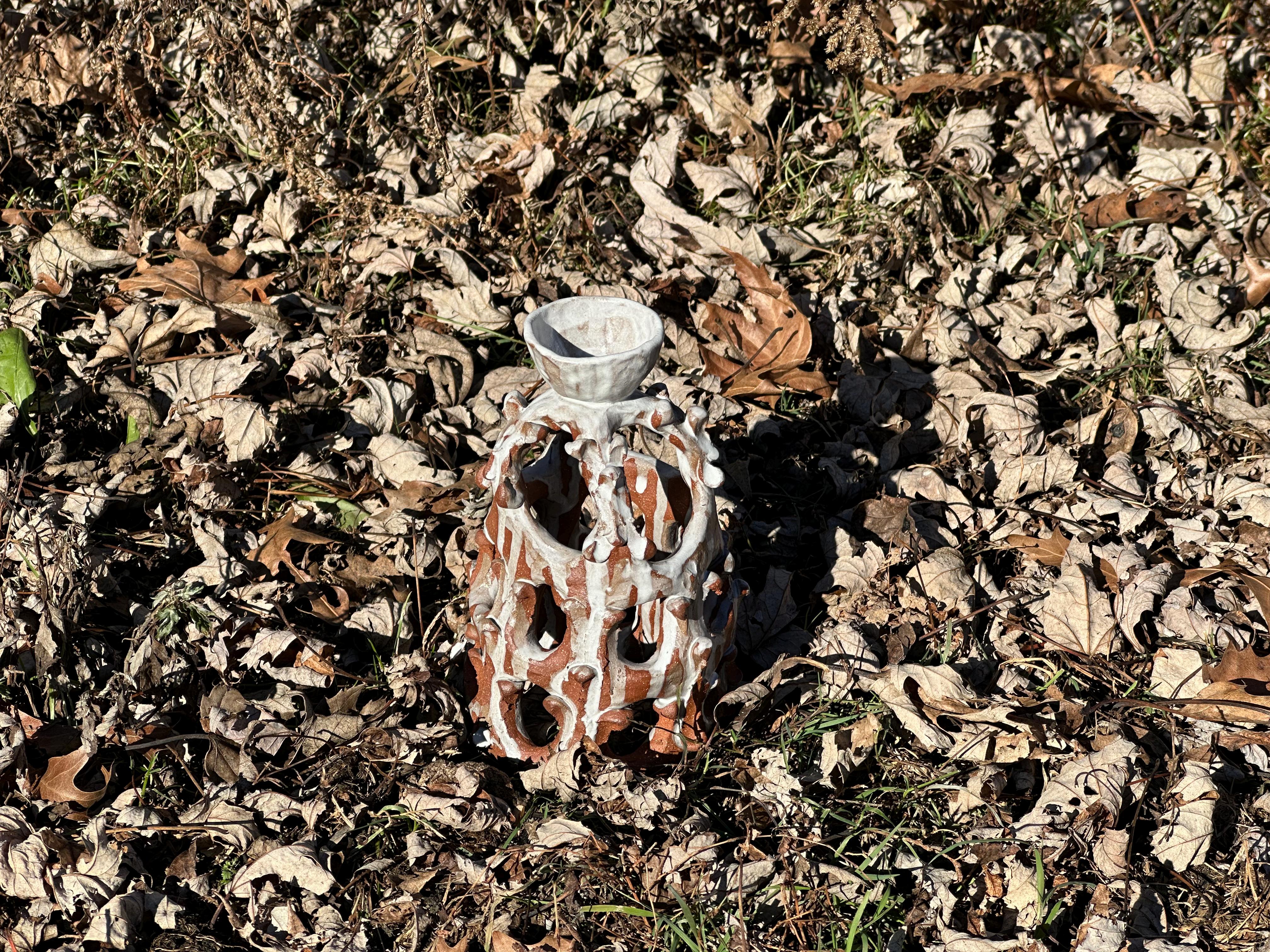
By Katherine Orfinger (’23, ’24) Bryn Mawr, PA
You sold your teeth for sugarcane and other such earthly delights. Did you delight in me? Your helpmate, your Chavah? Or was it enough to tease and torment me until my innocence shattered, terracotta shards in my hands?
I have done nothing to reject the myth I’ve made of you, the ungodly expanse of your body, its basest dealings, devoid of light. I will not be chased out of paradise, will not bury myself because your transgressions are inconvenient.
My spine, a sleeping serpent waits among repackaged memories and other things that have died or have wanted to. You are the reason I will never stop praying that hell is real and hungry.
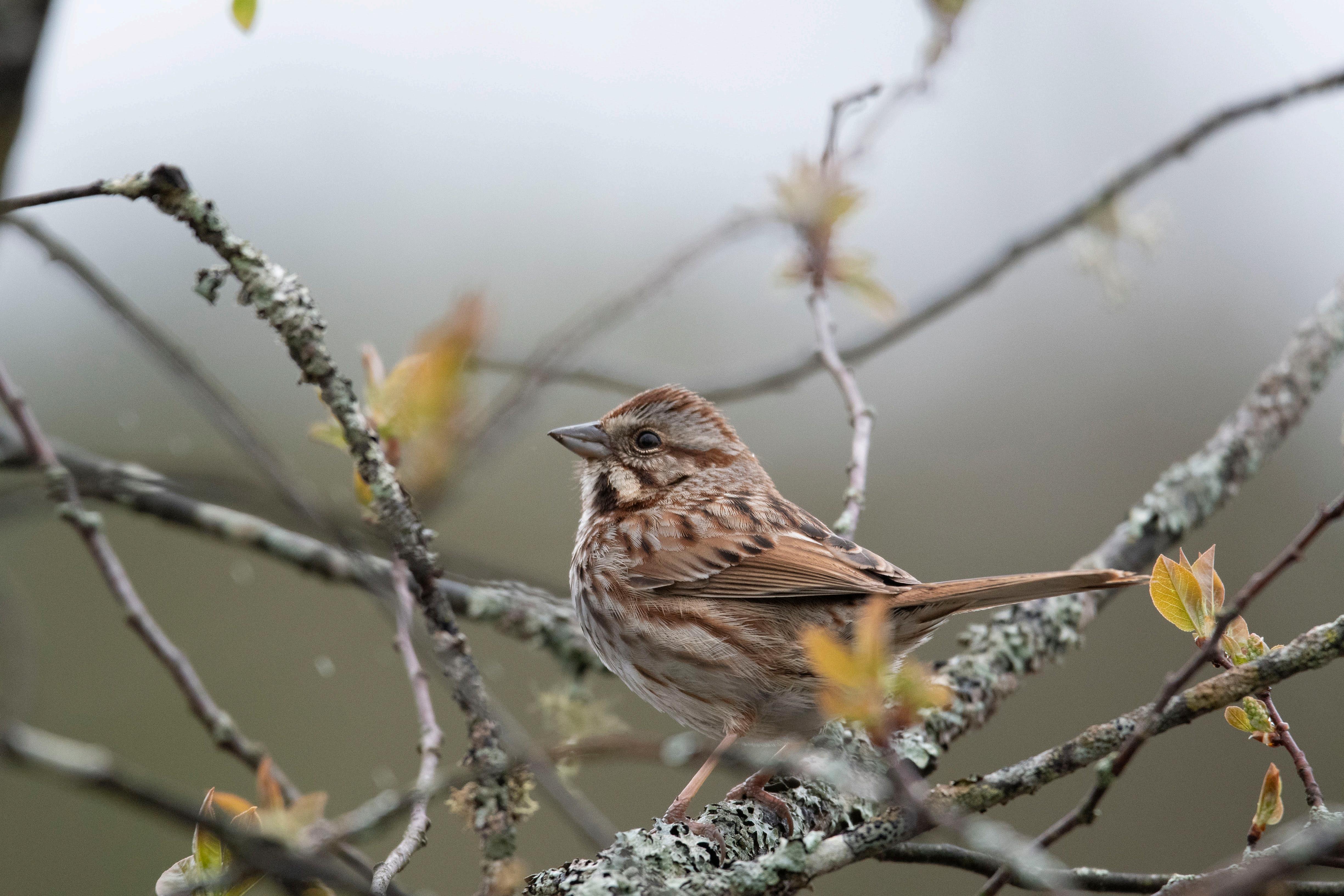
By Martha Vining (’25) Fletcher, NC
I was thrilled to have had a culinary residency at Craigardan in 2025. In my cooking, I’m inspired by the idea that food can be deeply connected—both literally and emotionally— to a sense of place. During my time at Craigardan, I focused on exploring and testing recipes from a 1916 Adirondack community cookbook. These cookbooks are so much more than just recipe collections—they’re snapshots of a community’s history and culture told through the food they shared. This chutney is my own take on one of those recipes, using several local ingredients. – Martha Vining
Adirondack Rhubarb Chutney
3 cups rhubarb, sliced
1/2 cup onion, chopped
1 cup apple, chopped
2 tablespoons fresh ginger, grated
1/2 cup brown sugar
1/3 cup apple cider vinegar
Juice and zest of one small orange
1/2 cup raisins
1 teaspoon cinnamon
1/2 teaspoon ground cloves
Put all of the ingredients in a medium stainless steel saucepan over medium heat. Bring to a boil, stirring occasionally. Turn heat down to low and simmer for 12-15 minutes or until slightly thickened. Remove from heat and allow to cool and then refrigerate until needed. Safe to keep in refrigerator for 2 weeks. Good with with chicken or pork, served on a charcuterie board or stirred into yogurt.
By Lise Deguire (’24, ’25) Yardley, PA
I am the younger sister of a ghost. This ghost is my favorite person. He loved Steppenwolf, Jefferson Airplane, and The Who. He loved coffee yogurt, vanilla ice cream, and chocolate-butterscotch pie. I love him. He loved me.
***
When I was four and my brother Marc was nine, our mom and dad took us to New Hampshire. Family friends loaned us their lake cabin, which sat vacant for the week. We sped up the interstate and arrived midafternoon, bumping along the dirt road. The log cabin perched on a slight hill, overlooking the grand expanse of Lake Winnipesaukee. The back door opened onto an open deck, enclosed by decorative crisscross fencing. A few steps down led to a mossy flat ringed with exposed granite boulders, and just beyond, the expansive lake.
Inside, there was a spacious living room, with a vaulted ceiling and a bay window overlooking the blue water–the air smelt of pine and serenity. A ladder on one wall led up to an open loft, where my brother Marc was to sleep. I had a small bedroom on the ground floor.
Neither of us would sleep in these rooms that night.
***
I have retold this story so many times. It wears on me. The set-up, the visualization, the tragedy looming like black thunderclouds. I have always told this story from my perspective, the one most grievously injured, the one who almost died. Finding my own perspective was hard, wading through the obfuscations of our parents and the passage of time. I had to follow the clues, the newspaper articles, the insurance documentation, my father’s letters.
I want to find my brother’s angle. I see now that what I endured physically — the drama and
horror — he endured too, in his own way, which was possibly worse.
***
The sun began its descent. Marc and Dad relaxed on the left side of the porch. Marc sat, straight-backed, reading a library book. Dad lounged, reading the New York Times. Dad could relax and sip his martini, but Mom still had work to do. It was dinnertime.
Mom went inside the cabin, searching for lighter fluid to start the outdoor charcoal grill. Marc was reading, but I couldn’t read yet. Instead, I followed Mom around. A free spirit, I wore no clothes besides a tiny pair of red shorts. My blonde curly hair, unrestrained, sprang freely around my face. Mom peered in the kitchen cabinet, and under the sink. She spied a storage trunk in the living room and opened the lid. She pulled out a tin red and white bottle. Mom went back outside and I trailed her.
Mom assessed the unfamiliar charcoal grill while I clung to her slim, smooth legs. I tilted my head back, searching for her green eyes, but Mom was distracted, holding the lighter fluid and sipping on her cocktail.
***
“What’s all this about cocktails?” Mom and Dad’s ghosts burst into my living room in tandem. I put down my laptop to greet them. Even though I often fended for myself as a child, I can’t seem to shake them now that they are dead. Their ghosts interrupt me when I write. They have many opinions.
“Whoa, you two are together? What the hell? You divorced decades ago.”
“The afterlife can be peculiar,” says Dad’s ghost, bemused. “You never know whom you will wind up visiting, in eternal time. It shifts around. Right now, it’s our turn to hang out. It’s fine. We’re practicing the Ravel Ma Mere L’Oye piano duets to pass the time.”
“Oh, I wish I could hear that.” I miss the magic of my parents playing the piano, side by
side. They were extraordinary once, completely attuned to each other musically, if not emotionally.
“I’m glad you have some happy memories, Lise. It wasn’t all bad, you know, despite what you like to write about us. But listen, what’s all this about cocktails?” Mom’s ghost asks, her voice growing sharper. “We never talked about drinking or cocktails as part of the... accident.”
“Absolutely true, you never did. But later, I realized. You guys drank cocktails every night when I was little. You had bourbons and Dad had martinis every evening before dinner. I can still smell them, actually. “
“No. Really?”
“Yes, they would be on your breath.”
“Hmm. But, we weren’t alcoholics, not even close.”
“True, but those cocktails were as regular as dinner time. Plus, this was the first night of vacation, and you always drank on vacation. Don’t most people? So, you must have been drinking when it happened.”
“Hmm.” Dad and Mom look down at the ground, not looking at each other, their ghost bodies sparkling translucent.
“Am I right?”
“I don’t remember.” My mother holds her head high, skirting my gaze.
“Neither do I,” Dad exclaims. “But even so, you wouldn’t be alive if it weren’t for me. I don’t know why you need to talk about cocktails. Maybe your mother could drink one and not me?”
“No, Dad. You drank cocktails together. You always did.”
They sigh, in aggravated union. Dad responds, “It’s your book, so write what you want.” Divorced, but in unison, they tilt their heads back, sucking in their lips. Ghost eyebrows knit. Nostrils flare. They watch me write, and then they vanish.
I wish Marc’s ghost would come instead.
My mother stood at the charcoal grill, as I hovered beside her. Marc read his book, watching us from the corner of his eye. Mom poured the liquid from the red and white can onto the coals, but they didn’t light. She thought it was lighter fluid. It was actually a flammable household solvent. She poured more. A tiny spark from the coals traveled back through the nozzle. The can exploded.
A wall of flame engulfed Mom and me, trapping us both. In a panicked nanosecond, Mom fled. She dashed through the raging fire and sprinted to the lake, throwing herself into the cool blue water. But she had forgotten something, or rather, someone.
Me.
On fire and abandoned, I crouched. Like a motherless duckling, I had always followed my brother to safety. But Marc was beyond the wall of fire, unreachable. Mom had fled. I was trapped.
“Help! Help!”
The moment was fleeting- the moment was unending.
The smell was overpowering- I smelled nothing.
I felt terror- I felt nothing.
I don’t know, I don’t know, I don’t know. What I do know is my father rescued me. He leapt over the other side of the porch and ran around to my side. I had pressed myself into the porch railings, in a futile escape attempt. Standing on the pine-needled ground, my father was just tall enough to reach me. He grabbed me from behind, yanked me through the fence, and threw me in the lake.
From his corner of the porch, Marc saw it all. The flames engulfing his mother and his baby sister. His Mom dashing away. His sister, abandoned and cowering. His Dad pushing his hands into the fire and grabbing me. He saw—and he was helpless. ***
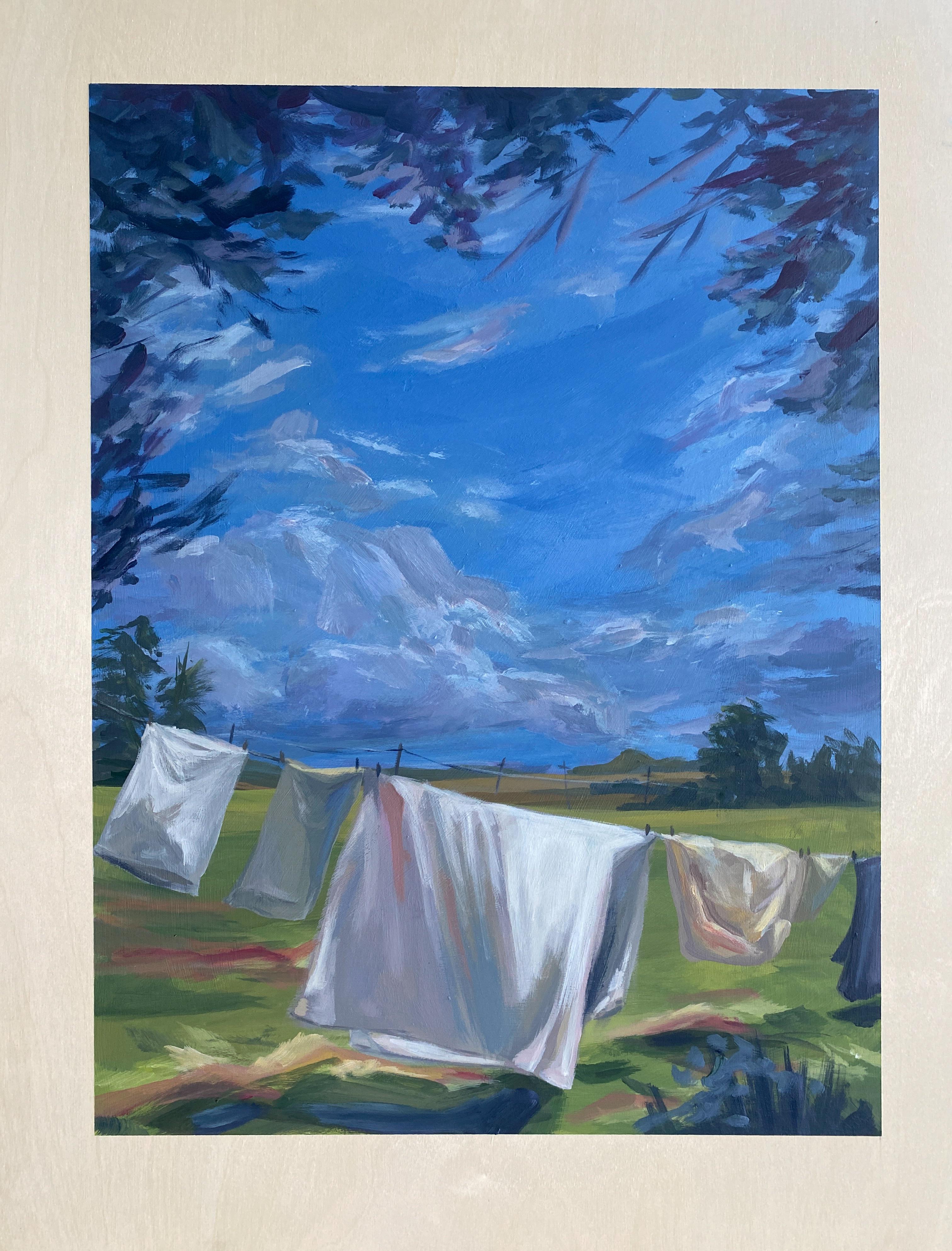
“Laundry
My mother’s ghost returns, pale and purposeful.
“You became so difficult about the accident as you got older. It’s not my fault that I left you there. That’s just human nature. Anyone, if they were on fire, would do the same thing. Your only instinct is to save yourself.”
“Well, that was your only instinct. But some mothers heroically rescue their children. They lift cars, run into burning buildings–they die themselves, so their children will live. I was right next to you. You didn’t have to run in to save me, just grab me and yank me along. All you had to do was to remember me.”
“I did what anyone would do. And besides, you haven’t always been so brave with your children, have you?”
Oh, this moment! Does my mother’s ghost watch me everywhere? Does she witness me in my life, my proud moments, and also, my failures? Did she see when my daughter Julia set a kitchen flash fire? Julia stood next to my husband, and she quickly controlled the flames. My husband was right there, and he helped her. Still, my first instinct was to dash out the porch door.
I felt such shame I wanted to eat my own liver.
My mother leans in, voice low, ghost green eyes locked onto mine. “You see, Lise, you did the same thing.”
Self-loathing envelops me in a giant ocean wave. I go down, whirling into the vortex, gasping for air. I am just like my mother. I am selfish and cold, judgmental and critical, haughty and dismissive. I hate my mother. I am my mother. I hate myself.
Every cell in my body aches for my brother, the only one who truly loved me, unlike this ghost mother. Like Sisyphus, I push the grief of his death uphill in front of me, every day of my shockingly long life.
Moments pass, excruciating. I breathe. I wait. I breathe, and ... my voice returns. Clarity.
“Mom, these incidents are not the same! I am not the same as you. Julia was 27 years old, not 4. She stood across the room, not right next to me. Also, I fought my fear and came right back to help her. It is cruel of you to suggest these are the same acts. Also, I am viscerally terrified of fire. Whose fault is that!”
We glare at each other; my tiger teeth bared. I shake with rage, which frightens me. It’s scary to be mad at my mother, even as a ghost. She’s dangerous. I know this now.
My mother replies, evenly and without tone, “You don’t know what you would have done.”
I breathe in her equanimity. She was always better at maintaining calm. “True. But I can guarantee two things. I would have done everything to help my daughter if I had abandoned her like you did. And I would have been sorry about it for the rest of my life. You were never accountable. You were never sorry.”
“I did my best. I don’t understand why you can’t see that.” I shake. It’s hard to ground myself when she is here, even just as a ghost. But I need to speak.
“You know, Mom, there is only one person who ever said they felt responsible for what happened that day. You always dismissed it as an accident. Dad always talked about how he saved me. But one person said they felt terrible and guilty for not being able to help me. That person was Marc.”
Mom shifts on the ashy, burned soles of her ghost feet. “Well. Marc shouldn’t have felt that way. That doesn’t make any sense.”
I sigh. She will never understand. “Yes, it does, Mom. Yes, it does. You’re the one who doesn’t make any sense.”
I wish my brother’s ghost would come.
***
Marc dashed down the dirt road, screaming for help. There was no phone in the isolated cabin, no way to reach emergency services. Marc fled toward a neighbor’s cabin,
bare feet pounding on the dirt road, dust clouds behind him. He barreled toward them yelling, “Hurry, hurry, hurry!”
The sole ambulance in Wolfeboro took our mother to the hospital. I don’t know why she got the ambulance and not me. I don’t know why she got the IV, the blanket, the narcotics. I was burned more severely. Mom took it all.
Instead, Dad drove me, his car careening down the road at breakneck speed. He honked the horn constantly, breathing fast. Every time he honked, I cried louder, afraid of his anger. So, he stopped honking and sang, “’When the dog bites, when the bee stings...’ Lise, can you sing with me?”
I lay on the bench seat next to him, dazed and shocked, but I heard. In a tiny four-year-old voice, I quavered back, “When I’m feeling sad...” We made our way to the emergency room. We sang.
Marc remained in the neighbor’s cabin. He wanted to go back to help us, but he was told to stay behind. At nine years old, how could he help? The neighbors did their best to reassure him, telling him everything would be OK and everyone would be fine.
We would never be fine again. Two-thirds of my skin was destroyed by third-degree burns. My lower lip, chin, and neck were obliterated, and my upper arms were fused to my sides. A lifetime of surgical reconstruction awaited, a lifetime of disfigurement, of social exclusion, a lifetime of pain. But also, a lifetime of attention. A lifetime of being seen–sometimes through stares and frowns, but always–being seen. No one forgets the burned girl.
My mother was burned on one-third of her body, second- and third-degree burns. The worst burns were on her feet and the backs of her arms and legs, from her flight toward the lake, and away from me. She, too, faced multiple surgeries and tremendous pain. In an instant, she lost her smooth figure, her pride, her vanity.
Miraculously, my father bore no visible scars but still, his world was shattered. He now
bore the burden of financially and emotionally supporting his wife and daughter for years of surgeries. It was all on him, keeping the house going, maintaining employment, traveling to the hospital. He was only 38 years old, and the world rested on his shoulders.
As for my brother, my parents declared, “Marc was fine.” Except that he had witnessed his mother and his little sister burst into flames. Except that he had run alone, screaming for help down a long dirt road. Except that he was powerless to rescue anyone. Except that– in the aftermath of the flash, the fire, and the fear–he was forgotten.
***
One of us made it. One of us didn’t. One of us was massively scarred on twothirds of her body. One of us had perfect skin. One of us almost died but survived. Ten years later, one of us threw himself into the sky and fell to his death, 16 stories below.
One of us is here to tell the story. One of us visits only in the dead of night. He doesn’t argue or criticize. He sits beside me, straight-backed. His earnest face glows with silver, his warm eyes glimmer. He’s the ghost I love.
By Caperton Tissot Saranac Lake, NY
When storms blast our homes and clouds weep, when lamb huddles by ewe and birds shelter in trees, when angry rivers slice through the land, eroding the earth upon which we stand, displacing our lives, shattering trust
What do we do?
Tell me, tell me, for I find it hard to find the sunshine, feel joy, believe
Till the door blows open, invites me outside, so I take a walk in the woods where the bear lives not by fear but by need, and the trees hold their leaves in the face of violent wind, and ducks swim the lake, despite lightning strikes, and the brave robin, high on a branch sings against the darkening sky,
Then I see it and know, just so must I, just so must I
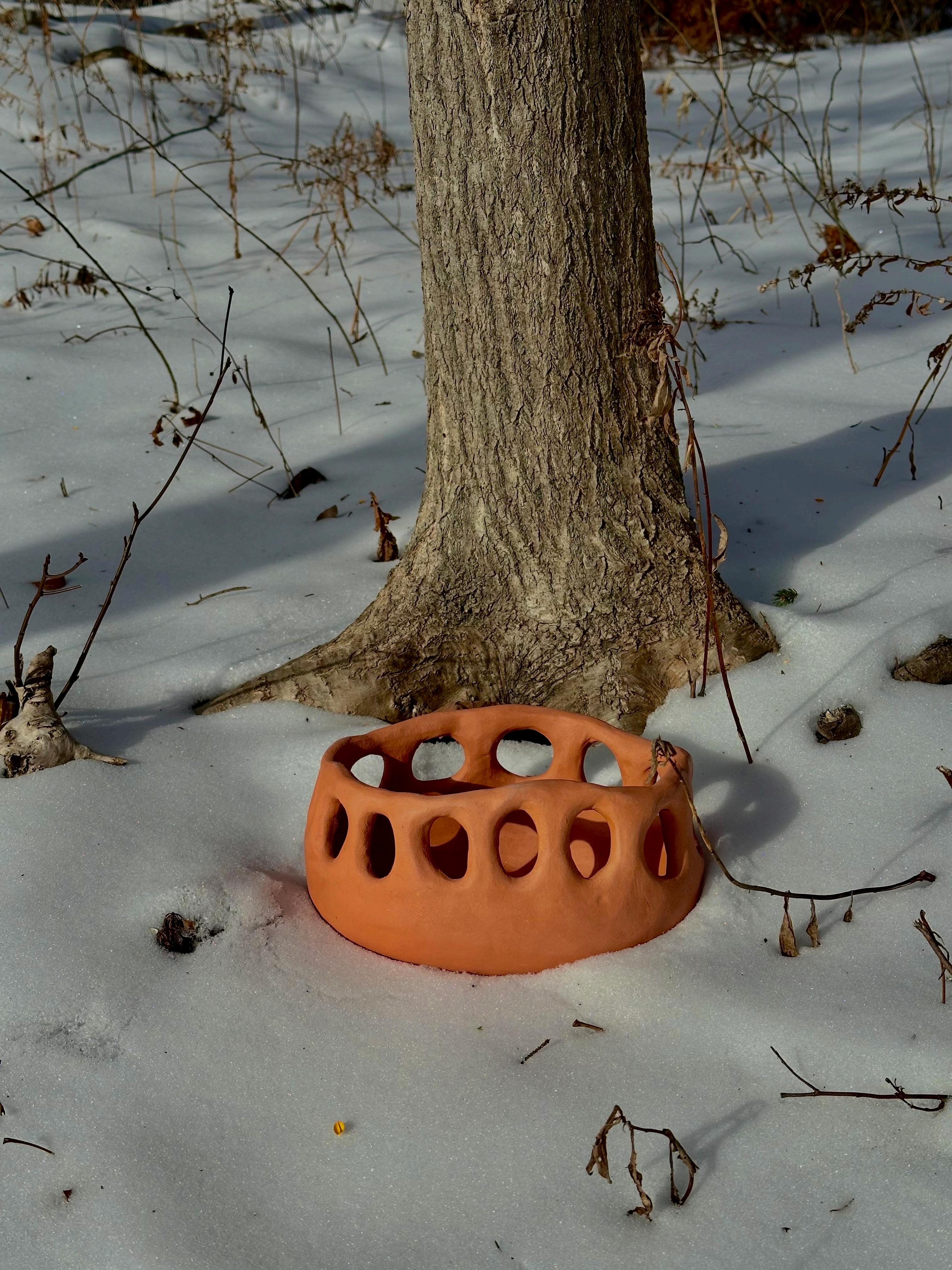
By James B. Kobak Jr. Keene Valley, NY
False solace flees. Old age leaves it behind. Keep bees, grow gardens, cultivate some wine. From his Tuscan villa so wrote Cicero. So buy a villa; see how well it goes Mucking in dark soil, entangled in old vines.
In school we parsed out Latin as assigned Senectetude far distant then; our minds On hoped for joys, not those we must forego Prose dead to us that warned of future woes. False solace flees. Old age leaves it behind Cicero but sixty when he penned his lines That to some seem eloquence personified The murdered Roman never lived to know That sorrows’ shades advance, villa walls or no. False solace flees. Old age leaves it behind.
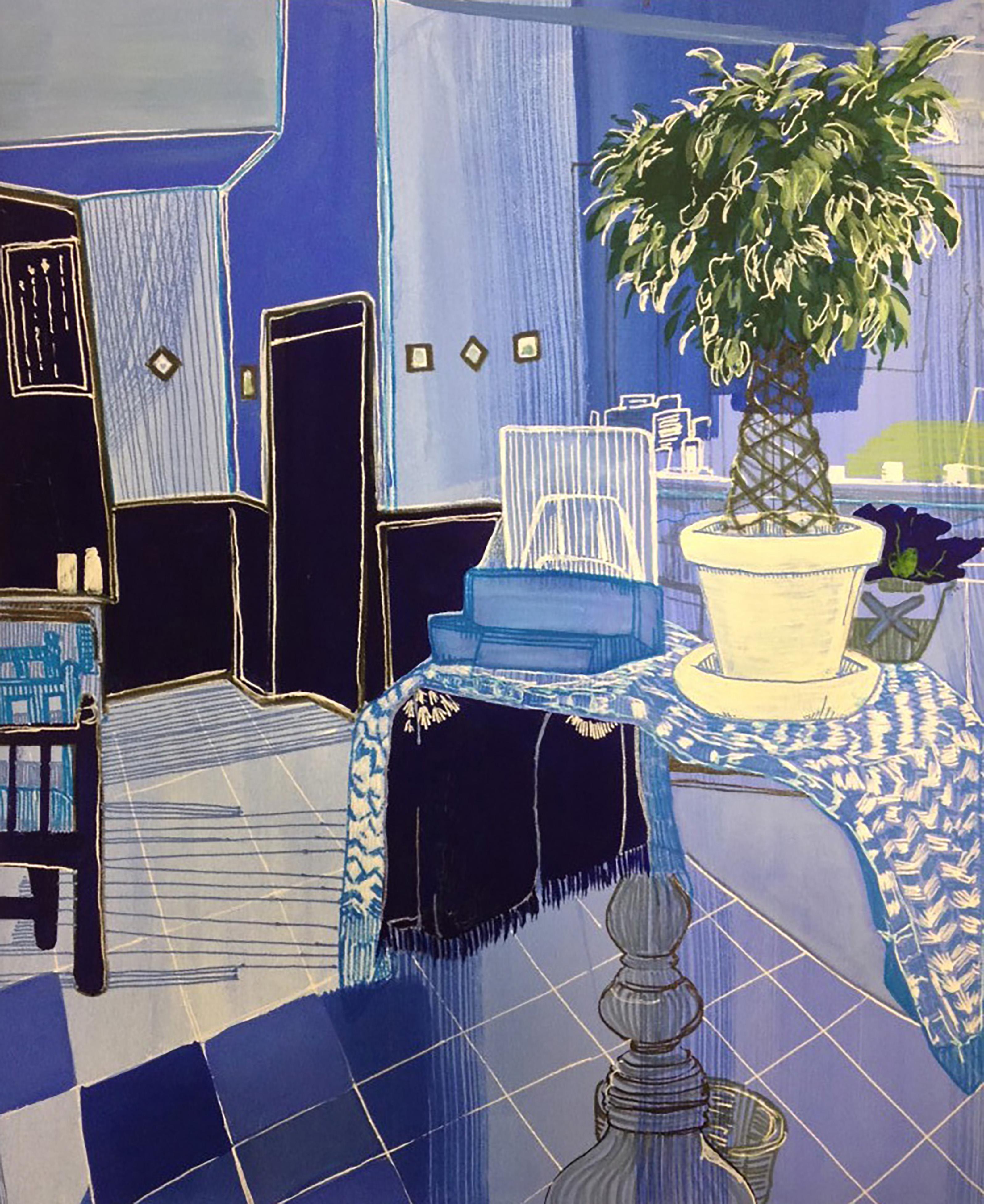
We Are Living, We Are Dying
Excerpt from her forthcoming book Meditation & Mortality
By Virginia Chang, Ph.D. (’24) New York, NY
Death has brought me to the mountains, but I do not come in a casket to be buried in the rich, dark earth. It is not yet my time. Instead, I have come to observe death in action. In nature, each element that exists contributes to the ongoing overall wellness of the system. The fallen tree, the dying flower, and the bones of a long ago eaten deer. Each living element has its moment of beauty on this earth, and then through its death, contributes to the system by nourishing others.
All in nature coexists in a give and take. The sun, the rain, the clouds, the land, the plants, the animals, the grass, the dew, the lichen.... all exist and thrive in a rhythm of life and death. When I look out—at the river that roars, the birds that soar, the grass that glistens, the flowers that brighten, the trees that guard, the sky that bathes—they dance and struggle, but come together with such synergy and beauty. It is a marvel of harmony and balance. It is subtle, not structured like a plantation, but instead, inconspicuous and sophisticated in a seemingly random, but exquisite concordance of elements.
On the surface, Nature can seem foreign, chaotic, and scary. Perhaps, that is why man called unknown lands, “the wilderness.” What is unknown cannot be controlled. So man tried to manage and order Nature by taming the “wild” out of the wilderness. One definition of wild is “of unrestrained violence, fury, or intensity” or “undisciplined, unruly, or lawless.” The natural wilderness no longer feels like that kind of wild. Maybe it felt like that at one time, when our country was a frontier, but man has so successful tamed the wilderness. For me, when I want to experience true wilderness, I feel it in New York City—the epitome of this definition of “wild.” The noise, the crowds, the commotion, the assault on all senses of the body—that’s wild! There is
so much chaos on the streets amongst the hordes of New Yorkers. Potential threats lurk everywhere. I move in survival mode, on alert at all times. There is no hidden subtlety or order in the concrete jungle.
It is so ironic that we as humans now seek refuge in the natural wilderness from the artificial wilderness we created. Perhaps in nature, we are seeking something in us that we have lost or forgotten. Maybe we are trying to rediscover or reconnect to another way of being. Something grounding, something rooted, something ancient. Sitting atop a mountain peak in northern New Mexico, I do not sense the wild of unrestrained fury. Instead, the natural wilderness feels more like another definition of wild: “living in a state of nature” and “amazing or incredible.”
I am truly in awe of the cycle of life and death that is ongoing in the natural world around me. I admit to not feeling part of the ecosystem, not part of the harmony of Nature. I do not have the knowledge, traditions, or relationship with the land, like those of indigenous and aboriginal peoples. Today, I am a passerby, an observer. I hope, at best, to not be seen as an invader. I am not here to harm. If possible, my desire is to contribute in some small way to the ecosystem. I don’t know how. Perhaps I too can enter the cycle of life and death and nourish new elements. To return my atoms into the recycling of matter and energy. In the grand scheme of things, my being is only one tiny offering to the greater community of this Earth, within the greater cosmos of this Universe. I am present now physically in this moment, but who knows what happens after I am gone, here on this earth or out there in the stars. ***
Most of us accept that we will die. Yet, we hold the knowledge of this basic truth like book knowledge. We know we are going to die on an intellectual level, but we rarely think about it. What if we incorporate this knowledge of death into our daily consciousness? Take it out of the hidden shadows and bring it out into the light of daily life. Then, we become acutely aware of our limited time on this earth. And what then, if we use this
new awareness of our own mortality as a guide to living? If we allow this awareness to influence how we live, make choices, and interact with others, this is mortality awareness. We begin to see life through a new lens, focusing on what and who truly matter to us and how to value living. When we begin to embrace death, we develop a true appreciation for life. In essence, mortality awareness invokes gratitude.
I tend to view new ideas and concepts with a critical and logical mindset as I am a scientist by nature and by learning. Scientific research indeed supports the concept of mortality awareness enhancing life. Psychology researchers in terror management theory (TMT) have studied how the fear of death influences human thinking and behavior. According to TMT, the awareness of our mortality terrifies us. As a result, we either avoid thinking about death at all or adapt to confer our lives with selfesteem, worthiness, and sustainability. We want to believe that we play a role in a meaningful world. On the one hand, this worldview can lead to troubling behavior by an individual, having negative, and even deleterious, consequences for society. For instance, one path to addressing death anxiety is by establishing self-importance through being part of important groups. The desire to belong and to feel important, unfortunately, often leads to displays of prejudice and superiority.
are powerful outcomes that can contribute to positive living. Mortality awareness works by putting our life, role, and purpose in perspective. Our priorities begin to shift with respect to personal relationships, work, finances, and leisure time. Simply, and most importantly, we appreciate being alive. Living with gratitude and compassion have been shown to be positive motivators towards positive living.
What
It is not enough to know these science-based facts. For this knowledge to have any effect in life, we must apply and integrate it into our approach to living. Oftentimes, more easily said than done. One mode of applying and connecting theoretical knowledge to real-life application is through experiential learning. In 1984, psychologist David Kolb outlined the theory of experiential learning, which focuses on the idea of learning from experiences. According to Kolb, "learning is the process whereby knowledge is created through the transformation of experience. Knowledge results from the combinations of grasping and transforming the experience." Those experiences then stick in your mind and help you to retain the information. Experiential theory is a more holistic approach to learning by considering how personal cognition and emotions and how environmental and circumstantial factors influence the learning process.
On the other hand, more recent TMT research has shown that mortality awareness can also have positive trajectories for life. Just by thinking about death once a day, people are in less depressed moods, engage in healthy behavior, strive more towards living positively, and show greater acts of kindness and compassion towards others. These
How can Mortality Awareness combine with Experiential Learning to enhance our lives? In day-to-day living, we have an unconscious approach to learning and living. We approach new situations in default mode using our current base of knowledge and past experiences to guide us.
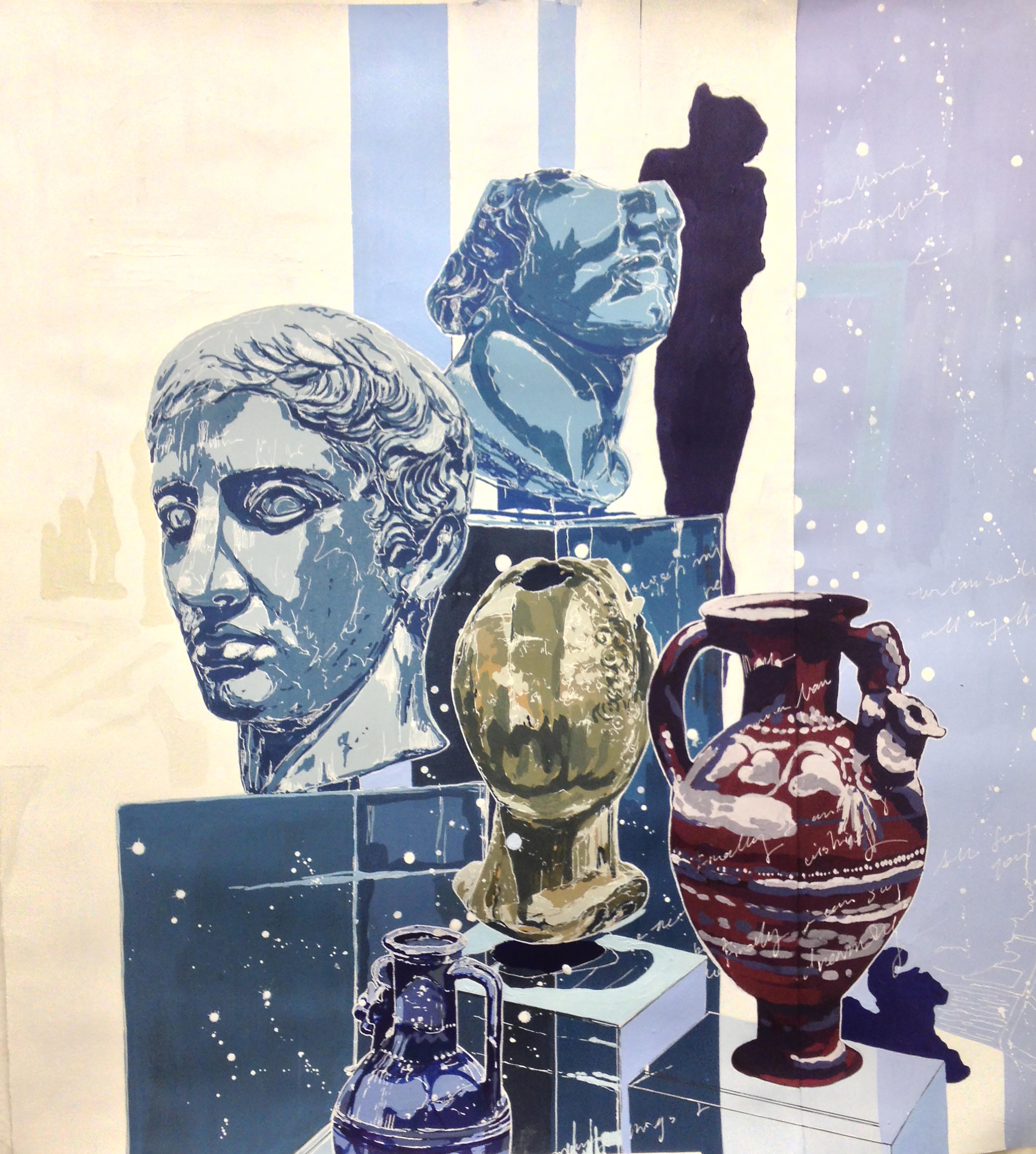
Sometimes, we are not even conscious of how we operate and shortcut to a response or action. What if we turned off the automatic mode of living? What if we paused and considered? Imagine observing yourself living, making decisions, and interacting with others. If you just bring this level of awareness to yourself, experiential learning describes it as turning on your lights and sharpening your vision: “It is like passing from a flat, gray world to a technicolor four-dimensional world, full of beauty and color.” By applying this conscious approach to living, we make better decisions, work with others more effectively, and enhance the quality of our life. These outcomes to experiential learning sound practically identical to the outcomes of mortality awareness.
So, now imagine if we were to combine experiential learning with mortality awareness. What if we consciously brought in the concept of mortality into our living and learning processes? If, in that moment of pause, we brought in gratitude and appreciation into the process. The compounding effect of these two modalities has the power to significantly affect our quality of life. Therefore, Death can be good for Life. ***
At 9,500 feet, the wind roars. Or maybe it is the river below raging from last night’s thunderstorms. The scent of fresh spring water wafts in the air, the kind birthed from rain and minerals and the rich loam of the earth. In the early morning light, the world is a dazzling emerald nestled in a bright blue nest. Sun-baked pines stand like sentries, while the bright chartreuse leaves of the aspen trees flutter hello. Some trees are not yet in bud. These barren trees still display their wispy, Brillo pad tops amidst the new greenery. The world is clarity soup served crisp and cold after a new fallen snow.
I am atop a large rock cairn. The pyramid has been carefully constructed with niches for small offerings and hidden steps to circumnavigate to its peak. It is built on the edge of a cliff so that on two sides, it drops twenty or thirty feet below to
the prickly brush. The top square is less than two feet square, just enough for one person. The stones are cool to my feet and some are wiggly, increasing my sense of instability. I wasn’t afraid of heights as a child, but as I’ve gotten older, the senses waver. I quell the butterflies, moving slowly and breathing. I want to stand, but my senses are firing like a torpedo assault. I focus on the rock platform and my feet and begin to rise. As I lift my head, the world spins. It is too overwhelming, the vastness beyond. My body cannot comprehend. I quickly crouch and hold onto the rocks steadying myself. Steadying my breath.
I want to stand, I am not afraid. This time, I focus on a distant mountain beyond the valley. I unfurl my legs, gaining height. I feel the wind, it seems to roar in my ears. This is what it is to be unmoored— to be exposed to the elements beyond control. I stretch my arms out, but there is nothing to grasp, only the cool air swirling. Is it trying to blow me down or hold me up? I am breathing loudly, sucking in and blowing out air like a swimmer on her last lap to the touchpad.
I stand, I am tense. I tune into the microsensors on the soles of my feet and in the muscles of my legs. I ask them to relax and trust their connection to the earth.
I stand, I begin to move. I return to the mindful movements which keep me grounded and centered. I brace, I reach, I surrender, I offer, I pray. Over and over I do these movements, my entire body welcomes the familiar rhythm. Inhaling through my nose, the air reaches deeper into my lungs. The body and mind relax and calm. I begin to move with the wind. I brace, I reach, I surrender, I offer, I pray. I feel one with the valley, the trees, the river, the mountains, the sky, and the beyond. They hold me up.
I stand, I move, I close my eyes. I see through my mind’s eye. I am standing on the earth with nowhere to fall. I lean back and feel the air holding me up. With chest open and offered to the sky, I breathe deeply.
“To the place of yogis, I go
To seek out solitude where true happiness can be enjoyed. Giving up all attachment and treating everything impartially, I go to be a mendicant. To the lofty mountain peaks, I go”
— Lord Atisha on renouncing his kingdom, in The Biography of Atisha
I am, according to Hindu philosophy, in vanaprastha, the third of the four ashrams or stages of life. The other three ashrams of life are brahmacharya (student), grihastha (householder), and sannyas (full renunciation). Vanaprastha means “forest dwelling” derived from its Sanskrit roots vana meaning “forest” and prastha meaning “to go”. In the past, vanaprastha referred to a period in which a person retired to the forest. When people went into vanaprastha, they went deep in the forest where living arrangements were very simple and frugal. The idea was to be exposed to nature. Being in touch with the earth and the elements reminds the body of its mortality —the earth being our final resting place—and this is the purpose of vanaprastha. It is about making a person absolutely conscious of one’s mortality. But vanaprastha is not necessarily about dying. It is about a freeing from the social bonds and the responsibilities of household life, grihastha, the second stage of life. It involves the sharing of one’s accumulated life wisdom with others, essentially becoming a wise elder, providing advice and guidance to those in need. And as time passes, it entails a gradual withdrawal from worldly concerns and instead allows for spiritual pursuits and cultivation of inner peace. Vanaprastha is about transforming to a more introspective and meditative life. In this way, we are preparing ourselves for the ultimate stage of sannyas, which focuses on the passage from this world to the next.
Now that my senses are sated, I return to a seated position. With eyes closed, there is only a hazy imprint of nature’s grandeur in my mind’s eye. Sounds recede to become soothing whispers cradling me. My breath no longer savors the air
but sips, slows, and sustains. My body quiets, the nerves calming after intense activity. I sit still. I meditate.
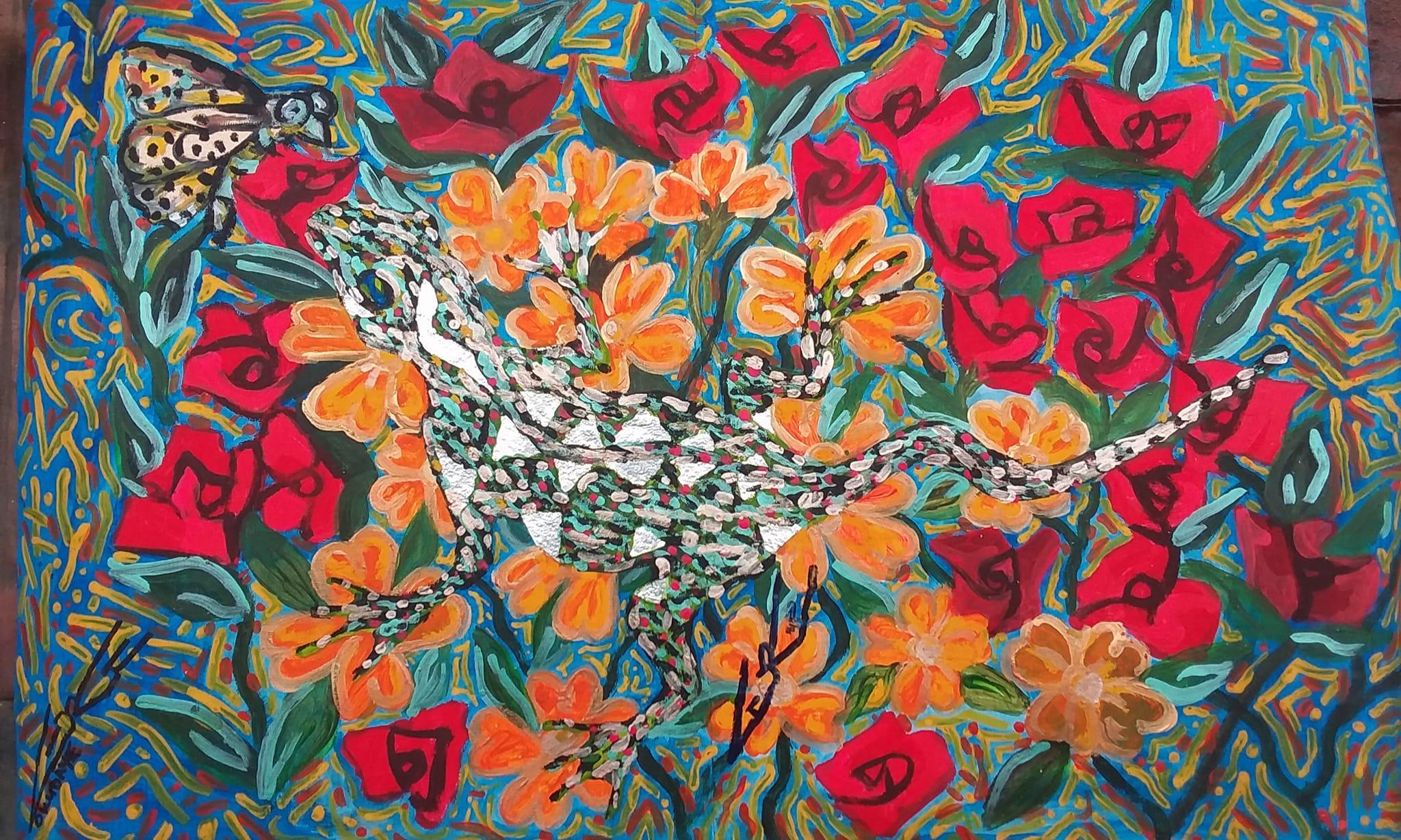
By Duane L. Herrmann Topeka, KS
Dirt has always been a major, foundational element of my life, from first memories of delightful ooze between my toes to planting trees and spreading dirt for grass to grow: dirt and I create! Being farmers, we worked in dirt and knew dirt as source of life, our lives. Good dirt, poor dirt, we knew the difference. Gardens were essential until I had no space, then mourned. I love first winter snow, but it hides my dirt which brings distress!
by Rob Rogers (’25) Winter Garden, FL
Your voice quivered the first day you arrived at our therapy group, hands shaking as you struggled to describe the explosions detonating inside your mind. I knew the moment I looked into your eyes that I saw myself.
You sat across the room that day, a nondescript collection of plastic tables and metal chairs fashioned into a daytime hospital for the spiritually suffering. All of us fled there from lives that had become too hard to bear. We had stopped going to work every morning and instead were spending workdays trying to exorcise the diseases that haunted us, before returning at night to families who couldn’t understand us. Most of us were coping with at least one strain of depression; almost all suffered from anxiety and insomnia. Until the morning you arrived, I had not met anyone else who struggled to control anger.
You clutched your purse with icy knuckles as you poured out your soul to people you’d never met, struggling to find the words to confess sins you couldn’t understand. Plates of spaghetti thrown at walls during family dinners, drivers pursued after they cut you off on the way home from work. Staring at the table while quaking in your seat, you were a Doberman caught in a bear trap, desperately in need of help but afraid of what you might do to anyone who came close enough to try, resigned instead to chew through another limb to continue staggering through the darkness alone.
You and I were from totally different worlds. I grew up in relative luxury in waspy conservative suburb with dismissive parents who never abused me. You had known violence and
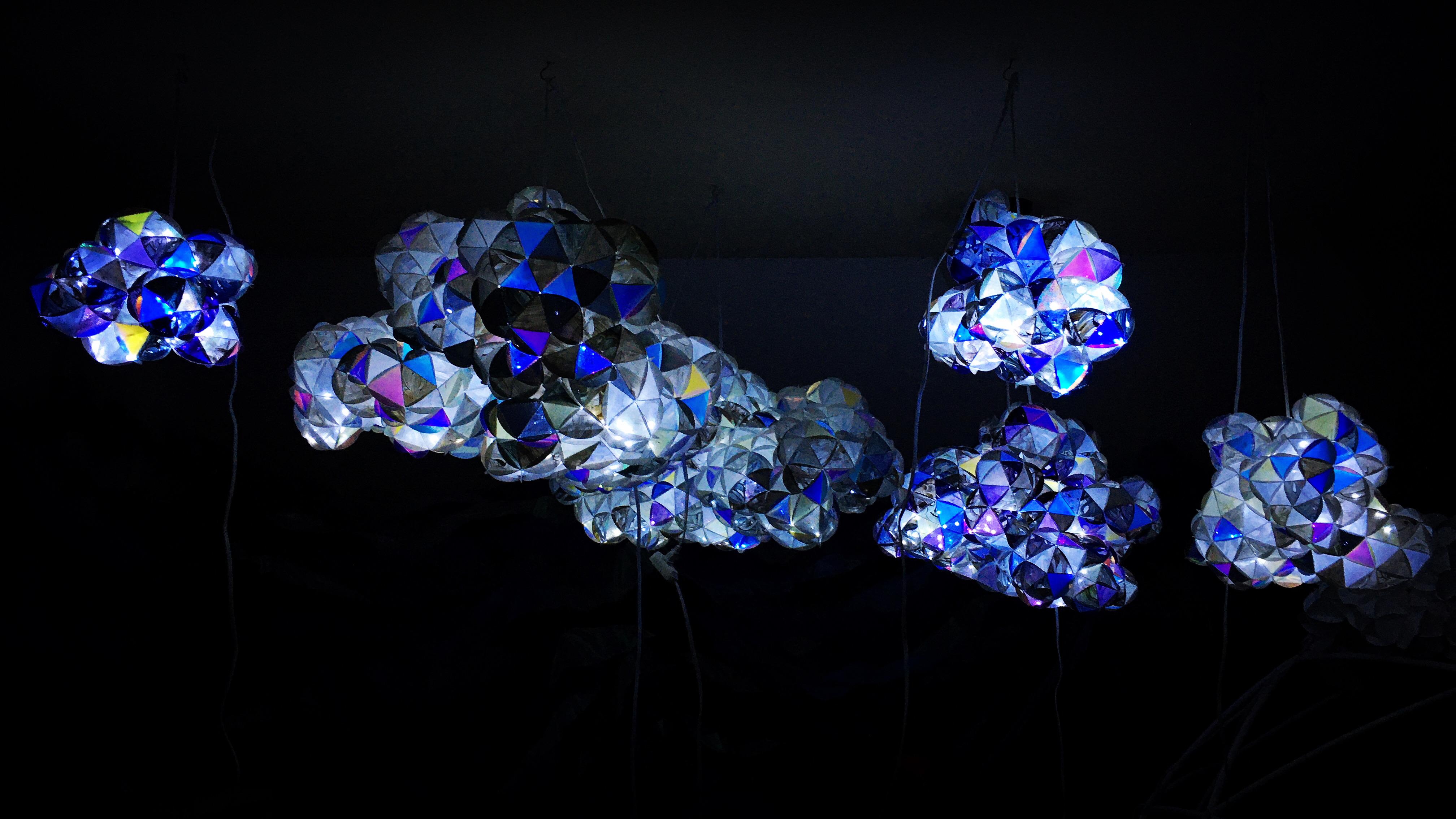
“My husband always tells me to just relax and calm down,” you sobbed that morning.
“As if it that were so easy.” I couldn’t help interrupting you mid-sentence.
abandonment all your life and survived only by harnessing rage. Both of us were stumbling through lives where our fury was unwelcome, struggling to appease wary spouses, disappointing unforgiving bosses, and trying our best to ignore provocative drivers on overcrowded highways. Intensity polluted our minds and ferocity distorted every emotion we felt. Even with those we loved the most, we fought in vain each day to express ourselves with civility. We had been losing that war for decades, our pasts littered with friendships and romances left behind as casualties.
Scarred by my own impulses, I confessed how I can often only calm down by blasting rock music during long drives to unnecessary destinations, lowering my face while stopped at
The next day you sat beside me, and you remained there for the next four weeks. We spent breaks pacing outside, showing each other our wounds, sharing notes on box breathing and journaling and other tactics for taming the beasts within. We intuitively knew when the other entered the room if a crisis had erupted. We vented, empathized, coped, and encouraged, first with each other, then with others as we began loving ourselves for the first time. As the weeks wore on, we reveled in each other’s milestones. Landmines with loved ones dismantled through pleas for understanding, provocations from clients and supervisors ignored.
And then several weeks later, we returned to our lives, strangers once again. Initial intentions to stay in touch have been thwarted by busy careers and families who need us more. Perhaps it just hurts too much to return to the memory of those processing groups and the agony we had to endure to get better.
But you remain in my thoughts. I know you are out there somewhere, and I know you will survive.
intersections to prevent passing drivers from seeing me arguing with the voices screaming inside my head. How I buckle under the weight of people who can just calm down whenever they want, and how much it hurts to see their rolled eyes when I can’t contain an outburst.
As our eyes met that first time, tears burst through their levees and cascaded down your cheeks. For once, finally, someone understood.
I dream of seeing you years from now, sunshine beaming from your eyes, the years of pain having been sealed in photo albums now buried in dust in the attic. Grandchildren cling to your side and bask in your glow. They’ve never heard your voice raised in anger. Your children now treasure the mother they’ve never thought they’d know. You are no longer alone.
Few thoughts give me more joy.
By Jackie Hall Akwesasne, NY
The Doctrine of Discovery, a co-mission sanctioned by the Pope over five hundred years ago, ultimately allowed European rulers to explore and colonize all of the non-Christian world by enforcing what is referred to as “Assumed” jurisdiction - claiming the entire world is under the pope’s jurisdiction as God’s representative. This was an assumption that empowered European conquerors to commit mass genocide on the original inhabitants of what is now referred to as the “Americas” and all throughout the nonChristian world, justified through ideologies such as Terra Nullius, Manifest destiny, and American Exceptionalism.
Farther north, in what is now referred to as “Canada,” European rulers continue to instigate conflict amongst their successors. They continue to occupy the land in so-called “North America” in the name of economic growth and resource extraction; which only serves the crown and its best interest, while only encouraging further oppression and environmental genocide on the remaining indigenous people of so-called “Canada.” They are subtly poisoning us to extinction while continuing to fund the indoctrination and institutionalization of our young people with the same trust money gained by extracting the natural resources of our land.
After over 95 percent of the population was wiped out by the intentional spread of disease and acts of genocide, it made it much easier for European colonizers to starve out and displace the original inhabitants who remained. But, that wasn’t good enough. Church and state took it a step further by forcibly indoctrinating the minds of those who remained through assimilative practices such as Indian residential schools, day schools, 60’s scoop and most recently the millennial scoop; all in an effort to make sure the original people of this continent would forget who they are and where they come from, severing their connection to the
land, and ensuring that there would be no further resistance to western colonization.
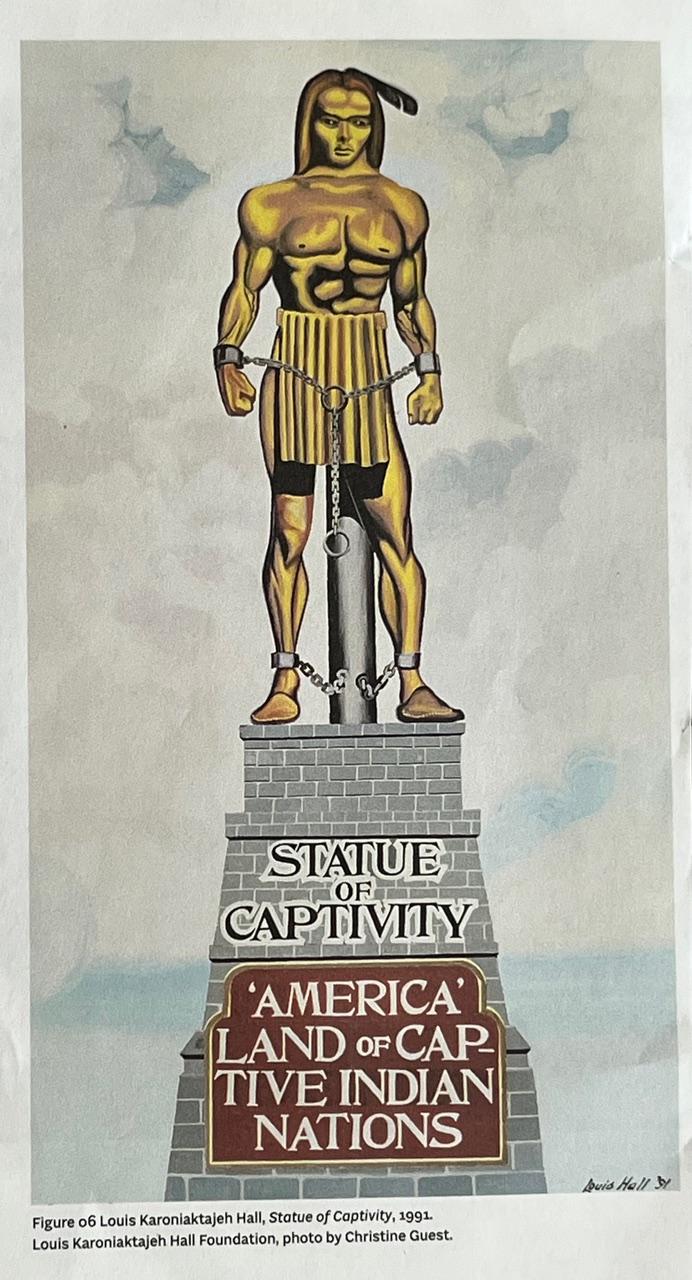
Artwork by the late writer and activist, Louis “Karoniaktajeh” Hall
One should ask themselves, was I educated, or was I institutionalized and perhaps indoctrinated? There is no question that this is what took place in Indian residential schools and Indian day schools, which were functioning institutions up until 1997 when the last Indian residential school closed, and then in 2000 when the people of Kanehsatake took control of the last remaining Indian day school in so called “Canada.”
“Beginning with the Indian Civilization Act Fund of March 3, 1819 and the Peace Policy of 1869 the United States, in concert with and at the urging of several denominations of the Christian Church, adopted an Indian Boarding School Policy expressly intended to implement cultural genocide through the removal and reprogramming of American Indian and Alaska Native children to accomplish the systematic destruction of Native cultures and communities. The stated purpose of this policy was to Kill the Indian, Save the Man.” US Indian Boarding School History – NABS
Many refer to the colonial era as if it’s in the past, but one could argue that the colonial era continues to this very day; it has only evolved into a more subtle genocide that is not easily distinguishable. This genocidal and assimilative doctrine is still recognized as legitimate by the United States Supreme Court and has been since 1823, by way of the Marshall trilogy, which ultimately led to Federal Indian Law, defining Indians as domestic dependents under the protection and control of the U.S. This was invoked as recently as 2005 when Justice Ruth Bader Ginsberg cited the doctrine in her ruling during the Oneida vs. Sherill case; which goes to show that the Doctrine of Discovery is very much alive and continues to be weaponized.
The same tactic was implemented and maintained in what is now referred to as “Canada” by way of the St. Catherine’s Milling case in 1888. The Canadian court continues to rely on the doctrine as fundamental to its interpretations of section 35 (1) of its de facto constitution; which claims to recognize and affirm Aboriginal treaty rights. But what the world has seen proves otherwise; the indigenous people of so-called “Canada” are currently being stripped of the very same rights referred to in section 35, without any regard for “Truth and Reconciliation” or the United Nations Declaration on the Rights of Indigenous People. Despite being repudiated by Pope Francis in March of 2023, The Doctrine of Discovery remains the very foundation to Federal Indian Law in what
is now referred to as the U.S. and Section 35 (1) in so-called “Canada.”
“Historical research clearly demonstrates that the papal documents in question, written in a specific historical period and linked to political questions, have never been considered expressions of the Catholic faith,” the Pope’s statement declares. Nonetheless, “the church acknowledges that these papal bulls did not adequately reflect the equal
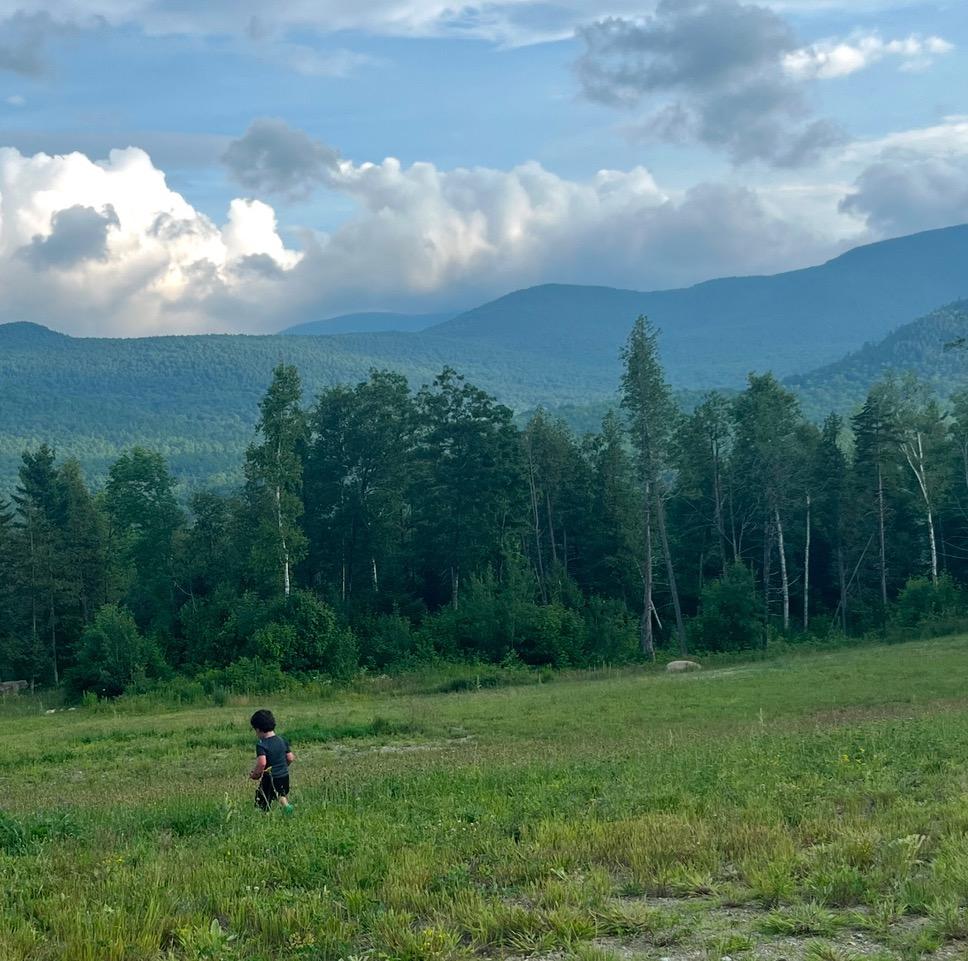
Photo taken by Jackie Hall, during the Annual firing at Craigardan. Pictured is a young Kanienkehaka child reconnecting with the natural world on their unceded territory.
dignity and rights of indigenous peoples.” The statement goes on to say that “the contents of these documents were manipulated for political purposes by competing colonial powers in order to justify immoral acts against indigenous peoples that were carried out, at times, without opposition from ecclesiastical authorities.” The two Dicasteries, therefore, affirm, “It is only just to recognize these errors, acknowledge the terrible effects of the assimilation policies and the pain experienced by indigenous peoples, and ask for pardon.”
The statement then quotes the words of Pope Francis: “Never again can the Christian community
allow itself to be infected by the idea that one culture is superior to others, or that it is legitimate to employ ways of coercing others.” Pope Francis goes on to say that, “in no uncertain terms, the Church’s Magisterium upholds the respect due to every human being,” and concludes, “The Catholic Church therefore repudiates those concepts that fail to recognize the inherent human rights of indigenous peoples, including what has become known as the legal and political Doctrine of
Back, initiated and led by the original people of so-called “ North America,” continue to challenge the legality and morality of the Doctrine which, even though recognized as unjust and racist, still informs the policies of governments such as Canada and the United States when determining who is worthy of basic human rights.
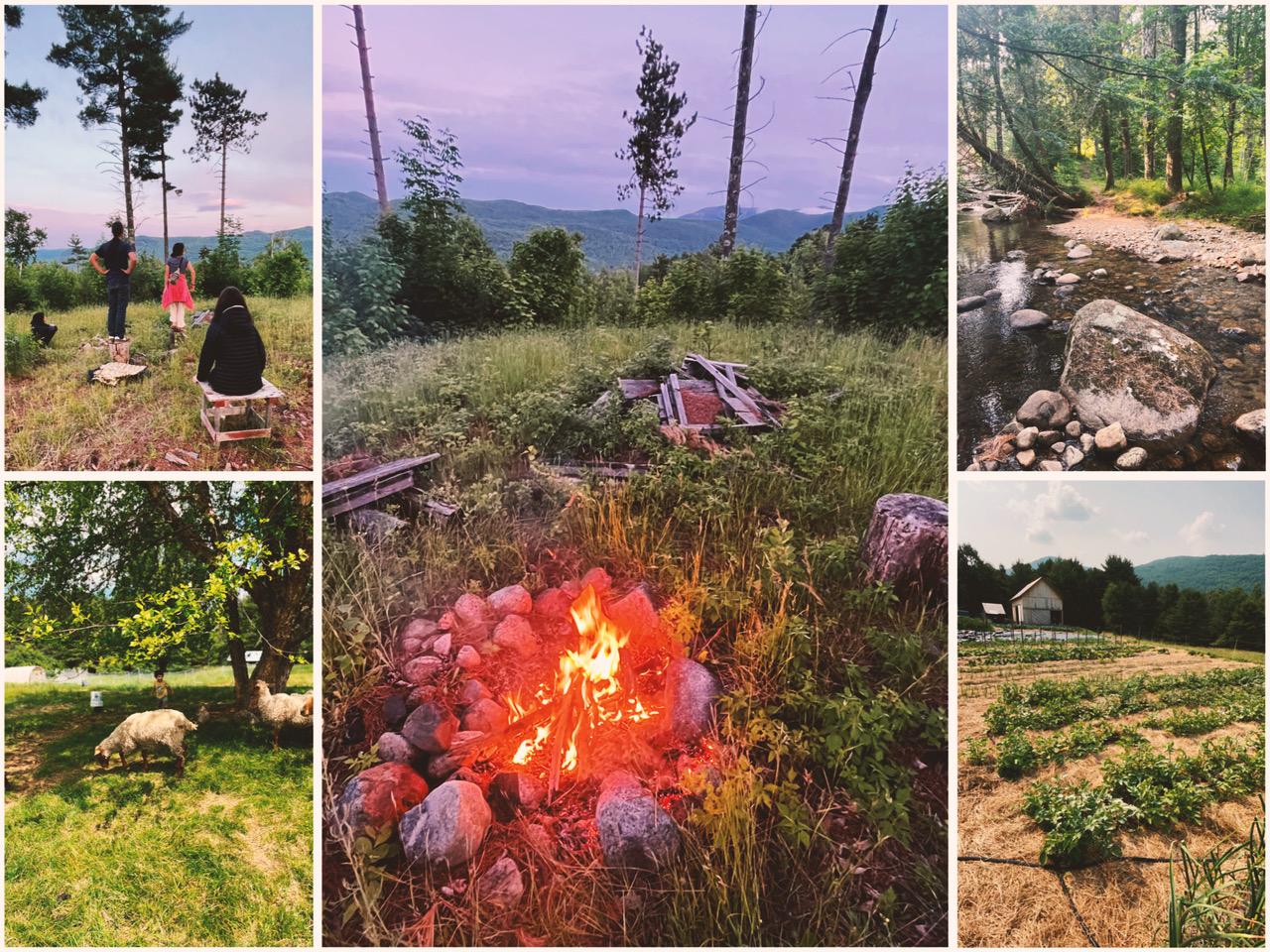
Church defends Indigenous peoples: ‘Doctrine of Discovery’ was never Catholic - Vatican News.
So, when we see that these papal bulls written by the pope, over five hundred years ago, are the true backbone of all assumed jurisdiction in the so-called “Americas;” we begin to understand the true foundation of western colonization and what empowers the assertion of their assumed jurisdiction over what is now referred to as “North America.” Grassroots movements, such as Land
There are many recent examples of the ongoing criminalization of Indigenous land defenders who continue to protect and preserve the land and water for coming generations. They continue on despite experiencing colonial violence by militarized police officers with injunctions in hand, who continue to enforce their assumed jurisdiction over our ancestral territories. So, to say that our existence is resistance only touches the surface of what it truly means to exist as Onkwehonwe, on our ancestral territories. Every weapon known to man has been used against us; to completely exterminate our way of life and who we are as a people. The fact that we are still here speaking our languages, singing our songs, passing down ancestral knowledge to the next generation and instilling in the minds of our children the importance of leaving the land better than when we came; goes to show just how resilient we are as a people, and as the original caretakers of the natural world.
By Chase Twichell Keene, NY
My handwriting’s roundness at nineteen surprises me, when I see it now.
It looks very teen-aged, though it records the trauma of first love with accuracy. Since then it has sharpened further, increased its slant, settled into its final calcifying letterforms haunted by calligraphy.
And a quaver has begun to appear in the letters, the arthritic K for example, and the R—letters with right legs. And the scale has shrunken,
as if the letters were slightly desiccated. My handwriting is starting to look like Dad’s toward the end, shrunken and derelict, thin as a thread and diminishing.
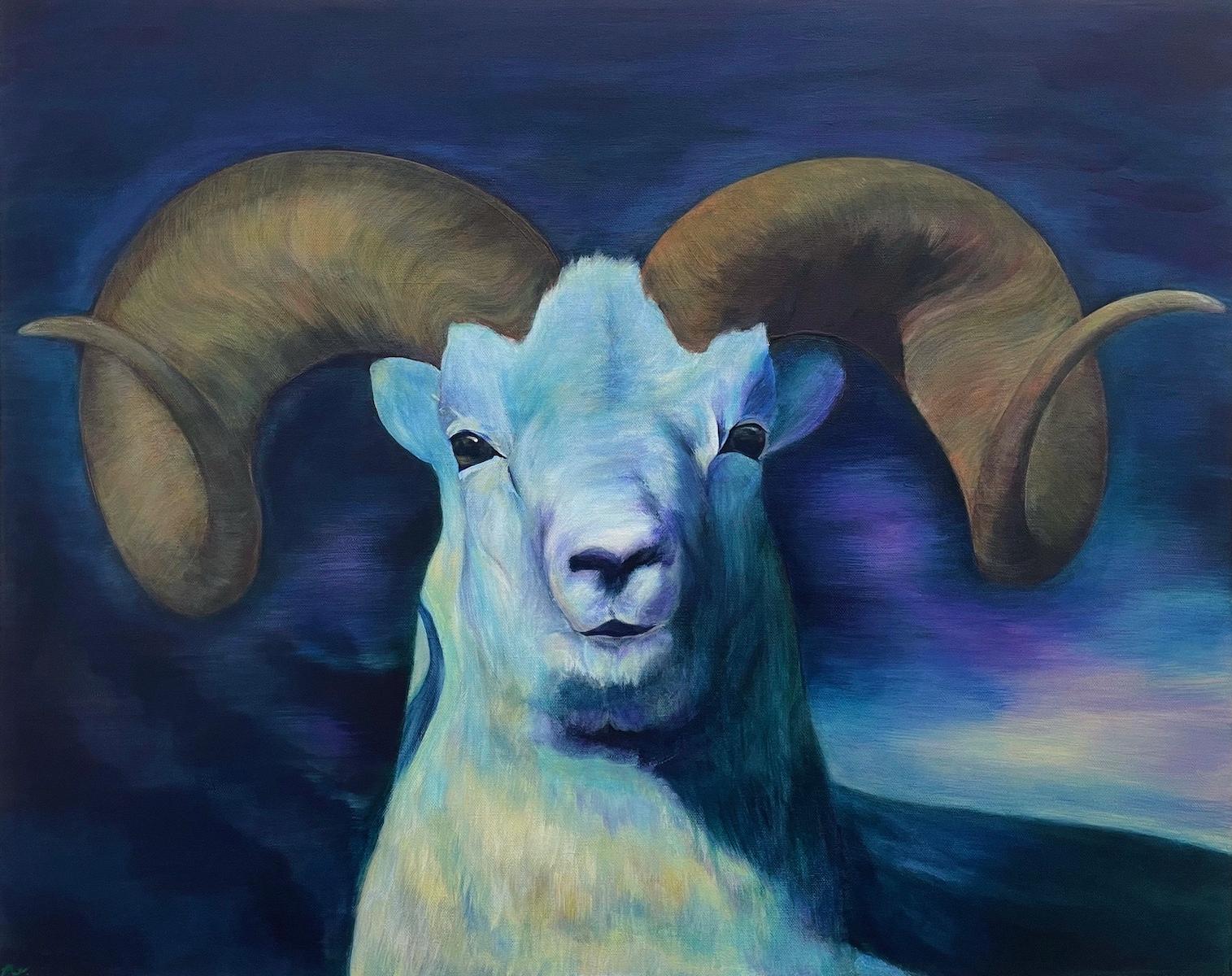
By Marie Burdett Altamonte Spring, FL
everything here is alive, in some primitive way. the constant rain, burnishing the firs, magnifying the hemlocks, enlivens them all. droplets dazzle on the water.
the forest breathes, thudding with quiet heartbeats. the incorruptible hardwood boles, fleeced with mosses, exhaling fungus. the sodden mud, alive with pulsing undercurrents. even rocks, rubbed river smooth, whisper their old names to the darkness.
primordial remembrances, stored in leathered bark, stirring in the close air, still haunt these ancient trees.
every so often, some memory flits out along the path, revealed in a single flash. then it slinks back quietly into the woods, grazing the ferns.