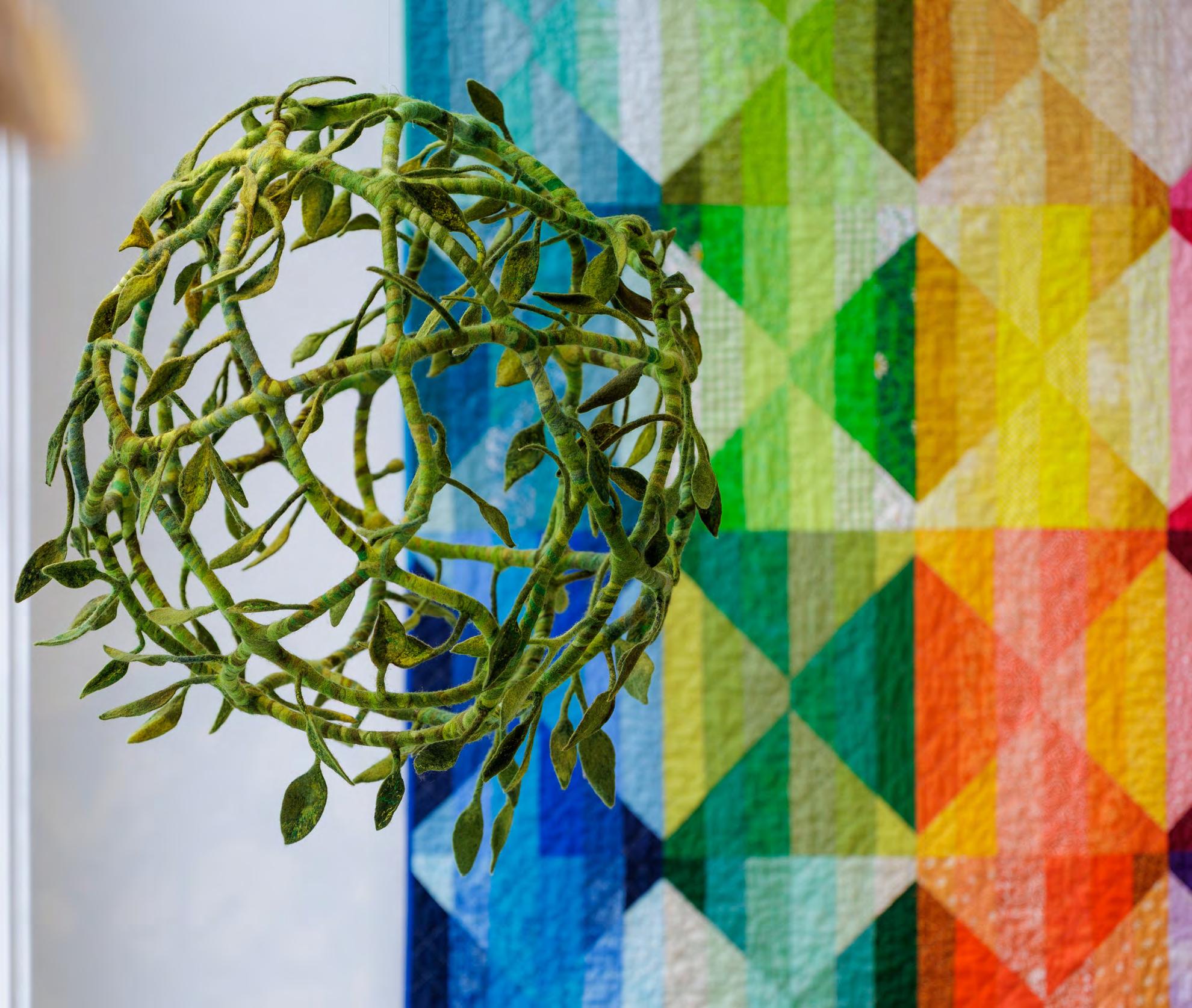
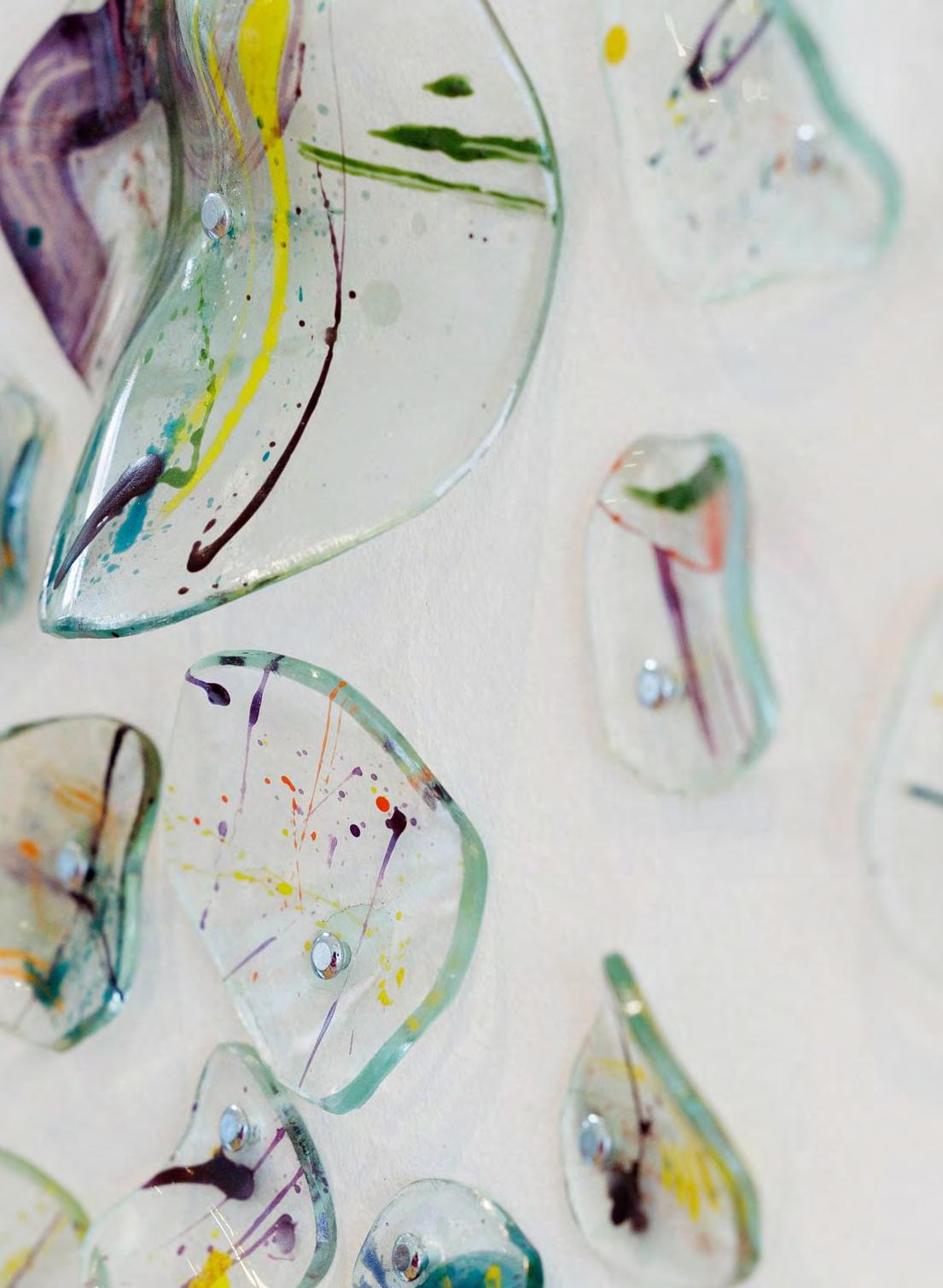
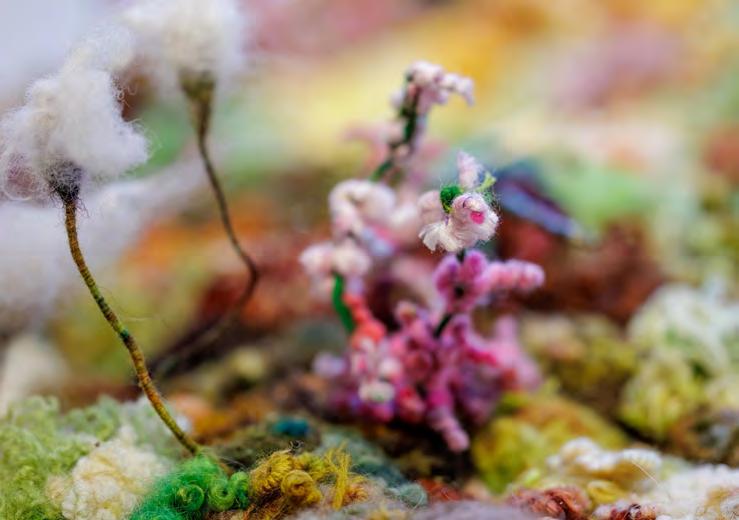
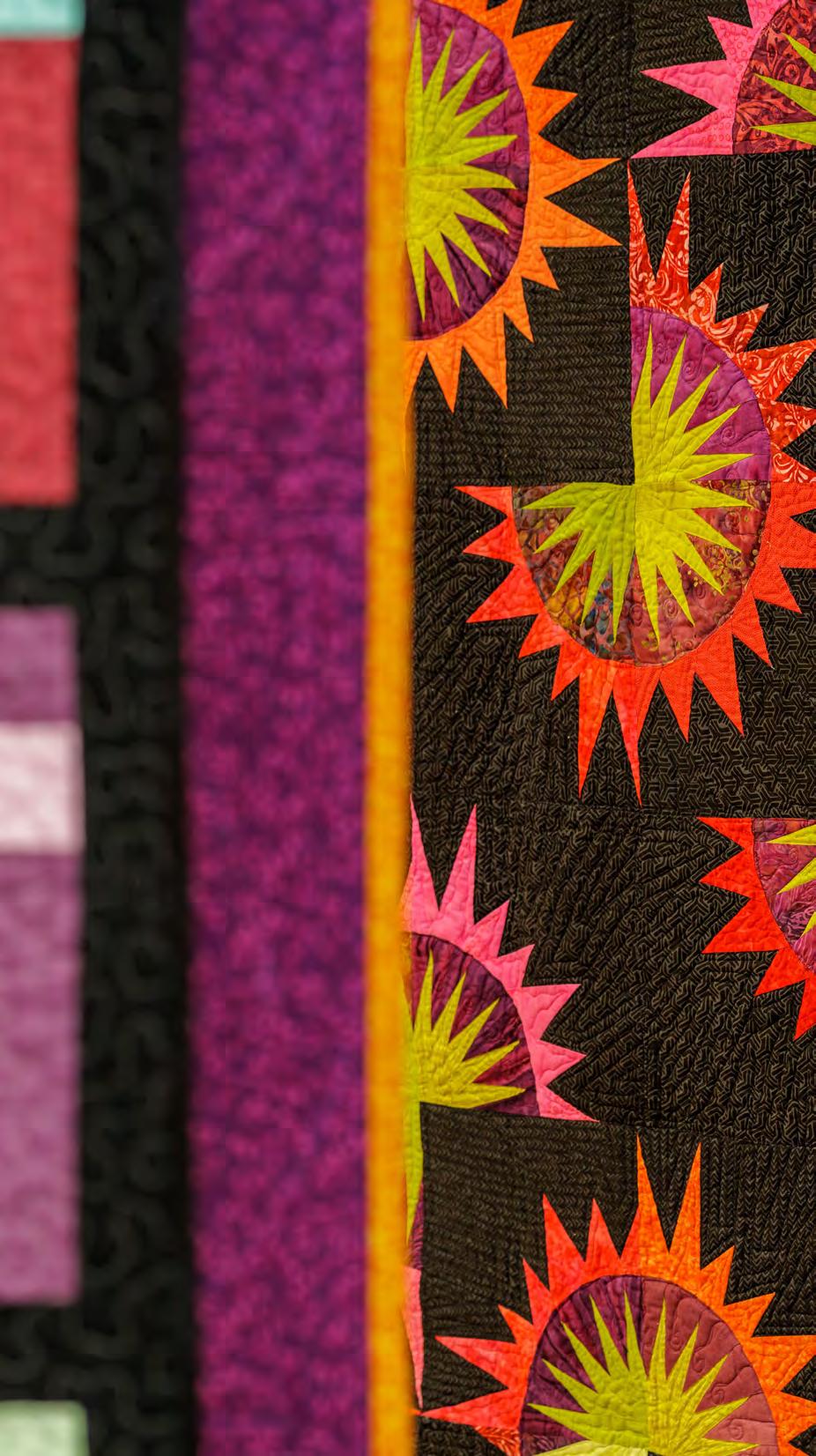
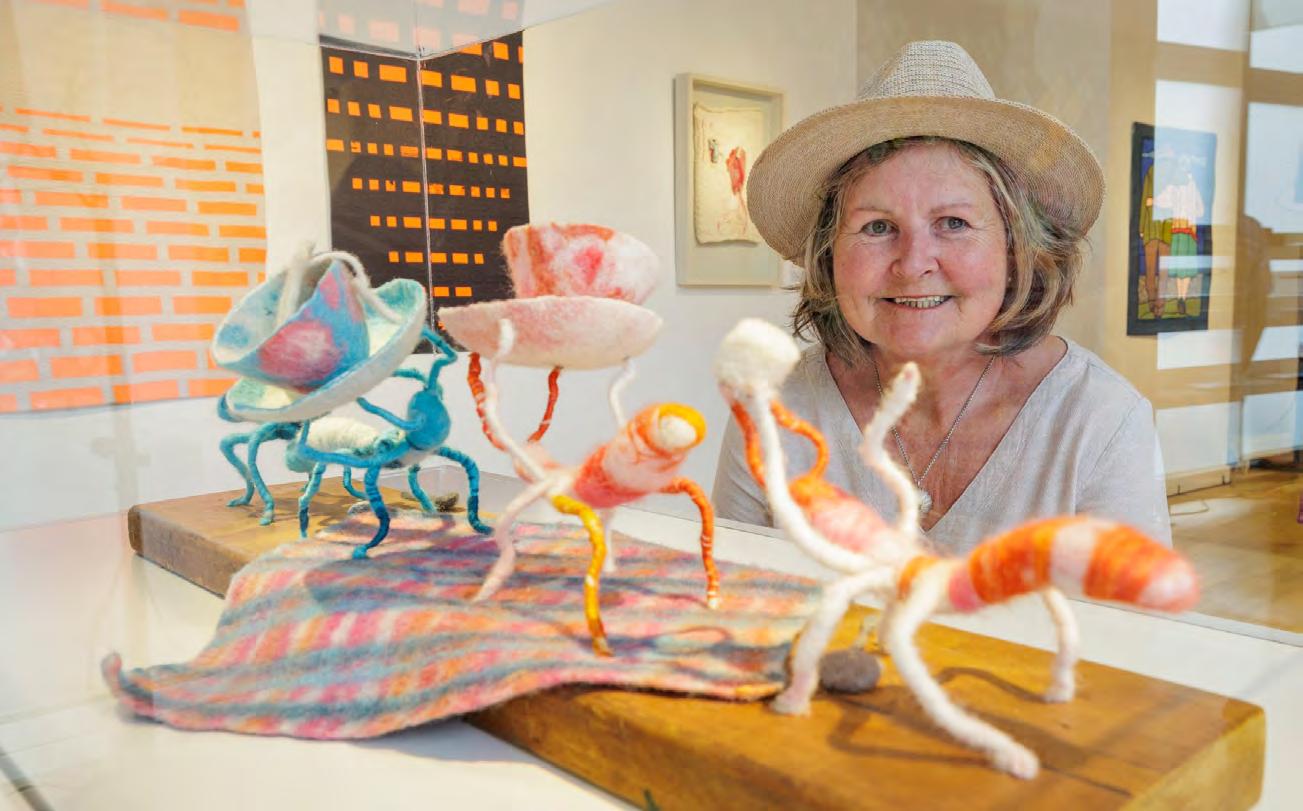
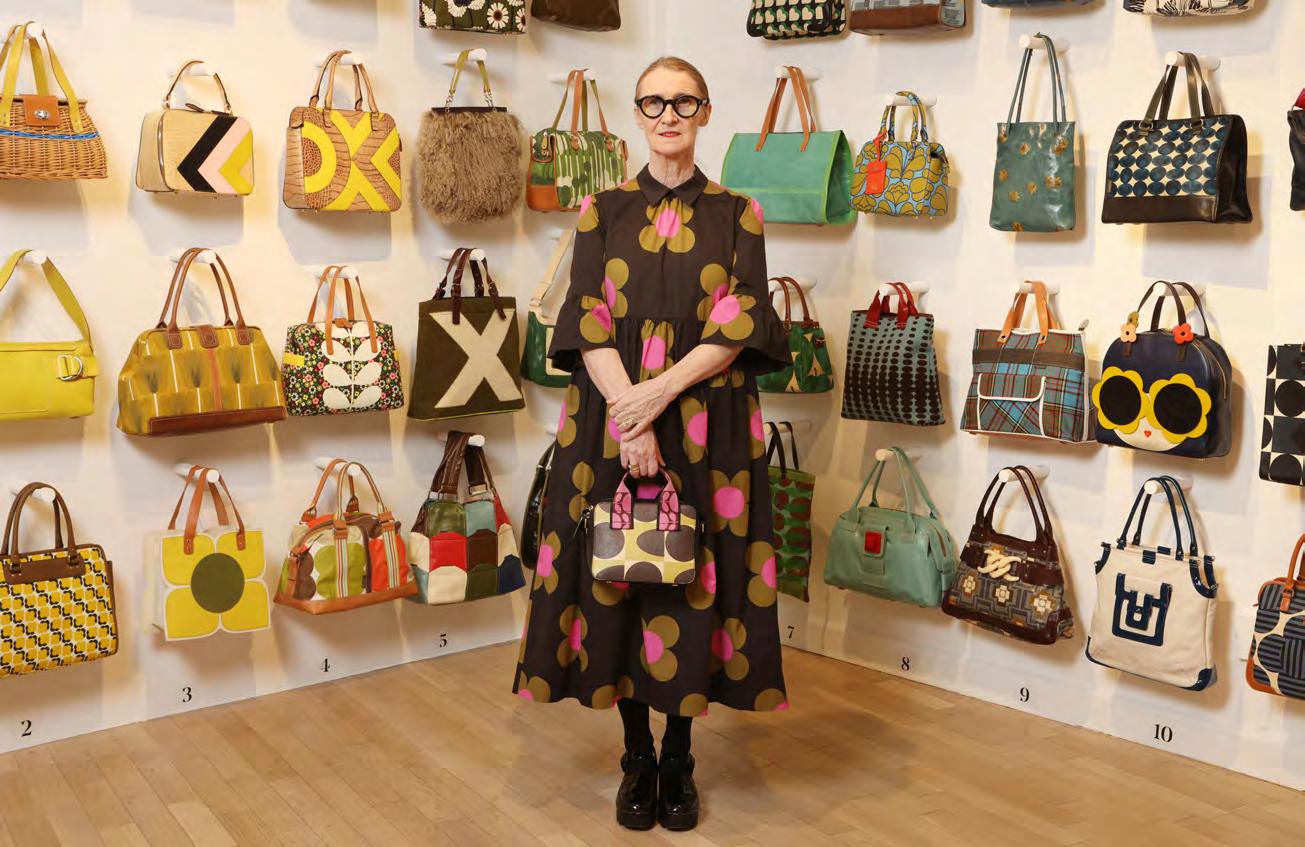
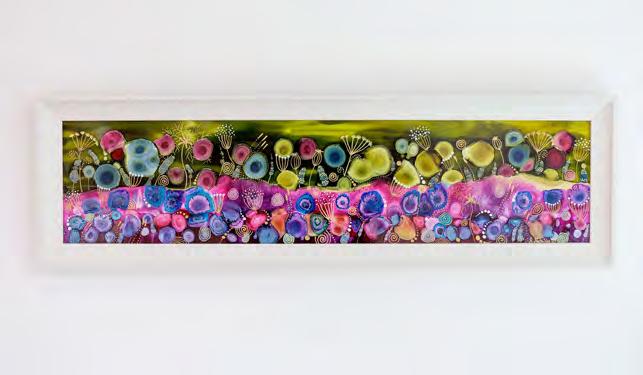
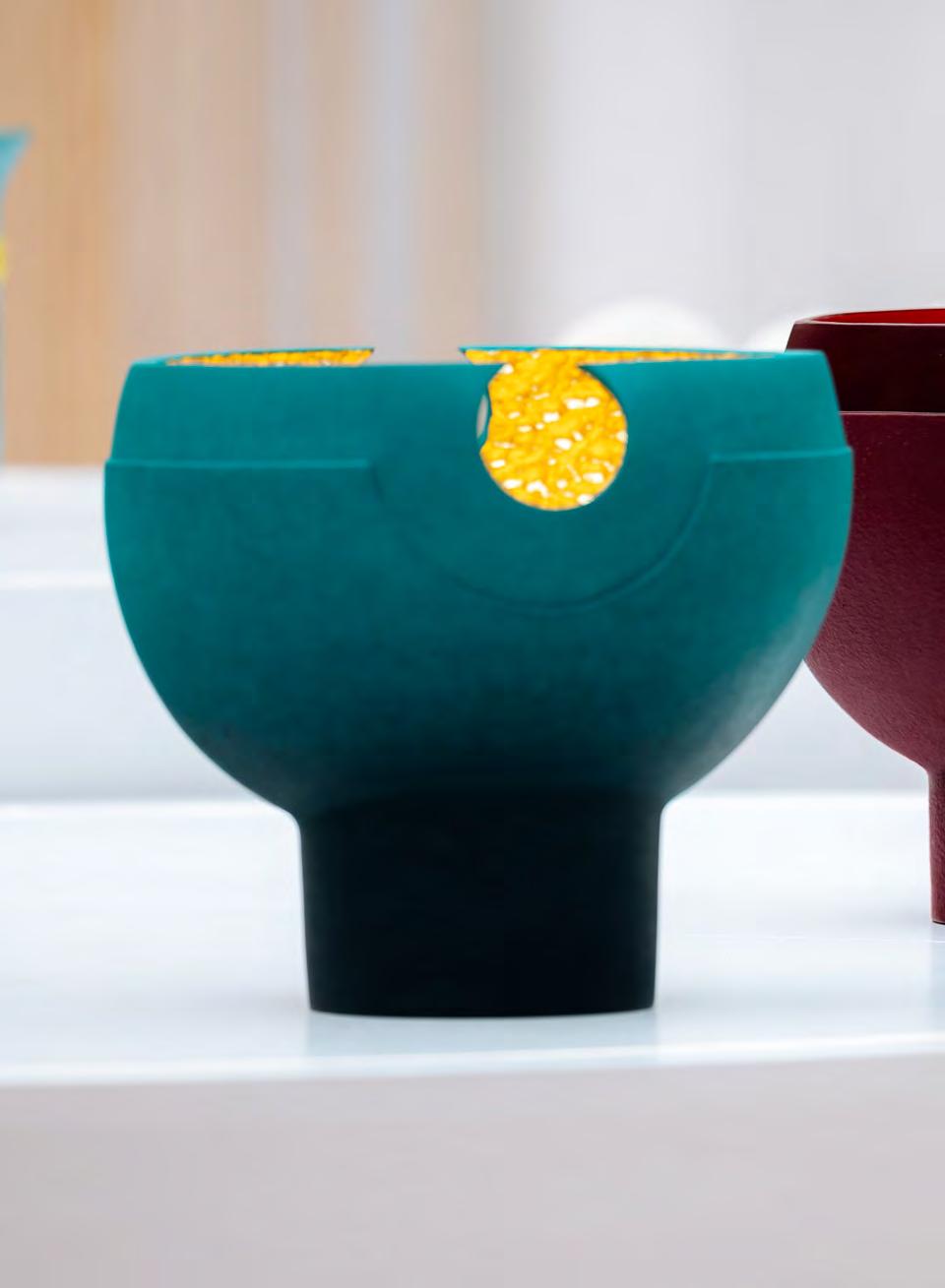
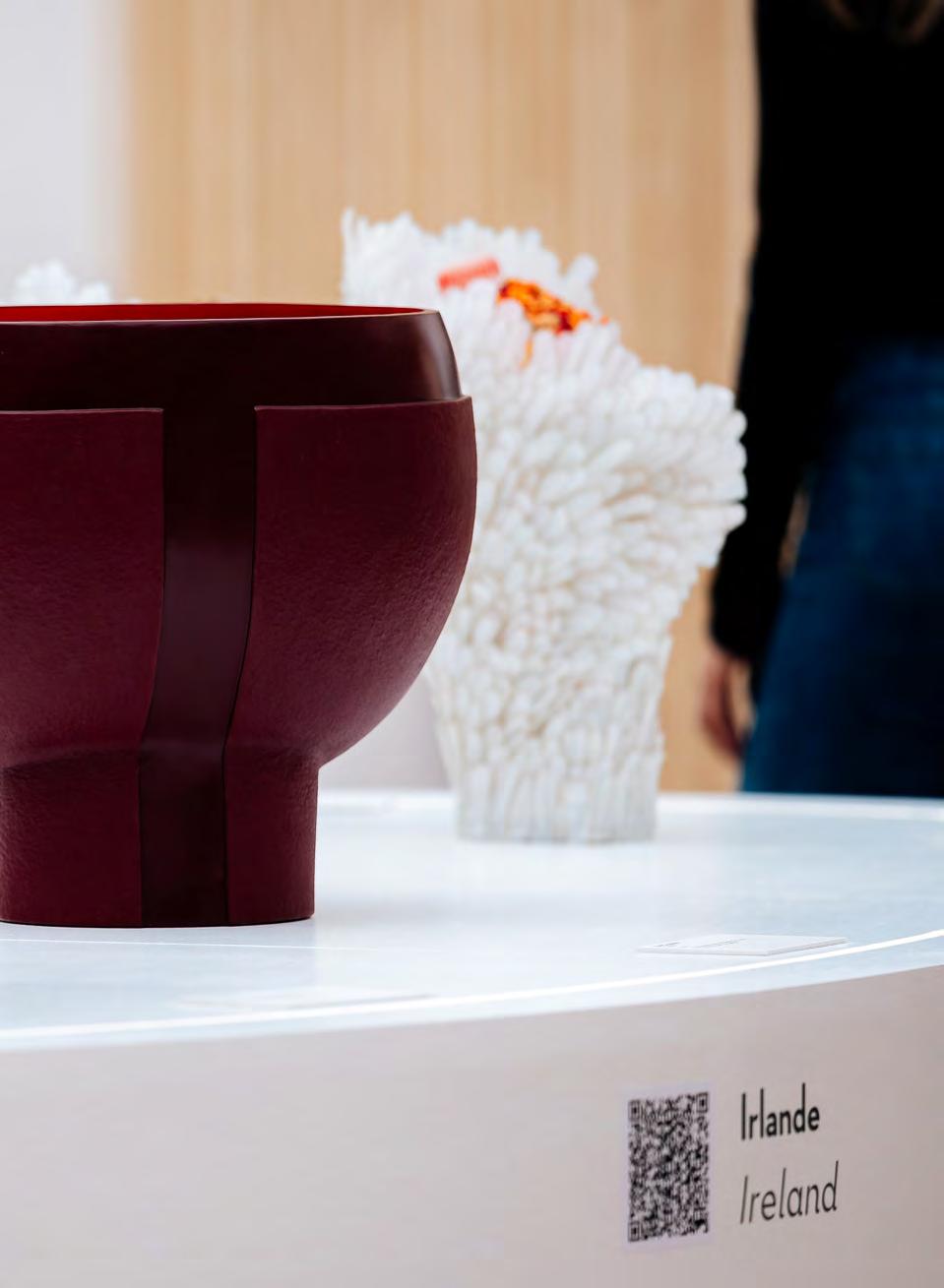
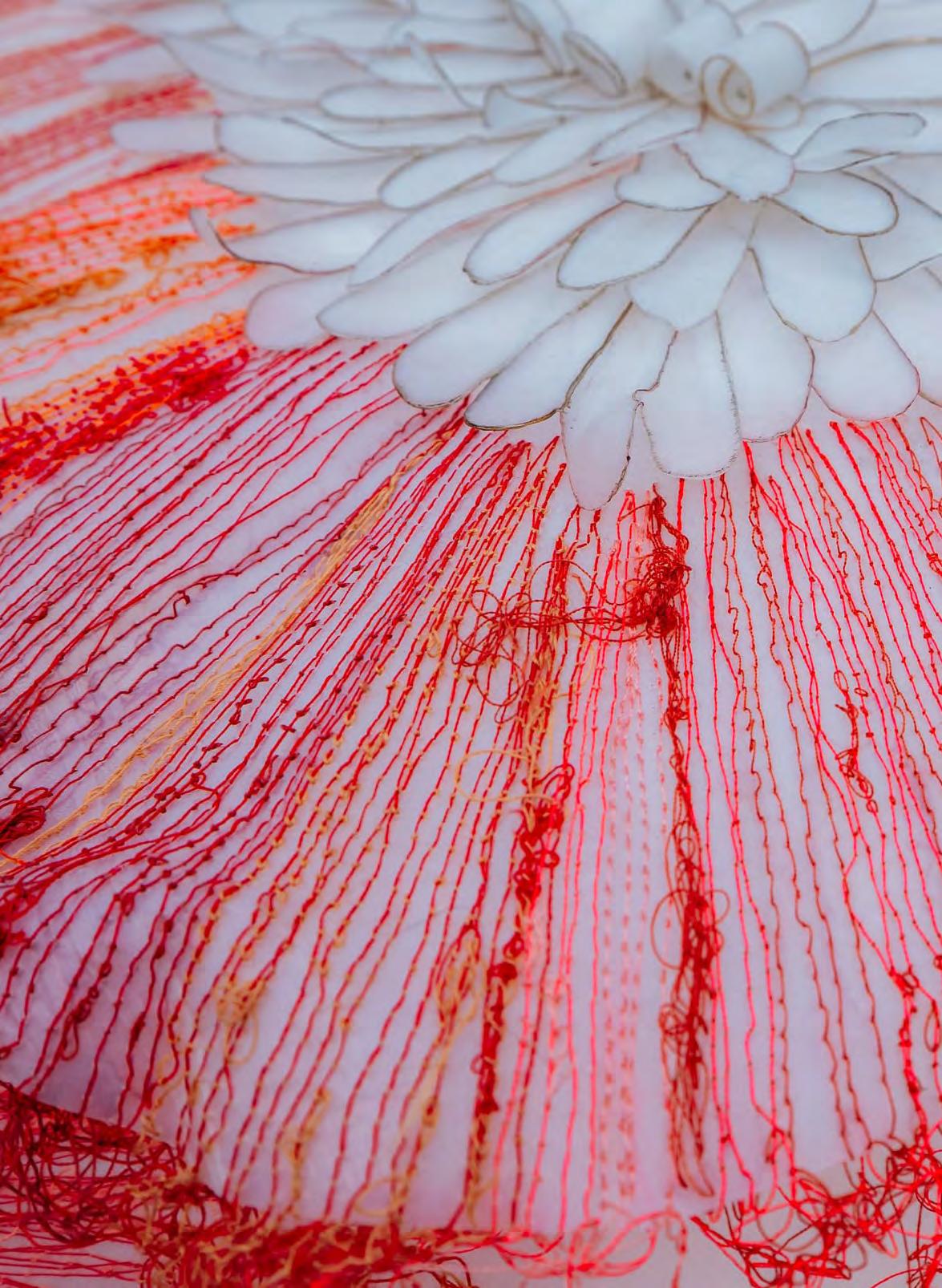
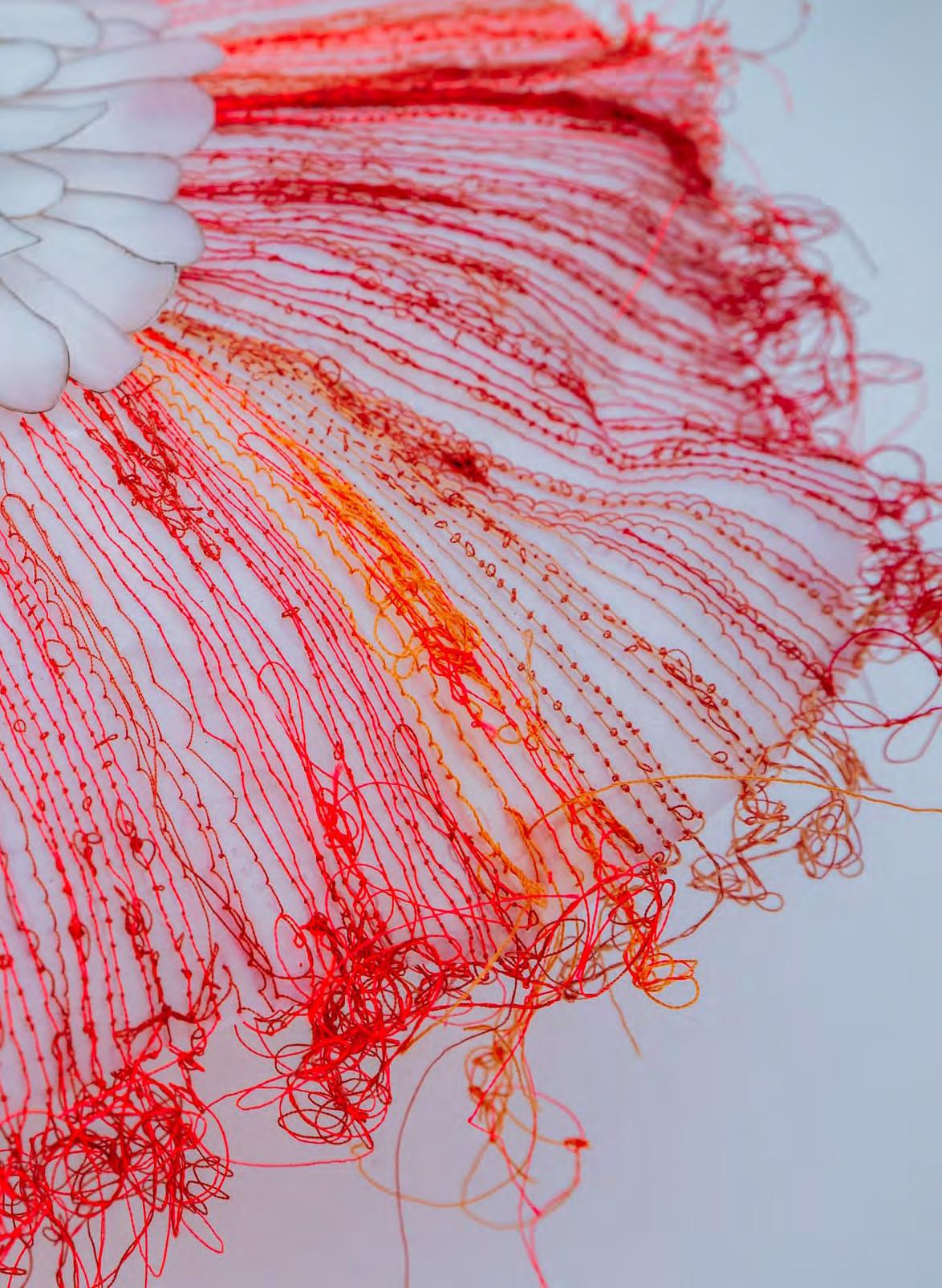
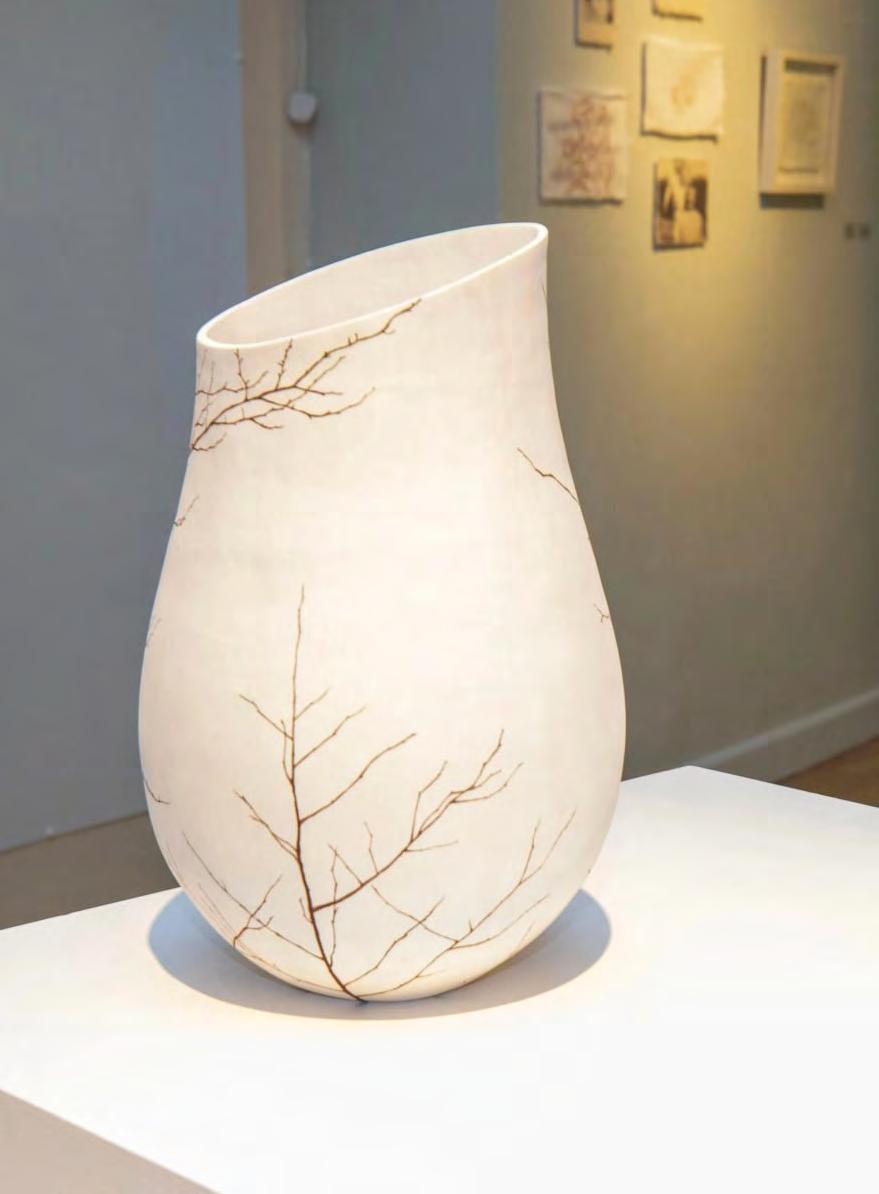
Image: A piece by Rebecca B. Young at the August Craft Month Glass Society of Ireland event at Jerpoint Studios
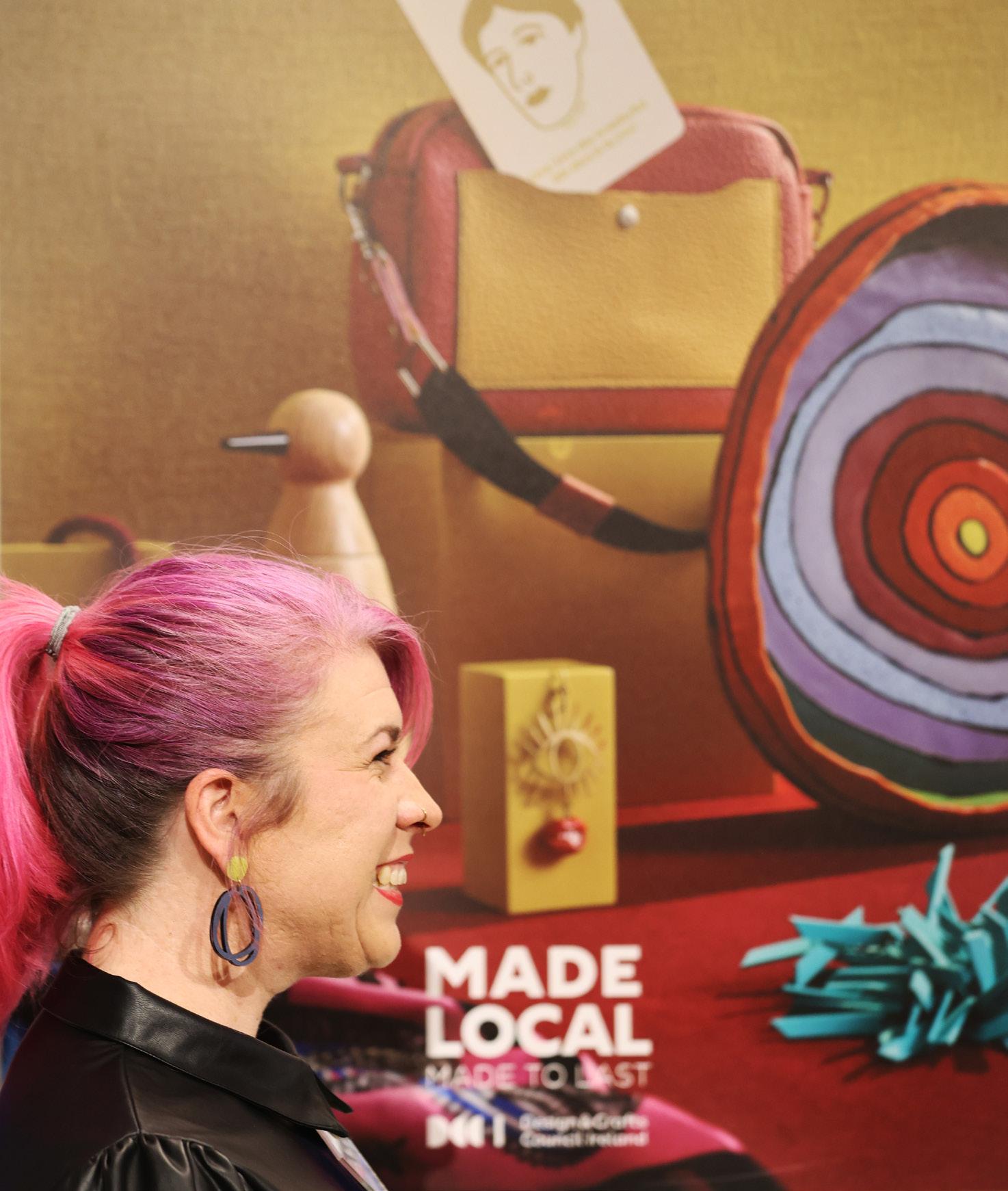
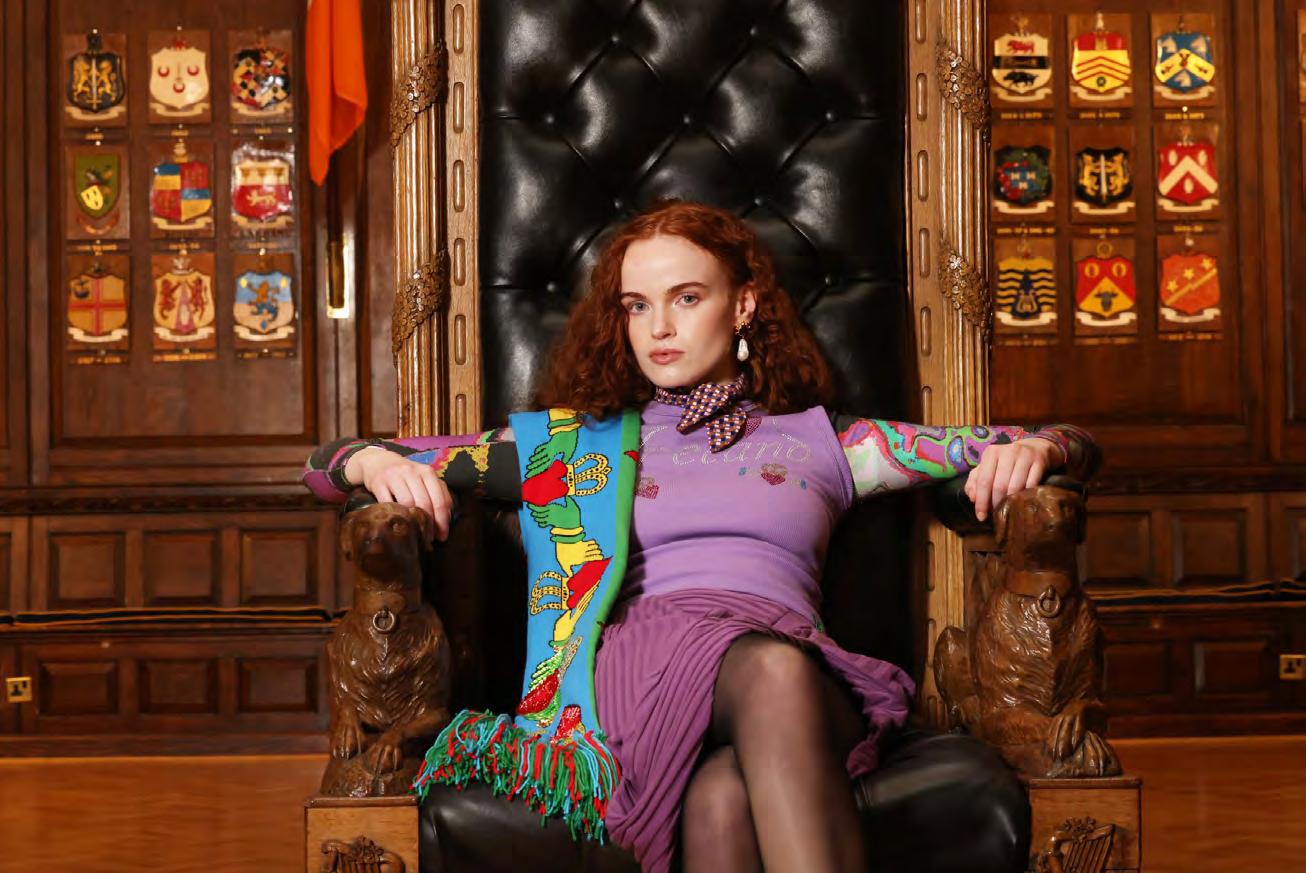
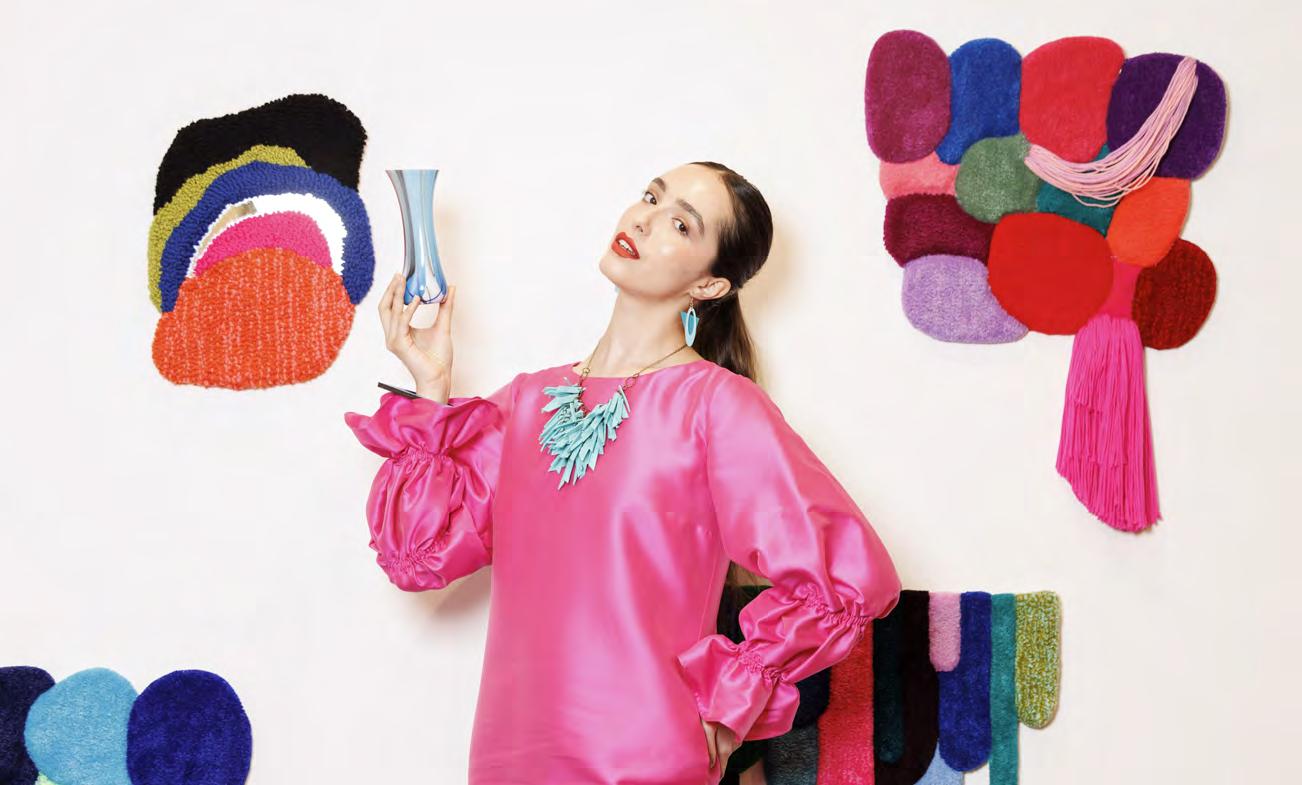
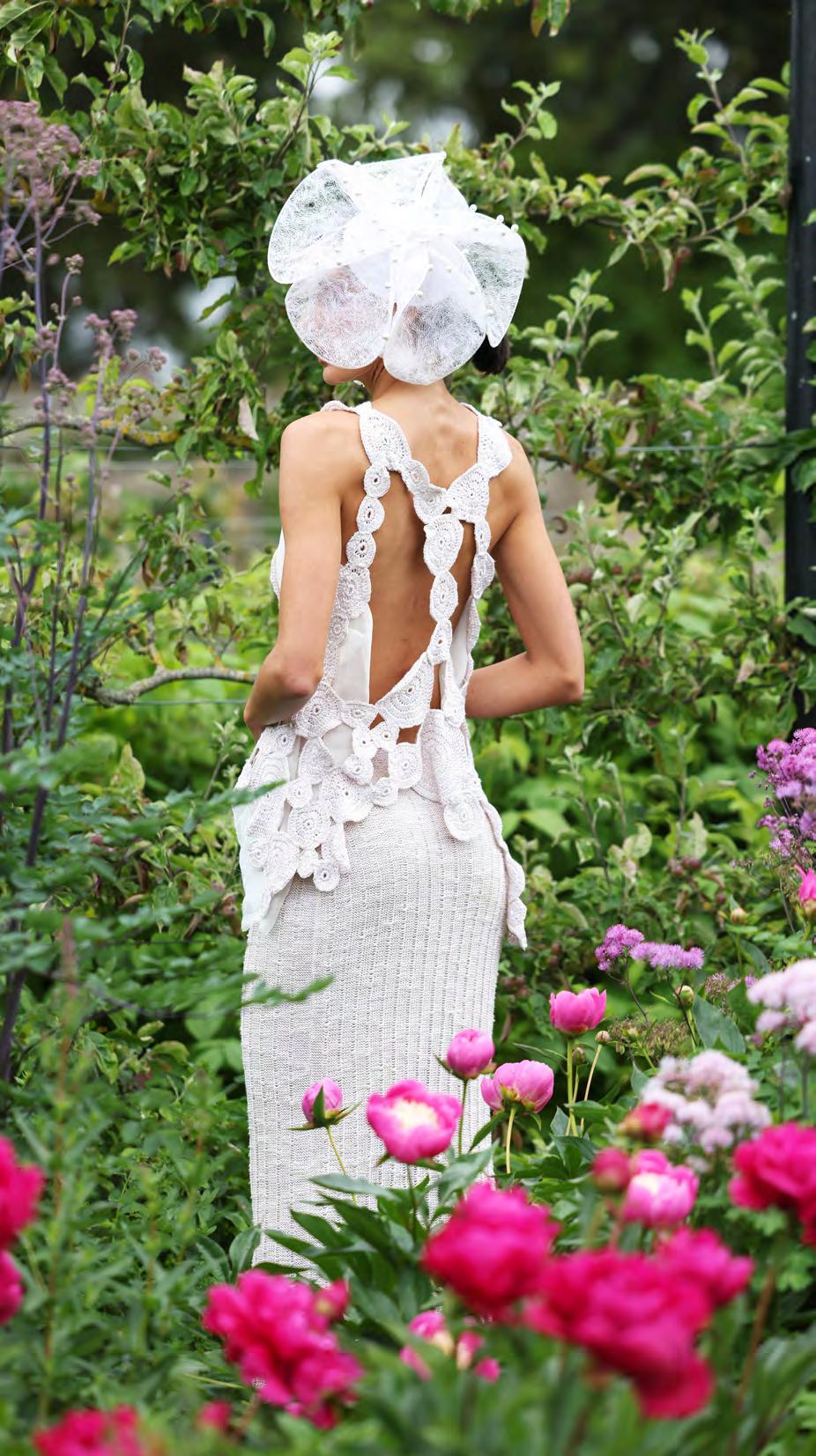
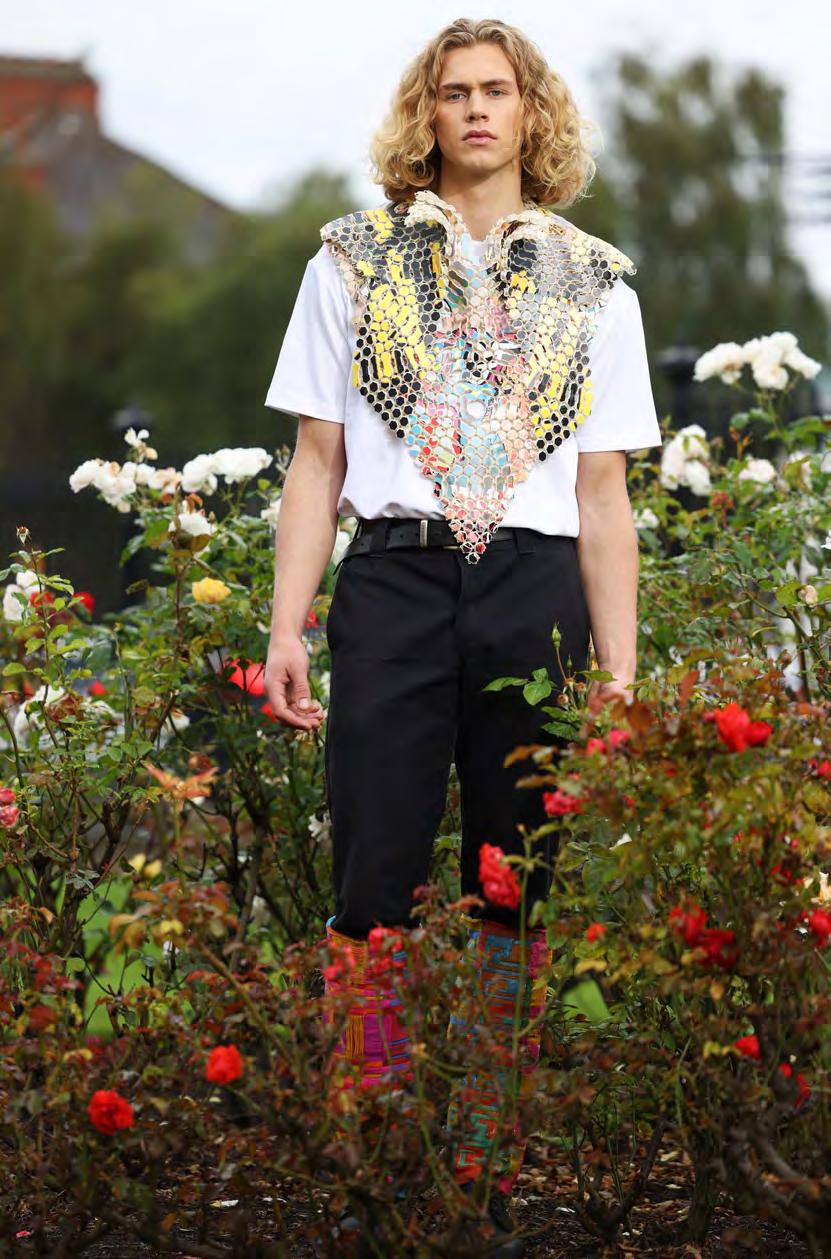
Image: A model poses at the launch of Made Local Winter campaign
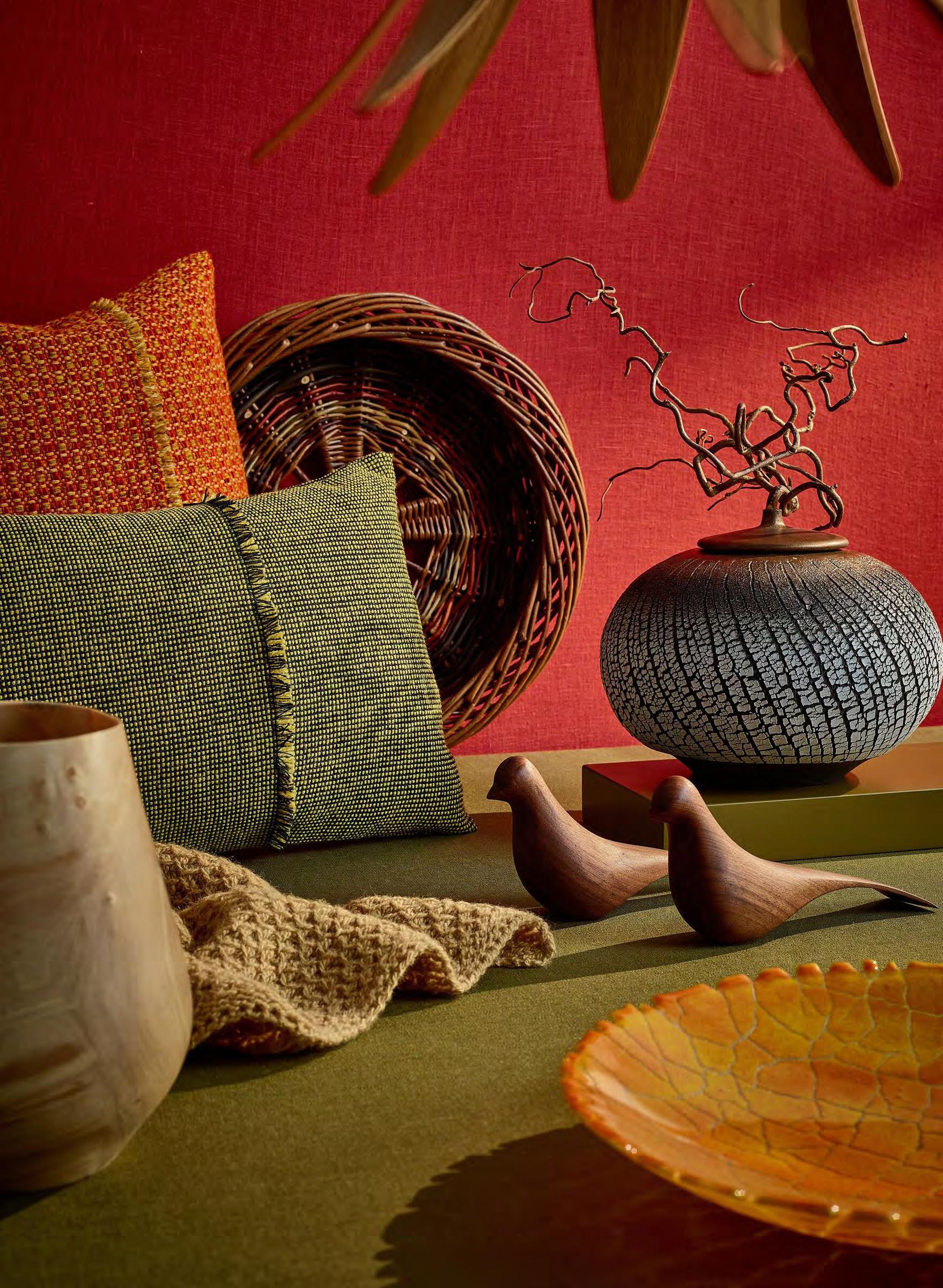
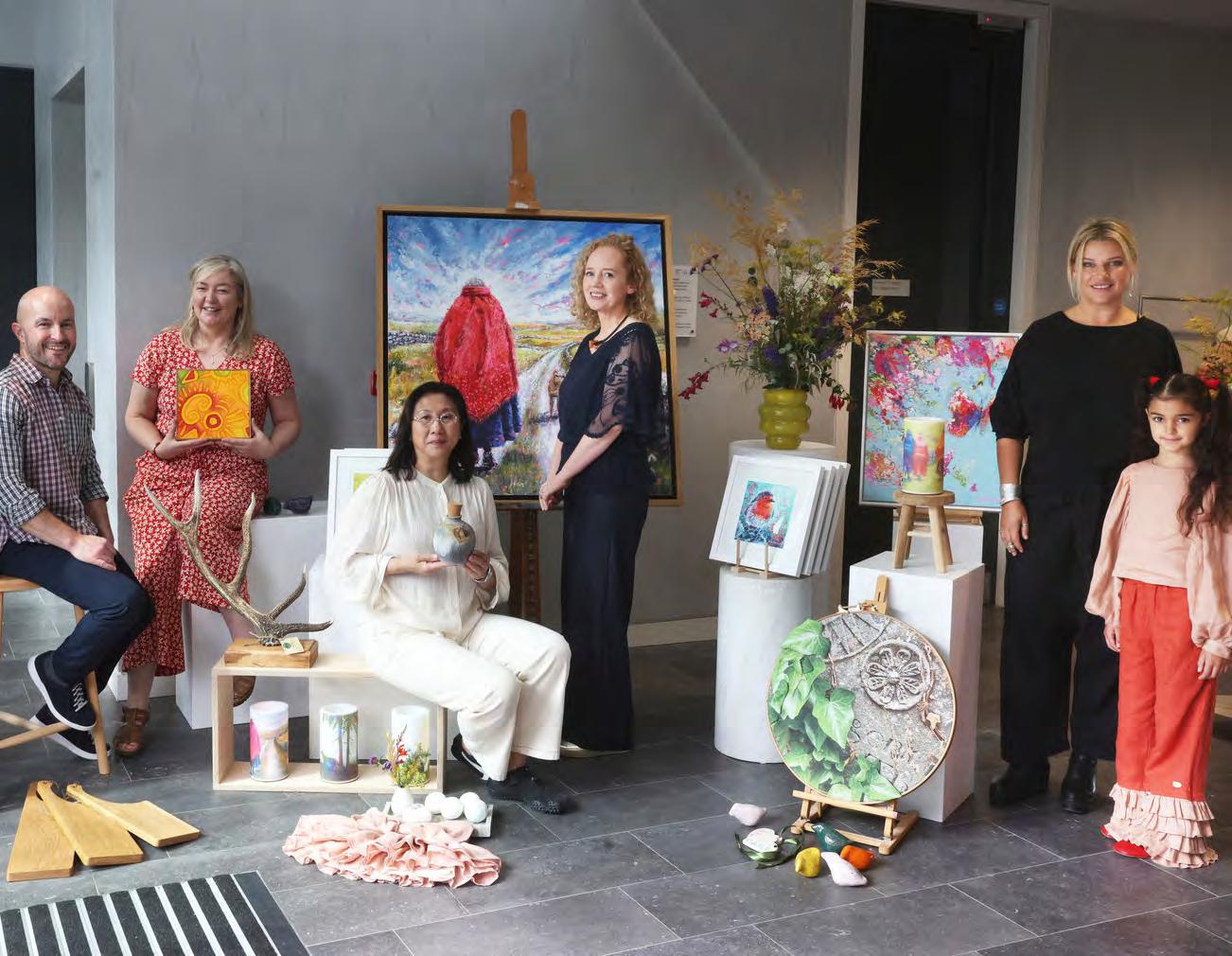
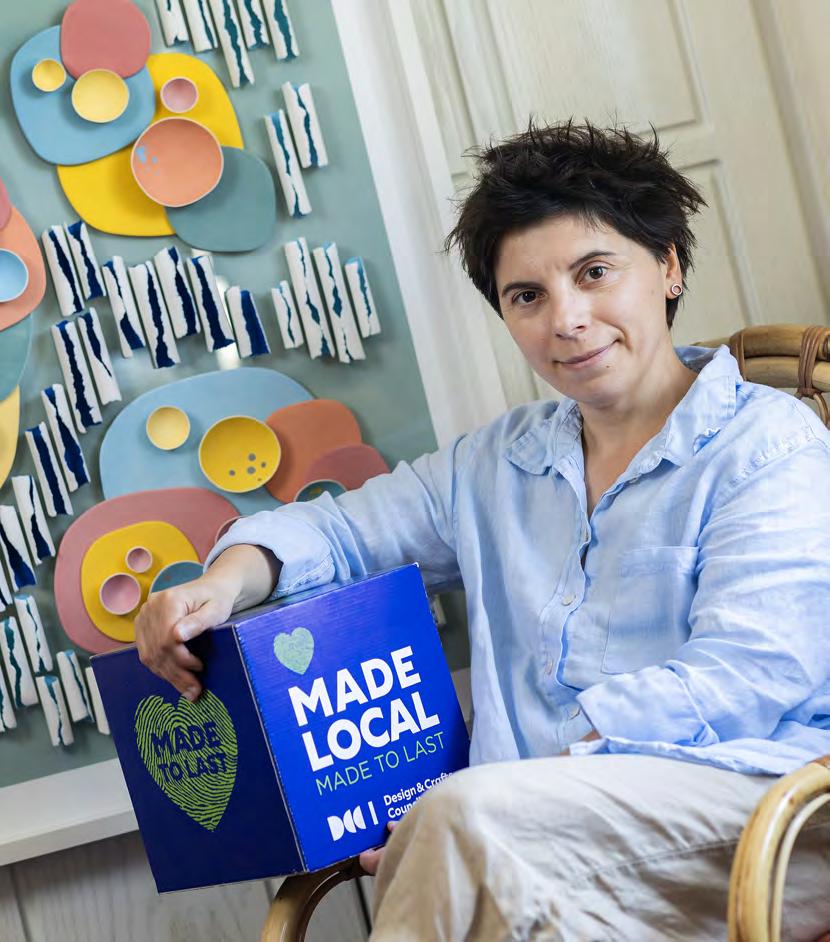
Image from the Made Local Winter photo shoot featuring pieces from: Alan Horgan Studio, Mourne Textiles, Ciaran Hogan Baskets, Jars Of Clay Ceramics, Ériu, Tommy Carew Design, edpcreative, Atlantic Glass
About Design & Crafts Council Ireland
Design & Crafts Council Ireland (DCCI) is the national agency for craft and design in Ireland. We support designers and makers in developing their businesses in a sustainable way, and advocate for the societal benefits of craft and design. DCCI’s activities are funded by the Department of Enterprise, Tourism and Employment via Enterprise Ireland.
DCCI provides practical supports to emerging and established designers and craftspeople through a range of programmes and services. As of 31 December 2025, DCCI has 67 member organisations and 3,948 registered client enterprises.
Our Team
DCCI’s Executive Team is responsible and accountable for the leadership and day-to-day management and operation of the organisation. The team acts within the approved policies of the DCCI Board of Directors (the Board) and is consistent with the priorities of its clients.
The Executive Team comprises the CEO and heads of department. The heads of department report directly to the CEO and provide regular updates to the DCCI Board on the work of the organisation. The CEO reports to the DCCI Chair and Board.
DCCI’s office and the DCCI National Design & Craft Gallery are located in Castle Yard, Kilkenny, with 24 employees (22 full-time employees and two part-time employees).
The DCCI Academy Jewellery & Goldsmithing School is located in Sessions House, Thomastown, Kilkenny.
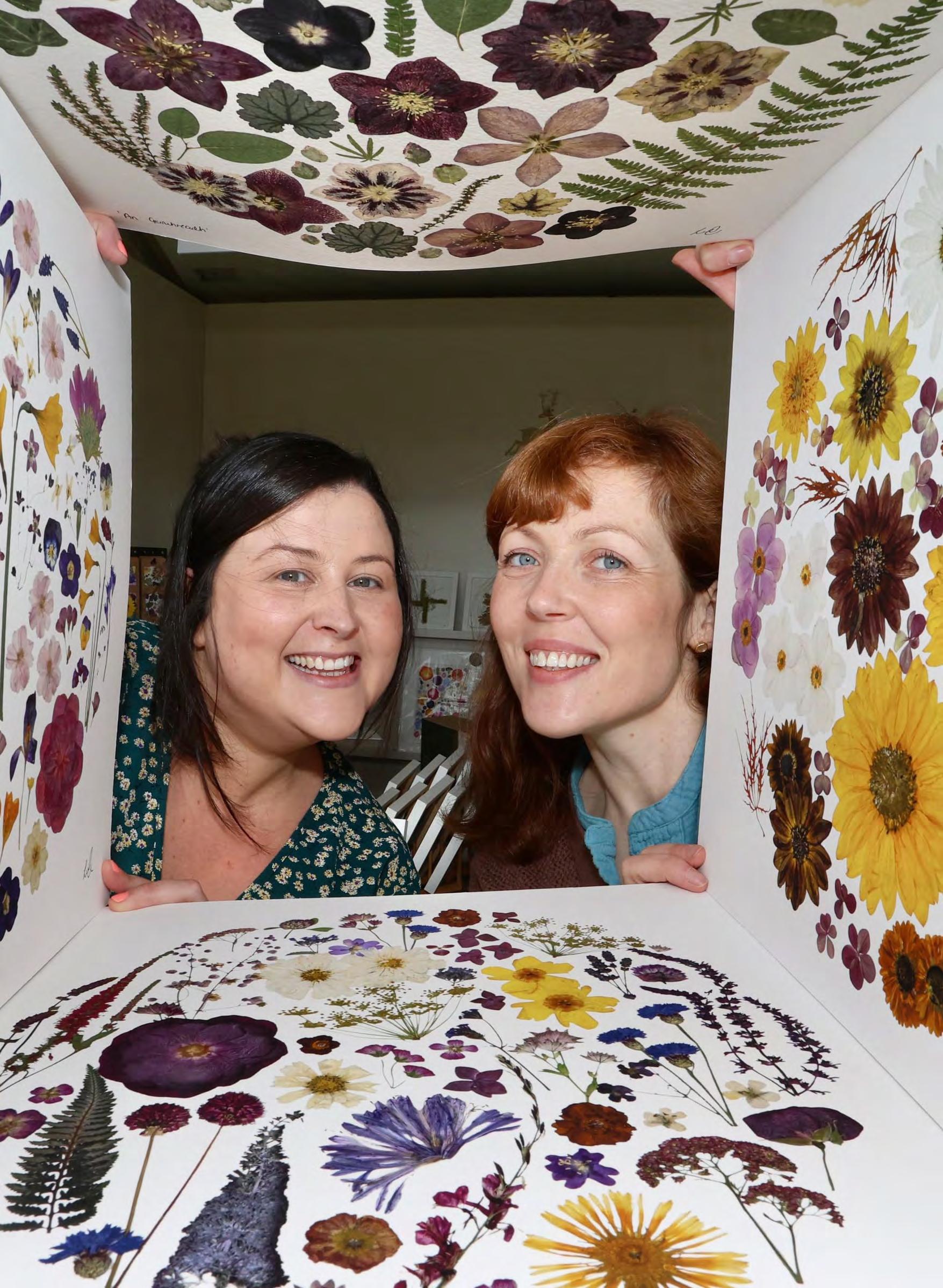
SIÓG Botanicals in the DCCI Irish Craft Village during Bord Bia Bloom 2025
Introduction from the Chair
As Interim Chair of Design & Crafts Council Ireland (DCCI), it is a privilege to reflect on 2025, a year that has been both challenging and defining for our organisation and the wider design and craft community.
Ireland’s design and craft sector is rooted in a living tradition of making, shaped by generations of makers who continue to renew and reinvent their skills. In doing so, they express our shared heritage while contributing meaningfully to our economy and global reputation. Throughout the past year, we have seen clearly how deeply embedded this sector is within communities across the country, connecting people, sustaining livelihoods, and telling the story of who we are through skill and imagination.
This year has not been without difficulty. We have come through a period of challenge and scrutiny, alongside wider economic pressures, rising production costs, and changing consumer behaviours that have presented very real obstacles for designers and makers. It is important to acknowledge the impact this has had across the sector and within our own organisation.
However, this period has also created an opportunity to reset, to listen more closely, to rebuild trust, and to strengthen how we support the community we serve. I believe we have made meaningful progress in rebuilding confidence and trust, and we remain committed to continuing this work. What stands out most is the resilience and adaptability demonstrated across the sector. Our members have embraced new technologies, explored sustainable processes, and collaborated in innovative ways. Their work speaks not only of skill, but of determination and a deep commitment to their practice.
At DCCI, our role is simple in intent and ambitious in scope: to stand behind Ireland’s makers. We work to promote designers and craftspeople to audiences both at home and
internationally, while supporting them in building sustainable businesses and practices. Our purpose is not only to promote the sector, but to strengthen it in a meaningful and lasting way.
From a governance perspective, the Board has remained focused on providing strong oversight and clear strategic direction. Our 2022–2026 strategy continues to guide our work, and as we enter its final phase, we have taken the opportunity to reflect on our progress. I am pleased to note that tangible advances have been made across each of our strategic pillars.
Building capability and capacity to deliver resilient growth
Driving sustainable growth remains central to our mission. Through flagship trade and consumer events such as Showcase, the DCCI Craft Village at Bord Bia Bloom, and the Design Ireland pop-up shop at Arnotts, we have continued to create valuable opportunities for makers to strengthen and scale their businesses.
Alongside this, the DCCI Academy has expanded its delivery of training and education, equipping designers and craftspeople with the business
Imelda Connolly Interim Chair, DCCI
Irish craft, by its nature, supports a more sustainable model of creation and consumption, one rooted in quality, longevity, and care.
and technical skills required to build resilient enterprises. This is an area of continued growth, and we look forward to the opening of the new ceramics school in Thomastown, Kilkenny in 2026.
Through initiatives such as Future Makers, the David Shaw-Smith Legacy Award, and a strong programme of exhibitions and gallery activity, we continue to support, showcase, and develop talent across the sector.
Championing design across Ireland Enhancing Ireland’s global visibility in design and craft has remained a key priority. Through curated international exhibitions at Collect in London and Révélations in Paris and Irish Design Week which brings the best of designers together in a weeklong celebration, alongside strategic partnerships and sustained engagement with global audiences, we have reinforced Ireland’s reputation for originality and integrity.
Irish designers and makers are increasingly recognised not only for the quality and beauty of their work, but also for its depth of storytelling and commitment to sustainable practice, especially through the Irish Business Design Challenge. This growing international profile benefits individual makers while reinforcing Ireland’s broader cultural standing.
Leading and demonstrating sustainability Sustainability continues to shape our thinking. Throughout 2025, designers and craftspeople have increasingly adopted circular design principles and prioritised the use of sustainable materials. Equally important has been our work to encourage more mindful consumer behaviour through initiatives such as the Made Local campaign.
Irish craft, by its nature, supports a more sustainable model of creation and consumption, one rooted in quality, longevity, and care.
Future-proofing DCCI
Innovation within design and craft is deeply informed by heritage and tradition. The integration of new materials, evolving methods of learning and practising heritage skills, and the adoption of digital technologies all demonstrate the sector’s capacity to adapt and thrive.
As the sector continues to innovate and adapt, so too must DCCI. Ensuring the correct tools, opportunities and supports are in place is essential to enabling us to champion and sustain our community. Through mentoring, network supports for GANS, and professional development via the DCCI Academy, we continue to foster an environment where innovation is encouraged and emerging talent is nurtured. We remain committed to supporting the next generation of Irish designers and makers at critical stages of their development.
A significant development this year has been the appointment of our Chief Executive, Mary Blanchfield. Having previously served as Head of Operations, Mary brings deep organisational and sectoral knowledge, strong leadership, and a clear commitment to strengthening engagement with the sector. She is guiding this next phase with a focus on openness, rebuilding trust, and ensuring that DCCI reflects the diversity and strength of the creative community it serves.
None of this progress happens in isolation. The strength of DCCI lies in its partnerships and collaborations, with government departments including the Department of Enterprise, Tourism & Employment and the Department of Foreign Affairs, enterprise agencies such as Enterprise Ireland and the Local Enterprise Offices, educational institutions including Atlantic Technological University, and a wide network of cultural and international partners.
The Board remains acutely aware of the responsibility that comes with public investment, and we are committed to transparency,
accountability, and strong governance. I would like to acknowledge my fellow Board members for their dedication and insight throughout the year, and to thank our Chief Executive Mary Blanchfield and the entire DCCI team for their professionalism, expertise and unwavering commitment to the sector.
I would also like to acknowledge our Chairperson, Peter Hynes, and extend our very best wishes for his continued recovery. We look forward to welcoming him back in 2026.
Most importantly, I want to recognise Ireland’s makers. Their creativity, discipline, and entrepreneurial spirit are at the heart of everything we do. Across studios, workshops, and enterprises nationwide, they continue to create work of both personal meaning and national significance. They contribute to local economies, sustain traditional skills, and bring Ireland’s creative voice to the international stage.
As we look ahead, we know that challenges will continue to arise. However, the past year has reinforced our confidence in the sector’s resilience and its capacity to adapt and thrive. The closing phase of our current strategy offers an opportunity not only to deliver on our commitments, but also to listen carefully to our
stakeholders and to shape an ambitious vision for the next strategic period.
Thank you to everyone who has contributed over the past year and to those who continue to support the work of DCCI.
Imelda Connolly Interim Chair, DCCI
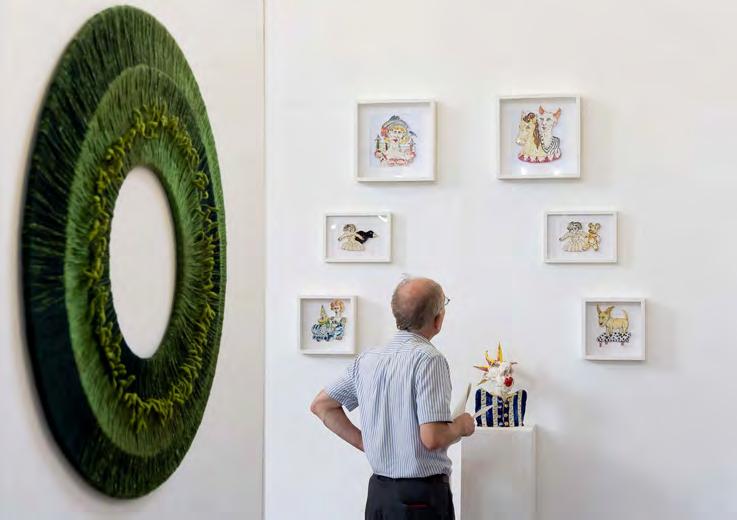
Image from the Cork Voice of the Craft Members exhibition as part of August Craft Month
Introduction from the Chief Executive Officer
Mary Blanchfield Chief Executive Officer, DCCI
As we look back on 2025, Design & Crafts Council Ireland (DCCI) celebrates another great year for Irish design and craft. To both national and international audiences, our members have demonstrated ambition, resilience and excellence in their disciplines. From major global recognition to national initiatives, 2025 stands as a defining year for the sector. I was appointed CEO in June 2025 and it is an honour for me to represent the Council and I strive to do my best for the people we at DCCI serve.
All eyes on Irish Design & Craft
We kicked off the year in style with Showcase, Ireland’s Creative Expo, returning to the RDS for its landmark 50th year celebration. Thousands of domestic and international buyers engaged with 381 exhibitors across a wide range of disciplines including, jewellery, textiles, ceramics, furniture, wellbeing and homeware.
We were delighted to mark the milestone with an inspiring keynote line up, including retail consultant and broadcaster, Mary Portas; Dragons Den investor, Sara Davis; and leading consumer behaviouralist, Ken Hughes. Another standout moment was the announcement of the Showcase Awards, where Kopper Kreation was named as the overall winner. These awards celebrate excellence in design, innovation, sustainability and commercial success, a huge congratulations to all winners. With an estimated €32million in orders from Showcase 2025, the event once again underscored the exceptional calibre of Irish makers and the strong confidence and growth across the sector.
It was a fantastic honour to welcome Orla Kiely’s A Life in Pattern exhibition to the National Design & Craft Gallery in Kilkenny in early February. Orla’s contribution and distinctive approach to design has become a symbol of contemporary Irish creativity. Her work is instantly recognisable and has left a mark not just on Irish design but internationally through influencing fashion, interiors, and beyond.
In late February, our focus turned to Somerset House, London where DCCI was proud to present the works of 14 designer makers at Collect 2025. Selected from the winners of DCCI Future Makers awards and graduate fellows from the Homo Faber Fellowship programme duos, these designer makers represented Ireland with distinction on the international stage. Collect provides a dynamic and engaging environment for art collectors to discover new works in contemporary craft and design.
There was no pause in momentum when we launched the Design Ireland pop-up store at Arnotts on 6th March 2025. 35 makers took part in the pop-up, which ran until July 2025, bringing a vibrant showcase of contemporary Irish design to the iconic flagship store on Henry Street in the heart of Dublin city. The pop-up highlighted a diverse range of high-quality work, featuring everything from jewellery and ceramics to homeware, furniture, and accessories.
A defining high point of the year came in May, when Ireland was selected as Country of Honour for Révélations 2027, the international fine craft and international biennial, at our inaugural presence at Révélations 2025. This is a prestigious and rare distinction and a moment of huge pride for the entire sector. Ireland stands with the best in the world in the design and craft sector and it showcased the depth,
innovation and cultural richness of contemporary Irish craft at one of the most influential stages in the world. It marked a powerful recognition of Ireland’s vibrant future focused creative community and was undoubtedly a standout moment for 2025. We were thrilled to bring seven designer makers to Révélations in 2025 and will look forward to bringing many more master craftspeople to Révélations 2027 to represent our country. DCCI’s relationship with our French partners is strong and one we will continue to nurture in 2026.
From Short Courses to Degrees: Education for the Future
The DCCI Academy Jewellery & Goldsmithing School welcomed back our students for their second year of the three year degree programme in September. A number of short courses were held throughout the year, with a focus on business development and on jewellery, which included the following — enamelling for small batch production; repoussé and chasing; traditional hand engraving; Mastering Granulation Creative Jewellery Workshop and Jewellery Polishing Workshop.
We also launched the Design & Craft Accelerator programme for 10 designers and craftspeople to
scale their businesses. Announced at Showcase in January, alongside our educational partners Trinity College Dublin, the programme took place throughout 2025 and included the following businesses, Sampla; Copperfish; Ted 1942; Shock of Grey; Clover Rua; Hanna’s Bees; Mar Knitwear; Nunaia; Janni Bars; Prints of Ireland. The programme provided those businesses with tailored supports and access to resources that empowered them to scale their creative business on a global stage as well as driving them to become exporters.
Throughout 2025, we focused on the development of the new ceramics school in Thomastown, a very exciting project that will see our second centre of excellence in Thomastown — DCCI Academy Ceramics. This significant expansion marks a major investment in the future of craft education. We remain on course to welcome the inaugural cohort of ceramics students in September 2026.
We were delighted to be involved in the Young Craft Booster programme, associated with Homo Faber Fellowship programme by Michelangelo Foundation for 2025–2026 that benefit duos of established artisans and fellows based in Ireland, Italy, and Spain whose craft
Image: Piece by Sharon Willis in the Common Threads exhibition
The achievements of 2025 across the sector, reflect the strength of collaboration and the dedication of Ireland’s makers, designers, partners and supporters.
has a strong connection to the local area and heritage. The artists who are representing Ireland are Suzanne O’Sullivan & Emeline Mézières specialising in glass sculpting and glass fusing and Adrienne Diamond & Fiona Byrne also specialising in glass sculpting and glassblowing.
National Visibility
Our Made Local initiative continued to grow in strength and visibility throughout 2025. Over 60 new businesses joined the campaign that champions Irish made, high quality products that are made to last. At Bord Bia Bloom, the DCCI Irish Craft Village once again proved a major draw which offered visitors the opportunity to meet the makers, engaging directly with the stories behind the work and witness live demonstrations from a number of our GANS including the Irish Artist Blacksmiths Association; Irish Woodturners Guild and the Glass Society of Ireland.
In partnership with Craft NI, August Craft Month returned for its annual all island celebration of craft. We were delighted to have national TV interest this year, when the Ireland AM crew went to Meath Made to celebrate all things craft. Throughout August 2025, the programme showcased the depth and diversity of Ireland’s craft sector through a dynamic calendar of exhibitions, workshops, open studios, demonstrations and market events. The initiative provided valuable opportunities for makers to connect with new audiences,
generate sales and raise their professional profile, while encouraging public participation in hands-on creative experiences. August Craft Month 2025 reinforced the cultural and economic impact of craft across the island and strengthened cross-border collaboration within the sector.
Irish Design Week — back for its 4th year! Irish Design Week 2025, took place from 17th – 21st November and marked the largest programme to date. With an expanded national footprint, the week brought together designers, makers, industry leaders, educators and the public through exhibitions, talks, workshops and collaborative events across the country. The programme serves as a platform for discussion and exploration highlighting the role of design in addressing social, environmental and economic challenges while celebrating Ireland’s creative talent on an international stage.
The week started with a daylong celebration of Kilkenny Design Workshops (KDW) in Kilkenny on 15th November 2025, exactly 60 years since the KDW retail outlet opened its doors in the Castle Yard, Kilkenny, now home to Design & Crafts Council Ireland.
We were also delighted to award the winners of the Irish Business Design Challenge (IBDC) during Irish Design Week in a special ceremony in Portal, Trinity College Dublin. The winners of the fifth IBDC were the Rediscovery Centre and Change Clothes who received €20,000
each. As well as two runners up — McWilliam Bags and Gemell received €5,000 each. Congratulations to all winners.
Emerging Talent meets Master Craftspeople
Supporting emerging talent remained central to DCCI’s mission during 2025, as well as recognising the work of our master craftspeople. The Future Makers Awards once again recognised the exceptional students and early-career makers across a wide range of disciplines. The programme continues to provide critical financial support, visibility and professional development opportunities, empowering the next generation to build sustainable and ambitious creative careers.
The quality and ambition of the 2025 recipients showed us all the strength of Ireland’s talent pool and the exciting future of Irish craft and design. We also held our second David ShawSmith Legacy Awards ceremony for the 2024 winner in September of 2025. This award honours established master craftspeople for their exceptional creative growth and continued contribution to their craft. The winner, Scott Benefield, was presented with a piece made by previous winner Eric Phillips at an awards ceremony in the David Shaw-Smith Library in DCCI headquarters in Kilkenny. Congratulations to Scott and all those shortlisted.
We also hosted our GANS (Guilds, Associations, Networks and Societies) exhibition in August. The contemporary textile exhibition entitled Common Threads, brought together by Feltmakers Ireland and the Quilters Guild of Ireland, dove into the theme of connection through fibre and form and was a great success. Curated by Sarah Ross, this exhibition was the 2025 edition of the Made Local GANS exhibition series which runs annually.
We were once again delighted to support the Young Craft Booster / Homo Faber Fellowship, bringing master craftspeople together with an apprentice. Our master and apprentice duos for 2024 – 2025 were Fiona Harrington and Jack O’Meara in the lace discipline and Helen O’Connell and Finn Conlon in the stone
carving discipline. This programme highlights the importance of supporting education through the direct sharing of skills, knowledge and tradition from master craftspeople to the next generation of apprentices.
Looking ahead to the future
The achievements of 2025 across the sector, reflect the strength of collaboration and the dedication of Ireland’s makers, designers, partners and supporters. DCCI is deeply grateful to all those who contributed to this year’s successes, including our national and international partners, cultural institutions including, Enterprise Ireland; Local Enterprise Offices; Atlantic Technological University; Trinity College Dublin; Kilkenny County Council; and Craft NI to name but a few. 2025 marks four years into our five year strategy, I believe we have made meaningful progress in strengthening the visibility, sustainability and overall impact of Ireland’s design and craft sector. While I formally stepped into my role as CEO in the middle of 2025, I have been encouraged by the continuous commitment, collaboration and energy across the organisation and the wider design and craft community. I’d like to thank the team at DCCI who work tirelessly on all the programmes throughout the year as well as the hard work and dedication of the Chair and the Board of DCCI.
As we look to the final year of this current strategy in 2026 and beyond, we at DCCI remain firmly committed to championing Irish design and craft, supporting creative businesses, fostering innovation and ensuring that Ireland’s rich craft heritage continues to thrive and evolve on both national and global stages.
Warm regards,
Mary Blanchfield CEO, Design & Crafts Council Ireland
Our Vision
By 2030, the craft and design sectors in Ireland will have increased their contribution to Ireland, economically, socially and culturally.
Our Mission
As the national agency for craft and design in Ireland, our mission is to support designers and makers to develop their businesses in a sustainable way, and advocate for the societal benefits of craft and design.
Our Strategy
2025 marks year four of the strategic plan. The Council’s vision, mission and values feed into the objectives that are assigned across four strategic pillars.
1. Building capability and capacity to deliver resilient growth
Targeting capacity growth in craft and design to drive commercial success across Ireland. Building capability across our client base who are at different points of scale and ambition.
Objectives:
— Raise the design and craft sector’s capability and capacity
— Preserve heritage and share best practices through collaboration across the sectors
— Build resilient growth with active and relevant mentoring for clients
— Clearly define partnerships with Enterprise Ireland and Local Enterprise Offices
2. Championing design across Ireland
Driving better outcomes for Ireland and growing economic output by championing design thinking in the wider enterprise base as well as public programme design.
Objectives:
— Increase awareness of the benefits of problem solving through design thinking in the public and private sectors
— Grow participation of the design sector with the Council
— Display ownership for the design agenda in Ireland with an emphasis on delivering and communicating economic returns, and shaping future policy through the application of broad design innovation
— Target meaningful impact, putting the designer’s success at the core of decision making under this pillar
3. Leading and demonstrating sustainability
Articulating design and crafts as solutions through clear example. Craft embodies sustainability, and design thinking is part of the solution.
Objectives:
— Advocate for design thinking as a key element for solving sustainability issues in the public and private sectors
— Market craft skills to consumers as sustainable practices, and craft output as an example of the circular economy, quality and buying local – to boost commercial demand
— Help members and clients adopt innovative sustainable practices such as carbon footprinting and origin assurance, as well as zero waste policies and best practice in green marketing
4. Common Enabler: Delivering a future proof Council
The Common Enabler focuses on meeting the required elements of the Council’s infrastructure, resourcing and governance to deliver the full potential across the main pillars.
Objectives:
— Develop staff through training and capabilities enhancement, as well as completing appropriate recruitment oriented towards successful strategy delivery and building momentum across craft and design sectors’ activities
— Update IT infrastructure to serve members and clients more efficiently, including new CRM system and development of e-commerce platforms
— Engage ongoing advisory services to embed change and deliver on the full potential of the strategy
The following section outlines how the various departments within DCCI achieved these aims.
2.0 Our Activities
2.1 Setting the Scene
As we look back on the second last year of our 2022 – 2026 strategy, Design & Crafts Council Ireland (DCCI) has continued to champion the role of design and craft within Ireland’s economic, cultural and societal circles.
The mission remains centred on supporting designers and craftspeople by promoting them to enable them to develop their businesses in a sustainable way and highlight the value that design and craft bring to communities, industry and everyday life.
2025 marked a particular significant chapter with a milestone event for the sector — Showcase, Ireland’s Creative Expo, celebrated its 50th year, bringing together decades of Irish creativity and reaffirming the exhibition’s place as one of the most important international trade events for design and craft. This edition welcomed buyers, industry leaders and media from around the world, providing a powerful platform for Irish makers and designers to present their work to a national and international audience and build meaningful commercial relationships.
Throughout 2025, we maintained a strategic focus on strengthening the sector’s economic impact, supporting enterprise development and advocating for design excellence. The programmes, exhibitions and campaigns to empower designers and craftspeople to reach new audiences, grow their businesses and explore innovative approaches to practice and sustainability.
The sector demonstrated continued resilience and growth in 2025, with circa 77,300 individuals employed across Ireland’s design and craft enterprises. Through targeted programmes, funding initiatives
and industry advocacy, we remained committed to supporting the sector, ensuring that designers and craftspeople could develop both nationally and internationally. Platforms like Collect in Somerset House, London and Révélations in the Grand Palais, Paris where Ireland was represented by top master craftspeople on a global stage, were moments of real encouragement for the entire sector in the past year.
Collaboration remained central to all achievements. Over the past number of years of this current strategy, we have built upon and have continued strong strategic partnerships with 24 organisations. We were grateful for the continued partnership of organisations including the Department of Enterprise, Tourism and Employment; the Department of Foreign Affairs; Enterprise Ireland; Local Enterprise Offices; Atlantic Technological University; National Museum of Ireland; Trinity Portal; Craft NI; RDS; Bord Bia; The Creative Futures Academy; Michaelangelo Foundation/EU Young Craft Booster; Kilkenny County Council; The Heritage Council; Kilkenny Civic Trust and Making In Foundation alongside many other stakeholders who continue to support and strengthen Ireland’s design and craft sector.
STRATEGIC PILLARS
Pillar One:
Strengthening Industry Capabilities
Supporting enterprise growth remained at the core of our activities throughout 2025. Through education at DCCI Academy, market access opportunities including Showcase; Design Ireland at Arnotts; Bord Bia Bloom and Gifted and business development programmes including the Design and Craft Accelerator Programme with Portal at Trinity College Dublin, we continued to equip designers and craftspeople with the knowledge and tools required to build a competitive, sustainable business practice for the future.
The celebration of Showcase’s 50th iteration was a wonderful way to kick off the year. The milestone event celebrated half a century of Irish design and craft by bringing thousands of national and international buyers to the RDS in Dublin. The show honoured the legacy of Irish design and craft and also demonstrated the innovation and contemporary relevance of the sector in today’s world.
The Design & Craft Accelerator Programme, delivered in partnership with Trinity Portal, the innovation hub at Trinity College Dublin, continued to support designers and crafts-people with established businesses who wanted to strengthen their business capabilities. The programme provided those who participated in it with expert mentorship, strategic insights and access to industry networks while empowering them to expand into markets and scale their business.
We also continued our tradition to nurture emerging talent through the Future Makers programme, which has supported the next generation of designers and makers since 2009. The programme, which provided essential financial support and professional development opportunities to the 22 award recipients, helping them to advance in their practice and establish their careers.
Education and skills development remains a priority. The B.A. (Hons) in Jewellery and
Goldsmithing, delivered in partnership with Atlantic Technological University, continued at the DCCI Academy facility at Sessions House in Thomastown, Co. Kilkenny. This programme represents an important step in strengthening Ireland’s educational infrastructure for craft, ensuring that traditional skills are preserved while fostering contemporary approaches to design and making and creating a pipeline of skilled practitioners for maintaining Ireland’s highly regarded jewellery industry.
Pillar Two:
Championing Design Excellence
Ireland’s reputation for creative excellence continued to grow throughout 2025 as we promoted Irish design both across Ireland and internationally.
Irish Design Week returned in November celebrating the diversity of design both from a national and international perspective. Partnering with the National College of Art and Design (NCAD); Irish Architecture Foundation (IAF); 100 Archive and Institute of Creative Advertising & Design (ICAD), we brought a wide-ranging programme of talks, exhibitions, workshops and industry discussions to an audience of over 20,000. The week highlighted the influence of design across disciplines from architecture and fashion to digital design and sustainability.
The Irish Business Design Challenge, which took place in Portal Trinity College Dublin as part of Irish Design Week, once again demonstrated the power of design-led innovation and products. By bringing together businesses that are committed to sustainable design and creative problem solving, those shortlisted showcased the role of design in addressing real-world challenges. With a prize fund of €50,000, the two overall winners were Change Clothes, a community-based clothing reuse hub based in Dublin and the Rediscovery Centre, which is the national centre for the circular economy in Ireland based in Ballymun in Dublin, received €20,000 each. Runners-up included
McWilliam Bags, a Cork-based company making durable handmade bags since 1971, and Gemell, a Dublin-based company addressing the issue of unnecessary sample waste in the textile industry. Both received €5,000 each.
At the National Design & Craft Gallery, exhibitions held throughout the year continued to showcase the depth of talent we enjoy right across the country. At the start of the year we welcomed Orla Kiely, A Life in Pattern, where the globally renowned fashion designer showcased her works from the beginning of her career to current day. We welcomed Common Threads in August, where two GANS, the Feltmakers Ireland and the Quilters Guild of Ireland came together for a unique display of heritage craft. We rounded the year off with ‘The Ties that Tie and the Links that Link’ as part of Irish Design Week in the National Design & Craft Gallery. This exhibition looked back 60 years and celebrated the Kilkenny Design Workshops as well as looking at contemporary design that has shaped our current society and culture.
These exhibitions offered audiences an opportunity to engage directly with contemporary craft practice, while celebrating Ireland’s long lasting tradition of craftsmanship and innovation.
Pillar Three:
Promoting Sustainable Practices
Sustainability remained core to our activities in 2025. As designers and craftspeople continue to adopt environmentally responsible practices, we continued to support campaigns that promote sustainable production, ethical sourcing and mindful consumption.
The Made Local campaign continued to highlight the importance of supporting Irish-made products and the craftspeople who produce them. With strong participation from the 1,478 craftspeople and 353 retailers involved across the country, the campaign reached millions of consumers through media coverage, digital platforms and point of sale in retail settings.
August Craft Month activated communities across the entire island of Ireland, with 357 events delivered by over 200 eventholders and more than 1500 makers, including our GANS. Workshops, demonstrations, exhibitions and talks highlighting the depth of skill and creativity within the sector while encouraging public engagement with craft practice across 27 counties in Ireland.
By encouraging audiences to choose and learn about locally produced craft, the Made Local campaign and August Craft Month reinforce the connection between sustainability, quality and community. Long term initiatives and strategic marketing activity continued to position Irish design and craft as both environmentally conscious and culturally important.
Pillar Four:
Strengthening the Organisation for the Future Throughout 2025, we continued to invest in the systems and infrastructure required to support the sector in the future. Enhancements to digital platforms, the Community Portal and and organisational processes ensures that designers and craftspeople can access resources and opportunities more effectively.
Digital engagement across our platforms continued to expand, connecting audiences with Irish design and craft through social media platforms, website and the activities of the National Design & Craft Gallery.
LOOKING AHEAD
As we look beyond 2025, we remain committed to fostering growth, inspiring creativity and advancing sustainable innovation across the sector. Through collaboration, advocacy and strategic investment, we will continue to support designers and craftspeople as they shape the future of Irish craft and design.
OPPOSITE PAGE
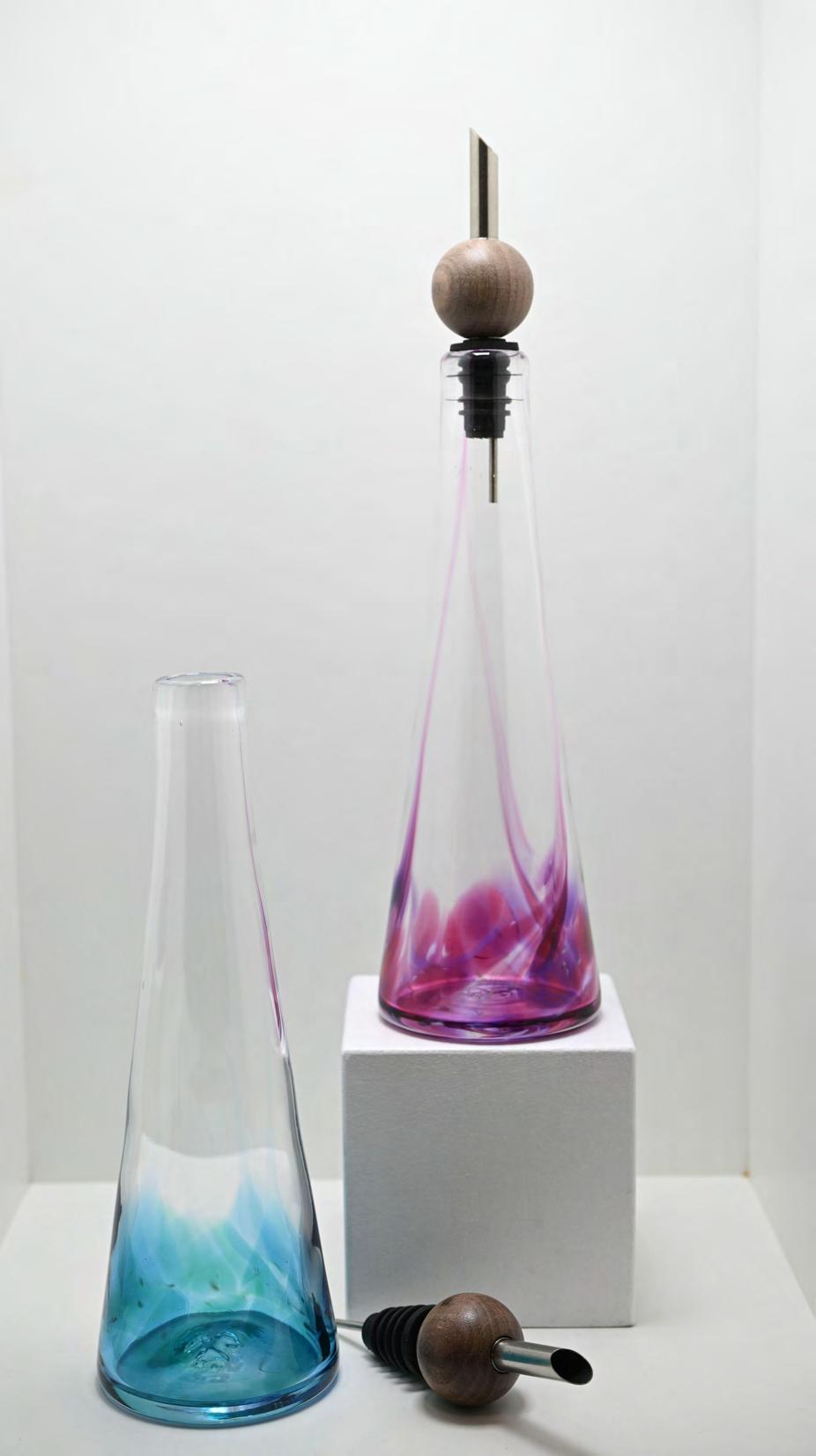
Oil/salad dressing bottle from Jerpoint Glass on display at the Showcase 50 ‘Edit’
PAGE 24
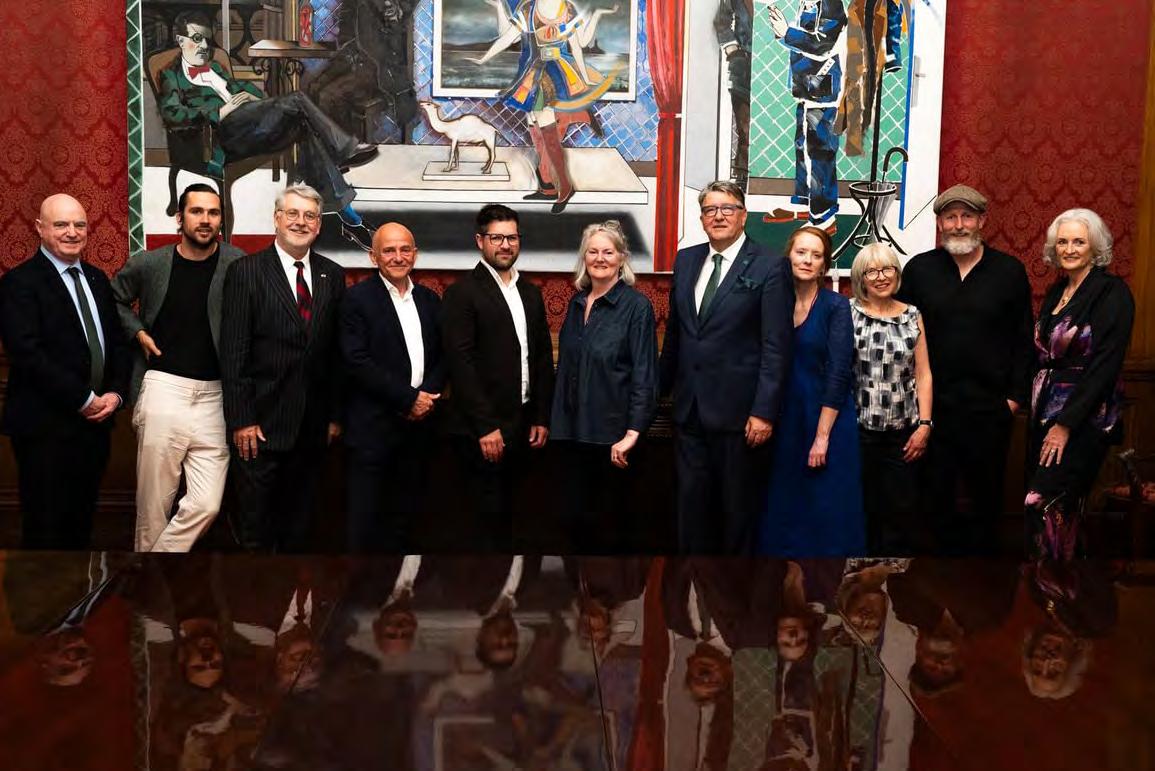
Pictured at a reception for Révélations in the Irish embassy in Paris are (L to R): Peter Hynes, Chair, DCCI; designer maker Michael Murphy; Niall Burgess, Ambassador of Ireland to France; Monsieur Stéphane Galerneau, President of Ateliers d’Art de France; designer maker Alan Meredith; designer maker Helen O’Shea; Patrick Torrekens, Head of Enterprise Ireland, France; designer maker Jennifer Hickey; designer maker Cecilia Moore; designer maker Noel Donnellan; Mary Blanchfield, CEO, DCCI
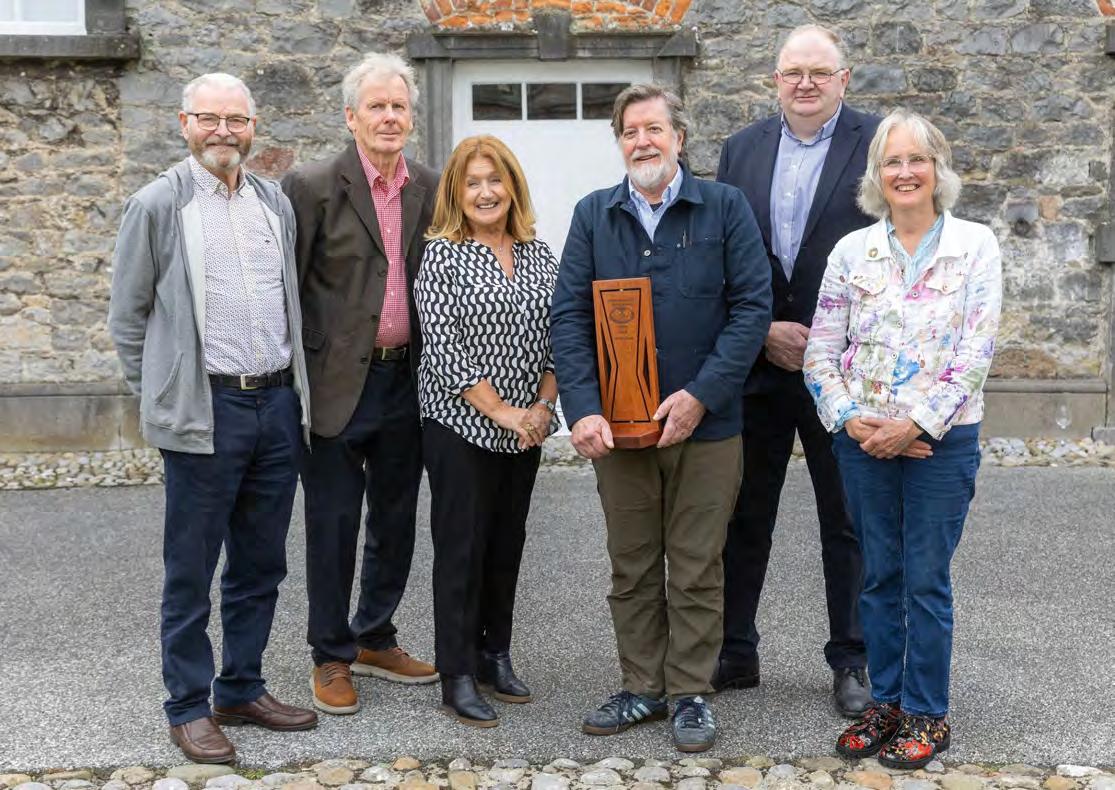
Winner of David Shaw-Smith Legacy Award Scott Benefield with fellow finalists Ann McBride, Gerardine Wisdom, Emmet Kane, Marcus O’Mahony and Liam O’Neill
PAGE 25
Byrne,
Irish Grown
PAGE 26
Bord
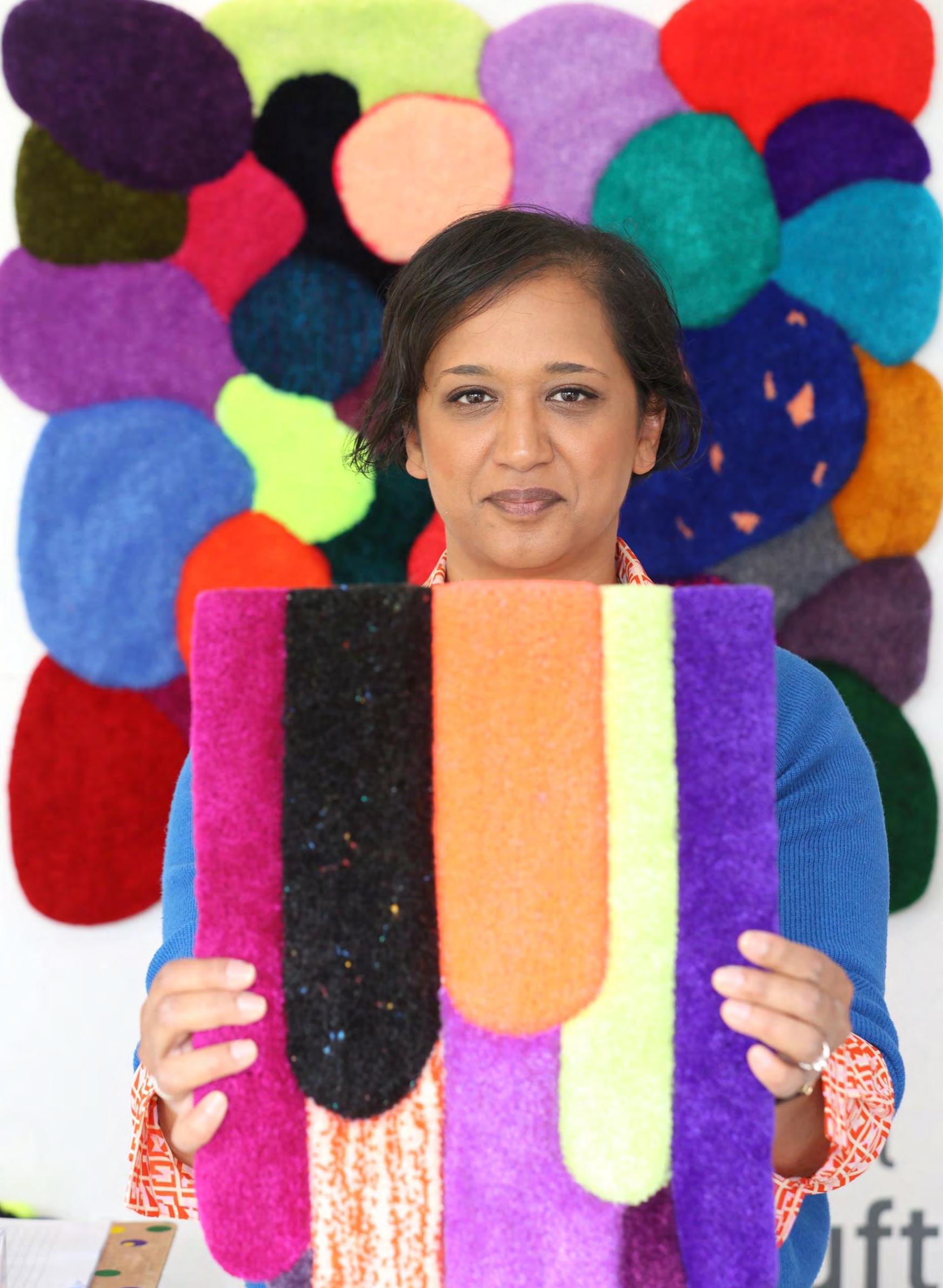
Colm Kenny, Ceadogán Rug Makers at the launch of the Design Ireland pop-up at Arnotts 2025
Nessa Doran O’Reilly, The Rediscovery Centre, winner in the Small Business Category at the Irish Business Design Challenge Awards (IBDC) 2025
PAGE 27
A model at the launch of the Design Ireland pop-up at Arnotts 2025, the model is holding an umbrella by Clare OConnor
Banjo Beale, Australian designer, author and TV presenter, with Anna Sutcliffe, founder of design studio House of Achill at Irish Design Week 2025 in the Royal Irish Academy of Music
Highlights Key moments of 2025
Paola di Legge pictured with her piece at Collect 2025 in Somerset House, London
Alison
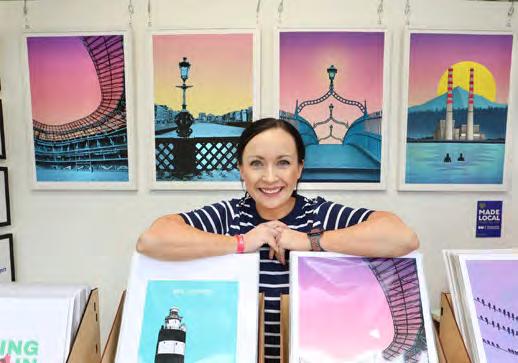
Wildbird Studio, pictured at the Made Local winter campaign launch 2025
Wool Council demonstration at
Bia Bloom 2025
c.77,300
employed in the design and craft sector in 2025
€18.8bn
total turnover for design & craft sector in 2025. An increase of 53.1% since 2020
DCCI programmes delivered
OPPOSITE PAGE
Earrings from A Little Idea on display at the Showcase 50 ‘Edit’
PAGE 30
Pictured at Gifted, a model wears work by Jennifer Rothwell
Cementique work on display at the Showcase 50 ‘Edit’
PAGE 31
Pictured at the launch of August Craft Month 2025, members of Meath Made
Skellig Giftstore at Showcase 50
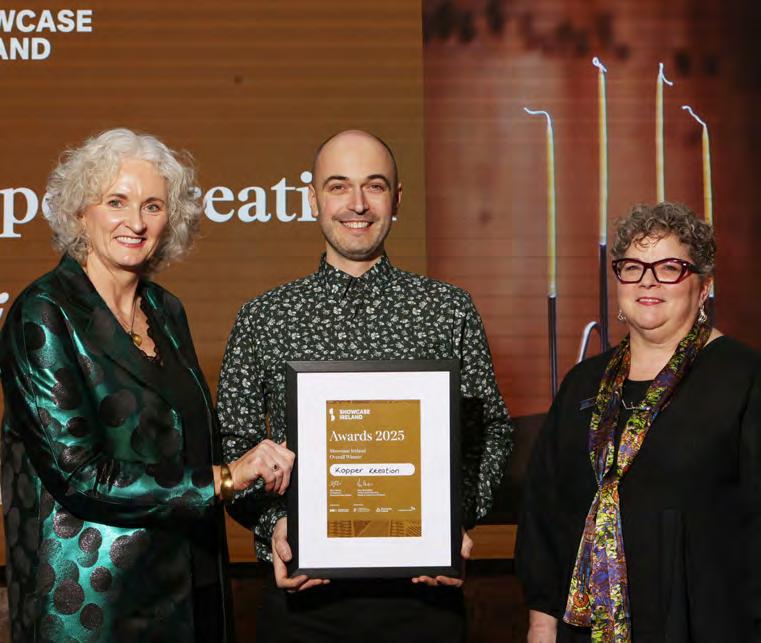
Winner of the Overall Showcase Award, Emmet Bosonnet of Kopper Kreation with Mary Blanchfield, CEO, DCCI and Mary Palmer, Chair, Showcase
PAGE 32
Winner of David Shaw-Smith Legacy Award, Scott Benefield
PAGE 33
Model wearing Megan Nolan Walsh (MNW) Design at the launch of Showcase in the Mansion House Dublin for Showcase 50
Sam from sam agus nessa at Bord Bia Bloom 2025
PAGE 34
Vessels from EDP Creative on display at the Showcase 50 ‘Edit’
Helen O’Connell & Finn Conlon posing with their work, ‘The Stone Sculpture’ for the Young Craft Booster Programme at D15 Studios, New Dunsink Lane, Finglas, Dublin
Designer maker Martin Ryan at Collect 2025 in Somerset House London
PAGE 35
Designer maker Michael Healey at Collect 2025 in Somerset House London
Pictured is a model at the launch of the Design Ireland pop-up store at Arnotts in March 2025, model Georgia is wearing: dress by Helen McAlinden; necklace by Sandia Dublin; earrings by Sandia Dublin; bracelet by Shock of Grey and is holding a vase by Keith Sheppard Glass
Pillar 1 Building capability & capacity
Pictured at the launch of Collect 2025 is Emma Dowling, Head of Commercial, DCCI with Edywn James Hickey, Maria Atanackovic and Alison Nea
31.3%
increase in employment in design and craft sector between 2020 and 2024
€82.65m
domestic sales for top 150 DCCI clients
22,200 operational design and craft enterprises
133.5m media reach
39% of client sales in 2025 were exports €23.26m international sales achieved 76%
DCCI clients have an online presence (79% previous year)
€32.2m
value of sales generated at Showcase 2025
2,443
Design Ireland social network referrals +534% growth from 385 (2024)
357 events across 27 counties for August Craft Month
4
Two master artisans and two fellows representing Ireland involved in Homo Faber Fellowship 14
DCCI members at Collect International fair
OPPOSITE PAGE
Pictured work by (L to R) Eilis Watson and Moya Gerathy at the Common Threads exhibition in the National Design & Craft Gallery
PAGE 38
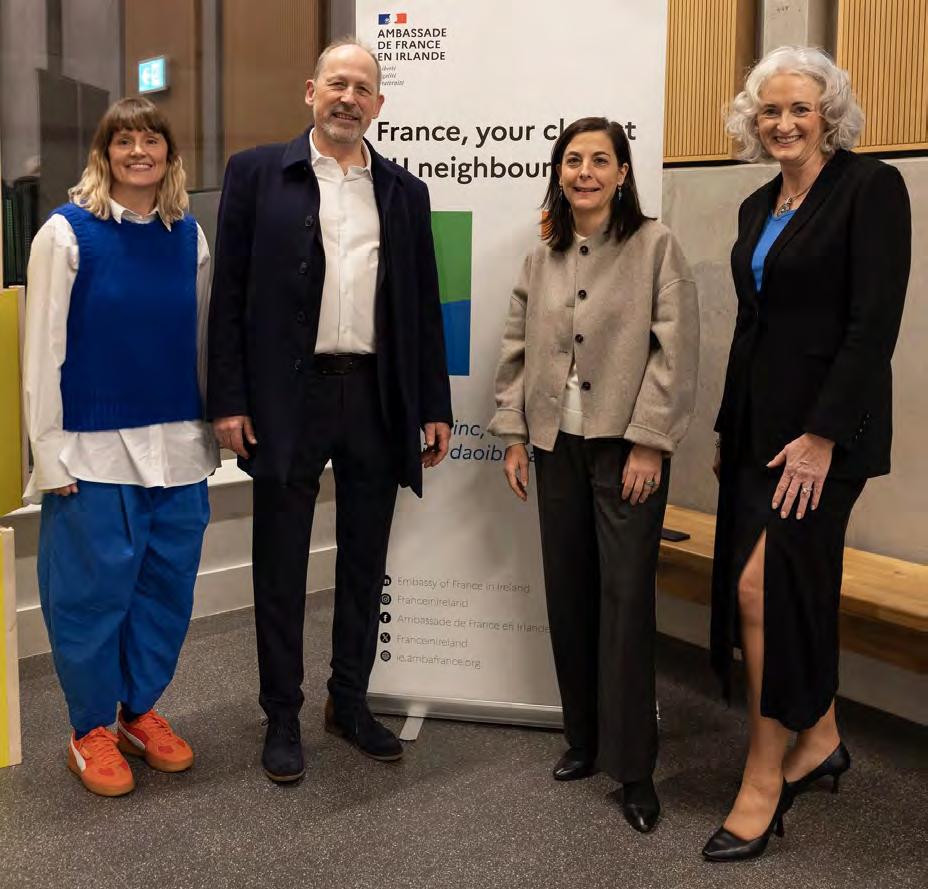
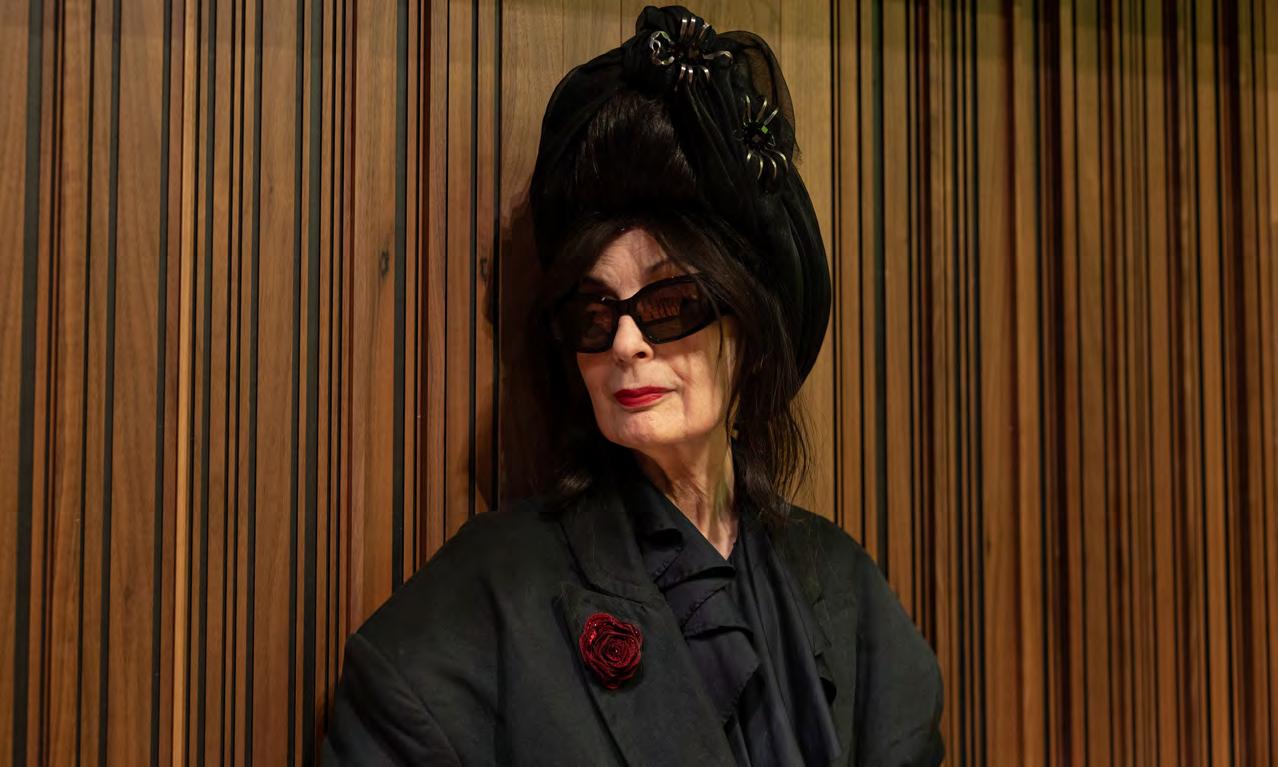
Irish Design Week design diplomacy speakers with French ambassador to Ireland. Pictured from left to right: Noelle Cooper, Co-Founder & Creative Director, Unthink; Laurent Ungerer, Founder, C-Album; Céline Place, French Ambassador to Ireland and Mary Blanchfield, CEO, DCCI.American designer Diane Pernet at Irish Design Week 2025 PAGE 39
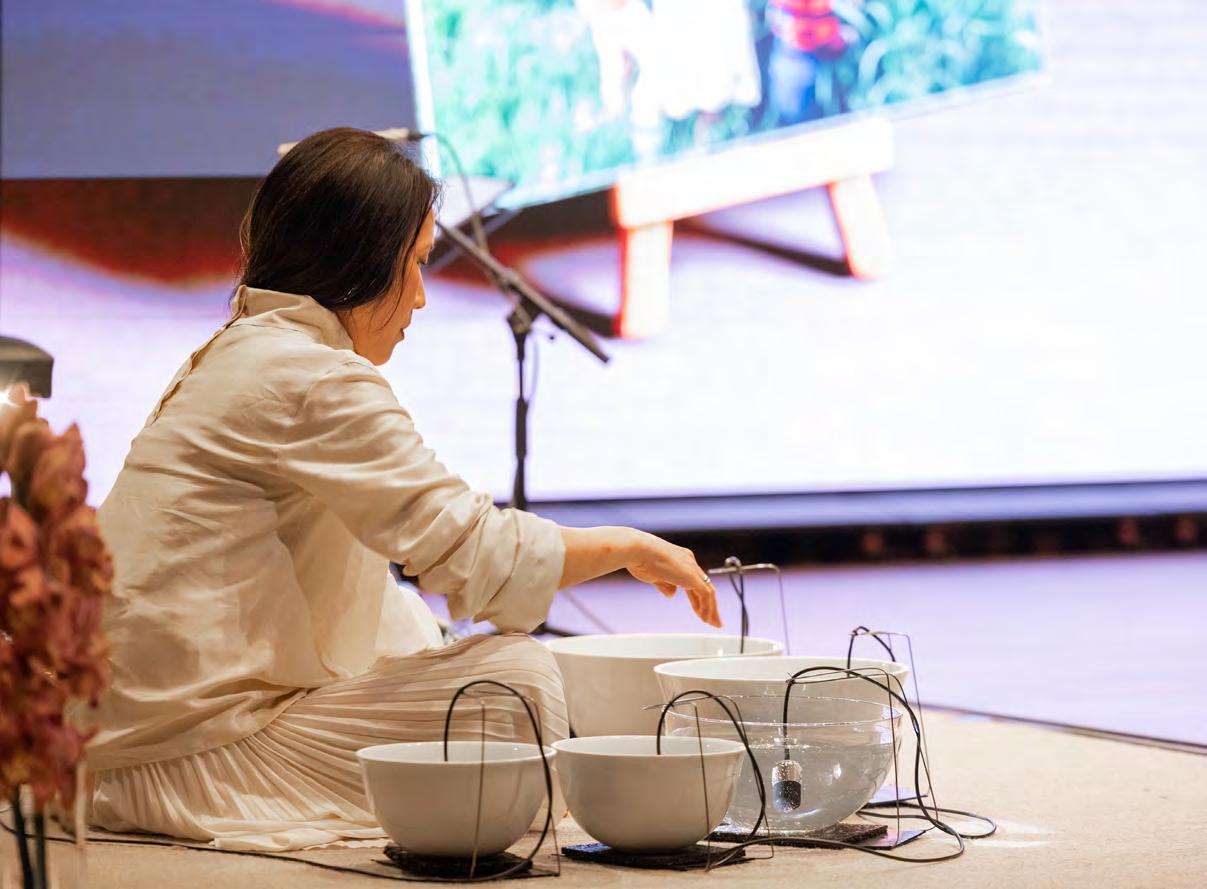
Performer Tomoko Sauvage at Irish Design Week 2025
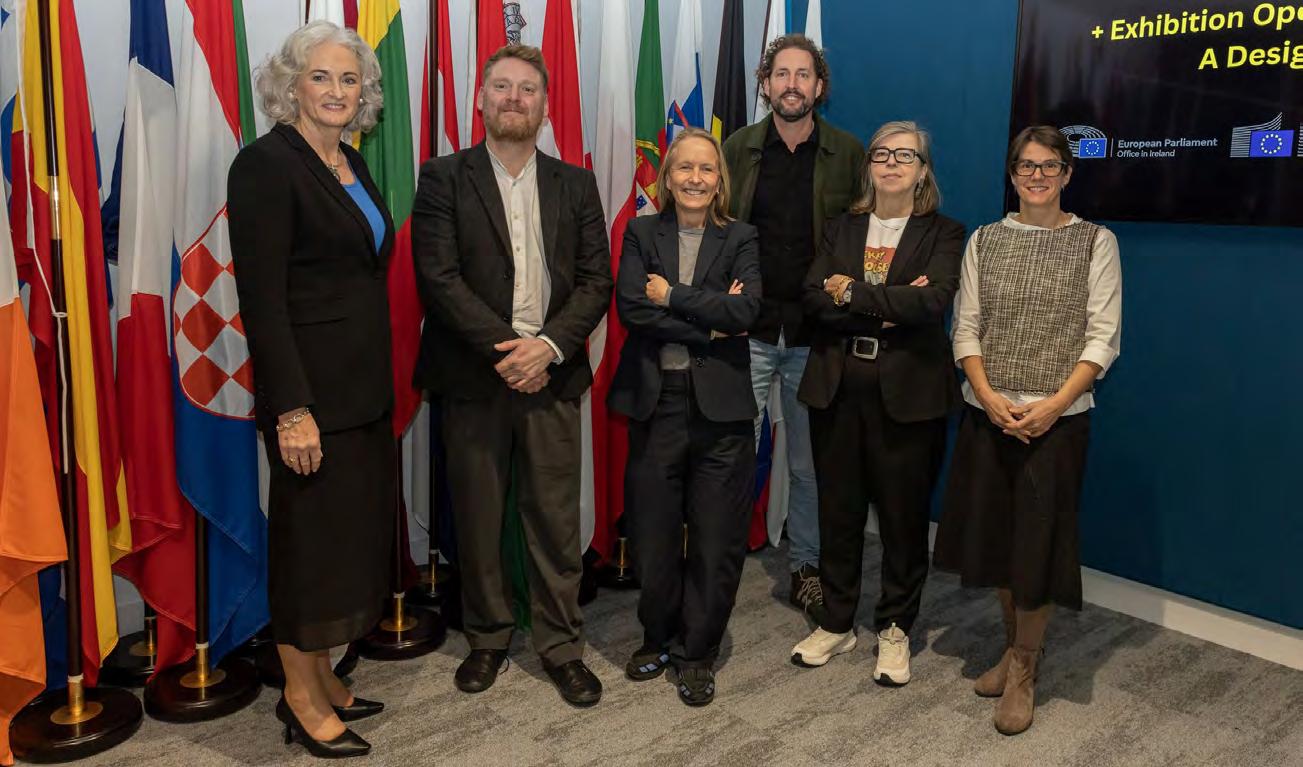
Pictured (L - R): Mary Blanchfield, CEO, DCCI; Trevor Vaugh, Public Sector Design Lead at the Department of Public Expenditure, Infrastructure, Public Service Reform and Digitalisation; Christina Melander, President, BEDA and Chief Design Officer, Danish Design Centre; Gijs Gootjes, Director, EIT Culture & Creativity North West Europe; Regina Hanke, Secretary, BEDA and Professor of Communication Design, Macromedia University of Applied Sciences; Sabine Junginger, Professor of Design, Northumbria University
is designer Orla Kiely at the opening of her
A
Pattern,
Pillar 2 Championing Design across Ireland
PAGE 40
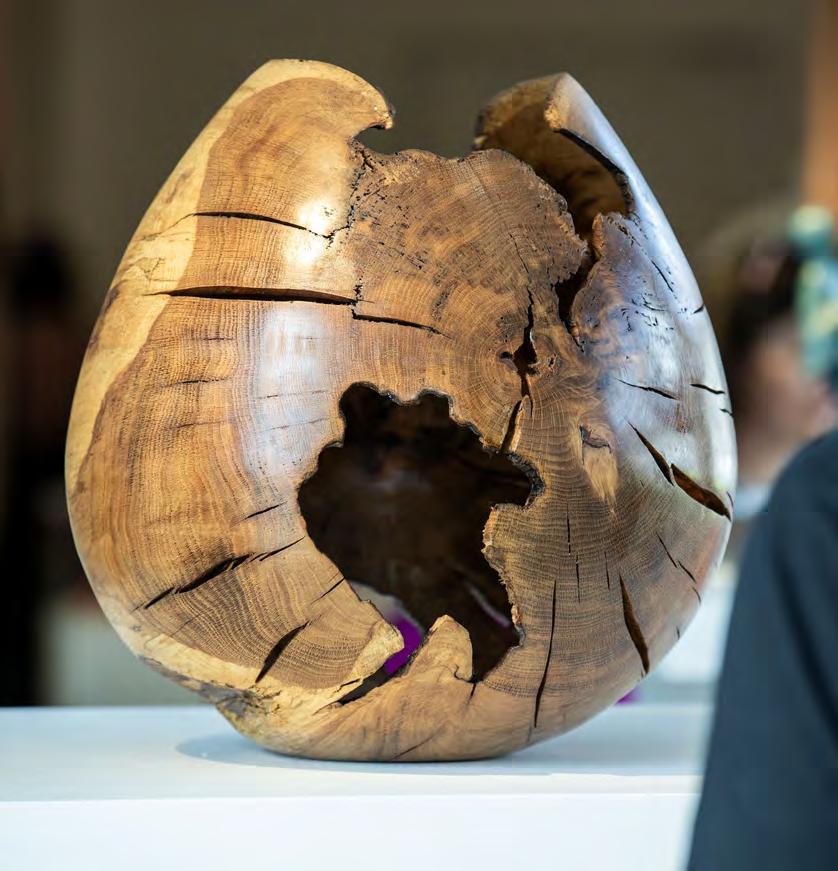
Pictured work ‘Oak Hollow Form with Natural Edge’ by Kieran Higgins at the Cork Craft & Design exhibition Past, Present – Future, Perfect in the National Design & Craft Gallery
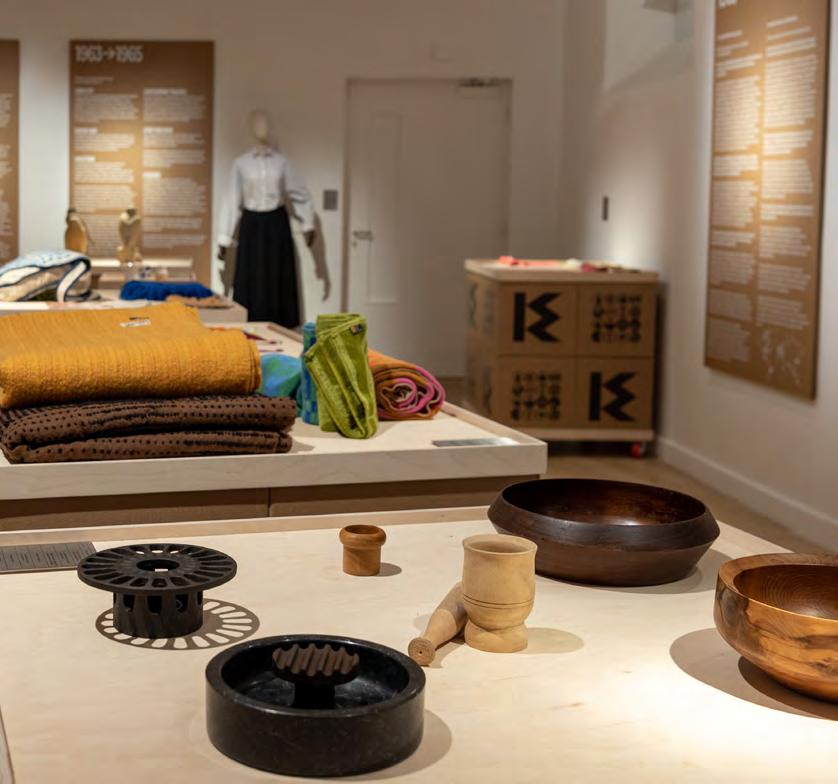
The Ties that Tie and the Links that Link exhibition at the National Design & Craft Gallery launched at the start of Irish Design Week 2025
PAGE 41
Pictured Deirdre Crofts at the opening of the Common Threads exhibition in the National Design & Craft Gallery
Pictured
exhibition,
Life in
at the National Design & Craft Gallery
€6.6bn
Gross Value Added (GVA) generated 78 events during Irish Design Week
20,458
Irish Design Week footfall
36,536 visits to DCCI Gallery
A Life in Pattern
The Ties that Tie and the Links that Link exhibition
Cork Craft & Design exhibition
Orla Kiely exhibition
Common Threads exhibition
OPPOSITE PAGE
Model at the launch of Made Local summer 2025, wearing designs by Made Local members: head piece, Saraden Designs; earrings, Kyna Maree; top & skirt, Caroline Mitchell
PAGE 44
Winner of the Irish Design Business Challenge Micro Business category, Mary Fleming from Change Clothes
Tatiana Dobos of Dobos Ceramics during the Made Local summer campaign
PAGE 45
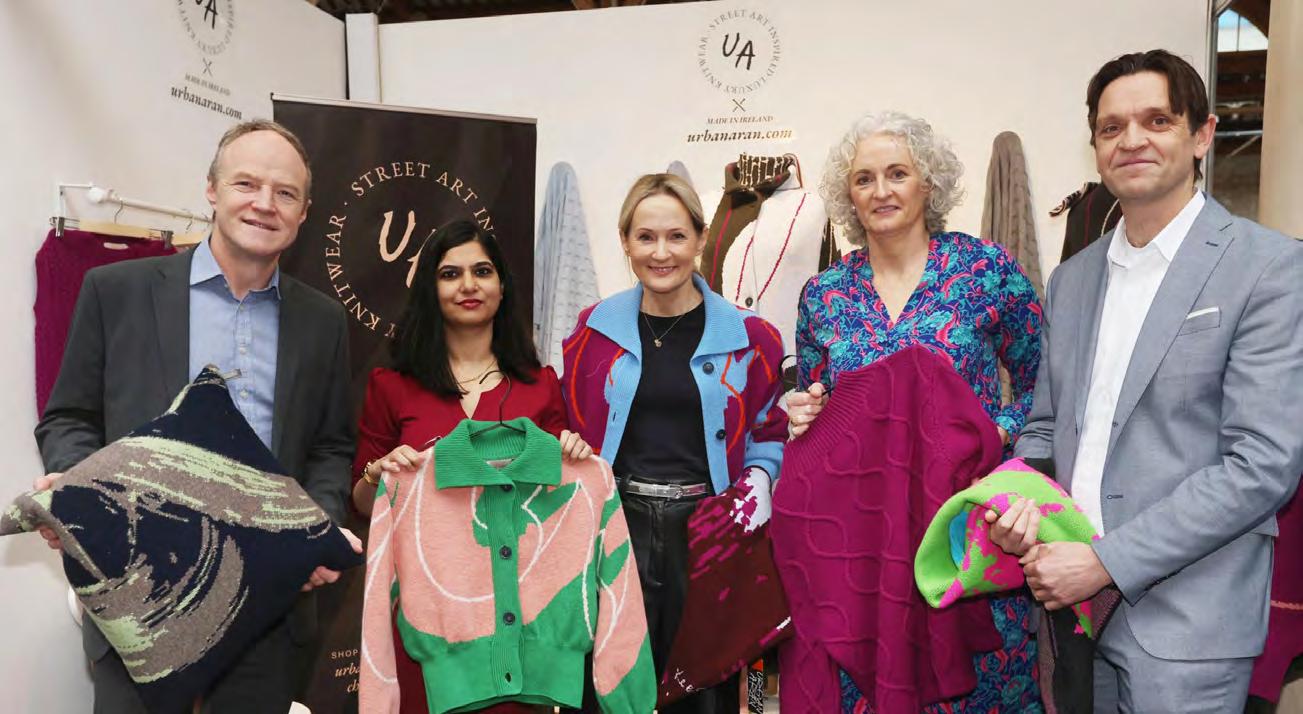
Pictured at the launch of the Trinity Accelerator programme at Showcase 2025 are: Neil Gordon, Director of Portal at Trinity Innovation & Enterprise, Trinity College; Dr. Isha Tyagi, Head of Craft & Education, DCCI; Christine Murphy, Founder & Creative Director at Urban Aran; Mary Blanchfield, CEO, DCCI and Gavan Drohan, Head of Entrepreneurship, Portal, Trinity’s Ideas Workspace
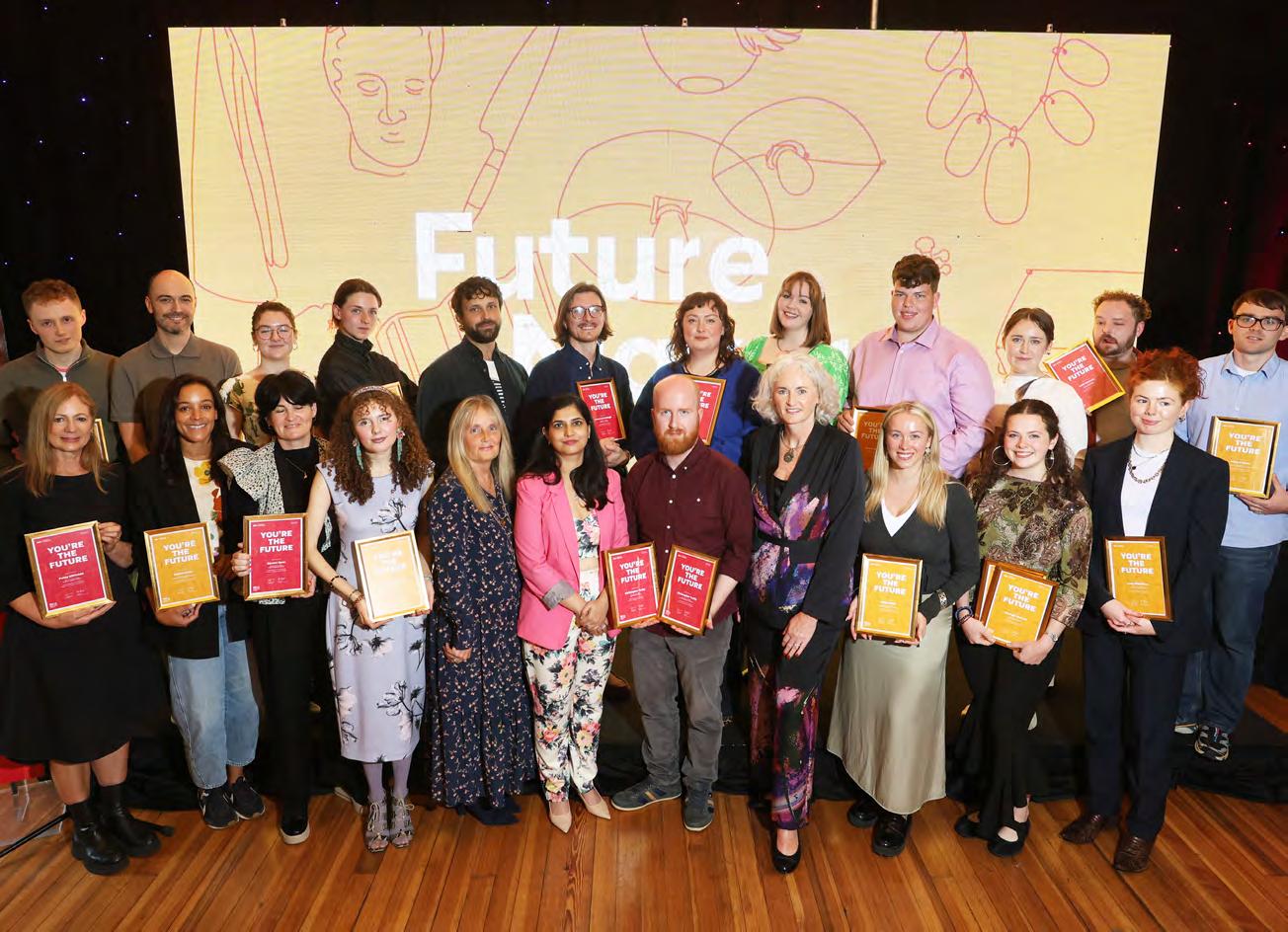
Winners of the Future Makers Awards 2026 with Imelda Connolly, Interim Chair, DCCI; Dr. Isha Tygai, Head of Craft & Education, DCCI and Mary Blanchfield, CEO, DCCI
PAGE 46
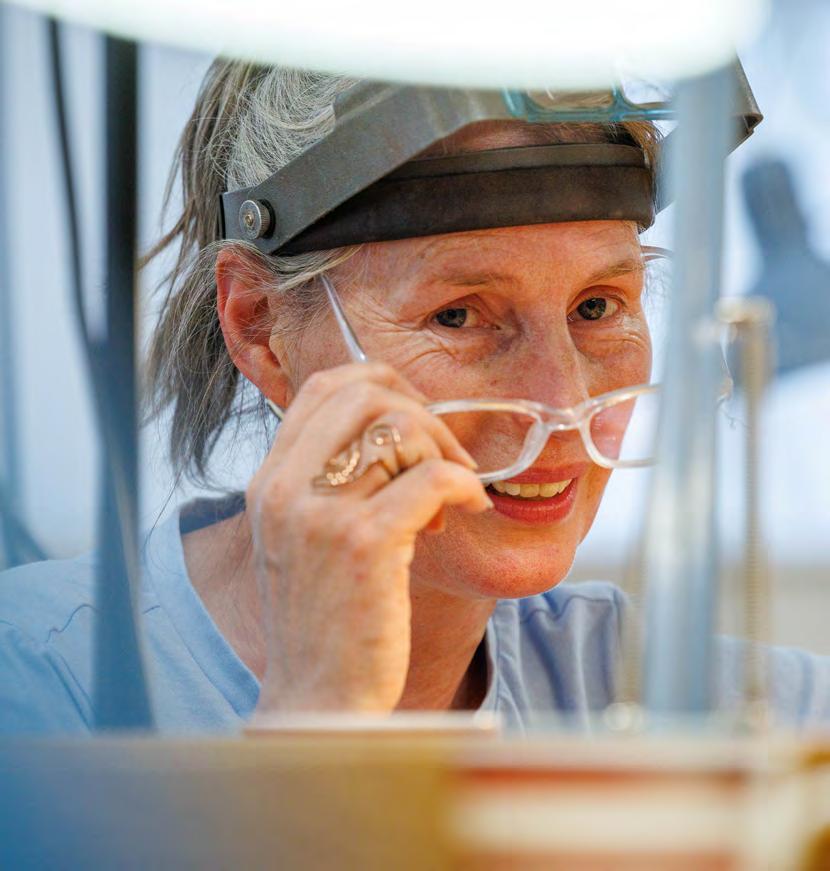
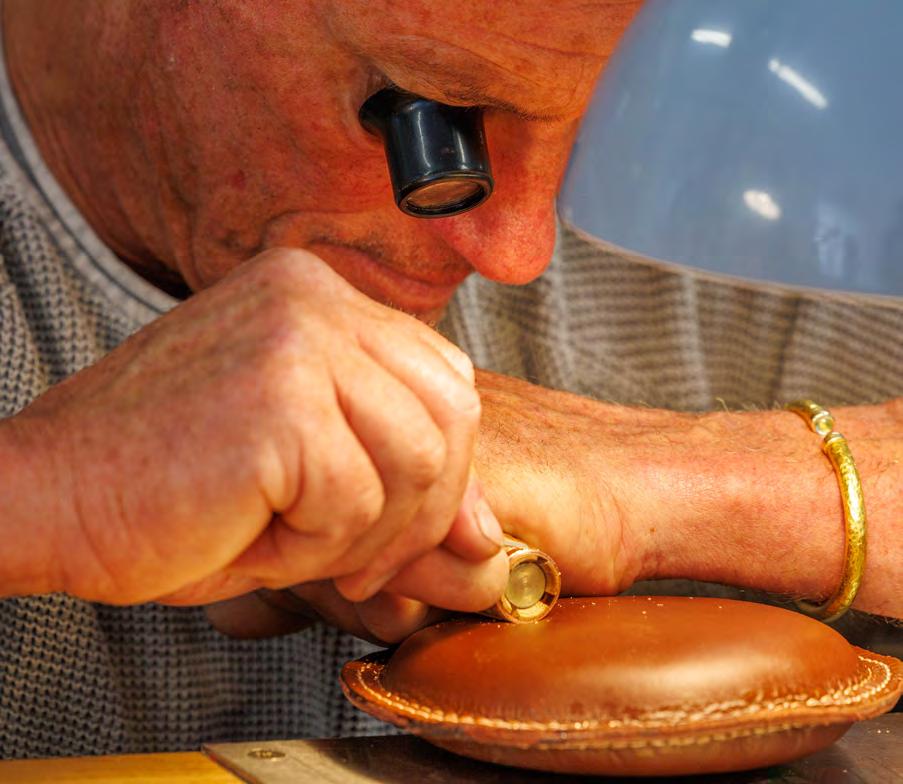
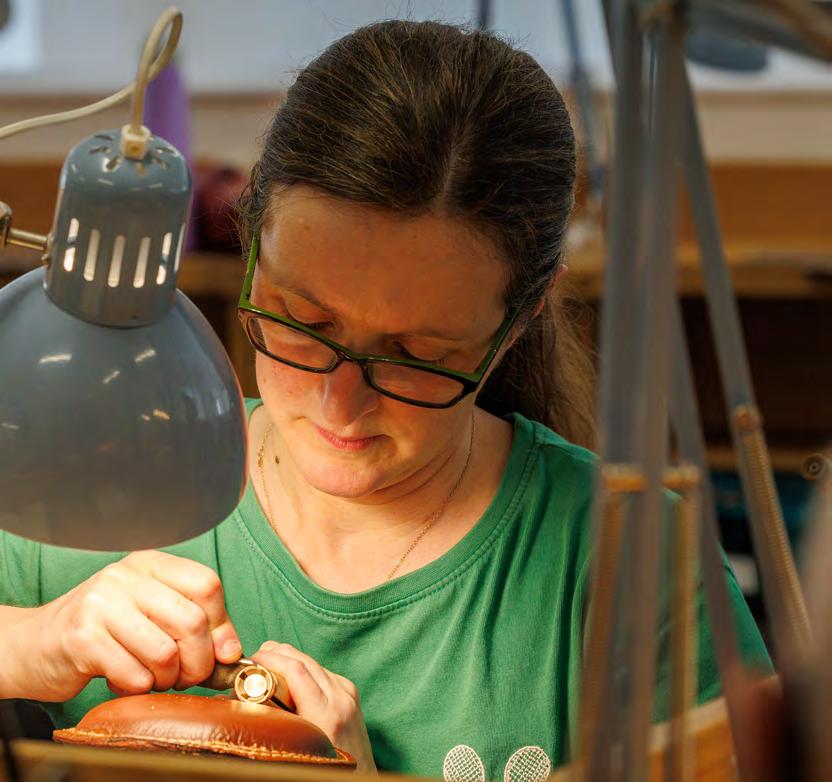
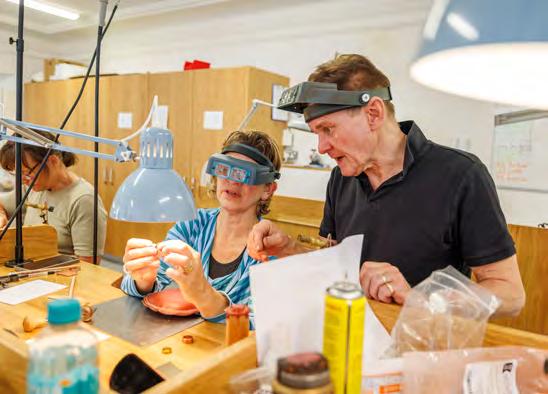
A participant in the DCCI Academy summer course, Traditional Hand Engraving for Jewellery, which took place at Sessions House Thomastown Kilkenny on 21st and 22nd June 2025
A participant in the DCCI Academy summer course, Traditional Hand Engraving for Jewellery, which took place at Sessions House Thomastown Kilkenny on 21st and 22nd June 2025
PAGE 47
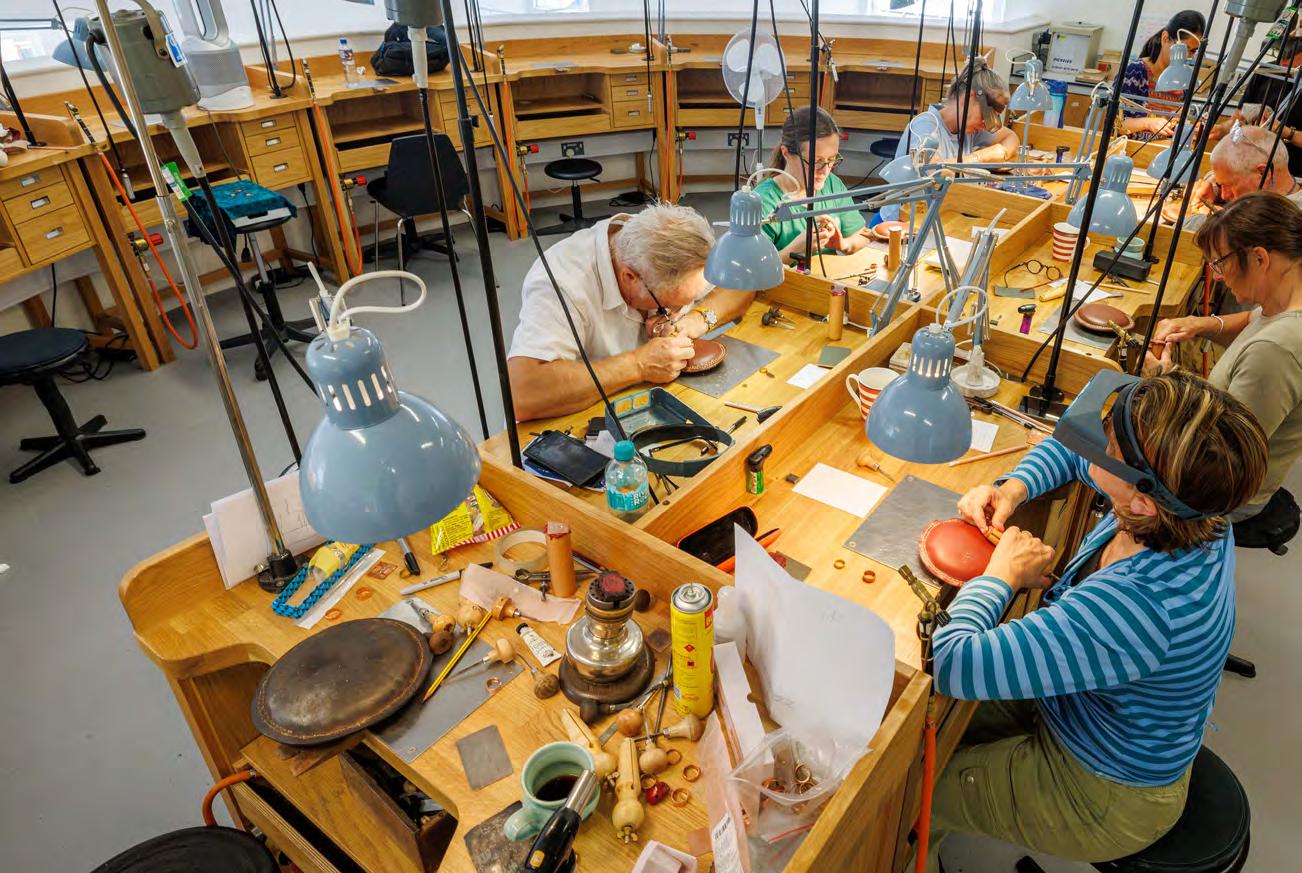
A group working in the DCCI Academy summer course, Traditional Hand Engraving for Jewellery, which took place at Sessions House Thomastown Kilkenny on 21st and 22nd June 2025
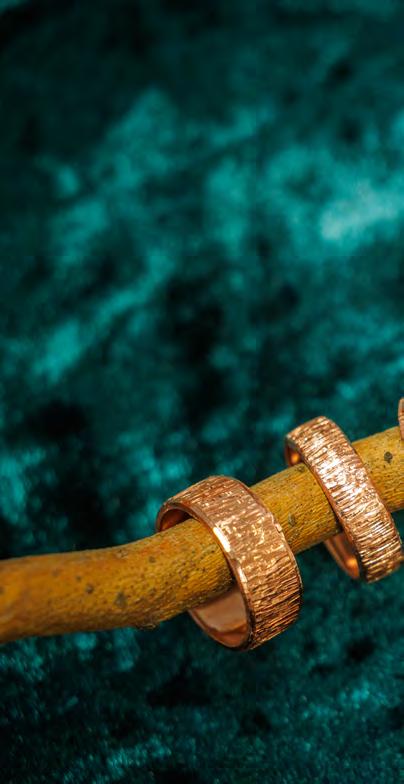
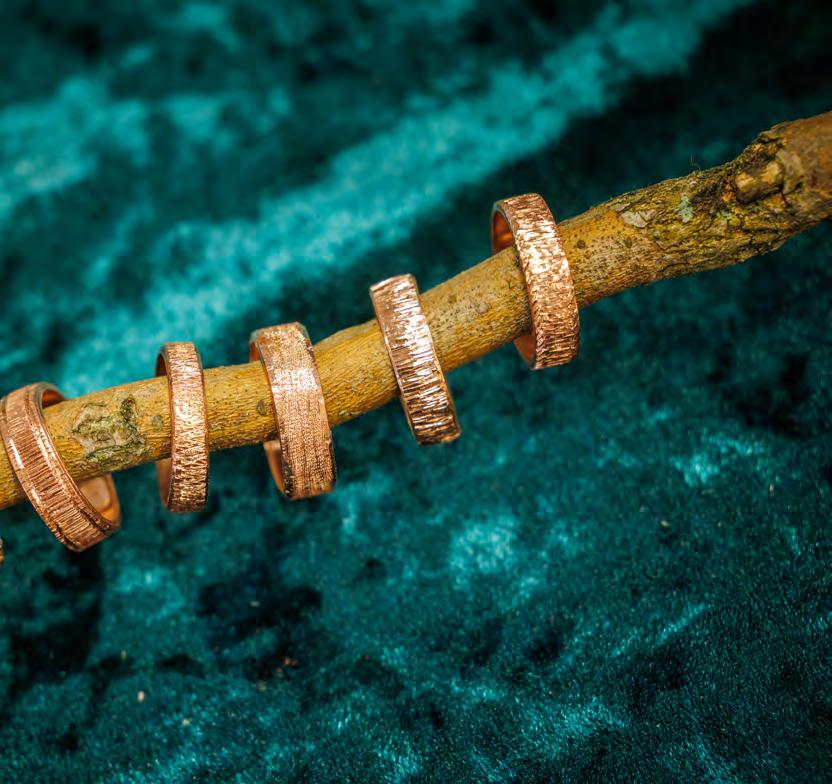
Rings made in the DCCI Academy summer course, Traditional Hand Engraving for Jewellery, which took place at Sessions House Thomastown Kilkenny on 21st and 22nd June 2025
Pillar 3 Leading & Demonstrating Sustainability
71% of clients surveyed have already implemented sustainability measures 62% of clients cite craft and design as primary income source 35% of clients have part-time craft & design businesses
€95.5k average revenue generated for businesses per full-time employee
1,831 participants in DCCI Made Local campaign (1,478 clients + 353 retailers)
26 awards given to 22 winners of Future Makers Awards in 2025
Jewellery Courses
Traditional Hand Engraving for Jewellery (21–22 June)
Enamelling for Small Batch Production (23–26 July)
Flush and Star Setting Workshop (20–21 August)
Bezel Set Gemstone Ring Workshop (16–17 August)
Courses
3 Day QQI Train the Trainer Course (03–05 April)
Growth Programme with OCO Global (Started May–December)
The Accelerator Programme 2025 (May–October)
OPPOSITE PAGE
Alan Meredith’s piece ‘Dearcán Dubh’ at Révélations in the Grand Palais Paris, France
PAGE 50
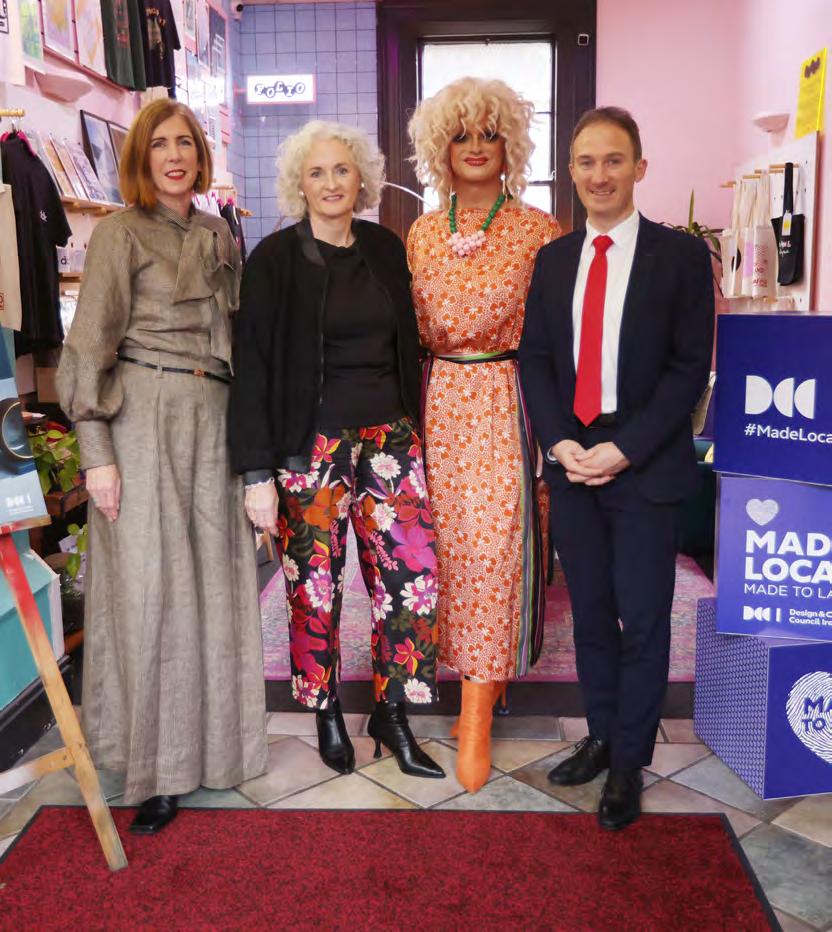
Made Local ambassador Panti Bliss with (L to R) Suzy O’Keefe, Head of Digital & Communications, DCCI; Mary Blanchfield, CEO, DCCI and Minister of State at the Department of Enterprise, Tourism and Employment Alan Dillon
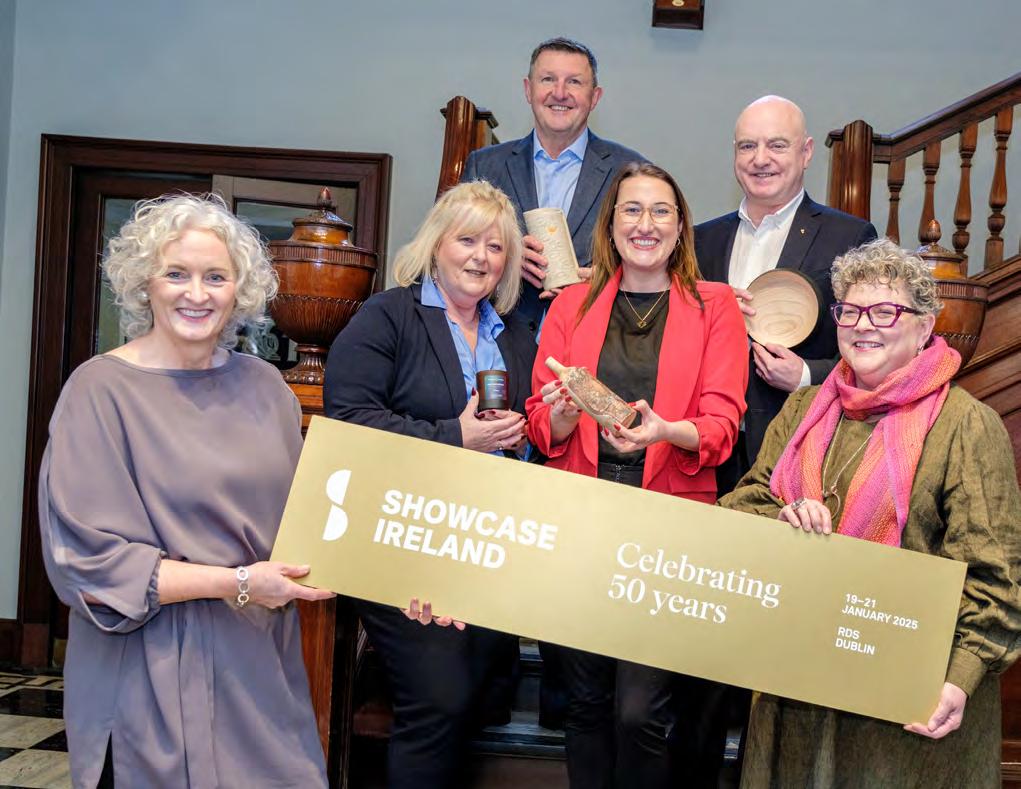
Pictured (L to R) at a photocall for Showcase 50 are; Mary Blanchfield, CEO, DCCI; Karen Conroy, Senior Development Adviser, Consumer and International Education, Enterprise Ireland; Tom Rooney, Head of Craft and Design, Local Enterprise Offices; Emer Higgins, T.D., Minister of State with responsibility for Business, Employment and Retail; Peter Hynes, Chair, DCCI; Mary Palmer, Chair, Showcase Ireland
PAGE 51
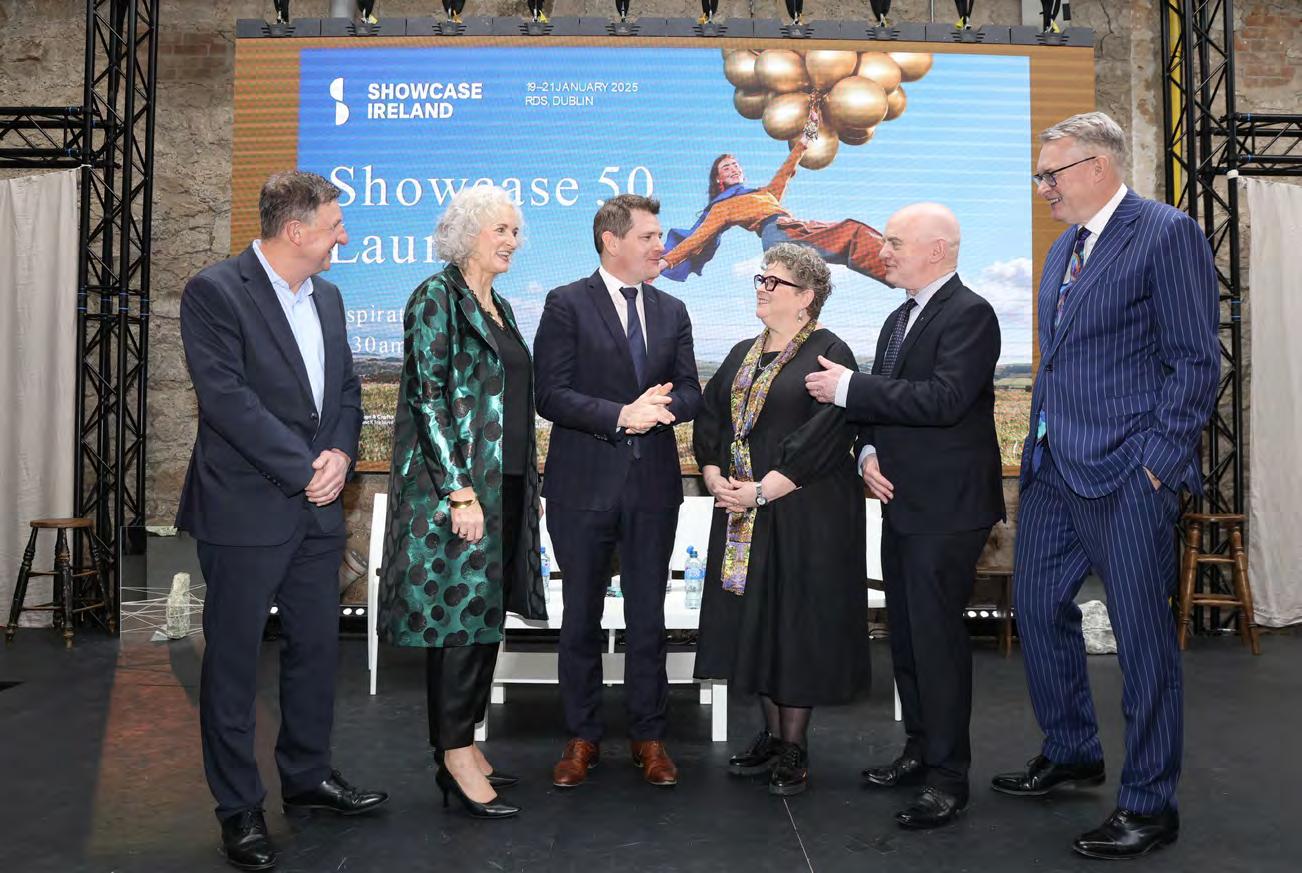
Peter Burke, Minister for Enterprise, Tourism and Employment (centre) with (L to R) Tom Rooney, Head of Design & Craft at Local Enterprise Offices; Mary Blanchfield, CEO, DCCI; Mary Palmer, Chair, Showcase; Peter Hynes, Chair, DCCI and Michael Carey, Chair of Enterprise Ireland at the launch of Showcase 50
A participant in the DCCI Academy summer course, Traditional Hand Engraving for Jewellery, which took place at Sessions House Thomastown Kilkenny on 21st and 22nd June 2025
Pillar 4 Delivering a Future Proof Council
ministerial engagements with DCCI
256,272
organic engagement with DCCI social (125,478), web (94,258 engaged sessions) and (36,536) exhibitions
22 strategic partners
16
Students in the second year of the Bachelor of Arts (Honours) in Jewellery & Goldsmithing degree course
3.0 Our Business
3.1 Our Clients
Design & Crafts Council Ireland (DCCI) works with a diverse range of craft and design businesses spread across Ireland.
These businesses not only add to Ireland’s cultural and historical richness but also help the economy grow, create jobs, and maintain important skills. They produce unique, high-quality craft in some of Ireland’s most beautiful places, which also offer visitors a unique experience.
DCCI is proud to collaborate with these designers and craftspeople to aid in the improvement of skills and promote businesses that will ensure the design and craft sector in Ireland continues to thrive for generations to come.
Breakdown of Register of Client Enterprises by county as of 31 December 2025
38 Leitrim 57 Fermanagh 16 Donegal 113
Longford 19 Offaly 47
Tyrone 24 Derry 23 Antrim 88
Armagh 15
Louth 82 Monaghan 41
Cavan 32 Westmeath 61 Laois 52 Waterford 106 Tipperary 100
Kilkenny 162
Meath 108
Kildare 140
Wicklow 195 Dublin 805
Carlow 52
Wexford 145
Down 91
Amanda Vencatasamy with her work in the DCCI Irish Craft Village during Bord Bia Bloom 2025
Key dates in the history of the Crafts Council of Ireland Limited, now trading as Design & Crafts Council Ireland.
1970
World Crafts Council hosts its general assembly in Ireland
1971
Crafts Council of Ireland (CCoI) set up in Dublin as a voluntary body under the auspices of the RDS
1976
CCoI becomes a limited company, receiving funding from the minister for industry and commerce and from the Industrial Development Authority
1977
Showcase begins as the National Crafts Trade Fair
1980
CCoI business and skills training opens in Kilworth, County Cork
1986
CCoI administration moves to Powerscourt Townhouse Centre, Dublin
1989
CCoI business and skills training moves to the former Kilkenny Design Workshops in Kilkenny city
1990
CCoI opens the ceramics skills & design course in Thomastown, County Kilkenny
1993
CCoI opens the jewellery and goldsmithing skills and design course in Kilkenny
1997
CCoI administration moves from Dublin to Castle Yard, Kilkenny
2000
CCoI opens the National Craft Gallery in Castle Yard, Kilkenny
2011
CCoI designates 2011 as Year of Craft and celebrates the sector in partnership with Craft Northern Ireland and a network of strategic partners throughout Ireland and internationally
↑ Piece by Alicja Natalicz at the August Craft Month Glass Society of Ireland event at Jerpoint Studios
Oxmantown Skincare in the DCCI Irish Craft Village during Bord Bia Bloom 2025
2013
CCoI marks the fiftieth anniversary of the founding of Kilkenny Design Workshops, and a proposal is made at the Global Irish Economic Forum to designate a year to celebrating and promoting Irish design
2014
CCoI changes its trading name to the Design & Crafts Council of Ireland (DCCoI) following the signing of a service-level agreement with Enterprise Ireland, and launches Irish Design 2015 (ID2015)
2015
DCCoI convenes the year-long governmentbacked ID2015 initiative, exploring, promoting and celebrating Irish design throughout Ireland and internationally to drive job creation, grow exports and increase competitiveness
2016
A study on the design sector commissioned as part of ID2015 results in the government publication Policy Framework for Design in Enterprise in Ireland, and DCCoI is mandated by government to work with partner organisations in leading the development of a design strategy for Ireland
2017
DCCoI publishes Ireland – the Design Island: A Consultation Paper Towards a National Design Strategy, leading to the establishment of the country’s first ministerial-led National Design Forum
2018
DCCoI collaborates with partners in advocating for the development of design infrastructure, leading to the provision of a National Design Centre as part of the National Development Plan 2018 – 27 and funding of a National Design Innovation Hub for the South-East under the Regional Enterprise Development Fund
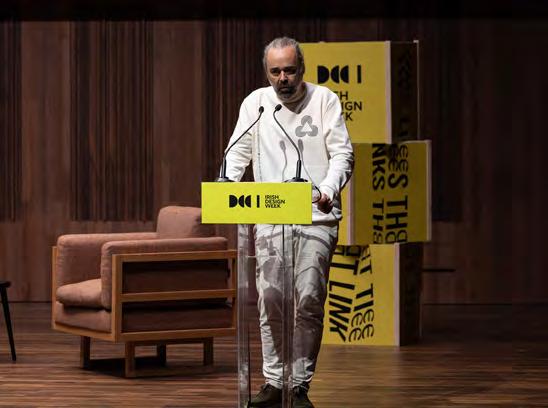
↑ Tom Watts, Head of Design, Design & Crafts Council Ireland opening Irish Design Week 2025 at the Royal Irish Academy of Music
↑ Claire Mooney pictured with her work at Collect 2025
2019
DCCoI updates its trading name to Design & Crafts Council Ireland (DCCI).
The Design Ireland shop is officially opened at Terminal 2, Dublin Airport. It is operated by The Loop, with the store-name brand under licence by DCCI
2020
DCCI began plans for the Sessions House building in Thomastown, County Kilkenny, to develop it into the first purpose-built property — jewellery and goldsmithing school — acquired in DCCI’s history
2021
DCCI marked its fiftieth anniversary through a series of events and exhibitions held in Dublin Castle in October, honouring contributors to the rich tapestry of design and craft practice in Ireland
2022
2022 marked the first year of DCCI’s fiveyear strategy 2022 – 2026. The year also saw the first iteration of all-island August Craft Month and Irish Design Week
2023
Sessions House, Thomastown was officially opened in May by Heather Humphreys TD, Minister for Social Protection and Minister for Rural and Community Development to facilitate the DCCI Academy (DCCIA) Jewellery & Goldsmithing
↑ Participants in the DCCI Academy summer course, Traditional Hand Engraving for Jewellery, which took place at Sessions House Thomastown Kilkenny
Julie McLoughlin from Jando with her work in the the DCCI Irish Craft Village during Bord Bia Bloom 2025
2024
DCCIA Jewellery & Goldsmithing opened its doors to the first cohort of (16) students of the new three-year Bachelor of Arts (Honours) in Jewellery and Goldsmithing in September 2024
2025
2025 marked the 50th year of Showcase, Ireland’s leading creative expo, in the RDS Dublin in January.
National Design & Craft Gallery welcomed Orla Kiely’s exhibition, A Life in Pattern, looking back at the one of Ireland’s most successful designers work from over the years. DCCI also hosted an ‘In conversation with Orla Kiely’ event in Kilkenny, with all proceeds supporting local cancer charity
Cois Nore
At the Révélations biennial, a leading event in art and design, Ireland was announced as Country of Honour for 2027 at the Grand Palais in Paris.
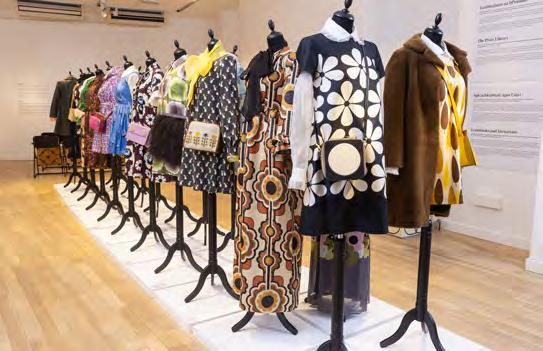
↑ Pictured are pieces from the Orla Kiely: A Life in Pattern exhibition at the National Design & Craft Gallery
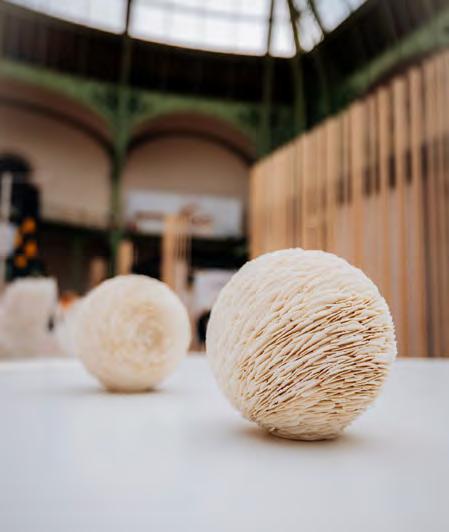
↑ Work by Jennifer Hickey on display at Révélations in the Grand Palais Paris, France
Works by Noel Donnellan on display at Révélations in the Grand Palais Paris, France
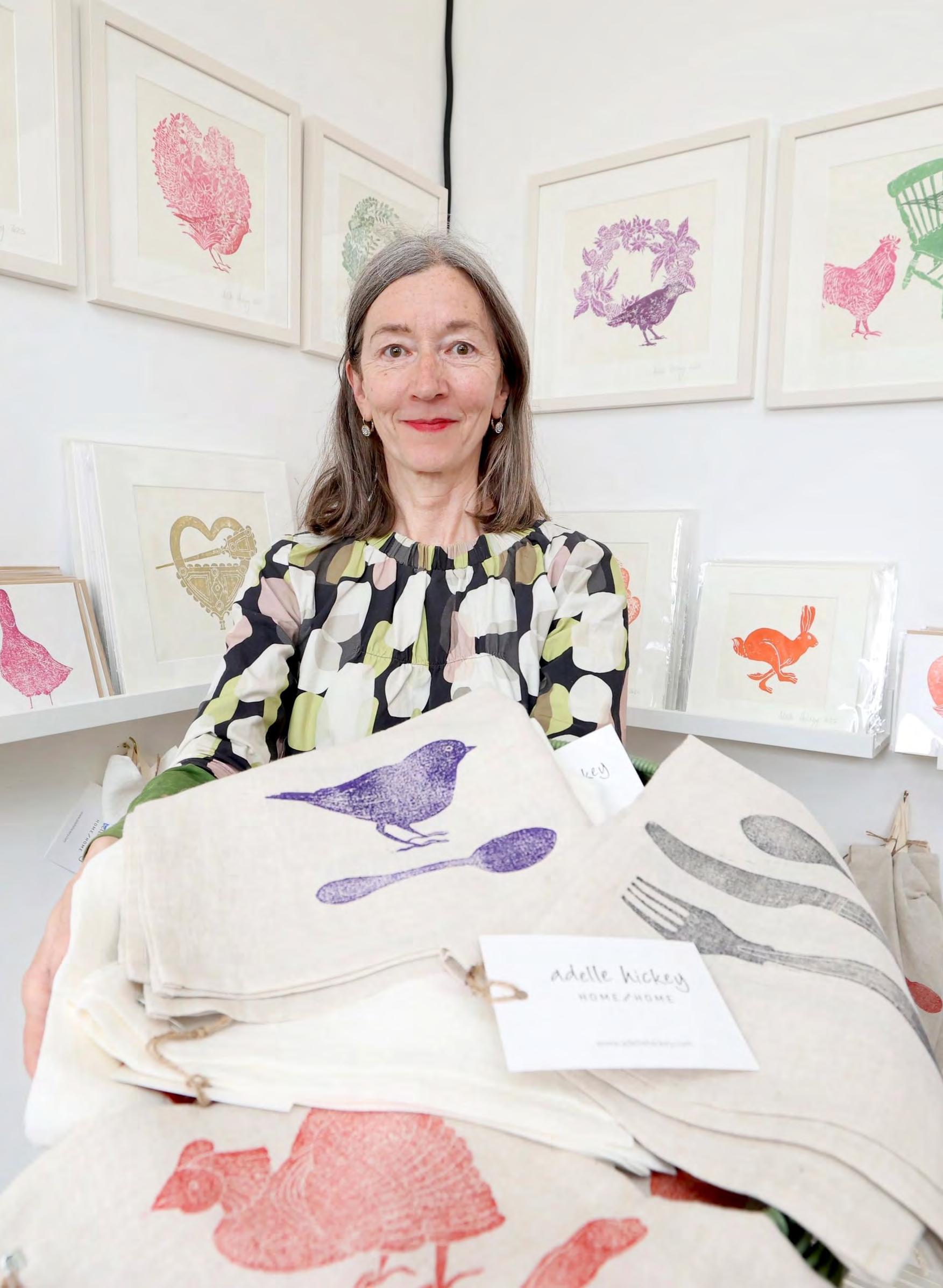
Adelle Hickey is pictured with her work in the DCCI Irish Craft Village during Bord Bia Bloom 2025
In this section, we present a summary of the involvement of member organisations, clients, partners and others in DCCI programmes and events during 2025.
Total number of design clients 20
Total prize fund for Irish Business Design Challenge
€50,000
Total number of attendees to Irish Design Week Total: 20,458 (In person: 20,260 / Online: 198)
Commercial & NDC Gallery 2025
Businesses exhibiting at Showcase
Sales value at Showcase 2025
€32.2 million
Number of makers attending Bord Bia Bloom 2025 52 plus eight GANS involved in demonstrations
Number of makers attending Gifted, The Contemporary Design & Craft Fair 131 clients (109 part of Made Local)
Visitors to National Design & Craft Gallery (NDCG) exhibitions in 2025
Designers and makers involved in the exhibitions programme 112 makers
Irish designers and makers involved in the exhibition programme 94
Exhibitions toured to other galleries 2 (Collect and Révélations 2025)
4.0 Our Governance
4.1 Corporate Governance
DCCI is a company limited by guarantee without share capital. It is governed by its memorandum and articles of association and operates under the aegis of the Minister for Enterprise, Tourism and Employment.
Our Board
The DCCI Board is responsible for the governance of the company in line with best practice and by adhering to the obligations of the company as set out in the Code of Practice for the Governance of State Bodies. DCCI is required to comply with the provisions of the code insofar as is applicable to the structure and nature of the company. Four of the twelve Board members are appointed by the Minister for Enterprise, Tourism and Employment and eight Board members are elected by DCCI’s member organisations at its annual general meeting.
There were no board vacancies at the DCCI AGM in 2025.
Imelda Connolly was appointed Interim Chair by the Minister for Enterprise, Tourism and Employment on 25th July 2025.
Our Compliance
DCCI is committed to complying with its responsibilities as a government-funded body. Our expenditure complies with the Public Spending Code, which sets out the obligations of public bodies to treat public funds with care, and to ensure that the best possible value is obtained whenever public money is being spent or invested.
We are also committed to meeting our obligations under:
The Code of Practice for the Governance of State Bodies, 2016
The Ethics in Public Office Act, 1995 and 2001
The Freedom of Information Act, 2014
The Official Languages Act, 2003
Prompt Payment of Accounts Act, 1997
The General Data Protection Regulation, 2018
Safety, Health & Welfare at Work Act, 2005
DCCI is also committed to improving energy efficiency in line with our obligations under the National Energy Efficiency Action Plan, the European Communities (Energy End-use Efficiency and Energy Services) Regulations 2009 and SI 426 of 2014.
DCCI Promotes and Values Diversity Across All Our Sectors
DCCI promotes and is dedicated to creating an environment where Equality, Diversity and Inclusion are central to how we work together. DCCI is committed to providing a high-quality service to our clients
The board is responsible for overseeing the broad strategy and policies of the organisation. It is responsible for the systems of internal financial control in the company and for ensuring that the company has processes and procedures in place to ensure that the systems are effective. It performs these functions directly and through the operation of specific Board committees in accordance with approved terms of reference. Forvis Mazars as DCCI’s Internal Auditors carried out an Internal Financial Controls audit in November 2025, the final report was presented to the Audit, Risk & Remuneration Committee of the Board.
O’Neill Foley Chartered Accountants were appointed as DCCI’s Financial Auditors in December 2025.
Forvis Mazars were appointed by DCCI in July 2025 to assist in setting their target culture and developing it in a co-creative way, to provide DCCI with a solid foundation on which to deliver their mission, vision and strategy and inform their next strategy.
There is a formal schedule of matters reserved for the decision of the Board in accordance with best practice. Responsibility for implementing policy rests with the Executive Management Team of DCCI. The Board provides the appropriate level of skill and experience to support the strategy of DCCI.
Model pictured at the Future Makers
4.2
Our Board Members
Ministerial Appointees
Peter Hynes (Chair)
Imelda Connolly (Interim Chair) from 25 July 2025
Anne Lanigan
Rhona Murphy
Caroline Reidy
Elected Representatives
Cathy Burke
Imelda Connolly
Jade Hogan
Aoife Burke
Alison Conneely
Alan Meredith
Don O’Neill
Siobhan Riordan
Board Attendance
The table below summarises the attendance of directors at Board meetings that they were eligible to attend during the year ended 31 December 2025.
7 Board meetings were held in 2025:
Director Board meetings attended/eligibility
Peter Hynes (Chair) (3/7)
Aoife Burke (7/7)
Cathy Burke (7/7)
Alison Conneely (7/7)
Imelda Connolly (7/7)
Jade Hogan (7/7)
Anne Lanigan (6/7)
Alan Meredith (7/7)
Rhona Murphy (7/7)
Don O’Neill (7/7)
Caroline Reidy (6/7)
Siobhan Riordan (7/7)
Board members also participated in a number of committees. For details, please visit section 4.5 Our Committees on page 86.
Ministerial Appointees
Peter Hynes, Chair
Peter is an Architect, he studied Architecture at University College Dublin and the University of Virginia. Peter was Head of the Architects Department of Mayo County Council where he led on the design and delivery of a range of public buildings, urban interventions and arts and community projects countywide. He was appointed Mayo County Manager in May 2010 and later Chief Executive in 2014. For a decade he worked consistenly to support Enterprise and Investment in a drive to build a county which he describes as “Sustainable, Inclusive, Prosperous and Proud”. In 2022 Peter establised his own consultancy firm providing strategic development and Community engagement.
Peter is a keen photographer and a board member of a number of not for profit organisations. He has served on the boards of institutions including Ireland West Airport and Western Development Commission and is currently a member of Council and honorary treasureer of the RIAI and an academician member of the Academy of Urbanism.
Anne Lanigan
Anne is Divisional Manager for Local Enterprise & Regions and a member of the Senior Leadership Team in Enterprise Ireland, the Irish government agency responsible for the development of Irish owned enterprise. She is currently Divisional Manager for the Local Enterprise & Regions division. Anne joined Enterprise Ireland in 2003 and has held a number of management positions, including Manager of the Tokyo office, Head of the Brexit Unit, Regional Director for Europe and most recently Divisional Manager for Technology, Services and Consumer Sectors. She is a mechanical engineer by profession and previous to joining Enterprise Ireland worked in software development, banking, medical device manufacturing and international consultancy.
Anne passionately believes in the potential of Irish enterprise and the expanded role it can and must play in Ireland’s future.
Rhona Murphy
Rhona is an experienced non-executive director who serves on the board of The Irish Times DAC and Bus Éireann. She is also the Board Chair the International Consortium of Investigative Journalists (ICIJ).
Rhona started her media career at The Times of London after graduating from Trinity College Dublin. In her executive career, Rhona worked for Dow Jones/The Wall Street Journal in New York and Singapore. She then moved to Newsweek where she became Global Publisher and CEO of the combined Newsweek and The Daily Beast in New York.
Caroline Reidy
Caroline Reidy, HR and Employment Law Specialist. Caroline is a former member of the Low Pay Commission and former adjudicator in the Workplace Relations Commission. Caroline is also an independent expert observer appointed by the European Parliament to the Board of Eurofound. Caroline is also on the Board of the Design and Craft Council Ireland and is a Governer on the Board of Munster Technology University.
She has also completed a Masters in Human Resources in the University of Limerick, she is CIPD accredited as well as being a trained mediator. Caroline is a Chartered Fellow of the CIPD, the professional body for HR and people development. Caroline completed her diploma in Company direction from the IOD with a Distinction and completed her assessment to become a Chartered Director of the IOD. Caroline had worked across various areas of HR for over 25 years in Kerry Group and in the retail and hospitality sector where she was the Operations and HR Director of the Garvey Group prior to setting up The HR Suite in 2009. She also has written 2 books, has done a TEDx and is a regular conference speaker and contributor to national media and is recognised a thought leader in the area of HR and employment law. Caroline also mentored female entrepreneurs on the
Elected Representatives
Cathy Burke
Cathy is a ceramicist based in County Wicklow. She has exhibited her work in Ireland, Europe, the UK, Korea and Japan. Her work has been purchased by public and private collectors at home and abroad.
Cathy sees education; skill development and continual practice support as crucial elements in the success of the designer maker industry in Ireland. An advocate of the diversity in craft; design and making in Ireland she wants to champion all aspects of creativity.
As a maker with experience of exhibiting on the world stage she understands the need to develop the opportunities available to makers particularly in terms of developing an international audience. Cathy is passionate about promoting Irish craft and design to maximise the reputation of Irish makers on an international stage.
Imelda Connolly
Imelda is a highly experienced and motivated Management Professional with a demonstrable track record of effective leadership and financial management of a number of companies. Results driven through the nurturing and growth of effective teams, and implementation of efficient systems and processes. Imelda is a very experienced negotiator who has effected satisfactory outcomes on behalf of her clients with Revenue Commissioners, Banks, Government Departments etc. Proven track record of generating value, driving strategic business performance, delivering performance improvement, developing, and mentoring teams and ensuring sound financial control.
Imelda has experience working on Company Boards having held Director and Secretary positions with a number of different companies and organisations. Imelda is currently chair of the Irish Woodturners Guild, having previously held the post of Treasurer for four years. She is also chair of a local development group and has worked with a number of NGO’s in the past.
Jade Hogan
Jade Hogan is the Operations Manager at Cork Craft and Design, a social enterprise and membership organisation dedicated to supporting and promoting independent craft and design makers across Cork city and county.
A graduate of University College Cork, she has a background specializing in logistics and event management. Prior to her current role, she owned and operated her own creative making business for ten years, providing her with firsthand experience regarding the operational challenges and commercial dynamics of the craft sector.
In addition to her executive role at Cork Craft and Design, Jade serves as a member of the Showcase Ireland Board.
Aoife Burke
Aoife graduated as a glass artist from NCAD in 1996 and went on to work in glass studios in London before being awarded an 18 month scholarship to study glass in Japan.
Aoife has worked in sales and marketing in a number of fields. She qualified as a bricklayer and rose to management in construction. In 2010, she opened Cake Couture, a cake decorating business in Drogheda. It had a retail shop, two classrooms, a bakery and seven staff. Aoife’s philosophy is that creativity is a skill that can bring freedom, strength and connectivity.
Working together to lift each other’s skills is a huge driver for Aoife. In 2023 she spearheaded two very successful pop-up shops for makers in Powerscourt Townhouse in Dublin. She was President of Drogheda Toastmasters in 2010 – 11 and served time on the committee of Louth Craftmark.
Alison Conneely
Alison is a designer, creative director & educator based between Dublin and the West of Ireland. She has worked in the field of design for the last two decades, interfacing with major brands as a stylist and creative director. Alison has spearheaded her own brand creating a modern design mythology rooted in the lost traditions of the past, producing cutting-edge garments embedded with subtle historic symbolism. She is highly motivated by how Irish design can link the past and the present.
Alison is ambitious for design thinking that touches aspects of shared community and politics, which has resulted in collaborations with leading contemporary artists, representing Ireland in the Venice Biennale, as well as major international organisations such as the United Nations. At the heart of this, is the process of collaboration. Past collaborators have included anthropologists, historians, composers, authors, human rights activists, doctors, silversmiths, museum directors, policymakers and master crafts artists.
Alan Meredith
Alan’s work to date straddles the boundaries of design, contemporary craft, sculpture and architecture and has been exhibited both nationally and internationally. Graduating with a Masters in Architecture from University College Dublin in September 2015, Alan currently works from his studio in County Laois, imagining and creating one of a kind and speculative pieces for both public and private clients. Completed projects include; one of a kind furniture, public space design, and a collection of sculptural wood-turned vessels.
Awards received include; The Golden Fleece Award, The Wood Awards Ireland — Furniture Category Winner. Alan’s work was exhibited at Collect, the Leading International Fair for Contemporary Craft and Design and Salon, Park Avenue Armory, NYC.
Don O’Neill
Don is passionate about craft and making. His creative specialisation is fashion design, having trained in Dublin and honed his skills at top fashion houses in London, Paris and New York. Over thirty years in New York he worked with world renowned artisans, textile artists, weavers, printers, lacemakers, embroiderers, knitters and seamstresses.
Since returning to live in Ireland, one of his primary goals is to help shine a bright light on makers in Ireland, to bring them much needed visibility and increase public awareness of their extraordinary skills. Don believes we should continue to fortify “Brand Ireland” abroad, and build upon our unique reputation for excellence in design and craft, which has enormous potential value and exponential growth opportunities in the international markets for our gifted Irish makers, as we ensure the continued preservation of our unique craft heritage.
Siobhan Riordan
Siobhan has worked in the design and craft industry for the past twenty five years. Firstly, setting up and growing Alan Ardiff Ltd, alongside Alan Ardiff, who designs and manufactures unique kinetic silver and gold jewellery. The jewellery is sold in retail outlets both nationally and internationally in addition to strong e-commerce sales. All the jewellery is manufactured in a workshop in Dublin by a team of skilled jewellers. Siobhan manages all aspects of the business; commercialising designs, brand identity, e-commerce and marketing along with staff training and development.
Siobhan has served on the RDS Craft committee and subsequently worked as a judge for the RDS Craft Awards. She works as a mentor with the Dublin City Local Enterprise Office (LEO), specialising in business development for creative enterprises. Siobhan has first-hand experience of the vital issues affecting the spectrum of design and craft enterprises in Ireland.
4.3 Our Team
Mary Blanchfield Interim Chief Executive1
Mary Blanchfield Chief Executive 2
Marguerite Ryan Executive Assistant to CEO
Craft & Education
Isha Tyagi Head of Craft & Education
Vicki Clough Education Centre Manager3
Eimear Vize Craft Tutor
Eva Lynch Craft Tutor (part-time)4
Martina Walsh Education Administrator
Sarah Foley Education Graduate
Commercial
Emma Dowling Head of Commercial
Brian Byrne Gallery Co-ordinator
Oisín Doyle Commercial Graduate
Geraldine Gray Project Manager (part-time)5
Digital & Communications
Suzy O’Keefe Head of Digital & Communications
Victoria Daly Digital Marketing Manager
Douglas Pereira Digital Officer
Eimear Harding Communications & Public Affairs Manager
Kate O’Toole Communications & Content Specialist6
Aman Hidayathullah CRM End User Administrator7
Eoin Drew Digital & Communications Graduate
Design
Tom Watts Head of Design
Steven McNamara Design Project Manager
Orla Bogue Design Co-ordinator8
Cameron Cavaliere Design Graduate9
Operations
Mary Blanchfield Head of Operations & Company Secretary10
Morgan Lalor Head of Operations11
Seamus Murtagh Finance Manager & Data Protection Officer12
Gavin Sands Finance Manager & Data Protection Officer 13
Julie Jackman Finance Assistant
Nuala McGrath HR & Corporate Services Manager
Peter Donohoe Finance Graduate14
Aoibheann Molumby Membership & Client Manager15
Notes 1 up to 2nd June 2 from 2nd June 3 up to 5th February 4 from 3rd September 5 from 15th September 6 from 2nd July 7 from 15th September
up to 28th November
up to 20th March
up to 2nd June
from 22nd September
from 3rd June
up to 10th March
up to 12th May
We also recognise the contributions of our interns and short-term contractors who assisted the organisation during the year.
Executive Team
Mary Blanchfield, CEO
Mary Blanchfield joined DCCI in 1998 as Finance Manager and led the Operations Team as Head of Operations from 2014. She was a senior executive tasked with overseeing the day-to-day administrative and operational functions of the organisation under the areas of Corporate Governance, Finance, Human Resources, Information Technology and Facilities.
Mary worked closely with the DCCI Board as company secretary, and was responsible for overseeing the company and its directors in line with relevant legislation. She is also company secretary of Showcase Ireland (a wholly owned DCCI subsidiary company). This company was incorporated in 2020 to carry on the activity of organising and running the annual Irish Craft & Design fair and all related activities.
Mary then took on the role of Interim CEO on 30th August 2024 and was subsequently appointed CEO on 2nd June 2025.
Suzy O’Keefe, Head of Digital & Communications
Suzy joined DCCI in February 2021 as Head of Digital & Communications. A graduate with degrees from NCAD, TU Dublin and CCT, and professional experience in creative, commercial, teaching and data-analytics disciplines, Suzy has had senior strategic and management roles in a variety of industry sectors. She has led marketing and communications departments and organisational change through digital transformation. Shortly before joining DCCI, Suzy consulted to Design Skillnet, an organisation co-funded by the government, which fuelled her interest in contributing to sector development.
As a ceramist herself, Suzy has a deep affinity with the members and clients of DCCI, which adds value to her role in supporting DCCI’s growth of the Irish design and craft sector.
Tom Watts, Head of Design
Tom Watts joined Design & Crafts Council Ireland from his previous role as Head of Design at CluneTech, where he worked for 11 years. He originally joined what was then Taxback Group in 2011, as the first employee at ConnectIreland. Initially driving the successful tender process with the IDA, he then embarked on setting up and leading an in-house design agency of 12 designers providing full-stack design capability for the eight companies within the group, including Transfermate, Ireland’s first female-led tech unicorn.
Previous roles included Citi, Davy and State Street and so he is well versed in Financial Services, while also having Entrepreneurial and Design experience from two successful ventures in the Interiors and FMCG sectors. Tom has appeared on Dragons’ Den and his most recent collaboration on a Surround Sound project (with Red Bull) featured at Electric Picnic.
Tom has also been involved with Startup Ireland helping to ideate and deliver many projects including the innovative Startup Bootcamp on Spike Island, and he helped to develop the CluneTech TY programme.
Dr. Isha Tygai, Head of Craft & Education
Dr. Isha Tyagi is the Head of Craft & Education. In this role, Isha leads initiatives that support Irish makers and craftsmen, focusing on enhancing skills and knowledge within the community. With over a decade of experience in education, skill development, and instructional design, Isha brings a wealth of expertise to her current position. Throughout Isha’s career, she has developed numerous skill courses, authored books, and published research papers. Her instructional design skills are evident in the 30 Participant Handbooks she has crafted and the training of over 2000 professionals. Isha’s commitment to lifelong learning and her passion for empowering others are at the heart of her contributions to the design and crafts sector in Ireland.
Emma Dowling, Head of Commerical
Emma joined DCCI in August 2024 as Head of Commercial. A marketing and communications professional and art history graduate with a masters from University College Dublin (UCD), Emma brings her extensive marketing operations, event management and project management experience to this role. Before joining DCCI, Emma was on the Future of Work strategic change project with Irish Life and before that spent almost a decade working with Brown Thomas Arnotts in their retail operations and people functions. Emma has also studied fine art practice and spends almost all of her free time working on craft projects, so has a keen understanding of the time and skill that goes into the work of creating hand-crafted objects.
Morgan Lalor, Head of Operations
Morgan joined DCCI in September 2025 as Head of Operations. Before joining DCCI, Morgan worked as a Strategic Chief Operating Officer and former Sales Manager with extensive experience in operational leadership, financial planning, compliance, HR and commercial expansion. Proven success in navigating complex challenges, scaling operations, leading cross-functional teams, building high-preforming company cultures and aligning execution with organisational strategy. Morgan is passionate about supporting creative industries and community enterprise through operational excellence and team empowerment.
4.4 Our Member Organisations
The Crafts Council of Ireland is a Company Limited by Guarantee, trading as Design & Crafts Council Ireland. It comprises member organisations and institutions that share DCCI’s aims and objectives and are involved in the promotion of contemporary and traditional crafts and design.
The members of the company include: Subscribers to the Memorandum of Association (also known as founder members)
Unincorporated GANS that the Board admits to membership Bodies corporate that the Board admits to membership
Founding Members
DCCI had four founding members:
Patsy Duignan (RIP)
Mary V. Mullin
Blanaid Reddin (RIP)
Betty Searson (RIP)
In addition to the four founding members, as at 31 December 2025, DCCI had 67 member organisations.
Corporate Members
Crawford College of Art and Design
Creative Spark CLG
Guaranteed Irish
Na Píobairí Uilleann
National College of Art and Design
Royal Dublin Society
School of Art and Design, Technological
University Dublin
ATU St. Angela’s
University of Ulster
Other Members
Benchspace Cork
Borris Lace
Bridge Street Studios
BY DESIGN — A Local Story
Ceardlann Spiddal Craft & Design Studios
Ceramics Ireland
Clare Crafts
Contemporary Tapestry Artists
Connemara Marble Producers
Cork Craft & Design
Cork Textile Network Group
Corrib Lacemakers
Council of Irish Fashion Designers
Donegal Designer Makers
FORM DesignMade in Carlow
Feltmakers Ireland
Fibreshed Ireland
Friends of Lace Limerick
Glass Society of Ireland
Guild of Irish Lacemakers
Headford Lace Project
Institute of Designers in Ireland
Irish Artists Blacksmiths Association
Irish Basketmakers Association
Irish Ceramics
Irish Countrywomen’s Association
Irish Guild of Embroiderers
Irish Guild of Weavers, Spinners and Dyers
Irish Grown Wool Council
Irish Jewellers and Silversmiths Guild
Irish Patchwork Society
Irish Society of Performance Designers
Irish Woodturners Guild
Le Chéile / Design Kenmare
Limerick School of Art and Design
Local Enterprise Office Network
Louth Craftmark Designers Network
Made in Kilkenny
Made in Sligo
Making.ie
Mountmellick Development Association Ltd.
Mosaic Artists Association Ireland MAAI
National Print Museum
New Ross Needlecraft Ltd.
Original Kerry
Peannairí, The Association of Irish Calligraphers
Society of Cork Potters
The Big Idea House
The Design Tower
The Leitrim Design House
The Quilters Guild Of Ireland
Traditional Lacemakers Of Ireland
West Cork Craft & Design Guild
Wicklow Craft Foundation
Donegal Tweed Weavers Association
Dublin Fashion Week
Meath Made
The Guild of Irish Islands/Cuallacht
Oileáin na hÉirinn
4.5 Our Committees
Note: Figures in brackets below indicate the attendance of Directors at Committee meetings for which they were eligible to attend during the year ended 31 December 2025. Each Committee reports to the Board at each meeting.
Audit, Risk & Remuneration Committee
The role of the Audit, Risk & Remuneration Committee is to support the Board in relation to its responsibilities, including audit, financial planning, remuneration, board evaluations, governance codes of conduct and risk appraisal. It ensures the internal control systems are monitored actively and independently.
Rhona Murphy, Committee Chair (4/4)
Jade Hogan (4/4)
Alan Meredith (4/4)
Imelda Connolly (4/4)
Nominations Committee
The role of the Nominations Committee is to regularly review the structure, size and composition (including the balance of skills, experience, independence, knowledge and diversity, including gender) of the Board and make recommendations to the Board with regard to any changes.
Peter Hynes, Committee Chair (2/2)
Aoife Burke (2/2)
Cathy Burke (2/2)
Siobhan Riordan (2/2)
Caroline Reidy (1/1)
Strategy Committee
The role of the Strategy Committee is to support the Board in fulfilling its obligations in relation to good Board governance, including the implementaiton of an appropriate strategic planning process and ensuring that annual business plans are informed by and reflect the strategic objectives approved by the Board.
Don O’Neill, Committee Chair (4/4)
Alison Conneely (4/4)
Anne Lanigan (4/4)
Aoife Burke (4/4)
Subsidiary Company
Showcase Design & Crafts Fair CLG
Mary Palmer, Chair
Mary Blanchfield, Company Secretary
Jade Hogan
Peter Hynes
Pictured work by Helen O’Shea at Révélations in the Grand Palais Paris, France
5.0 Financial Statements & Directors’ Report
Image: ‘Winter series’ by Jennifer Ahearn.
Company Information
Directors
Jade Hogan
Caroline Reidy
Imelda Connolly (Interim Chair)
Donal O’Neill
Rhona Murphy
Cathy Burke
Company Secretary
Marian O’Sullivan
Registered number 56542
Independent Auditors
O‘Neill Foley
Unlimited Company
The Brewhouse, Abbey Quarter, Kilkenny
Bankers
AIB, 52 Baggot Street
Dublin 4
Co Dublin
Ireland
Solicitors
Beauchamps
Riverside Two
Sir Rogerson’s Quay
Dublin 2
Alan Meredith
Anne Lanigan
Siobhan Riordan
Peter Hynes
Alison Conneely
Aoife Collins
Registered Office
Castle Yard, Kilkenny, R95 CAA6
Directors’ Report
For the year ended 31 December 2025
The Directors present their annual report and the audited financial statements for the year ended 31 December 2025.
Principal Activity and Review of the Business
The Crafts Council of Ireland Company Limited by Guarantee (trading as Design and Crafts Council of Ireland), which is headquartered in Kilkenny, is the national agency for the commercial development of Irish designers and makers, stimulating innovation, championing design thinking and informing Government policy. The Crafts Council of Ireland Company Limited by Guarantee activities are funded by the Department of Enterprise, Trade and Employment via Enterprise Ireland.
The Company is limited by guarantee not having a share capital.
There has been no significant change in these activities during the financial year ended 31 December 2025.
Financial Results
The deficit for the financial year after providing for depreciation amounted to €(25,143) (2024 – €(49,619)).
At the end of the financial year, the company has assets of €2,674,117 (2024 - €1,084,452) and liabilities of €2,399,885 (2024 – €931,329). The net assets of the company have increased by €121,109.
Directors’ Report
For the year ended 31 December 2025
Directors and Secretary
The directors who served throughout the financial year were as follows:
Jade Hogan
Caroline Reidy
Imelda Connolly (Interim Chair)
Donal O’Neill
Rhona Murphy
Cathy Burke
Alan Meredith
Anne Lanigan
Siobhan Riordan
Peter Hynes
Alison Conneely
Aoife Collins
The secretary who served throughout the financial year was Marian O’Sullivan.
Future Developments
The company plans to continue its present activities and current trading levels. Employees are kept as fully informed as practicable about developments within the business.
Post Balance Sheet Events
There have been no significant events affecting the company since the financial year-end.
Auditors
Crowe Ireland resigned as auditors during the financial year and the directors appointed O‘Neill Foley Unlimited Company, to fill the vacancy.
Directors’ Report
For the year ended 31 December 2025
Statement on Relevant Audit Information
In accordance with section 330 of the Companies Act 2014, so far as each of the persons who are directors at the time this report is approved are aware, there is no relevant audit information of which the statutory auditors are unaware. The directors have taken all steps that they ought to have taken to make themselves aware of any relevant audit information and they have established that the statutory auditors are aware of that information.
Accounting Records
To ensure that adequate accounting records are kept in accordance with sections 281 to 285 of the Companies Act 2014, the directors have employed appropriately qualified accounting personnel and have maintained appropriate computerised accounting systems. The accounting records are located at the company’s office at Castle Yard, Kilkenny, R95 CAA6.
Signed on behalf of the board
Jade
Hogan Director 10th June 2026
Imelda Connolly Director 10th June 2026
Directors’ Responsibilities Statement
for the financial year ended 31 December 2025
The directors are responsible for preparing the Directors’ Report and the financial statements in accordance with applicable Irish law and regulations.
Irish company law requires the directors to prepare financial statements for each financial year. Under that law, the directors have elected to prepare the financial statements in accordance with the Companies Act 2014 and FRS 102 “The Financial Reporting Standard applicable in the UK and Republic of Ireland” issued by the Financial Reporting Council. Under company law, the directors must not approve the financial statements unless they are satisfied that they give a true and fair view of the assets, liabilities and financial position of the company as at the financial year end date and of the surplus or deficit of the company for the financial year and otherwise comply with the Companies Act 2014.
In preparing these financial statements, the directors are required to: select suitable accounting policies for the company financial statements and then apply them consistently; make judgements and accounting estimates that are reasonable and prudent; state whether the financial statements have been prepared in accordance with applicable accounting standards, identify those standards, and note the effect and the reasons for any material departure from those standards; and prepare the financial statements on the going concern basis unless it is inappropriate to presume that the company will continue in business.
The directors are responsible for ensuring that the company keeps or causes to be kept adequate accounting records which correctly explain and record the transactions of the company, enable at any time the assets, liabilities, financial position and surplus or deficit of the company to be determined with reasonable accuracy, enable them to ensure that the financial statements and Directors’ Report comply with the Companies Act 2014 and enable the financial statements to be readily and properly audited. They are also responsible for safeguarding the assets of the company and hence for taking reasonable steps for the prevention and detection of fraud and other irregularities.
Disclosure of Information to Auditor
Each persons who are directors at the date of approval of this report confirms that: there is no relevant audit information (information needed by the company’s auditor in connection with preparing the auditor’s report) of which the company’s auditor is unaware, and the directors have taken all the steps that they ought to have taken to make themselves aware of any relevant audit information and to establish that the company’s auditor is aware of that information.
Signed on behalf of the board
Jade Hogan Director
10th June 2026
Imelda Connolly Director
10th June 2026
Independent Auditors’ Report & Appendix
to the Members of Crafts Council of Ireland Company Limited by Guarantee
Report on the audit of the financial statements Opinion
We have audited the financial statements of Crafts Council of Ireland Company Limited by Guarantee (‘the company’) for the financial year ended 31 December 2025 which comprise the Profit and Loss Account, the Balance Sheet, the Statement of Changes in Equity, the Statement of Cash Flows and the related notes to the financial statements, including the summary of significant accounting policies set out in note 2. The financial reporting framework that has been applied in their preparation is Irish Law and FRS 102 “The Financial Reporting Standard applicable in the UK and Republic of Ireland” issued in the United Kingdom by the Financial Reporting Council.
In our opinion the financial statements: give a true and fair view of the assets, liabilities and financial position of the company as at 31 December 2025 and of its profit for the financial year then ended; have been properly prepared in accordance with FRS 102 “The Financial Reporting Standard applicable in the UK and Republic of Ireland”; and have been properly prepared in accordance with the requirements of the Companies Act 2014.
Basis for opinion
We conducted our audit in accordance with International Standards on Auditing (Ireland) (ISAs (Ireland) and applicable law. Our responsibilities under those standards are described below in the Auditor’s responsibilities for the audit of the financial statements section of our report. We are independent of the company in accordance with the ethical requirements that are relevant to our audit of financial statements in Ireland, including the Ethical Standard for Auditors (Ireland) issued by the Irish Auditing and Accounting Supervisory Authority (IAASA), and we have fulfilled our other ethical responsibilities in accordance with these requirements. We believe that the audit evidence we have obtained is sufficient and appropriate to provide a basis for our opinion.
Conclusions relating to going concern
In auditing the financial statements, we have concluded that the directors’ use of the going concern basis of accounting in the preparation of the financial statements is appropriate.
Based on the work we have performed, we have not identified any material uncertainties relating to events or conditions that, individually or collectively, may cast significant doubt on the company’s ability to continue as a going concern for a period of at least twelve months from the date when the financial statements are authorised for issue.
Our responsibilities and the responsibilities of the directors with respect to going concern are described in the relevant sections of this report.
Independent Auditors’ Report & Appendix
to the Members of Crafts Council of Ireland Company Limited by Guarantee
Other Information
The directors are responsible for the other information. The other information comprises the information included in the annual report other than the financial statements and our Auditor’s Report thereon. Our opinion on the financial statements does not cover the other information and, except to the extent otherwise explicitly stated in our report, we do not express any form of assurance conclusion thereon.
Our responsibility is to read the other information and, in doing so, consider whether the other information is materially inconsistent with the financial statements or our knowledge obtained in the course of the audit, or otherwise appears to be materially misstated. If we identify such material inconsistencies or apparent material misstatements, we are required to determine whether there is a material misstatement in the financial statements or a material misstatement of the other information. If, based on the work we have performed, we conclude that there is a material misstatement of this other information, we are required to report that fact. We have nothing to report in this regard.
Opinions on other matters prescribed by the Companies Act 2014
In our opinion, based on the work undertaken in the course of the audit, we report that: the information given in the Directors’ Report for the financial year for which the financial statements are prepared is consistent with the financial statements; and the Directors’ Report has been prepared in accordance with applicable legal requirements.
We have obtained all the information and explanations which, to the best of our knowledge and belief, are necessary for the purposes of our audit.
In our opinion the accounting records of the company were sufficient to permit the financial statements to be readily and properly audited and the financial statements are in agreement with the accounting records.
Matters on which we are required to report by exception
Based on the knowledge and understanding of the company and its environment obtained in the course of the audit, we have not identified any material misstatements in the directors’ report.
The Companies Act 2014 requires us to report to you if, in our opinion, the requirements of any of sections 305 to 312 of the Act, which relate to disclosures of directors’ remuneration and transactions are not complied with by the Company. We have nothing to report in this regard.
Independent Auditors’ Report & Appendix
to the Members of Crafts Council of Ireland Company Limited by Guarantee
Respective responsibilities
Responsibilities of directors for the financial statements
As explained more fully in the Directors’ Responsibilities Statement set out on page 6, the directors are responsible for the preparation of the financial statements in accordance with the applicable financial reporting framework that give a true and fair view, and for such internal control as they determine is necessary to enable the preparation of financial statements that are free from material misstatement, whether due to fraud or error.
In preparing the financial statements, the directors are responsible for assessing the company’s ability to continue as a going concern, disclosing, if applicable, matters related to going concern and using the going concern basis of accounting unless management either intends to liquidate the company or to cease operation, or has no realistic alternative but to do so.
Auditor’s responsibilities for the audit of the financial statements
Our objectives are to obtain reasonable assurance about whether the financial statements as a whole are free from material misstatement, whether due to fraud or error, and to issue an Auditor’s Report that includes our opinion. Reasonable assurance is a high level of assurance, but is not a guarantee that an audit conducted in accordance with ISAs (Ireland) will always detect a material misstatement when it exists. Misstatements can arise from fraud or error and are considered material if, individually or in the aggregate, they could reasonably be expected to influence the economic decisions of users taken on the basis of these financial statements.
A further description of our responsibilities for the audit of the financial statements is contained in the appendix to this report, located at page 103, which is to be read as an integral part of our report.
The purpose of our audit work and to whom we owe our responsibilities
Our report is made solely to the company’s members, as a body, in accordance with section 391 of the Companies Act 2014. Our audit work has been undertaken so that we might state to the company’s members those matters we are required to state to them in an Auditor’s Report and for no other purpose. To the fullest extent permitted by law, we do not accept or assume any responsibility to anyone other than the company and the company’s members, as a body, for our audit work, for this report, or for the opinions we have formed.
Signed by:
Declan Murphy
for and on behalf of O‘NEILL FOLEY UNLIMITED COMPANY
The Brewhouse, Abbey Quarter, Kilkenny 10th June 2026
Independent Auditors’ Report & Appendix
to the Members of Crafts Council of Ireland Company Limited by Guarantee
Further information regarding the scope of our responsibilities as auditor
As part of an audit in accordance with ISAs (Ireland), we exercise professional judgement and maintain professional scepticism throughout the audit. We also:
Identify and assess the risks of material misstatement of the financial statements, whether due to fraud or error, design and perform audit procedures responsive to those risks, and obtain audit evidence that is sufficient and appropriate to provide a basis for our opinion. The risk of not detecting a material misstatement resulting from fraud is higher than for one resulting from error, as fraud may involve collusion, forgery, intentional omissions, misrepresentations, or the override of internal control.
Obtain an understanding of internal control relevant to the audit in order to design audit procedures that are appropriate in the circumstances, but not for the purpose of expressing an opinion on the effectiveness of the company’s internal control.
Evaluate the appropriateness of accounting policies used and the reasonableness of accounting estimates and related disclosures made by the directors.
Conclude on the appropriateness of the directors’ use of the going concern basis of accounting and, based on the audit evidence obtained, whether a material uncertainty exists related to events or conditions that may cast significant doubt on the company’s ability to continue as a going concern. If we conclude that a material uncertainty exists, we are required to draw attention in our Auditor’s Report to the related disclosures in the financial statements or, if such disclosures are inadequate, to modify our opinion. Our conclusions are based on the audit evidence obtained up to the date of our Auditor’s Report. However, future events or conditions may cause the company to cease to continue as a going concern.
Evaluate the overall presentation, structure and content of the financial statements, including the disclosures, and whether the financial statements represent the underlying transactions and events in a manner that achieves fair presentation.
We communicate with those charged with governance regarding, among other matters, the planned scope and timing of the audit and significant audit findings, including any significant deficiencies in internal control that we identify during our audit.
Profit and Loss Account
For the year ended 31 December 2025
Approved by the board on 10 June 2026 and signed on its behalf by:
Jade Hogan Imelda Connolly Director Director
10th June 2026 10th June 2026
The notes on pages 108 – 119 form part of these financial statements.
Balance Sheet
As at 31 December 2025
Jade
Hogan
Imelda
Connolly Director Director
10th June 2026 10th June 2026
The notes on pages 108 – 119 form part of these financial statements.
Statement of Changes in Equity
Statement of Cash Flows
at 31 December 2025
Notes to the Financial Statements
For the year ended 31 December 2025
1. General Information
The Crafts Council of Ireland Company Limited by Guarantee (“CLG”), which is headquartered in Kilkenny, is the national agency for the commercial development of Irish designers and makers, stimulating innovation, championing design thinking and informing Government policy. The Crafts Council of Ireland CLG activities are predominantly funded by the Department of Enterprise, Trade and Employment via Enterprise Ireland. The company registration number is 56542 and its registered office is Castle Yard, Kilkenny. The financial statements have been presented in Euro (€) which is also the functional currency of the company.
The Company is a company limited by guarantee incorporated and domiciled in Ireland. The Company is tax resident in Ireland.
2. Summary of Significant Accounting Policies
The following accounting policies have been applied consistently in dealing with items which are considered material in relation to the company’s financial statements.
Statement of compliance
The financial statements of the company for the financial year ended 31 December 2025 have been prepared on the going concern basis and in accordance with FRS 102 “The Financial Reporting Standard applicable in the UK and Republic of Ireland” (FRS 102).
Basis of preparation
The financial statements have been prepared on the going concern basis and in accordance with the historical cost convention except for certain properties and financial instruments that are measured at revalued amounts or fair values, as explained in the accounting policies below. Historical cost is generally based on the fair value of the consideration given in exchange for assets. The financial reporting framework that has been applied in their preparation is the Companies Act 2014 and FRS 102 “The Financial Reporting Standard applicable in the UK and Republic of Ireland” issued by the Financial Reporting Council.
Revenue
The income shown in the income and expenditure account represents amounts invoiced during the period and grants received during the year.
Operating Leases: The Company as Lessee
Rentals paid under operating leases are charged to the Income Statement on a straight-line basis over the lease term.
B enefits received and receivable as an incentive to sign an operating lease are recognised on a straight-line basis over the lease term, unless another systematic basis is representative of the time pattern of the lessee’s benefit from the use of the leased asset.
Government Grants
Grants are accounted under the accruals model as permitted by FRS 102. Grants relating to expenditure on tangible fixed assets are credited to the Income Statement at the same rate as the depreciation on the assets to which the grant relates. The deferred element of grants is included in creditors as deferred income.
Grants of a revenue nature are recognised in the Income Statement in the same period as the related expenditure.
Notes to the Financial Statements
For the year ended 31 December 2025
Interest Income
Interest income is recognised in the Income Statement using the effective interest method.
Tangible assets and depreciation
Tangible fixed assets under the cost model are stated at historical cost less accumulated depreciation and any accumulated impairment losses. Historical cost includes expenditure that is directly attributable to bringing the asset to the location and condition necessary for it to be capable of operating in the manner intended by management.
The Company adds to the carrying amount of an item of fixed assets the cost of replacing part of such an item when that cost is incurred, if the replacement part is expected to provide incremental future benefits to the Company. The carrying amount of the replaced part is derecognised. Repairs and maintenance are charged to the Income Statement during the period in which they are incurred. Depreciation is charged so as to allocate the cost of assets less their residual value over their estimated useful lives, using the straight-line method.
Depreciation is provided on the following basis:
The assets’ residual values, useful lives and depreciation methods are reviewed, and adjusted prospectively if appropriate, or if there is an indication of a significant change since the last reporting date.
Gains and losses on disposals are determined by comparing the proceeds with the carrying amount and are recognised in the Income Statement.
Trade and other debtors
Short-term debtors are measured at transaction price, less any impairment. Loans receivable are measured initially at fair value, net of transaction costs, and are measured subsequently at amortised cost using the effective interest method, less any impairment.
Cash and cash equivalents
Cash is represented by cash in hand and deposits with financial institutions repayable without penalty on notice of not more than 24 hours. Cash equivalents are highly liquid investments that mature in no more than three months from the date of acquisition and that are readily convertible to known amounts of cash with insignificant risk of change in value.
In the Statement of Cash Flows, cash and cash equivalents are shown net of bank overdrafts that are repayable on demand and form an integral part of the Company’s cash management.
Trade and other creditors
Short-term debtors are measured at transaction price, less any impairment. Loans receivable are measured initially at fair value, net of transaction costs, and are measured subsequently at amortised cost using the effective interest method, less any impairment.
Notes to the Financial Statements
For the year ended 31 December 2025
Employee benefits
The Company operates a defined contribution plan for its employees. A defined contribution plan is a pension plan under which the company pays fixed contributions into a separate entity. Once the contributions have been paid the Company has no further payment obligations.
The contributions are recognised as an expense in the Income Statement when they fall due. Amounts not paid are shown in accruals as a liability in the Balance Sheet. The assets of the plan are held separately from the Company in independently administered funds.
The Company operates a defined contribution PRSA scheme for certain employees. The Company operates two contributory, unfunded defined benefit schemes which are now closed to new members, details are set out in note 14 to the financial statements.
Taxation and deferred taxation
Tax is recognised in the Income Statement except that a charge attributable to an item of income and expense recognised as other comprehensive income or to an item recognised directly in equity is also recognised in other comprehensive income or directly in equity respectively.
The current income tax charge is calculated on the basis of tax rates and laws that have been enacted or substantively enacted by the balance sheet date in the countries where the Company operates and generates income.
Deferred tax is recognised in respect of all timing differences that have originated but not reversed at the balance sheet date where transactions or events have occurred at that date that will result in an obligation to pay more tax in the future, or a right to pay less tax in the future. Timing differences are temporary differences between the company’s taxable income and its results as stated in the financial statements.
Deferred tax is measured on an undiscounted basis at the tax rates that are anticipated to apply in the periods in which the timing differences are expected to reverse, based on tax rates and laws that have been enacted or substantively enacted by the Balance Sheet date.
Foreign currencies
Foreign currency transactions are translated into the functional currency using the spot exchange rates at the dates of the transactions.
At each period end foreign currency monetary items are translated using the closing rate. Nonmonetary items measured at historical cost are translated using the exchange rate at the date of the transaction and non-monetary items measured at fair value are measured using the exchange rate when fair value was determined.
Foreign exchange gains and losses resulting from the settlement of transactions and from the translation at period-end exchange rates of monetary assets and liabilities denominated in foreign currencies are recognised in the Income Statement except when deferred in other comprehensive income as qualifying cash flow hedges.
Notes to the Financial Statements
For the year ended 31 December 2025
Financial Instruments
The Company has elected to apply the provisions of Section 11 “Basic Financial Instruments” of FRS 102 to all of its financial instruments.
Financial instruments are recognised in the Company’s Balance Sheet when the Company becomes party to the contractual provisions of the instrument. Financial assets and liabilities are offset, with the net amounts presented in the financial statements, when there is a legally enforceable right to set off the recognised amounts and there is an intention to settle on a net basis or to realise the asset and settle the liability simultaneously.
Basic financial assets
Basic financial assets, which include trade and other debtors, cash and bank balances, are initially measured at their transaction price (adjusted for transaction costs except in the initial measurement of financial assets that are subsequently measured at fair value through profit and loss) and are subsequently carried at their amortised cost using the effective interest method, less any provision for impairment, unless the arrangement constitutes a financing transaction, where the transaction is measured at the present value of the future receipts discounted at a market rate of interest.
Discounting is omitted where the effect of discounting is immaterial. The Company’s cash and cash equivalents, trade and most other debtors due with the operating cycle fall into this category of financial instruments.
Other financial assets
Other financial assets, which includes investments in equity instruments which are not classified assubsidiaries, associates or joint ventures, are initially measured at fair value, which is normally the recognised transaction price. Such assets are subsequently measured at fair value with the changes in fair value being recognised in the profit or loss. Where other financial assets are not publicly traded, hence their fair value cannot be measured reliably, they are measured at cost less impairment.
Impairment of financial assets
At the end of each reporting period financial assets measured at amortised cost are assessed for objective evidence of impairment. If an asset is impaired the impairment loss is the difference between the carrying amount and the present value of the estimated cash flows discounted at the asset’s original effective interest rate. The impairment loss is recognised in profit or loss. Financial assets are impaired when events, subsequent to their initial recognition, indicate the estimated future cash flows derived from the financial asset(s) have been adversely impacted. The impairment loss will be the difference between the current carrying amount and the present value of the future cash flows at the asset(s) original effective interest rate.
If there is a favourable change in relation to the events surrounding the impairment loss then the impairment can be reviewed for possible reversal. The reversal will not cause the current carrying amount to exceed the original carrying amount had the impairment not been recognised. The impairment reversal is recognised in the profit or loss.
Notes to the Financial Statements
For the year ended 31 December 2025
Basic financial liabilities
Financial liabilities and equity instruments are classified according to the substance of the contractual arrangements entered into. An equity instrument is any contract that evidences a residual interest in the assets of the Company after the deduction of all its liabilities. Basic financial liabilities, which include trade and other creditors, bank loans and other loans are initially measured at their transaction price (adjusting for transaction costs except in the initial measurement of financial liabilities that are subsequently measured at fair value through profit and loss). When this constitutes a financing transaction, whereby the debt instrument is measured at the present value of the future payments discounted at a market rate of interest, discounting is omitted where the effect of discounting is immaterial.
Debt instruments are subsequently carried at their amortised cost using the effective interest rate method. Trade creditors are obligations to pay for goods and services that have been acquired in the ordinary course of business from suppliers. Trade creditors are classified as current liabilities if the payment is due within one year. If not, they represent non-current liabilities. Trade creditors are initially recognised at their transaction price and subsequently are measured at amortised cost using the effective interest method. Discounting is omitted where the effect of discounting is immaterial.
Other financial instruments
Derivatives, including forward exchange contracts, futures contracts and interest rate swaps, are not classified as basic financial instruments. These are initially recognised at fair value on the date the derivative contract is entered into, with costs being charged to the profit or loss. They are subsequently measured at fair value with changes in the profit or loss.
Derecognition of financial assets / liabilities
Financial assets are derecognised when their contractual right to future cash flow expire, or are settled, or when the Company transfers the asset and substantially all the risks and rewards of ownership to another party. If significant risks and rewards of ownership are retained after the transfer to another party, then the Company will continue to recognise the value of the portion of the risks and rewards retained.
Financial liabilities are derecognised when the Company’s contractual obligations expire or are discharged or cancelled.
3. Significant accounting judgements and key sources of estimation uncertainty
The preparation of these financial statements requires management to make judgements, estimates and assumptions that affect the application of policies and reported amounts of assets and liabilities, income and expenses. Judgements and estimates are continually evaluated and are based on historical experiences and other factors, including expectations of future events that are believed to be reasonable under the circumstances. The Company makes estimates and assumptions concerning the future. The resulting accounting estimates, will by definition, seldom equal the related actual results. The estimates and assumptions that have a significant risk of causing a material adjustment to the carrying amounts of the assets and liabilities within the next financial year are discussed below.
Notes to the Financial Statements
For the year ended 31 December 2025
(a) Establishing lives for depreciation purposes of property, plant and equipment
Long-lived assets, consisting primarily of property, plant and equipment, comprise a significant portion of the total assets. The annual depreciation charge depends primarily on the estimated lives of each type of assets and estimates of residual values. The Directors regularly review these asset lives and change them as necessary to reflect current thinking on remaining lives in light of prospective economic utilisation and physical condition of the assets concerned. Changes in asset lives can have a significant impact on depreciation and amortisation charges for the period. Detail of the useful lives is included in the accounting policies.
(b) Going Concern
The company has prepared budgets and cash flows for a period of at least twelve months from the date of the approval of the financial statements which demonstrate that there is no material uncertainty regarding the company’s ability to meet its liabilities as they fall due, and to continue as a going concern. On this basis the directors consider it appropriate to prepare the financial statements on a going concern basis. Accordingly, these financial statements do not include any adjustments to the carrying amounts and classification of assets and liabilities that may arise if the company was unable to continue as a going concern.
(c) Impairment of Trade Debtors
The company has both trade and other debtors which have varying credit terms. The company uses estimates based on historical experience and current information in determining the level of debts for which an impairment charge is required. The level of impairment required is reviewed on an ongoing basis. The total amount of trade and other debtors is €223,202 (2024: €270,982).
The
for the financial year is analysed as follows: By Category:
The whole of the company’s income is attributable to its market in Ireland and is derived from the principal activity of the commercial development of Irish designers and makers, stimulating innovation, championing design thinking and informing Government Policy.
4. Income
Notes to the Financial Statements
For the year ended 31 December 2025
5. Operating surplus/(deficit)
Operating surplus/(deficit) is stated after charging:
6. Employees and remuneration
Number of employees
The average number of persons employed (including
executive directors) during the financial year was as follows:
Key management personnel include the directors and the senior management team for whom the total remmuneration cost was €596,480 (2024: €595,266)
7. Tax on surplus/(deficit)
Analysis of charge in the financial year
Current Tax
Corporation Tax
No charge to tax arises due to tax losses incurred.
Notes to the Financial Statements
For the year ended 31 December 2025
8. Prior year adjustment
The opening balances as at 1 January 2024 have been restated as follows to remove an accumulated pension debtor which the directors believed was recoverable from the state, and in particular Enterprise Ireland.
Trade debtors have reduced by €72,489, other debtors have reduced by €51,867 and other creditors have reduced by €16,922. This has had the effect of reducing the profit and loss account by €107,434 to correct the accounting treatment of pension costs. Direction received from the Department of Enterprise, Tourism and Employment/Enterprise Ireland has clarified that all pension costs, including pension benefits payable to former employees, are funded and accounted for through the annual budgetary process.
The Profit and Loss Account for the year ended 31 December 2024 has been restated to expense the pension payments which had been previously recognised as a debtor on the balance sheet. This had the effect of reducing the profit and loss account by €27,798.
9. Tangible Fixed Assets
Notes to the Financial Statements
For the year ended 31 December 2025
10. Debtors
11. Cash and Cash Equivalents
12. Creditors
13.
Notes to the Financial Statements
For the year ended 31 December 2025
14. Pension costs — defined benefit
On 15 December 1986 the then Minister for Industry and Commerce established the Crafts Council of Ireland Staff Superannuation Scheme 1986 and on 11 April 1990 the then Minister for Industry and Commerce established the Crafts Council of Ireland Limited Spouses’ and Children’s Contributory Pension Scheme 1990. These schemes are administered by the Crafts Council of Ireland Company Limited by Guarantee on behalf of the Minister. These two pension schemes are now closed to new members. The schemes are contributory, unfunded defined benefit schemes. Contributions deducted from staff are used to partfund pension benefits payable as they arise.
Following confirmation from the Department of Enterprise, Tourism and Employment, in conjunction with Enterprise Ireland, that all pension costs, including pension benefits payable to former employees, are funded and accounted for through the annual budgetary process, pension costs are recognised in the Income and Expenditure Account in the period in which they are incurred.
Employee pension contributions deducted during the year are recognised as income, and pension benefits paid to former employees are charged to expenditure as they fall due. No pension debtor or creditor is recognised at the year end, as all pension costs for the year have been fully accounted for through the annual budget. Accordingly, no pension asset or liability is recognised in the Statement of Financial Position in respect of these schemes. Based on the above, the Company has accounted for the schemes as if they were defined contribution schemes for financial reporting purposes. Details of the pensions deducted from employees and the benefits paid to former employees during the year are as follows:
In addition to the above the Company operates defined contribution pension schemes (PRSA) in respect of employees not eligible to enter the above scheme. The assets of the PRSA schemes are held separately from those of the company in independently administered funds. The pension costs representcontributions payable by the company to the fund and amounted to €15,543 (2024: €11,167).
14. Pension costs — defined benefit (continued)
Notes to the Financial Statements
For the year ended 31 December 2025
15. Status
The liability of the members is limited.
Every member of the company undertakes to contribute to the assets of the company in the event of its being wound up while they are members, or within one financial year thereafter, for the payment of the debts and liabilities of the company contracted before they ceased to be members, and of the costs, charges and expenses of winding up, and for the adjustment of the rights of the contributors among themselves, such amount as may be required, not exceeding €2.
16. Financial commitments
Total future minimum lease payments under non-cancellable operating leases are as follows:
Land and Buildings
Within one year
17. Capital Commitments
Details of capital commitments at the accounting date are as follows:
Contracted for but not provided in the financial statements 1,594,803 –
The company had capital commitments at year end relating to the extension and renovation of the DCCI Building on Market Street, Thomastown. All of the funding for this project, apart from €300k received in 2026, is included within the cash at bank figure and deferred income at 31 December 2025.
18. Directors’ remuneration
Notes to the Financial Statements
For the year ended 31 December 2025
19. Related party transactions
The company had transactions with other connected parties. The following amounts are receivable at the financial year end:
Showcase Design and Crafts Fair
19. Related party transactions (continued)
Crafts Council of Ireland Company Limited by Guarantee and Showcase Design and Crafts Fair Company Limited by Guarantee are connected parties by virtue of common directors. Crafts Council of Ireland Company Limited by Guarantee also provides management services in the form of finance and operations functions to Showcase Design and Crafts Fair Company Limited by Guarantee. There is no charge for the services as the objectives of both companies are both interlinked.
At the beginning and end of the year Showcase Design and Crafts Fair Company Limited by Guarantee owed €200,000 to Crafts Council of Ireland Limited by Guarantee.
From time to time, Directors of Crafts Council of Ireland Limited by Guarantee may be involved in other membership organisations that may have transactions with Crafts Council of Ireland Company Limited by Guarantee with no benefit accruing to the Directors.
20. Post-Balance Sheet Events
There have been no significant events affecting the company since the financial year-end.
21. Approval of financial statements
The financial statements were approved and authorised for issue by the board of directors on 10 June 2026.
Acknowledgements
Design
Atelier TypoGraphic Design (atelier.ie)
Cover Image
Pictured work in focus is Annika Berglund’s ‘Variations on a Green Theme’ and background wall hanging is by Rita Geyermann.