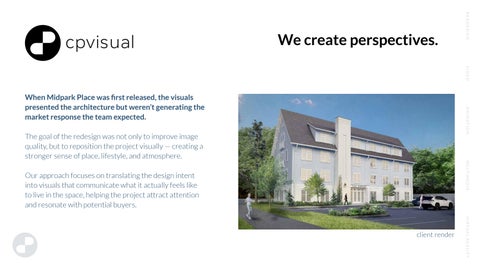
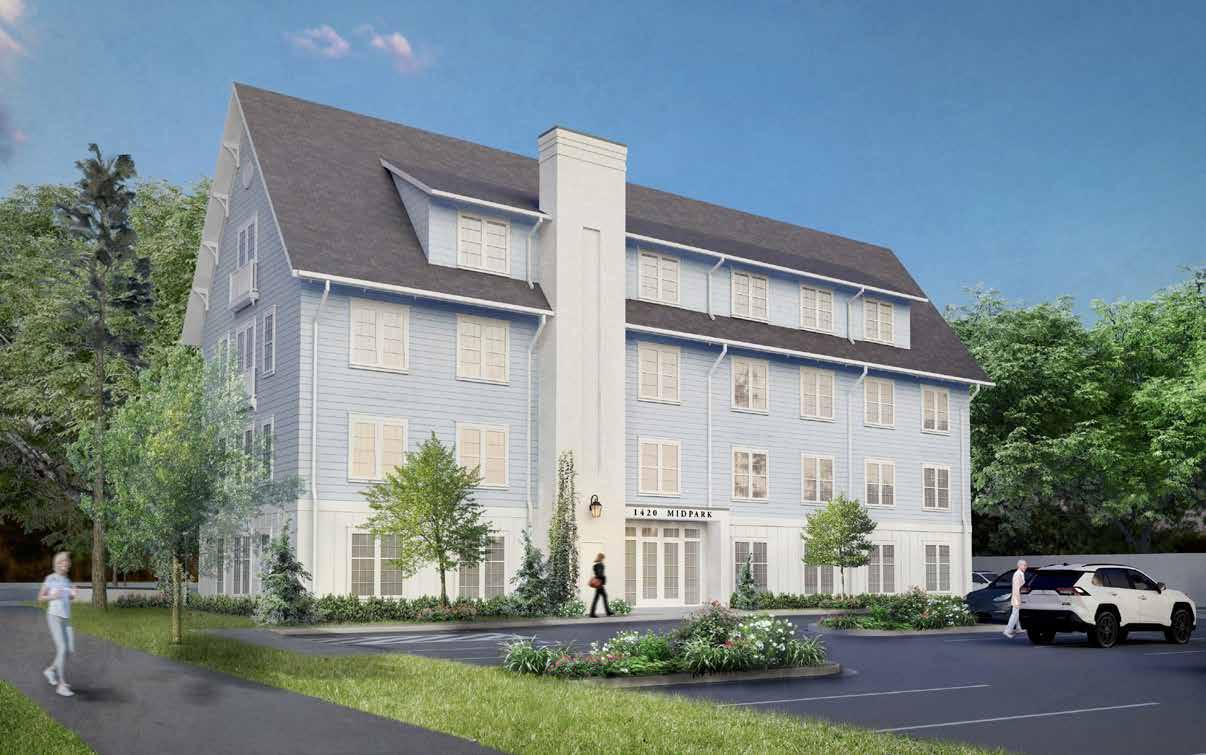
When Midpark Place was first released, the visuals presented the architecture but weren’t generating the market response the team expected.
The goal of the redesign was not only to improve image quality, but to reposition the project visually — creating a stronger sense of place, lifestyle, and atmosphere. Our approach focuses on translating the design intent into visuals that communicate what it actually feels like to live in the space, helping the project attract attention and resonate with potential buyers.
We create perspectives.
Our approach focuses on translating the design intent into visuals that communicate what it actually feels like to live in the space, helping the project attract attention and resonate with potential buyers.
CPVisual render
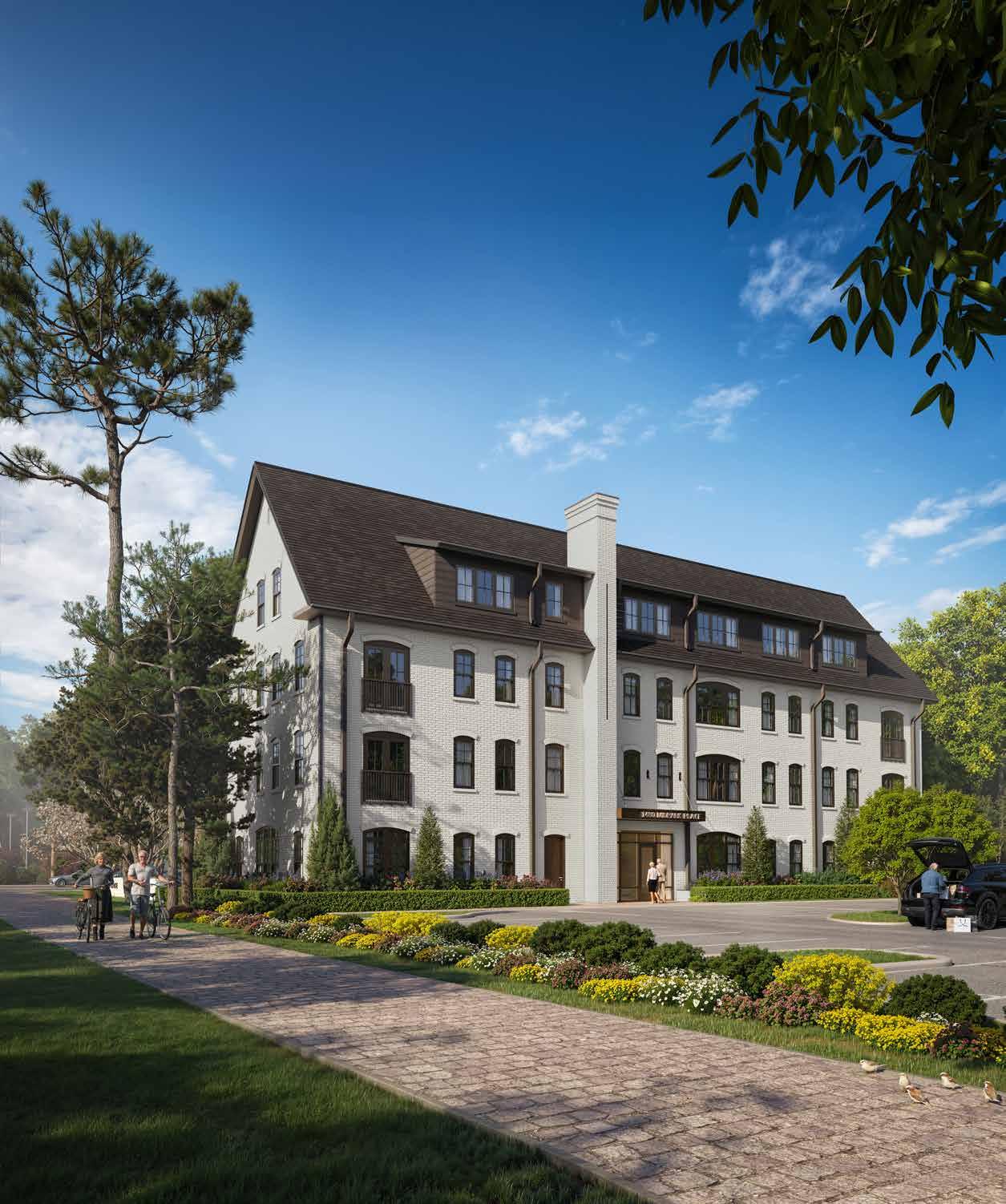
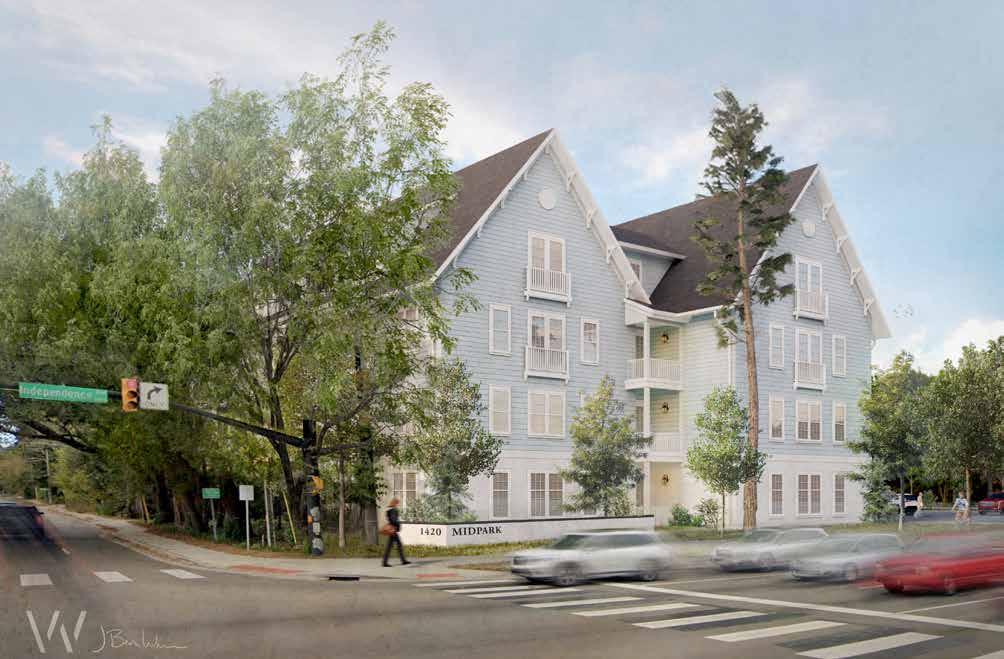
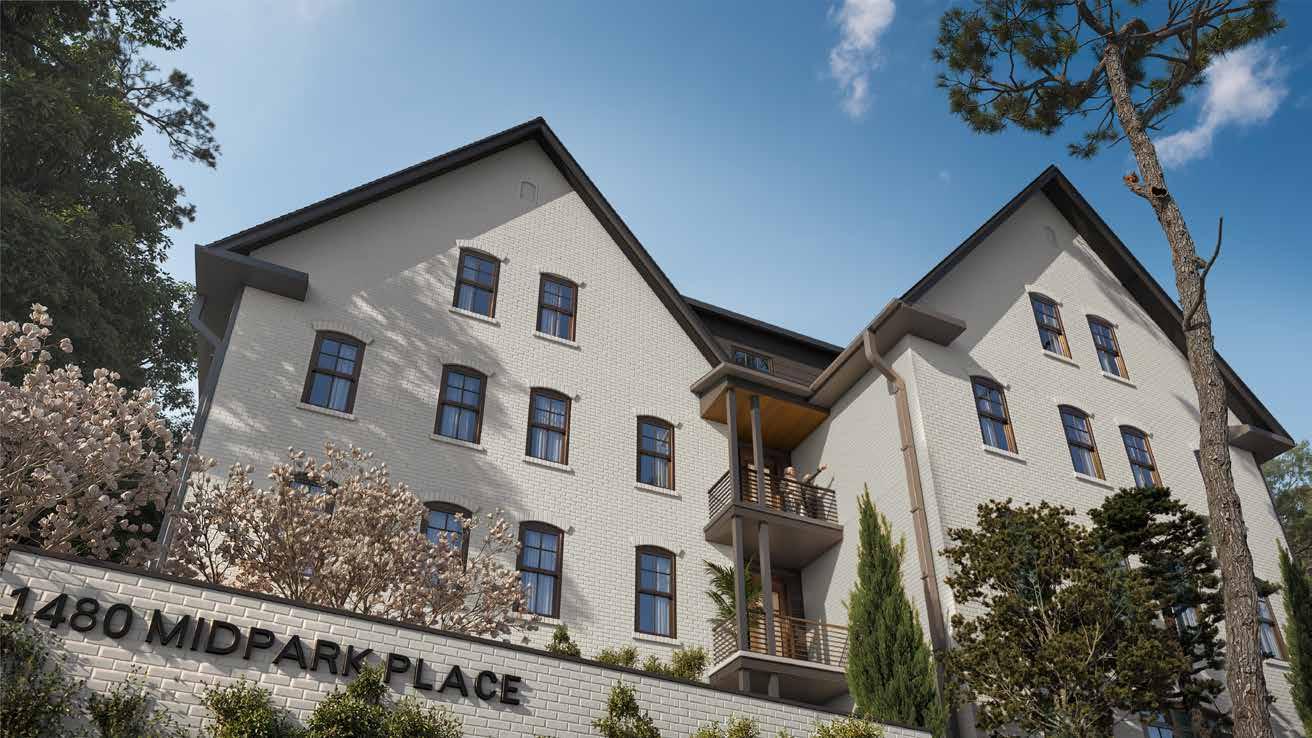
Beyond showing the building, visuals can frame how the project is perceived.
For this view, we reworked the camera angle and composition to introduce depth, light, and a more engaging perspective. stronger marketing images that capture attention and communicate the character of the development.
The goal was to move from a purely technical representation to a visual that highlights the project as a place people want to be.
Strategic vantage points and atmosphere help create stronger marketing images that capture attention and communicate the character of the development.
CPVisual render
client render
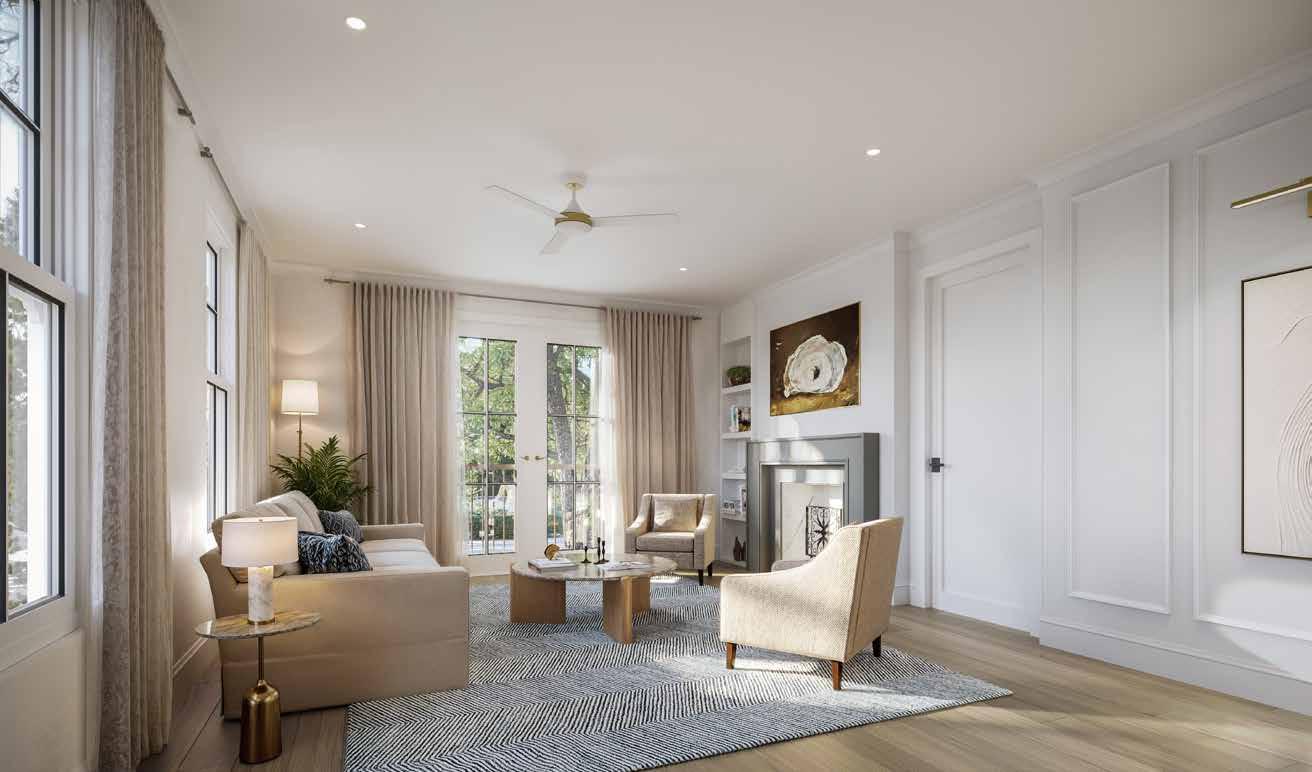
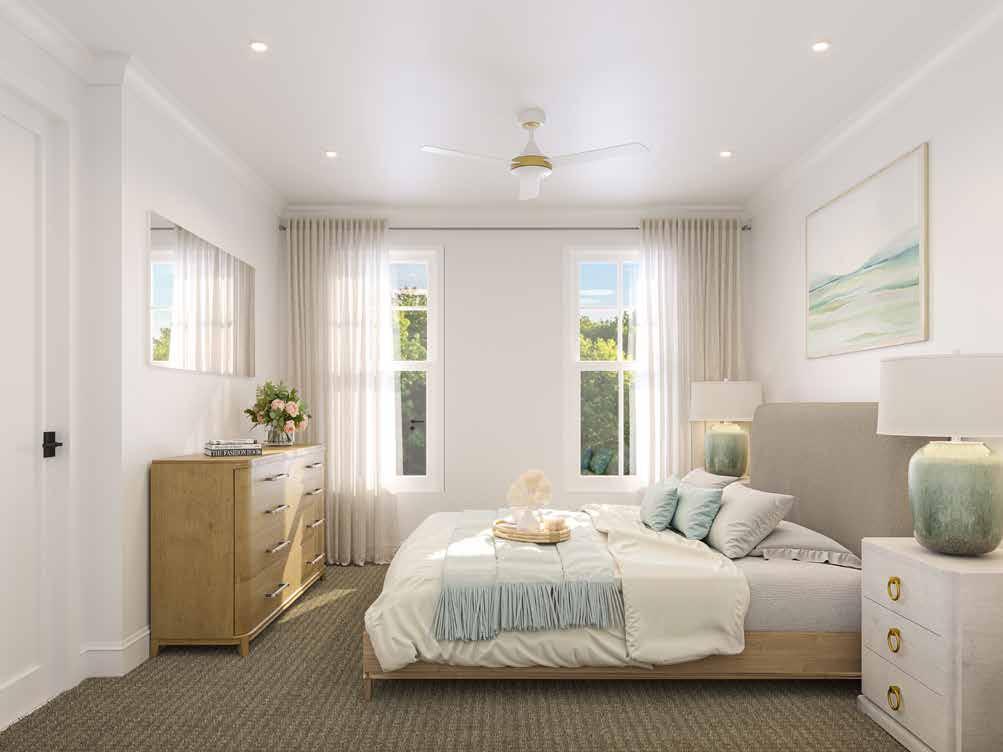
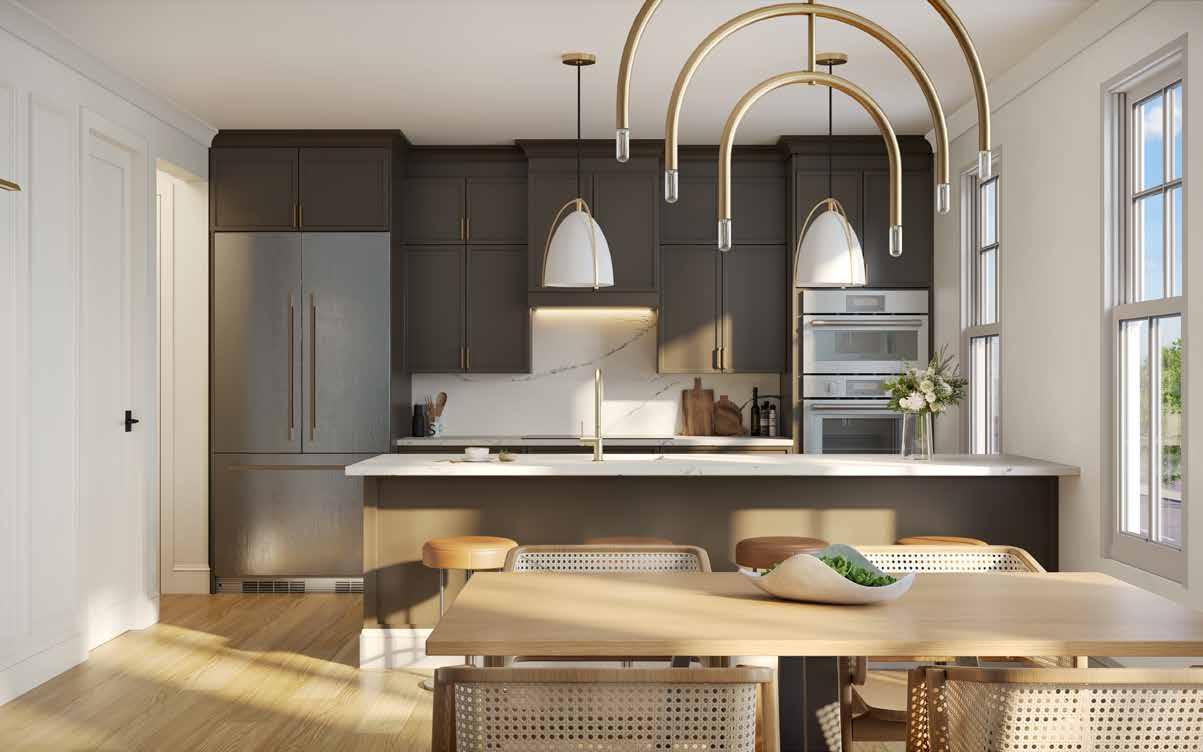
The design emphasizes calm materials, natural light, and a sense of serenity, while remaining consistent with local preferences and the architectural intent of the project.
Interior visuals should reflect not only design, but the lifestyle of the future residents.
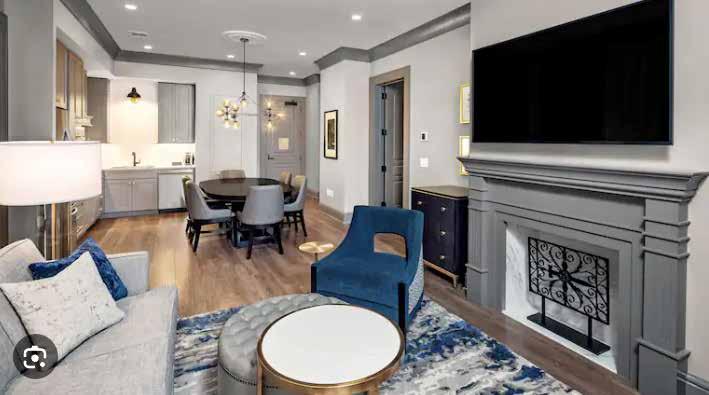
Using the initial references as a base, we adapted the space to better align with the intended audience: residents looking for a comfortable, practical home after downsizing.
CPVisual render
client reference
Strong visuals can also become powerful marketing tools across multiple platforms.
In addition to still images, we created short media clips designed for digital marketing and social media engagement.
These formats help projects reach wider audiences and communicate the atmosphere of the space in a more dynamic way.
When visuals combine architectural accuracy with lifestyle storytelling, they help people imagine themselves living there.