THE JOURNAL OF THE COMMUNITY PRACTITIONERS’ AND HEALTH VISITORS’ ASSOCIATION
SEPTEMBER / OCTOBER 2026
COMMUNITYPRACTITIONER.CO.UK
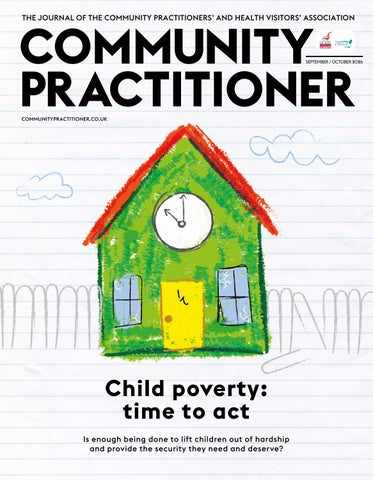
Child poverty: time to act
Is enough being done to lift children out of hardship and provide the security they need and deserve?
My Time to Play
Does your caseload include children with a vision impairment? If so, let us help you to provide them with the best possible start in life. Guide Dogs My Time to Play offers fun and supportive group sessions to help children aged 0-4 develop the practical skills and confidence to explore their world - all through the power of play. The free sessions are run by Qualified Habilitation Specialists and align with the Development Journal for Babies and Young Children with a Vision Impairment.
Find out more about the service and how you can make a referral at guidedogs.org.uk/mttp or call us on 0800 781 1444 The Guide Dogs for the Blind Association is a company limited by guarantee and a registered charity in England and Wales (209617), Scotland (SC038979) and Isle of Man (1334). B119 10/23
This issue's contributors
Marie Day
Welcome
Last year, the government made a commitment to lift 550,000 children out of poverty by 2030 – but with poverty stats far higher than that and families suffering right now, is that enough? With a new PM firmly in place, our cover story (page 12) examines the progress on child poverty, and asks what needs to happen to truly improve life today. Inequality is just one reason why childhoods have got unhealthier, according to the latest findings, with underinvestment in the CP workforce another (see page 18). More positively, boosting health visitor contacts and capacity could be key to a better future. Contributors this issue explore vital topics as always, including strengthening international partnerships in public health nursing practice (page 32), and improving confidence in supporting the newborn-parent relationship (page 36). You’ll notice a new look on this page, allowing us to highlight some of our invaluable contributors. Your input – whether a reflection, an element of your practice (successes and challenges), or a research paper – offers unique insight to members, helps raise your own profile, and makes this award-winning publication what it is. We’re looking forward to connecting with some of you at the fastapproaching Unite-CPHVA Annual Professional Conference. Our interview with one of the keynote speakers offers a thought-provoking read and insight into what you can expect (see page 22). This is the last issue before the big event, so take advantage of more details (from page 28), another speaker reveal, and a direct link to book (page 6). See you soon!
Aviva
Registered adult nurse and recent SCPHN graduate Marie has written a reflection in honour of the CPHVA's 130th anniversary (page 26)
Professor Ruth Oshikanlu MBE
Ruth is a midwife, health visitor and nursing leader. Learn more about her conference session to honour the heritage of health visiting (page 30)
Joana Taylor Tavares
Aviva Attias, Editor JOIN THE CONVERSATION aviva@communitypractitioner.co.uk /CommunityPractitioner
/CommPrac
Chartered psychologist Joana discusses training and the importance of the infant voice in supporting the newborn-parent relationship (page 36)
Contents NEWS
7
8 11
News in numbers
Your quick guide to the stats that count
September / October 2026 | Vol 99 | No 05
22
Public health
Significant reports and new campaigns
Professional update
Your latest round-up of sector news
FEATURES
12
Cover story
18
In focus
Child poverty: time to act. Is the commitment to lift 550,000 children out of poverty enough? What’s really needed?
The unhealthy generation: boosting the CP workforce could be key to a better future for young people
REFLECTION
22 One to one Professor Aisling Swaine gives her insights on coercive control and how CPs can help
12
26 Opportunity for change A SCPHN student reflects on her training and her future as a HV, in honour of CPHVA’s 130th year
40
Unite-CPHVA Existing Unite-CPHVA members with queries relating to their membership should contact 0845 850 4242 or see unitetheunion.org/ contact_us.aspx for further details. To join Unite-CPHVA, see unitetheunion.org
26
Unite-CPHVA is based at 128 Theobald’s Road London WC1X 8TN 020 3371 2006
Community Practitioner
Unite-CPHVA members receive the journal free. Non-members and institutions may subscribe to receive it. Non-member subscription rates Individual (single use) £75 Institution (single use) £159 Unlimited £249 Subscription enquiries may be made to 01580 883844, cp@c-cms.com The journal is published on behalf of Unite-CPHVA by CPL One, 1 Cambridge Technopark, Newmarket Road, Cambridge, CB5 8PB, UK
Production Editor Aviva Attias Lead designer Robyn McCurdy Executive editor (Unite) Ethel Rodrigues Clinical editor Pippa Atkinson
CONFERENCE
28 It’s good to connect How to make the most of your time at the Unite-CPHVA Annual Professional Conference - from prep to travel 30 More speakers revealed Further details on some of the key people presenting at this year’s conference
PRACTICE
32 Global collaboration Colleagues from Scotland to Japan discuss strengthening international partnerships in public health nursing, and the benefits for CPs
36 The infant voice Training to improve practice and confidence in supporting the newborn-parent relationship 40 Back to basics Sepsis: latest updates, plus how you can help clients
THE EVIDENCE
44 Research digest A round-up of research, including on clear air zones for children
PROFESSIONAL PAUSE
46 What next? Take a moment to consider how a MacQueen Bursary may help
Advertising advertising@communitypractitioner.co.uk Editorial advisory board Obi Amadi Pippa Atkinson Barbara Evans Meury Febres Laura Gibney Ethel Rodrigues Christopher Sweeney Janet Taylor
Unite health sector officers National officers Richard Munn and Nick Bailey Lead professional officers Ethel Rodrigues Gavin Fergie Obi Amadi Deborah Hopkins and Dave Munday © 2026 Community Practitioners’ and Health Visitors’ Association ISSN 1462-2815 The views expressed do not necessarily represent those of the editor nor of Unite-CPHVA. Paid advertisements in the journal do not imply endorsement of the products or services advertised. Any Unite-CPHVA member wishing to change their contact details must get in touch with their local Unite office.
You can still
book!
There is still time to get your tickets for the Unite-CPHVA Annual Professional Conference. Here are the options and how to secure your place at this special event.. The date is fast approaching (4-5 November), but you can still book for this year’s conference. The theme is Celebrating 130 years of health visiting: honouring the past and shaping the future. It reflects 130 years of CPHVA and the invaluable experience on offer for the next 130. As in previous years, the event will be held in Bristol, in a wonderful space in which to network and learn. There will be an extensive programme of leading speakers to advance your knowledge, skills and practice, and attending will count towards your CPD. There will also be a celebratory awards evening to recognise the outstanding work of CPs who go above and beyond to deliver services to the communities they serve. Secure your place today!
Category
Members
Non-members
CPHVA nursery nurse and student member Non-member nursery nurse and student
THE DETAILS
BOOK HERE bit.ly/CPHVA_ conference_2026
AGM (members only)
Date: 3 November at 3pm UNITE-CPHVA ANNUAL PROFESSIONAL CONFERENCE
Dates: 4 and 5 November 2026
Venue: Novotel Bristol Centre, Victoria Street, Redcliffe, Bristol BS1 6HY
Cost: Varies (see table below, left) AWARDS CELEBRATION
Date: 4 November 2026 at 7.30pm Cost: £20 per person (in addition to the conference ticket)
Book your stay: bit.ly/CP_hotel_26
Ticket price Two days: £200 One day: £100 Two days: £300 One day: £150 Two days: £100 One day: £50 Two days: £100 One day: £50
And there’s more... Event details: Discover all the benefits of coming to conference, plus practical event information.
Speakers revealed: Three more presenters are also unveiled. Learn about their expertise and what you can expect from their sessions. See page 28
NEWS AT A GLANCE
News in numbers 50% £1 trillion fewer infants were admitted to intensive care with respiratory syncytial virus (RSV) in England last winter compared with the same period the previous year
The estimated amount of lost lifetime earnings for this generation as a result of poor childhood health, if no action is taken to improve it
A study of 20 NHS Trusts found 63 babies were treated in ICU or HDU departments in 2025-26, down from 131
For instance, 1 in 5 children and young people aged 8-25 in England now has a probable mental health condition
ISTOCK
This shows the impact of the maternal RSV vaccination programme, which began in September 2024, says the UKHSA
More than 1 in 5 children are living with obesity by the end of primary school
27%
600
of parents and carers in the UK want more local communitybased support for their child’s mental health and wellbeing
dental practices in England have stopped treating NHS patients since 2017
That’s about 1 in 10 of all surgeries and means just 56% now hold a general NHS contract, compared with 65% 9 years ago
It was 1 of the 3 most desired services, along with more mental health support in schools, and guidance to manage their child’s stress, anxiety and low mood Just 13% feel they currently have enough help, found a poll of 1120
For references, visit bit.ly/CP_news_refs
7
COMMUNITY PRACTITIONER | SEPTEMBER / OCTOBER 2026
NEWS AT A GLANCE
Public health
A look at recent programmes or campaigns launched, and reports published.
K E Y
England £343m plan to give people better mental health support closer to home
Health programme: Major expansion of community mental health support across England, Department of Health and Social Care (DHSC)
What are the main points?
The government has announced plans for up to 159 new NHS mental health centres to open from this autumn, bringing support directly into communities. Further facilities are set to open from March 2027.
Campaign
Report
Video
Poll
Website
Health programme
England All babies to be screened for spinal muscular atrophy
Health programme: Every baby in England to get a life-saving genetic test from birth, DHSC
What are the main points? A newborn screening evaluation programme for spinal muscular atrophy (SMA) will shortly start to be rolled out nationally, following a long campaign. Babies will be tested from birth for the rare but serious genetic condition, giving them the best chance of successful treatment before symptoms appear. Early diagnosis of SMA – which can leave children unable to sit up, crawl or walk, or sometimes even breathe – can allow them to live full and healthy lives. Testing is done via a simple heel prick to collect a small sample of blood from the baby shortly after birth. A similar programme has already been established in Scotland.
The new community mental health centres will offer walk-in support without a referral and are designed to catch problems early. The centres will bring together mental health and specialist teams alongside GPs, councils, the voluntary sector and families, with links into housing and employment support.
People who are in crisis have been promised dedicated mental health emergency care rather than a long wait in a busy A&E. The government called the rollout ‘the biggest redesign of mental health services in a generation’ and the first phase of a wider rollout detailed in the 10-Year Health Plan.
EXPERT THOUGHT Brian Dow, deputy chief executive at Rethink Mental Illness, said: ‘Everyone should be able to access mental health support in their local community, when and where they need it. By bringing together treatment and wider support services under one roof, these centres can transform experiences of care.’ Find more information at bit.ly/new_mh_plan
Expert thought
GILES LOMAX
CEO of SMA UK
‘After years of campaigning by the SMA community and our partner organisations, this is a hugely important step forward. When newborn screening for SMA begins later this year, in October, thousands of babies will benefit earlier.’ For details, see bit.ly/SMA_screening
8
COMMUNITY PRACTITIONER | SEPTEMBER / OCTOBER 2026
NEWS AT A GLANCE
Scotland Fostering emergency must be addressed, say 32 LAs and leading charity Call to government: Joint statement re emergency in availability of alternative care options for children, Social Work Scotland What are the main points?
The fostering system is in crisis, with an acute shortage of suitable homes and carers to take in the country’s most vulnerable young people, warn social workers.
Chief social work officers from all 32 Scottish local authorities (LAs) issued a rare joint statement recently, calling on the government to act.
Expert thought MICHELE JANES
The LAs say the lack of options puts children at risk of physical, sexual or emotional abuse or neglect, while newborn babies are remaining in the care of hospital nurses.
Director of Barnado’s Scotland
Social workers are taking children into their own homes through lack of alternative safe options, while children as young as three are being placed in residential homes with young adults.
‘A shortage of foster carers leaves hundreds of children without a safe and loving home, and that is something we work every day to address. We strongly believe that any loving person can make a wonderful foster parent to a child in need. We urge the Scottish Government to prioritise more support for foster carers across Scotland.’
Children’s charity Barnardo’s has backed the warning, which it says it raised two years ago, and reaffirmed its commitment to The Promise Scotland – a collective for change set up in 2022. For details on the collective, see thepromise.scot
UK Too many young people struggling to get into work or education
Report: Young people not in education, employment or training (NEET), UK: August 2026, Office for National Statistics What are the main points?
There were an estimated 981,000 young people, aged 16 to 24 years, in the UK who were NEET in the period April to June 2026 – an increase of 30,000 compared with the same period in 2025. The percentage of young people in the UK who were NEET in the period April to June 2026 was 13%. Of the total number of young people who were NEET, 530,000 were men and 451,000 were women.
Former minister Alan Milburn’s final report into NEETs and how to tackle the problem is due this autumn.
ISTOCK
EXPERT THOUGHT Sam Atwell, policy and research manager at the Health Foundation, said: ‘Spending long periods neither earning nor learning can have lasting consequences for young people’s health, incomes and future opportunities... Government needs to act earlier through stronger support in schools and better help to overcome barriers.’ Find the full data set at bit.ly/ons_neet_26
9
COMMUNITY PRACTITIONER | SEPTEMBER / OCTOBER 2026
ANNUAL PROFESSIONAL CONFERENCE
2026
ANNUAL PROFESSIONAL CONFERENCE
2026
CELEBRATING 130 YEARS OF HEALTH VISITING
Sponsorship and Exhibition opportunities, please reach out to: Account Manager Samra Bendahman samra.bendahman@cplone.co.uk 01727 739184
SAVE THE DATE 3-5 November 2026
Novotel Victoria Street, BRISTOL BS1 6HY
NEWS AT A GLANCE
Professional update UK Digital future for the Red Book
A digital Personal Child Health Record or ‘red book’ is on the horizon. The Royal College of Paediatric and Child Health (RCPCH) has signed a memorandum of understanding (MoU) with Harlow Printing to explore the development of a Digital Personal Child Health Record.
PCHR
The digital product would complement the printed red book, which has been used across the UK since the 1980s to monitor children’s health and development.
The aim is to provide families and healthcare professionals with a modern, connected system for logging and viewing early childhood health records. The updated digital solution would feature a clinical back-office web portal alongside a mobile application for parents and carers.
RCPCH president Professor Steve Turner describes the red book as ‘one of the simplest and most enduring tools we have to record early child health and wellbeing’, adding that ‘a digital version of the red book can allow quick access to records where the book isn’t to hand’.
Building on the RCPCH and Harlow Printing’s (trading as Harlow Solutions) existing relationship, the MoU creates a framework to transition from an agreement in principle to formal development and commercial agreements. Development is expected to take around nine months from commencement, with pilot activity to be agreed before any public launch.
Find out more at bit.ly/pchr_red_book
UK
ISTOCK
Impact of long Covid on healthcare workers
Key findings show:
The NHS Race and Health Observatory has revealed how long Covid affects UK NHS healthcare workers (HCWs) across diverse ethnic groups and job roles. The long-term REACH-OUT study in collaboration with UK-REACH involved more than 5000 HCWs. It included staff who identified as Asian, Black, mixed and ‘other’; during the early stage of the pandemic, 63% of HCW deaths were among ethnic minority groups.
The most frequently reported long Covid symptoms among HCWs include fatigue (35%), neurological symptoms such as brain fog and headaches (25%), loss of taste and/or smell (25%), muscle pain (22%), and shortness of breath (19%). Female HCWs, those with pre-existing health conditions, severe initial Covid-19, and those in nursing, allied-health or administrative roles were more likely to experience long Covid. HCWs who had more Covid vaccinations were at lower risk. Up to 27% of UK HCWs reported symptoms lasting 12 weeks or more, with global studies showing similar trends. ‘Healthcare workers are the NHS’s greatest asset, and their wellbeing is critical to delivering safe and high-quality care,’ said Professor Manish Pareek, clinical professor, infectious diseases, and chief investigator of UK-REACH and REACH-OUT, University of Leicester. ‘The REACH-OUT study provides vital evidence to help us better understand long Covid and develop the support HCWs need to remain healthy and able to work.’ Read the full report at bit.ly/nhsrho_long_covid
11
COMMUNITY PRACTITIONER | SEPTEMBER / OCTOBER 2026
COVER STORY
Child poverty: time to act
Around four million children currently live in poverty in the UK. Is a commitment to lift 550,000 out of poverty by 2030 enough? Journalist Jo Waters explores the crisis and asks what needs to be done to truly tackle it.
N
early one in three, or around four million children live in poverty in the UK (Department for Work and Pensions [DWP], 2026) with devastating implications for their health, education and future life chances. Around two million of the total are living in deep poverty, defined as less than 40% of median household income (Cabinet Office, 2025). More children living in poverty are also in working families, but those families are in jobs with low hourly pay and low hours. Children continue to be disproportionately affected by poverty and that figure rose for single-parent families (DWP, 2025a). A recent analysis of the DWP 2025 published poverty figures by the Joseph Rowntree Foundation (JRF) charity found that around one in 10 of the UK population is living in deep poverty (households with an after housing cost [AHC] income of less than 40% of the UK median). This equates to £16,400 a year or below for a couple with two young children (JRF, 2026). As shocking as these statistics may sound, they come as no surprise to community practitioners, says CPHVA Executive member and former health visitor Kate Phillips. CPs are dealing with the impact of child poverty on the frontline every day, says Kate. ‘Some families are struggling to cope with the rising cost of living, unable to put food on the table in some cases or pay their heating bills – it’s heat or eat for them.
Wages are not increasing to keep pace with rising inflation.’ Child poverty rates vary across the four UK nations, but are higher in England and Wales than in Scotland and Northern Ireland (see The UK picture). In December last year, the Labour government published the Child Poverty Strategy (DWP and Department for Education, 2025), stating the ambition of lifting 550,000 children out of poverty by 2030. The cross-government plan focuses on driving down the cost-of-living essentials and improving local support services. But nine months on from a statement of those bold ambitions – and with a new Prime Minister in Downing Street, what progress has been made, and is enough being done to reduce child poverty?
Serious impact
Poverty affects children before they are even born, says the Child Poverty Action Group charity (CPAG, 2026) as they are more likely to have low birth weight and less likely to survive their first year of life. They are also more likely to suffer from asthma and other childhood diseases, and experience poor health later in life. ‘Children who grow up in persistent poverty are also three times more likely to become NEETS (Not in Education, Employment or Training),’ says Sam Tims, lead analyst on social security and economics with the JRF. ‘Household
12
income is one of the biggest predictors of educational attainment.’ Kate, who is also programme lead and lecturer in Children’s Nursing at the University of Leeds, says: ‘If housing benefit doesn’t cover rents, families can be forced to move away from family and social networks to access more affordable housing. ‘We’ll be moving into the autumn months soon and some children won’t have a winter coat or be getting proper healthy meals. We know parents go without food themselves too so their children can eat and then their health and mental wellbeing suffer too.’ Children’s Commissioner for England Dame Rachel de Souza says children today are more aware of ‘adult’ worries: ‘They see the pressures facing their families every day, from the hours they work, the homes they live in and the ability to put food on the table. ‘Children from low-income families have told me about sense of deep shame they feel that comes with going without things that many of their peers take for granted, and how poverty shapes their daily lives, from long journeys to school and not having enough space to do homework to getting sick from inadequate housing. ‘It is particularly heartbreaking that many children have come to see these experiences as normal. Too many have worryingly low expectations of what they should be entitled to and what society can provide for them.’ And yet, says Children’s Commissioner
COMMUNITY PRACTITIONER | SEPTEMBER / OCTOBER 2026
COVER STORY
The UK picture
What percentage of children are in poverty across the country?
UK figures for 2024/2025 (DWP, 2026 )
% in relative low income poverty*
% in deep material poverty**
England
29%
14%
Wales
32%
10%
Scotland
21%
11%
Northern Ireland
19%
7%
*less than 60% of average income after AHC; **if a child lacks at least 4 out of 13 essential items
13
COMMUNITY PRACTITIONER | SEPTEMBER / OCTOBER 2026
COVER STORY
Poverty affects children before they are even born, as they are more likely to have low birth weight and less likely to survive their first year of life
Official action More than £600m has been
committed for the Holiday Activities and Food Programme (HAF) for the next three financial years from 2026/2027
Emphasis on place-based for Wales Rocio Cifuentes: ‘This is not an unavoidable reality. Child poverty is the result of political choices, and I am particularly concerned about the rise in deep poverty among children. More children are living in families whose incomes are so low that they cannot afford basic essentials.’ Rocio says that children regularly tell her what poverty feels like, including worrying about having enough to eat, and schools sharing stories of children arriving with inadequate packed lunches or shoes with holes stuffed with paper. ‘Poverty affects every aspect of a child’s life. It impacts health, wellbeing, education and future opportunities. That’s why I see child poverty as a children’s rights crisis. Too many children are being denied their rights to health, education, dignity, and an adequate standard of living.’
Behind the UK numbers
Multiple factors have been identified as contributors to child poverty since 2011 (Cabinet Office, 2025). These include low-income growth in relative terms, long-term sickness, worsening affordability in the housing market and an increase in zero hours of work contracts. Other drivers include a substantial decrease in the value of Universal Credit since 2010/11, the two-child cap for Universal Credit, low pay and low hours for parents in work, inaccessible childcare, and late or incomplete child maintenance payments (Cabinet Office, 2025). Recent worldwide events such as the war in Ukraine and conflicts in the Middle East have also affected the global economy and cost of living, including energy and food prices. ‘Wages stagnated for a long time after the
crash in 2008 and only recently recovered to those levels’, says Sam from the JRF. ‘But there are also issues around the quality of work available, for example the growth in zero hours contracts and falling numbers of vacancies which have not recovered to pre pandemic levels. ‘Lack of affordable housing is now a big issue too. We need more social housing.’ The number of statutory homeless children living in temporary accommodation rose from 70,000 to 172,000 between 2011 and 2024 (Cabinet office, 2025).
What’s the government doing?
Core policies of the government’s Child Poverty Strategy already announced and introduced include ending the two-child cap on the childcare element of Universal Credit that came into force in April 2026 (DWP, 2025b). Other initiatives, as part of the strategy, include the expansion of free school meals eligibility and breakfast clubs from September 2026. A UK government spokesperson from the DWP responded to the question of its actions saying: ‘We’re determined to turn the tide on poverty after years of rising hardship. Our recent statistics show that effort is beginning to make a difference - household incomes have risen five per cent in real terms, food bank usage has fallen and food insecurity is down. In July we published our Child Poverty Strategy baseline report, setting out the starting point of the Child Poverty Strategy and outlining how progress will be monitored, evaluated and reported over time.’ The DWP also listed several other actions the government is taking to tackle child poverty (see Official action, right).
14
COMMUNITY PRACTITIONER | SEPTEMBER / OCTOBER 2026
action, through programmes such as the £5.8bn Pride in Place Programme, supporting 284 of the country’s most deprived neighbourhoods; the £500m Better Futures Fund, which aims to support up to 200,000 vulnerable children
Rollout of Best Start Family
Hubs, with up to 1000 hubs planned by 2028. These will be linked up with 2000 locally linked services at GP surgeries, leisure centres, libraries, nurseries and community spaces
A £1bn multi-year Crisis and
Resilience fund will help prevent households from falling into crisis
Support for 700,000 of the
poorest families through the Fair Repayment Rate on Universal Credit deductions
Employment reforms to get
people into secure jobs and out of poverty
Expansion of the Warm Home
Discount to around six million families, extended to winter 2030/2031
Action to tackle rising rents
and the housing shortage with a commitment to the biggest boost to social and affordable housing in a generation.
COVER STORY
The Child Poverty Strategy baseline report stated that devolved governments have ‘set out their own strategies and delivery approaches’ reflecting, for example, different contexts. ‘These are complemented by the UK-wide Strategy and contribute to the shared evidence base on what works.’ (DWP, 2026).
Lessons from Scotland
John Dickie, director of the Child Poverty Action Group in Scotland, says there are lessons to be learned from the Scottish government’s successful efforts to reduce child poverty from 25% in 2020 to 21% in 2022. Scotland introduced the Child Poverty Act in 2017 and set targets for reduction (Scottish Government, 2026). ‘A key policy intervention was the introduction of the Scottish Child Payment using devolved powers to top up UK-wide benefits. Introduced from 2021, families on Universal Credit are entitled to a payment of £28.20 a week per child as additional support,’ says John. ‘It has proved to be a gamechanger and has a had a very significant impact on reducing child poverty.’ Other measures introduced in Scotland include free bus travel for children and young people, and universal free school meals in the first five years of primary school. ‘Our concern in Scotland now is that progress stalls,’ adds John. ‘The package has been effective, but is not sufficient to reach the target the Scottish Parliament set of reducing child poverty to less than 10% by 2030. We are keen to see Scotland go faster and further and build on this, and would like to see the Scottish Child Payment increased from £28.20 to £40 a week for all eligible children, not just
‘I see child poverty as a children’s rights crisis. Too many children are being denied their rights to health, education, dignity, and an adequate standard of living’
for babies under one as currently planned – that measure alone would lift another 15,000 children out of poverty. What lessons does John think can be learned? ‘My message to Andy Burnham for the UK as a whole is to build on what we know works and invest in social security, increasing the adequacy of support that has been eroded in the past 15 years, including Child Benefit and the child element of Universal Credit. Restoring the value of Child Benefit would also help families on the margins of poverty too, and support middle-income families who are struggling with living costs.’
Emergency need
Action for Children (AfC) is receiving 300 applications a month for emergency help for its services in the UK 47% are for basic essentials 15,000 children and young people receive emergency grants from AfC Almost 1 in 5 families applying would struggle to feed their children without a grant Action for Children, 2025
15
COMMUNITY PRACTITIONER | SEPTEMBER / OCTOBER 2026
COVER STORY
John stresses that these measures should come alongside action to tackle high housing costs and improve supply of affordable homes and provision of goodquality work opportunities. ‘The key thing is we know that child poverty undermines economic growth and prosperity. The CPAG calculated that, in 2023, the cost of child poverty was more than £39bn a year in additional public spending and lost tax revenue.’ The Welsh government is now considering a pilot scheme similar to the Scottish Child Payment, explains Rocio. The Cynnal is a £10 weekly top up payment for each child for 15,000 families claiming Universal Credit in Wales (Welsh Government, 2026). Child poverty in Wales remains unacceptably high, says Rocio. ‘Tackling it requires action from both the Welsh Government and the UK Government,’ she asserts. ‘I welcome the steps both governments have taken, including the UK Government’s decision
‘Child poverty is not inevitable, and with the right political choices and joined-up action, we can ensure every child has the opportunity to thrive’
to remove the two-child limit and the Welsh Government’s plans for the Cynnal payment pilot. But much more needs to be done. Child poverty is not inevitable, and with the right political choices and joinedup action, we can ensure every child has the opportunity to thrive.’
The wish list
Sam from the JRF says that although removal of the two-child cap was the
16
right step for the government to take, it shouldn’t be the only one. ‘If we had a wish list for Andy Burnham it would include a protected minimum floor in Universal Credit and that would have a real positive impact for families with kids,’ he says. ‘It would embed, for the first time, the principle that a family’s income should not drop below a certain level. ‘I’d also ask him to look at affordability in the private rented sector, as around a quarter of children under 10 live in a privately rented home,’ highlights Sam. ‘The local housing allowance has been frozen for a number of years and it means that low-income households struggle to find properties that they can actually afford to live in. So, we’d recommend that it gets unfrozen. Both of these measures could be implemented almost overnight.’ JRF are also calling for an affordable energy guarantee for struggling families and more action to help young people who are NEETs. Sam stresses that alongside these measures, the government also needs to look closely at why families end up needing benefits, such as the quality of work and pay received, the cost of housing, and the rates of ill health and disability. ‘We need to make sure that food banks aren’t a necessity for millions of families every year, and the economy is functioning well for everyone. Right now, and for a long time, it hasn’t been, so both these things need to be happening.’ Dame Rachel de Souza agrees that removing the two-child limit was a vital first step towards lifting hundreds of thousands of children out of poverty quickly. ‘But we also need practical action, including free bus travel for school-aged children, automatically enrolling eligible children for free school meals so no child goes without, and a relentless focus on improving the public services around children’s experiences and needs.’ In The children’s plan (Children’s Commissioner, 2025) the Commissioner sets out how support children receive should be local, accessible and built around the places where they and families already have trusted relationships – particularly schools and community centres – so that
COMMUNITY PRACTITIONER | SEPTEMBER / OCTOBER 2026
COVER STORY
families can get the help they need before problems become a crisis. Alun Francis, Chair of The Social Mobility Commission – an independent advisory public body in the UK that monitors progress on social mobility and promotes fair opportunities regardless of family background – adds: ‘Reducing childhood poverty is an important ambition but, on its own, is not sufficient to make sure all children have the opportunity to fulfil their potential. Randomised control trials that measure the impact of cash transfers to parents have demonstrated this.’ Alun continues:‘The Social Mobility Commission published a report on The role of families in the educational outcomes of children and young people earlier this year, and it demonstrated the range of factors within families that shape good outcomes. These include home learning environment, reading, playing and conversation, wider family support, and the educational achievements of parents. If the aim of policy is to secure good outcomes for all children, then these factors must be taken into account.’
Vital CP role
Healthcare professionals, including health visitors, midwives and GPs, recently took part in an NHS Scotland income maximisation scheme (a formal referral system that embeds professional money, debt and welfare rights advice directly into healthcare settings) in 12 health boards in Scotland (Public Health Scotland, 2026). The project focused on income maximisation pathways within health settings and services most likely to reach and support low-income families with children, including the child poverty priority families. The services included were maternity, health visiting, family nurse partnership (FNP), GP, and acute children’s hospital settings (within one NHS board area). ‘Clearly there is a lot of pressure on frontline health professionals, and we can’t expect them to solve low-income issues, but being able to make active referrals for benefits advice [as per the scheme] is helpful’, says John from CPAG Scotland.
Kate Phillips agrees, saying CPs can’t solve the child poverty, low wage, and housing shortage crisis on their own. ‘But CPs are able to work in partnership with families to identify difficulties early and connect families with support to help buffer the negative impact of poverty. This could help with accessing benefits or much- needed necessities such as baby equipment, formula or even school uniforms.’ There’s an extra problematic layer in England says Kate: ‘We don’t have enough HVs and school nurses in England. It seems large caseloads are leading to CPs needing to prioritise safeguarding. This impacts on their ability to deliver the proactive preventative public health nursing work they are trained to do, so they may not get the chance to do the work that could be so valuable to struggling families. ‘The other three UK nations appear to be investing more in their workforce, but local authorities in England do not appear to be doing this,’ highlights Kate. ‘This means that really vulnerable families may not be getting the continuity of care and services they deserve.’ Yet CPs really understand the needs of families within the communities they work with and are able to support families to navigate vital support that is accessible within their area, Kate explains. ‘For example, in Leeds, this includes access to a baby bank supplying muchneeded equipment and formula milk alongside a weekly drop in for parents providing social support and advice, as well as cookery classes, weaning advice and mental health support online for children and young people,’ says Kate. ‘CPs are really the cement that holds the whole network together, and are pivotal in helping to protect and buffer children from poorer outcomes,’ Kate concludes. ‘You can’t overestimate the value of the work they do.’ The new PM’s final word? The DWP said: ‘Government has been clear throughout that it cannot tackle child poverty alone and that it must be done in partnership. The development and delivery of the Child Poverty Strategy is underpinned by extensive engagement across government and sectors’. CP
17
COMMUNITY PRACTITIONER | SEPTEMBER / OCTOBER 2026
RESOURCES
The UK Child Poverty Strategy Baseline Report bit.ly/UK_poverty_26 The Scottish government has published its third Tackling Child Poverty Delivery Plan for 2026-31 bit.ly/Scot_poverty_plan The previous Welsh Government published a progress report on strategy, though there’s a new commitment to developing a new plan bit.ly/Wal_poverty_progress In Northern Ireland, work is ongoing to develop the Executive’s Anti-Poverty Strategy Summary report of its recent consultation bit.ly/NI_poverty_ consultation Regional poverty statistics bit.ly/poverty_regional Find out more about best start family hubs bit.ly/family_hubs An example of action bit.ly/GMCA_action
For references, visit bit.ly/CP_cover_feature
IN FOCUS
The unhealthy generation
We’re raising the unhealthiest children and young people in decades, according to the latest findings, yet boosting the CP workforce could be key to a better future. Journalist Kaye McIntosh investigates. 18
COMMUNITY PRACTITIONER | SEPTEMBER / OCTOBER 2026
IN FOCUS
T
he UK is on track to raise the unhealthiest generation of children for decades, warns the Royal College of Paediatrics and Child Health (RCPCH). In fact, young people across the UK face some of the worst health outcomes in Europe, reveals the latest RCPCH State of Child Health report (2026a). Some indicators of child health and wellbeing have even gone backwards since the last RCPCH publication monitoring outcomes in 2020. Across the 12 indicators studied, from early childhood development to mortality, ‘most measures of child health and wellbeing show a worsening picture, and where progress was once being made, it has stalled’, the report finds. Vaccination coverage remains a significant concern. Fewer than 90% of children in all four UK nations are now receiving both doses of the MMR vaccine by age five and in England this has fallen as low as 84%. Asthma admissions and mental health disorders are increasing. In England, more than one in three (36%) children aged 10 to 11 is overweight or obese, while one in five children aged eight to 16 has a probable mental health disorder. Dr Helen Stewart, RCPCH officer for health improvement, says: ‘Children are about 25% of the patients that the NHS sees, but they are 100% of the future patient population. If we don’t deal with a lot of these problems, such as mental health, obesity, asthma and more, we are setting ourselves up for problems in the future, when most of those children grow up still carrying those problems.’ Underinvestment in the workforce is also a major area of concern. The report authors state: ‘Inequitable funding in the child health workforce has resulted in their limited capacity to deliver timely support and provide joined up working across child health services (RCPCH, 2026b).’
ISTOCK
The poor data problem
compare the four UK nations (RCPCH, 2026b). Poor quality and inconsistent data recording and sharing to measure and monitor child health and wellbeing outcomes are major factors. Dr Stewart says: ‘When we looked at the various indicators, we didn’t have the data for them in all four nations. They’re coded differently and recording is inconsistent. Without having data available on each of the metrics, it’s very difficult to measure progress to see where we really need to make changes.’ She adds that while ‘most things are getting worse or stalling on our main indicators, having good data to be able to really assess progress is vital’. The RCPCH report was developed in partnership with the Born in Bradford (BiB) research programme, members of which have previously spoken at the Unite-CPHVA Annual Professional Conference. Talking about the RCPCH report’s ‘meaningful recommendations around data, national targets and investment in children’s health’, BiB programme manager Sarah Ahern
says: ‘We know that high-quality data can save lives and allows us not just to describe the problem but to test solutions and find out what works.’
How did we get here?
Cross-party health and social select committee chair Layla Moran pins the blame partly on the decline in health visitor numbers in England. ‘Responsibility for health visiting services was transferred from the NHS to local authorities in 2015 – the time that the workforce started to decline,’ says Layla. ‘Local authorities were particularly badly affected by cuts to their central government funding in the years after 2010. So it’s unsurprising that, in turn, there were cuts to the number of HVs. According to a study [Conti et al, 2026], local authority spending on universal health visiting fell by almost 20% in real terms between 2016-17 and 2023-24.’ Dr Stewart says: ‘The picture around why progress on children’s health has stalled, and in some cases declined, is
Key RCPCH recommendations Make child health a priority
Improving child health should be a key aim of government, not an afterthought
Invest in the workforce
Introduce a funded, long-term child health workforce strategy. Increase health visitor workforce capacity and contacts
Strengthen early years support
Boost primary care, maternal care and early years support in the first 1,000 days with adequate funding
Targets
Commit to meaningful, explicit national targets to improve children’s health and reduce inequalities
There are serious gaps in the data around child health, making it difficult to develop evidence-based policy recommendations and targets for improvement – and to
Improved data
Strengthen the quality, collection and sharing of child health data to track progress.
19
COMMUNITY PRACTITIONER | SEPTEMBER / OCTOBER 2026
IN FOCUS
‘The scale of challenge is significant, but it’s clear that investment in early intervention can improve outcomes for life’
complex.’ The RCPCH (2026b) report, however, identifies three areas that cut across all 12 indicators. Alongside gaps in the data: ‘Continued underinvestment in the child health workforce, compounded by the legacy of austerity and recent economic challenges, makes it difficult to respond to an increased demand on services,’ says Dr Stewart. ‘We will never get ahead of the curve without equitable and meaningful investment in children’s health services and the workforce who care for them, which is why we continue to call for a funded, long-term child health workforce strategy.’ Plus, widening child health inequalities continue to have a profound impact. The report found that children growing up in more deprived areas are more likely to have worse health outcomes than their peers in less deprived areas. ‘Strong evidence shows how social determinants influence health outcomes,’ says Dr Stewart. She highlights that in England, children in the most deprived areas
Vital signs: a snapshot The updated RCPCH State of Child Health 2026 report looked at 12 indicators of child health and wellbeing: infant mortality, child mortality, immunisations, early childhood development, oral health, obesity, mental health, emotional health and wellbeing, vaping and smoking, asthma, substance misuse and injuries. Early years development in England remains below pre-pandemic levels and the 75% target. In 2024, just 51% of children eligible for free school meals achieved a good level of development. Infant mortality rates remain high in England (3.9 per 1,000 in 2018 and 2024) and Wales (3.5 in 2018 and 3.6 per 1,000 in 2023). Northern Ireland saw a slight increase from 2018 to 2024 (4.2 to 4.5 per 1,000), as did Scotland: rates rose from 3.2 in 2018 to 3.3 per 1,000 in 2024. Child mortality – Scotland has the highest rate across the nations at 8.9 per 100,000 (2024), though it has reduced from 11 in 2018. England is not far behind:
8.5 per 100,000 in 2024, down from 9 in 2018. Wales has seen the most significant reduction since, with the lowest rates of 6.4 per 100,000 in 2024, down from 13 in 2018. Northern Ireland has significantly reduced from 10 per 100,000 (2018) to 7.1 in 2024. Overweight and obesity – in 2024-25, around a quarter of four to five-year-olds were overweight or living with obesity in England and Scotland, with similar rates in Wales (27.3%) and Northern Ireland (25%) in 2023-24. Emergency admissions for childhood asthma rose to 148 and 157 per 100,000 (England and Scotland) in 2023/24. Progress in reducing these has reversed in recent years, after earlier declines. Many deaths are preventable and persistent inequalities affect outcomes.
20
COMMUNITY PRACTITIONER | SEPTEMBER / OCTOBER 2026
IN FOCUS
are four times more likely to die from asthma, while infant mortality in the most deprived communities is more than double that seen in the least deprived areas (see our cover feature for more analysis on childhood poverty, page 12).
‘Children are about 25% of the patients that the NHS sees, but they are 100% of the future patient population’
Can we do better?
The challenges facing child health are not inevitable, says Rukshana Kapasi, Director of Health at Barnardo’s. ‘Many of the social determinants of health that the RCPCH report highlights are avoidable – such as poverty, poor housing, food insecurity, access to support, and opportunities in childhood. ‘We know that better outcomes for childhood health are possible. Through our services, we see every day how the right support at the right time can change childhoods, change lives, and improve outcomes that last a lifetime.’ Family support services, young carers services, mental health support, family hubs and early help programmes show children can thrive ‘when barriers are removed and families are given the support they need’, Rukshana adds. ‘The scale of challenge is significant, but it’s clear that investment in early intervention can improve outcomes for life. The real question is not whether these challenges can be addressed; it is whether we are prepared to make the long-term investment and transformational change needed to do so.’ The Born in Bradford research programme has tracked the lives of more than 30,000 children and young people since 2007. Sarah from BiB says that the RCPCH report is ‘not a story about failure on the part of families’. ‘It is about challenges driven by inequalities and circumstances that policy has the power to change.’ She points to the example of Bradford’s clean air zone. After one year, GP visits for respiratory illness in the city fell by 25% and for heart problems by 24%, an average of 732 fewer visits a month compared with preCovid levels. This saves the NHS an estimated £30,700 a month (Mebrahtu et al, 2025). A UK government spokesperson said: ‘Following a decade of neglect, too many
children - particularly those growing up in the most deprived communities - continue to experience poorer health outcomes than they should. That’s why this government is taking decisive action to lift children out of poverty, tackle health inequalities and raise the healthiest generation of children ever.’ The spokesperson listed expanding mental health support in schools, free school meals to more children, and opening family hubs and local health centres among its actions.
report on the first 1000 days (UK Parliament, 2026), that ‘HVs are the backbone of early years care’ and spoke of the need for government to rebuild the HV workforce (see Resources). Rukshana concludes: ‘The government needs to go further and faster, with a clear action plan for child health, meaningful measures of progress, long-term investment in services and the workforce, a commitment to prevention, and a focus on tackling child poverty and inequalities. ‘This will require listening to children, families and frontline professionals about what is happening on the ground. ‘We know what works; the challenge now is delivering it at scale and sustaining it over time.’ CP
HVs are key
The RCPCH report is clear that HVs are key to improving child health. It states: ‘HVs have a vital role in health promotion for families and are often the frontline for identifying issues in young children to provide early intervention and prevent ill health escalating. ‘However, the health visiting workforce is currently unable to meet the demand in their services due to their reduced capacity, coupled with the current long waiting lists for children’s community health services, such as in speech and language therapy. This can result in delays in diagnosing and mitigating any developmental delays (RCPCH, 2026c).’ CPHVA president Yvonne Coghill says of the findings: ‘The report paints a picture of failure that will be familiar to community practitioners. But it also offers opportunities for change. Investing in the child health workforce is a key recommendation. HVs and school nurses spot opportunities to work with families and intervene early. The RCPCH rightly identifies that the workforce is key to reversing this picture of decline.’ The health and social care committee agreed earlier this year in their updated
21
COMMUNITY PRACTITIONER | SEPTEMBER / OCTOBER 2026
Share your insights
Does the picture of stalling or even reversing child health outcomes sound familiar to you? What do you think is the answer? We value your insights and thoughts: email editor Aviva Attias aviva@communitypractitioner.co.uk
RESOURCES
The RCPCH State of Child Health 2026 report bit.ly/ rcpch_child_health_2026 More information about the Born in Bradford research programme borninbradford.nhs.uk First 1000 Days: a renewed focus, report by the health and social care select committee, 2026 bit.ly/hsc_1000_days
For references, visit bit.ly/CP_in_focus
REFLECTION
ONE-TO-ONE
‘It’s about instinct and hunches’
Aisling Swaine, Professor of Peace, Security and International Law at University College Dublin, talks about the subtle forms of coercive control CPs may be able pick up on, and why your help is so vital.
C
oercive control charges are rising in England and Wales, but successful prosecutions are still low – often because of the difficulties of proving abuse, particularly where there are no physical signs. If there’s anyone who can offer advice about the complexities of coercive control and what’s needed to improve outcomes for women, it’s Professor Aisling Swaine. ‘Right now, research and the law give recognition to coercive control which has been a fantastic shift in how we understand violence against women,’ explains Professor Swaine. ‘While there is important recognition that coercive control may involve physical assault, research is also showing that often the criminal justice system over-relies on the physical aspects, so it becomes about the physical harm, bruises and evidence of non-fatal strangulation, fear, and so on. But it’s also much more than that; it’s about being told what you can and can’t wear, being forced to leave your job, having every move watched, being isolated from family and friends, and not
being allowed to access services, such as medical appointments. ‘I think we need to understand that the panoply of what makes up coercive control is much broader and involves things that are harder to see, invisible threats, intimidations and resulting sentiments and feelings. I think the more we make those visible and make them count, the more our legal system and policing system will have to take them seriously.’
Global perspective
Although Professor Swaine’s PhD is in international law, she is not a lawyer by background. ‘I started out doing humanitarian emergency work, with international organisations delivering services in armed conflicts around the world in places like Darfur, Sudan. ‘I spent just over seven years doing frontline service delivery, always on women’s rights and gender equality. During that time, I slowly moved into the violence against women field as that
22
became more recognised as part of armed conflicts, and ended up delivering services to women who’ve either experienced mass rape and sexual violence in war, or domestic violence and broader forms of gendered harm.’ Later Professor Swaine went on to gain experience in policy and worked for the Irish Department of Foreign Affairs and Trade, did a PhD at Ulster University in Belfast and moved to the US to work for the United Nations in New York on international peace and security. Then followed a career in academia, at George Washington University in Washington DC, the London School of Economics, and now at University College Dublin.
The Northern Ireland context
Professor Swaine will be speaking at the Unite-CPHVA conference in November about her research published earlier this year (Swaine, 2026). It was conducted with the Foyle Family Justice Centre in Northern Ireland and is about coercion experienced by women who are in relationships with men involved in paramilitarism in Northern Ireland. ‘In many conflict-affected settings globally, there have been mass forms of physical and sexual violence against women, which have thankfully become recognised,’ says Professor Swaine. ‘But I have always noticed there are other forms of harm that you can’t quite see, or don’t quite look like that, and they never get attention. ‘In Northern Ireland, an independent commission and women’s organisations have been saying that paramilitary groups are coercively controlling communities, and women were caught up in this.’ Professor Swaine came in on the back of work that communities, scholars and organisations had already done to consider ‘Well what does that look like today?’. She has interviewed women who described what it’s like to be in a relationship with a man who is a member, or pretends to be a member, of a paramilitary-type group located in their communities. ‘In some sense, the groups are not present in the way they used to be during
COMMUNITY PRACTITIONER | SEPTEMBER / OCTOBER 2026
REFLECTION
23
COMMUNITY PRACTITIONER | SEPTEMBER / OCTOBER 2026
REFLECTION Taken at the launch of Aisling's research at Foyle Family Justice Centre, September 2024
What is coercive control? Coercive control is an
offence under Section 76 of the Serious Crime Act 2015 in the UK, in the context of an intimate or family relationship.
Relevant behaviour can
include isolating a person from their friends and family, love bombing and gaslighting, depriving them of their basic needs, monitoring their time, monitoring their activity via online communication tools, or using spyware (CPS, 2025). The Crown Prosecution list is extensive and even then, not exhaustive.
The Office for National
Statistics (ONS) reported that police recorded 49,557 offences of coercive control in the year ending March 2025 in England and Wales. There were 1299 that reached court and 853 offenders successfully convicted in 2024 (Women’s Aid, 2025).
the Troubles, but they still very much have influence, and a kind of social control and gatekeeping power - like a gang,’ explains Professor Swaine. ‘I’ll be talking at the conference about what that feels like for women, and if we call it coercive control, what do we mean by that? Because we still have an idea that coercive control is a pattern of behaviour between two people. It can be. But for me, I’m thinking about what that means if he [the man] has a background in which he can draw from more powerful resources that create fear for her.’
Increasing visibility
‘There’s research in the UK and elsewhere that uses coercive control as a framework for describing how women experience gangs that are present in communities, or familial practices of forced marriage, for example. So, what I really am trying to get at right now is that if a woman is in
24
a relationship with someone, but there is a broader network or a broader context that empowers the control he has, how do we make that visible and make sure we address that broader context in our services also?’ Professor Swaine says that often women are not believed, with research showing that criminal justice systems may still rely on descriptions of physical violence or attack or strangulation. But, she says, often coercive control can emerge from a knowingness between a man and a woman that comes from the context of their relationship; a ‘loaded look’ can be enough. ‘When a police officer or a health worker or someone comes in, and she tries to describe it, it doesn’t reach the threshold of criminality of the law, but it still is enough to coerce her. ‘So, I’m trying to make that invisible bit visible and matter for how we understand what harm is for women.’ How can CPs detect the subtle signs of coercive control? ‘I would say it’s about
COMMUNITY PRACTITIONER | SEPTEMBER / OCTOBER 2026
REFLECTION
picking up on all the things that are not taken seriously. Those hunches that are instinctual, that voice in your head that tells you there’s something going on here, but you can’t quite put your finger on it,’ says Professor Swaine. ‘There’s recognition of patterns and behaviours and dynamics in criminal law now, which is fantastic. But there’s also acknowledgement that there are these other things that make up part of the harm. In my research I’m interested in what women say amounts to harm rather than trying to describe something so it fits with the legal definition.’ Professor Swaine says the way a question is asked can open up a space for a woman to say something or equally it can shut it right down. ‘For example, if you ask someone “Are you experiencing domestic violence or coercive control?” you’re already foreclosing something. I have had women say things to me like, “Well, what I experienced wasn’t like so and so”, and so they’re already placing their experience into a hierarchy of what matters. In my research I’m trying to get rid of the hierarchy, and say, how can I make visible what’s there?’
Frontline heroes
Professor Swaine explains how CPs can have such a vital role to play. ‘If a practitioner goes in and senses an atmosphere, then that atmosphere matters – write it down. What was contributing to it? How is she holding her body? Where is she sitting? Where is she not sitting? Is she comfortable in her own space? Does she look like she owns it? Are there habits and patterns that you see her doing every time you meet her? What are the habits are they at a certain time, or are they in a
‘If a practitioner goes in and senses an atmosphere, then that atmosphere matters – write it down. What was contributing to it? Is she comfortable in her own space?’
All about Aisling
I’m a solo parent to my eight-year-old daughter and work full time. I moved back to Ireland to raise her here and to be near extended family after 27 years working all over the world in global conflicts, global policy and academia. I live about half an hour from where I grew up, which is kind of funny given how I went very far away. I have five siblings, and there are 12 grandchildren, so we’re a very large family, which is lovely and it’s just brilliant to be back home at this stage of my life. Yoga has been a huge part of my life. I encountered it first when I lived in Asia, and it has been the tool that has helped me cope with a lot of the things that I have witnessed and lived in and through. What is great is that a yoga mat can be carried anywhere, whether it’s on my back on a helicopter in Darfur or elsewhere. My house is the floweriest possible. For years I lived in compounds and insecure places, and I was desperate for a garden and to grow herbs and flowers. Now I have a house with a garden, and you’ll find me out there every evening. It’s a gift. I’m 50 and I love being this age. To have lived independently around the world and now to be able, at this stage of my life, to have my daughter and set up a home and life in Ireland, it’s great. My daughter and I frequently have Saturday night discos in our kitchen! When I’m stressed, I turn to poetry. Carolyn Forché is a favourite, I love her because she has written about the experience of living and working in conflicts. And Mary Oliver’s Wild Geese – finding your place ‘in the family of things’ has been a guide.
certain space? Is it a certain way of talking if he’s there, or if he’s not there? ‘When I have interviewed women with very deep experiences of domestic abuse and coercive control or conflict-related violence, it has been that one police officer or that one health worker who stuck with them and provided the right question or the right piece of information at the right time and worked with her wider family, that helped her,’ she explains. ‘I think those people who are the front-line contacts are absolute lifelines for these women. I talk to service workers who go into homes and communities that are not the safest for them to go into, and they’re incredibly brave. They go in there and they witness things and they leave again and they find a way to provide
25
support to women. Keep on doing what you are doing.’ CP
COMMUNITY PRACTITIONER | SEPTEMBER / OCTOBER 2026
Professor Aisling Swaine is a Keynote speaker at the Unite-CPHVA Annual Professional Conference. Her session: Making visible wider structures and networks of coercion in women’s experiences of coercive control is on day two, 5 November 2026
For references, visit bit.ly/CP_reflections
REFLECTION
Opportunity for change
A vital role
As a soon-to-be newly qualified health visitor, I feel both excited and apprehensive about my new role, which is aligned with the NHS’s continued shift towards community-based, preventative care (Office for Health Improvement and Disparities [OHID], 2026). Health visiting is a particularly crucial element of tackling health inequalities and improving children’s outcomes, as outlined in the Fit for the Future: 10 Year Health Plan for England (UK Government, 2025).
ISTOCK
In the CPHVA’s 130th anniversary year, SCPHN student and adult nurse Marie Day reflects on her recently completed SCPHN training and her future as a health visitor.
T
his reflection considers my experience during SCPHN training and as I approach completion, pausing to wonder what life as a health visitor will be like and the potential challenges I may face. I have used Rolfe’s (2001) model to structure the reflection, as it supports critical evaluation, leading to learning and professional growth (Artioli et al, 2021). It is also a good basic reflection model.
26
COMMUNITY PRACTITIONER | SEPTEMBER / OCTOBER 2026
REFLECTION
The changing landscape of the healthcare system, with a shift to communitybased, preventative care, brings with it innovation and opportunities to overcome barriers Many children and their families are experiencing higher levels of social isolation, poverty and deprivation than ever before (UK Government, 2026; Joseph Rowntree Foundation, 2025). The impact of the wider determinants of health means support from services is central to them achieving positive outcomes and becoming resilient to challenges (Marmot et al, 2020). Building trusted relationships in which families feel respected, heard and not judged is not only a requirement of the NMC’s (2022) professional standards of proficiencies for SCPHNs, but is fundamental to a family’s collaboration and engagement in situations that may involve highly sensitive issues, such as mental health, domestic abuse and safeguarding (Cowley et al, 2018).
The power of advocacy
Now I am at the end of my SCPHN training, I understand that the success of a HV is not solely dependent on clinical knowledge or how many academic training modules have been completed. Rather, the ability to recognise vulnerability and advocate for those experiencing adversity is at the heart of public health nursing (NMC, 2022). It is in this area that I feel I can make the most significant contribution. Throughout my training and previous career, providing nursing care for homeless adults, I have shown I can quickly forge therapeutic relationships based on empowering families to build on existing strengths and facilitate lasting change in their health and wellbeing. HVs are recognised as highly committed members of the nursing profession (Care Quality Commission, 2024), with many reporting that the ability to work
autonomously and make meaningful contributions to children’s lives is highly rewarding. As many members will be aware, however, workforce retention is a growing concern. In England, HV numbers have declined by 43% over the past 10 years (Institute of Health Visiting [IHV], 2025), impacting significantly on their ability to deliver the Healthy Child Programme (OHID, 2026) effectively. This has been largely accredited to caseload pressures, with around 74% of local authorities reporting caseload levels above recommended safe levels (IHV, 2025). Unsurprisingly, this has led to 78% of HVs reporting increased work-related stress, 62% feeling demotivated and 20% seeking support from their GP for stress (IHV, 2025).
allowing more time for direct patient care (Department of Health and Social Care [DHSC], 2026). The future of health visiting will undoubtedly bring challenges, but I remain positive about what the future has in store for me and my cohort of fellow students on the next part of our journey. I aim to bring passion, enthusiasm and optimism, along with a commitment to the understanding that every child deserves the best start in life. I believe the evidence-backed best start in life (DHSC, 2021) can be achieved with the support of HVs, along with governments committing to the unwavering view that investing in today’s families and children will create healthier and stronger communities for the future. CP
My next chapter
As a newly qualified HV about to enter a profession experiencing such issues, it feels a little daunting and, at times, I have asked myself if this is the right choice, professionally and personally. However, the changing landscape of the healthcare system, with a shift to community-based, preventative care, brings with it innovation and opportunities to overcome such barriers. These include the growing use of digital technology – which can be employed to improve outcomes for children – and the introduction of AI tools for staff, to reduce the burden of administrative tasks,
Express yourself
Are you a student or newly qualified CP? If you would like to write a reflection on any aspect of your experience, please email editor Aviva Attias aviva@ communitypractitioner.co.uk
For references, visit bit.ly/CP_reflections
About Marie Marie is a registered adult nurse who has recently completed her SCPHN training at the University of Lancashire. She has secured a role as a health visitor in Blackpool, where she has spent her career working with children, first as a primary school teacher and, more recently, within the community, as a nurse in the Homeless Health Team. Marie is passionate about improving outcomes for children and their families, especially those that are disadvantaged or hard to reach, by reducing inequalities and increasing access to evidence-based care.
27
COMMUNITY PRACTITIONER | SEPTEMBER / OCTOBER 2026
CONFERENCE
It’s good to connect
Discover the benefits of attending the Unite-CPHVA Annual Professional Conference, along with the details you need to make the most of this special event.
A
re you ready to celebrate your professions? The theme of the Unite-CPHVA Annual Professional Conference 2026, to be held on 4 and 5 November 2026, is an extra special one. ‘Celebrating 130 years of health visiting: honouring the past and shaping the future’ reflects 130 years since the CPHVA started, as well as the invaluable experience on offer for the next 130. The conference will have an extra celebratory feel, so if you haven’t booked yet, or are unsure how to maximise what’s on offer, read on!
and organisations from across the UK. During the breaks, you can choose to network, visit exhibitor stands, or simply have a hot drink and refresh yourself for the next inspiring conference session or conversation. Exhibitors will include The Lullaby Trust, the NMC, feet health experts and financial advisers.
Stay curious
Remember to ask questions! You will have leading speakers at your disposal, so take advantage of this. For most sessions, Q&As can be raised after each speaker, depending on time. Learn more about the speakers on the next page, as well as in the previous issue, so you can start thinking about what you would like to ask them ahead of time. Then look out for the roving microphone after the sessions!
Advance your knowledge
The extensive programme of top speakers includes leading academics, senior leaders, and the NMC. Topics include traumainformed practice, coercive control, the latest on vaccination, policy updates, social media impacts, and healthy team working. The programme has been designed to advance your knowledge, skills and practice. Attending will also count towards your CPD.
Secure your place
Turn the page for the booking link (and see page six for the various ticket options). All that’s left to say is, looking forward to seeing you there!
Network, share and feel inspired
There will be plenty of opportunities to talk to and share knowledge with fellow health visitors, school nurses, community nursery nurses, academics, researchers, other healthcare professionals, students,
Find speaker updates at bit.ly/cphva_2026_speakers
28
COMMUNITY PRACTITIONER | SEPTEMBER / OCTOBER 2026
CONFERENCE
Come say hello Celebrate good practice
By day you’ll be able to hear about innovative practice, and by night you can join in the party! The awards evening will recognise the outstanding work of CPs who go above and beyond to deliver services to the communities they serve. It will also feature the special 130-year celebration. The CPHVA will be sharing member stories and taking a closer look at how the profession has changed over the years. There will also be food, dancing and a jubilant atmosphere, celebrating everything that is great about the CP professions. The awards celebration will take place on the first night of conference, 4 November 2026 at 7.30pm Cost: £20 per person (in addition to the conference ticket)
The Community Practitioner journal will have its own exhibitor stand, and will be in the audience and ready to mingle at break time. Come talk to the team about writing for the journal or with any other questions you may have. We’re really keen to get your feedback on the journal, too.
How to get there
The event will once again be held in the vibrant city of Bristol, in a wonderful space in which to network and learn: Novotel Bristol Centre, Victoria Street, Redcliffe, Bristol BS1 6HY Get the train: Bristol Temple Meads railway station is approximately a five-minute walk away Drive or get the ferry: see the hotel website (below) for details Book your accommodation bit.ly/CP_hotel_26
Get on the app!
Once again, you will be able to use an exclusive CPHVA app to help you navigate conference and much more besides. For example, use it to see programme updates, vote for poster presentations and find out how to contribute to your journal.
29
COMMUNITY PRACTITIONER | SEPTEMBER / OCTOBER 2026
CONFERENCE
More speakers revealed Professor Ruth Oshikanlu MBE
Ruth is a midwife, health visitor and nursing leader. She is also a visiting professor at City St George’s, University of London. One of the UK’s first family nurses, she has worked extensively across the first 1001 critical days, early relationships and parental–foetal attachment. She is founding director of Abule CIC and a Churchill Fellow, as well as holding fellowships of the Royal College of Nursing and the American Academy of Nursing. Ruth has dedicated her career to advancing health equity and anti-racism in nursing and midwifery. Her current work spans maternal and neonatal health equity, supporting nurses and midwives living with long Covid, and advocacy on the intense fear of pregnancy loss. Conference session
The health visitor’s inheritance: prevention, relationships and justice for the next 130 years This session marks 130 years of health visiting by returning to the radical idea at the profession’s heart: that reaching every family early, with knowledge and kindness, is an act of prevention and of justice. The talk traces the through-line from the Victorian sanitary reformers to today, celebrating the one thing that has never gone out of date – the trusted relationship formed across the first 1001 critical days. It will then take an honest look at what is at stake: a workforce cut sharply since 2015, unsustainable caseloads, widening inequity, and the silences around race and belonging that the profession must name. It will close with three commitments: on workforce, equity, and a renewed profession; plus a call to hand this inheritance on stronger than we found it. It will honour the heritage of health visiting by finishing its unfinished business, protecting the profession’s enduring craft while confronting the workforce crisis and the inequities it must still overcome.
Dr Penny Netherwood
Dr Netherwood works as a consultant clinical psychologist within Leeds Community Healthcare NHS Trust. She has worked for nearly three decades in services supporting children and young people with psychological and mental health difficulties. For the past five years, she has led an ambitious citywide programme – Compassionate Leeds – that supports the development of trauma-informed practice in services that work with children, young people and families in Leeds, across health, education, social care and communitybased organisations. She is now working with the Leeds Mental Health Support Teams, which aim to improve access to support for children and young people, working in education settings to provide early interventions for emotional wellbeing difficulties and to build cultures that protect emotional wellbeing. Alongside these roles, she also provides trauma-informed psychological staff support to protect the wellbeing of NHS colleagues. Conference session
Trauma-informed Practice
30
COMMUNITY PRACTITIONER | SEPTEMBER / OCTOBER 2026
CONFERENCE
Dr Kevin McArevey
For 13 of his 29 years at Holy Cross Boys’ Primary School in Ardoyne, in Belfast, Kevin has ‘had the privilege’ of serving as principal. His educational journey began at Queen’s University Belfast, where he graduated with an honours degree in 1992, before completing a PGCE at St Mary’s Teacher Training College. Later, while serving as vice-principal, Kevin completed a Master’s in Education, which deepened his interest in developing critical and creative thinking skills in young people. Kevin’s commitment to the Ardoyne community and to the boys in his care is deeply personal. Having grown up in the working-class community of Lenadoon in West Belfast, he understands many of the challenges the families face. His parents, Rita and Maxi, instilled in him the belief that education could open doors and provide opportunities beyond the influences and limitations that can sometimes surround young people. He says: ‘It is my hope that every child who comes through our school will discover pathways that enable them to fulfil their potential and shape positive futures.’ It was completing his Master’s that ultimately led Kevin back to philosophy and to the inspiration behind the awardwinning documentary Young Plato. Directed by Neasa Ní Chianáin, alongside Declan McGrath, and produced by David Rane, Young Plato is a powerful observational documentary set in post-conflict Ardoyne, a working-class community in North Belfast shaped by a complex and challenging history. Once defined by the Troubles, Ardoyne now faces many of the social and economic difficulties that affect communities across the world, including poverty, addiction, mental health issues, and the lingering effects of conflict. Kevin says: ‘Philosophy can be difficult to define, but at its heart it is a shared journey of dialogue, questioning, reflection and discovery. At Holy Cross Boys’, it’s often described as “thinking about thinking” – an idea inspired by Plato himself. The children featured in Young Plato use a range of philosophical strategies and approaches, many of which originate from The Philosophy Foundation (TPF), the organisation that trained our staff and recognised Holy Cross Boys’ as a TPF School. ‘The message of Young Plato extends far beyond Belfast. It offers hope to communities facing adversity and demonstrates how philosophical thinking can help young people navigate complex challenges. Through the thinking strategies showcased in the documentary, alongside my book and the accompanying song, we seek to equip children and families with tools to think more deeply, communicate more effectively, and make wiser choices. Together, this work highlights the transformative power of philosophy.’ Conference session
BOOK HERE
bit.ly/CPHVA_conference_2026
31
COMMUNITY PRACTITIONER | SEPTEMBER / OCTOBER 2026
ISTOCK
Nick Robin Lecture
PRACTICE
Global collaboration
Assistant professor Elaine Robinson and colleagues (below) from Scotland to Japan discuss strengthening international partnerships in public health nursing practice, with benefits for HVs, SNs and families. Lynne Darling
Jenny Gilmour
Sonia Glendinning
Hiromi Ikeda
Julie Bliss
G
lobal public health has evolved to emphasise early intervention from birth and across the life course, reflecting an understanding of health as a product of social determinants, including education, housing, employment and access to care. The WHO has developed frameworks to strengthen public health functions and competencybased education worldwide. Public health nursing, rooted in social justice and policy, is critical to delivering these services. In 2025, a collaborative initiative between UK public health nurses and Japanese counterparts from Oita Prefecture (in the northeastern part of Japan’s Kyushu region) fostered international knowledge exchange. This article explores the similarities, differences and lessons shared between specialist community public nurses working in the UK and Japan’s Oita Prefectural division. It emphasises the value of global collaboration in enhancing public health outcomes, and ends by highlighting where learning from colleagues at home and abroad can strengthen practice.
How it started
In 2022, the WHO set out a road map to improve public health functions worldwide. Its handbook supports public health planning across three action areas: defining public health functions, subfunctions and services tailored to each country and region, and
32
strengthening competency based education, all directed at delivering essential public health functions (WHO, 2022). Public health practice is defined as ‘the prevention of disease and injury for the benefit of a population’ (Horton, 2025). Public health is grounded in social justice through government policy directives that drive strategies to improve a nation’s health (Powers and Fadden, 2008). Global strategies have driven providers to focus on development and the preservation of health across the life course. In 2025, six public health nurses from Japan, working across health and infectious diseases, health promotion, safeguarding and public health strategy, visited the UK to build knowledge of UK public health nursing provision. Sessions were organised in advance to maximise opportunities for international collaboration that could strengthen public health learning and advance global wellbeing.
International partnerships
Exchange of learning through international partnerships is a core component of public health practice, generating knowledge transfer, resource sharing, and strengthened research and innovation. The aim of such shared learning is to minimise risk, maximise individual and community opportunities, and improve global health outcomes (Kostyak, 2017). Meaningful international
COMMUNITY PRACTITIONER | SEPTEMBER / OCTOBER 2026
ISTOCK
PRACTICE
engagement is an intricate undertaking, but it enables replication of effective public health strategies that individual countries could not achieve independently (Born, 2024). Public health services are delivered by a specially educated and skilled workforce of medical, nursing and allied health professionals. Although practitioners in the UK work in public health across hospitals and private providers, the only regulated specialist public health nurses are those with an additional post-registration specialist community public health nurse (SCPHN) qualification and registration with the NMC, as the UK nursing regulator (NMC 2022). Likewise, Japanese public health nurses must complete additional postregistration training and register with their nursing regulator. This work is the direct result of collaborative sessions between the visiting Japanese public health nurses, strategy
Exchange of learning through international partnerships is a core component of public health practice, generating… strengthened research and innovation
leads, UK nursing regulators, public health practice leads, professional groups, specialist lecturers and SCPHN practitioners, planned and delivered at various locations across the UK to promote wide opportunities for shared experience and learning.
UK context
One of the main areas of UK public health practice is the child and family health remit, where a team of nursing practitioners provides screening, developmental assessment, early intervention and public health messages for children, young people and families. SCPHNs deliver services designed to be universal in approach and personalised to identified health needs (OHID, 2021). Where additional support or intervention is required, this is led and often facilitated by SCPHN services. The UK is divided into four nations, each with its own government and policy
33
directives, resulting in differing approaches to public health services. Some strategies are UK-wide, but delivery specifications for assessment and intervention with children and young people vary between nations. Fundamentally the essence of care remains the same, but patterns of contact with an SCPHN differ: a new-birth visit is mandatory for all newborn babies in every nation, while subsequent contacts, and contact with school children, vary considerably. Across the UK, SCPHNs hold responsibility
COMMUNITY PRACTITIONER | SEPTEMBER / OCTOBER 2026
PRACTICE
for delivering key public health programmes, health assessment and safeguarding for all children (see Table 1 in the article online, which sets out the patterns of contact for children and young people at each age, in each UK nation, bit.ly/CP_practice).
Japan context
Japan’s wide-area local governments, such as Oita Prefecture, have authority and territorial scope like the UK. Public health in Japan sits in two defined populations: the preschool years, during which public health nurses are responsible for assessment and monitoring of children’s development; and adult care. Unlike the UK, the health of school-age children is commissioned within education services, so – except for children with medical or significant needs – public health nurses are not routinely involved with the school-age population in Oita. Child consultation clinics, working independently from education, provide care and safeguarding for school children who have experienced abuse, alongside parenting guidance.
Oita’s public health clinics also care for adults with identified health needs, such as lung conditions, and its mental health clinics employ public health nurses to assess and support adults experiencing mental health difficulties or addictions. Public health nurses in Oita also provide individual care and develop local resources for children with medical needs, enabling families to receive appropriate care at home. Dedicated public health nurses in Oita promote health for the working-age population, delivering services and care in collaboration with a wide range of stakeholders (see Table 2 in the article online for a summary of Japan’s approach to specialist public health nurse practice, bit.ly/CP_practice).
Case study
A Japanese public health nurse who was part of the collaboration said this of her visit: ‘The lessons we gained in the UK could really help Japan to maintain public health programmes – for example, working with additional staff would help the public health nurse prioritise their work while still being able to provide care. We have come away with many ideas to expand and progress our services, as well as appreciating how some approaches in our work in Japan could help UK populations.’
34
Comparing countries
Through this partnership, UK and Japanese public health nursing colleagues compared similarities and differences in practice, with in-depth discussion of where future development could strengthen public health practice. Some variation in the operationalisation of public health programmes, delivery and intervention is expected, given individual commissioning. It was seen as a significant strength that nursing bodies maintain and register specialist public health nursing practice in both countries, with preventative health at the heart of practice across the globe. Similarities SCPHNs are required to complete an approved programme of study and register with a nursing regulator. Care for assessment and intervention in pre-school children and families is delivered by specialist public health nurses. Safeguarding of children and families is led by specialist public health nurses. Multi-professional partnerships are key to provision of care for young children and families. Public health nurses work in partnership with communities and respond to identified needs through targeted services and individualised plans; this is well embedded in Japan, while commissioning constraints create more challenges in the UK.
Differences Within the UK, specialist public health nurses provide care for vulnerable school-age children. In Japan, this is only for children with significant health or safeguarding needs. Education providers hold responsibility for the health of most of Japan’s school-age children. Within the UK, specialist public health nurses work to public health agendas, with acute care being managed by separate nursing teams (such as community nurses). In Japan, specialist public health nurses lead and manage all aspects of care for a child, including some medical needs, such as oxygen therapy. Within the UK, specialist public health nurses provide family-orientated public health information, while adult services manage adult-only needs. In Japan,
COMMUNITY PRACTITIONER | SEPTEMBER / OCTOBER 2026
PRACTICE
It was seen as a significant strength that nursing bodies maintain and register specialist public health nursing practice in both countries
nurses work in centres that define their role, within children’s or adult remits, supporting people with health needs and providing preventative advice, such as managing chronic obstructive pulmonary disease (COPD). In the UK, SCPHNs lead care under 0- to 19-year agendas; in Japan, their remit spans birth to old age through specific community health services. In the UK, public health initiatives are led by specialist nurses supported by staff nurses, family workers and additional services. In Japan, the public health nurse works without such support, presenting challenges with delivery targets.
ISTOCK
A comparison in practice
In the UK, a SCPHN health visitor leads care for preschool children and their families, including child development assessment, screening, health promotion, prevention of accident and injury, and safeguarding (NMC, 2022). School nurses (SNs) lead health assessments, intervention and safeguarding for school-age children, and a SCPHN occupational health nurse (OHN) supports public health strategies for adults in the working environment. In Japan, public health nurses work in designated areas and deliver public health to the population relevant to their specialty (Takemi et al, 2024). Nurses in child centres lead on preschool children, performing similar duties to the UK HV, although UK pathways vary: some families in England have five health visitor contacts in their child’s first five years, while Scotland offers 11. Parents of pre-school children in both countries can access parenting advice, health promotion and prevention guidance through these services. In Japan, school-age children are rarely seen by a public health nurse, as their
health sits under the education setting, whereas SNs in all UK nations deliver teaching on the complexities of risk-taking behaviours and mental health. Japan reports increasing concern about the wellbeing of its school-age population, yet public health nurses are unable to access and support this often-vulnerable group. Designated public health nurses in Japan support adults with mental health difficulties. In the UK, the SCPHN or OHN supports the mental health of families, but specialised mental health care sits outside public health, in tertiary services, often with long waiting lists and poor outcomes. Japan’s public health centres readily offer health promotion services, such as smoking cessation, providing support when it is needed most, whereas UK SCPHNs have less focus or expertise in smoking cessation and other prevention strategies at local level, making it difficult to extend health education and guidance to the adult population. The UK operates multidisciplinary teams across all SCPHN services, with staff nurses, early-years practitioners and nursery nurses delivering core components of the public health service for children, young people and families. This allows the SCPHN to lead and prioritise care while ensuring everyone has access to timely assessment, monitoring and support. In Japan, public health nurses deliver all aspects of care and there’s growing concern that the declining population will reduce the number of nurses available; multidisciplinary teams may be a way to maintain the efficacy of services.
childhood care, offering between five and 11 contacts depending on the nation, ensures consistent support for families, and Japan’s child centres provide similar services. However, Japan’s education-led system for school-age health limits public health nurses’ access to vulnerable young people, despite concerns around mental health and suicide. Adult mental health support also differs: Japan integrates it within public health nursing, whereas the UK separates it into tertiary services with limited availability. Health promotion is more embedded in Japan’s public health centres, offering timely support to the working-age population, while UK SCPHNs face challenges extending such services to adults because of limited expertise and caseload pressures. Japan’s reliance on individual nurses for comprehensive delivery may therefore benefit from adopting similar team-based models to maintain service quality and reach. Feedback from the visiting nurses demonstrates how much can be learned together: appreciating examples of excellent practice in each country and, most importantly, considering innovative ways of working that improve the health of individuals, families and communities. Overall, this partnership highlights the value of international learning in strengthening public health nursing. By sharing best practice and addressing systemic gaps, both nations can better support children, families and communities, advancing global wellbeing through collaborative innovation. CP
Valuable lessons
This collaboration between UK and Japanese public health nursing systems has illuminated shared foundations and distinct structural differences. Both countries require nurses to complete post-registration training and register with a professional body, but their models of service delivery diverge in scope and integration. In the UK, SCPHN HVs, SNs and OHNs lead care for specific populations, supported by multidisciplinary teams that enhance service reach and efficiency. In Japan, designated public health nurses deliver care independently within their specialty areas, raising concerns about sustainability amid demographic decline. The UK’s structured approach to early
35
COMMUNITY PRACTITIONER | SEPTEMBER / OCTOBER 2026
Elaine Robinson is assistant professor at Northumbria University, Newcastle; Lynne Darling is senior lecturer at Queen Margaret University, Scotland; Jenny Gilmour is SCPHN education and development lead, London; Sonia Glendinning is a senior lecturer, for the Department of Health Northern Ireland; Hiromi Ikeda is a public health nurse in Oita Prefecture, Japan; Julie Bliss is a senior nurse adviser for the NMC, London.
For references, visit bit.ly/CP_practice
PRACTICE
The infant voice Psychologist Joana Taylor Tavares discusses how Newborn Behavioural Observation System training improves practice and confidence in supporting the newborn-parent relationship.
T
he Newborn Behavioural Observations System (NBO) is a relationship-building tool for parents and their newborn baby delivered by practitioners. The NBO was introduced in the UK in 2009, with training uniquely offered by the Brazelton Centre UK (BCUK). This article describes how the NBO supports practitioners, families and babies. It uses data from training of health professionals in 2025 to evidence how the NBO increases practitioner confidence and discusses anticipated impact on practice and care. The NBO fits into current guidance and frameworks supporting families, young babies and parent-infant relationships, giving babies a voice.
What is the NBO?
The NBO (Nugent et al, 2007) is a strengths-based relationship-building tool developed to increase
‘The NBO has been life-changing – supporting a profound shift in my understanding of relationships. ‘Using NBO in practice really helps shift the focus to what babies are doing and gives volume to their voice and personalities.’ Polly Davis BCUK Champion Health visitor and Queen’s Nurse, Suffolk
a parent’s understanding of their baby. Administration of the NBO is flexible, baby-led and requires training. The emphasis is on all the things the baby is doing. It’s focused on shared observation between professional and parent, supporting the parent to understand and respond to their baby’s behaviour and view their baby as a competent, organised and social individual. The NBO consists of 18 neurobehavioural items and demonstrates visual and auditory responsiveness, habituation to stimuli, muscle tone and activity, reflexes, self-regulation, crying and consolability, and observation and discussion of sleep and awake states. Any challenges for the baby are observed with the aim of providing the support they need. A parent observing that their baby can orientate to their voice and look for them provides a powerful moment of connection. Strategies for consoling can increase confidence in supporting a crying baby and the focus on sleep and awake states helps parents understand baby’s needs at different times. The NBO is almost unique as a relationship-building observation that can be used from the moment of birth and across specialised settings such as the neonatal unit (Johnson et al, 2025) and in universal health-visiting programmes (Høifødt et al, 2020). A key strength of the NBO is its flexibility and cultural adaptability (Guimarães et al, 2018; Parveen et al, 2023). NBO training for practitioners involves a two-day course, in person or online, followed by practice. For certification there is a requirement to write up an NBO on five babies for Brazelton Centre UK evaluation (brazelton.co.uk).
36
Previous work in the UK shows that the NBO can upskill practitioners (Hawthorne & Nicolau, 2017).
Why it’s needed
There is a growing evidence base for the importance of the early parentinfant relationship and its significance in early brain development and future relationships. This has resulted in an increased policy-driven focus on this critical period of development supported, for example, by the 1001 Critical Days Foundation and the Parent-Infant Foundation. There are a number of mandated checks that a health visitor completes within a new birth or six to eight-week visit including health and welfare for both baby and parents,
The NBO is almost unique as a relationship-building observation that can be used from the moment of birth and across specialised settings such as neonatal units and in health-visiting programmes
COMMUNITY PRACTITIONER | SEPTEMBER / OCTOBER 2026
PRACTICE
discussion of feeding and sleep practice. On the neonatal unit, medical priorities will focus on immediate health of the newborn and parental coping. Often the baby’s voice can get set aside among the competing requirements of mandated checks or medically necessary interventions. The NBO offers a structured way of bringing the focus onto the baby while enabling key conversations to take place and supporting early relationships (see below).
following parental benefits of the NBO have been identified in the literature: understanding of infant development (Nicolson et al, 2022), understanding of baby communication (Høifødt et al, 2020 and Guimarães et al, 2018), confidence (Valla et al, 2025), maternal mental health (McManus et al, 2020; Nicolson et al, 2022; Nugent et al, 2014; Zhang et al, 2017, 2018), and father-infant relationships (Zeshan, 2023).
NBO training
Supporting evidence
In 2025, the Brazelton Centre UK trained 905 professionals through 51 NBO courses across a broad geographical area of the UK, with the majority attending online. Of these, 842 completed a pre-training questionnaire and 699 completed a post-training questionnaire at the end of the two days’ training. All trainees who completed the post-training questionnaire recommended the NBO course (seven did not respond to this question). The largest group of trainees worked in public health nursing (n=512) followed by perinatal mental health (n=78), neonatal care (n=45) and maternity (n=22). The
A systematic review of the NBO and the related NBAS assessment (Barlow et al, 2018) identified a significant difference for caregiver-infant interaction and a large effect size for the NBO with no adverse effects identified. A more recent scoping review (Yago et al, 2023) identifies the NBO as a promising tool for baby-focused care that enhances practitioner knowledge. Both reviews identified the need for further high-quality studies. More interest in research using the NBO has been undertaken and recently the
Mean confidence rating (maximum 5)
Confidence pre- and post-NBO training
‘other’ category (n=175) encompassed a large range of professions including family support workers, parent-infant mental health or wellbeing support, roles in HV teams as well as researchers and the charity or voluntary sectors (10 did not respond to this question). Small numbers of course trainees did not complete one or both questionnaires. This breadth of professional backgrounds reflects the applicability of the NBO across the early years’ workforce and its growing recognition as it is embedded into Family Hubs and the Better Start for Life vision – to support parent-infant relationships and infant mental health, requiring joined-up support for families. Most professionals receiving training were experienced in their field with more than half having over 10 years of relevant experience.
Increased professional confidence
NBO trainees were asked to rate confidence across a range of descriptors (see Figure 1). Across all descriptors representing ways in which the NBO might function and support early parenting, there was a significant increase in
pre-training
post-training
5 4 3 2 1 0
Observing newborn infants
Describing infant’s behaviour to parents
Identifying baby’s individual strength and challenges
Helping parents respond to their baby’s behaviour
Enhancing strong parent-infant relationships
Promoting family’s mental health and wellbeing
Discussing crying and soothing techniques with parents
Discussing sleep with parents
Collaborating Helping and building parents rapport with understand parents what to expect in their baby’s next stage of development
Figure 1 Graph showing increase in professional confidence across the range of key areas supporting parents and the early parent-infant relationship for paired pre- and post-training data (n=491)
37
COMMUNITY PRACTITIONER | SEPTEMBER / OCTOBER 2026
PRACTICE
confidence (analysis from 491 trainees for whom there was matched pre- and post-training data, p<0.001 for Wilcoxon signed rank tests with Bonferroni correction). The greatest change, with a mean increase in confidence of 1.29, was for ‘Identifying baby’s individual strengths and challenges’ – a key strength of the NBO is its ability to demonstrate that every baby is a unique individual. The smallest increase, with a mean change in confidence of 0.59, was for ‘collaborating and building a rapport with parents’ reflecting relatively high trainee confidence prior to NBO training. At the end of the two days of NBO training, 96% of trainees reported that the knowledge and skills from the NBO training would significantly or very significantly impact their own practice.
Qualitative findings
Further open-ended responses about how trainees anticipated that training would impact practice were provided by 188 trainees. The four most common themes with 50 or more comments in the open text responses related to: support for parent-infant relationships (n=83), clinical practice integration (n=65), increased professional skills and confidence (n=64), and increased understanding of baby communication and behaviour (n=50). Additionally, other themes emerged around increasing focus on the baby and giving them a voice (n=28) and the baby as an individual (n=9). Although the focus of comments was very positive, practical challenges in deployment were acknowledged. This data was collected at the end of training and further ongoing work post-training suggests that barriers to implementation include time to consolidate learning and time allocation within visits. Local plans for support, led by training commissioners, may facilitate the embedding of the NBO into practice. The qualitative responses about impact on practice show a richness with more than 30 individual comments referring to three or more themes. Key themes were: professional skills and confidence
At the end of the two days’ NBO training, 96% of trainees said the knowledge and skills from the training would significantly or very significantly impact their own practice (for example: ‘It has given me a language for helping parents be curious about the infant, as well as beginning to think about what might help’), supporting the parent–infant relationship, giving the baby a voice/focus on the baby (for example: ‘So much of health visiting actually focuses more on the parents. NBO has given me greater understanding of baby and a baby’s behaviour’), clinical practice integration (for example: ‘I can see how it could be easily incorporated in my practice as a HV with babies from universal, targeted and safeguarding caseloads’), baby communication and behaviour, and the baby as an individual (for example: ‘It will enhance my skills in relationship building with parents and empower them to see their new baby as an individual, social being’). See Table 1 online for more comments from practitioners bit.ly/CP_practice.
Supporting parent-infant relationships
Descriptions of the effect of the NBO training on practice demonstrate that at the end of the training course, health professionals envisage a profound impact on parent-infant relationships. Understanding a baby’s behaviour and recognising their cues give both parents and health professionals a way of understanding a baby’s communication, with the clear potential to promote responsivity and sensitivity, strengthen attachment and encourage a nurturing environment alongside increased parental confidence. In the UK, many ‘Dad Matters’ co-ordinators are NBO trained and use this actively in working with fathers. Further research on the mechanisms of how the NBO supports increased attunement,
38
and whether, for example, it results in increased touch, mutual gaze and is protective of parental and infant mental health, would all contribute to a greater understanding of how best to support newborns and their parents.
Baby focus
The focus on behavioural cues and communication gives the infant a voice and enables their language to be understood, allowing parents to interpret signs of comfort, stress or hunger. Descriptive answers demonstrate that the NBO supports the baby’s voice and integrates it into practice, both universal and specialist. This is mediated through increased understanding of behaviour, the individuality of the baby and increased attention and focus on care. The ParentInfant Foundation’s 2025 report Who is holding the baby? advocates for the inclusion of the voice of the baby in all aspects of policy and practice and the NBO is described as a good practice example within the Voice of the Infant Best Practice Guidelines (Scottish Government, 2023). Further research on how increased focus on the infant impacts wider practice,and parental and infant mental health, would be helpful in identifying possible mechanisms for benefit.
Current frameworks
‘Perinatal mental health support’ and ‘Parent-infant relationship support’ are listed in the most recent government guidance as part of the Best Start Family Hubs and Healthy Babies programme (Department of Health and Social Care, 2026; Department of Health and Social Care and Department for Education, 2025) with core community HV level offer to include responsibility for ‘infant bonding and responsive parenting’. The NBO is recommended or included in good practice examples in a number of key national guidelines and reports (see Figure 2). The NBO aligns with the vision of the Healthy Child Programme and the national Best Start Family Hubs and Healthy Babies programme. It is well suited to the Family Hubs model and can be delivered within
COMMUNITY PRACTITIONER | SEPTEMBER / OCTOBER 2026
PRACTICE
Scottish Government Voice of the Infant: best practice guidelines and infant pledge. From two case studies: 1. ‘self-regulation skills and consoling preferences’ 2. ‘invites parents to join an observation of their baby, learning how much baby is communicating’
Department of Health and Social Care Guidance to Support Family Hubs and Start for Life programme. NBO is a tool that can help with identifying potential strengths and areas of need
Parent Infant Foundation PAIR Commissioning Toolkit. NBO as a parentinfant relationship service tool that is appropriate for universal, targeted and specialist support
National health visiting Core Service Specification 2014/2015. NBO recommended
British Psychological Society Guidance for the emotional health and wellbeing of babies and young children from pregnancy to age five. Case study of the NBO as a tool that helps us to better hear the infant’s voice
NBO UNICEF UK Understanding and supporting mental health in infancy and early childhood toolkit. NBO as an evaluation that benefits parents and babies and can strengthen parentinfant relationships
Figure 2 Key UK national guidance in which the NBO is specifically identified
routine contacts. As an infant-led tool, the NBO can be used both for universal support and targeted intervention, and is carried out with both parents and carers of the baby, supporting these important relationships from the beginning. There is increasing evidence for the economic benefits of early intervention. The Centre for Mental Health and Parent-Infant Foundation study Why babies’ first relationships matter recommends the development of a workforce able to provide specialised parent-infant relationship teams at scale (Blissett et al 2026). It calculates that the social return on investment would be between £6.08 (common cases) and £10.30 (severe cases) for every £1 invested in specialised parent-infant relationship teams. The report includes the NBO as a validated tool used as a relational intervention.
Additional core services
As part of current government guidance, (Department of Health and Social Care and Department for Education, 2025) core services for families and children include: parenting programmes, infantfeeding support, and support for children with additional needs. While systematic sampling of knowledge of what is covered in antenatal programmes in the UK is not assessed as part of this work, knowledge from the NBO has been incorporated into antenatal training in areas where there has been significant embedding of the NBO into health visiting, for example in Bristol, Camden and Manchester. In 2025, 12 infant-feeding specialists were trained in the NBO alongside the large number of HVs who are key to supporting feeding in the early weeks. These skilled practitioners are among the professionals with NBO training now demonstrating how it can be
39
embedded and support a number of the core services within the Best Start Family Hubs and Healthy Babies programme. Future work should explore the ways in which the common language and babyfocused strengths-based approach of the NBO can support work across family hubs.
A powerful tool
The NBO can be used from birth to three months old in supporting the earliest relationships. Feedback from training shows an increase in confidence and professional skills in a group who as individuals already have a significant number of years of relevant health professional experience. This is accompanied by a shift in understanding and focus on the baby, with their behaviour and reactions giving babies a voice in conversations and interaction with parents and health professionals. There is increased societal and professional recognition that the first weeks and months of life are critical and that early support has significant economic benefits. The NBO is a powerful tool, effective in both specialist and community settings, that can support the earliest relationships, and by increasing understanding of a baby’s communication, give them a voice during this critical period. CP
Joana Taylor Tavares is a chartered psychologist. She currently works as a Research and Development Manager at the Brazelton Centre UK in Cambridge. Acknowledgements Joana would like to thank all trainees who completed questionnaires and the Brazelton Centre UK team and trustees for comments on the manuscript. Conflict of interest Joana is an employee of the Brazelton Centre UK, which receives payment for NBO training.
COMMUNITY PRACTITIONER | SEPTEMBER / OCTOBER 2026
For references, visit bit.ly/CP_practice
BACK-TO-BASICS
Sepsis
It’s a life-threatening condition that can affect anyone with an infection. Journalist Amy Bennett explores the vital role of CPs in its early diagnosis. Key date Sepsis Awareness Month takes place in September
E
very hour, sepsis causes the death of five people in the UK (Sepsis Alliance, 2026a). The infection does not discriminate by age, gender or ethnicity and, as symptoms can come on very quickly, it is a medical emergency that can damage vital organs and even cause death. As such, swift diagnosis of the condition is vital.
What is it?
It’s important to note that sepsis is not ‘blood poisoning’, although that term has been used previously to describe it. Rather ‘sepsis’ refers not to an infection but to the body’s life-threatening response to an infection (Sepsis Alliance, 2026b). In the UK, there are 48,000 deaths related to sepsis each year, while globally, the condition kills 11 million each year. In the UK, 245,000 people are affected by sepsis each year (The UK Sepsis Trust, 2026a). Survivors can be left with severe side effects, such as organ dysfunction, chronic pain, fatigue and even amputations. It is estimated that around 40% of people who develop sepsis experience
40
physical, cognitive and/or psychological after-effects (The UK Sepsis Trust, 2026b), more prevalent in those who were admitted to intensive care or required longer hospital stays. The number of sepsis deaths may seem high, but those figures are just the tip of the iceberg, according to Professor Akash Deep, director of the Paediatric Intensive Care Unit at King’s College London and a trustee at The UK Sepsis Trust. ‘If the word “sepsis” is not used in the diagnosis, it will never be recorded. Clinicians may write “meningitis” or “pneumonia” but those only become sepsis once the body’s immune system becomes dysregulated. A cause of death will give the original diagnosis and not mention sepsis.’
What causes it?
Sepsis can result from an infection anywhere in the body, with bacterial infections, such as pneumonia, urinary tract infections, cellulitis or infected wounds, the most common. Not everyone with an infection will develop sepsis and the exact causes of it are unknown. It is thought that it results from
COMMUNITY PRACTITIONER | SEPTEMBER / OCTOBER 2026
PRACTICE
the immune system’s overreaction to an infection, which can mean that those who have suffered it once may be more prone to being affected again. While anyone can get sepsis, there is a higher risk for babies under 12 months; people over 75; during pregnancy; after childbirth or following a miscarriage or abortion; those with a compromised immune system; people with skin infections such as cellulitis; or those using a catheter (NHS, 2026).
What are the signs?
Symptoms of sepsis can be more difficult to notice in the young, elderly, or those with dementia, a learning disability or who struggle to communicate. Time is critical in sepsis cases, so it is vital to act even if not all symptoms are present. Some of the most common symptoms of sepsis in adults include (NHS, 2026): slurred or confused speech uncontrollable shivering a high or low temperature muscle pain pale or blotchy skin, lips or tongue not passing urine. In young children, symptoms include: very fast breathing, or difficulty breathing blue, grey, pale or blotchy skin, lips or tongue a rash that doesn’t fade when pressed a very high or very low temperature a weak, high-pitched or continuous cry not passing urine in the past 12 hours repeated vomiting lethargic, difficult to wake or not feeding. For most of the circa 40% people with sepsis experiencing after-effects, it lasts a few months. In more severe cases, some people may experience post-sepsis syndrome (PSS). PSS can leave people with a range of symptoms, including depression and anxiety, cognitive problems, hearing loss and nerve damage (NHS, 2026).
ISTOCK
How is it treated?
Sepsis is life threatening so requires hospital treatment with antibiotics. Oxygen may be necessary for patients struggling to breathe, while intravenous fluids may be needed to rehydrate the patient.
The UK Sepsis Trust developed the Sepsis Six as a guide for healthcare professionals on delivering the basics of care. Launched in 2005, this practical tool is used in 96% of British hospitals and in 37 other countries, with evidence suggesting it is associated with a 50% reduction in mortality (The UK Sepsis Trust, 2026d). The Sepsis Six are: 1. Give the patient oxygen 2. Give intravenous antibiotics 3. Take blood cultures to identify the source of the initial infections 4. Give intravenous fluids 5. Check lactate levels 6. Monitor urine output. Recovery can be a long process, taking weeks or months. During that time, it is important to eat a balanced diet, get plenty of sleep and do gentle exercise regularly where possible.
How you can help
An in-depth patient history is a key diagnosis tool for community practitioners (CPs) and all healthcare professionals. ‘Fever is a common symptom, but does not always equate sepsis,’ says Professor Deep. ‘CPs must take a very thorough history, and that history is incomplete if parental or family concern is not included. It is so important to listen to family or carer concerns – is the patient not eating or drinking, do they not seem themselves? Or, do they have an underlying health concern that could have caused an infection that could lead to sepsis?’ Knowing what to look out for is vital. ‘Perhaps even more important [than above] is safety-netting,’ says Professor Deep. ‘When a patient goes home from a hospital stay or a clinician appointment, it is vital that parents, family or carers are told the symptoms of sepsis to look out for, and when they should seek immediate medical assistance. We don’t want people going to A&E with every temperature, but health practitioners must give clear guidance on when people should seek medical attention – whether that is calling 111 for advice or 999 for an ambulance.’
and the Department of Health and Social Care, outlining a plan to reduce sepsis deaths and long-term complications in the UK by 25% by 2035 (The UK Sepsis Trust, 2026e). The framework highlights six priority areas, including a more personcentred approach to care, improving awareness and timelines, and effectiveness of treatment and recovery. ‘It is a very welcome goal, but it is important to say that no single intervention is going to achieve this unless we have a system change that brings improvement across the entire pathway,’ says Professor Deep. ‘That improvement includes childhood vaccination, good infection prevention practices, raising public awareness, earlier recognition by CPs and all healthcare professionals, effective safety-netting, listening to families and rapid escalation, and transfer of unwell patients to the right place at the right time. We also need to be reflective and learn from cases where opportunities for earlier interventions were missed.’ Vitally, Professor Deep concludes: ‘Without the work of CPs, this framework will go nowhere. The opportunity to alter the course of sepsis often occurs before the patient reaches hospital. By the time a patient reaches the ICU, things are already critical, so early recognition and intervention are so important, and CPs are key in achieving this.’ CP
A vital framework
In July of this year, a Modern Service Framework was launched by NHS England
41
COMMUNITY PRACTITIONER | SEPTEMBER / OCTOBER 2026
RESOURCES
The UK Sepsis Trust for
health professionals bit.ly/UKST_professionals
NHS information on sepsis bit.ly/sepsis_nhs
The UKST schools campaign bit.ly/sepsis_savvy_UKST
For references, visit bit.ly/CP_practice
Free access for NHS staff WorkLife Central is a digital programme of expertise, support and inspiration for family life, work life and wellbeing. Individual and corporate membership options are available – get in touch to ask for a free demo and trial.
worklifecentral.com
ST I G
ER H
E
RE
RE
All NHS staff have complementary access to WorkLife Central: simply register using your NHS email address and enjoy access to all our content for free!
Could your work be published?
REFLECTION
Do you have work that could be shared in this award-winning professional journal? Then why not submit it for consideration. Perhaps you’d like to write a reflection, or about an element of your practice – or maybe you have a research paper to share. Simply email editor Aviva Attias with your piece for consideration, summary or questions: aviva@communitypractitioner.co.uk
ISTOCK
For details, visit bit.ly/CP_author_guidance
43
COMMUNITY PRACTITIONER | JANUARY / FEBRUARY 2026
THE E VIDENCE
Research digest A round-up of research news from around the globe. NORWAY Movement and mental health
UK Vaping impacts for teens Young people who vape are more likely to develop coughs, suffer symptoms of bronchitis and exacerbate their asthma, finds a major new review. Researchers also found evidence linking the habit to oral and dental health problems, impacts on sleep and even poor mental health, including anxiety, depression and suicidal thoughts. The Royal College of Paediatrics and Child Health (RCPCH) reviewed more than 14,000 published articles and 81 studies to assess the short- and mediumterm impacts of vaping, which is now practised by 10 times more teenagers than a decade ago. As well as the direct health impacts, the review found young people who vape are ‘significantly more likely’ to go on to smoke cigarettes. ‘Vaping should not be seen as a harmless part of growing up,’ said review coauthor Professor Will Carroll. ‘The evidence shows clear links with respiratory symptoms, nicotine dependence and subsequent cigarette smoking, while concerns about wider impacts on young people’s health continue to grow.’ Publication of the review coincides with the UK’s Tobacco and Vapes Act, which came into force on 30 August and makes illegal the sale of vapes or tobacco products to anyone under the age of 18. Archives of Disease in Childhood bit.ly/adc_vape
Exercising frequently is a basis for positive mental health in the future, research suggests. A study of 10,460 university students aged between 18 and 35 found those who exercised frequently were less likely to develop a clinically defined mental disorder a year later. The study also found that frequent exercise was more beneficial than longer or more intense workouts. The students completed questionnaires that assessed exercise frequency, intensity, duration and total weekly hours, in addition to a selfadministered diagnostic assessment one year later. ‘Mental health among students is a growing public health concern,’ said lead author Michael Grasdalsmoen. ‘Our findings suggest that supporting students to be physically active may contribute to better mental health and should be recognised as an important part of a healthy learning environment.’ PLOS One plos.io/4wwXhAB
UK Clean air for children The world’s largest clean air zone has restored lung growth in children whose development had previously been impaired by pollution, say researchers. The Ultra Low Emission Zone (ULEZ), introduced in central London in 2019, resulted in a sharp decline in children’s exposure to nitrogen dioxide, the main pollutant from car exhausts – and significantly increased their lung capacity. The number of children with clinically impaired lung function also fell from 14% to 9%. The five-year study of 3400 children aged between six and nine annually monitored the lung size of young people in London and assessed how much air they could exhale in one second (FEV1). These results were then compared with peers in Luton, where there was a similar mix of traffic pollutants but no clean air zone.
The first assessment, in 2018, showed the London children had significantly smaller lungs than those in Luton. After the ULEZ zone was introduced, London children’s FEV1 increased by 10ml per year more than those in the Luton control group, suggesting the capital’s young people had ‘caught up’. The research team behind this Children’s Health in London and Luton (CHILL) study, say the results show that clean air zones work – and that poor lung development can be restored. Co-author Professor Chris Griffiths said: ‘Traffic pollution in cities damages children’s health and development. Ambitious clean air zones should be considered a priority for cities globally with trafficrelated air pollution.’ The Lancet Public Health bit.ly/lph_clean_air
44
COMMUNITY PRACTITIONER | SEPTEMBER /OCTOBER 2026
THE E VIDENCE
POLAND Emotional factors for new mums Anxiety may affect a new mother’s readiness to care for her baby far more than her physical condition, a study suggests. Researchers found that women’s readiness to look after their new baby is significantly shaped by whether they believe they have the physical and emotional capability. This could have a bigger impact than pain, tiredness, physiological changes or any other physical effects of giving birth, the study found. The team studied 200 women in maternity wards 48 to 72 hours after giving birth,
assessing the women’s own perceptions of their readiness to care for their baby day and night, and to breastfeed. Researchers then analysed these against the individual mothers’ pain, mood, social support, psychological flexibility and postpartum changes in their blood parameters. Those who reported higher anxiety levels two days after giving birth rated themselves much less ready to care for their newborn. ‘A woman’s readiness to care for her
newborn is influenced more by her psychological condition than by purely physical factors,’ said co-author Professor Izabella Uchmanowicz. ‘Anxiety proved to be a much stronger determinant than pain or normal postpartum physiological changes, which suggests that greater attention should be paid to the emotional wellbeing of new mothers.’ Journal of Clinical Medicine bit.ly/jcm_wellbeing_mothers
JAPAN Blood protein discovery
AUSTRALIA Parental loss and mental health risk Children who lose a parent are twice as likely to develop mental health disorders, a study suggests. Researchers found 21.4% of children whose mother or father had either died, left the family home or was in prison, developed a diagnosed mental disorder such as anxiety, depression or ADHD, compared with 10.8% of children who still had both parents. A team reviewed national survey data from more than 6000 Australian households with children aged from four to 17 years. They found that while all forms of parental loss affected mental health, children most likely
to experience issues were those who had been bereaved, with 28.8% developing disorders following a parent’s death. Lead author Professor Lauren Breen said: ‘Understanding how common parental loss is is the first step. Now we need to make sure children who are going through these experiences are recognised early and connected to the support they need, such as psychological therapies, family-based support programmes and better pathways for referral.’ Australian Journal of Psychology bit.ly/ajp_parental_loss
Scientists have discovered two blood protein biomarkers that could be used to prevent some later-life disabilities. Researchers used machine learning to analyse five years of blood samples from 230 Japanese participants aged between 85 and 89. They found that higher levels of beta-2-microglobulin (b-2-m) and cystatin C were linked to a greater likelihood of developing disability, and then confirmed their discovery with a second study of Italian participants. Both proteins are already known to be associated with declining kidney function, with b-2-m also linked to ‘chronic low-grade inflammation’ – a combination that can contribute to an increased likelihood of dependence on longterm care, believe the researchers. ‘Our findings suggest that preserving healthy ageing requires attention not only to diseases but also to the biological processes that precede disability,’ said joint lead author Professor Yasumichi Arai. ‘Earlier identification of people at higher risk could create opportunities for timely interventions such as exercise, nutritional support, and rehabilitation, before irreversible decline occurs.’ Geroscience bit.ly/g_blood_protein
45
COMMUNITY PRACTITIONER | SEPTEMBER /OCTOBER 2026
PROFESSIONAL PA SE
What next?
Take a moment to reflect on your career and where you might want to take it. A MacQueen Bursary could help take you to the next stage, says the CPHVA Education and Development Trust.
T
What can I use a MacQueen Bursary for?
Applications are invited to fund any of the following activities: Practice development initiatives to facilitate the health and wellbeing of individuals, families, groups or communities. A research project focused on the enhancement of practice in community settings. Engagement in professional or academic study activities to enhance the applicant’s practice.
What are the criteria?
Applications must meet the following requirements: A pplicants must be current members of Unite-CPHVA. A pplicants will need to state the total amount they are seeking and should include a detailed costing for the project or study activity. Priority will be given to the shortlisted applications that demonstrate the greatest potential to enhance practice.
All you need to apply
Visit the CPHVA Education
and Development Trust website and complete an application form cphvaeddevtrust.org.uk
Shortlisted applicants will
be assessed by an online interview, to take place after the dates for applications have closed.
Note: Bursaries can only be awarded to an individual and not an employing organisation.
How do I apply?
The CPHVA Education and Development Trust will be accepting applications twice throughout the year. The current round of 2026 awards will be live between 1 October and 31 December 2026. The 2027 dates are to follow, so watch this space. CP
46
The closing date is 31 December 2026
COMMUNITY PRACTITIONER | SEPTEMBER / OCTOBER 2026
ISTOCK
he CPHVA Education and Development Trust is pleased to announce that the MacQueen Bursaries for 2026/27 are now open. Applications are welcome from health visitors, school nurses, community nursery nurses and other members of community public health nursing teams.
You won’t beat us on choice Youprice won’t beat us on choice and
and price
CosmoCol® is an osmotic laxative that is indicated for the treatment of® chronic constipation in adults, the elderly and CosmoCol osmotic that is indicated children agedisatan least 2 years, laxative and the treatment of faecal for the 2 treatmentinof chronic constipation in adults, the elderly and impaction patients aged 5 years or above .
children aged at least 2 years, and the treatment of faecal impaction in patients aged 5 years or above2.
Please refer to the appropriate Summary of Product Characteristics It is a theoretical possibility that absorption of these drugs could be (SmPC) before prescribing CosmoCol® powder for oral solution. reduced transiently. There have been isolated reports of decreased efficacy with some concomitantly administered medicinal products, CosmoCol Orange, Lemon and Lime Flavour, Orange Flavour, e.g. anti-epileptics. Pregnancy and lactation: There is no experience Lemon and Lime Flavour and CosmoCol Plain. Each sachet of with the use of CosmoCol during pregnancy and lactation and powder contains 13.125 g macrogol 3350, 0.3507 g sodium chloride, it should only be used if considered essential by the physician. 0.1785 g sodium hydrogen carbonate and 0.0466 g potassium No effects Itduring pregnancypossibility or breastfeeding are anticipated Please refer to the appropriate Summary of Product Characteristics is a theoretical that absorption of these drugs could be chloride as active ingredients. CosmoCol Paediatric and CosmoCol ® as systemicreduced exposuretransiently. to macrogolThere 3350 is negligible. Effects on powder for oral solution. (SmPC) Half 6.9 gbefore powder.prescribing Each sachet CosmoCol of powder contains 6.563 g macrogol have been isolated reports of decreased ability to drive andwith use some machines: CosmoCol has no influencemedicinal products, 3350, 0.1754 g Orange, sodium chloride, 0.0893 g sodium efficacy concomitantly administered CosmoCol Lemon and Lime hydrogen Flavour, carbonate Orange Flavour, on the ability to drive and use machines. Undesirable effects: and 0.0233 g potassium chloride as active ingredients. Products may e.g.adverse anti-epileptics. Pregnancy and lactation: There is no experience Lemon and Lime Flavour and CosmoCol Plain. Each sachet of The following events have been reported at an unknown contain orange, lemon and lime flavourings as labelled. Indications: the use ofincluding CosmoCol during pregnancy powder contains 13.125 g macrogol in3350, 0.3507 g sodium frequency. with Allergic reactions anaphylaxis, angioedema, and lactation and The treatment of chronic constipation adults, the elderly and chloride, it should only be used if considered essential by the physician. dyspnoea, rash, erythema, urticaria and pruritus. Electrolyte 0.1785 g sodium g in potassium children aged at least hydrogen 2 years. The carbonate treatment of and faecal0.0466 impaction effects during pregnancy breastfeeding are anticipated disturbanceNoparticularly hyperkalaemia andor hypokalaemia. patients 5 years ingredients. or above. Dosage and administration: chlorideaged as active CosmoCol PaediatricChronic and CosmoCol Headache. Gastrointestinal disorders including diarrhoea, vomiting, as systemic exposure to macrogol 3350 is negligible. Effects on constipation: Adults Each and adolescents aged 12contains years and6.563 above: Half 6.9 g powder. sachet of powder g macrogol nausea, dyspepsia, abdominal distension, borborygmi,CosmoCol flatulence has no influence CosmoCol: 1–3g sachets daily in divided doses,gaccording to individualcarbonate ability to drive and use machines: 3350, 0.1754 sodium chloride, 0.0893 sodium hydrogen and discomfort. Peripheral oedema. Overdose: Refer to the SmPC. response. Each sachet should be dissolved in 125 ml of water. CosmoCol on the ability to drive and use machines. Undesirable effects: and 0.0233 g potassium chloride as active ingredients. Products may Half: 2–6 sachets daily according to individual response. Each sachet Legal category: (CosmoCol Paediatric: POM) have been reported at an unknown The P following adverse events contain and lime flavourings as labelled. Indications: should beorange, dissolvedlemon in 62.5 ml (quarter of a glass) of water. CosmoCol Pack sizes: frequency. Allergic reactions including anaphylaxis, angioedema, The treatment of chronic in adults, the elderly and Paediatric for children aged 2 –constipation 11 years: 1–4 sachets daily adjusted CosmoCol Orange, Lemonrash,30 erythema, sachets NHS price: £4.72 and pruritus. Electrolyte dyspnoea, urticaria children aged at least 2 years. The treatment of dissolved faecal impaction in according to individual response. Each sachet should be in and Lime Flavour: disturbance particularly hyperkalaemia and hypokalaemia. 62.5 ml (quarter a glass) water.Dosage Faecal impaction: Adults and Chronic patients aged 5ofyears or of above. and administration: CosmoCol Orange Flavour: 20 sachets NHS price: £3.29 adolescents aged 12 years and above: CosmoCol: sachets Headache. Gastrointestinal disorders including diarrhoea, vomiting, constipation: Adults and adolescents aged8 12 yearsdaily and above: 30 sachets NHS price: £4.72 all of which should be consumed within a 6 hour period. A course nausea, dyspepsia, abdominal distension, borborygmi, flatulence CosmoCol: 1–3 sachets daily in divided doses, according to individual CosmoCol Lemon and Lime 20 sachets NHS price: £3.29 of treatment does not normally exceed 3 days. This dosage regime and discomfort. 30 Peripheral oedema. Overdose: Refer to the SmPC. response. Each sachet should beimpaction dissolvedisincleared. 125 ml of water. CosmoCol Flavour: sachets NHS price: £4.72 should be stopped as soon as the CosmoCol Half:16 2–6 sachets daily according to individual response. Each sachet Legal category: 30 P (CosmoCol Half: sachets daily. CosmoCol Paediatric for children aged 5–11 CosmoCol Plain: (unflavoured) sachets NHS Paediatric: price: £4.72 POM) should be dissolved in 62.5 ml (quarter of a glass) of water. CosmoCol years: A course of treatment may take up to 7 days. Take the daily Pack sizes: CosmoCol Half: 30 sachets NHS price: £4.29 number of sachets in divided doses a 12 hour In adults Paediatric for children aged 2 over – 11 years: 1–4period. sachets daily adjusted (orange, lemon & lime) Orange, Lemon CosmoCol 30 sachets NHS price: £4.72 with impaired function and faecal impaction thebe dose according tocardiovascular individual response. Each sachet should dissolved in CosmoCol Paediatric: 30 sachets NHS price: £2.99 and Lime Flavour: should divided so no more than 4 Faecal sachets are taken in any 62.5 mlbe(quarter ofthat a glass) of water. impaction: Adults and lemon & lime) (orange, one hour. The use of CosmoCol Paediatric to treat faecal impaction CosmoCol Orange Flavour: 20 sachets NHS price: £3.29 adolescents aged 12 CosmoCol: 8 sachets daily Marketing Authorisation Holder: Stirling Anglian Pharmaceuticals is not recommended in years childrenand withabove: impaired cardiovascular or sachets NHS price: £4.72 Ltd, Hillington Park Innovation Centre, 1 Ainslie30 Road, Hillington all of function. which should be consumed withinis acontraindicated 6 hour period. renal Contraindications: CosmoCol in A course Park, Glasgow G52 4RU Lemon and Lime 20 sachets NHS price: £3.29 CosmoCol of treatment doesor not normally exceed 3 days. This dosage regime intestinal obstruction perforation caused by functional or structural Marketing Authorisation Number(s): Flavour: 30 sachets NHS price: £4.72 disorder gut wall, ileus and inas patients with severe is inflammatory should of bethe stopped as soon the impaction cleared. CosmoCol conditions of the intestinal tract (e.g. ulcerative colitis,for Crohn’s diseaseaged PL 5–11 42582/0001 – 0003, 42582/0007 – 0008, 42582/0010 Half: 16 sachets daily. CosmoCol Paediatric children CosmoCol Plain: (unflavoured) 30 sachets NHS price: £4.72 and toxic megacolon). Hypersensitivity to the substances is available years: A course of treatment may take upactive to 7 days. Take theFurther daily information CosmoCol Half: at medinfo@ 30 sachets NHS price: £4.29 or any of the excipients. Warnings and precautions: If patients or via the office number 0141 number of sachets in divided doses over a 12 hour period. In stirlinganglianpharmaceuticals.com adults (orange, lemon & lime) develop any symptoms indicating shifts of fluids/electrolytes (e.g. 585 6352 with impaired cardiovascular function anddehydration, faecal impaction oedema, shortness of breath, increasing fatigue, cardiac the dose CosmoCol Paediatric: 30 sachets NHS price: £2.99 Date of preparation: 30 November 2022 shouldCosmoCol be divided so that no more than 4 sachets are taken in any failure) should be stopped immediately and electrolytes (orange, lemon & Unique Code: API-001-22-001 2.0lime) measured should be treated appropriately. one hour.and Theany useabnormality of CosmoCol Paediatric to treat faecal impaction
Marketing Authorisation Holder: Stirling Anglian Pharmaceuticals When high doses ofin this medicinewith to treat faecal impaction, is notusing recommended children impaired cardiovascular or Ltd, Hillington Park Innovation Centre, 1 Ainslie Road, Hillington use caution in patients with impaired gagCosmoCol reflex, refluxisoesophagitis renal function. Contraindications: contraindicated in or reduced levels of consciousness. The lemon and lime flavour in Park, Glasgow G52 4RU intestinal obstruction or perforation caused by functional or structural CosmoCol Orange, Lemon and Lime Flavour sachets, Lemon and Adverse events should be reported. Reporting forms and Marketing Authorisation Number(s): disorder of the gut wall, ileus and in patients severe inflammatory Lime Flavour sachets, Paediatric and Half productswith contains sorbitol information can be found at http://yellowcard.mhra.gov.uk or conditions of the tractproblems (e.g. ulcerative colitis, Crohn’s disease PL 42582/0001 – 0003, 42582/0007 – 0008, 42582/0010 (E420). Patients withintestinal rare hereditary of fructose intolerance downloaded from Google Play or the Apple App store. Adverse and toxic megacolon). Hypersensitivity to the active substances should not take this medicine. events should also information be reported tois JensonR+ onat 01271 314 320 or Further available medinfo@ or any of the excipients. and precautions: If patients Interactions: Macrogol 3350 Warnings raises the solubility of medicinal Stirling Anglian Pharmaceuticals on 0141 585 6352. or via the office number 0141 stirlinganglianpharmaceuticals.com products soluble in alcohol and relatively insoluble in water. develop that anyare symptoms indicating shifts of fluids/electrolytes (e.g. 585 6352 oedema, shortness of breath, increasing fatigue, dehydration, cardiac
Date of preparation: 30 November 2022
failure) CosmoCol should be stopped immediately and electrolytes Reference Unique Code: API-001-22-001 2.0 measured and any abnormality should be treated appropriately. 1. Haymarket Medical Media. MIMS.Available at: http://www.mims.co.uk/. Date accessed Jan 2023 When using high doses of this medicine to treat faecal impaction, 2. Cosmocol SmPc available at https://www.medicines.org.uk/emc/search?q=%22Cosmocol%22. Date accessed June 2023 use caution in patients with impaired gag reflex, reflux oesophagitis 3. Movicol 13.8g sachet, powder for oral solution - Summary of Product Characteristics (SmPC) - (emc) (medicines.org.uk) June 2023 or reduced levels of consciousness. The lemon and lime flavour in CosmoCol Orange, Lemon and Lime Flavour sachets, Lemon and Lime Flavour sachets, Paediatric and Half products contains sorbitol (E420). Patients with rare hereditary problems of fructose intolerance should not take this medicine. Interactions: Macrogol 3350 raises the solubility of medicinal products that are soluble in alcohol and relatively insoluble in water.
Adverse events should be reported. Reporting forms and information can be found at http://yellowcard.mhra.gov.uk or downloaded from Google Play or the Apple App store. Adverse events should also be reported to JensonR+ on 01271 314 320 or Stirling Anglian Pharmaceuticals on 0141 585 6352.
d
P Pre reo Co C s sc by sbmy scm ri ri br obCr boeC be an oal ® o ® d n l
You won’t beat You won’t beat 45%45% us on choice us on choice and price
less expensive less than expensive Movicol1
than Movicol1
and price
Lemon and Lime
Lemon and Lime
0010030028 v 1.0 | Date of preparation: June 2023
Orange
When patien dema ts nd choice
*CosmoCol is available as full strength 13.125g sachets, half strength sachets and paediatric sachets. ®
Prescribing information can be found on the reverse
When patien dema ts nd choice
Orange, Lemon and Lime Plain
Plain
1.0 | Date of preparation: June 2023
Orange
Orange, Lemon and Lime