Project Management Refurbishments and fit-outs are in vogue
Building for the Future
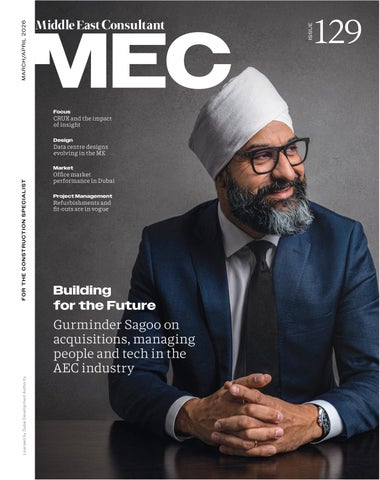
Gurminder Sagoo on acquisitions, managing people and tech in the AEC industry
Resilience drives progress
Welcome dear reader, to the latest edition of Middle East Consultant (MEC).
For the last month, with geo-political tensions looming and while many in the region worked from home, and children were engaged in distance learning, there was one thing I noticed - consultants across the region were busy. A lot of projects continued at perhaps an even faster pace than before - construction and infrastructure stayed focused on delivering projects on deadline, and some were handed over ahead of schedule. People’s resolve was certainly tested, but many continued to work, shop in malls, go out for a nice dinner and even meet friends for football and other sporting activities. Life carried on, and maybe it’s that resilience that makes the UAE one of the best places to live in the world. Strong leadership, decisive action and the ability to protect residents, even during times of strife, is something to be proud of, and that we certainly are.
In other news, we have the 2026 Value Engineering Summit coming up on May 6th at the Dusit Thani Hotel, and I’m certainly excited to meet a lot of the participants and the audience. It’s a first for me, but certainly not for my team, and I’m looking forward to seeing it come to fruition on the day. Take a look at the agenda on https://2026. valueengineeringsummit.com, and do join us for a day filled with panel discussions and presentations touching on several regional issues in the industry, and how we can work together to solve them. I’m sure the event will share a wealth of valuable insights at a time when the construction supplychain is under significant pressure. I look forward to seeing you there and to hearing your feedback on this issue of the magazine. Please drop me a line at clayton.aldo@cpitrademedia.com. Until next time, take care.
Clayton Aldo Vallabhan Deputy Editor, ME Consultant
Gurminder Sagoo on acquisitions, managing people and tech in the AEC industry
INTERFACE
40 Nathan Cartwright, Executive Director at NV5 speaks about how designs of data centres are changing, with increasing demand for them in the Middle East ⁄ 48 HKA’s Toby Hunt and Josephine Guckian talk about what goes into the producing the annual CRUX Insight Report, it’s impact and what it will offer in the future ⁄ 60 Roxy Reynolds, MD at Oval speaks about cost consultancy and refurbishing establishments
INITIATE
10 AESG launches Structural Design and Engineering Division ⁄ 14 Aires Mateus appointed by Al Ghurair for residential development in Dubai South ⁄ 16 AtkinsRealis and Futurecity sign partnership for urban development ⁄ 18 Killa Design unveils residential project on Al Maryah island
INNOVATE
70 Hospitality as infrastructure: The new investment logic shaping the Middle East ⁄ 76 Competitive advantage: The skillsets that set sustainable leaders apart ⁄ 82 Why integrated living is reshaping Saudi Arabia’s residential future ⁄ 88 A ‘Day in the life’ with Asif Shafi, Managing Director, Civil Infrastructure and Program Management at AECOM
GROUP
MANAGING DIRECTOR Raz Islam
DIRECTOR OF FINANCE & BUSINESS OPERATIONS Shiyas Kareem
EDITORIAL
EDITORIAL DIRECTOR Jason Saundalkar
DEPUTY EDITOR Clayton Aldo Vallabhan
ASSOCIATE EDITOR Priyanka Raina
ADVERTISING
GLOBAL ACCOUNT MANAGER Jas Kaur
STUDIO
ART DIRECTOR Simon Cobon
GRAPHIC DESIGNER Percival Manalaysay
PHOTOGRAPHER Maksym Poriechkin
CIRCULATION & PRODUCTION
DIRECTOR OF MARKETING & MEDIA OPERATIONS Phinson Mathew George
When you have finished with this magazine, please recycle it
The publisher of this magazine has made every effort to ensure the content is accurate on the date of publication. The opinions and views expressed in the articles do not necessarily reflect the publisher and editor. The published material, adverts, editorials and all other content are published in good faith. No part of this publication or any part of the contents thereof may be reproduced, stored or transmitted in any form without the permission of the publisher in writing.
Dubai Municipality completes 36% of stormwater drainage system in Deira
ENERGY
UAE launches smart microgrid initiative to power government infrastructure
INDUSTRY
KEO & MHA announce partnership to service growing data centre requirements
INDUSTRY
Azizi Developments works with Doka for Burj Azizi car park
OPERATIONS
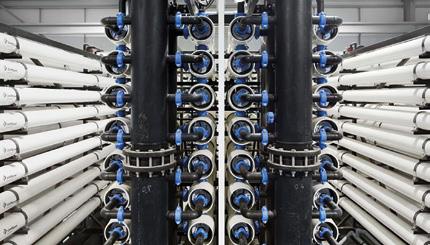
Acciona explores next-gen RO system to optimise desalination efficiency
REPORT
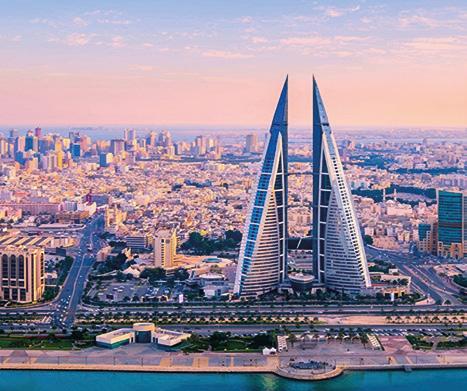
Bahrain real estate records robust growth in 2025
The Survey and Land Registration Bureau recorded a total of 29,777 real estate deals for the year, up 19.8% from 2024
MAY
Value Engineering Summit
6 May 2026
Dusit Thani, Dubai, United Arab Emirates
INFRASTRUCTURE
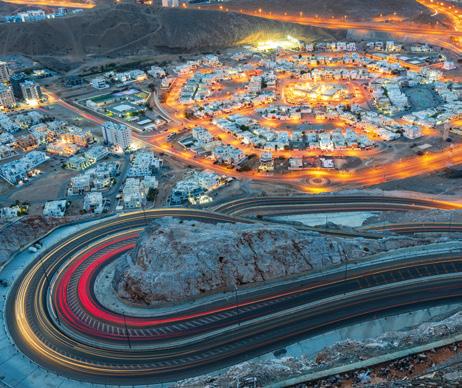
Oman advances $3bn expansion of road network
These include constructing new roads, upgrading and repairing existing ones, and conducting routine maintenance
JUNE
Energy & Sustainability Summit
24 June 2026
Dubai, United Arab Emirates
INDUSTRY
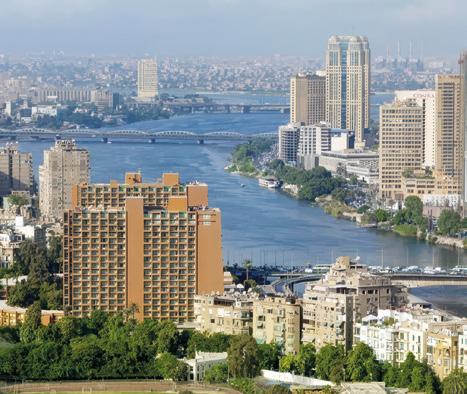
Qatari Diar to invest over $800m in hotel developments across Egypt
The expansion plans extend to Egypt’s Red Sea coast, where the developer is finalising feasibility studies on a luxury hotel complex in Sharm El Sheikh
OPERATIONS
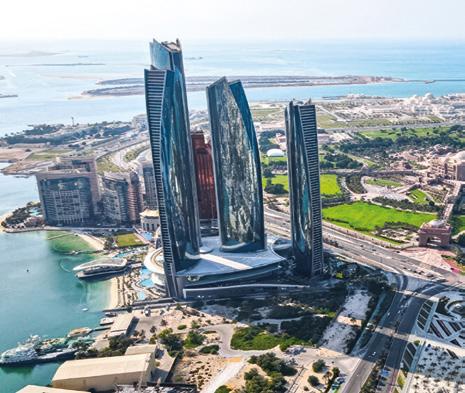
Abu Dhabi’s DMT announces new decisions to boost real estate transparency
The decisions enhance the effective implementation of the law, strengthening transparency within Abu Dhabi’s real estate market
CONSTRUCTION
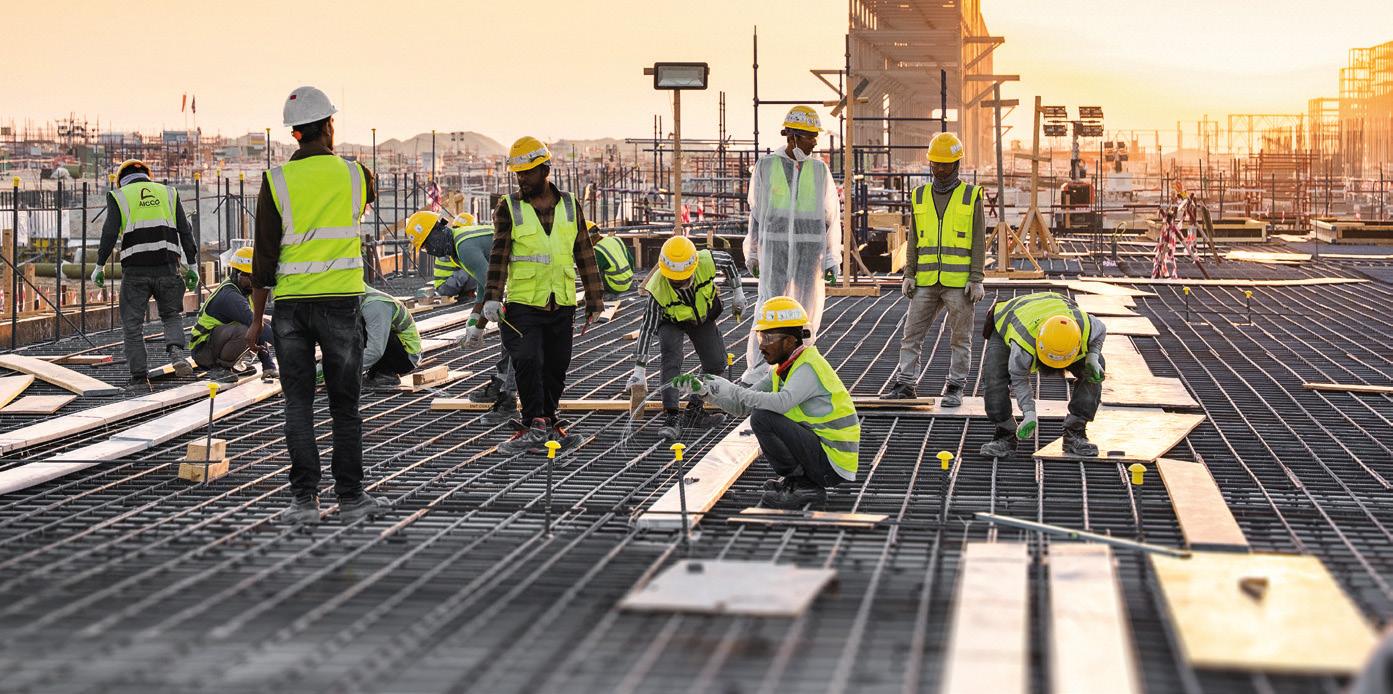
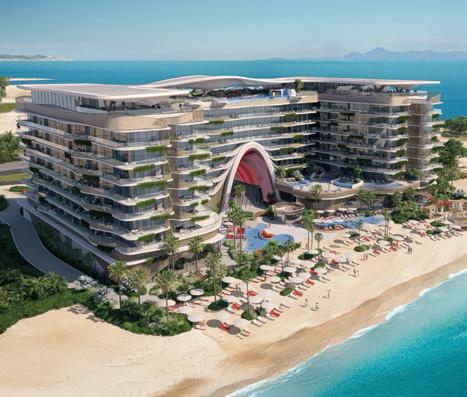
23% of construction completed at The Unexpected Al Marjan Island Hotel & Residences
Amid global economic uncertainty, the uninterrupted pace of construction signals supply chain reliability, workforce stability, and sustained investor confidence
JUNE
Digital Construction Awards
24 June 2026
Dubai, United Arab Emirates
JUNE
Construction Machinery ME Awards
25 June 2026
Dubai, United Arab Emirates
SEPTEMBER
Real Estate Leaders Summit
23 September 2026
Dubai, United Arab Emirates
10 AESG launches Structural Design and Engineering Division ⁄ 14 Aires Mateus appointed by Al Ghurair for residential development in Dubai South ⁄ 16 AtkinsRealis and Futurecity sign partnership for urban development ⁄ 18 Killa Design unveils residential project on Al Maryah island
A deep dive into the biggest construction headlines that caught our eye this month
AESG launches Structural Design and Engineering Division
Dubai-based AESG has launched a dedicated Structural Design and Engineering division. The new division enhances the company’s ability to deliver concept-to-construction engineering solutions embedded within its established sustainability and cost consultancy expertise, the company said.
By integrating structural engineering, commercial advisory and sustainability strategy from the earliest stages of project development, AESG enables clients to achieve design-to-budget outcomes, optimise embodied carbon and reduce downstream delivery risk, it added.
The move is said to further strengthen the company’s fully integrated, multidisciplinary consultancy platform across the Middle East.
Saeed Al Abbar, CEO at AESG, said the launch reinforces the company’s commitment to integrated delivery across the full asset lifecycle.
He explained, “Our strength has always been in combining engineering, sustainability and cost intelligence into a single advisory platform. The addition of a dedicated Structural Design and Engineering division strengthens that model, allowing us to influence critical structural decisions at concept stage,
while protecting commercial outcomes and long-term asset value. Across the UAE and Saudi Arabia, projects are increasing in complexity and ambition. To deliver successfully, engineering strategies must be aligned with sustainability targets, procurement realities and financial objectives from day one. This integrated approach improves certainty, reduces risk and drives stronger project performance.”
The firm said its new division is embedded within a broader engineering and advisory ecosystem that aligns engineering decisions with capital efficiency, procurement strategy, material availability, regulatory compliance and long-term asset performance. This integrated approach enables structural solutions to be evaluated not only for technical robustness, but also for wholelife value and commercial viability. The move comes as the increasing scale and complexity of projects in the region is driving the need for delivery-aligned, commercially intelligent engineering.
AESG said that the Structural Design and Engineering division will support clients across feasibility, concept design, detailed design, early contractor engagement and construction-stage advisory. By embedding structural strategy
senior leadership roles at AECOM and Arcadis, overseeing large international & multidisciplinary teams and directing major projects across Saudi Arabia and the UAE. He holds a Bachelor of Engineering (Honours) from Griffith University and is a Chartered Structural Engineer in Australia.
early and aligning it with cost modelling and sustainability analysis, AESG aims to reduce redesign risk, protect programme milestones and improve budget certainty.
The division will focus on: optimising embodied carbon through material efficiency and alternative structural systems; aligning structural design with capital budgets and procurement strategies; accelerating delivery through modular and repeatable methodologies; enhancing durability and resilience in response to regional climatic conditions, and improving whole-life asset performance and adaptability.
The company has appointed Matthew Cross as Director of the new division. With over 25 years of experience, Cross has held
“Developers today are operating with compressed delivery programmes and expecting increasingly sophisticated delivery models from initiation. Designto-budget is no longer aspirational — it is a key metric at every stage. We are also seeing greater reliance on early works and structural packages to derisk the critical path. By integrating well engineered structural solutions with cost consultancy and our in-house multidiscipline engineering teams from the outset, we are helping clients make informed trade-offs that protect both programme and commercial performance,” explained Cross.
The company has also appointed Dr. Gavin Lume as Technical Director.
Lume brings deep expertise in complex structural design and regional delivery. He holds a PhD from the University of Sydney and has led teams across the Middle East on major programmes, including hyper-luxury Red Sea developments. His experience in structural dynamics contributed to landmark projects such as the Burj Khalifa and the Dubai Frame, the company said.
Emphasising the importance of tailoring engineering solutions to regional realities Dr. Lume stated, “International developers entering the region can underestimate how local processes, procurement constraints and construction norms shape programme certainty and buildability. Integrating regional design, procurement and construction expertise early alongside the wider specialist disciplines, enables holistic solutions that are coordinated and practical to deliver on site. This new division brings earlier clarity on the intent of the project, aligning the structural design with stakeholder expectations from the outset.”
(L-R) Matthew Cross, Director and Dr. Gavin Lume, Technical Director are appointments to AESG’s newly launched Structural Design and Engineering division.
ONE OF THE UAE’S OLDEST CONTRACTING COMPANIES, ESTABLISHED
IN 1975
For over five decades, Engineering Contracting Company (ECC Contracting) has stood at the forefront of the UAE’s construction landscape, delivering landmark projects that define skylines, enable communities, and shape the nation’s growth story.
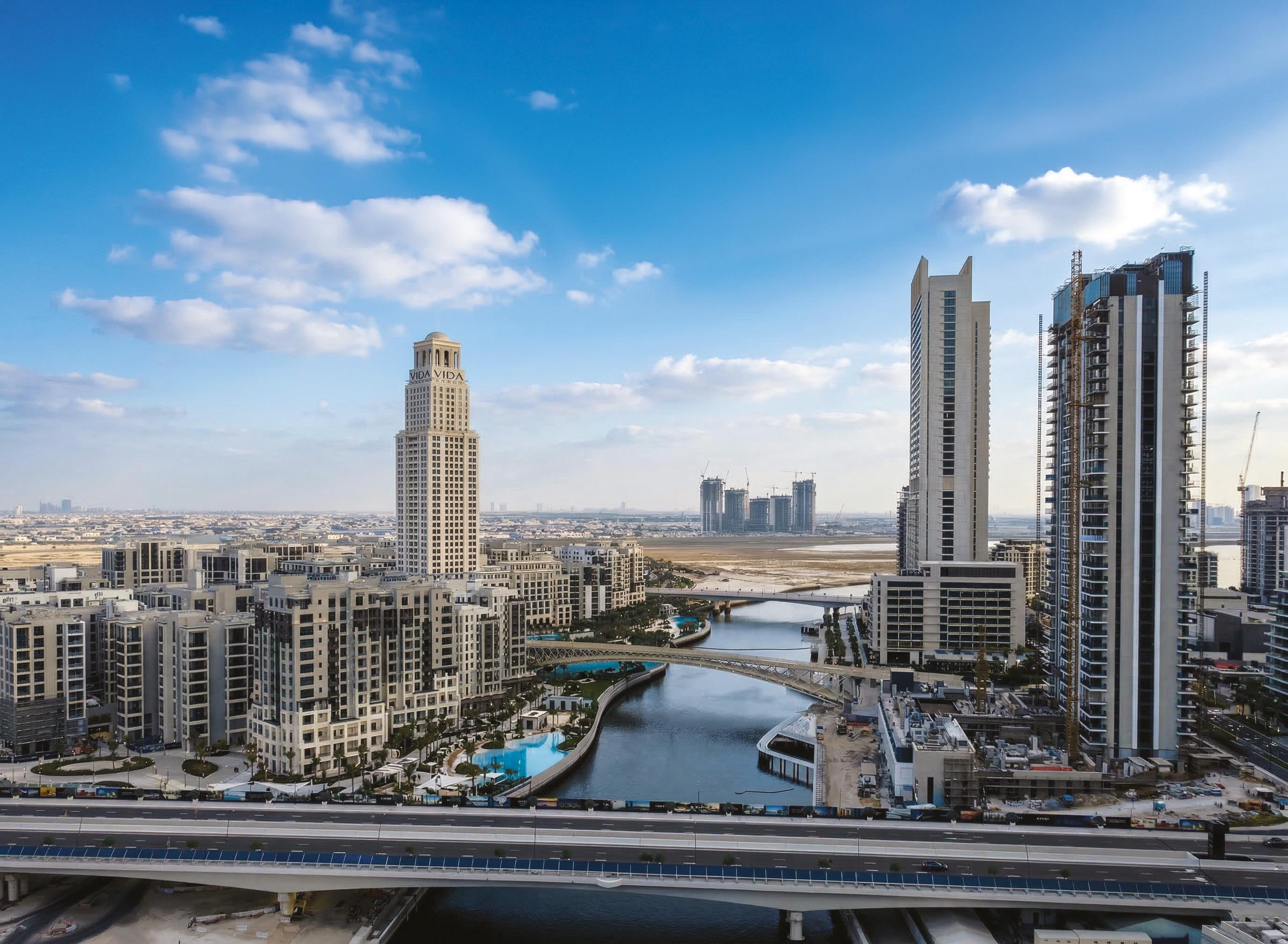
Consistently delivering projects ahead of schedule, including Hewi Nad Al Sheba (2026), Award-winning Peninsula Plot B (2025), Dubai Creek Harbour Phase 3 (2024), and Vida Hotel and Residences (2023)
Aires Mateus appointed by Al Ghurair for residential development in Dubai South
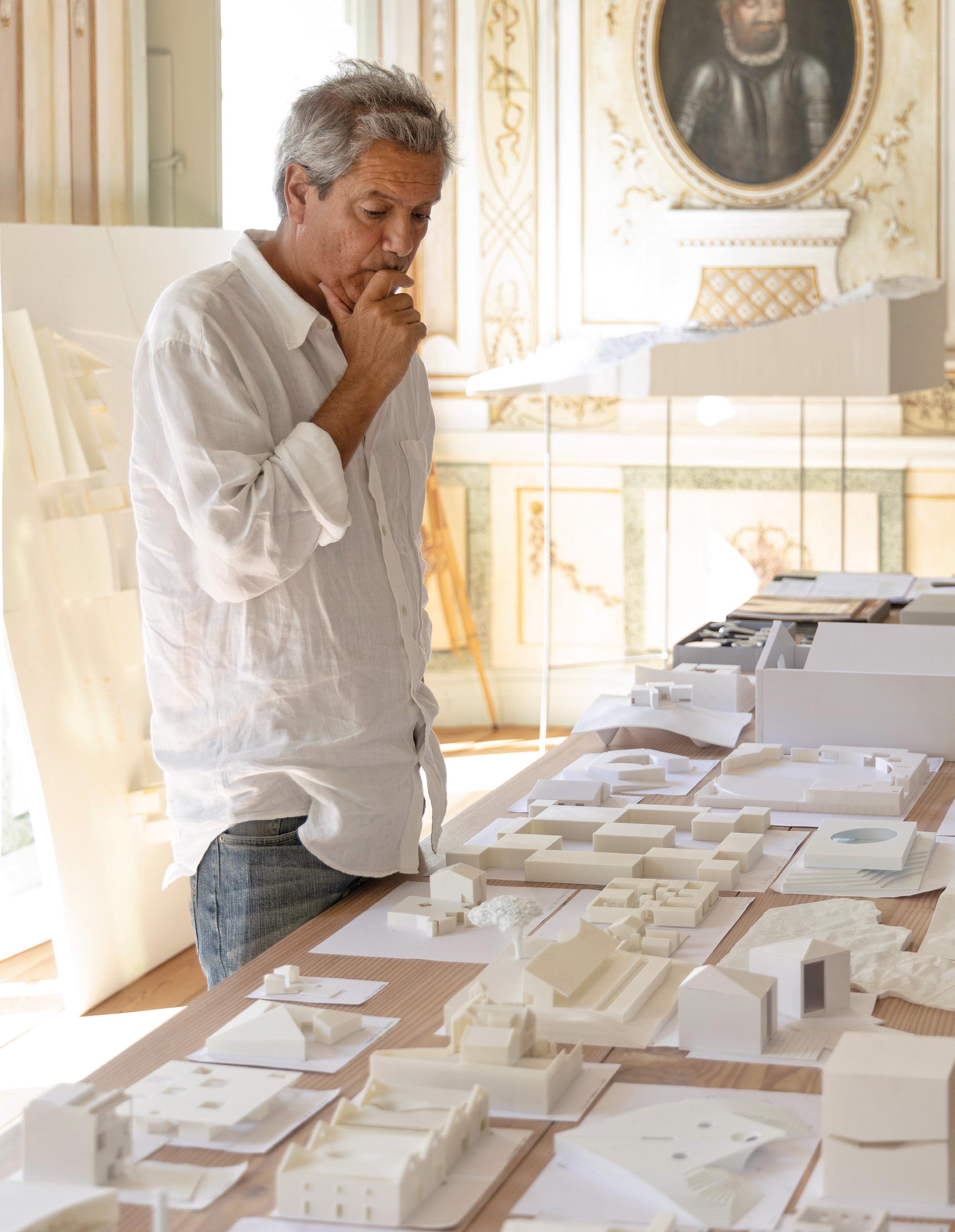
Aires Mateus has been signed on by Al Ghurair Development for its upcoming premium residential development in Dubai South. The development will feature a mix of 1-3 bedroom units, including duplex residences.
Aires Mateus has spent over 3 decades developing architecture rooted in the relationship between the physical and the cultural world. Founded in 1988 by brothers Manuel and Francisco Aires Mateus, the studio covers key areas of architecture, interior, product and graphic design. It approaches each project through careful research into its context, seeking what it describes as the perennial state of shapes and materiality in the continuity of time.
The appointment marks the international architect’s first project in the UAE and continues Al Ghurair Development’s approach of working with internationally respected architects to deliver homes that are designed with purpose and built for generations to come.
Sultan Al Ghurair, CEO, Al Ghurair Development said, “Every architect we work with is chosen because they bring something distinct. With Aires Mateus, what stood out was their discipline. For more than 30 years, they have maintained a singular focus on precision, proportion
and the quality of space. That aligns closely with how we approach residential design at Al Ghurair Development, where every decision is guided by quality, practicality and long-term value. We are delighted to bring their work to the UAE for the first time.”
Across cultural, civic, and residential projects throughout Europe, the Aires Mateus studio has consistently demonstrated this commitment to clarity and permanence. Notable projects include the EDP Headquarters in Lisbon, the Museums of L’Elysee and mudac in Lausanne, the Olivier Debre Contemporary Creation Centre in Tours, and the Faculty of Architecture in Tournai.
For Dubai South, the studio’s scope of work includes designing of a residential building offering 1-3 bedroom homes, including duplex residences. The full architectural concept is currently being developed.
Founding Partner Manuel Aires Mateus said, “We approach each project as an opportunity to understand what already exists. The scale of the city, the light, the climate, and the way people move and inhabit space. Architecture begins there.”
Aires Mateus’s approach to residential design starts with how a building is
experienced from within. The practice has long suggested that domestic space should offer its residents freedom, and that the quality of a home is determined by proportion, light, and the relationship between interior and exterior, not by decorative complexity, he explained.
“It is not about adding complexity, but about clarifying what matters. In Dubai, the context is strong and very present. Our role is to respond with precision, creating spaces that feel natural to live in and clear in their intention. We are pleased to work with Al Ghurair Development on a project that invites us to bring a new perspective to a city that is always looking forward,” he added.
The new development forms part of Al Ghurair Development’s expanding residential portfolio, which includes The Weave in Jumeirah Village Circle, designed in collaboration with Australian architect Joe Adsett and now under construction, alongside Wedyan on Dubai Canal, designed by Kengo Kuma under the Al Ghurair Collection super-prime brand, and an upcoming tower in Wadi Al Safa 3 near The Wilds and Al Barari, designed by Neri&Hu Design and Research Office. Further developments in Dubai South and a masterplan in Al Jaddaf are also in the pipeline.
AtkinsRealis and Futurecity have signed a strategic agreement at the recent MIPIM 2026 property expo held in Cannes in bid to advance culture-led urban development across global markets.
The partnership will initially focus on the Middle East, where major investment in arts, culture and destination development is reshaping cities. A core part of the agreement is the creation of the Futurecity Lab, a shared platform for research, cultural foresight, and market intelligence in global cultural placemaking.
The Futurecity Lab will inform AtkinsRealis’ planning, engineering and master-planning work, helping projects strengthen identity and compete internationally. By combining AtkinsRealis’ engineering, architecture and program delivery
expertise with Futurecity’s cultural strategy and placemaking leadership, the 2 organisations aim to embed cultural thinking from the outset of major developments.
This integrated approach helps create destinations with clear identity and long term economic, social, and cultural value.
The initiative reflects growing recognition that cultural identity and user experience are central to modern city making. Cultural districts, creative neighbourhoods and experience led destinations to increasingly influence investment, tourism and long-term urban value.
Matthew Tribe, SVP, Buildings and Places, AtkinsRealis said, “This collaboration brings cultural depth into the core of major development programs. Working with Futurecity strengthens our
ability to help clients create destinations with clear identity, long-term value, and a meaningful sense of place. Across the Middle East and other fast-evolving markets, this combined expertise allows us to support governments and developers in delivering projects that resonate with people and stand out globally.”
“Together, AtkinsRealis and Futurecity will support governments and developers in delivering places that are sustainable, competitive and culturally distinctive,” he stated.
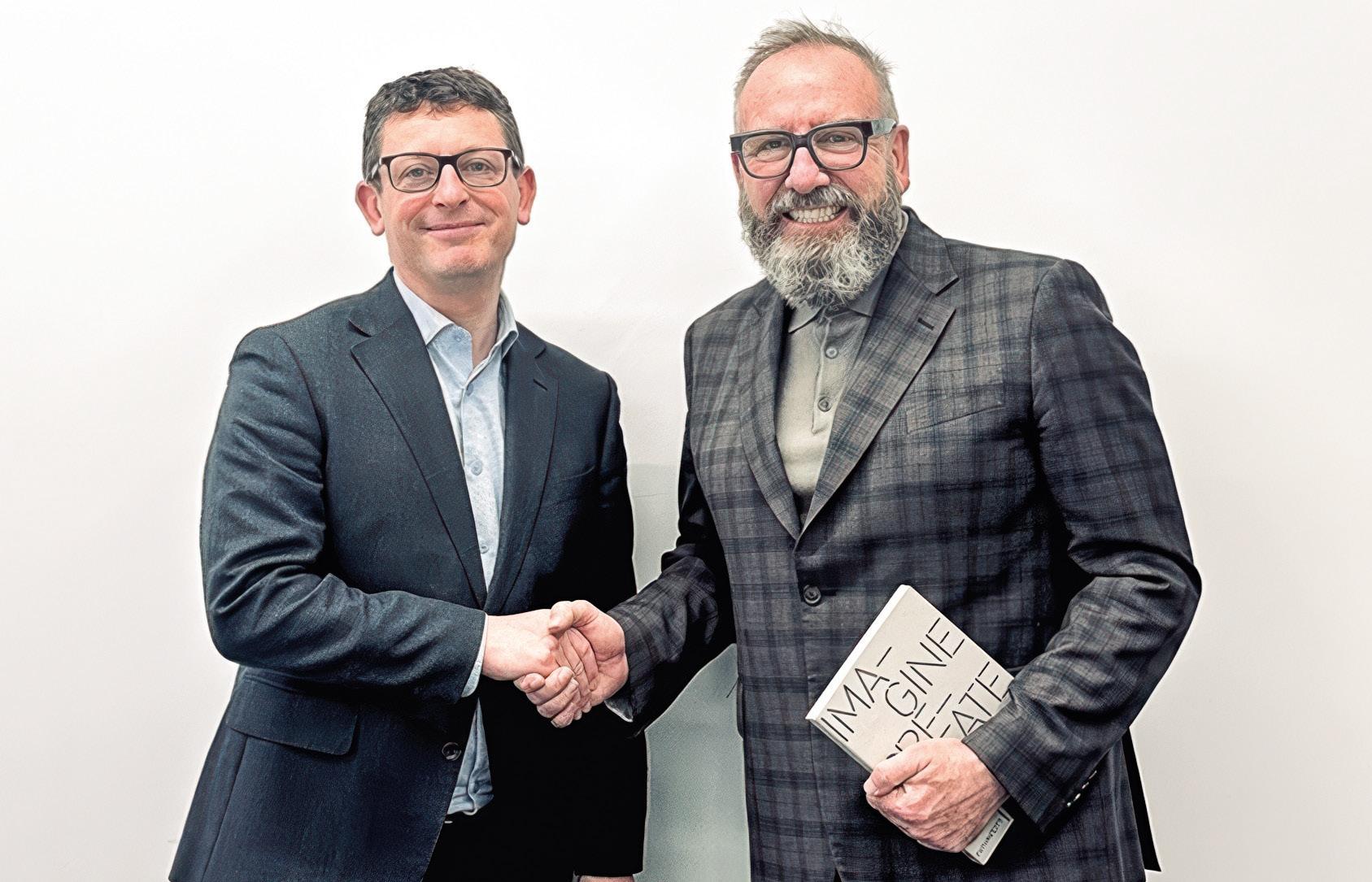
(L-R) Matthew Tribe, SVP Buildings and Places, Atkins Realis and Mark Davy, Founder and CEO of Futurecity sign an agreement to advance culture-led urban development.
Killa Design unveils residential project on Al Maryah island
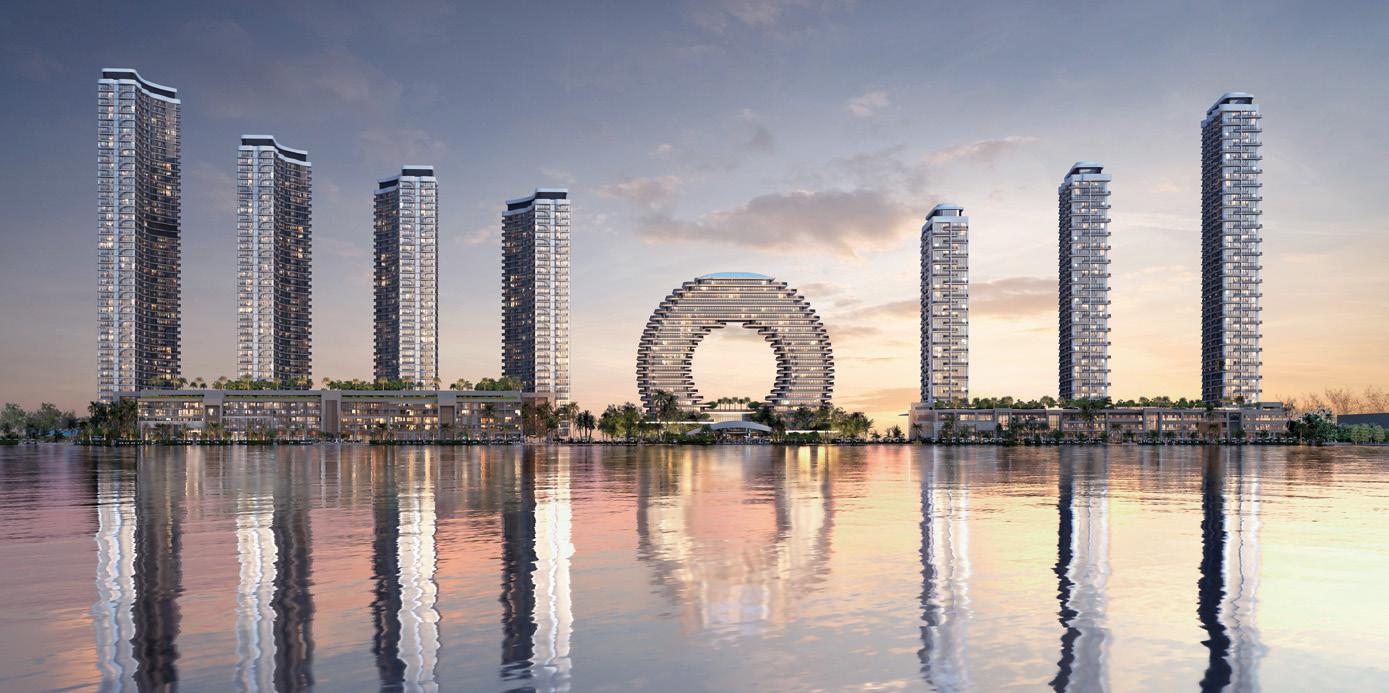
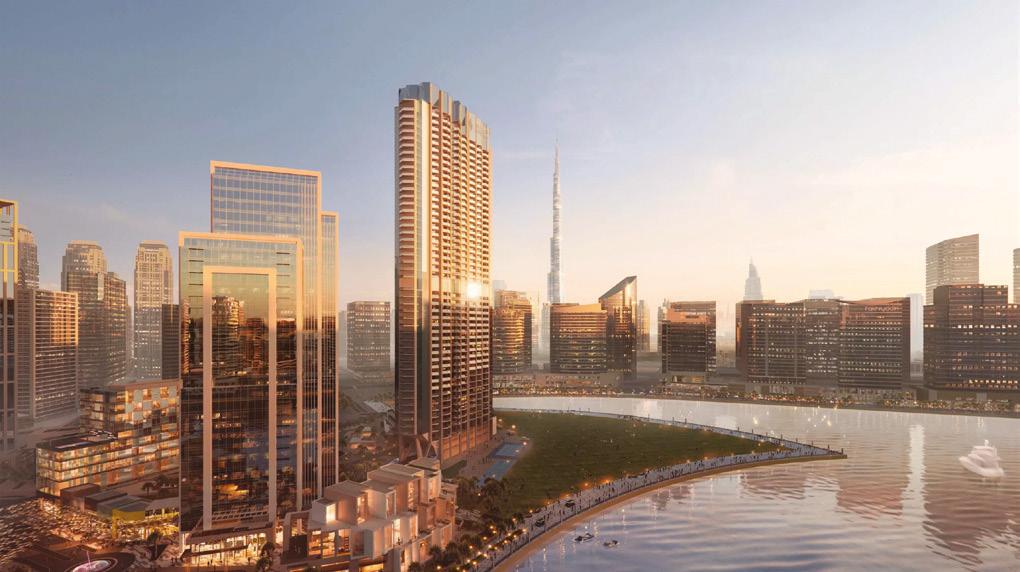
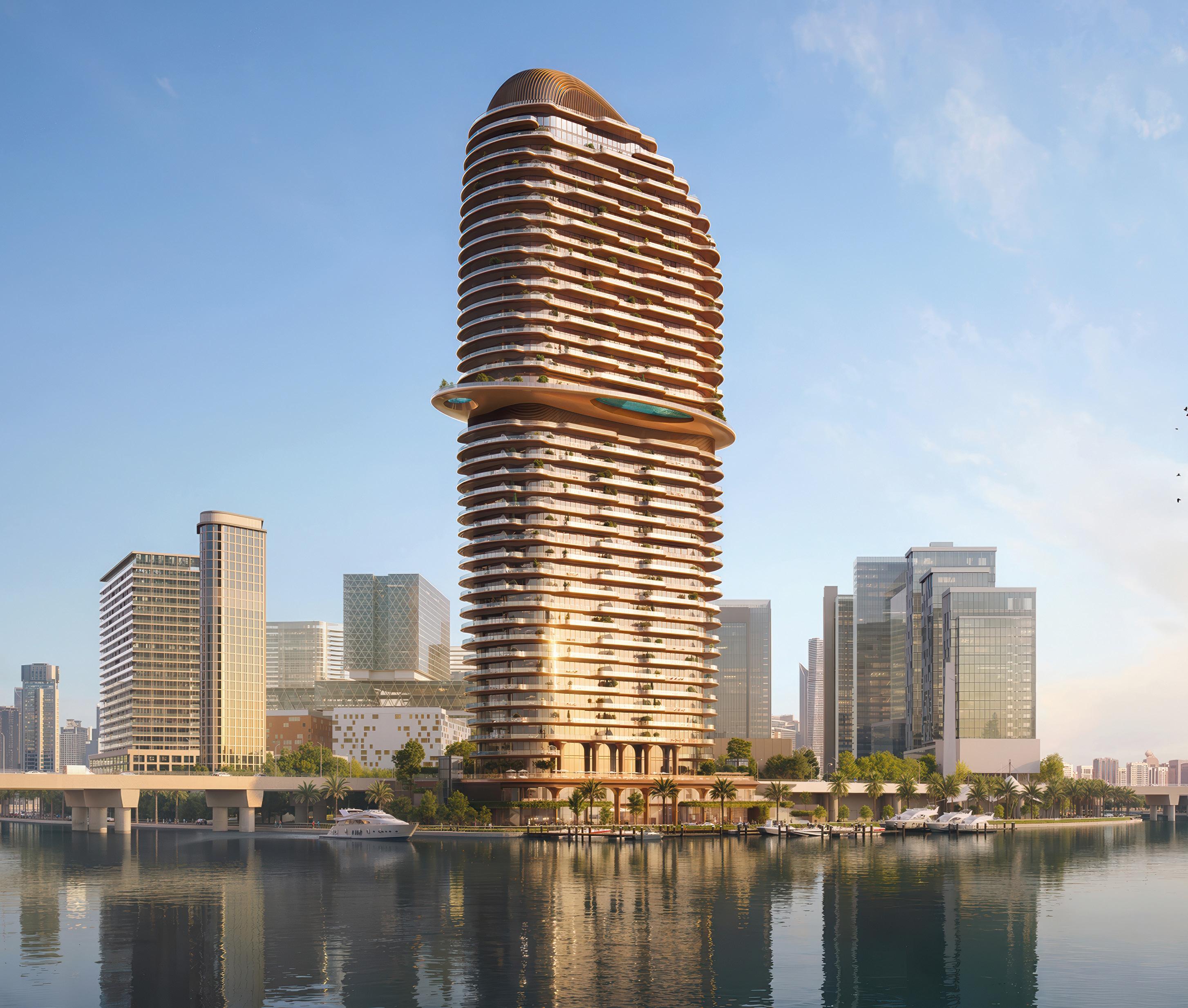
Killa Design has revealed Jumeirah Residences Al Maryah Island, which is said to be a new sculptural landmark shaped by the studio’s future-driven philosophy – designing architecture that responds to how people live, how cities evolve, and how buildings endure over time.
This approach has defined globally recognised projects such as the Museum of the Future and Jumeirah Marsa Al Arab and continues here on Abu Dhabi’s waterfront. Designed by Will Hosikian, Design Principal and Partner at Killa Design, the tower is conceived as a timeless expression of movement and fluidity, said the design studio in a statement.
Challenging the more rigid typologies of Al Maryah Island, marking the prominent southern tip of the island, the 186m tall ultra luxury branded residence’s sculpted presence is said to be akin to being evolved by the elements over time.
The delicately crafted bronze balconies and terraces, become dynamically illuminated by the shifting sunlight, like an amber gemstone in the emerging skyline. At its centre, a dramatic cantilevered orbital ring forms the heart of the building, a sky deck accommodating the residences’ ultra-luxury amenities and offering uninterrupted 360-degree views across the Abu Dhabi skyline, the firm said.
The cantilevered oculus, a glass bottom pool, sculpted into the orbital ring, creates visual connection as a lens, allowing spaces to extend naturally toward the water and the city beyond, it added.
“Al Maryah Island is evolving into one of Abu Dhabi’s most important urban destinations,” remarked Hosikian.
“Our ambition was to design a tower that feels fluid and contemporary, yet grounded in its context. The architecture responds to the waterfront, to light, and to the scale of the city. It’s about shaping an experience that will remain relevant and meaningful for decades to come,” he said.
Designed with longevity at its core, every element – from orientation and massing to materiality and detailing – has been carefully considered to support privacy, well-being and a refined residential lifestyle, the firm noted.
Developed in close collaboration with Emirates Developments and Jumeirah, the project aligns architectural expression with hospitality-led living, stated Hosikian.
Jumeirah Residences Al Maryah Island is conceived not simply as a landmark, but as a timeless addition to Abu Dhabi’s skyline, one that will continue to evolve alongside the city’s vision, he added.
Consultants across the Middle East carry the responsibility of delivering accurate cost advice, reliable estimates, and trusted project insights. CostX is built to support that responsibility. With powerful digital takeoff, precise estimating, and integrated workflows, CostX helps cost consultants work faster, measure with confidence, and maintain complete control over project costs. From early feasibility to final account, CostX enables consultants to deliver the clarity and accuracy their clients depend on.
Dubai Office Market Performance 2025
Experts at Cavendish Maxwell say Dubai’s office market delivered exceptional performance in 2025, characterised by surging prices, record transaction volumes, and robust rental growth, all supported by strong economic fundamentals and persistent supply constraints. The Emirate’s business ecosystem expanded significantly, with the Dubai Chamber of Commerce registering 71,830 new member companies, pushing total active membership to 292,486, a 13.2% increase year-on-year.
This robust economic backdrop translated directly into market performance. The office sales market recorded its strongest year since 2014, with transaction volumes reaching approximately 4,600 units, a 53.6% increase from 2024. Transaction values surged to US $3.6bn, more than doubling from US $1.8bn in 2024, representing a 102.3% increase. Sales prices climbed 25.9% to reach US $531 per sqft, driven by strong demand from both end-users’ seeking ownership amid rising rents and investors attracted by capital appreciation potential. The rental market mirrored this strength, with citywide rates increasing 22.9% year-on-year as occupancy levels tightened and landlord incentives reduced.
A key factor driving these increases was supply constraint, with only 87,000sqm delivered from a projected 224,000sqm pipeline, representing a 39% materialisation rate. Total office stock reached 9.4m sqm, up just 0.9% from 2024. This supply-demand imbalance kept market conditions firmly tilted in favour of landlords throughout the year.
Looking ahead to 2026, these dynamics are expected to persist. Rental momentum is expected to remain positive, supported by continued business formation and expansion alongside ongoing supply constraints, with only 90,000 to 140,000sqm expected to materialise from the projected 300,000sqm pipeline. Whilst the outlook remains positive, several risks warrant monitoring, including potential supply acceleration, global economic headwinds, and geopolitical developments. Nevertheless, Dubai’s strategic positioning as a premier business hub, supported by proactive policies and the Dubai Economic Agenda D33, is expected to provide a robust framework to sustain positive market trajectory throughout 2026.
SALES TRANSACTIONS
Dubai’s office market recorded a strong uplift in sales activity in 2025, with total transaction volumes reaching approximately 4,600. This marked a 53.6% increase from 2024 and the highest level since 2014.The growth was supported by strong demand from end-users turning to ownership amid a tightening rental market, and by investors seeking portfolio diversification under favourable market conditions and strong long-term value potential. While both offplan and ready segments witnessed growth compared to 2024, the off-plan segment was the main driver of total volume growth, with off-plan activity further intensifying in the second half of 2025.
At the same time, transaction values surged to US $3.6bn, up from US $1.8bn in 2024. This marked a 102.3% increase, nearly doubling year-on-year.
SALES TRANSACTIONS: OFF-PLAN VS. READY
The ready segment continued to dominate the office sales landscape; however, its share declined from 94% in 2024 to 69% in 2025, as off-plan activity surged. The growth in off-plan activity was driven by increased project launches in 2025, with competitive pricing and attractive payment plans that made the segment attractive to buyers. Off-plan transactions jumped from around 177 in 2024 to 1,400 in 2025, a surge of 697.2%. During the same period, ready sales transactions grew by 12.7% to approximately 3,100.
In terms of transactional value, the office market more than doubled year-on-year, reaching US $3.6bn, a 102.3% increase driven by robust growth across both segments. Ready office sales values climbed 46.2%, with average transaction prices rising from US $572mn to US $735mn. Meanwhile, off-plan transaction
values surged nearly six-fold, jumping from US $1.9mn in 2024 to US $1.25bn in 2025.
SALES TRANSACTIONS: BY UNIT SIZE
In 2025, off-plan office transactions were predominantly concentrated in small to mid-sized units, with offices sized 1,000 to 2,000sqft accounting for the largest share at 46.6%, closely followed by units below 1,000sqft at 43.8%. The ready segment mirrored this trend, with offices measuring 1,000 to 2,000sqft similarly dominating activity at 48.4% of transactions, while units below 1,000sqft also maintained strong demand at 37.2%. However, across both segments, large offices above 5,000sqft remained limited, accounting for just 1.5% of off-plan transactions and 1.3% of ready transactions.
EXISTING AND FUTURE OFFICE SUPPLY
In 2025, Dubai’s total office supply reached 9.4m sqm, a marginal increase of 0.9% compared to 2024. While approximately 224,000sqm of new office space was initially projected for delivery during the year, only around 87,000sqm was completed, bringing the materialisation rate to just 39%.
Looking ahead, around 300,000sqm of office space is expected to enter the market in 2026. However, based on historical completion patterns, actual deliveries are expected to range between 90,000sqm to 140,000sqm, with a portion of the projected supply likely spilling over into 2027 and beyond.
SALES PRICE TREND
Dubai’s office sales prices surged 25.9% in 2025, reaching US
$531 per sqft, supported by strong interest from both occupiers and investors. Rising rents and reduced landlord incentives prompted some occupiers to buy rather than lease. At the same time, investors also participated in the market aggressively, attracted by the strong rental environment and ongoing capital appreciation. This heightened demand, combined with limited inventory in prime locations, intensified competition, and fuelled price appreciation.
RENTAL RATE TREND
In parallel with the rise in office sales prices, Dubai’s office rental market saw robust growth in 2025, driven by increasingly tight occupier conditions as occupancy levels continued to rise across the city. This dynamic further strengthened the already
landlord-favoured market, resulting in a reduction in leasing incentives. At the citywide level, office rental rates increased by 22.9% year-on-year.
RENTAL RATE CHANGE BY AREA (2024 VS. 2025)
While rental growth was observed across the city, the pace varied significantly by location. DIFC and Downtown Dubai, the city’s core business districts, recorded above-average year-onyear increases of 35.3% and 32.9%, respectively. Barsha Heights recorded rental growth of 33.4%. Similarly, Dubai Hills Estate, Business Bay, Jumeirah Lakes Towers, and Dubai Silicon Oasis posted robust rental increases ranging between 25% and 27%, as tenants sought high-quality alternatives without the premium pricing associated with core CBD locations.
Turn
growth challenges into competitive advantages.
Wherever your projects take you, Trimble scales with your ambition. Whether it’s supporting new materials, handling local compliance or growing from single seats to enterprise deployments, we’ll help you deliver with confidence.
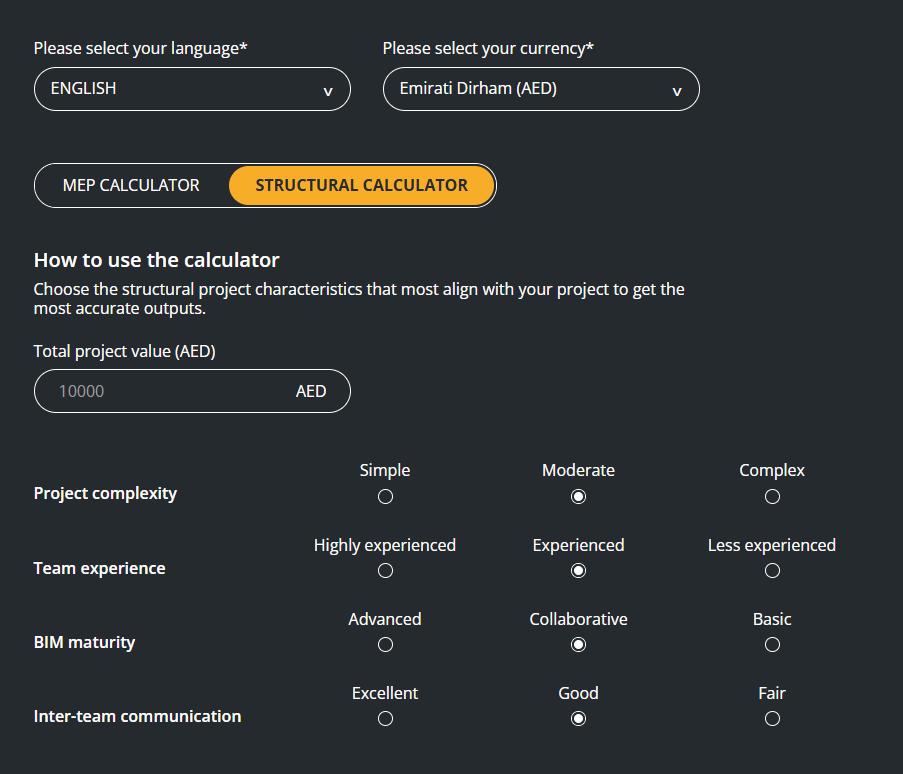
REWORK CALCULATOR
This free access tool is designed to help structural and MEP professionals visualise the financial impact of rework in a project.
By inputting a few key details and using data from the Construction Industry Institute, you can see how small oversights can escalate as the project progresses from design to construction.
INTERFACE
30 Gurminder Sagoo, Chief Commercial Officer of Egis in the Middle East & South Asia talks about Egis’ business in the region, managing people, acquisitions and the future of tech in the industry ⁄
40 Nathan Cartwright, Executive Director at NV5 speaks about how designs of data centres are changing, with increasing demand for them in the Middle East ⁄ 48 HKA’s Toby Hunt and Josephine Guckian talk about the early days of the annual CRUX Insight Report, what goes into the producing such a globally well-recognised resource, it’s impact and what it will offer in the future ⁄ 60 Roxy Reynolds, MD at Oval speaks about cost consultancy and refurbishing establishments
INTERFACE
Going behind-the-scenes with the region’s top construction consultants and industry trailblazers
Building for the Future
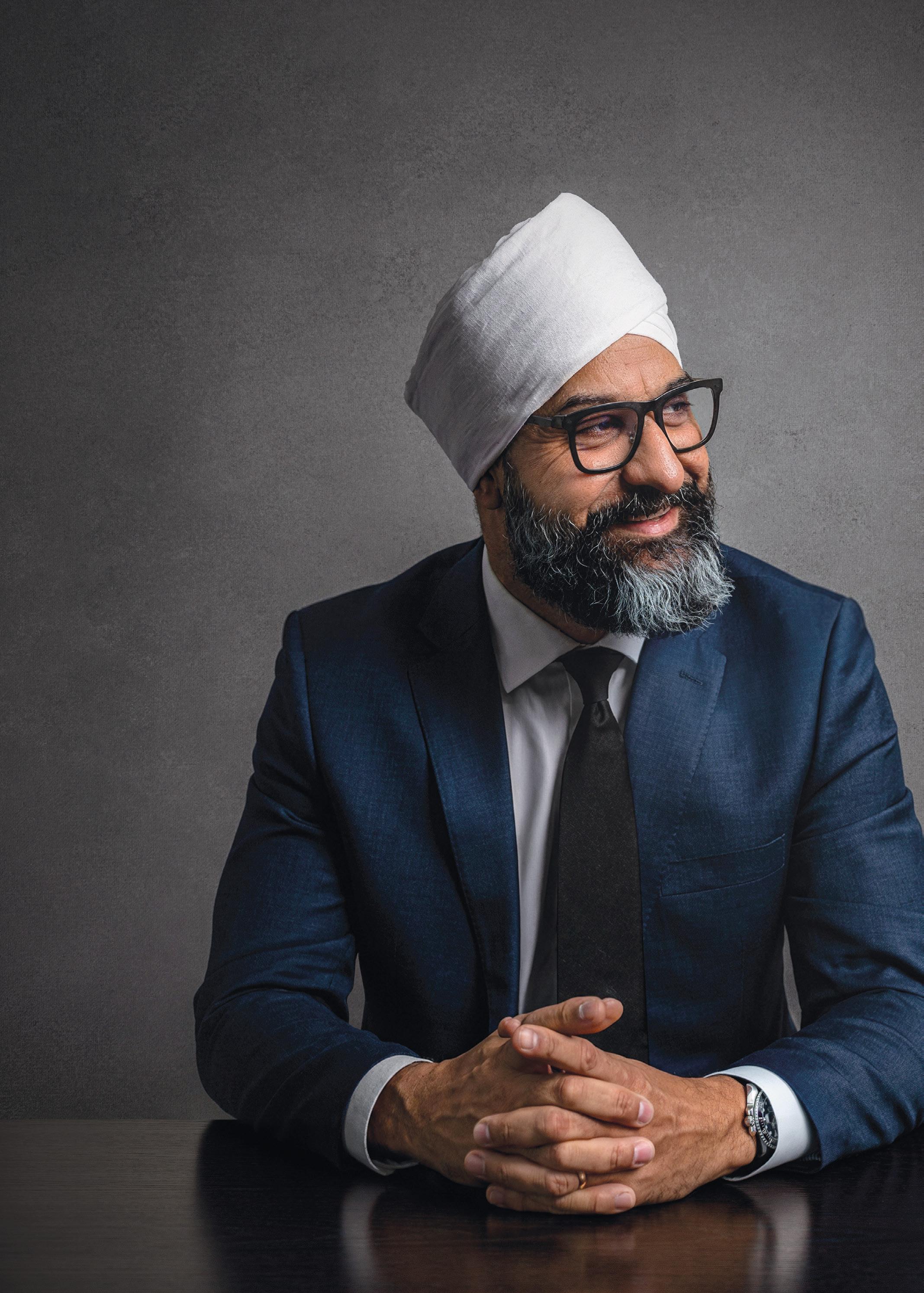
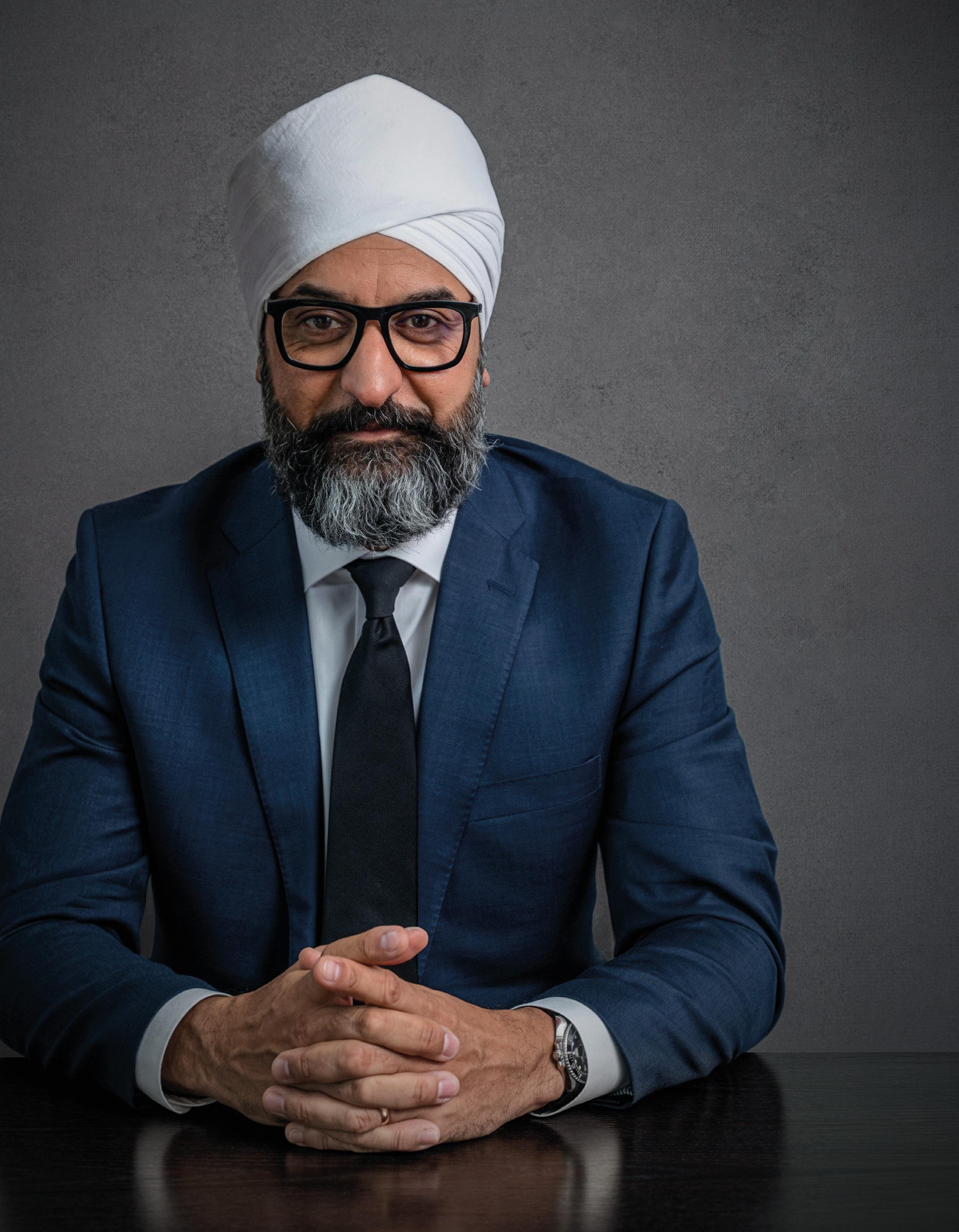
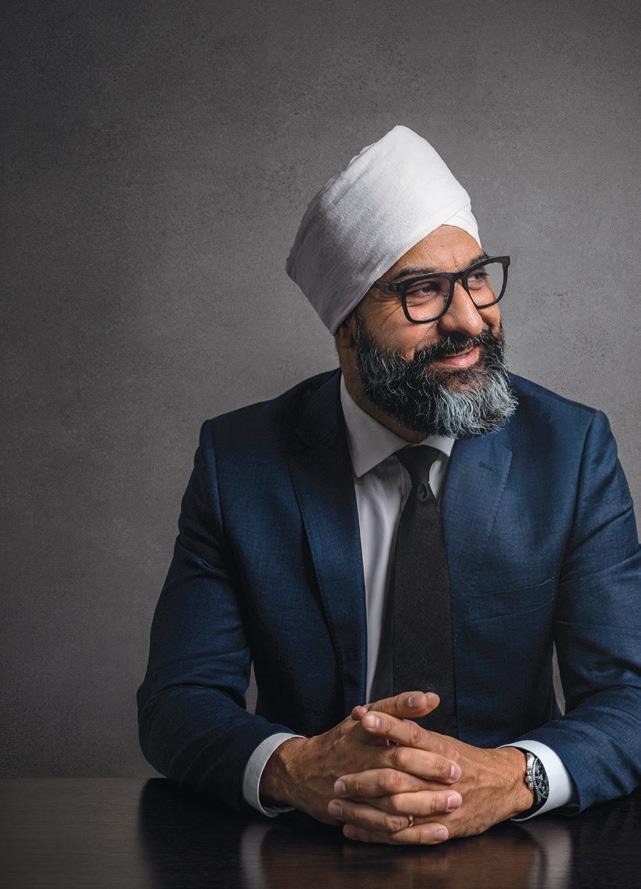
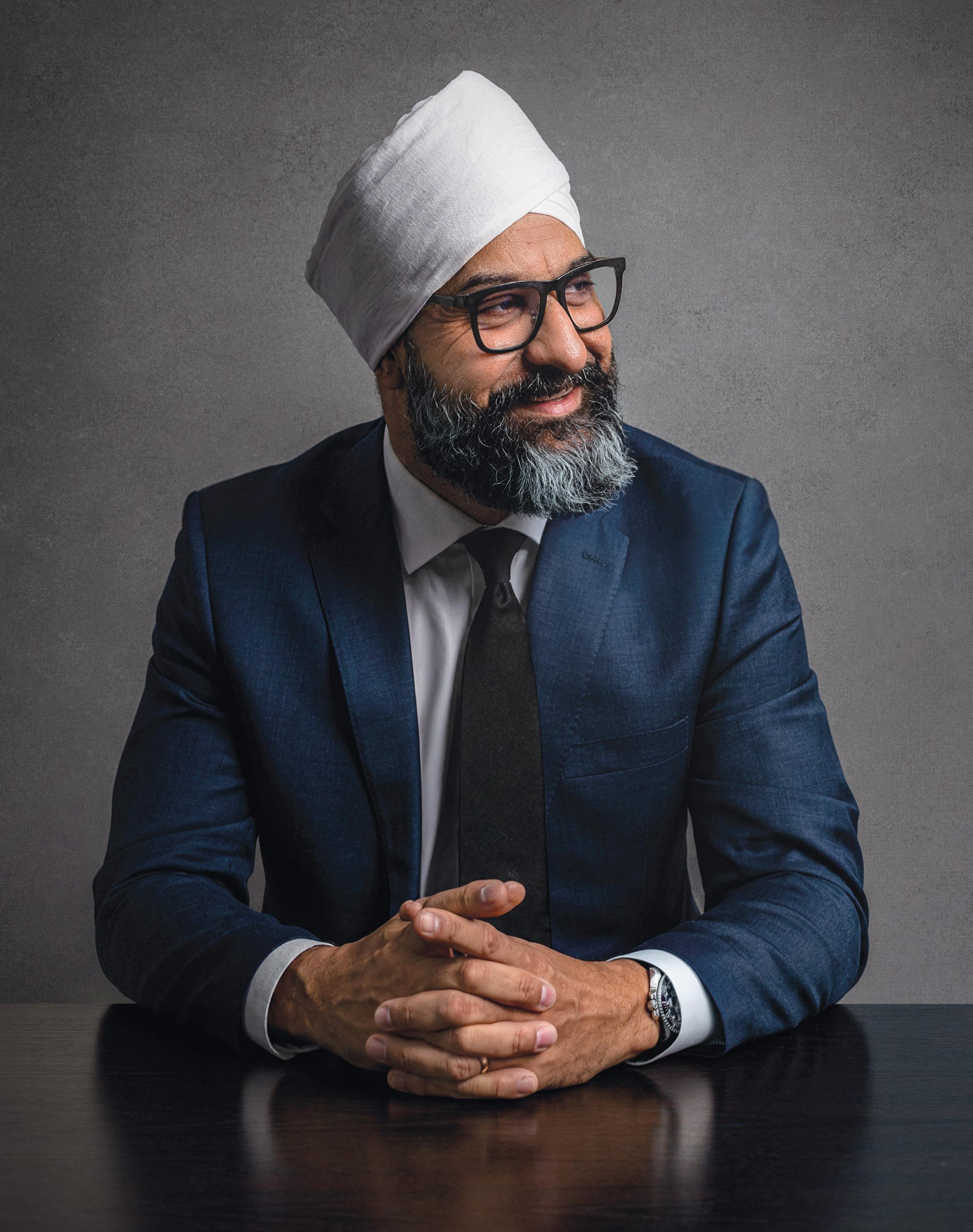
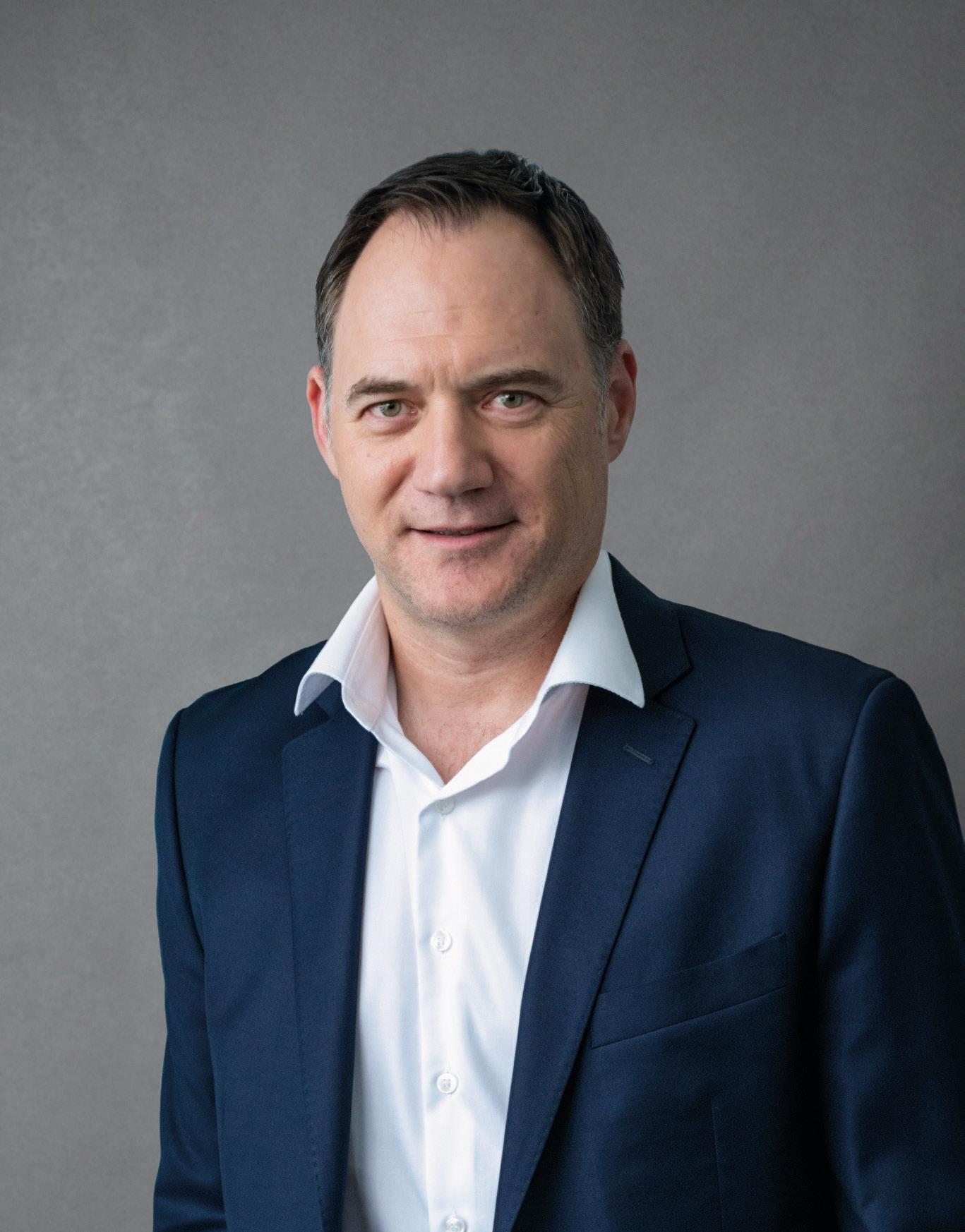
Gurminder Sagoo, Chief Commercial Officer of Egis in the Middle East & South Asia talks to Middle East Consultant’s Jason Saundalkar and Clayton Vallabhan about Egis’ business in the region, managing people, acquisitions and the future of tech in the industry
The Egis Group has made a name for itself in terms of consulting, construction engineering, and mobility services, and employs over 22,000 professionals across 70 countries. It delivers integrated expertise across the planning, design, and operation of infrastructure for transport networks, cities, and buildings.
With a strong emphasis on innovation and sustainability, Egis says that it supports clients in developing intelligent solutions that respond to the twin pressures of climate change and accelerating urban growth. The group has been very active in the last 4 years with acquisitions across the Middle East, and the rest of the world.
“It's important to recognise that 2025 was an important year for our shareholders and investors. We received a reinvestment of capital into the business, which from a global perspective, allows us to continue our acquisition and mergers strategy, as well as invest money into organic growth,” says Gurminder Sagoo, Chief Commercial Officer for Egis in the Middle East & South Asia.
“We are continuing the acquisition strategy, and are looking outside of the Middle East region, where we’ve already grown significantly on the back of acquisitionsin 2022, 2023 and 2024. Our focus is now shifting to the Americas, and we undertook a number of acquisitions in the States, which started to give us our stronghold there,” explains Sagoo.
Sagoo says this was possible through Tikehau Capital (TKO), who own a majority share in Egis.
“It is all part of building a corporate jigsaw, while MESA is a region very different to the UK, Europe, France, East Asia and America and so on, we all still point towards a single goal and a single viewpoint. This is important to recognise,” explains Sagoo.
Sagoo says this has resulted in a new set of targets for the group, by its investors, which means different things for different regions. “We need something very different for America, something different for our French, Europe and UK businesses and likewise for the Middle East.”
“For MESA, from 2022 through to 2024, we engaged in an acquisition strategy, which we completed, and that saw a number of brands come to the table. It allowed us to position ourselves outside of our core rail and aviation market, in terms of Project Management Consultancy (PMC) activity that we were traditionally doing, and diversify into general engineering and architecture for buildings,” comments Sagoo.
“We are growing the architecture brand within Egis globally, and it's quite an interesting business that we've created under the brand of 10N Collective. We have also grown our transportation business giving us critical mass in this space.”
Sagoo thinks the decisive phrase is critical mass. He says this is very important to trade effectively in the Middle East. He explains, “You either remain boutique, 50 to 200 people and you trade at that level, or you become a big player, but you need critical mass to be effective as a big player. Critical mass allows you to do a number of things - it allows you to talk to clients
that you wouldn't necessarily talk to before.”
He points out, the real question the leadership at Egis asked was how growth could add value to clients.
“We’ve been in this industry long enough to know that projects are complex, and they're never straightforward. In turn, we also work with clients that have a very diverse portfolio themselves and we need to be able to meet their needs. So, having that critical mass affords us that kind of agility,” he explains.
Sagoo says 2025 was a very good year for Egis, and he feels that engineering design has cemented itself in the region, primarily in Saudi Arabia and the UAE. He says, “We saw a shift in Saudi Arabia, where we have traditionally done lots of PMC works, to engaging on very significant design projects. So we see a balance in the portfolio there. We became a player in the UAE, where it’s very much a design business in the building space but we have equally seen growth in our transportation business, working with clients like Etihad Rail.”
“Critical mass allows you to do a number of things. It allows you to talk to clients that you wouldn't necessarily talk to before.”
GURMINDER SAGOO
“We were very successful in Saudi Arabia too after bringing Omrania on board; it's the first time we were able to get a feel for them as part of the acquisition. All thatwas done in 2025 cements us for what we want to achieve in 2026.”
Speaking about the expectations the company has for 2026, Sagoo says it will concentrate on our core competencies. Primarily, PMC, building engineering, great architecture, solid transportation PMC in rail, which clients in which geographies we are aligned to supporting.
“For us, our next steps are diversification, almost pivoting our existing expertise. We're looking at the transportation space where we're doing PMC but also strengthening our design expertise in there. We’re also seeing opportunities, which has got us looking at the design and build space.”
ACQUISITIONS, A SOUND STEP
Adding to its growing portfolio of contributions to Saudi Arabia’s Vision 2030, Omrania was awarded a US $113.6mn design contract by Diriyah Company for the Boulevard District. Speaking about Egis’ acquisition of Omrania, Sagoo says that it was able to land a deal for the Diriyah district because Egis had a proper leadership team, including an MD, Finance, HR and engineering team based in Saudi Arabia.
“We share resources across the region, but we have a solid team that was plugged in. We didn’t have to fly resources in and out all the time and did not centralise delivery out of the UAE,” he explains.
“Omrania has brought architecture and engineering as a combined offering in that design space. So, while we have a very strong PMC offering, it was good to have that other piece of the jigsaw as well. It brought local credibility to the table,” says Sagoo.
He says he sees many visionary ideas in Saudi Arabia but that eventually these have to be turned tangibly into delivery. The acquisition of Omrania was so timely because it was time to
see the vision and ideas filter down into this project, according to Sagoo.
Even though being awarded the Diriyah Project was a great achievement, Sagoo comments, “We are not going to eat that cake in one go, and I don't think Saudi Arabia will do that either. They will go through concept. We'll go through pocketing pieces off, and some pieces will work for the development and other pieces will be remodelled and reshaped, it’s all about adapting each project to the very best it can be.”
While discussing acquisitions, Sagoo says there is only one rule: you have to recognise your goal and how to get there. “Traditionally, when working with multiple acquired companies, the culture changes dynamically,” he outlines.
He adds, “I get that PMC teams are culturally different to design teams, and within design teams, engineering design
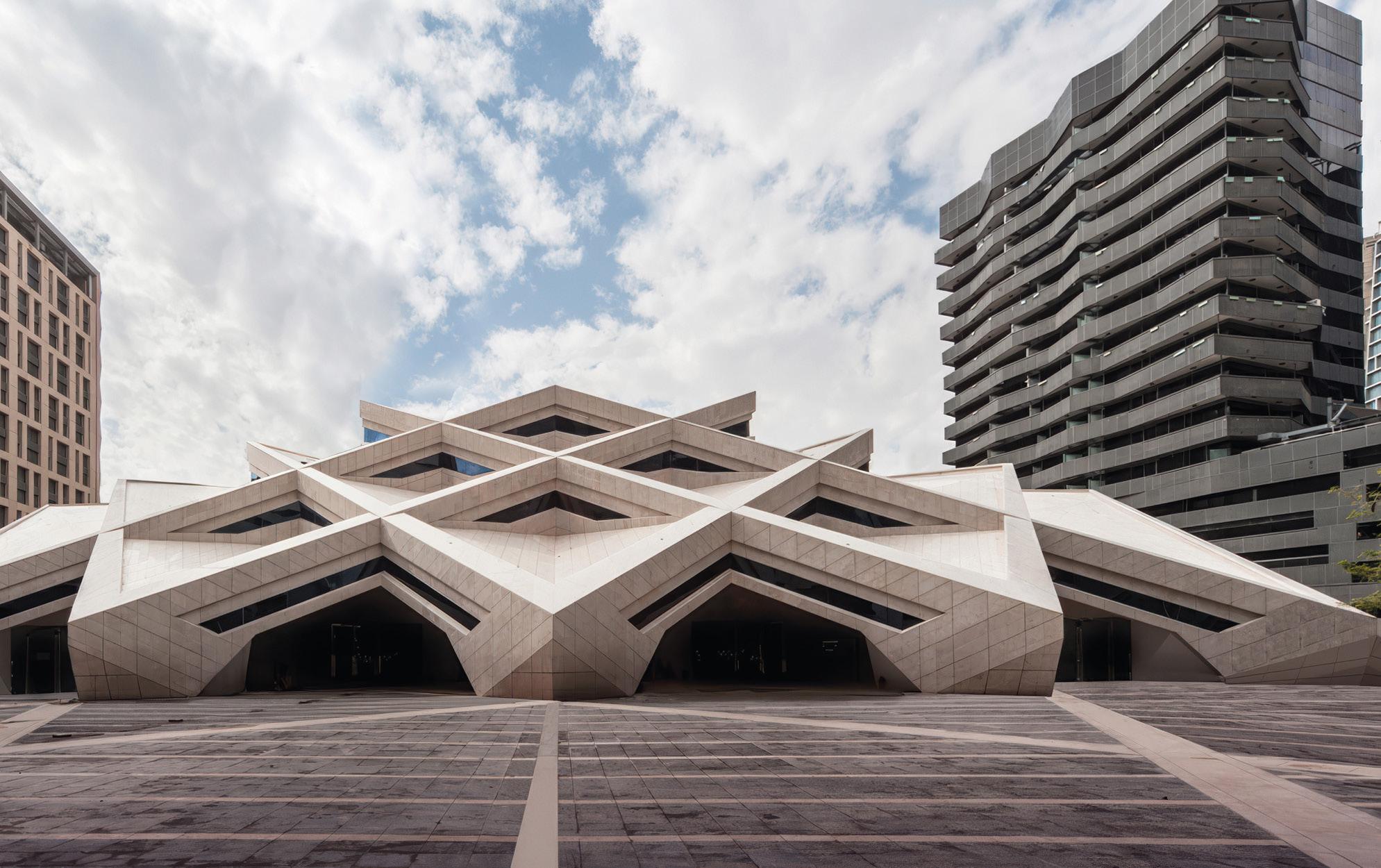
Omrania, part of the 10N Collective, Egis Group’s architecture line, designed the King Abdulla Financial Districy Grand Mosque as a spiritual landmark shaped by desert rose geometry and parametric thinking.
teams are different to architecture teams. I've worked with enough different practices to know that not one architecture team is the same as another. I often get asked ‘how do you manage all the cultures and how does everyone align?’ I'm not really sure you have to have a single culture.”
He continues, “We live in the UAE and if there's anything we have learned it’s that you can have differences and you can have different cultures, and you can have a different way, and it can work harmoniously. You have to allow the river to flow.”
“I have teams working across different parts of our business,
and they'll operate at different paces or in different ways. You have to look at things through their lens and sometimes you have to allow people that are running a bit faster to run. If you have people that want to ponder and reconcile and go back into their thoughts, you have to allow that to happen too.”
Sagoo explains that fluidity is important in business, because rigidity may cause people to look for other companies or options where they feel more comfortable. He highlights, “We have to create a common goal, and then you have to allow a bit of fluidity to get there. Otherwise, people will go to find the culture that they want and what works for them. It happens in acquisitions, people come in and they get unstable and nervous and might say this isn't for me.”
“Moreover our leadership has to pivot, what it takes to be in a 200 - 500 people business is very different to what it takes to
Designed by U+A, part of the 10N Collective, Egis Group’s architecture line, the Four Seasons Resort and residences at AMAALA is a masterplan rooted in wellness and environmental harmony.
navigate a staff of 4,000 in your businesses. We have to recognise human nature, where people feel comfortable, and that's where you'll get the best output too,” he points out.
ARTIFICIAL INTELLIGENCE, FUTURE TECHNOLOGIES AND ITS CHALLENGES
Artificial intelligence (AI) is changing how companies like Egis work. It helps them design smarter buildings, improve transport systems, and make better decisions using data. AI also supports safety, efficiency, and sustainability, allowing companies to solve complex problems faster and create solutions for modern cities and infrastructure.
Sagoo says everybody is talking about AI, but he feels it is more important to know how to humanise the AI experience.
“I have seen change. I remember in my first job when we got
our first computer in the office, and we all wanted to share that one computer. If you wanted to send an e-mail, there was one address for the entire team. No one had mobile phones either, so if somebody called the office phone and said you've got a site meetingthat’s how we’d know we had to go there. From there to where we are today, and how we use technology has been an organic and human journey”
He thinks there is a big danger in adopting AI without fully understanding what it brings to the table however. “There are a couple of things that have stood out to me. We need to be
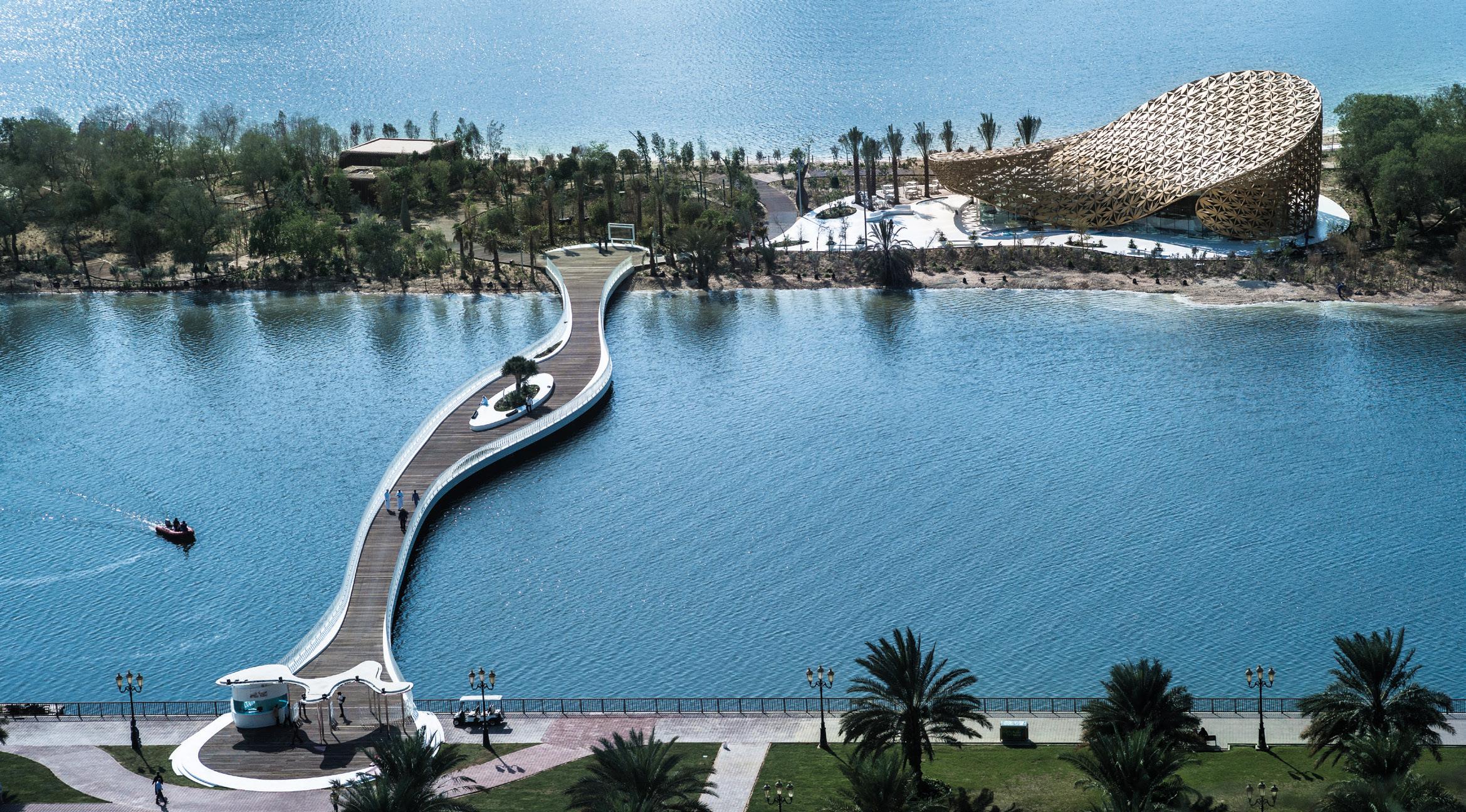
Egis provided design and build services for the construction of major features in the development of Noor Island in Sharjah, which is an urban development designed to combine nature, art, and tourism.
careful that AI doesn’t replace the basic tasks to a point that we cannot use them to train new graduates on the principles of engineering or architecture. It has to be part of, not instead of”
He explains AI is only as good as what you put into it, noting this is why we still need human interaction. “AI should be a tool you have in your pocket like a mobile phone and we need to learn how to use it, not as a shortcut, but to add value. You have to shift your thinking from it being a shortcut - and thinking that it replaces people – into what it can offer and mean for the people in the industry. If you use it as a value add, then it can become powerful.”
“I have seen it used effectively and appropriately, for example I have seen graduates take a wind model, put information into it and show me the results on their mobile phones. Making simple changes to the building in real time and the impact it has on the wind model. Can you imagine doing this back in the day? That should be how you use AI,” Sagoo cautions.
DRIVERS IN THE MENA REGION
Discussing the MENA region in terms of growth and future opportunities, Sagoo says there is still a lot of potential.
“Looking at the Middle East and Africa region specifically, you see the most potential in the next 1-to-3-years. There is no secret about COVID shifting thinking about centralising where the centre of the world is, and we're not called the Middle East for no reason, we're perfectly located.”
“I genuinely think that because of geopolitics and because of where we are, in spite of the challenges that we have in the region, there are some great places to be. There are some great hubs, and I think they're becoming tangible. We know it because
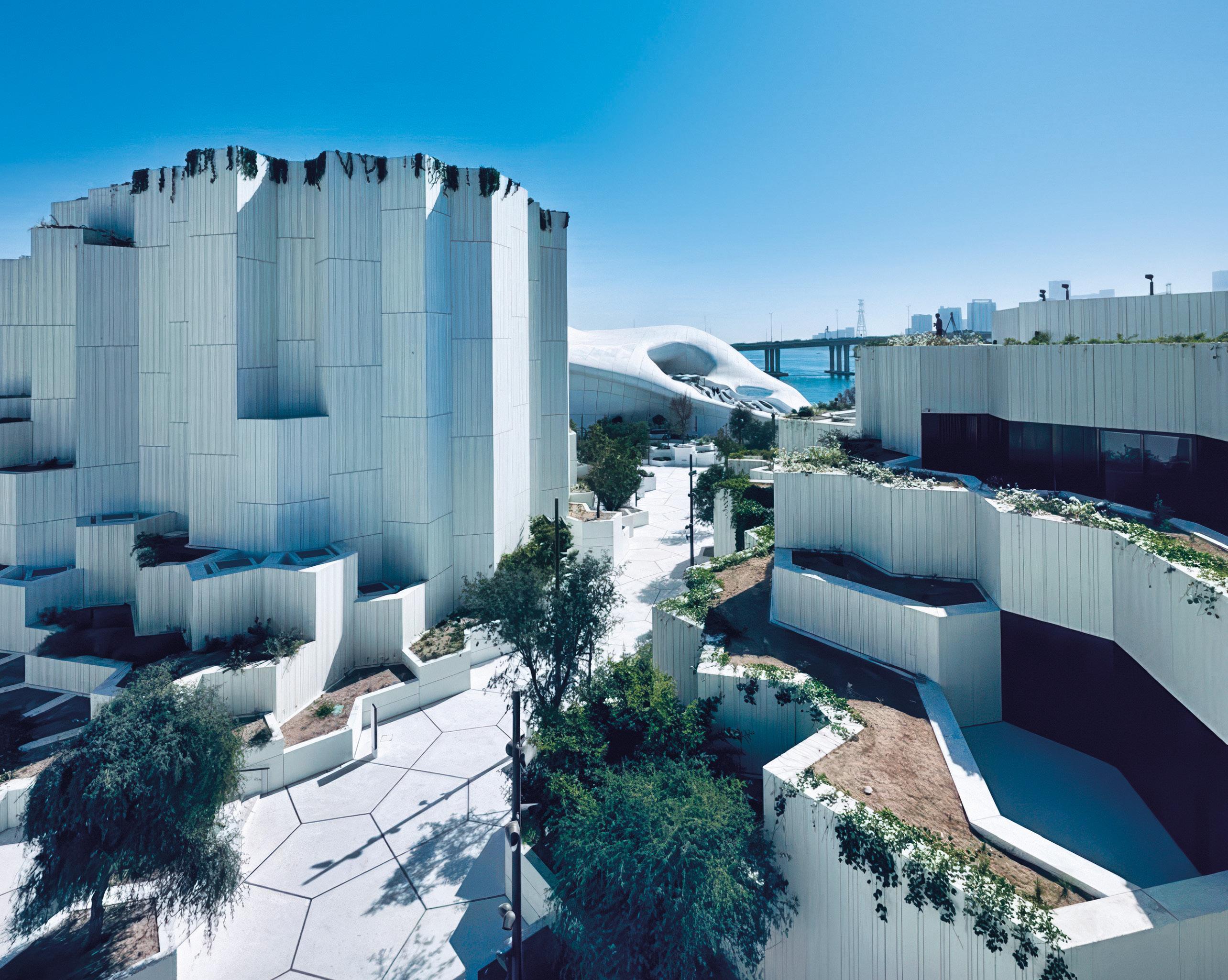
Egis served as Lead Design Consultant and Construction Supervisor for the Natural History Museum in Abu Dhabi. The multidisciplinary scope brought together architecture, exhibition design, structures, MEP, marine works, and onsite supervision to realise a technically complex cultural landmark.
“ I've worked with enough different practices to know that not one architecture team is the same as the other.”
GURMINDER SAGOO
whether you're in Riyadh or whether in you're in the UAE, you sit in traffic. You see traffic because it's a consequence of the attractiveness of where we are,” he explains.
Sagoo thinks the next big thing for the firm is going to be infrastructure and systems that deliver basic needs of a growing population. “It's going to be infrastructure projects, data centres, sewage, potable water, and other things we use daily. Whether we like it or not, water is going to become a bigger scarcity because of the growing population in the region.”
“We will need greater transportation networks to move people around. It's not going to be an option anymore. It’s all about people, movement and goods,” he says.
He notes that if people start looking at solid infrastructure, then the assets that sit on that infrastructure is enough to keep everyone focused.
Along with designing the infrastructure, it has also become important to look at climate change, he warns. It has become
crucial to have strong ESG in all projects, and this is something Egis has focussed on for a long time, he highlights.
“We have to do an ESG assessment of every one of our opportunities that goes out the door now. It's absolutely necessary for any project we want to work on. We also work closely with our clients on this journey, working together to achieve a better environmental outcome.”
“It doesn’t mean that we are their only source however, most of our clients are astute – they engage globally and they know what good looks like and how it is measured,” says Sagoo.
“Overall, the region is proactive and positively reactive. In the region authorities recognise problems and plan, and before
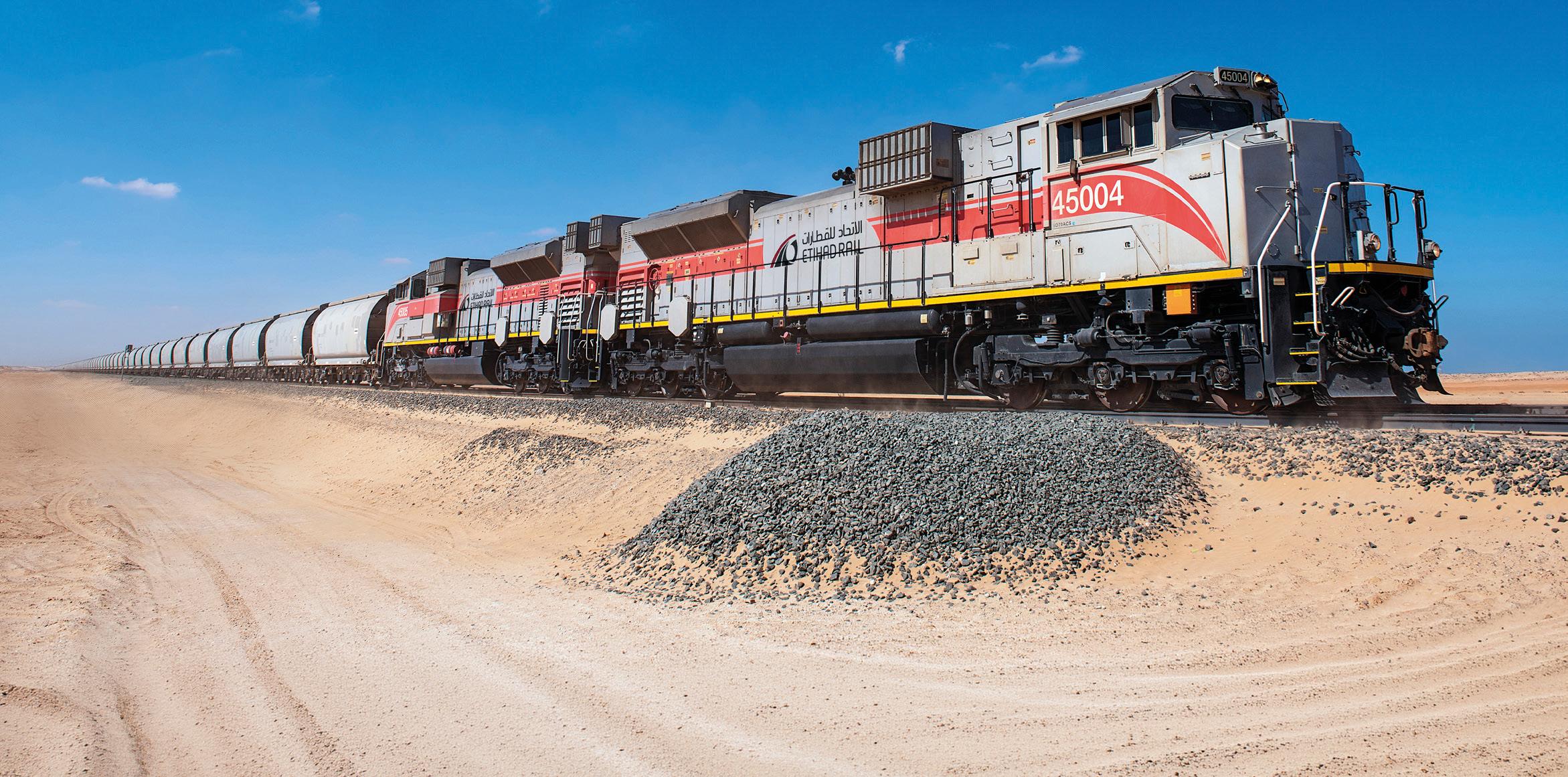
For Etihad Rail, Egis acted as project management consultant for their national network expansion, supporting the development of Stages 2 and 3. Its role included assisting Etihad Rail and overseeing the work of design and delivery partners on a project central to regional connectivity and freight growth.
you know it, you’re building it. We don't have to go through the arduous process of planning and public inquiries, so we can pivot quickly into what's needed and I think that's a tangible asset that we have in the region.”
TALENT RETENTION
Looking ahead, Egis says it is well prepared for the future and it remains focused on one key objective - holding onto good people.
“Getting the best and retaining the best is our staying point. It's not only about some of the projects we will win. For us, it's about who the best people are. An organisation has to be made of great people, even if those people have different outlooks, and that’s the game-changer,” explains Sagoo.
“There are people that are ambitious and it is important to create a growth path for them. However, an organisation isn't just made up of 4,000 ambitious people. An organisation is made up of people that want to grow, and some that want to come and deliver great work and go home. We have to create an environment for all,” says Sagoo.
“It’s no longer that people have the mindset of coming to the Middle East for 3-years before heading back home. This is home for many people.”
GURMINDER SAGOO
Speaking about the recent geopolitical tensions, Sagoo says, “As part of the leadership team, as with many of our peers, we have been leaning in to try and understand what this means for our business, our people and our clients, trying to unpack reality from the noise and predict what a new norm will look like.”
“That said, first and foremost has been the safety of our people, our clients and our partners. This goes beyond the most obvious safety issues we are facing, debris from interceptions etc. We also recognise that the conflict impacts each and everyone differently, irrespective of grade, role or seniority, it
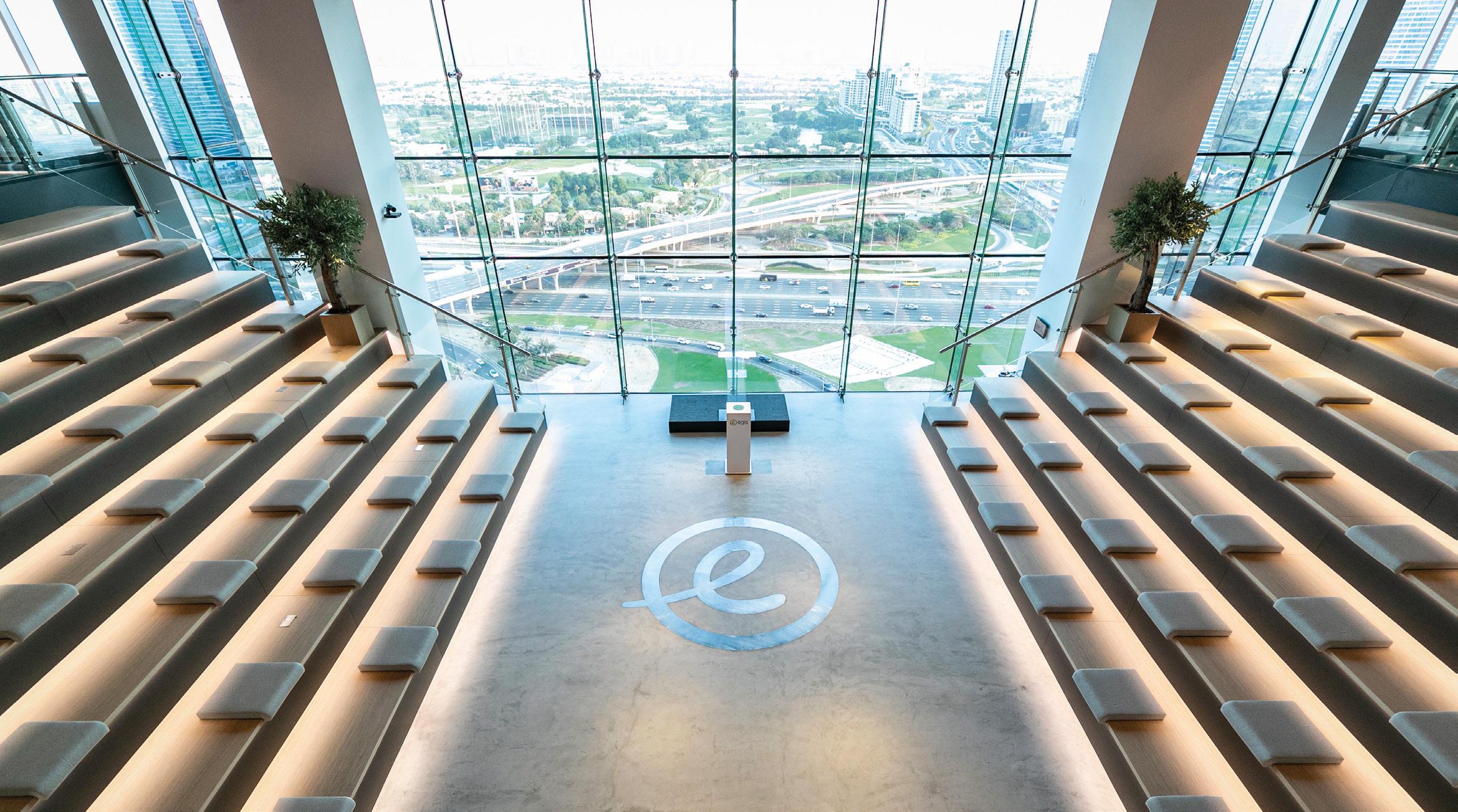
The opening of Egis’ new UAE central office in Dubai Marina. The teams became one, consolidating six offices, including Inhabit and 10 Design, into one purpose-built hub.
is impacting our families here and back in our home countries and that brings a very different type of pastoral care that is needed,” he explains.
“We also recognise that each GCC country has a different set of challenges and is being engaged differently by the conflict. As such, we cannot adopt a 'one size fits all' philosophy. If agility and quick decision making was one thing that the Middle East region has taught us, then it is now these skills are being deployed.”
Egis has put in place a number of measures to tackle the situation, and Sagoo explains that while the threat is the same, it affects people differently.
“Managing design teams is different from managing supervision teams, or operation and maintenance teams, as such we have to remain flexible and adopt an approach depending on the risk exposure and needs of each team. The nature of the beast is such that many of our people are playing a critical role in maintaining our infrastructure, and that means their levels of exposure are higher. This requires our leadership to lean in more, be visible and be accessible. We are maintaining strict adherence to health and safety protocols and pray for the well-being and safety of all.”
“This too shall pass, we will have learnt new skills and thinking on this journey. Until then, our construction community remains tight, supportive and collaborative. I have
Egis has entered phase 2
enjoyed seeing how quickly we have regrouped and supported each other’s efforts. A true testament to the collaborators of our region,” confirms Sagoo.
In conclusion Sagoo says, “The industry is small and I love what Egis is doing, and I look around and I like what our industry is doing, and I love what our peers are doing as well. We partner with our peers, and I never call them competitors because we stay in the same room together, and we work with the same things.”
“We're not scared of sharing ideas, we're not scared of thinking ‘oh, you know what, AI is my secret tool, and I dare not speak about it with anybody, because otherwise I'll give away all my ideas,” he says.
“It’s no longer that people have the mindset of coming to the Middle East for 3-years before heading back home. This is home for many people. That's a real difference maker because we've got maturity in our industry now, and people have been here for quite a long time and they can tell some very different stories. I enjoy that a lot within our industry,” concludes Sagoo.
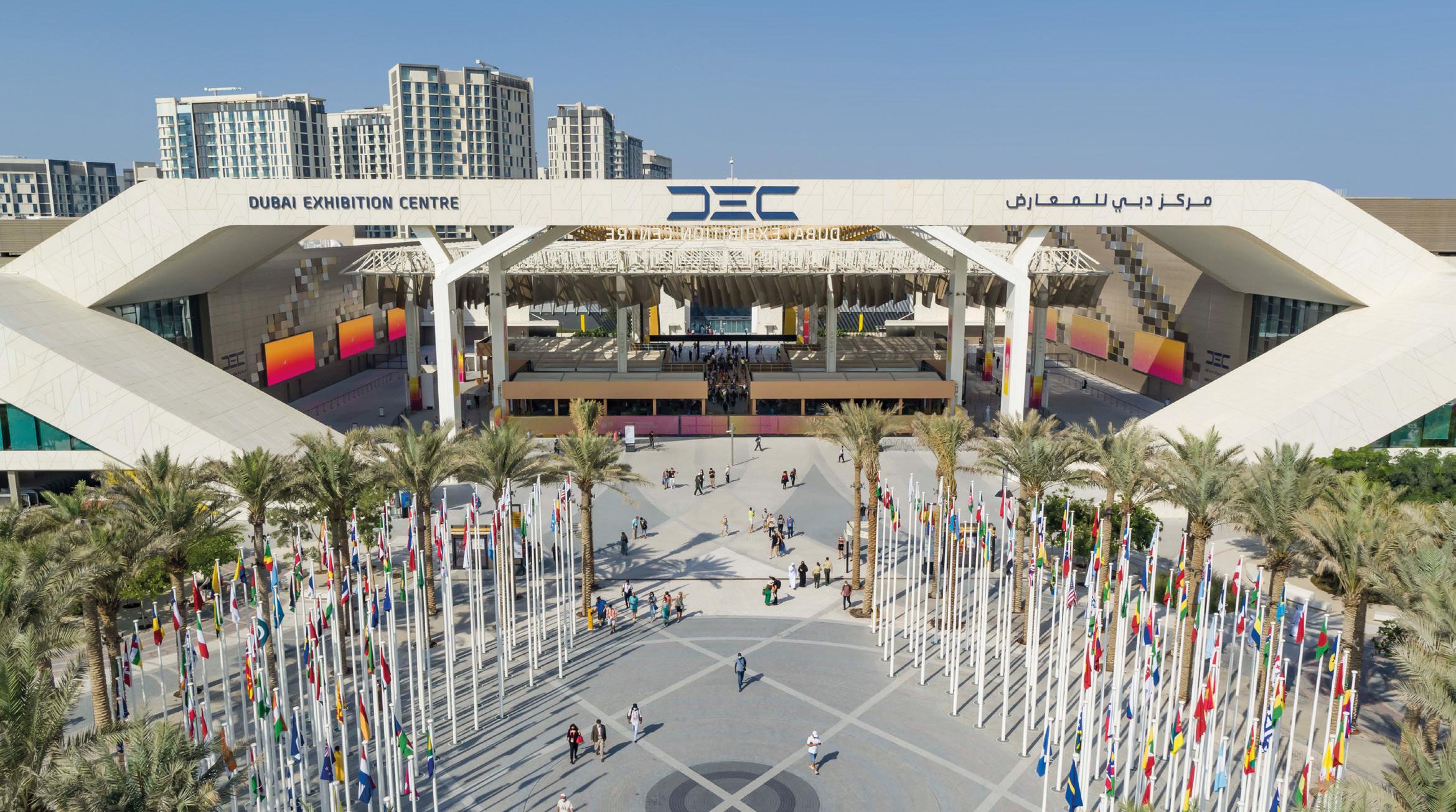
of helping deliver the expansion of Expo City’s exhibition venue. It’s role covers multi-disciplinary engineering, architectural, sustainability, value engineering, regulatory compliance, and BIM integration.
Safeguarding Data
Nathan Cartwright, Executive Director at NV5 speaks with Clayton Vallabhan of Middle East Consultant about how designs of data centres are changing, with increasing demand for them in the Middle East
The global surge in data centres reflects a world increasingly powered by data. As cloud computing, artificial intelligence, streaming platforms, and smart devices continue to grow, so does the demand for massive computing power and secure storage.
Technology giants and governments alike are investing heavily in new facilities, transforming data centres into critical infrastructure for the modern economy. At the same time, innovation in cooling systems, energy efficiency, and renewable power is reshaping how they are built.
NV5 is one of the players in the planning and engineering of data centres, both in the region and abroad. The company provides technology-enabled engineering, testing, inspection, and consulting solutions for the built environment. It currently employs approximately 5,000 consulting engineers, inspectors, and analysts, operating through more than 100 offices around the world.
Nathan Cartwright, Executive Director at NV5 explains how the first step to designing a data centre is doing your due diligence. The things you look for is if anything can pose a risk, as data centres are all about risk and resilience.
“We're looking for things like power. Is there sufficient power? We also look at other geographical issues like hydrology studies, the wind, weather, or if the area is on a floodplain. Another important consideration is if the building is on a flight path, either now or in the future, or if there are any security risks,” says Cartwright.
He explains it is necessary to look at everything that could have some impact that could affect either the resilience of the data centre or affect the client's ability to buy the site.
Speaking about emerging markets for data centre infrastructure, Cartwright says the UAE and Saudi Arabia are way ahead in front in terms of planned data centres as well as projects that are under construction. He says there is also some movement in Qatar and Oman.
“The
most important thing about a data centre is resilience. We're looking at up-times of 99.99%.”
NATHAN CARTWRIGHT
“Oman in particular, is very interesting, with perceived less geopolitical issues and its geographical location linking Africa, Europe, and the Middle East. There are also multiple subsea cable landing stations in Oman. So, we see that as being a potential growth area,” he explains.
The Middle East has very different conditions than the rest of the world. It has a very hot climate, and there is a lot of sand. When quizzed about this, Cartwright explains, “We're still trying to achieve the same outcome, no matter where we're running a data centre. Yes, we have the climate conditions here, which varies from elsewhere. We're dealing with extreme heat, humidity, dust and sand where other regions won't have to deal with that.”
Since data centres already give off a lot of heat, the challenge is cooling them, especially when you are in an already hot climate. Cartwright says a lot of data centres here in the
region, use simple air-cooled chillers as the solution.
“Whereas in another region, you may use water-cooled chillers because they're more efficient. The problem here is most of the local authorities won't allow you to use potable water for cooling. So, we can see in this area we're prioritising water scarcity over energy, not forgetting that all the potable water we have is coming from desalinated sources. We have a reasonable abundance of power here, and it's relatively cheap compared to other areas,” continues Cartwright.
Another difference when designing data centres in the region is the sand. For this Cartwright explains companies use sand traps.
“For optimal internal air conditions, we have to introduce sand traps to prevent sand ingress into the system and any dust getting into the internal environment. There are filtration systems in place too because we want it to be an ultra-clean environment for the racks,” comments Cartwright.
Speaking about other challenges in the region, Cartwright mentions site acquisition. He thinks finding the right site is a challenge, because its normally related to making sure there will be a proper source of power.
“We have an abundance of land here, which is great, but we don't have an abundance of suitable land. Finding a location that is not just close to power, but the power also has to have effective redundancy within the whole network to be able to support the data centre and all its needs,” he says.
Furthermore it is important to find the right developer with the right master plan, that will accommodate the data centre within that master plan.
“We're limited somewhat by the plot allocation. Moreover, a new operator coming into the region and looking at the
Nathan Catrwright, Executive Director at NV5.
“We have an abundance of land here, which is great, but we don't have an abundance of suitable land.”
NATHAN CARTWRIGHT
operational cost of running a data centre, dealing with the local climate conditions, is adding to those costs, which they may not have elsewhere. In addition, a global problem, rather than just Middle East is long lead-in times for critical equipment. For instance, being able to get generators might be on 12 or 18 month lead-in times which is causing a problem.”
“It's creating a problem, but it's also causing consultants to think out of the box when it comes to design and bringing new ideas to data centres. So, it's a bit of a double-edged sword, but there's certainly a lot of pressure on lead-in times for critical items,” says Cartwright.
Cartwright further states, ” From our UAE base we support data centre design globally, however within the Middle East region specifically we’ve worked on a 100MW Data Centre in the UAE which is under construction, 12 data centres as part of the Red Sea Global IT infrastructure and currently a confidential 225MW Data Centre in KSA.”
A global problem faced when designing a data centre is the long lead-in times for critical equipment. In some cases these can stretch from 12 to 18 months.
“We’re no longer at the stage where 30MW is seen as a reasonable sized data centre. We're now looking at campuses of almost half a gigawatt.”
NATHAN CARTWRIGHT
RESILIENCE FOR DATA CENTRES
Ongoing Middle East conflicts threaten infrastructure stability. Data centre resilience becomes critical, requiring redundant power, diverse connectivity routes, robust cybersecurity, and geographically distributed backups to ensure continuous digital services during geopolitical disruptions and regional instability.
Cartwright says, “The most important thing about a data centre is resilience. We're looking at up-times of 99.99%. Anything that's going to put that up-time at risk is going to have operators and tenants thinking twice or at least considering
their options. We have countries trying to legislate about hosting data in country, which is great. However, most operators will want a failsafe outside of their country as well. This is driving the need for data centres globally.”
“The geopolitical conflict is definitely a challenge in the region. Israel is a hot bed of data centres, but now with the ongoing conflict there, that's becoming more of a challenge to both deliver the data centres in the first place and the ongoing viability of using what is there. The UAE and Saudi in particular, may benefit from this,” he continues.
Moving on to heat waste from data centres, Cartwright says it is used to heat water, and technology will have to change in the region for waste heat to be used more efficiently.
“Where we've struggled to use waste heat is for things like absorption chillers, where it can be used for cooling. The problem of absorption chillers in this market, or this region, is that they don't operate very well. They struggle to reject the heat in high humidity conditions, which is the majority of our summer. They become less efficient than a standard air-cooled chiller to fix the purpose. I think unless we see a change in technology for this region, it's going to be difficult.”
“In other regions it's certainly more of an option than what we have locally, at the moment, based on the technology you see. Heating water is a very efficient use of the waste heat, but we're not really seeing a viable use for anything more than that.”
AI AND HOW IT CHANGED DATA CENTRES
AI is transforming data centres by increasing demand for powerful GPUs, higher energy use, faster networking, and automated management tools, enabling faster processing and training of large artificial intelligence models.
Cartwright says, “We've seen the revolution start already. Previously, we were looking at rack densities of around 30kW per rack, now we're up to 150kW per rack, which is a huge increase. Because of this, the pinch points in designing a data centre used to be in getting enough space to get the most capacity out of them. Now, because we're so dense in terms of our capacity, that pitch point has shifted to the engineering side.”
“We’re no longer at the stage where 30MW is seen as a reasonable sized data centre. We're now looking at campuses of almost half a gigawatt. This is huge, so we no longer design a building, but design a small town, and the people that are required to operate these things are huge,” he explains.
If this trend continues, he says data centres could get even larger, or they might start to fragment into lots of smaller data centres. Cartwright thinks we might even see a bit of both.
“If we look at the sheer amount of data that's going to have to be processed for the driverless cars and taxis people are going to be using, it’s going to be huge. To keep these cars and drones and whatever else you have safely on the road
and in the skies, a lot of data and power will be needed. With AI, it will probably be a combination of both smaller and larger data centres, but certainly the increase in scale is incredible.”
Speaking about advice he can give to consultants looking to enter the data centre space, Cartwright says it’s important to be very nimble and be able to think on your feet very quickly.
“You need consistency and you need the assurance of what you've done before is going to work in the future. If this resonates, this is probably the industry for you. The technology is changing all the time and the engineering to support that technology is changing. The science is constantly evolving, sometimes mid-project. So you really need to be able to think on your feet,” explains Cartwright.
“The advice I would give would be that it's really important to get to site, not only to be able to see the site during construction, but to speak to people, post construction, to really understand the data centre. It's important to understand how it's being operated, and then you start to think about how you can design things better and then apply that knowledge better. It is a continual learning process and the pressure on programs in data centres is that they are meant to be very fast track to market. It's an exciting place to be, very demanding, but yet really evolving and a constantly changing engineering field,” concludes Cartwright.
DEADLINE: 15 MAY 2026
Getting to the CRUX of the matter
HKA’s Toby Hunt and Josephine Guckian talk to Middle East Consultant’s Jason Saundalkar about the early days of the annual CRUX Insight Report, what goes into the producing such a globally well-recognised resource, it’s impact and what it will offer in the future
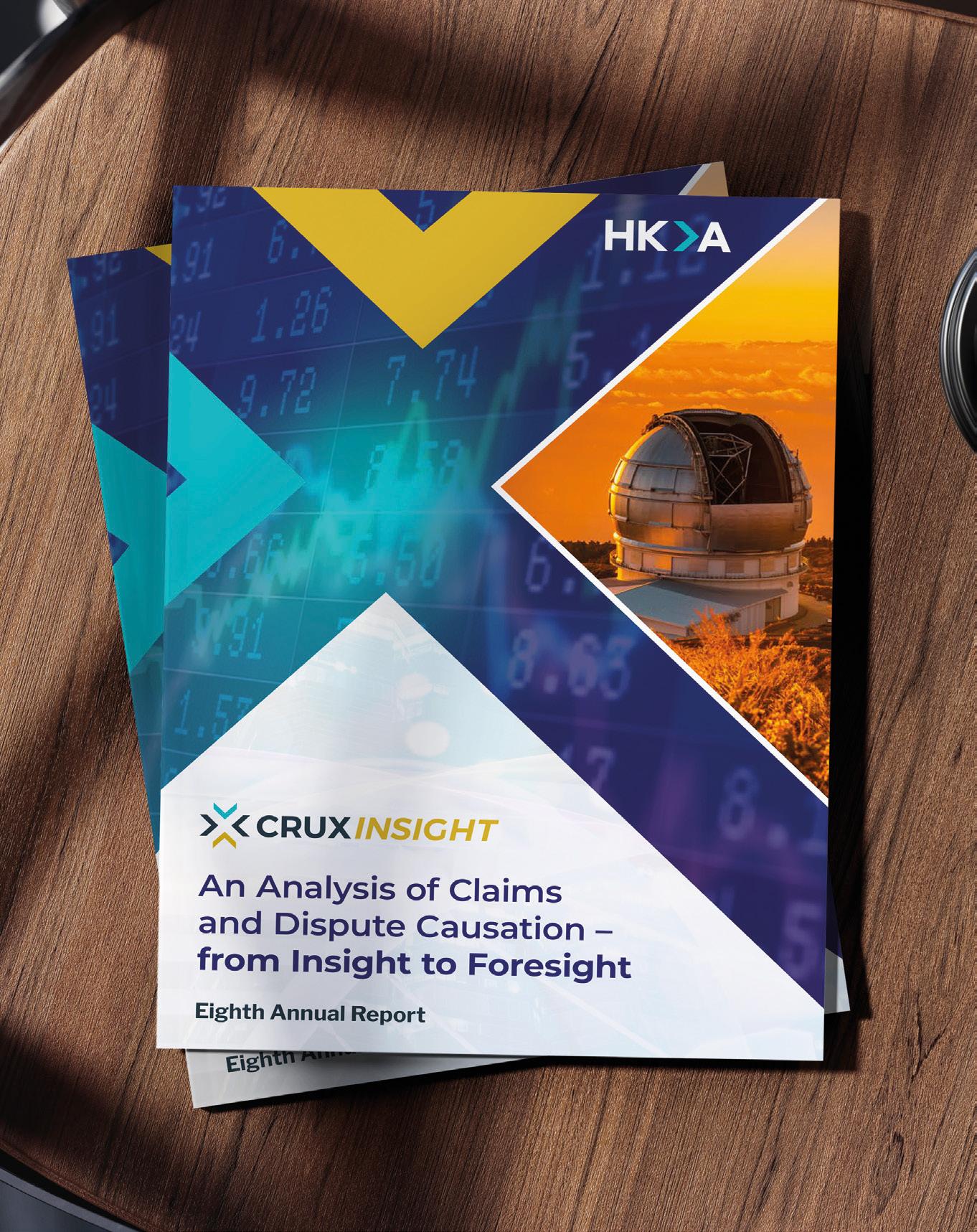
Global risk mitigation and dispute resolution firm, HKA released the Eighth Annual CRUX Insight Report titled ‘From Insight to Foresight’ in late 2025.
The latest edition of the report features insights from over 2,200 projects from 114 countries valued at US $2.43tn. Some of the key findings in the latest version of the report include:
• Disputed costs averaged around a third of contract budgets
• Claimed extensions of time would add two thirds to works schedules
• Time-based analysis shows a big shift in claim and dispute patterns
• Most causes have reduced in frequency, with regional variations
• Despite the pandemic, disputed schedule and budget overruns were lower post-2020
• COVID-19 caused conflict on almost a quarter of projects
• Cashflow and payment issues rank higher in tougher economic times
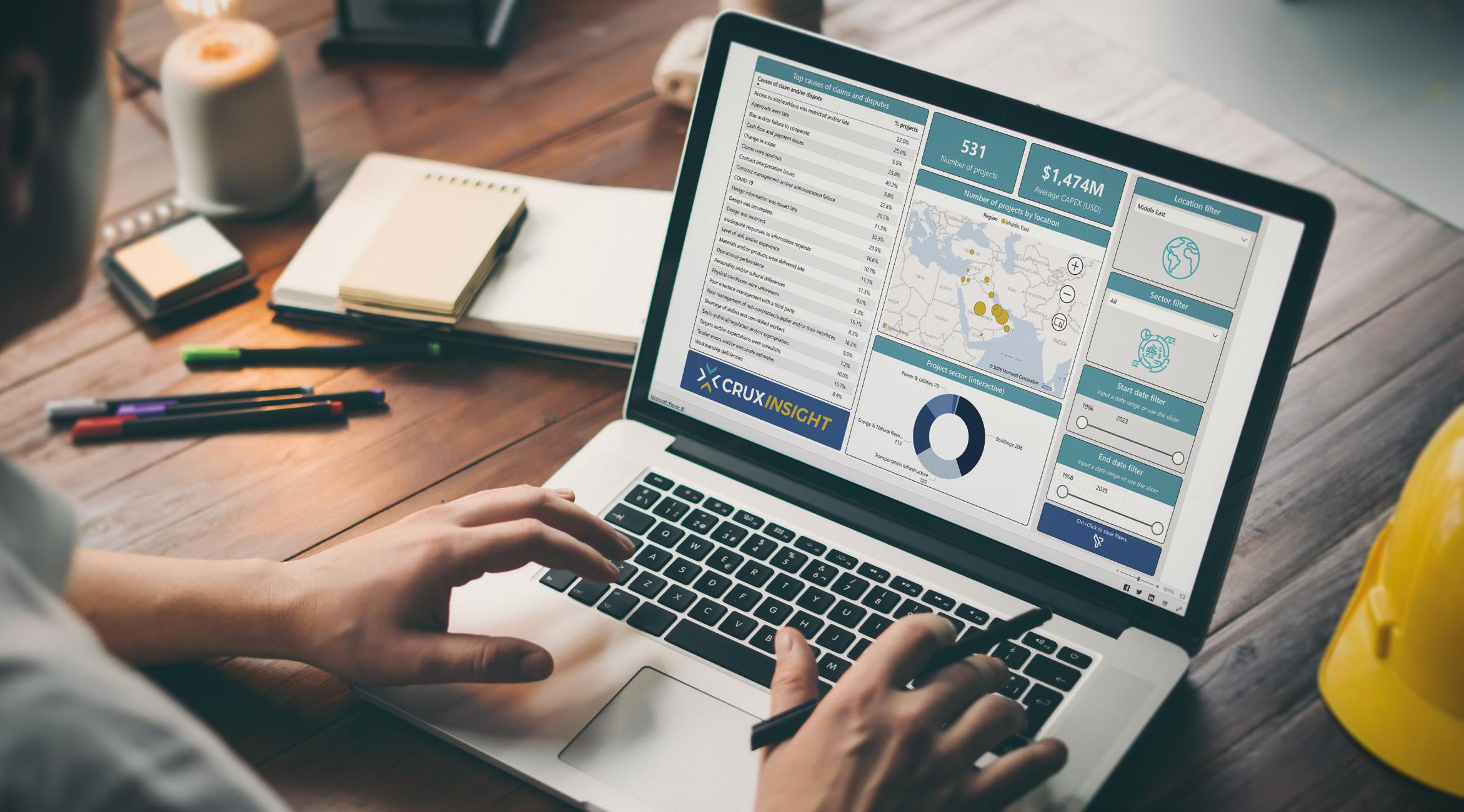
The full report and a powerful interactive dashboard can be accessed freely at www.hka.com/crux-insight. The report and interactive dashboard are amongst the most powerful resources this Editor has seen in his career covering construction, in terms of sharing deep insights into the main causes of claims and disputes on engineering and construction projects.
Since the report was first launched several years ago, it has garnered a significant following with over several thousand downloads reported to date.
CRUX was created to give the industry a global view of the causes of claims and disputes on construction and engineering projects.
Discussing the vision behind the development and launch of CRUX, Toby Hunt, Partner, Business Development Lead International at HKA comments, “CRUX was created to give the industry something it had never had before, an evidence-based, global view of the root causes of claims and disputes on construction and engineering projects– grounded in project data, rather than practitioner survey insight alone.”
“Our experts were already analysing distressed major projects worldwide, and the volume of data meant we held insights that could genuinely help clients avoid disputes, strengthen project governance and improve outcomes. Formalising this into an integrated research programme in 2017 –aligned with rigorous research principles - allowed us to share those lessons more widely and help raise industry standards.”
He explains that CRUX is underpinned by a formal methodology, an empirical dataset, cross literature taxonomy development and advanced analytical techniques. “It applies a taxonomy of 1,750 causes of dispute, distilled into 39 categories through comparison with academic and industry literature,” he adds.
Asked for insights into how the initial idea was received within the firm, and whether there was any resistance to undertaking such an intensive research project, Hunt says: “We expend a significant amount of internal time in collecting data and making sure we aggregate and analyse it. So we had to show how the insight would help HKA, including how it would support clients, strengthen our capability and reinforce our value proposition.”
Hunt says there was an element of “winning hearts and minds”. “What you have to show is that this exercise isn’t just about research, but rather creating a detailed annual report that can drive incremental benefits across the business. We also showed how it could benefit HKA consultants as an internal service. So while a lot of what we were doing was sharing the knowledge with external clients, it was just as much supporting our internal colleagues by showing them what we were producing,
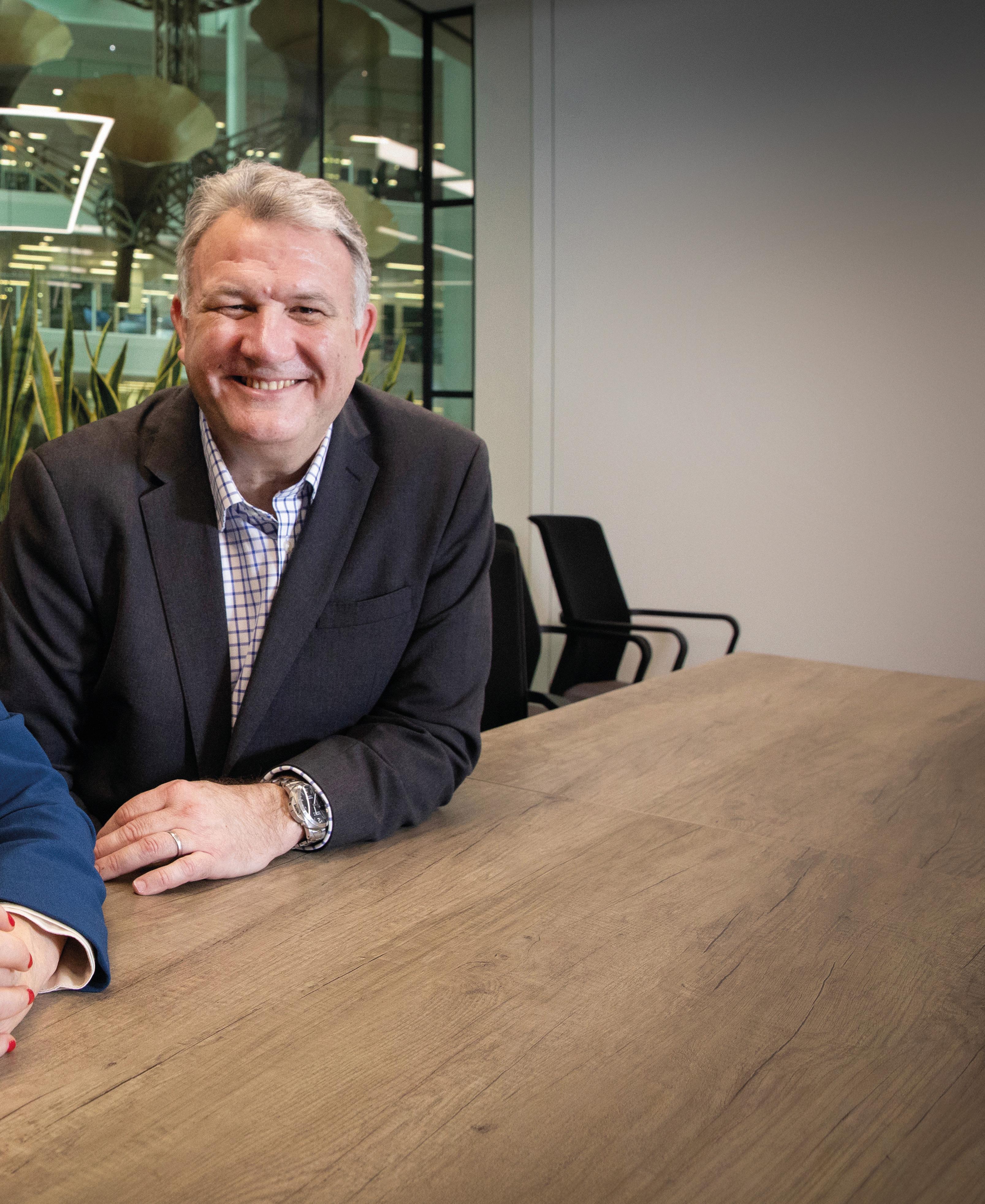
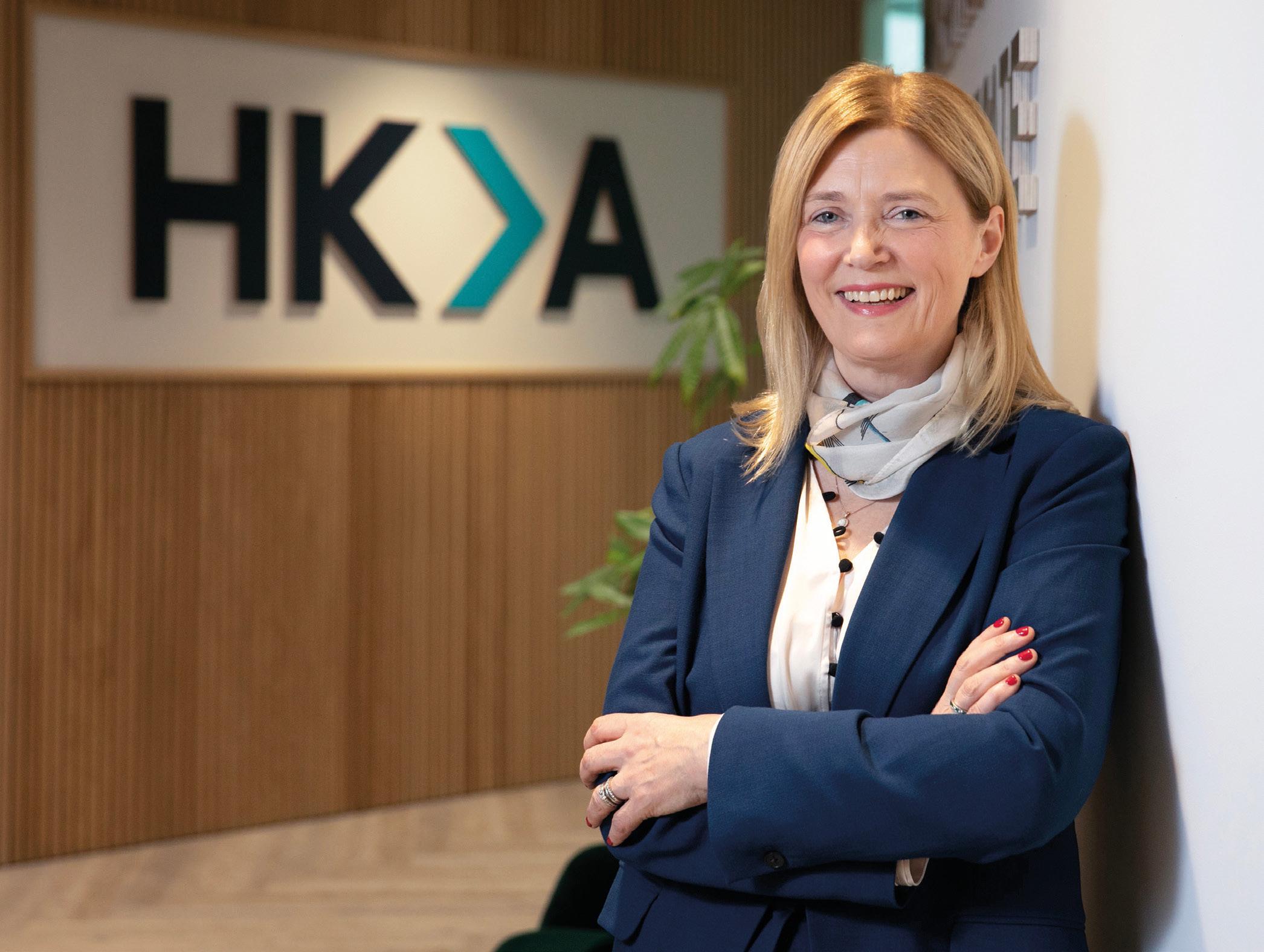
Hunt and Guckian have spearheaded the CRUX report from its inception to present day and are credited with steering it into becoming a globally recognised research and knowledge-sharing platform.
inviting questions and sharing insights they could use in client conversations.”
Here, Hunt also points out that the CRUX reports are more than just knowledge sharing. “It goes beyond that, because it can sometimes provide insight into areas you might not have traditionally seen. If you’ve worked on 10 projects in different sectors, what you don't often see is the detailed differences in causation between these projects, or between those sectors.”
“By doing the analysis, collecting data and investigating in the way that we have, it brings a pretty stark contrast. In some sectors, the causation is very different, or more nuanced, than in others. Many people write about delay and causes, but much of it isn’t research-based,” he says.
Asked what the now well-known name of the report means and where it came from, Hunt says it was inspired by rock climbing. “In the English language, a crux is described as a vital, basic, decisive, or pivotal point. In climbing crux is the hardest and most physically demanding part of a route or boulder problem. It demands your attention and you have to work out what your moves are going to be before you attempt it. That’s where we got it from,” he notes.
Discussing whether the concept behind the CRUX report has remained the same since its inception, or whether it has evolved, Hunt responds: “The core purpose - identifying and analysing the underlying root causes of claims and disputes - has remained constant.”
He adds: “What has evolved each year is the depth, methodology and thematic focus. The dataset has now grown to more than 2,200 projects, and recent editions have introduced new analytical layers, including time-based analysis, AI impacts, econometric modelling, contract type comparisons, ‘speed to build’, stakeholder behaviours, skills-related challenges and the growing environmental risks facing projects. As the scale
and richness of the data increases, CRUX, one of the most academically rigorous and empirically grounded dispute causation research programmes in the construction industry, has also become more forward looking, moving from insight to foresight.”
PRODUCING CRUX
Developing the CRUX report is an intensive process that demands significant time and resources from individuals across HKA’s global network of offices.
Sharing insights into how the report is produced, Josephine Guckian, Partner, Chief Marketing and Communications Officer outlines: “CRUX is the result of a year-round global effort. Our experts gather data from real investigations across regions and market sectors. The CRUX research team structures and analyses this dataset, consults with colleagues and external stakeholders on emerging themes, and develops the findings and narrative. We also interview subject-matter experts, consultants and advisors, to gather additional insight, and the report goes through a final peer review by senior experts.”
“HKA invests significant time and expertise to maintain the rigour of the analysis, develop dashboards and deliver client-ready insights and bespoke presentations,” she emphasises.
“CRUX showcases the knowledge of our people, supported by the real project data our experts and consultants have worked on. This combination of expertise and evidence differentiates HKA in every region.”
JOSEPHINE
GUCKIAN
She elaborates: “In terms of production, each report typically takes around 2- to 3-months, supported by continuous data collection throughout the year. The project surveys run continuously and we also hold a lot of brainstorming sessions, particularly around what we’re going to write about. We spend quite a bit of time making sure that the themes we focus on, informed by interviews with our experts and consultants, are relevant to the industry and to our clients.”
Following the launch of a new report, Guckian says HKA then markets it and presents the data and insights to clients, some of whom also invite the firm to present it to other groups. “We do a lot of panel discussions around the report, and we find that people tend to reference it a lot, which is great to see.”
Hunt and Guckian have spearheaded the CRUX report from its inception to present day and are credited with steering it into becoming a globally recognised research and knowledgesharing platform.
Elaborating on the team and the process behind the report Guckian says, “Toby and I spend a significant amount of time working on CRUX, and we also have a dedicated resource, Kate
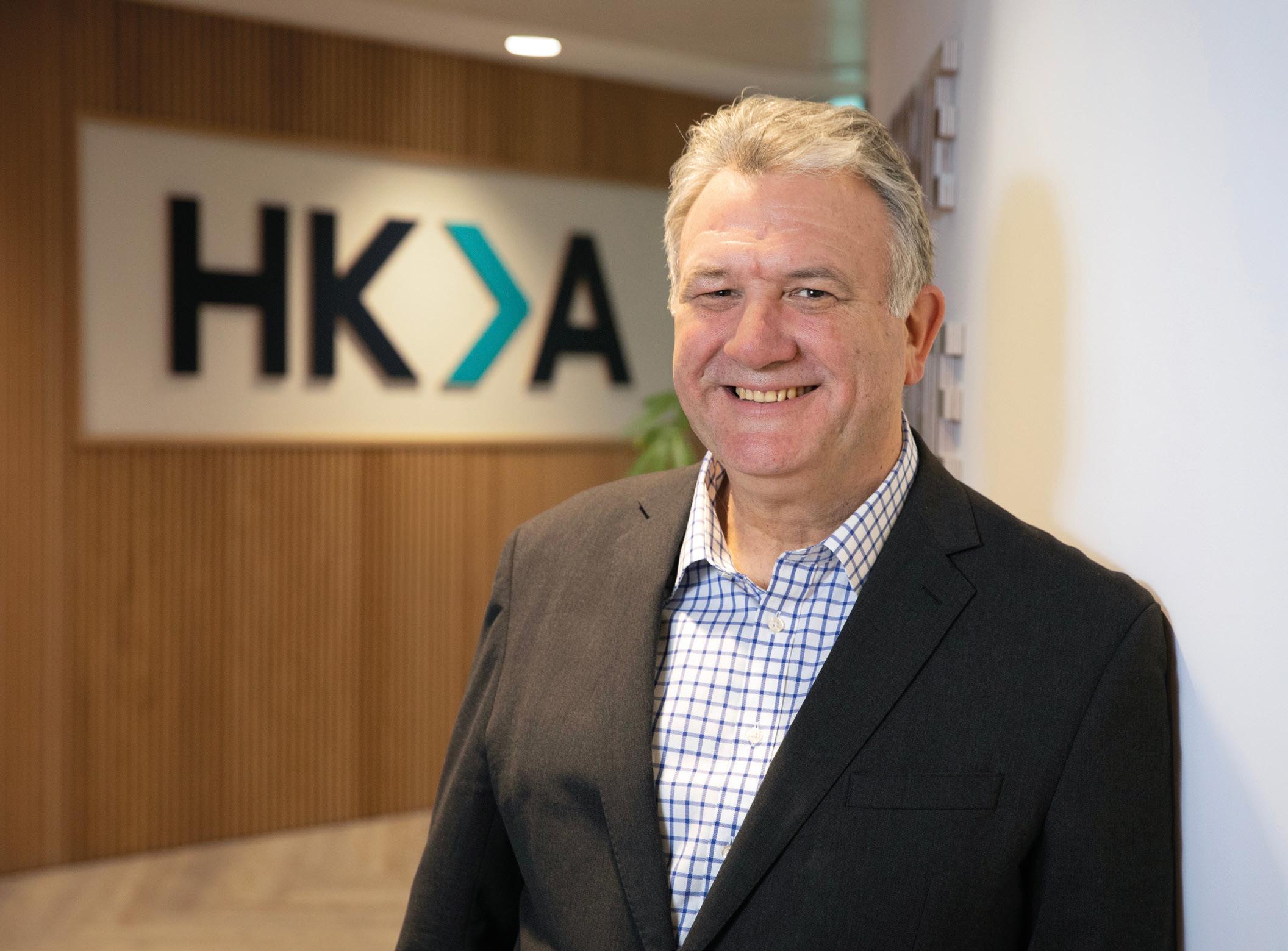
Toby Hunt, Partner, Business Development Lead International at HKA.
Hall, to project manage and oversee its development year round. That said, it’s really a global effort, with colleagues involved from across the world, from the Americas to Australia. We interview different consultants and experts and we try to rotate who we speak to each year, so that different people have the opportunity to participate. After 8-years, it's become pretty popular internally.”
“Initially, it took a bit of convincing to get people to set aside time. But once they could see the value, they started making space for CRUX, and now people are very keen to be involved,” she highlights.
Discussing what she most enjoys about working on CRUX, Guckian says the report brings together every part of the business, from experts to consultants and advisors. “The team enjoys shaping the narrative, ensuring the insights are accessible and meaningful for clients, and seeing how HKA colleagues use the data in client presentations, seminars, and industry discussions. It is gratifying to see the impact CRUX has across the industry and to watch it being referenced by clients, law firms and industry bodies around the world,” she says.
She continues, “It has taken time to develop CRUX into a brand in its own right, but we’re now seeing real anticipation for each edition. People contact us to ask when the report will be released, and we’ve seen clients and lawyers referencing it and using it in their own businesses. That, to me, is evidence that what you’ve produced is a quality product – and it’s probably the one thing I’m most proud of.”
Hunt adds, “From my perspective it goes back to the beginning of this project. Some people in our business initially questioned why we’re investing so much time and effort. Today, that scepticism has disappeared - everyone can see the value of CRUX, and how it helps us engage with our clients by sharing knowledge.”
“It’s much easier to talk to a client when you’re offering to share some of your knowledge. We’ve had a number of clients say what we are doing is market leading and puts us ahead of anyone else in the industry because what we’re doing is not easy. It does take us a lot of time and effort to do each year. So that's probably what I'm proud of,” he comments.
Ensuring absolute consistency in messaging, design and global launch timing is another significant part of the process, she notes.
COMMITTING TO QUALITY
Producing a globally relevant report such as CRUX is a significant commitment and, as with any such project, there are numerous challenges to overcome to ensure the finished product delivers value to stakeholders.
Asked about the most challenging aspect of producing CRUX each year, Guckian says it’s crucial to ensure that the team is focuses on the right emerging themes and provides insight that genuinely adds value for clients and the wider industry. Coordinating contributions across regions, managing interviews and reviews, and keeping the narrative clear while reflecting what the data is really showing all require careful planning to make sure the structure flows effectively, she explains.
She elaborates, “To get a read of what’s going on in the industry, we have an internal research department. We receive a lot of news alerts and subscribe to leading research providers so we have a strong sense of the landscape - but there’s always a debate. With so many experienced specialists across the business, we test and challenge ideas until we’re clear on what the report should focus on.”
“It’s a healthy discussion, and it means that we end up with some of the best topics of interest to the wider industry. This aspect can be a bit challenging at times, but it's interesting. The great thing is, and I think a lot of people at HKA would agree, you actually learn a lot by listening in on those interviews, and reading about what our most senior experts and consultants have to say.”
Hunt adds, “We’re a global business that communicates with its clients every day, so we understand the challenges they're
CRUX is shaped by what the team sees live on projects, and takes into account what challenges the industry is facing and how those challenges evolve.
facing and how those challenges evolve year-on-year. CRUX is shaped by what we see on live projects as it happens. A client might call and say ‘We are facing some project challenges, can you help us and try to avoid this turning into a dispute?’. So we're not just a firm that's dealing with disputes, we're a firm that also helps with dispute avoidance.”
“The industry has challenges. We had COVID-19, and there’s a lot of geopolitics at the moment, which affects clients. So it's interesting to see how CRUX causation is shaped by those ‘black swan’ events and trends over time. It’s a healthy challenge for us.”
Here, Guckian highlights, “CRUX goes through a thorough peer review. We have a panel once all the information comes back and an external writer that helps us compile it all. Once the interviews are done, it’s peer reviewed by the interviewees and when the whole report comes together, it actually goes to another panel to be peer reviewed again. Our reputation is so important, so we make sure it’s been thoroughly reviewed before it’s launched to the marketplace.”
“Risks are not static; they change every day. As soon as you do something, you should be thinking about how that potentially affects the time and money the company is going to expend on a project.”
TOBY HUNT
Asked about how he judges the success of CRUX, Hunt replies: “CRUX continues to deliver value through bespoke studies and project-specific analyses. We develop in-house assessments that allow clients to benchmark their own performance against the CRUX dataset and pinpoint areas for improvement. The same analytical approach has also informed risk assessments on large energy programmes, helping project teams identify recurring drivers of claims and disputes and make more informed decisions at critical stages.”
He continues, “For one client, we carried out a detailed causation and performance analysis on their major infrastructure programme, using CRUX data and expert insight to benchmark issues, identify systemic drivers of delay and cost escalation, and strengthen the evidence base behind the project review. For one public sector client responsible for a major
heritage building renewal program, we tailored and delivered a CRUX briefing to their senior team. This involved adapting our analysis to the unique characteristics of a complex historic estate and exploring relevant data to help them understand recurring drivers of claims, disputes and project risk.”
Since CRUX was first launched in 2017, the report has been downloaded more than 5,000 times, reflecting its growing following across the industry.
POSITIVE IMPACT & THE FUTURE
Since its early days, the annual CRUX report has had a tangible impact on HKA’s business around the world. Guckian notes that the report continuously demonstrates HKA’s expertise.
“With more than 45 years of experience in construction claims and disputes, CRUX showcases the knowledge of our people,
Josephine Guckian, Partner, Chief Marketing and Communications Officer at HKA.
“Initially, it took a bit of convincing to get people to set aside time. But once they could see the value, they started making space for CRUX, and now people are very keen to be involved.”
JOSEPHINE GUCKIAN
supported by the real project data our experts and consultants have worked on. This combination of expertise and evidence differentiates HKA in every region.”
She adds, “It provides an authoritative, independent evidence base that strengthens our credibility in the industry and positions HKA as a thought leader on dispute causation. Globally, CRUX has become a unifying brand asset that elevates our profile and reinforces our expertise across markets and geographies.”
Asked about how the report’s success is judged, Hunt says:, “We can see from client engagement, and the amount of downloads. I was at a conference not too long ago where a competitor was talking about a particular issue and they had CRUX slides on their screen. We probably don’t see a huge percentage of the times that the CRUX data is referred to at various congresses and conferences around the world.”
“Considering we’re in our eighth year with the report, I think we have a successful proof of concept,” Hunt confirms.
Here, Hunt reiterates that client feedback has also been overwhelmingly positive. “Clients tell us that CRUX validates what they experience on their own projects and helps benchmark performance. They value the clarity of the analysis, the identification of recurring issues, and the ability to use the data to improve governance, planning and risk management. Clients also tell us they find the CRUX dashboard extremely useful for exploring different industries and geographies, understanding the top causes of claims and disputes, and comparing contract types in a clear and accessible way.”
Pressed about whether the underlying causes of claims and disputes has changed since the first edition of the CRUX report was released to present day, Hunt notes that despite global disruptions, many of the core drivers of claim and disputes remain consistent.
He explains, “Scope change, design issues, late information and poor contract administration are still responsible for many claims and disputes. However, CRUX shows encouraging trends. In the past 5-years, several underlying causes have declined in frequency or impact, particularly on projects completing after 2020. At the same time, megaprojects continue to amplify risk, and new themes such as AI, supply chain stress and contract type effects have become more prominent.”
Asked for his recommendations on how clients can avoid some of the common issues that are highlighted in the CRUX reports, Hunt says: “Companies can actually use what we put in the CRUX report to try and help with their risk mitigation strategies. I think some don’t have a proactive way of managing risks, so I recommend that they actually use the data that we share in the report.”
“If they can understand the information and identify their risk profile, they can build strategies to assess and stay on top of risks. Risks are not static; they change every day. As soon as you do something, you should be thinking about how that potentially affects the time and money the company is going to expend on a project,” he comments.
Here Guckian adds, “I would encourage companies to engage with CRUX, particularly the dashboard, as a practical way to understand issues that commonly arise on projects and how risk can be better managed.
Looking ahead, Hunt and Guckian say the future of CRUX is about deeper insights, greater accessibility and continuing to give back to the wider industry.
“We will keep developing more detailed dashboards, improving regional and sector-specific editions, and exploring new analytic themes shaped by industry feedback. We will also continue focusing on the themes that matter most to the industry, ensuring the analysis remains relevant and meaningful. As the dataset grows, CRUX will strengthen its predictive dimension, helping clients anticipate risks earlier.”
They conclude, “Our goal is to ensure the insights remain easy for the industry to access, understand and apply. Ultimately, we want CRUX to remain the industry’s most trusted source of dispute causation intelligence and a resource that genuinely improves project outcomes worldwide.”
Building Value
Roxy Reynolds, MD at Oval speaks with Middle East Consultant's Clayton Vallabhan about cost consultancy and refurbishing establishments
OVAL is a modern consultancy firm, specialising in cost consultancy, residential wealth advisory, property acquisition, and property management. It aims to deliver end-to-end solutions tailored to meet the needs of its varied clientelle.
Roxy Reynolds, MD at Oval, says she always knew she wanted to do her own thing, and it’s fortunate that she had a good client base from her experience working with other companies before.
“I specialise in hospitality, and the idea was to do something that's focused on the hospitality industry. It's what I love. I love working in hotels and fast paced projects. As soon as I started, I had a few jobs already with our key client Jumeirah,” says Reynolds.
“They gave us a few projects, and once that started, it just sort of snowballed, and we had a lot of clients approaching us. I think it was very much focused on what we want to do that's different to everybody else. Bringing in key people that are going to help grow the business was important, to take us to where we need to be, and we’re very specific about who we hire. That was
Roxy Reynolds, Managing Director at Oval.
“ We really look at things and ask is that going to bring a return on investments? Is that the best place to spend money? It comes down to more than just cost.”
ROXY REYNOLDS
the focus for 2025. We also had our key achievements, where we delivered a lot of projects,” explains Reynolds.
Another important achievement for Oval was sponsoring a professional women’s football team who made it to the semifinals in the UAE women's League.
Speaking about plans for this year Reynolds says, “Obviously, we specialise in cost consultancy, hospitality, and high-end residential. However we've seen a gap in the market for a really good PM company, especially on the hospitality side. We've picked up a few jobs on the project management side, so that's definitely a sort of new opportunity that we're looking at. Moreover we’re looking at how we can provide clients a turnkey solution, where we can do cost management and project management together and manage the whole process. We are actually exploring a project now with a hotel operator where we will bring the designer underneath our umbrella as well. So they just have one point of contact.”
Furthermore, Reynolds says the main objective is zoning into what the consultancy wants to achieve. She mentions many consultancies fall into the trap of chasing fees. She says others on the market will chase any project because of the fees that come with it. Oval, on the other hand, wants to specialise in hospitality and high end residential.
“I think the challenge would be to pick the right project with the right clients, and to align with the goals of the clients. You want to partner with the client and deliver something special,” she says.
“You want to really decide on who you want to partner with and see if they share the same values and do they have the same mentality on how they're gonna deliver the job?” adds Reynolds.
Reynolds says she sees the most opportunity for business growth in project management and offering turnkey solutions. She says previously people wanted different consultants for different jobs, but now she sees clients realising they want one point of contact, that can deliver the project for them.
She also says that many consultancies are chasing bigger fees. “I think actually UAE is suffering because the bigger firms are chasing the good fees in Saudi. We call ourselves boutique, but we want to stay small to a certain extent, but it means that if a client approaches us, we care about your job as much as you care about your job, no matter what size the job is. I think that's what we want to really focus on.”
“We've just done a project at the Louvre in Abu Dhabi. I suppose it could be any budget, but something that we want to get involved in. If you get me something that I didn't want to get involved in, it just means I'm not going to have the same passion as if I worked for something I'm interested in,” she adds.
Reynolds also says there are high networth individuals that need services, they need project managers, they need cost consultants, and obviously the larger firms don't focus on that. That is also an opportunity that Oval is looking at.
She also reaffirms if you can focus on one industry, such as hospitality, and you become good at that, then that is hard to find.
“I don't know any consultants that can really say they are hospitality experts. People that can understand what it takes to deliver a hospitality project, Knowing what the clients recommend, the return on investments, other comments that come in while you're busy constructing the job.”
“The impact it has when they're selecting one thing or another, the operational function of a restaurant refurb and the inputs that we have is more than just a number. It is a cost plan. We really look at things and ask is that going to bring a return on investments? Is that the best place to spend money? It comes down to more than just cost,” explains Roxy.
Speaking about projects that Oval is involved in, Reynolds says the consultancy now gets involved in the early stage of setting the budget with the clients. From there on, it gets consultants and contractors appointed and it manages the full process.
“We get the contractor on board, and after that, we manage the post-contract and final account stage. We’ve worked on
“ We don't want to be traditional. We need to think what we can do for the industry.”
ROXY REYNOLDS
some key projects at the Louvre already, and we have various projects in Jumeirah Beach Hotel, Jumeirah Al Qasr, Mina Al Salam, Saadiyat Island and Marsa Al Arab. We’re also doing a project in Doubletree Hilton,” says Reynolds.
Keeping in mind the current geopolitical situation, Reynolds says work is going on faster than ever, and Oval has an office in South Africa, that handles all of the company’s admin, their studio, accounts and marketing.
“We're lucky in the sense that they are over there and they can keep going as normal. For staff in country, we've allowed people to work from home and only come to the office when
Oval performed refurbishment work across various hotels in the Jumeirah Hotels & Resorts portfolio.
they feel comfortable. I think one thing is you can't judge how everybody's going to feel. Some people are scared, some people feel safe, and they should only come to the office if they're feeling safe,” explains Reynolds.
Reynolds says clients still expect them to be on site, and as most of the projects are in hotel environments, there arent any site offices.
“We work out of our office and then we go for some work and meetings. So we've still been attending sites and meetings. It helps because it makes you feel that things are gonna be okay. I don’t think there would be many challenges that would come
from it. if anything, it's a positive and people learn how to adapt and how to deal with crisis,”
“The projects are going ahead. I think everybody's keen to carry on and to win projects. Obviously, they've raised some concerns over force majeure, but other than that, they have a positive outlook and it's really nice to see,” continues Reynolds.
Reynolds also mentions that Oval has partnered with a company called Flow, where each staff member can have various sessions with the wellnes coach. This has had a positive impact on the wellbeing of the staff, as the coach checks for parameters like stress, sleep and nutrition.
Refurbishment work done by Oval for the first floor of Jumeirah Beach Hotel in Dubai.
“When you go to a meeting, and you're stressed, and you haven't had enough sleep, and your nutrition is not good and you haven't gone into the gym. Are you going to be able to sit there and give the client the best advice? Are you going to be the best version of yourself in that meeting? This is very important,” explains Reynolds.
So there's a combination of working closely with contractors, we have hence gotten to a point now where we have a good contractor list that can deliver the projects we do, and we make sure not to overload them because that can also cause an issue. The problem is giving one contractor too many projects, and then he can't sustain it knowing that he's already struggling to find good staff, and to retain those staff,” says Reynolds.
“ I think there are so many consultants that see each other as competitors, and we don't see anybody as a competitor. We know what we want to focus on.”
ROXY REYNOLDS
CHALLENGES IN THE INDUSTRY
Speaking about challenges in the industry, Reynolds thinks there's still a major problem with fees being pushed down, and clients putting consultants up against each other.
“When the fees are pushed down it puts pressure on employees because now they're having to take on too many projects. That's something I personally experienced in the past. You get overloaded and then you can't give the level of service that you want to give, and that's one of the key reasons of starting Oval. So that we never want to be in a situation where we're spread too thin, where we can't give the level of service we want to deliver to clients,” says Reynolds.
Another challenge she sees is retaining good staff, and contractors being overloaded with projects.
“Contractors are overloaded with tenders and not even able to pass tenders. That’s how many tenders are coming through.
Reynolds says she is looking at how to overcome challenges and staff retention and so has come up with a novel approach of unlimited leave.
“Staff will get unlimited leave and it's actually proven that they would probably take the same or less leave, but it's just knowing that they have that freedom that they're not locked down to a certain number of days. I think, staff are probably more productive in the time that they're at work and they don't feel like they can't take leave or they can't have a day off,” explains Reynolds.
She thinks consultants now have to focus where they can optimise and maximise fees.
“I think if you want to have sort of a stable industry, that's something that needs to get sorted out so you're not having a lot of contractors just enter and exit the market. Clients need to look at the way that they're dealing with all parties. They have to look after them so that you aren’t having this constant entry and exiting the markets from various contractors,” explains Reynolds.
Another thing Reynolds is very enthusiastic about is giving back. Oval has opened an office in South Africa which she says is very cost effective and has very good measurement studios.
“The whole purpose of that was also to be able to give back to where I'm from and to encourage younger people in the industry that are maybe entering and they don't necessarily want to come to the UAE straight away. They can be based in a South African office to do 1 or 2 years there and then get exposure to UAE and projects in the Middle East,” she says.
“We don't want to be traditional. We need to think what we can do for the industry. I think there are so many consultants that see each other as competitors, and we don't see anybody as a competitor. We know what we want to focus on,” concludes Reynolds.
Restaurant refurbishment work done by Oval at Orizonta restaurant in Jumeirah Marsa Al Arab.
INNO
70 Hospitality as infrastructure: The new investment logic shaping the Middle East ⁄
76 Competitive advantage: The skillsets that set sustainable leaders apart ⁄ 82 Why integrated living is reshaping Saudi Arabia’s residential future
INNOVATE
A curated collection of reports on the latest industry ideas, trends and critical issues
Hospitality as infrastructure: The new investment logic shaping the Middle East
The Middle East’s hospitality sector is entering a fundamentally different investment era, one defined not by standalone assets, but by fully integrated urban ecosystems writes Costas Livadaris, Hospitality & Leisure Lead, Parsons EMEA
Dubai’s record breaking transaction volumes and the scale of Saudi Arabia’s Vision 2030 pipeline are often cited as indicators of growth. But the more important shift lies beneath the headlines: hospitality is no longer a sector. It is infrastructure, and global infrastructure leaders, like Parsons Corporation, are joining with global hospitality leaders to develop the most innovative, sustainable, and prestigious destinations around the world.
This distinction matters because it is changing how capital is deployed, how projects are structured, and ultimately how value is created across the region.
FROM ASSETS TO ECOSYSTEMS
Historically, hotels were evaluated as individual assets, dependent on location, operator strength, and market cycles. Today, across the GCC, hospitality is increasingly the anchor of mixed-use, master-planned destinations.
In Saudi Arabia and the UAE, branded hotels and residences are no longer endpoints; they are catalysts. They accelerate absorption, establish pricing benchmarks, and signal quality to international investors. More importantly, they help transform large-scale developments into investable propositions.
This is particularly evident in projects aligned with national strategies, where hospitality is used deliberately to activate entire districts. The convergence of long-term policy frameworks with private capital is creating something new: coordinated, multi-asset investment platforms rather than fragmented real estate plays.
For investors, this reduces risk, but it also raises the bar. Success now depends on understanding of how hospitality interacts with infrastructure, residential demand, mobility, and public realm design as part of a single system.
THE RISE OF THE DELIVERY ECONOMY
As project ambition increases, so does delivery complexity. The Middle East is not just building more; it is building at a scale and speed that leaves little margin for error.
This is where a second structural shift is emerging: the growing importance of delivery certainty as an investment driver.
Capital is no longer attracted solely by vision. It is increasingly underwritten by confidence in execution, governance, programme management, and the ability to deliver on time and on budget across multi-billion-dollar developments.
In this context, delivery partners are becoming strategic actors in the investment ecosystem. Their role is no longer limited to oversight; it extends to de-risking entire portfolios.
Integrated delivery models, where planning, design, engineering, sustainability, and operations are aligned from the outset, are proving critical. They enable developers and investors to move from concept to operation with far greater predictability, particularly in hospitality where operational performance begins on day one.
“The strongest investment prospects are emerging where three factors align: clear government vision, integrated urban planning, and credible delivery frameworks.”
COSTAS LIVADARIS
ESG AS A VALUE DRIVER, NOT A CONSTRAINT
At the same time, ESG considerations are moving from compliance frameworks to core investment criteria.
In a region historically defined by rapid development, the conversation has shifted toward long-term performance: energy efficiency, water use, livability, and operational resilience. This is not simply about meeting global standards; it is about protecting asset value over decades.
Projects such as King Abdullah Financial District (KAFD) in Riyadh illustrate this evolution. Here, sustainability is embedded at the district level, integrating mobility, density, and environmental performance into a coherent urban model. Hospitality within these environments benefits directly from that ecosystem, enhancing both guest experience and asset longevity.
The implication for investors is clear: ESG is no longer a cost. It is a pricing mechanism.
Assets that fail to meet these expectations risk obsolescence, while those that integrate sustainability from the outset are commanding stronger long-term positioning.
MEGAPROJECTS AND THE REPRICING OF RISK
Government-backed megaprojects remain central to the region’s growth story, but their role is also evolving.
Rather than simply creating supply, they are reshaping market dynamics, establishing new destinations, redistributing demand, and redefining what constitutes prime real estate.
At the same time, they introduce new considerations for investors. Scale brings opportunity, but also exposure: to construction capacity constraints, supply chain pressures, and shifting regulatory frameworks.
Public-private partnerships (PPP) are playing a key role in balancing this equation. By aligning public ambition with private sector discipline, PPP structures are helping to unlock capital while maintaining accountability in delivery.
However, the most successful projects are those that go further, embedding flexibility into their design and phasing strategies to respond to market shifts and geopolitical volatility.
A ONCE-IN-A-GENERATION WINDOW
The Middle East is in the midst of a once-in-a-generation build cycle, underpinned by strong demographics, rising tourism demand, and ambitious national transformation agendas.
But the opportunity is not uniform. The strongest investment prospects are emerging where three factors align: clear government vision, integrated urban planning, and credible delivery frameworks. Where these conditions exist, hospitality-led development is creating sustained value, not just for individual assets, but for entire cities.
For investors, the message is straightforward: this is no longer a market where success is defined by identifying the right asset. It is about understanding the system in which that asset operates.
LOOKING AHEAD
If the past decade was about growth, the next will be about performance.
The projects that succeed will not be those that simply open on time, but those that operate effectively from day one and remain resilient over their lifecycle.
That requires a shift in mindset, from building assets to delivering outcomes.
In the Middle East today, hospitality sits at the centre of that transformation. Not as a sector, but as a strategic tool for economic diversification, urban development, and global investment.
And for those able to navigate this complexity, the opportunity is as significant as anywhere in the world.
Costas Livadaris, Hospitality & Leisure Lead at Parsons EMEA.
Competitive advantage: The skillsets that set sustainable leaders apart
Organisations that fail to plan long-term and ignore the impact of climate change, resource scarcity, and regulatory pressure risk being left behind, writes Engi Jaber, +impact’s Associate Partner, Sustainability and Head of Climatize
In today’s competitive global market, a business’s ability to stand out no longer rests on price or product alone. Competitive advantage is increasingly defined by how resilient, innovative, and responsible a company can be in the face of rapid change. Organisations that fail to plan long-term - or ignore the impact of climate change, resource scarcity, and regulatory pressure - risk being left behind when disruptions occur.
What sets the top performers apart is their ability to embed capabilities that go beyond short-term wins. They adapt quickly, innovate consistently, and position sustainability not as a compliance exercise, but as a central pillar of growth. These companies prove that profitability and responsibility are not opposing forces but mutually reinforcing drivers of long-term success.
Drawing on Climatize’s experience and +impact’s global insights, this article explores the skillsets that allow businesses to establish a durable competitive edge.
1. EMBEDDING ENVIRONMENTAL RESPONSIBILITY INTO STRATEGY
For leaders, sustainability is not a checklist—it is a compass. Embedding environmental responsibility means aligning strategy, design, operations, and governance around circularity and resource efficiency.
Saudi Arabia’s Public Investment Fund (PIF) companies and their giga-projects illustrate this shift. Sustainability is no longer tacked on at the end of construction; it is integrated in pre-planning to influence land use, infrastructure systems, and lifecycle strategies. At both masterplan and building levels, decarbonisation roadmaps, energy and water efficiency frameworks, and climate resilience measures are setting new benchmarks.
Circularity extends beyond the built environment into the business model itself: modular construction designed for disassembly, waste diversion targets, renewable integration, and asset management strategies that maximise value across decades. This reduces reliance on volatile supply chains, responds to investor demands for ESG transparency, and positions projects as globally competitive.
Modular construction that is designed for disassembly, waste diversion and renewable integration, along with the right asset management strategies go a long way to creating long-term value.
“What sets the top performers apart is their ability to embed capabilities that go beyond short-term wins.”
ENGI JABER
Leaders know that embedding environmental responsibility at the core of operations transforms sustainability from a cost centre into a growth driver.
2. HARNESSING DATA-DRIVEN INSIGHTS FOR LIFECYCLE EFFICIENCY
Efficiency today comes from harnessing intelligence across the lifecycle, turning data into actionable insights that optimise performance and sustainability. Data allows companies to design smarter, operate leaner, and prove accountability in a transparent way.
At an innovation and experience centre in Saudi Arabia, Climatize integrated sustainability from early design and planning but also laid the groundwork for continuous optimisation across decades of use. Intelligent Building Management Systems (iBMS) monitor HVAC, lighting, and air quality in real time. Smart metering tracks energy and water flows, detecting inefficiencies before they become losses.
context, agility means building flexibility into designs, systems, and business models to withstand climate shocks, regulatory shifts, and shifting market expectations.
The impact doesn’t stop at handover. Over the life of the asset, AI platforms link operational data with ESG reporting, predictive maintenance, and optimisation strategies. This provides investors, regulators, and occupants with confidence that sustainability commitments are not just promises, but performance-driven realities.
At the scale of smart cities, these same tools enable adaptive traffic, energy grid integration, and climate-responsive water management. Companies that master data-driven sustainability don’t just reduce costs; they build transparency, trust, and long-term competitiveness.
3. EMBEDDING AGILITY INTO SUSTAINABLE BUSINESS MODELS
Agility, once synonymous with speed, has evolved into something more strategic: resilience. In a sustainability
In design, agility looks like buildings that can integrate future renewable technologies or adapt spaces for changing user needs. In operations, it is predictive analytics and adaptive maintenance that ensure assets remain aligned with evolving sustainability standards.
Strategically, agile businesses pivot quickly toward lowcarbon opportunities, access green finance, and diversify revenue streams without compromising their long-term vision. Whether in construction, manufacturing, or finance, agility allows companies to embrace uncertainty as a competitive advantage—transforming disruption into opportunity.
4. DRIVING CROSS-SECTOR COLLABORATION
Climate challenges are too complex for siloed solutions. Businesses that lead are those that orchestrate collaboration across supply chains, industries, and regulators. In practice, this means involving suppliers early to align on responsible materials, ensuring designers and operators
Competitive advantage is no longer being defined by who can build faster, cheaper or bigger, but more about who can embed skills of sustainability.
share performance goals, and partnering with governments to shape progressive standards. These alliances accelerate innovation, reduce duplication, and spread risk.
Cross-sector collaboration also enhances credibility: companies that demonstrate they can convene diverse stakeholders around sustainability are not just project leaders, but market shapers.
5. INNOVATION AND CLIMATE-CONSCIOUS TRANSFORMATION
Innovation has become the currency of resilience. For sustainability leaders, it goes beyond technology to include rethinking entire operating models. Emerging trends highlight the direction of travel:
• Green finance is rewarding low-carbon strategies with preferential access to capital
• Circular economy models are converting waste into revenue and unlocking new markets
• AI-enabled resource management is optimising entire city systems, from power grids to transport
• Climate disclosure frameworks are reshaping corporate accountability and investment flows
• Digital twins allow companies to simulate performance and mitigate risks before assets are built
The leaders are those who treat these trends not as experiments, but as core drivers of transformation— embedding them into everyday business practices to stay ahead of regulation, investor demand, and customer expectations.
6. SCALING CAPABILITIES FOR LONG-TERM RESILIENCE
Sustainability is not a one-off achievement; it is a discipline
of scale. Leaders build systems that replicate sustainable practices across regions, sectors, and portfolios.
Through +impact, Climatize has expanded expertise into a global platform, scaling knowledge of operational transformation and climate-conscious innovation across industries. This approach ensures that sustainability is not an isolated pilot, but a replicable advantage embedded in governance, operations, and strategy.
The ability to scale is what transforms sustainability from rhetoric into a durable competitive edge.
“Sustainability is not a one-off achievement; it is a discipline of scale.”
ENGI JABER
RETHINKING THE FUTURE OF COMPETITIVE ADVANTAGE
Competitive advantage is being rewritten. It is no longer about who can build faster, cheaper, or bigger, but who can embed the skills of sustainability—responsibility, data-driven intelligence, agility, collaboration, innovation, and scalability— into the DNA of their business.
Climatize’s work illustrates how these skillsets are translated from intent to impact. But the real test lies ahead: as climate pressures intensify, will companies integrate sustainability deeply enough to redefine what leadership looks like?
Perhaps the sharper question is this: in a future shaped by climate resilience and resource scarcity, can businesses afford not to make sustainability their most powerful competitive edge?
Why integrated living is reshaping Saudi
Arabia’s residential future
A structural shift is being witnessed in Saudi Arabia’s residential market, where quality of life and community experience is becoming the new focus writes Knight Frank’s Susan Amawi, GM, KSA
There is a shift toward community planning in which considerations for buyers go beyond price and location, and now also take into consideration factors like walkability for daily needs and quality of public spaces.
Saudi Arabia's residential market is undergoing a structural shift that goes far beyond housing delivery targets. What is emerging is a redefinition of what constitutes residential success, one that places quality of life, connectivity and community experience at the centre of urban development.
For decades, the Kingdom’s housing strategy has prioritised volume. The challenge was to deliver sufficient homes for a rapidly growing population. Today, that objective has evolved. Vision 2030 has reframed residential development around liveability, affordability and long-term social outcomes, recognising that housing quality directly influences economic productivity, social cohesion and talent retention.
Integrated living is the practical expression of this shift.
FROM ADJACENT USES TO COHESIVE ECOSYSTEMS
Traditional masterplanning in the region often delivered residential, retail, education and leisure as neighbouring but disconnected components. Integrated living reverses this logic. It treats housing not as a standalone product but as one element within a deliberately planned ecosystem, where homes are interwoven with schools, healthcare, shopping and leisure, green spaces and social infrastructure.
Integrated living doesn't treat housing as a standalone product, instead it intends to blend the ecosystem with schools, healthcare and green spaces.
Adjacency does not automatically translate into accessibility or daily use. When amenities are embedded, rather than appended, they influence how people move, spend time and build routines. Over time, this shapes demand, pricing resilience and community identity.
The shift towards community-first planning reflects a deeper understanding of how residents now evaluate value. Price and location remain important, but they no longer operate in isolation. Walkability, access to daily needs, and the quality of public space increasingly determine whether a community succeeds in the long-term.
URBANISATION IS ACCELERATING THE NEED FOR INTEGRATION
Saudi Arabia is now more than 85% urbanised, and is set to increase further by 2030. Riyadh alone is expected to approach a metropolitan population of 9 million by the end of the decade.
Similar pressures are evident in Jeddah and the Dammam Metropolitan Area.
This scale of urban growth has placed strain on lowdensity residential models designed for a different era. Longer commute times, rising land values and shifting household structures are exposing the limitations of car-dependent planning. Integrated neighbourhoods offer a response by reducing reliance on long journeys and supporting more efficient land use.
This is not simply an urban planning trend, but a question of demographics.
More than 60% of the Kingdom’s population is under the age of 35. This younger cohort is entering the housing market with expectations shaped by global exposure, digital lifestyles and changing social norms. Community interaction, convenience and shared amenities often carry as much weight as plot size or standalone privacy.
“Integrated living is not a passing trend, but a structural response to urbanisation, changing demographics, and evolving lifestyles.”
SUSAN AMAWI
HOUSING TYPOLOGIES ARE ADAPTING
One visible outcome of this transition is the evolution of the housing mix. Villa-dominated masterplans are giving way to more diverse typologies, including townhouses and low-rise apartments. This reflects affordability realities, but also changing preferences among first-time buyers and young families.
Smaller homes are no longer perceived as a compromise if they sit within well-designed neighbourhoods that offer
access to green space, leisure and daily services. In many cases, residents are trading private land for shared amenities, a pattern we also see in mature global cities.
For developers and planners, this rebalancing requires more nuanced feasibility thinking. Density alone will not create value. The design of the public realm – streetscapes, walkways, communal spaces – now plays a decisive role in sales velocity and long-term performance.
AMENITIES ARE NO LONGER OPTIONAL
Perhaps the most significant change is the role of amenities. Parks, schools, healthcare facilities, sports infrastructure and retail were once treated as enhancements, added late in the development cycle if budgets allowed. Today, they are central determinants of residential value.
Communities that embed amenities from the outset consistently demonstrate stronger demand and more stable absorption. This is particularly important in a market that is becoming increasingly discerning and data-driven. Buyers and residents are better informed, more comparative and less willing to accept promises of future delivery.
The quality of the public realm is also a key differentiator. Well-designed open spaces support social interaction, physical wellbeing and a sense of belonging. They also provide resilience during market cycles, helping communities retain appeal for the long-term.
INTEGRATED LIVING SUPPORTS NATIONAL OBJECTIVES
The implications of integrated living extend beyond the residential sector. A population that feels rooted and invested contributes to broader economic goals, from workforce stability to private sector growth.
By encouraging longer-term residency and stronger community ties, integrated neighbourhoods align with Vision 2030’s emphasis on quality of life and sustainable urbanisation. They also support more efficient public investment, as infrastructure is concentrated and utilised more effectively.
From a policy perspective, this reinforces the importance of early coordination between planners, developers and service providers. Integration cannot be retrofitted easily. It requires alignment from the earliest stages of land use planning and design.
A PEOPLE-LED APPROACH TO DEVELOPMENT
The rise of integrated living signals a broader shift from
product-led to people-led development. Successful residential communities are no longer defined solely by architectural statements or headline amenities, but by how well they support everyday life.
This demands a deeper understanding of resident behaviour: how people move through space, where they gather, how often they interact with their surroundings. Developments that respond to these patterns are better positioned to deliver long-term value for both residents and investors.
Saudi Arabia’s residential market is entering a more mature phase. The focus is shifting from how many homes can be built to how well communities function. Integrated living is not a passing trend, but a structural response to urbanisation, changing demographics, and evolving lifestyles.
Those who plan residential environments as cohesive, human-centred ecosystems will define the next chapter of Saudi Arabia’s cities. Those who do not risk delivering housing that no longer reflects how people want to live.
Susan Awami, General Manager, KSA at Knight Frank.
Asif Shafi
Each month Middle East Consultant (MEC) sits down with an executive from the built environment to get to know them better from a professional and personal standpoint. Through the ‘Day in the Life’ focus, we learn more about their role, achievements, how they progress through their work days, how they handle stress, advice for the next generation and more. Here, MEC sits down with Asif Shafi, Managing Director, Civil Infrastructure and Program Management at AECOM
Share a brief about yourself and your role
I started my career as a civil/structural engineer working on the design of buildings and infrastructure projects. I worked on projects across a wide range of sectors including shopping malls, office buildings, residential towers, highways, bridges, tunnels, airports and rail/metro programs.
As I progressed in my career I took on roles of increasing responsibility in design management, project management, project controls and general management. Following the completion of an Executive MBA course, I led the strategy and growth function, which involves strategy development, client account management, capture management of major pursuits, contracts negotiations and the formation of strategic partnerships. In my current role I serve as the senior executive responsible for the performance of our civil infrastructure and program management businesses with over 2,000 employees in the region. I have been in this role for over 4 years.
In your current role what is the achievement you are the most proud of and why?
I would say that the growth of our business in the past few years has been a source of great pride and gratitude, as it is the result of the trust shown by our clients and has led to career growth opportunities for our employees. Growth leads to a virtuous cycle as it enables us to attract the best talent which in turn leads to the successful delivery of projects for our clients enabling us to make a positive impact on the communities that we serve.
Take us through your morning ritual from the time you wake up to arriving at the office
The dawn of a new day is an exciting time as it brings with it possibilities and opportunities for achieving one’s goals. It is a time for self-reflection, prayers and coming up with plans for the day. I am someone that believes in preparing ‘to-do’ lists that have short term, medium term and long term horizons. A big caveat is that events during the day can and often do cause a reprioritisation of these tasks. While I am not a very early riser (in relative terms), I wake up for morning prayers before dawn and then get some more rest before waking up again at around 7AM.
Like so many others I like to start the day by reviewing my emails, especially those sent by people from outside the region that may have arrived overnight. I also review my various social media groups (people in my circle – friends and family – do
“Be the best at what you do but always be a team player that is ready to help others.”
tend to use WhatsApp quite a lot). I then check the major news portals online to catch-up on the latest developments. I am a huge sports fan so I review scores (and highlights of key games!) from various sports such as cricket, football, tennis, American football and golf. Depending on how my favourite teams and players have fared, I experience the emotional highs and lows that sports fans are accustomed to.
ASIF SHAFI
I am someone that still subscribes to a paper edition of the local newspaper and go through it while I am at breakfast. This is also the time that my children are leaving for school and university with my wife so I spend some time with them as well. Once in a while I make it a point to drop my children to school as it gives me time to talk to them on the way. My commute to the office takes between 25 to 35 minutes depending on traffic on a given day.
Outside of being driven/selfmotivated, what drives you forward and motivates you to do better?
I am keen to do better so I can honestly look back some day and have no regrets. I also want to make sure that I fulfil the potential I have, so my family and friends can be proud of me. Most of all I want to be better because I truly believe that this is the way I can contribute to making the world a better place. I am fortunate to work in an industry that creates infrastructure that benefits large sections of society, and will serve future generations for many years to come. The satisfaction that comes from having delivered a world-class project is one of the key motivators.
two. I have found that people are very understanding provided we have lived up to our end of the bargain.
What is your ethos on life/work balance? How do you balance the two and ensure you make the most of each day?
This is a question that younger employees ask us quite a lot and my response typically is that work/life balance cannot be the same throughout one’s career. There will be times when one will have to take precedence over the other. We can try as much as possible to balance them but if there is a key deadline at work then we need to be ready to make some personal sacrifices. Similarly, if there is an important personal commitment, we need to be able to prioritise that. The people around us at our work-place and at home are the key to allowing us to balance the
How does your day begin at the office? What does your first hour look like?
Whenever possible I try and avoid setting up meetings in the first hour, so that I can make some calls or meet with my key direct reports. This is important so we can agree on the priorities for the day or catch-up on any important developments.
What does your lunch hour look like? How do you spend it?
There is typically no fixed lunch hour and I end up working through the day. I bring a packed lunch from home which I consume at my desk.
What do you to refocus yourself and maintain productivity as the day progresses?
I like to walk the corridors and have informal chats with different people. A quick chat about something outside work can be quite effective in refreshing the mind. I also try to find the time to make a quick call to someone from my family and this can also be a great way to relax the mind.
The construction industry can be quite stressful –how do you handle stress? What tips can you share with our readers on the healthiest way to deal with stress?
While deadlines, competing priorities and the requirement to make difficult decisions can all lead to stress, it is important to put things in perspective. Remind yourself that nothing matters more than your health, both mental and physical. We have all seen how the biggest work issues can pale into insignificance when there is a health crisis. It is important not to worry about things that are outside your control. What helps a lot is to have a relationship of trust and collaboration with people around you, so that you do not have to deal with difficult situations alone. I have been blessed with a support group at
work and home that keeps stress at a manageable level.
How do you make big decisions for your businesstake us through your process?
I believe that big decisions should not be made in a rushed manner or under pressure. I try as much as possible to take the time to consider the options fully. I go through an analysis of the pros and cons of the decision. I also consult with people I trust to make sure that I have not missed any angles. Of course there are times when we do not have the luxury of time and need to trust our instincts.
What advice do you have for fresh graduates and up and comers in your own organisation?
I would advise my young colleagues at AECOM and in the wider industry to use every opportunity to learn and improve their skills. Try new things and do not be afraid of change. In fact you should embrace change, particularly the ongoing AI revolution. Be the best at what you do but always be a team player that is ready to help others. Remember that life is a team sport. Above all try to do something that gives you satisfaction and remember to have a good time along the way.