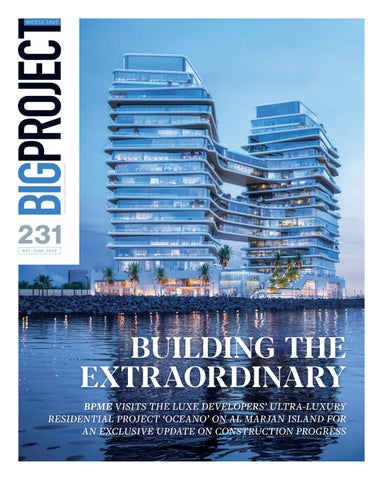
BUILDING THE EXTRAORDINARY
AB46RJ AB 46 RJ
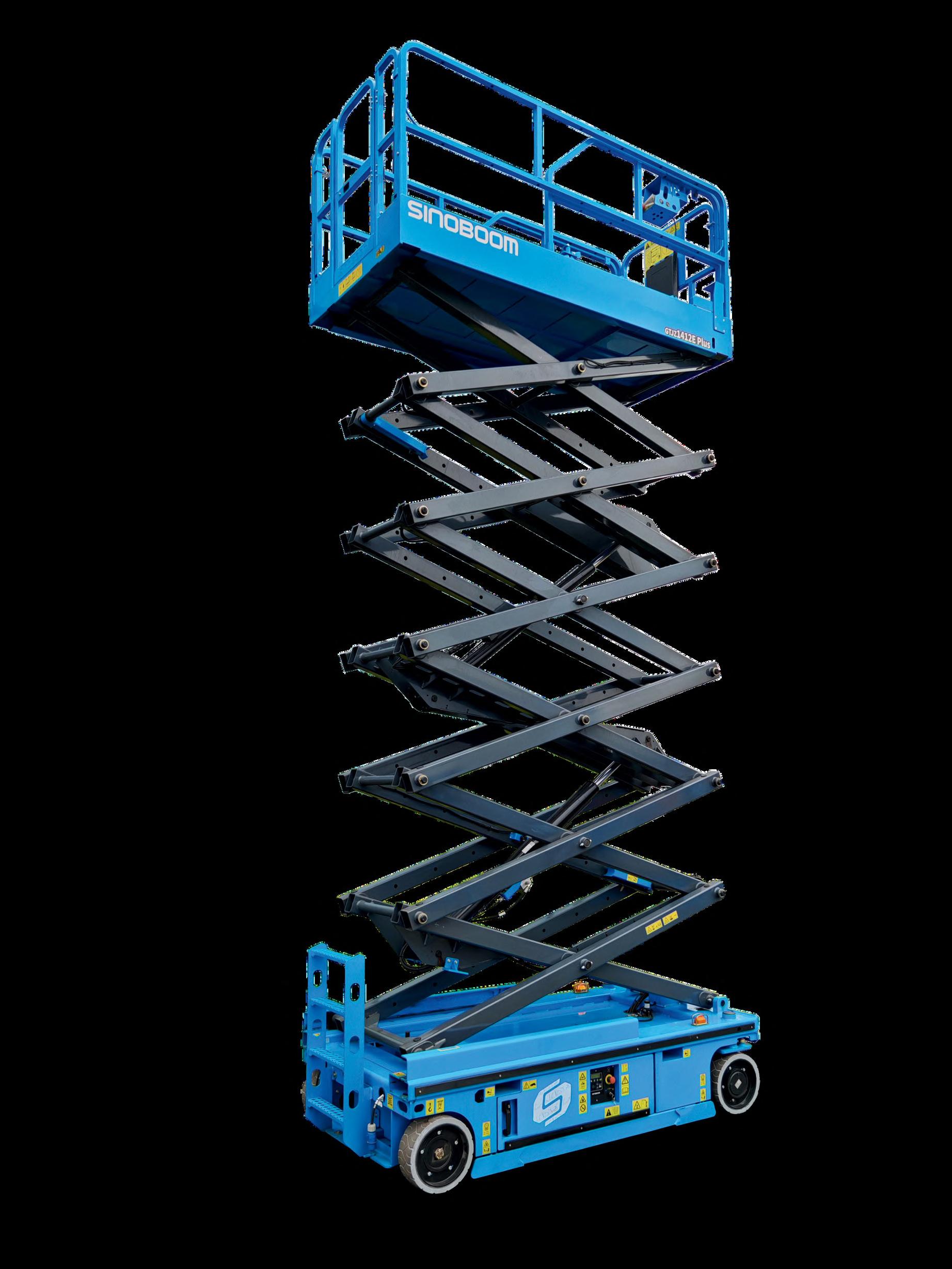
Articulating Boom Lift Working Height
48.6m





X-PECT MORE
POWER THAT PAYS

Technology to improve HSE on job sites
Welcome to another edition of Big Project Middle East (BPME) dear readers. We’re now into the extreme weather part of the year, and the time when I find myself in awe of the commitment and resilience of every person working tirelessly on construction projects every day.
As part of my role on BPME I’m lucky to be able to visit construction sites in-person and see first-hand how projects go from paper and screen to structures and infrastructure that serve needs in the real world. It’s one thing to write about construction and projects, and a completely different thing to see them come together in the real world.
Technology in all its different forms is having a tremendous impact on the way construction projects are designed, built and operated. Artificial intelligence (AI) in particular is being touted as the next big thing and is increasingly being used during a project’s development and operational cycle. But despite my background and interest in
technology, I’m ambivalent about the real world benefits of AI, as I feel it is far from mature enough to be used in some of the ways I see it being used today. I do realise this is down to the way companies and decisionmakers choose to use it, rather than the technology itself.
That said, one area where I think it can make a tremendous difference and hope that more R&D goes into its use in this way is with health, safety and environment (HSE) applications. I do believe that technology and AI in particular can effectively identify risks in complex environments and stop injuries and the loss of human life. We’re seeing the first iterations of this type of technology now, and it’s something I hope will truly take off in the coming months and years.

Jason Saundalkar EDITORIAL DIRECTOR
ANALYSIS
14 The Briefing
Mohammed bin Rashid approves US
$9.2bn Dubai Metro Gold Line
24 The Big Picture
A wrap-up of the biggest international construction news stories for the month
28 Market Report
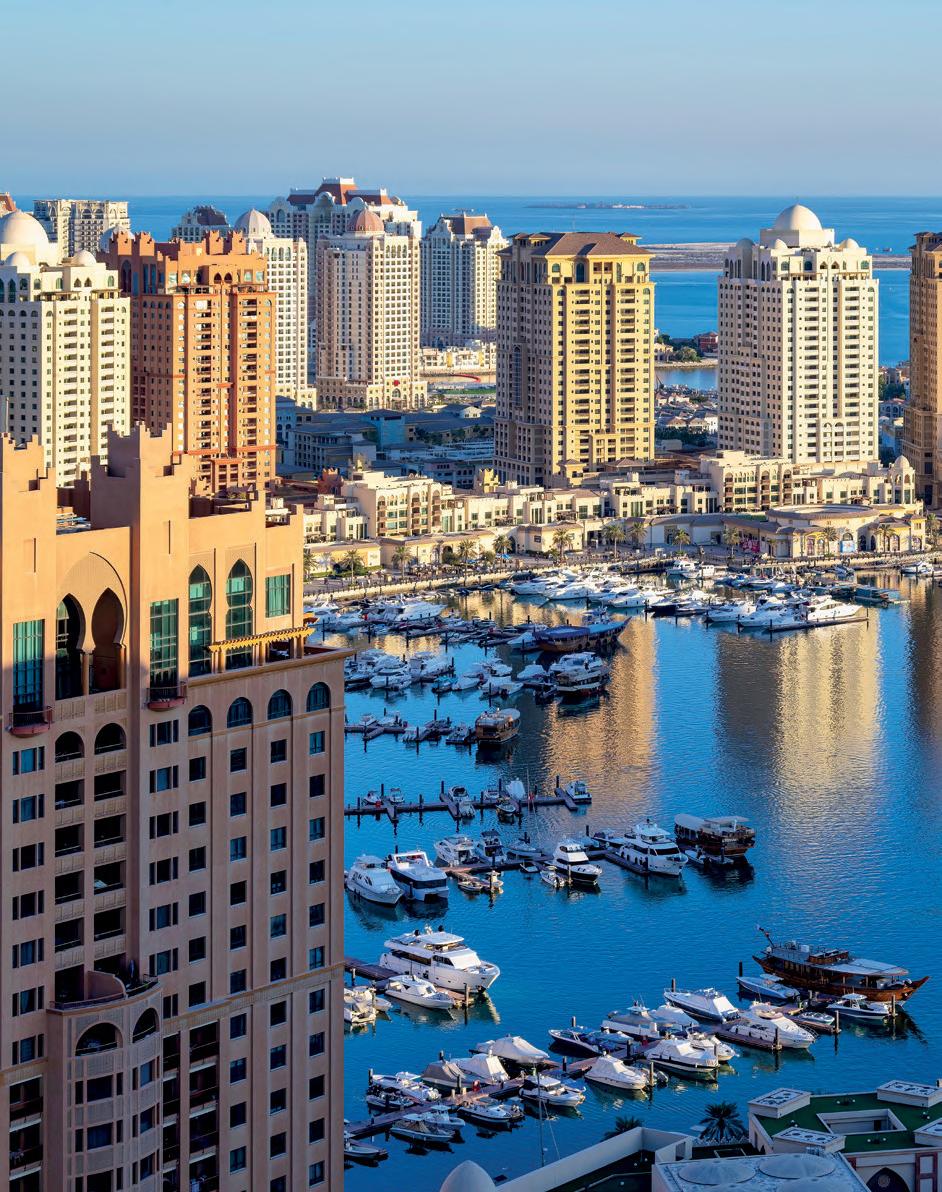
Knight Frank discusses the performance of Qatar's real estate market in Q1 2026
34 In Profile Building the
Extraordinary
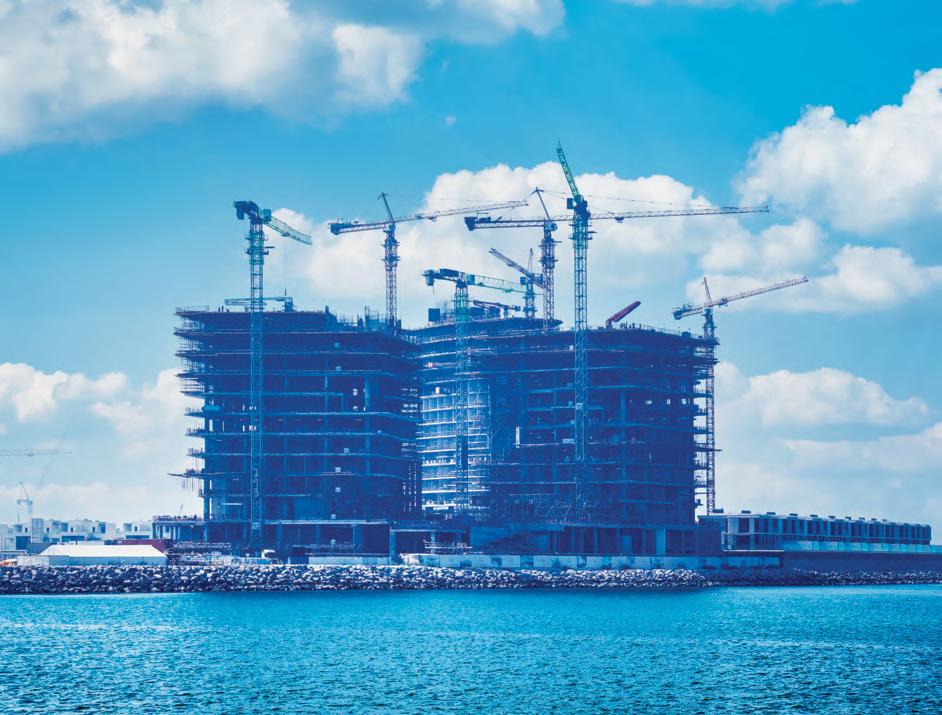
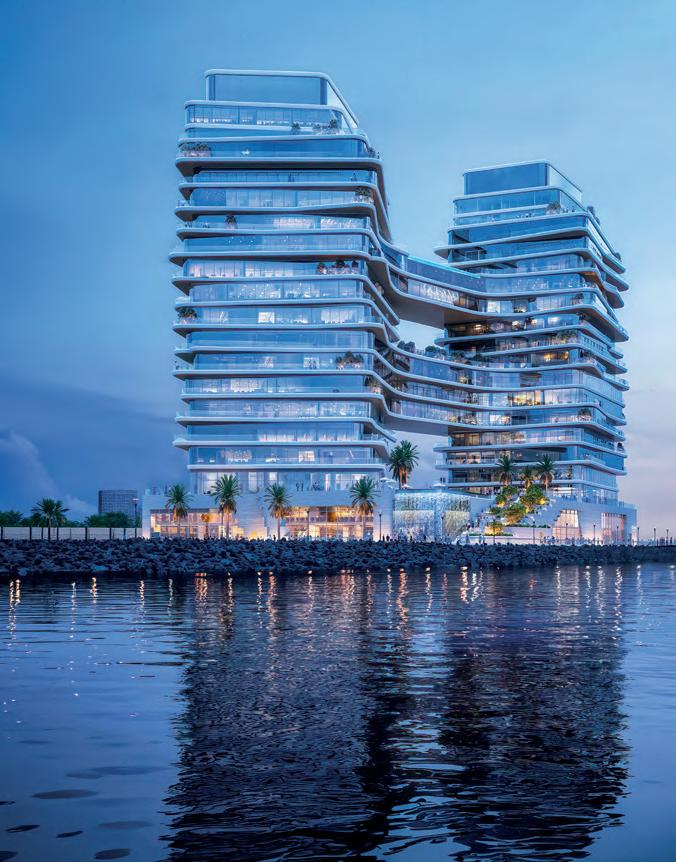
The Luxe Developers' Siddharta Banerji and Shubam Aggarwal take BPME's Jason Saundalkar on an exclusive site visit of 'Oceano', the developer's flagship ultra-luxury development that is taking shape on Al Marjan Island in Ras Al Khaimah
In Profile Beyond the Checklist
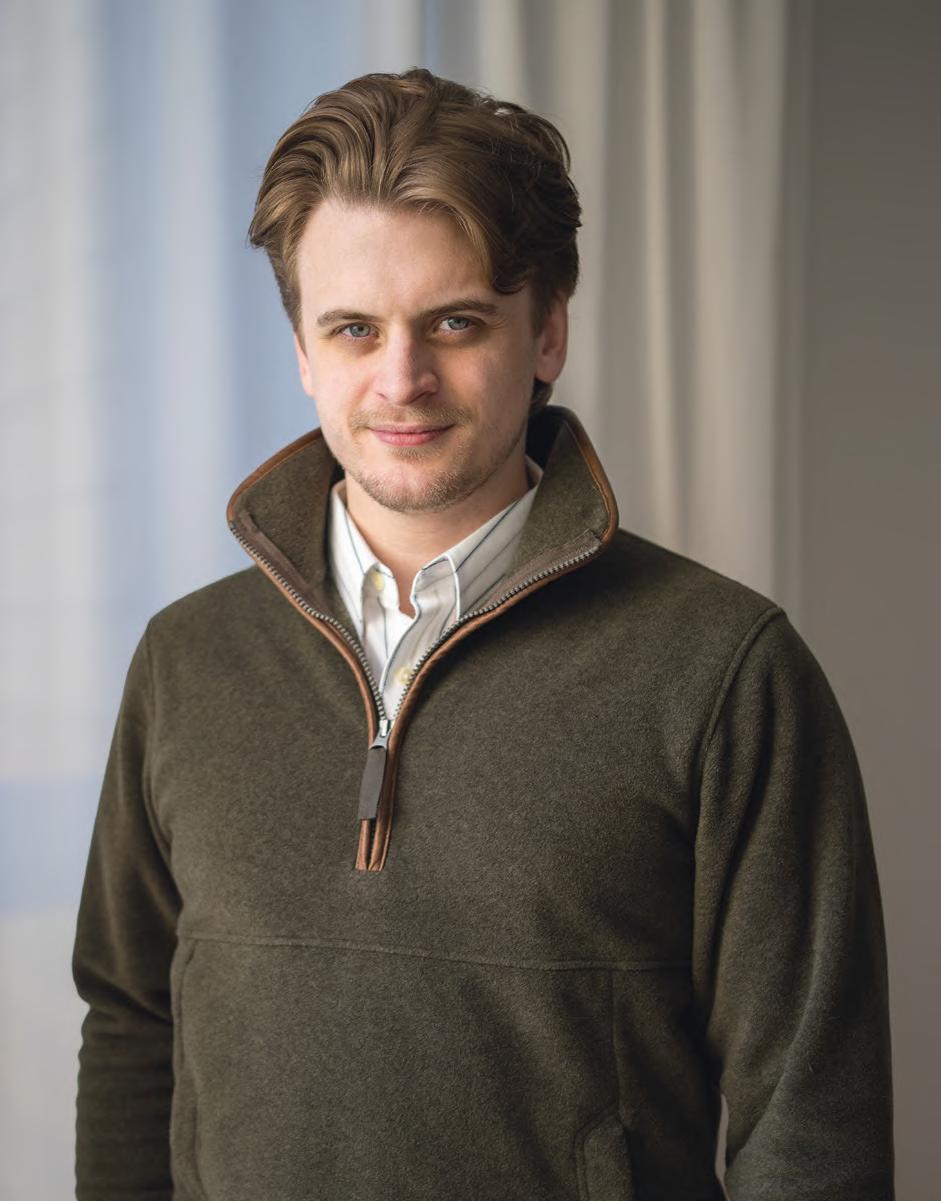
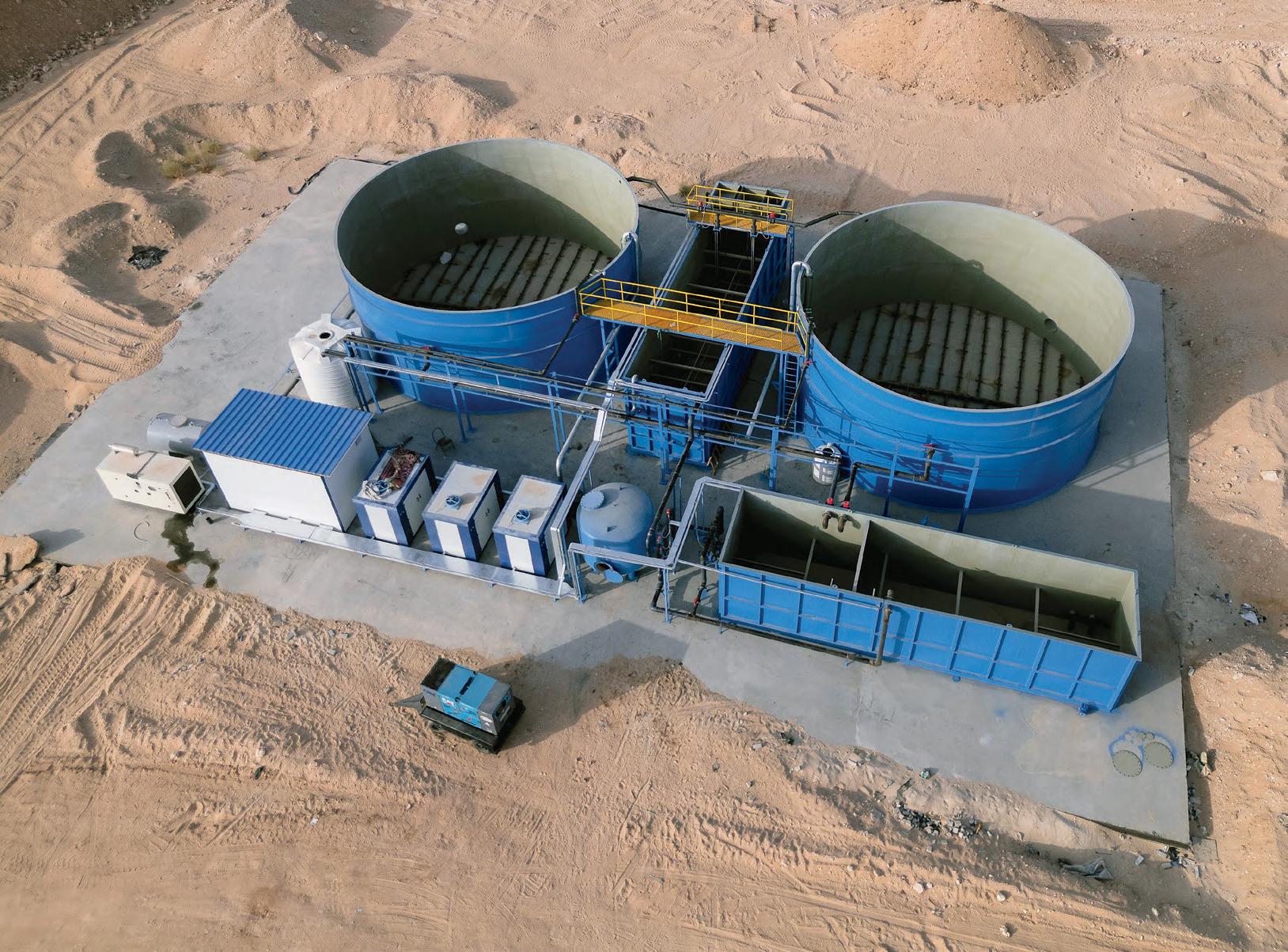
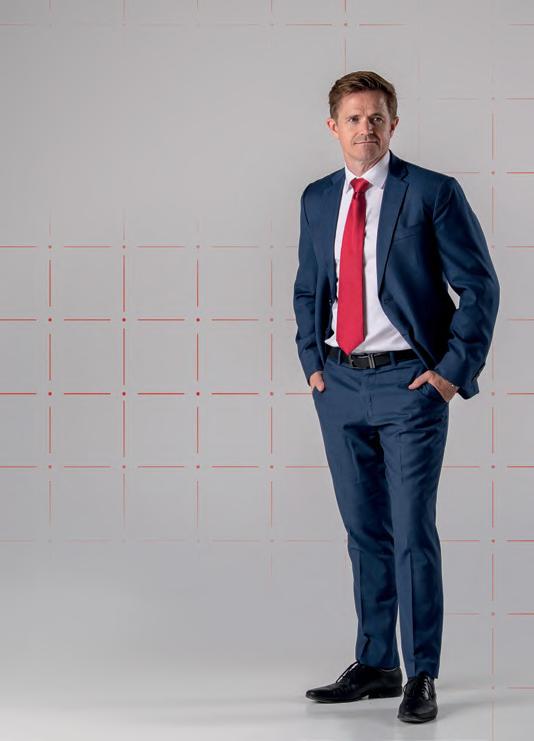
BPME's Priyanka Raina talks to Quantavist CoFounder Oscar Pickerill about redefining construction safety through the use of artificial intelligence
60 In Profile
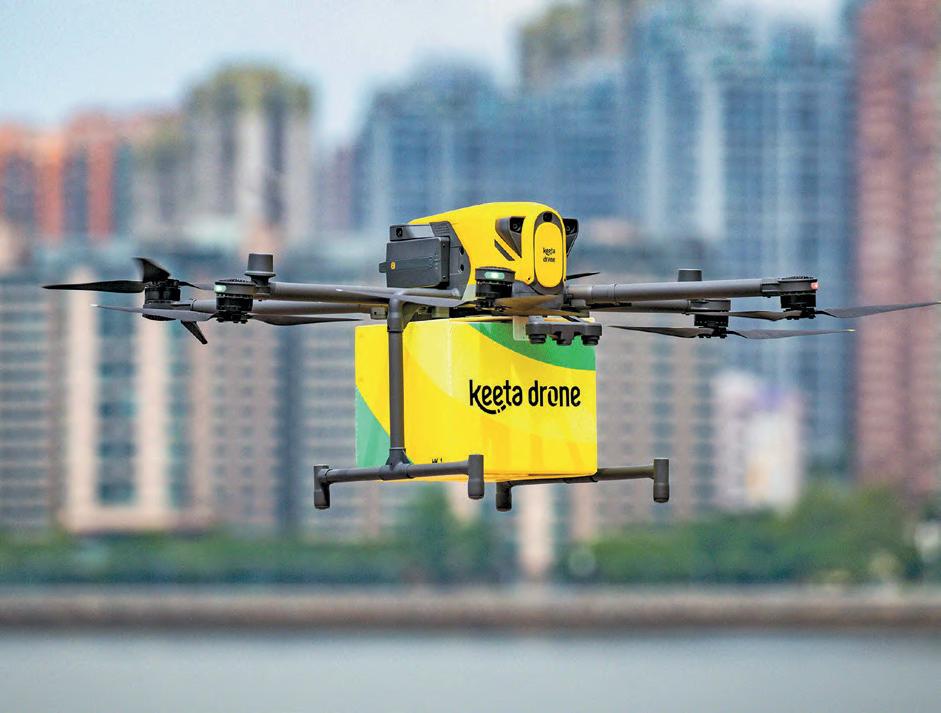
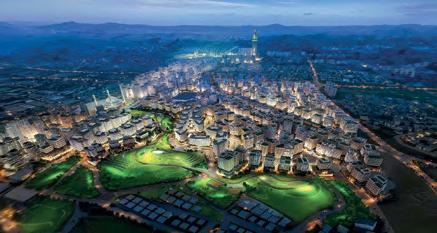
BPME's Jason Saundalkar talks to Sobha Realty's Francis Alfred and Keeta Drone's Junwei Yang about the rollout of air deliveries within Sobha's communities
72 Comment
Technology is an extraordinary tool, but it only creates value when it is properly integrated into operations, when it responds to concrete needs, and when people can use it to make better decisions says ACCIONA's Ana Jimenez Banzo
80 Final Update
Ellington begins handover of 2-residential projects
GROUP
MANAGING DIRECTOR Raz Islam
DIRECTOR OF FINANCE & BUSINESS OPERATIONS Shiyas Kareem
EDITORIAL
EDITORIAL DIRECTOR Jason Saundalkar
ASSOCIATE EDITOR Priyanka Raina
ADVERTISING
MANAGING DIRECTOR Raz Islam
STUDIO
ART DIRECTOR Simon Cobon
GRAPHIC DESIGNER Percival Manalaysay
PHOTOGRAPHER Maksym Poriechkin
CIRCULATION & PRODUCTION
DIRECTOR OF MARKETING & MEDIA OPERATIONS
Phinson Mathew George
PRODUCTION & IT SPECIALIST Jarris Pedroso
MARKETING
SOCIAL MEDIA EXECUTIVE Franzil Dias
WEB DEVELOPMENT
SENIOR DIGITAL MANAGER Abdul Baeis
FOUNDER Dominic De Sousa (1959-2015)
raz.islam@cpitrademedia.com shiyas.kareem@cpitrademedia.com
jason.s@cpitrademedia.com priyanka.raina@cpitrademedia.com
raz.islam@cpitrademedia.com
simon.cobon@cpitrademedia.com percival.manalaysay@cpitrademedia.com maksym.poriechkin@cpitrademedia.com
phinson.george@cpitrademedia.com jarris.pedroso@cpitrademedia.com
franzil.dias@cpitrademedia.com
abdul.baeis@cpitrademedia.com
When you have finished with this magazine, please recycle it
The publisher of this magazine has made every effort to ensure the content is accurate on the date of publication. The opinions and views expressed in the articles do not necessarily reflect the publisher and editor. The published material, adverts, editorials and all other content are published in good faith. No part of this publication or any part of the contents thereof may be reproduced, stored or transmitted in any form without the permission of the publisher in writing. Publication licensed by Dubai Development Authority to CPI Trade Publishing FZ LLC. Printed by Well Pack Printing Press.
CPI Trade Media. PO Box 13700, Dubai, UAE. +971 4 375 5470 cpitrademedia.com © Copyright 2026. All rights reserved.
ON THE COVER
The Luxe Developers' Siddharta Banerji and Shubam Aggarwal take BPME's Jason Saundalkar on an exclusive site visit of 'Oceano', the developer's flagship ultra-luxury development that is taking shape on Al Marjan Island in Ras Al Khaimah
BigProjectME.com
@bigproject_me
BigProjectMiddleEast
bigprojectme






PROPERTY

CONSTRUCTION
First Avenue creates fund to invest in the education sector in KSA
CONSTRUCTION
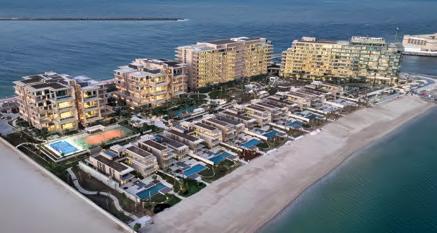
Innovo Group announce successful completion of Six Senses Residences
INFRASTRUCTURE
Dubai Municipality completes 36% of stormwater drainage system in Deira
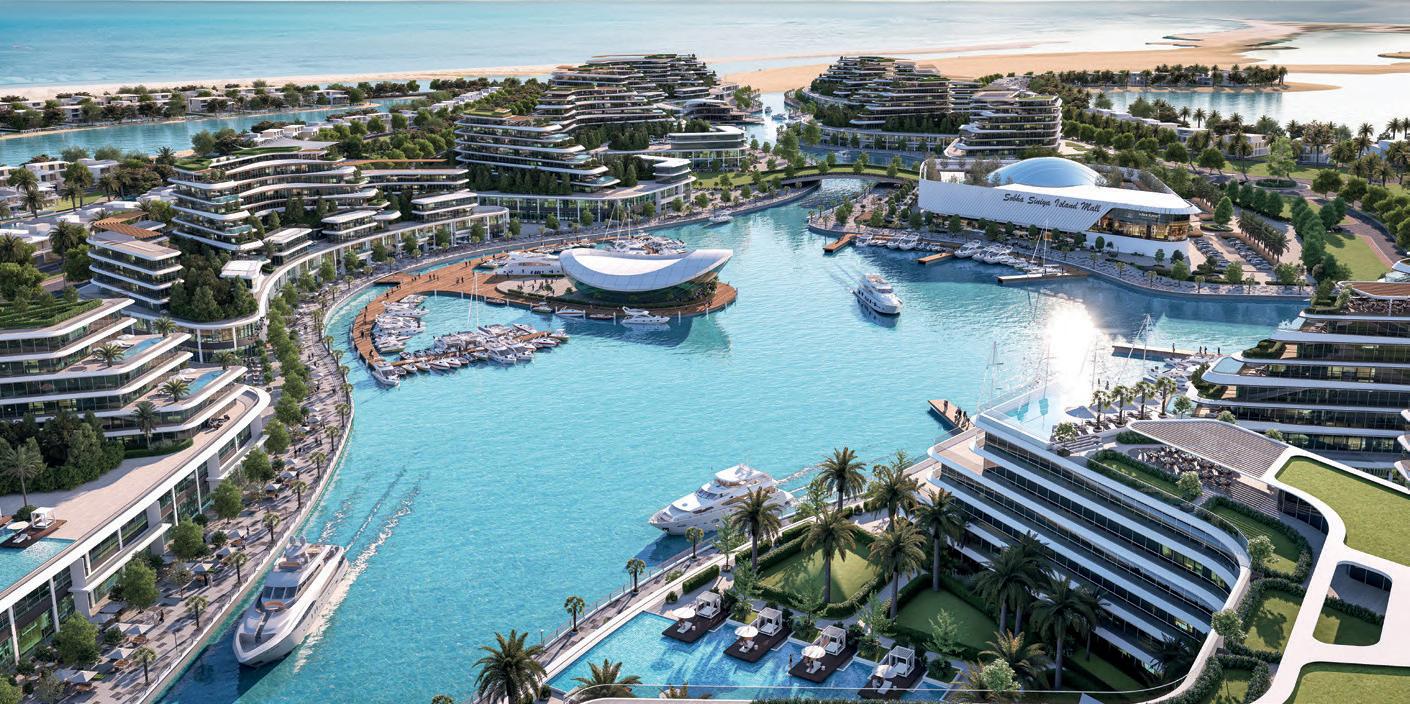
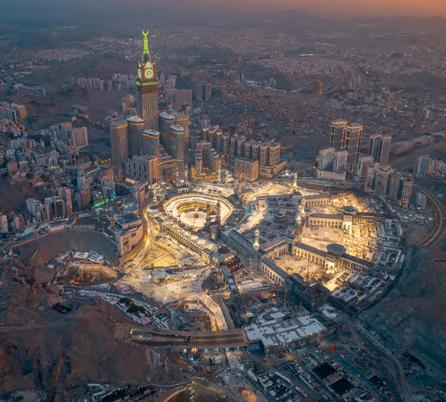
Umm Al Qura launches Masar Gardens mixed-use project in Makkah

INDUSTRY
Saudi introduces new property purchase requirements for foreign companies
Saudi Arabia’s Ministry of Investment has introduced new requirements for non-resident foreign companies interested in purchasing property without engaging in economic activities.
SUSTAINABILITY
AECOM calls for ‘responsible progress’ ahead of World Environment Day 2026
AECOM’s Middle East leadership team is calling for the region’s next generation of infrastructure to balance scale and speed with environmental stewardship and long-term value.
INFRASTRUCTURE
DAMAC Digital reaches 6,000MW planned IT capacity across territories
DAMAC Digital has said that its planned IT capacity landbank has reached 6,000MW across 13 countries and a planned portfolio of over 35 sites.
PROPERTY
MAF awards ECC US $544mn contract for Ghaf Wood projects
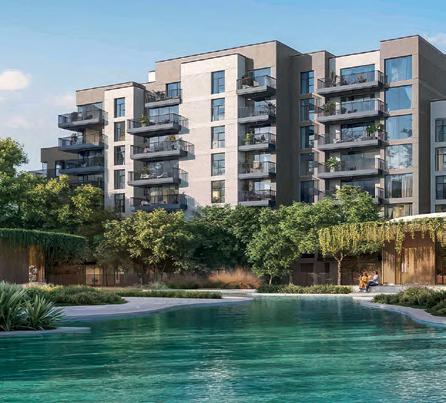
Majid Al Futtaim has awarded a US $544.56mn contract to ECC as the main contractor for Capria East and Capria West, including Maravelle Residences, at Ghaf Woods.
CONSTRUCTION
6 development sites worth $3.54bn investment awarded in Makkah
Contracts representing investments worth US $3.54bn and covering a total area of more than 2.7m sqm have been awarded for 6-development sites by The Royal Commission for Makkah City and Holy Sites.

SEPTEMBER
Real Estate Leaders Summit 23 September 2026
Dubai, United Arab Emirates


OCTOBER
Truck&Fleet ME Confex 14 October 2026
Dubai, United Arab Emirates

OCTOBER
Digital Construction Summit 21 October 2026
Dubai, United Arab Emirates


NOVEMBER
Construction Machinery ME Confex 5 November 2026
Dubai, United Arab Emirates
NOVEMBER
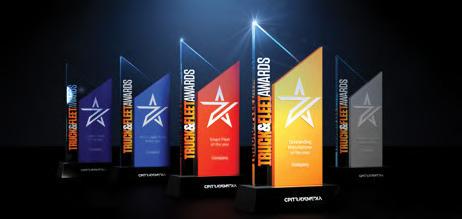
Truck & Fleet Awards 19 November 2026
Dubai, United Arab Emirates
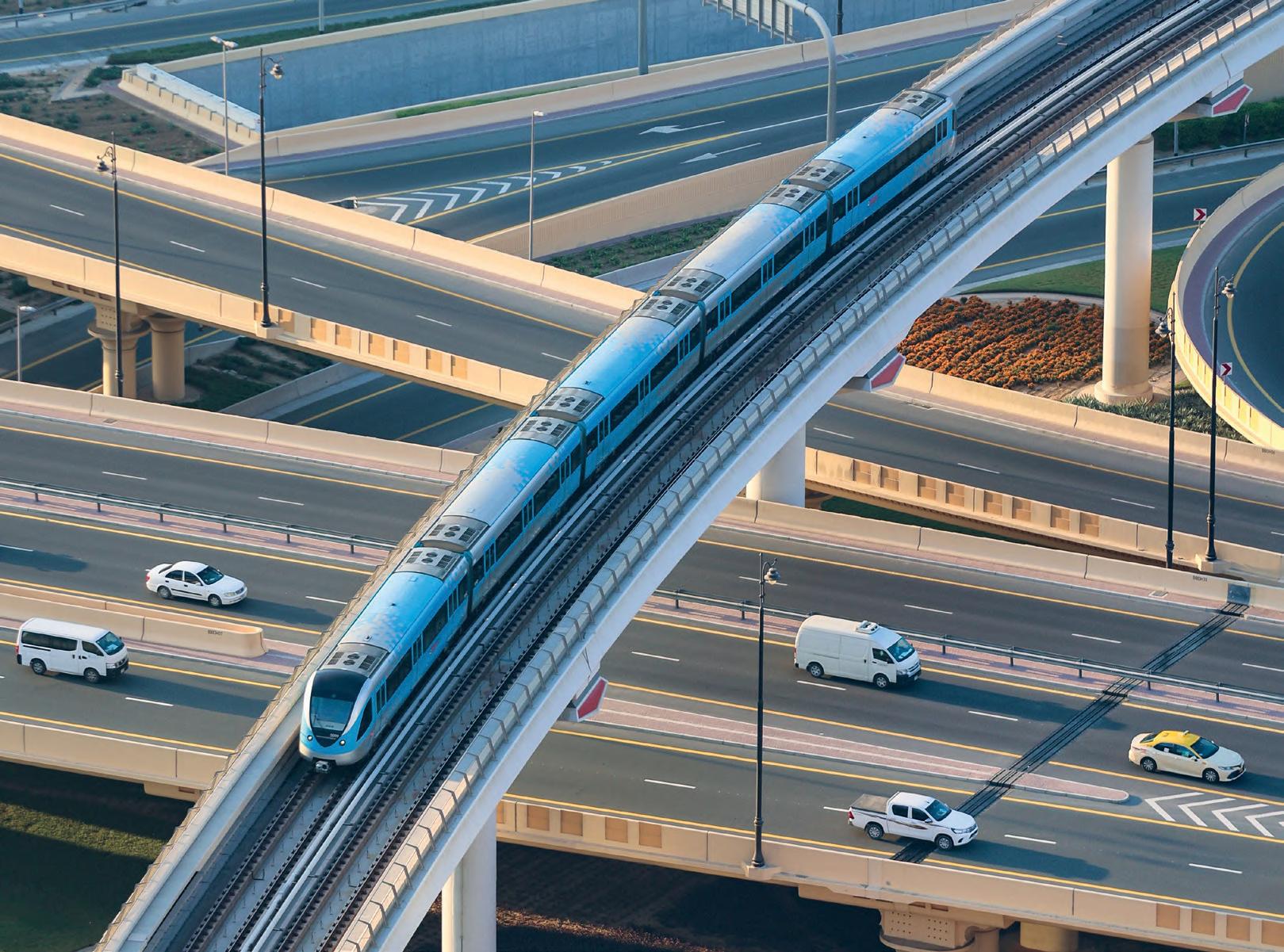
Mohammed bin Rashid approves US $9.2bn Dubai Metro Gold Line
The
project will be built at an investment of US $9.2bn and will be Dubai’s first fully underground metro line
The Dubai Metro Gold Line has been approved by His Highness Sheikh Mohammed bin Rashid Al Maktoum, Vice President and Prime Minister of the UAE and Ruler of Dubai.
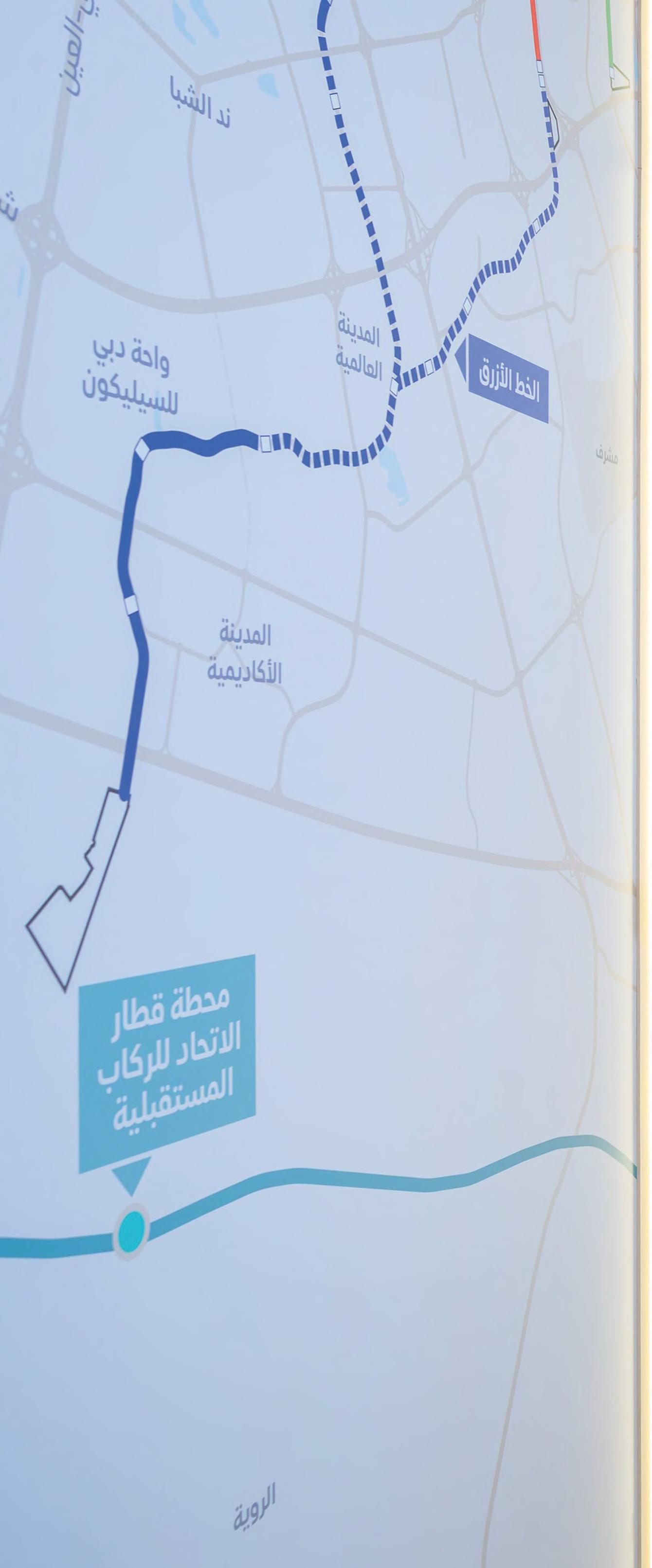
The project will be built at an investment of US $9.2bn and will extend over 42km comprising 18 stations, and will be Dubai’s first fully underground metro line. It will connect to both the Red and Green Lines, while integrating with Etihad Rail, effectively linking Dubai to the UAE’s comprehensive national transportation network.
His Highness Sheikh Mohammed’s approval of the project marks a strategic milestone, reflecting the robustness of Dubai’s economy and its accelerating pace of development as the Government of Dubai continues to deliver ambitious infrastructure projects that boost economic growth and enhance quality of life, further elevating the emirate’s global competitiveness, said a statement from the RTA.
Sheikh Mohammed is said to have directed the immediate commencement of the project, with the inauguration scheduled for 9 September 2032 – reflecting a delivery timeframe that is 30% faster than Dubai Metro’s Blue Line.
“Dear brothers and sisters, today we announce Dubai’s largest transport project; a new Dubai Metro line spanning 42km, at a depth of 40m underground. This new route will connect 15 strategic locations in Dubai, serving 1.5m people and supporting mobility across 55 mega development projects currently under construction. The $9.2bn Gold Line project will expand the Dubai Metro network by 35%, with completion scheduled for 9 September 2032.”
He added, “Our major projects to build the world’s best city to live in are ongoing. Our future projects will not stop; rather, they will gather pace. Our mission is to build a better future for millions – for we are a people who say what we do and do what we say.”
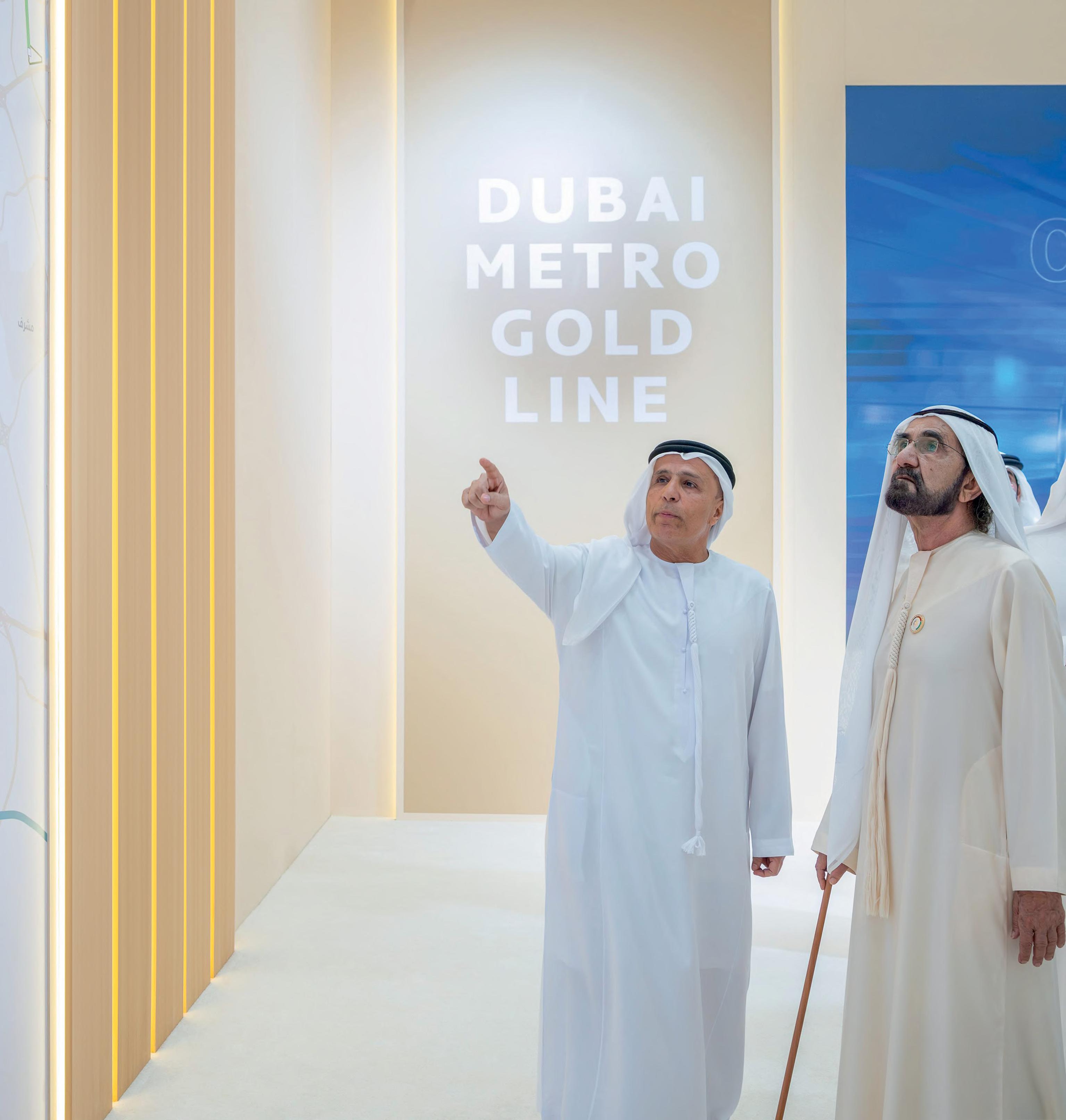
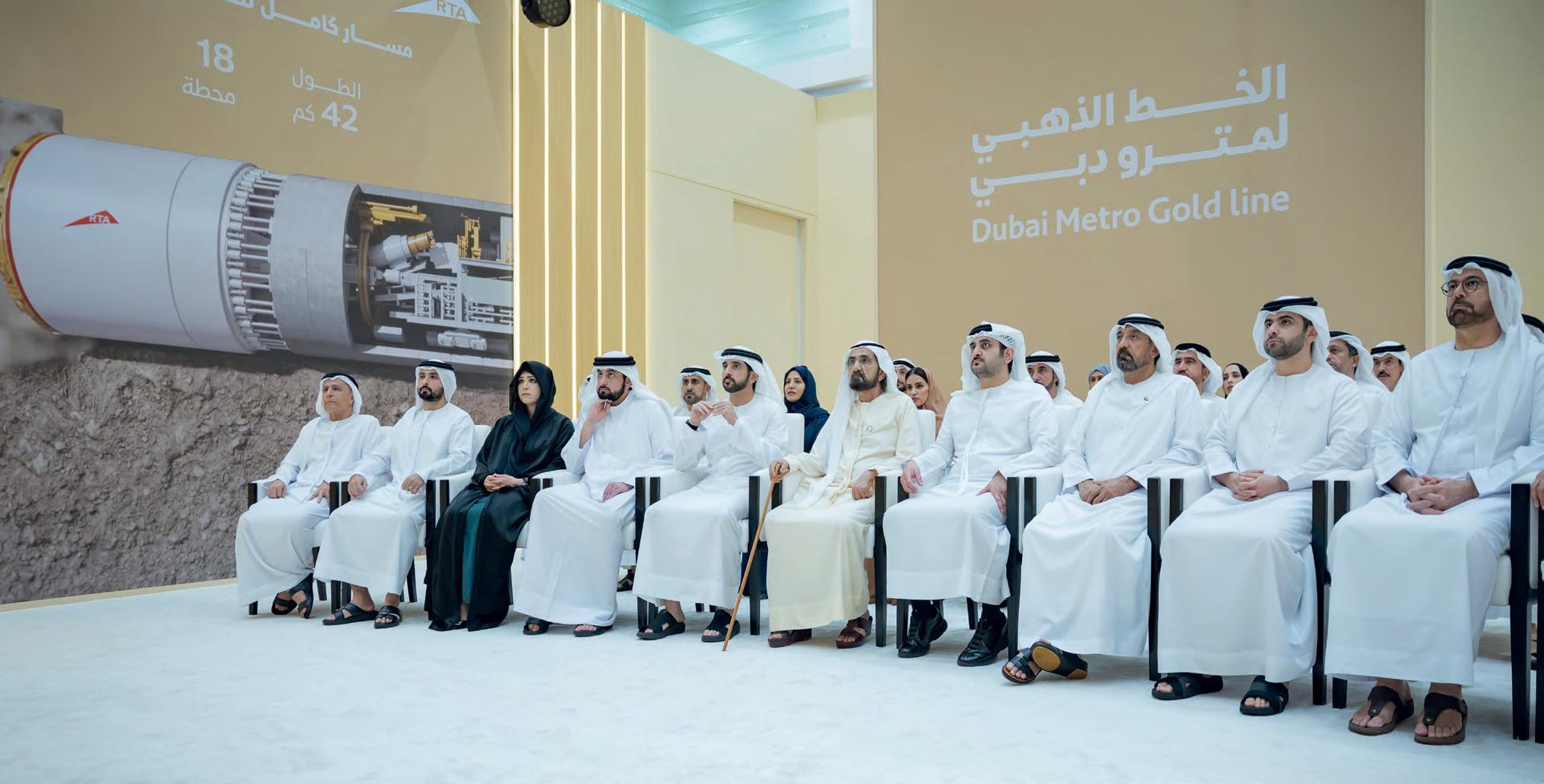
IMMEDIATE START
Sheikh Mohammed is said to have directed the immediate commencement of the project, with the inauguration scheduled for 9 September 2032.
Set to serve as a comprehensive urban artery, the Gold Line will bridge Dubai’s historic centre with its future districts. The route will span 15 strategic locations, originating in Al Ghubaiba and crossing several developments, including Mina Rashid, City Walk, Business Bay, Mohammed Bin Rashid City, Nad Al Sheba, Mohammed bin Rashid Gardens, Meydan, Al Barsha South, Jumeirah Village Circle (JVC), and culminating at Jumeirah Golf Estates. The Gold Line significantly enhances urban integration and streamlines mobility across the emirate’s vital economic and residential centres, the statement highlighted.
The Gold Line will connect with the Red Line at 2-locations; Business Bay and Jumeirah Golf Estates, and
to the Green Line at Al Ghubaiba. It also links with Etihad Rail at Meydan and Jumeirah Golf Estates, it added.
The new route will serve over 55 development projects and is projected to benefit over 1.5m people by 2040. With daily passenger numbers expected to reach 465,000 people beyond 2040, the Gold Line is set to solidify Dubai Metro’s role as the backbone of the emirate’s mobility ecosystem and the preferred choice for both residents and visitors, the statement explained.
The Gold Line will expand the Dubai Metro network from the current 120km, factoring in the Blue Line, to 162km, a 35% increase. The number of stations will increase from 67 (including the Blue Line) to a total of 85 stations, it added.
His Excellency Mattar Al Tayer, Director General and Chairman of the Board of Executive Directors of the Roads and Transport Authority (RTA) stated: “The Dubai Metro Gold Line marks a strategic milestone in the
evolution of Dubai’s public transport network, reflecting the leadership’s vision to develop integrated, sustainable infrastructure that fuels economic growth and enhances quality of life. The project facilitates integration of multi-modal transportation, links Dubai’s key urban hubs and addresses the demands of urban and demographic expansion in line with the Dubai 2040 Urban Master Plan.”
He added, “The Gold Line embodies the RTA’s commitment to adopting international best practices in executing major projects. Led by national talent, the project reaffirms the leadership’s confidence in Emirati cadres and their pivotal role in driving development by delivering landmark achievements that mirror Dubai’s future aspirations.”
Al Tayer said that the Gold Line represents a strategic investment projected to achieve a 430% cumulative economic return over 20-years of operation, driven by
savings in time and fuel, as well as reductions in road accident fatality rates and carbon emissions. He also noted that such benefits underscore the critical role of infrastructure projects in fulfilling the goals of the Dubai Economic Agenda, D33, by stimulating the economy, driving sustainable growth, and boosting the value of property and real estate near metro stations by up to 20%, further enhancing the appeal of areas it serves.
“By connecting with the Red Line in 2-locations and with the Green Line in 1-area, the Gold Line is set to drive the integration and sustainability of Dubai’s public transport system, further improving the efficiency of the current network and facilitating mobility across the emirate for both residents and visitors,” he remarked.
Al Tayer explained that the Gold Line will alleviate congestion on the Red Line between Bur Juman and ONPASSIVE stations by 23%, and will strengthen Dubai’s connectivity with the other emirates by integrating with Etihad Rail at 2-locations, further advancing the concept of multimodal transportation.
The Gold Line will introduce loops, enhancing seamless mobility across short and long distances in key areas, and will further strengthen the integration and sustainability of the mass transit network, the statement outlined.
Additionally, Al Tayer said the Gold Line will significantly ease congestion across major roads, by bringing about a reduction of over 40m journeys annually, which will improve traffic flow, enhance quality of life and advance environmental sustainability.
Al Tayer explained that the Gold Line represents an advanced engineering milestone, as it will utilise the latest tunnel boring machine technology for an entirely underground execution, ensuring minimal disruption to residents and existing urban developments.
He added that the project will adhere to the highest international standards of quality and safety, as well as speed of delivery – with plans to complete the Gold Line 30% faster than the Blue Line, reaffirming Dubai’s leadership in executing large-scale projects.
The project is scheduled for tender issuance in 2026, with contract awards to follow in 2027. Construction will subsequently begin, leading to its inauguration on 9 September 2032. This comprehensive timeline underscores Dubai’s commitment to executing strategic projects with maximum efficiency and the highest global standards of quality and excellence, the statement explained.
RSG opens Four Seasons Resort and Residences
AMAALA
The resort serves as the anchor for the destination’s ultra-luxury wellness ecosystem and sets a new global benchmark for regenerative tourism
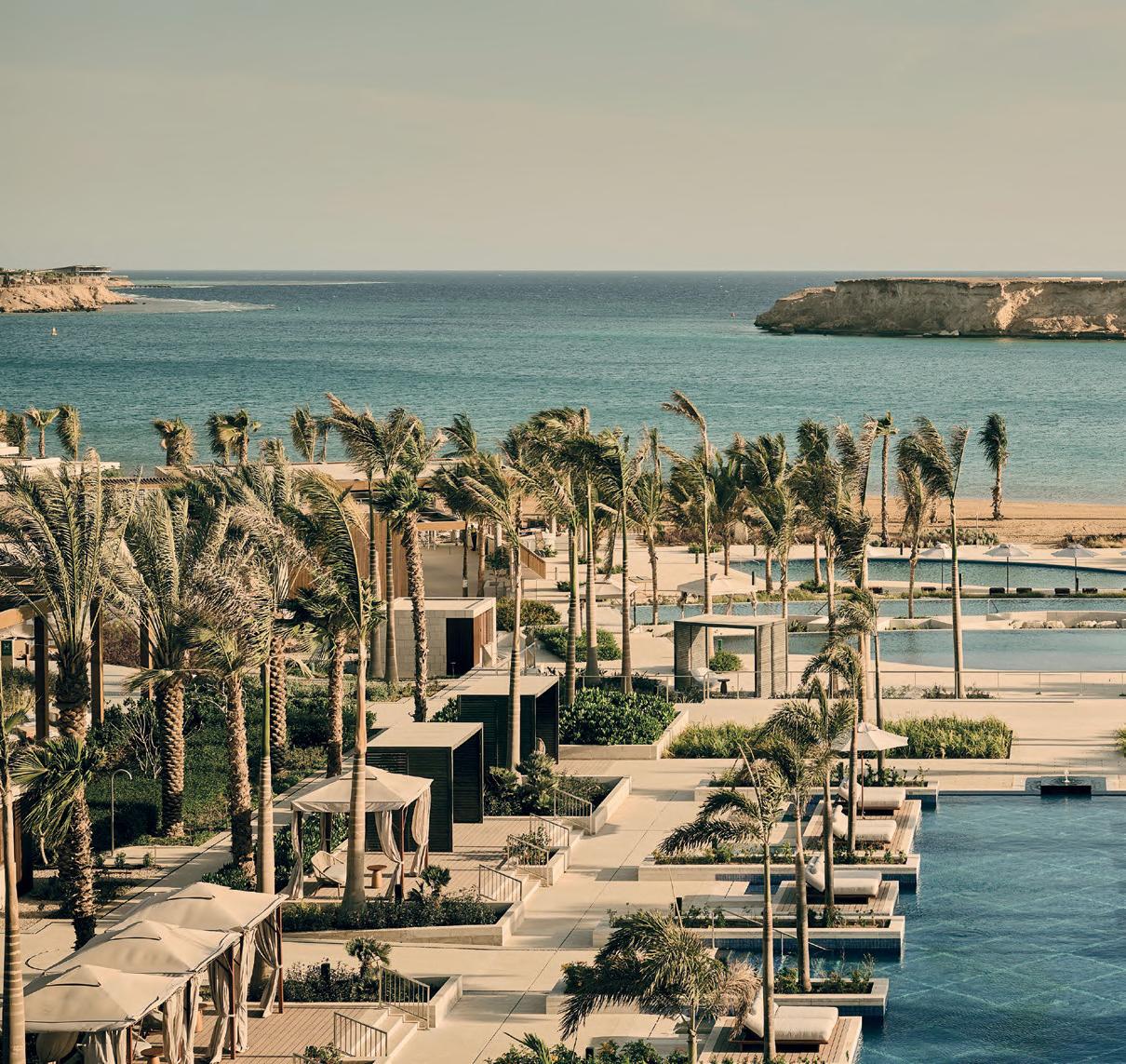
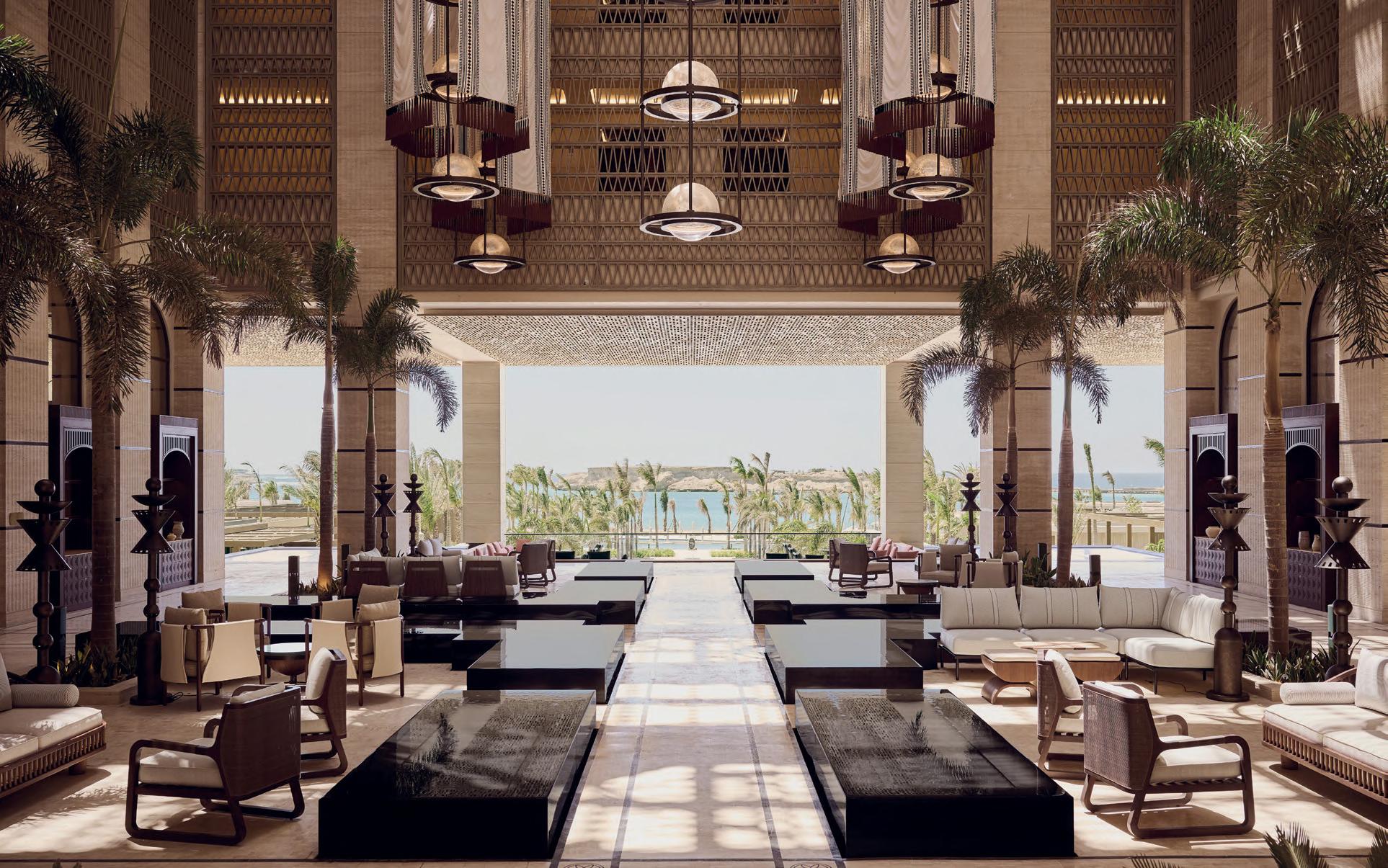
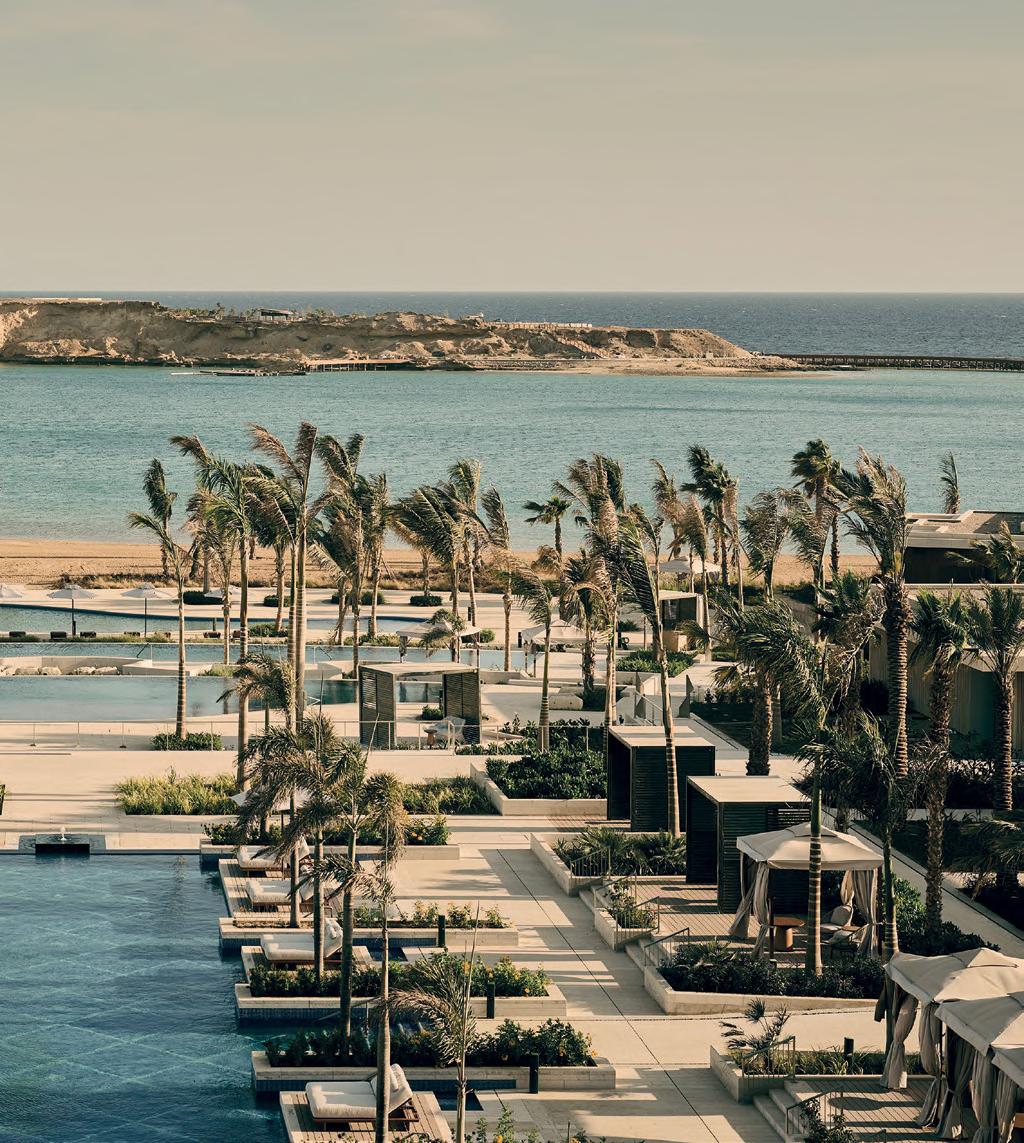
Red Sea Global (RSG) has opened its second flagship destinationAMAALA. The developer said the achievement is a major milestone for the Kingdom’s tourism sector.
The developer said it welcomed its first guests at AMAALA, billed as an integrated wellness haven, with the opening of Four Seasons Resort and Residences AMAALA at Triple Bay. It added that the launch signifies the transition of AMAALA into a live destination.
Set along the shoreline of Saudi Arabia’s northwestern coast, the resort serves as the anchor for the destination’s ultra-luxury wellness ecosystem and sets a new global benchmark for regenerative tourism, said a statement.
John Pagano, Group CEO at Red Sea Global commented, “The debut
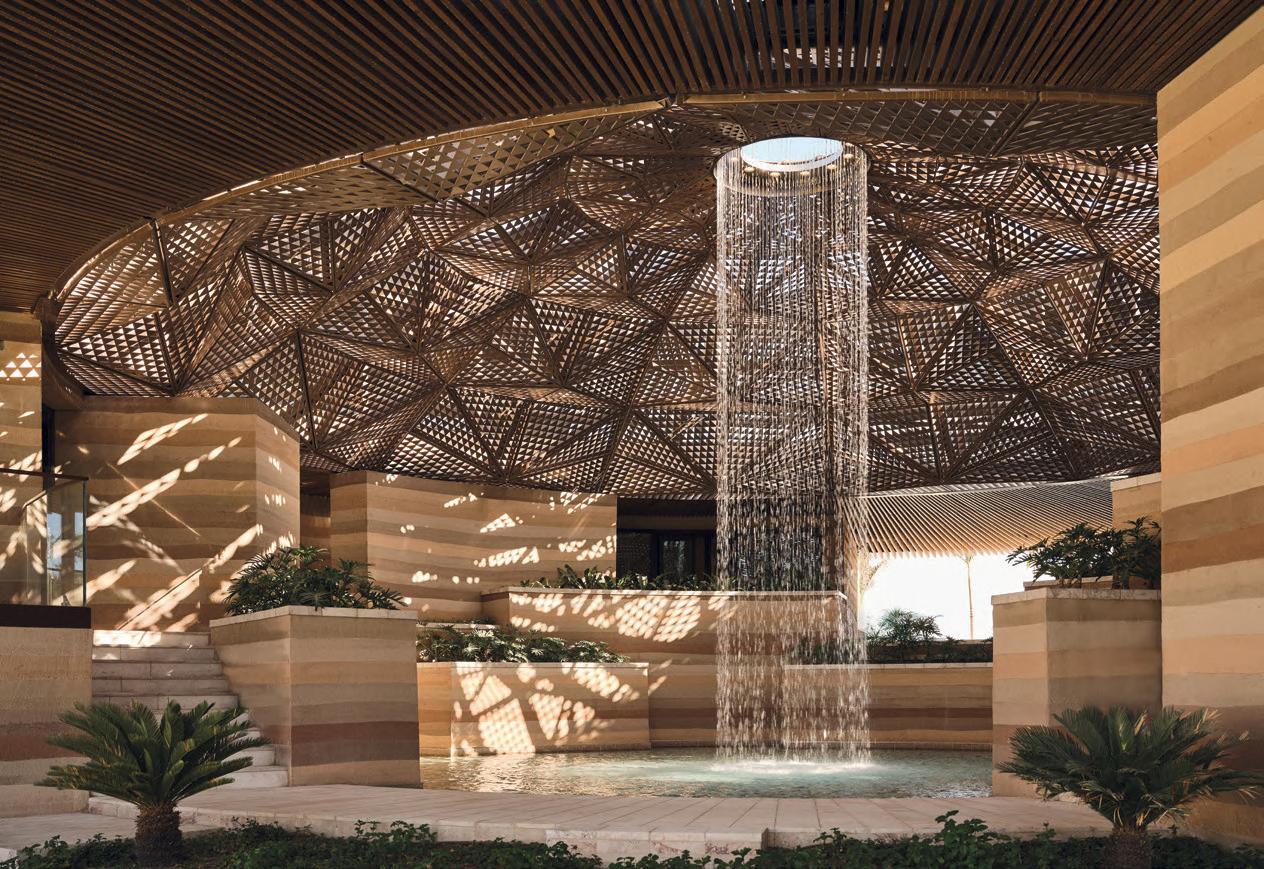
of our first resort at AMAALA is a moment of realisation for us. By delivering this world-class asset to market on schedule, we are demonstrating that regenerative development can combine commercial ambition with meaningful environmental and social impact, while establishing Saudi Arabia as a premier global destination for luxury wellness. This is just the first chapter. We look forward to welcoming our first guests, opening more resorts, and seeing AMAALA emerge as one of the world’s most distinctive luxury wellness destinations.”
Designed by Dubai-based U+A architects, the Four Seasons Resort and Residences AMAALA is said to blend multi-generational luxury offerings with state-of-theart sustainable infrastructure.
RICH AMENITIES
The destination boasts five pools, a 900m private beach and a number of other facilities and amenities.
Operating in strict alignment with RSG’s industry-leading regenerative tourism principles, the property is powered by 100% renewable energy and supported by advanced, zerowaste management systems designed to minimise environmental impact, while actively contributing to local conservation, the statement outlined. The hospitality destination is said to include a suite of facilities including ultra-luxury accommodations comprising 202 guest rooms, suites, and garden villas. RSG said each offers spectacular views of
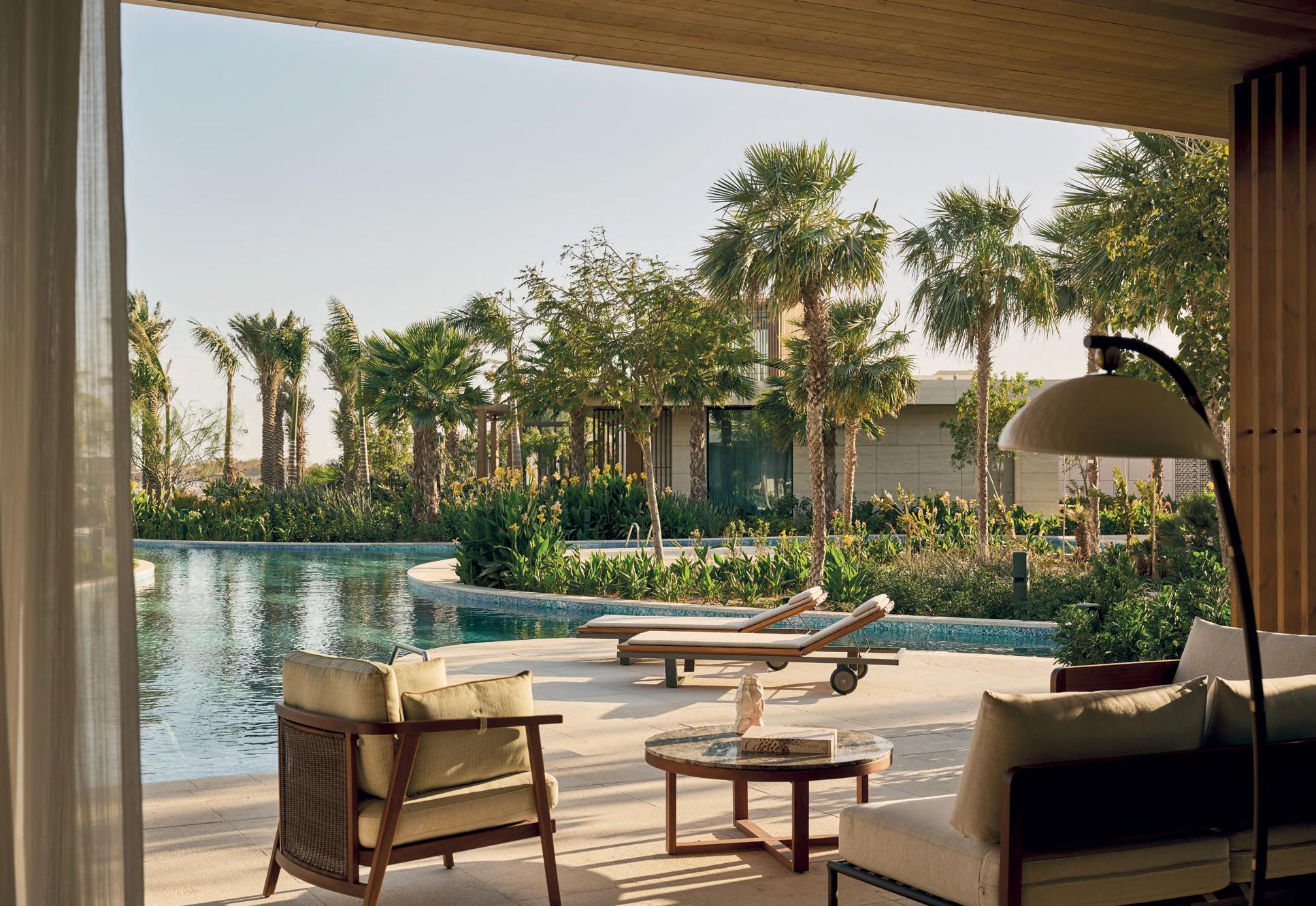
The destination features 26 ultraexclusive branded private residential villas, ranging from 552 to over 1,000sqm, each featuring its own private pool.
the Red Sea. The destination also features 26 ultra-exclusive branded private residential villas, ranging from 552 to over 1,000sqm, each featuring its own private pool.
The luxury project also includes luxury wellness and fitness amenities, such as the 2,095sqm HYLIAA Wellness & Spa, which is complemented by a 511sqm premium fitness hub. RSG notes that guests can engage in bespoke
wellness journeys guided by international specialists, such as sound healing and beachside yoga.
The project also features a mix of open-air dining venues including the signature Middle Eastern coastal restaurant, MAA Social, and the cliffside ROCK BAAR jutting over a private cove.
The destination also boasts five pools, a 900m private beach and a fully supervised ‘Kids for All Seasons’ program, in addition to a dedicated, high-tech teenager club. The destination also caters to corporate and private events, the developer said. The destination boasts over 1,000sqm of flexible event space that is designed to host elite executive
retreats, destination weddings, and international corporate summits.
RSG also notes that the destination boasts seamless integration into the broader Triple Bay community, and says that guests can enjoy dedicated tours of the Corallium Marine Life Institute designed by Foster + Partners, and access the AMAALA Yacht Club and the Marina Village’s high-end retail and dining options.
The launch of the Four Seasons Resort and Residences AMAALA at Triple Bay represents the first of 8-world-class resorts scheduled to welcome guests at the destination this year, as RSG continues to rapidly redefine the global luxury tourism landscape, the firm concluded.
LAP OF LUXURY



JOB SITE





DHG begins work on Helvetia Marine on Dubai Islands
The development features a curated mix of 1-3 bedroom apartments, alongside a limited collection of duplex and garden residences
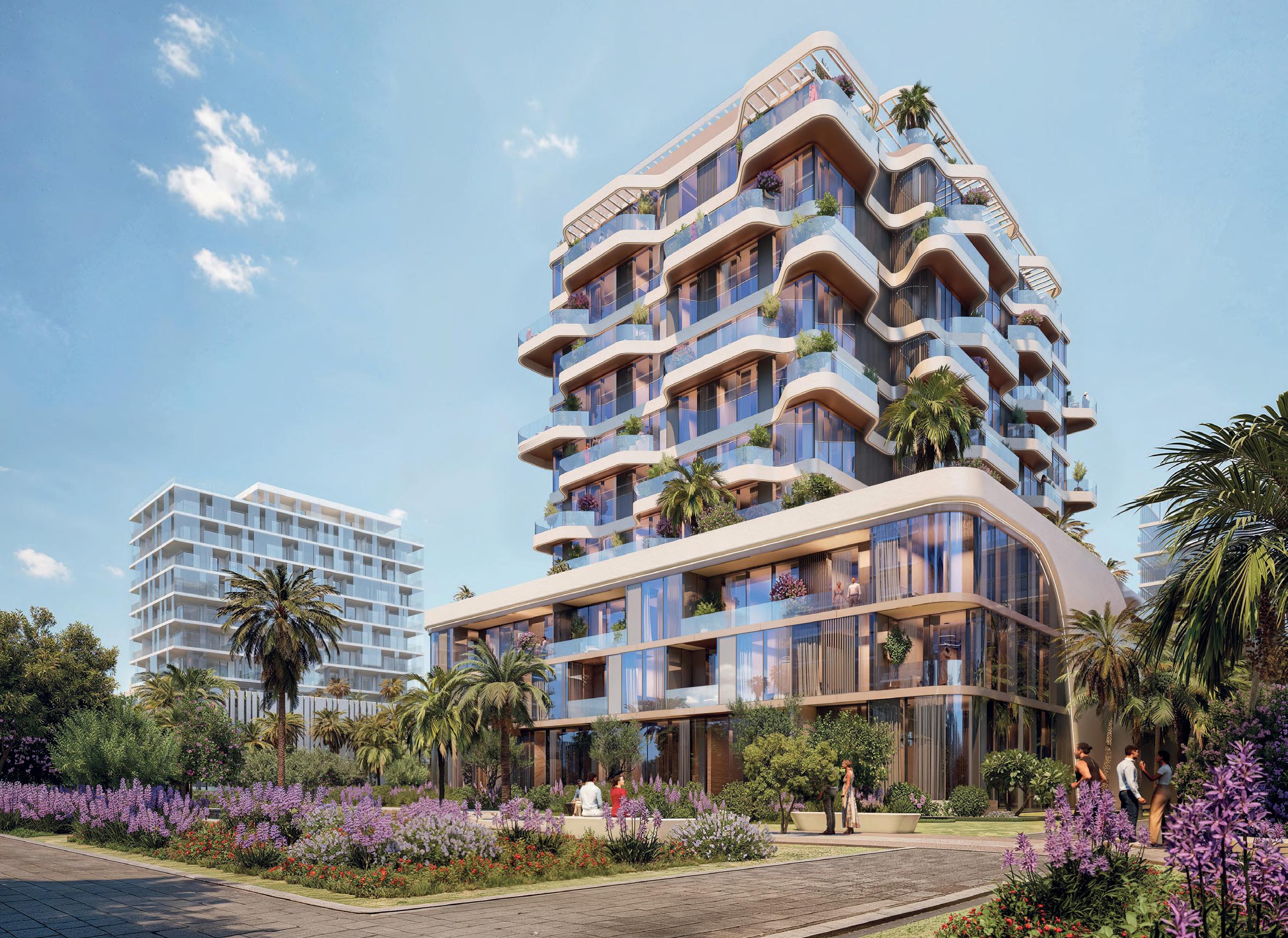
DHG Properties has commenced work on Helvetia Marine, its premium waterfront residential development on Dubai Islands.
The milestone marks the project’s transition into its next phase of development, placing Helvetia Marine on track for delivery to homeowners and investors in Q1 2028.
Helvetia Marine is said to be strategically positioned within Dubai Islands, a large-scale coastal destination undergoing significant development as part of Dubai’s long-term urban vision and emerging as the top-performing location for off-plan apartment sales during April.
Spanning a built-up area of 12,938sqm, Helvetia Marine is designed as a low-rise, design-led residential offering. The development features a curated mix of 1-3 bedroom apartments, alongside a limited collection of duplex and garden residences.
Understated luxury
With architecture inspired by coral formations and interiors influenced by refined yacht living, the project brings together understated luxury and functional design. Select residences offer double-height ceilings, private landscaped areas, and enhanced indoor-outdoor living, complemented by amenities including a panoramic rooftop infinity pool, landscaped gardens, fitness facilities, and dedicated social spaces.
“Helvetia Marine reflects our continued focus on delivering highquality developments in locations that are shaping Dubai’s next phase of growth,” said Blagoje Antic, CEO and Founder of DHG Group.
“The fact that the project is fully sold out at this stage is a strong
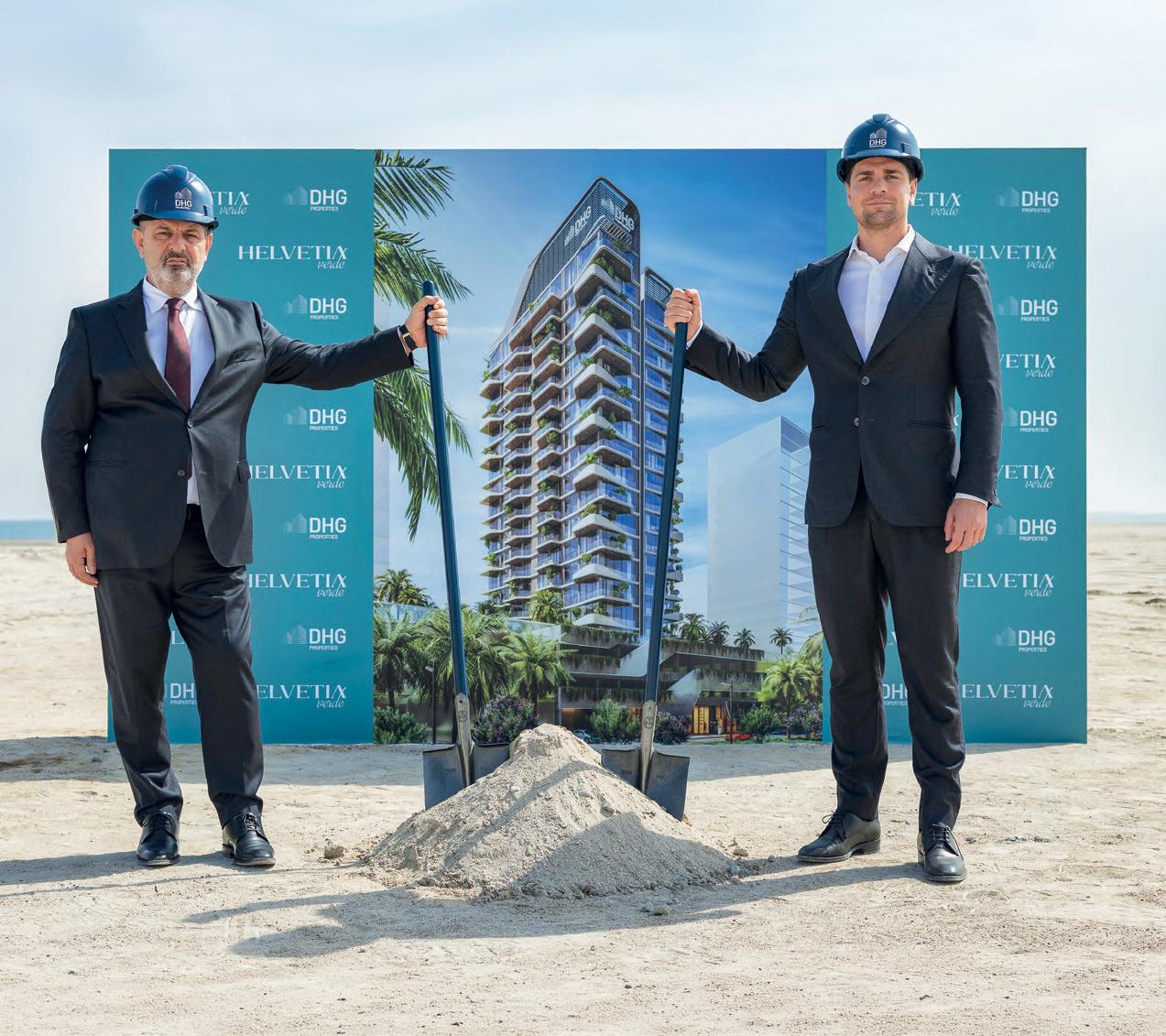
THE JOURNEY BEGINS
The project is expected to be delivered to homeowners and investors in Q1 2028.
indicator of how buyer expectations are evolving, particularly towards waterfront living that combines design, privacy, and long-term investment value. Our approach remains consistent – bringing Swiss precision into markets where we see sustained, fundamentals-driven demand,” commented Antic.
With construction progressing at Helvetia Marine, DHG Properties continues to expand its footprint across Dubai’s key districts. The first development, Helvetia Residences in Jumeirah Village Circle, is on track for completion in July 2026, while Helvetia Verde in Meydan Horizon recently
broke ground, reflecting approximately US $354mn in combined project value and DHG Properties’ strategy to deliver Swiss-quality, future-ready real estate across the emirate, the firm said.
“Dubai Islands is evolving into a destination that appeals to a new generation of buyers looking beyond traditional residential offerings,” remarked Milos Antic, the Executive Vice Chairman of DHG Group.
“What is driving momentum in the area is the scale of long-term planning taking place around it. Buyers today are paying closer attention to how communities will develop over the next decade, and Helvetia Marine was positioned to align with that futurefocused demand for well-connected, lifestyle-oriented coastal living, while maintaining the exclusivity and attention to detail that define the Helvetia brand,” he added.
HKA strengthens EMEA capacity
HKA has announced changes within its EMEA Construction Claims and Expert Services (CCE) Partner team.
Nicola Caley, Partner at HKA, will be relocating to London, and will continue to play a role on major claims assignments across EMEA. The firm said her return further strengthens HKA’s regional presence and ensures continuity across key commissions.
Tom Kapapa, Partner at HKA will also relocate from Doha to Abu Dhabi, where he will play a major role in expanding HKA’s expert offering in the UAE.

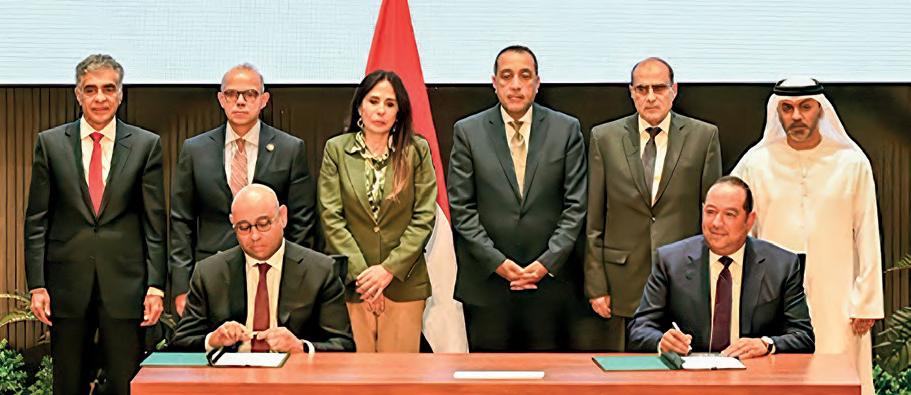
Majid Al Futtaim and Midar sign US $3.1bn New Cairo development deal
Egypt’s Midar for Investment and Urban Development (Midar) has partnered with Majid Al Futtaim. The collaboration aims to develop a significant mixed-use project within the Mada destination.
The unnamed project will be developed in phases, with the first phase covering 200ac over 4-years, followed by a second phase spanning around 300ac. An additional 60ac have been earmarked for a shopping, entertainment and leisure destination that will be developed in line with occupancy levels and demand.
Municipal Council approves path for Kuwait-Saudi railway project
During a recent session presided over by Abdullah Al-Muhairi, the Municipal Council (MC) approved the Ministry of Public Works’ request to allocate the rightof-way for the Kuwait–Saudi Arabia railway project.
The railway project is said to span a total of 85km, stretching from the southwestern border to AlShadadiya. Furthermore, the Council approved the Ministry of Interior’s request to amend its decision regarding driving school sites that were previously used by the Kuwait Driving School Company.

03 KUWAIT
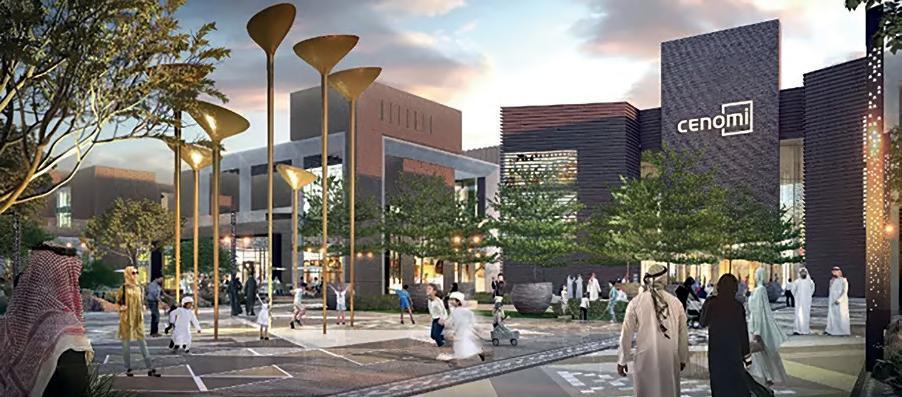
Cenomi Centers awards $342mn D&B contract to Lynx Contracting Company
Saudi developer Arabian Centers Company has awarded a design and build contract worth US $342mn to Lynx Contracting Company for the development of a premium retail and boulevard project at Al Khobar in the Kingdom’s Eastern Province.
The Al Khobar Downtown Mall and Boulevard project – once complete – will further strengthen Cenomi Centers’ portfolio of flagship assets across the Kingdom. The entire project will be completed within a 3-year period, the company said.
Qatar invites bids for power transmission system
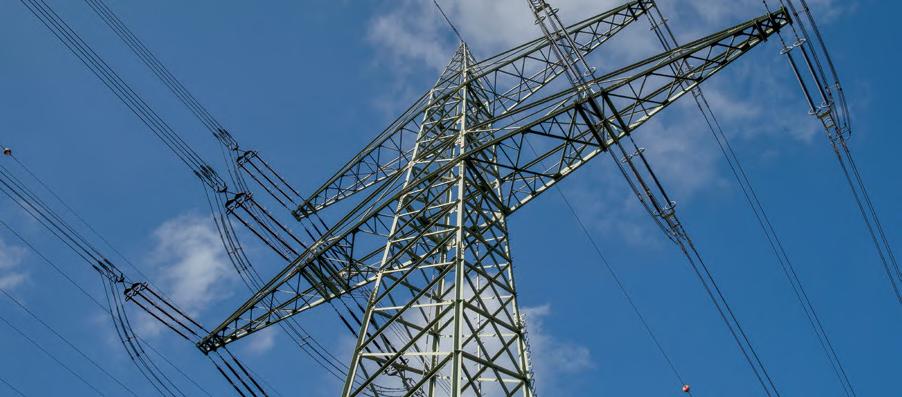
Qatar General Electricity and Water Corporation (Kahramaa) has invited bids for a major 2026 expansion of the country’s power transmission system.
The tender covers an EPC contract for new substations across multiple voltage levels, including 400/132/11kV, 132/11kV and 66/11kV facilities, and the installation of 400kV extra-high voltage cables.
The project forms part of the utility’s broader strategy to expand its transmission network and improve reliability and operational efficiency.
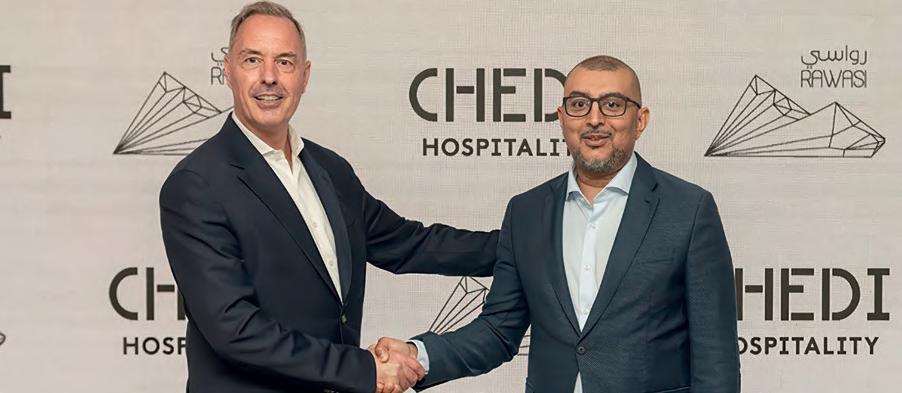
Chedi Hospitality partners for mountain living development
Chedi Hospitality has partnered with Rawasi Development to explore a new destination in Jabal Bausher, Oman. The agreement represents a considered step in the company’s continued expansion within the Sultanate, building on a legacy shaped by The Chedi Muscat.
Located at the foothills of Jabal Bausher, the proposed development is envisioned as a vertically integrated mountain destination responding directly to the site’s natural elevation and terrain.
05 QATAR
04 SAUDI ARABIA
06 OMAN







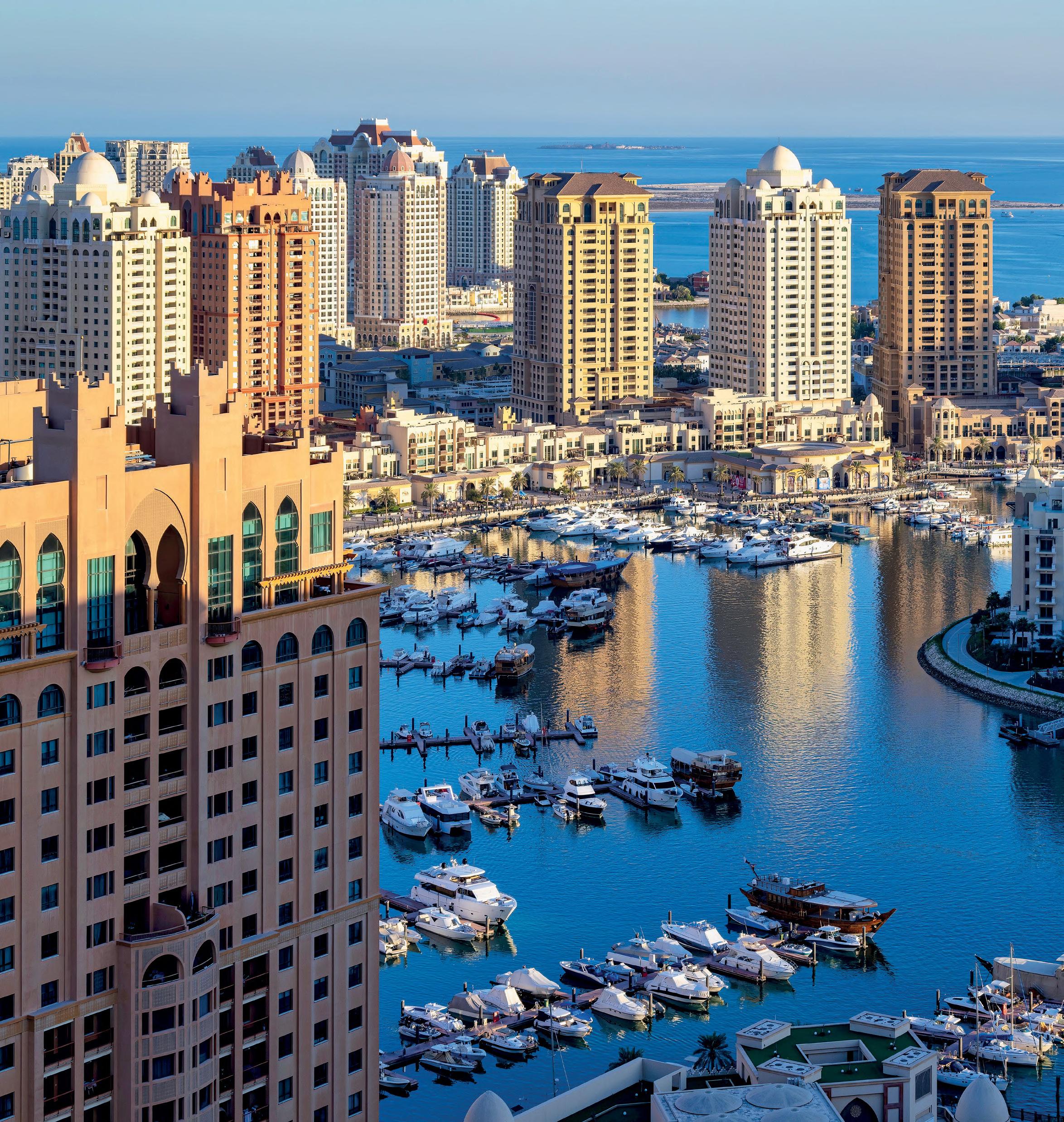
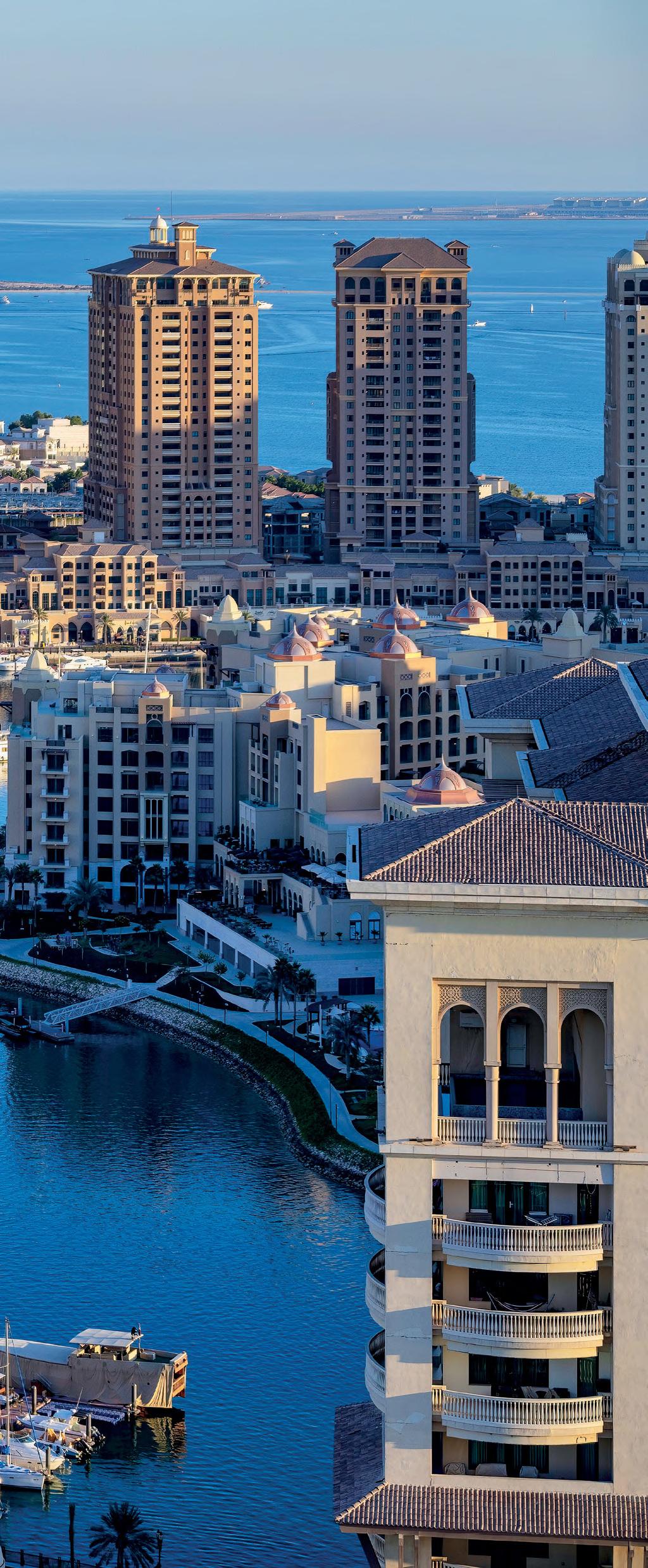
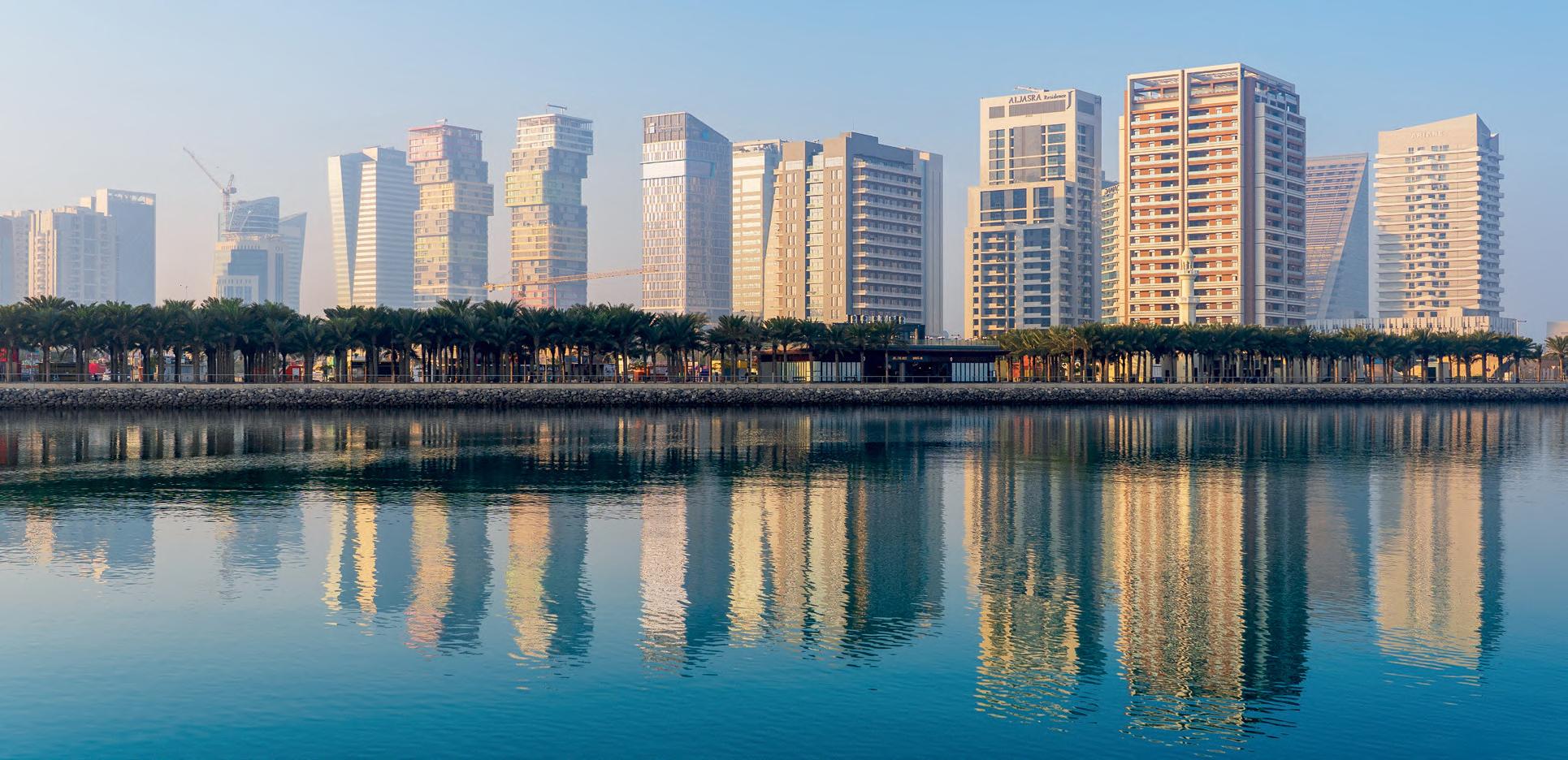
Q1 2026 Qatar Real Estate Review
Knight Frank discusses the performance of Qatar’s real estate market in Q1 2026
Qatar’s residential market witnessed a moderation in transaction activity during Q1 2026, with the regional conflict weighing on economic sentiment and investor decisionmaking. This has also reflected in the country’s non-oil sector reading, which fell to a record low of 38.7 in March, remained below a reading of 50 in April, albeit at 46.4, this represented a marked improvement in non-oil sector business sentiment and confidence levels.
In the residential market, sales volumes reached 1,582 during Q1 2026, representing a 23% quarteron-quarter decline from 2,047 transactions recorded in Q4 2025. Despite the quarterly slowdown, transaction volumes remained resilient on an annual basis, increasing by 15% compared to 1,376 deals in Q1 2025. This, we believe is largely due to most deals in Q1 being completed during the ‘peace time’ months of January and February.
In value terms, residential transactions totalled approximately QAR 6.2bn during Q1 2026, down 15% quarter-on-quarter from QAR
7.2bn in Q4 2025, reflecting a more cautious investment environment and predictably softer buyer activity.
Doha continued to dominate Qatar’s residential market during Q1 2026, recording 512 residential transactions with a total value of approximately QAR 2.6bn. Transaction volumes declined by 12% year-on-year compared to Q1 2025, with Doha remaining at the epicentre of market activity. Al Rayyan ranked as the second most active municipality, registering 280 transactions valued at approximately QAR 1.38bn.
Qatar’s mortgage market presented a mixed performance during Q1 2026, reflecting the emergence of cautious lending conditions and weak buyer sentiment. While the number of mortgage transactions declined, the overall value of mortgages issued increased, suggesting continued financing activity for larger-ticket residential assets.
During Q1 2026, a total of 283 mortgage transactions were recorded, representing a 12.4% year-on-year
decline compared to 323 transactions in Q1 2025. In contrast, the number of mortgaged units increased by 34.5% year- on-year to 573 units, up from 426 units during the same period last year.
The total value of mortgages issued increased by 85% year-onyear to approximately QAR 17.2 bn in Q1 2026, compared to QAR 9.3 bn in Q1 2025. This increase suggests a greater concentration of higher-value financing activity, potentially linked to prime residential assets, portfolio refinancing and institutional or highnet-worth investor transactions.
AVERAGE APARTMENT SALE PRICES, QAR PSM
Residential sales market
Residential sales activity moderated during Q1 2026 as regional events fuelled weaker market sentiment, which in turn has dampened both buyer confidence and transactional activity across the residential market.
Villa prices declined by 3.5% year-on-year to an average of QAR 6,626psm, continuing the gradual softening trend observed throughout 2025 amid increasing supply and more price-sensitive demand.
Despite the overall decline, several established residential
communities continued to record comparatively stable pricing, with Al Dafna recording average villa prices of QAR 7,498psm, while Abu Hamour remained among the highest-priced villa locations at QAR 6,713psm. Al Wakrah continued to offer one of the more affordable villa markets at QAR 5,345psm.
Apartment prices fell by 1.7% year-on-year to an average of QAR 13,049psm, reflecting softer investor activity amid the uncertainty created by the regional conflict. The waterfront and lifestyle-
AVERAGE APARTMENT LEASE RATES (Q1 2026), QAR/MONTH 1-BED 2-BED 3-BED
16,000 12,000 8,000 4,000
The Waterfront Viva Bahriyah, The Pearl Island Qanat Quartier, The Pearl Island Marina District Porto Arabia, The Pearl Island
SOURCE: KNIGHT FRANK
Fox Hills Marina District The Pearl Island The Waterfront West Bay
AVERAGE VILLA SALE PRICES, QAR PSM
8,000 6,000
4,000
2,000
oriented locations continued to outperform the wider market.
The Waterfront remained the highest-priced apartment location at QAR 15,194psm, followed by Viva Bahriyah, The Pearl Island at QAR 14,482psm and Qanat Quartier at QAR 14,420psm, reflecting continued demand for premium residential assets. Lusail City recorded average apartment prices of QAR 13,292psm, supported by continued infrastructure development and project completions.
Residential leasing market Qatar’s residential leasing market also softened during Q1 2026. Average villa rental rates declined by 8.9% year-on-year to QAR 13,908 per month, reflecting a widespread softening in leasing activity, particularly during March.
Leasing rates have recorded a sharper correction compared to residential values as rental markets typically respond rapidly to changes in occupier demand, corporate housing requirements, and shortterm population movements
during periods of heightened geopolitical, economic uncertainty and weaker consumer sentiment.
West Bay Lagoon continued to command the highest villa rents, with average monthly rates reaching QAR 21,018 for 3-bedroom villas, QAR 23,428 for 4-bedroom villas and QAR 25,082 for 5-bedroom villas.
Al Waab also remained among the higher-priced villa locations, averaging QAR 14,030 per month, while Al Gharrafa is still comparatively more affordable, with average monthly rents sitting at QAR 9,815.
AVERAGE VILLA LEASE RATES (Q1 2026), QAR/MONTH 3-BED 4-BED 5-BED
Abu Hamour
West Bay Lagoon Al Kheesa Al Kharaitiyat Al Wukair
West Bay Lagoon Al Waab Nuaija
Ain Khaled Al Kheesa
Al Thumama Al Dafna
Apartment rental rates also declined during Q1 2026, falling by 13.3% quarter-on-quarter to an average of QAR 9,492 per month, reflecting weaker demand, increased competition and greater supply availability across the leasing market.
Prime lifestyle-oriented locations continued to achieve the highest apartment rents. West Bay, for instance, recorded average monthly rents of QAR 13,677 for 3-bedroom apartments in Q1, while Pearl Island averaged QAR 15,517 for 3-bedroom units. Marina District and The
Waterfront also continued to attract relatively strong rental levels, while Fox Hills remained among the more affordable apartment leasing locations, with 1-bedroom units averaging QAR 6,133 per month.
Office market
Qatar’s office market remained relatively stable during Q1 2026 considering ongoing events, although leasing activity continued to reflect a more competitive occupier environment amid ongoing supply expansion and cautious business
sentiment. Average monthly office rents declined by 3.2% year-on-year to QAR 77psm, with occupiers continuing to prioritise cost efficiency, building quality and flexible lease terms. Demand remained concentrated within prime office districts, particularly in West Bay and Lusail, supported by strong connectivity, modern Grade A stock and the presence of government-related entities and international occupiers. West Bay – Prime continued to command the highest office rents at QAR 107psm per month, followed by
the Marina District at QAR 96psm per month and Lusail’s secondary districts at QAR 85psm per month.
In contrast, secondary office locations continued to experience weaker leasing conditions and continued rental pressure due to elevated vacancy levels and competition from newer Grade A developments. Average rents along the C/D Ring Road declined to QAR 67psm per month, while Al Rayyan recorded some of the lowest rental levels across the market at QAR 51psm per month.
While the regional conflict has resulted in ‘wait and see’ approach being adopted by most businesses, the market is gradually seeing a shift in occupier preferences towards higher-quality and ESG-
compliant office environments, with tenants increasingly seeking flexible layouts, improved amenities and efficient floorplates. Several occupiers also continue to consolidate office footprints and renegotiate lease terms as businesses remain focused on operational efficiency and cost management.
Retail market
Qatar’s retail market remained under pressure during Q1 2026, with average lease rates declining by 4.6% quarter-on-quarter to QAR 195psm per month, reflecting cautious retailer expansion activity, softer consumer spending, which has been further compounded by increased competition from expanding supply.
Lifestyle retail and dominant mall destinations continued to record the strongest leasing performance due to stronger footfall, established tenant mixes and higher-quality retail environments. Lifestyle retail F&B recorded the highest lease rates at
QAR 225psm per month, followed by lifestyle retail prime units at QAR 263psm and prime mall line stores at QAR 200psm per month.
In contrast, secondary malls and high street retail locations continued to face downward pressure on rental rates amid weaker footfall, weak consumer sentiment and the ongoing evolution in consumer preferences. Secondary mall line stores averaged QAR 171psm per month, while high street retail units recorded further rental declines of 4% over the last quarter to QAR 115psm per month.
Retail occupiers are increasingly prioritising destination-led locations, with landlords continuing to focus on entertainment offerings, F&B concepts, events and activations to support visitor numbers and tenant retention. At the same time, retailers remain focused on operational efficiency, store optimisation and cautious expansion strategies amid softer market conditions and evolving consumer spending patterns.
KEY MARKET
Doha continued to dominate Qatar’s residential market during Q1 2026, recording 512 residential transactions with a total value of approximately QAR 2.6bn.
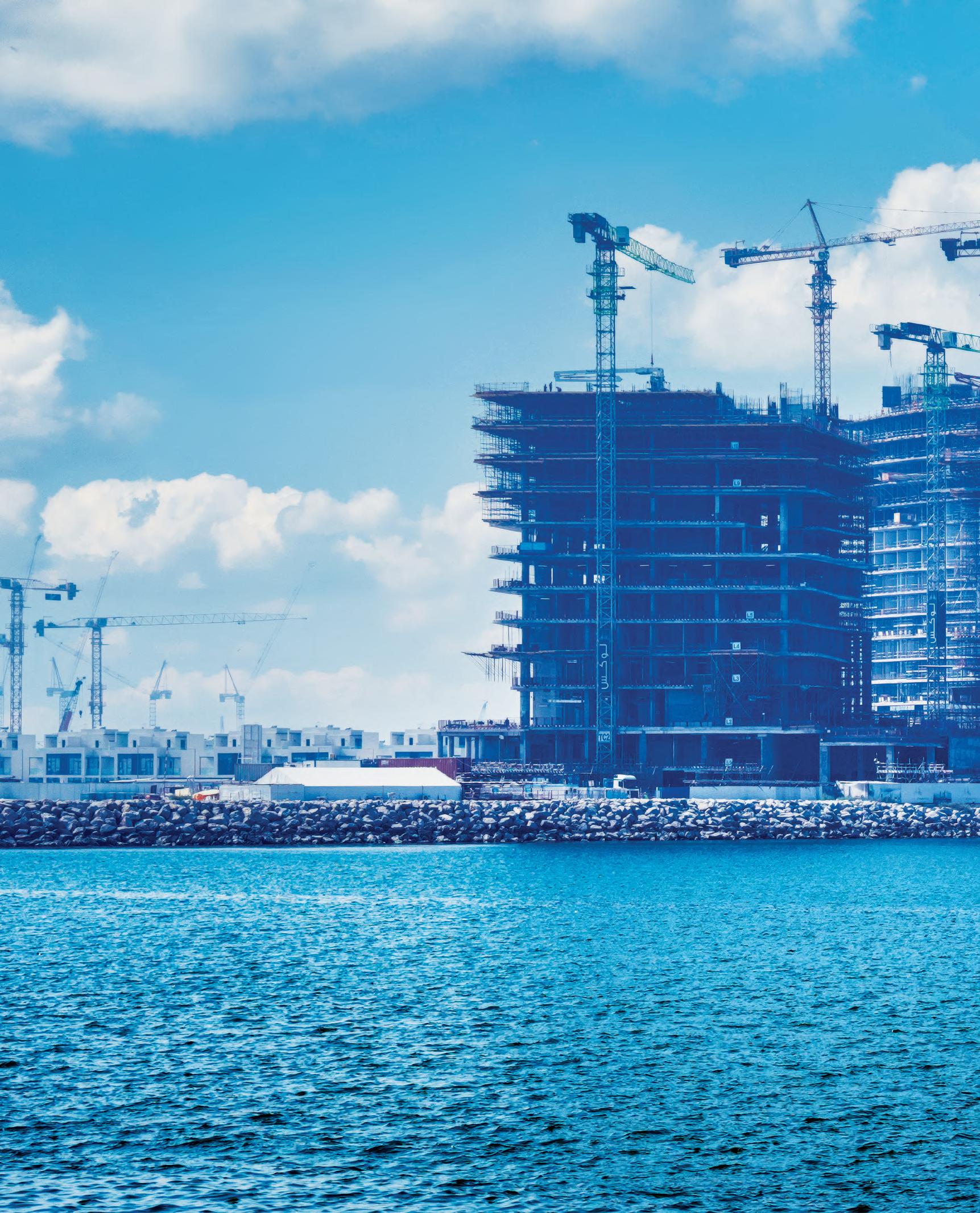
BUILDING THE EXTRAORDINARY
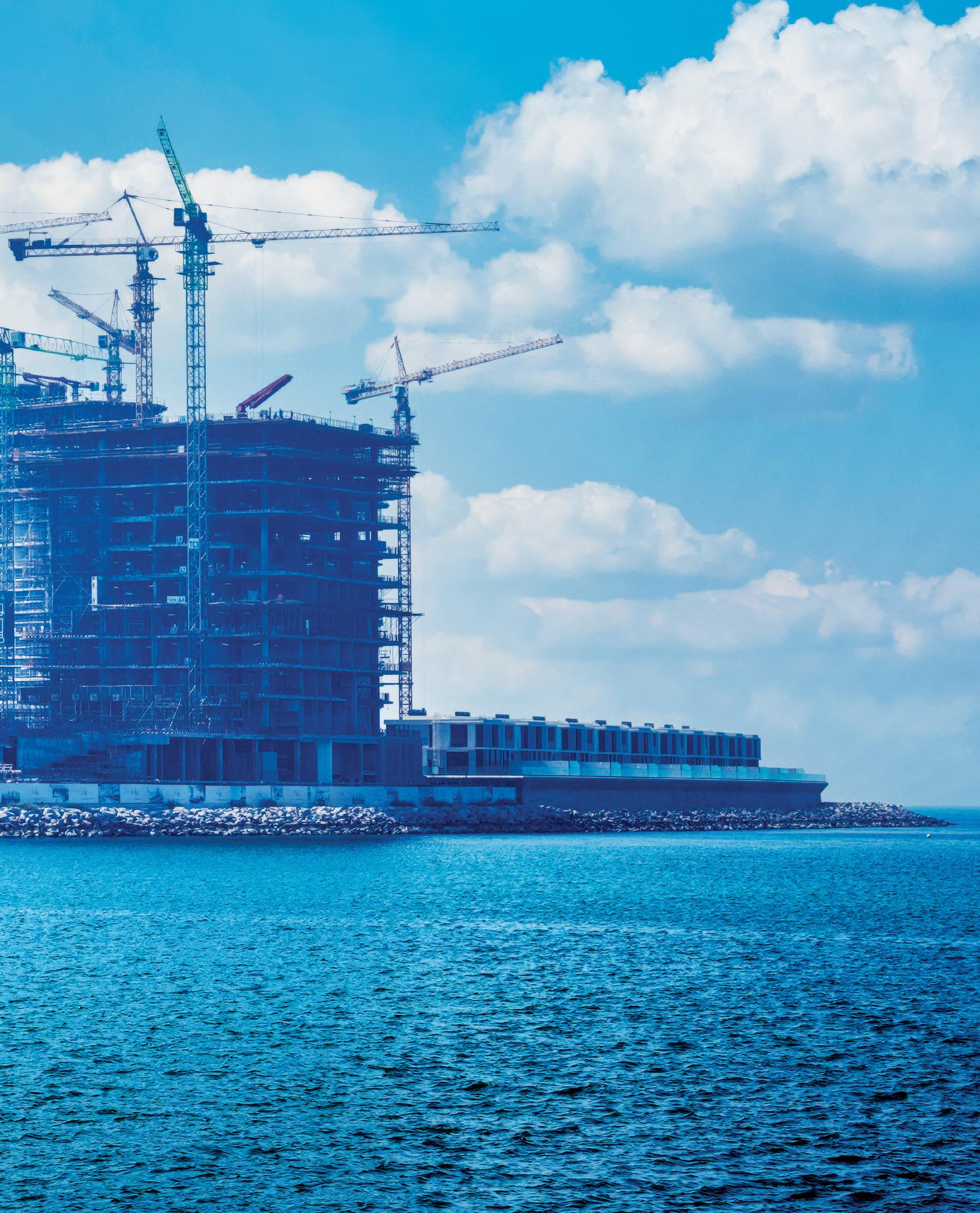
BIG PROJECT ME ’S JASON SAUNDALKAR JOINED THE LUXE DEVELOPERS’ SIDDHARTA BANERJI AND SHUBAM AGGARWAL FOR AN EXCLUSIVE SITE VISIT TO THE DEVELOPER’S FLAGSHIP ULTRA-LUXURY RESIDENTIAL PROJECT ‘OCEANO’ FOR A FIRSTHAND LOOK AT HOW CONSTRUCTION WORKS ARE PROGRESSING
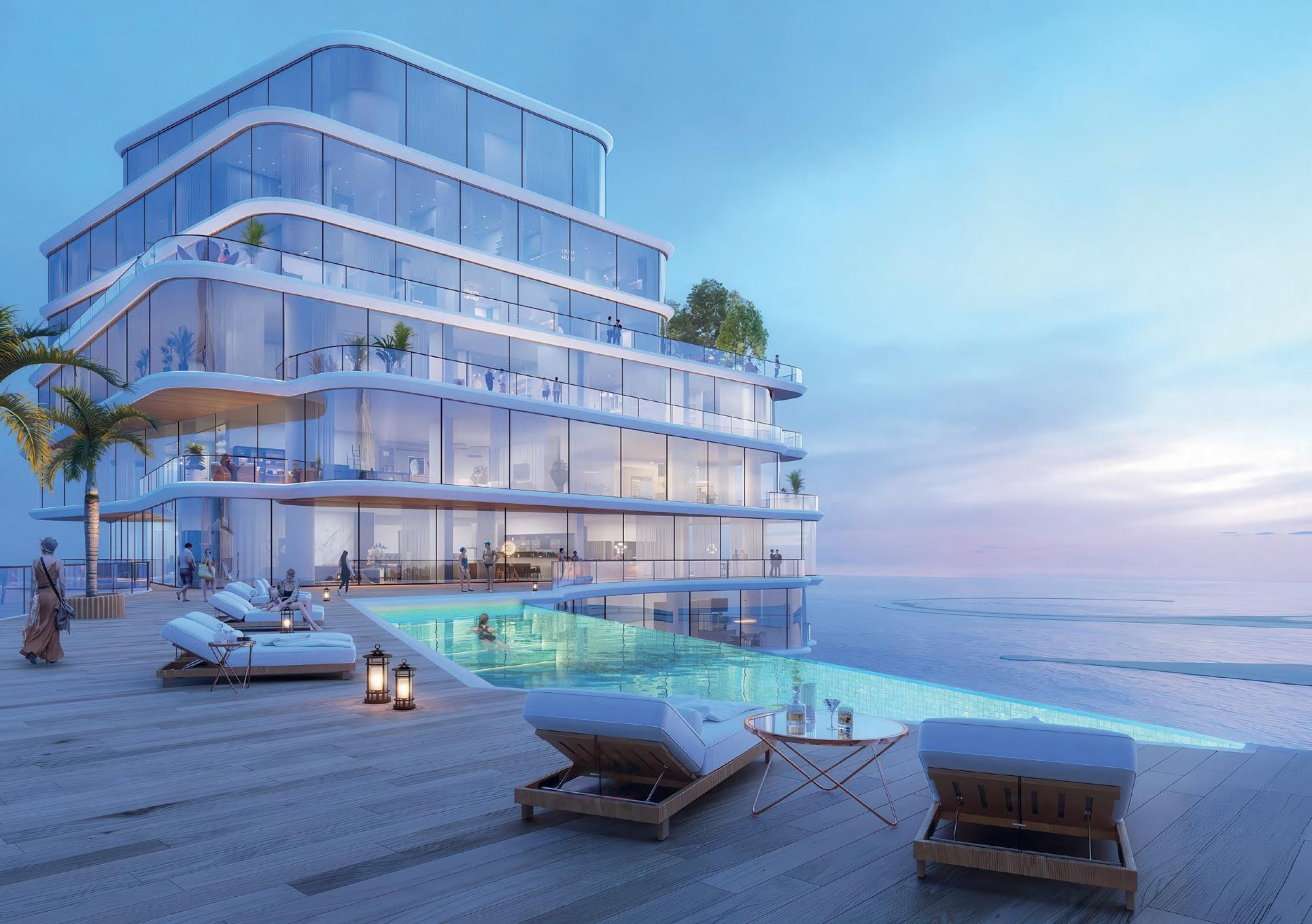
The Luxe Developers is a relatively new player in the UAE’s real estate sector, it launched in 2022 with the goal of delivering ‘distinctiveness with every project that it undertakes’. The developer says it aims to specialise in crafting extraordinary ultra-luxury residential buildings, and believes that exceptional living spaces can inspire and transform lives.
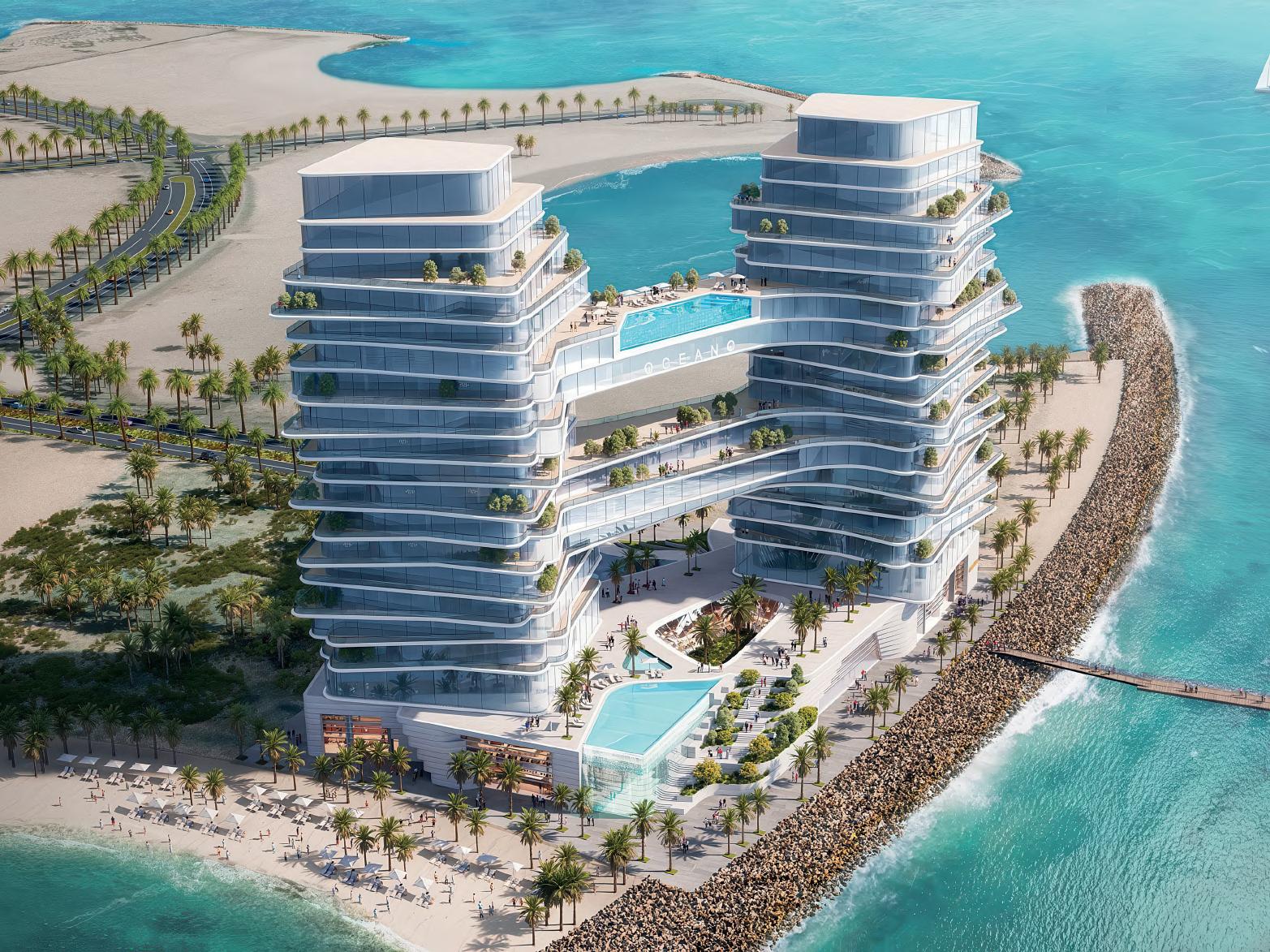
Following its launch in the UAE, the developer unveiled its flagship project ‘Oceano’ on Al Marjan Island in Ras Al Khaimah in late 2022, and promised that development would be synonymous with providing the “very best” in craftsmanship, and will take understated luxury to a “new level”.
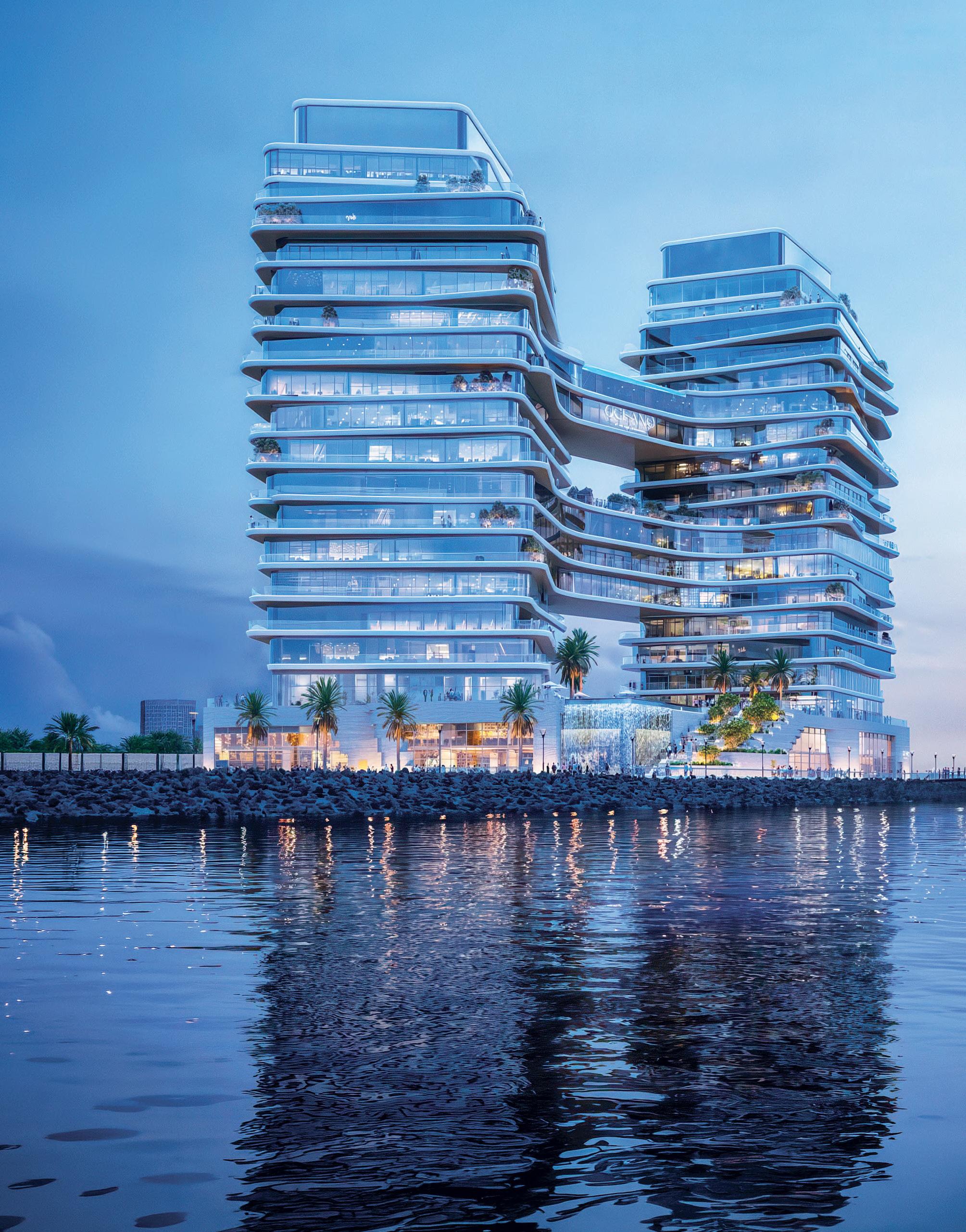
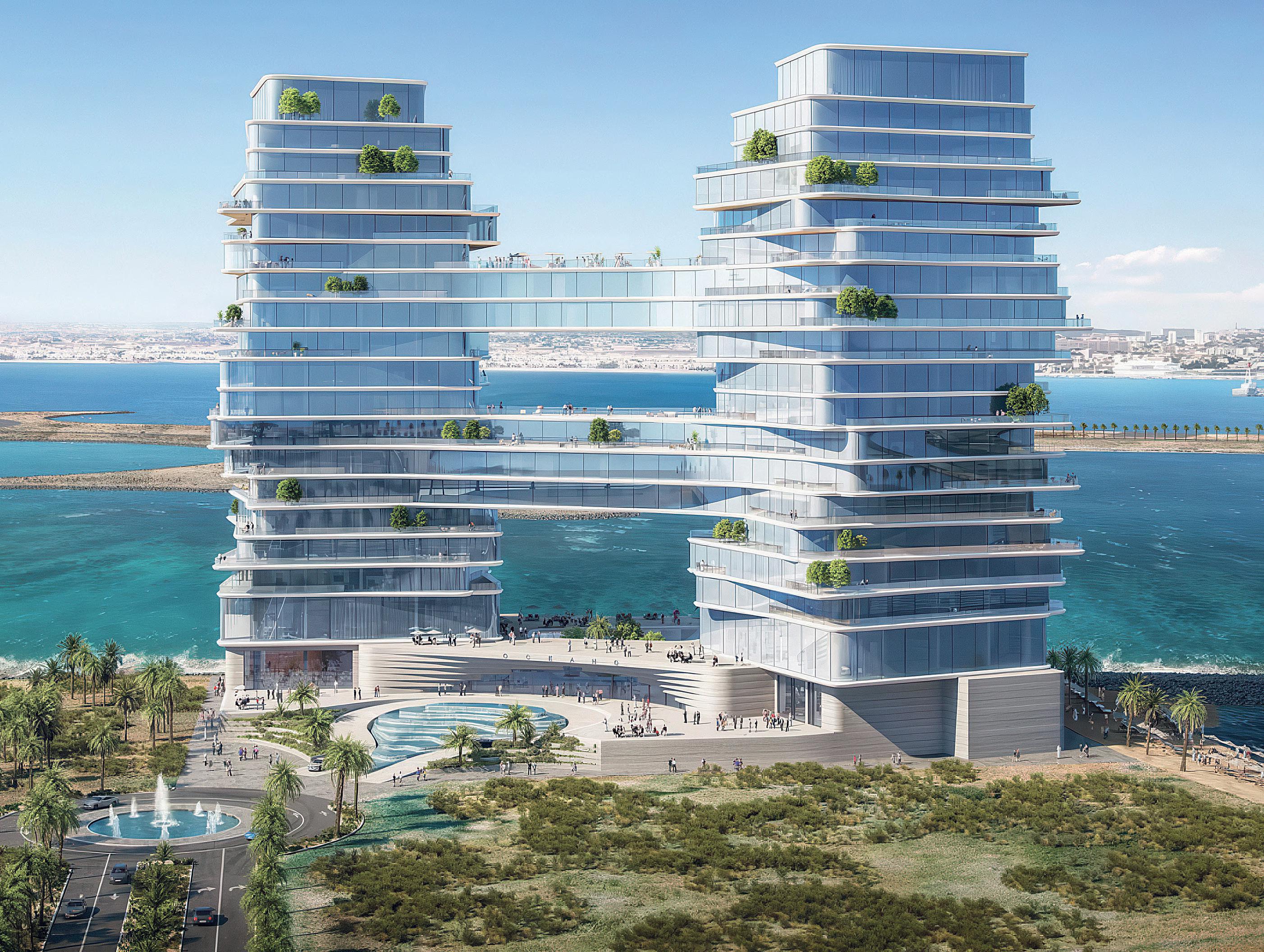
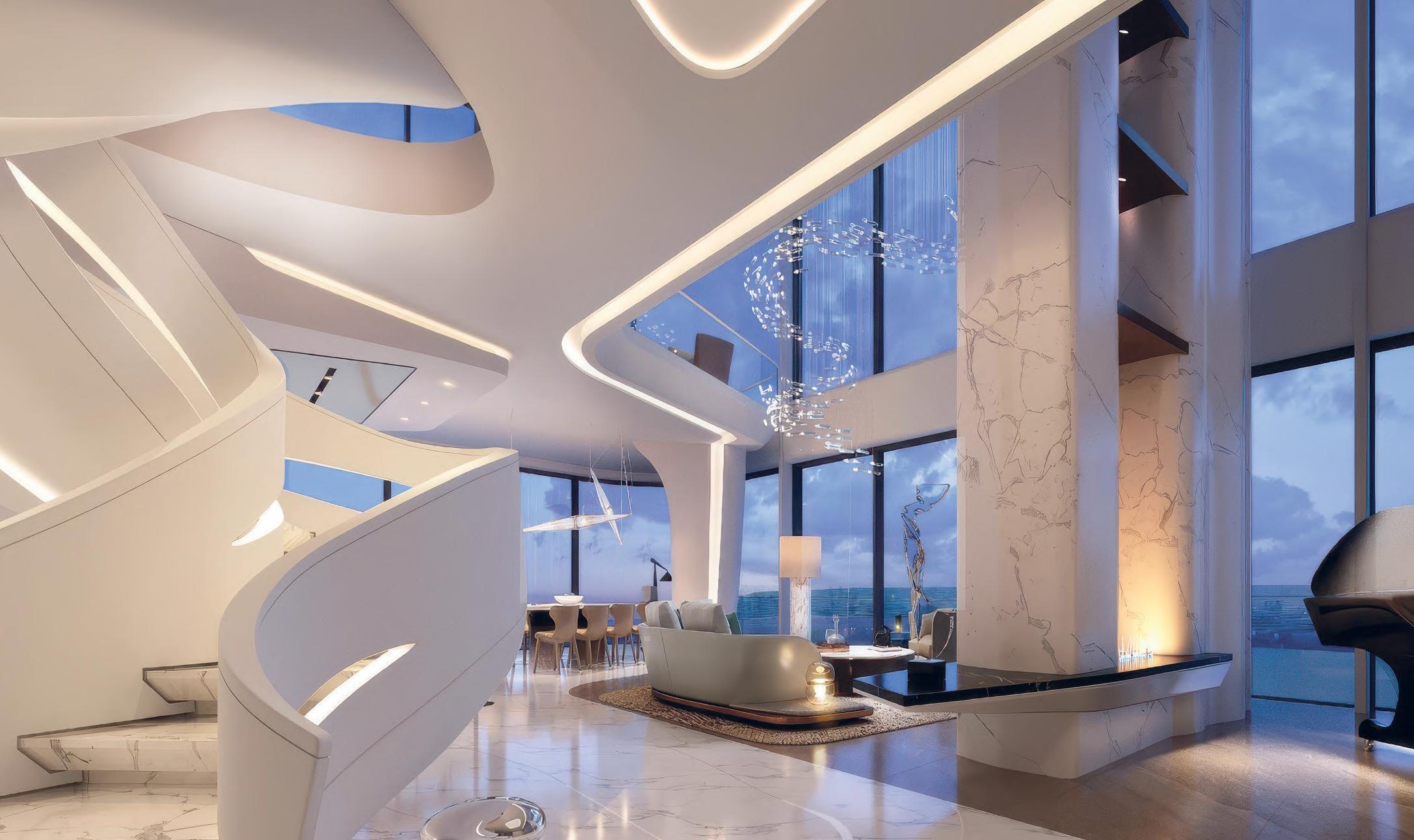
Once complete, the project will have 206 units over 18 storeys split across 1-, 2-, 3- and 4-bedroom apartments, 6-penthouses and 2-sky villas. Since the project was announced, the developer identified reputed players to deliver its project, and progress has moved forward steadily.
Earlier this year, Shubam Aggarwal, Chairman and Co-owner, and Siddharta Banerji, Managing Director and Co-owner of The Luxe Developers took Big Project Middle East’s Jason Saundalkar on an exclusive site visit for a firsthand look at Oceano’s delivery.
Oceano incorporates a range of premium architectural, engineering, and interior design features, all of which require exceptional levels of integration and collaboration.
KEY PROJECT
Oceano is The Luxe Developers’ flagship project and will have 206 units over 18 storeys split between 1-, 2-, 3- and 4-bedroom apartments, 6-penthouses and 2-sky villas.
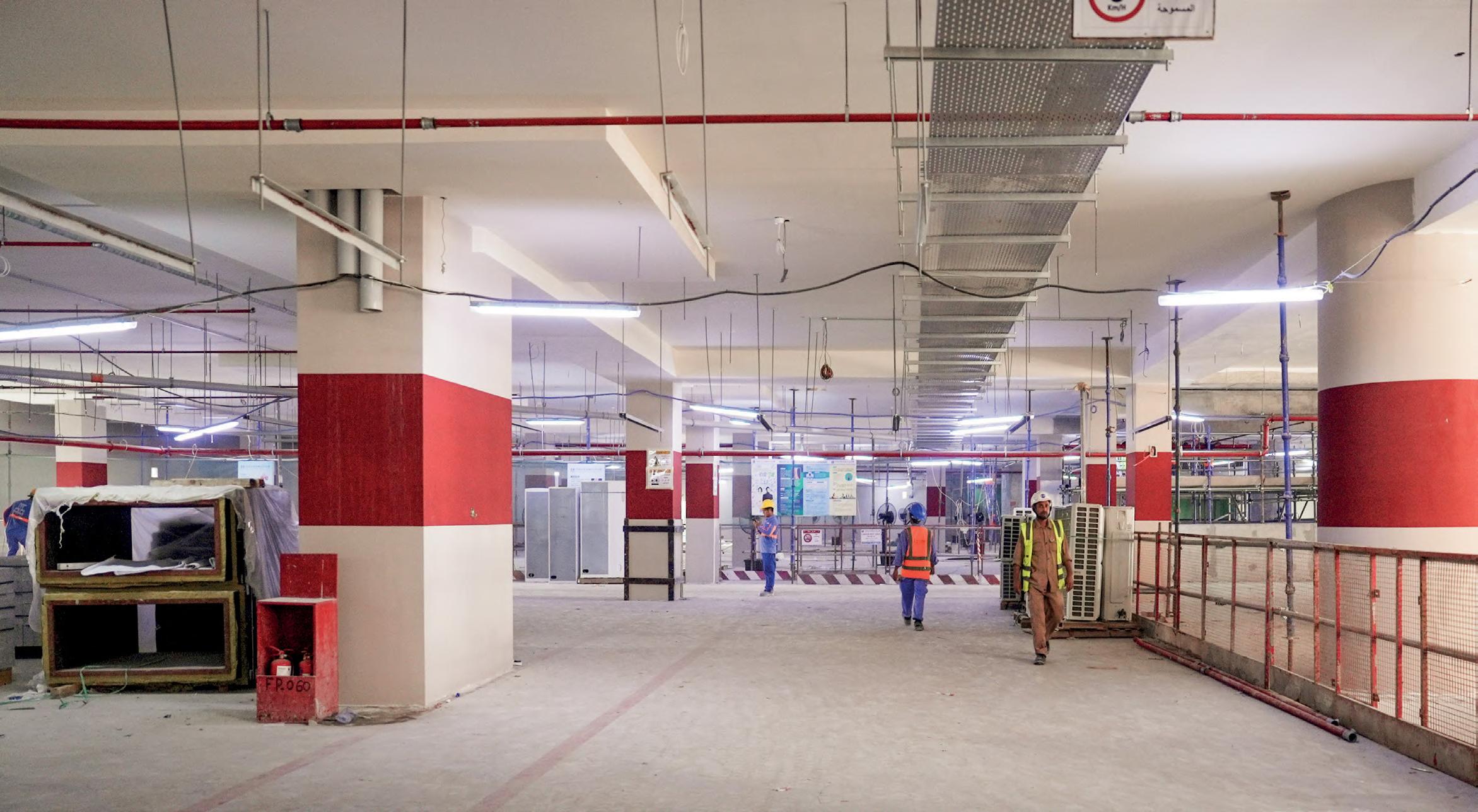
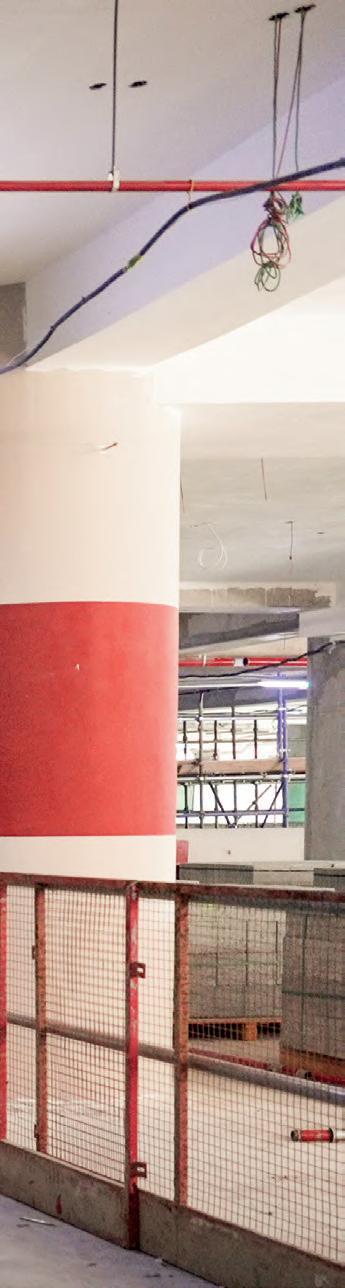
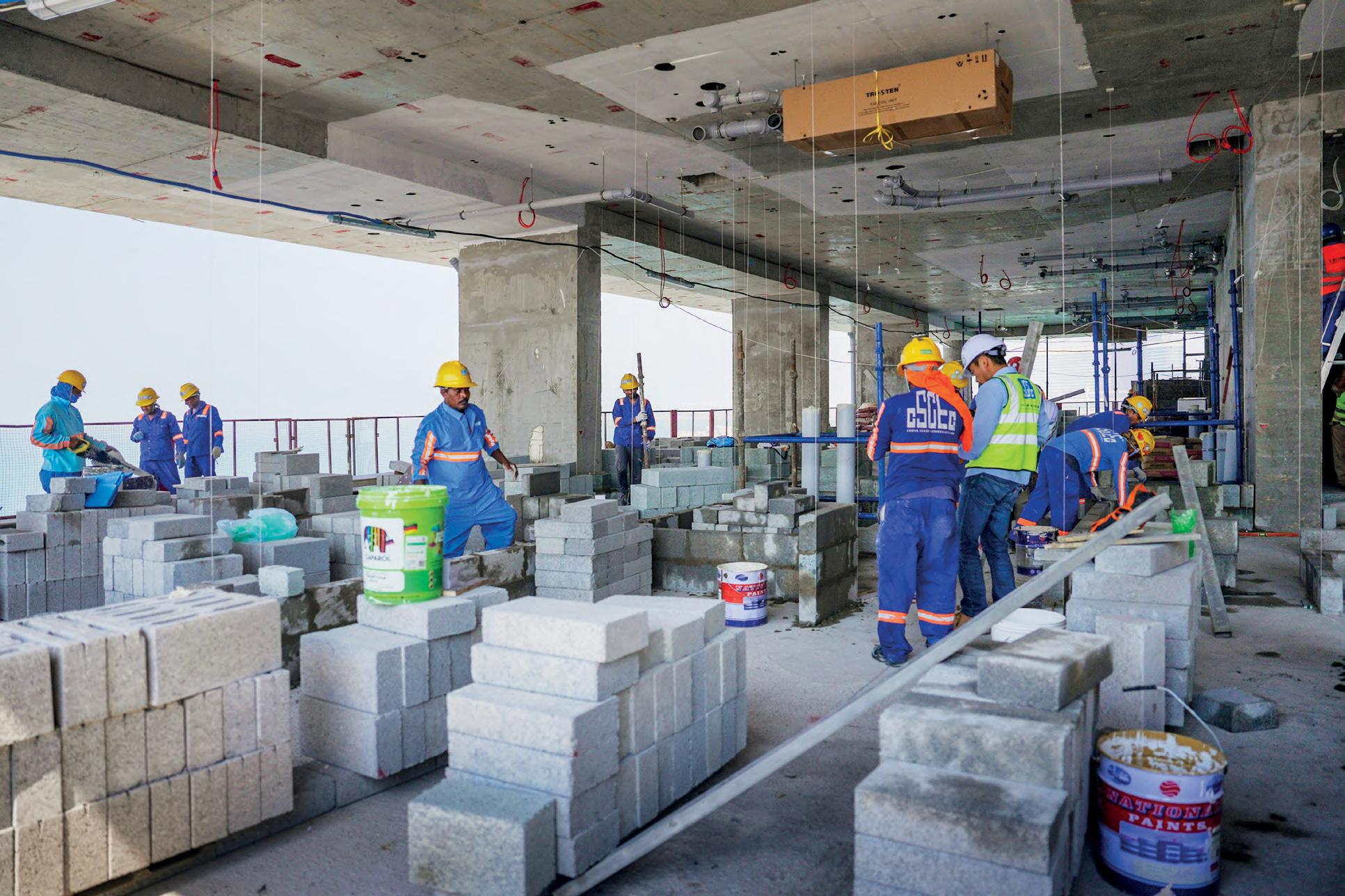
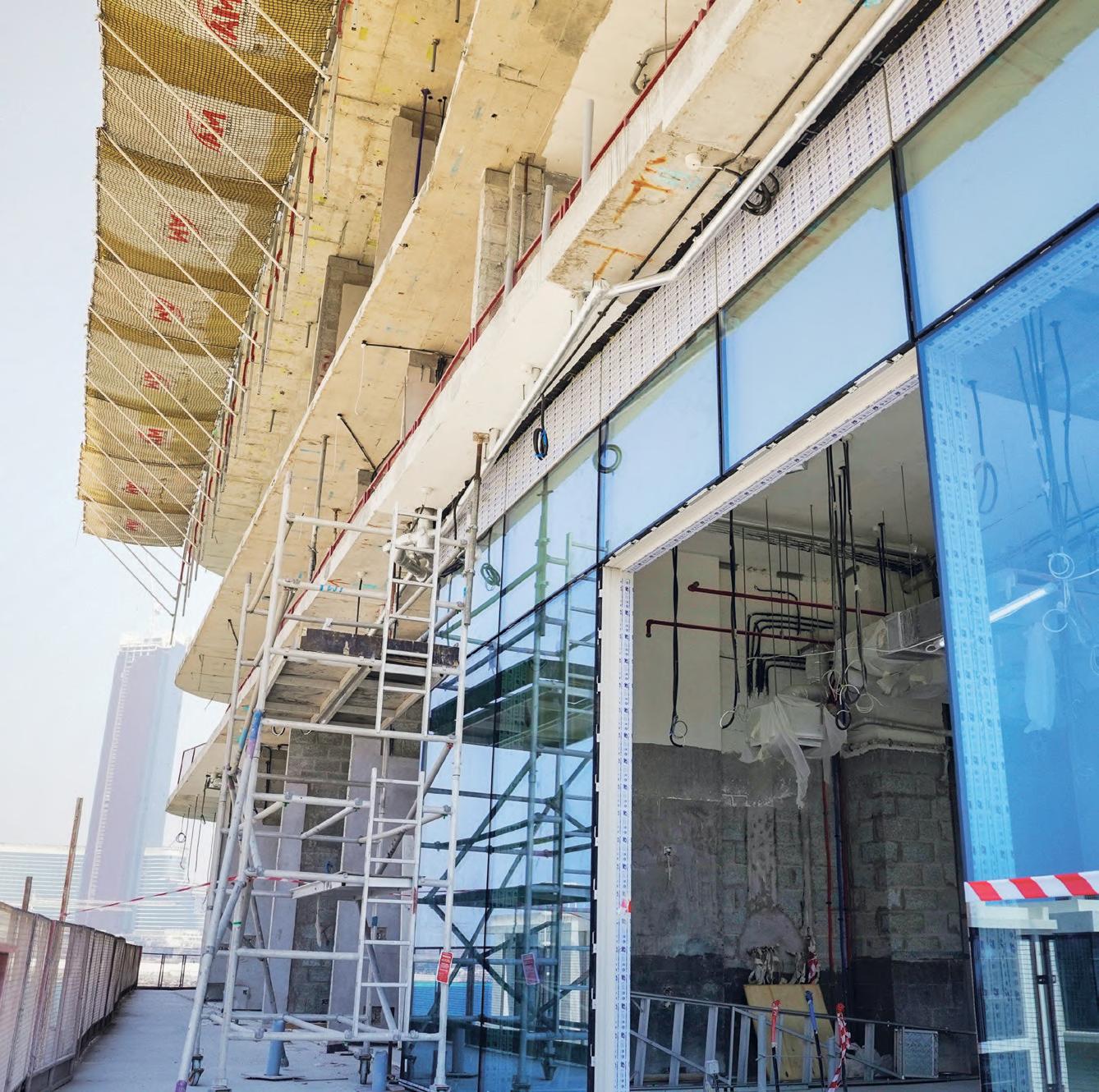
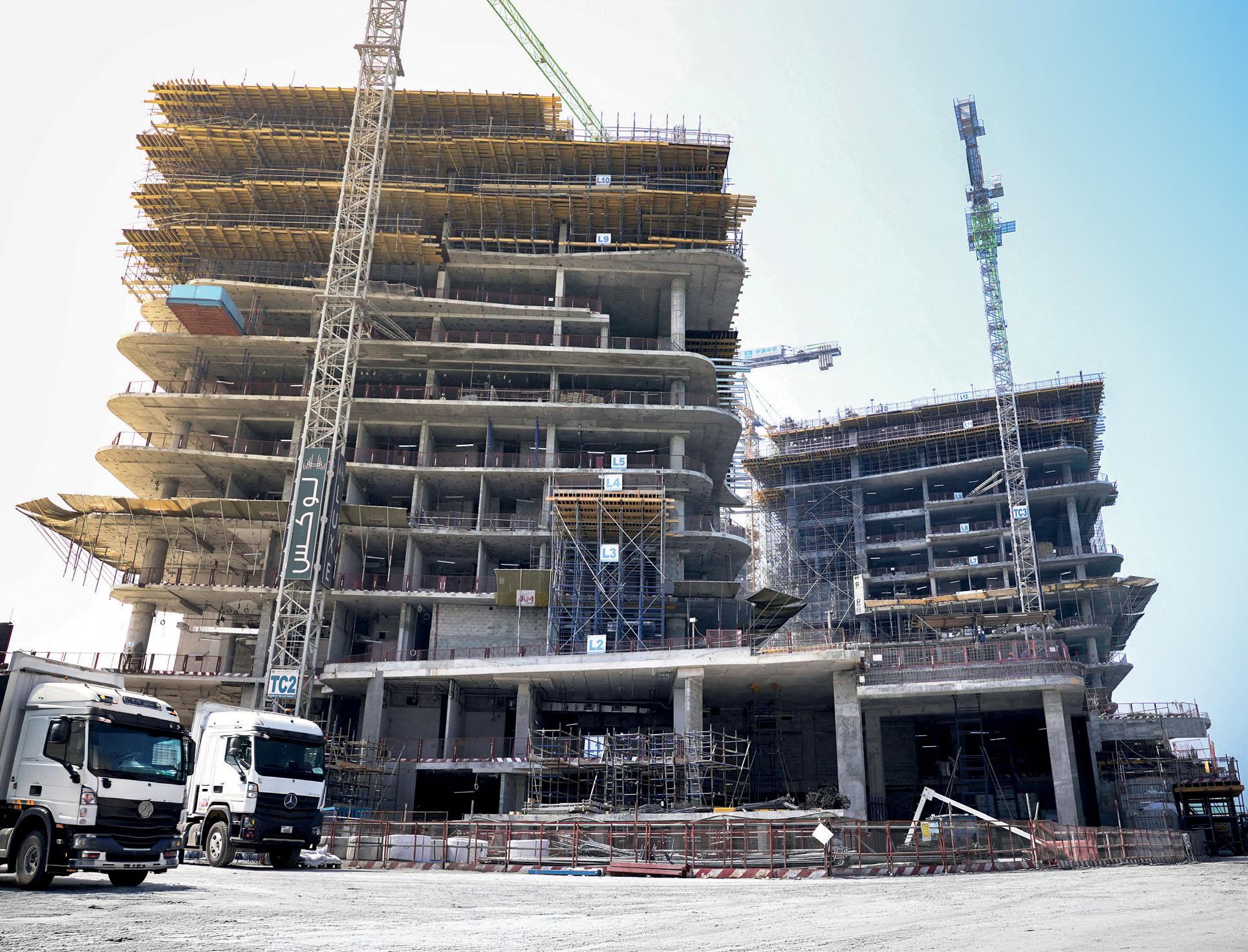
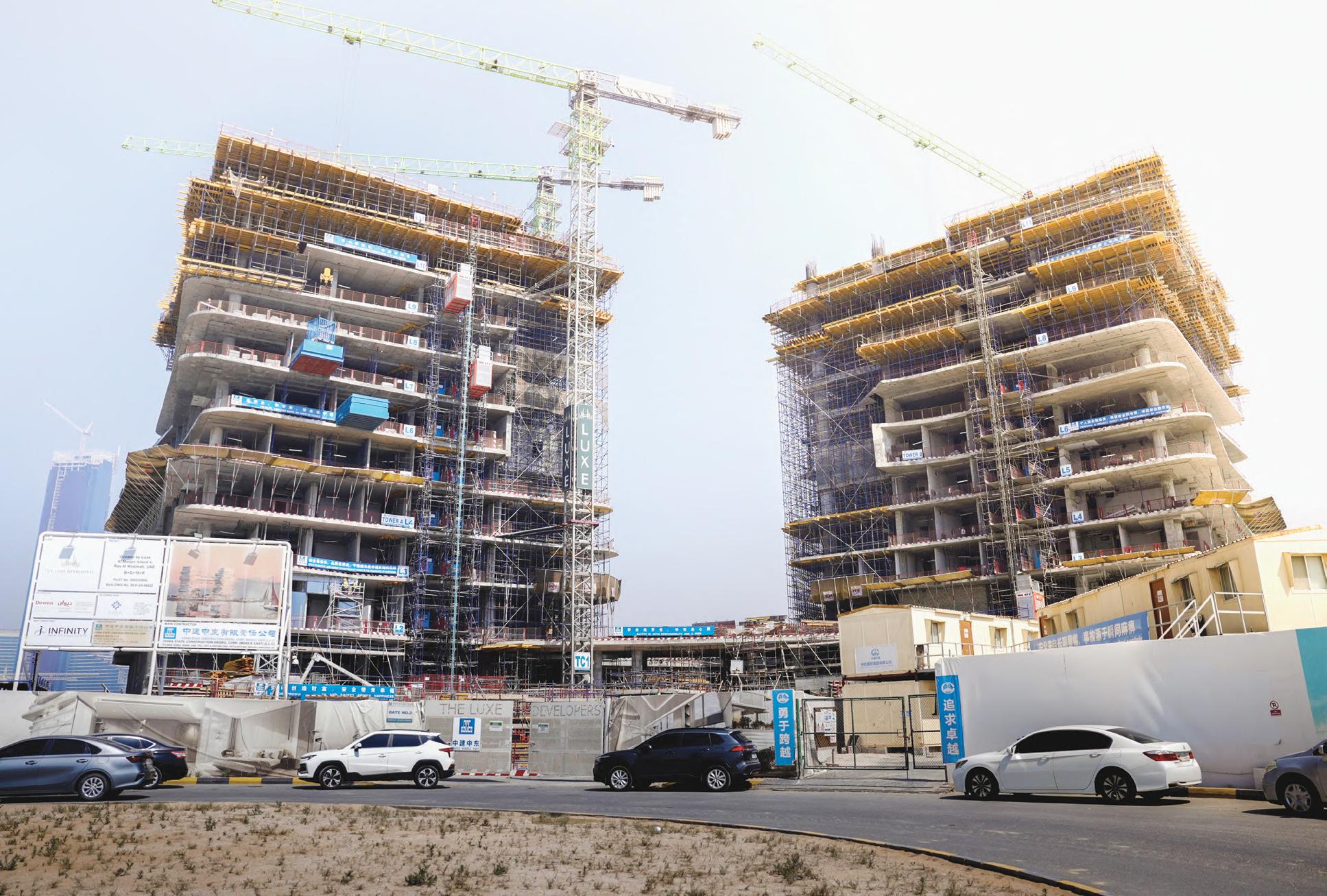
Excavation and substructure works have been fully completed, internal finishing activities, including blockwork and plastering, are advancing steadily, with blockwork completed up to Level 9 and plastering progressing through Level 7. MEP firstfix and second-fix works are also underway up to Level 9, while façade installation has commenced with the mock-up unit on Level 2 of Tower A.”
Aggarwal says that the scale of construction delivered to date is substantial, with approximately 10,000t of steel reinforcement installed, 40,000cu/m of concrete poured, and 30,000sqm of blockwork completed.
Speaking about overall construction progress, Aggarwal says, “Oceano’s construction has been progressing rapidly, and we’ve made significant progress. Level 14 of Tower A and 13 of Tower B have been completed and we are advancing to the next floors. The connecting bridges between both towers, which have been constructed off-site, will be installed in August 2026. The substructure was completed in 2025, and the superstructure is now at 63% completion. Abu Dhabibased MEP contractor I-Zone has completed more than 15% of the MEP works and 26% of the internal works.”
Highlighting milestones, he adds, “Several key construction milestones have already been achieved.
“Looking ahead, the project remains on track to achieve its upcoming milestones. The installation of the signature structural bridges connecting the 2-towers is scheduled for August 2026, while the completion of the main structural works for both towers, including the installation of both bridges, is targeted for September 2026,” he confirms.
The right partners
Discussing how The Luxe Developers vetted and appointed partners for its first ultra-luxury project, Aggarwal highlights, “From the outset, our approach was to assemble a world-class team of partners capable of delivering a development that pushes the boundaries of luxury, design, and engineering.
Every partner involved in the project was selected not only for their proven track record but also for their ability to contribute technical expertise, innovation, and exceptional quality to a development of this scale and complexity.”
“At the development stage, we worked alongside Aqua Properties, whose market expertise and understanding of the luxury real estate sector played an important role in shaping the project's positioning and bringing the vision for Oceano to market.”
He continues, “For the design and architectural vision, we partnered with Dewan Architects + Engineers, one of
the region's most respected design consultancies. Dewan's expertise was instrumental in translating our ambition into a distinctive architectural landmark that maximises panoramic sea views, while maintaining privacy, fluidity, and elegance throughout the development. Beyond the aesthetics, their engineering capabilities have been critical in delivering Oceano's complex twin-tower design and the structural integration of the signature connecting bridges.”
“The project's enabling works including piling, shoring, and excavation were undertaken by S.S. Lootah Foundations. Given Oceano's prominent waterfront
across the UAE and internationally. Their engineering expertise, quality control processes, project management capabilities, and ability to execute ambitious designs efficiently have been fundamental to maintaining Oceano's construction progress while ensuring the highest standards of workmanship,” he states.
For interiors, the firm selected Hirsch Bedner Associates (HBA). “HBA's experience in creating some of the most luxurious hotels, resorts, and branded residences globally has been instrumental in shaping Oceano's ultra-luxury offering. Their hospitality-led design approach ensures that every residence delivers a refined living experience that combines functionality, comfort, and timeless elegance,” Aggarwal elaborates.
“From a building services perspective, we appointed I-Zone as the project's MEP contractor due to its longstanding reputation and extensive experience delivering sophisticated mechanical, electrical, and plumbing systems across the UAE. Supporting this, Infinity MEP+S Consultants serves as the project's MEP consultant, overseeing engineering design, systems integration, and technical compliance. Together with Dewan's specialist MEP engineers and our in-house technical team, they ensure that Oceano's building systems meet the highest standards of performance, efficiency, reliability, and sustainability.”
location on Al Marjan Island, it was essential to partner with a contractor possessing extensive geotechnical and foundation engineering expertise. Their experience ensured that the project's substructure was delivered to the highest standards, providing the foundation for the development's long-term performance and stability.”
“For the main construction works, we appointed China State Construction Engineering Corporation Middle East (CSCEC), one of the largest construction companies in the world. China State brings significant experience in delivering technically complex, large-scale developments
Aggarwal points out that each project partner is united by a shared commitment to innovation, technical excellence, attention to detail, and quality.
“Each organisation brings specialist expertise that is essential to the successful delivery of Oceano, from complex engineering and construction capabilities to world-class design and luxury interior experiences. Collectively, our partners are actively helping us create a landmark development that will not only redefine waterfront living in Ras Al Khaimah but also deliver lasting value for residents, investors, and the wider real estate market,” he says.
LEADING THE WAY
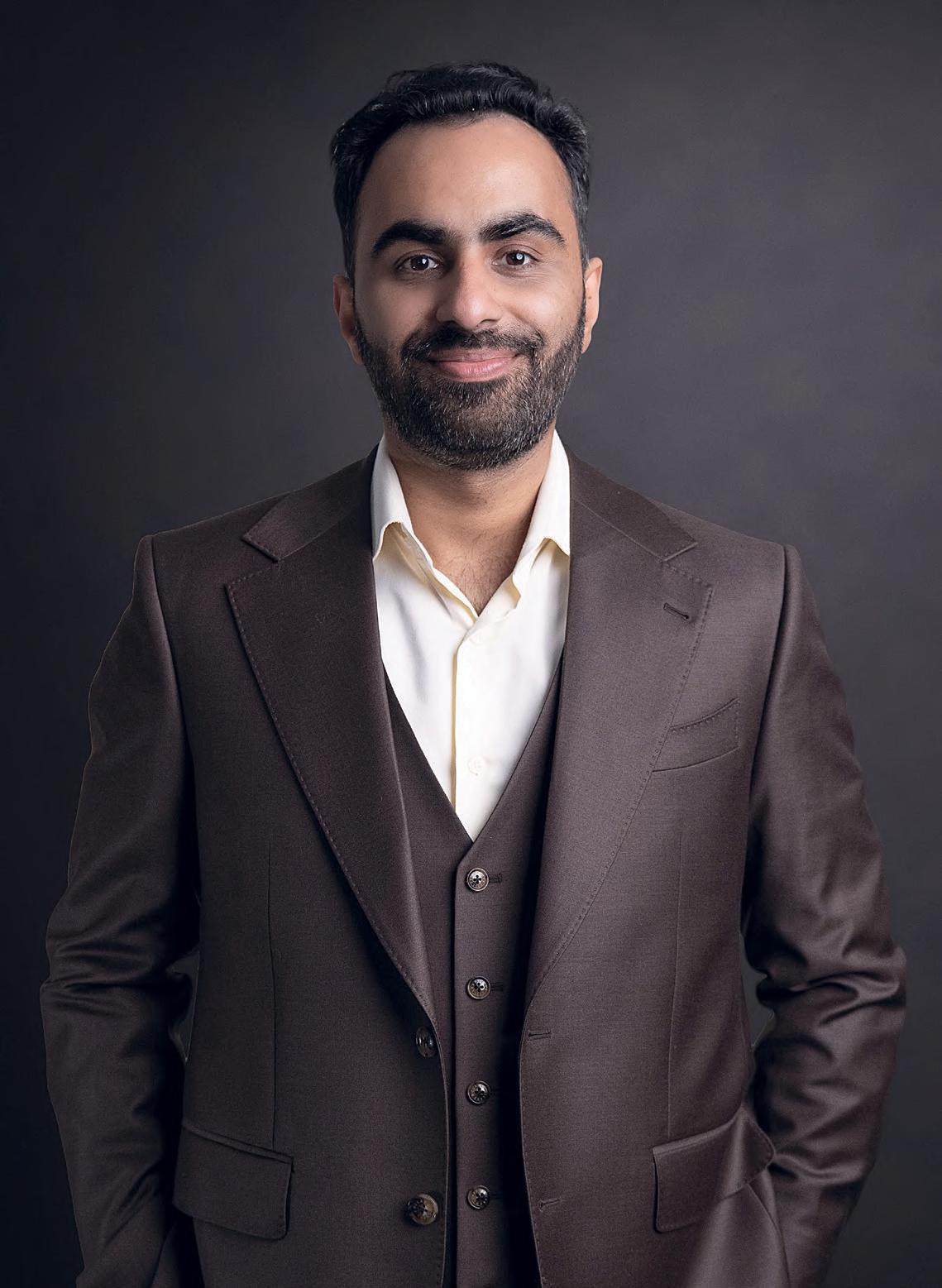
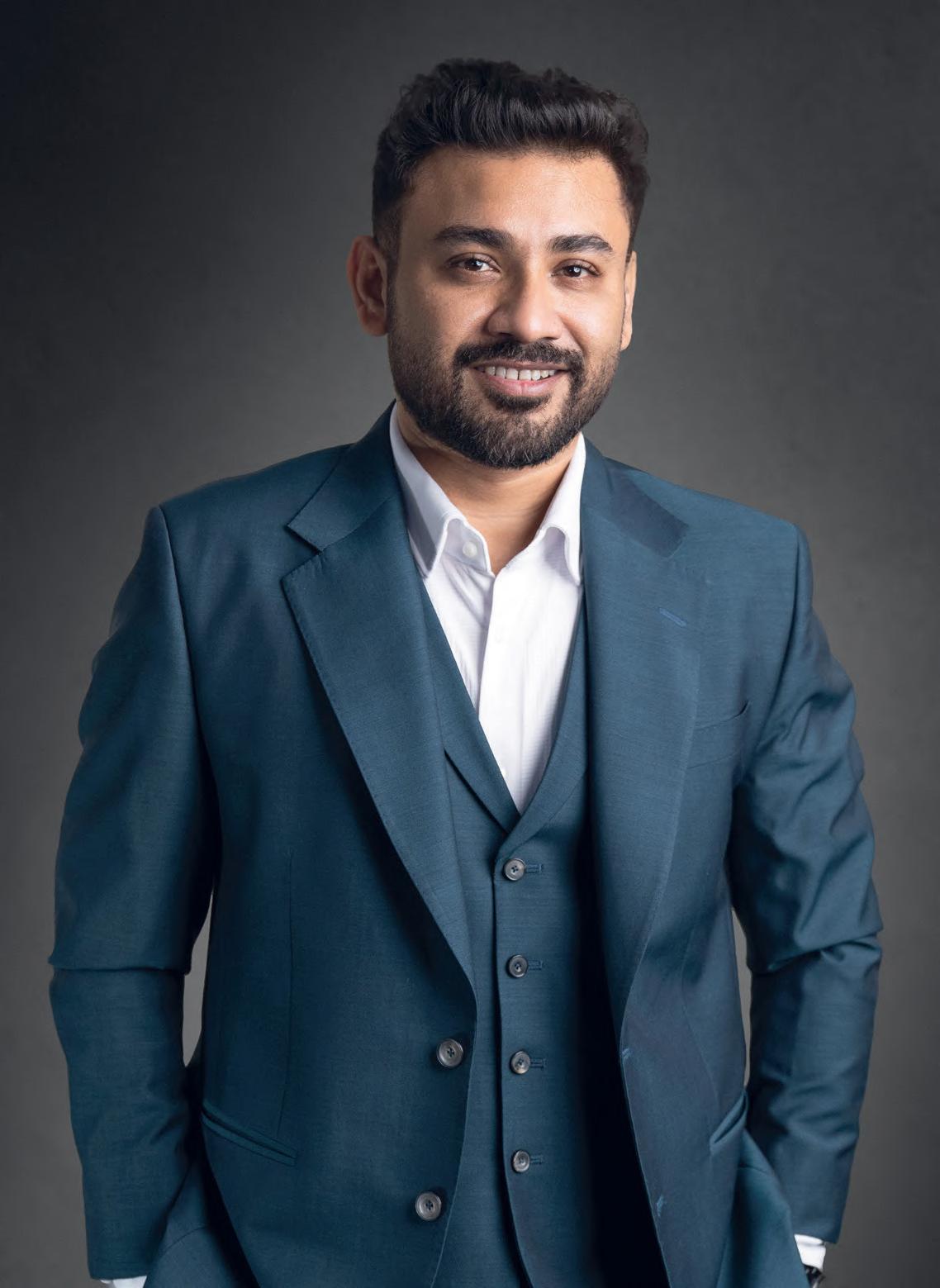
Shubam Aggarwal, Chairman and Co-owner, The Luxe Developers.

MANPOWER
China State Construction Engineering Corporation Middle East (CSCEC) was appointed as the main contractor for the ultraluxury development. Overall manpower onsite currently stands at approximately 1,200 workers.
Sharing insights on the project team and manpower onsite Banerji notes, “Oceano currently has approximately 1,200 labourers working onsite across various construction activities. In addition, around 130 personnel are involved in project management and supervision, comprising representatives from the consultant, main contractor, subcontractors, and specialist suppliers, all working collaboratively to ensure the project progresses in line with programme requirements.”
The project is also leveraging a wide range of construction equipment to ensure works progress smoothly. He outlines, “To support construction activities, a range of major equipment and machinery has been deployed onsite. This includes 3-tower cranes,
2-passenger hoists, and 2-concrete placing booms, which are supporting the ongoing structural works. Multiple mobile cranes are also utilised as required for lifting operations across different areas of the project.”
“Boom loaders and telehandlers support material handling and site logistics, while Bobcats and skidsteer loaders are used for site clearance and material movement. Block-cutting machines have been mobilised to support masonry and finishing works, and power floating machines are being utilised to achieve high-quality concrete surface finishes. Additional construction equipment and specialised machinery are also mobilised as required to support the various stages of the project and maintain construction progress.”
Prioritising safety
The Oceano project site was abuzz with activity during the site visit and, like many job sites, careful planning was needed to ensure the safety of people working onsite. Moreover, as the site is actively serviced by 3-tower cranes with some
overlaps in operational zones, and is in a costal location that could face adverse weather conditions (such as heavy winds etc), added precautions were needed to ensure that each crane could operate safely when carrying loads or otherwise.
Discussing the approach to health, safety and environment (HSE), Banerji explains, “HSE remains a fundamental priority throughout the construction of Oceano. Working alongside our main contractor, CSCEC, we have implemented a robust HSE management framework that promotes a strong safety culture across every aspect of the project.”
“As a result of these efforts, the project has successfully achieved more than 2.7m safe man-hours without a Lost Time Injury (LTI), reflecting the effectiveness of the safety measures and procedures in place. This milestone has been achieved through strong leadership, proactive safety management, continuous workforce engagement, and strict adherence to safe working practices by all personnel on site.”
Banerji points out that the project leadership team led by Project Director Lu Ping, Senior Project Manager Loganathan, and HSE Manager Veeraragavan
has been instrumental in driving CSCEC's ‘Double Zero’ objective of Zero Accidents and Zero Injuries.
“Their commitment, together with the support of Chief Resident Engineer Arshad Hamad and the wider project team, has helped foster a culture in which safety is embedded at every stage of construction,” he notes.
“To maintain these standards, the project undertakes regular safety inspections, comprehensive risk assessments, toolbox talks, management safety walks, workforce training programmes, and continuous monitoring of highrisk activities. In addition to complying with CSCEC's stringent internal HSE requirements, the project also fully adheres to all client, regulatory and stakeholder safety standards, including those mandated by Al Marjan.”
“The project's safety performance has received international recognition. In 2025, CSCEC was recognised through the British Safety Council Awards, one of the industry's most respected accolades for occupational health and safety excellence. This recognition reflects the team's unwavering commitment to maintaining the
We selected materials and building systems specifically engineered for coastal conditions, including protective coatings designed to withstand salt-laden air and humidity.
highest standards of safety performance throughout the construction process,” he confirms.
Banerji says that as construction progresses, the Oceano project team remains focused on maintaining the exceptional safety record, and delivering the development without any major accidents or incidents, while continuing to uphold the highest standards of health, safety and environmental management.
CONSISTENT PROGRESS
The developer says Abu-Dhabi based MEP contractor I-Zone has completed more than 15% of the MEP works and 26% of the internal works.
Asked about the impact the regional conflict had on the project in terms of how safety was handled and whether productivity was affected, Aggarwal responds, “During the period when regional tensions were at their highest and emergency alerts were being issued across the UAE, the safety and well-being of our workforce remained our absolute priority. While the situation required heightened vigilance, there was no significant disruption to construction activities, and the project continued to operate safely and in full compliance with all government guidance and regulatory requirements.”
“Throughout this period, the project management and HSE teams closely monitored official updates and maintained regular communication with all site personnel. Any relevant information was immediately shared with employees, subcontractors, and labour teams, while emergency preparedness procedures were reviewed and reinforced to ensure everyone remained informed and ready to respond if required.”
He continues, “A series of precautionary measures was implemented, including additional emergency preparedness drills, enhanced workforce briefings, and regular reviews of evacuation routes, designated shelter locations, and emergency communication protocols. The project also maintained dedicated Emergency Response Teams operating on both day and night shifts to ensure a rapid, coordinated response capability at all times.”
“Given the nature of the alerts, the project team also assessed potential site-specific risks and strengthened emergency response arrangements where necessary, including additional fire safety provisions and enhanced monitoring of site conditions. The HSE team conducted ongoing awareness sessions to address workforce questions, provide reassurance, and ensure all personnel understood the appropriate procedures in the event of an emergency.”
Banerji adds, “Ultimately, the combination of a robust HSE management system, strong leadership, comprehensive emergency planning, and the commitment of the entire workforce ensured the site remained safe, organised, and fully prepared throughout the period. As a result, all personnel remained safe, and project operations continued without incident.”
Discussing the site’s layout in terms of crane positioning and safety, Aggarwal reconfirms that safety is a top priority on Ocean. “The positioning of all 3-tower cranes was carefully planned during the initial mobilisation phase in line with the
THE RIGHT PARTNERS
The developer chose to work with Dewan Architects + Engineers to ensure that the project had a distinctive architecture aesthetic, and maximised panoramic sea views, while maintaining privacy, fluidity, and elegance.
project's logistics strategy. While the crane operating zones do overlap in certain areas, multiple safeguards are in place to ensure safe and controlled operations at all times.”
He explains, “Each tower crane is equipped with an advanced anti-collision system that links the boom slewing and trolley movements of all 3-cranes. The system continuously monitors each crane's position and movement and automatically restricts operations when there is a risk of overlap or contact, effectively preventing crane-to-crane collisions.”
“Given Oceano's coastal location, wind conditions are also closely monitored. All tower cranes are fitted with anemometers that provide continuous real-time
wind speed readings. Should wind speeds exceed the permitted operating limit of 38km/h, all lifting activities are immediately suspended. The lifting supervisor works closely with crane operators and rigging teams to assess conditions and ensure that all lifting operations are conducted strictly within approved safety parameters.”
“Rigorous operational procedures complement these technological safeguards. All crane operators and riggers are EIAC-approved and fully qualified, while an EIAC-approved Lifting Supervisor oversees every lifting operation. In addition, all tower crane
ON SITE
The development of Oceano is being supported by 3-tower cranes, 2-passenger hoists, and 2-concrete placing booms. Several mobile cranes are also used for lifting operations across different areas of the project.
activities are planned and managed by a LEEA-approved Appointed Person, ensuring every lift is assessed and executed in accordance with industry best practice.”
“To maintain the highest safety standards, the project team also conducts weekly Plant Team Meetings, daily DART briefings, weekly health and safety inspections, pre-operation equipment checks, and monthly technical inspections. Health, Safety and Environment (HSE) remains a central focus of the project. It is the first item discussed during every weekly site progress meeting, reinforcing a strong safety culture across all construction activities,” he elaborates.
Building an ultra-luxury project
Shifting focus to the complexities involved in delivering an ultra-luxury seaside project on a man-made island, Banerji confirms there were several unique challenges to overcome. He notes however, that through careful planning,
THE WAY FORWARD
technical expertise, and close collaboration between The Luxe Developers, CSCEC, and the wider project team, these challenges have been successfully managed throughout the construction process.
“One of the key complexities has been coordinating the project's highly sophisticated design requirements.
Oceano incorporates a range of premium architectural, engineering, and interior design features, all of which require exceptional levels of integration and collaboration between architectural, structural, MEP, and specialist subcontractor teams. Maintaining the design intent while ensuring buildability, quality, and construction efficiency required continuous coordination and detailed technical planning throughout every stage of the project.”
He adds, “The island location has also created additional logistical considerations. As with any development on an island, the delivery of materials, equipment, and resources requires meticulous planning and scheduling to ensure construction proceeds without disruption. This has involved close coordination among contractors, suppliers, logistics providers, and the Al Marjan Island authorities to efficiently manage access, deliveries, and site operations while maintaining the project's construction programme.”
the wider consultant and contractor team, these challenges have been effectively addressed.
“Being located in a coastal environment also demands a heightened focus on construction planning and project management. The project team has had to carefully consider factors such as site accessibility, material handling, and the sequencing of works to ensure that construction activities can be executed safely and efficiently within the constraints of a waterfront location.”
Banerji says that thanks to CSCEC's extensive experience in delivering complex developments across the region, combined with the expertise of
“This collaborative approach has enabled Oceano to maintain strong construction progress, while ensuring the exceptional quality, engineering standards, and architectural vision that define the development are preserved throughout the delivery process,” he emphasises.
Seaside projects also demand special consideration with regards to the materials selected and the systems used to ensure the project’s long-term appearance and durability is maintained.
Commenting on this aspect, Aggarwal explains, “For Oceano, long-term durability in a marine environment was a key design consideration from the outset. Working alongside leading consultants and contractors, we selected
CHARTING
Siddharta Banerji, Managing Director and Co-owner, The Luxe Developers.
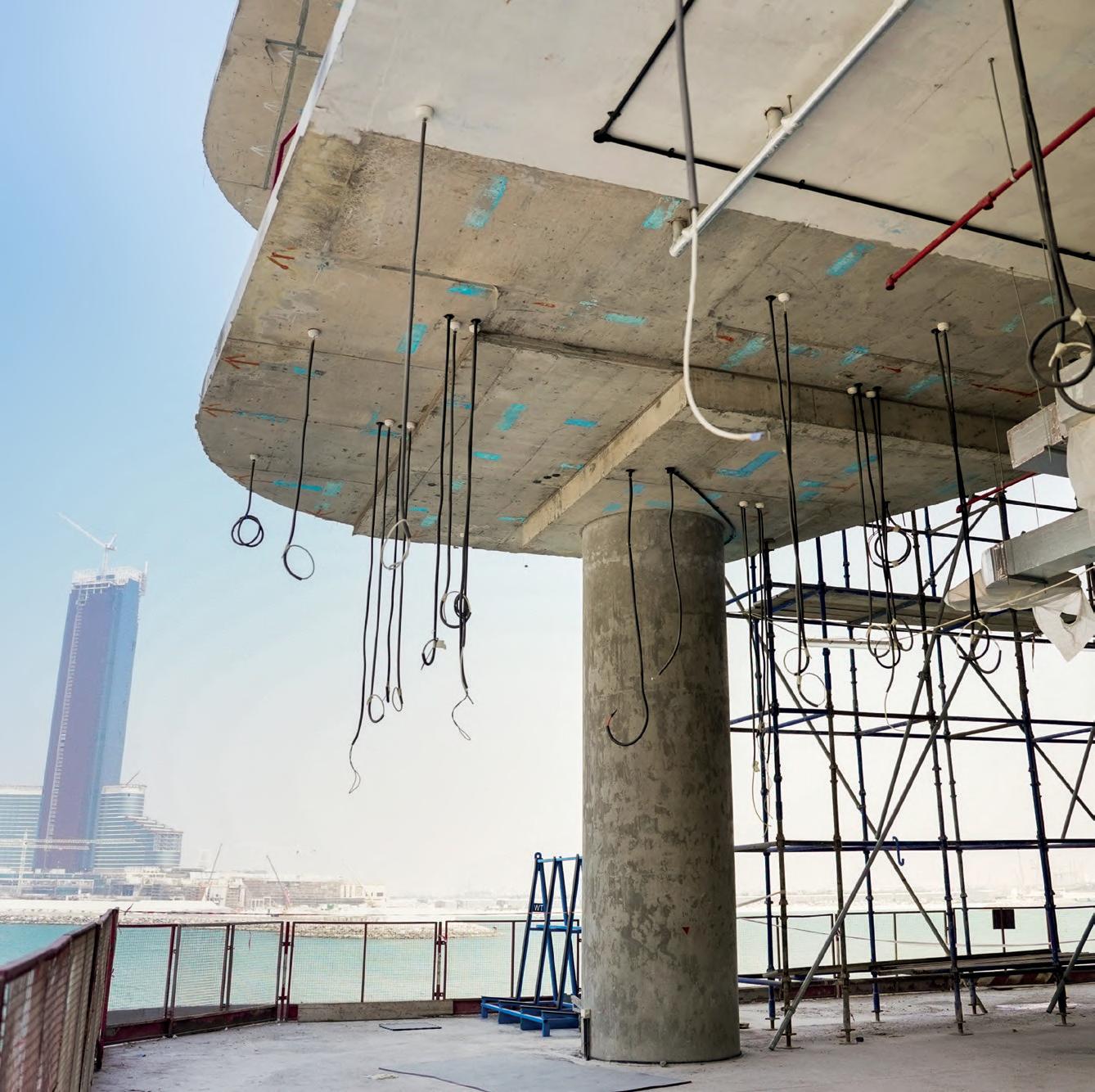
materials and building systems specifically engineered for coastal conditions, including high-performance concrete mixes, corrosion-resistant structural components, marinegrade metals, advanced façade systems, and protective coatings designed to withstand salt-laden air and humidity.”
“These measures, combined with rigorous engineering standards and quality control, help ensure the building remains resilient, minimises maintenance requirements, and preserves its structural integrity and appearance for decades to come.”
Asked whether the closure of the Strait of Hormuz and global disruption of supply chains impacted project
costs, material- and machinery-availability, Banerji responds, “Despite disruptions to regional logistics and global supply chains, Oceano has not experienced a single day of construction stoppage. This is a testament to the strength of our procurement strategy, supply chain planning, and coordination with our partners and contractors. By securing critical materials early, diversifying sourcing channels, and maintaining close collaboration across all stakeholders, we have successfully managed cost pressures and ensured the project remains on schedule and aligned with its budget objectives.”
PRIME
The
Asked about the most technically challenge aspect of the project to date, The Luxe Developers tells BPME that was related to obtaining approval and coordinating the construction of Oceano’s interconnecting link bridges.
“As a unique structural feature of the development, the bridges required extensive technical reviews and approvals from the relevant authorities, particularly Ras Al Khaimah Municipality. Successfully obtaining these approvals involved detailed engineering assessments, close collaboration between consultants and contractors, and multiple design submissions to ensure full compliance with all regulatory and safety requirements,” Aggarwal states.
“In parallel, the project team also navigated a complex approval process for key infrastructure elements, including electrical drawings and Civil Defence requirements. Securing these approvals required rigorous compliance verification and ongoing engagement with the relevant authorities, helping to ensure the project progressed in line with both technical and regulatory standards.”
He continues, “Another significant challenge has been coordinating the project's highly detailed interior design vision with the structural and MEP requirements contained within the IFC drawings. Given the premium nature of the development, maintaining alignment between architectural intent and building services demanded
extensive multidisciplinary collaboration. Regular coordination workshops, clash detection reviews, and continuous communication among the design, engineering, and construction teams have been essential to resolving conflicts and preserving the integrity of the final design.”
“The project's location also presented logistical challenges. Limited site access and restricted manoeuvring space have required careful planning throughout the construction process, particularly regarding material deliveries, equipment movements, and the sequencing of works. These challenges have been addressed through detailed logistics planning, phased execution strategies, and close coordination between contractors, suppliers, and project stakeholders.”
What makes me most proud is the calibre of partnerships we have built and the trust we have earned from investors, contractors, consultants, and stakeholders across the industry.
Looking ahead, Aggarwal says one of the most technically demanding phases of the project will be installing the interconnecting structural bridges between the 2-towers.
“As a defining architectural and engineering feature of Oceano, the successful installation of these bridges will require precise planning, specialist lifting operations, and seamless coordination between multiple disciplines to ensure the works are completed safely, efficiently, and to the highest quality standards,” he remarks.
Talking to Banerji about the biggest achievement from a construction standpoint, he highlights, “From a construction perspective, one of our proudest achievements has been successfully delivering the project's complex structural and engineering works, while maintaining the highest standards of quality, safety, and precision. Reaching these key construction milestones on such an architecturally ambitious beachfront development is a testament to the expertise, collaboration, and coordination of the entire project team. It also reflects our unwavering commitment to delivering a truly iconic landmark on Al Marjan Island and contributing to the evolution of Ras Al Khaimah's luxury real estate landscape.”
LOCATION
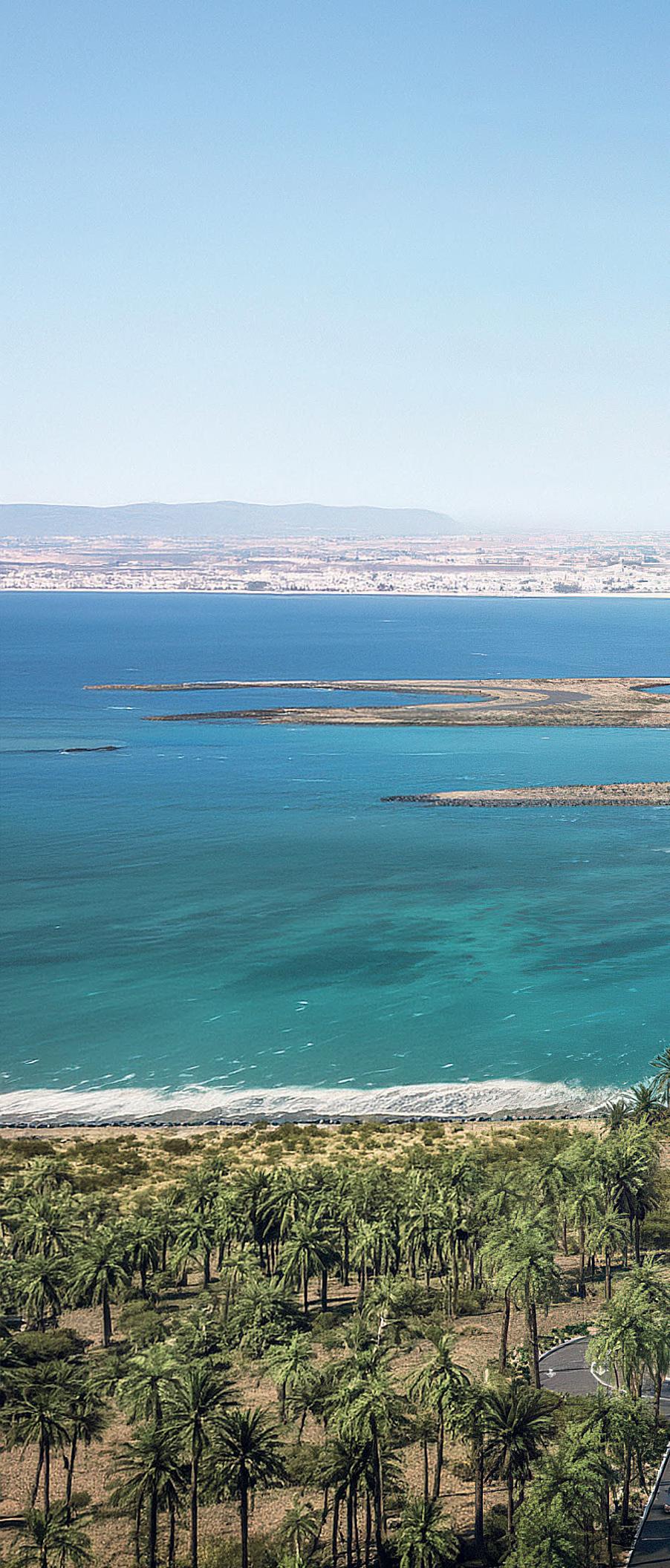
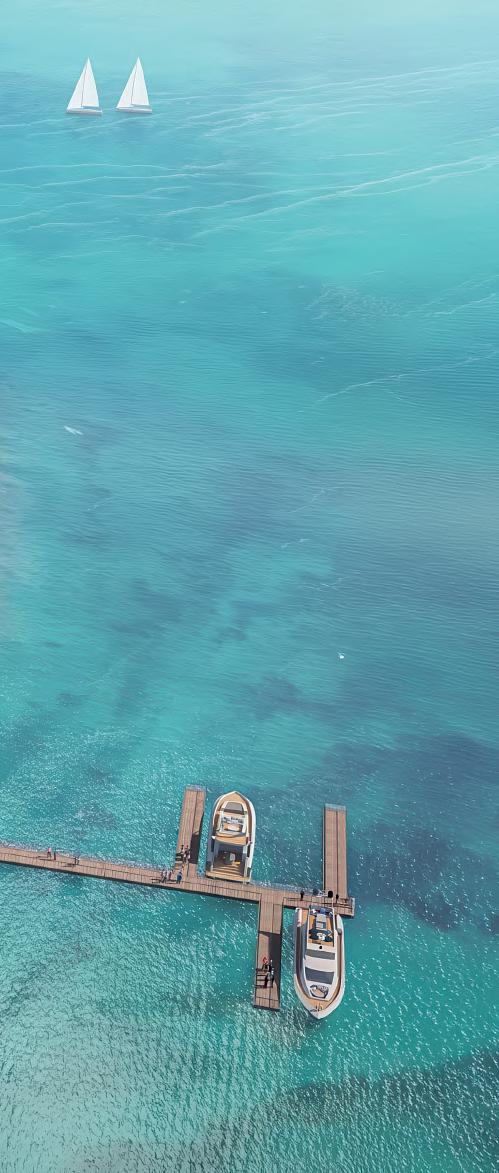
ultra-luxury development is located opposite the Wynn Al Marjan Island and investors will be offered their own private beach and a private jetty to dock yachts.
identity on Al Marjan Island, rather than delivering a conventional residential tower. Developed in collaboration with Dewan Architects + Engineers, the design embraces organic forms, flowing lines, uninterrupted sightlines, and a softer architectural language that complements its coastal surroundings.”
“While these design elements increase construction complexity and cost, we viewed them as a strategic investment in the project's long-term value, character, and market appeal. Curved façades, non-linear balconies, and custom interior features require a significantly higher level of engineering coordination, precision formwork, specialist materials, and skilled craftsmanship than traditional straight-line construction. They also present additional challenges for material optimisation, sequencing, and waste management.”
Standing out by choice
On the site visit with Aggarwal and Banerji, it became obvious the developer had gone the extra mile with Oceano with regards to minute details that give the project its luxury aesthetic, refinement and finish, including (but not limited to) the use of rounded/curved features and surfaces, non-linear balconies and more. These decisions typically mean greater project complexity, extra costs and significant material expenditures and wastage.
Commenting on this, Banerji highlights, “The curved architectural forms and bespoke detailing that define Oceano were a deliberate design choice from the outset. Our vision was to create a sculptural waterfront landmark that reflects the sea's natural movement and establishes a distinctive
He adds, “To address this, we worked closely with our partners from the earliest stages of the project to ensure the design could be executed efficiently without compromising the original vision. Advanced engineering coordination and BIM technology have played a critical role throughout the process, allowing us to accurately integrate structural, façade, and MEP elements, minimise inefficiencies, and reduce unnecessary material wastage wherever possible.”
“Ultimately, these architectural decisions have become one of Oceano's defining strengths. Today's luxury buyers are seeking distinctive, design-led assets rather than standardised products, and Oceano's sculptural aesthetic, panoramic views, and exceptional attention to detail have helped position it as one of the most recognisable ultraluxury residential developments in Ras Al Khaimah. While the approach required greater investment and technical expertise, we believe the result is a timeless landmark that will continue to differentiate itself for years to come,” he states.
GOING THE EXTRA MILE
The ultra-luxury project features several luxury touches including curved facades, nonlinear balconies, and custom interiors.
POSITIVE PACE
To date approximately 10,000t of steel reinforcement has been installed, 40,000cu/m of concrete has been poured, and 30,000sqm of blockwork has been completed.
Aggarwal takes the opportunity to point out that investors have been to the site on several occasions throughout the construction journey.
“The feedback has been overwhelmingly positive, with many impressed by the level of craftsmanship, ultraluxury finishes, and iconic architectural details. Seeing the quality and progress firsthand has strengthened investor confidence in the project and, in many cases, led existing investors to increase their commitment by acquiring additional units,” he points out.
Banerji also says that investors that have acquired homes at Oceano have held onto their property rather than sold them for profit. “One of the key reasons investors have retained their properties is their long-term confidence in both the project and Ras Al Khaimah's broader growth trajectory. Buyers recognise that Oceano is not simply a residential development, but a landmark asset positioned within one of the UAE’s fastest-evolving luxury and tourism destinations.”
Talking about the profile of investors at Oceano, he adds, “A large proportion of them are ultra-high-net-worth individuals and end-users seeking exclusive lifestyle assets rather than speculative opportunities. Many purchasers were drawn to the project’s rarity, bespoke amenities, and limited inventory, particularly its unobstructed views and emphasis on exclusivity.”
The project has successfully achieved more than 2.7m safe man-hours without a Lost Time Injury (LTI), reflecting the effectiveness of the safety measures and procedures in place.
Asked to make their closing statement and highlight their proudest achievements on Oceano as first-time developers, Aggarwal says, “For us, the proudest achievement has been proving that a first-time developer can enter one of the world’s most competitive luxury real estate markets and deliver a project that genuinely reshapes perceptions of what is possible in Ras Al Khaimah. The complete sell-out of Oceano, combined with the record-breaking sale of The Celest and The Stellar, validated our vision from day one.”
“However, beyond the commercial success, what makes me most proud is the calibre of partnerships we have built and the trust we have earned from investors, contractors, consultants, and stakeholders across the industry. We set out to create developments defined by architectural distinction, privacy, and craftsmanship, and seeing Oceano become recognised as a landmark project for Al Marjan Island has been incredibly rewarding.”
Banerji states, “I believe our proudest achievement has been establishing a clear identity and philosophy as developers
VALIDATING A VISION
Investors that have acquired homes in Oceano are said to have held onto their properties rather than flip them for profit.
from the very beginning. Rather than following conventional luxury trends, we focused on creating projects with emotional value and homes that combine design, wellness, privacy, and lifestyle into a truly elevated living experience.”
“Seeing Oceano evolve from a vision into a fully sold-out development under construction, while simultaneously launching La Mazzoni and receiving such a strong market response, has been a defining milestone for us. Most importantly, we have achieved this while maintaining uncompromising standards across design, materials, partnerships, and execution. For a first-time developer, earning that level of confidence from ultrahigh-net-worth investors and the wider industry is something we are extremely proud of,” he concludes.



BEYOND THE CHECKLIST
QUANTAVIST CO-FOUNDER OSCAR
PICKERILL TALKS TO BIG PROJECT ME ’S PRIYANKA RAINA ABOUT REDEFINING CONSTRUCTION SAFETY THROUGH THE USE OF ARTIFICIAL INTELLIGENCE

As projects across the region scale in size, complexity, and speed, traditional health and safety systems built around periodic inspections, manual reporting, and retrospective analysis are increasingly struggling to capture risk as it unfolds in real time. The result is a growing gap between what is happening on site and what safety teams are actually able to see, which can lead to disastrous consequences. It’s clear then that construction safety is in need of a fundamental shift.
Quantavist is part of a new wave of technology companies aiming to close this gap. By deploying autonomous artificial intelligence (AI) powered monitoring systems across live construction environments, the company is enabling continuous visibility into site activity and emerging hazards, shifting safety management from reactive documentation to proactive intervention.
Here, Quantavist Co-Founder Oscar Pickerill speaks with BPME’s Priyanka Raina about the incident that inspired the company’s founding, how AI is being applied to real construction environments, and why the future of HSE will depend on moving beyond observation towards realtime operational intelligence.
Talk about Quantavist’s founding and the company’s vision 3-years ago, I spent over 3-months working in the Antarctic continent, supporting technical installations for critical scientific research. In that environment, if something goes wrong, a medical evacuation takes days or even weeks due to poor weather. While I was there, a battery caught fire in the charging room. It started smoking, but luckily someone nearby managed to isolate the risk before it spread. Had nobody been nearby, the consequences could have been catastrophic. It made me question why risk management still relies so heavily on somebody being in the right place, at the right time. That was the starting inspiration for Quantavist, which is built around the idea that risk management should not depend on luck. It should depend on continuous visibility and early intervention. Although Antarctica and large-scale construction projects appear to be completely incomparable environments, both operate under the same fundamental problem. Risk evolves faster than human observation
can reliably follow. Construction is one of the clearest examples of this problem at scale, with research finding that accidents across the GCC create an economic burden worth tens of billions of dollars each year.
Quantavist is built around the idea that risk in complex environments evolves faster than traditional monitoring can capture. What do you mean by this exactly and what specific gaps in construction HSE led you to develop an autonomous approach to HSE?
Within construction projects, most risks are never reported at all. HSE monitoring currently relies on anecdotal observation, what a person happens to see, remember and record. This leaves leaders managing by hindsight rather than live site reality. An area may appear safe during an inspection, only for conditions to change completely minutes later, as machinery begins moving, scaffolding is erected or work activities intensify. Traditional monitoring still revolves around periodic inspections, yet risk does not emerge on schedules. Site conditions evolve continuously throughout the day, faster than manual monitoring could ever capture. This is the gap Quantavist is designed to solve, providing continuous operational visibility as risk develops.

In practical terms, how does AI-led monitoring function on a live construction site from detection through to action?
The system is deployed across key areas of a site using robotic cameras positioned to monitor work activity around the clock. These cameras are dynamically controlled by the system, continuously adapting to changing site conditions. The system analyses terabytes of footage and millions of frames every month, identifying emerging risk as soon as it develops. We are predominantly monitoring high-risk
CHANGING HSE
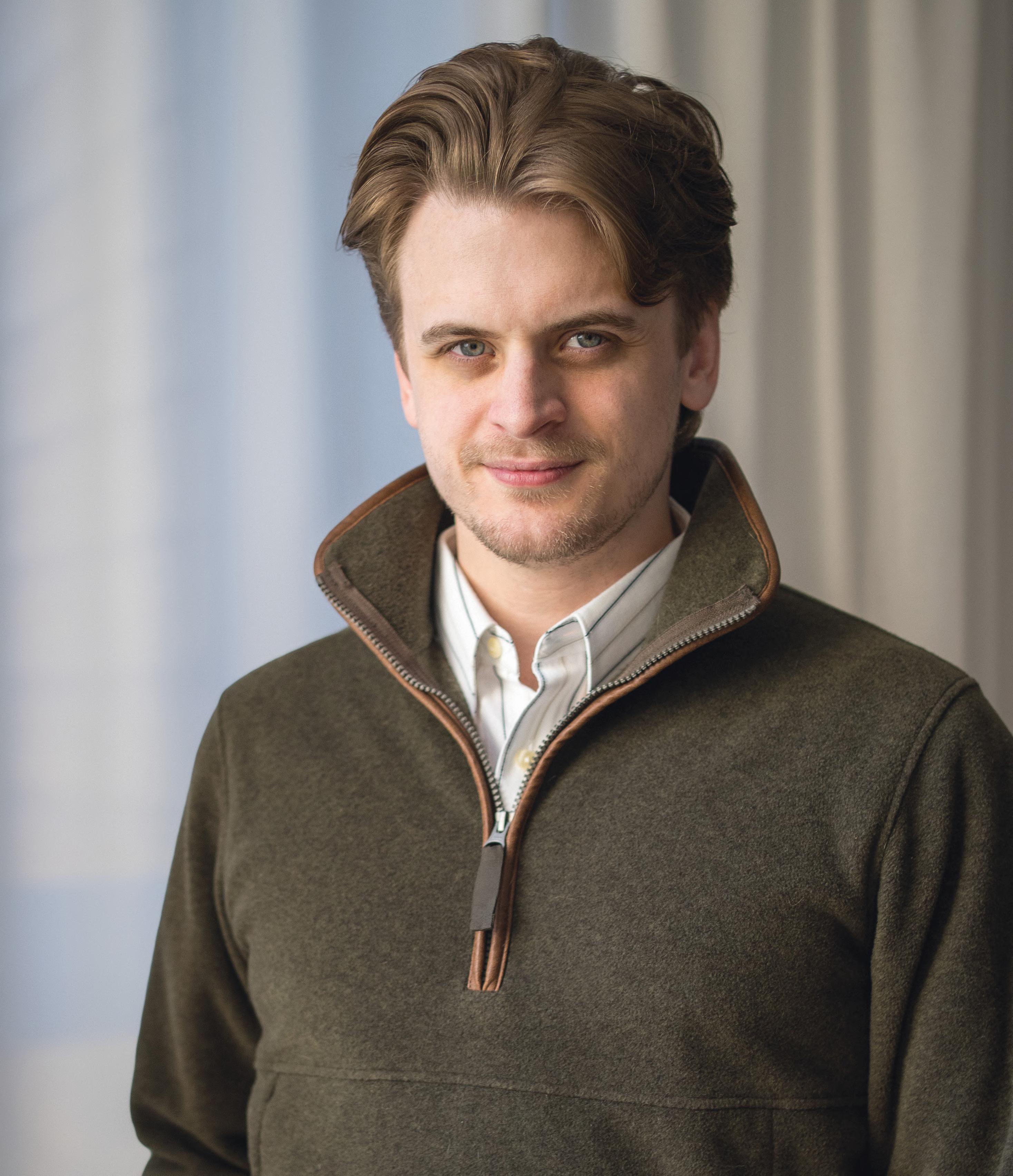
Oscar Pickerill co-founded Quantavist to transform how risk is managed in complex, high-stake environments.
activities such as working at height, plant-person proximity, lifting operations and other project-specific activities.
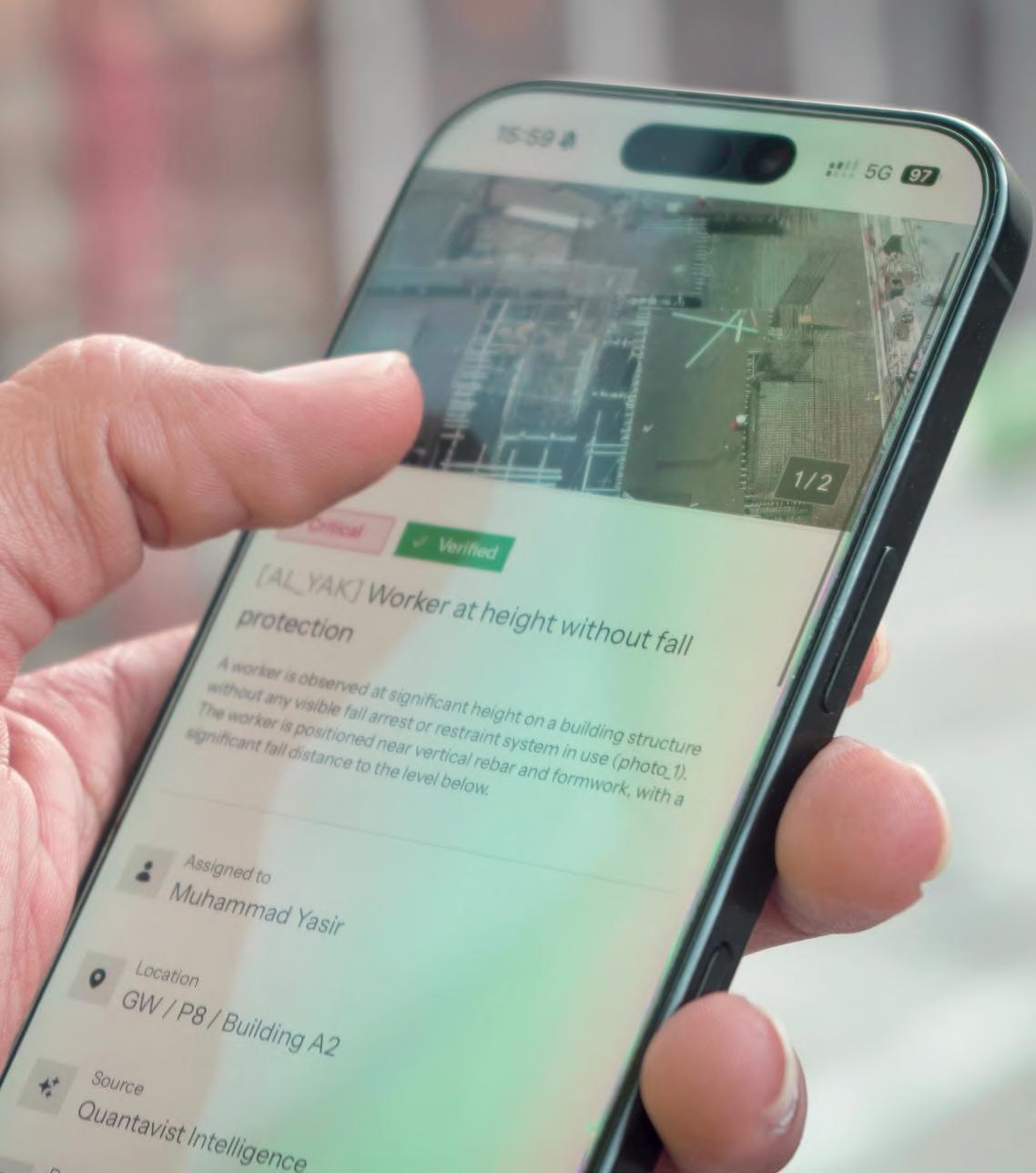
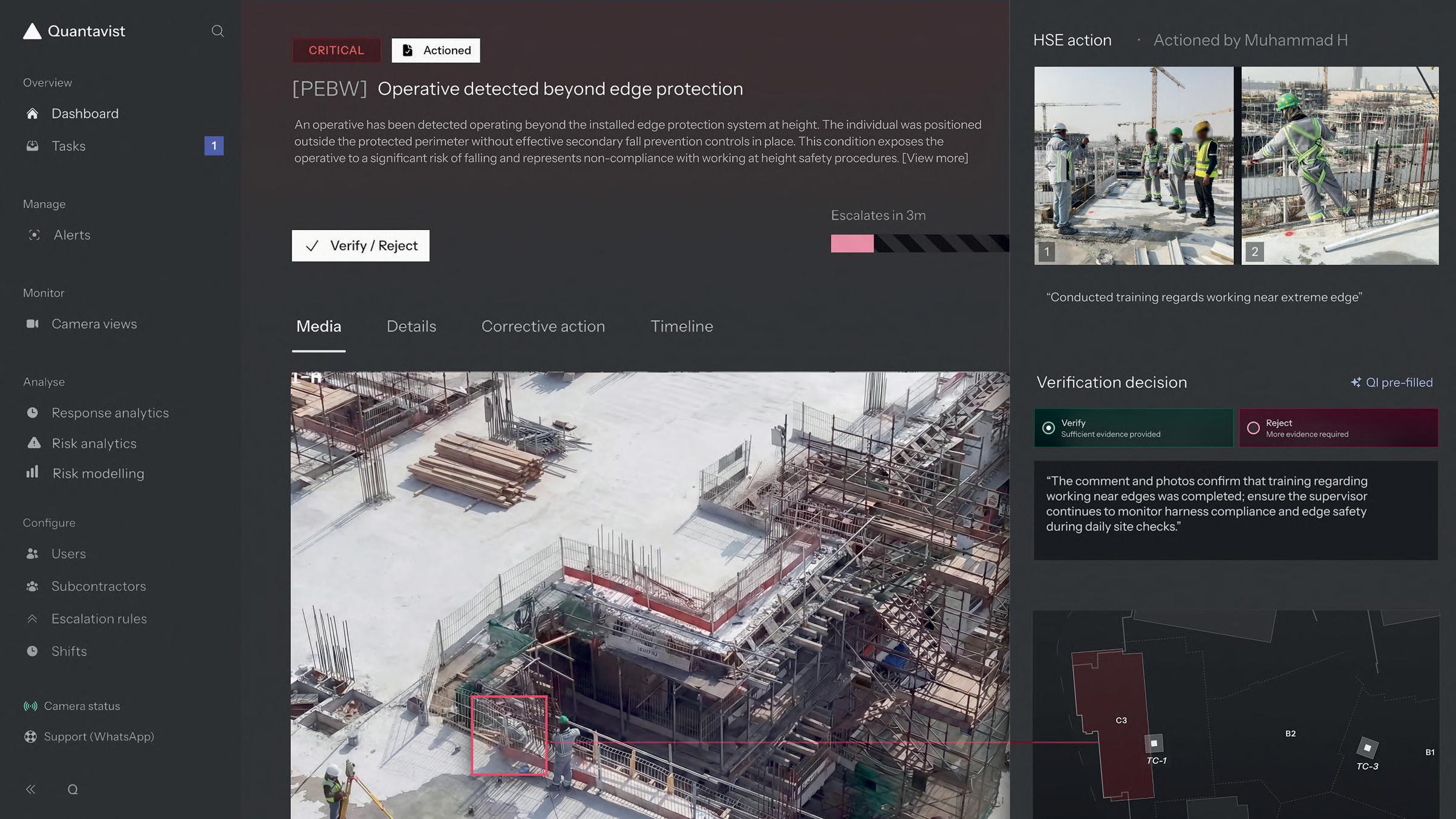
When the system detects a risk, it sends an alert with the relevant context, including video playback, and routes it instantly to the appropriate person on site so they can intervene quickly. Each alert also becomes part of a wider dataset, helping teams understand where issues are recurring, which activities are creating exposure and whether controls are proving effective over time. This supports both immediate intervention and longer-term analysis.
Where does human-led observation struggle, and how does AI change risk identification on site?
Even for seasoned teams, observation is limited by where people are physically present at a given moment. The scale of modern construction now exceeds what human observation alone can reliably manage. But even when risks
PARTNERSHIP
are identified, human judgement is rarely consistent, often leaving project teams with a distorted understanding of site conditions. For example, one HSE officer may report significantly fewer observations than another. Stakeholders may interpret this as lower exposure, when in reality it may simply reflect inconsistent reporting standards. With AI operating inside the monitoring process, it is effectively like having the same observer operating continuously across the project with consistent judgement regardless of time, location or shift changes. This creates a far more reliable dataset and allows organisations to compare site safety performance over time with genuine consistency.
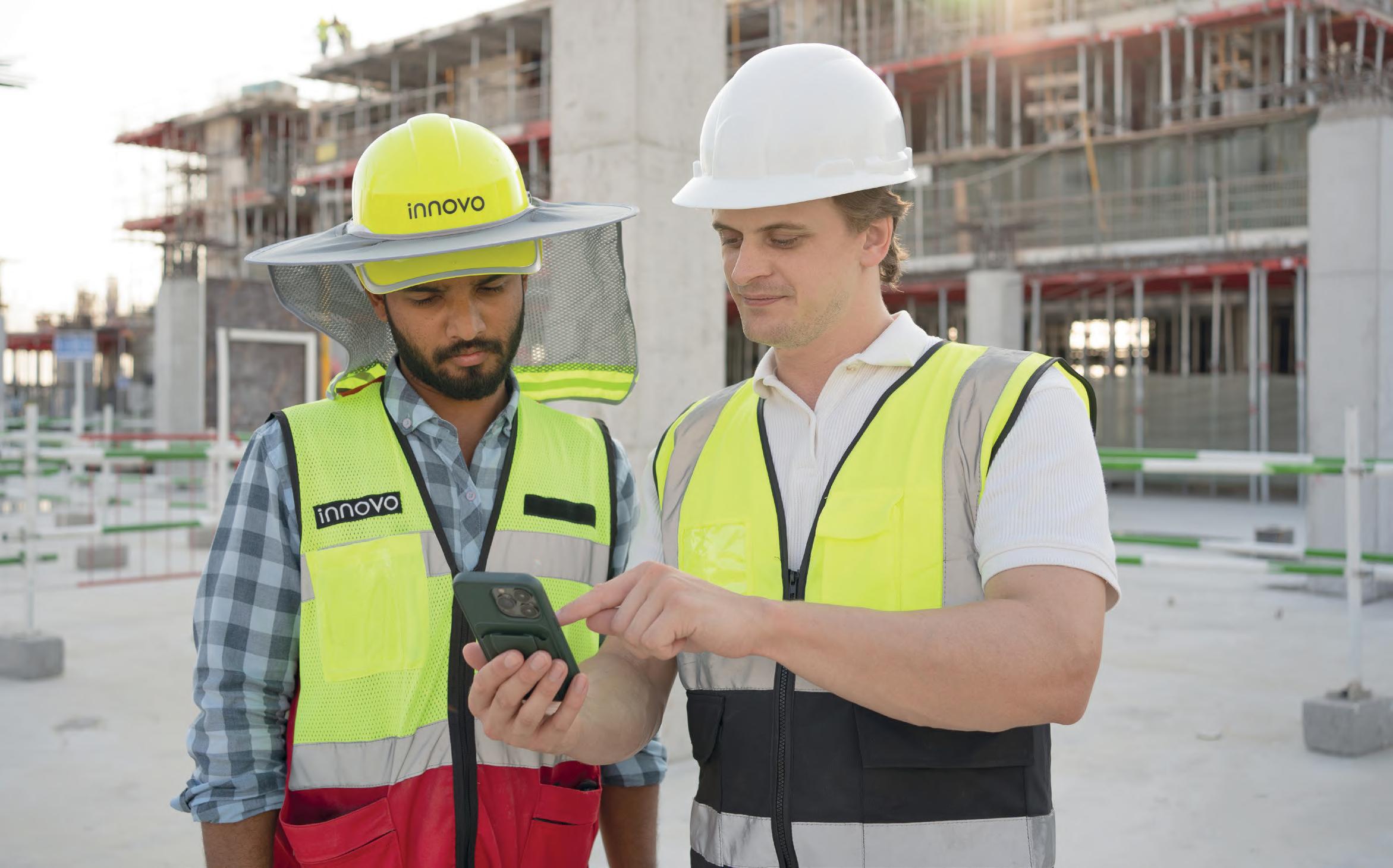
Quantavist and Innovo entered into a strategic partnership to deploy autonomous AI monitoring across construction projects.

Many solutions focus on digitising existing HSE processes. What makes autonomous monitoring different in how it manages risk?
Much of today’s safety technology is still built around digitising existing workflows such as inspections, checklists, audits, forms and incident reports. These tools still fundamentally depend on a person first seeing a risk. In that model, technology superficially improves the administrative layer, but it does not materially change how risk is discovered or understood. Digitising a checklist still gives you a checklist. It remains a delayed snapshot of what someone happened to observe at a specific moment in time.
In contrast, autonomous safety monitoring creates visibility into what is actually happening across a project, surfacing risk exposure that would previously have remained invisible.
Your collaboration with contractor Innovo is central to this deployment. What made this partnership the right environment to scale and validate your technology? Innovo has been a natural partner for deploying and validating our technology because they are genuinely open to innovation, while still expecting it to deliver meaningful impact. They are also partnering with
INSPIRATION
Pickerill supported critical scientific research in Antarctica, where a potential near-miss incident would later inspire the founding of Quantavist.
Field AI, so there is already a strong culture around introducing advanced technologies into live operations. Many industry leaders talk about innovation at a surface level. Innovo has consistently approached it from the standpoint of whether it can genuinely improve how projects are delivered and managed day-to-day.
Ghaf Woods is a large, multi-phase development with overlapping trades and high site activity. How did that complexity influence the way your system was deployed and refined? Although CCTV monitoring systems have traditionally been used in relatively static and predictable environments such as factories or controlled industrial spaces, much less progress has been made when it comes to monitoring complex, changing environments like Ghaf Woods.
The site itself covers approximately 738,000sqm, so it is not practical to monitor the project effectively using fixed cameras pointed at individual areas. To solve this, our cameras are positioned high on tower cranes
Autonomous safety monitoring creates visibility into what is actually happening across a project, surfacing risk exposure that would previously have remained invisible.
and autonomously controlled by the system, giving dynamic 360-degree coverage across large areas of the project paired with 40× optical zoom. Rather than simply watching one static scene, the system continuously adjusts itself based on what is happening across the site.
Conventional vision-based monitoring systems still focus on analysing whatever happens to appear inside a static camera frame. Our system takes a very different approach, the system continuously redirects attention based on how exposure is evolving across the site. That includes factors such as the type of work taking place, the number of people involved, interactions between machinery, workers and elevated surfaces and the potential risk profile associated with a specific activity.
Since deployment, what measurable changes have you seen in how risks are identified, tracked and resolved on site? What has client feedback been?
The deployment has been effective operationally, with observation volumes exceeding traditional methods by more than 20 times, with over 90% of alerts being directly closed out by site teams. Feedback has also been extremely positive, particularly because the system is providing teams with visibility into areas that would previously have been extremely difficult to monitor consistently. For example, in one instance the system detected a worker unsafely balancing on formwork joists at height without suitable protection in place. Due to the worker’s position, he was not visible from ground level and would have been almost impossible for an HSE officer to identify under normal conditions. The system detected
AUTONOMOUS MONITORING
Quantavist’s artificial intelligence (AI) system identifies unsafe conditions on site, enabling early intervention through automated alerts and workflows.
the exposure immediately, an alert was generated and within minutes the worker had been removed from danger and the team implemented corrective action.
The deployment has since expanded across additional Innovo projects, which has been very encouraging.
One of the advantages of your solution is the ability to scale monitoring without increasing headcount. How does that reshape traditional HSE team structures?
The system operates continuously without the physical coverage limits of human observation, meaning each deployed camera expands visibility across the site. We analyse billions of data points
RESIDENTIAL DEVELOPMENT
Ghaf Woods is currently under construction in Dubai, a major residential development set to deliver more than 7,000 apartments.
every month, uncovering patterns of exposure that traditional monitoring methods simply cannot see.
This enables HSE teams to spend less time trying to locate issues and more time focusing on intervention, planning, workforce engagement and understanding where exposure is genuinely emerging across the project. Ultimately, it shifts teams from reactive observers towards teams operating proactively with site-wide visibility.
There is often concern that automation could reduce critical human oversight in safety-critical environments. How do you ensure AI enhances rather than replaces human judgement?
Our aim is not to replace human judgement in safetycritical decisions. It is to give teams the data they need to act earlier and more effectively. Will certain manual tasks become increasingly automated over time?
Almost certainly. But that is true of every industry that has meaningfully adopted technology, where the best
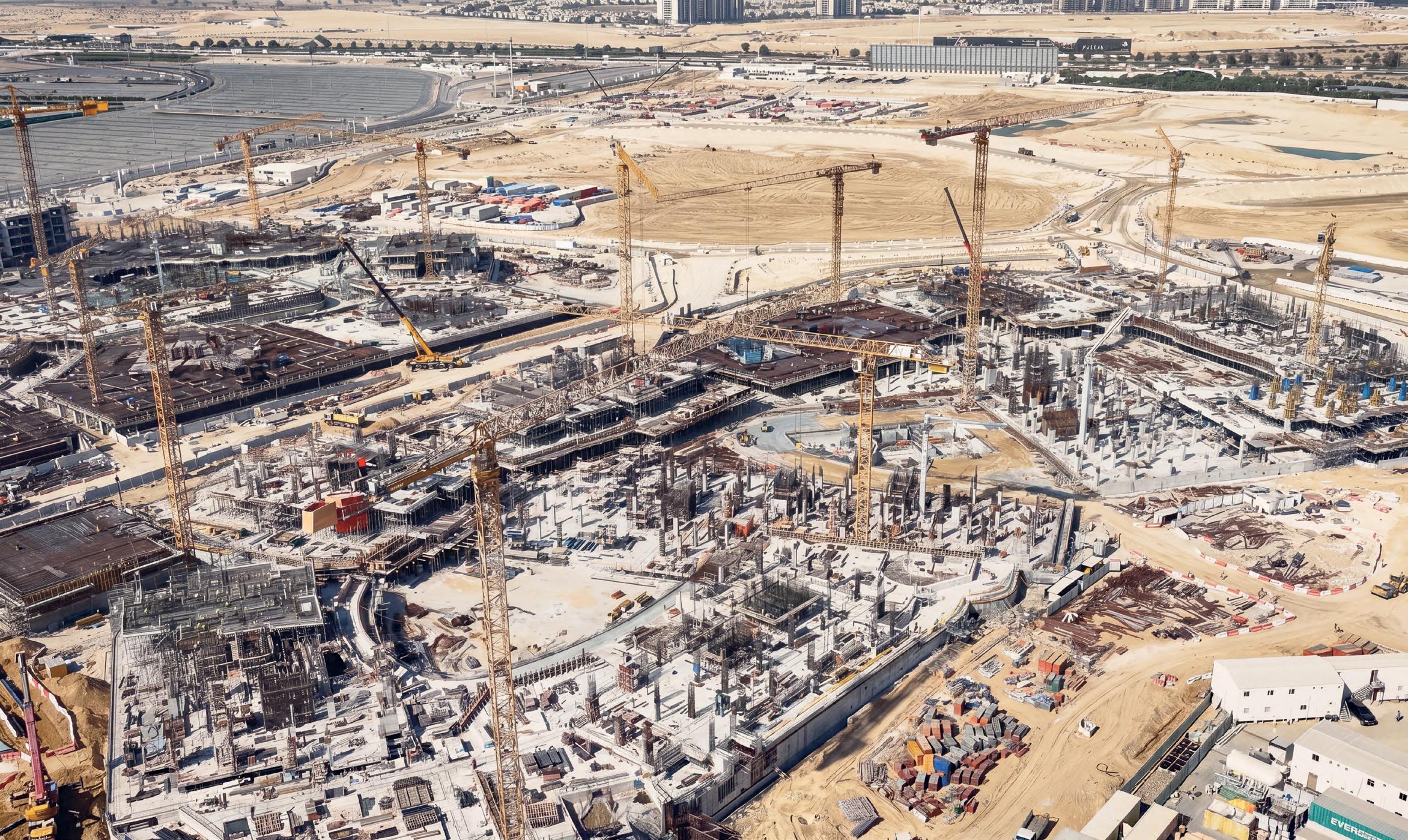
THE FUTURE
Pickerill says the biggest breakthroughs will come from systems that don't just digitise existing processes but materially change the industry's ability to reduce risk exposure.
outcomes have come from humans and systems working together.
For decades, safety systems in construction have fundamentally operated around reacting and reflecting on incidents after they have already happened. A huge amount of effort still goes into firefighting problems, rather than intercepting risk before it has actually escalated.
AI creates an opportunity to shift that balance. The role of the technology should be to detect emerging exposure earlier and help intercept it before escalation, while allowing human safety teams to focus more heavily on areas where people add the greatest value such as workforce engagement, training, lessons learned, behavioural improvement and long-term operational development.
As projects across the Middle East region continue to scale in size and complexity, how do you see AI redefining HSE standards over the next 5-years?

I believe the industry will move towards a complete operational overhaul. AI will increasingly become embedded directly into how construction projects are managed rather than existing as a separate reporting layer operating in the background.
At Quantavist, we are already working on technologies that move beyond detection alone. The next stage is not just identifying risks but actively helping intercept them using systems such as directional speaker systems paired with dynamic drone deployments to rapidly reach the source of exposure.
We want to give forward-thinking organisations the tools to evolve their safety operations into AIfirst environments. Once projects begin operating with this level of visibility and intelligence, traditional approaches begin to feel increasingly limited.
To close, what do you think will define the next major breakthrough in construction HSE technology?
AI tools are entering the market at pace, but most are still built around existing workflows and legacy systems. The technologies that will define the future of construction HSE will be the systems that fundamentally rethink how risk is detected, understood and managed in the first place. That means moving away from static reporting and towards continuous awareness of what is actually happening across a project.
Ultimately, the biggest breakthroughs will come from systems that do not simply digitise existing processes, but materially change the industry’s ability to reduce risk exposure. The future of HSE will not be defined by better paperwork. It will be defined by fewer lives lost.
THE SKY’S THE LIMIT
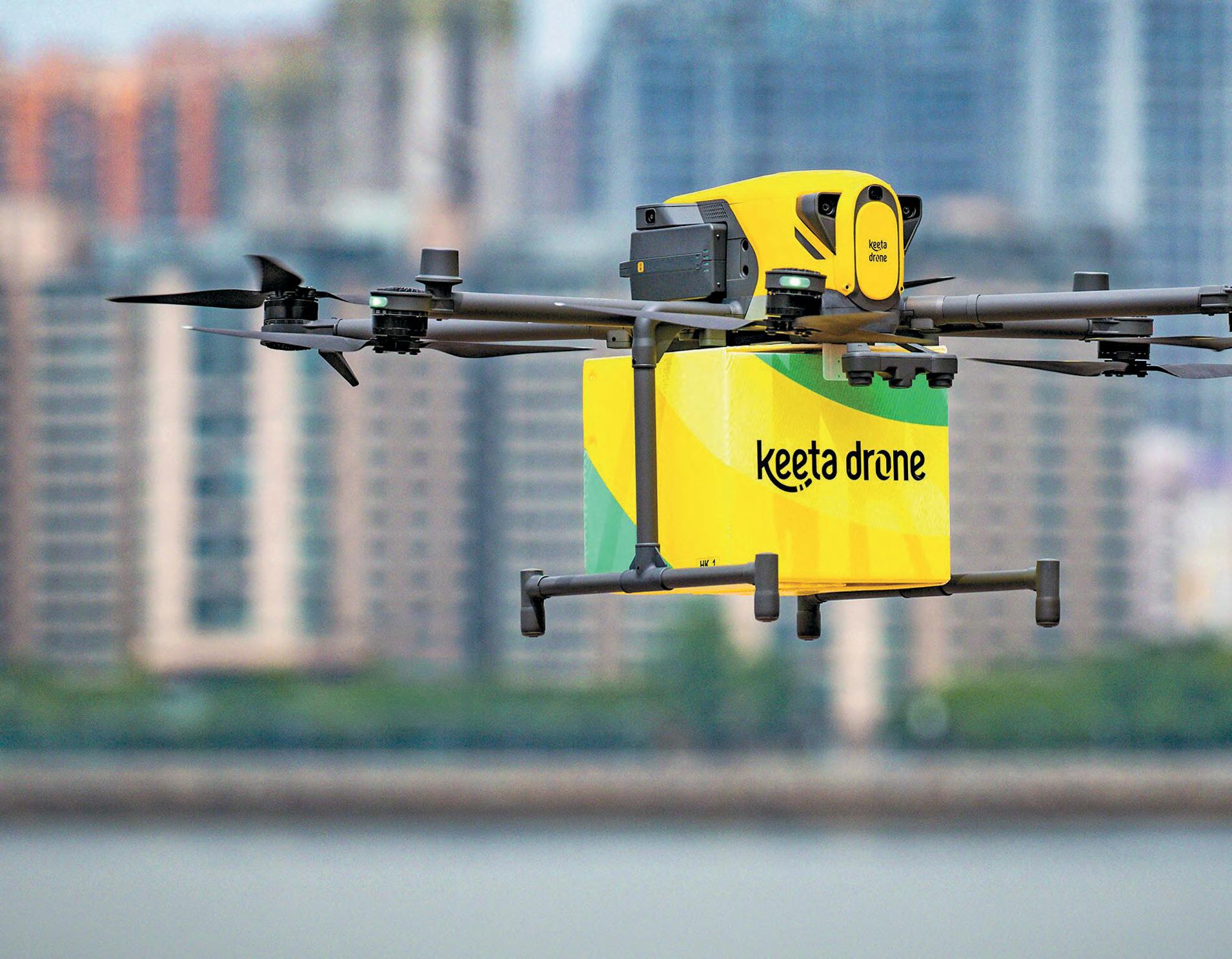
BIG PROJECT ME ’S JASON SAUNDALKAR TALKS TO FRANCIS ALFRED, MANAGING DIRECTOR OF SOBHA REALTY AND JUNWEI YANG, GENERAL MANAGER OF KEETA DRONE ABOUT THE ROLLOUT OF AIR DELIVERIES WITHIN SOBHA’S COMMUNITIES
On 18 May developer Soba Realty signed a memorandum of understanding (MoU) with Keeta Drone. The deal between the global luxury real estate developer and green air delivery company aimed to introduce next-generation air delivery ecosystems across the developer’s integrated communities.
The MoU was signed between Sobha Realty and Keeta Drone in the presence of the Dubai Civil Aviation Authority (DCAA), and was said to mark a significant step forward in redefining how logistics and mobility are seamlessly integrated within premium residential environments.
Through the partnership, Sobha Realty became Keeta Drone’s first official Smart Community partner in the UAE, a move which was said to reinforce the developer’s focus on embedding future-ready infrastructure and sustainable technologies into its developments.
Sobha Realty said that the collaboration will be implemented in phases, with all activations operating within government-approved frameworks, underscoring both organisations’ commitment to safety, compliance, and responsible innovation.

Both Keeta Drone and Sobha Realty have stated that they plan to explore opportunities beyond the UAE as Keeta Drone's deployment roadmap grows and Sobha Realty continues its international expansion.
Keeta Drone began looking at drones for seamless airground local deliveries in 2017 and actually launched its first commercial delivery service in Shenzhen, China in 2021. By December 2024 the company was operating 53 routes in major Chinese cities such as Beijing, Shenzhen, Shanghai, and Guangzhou, and had completed over 400,000 deliveries.
The service was said to span a variety of locations including: offices, residential areas, tourist spots, parks, campuses, and libraries, and offered customers a selection of over 90,000 products.
The company’s drone logistics system includes autonomous aerial drones, an intelligent dispatch system, and an efficient operational framework, creating an urban low-altitude logistics solution adaptable to various scenarios and weather conditions, the firm said.
Here, Big Project Middle East’s Jason Saundalkar speaks to Francis Alfred, Managing Director of Sobha Realty and Junwei Yang, General Manager of Keeta Drone about the partnership, the rollout out of the deliveries in Sobha’s communities, and both companies’ plans for the future.
What was the driver for Sobha Realty to partner with Keeta Drone for air deliveries across its communities?
Francis Alfred: The key driver was Sobha Realty’s ambition to move beyond traditional residential development and create future-ready communities where infrastructure, technology, mobility, and resident convenience work together seamlessly.
As cities become denser and resident expectations evolve, last-mile delivery is becoming an important part of how communities function day-to-day. Sobha sees autonomous air delivery as a natural extension of smart community living, supporting faster, more efficient and potentially lower-impact services within integrated residential environments.
The partnership also aligns with Sobha’s longterm approach to value creation. Rather than treating technology as an add-on, Sobha aims to embed futureready infrastructure into the community planning process itself. Sobha’s Backward Integration model gives the company greater control over design, infrastructure readiness, operational coordination and scalability, which is critical when introducing advanced systems such as drone-enabled logistics.
When is the anticipated rollout of this service in Sobha Hartland and other Sobha communities in the UAE? How many actual drones are expected to serve Sobha Hartland?
FA: The rollout is expected to be introduced in phases across Sobha Realty’s integrated communities in Dubai, with the first phase anticipated to begin in Sobha Hartland. This is because Sobha Hartland already has the scale, infrastructure
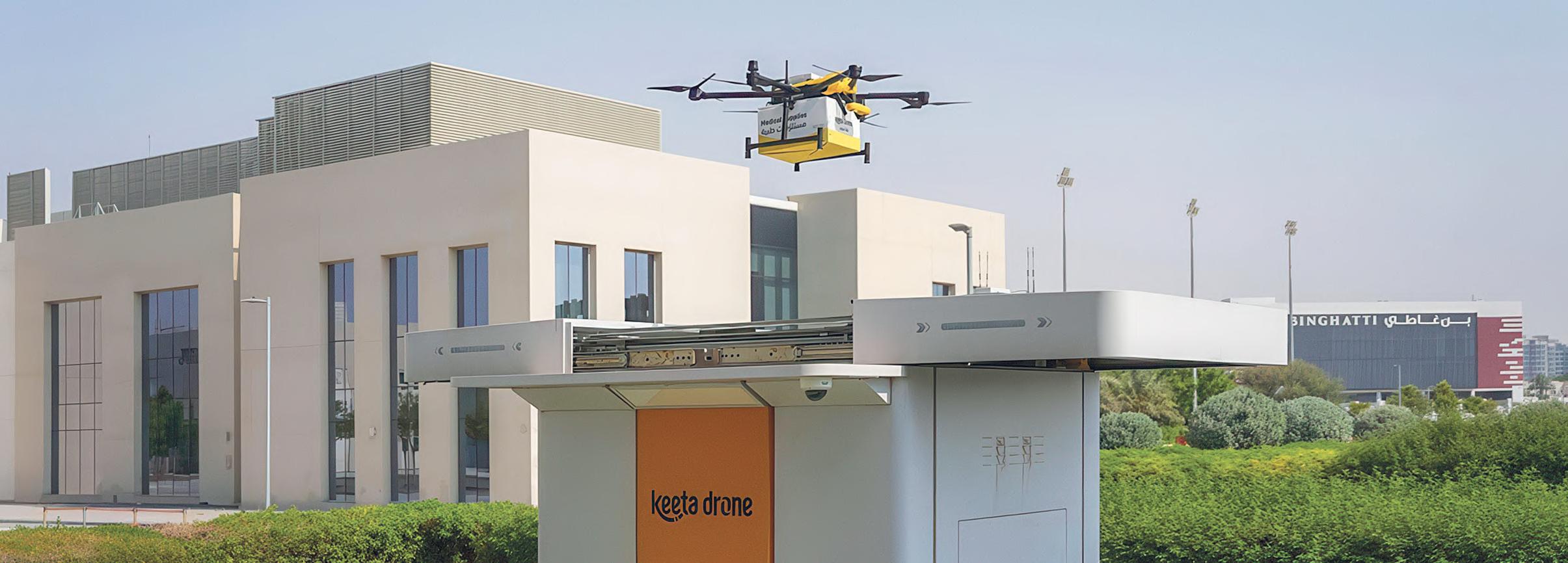
AIR DELIVERIES
Keeta Drone has been operating commercially in Dubai since December 2024, when it became the first operator to secure a Beyond Visual Line of Sight (BVLOS) commercial licence from the Dubai Civil Aviation Authority.
readiness and operational ecosystem required to support autonomous air delivery integration, serving a growing resident population of approximately 20,000. At this stage, the number of drones allocated to Sobha Hartland has not been publicly confirmed. This will likely be determined as part of the phased implementation plan, in coordination with Keeta Drone and within government-approved frameworks. The priority is to ensure the service is introduced responsibly, with safety, compliance, resident experience and operational readiness guiding the rollout.
Sobha and Keeta Drone have expressed intensions to rollout this service across communities – will new community masterplans and building designs be adapted to allow for drone deliveries?
FA: Yes, future-ready infrastructure is already a key consideration in how we approach master planning, and drone-enabled logistics will be assessed as part of that broader smart community framework. At Sobha Realty, new masterplans and building
designs are not developed only for current residential needs, but with the flexibility to accommodate future technologies as they evolve. This includes planning for infrastructure that can support smarter mobility, logistics, service access, safety requirements, and community operations over the long term.
Our Backward Integration model gives us a clear advantage in this regard. Because design, engineering, construction, and delivery sit within one integrated ecosystem, we can evaluate how emerging technologies such as autonomous air delivery can be embedded thoughtfully into the community fabric, rather than retrofitted at a later stage.
Across developments, the objective is to create adaptable, future-ready communities aligned with the UAE’s smart city ambitions. Any drone delivery infrastructure would be introduced progressively, subject to technical feasibility, resident value, and government-approved safety frameworks.
As cities become denser and resident expectations evolve, last-mile delivery is becoming an important part of how communities function day-to-day.
Has Keeta Drone already conducted a pilot project around this service in the UAE or will this now be done in Sobha Hartland?
Junwei Yang: We've been operating commercially in Dubai since December 2024, when we became the first operator to secure a Beyond Visual Line of Sight (BVLOS) commercial licence from the Dubai Civil Aviation Authority, the first such certification awarded in the UAE.
Since then, we've run routes across Dubai Silicon Oasis and Nad Al Sheba regions of Dubai. Worldwide, we have completed 900,000+ flights. In Dubai, Sobha Hartland marks the next phase, where we are for the first time embedding this proven capability directly into a private residential community, as Sobha Realty becomes our first Smart Community partner in the UAE.
Will drone pilots/operators be in place to monitor Keeta Drone or is it a completely automated system relying on digital maps and GPS?
JY: The drone delivery service is highly automated with supervision from our highly trained and experienced remote pilots. Flights run automatically along pre-approved routes using Keeta Drone's proprietary intelligent dispatch system.
Keeta Drone's DaaS platform connects merchants and users through fast, secure, and intelligent drone
delivery. Powered by TBOS, Trajectory Based Operating System - which is a real-time drone scheduling system equipped with exceptional handling capabilities, it facilitates decentralised and high-density drone scheduling management, all of this while trained remote pilots monitor operations in real time in line with DCAA requirements.
How will this service actually operate within Sobha Hartland and elsewhere? Will Keeta Drones travel as the crow flies or will there be defined airways within the community?
JY: Keeta Drone designs the aerial routes and conducts the technical and safety assessments for each area, which are submitted for regulatory approval before any service goes live. Within Sobha Hartland, deliveries will follow these pre-planned corridors between approved points, which helps keep the system safe, predictable, and easy to integrate with the community and the users.
ROLLING OUT THE FUTURE
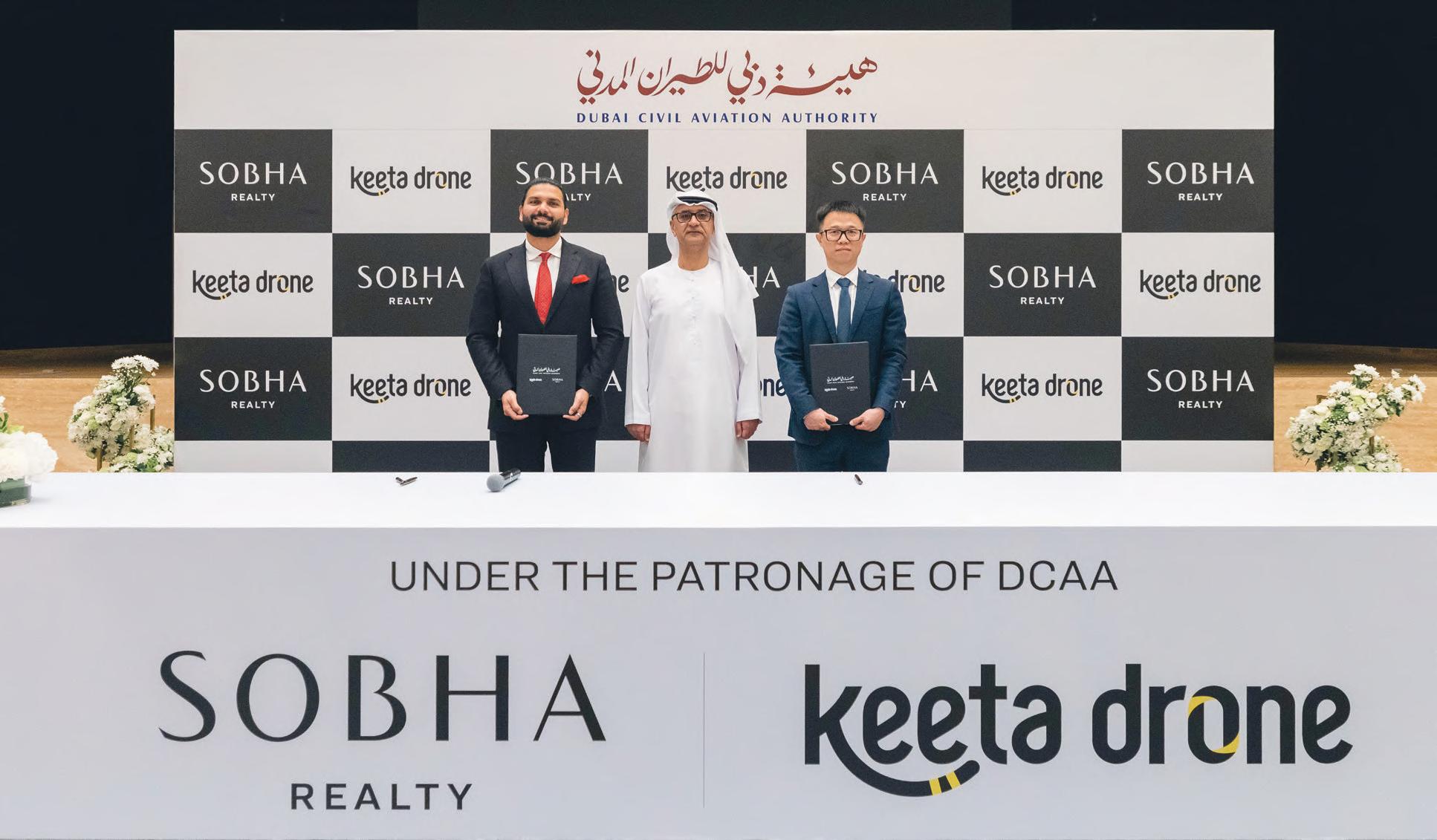
(Left-to-right) Francis Alfred, Managing Director, Sobha Realty, His Excellency Mohammed Abdulla Lengawi, Director General, Dubai Civil Aviation Authority and Dr. Mao, President, Keeta Drone.
Stability as strategy
Source of Fate’s Dr. Majid Jack Hsiung on why investors continue to choose UAE real estate


In an era where global capital is becoming increasingly cautious, investors are prioritising markets that offer predictability as much as profitability. Against this backdrop, the United Arab Emirates has emerged not simply as a fast-growing real estate market, but as one of the world’s most dependable destinations for long-term property investment.
The UAE property market has repeatedly demonstrated its capacity to withstand disruption, stabilise quickly, and regain momentum. Whether navigating regional uncertainty or responding to environmental challenges, the country’s real estate sector continues to show that its strength lies in deeply embedded structural fundamentals.
A beacon of stability in a volatile region
Periods of geopolitical tension in the broader region have consistently redirected global capital toward jurisdictions known for stability and sound governance. And the UAE has emerged as a clear beneficiary of this trend.
The country's political stability, regulatory transparency, and a diversified economic base provide investors with a level of predictability that is rarely seen in global markets. For real estate investors, predictability is often as valuable as financial return. Long-term property investments rely on confidence in legal frameworks, clarity in regulations, and consistency in governance. In these areas, the UAE continues to stand apart from many competing markets.
Resilience in the face of environmental disruption
The historic flooding that affected Dubai in April 2024 posed a temporary operational challenge for the city. However, what stood out was the speed and efficiency of the response. Infrastructure recovery was swift, authorities communicated proactively, and mitigation measures were implemented rapidly.
The UAE’s real estate resilience is the product of deliberate, long-term planning rather than market momentum alone.

Most importantly, the property market remained stable, with transaction activity continuing and investor confidence largely intact. The episode ultimately reinforced an important point: resilience is defined not by the absence of disruption, but by the ability to respond and recover quickly.
Built on structural, long-term foundations
The UAE’s real estate resilience is the product of deliberate, long-term planning rather than market momentum alone. Over the past decade, regulatory reforms have significantly strengthened transparency and investor protection. Escrow regulations and a mature mortgage market have all contributed to a more institutionalised property sector.
At the same time, long-term residency initiatives such as the Golden Visa have reshaped the profile of property buyers. Notably, demand is driven by end-users and long-term residents rather than shortterm speculative investors. This shift has created a more stable demand base and strengthened market fundamentals.
Dubai’s transformation into a global hub for finance, technology, logistics, and advanced industries further reinforces these dynamics. Economic diversification continues to generate organic housing demand from professionals, entrepreneurs, and international families relocating to the emirate in search of better opportunities.
Global capital follows certainty
In times of uncertainty, capital typically gravitates toward 3-core attributes: security, liquidity, and long-term return potential. The UAE offers a rare combination of all 3 elements.
The country’s political neutrality and reputation for safety position it as a stable anchor within a complex geopolitical landscape. Moreover, its tax-efficient environment continues to attract entrepreneurs, multinational executives, and family offices from across the world.
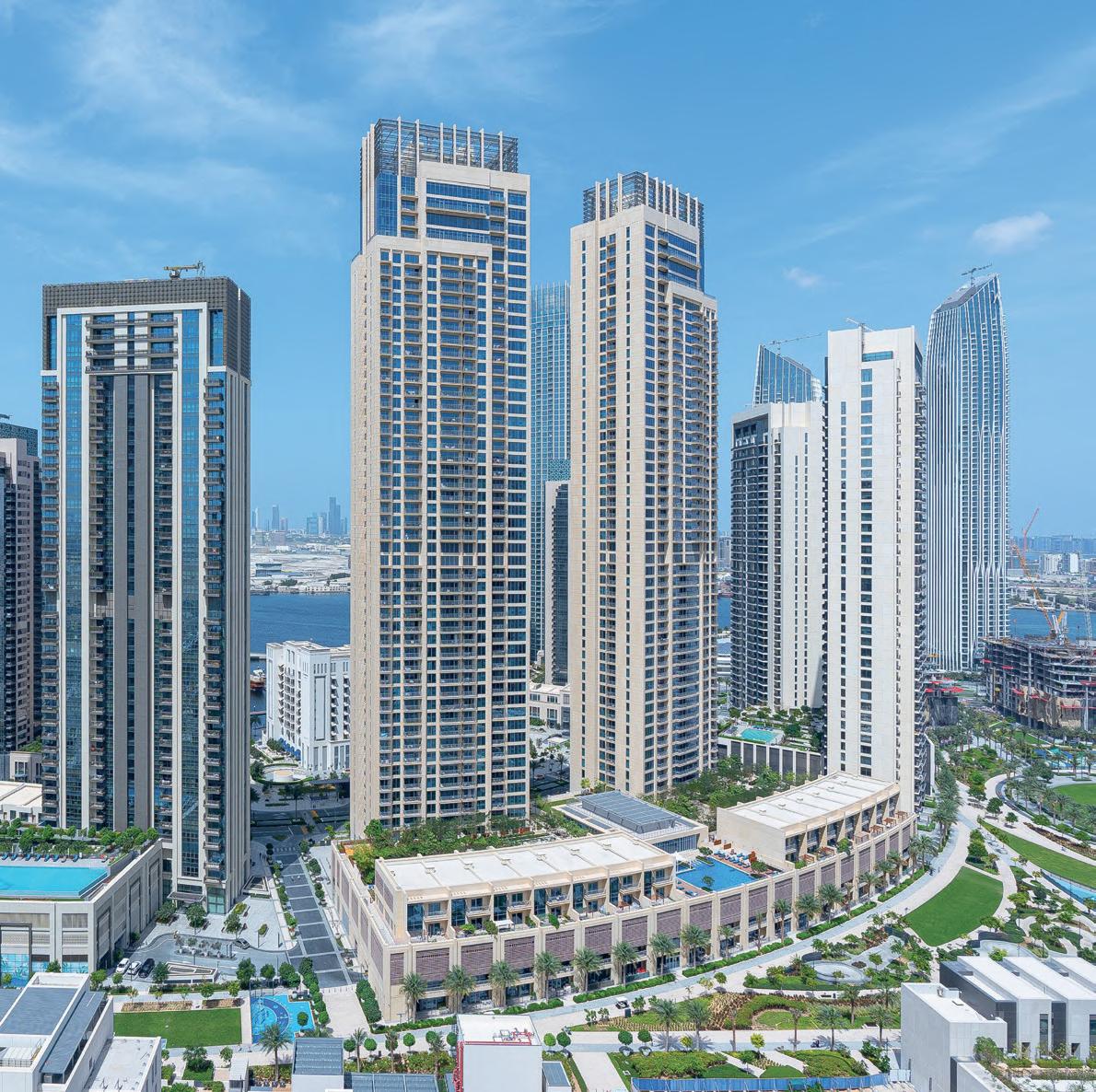
Yet another important aspect is the liquidity of the property market.
A diverse international buyer base, spanning Europe, Asia, Africa, and the Commonwealth of Independent States (CIS) region, ensures a steady flow of capital and active transaction volumes.
In contrast, many mature property markets struggle due to slow planning processes, affordability pressures, or regulatory uncertainty. The UAE, by comparison, combines flexibility with regulatory oversight, allowing it to adapt quickly while maintaining investor confidence.
Financial fundamentals are only part of the story. The UAE’s lifestyle offering has become an important driver of real estate demand. World-class healthcare, highquality education, advanced infrastructure, and strong security standards have made the country an attractive destination for long-term relocation. Unlike traditional
AN ATTRACTIVE DESTINATION
World-class healthcare, high-quality education, advanced infrastructure, and strong security standards have made the country an attractive destination for long-term relocation says Dr. Majid.
safe-haven markets that primarily offer capital preservation, the UAE combines asset security with lifestyle enhancement.
This dual appeal transforms property demand into a broader demographic narrative, one that is shaped by migration, business expansion, and the global relocation of wealth.
A market that continually reinvents itself
One of the defining strengths of the UAE real estate sector is its ability to evolve. Regulatory frameworks continue to improve, digital platforms have simplified property transactions, and sustainability is becoming increasingly integrated into development strategies. Furthermore, infrastructure planning is also becoming smarter and more forward-looking.
Each period of regional or global stress ultimately points to the same conclusion that when fundamentals are strong, demand returns. Investors recognise that while short-term fluctuations are inevitable, the core drivers of the UAE market, i.e., economic diversification, population growth, regulatory clarity, and infrastructure investment remain firmly in place.
A dependable anchor in an uncertain world
Global volatility is unlikely to fade anytime soon. However, markets built on strong governance, economic diversity, and strategic long-term planning are best positioned to attract capital.
The UAE’s real estate sector reflects the country’s broader national vision to remain stable, adaptive, and forward-looking. Its resilience is not a temporary response but a structural advantage. For international investors seeking both stability and growth potential, the UAE is no longer viewed as a cyclical opportunity. Instead, it is being seen as a dependable anchor in an unpredictable world.
Dr. Majid Jack Hsiung is General Manager at Source of Fate.
Turn growth challenges into competitive advantages.
Wherever your projects take you, Trimble scales with your ambition. Whether it’s supporting new materials, handling local compliance or growing from single seats to enterprise deployments, we’ll help you deliver with confidence.
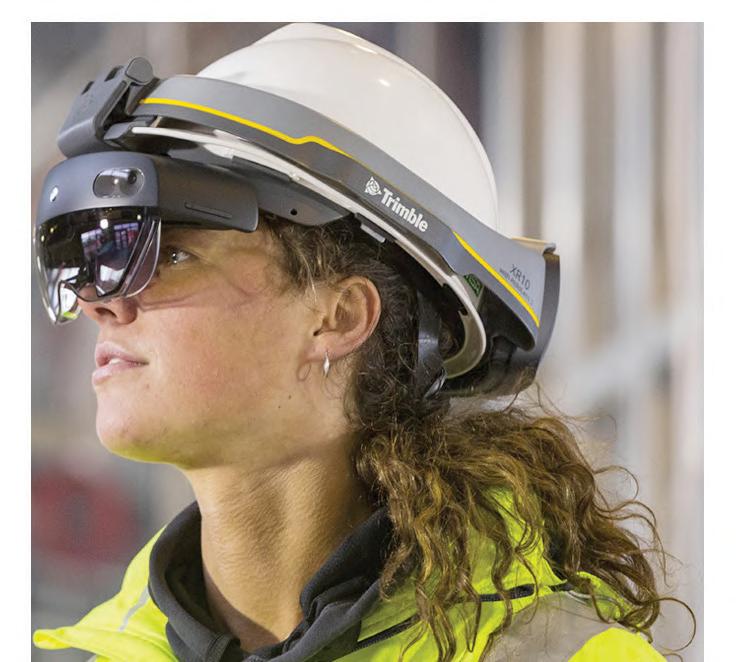
REWORK CALCULATOR
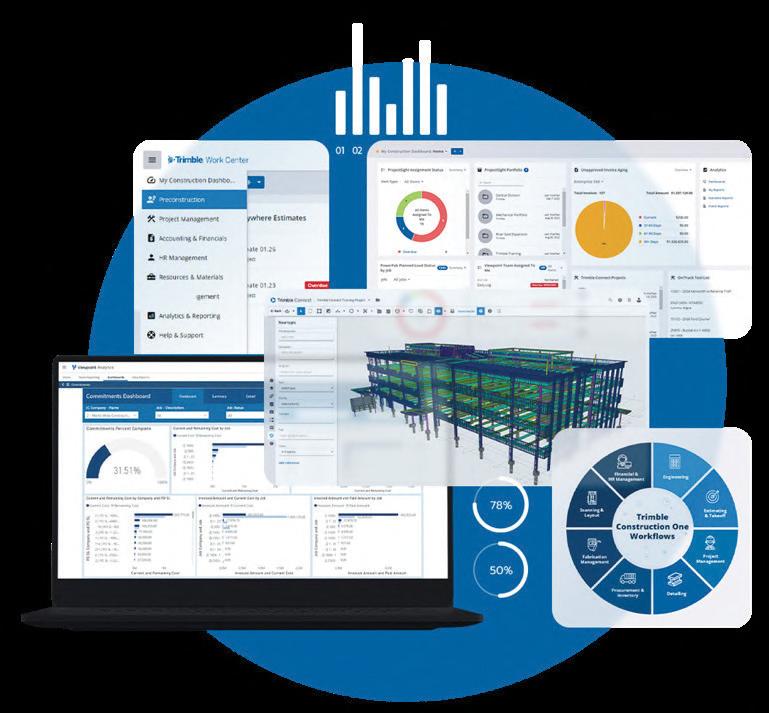
This free access tool is designed to help structural and MEP professionals visualise the financial impact of rework in a project.
By inputting a few key details and using data from the Construction Industry Institute, you can see how small oversights can escalate as the project progresses from design to construction.
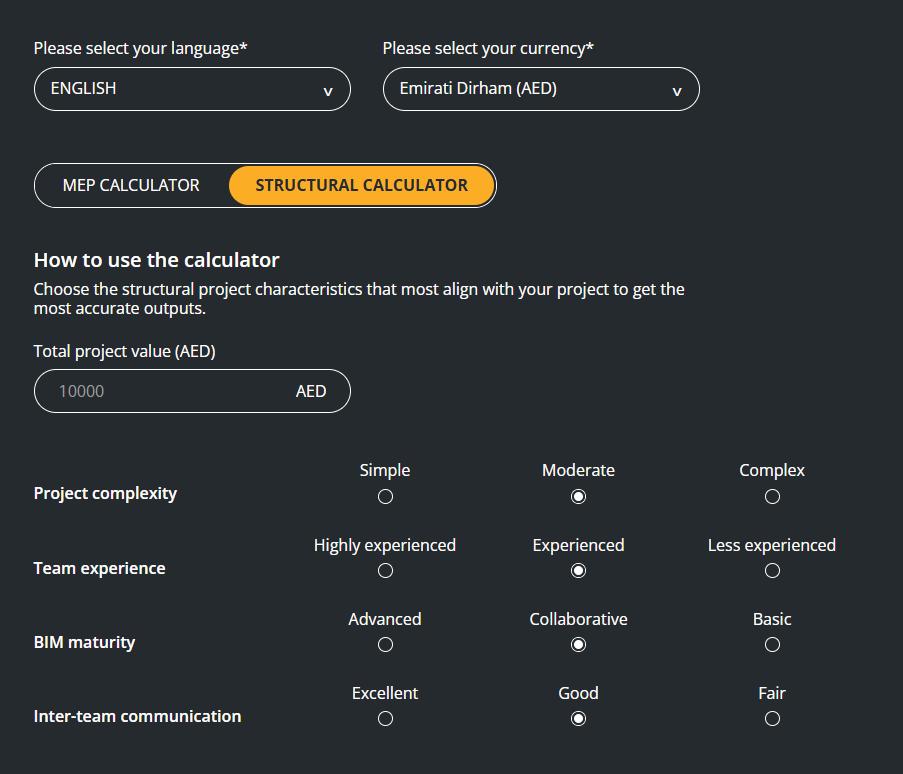
Your feasibility study is lying to you
A
project’s feasibility study might be lying because the method used to generate it assumes a stability
that today's market does not offer writes Heriot-Watt University Dubai’s Matt Myers
Picture the meeting most developers know well: the feasibility study is on the table, the base-case IRR is 18%, the committee asks how confident you are in the numbers, and you point to the conservative assumptions. The project gets the green light. 18-months later, construction costs have run, the launch has slipped, and the project is fighting to make 11%. The assumptions were not reckless. They were single numbers in a market that no longer behaves like one.
The problem with one number
Every feasibility study on every developer's desk in the region produces the same kind of output. A single net present value. Maybe an IRR from the same cash flows, maybe 2 or 3 sensitivity variants alongside it. None of those numbers has a probability attached. Nobody around the table knows whether the
IRR on the page has a 60% or a 20% chance of being achieved. Stable markets forgive that gap. The Middle East market in 2026 does not.
Direct construction costs have moved unevenly across recent regional projects, with material and finish pricing spanning wider ranges than the 2021-2023 surge required. Sale prices are running unevenly across submarkets, with pressure now downward across much of the mid-market, and the depth of the softening genuinely unknown.
Absorption time has stretched: the question of whether to hold for the asking price over a longer sales programme or discount to clear faster is on every developer's desk this year. The problem is not that any one of these is hard to forecast. It is that several are uncertain at the same time, and a single-number feasibility hides exactly the thing the committee needs to see.


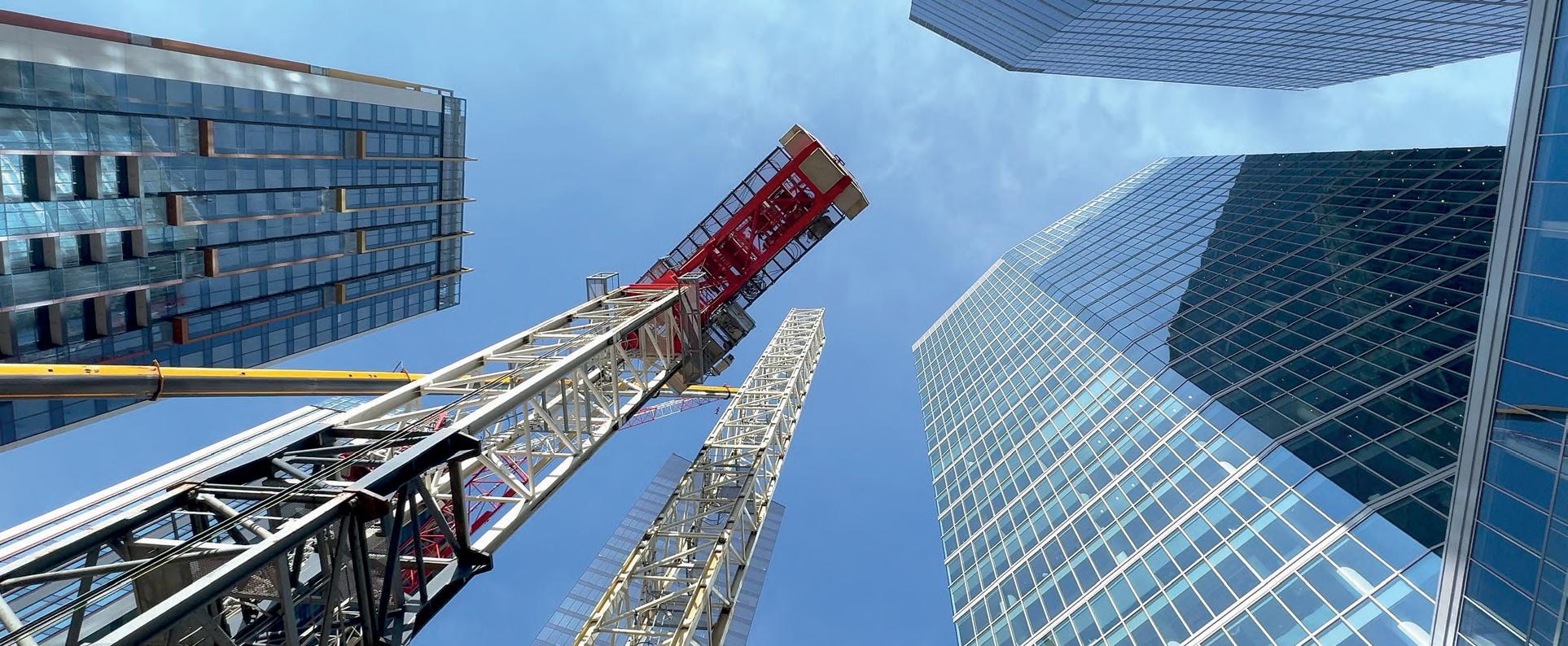
What the simulation actually shows Monte Carlo simulation answers exactly the question current methods cannot: at what probability does this project hit its hurdle, and how bad does the realistic downside get when several inputs land badly at once.
Most developers met the technique at university, in a project management or finance module, where it required specialist software and advanced statistics. That memory is the reason the technique has stayed out of regional feasibility practice. It is also no longer accurate.
Native Excel has handled bounded Monte Carlo simulations since the BETA. INV function was introduced, and the LET function makes the formulas readable enough to audit line by line. No add-ins, no macros, no Crystal Ball or @RISK licences.
The Claude add-in for Excel now removes even the formula-writing step: the analyst describes the model in plain language and the structure is built for them. The technique that scared a generation of developers out of using it is, in 2026, the work of an afternoon for an analyst already comfortable with the firm's feasibility model.
KEY RESIDENTIAL PROJECT INPUTS
Two key inputs for a typical Dubai mid-market residential project, shown not as single numbers but as ranges with shapes. Sale-out price per sqft ranges from AED 1,800 to 2,400, most likely landing around AED 2,280, with a long downside tail capturing the unknown depth of any softening. Direct construction costs range from AED 1,150 to 1,650, most likely around AED 1,250, with a long tail to capture the unknown depth of any overruns. At the most likely values, hard cost runs at 55% of revenue, recognisable mid-market.
SALE-OUT PRICE PER SQUARE FOOT (AED)
DIRECT CONSTRUCTION COST PER SQUARE FOOT (AED)
The mechanics are simple. Each uncertain input is treated not as a single number but as a range with a shape. The shape captures the analyst's market judgement: where the value is most likely to land, and how the probability tapers from there. The graph shows 2-inputs for a typical Dubai midmarket residential project. The sale-out price has a steep upper end and a long tail: the analyst is confident prices are not pushing higher, but unsure how far the softening extends. Construction cost runs the other way, with the steep side at the lower end and the tail running up: confidence on direction, uncertainty on the depth of the overruns.
One observation from running these models is worth flagging, because it changes how a developer should think about pessimistic and optimistic scenarios. The worst-case scenario every developer imagines, where every variable lands adversely at the same time, rarely occurs in the simulation. Its probability is typically below 1%. The same is true of the best case.
The realistic downside the simulation surfaces is not the catastrophe the developer was worrying about; it is the moderate disappointment they were not modelling, which is also far more likely to occur. This is the gap between current feasibility practice and what the simulation reveals.
The simulation runs thousands of iterations, each drawing values from these distributions and calculating the project's NPV under the new combination of inputs. The output is a distribution of results. From it come the answers a developer can act on. The probability of hitting the target IRR.
The realistic 1-in-20 downside that contingency should actually be sized against. A ranked list of which inputs are doing most of the work, which is often not the inputs the team is arguing about: cost might be the variable in dispute, while the simulation shows that sale price or absorption time is doing more of the damage.
Direct construction costs have moved unevenly across recent regional projects, with material and finish pricing spanning wider ranges than the 2021-2023 surge required.

What it changes on the desk
Take the question every developer is facing this year. Hold firm at the asking price and accept a longer sales programme, or discount today and target a faster clearance. A singlepoint feasibility analysis cannot honestly weigh these against each other; each strategy yields a single NPV figure, with no information about how likely either is to play out.
A simulation runs both, drawing from price and absorption time distributions, and produces two NPV distributions side-by-side. The discount may show a higher mean NPV but a fatter downside tail if absorption fails to accelerate. The hold may show a lower mean but a tighter distribution. The developer who picks one without seeing both has made a decision they did not realise they were making.
Two honest caveats. Input distributions need real evidence behind them, not invented optimism: the shapes in the graph only mean something if the ranges and the modes reflect the analyst's actual market read.
Correlations between inputs matter too, because direct construction costs and delivery schedules move together, and so do sale prices and absorption times. A well-built simulation captures these linkages. A badly built one produces a more sophisticated kind of wrong answer.
Your feasibility study is not lying because the analyst is dishonest. It is lying because the method assumes a stability that today's market does not offer. The tool exists, the software is already on every desk, and the technique most developers gave up on 20-years ago is no longer the technique that they actually remember.
Matt Myers is Assistant Professor - Real Estate at Heriot-Watt University Dubai.
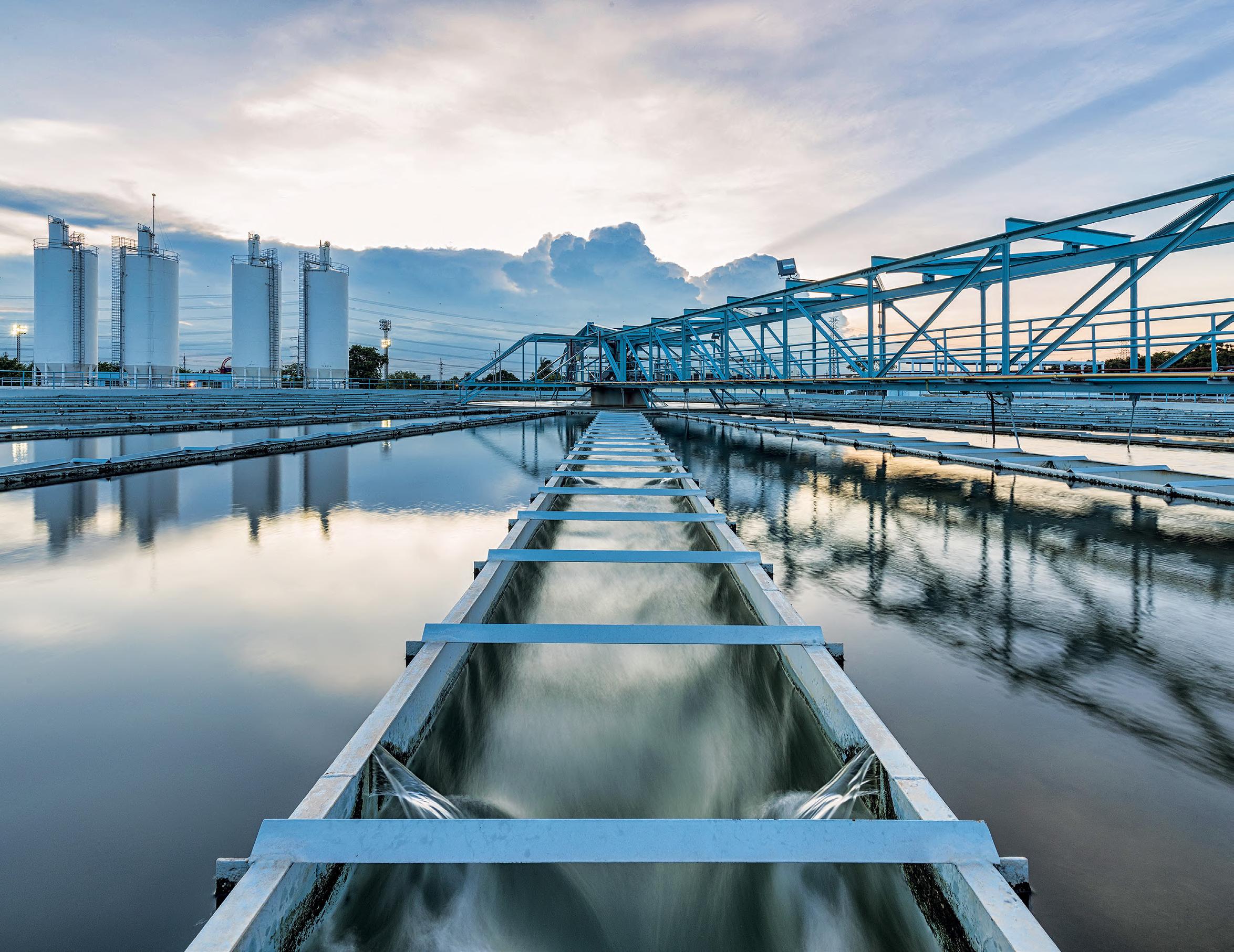
Innovation as a bridge
Technology is an extraordinary tool, but it only creates value when it is properly integrated into operations, when it responds to concrete needs, and when people can use it to make better decisions writes ACCIONA’s
Ana Jimenez Banzo

For years, talking about innovation in the water sector meant talking about the future. Today, however, innovation is no longer an aspiration — it has become an operational necessity. Urban growth, water stress, new regulatory requirements, rising energy costs, and increasing pressure on infrastructure are forcing the sector to evolve at an unprecedented pace. Yet amid this technological acceleration, it is worth asking an uncomfortable question: are we innovating to solve real problems, or simply to incorporate more technology?
The answer will define the next decade.
The water sector has historically been cautious - and for a good reason. We manage critical infrastructure where reliability, public health, and service continuity are non-negotiable. But the current landscape demands that this caution be combined with a far greater capacity for adaptation. It is no longer enough to operate well; we must operate better - with lower energy consumption, fewer emissions, greater resilience, and stronger predictive capabilities.
In this context, innovation cannot be viewed as an isolated department or a technological showcase. It must act as a bridge between the real needs of operations and the opportunities offered by technologies such as artificial intelligence (AI), advanced digitalisation, automation, and nextgeneration treatment solutions.
Because the real challenge is not developing technology. The real challenge is ensuring that innovation provides real value in full-scale facilities.
This is where operations and maintenance become strategically important. For many years, innovation in water was driven mainly by design and engineering. Today, it is increasingly clear that the solutions truly transforming the sector are those capable of integrating
Technology is an extraordinary tool, but it only creates value when it is properly integrated into operations.

seamlessly into day-to-day operations: technologies that help reduce energy consumption, anticipate failures, optimise cleaning processes, improve water quality, or increase operational flexibility in response to changes in demand or water conditions.
Desalination is a good example of this evolution. For decades, the primary objective was to reduce the energy consumption of reverse osmosis. That challenge remains, but it is now accompanied by others of equal importance: minimising membrane fouling, optimising chemical consumption, valorising brine streams, and incorporating AI-based predictive models capable of adjusting operational parameters in real time. Innovation is no longer measured solely by theoretical efficiency, but by the ability to deliver stable and resilient operations.
The same applies to wastewater treatment and reuse. Emerging contaminants and new regulatory requirements are driving the adoption of more advanced treatment technologies and increasingly complex processes. But the challenge does not end with removing a specific compound. The real question is how to do so while maintaining the economic and energy viability of treatment facilities.
For this reason, the future of water will inevitably depend on a more applied form of innovation — one that is deeply connected to operational reality.
In regions such as the Middle East, where water scarcity has accelerated the adoption of advanced solutions, this approach is particularly evident. The digitalisation of critical infrastructure, predictive maintenance systems, digital twins, and distributed sensing are no longer experimental concepts; they are operational tools that improve
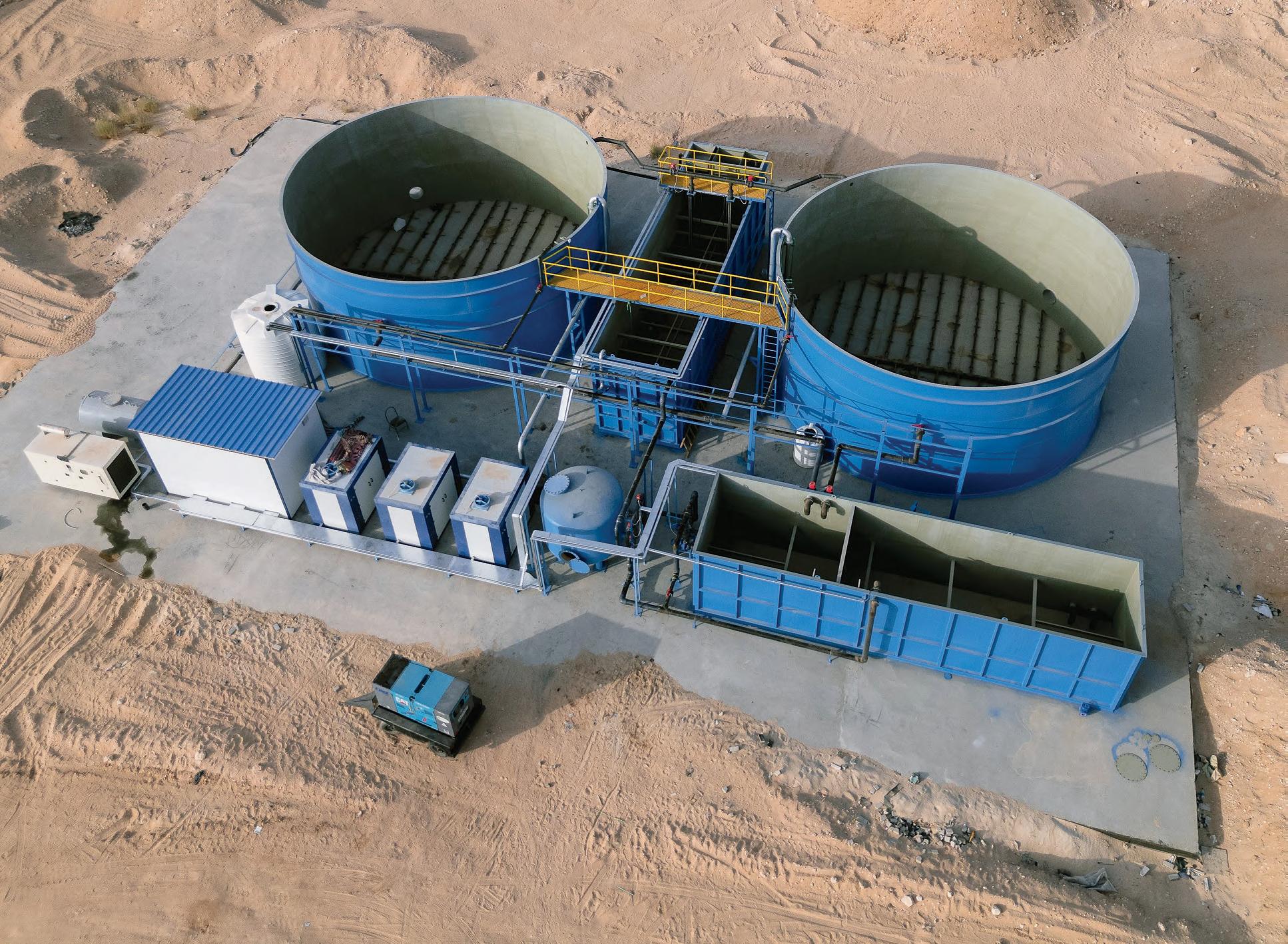
plant resilience and optimise resources in highly demanding environments.
At the same time, there is a growing risk: assuming that technology alone will solve the water sector’s challenges. It will not.
Technology is an extraordinary tool, but it only creates value when it is properly integrated into operations, when it responds to concrete needs, and when people are able to use it to make better decisions. Artificial intelligence, for example, is of limited value without a deep understanding of the physical and chemical processes governing a plant. The digital transformation of water will not be purely technological; it will also be cultural and operational.
That is why the most significant shift in the coming years will likely not be technical
ADVANCED TECHNOLOGY
Emerging contaminants and new regulatory requirements are driving the adoption of more advanced treatment technologies and increasingly complex processes.
alone, but strategic. We are moving from models where innovation and operations worked in parallel to models where both disciplines evolve in full integration.
Useful innovation will be the kind that reduces the distance between the laboratory and the plant, between data and decision-making, between technological development and realworld impact. And in a world facing increasing water stress, that capability will define not only which companies are more competitive, but also which water systems become more sustainable and resilient for society as a whole.
Ana Jimenez Banzo is Innovation Manager of ACCIONA’s Water Business.
Every Cheer, Planned & Delivered
Every element counts. Seating, Structure, Systems. RIB Candy helps you plan and coordinate with clarity at every stage of the construction project.The result is a stadium delivered exactly as intended, ready for the first kick-off.
Build with certainty. Build with Candy.

SCAN FOR MORE


Home is where the nation grows
For families raising children, the quality of that environment increasingly includes concern for electromagnetic pollution writes EMFIS’ Federico Marangoni
When Sheikh Mohamed bin Zayed Al Nahyan declared 2026 the Year of the Family, he did not speak in generalities. He declared that the growth of Emirati families lies at the heart of the country's identity, continuity, and national security, and that it is a shared responsibility that belongs to every sector, every institution, and every individual who calls the UAE home. Under the tagline ‘Growing in Unity’, that call extends to healthcare, education, housing, the economy, and the built environment where family life actually happens.
For families raising children, the quality of that environment increasingly includes concern for electromagnetic pollution, an invisible layer of indoor pollution present in homes, schools, and places where children grow, sleep, and learn.
The UAE has built one of the most connected, most forward-looking societies on earth - smart cities, worldclass infrastructure, and a commitment to quality of life that makes it one of the most sought-after places in the
world to raise a family. That connectivity is not incidental to family life here. It is woven into it. It is in the hospitals where they are born, the homes where they sleep, the nurseries where they take their first steps into the world, and the schools where they learn.
Visionary leadership
This year, the UAE Federal DecreeLaw on child digital safety came into force - restricting harmful content, introducing age verification, and shielding children from threats they cannot see. It was visionary leadership, and I applaud it without reservation.
But I want to extend its logic. The UAE has now acted to protect what children see on their screens. The next question is what those screens, and the invisible infrastructure powering them, are doing to the physical spaces where entire communities spend their days. Because this is not only a conversation about children. It is a conversation about the teacher in that same classroom for 8-hours a day, the nurse on the maternity ward, the parent working
from home, and the family sleeping under a roof threaded with electrical wiring that runs whether devices are on or off.
Every school, every hospital, every home, and every workplace in the UAE has become a dense node in an electromagnetic network - 5G penetrating from outside, Wi-Fi broadcasting through every wall, smart systems running day and night. The entire fabric of daily life is embedded in this invisible landscape, and almost no one is measuring it.
EM NETWORKS EVERYWHERE
Every school, every hospital, every home, and every workplace in the UAE has become a dense node in an electromagnetic network says Marangoni.
Limiting exposure
Regulatory limits for electromagnetic exposure exist here, as they do across the world - and that is a good thing. But a baseline limit is not the same as the protection people reasonably expect in the places where they spend more than 8-hours a day and where their bodies are biologically set to recover: the classroom, the hospital ward, the office, and above all the bedroom. In those spaces, a higher standard is not a luxury. It is


foundational hygiene, and it matters most for children whose developing bodies are the most vulnerable to sustained exposure.
Europe has already begun to act on this distinction. The World Health Organisation classifies radiofrequency electromagnetic fields as possibly carcinogenic. France has banned Wi-Fi in daycare centres making Paris one of the most protected cities in the world, and Brussels is following in these footsteps. Switzerland has written precautionary EMF limits for schools, hospitals, and kindergartens into national law. The European Parliament has concluded that commonly used radiofrequency radiation is probably carcinogenic and may affect fertility and fetal development.
These are not fringe positions. They are the considered responses of some of the world's most rigorous public health systems, and they point in one direction: the longer a person stays, and the more their body is meant to recover there, the higher the protection that space deserves.
The precautionary principle the UAE has already applied to air quality, food safety, road safety, and digital child protection applies here too, and the logic is identical: where the evidence points toward harm, you do not wait for certainty before acting. This is the right moment to extend that same seriousness to the electromagnetic environment.
Designing with care
The answer is not to pull back from the connectivity that defines modern life in the UAE. It is to design the spaces where family life happens with the same intelligence and care that the UAE brings to everything it builds. The solution is electromagnetic shieldingintegrating protective materials directly
The entire fabric of daily life is embedded in this invisible landscape, and almost no one is measuring it.
into the structure of buildings, from the walls and floors to the electrical systems running behind them, so that the invisible environment inside our homes, schools, and hospitals actively supports the health of the people within them.
When I founded EMFIS, this was the problem I set out to solve: to give builders, developers, and institutions a credible, certified, and measurable way to protect the people inside their buildings from unnecessary electromagnetic exposure. That work is recognised by Switzerland's national standardisation body, a member of ISO, and we are ready to build alongside every institution that shares this vision.

Sheikh Mohamed bin Zayed said the family's "growth, stability and effectiveness are a shared responsibility”. That is precisely how we hear it, not as the task of any single ministry, but as a national commitment that belongs to every sector of the country, including the one that builds the physical spaces where family life happens.
The decisions made at design phase today will shape the electromagnetic environment of thousands of families for decades. An EMF audit, protective shielding built into structure, and precautionary standards across schools, hospitals, and homes are not additions to the Year of the Family - they are expressions of it.
The late Sheikh Zayed bin Sultan Al Nahyan taught us that the family is the foundation of every strong society. A strong foundation must be built with care - in every material, every system, and in every invisible dimension of the environment we create for the people we love. Growing in unity means building in unity.
UNITED ARAB EMIRATES
Ellington begins handover of 2-residential projects
Ellington Properties has commenced the handover of Ellington House II in Dubai Hills Estate, alongside Arbor View in Arjan, marking continued delivery across key residential communities. The handover comes at a time when delivery performance plays an increasingly important role in shaping market confidence, the developer said.
Recent market data has highlighted sustained YoY growth in both transaction volumes and values, driven largely by strong off-plan activity and continued investor confidence. At the same time, more than 8,000 new residential units were delivered during Q1 2026, supporting steady
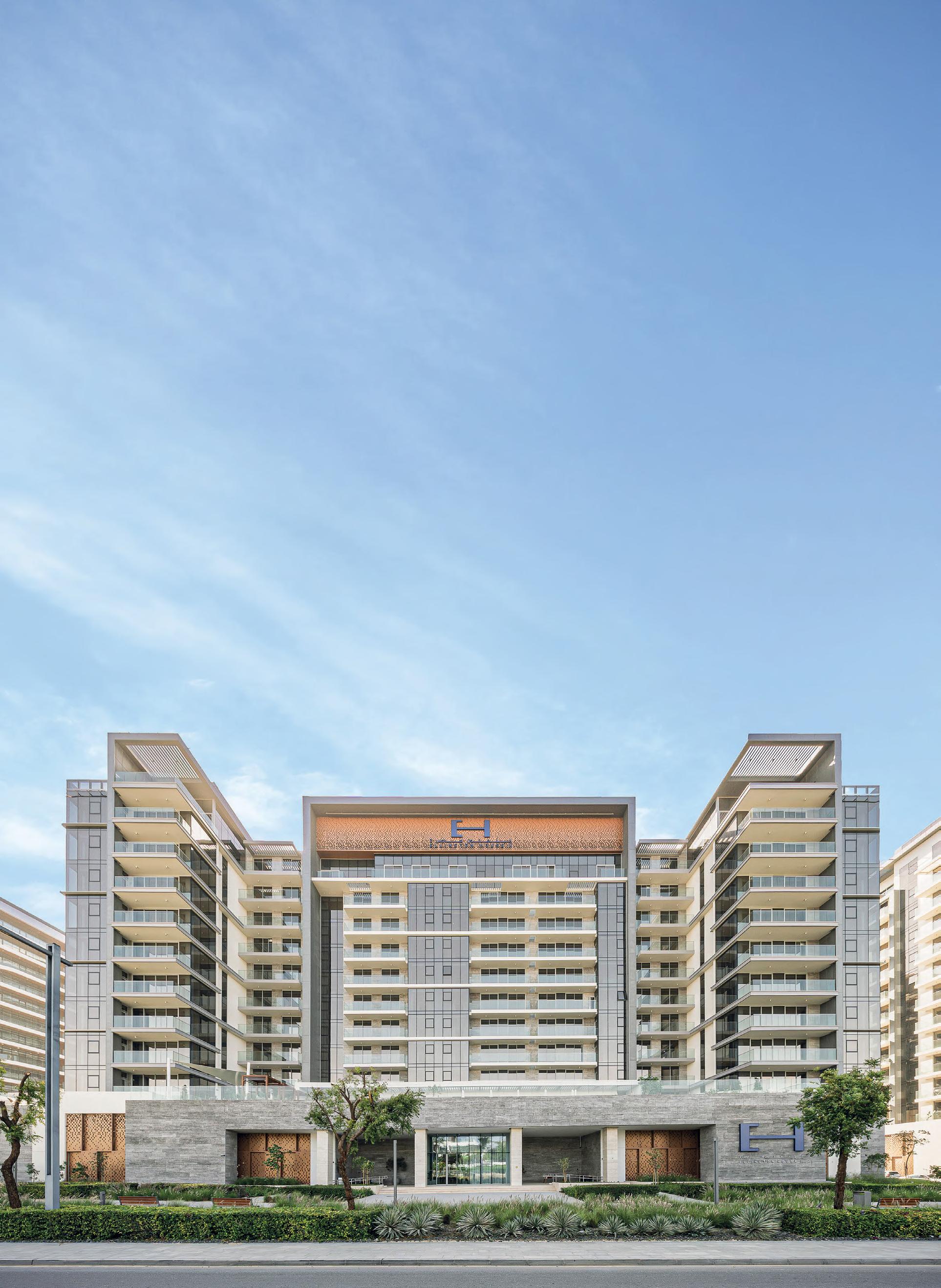
expansion in supply and helping to meet ongoing demand.
The handover of Ellington House II follows the earlier completion of Ellington House I, strengthening Ellington’s presence within Dubai Hills Estate and building on its growing portfolio within the master-planned community.
Ellington House I has already demonstrated strong posthandover performance, with no major snagging observed at handover, reinforcing both build quality and long-term value. Over the past 3 months, the project has recorded rental prices approximately 28% higher than the market average price, it said.
At the same time, Ellington House III and IV continue to progress steadily, reflecting ongoing construction momentum and a disciplined approach to development across multiple phases, it added.
The completion of Arbor View represents Ellington’s first delivered project in Arjan, marking an important step in the company’s expansion into emerging residential locations across Dubai. The development introduces a design-led residential offering within a community that continues to attract endusers seeking well-connected and evolving neighbourhoods, the company said.

MAKING HISTORY BY BUILDING THE FUTURE
The maximum on eight axles
The LTM 1650-8.1
A lifting capacity of 700 tonnes with either a 54 or 80 metre telescopic boom. Global mobility and convenience thanks to Hillstart Aid, ECOmode, ECOdrive, VarioBase and hydraulic VarioBallast. Nothing more is possible on eight axles. www.liebherr.com

Mobile and crawler cranes