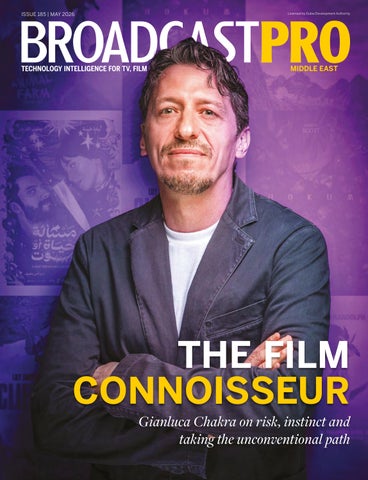

THE FILM CONNOISSEUR
Gianluca Chakra on risk, instinct and taking the unconventional path


GROUP
Managing Director Vijaya Cherian vijaya.cherian@cpipromedia.com
+971 (0) 55 105 3787
EDITORIAL
Editorial Director Vijaya Cherian vijaya.cherian@cpipromedia.com
+971 (0) 55 105 3787
Editorial Contributors
Kalyani Gopinath
Nusrat Ali
Urooj Fatima
Sub Editor Aelred Doyle
ADVERTISING
Group Sales Director Sandip Virk sandip.virk@cpipromedia.com
+971 (0) 50 929 1845 / +44 (0) 7516 993 862
FINANCE
Finance Executive Yonwin D’souza finance@cpipromedia.com
DESIGN & PRODUCTION
Art Director David Fraser design@cpipromedia.com
EVENTS & MARKETING
Events Executive Sarah Nathan marketing@cpipromedia.com
DIGITAL SERVICES
Web Developer Hafiz Muhammad Waqas IT@cpipromedia.com
FOUNDER
Dominic De Sousa (1959-2015)
PARTNER
Maria De Sousa
Published by

WELCOME
When we started this issue, we didn’t quite plan on focusing on cinema, but over the course of the month, our interviews, reports and analysis all pointed towards how cinema and content are shifting across the Arab world, and it’s fascinating.
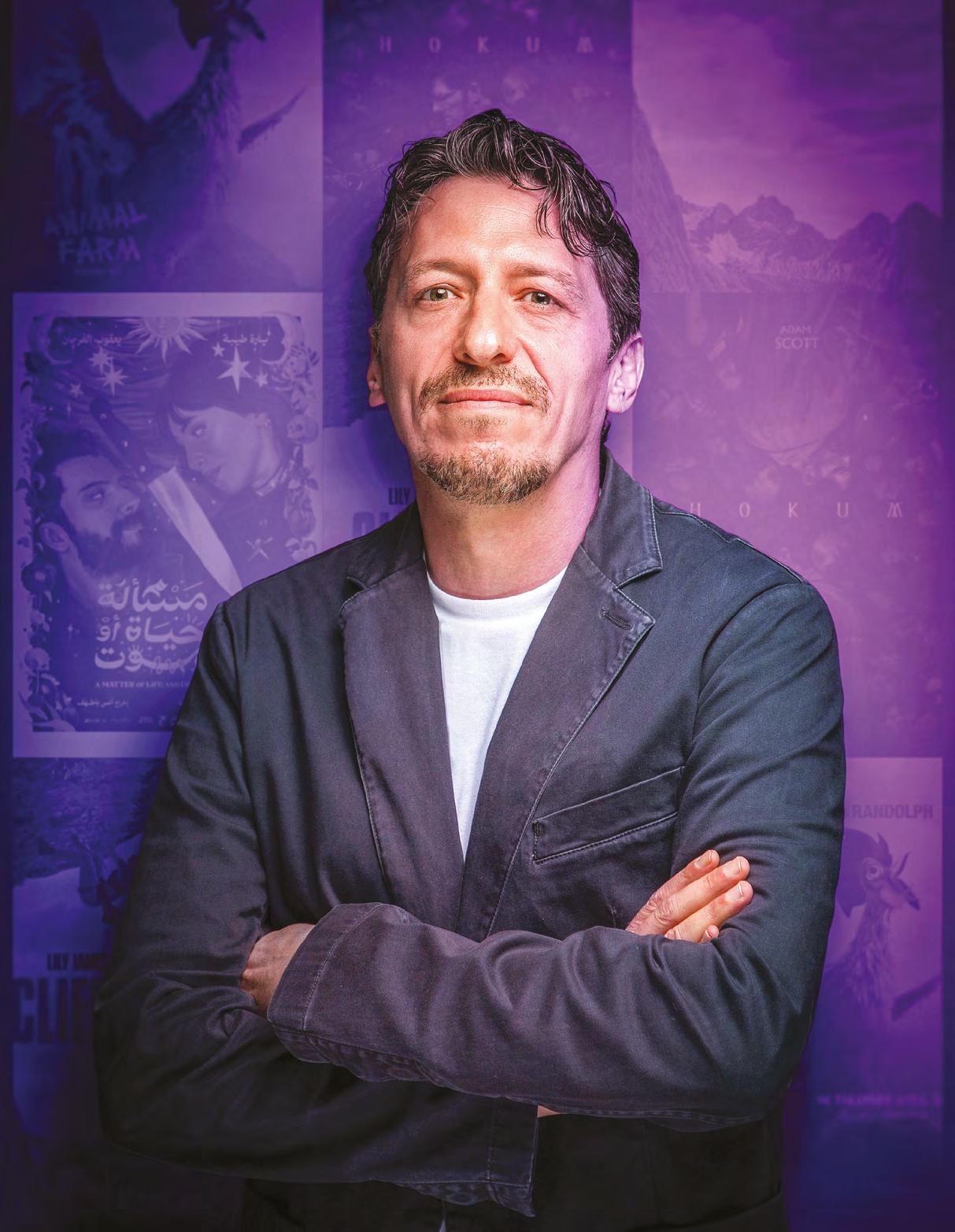
Our cover this month features Gianluca Chakra, CEO of Front Row Filmed Entertainment, one of the region’s leading film production and distribution companies. He’s a familiar name in theatrical circles and has often spoken at our conferences. This is the first time, however, that we had the opportunity for an up close and personal chat with him. What emerged was not just the story behind his company but the mindset it takes to stay the course in the film business. In cinema, passion has to run above everything else. Chakra has gone against the grain repeatedly and built the company on that instinct.
We had an equally interesting conversation with Hiten Umrania of Zee. He is one of those fortunate industry folk who get to review films before anyone else does, and yes, he watches extensively, tracks obsessively, and over the years has built a personal archive of data that offers a rare window into how audiences are shifting in the GCC. Print does not allow us to share it all and a lot of it is under wraps, but what we have included is enough to challenge some long-held assumptions. The numbers tell their own story.
Both men agreed that KSA is shaping the Arabic content narrative in the region. In 2019, English-language films accounted for 84% of collections in KSA. That dropped to 57% in 2025 and stands closer to 53% in early 2026, with Arabic content steadily filling that space. In the UAE, Hollywood still reigns but South Asian films, particularly Malayalam, are steadily gaining ground at the box office.
While cinema takes centre stage this month, we have plenty of other interesting stories as well. Happy reading.

VIJAYA CHERIAN, EDITORIAL DIRECTOR
4
UPDATE NEWS
CABSAT 2026 rescheduled to October; CMA and Animotion MENA announce partnership; IABM rebranded as IAMT; Mr. Cricket UAE launches app; Saudi Film Commission revenues touch $245m; and more
WOMEN IN FOCUS
ENGINEERING CHANGE
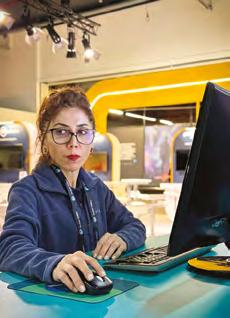
As a Solutions Architect at Grass Valley EMEA, Nuriye Gungor has worked across the entire spectrum of broadcast engineering. Tracing her journey through the industry, she highlights its opportunities and challenges 18

MARKET INSIGHT
COVER STORY MENA CINEMA AT THE HEART OF FRONT ROW
Gianluca Chakra has harnessed the power of regional stories and a deep understanding of audience preferences to build Front Row Filmed Entertainment into a pan-MENA cinema powerhouse
CINEMA
THE SHOW MUST GO ON ...
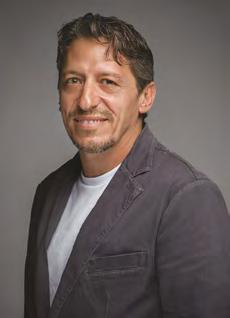
Navigating uncertainty is second nature to Cinema Akil. Through fluid programming, flexible screening hours and a space for the community to come together, GM Rawan Haidar outlines how the arthouse cinema stays resilient

TECH UPDATE SCHOOLING THE FUTURE ENGINEER
As broadcast systems evolve, engineers need new skills. Martyn McKenna examines why training must keep pace
INSIDE GCC CINEMA TRENDS
Zee’s Hiten Umrania gives us the lowdown on theatrical trends and South Asian audience demand in the UAE and KSA
PRODUCT SHOWCASE
NEW
LAUNCHES AT NAB SHOW 2026
Our pick of some of the most interesting product launches from the NAB Show held last month in Las Vegas


GUEST COLUMN LEARNINGS FROM RAMADAN 2026
The 2026 Ramadan season exposed a growing gap between clicks and content quality in MENA streaming, says Nizar Hegazy
CABSAT 2026 rescheduled to October 05/26
CABSAT, MEASA’s largest broadcast show, has been moved to October 5-7, 2026. This shift will enable exhibitors to plan and ensure that products are shipped to Dubai on time. The rest of the details remain the same, with CABSAT reiterating that
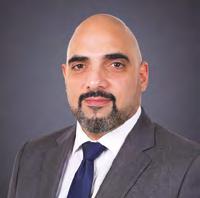
NAKHLE ELHAGE JOINS IMI AS CHIEF TRANSFORMATION OFFICER
UAE-based media group IMI has appointed Nakhle Elhage as Chief Transformation Officer. Elhage is a veteran of the Arab media industry. He was a founding member of MBC Group and played a central role in launching Al Arabiya.
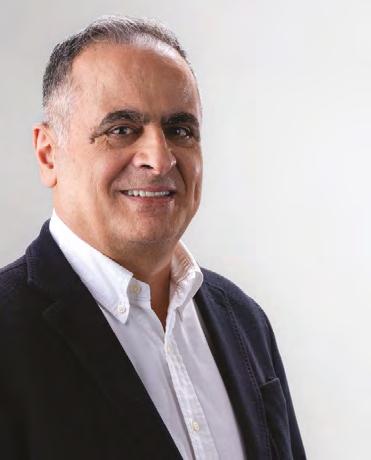
More recently he founded Blinx, a digitalfirst media venture. In his new role, Elhage will oversee the transformation of IMI’s key media platforms, including Sky News Arabia, CNN Business Arabic and Al Ain News. His responsibilities will span editorial direction, content strategy, talent development, production and product
appointment comes as IMI continues to expand its media footprint, drawing attention for its involvement in the Telegraph deal and ongoing efforts to strengthen its portfolio across Arabic- and language media.
Dubai Exhibition Centre at Expo City Dubai will be the show’s new venue from this year. The BroadcastPro Manufacturer Awards,
hosted in association with CABSAT 2026, will take place on October 6 at the Westin Dubai Mina Seyahi Beach Resort & Marina.
CMA AND ANIMOTION MENA PARTNERSHIP TO BOOST AI-DRIVEN STORYTELLING
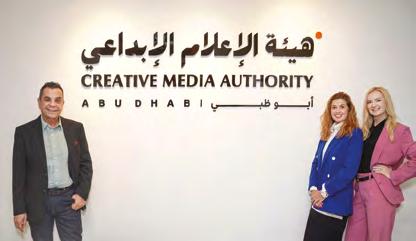
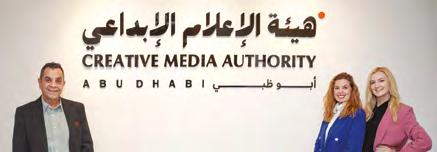
Nabil Abou Samra (l), Senior Head of Strategic Partnerships, CMA, with the Animotion MENA team.
Creative Media Authority (CMA) has signed an MoU with Animotion MENA to establish a collaborative framework focused on AI-enabled animation production, the potential creation of an animation academy and the development of youth-oriented content formats. It also includes plans to integrate AI-driven short-form content alongside initiatives aimed at talent development and broader industry support.
Opportunities for on-screen participation and casting will be integrated through CMA’s existing programmes. CMA will position Animotion MENA as a strategic partner providing access to industry networks, production support mechanisms and incentive programmes, including Abu Dhabi Film Commission’s rebate scheme.
I‘M AN ARTIST


OLA MELZIG
PRODUCTION MANAGER
M&M PRODUCTION MANAGEMENT

I just love the new generation of the Artist user interfaces.
The SmartPanel‘s intuitive workflow and its very visual layout are simply fantastic.
I can customize it in any way I need, which is absolutely crucial for the big live events I typically work on.“
ARTIST INTERCOM
Professional and reliable live communications. Seamless integration of Riedel‘s SmartPanel and Bolero wireless intercom. Easily scaling from 16 to 1024 ports with flexible licensing.


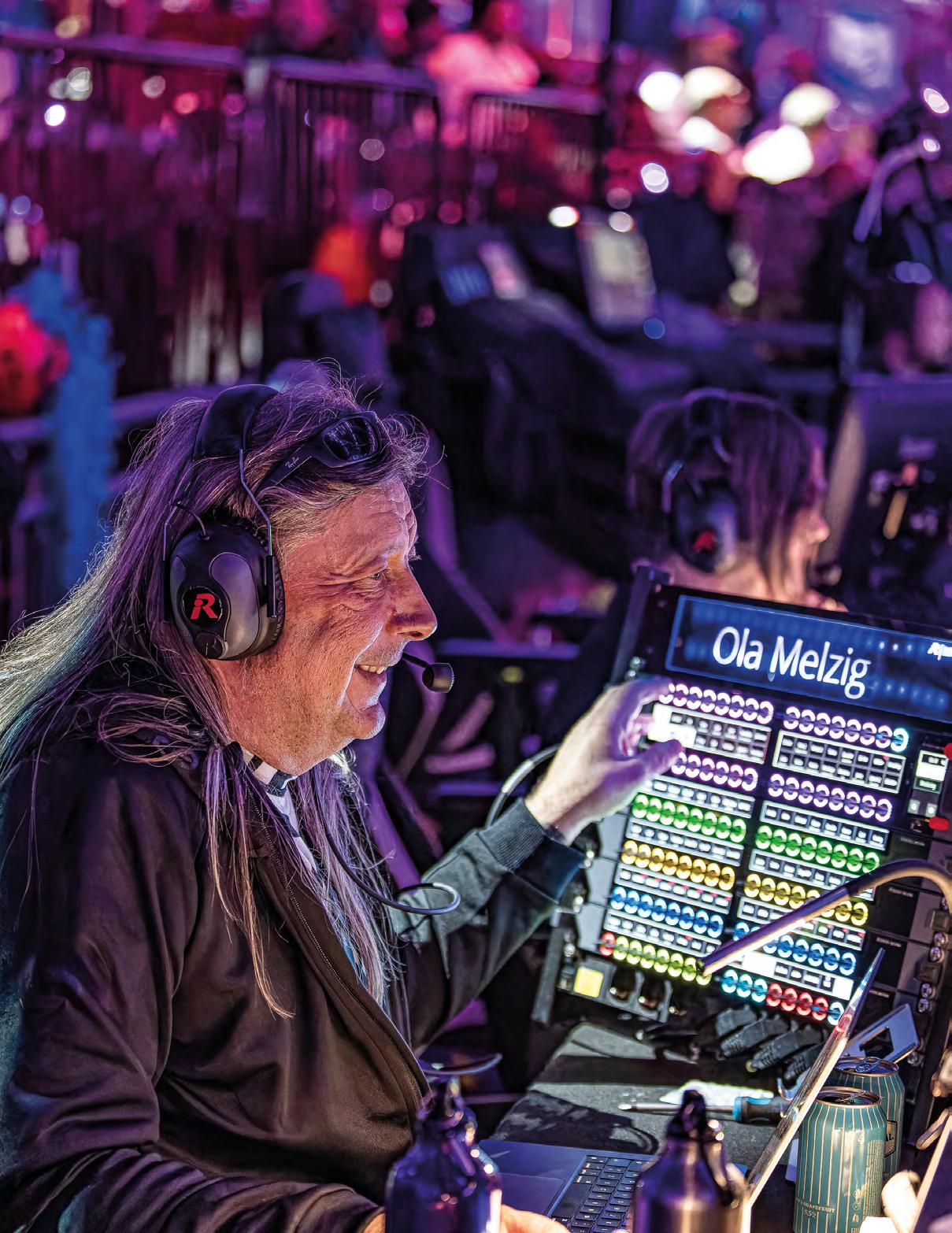
Photo by Ralph Larmann
IABM, now IAMT, unveils AI platform and global alliance
The International Association of MediaTech (IAMT), formerly known as IABM, announced a major transformation of its role in the industry at the 2026 NAB Show. IAMT introduced a new identity alongside an AI-powered intelligence platform and a global collaboration model aimed at reshaping the MediaTech landscape.
MAI (MediaTech Agentic AI), the central element of
IAMT’s new strategy, is an advanced discovery platform developed in collaboration with Alpha Cogs. Integrated into IAMT’s new website, it uses Answer Engine Optimisation while leveraging the organisation’s extensive knowledge base, including research, member insights and business intelligence, to provide continuous, real-time access to industry information. IAMT also introduced a
new Marketplace platform designed to enhance member visibility and enable AI-driven discovery of company profiles, products and innovations. The organisation also launched the IAMT Global Alliance, a collaborative framework that will connect media partners, educational institutions and industry groups to foster dialogue, support talent development and address challenges across the sector.
THOMAS RIEDEL ACQUIRES ARRI TO EXPAND GLOBAL PRODUCTION TECHNOLOGY FOOTPRINT
Thomas Riedel, founder and owner of Riedel Communications and the Riedel Group, has acquired Munichbased manufacturer of premium camera and lighting technology, ARRI. Riedel aims to create a strong strategic alignment between ARRI and its existing operations, while extending its capabilities across the full production chain. ARRI’s established ecosystem of cameras, lighting and systems technology is expected to complement Riedel’s portfolio while unlocking new market opportunities. ARRI and the Riedel Group plan to develop integrated solutions that enhance creative and technical possibilities for customers, while accelerating Riedel’s growth in live events and sports production. ARRI will continue to maintain its independent operations, with its current management team leading from its Munich headquarters.
FOR-A ACQUIRES
TAMU RADIANCE TO INTEGRATE
VIDEO AND AUDIO TECHNOLOGIES
FOR-A Company Limited has acquired all shares in Tamu Radiance Corporation, which will be spun off from the information equipment business of Tamura Corporation with its manufacturing subsidiary, Aizu Tamura Corporation. The share transfer deal was executed last month, with the acquisition scheduled to take effect on October 1, 2026. The move is aimed at strengthening FORA’s capabilities by combining its video technology with Tamura’s expertise in acoustic and wireless intercom systems. By consolidating development, manufacturing and sales operations into a single entity, the acquisition is expected to enable deeper technological integration and enhance product innovation.
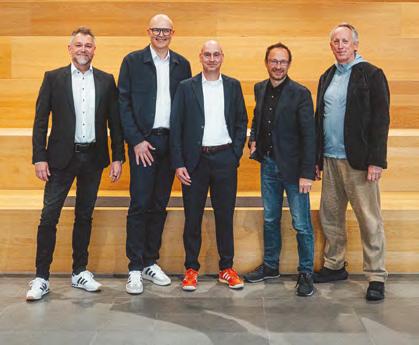
The ARRI and Riedel management teams.
Mr Cricket UAE announces mobile app
Mr Cricket UAE Media Group, the cricket-focused vertical of Danube Group, has launched its new mobile application for Android and iOS users. The release comes less than six months after the debut of its official website in December 2025, highlighting the group’s ambition to build a comprehensive digital ecosystem for cricket fans.
The new app, founded by businessman and cricket expert Anis Sajan, represents the platform’s next phase of development, aimed at improving accessibility, strengthening audience
engagement and delivering a more personalised content experience.
Its launch coincides with the ongoing Indian Premier League season, one of the most widely followed cricket competitions globally. The app allows users to access live scores, match analysis and real-time updates, ensuring continuous access to cricket action.
The mobile application also creates new growth opportunities by strengthening direct connections with users and enabling data-driven
WATCH IT LAUNCHES NEW MICRO-DRAMA FEATURE
Watch IT’s new MiniDramas feature has been launched with the debut of two original productions, Ibn El Sherka and Qalb Maftouh. Each series comprises around 60 two-minute episodes. With this launch, Watch IT will produce original mini-
dramas, combining long- and short-form content within a single ecosystem. The platform is also introducing verticalformat series on televison screens, bringing the mobilefirst viewing style to larger displays and across devices.


insights. It opens up targeted advertising opportunities, further enhancing the platform’s commercial potential while improving the overall user experience.
Speaking about the launch, Anis Sajan, founder of Mr Cricket UAE Media Group, said: “Our app is designed to serve as a onestop destination for cricket followers, enabling users to stay informed and connected anytime, anywhere. This launch reflects our longterm vision of creating a holistic and immersive cricket media platform.”
BEIN SPORTS SECURES FIA WORLD ENDURANCE CHAMPIONSHIP RIGHTS
BeIN Media Group has signed a long-term agreement to broadcast every race of the FIA World Endurance Championship across MENA and the AsiaPacific region. Fans will be able to follow the
full championship live through beIN Sports as well as OTT platform TOD. All races from the 2026 season will be available to beIN subscribers in 35 territories across MENA, as well as in key Asia-Pacific markets.
NETFLIX JOINS STC TV BUNDLES, EXPANDING SAUDI PARTNERSHIP
STC Group has extended its partnership with Netflix, under which customers subscribing to stc’s Baity fibre packages will receive complimentary access to Netflix alongside a curated selection of premium
streaming services. The bundled offering, currently in a testing phase, is expected to roll out widely in early summer. Customers will also have the option to combine subscriptions to multiple services at discounted rates.
Anis Sajan, founder of Mr Cricket UAE Media Group.
Casper Shirazi launches Storyfied Ventures to build brand-led IP in MENA
A new Dubai-based company, Storyfied Ventures, has been launched by producer and marketing executive Casper Shirazi with the aim of forging strategic partnerships between
brands and entertainment content across the MENA region, according to a report by Variety.
Storyfied Ventures will work across a wide range of content formats, including film, television,
SUBMISSIONS OPEN FOR CINEGOUNA FUNDING AS GFF 2026 DATES CONFIRMED
The El Gouna Film Festival (GFF) is inviting entries for the ninth edition of CineGouna Funding, set to take place October 16-22, 2026. Filmmakers from the Arab world can submit featurelength narrative and documentary projects in development by June 30, while post-production submissions will be accepted until July 15. Selected
participants will benefit from expert mentorship, technical feedback sessions and networking opportunities with industry professionals, and financial awards exceeding $300,000. The awards will be granted through collaborations with local, regional and international partners and will be presented at the CineGouna Platform Awards.

documentaries, creatordriven content, music-led entertainment, children’s programming and branded story world extensions. Its core objective is to enable brands to transform their narratives
into monetisable IP, using screen-based content as a foundation. From there, projects can expand into consumer products, licensing opportunities and other commercial avenues.
EXTREME PRODUCTIONS FIRST TO ROLL OUT HIPPOTIZER MEUSE
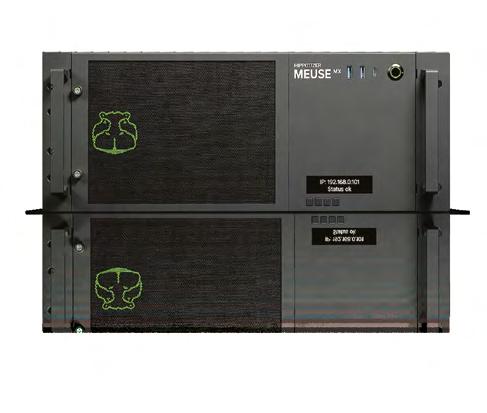
Hippo, making the advanced media server platform immediately accessible to designers, programmers and production teams across the region.
The MEUSE MX Series is designed for demanding production environments, offering flexible configuration through swappable output modules supporting HDMI 2.0,
power for advanced visual effects, along with uncompressed playback for high-quality output.
For Green Hippo, the partnership is a strategic step in expanding its presence in one of the world’s fastest-growing production markets. The rollout is supported by Procom Middle East, Green Hippo’s official regional distributor.
Winners of the CineGouna Funding Awards 2025.
LG teams up with Watch IT to boost Arabic content offerings
LG Electronics has announced a major expansion of its strategic partnership with Watch IT, introducing new Arabic content offerings and extending the platform’s reach. The collaboration will bring eight additional Arabic channels to LG Channels in the UAE while making the Watch IT app accessible on LG webOS home screens in Saudi Arabia, Kuwait, Iraq and Jordan.
With the updated
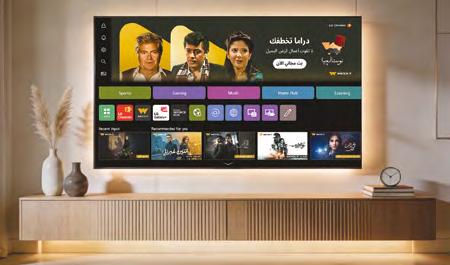
agreement, LG Channels will provide free access to a wide selection of Arabic entertainment powered by Watch IT’s extensive content library, while the dedicated app will offer a more comprehensive streaming experience in newly added markets. Both services are directly accessible via the LG webOS interface.
SAUDI FILM COMMISSION REPORTS $245M BOX OFFICE IN 2025 AS LOCAL FILMS SURGE
Saudi Arabia’s cinema sector continued its upward trajectory in 2025, with the Saudi Film Commission (SFC) reporting total box office revenues of $245m and 18.8m tickets sold, one of the strongest years since cinemas reopened in the Kingdom. The figures place Saudi Arabia among the top 15 box office markets globally, highlighting the rapid growth of its film industry.
The year was particularly notable for the performance
of local productions. Despite accounting for just 11 out of 538 total film releases –roughly 2% – Saudi films generated 13% of overall box office revenue. Three Saudi productions ranked among the top 10 highest-grossing films of the year, signalling rising demand for homegrown content.
The SFC also pointed to continued expansion in cinema infrastructure, with 603 screens operating across 20 cities backed by
investments from eight exhibition companies.
The Saudi market also demonstrates notable diversity, with 2025’s top 10 films representing four different countries and spanning several genres. This mix reflects an audience that is increasingly open to global content while still embracing domestic productions.
The results underscore a maturing cinema market in Saudi Arabia, driven by growing private sector confidence.
CAIRO
INTERNATIONAL FILM FESTIVAL INVITES SUBMISSIONS FOR 47TH EDITION
The Cairo International Film Festival (CIFF) has officially opened submissions for its 47th edition, set to run November 11-20, 2026, inviting filmmakers from around the world to participate. Entries are being accepted through the festival’s official website, with the submission window remaining open until August 1. An earlybird deadline has been set for May 22, offering filmmakers the opportunity to submit their works in advance. Held annually under the umbrella of the Egyptian Ministry of Culture, CIFF is widely regarded as one of the major cinematic events in the Arab world and Africa. It is also the only festival in the region accredited as a Category A event by the International Federation of Film Producers Associations.


FRONT ROW ACCESS: MENA STORIES STEAL THE SHOW
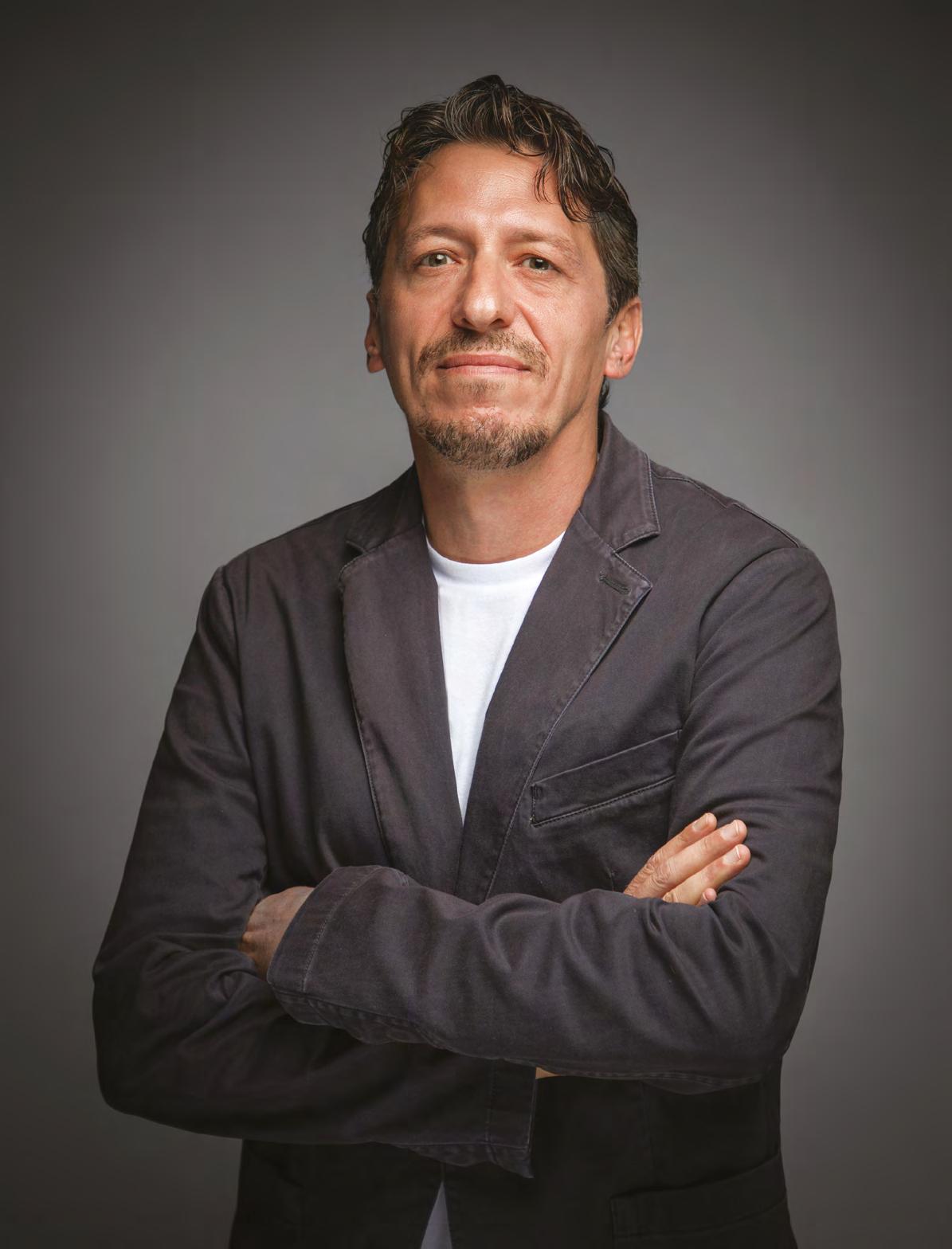
Taking the unconventional path has been at the heart of his journey. In an exclusive interview with Vijaya Cherian, Gianluca Chakra, executive producer, filmmaker and founder of Front Row Filmed Entertainment, explains how he has built a pan-MENA cinema powerhouse, defying convention to bring regional stories to audiences at home and abroad
Gianluca Chakra still remembers his arrival in Dubai back in 2003. He had sold his car, his stereo and most of his belongings, landing in the city with around $14,000 in his pocket and a belief that independent cinema could find a home in the Middle East if someone was willing to take the risk. He was staying at a $20-a-night hotel when he made his first independent acquisition, City of God, a raw Brazilian film that many in the industry would have overlooked. It was a gamble. But then Chakra knew the stakes.
“I grew up inside this industry,” he says. “My father spent over 40 years in independent film distribution, and my uncle started as an office boy at Warner Bros. in Lebanon before climbing the ladder and eventually representing them for over 60 years.”
Cinema was an intrinsic part of Chakra’s childhood. As a boy, he watched his father acquire the rights to films like Superman and Four Weddings and a Funeral, early David Lynch titles like Wild at Heart, and the first wave of Jackie Chan and Jean-Claude Van Damme films. The
family occasionally went together to film festivals, which were always working trips. Decisions about rights, pricing and positioning were everyday discussions at the dinner table.
“At home, I would wait for my dad to come back from festivals and ask questions: why this film, why not that one, how much did you pay?” he recalls. “I would rent stacks of films from the video store, and he would rate my choices.”
But the industry also revealed its harsh realities early on.
Distributing independent films required a willingness to stake real money on uncertain outcomes.
“My father would sometimes mortgage the house just to acquire rights. After 40 years in the business his company went bust as, in my opinion, he couldn’t keep up with the expansion of the business as well as the new distribution models that were changing. I was in college at the time and a bit of a rebel. I worked for one of his competitors. In hindsight, that job gave me a completely different perspective on
how the business could be run.”
That experience became formative. It showed him that the backbone of the business at the time was not theatrical exhibition but home video: DVD and later Blu-ray.
This was also when he began to see a gap in the region’s film ecosystem. “We’re over 400m people across MENA. We don’t all think the same, watch the same or want the same things. In much smaller markets, distributors identify niches, build audiences and expand through word of mouth. That thinking just didn’t exist here. So the opportunity wasn’t about finding an audience; it was about recognising the ones that had been ignored.”
Breaking the mould
Before Dubai, Chakra spent nearly two years in Europe working on the Rome Film Festival, having also lived there until the age of 15. The experience both sharpened his understanding of global film markets and reinforced his belief that the Middle East was underserved.
In Dubai, he took a different approach. “While most of the industry chased the same thing and competed for the same titles, often overpaying, we went in the opposite direction and paid attention to what was changing,” he says. City of God became the first step to that strategy. Being half Italian and half Lebanese also gave him the advantage of navigating different cultural and commercial mindsets.
“From the West, I understood structure, positioning and how to identify trends early. From the region, I understood nuance, sensitivity and where the actual boundaries were, not the assumed ones. More importantly, I could speak both languages not just creatively and commercially, but also culturally. Slowly, deal by deal, the business started growing. The team got bigger. The films started landing. At some point, it became what is now Front Row Filmed Entertainment.”
Today, the company operates across distribution, production,
partnerships and digital platforms, spanning 24 territories.
“I don’t really see myself as simply running a distribution company anymore. That definition is too narrow. What I focus on now is understanding movement: where audiences are going, how platforms are evolving and how content needs to adapt across all of that. Distribution, production and partnerships are all tools. The real job is connecting the dots before others do.”
Understanding the new economics of distribution
Front Row’s evolution reflects broader shifts in the global film industry. The traditional model of theatrical release followed by home entertainment and television has given way to a more complex ecosystem in which timing, platforms and audience behaviour determine success.
“Today, I spend less time on execution and more on direction, making sure we are positioned ahead of where the market is going. That mindset has shaped Front Row’s acquisition strategy from the beginning,” says Chakra,
pointing to the company’s decision to release documentary films widely in theatres at a time when the format was not considered commercially viable in the region.
“We released Fahrenheit 9/11 widely in theatres when documentaries were not treated that way here, and it performed on par with major studio titles, effectively helping to bankroll the company. That kind of result comes from trusting instinct and understanding where the audience is going, not where it has been.”
The same approach led Front Row to embrace digital distribution early. It pushed into premium VOD well before it became standard practice, and secured exclusive MENA aggregation deals with major global platforms. “We helped launch titles digitally early on, first with Apple and later with Google through Google Play, now YouTube.”
This shift toward digital accessibility, Chakra believes, is central to the future of independent cinema in the region, particularly with the rise of AVOD.
“AVOD will play a major role in the future of content. That is where real democratisation begins.
It removes barriers, expands access and allows content to find audiences at scale in a more open way.”
Rethinking windowing in the age of social media
As audiences fragment across theatrical, OTT and digital platforms, the traditional concept of release windows has become increasingly fluid.
“Understanding when a film needs to be in the market, and in which format, is critical.” That calls for dynamic windowing, “where each film follows its own path rather than a fixed sequence. Sometimes that means theatrical. Other times, it is far more effective to go premium on digital.”
He points to The Substance as a recent example. Given its nature, a traditional theatrical rollout in the region would likely have faced censorship or limited exposure. Instead, Front Row leaned into its international momentum and launched it as a premium VOD title in partnership with OSN. “It became one of the top-performing titles on Apple TV in the region and held the number one position on OSN for over two months,” Chakra says.
The same strategy has applied to
If you miss the window of relevance, you lose both attention and value. Accessibility becomes the most effective form of anti-piracy
other films like The Bibi Files, No Other Land and Emilia Pérez that rely on cultural relevance and timing, rather than a traditional release path. To have that flexibility, Front Row “acquires all rights across the lifecycle of a film … that gives us a 360-degree view of how a title can perform across different markets and formats”.
The approach, he argues, ultimately benefits both filmmakers and distributors, allowing films to find the right audiences instead of being forced into rigid release structures. For larger titles, he acknowledges that theatrical remains essential. “For other projects the approach can be more agile, with release strategies tailored to each film’s potential and audience.”
He also clarifies that independent cinema does not mean smaller in ambition or scale: “It simply refers to films that are not backed by a traditional studio system and therefore require more tailored and flexible routes to market.”
Piracy, he argues, has also made timing critical. “The moment a film becomes available digitally, it can be pirated within hours. If you miss the window of relevance, you lose both attention and value. Accessibility becomes the most effective form of anti-piracy.”
From distributor to producer
From distribution, Front Row gradually expanded into production and co-production. Chakra says the move into production was “a natural progression”.
“As a distributor, you develop a very clear understanding of what works, where it works and why. Most of the time, we are seeing projects at script stage. In fact, around 95% of our Western acquisitions happen at that point. So you are not just evaluating
finished films, you are assessing ideas, talent and potential early on, and then tracking how those projects evolve and perform across formats.”
Chakra adds that his experience in distribution brought a lot of value to the production table. “That is what drove the move into production and co-production. It was about taking everything we had learned on the distribution side and applying it upstream.”

The turning point came with the Arabic-language remake of Perfect Strangers, produced in collaboration with regional partners and later acquired by Netflix. “We shot the film during Covid without knowing what the world would look like a year later,” Chakra recalls. “Many questioned whether it would even see the light of day. Netflix came in at that point, not as a development partner but as an acquirer. For us it made complete sense both financially and in terms of exposure. It was our first film
as producers, and we knew it had the potential to position us beyond distribution.”
The film went on to become Netflix’s first Arabic-language original and one of its most successful regional titles, as well as reaching #3 on the International Global Charts. “It sparked controversy, but that only fuelled the conversation. People tuned in to love it or criticise it, but ultimately to be part of it.”
The success of Perfect Strangers led to a first-look deal with Netflix and the development of The Sand Castle, the most viewed Arabic-language title globally in 2025 according to Netflix’s viewing report. “This changed how Front Row approached the business. It allows us to think
across the entire lifecycle of a project from day one, aligning development, financing, positioning and distribution into one cohesive strategy.”
Building a pan-MENA studio model
As Front Row expands its production slate, the company is moving toward a studio-style model that integrates both creation and distribution: “If you look at how studios operate, they produce and/or acquire and distribute.”
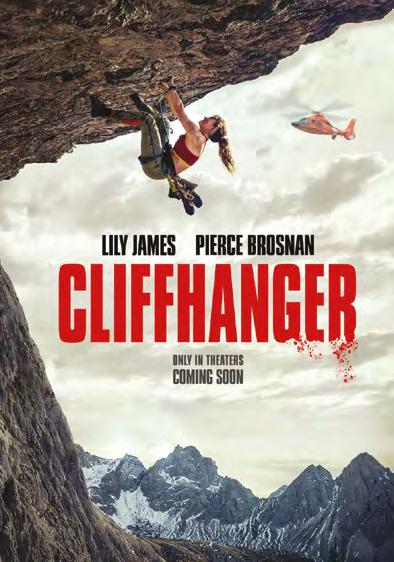
Distribution remains the backbone of the business, while production allows Front Row to build its own pipeline of content designed for regional and international audiences. A reboot of Cliffhanger, directed by Jaume Collet-Serra and starring Pierce Brosnan and Lily James, is the
company’s third Western production, following Luxor and The Queen Mary.
“Whether it is working with Nour Arida through a collaboration with Different Productions, known for global hits like Dubai Bling and soon Desi Bling, or continuing our longstanding relationships with Film Clinic and Empire International, the focus is always the same. We align with partners who bring complementary strengths, whether that is creative, commercial or cultural. Our current slate reflects that approach and the diversity of the region,” says Chakra.
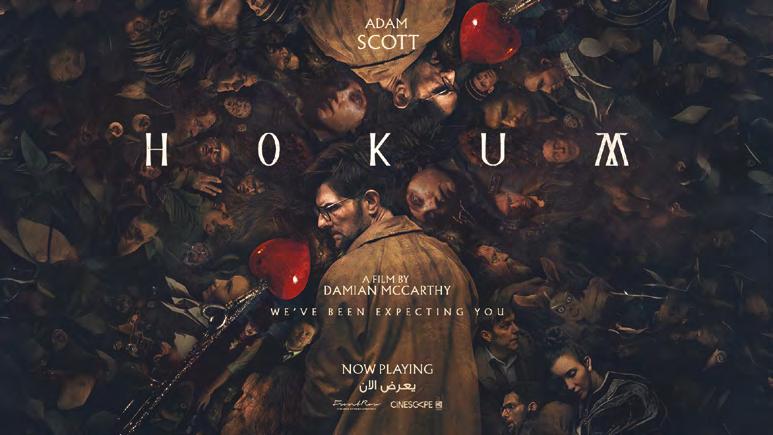
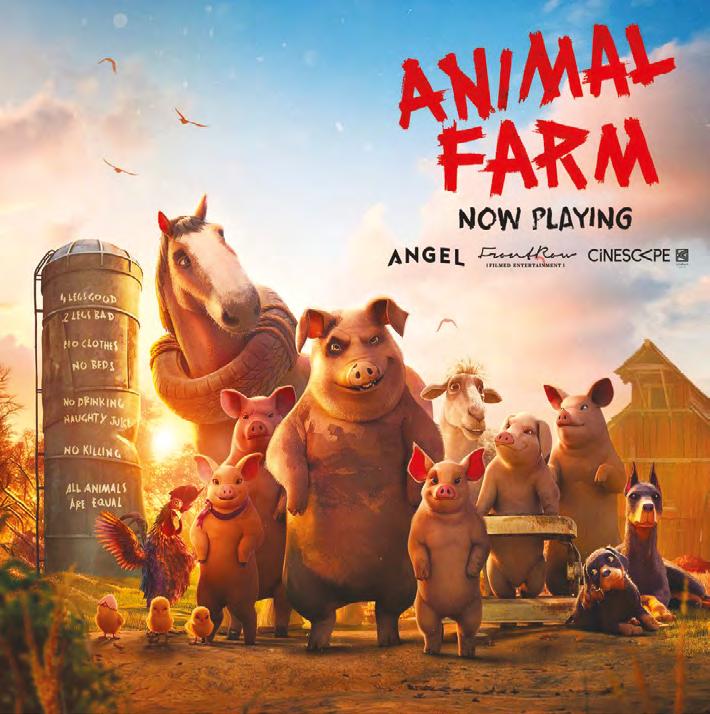
His Weakest Creatures, an Egyptian production directed by Omar Hilal and starring Ahmed Helmy and Hend Sabry, is a thriller inspired by real events. A Matter of Life and Death, a Saudi production starring Sara Taibah and Yaqoub Alfarhan, is a bold, genre-bending rom-com, while My Treat is a Saudi, Egyptian and Turkish non-stop, fun-filled road-trip co-production. Then there is Boomah, a Jordanian crime drama starring award-winning actress Rakeen Saad. Front Row will also be releasing a new adaptation of George Orwell’s Animal Farm directed by Andy Serkis, as well as the horror film Hokum with Adam Scott, produced by Abu Dhabi’s Image Nation.
“All of these titles are just part of our 2026 release pipeline. We also have a significant number of projects in development across the region in feature films, television series and non-scripted content. Our strategy is to build multicultural, pan-MENA storytelling while maintaining a strong foothold in global cinema – projects rooted in local realities but designed to travel internationally,” Chakra says.
KSA and the future of cinema
Saudi Arabia has emerged as one of the most important markets in the region,

often accounting for up to 35% of the regional box office, depending on the title. “From a scale perspective, it has been a key driver of growth,” Chakra says. However, he believes the next phase will depend on programming and long-term sustainability.
“The market is still largely driven by major studio releases, but what is particularly interesting is the growing shift toward Arabic-language content. Out of roughly 440 titles released annually, only around 40 are local-language films, yet they represent approximately 36% of the total box office. That’s massive.”
Despite these results, he points to a structural imbalance in how local
Out of roughly 440 titles released annually, only around 40 are locallanguage films, yet they represent approximately 36% of the total box office. That’s massive
GIANLUCA CHAKRA, FOUNDER, FRONT ROW FILMED ENTERTAINMENT
films are treated commercially. “In many cases, Arabic-language titles are assigned lower film rental terms (40%) compared to Hollywood or even Bollywood releases (50% and 45% respectively). That creates a disconnect. The performance is there, but the economics don’t always reflect it. Over time, that can discourage investment in local production rather than incentivise it.”
This imbalance, he argues, is both a challenge and an opportunity. “Local and regional stories are becoming central to the theatrical business in Saudi. Expanding that segment, alongside more curated programming and event-based releases, would help build stronger and more consistent cinema-going habits.”
At the same time, production economics remain complex, making co-productions an essential tool to balance risk and scale. “Ultimately, the opportunity is about sustainability. We produce for MENA as a whole, not for one territory in isolation.”
The future
Over the next five years, Front Row hopes to play a central role in “shaping a more connected, sustainable and regionally relevant Arab film and content industry … that means bringing a level of sophistication and a new vision to how content is developed, positioned and consumed. It also means speaking to audiences that are currently underserved or not being addressed at all, a significant part of the opportunity.”
“But this is not something we can do alone,” Chakra concludes. “We still see MENA as an open field that needs to be approached dynamically and with the right mindset. Once that foundation is in place, the potential for content to travel becomes exponential.”
ARCHITECTING MODERN BROADCAST INFRASTRUCTURE
From workflows to system design and proofs of concept, Nuriye Gungor, Solutions Architect at Grass Valley, has contributed to some of MENA’s most ambitious media infrastructure projects. In conversation with Vijaya Cherian, she reflects on her journey through the industry and the evolving nature of broadcast engineering
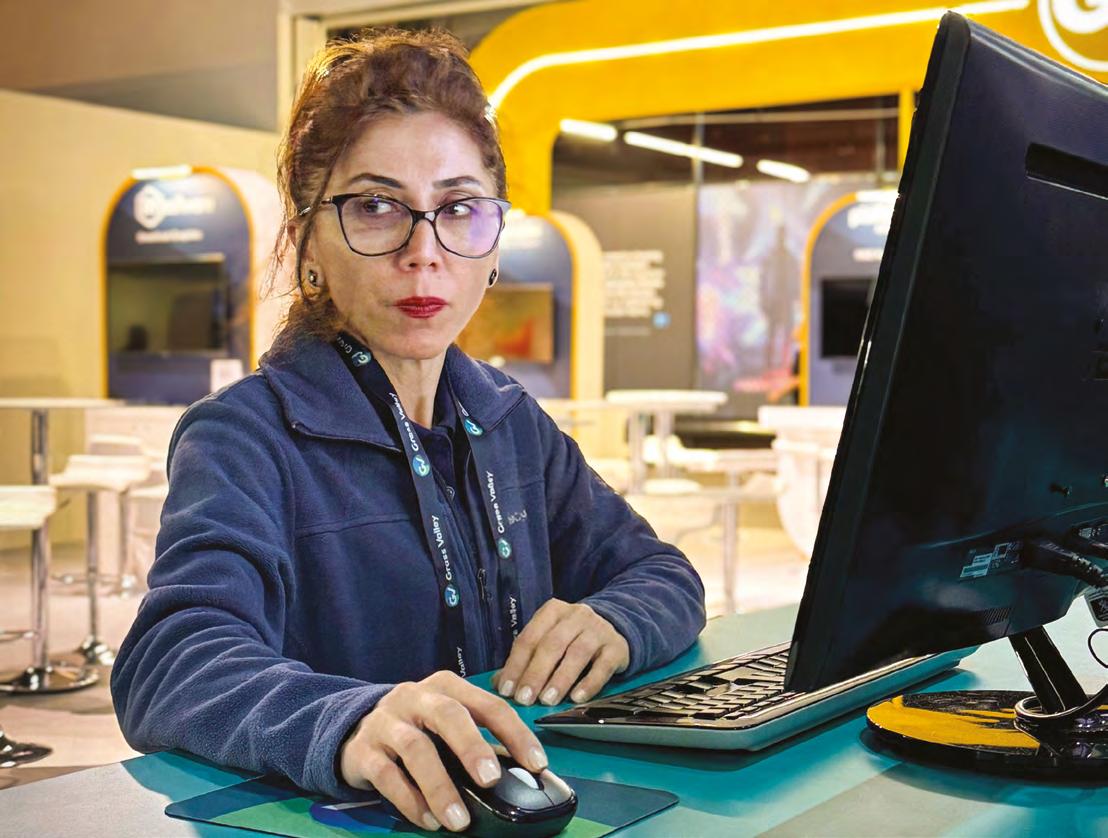

Like most people in the broadcast industry, Nuriye Gungor leads a demanding professional life. She has worked as a Solutions Architect at Grass Valley EMEA for more than a decade. When she does find time to switch off, Pilates is her preferred stress buster. Originally from Turkey and now based in Dubai, Gungor has worked on some of the region’s most ambitious media infrastructure projects, designing systems that underpin rapidly evolving broadcast environments.
Gungor says her entry into the industry was nothing spectacular. Fresh out of university after securing a degree in Electronics and Communication Engineering, she joined Kanal D, a part of Dogan Media Group in Turkey, as a Support Engineer. “I came back home to Turkey and was just trying to find my way into a job after finishing my degree in the UK. At the time, Kanal D was just beginning the shift to tapeless workflows. I didn’t realise back then that it would be the start of a life-long career,” she laughs.
After a two-year stint with Kanal D and roles with systems integrators working on broadcast system design and delivery, she got a break with Grass Valley in 2014. “I was working on a big project in Turkmenistan and my efforts were recognised by Grass Valley.”
That marked the beginning of a decade-long relationship with the company. Gungor joined Grass Valley in Istanbul in 2014 before relocating to Dubai in 2015, where she has now lived for more than ten years. “I have worked across broadcaster, integrator and vendor roles. That helps me approach projects from different perspectives, both operational and technical,” she explains.
That breadth of experience defines her current role. She is responsible
for translating customer requirements into fully realised broadcast systems.
“My role is to design solutions based on customer requirements. This includes understanding workflows, building system designs, and running demonstrations and proof-of-concepts. It is a customerfacing role, so it involves regular interaction and travel. Because many broadcasters operate 24/7, it also requires flexibility.”
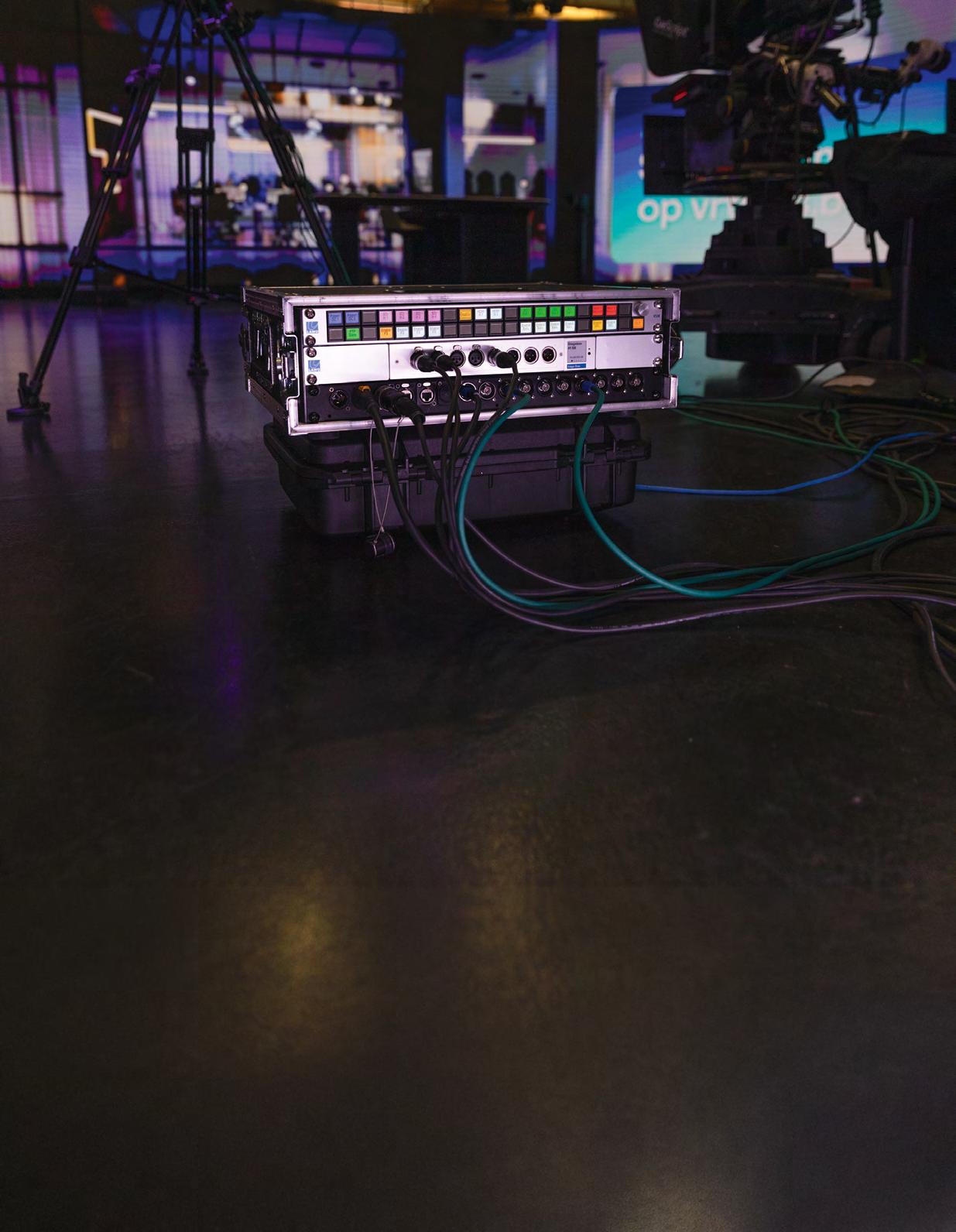
Her work spans the entire broadcast chain. In a recent project, she and her team delivered a complete end-to-end system, starting with studio cameras and production control rooms, moving through routing, monitoring and asset management, and extending into newsroom systems, editing, archive and network infrastructure. On the transmission side, the system incorporated playout, master control and switching.
“The challenge is to connect
The region is a safe and dynamic place to work, but the industry is still largely male-dominated, especially in technical roles. Here, knowledge is critical. You need to be well prepared and confident in your expertise
NURIYE GUNGOR, SOLUTIONS ARCHITECT, GRASS VALLEY
all these elements into a system that works in practice. The focus is always on understanding how the customer operates, then building something that supports both current workflows and future expansion.”
That balancing act is particularly pronounced in the Middle East, where rapid technological advancement often collides with legacy infrastructure. “The main challenge is the speed of change. New systems and architectures are evolving quickly, and customers need time to evaluate and adopt them.”
Many broadcasters in the region are still transitioning from traditional SDI environments to IP and cloud-based workflows, a shift that is as much about mindset as it is about technology. “It requires education, demonstrations and sometimes a gradual transition. Clear communication and patience are important,” she remarks.
Even with the adoption of standards such as SMPTE ST 2110, interoperability remains a major concern. Different vendors interpret specifications in different ways, which can lead to unexpected behaviour during integration. Synchronisation, particularly with Precision Time Protocol, adds another layer of complexity, as do metadata handling and ancillary data workflows.
“At the same time, many broadcast engineers are still developing the networking skills required for IP environments. Knowledge of multicast, routing, timing and troubleshooting issues like jitter or packet loss is essential.”
Despite these challenges, the region offers a unique operating environment. “It is fast-moving and requires flexibility. The region is a safe and dynamic place to work, but the industry is still largely male-
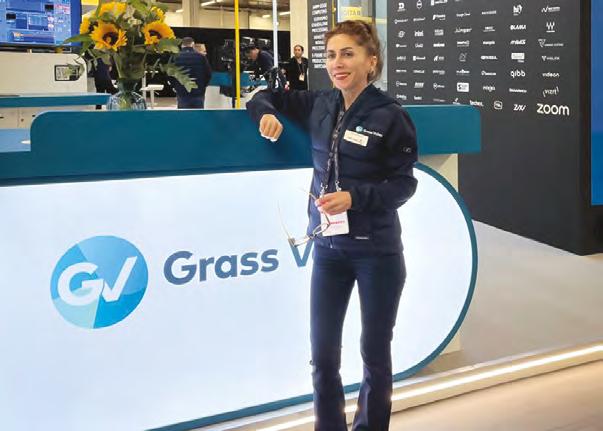
dominated, especially in technical roles. Here, knowledge is critical. You need to be well prepared and confident in your expertise.”
But the opportunities are significant, she notes. Working as part of Grass Valley’s EMEA solutions pool, Gungor works across projects in the region and beyond, collaborating with teams in multiple markets. In recent years, that has meant extensive travel to Saudi Arabia, South Africa, Qatar and Turkey. “If any project took place in EMEA, the whole team of regional solution architects would go on-site. After COVID, with more remote operations and companies moving to the cloud, travel has eased considerably.”
Still, the exposure to different markets has given her a clear view of how broadcast is evolving globally. In the GCC, heavy investment in infrastructure such as 5G, cloud and AI is accelerating the adoption of advanced production environments. In contrast, other regions, particularly parts of Africa, are progressing at a slower pace due to infrastructure and skills limitations.
The technological shift itself
is unmistakable. “The industry is moving from traditional SDI and satellite systems towards cloudbased and streaming workflows,” she says. OTT platforms continue to grow, alongside increasing demand for on-demand and personalised content. Business models such as AVOD and FAST are gaining traction, while regulatory and cybersecurity considerations remain in flux.
Cloud adoption, in particular, is reshaping how content is managed and delivered. “Cloud-based systems make production faster and more
The focus is always on understanding how the customer operates, then building something that supports both current workflows and future expansion
NURIYE GUNGOR, SOLUTIONS ARCHITECT, GRASS VALLEY
flexible. They allow teams to scale resources, work remotely and manage content more efficiently.”
However, the transition is not without its constraints. Latency, especially when dealing with large files and high-resolution content, remains a concern. Costs associated with storage and data transfer must be carefully managed, and issues around security and data governance are becoming increasingly important, particularly with the integration of AI-driven tools, says Gungor.
Looking ahead, she is particularly interested in emerging technologies that address long-standing inefficiencies. One example is Media eXchange Layer (MXL), an open-source approach that enables real-time media exchange through shared memory rather than traditional streaming. “It reduces latency and improves efficiency, especially in softwarebased environments. It also helps improve interoperability between systems, which remains a challenge.”
The complexity of her work demands discipline. “I am very organised,” she says simply.
Her connection to the city is equally straightforward. “I love Dubai. It is very safe for women. Everything is organised and smooth. It is one of the best places to live in terms of opportunities.”
Gungor’s work, like that of many engineers, remains largely behind the scenes, and she prefers to keep out of the limelight. But for women entering the industry, she offers some pragmatic advice: “This field requires continuous learning. Technologies evolve quickly, so it is important to stay updated. Skills in AI, networking and data security among others are becoming essential. At the same time, communication and collaboration are important.”







BACK IN THE FRAME
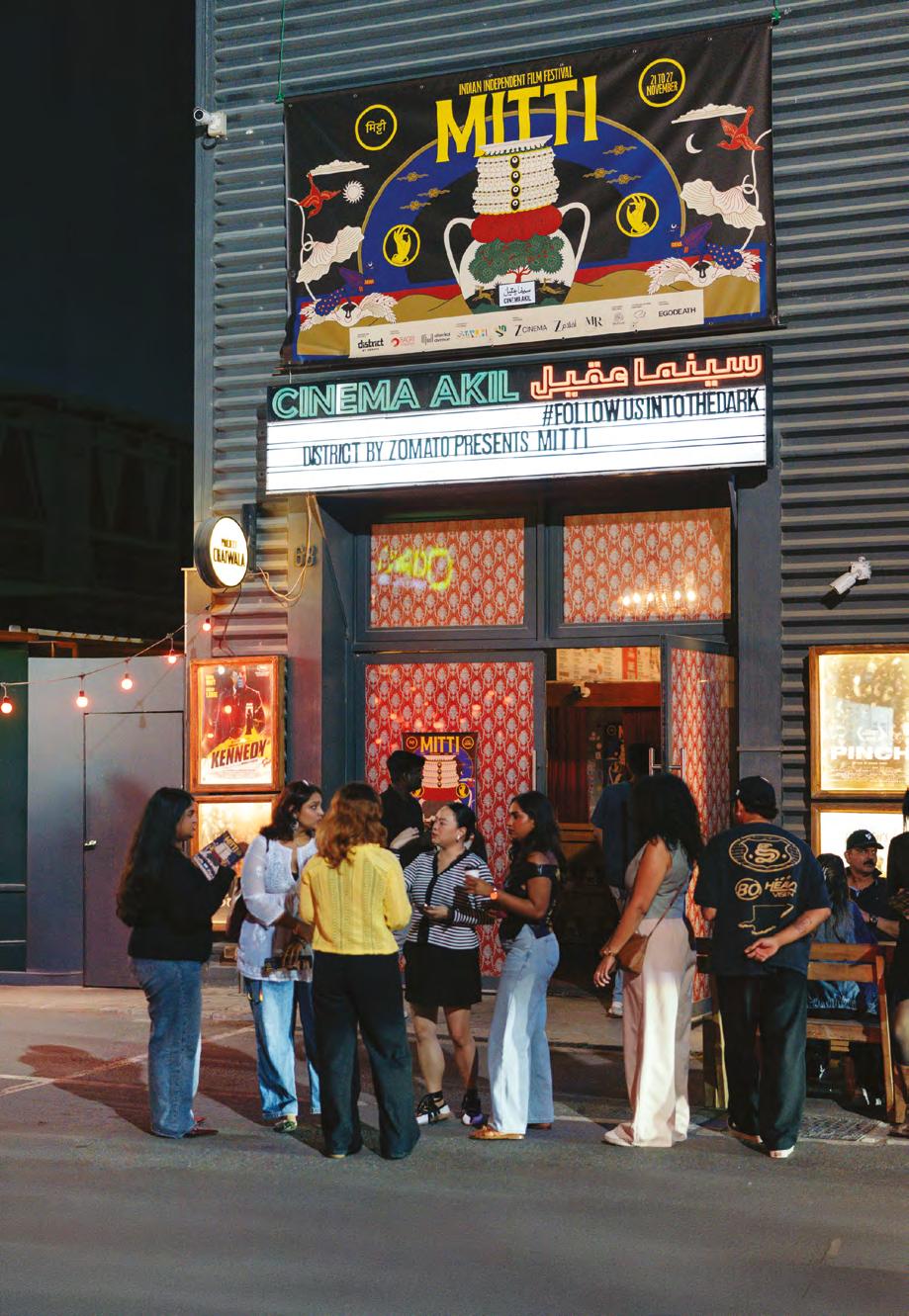
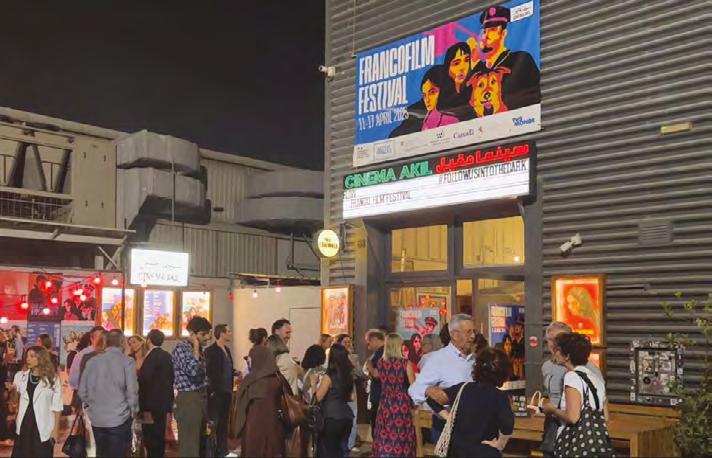
In the weeks following Ramadan, and after a brief period of geopolitical unease that cast a shadow over public life in the region, Cinema Akil, the UAE’s only independent arthouse cinema, is bustling with activity once again. BroadcastPro ME speaks to General Manager Rawan Haidar about how it operates and adapts in shifting market conditions

For an arthouse cinema that has evolved outside the conventions of the multiplex model, uncertainty is familiar territory. Cinema Akil, the UAE’s first independent cinema, worked through a similar disruption during Covid. More recently, a period of regional uncertainty led to a noticeable slowdown in public activity, offering the team a moment to reflect on how far the cinema and community space has come, and how it continues to adapt in a region where conditions can shift quickly.
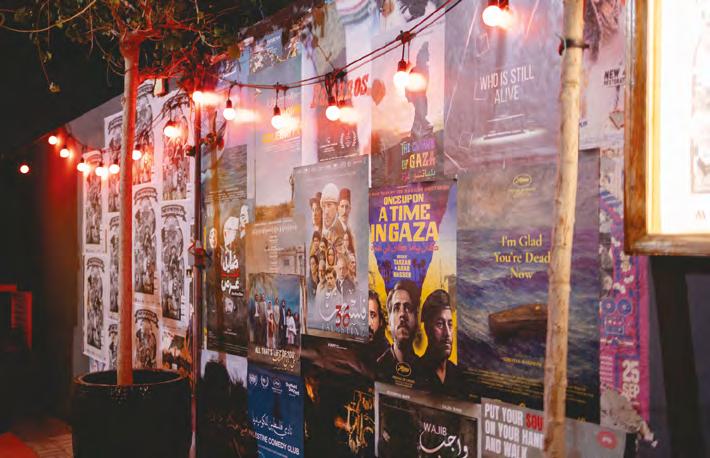
“Cinema Akil started as a nomadic cinema with eventised, free-of-charge screenings, and over time evolved into a permanent space with daily, ticketed programming focused on films you wouldn’t typically see in a multiplex. Along the way we expanded into retrospectives, festivals and pop-ups, and F&B became part of the experience, which wasn’t the case when we first started,”
One of our strengths is that we’re not tied to new releases, so we have the flexibility to shape our programming in a way that responds to the moment
RAWAN HAIDAR, GM, CINEMA AKIL
explains GM Rawan Haidar. That expansion from exhibitor to community platform has become central to how it operates through market fluctuations. “The first few weeks after reopening were challenging,” she admits. Programming became fluid, with schedules adjusted in response to audience sentiment. The slate at the time of going to press, featuring titles such as The Secret Agent, Sirat and Hamnet, reflects the cinema’s continued commitment to alternative
and independent storytelling.
Yet for all its curatorial strength, the economics of an independent cinema can be unforgiving. “The pressure is immediate on both sides. Financially, we don’t have the volume of a multiplex, so even a small drop in attendance hits us immediately, while most of our costs remain fixed.
Operationally, the focus shifts to our team and audience’s safety first. We reduced late-night screenings and adjusted our hours, but that naturally impacts attendance since most people go to the cinema in the evenings. We were constantly balancing staying open for the community and dynamic programming, while making sure the business could sustain itself.”
What distinguishes Cinema Akil, however, is how it leaned further into its role as a community space during this period. “A lot of what we’ve done hasn’t really been about driving people back into the cinema but about giving people something to do, something to look forward to, somebody to connect with, even if there’s little or no commercial value to us.”
That approach resulted in a series
We’re seeing an appetite from audiences to watch unconventional content on the big screen
RAWAN HAIDAR, GM, CINEMA AKIL
of initiatives, from pay-what-you-can screenings to collaborations with local brands and free programming in partnership with Alserkal Avenue.
“The feedback has been positive. People engaged with it, shared it and showed up, which reinforces that there was a real need for this right now.”
One of the more interesting outcomes of this period was the launch of the Cinema Akil (Imperfect) Homegrown Guide, a directory aimed at supporting smaller businesses. “We started the guide after noticing that a lot of smaller, possibly lesser-known businesses may have been impacted by the situation. It’s essentially a directory of who they are and what
they do, how to contact them, and it’s still very much evolving.”
Beyond operational strategy, the situation also reinforced the relevance of physical cinema. “There’s something about sitting in a room with others, watching the same film, that creates a shared experience you don’t get anywhere else,” says Haidar, who is also quick to argue that “the independent cinema model is not as fragile as one would think”.
“One of our strengths is that we’re not tied to new releases, so we have the flexibility to shape our programming in a way that responds to the moment. But also, what really differentiates us is the direct connection we have with our community. It’s not a kiosk experience; there’s someone at the box office, familiar faces, a sense of ease and safety. The space itself is designed for people to stay, not just pass through.”
Financial sustainability, however, continues to demand a broader rethink of the exhibition model. “The core of independent cinema is to provide meaningful content while remaining accessible and affordable,
and that’s exactly why the model on its own is difficult to sustain. It can’t rely purely on ticket sales; it has to be more layered and adaptable to different revenue streams.”
While grants and funding have supported specific initiatives, they are not a consistent safety net. “There isn’t really a structured layer of support specifically for independent cinemas. What we’re seeing instead is more of an industrywide effort to support each other, whether that’s multiplexes, independent cinemas or distributors finding ways to collaborate and keep things moving.”
Haidar is “more optimistic than ever”, despite the challenges. “We’re seeing an appetite from audiences to watch unconventional content on the big screen. And that’s not just limited to the UAE; we’re seeing it across the region through our partner spaces like Metropolis in Beirut and Zawya in Cairo. The key now is how we manage that growth in a way that’s sustainable, while keeping costs low.”







11-14 S ept 2026, RAI Amsterdam


Register your interest












THE NEXT-GENERATION BROADCAST WORKFORCE

The broadcast industry has always evolved alongside technology. From analogue transmission to digital workflows, and from satellite distribution to IP-based production, every major technological shift has forced the industry to rethink how media infrastructure is built and operated. Martyn McKenna argues that broadcast engineering education must now evolve to keep pace with the AI era
Cloud computing, software-defined infrastructure and artificial intelligence (AI) are rapidly reshaping how content is produced, processed and distributed. Modern broadcast platforms increasingly look less like traditional facilities and more like largescale technology stacks. Yet while the technology stack is evolving at pace, the educational pathways preparing the next generation of broadcast engineers are struggling to keep up.
A curriculum rooted in the past Consider how one of the UK’s most respected broadcast engineering programmes currently frames its curriculum.
Ravensbourne University London, widely regarded as one of the top
institutions for media and broadcast education, highlights a range of capabilities in its BSc Broadcast Engineering course, including digital and satellite transmission, studio and outside broadcast systems, audio and video engineering, live production infrastructure, streaming and multiplatform delivery, as well as studio operations and equipment engineering. These are all important disciplines and have formed the backbone of broadcast engineering for decades. But look closely, and something becomes clear: the emphasis remains centred on traditional broadcast infrastructure. Largely missing from the core curriculum are the disciplines that now underpin modern media platforms, including cloud
infrastructure architecture, software engineering, data engineering, AI and machine learning, as well as DevOps and platform engineering.
From hardware to softwaredefined systems
I started my career within the traditional broadcast engineering environment shaped by organisations such as the BBC. The philosophy was that engineers needed to understand the physical and technical foundations of television. Signal chains, timing systems, compression and fault diagnosis were all essential knowledge. Broadcast engineering was a valued discipline rooted in deep technical understanding and operational reliability.
That training culture produced some of the most resilient broadcast infrastructure ever built.
But the infrastructure itself has changed. Today’s production environments increasingly resemble distributed software platforms rather than traditional broadcast facilities. Workflows run across cloud infrastructure, IP networks and distributed compute layers rather than fixed hardware chains. In many modern production environments, the most critical components are no longer routers or processing cards. They are orchestration layers, APIs, software pipelines and increasingly AI.
Over the past two decades working across global live productions, Formula One and the Olympics among them, I’ve seen this shift happen in real time. In the early part of my career, a major outside broadcast required trucks full of proprietary hardware: dedicated routers, processing cards, synchronisers and fixed infrastructure that took days to commission. Today, those same functions increasingly run as software workloads on cloud infrastructure, orchestrated via APIs, monitored by dashboards that would look at home in a software engineering team. The physical plant has not disappeared, but the intelligence that runs it has fundamentally changed.
Today’s engineers increasingly need to understand cloud platforms, distributed systems, software architecture and data pipelines. AI is also beginning to play a role across production workflows, from automated clipping and metadata generation to content discovery and quality monitoring.
The broadcast engineer is also morphing into a hybrid of media technologist, software engineer and data architect. In practice, that means an engineer who can
write a Python script to automate a media workflow, read a Kubernetes manifest to diagnose a production outage, and understand how an AI model has been trained on broadcast metadata. It means being comfortable working in a cloud console as well as a production gallery. The skills are different but the underlying discipline – rigorous, systematic, operationally focused – remains the same.
Rethinking how engineers are trained But the challenge isn’t just the broadcast curriculum, it’s how universities teach. Technology has transformed almost every aspect of society, yet education itself has remained surprisingly static. That is beginning to change.
In my current role working with universities on technology transformation initiatives, I’m seeing how AI can fundamentally reshape how broadcast engineering is taught. The broadcast production environment is a natural fit for simulation-based learning. An AI tutor can replicate a cloud-based production workflow, inject faults and ask a student to diagnose and resolve them, approximating the high-pressure, real-time problemsolving that defines the job. That kind of applied, adaptive learning is far closer to how a working engineer actually develops competence than a semester of lectures ever could be.
AI can generate learning content dynamically, identify knowledge gaps in real time and tailor explanations to individual students. For complex technical disciplines, this could dramatically accelerate how engineers are trained. AI tutors could also provide real-time troubleshooting guidance and generate practical engineering challenges that mirror modern media systems.
Looking toward 2030
By the end of this decade, the broadcast technology landscape will likely look very different again. Large portions of production infrastructure will be software-defined and cloud-based, with AI assisting with many production workflows, from automated highlight generation to metadata creation.
The broadcast engineer of the future will look far closer to a cloud architect or AI systems engineer than to the broadcast technician of the past. If universities and the industry can evolve their training models now, the next generation will be ready to build these systems.
The broadcast industry has always depended on engineers who could master the technology of their era. The question for universities and for professional organisations that shape what education looks like is whether they move fast enough. The engineers who will build the broadcast infrastructure of 2030 are in lecture theatres right now. What they are being taught matters.
MARTYN MCKENNA IS A TECH EXECUTIVE WITH 20 YEARS OF EXPERIENCE ACROSS GLOBAL MEDIA, BROADCAST AND LIVE SPORTS, INCLUDING FORMULA ONE, SAILGP AND THE OLYMPIC GAMES. HE NOW FOCUSES ON MEDIA TECHNOLOGY, CLOUD AND AI.

THE CHANGING FACE OF CINEMA IN THE GCC
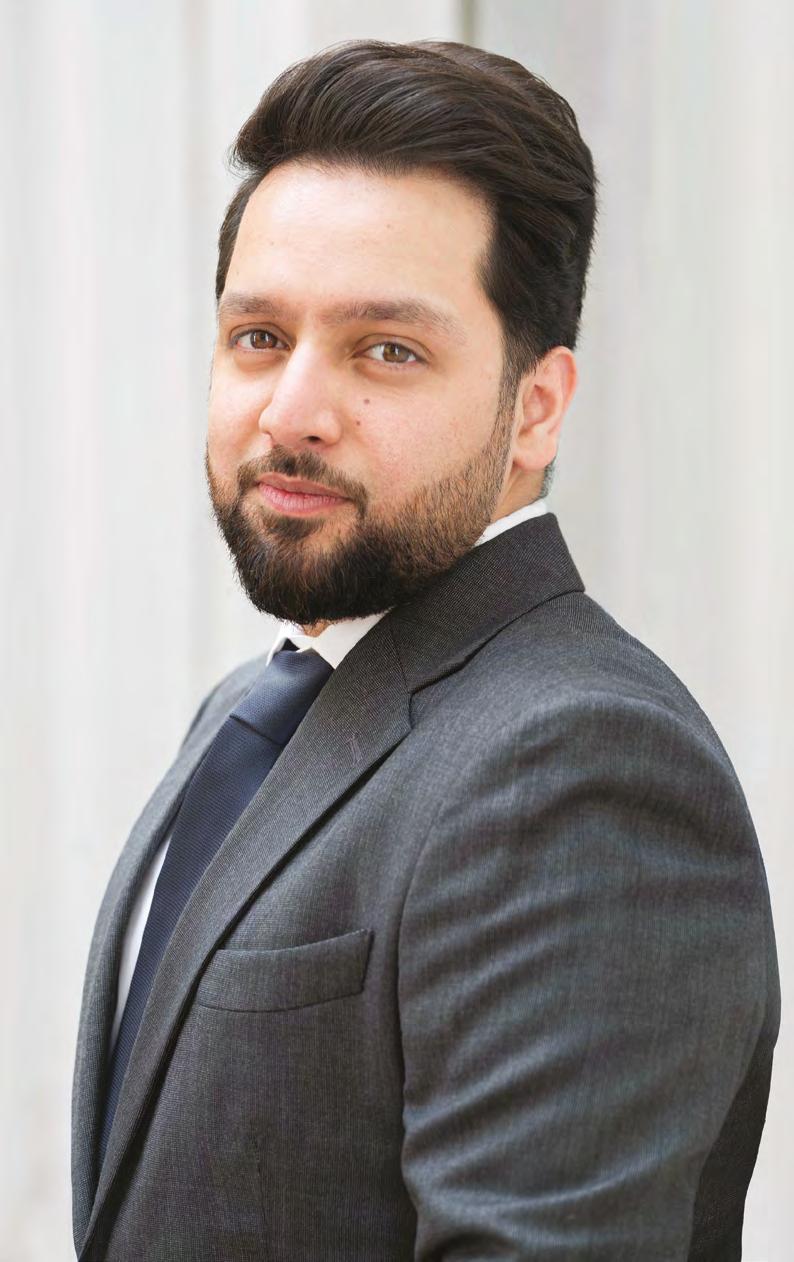
With the GCC home to a substantial South Asian population, the region’s entertainment ecosystem reflects a far broader set of audience preferences than is often assumed. In an exclusive interview with Vijaya Cherian, Hiten Umrania, Associate Director – Studios & Live Events at Zee Entertainment Middle East, offers a closer look at theatrical trends, backed by data and on-the-ground insight
Tell us about your role at Zee. I oversee two areas at Zee Entertainment Middle East. On one side is Zee Studios, where we handle theatrical releases and content marketing for South Asian films across the GCC. On the other is Events and Partnerships, which focuses on live entertainment, brand collaborations and building our own event IP.
On the studios side, the work is about understanding how films will land with audiences here. The South Asian diaspora in the GCC is highly engaged but also selective, so positioning, marketing and even decisions around theatrical versus OTT require careful thought.
The events side is more expansive. We work across more than 50 concerts, festivals and cultural
properties each year, while also developing our own formats with long-term commercial value. A fun part of the role is that I get to watch films before they release, work with celebrities and artists, and build events that tens of thousands of people show up for.
How do you decide windowing?
For windowing, the OTT deals are structured as part of a global content strategy, along with the producer and international markets aligned to that. This is because a fragmented windowing approach across territories would dilute the value of the content commercially and increase the chances of piracy. At a market level, my focus is on making the most of the theatrical window we have. For a
bigger release like Jawan or Pathaan, that window typically stretches to eight weeks. For mid-size or smaller films, it’s typically four to six weeks. The shorter that OTT gap, the more directly it impacts theatrical.
The diaspora here is switched-on and knows exactly when something is landing on a platform, and a short window changes their calculation on whether to go to a cinema or wait. Part of my job is building enough energy around a release that the theatrical experience feels worth showing up for, regardless of when OTT follows. Not everything is built for cinema though. Some drama formats, smaller-language films, content that finds its audience over time rather than on a three-day opening number, work better on OTT. There is also a content compliance layer in the UAE, where films are checked against local media regulatory guidelines before being greenlit for release.
How has the Middle East theatrical market evolved in recent years, and which languages and trends are driving box office growth?
The two biggest theatrical markets in the GCC are the UAE and KSA. These are the markets I have the deepest visibility on, and over the last six or seven years we have seen two parallel narratives – the postCovid recovery and steady growth of the UAE, and the extraordinary acceleration of Saudi Arabia.
The UAE is looking at annual collections north of AED 900m ($245m). Hollywood remains the dominant force at around 62-65% of collection, and that is unlikely to change. On the blockbuster side, Avengers: Endgame remains the highest-grossing film in UAE theatrical history at just under
Success will increasingly belong to films and events that offer the spectacle, community and shared emotion you can’t replicate at home
HITEN UMRANIA, ASSOCIATE DIRECTOR – STUDIOS & LIVE EVENTS, ZEE ENTERTAINMENT MIDDLE EAST
AED 47m ($12.8m). The big franchise releases – Top Gun: Maverick, the Marvel slate, Mission: Impossible, F1 this year – are what fill the largeformat screens and drive the biggest numbers. F1 was a standout at AED 38m ($10.3m) in the UAE, Mission: Impossible – The Final Reckoning at AED 34m ($9.25m), and Avatar: Fire and Ash at AED 30m ($8.16m).
Arabic-language content is the most interesting growth story across the region. In the UAE it holds steady at 6-8% share, but in Saudi Arabia it has gone from around 10% in 2019 to 35% in 2025, with early 2026 numbers touching 42%. Bad Boys: Ride or Die was the highestgrossing film in KSA history at AED 88m ($23.9m). But now, films like Bahebek, Waafet Reggala and Men Agl Ziko are driving numbers that would have been unthinkable five years ago.
Within South Asian content, Hindi had a particularly strong 2023, but Malayalam has quietly become a major force, growing from around 6% to over 11% of UAE collection, a structural shift driven by a consistent run of quality content. Lokah Chapter One: Chandra, for instance, raked in AED 20m ($5.44m), followed closely by L2: Empuraan. For a Malayalam film, that number would have been hard to imagine three years ago. Hindi has been volatile but had a peak of 18% in 2023. Jawan is the highest-grossing South Asian film in UAE history at AED 30m ($8.16m), alongside Pathaan at AED 25m ($6.8m) in the same year. Two Hindi films in the UAE top 15 all-time, both in 2023. But the market can also be ruthless, with Hindi films having collected less than AED 1,000 ($272) in their entire theatrical run here.
Foreign-language cinema – Korean, Japanese, French – remains niche but with loyal fans. Demon Slayer:
Infinity Castle, a Japanese anime film, made the KSA top 10 in 2025.
Saudi Arabia’s overall trajectory deserves its own mention. The market only reopened in 2018 and collections have grown from AED 343m ($93.3m) in 2019 to nearly AED 906m ($246.4m) in 2025. One interesting trend worth noting is what happened in 2020 during Covid. The UAE dropped over 74% in collection, while Saudi Arabia grew by 35% in the same year. Mature established markets took the hardest hit, while newer evolving markets with a hungry audience kept growing.
Why have English-language films historically dominated the GCC, and is that still the case?
Yes, English-language films still lead. Hollywood’s dominance is structural. The franchise model, the production budgets, the global marketing machines behind these releases, all create a level
of anticipation and event cinema experience that other industries are still building toward. In the UAE, English films have consistently held 62-78% of annual collection, and in 2025 that sits at around 62%.
Interestingly, below that headline number the composition of the market is shifting significantly. In the UAE, the share of English films has gradually softened from the high 70s in 2021 to the low 60s today. In KSA especially, English films commanded over 84% of collection in 2019, but last year that was down to 57%, and in early 2026 it has been closer to 53%.
How is Saudi Arabia reshaping the regional theatrical landscape?
Saudi Arabia’s impact is hard to overstate, given the market did not exist before 2018. The infrastructure investment has been remarkable. Cinema screens have been rolled out at a pace no other market in the region has seen. And with that infrastructure came an audience waiting for it – admissions have grown from 5.3m in 2019 to over 18m in 2025.
The more profound impact is the content dynamic it has created. When a single market can deliver
AED 30-40m ($8-11m) for an Arabic film, it changes the economics of making Arabic-language cinema entirely. Budgets go up, production quality improves, talent gets compensated properly and the whole ecosystem elevates. The Vision 2030 agenda suggests this market is nowhere near its ceiling.
What genres are expected to dominate in the coming years?
Action will continue to dominate across the GCC. The genre accounts for the largest share of collection across the region. Big action films travel well, they do not rely heavily on cultural or language context, and they deliver the kind of theatrical spectacle that justifies the cinema visit. But it’s interesting to see Arabic comedy growing alongside action. It is one of the most reliable genres in the region and will only get stronger as production quality improves and the commercial model becomes more established. The genre I would watch most closely going forward is what I would broadly call homegrown drama – stories rooted in local and regional experience, whether
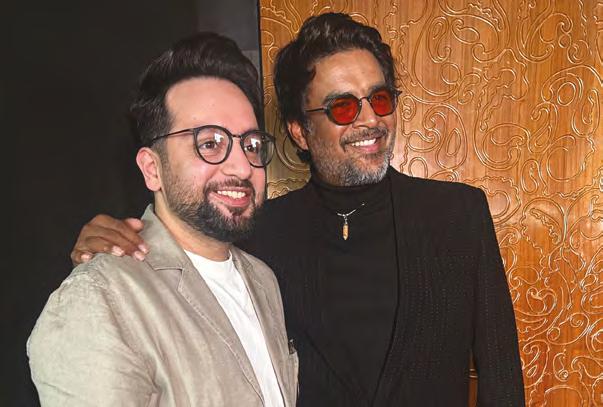
With Indian actor R. Madhavan.
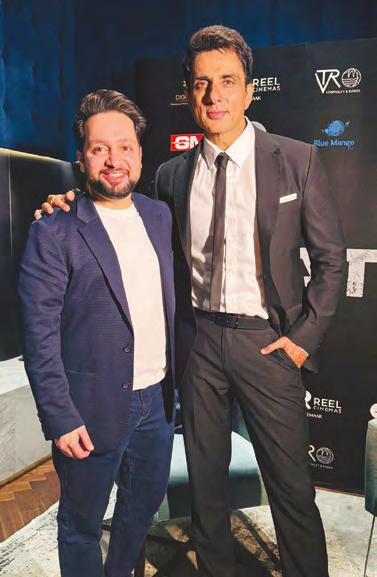
From left: Hiten Umrania with Indian actor Sonu Sood.
In KSA especially, English films commanded over 84% of collection in 2019, but last year that was down to 57%, and in early 2026 it has been closer to 53%
HITEN UMRANIA, ASSOCIATE DIRECTOR – STUDIOS & LIVE EVENTS, ZEE ENTERTAINMENT MIDDLE EAST
that is Gulf Arabic, South Asian diaspora narratives or stories from the subcontinent that speak directly to the communities living here. Animation also continues to perform consistently. Globally, horror has had a strong run and that is reflected here too.
Is the distribution market becoming more competitive?
Yes, and the opening of the Saudi market is the single biggest reason for that. When KSA came online as a
serious theatrical market, it created a commercial opportunity that attracted new players, emboldened existing ones and fundamentally changed the scale of what was worth competing for. Distribution rights that were moderately valuable in a UAE-only context became significantly more valuable when Saudi screens were added to the equation.
In the UAE, the market has historically been led by a relatively concentrated set of distributors. Italia Films Disney, Phars Films, MAF Warner Bros. and Empire Sony have consistently been at the top of the collection charts over the years. These are the majors, backed by studio relationships and franchise slates that give them a structural advantage.
But what has changed is the middle layer. The number of independent distributors has grown, the range of content being brought to market has diversified and the competition for South Asian content rights has intensified.
In KSA, the distributor landscape looks different. Orient Films, MAF Independent Distribution and Phars Films feature prominently alongside the studio affiliates. The market is still
maturing in terms of how distribution relationships are structured there, and further consolidation is likely.
What will define success in the Middle East theatrical market over the next five years?
Well, for one, there is audience intimacy. The organisations that win in this market will be the ones that genuinely understand their audience at a community level and not just as a demographic segment. Social media has made word of mouth faster and more powerful than any marketing campaign. The second is content quality. As streaming continues to elevate what audiences consume at home, the theatrical experience has to justify itself more rigorously. Success will increasingly belong to films and events that offer the spectacle, community and shared emotion you can’t replicate at home.
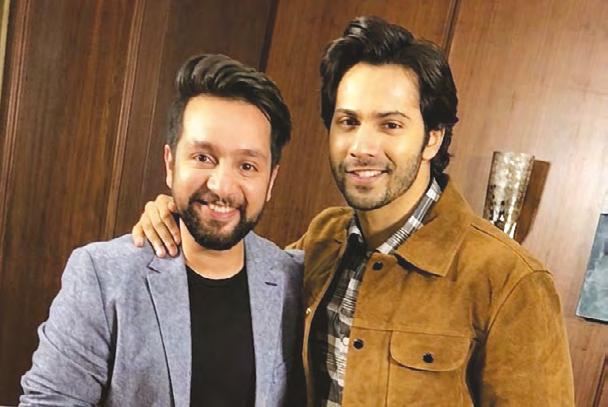
With Indian actor Varun Dhawan.
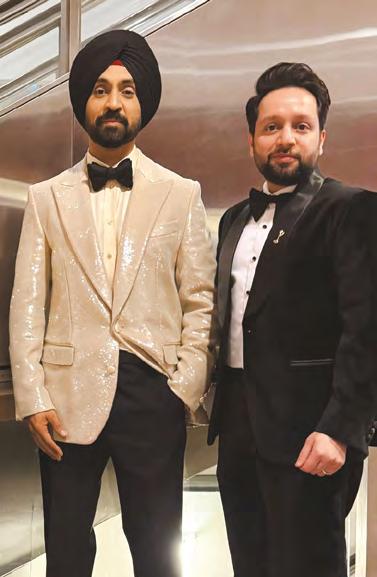
With Indian actor, singer and producer Diljit Dosanjh.
The third is the Arabic content opportunity. Organisations that invest early in building relationships with Arabic-language content creators and talent will have a significant advantage as that industry continues to scale at pace.
The fourth is diversification of revenue around content. Theatrical collection is one revenue stream, but the organisations that build brand partnership ecosystems, event IP, content licensing and digital extensions around their content assets will be far more resilient than those who rely on box office alone.
And the fifth is speed. The organisations that build the ability to move fast, make decisions with conviction and course correct without ego will outperform those with more resources but slower reflexes.
What are some of the big challenges in your role, and how do you address them?
On the content side, one of the realities of working with South Asian films is that most of them are made with an India-first audience in mind. The GCC South Asian diaspora is a different consumer with greater global exposure and a different set of expectations.
On the events side, we work with organisers who come into this market with a certain way of doing things that works in their home country but does not necessarily translate here. The UAE operates with a very specific set of processes –regulatory, logistical and operational. Respecting those processes and timelines without seeking short cuts is critical to operating here. My role is to bridge that gap.
There is also a broader industry conversation about what kind of events work in this market. There is still a tendency among organisers
to chase big international talent as the primary success formula. While headline acts matter, what this audience increasingly responds to is community – events and festivals that feel built for them specifically, that reflect their lives here, that create belonging.
As streaming continues to elevate what audiences consume at home, the theatrical experience has to justify itself more rigorously
HITEN UMRANIA, ASSOCIATE
DIRECTOR
– STUDIOS & LIVE EVENTS, ZEE ENTERTAINMENT MIDDLE EAST
Where do you see the biggest untapped opportunities in the market today?
The first is something I feel strongly about from a brand and advertiser perspective. The South Asian diaspora in the GCC, and particularly in the UAE, is the largest audience segment by population and yet it is consistently underserved by advertisers who default to a one-size-fits-all regional campaign. In KSA, Arabs are the dominant audience and campaigns should reflect that. But in the UAE and broader GCC, South Asians are the largest population and any brand serious about reach needs a strategy that speaks to them specifically.
The second is that the next chapter for media companies in this region is not just about distributing and marketing content, but being part of creating it. That is where I think the most interesting work is still to be done.

IMAGINE UNVEILS AI-ASSISTED SCHEDULING
Imagine Communications has introduced new AIassisted scheduling capabilities within its Landmark Rights & Scheduling platform, integrating machine learning into routine scheduling workflows to improve efficiency. It enables media firms to manage
rights and create precise programming schedules across live, streaming and ondemand channels. A single, frame-accurate playlist optimises programming and maximises reach and revenue, while fullyembedded AI keeps data secure within each client’s environment.

MULTIDYNE DEBUTS NEW FIBRE TRANSPORT SOLUTIONS
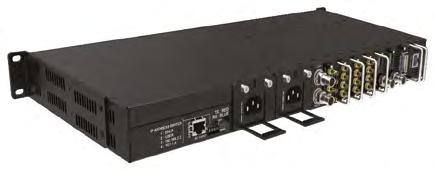
MultiDyne Video & Fiber Optic Systems introduced two fibre transport solutions at the NAB Show 2026. The FiberSaver-10G supports IP workflows such as SMPTE ST 2110, Dante AV and NDI, transporting multiple 10G signals over a single fibre strand and reducing infrastructure needs by up to 94%. It supports a mix of 1G, 10G and 25G connectivity and
includes an optional redundant power supply option for missioncritical use, making it well-suited to mobile units and large venues. The VF-9100, a next-gen upgrade in the VersaFrame Series, is vendor-agnostic. It features a new hardware controller with RESTful API support, a redesigned chassis and improved rack-mount options and upgraded power supplies.
TELOS ALLIANCE SHOWCASES AXIA PULSAR AOIP CONSOLE
Telos Alliance launched its latest AoIP console, Axia Pulsar, at NAB last month. Designed as a compact mixing solution, Axia Pulsar targets space-constrained environments where a hardware console is essential, such as small studios, newsrooms, sports venues and remote broadcast setups. The base unit features eight motorised faders along with
a touchscreen monitor section. An optional expansion module allows the console to scale up to 16 faders. This additional unit can either be attached
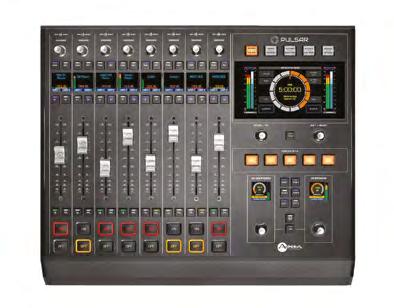
directly to the main surface or configured separately for more flexible installation. The system also supports remote operation via Pulsar Soft, an optional browser-based HTML5 interface that enables full control of the console from computers or tablets, and Pulsar Cast, which facilitates remote audio monitoring. At the core of the system is the Axia StudioCore
integrated console engine, which combines the power supply, a five-port AoIP network switch, audio input and output capabilities, and the mixing engine within a single rack-mounted unit. The mixing engine incorporates Axia GEN2 technology, delivering performance and audio processing quality comparable to the company’s flagship consoles. Axia Pulsar is expected to be available commercially in Q4 2026.
GLOBALM SA RELEASES GMX DISTRIBUTED VIDEO GATEWAY
GlobalM SA has launched its GMX Distributed Video Gateway, a softwaredefined IP media transport platform designed to replace hardwarebased contribution and distribution systems. It also introduced GlobalM Device Control, extending orchestration to encoder and decoder management via API integration, unifying codec configuration and network routing within
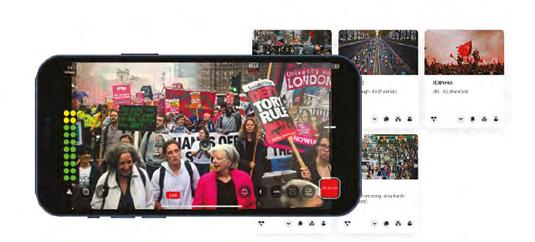
a single framework.
The company unveiled on-demand signal processing services, including frame rate conversion and HDR-
GATESAIR LAUNCHES EDGE GATEWAY AND AIRWATCH365
GatesAir has launched AirWatch365, a managed service for transmission monitoring and support, alongside the AirWatch365 Edge Gateway, an on-premises appliance linking infrastructure securely to the platform. Available through the GatesAir Care programme, AirWatch365 is a 24/7 NOC service that outsources monitoring, diagnostics and support to RF experts, using telemetry, alarm correlation and
analytics to identify issues before they impact operations.
A cloud-based server aggregates data from the Edge Gateway, which collects and normalises data from transmitters and related systems.The architecture supports multi-site monitoring, reporting and alarm management, while maintaining local autonomy during connectivity loss. AirWatch365 scales from single stations to multi-market networks, supporting radio and TV systems.

to-SDR conversion, delivered as softwarebased edge functions on a pay-as-you-go model. The platform supports protocols including SRT,
RIST, RTP, RTMP, HLS and MPEG-DASH within a unified orchestration layer. Infrastructure nodes register with a central control plane, forming a distributed transport fabric for live IP workflows. At its core is GlobalM’s “Pod” architecture, where each pod acts as an ingress, egress or processing node, enabling a scalable virtualised gateway network with consistent routing.
IKEGAMI EXPANDS ON-CAMERA VIEWFINDER LINE-UP
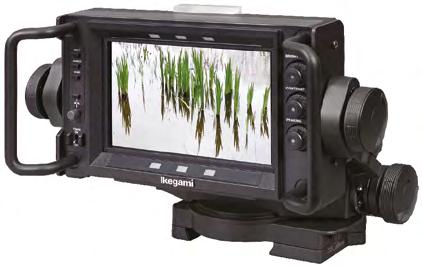
viewfinder line-up with the VFE-P07D, a hybrid unit that combines a monocular OLED viewfinder with a tiltable 3.5-inch TFT LCD monitor for its UNICAM XE series. The design enhances operator flexibility across varied shooting conditions, featuring a full-HD OLED screen for precise focusing in bright and low-light conditions, paired with
an adjustable LCD offering wide viewing angles and flexible positioning. It also incorporates a 0.7 inch OLED display with a 16:9 aspect ratio. Other features include a tally light, on-device controls for brightness, contrast and exposure tools, customisable settings, and a BNC input for external HD and 3G-SDI signal monitoring.
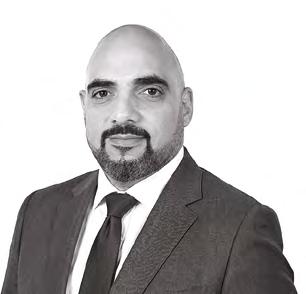
NIZAR HEGAZY
Ramadan 2026 confirmed what instinct has long suggested: there are two distinct audience games in MENA content, the attention game and the quality game
What Ramadan 2026 taught the MENA content industry about its own audience
The most-clicked show of Ramadan 2026 scored 3.5 out of 10 on audience ratings. The highest-rated show of the season never appeared in the top-ten click chart. That gap – between what audiences clicked and what they actually valued – is the most important story the data tells. The MENA content industry would do well to take it seriously. Across 147 titles and 28 platforms tracked throughout the full 30-day Ramadan window, one pattern emerged with unusual clarity: audience attention and audience satisfaction have become two almost entirely separate phenomena. Understanding the difference is now a competitive imperative.
The spectacle trap Ali Klay captured 37.6% of all title clicks – more than double the second-ranked title by season-end. In Egypt, its click share climbed from 30.5% in Week 1 to 38.1% by Week 4. In the GCC, it rose from 10.5% to 18.3%. By every metric of audience attention, it was the undisputed winner of Ramadan 2026. Yet audiences rated it 3.5 out of 10. Meanwhile, Ein Sehreya earned a 9.0/10 rating – the highest of the entire season – and never appeared in the topten click chart. Hekayet Narges scored 8.8/10 as a mid-season entry
and registered +184% week-over-week growth in its final week, yet remained at a fraction of Ali Klay’s click volume. These are not underperformers. They are, by audience verdict, the best content the season produced.
Authenticity as competitive advantage
Among the 147 tracked titles, 11 were produced based on real events or documented history. Their average rating: 6.3/10. The season average across all titles: approximately 5.0. A consistent 1.3-point rating premium, delivered by content grounded in reality.
The most striking example is Sohab El Ard, a dramatic treatment of the Palestinian cause and the Gaza crisis. It earned 8.5/10, placing it third in the full-season ranking.
In the Arab world’s most competitive content window, a show confronting one of the most painful humanitarian crises of our time reached the very top tier of audience quality scores. MENA audiences did not merely tolerate difficult content this Ramadan. They rated it among the best they watched.
For producers, the data point is unambiguous: authenticity is not a creative risk. It is a quality guarantee.
New faces, new rules
The celebrity data tells a parallel and equally instructive story. Every name in the top tier of audience discovery this Ramadan was an emerging actor or actress, not an established star. The industry’s assumption that fame drives discovery is being quietly inverted.
Remarkably, the second mostresearched celebrity page of the season belongs to Sadeer Massoud, director of Ein Sehreya, Ramadan’s highest-rated show at 9/10 (Yango Play Original Content). Audiences were not just following faces – they were discovering the creative forces behind the content. That is a shift in how MENA audiences engage with production, and a commissioning signal the industry should act on now.
Two distinct games
Ramadan 2026 confirmed what instinct has long suggested: there are two distinct audience games in MENA content, the attention game and the quality game. The most competitive producers and platforms will be those who learn to play both, rather than assuming one automatically delivers the other.
NIZAR HEGAZY IS CEO OF MENA CINEMA AND STREAMING INTELLIGENCE PLATFORM, ELCINEMA.COM