CNME Editor Mark Forker examines how a landmark court ruling in the United States, may finally usher in an era of







E-mail: mark.forker@ cpimediagroup.com

CNME Editor Mark Forker examines how a landmark court ruling in the United States, may finally usher in an era of
E-mail: mark.forker@ cpimediagroup.com
As the old adage goes, all good things must come to an end.
And so, the curtain will fall on my 7-year tenure as the Editor of Computer News Middle East at the end of this month.
The latest edition of CNME will be my final and 73rd overall as Editor, and it’s been a rollercoaster of a journey.
It has been a fantastic honour and privilege to be the Editor of CNME, which is such a fabled publication that has been at the heart of technology and IT news across the UAE, since its inception in the early 90s.
A lot has changed since I joined CPI Media Group in 2019.
There was a global pandemic that fundamentally reshaped the way we work, I got married, had two little boys, and relocated back to Ireland.
One of the benefits of the pandemic was the fact that it ushered in a work from anywhere world, and I was able to fulfil my role at CNME by working remotely between Donegal and Dubai.
CPI Media Group has been like a family to me, and I must place on record my sincere thanks and gratitude to all my colleagues past and present.
You made my time at CPI such a memorable one, and I wish you continued success in the future.
I also had the great privilege of working with some of the very best in the business when it comes to PR.
In B2B publishing, relations between PR professionals and those of us in the media can be quite strained at times.
However, I was lucky enough to foster some incredible friendships, and for that I am eternally grateful.
I also count myself very lucky to have worked with so many leaders from the marketing and communications realm, and of course having the chance to interview C-suite executives from some of the world’s biggest technology companies was a great experience.
But the time has come for me to pass the mantle over, and I’ve no doubt CNME will continue to solidify its standing as one of the region’s leading B2B tech publications.
Now, enough about me and my long farewell, let’s have a look at the March-April combined issue of CNME.
I mentioned that a lot has changed since 2019, but there have been seismic changes since the last edition of CNME.
Unfortunately, war broke out across the region in March, but thankfully at the time of writing a ceasefire remains in place.
The UAE, who in the past has been relatively immune from conflicts across the Middle East has been rocked as a direct consequence of the war between the US-Israel and Iran.
There have been economic ramifications across the Gulf, and widespread disruption and chaos, but what has also emerged is a stoic resilience that defines the UAE.
Whilst many have chosen to leave the UAE, far more have opted to remain and better days lie ahead. On the front cover of CNME, I take a deep dive into a remarkable case last month involving Meta and Google in the United States.
Both companies were found liable in a landmark social media addiction trial and were ordered to pay damages of $6m to the 20-year-old plaintiff in the case, who began using YouTube at 6, and Instagram at 9.
She developed body dysmorphia, anxiety and depression as a direct result of her social media addiction, where she spent 16 hours a day scrolling.
Both Meta and Google were found guilty of deliberately developing their applications to be attention-grabbing and addictive and were found negligent in not warning their users of the harm that can be caused by using their platforms.
The decision of the jury in Los Angeles was celebrated wildly by parent and campaign groups, who have been lobbying hard against ‘Big Tech’.
They now believe that the era of accountability has finally arrived for those in Silicon Valley. Also in the magazine are some brilliant interviews with Rahul Misra from IFS, Tarek Jundi from Ankabut, and Srinivas Devulapalli from Publicis Sapient.
We also have some terrific thought leadership articles from Nintex, Mindware and TENTEN Partners to name a few.
I hope you enjoy this edition of CNME, which as I stated above will be my last.
It’s been a blast.
Slán go fóill




CNME rounds up the biggest regional and global developments in enterprise technology, which includes the news that John Ternus has been named as the successor to outgoing Apple CEO Tim Cook, Amazon announced a $25 billion investment in AI company Anthropic - and the EU has launched a new digital age verification app in an effort curtail the impact social media is having on children.
10
16
22
Rahul Misra, SVP and Managing Director for MEA, at IFS, believes that the Middle East remains a largely untapped marketplace for the global Industrial AI leader.
Tarek Jundi, CEO of Ankabut, reveals that his passion for education was a key driver in him deciding to change lanes in his career.
Srinivas Devulapalli, SVP and Managing Director of Publicis Sapient Middle East, outlines why so many enterprises were falling into the trap of pilot purgatory when it comes to AI.



32
Laura Taylor, Partner and Head of Middle East at TENTEN Partners, highlights how the recruitment landscape has shifted dramatically as a direct consequence of the ongoing conflict across the Middle East.
48
Abdullah Altaifi, Regional Vice President, Saudi Arabia, Lebanon, and Bahrain, at Palo Alto Networks, discusses what business lessons learned from the COVID-19 pandemic can be applied amidst the ongoing disruption across the Middle East region.

Dominic De Sousa (1959-2015)
ADVERTISING
Kausar Syed kausar.syed@cpimediagroup.com
Sales Director Sabita Miranda sabita.miranda@cpimediagroup.com
Mark Forker mark.forker@cpimediagroup.com
Daniel Shepherd daniel.shepherd@cpimediagroup.com
Amazon recently announced plans to invest up to $25 billion in Anthropic as the pair deepen a partnership focussed on developing large scale compute infrastructure for generative AI. The deal includes an initial $5 billion investment, with a further $20 billion contingent on commercial milestones. The commitment adds to the $8 billion Amazon has already invested in the AI company.

As part of the agreement, Anthropic will spend more than $100 billion over the next decade on the tech giant’s cloud platform Amazon Web Services (AWS), securing up to 5 gigawatts of compute power using Amazon’s Trainium chips to train and run its AI models.
AWS will also integrate Anthropic’s AI platform, enabling customers to access Claude directly. The companies explained this would simplify deployment, billing and security for enterprises building AI applications.
In addition, the deal will support their joint infrastructure initiative Project Rainier, one of the world’s largest AI compute clusters featuring nearly half a million Trainium2 chips. The tieup also includes plans to expand AI inference capabilities across Europe and Asia.
Apple announced that Tim Cook will become executive chairman of Apple’s board of directors and John Ternus, senior vice president of Hardware Engineering, will become Apple’s next chief executive officer effective on September 1, 2026. The transition, which was approved unanimously by the Board of Directors, follows a thoughtful, longterm succession planning process.
Cook will continue in his role as CEO through the summer as he works closely with Ternus on a smooth transition. As executive chairman, Cook will assist with certain aspects of the company, including engaging with policymakers around the world.
“It has been the greatest privilege of my life to be the CEO of Apple and to have been trusted to lead such an extraordinary company. I love Apple with all of my being, and I am so grateful to have had the opportunity to work with a team of such ingenious, innovative, creative, and deeply caring people who have been unwavering in their dedication

to enriching the lives of our customers and creating the best products and services in the world,” said Cook.
“John Ternus has the mind of an engineer, the soul of an innovator, and the heart to lead with integrity and with honor. He is a visionary whose contributions to Apple over 25 years are already too numerous to count, and he is without question the right person to lead Apple into the future. I could not be more confident in his abilities and his character, and I look forward to working closely with him on this transition and in my new role as executive chairman.”
South Korea and India recently agreed to deepen collaboration on AI, semiconductors and IT. This news marks just one in a number of pacts announced by the two as they pursue an aim to boost bilateral trade to $50 billion.
The pair agreed the framework for a socalled Digital Bridge between the countries which will see them have closer links on the latest technology. It was signed alongside a raft of measures targeting other economic and cultural areas.

In a statement released during the state visit of President of the Republic of Korea Lee Jae Myung to India, Prime Minister Narendra Modi said the moves being announced were “laying the foundation for the success stories of the next decade”.
Other agreements and memorandums of understanding signed included pacts targeting shipbuilding, science and technology, steel, ports, sustainability, financial services, sport and creative industries.
Asserting the two nations were transforming a “trusted partnership” into a “futuristic” one, Modi added “we will realise new opportunities for cooperation across all sectors. Together, we will ensure the progress and prosperity of both our nations”.
Nvidia recently invested $2 billion into the semiconductor company Marvell Technology. This strategic partnership aims to link the latter’s custom silicon and networking technologies with the tech giant’s AI ecosystem.
The partnership targets scalable AI data centres and telecom networks, including 5G and 6G AI-RAN deployments, by combining Marvell’s custom XPU accelerator chips and optical expertise with Nvidia’s GPUs,

CPUs and networking platforms.
The two companies will also collaborate on silicon photonics and optical interconnects.
The pact takes advantage of Nvidia’s NVLink Fusion, which allows customers to build custom XPUs that work with its systems, integrating GPUs, networking, storage and software into a single AI infrastructure.
Nvidia CEO and founder Jensen Huang explained the partnership will enable “customers to leverage Nvidia’s AI infrastructure ecosystem and scale to build specialised AI compute”.
Marvell chair and CEO Matt Murphy stated by connecting its “highperformance analogue, optical DSP, silicon photonics and custom silicon to Nvidia’s expanding AI ecosystem through NVLink Fusion, we are enabling customers to build scalable, efficient AI infrastructure”.
Huawei recently signed up for an Orange programme intended to help reduce the operator's greenhouse gas emissions by almost halve in 2030 through improvements to its supply chain.
Orange stated the Partners to Net Zero Carbon initiative is a core element of its latest Trust the Future strategic plan and is being used to help it
cut Scope 1, 2 and 3 greenhouse gas emissions by 45 per cent over the levels in 2020.
Elizabeth Tchongui, executive director in charge of CSR, said the operator is adopting a big-picture approach to its carbon reduction targets. Orange stated the strategy offers various means for it to cut carbon outputs along with providing the flexibility to focus on its biggest emitters.
It is prioritising its “40 most emission-intensive suppliers”, which account for around 60 per cent of the total arising from procurement activities.
Along with seeking to cut the greenhouse gas emissions relating to goods supplied to it, Orange hopes to up the accuracy of Scope 3 carbon reporting and generally inspire its contractors to focus on decarbonisation.
The European Commission (EC) recently announced that its digital age verification app is technically ready and will soon be rolled out to citizens. This news marks a major step in the European regulator’s efforts to limit children’s access to social media platforms.
EC president Ursula von der Leyen announced the initiative in Brussels, positioning it as a “harmonised” and “Europewide technical solution” for age verification as member states weigh stricter online safety laws, including minimum age limits for social media access.

The open-source app, compatible with smartphones, tablets and computers, will allow users to verify their age using a passport or national ID card. Von der Leyen emphasised the system is “completely anonymous” and designed to confirm age without disclosing any additional personal data.
She said the bloc is moving “with full speed and determination” on enforcement, warning there will be “zero tolerance for companies that do not respect our children’s rights”.
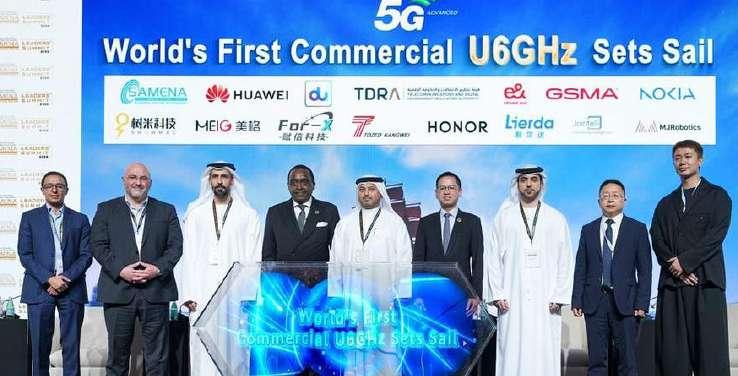
The launch of the world’s first commercial upper 6GHz (U6GHz) network and ecosystem was announced at the SAMENA Council Leaders’ Summit 2026, marking the UAE’s leadership on the U6GHz front, led by the Telecommunications and Digital Government Regulatory Authority (TDRA). This is a significant step in the
evolution of next-generation mobile infrastructure in the UAE and the world. The milestone reinforces the UAE’s position at the forefront of global digital development and reflects a shift in how networks and regulatory approaches are evolving to handle rising data intensity and AI-driven traffic.
In the 5G-Advaned & AI Applications
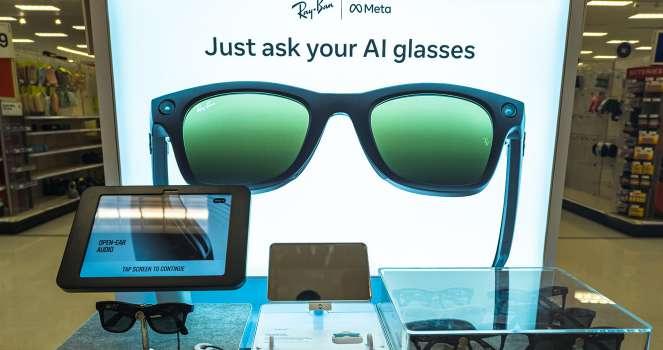
Meta Platforms recently showcased two new Ray-Ban prescription smart glasses in the USA. A product that marks a fresh push by the tech giant to deepen its presence in the fast-growing wearable
AI segment.
The new Ray-Ban Meta Blayzer Optics and Scriber Optics models target users who require everyday corrective eyewear. In a blog post, Meta said
for Resilient Economy Forum, a dedicated session held during the Leaders’ Summit 2026, TDRA’s keynote delivered by Eng. Saif Bin Ghelaita Representative of Director General of TDRA, reaffirmed the UAE’s aims to become a 10 Giga intelligent nation and to firmly support the U6GHz IMT industry and plans to build the world’s first commercial U6GHz network in 2026. The TDRA also called on industry stakeholders, including chipmakers and device manufacturers, to participate in the U6GHz commercialisation.
In the U6GHz joint commercialisation initiation ceremony at the Leaders’ Summit 2026, representatives from the Telecommunications and Digital Government Regulatory Authority (TDRA), the SAMENA Telecommunications Council, Huawei, du, e&, GSMA, Nokia, HONOR, and Tozed affirmed their commitment to the new ecosystem, setting another milestone in the UAE’s digital development journey.
the new products support “nearly all prescriptions” and are designed for “all-day wear”, with ergonomic design features like adjustable temple tips, interchangeable nose pads and a slimmer frame.
Priced from $499, the smart glasses are now available for pre-order with retail sales beginning on 14 April through optical stores and selected international markets.
“Billions of people around the world wear glasses or contact lenses for vision correction, and many Ray-Ban Meta and Oakley Meta owners already add prescription lenses to their AI glasses”, the company explained, stating it aims to build “the deepest lineup of AI glasses across every use case”.
FiLLi Cafe, one of the most iconic tea brands in the United Arab Emirates (UAE), is using Oracle NetSuite to support its mission to elevate everyday moments with distinctive blends and bold flavours.
With NetSuite’s AI-powered enterprise resource planning (ERP) system, FiLLi Cafe has been able to automate financial processes, optimise inventory, and enhance decision-making as it scaled its operations to 114 locations.

Cafe selected NetSuite’s ERP system.
Founded in 2004 as a single cafe in Dubai, FiLLi Cafe has grown into a globally recognised brand operating in 13 countries, including the United States, Canada, United Kingdom, Qatar, UAE, Oman, Pakistan, India, Nepal, Sri Lanka, Mauritius, Seychelles, and Australia. As it expanded into new markets, FiLLi Cafe’s legacy systems struggled to keep up and could not support its complex multi-country operations. To establish a scalable foundation for future growth, it needed to consolidate on a single global system and after careful evaluation, FiLLi
“The remarkable growth of our brand across multiple countries presented operational complexities”, said Ahmed Hasanain, Head of Information Technology, FiLLi Cafe. “NetSuite has helped us centralise our financial processes, automate key workflows, and gain real-time visibility into our operations. This has been instrumental in supporting our global expansion as it has enabled us to work productively with our franchisees and ensure we deliver the high-quality experience our customers expect”.
With NetSuite, FiLLi Cafe has been able to automate its global financial operations and efficiently scale its
Satellite startup Orbital has laid out plans to launch its first test mission in 2027, which they hope will provide a foundation for operating AI data centres in low Earth orbit (LEO).
The company’s first satellite, Orbital 1, is scheduled to launch on a SpaceX Falcon 9 in April next year. Its aim is to validate sustained GPU operation
in orbit, test radiation hardening and eventually run AI workloads commercially.
Orbital noted it has secured funding from start-up accelerator a16z Speedrun to support the initial test and was in the process of making an application to the US Federal Communications Commission (FCC) to deploy a

business to meet increasing customer demand. For example, NetSuite’s financial management capabilities have enabled FiLLi Cafe to automate accounts payable and receivable processes, resulting in faster month-end close and improved cash flow. NetSuite OneWorld helps FiLLi Cafe streamline its tax, reporting, and currency processing requirements across its international subsidiaries. In addition, NetSuite Inventory Management helps FiLLi Cafe optimise stock levels, reduce waste, and ensure product availability.
“FiLLi Cafe’s impressive growth is a testament to its commitment to quality and innovation in the restaurant and hospitality space”, said Nicky Tozer, Senior Vice President, Europe, Middle East and Africa (EMEA), Oracle NetSuite. “With NetSuite, FiLLi Cafe has been able to streamline its operations, gain valuable business insights, and scale efficiently to bring its renowned offering to new markets”.
constellation supporting AI compute infrastructure.
The company is designing and manufacturing satellites housing a cluster of servers with Nvidia chips. It aims to power these using solar panels and cool them by radiating heat into space.
Orbital CEO and founder Euwyn Poon noted AI progress was “being constrained by the grid”, adding data centre “economics are dominated by electricity and cooling, and both are getting harder.”
“In orbit, solar power is continuous and cooling is fundamentally different. Orbital is building compute infrastructure that removes the energy ceiling and scales with AI’s potential”.
Poon believes “the energy ceiling on AI isn’t theoretical, it’s a real constraint that will impede the advancement of intelligence,” asserting a system in space “is the solution”.

CNME Editor Mark Forker managed to secure an exclusive interview with Rahul Misra, SVP and Managing Director MEA, at IFS, in an effort to better understand how they are equipping businesses that operate in asset-intensive industries with the tools to succeed, their unique approach to AI, the opportunities that remain untapped for them across the Middle East marketplace – and the capabilities that makes Nexus Black uniquely different.
Rahul Misra is the SVP and Managing Director MEA, at IFS.
He is regarded by many of his industry peers as one of the best software sales leaders in the entire region.
His ability to nurture, manage, and motivate his sales teams and ultimately deliver results year-on-year unsurprisingly made him somebody that businesses in the world of technology wanted to have within their own organization.
He moved to IFS in April 2025, after a number of years at Oracle.
IFS are enjoying huge success when it comes to helping entities that operate in an asset-intensive space. Misra kicked off our conversation by detailing their approach when it comes to AI.
“IFS is on an AI journey. We’ve adopted a three-pillar strategy for AI. We’ve got embedded AI, which is infused
into the core of our offerings, and we’ve got all our assets on what we would call our unified cloud platform. All those assets are embedded with AI to create use-cases that are designed to make you much more efficient and remove mundane tasks,” said Misra.
In July 2025, IFS acquired TheLoops, to create IFS Loops.
“The concept of IFS Loops is essentially the agentic AI coming into the organization to do those jobs traditionally perceived to be mundane and repetitive and then setting the boundaries that define the role,” said Misra.
Misra then highlighted both the impact of its Nexus
Black offering, and its mega partnership with global AI leader Anthropic.
“The third pillar of our strategy is our Nexus Black offering. We recognized that there were a lot of problems out there that wouldn’t be able to be solved without bringing in the expertise of those who can leverage LLMs, and that’s why we partnered with Anthropic. They are a significant player globally, and are leading the story on enterprise LLMs, and IFS obviously believes the same, and that’s why we took that partnership on,” said Misra.
It’s fair to say that a lot of companies have been guilty of sending out mixed signals
Nexus Black is all about intellect. This is not a pre-packaged application that is available to take to the market, because the use cases are going to be different."
when it comes to their AI strategy and the capabilities of its product portfolio.
However, that is one accusation that can’t be labelled at IFS.
IFS has been consistent in terms of its messaging to the market, and Misra talked about its cradle to the grave business model.
“What we’re trying to tell the market in very simple terms is that if you’re an asset-intensive entity, then IFS possesses the ability to visualize the ownership buying the assets, when and where, and optimizing the maintenance of that asset all the way down to the operation. This not only improves its efficiency, but it also increases its lifespan and gets the maximum value of your capital investment. It’s a cradle to grave model that we adopt. We’re the only company in the marketplace that can do it, no other competitor can match what we do. We have it all on one platform that is composable and depending on the customers’ journey and maturity, then you bring in what is required,” said Misra.
As aforementioned above, Misra’s reputation proceeds him across the technology ecosystem in the Middle East region.
Surprisingly, even though IFS is a huge global player, their market presence is not as large as one would’ve expected that.
However, with Misra at the helm and such a diverse product portfolio under his
arm, that is set to change.
“Look to be honest, the Middle East is an untapped market for us. I mean we’ve been around, and we have a presence here, but we’ve not played in the space that we need to play in. However, that’s my remit, and we’re going to change that. We’re putting people on the ground and we’re bringing in global knowledge and real expertise into the region. We want to be in front of the customers, especially when they are at this point of inflexion where they need to modernize. This is why we’re stepping in to say let us understand your problems and help them get to where need to go to,” said Misra.
Misra expressed his confidence that IFS can increase their market visibility across the Middle East and Africa region - but stressed that regardless of the strength of your own IP, it’s crucial that you get the right go-tomarket strategy.
“We’re very ambitious, and I think we have every right to have that confidence, especially when you consider the IP and product portfolio that we have. But at the end of the day, you need to ensure that your go-to-market strategy is on the money.

When you devise that goto-market strategy then you must consider several factors such as geography in terms of where you’re going to focus on, which industries you are going to target, and what key
What we’re trying to tell the market in very simple terms is that if you’re an asset-intensive entity, then IFS possesses the ability to visualize the ownership buying the assets, when and where, and optimizing the maintenance of that asset all the way down to the operation.”
accounts do you want to win,” said Misra.
The Middle East and Africa marketplace is a big region, that spans 104 countries.
As Misra pointed out, IFS are going to go after the ones where they can extract maximum value.
“We’re going to focus on the Gulf region, particularly places such as Saudi Arabia, UAE, and certain pockets in Africa, where we can drive maximum value. In terms of the industry verticals, we are going to home in on
energy, utilities, renewable and manufacturing, of course there are some sub-verticals such as engineering and construction that we can go after, but those are the big ones,” said Misra.
Earlier in our conversation Misra highlighted the importance of its new strategic partnership with AI behemoth Anthropic.
However, he moved the dial of our discussion towards another key partnership, this time in the form of Microsoft, which he described as one of
their biggest partnerships.
“Microsoft works closely with us because they can see the value. We help Microsoft with their Azure consumption. It is asset-intensive, the ERP doesn’t consume that, it’s the assets and the zillions of data that run across it with AI functionality. But the question is, how do you leverage the likes of PwC, Deloitte and Accenture that are sitting in boardrooms working across these industries to work with us. We want to bring those partnerships to the region,
because at the end of the day you can’t do this on your own,” said Misra.
IFS has a broad and diverse portfolio of solutions and technologies, but one that seems to have captured the imagination is its Nexus Black solution.
Misra highlighted some of its unique capabilities.
“Nexus Black is all about intellect. This is not a prepackaged application that is available to take to the market, because the use cases are going to be different. You essentially can assemble a team of 25-30 of the world’s best AI scientists who look at problem statements and work with our internal teams. They have domain expertise, so we put them in front of our customers, and they solve the problem because they understand it better. Now, what the outcome of this could be is a potential business offering for us to take, because we’ve solved a problem that's potentially universal in nature,” said Misra.
IFS are not only expanding across different marketplaces in the Middle East, but they are also expanding into new industry verticals, and one of those is transportation.
Again, this is where Nexus Black can earn its weight in gold.
“Nexus Black creates so much efficiency within a process, and because of that we’ve added transportation as an industry. We’re going to be building a lot of use cases on railways and metros, and we’re seeing huge
demand across this space, again, that is primarily based around the need for greater efficiency. Transportation is a key industry vertical for us because it is very asset intensive. So, again in summary, my storyboard easily goes across the whole asset lifecycle management, and fits into that cradle to the grave concept and model that I mentioned earlier in the conversation. Where you need more than what we’re offering, that’s when we bring in Nexus Black. Nexus Black can solve your business problem, and allow you to get on with the job,” said Misra. Misra has said that you’d be surprised at how often the diagnosis of what the problem actual is can be a bigger issue than the challenge facing the business.
“The definition of the problem itself can be the bigger challenge at times. They tend to look at the symptoms, but not the root cause of the issue at hand, but it’s so important to solve the root cause, as you simply need to address it, even if you do it in steps then that’s fine, but you can’t ignore the root cause of a problem. IFS is like a surgeon, who knows what the problem is, and can fix it - we’ve seen this issue in the past. We can take it in small steps, but we can solve it, and then show them the

results, and that gives them huge confidence in driving the project further,” said Misra.
Misra reiterated how the industry expertise and knowledge IFS has given them a huge market advantage.
“Look, I think the key thing for us is our industry knowhow, and our technology know-how, and the
We’re very ambitious, and I think we have every right to have that confidence, especially when you consider the IP and product portfolio that we have.”

technology itself, and if you can bring all that together then you’ve got something very powerful. If you can do it quickly then you’re moving the needle even faster and you’re creating new opportunities with SKUs because you can take that as an opportunity to the next one and so on and so forth. I mean business problems may evolve, and business models change, but it’s reusable,” said Misra.
Misra concluded a brilliant conversation by highlighting how important an event IFS Connect MEA is for the
company, which takes place later this year.
Misra said IFS Connect provides him with an opportunity to tell a story.
“IFS Connect is an extremely powerful platform for us. It gives us a chance to get our message out there to a very select audience, and we can tell them what we’re planning to do, and what direction we’re headed. We can bring customers together and speak to them peer-to-peer, and talk about the journey whether it’s good, bad or ugly. The whole narrative
has shifted; we’re elevating the conversation to bring a different kind of engagement to our customers. This is not just us; it reflects the commitment of our executive leadership and the strength of our global partnerships. We’ll have Microsoft, Accenture, PwC, on stage sharing the work we’ve done together globally, along with others joining us. Overall, it’s shaping up to be a high-impact event with the right voices, the right conversations, and real customer relevance,” said Misra.

Tarek Jundi , CEO of UAE-based EdTech leader Ankabut, sat down with CNME Editor Mark Forker, where he revealed his lifelong love and passion for education, his desire to have an impact at scale in the sector, how Ankabut as evolved as an entity under his tutelage, and the importance of their partnerships with WeVideo and Dell Technologies.
Tarek Jundi has enjoyed an exceptional career in the technology industry over the last 25 years.
Jundi is a man that wears many hats.
He’s been a CEO, cofounder, entrepreneur, advisor, venture capital builder and a board member.
Now, Jundi is now on a mission to transform the education sector in his current role as the Chief Executive Officer at Ankabut.
Ankabut was established in Abu Dhabi in 2006 - and is designed to foster an education environment where learning knows no limits.
Jundi has worked for major global technology companies such as Cisco, McAfee, and Omnix International, so a hard pivot towards the field of education may have come as a surprise to many of his industry peers.
However, as Jundi explained at the beginning of
our conversation, education has always been something very close to his heart.
“I have always had a huge passion for education, and I really wanted to have an impact on the education industry at scale. Prior to joining Ankabut, I had a start-up called Mindmovers, that was focused on the edutainment space. The primary objective of the company was to enable our young generation to have access to knowledge from the best minds across the Middle East region. I stepped down from the company, but my co-founder is continuing to manage the day-to-day operations of Mindmovers. However, when the opportunity with Ankabut presented itself, I jumped at it because I felt that this could really allow me to have a much bigger impact beyond my startup, because the scale is different, it’s national,
it’s sovereign, and it could impact bigger communities,” said Jundi.
Jundi highlighted how the UAE has demonstrated tremendous leadership in placing education and research at the very core of future-proofing its economy.
“The education sector is evolving across the UAE, and it’s very clear that the leadership in this country made very deliberate decisions where they decided that education and research was going to be the engine and foundation for their knowledge-based economy. The transformation that we are witnessing is not only
I have always had a huge passion for education, and I really wanted to have an impact on the education industry at scale.”
in the digitization of the classroom, but it’s about rearchitecting education systems completely from scratch. What we need to see moving forward is universities, educational institutions, and research hubs all operating within a single unified innovation ecosystem. That’s the ultimate vision,” said Jundi.
Removing the silos that exist from the academic landscape across the UAE is undoubtedly a challenge, but that’s where Ankabut enters the fray.
“To have this unification between academic institutions and research facilities you need the digital infrastructure and foundation, and it’s in this area where we come into the picture. Ankabut was initially created to be the National Research and Education Network. Our role was to connect schools, universities, and research centers to be in a unified high-performing environment and serve as a cohesive hub to enable this transformation, so everyone could plug into it,” said Jundi.
However, as Jundi points out the purpose, objective and overall mission statement of Ankabut has evolved.
“Look, as the wider market and industry evolved, that inevitably forced us to adapt what we do. We are now entering an era that is centered around data, AI and collaborative platforms that define competitiveness. With that in mind, we’ve moved away from being

an infrastructure provider and have pivoted into being an EdTech enabler. We are providing what we call an AIready unified digital campus and research ecosystem. That’s our new role, and
that’s our new mandate, and this is where we are directing all of our investments,” said Jundi.
Over the last number of years, we have seen several enterprises across multiple
Our partnership with Dell Technologies will strengthen our compute and data activities to serve as a national sovereign EdTech platform in the UAE.”

industry verticals that traditionally would’ve been in direct competition with each other signing strategic partnerships, citing that in the current climate they can no longer go it alone.
Jundi believes the same principles apply in the world of academia.
“To be honest, in my view, an academic institution doesn’t have the capability of innovating on their own, so I believe that collaboration is key, in fact
it’s a necessity, it’s no longer a luxury. What we’re trying to do is envision a world in which educators can focus on education, and we take care of the technology element. Universities need to have an agile and flexible infrastructure that will help them to evolve as fast as the technology. However, at the same time there must be an acknowledgement that they can’t do this without engaging in partnerships. There’s no need to try and
reinvent the wheel, and operate in silos, what we need to do is break the silos. This approach would alleviate issues around total cost of ownership, economy of scale, and ultimately, would make it more affordable.
Academic institutions need to move away from a model of fragmentation, and embrace that unified vision,” said Jundi.
Remaining on the topic of partnerships, the conversation shifted towards some of the key partnerships that Ankabut has, including its strategic collaborations with Dell Technologies and WeVideo.
“Our partnership with Dell Technologies will strengthen our compute and data activities to serve as a national sovereign EdTech platform in the UAE. Our partnership with WeVideo is designed to transform the learning experience to be more adaptive, collaborative, and video-based, which in all reality is where the future is headed. Students now use a whole variety of different platforms to be educated, and the pandemic only accelerated what was happening anyway. Students are no longer just confined or constrained to the classroom, they can now learn through collaborative digital platforms, and videobased content, and both our partnerships with Dell and WeVideo are really helping to redefine and rethink the way we rollout education across the UAE,” said Jundi.
There is a rather eerie
similarity to the current situation across the Middle East region and that of the global COVID-19 pandemic, with schools and businesses again, almost overnight moving to fully remote operating models.
Jundi highlighted how cloud solutions that are designed to support remote learning and hybrid education models are totally different to those needed for enterprises.
“The cloud characteristic that supports education and research is completely different. It has a completely different architecture from any cloud platform or systems that support a standard enterprise. Now there is of course a reason for that, and the reason is the workloads that support education and research would require high-performance computing, low-latency, large data storage and crucially sovereignty. So, when you consider all these factors and elements then that demonstrates the uniqueness needed for any cloud-based platform or system that supports educational institutions through remote learning or on-campus learning,” said Jundi.
The conversation then shifted to the concept of discovery to deployment, and what that means within the parameters of the education sector across the UAE.
“There is a chain and a process when you take an innovation into the cycle of commercialization until it reaches the industries. So,
when there is any patent or IP developed in an innovation or research center and it does not allow this innovation to collaborate internationally it would remain limited within the boundaries of the country. In addition to this, how do we take it further to be adopted by industryspecific testbeds, and that’s where the collaboration comes into the picture with industries such as the Oil and Gas sector. If industries support and fund an IP that comes out of a research hub then the question becomes how can we commercialize it? How can we build it at scale? That’s where Ankabut comes to the table, we can take it to the marketplace, and we can embed it into the ecosystem, that aligns with our vision which is to build an AI-enabled unified digital campus and research ecosystem,” said Jundi.
Jundi outlined how the pain of every academic institution across the region is the issue of fragmentation.
“There is fragmentation at 3 layers. The first layer is the fragmentation at the campus layer in terms of energy and sustainability. The second layer is data. There is data everywhere, there is data in your CRM, ERP and in your research software. Now,

when you try to build any AI use-case on top of that fragmented data then the time will be significant. The third layer of fragmentation is the experience layer. So, if you’re a student every single department could have a different type of presentation application.
It’s very clear that the leadership in this country made very deliberate decisions where they decided that education and research was going to be the engine and foundation for their knowledge-based economy.”

That makes the experience very fragmented if I’m a student. What we want to do is simplify it completely by building a unified approach by focusing on three different areas. By building an AI-ready unified digital campus, we’re bringing the energy, infrastructure and sustainability under one underlying ecosystem,” said Jundi.
Jundi concluded a superb conversation by outlining the role Ankabut is playing in terms of helping enterprises regionally address the talent and skills shortage that is
currently impacting multiple industry verticals due to the rapid advent of new technologies.
“We are developing two different programs. One program is related to internships. We are selecting students from the education ecosystem, and we are collaborating with similar organizations to help distinguished students at high school to really be consistent and build a seamless program once they actually start their higher education journey. We are bringing them into factories
and giving them real handson experience, and at the end of this program we want these students to be hired at the end of the process, that’s the whole point, it’s an internship program that has real intent and purpose. We also have an initiative with a consortium of universities across the UAE to coordinate at a national level in terms of research and student movement, and Ankabut is enabling this consortium. We’re not just bringing them to Ankabut, we are bringing them to the ecosystem,” said Jundi.
Publicis Sapient
CNME Editor Mark Forker sat down with Srinivas Devulapalli , Senior Vice President and Managing Director of Publicis Sapient Middle East, to find out more about how Publicis Sapient is providing AI solutions that are built to deliver, the issue of AI pilot purgatory, the necessity for AI to be wedded to your decisionmaking systems, why AI can never be viewed as just a feature – and the value humans in the loop can drive for enterprises.
Publicis Sapient is a technology powerhouse with over 30 years of experience in helping enterprises to achieve digital transformation.
In recent years, unsurprisingly it has pivoted towards providing enterprises with AI platforms and services. Its mantra is ‘AI that’s built to deliver’.
CNME were afforded the opportunity to sit down with Srinivas Devulapalli, Senior Vice President and Managing Director of Publicis Sapient Middle East.
Devulapalli is a hugely respected and revered business leader in the world of technology, with experience building digital consulting businesses in global markets such as the UK, United States, Asia and the Middle East.
A couple of years ago, a frequently coined term among those operating in the technology space was ‘data is the new oil’.
The nascent catchphrase is ‘AI is everywhere’.
So, naturally enough, AI serves as the foundation to our conversation.
Devulapalli kickstarted our conversation by highlighting that AI can’t be seen as a gimmicky feature, and that for its impact to be truly felt across every layer of the organization then it needs to be part of the overarching infrastructure.
“There is a broad variety of thought when it comes to how AI should be used. However, when it comes to enterprisegrade AI then it needs to be embedded into every aspect of the business. It can’t be a feature. If you look at the whole
When it comes to enterprisegrade AI, it has to be embedded into every aspect of the business. It can’t be a feature.”
lifecycle of enterprise platforms you need to use AI to improve individual productivity, that’s one gamechanger, but you also need to use AI to improve overall solution quality and scalability of solutions. Ultimately, you must embed AI to become that intelligent layer that you need,” said Devulapalli.
The head of Publicis Sapient Middle East said that there are areas where you can let AI be pretty much autonomous and make decisions to improve the quality of the solution at that stage.
“In my opinion when it comes to the enterprise, AI needs to be embedded in systems, workflows, design systems, and decision-making systems. For me it lives and breathes through the entire ecosystem, and entirety of your solutions, and that’s why we think of it as infrastructure versus just a feature,” said Devulapalli.
What has also emerged as a topic of conversation over the last number of months has been that of AI competency.
What has become evident is a clear disparity in terms of know-how when it comes to companies trying to leverage the power of AI into their operations in a bid to enhance productivity and efficiency.
Devulapalli said there needs to be internal governance when developing AI usecases.
“We have been having multiple conversations with clients when it comes to AI, and some clients are very savvy when it comes to how they want to use AI, whilst others don’t have the same clarity. If you’re a retailer then you’re looking for specific KPIs to drive many aspects of the business, which could range from profitability to increasing revenue, if you are a grocer you could be looking at AI to optimize your entire supply chain, and what they have in common is a very specific understanding of where their business can improve if they leverage the power of AI. However, what I’ve seen quite a lot of is businesses that create a backlog of use-cases, and see which ones perform, and that’s almost like a fail-fast approach. There’s nothing wrong with it, as long as you don’t get caught up in just the use-cases, but you need some sort of governance that says what am I driving towards with these 500 AI use-cases? Where am I going? So, you need to govern what you’re trying to do and have a clear

detailed plan for your AI usecases,” said Devulapalli.
The sheer volume of AI pilots that don’t get to the production stage has been well documented, but according to Devulapalli one of the main factors for this is the challenge presented by
legacy systems.
“There is a thing within the industry called ‘pilot purgatory’. There are countless examples of businesses across several industry verticals building a huge volume of pilots that ultimately never see the light
AI needs to be embedded in systems, workflows, design systems, and decision-making systems. For me, it lives and breathes through the entire ecosystem, and entirety of your solutions.”

of day. There’s a lot of issues in pilot purgatory, but one of the primary factors is that they are all built in isolation. There’s a huge disconnect from the legacy system. What most people do with AI pilots is create a controlled volume of data. It’s clean data, perfectly set-up, and it’s in isolation and it has sample datasets that are used to prove the pilot. However, when you try to industrialize the pilot then it becomes a challenge because you are stuck with legacy systems. The overwhelming majority
of AI projects will fail if your business doesn’t modernize their legacy systems. You can’t build AI on pre-AI architecture and then hope it works,” said Devulapalli.
Publicis Sapient are on the record as saying that businesses need to view modernization as a vehicle to drive their growth strategy.
But we know that lifting and shifting legacy systems can be tedious and painful.
However, as Devulapalli points out this isn’t a case of AI vs legacy, he believes that many businesses have come
to the painful conclusion that you can’t build AI on top of legacy systems.
“I think many enterprises now realize that you can’t bolt AI on top of old legacy systems, especially mainframe environments. It just doesn’t work. For example, take the financial services industry, if you’re working with AI then there are a couple of journeys that you need to go on. The first one of those is migrating to a cloud-native AI scalable architecture. When you’re making that journey you
have a lot of what we call RPATHs, and there are about 7 RPATHS, which can allow you to retire some solutions, refactor some solutions and replace some solutions. There is a slew of options available on that journey to modernize your architecture, but you need to think about as end-to-end solutions that you’d actually create,” said Devulapalli.
Devulapalli reserved praise for the leadership that has been demonstrated across the Middle East in terms of what he described as ‘smart government’.
“There was a period when governments across the Middle East region were saying we want to digitize our processes and they did that, and there were no better examples of this than in the UAE and Saudi Arabia. But the push from them wasn’t just to digitize these governments services but instead, optimize them. And we know that the way to optimize it is through the implementation of AI through the entire solution stack, and that’s why they are investing so heavily in it,” said Devulapalli.
One of the ongoing debates since the beginning of the whole conversation on AI has been around the potentially corrosive impact it could have on our society.
Many analysts are suggesting that AI will be the first time an industrial revolution will result in multiple job losses for white collar workers.
Devulapalli understands some of the concerns, but
he firmly believes that AI is designed to complement humans and vice versa.
He also reiterated the need for businesses to embrace the chaotic disruption of AI.
“We don’t look at it as AI vs humans. We look at it through the prism of AI with humans. Publicis Sapient has a core set of AI enterprise products that can enrich, help, and create new architecture and solutions at scale that are cloud native.
At the end of the day, our solutions can fundamentally transform a business. As markets continue to become even more competitive with the advent of AI, then you can either try to defend your position, which is the old world of thinking, or try and differentiate yourself in new markets, or fundamentally disrupt your own existing business model. I believe that most of the world views AI as an opportunity to leapfrog
We’re rooted in innovation. That’s always been central to Publicis Sapient, and we’ve always been a highly innovative and disruptive company.”

defending and get straight to the disrupting part, because nobody is interested in the middle stage,” said Devulapalli.
Devulapalli highlighted the positive role he thinks ‘humans in the loop’ can play in this whole new AI ecosystem.
“I believe that the humans in the loop are the ones that really matter because they have the industry and domain expertise and knowledge. You can then use products to help you accelerate on that vision and then the industry experts can judge is this the right approach, is it going to hit the KPIs that we want, and you can ask it fundamental
questions. For example, if I am using AI to fundamentally change citizen services, am I truly achieving what I want, which is simplicity, the eradication of friction, and ultimately getting the job done? Is AI helping me to do that, and that’s where humans in the loop can come into the fray and start adding real value,” said Devulapalli.
Devulapalli concluded a terrific discussion by highlighting some of the key factors that he believes differentiates Publicis Sapient from its market rivals.
“We’re rooted in innovation. That’s always been central to Publicis Sapient, and we’ve always
been a highly innovative and disruptive company. We’ve always curated our talent pool over the decades and built them up, and I’m an example of someone that has been at Publicis Sapient for over 20 years. Due to innovation being a guiding principle of ours, it has allowed us to build our own AI products – Sapient Slingshot, Sapient Bodhi and Sapient Sustain, and navigate our ship at a much faster pace. We have a great toolbox of products and when you couple that with the very smart people that we have working for us as experts then that enables us to drive exceptional outcomes for our clients,” said Devulapalli.

CNME Editor Mark Forker examines the corrosive role social media is having on children and adolescents, and outlines how a landmark court ruling in Los Angeles, coupled with countries across the world imposing bans on social media use for those under 16, suggests that the era of accountability has finally arrived for Big Tech.
Social media was designed and created to connect people.
The first iterations of social media in the early 00s came in the form of websites such as Bebo and MySpace, and users were captivated.
Facebook was founded in 2004, and then a couple of years later in 2006, Twitter was created.
Undeniably, Facebook and Twitter emerged as the two major social media applications globally, and their rise coincided with the launch of the revolutionary Apple iPhone in 2007, which heralded the dawn of the new modern internet era.
The impact of the iPhone essentially meant that we had internet in our pockets.
Facebook and Twitter were the dominant players in the new world of social media, which was also having a huge impact on the way industries such as advertising and print media traditionally operated.
People were now consuming news via their smartphones, and readership in print media plummeted along with their advertising revenues.
People were now accessing news content on their smartphones for free and were consuming all types of media.
The major media empires were forced to play catch-up and went behind the paywall to offset dramatic losses in print.
Advertisers rediverted their spending away from traditional print and into the new world of social media apps, such as Facebook,
Twitter, YouTube and Instagram.
On the surface everything about social media applications like Facebook and Twitter appeared overwhelmingly positive.
However, that quickly changed when more users began to ask questions over how their data was being used, which was exacerbated by the Cambridge Analytica scandal that broke in 2015.
In addition to this, Facebook and Twitter had become a haven for fake accounts and profiles who spewed bile daily.
The anonymity factor afforded to users across both platforms created what would become known as ‘trolling’.
That Cambridge Analytica scandal was the blue touchpaper that ignited real distrust in social companies such as Facebook and Twitter, now of course both renamed and rebranded as Meta and X respectively.
Meta CEO and CoFounder Mark Zuckerberg were dragged before the US congress to answer hard questions about whether their business practices were ethical and there were growing calls for more to be done to curb the toxicity that was prevalent across the
social media domain.
In 2019, the Christchurch terror attack in New Zealand was livestreamed, and that forced Facebook to introduce curbs on their live features.
The conversation has now shifted away from the vitriol that anonymous users are able to post on social media towards that of the harmful impact it is having on children, following several in-depth reports on children’s overall mental health and development.
A dark underbelly has emerged in recent years in relation to just how addictive these platforms are for children.
As a result of these reports there has been intense pressure over the last number of years for greater governance and control when it comes to social media access, especially for those under the age of 15.
To date, Big Tech has largely paid lip service to the issue, but that all changed in March 2026.
Meta owned Instagram and Google’s YouTube platforms were recently dragged into dock for what proved to be a landmark court case regarding social media addiction.
Google and Meta were accused of deliberately
The jury found both Meta and Google guilty of both failing to warn their users of the dangers of using their applications, and that they were negligent in intentionally designing the platforms to be addictive.”
designing their algorithms to be attention-grabbing, and addictive, which a jury believed led to ‘infinite scrolling’.
The plaintiff was a 20-year-old woman, who was a minor when the case was first filed.
The jury heard how she started using YouTube when she was 6, and Instagram when she was 9, and neither platform made any attempts to prohibit her access due to her age.
She was spending up to 16 hours a day on both platforms, which led her to develop both anxiety, depression, and body dysmorphia.
The jury found both Meta and Google guilty of both failing to warn their users of the dangers of using their applications, and that they were negligent in intentionally designing the platforms to be addictive.
The plaintiff was awarded $6m in damages, with Meta found liable for $4.8 of the suit, whilst Google were forced to cough up the other $1.2m.
Now, considering these companies generate hundreds of millions of dollars in revenue, and have a market capitalization value in the trillions, the damages awarded against them could hardly be described as excessively punitive.
Despite that, the court’s ruling was described as a ‘landmark decision’ that will send shockwaves rippling through Silicon Valley.
Also in the dock were
Snapchat and TikTok, but they decided to settle out of court.
Spokespeople for Meta and Google and their legal counsel expressed their strong dissatisfaction at the court’s ruling and have indicated that they are planning to appeal the decision.
Several parent and campaign groups warmly welcomed the ruling from all over the world, firmly believing that this will now force Big Tech to start taking some accountability, for not only better regulating the content that is uploaded on to their platforms, but also in terms of policing the age of those who use their applications.
The Australian government had commissioned a report in 2025, which discovered that 96% of 10–15-year-olds were using social media, and that 7 out of 10 had been exposed to harmful content.”
Many campaigners hope that others that have been negatively impacted by their social media will take cases against Big Tech and believe if there is an avalanche of court cases then that will force them to finally act.
However, some countries remain highly skeptical over Meta and Google’s promise to tackle the issue head on and are moving to introduce their own legislation that will ban the use of social media for those under the age of 16.
In January, Australia
imposed a ban on all children under the age of 16 using TikTok, X, Facebook, Instagram, YouTube, Snapchat and Threads.
The Australian government had commissioned a report in 2025, which discovered that 96% of 10–15-year-olds were using social media, and that 7 out of 10 had been exposed to harmful content.
This included misogynistic and violent material as well as content promoting eating disorders and suicide.
One in seven also reported experiencing grooming-type behaviour from adults or older children, and more than half said they had been the victim of cyberbullying.
The decision by Australia is the first of its kind, and other nations are watching closely in terms of how they implement the ban.
Interestingly, parents will be held responsible for a potential breach.
Instead, social media companies will face fines of up to $32m for repeated breaches.
The government says firms must take "reasonable steps" to keep kids off their platforms and should use multiple age assurance technologies.
These could include government IDs, face or voice recognition, or socalled "age inference", which analyses online behaviour and interactions to estimate a person's age.
Platforms cannot rely on users self-certifying or parents vouching for their children.
The decision has sparked a whole host of European countries to follow suit.
Earlier this month, Greece announced that in January 2027, all those under 15 will be banned from using social media.
In March, Austria announced it is banning all those under the age of 14 from social media.
In the United Kingdom and France, both are actively legislating policies that will curb the influence of social media on those aged under 16.
Spain, Denmark, and Norway have also pledged to prohibit social media use amongst children and are also in the process of thrashing out the final details of the proposed legislation, which will be rolled out in 2027.
These strong statements on social media usage from countries only serve to demonstrate how the tide has turned against ‘Big Tech’.
A fortnight ago, the European Commission announced that they are rolling out their digital verification app.
The EU's age verification app for online platforms is technically ready and will soon be available to use, European Commission President Ursula von der Leyen has said.
This news marks a major step in the European regulator’s efforts to limit children’s access to social media platforms.
EC president Ursula von der Leyen announced the initiative in Brussels, positioning it as a “harmonised” and “Europe-

technical solution” for age verification as member states weigh stricter online safety laws, including minimum age limits for social media access.
The open-source app, compatible with smartphones, tablets and computers, will allow users to verify their age using a passport or national ID card. Von der Leyen emphasised the system is “completely anonymous” and designed to confirm age without disclosing any additional personal data.
She said the bloc is moving “with full speed and determination” on enforcement, warning there will be “zero tolerance for companies that do not respect our children’s rights”.
The conversation has now shifted away from the vitriol that anonymous users are able to post on social media towards that of the harmful impact it is having on children.”
EC EVP Henna Virkkunen added the watchdog is preparing a European Union (EU)-wide coordination plan to support implementation across the continent, as countries including France, Denmark, Greece, Italy, Spain, Cyprus and Ireland look to integrate the app into their national digital wallets.
EU member states France, Spain, Italy, Denmark and Greece previously took part in trials of the age verification app in July 2025.
The European Parliament in November backed a nonbinding resolution calling for an EU-wide minimum social media age limit of 16. A decision on possible blocwide legislation is expected this summer following recommendations from a special panel on online child safety, von der Leyen added. What has now become evident is that people and governments alike, are now waking up to the real harm and dangers of social media.
The era of accountability has arrived for ‘Big Tech’.
Laura Taylor , Partner and Head of Middle East, at TENTEN Partners, has penned an exclusive thought leadership article for CNME entitled; Navigating Talent Acquisition in a Season of Uncertainty. Taylor believes that given the current challenges caused by the ongoing conflict engulfing the Middle East region, it's critical that businesses lead through empathy.
Discussions around recruitment in the Middle East usually revolve around the rapid-fire expansion of the region’s ‘giga-projects’ and the pursuit of elite talent for the growing AI and financial services sectors.
However, the current geopolitical climate has introduced a new layer of complexity. While the longterm visions of regional leadership remain steadfast, we are operating in a moment where the human element of HR and recruitment has never been more critical.
For many global candidates, including top-tier talent in tech and finance, the decision to relocate is no longer just about the role itself or the benefits on offer.
In a period of heightened uncertainty, candidates are looking for assurances of stability and a sense of physical and emotional security for their families.
The challenge for regional
businesses is clear: how do we maintain momentum when the elite professionals we need are feeling hesitant?
To bridge this gap, Middle Eastern firms must pivot from traditional, transactional recruitment to a people-first advisory approach. This is not the time for rigid checklists or ‘take it or leave it’ offers. In the current climate, it’s vital to lead with empathy.
At TENTEN Partners, we are seeing success in keeping things moving when businesses treat relocation as a phased journey rather than a single, disruptive event.
For example, we recently worked with a firm that secured a top-tier candidate by allowing her to start her tenure remotely from another
part of the world, and another that agreed to a delayed start date to allow a family to monitor the situation before moving.
These allowances provide candidates with the emotional and logistical ‘safety net’ required to plan with confidence. By treating the candidate as a partner whose concerns are valid, organisations build foundational loyalty before the first day of work even begins.
This empathetic approach is particularly visible at banks and within fintech and tech companies.
One of the most remarkable aspects of these organisations across the Middle East right now is their mindset- they remain fully committed to growing and improving, and there is incredible ambition driving these sectors.
We see these companies looking at several paths to innovation, but regardless of how they proceed, those that will excel are those that realise technology is only half the battle.
The next frontier is ensuring those multi-million-dollar investments are matched by the right internal leadership and culture to drive them forward, and we’re seeing that the geopolitical environment is serving as a catalyst for a much-needed rethink of workforce resilience.
When we match high-tech investment with high-empathy leadership, the result is a resilient, future-ready economy that no amount of uncertainty can derail.”

Historically, the ‘ideal’ hire has been defined by a narrow set of global credentials. While international experience remains highly valued, we are now seeing a clear shift. Forward-thinking firms are placing greater emphasis on transferable skills and candidates with existing ties to the region, recognising that reducing relocation friction, from onboarding delays to long-term retention risks, enables faster impact and more sustainable hiring outcomes.
Candidates who already understand the cultural nuances of doing business in
Riyadh, Abu Dhabi or Dubai are often more committed because they have already seen the region’s resilience firsthand. Helping these hires with targeted support or training not only fills immediate gaps but ensures the human side of the business keeps pace with technological investment. It is important to remember that while headlines may tell a variety of stories, the regional economic framework remains incredibly robust.
Confidence in the Middle East continues to be backed by significant institutional moves. We have seen major
players like Blackstone continue their investment streaks, and the Central Bank has proactively rolled out resilience packages to ensure market stability and liquidity.
The UAE in particular is proving that it is far more than just glitz and glamour. It is a country built on strong regulatory frameworks and a long-term commitment to being a global hub for multiple industries including tech and finance.
Business activity is resuming with vigour and the focus has shifted toward future-proofing organisations against any external shock.
The current situation is a test of organisational culture and workforce resilience. Businesses that thrive will be those that view hiring not as a transaction, but as a partnership. By offering flexibility in location and timing, and by valuing regional experience as much as global pedigree, Middle Eastern firms can turn this period of uncertainty into a foundation for long-term stability.
The goal remains the same: to build a world-class workforce that can lead the global stage in areas like AI. However, the path to getting there now requires a softer touch, a broader search and a steadfast belief in the enduring potential of this region. When we match high-tech investment with high-empathy leadership, the result is a resilient, future-ready economy that no amount of uncertainty can derail.


Radisson Blu Hotel & Convention Center Riyadh Minhal
30th August 2026 06:30 PM onwards
In August, CPI will be hosting the inaugural Future Enterprise Awards in Riyadh. The awards are designed to recognize IT and business leaders that are driving rapid digital transformation across the Kingdom.
The KSA Awards want to acknowledge those who are championing change, whether it be from a private or public sector organization, we want to pay tribute to the fearless trailblazers forging a new path and a new identity for the KSA.
For more information about the event and nomination details, please visit the event website below :https://tahawultech.com/ksa-futureenterpriseawards/2026/
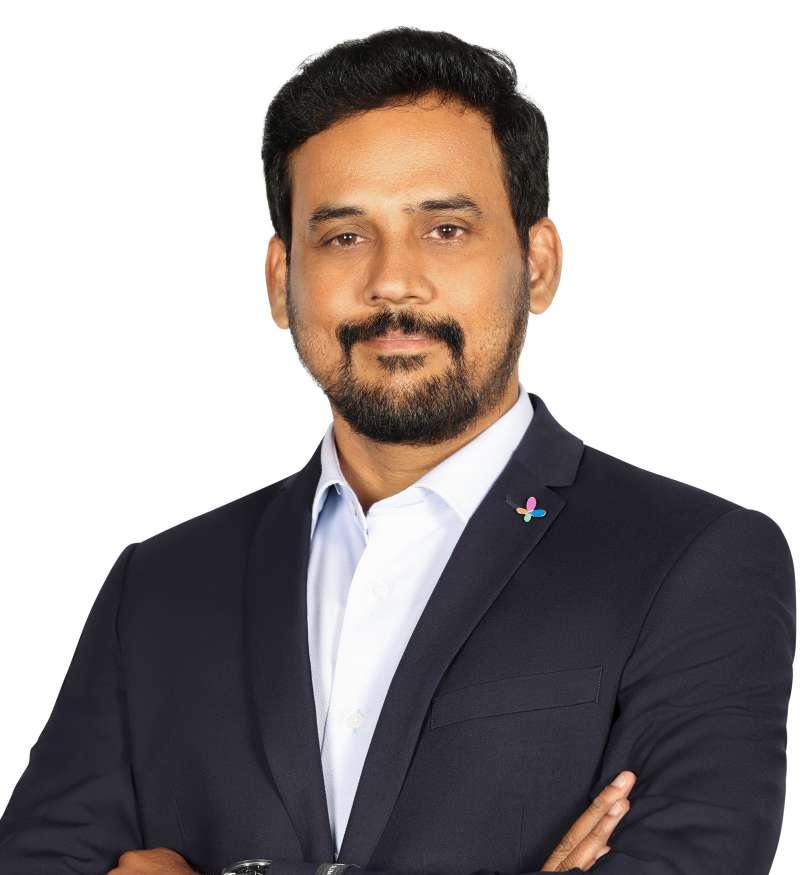
Prasanna Rajendran, EMEA Vice President at Kissflow, has worked at the company for around 20 years. Currently he manages the regional marketing for business via a strong team that can coordinate between dist ant offices in Europe and the Middle East.
How would you describe Kissflow’s growth trajectory in the MEA region over the past year? What’s driving demand here?
Over the past year, we have seen strong and accelerated growth in the region, both for the Middle East and Africa. We are acquiring a lot of new customers, and there is also very good expansion that’s happening in our existing customer base. In the last few years alone we acquired large enterprise accounts like Coca Cola, Mai Dubai, Kanoo Group, BCI in the KSA and Leadway in South Africa. In addition to crossing off several key milestones, like doing large multi-department deployments. Most of our customers started small with a few use cases, but now they have enterprise-wide rollouts. If you look at the reason for this demand, you’ll quickly realise it is due to urgency. Our enterprise customers feel constant pressure to modernise their legacy applications, automate their processes and digitalise their entire operations. CIOs cannot afford
long development cycles, and they also don’t want a heavy dependency on IT.
An ideal solution is a lowcode, no code platform using AI capabilities to help IT teams to deploy faster. Kissflow is an ideal product as we are in a low-code category and we also provide many AI capabilities within the product. It allows people to build processes faster and provides an environment where the business teams can also build applications without heavy dependency on IT.
What makes MEA a strategic market for Kissflow?
Kissflow has been focusing on enterprise demand for roughly two and a half years and MEA is a hub for enterprise accounts. Enterprise accounts are diversified by nature and fast when it comes to adopting the latest technologies.
The other advantage is that decision making in the region often happens from the top down. This makes the adoption much faster, because there is always leadership involvement in any strategic decisions we make. The region has an appetite for a very strong platform standardisation. They want a platform-based standardisation across their process automation and application building.
Which markets within MEA are seeing the fastest adoption of low-code and workflow automation, and why?
There’s a rapid adoption that’s happening in the
markets like UAE, the KSA and South Africa, which are our primary markets. For Kissflow, we want to be vertical-driven and focus on areas like retail, FMCG, real estate, construction and manufacturing. The real reason why it is picking up in these regions is that they possess a very strong vision for digital transformation.
How are enterprises in the Middle East approaching digital transformation differently from Europe or India?
The Middle East is completely different compared to Europe and India. In Europe it is mostly done in increments and driven by IT. They’re still not very comfortable about citizen development and they talk a lot about compliance-first.
India is very cost-driven and not in the league yet. In the Middle East everything is driven by the business outcomes. Leadership is involved in any such decisions and CIOs are expected to deliver results within months, not years. So, they need a platform like Kissflow, which provides the agility and governance to scale any digital operations.
Kissflow has identified retail as a key vertical in MEA this year. What challenges in retail are most urgent today?
An ideal solution is a low code, no code platform using AI capabilities to help IT teams to deploy faster.”
If you look at the retail market, especially in the MEA region, they have to deal with highly distributed store networks. They have to manage a lot of stores and a cross border supply chain in order to keep up with the competition. There is also a heavy dependency on seasonal and promotional cycles, which they have to do in order to keep up with competition. Finally, they face challenges related to workforce scale and management. So they need a system which takes care of end-toend visibility within their operations and also they need to have speedy execution, because with data-driven insights, they can make faster decisions. Cost control is another challenge they face today, because many in the retail market run on low margins. Kissflow is going to help provide an end to end solution, a digital backbone for their operations, which in turn helps them to enable operational visibility, speed of execution, and eventually save on costs.
How are retailers using low-code platforms like Kissflow to modernise operations— especially supply chain, procurement, and store operations?
Procurement and vendor onboarding are two major areas of importance because retailers will have to manage compliance and reduce the cycle times. For these two areas, we have a pre-built solution, which will help
them to control everything involved in procurement. Store operations is another area, Kissflow is used to manage the incidents, checklists, audits and approvals needed to run the day-to-day store operations.
In terms of supply chain workflows, they have to manage escalations from the vendors, track SLAs, and also they have to make sure the exceptions are handled really well. For these operations you will definitely need automation. These are not covered in the core ERP. So you will need a system or solution, like Kissflow which helps them to do end-to-end orchestration among all these systems.
Apart from retail, what opportunities do you see for manufacturing and large conglomerates in the region with workflow automation and process orchestration?
We see a huge opportunity, both in manufacturing and in the conglomerate, because both operate with multiple legal entities, and have a shared services model for their supporting functions, like HR, finance and procurement. They are both also cross functional when it comes to approval chains, either within the entity, or across entities.
They need a system which will help them to automate the use cases in the finance processes like capex approval. For areas like plant operations and maintenance they will need a system in place in order to manage with compliance, quality and audits. Because these are multi-entities, they have a requirement to have
visibility across their whole group of companies.
Can you share a compelling customer story from the Middle East that highlights measurable business outcomes?
Mai Dubai, one of our customers, bought Kissflow last November, and in the present they’ve automated close to 50-60 processes.
The real feedback we got from them is being a lean team they could automate 50 processes in a short span of time and they’ve reduced a lot of manual effort. They’ve also reduced the cycle time by 50% and any approval that takes longer is now automated with Kissflow. They’ve also removed some of the steps in the workflow which are not essential or required for them to do it.
Overall, they’ve taken a platform approach and standardised all the processes across multiple departments.
What KPIs or ROI metrics matter most to MEA customers when they invest in low-code platforms?
MEA customers are choosing a low-code to make sure that they can go live faster. They are not ready for a long development lifecycle, so some of the metrics are timeto-deploy, both in terms of creating a process and in terms of maintaining the application. They also want to reduce the process cycle time, eliminate manual work and errors in the manual operations.
Every enterprise customer, when we sign up with them, has a three or five year engagement with us. So TCO and a return on their investment is something they are very keen on.
How quickly are enterprises in the region able to deploy workflows compared to traditional development approaches? Traditional development will take months to deploy even a single process. If you take, for example, procurement process or order management, it’s easily six-month time investment to influence production. But a low-code platform like Kissflow, can do the same process in weeks and also substitute the domain knowledge of people.
Most enterprise customers, for all the sophisticated applications like procurement automation or distribution/ fleet management, are using the IT team or pro developers, to automate it. These display the advantages of being lean as they can deliver faster, and are also empowering the business people to build applications within the team and department level. One of our customers in the MEA region bought Kissflow to embark on a citizen development journey and the finance team has built around 25 processes on their own, off-course with the guidance from IT. So compared to any traditional development low code is much faster. With the advent of AI, a lot of capabilities will help substitute the domain knowledge and technical knowledge required to build an application.
Delinea
CNME Editor Mark Forker, spoke to Mortada Ayad, VP of Sales – META at Delinea, to find out what measures enterprises should take to combat cybercriminals trying to capitalise on the uncertainty that currently exists due to the ongoing conflict across the Middle East, what role AI can play in ensuring those threats are thwarted and we maintain business continuity across the region, and why privileged access is critical.
What are the best practices and measures that businesses need to put into place to protect their users now working remotely again, and what are some of the lessons that we learned from 2020 that business leaders need to adopt and apply to the current situation across the region?
Periods of disruption create ideal conditions for cybercriminals because people are more likely to act quickly and verify less.
When travellers are trying to rebook flights or access banking services urgently, attackers know that a message appearing to come from a trusted airline or financial institution is far more likely to be believed.
This is why social engineering remains one of the most effective entry points for cyberattacks.
Another key lesson from 2020 is that the traditional
network perimeter has largely disappeared.
With remote and hybrid work now firmly established, employees access systems from multiple locations, devices, and networks. In many ways, that shift is permanent, making identity the new perimeter.
The encouraging part is that the most effective protections are well understood and can be implemented quickly. Organisations should prioritise strong identity controls such as multi-factor authentication and least-privilege access, so employees only reach the systems they genuinely need.
Just-in-time privileged access is also critical. During
periods of disruption, organisations sometimes grant broader permissions simply to keep operations moving. Attackers are acutely aware of this tendency and actively exploit it.
Finally, awareness around brand impersonation is essential. Whether it’s fake airline support accounts or fraudulent banking alerts, employees and customers should always verify official communication channels before sharing information or credentials.
The biggest lesson from 2020 is simple: resilience now depends on identity-centric security, not location-based security.
Organisations should prioritise strong identity controls such as multi-factor authentication and least-privilege access, so employees only reach the systems they genuinely need."
With a wave of cyberattacks across the Middle East region now highly likely, what method of attack do you envisage cybercriminals deploying? Will it be AI-powered phishing emails for a ransomware attack, brand impersonation, or identity theft, perhaps a mix of all of them, or will it be something radically different?
What we’re likely to see are multistage attacks that combine several methods, all centred around compromising identities. For the reasons I previously mentioned, the first step is almost always social engineering. That might take the form of
AI-assisted phishing emails, fake support accounts, or fraudulent login portals.
The goal is straightforward: convince someone to hand over credentials or access tokens. Once attackers obtain a legitimate identity, the focus shifts to privilege escalation. They begin exploring what systems that account can access and attempt to expand those privileges further.
From there, the attack often moves into brand impersonation campaigns targeting sectors with high consumer trust such as airlines, banks, or government services.
These campaigns can harvest large volumes of credentials very quickly. The final stage may involve ransomware, data theft, or lateral movement across corporate systems.
What makes these attacks particularly challenging is that they often look like legitimate activity. If an attacker is using valid credentials, their actions can resemble those of a real employee.
That’s why organisations increasingly need strong identity monitoring and privileged access controls to detect unusual behaviour even when the login itself appears normal.
How much of a role is AI playing in fueling these security threats, and again, what are the key recommendations you'd give enterprises who want to protect their assets and
are desperate to ensure they have business continuity?
AI is certainly changing the scale and speed of cybercrime as attackers can now generate convincing messages in multiple languages, mimic executive communications, and personalise attacks using publicly available data.
However, it’s important not to view AI as creating an entirely new threat landscape. In reality, it’s accelerating tactics that attackers have used for years.
So, for CISOs, the message is not to panic as core defensive principles remain highly effective.
User awareness remains an important first layer of defence, although organisations must also recognise that even well-trained employees can occasionally make mistakes. That’s why strong identity security is essential as a backstop.
Practically speaking, organisations should focus on eliminating standing privileges wherever possible so administrative access is granted only when required and only for a limited period.
Continuous monitoring of identity behaviour is equally important.
Detecting unusual login locations, abnormal privilege requests, or unexpected system activity allows security teams to respond before an incident escalates.
Finally, organisations should pay closer attention to machine identities and service accounts, which often have high privileges but historically weaker controls.
Ivan Milenkovic , Vice President, Cyber Risk Technology, EMEA at Qualys, sat down with CNME Editor Mark Forker, to tackle some of the most pressing issues of the day amidst the backdrop of the ongoing conflict engulfing the Middle East region. A whole plethora of new cyberattacks have emerged, how can enterprises combat them through AI, and what are the key practices they need to adopt to ensure business continuity.
What are the best practices and measures that businesses need to put into place to protect their users now working remotely again, and what are some of the lessons that we learned from 2020 that business leaders need to adopt and apply to the current situation across the region?
When organisations abruptly shifted to remote work during the 2020 lockdowns, the immediate response was a chaotic scramble for operational survival.
The primary lesson learned from that crisis was that relying on legacy Virtual Private Networks (VPNs) and an implicit-trust model is a fundamentally flawed strategy. It expanded the attack surface exponentially, granting unmanaged devices broad access to corporate networks.
Today, as regional tensions
in the Middle East force a return to distributed work environments, we must apply a more empirical, data-driven measurement mindset to derisk the business.
The current threat landscape is highly opportunistic. Scammers are actively exploiting the ambient anxiety of stranded travellers by setting up sophisticated fake airline support accounts on social media platforms like X.
Operating under official branding, these bots intercept customer grievances to harvest Personally Identifiable Information (PII) and booking references. This data is not just used for ticket fraud; it is weaponised to execute targeted SIM swap attacks.
The Dubai Police have issued explicit warnings regarding fraudsters impersonating crisis management officials to socially engineer victims
into handing over UAE Pass credentials and One-Time Passwords (OTPs). Once a SIM is swapped, attackers intercept SMS codes to bypass basic multi-factor authentication, gaining unauthorized access to mobile banking and sensitive corporate applications.
To structurally protect remote users in 2026, businesses must fundamentally abandon perimeter-based thinking and adopt a Zero Trust Network Access (ZTNA) architecture.
This means enforcing granular, least-privilege access where every user and device is continuously verified on a per-session basis, rather than trusting them simply because they successfully logged in once.
Furthermore, organisations must align with the Central Bank of the UAE’s (CBUAE) mandate to phase out highly

vulnerable SMS and emailbased OTPs by March 2026. The quantifiable Return on Control (RoC) for migrating your workforce to phishingresistant authentication (such as FIDO2 passkeys and device-bound biometrics) is one of the most effective risk-elimination measures available.
By prioritising identityfirst security and continuous verification, businesses can systematically reduce their exposure footprint and ensure that remote work continuity does not compromise corporate assets.
With a wave of cyberattacks across the Middle East region now highly likely, what method of attack do you envisage cybercriminals deploying? Will it be AIpowered phishing emails for a ransomware attack, brand impersonation, or identity theft, perhaps a mix of all of them, or will it be something radically different? The UAE is currently operating in an environment where national infrastructure absorbs between 90,000 and 200,000 breach attempts daily, with a significant proportion driven by state-
sponsored threat actors. We will absolutely see a convergence of traditional tactics (i.e. brand impersonation and identity theft) supercharged by artificial intelligence. Attackers are leveraging Generative AI to craft hyperpersonalised, contextually accurate phishing lures in flawless local dialects, significantly increasing the probability of credential compromise and subsequent ransomware deployment. However, if we are looking to measure and prepare for the "radically different"
vector that defines the 2026 threat landscape, we must focus our attention on the compromise of Agentic AI.
Enterprises across the region are rapidly adopting autonomous AI "copilots" and agents to streamline workflows, manage customer service, and assist in software development.
Unlike passive chatbots, these agents possess the autonomy to execute code and interact with internal databases. The severe risk here is that these AI agents often inherit the underlying poor data hygiene of the corporate network – for example such as overpermissioned SharePoint folders, legacy access control lists, and unclassified sensitive documents.
Consequently, the traditional model of phishing, which relies on the psychological manipulation of a human operator, is being rapidly superseded by an attack vector known as "prompt paths".
Instead of tricking an employee, attackers engineer malicious inputs designed to mislead or manipulate the logic of an autonomous AI agent.
For example, an attacker might embed hidden instructions in a public webpage or a document that an enterprise AI is scheduled to ingest. Once processed, the agent can be tricked into inadvertently surfacing proprietary data, escalating privileges, or executing unauthorised actions on behalf of the attacker.
To de-risk this radically different threat, organisations can no longer treat AI merely as a software tool.
Security teams must now treat AI agents as "first-class identities". This requires assigning them strict identity access management (IAM) roles, continuously auditing their behaviours, scoring their risk, and implementing mandatory "human-inthe-loop" failsafes before an autonomous system is permitted to execute any high-stakes operational or financial action.
How much of a role is AI playing in fuelling these security threats, and again, what are the key recommendations you'd give enterprises who want to protect their assets and are desperate to ensure they have business continuity?
Artificial Intelligence serves as a profound, dual-use force multiplier in the modern cyber conflict. From an offensive standpoint, AI compresses the attack lifecycle exponentially.
It automates vulnerability discovery, scales sophisticated social engineering campaigns, and enables the rapid generation of polymorphic malware. In essence, AI has democratised advanced cybercrime, allowing
opportunistic threat actors to execute machine-speed attacks that previously required the resources of a nation-state.
Because the adversary is scaling through automation, enterprises can no longer operate under the assumption that they can build a perimeter secure enough to prevent all possible threats.
To ensure business continuity, leadership must shift from a mindset of absolute prevention to one of empirical risk quantification and structural resilience. You must focus your capital and operational resources on mitigating the most plausible losses that directly impact your core business objectives.
First, organisations must formally operationalise IT Business Continuity Management (BCM) by aligning with frameworks such as ISO 22301.
This begins with a rigorous Business Impact Analysis (BIA) to mathematically quantify the cost of downtime and identify which assets are truly mission-critical.
You must establish precise Recovery Time Objectives (RTO) and Recovery Point Objectives (RPO) based on application tiering – ensuring that Tier 0 systems (like core banking or central ERPs) have
To ensure business continuity, leadership must shift from a mindset of absolute prevention to one of empirical risk quantification and structural resilience.”

active-active redundancy and can recover in under an hour.
Second, to defend against AI-driven ransomware that actively seeks to destroy operational backups, enterprises must enforce the 3-2-1-1-0 backup strategy. This means maintaining three copies of your data across two different media types, with one copy offsite, one copy completely offline or immutable (air-gapped),
and zero errors tolerated during automated verification testing.
Finally, translate your cyber posture into financial terms, specifically Value at Risk (VaR). When you can clearly articulate your exposure and demonstrate measurable, tested recovery capabilities to your board, you transform security from a cost centre into a business enabler.
This data-driven transparency is also the most effective way to utilise cyber insurance, not as a compliance checkbox, but as a strategic financial lever to transfer the residual risk you cannot economically eliminate. Resilience in 2026 is about ensuring that when a breach inevitably occurs, the operational impact is contained, predictable, and rapidly reversed.
AI-first ERP evolution brings agentic workflows, conversational intelligence, and faster, data-driven decision-making to UAE enterprises
Oracle NetSuite recently announced NetSuite Next –the future of NetSuite – for the UAE market. By building in powerful and practical AI capabilities, including embedded conversational intelligence, agentic workflows, and natural language search capabilities, NetSuite Next handles repetitive and complex tasks so businesses can achieve outcomes faster, more intuitively, and with greater confidence.
“NetSuite Next is designed to transform how AI works for business and will provide a collaborative, insightful, adaptive, and AI-centric user
experience for customers in the UAE”, said Nicky Tozer, Senior Vice President, Europe, Middle East and Africa (EMEA), Oracle NetSuite.
“With the latest AI innovations built in, NetSuite Next delivers powerful insights and the ability to autonomously handle both repetitive and complex tasks. By grounding each insight and action in data, which in turn are governed by a user’s existing roles, permissions, and policies, NetSuite Next will enable customers in the UAE to intuitively engage with AI and achieve immediate value”.
Core to the NetSuite
Next user experience is Ask Oracle, a natural language assistant that enables users to search, navigate, analyse, and act across the entire NetSuite dataset using their own words. It delivers context-aware answers, visualisations, interactive content, and reasoning that explains the “how” and “why” behind every response and enables users to more easily collaborate with NetSuite. In addition, Ask Oracle acts across customisations and extensions built on the SuiteCloud Platform, including partner

applications available in the SuiteCloud Developer Network, to provide a seamless experience and contextual insight across the suite.
Customers can switch to NetSuite Next with the press of a button, without having to migrate or disrupt existing customisations. Powered by Oracle Cloud Infrastructure (OCI) and grounded in customers’ data and existing controls, NetSuite Next combines a unified data model with explainable, auditable AI, and the modern Redwood Design System. This foundation will allow NetSuite Next to become a

natural extension of existing operations and ensure that every insight and action is trustworthy. It also enables NetSuite Next to help identify opportunities and risks before they become issues, understand individual users’ roles and context, and handle both repetitive and complex tasks while allowing users to retain control.
NetSuite Next includes:
• AI Canvas: A collaborative workspace embedded in NetSuite. AI Canvas enables users and teams to turn data into action helping them analyse problems, brainstorm
solutions, and trigger agentic workflows, all from a visual workspace.
• Narrative summaries and insights: Automated explanations in record forms, reports, and other pages across the suite. The narrative summaries and insights feature proactively surfaces correlations and trends from NetSuite’s unified data model so users can spot opportunities and risks before they become issues.
• Agentic workflows: Proactive, AI-driven workflows that help automate complex
tasks such as payment proposals, vendor selection, reconciliations, and supply chain operations. The new agentic workflows give users the choice to approve key decisions or allow agents to act autonomously.
• Document and knowledge integration: Large language models extract and validate information from a wide range of sources, including invoices, contracts, receipts, PDFs, policy manuals, training guides, customer testimonials, and purchase orders. This reduces manual work and improves the accuracy of insights by enabling NetSuite to read, interpret, and act on that knowledge, turning isolated documents into actionable workflows. NetSuite has also introduced a series of innovations and product updates across the suite to help customers in the UAE automate and accelerate business processes, drive revenue, and support compliance and governance.
The latest innovations include :
• NetSuite AI Connector Service: Enables organisations to select the AI models that best fit their business needs, define the data they can access, and govern how the models interact with NetSuite. Built on open standards, including the
Model Context Protocol (MCP), the AI Connector Service provides a secure way to connect NetSuite with external AI assistants and agent platforms and includes Standard and Custom MCP tools. To learn more, please visit: NetSuite AI Connector Service.
• NetSuite Exception Management: Helps organisations more efficiently mitigate risk by automatically detecting and managing exceptions across finance and operational data. Organisations can get actionable insights, resolve issues ahead of the period close, and improve operational efficiency with the ability to quickly assess situations and identify transactions that need to be investigated. To learn more, please visit: NetSuite Exception Management.
• NetSuite E-Invoicing: Helps organisations create and share electronic invoices (e-invoicing) and tax data via tax authorities’ platforms and exchange networks from within NetSuite. As a result, organisations can improve the speed and accuracy of invoicing while supporting compliance with the UAE Federal Tax Authority’s mandated e-invoicing framework. This includes customers invited to participate in the pilot phase launching July 1,
2026, and for the wider intended mandate due on January 1, 2027. To learn more, please visit: NetSuite E-Invoicing.
• NetSuite Subscription Metrics: Helps software, high tech, and other subscription-based organisations gain a single, comprehensive, and actionable view across financial and operational performance. Purpose-built to help CFOs and CROs better monitor, manage, and grow their businesses, it brings together customer, subscription, and revenue history and forecasting and provides industry-standard software-as-a-service (SaaS) company metrics, intuitive visualisations, and actionable AI-driven insights. To learn more, please visit: NetSuite Subscription Metrics.
NetSuite Next will be available in English language to customers in the UAE within the next 12 months.
NetSuite AI Connector Service, NetSuite Exception Management, and NetSuite Subscription Metrics are available to customers in the UAE now.
NetSuite E-Invoicing is available to customers in the UAE now. The solution is regularly updated to support customers in line with evolving tax mandates, such as the upcoming UAE Federal Tax Authority (FTA) requirements.

From 31 Aug - 3 Sept 2026 Riyadh Exhibition and Convention Center - Malham, Saudi Arabia

CNME Editor Mark Forker sat down with Abdullah Altaifi, Regional Vice President, Saudi Arabia, Lebanon, and Bahrain, at Palo Alto Networks, to discuss in more detail what business lessons learned from the COVID-19 pandemic can be applied amidst the ongoing disruption across the Middle East region, what new wave of cyberattacks are being launched - and how much of a role is AI playing in driving them.
There have been a lot of similarities made between the onset of the COVID-19 pandemic and the US/Israel v Iran conflict in terms of the fact that almost overnight across the region, we returned to a 'work from home' model, not knowing how long it was going to last for.
However, as the old saying goes, in the midst of every crisis lies great opportunity, and during the global pandemic cybercriminals demonstrated that.
History is repeating itself, as there are multiple reports emerging from across the Middle East that scammers have set-up fake airline support accounts to exploit vulnerable tourists stranded in destinations across the Gulf - and there have also been reports of cybercriminals attempting to gain access to bank accounts.
We spoke to Abdullah Altaifi from Palo Alto Networks to get his take on the current
situation from both a business continuity and cybersecurity perspective.
What are the best practices and measures that businesses need to put into place to protect their users now working remotely again, and what are some of the lessons that we learned from 2020 that business leaders need to adopt and apply to the current situation across the region?
The COVID-19 pandemic forced organizations to adopt home and hybrid working models and this remained standard for many people. It was likely a trend that would have happened anyway, and
the pandemic accelerated and formalized it.
However, whenever there is a situation that suddenly forces more employees to work remotely, organizations must ensure their cybersecurity posture is prepared and that they can secure all of their users, across all devices and locations.
This is something most organizations learned during COVID-19 and they had to keep processes in place to account for ongoing remote and hybrid workers, albeit at a smaller scale compared to during the pandemic.
In the current scenario, we see many organizations in
Business leaders must shift from managing devices to managing identities and data. By unifying security into a single platform, organizations can eliminate the visibility gaps that occurred during the rapid shifts of the past.”

the Gulf region returning to remote and hybrid models, and it’s important that they ensure that all employees are working securely on all their devices in all locations.
For remote working, Palo Alto Networks recommends embracing a Zero Trust Network Access (ZTNA 2.0) model to ensure that security follows the user, not the location, and that there is a continuous inspection of all traffic.
Organizations should also implement Identity and Access Management (IAM) with phishing-resistant multi-factor authentication, while securing employees’ home working spaces through SASE (Secure Access Service Edge).
Business leaders must shift from managing devices to managing identities and data. By unifying security into a single platform, organizations
can eliminate the visibility gaps that occurred during the rapid shifts of the past. This ensures that productivity never comes at the cost of regional compliance or digital integrity.
With a wave of cyberattacks across the Middle East region now highly likely, what method of attack do you envisage cybercriminals deploying? Will it be AIpowered phishing emails for a ransomware attack, brand impersonation, or identity theft, perhaps a mix of all of them, or will it be something radically different?
If we look at the cybersecurity landscape more generally, it’s clear that certain types of attacks are on the rise, and it is common for cybercriminals to use specific events to their advantage.
Malign actors will be aware that many people in the
region are working remotely, and they will factor this into their scams. AI-powered phishing remains a top entry point due to its ability to create sophisticated, hyperpersonalized content and social engineering attacks at volume.
AI is also behind a rise in identity-based attacks, as it leverages data processing and generative techniques to create fake personas and crack credentials, allowing attackers to mimic legitimate user behaviour and bypass traditional authentication filters.
In Saudi Arabia, 68% of organizations experienced at least two successful identitycentric breaches, according to insights from 2025 Identity Security Landscape report from CyberArk, a Palo Alto Networks company.
Furthermore, we see a rise in ransomware where the

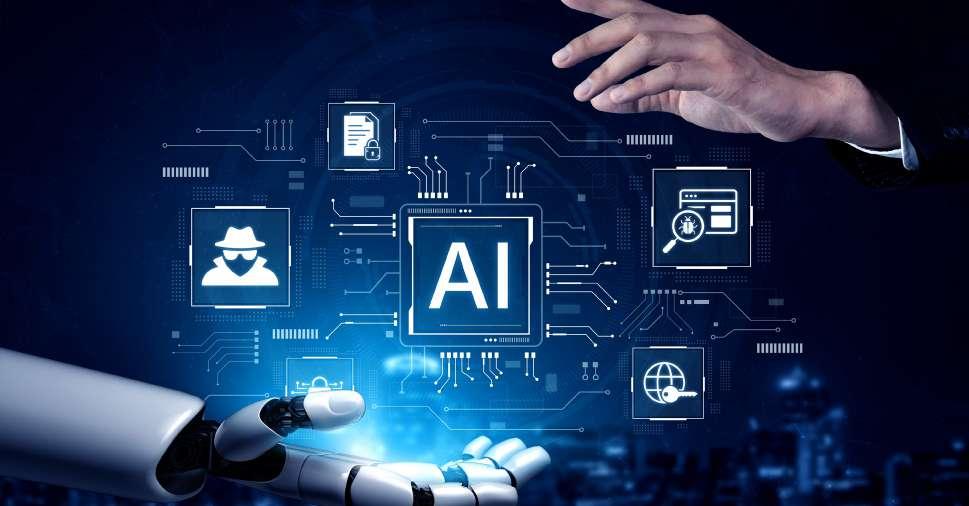
perpetrator encrypting data or threatens to leak sensitive corporate intelligence. Deepfake technology for brand impersonation is also becoming a reality, targeting high-level executives to authorize fraudulent transfers. The common thread is the speed of these attacks, which can happen in hours rather than days and weeks.
Despite this, looking at the current situation, we believe threat activity from nationstate groups based within Iran is mitigated in the near term because of the limited internet connectivity in the country, although Unit 42 observed an escalation in cyberattacks from activists outside the country.
How much of a role is AI playing in fuelling these security threats, and again, what are the key recommendations you'd give enterprises who want to protect their assets and
are desperate to ensure they have business continuity?
AI is fundamentally changing the economics of cybersecurity as it allows cybercriminals to automate attacks and exploit vulnerabilities at speed and with minimal resources. It is no longer viable for enterprises fighting AIdriven threats with manual processes.
To ensure business continuity, Palo Alto Networks recommends that organizations embrace a more holistic ‘platformization’ approach to cybersecurity, which involves integrating AI driven security across the network, cloud, and endpoints into a unified platform, while increasing visibility of network traffic, reducing complexity, and ensuring solutions work together seamlessly to eliminate gaps in an organization’s security posture.
Organizations should also transform their Security Operations Centre (SOC) with AI and automation to drastically reduce response times.
They also need to improve their identity security capabilities, including using Privileged Access Management (PAM), which is critical for preventing breaches by securing, managing, and monitoring the high-risk credentials that attackers target.
Working with Palo Alto Networks, companies can limit lateral movement by enforcing least privilege across human and machine identities.
By restricting access to sensitive systems and auditing all privileged sessions, PAM eliminates unmanaged administrative accounts and helps prevent attackers from using privileges to compromise the network.
Narimane Kurdi is a marketing leader with experience across enterprise SaaS and global luxury brands, combining deep B2B and B2C expertise. Kurdi penned an exclusive thought-leadership feature for CNME, which examines how AI can help marketing teams ‘finish the job’ – take ownership, and circumvent the issue of the pipeline that typically dies in the middle of the funnel.
Revenue marketing was supposed to fix accountability. It did. Marketing teams can now tie spend to pipeline, track engagement by account, and report on contribution to revenue. That problem is largely solved.
But a harder problem was always hiding underneath: most pipeline dies in the middle of the funnel, and nobody owns it.
Opportunities stall during procurement. Buying committees lose alignment. Momentum disappears between stages. And marketing, having done its job of creating the opportunity, steps back and leaves sales to carry the deal alone.
This is not a lead quality problem. It is not a sales execution problem. It is a structural gap in how B2B organizations operate. And across EMEA, where buying environments span
multiple markets, regulatory frameworks, languages, and decision cultures, the gap is wider than anywhere else.
AI is now closing it. Not by making marketing smarter, but by making it operational across the full lifecycle of a deal.
The conversation around AI in marketing is accelerating, but most of it focuses on the same stage of the journey: the beginning.
Better lead scoring. Sharper intent signals. Smarter content personalization. More efficient campaign targeting. These are real capabilities, and they matter. But they all optimize how marketing starts.
The harder, more valuable question is: what happens after the opportunity is created?
Sangram Vajre has been
instrumental in pushing marketing toward revenue alignment. Chris Walker has challenged legacy demand models, arguing that creating demand matters more than capturing it. Both have shifted the industry in important ways.
But both frameworks still center on the front of the funnel. They improve how opportunities enter the pipeline. They do not address what happens when those opportunities slow down, fragment, or stall.
The market is optimizing how marketing starts the journey. The real opportunity is in owning how it finishes.
In most B2B organizations, pipeline health is measured by what goes in at the top: MQLs generated, opportunities created, pipeline dollar value. These

metrics reward creation and ignore everything that happens afterward.
The reality is that a significant share of qualified pipeline never converts. Not because the leads were bad, but because the deals lost momentum. A key stakeholder was never engaged. A procurement process introduced friction that nobody addressed. A champion changed roles and no one rebuilt the internal case.
Across EMEA, this problem is compounded.
A deal that spans Dubai, Riyadh, and London involves different procurement norms, different regulatory requirements, and often different languages in the buying committee. Alignment is not a single conversation. It is a sustained, multi-threaded effort.
Marketing teams are structurally set up to walk away from this complexity. Their metrics reward them for creating the opportunity, not for seeing it through. And so the most
expensive failure in B2B goes unaddressed: pipeline that was built, qualified, resourced, and then abandoned.
From Insight to Orchestration: The Rise of Agentic Marketing
AI has historically been an analytical layer in marketing. It tells you what is happening: which accounts are engaged, which leads are likely to convert, which segments are responding. This is valuable, but it is passive.
The shift now is from insight to orchestration. AI systems that do not just surface information, but act on it. Not replacing marketers, but enabling them to intervene with precision and speed across a deal lifecycle that was previously too complex to manage at scale.
I would describe this as agentic marketing: AI that identifies what is stalling, determines what action is needed, and orchestrates execution across channels, stakeholders, and messaging, continuously, not as a campaign but as an operating model.
Consider a scenario that plays out regularly across EMEA. An opportunity progresses well through initial evaluation. Technical validation is strong. The champion is engaged. Then it enters procurement across two jurisdictions, and three new stakeholders appear who were never part of the original conversation. The
deal stalls. Not because value was questioned, but because alignment was never built with the people who now control the decision.
Traditionally, marketing has no mechanism to respond to this. The deal is in sales territory. The new stakeholders are invisible to the marketing stack. Intervention, if it happens at all, is manual and delayed. With AI-driven orchestration, this becomes proactive. The system identifies the disengaged stakeholders, triggers targeted content aligned to their specific priorities, supports sales with contextual messaging, and re-engages the account at the right moment. This is not campaign execution. This is pipeline orchestration.
The complexity of EMEA buying environments makes pipeline orchestration not just useful, but essential.
A single enterprise deal in the Gulf may involve stakeholders across government-linked entities, private sector partners, and international headquarters. Procurement timelines in GCC markets can run two to three times longer than Western European equivalents. Multilingual buying committees introduce communication friction that standard marketing automation cannot address.
These are not edge cases. They are the norm. And they explain why EMEA pipeline conversion rates consistently
lag behind single-market regions despite comparable or better top-of-funnel performance.
AI orchestration addresses this directly. By maintaining continuous engagement across all threads of a complex deal, adapting messaging to stakeholder context, and identifying risk signals before they become deal-breakers, marketing can play a sustained role in environments where manual coverage is simply not feasible.
In stable markets, the cost of pipeline leakage is hidden. There is enough new demand coming in to mask midfunnel failure. In uncertain markets, the cost becomes visible and painful.
When geopolitical risk rises, buying cycles slow. Decision-making becomes more cautious. More stakeholders enter the process. Budgets are scrutinized more heavily. Existing opportunities are more likely to stall.
The instinct in most organizations is to generate more pipeline to compensate.
The complexity of EMEA buying environments makes pipeline orchestration not just useful, but essential.”
This is expensive and often counterproductive. The opportunities most likely to close are the ones already in motion, where relationships exist, value has been demonstrated, and internal champions are engaged.
When markets tighten, the greatest opportunity is not in creating more pipeline. It is in protecting and progressing what already exists.
AI-driven orchestration enables exactly this. By monitoring engagement, identifying risk early, and enabling timely intervention, marketing maintains momentum even when the broader environment is working against it. In this context, AI is not a tool for efficiency. It is a lever for resilience.
If marketing is going to own pipeline progression, not just creation, then its metrics and operating model need to reflect that shift.
MQLs and pipeline created measure the start of the journey. The next generation of marketing metrics must measure what happens after: stage progression velocity, deal acceleration, stall recovery rate, and revenue influence across the full lifecycle.
This also means moving beyond campaign-driven execution. Campaigns are episodic. Pipeline orchestration is continuous. AI enables an always-on model that is adaptive and

responsive to real-time signals, not constrained by campaign calendars or quarterly planning cycles.
The organizational implication is significant. Marketing is no longer a supporting function that hands off to sales. It becomes a co-owner of revenue, engaged from first touch through close. This requires tighter alignment between marketing, sales, and revenue operations, and a shared accountability framework that reflects the full deal lifecycle.
The Future of Marketing Is Not About Content. It Is About Orchestration.
AI in marketing is most often framed around efficiency:
The market is optimizing how marketing starts the journey. The real opportunity is in owning how it finishes.”
creating content faster, automating repetitive tasks, doing more with less. These are real benefits, but they are incremental.
The transformative shift is not in what marketing produces. It is in what marketing orchestrates. Moving from campaigns to continuous engagement.
From periodic touchpoints to sustained influence. From insight to execution.
The future of marketing will not be defined by who produces the most content or generates the most leads. It will be defined by who can most effectively orchestrate revenue across systems, stakeholders, and the full customer journey.
The biggest untapped opportunity in marketing today is not demand generation. It is recovering and accelerating the pipeline that already exists. AI makes this possible. And for organizations willing to rethink their approach, it represents a fundamental shift in how marketing drives business impact.
Sandhya D’Mello, Editor at Security Advisor Middle East, recently reviewed the new ASUS ExpertBook Ultra, which she described as a ‘powerhouse of productivity’.
When you think of a business laptop, you’d always think of the same typical form and design.
Interestingly, that is not what you’ll notice on the ASUS ExpertBook Ultra; upon first glance, you’ll immediately see its beautiful design and lightweight structure.
It barely weighs a kilogram (0.99 kg to be precise) and is slim enough to disappear inside your bag.
It’s also thin, and despite that, the build quality is among the best I’ve seen.
ASUS didn’t limit the ports on the ExpertBook Ultra.
Aside from two Thunderbolt/ Type-C ports that support power, data, and video output, there are also two USB-A ports, ensuring compatibility with legacy systems and eliminating the need for dongles.
Completing the port lineup is a full-size HDMI port and a headphone jack.
Inside, it’s powered by Intel’s ‘Panther Lake’ CPU that enables the ExpertBook Ultra to deliver an impressive
performance even with its slim profile.
I also didn’t notice any heat issues, which can be attributed to the advanced full-span cooling system called ASUS ExpertCool Pro that manages airflow to keep components cool.
The laptop also comes with 32 GB of RAM and a 1 TB SSD for storage.
One of my favourite features of the ExpertBook Ultra is the 14-inch Tandem OLED display.
Supporting a 3K (2880by1800 pixels) resolution and a refresh rate of up to 120 Hz, HDR (and even SDR) content looks glorious on display, and it’s one of those screens that is just impressive to look at, no matter which angle.
The matte finish on the screen gives it a paperlike touch and feel, which
helps in reducing glare and improving visibility and comfort.
Did I mention that the display is a touchscreen?
The keyboard is wonderful to type on, and the large touchpad is a welcome addition.
Supporting haptic feedback, the touchpad uses a glass touch surface for smooth navigation and six force sensors for better responsiveness.
A dedicated Copilot key is also present on the keyboard, giving you instant access to Microsoft’s Copilot+ suite of features.
Given its portability, I was able to use the ExpertBook Ultra AI tasks without any noticeable effect on battery life.
The ExpertBook Ultra’s enterprise-grade security means that both hardware
When you think of a business laptop, you’d always think of the same typical form and design. Interestingly, that is not what you’ll notice on the ASUS ExpertBook Ultra.”

and software are protected from threats.
There’s ASUS ExpertGuardian, a multilayered defense that includes intelligent threat detection, self-healing BIOS and realtime firmware protection. It simply means the laptop is protected the moment you press the power on, ensuring that sensitive data remains secure from unauthorised access.
The laptop also includes AI-powered software that helps users during meetings.
ASUS MyExpert is a preinstalled tool that uses AI to transcribe meetings and more. These features all run on-device, so you don’t have
to worry about connectivity and privacy.
The best part? These AI tools don’t affect battery life.
Speaking of battery life, the ExpertBook Ultra offers all-day battery life.
I put those claims to the test and used the laptop on a full charge at the start of our workday, and I used it for daily work tasks like reading emails, making video calls,
It’s the ultimate productivity companion made for the modern professional.”
and typing documents, and it powered through the entire day with battery left to spare by the time we finished.
In case you do need to recharge, the laptop supports fast charging that can top up the battery to 30% in just 15 minutes.
The review unit provided by ASUS had a loose hinge, and performance was noticeably slower when on battery.
Overall, the ASUS ExpertBook Ultra is everything you would want in a business laptop, plus more.
It’s the ultimate productivity companion made for the modern professional.
Mostafa Kabel, CTO, Mindware Group, has penned an exclusive thought leadership feature for April’s edition of CNME, which takes a much closer look at the concept of Physical AI, and how it designed to bring intelligence into the real world.
Artificial intelligence is rapidly moving beyond screens and software into the physical world. While generative AI has captured public attention, a more consequential shift is underway.
One that will reshape industries, infrastructure, and the way humans interact with machines. This shift is toward what we call Physical AI.
At its core, Physical AI refers to systems that can sense, decide, and act in real-world environments. Unlike software-only AI, which generates outputs without immediate consequences, Physical AI operates under the constraints of physics, time, safety, and uncertainty. Its decisions do not live in abstraction. They directly affect people, assets, and environments. A mistake is not just an incorrect answer; it can result in real-world damage or risk.
This distinction fundamentally changes
how these systems must be designed. Physical AI requires tightly integrated perception, reasoning, and control, with a strong emphasis on reliability, safety, and accountability.
It is tempting to think of Physical AI as simply robotics enhanced with AI. In reality, it is better understood as AI that happens to have a physical embodiment.
Traditional robotics has long relied on predefined rules and controlled environments. Physical AI, by contrast, prioritizes intelligence - systems that can learn, adapt, and reason under changing conditions.
The “body” of Physical AI, whether a robot, vehicle, or industrial machine, is merely the interface through which intelligence interacts with the world. This broader perspective expands its relevance far beyond robotics,
encompassing autonomous vehicles, medical devices, energy systems, and smart infrastructure.
Moving AI from controlled digital environments into the physical world introduces a fundamental challenge: uncertainty. Real-world environments are noisy, incomplete, and constantly changing. Sensors fail, data arrives late, and conditions rarely match training scenarios.
At the same time, these systems must make decisions in real time, often within milliseconds, and with limited computational resources. Safety and reliability become paramount, as errors can have irreversible consequences.
Integration across hardware, software, networking, and control systems adds another layer of complexity, while testing and validation remain

inherently difficult because not every scenario can be anticipated.
To overcome these challenges, simulation and digital twins are becoming essential tools. Training Physical AI purely in the real world is slow, expensive, and risky. Simulation enables systems to experience millions of scenarios rapidly, including rare or dangerous edge cases.
Digital twins (virtual replicas of physical assets) allow continuous learning by combining simulated and real operational data. Synthetic data further fills gaps where real-world data is scarce. Together, these approaches accelerate development, reduce risk, and improve system robustness.
Industries with complex physical operations and high demands for safety and efficiency will see the earliest impact.
Manufacturing and logistics are already benefiting from gains in productivity and predictive maintenance. Healthcare will follow with intelligent medical devices and robotic assistance. Energy and utilities will use Physical AI for grid optimization and asset inspection, while defense and smart city infrastructure will adopt it for autonomous systems and large-scale coordination.
Physical AI represents a shift from rigid automation to adaptive intelligence. Traditional automation excels in controlled environments but struggles with variability. Physical AI systems, on the other hand, learn from experience and adapt to changing conditions.
edge systems for real-time execution.
Perhaps the most profound impact of Physical AI will be on the relationship between humans and machines. Rather than replacing people outright, these systems are more likely to augment human capabilities.
Physical AI represents a shift from rigid automation to adaptive intelligence."
This transforms how organizations think about operations. Instead of automating predefined tasks, they build systems that continuously optimize performance, safety, and efficiency over time.
A critical enabler of Physical AI is edge computing. Many physical decisions must be made instantly, where cloud latency is unacceptable. Real-time inference at the edge allows systems to perceive and act immediately, ensuring both responsiveness and safety. Edge computing also improves resilience. Systems can continue operating even with limited connectivity and reduces bandwidth and data privacy concerns. In practice, Physical AI relies on a hybrid model: centralized systems for training and distributed
Machines will take on repetitive, hazardous, or precision-intensive tasks, while humans focus on supervision, judgment, and exception handling. This shift will require new skills centred on system understanding and decision-making.
Trust will become a critical factor. Workers must understand both the capabilities and the limits of intelligent systems.
In the near and medium term, Physical AI is more likely to transform jobs than eliminate them. While some roles will evolve, new ones will emerge around system design, supervision, maintenance, and optimization.
The real promise of Physical AI is not replacement, but amplification. By extending human capability into environments that are complex, dynamic, and often dangerous, it opens the door to safer, more efficient, and more intelligent systems across every sector of the economy.
25 hour battery life on one charge*
The Zebra EM45 Mobile Computer brings all the features your workers need in a consumer style they’ll love to use. It’s quick to deploy and built for retail, hospitality, transport, healthcare, and mobile workforces.
• The power of Zebra with sleek consumer ergonomics
• Unmatched productivity and flexibility for your frontline
• Personalised user experience and an intuitive interface
• Latest and fastest wireless connectivity: 5G and Wi-Fi 6E
• Processing power unlocks AI potential
• Simple to set up and manage with Zebra DNA enterprise software

*