





Some milestones arrive as a single contract that moves a technology out of the laboratory and into commercial service. e& UAE has done precisely that, awarding the world's first commercial deployment built on Upper 6GHz 256TRX Giga-MIMO and placing the country on a short list of nations laying the groundwork for the 6G era. We carry that story to the GovTech Awards, a room of people turning national ambition into working public services.
E-mail: sandhya.dmello@ cpimediagroup.com
A digital-first nation is not the one that talks earliest about the future. It is the one that pours the foundations before anyone else is ready to build.
What e& is deploying is not 6G itself. The first implementable standards are not expected until 2028 or 2029, with commercial services around 2030. What the UAE has secured is more valuable in 2026, the architecture and the head start that decide who switches on first when the standards land. The deployment supports the national 6G roadmap led by the TDRA, while Ericsson's June Mobility Report names the GCC among the world's earliest 6G adopters. Government strategy, regulatory clarity and operator investment are moving together.
Such alignment frames the rest of this issue, because the foundations being poured for 6G are the same foundations every other story here depends on. Equinix sets out why liquid cooling has become essential to AI-ready data centres, Submer maps the shift from cloud to edge, and AVEVA makes the case that only enterprise-wide grid intelligence resolves the power and compute paradox. Each reaches the cover story's conclusion, that foundations decide outcomes.
Sovereignty has moved from compliance footnote to board priority. Confluent and Nintex both place operational control at the centre of agentic AI strategy, while Datadobi warns that unstructured data is quietly draining regional IT budgets. ManageEngine adds the governance layer, arguing that trust in autonomous agents is designed rather than assumed through transparency, guardrails and audit trails.
Talent and application complete the picture. Pearson and AWS research shows 88 percent of Saudi higher education leaders crediting AI investment with improving graduate readiness, a Vision 2030 signal worth watching. Epitome Global makes the case for hiring on potential as skills lifespans collapse. Max Fashion and Google Cloud bring one of the region's first virtual try-on experiences to market, Ghassan Aboud Holding unifies its retail and food operations on SAP in eight months, and Dubai Chamber backs the launch of 32 new apps. TII offers a useful counterweight, that smarter design now matters more than raw scale.
World-class foundations matter only when something gets built on top of them. Ericsson's research shows 88 percent of enterprises expect AI to depend on real-time data, yet only 8 percent have scaled it. Government has poured the concrete. Whether national leadership becomes lived advantage now rests with the people reading this.

Radisson Blu Hotel & Convention Center Riyadh Minhal 30th August 2026 06:30 PM onwards

In August, CPI will be hosting the inaugural Future Enterprise Awards in Riyadh. The awards are designed to recognize IT and business leaders that are driving rapid digital transformation across the Kingdom. The KSA Awards want to acknowledge those who are championing change, whether it be from a private or public sector organization, we want to pay tribute to the fearless trailblazers forging a new path and a new identity for the KSA. For more information about the event and nomination details, please visit the event website below :https://tahawultech.com/ksa-futureenterpriseawards/2026/








Research company Sensor Tower recently released findings estimating that OpenAI’s ChatGPT had crossed 1 billion monthly active users (MAUs) on its app in May 2026. This news would make ChatGPT the fastest app in history to reach this number.
In its State of Mobile Report 2026, Sensor Tower found ChatGPT beat the pace set by other popular apps including Google Maps, TikTok, Instagram and YouTube in hitting the 1 billion threshold, a milestone coming three years after launch. The number represents a win for OpenAI in the battle for AI chatbot supremacy, with ChatGPT competing with the likes of Anthropic’s Claude and X’s Grok.
In April, OpenAI revealed it hit 900 million weekly active users as of December 2025 and API usage is more than 15 billion tokens per minute. However, it has not revealed official statistics for 2026.
Samsung Electronics recently began sampling its latest high bandwidth memory (HBM) units among selected customers. This chip is asserted to help maximise computing performance for large language models (LLMs) and next-generation AI systems.
Claiming an industry first with the 12-layer HBM4E unit, the company noted the release followed mass production and commercial shipment of its HBM4 earlier this year.
The latest release is said to achieve transfer speeds of up to 16Gb/s with improved energy efficiency and thermal performance.
Samsung head of memory development Sang Joon Hwang said the

company had “once again demonstrated its distinct technological edge with HBM4E”.
“Through our advanced manufacturing capabilities and preemptive infrastructure investments, we will continue to drive the growth of the global AI memory market”.

He Tingbo, president of Huawei's semiconductors business department, recently outlined a design methodology set to be used in its upcoming Kirin chips.
She backed this approach to provide the means for the company to continue to deliver cutting-edge silicon for mobile devices.
In a speech delivered at the 2026 IEEE International Symposium on Circuits and Systems (ISCAS) in China, the scientist and Huawei director set out the Tau Scaling law which the company
believes enables breakthroughs in transistor density and system performance.
“In the next ten years, we will move from local critical-path folding to full-scale and multi-layer folding, for full-stack optimisation from devices to systems”, He noted. “From 2026 to 2035, as a wide range of R&D exploration goes into products, the transistor density will rise, operating frequency will surge and we keep delivering cutting-edge mobile chips to the market”.
NVIDIA founder and CEO Jensen Huang used his GTC Taipei keynote to announce a wave of new products, platforms, and partnerships that the company says will power what he described as the largest infrastructure buildout in human history, with AI factories scaling from the cloud to enterprises, industries, sovereign infrastructure, and billions of edge devices.
Central to the announcements was a reinvention of the Windows PC for the age of personal AI. NVIDIA and Microsoft unveiled a joint initiative to bring AI agents natively to Windows PCs powered by GeForce RTX and DGX Spark, positioning the desktop as the next frontier for agentic computing.
The DGX Station expanded that vision further, with NVIDIA describing it as a trillion-parameter AI supercomputer on every enterprise desk. Running on Windows, the station is designed to let developers and enterprises prototype,

fine-tune, and deploy advanced AI models locally without depending on cloud-scale data centres.
Inside the data centre, NVIDIA confirmed that the Vera Rubin platform has entered full production. Positioned as the successor architecture to Blackwell, Vera Rubin is engineered to power what NVIDIA calls agentic AI
Meta Platforms recently showcased a new AI agent designed to help businesses carry out day-to-day tasks. A move that supports the social media
giant effort's to raise competition in the enterprise arena.
Meta Business Agent is an AIpowered tool designed to let any

factories, large-scale facilities purposebuilt to train and serve autonomous AI agents at scale.
Huang's message was that the agentic era is no longer a future scenario but an active buildout, with NVIDIA positioning itself as the connective tissue across cloud, enterprise, edge, and the physical world.
business, from a one-person shop to a global enterprise, respond to customers around the clock without missing a beat. It also positions the company to better rival OpenAI, Anthropic and Google in the enterprise AI market.
For businesses that want deeper customisation, Meta is also launching the Business Agent Platform, an enterprise-grade infrastructure layer which connects to hundreds of thirdparty systems including Shopify, Zendesk and Shopee, giving the agent the ability to take real action on a business’ behalf.
Soon, people on WhatsApp will be able to find businesses by searching a name or sharing a contact card in a chat, which means every new customer who reaches out gets a helpful response from the start.
The UK government has recently announced its plans to ban under 16 year-olds from social media and impose wider restrictions on gaming and livestreaming platforms in a landmark intervention to protect children online.
The measures would cover social media platforms including Snapchat, TikTok, Instagram, YouTube, Facebook and X, but exclude messaging services such as WhatsApp and Signal. UK Prime Minister Keir Starmer said the move would “give kids their childhood back”, adding it represents “a line in the sand” as “tech giants had their chance and failed”.
The government is also considering overnight curfews and breaks in infinite scrolling for under-18s. It explained restrictions on some functions would remain on by default even for 16 and 17-year-old users, to avoid a “cliff-edge at 16”.
In addition, the government is seeking restrictions on a wider range of online services viewed as higher risk for children, including live-streaming and communication with adult strangers through gaming websites. AI services designed to simulate intimate relationships with users would face a minimum age limit of 18, with similar

functions also set to become agerestricted across wider AI chatbots.
The proposal will be brought to Parliament by the end of the year, with measures due to come into force in spring 2027.
The announcement follows a consultation earlier this year that drew more than 116,000 responses. Nine in 10 parents backed a social media ban for under-16s, while two-thirds of young people agreed children younger than 16 should be barred from using at least some platforms.
Technology secretary Liz Kendall
Anthropic recently raised $65 billion in its latest funding round, which took its valuation to $965 billion as investor money continues to pour into AI companies.
Financial Times reported Anthropic’s valuation overtook OpenAI’s following the round.
Anthropic plans to use the latest funds to advance “safety and interpretability research, expand compute to meet growing demand” for AI assistant Claude “and scale the products and partnerships our customers rely on”.
said the government was “taking power away from the tech giants and putting it back in parents’ hands”.
Meanwhile, safety technology company Privately SA’s CEO Deepak Tewari warned that while stronger online protections are necessary, age checks must avoid creating “a surveillance infrastructure for children”.
“If age assurance is to become part of online safety policy, the industry must put its money where its mouth is: prove that age checks can be effective, proportionate and genuinely privacypreserving”, he argued.

Hani Nofal, Executive, Head of Technology Solutions Middle East and Africa, NTT DATA.
NTT DATA, a global leader in AI, digital business and technology services, and Nutanix, a global cloud computing company that specialises in hyperconverged infrastructure, have established a strategic partnership to accelerate hybrid multicloud adoption, infrastructure modernisation and AI readiness in Middle East and Africa (MEA).
Across MEA, organisations are increasingly prioritising infrastructure that can support long term innovation. Hybrid cloud, AI and data sovereignty are no longer isolated trends, but interconnected pillars shaping the future of enterprise technology. NTT DATA and Nutanix work together to combine their expertise in systems integration and cutting-edge cloud software to help businesses modernise their infrastructure with confidence.

“This partnership reflects our shared commitment to helping organisations modernise, deliver simplified, secure and scalable infrastructure that responds to the real challenges our clients are facing”, said Hani Nofal, Executive, Head of Technology Solutions Middle East and Africa, NTT DATA. “Together, we can co-create tailored solutions, strengthen regional ecosystems and advance AI initiatives that deliver clear business outcomes”.

Nokia and Lenovo recently agreed another multi-year patent crosslicensing deal to maintain harmony between the two companies.
The companies emphasised their commitment to licensing their respective technologies on fair, reasonable and non-discriminatory terms.
They were tighter lipped regarding the exact details of their latest agreement, though Nokia chief licensing officer Susanna Martikainen said it is

an “amicable” arrangement which the company is happy to have come to.
Taylor Ludlam, VP, deputy general counsel and chief IP officer at Lenovo, pointed to its meaningful contribution to technology development and emphasised the benefits of allowing other companies to access it.
“Effective IP licensing helps companies innovate faster, meet industry standards and bring new products to customers more efficiently”.

Google has begun rolling out Android 17 on its Pixel devices, though some of its headline AI features are not scheduled to arrive for another few months.
A new feature available in the launch is Bubbles, a multitasking tool which lets users collapse any app into a floating window which stays visible on screen, Google stated in a blog post.
Bubbles can be stacked, dragged to position and resized as required. On large-screen and foldable devices, bubbles are docked in a dedicated bar at the bottom of the display.
Screen recording has been updated with a new toolbar and feature called Screen Reactions, which lets users record themselves via the selfie camera while simultaneously capturing what’s on their phone screens.
For foldable device owners, Android 17 introduces a dedicated gaming mode with an optimised 50/50 layout placing a game view on top and a dynamic gamepad below.
Google has also reduced frame drops and improved memory cleanup for high-definition gaming, with native controller remapping available for external controllers.

A world-first commercial deployment in the UAE turns an independent global forecast into something CIOs can plan around, even while 6G itself remains years out.

e& UAE has moved a technology most operators are still trialling into commercial service, awarding a contract to roll out the world's first commercial mobile network built on Upper 6GHz 256TRX Giga-MIMO. Planned for commercial launch in the second half of 2026, the deployment shifts the technology from technical validation to commercial readiness, and it places the UAE on a very short list of markets actively building the foundations for the 6G era.
The headline numbers are deliberately ambitious. The network will use the U6GHz range of 6425 to 6775 MHz, delivering up to 350 MHz of spectrum, combined with 256TRX Giga-MIMO technology that increases antenna capability at each site well beyond standard 64TRX 5G configurations. e& UAE is targeting peak speeds of up to 10 Gbps in the
MarwanBinShakar, ChiefTechnology Officer,e&UAE.
downlink and 1 Gbps in the uplink. Crucially for anyone planning enterprise rollouts, the operator says advanced beamforming helps the higher-frequency spectrum reach coverage levels comparable to existing 3.5 GHz C-band sites, addressing the usual trade-off between capacity and reach.
What turns a spectrum upgrade into a strategic milestone is its anchoring. The deployment supports the UAE's national 6G roadmap led by the
Telecommunications and Digital Government Regulatory Authority (TDRA) , broadening use of the "Golden 6GHz Band" and feeding e& UAE's long-term evolution pathway towards IMT-2030 and 6G.
Marwan Bin Shakar, Chief Technology Officer at e& UAE, framed it as a deliberate bridge between today's customer experience and tomorrow's architecture. "The commercial deployment of U6GHz 256TRX Giga-MIMO is a major step in e& UAE's

network evolution. It will enhance the 5G-Advanced experience for customers today while preparing the architecture needed for 6G. This investment supports the UAE's ambition to be a leading hub for advanced digital infrastructure and future digital services," he said.
A claim, validated by someone other than a vendor
A single operator's "worldfirst" can read as ambition. What gives this one weight is that an independent global benchmark already places the region exactly where e& is now committing capital.
Ericsson's June 2026 Mobility Report names the GCC as one of the few regions expected to be among the early adopters of 6G, alongside the United States, China, Japan and South Korea, on the strength of how early these markets launched 5G. The report's data backs the positioning. At the end of 2025, 5G subscription penetration in GCC countries was 53 percent, one of the highest rates globally. By 2031, 5G is forecast to represent 88 percent of all mobile subscriptions in the region, totalling 84 million. The underlying market profile explains the leadership. The GCC has a small subscriber base relative to other regions, yet high urbanisation, strong consumer spending power and dense deployments make it a natural proving ground. Mobile subscriptions are expected to reach 95

total regional mobile traffic rising from 1.8 EB per month to 3.3 EB per month over the same period.
The GCC's early and extensive 5G deployments are driving a structural shift across the region's telecom sector.
PetraSchirren,President, Ericsson Gulf.
million in 2031, up from 84 million in 2025, while legacy networks fade. Data appetite is climbing in step. Average monthly mobile data per active smartphone in the GCC is forecast to grow from 30 GB in 2025 to 49 GB in 2031, with
Petra Schirren, President of Ericsson Gulf, tied the data to a structural change in the operator business model. "The GCC's early and extensive 5G deployments are driving a structural shift across the region's telecom sector. As traditional telcos transition into digital service providers, the adoption of AI, cloud computing and edge solutions, combined with network slicing, will be the critical next step to deliver customised connectivity," she said.
For a CIO, that sentence is the most important in either
announcement. The operator that serves you is reorganising itself around AI, edge and slicing. The capacity e& is building is the platform that shift runs on.
A note of discipline is owed to readers who have lived through previous generational hype cycles. What e& is deploying is the leading edge of 5G-Advanced, building the architecture 6G will require. It is not 6G itself.
Ericsson sets the real clock. The first implementable specifications for 6G are targeted for finalisation by the end of 2028 or early 2029. The first commercial 6G services are anticipated around 2030, varying by region and country. Global 6G subscriptions are forecast to reach 180 million by the end of 2031, a small slice of a market that will still be overwhelmingly 5G.
The practical takeaway is that 6G readiness in 2026 is a procurement and planning question, not a deployment one. The markets laying the foundations now, the UAE among them, will be the ones able to switch on commercial services first when the standards land.
The reason the added capacity is not a vanity metric sits in a shift Ericsson devotes a full chapter to. Mobile networks were historically designed and dimensioned for downlinkdominated traffic, the video and browsing that defined the smartphone decade. AI-driven and user-generated content is now flipping that assumption. Analysis across 55 service providers in 2025 found uplink traffic growing faster than downlink for the clear majority. Scenario modelling
At the 2026 Formula 1 Japanese Grand Prix at Suzuka Circuit, SoftBank ran a real-world trial deploying five network slices over a shared 5G standalone infrastructure, with multiple use cases running in parallel. More than 315,000 people passed through the gates over three days, streaming video, posting to social media and tapping phones to pay, while broadcast crews transmitted highresolution footage at the same time. The five slices covered highquality SA connectivity for SoftBank users, XR, point-of-sale devices, a millimetre-wave and Wi-Fi
combination, and a millimetrewave wireless camera feed for live broadcast. The principle was simple: build enough headroom first, then apply intelligent control. The results validated the approach. Compared with the same event in 2025, general 5G SA users experienced downlink speeds 4.1 times faster and uplink speeds 14.6 times faster, while premium and payment slices held their service levels even under congestion. The lesson for commercial operators is that differentiated quality and a seamless general experience can coexist.
suggests additional AI traffic could push uplink three times higher in 2031 than in 2025 under a mediumadoption case, and as much as five times higher under a high-adoption case. The drivers are precisely the workloads enterprises are already piloting: AI computer vision, AR-assisted field operations, autonomous systems and sensor-rich devices that stream data upward for cloud and edge processing.
This is where e&'s 1 Gbps uplink target stops being a spec-sheet figure. It is headroom for the AI workloads landing on enterprise roadmaps now.
Capacity alone does not let an enterprise guarantee an outcome. The commercial layer doing that is differentiated connectivity, built on 5G standalone network slicing, and it is scaling fast. Ericsson reports 84 commercially available offerings based on 5G SA network slicing, up from 65 just six months earlier, an annual growth rate of around 58 percent.
For technology buyers, the significance is a change in what connectivity is. Performance is becoming a procurable, SLA-backed attribute that applications and automated systems can request, and be billed for, in real time through network APIs. Connectivity moves from a flat utility to a tiered service, with

assured throughput, low latency or location awareness exposed directly to enterprise developers.
The mirror the report holds up
The harder truth for the region sits in Ericsson's enterprise research. While 88 percent of enterprises expect their AI solutions to depend on real-time data, only 8 percent have fully scaled AI across multiple business areas, and just 18 percent have widely adopted the cellular technologies that provide secure, reliable, realtime mobile connectivity.
Written in collaboration with Qualcomm Technologies, Ericsson's report flags smartglasses and wearables as the new complementary interfaces that will extend digital interactions beyond the smartphone. AI is increasingly acting as the intermediary between users and services, enabling continuous, "heads-up" engagement through voice, vision and gesture rather than discrete app sessions.
The traffic implications are significant. Global smartglasses shipments reached around 10
million units in 2025, with strong double-digit growth projected. Unlike traditional apps, AI-driven XR is heavily uplink-dominated, as camera, audio and sensor data stream continuously to cloud AI, typically at a download-to-upload ratio of around 1:8. Cellular AR can already run on 5G-connected devices today, while 6G is being designed to scale these dataintensive, AI-driven experiences as adoption grows. For networks built for downlink, it is another reason the uplink question cannot wait.

That gap reframes the whole story. The UAE is building world-class network foundations. The open question is whether GCC enterprises are organised to use them. The operators closing that gap, by moving from connectivity provider to strategic AI partner, stand to capture new value. The enterprises that treat mobile as strategic infrastructure rather than a procurement line item will be the ones that convert national leadership into competitive advantage.
For the GCC CIO, the action items are clear enough. Factor uplink into every AI and IoT roadmap. Watch slicing and network APIs as a near-term procurement lever, not a 2030 curiosity. And engage operators as solution partners. The foundations are being poured. Leadership only counts if something gets built on top.
Aided by powerful new AI tools, marketing has never moved faster. Campaigns are launched in days, budgets shift in real time, and dashboards promise instant clarity. But beneath this acceleration lies an uncomfortable possibility: AI may be making marketing decisions worse, and many CMOs won’t realise it until the quarter is over and the spend is gone.
We’ve seen this pattern before. When generative AI first entered the marketing toolkit, it looked like an obvious win. Teams that once spent days crafting copy, scripts, and creative concepts could now produce them in seconds. Output surged. Efficiency improved. On the surface, it felt transformative.
Then the cracks appeared. Content started to feel repetitive. Ideas lacked depth. And, more critically, hallucinations exposed a fundamental issue: AI could produce polished, confident outputs even when the underlying inputs were flawed. You might expect that lesson to have carried over as AI expanded into more consequential areas of
marketing. But the same dynamic is now playing out again. And this time, its in decision-making itself.
Today, AI is increasingly embedded in analytics, attribution, and media optimisation. It promises to turn vast volumes of data into clear guidance around where to spend, what to prioritise, and which channels are driving growth. The outputs are polished, precise, and delivered at speed. But precision is not the same as accuracy.
Just like in content generation, AI in decisionmaking can produce compelling answers based on incomplete or biased inputs. The difference is that now, the stakes are far higher. Instead of a weak headline or a generic campaign, the consequences show up in misallocated budgets, missed opportunities, and
Customer journeys are fragmented across mobile apps, websites, connected TV, retail media networks, and offline interactions.
underperforming growth strategies. And because the outputs look authoritative, teams are more likely to trust them, and act on them with conviction.
From false confidence to eventual failure
This is where the real risk lies. AI doesn’t just make poor decisions possible. It makes them scalable. It creates a false sense of certainty at exactly the moment when scrutiny is needed most. By the time results fail to meet expectations, those decisions have already been operationalised, budgets committed, and strategies locked in.
It’s tempting to see this as a failure of AI. But in reality, AI is simply doing what it is designed to do.
It’s identifying patterns and making inferences based on the data it’s given. The real issue sits beneath it, in something far less discussed but far more consequential — measurement.
For years, marketing measurement has struggled to keep pace with how customers actually behave. Many systems still reflect the simpler era of web-first journeys, fewer channels, clearer
signals. But today’s reality is fundamentally different. Customer journeys are fragmented across mobile apps, websites, connected TV, retail media networks, and offline interactions. They are non-linear, dynamic, and often unpredictable. At the same time, privacy changes have reduced the availability of deterministic signals, forcing greater reliance on modelling and assumptions.
In this environment, measurement systems often present a version of reality that looks complete on the surface but is riddled with blind spots underneath. Conversions appear neatly attributed. Journeys seem linear. Performance looks optimised. But much of this is inferred rather than observed. And that’s the data AI is being asked to act on.
Instead of correcting these gaps, AI works to amplify them. When key signals are missing, it fills in the blanks with assumptions. Over time, those assumptions become embedded in recommendations, which in turn shape budget allocation and strategy. The system begins to reinforce itself. The result is a dangerous feedback loop: AI optimises not for true performance, but for what is most easily measured.
One of the most overlooked aspects of this problem is where measurement is anchored. For most consumers, the centre of gravity is mobile. It’s where
Sarah Maina, Regional Manager, Middle East & France, AppsFlyer.

discovery happens, where engagement deepens, and where intent is most clearly expressed (even if the final transaction occurs elsewhere).
Yet many organisations still treat mobile as just another channel, rather than the connective layer that links the entire customer journey. Measurement frameworks built on web-era assumptions are retrofitted onto mobile environments, rather than designed for them. The consequence is a fragmented view of behaviour that misses critical signals.
Without a strong, reliable anchor that holds up under the constraints of privacy and reflects real user behaviour, omnichannel measurement becomes a patchwork of proxies. And when AI is layered on top of that patchwork, it delivers faster optimisation, not necessarily better optimisation.
CMO inflection point
This is a critical moment for CMOs. The conversation around AI in marketing has largely focused on tools, capabilities, and use cases. But the more important question is far simpler: can you trust the data that is driving your decisions? If the answer is unclear, then scaling AI will only accelerate uncertainty.
The priority, then, is not to adopt more AI, but to sequence its adoption correctly. That starts with rebuilding measurement as a foundation, not a reporting layer. It means identifying where blind spots exist across channels and devices, and distinguishing between observed behaviour and modelled assumptions. It means designing systems that reflect how customers actually move. Only then can AI fulfil its promise as a true accelerator of growth.
For much of the digital era, compliance has been treated as a necessary checkpoint. Important, certainly, but rarely central to competitive strategy. Today, that mindset is changing rapidly across the Middle East as sovereignty moves from a technical consideration buried deep within procurement processes to a board-level business priority shaping investment, infrastructure and AI strategy.
Critically, the conversation is no longer simply about where data is stored. Across the Middle East, sovereignty is increasingly tied to questions around how AI models are trained, where inferencing takes place, who controls operational data flows, and how national digital infrastructure can remain resilient amid rising geopolitical and regulatory uncertainty. In that environment, organisations are looking far beyond traditional compliance checklists and reassessing what operational control truly means in the AI era.
Historically, sovereignty concerns focused primarily on highly sensitive assets such as
financial records, healthcare information or personally identifiable customer data. That definition is now broadening considerably as regulators and enterprises recognise the strategic value embedded within operational data itself.
Metadata, system logs, usage telemetry and analytics data are increasingly being reassessed through the same governance lens. Organisations understand that even seemingly lowrisk operational data can reveal patterns, behaviours or business intelligence that regulators and internal governance teams now expect to be controlled, auditable and protected. As AI adoption accelerates, the issue becomes even more important because intelligent systems depend on enormous volumes of interconnected, real-time data.
This evolution reflects a broader shift in how enterprises understand digital risk. Modern organisations do not simply move data between systems. They move accountability alongside it. The question is no longer limited to whether data physically crosses borders, but whether organisations
retain meaningful oversight over how that data is processed, enriched and ultimately used within increasingly autonomous digital environments.
Consider a multinational bank operating customer support functions across the GCC. If a service request originating in the UAE is accessed by an engineer in another region, does that constitute cross-border exposure? If operational telemetry is processed externally to optimise AIdriven services, who retains oversight? And if an AI platform provider manages the underlying infrastructure and operational workflows, where does accountability ultimately sit?
These are no longer hypothetical governance debates. They are increasingly shaping procurement cycles across regulated industries throughout the Middle East, particularly within financial services, telecommunications, healthcare, energy and government sectors.
The Middle East has entered a new phase of digital maturity where governance, resilience
Karim Azar, Area VP and General Manager, Confluent Middle East

and AI strategy are becoming inseparable. Governments across the region are simultaneously pursuing ambitious AI agendas while strengthening expectations around operational transparency, cyber resilience and sovereign control over critical digital infrastructure. Saudi Arabia’s Personal
Data Protection Law (PDPL), the UAE’s Federal Personal Data Protection Law and evolving governance frameworks emerging from regulators such as the Dubai International Financial Centre (DIFC) and Abu Dhabi Global Market (ADGM) all point toward a region taking digital accountability increasingly
seriously. These frameworks are helping establish clearer expectations around data residency, operational oversight, AI governance and cross-border data handling. At the same time, international regulation is exerting indirect influence on regional organisations. The European Union’s Digital
Operational Resilience Act (DORA), for example, is shaping conversations well beyond Europe itself, particularly among Middle Eastern banks, enterprises and digital service providers operating internationally or serving global markets.
This combination of local ambition and international pressure is changing the nature of enterprise technology discussions. Increasingly, sovereignty and governance conversations are happening before technical evaluations even begin. In many cases, legal, compliance and risk leaders now hold far greater influence over strategic technology decisions than they did only a few years ago.
That shift is also reflected in market behaviour. Recent research shows that Middle Eastern organisations reported the highest rate globally of sovereigntyrelated incidents impacting operations, highlighting how quickly governance expectations are intensifying across the region. At the same time, organisations pursuing sovereign AI and locally governed digital infrastructure increasingly report stronger confidence in operational resilience, risk management and long-term scalability.
One of the more notable developments is the extent to which compliance itself is emerging as a competitive advantage. Enterprises
increasingly want partners capable of demonstrating mature governance practices, transparent operational boundaries and repeatable audit processes rather than simply offering scalable technology.
Access controls, governance frameworks, operational transparency and incident accountability are no longer background functions sitting quietly behind the technology stack. They are becoming central to enterprise trust and long-term differentiation. In sectors such as banking, healthcare and government, the ability to demonstrate operational accountability can now influence purchasing decisions as strongly as performance or cost efficiency.
That shift carries operational consequences for technology providers themselves. Maintaining governance frameworks, responding to increasingly detailed sovereignty assessments and implementing region-specific operational controls requires sustained investment. Yet the providers making those investments are often the ones best positioned to build long-term customer confidence and strategic relevance.
Importantly, this evolution
Organisations are looking far beyond traditional compliance checklists and reassessing what operational control truly means in the AI era.
is not simply about satisfying regulators. It reflects a broader market expectation that technology providers should help organisations navigate increasingly complex governance environments while still enabling innovation at scale. In many ways, vendors are becoming intermediaries between digital transformation and operational accountability.
It is tempting to view the growing focus on sovereignty and compliance purely as additional regulatory overhead. But that interpretation misses the much larger structural shift taking place across the region’s digital economy.
As organisations become more dependent on AI systems, real-time data architectures and autonomous decision-making platforms, governance is moving from the periphery to the centre of enterprise strategy. Operational resilience, visibility and accountability are no longer separate from innovation; they are becoming prerequisites for it.
The next phase of digital competition may therefore be defined less by who can scale the fastest and more by who can build the greatest trust. Organisations that can combine innovation with demonstrable operational control, governance maturity and regional accountability will likely be the ones best positioned for long-term success.

YOU’RE ONE LEAP AWAY
From 31 Aug - 3 Sept 2026 Riyadh Exhibition and Convention Center - Malham, Saudi Arabia

Across the Middle East, manufacturers are navigating a perfect storm of workforce pressures. Labour markets have historically been heavily reliant on expat workers. Skills availability varies widely across shifts and sites. Succession planning is uneven, while unplanned leave, fatigue and turnover introduce daily operational risk. Even as factories invest heavily in automation, cloud platforms and industrial IoT, the human layer of production remains fundamental, and fragile.
The result is a contradiction many manufacturers quietly live with. Plants may be highly connected, instrumented and data-rich, yet still struggle with quality drift, rework and inconsistent output. The issue is rarely a lack of technology. More often, it is the absence of a practical mechanism that ensures work is carried out correctly and consistently on the shop floor, regardless of who is on shift or how experienced they are.
In this environment, operational resilience depends less on adding more systems, and more on strengthening
the link between people, process and performance.
The day-to-day reality inside many Middle East factories is one of constant change. Shifts rotate, teams evolve, and experience levels fluctuate. Under pressure to maintain output, manufacturers often rely on informal workarounds: paper-based instructions, on-the-job learning, or experienced operators filling the gaps left by less seasoned colleagues.
Mistakes under these circumstances are rarely careless. They are human. Steps are skipped because task lists are unclear. Tools are used out of sequence. Checks are completed late during busy periods. Fatigue and sickness increase the likelihood of error, while new employees may not yet recognise when something feels “off”.
Over time, these small deviations accumulate. Scrap increases. Rework becomes normalised. Quality teams spend more time investigating issues than preventing them.


And while MES systems faithfully report what happened, they are often powerless to intervene before problems spread.
Many manufacturers have made significant investments in MES, ERP and machine connectivity. These systems excel at visibility. They tell leaders what is happening across lines, shifts and sites. What they do not do is actively enforce how work should be performed in real time.
In a workforce-constrained environment, visibility without enforcement is not enough. Knowing that a quality check was missed does little to help if the issue is only discovered after hundreds of parts have already been produced.
This is where process control changes the equation, shifting the focus from observation to prevention. By embedding rules, sequences and checks directly into daily operations, it ensures work is carried out correctly, consistently and safely — regardless of who is on the shop floor.
At its core, process control provides digital guardrails for the workforce. It replaces reliance on memory, paper binders and informal
handovers with guided, enforceable workflows that adapt to context.
Operators are led through each step visually and logically, reducing
dependence on language proficiency or prior experience. Tools and devices are integrated directly into the workflow, ensuring they can only be used at the correct moment and within defined parameters. If something goes out of tolerance, the system responds immediately.
Importantly, this approach does not slow production. It removes hesitation, secondguessing and rework. For new or temporary staff, it accelerates time to productivity. For experienced operators, it reduces the risk of complacency during long or repetitive shifts.
Succession remains one of the most difficult challenges for manufacturers in the region. As experienced technicians retire or relocate, years of tacit knowledge can disappear overnight. Process control helps capture that expertise and embed it directly into digital workflows, making best practice repeatable rather than reliant on individuals.
Training becomes continuous rather than episodic. Recurring errors can trigger targeted retraining, while skill verification ensures only qualified operators perform specific tasks. At the same
Many manufacturers have made significant investments in MES, ERP and machine connectivity.
time, standardised processes make it easier to maintain consistency across shifts and sites — a critical requirement as regional manufacturers scale operations.
Regulatory scrutiny and customer expectations continue to rise, particularly in sectors such as automotive, industrial manufacturing and food production. Process control enables traceability down to the level of the operator, tool and task without adding manual reporting overheads. Actions are recorded automatically, exceptions are escalated in real time, and quality teams are alerted before issues propagate. In environments where audits and inspections are routine, this built-in discipline improves outcomes while reducing operational strain.
Much of the smart manufacturing conversation has focused on machines, data and automation. In the Middle East, however, the defining challenge is enabling a diverse and dynamic workforce to perform consistently, every day.
Process control reframes the connected factory around people. By guiding operators, enforcing best practice and responding instantly when something deviates, it turns operational discipline into a system-driven capability rather than an individual burden.
The Middle East is no longer preparing for the AI economy — it is actively building it, and is rapidly emerging as one of the most significant AI markets in the world. AI is projected to contribute $320 billion to the Middle East economy by 2030, with Saudi Arabia and the UAE alone accounting for more than $200 billion of that value. This momentum is being matched by unprecedented infrastructure investment. The region's datacenter market is projected to surpass $9 billion by 2030, driven by hyperscale developments in Saudi Arabia, the UAE, Qatar, Oman, and Bahrain. As AI workloads scale, the centralised cloud model alone will not be enough. The next defining chapter of the region's digital journey will be written at the edge — in the central offices, base-station sites, and regional facilities where compute meets the user.
infrastructure
Processing data closer to the source dramatically reduces round-trip latency, eliminates backhaul congestion, and keeps sensitive data inside the jurisdiction where it is generated. While that advantage is valuable in almost any digital environment, for some applications, low latency is not simply beneficial; it is essential.
Cloud gaming is one example of why edge infrastructure matters. Because gameplay is streamed from remote GPU servers, even milliseconds of delay can impact the user experience, making low-latency GPU compute essential. But meeting that latency budget means putting dense GPU clusters in places that were never designed to host them — and that is where the conversation shifts from network design to physical
infrastructure design. But the importance of edge AI extends far beyond gaming. As AI adoption accelerates, demand for localised GPU infrastructure is growing across industries, from smart cities and industrial automation to healthcare and financial services, where real-time inference is becoming increasingly critical. For the GCC, where mobile penetration exceeds 100% in many markets, 5G adoption ranks among the highest globally, and the gaming market alone is projected to reach $9 billion by 2031, localised GPU compute is rapidly becoming a strategic foundation for the region’s digital economy.
Distributed edge AI infrastructure allows organisations to process and analyse data closer to where it is generated, enabling faster insights and responses.
Edge AI is already reshaping industries across the region.
• Automotive systems using AI for real-time navigation and driver monitoring
• Industrial IoT enabling predictive maintenance and production quality control
• Healthcare wearables providing immediate analysis of patient data
• Smart cities using connected sensors to manage traffic and security
• Retail and agriculture applications driven by realtime data from sensors and devices
Each of these workloads carries a thermal and energy footprint that scales with adoption. In a region where ambient temperatures already stress conventional cooling for most of the year, the decision of how to cool edge compute is not a back-office detail — it is a strategic choice that determines whether deployments are economically and environmentally sustainable at scale.
When it comes to AI infrastructure, the most effective model is emerging as a core-to-edge architecture, with large cloud datacenters supported by networks of edge compute nodes.
But this architecture is only as effective as the physical infrastructure underneath it. Modern AI racks now routinely exceed 50 kW, with next-generation GPU platforms pushing past 130 kW per rack — densities
that traditional air-cooled facilities, and most existing telco real estate, were never engineered to support. Getting core-to-edge right is therefore as much a thermal, mechanical, and site-design challenge as it is a compute or networking one.
These edge nodes provide a huge opportunity for telecom companies to expand their offering, moving beyond connecting users to cloud compute and instead providing the compute itself. Large-scale AI datacenters provide centralised compute power, while distributed edge nodes deliver realtime inference and localised processing. This shift creates a major opportunity for telecom operators.
5G adoption across the GCC is among the fastest in the world, with the UAE and Saudi Arabia consistently ranked in the global top five for mobile network performance. Telcos can implement edge compute nodes throughout their networks, delivering localised GPU-as-a-Service solutions that provide low-latency data processing to local users. That GPU bandwidth can be utilised and monetised as required, whether that be for
The gap between recognising the edge opportunity and operationalising it is wider than most operators expect.
cloud gaming subscriptions or AI inferencing workloads. But that localised GPU compute also opens the door to a very important strategic opportunity – AI sovereignty. Countries and territories all over the globe are beginning to worry about their reliance on foreign entities to provide the AI and cloud infrastructure that their citizens need. Ensuring that the full AI stack that a country or territory relies on is wholly owned and operated within that territory is key to AI resilience. AI sovereignty is no longer only about data residency. It is increasingly about securing long-term control over the infrastructure, compute capacity, and AI services that will underpin national economies and critical industries. For the GCC, building localised AI infrastructure is becoming both a technological and strategic priority.
But that’s only half of the issue. Data regulations like the UAE's Personal Data Protection Law (PDPL) and Saudi Arabia's PDPL insist that personal data is stored and processed locally, with tight controls on access.
Middle Eastern countries that build out full-stack AI solutions, however, can ensure AI resilience, while also avoiding any conflicts of data regulation that could arise from engaging with foreign cloud providers.
Telecom companies can deploy edge compute nodes at scale, providing a credible solution to the sovereign AI

challenge, while also laying the foundation for valuable new revenue models.
The gap between recognising the edge opportunity and operationalising it is wider than most operators expect. Retrofitting a central office or a base-station shelter for 50–130 kW GPU racks is not a procurement exercise; it is an engineering exercise that touches power distribution, cooling topology, structural
loading, water and heatrejection strategy, and operational safety. Getting any one of these wrong compromises performance, sustainability targets, and the economics of the entire deployment.
This is where specialist advisory and design partnership becomes decisive. At Submer we work alongside operators and developers from the earliest stages — site assessment, thermal modelling, density planning, liquid-cooling architecture,
and total-cost-of-ownership analysis — well before a single rack is ordered. By treating the edge as a design problem first and a deployment problem second, operators avoid the costly cycle of building, discovering thermal or power limits, and rebuilding.
The age of AI is accelerating, and the need to own and control that AI infrastructure has never been more important. Owning it begins with designing it properly.
AVEVA
Smart allocations around investments in data, compute and automation reduce fuel use, defer capacity and create new market services – and pay back fast.
We can read this on a smartphone because of Thomas Edison. When the American inventor flipped the switch on his power station at Pearl Street in lower Manhattan, it sparked the beginning of the electrical era. At first, his system only powered a few blocks. What turned that local curiosity into the backbone of modern life was not incremental lampby-lamp improvements. Rather, it was systemic scale that created the national (and international) infrastructure we rely on.
As we push through with the energy transition, today’s utilities confront a similar inflection point. Artificial intelligence (AI) may illuminate aspects of the business world, but only enterprise-wide grid intelligence can transform the system. As we look to electricity to cut global greenhouse gas emissions, smart grids that encompass the entire energy ecosystem are the way forward.
Global electricity demand grew at 4.3% last year, a step change from the previous year’s 2.5% rate, according to the International Energy Agency (IEA). The biggest
growth has come from data centers, the physical infrastructure behind AI. Data centers’ electricity use could double by 2030, the agency says – just about the time generative AI’s economic dividend of $7 trillion, as estimated by Goldman Sachs, could start paying off. Over the intervening five years, we will see the Jevons Paradox at work firsthand – though by 2050 electrification could total 60% of all reductions needed to achieve net-zero emissions.
Economics lesson apart, utilities will need to make strategic decisions about grid modernisation, and with them, asset allocation. We can’t delay – extreme weather events are already underscoring the limits of traditional infrastructure.
Comprehensive digital transformation lights the path forward. IEA forecasts show that digital technologies could save $1.8 trillion of grid investment globally through to 2050 by extending the lifetime of grids, while also integrating renewables and minimising supply interruptions.
The utilities that dominate
over the next decade will be those making strategic investments in comprehensive intelligent infrastructure to transform their entire operational model.
Today’s grids rely on a system of systems: generation, transmission, distribution, markets and customers. Knitting them into one coherent, adaptive organism – an intelligent or smart grid – requires an engineered stack built around internet of things (IoT) devices, an interoperable data fabric, AI-infused digital twins, probabilistic forecasting and platform services that monetise flexibility.
Such a layered stack is what unlocks true value for utilities. When data silos open up and industrial process information is shared up and down the value chain, every player across the ecosystem can access the same source of truth. We see that time to insight drops, boosting proactive decision-making and enhancing operational efficiency – resulting in adaptive and resilient systems.
Digital technologies are often a local play, flagging isolated issues. But when

those gains are extended with large, enterprise-grade sensor networks, the resulting industrial intelligence enables system-level optimisation by enhancing decision making. The global renewable energy producer Innergex increased turbine availability from 93.5%
to 99.5% using a scalable, tiered data architecture so teams could troubleshoot from the turbine floor as well as the corporate office.
Creating end-to-end lifecycle visibility and layering on AI-infused analytics was crucial to improving site
reliability issues and tracking lost energy – issues that arose from a mixed set of software vendors and vintages across sites and functions. Bringing that lost energy back to the grid means Innergex can now add new homes to the over 1 million households it supplies
with clean energy.
At the other end, integrated systems deliver a bigger payoff: real resilience and higher renewable penetration, both essential to net-zero. By pairing automation with ecosystem-wide collaboration, generation can forecast and bid, loads can be redistributed, and retail platforms can signal customers to shift demand. That coordination depends on disciplined change management – shared schemas, open APIs and cross-functional operating models. Consultancies show the difference: companies that treat digital twins and AI as platforms (not pilots) unlock innovation and better capital allocation; those that do not only realise marginal gains.
In short, platform architectures turn intermittent renewables into dependable capacity, something Silicon Valley Clean Energy (SVCE) and its engineering partner ZGlobal experienced. By connecting real-time and historical datasets from ecosystem players – producers and schedulers to distributors – within a single platform, they improved transparency and trust, ensured reliable renewable power delivery and saved thousands of dollars.
Autonomous response systems will soon add a competitive differential to utilities’ tech stacks. This agentic AI layer sits on top of existing data platforms. Its competitive advantages come from
split-second, multivariate analysis and control as utilities combine edge inference for latency-sensitive decisions with centralised digital twins for scenario modelling and continuous learning. This architecture enables both local resilience and participation in wider energy markets – a truly intelligent and autonomous grid.
The payoff goes beyond lower fuel burn or fewer outages: aggregated resources can sell capacity, balancing and flexibility services in near real time. An example from the upstream end? ENEL’s AI-infused investments have realised savings of €47 million and reductions of 5,000 estimated tCO2e from power fleet catches, achieving more sustainable operations. Similarly, recent developments show how AI grid teams expand downstream access, by automating connection requests , backed by real-time data.
To unlock these gains, utilities could learn from Edison, who had to navigate safety and standardisation issues. Today’s equivalents are cybersecurity and governance.
Scale requires guardrails such explainability, fallback modes and CIS controls to keep autonomous actions safe and auditable.
Likewise, human ingenuity remains central to maximise AI’s benefits, as the IEA notes. Just as engineers were instrumental in driving electrical adoption, utility teams are vital to overseeing
AI systems today, making critical decisions and ensuring grid safety and reliability – as regulations like the EU AI Act already mandate.
A final constraint will be the previously noted AI compute paradox. Utilities can manage this with a stronger sustainability strategy: tie compute growth to renewable procurement, adopt carbonaware scheduling, prioritise edge inference where possible and exploit heat-reuse as policy permits.
For leadership, the decision is straightforward: Treat grid intelligence as capital infrastructure in service of net-zero. Start with a fullstack pilot, encompassing sensors, interoperability, a digital twin, edge inferencing and market integration. Layer in CO2 measurement track MWh of curtailed renewables recovered, then embed explainability and CIS controls. Most importantly, scale those pilots into system-wide platform programs to avoid scattered gains and AI pilot purgatory. Only then will the new intelligent grid pay off through compounding: improved capacity, lower costs, new markets and superior resilience. The compute paradox then becomes a design constraint, not a roadblock. Electricity pioneers like Edison taught us that infrastructure unlocks scale. Make grid intelligence available across the network, and cleaner, more reliable energy arrives faster.
Dr Hakim Hacid of TII argues that AI progress now depends on smarter design, efficient systems and stronger reasoning rather than raw scale
For years, progress in artificial intelligence has been driven by a simple belief: bigger is better. Larger models, more data, more computing power. The assumption has been that intelligence naturally improves as systems grow in size. This approach delivered real breakthroughs, and scale remains an important driver of performance, but it is no longer the only one.
That assumption is now being examined more closely within the research community. Evidence shows that while larger models still tend to perform better, the incremental gains from increasing their size are diminishing relative to their
increasing cost, energy use, and practical deployment challenges. As a result, researchers are paying closer attention not only to the size of large models but also to their design and use.
AI research is entering a phase in which progress is increasingly influenced by design choices rather than by scale alone. This is happening for practical reasons. Training and operating extensive models require enormous computing resources, consume significant amounts of energy, and depend on specialised infrastructure that is not widely available. At the same time, advances in model architecture and training techniques are
enabling strong performance with fewer resources. This shift is already changing how AI is developed and where it can realistically be used. The limits of scale become especially clear outside the laboratory. This matters because most real-world applications of AI do not occur under ideal technical conditions. AI is increasingly used in hospitals, schools, businesses, and public services, all of which require systems that are reliable, affordable, and practical.
As a result, researchers are asking different questions than they did a few years ago. Instead of “How large can we make a model?”, the more relevant question

Dr. Hakim Hacid, Chief Researcher, Artificial Intelligence and Digital Science Research Center, Technology Innovation Institute (TII)
is “How intelligently can we design one?” Advances in model architecture now allow smaller systems to reason more effectively, process information faster, and achieve results that once required far greater scale. Careful engineering and thoughtful design are becoming increasingly crucial as computational scale increases. This does not mean that smaller models are always better, but it does mean that well-designed, efficient systems can outperform much larger ones when practical constraints come into play.
Reasoning capability illustrates this change remarkably well. For a long time, reasoning was treated as an emergent property that would appear naturally as models grew larger. Today, we know that reasoning can be trained and activated deliberately, even in compact systems. New techniques allow models to reason more carefully when generating an answer, rather than relying only on patterns memorized during training. This has expanded the capabilities of smaller and more efficient systems.
This matters because the future of AI is not confined to data centres. As AI becomes part of everyday decision-making, systems that are too slow, costly, or demanding to operate are difficult to scale in practice. Models that balance performance with efficiency and reliability are more likely to achieve widespread
adoption. Intelligence that cannot operate beyond ideal conditions faces fundamental limitations in practice. Language clearly illustrates why scale alone is insufficient. Much of today’s AI progress has been concentrated around a narrow set of languages, often assuming that success in one can be easily transferred to others. In practice, language is deeply tied to culture, context, and structure, and these differences place real limits on what scale alone can achieve.
Arabic is a clear case in point. Building AI that truly understands Arabic requires far more than increasing model size or translating existing systems. Arabic includes rich morphology, multiple dialects, contextual dependencies, and cultural nuance that are easy for humans to navigate but less so for machines without careful design. Addressing these challenges requires curated data, linguistic expertise, and architectures that can reason effectively across long and complex inputs.
What makes this important is not only the language itself, but what it demonstrates more
AI research is entering a phase in which progress is increasingly influenced by design choices rather than by scale alone.
broadly. When systems are designed to operate under linguistic, computational, and deployment constraints, efficiency and reasoning become central. Progress comes from understanding the problem deeply and tailoring systems to it, rather than relying on scale to smooth over complexity. In this sense, advances in Arabic AI reinforce a wider shift in the field toward design-led innovation.
This same principle underpins how we should think about sovereign AI. Sovereign AI is sometimes framed as isolation or self-sufficiency, but in reality, it is about capability: the ability to build and understand advanced systems independently, while still engaging with the global research community. That capability cannot be achieved through scale alone. It depends on technical depth, efficient design, and the ability to operate under constraint.
The next phase of AI progress will be shaped by those who look beyond size alone. Leadership is likely to come from designing models that matter in practice, rather than from building the largest possible systems. Intelligence will be measured by what AI can do under constraints, how well it reasons, and how effectively it serves diverse communities. These are the conditions under which smarter design, rather than sheer size, becomes decisive.
Datadobi's Matthias Nijs argues that managing unstructured data as a financial asset, not a storage burden, is now critical to protecting IT budgets and AI ambitions.
Across the UAE, organisations are investing heavily in AI, cloud infrastructure and digital transformation initiatives. Yet beneath these investments lies a growing challenge that many businesses are still underestimating: the rapid growth of unstructured data.
Unstructured data already accounts for as much as 90% of enterprise information, and volumes are growing exponentially, particularly in the context of AI-driven workloads. At the same time, much of this data remains unused, accompanied by redundant storage and process inefficiencies that quietly drain IT budgets.
To address the associated storage capacity and data retention requirements, many organisations have defaulted to simply adding more storage, perpetuating a vicious technology investment cycle that only exacerbates the problem. In effect, the cost of doing nothing to address the underlying unstructured data challenges is fast becoming financially unsustainable, and something has to give.
Clearly, these issues aren’t going away on their own anytime soon. IDC, for example, projects that
unstructured data volumes will grow from 5.5 zettabytes last year to 10.5 zettabytes by 2028. Within this expanding volume, large proportions of data are rarely accessed or analysed: an industry survey found that 60% of organisations say half or more of their data is “dark”, or in other words, stored at significant cost but delivering little or no value.
For organisations across the UAE, the challenge is becoming increasingly urgent. As businesses accelerate AI adoption and government-led digital transformation programmes continue to expand, the volume of enterprise data being generated is growing at an unprecedented pace. This is particularly relevant as the UAE pursues its ambition to become a global leader in AI and advanced digital infrastructure, with significant investments being made across both the public and private sectors. Many organisations are now finding that the real obstacle is no longer collecting data, but managing it effectively and extracting value from it.
Firstly, the answer requires a shift in mindset: unstructured data should no longer be seen
purely as a storage problem but as a financial strategy issue. Instead of continually adding capacity, organisations need to treat data as a managed asset with a defined lifecycle. This involves identifying which datasets are genuinely valuable to the business, ensuring they are readily available on highperformance storage, moving less critical data to lowercost platforms, and retiring information that no longer serves operational, regulatory or compliance needs.
This change in perspective transforms the role of unstructured data management from firefighting into proactive financial optimisation. It also creates an opportunity to redirect budgets away from redundant capacity and towards innovation, so data management becomes not just an operational necessity but a catalyst for cost efficiency and growth.
The next step is to turn strategy into action - a process that should begin with visibility. CIOs need to establish a clear, enterprisewide view of unstructured data, including what exists, where it resides, who owns it, and how it is being utilised.

Matthias Nijs, Vice-President of Sales EMEA, Datadobi.
Without this insight and foundation, any attempt to control cost or reduce risk will be incomplete and, in all likelihood, ineffective.
The next step is governance. Classifying data according to priorities such as business value, regulatory requirements, and risk profile, among others, ensures that the right policies can be applied. On top of this, regular audits and data lifecycle rules help to maintain this structure over time while simultaneously reducing the likelihood of redundant or non-compliant data creeping back into the picture.
Effective governance is also becoming increasingly important in the context of data sovereignty requirements and evolving regulatory expectations. Organisations need clear visibility into where information resides, how it is being managed and whether it complies with internal policies and regional requirements.
In addition, information that no longer requires immediate access should be moved to lower-cost storage, archived intelligently or deleted when retention periods expire. This kind of data mobility ensures that expensive, high-performance capacity is reserved for the datasets that deliver the greatest value. Many organisations find that vendor-neutral platforms add significant value to this process because they provide the flexibility to manage data across heterogeneous environments without storage technology lock-in.
Importantly, this isn't just about cost efficiency.
These practices also have a direct and lasting impact on the success of advanced technology investments, ensuring that analytics and AI initiatives are supported by access to accurate, relevant and high-quality data.
Looking more closely at AI, the issue becomes even more significant. Across the UAE, organisations are racing to deploy generative AI and advanced analytics solutions. However, the success of these initiatives depends entirely on the quality, accessibility and governance of the underlying data.
GenAI models struggle or even fail entirely when trained on poorly managed, unstructured datasets. The classic computing principle of "garbage in, garbage out" applies, where unreliable or inconsistent data produces skewed outputs, undermining confidence in results.
Visibility and governance play an essential role here because, by establishing enterprise-wide oversight of unstructured data and applying clear lifecycle rules, organisations can provide their data scientists with the highquality information needed to train models effectively. Vendor-agnostic management platforms further support this by integrating data across heterogeneous environments, ensuring that the right inputs can be assembled without unnecessary complexity or lock-in.This makes unstructured data management not just an IT
housekeeping issue but a prerequisite for value creation. Enterprises need to curate, classify and prepare their datasets before introducing them into AI workflows. Doing so reduces bias, supports compliance and improves the likelihood that significant AI investments will deliver on their objectives.
Problems such as these are becoming increasingly common, with many organisations pursuing AI initiatives now encountering significant data management challenges, ranging from weak governance processes to difficulties integrating datasets and a shortage of reliable training data.
These issues have been shown to derail AI projects even when investment levels are high, underlining that effective unstructured data management is a prerequisite for success. Indeed, Gartner predicts that through 2026, “organiations will abandon 60% of AI projects unsupported by AI-ready data”.
For UAE organisations, the opportunity is clear.
AI, analytics and digital transformation initiatives will continue to drive technology investment over the coming years, but technology alone will not deliver results. Success will depend on having the right data foundations in place. Organisations that address data storage strategically will be better positioned to unlock value, improve efficiency and maximise returns from their technology spending.
Samir Akel of Nintex explains why sovereignty has shifted from a compliance footnote to a question of control as Gulf organisations deploy agentic AI
For years, data sovereignty has been treated as a compliance issue, something to manage in the background while businesses focused on growth, expansion, and customer experience. That framing no longer holds. As organisations move into an era of agentic AI, where intelligent systems are not just analysing data but acting on it, data sovereignty becomes far more than a question of location; it becomes a question of control. It now determines not only where data resides, but how it moves through workflows, how decisions are made, and whether organisations can trust the outcomes generated by AI. Increasingly, this is driving demand for AI models and orchestration platforms that can operate within an organisation’s own environment, rather than relying on external systems or third-party APIs.
Moving to digital dependence
Across the world, regulatory frameworks are tightening, Nintex
with more than 100 countries enforcing some form of data sovereignty legislation. In the Gulf, the direction is particularly clear. Both the UAE and Saudi Arabia are advancing data localisation requirements as part of broader efforts to strengthen digital independence and national resilience.
At the same time, geopolitical volatility is exposing the limits of globally distributed systems. Assumptions that data can move freely, that processes can rely on external systems, and that access will always be uninterrupted are being tested in real time.
For organisations adopting AI, this shift is significant. The next phase of enterprise is about agentic orchestration. AI systems are increasingly embedded into workflows, triggering actions, making decisions, and coordinating processes across multiple systems.
In this environment,
sovereignty now focuses on whether organisations have full visibility and control over how that data is accessed, processed, and acted upon at every stage of a workflow. Without that control, businesses face a growing risk. AI agents may rely on data that crosses jurisdictions without oversight, operate across systems with inconsistent governance, or make decisions that cannot be fully audited or explained. In contrast, organisations that can execute AI-driven workflows within their own infrastructure, without reliance on external services, are better positioned to maintain consistency, auditability, and compliance. But for regulated industries in particular, that is not sustainable.
Across the Gulf countries, data localisation is becoming a baseline requirement in sectors such as financial services, healthcare, and government. But compliance
alone does not solve the challenge.
The real complexity lies in how data flows across processes. Approvals, customer interactions, financial transactions, and operational workflows all depend on data moving between people and systems. As AI becomes embedded into these processes, ensuring that every step remains compliant and controlled becomes significantly more complex. This is where organisations need to rethink their approach. Sovereignty must be built into the design of workflows and automation, not applied after the fact. By orchestrating workflows in a way that enforces data boundaries, governs how AI agents interact with systems, and maintains clear audit trails, businesses can ensure that sovereignty is maintained by default. This includes designing environments where AI capabilities are embedded directly into workflows and operate within defined infrastructure boundaries, rather than being layered on through external integrations.
This shift is happening at a time when data and AI are central to national economic strategies. In Saudi Arabia, data and AI are expected to contribute more than $135 billion to GDP under Vision 2030. In the UAE, investments in digital infrastructure and AI are accelerating as part of a broader push to build a

Samir Akel, Regional VP, Emerging Markets at Nintex
secure, data-led economy. In this environment, organisations that can demonstrate control over their data and workflows will have a clear advantage. They will be able to deploy AI faster, enter regulated markets with confidence, and build trust with customers and partners who are increasingly focused on governance and transparency. Those that cannot will face growing friction, from regulatory barriers to operational risk.
Ultimately, the question has shifted. It is no longer just about what AI can do, but whether organisations can
manage how it operates. In an agentic world, where AI systems are embedded into the fabric of business operations, data sovereignty becomes a foundation for trust, resilience, and scale. The organisations that succeed will be those that move beyond viewing sovereignty as a constraint and instead design their workflows, automation, and AI strategies around it from the outset. That means building AI into environments they already control, ensuring that intelligence operates within the same boundaries as the data and processes it depends on. In the next phase of digital transformation, orchestrated control is what will enable growth.






New study points to strong institutional investment and employer engagement turning AI access into applied workplace capability across the Kingdom
Pearson, the world’s lifelong learning company, and Amazon Web Services, Inc. (AWS), an Amazon.com, Inc. company (NASDAQ: AMZN), announced the launch of new research revealing the knowledge gaps that must be addressed to help graduates build stronger AI readiness to prepare for an AIenabled future.
In Saudi Arabia, the findings show strong alignment between higher education and workforce needs, with a clear opportunity to turn AI access into workplace capability that supports Vision 2030.
The Data
The report, AI Readiness: Building the Bridge from Higher Education to Work, draws on more than 2,700 survey responses from learners, higher education leaders, and employers across six countries, including Saudi Arabia, the US, the UK, Brazil, Vietnam and Malaysia, and is supplemented by in-depth interviews with higher education leaders.
The KSA findings offer a unique view across the learning-to-work journey, with the Kingdom showing strong alignment between institutional investment, learner confidence, and employer satisfaction with graduates.
• 88% of higher education leaders describe AI investment at their
institution as significant or moderate.
• Approximately 90% of Saudi employers say graduate workplace readiness is much or somewhat better than it was five years ago, substantially above the cross-market average of 60%.
• 43% of Saudi learners rate themselves as highly ready for an AI-enabled workforce.
• 94% of Saudi higher education leaders report regular interaction with employers, a strong foundation for aligning learning with workforce needs.
• The clearest opportunity is in applied experience: while Saudi learners report strong access to AI tools and instruction, one in three
wants more hands-on, workplace-relevant practice to turn access into skills capability.
This data comes at a moment when artificial intelligence is reshaping entry-level roles, skill durability is declining, and workforce readiness is at risk worldwide. While AI adoption is accelerating across industries, the research shows that AI readiness is breaking down at the point of execution, where learning must translate into applied workplace capability, rather than from a lack of ambition or access.
“Saudi Arabia has created strong momentum for AI readiness by placing skills, education and workforce alignment at the centre of its national agenda. With AI talent development now a

clear priority and large-scale capability-building already underway, the opportunity is to translate this ambition into practical, workplace-ready graduate skills. Pearson and AWS are working together to bridge the gap between higher education and employers, supporting institutions with learning, assessment, and credentials that prepare Saudi talent for an AI-enabled economy.” said Tony Lteif, Global Revenue Officer, English Language Learning and Saudi Country Ambassador for Pearson.
"This AI readiness research with Pearson reveals that our primary opportunity is to help translate AI tool engagement into real workplace capability. AWS is committed to working alongside our education partners to ensure every learner develops AI literacy, in addition to the judgment, adaptability, and handson experience employers need,” said Kim Majerus, Vice President of Global Education and U.S. State & Local Government at Amazon Web Services.
The Solution AI readiness does not emerge by accident. It depends on structured, shared systems that connect curriculum to real work. Readiness is built where learning and work connect.
The KSA findings show strong foundations, with the next focus on applied learning, responsible AI trust, and the strategic and human skills employers continue to value.
To help leaders across education and enterprise move

from diagnosis to action, the report introduces the AI Readiness Friction Framework, a practical tool that identifies six compounding frictions that slow progress across the education-to-work pathway. The report also provides concrete actions to remediate each friction point.
• Pace Friction: The widening gap between the speed of AI-driven workplace change and the slower cadence of curriculum and institutional decision-making.
• Connection Friction: Weak feedback loops between education and employers, reducing alignment between workforce needs and learning design.
• Capability Friction: Uneven faculty and instructor AI capability, limiting consistent integration of AI into learning experiences.
• Governance Friction: The absence of clear, practical guidance translating AI access into responsible, governed practice, resulting in shadow AI use that carries
risk into the workplace.
• Experience Friction: A disconnect between access to AI tools and structured opportunities to practice, apply, and demonstrate realworld capability.
• Skills Friction: Misalignment between the capabilities graduates demonstrate and the applied judgment, adaptability, and collaboration employers require in AI-enabled roles. By combining Pearson’s expertise in education systems, assessment, learning science, credentialing, and workforce skills with AWS’s deep insight into how AI is built, deployed, and governed in modern organizations, the report offers a shared framework to help institutions and employers align around a common definition of AI readiness and a clearer path forward.
The KSA findings show that continued collaboration between higher education and employers can help translate national AI ambition into workplace-ready capability.
TikTok

TikTok has released its Q4 2025 Community Guidelines Enforcement Report, reaffirming the platform’s ongoing commitment to fostering a safe, positive, and authentic digital environment for its global community. From October to December 2025, TikTok removed a total of 11,772,196 videos across Egypt, Saudi Arabia, the UAE, Iraq and Lebanon, offering a comprehensive view of TikTok’s continued investment in safety and trust during the quarter.
In parallel with these technological efficiencies, TikTok intensified efforts to safeguard younger audiences
by removing 23,875,879 suspected under-13 accounts and 147,716,518 fake accounts globally during Q4 2025. This focus on age-appropriate experiences, combined with highly proactive moderation across the MENA region, reinforces the platform's long-term commitment to age-appropriate experiences and safeguarding minors. By strategically combining cutting-edge technology with human insight, TikTok continues to cultivate a secure environment where creativity can flourish safely.
TikTok continues to strengthen enforcement across LIVE content globally.
In Q4 2025, 42,822,827 LIVE sessions were suspended globally, marking an increase of approximately 32.9% from 32,242,750 LIVE sessions suspended in Q3 2025.
During this period, TikTok banned 358,160 LIVE hosts and proactively interrupted 974,661 livestreams across Egypt, the UAE, Iraq and Lebanon. These sustained enforcement efforts reflect a commitment to maintaining moderation accuracy as the scale of automated decisions continues to expand.
United Arab Emirates
In the United Arab Emirates, 787,133 videos were removed
in Q4 2025. TikTok achieved a proactive removal rate of 99.9%, while 98.4% of videos were removed within 24 hours. In parallel, 41,506 videos were restored following successful appeals, underscoring TikTok’s efforts to maintain a balanced and transparent moderation process. Additionally, TikTok banned 38,343 LIVE hosts and interrupted 100,899 livestreams to uphold platform integrity.
In Q4 2025, TikTok removed 2,380,226 videos in Egypt that violated Community Guidelines. The country recorded a proactive removal rate of 99.9%, ensuring that nearly all harmful content was identified and removed before user reports. Additionally, 98.4% of violative content was taken down within 24 hours of being reported by users. TikTok also restored 109,881 videos in Egypt following successful appeals, reflecting the platform’s commitment to fairness and accountability in its enforcement processes. In addition to short-form video removals, TikTok banned 126,095 LIVE hosts and interrupted 357,652 livestreams in the country for violating platform guidelines.
In Saudi Arabia, TikTok removed 2,903,914 videos during Q4 2025. The proactive removal rate stood at 99.9%, while 98.4% of violative
• By strategically combining cuttingedge technology with human insight, TikTok continues to cultivate a secure environment where creativity can flourish safely.
• TikTok continues to strengthen enforcement across LIVE content globally.
content was removed within 24 hours, demonstrating strong platform responsiveness in the Kingdom. TikTok also restored 146,314 videos in Saudi Arabia during the quarter.
In Iraq, a total of 4,691,021 videos were removed for violating Community Guidelines in Q4 2025. The country recorded a proactive removal rate of 99.9%, with 98.4% of videos removed within 24 hours. TikTok also restored 148,663 videos in Iraq during the quarter, reflecting the platform’s continued commitment to transparency and user recourse. On the LIVE front, TikTok banned 181,918 LIVE hosts and interrupted 472,669 livestreams for violating Community Guidelines.
In Lebanon, TikTok removed 1,009,902 videos during the quarter. The platform maintained a proactive removal rate of 99.9%, while 98.4% of violative videos were removed within 24 hours. In addition, 23,953 videos were restored following successful
appeals. The platform also banned 11,804 LIVE hosts and interrupted 44,241 livestreams for violating Community Guidelines.
TikTok continues to report LIVE safety data to reflect actions taken to enforce monetisation guidelines. These guidelines reward creators who stream safe, authentic, and high-quality content. In the fourth quarter of 2025, action was taken, including warnings and demonetisation on 17,714,756 LIVE sessions and 9,277,720 LIVE creators globally for violating monetisation guidelines, while 3,753,339 LIVE sessions were restored over the same period.
Transparency as a Foundation for Trust TikTok’s mission is to inspire creativity and bring joy, while prioritising safety, wellbeing, and integrity. The Q4 2025 Transparency Report reflects the continued reliance on a hybrid enforcement model, combining advanced technologies with the expertise of thousands of trust and safety professionals worldwide.
Through continuous investment in moderation systems, regional enforcement capabilities, and transparent reporting, TikTok remains committed to cultivating a digital environment where creativity can thrive, and communities across MENA can feel safe and supported.
Muna Al Falasi, Director of Esports and Games Strategy at DFRE, explains how DEF 2026 accelerated talent development, innovation, esports, and entrepreneurship to support Dubai’s ambitions of becoming a global gaming hub.
Dubai is steadily strengthening its position as a global destination for gaming, esports, and digital innovation, with the Dubai Esports & Games Festival (DEF) emerging as a key catalyst in supporting the emirate’s ambitions under the Dubai Economic Agenda D33.
DEF is helping through a combination of esports competitions, educational initiatives, talent development programmes, industry engagement, and startup to support and shape a vibrant ecosystem that extends beyond entertainment to encompass innovation, skills development, entrepreneurship, and economic growth.
Muna Al Falasi, Director of Esports and Games Strategy at Dubai Festivals and Retail Establishment (DFRE), discusses how DEF 2026 nurtured future-ready talent, creating opportunities for local creators and startups, attracting global gaming companies, and reinforcing Dubai’s vision to become a leading hub for the gaming industry.
Interview Excerpts
How did DEF 2026 help position Dubai as a global hub for gaming, esports and digital innovation in line with the UAE’s D33 economic agenda?
Dubai Esports & Games Festival 2026 supported Dubai’s ambition to become a global centre for gaming innovation, talent, investment, and digital economy growth, in line with the Dubai Economic Agenda D33.
DEF is playing a key role in strengthening Dubai’s position within the gaming ecosystem by bringing together international gaming companies, developers, publishers and esports organisations to help boost this growth.
Across 17 days, DEF brought together citywide gaming activations, esports tournaments, education-led initiatives and GameExpo, its flagship event, to connect audiences with the breadth of Dubai’s gaming ecosystem. GameExpo 2026 also provided
a platform for families, students, professionals, creators and gaming enthusiasts to play, compete, learn and engage with the industry. The event also focused on highlighting Emirati gaming developers through the GameForward initiative and opening pathways for young people to enter the thriving gaming industry.
Today, gaming is more than just having fun and we are seeing more children and adults engaged in these activities that are entertaining for all while also learning new skills that will help them in their everyday lives.
This year’s edition also arrived at a pivotal moment in which dedicated committees accelerated the development of Dubai’s film and gaming industries. One example was the Dubai Gaming Committee, which represented an opportunity to advance its gaming sector and strengthen the emirate’s position as a global media hub by attracting and identifying talent, widen opportunities and support startups.
Through these combined efforts, gaming talent such as athletes, professional clubs and international gaming brands based in Dubai can develop themselves further and have access to opportunities that not only benefit themselves but also Dubai’s local economy.
What role do you see gaming playing in equipping UAE youth with future-ready skills such as creativity, problem-solving and leadership?
Gaming is no longer only a form of entertainment. Instead, it is increasingly recognised as a powerful tool for developing futureready skills that are relevant in education, careers and everyday life. The complexities of modern gaming help young people build a broad range of capabilities that translate directly into real-world scenarios. These skills include communication, teamwork, creative thinking, strategic problem-solving, reaction time and hand-eye coordination.
At this year’s DEF, education was one of our core pillars – and especially how it fits together with gaming. This was demonstrated through our Educational Engagement Programme and the inaugural Education & Gaming Summit.
For instance, the Dubai Culture Imagination Heroes competition was focused on innovation and problemsolving, providing an opportunity for students

aged 5 to 17 to design their own original characters and the worlds they inhabit through drawings, digital art, physical models or short video concepts, with the finals being held at GameExpo in front of thousands of visitors.
Additionally, the Game Changers challenge spotlighted innovation and problem-solving where the finalists presented their concepts to a panel of industry judges at GameExpo.
While the programme fostered innovation and helped develop future-ready skills, the challenges have been designed to educate the younger generation by utilising their creative thinking and working as part of teams to help solve realworld problems.
How did the DEF Education and Gaming Summit help bridge the gap between academia, industry and emerging gaming careers in the region?
The inaugural free-admission Education & Gaming Summit was an important platform as students and professionals from both local and global gaming industries converged for networking and career pathway opportunities.
Integrating gaming with education helps create a more interactive and enjoyable learning environment for both students and teachers. Today, there are a large number of educational institutions that are embracing the use of gamification when teaching young students and this bodes well for the future of the
industry.
Furthermore, as the regional gaming ecosystem continues to grow, the Summit helps students and emerging professionals better understand the career pathways available to them,offering a space to network and meet with experts, recruiters and decision-makers while enhancing their understanding of the evolving gaming ecosystem.
Together with CV clinic reviews, these efforts can open opportunities and foster relationships between educational institutions, students and gaming developers.
What are your long-term plans to attract global gaming companies, developers and talent to contribute to Dubai’s digital economy growth?
Our long-term objective is to strengthen Dubai’s position as a preferred base for global gaming companies, developers, publishers, esports organisations, and creative talent. DEF is the ideal platform to demonstrate its ambition and importance as it showcases the incredible pool of talent and companies based in the emirate, while also highlighting the popularity of gaming.
Staging DEF is only part of our ongoing efforts; the government created the Dubai Gaming Committee to reflect its commitment to advance the sector and strengthen Dubai’s position as a global media hub by attracting talent
and widening opportunities.
The Dubai Program for Gaming 2033 further channels strategic investment into talent development, content creation and gaming technology infrastructure.
How did DFRE ensure that DEF 2026 creates sustainable opportunities for local content creators and startups within the gaming ecosystem?
We had carefully planned this year’s DEF 2026 to ensure there is an opportunity to spotlight local talent and organisations.
One example is The Narrows, supported by Dubai Culture, which returned as a curated creative marketplace at GameExpo. It focused on local and Emirati artists, designers and creators, giving them direct access to thousands of festival visitors.
Furthermore, GameForward is a new accelerator programme endorsed by Dubai SME, in strategic partnership with Dubai Culture, designed to empower Emirati game developers and strengthen Dubai’s emerging game development ecosystem. The programme culminated at GameExpo, where finalists pitch to a panel of gaming leaders and investors for the opportunity to secure grants and post-programme global scaling support.
Together, these platforms reflect DEF’s commitment to ensuring DEF creates positive impact by empowering local talent, creators and startups with the tools and knowledge to succeed and thrive.
Mayo Clinic
Mayo Clinic psychologist Craig
N. Sawchuk explains why our brains crave bad news, and how to set limits that protect mood, sleep and relationships.
Most of us know the feeling. You pick up your phone meaning to glance at the news, and 20 minutes later you are still scrolling, feeling worse with every post. This habit has a name, doomscrolling, and it has proven remarkably hard to shake.
Craig N. Sawchuk, Ph.D., a psychologist at Mayo Clinic in Rochester, says the pull is rooted in human biology. Our brains evolved to notice threat and novelty, a survival instinct that once kept early humans safe but now keeps many of us locked into an endless feed of bad news. Once negativity takes hold, he explains, it works like a lens, drawing our attention toward content that justifies and deepens those feelings.
Sawchuk unpacks in the following inteview how the cycle compounds through lost sleep, reduced social contact and less time spent outdoors, and why the search for certainty rarely delivers it.
Sawchuk also offers practical limits, from regular mood check-ins to firm time boundaries, that help readers stay informed without sliding into a negative emotional spiral.
How did the term "doomscrolling" emerge during the COVID-19 pandemic, and why does it continue to resonate so strongly in our hyperconnected digital era?
The term “doomscrolling” was used during the COVID-19 pandemic to describe the habit of repeatedly checking information and news stories online for updates amid uncertainty. Many people turned to their phones, computers and televisions for information, but no amount of information fully resolved the uncertainty, creating a cycle of searching for news, finding negative information and continuing to search for more.
The concept of “doom” is added to scrolling in that the search for information online is innately biased toward negative information that, in turn, generates negative emotional feelings such as frustration, anger, anxiety, fear, and/or sadness.
The term continues to resonate because today's digital environment provides constant, immediate access to information. Online news
and social media channels can be available 24/7 with an internet connection and the use of portable devices, making it easy to remain engaged in a continuous stream of information both day and night.
What is happening in the brain that makes negative news so compulsively engaging, and how does this evolutionary survival mechanism work against our mental well-being today?
Our brains are naturally hardwired to pay attention to threat and novelty. From an evolutionary standpoint, noticing potential dangers helped humans survive. The brain's threat-detection system automatically directs attention toward information that appears threatening, novel, or unusual. Humans are also naturally curious and have a strong desire to understand what is happening around them, which can further draw us toward news and social media content. Today, that same protective mechanism can work against us when scrolling online. News and social media channels activate our attention, and

once feelings such as anxiety, anger or helplessness emerge, they can cause us to pay even more attention to content that reinforces those emotions. The constant availability of information can also make it difficult to disengage, even when we recognize it is affecting us negatively.
What are the most significant emotional, cognitive, and physical risks of prolonged doomscrolling, particularly its impact on sleep, social connection, and decision-making?
Over time, doomscrolling may interfere with work responsibilities, relationships and overall well-being.
Prolonged doomscrolling can:
• Worsen mood, increasing feelings of anxiety, anger, sadness, helplessness and pessimism.
• Disrupt sleep through "sleep procrastination," where people stay online long past their intended bedtime, leading to fatigue, irritability and reduced focus the next day.
• Reduce social connections by spending time online instead of time with family and friends.
• Decrease physical activity, by spending time online instead of going outside to enjoy activities outdoors.
• Increase indecision due to acquiring much more information than is needed to plan or make decisions.
What self-reflection questions can readers ask themselves to recognise when their scrolling
habits have shifted from informative to harmful? Here are some questions that can invite self-reflection and awareness of the impact of doomscrolling:
• Can I do anything about this news, or is it making me feel worse about something beyond my control?
• How much information do I actually need to make a decision or plan effectively?
• Do I feel better or worse than I did before I started scrolling?
• What am I missing out on or stopped doing because of this time being spent online?
• How is scrolling affecting my sleep, relationships, work, mood and physical health?
An important indicator is whether scrolling is taking time away from responsibilities, meaningful activities, or relationships. These are things that tend to generate more positive emotions and are associated with wellness. Family members and friends may also express concern about the amount of time spent online
What practical strategies and boundaries would you recommend for staying informed without falling into negative emotional spirals — and how can mood check-ins and time limits be effectively implemented in daily life?
Here are several tips that can invite self-reflection and raise awareness of the time spent online and the impact of doomscrolling on body and
mind:
• Perform regular mood check-ins. Every 5–10 minutes while online, pause and ask yourself how you feel. If your mood is worsening, that is valuable feedback about the impact the content is having on you.
• Set clear time limits. Decide in advance how long you will spend consuming news or social media— for example, 15–20 minutes once to twice a day is usually sufficient to stay informed but not overwhelmed. Using a timer can help keep track of the time.
• Replace scrolling with restorative activities, such as spending time with family and friends, exercising, spending time outdoors, getting adequate sleep.
• Create boundaries around device use, especially before bedtime. Keeping devices out of the bedroom can help reduce sleep disruption.
• Run small experiments. Try putting your phone away for a planned period of time and observe what happens. You may find that some of your concerns about stepping away from your device do not occur, while also discovering benefits such as improved focus and mood.
The goal is not necessarily to disconnect completely, but to reduce use to a level that supports mental health, relationships, work and overall well-being.
MRI Software's Schalk Vorster shares insights on how AI, data readiness and unified platforms are redefining property management discipline in the UAE and GCC
Middle East real estate has entered a phase where operational performance matters as much as ambition. PropTech across the UAE and GCC has shifted from a digitisation experiment to the infrastructure that runs portfolios, with regulators in Dubai and Abu Dhabi pushing transparency, standardised reporting and data-driven operations.
Schalk Vorster, Regional Director for Middle East at MRI Software, sees the regional market mirroring a global move from scale to measurable outcomes. His view places AI, data readiness and platform integration at the centre of how developers, asset owners and facilities managers will compete.
Vorster shared where value is being realised, what holds organisations back, and the disciplines that will separate the leaders.
Interview excerpts
How is PropTech evolving across the Middle East, and are we seeing a shift from growth to performance?
The Middle East real estate
market is undergoing one of its most significant transformations, defined less by scale than by sophistication. PropTech across the UAE and GCC has become core operational infrastructure rather than basic digitisation. Government-led initiatives in Dubai and Abu Dhabi have accelerated the shift, mandating transparency, standardised reporting and data-driven operations. The conversation has moved from how to digitise towards how to unify, optimise and demonstrate measurable performance. Investors expect real-time visibility and tenants expect seamless experiences. Platforms such as MRI Agora provide a unified view across leasing, asset performance, tenant engagement and financial outcomes.
Where is AI delivering real, measurable impact in real estate?
The discussion around AI in real estate has matured well beyond the hype cycle. MRI Software now applies AI to specific, high-value
problems where outcomes are quantifiable. Within MRI Property Management X, the Ask Agora capability lets managers query portfolio data in natural language, returning lease status, payment history or vacancy rates in minutes rather than hours. AI also automates month-end close processes, reducing errors and compressing timelines. Facilities teams gain predictive maintenance that shifts operations from reactive to proactive. Energy management aligns with UAE Net Zero 2050, optimising performance and generating measurable ESG data.
Sustainability becomes a performance metric.
What is holding organisations back from realising value at scale?
Barriers to scale rarely concern technology access, since most GCC organisations can reach world-class PropTech. The challenge begins with the operating model. Fragmented data environments remain a persistent obstacle, leaving no single team with a trusted, unified view of portfolio performance.
Decisions get made on incomplete information, and layering AI over poor data produces unreliable outputs. Manual processes compound the problem, even where investment has been substantial. The skills gap is real, with few professionals bridging operational expertise and data literacy. Misalignment between business, operations and IT undermines adoption. MRI addresses this through implementation discipline, professional services and a partner ecosystem.
How critical are data readiness, integration, and unified platforms?
Data readiness is the foundation on which everything else is built. Without clean, structured and consistently accessible data, AI cannot scale, analytics cannot be trusted and reporting cannot meet governance requirements. Portfolio complexity across the UAE and GCC ranks among the highest globally, spanning residential, commercial, retail, hospitality and mixed-use assets with different reporting rhythms. Integration has become a strategic imperative, giving leadership a single source of truth across operations, compliance and financial outcomes. MRI Agora unifies data, ensures governance and supports automation across the lifecycle. The architecture directly supports investor confidence and compliance under frameworks such as RERA and DLD.

What will differentiate successful real estate organisations going forward?
Execution discipline will differentiate the next phase of Middle East real estate. Capital and technology are now table stakes, so the organisations that pull ahead will operationalise PropTech consistently across complex portfolios. Treating technology as ongoing operational infrastructure, rather than a finished project, demands strong
data governance, clear ownership and alignment between business and IT. AI must be woven into core workflows covering lease renewals, reporting cycles, energy forecasting and tenant risk. Strategic partnerships with regionally fluent providers will matter more than fragmented vendor relationships. Alignment with UAE Vision 2031, Saudi Vision 2030 and Net Zero 2050 will shape procurement and investment.
ManageEngine
ManageEngine's Praneeth V shares insights on why transparency, guardrails, and customer control will determine how confidently Middle Eastern organisations hand decision-making to AI agents.
The shift from AI that assists to AI that executes is changing how enterprises across the Middle East approach automation, accountability, and risk. With autonomous agents now capable of diagnosing root causes, correlating security alerts, and resolving service tickets without human intervention, the question facing regional decision-makers is no longer whether the technology works, but whether it can be trusted to act on its own.
Praneeth V, technical evangelist at ManageEngine, argues that trust is not a by-product of capability but the result of deliberate design. Transparency, administrator-defined guardrails, complete audit trails, and a firm commitment to data sovereignty form the foundation on which confidence in agentic AI is built, beginning with lowrisk workflows and scaling as enterprises grow comfortable handing over more complex decisions.
He spoke to us about enterprise readiness, the government programmes accelerating adoption, the governance frameworks autonomy demands, and how agentic AI will reshape
industries and workforce skills across the region in the years ahead.
Interview Excerpts:
ManageEngine's rollout of autonomous AI agents marks a shift from AI assistance to AI-driven execution. How ready are Middle Eastern enterprises to trust AI agents with autonomous decisionmaking, and what will it take to build that trust?
The shift from AI assistance to autonomous execution is significant and enterprise readiness hinges on trust. That trust is built through transparency, control, and proven outcomes. ManageEngine addresses this directly as every agent action is backed by a complete audit trail, administrators can define guardrails governing agent behaviour, and customer data is not used to train AI models. Controlling the entire technology stack further ensures end-to-end data sovereignty with no ambiguity around third-party exposure. Equally important is the ability to start small prebuilt agents deployable in a single click that enable enterprises to build confidence through lower-risk workflows before scaling into
more complex autonomous operations. Ultimately, trust in agentic AI is not built through technology alone but through a vendor philosophy that treats privacy, governance, and customer control as foundational design principles from the very beginning.
The UAE aims to have 50% of government services powered by agentic AI within the next two years. How will this influence AI agent adoption across the private sector? This along with strategic programmes such as the UAE National Strategy for Artificial Intelligence 2031 will definitely serve as a powerful catalyst for AI adoption across the private sector. Historically, government-led digital initiatives in the region have accelerated technology maturity by establishing clear use cases, governance frameworks, and confidence in emerging technologies. As public sector organisations demonstrate measurable gains in service delivery, operational efficiency, and citizen experience through AI agents, private enterprises will increasingly view agentic AI as a practical business tool rather than an experimental technology.

Which industries in the Middle East stand to benefit most from agentic AI, and where do you expect to see the earliest business impact?
Agentic AI is poised to deliver the earliest and tangible impact across IT service management, security operations, endpoint management, and cloud cost optimisation. In service management, prebuilt agents like the L1 Service Desk Specialist can be deployed in minutes, immediately reducing ticket resolution times. Security operations stand to gain significantly, with tasks like alert correlation, user reviews, and multi-step investigations that previously consumed hours of analyst time being compressed to minutes. In IT operations, agents move enterprises beyond passive monitoring by actively diagnosing root causes and automating recovery, while in endpoint management, agents handle everything from endpoint detection and response event triage to compliance gap analysis autonomously.
As AI agents take on more autonomous responsibilities, what governance and oversight frameworks are needed to ensure accountability and compliance?
As autonomy increases, governance cannot be an afterthought, it must be architected into the platform from the ground up. Essential frameworks include administrator-
defined guardrails that set clear behavioural boundaries for agents, combined with built-in observability that maintains a complete audit trail of every agent action. Multi-agent orchestration should operate under a master agent layer that ensures tasks are routed appropriately and remain accountable. Equally crucial is a firm commitment that customer data is never used to train AI models, preserving data integrity and trust. Organisations should also retain full control over agent configuration, tools, and knowledge bases, ensuring that autonomy operates within organisationally defined parameters.
How will agentic AI reshape workforce skills, job roles, and talent strategies across the region over the next five years?
Agentic AI will fundamentally shift the nature of IT and business roles by elevating them. Repetitive, time-consuming tasks such as L1 support, patch troubleshooting, alert triage, and compliance checks will be handled autonomously, freeing human talent to focus on strategic, higher-value work. The ability to interact with complex IT data in plain English will lower technical barriers, enabling a broader range of professionals to engage with and direct AI agents without deep technical expertise. Over time, roles will evolve
toward agent oversight, workflow design, and outcome validation, making skills in AI governance, process orchestration, and contextual judgment increasingly valuable across organisations.
With data sovereignty, privacy, and cybersecurity high on the regional agenda, what safeguards are essential for organisations to deploy AI agents with confidence?
Deploying AI agents with confidence requires a privacyfirst foundation built into the technology stack itself, not bolted on later. Key safeguards include a strict policy ensuring customer data is not used to train AI models, administrator-controlled guardrails that define the boundaries of agent behaviour, and comprehensive audit trails that provide full visibility into every action an agent takes. Organisations should also look for vendors who control their entire technology stack, as this ensures endto-end data sovereignty with no unaccounted third-party exposure. Support for open standards like the Model Context Protocol further allows organisations to integrate AI agents into their existing ecosystems without compromising governance. Ultimately, purpose-built AI designed for specific enterprise domains offers stronger privacy assurances than generic frontier models that are trained and operated at scale for allpurpose use.
Equinix's Kamel Al Tawil discusses the cooling, power, and sustainability challenges shaping the future of AI-ready digital infrastructure in the UAE and wider region.
Artificial Intelligence is rapidly transforming the data centre landscape, driving unprecedented demand for high-performance computing infrastructure capable of supporting GPU-intensive workloads. Across the UAE and the wider Middle East, organisations are investing heavily in AI-ready digital infrastructure to power everything from generative AI applications to advanced analytics and autonomous systems. However, this surge in compute capacity is creating new challenges around power consumption, heat management, sustainability, and operational resilience.
Traditional data centre architectures, designed for far lower rack densities, are increasingly struggling to keep pace with the thermal demands of modern AI environments. This shift is accelerating the adoption of advanced cooling technologies, particularly liquid cooling, which is emerging as a critical enabler of next-generation
AI infrastructure. At the same time, operators must balance growing compute requirements with energy efficiency goals, regulatory expectations, and long-term sustainability commitments. In this interview, Kamel Al Tawil, Managing Director, MENA at Equinix, discusses how AI is reshaping data centre design, why liquid cooling is becoming essential for high-density environments, the key considerations for successful deployment, and how advanced cooling technologies can help support the UAE's ambition to become a leading regional hub for AI-ready digital infrastructure.
Interview Excerpts:
How is the rapid growth of AI and GPU-intensive workloads reshaping data centre design and cooling strategies in the UAE and wider region?
As the Middle East accelerates its AI infrastructure investment, AI and GPUintensive workloads are
shaping data centre design by driving a rapid increase in power density. For example, data centres in the UAE consumed 3 TWh in 2025 alone, representing approximately 2% of the country’s 173 TWh total electricity demand. This share is expected to rise further as AI adoption expands across the economy. Managing this level of intensity requires a wellequipped infrastructure and advanced cooling systems to ensure effective heat transfer. Direct-to-chip liquid cooling (DLC) has emerged as the dominant approach for supporting high-density AI infrastructure, due to its ability to improve thermal efficiency by delivering coolant directly to high-heat components.
Why is traditional air cooling becoming harder to scale for high-density AI environments, and where does liquid cooling offer a stronger advantage?
Traditional air cooling is becoming less viable as GPU

clusters reach significantly higher thermal loads, requiring new approaches that can dissipate heat more efficiently. Modern GPUs can exceed 200 kilowatts per rack and are expected to reach up to 1 megawatt, compared to the 5-10 kilowatts per rack environments that data centers were designed to support a few years ago. At these densities, air cooling is no longer sufficient.
Liquid cooling offers a stronger advantage because it uses a liquid, such as water or a refrigerant, to cool the data centre. This enables the cooling system to be positioned closer to the heat source, allowing it to support significantly higher-density environments while using less energy and reducing reliance on fan power. In addition, advances in piping technology have reduced operational risk, with a very low probability of leaks. Liquid cooling also enables the consolidation of more computing power into fewer racks, which means less equipment to buy, operate, and eventually replace.
What are the key operational and infrastructure considerations data centre operators must address before deploying liquid cooling technologies?
Deploying liquid cooling requires integrating cooling into the overall AI and infrastructure strategy. These choices need to be made early, as they directly impact how easily organisations can scale high-density AI workloads later. In most cases, designing
for liquid cooling from the outset is more effective than retrofitting existing environments, which can be complex, costly, and higher risk. All new Equinix data centres are, therefore, designed with this option in mind. Another key consideration is close alignment across the full ecosystem, which comprises customers, OEMs, and colocation providers, to ensure specifications such as temperature, pressure, and flow are properly coordinated. Additionally, systems must be designed with coolant distribution units that manage heat exchange between facility chillers and server racks while maintaining redundancy to mitigate unplanned cooling outages.
How can data centre operators balance rising AI compute demand with energy efficiency, sustainability, and regulatory expectations?
Increasing regulation of the data centre environment, including requirements around efficiency and emissions, is shaping infrastructure design and reinforcing the need for compliance with evolving sustainability standards. Operators will need to balance these requirements while remaining flexible enough to support evolving customer and workload demands. Liquid cooling is one of the key tools
Advanced cooling technologies will be essential to enabling the UAE’s next phase of AI infrastructure growth.
enabling this shift, helping operators address increasing power, cooling, and hardware efficiency requirements associated with high-density AI environments. It also supports dematerialisation, enables wider operating temperature ranges, and improves resource efficiency, while creating heat reuse opportunities that enhance data centre performance. It also improves reliability by reducing thermal stress on hardware, which extends equipment lifespan and minimises downtime in mission-critical environments.
What role can advanced cooling technologies play in supporting the UAE’s ambition to become a regional hub for AI-ready digital infrastructure? Advanced cooling technologies will be essential to enabling the UAE’s next phase of AI infrastructure growth, particularly as the country scales high-density compute environments to support national AI ambitions. As AI workloads continue to increase rack power densities beyond the limits of traditional air-cooled environments, advanced cooling systems will become critical for ensuring long-term infrastructure scalability, operational reliability, and energy efficiency. Liquid cooling can support this by reducing reliance on energyintensive air cooling systems, enabling more efficient heat management, and supporting higher power AI deployments.
Epitome Global
Epitome Global CEO Kevin Chan shares insights on why traditional recruitment and psychometric testing fall short, and how whole-person profiling surfaces the talent conventional screening misses
Artificial intelligence is collapsing the lifespan of skills, leaving many organisations to discover that the candidate who has done the job before is no longer the safest hire. Epitome Global has spent nearly a decade building psychometric infrastructure to address that shift, drawing on more than a million career profiles to assess people as individuals rather than CVs.
Kevin Chan explains why conventional hiring overlooks capable people, what employers should prioritise when skills change faster than job descriptions, and how governments, educators and employers might finally share a common language on talent.
Interview Excerpts:
Why do you believe traditional hiring methods and psychometric assessments are no longer sufficient in today's AIdriven workforce landscape? Most organisations built hiring around one assumption: the best predictor
of future performance is past performance. Hire someone who has done the job before, with the right credentials. Such logic made sense when roles stayed stable for a decade, but it actively misleads now. Conventional psychometric tests rarely measure what matters. A questionnaire might flag a broad personality type, yet cannot tell you whether someone will adapt when AI restructures their role in eighteen months. Watching large reskilling programmes shifted our thinking. The people who thrived were not the highest scorers, but those whose cognitive style and motivations suited learning under uncertainty.
How can workforce intelligence and wholeperson profiling help organisations identify talent that may be overlooked by conventional recruitment processes?
Conventional hiring excels at finding people who have already done the job. Yet it is almost useless for finding
people who could do the job given the chance. In workforce transitions, internal mobility and any role where AI is collapsing the lifespan of skills, "has already done it" is the wrong filter. The internal candidate ready to step up, the motivated career-changer, the returner with the right cognitive profile: CV screening eliminates them on the first pass. Whole-person profiling adds what a résumé cannot show. We cross-reference each profile against 1.3 million career profiles and 330,000 skill-occupation records.
With AI reshaping jobs and skills requirements, what capabilities should employers prioritise when building future-ready workforces?
Let me push back. The moment you ask which capabilities to prioritise, organisations reach for a fresh list, AI literacy, adaptability, critical thinking, then keep hiring to a checklist already out of date by publication. The real question is whether your organisation can
identify people who will keep acquiring capabilities as requirements change. Still, three things help. Build internal assessment infrastructure rather than trusting third-party credentials; one oil and gas firm cut hiring from nine months to two weeks this way. Treat cognitive style and learning orientation as firstclass criteria. Build a feedback loop between assessment data and on-the-job outcomes.
How can governments, educational institutions, and employers work together to address employability challenges and workforce reintegration?
Employability problems are really data problems. Three parties hold partial, incompatible pictures of the same workforce. Governments hold qualification records, training institutions hold completion data, employers hold performance and tenure data, yet none of it joins up. Progress comes when a shared data layer sits across all three. Drawing on the same wholeperson baseline, a government agency, a training provider and an employer can finally ask whether someone is ready for a pathway or needs a different intervention first. Employability should also be continuous, not eventtriggered. Reintegration support that begins only at unemployment arrives too late. Resilience beats safety nets.
Looking ahead, what will the future of skills-based hiring

and workforce optimisation look like over the next five years?
Skills-based hiring has a structural flaw that will soon become obvious: skills degrade faster than job architectures can be rebuilt. Define a role as a skills taxonomy now, and that taxonomy is already partial next year. The durable layer, cognitive style, motivational structure and working preferences, changes over
years rather than months. Workforce intelligence will increasingly treat it as the baseline, with skills profiling as one input. Expect three shifts. Complete human capital data infrastructure becomes a procurement standard. Workforce data is treated as a strategic asset, audited and tracked like financial data. The line between hiring assessment and workforce planning dissolves.
Accelerator programme forms part of the Create Apps Championship held under the ‘Create Apps in Dubai’ initiative
Dubai Chamber of Digital Economy, one of the three chambers operating under the umbrella of Dubai Chambers, has successfully supported the development and market launch of 32 new mobile applications through the Create Apps Accelerator Programme, which is designed to support highpotential startups within the Create Apps Championship ecosystem. The achievement underlines the impact of the initiative in transforming ideas into fully developed digital apps and strengthening Dubai’s innovation ecosystem. Applications that utilise artificial intelligence account for 60% of those launched through the programme, reflecting ongoing efforts to support the adoption of advanced technologies among Dubai’s private sector and accelerate the development of innovative digital solutions. This underlines the programme’s role in enabling entrepreneurs and innovators to harness the potential of AI to build more efficient, market-ready applications that meet the evolving needs of businesses and users, while contributing to Dubai’s wider

Saeed AlGergawi, Vice President of Dubai Chamber of Digital Economy.
digital innovation agenda. The Create Apps Accelerator Programme is a 45-day intensive tech sprint for high-potential startups designed to support founders in transforming promising app ideas into launch-ready products. This year’s programme brought
together participants from 22 countries across 13 different sectors. Through structured milestones, expert mentorship, and hands-on support, teams developed functional app prototypes for iOS and Android and prepared for successful App Store and Google Play launches.

Saeed AlGergawi, Vice President of Dubai Chamber of Digital Economy, said:
“The Create Apps Accelerator Programme reflects Dubai’s strong commitment to supporting innovation and entrepreneurship within the digital startup ecosystem.”
AlGergawi further added:
“By providing a clear pathway for promising entrepreneurs at the beginning of their journey, the programme ensures that all highpotential ideas are given the opportunity to develop. The launch of the 32 apps reflects the impact of these efforts in enriching Dubai’s business ecosystem across advanced technology sectors and contributes to strengthening Dubai’s position as a global capital of the digital economy and a hub for empowering talented entrepreneurs from around the world.”
This year, the Create Apps Accelerator Programme delivered more than 170 hours of one-on-one mentoring and guidance. It also included six specialised workshops led by experts, covering key topics including user interface (UI) and user experience (UX) design, product positioning in the market, compliance, and app scaling. This represents a significant expansion compared to the previous edition of the programme, which delivered 140 hours of mentoring to 24 teams.
The 32 launched applications showcase a diverse range of innovative solutions. The education sector is highly represented, followed closely by healthcare and longevity, reflecting a strong focus on solutions that enhance wellbeing and knowledge. Other notable sectors include fintech,
AI, social media, and real estate. The programme attracted innovative founders representing 22 countries, including the UAE, Egypt, India, Yemen, and Jordan, reflecting Dubai’s strong appeal among ambitious entrepreneurs from around the world.
The Create Apps Accelerator Programme is designed for participants who did not qualify for the final stages of the Create Apps Championship, enabling entrepreneurs to benefit from training and guidance to launch their projects. The programme contributes to enhancing the impact of the wider Create Apps in Dubai initiative, which is continuing to receive thousands of applications and drive the growth of the app development sector in the region.
New capability cuts raw data preparation from months to minutes while keeping information secure within the corporate network.
Everpure has announced the availability of Everpure Data Stream, a capability that brings advanced AI functionality directly to enterprise data where it already resides. The launch strengthens the company's wider strategy to deliver AI-ready data across the enterprise.
Organisations deploying AI agents to automate complex tasks continue to face significant constraints. Common friction points include ingesting enterprise data for AI use, maintaining strict data security and governance, and building infrastructure capable of scaling to meet the demands of AI. Everpure Data Stream addresses these challenges by reducing raw data preparation from months to minutes, enforcing streamlevel access controls that keep information securely within the corporate network, and providing a scale-out architecture that lets storage and compute scale independently to match changing model requirements.
Robert Lee, Chief Technology Officer, Everpure.

"We are undergoing a massive capital supercycle in AI, where the defining factor between industry icons and those who disappear is the ability to adapt," said Robert Lee, Chief Technology Officer, Everpure. "The winning AI architecture requires a unified platform that allows businesses to start small with immediate use cases and seamlessly scale to exabyte capacity. Everpure solves this challenge by delivering a trusted, secure and highperformance data pipeline that accelerates time to results for an enterprise's data."
Bridging data readiness and production AI
Data must be classified, curated, cleaned, secured and scaled before it is truly ready for AI. Everpure enables these outcomes end to end along the AI path.
Classify, contextualise and govern data
Enterprise data is heavily fragmented across SaaS, cloud, on-premises and mainframe environments, turning integration and migration into a costly barrier to secure, accurate AI deployment. Everpure Data Intelligence, formerly 1touch, addresses this by discovering, classifying and contextualising enterprise information at its source to map data dependencies into a data relationship graph. This universal intelligence layer makes data understanding and relationships available via APIs and the Model Context
Protocol, delivering highly relevant, accurate inputs to AI models.
Data Intelligence also provides attribute-based access controls alongside security and governance policies, ensuring rigorous compliance across all AI workloads as systems and agents interact directly with data.
Everpure Data Stream accelerates enterprise AI projects by removing cost and complexity barriers. The capability extends the NVIDIA AI Data Platform reference design to deliver the foundation enterprises need to convert unstructured data into real-time AI results. By replacing manual data ingestion and manipulation with a GPU-accelerated pipeline from ingestion to inference, Data Stream helps organisations see results faster.
"Building the next generation of AI factories requires a data architecture that seamlessly bridges secure, governed enterprise data with accelerated computing," said Jason Hardy, Vice President of Storage Technology at NVIDIA. "Everpure's integration with the NVIDIA AI Data Platform provides the infrastructure foundation organisations need to scale from AI experimentation to full-production intelligence." Everpure is also developing next-generation AI solutions with NVIDIA STX, a modular foundation for AI-native
storage using NVIDIA Vera and the NVIDIA BlueField-4 STX storage processor. The collaboration focuses on bringing acceleration, security and intelligent data services closer to enterprise data as organisations deploy agentic AI at scale.
Fragmented storage pipelines starve AI compute clusters, stalling training and inference. FlashBlade prevents this by delivering ultra-low latency and using a KV Cache Accelerator to optimise memory efficiency during inference. Powered by the non-disruptive Evergreen architecture, organisations can begin with FlashBlade//S and scale seamlessly to FlashBlade//EXA for GPUcloud scale, expanding from a single data stream to large AI factories. Portworx then provides the container platform needed to deploy, manage and run these AI pipelines from the edge to the core data centre.
Delivering these capabilities within a single, cohesive architecture allows Everpure to eliminate the temptation to build yet another wave of fragmented data silos. A newly commissioned IDC Global AI Readiness Survey found that 94 percent of IT leaders identify data quality as the absolute determining factor in AI success. Everpure's unified foundation gives enterprises the long-term flexibility and agility required to adapt as the broader AI landscape continues to evolve.
Veeam and HPE
Veeam brings Data and AI Trust capabilities to HPE Private Cloud offerings, delivering validated designs for HPE Private Cloud AI, partner-ready packaging for modern virtualisation, and expanded collaboration through Veeam’s new Data and AI Trust Maturity Model.
Veeam Software, the Data and AI Trust Company, at HPE Discover announced expanded joint innovation to help organisations modernise and scale private cloud—from AI-ready infrastructure and validated designs to repeatable, partner-ready packaging for faster deployments. Building on the companies’ alliance and the Data Resilience by Design – a framework that makes resilience the foundation for secure, governed and recoverable data – Veeam and HPE are advancing new capabilities focused on accelerating private cloud adoption with simpler architectures, safer AI data pipelines, and faster time-tovalue.
“Private cloud is evolving fast as customers want cloud agility with greater control, stronger governance, and the ability to operationalise AI closer to their data,” said John Jester, Chief Revenue Officer (CRO) at Veeam.
“AI will transform the enterprise, but only if leaders can trust the data that powers it. That trust starts with resilience – knowing data is protected, recoverable, and
governed end-to-end. Together with HPE, Veeam is bringing that trust layer to private clouds with validated designs and partner-ready solutions to help customers protect and govern their data, reduce risk across AI pipelines, and accelerate business outcomes without sacrificing performance or agility.”
HPE Private Cloud AI: New Validated Designs for AI-Ready Private Cloud Deployments
Veeam and HPE will release new validated designs for HPE Private Cloud AI to help customers deploy secure, AIready private environments. HPE Private Cloud AI is a turnkey AI factory coengineered with NVIDIA as part of the NVIDIA AI Computing by HPE portfolio and is designed to deliver a complete, secure AI workbench with a unified data lakehouse, deployable models, and agentic use cases. With data sovereignty requirements expanding globally and AI ethics expectations moving from policy statements to operational mandates, organisations need practical architectures that protect data, strengthen
recoverability, and improve confidence in AI data handling.
“Enterprises are choosing private cloud to meet performance and sovereignty requirements while putting the right guardrails in place for AI,” said Patrick Osborne, SVP of technology acceleration for hybrid cloud, HPE. “With these new validated designs for HPE Private Cloud AI and our expanded collaboration with Veeam, we’re giving customers a ready-to-run path to deploy AI closer to their data, combining proven infrastructure with stronger governance and greater confidence in how AI data is prepared, handled, and protected as they move from pilots to production.”
Validated designs will include: Veeam Data Platform and Veeam Kasten, both part of the Veeam DataAI™ Command Platform, supporting operational continuity for virtualised and Kubernetesbased workloads that power AI initiatives
Safe data ingestion to help organisations prepare and ingest data for AI use cases with stronger controls and
confidence in data handling complementing HPE AI Essentials that manages the model development and deployment lifecycle These validated designs reduce deployment complexity and help customers move from AI pilots to production faster, while maintaining operational safeguards appropriate for enterprise private cloud.
In support of HPE’s recent unified private cloud announcement, HPE and Veeam are enabling partners with sizing tools and smart templates to more easily position and deliver resilient private cloud deployments using HPE Private Cloud PC3000 with HPE Morpheus Software VM Essentials. The goal is to help partners standardise designs, streamline scoping, and accelerate delivery so customers can expand private cloud footprints with greater predictability and reduced operational overhead with Veeam and HPE Private Cloud.
To further simplify adoption and modernisation, Veeam is also providing a practical migration guide for moving vSphere VMs to virtual machines on HPE Morpheus. HPE Private Cloud using the Veeam Data Platform helps customers and partners plan and execute transitions as they evolve their private cloud strategies, while maintaining the resilience and recoverability required for business-critical workloads.

As AI shifts from assistive tools to autonomous agents acting on enterprise data at machine speed, organisations face a growing gap between confidence in AI readiness and the ability to produce audit-ready evidence that data pipelines, access controls, governance, and recovery can stand up to board, audit, and regulatory scrutiny. AI confidence is high, but confidence alone does not scale, which is why Veeam and HPE are focused on helping customers operationalise AI trust, not just aspire to it.
The Veeam DataAI Command Platform is the industry's first unified data and AI trust infrastructure for the agentic era. The platform unifies key domains, including DataAI Security, DataAI Governance, DataAI Compliance, DataAI Privacy, and DataAI Resilience, powered by the DataAI Command Graph – Veeam's intelligence layer powering the entire platform which includes hundreds of connectors across
every cloud, SaaS application, and on-premises environment.
Building on Data Resilience by Design, the companies are expanding their collaboration to connect resilience outcomes – protection, recoverability, and clean restore – with the governance and controls required for trusted AI. To help close this execution gap, HPE Services will serve as a pilot partner for Veeam’s new Data and AI Trust Maturity Model, a research-informed and customer-validated framework that gives leaders a clear, objective way to assess where they truly stand, benchmark progress, and prioritise the capabilities required to strengthen trust readiness across four core pillars: Understood, Secured, Resilient, and Unleashed.
Through this collaboration, Veeam and HPE will help customers move from AI experimentation to trusted execution – improving visibility and governance, reducing risk across AI data pipelines, and ensuring the ability to recover clean, trusted data when it matters most.
Eight-month implementation connects Grandiose Supermarkets with Retail, Manufacturing and Catering operations on a single system.
Ghassan Aboud Holding, a diversified conglomerate with a track record of over 32 years in the UAE and deep roots across the automotive, retail, logistics, hospitality, and digital commerce sectors, has deployed an end-to-end SAP cloud solution across its retail and food-related businesses, as part of its broader strategy to build a more connected and data-driven retail and food ecosystem.
The implementation brings together Grandiose Supermarkets with the group’s manufacturing and catering operations on a unified digital platform, enabling faster response to demand, improved product availability, and a more consistent customer experience across all touchpoints.
Delivered in just eight months, the implementation includes SAP S/4HANA Cloud Private Edition and spans more than 50 Grandiose branches alongside the group’s adjacent retail and food businesses. For
an organisation operating across multiple business models and managing high volumes of daily transactions, this represents a notably accelerated timeline, reflecting both the complexity of integrating operations end to end and the group’s focus on modernising its core systems at pace.
Olivier Leblan, Group Chief Digital and Technology Officer at Ghassan Aboud Holding said: “What this transformation changes for us is how we operate on a daily basis. We now have the ability to see, decide, and act across our businesses in real time, from store shelves to production lines. That level of coordination allows us to reduce inefficiencies, improve availability, and ultimately deliver a better experience to our customers.”
The deployment reflects the increasing importance of integrated operations in the retail and food sector, where forecasting, availability, pricing, and production are closely interdependent.
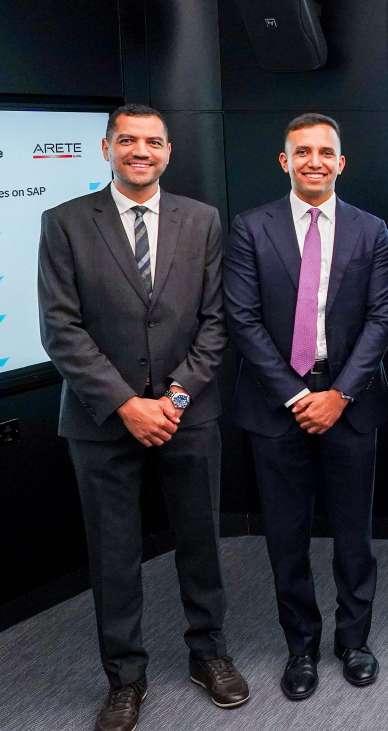
By bringing point-of-sale data, inventory, finance, and planning into a unified environment, the group is enhancing real-time visibility, reducing food waste and out-of-stock situations, and strengthening margin control across categories and channels.
The environment also incorporates SAP Datasphere to integrate SAP and non-SAP data sources, alongside SAP Business AI and additional AIdriven use cases designed to enhance demand forecasting, automate routine processes, and generate deeper insights across supply chain and
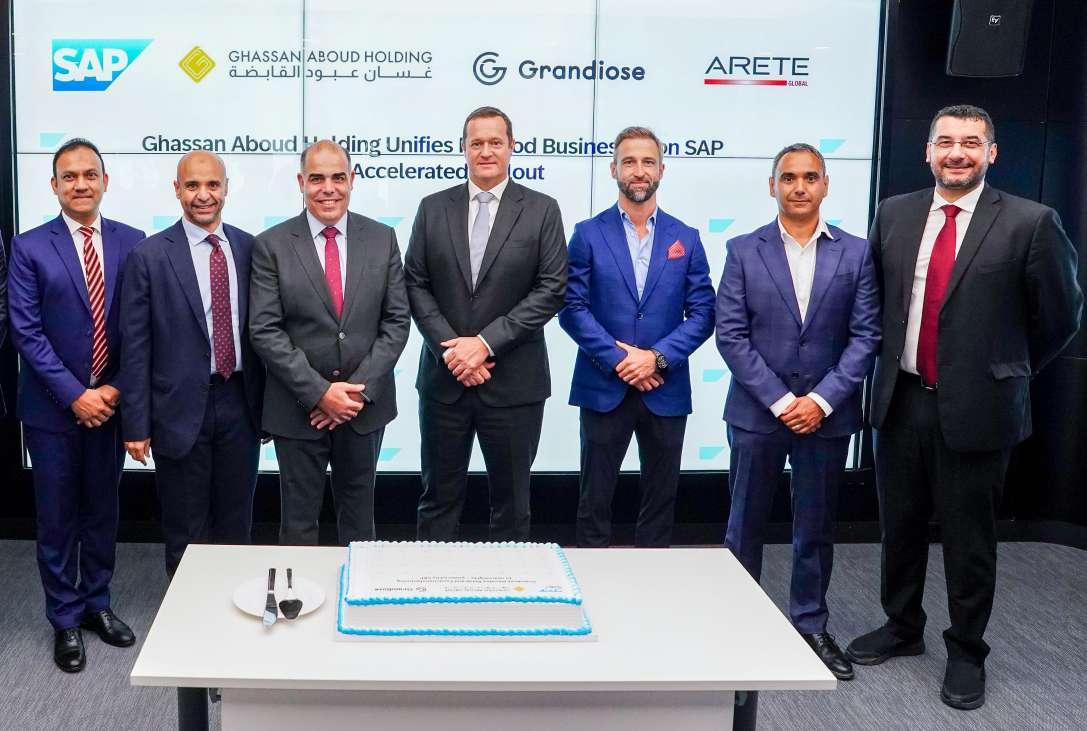
customer behaviour. Together, these capabilities strengthen the group’s ability to make faster, more informed decisions across its operations.
“Organisations operating across interconnected business models need systems that can keep pace with both scale and operational complexity,” said Marwan Zeineddine, Managing Director, SAP UAE. “With this deployment, Ghassan Aboud Holding has established a more unified platform across its retail and food ecosystem, enabling real-time visibility, stronger coordination between retail, manufacturing, and
catering operations, and the ability to embed AI into everyday decision-making. As agentic AI begins to support more autonomous and adaptive processes, this kind of connected foundation becomes essential to turning insight into action at scale.”
By consolidating its technology landscape, Ghassan Aboud Holding now benefits from a single source of truth across its core operations, reducing manual reconciliation between frontend and back-end systems and improving consistency in reporting and control. This is particularly important
in environments where incremental improvements in forecasting, replenishment, or pricing can have a direct impact on profitability and customer experience.
“Delivering an implementation of this breadth in such a short timeframe required close collaboration and a clear focus on business outcomes,” said Mohammed Abdul Khadeer, SAP Practice Head at Arete Global, UAE. “The result is a platform that supports more agile operations today, while giving the group the flexibility to expand and innovate in the future.”
Introduces the Cloudflare One Stack to streamline SASE deployment alongside select global partners including Arctiq, Consortium, CMT, Presidio, The Missing Link, and others
Cloudflare, Inc., the leading connectivity cloud company, today announced the launch of its Cloudflare One Design Partner Designation. This new high-priority designation focuses on the Cloudflare One suite, equipping a select group of global partners, including Arctiq, Consortium, CMT, Presidio, and The Missing Link, with the deep technical expertise needed to accelerate secure AI innovation.
Migrating away from legacy security architectures is traditionally slow and risky. Auditing existing environments, mapping out new architectures, and avoiding configuration errors during vendor transitions can create vulnerabilities. This friction can create security gaps and stall innovation. Now, businesses can confidently reduce fragmentation by turning to a trusted partner to guide them into one suite designed for secure AI.
“Cloudflare One has evolved into a partner-led engine and our new Design Partner Designation is built to propel long-term growth,” said Tom Evans, Chief Partner Officer at Cloudflare. “This
new framework represents our deepest channel coinvestment yet. We are equipping our elite partners with the financial runway and technical mastery they want to scale the Cloudflare One platform. By blending our unified SASE architecture with partner expertise, we are turning complex network migrations into high-margin, high-value consulting opportunities for the AI era.”
To support the launch, Cloudflare is introducing the Cloudflare One Stack. This framework provides a robust library of AI skills that security teams can use with any agent to evaluate, deploy, and manage Cloudflare One. Built directly on top of Cloudflare One, these skills provide structured knowledge, decision trees, and tool definitions that AI agents can automatically use. By giving partners access to a central repository of blueprint configurations and automated workflows, Cloudflare eliminates tedious manual provisioning. Instead, partners can focus on delivering high-margin managed services tailored for the AI era.
Cloudflare One Design Partner Testimonials
"Organisations are under increasing pressure to modernise legacy architectures, secure AI adoption, and simplify increasingly complex environments. By combining the Cloudflare One platform with Arctiq’s expertise in cybersecurity, networking, cloud, and managed services, we help clients accelerate Zero Trust and SASE initiatives while reducing complexity and improving resilience”, said Wes Brown, CTO at Arctiq. “Together, we're helping organisations build secure, connected, and AIready environments that can adapt to an evolving threat landscape and support the future of business.”
"This partnership represents a significant investment in our ability to serve customers navigating the AI adoption landscape, SASE shift and clouddelivered security”, said Andrew Barnett, CTO at Consortium. “Consortium’s purpose built dedicated Center of Excellences are proven practices that have become one of the most recognised
Tom Evans, Chief Partner Officer at Cloudflare.

capabilities in our firm. With our level of rigor, expertise, and customer focus to Cloudflare, the Cloudflare One Design Partner designation gives us a foundation most partners will spend years trying to reach.”
“Cloudflare's deep co-investment in elite enablement empowers CMT Info & Comm Co., Ltd. with the advanced technical mastery needed to solve our customers' most complex security headaches”, said Soojong Lee, Chief Technology Officer at CMT. “With integrated SASE protections that scale smoothly across web, cloud, and private application environments,
we can seamlessly protect sensitive data while building the automated frameworks necessary for the AI era."
“As a Cloudflare One Design Partner, we can now help eliminate fragmented, legacy architectures, and enable our customers to innovate with AI quicker and more securely,” said Jim Finn, Sales VP of Cyber at Presidio. “With a foundational repository of agent-ready best practices— that remove rigidity and allow us to easily transform complex network migrations into high-value consulting services—we are thrilled to help create the future of enterprise security.”
"Organisations are
increasingly looking for ways to reduce complexity by bringing networking and security together within a single, modern architecture”, said Aaron Bailey, CISO and Director of The Missing Link. “As a Cloudflare One Design Partner, The Missing Link can help customers accelerate their Zero Trust and SASE strategies while improving security, performance, and operational efficiency. Combining Cloudflare's platform with our cyber security and consulting expertise enables us to help organisations navigate transformation with greater confidence and resilience.”
Landmark Group’s leading value fashion brand deploys Google Cloud’s advanced generative AI to eliminate online fit friction, setting a new benchmark for omnichannel retail across the MENA region.
Max Fashion, one of the Middle East’s largest value fashion brands and part of the Landmark Group, announced it is using Google Cloud’s technology to launch a new personalised shopping experience using Google Cloud's Virtual Try-On API. The deployment signals a massive leap forward in the regional retail landscape, establishing Max as an early adopter of generative AI to solve ecommerce’s greatest challenge: the digital fit.
Initially launched in the UAE, the AI-driven solution completely reimagines the omnichannel customer journey. Built on Google Cloud’s robust AI infrastructure and powered by advanced generative AI vision models via the Gemini Enterprise platform, Max’s new interface delivers instant, hyper-realistic visual previews of how garments drape, fit, and move on diverse body types.
For the retail sector, this is the end of standard digital browsing and the beginning of immersive, high-conversion commerce.
While standard ecommerce has historically struggled with high return rates and "fit uncertainty," Max's utilisation of Google Cloud’s Virtual Try-On API bridges the gap between digital discovery and the physical fitting room. By scaling this high-utility, hyper-personalised service across its digital platforms, Max isn't just improving customer experience, it is fundamentally optimising its bottom line by driving purchase confidence and long-term brand loyalty.
"The introduction of Virtual Try-On is not just an incremental update; it is a profound structural upgrade to our entire omnichannel ecosystem," said Hani Weiss, Chief Executive Officer of Max Fashion. "Artificial Intelligence represents an extraordinary

commercial opportunity to make the customer experience more predictive, engaging, and personal. Partnering with Google Cloud allows us to arm our digital platforms with world class tools that drive customer retention and lifetime value.
This is the definitive future of regional e-commerce, and Max is proud to lead the charge."
Hani Weiss, Chief Executive Officer of Max Fashion, said:
“Fashion retail is evolving quickly, and customers today expect digital experiences that are not only convenient, but also intelligent, personal and useful. The launch of Virtual Try-On with Google Cloud is a major step forward in how
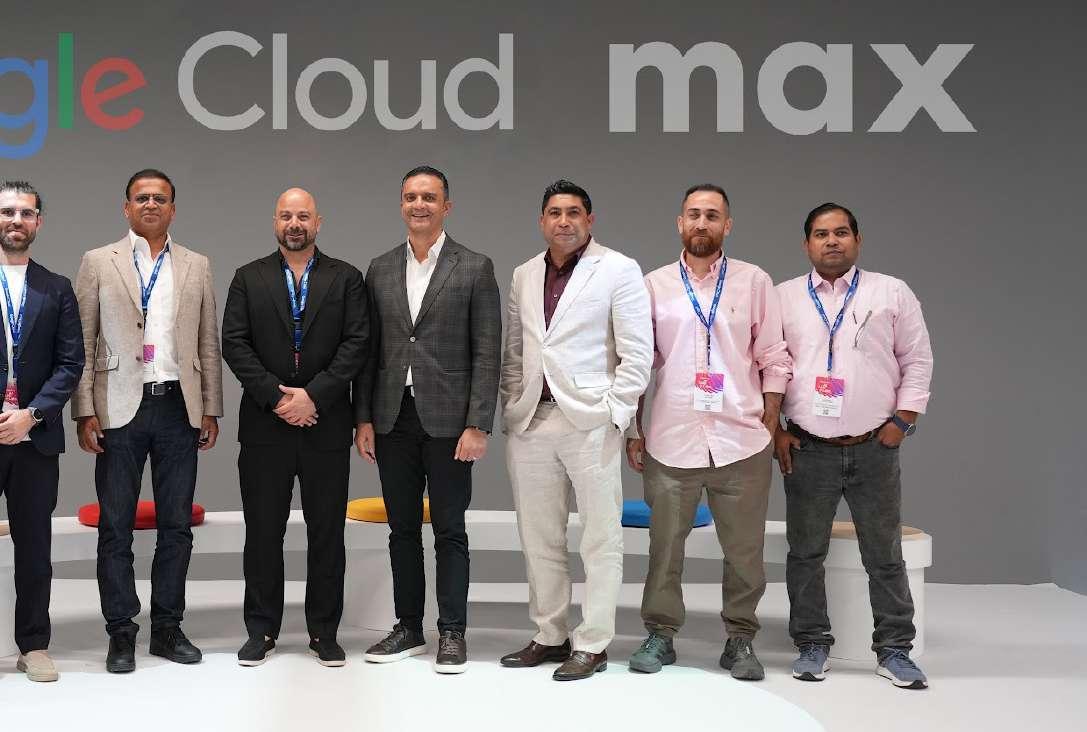
we serve our customers online. It helps address real purchase barriers, particularly around fit and confidence, while allowing us to create a richer and more engaging shopping journey. At Max, our ambition is to make fashion more accessible, and this collaboration allows us to extend that promise through technology in the region.”
"Virtual Try-On fundamentally collapses the gap between our online and in-store experience,” added Bala Subramaniam, Senior Vice President & Head of Omnichannel, Max. “For the first time, a customer browsing on their phone has the same confidence as
one standing in our fitting room. That is what true omnichannel means, and this is what it looks like at scale."
The collaboration goes far beyond software integration. It represents a unified strategy to merge physical and digital consumer touchpoints using highfidelity AI visuals.
"Technology is at its most potent when it transforms consumer behavior and unlocks tangible business value," said Ziad Jammal, General Manager, Google Cloud UAE, Levant, and North Africa. "This
collaboration demonstrates how Google Cloud’s generative AI can elevate the consumer journey far beyond standard transactions. By integrating our Virtual Try-On API, Max is disrupting the traditional retail parameters in the MENA region, proving that AI-driven personalisation is no longer a luxury, it is a core business imperative for forwardthinking retailers."
With this rollout, Max and Google Cloud have established a new playbook for retail innovation in the Middle East, challenging the industry to match this new standard of consumer-centric technology.
DGHR
The Dubai Government Human Resources Department (DGHR) has concluded the first edition of DGHR Multaqa 2026, held under the title “HR in the Agentic Age” and the theme “Agents at Work. Humans in Charge. Policy as Guide.” The forum served as a platform for dialogue around one of the most significant transformations shaping the future of work today: the growing role of Agentic AI in supporting operations, influencing decisions and reshaping workplace environments.
The forum comes at a time when governments around the world are exploring the opportunities presented by a new generation of intelligent systems capable
of acting across workflows and supporting increasingly complex tasks. As these technologies continue to evolve, the need for governance frameworks, institutional capabilities and policy approaches that enable their responsible, effective and sustainable adoption has become increasingly important.
Transformation of Work
The forum featured a series of strategic discussions and executive dialogues examining the implications of Agentic AI for jobs, skills, leadership models and the future of human resources, while highlighting emerging global practices in the adoption of intelligent technologies across workplace environments.
The event also brought
together government leaders, policymakers and experts in technology and human capital, alongside speakers from leading national and international organisations in technology, education and workforce development, including LinkedIn, SAP, Emirates Global Aluminium, Alef Education and the Abdulla Al Ghurair Foundation, as well as representatives from DGHR, Digital Dubai, the Telecommunications and Digital Government Regulatory Authority and a number of government entities and national institutions.
Agents at Work
Discussions explored how

Agentic AI is reshaping workforce design, capability development and organisational performance, while examining the readiness required to navigate the next era of government work.
Participants also highlighted the importance of future skills development and institutional preparedness to ensure government workforces remain equipped to respond to the accelerating pace of technological change.
H.E. Abdullah Ali Bin Zayed Al Falasi, Director General of the Dubai Government Human Resources Department, emphasised that the transformation taking place today extends beyond traditional automation towards a new generation of intelligent systems capable of supporting operations and influencing decisions, requiring governments to establish governance frameworks and policies that preserve accountability, trust, and human responsibility.
H.E. Al Falasi said: “Artificial intelligence can support work, analyse information and provide recommendations, but it cannot replace human judgement or assume responsibility for decisions. This is why our vision is built around three core principles: Agents at Work, Humans in Charge, and Policy as Guide. Technology can enhance the way we work, but people must remain the custodians of judgement, accountability and public value.”

A key outcome of the forum was the presentation of DGHR’s White Paper on Agentic AI Governance in Government HR Systems, which provides a reference framework for understanding the opportunities and challenges associated with the use of intelligent technologies across HR functions.
The White Paper explores global trends in AI-enabled HR systems and highlights key considerations related to accountability, transparency, institutional trust and responsible adoption, while examining how these technologies can enhance efficiency, employee experience and decision quality.
The White Paper also served as a foundation for discussions throughout the forum on governance requirements and the responsible use of AI within government HR systems.
The forum further hosted a Policy Lab session aimed at capturing participant insights and recommendations to
help shape future policy directions and strengthen government readiness for the transformations associated with AI and the future of work.
This edition marks the first of two interconnected forums planned for DGHR Multaqa 2026. Insights, recommendations and perspectives emerging from the first forum will serve as the foundation for discussions during the second edition, ensuring continuity of dialogue around the future of government work and workforce readiness. By bringing together policy, technology and human capital perspectives, DGHR Multaqa 2026 contributed to advancing a strategic conversation on the future of work in the Agentic Age and supporting efforts to build a more agile and future-ready government capable of harnessing emerging technologies while ensuring that human responsibility, public trust and public value remain at the centre of transformation.
Epicor
Epicor, a global leader in industry-specific enterprise software, has announced the appointment of Rachel Barger as Chief Revenue Officer (CRO). With more than two decades of global technology leadership experience spanning enterprise software and SaaS, Barger will be responsible for strategy and execution across global sales and recurring revenue teams to accelerate growth across the make, move, and sell economy.
“Rachel brings an exceptional combination of global scale, operational discipline, and customerfirst leadership,” said Steve Murphy, Epicor CEO. “Her proven ability to lead large global teams and multibillion-dollar organisations through transformation and growth makes her the right leader to help accelerate Epicor’s momentum worldwide. As we continue delivering AI-driven, industry-focused solutions, Rachel’s experience will be critical to strengthening customer relationships and scaling our global business and driving long-term growth.”
Barger joins Epicor with more than 20 years of experience leading highperforming go-to-market organisations across the Americas, EMEA, and APAC. She has held senior leadership

Rachel Barger
positions at UKG, Cisco, and SAP, where she focused on customer success, operational excellence, and sustainable growth.
As CRO, Barger will focus on deepening customer relationships, accelerating recurring revenue growth, and expanding and strengthening the partner ecosystem. She will also drive stronger cross-functional alignment to enhance customer outcomes and operational predictability globally.
“I’m excited to join Epicor at such an important moment
in the company’s growth journey,” said Barger. “Epicor has built a strong reputation for delivering industryfocused innovation that helps essential businesses thrive. I look forward to working with our customers, partners, and teams around the world to strengthen execution, deepen engagement, and support long-term growth.”
Her appointment reinforces Epicor’s continued investment in strengthening its global leadership team and accelerating growth across international markets.