

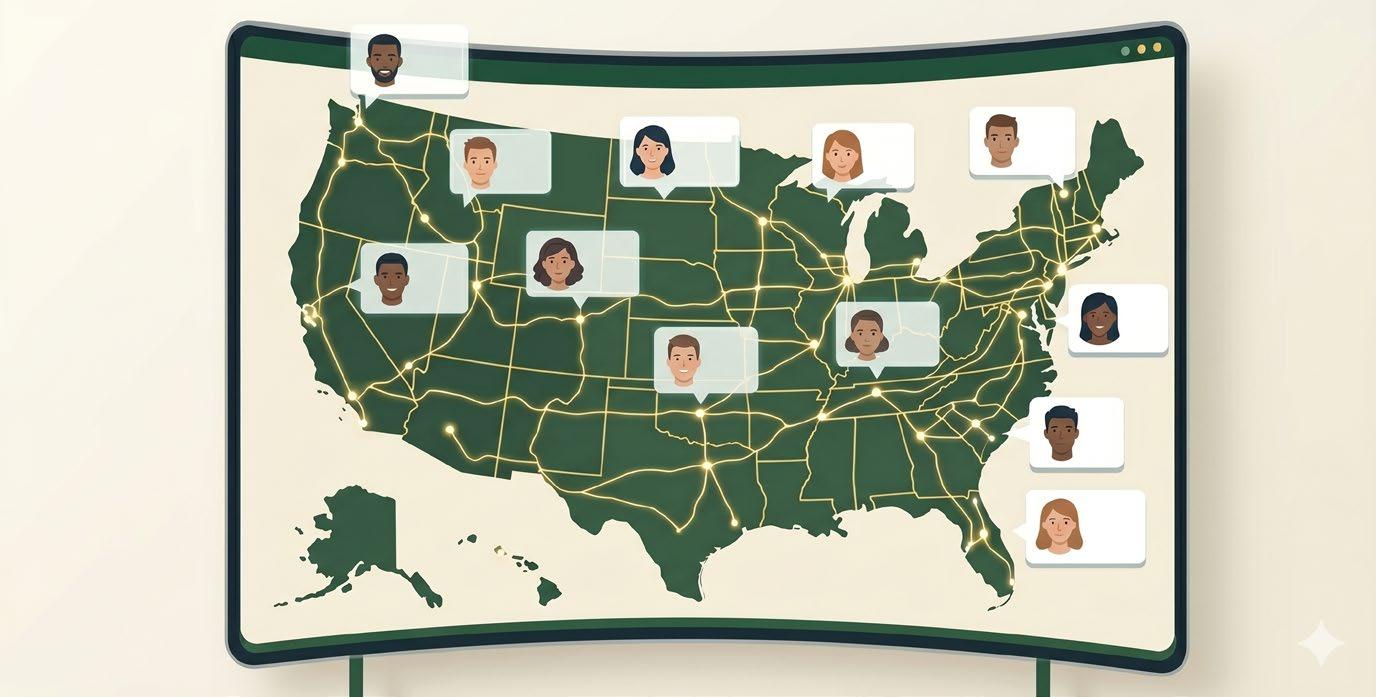
Since launching the NASH–Google Career Certificates pilot in February 2025, Cal Poly Pomona’s College of Professional and Global Education (CPGE) has expanded access to industry-recognized credentials that support career readiness and upskilling. This work is part of a multi-year, grantfunded partnership between the National Association of Higher Education Systems (NASH) and Google, aimed at scaling microcredentials and AI training across public higher education. Through NASH’s Microcredentials Community of Practice (CoP), which includes 17 higher education systems spanning four-year institutions and community colleges, CPGE is contributing to a broader effort to modernize curricula, expand access to workforce-aligned learning, and build scalable infrastructure.
Through a phased approach, the initiative has grown from an internal pilot to a broader campus and community effort. As of April 2026, 252 learners have participated across 20 programs, driven by targeted outreach and strategic partnerships.
Survey findings indicate strong satisfaction and accessibility, with learners reporting increased confidence, skill development, and acquisition of job-relevant competencies. Early workforce impact is evident, with many participants applying their skills and reporting enhanced career readiness and competitiveness.
Survey insights also point to key opportunities to strengthen and scale the initiative, including increasing program visibility, improving alignment between certificates and career pathways, and more intentionally integrating microcredentials within academic and institutional frameworks.
The ultimate goal of this pilot is to gather sufficient data by December 2027 to inform a system-level recommendation to the CSU Chancellor’s Office, demonstrating the value of Google Career Certificates and supporting their adoption as a sustained, CSU-wide offering. With continued focus on access, alignment, and integration, CPGE is well positioned to scale this initiative into a sustainable model for workforce development and learner mobility.




The initial implementation plan, drafted in January 2025, served as a strategic roadmap for introducing Google Career Certificates to a tiered audience, beginning with the CPGE internal community, expanding university-wide, and extending to external stakeholders such as industry partners, friends, and family. While this phased approach provided structure, the initiative evolved through intentional pivots that ultimately fostered deeper collaboration and broader engagement than originally anticipated.
Innovate Locally. Impact Globally.


Targeted outreach and promotional efforts catalyzed partnerships with stakeholders including the College of Education and Integrative Studies (CEIS), Student Support and Equity Programs (SSEP), and the Southeast Los Angeles County (SELACO) Workforce Development Board. Through live demonstrations of the Coursera platform, strategic event integration, and providing program overviews, CPGE increased awareness and accessibility among a diverse learner population.


Participation data reflects strong early interest. As of April 2026, 252 learners have acquired Coursera licenses, engaging with a total of twenty programs to date which include twelve professional certificates and eight specialization courses. These offerings have reached a broad cross-section of learners, including staff, students, visiting scholars, and community partners. Enrollment patterns further highlight which programs are generating the strongest engagement.
1. Google AI Essentials – 73 enrollments (31.5% completion rate)
2. Foundations of Project Management – 49 enrollments (22.4% completion rate)
3. Foundations: Data, Data, Everywhere – 38 enrollments (15.8% completion rate)
4. Google Prompting Essentials – 35 enrollments (31.4% completion rate)
5. Foundations of Digital Marketing and E-commerce – 18 enrollments (22.2% completion rate)


As the program reached its first-year milestone, we also marked a key pivot in our initial implementation plan by distributing an impact survey to all learners who had completed and earned a Google Career Certificate. The survey was administered in March 2026 and kept open for three weeks, providing critical insight into participant outcomes and experiences. The resulting data offers a deeper understanding of how this strategy translates into lived experience and measurable impact. Across a diverse group of 15 respondents, including students, CPGE staff, university administrators, and community partners, a consistent theme emerged: the program is valuable, relevant, and well positioned for continued growth.




The learner experience on the Coursera platform has been positive, particularly in terms of accessibility, with 100% of respondents reporting it as easy to navigate. This strong usability foundation has enabled learners to fully engage with course content and progress through courses like Google AI Essentials, Google Prompting Essentials, Google Digital Marketing and E-commerce, Google IT Support, and Google Project Management.


The initiative’s impact on skill development is both clear and compelling. 80% of respondents reported increased confidence in their digital and technical abilities, citing growth in areas such as AI prompting, data interpretation, digital marketing analytics, ethical AI use, budgeting, and spreadsheetbased analysis. 93% of learners indicated they gained practical, job-relevant skills that can be immediately applied, demonstrating a strong alignment between program design and workforce needs.


These insights are further reflected in early workforce outcomes. Most respondents reported actively applying newly acquired skills in their current roles, with some taking on expanded responsibilities as a direct result. Overall, 67% of participants indicated they feel more career-ready and competitive, while 80% affirmed that the skills developed are directly relevant to their current or desired career pathways.


Both implementation experience and learner feedback surfaced important opportunities for refinement. Key recommendations centered on expanding program visibility, strengthening job-to-skill mapping, and more intentionally integrating certificates into institutional systems, such as HR processes, faculty awareness efforts, and professional development structures. Respondents also expressed interest in broadening the range of certificate offerings, particularly those aligned with industry-recognized credentials like CompTIA, as well as increasing flexibility to better accommodate the time constraints of working professionals.
These findings present a clear and compelling narrative: the Google Career Certificates initiative is already delivering measurable gains in skill development, confidence, and career readiness, while also revealing strong demand for continued growth and integration. The alignment between initial program goals and learner-reported outcomes validates the initiative’s core approach, while highlighting opportunities to further enhance accessibility, engagement, and institutional alignment.


Looking ahead, CPGE will use the survey findings as a foundation for intentional program refinement and strategic growth. A key priority will be increasing visibility and awareness of this opportunity across campus and among external stakeholders, including industry partners. This will involve more targeted outreach through graduate fairs, professional development channels, and expanded collaboration with Workforce Innovation and Community Engagement (WICE). At the same time, CPGE will strengthen job-to-skill mapping by leveraging resources developed through the Community of Practice and NASH, including shared materials outlining key skills, core competencies, and aligned career pathways for each certificate. These tools will support clearer articulation of how the Google Career Certificates connect to workforce needs, enhancing their value for both learners and employers.
In parallel, CPGE will deepen efforts to integrate certificates more intentionally within academic structures. This includes making clearer connections between certificate coursework and existing degree programs, as well as exploring co-curricular and embedded models in partnership with faculty. Initial conversations with the MS Systems Engineering program signal a promising path forward, with a faculty coordinator serving as a potential champion to pilot integration strategies and expand student engagement. Guided by ongoing survey data and implementation insights, these efforts position the initiative to evolve from a successful pilot into a scalable, institution-wide driver of workforce development and economic mobility, with continuous improvement grounded in both learner experience and labor market alignment.
Ourgoalsguidetheway.Ouractionstellthestory.Explore CPGE’sAnnualReporttoseetheresultsinmotion.