


Follow these instructions from LinkedIn to add "licenses and certifications" to your profile:
1. Click the Me icon at the top of your LinkedIn homepage, then View Profile.
2. Click Add profile section in the introduction section.
3. Click the Recommended dropdown, then select Add licenses & certifications
4. In the Add license or certification pop-up window that appears, enter your information into the fields provided. Begin by entering “Chartered Professional Accountant” in the Name field.
5. A list displaying companies will appear as you type in the issuing organization field. Be sure to select the correct authority (CPA Saskatchewan) from the menu so the logo appears next to the certification on your profile.
6. Use the link to the following page: Find a CPA Member as the Credential URL.
7. Click Save.

Review your LinkedIn connections to ensure you personally know the people you’re connected with.
Avoid accepting connection requests solely based on mutual connections, as this can unintentionally link you to fraudulent accounts and increase their perceived credibility.
for Ethics: AI and
Risk of Shadow
to Overtime Pay in The
Content and Editing
Nicholas Carteri
Marilyn Flaman, CPA
Erica E. Focht
Pam Hoffart
Leigha Hubick, CPA
Katherine S. Melnychuk
Vivian Nicholas, CPA
Sherri Schmidt
Jennifer Zerr, CPA
Production
Pam Hoffart
Frankly,
Disclaimer
The content within this newsletter is provided for informational purposes and is not an official interpretation of any applicable rules or standards.
We live and work on lands covered by Treaties 2, 4, 5, 6, 8, and 10. These are the territories of the Anihšināpēk/Saulteaux, Dakota, Dene, Lakota, Nakoda, nêhiyaw/Plains Cree, néhinaw/Swampy Cree, nehithaw/Woodland Cree, and Stoney Nations. They are also the homeland of the Métis/Michif Nation. We pay our respects to the First Nations and Métis ancestors of this place and reaffirm our relationship with one another.
We respect and honour the Treaties that were made on all territories, we acknowledge the harms and mistakes of the past, and we are committed to moving forward in partnership with Indigenous Nations in the spirit of reconciliation and collaboration.
A recent article in the Journal of Accountancy inspired this image created by Co-Pilot below. There are so many known risks with using Artificial Intelligence. Risk is something CPAs are comfortable with –our brand as a profession is to aid in risk identification, mitigation and management.
As you, or your firm, approach the integration of more AI tools into your environment, take the time to understand the risks, design a strategy to mitigate those risks to a manageable level and monitor, monitor, monitor.
You need to take constant training to stay as current as possible with how AI can assist your business, and also be managed by your business. Using the tool requires training, but applying common sense to its use is critical.
Any use of AI should come with a warning label. Do you know what all these words in the image below mean?







Acceptance (getting) and continuance (keeping) of client relationships and specific engagements is an essential component of a firm’s system of quality management (CSQM 1.30). The exercise of professional judgement is critical to assess information obtained about the integrity and ethical values of the client and the nature and circumstances of each engagement.
The reality for most firms is that many of their clients are small to medium, privately owned businesses with limited public information available to assess integrity, financial stability, and overall engagement risk. As a result, the challenge often lies not only in interpreting information, but in accessing it in the first place.
Small businesses are often informally structured with limited media coverage and small online footprints. Particularly with owner-managed entities, small private clients carry significant key-person risk driven by qualitative factors including:
• Management integrity
• Reputation
• Operational stability, and
• Cooperation and transparency
Given the inherent subjectivity of these factors, the source of information obtained to make sound client acceptance and continuance decisions is of particular importance.
Reliable Information Sources for Client Acceptance and Continuance
For small businesses, direct conversation can be the richest source of insight into their operations, structure, industry challenges, quality of accounting records, financial stability, future plans and investments, attitudes and risk tolerance, and willingness to cooperate.
In initial conversations, be watchful for the following indicators:
• Defensiveness or hesitation
• Completeness of information
• Timeliness of responses
• Owner clarity or confusion regarding finances or the type of engagement to be performed
A client’s behaviour during the initial information gathering processes often predicts how the engagement will proceed. An initial review of the client’s internal financial reports may indicate issues with the quality of their bookkeeping (including significant unreconciled balances), unusual or unexpected trends, transactions that may raise concerns around fraud or error, new sources of financing (with potential undisclosed third-party users), complex transactions, going concern issues (or evidence of cash flow stress), cutoff issues, potential contingent liabilities, unclear or inconsistent ownership or equity transactions, economic dependence, or regulatory non-compliance.
For many small businesses, social media is often the only public-facing information available.
Useful sources:
• Google Business reviews
• Facebook business pages
• Instagram or TikTok business accounts
• LinkedIn profiles of owners/managers
• Community Facebook groups
• Local business directory listings
Be alert for any recurring negative customer experiences, complaints about billing, quality, or fairness, unprofessional public behaviour or aggressive responses, signs of instability (frequent closures, staffing issues, vague “under new management” patterns), transparency in how the business communicates, and how the business handles public criticism.
continued on page 6
ACCEPTANCE AND CONTINUANCE continued from page 5
A consistent pattern is more relevant than one-off comments. Social media should be treated like any other external evidence: useful but interpreted with skepticism and context.
Even small private clients may appear in public or semi-public databases.
Where to search:
• Provincial corporate registries (Information Services Corporation provides full corporate searches, directors, filings, status)
• Bankruptcy and insolvency records (the Office of the Superintendent of Bankruptcy National Database includes all Saskatchewan filings at a small charge per search)
• Publicly available legal databases (e.g., CanLII) for information on civil lawsuits, insolvency proceedings, tax litigation, and regulatory enforcement actions.
• Civil Court (in-person or phone inquiry is required)
• Small Claims Court (in-person or phone inquiry is required)
• Basic corporate information (Canada’s Business Registries includes Saskatchewan data for basic searches)
• Local news outlets (AllSaskatchewan, CBC Radio One Saskatchewan, CKOM, CJME, CHAB-AM, Global News Saskatchewan, CTV Saskatchewan, or CBC Saskatchewan)
• Municipal council minutes or by-law infraction lists
These records may highlight legal disputes, collection actions, tax or regulatory issues, and reputational concerns. Information gathered from these sources could help validate or challenge what a client shares during discussions.
If the client is continuing rather than new, internal information becomes essential.
Review:
• Prior-year working papers and engagement file comments
• Billing and collection history
• Internal monitoring and inspection results
• Independence and conflict checks
These areas often reveal issues such as potential independence concerns or repeated delays in the provision of information, scope limitations, disagreements, or fee disputes.
In smaller centres, a business’s reputation travels fast. Sources of insight may include:
• Responses to predecessor communications with the client’s previous accounting firm (refer to our previously published article starting on page 7 within: What to Expect from Predecessor and Successor Accountants)
• Bankers, lenders, lawyers, or insurance brokers (with client permission)
• The firm’s own internal knowledge
• Local trade associations
Consider if any information has been received regarding the client’s reputation, ongoing disputes, or conflicts. This type of informal intelligence often reveals more about management integrity than financial statements ever could.
Engagement file documentation should clearly demonstrate that the above factors (and any other relevant considerations) were identified, considered, and assessed before the decision was made to accept or continue the engagement. While preliminary research and analysis may be performed by junior personnel, responsibility for the final acceptance or continuance decision rests with the engagement partner or practitioner.
In assessing this information collectively, firms should step back and consider what it indicates about the overall risk of the prospective or continuing client. Where multiple red flags are identified, firms should be mindful that declining the engagement is an appropriate and sometimes necessary response to meet professional responsibilities.
Even when firms succeed in gathering good information during the client acceptance and continuance process, acting on indicators of risk is not always straightforward. The challenge now shifts from accessing information to responding to it appropriately, as financial pressures, relationship dynamics, and internal biases can make it difficult to disengage even when risks are evident. This tension between knowing the risks and acting on them helps in understanding why problematic clients are sometimes accepted or retained despite clear indicators of concern.
1. Fee Pressure and Revenue Dependency
This is especially relevant when a single client represents a significant portion of revenue. Terminating a client relationship has a direct impact on recurring revenue, cash flow, and staff utilization. There may also be a fear of losing out on future opportunities.
2. Sunk Cost Bias and Investment in the Relationship
As time and effort increase through initial meetings, engagement planning, onboarding, and file setup, so too does the psychological barrier to backing out.
3. Pressure to Keep Staff Busy
Firms sometimes hesitate to disengage because they need chargeable work to keep staff busy. The pressure to address the short-term utilization of staff may lead to a long-term drain on firm resources including additional partner involvement, more review time, the need for additional documentation, and potentially uncollectible fees.
4. Relationship Dynamics and Emotional Barriers
There may be a hesitancy towards damaging personal rapport, a fear of disappointing a long-term client, and a certain loyalty to historical client relationships. Personal connections sometimes outweigh professional judgment.
5. Fear of Conflict or Confrontation
A hesitancy to engage in uncomfortable conversations often leads to a tendency to avoid delivering bad news, explaining concerns, confronting clients about issues, or formally communicating disengagement.
6. Concern About Reputational Impact
There may be concerns that a client will complain or spread negative information about the firm after being disengaged, potentially damaging referral networks. The smaller the market, the more relevant this becomes.
7. Optimism Bias
Sometimes, risk is underestimated in the hope that things will improve as the engagement progresses: “It might not be that bad.” Staff members too may be hesitant to escalate concerns and may try to paint a positive picture to justify the work and effort they’ve already invested.
8. Underestimation of Long Term Risk
Even small initial red flags may signal deeper, more significant issues. Often, the first visible hints of underlying financial instability or integrity concerns will intensify as an engagement progresses.
Without a clearly defined process, it is easy to avoid decisive action. It’s important that documented acceptance and continuance procedures establish clear criteria or thresholds that must be adhered to for declining or terminating engagements.
To reinforce this discipline, internal monitoring activities should be designed and implemented to periodically review prior client acceptance and continuance decisions, to ensure policies are consistently applied so that risks are identified early, and to ensure lessons learned along the way are fed back into the firm’s quality management system.
Often, it’s not that risky clients are accepted or retained because the warning signs are not present. Rather, the struggle is found within financial pressures, emotional and relationship barriers, cognitive biases, conflict avoidance, and firm-level incentive structures.
Engaging with unsuitable clients exposes a firm to a wide range of significant risks, including an increased likelihood of material misstatement or misleading financial information, heightened legal and regulatory exposure, and substantial potential for reputational damage. Unsuitable clients also tend to pose practical challenges such as uncollectible fees, chronic delays which may impact the firm’s ability to service other unrelated clients, scope limitations, elevated independence threats, and excessive demands on partner and staff time, all of which drain firm resources.
This is why strong client acceptance and continuance policies, engagement partner oversight at the very beginning of each engagement, and a culture of speaking up are essential. These practices, supported by professional skepticism and balanced judgment, enable firms to make consistent, defensible decisions that reduce the risk of engaging with unsuitable clients.
While client acceptance and continuance procedures focus on whether the firm should act, effective client onboarding addresses how the relationship will function in practice. Clearly establishing and agreeing on mutual expectations during onboarding helps reduce misunderstandings, inefficiencies, and potential conflicts.
As part of onboarding, firms should clearly communicate expectations about how engagements will progress, including, at a minimum:
• Timeliness – Establishing realistic timelines and ensuring the client understands the impact of delays on deliverables and fees.
• Completeness and accuracy of information – Clarifying the nature, format, and timing of required information, including whether information must be complete before work begins or may be provided in stages.
• Roles and responsibilities – Documenting a clear division of responsibilities between the firm and management.
• Communication protocols – Identifying primary contacts, escalation processes, update frequency, and responsibility for initiating communication.
• Consequences of non-compliance – Communicating and obtaining agreement on potential impacts to fees, scope, or timelines if expectations are not met.
Strong onboarding processes set expectations at the outset and are periodically reaffirmed to ensure the relationship remains aligned with the firm’s standards and the client’s needs. Formalizing and documenting these expectations through engagement letters, welcome packages, or internal checklists provides valuable support when resolving disputes or in the performance of internal monitoring of the firm’s acceptance and continuance quality objectives.

The following list includes some AI tools practice inspectors are seeing in practice across Canada. This list is for informational purposes only and should not be construed as an endorsement by CPA Saskatchewan:
• Mindbridge
• Caseware – AIDA, Audit Suite, IDEA Analytics
• Alteryx
• Data Snipper
• AuditBoardz
• Trulli, Audit Suite
• Thomson Reuters –Audit Intelligence/ Machine-Learning Modules
• ScaleAI
• Inflo Digital Audit Platform
• Suralink
• Fiscalix
• Collibra AI

Client complaints about CPAs are on the rise and CPA Saskatchewan has seen almost double the complaint and concern volume over the past year. Practitioners report now receiving complaints after decades of practicing without any, but that is no excuse to be unprepared.
Conflicts and disputes are never pleasant, they typically come at the worst time, and can take excessive amounts of your time and energy to resolve. A client may raise their issue directly to you and/or they may contact CPA Saskatchewan to get their concerns addressed. Your practice management routine should prepare you for this as planning for how to respond to an ethical conflict or a dispute in advance can save you time down the road. We include some tips that will help you save time and respond in a professional manner:
Deal with touchy subjects up front
• Make it part of your routine practice to clearly communicate in writing to your client what they can expect out of the engagement process and how you will deliver your services in advance in terms of costs, your response time (on emails, phone calls, text messages or other correspondence), what is expected, when follow up is needed, how payment is made, collection of fees, and return of their records. Clients may not always read the fine print but having this clearly established in writing can save any potential misunderstanding or disagreement.
• If you are a sole practitioner, that decision is easy. In other cases, such as within a partnership or if you have staff, it is human nature to hope someone else will respond to and remedy a conflict. Give thought to who is in the best position to deal with disputes and ensure such responsibilities are clearly documented. If the matter creates an emotional response, don’t immediately react. Give yourself the time and space to respond in a calm and consistent manner.
• Keep good records for all your time (and your staff’s time) spent on a client’s file, notation of the dates of the pick up and drop off of documents (and which ones those were), and key client instructions to help you respond quickly and professionally when a client has concerns about their fees, delay in completing work, or missing documents.
Consider the client’s point of view
• Put yourself in their shoes before you respond. Are there aspects of your work that they would be unfamiliar with? Is there a miscommunication of terms? A misunderstanding of Canada Revenue Agency processes? Changes from prior years?
• CPAs often use engagement letters covering certain services and then go on to provide additional services such as corporate income tax preparation or filings or charity return filings that may not be clearly indicated in an engagement letter. Make sure your client knows exactly what you are and are not engaged to do in writing so that you can easily address confusion or misunderstanding about services that you were not engaged to provide.
Maintain solid billing and collection practices
• Sending prompt and descriptive invoices outlining the services rendered and connecting payment to a key milestone such as “income tax returns are filed upon the client’s authorization and payment” can help reduce complaints over fees. Ensure you are prepared to deal with the small handful of clients who use a complaint as an excuse not to pay.
General tips for success when dealing with a complaint:
• Answer client concerns promptly but not in the heat of the moment. Take the time to prepare a thoughtful response considering all viewpoints. But do not let the complaint fester. A timely response does not always mean fast, however the slower the response, the higher the client’s expectations become.
• Ensure you take time to consider the client’s point of view and level of understanding in framing your response. Ensure you understand the client’s goal in raising the issue and direct your response at the key points.
• Take prompt steps to address errors that may have occurred.
Step away from defensiveness. A client has the right to understand the services they are paying for. Providing clear, factual information is the best way to stay out of trouble.
Ensure your communications are always professional – avoid ALL CAPS and exclamation points as they can be perceived as shouting or excessive!!!


“Quality management, monitoring, AML, practice inspection — the obligations are real. We make meeting them straightforward.”
—
Bridget Noonan, CPA, CA | Clearline Consulting
OUR SERVICES
Completed Engagement Monitoring
Your independent CSQM 1 completed engagement monitoring obligation met — starting at $950.
Get an instant quote online →
2026 Partner PD Series
Practical CPD built by partners, for partners. Compilation, Review & Audit streams — CSQM 1, AML, tax, ethics & roundtables. Up to 20 CPD hrs. Save up to 30% with a stream bundle.
Register here →
AML for CPA Firms
Free recorded webinar + firm compliance resources, AML triggering activities assessment, and firm-specific draft policy templates.
Free webinar and resources here →
Quality Management & Consulting
CSQM 1 implementation, annual maintenance, practice inspection assistance, engagement templates, practice management resources, file and financial statement reviews, ethics & Code of Conduct consulting.
Contact us →
Click here to read this article, written by Clearline Consulting, which outlines key considerations to assist members in deciding whether CPA Canada membership may be right for them.
Please note that membership in CPA Canada is an individual choice and is not mandatory; the views expressed in this article are provided for informational purposes only and do not represent an endorsement by CPA Saskatchewan.

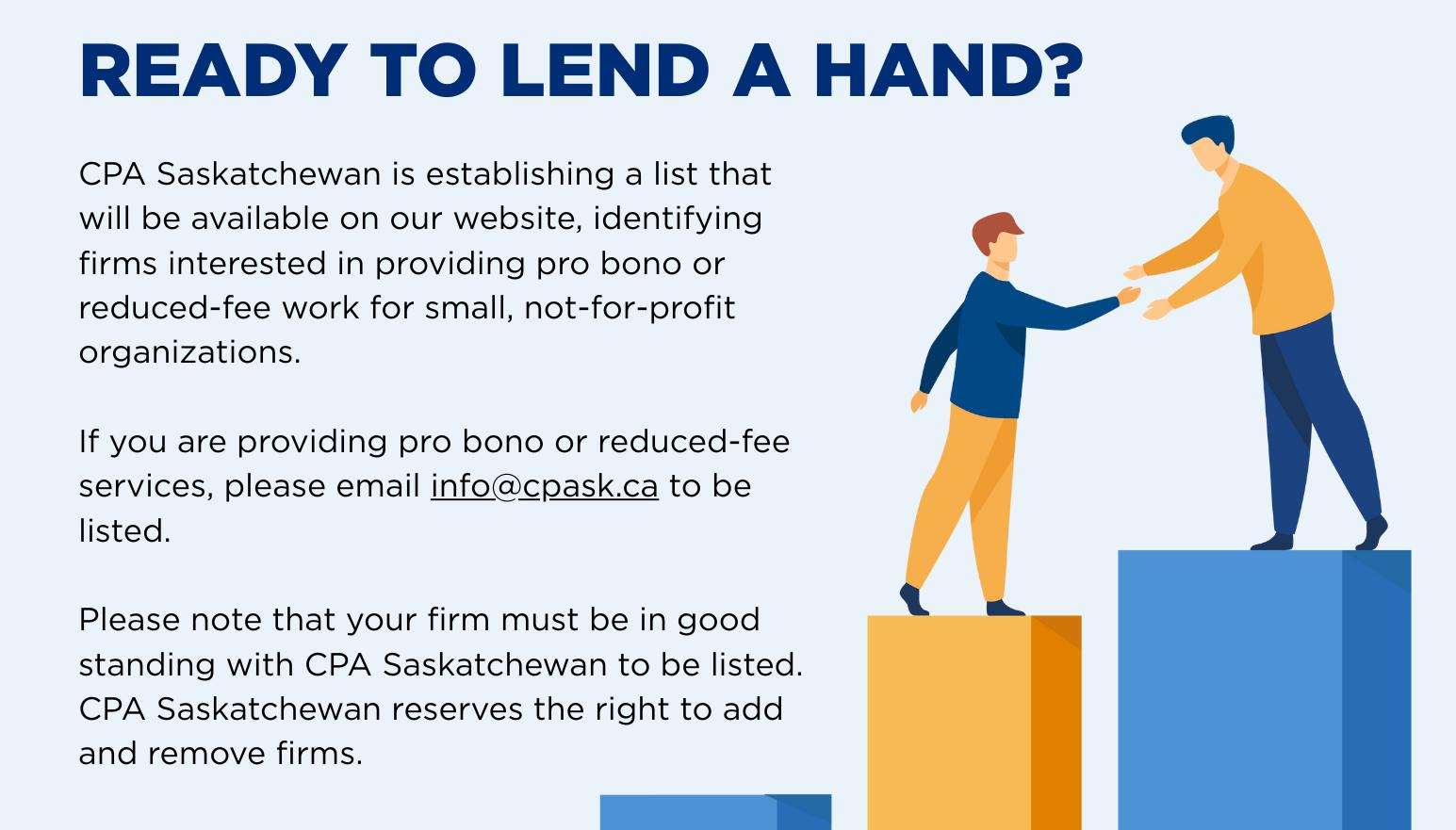
CPAs have a broad knowledge base, a strong ethical foundation, and often contribute to their community through non-profit organizations
Developed by CPA Saskatchewan, this on demand course will help you understand your responsibilities related to involvement in a non-profit organization while using the Code of Conduct as guidance.
This material is provided for general, non-authoritative guidance only. The information and opinions expressed should not be construed as definitive advice.
Reproduced with the permission of CPA Ontario
CPAs are increasingly exploring using AI to enhance their work. To do this effectively, while upholding the highest standards of the profession and protecting the public, it is essential to understand the obligations laid out in the CPA Code of Professional Conduct. The fundamental principles in the Code are practical and powerful tools for CPAs to navigate the potential of generative AI.
Through their Regulatory Standard newsletter, CPA Ontario has provided resources to help understand the obligations of CPAs in the use of AI. One such resource is the article Accountabilities for CPAs in the Age of Artificial Intelligence, which explores the implications of AI and its potential risks, including:
• How to develop and administer the governance and policies on the ethical use of generative AI.
• How to identify risks, including data hallucinations, data bias and cybersecurity.
• How to build capacity within your organization with the necessary technical expertise in the fields of AI.
CPA Ontario supported this guidance through a case study on how to understand and mitigate some of the risks
associated with data hallucinations and large language models used in data collection and research.
CPAs should apply the same obligations and accountabilities that govern the use of any software when using artificial intelligence.
Where AI has been used in the performance of assurance engagements, firms should ensure documentation includes:
• A clear understanding of the AI tool’s capabilities, limitations and the specific tasks it is designed to perform.
• An evaluation of data sources, including how data was collected and any potential biases that could affect the tool’s performance.
• Confirmation that the tool’s algorithms and methodologies are based on accurate, current and relevant information.
• Evidence of a thorough understanding of the AI tool’s inner workings, including its algorithms, decision making processes and underlying assumptions.
• Validation of the tool’s outputs, including comparisons with results obtained through traditional methods to ensure reliability and accuracy.
As AI continues to evolve, CPA Saskatchewan will ensure that the use of these innovative technologies upholds the integrity, objectivity and quality expected of the profession.

Click here to read this article from the Journal of Accountancy, outlining real-life use cases for AI that CPAs are using to transform their work.


Learn more about what CPA Saskatchewan, in its role as a professional regulator, observes in member and firms’ application of the requirements from our Code relating to independence
This material is provided for general, non-authoritative guidance only. The information and opinions expressed should not be construed as definitive advice.
Reproduced with the permission of CPA Ontario
They say what you don’t know can’t hurt you, but CPAs know better. Often it is the unknowns, the hidden risks, that pose the greatest threat.
One such risk is the growing use of “shadow AI,” the practice of employees using AI without the proper oversight or organizational awareness. This represents a clear and present danger to the reputation of the CPA in question, their employer, and the profession. A profession that is built on the pillars of transparency, trust, technical excellence and a commitment to ethical practice.
According to a survey by KPMG, 48% of Canadians acknowledged using AI in ways that may not fully align with workplace guidelines, often due to uncertainty about appropriate usage. The same survey found that 55% have relied on AI outputs at work without evaluating the information.
The explosion of generative AI presents a unique opportunity for CPAs to focus on strategic and advisory services and increase productivity. However, progress on its adoption has been uneven, at best. In a survey of CPA Ontario members, only 29% of Ontario CPAs said their organizations currently use generative AI frequently or occasionally, while 49% reported their organizations use it rarely or never.
Time, tide and innovation wait for no one. The absence of awareness, guidelines and official policy on the use of AI doesn’t necessarily mean the technology isn’t being used.
Given their important governance role, CPAs have a part to play in establishing robust internal AI controls. The following case study lays out a scenario where the unsanctioned use of AI leads to very real consequences, and what could have been done to prevent the issue from arising in the first place.
*Note that this case study is fictitious and used for illustrative purposes only.
Herbert, Clarke and Heinlein (HCH) LLP are a mediumsized CPA firm that specializes in serving clients active in international shipping. While HCH LLP’s management has been debating how to incorporate AI into the firm’s work, no final decisions have been made on which tools to implement,
the training that would be required or the governance of its use. Thus far, the firm has issued no clear guidance on the use of AI to any of its staff.
Despite this lack of official guidance, one HCH LLP staff person has begun using generative AI tools to assist with data analysis and summary for audit and compilation engagements. Without the knowledge of senior leadership, confidential business information for one of HCH LLP’s clients have been uploaded into an open-source large language model (LLM). The CPA in question was not performing any due diligence on the results produced by the AI product in question, which resulted in data hallucinations and errors being introduced into the firm’s work.
The firm’s routine quality management reviews began uncovering substantial errors in the audit work, prompting an internal investigation. Once it was discovered that the CPA has been uploading client data into an open source LLM, the firm has no choice but to disclose the issue to the client, who submits a complaint to CPA Ontario’s Standards Enforcement team.
The firm is concerned that the complaint could lead the CPA Ontario Professional Conduct Committee to open an investigation and a possible referral to the Discipline Committee, which could result in sanctions and publicity damaging the reputation of both the firm and the profession.
What could the firm have done differently?
While HCH LLP had not made a final decision on how to incorporate AI tools into its work, the same obligations that are set out in the CPA Code of Professional Conduct that govern disclosure of confidential information apply to artificial intelligence. The same accountabilities and responsibilities apply as well.
HCH LLP should have put AI policies in place for all staff members, with clear guidelines for its use. That policy should include restrictions on confidential client data, and disclosure requirements for when AI is used in the course of day-to-day work. HCH LLP should have also implemented training for staff to ensure that the policy is understood by every member of the firm.
Artificial intelligence is no longer a hypothetical. It is the here and now. As its adoption continues to accelerate at a breakneck pace, it is incumbent on CPAs to ensure its use is grounded in ethics, governance and trust.
Source: CPA Ontario
On January 1, 2026, several amendments to The Saskatchewan Employment Act (“SEA”) came into force along with The Employment Standards Regulations, 2025 (“ESR 2025”). The ESR 2025 replaced The Conditions of Employment Regulations, The Minimum Wage Regulations, 2014, and The Employment Standards Regulations.
The ESR 2025 contains several new provisions, including a provision dealing with exemptions from overtime. These changes have raised concerns regarding whether certain employees are subject to the new overtime provisions.
Pursuant to section 3-6(1) of the ESR 2025, the sections of the SEA dealing with overtime, overtime payment, and overtime determination, do not apply to:
a. employees who are:
i. practising a profession that requires licensing or registration in accordance with any Act and may provide the profession’s services without the authorization or the supervision of another profession; or
ii. employed as a student-in-training, including a medical intern, while learning a profession mentioned in subclause (i);
This means that all employees that are required to be registered to practice a profession, pursuant to any legislation, are generally not subject to overtime pay or overtime restrictions under the SEA.
How does this apply to a Chartered Professional Accountant (“CPA”)?
All CPAs in Saskatchewan must be registered with the Institute of Chartered Accountants of Saskatchewan, also known as CPA Saskatchewan, to hold the CPA designation. Section 6 of The Accounting Profession Act provides that Registrants are:
a. the persons who are members or students of The Institute of Chartered Accountants of Saskatchewan pursuant to The Chartered Accountants Act, 1986 on the day before this Act comes into force;
b. the persons who are members or students of the Society of Management Accountants of Saskatchewan - La Société des Comptables en Management du Saskatchewan pursuant to The Management Accountants Act on the day before this Act comes into force;
c. the persons who are members or students of the Certified General Accountants Association of Saskatchewan pursuant to The Certified General Accountants Act, 1994 on the day before this Act comes into force; and
d. the persons who are registered with the institute pursuant to this Act and the bylaws.
The bylaws, known as the “Institute of Chartered Professional Accountants of Saskatchewan Rules” set out registration processes and requirements for anyone who wishes to practice professional accounting as defined by The Accounting Profession Act. Additional licensing can be obtained and is required for members practicing in specific areas as set out in The Accounting Profession Act. However, a specific license is not required to be registered as a CPA.
Therefore, anyone who must register with CPA Saskatchewan will generally be considered a practicing professional as defined by the ESR 2025, regardless of whether they hold a specific license.
If you have any questions regarding this development or any other employment law issues, contact McKercher LLP.
This article is for information purposes only and should not be taken as legal opinions on any specific facts or circumstances. Counsel should be consulted concerning your own situation and any specific legal questions you may have.
Katherine S. Melnychuk is a partner practicing in the McKercher LLP Regina office and a member of the Health Law Practice Group, Insurance Defence Practice Group, and Labour and Employment Practice Group.
Erica E. Focht is an associate lawyer in the McKercher LLP Regina office and a member of the Labour and Employment Practice Group, Family Law Practice Group, and Insurance Law Practice Group.
For 100 years, McKercher LLP has grown deep roots across Saskatchewan, serving the community from offices in Saskatoon and Regina. As one of the province’s largest and most established full-service law firms, we proudly follow a client-first philosophy as we provide legal services and real solutions for the people who rely on us.

This article summarizes overall outcome results from the 2025-26 practice inspection year along with highlights of key trends, key observations, and areas for improvement that will assist firms in continuing to perform high-quality engagements.
Practice inspection is a key component of CPA Saskatchewan’s monitoring function within our regulatory framework. Practice inspection operates under the applicable Regulatory Bylaws and Rules, mainly within the 27 and 327 series respectively.
All registered firms providing services to clients in Saskatchewan are subject to practice inspection notice. Inspections are performed by CPA Saskatchewan on a sample, as applicable, of audit, review, other assurance, and compilation engagements executed by licensed firms that are not subject to practice inspection within another jurisdiction.
The main objective of the practice inspection program is to protect the public. This is achieved through:
• inspection of a firm’s compliance with all applicable professional standards (i.e., relevant standards for accounting, quality management, assurance, related services, and the Rules of Professional Conduct); and,
• tailored outcomes intended to specifically address non-compliance and other risks noted in an inspection.
A secondary objective of the practice inspection program is to provide firms with education including information about available tools to assist in them in complying with applicable professional standards and in making positive improvements to overall engagement quality. It is expected that firms will promptly adopt guidance and tools that are mandated through the inspection outcomes and to consider how to incorporate any educational materials provided.
For details about the practice inspection process and range of outcomes, see: https://cpask.ca/firm/obligations/ practice-inspection
During 2025-26, 150 practice inspection notices were sent. Of these:
• 72 inspections were completed during the year (i.e., licensed firms with inspectable services)
• 58 inspections were waived (i.e., affiliate firms or firms without inspectable services)
• 3 firms ceased providing services subject to inspection and/or were closed
• 12 inspections were deferred to be completed in 202627 (i.e., did not yet have any inspectable engagements or underwent a re-organization or merger delaying their inspection while methodology changes were made)
• 5 inspections remain outstanding as at March 31, 2026
Of the 72 completed inspections, the outcomes included the following, which were comparable to the previous year:
Over the last four-year cycle, 304 inspections were completed. While results fluctuate year to year, overall inspection outcomes are positive and firms generally are in compliance with applicable professional standards under which they operate.
continued on page 19
FINDINGS continued from page 18
In comparison with the prior year, we observed improved firm compliance with recent changes in professional standards – the adoption of the Canadian Standard on Related Services, CSRS 4200 for compilation engagements and the adoption of standards relating to quality management applicable to all licensed firms – the Canadian Standards on Quality Management, CSQM 1 and 2. Many firms are in overall compliance with professional standards; however, eleven firms (or 15%) require further monitoring activities through another practice inspection and/or the professional conduct process.
The expectation for firms undergoing re-inspection is that they will take prompt, appropriate steps to address deficiencies noted in their previous practice inspection and to effectively incorporate the educational resources provided through the inspection process.
Overall, 27 re-inspections were required to be completed in 2025-26. 11 re-inspections related specifically to the firm’s adoption of CSQM 1 and 2, all of which were successfully completed. Another 11 firms promptly implemented changes to methodologies and processes to address deficiencies. Two firms ceased practicing inspectable services and one firm’s reinspection was deferred pending completion of subsequent engagements incorporating the corrective actions required. One firm is referred to the conduct process as an outcome of re-inspection.
The goal of firms should always be to continually improve the quality of their work performed in line with professional standards, regardless of their inspection results.
1 Overall compliance – firms with an inspection outcome of no further action or corrective action plan
2 Overall compliance on subsequent inspection or firm ceases practice in that area subject to reinspection
We continue to remind all firms about the following “tips for practice success”:
• Continuously refer to and refine your firm’s documented system of quality management. Along with the requirements to complete and document an annual evaluation, ongoing monitoring, and cyclical monitoring, invest the time to continually assess and refine the quality risks and the associated responses related to your firm. Firms who continuously monitor and adjust processes for quality risks as they arise have observed measurable improvements in their quality. These improvements translate into efficiency gains, saving time and money on the next engagement.
• Keep up to date on all changes in professional standards and the latest in best practices through high-quality, in-depth, relevant continuing professional development (CPD). Take the time to understand your clients’ needs and assess them against your recently completed learning activities to identify any knowledge gaps. While short or micro-learning webinars are useful for highlighting current or upcoming changes, they often do not provide sufficient depth or address important areas of practical application. Prioritize in-depth courses that incorporate progressive learning to support a comprehensive technical understanding of the standards. Once learning is completed, ensure the knowledge is applied promptly in your engagement work.
• Ensure all tools, checklists and other materials are reflective of current standards. Regardless of the source of the tools and checklists used, remember that they are only aids and do not replace professional judgement. You remain fully responsible for meeting all applicable professional standards for each engagement. Some tools and checklists may be summarized or condensed and may not address every situation. Ensure the tools and checklists used are current and appropriate to each engagement.
continued on page 20
INSPECTION: COMMON FINDINGS continued from page 19
• Set up a system to regularly check for updates to all subscriptions and to ensure you are getting all necessary updates. Review each subscription for accuracy and completeness. Assess the appropriateness of all updates or revisions made by the provider. Proceed carefully when modifying a template or checklist or applying it outside its intended use, as doing so may increase the risk of noncompliance with the applicable professional standards. Within engagement files, check on the “date last updated” in forms and /checklists. If it has been more than a couple years since last updated, it is time to get new templates. Be sure to roll out template changes to all engagements and develop a monitoring system to confirm all files are up to date.
• Set fees appropriately for the work done. Fees should reflect the value of the work required to be performed. Regardless of the fees charged, engagement work must be sufficient and appropriate, subject to proper supervision and file review, and staffed with appropriately qualified resources to ensure compliance with all relevant professional standards and agreed-upon client deadlines.
• Only take on or continue with engagement work that is within your skill set and capacity. Be prepared to decline the acceptance or continuance of client engagements that are, or have become, too complex to be completed appropriately, or for which you lack sufficient resources to staff adequately. Recognize and learn to respect your professional limitations, and consider developing relationships with other professionals who can be engaged to provide consultation on complex engagement matters. When uncertain how to proceed on a client matter, consider contacting us for free, confidential practice advisory services at monitoring@cpask.ca.
• Fully document all engagement files, at the right stage and throughout the engagement. The engagement file must “tell the story“ of the engagement and clearly document all significant decisions and professional judgments made. Documentation should include sufficient details to enable an experienced practitioner to understand how and why those decisions were reached. The engagement file must be documented to the extent that an experienced practitioner, having no prior knowledge of the client or engagement, can understand the entity and its circumstances, follow how the engagement was performed, and arrive at the same conclusions as the practitioner who performed the work.
• Ensure engagement file review and supervision of any staff working on the engagement file is carried out at appropriate stages. Engagement files should be fully documented and reviewed before the engagement report is issued. The typical 60-90 day post report-issuance period is intended for administrative engagement file clean-up (such as ensuring all signed documents and
final issued items are on file) and should not be used to perform procedures required to be completed prior to report issuance.
We strongly encourage firms to utilize the wide range of available resources and guidance materials published by the profession. Firms are also encouraged to stay informed of changes in professional standards, regulatory requirements, and other developments that may affect the practice of the profession. CPA Saskatchewan staff can direct you to applicable resource materials by contacting monitoring@cpask.ca. For a listing of recent changes to professional standards, see Appendix A.
Note: The items included below are selected areas of deficiencies found in practice inspections that resulted in potential for material misstatements/misleading financial information and/or inappropriate or unsupported opinions or conclusions. In these instances, the Professional Practice Committee required the firms to carry out additional procedures.
Areas within recent inspections that identified potential for material misstatement or misleading financial information, requiring the firm to make an assessment for the impact on the engagement report issued.
The requirements for assessing the engagement report impact after report issuance are contained within the following standards:
• Audits, CAS 560.14 - .17,
• Reviews, CSRE 2400.64 - .67
• Compilations, CSRS 4200.36 - .38
When a firm undergoes inspection and a potential risk of material misstatement or misleading financial information is identified, the inspection outcome may include the requirement for the firm to assess the impact on the engagement report issued for the inspected engagement file. This assessment may also extend to a requirement to determine whether similar issues affect other engagements previously issued by the firm.
In some cases, additional procedures are required to be completed, the financial statements or financial information may require re-issuance and/or the engagement report may require modification and/or re-dating. The above referenced professional standards outline the requirements and reporting outcomes, based on the type of engagement.
continued on page 21
INSPECTION: COMMON FINDINGS continued from page 20
Reporting guides are available under each of the relevant professional standards to assist firms in evaluating and addressing report modifications or re-dating. Note: These resources are published by CPA Canada and require user login for access.
Auditor reporting implications: https://www.cpacanada.ca/ business-and-accounting-resources/audit-and-assurance/ canadian-auditing-standards-cas/publications/reportingimplications-of-Canadian-Auditing-Standards
Review reporting implications: https://www.cpacanada.ca/ business-and-accounting-resources/audit-and-assurance/ assurance-and-related-services-standards-other-than-cas/ publications/reporting-implications-of-CSRE-2400
Compilation reporting implications: https://www.cpacanada. ca/-/media/site/operational/rg-research-guidance-andsupport/docs/02502-rg-implementation-tool-csrs-4200june-2020.
Below is a summary of common areas that required firms to assess for material misstatement within the financial statements or assess for misleading financial information:
• The cash flow statement included material non-cash items that were improperly reflected as cash flows and/ or reported cash flows that were unsupported or not reconciled to underlying records. (Part II, 1540)
• Percentage of completion for revenue recognition was not sufficiently documented to demonstrate that all recognition criteria were met. Calculation inputs were not supported or well documented. (Part II, 3400)
• Compliance with debt covenants were not accurately or fully assessed, leading to potential material misclassification of debts. (Part II, 1510)
• Errors were observed in accounting for contributions for non-profit organizations. The accounting treatment for internally restricted contributions incorrectly followed requirements for externally restricted contributions when the deferral method is the chosen accounting policy (i.e. contributions were deferred instead of recognized upon receipt from the funder leading to misclassification between deferrals and revenues of a non-profit). (Part III, 4410)
• Forgivable debt portion was recognized upon repayment of debt instead of at the time of incurring debt (similar to recognition of a grant) and/or the absence of analysis within the engagement file to support when to recognize the forgivable portion. (Part II, 3800)
• Redeemable or Mandatorily Redeemable Shares (ROMRS) were recorded as an equity item when the criteria for classification as equity were not met or the criteria to support equity classification were not fully assessed and documented. (Part II, 3856)
• Missing financial statements or missing disclosures for non-profit entities – such as missing the statement of changes in net assets or missing disclosure for recognition of contributions and missing disclosure for other material revenue recognition criteria. (Part III, 4400)
• Within compiled financial information specifically, missing the basis of accounting disclosure altogether or the basis of accounting disclosure reflecting inaccurate accounting treatment, incomplete disclosure of accounting treatment for balances reported within the financial information, or referencing its preparation in accordance with a general - purpose framework inappropriately. (CSRS 4200)
Other common engagement documentation issues impacting all inspectable services (audits, reviews and/ or compilations) observed in 2025-26.
Carry out file review and engagement supervision throughout appropriate stages of the engagement (CSQM 1, CAS 220, CSRE 2400.23, CSRS 4200.23)
While this was also covered in our quality management section above, inspectors frequently observed that practitioners were documenting completion of procedures at inappropriate stages of the engagement. Evidence to support the involvement of the licensed practitioner supervising the engagement file throughout the engagement was limited or not observed. For example, required client acceptance and continuance procedures (which included the assessment of independence) were reviewed and accepted by the engagement partner at the end of the engagement instead of during planning or earlier on within the engagement timing.
Similarly, the firm’s engagement file review processes within their documented system of quality management (SOQM) were not followed or were not completed at appropriate stages of the engagement. For example, documentation of the engagement partner review of the entire engagement file was completed on the same date as report issuance.
Details supporting management or those charged with governance (TCWG) approval, including the date of approval, of the financial statements or financial information need to be retained on file (CAS 700.49(b), CSRE 2400.103(b), CSRS 4200.35 and .40)
In a number of instances, the engagement report date was not supported by any evidence of management or TCWG approval. While there are many acceptable variations on completing this documentation, current best practice would have the financial statements or financial information
continued on page 22
physically signed by management or TCWG, along with notation of the date of the meeting or approval given retained directly within the engagement file. Other options could include a copy of email approval, copies of meeting minutes noting approval, or notation of attendance at a meeting where approval was given.
Engagement file assembly to be completed and finalized within the post-report window. Adjustments made to documentation after this period need to be well explained and supported. (CSQM 1, CAS 220, CSRE 2400.22-.26, CSRS 4200.23, .41)
Inspectors continued to observe firms not following their established engagement file documentation policies, which typically require the engagement file to be finalized and completed within 60-90 days after the engagement report is issued. Inspectors often observed documentation items added or potentially modified well after 60-90 days with no explanation or support for why they were added and what, if anything, was adjusted. This is a significant issue; firms are strongly discouraged from modifying the engagement file prior to inspection to potentially “clean up the file”. Inspectors are required to note this as it has a potential impact on the assessment of the inspection outcome by the Professional Practice Committee. Firms may undergo more severe inspection outcomes, including potential for a referral of a written complaint to the Professional Conduct Committee when this is observed. Firms are encouraged to utilize engagement file lockdown or file completion procedures that are available within electronic tools and software or to develop a system that clearly identifies the date engagement file completion took place.
A summary of all uncorrected misstatements or misleading information should be brought to the attention of management or those with recognized authority or TCWG. (CAS 450.9 and .10, CSRE 2400.59, CSRS 4200.33)
Inspectors observed in many assurance engagements that there was no evidence that the accumulation of uncorrected misstatements had been brought to the attention of management or TCWG. Within templates used for client representation letters, there was typically reference made to a summary or an indication that a summary has been attached to the representation letter. In many cases, these were not attached, were sent to management/TCWG but not returned with the finalized representation letter, or were completely overlooked in the process. Even if the accumulated errors are not material, there could be information that the practitioner missed or did not have, resulting in a potential material error.
It is important that management or TCWG are providing their assessment of all accumulated errors to confirm that
continued from page 21
they are not material and to affirm that they do not wish to adjust for them within their financial statements.
Carryover of engagement evidence from a previous year or between separate engagements within a group. (CAS 500, CAS 600.52, CSRE 2400.46, CSRS 4200.30 and .31)
Each engagement file needs to stand on its own, so it is important to bring items forward and carry out the necessary procedures and documentation to ensure the conclusions drawn remain valid and to make a clear, documented assessment whether any further information is required.
Carefully consider your independence. Be aware of and avoid prohibited services. Document threats and safeguards comprehensively. Develop a system to re-confirm whether there are any changes throughout the engagement, especially if the client requests additional services during the engagement. (Rules of Professional Conduct 204)
A continued trend noted during inspections of all areas of practice relates to a lack of fulsome assessment of a firm’s independence documentation and a lack of the firm’s understanding of and compliance with independence requirements within the Rules of Professional Conduct.
To aid in the understanding of these requirements and the importance to properly assess and maintain independence, CPA Saskatchewan has made available a course covering independence topics and considerations, Independence – A Regulator’s Perspective
For further details about independence deficiencies observed, see our website (information to include on our website is included below Appendix A).
Many of the issues/areas requiring attention reported in 2024-25 continue to be observed by inspectors in 2025-26. Further, we include details about areas needing attention within the Spring 2025 Focus on Firms newsletter that continue to remain applicable for 2025-26. These will not be repeated in this article, however may be referenced here starting on page 11.
In our Spring 2024 Focus on Firms newsletter, we published a listing of the most commonly reported deficiencies in each of the areas of audit engagements, review engagements, compilation engagements, and quality management standards, and the various financial reporting frameworks (note: IFRS is not included as this framework is not frequently inspected). These deficiencies continue to remain our most commonly reported in 2025-26 and are not re-
continued on page 23
published in this year’s article. You may find these included here starting on page 10.
Note: The deficiencies listed in previous inspection articles either alone or in combination with other deficiencies may or may not result in a firm being unsuccessful on a practice inspection. We encourage the firm to use this article in combination with the articles published in June 2025 and June 2024 to assess where their engagement files may require more documentation to comply with the professional standards.
Appendix A includes a list of upcoming effective standards within the CPA Canada Handbook.
CPA Quebec (n.d.) 2024-25 retour sur l’inspection professionelle. Retrieved April 9, 2026, from: https:// cpaquebec.ca/-/media/docs/membres-cpa/obligations-cpa/ inspection-professionnelle/bilan-annuel-2024-2025.pdf
CPA Ontario (n.d.). Regulatory Report 2025. Retrieved April 9, 2026, from: https://assets.cpaontario.ca/protectingthe-public/governance/pdfs/regulatory-report-2025.pdf
CPA Manitoba (n.d.). Focus on Practice Inspection 2025 Retrieved April 9, 2026, from: https://cpamb.ca/Common/ Uploaded%20files/Regulatory/focus-on-practiceinspection.pdf
CPA British Columbia (n.d.). Practice Review 2024-25 Findings and Areas of Focus. Retrieved April 9, 2026, from: https://www.bccpa.ca/kbase/kbase-search/cpabc/publicpractice-regulation/guidance/practice-review-2024-25findings-and-areas-of-focus/
With CSQM, specific engagement file monitoring (i.e. cyclical monitoring) is an important step that mustn’t be overlooked.
Ensure the CPA within the firm (or externally) has the appropriate skills and competencies to carry out this task effectively and is in a position to raise any issues identified and effect changes to the firm’s processes where needed. Ideally, they would hold a licence (or equivalent) for that engagement work. If you have any questions about how this works or require further guidance materials, contact us at monitoring@cpask.ca.
continued from page 22
Accounting Standards – CPA
Canada Handbook Part I – International Financial Reporting Standards
See https://www.frascanada.ca/en/ifrsstandards/ effective-dates
Part II – Accounting Standards for Private Entities
Effective for annual periods beginning on or after January 2026:
Amendments to Amendments to Section 3840, Related Party Transactions – In accordance with the specific requirements in Section 3840
AcG-21, Accounting for Life Insurance Contracts with Cash Surrender Value - In accordance with the specific requirements in AcG-21
Effective for annual periods beginning on or after January 2027:
Amendments to Section 3041, Agriculture - In accordance with the specific requirements in Section 3041
Part III – Accounting Standards for Non-for-Profit Organizations
Effective for annual periods beginning on or after January 2026:
AcG-21, Accounting for Life Insurance Contracts with Cash Surrender Value - In accordance with the specific requirements in AcG-21
Effective for annual periods beginning on or after January 2027:
Amendments to Section 3041, Agriculture - In accordance with the specific requirements in Section 3041
Public Sector Accounting Standards
Effective April 1, 2026:
Amendments to Financial Statement Discussion and Analysis, Statement of Recommended Practice 1 - Fiscal years beginning on or after April 1, 2026.
3 https://www.frascanada.ca/en/ Accessed April 9, 2026
The Conceptual Framework for Financial Reporting in the Public Sector - Fiscal years beginning on or after April 1, 2026. Earlier adoption is permitted.
Financial Statement Presentation, Section PS 1202 - Fiscal years beginning on or after April 1, 2026. Earlier adoption is permitted only if The Conceptual Framework for Financial Reporting in the Public Sector is also adopted at the same time.
Effective April 1, 2029:
Employee Benefits, Section PS 3251 - Fiscal years beginning on or after April 1, 2029. Earlier adoption is permitted.
Effective April 1, 2030:
Amendments to Tangible Capital Assets, Section PS 3150 - Fiscal years beginning on or after April 1, 2030. Earlier adoption is permitted.
continued from page 23
Assurance Standards – CPA Canada Handbook
Effective December 15, 2026:
CAS 240, The Auditor’s Responsibilities Relating to Fraud in an Audit of Financial Statements - Audits of financial statements for periods beginning on or after December 15, 2026.
CAS 570, Going Concern - Audits of financial statements for periods beginning on or after December 15, 2026.
CAS 620, Using the Work of an Auditor’s Expert — narrowscope amendments - Paragraphs 8(f) and 10 are effective for audits of financial statements for periods beginning on or after December 15, 2026.
Other Canadian Standards – CPA Canada Handbook
Narrow-scope amendments to address the use of the work of a practitioner’s expert in the following standards:
CSAE 3000, Attestation Engagements Other than Audits or Reviews of Historical Financial Information
CSAE 3001, Direct Engagements
CSRE 2400, Engagements to Review Historical Financial Statements
CSRS 4400, Agreed-upon Procedures Engagements
Firm inspection results are not disclosed and are not made publicly available. Recent practice inspection reports are not to be shared externally by the firm. The firm, however, can disclose their own corrective action plan from their last inspection, as applicable.
Paragraph 53 is effective for attestation engagements beginning on or after December 15, 2026.
Paragraph 58 is effective for direct engagements beginning on or after December 15, 2026.
Paragraph 54 is effective for reviews of financial statements for periods beginning on or after December 15, 2026.
Paragraph 30 is effective for agreed-upon procedures engagements beginning on or after December 15, 2026.
If you have a client or potential client asking about your latest inspection results, direct them to review your firm’s status in our “Find a CPA Firm” online directory. Firms with “Active” status would equate to meeting requirements. Firms with any conditions would be noted as “conditional” and firms with restrictions or suspended are noted as such, with the restriction/suspension publicly available.
Content in partnership with Clearline Consulting CPA
CPA Saskatchewan is committed to supporting firms of all sizes with the resources they need. For small and mid-size practices, AML compliance has quickly become one of the most important — and least understood — regulatory obligations. FINTRAC oversight is increasing, and practice inspections are beginning to expect that firms have formally assessed their obligations and put appropriate safeguards in place.
To support firms in meeting these requirements, CPA Saskatchewan is pleased to share this free recorded webinar, facilitated by Bridget Noonan, CPA, CA of Clearline Consulting.
• Whether your firm is a FINTRAC reporting entity — the threshold question most firms haven't formally answered
• The triggering activities that apply to accountants, including client invoice payments and fund handling
• The critical distinction between providing advice and giving instructions
• Common grey-zone scenarios that may unintentionally trigger AML obligations
• Documentation pathways available depending on your firm's reporting entity status
Access the session at no cost on Clearline Consulting’s website
Bonus for CPA Saskatchewan members: Use code CPASKaml at checkout on clearlineconsulting.ca for a $50 discount on Clearline's sample AML firm documentation package — a practical starting point for building your firm's compliance documentation.
Note: This session is designed for small firms with straightforward domestic client arrangements. Firms with trust accounts, complex international transactions, or higher-risk client profiles should engage an AML consultant or legal advisor.
The International Ethics Standards Board for Accountants (IESBA)'s five-part newsletter series explores what it takes for firms to foster an ethical culture and embed effective governance in their operations.
Click here for the fourth edition of this series and read on to discover IESBA's latest work and viewpoints, and to see how ethical culture and strong governance can help deepen trust within firms and strengthen the public's trust in financial information.

The Regulatory Bylaws and Board Rules cover the requirements for licence cancellations along with the related publication requirements. These are outlined within Bylaws 33.8, 34.1, 34.5 and Board Rules 333.17 to 338.20, 334.1 and 334.4.
A member licence may be voluntarily cancelled at any time throughout the year when that member ceases to practice professional accounting and no longer authorizes assurance or compilation engagement reports in Saskatchewan or when a member does not renew their licence prior to its expiry on December 31.
A firm’s licence becomes cancelled when there are no longer any licensed members at a firm.
A member or firm licence may be cancelled through regulatory processes when a member or firm registration becomes suspended or cancelled under Rule 333.18(a) or 333.19(a) or through a decision made by the Professional Practice Committee as outlined within Rule 333.20.
Our online directories have information about a member’s licensing status or a firm’s licensing status or to confirm the type of licence held by a member or firm. A description of the services permitted under each licence type is included within the links above. It is important to report any discrepancies noted to licensing@cpask.ca
Adjustments to the member and firm’s tier of licensing (i.e., from comprehensive to specified or from comprehensive to compilation or from specified to compilation) are reflected in the online directories.
The members and firms listed below are no longer authorized to practice professional accounting in Saskatchewan after the effective date noted within the publication, which means these members and firms cannot authorize the release of any assurance engagement reports (in the case of a comprehensive or specified licence cancellation) or compilation engagement reports (for cancellation in all licence types), financial reporting opinions, or any other certification, declaration or report on behalf of a firm in Saskatchewan after the effective date noted.
Contact licensing@cpask.ca for any licensing inquiries or if you have questions or concerns about the individuals and firms listed below.
MEMBER (OR FORMER MEMBER) (AND FIRM, AS APPLICABLE) LICENCE CANCELLATIONS AND EXPIRIES IN 2026 UP TO APRIL 14, 2026, WITH THE EFFECTIVE DATE OF LICENCE CANCELLATION AND TYPE OF LICENCE THAT WAS HELD NOTED WITHIN THE LINK TO THE PUBLICATION.
IF APPLICABLE, THE FIRM LICENCE CANCELLATION IS ALSO NOTED.
Marc Blake Savoie and Allen, Paquet & Arseneau LLP
Mark Andrew Whittaker, CPA, CA and Whittaker's CPA Professional Corporation
Sumera Majeed, CPA (member and firm)
Donald T. McKenzie, CPA, CMA
Ryan Donald Hillstead, CPA
Nathan James Adams, CPA
Rolan Bishop
continued on page 28
REGULATORY NOTICES continued from page 27
MEMBER (OR FORMER MEMBER) (AND FIRM, AS APPLICABLE) LICENCE CANCELLATIONS AFTER MAY 2025 UP TO DECEMBER 31, 2025, WITH THE EFFECTIVE DATE OF LICENCE CANCELLATION AND TYPE OF LICENCE THAT WAS HELD NOTED WITHIN THE LINK TO THE PUBLICATION. IF APPLICABLE, THE FIRM
Ronald Gary Bergeron, CPA, CA (member and firm)
Annette R. M. Benard, CPA, CA (member and firm)
Raveena Kaur Dhaliwal (cancellation through regulatory processes)
Douglas John Halayka, CPA, CA (member and firm)
Britany Burnett, CPA, CGA
Scott Douglas Verity, FCPA, FCA
Stuart George Pollon, CPA, CA, CPA (IL)
Douglas Howard Zabolotney, CPA, CA (member and firm)
Barbara Anne Hogeweide, CPA, CA
Tracy Anne Noullett
Lana Elaine Kirk
Mark Richard Murray Patterson
Gerald Rieger, CPA, CMA
Lawrence Patrick Whelan, CPA (member and firm)
Brittany Ann Hutchings
Bernadette Irene Garrett, CPA, CMA, CGA (member and firm)
Glen Herman Berger, FCPA, FCA
Harold Edward Reid
David John Nielsen
Mark Andrew Irwin, CPA, CA
Jessica Kathleen Macht, CPA, CA
Sean Michael Makahonuk, CPA, CA
Carol L. Sylvestre, CPA, CGA (member and firm)
Gerhardt Neumann, CPA, CA
Patrick Charles Dupuis, CPA, CA
Yejide Olubusola Abatan (member and firm)
Bruce Willis, FCPA, FCA (non-practicing)
from page 28
The Institute of Chartered Professional Accountants of Saskatchewan
On February 25, 2026, the Registration Committee of the Institute of Chartered Professional Accountants of Saskatchewan approved the restriction of registration of the following member and firm:
RODNEY BLAKLEY, FCPA, FCA
RG BLAKLEY CPA PROF. CORP.
The registration of this member and firm has been restricted pursuant to Regulatory Bylaw 31.1 due to noncompliance with Bylaws 23.2, 23.3, and 23.4. Having been restricted, the member of the firm shall report the completed CPD activities to CPA Saskatchewan before each quarter end.
Authorized by: March 6, 2026
Leigha Hubick, CPA
Registrar
The Institute of Chartered Professional Accountants of Saskatchewan NOTICE OF MEMBER and FIRM
On January 16, 2026, the Professional Practice Committee of the Institute of Chartered Professional Accountants of Saskatchewan approved an amendment to the licence restriction for the following member and firm:
CHAD EROS, CPA
CHAD EROS, CPA (THE FIRM)
The licence of this member and firm has been restricted such that the member of the firm shall retain an approved licensed monitor to oversee and authorize release of all compilation engagements reports on behalf of the firm. The firm shall provide for practice inspection the next two (2) completed compilation engagements to CPA Saskatchewan within 30 days of report execution.
Authorized by: February 13, 2026
Leigha Hubick, CPA Registrar
The Institute of Chartered Professional Accountants of Saskatchewan NOTICE OF MEMBER and FIRM LICENCE RESTRICTIONS
On April 2, 2026, the Professional Practice Committee of the Institute of Chartered Professional Accountants of Saskatchewan approved licence restrictions for the following member and firm, effective on April 15, 2026:
The licences of this member and firm have been restricted effective on April 15, 2026 and until the restrictions are removed by the Committee, such that the firm is prohibited from accepting any new review engagements and the firm is not permitted to authorize release of any review engagement reports without an approved monitor in place to supervise the engagement work and to approve release of the review engagement reports.
Authorized by: April 15, 2026
Leigha Hubick, CPA Registrar
The Institute of Chartered Professional Accountants of Saskatchewan
On April 23, 2026, the Discipline Committee of the Institute of Chartered Professional Accountants of Saskatchewan issued its Determination and Order for:
BYRON KENT FRASER, CPA, CMA
The member has been found guilty of professional misconduct under Section 26 of The Accounting Profession Act over the periods of April 1, 2018 to October 31, 2024 as he:
• Failed to document and communicate his role and responsibilities for professional services to his client.
• Failed to establish effective controls over his client’s payment processes, including the making of timely and appropriate corresponding accounting records.
• Failed to provide accounting records to his client and its auditors on a complete and timely basis.
• Failed to advise his client of the risk associated with the lack of controls, and delayed and incomplete accounting records.
• Failed to cooperate with the regulatory processes of the Institute as he did not respond promptly to communication where a written reply was specifically required and produce documents when required to do so by the Institute. On multiple occasions he failed to meet response deadlines. Further, he represented to the Institute that he was unable to respond to requests related to a professional conduct investigation due to medical conditions while offering services to the public.
Visit www.cpask.ca for the full Determination and Order
Authorized by: April 29, 2026
Leigha Hubick, CPA Registrar
The Institute of Chartered Professional Accountants of Saskatchewan
On May 28, 2026, the Discipline Committee of the Institute of Chartered Professional Accountants of Saskatchewan issued its Determination and Order for:
The cancelled member has been found guilty of professional misconduct under Section 26 of The Accounting Profession Act over the periods of January 1, 2021 to December 31, 2024 as they:
• Performed multiple review engagements while not licensed and without registering a firm.
• Failed to respond promptly in writing to communications from the Institute in which a reply was required and to produce documents promptly which were explicitly required by the Institute and provided inaccurate or incomplete information to the Institute.
• Failed to perform the review engagements for the clients in accordance with generally accepted standards of the profession, specifically the Canadian Standards of Review Engagements – CSRE 2400 and Accounting Standards for Not-for Profit Organizations.
• Failed to provide competent professional services by not keeping informed of, and complying with, developments in professional standards in all functions in which a registrant practices and to perform professional services in accordance with generally accepted standards of practice for the profession.
• Failed to act in a manner that maintains the good reputation of the profession and its ability to serve the public interest.
Authorized by:
Leigha Hubick, CPA Registrar
Visit www.cpask.ca for the full Determination and Order.
June 4, 2026