




The right brush doesn't just hold paint — it shapes your entire creative experience. A well-chosen brush gives you control, expression, and confidence.
The wrong one can make even a skilled artist struggle. Understanding brush anatomy and purpose is the foundation of any great painting practice.

Mark-Making Paint Control Medium Fit
Every brush creates a unique stroke Shape and stiffness affect flow Match brush to your medium

Each part of a brush plays a role in how it performs. The belly determines paint capacity, the tip defines mark precision, and the handle length affects your grip and angle of approach.


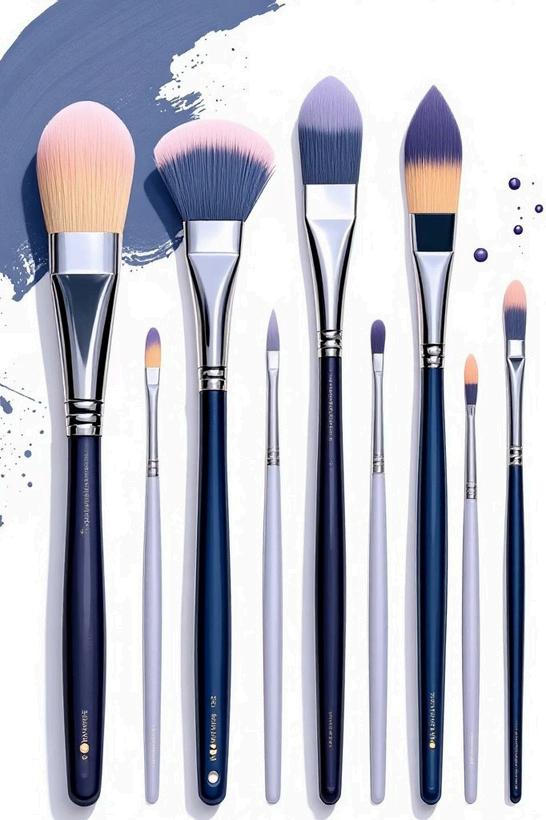
Flat
Square-tipped for bold, even strokes. Great for filling large areas, sharp edges, and blocking in colour.
Themost versatile shape.
Pointed tip for detail, belly for broader strokes — ideal for lines, dots, and curves.
Oval-tipped, combining the best of flat and round.
Excellent for soft edges, petals, and blending.
Spread bristles for dry-brushing texture — perfect for foliage, hair, grass, and blending backgrounds.
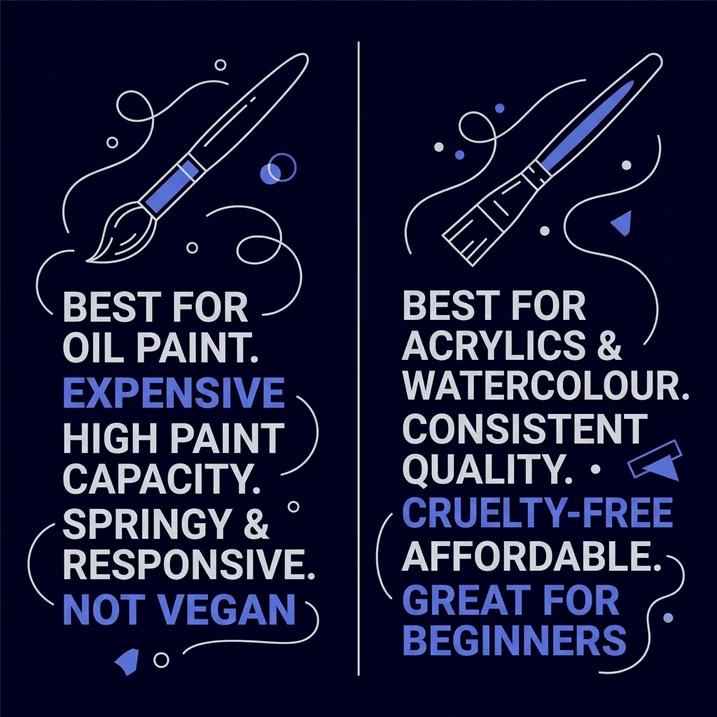
Yourmedium is the decidingfactor. Natural bristles absorb and release oil-based paints beautifully. Synthetic fibres hold their shape under water-based mediums and are the smart starting choice for most beginners.

Pro tip: High-quality synthetics now rival natural hair in performance — and at a fraction of the cost.
Oils
Use stiff hog bristle flats and filberts. Long handles keep distance from the canvas. Sable rounds for fine detail work.

Soft rounds hold water beautifully. Mop brushes for washes.
Look for a fine point that snaps back to shape.
Synthetic brushes are best — acrylics can damage natural hair. Flats, rounds, and filberts all work well.
Similar to watercolour. Flat synthetics give clean, graphic edges. Rounds for smooth blending and detail.


Awell-maintainedbrushlastsyears.Aneglectedoneisruinedin weeks.
Clean After Every Use
Rinse with the appropriate solvent (water for acrylics/watercolour, spirits for oils) immediately after painting. Never let paint dry in the ferrule.

Reshape While Wet
After washing, gently reshape the bristles with your fingers and lay flat or hang tip-down to dry. Never store upright while wet.

Store Properly
Once dry, store brushes horizontally or bristle-up in a jar. Use a brush roll for transport to protect the tips from bending.
Begin with 5 core brushes. Master each shape before expanding your collection. Try different bristle types and shapes on scrap paper. Your perfect brush is the one that feels right to you.
A few quality brushes outperform a set of cheap ones. Buy the best you can afford in core sizes.
Ready to shop? Visit Cowling & Wilcox's full brush guide to explore their curated selection for every medium and skill level.