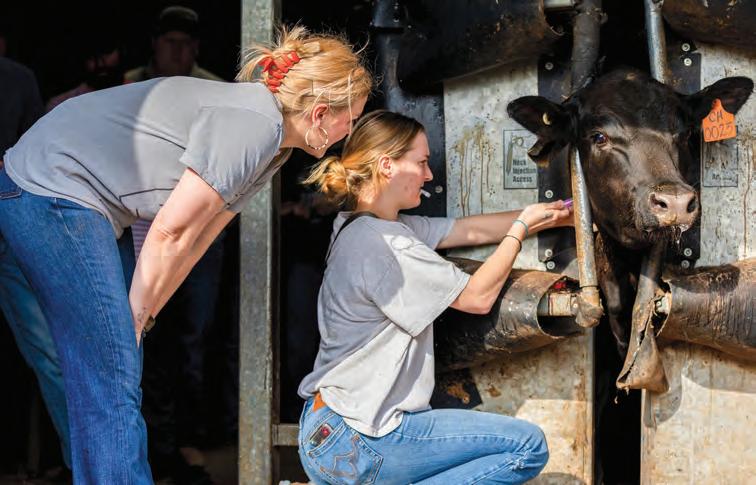
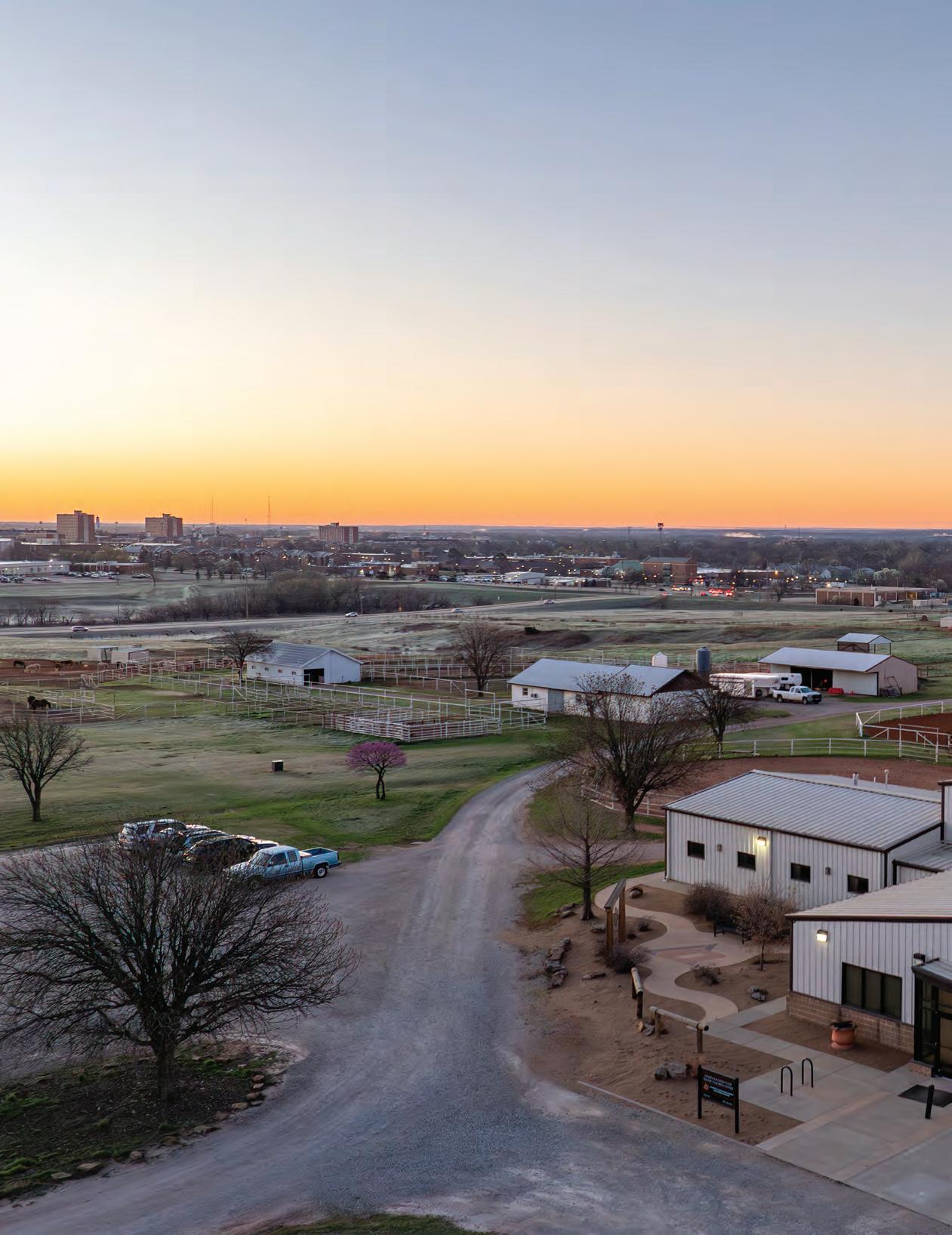
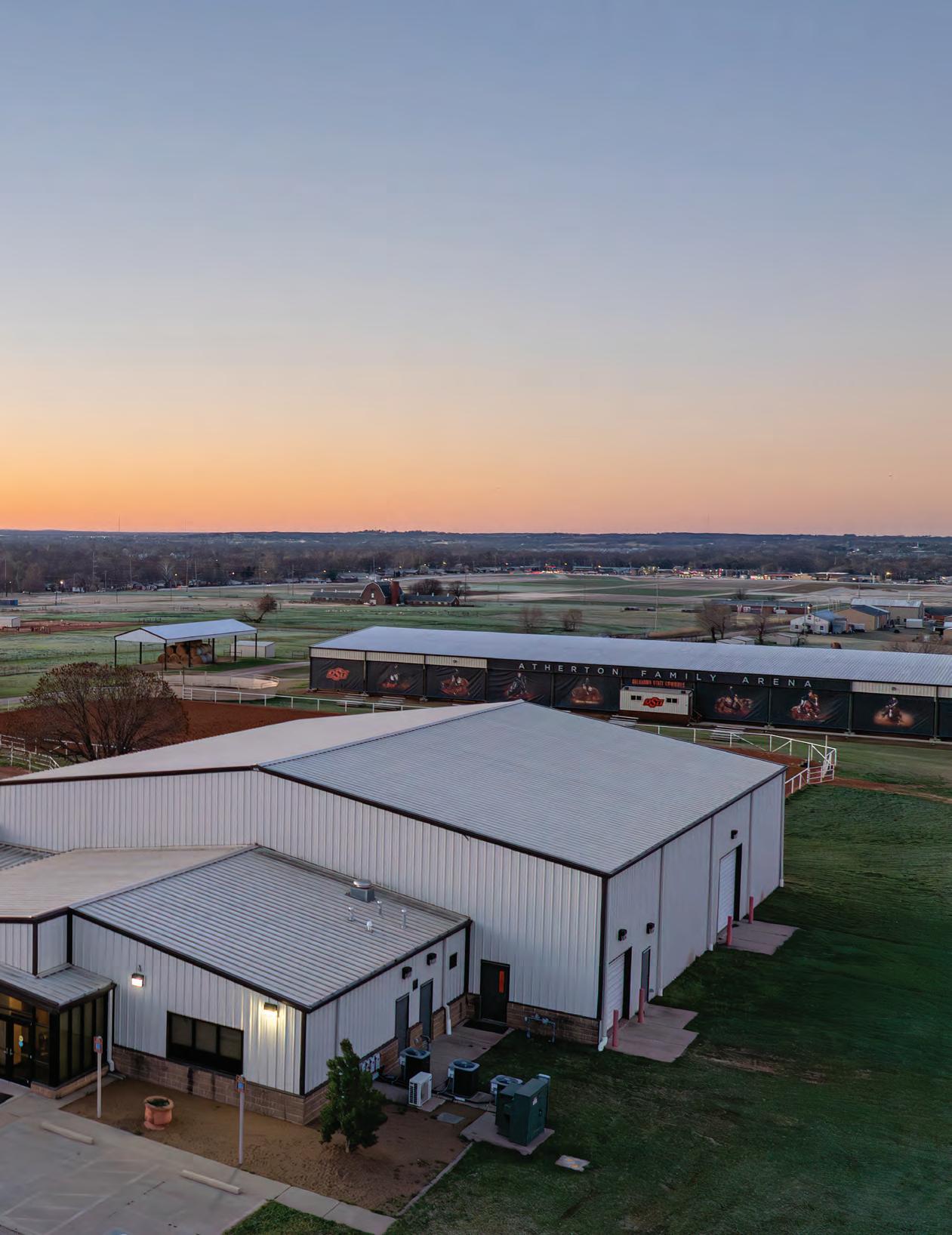
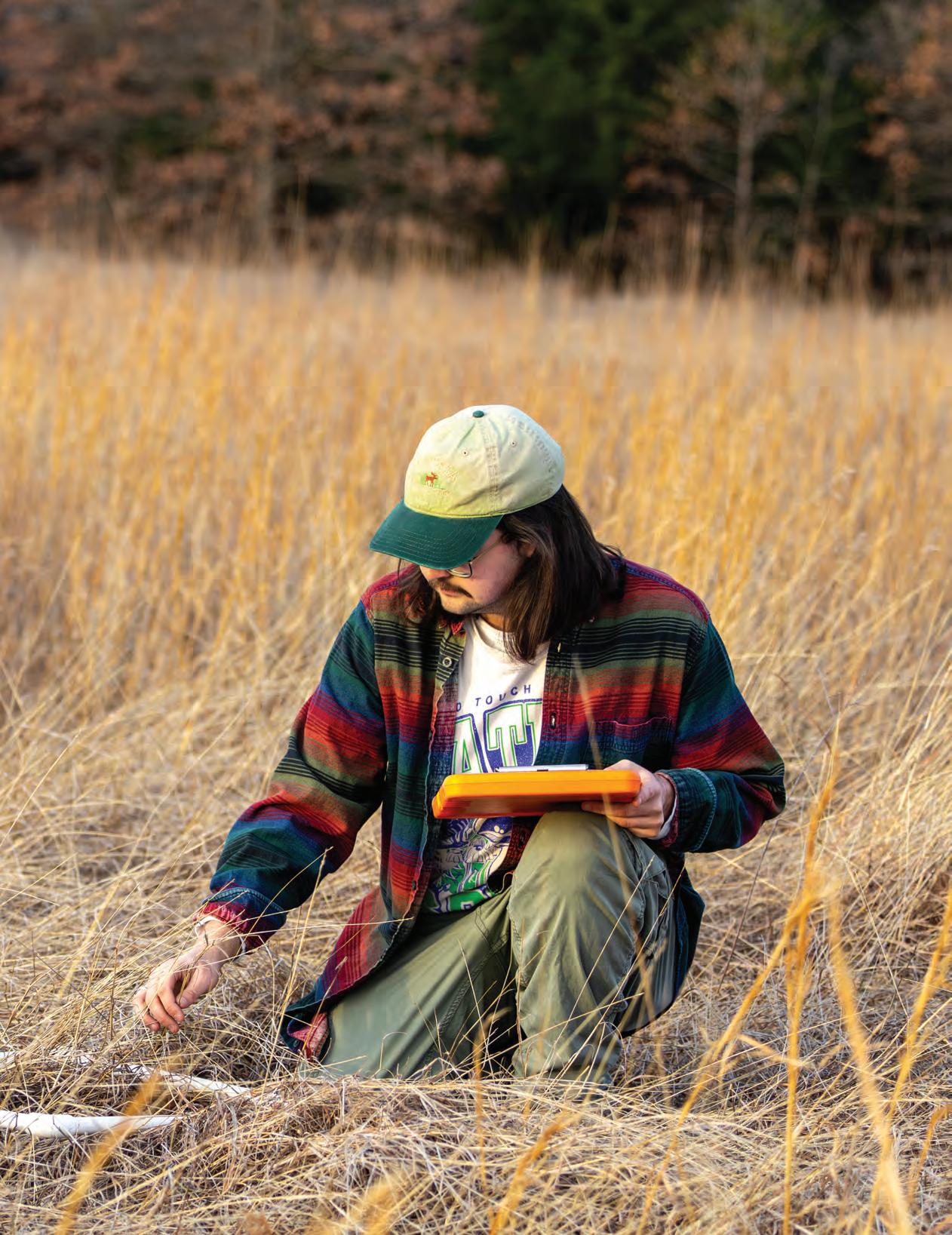
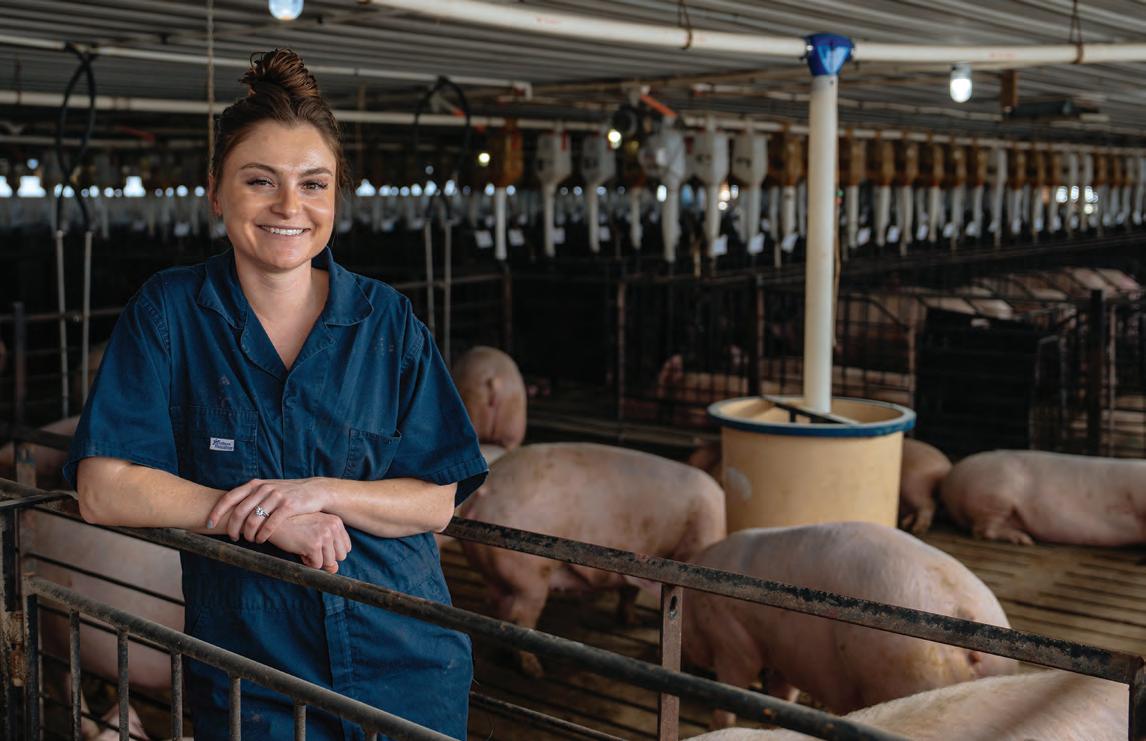
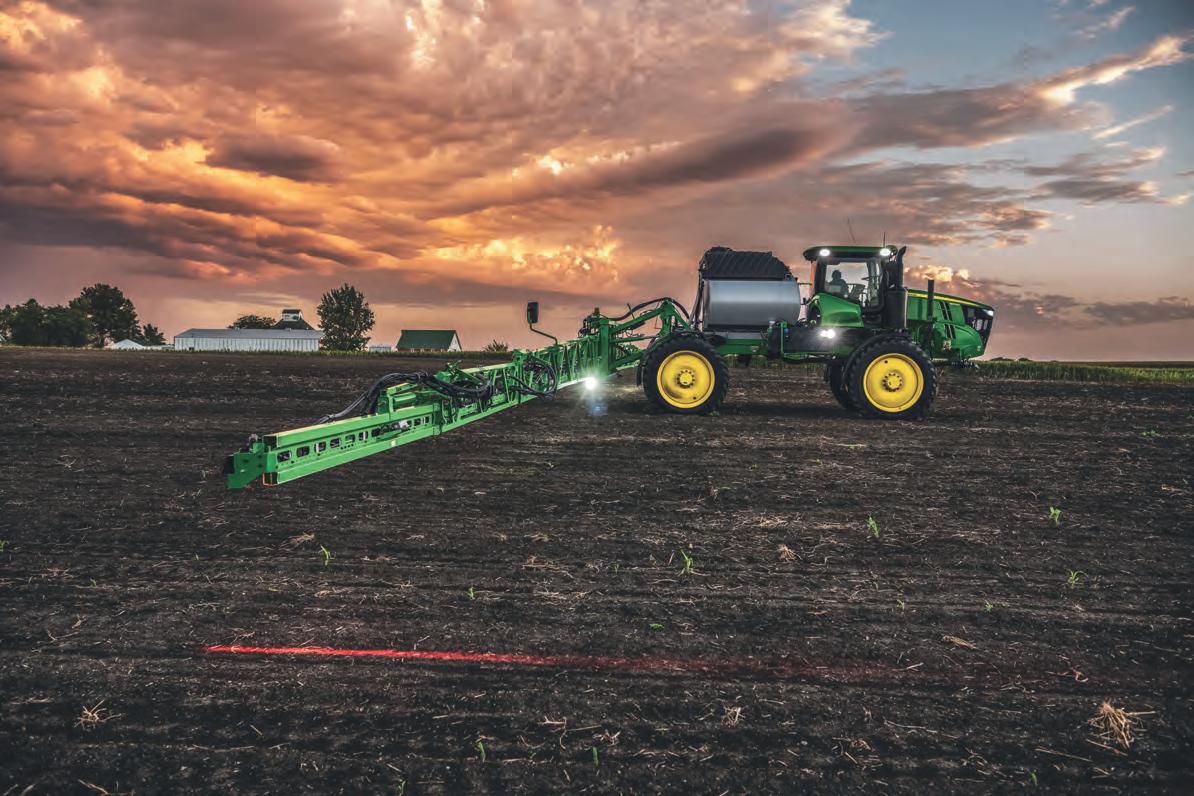
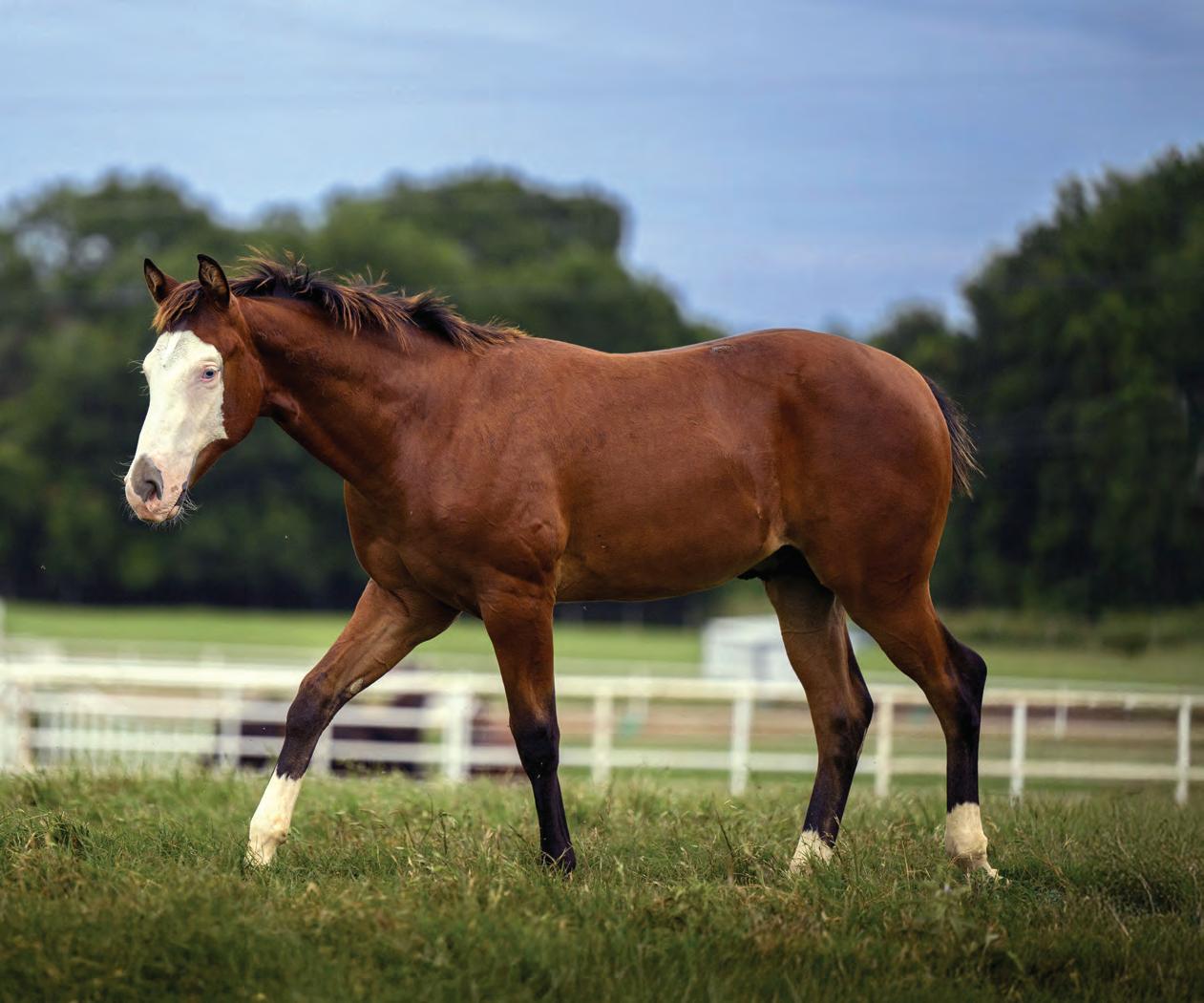
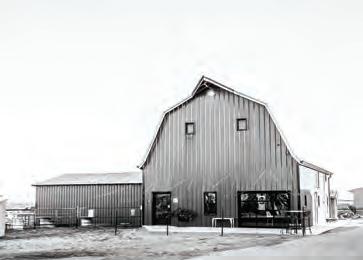
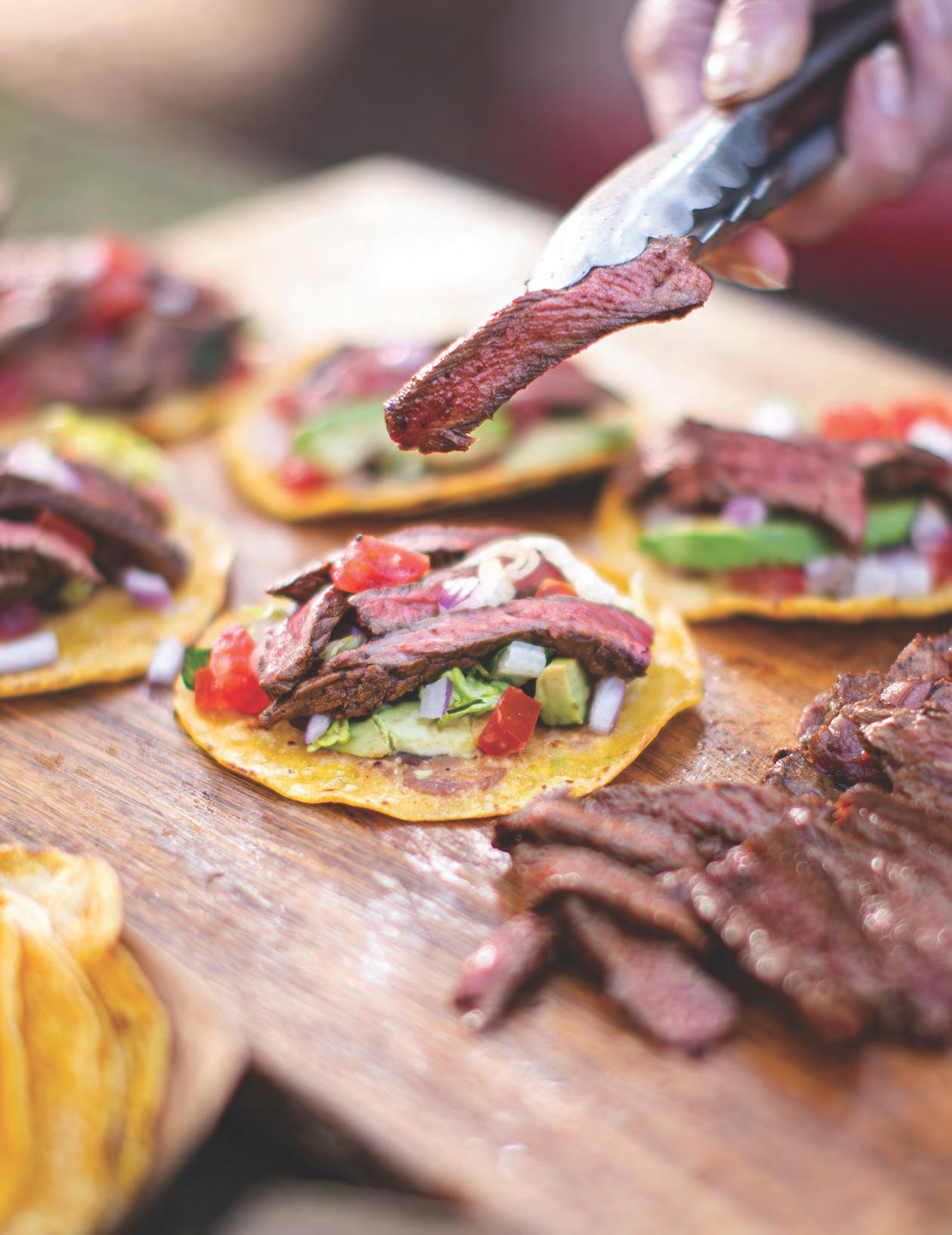
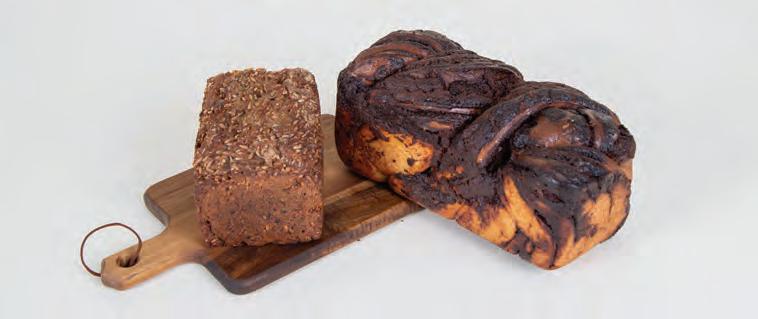
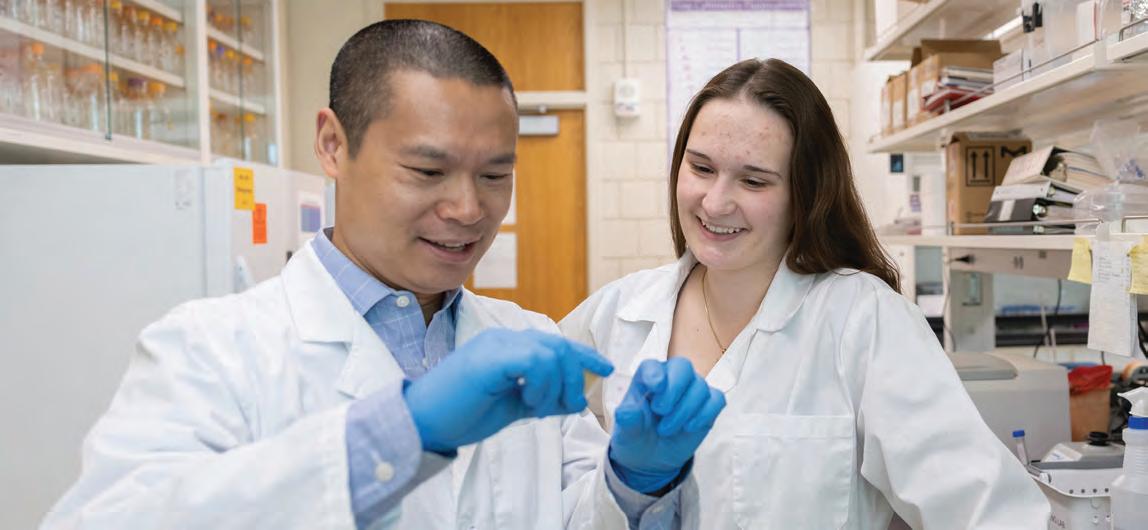
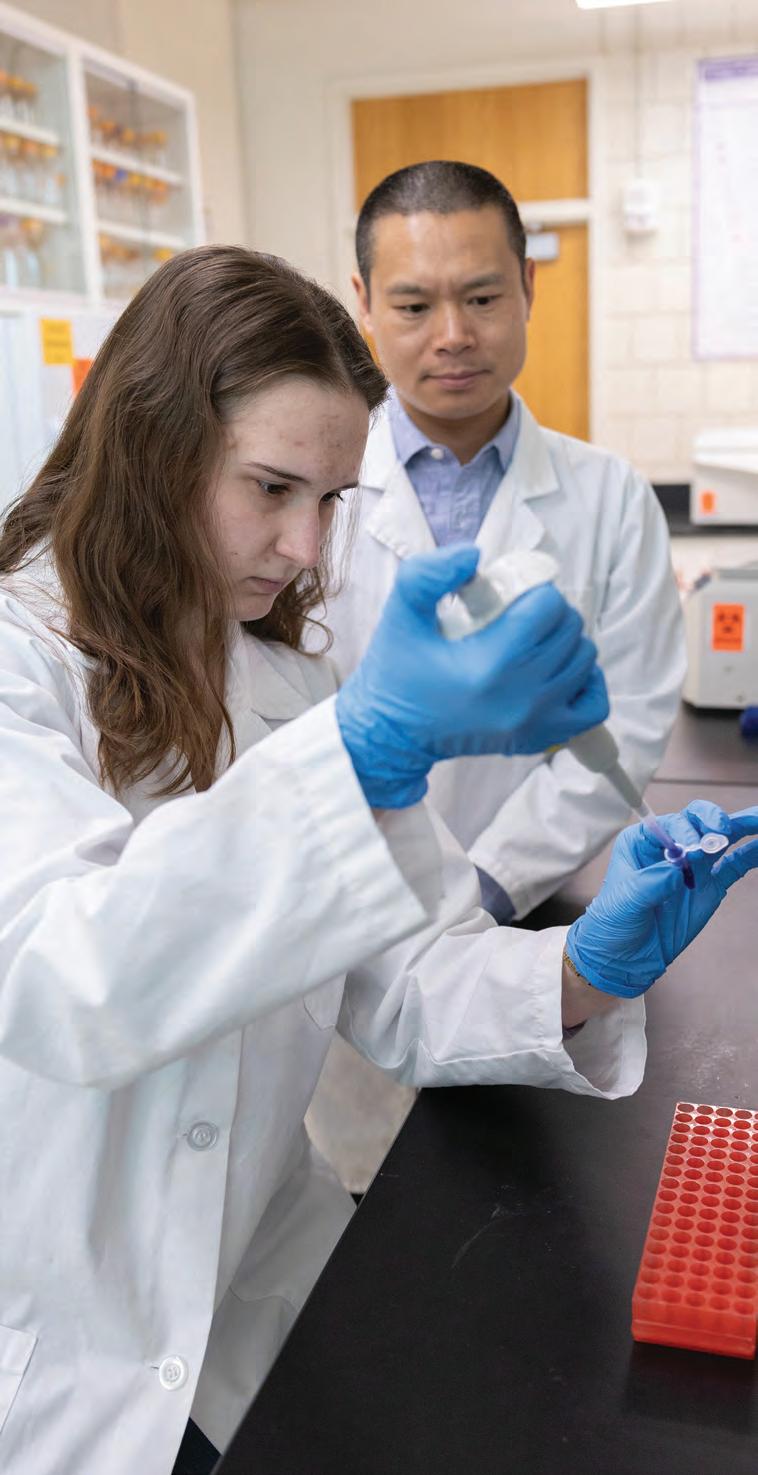
ELEVATING OSU AGRICULTURE’S RESEARCH CAPABILITIES Learn more about the Agronomy Discovery Center
MESSAGE FROM THE EDITORS
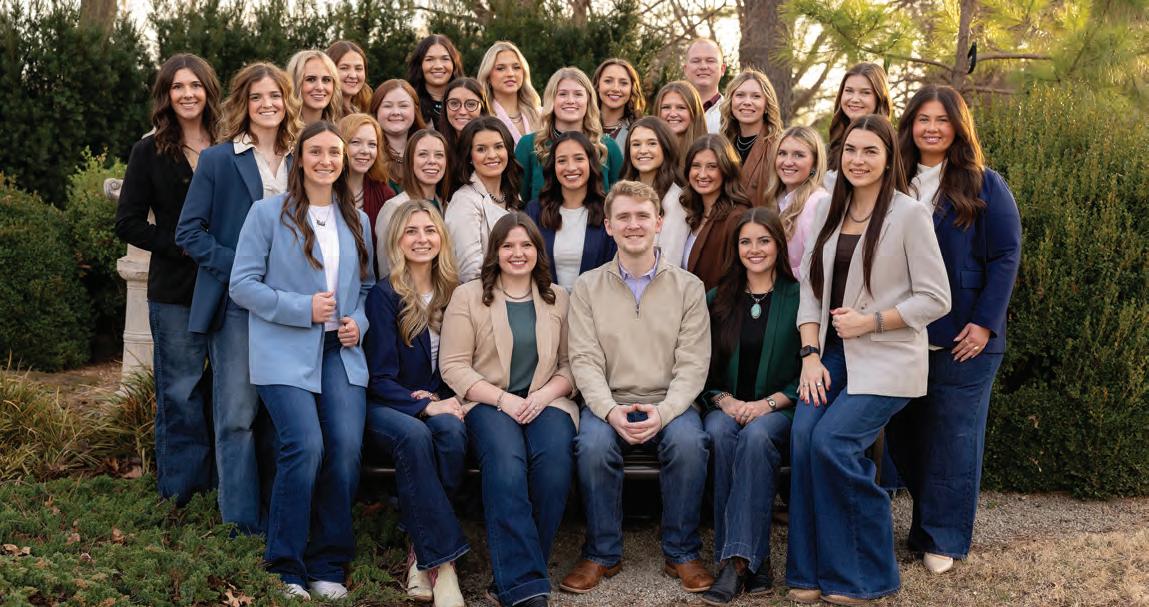
We are excited, grateful and proud to present the 56th edition of the Cowboy Journal under the leadership of Carrie Baker, Angel Riggs and our graduate teaching assistant, Hannah Wilcocks. Within these pages, you’ll see how OSU researchers, Extension educators, students and alumni are driving forward innovation and shaping the future of how agriculture feeds the world. This work reflects a shared commitment to discovery, impact and storytelling that connects food and science to everyday life. As you read, we hope you feel pride and connection as a member of the Cowboy Family — whether you are a student, alum, faculty, staff member or friend.
We extend our utmost gratitude to our 28-member staff as well as Alisa Boswell-Gore, Mandy Gross, Kristin Knight, Keona Mason, Kate Miller, Elizabeth Perdue, Dean Ruhl, Lauren Quinlan, Jessica Spence, Sydney Trainor, Harrison Wicker and Laura Wuebker for their editorial support. A profound thank you also goes to Dwayne Cartmell, Audrey King, Shelly Legg, Kenna Sandberg, Quisto Settle, Nicole Stevens and Kaylee Travis for their commitment to the agricultural communications program. Without their consistent guidance, the Cowboy Journal would not be possible.
Forever Loyal and True,
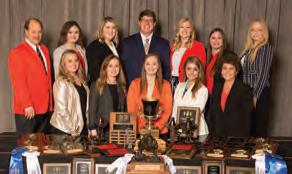
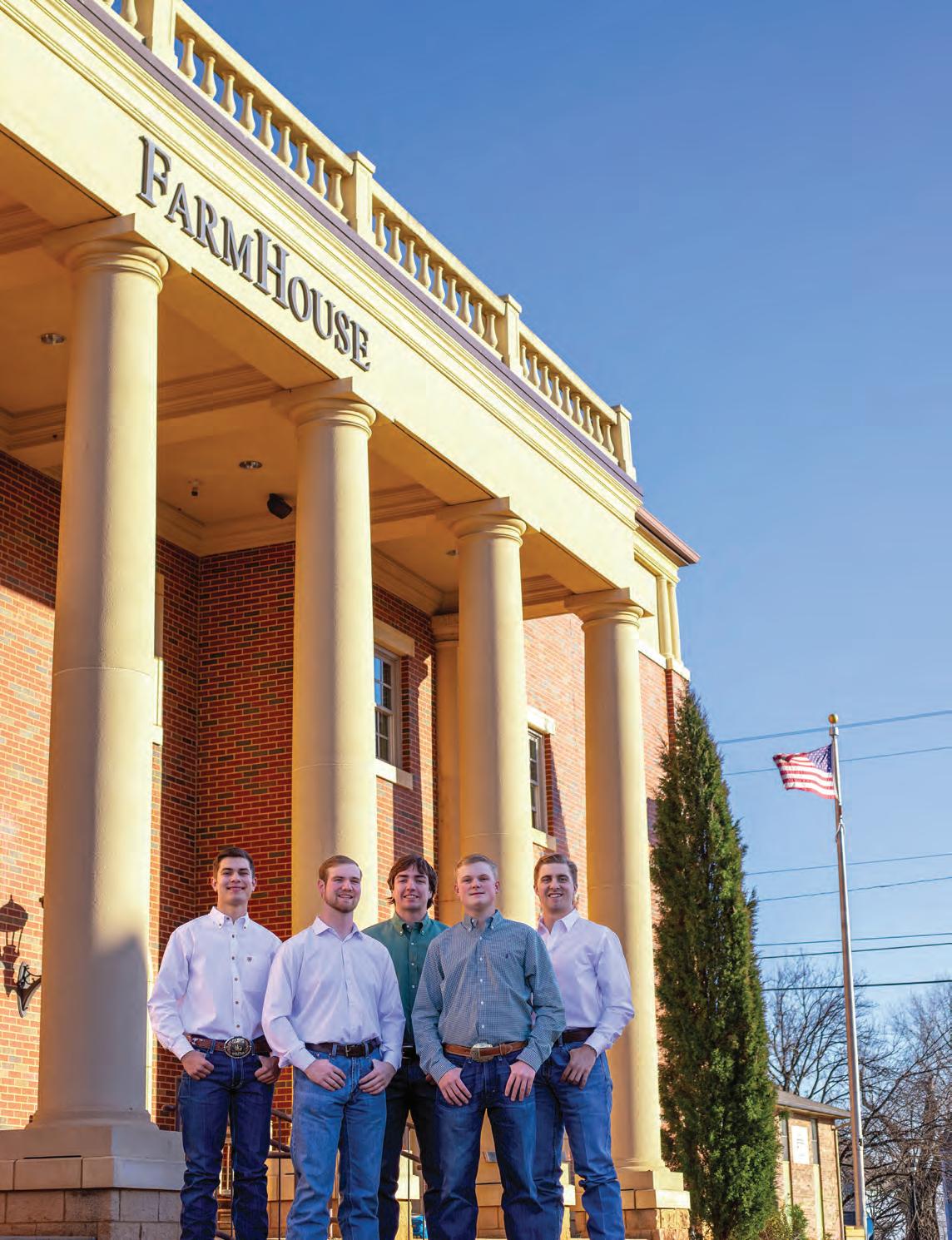
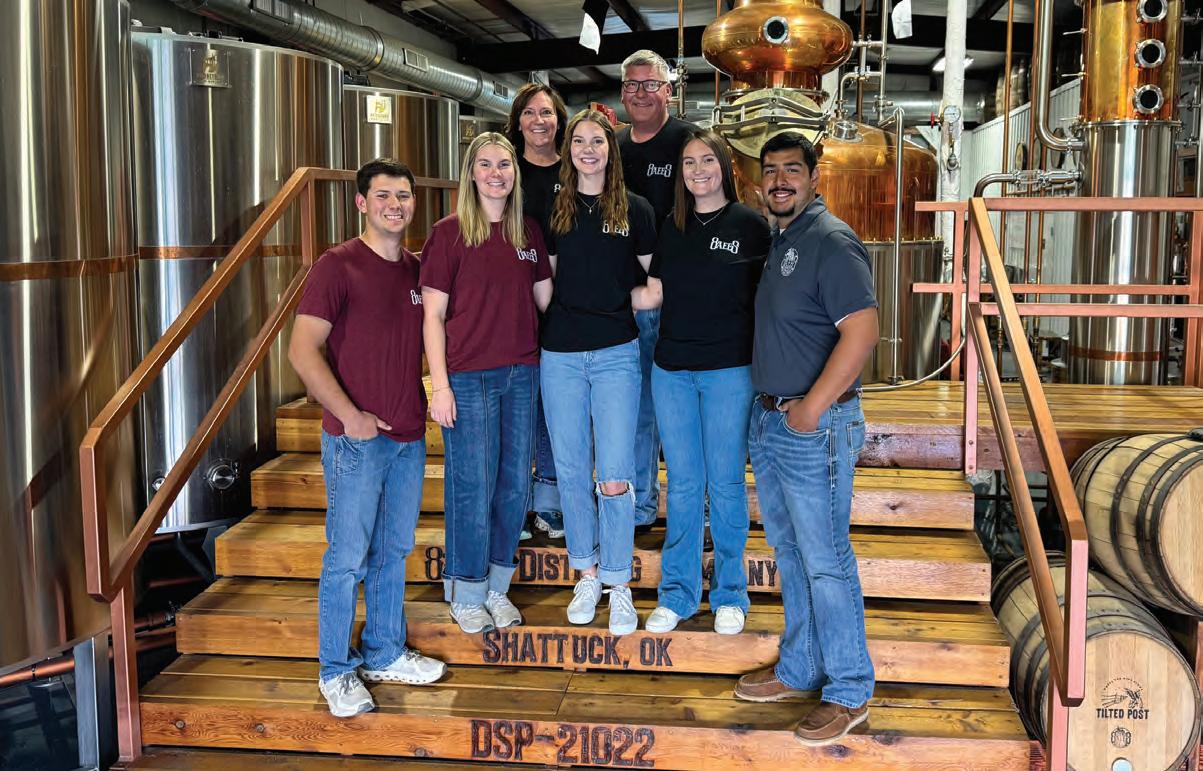
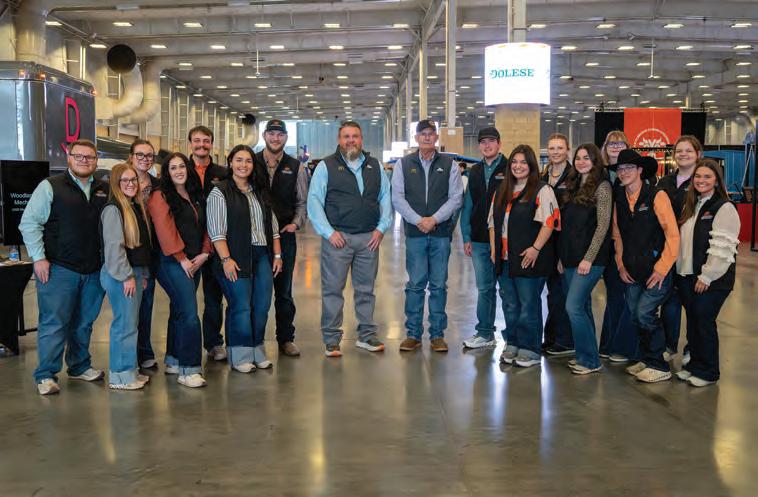
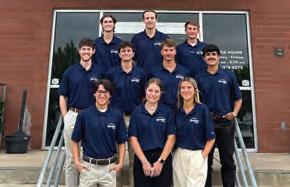
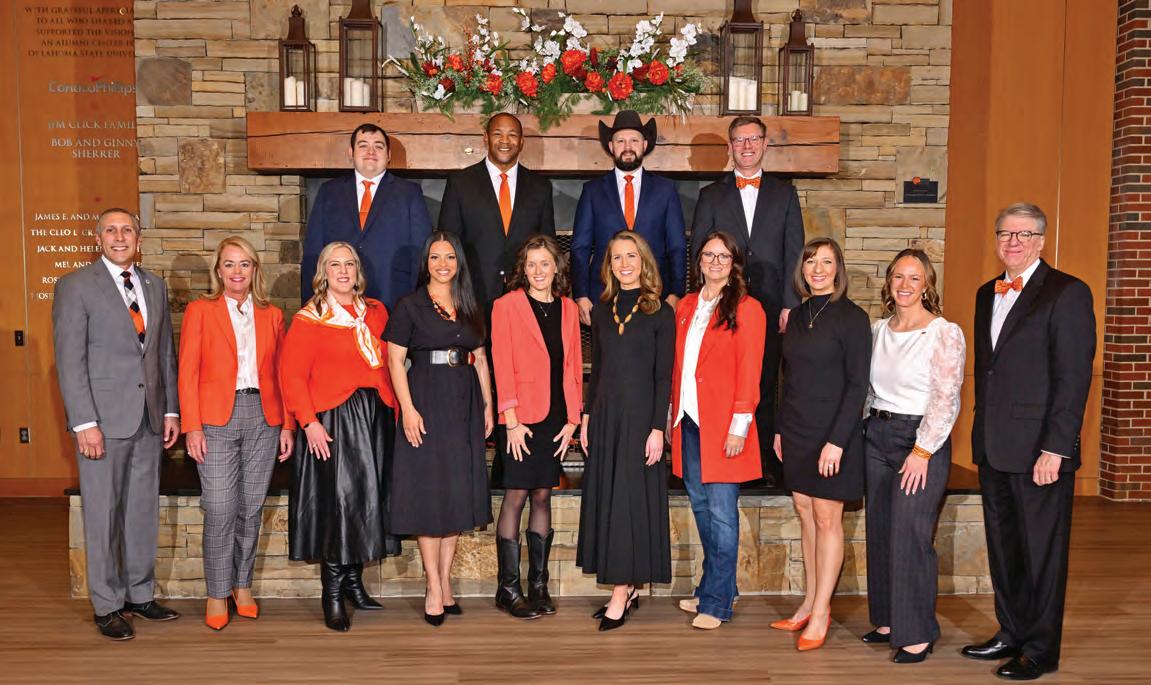
The Spring 2026 Cowboy Journal staff includes the leadership team (front and outside rows) and staff members. Photo by Hannah Wilcocks.
Marathon Farming Co. Stanfield, Arizona
COWBOY JOURNAL
Summer/Fall 2026 | Vol. 28 No. 2
EDITORS
JOSIE DOSHIER
TAYLOR EPPERSON
SOPHIE VARNER
MANAGING EDITORS
CARRIE BAKER, PH.D.
ANGEL RIGGS, PH.D.
ASSISTANT
MANAGING EDITORS
DWAYNE CARTMELL, PH.D.
AUDREY KING, PH.D.
KENNA SANDBERG, M.S.
QUISTO SETTLE, PH.D.
KAYLEE TRAVIS, M.S.
HANNAH WILCOCKS, M.S.
COPY EDITORS
COORDINATOR: ZOE CARMICHAEL
KARINA GONZALEZ
TIERNEY MYERS
HADEN SNELSON
TRINITY WHITE
SPONSORSHIP TEAM
COORDINATOR: MACK CONWAY
CLARA DUNCAN
ELLA HARMON
PHOTOGRAPHY TEAM
COORDINATOR: GRIFFIN BEHRENS
TAYLOR GROAT
KATE SCHAEFER
KYNDALL SCHAKEL
LAYOUT & DESIGN TEAM
COORDINATOR: MONICA FERRIS
SHERIDAN CHANEY
EMMA HUTTO
OLIVIA ROOKER
SOCIAL MEDIA TEAM
COORDINATOR: MIA TORIGIANI
JOSIE CORRELL
JESSI DILL
EMMA HICKEY
MADELYN MITCHELL
CIRCULATION & CUSTOMER SERVICE TEAM
COORDINATOR: FRANCES PIERCE
KINLEY BRATCHER
RYLEIGH COMBS
AUSTYN GREENLEE
48
90
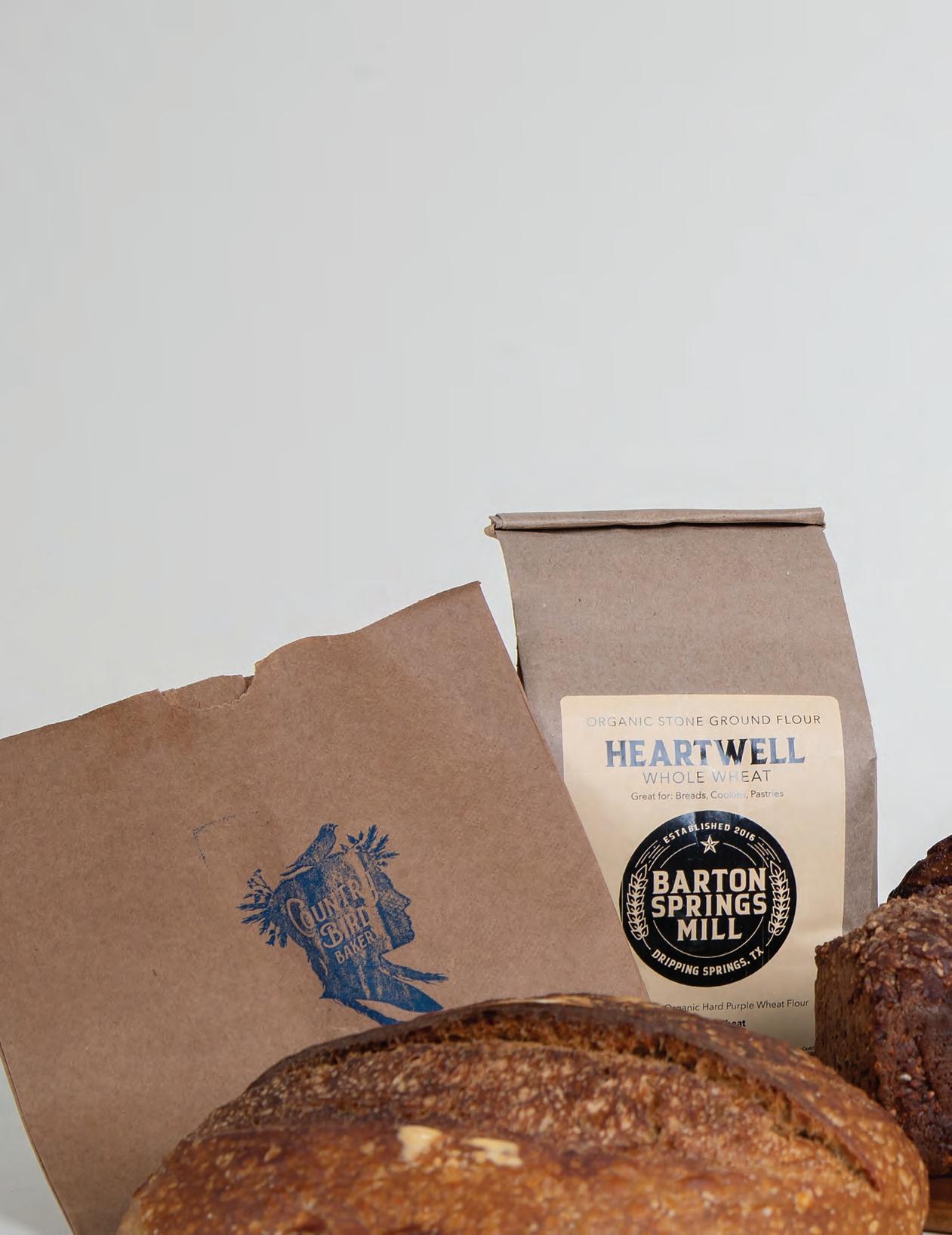
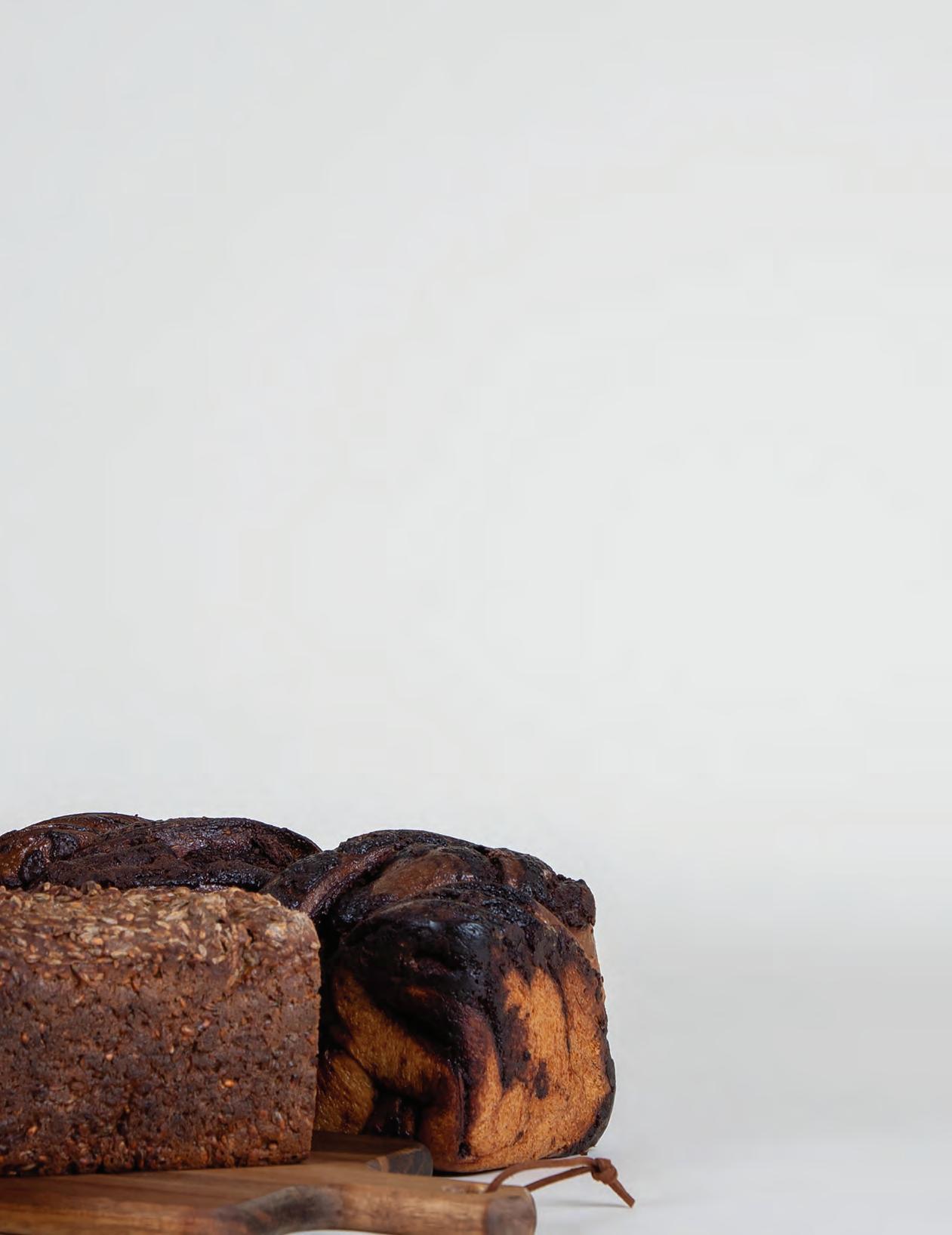
The role food plays across Oklahoma agriculture is woven throughout this issue. Discover how OSU experts are driving innovation through new technology, advancing experiential learning opportunities and sharing agrifood and health information to stakeholders across the state. Read the stories behind the food on our tables on pages 7, 10, 15, 18, 26, 39, 44, 60, 72, 90 and 106. Designed by Griffin Behrens, Monica Ferris and Emma Hutto.
A WHEAT OF A
Different Color
OSU WHEAT IMPROVEMENT TEAM LAUNCHES PURPLE WHEAT VARIETY
What do an Oklahoma State University Regents professor, a pepperoni pizza and legendary musician Prince have in common? Purple (G)rain.
Brady Sidwell, owner and operator of Enid Brewing Company and Chisholm Trail Milling, recently adopted a new type of wheat at his milling company he calls “Purple (G)rain” and uses in baked goods at his restaurant. The purple wheat, crossed and developed at OSU, is unique for more reasons than its purple hue.
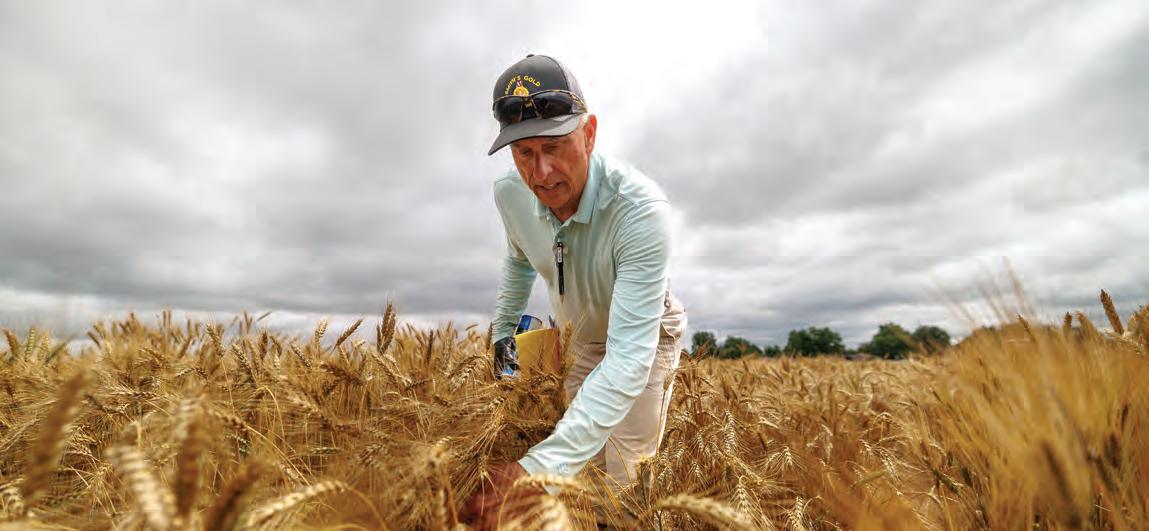
Anthocyanins, the same pigmented compound that gives color to blueberries and black beans, are incredibly valuable in a diet, said Brett Carver, OSU Regents professor and wheat genetics chair. Carver is also the lead researcher on purple wheat.
“Anthocyanins in the purple wheat are really good at neutralizing highly unstable compounds in our bodies that are there from wear and tear on your cells,” Carver said.
This new strand of wheat was developed to make wheat healthier for consumers and seen as a healthier food in general, he said.
“People often look at gluten and bread and carbohydrates in a certain way,” Sidwell said. “But we’re trying to show consumers that in the natural state of how farmers grow these crops, bread and flour can be healthy.”
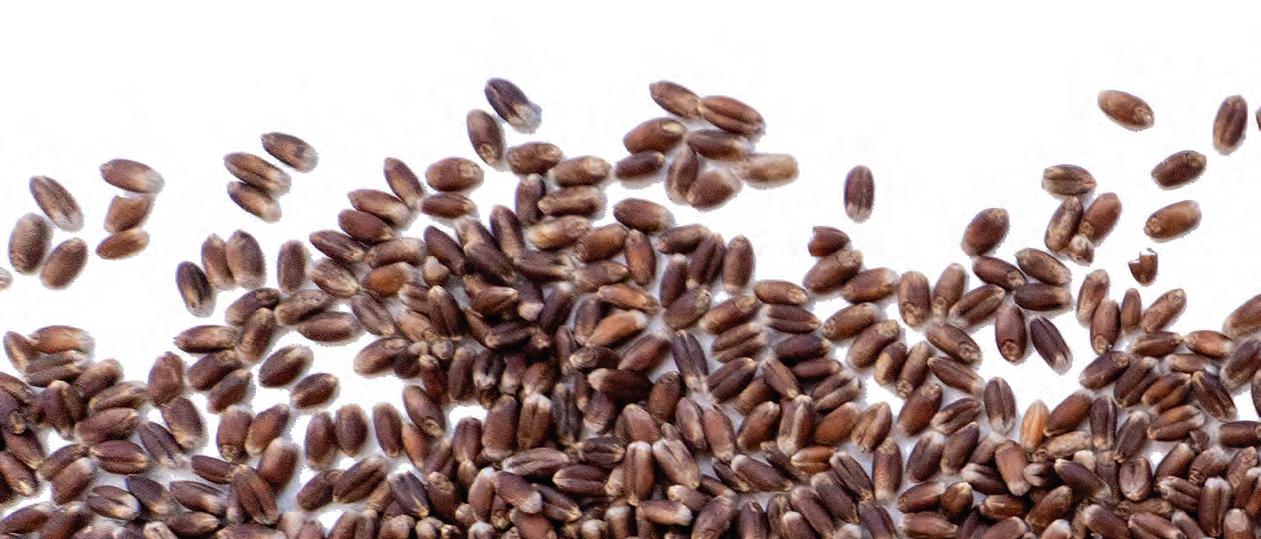
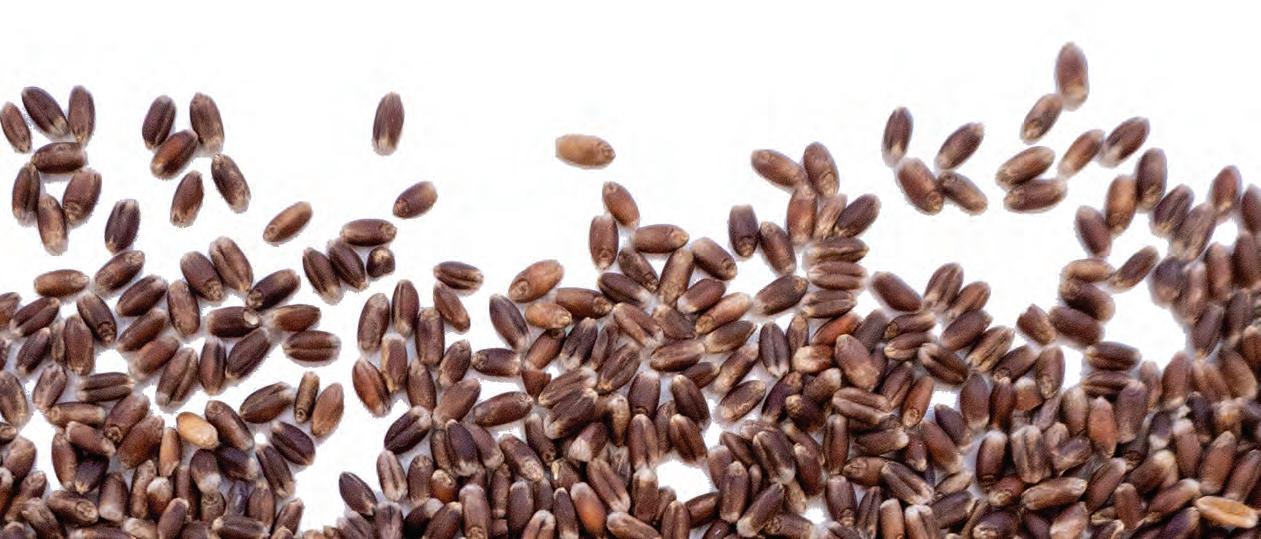
While the wheat kernel is a deep purple color, the products made from
Enid Brewing Co.’s Purple Pizza is packed with health benefits provided through the purple wheat. Photo by Tierney Myers.
We want to make sure we take care of ourselves. One way we do that is by consuming antioxidants.
purple wheat flour lack a distinct purple hue. This is because a very small amount of the kernel is actually purple, Carver said.
“The part of the wheat that’s purple is just a really thin layer,” Carver said. “That’s less than 2% of the weight of that kernel, so it’s not going to impart a huge purple tint.”
The end products made from purple wheat do, however, tend to have a slightly darker hue, Carver added.
“I wanted wheat to be part of the conversation that involves fruits and vegetables because we always think of fruits and vegetables as healthy foods,” Carver said. “But how often do you see whole grains being a part of that conversation? Never.”
Joe Longoria, owner of Casa Rica Tortilla Factory in Plainview, Texas, encountered the purple wheat through a local farmer.
Longoria said he is passionate about making food healthier for people through high-quality products. He uses purple wheat in his tortillas and is experimenting with making purple wheat pancakes.
BRETT CARVER
“The health benefits are really what’s driving the whole desire to put purple wheat out there in people’s hands,” Longoria said. “Whole wheat is very nutritious, and if you add the anthocyanin, which gives it the color, it gives it that icing on the cake.”
Anthocyanins in the wheat provide the body with antioxidants the body cannot create for itself, Carver said.
“We want to make sure we take care of ourselves,” Carver said. “One way we do that is by consuming antioxidants.”
In 2009, Carver brought in a strand of wheat from Romania for the original purple wheat cross due to the strong wheat production and high-quality germplasm in the region, Carver said.
“It only took one breeding cycle to come up with the wheat,” Carver said, “but a breeding cycle can last 10 years.”
While health benefits were the main goal for purple wheat, taste remains important to consumers. Some consumers steer away from whole grain wheats for texture or flavor reasons, but Longoria insisted the purple wheat has a pleasant texture and tastes nearly identical to white wheat.
“Let me just put it this way,” he said with a laugh, “I made some products for my grandkids, and they liked it. That’s difficult to do.”
While the products made from purple wheat are not distinctly purple, some bakers have experimented with adding natural dyes to give their baked goods more of a deep purple color, Longoria said.
Doing this adds consumer interest and makes the products stand out, Longoria added.
Many whole grain wheats have a grittier texture because of the size of the bran in the milling and baking process, Longoria said.
“The way whole grain wheat is being built by the commercial industry, the bran ends up cutting the texture of the dough like a razor blade when it’s rising,” Longoria said.
Dough rises because yeast in the dough releases gases during the fermentation process. These gases are trapped inside the dough, creating bubbles that make the dough expand. Whole grain wheat bran can disrupt this process, Longoria said.
The anthocyanins that give purple wheat its color also color black beans and blueberries. Photo by Tierney Myers.
“If the bran is large in size, it cuts through the bubbles and releases the gas,” he said. “You don’t get the rise that you typically would get when baking with a white flour.”
Longoria worked with a team to prevent this from being an issue with the purple wheat, he said.
“When we milled the purple wheat, we were able to get the bran size small enough that it doesn’t do that,” Longoria said. “It gives us a better rise than you would get from a commercially milled whole wheat flour.”
Sidwell said he dealt with this issue as well. Chisholm Trail Milling uses a
stone mill, which gives a much finer wheat and reduces cutting of the gluten in the rising process, he added.
Purple wheat opens the door to a new way of thinking in research, Sidwell said.
Whereas, research is typically done with the producer in mind and explores yield or durability, purple wheat was crossed with greater emphasis on the consumer benefit, he added.
“To me, it’s a game changer for the wheat business,” Sidwell said.
Though purple wheat may seem strange to consumers now, Carver said he hopes that isn’t always the case.
“I hope one day we will look at purple wheat, or blue or even black wheat,” Carver said, “and they won’t seem so unusual.”
TIERNEY MYERS
VAN, TEXAS
Brett Carver, head of OSU’s Wheat Improvement Team, originally crossed for purple wheat in 2009. Photo by Mitchell Alcala.
RootsFinding her
FERGUSON STUDENT STRENGTHENS OKLAHOMA’S PRODUCE INDUSTRY FROM THE GROUND UP
Sophia Darrow’s path into horticulture was anything but traditional. She began her academic career studying biochemistry and molecular biology, spending long hours working in a lab. The science interested her, but she realized she wanted a career that took her outdoors.
“I just did not like being inside all that much,” Darrow said. “I knew something else could fit better.”
Darrow is from the suburbs of Oklahoma City and is the first in her family to attend Oklahoma State University. Darrow found herself drawn to agriculture because of her interest in where her food came from and how it was grown.
Food is a shared language that connects people, and Darrow said she wants to work with crops to contribute to that. She admired the lifestyle associated with agriculture and knew she wanted to be outside more.
After several meetings across departments, Darrow said she finally found her place in horticulture, an area that aligned with the life she envisioned for herself.
“When I thought about my ideal life, it was growing vegetables,” she said.
When Darrow attended a horticulture program scholarship ceremony, she heard Justin Moss, professor and head of the Department of Horticulture and Landscape Architecture, mention the OSU Student Farm. Darrow said she approached him afterward and asked for a job.
She soon became one of the first OSU Student Farm employees.
That experience at the Student Farm sparked her interest in food insecurity and local food systems, eventually shaping her graduate research, Darrow said.
She earned a Master of Science in horticulture in December 2025, and is now a doctoral student in crop science at OSU.
Moss served as her graduate committee chair and research advisor.
“I wanted to help people, but I knew I needed a deeper skill set to do so,” Darrow said. “I knew I wanted to work in higher education or Extension, and I would need those credentials to do so.”
For her master’s research, Darrow focused on small Oklahoma fruit and vegetable producers, examining what sustainability and long-term success look like for their operations.
Through a series of focus groups across the state, she explored a range of key challenges producers face, from finances and market access to labor, environmental pressures and infrastructure barriers, she said.
“A lot of what Sophia did was identify information gaps and challenges producers are facing,” said Jayson Lusk, OSU Agriculture vice president and dean, who served as a member of Darrow’s graduate committee.
“The results will help us develop future Extension programs across the state and move forward in efforts to help producers make money and connect with people,” Lusk said.
Darrow’s interest in food insecurity strongly aligned with the mission of the Ferguson College of Agriculture, Lusk said.
Sophia Darrow works in the field at the OSU Student Farm and reflects on her passion for local food production. Photo by Mia Torigiani.
“One of our missions is to produce enough food that people can eat affordably,” Lusk said. “If we can’t satisfy the basic need for life, it’s hard for people to do other things they care about. It’s fundamental to human flourishing.”
Moss explained the project was rooted in Darrow’s passion for local food production and the structural barriers facing Oklahoma growers.
“Oklahoma and many other states receive most of their produce from places like California,” Moss said. “That’s not local, so the market itself becomes a barrier for our producers.”
Oklahoma producers cannot grow the same crops year-round like growers in states like California or Arizona, so large grocery chains often source their produce elsewhere.
As a result, many Oklahoma producers rely heavily on farmers markets, roadside stands and direct-to-consumer sales to stay afloat, Moss said.
“These were the challenges Sophia wanted to address,” Moss said. “How do we help small producers be sustainable in that kind of system?”
Darrow said her findings revealed several recurring themes.
One was a shifting cultural mindset surrounding local food, through growing awareness and more consistent institutional support for local producers, Darrow said.
The producers also described the intense demands of farming, she said.
“Being a producer isn’t just a job, it’s a lifestyle,” Darrow said. Many growers balance additional employment while navigating financial stress, labor shortages and unpredictable weather, she added.
Darrow said a barrier for local producers was the lack of accessible, Oklahoma-specific research tailored to fruit and vegetable production.
Producers expressed frustration that applicable research and Extension materials were either unavailable or difficult to find, Darrow added.
OSU Extension has a variety of resources from fact sheets to videos, Moss said.
“There is a lot of information out there,” Moss said. “We need to package and present them in ways that
Top: Sophia Darrow’s research seeks to understand the structural barriers Oklahoma growers face in selling fresh produce. Bottom: Sophia Darrow received hands-on experience in the OSU Student Farm fields, supporting her research for local producers and direct-to-consumer food systems. Photos by Mia Torigiani.
It is exciting to see students come to OSU not just to earn a degree, but to do work that truly serves the state.
are more visible and accessible to the community,” he said.
Producers also cited limited educational opportunities and networking connections, Darrow said.
Her research highlighted a desire for stronger community among growers such as workshops, meetings and collaborative spaces where producers can learn from one another and from Extension specialists, she said.
“Through these results, we are asking, ‘What can we as Extension do?’” Moss said. “How can we break down these barriers? That includes applied research that directly tells producers how to handle the issues in which they are facing.”
Lusk emphasized that modern delivery of information for producers is a key part of Extension’s effort, highlighting the importance of applied, real-world research.
Business operations and finances surfaced as additional concerns, Darrow said. She said finding compatible financing, creating sustainable pricing models and accessing fair markets were common challenges.
Environmental pressures such as weather variability, pests and sourcing inputs complicate production in Oklahoma, Darrow added.
Darrow credited OSU’s Department of Horticulture and Landscape Architecture for helping her navigate the research process.
Sophia Darrow’s research highlighted the role of farmers’ market challenges, increasing access to fresh produce and strengthening Oklahoma’s local food system. Photo by Mia Torigiani.
JAYSON LUSK
“Everywhere I turned, people asked if I needed help,” she said. “We have such a phenomenal department that really wanted me to succeed.”
Darrow will be interning with Hunger Free Oklahoma this year, strengthening the connection between agriculture and public health.
As a master’s student, she also worked with the initiative assisting with the Oklahoma Food is Medicine Landscape Analysis Report, the Oklahoma Grocer’s Assessment and overall local produce access.
“A lot of times we do not see public health and agriculture bridged,” Darrow said. “I want to be that bridge, so the industry is well represented and communicated.”
Lusk said mentoring students like Darrow is especially meaningful.
“When you see a student who is deeply interested in what is happening in the world and wants to improve the lives of people in Oklahoma, that’s what this is all about,” Lusk said. “It is exciting to see students come to OSU not just to earn a degree, but to do work that truly serves the state.”
Looking ahead, Darrow said she hopes to remain in the Extension network, working
within local food systems to ensure that research translates into real-world impact, Darrow said.
“The real-world applicability of this research is helping Extension serve producers better,” Moss said. “That’s the goal.”
For Darrow, the work is both professional and personal, she said.
“Oklahoma is at a crossroads,” Darrow said. “Good food and nutrition are medicine. We need more collaborative efforts, and we need to capitalize on the research and the people dedicated to this industry.”
MIA TORIGIANI BAKERSFIELD, CALIFORNIA
Faces of Oklahoma Agriculture
2026 Highlights the Faces behind Oklahoma Agriculture
OSU INVESTS IN TECHNOLOGY TO TRANSFORM FOOD RESEARCH
Oklahoma State University has added a powerful new tool to its food research capabilities, becoming one of only three universities in the nation to house a Hiperbaric food chamber.
OSU A griculture leaders say this distinction will strengthen industry partnerships, expand student training
opportunities and support the future of food production in Oklahoma.
The Hiperbaric food chamber, a high-pressure food processing system made to reduce harmful bacteria without heat or chemicals, arrived at OSU’s Robert M. Kerr Food and Agricultural Products Center in Spring 2026. While the technology itself has gained heavy
attention in the food industry, OSU’s food science researchers emphasize that its greatest value lies not in the machine, but in how the university plans to use it.
“This system uses extremely high pressure to inactivate harmful microorganisms while keeping the food itself largely unchanged,” said Scott Senseman, OSU Ag Research associate vice president.
The unit is an industrial-scale system that uses water to apply uniform pressure to sealed food products, providing a cold pasteurization option for food safety, Senseman said.
Ravi Jadeja, associate professor in the Department of Animal and Food Sciences, said OSU is fortunate to have leadership support to acquire this type of equipment. Jadeja said it will provide groundbreaking opportunities and benefit Oklahoma’s food industry beyond imagination.
As consumer demand continues to shift toward fresher foods with fewer preservatives, emerging high-pressure processing technologies are becoming increasingly important, Jadeja said.
“More and more people are going toward cold pasteurization or something that does not require either heat or chemicals to extend the shelf life of food products,” he said.
A Hiperbaric 55 liter food chamber is 26.3 feet long and 9.2 feet wide.
Photo courtesy of Hiperbaric.
A Prime Tradition
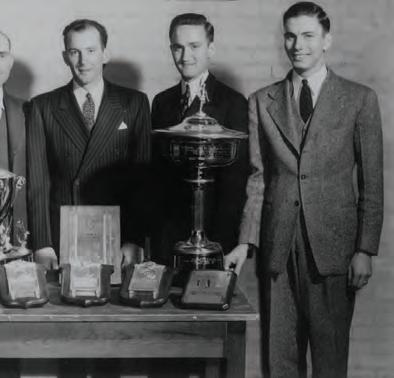
OSU CELEBRATES 100 YEARS OF INTERCOLLEGIATE MEAT JUDGING
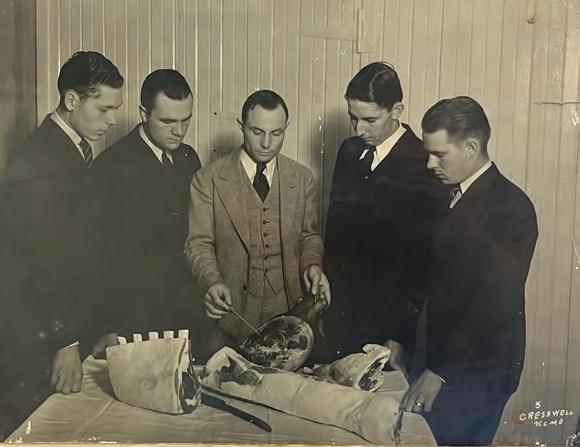
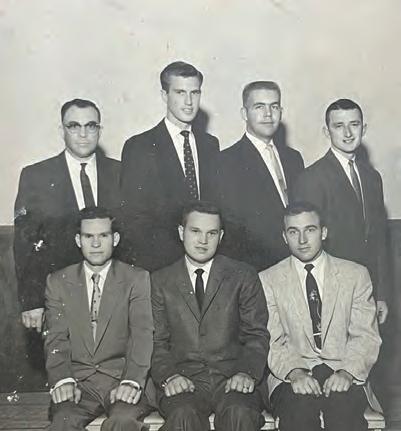
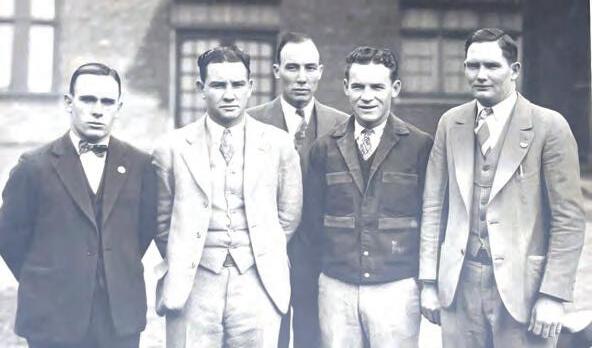
Dressed in suits and ties, Oklahoma State University’s first meat judging team gathered in Chicago in 1926 to compete in a brand new collegiate contest. The all-male team evaluated carcasses alongside students from across the country and left with a third-place finish in what would become the first intercollegiate meat judging contest.
The contest has been held every year since, except during World War II. A century later, it has grown into something far larger than its founders could have imagined.
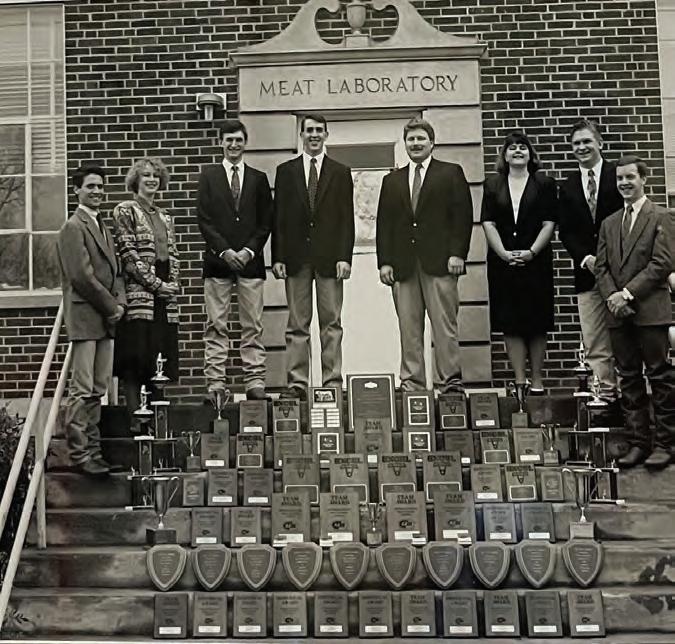
OSU has been a part of the meat judging story from the beginning. Since then, the program continues to build the most decorated resume in collegiate meat judging history, claiming 19 national championships, more than any other university in the country, said Gretchen Mafi, OSU meat judging head coach and meat science professor in the Department of Animal and Food Sciences.
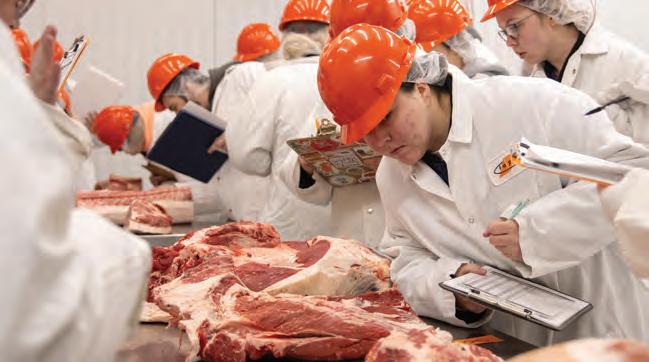
At contests, students evaluate beef, pork and lamb carcasses and wholesale cuts, determining quality and yield grades of beef carcasses while defending their decisions through questions or written reasons.
“Meat judging began as a way to teach students about the meat
industry,” Mafi said. “They learn to better understand carcass grading and evaluation.”
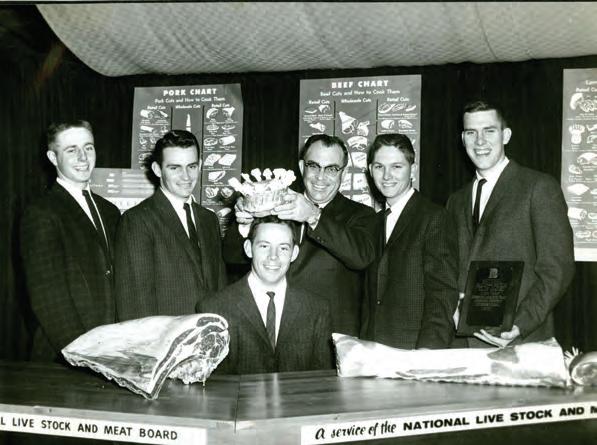
For the last 30 years, the American Meat Science Association has been the organizing body of intercollegiate meat judging. The association took over sponsorship and management in 1996 after the National Live Stock and Meat Board dissolved, Mafi said.
The National Live Stock and Meat Board had sponsored the contest since 1926 and ran most of the collegiate meat judging contests across the country as the competitions grew.
The contest itself was the vision of R.C. Pollock, the director of the National Live Stock and Meat Board at the time, Mafi said.
“The relevance of meat judging goes far beyond the evaluation of carcasses and cuts,” Mafi said. “The real relevance is the skills students gain like decision making and defending those decisions, time management, organization, being a part of a team, work ethic and communication.”
Over the past century, those skills have shaped generations of OSU alumni, including Grace Bryson, 2026 OSU assistant meat judging coach and 2023 team member.
“Before judging, I was a terrible decision maker,” Bryson said. “You
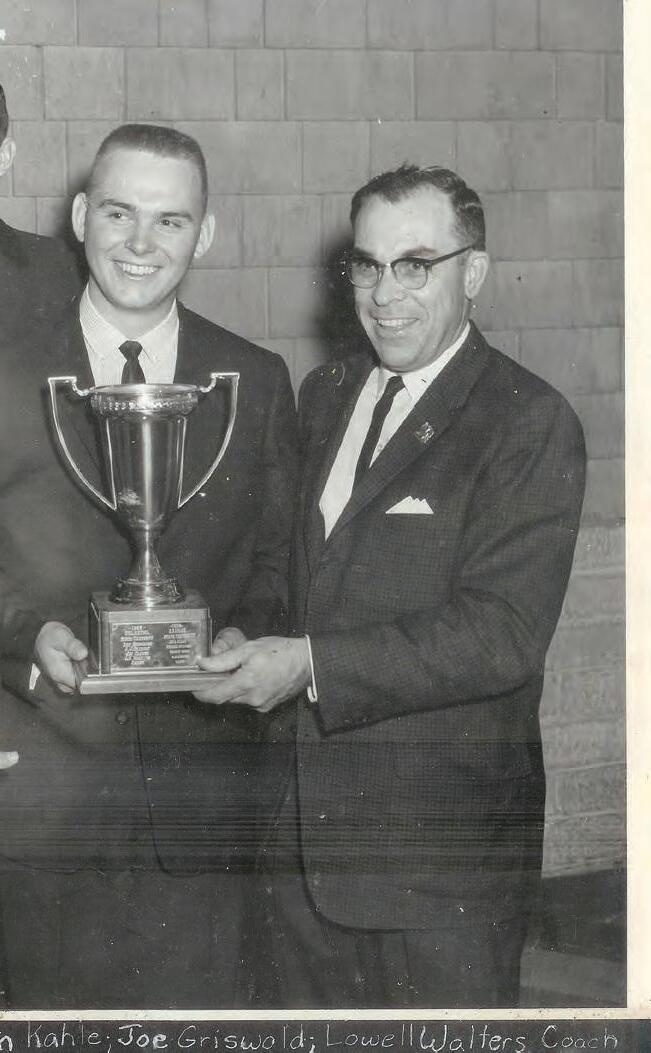
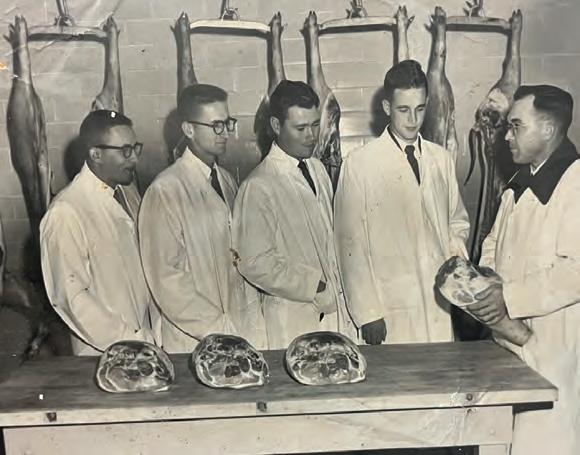
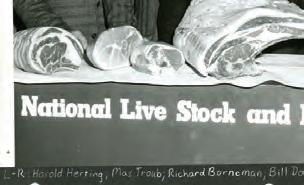
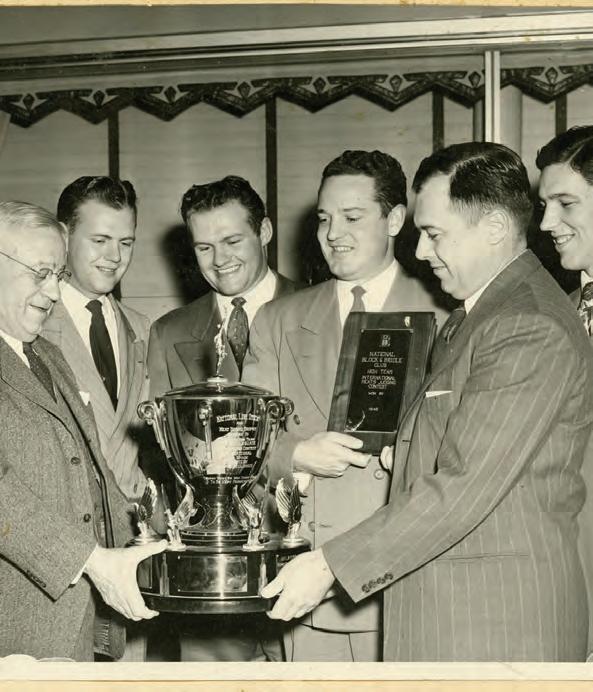
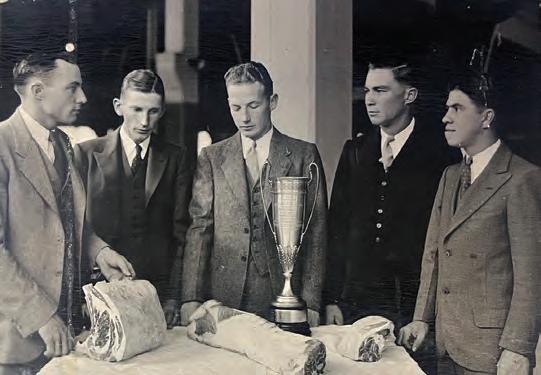
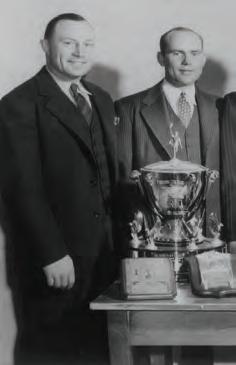
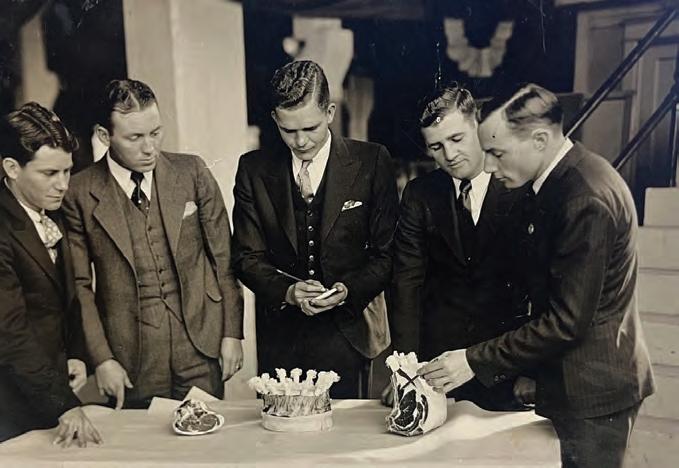
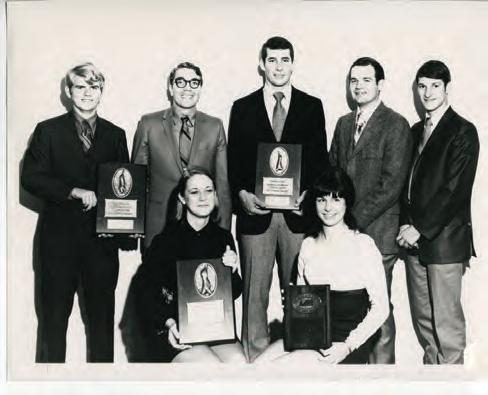
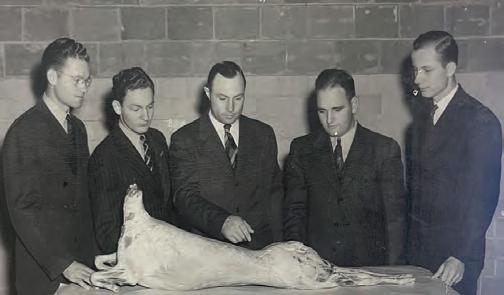
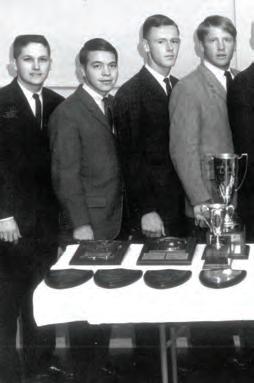
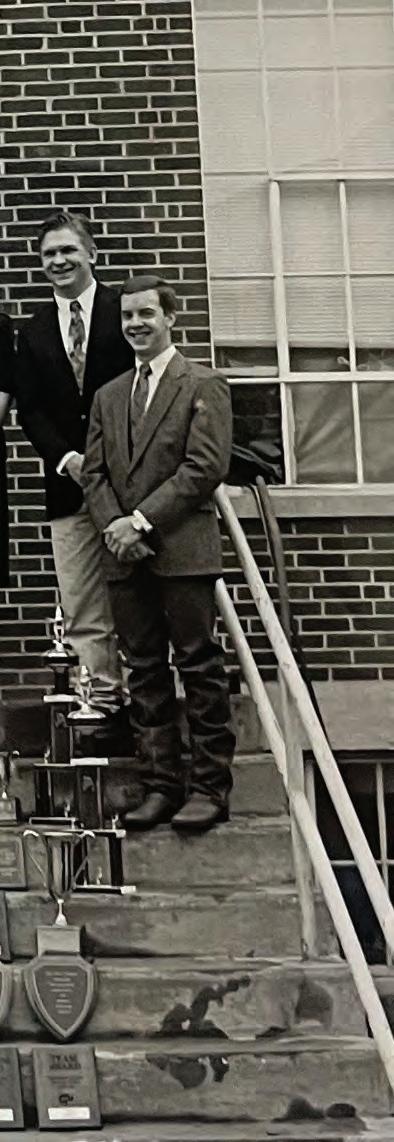
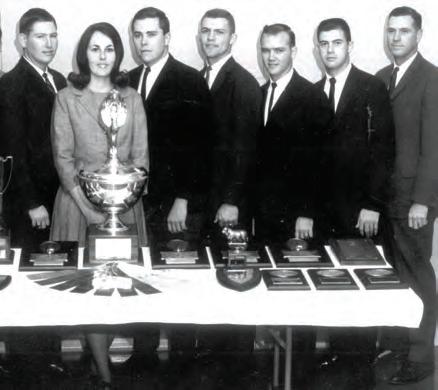
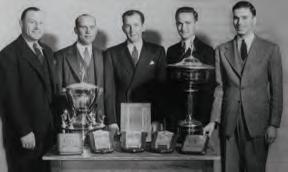
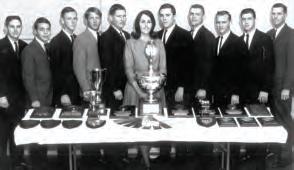
Historic photos of past OSU meat judging teams. Photos courtesy of the Department of Animal and Food Sciences.
can’t overthink things. You just have to make a call and go.”
Meat judging forced her to trust her training and be confident in her decisions under pressure, she said.
“When you’re in the cooler, it’s just you,” Bryson said. “You have to be able to rely on your team, but you also rely on yourself.”
The industry values mental strength and toughness to the same degree as a professional athlete, Bryson added.
“You’re not running a marathon or running laps,” Bryson said. “But, you need a lot of mental capacity to do this activity and stay 100% focused all day.”
Through practice trips and national contests, students gain direct exposure to packing plants, company facilities and the networking opportunities, often shaping their careers, Mafi said.
“Even though many think it’s a really technical activity, the skills you get out of it impact the entire agriculture industry, not just the meat industry,” Bryson said.
Many former team members have pursued careers ranging from law and medicine to veterinary school and in nearly every sector of agriculture, Bryson added.
“Meat judging has been a tremendous recruiter,” said Jimmy Wise, 1966 OSU meat judging team member. “It pointed a lot of students toward career choices that they might not have had an opportunity to make otherwise.”
Wise’s time on the OSU meat judging team led him to coach meat judging at the University of Nebraska, he said, before taking a position in beef grading standards at the USDA. He remained
closely connected to intercollegiate meat judging through leadership roles with AMSA throughout his career, Wise said.
The structure and scope of the contests have changed significantly since Wise competed in the 1960s, he added.
“We were the last three-member team,” Wise said. “At that time, we were fortunate that we got to judge three contests.”
Today, collegiate teams are comprised of four marking members with the opportunity to judge at eight contests nationwide.
When they walk in the cooler... they are representing not just this year’s team and not just themselves, but 100 years of teams who have come before them.
GRACE BRYSON
1926
OSU competes in its first intercollegiate meat judging contest in Chicago, earning third place. Photo courtesy of the Department of Animal and Food Sciences.
1941
OSU wins its first national title. Photo courtesy of the Department of Animal and Food Sciences.
Divisions were eventually developed to expand participation and create separate competitive tracks for junior colleges and four-year universities, Mafi said.
“The meat industry is continually changing,” Mafi said.
Advances in technology, food safety, marketing and even artificial intelligence have transformed how meat is produced and evaluated, Mafi said.
The contests have also grown more competitive, with an increasing number of schools participating and more women joining meat judging teams than in previous decades, she added.
“We are seeing so many more seeking careers in STEM in general,” said Morgan Pfeiffer, OSU assistant professor in the Department of Animal and Food Sciences, 2012 meat judging team member and 2014-2018 meat judging coach.
“It’s important for these students to be able to see the many opportunities that exist and that they can achieve careers in these fields.” Pfeiffer said. “It makes them feel like they have a place in the industry.”
OSU’s meat science program has continued to expand over the years, Pfeiffer said.
“When I was a student, there were really only about three faculty dedicated specifically to meat science,” Pfeiffer said. “We’ve basically doubled the size of our faculty.”
The impact of this consistent growth is evident in this year’s OSU meat judging team, the largest in program history, including 22 members, 17 of whom are women.
1942-1945
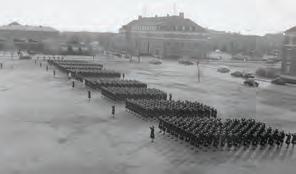
WWII paused competition as students left to serve; campus became a WAVES training site (Women Accepted for Volunteer Emergency Service). Photo courtesy of OSU Archives.
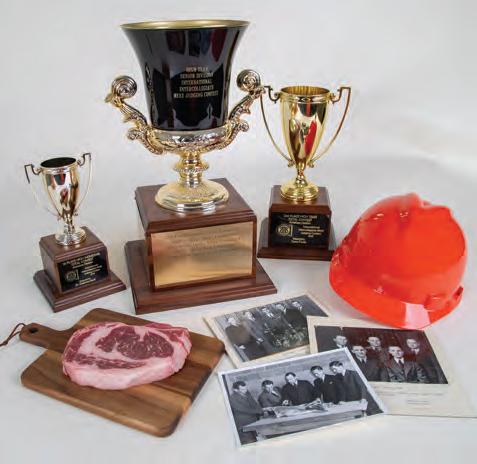
“When they walk in the cooler with that orange hard hat and a clipboard that says ‘OSU’ on the back, they are representing not just this year’s team and not just themselves, but 100 years of teams who have come before them,” Bryson said.
This responsibility is part of what makes competing during the 100th year so meaningful to the team and shapes how they approach each contest, Bryson said.
“We’re representing a school that’s had all these wins in the past,” said Hannah Morphis, 2026 OSU meat judging team member and agricultural education junior. “It’s incredible to know that you’re making history, not only in meat science, but for OSU.”
The team’s dedication pushes each member to work harder, but the relationships built along the way matter most, Morphis said. After transferring
1965
Left: After a team wins the International Intercollegiate Meat Judging Contest three times, the team gets to retire the traveling trophy. The OSU team retired this trophy in 2018. Right: 2026 meat judging team members evaluate various cuts of meat. Photos by Taylor Epperson.
to OSU last fall from Eastern Oklahoma State College, she said she quickly noticed the strong sense of community and alumni support surrounding the program.
“It’s just so eye opening how many people want us to be successful,” Morphis said. “All of these people really care.”
This level of support has been critical to the program’s sustained success, Mafi said.
“We have tremendous support from our university, our college, our department and alumni,” Mafi said. “Outstanding students have sustained our success.”
After two decades of leading OSU’s meat judging program, Mafi is coaching her final season.
“Coaching and traveling with a team and celebrating 100 years is very special to me,” Mafi said.
2018
OSU claims its 19th national title, becoming the most winning program in the nation. Photo courtesy of the Department of Animal and Food Sciences.
Mafi has been involved in intercollegiate meat judging for roughly 35% of the 100-year history, she said, adding she has made lasting relationships.
As she prepares to step away, Mafi said she is confident in the program’s success for another 100 years.
“One thing about meat judging is it’s truly a family,” Mafi said. “They’re our best and closest friends in this program. We know that those relationships we’ve made are the people that we can count on.”
2026
The team represents OSU in the 100th year of intercollegiate meat judging. Photo courtesy of the Department of Animal and Food Sciences.
TAYLOR EPPERSON
The program’s first woman, Becky Goodman, Joins the team. Photo courtesty of the Department of Animal and Food Sciences.
WYANDOTTE, OKLAHOMA
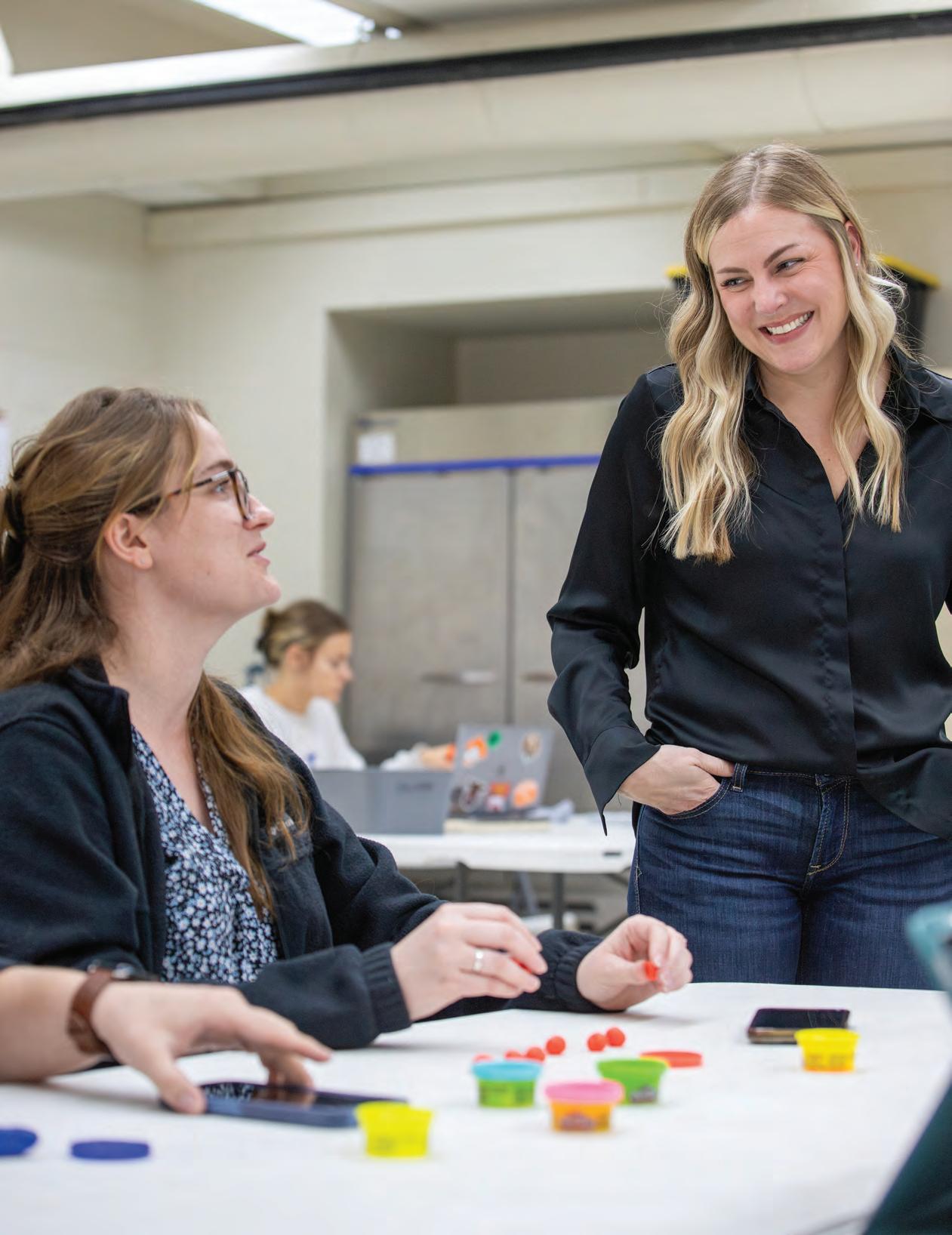
Crosswhite talks with Kathryn Burton during an interactive classroom activity, showcasing her engaging teaching approach. Photo by Sheridan Chaney.
Lectures THATLAST
FERGUSON FACULTY MEMBER RECEIVES NATIONAL RECOGNITION FOR OUTSTANDING STUDENT ENGAGEMENT
Mellissa Crosswhite does not measure success by course evaluations or titles. She measures success in curiosity — the moment a student asks a question, pauses and a difficult concept clicks.
The drive to foster curiosity recently earned Crosswhite, animal science assistant professor at Oklahoma State University in the Department of Animal and Food Sciences, national recognition as a recipient of the USDA Excellence in College and University Teaching Award for Food and Agricultural Sciences in the Teaching and Student Engagement category.
This national award is presented annually to two faculty members nationwide teaching in the area of food and agricultural sciences.
“It’s super competitive,” said Richard Coffey, professor and head of the Department of Animal and Food Sciences. “Any university across the U.S. can nominate people for it, so you’re really in competition with all your peers.”
Recipients who are selected are considered to be the “cream of the crop,” he added.
National recognition reflects Crosswhite’s dedication and the department’s broader culture of excellence, Coffey said.
“It’s one thing for us to say we think we have really good instructors,” Coffey said. “It’s another to say these are nationally recognized instructors.”
When studen ts attend OSU, they are being taught by the best, he added.
In the Ferguson College of Agriculture, 16 faculty members have earned a total of 17 national awards across all categories, said Cynda Clary, Ferguson College of Agriculture associate dean.
Faculty in departments collegewide have received the recognition, which is an indication of OSU’s long-standing commitment to great teaching, Clary said.
“I feel very fortunate to have the quality of faculty we have in this college,” Clary said, adding Crosswhite “is definitely there at the top.”
Crosswhite said academia was not originally part of her plan. Growing up in a family that raised commercial cattle in Florida, Crosswhite once envisioned a career in veterinary medicine, she said.
Her direction shifted during graduate school at North Dakota State University, Crosswhite added.
“As a graduate teaching assistant, I had the opportunity to work closely with students, helping them understand complex material and develop as
emerging scientists,” Crosswhite said. “I f ound that experience rewarding.”
As graduate school came to a close at NDSU, Crosswhite knew she wanted a role centered around teaching the youth, she said.
An opportunity opened in OSU’s Department of Animal and Food Sciences and in December 2016, she became a faculty member.
Crosswhite teaches upper-level animal science courses many students consider demanding, she said.
“I strive to make complex material approachable and digestible by using analogies and real-world examples that help students connect concepts to practical situations,” Crosswhite said.
Crosswhite intentionally breaks down difficult ideas and shares the strategies and perspectives that helped her develop an appreciation for the subject, she added.
Crosswhite’s approach made an immediate impact, said Reese Bassano, administrative assistant to Crosswhite and one of her former students.
“When I took Dr. Crosswhite’s form and function course, I really enjoyed getting the opportunity to see what we learned about in lecture come to life in the lab,” Bassano said.
This immersive experience changed the way Crosswhite approached
learning and is what ultimately sets her teaching style apart, she added.
“It is easy to go to class and memorize content well enough to make a good grade,” Bassano said, “but it is another thing completely to fully immerse yourself in content in a way that allows you to understand and reciprocate the material you are learning.”
Crosswhite’s approach sets her apart from other faculty members, Coffey said.
“She recognizes that not every student learns the same exact way,” Coffey added.
Some students prefer traditional lecture formats, Coffey said, while others respond better to visual or hands-on learning.
Crosswhite incorporates a variety of visual tools and interactive methods into her instruction to facilitate active, engaging hands-on learning experiences, he added.
Her commitment to improvement is ongoing, Coffey added.
“I continually push myself to refine and strengthen each course so it’s better than the last,” Crosswhite said.
However, teaching students in a classroom is not the only way Crosswhite makes an impact.
Crosswhite advises and mentors students across multiple organizations within the Ferguson College of Agriculture, including Sigma Alpha, a professional agricultural sorority, Oklahoma Collegiate Cattlemen’s Association and Leaders of Excellence in Animal and Food Sciences, she said.
Crosswhite’s leadership helped shape Sigma Alpha into an organization focused on fellowship, professional development and connection, Clary said.
“Advising and mentoring students outside the classroom allows me to see them as whole individuals, not just learners in a course,” Crosswhite said. “Understanding their goals, challenges and career aspirations helps me better connect course material to real-world applications and professional development aspects.”
This mentorship reaches far beyond academics, Bassano said.
“Dr. Crosswhite can be in the middle of an extremely busy week of teaching
class, grading assignments, attending meetings, and if a student comes in the office and asks if she has a few minutes to chat, she is always willing to stop what she is doing to be present with that student,” Bassano added.
Crosswhite’s investment in students is more than just coursework, Coffey said.
“She sincerely cares about students,” Coffey said. “She’s willing to invest whatever time and energy is needed to help them be successful.”
One full-circle moment in particular reaffirmed her calling and passion to teach, Crosswhite said.
“The first time one of my students was accepted into veterinary school was especially meaningful,” Crosswhite said. “She started as my advisee and was in my first OSU course, Form and Function of Livestock and Poultry, and later became my teaching assistant.”
Crosswhite truly embodies the department’s expectations for faculty, Coffey said.
“She fits right into that mold,” Coffey said. “We want people who are
Experiential learning drives Crosswhite’s teaching, equipping students’ like Karlee Favor with applied skills. Photo by Sheridan Chaney.
excellent in the classroom. We want people who care about students, who really want to make sure that they’re successful when they leave here, at OSU.”
The award is recognition, but not the end goal, Crosswhite said.
“Meaningful student engagement looks like active participation, genuine curiosity and a willingness to think critically beyond memorization,” Crosswhite said.
Most importantly, it reflects a classroom environment built on trust,
relevance and shared investment in learning, she added.
Crosswhite said she never feels finished as an educator.
“I rarely feel that I’ve done enough for my students,” she said. “I often think each lecture, semester and course could be improved.”
A constant drive to do better, refine, rework and reimagine is what ultimately defines her classroom, Crosswhite said.
For Crosswhite, success is not measured by an award, but by the moment a student connects the dots and the light clicks.
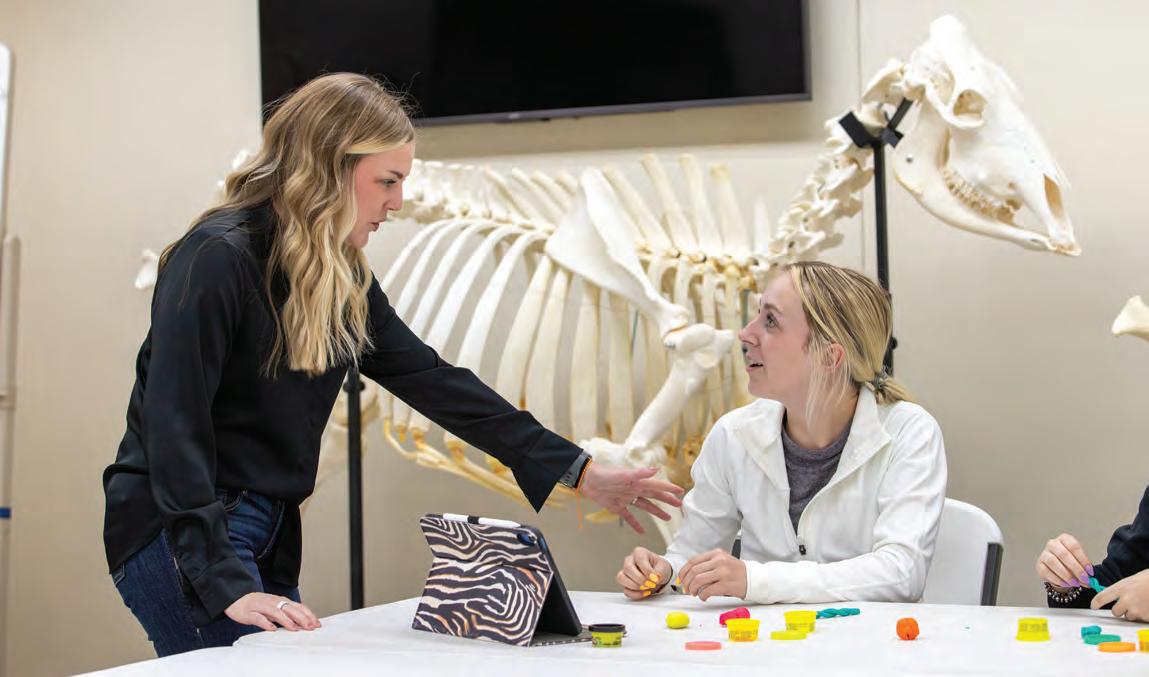
Crosswhite uses hands-on, real-world activities in her courses. Photo by Caley Mayo.
SHERIDAN CHANEY KEYMAR, MARYLAND
OSU SUPPORTS WINE AGRITOURISM, VIBRANT VITICULTURE INDUSTRY ACROSS THE STATE
into oklahomaPouring
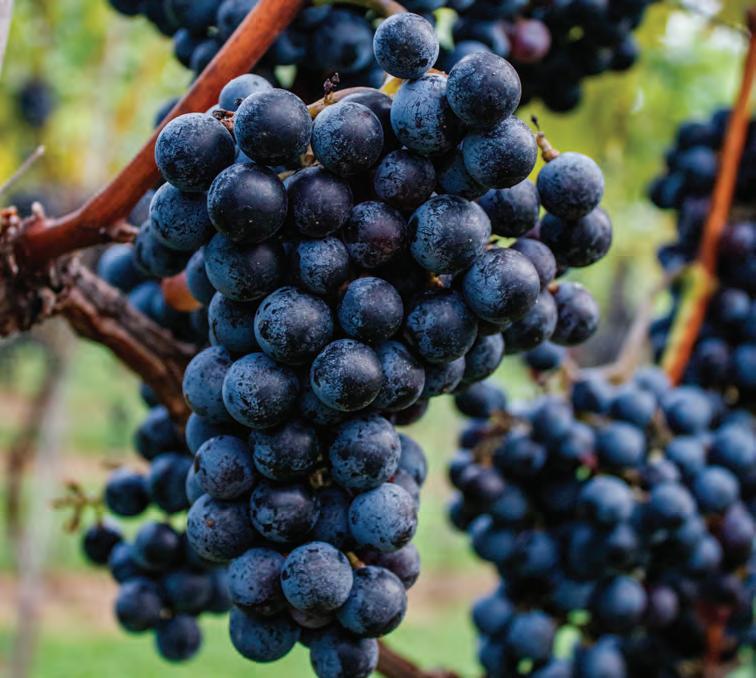
Oklahoma wine reflects more than soil and climate; it carries the memory of blazing summer heat followed by sudden storms, vines rooted deep in bright red clay and sunsets that stretch endlessly across open horizons. It reflects the shift from scorching summer heat to cool evening breezes and the crack of thunder rolling across the plains.
Terroir, a French term used throughout the wine industry, describes the “sense of place” of an agricultural product, often distinguishable by its taste. As the Oklahoma wine industry experiences renewed growth, wine consumers across the state now have the opportunity to taste Oklahoma itself, in a single sip.
In every glass, Oklahoma wine offers a sensory connection to the land and a symbol of place that is familiar, nostalgic and distinctly Oklahoman.
The Oklahoma wine industry generates an estimated $1.98 billion in annual economic impact and is expected to continue growing with the support of Oklahoma State University Extension and industry experts, according to The National Association of American Wineries.
Grapes were once a major crop in the state, said Madi Franklin, Oklahoma Department of Agriculture, Food and Forestry viticulture and enology coordinator.
“Enology is wine science: wine making, aging, fermentation and everything that goes into producing a bottle of wine,” said Aaron Essary, OSU Department of Horticulture and Landscape Architecture viticulture and enology assistant Extension specialist.
Before Prohibition, an era beginning in 1920 preventing the production, importation, transportation and sale of alcoholic beverages, Oklahoma ranked among the top grape-producing states in the country, Franklin said.
Although Oklahoma officially ended statewide Prohibition in 1959, restrictive alcohol regulations remained in place for decades, she added.
That began to change in 2018, when voters approved State Question 792, modernizing state alcohol laws.
With expanded retail access into grocery and convenience stores, Oklahoma’s grape and wine industries
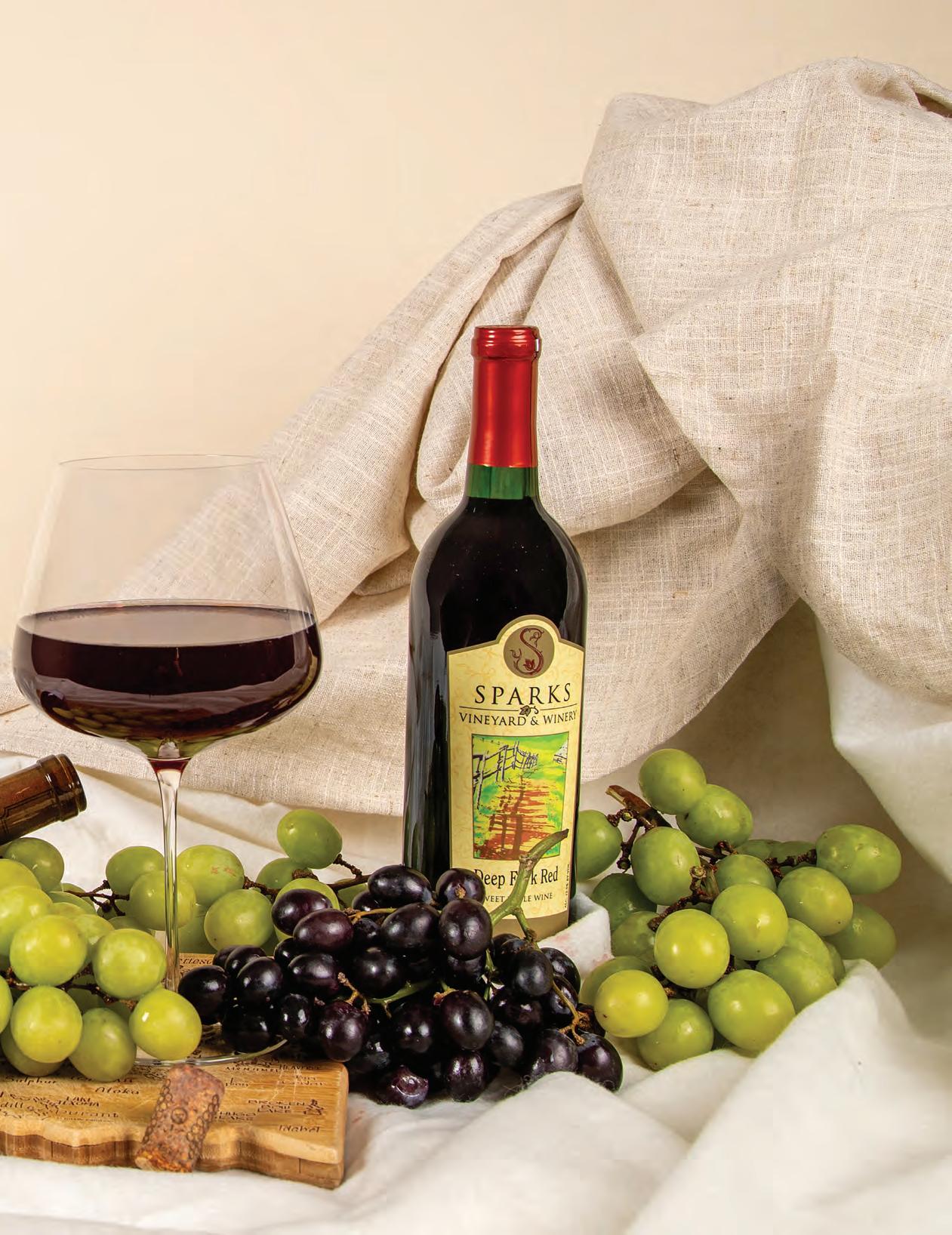
The Oklahoma wine industry has experienced renewed growth shaped by innovation. Photo by Griffin Behrens.
began to see renewed growth statewide, Franklin said.
“We’ve only really been viable for eight years,” Franklin said.
Franklin supports producers through agritourism efforts and works to increase consumer awareness of Oklahoma produced wine, she said.
“Now, we’re saving decades of just trial and error,” Franklin said.
As production increased, so did the need for available technical support and public education.
Producers across the state rely on industry professionals for research-based guidance and consumer outreach, Franklin said.
“My role is to help the entire state with grape growing and wine making,” Essary said.
Essary works directly with producers through webinars, workshops, field visits and production-related consultations, he said.
With this collaborative support, Oklahoma has experienced significant growth in viticulture and enology since 2018, Franklin said.
“Viticulture is grape growing, specifically for wine production,” Essary said.
While the two are closely related, they remain separate disciplines, Essary said.
That collaboration is reflected in the state’s growing number of wineries. Oklahoma now has approximately 45 small-farm licensed wineries, including traditional wine producers, hard cider producers and other fruit wine producers, Franklin said.
“People’s responses are, ‘I didn’t know we had wineries here,’” Franklin said. “And I’m like, ‘I know, right? Believe it or not, we’ve got 50 or so.’”
Between 2024 and 2025, five new wineries opened, Franklin said.
In terms of grape production, vineyard acreage continues to expand, Franklin said.
While some Oklahoma wineries produce wine using out-of-state grapes or concentrate, others grow their own fruit, she added.
Oklahoma has approximately 385 acres of grapes statewide, including
bearing and nonbearing vines, Essary said.
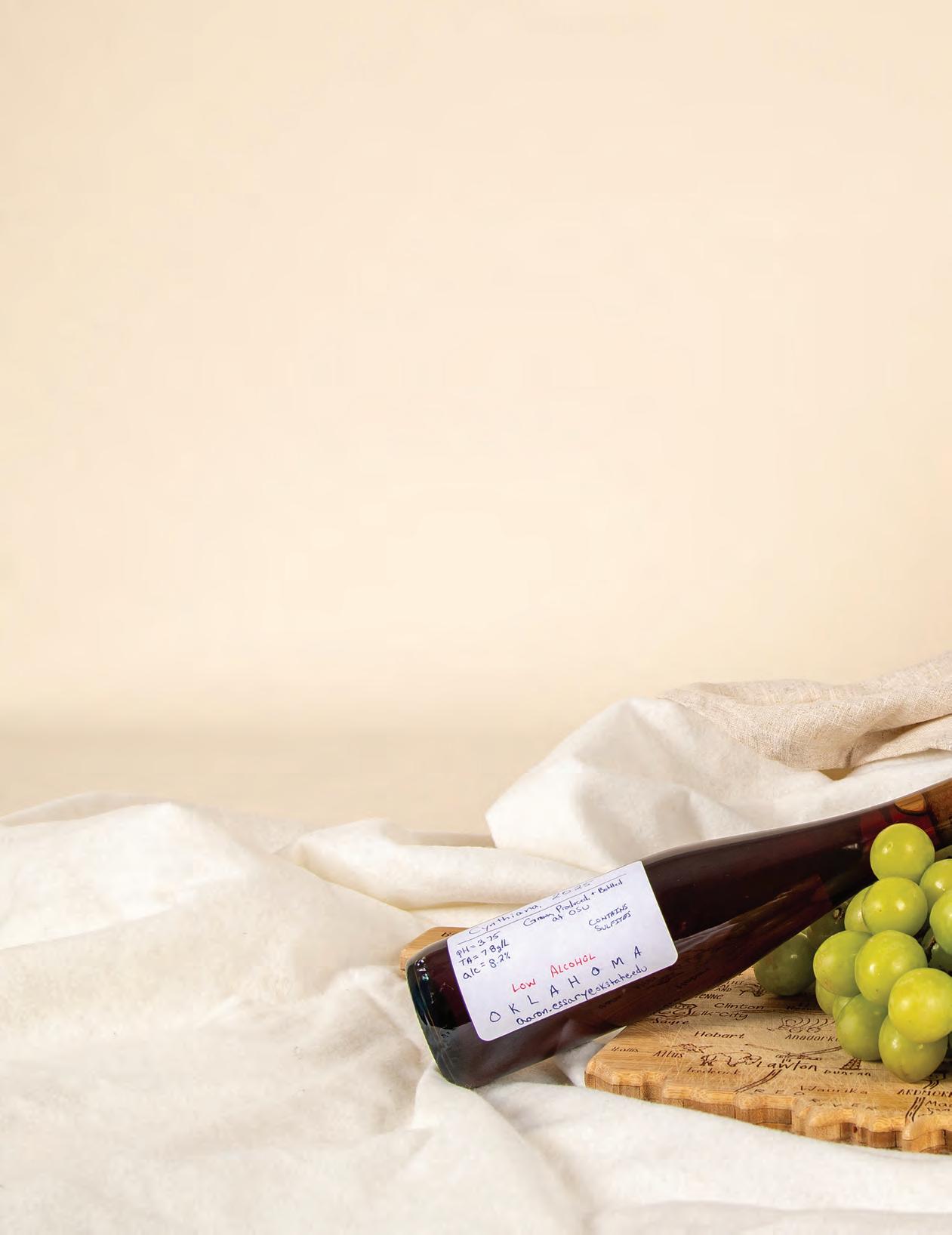
“We started with a little over 100 vines and are now managing more than 1,500 vines,” said Cynthia Duncan, co-owner of C&H Garden Vineyard, located in Jones, Oklahoma.
After visiting a winery and feeling inspired, Cynthia and her husband planted a few vine cuttings as a trial, Duncan said. After planting, she quickly discovered how well the varieties thrived in Oklahoma soil, she added.
“This experiment began as a plan to stay active after retirement, but has switched to a passion-filled adventure,” Duncan said.
Despite this growth, Oklahoma remains an unconventional wine-producing state. Oklahoma has a continental climate, including all four seasons from very cold winters to extremely warm summers, Essary said.
“Grapes can tolerate heat or cold, but having both extremes creates stress,” Essary said.
To address these challenges, producers have turned to FrenchAmerican hybrid grape varieties, including Chambourcin, Seyval Blanc and Traminette, which perform well in Oklahoma conditions, Essary said.
“Chambourcin is one of the most successful,” Essary said.
These hybrids represent a balance between resilience and quality, Franklin said.
American grape genetics provide durability under environmental stress, while French varieties contribute desirable wine taste and characteristics, she said.
For Oklahoma producers, this combination of domestic and imported grapes allows for high-quality wine made from locally grown fruit, Franklin said.
“Our experience over the last 15 years has shown us that FrenchAmerican hybrids grow very well in Oklahoma,” Duncan said.
The increased use of hybrid grapes symbolizes one of several strategic steps taken to rebuild the state’s grape commodity industry, Essary said.
For decades, the lack of expertise, information and ability to sell wine has
C&H Garden Vineyard located in Jones, Oklahoma, recommends visiting vineyards between May and September. Photo by Trinity White.
The potential for growing the wine industry in Oklahoma, especially southwest Oklahoma, is immense.
MADI FRANKLIN
long hindered the growth — or even existence — of the Oklahoma wine industry, Franklin said.
With the help and support of experts such as Franklin and Essary, as well as the recent policy to allow the sale of alcohol above 3.2% in grocery and convenience stores, Oklahoma no longer faces those disadvantages.
“We’ve made several changes based on the knowledge we gained from having Extension support,” Duncan said.
OSU Extension has supported C&H Garden Vineyard with improved canopy management tools as well as information regarding fungicides, pesticides and herbicides, Duncan said.
“It really has only been since about 2018 that we have the state infrastructure to support a wine industry,” Franklin said.
In some ways, Oklahoma’s emerging status offers a competitive advantage, Essary said.
Compared to established wine regions in California and Texas, land prices in Oklahoma remain significantly lower, making vineyard establishment more economically feasible, he added.
For new producers, affordable land reduces financial pressure during the early years of operation, Essary said.
Even so, starting a vineyard requires significant upfront investment, he added.
Grape production is labor-intensive, and many costs occur before any revenue is generated, Essary said.
“Establishing one acre of vineyard costs about $25,000 initially,” he said.
Vines typically require three years to produce harvestable fruit, meaning producers may invest up to $40,000 per acre over the first five years before seeing returns, Essary said.
To offset those challenges, many wineries are turning to agritourism involvement, Franklin said.
Events, tastings and vineyard experiences help attract visitors while educating consumers about Oklahoma wine production, she added.
“If you see a beautiful photo of somebody standing in a field of sunflowers, you’re like, ‘Where is that? I want to go,’” Franklin said.
Although the industry has seen recent expansion, Oklahoma viticulture and enology remains an early-stage industry with upward trajectory, Franklin said.
Oklahoma’s neighboring state, Texas, ranks fifth in wine production nationwide and generates close to $24.39 billion in total economic activity, according to The National Association of American Wineries. With similar climate conditions to Texas, Oklahoma has the capability for continued growth, Franklin said.
“The potential for growing the wine industry in Oklahoma, especially southwest Oklahoma, is immense,” Franklin said.
As the Oklahoma wine industry continues to grow and expand, Franklin and Essary said they hope to see an increase in Oklahoma grape production specifically.
“I’d love to see grapes more recognized as an Oklahoma ag commodity,” Franklin said.
With increased local grape production, recognition as an agricultural product and expansion into southwest Oklahoma, the state’s wine industry could compete with others in the country, Franklin said.
OKLAHOMA WINE TRAILS PASSPORT PROGRAM
In 2024, ODAFF announced the launch of the Oklahoma Wine Trails passport program. The program includes nine wine trails, with three to six individual vineyards or wineries per trail.
The passport program allows those interested to visit more than 40 producers in small portions.
When the program first launched, passports were available only at the physical vineyard and winery locations.
However, recent developments make the passport program available online.
Last year, the Oklahoma Wine Trails passport program transitioned to a fully online platform. Now, wine enthusiasts are able to gather more passports without the hassle of physical papers.
The new check-in feature allows users to check off stops, trace their progress and acquire rewards completely digitally.
The online passport program includes new wineries and up-todate information regarding maps, location details and more.
For more information, visit ODAFF’s website: ag.ok.gov.
Source: Madi Franklin
PASTURES TO
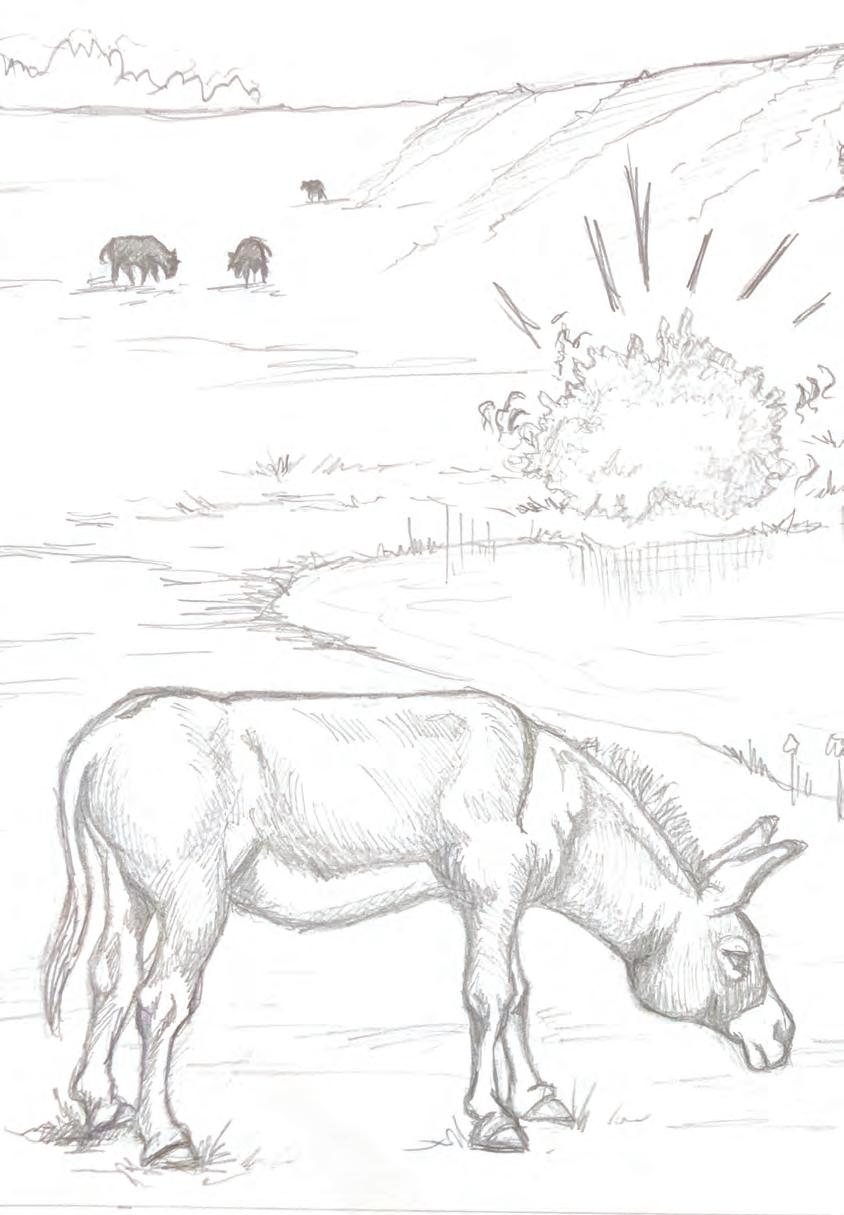
In the pastures of southern Oklahoma, where cattle graze and coyotes prowl, a donkey named Gerald stands watch.
To most ranchers, a guard donkey is a practical livestock protector.
To Anna Brown, this donkey became something more: the heart of a children’s book series blending agriculture, imagination and family.
Shortly after graduating from Oklahoma State University, Brown met Gerald during a visit to her boyfriend’s family ranch in Marietta, Oklahoma.
Over the years, she continued to watch Gerald and wrote a poem about the donkey as a gift for her boyfriend, who is now her husband, Cody Brown.
“I thought, ‘I want to write a little poem about Gerald and his job,’” Brown said. “I printed it out, framed it, and gave it to him.”
She saved the poem on her computer and left it for years, she said.
She and Cody married in 2018 and moved closer to the ranch and Gerald, Brown added. The idea of turning the poem into a children’s book lingered quietly in the back of her mind until she revisited the thought and realized the it might become something more, she added.
“I got online, and there aren’t really any children’s books about guard donkeys,” Brown said. “I thought, ‘Hmm, I might have something here.’”
Brown entered college planning to become an equine veterinarian, she said, but quickly realized science and math courses were not the right fit.
She soon changed her major to agricultural communications during the first week of the semester and discovered a passion she did not expect, Brown added.
After graduating in 2014, she worked a variety of jobs including
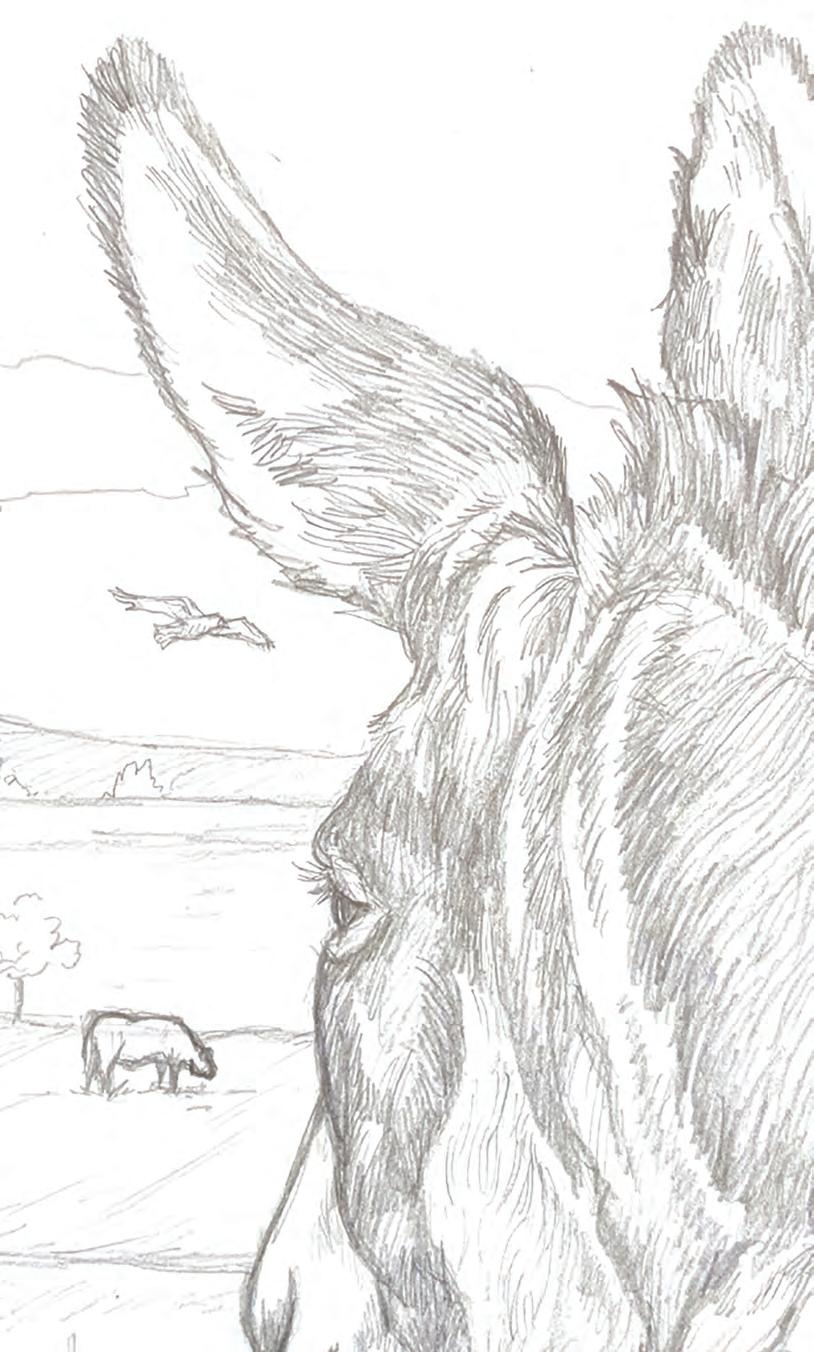
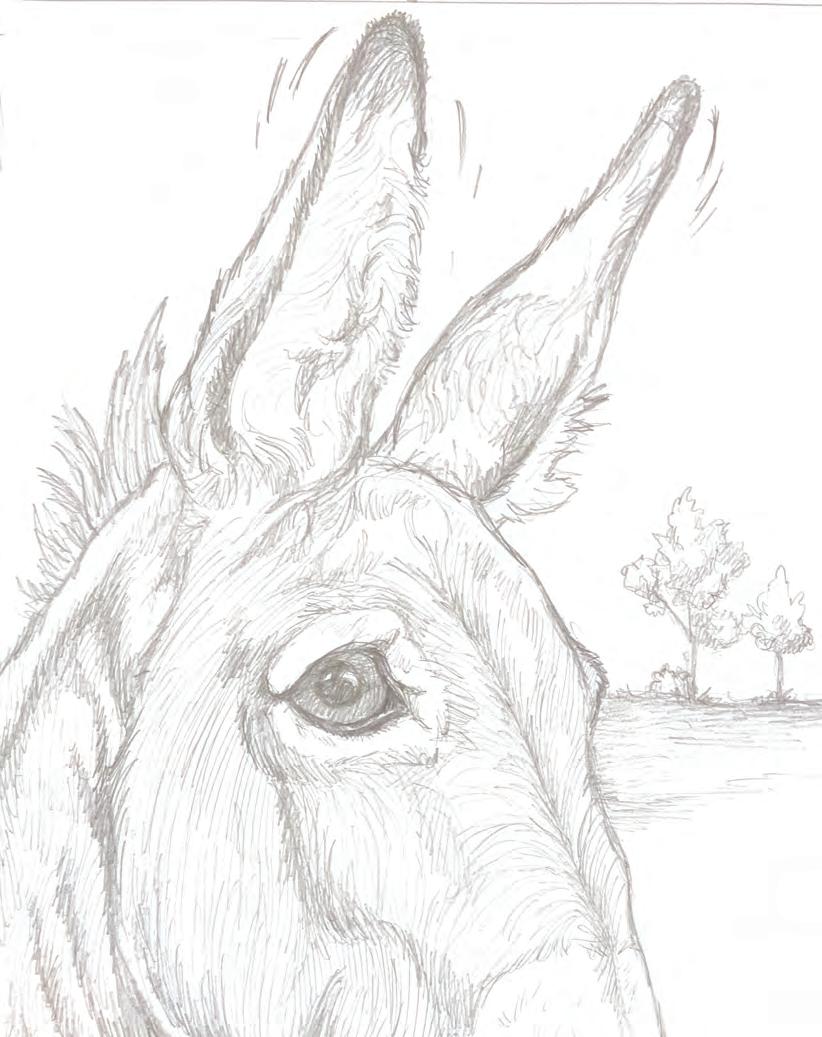
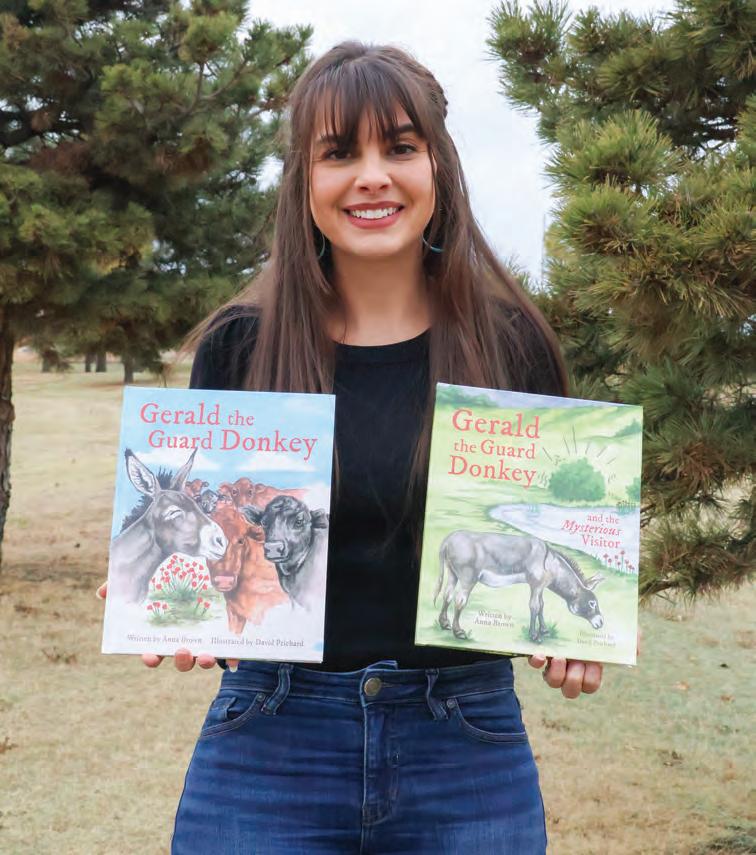
Left: Anna Brown bases her books on a real donkey who calls Marietta, Oklahoma, home.
Right: All illustrations are hand-drawn by Anna Brown’s uncle, a retired sketch artist. Illustrations by David Prichard.
PAGES
substitute teaching and positions in the oil and gas industry, she said.
She also worked at Roseanna’s, her family’s restaurant in Krebs, Oklahoma, she added. Writing books, Brown said, was never part of her career plan.
“Watching Gerald interact with cattle and seeing the dew on the morning grass sparked my creativity again,” Brown said.
This time, however, Brown decided to act on it.
She asked her uncle, David Prichard, about illustrating the book. Prichard, a retired Las Vegas police officer and former art teacher who worked as a composite sketch artist, had never drawn livestock before, Brown said.
“At first it felt a little overwhelming,” Prichard said. “But I thought, ‘I can do this.’ And once we got into it, the illustrations fell into place.”
Brown sent the story outlines and reference photos of Gerald and other animals on the ranch, Prichard said. The photos allowed him to depict the animals and landscapes based on the season, he said.
“The books have helped bring us together as a family,” Prichard said.
Brown’s first step toward publication was sharing the manuscript with Courtney Girgis, a former coworker who now works as a freelance writer and editor.
Girgis said she immediately saw potential in Brown.
“I knew her from the HR department at Noble Research Institute,” Girgis said. “Anna is hiding a secret. She is a writer.”
After submitting the manuscript to publishers and waiting months without a response, she chose to self-publish, Brown said.
OSU ALUM, AUTHOR BRINGS GUARD DONKEY’S ADVENTURES TO LIFE IN CHILDREN’S BOOKS
If you have a story in your heart or something creative you want to do — go for it.
ANNA BROWN
With help from contacts Girgis provided, she assembled a small team to guide her through layout, design and production, Brown added.
Brown contacted Peyton Sepeda, owner of Wild Creative, a graphic design and self-publishing website, after seeing Sepeda’s name listed in another book she had worked on.
“Brown came to me with her manuscript and already had an illustrator to work with,” Sepeda said.
Brown published her first book in 2023. The finished books stand out
visually, a key factor in children’s publishing, she said.
“They’re really wholesome books,” Sepeda said. “The watercolor illustrations are calming and not overstimulating, and they are beautiful to look at.”
Authenticity is central to Brown’s storytelling, Sepeda added.
Brown keeps notes on seasonal details, animal behavior and scenery for accuracy, she said. Brown’s goal is to show children the animals and their jobs on the ranch are real, she added.
“You likely wouldn’t see a buck with antlers in April,” Brown said. “I log things I notice because I want the story to be factual.”
The second book features a mysterious visitor who turns out to be a small black pig she once spotted roaming with the herd, Brown said.
The third book, scheduled to release in Fall 2026, focuses on Denise, an aging cow Brown has known and loved for years, she added.
Brown notes the reactions she often receives when she shows children pictures of the real Gerald.
“It all clicks, the books are real life,” Brown said.
The children’s reaction is proof of the book’s appeal, Girgis said.
“I don’t think kids are tossing the Gerald books aside,” Girgis said.
Brown’s original motivation for publishing was simple: to show her children the value of persistence and hard work, she said.
“My children, Lane and Langley, are the first audience I consider when writing,” Brown added.
“I want to show them when you have something you enjoy, don’t just put it on the back burner,” Brown said. “Pursue it. Do the hard things.”
She hopes to continue the series as long as inspiration still strikes her, Brown added.
“If you have a story in your heart or something creative you want to do–go for it,” Brown said.
RYLEIGH COMBS MADILL, OKLAHOMA
FROM CAMPUS TO CLASSROOM
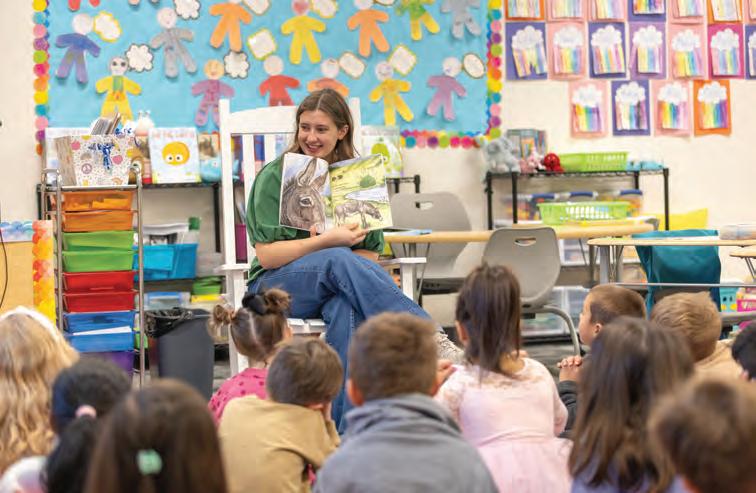
Each year during Ferguson Week, members of the Ferguson College of Agriculture Student Council take time to visit local elementary schools and share a story with young readers.
The group travels to elementary schools across Stillwater, Oklahoma, reading to classrooms during scheduled visits.
The tradition usually features the Farm Bureau Children’s Book of the Year.
After reading the story, elementary students spend a few minutes talking with the college visitors, asking questions.
Instead of the usual selection, the council chose to read Gerald the Guard Donkey , written by OSU alum, Anna Brown. The book was recommended by a Ferguson College of Agriculture faculty member and quickly gained support from the council.
Along with sharing the story, council members also left copies in classrooms so elementary students can revisit Gerald’s adventures long after the visit ends.
Source: Clara Duncan
Step into Anna Brown’s world of stories, scan this QR code to visit her website and discover her books online.
Clara Duncan, Ferguson College Student Council treasurer, reads Gerald’s story to a local elementary classroom in Stillwater, Oklahoma. Photo by Taylor Epperson.
Author Anna Brown presents her first and second books about Gerald the Guard Donkey. Her third book is set to release in Fall 2026. Photo by Ryleigh Combs.
Futures in Motion Reins in Hand,
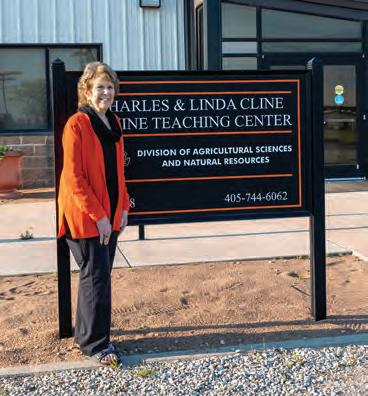
Ten years later, the Charles and Linda Cline Equine Teaching Center continues to shape the future of OSU Students. Photo by Monica Ferris.
CELEBRATING A DECADE OF IMPACT AT THE CHARLES AND LINDA CLINE EQUINE TEACHING CENTER
In the mid-1980s, Charles and Linda Cline were building a barn on their farm just west of Cushing, Oklahoma, when two Oklahoma State University professors noticed the construction and stopped to ask about the barn.
Linda Cline remembered the professors were curious to see what they were up to with the facility, Linda Cline said.
That quick, drop-in visit became a 40-year relationship with OSU, helping establish the Charles and Linda Cline Equine Teaching Center, which celebrated its 10th anniversary in April 2026.
Now a state-of-the-art facility, the center originally consisted of a little more than an old stall barn with a small tack room.
“We need to do something about that old barn,” Linda Cline said.
Linda Cline’s comment marked the beginning of the center.
“Where the Cline Center stands today used to be an old, rusted-out stall barn,” said Steven Cooper, animal science associate professor in the Department of Animal and Food Sciences and Cline Family Equine Sciences Professorship.
Linda Cline’s initial goal was to make the facility more functional for students and create a comprehensive equine education program, said Amy Cline, Linda Cline’s daughter.
“She wasn’t necessarily into building just a building,” Amy Cline said. “She wanted to have a building that would benefit all of the equine students and the industry.”
Linda Cline hoped the facility would allow more students to remain active in the equine industry after graduation, Amy Cline added.
“I hate to see the horse become a dinosaur,” Linda Cline said. “It takes a lot of land and cost to take care of a horse, and it was my goal to keep it active on campus.”
A small-town girl, Linda Cline grew up in Claremore, Oklahoma.
“I was a town girl, not a city girl,” she said.
In 1985, her husband, Charles Cline, wanted to buy a farm, an idea she initially resisted until he talked her into the move. Within a month of moving to their farm near Cushing, Charles Cline took the family to a dispersal sale in Dewey, Oklahoma, which had horses and equipment for sale.
Charles Cline was like a kid in a candy store, Linda Cline said, buying 17 horses and six saddles. He told the salesperson that if he could get the saddles in the car, the family would buy them, she said.
“There were four of us in the sedan,” Linda Cline said. “We had saddles in our lap, in our trunk, everywhere, and we brought them home.”
That was the beginning of their ranch, which they proudly named Char-Lin Ranch.
“For me, it turned out to be an instant obsession,” Linda Cline said. “I loved it.”
By January 1986, the Clines had built their barn, which inspired the impromptu visit by OSU faculty Don Topliff and Dave Freeman.
The pair became the Cline’s mentors, she said.
Today, Linda Cline is known throughout the Department of Animal and Food Sciences as a “phenomenal supporter” who has a heart for students, said Richard Coffey, professor and head of the Department of Animal and Food Sciences.
Linda Cline looks for ways she can better support students during their time at OSU, he added.
Linda Cline’s support of students extends well beyond the Ferguson College of Agriculture, Cooper said.
“She supports the music program, the library and The McKnight Center,” Cooper said. “If it’s for students, she just says, ‘Tell me what you need,’ and never bats an eye. She just does it.”
The opening of the Cline Center in 2016 marked a pivotal change in OSU’s ability to deliver hands-on, high-quality education on equine production, Cooper said.
With the support of additional donors and partners, including the Heritage Place LLC, Mel and Jackie Bollenbach, Shawnee Milling Company and Canaan Creek Stables LLC, the facility provides climate-controlled comfort and safety for both the horses and students.
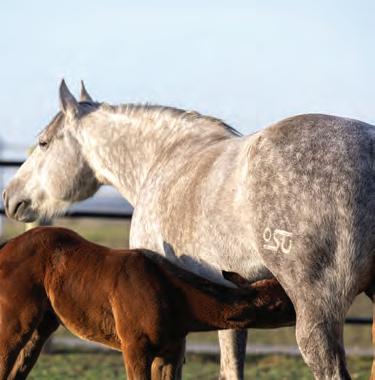
The facility offers a variety of functional spaces, including classrooms, horse stalls, a foaling area, offices, a conference room, a tornado shelter and an indoor arena.
“The Cline Center is one of those transformational things that gives you
The Cline Center is one of those transformational things that gives you the ability to do a whole lot more and better help the students.
the ability to do a whole lot more and better help the students,” Coffey said.
Hands-on course offerings grew from two to four, said Marissa Chapa, Charles and Linda Cline Equine Teaching Center herd manager. Today, the center averages 50 students a semester in those courses, she added.
“There are a lot of positive things that come with having this kind of
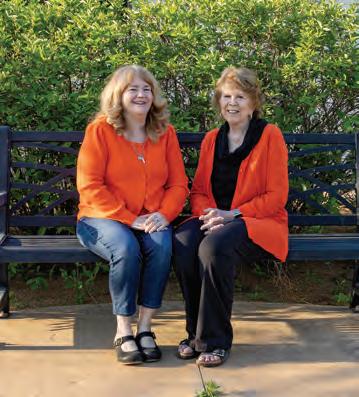
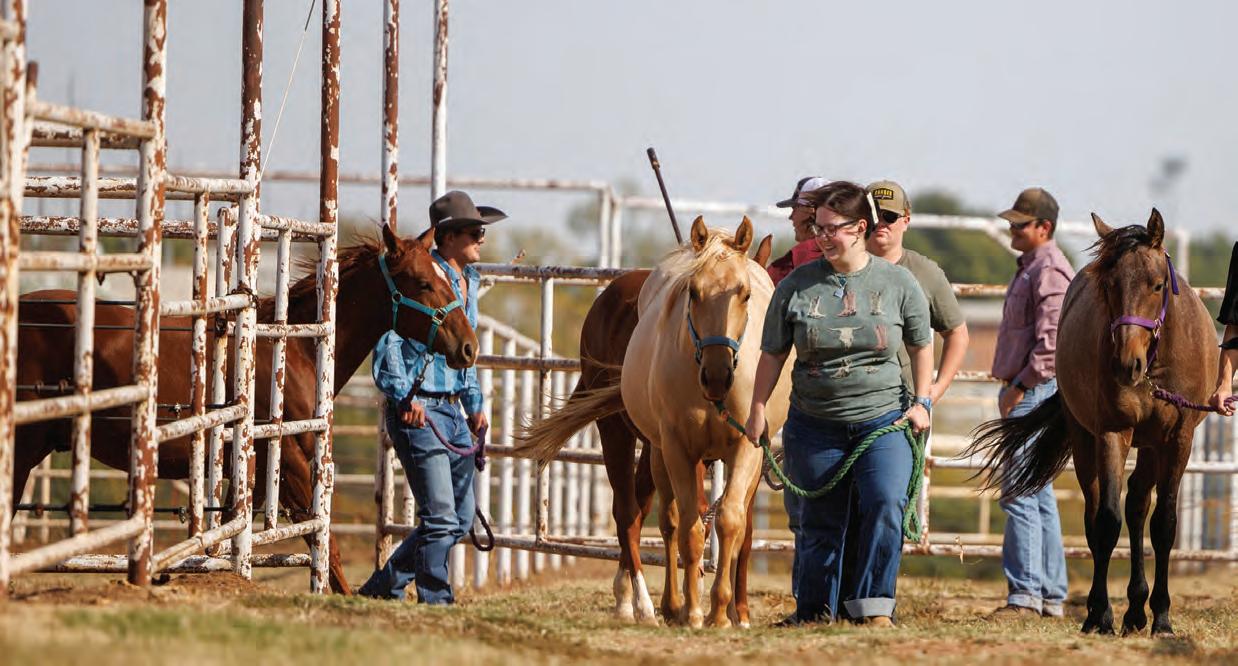
Left: Linda Cline represents the impact of giving back to the next generation. Middle: Students build foundations through handson breeding and foaling experience provided by the Cline Center. Right: Linda and Amy Cline carry forward a legacy of passion in the equine industry. Photos by Monica Ferris. Bottom: Students in the Equine Behavior course gain hands-on experience that deepens their understanding of horse behavior while preparing them for future careers. Photo by Mitchell Alcala.
RICHARD COFFEY
resource.” Coffey said, “The first being it allows you to do more for students. As much as anything, having access to high-quality facilities that let you expand upon what you have already been doing.”
The expansion of hands-on teaching opportunities allowed for the creation of an Equine Enterprise Management Certificate, as well, Cooper said.
The Cline Center now offers students the opportunity to be involved in the foaling process as part of their coursework, Coffey said.
After the center’s opening, students could start staying overnight in a safe, comfortable facility, taking shifts around the clock to be able to watch mares for signs of parturition and actually be there for the process and hands-on during labor and delivery of the new foal, said Natalie Baker, who worked as the Cline Center’s herd manager from 2016 to 2018.
The center builds confidence and competence in students, regardless of their equine background, Chapa said.
“We have a whole spectrum of students, some who have never touched a horse before,” Chapa said. “To see their confidence, excitement and involvement in the equine production component is the best part of what I do.”
Chapa emphasized how the center exposes students to all facets of equine production, whether it be mares, foals, or stallions, and the importance of that education for students.
“Providing students with the opportunities they otherwise wouldn’t have is the coolest and most rewarding part of what I do,” she added.
OSU students gain experience that prepares them for careers in the production side of the equine industry, a growing sector, Chapa said.
The Cline Center is producing people who are entering the industry with the potential to be more successful because they have foresight into what it takes to be productive, contributing members of society, Baker said.
The addition of the Charles and Linda Cline Equine Teaching Center is more than just a facility for the equine students, she added.
“It is a key part of all three of our land-grant missions here at OSU,” Coffey said.
Teaching is certainly the main focus of the center, but it is also used to support Extension, outreach and research, he added.
“The facility has been able to offer more equine workshops through Extension opportunities,” Baker said, adding trainers and clinicians often use the center to work with the university’s ranch horse team, as well.
The expansion of hands-on opportunities in a comfortable and clean environment has made the Cline Center a place where people want to come teach and learn, she added.
Amy Cline said she and her mother enjoy hearing about how the Cline Center is used.
“When we hear about how the center is being used from the students, it makes us so proud,” Amy Cline said.
MONICA F ERRIS LAKESIDE, CALIFORNIA
THE FUTURE OF FOOD Engineering
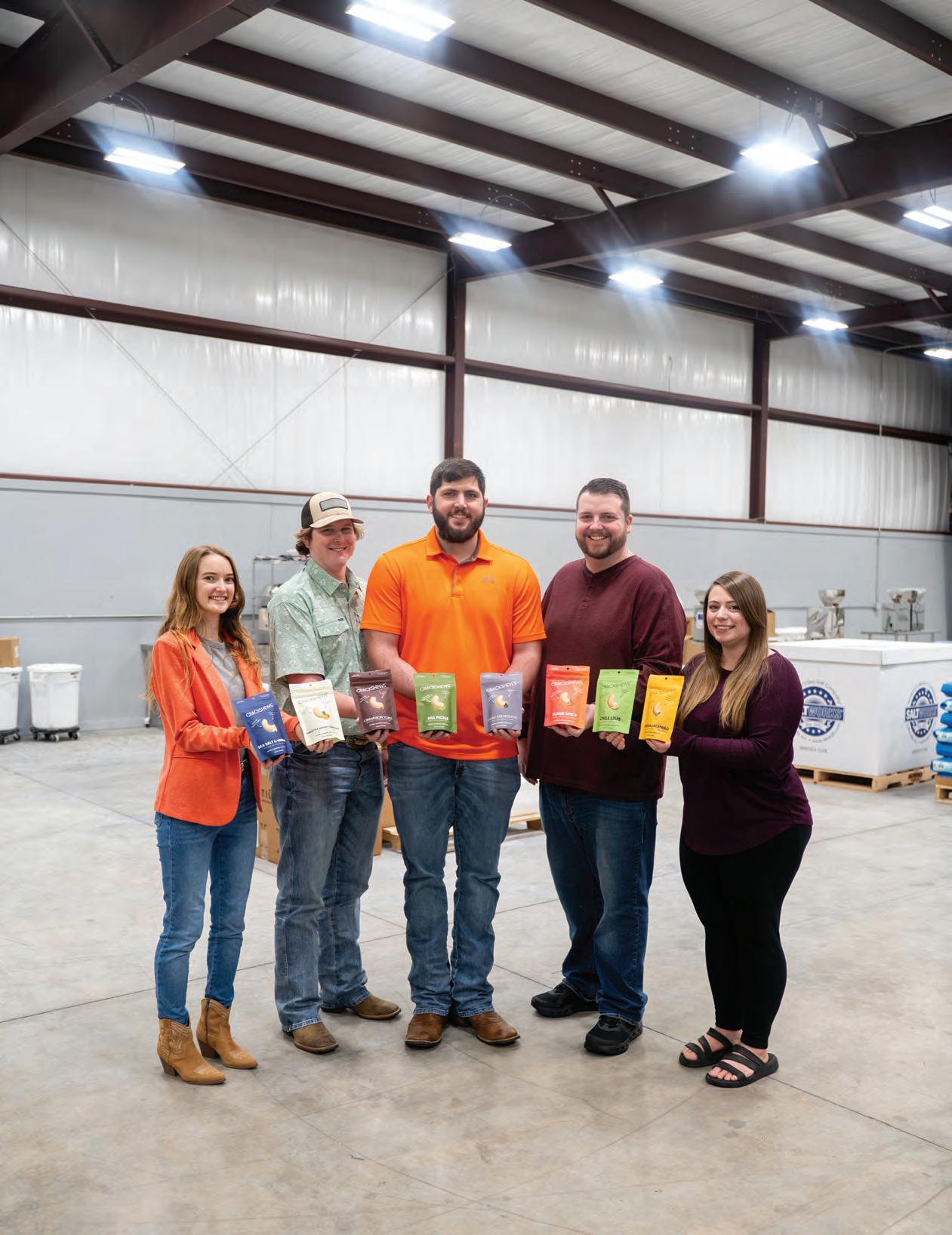
The Padiano’s Kitchen “Cashew Crew” works together to find a forever-adhesive method for the Crackshews product line. Photo by Kate Schaefer.
OSU STUDENTS PARTNER WITH INDUSTRY PROFESSIONALS TO SOLVE REAL-WORLD PROBLEMS
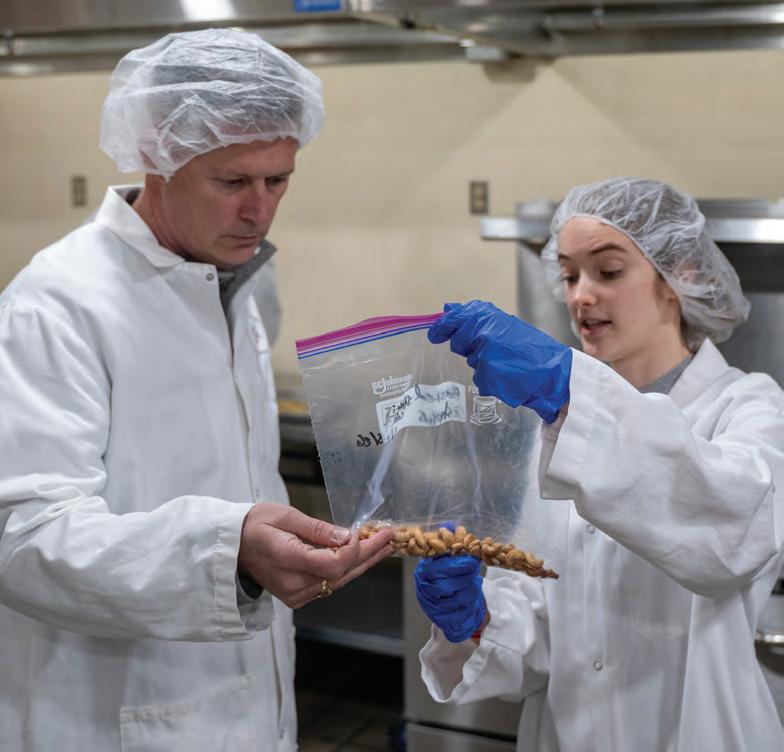
Abatch of flavored cashews turn darker each second, as they roast in the lab oven. After being removed, the cashews cool on the table before they are tossed once, then analyzed for hardness, color and overall effect.
A team of students working in the lab at Oklahoma State University’s Robert M. Kerr Food and Agricultural Products Center evaluate the consistency, color and production efficiency of cashews.
Sarah Spring, biosystems engineering senior, and her two-semester capstone project teammates, set out to reamplify the Crackshews product line for Padiano’s Kitchen.
“This is the first time I’ve worked on something where a business is depending on the outcome,” Spring said. “It makes you think differently.”
Eric Renner, biosystems engineering senior and capstone team member, said the capstone experience allowed him to apply classroom knowledge in a new way.
“I’ve always liked the problem-solving nature of engineering,” Renner said. “Every single thing I do has some sort of purpose.”
Padiano’s Kitchen, an Oklahoma company that manufactures seasoned cashews, known as Crackshews, began as a kitchen-scale operation.
The company is now moving toward commercial production with the help of the student team, said Kevin Moore, assistant professor in the Department of Biosystems and Agricultural Engineering and capstone instructor.
The company prioritized efficiency and product consistency as it transitioned into a larger production space for all their products, Moore said.
The capstone model was intentionally built to mimic real-world industry conflicts, rather than hypothetical exercises and scenarios, said Professor Emeritus Paul Weckler, who led the course for 23 years before retiring in Spring 2024.
“We wanted students working on real-world problems, not textbook problems,” Weckler said.
The two-semester format allows students to research and design in the fall, before building and testing in the spring, Weckler said. Sponsoring businesses receive formal deliverables and progress reports throughout the process, he added.
“Companies come to us when they have an idea but don’t have the time or resources to figure it out,” Weckler said.
The department’s machine shop supports fabrication and prototype development, Weckler said. Skilled technicians assist with welding and machining so students can build functional systems, he added.
The course structure, created by Weckler, continues under Moore’s leadership, with additional emphasis on project management strategies, Moore said.
Moore introduced shorter, sprintbased planning to help students manage long timelines and incremental goals, he added.
“We try to help them get there, piece by piece,” Moore said.
Each capstone team works with an assigned faculty adviser, in addition to Moore’s oversight, he said.
The Padiano’s Kitchen Crackshews team is advised by Tim Bowser, professor in the Department of Biosystems and Agricultural Engineering and FAPC food processing engineer.
Food-related projects have remained a consistent and vital portion of the BAE capstone portfolio, Bowser said.
“Students get exposure to real industry constraints,” Bowser said.
Past projects included cacao processing, cashew roasting, coconut processing, coffee grinder designing and treating pecans, Bowser said.
Those projects require students to consider food safety, sanitation and production efficiency, he added.
“They’re solving issues businesses are facing right now,” Bowser said. The cashew project required the team to evaluate coating consistency, roasting parameters and workflow layout, Moore said.
The company’s fast-paced growth created increased production demands the BAE team is working to support, Moore added.
Padiano’s Kitchen’s co-owner, Gabby McVey, said the company knew its Crackshews process needed improvement, but other products and projects kept the concern from becoming an immediate priority.
“Without OSU, we would have just left the Crackshews as they are and kept messing with all the other stuff that we do,” McVey said.
Eli Reynolds, biosystems engineering senior and capstone team member, said the Padiano’s project challenged him to work outside his anticipated career path.
“Padiano’s came to us wanting to upscale their production and optimize their current process,” Reynolds said.
One of the team’s primary objectives was identifying an alternative to avocado oil, which had become inefficient and expensive for the growing company, Reynolds added.
“The larger manufacturers were getting those shipments and there was none left for their small business,” Reynolds said.
Reynolds said the company prioritized maintaining clean-labels for all products.
“Padiano’s main driver is to offer a clean-label and clean ingredient product,” Reynolds said.
Paden Ferguson, Padiano’s Kitchen’s co-owner, said the business was inspired by consumer demand for dye-free and ingredient-conscious alternatives to familiar flavors.
Partnering with the OSU capstone course gave the company a way to improve the product without removing attention from other product lines, Ferguson said.
“It’s an instant improvement without us losing focus on driving the business forward,” Ferguson said.
The team analyzed how the product moved through each stage and identified inefficiencies, Spring said.
“You have to think about cost and practicality,” Spring said. “Not just whether it works.”
Working with an external client changed the stakes of the assignment, Spring said.
The teams produce recommendations and physical prototypes businesses can implement, Moore said. “It feels different knowing someone will use what you design,” Spring said. The two-semester duration allows students to experience setbacks and adjust designs, Moore said. Longterm projects encourage teams to
communicate and manage accountability, with no limitations, he added.
“This is their long-term project working on an open-ended scale,” Moore said.
The capstone experience strengthens both technical and communication skills, Weckler said.
Students present findings to sponsors and prepare formal written reports, he added.
“In senior design, if you stop trying, the project fails,” Weckler said. “If you learn a lot in the process, that’s a win.”
Without the capstone course, students would miss the opportunity to integrate four years of engineering
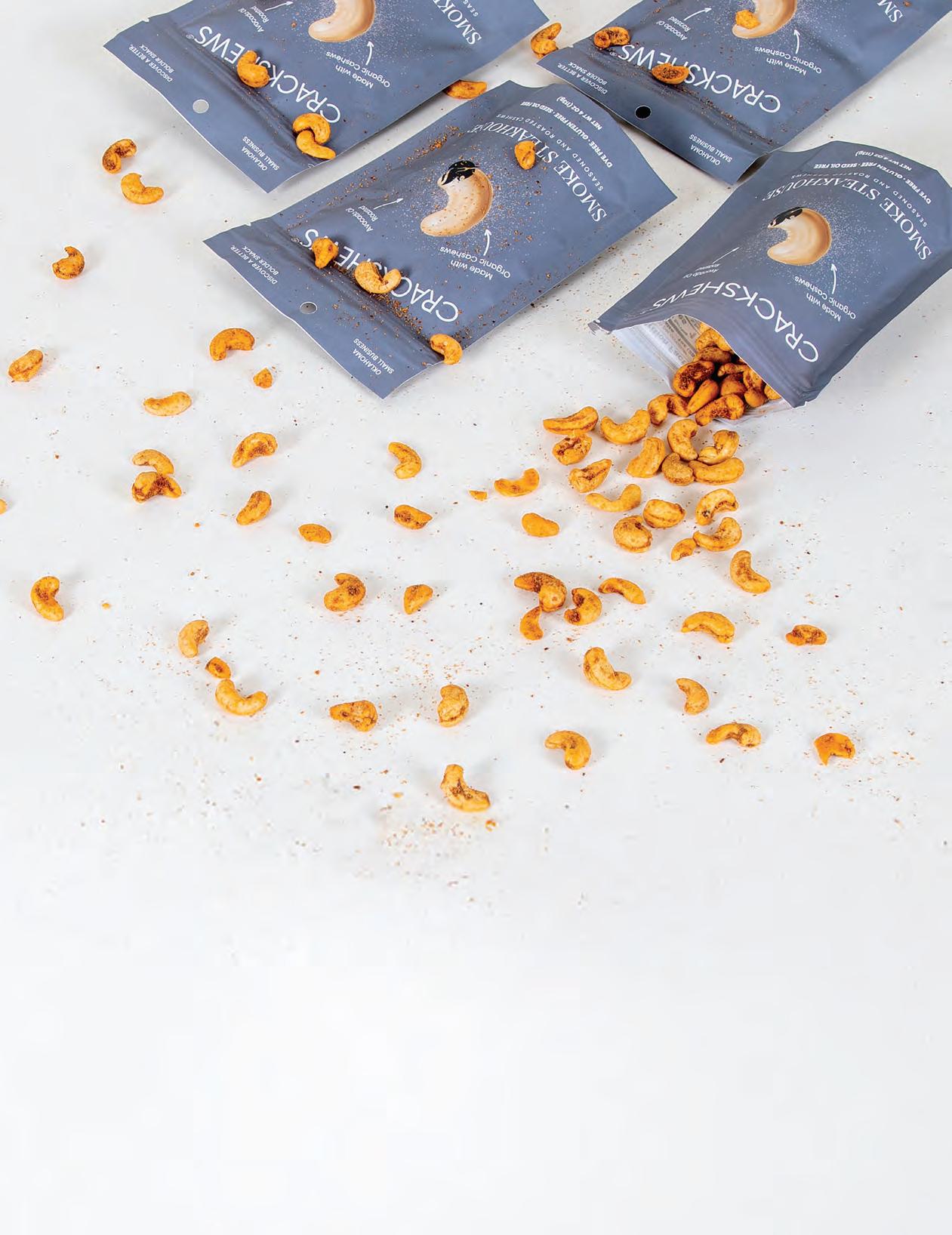
Padiano’s Kitchen Product prior to the teams alteration, Crackshews.
Photo by Kate Schaefer.
CASHEWS TO CRACKSHEWS
Padiano’s Kitchen began as an ingredient conscious seasoning brand. They needed support diversifying their product lines after observing long buying cycles between seasoning purchases from loyal customers.
The Crackshews line was created to fill that gap. Rather than competing in crowded snack categories like chips or pretzels, the company chose seasoned cashews due to the lack of bold flavor options existing in the market.
The brand uses in-house seasoning blends and originally relied on avocado oil to keep ingredients simple and consumer friendly.
As the business grew, the avocado oil process created new challenges. The cashews were softer than customers expected and seasoning often fell to the bottom of the bag
Through OSU’s capstone partnership, the company found a path toward better texture, less seasoning loss and a more scalable production process.
Source: Paden Ferguson
coursework into one comprehensive project, mirroring professional practice, Moore said.
“Engineers get a lot of content before they get here,” Moore said. “This project allows them to connect it.”
Working with a real client required the team to clarify expectations early on, Reynolds said.
“When we’re given our project, we’re not given the exact expectations,” Reynolds said. “That’s left for us to determine after communicating with the client.”
The course mirrors professional engineering practice, Renner said.
“Everything we’re doing is mimicking what it’s like to be in industry,” Renner said. “It’s necessary for anyone who wants to go be an engineer.”
“I don’t think people realize the level of professionalism, the level of detail and the actual difference that the students can make,” Ferguson said.
For the company, the impact was clear, Ferguson said.
As Padiano’s Kitchen scales production, the impact of the two-semester capstone extends beyond campus, Moore said. Students graduate with an experience rooted in applied engineering, he added.
“We’re preparing them for industry, not just graduation,” Moore said.
To learn more about Padiano’s Kitchen, scan the QR code or visit padianoskitchen.com
The cashew project represents the integration of classroom theory and commercial application, Spring said.
The project moved from problem identification to measurable improvement for Padiano’s Kitchen, she added.
KATE SCHAEFER ADEL, IOWA
Kevin Moore (left) and Sarah Spring analyze coating consistency with a new method she and her team developed. Photo by Kate Schaefer.
Power OF The
OSU
PEANUTS
EXTENSION FACULTY SUPPORTS
COMMUNITY AND FOOD ENTREPRENEURSHIP IN KENYA
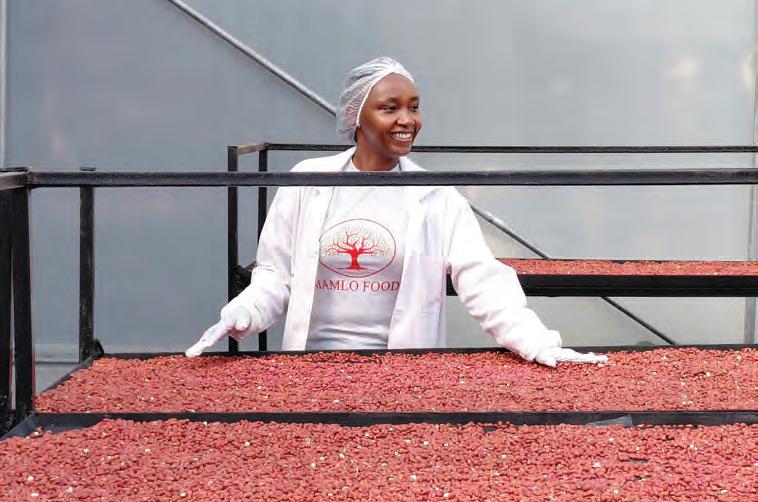
In the heart of Africa’s peanut belt, Irene Etyang is building opportunities from the ground up and empowering local farmers.
The business, MAMLO FOODS, adopted an innovative business model that is impacting hundreds of smallholder, women-owned peanut farms in the area. One of the business’ core innovations, known as a micro-factory, focuses on bolstering the local rural economy through agriculture.
Etyang said this approach ensures value remains with farmers, rather than leaving rural areas through raw commodity trade.
“Instead of farmers selling raw peanuts that are processed far away, we localize processing within farming communities,” Etyang said. “By connecting the farmers and the factory, farmers can retain more of the profits.”
Globally, the peanut industry is worth more than $90 billion, but smallholder farmers who grow the peanuts receive only a small portion of the total, Etyang added.
Through this business model, MAMLO also works with supply networks that are 100% women-led, according to the company’s website. The name, MAMLO, is a portmanteau of the Swahili terms mama and mlo, meaning mother and food.
“In just over two years, our work has expanded to support more than 500 smallholder farmers,” Etyang said.
“Most of whom are women, while also producing and selling peanut butter products in the market.”
Etyang, who studied food science and technology at the University of Nairobi, said she was intentional about sharing her knowledge.
“From early in my career, I felt strongly that the knowledge of food science should not remain only in laboratories of factories,” she said. “It should serve communities.”
Over time, Etyang has invested in her own professional development, which allowed her to continue to grow the business.
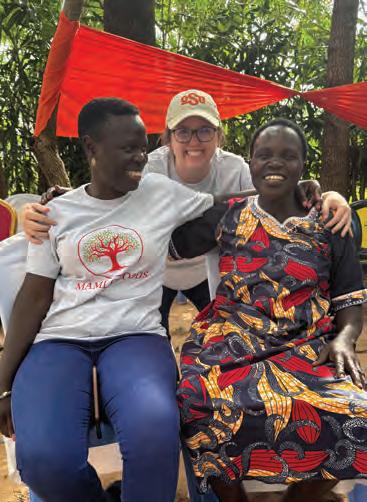
One opportunity was the Mandela Washington Fellowship, where Etyang connected with Oklahoma State University and Lauren Cline, agricultural leadership assistant professor in the Department of Agricultural Education, Communications and Leadership and OSU Extension agricultural leadership specialist.
The Mandela Washington Fellowship is a program of the U.S. Department of State, with funding provided by the U.S. Government and administered by the International Research and Exchange Board.
The fellowship, which was led each summer between 2017 and 2019 at OSU, invited 25 fellows from sub-Saharan African countries to study at the university for six weeks, said Craig Edwards,
agricultural education professor in the Department of Agricultural Education, Communications and Leadership.
A pillar of the program is to promote collaborative learning in a globalized agricultural society, he said.
“People have a lot more in common than they have different,” Edwards said. “They want themselves and their families to be safe. They want to make a good living, but you can find that everywhere. You find it in Uganda, you find it in north Texas, and you find it in Stillwater, Oklahoma.”
Etyang said during her time as a fellow in the program, she was impressed by the Ferguson College of Agriculture’s integration of the landgrant mission.
“I saw how research and Extension programs work closely with farmers to solve real-world agricultural challenges,” Etyang said.
Etyang was part of the 2019 cohort when she met Cline, who was involved at the time in the project as a doctoral student at OSU. She and Cline stayed in contact ever since, Cline said.
“Once fellows complete the Mandela Washington Fellowship program, they can apply for Reciprocal Exchange grants,” Cline said.
These Reciprocal Exchange grants allow for former fellows to bring individuals they met in the program to their home country to draw on their expertise, help address local needs, or
work on community impact projects, Cline said.
When the most recent grant cycle opened, Etyang reached out to see if Cline would be interested in traveling to Kenya to work with MAMLO’s staff on leadership development, community engagement and product marketing.
“Let’s do it,” Cline remembered thinking at the time.
They received that grant, which allowed Cline to travel to Kenya for two weeks in November 2025.
She visited Kisumu, the company’s headquarters, and Amagoro, the site of the first micro-factory, to lead internal team training and facilitate Extensiontype workshops for in-the-field trainings with farmers, Cline said. The grant also provided funds to support community engagement events.
“Some things that we take for granted here in the states is our access to research and Extension and information from our agriculture-based universities,” Cline said.
Cline explained that while similar models for agricultural education and Extension exist in Kenya, resources are often limited.
“We were able to bring the peanut farmers together with a government ag agent to essentially have a daylong field observation,” Cline said.
The group led workshops and exchanged information with farmers on topics like crop improvement and soil
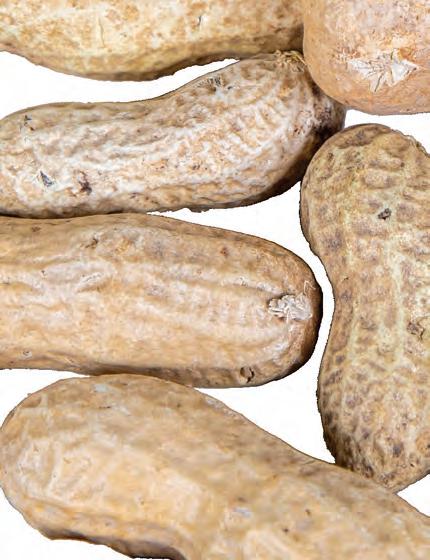
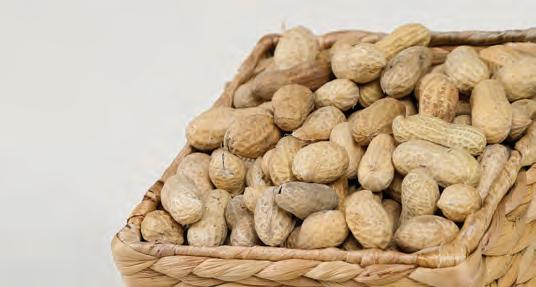
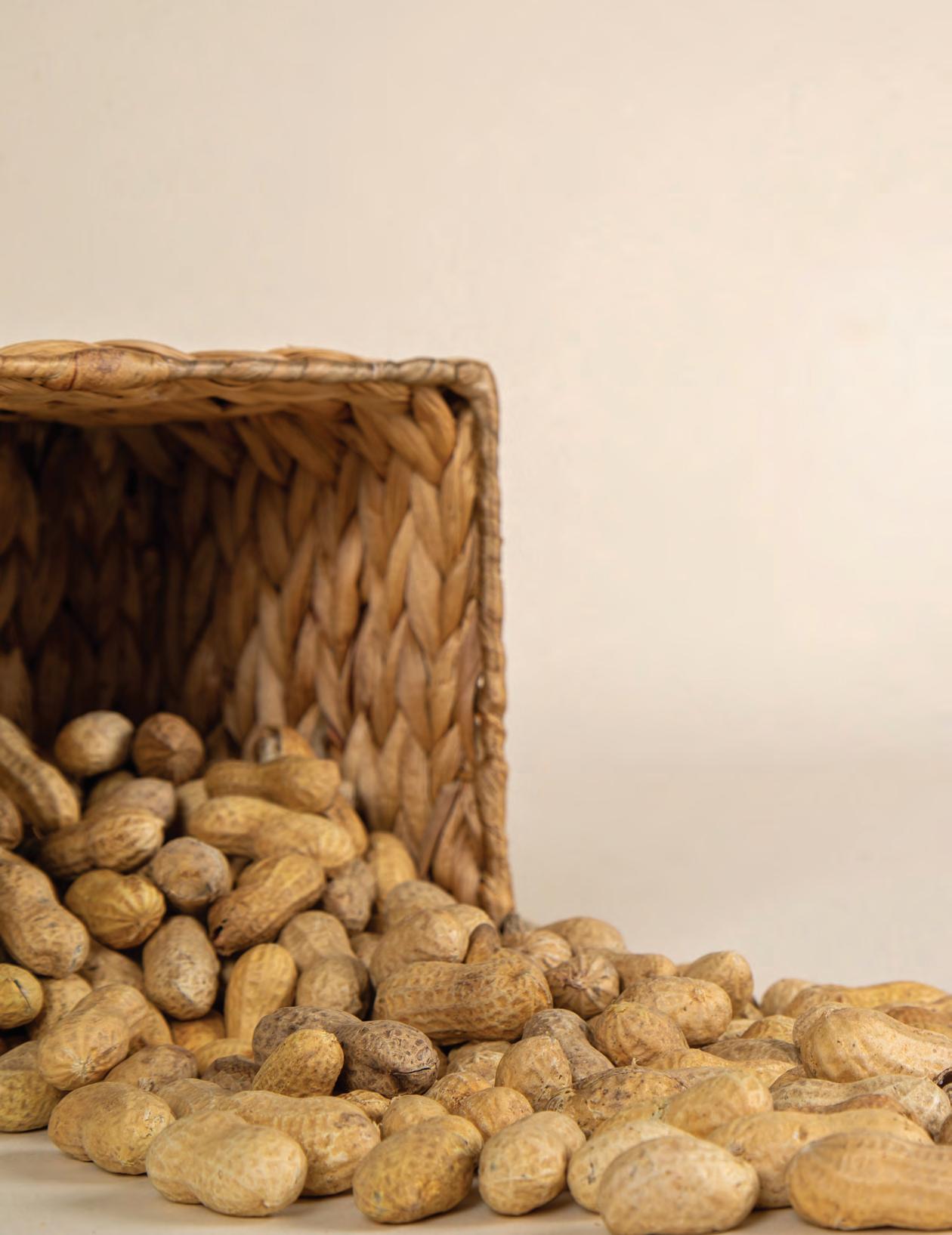
Peanuts, also known as ground nuts in Kenya, are a nutrient-dense source of protein.
Photo by Jessi Dill.
health, and discussed potential solutions to challenges some farmers were having in the fields or throughout the growing season.
“Peanut farmers in Western Kenya face several significant challenges,” Etyang said.
Farmers often have limited access to improved seed varieties and rely on recycled seeds from previous harvest, battle climate change and unpredictable weather patterns, and experience significant post-harvest loss from a lack of drying and storage systems, Etyang added.
Cline, who holds teaching and Extension appointments, said this kind of global community engagement aligns directly with her work on personnel and program development, collaborative problem solving and adaptive leadership.
“I look at how we develop people skills in the agricultural industry,” Cline said. “How can we be critical thinkers? How do we look beyond the profitability of a decision and start to think about how our decisions impact communities and groups of people?”
That very question is at the heart of Etyang’s vision for MAMLO. Built on land her father gave her in the village where she grew up, her business model
is centered on investing in the local community and revolutionizing the local food value chain.
“She is helping local farmers transition to growing peanuts — in Kenya they call them ground nuts — and giving them a direct market,” Cline said. “That way, they’re not having to find that market on their own.”
Etyang ensures farmers get good, fair prices for their peanuts. The peanuts are then processed in the rural micro-factories, turning them into a value-added product, peanut butter, that is marketed and sold locally and across the region, Cline added.
“Irene is a food scientist by training and so she’s very passionate about providing nutrient-rich food to people,” Cline said. “But doing it in a way that’s empowering to local farmers, specifically in Kenya, women farmers.”
Etyang said she grew up in a small Indigenous community in Western Kenya where women worked on their farms to grow peanuts and millet.
“As a child, I watched women, including my mother, work tirelessly on their farms,” Etyang recalled.
“Despite their hard work, many families struggled financially because they had little control over how their crops were marketed,” she added.
Etyhang said she attended a leadership retreat in which she initially considered focusing her work on other crops, including millet, cassava, sweet potatoes and apiculture, or managing honey bees.
During that experience, she said, she was encouraged to focus on one area with the greatest impact.
Peanuts, she said, had “extraordinary potential” to make a tremendous impact with local farmers.
“Peanuts are nutrient-dense, widely grown by women farmers and have strong global demand,” Etyang said. “Yet the farmers producing them often remain excluded from the most profitable parts of the value chain.”
Etyang said that is why MAMLO prioritized a localized value-added product to help directly drive community transformation.
“When peanuts are processed into products like peanut butter close to where they are grown, farmers capture far more value,” Etyang said.
On the front end, Etyang said, MAMLO also focuses on improving production practices, reducing post-harvest losses through innovations and technology like their solar-powered drying facility and other efficiency measures.
Left: By using micro-factories, MAMLO FOODS brings food processing opportunities to western Kenya, creating jobs and supporting rural economies. Photo courtesy of Irene Etyang. Right: Irene Etyang (left), Lauren Cline and Coletta, a local farmer, during a visit highlighting collaborative efforts to support and empower rural agricultural communities. Photo courtesy of Lauren Cline.
“Peanuts can take anywhere from six to seven days to dry before you can process it,” Cline said. “The solar-powered facility Irene built can be done in six to seven hours.”
The turnout time in these factories is quicker which results in selling peanut butter and paying the farmers quicker, Cline said.
This matters in Kenya because it allows for the people to have cash in their hand right away to pay for school fees and other expenses for their family, Cline added.
“Irene is not only providing new jobs for people but also creating a lot of community change,” Cline said.
Cline’s visit through the Mandela Washington Fellowship Reciprocal Exchange allowed the partnership she formed with Etyang in 2019 to continue in a practical way, Etyang said.
“The goal of this exchange was to strengthen the leadership capacity of our internal team so that we can effectively support farmers,” Etyang said. Together, they are developing educational resources including a Farmer
Training Toolkit to help build capacity for training female farmers and replicating the micro-factory model as MAMLO grows.
“What keeps me motivated is the resilience of the women farmers I work with every day,” Etyang said.
The women continue to overcome obstacles, remaining determined to create a better future for their families, Etyang added.
“Seeing their commitment reminds me that agriculture has the power to transform rural communities when farmers are supported with the right knowledge, tools and opportunities,” Etyang said.
Oklahoma Cattle Industry
MAMLO FOODS uses women-led supply networks to help rural women farmers earn income. Photo courtesy of Irene Etyang.
JESSI DILL COLLINSVILLE, TEXAS
Crawlers Harmless
OSU COURSE RESHAPES HOW STUDENTS SEE ARACHNIDS
Asudden glimpse of eight thin legs slowly moving across a wall is enough to make many people freeze, jump back or reach for a shoe.
In an instant, even the calmest room can fill with a rush of panic.
For many people, spiders and other arachnids can trigger immediate fear. But Wyatt Hoback, Oklahoma State University entomology professor in the Department of Entomology and Plant Pathology, said the eight-legged creatures are misunderstood, nonaggressive and far more beneficial than they are dangerous.
“Spiders are actually the heroes, but they are misunderstood,” Hoback said.
Understanding common fears and misconceptions about arachnids is part of what students learn about in Hoback’s classroom.
OSU is one of three institutions nationwide offering a dedicated course in arachnid biology, providing handson learning with spiders, scorpions, daddy long legs and ticks, Hoback said.
“I would recommend the course to people who are scared of arachnids,” said Avanelle Hosey, entomology senior. “Arachnids are way more
interesting than the media makes them out to be.”
For many in the course, the most significant shift is overcoming the fear, Hoback said.
“Students either love or hate arachnids,” he said.
One of his students would visibly shake anytime she encountered one, Hoback said.
“By the end of the semester, she could handle a spider at any given point,” he added.
Roughly 25 students enroll in the 3,000-level course each fall semester, taught when spider populations are most visible.
Hoback said that as part of the course, he sends students across campus to collect specimens and bring them into the laboratory.
“The lab portions are my favorite part of the course,” Hosey said. “I learned about doing observations in a lab setting.”
Students collect and work directly with the arachnids. Hands-on labs remain the central point of the experience, Hosey said.
“The students’ first lab is to go around campus looking at where
A black widow spider can control the quality of venom it injects when it bites. Photo by Griffin Behrens.
Spiders are actually the heroes, but they are misunderstood.
spiders live,” Hoback said. “We can find spiders in about any building.” Students conduct behavioral trials and observe spider interactions in controlled settings, including placing a jumping spider in front of a mirror and recording its reaction, Hoback said.
“One of the biggest threats to spiders is other spiders,” Hoback said. “You can record awesome behaviors right in the lab and get to know the spiders better.”
Understanding the subtle defensive behaviors is another example of what students explore in the classroom, Hoback said.
WYATT HOBACK
“When a spider encounters another spider, they both try to act big,” Hoback said. “They wave their front arms as a defensive mechanism.”
In class, students race wolf and cellar spiders, comparing their speeds, Hoback said. Additionally, they test the strength of garden and house spiders’ silk.
Hoback has taught the course for three years and has refined the labs during that time, he said.
To help students better navigate the labs and communicate their observations, Lauren Osborn, a former OSU doctoral student, developed resources for the course.
Today, Osborn is an emerging writing lecturer at Gettysburg College.
“Dr. Hoback and I created the lab handbook and guided students on how to write about arachnids,” Osborn said. “I have always had an interest in spiders since I was a kid,” she added.
Unlike many kids, Osborn said, she recognized early on that spiders are gentle creatures.
“Dr. Hoback and I nerded out about how cool spiders are and how little people know about them since it is a really understudied field,” she said.
While many fear spiders, only about 9% of people have a reaction to a spider bite, Osborn said.
Top: The Emperor Scorpion’s sting is comparable to a bee sting. Left: Students in the arachnid class observe and analyze behavior, gaining hands-on experience that challenges common misconceptions. Middle: Wyatt Hoback leads discussion in the arachnid course, guiding students through real-world applications of arachnid research. Photos by Griffin Behrens. Far Right: Wyatt Hoback and Lauren Osborn celebrate Osborne’s Ph.D. graduation. Photo courtesy of Wyatt Hoback.
Spiders can damage their fangs if they try to bite people and most bites only happen when someone accidentally presses against an unsuspecting spider, Hoback said.
“They are not aggressive to people,” Hosey said. “That’s them telling you, ‘Hey, you’re freaking me out.’”
Though arachnid research trails behind insect research, Hoback said he hopes the course inspires future entomologists and scientists.
Studen ts in the course discover the scale of spiders’ impact globally and gain a better understanding of their ecological importance, Osborn said.
“Spiders, worldwide, eat the same amount of meat as all humans,” Hoback said. “That is 400 million tons a year.”
Beyond their ecological impact, spider biology also offers practical
benefits. Arachnid venom has medical and industrial applications, he added.
“Researchers extracted venom from a spider and developed an insecticide from it,” Hoback said. “It’s a natural insecticide that goes away quickly.”
Students also learn about the benefits of arachnid venom, he added.
“The most valuable liquid on the planet is deathstalker scorpion venom,” Hoback said. “That liquid is worth about $22 million per gallon.”
Deathstalker scorpion venom is used for cancer research treatments, he added.
Arachnid research extends beyond venom, Osborn said.
“There are research opportunities in laboratories,” Osborn said. “Students can learn about spider silk and its qualities that help develop new technologies,” she added.
The chemicals inside the spider’s body allow it to spin a 2-mile continuous string of silk, Hoback said. Researchers study spider silk as inspiration for new technologies and materials, including strong fibers used in protective gear, he added.
Having direct interactions with these arthropods changes perception for many students, Hoback said.
“I hope more people will pay attention to spiders,” Hoback said. “We need them.”
Blazing Trails Casting Lines
NATURAL RESOURCE PARTNERSHIP PRESERVES OKLAHOMA WILDLIFE FOR DECADES
Natural resources challenges continue to evolve over time, prompting advancements in research aimed at understanding and managing wildlife and ecosystems.
For nearly eight decades, a cooperative research partnership among the federal government, the Oklahoma Department of Wildlife Conservation, the Wildlife Management Institute and Oklahoma State University has prepared the next generation of natural resource professionals.
Known as the Oklahoma Cooperative Fish and Wildlife Research Unit, the program is housed in the Ferguson College of
Agriculture’s Department of Natural Resource Ecology and Management and is one of 43 U.S. Geological Survey research units across the nation.
This partnership dates to 1948, making it older than OSU’s Edmon Low Library, built in 1953, said Jim Long, Oklahoma Cooperative Fish and Wildlife Research Unit leader.
“As leader of the unit, I try to emphasize the word cooperative,” Long said. “I want us to be as cooperative as we can be so everybody benefits.”
With $3.7 million in annual research expenditures, the unit continues to perform research and workforce development that provides valuable
information about fish and wildlife in Oklahoma. Every dollar the partners allocate to the research unit generates an estimated $5 in research value, Long said.
The cooperative unit provides cost-effective expert knowledge about wildlife management and conservation, as well as hands-on training for graduate students.
The unit also fosters irreplaceable connections, opportunities and collaboration between the federal and state governments and OSU, said Jason Harmon, professor and head of the Department of Natural Resource Ecology and Management.
The Oklahoma Cooperative Fish and Wildlife Research Unit emphasizes applied research on the biological resources of Oklahoma and the nation. Photo by Tanner Scholten.
These efforts help support landowners and people directly involved in hunting, fishing and other recreational activities, in addition to the benefits Oklahomans receive from a healthier, more sustainable state, he said.
According to the North American Model of Wildlife Conservation, all wildlife is owned by the public. It is the state agency’s responsibility to manage this resource through a public trust, said Robert Lonsinger, assistant unit leader.
“A land-grant university’s mission is to serve the public,” Lonsinger said.
While one aspect of the unit’s mission is to provide essential information and resources for state wildlife management, the other focuses on educating students, Long said.
Most of the Oklahoma Cooperative Fish and Wildlife Research Unit’s work is conducted by graduate students guided by Long and Lonsinger. Long oversees fishery research, while Lonsinger oversees wildlife research.
At the unit’s 50th anniversary cookout in 1998, Long attended as a doctoral student. In 2023, Long helped organize the unit’s 75th anniversary celebration, he said.
The unit’s employees not only produce scientific research but also train the next generation of natural resource professionals, Long said.
Since its inception, 420 students have completed graduate research through the program.
Long and Lonsinger consider themselves mentors first and scientists second, he said.
“It’s about getting people out in the field and the workforce who have the right technical skills to make a positive difference,” Lonsinger said.
The unit helps people t o become better-rounded scientists because students are actually in the field, not just reading about it, said Bill Dinkines, ODWC wildlife division chief.
Applied scientists and graduate students work collaboratively with the ODWC to address state needs, Lonsinger said.
Current aquatic projects include surveys of freshwater mussels and at-risk fish species as well as the use
Top: Max Marwin (left), Jaycee Grosso, Ashlee Korte, Judd Morgan, Briant Nguyen and Ethan Hood conduct alligator gar research. Photo courtesy of Jim Long. Middle: Courtney Dotterweich (right) and a research technician document black bear data. Photo by Todd Johnson. Bottom: Mule deer are captured with the use of a helicopter and tagged for doctoral student research. Photo by Mitchell Alcala.
of sonar to understand the ecology of paddlefish. Current terrestrial projects include mesocarnivore ecology, large carnivore ecology and multi-species interactions, Long said.
Similar to Long, Ken Cunningham, ODWC fisheries division chief, also began at the research unit as a master’s student and developed professional relationships before he was hired full time, he said.
Cunningham met Dinkines while the two were pursuing their master’s degrees in natural resource ecology and management and assisting the unit with research.
“My time at the co-op really taught me the importance of collaboration and communication because building relationships is a key to success,” Dinkines said.
Now as colleagues, they are both leading their divisions and working together to mentor today’s graduate students and young biologists.
Wyatt Wolfenkoehler, natural resource ecology and management master’s student, said it was during his internship at the ODWC, he learned about the research unit.
“I was told to talk to Dr. Long if I was interested in research,” Wolfenkoehler said.
That introduction opened the door to multiple opportunities, even throughout his undergraduate career, he added.
“Dr. Long taught me the basics of research and helped me become a published author as an undergraduate researcher,” Wolfenkoehler said.
Wolfenkoehler is currently completing his research thesis on paddlefish.
A unique feature of the cooperative unit is the many opportunities it provides to expand connections and explore potential career paths, said Ryley Parker, natural resource ecology and management master’s student.
Early in his career, Parker realized the value of furthering his education and reached back out to Long, whom he met in 2023 while working as a technician. Long later assigned Parker to research the rocky shiner fish, Parker said.
“It was the next step that I needed,” Parker said. “And as far as next steps go, it was a pretty dang good one for me because I get to do groundbreaking work over a non-game species that I greatly enjoy.”
Like Wolfenkoehler and Parker, this collaboration has created a pipeline for other wildlife professionals to continue their education.
ODWC and many other organizations have had great success hiring biologists and technicians and then sending them back to school, Cunningham said. They are able to complete advanced degrees while continuing to work full-time, he added.
“I am in a unique position,” said Ashlee Korte, natural resource ecology and management master’s student. “I work as a biologist with the U.S. Army Corps of Engineers in Kansas City, helping to assess the population of the endangered pallid sturgeon.”
Korte’s project focuses on tagging and tracking the population and habitat of the young pallid sturgeon fish in the Missouri River.
Whether it is restoring endangered or threatened species, improving freshwater ecosystems or managing state wildlife populations, the primary motivation for the unit’s research is to apply new information for solving real-world natural resource issues, Lonsinger said.
The collaboration amplifies each unit’s capacity to conduct impactful research for Oklahomans.
“We at ODWC use the co-op as our research arm because we can’t do much in-house research,” Dinkines said. “We invest millions of dollars into the research unit to help us answer questions, so that we can better manage the public trust resources across the state.”
78
Years of Operation of the Oklahoma Cooperative Fish and Wildlife Unit
129 Grants Awarded from 2013 to 2022
420 Student-Authored Research Theses & Dissertations
United States Geological Survey Cooperative Research Units $15 B
Economic Impact from Hunting, Fishing and Wildlife Watching
Source: Oklahoma Cooperative Fish and Wildlife Research Unit
EMMA HICKEY
ARAPAHO, OKLAHOMA
Rockies aising the
MIAP ALUM CREATES PLANS TO BUILD GRAIN ELEVATORS IN CANADA
The lush terrain of the Rocky Mountain range in Montana is home to Cody Shick, a 2024 graduate of the Oklahoma State University Master of International Agriculture Program.
Shick earned a bachelor’s degree from Montana State University in 2018 before moving to Longmont, Colorado, to pursue a job opportunity with Molson Coors, a Canadian-American beverage company.
At that same time, Shick said his interest in international agriculture prompted him to pursue an online master’s degree as he began his first job with Molson Coors.
“OSU was a perfect situation for me because it was cost-effective and flexible,” Shick said.
The program allowed him to continue his work at Molson Coors, which
required him to move back to Montana when he was promoted to regional manager, he added.
Shick is an incredible leader with a strong work ethic and x, said Wade Malchow, Shick’s former supervisor who recently retired as Molson Coors’ senior barley program manager.
“Cody always goes above and beyond,” Malchow said. “He was always actively and vivaciously looking for development opportunities to become a better leader.”
Those same qualities were apparent in Shick’s work as a graduate student.
Shick’s academic work ethic made him stand out among other students, said Karl Rich, former MIAP director and Shick’s adviser.
“He could come up with goals and know how to get it done,” Rich said. “Some students have to grow into that
type of independence, but Cody was just ready to go.”
The MIAP capstone project allowed Shick to pursue his first independent project with Molson Coors, a plan for the construction of grain elevators in Alberta, Canada.
“It is a little bit intimidating anytime you get a big project like this,” Shick said. “It’s career-defining when you get to potentially execute such a large project.”
Shick has the ability to accomplish challenging tasks because of his unique personality, Malchow said.
Shick can be described as a Type A personality with a twist, combining strong drive with a collaborative approach, he added.
“He wants every project to hit its milestones,” Malchow said. “At the same time, he still keeps his
Cody Shick has visited many Molson Coors barley fields to further understand the company, including this field in Alberta, Canada. Photo courtesy of Cody Shick.
fun-loving, laid-back attitude, while staying approachable.”
Shick’s drive toward success and impact was evident during his time with MIAP, Rich said.
“You can just tell he wanted to make some sort of impact,” Rich said.
Shick said he realized his project had the potential for real-world impact. However, it came with challenges, especially related to coordination and planning, he said.
“You’re relying on companies, other business partners in Canada, or casting a large net to try to understand anything you can,” he said.
While the project’s challenges were not uncommon, Shick’s drive separated him from others, Rich said.
“When Cody had questions, he always put his head down to find
solutions, and that is very responsible and mature,” Rich said.
Shick is adaptable and has a determination to learn, Malchow said.
“Cody is always looking for resources, feedback and read books just to get better as a leader,” he said.
Shick said the project required him to coordinate with Canadian builders and government officials while also having a thorough understanding of Canadian regulations.
One of the goals was to provide financial consistency to local farmers, he added.
“There’s a sense of pride farmers feel when they’ve grown a product and can immediately see the effects of it,” Shick said.
As a vertically integrated company, Canadian growers sell their barley and
see the end product the next time they crack open a can, he said.
Shick’s MIAP project was originally designed as a capstone, but made a lasting personal impression on him, Shick said.
“That money is paying their bills, sending their kids to college and helping keep their businesses healthy,” Shick said.
Shick has always been personable, which makes him strong in his career, Malchow said.
“Being able to build those strong personal relationships is vitally important and Cody has always had the ability to do that,” he said.
Shick also has an old-soul personality, which further adds to his ability to connect with a variety of producers, Malchow added.
These grain elevators located in Power, Montana, are an example of Shick’s plan.
Photo by Tony Bynum.
Although the project is still ongoing and requires further approval, Shick said he used his time in MIAP to his advantage.
“I challenged myself to take other classes outside of MIAP,” he said. “You learn more from challenging yourself to do different things,” he added.
Shick’s mission to challenge himself is a reflection of his experience and independence, Rich said.
Shick’s experience with Molson Coors taught him how to see an opportunity and seize it, he added.
Regardless of any challenges, Shick consistently sought out opportunities because of his drive, Malchow said.
“He’s always been a ‘let’s get it done’ kind of guy,” he added. “To be as career-minded as Cody and still get that done is very impressive.”
Shick balanced a heavy workload while still fulfilling academic requirements at school and responsibilities at home, Malchow added.
Shick said MIAP provided him with an opportunity to challenge himself educationally while expanding his worldview from the comfort of his home state.
“I had the chance to live in a place I absolutely love while being able to do something in a different country all at the same time,” he said.
As a Montana native who enjoys the ambiance of rural Montana, Shick said he is grateful for the opportunities MIAP has provided him.
Shick also found gratitude in being able to expand his understanding of international agriculture in a unique way, he added.
“There are so many differences in agriculture as a whole, but having the opportunity to broaden my view and have a wider impact is really special,” Shick said.
While there is still work to do, Shick said he is ready to put his plan into action and watch the sun set another day in the towering Rocky Mountains of Montana.
KARINA GONZALEZ ARBUCKLE, CALIFORNIA
Bourbon,Beef & BIG IDEAS
OSU STUDENTS HELP TURN BOURBON BYPRODUCT INTO BEEF BRAND
The ribeye is one of Bourbon Beef’s most popular steaks. Photo by Trinity White.
Steam billowed off the warm liquid grain mixture, carrying a sweet fermented smell into the February air as it poured from the feed pickup into the cattle trough below.
Cattle crowded the line to eat, a familiar sight in northwest Oklahoma, but what filled this trough told a different story.
Before it became cattle feed, the grain served as another purpose: bourbon production.
When Jason Swanson opened 8aees Distilling Co., pronounced “eights,” in Shattuck, Oklahoma, in 2017, he never
expected to run a cattle operation. But with nearly a ton of bourbon mash going to waste daily, he knew he needed a plan.
At first, he planned to sell the mash, or distillers grain, as deer and cattle feed to nearby farmers and ranchers, but no one would take it, Jason Swanson said.
Jason Swanson’s daughter, Emily Swanson, and her fiancé, Eric Quisenberry, both Ferguson College of Agriculture seniors, inspired him to purchase his own cattle to solve the problem, he said.
By January 2025, 8aees Distilling Co. owned 63 high-percentage black Angus cattle.
“Eric played a big role in purchasing the right cattle,” Jason Swanson said. “If we want prime meat, we have to buy the right cattle to get it.”
Quisenberry helped determine the safest way to feed the mash, Jason Swanson said.
“The biggest concern I had was the cattle were going to bloat,” Quisenberry said, adding he was surprised to discover the herd had no issues with bloating from the mash.
“I realized the distillation process takes all the starches out of the grain,” Quisenberry said. “The starches are what make cattle bloat because of the carbohydrates in them. There is essentially no starch or carbs left in the distillers grain.”
During the bourbon production process, starch in the grain is converted to sugar and mixed with yeast. The yeast consumes the sugar and converts it into alcohol, leaving behind the proteins and fats in the mash, Jason Swanson said.
“I ran some tests on the mash,” Quisenberry said. “It was right around 21% to 23% protein, which is good.”
After overcoming some obstacles such as high acidity levels and perfecting the ration, the family conducted a trial run, he said.
The herd adjusted to the mash and performed well on the ration, Quisenberry added.
Even on winter pasture, the cattle gained “feedlot-style weight,” which
Jason Swanson believes comes from feeding the mash while still warm.
“They looked really good,” Jason Swanson said. “We had a few butchered, and they were all prime – just exceptional meat.”
When Adison Roman, Jason Swanson’s oldest daughter, heard about his plan to feed the bourbon mash to cattle, she said she had one burning question: “How are they not going to be drunk?”
The distillation process removes most of the alcohol, leaving only a minuscule amount in the bourbon mash, Jason Swanson said. The residual alcohol is not enough to intoxicate the cattle, he added.
What started as a solution for leftover mash evolved into Bourbon Beef, a business venture connecting the family’s distilling company to their growing cattle operation.
What makes the operation unique, Emily Swanson said, is that, unlike most producers who feed distillers
The Bourbon Beef cattle eat the bourbon mash a few hours after it has gone through the distilling process. Photo courtesy of Adison Roman.
Back row: Jolisa Swanson (left) and Jason Swanson. Front row: Eric Quisenberry (left), Emily Swanson, Elizabeth Swanson, Adison Roman and Jesus Roman, represent the 8aees Distilling Co. team based in Shattuck, Oklahoma. Photo courtesy of Adison Roman.
We had a few butchered, and they were all prime — just exceptional meat.
JASON SWANSON
grain, the family owns the distilling company and then feeds the mash to their cattle.
“Most distilleries sell the mash to farmers,” Emily Swanson said. “We are using our own. It’s kind of full circle.”
Bourbon Beef also stands out in how the beef is sold, Jason Swanson said.
“I still sell a quarter, half or full beef, but they do not have to take it all at once,” Jason Swanson said. “You can come into the store, like a grocery store, and pick up your beef when you want it, and we keep a rolling stock so you always get fresh beef.”
Reflecting a time when families bought a quarter, half or full beef straight from a farmer to live on, Jason Swanson said he came up with the idea to give customers the same farmraised quality without requiring extra freezer space.
Just a year after purchasing their first cattle, the family opened a Bourbon Beef store in Woodward, Oklahoma, allowing them to sell beef and promote their 8aees Distilling Co. at the same time, Jason Swanson said.
The concept allows customers to buy high-quality beef and learn about where their food and beverages come from, something Jason Swanson said he believes the younger generations value more than ever.
“Our target audience is people who care about what they are eating and where it comes from,” Jason Swanson said. “The younger generations care where their dollars go and want something better.”
Jason Swanson sees the business as something built for the next generation within his own family, he said. Between 8aees Distilling Co. and Bourbon Beef, Jason Swanson created a place where each member of his family has a role.
Roman, who his also an OSU graduate, handles marketing for the businesses. Emily Swanson helps with distilling and bottling and plans to work at the distillery full time after graduating from OSU.
“We’ve always worked together,” Roman said. “It’s kind of natural for us, and we each have our own strengths. I also like that it brings us all back here so nobody is moving away.”
The opportunity to work alongside her dad and carry on the family business is what excites her most, Emily Swanson said.
“I’m excited to get to work with him,” Emily Swanson said, adding that she looks forward to helping both businesses grow.
Growth is on the horizon for both of the family’s businesses, Jason Swanson said. Within the next decade, he expects production to increase from six barrels of bourbon a day to 150, he added. The additional production will create more bourbon mash, he said, allowing room for growth on the Bourbon Beef side as well.
From bourbon barrels to cattle troughs, the Swanson family has created a legacy built on necessity, creativity and innovation by turning a simple bourbon byproduct into a thriving family business.
BOURBON BEEF MEATBALLS
INGREDIENTS
• 6 cooked bacon slices, chopped
• 1/2 cup bread crumbs
• 2 eggs
• 1 1/2 tbsp. Worcestershire sauce
• 3 tbsp. buttermilk
• 1 1/2 tsp. Kosher salt
• 3 jalapenos, finely chopped
• 1 c up shredded cheddar cheese
• 1 tsp. black pepper
• 1 tsp. garlic powder
• 1 tsp. smoked paprika
• 2 lbs. ground beef
• 4 oz. cream cheese, cubed
• B arbecue sauce of choice
INSTRUCTIONS
Cook bacon and chop into small pieces.
1. In a large bowl, combine bacon, bread crumbs, eggs, Worcestershire sauce, buttermilk, salt, jalapenos, cheddar cheese, black pepper, garlic powder and smoked paprika. Add ground beef and mix until well combined.
2. Form the mixture into golf ball-sized portions.
3. Press a small cube of cream cheese into the center of each portion and roll into a ball.
4. Repeat until all mixture is used, yielding about 20 meatballs.
5. Preheat smoker to 265 F.
6. Refrigerate meatballs while preheating the smoker.
7. Place meatballs in smoker and cook for 1 hour and 15 minutes.
8. After 1 hour, brush meatball with barbecue sauce.
Remove from smoker, serve warm and enjoy with family and friends!
Source: Jason Swanson
TRINITY WHITE FAIRVIEW, OKLAHOMA
Statewide training reaches places like Washita County, shown here in a photo of the Washita County Courthouse in Cordell, Oklahoma. Photo by Kinley Bratcher.
EXTENDING The Reach
OSU COUNTY GOVERNMENT EXTENSION PROGRAM TRAINS LOCAL OFFICIALS ACROSS OKLAHOMA
At Meridian Technology Center in Guthrie, Oklahoma, a group of 50 county-elected officials and deputies laugh as they engage in a question-based competition to test their ability to retain the basics of county government.
This session is an accurate depiction of what it looks like to attend a course taught by employees of the Oklahoma County Government Training Program, an Oklahoma State University Extension program.
During training courses, a variety of activities keep county officials and deputies engaged and eager to bring home knowledge to their counties.
Program employees spend multiple days a week on the road visiting Oklahoma communities, said Jean Hinkle, County Government Training Program director. They provide county-elected officials and deputies with opportunities to further their education through statute-based course trainings, she added.
The County Government Training Program’s roots trace back to the early 1980s, when a statewide investigation
implicated more than 200 county-level officials in a scandal, which became known as the OKSCAM investigation.
At the time, the scandal, which impacted 60 of the state’s 77 counties, was the largest of its kind in American history, according to the Historical Society of the U.S. District Court for the Western District of Oklahoma.
In the years after the crisis, Oklahoma legislators enacted regulations designed to improve transparency and accountability of county elected officials, Hinkle said.
Part of those regulations included continuing education requirements related to various aspects of county government affairs.
The courses are taught through OSU Agriculture via a partnership between OSU Extension’s rural economic development program and the Ferguson College of Agriculture’s Department of Agricultural Economics, said Notie Lansford, former County Government Training Program director.
“In 1991, I taught the first course the program offered, Basic Accounting,” Lansford said.
Since then, the program has expanded to a curriculum of more than 50 courses annually, Lansford added.
“We are seeing the benefits of this take root in local counties, which is critical,” Lansford said. “County government is the closest government to the people.”
The program’s mission is to educate county officials and their staff to operate effectively within state statutes.
The County Government Training Program’s local government specialists travel across Oklahoma offering specialized training courses specific to elected officials in all roles of governance, including county budgeting, fund accounting, and purchasing and supervisory skills, said Majenta Harper, County Government Training Program local government specialist.
“We teach three course accreditation levels,” said Brad Raven, County Government Training Program local government specialist, referring to the basic, advanced one and advanced two certifications offered in the program.
In fiscal year 2025, around 148 county employees earned
County government is the closest government to the people.
NOTIE LANSFORD
COUNTY GOVERNMENT BY THE NUMBERS
Certificates Awarded in Fiscal Year ‘25
44
3
certifications across Oklahoma, Raven said.
During that time, the program had a total attendance of 5,765, a 5.8% increase from fiscal year 2024.
Courses Offered in First Half of Fiscal Year ‘26
Course Accreditation Levels
All Oklahoma Counties are Represented at County Government Training Program Courses 269
Online Course Registrations in First Half of Fiscal Year ‘26
Total Course Attendance in First Half of Fiscal Year ‘26 77
Source: OSU Extension
“I appreciate the great work of the County Training Program team in helping to support county officials in their public service roles through the information and education they provide,” said Damona Doye, OSU Extension associate vice president.
“CTP is a highly visible program for Extension and the relationships the team develops with officials are helpful in understanding ways for Extension to collaborate effectively,” Doye said.
Between accreditation classes and workshops, total attendance was 2,798 for the first half of the 2026 fiscal year, Raven said.
“The growth the program has seen in attendance has been truly remarkable,” Hinkle said.
From online training courses alone, there were 269 training session registrations in the first half of fiscal year 2026, Raven said.
“I encourage anyone who wants to know more politically, and about their
state, to get involved within county government,” Hinkle said.
Mitch Antle, Washington County commissioner, said his experience taking courses through the program has given him the opportunity to refresh and gain knowledge in an ever-changing political system.
“I encourage those who want to get involved to run for public office in their respective counties,” said Sunilyn Hertt, local government specialist for the program. “It is a great way to serve people around you and make an impact.”
For those interested in learning more about the County Government Training Program, visit okla.st/3OCwXF6.
Oklahoma government officials take notes as Brad Raven presents a course on the legislative process at a February 2026 training session. Photo by Clara Duncan.
One Cowboy’s
THE BOOMING VOICE BEHIND FERGUSON’S ORANGE POWER RETIRES AFTER 40 YEARS
legacy
With his family loaded in his pickup hauling a stock trailer full of their belongings, Jerry Fitch arrived in Stillwater in January 1988, to begin his career as an Oklahoma State University Extension sheep specialist.
He didn’t just bring his family and sheep expertise with him — he also brought more snow than Stillwater had ever seen, said Jerry Fitch, animal science professor in the Department of Animal and Food Sciences.
“Before we even completely unloaded the trailer, the next morning there was 15 inches of snow on the ground,” Fitch said. “Everyone in the department blamed me for bringing the snow from Colorado.”
The snowy welcome marked the start of what would be a nearly four-decade career at OSU.
Fitch was raised in the foothills of California, about 60 miles from Yosemite, on a diversified livestock operation, he said. His family raised 250 cows, 350 head of sheep and 100,000 laying hens that supplied eggs to a four-county area, he said.
Growing up, he showed both sheep and cattle, experiences that ultimately shaped his future, he added. His success in the show ring led him to California Polytechnic State University, where he graduated in 1980, Fitch said.
In 1979, Fitch was named high individual at the National Livestock Judging Contest in Louisville, a defining achievement in his collegiate career, he said.
After graduation, he spent four years working for Farm Credit.
“It was a great job,” Fitch said. “But I decided I wanted a change and to work with students.”
The realization took him from the California foothills to the Colorado mountains, where he earned both his master’s and doctoral degrees in animal genetics and animal breeding from Colorado State University in the fall of 1987, he said.
While still working toward his doctorate, in 1983, Fitch was judging sheep at the Cow Palace, the biggest sheep show on the West Coast, when Bob Kropp, then an OSU animal science professor, asked him why he had not applied for the sheep specialist position, which was open at OSU, Fitch said.
With a year left in his doctoral program, he figured the university would not want to wait, he said.
“Before I even got home, my wife had received a phone call from Dr. Bob Totusek saying, ‘If you are one of the best sheep guys in the nation, we want you to apply, and we will wait to get you done,’” Fitch said. “I came here in January of ’88, and I have been here ever since.”
When he arrived, his initial appointment was 70% Extension and 30% teaching, Fitch said. Over time, his appointment has shifted to 80% teaching and less Extension, reflecting his passion for working with students, he added.
Fitch has served in a variety of roles and provided leadership in many areas
over the years, said Richard Coffey, professor and head of the Department of Animal and Food Sciences.
Throughout his decades-long career, Fitch served as animal and food sciences interim department head and volunteered as faculty supervisor for the dairy center.
He has been the faculty supervisor of the OSU Sheep and Goat Center since arriving at OSU and currently serves as teaching coordinator for the animal science program, Coffey said.
“He has made a huge impact on the department as a whole,” Coffey said. “He has largely put his stamp on the department through his role as teaching coordinator.”
When Fitch arrived at OSU, there were 476 students in the Department of Animal and Food Sciences. Today, that number exceeds 1,150, Fitch said. Through the years, more than 10,000 students have walked through his classroom, he added.
“He has been instrumental in developing the capstone course and creating a course that makes students think critically,” Coffey said.
Among his accomplishments, he is most proud of helping develop the Oklahoma Agricultural Leadership Encounter program in 2002, alongside Justin Whitefield and Brad Morgan.
This year marks the 23rd year of OALE. Within the Ferguson College of Agriculture 12 to 13 juniors and seniors are annually selected to represent OALE.
These select students travel across all four quadrants of Oklahoma,
You feel like family the first time you meet him.
JANLEE ROWLETT
and generations of impact.
Jerry Fitch reflects on a lifetime of lessons
Photo by Kyndall Schakel.
Left: Jerry Fitch (center) receives the 2016 Ferguson College of Agriculture Excellence in Undergraduate Student Advising and Mentoring award. Photo by Todd Johnson.
Jerry Fitch has impacted many young agriculturalists over the years at the annual Oklahoma Youth Expo. Photo Courtesy of Emile Mittelstaedt.
gaining broad exposure to the wide variety of agriculture the state has to offer, Fitch said.
“I’m all about developing the next generation of agricultural leaders,” Fitch said. “The OALE program has gone further to do that than anything I could ever imagine.
“It is partially because of me, but it is a lot because of the tie to the Oklahoma Youth Expo and all the great contacts we have of individuals in the industry,” Fitch said. “They are willing to spend their time talking to these students, telling them what they did right, what they did wrong and how to do better.”
He would never have fathomed that the OALE program would be what it is today, Fitch added. Today, most of the staff at OYE were once part of the OALE program, he said.
Throughout the many different roles his job has encompassed, the most meaningful parts extend beyond the classroom, Fitch said.
“I think one of the most meaningful things over time really doesn’t have to do with the job itself,” Fitch said. “It has to do with all the other things, such as leadership trainings and Special Olympics.”
Fitch and his family have always been deeply involved in the Stillwater community, he said. His late wife, June, was heavily involved with Alpha Omicron Pi and served as a 4-H leader for many years.
His daughter, Laurie, graduated from OSU in 2017 from the agricultural communications program and worked for U.S. Senator Jim Inhofe in Washington, D.C. from 2017 to 2023.
His son, Brian, is heavily involved in Oklahoma Special Olympics and participates in the OSU Unified Sports program, Fitch said.
Fitch is the sheep superintendent for both the Tulsa State Fair and OYE, he added.
“His family dynamic truly distinguishes him from others,” said JanLee Rowlett, Oklahoma Department of Agriculture, Food and Forestry deputy commissioner. “Everyone knew Mrs. June and Brian.
“You feel like family the first time you meet him,” she added.
Jerry and June Fitch began leading the Cowboy Country Polar Plunge in 2010, with benefiting Oklahoma Special Olympics, Fitch said.
When students gather at the Ferguson College of Agriculture’s
freshmen welcome event, Fitch’s booming voice leads them in their first “Orange Power” chant. Since 2003, Fitch has announced students’ names as they cross the graduation stage.
As Fitch prepares to retire in May, colleagues say his retirement will be felt throughout the department.
“In today’s world, it is hard to find somebody that started their career in the same place they ended it,” Coffey said. “He has been here since day one and never left. He has the love and passion because this has been his home.”
Coffey added that Fitch is the epitome of the Cowboy Code — not a day goes by that he sees him without orange on.
Fitch possesses valuable institutional knowledge, and a missing piece will be left when he’s gone, Coffey said.
“He is someone I can point young faculty toward and say, ‘If you want to pattern a career on strong student mentorship and engagement, walk down the hall and have a conversation with Jerry Fitch,’” Coffey said. “He has done it, and he has the track record to show he has been successful at it.”
Fitch takes an individualized approach to teaching and mentorship, Rowlett said.
Right:
He has an open-door policy and makes himself a resource to students, she added.
“He invests time in getting to know each student,” Rowlett said. “He knows their strengths and doesn’t push everyone the same way.”
As he steps into retirement, Fitch leaves a piece of advice for all students, he said.
“You will always have the opportunity to get a job because of your ability to get to work on time, work hard and not always shut the door at 5 o’clock,” Fitch said. “Employers from every facet come to us in the college of agriculture, and the reason is they know agriculture kids know how to get up
in the morning and work all day long,” Fitch added.
Fitch added that you never want to close a door — put one foot in, and see where it goes from there. Fitch said he plans to follow the same advice he gives students.
“I told Brian we are going to do three months of whatever we want to do,” Fitch said. “We’re visiting my daughter in North Carolina and Brian is representing Oklahoma at the National Special Olympic games this June in Minneapolis.”
Afterwards, Fitch said he and his family will travel to the Netherlands with OALE, a trip they have attended together over the past several years.
Nearly 40 years after arriving in Stillwater, Fitch leaves behind more than a career. He leaves generations of students impacted and a department marked by his voice, mentorship and Cowboy legacy.
MACK CONWAY
Top: Jerry Fitch’s signature voice leads Ferguson freshmen in the Orange Power chant. Photo by Alyssa Hardaway. Bottom left: Brian Fitch (middle) asked OSU President Jim Hess (left) to join his team, The Elvis Presley Flyers, for the 2026 Cowboy Country Polar Plunge. Photo by Mack Conway. Bottom right: Jerry Fitch (left) shares his passion for sheep not only with his students but also with his daughter, Laurie (center), and his late wife, June. Photo Courtesy of Cooper Stevens.
make
On a Saturday morning last fall, Meredith Walker was helping friends prepare for a baby shower when the ping of a notification changed everything.
The message was from someone at Kellogg Brown and Root, which contracts with NASA Johnson Space Center to develop food for astronauts.
“I looked down at my phone and got an email from the hiring manager,” Walker said. “They wanted to add me to the team.”
The email Walker received in August 2025 jump-started her career. By September, Walker stepped into her role with KBR, beginning her work at the space food systems laboratory.
KBR is a global company focused on engineering and construction, where Walker is employed as a space food production scientist. The company contracts with industry clients and specializes in sustainability, defense and space exploration, according to the KBR website.
“Working in space food is really meaningful,” Walker said. “We’re contributing to the future of human exploration in space.”
Walker’s role primarily supports freeze-dried food production for spaceflight and research studies, handling batch formulation, process control and ensuring compliance with NASA food safety and quality standards, she said.
Walker often focuses on freezedried breakfast, lunch and dinner
for Food
foods, which are shelf stable and designed to be rehydrated on orbit, she added.
“That variety is really important,” Walker said. “You don’t want the crew eating the same thing over and over.”
It is all part of a balance space food scientists must take into consideration, Walker added.
“The system has to be safe, and it has to be nutritious,” Walker said. “We want to keep the crew eating for the duration of the mission. Ideally, we
would need a five-year shelf life for longer duration missions.”
Space food scientists consider the limitations of storage, packaging waste and power on the spacecraft when developing astronaut meals.
“There’s only so much space and resources available,” Walker said. “Everything from packaging to preparation has to be efficient.”
The factors of these different parameters are challenging but make the job exciting, Walker added.
ONE OSU ALUM’S GALACTIC QUEST TO IMPROVE SPACE NUTRITION
“The food has to be practical enough for the crew to use in microgravity,” she said. “We don’t want a bunch of crumbs and liquid going everywhere.”
Walker earned a bachelor’s degree in food science, as well as an Honors degree, from Oklahoma State University in 2020.
While continuing her work at NASA Johnson Space Center, Walker is currently pursuing a master’s degree in food science at Kansas State University, furthering her knowledge.
Astronauts’ diets in space consist of freezedried foods due to longer shelf life and reduced packaging weight. Photo by Frances Pierce.
SPACE FOOD PRODUCTION FAST FACTS
The system has to be safe and it has to be nutritious. We want to keep the crew eating for the duration of the mission.
MEREDITH WALKER
“When I was touring, I really liked Oklahoma State’s campus,” Walker said. “Everyone was so nice, and it wasn’t too far away from home.”
Walker, a triplet, grew up with her siblings in Overland Park, Kansas, she said. As children, they shared friends, sports and were sometimes placed in the same classes.
“Being a triplet is the best thing ever,” Walker said.
always very attentive and was quick to learn new concepts.”
Bellmer recognized Walker’s potential early on, she added.
By Walker’s junior year, Bellmer brought her on as an undergraduate researcher in her lab. Walker worked on a project that tested the survivability of probiotics in cooked food.
0.5
Pounds per Person, per Day is the approximate Shuttle Package Weight
3
Times Each Package is NitrogenFlushed Prior to Final Sealing
However, when they began making their college decisions, Walker’s sister and brother chose to attend Kansas State University.
Walker was impressed with the many hands-on opportunities available through the OSU food science program, she said.
“I was trying to figure out what I wanted to do before starting my undergrad,” Walker said.
Walker’s mom worked at Dairy Farmers of America in the communications department, which is where Walker discovered food science. She said one of her mom’s coworkers gave her insight on the role of food science in the agricultural industry.
“You see the food on the shelves at the store and accept it will always be there,” Walker said. “I didn’t really think about how there’s people who make the food on the shelves.”
In Walker’s undergraduate years, she took an introduction to food engineering course with Danielle Bellmer, Ferguson College of Agriculture assistant dean for academic programs and professor in the Robert M. Kerr Food and Agricultural Products Center and the Department of Biosystems and Agricultural Engineering.
“She really got us started and off the ground on this project,” Bellmer said. “She was very creative and had a lot of attention to detail.”
Walker said she has always enjoyed the innovation that comes with the food science industry.
“You get to do a lot of creative things,” Walker said. “There is a creativity piece and a science piece I really liked.”
During OSU orientation, Walker met Jacy Holbrook, her freshman-year roommate, who would soon become her best friend.
Holbrook, an OSU Spears School of Business alum, pointed to Walker’s ingenuity as a key trait.
“Even though she is very science-minded, she is also very creative,” Holbrook said. “She has a lot of artistic ability when it comes to interior decorating and graphic design.”
Walker is among the most dedicated people she knows, Holbrook said.
“What truly sets her apart is her work ethic,” Holbrook said. “Meredith has all the talent, all the intellect and all the ability in the world.”
She is willing to work tirelessly and diligently to make her dreams happen, Holbrook added.
Source: NASA.org
“It wasn’t an easy class and she did very well,” Bellmer said. “She was
“When she’s faced with a problem, she jumps into action to solve it instead of freezing or avoiding it,” Holbrook said.
Bellmer remembers Walker as one who always loved a challenge, she said.
“When she encountered a problem, she didn’t give up,” Bellmer said. “She went straight to Googling and problem solving on her own.”
After graduation, Walker and her husband moved to Houston to be closer to family, she said. Walker remembers driving by the NASA Johnson Space Center and noticing the employee gate.
“You have the tourism side and then you have the side that the employees get to go in,” Walker said.
Walker recalled being mesmerized on her first day at the NASA Johnson Space Center.
“It was kind of crazy on my first day,” Walker said.
She received her employee badge and was able to enter the building.
“It was so surreal getting to go through the locked doors I never thought I could go through and then walking into my building and looking over and seeing Mission Control Center,” she said.
Walker said she knew about the space food systems lab at NASA Johnson Space Center.
“I thought, ‘That would be really cool, but that’s never going to happen to me,’” she said.
Holbrook and Walker used to talk in college about how cool it would be to work in space food production.
“Now it is a reality for her,” Holbrook said. “There is truly nothing better than watching your friends achieve their goals, especially when you’ve seen the hard work they put in behind the scenes. I think we could all take a page out of her book.”
FRANCES PIERCE PATTERSON, CALIFORNIA
Meredith Walker and Jacy Holbrook on Walker’s wedding day. Photo courtesy of Jacy Holbrook.
Agricultural mechanics students learn to safely use a cutting torch in the lab. Photo by Austyn Greenlee.
TURNING STUDENTS INTO THE NEXT GENERATION OF AGRICULTURAL LEADERS
The sharp crackle of a welding arc and the constant whirring of a grinder wheel fills the shop as sparks scatter and bounce across the concrete floor.
For many agricultural education students, this moment — helmet lowered, welding electrode shaking in hand — is their first test inside an agricultural mechanics lab.
What begins as fear, quickly turns into confidence under the guidance of Nathan Smith, agricultural education teaching assistant professor and field placement coordinator for student teachers in Oklahoma State University’s Department of Agricultural Education, Communication and Leadership.
Smith provides mechanic expertise to help students build confidence and develop the skills needed to succeed in agricultural mechanics, he said.
Smith teaches small gas engines, electrical systems, agricultural structures, welding and metal fabrication courses. These are required for all OSU agricultural education students and include a focus on safety, hands-on experience and career readiness.
After graduation, Smith’s students start careers as agricultural educators, or work within the industry, he said.
“My main focus is confidence and competence when they leave the shop,” Smith said. “Are you confident to do it independently? Do you understand what goes into the project? Are you self-aware to tell yourself when you need to learn more?”
With long-term impact in mind, Smith emphasizes the broader role of agricultural educators, both inside and outside of the classroom, he added.
“They’re at a vulnerable place,” said Shane Robinson, professor and head of the Department of Agricultural Education, Communications and Leadership. “It’s often the first time students have ever held a welding electrode. It can be nerve-wracking.”
Robinson first met Smith in Fall 2007 when he supervised Smith’s student teaching experience.
“He understood the strengths and opportunities in Oklahoma agriculture and FFA,” Robinson said.
Growing up in Spiro, Oklahoma, helped shape Smith’s passion for agriculture and livestock production. He grew up highly engaged in the poultry industry on his grandparents’ poultry farm, while also showing hogs and sheep through FFA, he said.
In addition to agriculture, Smith excelled on the football field, leading to a collegiate career as a first-generation college student on the Northeastern State University football team.
His original intent was to become a veterinarian, but he soon realized that was not his calling. He transferred to OSU and earned a bachelor’s degree in agricultural education in 2007 after completing his student teaching in Stratford, Oklahoma, Smith said.
Smith taught high school agricultural education for over 10 years, until he re-joined the Cowboy family in 2018 as faculty. Today, Smith instructs
multiple agricultural mechanics classes, and coordinates student teaching opportunities across the nation.
Smith’s work during his past eight years in the department has been instrumental in strengthening the agricultural mechanics program at OSU, Robinson said.
He instills confidence within his students and helps them be more prepared for their careers after graduation, Robinson added.
That same commitment to developing confident, capable students extends beyond the classroom, as Smith is recognized nationwide in the agricultural mechanics discipline.
Smith serves as superintendent for the Oklahoma FFA Association’s Agricultural Technology and Mechanical Systems contest. This event is modeled after the National FFA career development event contest, Smith said.
Before Smith revitalized the state CDE to better prepare Oklahoma’s agricultural mechanics students, the last team from the state to place in the top 10 at the national level was in 2007. The last five years, three Oklahoma teams have placed in the top four at the National FFA Convention, Smith said.
He often travels throughout Oklahoma and Texas to serve as a judge at other agricultural mechanics shows, including the San Antonio Stock Show and Rodeo, Smith said.
Smith is also a founding superintendent of the Oklahoma Youth Expo agricultural mechanics show.
“The Oklahoma Youth Expo isn’t just a livestock show; it’s also an agricultural mechanics show,” said Josie Doshier, former member of the Woodland FFA Chapter and the 2022 OYE Grand Overall Agricultural Mechanics Team.
Launched in 2020, the agricultural mechanics show included 63 projects in its inaugural year. Since then, the contest grew to more than 300 projects in 2025.
“I had showed livestock at OYE for years without meeting my goal of getting in the grand drive,” Doshier said, “which includes a limo ride and a really cool experience in the big ring.”
Her father, Scott Doshier, a licensed welder and project manager, heard the grand overall team of the agricultural mechanics contest was allowed in the limo. Quickly after, he volunteered his time to be the instructor of the team, she said.
Before starting their one-of-a-kind roll-off trailer, her father reached out to Smith for advice about what to expect at the OYE contest, she added.
“My father knew how to weld and was a great teacher,” Doshier said, “but he never expected how extensive the documentation and presentation side of the contest was.”
Smith designed the show to ensure students know their project inside and out. At the show, students must present their project to multiple rounds of judges and provide a portfolio outlining man-hours, cost analysis, blueprints and more, Doshier said.
Out of all the accomplishments and improvements Smith has implemented in the OSU agricultural mechanics program, his most valuable contribution has been his mentorship of students, Robinson said.
“He invests in students,” Robinson said. “He invests in human capital.”
One of Smith’s goals as a role model to future educators is to emphasize craftsmanship and safety in his courses, Smith said.
“Be craftsmen and craftswomen,” Smith said. “Safety is my number one priority for students.”
While many students are anxious stepping into a mechanics lab for the
Top: Jacksen Ketner practices laying beads with a stick welder. Photo by Haden Snelson. Bottom: Nathan Smith, Jerry Renshaw and students in AGED 4990: Agricultural Mechanics Experience Seminary and Problems in Agricultural Education in Oklahoma and Texas, provide hands-on training to FFA teams and advisors at the 2026 Oklahoma Youth Expo. Back: Emory Schulz (left), Isabella Mello, Bailey Boyd, Nathan Kraft, Nathan Smith (left center), Jerry Renshaw (right center), Brock Dixon, Morgan Woody, Natalie Reed and Abigail Smart. Front: Mallory Sager (left), Raelynn Mortensen, Savannah Miller, Emma Sparks, Mikenna Morris, Clayton Stapleton and Lacy Brinegar. Photo by Josie Doshier
first time — Smith hopes to ease their nerves by growing their skillset, building courage and instilling confidence in their ability to manage the shop and classroom, he said.
“Agricultural educators teach more than lessons — they teach the teachers who will carry agriculture forward,” Smith said.
By helping students navigate one of the most stressful times in their lives, Smith not only acts as a supportive advisor, but also as an encourager.
“If they leave here confident and competent, willing to get in the shop and teach a student, that’s a success,” Smith said.
Nathan Smith (center) and student answer questions from Scott Doshier and the Woodland FFA team at the Oklahoma Youth Expo agricultural mechanics show. Photo by Josie Doshier.
AUSTYN GREENLEE BAKERSFIELD, CALIFORNIA
PRAIRIE INDICATOR
OSU AND OU GRADUATE STUDENTS WORK TOGETHER TO PRESERVE BUTTERFLY SPECIES, PRAIRIE ECOSYSTEM
The prairies of Oklahoma are home to one of North America’s threatened butterflies: the Arogos Skipper.
Understanding how the small butterfly is impacted by ecological changes and habitat loss may be critical to its survival and rebuilding its populations in the remaining prairie.
Dr. Wyatt Hoback, an entomology professor at Oklahoma State University, leads a research effort funded by the Oklahoma Department of Wildlife Conservation to track the Arogos Skipper’s population and habitat across Oklahoma.
Alongside him is graduate student Dakota Serra, who surveys the state’s grasslands, documenting where the small butterfly still makes its home.
Although this butterfly may appear unremarkable compared to more wellknown species like the Monarch, it is more vulnerable than many common species, Hoback said.
“It’s this little brown butterfly that most people don’t notice, but it is more sensitive than common species,” Hoback said. “It seems to be more sensitive because it doesn’t have a large adult flight range, so when you lose a chunk of prairie, it probably is gone.”
Skippers are important in their own way in the prairie ecosystems.
Hoback said skippers are unique among butterflies because they share characteristics of both moths and
larger butterfly species and play a role in the prairie food web.
Because of that ecological role, the species serves as a sign of prairie health across the region.
“They are an indicator species, so if they are there, the prairie is in really good condition, and it supports the other bugs and birds of the prairie,” Hoback said.
Research suggests declines are not limited to a single species, though.
“There’s been a recent paper that looked at a lot of different butterfly species in the U.S. and found, over the last 20 years, about a 20% decline,” Hoback said. “So, we’re basically losing 1% of our butterflies per year and that’s concerning because we don’t exactly know why.”
Losing the Arogos Skipper would signal deeper ecological issues, even if the prairie would not immediately collapse, Hoback said.
“The prairie’s not going to collapse, but if we lost the skipper, we’re losing other species that are also rare that we may not even know about,” he said.
The Arogos Skipper relies on Oklahoma’s native grasses for food and protection as larvae. This particular butterfly feeds on big bluestem, a native prairie grass, Hoback said.
“Part of the reason this research is going on is we have destroyed a lot of our historic prairies and converted them to agriculture,” Hoback said.
Dakota Serra uses a transect to study different grass varieties and determine whether the Arogos Skipper host plant is present. Photo by Taylor Groat.
Early settlement and agricultural development replaced native prairie plants with crops, such as alfalfa and other cool-season grasses.
As a result, big bluestem, the skipper’s larval host plant, has become rare and herbicide use has reduced the nectar sources adult butterflies rely on, Hoback said.
Ranchers sometimes apply herbicides such as Roundup to control weeds, but many of those plants are native herbs that insects rely on. Eliminating those plants can reduce nectar sources and negatively affect certain species, Hoback said.
“The species has disappeared from as much as 90% of its historic range,” Hoback said.
The Oklahoma Department of Wildlife Conservation funded a grant within graduate programs at OSU and the University of Oklahoma, to research the Arogos Skipper’s population and habitat across Oklahoma.
Emily Geest is a conservation scientist working for the department of Conservation, Education and Science at the Oklahoma City Zoo. She is the principal investigator for both research grants at OSU and OU.
Top Left: Dakota Serra spends hours in the field identifying and observing the Arogos Skipper to further his research. Top Right: An Arogos Skipper collected on June 3, 1990. Bottom: There are two different species of the Arogos Skipper across grasslands in the Great Plains and Midwest. Photos by Haden Snelson.
They are an indicator species, so if they are there, the prairie is in really good condition, and it supports the other bugs and birds of the prairie.
WYATT HOBACK
“Half of the state is being surveyed by OSU, and then the other half is being surveyed by OU,” Geest said. “So, it’s kind of a cool collaborative process between the two universities to see where they are, where the skippers aren’t and trying to understand why.”
By having a partnership between universities, researchers can cover Oklahoma’s grasslands to maximize the information gained.
Graduate students, like Serra, also get hands-on field experience.
Serra’s research involves surveys and behavioral observations of the Arogos Skipper.
“I’m basically just trying to expand occupancy data we have, figure out where it is and how it’s behaving in the wild,” Serra said.
“I set up a 100-meter transect, and then I follow that line for 15 minutes, and I just mark down any butterfly I see,” Serra said. “Then, afterwards, we do vegetation surveys and floral host plant surveys.”
Although he recorded hundreds of butterflies, the Arogos Skipper remains relatively rare.
“This summer I had around a thousand observations of the butterflies, but only 23 of those were Arogos Skippers, so they’re not super abundant, but their populations are kind of patchy,” Serra said.
The Arogos Skipper once occupied a broad range across the eastern United States, extending south to Florida and north nearly to Canada. Oklahoma sits along the western edge of that distribution, Hoback said.
“For insects, the group that has the most popularity by far is butterflies, so there’s resources for people that like butterflies, kind of like people that like birds,” Hoback said.
For example, Butterflies Through Binoculars, is a field guide that allows enthusiasts to identify species.
“Butterfly enthusiasts started recognizing that the Arogos Skipper had declines, starting in the ‘70s from the East Coast and progressing west,” Hoback said.
Oklahoma seems to have the largest remaining population in the U.S., Hoback said.
“It’s partly because we have a lot of rangeland and not a lot of row-crop agriculture,” Hoback said.
Like many insects, its growth rate is tied to heat, meaning warmer conditions allow it to mature more quickly.
In southern Oklahoma, those higher temperatures can result in the species producing two generations within a single year, Hoback said.
In northern regions, researchers believe the species produces one generation each year. They have studied it in the tallgrass prairie and in multiple locations further south, Hoback said.
This past year, the butterfly appeared to produce two generations in both northern and southern study sites, offering new insight into its life cycle, he added.
As researchers continue documenting adult behavior and development, the team also plans to establish a laboratory rearing program aimed at increasing populations and eventually reintroducing the species to areas where it has disappeared, Hoback said.
“Every single species holds an opportunity to find new discoveries that may benefit humans down the road,” Hoback said.
Because every species cannot be monitored, researchers focus on species that represent ecosystem health as an umbrella species.
“There are not enough scientists, time or money to monitor everything, so we try to look at something that we call an umbrella species,” Hoback said. “If it is doing okay, a whole bunch of other species are doing okay.”
Studying why this species is declining and comparing it with other butterflies of conservation concern makes the Arogos Skipper especially interesting, Geest said.
“We’re losing a pollinator, we’re losing an icon of the prairie,” Geest said. “And because they’re an insect, they also make up the base of the food web.”
Isabelle Gonzales, a biology graduate student at OU, researches the Arogos Skipper as part of the collaborative project.
She said anyone can help support pollinators in simple ways.
“Planting more native plants in their yard,” Gonzales said. “Even if it doesn’t seem like it’s a lot.”
She believes research could help guide future conservation efforts.
“I’m hoping that there’s a higher conservation effort that comes out of this,” Gonzales said.
For Hoback, Serra, Gonzales, and Geest, studying the Arogos Skipper is more than documenting a rare insect. Their work contributes to a broader effort to understand how prairie ecosystems function and how they can be protected for future generations.
HADEN SNELSON MORRIS, OKLAHOMA
At Seaboard Foods, we take pride in feeding people. Our connected approach spans across every step from breeding and caring for pigs to delivering pork to supermarkets and restaurants. This approach ensures we raise healthy animals and provide high‑quality, delicious pork.
Cowboy values.
Whether you’re running a farm, managing land, or building a business, Western Equipment is here with the people, parts, service, and technology to keep you moving forward.
Our mission is simple: we want to be better because we serve the best. Visit any one of our 21 locations for all of your equipment needs.
Industry leaders in equine reproduction focusing
Sexed Semen ICSI
Flush
Embryo Storage
Genetic Preservation
Embryo Biopsies
Cloning
FARRIS The Foundation of
FROM ONE-ROOM SCHOOLHOUSE TO STATE LEADER, OSU ALUM DEDICATES LIFE TO AGRICULTURE
Long before he served on the Oklahoma State Board of Agriculture or stepped foot into an agricultural classroom, Joe Farris was a farm kid learning life lessons in a one-room schoolhouse on the plains of Dewey County.
“I grew up on a farm and ranch in central Dewey County, near Taloga, Oklahoma,” Farris said. “I was fortunate enough to go to a one-room schoolhouse for my first four years of school.”
Those early years shaped not only his understanding of agriculture, Farris said, but also the values that would guide his life and leadership. In that small classroom, students not only learned arithmetic and geography, but they also learned something deeper, he added.
“We had prayer every morning,” he said. “We saluted the flag. We learned our directions. We learned how to count money. It was just a great start in life where we were taught respect for our country and for each other.”
Through 4-H and FFA at Taloga, Farris said, he discovered people who would play an influential role in his life along with a passion for livestock that would stay with him for decades.
“I had some really good agriculture education teachers,” he said. “Jack Bedwell was my first agriculture teacher, and R.A. DeVore was my second ag teacher. They were two men who instilled in me a love for agriculture and FFA.”
Farris became president of his FFA chapter and spent countless hours showing and judging livestock, he said.
That passion eventually led him to pursue a degree in agricultural education. After attending Southwestern Oklahoma State University in Weatherford, he transferred to Oklahoma State University to complete his degree, he said.
“The main thing OSU did was allow me to get started in my professional life,” Farris said. “Just having that degree opened the doors for so many things to follow.”
After graduation, Farris began his career as an agricultural educator in Fairview, Oklahoma. Crediting the school’s established program, Farris said, he began his career surrounded by supportive students, parents and community members.
“I was fortunate enough to go to a program that had been very strong,” he said. “Even 40 years later, I still have students contact me and call me Mr. Farris.”
After four-and-a-half years as an agricultural educator in Fairview and the passing of his father, Farris said he returned home to Taloga.
“My dad passed away young at 53, and I was in my 20s,” he said. “I had to make a decision to go home or let our farm and ranch be leased out to someone else.”
In 1981, he returned to Dewey County and began building his own cattle operation now known as Farris
Cattle, which he currently runs with his son.
Today, the Farris family operation runs approximately 500 cows and sells bulls and replacement heifers to producers across the region, Farris said.
The herd is primarily Angus-based, with several crossbreeds incorporated to produce high-quality commercial cattle, Farris said.
“What we try to provide is a high-quality product at a reasonable price,” Farris said.
Each year, the operation hosts an annual sale featuring about 40 bulls and 80 heifers, though cattle are sold throughout the year.
Beyond the ranch, Farris built a career in agricultural lending after being recruited to join the Bank of Western Oklahoma in 1995, where he works today.
Three decades later, the bank has grown significantly, and Farris said he continues to work closely with farmers and ranchers across Oklahoma.
With a reputation for honesty and steady leadership, Farris’ position at the bank led to another opportunity: service on the Oklahoma State Board of Agriculture, Farris said.
Farris was first appointed to the board representing northwest Oklahoma nearly two decades ago and has since become the longeststanding member.
“I have been fortunate enough to get to serve,” Farris said. “It has been a great honor.”
Joe Farris stands outside his barn at Farris Cattle on bull sale day.
Photo by Olivia Rooker.
The role has allowed him to travel across Oklahoma and see first-hand the diversity of the state’s agricultural industry, he said.
“From the cotton, timber and everything in between, I’ve seen this state’s agriculture,” Farris said.
Farris said he believes the agricultural industry carries a responsibility far greater than its size, and has taken it upon himself to steward that mission well throughout his life.
“As agriculturalists, we make up a really small part of the population,” he said. “But, we’re taking care of 80% of the land in this country.”
He said he often reminds people that the agricultural industry provides
some of the most essential necessities of life often overlooked.
“We’re taking care of what I call the five most important things in your life, and that’s food, water, air, shelter and clothing,” he said.
With more than two decades of his life given to the Oklahoma Board of Agriculture, Farris plans to step down and retire from the Board at the conclusion of this year’s term, making him the longest standing member in the board’s history.
“It has been an honor for me to serve on the Board for more than 20 years and to see the diversity of agriculture in our state,” Farris said. “To witness and appreciate the dedication
and talent of our agricultural producers and future leaders in the industry has been a true privilege.”
Farris’ role and commitment on the Oklahoma Board of Agriculture has come full circle, he said.
He first met Oklahoma Secretary of Agriculture Blayne Arthur decades ago when she was a student.
They originally met long before either worked in state government. For Secretary Arthur, Farris’ influence reaches back decades — all the way to the show ring.
“Many years ago, I rode with my agriculture teacher, Mr. Mike Stephens, out to Joe’s place in Taloga,” Arthur said. “When we arrived at his place,
It’s your attitude, not your aptitude, that determines your altitude.
JOE FARRIS
Left: Joe Farris (center) stands with JanLee Rowlett, Deputy Commissioner of the Oklahoma Department of Agriculture Food and Forestry (left) and Oklahoma Secretary of Agriculture Blayne Arthur (right) during the Diamond Hats Fundraiser at the National Cowboy Hall of Fame.
Right: Joe Farris’ cattle brand stands tall on the fence of his operation. Photos by Olivia Rooker.
Joe was very kind and visited with me about what I was looking for and what my budget was.”
Arthur eventually selected one of the steers Farris had available.
“After a short visit, Joe turned three steers out into a pen and said I could have my pick of the three,” she said. “After some looking and discussing with my agriculture teacher, I loaded up my first shorthorn steer.”
Years later, they met again when Arthur began her role as the Oklahoma Secretary of Agriculture.
“To have Joe on the board at that time was a wonderful full-circle moment for me,” Arthur said.
She described Farris as a steady leader within the Oklahoma agricultural industry.
“Joe Farris is honest, thoughtful and trustworthy,” Arthur said. “He is sincere in all his interactions and communications, and his handshake is a binding contract.”
His leadership style, she added, is grounded in character.
“Mr. Farris is a quiet, consistent leader,” Arthur said. “People are drawn to him by his actions and his sincerity.”
For Farris, leadership is inseparable from humility and faith, she said.
Farris shared a story of a friend who keeps a plastic turtle on a fence post in his front yard, which he said he often shares because it reminds him of where success truly comes from.
“That turtle on a fence post is there to remind us that he didn’t get up there by himself,” Farris said.
Mentorship has played a central role throughout his life, Farris said, from his teachers and neighbors to the students and young people he now encourages.
“If you’ve had any success, you’ve had some help,” Farris said.
With true passion and a deep love for the industry and its success, Farris recognizes that agriculture is more
than just cattle and crops; it’s the people who are becoming future leaders.
“We’re not only feeding the world,” he said. “But we’re also producing leaders.”
Throughout his career, Farris has mentored many farmers, ranchers and young people.
Whether he’s ranching, banking or representing Oklahoma agriculturalists, Farris said he remains guided by a simple principle he learned early in life: “It’s your attitude, not your aptitude, that determines your altitude.”
OLIVIA ROOKER
ALFALFA, OREGON
Joe Farris (left), alongside his son, Flint Farris, share a laugh with the crowd while selling the last set of bulls. Photo by Olivia Rooker.
Beneath the Pecan Canopies
Oklahoma’s pecan industry generates about $23 million in revenue each year.
Photo by Zoe Carmichael.
CAREER LEAVES A PECAN LEGACY BENEATH THE CANOPIES AFTER 38 YEARS
As a high school student, Becky Carroll worked summers at Cimarron Valley Research Station picking peaches, caring for trees and collecting data for the researchers on site.
As a Perkins High School cheerleader, Carroll said, other student workers doubted she would last a week.
Today, Carroll is a well-known pecan specialist. Her work with Oklahoma State University Extension supports Oklahoma pecan growers and the state’s $23 million pecan industry.
This summer, the former cheerleader, who was thought to not last a week, is set to retire after a 38-year career.
Mike Smith, a longtime OSU horticulture professor and Carroll’s former instructor, said he recognized her work ethic early in her career.
He later hired her as a research technician, where her precision and reliability set her apart, he said.
“She is unselfish, reliable and capable,” Smith said.
Carroll built her reputation not only through technical knowledge but
through the way she treated growers, he said, as she approaches each interaction with patience and a genuine desire to help them succeed.
“Her ability to combine scientific accuracy with personal connection made her a trusted resource across the industry,” Smith added.
Early impressions of Carroll’s work ethic foreshadowed a career path she had not originally planned, she said.
Carroll said she began her college career studying journalism at Northern Oklahoma College in Tonkawa and then moved to early education before finding her way to horticulture at OSU.
Looking back, she found a career in Extension, which allowed her to merge all of her interests, Carroll said.
Carroll’s move into the Extension faculty role was unconventional, as she does not hold a master’s or doctorate degree, she added.
However, after she filled the position on an interim basis, department leadership recognized her decades of hands-on experience, qualifying her
for the position, she said. She was later promoted to senior Extension specialist.
In this role, Carroll helped guide the Oklahoma pecan industry.
Most notably, Oklahoma became known for crop-load thinning, a method in which growers remove part of an overloaded pecan crop during late summer to ensure trees produce more consistent yields the following year.
The process, Carroll said, stemmed from listening to local growers.
“The pecan growers asked, ‘If we thin apples for better quality, why don’t we thin pecans?’” she said.
“That’s how the whole project started.”
Choosing the right pecan variety can shape a grower’s operation for decades, highlighting the important role Extension specialists serve, said Mike Spradling, a pecan grower with more than 50 years of experience.
“A tree may take nearly 10 years before producers know whether their decision paid off,” he said.
Carroll became a primary connection between researchers and
THIRD GENERATION PECAN PIE
INGREDIENTS
• 1 all-ready prepared pie crust
• 2 tablespoons flour
• 3 eggs
• 1 c up sugar
• 2 tablespoons but ter, melted
• 1 c up whole pecans
• 1 teaspoon Vanilla extract
• 1 c up Karo light corn syrup
INSTRUCTIONS
1. In a bowl, mix dry ingredients.
2. Add melted butter, eggs, vanilla, and corn syrup, mixing after each addition.
3. Add in whole pecans.
4. P our mixture into pie crust.
5. B ake at 350 F for 45-50 minutes, or until the center is mostly set with a slight jiggle.
6. Let cool completely at room temperature.
Pairs well with Braum’s Premium Vanilla ice cream.
“My Mamaw passed this pecan pie recipe down to my aunt, who later gave it to me as a wedding gift.”
From the Kitchen of Becky Carroll
Becky Carroll spent decades supporting Oklahoma pecan growers, where her work first took root at Oklahoma State University’s Cimarron Valley Research Station near Perkins, Oklahoma.
producers, sharing information from national organizations and coordinating educational programs to help growers make long-term decisions, Spradling added.
“Her recommendations will benefit generations to come,” Spradling said.
His perspective reflects decades of professional collaboration with Carroll, which developed through industry leadership roles and Extension partnerships, he said.
“She helped organize conferences and bring in speakers from across the country,” Spradling said. “Growers relied on that connection.”
Susan Raybourn, a third-generation pecan grower who manages her family’s orchard in Haydonville, Oklahoma, said she is the second generation in her family to work with Carroll.
“She brings the smallest of growers into the fold with the larger growers,” Raybourn said. “She constantly brings every bit of information to growers as she finds it, and as it comes out. She brings everyone together.”
Trust is the foundation of Extension, Carroll said.
“If growers don’t trust the information, they’ll look elsewhere,” Carroll said. “Our job is to provide research-based guidance.”
Carroll models Extension excellence, said Domona Doye, OSU Extension associate vice president.
“She’s responsive to stakeholder needs, grounded in research and sustained by decades of trusted relationships,” Doye said.
For three decades, Carroll helped lead OSU’s pecan management class, a program started in 1997 to teach growers everything from orchard establishment to pest management.
Some attendees arrived before planting their first tree, while others came to refine practices they had used for generations, she added.
“The pecan management classes helped people decide whether pecan production was truly the path they wanted to take,” Carroll said.
Throughout her career, Carroll traveled across Oklahoma conducting workshops, field days and site visits.
The in teractions allowed her to observe, first-hand, the challenges growers face, Carroll said.
This included managing diseases, making orchard spacing decisions, and responding to environmental concerns that impact crop health and productivity, she added.
Carroll hosted monthly Zoom meetings for growers during COVID-19,
Photo by Zoe Carmichael.
From the Kitchen of: Becky Carroll
Insert quote here
critical for maintaining communication, Raybourn said.
As the meetings drew international attention, Carroll was invited to present virtually to Brazilian pecan growers, who were facing similar overcropping challenges at the same time, Carroll said.
At one point, her monthly webinars included participants from 10 different countries, she said.
Still, Carroll remains most proud of the relationships built across Oklahoma’s 77 counties, she said.
“I have friends in just about every county,” Carroll added.
Carroll speaks of growers not as clients, but as extended family; people she has watched grow up, marry and pass operations down to children and grandchildren, she said.
“Carroll is on everyone’s speed dial,” Spradling said.
Through the years, Carroll spent time discussing orchard decisions
“Relationships are probably the biggest thing — it’s like a big family,” Carroll said.
Carroll’s leadership and service have strengthened not only Oklahoma’s pecan industry, but also the reputation of OSU Extension.
Carroll said she hopes people will remember her as approachable, kind and someone who offered good advice as she transitions to the next chapter.
Marking both Carroll’s retirement and the 100th anniversary of the Oklahoma Pecan Growers’ Association, this year feels symbolic, she said.
“It takes a team,” she said. “I couldn’t do anything by myself.”
Pawnee pecans, a widely planted Oklahoma
Heart
The Lincoln County Fair lights were bright, the barns filled with the sounds of livestock and friendly conversations, and a small 3-year-old girl was ready to take on the world. She had a show stick in hand and her first show hog by her side.
Little did she know, taking on the world would take on a literal meaning, taking her to a coastal city in Colombia in the next 18 years of her life.
“I started out with two $75 feeder pigs,” said Taylor McConnell, Oklahoma State University animal science alum.
McConnell’s love for the swine industry grew from there, she added. Over time, she did anything she could to grow her passion.
“Taylor and her family didn’t have the greatest success at first,” said Marty Coulson, Wellston Public Schools FFA advisor. “But they worked hard at it, and really started to show at a high level.”
McConnell’s whole family began to gain interest in the industry alongside her, Coulson added. As McConnell grew older, her passions branched to other areas of agriculture.
“Taylor was outstanding as soon as she hit the door,” Coulson said. “Anything she did was 100% her best,
After outgrowing the show ring, Taylor McConnell prepares to use her passions in Colombia.
Photo by Jillian Nash.
for husbandry
ANIMAL SCIENCE ALUM PURSUES INTERNATIONAL AGRICULTURAL MISSIONS PROJECT IN COLOMBIA
whether it had to do with FFA or her faith. She never took any shortcuts.”
McConnell was also involved in her youth group at First Baptist Church of Wellston, Coulson added.
“One of the first things I knew about Taylor was she was completely consumed with pigs,” said Adam Carter, FBC Wellston youth pastor. “She was a natural leader in all she did and was successful in almost everything.”
McConnell attended a church youth camp after her senior year of high school, where she felt a strong calling to go overseas and live on mission, Carter added.
“We were on the way back from camp, and I could see it all over her face,” Carter said. “On the way home we talked through what she thought her calling might look like, and she gained a better understanding of what this lifestyle looks like.”
After graduating from Wellston High School, McConnell attended OSU to study animal science and continue her involvement in the pork industry. McConnell also spent a summer exploring mission opportunities in other countries before her senior year of college.
“My plan was to be a vet and focus on animal husbandry,” McConnell said.
“I didn’t think I could combine agriculture and ministry in a career.
“Then someone said, ‘Taylor, everyone needs to eat,’” she added. “It became clear to me this was what I needed to do with my life.”
As McConnell neared the end of her college career, she continued to explore options for service and missions within a career in the pork industry.
“My senior year, I joined the Pork Industry Group through the Oklahoma Pork Council,” McConnell said. “I have to praise them so much. It gave me so much perspective on the commercial side of the industry.”
The Pork Industry Group is home to some of the best and brightest students from OSU, said Ashton Mese Johnston, Oklahoma Pork Council industry relations manager.
“Taylor had a spark in her where you could tell she was passionate about both things,” Johnston added. “She’s always willing to help anyone with whatever they need. She’s a servant.”
When the 2024-2025 school year came to a close, McConnell decided she would pursue a life of missions and agricultural work.
Meanwhile, missionaries in Cartagena, Colombia, were seeking someone to establish a pig and crop
project for the indigenous people groups, McConnell said.
“I was praying the Lord would show me where I needed to be,” McConnell said. “And they were praying for someone who knew how to raise pigs to move there.”
After moving to Cartagena in October 2025, McConnell began language school to learn how to communicate with the people in their native language.
“I’m still so nervous trying to learn Spanish,” McConnell said. “There’s a lot of pressure, because if I cannot communicate well, I won’t be able to effectively teach.”
After finishing language school, McConnell will travel to villages to teach animal husbandry and techniques to efficiently grow crops without having to rely on finances from other churches or organizations, she added.
“God doesn’t waste anything,” Carter said. “God gave Taylor a passion for agriculture and the pork industry and gave her the perfect opportunity to spread that knowledge and the gospel.”
McConnell’s goal was not just to work in the pork industry overseas, but to share the gospel using passions God instilled in her early on, she said.
“No matter what your passion is,” Johnston said, “there’s a place for you in pork.”
McConnell had a vision for her life, and the Lord expanded it far beyond what she imagined, Carter said.
God will continue to use her to teach others His love and how to steward the Earth, he added.
“Taylor never had a halfway plan,” said Scott Carter, animal science assistant professor in the Department of Animal and Food Sciences and McConnell’s former advisor. “She always wanted to learn more and took the time to put herself in a position to gain the most knowledge possible.”
A hunger and passion for knowledge, such as the one McConnell
exhibits, is important for anyone wanting to execute a project in any industry, Scott Carter added.
“What gives me passion in life is watching people and things grow,” McConnell said.
“I cannot wait to put the things I’ve learned into practice to fulfill my calling,” McConnell added.
Taylor McConnell will continue her work in Cartagena through 2027. Scan the QR code to join her newsletter.
Top left: The Cartagena flag flies over the city serving as a symbol of pride. Top right: Taylor McConnell serves on the Pork Industry Group in Fall 2024. Bottom left: Taylor
CLARA DUNCAN CHICKASHA, OKLAHOMA
McConnell takes trips to indigenous communities as part of her mission. Bottom right: Pig confinement and care is limited in indigenous villages. Photos courtesy of Taylor McConnell.
OSU EXTENSION REDUCES
LOCAL WILDFIRE RISK THROUGH PRESCRIBED BURNS
design BY
The flames move across the grass, low and steady as they back into the wind, leaving the ground behind charred.
As the sky blackens, the smell of smoke fills the air and a crackling sound carries as the flames roll and the forage ignites, fueling the fire.
Trucks and side-by-sides drive along the perimeter monitoring the behavior of the fire.
“Fire is a good servant,” said Garren Bastin, Oklahoma State University natural resource ecology and management master’s student. “But, it is a bad master.”
What unfolds here is not spontaneous; it is prescribed. Before lighting the first patch, conditions must align.
“You can’t have a grassland without fire,” said John Weir, OSU senior Extension fire ecology specialist. “Fire creates and maintains grasslands.”
Restoring fire to the grasslands takes careful preparation and prescribed conditions, he said.
A relative humidity of 30% to 70%, with consistent wind speeds and direction are needed, and fire breaks are to be laid months in advance, Weir said, adding flames move forward only when all conditions are met.
In a state that recently witnessed how quick fire can escalate under extreme weather conditions, those guidelines are not random, Weir said. They are the difference between deliberate ignition and uncontrolled spread, he added.
Fire shaped Oklahoma long before it was managed. Fires naturally occurred every two to four years, maintaining grasslands and limiting the encroachment of woody species like eastern red cedar, Weir said.
In fire’s absence, fuel loads accumulate and the encroachment of woody species increase.
Eastern red cedar, a native juniper species known as ERC, expanded beyond historic boundaries in the absence of frequent fire throughout the Great Plains.
The encroachment of ERC altered the landscape and increased volatile fuels throughout the Great Plains, Weir added.
Prescribed burns reintroduce what was once a natural occurrence under selected conditions.
“When you remove fire, the system changes,” Weir said, “You get a larger amount of woody volatile fuels, and it changes the fire.”
Prescribed burns provide critical, handson training opportunities for students like Ryan Patton. Photo by Taylor Groat.
Recurring prescribed fire alters the landscape’s structure. Frequent burns reduce the accumulation of leaf litter, prevent woody species from reaching difficult-to-manage heights and limit dense under story growth, he said. Fire resets the system in regular intervals, he added.
Beyond reducing fuel loads, prescribed burns improve forage for livestock and support wildlife habitats. In patch-burn systems, fire is rotated, encouraging livestock to move with it, Bastin said.
“For livestock, it gives them freshly burned areas to consume,” Bastin said, “It moves the livestock around through that area without the need for fencing.”
In the last century, fire has been framed almost exclusively as a threat, Bastin said. Public messaging has emphasized suppression, reinforcing to the public that all fire is destructive, he added.
Prescribed burns challenge that assumption. Suppressing fire doesn’t remove it from the landscape. It alters how it returns, Weir said.
“The question isn’t if it burns, it’s when,” Weir said, “The difference is whether we choose the conditions.”
Fire behaves differently under extreme conditions, he added.
March 14, 2025, Stillwater was met with extreme fire conditions.
Relative humidity dropped to 10%, and average wind speeds were 18.8 mph, with gusts reaching 61.8 mph, said Olivia Prichard, forest ecology and management master’s student and graduate research assistant.
Within a 12-hour period, the Stillwater Fire Department received nearly 300 calls for service. This volume is more than they would receive in a 30-day period, according to the Stillwater Fire Department.
Additionally, crews faced fire calls at a volume equivalent to eight years’ worth, in a single day.
There were more than 26,300 acres burned, 98 homes lost and another 123 homes impacted. Eleven county fire departments and two task forces assisted the community in southwest Stillwater, according to KOCO News.
Despite the scale of the destruction, no lives were lost and no major injuries were sustained.
Crews continued to fight hot spots and flare-ups until March 19, 2025.
Events like this show how quick fire behavior can escalate under extreme weather conditions, Weir said. For land managers and researchers alike, understanding these patterns and behaviors informs long-term decisions about fuel management and prescribed burning for a resilient landscape in the future, he added.
Soon after the wildfires, attention began to shift from containment to understanding, Prichard said.
The wildfire burned through OSU’s Cross Timbers Experimental Range and researchers found themselves with a unique opportunity to learn from this disaster, Prichard added.
Prichard said she had originally planned to study prescribed fire for her master’s thesis.
Instead, the wildfires in March 2025 transformed her project into a real-time study on wildfire behavior and recovery.
Unlike many wildfire locations, the CTER came with nearly a decade of pre-fire data, Prichard said. Researchers individually documented 2,800 trees across the experimental range, Prichard added.
“Since the fire burned through an active research site,” Prichard said, “We know exactly what was there.”
Long-term data allows the researchers to compare the conditions before and after the fire at a fine scale, Prichard added.
During summer 2025, researchers returned to the CTER to measure char
heights and document resprouting across the plots. As researchers analyzed the scar left by the wildfires, they compared four watersheds with different ratios of oak woodlands to ERC.
To quantify the severity of the wildfire, the team used the Composite Burn Index, a standardized scale of 0 to 3 to measure how fire affects the vegetation from the canopies to the forest floor.
The watersheds dominated by cedars recorded the highest severity with a CBI of 2.95 and nearly 99% tree mortality, Prichard said. The oak woodland registered a moderately high severity of 2.05 and 38% tree mortality, she added.
Other watersheds with 50% to 70% ERC encroachment fell in the moderate severity score range, with a CBI of around 1.63, Prichard said.
While cedar-dominated forests experienced the highest tree mortality, the relationship between species composition and severity is more complex. High-severity fire was still possible in predominantly oak woodlands under extreme conditions, Prichard said.
The findings suggest density and long-term management may influence how landscapes respond when extreme conditions arise.
Prescribed burning is not about eliminating fire. It is about meeting it on chosen conditions and using planned flames to lessen the impact of the unplanned, Weir said.
The question is not if it burns, it is when. The difference is whether we choose the conditions.
JOHN WEIR
TAYLOR GROAT GILBERT, ARIZONA
Top left: John Weir discusses game plan for the burn upon arrival at the burn unit. Top right: Mopping up edges of a burn unit is an important step of a prescribed burn to ensure no spot fires ignite. Middle: Burn team members monitor the fire’s behavior after the two head fires met, completing the burn. Bottom left: Monitoring the flames ensures the burn is even and ignites all fuel inside the unit to help the land owner meet management goals. Bottom middle: Members of the burn team monitor the perimeter of the burn unit to ensure the fire does not jump fire breaks. Bottom right:
torches are used throughout prescribed burns to lay lines of fire along the burn unit.
Drip
Photos by Taylor Groat.
Barns Leading in Boardrooms&
FROM OSU TO GLOBAL LEADERSHIP, ANIMAL SCIENCE ALUM LEADS WITH VISION AND PURPOSE
For Megan Hobbs, success has always been about creating opportunities and making an impact, from leading a global research team focused on aquaculture nutrition and health to mentoring young people.
Passionate about agriculture, Megan Hobbs believes success comes from continually investing in innovation, ongoing learning and strong meaningful relationships.
Originally from Scottsburg, Indiana, Megan Hobbs studied animal science at Oklahoma State University.
During her time at OSU, she competed on the 2002 National Champion Meat judging team, which opened doors in the meat industry and shaped her future career, she said.
As a senior, she received the 2004 OSU Animal and Food Sciences Senior Leadership Award, recognizing her work ethic and commitment to the department during her time as a student.
“It was an honor,” Megan Hobbs said. “Not many people receive that, and as an out-of-state student, it meant even more because it showed
the people around me believed in my personal drive.”
Gretchen Mafi, meat science professor in the Department of Animal and Food Sciences, said Megan Hobbs’ determination and curiosity is very easy to recognize.
“She constantly pushes to learn more and takes every opportunity seriously,” Mafi said.
Immediately after completing her master’s degree from OSU, Megan Hobbs began her career at Tyson Foods, where she worked alongside
Megan Hobbs uses her 18-year career at Cargill to mentor and inspire students pursuing careers in agriculture. Photo by Griffin Behrens.
Giving back is not just about what I do — it is about what we are doing to shape the youth of tomorrow.
MEGAN HOBBS
mentors who helped shape her passion for innovation, serving customers and strategic business.
Many encouraged her to focus on long-term innovation in the red meat industry and think beyond immediate results, Megan Hobbs said.
Megan Hobbs transitioned to Cargill Meat Solutions where she started an 18-year career as a food scientist. She spent 15 years in the Cargill Protein North America business as a scientist, managing portions of the business and leading the research and development innovation team, she said.
“You realize that no two days are ever the same,” Megan Hobbs said. “The industry is always evolving, so you have to rely on both your business mindset, people mindset and your scientific technical skills.”
Today, Megan Hobbs serves as the senior director of research and development, aquaculture nutrition and health leader within Cargill’s Animal Nutrition and Health business,
where she works across multiple disciplines spanning research, strategy and team leadership in countries such as Norway, Chile and Ecuador.
Megan Hobbs’ work often begins early in the morning with calls to colleagues overseas and continues throughout the day with teams across several countries, Megan Hobbs said.
“I start the day typically talking with our Norway team and sometimes end the day talking with our team in Chile,” Megan Hobbs said.
Working with international teams has given her a broader perspective on aquaculture and innovation, Megan Hobbs said. While cultures and priorities may vary across countries, the importance of trust and consistency remains constant, she added.
“The brand does not change. The scientific needs do not change and the customers’ expectations do not change,” Megan Hobbs said. “What varies is the talent, the knowledge and the different perspectives.”
Despite a demanding career, Megan Hobbs has remained closely connected to agricultural production through Hobbs Show Lambs, a show lamb operation she and her husband, Joe Hobbs, run together.
While Joe Hobbs manages the day-to-day responsibilities of the flock, Megan Hobbs contributes to the operation’s marketing and business strategy, staying actively involved even while traveling for her career, Megan Hobbs said.
Staying involved in livestock production helps balance Megan Hobbs’ professional work and keeps her grounded in the agricultural industry, Joe Hobbs said.
Megan Hobbs brings the same dedication to the lamb operation that she brings to a professional career, Joe Hobbs said.
Her focus and ability to move projects forward has helped guide both the livestock program and corporate leadership, he added.
Megan (left) and Joe Hobbs have operated Hobbs Show Lambs for more than 15 years. Photo by Madelyn Mitchell.
“There is always a goal to accomplish,” Joe Hobbs said. “Megan is very good at figuring out the path forward and keeping people focused on what needs to be done.”
For the Hobbs family, the lamb business is about more than livestock.
M any families who purchase lambs from the operation have become close friends over the years, Joe Hobbs said. “At this point, it really is about the people,” Joe Hobbs said. “A lot of them are friends that we have known for a long time.”
Megan Hobbs also spends time mentoring young people interested in agriculture. College students and young professionals frequently reach out to her for advice about internships, college and career decisions, Joe Hobbs said.
The couple has also invested in young people through the Hobbs Show Lambs internship program, hosting 16 to 20 interns over the years, Megan Hobbs said. Most recently, Aiden Montgomery from Orcutt, California, was selected as the 2026 summer intern, Megan Hobbs said.
“Being selected as a Hobbs Show Lambs intern is an exciting opportunity and I’m grateful for the chance to learn from such a respected program,”
Montgomery said. “I look forward to spending more time on the Hobbs farm and gaining more valuable experience in the show lamb industry.”
Megan Hobbs’ leadership and influence in agriculture have also been recognized through several honors, including the OSU Advanced Degree Graduate of Distinction, awarded in 2025, and the Minnie Lou Bradley Trailblazer award in 2026. These awards recognize the impact of Hobbs Show Lambs and Megan Hobbs’ professional career with Cargill.
Giving back to the next generation has also remained a priority for the Hobbs family through the Joe and Megan Hobbs Endowed Scholarship Fund, which supports students pursuing opportunities in the agricultural and livestock industries, Megan Hobbs said.
“Giving back is not just about what I do — it is about what we are doing to shape the youth of tomorrow,” Megan Hobbs said. “If we do not step up for the next generation, who will?”
Bailey Anderson, a longtime friend of Megan and Joe Hobbs, first met them through the Hobbs Show Lamb operation nearly a decade ago and eventually developed a close relationship with the family.
Over time, Megan Hobbs became a mentor who encouraged Anderson to pursue opportunities and challenge her comfort zones, Anderson said.
“Megan constantly challenges me to step outside my comfort zone and pursue new opportunities that help me grow and succeed,” Anderson said.
Megan Hobbs’ leadership is rooted in determination and humility, Joe Hobbs said.
“Whatever Megan focuses on, she will see it though,” Joe Hobbs said. “Megan is not going to quit.”
Looking back on her career, Megan Hobbs said she is most grateful for the people who have invested in helping her grow and succeed.
“I am grateful for the opportunities I have had to see the world and for the people who poured into me along the way,” Megan Hobbs said.
MADELYN MITCHELL WILLOW, OKLAHOMA
Left: Hobbs Show Lambs market their lambs at approximately eight to 10 live sales and 12-15 online sales each year. Photo by Madelyn Mitchell.
Right: Aiden Montgomery, Hobbs Show Lambs intern, develops foundational skills to be a successful lamb producer. Photo by Griffin Behrens.
Baking Connections
AWARD WINNING BAKERY USES OSU WHEAT VARIETIES TO CONNECT CUSTOMERS TO FARMERS, MILLERS AND THE RESEARCH SHAPING THE GRAIN
Country Bird Bakery uses a variety of OSU-developed and Oklahoma-grown flours to produce award-winning baked goods. Photo by Ella Harmon.
The line outside Tulsa’s Country Bird Bakery stretched down the sidewalk well before the doors opened on a Saturday morning. Inside, trays of warm croissants rest beside loaves of bronzed sourdough. A Danish garnished with flowers of cheese sat in the display case.
Behind the counter, Cat Cox, owner of the bakery, moves between tables of rising dough with flour dusted across her apron.
For Cox, flour is not just an ingredient; it is the foundation of her work and part of her philosophy.
“I like to say that flour is flavor,” Cox said.
Cox grew up in Oklahoma, but after graduating from Kansas City Art Institute, she traveled nationally, finding work in kitchens before returning to Oklahoma.
When she returned to Tulsa from Marfa, Texas, nearly 14 years ago, she did not have plans to open a nationally recognized bakery, but was searching for meaningful work.
Something shifted while she helped open Tulsa’s FarmBar, a farm-to-table restaurant that sources local produce, meat and dairy, she said.
“That is where I gained a really deep respect and desire for meticulously sourcing ingredients from local farmers,” she said.
At the time, however, stone-milled flour was difficult to find in Oklahoma.
Cox had taken a workshop in North Carolina at a bakery using stonemilled grain and saw firsthand what it could contribute to the baked goods. When she returned home, she could not find a local mill offering what she wanted, she said.
She tried milling her own flour using a mill she purchased second-hand, she said. However, today, much of the flour at Country Bird Bakery comes from Chisholm Trail Milling in Enid, Oklahoma, she said.
The company mills regionally grown wheat using traditional stone mills, preserving the entire grain kernel and producing flour that carries more flavor and nutritional value, Cox added. Cox uses several varieties milled by Chisholm Trail, including hard red wheats such as Gallagher and Butler’s Gold, and a hard white wheat known as Big Country. Each grain behaves differently in dough, allowing the bakery to carefully shape flavor and texture
across its breads, pastries and cookies, she said.
Her preference for stone-milled flour is rooted in both flavor and nutrition, Cox added.
“Sourdough is a living being,” Cox said. “It’s a community of yeast and bacteria that work together to create a bread that rises, has really good flavor and improved digestibility.”
For Cox, fermentation is a time-consuming process demanding attention and patience, she said.
“Making commercially yeasted breads doesn’t excite me,” she said. “Because that’s really about making more bread in less time, so you can sell more, and sourdough is the antithesis of that.”
Instead, Cox leans into a slower process, one that mirrors her broader philosophy about food and agriculture, she said.
“I want to do anything I can to make people aware we have all these incredible farmers here growing really beautiful ingredients that you can get at the farmers market,” Cox said.
That philosophy extends beyond the bakery walls. Cox described baking as an agricultural act, one that connects consumers back to the land and the people who grow their food.
“Any time you spend money with a local farmer or a local producer, like someone who’s making jams or bread, you are putting that money back into the community,” she said.
The grain Cox uses follows a path that can be traced long before it reaches the bakery.
Chisholm Trail Milling licenses wheat varieties developed by Oklahoma State University’s wheat improvement team. Those varieties are bred in Oklahoma for Oklahoma growing conditions, planted and milled locally before arriving in Tulsa.
“I felt there was an opportunity to do stone-milled flour and fresh-milled whole grain flour, locally sourced,
for the mill. He provides the OSUlicensed planting seed, receives the harvested grain, then cleans, mills and distributes the flour to bakeries and customers, he added.
Most of those wheat varieties began their journey through research in OSU’s wheat improvement program, Sidwell said.
The program’s reach extends far across the state, said Brett Carver, OSU wheat genetics chair and Regents professor in the Department of Plant and Soil Sciences.
“About 70% of the wheat growing in the state comes from this breeding program,” Carver said.
As the varieties move from research plots and eventually into flour, they carry the work of breeders, millers and bakers along the way, Sidwell said.
“It’s not just helping the farmer have an outlet,” Sidwell said.
“It’s actually helping our consumers be healthier and helping sustain rural communities,” he added.
For Carver, partnerships with mills like Chisholm Trail are intentional. Instead of entering large commodity systems in which wheat from many farms is blended together, some varieties developed through the university’s wheat improvement program move through smaller identity-preserved processes, Carver said.
“The value has to be maintained throughout the supply chain,” Carver said. “You’ve got the grower, the miller and the end user, and they help us connect all those dots.”
Operations like Chisholm Trail allow that chain to remain visible, linking university research, Oklahoma farmers, regional millers and bakers like Cox before the grain finally reaches the table, Carver added.
“This wheat is identifiable all the way to the table,” Carver said.
For Cox, traceability is not abstract, she said, adding it shapes how she buys flour, how she teaches and how she talks about food.
She can name the mill. She can name the farmer. Often, she can name the variety of wheat in the dough she shapes, she said.
Top: Cat Cox and her team at Country Bird Bakery use sustainably sourced local ingredients to make every loaf, dessert, pastry and sweet from scratch. Right: Cat Cox works in both the front and back of the bakery engaging with customers to improve their experience and educate them on products. Photos by Ella Harmon.
Her commitment to local sourcing extends beyond flour. Seasonal produce determines what appears in the pastry case each week: oyster mushrooms, squash and strawberries preserved at peak harvest, Cox said. Rather than ordering from large distributors, she often calls farmers directly to ask what is available, she said.
Through monthly sourdough workshops led by Cox, she said participants gather in the production kitchen for five-hour sessions baking bread. They leave with sourdough starter, loaves and a deeper understanding of wholegrain flour, she added.
The workshops are about more than technique; they are about greater awareness, real impact and meaningful connection, Cox said.
Top: Oklahoma-grown specialty wheat is part of what makes the quality of these handmade sourdough breads and baked goods unique. Bottom: Innovative flavor combinations like Danish Rye and Chocolate Babka Loaf are featured throughout the rotating weekly menu.
by Ella Harmon.
“Every time I teach a workshop, and we use those flours, people are more likely to turn around and buy that flour, which helps support the miller and the farmer,” Cox said.
Country Bird Bakery is open two days most weeks, yet customers regularly wait in line around the block.
In 2025, Cox was named a James Beard Award winner for Outstanding Baker. The recognition brought her Tulsa storefront into the national spotlight, but the bakery’s growth has remained thoughtful and intentional, she said.
“It feels good to grow organically on your own terms and not rush anything that didn’t feel right,” Cox said.
Inside the bakery, customers carry warm loaves in paper bags. Few know the name of the wheat variety in their
bread, or the research programs that helped develop it, but they recognize the flavor and the care behind it, Cox added.
At Country Bird Bakery, flour carries a story, one that stretches from Oklahoma soil to a Saturday morning breakfast table.
Photos
ELLA HARMON COWETA, OKLAHOMA
Family-owned and operated in Jones, Oklahoma, Blue & Gold Sausage Co. helps more than 1,000 groups raise money for trips, community projects, equipment, and anything else you can imagine!
Contagious
OSU ALUM REFLECTS ON RESEARCH MENTORSHIP POST-GRAD
From a young age, Charlie Speelmon knew she wanted to work in the medical field.
What Speelmon did not expect was to choose a college 15 hours from home, where she would be mentored by faculty in the Oklahoma State University Ferguson College of Agriculture, she said.
Over four years, they would foster a passion for research and provide her with opportunities to integrate that research into her future career.
Now a University of Nebraska Medical Center student, Speelmon, who conducted research in the OSU Department of Biochemistry and Molecular Biology, said she hopes her future career allows her to combine medical research with patient care.
While her experience at OSU propelled her on this path, Speelmon said her journey started 1,050 miles away in her hometown of Miles City, Montana,
Curiosity
where she discovered her passion for medicine in middle school.
During high school, Speelmon said she planned to major in microbiology and biochemistry with hopes to become a surgeon.
“I wasn’t planning to do a bunch of research originally,” Speelmon said.
During her senior year of high school, she looked for an undergraduate institution that would best prepare her for medical school.
“I visited Oklahoma State University and it just really drew me in,” Speelmon said.
Speelmon said she knew OSU’s biochemistry and molecular biology department would provide her with the foundation she needed, giving her the best opportunity to be accepted into medical school.
At OSU, Speelmon participated in the McKnight Scholars Leadership Program and was named a Freshman
Research Scholar and a Niblack Research Scholar.
As a Niblack Scholar, Speelmon reconnected with Dr. Yong Cheng, molecular biology assistant professor in the Department of Biochemistry and Molecular Biology, who she met as a Freshman Research Scholar.
Speelmon’s first project in Cheng’s lab examined the interaction between Mycobacterium abscessus and the human body’s immune system.
M. abscessus belongs to a group called non-tuberculous mycobacteria that naturally lives in soil and water, Speelmon said. These bacteria can survive inside immune cells instead of being destroyed, she said.
Infections from these bacteria are difficult to treat and can require a variety of antibiotics for long periods of time, Speelmon said.
Researching these bacteria and its impacts are especially important
During her time at Oklahoma State University, Charlie Speelmon (right) conducted immunology research under the mentorship of Yong Cheng — an opportunity that would shape her career path. Photo by Kristin Knight.
for individuals with compromised immune or respiratory systems, Speelmon added.
By studying the communication and survival of these bacteria inside the body, researchers hope to find new ways to support the human immune system, kill bacteria and treat infections, she added.
Between classes, late at night or during the weekends, Speelmon said she worked in Cheng’s lab making progress toward her project.
“The more time I spent in the lab, the more I realized I had a passion for research,” Speelmon said.
During that time, she grew not only academically — but also professionally, Cheng said.
“She was very motivated,” Cheng said. “I think she had a very clear career goal in mind.”
Working with Cheng as a mentor was an incredible experience, Speelmon said. He was adamant that classes came first and counseled her to think of research as an opportunity instead of a job, she added.
During Speelmon’s four years of research at OSU, she said she recognized the profound impact research can have on society.
Left: Charlie Speelmon contributed to research in Cheng’s lab. Photo by Kristin Knight. Top: Charlie Speelmon now attends University of Nebraska Medical Center as an M.D.-Ph.D. student. Photo courtesy of Tonya Ottemann.
“It really just kind of lit a fire under me and it switched my whole career path,” Speelmon said.
In 2023, she was one of two OSU students named a Barry M. Goldwater Scholarship and Excellence in Education Foundation recipient, only given to an average of 425 students, with more than 5,000 applications, according to the Goldwater Foundation.
Following the Goldwater program and professional development opportunities like the OSU Cambridge Scholars program and the Burns and Ann Hargis Scholar Development Writers’ Workshop, Speelmon said she began to consider research as a component of her future career.
Speelmon shared her interest in medical school and pursuing research with Cheng and her father, Lance Vermiere, a USDA rangeland ecologist, she said. Within the same week, her
father and Chang each recommended she consider a combined medical and research degree.
“When you hear something twice, it really settles with you,” she added.
In 2024, Speelmon started medical school in the dual M.D.-Ph.D. program at the University of Nebraska Medical Center in Omaha.
“I really feel that my classes and professors at OSU gave me the base that I needed,” Speelmon said.
After completing two years of lecture-based coursework to prepare her for the United States Medical Licensing Examination Step 1 board exam, she began the Ph.D. phase of her program in March 2026.
Speelmon will spend the next four years working in an immunology lab studying the immune response to Staphylococcus aureus infections in prosthetic joints, she added.
The more time I spent in the lab, the more I realized I had a passion for research.
CHARLIE SPEELMON
“I chose Dr. Tammy Kielian’s lab, because her work checks all the boxes relevant to my interests: microbiology, immunology, and clinical relevance with a chance to directly impact the lives of patients,” Speelmon said. “And because I could see that she is an excellent mentor.”
Looking ahead, Speelmon said she hopes to build a career that allows her to provide patient care in a clinical setting, while continuing to conduct research in the immunology field.
She aims to both understand how diseases function and, ultimately, treat patients, Speelmon added.
“OSU really helped me develop not only the technical and professional skills,” Speelmon said, “but also the interpersonal skills that are needed to succeed in this type of career.”
JOSIE CORRELL
Charlie Speelmon’s family encouraged her to attend OSU and continue to support her pursuit of a career in the medical field. Her parents, Lance and Leah, are also Ferguson College of Agriculture alum. Ranger Vermeire (left), Lance and Leah Vermeire, Charlie and Kon Speelmon, Thomas, Cole and Stryker Vermeire pose for a family portrait at the Speelmons’ 2024 wedding. Photo courtesy of Jennifer Ray.
Distinguished Cowboys
THREE FERGUSON COLLEGE OF AGRICULTURE GRADUATES NAMED AMONG INAUGURAL OUTSTANDING YOUNG ALUMNI AWARD RECIPIENTS
In the bright lights of GallagherIba Arena, three Ferguson College of Agriculture alumni stood in front of a crowd receiving applause they never expected. Jered Davidson, Myriah Johnson and Wyatt Swinford were three of the 11 recipients of the inaugural Oklahoma State University Outstanding Young Alumni Award. This award recognizes individuals under the age of 40 who represent the university’s excellence in teaching, career preparation and public service, said Ann Caine, OSU Alumni Association president.
“They are always willing to give back, whether it is their time, their resources,” said Cheryl DeVuyst, professor and head of the Department of Agricultural Economics. “Whatever it is, they are always willing to give back, to come to the classroom, to meet with a student organization. They are servant leaders.”
While Cowboy alums are always loyal and true, the Alumni Association wanted to find additional ways to engage new and recent graduates and honor their accomplishments as young professionals, Caine said.
The inclusion of an Outstanding Young Alumni Award, modeled after the association’s existing recognitions was well received by staff and association leadership, she added.
Recipients are awarded for excelling in their communities and careers, said Jamie Schuermann, Alumni Association chief of staff. All applications, received by self or outside nomination, are evaluated by a panel at the Alumni Association, Schuermann added.
Inaugural Outstanding Young Alumni stand with OSU Alumni Association and university leadership. Back row: Michael Gotwald (left), Darnell Smith, Wyatt Swinford, Jered Davidson. Front row: OSU Alumni Association Board of Directors Chair Scott Eisenhauer (left), OSU Alumni Association President Ann Caine, Leah Roper, Triana Browne, Haley Adams, Julia Benbrook Baden, Rebekah Hartfield, Myriah Johnson, Christy Tapps and OSU President Jim Hess Photo courtesy of the OSU Alumni Association.
JJered Davidson ‘09
Public Finance Law Group PLLC
ered Davidson received his undergraduate degree in agricultural economics in 2009.
During his time at Oklahoma State University, Davidson was involved in clubs and organizations such as Aggie-X and was a member of the Farmhouse fraternity.
Over time, Davidson developed a close relationship with his academic adviser, Bailey Norwood, professor in the Department of Agricultural Economics, Davidson said.
Norwood is the reason he decided to attend law school at the University of Oklahoma, he added.
“I had a great professor — Bailey Norwood really encouraged me to branch out,” Davidson said.
MNorwood said he knew that Davidson would be a good candidate for law school.
After Davidson graduated from OU College of Law in 2012, he took a position at The Public Finance Law Group PLLC in the fall of the same year, Davidson said, and was later made partner in 2020.
Davidson now serves as a lawyer for the firm in Oklahoma City.
Through this role, he has the opportunity to oversee the progress of the new OKC Thunder arena along with other projects in the area.
“I get to work and use my ag econ degree everyday right alongside my law degree which is really really cool,” Davidson said.
Myriah Johnson ‘09 Farm Credit Service of America
yriah Johnson graduated from Oklahoma State University in 2009 with a bachelor’s degree in agricultural economics. She was involved in many organizations including the Freshmen in Transition Living Learning Program, Alpha Delta Pi and the Cowboy Marching Band.
Johnson was also on the homecoming executive board, she said.
Johnson said she is grateful for the OSU faculty and the time they poured into her.
“The faculty were amazing,” Johnson said. “They were so willing to develop relationships and to invest in the students and to give so much time, and I think that’s the one thing that still strikes me.”
Bailey Norwood, professor in the Department of Agricultural
“I’m probably one of the only lawyers in the state that can use excel, and I use it every single day. So, whether on a water line project or trying to calculate economic impact analysis or sales tax numbers, it affects every single day of my life.”
Economics, also served as Johnson’s academic adviser.
Many professors saw Johnson excel within her classes, Norwood said. Each of them knew Johnson would be a
Jered Davidson, his wife, Lindsey, and their son, Duke. Photo courtesy of Jered Davidson.
Myriah Johnson, her husband, Chris, and their two daughters, Sheridan and Sloane. Photo courtesy of Myriah Johnson.
great candidate to further her education after receiving her undergraduate degree, he added.
“She had this really raw academic talent,” Norwood said. “There’s all different types of smarts, and she’s got two really good types of smarts going for her. One is academic talent but also a lot of agricultural common sense.”
Johnson went on to earn her master’s degree in agricultural economics at Texas A&M University. She remained at Texas A&M to further her
Wyatt Swinford graduated from Oklahoma State University in 2011 with a degree in agribusiness. Although he started with an emphasis in pre-veterinary medicine, he changed the emphasis to pre-law with the help of Shannon Ferrell, professor in the Department of Agricultural Economics and Swinford’s academic adviser.
While at OSU, Swinford was a member of the Alpha Gamma Rho fraternity and also served as the university’s 78th Pistol Pete, he said.
“It’s really fun, at least at one point in your academic career, to advise Pistol Pete,” Ferrell said.
“Wyatt was just an outstanding student,” Ferrell said. “He was one of my teaching assistants and has really made a meaningful impact in helping the agriculture law practice in Oklahoma.”
Swinford decided to further his education and applied to law school at the University of Oklahoma because of his strong interest in energy law, more specifically oil and gas.
After applying, he decided to defer OU for a year and instead worked as an intern in Washington D.C. for the
education, earning a doctoral degree in animal science.
After obtaining her doctorate, Johnson accepted a position at the Noble Research Institution in Ardmore, Oklahoma, as an agricultural economics consultant, she said.
This position allowed her to assist farmers and ranchers in Oklahoma and Texas with risk management, marketing and budgets, she added.
In 2020, Johnson received the opportunity to work for the National
Wyatt Swinford ‘11
Elias, Brook, Brown & Nelson
House of Representatives, he said. Through this experience, Swinford had the opportunity to work alongside the House Committee on Agriculture, collaborating on different projects including the Farm Bill, he added.
Once Swinford’s time interning in Congress was over, he attended OU, where he was able to work with Ferrell again by taking one of his law classes, Swinford said.
He also had the chance to travel to Albuquerque, New Mexico, to compete in the agricultural law quiz bowl, which Ferrell advised, he added.
“At different points in my career and academic career, Shannon has been there and been a great encouragement and a source of wisdom,” Swinford said. “He was excellent.”
Since graduating, Swinford has worked at Elias, Books, Brown & Nelson, a law firm in Oklahoma City, as a litigator. There, he works specifically with property and tax law.
“It’s rare to find lawyers that can do math,” Swinford said. “My background in ag econ unexpectedly was very valuable in tax law. So, being able to know and understand how journal entries work but value change may not
Cattlemen’s Beef Association, helping drive research funded by the Beef Checkoff for more sustainable practices for beef cattle producers across the United States, she said.
Now, Johnson works for Farm Credit Services of America as the vice president of corporate sustainability. Through her role, Johnson conducts research and works closely with producers to improve their production outcomes.
be useful to lawyers but is very useful for a tax attorney.”
Ferrell reflects on his time mentoring Swinford and watching his success play out.
“The greatest joy you get as a teacher is watching people flourish after you’re their teacher,” Ferrell said. “Obviously you want them to have success while they’re here, but what’s more important to you is that they have that success after they’re gone.”
Wyatt Swinford, his wife, Mallori, and their three sons, Callen, Reed and Sutton. Photo courtesy of Wyatt Swinford.
Interface of Impact
Tatumn Kennedy approached her college career with a clear purpose: to use engineering tools to solve real challenges in agriculture.
Through undergraduate research, campus leadership and service, she built a college experience defined by connection to both students and producers — a combination that ultimately earned her recognition as the 2026 Louis and Betty Gardner Outstanding Senior award for the Oklahoma State University Ferguson College of Agriculture.
Each year, one graduating senior is selected as the outstanding senior based on academic achievement, leadership, and service to the college and the agricultural community.
As a biosystems engineering student whose program bridges the Ferguson College of Agriculture and the College of Engineering, Architecture and Technology, Kennedy built her college experience through undergraduate research focused on agricultural water systems and involvement in organizations supporting students across the college.
The award reflects more than academic success.
Kennedy’s involvement across multiple areas reflected the relationship-based, experiential values emphasized within the college, said Cynda Clary, Ferguson College of Agriculture associate dean for academic programs.
“Tatumn has such a broad collection of involvement across so many different areas,” Clary said. “The way she balances her involvements and shows up for others is really commendable and outstanding.”
Coming from Meeker, Colorado, a small agricultural community where
she helped with livestock work and irrigation alongside school and athletics, Kennedy and her siblings were raised by their mother and learned early to take initiative both at home and in the community, Kennedy said.
Arriving at OSU without the builtin connections many students already had, finding her place on campus took intentional effort after years of being deeply involved in her hometown activities, Kennedy added.
“When I got to the college, I really felt hit in the face a little bit,” Kennedy said. “It seemed like everybody here knew everyone, and I knew no one.”
Unsure where to begin but wanting to stay as involved as she had been growing up, Kennedy started applying for opportunities across campus. Drawing on her connection to agriculture, Kennedy pursued roles that reconnected her with the involvement she had always known, she said.
Those early steps eventually led her to deeper involvement across Ferguson College of Agriculture, Kennedy added.
One of Kennedy’s first involvements was the Ferguson College of Agriculture Student Council, where she found opportunities to serve while learning how the college supports students, Kennedy said.
“When I applied, I cared about all of the things the organization was doing,” said Kennedy. “As time went on, I ended up building this passion for being a part of the student council.”
Kennedy said her involvement in STUCO helped establish relationships throughout the college.
“An important element of Tatumn’s service was in our freshman seminar course,” Clary said.
As a First-Year Seminar Student Academic Mentor, she supported
first-year students as they adjusted to college life, Kennedy said.
Through that role, Kennedy developed patience and learned that students arrive with different strengths, motivations and needs, requiring mentors to meet them where they are, she added.
“In terms of leadership, it made me better at one-on-one relationships, talking with individual students and figuring out how I can help them on their path,” Kennedy said.
She remained in the role for three consecutive years, mentoring students each Fall as they transitioned into Ferguson College of Agriculture and the university community.
“There’s no external reward, no scholarship, no pay,” Clary said of the role as a student mentor.
Clary added she respected Kennedy’s consistent work in connecting with and guiding freshmen students over multiple semesters.
While she spent much of her time supporting students across Ferguson College of Agriculture, she built technical experience early in her academic career, Kennedy said.
Before committing to OSU, Kennedy interviewed for the CEAT Scholars program, where she met Danielle Bellmer, Ferguson College of Agriculture assistant dean for academic programs and professor in the Robert M. Kerr Food and Agricultural Products Center and the Department of Biosystems and Agricultural Engineering.
During the interview, Bellmer asked detailed questions about her goals, how she planned to pursue them, and why she should be selected as a scholarship recipient — an interaction that stood out immediately, Kennedy said.
2026 FERGUSON OUTSTANDING SENIOR EMBODIES LEADERSHIP, RESEARCH AND SERVICE
“Most people really fill you with hot air when they hear you mention the word engineering,” Kennedy said. “Dr. Bellmer was very honest. I felt like she wanted to invest her time in me.”
Bellmer said she noticed Kennedy’s potential during that same interview.
“From the very first moment that I met her, I was impressed,” Bellmer said. “She was well spoken and involved in many things at home.”
After arriving at OSU as a Freshman Research Scholar, Kennedy began working with Bellmer on a newly launched project studying compostable plastics and how different pretreatment methods could improve their ability to break down outside of commercial composting environments, Bellmer said.
“I remembered that honesty and that feeling of this is going to be a good mentor,” Kennedy said.
Kennedy quickly demonstrated independence in the lab while balancing responsibilities across campus, Bellmer added.
“She is 100% independent,” Bellmer said. “If you just gave her a description of something and said ‘Go do it,’ she would figure out a way to go do it.”
Kennedy helped organize experimental data, manage sampling timelines and monitor material break down throughout the study — responsibilities that often go beyond those expected of a first-year undergraduate researcher, Bellmer said.
“She exceeded my expectations every day,” Bellmer said.
Bellmer served as a STUCO advisor and remained someone Kennedy could turn to for guidance throughout her time in STUCO, Kennedy said.
The mentorship they developed extended beyond those responsibilities
Agricultural Hall was a second home for Tatumn Kennedy, Spring 2026 Ferguson College of Agriculture Outstanding Senior. Photo by Clara Duncan.
of student council and academics — their deeper personal connection continued to shape her experience at Ferguson College of Agriculture, Kennedy said.
Bellmer encouraged Kennedy to pursue additional research opportunities through the Wentz Research Scholars program, Bellmer said.
As Kennedy progressed through her undergraduate career, her research interests expanded beyond irrigation efficiency into broader water systems questions, Kennedy said.
After contributing to projects in an irrigation group, she later began working with Ali Mirchi, associate professor in the Department of Biosystems and Agricultural Engineering, on hydrologic modeling using satellite data to better understand groundwater storage and agricultural water use across the regions of Oklahoma.
Mirchi connected with Kennedy during her junior year in an advanced GIS for Water Resources course, when her team submitted a proposal that immediately stood out, he said.
After reviewing the project, Mirchi said he asked to meet with the group and quickly recognized Kennedy’s potential as a researcher.
“She was bright, thoughtful, a multitasker, and had outstanding potential for research and leadership,” Mirchi said.
During their early conversations about research opportunities, Kennedy’s technical ability became clear almost immediately, demonstrating both confidence and independence in her work, Mirchi said.
“The task was about acquiring some datasets and analyzing them to identify the study site,” Mirchi said. “I immediately took note of Tatumn’s technical skills and drive.”
That systems-level thinking did not come naturally to her at first.
While her work with Mirchi pushed her to think more broadly about groundwater storage, irrigation demand and regional water use, that same way of thinking had also developed gradually in her personal life, Kennedy said.
She’s the achiever who also wants to save the world.
DANIELLE BELLMER
There was a time when she focused intensely on each individual problem, Kennedy added.
“It hasn’t always been that way,” Kennedy said. “I remember being so upset at each little individual problem, that it caused a crazy emotional toll.”
Over time, she learned to step back, trust that not every problem had to be solved all at once and look at the bigger picture — a process she learned from her youth livestock judging coach, Clint Schults, Kennedy added.
Through Kennedy’s internship with Bishop Brogden Associates, she had the opportunity to apply a broader perspective outside the classroom and research lab, she said.
While traveling through southwestern Oklahoma, Kennedy saw irrigated cotton systems firsthand.
“I just remember standing in these fields, looking around at water systems and realizing how desolate it was,” Kennedy said.
During that visit she learned that some producers dependent on reservoir allocations had gone years without being able to irrigate their crops, she said.
“They hadn’t irrigated for seven years,” Kennedy said. “Imagine if your family is trying to grow cotton and that is their only source of income.”
Connecting what she had seen growing up in Colorado with what she witnessed in southwestern Oklahoma helped confirm water systems engineering was where she wanted to focus her career, Kennedy added.
“The more I realized how often I was thinking about the issue, the more I thought ‘I’m in the right spot,’” Kennedy said. “I think I genuinely have a chance to make a difference here.”
That commitment to solving real-world agricultural challenges while continuing to support students across the university reflected the combination of service, leadership and technical achievement considered in selecting the Outstanding Senior recipient each year, Bellmer said.
“She’s the achiever who also wants to save the world,” Bellmer said. “That’s an awesome combination in my mind.”
For Kennedy, the recognition represented something different than a single accomplishment. Instead, she was surprised to be selected among peers she respected, Kennedy said.
“I thought there’s no way they chose me for this award,” Kennedy said. “Not because I didn’t think I deserved it, but I felt like there were people that deserved it more than I did.”
As she reflected on the announcement, the award became less about her individual work and more about the people who surrounded and supported her throughout her time in Ferguson College of Agriculture, Kennedy added.
“I was more grateful for the people that have helped me along the way,” Kennedy said.
After graduating from OSU, Kennedy plans to continue her work in water systems through graduate study focused on hydrologic modeling and agricultural water management — work she hopes will help address long-term water challenges facing producers across the region.
“I see myself dedicating all of the knowledge that I’ve spent four years obtaining and applying that to the people that didn’t get the chance to learn this information,” Kennedy said. “It is a privilege to get a four-year degree, let alone go to graduate school.”
JOSIE DOSHIER RALSTON, OKLAHOMA
THANK YOU
BEEF CENTER OF EXCELLENCE ADVISORY BOARD!
The Beef Center of Excellence is changing the future of the beef industry.
The Beef Center of Excellence is a multidisciplinary research program uniting experts throughout the beef supply chain to drive innovation, sustainability and profitability for cattle producers.
And it wouldn’t be possible without the dedicated support of our Advisory Board. The Code Calls, and they are answering — fueling progress in beef cattle production in Oklahoma and beyond for generations to come.
SCAN THE QR CODE to learn more about how you can support the Beef Center of Excellence.
ADVISORY BOARD MEMBERS
AS OF FEBRUARY 1, 2026
INDIVIDUAL:
Tracie & Eric Chapman | Chapman Ranch
Vanessa & Ford Drummond | F.F. Drummond Ranch
Jamae & Mike Frey | Frey Angus
Aimee & Ben Hale | Western Livestock Auctions
Kari & Robert Hodgen | King Ranch
Gaye & John Pfeiffer Jr. | Pfeiffer Angus Farm
Roxanne & Barry Pollard | Pollard Farms
Martha & Mark Shaw | IGNITE Veterinary Solutions
Mary & Rob Shuey | US Meat & Livestock Industry Consultant
CORPORATE:
Merck Animal Health
Oklahoma Beef Council
Oklahoma Cattleman’s Association
The
Before she stepped onto the commencement stage as the Oklahoma State University Ferguson College of Agriculture’s Orange Gown recipient, Jacie Wolfinger spent years building the experience the honor represents.
The orange gown recognizes one graduating senior from each academic college for excellence in academics, leadership and service. The student wears an orange gown and carries their college’s gonfalon, leading the processional. Wolfinger, who graduated with a bachelor’s degree in animal science in Spring 2026, represented the college at one of the university’s most visible moments of the academic year.
After learning she had been selected as the recipient, Wolfinger was surprised and immediately thought of her peers she worked alongside throughout college, she said.
Surrounded by peers the honor felt less like an individual achievement and more like a reflection of relationships she built during her time in the Ferguson College of Agriculture, Wolfinger added.
Wolfinger grew up in Lexington, Nebraska, where cattle production and meat judging helped shape her early interest in the meat industry.
Her FFA Supervised Agricultural Experience, which included managing a herd of 14 cows and finishing cattle, earned national recognition as a National FFA Star Farmer finalist, Wolfinger said. The experience reinforced her interest in understanding the industry from production through harvest, she added.
Wolfinger was involved with the American Junior Maine-Anjou Association from elementary school and later served as an at-large junior director for two years in college, traveling to national cattle events and coordinating youth leadership programming, Wolfinger said.
Being selected as the Spring 2026 Ferguson College of Agriculture orange gown recipient marked a full-circle moment for Jacie Wolfinger three years after choosing OSU. Photo by Josie Doshier.
HOME Road
“I take pride in being from a family rooted in agriculture,” Wolfinger said. “That is why I had the courage to come to OSU.”
Before her first class at OSU, Wolfinger already built connections within the animal science program.
Reese Bassano, who also graduated in Spring 2026 with a bachelor’s degree in animal science, remembered meeting Wolfinger during new student orientation. Seeing a familiar face helped ease the transition to campus, Bassano said.
Wolfinger and Bassano became fast friends and roommates for two years. The duo served as Ferguson Student Success leaders and freshman mentors together while each completed their degrees in three years.
They also participated in the Oklahoma Youth Expo Oklahoma Agricultural Leadership Encounter where Wolfinger assisted state veterinarians and exhibitors, Bassano said.
“Just seeing how versatile and willing she was to do any job necessary was really a testament to her character,” Bassano said
Experiences like OALE reflected Wolfinger’s goal of staying involved in ways that supported other students while continuing to grow as a leader, Wolfinger said.
“When we look for the students that represent our college, we’re looking to see how students grow during their time here,” said Cynda Clary, Ferguson College of Agriculture associate dean for academic programs. “It’s not just involvement — it’s meaningful involvement,” she added.
Through her work as a Ferguson College of Agriculture Ambassador, undergraduate research assistant and participation on the meat judging team, Wolfinger built a strong technical foundation early, Clary said.
Through the ambassador program, Wolfinger assisted with campus visits
and undergraduate admission events.
“It ended up being something that I really loved doing,” Wolfinger said. “I got to meet so many prospective students and their families and talk to them about my experience at OSU.”
Wolfinger’s involvement reflected goals she set early in college rather than activities chosen simply to build a résumé, said Chesley Comstock, Ferguson College of Agriculture prospective student services director.
“She made her college experience exactly what she wanted it to be,” Comstock said. “To have that much determination and energy toward your college experience is unique.”
Wolfinger, who began meat judging as a child, continued that interest at OSU by joining the meat judging team. She built connections with teammates and faculty mentors while gaining exposure to different segments of the meat industry, Wolfinger said.
Simultaneously, Wolfinger began working in the meat science lab during her freshman year, gaining early hands-on experience, she added.
Working in the lab helped her understand how production decisions connect to consumer preferences, said Morgan Pfeiffer, assistant professor in the Department of Animal and Food Sciences.
“I think it really helped her to see the very end product,” Pfeiffer said. “She had a real appreciation for seeing the end of the line for meat products.”
Wolfinger’s approach to involvement often reflected a willingness to contribute wherever needed rather than seeking recognition, Pfeiffer said.
“Jacie is definitely a person that doesn’t need the spotlight,” Pfeiffer said. “She’s willing to be in the background contributing in silent ways by doing the tasks she’s assigned.”
Wolfinger’s beef industry experience expanded through an internship with Wendy’s Corporation, where she
OSU JOURNEY EQUIPS ORANGE GOWN RECIPIENT WITH SKILLS TO GROW FAMILY OPERATION
learned how products move through retail and food service channels beyond production agriculture.
“I learned a lot, and it was a great experience,” Wolfinger said. “But I realized I’m not built for the corporate life — I missed being outside with livestock and using my hands.”
After graduation, Wolfinger plans to return to production agriculture to work alongside her family’s operation, she added.
“For the longest time, I was planning on getting a master’s,” Wolfinger said. “But I just want to work, and get more hands-on experience.”
That decision reflects the growth Pfeiffer has seen in Wolfinger throughout her time within the college.
“She’s become comfortable with the fact that going home is a good thing,” Pfeiffer said. “We need more people to go into production agriculture.”
Representing Ferguson College of Agriculture as the orange gown recipient reflects both the preparation she received through the Department of Animal and Food Sciences, and the relationships she built at OSU, Wolfinger said.
Wolfinger said she hopes to apply what she learned at OSU to support her family’s operation and contribute to the future of the beef industry.
“I want to take the things that Ferguson has taught me to grow our home operation and be on the forefront of new technology and leadership opportunities within this industry,” Wolfinger said.
*Dean’s Award of Excellence 1Orange Gown 2Outstanding Senior
The Ferguson College of Agriculture presents the 2026 Seniors of Distinction at the annual banquet: Cynda Clary (front left), associate dean, Maddie Muller, Vail Cargo, Gracie Trueblood, Mattie Pettus, Harrison Wicker, Regan Smithwick, Samantha Buie, Cody Loganbill, Riley Gilreath, Derek DeGroot, Jacie Wolfinger, Jodee Borgerding, Reese Bassano, Kenna Tatsch, Presley Pullen, Makenna Garrett, Tatumn Kennedy, Kennedy Seals, Maci Carter and Jayson Lusk, vice president and dean. Photo courtesy of Genesee Photo Systems.
2026 FERGUSON COLLEGE TEACHING AWARDS
2026 FERGUSON
COLLEGE
DEAN’S AWARD OF EXCELLENCE
The Ferguson College of Agriculture presents the 2026 Teaching Awards: Cynda Clary (left), associate dean; Morgan Pfeiffer, Early Career Excellence in Teaching Award; Dan Shoup, Excellence in Undergraduate Advising and Mentoring Award; Angel Riggs, Dick and Melinda Berry Fischer Award for Teaching Excellence; Adel Pezeshki, Excellence in Graduate Advising and Mentoring Award; and Jayson Lusk, vice president and dean. Photo courtesy of Genesee Photo Systems.
The Ferguson College of Agriculture presents the 2026 Dean’s Award of Excellence recipients: 1. Cynda Clary (left), associate dean, Maci Carter and Jayson Lusk, vice president and dean. 2. Cynda Clary, Cody Loganbill and Jayson Lusk. 3. Cynda Clary, Mattie Pettus and Jayson Lusk. 4.
Cynda Clary, Jacie Wolfinger and Jayson Lusk. Photos courtesy of Genesee Photo Systems.
Bridging the Gap Between Sale Days.
Because ag doesn’t run on a banker’s calendar—and neither do we.
ALUMNI EARLY CAREER ACHIEVEMENT AWARDS
JEREMY
BENNETT
Jeremy Bennett is a policy and regulatory strategist whose work focuses on the intersection of agriculture, energy infrastructure and public policy.
Bennett earned his bachelor’s degree in environmental science in 2011 and his master’s degree in agricultural economics in 2013. During his time in the Ferguson College of Agriculture, he was actively involved in the Environmental Science Club, the college’s Student Academic Mentor program and OSU’s tailgating recycling initiative.
As a graduate student, he served as a teaching assistant for AG 1011, the introductory agriculture course where many students begin their Ferguson College experience — and where Bennett met his wife.
Bennett serves as Avangrid’s manager of policy, regulations and markets within the Midcontinent Independent System Operator (MISO) footprint, the regional electric grid operator serving 15 Midwest states. In this role, he develops regulatory and market strategy across wholesale power markets, working with regional transmission organizations, state regulators and the Federal Energy Regulatory Commission.
A dedicated alumnus, Bennett continues to support OSU through mentorship and service. He served on the college’s Alumni Society Board, including a term as president, and helped lead initiatives such as the Access Tour, which highlighted Oklahoma agriculture and rural communities.
JESSICA LINDENMAYER
Jessica Lindenmayer is a global research and development leader whose work focuses on advancing integrated pest management technologies that support agricultural production and food systems worldwide. Lindenmayer credits her time in the Ferguson College of Agriculture with shaping both her scientific approach and her commitment to practical, industryfocused research.
Lindenmayer earned both her master’s and doctoral degrees in the OSU Department of Entomology and Plant Pathology after completing her undergraduate studies in soil and crop sciences and horticulture at Colorado State University. While in the Ferguson College, her doctoral research focused on insect population dynamics and developing improved scouting methods for agricultural pests, including sorghum aphids. These experiences strengthened her
expertise in applied entomology and integrated pest management while preparing her to translate scientific research into real-world solutions.
Today, Lindenmayer serves as the Global Field Research and Development Coordinator for Trécé Inc., where she leads research on pheromone-based pest management technologies used in post-harvest commodity manufacturing and storage systems. Her work has contributed to the development and commercialization of multiple monitoring and control tools designed to reduce pest pressure while minimizing reliance on chemical pesticides for fumigants.
In addition to her professional leadership, Lindenmayer remains committed to education and outreach. She regularly lectures in OSU courses, mentors students pursuing careers in agricultural science, and leads STEM outreach efforts that introduce students to careers in entomology and agriculture.
Jessica Lindenmayer (left), Jana Walker and Jeremy Bennett receive the Alumni Early Career Achievement Award.
JANA WALKER
Jana Walker is a certified public accountant focusing on assisting farmers and ranchers with tax planning and estate planning. Walker credits her time in the Ferguson College of Agriculture with shaping her passion for supporting rural communities and agricultural organizations through strong financial leadership.
While completing her master’s degree in agricultural economics, Walker served as a graduate research assistant studying cooperative and business valuation. Her research culminated in a master’s thesis focused on valuing cooperative firms using discounted cash flow analysis, strengthening her interest in agricultural business structures and rural economic development. Walker’s time in the Ferguson College provided the analytical
foundation and practical perspective that continue to guide her professional work today. Through rigorous coursework and applied research, she developed a strong understanding of agricultural markets, finance and cooperative systems — knowledge that has proven invaluable in her career serving public entities, nonprofit organizations and agricultural businesses across Oklahoma.
In 2017, Walker founded Jana A. Walker, CPA, PLLC, where she provides tax planning, audit support and advisory services to municipalities, businesses and individuals throughout northwest Oklahoma.
Walker has also served as an accounting instructor at Northwestern Oklahoma State University and remains passionate about mentoring students and strengthening financial stewardship in rural communities.
FERGUSON COLLEGE OF AGRICULTURE HOMECOMING CELEBRATION
Friday, Oct. 23, 2026 3 p.m. to 5 p.m. Agricultural Hall
HOW TO GET INVOLVED
You can stay connected with and show your support of the college by becoming a member of the OSU Alumni Association and the Ferguson College of Agriculture Alumni Society.
A portion of all OSU Alumni Association membership dues received are returned to the college to support alumni-sponsored events, scholarships and student programming.
Each year, the Ferguson College of Agriculture Alumni Society Board
of Directors coordinates and is involved with several events, including the Ferguson College of Agriculture Roundup, the annual Homecoming Celebration and Alumni Meeting, the Ferguson Week cookout, and more. If you are interested in getting involved with these activities, consider becoming a board member. Visit agriculture.okstate.edu/alumni-friends to learn more.
FERGUSON COLLEGE OF AGRICULTURE ALUMNI SOCIETY BOARD OF DIRECTORS
Justin Anderson President Stillwater, Oklahoma At-Large Member
Becky Walker Chandler Vice President Stratford, Oklahoma Southeast District
Travis Jones Secretary/Treasurer Roff, Oklahoma At-Large Member
Herb Lengel Executive Secretary Stillwater, Oklahoma
Barry Bessinger Stillwater, Oklahoma Northeast District
Will Chaney Roff, Oklahoma Southeast District
Tucker Dotson Enid, Oklahoma Northwest District
Matt Gard Fairview, Oklahoma Northwest District
Jared Jones Weatherford, Oklahoma Southwest District
Brad Kosanke Oklahoma City, Oklahoma At-Large Member
Danielle Metz Binger, Oklahoma Southwest District
Amy Seiger Newalla, Oklahoma Northeast District
Debbie Wedel Yukon, Oklahoma At-Large Member
Celebrating Ferguson Week
1 2 3 5 4 6 7 8 9
1. Callen Veit encourages students to vote in the Ferguson College of Agriculture Student Council election. 2. Ferguson College of Agriculture student pies John Gustafson in the face for Pie Your Professor. 3. Cynda Clary serving food at the cookout. 4. Eli Greenlee watches Ferguson Cornhole Tournament. 5. Anna Dostal, Tatumn Kennedy, Hunter Haslem, Eli Greenlee and Ella Underberg serving food at the cookout. 6. Ferguson student tosses a bag at the Ferguson Cornhole Tournament. 7. Andrew Schulz (left) and Dwayne Cartmell (right) grilling burgers at the cookout. 8. Debbie Wedel (left), Brad Kosanke, Jared Jones, Justin Anderson and Barry Bessinger serving dessert at the cookout. 9. Hunter Haslem carries pizza for students at the cornhole tournament. Photos by Griffin Behrens, Taylor Groat, Alyssa Hardaway, Ellie Moser, Olivia Rooker, Kate Schaefer and Kyndall Schakel.
Eyes set on the horizon
for Oklahoma agriculture.
Oklahoma Farm Bureau members have worked throughout generations to build a brighter future through hard work, foresight and leadership. Together, we work to support Oklahoma agriculture right here in our local communities, around the state and across the nation to ensure the next generation of family agriculturalists and rural leaders have the opportunity to blaze their own path.
We are rural
Featured: The Cook Family, Washita County Farm Bureau members