
The Intelligent Academic Operations Platform
Coursedog is the Intelligent Academic Operations Platform, empowering 400+ colleges and universities to deliver exceptional educational experiences to over 3.3 million students. The AI-powered platform unifies academic scheduling, curriculum & catalog management, assessment, and workflow automation — removing administrative roadblocks so educators can focus on what matters most: student success.
www.coursedog.com




Let’s Sit Down & Chat
Reconciling the Higher Ed Narrative
The operating environment of 2026 feels different. AI is no longer considered novel and we’re being asked to do more as new functionality and adoption explodes. With the arrival of the demographic cliff, a slew of new articles predict hundreds of college closures. Amid all of this, many of us are carrying a quiet uncertainty shaped by the headlines, layoffs, and rapid change.
What does this all mean for higher ed? Even amidst all of the doom and gloom narratives, whenever I speak with higher ed leaders, I’m inspired by their passion, commitment, and hard work. I walk away energized and with renewed optimism for the industry. However, I often find myself reflecting on the fact that this same passion for higher ed is one of the reasons why these leaders rose to their current positions. They’re exceptionally skilled at articulating the value of higher ed and the work we do to serve students and our broader communities. So why are these conversations so markedly different from public perception and the narrative we see in the media?
There remains a disconnect between how we advertise higher ed and how we operate it. When I

speak with staff who run day-today institutional operations, they are just as passionate about serving students but are more likely to identify functional barriers and inefficiencies that persist. They tell me of antiquated processes, disjointed data, and difficulty moving beyond systems and preferences created decades ago.
Many institutions are in the process of modernizing their operations, but are we moving fast enough? As one Provost featured in this edition remarked, we still have a window of opportunity to experiment and make big bets, but that window won’t last forever. We can’t continue to execute our academic operations on autopilot while we tout strong internship placements, winning
sports teams, and new research centers. All of these initiatives are undoubtedly important, but not enough.
The leaders featured in this magazine offer a blueprint for today’s operating environment. Successful academic leaders are digging into data to understand the nuances of performance across different student demographics and questioning how longstanding policies and infrastructure may need to change. Rather than publishing the same schedule term after term, highlighted institutions are offering shorter terms to meet the needs of adult students, publishing schedules a year in advance, and proactively assessing student needs. One featured institution even went as far as unbundling faculty roles and eliminating all committees.
Instead of relying on the narrative that “higher ed is the best system we have for economic mobility,” these are the types of innovations and stories that should be publicly shared and celebrated. As you read this magazine I invite you to ask the question, is your institution meeting the moment?
Bridget Moran Editor-in-Chief
06
How Stockton University Broke the “Always Done This Way” Scheduling Cycle
Provost Mike Palladino discusses key initiatives at Stockton University including data-informed scheduling, lean resource allocation, and agile strategic planning.

11
Some Places Aren’t for Learning: Reclaiming Mental Energy for the Classroom
Not every administrative interaction needs to be a learning moment. Learn how reclaiming mental bandwidth lets students focus energy where it matters most.
15
The Innovation Paradox: Advancing AI While Doubling Down on the Liberal Arts
Binghamton Provost Donald Hall discusses balancing AI adoption with the humanities to prepare students for a changing workforce and a fuller life.
20
Navigating the AI Gap in Academic Operations
Explore the gap between AI enthusiasm and execution in higher education. New AACRAO survey data reveals the top barriers and use cases for AI in academic operations.
24
Building a Student-Centered Tech Ecosystem at Isothermal Community College
Dr. Greg Thomas shares how Isothermal Community College overhauled operations to support students through holistic scheduling and new curricular pathways.
Published By:
Coursedog is the Intelligent Academic Operations Platform, unifying how higher ed manages scheduling, curriculum, catalogs, assessment, and more.
Learn more at coursedog.com
SUMMER 2026 EDITION
28
Operationalizing StudentAthlete Success: Lessons from Friends University
Discover how Friends University redesigned infrastructure and policies to reduce student-athlete academic risk and boost GPAs.

36
Taking Calculated Risks & Designing for Flexibility at SUNY
Oneonta
Provost Enrique Morales-Diaz discusses how SUNY Oneonta uses strategic flexibility and a “budget for failure” to meet evolving student needs.
32
The Continuous Cultivation of Student Belonging at Community Colleges
Dr. Arlene Rodriguez explores how community colleges foster student belonging, promote community engagement, and use data to drive actionable equity.
40
The Secret Sauce of Winning Health Education: Empathy, Data, and Discipline
Dr. Christian Vigé of Delta College shares how instructional congruency and a nurturing model drive excellence and produce 75% of Louisiana’s entry-level nurses.
44
Reimagining the Academy: Unity Environmental University on Breaking the Higher Ed Mold
Learn how shifting to an enterprise model, unbundling faculty roles, and fostering AI readiness is paying off at Unity.
How Stockton University Broke the “Always Done This Way”
Scheduling Cycle
INSTITUTION:
LOCATION: Galloway, NJ

STUDENTS: > 8,600

“Fundamentally, it’s about using modern tools to build a student- and data-informed schedule as a student success priority.”
When Dr. Michael Palladino joined Stockton University as Provost and Vice President of Academic Affairs in May 2024, he encountered a common refrain in higher education: “We’ve always done it this way.” This was particularly true for how the university created the course schedule, relying on manual processes that included flat Excel files and emails—a method that often replicated past errors and prioritized faculty preference over student necessity. With more than 4,200 sections a year, Palladino recognized that the existing approach was no longer sustainable for an institution of Stockton’s size and complexity.
Palladino shared his philosophy with AcOps on the importance of an effective course schedule, where they’ve made changes, and other pilot initiatives they’ve launched along the way. At the heart of these initiatives, Palladino emphasizes that providing his team with the right tools is essential to meeting the university’s strategic plan goals. To equip his team with the tools needed to tackle this transformation, Stockton recently implemented the Coursedog academic operations platform. For him, “fundamentally, it’s about using modern tools to build a studentand data-informed schedule as a student success priority.”
Prioritizing Student Success Through Informed Scheduling
Modern academic operations require a fundamental shift in how institutions view the course schedule. For Palladino, the course schedule is not just another administrative task, it is essential to student success. When schedules are built without data, students of-
ten find themselves unable to register for the courses they need, which increases the likelihood of them leaving or transferring. When viewed through this lens, scheduling block overlaps and conflicts are a direct obstacle to degree completion.
Simultaneously, bloated course schedules with a high number of underenrolled sections can have unintended consequences for students. Palladino explains that “as the semester approaches and you have to consolidate or cancel those sections, it’s very disruptive to students to find replacements.” At the same time “faculty are unhappy because now they’re told at the 11th hour that a section they were planning on is no longer going to be offered.”
Maximizing Resources via Lean Academic Scheduling
Efficiency in academic operations directly impacts the bottom line and the ability to reinvest in the institution’s future. Stockton’s approach involves building a “lean” schedule based on actual student need. For example, a department should create their schedule around the specific requirements of its student cohort and only add sections as demand and waitlists warrant. This prevents the “bloat” that often leads to underenrolled sections and wasted institutional spend.
By streamlining these processes, the university anticipates significant financial benefits that can be diverted to other critical areas. Palladino points out that even conservative savings on section offerings can lead to a major impact on the budget. He explains the scale of this opportunity: “It is not unreasonable for us to save a couple of million dollars, quite honestly, when we look at the inefficiencies across how we schedule.”
Addressing Faculty Equity and Section Balance
Beyond financial metrics, data-informed scheduling serves as a vital tool for ensuring faculty equity. In a traditional model, some faculty may find themselves teaching sections that are only a third full, while others manage overcrowded classrooms. This disparity creates an uneven distribution of labor that can
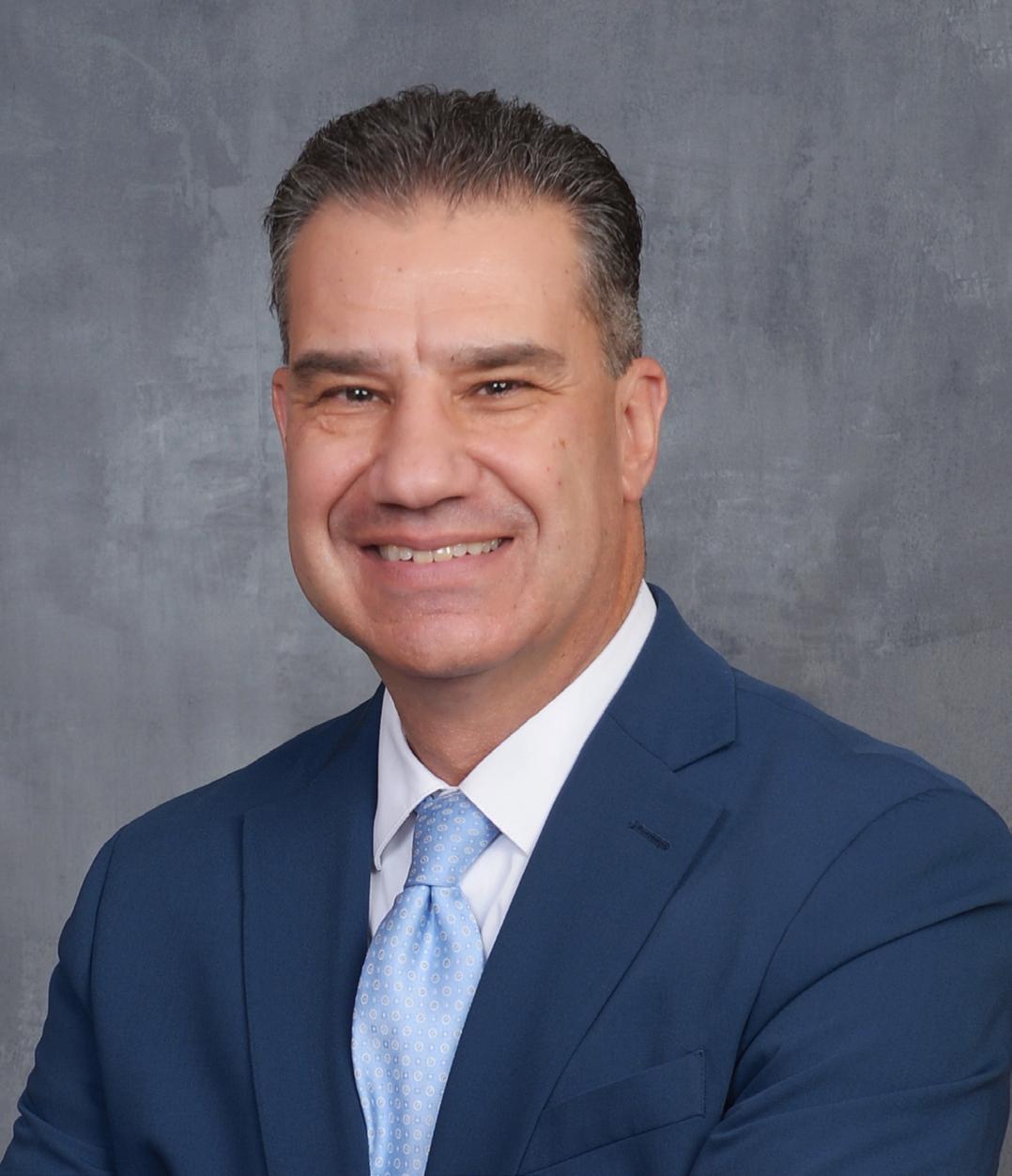
Dr. Michael Palladino
Provost and Vice President of Academic Affairs
Stockton University
lead to burnout and friction. By using data to balance sections, the university can create a more equitable environment that aligns with the interests of campus unions and instructors alike.
Framing the schedule as an equity issue allowed the administration to gain support for necessary changes. By showing the data on student contact hours and enrollment disparities, the need for a more balanced approach became undeniable. Palladino recalls his conversations with union leadership: “I said to the union, ‘You know, you have an equity issue because you have some faculty who are teaching classes half full or a third full. And that’s their load. And then you have other faculty who are teaching classes with 30, 40, 50 students’.” Armed with this data, the union responded positively to proposed balancing changes.
Launching a Winter J Term Pilot on Just a Few Months Notice
As a trained scientist, Dr. Palladino encourages his team to run experiments and “ask the right types of questions, supported by the right types of information.” When Palladino first arrived at Stockton, he proposed launching a pilot “J term.” Despite initial skepticism about whether such a pilot could be launched so quickly, the results proved that students were hungry for opportunities to either catch up or get ahead.
“I heard all these reasons why it wouldn’t work. The first pilot was very successful. The second pilot, we’re going to enroll more than 450 students. It’s going to generate $900,000 in net revenue.”
Rather than waiting over a year to begin and spending time oversurveying students on the proposed pilot, the administration used a blend of qualitative student feedback and proven models from other institutions to launch J term.
The results of the pilot were a win-win for both the institution and the students, showing higher average grades and high levels of student satisfaction. 90% of students reported they would take a J term class again and the second year saw an increase from 12 to 21 courses. Reflecting on the pilot’s financial and academic success, Palladino notes: “It’s win-win. Students catch up, get ahead, and it’s generating new net tuition revenue for the university.”
“It’s win-win. Students catch up, get ahead, and it’s generating new net tuition revenue for the university.”
The New Strategic Plan: One Page Anyone Can Articulate
To operate successfully in today’s environment, Palladino argues that lengthy, decade-long strategic plans must be replaced in favor of shorter, more agile frameworks. Palladino explains that “a fundamental shift is being able to develop a plan that you can communicate on one page. Not a foreign idea to those outside of higher ed, but in higher ed, gone are the days of these 10, 20, 30, 40 page plans.”
At Stockton, their strategic plan will last no longer than three years and focuses on three to five high-level priorities. The strategic plan is written in plain language that every member of the campus community can understand and articulate. This shift allows the university to remain responsive to the rapidly changing dynamics of the higher education landscape while ensuring that strategy remains distinct from daily operations.
“When you looked at old plans, they were very operational. We had to spend a lot of time helping the campus understand the difference between strategy, tactics, and operations. This is not an operational plan,” Palladino explains. Rather than detailing dozens of priorities in the strategic plan, division leaders and their teams are tasked with operationalizing how they will achieve results.
By involving the entire campus in the strategic planning process and focusing on transparency through data-first platforms, Stockton is creating a culture where data informs every decision—from how many sections to offer to faculty line allocations. For Palladino, a scientist by training, this evidence-based approach is the only way forward. As he often tells his team, “let’s do the experiment,” ensuring that every move the university makes is supported by the right information.
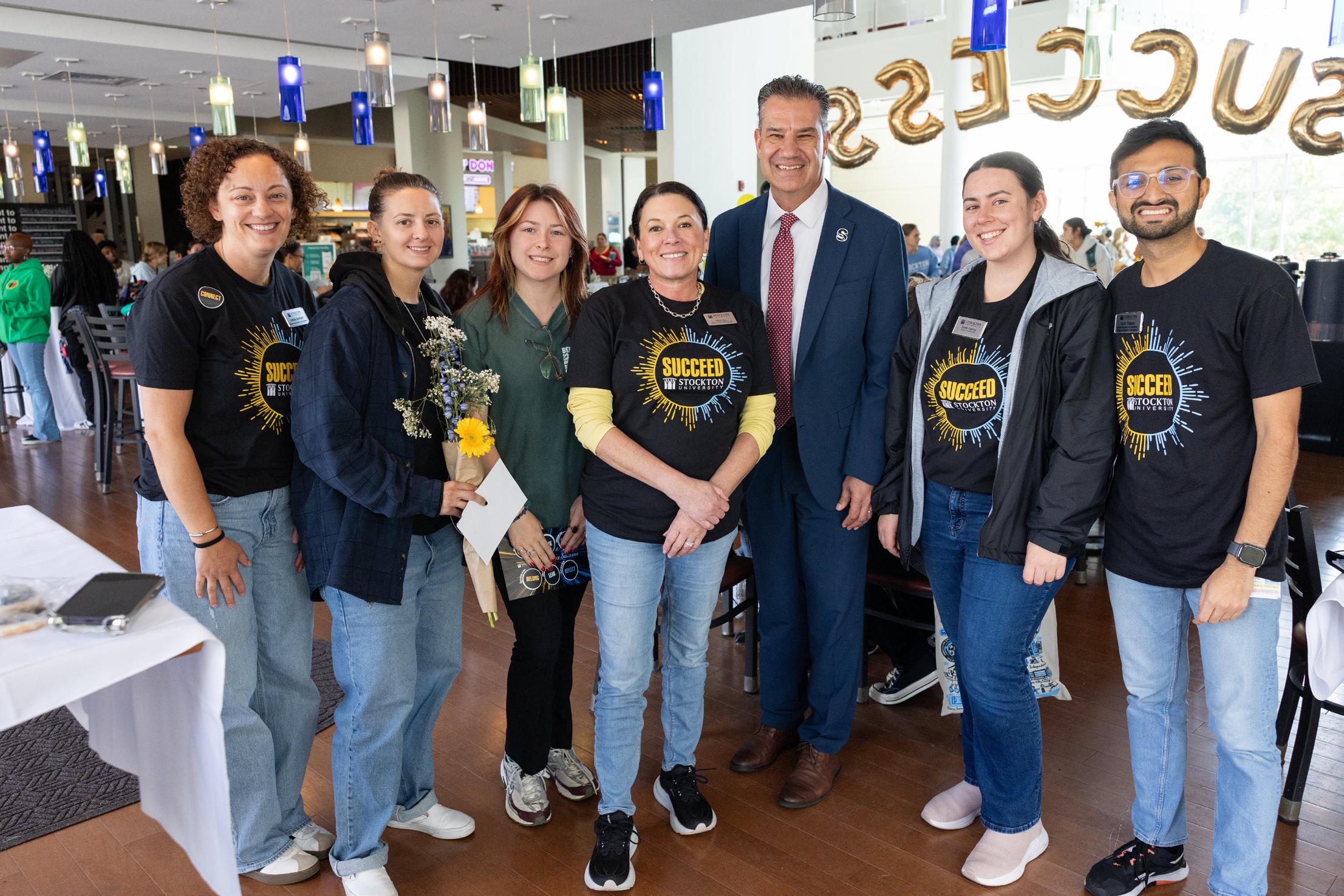
Photo: Dr. Michael Palladino at Stockton University student event
Some
Places Aren’t for
Learning:
Reclaiming Mental Energy for the Classroom
INSTITUTION:
Gustavus Adolphus College
LOCATION:
St. Peter, MN
In the hallowed halls of academia, the word "customer" is often met with a collective shudder. We prefer to view our students as scholars, intellectual peers, and members of the community. However, at Gustavus Adolphus College, Dr. Sarah Ruble, Professor of Religion and former Associate Provost, is challenging higher education leaders to rethink this traditional line of thinking.
A few years ago, the college began developing learning outcomes for offices across campus, operating under the philosophy that every interaction was a learning opportunity. However, this approach missed a critical nuance. Dr. Ruble believes that leaders must differentiate between where on campus students are simply students, and where they are customers.
Allowing Students to Focus Their Energy Where it Matters Most
Dr. Ruble’s approach is rooted in the idea of intellectual bandwidth. If the goal of higher education is to ask students to grapple with difficult topics and challenges, institutions must prioritize the mental energy spent in the classroom over the energy spent navigating bureaucracy.
In an opinion piece for The Chronicle of Higher Education, Dr. Ruble noted, “Some places on campus are not really for learning. They are for the transactions an institution needs to perform in order to provide an education.” Just as an adult isn't expected to be an expert in car mechanics during a yearly service visit, students shouldn't have to be experts in "college-speak" to graduate.
“Thinking about where your students are students and where they are customers can make your campus easier to navigate so students can spend their mental energies where it matters most,” Ruble explains. While the classroom is a space to be challenged and stretched, the registrar's office should be a space where "students just need someone to help
STUDENTS: > 1,900
them fill out the form and then send them off to class."
“Thinking about where your students are students and where they are customers can make your campus easier to navigate so students can spend their mental energies where it matters most.”
When Fewer Interactions Equals Better Service
To get the inside scoop on how Gustavus Adolphus operationalizes this philosophy, AcOps sat down with Dr. Ruble. During her time as Associate Provost, Dr. Ruble also briefly served as the Interim Registrar and used this as an opportunity to shift the office's focus from learning outcomes to student satisfaction indicators.
She explained: “The metrics became more immediate. They were timely.” For example, immediately after registration the registrar’s office sent a brief survey to students about their registration experience. Questions focused on the accessibility of the registrar’s office, students’ experience with the office, and broader concerns such as whether students could get into the classes they needed. Dr. Ruble emphasized that “These kinds of metrics became much more central to how we thought about how well we were doing.”
Under her leadership, the registrar’s office also prioritized a digital-first approach to reduce the number of times students need to physically come to the office. Up until the 2023-24 academic year, major and minor declarations required paper forms and multiple signatures across campus. Ruble pushed to move these processes online, stating, “We wanted students to have to come to our office as infrequently as possible.”
Another major initiative shifted the time that registration occurred. Registration was moved to the morning so students could get immediate answers to their questions while staff were in the office. As Ruble puts it, "offices aren't closed when they [students] need them."
Students Don’t Compartmentalize Their Experiences. You Shouldn’t Either.
The same mechanisms that allow students to make fewer visits to the registrar’s office aren’t just beneficial to students. When administrative time is freed from the burden of manual, repetitive work, staff can pivot toward high-impact, strategic initiatives. For Dr. Ruble, this means thinking beyond departmental boundaries. Rather than defining an office by its internal tasks, Ruble advocates for a holistic, campus-wide navigation ecosystem that prioritizes how a student moves through the college as a whole.
“How do we help students navigate together? My processes don't need to be special just for me. Are there things that we can help with, where there may be overlaps, or where students can walk into any office
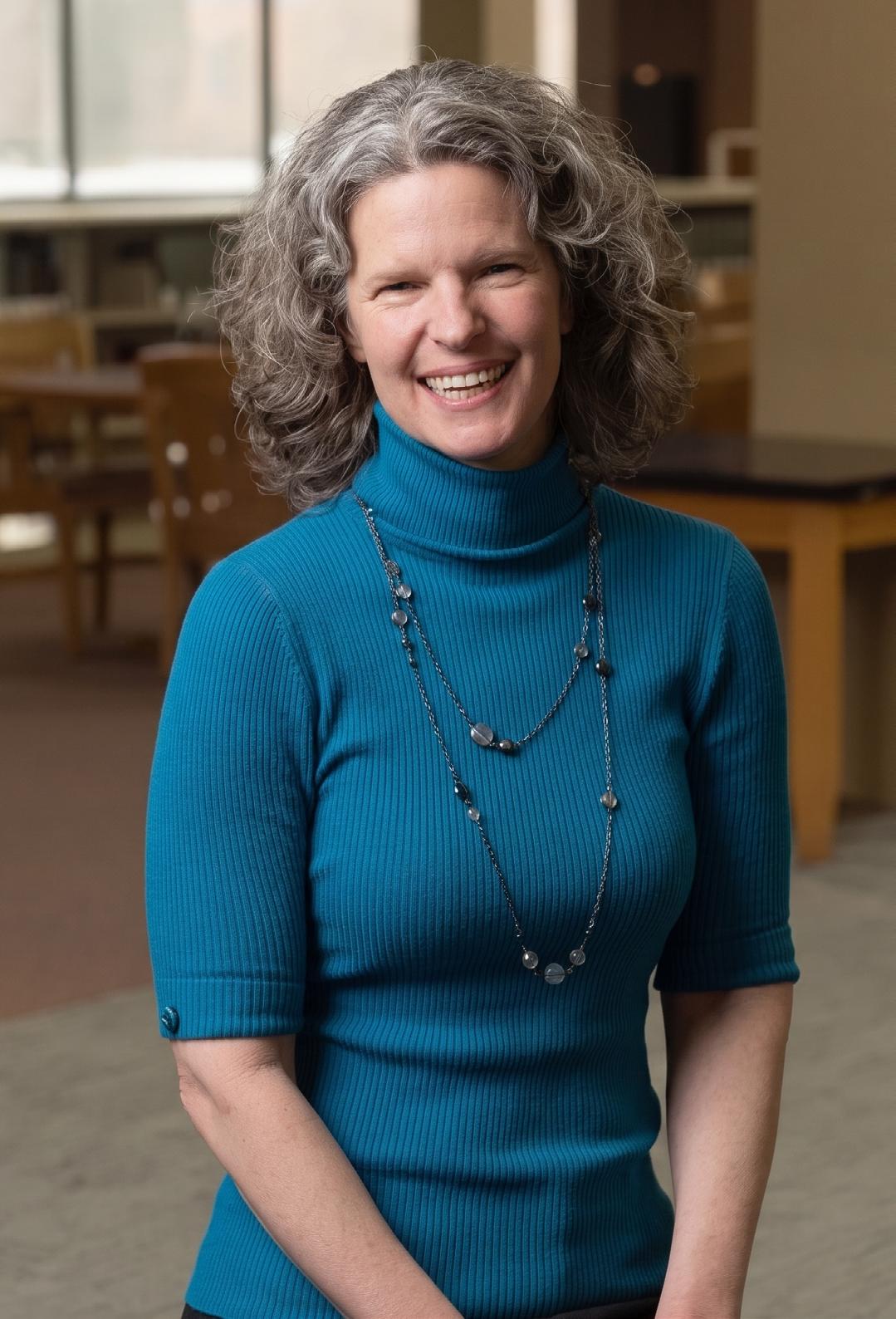
Dr. Sarah Ruble
Professor of Religion & Former Associate Provost Gustavus Adolphus College
“For students, it isn’t necessarily, ‘I had a good experience here and a bad experience here.’ They think about it as the college supporting them.”
and get this question answered,” she asks. This shift requires a fundamental change in institutional perspective: moving from siloed operations to a focus on the holistic student experience.
“For students, it isn't necessarily, ‘I had a good experience here and a bad experience here.’ They think about it as the college supporting them. So if that's how they're thinking about it, it makes sense for us to think about it in the same sort of way. What is the total student experience here?”
Strategic focus area examples include:
Universal Entry Points: Creating similar ways to contact or schedule appointments across all departments, rather than maintaining disparate, confusing systems.
Integrated Navigation Centers: Implementing welcome desks with trained staff and students who can provide clear directions for those without an intuitive sense of where to go.
Definitive Answer Authorization: Training staff to confidently provide definitive answers on high-frequency questions (e.g., credit requirements for full-time status or overload fees) across multiple offices so students aren't bounced between buildings.
Your Policies Don’t Just Confuse Students
Behind the soft glow of their laptop screens, students face additional barriers that often go unseen: navigating the labyrinth of “college-speak.” For every office that they will (hopefully) only come into contact with a handful of times, students encounter a laundry list of terms like repeatable courses, FERPA, and general education. The terms created to better serve students are often foreign to the very people they are meant to serve.
Dr. Ruble emphasizes that this language barrier often extends to the faculty as well. “You assume faculty speak the college language so you keep talking to them in that way as you’re trying to adjust language for students. That's probably a bad assumption. The language should be the same. Everyone should be looking at the same words.” This is particularly critical for institutions that rely on faculty advisors to guide students.
By simplifying policy language in catalogs and emails, the institution ensures that "when faculty and students are meeting together, they're trying to parse the same things." This consistency is especially vital as faculty often live through more policy changes than
students. “They can be remembering something accurate, but something accurate from two years ago” Ruble reflects.
Efficiency as Empathy: Trading Manual Work for Personalized Support
There is a common fear in academia that treating administrative processes as "transactional" is cold or impersonal. Dr. Ruble argues the opposite: efficiency is a form of empathy that creates space for deeper connection.
By moving from paper to electronic systems, staff are no longer bogged down by data entry. “You haven't been keying in things individually for each student. You haven't been getting the same set of questions from students that you've had to answer again and again. It builds in the places or the time for those more detailed and personalized conversations that some students end up needing,” she explains.
Ultimately, Dr. Ruble’s work illustrates that transactional does not have to mean impersonal. Instead, making the administrative experience as efficient as possible allows staff to "really have the time to be what the student needs them to be." By treating the administrative side of campus as a service-oriented arm, institutions give students back the time and energy needed to become learners the moment they step into the classroom.
The Innovation Paradox: Advancing AI While Doubling Down on the Liberal Arts
INSTITUTION: Binghamton University
LOCATION: Binghamton, NY STUDENTS: > 18,600
Can a top-tier research university lead the charge in artificial intelligence while remaining a fierce protector of the humanities? For Donald Hall, the answer isn’t just yes, it’s a necessity for the survival of American innovation. As Provost at Binghamton University for the past four years, Hall oversees the doctoral institution within the SUNY system that serves approximately 18,000 students. His leadership comes at a pivotal moment as universities work to position themselves in the age of AI. In fact, recent research from AACRAO indicates that a third of higher education professionals now identify the Provost or Chief Academic Officer as the primary decision-maker for AI implementation on campus.
Hall’s approach to education is informed by his own journey as a first-generation college student from rural Alabama, where he grew up "surrounded by chicken farms and coal mines." Falling in love with books allowed him to "imagine the world outside" and eventually lead a major research institution. Today, he views the integration of AI not as a departure from the humanities, but as a challenge that requires them. He believes a university’s core responsibility is to give students an "expanded understanding of the world around them," ensuring they are not just employable, but capable of defining what will bring them happiness.
Building Technical and Ethical Guardrails for Artificial Intelligence
At the center of Binghamton’s AI efforts is the New York Center for AI and Responsibility. Established through a historic $30 million gift from Bloomberg co-founder Tom Secunda, the research center serves as a hub for the entire SUNY system and beyond. At its core, the center focuses on the "responsible creation and use of AI" to ensure the technology remains socially beneficial. Hall emphasizes that the center's mission aims to address critical issues, such as re-establishing public confidence in media and communication.
“People don't know what to trust anymore and we have to find ways to regain trust in what we see and hear and read,” Hall explains. “And I think that is what this new center on campus is going to focus on.” The initiative prioritizes building safeguards against
“People don’t know what to trust anymore and we have to find ways to regain trust in what we see and hear and read.”
the spread of disinformation and the manipulation of images and audio. By focusing on these technical guardrails, Binghamton is positioning itself as a leader in mitigating the detrimental uses of AI that threaten institutional and societal stability.
This work is further supported through state-wide partnerships, notably Empire AI, a data center initiative piloted out of the Governor’s office and hosted at the University at Buffalo. Through these partnerships, SUNY and New York state are creating a comprehensive network to advance AI. Hall explained why these partnerships are so critical: “The world of AI is changing every 15 minutes,” making it imperative for universities to partner directly with state and industry counterparts to both advance knowledge and navigate the “dangers around the misuse and abuse of AI.”
Viewing Technological Advancement Through a Human Lens
While the technical aspects of AI are handled by engineers and scientists, Hall insists that the most profound questions about the technology must be answered by the humanities and social sciences. At Binghamton, the approach to AI is intentionally interdisciplinary, involving faculty across management, the arts, and philosophy to examine the ethics and creative applications of automation.
“We have philosophy professors who are looking at the ethics of AI,” Hall says. “We have business professors in our School of Management who are looking at business applications and the use of AI in the business arena. We have artists who are interested
in AI-generated art and how that can be creative or not creative and how it can be used or misused in productive ways by artists.” This holistic view ensures that AI is treated as a tool for knowledge rather than a replacement for human intellect.
Hall acknowledges the difficulties of navigating AI in the classroom but maintains that “we can't ignore it [AI] or deny that it's there.” Rather, “AI ultimately should be a tool, a tool to advance knowledge, creativity, and quality of life.” At this intersection of technology and human intellect, Hall outlined three areas to consider:
Critical Thinking: Protecting human ownership of intellectual property and monitoring ethical boundaries.
Workforce Readiness: Equipping students to use AI tools effectively while maintaining a "human monitor" on quality.
Pedagogical Innovation: Leading the charge to find solutions to AI challenges in the classroom rather than avoiding them.
By leaning into these challenges, Binghamton is working to ensure that human creativity and originality remain protected. The goal is to prepare students to leave the university not just as users of technology, but as ethical guardians of it.
Making the Case for the Arts and Humanities in a Vocational Age
In an era where parents and students are increasingly focused on immediate return on investment, Hall takes the responsibility of defending the liberal arts seriously. He argues that the university has a duty to communicate how a degree in the humanities leads to a "very, very successful career" by educating the whole person. Recent data shows that employers are increasingly looking for these "human-centered" capabilities, such as communication, adaptability, and critical thinking. In fact, recent trends suggest that interdisciplinary pathways that blend liberal arts with technical skills are seeing higher demand than siloed programs.
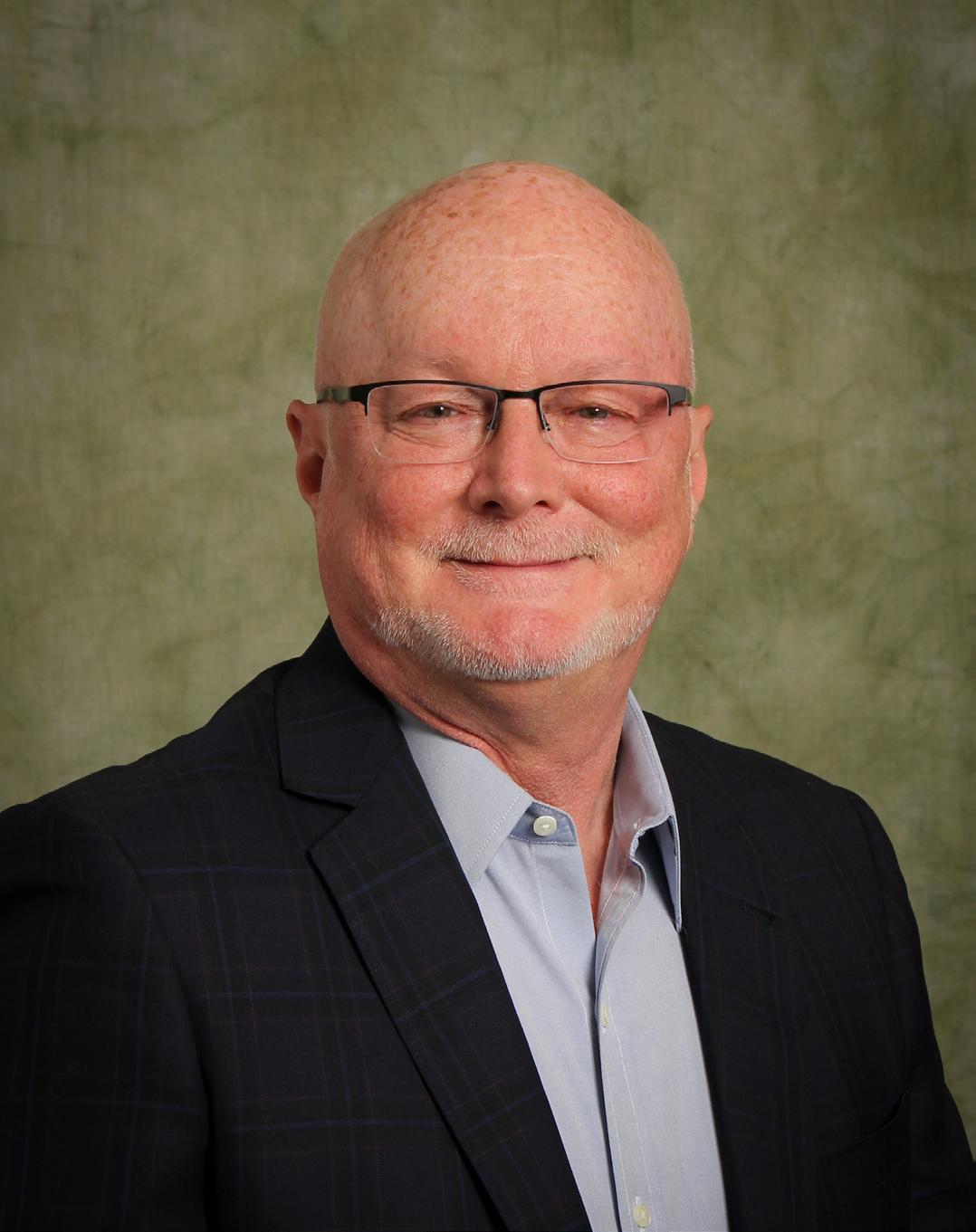
Dr. Donald Hall
“The students still come here because they know that they're going to get, and their parents know, that they're going to get this liberal arts education that certainly will help them get a job, but will help them succeed in their careers. That really does give them an expanded vision, an expanded understanding of the world,” Hall explains. He suggests that while technical or vocational schools serve a specific purpose, a university’s core mission is to provide an expanded understanding of the world to the 18 or 19-year-old who arrives on campus.
Protecting enrollment in the humanities is not just about institutional survival; it is about providing the depth of perspective required for a "fuller life." Hall notes that many Binghamton students choose to
Provost
Binghamton University
major in fields like computer engineering while simultaneously pursuing music or the arts. This blend of disciplines fosters an environment where students can explore different ways of living and understanding without being forced into a single worldview.
Preserving the Innovation Engine of American Higher Education
Historically, the US higher education system has been the envy of the world, with students from across the globe flocking to American universities. Given this historic success, Hall questions why we would want to move to an exclusively vocational and technical education model. Hall explains that “we are re-creating what so many students around the world found unfulfilling in their own home university and higher education systems. We should not dismantle the world's greatest educational system in order to replace it with something that has failed elsewhere.”
Hall also warns that by narrowing the focus of education to repetitive, task-oriented training, we risk
re-creating the very systems that stifle innovation. He referenced Steve Jobs as an example of the link between the liberal arts and technological breakthroughs. “Steve Jobs, in founding Apple computers, always referenced the calligraphy class that he took at Reed College that showed him that there were different ways of thinking,” Hall says. “And that artistic background helped lead the computer revolution. And that, we cannot stifle. If we're training our students to think in ways that are repetitive and think about things where they are only focused on the issue at hand, we are not leading to innovation.”
The future of relevant higher education lies in this balance: leveraging the efficiencies of AI while doubling down on the human factor that fuels original thought. By maintaining this expanded vision, institutions can ensure they remain powerhouses of innovation. As Hall concludes, the goal is to change the world for the better by "changing our students and changing their lives and perspectives," equipping them to make the best choices for their own futures in an increasingly automated world.
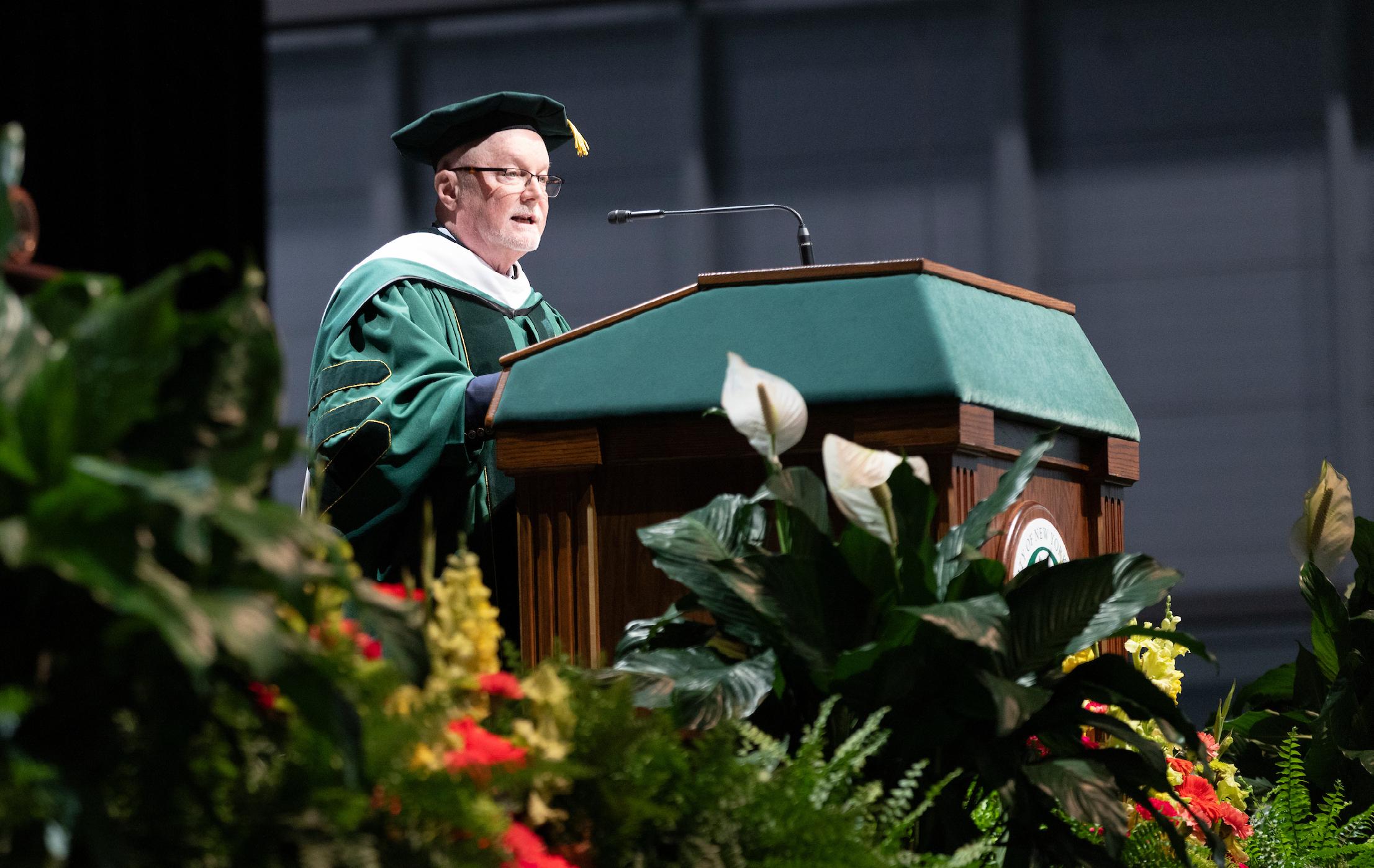
Photo: Dr. Donald Hall speaks at the Decker College of Nursing and Health Sciences’s Commencement
Navigating the AI Gap in Academic Operations
Is artificial intelligence still just a buzzword or have we finally reached a critical point where there are real use cases for improving higher ed operations? A new AACRAO survey shows the tide is changing, with academic operations professionals expressing enthusiasm for the potential of AI.
Far from being a concept limited to the classroom, AI is now entering the “behind-the-scenes” functions that power the academic experience, from curriculum management to course scheduling.
Snapshot
This survey was conducted in September 2025 and gathered insights from 167 AACRAO member institutions.
An overwhelming 85% of survey respondents agree that AI can make academic operations more efficient and improve outcomes.
Yet, alignment around AI’s promise alone does not drive implementation. The survey highlights a clear gap between enthusiasm and execution, with resource constraints, staffing realities, and uncertainty about AI impeding progress. For many provosts and registrars, the challenge is not whether AI has value, it’s whether they have the staffing, infrastructure, and governance required to implement it responsibly.
A Field Poised for AI Adoption
The survey reveals that only 11% of institutions currently use AI in academic operations, with another 11% actively implementing solutions and 38% exploring options. This indicates that half of institutions are somewhere between the curiosity and pilot phase, but still far from system-wide integration.
In many ways, AI adoption follows a typical pattern for innovation seen in higher ed: early adopters experiment at the edges, slower movement toward enterprise-wide change, and an underlying desire for proven models before making investments at scale.
What’s Holding Institutions Back?
For the majority of institutions not yet using AI in academic operations, the path to implementation is fraught with barriers. The top barriers cited by non-adopting institutions reflect a confluence of financial, technical, and trust-based concerns:
Budget
and
Resource Constraints
(18%): The cost of acquiring and maintaining new tools, alongside the time and bandwidth needed for implementation, emerges as a primary obstacle.
Lack of Technical Expertise or Resources (17%): Institutions struggle to fund new tools and allocate staff time amidst competing priorities.
Data Privacy and Security Concerns (16%): As AI systems rely heavily on institutional data, compliance concerns remain and robust data governance is needed.
AI Accuracy and Reliability (15%):
Many leaders are waiting to see how the technology matures, needing demonstrable, proven results before committing to adoption.
Despite these concerns, the field is moving. In fact, 55% of nonusers plan to implement AI within three years and another 34% say they may pursue AI depending on internal conditions.
Focusing AI Efforts Where They Matter Most
Even with the adoption gap, the AACRAO survey shows strong alignment around AI’s most promising use cases. The top three priorities for institutions considering AI highlight a focus on efficiency, resource optimization, and strategic decision-making:
Data Analysis and Reporting (16%):
AI-enhanced reporting tools and data visualization platforms can transform raw institutional data into actionable intelligence, enabling data-informed discussions.
Course Scheduling and Timetabling (13%): AI can solve complex optimization problems, suggesting optimal course scheduling patterns to address high-demand courses and student needs, allowing for a more student-centric approach.
Learner Demand Forecasting (13%):
By analyzing historical data, predictive AI can forecast future course enrollment and identify where students are most likely to need sections. Predicting student demand can minimize underfilled sections, reduce bottlenecks, and ensure a more equitable schedule.
Building Institutional Readiness for AI
For academic operators, these applications promise to free staff from manual work enabling them to focus on high-value, strategic initiatives and crucial student interactions.
For higher ed leaders, this moment is less about choosing the right AI tool and more about preparing their teams to use AI thoughtfully and effectively. The AACRAO findings suggest that staff readiness, not enthusiasm, is now the primary constraint. Institutions that move forward successfully will focus on building the conditions that allow teams to experiment, evaluate, and scale responsibly.
To equip staff for meaningful AI use, leaders should prioritize:
Access to proven examples: Learn from peer institutions and speak with early adopters to avoid reinventing processes from scratch.
Governance and compliance: Provide clear policies and FERPA-aligned guardrails that reduce uncertainty and hesitation.
Structured vendor evaluation support: Draft guidance to help staff distinguish between implementation-ready solutions and immature tooling.
Practical training and professional development: Focus on applications to daily work and tips for responsible AI use.
Together, these investments signal to staff that AI adoption is not an added burden, but a supported institutional priority. Institutions that choose to invest now, not only in tools but also in data quality, governance, and change management, will be positioned to unlock the full potential of AI in academic operations.
Building a Student-Centered Tech Ecosystem
at Isothermal Community College
INSTITUTION: Isothermal Community College LOCATION: Spindale, NC STUDENTS: ~ 1,900
For many community college leaders, the heavy lift of digital transformation is often deferred in favor of other initiatives. However, Dr. Greg Thomas, Vice President for Academic and Student Affairs at Isothermal Community College, recently led his institution through a comprehensive overhaul of their entire academic operations ecosystem. By integrating academic scheduling, event scheduling, curriculum management, the college catalog, and syllabi management, the college aimed to replace fragmented processes with a cohesive, data-driven framework.
Dr. Thomas explained that implementing the new platform, Coursedog, meant “revising nearly every background academic process—from how courses are created to how curriculum proposals are reviewed. It was a heavy lift, requiring coordination across departments, intensive training, and a willingness to reimagine long-standing practices.” While this foundational shift was aimed at reducing administrative burden, the primary goal was to better serve students. “Ultimately, everything we're doing is to make the school experience better for the students,” Thomas emphasized.
Prioritizing Schedule Predictability for Adult Students
When asked about the biggest value gained from Isothermal’s overhaul, Dr. Thomas immediately pointed to the course schedule and academic calendar. “The benefit is it allows us to see the schedule more holistically. To see where there are overlaps, where there are roadblocks, and correct for those. So putting everything into [Coursedog] scheduling allowed us to build a better schedule, but also to be more efficient in building the schedule,” Thomas explains.
The efficiencies mentioned by Dr. Thomas don’t just enable administrators to create a more accurate schedule, but also allows Isothermal to build a schedule visible a full year in advance. For the college's population of adult students located in a rural area, this foresight is a necessity rather than a luxury.
“For our audience, our rural community college with
a lot of non-traditional students, it allows them the time to go to their employers, to go to their child care providers, and to say, ‘Look, I know what my schedule is going to look like for the next year. Can we plan around that?’ It also allows them to paint a better picture of what it's going to take for them to complete in a timely manner,” says Thomas. This shift ensures that the college offers a “schedule that not only is available in advance, but is accurate and dependable.”
Driving Curricular Agility Through Transparency & Workflows
Before Isothermal’s academic operations overhaul, the college managed curriculum changes through a paper-based process that required a 12-page document for any program modification. This arduous process meant that even small, necessary updates could take months to finalize.
By moving to a fully online, workflow-based tool, Isothermal now has a more holistic understanding of their curricular repository and how potential changes impact program structure. “The connection between being able to see side-by-side comparisons of program changes in real time and to be able to tie that back into what we've already built with scheduling means that we can think about the curriculum choices we’re making. We can also see how that fits into our scheduling so that it's one cohesive piece as we're planning to meet our students' needs,” Thomas notes.
This efficiency is particularly critical for programs like early childhood education, which feature multiple tracks serving small populations. Offering a large number of track-specific courses that garner small enrollments can be resourcing-intensive for small institutions. Consequently, evaluating the curriculum to minimize differences while still offering some choice to small student populations is a delicate balance. A transparent view into how these differences play out across both the curriculum and course schedule is critical for resource-conscious institutions in today’s environment.
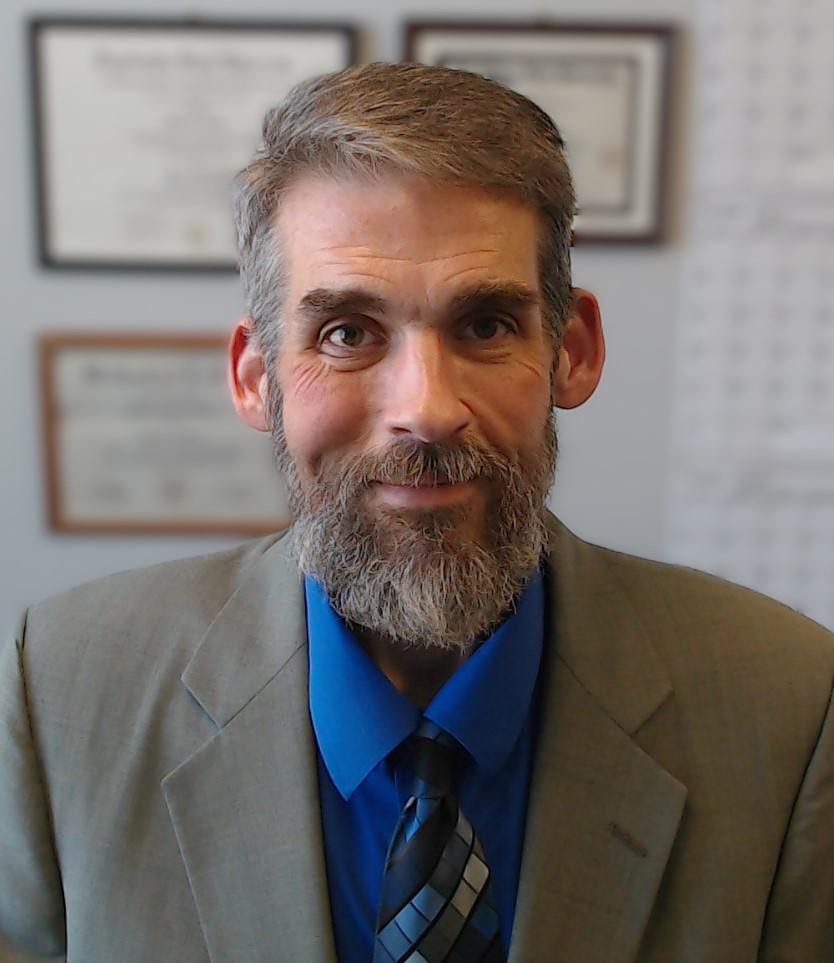
Dr. Greg Thomas Vice President for Academic and Student Affairs
Isothermal Community College
It’s also important to not only be able to see this information, but to be able to act quickly on it. Thomas notes that new efficiency in their curricular approval process has allowed them to approve changes that previously wouldn’t have made the deadline. Recently, Isothermal processed 100 curricular changes in a single semester, a substantial increase from the 30 to 40 typically completed previously in the same time period.
Scaling Success with Accelerated Terms and Strategic Course Pairings
Alongside Isothermal’s technology transformation, they were simultaneously implementing other student-facing structural changes. In a significant shift, the college increased the number of courses offered in accelerated 8-week terms, up from 17% of cours-
es to 80%. The move aims to close equity gaps and address the realities of today’s students. However, this move requires a high degree of precision in how courses are paired.
“You wouldn't want to have your most difficult class be in the second 8 weeks of the fall semester, because the holidays interrupt it. Being able to use those analytics to say, ‘These students are seeing success in these pairings. Or: ‘Are these pairings being offered at this time of the year?’ It's going to allow us to take something that has been a huge success for us, and fine-tune it,” says Thomas.
Intentional course pairing is also foundational to another one of Isothermal’s current initiatives: rolling out program maps as a part of their guided pathways work. To help build program maps, the college developed a homegrown mapping tool for faculty that incorporates specific progression rules. For example, foundational English and math courses are locked into the first year of a student’s map. “You can put them anywhere you want in the first year of the map, but you can't push them off to the second year. This is a best practice for students because those are foundational courses that affect how they will perform in other courses,” says Thomas.
The integration of these tools has directly influenced the faculty’s engagement with curriculum design. Thomas observes that “as a result of that map-making process. We've seen more curriculum changes put in this semester than we've seen in my time with the college.” This level of engagement ensures that the academic offerings remain aligned with the accelerated pace of the new term structures.
Leveraging Career Clusters to Scale AI Integration
As part of their guided pathways work, Isothermal organized programs into seven distinct career clusters. These clusters aren’t just helpful for student exploration, but serve as a framework for introducing artificial intelligence into the curriculum. Creating AI-specific courses across 70 individual programs is unrealistic for most small teams, but scaling that effort across seven clusters makes the task achievable. This structure allows the college to specialize
instruction for specific sub-sections of the student body without overextending resources.
“Career clusters allow us to group like-minded programs, and then you're only developing seven versions of the AI course that can touch on those different fields,” Thomas explains. This targeted approach ensures that the technology is taught through the lens of a student's chosen profession. “The idea is to teach them applicable uses to the field they want to go into. That's true before AI, right? It's always been best practice that the more you can touch on the field of interest for a student... the better likelihood they have that they will be successful in that course.”
Ultimately, the goal is to move beyond basic literacy and focus on meaningful application. “If you were to teach a course about how to use ChatGPT, you're gonna lose the entire student audience, because they already know that. We have to rethink how we teach and how we assess their knowledge in a way that allows them to use it [AI], but still allows them to learn.”
However, tailoring the curriculum to these clusters requires precise academic operations to ensure students can actually access these specialized sections. Thomas notes that managing the scheduling needs of ten different programs within a single cluster remains logistically complex. “Having tools to help make that work easier means we're able to deliver on that promise to students better,” he says.
Fostering Shared Ownership and Data Accessibility
Institutional change of this magnitude requires more than just new software; it requires a cultural shift. Thomas intentionally avoids the term "buy-in," preferring to cultivate "shared ownership" among faculty and staff. “I think the only way that you can get real massive change is to start from a shared why. With every one of the changes that we've had to make around academics, we have to start with ‘This is what we're thinking about doing, and this is how we see it benefiting students.’ And if people believe that sharing students is the goal of the change, you get shared ownership.”
“The only way that you can get real massive change is to start from a shared why.”
Central to this culture is the democratization of data. The Institutional Research (IR) team at Isothermal facilitates this by holding regular one-to-one meetings with program leads to review assessment data and close the loop on program improvements. The IR team also monitors KPIs for accelerated terms and breaks down student success metrics across 16 demographic groups, turning academic operations data into a proactive tool for equity. This data-informed approach allows for "modifications on a rolling basis every year," which Thomas credits for the college's ability to "really step up our game in terms of educational offerings."
While the IR team drives this work, Thomas notes that data should be readily accessible to all. “Accessibility doesn't just have to be who has the login. Accessibility is my ability to take that data and have it mean something. The more a tool can turn that [data] into a useful product, the more that data is going to be used,” Thomas explains.
Scaling the Impact of a Unified Academic Operations Strategy
As Isothermal Community College looks toward the future, their continued success lies in the synergy between technology and the people who use it. “The reason Coursedog works for us is because it's a bunch of different tools that have a common backbone. The reason that stands out for us is because that's how our team works. We've got a bunch of different parts, and only because they work well together are they as effective as they are,” Thomas explains.
Operationalizing Student-Athlete Success: Lessons from Friends University
ABOUT
INSTITUTION: Friends University
LOCATION: Wichita, KS
With all of the recent focus on college serving as a stepping stone to the workforce, it’s easy to forget that students aren’t a monolith. While learning the right skills and getting a good job is still a top priority, many students still place a strong value on other experiences higher ed has to offer. Small, private institutions across the US exemplify this with enrollment often dominated by student-athletes. While this is a key enrollment strategy for many institutions, getting student-athletes in the door isn’t enough. For Friends University in Wichita, Kansas, they know that recruitment is just the first step.
Dr. Brent Yoder, Associate Provost at Friends University, sat down with AcOps to discuss how the institution recently overhauled its support systems and policies to better support the student-athlete population. For Yoder and the cabinet, the initiative was rooted in a commitment to the student journey. "We didn't want to recruit students to come here un-
STUDENTS: ~ 1,900

less we were able to support them in and out of the classroom," he explained. To make this commitment a reality, the institution’s Athletic Director formed a task force that brought together coaches and faculty to take a closer look at how re-engineering student support and policies could close retention gaps.
Building Consensus by Centering Stakeholder Aspirations
When the Athletic Director first proposed a task force to examine student-athlete performance, the original impetus was a sense that the existing mandatory study hall, a six-hour weekly requirement, was not delivering the desired results. However, rather than entering the first meeting with a fixed agenda, Yoder utilized facilitation tactics he learned through the Kansas Leadership Center to allow concerns to surface organically. By starting with a "blank whiteboard" approach, the group, composed of three coaches and three faculty members, started by naming their spe-
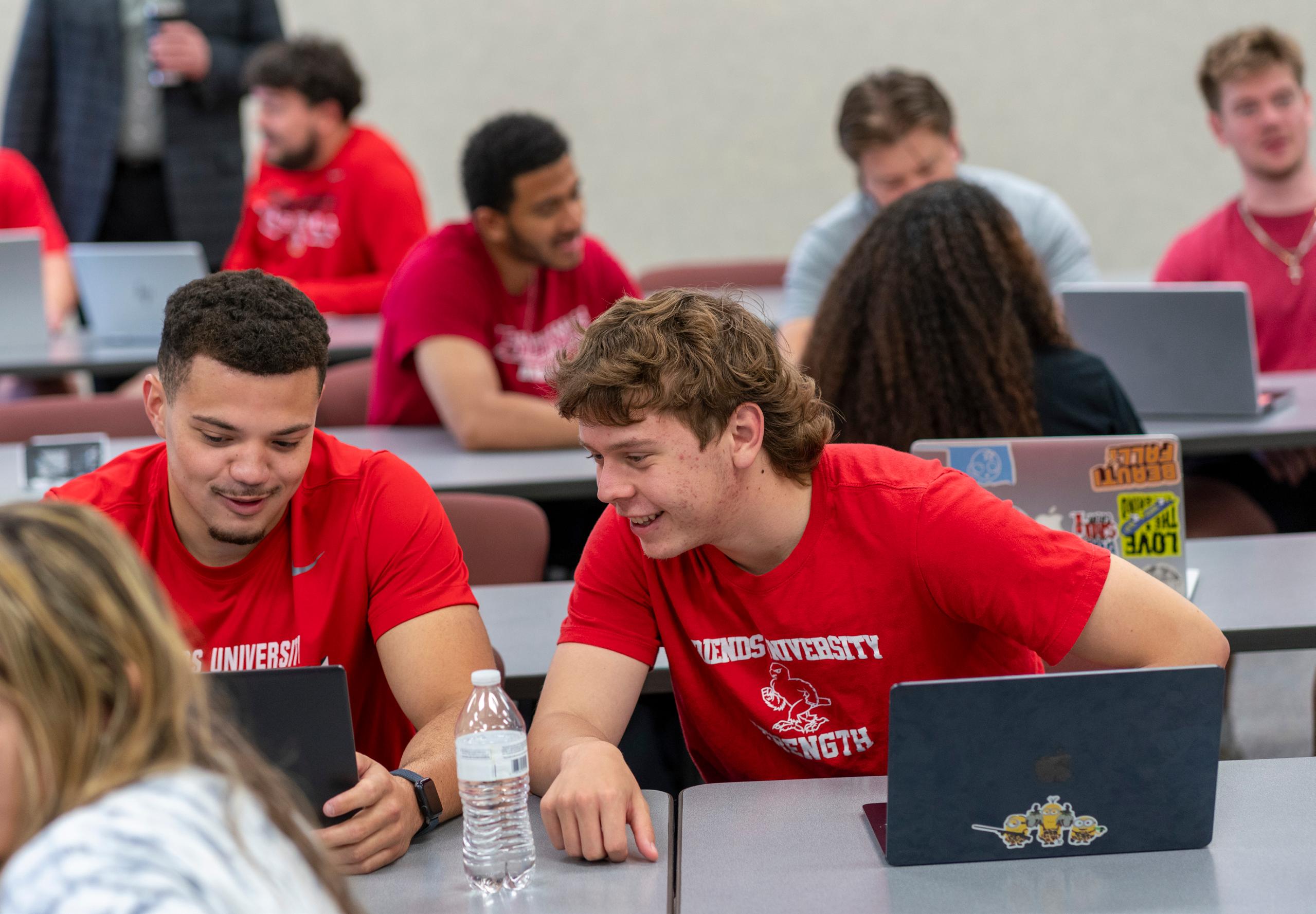
cific concerns and goals before diving into proposed changes.
Yoder recognized that for any operational shift to succeed, it required the buy-in of those on the front lines of student interaction.
“Just because the athletic director gave us a mandate of what he thinks is important and what he thinks the goals are, I wanted to make sure that I heard from everybody in the room about what they
think is important. If we just jumped straight to, ‘here's the problem that our athletic director thinks we have,’ I was worried they would get off track."
This intentional approach enabled the committee to identify and address issues that were not in the original mandate.
Using Institutional Data to Examine the Effectiveness of Longstanding Policies
One of the task force’s primary breakthroughs came from a deep dive into institutional data. The Director of Institutional Research provided data sets compar-
Photo: Student-athletes working together during a study study hall session at Friends University
ing incoming high school GPAs and standardized test scores with college performance. While this data isn’t a perfect predictor, this allowed the team to move away from anecdotal stories and toward a predictive model for support structures.
“Everybody brings in their own stories, their own ideas, their
own anecdotes.
I'm a data person. I want to use data to inform what we're doing. Sometimes you go in with this mindset of ‘I think this is our problem’ and then when you look at the data, you realize, actually, that's not the problem that I thought we had. Then you can dig in deeper to find out what is really going on.”
As a result of this approach, the task force discovered that the previous "one-size-fits-all" study hall requirement both burdened high achievers and failed to provide enough structure for students most at risk. The resulting recommendation was a tiered system that respected student autonomy while intensifying support where it was most needed. High-achieving students with a specified minimum GPA had their requirements reduced to three hours, ensuring they remained in the study hall environment as peer role models without feeling penalized for their success. “We didn't want to excuse them entirely, because we thought it was really important to not just have study hall be a place where only the low-achieving students are,” Yoder explained.
Conversely, students admitted on probation or appeal were transitioned into a high-touch mentorship mod-
el involving graduate assistants who help students plan their weekly assignments and manage their time effectively. This individualized coaching helps students see beyond assignments due the next day and address other common time management misconceptions.
Incentivizing Productive Use of Academic Resources
At a foundational level, the task force realized that the physical presence of a study hall in a library did not necessarily equate to academic progress. Surveys revealed that many students felt study hall was an ineffective resource. To combat this, Yoder and his team integrated the campus tutoring center directly into the study hall policy. “If they [students] went to work with a tutor one-on-one during their study hall time, or if they were in a group study session at that time, then their hours counted time and a half,” he explained. By offering this incentive, the university successfully incentivized students to seek professional help at the Academic Resource Center rather than merely attempting to manage coursework in isolation.
Infrastructure also played a critical role in this shift. Recognizing that many students lacked the hardware necessary to complete assignments during study hall hours, the university secured grant funding for a dedicated fleet of laptops. This ensured that mandated study time could be productive for all students, not just those with the right resources.
Interrogate Traditional Success Metrics to Improve Retention Outcomes
Beyond determining who should attend study hall and for how long, the IR team also helped make recommendations about which metrics were effective predictors of student-athlete retention. The Athletic Director originally suggested that all teams have a team GPA of at least 3.25. However, Yoder and the task force wanted to examine whether that was the right metric. “We were curious to see is that really a valuable metric that we should be pursuing, or were there other metrics that we wanted to look at, such as median GPA on a team, rather than the mean GPA?” Yoder noted.
After targeted data analysis and discussion, the institution moved away from focusing solely on mean team GPAs, instead targeting a reduction in the percentage of students falling below a 2.0. This change shifted the focus to the students most at risk of non-retention.
Uncovering a Hidden Barrier: Communication Gaps Between Coaches and Faculty
One of the more surprising recommendations from the task force centered on faculty and coach communication. Both faculty and coaches communicated through students; however, the message wasn’t always accurate and both parties had no way to verify student claims.
To prevent mixed messages, Yoder explained that the task force set out to "lay out some expectations for how coaches and faculty communicate with each other. Make sure that when it comes to policies that relate to student-athletes and how they balance their athletic responsibilities with their academic responsibilities, that each side of the house understands that we have the same expectations."
To achieve this, the university updated the student-athlete handbook with policies that outlined study hall and class attendance expectations. For example, policies clarified the boundaries between practice and class. The university reinforced a strict policy: from 8:00 a.m. to 3:00 p.m., academic responsibilities take absolute priority unless there is a scheduled game or match. Optional workouts or trainer visits are not valid excuses for missing class. This policy alignment ensures that the students, faculty, and coaches know exactly where they stand, regardless of who they are speaking to.
Implemented Changes Reduce Academic Risk and Raise Team GPAs
While the task force’s recommendations have only been implemented for a year, the impact of these operational refinements has already shown positive outcomes. By the fall 2025 semester, Friends University saw the percentage of student-athletes with a GPA below 2.0 drop to approximately 9%, signifi-
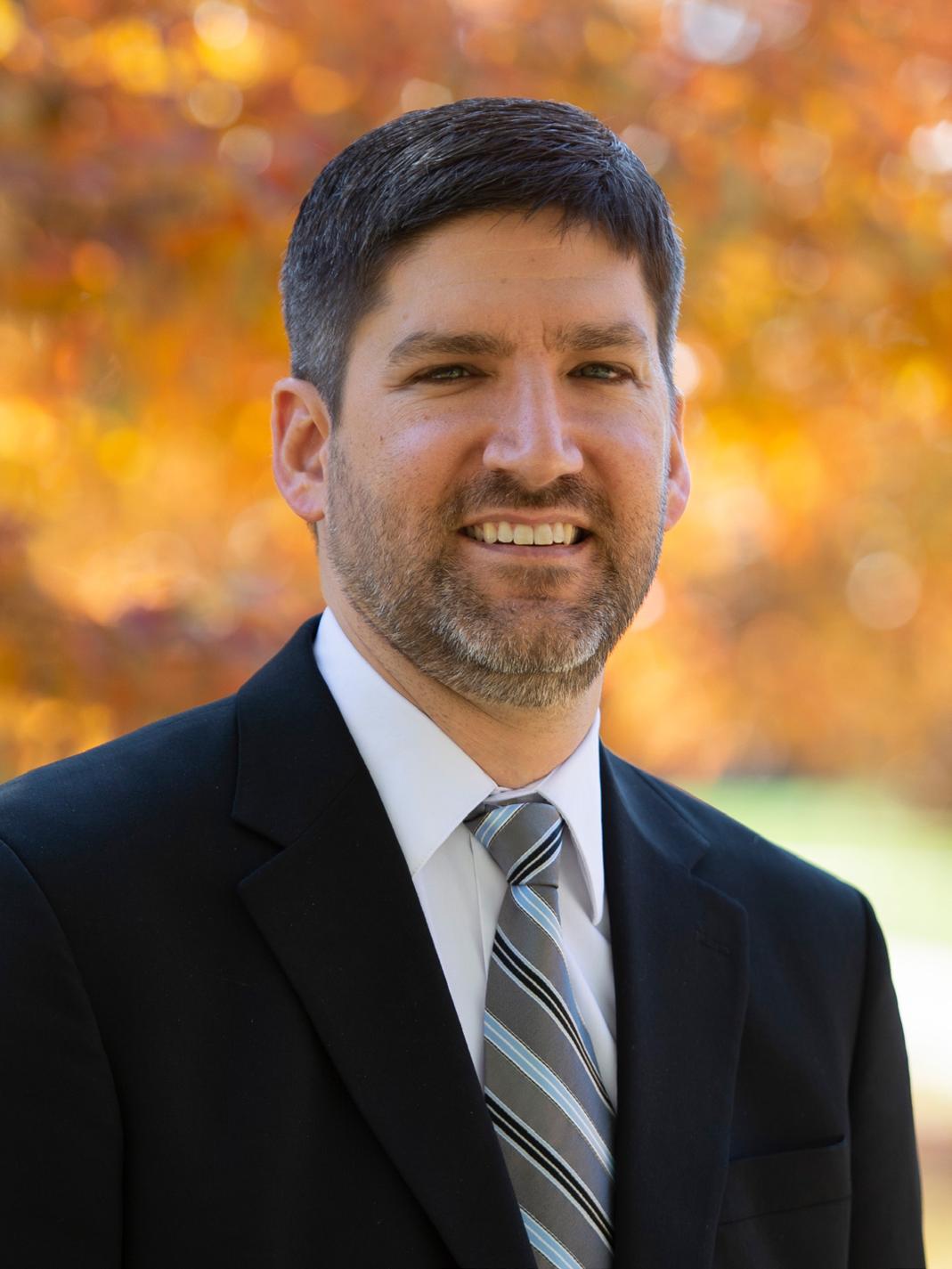
Dr. Brent Yoder
Associate Provost Friends University
cantly outperforming the initial target of 15% set by the task force. Furthermore, the overall team GPA rose to a range of 3.4 to 3.45. As the university looks toward fall 2026 and beyond, the focus will remain on monitoring these trends and ensuring that the new initiatives are managed with the same collaborative, data-informed spirit that defined the task force's success.

The Continuous Cultivation of Student Belonging at Community Colleges
Beyond textbooks and lecture halls, a reassuring sense of belonging helps drive student success at colleges across the country. Dr. Arlene Rodriguez knows this better than anyone and she is redefining what belonging means through intentional and relationship-driven interactions. Rodriguez has served in academic affairs leadership positions at three community colleges in Massachusetts, as well as a stint at the Massachusetts Department of Higher Education.
Dr. Rodriguez sat down with us to share how her teams work together to support students holistically, promote belonging, and encourage community engagement. She shared the key frameworks that she uses, how she leverages data, and how to turn even the most transactional experiences into relationship-building opportunities.
An Evermoving Target: Student Belonging
For most academic leaders, the concept of “belonging” is not a new one. However, Dr. Rodriguez believes institutions need to have
a more nuanced understanding of what it means to foster student belonging. “Belonging restarts every semester, every class,” and it’s not one-and-done, she asserts. “If you don’t understand a concept in your calculus class you’re going to ask: ‘Can I do this? Do I belong?’... We have to recreate belonging all the time.”
To help faculty and staff become champions of student belonging, Dr. Rodriguez is a proponent of a pedagogical approach called “Real Talk,” based on the work of Dr. Paul Hernandez. This framework shifts interactions from a transactional approach — submit your transcript, sign here — to one of relationship-building. It encourages staff to connect with students on a deeper level. “How do you move away from checklist-transactional culture to a culture where the person who is serving you in the admissions office says ‘I also went to a community college’?” she asks. “The student should not be the only vulnerable one in the room. How do you share that vulnerable story: that I also went to community college, or was a single parent, or faced similar fears.”
Dr. Rodriguez shares that this mindset shift has been transformative at the institutions she’s worked at, particularly for functions that traditionally have viewed themselves as transactional. She explains that historically, “you never admitted that you didn’t know something, but now it’s a more organic way of learning and creating that sense of belonging at every given point.”
Every interaction, no matter how brief, can impact a student’s sense of belonging. “We intersect at different points of our days, and you don’t know what went on in my day,” Dr. Rodriguez reminds us. She recounts a powerful anecdote about a cafeteria worker at her previous institution who would package up the leftovers and hand them out to students when the cafeteria closed. She’d say, “Here — if you’re hungry now, or save it for dinner.” But more than that, she’d sit with them, ask what they were studying, and learn their names. “She made a difference in a positive way.” Dr. Rodriguez recounted. If there were a retention chart with lines for these small acts of kindness, she said, there
would be a line directly attributed to this staff member.
It’s also important to consider that no matter what type of support a student may or may not be receiving otherwise, these small interactions can still have an outsized impact. Even with initiatives like Massachusetts’ free community college program, MassReconnect, not all students qualify and navigating financial aid can be daunting. This reality underscores the need for intentional hiring: Dr. Rodriguez sums up her hiring philosophy with the statement, “We need people with compassion.” This comes down to staff who understand that their job is to educate but also to support and care.
Bridging Academic and Student Affairs for an Integrated Approach
Some institutions aim to holistically support students through their integrated and collaborative leadership structure. At her former institution, Dr. Rodriguez oversaw both academic and student affairs, which is not always the case in higher ed. For her, the challenge becomes: “How do you bring the philosophies together? You have one group that is very much about learning content and pedagogy, and the other group is well-versed in student development. How can we bring them together so that they’re not pointing fingers at each other?” she muses. Ultimately, it comes down to supporting the student to earn their credential. She emphasizes that students don’t differentiate between de -

Dr. Arlene Rodriguez
Retired
Provost and Vice President of Academic
and Student Affairs
partments: “A student doesn’t look at one of my deans and think, ‘That’s Academic Affairs.’ A student thinks ‘I need help and who can get me that help?’”.
This integrated approach requires a strong leadership team committed to collaboration. She gave an example of a Dean of Students at her former institution engaging in curriculum conversations and weighing in on what support services were needed and the impact of tutoring on new programs. This collaborative spirit and creativity also allows for proactive problem-solving, often before issues
escalate to committee discussions. Additionally, it serves as an opportunity for newer staff to learn “both sides of the house.”
Shaping Well-Rounded Students Through Community and Civic Engagement
Beyond helping students be successful academically and in the workforce, community colleges are often very involved in the community and promoting civic engagement. Dr. Rodriguez’s former institution runs an entire department dedicated to civic
engagement and learning, and the department plays a critical role during elections. Their work helps inform students and the community and works with outside organizations, such as the League of Women Voters, to share information about issues on the ballot.
Community involvement also extends to affinity-based student groups and city events. For example, her former institution engages in volunteer work for both students and staff. Working with organizations like the Boys and Girls Club helps to “engage with the community in really relevant, significant ways throughout the students’ time here,” she explains, whether that is via workforce programs or project-based work. Workforce-related programs could look like a communications department chair connecting students with the Massachusetts film and TV industry for projects, providing real exposure to the industry.
Dr. Rodriguez underscores that while the workforce side is important, employers consistently seek “a well-rounded individual who can communicate, write, and work well with others.” She acknowledges that “academic affairs people can take care of the content knowledge. It’s these other opportunities that engage students and help them to really identify as that person.”
Taking Action on Data to Promote Equity
To successfully serve all students, Dr. Rodriguez shared the importance of digging into data.
“Our job is to serve a community. Our community remains a diverse community. We are going to do that work to make sure students have what they need—to make sure that we’re providing an equity-minded curriculum and equity-minded services.”
For example, her former institution worked on disaggregating data, identifying which characteristics are important to break down, and making sure everyone can understand the data. This includes developing dashboards for 15 key metrics that they know “move the needle,” which are also shared across departments. The data analysis extended beyond first-year outcomes, such as math and English completion, to include second-year outcomes as well.
Achieving the Dream’s Community Vibrancy Framework can also help institutions dive deeper into their data. The framework helps them conduct “deep dives into every zip code, and breaking it down to specific metrics such as bachelor’s attainment and salaries within that zip code.” This is crucial given for institutions serving regions with economic diversity that are home to both low-income and affluent communities. Dr. Rodriguez is a big believer in this framework as it helps institutions deepen their equity work by focusing on the surrounding community.
Aside from dashboards and frameworks, Dr. Rodriguez encourages her team to take the next step and chart out a course of action. “It’s easy to do the deep dive, so it’s always important that we pull back and ask, ‘Where’s the application of this data? How do we use it?’ Data is meant to be used and to inform, not simply just to be read.” I tell folks: “Curiosity is nice, but for the next hour, I need you to be actionable,” she emphasizes. To help encourage a culture of action, her former institution holds annual data summits, led by the Institutional Research team. Dr. Rodriguez shared that these summits led to faculty and staff further engaging with data and having better discussions.
“Our job is to serve a community. Our community remains a diverse community. We are going to do that work to make sure students have what they need—to make sure that we’re providing an equity-minded curriculum and equity-minded services,” Dr. Rodriguez concludes.
Taking Calculated Risks & Designing for Flexibility at SUNY Oneonta
INSTITUTION: SUNY Oneonta
LOCATION: Oneonta, NY
STUDENTS: 5,400 ABOUT
In an era where program cuts and faculty layoffs are daily news, it’s easy to assume that retrenchment is one of the most strategic levers an institution can pull. However, the quiet work that rarely makes headlines often has the greatest impact. At SUNY Oneonta, located in upstate New York, the response to changing conditions is rooted in agility rather than austerity. Dr. Enrique Morales-Diaz, Provost and Vice President for Academic Affairs at SUNY Oneonta, argues that now is the time to innovate institutional frameworks before the window of opportunity closes.
Dr. Morales-Diaz explains that innovation can encompass both academic rigor and new flexibility needed to meet student needs. This philosophy is built on the conviction that once an institution accepts a student, it assumes a fundamental responsibility to adapt its systems and supports to ensure the student’s ultimate success.
Pivoting to Meet an Evolving Student Profile
Any teaching professional will tell you that students fundamentally engage differently in the classroom than they did pre-pandemic. Learning loss occurred during school closures and attention spans grew shorter. As a result, Dr. Morales-Diaz notes that faculty often feel pressure to lower standards, but he views the challenge differently. “How do we meet them [students] where they are without sacrificing the rigor and the expectations and the quality of the education that we provide? That could be challenging for some folks because they may think: ‘The expectation is I have to dumb down what I do.’ No, you don't.
You just have to know that how you got a student to enter your subject 10 years ago is very different today,” he explains.
This shift requires institutions to move away from the traditional "sage on the stage" model toward a more facilitative approach. It also means acknowledging that student needs are in constant flux, requiring the institution to remain agile. Dr. Morales-Diaz explains that institutions must acknowledge that “whatever we do this year can't remain the same next year because it's going to be a differently prepared group of students. And we have to be able to pivot.”
To effectively reach students and remain flexible, Dr. Morales-Diaz offers the following advice:
Encourage faculty to experiment with engagement techniques that cater to shorter, digital-age attention spans.
Identify small faculty wins to build momentum for larger institutional changes.
Prioritize capacity management to ensure that new initiatives do not overwhelm staff or detract from the core mission.
Leveraging a Budget for Failure to Drive Innovation
“Whatever we do this year can’t remain the same next year because it’s going to be a differently prepared group of students. And we have to be able to pivot.”
In a period of declining enrollment, many institutions look to contract or merge programs. However, this approach is meant to maximize savings and not necessarily encourage growth. At SUNY Oneonta, they made a strategic decision to buck this trend by splitting growing departments and launching specialized graduate programs. This approach is rooted in the belief that institutions have a short window of opportunity to try new things. Dr. Morales-Diaz shares: “My president likes to say we should have a ‘budget for failure.’” This mindset removes the expectation that all experiments must succeed. Experimentation is encouraged while also setting an expectation that not every project will be funded indefinitely.
When leaders launch new initiatives, they discuss the possibility of sunsetting from the outset. “By being upfront in saying, ‘if it doesn't work out in whether
it's three years or five years…we're going to look at it, assess it, and make the decision.’ They need to know that that's a reality. And it is a chance that we're taking,” he says. This transparency helps manage expectations and ensures that resources can be repurposed if a pilot fails to meet its goals.
Narrative-Driven Data to Bridge the Gap Between Faculty and Administration
An effectively run institution requires more than just administrators who are business savvy. Increasingly, faculty need to understand the operational mechanics of running a university, from compliance to facility maintenance. Dr. Morales-Diaz believes that many challenges arise because faculty see the outward-facing aspects of the university but not the mechanics that "keep the lights on." By bringing faculty into conversations about why certain decisions are made, such as hiring in one department over another, the administration can foster a more collaborative environment.
Data plays a central role in these conversations, but it must be presented with context to be meaningful. While SUNY Oneonta is increasingly tying assessment measures to every project to provide evidence of success or failure, Dr. Morales-Diaz, a literature scholar by training, insists on a human element. “It's having the clear data and knowing what it means, not simply saying, ‘Oh well, this is the number.’ No, really give it life. And as a literature person, I will say you got to have a narrative with it,” he asserts. This narrative approach helps faculty understand how operational decisions directly impact the budget and outcomes.
Navigating Institutional Change with Authenticity
Ultimately, the success of any change depends on the trust between leadership and the "people on the ground." Dr. Morales-Diaz advocates for a leadership style that is professional yet "very real," emphasizing that administrators should make changes based on student needs rather than personal legacy or arbitrary mandates. He embodies this approach by continuing to stay connected to students in the classroom. He models the care he expects from his team by actively asking students for their feedback and
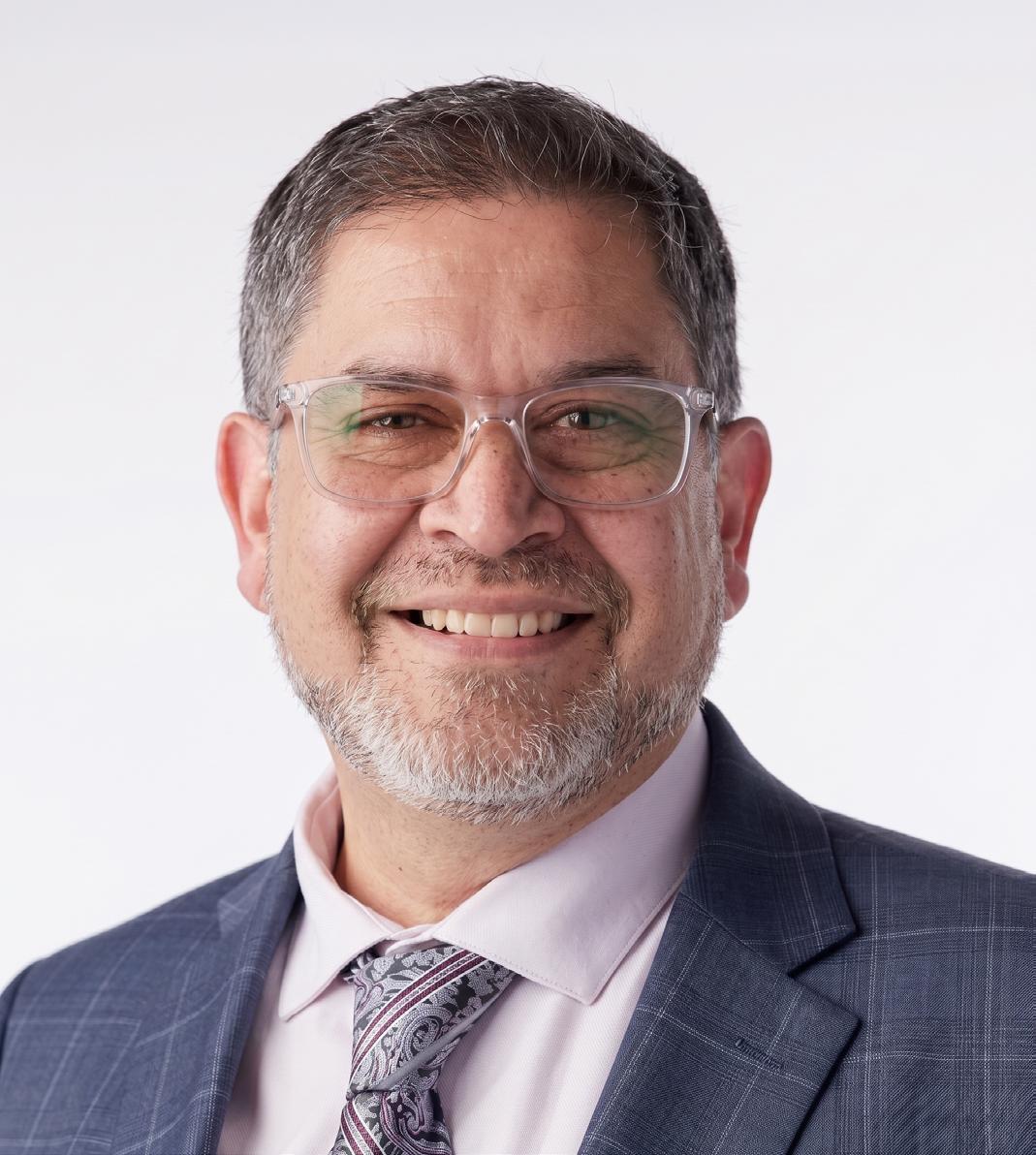
Dr. Enrique Morales-Diaz
Provost and Vice President for Academic Affairs
SUNY Oneonta
inquiring about student disengagement from a place of curiosity, rather than blame.
When leaders are willing to admit that they don't have all the answers and that failure is an acceptable part of the process, it creates a safer environment for institutional evolution. As Dr. Morales-Diaz concludes, “whatever we do is a chance we're taking and we need to be okay with it. And that maybe takes the boss above you to tell you it's okay if you fail. If it doesn't work out, what did you get out of it? What can we do better the next time? Where can we pivot in the midst of a pilot?”
This authentic leadership and willingness to experiment is aimed at steering the institution toward a future where institutional care is a functional framework rather than just a sentiment.
The Secret Sauce of Winning Health Education: Empathy, Data, and Discipline
INSTITUTION: Delta College LOCATION: Baton Rouge, LA STUDENTS: < 300 ABOUT
Producing three-quarters of a state’s entry-level nursing workforce requires more than just a robust curriculum; it demands a philosophy centered on nurturing the student. Dr. Christian Vigé, Provost at Delta College is leading this charge at the six-campus institution located in Louisiana. To achieve this level of success, Dr. Vigé walked the AcOps Magazine through how Delta balances a rigorous academic structure with the personal touch necessary for student success.
Achieving Instructional Congruency Through Standardized Curriculum
For multi-campus institutions, maintaining a consistent experience is never an easy feat. For Delta College, the move toward uniformity in instructional materials across all six locations proved to be a game changer. Dr. Vigé explained that by ensuring that the same curriculum, syllabi, and course objectives were in place across all campuses, the provost's office could finally assess opportunities for improvement.
This push for congruency extended beyond syllabi and into the digital environment. Leveraging a learning management system to facilitate identical activities and assessments created an "automatic win for congruency" for students. This level of alignment ensures that regardless of which campus a student attends, the quality of instruction and the metrics for success remain uniform, providing a reliable baseline for institutional assessment.
Dr. Vigé explains the impact: "Having the same curriculum, the same syllabi, the same course objectives, and the same instructional competencies for all of our courses and all of our programs be identical across locations was a huge game changer because then we were really able to drill down on a granular level on what those opportunities for remediation instructionally could be."
This provides benefits on several different levels. For administrators, standardizing instructional competencies allows for more precise data-informed decision-making. For students, a unified learning management system experience helps provide a consistent experience and reduce confusion.
A Nurturing Instructional Model to Teach Excellence in Care
Delta College’s success in producing three-fourths of Louisiana's nurses is built on a philosophy that treats the classroom as a reflection of the clinical environment. Rather than focusing solely on rote memorization, the institution prioritizes nurturing students to ensure they develop the bedside manner required for high-quality care. This intentional approach sets the program apart by creating a supportive environment where students feel safe to grow.
Dr. Vigé articulates why this approach is so important: "If we want them [students] to become quality nurses with good bedside manner, we want to also model that to them in the way that we are facilitating our instruction. I think that that's one of the things that sets it apart is the way that we administer our program and that personal touch to make sure that our students feel like school can be a sanctuary for them."
Additionally, Delta embeds licensure preparation throughout the entire program rather than saving it for the end. This approach helps Delta College maintain high nursing licensure pass rates while simultaneously fostering a positive learning environment.
Leveraging AI as a Supplemental Tool for Learning
In the face of rapid technological change, Delta College has chosen to embrace AI as a tool for individualized support. For example, the institution uses AI platforms within their e-resources to provide students with quick tutorials or simplified explanations of complex material. This approach creates a more accessible learning experience while keeping the human element of teaching at the forefront.
While the college encourages faculty to stay current with technological innovations, it also maintains strict parameters to ensure academic integrity. For Dr. Vigé, the goal is to equip students with tools that enhance their understanding without compromising the professional ethics required in healthcare.
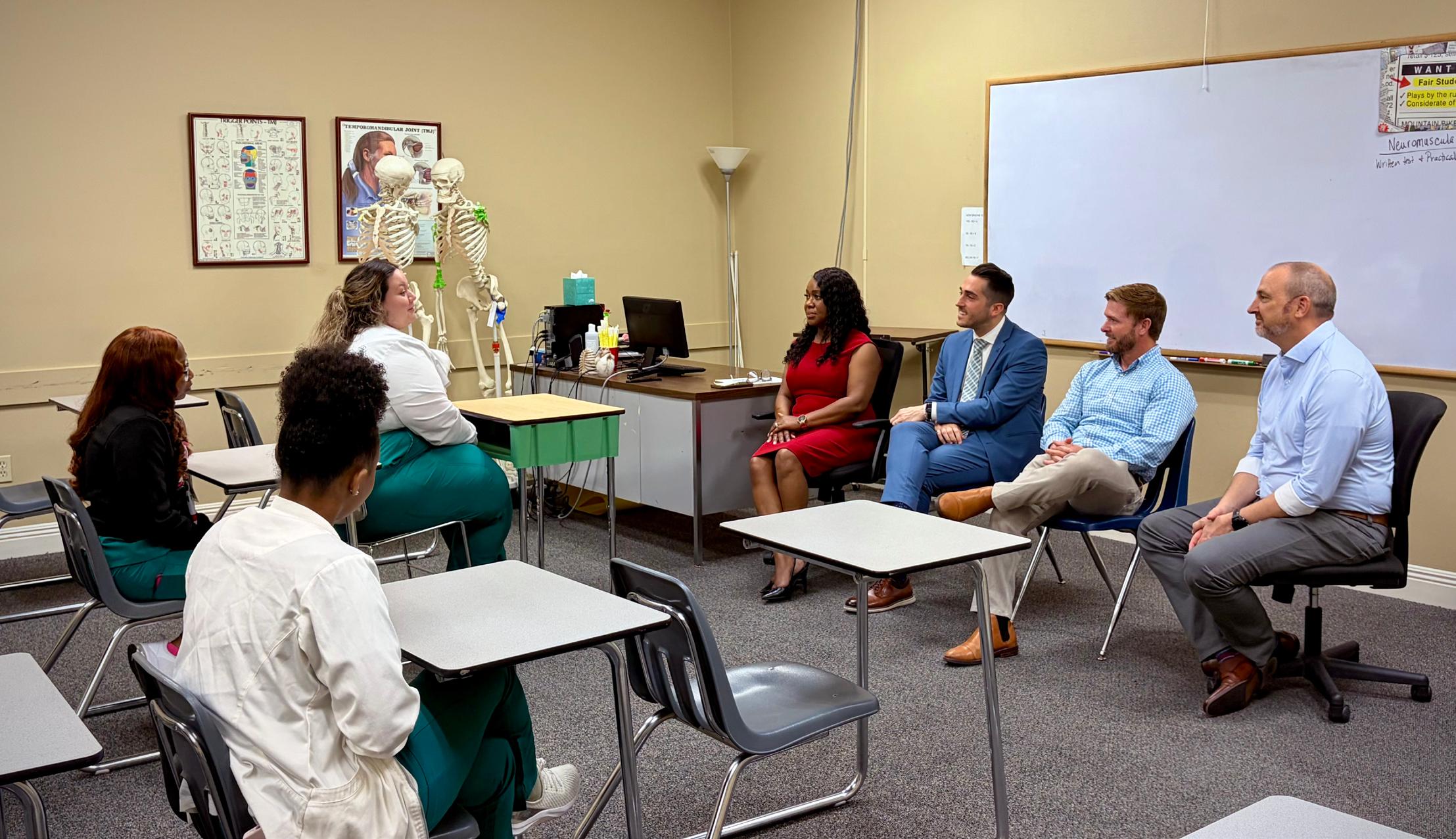
He outlines the institution's perspective: "We embrace it [AI] as an opportunity to have another instructional tool. Within our learning management systems and our e-resources, we utilize AI platforms in a way that can be supplemental to our instruction, but more at an individualized level. For us, AI is not teaching our courses, and it's not producing our curriculum, our competencies."
Eliminate Data Silos to Improve Collaboration and Student Support
While effective curriculum and pedagogy are at the center of preparing successful students, the backend processes of an institution are also critical to providing a consistent, data-informed student experience. For Dr. Vigé, one of the primary blind spots that he sees in higher education administration is the fragmentation of student information across different departments. While admissions, financial aid, and the registrar’s office may all interact with the same student, they often operate within silos. He advocates for centralizing institutional documentation and "removing the redundancies or any barriers to having that shared information" to ensure that the institution
can address the root causes of student barriers.
Coordination and communication are especially critical when it comes to student academic performance.
Dr. Vigé shares the example of a student struggling in two different classes in two different departments. “If they [the instructors] never talk to each other, then they don't know that the student is struggling and not just their class, but others as well. And so they can't really assess the overarching issues or get to the root of them.”
Essentially, when departments don’t have access to the right information that enables them to start a conversation, the institution loses the ability to see the holistic issues affecting a student's progress.
Dr. Vigé argues that institutions need all players to collaborate on student information to create a truly supportive environment.
Achieving Quality Standards Through Disciplined Maintenance
Outside of his work at Delta College, Dr. Vigé also serves as a Peer Evaluator at the Council on Occupational Education. This gives him a unique perspective
Photo: Dr. Christian Vige meets with Delta College healthcare students
on where institutions often lack visibility. While many institutions focus on large-scale innovations, Dr. Vigé argues that "the mundane-ness of maintenance" is actually one of the biggest hurdles to keep up with. He notes that one of the biggest oversights he sees during accreditation is “inconsistencies or incomplete collection of student outcomes.”
Routine maintenance includes the day-to-day tracking of student outcomes, maintaining clean data, and ensuring program alignments stay current with industry standards. Inconsistent or incomplete collection of student outcomes often becomes a major hurdle during accreditation, making the continuous maintenance of records a strategic priority.
Treating Offices Across Campus as One Revolving Door
Ongoing maintenance and inquiry also help institutions identify antiquated systems that hinder growth. Dr. Vigé argues that “if you're doing the same thing you were doing 10 years ago in your classroom, then your instructional strategies are stale and stagnant.” He explains that the most effective way to evaluate your systems is to think of them as a revolving door.
“Institutions of higher education, when they're running in their most efficient and effective way possible, it's like a revolving door that's just continuously turning. The reality is that it takes all the departments to have true student success.”
To effectively embrace this philosophy, every department from admissions to career services should operate in a way that allows students to seamlessly
Dr. Christian Vigé
Provost Delta College
“If you’re doing the same thing you were doing 10 years ago in your classroom, then your instructional strategies are stale and stagnant.”
move to the next stage of their educational journey. Dr. Vigé’s experience at Delta College demonstrates that when administrative leaders prioritize congruency and break down departmental barriers, they create an environment that produces tangible results for the workforce. Ultimately, the success of their nursing programs proves that high-level operational discipline and a nurturing instructional environment are not mutually exclusive.
Reimagining the Academy: Unity Environmental University on Breaking the Higher Ed Mold
The most innovative ideas often come from the most unexpected places. In the quiet landscape of New Gloucester, Maine, a sustainability-focused university is remaking itself to resemble an institution closer to a high-agility enterprise. Unity Environmental University, founded in 1965 as a small, rural college, radically transformed in the past decade by discarding the traditional higher ed playbook.
Leading this transformation is Dr. Erika Latty, the university’s President of the Enterprise and Chief Academic Officer. Under her tenure, the institution grew from a primarily residential student body of 600 to serving over 10,000 learners, 95% of whom study online. In the process, Unity put its campus real estate up for sale and moved to a smaller location. With these changes, “that kind of growth means almost everything has to change,” Latty explains.
We sat down with Dr. Latty to discuss how Unity is defying the slow-moving stigma of academia by embracing a centralized enterprise model, unbundling the faculty role, and preparing for a future where AI is the new baseline.
Shifting to an Enterprise Model
Unlike traditional provosts who oversee a layered academic organization, Dr. Latty manages what she calls “The Enterprise,” a centralized engine that supports a range of functional areas, from distance education to sustainable ventures.
“The enterprise model means that we have a number of centralized services at the university that we provide to different business verticals,” Latty explains. “Our centralized services may be needed by some of these verticals or they may not be necessary in a given vertical.”
INSTITUTION:
Unity Environmental University
This structure allows Unity to be both big and small at the same time. While back-end functions like IT are centralized, the student experience remains hyper-specialized. “Our instructional capabilities within academics are very decentralized because we expect the instruction to look a little different in the online programs than it is in the in-person programs,” she notes. “They all have different sorts of pedagogical techniques they’re employing, different audiences they’re catering to and, therefore, they’re highly decentralized.”
To successfully run this type of organization, leaders must be willing to unlearn traditional structures and operate differently. “I spend more time thinking about how we keep scaling and how we keep changing instead of protecting an established structure.”
Unbundling the Faculty Role
One of Unity’s most radical moves is the total reimagining of what it
LOCATION:
New Gloucester, ME
means to be a professor. In the traditional model, a single faculty member is expected to be a researcher, a learning designer, an administrative expert, a mentor, and more. Latty describes this expectation as “really too much to ask of a single individual.”
To solve this, Unity divided the faculty workload into six distinct roles. “We’ve thought about instructors and we’ve thought about subject matter experts. We think about learning designers. We think about curriculum designers. We think about program advisors who are different than mentors in the field. And we also think about curriculum assessors.”
This unbundling of responsibilities does more than optimize daily operations; it fundamentally changes the politics of program management. Because faculty are valued for their expertise rather than their attachment to a specific major, the university has successfully removed the fear of redundancy that often leads to
“I spend more time thinking about how we keep scaling and how we keep changing instead of protecting an established structure.”
STUDENTS: > 10,000
institutional resistance.
“We’ve let go of this idea that each individual is so tied to a major and that if a new major comes on or a major goes away, so do those people,” Latty explains. “That’s not the case because majors are very transdisciplinary, especially the ones that we focus on that have that sustainability lens. People become less concerned about preserving a given major because they know there’s still a lot of work for them to do and they become more invested in what’s the major we need at this time that serves the purposes of the learners.”
While this transition has been effective, Dr. Latty acknowledges that the shift can be challenging for those who are used to a traditional model. The university also has to be intentional about translating this work for accreditors and assessors who are used to working within more traditional frameworks.
The Secret to Fast Program Launches?
Dropping the One-SizeFits-All Committee
Structure
While many institutions take years to approve a new degree, Unity can build a program in three to four months. This differentiator comes from eliminating tradition-
al committees in favor of hyper-functional working groups.
The university’s agility stems from reimagining who needs to be in the room. Rather than restricting curricular decisions to solely academics, Unity ensures it includes “the right people in the room” by inviting voices that are traditionally absent from these high-level academic discussions. These task groups span the university’s functional areas, including representatives from marketing, student success, and advancement. By including these perspectives early, the university ensures that new programs are not only academically sound but also marketable and student-ready from day one.
Furthermore, the university isn’t afraid to look beyond its own walls to fill knowledge gaps. “We really try not to restrict ourselves to just what we can do but rather think about: What do we need to do to serve the learners in this moment and how do we make that happen? How do we change who’s in the room? It’s not just who’s here at this moment, but who else do we need to add to the conversation?” Latty notes. If the expertise for a burgeoning field isn’t available in-house, Unity recruits outside experts to inform the curriculum.
Even with input from multiple parties, these decisions funnel through a streamlined approval process. Each task group has one decision maker who owns the decision to move forward. “Having a clear decision maker can speed the time to a decision because the
Dr. Erika Latty
President of the Enterprise & Chief Academic Officer
Unity Environmental University
decision maker is really trying to get the best information to make the best decision and then advance the concept for approval to senior leadership,” Latty explains. This model has allowed Unity to launch specialized, workforce-aligned degrees such as Regenerative Hotel Management and Agroforestry at a pace that is challenging for most traditional institutions to achieve.
Flexibility as a Mission: Redefining the Academic Calendar
Unity’s transformation is perhaps most visible in its radical departure from the traditional academic calendar. Recognizing that their learners, with an average age of 29, are often balancing families and full-time careers, the university pivoted away from the standard 16-week semester in favor of a
“How do we remain relevant in a day when you can get on your phone and use Gemini and ask the question and get the answer?”
year-round, term-based schedule. Undergraduate students now move through eight five-week terms, a structure designed for life’s interruptions to simply be interruptions, not an end.
“We started thinking about the structures that we were operating in and how could we add more flexibility for students,” Latty explains. This model allows a student to “stop out” for a single five-week term to handle a medical or family situation and return immediately after, rather than losing a full semester or a year of progress. “That level of flexibility was sort of unprecedented, especially for in-person programs.”
This pivot directly supports Unity’s core mission of accessibility. By lowering the stakes of a single withdrawal from 15 credits to three, the university provides an achievable path for its expansive student body, which includes 35% first-generation and 70% Pell-eligible learners.
This commitment to the student experience is also bolstered by a long-term pledge to affordability. “We kept asking ourselves, how can we maintain an affordable tuition and maintain flexibility for our
students?” Latty reflects. “Those are easy questions to ask but hard questions to answer.” For Unity, the answer was a bold financial commitment: a tuition freeze for distance education through 2030, maintaining a rate that has not increased since 2018. “It sounds easy on the surface but it’s much harder to achieve operationally and we were willing to make those hard changes.”
Beyond a Knowledge Broker: Why Differentiation is the Only Shield Against AI
When asked about the future of higher education, Dr. Latty was quick to call out the role of AI both presently and in the future. While many institutions are scrambling to formulate a stance or treat it as a threat to academic integrity, Unity is leaning into the disruption.
“Instead of trying to detect it and say you can’t use it, we are trying to understand how to embrace it, how to change our assessments so that AI becomes irrelevant to whether our assessments are telling us what we need to know,” she says. “We just pivoted to that space of ‘AI is here.’ How can we
all embrace it?” For Latty, this isn’t just about preparing students, but also examining how the university operates. “How can we leverage it to keep tuition flat, for example?”
According to Latty, the rise of AI signifies the end of the university as a mere “knowledge broker.” The future, she believes, belongs to those who provide unique, differentiated value. “How do we remain relevant in a day when you can get on your phone and use Gemini and ask the question and get the answer?”
“We’re not going to all offer the same value proposition, and that’s okay. We need to lean into the differentiation.” She encourages others to consider: “Are [institutions] still hanging on to some traditions that aren’t really serving the learners? Can you discard some of those traditions?”
Dr. Latty acknowledges that while these are difficult conversations to have, they are imperative for institutional survival. At Unity Environmental University, those discussions actively shape their approach to meeting their mission of providing affordable, accessible education with a sustainability lens.
Know Someone We Should Feature?
Submit a nomination to be featured in our next issue!

The AcOps Magazine is always on the lookout for the next great story. We’re looking to feature leaders in the academic operations space who are driving innovative change in higher education. Whether you work in academic affairs, the registrar’s office, institutional research, IT, or assessment, we are interested in hearing your story!
Submit a nomination through the QR code or you can email the AcOps magazine directly at interviews@acops.com
228 Park Avenue S, PMB 70159
New York, NY 10003
www.coursedog.com
Coursedog:


Curriculum