

TACO SALAD


Rabid bat reports increasing, prompting state advisory
JEREMY C. RUARK Lincoln County Leader
Oregon could exceed a record number of rabid bats this year, according to the Oregon Health Authority (OHA) and the Oregon Department of Fish and Wildlife (ODFW).
The two agencies are urging people to prevent exposure to rabies while highlighting the importance of bats and other wildlife to the state’s ecosystems.
So far, 22 bats have tested positive for rabies in 2026, according to OHA data. That numbers illustrate that the state has matched – and is poised to surpass – its record for the number of bats that test positive for

Suspects arrested following investigation
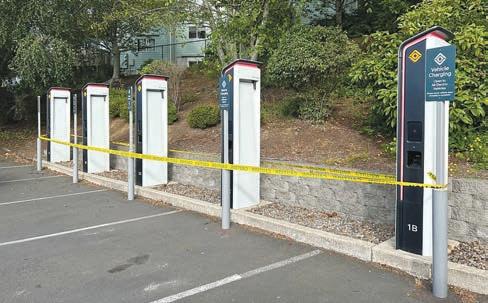
Two people have been arrested and face multiple criminal charges following a theft investigation at the Lincoln City Outlet Mall.
Department investigators, a concerned citizen witnessed subjects actively cutting electric vehicle chargers at the Lincoln City Outlet Mall at approximately 1 a.m. July 31 and immediately notified the LCPD.
intercepted the suspects as they were leaving in a blue Honda Ridgeline, according to LCPD Sgt Erik Anderson.
“Both suspects were taken into custody without further incident,” Anderson said. “A search
As of July 31, 22 bats have tested positive for rabies in 2026, according to OHA data. (Benton County Health)
According to the Lincoln City Police
Officers surrounded the Outlet Mall and
See ARREST, page A7 See BAT, page A7
Historic Oregon lighthouse relit after repairs
TONY REED Country Media, Inc.
After months of being dark, the curtain was rolled back, and the light inside Heceta Head Lighthouse was relit on July 23. The historic lighthouse has been dark since mid-March, when it was discovered that the mechanism that rotates the Fresnel lens was worn down.
The light was turned back on in the morning without any fanfare.
“We are so happy to have this iconic lighthouse back up and running, and I invite everyone to come see it in person,” said Park Manager Hylah Furnish.
“Maintenance is a constant at Oregon State Parks, and caring for a historic lighthouse adds unique challenges, requirements, and costs.”
The historic lighthouse was turned off because the supporting assembly needed new carriage wheels. The wheels hold
See REPAIRS, page A6

Toledo Public Library to receive $10,000 grant
The Toledo Public Library will be one of 300 libraries to participate in the fourth and final round of

“Libraries Transforming Communities: Accessible Small and Rural Communities.” The American Library Association (ALA) initiative that provides community engagement and accessibility resources to small and rural libraries to help them better serve people with disabilities.
The competitive award comes with a $10,000 grant that will be applied to updating the library’s physical space and accessibility features, as well as improving programs and collections to better serve the needs of all the members of our community.
See GRANT, page A7

JEREMY C. RUARK Lincoln County Leader
The Toledo Public Library is located at 173 NW 7th Street in Toledo. (Courtesy photo)
The investigation centered on electrical vehicle charging equipment at the Lincoln City Outlet Mall. (Courtesy photo)
The Heceta Head Lightstation, south of Yachats, has been keeping watch over the Pacific Ocean since 1894. (Courtesy photo)

Lincoln city animal abuse arrest
Lincoln City Police detectives have processed the arrest of Nicholas Mumma, related to charges of Animal Abuse in the Second Degree.
Key information was provided to Lincoln City Police Detectives on by a previously unidentified
witness in the case, according to a release from the LCPD. The investigators did not publicly release the information provided by the witness. The animal associated with the charges is currently under the care of Lincoln County Animal Services. Specific details about the abuse were also not publicly released by the LCPD.
“LCPD encourages those with information or video evidence to contact the police directly. This greatly increases our ability to validate the source for evidentiary purposes,” the release states.
When the Lincoln City Police Department and Lincoln County Animal Services Deputies receive complaints related to animal welfare or abuse, a thorough investigation is completed including investigation of all reports of alleged abuse, reviewing all witness statements, video provided by citizens, video available on the internet, and through contact with the animal’s owner, the LCPD stated in an earlier release.
Anyone with information for LCPD detectives, should contact LCPD Dispatch at 541-994-3636
Phone call leads to felony warrant arrest
JEREMY C. RUARK Lincoln County Leader
A Newport man has been arrested in a felony warrant sex abuse investigation by a Lane County Sheriff’s Office deputy following a phone call from the son of an alleged victim.
The arrest was triggered following information provided in a call to
Cottage Grove Dispatch from the son of an alleged victim in the Lincoln County investigation.
“The caller reported that his now-deceased mother had been victimized by a man in Newport over several years and wanted to ensure the suspect was brought to justice,” the Collage Grove Police Department (CGPD)
stated in a social media post. “After recently seeing the suspect posting in the “What’s Going on in Cottage Grove” Facebook group, he believed the man was living in or around Cottage Grove.”
Officers identified the suspect and discovered he had a nationwide felony warrant stemming from an indictment through the Lincoln County Sheriff’s
Office for multiple counts of Sodomy, Sexual Abuse in the First Degree, and Unlawful Sexual Penetration.
Officers developed several possible addresses associated with the suspect, including one just outside Cottage Grove city limits. Since the residence was outside the city’s jurisdiction, the information was
forwarded to the Lane County Sheriff’s Office. A Creswell deputy responded to the location and requested assistance from Cottage Grove officers. The suspect was located without incident, taken into custody on the outstanding felony warrant, and lodged pending extradition back to Lincoln County, according to the CGPD post.
State issues life insurance fraud ring alert
STAFF REPORT
Lincoln County Leader
The Oregon Division of Financial Regulation is warning people about a recently detected fraud ring that is signing up people for life insurance without their knowledge or consent.
The fraud, which targets mostly older adults, has been found in multiple states, including Oregon. Here is how the fraud, which involves licensed insurance agents, works: Victims receive multiple telemarketing calls in which they tell the telemarketer personal information. The information collected during these telemarketing calls is then
shared with the insurance agents participating in the fraud ring. The agents then cold call the victim to obtain any additional personal information needed to complete an application for a life insurance policy, which gets submitted without the victim’s knowledge or consent.
The life insurance policy, or in many cases multiple policies, is issued and the agent is paid a commission for the sale of the policy, even though the policy has not yet been paid for at this point. When the insurance company attempts to collect the first premium payment, the fraud is discovered.
“Because the insurance company is paying upfront
commissions to the agents, the companies are experiencing high losses as a result of this fraud ring,” said TK Keen, Oregon insurance commissioner and DFR administrator.
“Additionally, the victims of the fraud ring are being targeted for other scams and schemes, putting them at risk for future fraud.”
DFR has a website with tips to help protect yourself from fraud. Among those tips are the following:
Sign up for the National Do Not Call Registry.
• Do not answer the phone if you do not know the caller. If you do answer, hang up if it is a robot, a stranger, or someone
pressuring you.
• If you do not know the sender, do not respond to texts, emails, or click on a link.
Question everything. If you do not understand something, do not sign it or agree to it.
• Never give personal identifying information to strangers.
• Ask your credit card company and bank if they can put a fraud alert on your accounts.
• Monitor your financial accounts regularly.
• Consider enlisting a trusted family member or reputable bill-paying service. Contact your
local Area Agency on Aging for help with routine payments.
• Execute a power of attorney only if you have someone you trust completely, and only after consulting with an attorney. Be sure to ask about gifting clauses, and limit the power you give your selected person. Only grant authority that is necessary. DFR’s consumer advocates are available to help with questions or to file a complaint. You can reach them at 1-888-877-4894 (toll-free) or email DFR. InsuranceHelp@dcbs.oregon.gov for insurance help and dfr.financialserviceshelp@dcbs.oregon.gov for financial services help.
State agency warns of wildfire fraud
STAFF REPORT
As Oregon communities respond to widespread damage from the 2026 wildfires the Oregon Department of Emergency Management (OEM) is urging residents to stay cautious and informed to avoid falling victim to fraudulent schemes, particularly those involving online fundraising platforms.
When disasters strike, Oregonians come together to support neighbors and communities. Unfortunately, scammers may try to exploit that generosity by creating fake fundraising campaigns or misrepresenting their intentions. Fraud attempts
may come via phone calls, mail, email, text messages, or even inperson visits. To help protect yourself and your donations, OEM offers the following guidance:
Double Check Your Charitable Donations
• Verify the campaign’s authenticity: Only donate to fundraisers created by people or organizations you know and trust. Look for detailed, transparent information about how funds will be used. You can verify charitable organizations on the Oregon Department of Justice Charitable Activities page.
• Check for secure websites: Ensure the
fundraising platform uses a secure connection (“https://” and a padlock icon). Avoid clicking suspicious links shared by email or social media. Be cautious with personal information: Never share sensitive details like Social Security numbers or financial data with unverified individuals or groups.
• Monitor for identity theft: Check your credit report regularly for unfamiliar accounts or changes. If you suspect identity theft, file a complaint at IdentityTheft. gov and consider freezing your credit accounts.
• Report suspected fraud: If you believe a fundraising campaign or donation request is fraudulent, contact the Oregon Department of Justice Consumer Protection Hotline at 18778779392 or visit OregonConsumer.gov.
Protect your donations: Avoid cash. Use checks or credit cards to maintain a secure, trackable record. Sign up for DOJ Scam Alerts through the Oregon Department of Justice Scam Alert Network.
Avoid Contractor Scams During Wildfire Cleanup
and Repairs
As residents begin debris removal, structural assessments, and home repairs, fraudulent contractors may target those seeking quick assistance. Keep these tips in mind:
• Research contractors thoroughly: Ensure the contractor is licensed, bonded, and insured. Check reviews and references through trusted sources such as the Oregon Construction Contractors Board.
• Get written estimates: Obtain multiple detailed, written estimates. Avoid contractors who demand large upfront payments or offer unusually low prices.
• Avoid highpressure sales tactics: Take time to review contracts and make informed decisions.
• Never pay in cash: Use checks or credit cards to maintain a paper trail and added security. Beware of doortodoor solicitations: Scammers may approach residents with unsolicited “fire recovery” offers. Always verify credentials and legitimacy.
Key Fraud Prevention Reminders
• Public aid is free: There are no costs to apply for disaster assistance or participate in inspections.
• Verify government workers: Inspectors and officials will always carry identification and will never request or accept money.
• Trust your instincts: If something seems off, contact law enforcement or your local emergency management office to confirm the validity of claims.
• Follow trusted information sources: Monitor local media outlets and official state and county emergency management channels for accurate updates. Nonprofit Organizations Collecting Monetary Donations to Support Oregon Disaster Response Financial gifts remain the most effective way to assist people affected by wildfires. They just take a bit more diligence. Monetary donations allow disaster response organizations to purchase exactly what is needed, when and where it is needed. People seeking trusted organizations currently involved in wildfire response can dial 211 or visit 211info.org. See additional links with this story at the Lincoln County Leader website. All trusted state partners and agencies remain committed to supporting wildfire survivors and preventing the fraudulent activity that slows recovery. Together, we can protect our communities, ensure donations reach those who need them most, and safeguard survivors from fraud and identity theft.
For more information about wildfire recovery resources in your area, contact your ;ocal or Tribal Office of Emergency Management. If you have questions or concerns about donation requests you’ve received, contact your local law enforcement agency.

A “closed” sign sits at a counter at the DMV office in Albany. Since Jan. 1, 2026, there have been 34 full day office closures across Oregon Driver and Motor Vehicle division offices because of staffing shortages. (Mia Maldonado / Oregon Capital Chronicle)
Oregon transportation agency faces $200 million budget gap
MIA MALDONADO
Oregon Capital Chronicle
Oregon’s beleaguered transportation agency is staring down a $200 million budget gap for the 2027-29 budget cycle and layoffs unless the state Legislature intervenes, according to agency officials.
The Oregon Department of Transportation’s budget gap largely stems from inflation and declining gas tax revenue as more people drive electric vehicles, and it means the agency will likely experience its fourth budget cycle in a row having to make reductions, agency deputy director Travis Brouwer said in a virtual presentation Friday, July 31, to the Oregon Transportation Commission, the group charged with setting transportation policy.
That’s unless the Oregon Legislature finds a way to provide additional revenue to the agency.
Democratic lawmakers in 2025 passed a law that would bring $4 3 billion in new tax revenue to the agency over the next decade, but voters in a May referendum overwhelmingly rejected most of those new revenue streams, including increases to gas and payroll taxes and car registration and title fees.
The agency by law can’t move money from one division’s budget to another without legislative approval, and federal funding the agency receives cannot be used toward maintenance, leaving officials with few options for closing the budget gap.
‘Tragic for the state’: Agency leaders faced with cutting nearly 550 positions
The transportation agency has made significant progress in addressing its budget gaps, Brouwer said, reducing its spending by over half a billion dollars since 2019 by moving staff out of leased buildings into state-owned buildings, implementing more information technology systems to reduce staff and eliminating at least 11 vacant senior executive positions.
But those budget reductions come at a cost, he said.
Without new revenue, the agency will need to eliminate almost 550 vacant and filled jobs, or 11% of its workforce, he said. The agency’s maintenance and operation’s branch would get hit the hardest, with 193 jobs cut, followed by 125 jobs within the Oregon Driver and Motor Vehicle Services Division, 120
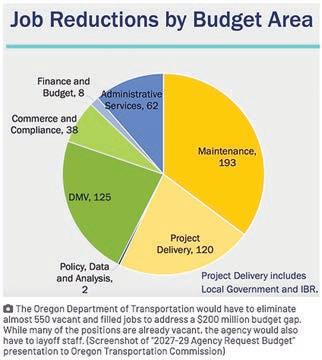
project delivery jobs, and dozens of jobs within administrative services, commerce and compliance and the finance and budget division.
“The risk of these cuts is truly tragic for the state in the long term,” said Tova Peltz, the agency’s chief engineer.
If the legislature doesn’t find new revenue streams, Peltz said the agency would have more than half of its road maintenance crews operating with five or less people — putting both Oregonians and those staff at risk.
It means less people plowing roads in the winter, less vegetation removed from roads, less clearing ditches or culverts and fewer pavement repairs. It also means fewer crews available to respond to severe weather events, she said.
At the Oregon Driver of Motor and Vehicle Services Division, budget cuts mean closing even more of its offices. The division already grapples with severe staffing shortages, especially in rural areas.
“We’ve got about the same number of budgeted positions at DMV as we did 25 years ago, but there are 800 000 more Oregonians, and of course nearly all of them need to come to DMV for our services,” division administrator Amy Joyce told the commission.
The Commerce and Compliance Division, which tracks commercial driving and rail operations, would look to close some of its weight locations and redirect its focus to more popular interstate highways, Division Administrator Carla Phelps said.
As for the division that handles the agency’s facilities, human resources and IT, cuts would result in deferred facility maintenance, aging technology in a time with greater cybersecurity risks because of artificial intelligence, and possibly more workforce management issues, according
to Thomas Amato, the Support Services Division interim administrator.
The meeting somberly closed with Oregon Department of Transportation Interim Director Chief Chris Warner apologizing to agency leaders for having to consider cuts to their staff and services.
“For anyone who has a public service ethic, it must really be painful to present those kinds of scenarios and to be thinking about those,” Warner said. “Thank you, and I’m sorry.”
A 12-member group of business and transportation stakeholders appointed by Gov. Tina Kotek has since May been working on recommendations for solving the Oregon Department of Transportation’s impending funding shortfall.
The group will present recommendations to lawmakers before the next Legislative session in 2027
https://oregoncapitalchronicle.com/2026/07/31/ oregon-transportationagency-faces-200-millionbudget-gap/ Oregon Capital Chronicle is part of States Newsroom, a network of news bureaus supported by grants and a coalition of donors as a 501c(3) public charity. Oregon Capital Chronicle maintains editorial independence. Contact Editor Lynne Terry for questions: info@oregoncapitalchronicle.com.
ONLINE POLL
PREVIOUS POLL
Do you support President Trump’s actions against Iran?
16.7% yes
83.3% No
NEW POLL
Do you plan a late summer get-away?
• Yes • No

Oregon sees record wildfire season
Officials urge precautions
JEREMY C. RUARK
Lincoln County Leader
As of Aug. 3, Oregon has set a new wildfire record for total acres burned, at approximately 2 million acres, according to the Northwest Interagency Coordination Center (NWCC).
The NWCC is the Geographic Area Coordination Center for the Northwest Region which includes the States of Oregon and Washington.
The NWCC serves as the focal point for interagency resource coordination, logistics support, aviation support and predictive services for all state and federal agencies involved in wildland fire management and suppression in the region. Cooperating agencies include the: Bureau of Land Management, US Forest Service, Oregon Dept of Forestry, US Fish and Wildlife Service, Bureau of Indian Affairs, Washington Dept. of Natural Resources and the National Park Service.
The majority of the wildfires have been in Central and Eastern Oregon. Several of the fires were sparked by lightning.
Due to Oregon’s increasing drought and new heat waves forecasted for much of the state, the state’s public safety services, natural resource agencies, and tourism office are encouraging residents and visitors to practice wildfire prevention, prepare their home and a go-bag for evacuation, and know where to go for real-time alerts and information.
According to the NWCC’s predictive services, each year the Pacific Northwest is at elevated risk of significant fires from now until October. With fire crews responding to new fire starts every day, Oregonians and our visitors need to be prepared for wildfires, help prevent future ones, and be aware of up-to-date conditions as they travel across the state. How can people help prevent wildfires?
The Oregon Department of Forestry is urging the



public to actively practice wildfire prevention as the state continues to put out new fires every day. Additional human-caused fires on the landscape will draw the firefighting efforts away from the lightning-caused fires and put extra strain on ground and aviation resources, which are already spread thin. YOU can help prevent wildfires by:
• Checking and following your local fire regulations. The majority of the state is either in high or extreme fire danger right now, meaning even the smallest of sparks could start the next large wildfire.
• Debris burning may be prohibited where you live.
• Check local restrictions or contact your local ODF office.
• Return to check on your burn site if you burned earlier in the year.
• Make sure your car has been recently serviced to avoid faulty parts throwing sparks.
• Don’t drag tow chains.
• Avoid parking vehicles on tall, dry grass. Recreate responsibly. Where campfires are allowed, make sure your campfire is DEAD OUT before leaving it by drowning it with water, stirring it with a shovel and repeating that process until it is cold to the touch. If there is heat coming off it, there are still embers that could reignite. Take Simple Steps to Protect Your Home from Wildfire
The Oregon State Fire Marshal cautions
Oregonians that summer is not the safest time to tackle large landscaping or defensible space projects. Hot, dry conditions increase the risk of starting a fire from using tools or equipment. There are small, safe steps you can take now to reduce wildfire risk around your home. The Oregon State Fire Marshal encourages everyone to plan ahead and do light cleanup tasks that protect your property without increasing fire danger. Easy tasks to reduce risk in the first five feet around your home: Clear leaves, pine needles, and other debris from your roof, gutters, and under decks.
• Trim plants and bushes that are touching your home or growing under roof eaves. Give trees and shrubs space from each other and from structures.
• Remove dead plants and wood mulch. Use nonflammable materials like rocks or gravel near your home. Avoid bark mulch or dry grasses right next to buildings.
• Move firewood, propane tanks, and other flammable items at least five feet away from your home.
• Cover attic vents, soffit vents, and spaces under decks with 1/8-inch metal mesh to block embers.
Avoid using power tools or equipment that could spark a fire, especially during the heat of the day.
Summer is a good time to plan defensible space projects, so you’re ready to work safely once wildfire season ends.
For more tips or help
with defensible space, visit www.oregondefensiblespace.org or https://preventwildfires.oregon.gov.
How can I prepare myself in case I need to evacuate?
The Oregon Department of Emergency Management (OEM) urges everyone to prepare for wildfires and other emergencies by knowing evacuation levels, staying informed, having a plan, and having a go-kit ready.
Evacuation Levels
• Oregon follows a threelevel evacuation notification system, each structured around safety threat level.
• Oregonians should become familiar with “Be Ready, Be Set, Go!” evaluation levels to make informed decisions when receiving evacuation notices.
• OEM urges people to evacuate whenever they feel unsafe, conditions can change rapidly; individuals should always make the best decision for their safety.
• Following evacuation, people should not return to the area until public safety officials state it is safe.
Stay Informed Stay informed, sign up to receive evacuation at, ORAlert.gov remember to update information if need be.
Find the website for your county emergency management, sheriff’s office, or tribal police and follow them on social media.
• Check your photo settings to ensure wireless emergency alerts are turned on.
Build redundancy into
how you can access alerts. Have a personal C.E. Plan for what you will do if your cell phone stops working.
A good place to start is a hand-cranked NOAA radio.
If you use a third-party app for alerts and situational awareness and notice discrepancy information, default to the information provided by your local emergency management office.
Have a Plan
Do you know what to do during an evacuation? See the evaluation checklist with this story at the Lincoln County Leader website that explains what to do before, during and after an evacuation.
• Establish a communication plan with a list of important contacts and a safe place for loved ones to meet if they are separated during an emergency.
• Identify multiple evacuation routes from home, work, or school and plan for transportation needs.
• People with disabilities should consider individual circumstances and specific needs when planning for evacuation, such as special equipment, transportation, and service animals. Then plan extra time, when possible, this may mean treating a level 2 notice like a level 3 notice.
Have an evacuation plan for pets, make a pet evacuation kit in a tote bag or pet crate, and plan for transportation and sheltering of large animals such as horses and other livestock. Make a Go-Kit
• Assemble an emergency kit of essential supplies that can be grabbed quickly.
• Pack an easy-to-carry backpack or bag for each household member with health and safety items such as food, water, medication, flashlights, phone chargers, clothing, and important documents. Visit American red Cross to learn more.
• Find more information and resources at Wildfire.Oregon.gov. Recreate Responsibly Oregon Parks and Recreation Department (OPRD) encourages
visitors to know before they go when it comes to campfire restrictions.
OPRD coordinates with local fire officials throughout the summer and bans open flames in high-risk areas around the state until conditions improve. Please check park webpages or the current fire restrictions list before your next visit. Thank you for helping to reduce the risk of wildfires.
Additionally, many waterways in eastern Oregon are currently being used by firefighting aircraft. Stay clear of the center of major waterways. Recreational boats can block aircraft from accessing the water, which means they will not be able to retrieve water to help put out nearby wildfires.
Occasionally, OPRD will need to evacuate a state park. Evacuations occur at level 2 or earlier depending on fire conditions and the time required to get in and out of the park. Please follow park ranger instructions to pack gear and evacuate. Any park closure information will be posted on the park web page and OPRD social media.
How do I know if I should change my vacation plans?
Oregon is a large state, and while wildfires can disrupt travel in some regions, those impacts are often localized and can change rapidly as conditions improve or deteriorate. Because of this, it’s important to check current alerts at the resources below to see whether your destination is affected. If you’re looking for general guidance about traveling during wildfire season, read travel Oregon’s Wildfire Travel FAQ.
Before You Go: Check road conditions at Tripcheck.com or by calling 511
• Review and follow all local fire restrictions and closures.
• Be aware of air quality conditions that could impact health and visibility.
View real-time hazard updates, maps, and fire information through OEM’s Wildfire Dashboard. Sign up for emergency alerts at ORAlert.gov and ensure Wireless Emergency Alerts are enabled on your mobile device.

























The 2026 summer wildfires have scorched approximately 2 million acres in Oregon. (Courtey photo)
‘E pluribus unum’ is not a slogan. It’s a choice.
TIM STOREY SUE URAHN
Oregon Capital Chronicle
Like two sides of a coin imprinted with the nation’s motto, “e pluribus unum” — out of many, one — America’s political factions are cast in opposition, but they are intrinsically bound together as parts of a larger whole.
From the beginning, the United States has aspired to build a more perfect union. When our founders convened the Constitutional Convention in 1787, they disagreed about the structure of government, the balance of power and the protection of individual versus collective rights. But when they debated — and they often did, with great conviction and intensity — they honed their arguments on what they thought was best for the entire country, guided by the shared vision of a new nation established on the ideals of individual freedom, equality and opportunity.
Today, that shared commitment to America’s founding creed is under strain.
Most Americans feel exhausted by politics, and a growing number are unhappy with the way the political system
is working. Worse, this unhappiness is showing up in unhealthy ways, with low trust in government and each other — a sense that the other side is the problem.
We are painfully aware that partisanship and distrust have grown. We see this too often, when people are reduced to disparaging labels, states are cast as simply red or blue, and the hostility in our politics produces no progress, leaving us all no better off, or worse than before. Our political parties appear deadlocked in a struggle for power, forgetting that they are inseparable sides of the nation’s democratic system, which depends not on who wins but on a shared commitment to the common good. Central to that commitment is a willingness to listen to opposing views, not simply to respond but to understand.
Disagreeing is one thing — it is rooted in our pluralist republic. But when we cannot find ways to work together, it becomes impossible to solve our problems. The founders understood this. They argued passionately, but they shared a deeper allegiance to the nation’s success and its posterity, and they were partners in creating and safeguarding
a system that we all continue to rely on. Whether we choose to engage in political warfare or civil debate is up to each of us. That’s as true in statehouses and city councils as it is at the family dinner table, in the community center, on the debate stage, or standing on opposite sides of a free speech zone. In each of these venues, we can choose to practice democracy by engaging in debate that is spirited, healthy and rooted in strong arguments rather than name calling — or worse, heeding the impulse to withdraw from political engagement altogether.
There are glimmers of hope.
Here in Chicago, as part of the nation’s largest public policy gathering of state legislators and staff from all 50 states and U.S. territories, our organizations, the National Conference of State Legislatures and The Pew Charitable Trusts, are working together to build connections across the political spectrum and share policy ideas and best practices that strengthen legislatures and serve communities nationwide. This follows a series of events held around the country, including a
February “America at 250 Forum,” to bring people with opposing views together to discuss issues that matter to everyone. All of the events demonstrate a serious commitment to strengthening our democratic muscles at this historic moment for the country.
Legislators from different parties sitting together to discuss not only their politics but also their human connection and shared belief in the country demonstrates that, despite the spotlight on our divisions, the time is ripe to unite for a common cause. We need to see more unity from our leaders — and be willing to try it ourselves.
Today, Americans must recognize that our political differences are not inevitably divisive, because our futures are fundamentally connected. Politics are difficult, yes, but they do not need to be ugly. Finding common ground is welcome, but at a minimum, Americans need to find the space to connect with one another and the courage to engage in healthy and substantive discussion. We can do that by building up state and local institutions where individuals get to know each other personally and by overcoming the silos
and sides we’ve allowed to define us. A far better approach is to deal with people face-to-face and with respect, even when we profoundly disagree.
In a time when polarization and mistrust are treated as inevitable, we encourage all Americans to recommit to the principles and institutions that bind us together: a common belief in individual rights and equality, the rule of law, the legitimacy of representative democracy and our shared pursuit of national prosperity.
As America honors its 250th anniversary, it’s important to say, unequivocally and collectively, that we’re grateful to our country’s founders for starting this great experiment. We care about each other, and we want our fellow citizens to be successful. And we are proud to be part of this diverse, complicated and hopeful country.
Shared beliefs like these are central to the American experiment. E pluribus unum — out of many, one — if we so choose.
This story was originally produced by News From The States, which is part of States Newsroom, a nonprofit news network which includes Oregon Capital Chronicle, and is
supported by grants and a coalition of donors as a 501c(3) public charity Tim Storey is CEO of the National Conference of State Legislatures, a bipartisan organization representing state lawmakers and legislative staffs. Storey joined NCSL in the 1980s, holding nine different positions before he was appointed chief executive officer in 2019 He lives with his family in Wheat Ridge, Colorado. Sue Urahn is president and CEO of The Pew Charitable Trusts. She has served at Pew for more than 30 years, working in multiple areas including planning, evaluation, and state policy. Before joining Pew, Urahn worked in policy research with the Minnesota House of Representatives and at the University of Minnesota. https://oregoncapitalchronicle.com/2026/07/22/ repub/e-pluribus-unum-isnot-a-slogan-its-a-choice/ Oregon Capital Chronicle is part of States Newsroom, a network of news bureaus supported by grants and a coalition of donors as a 501c(3) public charity. Oregon Capital Chronicle maintains editorial independence. Contact Editor Lynne Terry for questions: info@oregoncapitalchronicle.com.
At-will piece work for those Short-Term Rentals
PAUL HAEDER Lincoln County Leader Guest Column
You may recall the animus throughout Lincoln County: Unleashed dog(s), dog poop, people unloading boxes of food, children, and bags. Clicking their car alarms, on and off, on and off. Then they use adjacent driveways: loading unused boxes of food, leaving trash to blow around, more dog poop, and loud parties.
“Bayshore Board and Committees ignore this and these situations of STRs. None will approach to fix, they ignore it, as Full Time Residents deal with vulgar mouth STR transient tenants - disrespecting other people’s private property.”
Ahh, that’s an old Facebook post, and alas, I just got sacked by one of those evil vacation home STRs, not for doing anything badly, but ironically, because a Bayshore “Karen” supposedly took a video of me making a California stop – rolling stop – at a stop sign.
I got zero recourse from the multimillionaires who own the STR outfit. There were no moving violations, and no second chance for me to, well, slow my roll and stop at stop signs. Terminated.
This is a tale again of the haves and havesnot – and at $17 an hour, delivering laundry/supplies throughout the county and picking up dirty laundry, bags weighing 80 pounds, well, it is a mad dash to get to the dozens of SRT’s before check in.
Now, think of the optics – I was fired on hearsay, and if a video exists, it’s not evidence enough to have me sacked. But rich people breathe from a
different atmosphere than the rest of us.
Mostly Mexican housekeepers rush to clean their rentals, from bottom to top, with white-glove inspections. It’s an endless battle with sand, dirty renters, and canine guests.
Three huge vacation homes in a day some of the Latinos clean in teams, so they can “make bank.”
And what a racket.
Many of the homes have rickety, cracked wooden stairs. Storm doors are unlatched. In basements where linens and supplies sometimes go, I came across spider-infested rafters. I know my brown recluse and wolf spiders by sight.
Homes in disrepair, many places have rodent traps set up all over, out of sight from guests, who pay, gulp, from $260 to over $600 per night, with larger beachfront properties pushing $1,000+. A cleaning fee is added on.
The Oregon coast shortterm rental fight entered a new chapter three years ago with a state ruling by the Oregon Land Use Board of Appeals overturning a citizen-approved ballot measure phasing out vacation rentals in unincorporated Lincoln County.
Remember? 15neighborhoods was the coalition of citizens who garnered more than 10,000 Lincoln County residents to vote to phase out STRs.
STRs create jobs, though, as this most recent bitter experience was ramified to me, a union organizer going way back. At $17 an hour, one laundry driver comes from Depoe Bay to Waldport to start her shift. Another worker lived in an RV but was forced to leave the county when rental slips doubled.
Rich folk don’t like workers’ tales, one of
which included a college student living in a van. She was sacked because of her “poor tone.” This multimillion-dollar family-owned outfit has no second or third chances in its blood.
The outfit doesn’t just manage other people’s homes. They have purchased many properties: single-family homes, condos, and apartments.
Now, sure, the person who turned me in is, well, a good German in my book. Many workers in this outfit have told me of their own travails with the rich company owners and their HR staff.
Back to the spiders.
Brown recluse spiders, like most others, don’t go after humans, but they nest, so when someone rubs up against them, say in bed, the short fangs come out, and venom is injected. Caution should be observed when grabbing stored items—such as boxes in the attic, garden tools, or old gloves.
Short-term rental cleaners are always grabbing things out of these spider-infested locations. One cleaner told me she got bit at one of the SRT’s. She went to the ER, and $1000 later, after they abraded the wound and drained it, and prescribed a course of expensive antibiotics, she went back to cleaning.
She failed to file a workman’s comp claim, received no assistance from her supervisor, and, alas, the millionaire owners allegedly told her she couldn’t prove she was “bitten at one of OUR rentals,” so they decided zero compensation for ER and med bill would be best practices.
Ahh, the stone hearts of rich business owners.
I attempted to get unfired, but I got a boilerplate response back from
the millionaire. Rules are rules, but this rich SRT impresario, who is fixing up a conglomerate of single units, is employing a nice Spanish-speaking guy from Nevada. He’s doing wiring, plumbing, and construction work for the owner, without, I am sure, an Oregon contractor’s license.
Brown recluse spider bites can take a person down quickly, and while their venom is complex and can cause serious local tissue damage (necrosis), most bites like the one I got in Phoenix heal on their own. Complications occur with those with compromised immune systems, which currently is a hefty thirty percent of Americans.
Let this sink in: millionaires benefiting from our infrastructure see an injured worker as, well, not worthy of financial help. Millionaires sacking workers with no recourse Capitalism is vicious, and while people should reject this transactional, bloody economic system, we see none of that in our little town of Waldport’s SRT outfits.
These millionaires have been quoted in the media as stating they know people do not like Short Term Rentals, but “just get over it.” I imagine these millionaires drinking their fancy Merlot with resentment since Oregon has a minimum wage of $15 55 while the federal minimum wage of $7 25 per hour has remained unchanged since July 24, 2009
I’m no bible thumper, but here I go: “He who oppresses the poor to increase his riches, and he who gives to the rich, will surely come to poverty.” (Proverbs 22:16) PREFACE TO POSSIBLE CODE
CHANGES
“Social capital” broadly refers to those factors of effectively functioning social groups that include such things as interpersonal relationships, a shared sense of identity, a shared understanding, shared norms, shared values, trust, cooperation, and reciprocity.”
Most nonresident owners/investors of Short-Term Rentals (STR) are not residents of Lincoln County. Most do not share these values. This is based on our review of the Public Comments submitted by Proponents of STRs during the Workshops in 2019, 2020, and 2021, media reporting, and even social media accounts.
The Lincoln County Business License model for STRs was adopted without a qualitative and quantitative study of the countywide infrastructure and services’ impacts. We now know from the widely reported experiences during the wildfires and recent bond measures for increased Emergency Services that infrastructure has been affected. Other examples include waste management (septic v sewer), availability of long-term workforce housing, roads, public health and safety, and emergency preparedness. Even the supply of volunteers needed to a variety of government agencies and nonprofits has been affected. We need more volunteers even as fewer are available. Through personal experience and County records, 15neighborhoods (we) know that the STR Regulation was designed to rely on Neighborhood Reporters. However, licensing STRs in single-family Residential
Zones that include pockets of residential areas or neighborhoods was short-sighted. The lack of a robust enforcement program that has allowed the Industry a “pass” for over four years is proof that the Industry cannot self-regulate.
We urge the Lincoln County Board of Commissioners (Board) to look at the record of problems that have been reported in the Public Comments submitted for 2019-2021 Workshops, the Public Testimony provided at the 20192021 Workshops, and the Public Input provided during the Board’s preCOVID meetings. We ask the Board to consider the residential neighborhood problems that prompted you to review the STR Amendments in 2019 Finally, we ask the Board to consider the threats made by property managers and owners, including threats of litigation, against Neighborhood Reporters who report violations. Do not be lulled into believing STRs will ever be good neighbors to permanent residents in single-family areas, regardless of the number of restrictions that you will enact or whether STRs are managed by professional property managers. -- 15neighborhoods Paul Haeder is a novelist, journalist, educator and author of “Wide Open Eyes: Surfacing from Vietnam,” Cirque Press.
QUOTE OF THE WEEK
“Journalism largely consists in saying ‘Lord Jones is dead’ to people who never knew Lord Jones was alive.” G.K. Chesterton
Jeremy Ruark,
Funding cut puts Lower Columbia fisheries, coastal jobs at risk
STAFF REPORT
Lincoln County Leader
State Representative Cyrus Javadi (D-Tillamook) is calling on the Bonneville Power Administration to reconsider its decision to end funding for the Select Area Fisheries Enhancement Program, known as SAFE, in the Lower Columbia River.
According to the Oregon Department of Fish and Wildlife (ODFW), the decision would take effect September 30 and leave a $2 4 million funding gap among Oregon, Washington, and Clatsop County. It could also put more than 7 million hatchery salmon currently in production at risk.
“This may sound like one more fight over a government program with a long name,” Javadi said.
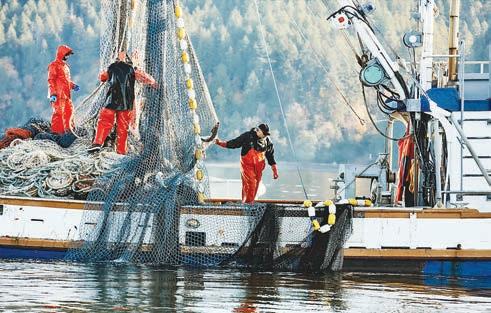
The commercial fishery produces roughly $5 million a year in value paid directly to fishermen at the dock, before counting the work created for processors, restaurants, hotels, marinas, fuel docks, boat builders, mechanics, and other local businesses,
“But for people who live and work along the Lower Columbia, it is much simpler than that. It is about whether there are fish to catch, jobs to work, and
paychecks to bring home.”
According to Javadi, the SAFE program supports hatchery production and terminal fisheries in the Lower Columbia River.
It creates fishing opportunities for commercial and recreational fishers while directing more harvest toward hatchery fish and reducing pressure
on weaker wild salmon stocks.
SAFE fish account for nearly all spring Chinook and most coho caught by the Columbia River commercial fishery. The commercial fishery produces roughly $5 million a year in value paid directly to fishermen at the dock, before counting the work created for processors, restaurants, hotels, marinas, fuel docks, boat builders, mechanics, and other local businesses, Javadi said in a release.
“People sometimes talk about the fishing economy as though it begins and ends with the person holding the rod or standing on the boat,” Javadi said.
BPA has helped fund SAFE for more than 30 years as part of regional efforts to address the effects of the federal Columbia River hydropower system on fish and wildlife.
“There is a basic principle here,” Javadi said. “When federal decisions impose costs on local communities, the federal government should not simply hand those costs back to the people who had the least say in creating them.”
Members of the bipartisan Oregon Coastal Caucus are working with fishery partners, state agencies, the Governor’s Office, and Oregon’s federal delegation to urge BPA to reconsider its decision.
“It does not. When the fish disappear, the effects travel quickly. The deckhand loses hours. The processor handles less product. The restaurant buys less seafood. The marina sells less fuel. The hotel has fewer Guests.”
Oregon State Marine Board approves Siletz River rules
The Oregon State Marine Board has approved the following rule language for the Siletz River in Lincoln County:
Siletz River:
a) No person shall use a motor in excess of 15 horsepower and in excess of slow-no wake speed to propel a boat between Jack Morgan Park boat ramp and Old Mill Park boat ramp.
b) All motor use is prohibited upstream of Old Mill Park boat ramp.
c) All motor use is prohibited on all Siletz River tributaries upstream of Jack Morgan’s Park boat
REPAIRS
From Page A1
the majority of the
of the lens and rotating steel framework. Staff found that the
were worn to the point of causing misalignment in the machinery.
Since no one manufactures parts for lighthouses, a machinist had to be found to engineer new ones from stock metal.
Furnish previously said the roadbed, which is essentially round tracks, had also become worn.
“Over time, they’ve developed a weird beveled angle,” she said, “so, instead of a smooth, solid 50-degree angle, it wore out in two different directions.” She said the machinist who made the wheels was able to locate another machinist with the necessary equipment.


ramp. The Board added a fourth component for a smoother rule implementation to avoid negatively impacting anglers and the local community for scheduled angling opportunities this fall and winter: (d) Rule becomes effective on March 31, 2027 The Board also directed staff to promptly work with the City of Siletz on permitting and facility design improvements at Old Mill Park. Improvements include the parking

The Board also directed staff to promptly work with the City of Siletz on permitting and facility design improvements at Old Mill Park. Improvements include the parking areas, replacing the boat ramp and adding a new vault toilet.
(Courtesy photo)
areas, replacing the boat ramp and adding a new vault toilet.
The Board agreed to delegate out-of-cycle funding authority to Director Warren for Old Mill Park’s improvements, with a not-to-exceed amount of $500 000 in boating facility grants. Staff was also directed to develop educational and safety signage in advance of the rule’s implementation and to conduct a standard oneyear review in 2028 to determine the rule’s effectiveness.
The Board also

Etched into the new carriage wheels is “Welch’s Machine Works,” along with the date 7-20-2026 and “Materials C510 Phosphor Bronze Full Hard.”
Park Ranger Ben Ervin said the repairs and installation of the new carriage wheel and roadbed (track ring assembly) went remarkably smoothly, and that OPRD personnel had






been activating the rotating assembly to monitor it and ensure that it was working well.
“It went in much better than any of us expected,” he said, noting that the installer had to use custom jacks to slightly raise the lens assembly.
The light has been off since mid-March, and a curtain has been used to

opened rulemaking for two agenda items:
Amending personal flotation device (PFD) definitions in Marine Board administrative rules to align with U.S. Coast Guard terminology; and Creating a reciprocity rule between Oregon and Idaho Outfitter Guides operating on the Snake River, which intersects both states. The purpose of the rule is to ensure uniformity of laws between Oregon and Idaho, clarifying registration, license, or permit requirements. A reciprocity rule already exists between Oregon
shield the lens from sunlight while repairs were being made.
As a point of interest, Ervin used a timer to determine the lighthouse makes one revolution every 80 seconds.
The cost of the repairs came to about $35,000, according to the Oregon State Parks and Recreation Department.
History and near future
While captains no longer need lighthouses to safely navigate along the coastline, the Heceta Head Lighthouse remains the brightest on the Oregon Coast, casting a beam 21 nautical miles (24 miles). According to hecetalighthouse.com, the cape owes its name to Don Bruno de Heceta, who in 1775 embarked on a secret voyage for the Queen of Spain to sail up the West Coast.
“Due to the onslaught of scurvy, Heceta and his crew turned back just before the Columbia River, but not before he noted the shallow waters and rocky headland that

and Washington’s border waters.
The Marine Board will issue news releases soliciting written public comments for each item once the Notices of Rulemaking are filed with the Secretary of State’s Office.
The proposed rulemaking language for both items can be found in the Board Book on the Public Meeting page with other materials presented during the meeting.
The Oregon State Marine Board held its quarterly hybrid-style board meeting on July 30 in Madras.
now bear his name,” the website says.
“On March 30, 1894, the lighthouse cast its first beam. The first eight years were trying times for the three Lightkeepers and their families who lived in the little community of Heceta Head. Many Lightkeepers were unable to handle the sparse and isolated conditions and moved on. Head Keeper Olaf Hansen worked for over fifteen years to make the Lightstation a sustainable community. Olaf started the vegetable gardens, a schoolhouse, and the Heceta Head Post Office. While just the gift shop and Lightkeeper’s house remain at the lower landing, both are still used today. At the start of October, the Forest Service will be replacing the roof and porch of the Lightkeepers’ House. The project will involve scaffolding and limited entry, and is expected to take four to six weeks.
Construction is expected to be completed in time for the annual Victorian Christmas Dec. 12 to Dec. 20 Tony Reed is the editor of the Siuslaw news in Florence.
Dick Parks March 26, 1940- July 21, 2026 https://www.batemanpacificview.com/obituaries/dick-parks/#!/ Obituary A graveside service was held Wednesday, July 29th at Eddyville Cemetery. A gathering to celebrate the life of Dick is being planned. Further details will be announced soon
The light inside the Heceta Head Lighthouse. (Courtesy photo)
rabies in a single year.
Bats have carried the rabies virus in their populations for thousands of years and are well known to carry rabies today, but generally at a very low level. Nevertheless, they account for the most human exposures to the virus more than any other species in the U.S, according to a release from the OHA and ODFW.
The highest number of animals testing positive for rabies since 2000 was in 2006, when 22 bats and two foxes were found to be carrying the disease. In 2023, 20 bats tested positive for the virus.
Emilio DeBess, DVM, public health veterinarian
GRANT
From Page A1
“We are very thankful to the ALA for this opportunity,” Toledo Library director Harrison Baker said. “When you do accessibility right, everybody benefits, and that all has to start with conversations and direct input from our community.”
As part of the grant, Toledo Public Library staff will take an online course in how to lead conversations—a skill vital to
ARRESTS
From Page A1
warrant was obtained and executed, leading to the recovery of over two dozen heavy-duty electric vehicle charging cables and a list of targets throughout Lincoln and Marion Counties.”
The two suspects were lodged on the following
at OHA’s Public Health Division, said the more contact someone has with bats, the higher the risk of exposure to rabies.
“Unfortunately, when people find a dead or dying bat, they may pick it up with their hands because they want to help it, or maybe they’re just curious,” DeBess said. “When a bat or other wild animal is sick or dying with rabies, there’s an increased chance they will bite or transmit the virus in other ways.”
Colin Gillin, DVM, ODFW state wildlife veterinarian, said that bats and other wildlife rarely bite people but may do so if they are sick or feel threatened. Oregon bats, in particular, eat only insects—about 1 000 insects every hour—and
library work today. Staff will then host a community conversation with residents about improving accessibility. Based on this feedback, the library will use the grant funds to update and improve the space, collection and programs.
Toledo recently welcomed the ARC of Lincoln County, which opened its Circle Center on 3rd Street in March. This presented an opportunity for the library to collaborate with the ARC to provide service to patrons
charges into the Lincoln County Jail:
• Criminal Conspiracy
• Theft 1 st Degree Criminal Mischief 1 st Degree
Possession of Burglar Tools
• Possession of Methamphetamine
• Possession of Fentanyl Electric vehicle (EV) charger thefts are rising due to the high market
avoid people, Gillin explained.
“Bats provide important ecosystem services in Oregon, but also globally with insect control, seed dispersal, and pollination of specific plants, supporting agriculture and forest systems,” Gillin said.
“And like many animals that can carry disease, bats can also prevent or suppress disease by reducing mosquitoes and other vectors that carry human and animal pathogens.”
WHAT DO TO IF
YOU FIUND A BAT
• Bats are protected wildlife, which makes it illegal to harm or keep them. If you see a bat that appears to be sick:
• Stay calm, do not touch it, and keep people and pets away.
in new and creative ways.
Anyone interested in getting involved or taking part in the conversation, contact Cindy Belleque at 541-336-3132, or attend the Community Conversation at 6 p.m. on August 11, in the library’s downstairs meeting room.
Since 2014, ALA’s Libraries Transforming Communities initiative has re-imagined the role libraries play in supporting communities, according to Baker.
“Libraries of all types have utilized free dialogue
value of copper wire inside the cables, 24 / 7 public accessibility, and low criminal risk, according to a PBS report.
The LCPD is asking anyone who may have any information regarding the string of thefts, to contact the Lincoln City Police Department and reference case number LCP 26010692
Marne’ Grusing
March 24, 1984-July 22, 2026
Marne’ Grusing, age 42, passed away on July 22, 2026, following a long and courageous battle with breast cancer. Throughout her illness, Marne faced each day with strength. She was a resident of Newport, Oregon, and spent a brief period of her life living in Toledo, Oregon.

Marne’ received her BS degree at the University of Oregon in Eugene before dedicating her career to nurturing the youngest among us as a childcare provider. Her patience, kindness, and gentle nature brought comfort to countless children and families over the years. Outside of her work, Marne’s immense capacity for love extended to her
home, where she was a devoted caregiver to her seven beloved cats.
She was an artistic soul who found peace and joy in crafting. Marne’ loved beading and working with natural gemstones and crystals.
She is survived by her mother, Vicki Hocken Grusing, and her sister, Sara Grusing. Marne was preceded in death by her father, Richard Norman Grusing.
Marne’s loving spirit will be missed by her family, friends, and all the lives she touched.
Arrangements are being entrusted to Bateman’s Funeral home. Burial was at Eureka Cemetery August 3, 2pm.
Richard Grusing
July 27, 1944-October 16, 2023
Richard Norman Grusing, a veteran, craftsman, and family man, passed away suddenly from a heart attack on October 16, 2023, while enjoying a walk. He was 79 years old. Born on July 27, 1944, in Lebanon to Richard Grusing and Hazel Emma Pepperling Grusing, Richard spent his later years living in the coastal community of Newport, Oregon.
Richard honorably served his country in the United States Air Force, where he discovered a lifelong passion for mechanics while working on airplane engines. His time in the service took him to Hawaii, a chapter of his life he always remembered with fondness.
Upon returning to civilian life, Richard married his wife. Together, they shared a life in Oregon and raised two daughters. Richard owned and operated a local recycling business for many years.
To Richard, nothing was ever truly broken—it was just waiting to be fixed. He was a tinkerer who loved working on
• When the sick or dead bat is indoors, do not release the bat. It may have exposed someone or a pet to rabies. If it is safe to do so, place a container or box over the bat.
• When the sick or dead bat is outdoors and may have exposed someone to rabies, cover it with a box or bucket to keep it in place, if safe to do so. Finding a dead bat does not require any action unless someone was bitten or scratched before the bat died. Contact your local health authority or veterinarian for your area right away to discuss potential exposures to humans or pets.
• If there are multiple sick or dead bats observed in an area, report to
and deliberation training and resources to lead community and campus forums; take part in
ODFW.
• When a person or pet has been bitten or scratched by an animal that may have rabies, report this exposure immediately to your local animal regulation services or local public health authority. Seek medical care immediately from a medical provider or veterinarian.
• Teach children to avoid all contact with bats and other wildlife.
• Avoid bats seen in the wild, such as while hiking. Make sure your dog or cats’ vaccinations are up to date, whether they are indoor or outdoor pets.
• Unvaccinated pets that come into contact with a bat may be quarantined for up to four months or euthanized.
anti-violence activities; provide a space for residents to come together and discuss challenging
• Protect your home from bats by covering vents, chimneys, and other entry points with screens. If you have roosting (nesting) bats living in your attic or other areas of your house, call a wildlife control operator (WCO). ODFW is unable to respond to homeowner requests for bat removal.
RESOURCES
Find additional information about rabies and bats at:
• OHA’s bats and rabies website
• ODFW’s bats website “Help Oregon’s bats with a bat-friendly home” article (ODFW)
• Centers for Disease Control and Prevention’s rabies website
topics; and have productive conversations with civic leaders, library trustees and staff,” Baker said.
Clifford Abbas
Clifford Abbas, 68, of Toledo, died on July 9, 2026. He was born in Newport, and lived most of his life in Toledo. He was a 1976 graduate of Toledo High. After high school he worked different jobs around the area from nurses’ aid to logger. He worked in Bakersfield as a millwright for 5 years. He then moved back to Oregon and began working at Greenberry where he worked in Oregon and Washington.

and enjoyed volunteering his time helping the Lodge.
Survivors are his brother Dennis of Newport, sister Debby (Chet) of Siletz, 5 nieces and many friends.
He was preceded in death by his parents Henry & Geri Abbas, brother John and niece Cheryn Smith. There will be a celebration of life on Saturday, August 22nd at his sister’s home in Siletz at 1pm. All are invited to attend and share memories and laughter which is what Cliff would have wanted.
engines and doing property rehabilitation. He channeled his skills into helping his community, working parttime in maintenance and repairing washers and dryers for neighbors in need.
Beyond his mechanical talents, Richard was a social person who made friends effortlessly. He was a familiar face around town, visiting Fred Meyer several times a week. Whether he was running errands or just out and about, he always took the time to chat with his neighbors. His quiet reliability, easy friendliness, and ability to fix anything will be deeply missed by all who knew him.
Richard was survived by his wife Vicki Hocken Grusing, two daughters, Marne Grusing and Sara Grusing, sister Nancy Newton and nieces Katie & Holly and their families.
Arrangements were entrusted to Bateman Funeral Home and a small ash scattering ceremony was attended by family at Agate Beach.
He was a member of the Eagles Lodge
Jan Eleanor Shields
September 17, 1936 -July 12, 2026
Jan was born in Fruitland Idaho, to Ruben Ralph Helsley and Vida Stroup Helsley, settling in Tooele, Utah.

She was the oldest of four children. She married her childhood sweetheart, Melvin Jay Shields. They settled in Pine Canyon, Utah, where they raised their family in a home they designed and built together borrowing and paying off loans as they went.
Mom had a zest for life! She was well known for her hospitality, hard work, quick wit, intelligence, and love for her family and friends.
Mom loved many sports and was a season-ticketholder to The Utah Jazz. She was an avid bowler and taught numerous youths within the junior bowling league. Mom loved learning. She soaked up knowledge anywhere she could. She enjoyed watching game shows, playing
pinochle, Mexican-Train and poker – where she earned the nickname, “Sharky”.
She was a Lifetime member and President of the Lincoln City Senior Center as well as Host/ Kitchen coordinator for many consecutive years. Mom enjoyed gardening, canning, sewing, painting, fishing, camping, family cookouts and get-togethers.
She was preceded in death by her parents, siblings Joanne, Lois and Judy, husband Jay and daughter, Connie.
Jan is survived by son, Danny (Janel), daughter, Jennie Shields Degelbeck, grandson, Clinton Marsh (Amanda) and Special Friend, Antonio Porras.
A Celebration of Life will be held on August 22 at Noon at the Lincoln City LDS church located at 3565 NE West Devil’s Lake Rd, Lincoln City, OR 97367.
Michelle “Missy” Mckuhn
January 27, 1971 – June 18, 2026
In Loving Memory of Michelle “Missy” Rene Mckuhn
With heavy hearts, we announce the passing of Michelle “Missy” Rene Mckuhn, who left this world far too soon on June 18, 2026, at the age of 55.
Missy was born on January 27, 1971, and spent her life as the steady, dependable heart of her family. She had a quiet strength that made everyone around her feel safe, loved, and supported. She was the person others turned to in times of need—the one who always showed up, listened without judgment, and gave without expecting anything in return.

Missy dedicated 37 years of her life to Rite Aid. She took great pride in her work and was known for her kindness, loyalty, and strong work ethic. She built lasting friendships with coworkers and touched the lives of countless customers. To many, she was more than a familiar face behind the counter—she was someone who genuinely cared and always made others feel welcome. Outside of work, Missy found joy in life’s simple pleasures. She loved traveling, sunshine, reading, and making memories with her family. She was a devoted daughter, loving sister, loyal friend, and, in the role she cherished most, the proudest Aunt Issy. Her nieces and nephews adored her, and she
loved them as her own. She celebrated their milestones, comforted their heartbreaks, and was always the first to offer encouragement or help.
Missy is survived by her mother, Deloris Mckuhn; her brother, Doug Mckuhn Jr. (Stephanie MarshallMckuhn); her sister, Jennifer Mckuhn (Kyle Zimmerman); her nieces, Karissa Marshall, Kaydence Mckuhn, Avery Mckuhn, Pearl Zimmerman, and Mayci Zimmerman; her nephews, Kaleb Marshall (Danielle Peterson), Ezra Zimmerman, and Colten Eliasen; her greatnephews, Oliver and Jasper Marshall; and many family members and friends who will miss her deeply.
She was preceded in death by her father, Douglas Edward Mckuhn Sr.
A celebration of Missy’s life and potluck will be held on August 15 from 1:00–4:00 p.m. at the Elks Lodge in Newport, Oregon. Bringing a dish is welcome but not required.
We invite all who knew and loved Missy to join us in sharing stories, laughter, tears, and memories of a life so beautifully lived.
“What we once enjoyed and deeply loved we can never lose, for all that we love deeply becomes a part of us.”
We love and miss you, Missy, and will forever carry you in our hearts.
Gasoline prices up 67 cents per gallon over last year
STAFF REPORT
Lincoln County Leader
Average gasoline prices in Oregon have risen 5 1 cents per gallon in the last week, averaging $4 62/g today, according to GasBuddy’s survey of 1,307 stations in Oregon.
Prices in Oregon are 9 7 cents per gallon higher than a month ago and stand 69 3 cents per gallon higher than a year ago. The national average price of diesel has increased 7 1 cents compared to a week ago and stands at $5 326 per gallon. According to GasBuddy price reports, the cheapest station in Oregon was priced at $3 99/g yesterday while the most expensive was $6 95/g, a difference of $2 96/g. The lowest price in the state

yesterday was $3 99/g while the highest was $6 95/g, a difference of $2 96/g.
The national average price of gasoline has fallen 0 8 cents per gallon in the last week, averaging $4 05/g today. The national average is up 28 5 cents per gallon from a month ago and stands 93 6 cents per gallon higher than a year ago, according to GasBuddy data compiled from more than 11 million weekly price reports covering over 150,000 gas stations across the country.
Historical gasoline prices in Oregon and the national average going back five years:
August 3 2025:
$3 93/g (U.S. Average:
$3 11/g)
• August 3, 2024:
$3 87/g (U.S. Average:
$3 46/g)
• August 3, 2023:
STAFF REPORT
Lincoln County Leader
Residents experiencing dry wells during this summer’s drought – or anytime – are encouraged to report issues via the website owrd.info/drywell.
Dry well reports help the state track ongoing and emerging shifts in groundwater supplies, and impacts on people who rely on groundwater. Residents who provide reports contribute to a greater understanding of conditions specific to their area.
The Oregon Water
$4 61/g
(U.S. Average:
$3 82/g)
• August 3 2022: $5 01/g (U.S. Average: $4 12/g)
• August 3 2021: $3 75/g (U.S. Average: $3 19/g)
Neighboring areas and their current gas prices:
• Eugene- $4 54/g, up
7 9 cents per gallon from last week’s
$4 46/g.
• Salem- $4 55/g, up 4 0 cents per gallon from last week’s $4 51/g.
• Portland- $4 71/g, up 3 2 cents per gallon from last week’s
$4 68/g.
“Average gasoline prices were a mixed bag across the country last week as oil markets went on a wild ride, surging on geopolitical tensions before pulling back Sunday night after President Trump signaled a potential deal may be in the works,”
State agency issues well advisory
Resources Department maintains the state’s Dry Well website, including an interactive map where reports can be tracked by county and basin, along with highlighting hotspots with higher numbers of reports.
The website also includes valuable information for well owners, such as maintenance tips, how to find licensed and qualified personnel to service their well, and links to potential financial assistance.
“As Oregon continues to face constrained water supplies, understanding
groundwater trends across the state becomes even more important,” said Ivan Gall, Director of the Oregon Water Resources Department.
Dry well reporting is required as part of qualifying for financial assistance through OWRD’s Well Abandonment, Repair and Replacement Fund (WARRF), except for wells damaged by fire. WARRF provides grants to low- to moderate-income homeowners or members of a Federally recognized Tribe to help with the cost of repairing or abandoning and replacing a
dry well or a well damaged by wildfire.
The well must no longer provide enough water for essential in-home uses like drinking, cooking or bathing, and the applicant must live at the property full-time. A majority of program funding is dedicated to applications from drought-declared counties or for wells impacted by wildfire. Find more information and apply at owrd.info/warrf.
With bipartisan support, the Oregon Legislature’s Emergency Board recently allocated $1 million in
said Patrick De Haan, head of petroleum analysis at GasBuddy.
“However, even as oil prices ease on deal optimism, continued Ukrainian attacks on Russian oil infrastructure are driving refined product prices higher as output plummets, keeping upward pressure on what Americans pay at the pump.
According to De Haan, by later this week, the national average could reach its highest level ever recorded for this point in the calendar year, a sobering milestone even as prices remain well below the all-time record set in 2022
“Motorists should keep a close eye on developments both in the Middle East and in Ukraine, as either front could quickly shift the outlook,” De Haan said.
additional state dollars to WARRF to ensure families continue to have access to water in their homes.
About the Oregon Water Resources Department (OWRD): The Oregon Water Resources Department works to assure sufficient and sustainable water supplies are available to meet current and future needs. The agency administers laws governing management and distribution of Oregon’s surface and groundwater resources. For more information, visit oregon.gov/owrd.
State Forests Annual Operations Plan for timber sales finalized
The Oregon Department of Forestry (ODF) has finalized its Annual Operations Plans (AOP). The Plans describe projects planned for state forests in the 2027 fiscal year that began July 1 and runs through June 30 2027
These include:
• Planned timber sales for each district.
• Recreation projects, such as the installation of a bridge.
• Other types of forest projects, such as stream enhancement or restoration projects.
ODF received 1,515 written comments during the public comment period that was open from April 3 to May 18
“We received many thoughtful and constructive comments from the
Emergency
SHAANTH NANGUNERI
Oregon Capital Chronicle
public,” ODF’s State Forests Division Deputy Chief Nick Palazzotto said. “These represent diverse perspectives and demonstrate a high level of interest and engagement in State Forests. The comments help us in the challenging work of trying to balance ODF’s legal obligation to manage state forests for timber production to meet economic goals as well as social and environmental outcomes—a concept referred to as Greatest Permanent Value.” State forests provide:
• Outdoor recreation
• Forest education
• Clean water
• Critical fish and wildlife habitats
• Sustainable harvest volumes that produce jobs and revenue that funds
vital services in rural counties
The majority of timber sales are on Board of Forestry lands, where about two thirds of the resulting revenue is split with the counties. In turn, the counties share those revenues with special districts that support local schools or provide other essential community services. ODF retains one third of the revenue to fund management of state forests. A small portion of the timber sales are located on Common School Forest Lands and generate revenue for the state’s Common School Fund.
Some comments resulted in edits to specific timber sales while others are addressed in a high-level summary of
comments received highlighting the major themes, topics, and agency responses.
“We read and consider every comment,” Palazzotto said. “However, we do not respond individually to each one. Sale specific comments are considered by the field and technical specialists and changes are documented in the plans. We also develop a summary with broad categories that capture the high-level comments and provides our responses to the public commentary.”
The comment summary document has the following sections:
• Recreation Timber Harvest
• Climate Change and Fire Mitigation
• Young Stand
Management
• Aquatic, Water Quality, Wildlife
• Roads and Slopes
• Process and Document Improvement
• Specific Sales Out of Scope
The Fiscal Year 2027 Annual Operations Plan documents are available for ODF’s Astoria, Forest Grove, KlamathLake, North Cascade, Tillamook, West Oregon and Western Lane districts. These are located on the same webpage as the summary of comments and agency response document.
“Because we manage state forests for the Greatest Permanent Value, we have to consider how our decisions impact all Oregonians, not just
a single commenter,” Palazzotto said. “This means individual members of the public or stakeholder groups may be disappointed with some choices made and satisfied with others. We recognize that and seek to be as transparent as possible in our decisions. We know Oregonians care about their forests as we received more than fifteen-hundred comments this year. Given the high interest in how state forests are managed, ODF will continue to work on improving communications with landowners, neighbors and concerned citizens. Our goal is to raise awareness of our AOP process and how people can connect with us to have their concerns heard.”
alert system more popular in rural areas than metro area
Participation in Oregon’s voluntary statewide emergency alert system designed for natural disasters and public safety threats has been far higher in rural counties than in the Portland metro area, according to a new study. Researchers from the Ohiobased Miami University published their findings July 27 in Disaster Prevention and Management: An International Journal. They found that the OR-Alert system has “surprisingly” high enrollment rates above 100% from counties such as Clatsop, Curry,
Douglas, and Lincoln, while the Multnomah County area had an enrollment rate of 13% that mostly included “internal Portland employees.” The rates above 100% are likely due to people signing up for the alerts more than once.
“Enrollment also varied geographically, with some rural counties reporting surprisingly high participation rates, while urban areas like Multnomah County showed low participation, leaving large populations more vulnerable,” the study reads.
That’s a reflection of the fact that natural disasters such as landslides and floods are more common in rural Oregon
in comparison to the Portland metropolitan area.
The OR-Alert system kicked off in Oregon in 2021 and allows people to visit a statewide portal to connect with local emergency alert systems in all 36 counties and tribal governments across the state who rely upon a universal mass notification service. The system allows for local emergency notification managers to coordinate with the Federal Emergency Management Agency, or FEMA, which can send alerts to all cell phones in a given area.
While more than 50% of the alerts the system sent out use text messaging, push
notifications were “underutilized” at 2%, posing “substantial barriers for time-sensitive earthquake warnings,” according to researchers. They said the geographic and notification-type disparities represent barriers to risk reduction.
“Institutional coordination between emergency management, public health, and community organizations can build the engagement and trust necessary for effective warning response,” the study reads.
The U.S. Geological Survey offers another tool that delivers automatic notifications to people on their cellphones ahead of damaging
earthquakes at their locations. That is not an opt-in tool, but recipients must allow their cell phones to receive emergency alerts in their settings.
https://oregoncapitalchronicle.com/briefs/oregon-emergency-alert-system-more-popular-in-rural-areas-than-metro-area-study-says/
Oregon Capital Chronicle is part of States Newsroom, a network of news bureaus supported by grants and a coalition of donors as a 501c(3) public charity. Oregon Capital Chronicle maintains editorial independence. Contact Editor Lynne Terry for questions: info@oregoncapitalchronicle. com.
Prices in Oregon are 9.7 cents per gallon higher than a month ago and stand 69.3 cents per gallon higher than a year ago. (Metro Creative Connection)

Oregon lawmaker says he’ll introduce bill to make state parks free to residents
MIA MALDONADO Oregon Capital Chronicle
An Oregon lawmaker wants to make visiting state parks cheaper for residents. Rep. Cyrus Javadi, D-Tillamook, last week floated the idea of introducing a bill to make parking at Oregon State Parks free for state residents. Javadi, who is up for reelection in November
Watching Center to close for repairs
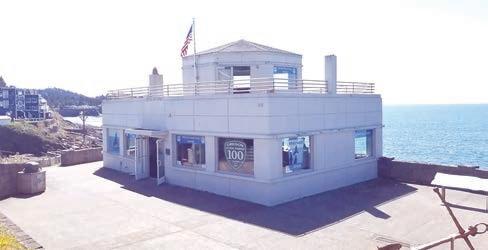
STAFF REPORT
The Oregon Parks and Recreation Department’s Whale Watching Senter and viewing area around the building in Depoe Bay has closed for repairs this summer, according
to the Oregon Parks and Recreation Department (OPRD).
“This has been an ongoing need for the building, and we’ve just recently been able to secure funding,” ODPR Park Manager Burke
Martin said. “We appreciate the community’s patience and support as we work to protect and preserve this unique coastal facility.”
The whale watching
Imagination on the Beach
Sand building contests at Lincoln City
JEREMY C. RUARK Lincoln County Leader
The Lincoln City Sandcastle Contest at Siletz Bay is a wondrous, fun-filled day celebrating one of Lincoln City’s best adventures— playing on the local beaches, according to organizers.
The public is encouraged to participate in the Sandcastle Contest, held at Siletz Bay in the Historic Taft District presented by Mo’s Restaurant Lincoln City. Head to SW 51st Street and watch the sand come to life with categories like mermaids, chowder heads, cruise ships, and more.
In a published report in the former Lincoln City News Guard, Alex Ward, the former President of the Bay Area Merchants Association said the sand building contests are a positive community connector.
“If the whole town embraces an event like this, or like the kite festival, it helps create a momentum that is a critical mass that really lifts up the whole




The Department of Veterans Affairs has awarded $488,500 in grants to 2026 Highly Rural Transportation Grant to support local Veterans with transportation needs.
The Highly Rural Transportation Grants (HRTG) program helps Veterans living in highly rural areas with free transportation to VA and VA-authorized health care facilities.

Please
“Transportation should never be the reason a Veteran misses needed care,” said Karla Azcuy.
See SAND, page B2
A sand witch at a previous Lincoln City sand building contest. (Photos by Jeremy C. Ruark)
Dog on the sand from the 2013 Lincoln City sand building contest. Cool off time at the 2014 Lincoln City sand
Fort Stevens State Park near Astoria is Oregon’s largest public campground. The 4,300-acre property has beach access, a freshwater lake, trails and the Peter Iredale shipwreck. (Courtesy photo from Oregon State Parks and Recreation Department)
This temporary closure will allow the contractors to complete essential roof replacement work. (Courtesy photo from the OPRD)
From Page B1
“These grants will help us reach Veterans in remote areas and make sure they can get to their appointments safely, reliably and without added stress.”
The HRTG program provides funding to Veteran Service Organizations and State Veterans Service Agencies that serve
GOLF
From Page B1
up for the tournament: https://www.newportboosterclub.org/blank-1
Registration closes on Friday, August 14, so be sure to reserve your spot before the deadline!
Every dollar raised through the Booster Bash directly supports
SAND
From Page B1
Ward said. “These events really illustrate a community working together toward a common goal.
It’s pretty awesome.”
The 2026 event registration begins on August 8 outside Mo’s Restaurant in Lincoln City. There will be prizes awarded to the best sand sculptures.
10 a.m. - 10:30 a.m.
- Registration
• 10:30 a.m. - 12:30 p.m.
- Castle Building
• 12:30 p.m. - 1 p.m. -
Judging and Prizes
counties with fewer than seven people per square mile. This year, VA awarded more than $6 1 million in grants through HRTG. The program reduces transportation barriers for rural Veterans so they can get essential medical care, including primary care, specialty appointments and mental health services. Since the HRTG program launched in 2014 VA has awarded more than $46 million to
the student-athletes of Newport High School by helping provide equipment, uniforms, training opportunities, and other resources that enhance their athletic experience.
If you know friends, family members, coworkers, or fellow golfers who would enjoy a great tournament while supporting a great cause, please forward this email and invite
Only sand, water, shells and other natural beach materials found on the beach that day can be used for construction. Forms can be used in the construction process but cannot support the final structure. Hand tools are allowed, but not power tools. This is an amateur competition—professional “sand artists” are disqualified from winning prizes.
PARKS
From Page B1
in a politically split district along the North Coast, framed the idea as a way to make enjoying public land more affordable, particularly for low-income Oregonians. His district is home to several state parks, including Cape Lookout, Fort Stevens and Bob Straub.
“The idea is that state parks are a public good, a place that Oregonians can go and enjoy without additional fees, if possible, especially the Oregonians who don’t have a lot of extra disposable income,” he told
The organizers said there will be pre-contest activities this year, including games, and more.
Art on the Beach & Sand Art Competition
Celebrate creativity on the Oregon Coast with a day of beachside art for all ages.
The public is invited to the Art on the Beach and Sand Art Competition from 9 a.m. to 11 a.m. Saturday,
the Capital Chronicle. State parks already face budget constraints
The Oregon Parks and Recreation Department oversees 250 state park properties across more than 113 000 acres, including 362 miles on the coast. It’s one of the country’s most popular state park systems, receiving the third most visitors for day-use out of any state park system, according to the agency. The agency mostly relies on lottery funds and user fees, including day-use parking fees of $10 for in-state residents and $12 for out-of-state visitors at many popular sites.
organizations in 15 states, U.S. territories and tribal lands. These grants help ensure that Veterans in remote communities can reach health care services despite long distances, limited public transportation and other geographic challenges.
Veterans in highly rural areas can visit www. va.gov/resources/transportation-to-va-health-appointments-in-highly-rural-areas/ to locate resources in their area.
them to join us. The more participants we have, the greater the impact we can make for Newport High School students.
Newport Booster Club organizers thanked supporters for their continue support.
“We truly appreciate your generosity and look forward to seeing you on the course,” the organizers stated in a release.
August 15, on the beach in front of Chinook Winds Casino Resort, at 1777 NW 44th Street in Lincoln City. The event is Cascade Head Biosphere Collaborative.
Watch professional artists and skilled volunteers create a spectacular giant sand art graphic, then enjoy a family-friendly sand art competition where teams transform the beach into works of art inspired by the coast and the Cascade Head Marine Reserve.
Whether you’re competing or simply watching, it’s a fun way to experience art, community, and the beauty of the beach together, according to organizers.
“Free parking would create a substantial gap in the agency’s budget that would have to be filled by a stable source of funding that can address current and future needs,” agency spokesperson Lauren Wirtis said in an email. “The Oregon Parks and Recreation Department is not aware of any such source.”
About half of the agency’s $393 4 million twoyear budget comes from lottery funds, a funding system voters passed in 1998 when they voted in favor of a ballot measure splitting 15% of state lottery proceeds between state parks, beaches and wildlife conservation efforts. A third of the agency’s budget relies on money generated through camping, day-use and RV registration fees. Federal funds make up the remainder of the budget.
Last summer, the agency faced a 14%
LINCOLN COUNTY SHERIFF’S OFFICE
While many of us welcome the warmer weather, we must remember that some of our loved ones may find themselves in an uncomfortable predicament. It could even result in their death.
Pets regularly accompany many people on trips and errands, which often leaves them alone in a vehicle. Pets should not be left unattended in a parked car. On warm days, and even cloudy days, the temperature in a car can rise to dangerous levels in minutes, even with the windows left open.
A brief stop at a store or another errand can quickly turn into 15 minutes or more before we know it. Leaving pets in a car for this time could be a mistake that takes their life. Leaving the windows cracked won’t cool the car enough to protect your beloved pet, even if they have water available.
Oregon was the 11th
REPAIRS
From Page B1
Center is located just off Highway 101 in Depoe Bay.
The postwar-era building was built in 1956 and listed in the National Register of Historic Places in 2012. This temporary closure will allow the contractors to complete essential roof replacement work. Construction will repair leaks from the promenade deck, replace the original roofing membrane and drains, according to the OPRD. Construction was to begin as early as Aug. 1
budget shortfall because of increasing costs, record visitation, and declining lottery funds. In response, it increased several of its fees, including day-use fees that only exist at the most visited parks.
It’s too soon to tell whether these changes have stabilized the budget, Wirtis said, but it’s the only option the agency has to address budget constraints.
Javadi doesn’t have a concrete proposal yet, but he said he doesn’t want to defund the agency either.
“Oregon’s state parks are underfunded, so I do not think we can simply eliminate parking fees without replacing that revenue,” he said.
He said he’s open to realigning the programs that receive lottery funds, using the transient lodging tax lawmakers recently increased to fund

state to pass a Good Samaritan Law, which allows anyone – not just law enforcement – to enter a vehicle (by force or otherwise) to remove an unattended domestic animal without fear of civil or criminal liability.
If you come upon a scenario where you believe an animal could perish, please contact our dispatch center at 541-2650777 before deciding to enter the vehicle. Be ready to convey your location, the vehicle description, and a description of you.
Our Animal Service Deputies will make every effort to respond quickly.
If you determine that
depending on the contractor’s schedule and mobilization plans. Because this is a roofing project on the Oregon coast, construction during the summer months will allow work crews to take advantage of typically drier weather. This timing helps reduce the risk of weather-related delays and protects both the structure and contractor safety, according to the OPRD.
The Whale Watching Center will remain open until construction officially begins. OPRD anticipates completing repairs by the end of October – well ahead of the annual gray whale migration in the winter.
state park operations or potentially increasing or adding day-use and camping fees for outof-state residents at all of Oregon’s state parks. Another option he said he’d consider is making state park access free during the week.
Past proposal looks to other states
Residents in at least a dozen states, including Montana, Idaho and Michigan, can buy an annual state parks pass at the time of registering a vehicle.
Oregon doesn’t have an option to buy a state parks pass while registering a car. Instead, it offers an annual day-use state parks pass for $60 for state residents and $75 for out-of-state residents for purchase on the agency’s website or in person at some parks.
Rep. Rob Nosse, D-Portland, introduced a bill in 2025 offering to eliminate day-use state park passes with an option for Oregonians to donate $19 to the park system. The bill didn’t receive a hearing and died in the committee process. In an interview, Nosse said the bill wasn’t a priority then as the Oregon Legislature grappled with an impending transportation budget crisis.

more immediate life-saving action is necessary, please ensure you do all of the following:
• Have a reasonable belief that the animal is in imminent danger
• Notify law enforcement or emergency services either before or soon after entering the vehicle
• Use only the minimum force necessary to enter the vehicle
• Stay with the animal until law enforcement, emergency services, or the owner or operator of the vehicle arrives. For more information and tips, visit www.lincolncountysheriff.net
“We acknowledge that this temporary closure may be inconvenient for visitors and the Depoe Bay community, and we appreciate everyone’s understanding as we complete these essential improvements,” Martin said. The turn out about a block north of the Whale Watching Center will remain open. There are still plenty of places along the Oregon Coast top see whales from Astoria to Brookings. Nearby parks such as Boiler Bay, Rocky Creek and Cape Foulweather also offer fantastic views for whale watching.
convenient way to purchase an annual pass,” Boyle said, adding that he’s planning to work on legislators in 2027 for a similar proposal.
Existing free options to visit Oregon State Parks More than 150 of Oregon’s 250 state parks are free to visit. Additionally, the agency last month launched a Library Pass Program, allowing families to borrow any of the 200 day-use parking permits handed out to 82 libraries statewide. Each participating library has at least four parking permits, while libraries closest to state parks have more passes. The agency also offers special access passes for free camping four nights per month and free parking year-round for foster families, veterans with disabilities and activeduty military on official leave.
Javadi said he is considering ways to expand free state park access to Oregonians who qualify for the Oregon Health Plan or the Supplemental Nutrition Assistance Program.




The goal of the bill wasn’t necessarily to make state parks free, but to support a more robust funding system for the agency as long as Oregon could maintain a certain threshold of participation, said Justin Boyle, a conservation advocate for Environment Oregon who worked on the bill.
“It is really just a more
https://oregoncapitalchronicle. com/2026/07/30/oregonlawmaker-says-hell-introduce-bill-to-make-stateparks-free-to-residents/ Oregon Capital Chronicle is part of States Newsroom, a network of news bureaus supported by grants and a coalition of donors as a 501c(3) public charity. Oregon Capital Chronicle maintains editorial independence. Contact Editor Lynne Terry for questions: info@oregoncapitalchronicle.com.
Hebes offer long-lasting color for Pacific Northwest gardens
KYM POKORNY Lincoln County Leader Guest Column
If you want to prolong color in your landscape from summer into fall, consider planting evergreen shrubs called Hebes for vivid flowers and striking foliage.
“Most Hebes flower in the summer, but others bloom in late fall,” said Neil Bell, horticulturist with the Oregon State University Extension Service. “Some have colorful foliage that lasts through autumn. They provide an interesting change from the usual asters and maples we customarily rely on for autumn interest.”
Native to New Zealand, Hebe (pronounced HEEbee) includes hundreds of cultivars, though relatively few are familiar to American gardeners.
“The plants may have acquired a reputation for lack of hardiness because
some of the most popular cultivars introduced here are not hardy in very cold winters,” Bell said. “However, many Hebes do well in the Pacific Northwest if grown in a sheltered spot.”
Large-leaved Hebes are more sensitive to cold and may be injured below 25 degrees, while small-leaved types tend to be hardier. Bell suggests placing large-leaved cultivars in sheltered sites or growing them in containers that can be moved under cover during hard freezes.
For showy fall flowers, Bell recommends:
• ‘Amy’ ‘Alicia Amherst’
• ‘Purple Picture’ (blooms in June and again in October–November)
• ‘Hobby’ (red flowers lasting into November or December during mild years)
• ‘Bowles Hybrid’ (lavender summer blooms and additional fall flowers;

hardier than most)
“Except for ‘Bowles Hybrid,’ which is hardier, all these hybrids are susceptible to cold,” Bell said. “Plant them against a sheltered wall or between other shrubs and
be prepared to give them cover if temperatures drop suddenly.”
Colorful small-leaved cultivars
Several hardy, smallleaved cultivars suitable for Western Oregon offer
unusual foliage:
• ‘Quicksilver’ — small silvery leaves
• ‘Boughton Dome’ — grayish foliage
• ‘James Stirling’ — ochre leaves with a conifer-like appearance
Some cultivars change color seasonally, taking on purplish or reddish tones in winter. Well-known examples include:
• ‘Caledonia’ — turns purple
• ‘Sapphire’ — bright red shoot tips in winter
Variegated options
Variegated cultivars are visually striking but tend to be large-leaved and therefore less cold-hardy. They include:
• Hebe speciosa
‘Variegata’
• ‘Tricolor’
‘Andersonii Variegata’
These require a protected location for winter survival.
Growing conditions
Hebes grow best with:
• At least partial sun
Well-drained soil
• Summer irrigation
Minimal pruning (a light annual shaping after bloom is sufficient)
Kym Pokorny writes for the Oregon State University Extension Service.
Longboard Classic returns to Pacific City
STAFF REPORT
Lincoln County Leader
The 27th Annual Cape Kiwanda Longboard Classic returns to Pacific City September 18–20 bringing together more than 240 surfers to compete in the Pacific Northwest’s premier longboard surf competition.
The event is hosted by Moment Surf Company and Pelican Brewing Company.
Longboarding surfing is a style of riding waves using a long surfboard, typically 9 feet or longer, characterized by stability, smooth gliding, and classic maneuvers like nose-riding. See more at https://xanadusurf.com/ about-longboard-surfing/
Known for combining competitive surfing with community impact, this year’s event marks the beginning of a new fundraising initiative focused on improving water rescue capabilities along the South Tillamook and
North Lincoln County Coast.
After successfully helping fund and build the Pacific City Skate Park over past years, event organizers are now directing proceeds toward equipment and training for water rescue personnel at Nestucca Rural Fire Protection District and North Lincoln Fire & Rescue. The effort aims to strengthen local rescue resources and improve safety for everyone who enjoys the ocean, including surfers, dory fishermen, beachgoers and visitors.
“Strong water rescue programs are vital in coastal communities,” said event announcer Tyler Cunningham. “Supporting the training and equipment needed for these teams is an investment in the safety of residents and visitors alike.”
The Cape Kiwanda Longboard Classic continues to attract an increasingly high level of

Longboarding surfing is a style of riding waves using a long surfboard, typically 9 feet or longer, characterized by stability, smooth gliding, and classic maneuvers like nose-riding. (Courtesy photo from Xanadu Surf & Yoga Retreat)
competition with surfers traveling both nationally and internationally to compete in the event. Competitors from the Pacific Northwest as well
as California, Hawaii and Canada are expected to participate across categories for all ages.
Despite its growth over the past 27 years, the
Cape Kiwanda Longboard Classic remains largely volunteer-run, relying on the dedication of community members, sponsors and local partners to make
the event possible. “For nearly three decades, the Classic has been about bringing people together around surfing and community,” said Jeff Mollencop, owner of Moment Surf Company.
“Each year it is incredible to see the community come out to support the surfers and this event.”
In keeping with the competition’s spirit starting after the 25th annual event a rotating set of artists from the local PNW surf community are commissioned for each year’s poster art until the 30th Annual event when longtime artist Todd Fisher is set to return. The poster art for the 27th Annual Cape Kiwanda Longboard Classic is by Pacific City local and longtime competitor of the event Taylor Blackman.
For more information about the event, registration, and fundraising efforts, visit https://capekiwandalongboardclassic. com.
View the Future is proud to announce its first annual fundraising event, Rooted & Rising: An Evening with Indigenous Leaders and Advocates, taking place from 4 p.m. to 8 p.m. Friday, September 12 at the Yachats Commons, The evening will bring together community members, conservation supporters, and Tribal leaders to celebrate the deep connection between Indigenous stewardship, land conservation, and the future of the Yachats area. The event will raise critical support for View the Future’s work to preserve the natural and cultural landscapes that define the Yachats community.
The keynote speaker will be Amy Bowers Cordalis, a Yurok attorney, fisherwoman, and nationally recognized advocate for Indigenous rights and Klamath River restoration.
Her leadership has been instrumental in one of the largest river restoration efforts in U.S. history and has inspired conservation efforts across the country.
Joining her as a featured speaker is Robert Kentta, Tribal Council member of the Confederated Tribes of Siletz Indians, respected cultural leader, and historian. Kentta has spent decades preserving and sharing the history, culture, and traditions of Indigenous peoples on the Oregon Coast.
“This evening is about more than fundraising,” said Gretchen Dubie, Executive Director of View the Future. “It is an opportunity to honor Indigenous leadership, celebrate the partnerships that make conservation possible, and inspire our community to invest in the future of the lands and stories that make Yachats so special.”
Guests will enjoy:
• Inspiring presentations from nationally respected Indigenous leaders
• Live music by pianist Vicki Brabham, joined by vocalist Sage Parks
Complimentary small bites and hors d’oeuvres by William Webster
• Silent and live auctions
• Exciting raffle prizes
An evening of community, storytelling, and conservation
Proceeds from Rooted & Rising will directly support View the Future’s mission to preserve, protect, and enhance the natural environment through collaborative conservation, education, and cultural stewardship.
Tickets are $75 per person.
For tickets and additional information, visit https://www.viewthefuture.org/upcoming-events
Event Details
• Rooted & Rising:
An Evening with Indigenous Leaders and Advocates
• Date: Saturday, September 12 2026
• Time: 4–8 p.m.
• Location: Yachats Commons, 441 Hwy 101, Yachats, Oregon
About View the Future
View the Future is a nonprofit land trust dedicated to preserving, protecting, and enhancing the natural environment
through collaborative actions that support scientific, educational, recreational, cultural, and economic goals for the benefit of the Yachats
community and future generations. Since 2004, the organization has worked alongside community members, Tribal partners, conservation
organizations, and public agencies to protect the landscapes, watersheds, wildlife habitat, and cultural heritage that define the Yachats area.

Hebe ‘La Seduisant’ is not cold hardy in most areas of Oregon but is great for pots that can be protected. (Courtey photo from Neil Bell)

vary by dealer. (Offer ends 12/27/26.) Call 1-855-341-5268. No more cleaning out gutters. Guaranteed! LeafFilter is backed by a no-clog guarantee and lifetime transferrable warranty. Call today 1-855-536-8838 to schedule a FREE inspection and no obligation estimate. Get 15% off your entire order. Plus, Military & Seniors get an additional 10% off. Limited time only. Restrictions apply, see representative for warranty and offer details. Portable Oxygen Concentrator May Be Covered by Medicare! Reclaim independence and mobility with the compact design and long-lasting battery of Inogen One. Free information kit! Call 855839-0752. Prepare for power outages today with a Generac Home Standby Generator. Act now to receive a FREE 5-Year warranty with qualifying purchase. Call 1-877-557-1912 today to schedule a free quote. It’s not just a generator. It’s a power move. The bathroom of your dreams in as little as 1 day. Limited Time Offer - $1000 off or No Payments and No Interest for 18 months for customers who qualify. BCI Bath & Shower. Many options available. Quality materials & professional installation. Senior & Military Discounts Available. Call Today! 1-844-847-9778.
We buy 8,000 cars a week. Sell your old, busted or junk car with no hoops, haggles or headaches. Sell your car to Peddle. Easy three step process. Instant offer. Free pickup. Fast payment. Call 1-855-980-4382. YMT Vacations. Over 50 guided tours available. Affordable, social and stress-free travel designed for mature travelers. Our tours include accommodations, transportation, baggage handling, sightseeing, entrance fees, a professional Tour Director and select meals. For a limited time SAVE $250 on all tours. Call YMT today. 1-866-335-3689.
610
4-WHEEL DRIVE 1993 TOYOTA 4 RUNNER
3.0 V6 AT. Runs but needs work (project), nothing major. The following parts are newly replaced: Fuel Pump, Distributor, Heads, Throttle Position Sensor, Fuel Pressure Regulator, Timing Belt & Tensioners, Clutch Fan & Fan Blade. $4500.00. In Tillamook. 971-977-9350
800 RENTALS HOUSES AND APARTMENTS FOR RENT. 541-265-2400, M-F/10-4. Assurance-realtor.com
902 HOMES FOR SALE ADVANTAGE REAL ESTATE Find all listed MLS property by All Offices on our Website! 541265-2200 AdvantageRealEstate.com
999 PUBLIC NOTICES LCL26-383 ABANDONED PROPERTY OF DARLENE VAN VALIN AND ALL OTHERS. 1971 FLEETWOOD, Serial #S3396, Home ID #182962. The mobile home is located at 6310 N. Hwy 101, #33, Otis, OR 97368, in Fircrest Mobile Estates. This will be a private sale with a minimum bid of $6,500.00. Bids accepted until August 19th, 2026. Send/submit bids to 18150 SW Boones Ferry Road, Portland, OR 97224, Attn: Audra. Please call Michelle at: 503-244-2300 ext. 353 for an appointment to see home. 8/5/26 8/12/26
LCL26-382 NOTICE OF RECEIPT OF BALLOT TITLE Notice is hereby given that a ballot title for a measure referred by the City of Newport has been filed with the City Elections Officer on July 20, 2026. The ballot title caption is “Bonds to repair critical facilities; wastewater treatment, protect drinking water.” A copy of the ballot title is available from the City’s Elections Officer. An elector may file a petition for review of this ballot title in the Lincoln County Circuit Court no later than 5:00 pm August 14, 2026 under ORS Section 250.296. 8/5/26 LCL26-381 CITY OF LINCOLN CITY NOTICE OF RECEIPT OF BALLOT TITLE NOTICE
IS HEREBY GIVEN that the Lincoln City Council adopted Resolution No. 2026-16 on July 27, 2026, referring a proposed revised Lincoln City Charter to the qualified electors of the City for the November 3, 2026, General Election. Pursuant to ORS 250.275, the official ballot title has been filed with the City Elections Officer. CAPTION: ADOPT REVISED LINCOLN CITY CHARTER Copies of Resolution No. 2026-16, the proposed Charter, the official ballot title, and the explanatory statement are available for public inspection at the Office of the City Recorder, Lincoln City Hall, 801 SW Highway 101, Lincoln City, Oregon 97367, during regular business hours. Any elector of the City of Lincoln City may file a petition for review of the ballot title with the Lincoln County Circuit Court no later than 5:00 p.m. on the deadline established by ORS 250.296. DATED this 27th day of July, 2026. Jamie Young City Recorder / City Elections Office 8/5/26 LCL26-380 IN THE CIRCUIT COURT OF THE STATE OF OREGON FOR THE COUNTY OF LINCOLN Probate Department Case No. 26PB05569 NOTICE TO INTERESTED PERSONS In the Matter of the Estate of COLE MCFARLAND, JR., Deceased. NOTICE IS HEREBY GIVEN that Morrison DeSoto Webb has been appointed Personal Representative of the above Estate. All persons having claims against the Estate are required to present them, with proper vouchers, to the undersigned attorney for the Personal Representative at 6400 SE Lake Road, Suite 440, Portland, OR 97222, within four months after the date of publication of this notice, as stated below, or the claims may be barred. All persons whose rights may be affected by the proceedings in the Estate may obtain additional information from the records of the Court, the Personal Representative, or the attorney for the Personal Representative. Dated and first published on August 5, 2026. Morrison DeSoto Webb Personal Representative Theressa Hollis, OSB #982626 Fitzwater Law Of Attorneys for Personal Representative 6400 SE Lake Road, Suite 440 Portland, OR 97222 (503) 786-8191 TheresaH@fitzwaterlaw.com 8/5/26 LCL26-379 TS NO. OR08000072-25-1 APN R366335 | 06-10-34CB-00800 TO NO DEF671738 TRUSTEE’S NOTICE OF SALE Reference is made to that certain Trust Deed made by, WALTER R. RICKS AND DIXIE A. RICKS as Grantor to U.S. BANK TRUST COMPANY, NATIONAL ASSOCIATION as Trustee, in favor of U.S. BANK, NATIONAL ASSOCIATION as Beneficiary dated as of May 15, 2006 and recorded on June 23, 2006 as Instrument No. 200609706 of official records in the Office of the Recorder of Lincoln County, Oregon to-wit: APN: R366335 06-10-34-CB-00800 BEGINNING AT THE QUARTER CORNER BETWEEN SECTIONS
33 AND 34, TOWNSHIP
6 SOUTH, RANGE 10 WEST, WILLAMETTE MERIDIAN, IN LINCOLN COUNTY, OREGON; THENCE SOUTH 719.7 FEET; THENCE EAST 893.9 FEET TO THE NORTHEAST CORNER OF THAT CERTAIN TRACT OF LAND CONVEYED TO A.L. MCLANE AND ANN MCLANE, HUSBAND AND WIFE, BY DEED RECORDED OCTOBER 5, 1965, IN BOOK 260, PAGE 64, DEED RECORDS OF LINCOLN COUNTY, OREGON, SAID NORTHEAST CORNER BEING THE TRUE POINT OF BEGINNING OF THE TRACT HEREIN DESCRIBED; THENCE EAST 100.0 FEET; THENCE SOUTH 921.04 FEET, MORE OR LESS, TO THE NORTH LINE OF MARKET ROAD NO. 2; THENCE WESTERLY ALONG THE NORTH LINE OF SAID ROAD A DISTANCE OF 100.0 FEET, MORE OR LESS, TO THE SOUTHEAST CORNER OF THE SAID MCLANE TRACT; THENCE NORTH ALONG THE EAST LINE OF SAID MCLANE TRACT A DISTANCE OF 938.34 FEET TO THE PLACE OF BEGINNING. Commonly known as: 2691 N NORTH BANK RD, OTIS, OR 97368 Both the Beneficiary, U.S. Bank National Association, and the Trustee, Nathan





















Newport to Newport: Group prepped for cross-country bike ride
WILL LOHRE Lincoln County Leader
Three friends are about to set off on the journey of a lifetime, launching a coast-to-coast bike ride from Newport, OR, to Newport, RI, in fulfillment of a long-held dream. Illinois resident Matt Hager has lived and traveled many places in the United States, but has long aspired to undertake the challenge of a continent-crossing bike ride.
“The inspiration is something that I’ve been thinking about since I was about 12 years old. I had a friend back at that time, and both of us had seen the Tour de France once or twice, and heard about some kind of cross-country bike ride that was going on, and thought that might be something that’d be cool to do someday,” Hager said. “For whatever reason, that seed that was planted when I was like 12 years old just never came about until recently.”
Hager’s youngest daughter is preparing to start graduate school in Corvallis, and with her
heading out to Oregon, he couldn’t resist following up on his dream trip. He decided he wanted to drive out to Oregon with his daughter, and return home by bike, jump-starting his pedal-propelled odyssey.
Rather than start from Corvallis, Hager elected to begin his journey in Newport, ensuring that the bike will get baptized in the Pacific ahead of the 3,730-mile traverse to Newport, Rhode Island. From there, the route will take them northeast into Washington, Idaho, and Montana. They’ll continue through North Dakota into Minnesota, and take some rest once they reach Batavia, a reset at home base.
“So that’s kind of the first two-thirds of the journey. That’ll be about 40 days or so getting back here,” Hager said. “And then, from [Illinois] to the East Coast is about another 20 days.”
But Hager won’t just be making the trip alone. Hager is biking with longtime friends Geeto Reilly and Mark Lecy. The three met in college and have stayed in touch since their university
days. All three are excited to get on the roads and see for themselves what the challenge of the ride will be, as well as seeing the country up close and personal. While Hager, 58, and Reilly, 60, are retired, Lecy, 58, is still working. Ahead of the trip, Lecy is still planning to work remotely on the road, though how that’s supposed to work with so much time in the saddle is not something Hager is going to worry about.
For Hager, the largest concerns come relating to more practical needs and safety on the road. The group will be spending time with friends at various stops on the way, like in Walla Walla, Minneapolis, and Bismarck, ND, but they’ll also be doing a mix of camping and hotel/motel stays. With some of the areas they are traveling through being less populous, Hager and his group are making sure to provision wisely. With sometimes more than 100 miles between towns, the group will need to plan their stops proactively. Especially considering the distances they’ll be cycling.
“On a hot day, I go through about five liters of water over 60 miles, and most of our days are gonna be like 65 miles or more. And if this heat kind of continues, then we better figure out where along the way we’re gonna make sure we can stock up for water and have water for the day that we’re in, as well as waking up with water the next morning to start our journey if we’re in the middle of nowhere,” Hager said. “And then just making sure that we’re carrying enough food along with us, in case we have to go for long stretches, but not carrying, you know, a 20-pound grocery sack because the weight just adds more work.”
Also important to note is that Hager is a type 1 diabetic, which Hager described as an “extra challenge, if it wasn’t hard enough already.”
While it requires a little bit more planning, Hager said that it’s not a barrier that will keep him from chasing after his goals.
“I’ve done other things, and I guess some of this is just to prove to people that you can be a type 1
diabetic and still have a completely normal life and do all the challenging things that everybody else can do,” Hager said.
“You just have to think a little bit more wisely and strategically about it.”
No stranger to long trips in the elements, Hager is excited to get the trip on the road. In scale, this trip is similar to a kayak trip from the source of the Mississippi to New Orleans. That trip was 2 100 miles over about 75 days. Hager said provisioning for that excursion was a challenge that has him feeling confident this time around.
For this upcoming journey, Hager and the crew will start in Oregon, and it’s his third time visiting the state. He saw some of the state visiting it before his daughter decided on grad school in the Pacific Northwest, and he described it as “beautiful.” He and his travel companions will be staying at the Elizabeth Oceanfront Suites in Newport on Aug. 6 ahead of their first leg, which will start on the morning of Aug. 7
Hager and his friends
will make the entirety of their journey on standard bicycles, not E-bikes in sight. For this crew, the journey is as much about pushing through adversity and meeting the challenge as it is about enjoying a nice view.
“All pedal power,” Hager said. “If it wasn’t a challenge, I would not be so interested in it. If it’s just a sightseeing trip, then well, why don’t I just do that from the comfort of the car? So it’s not about a sightseeing, luxury tour. It’s about pushing yourself mentally and physically and seeing what you become as a result of that.”
If people are curious about how the journey progresses, they can follow Hager and his companions at pedalingpilgrim.blog. He will be posting daily updates about how their travels are unfolding, and he wants to let other people “share in the journey” as much as possible.
Keep an eye out for him, Lecy, and Reilly in Newport on Aug. 7 they’ll be making the first strides of their more than 3 000 mile trek that day.
Researchers look for clues about disappearance of old, female rockfish
ALEX BAUMHARDT
Oregon Capital Chronicle
Off the coasts of California, Oregon, Washington, Canada and Alaska, three species of female rockfish have largely disappeared in the last 40 years.
Oregon Department of Fish and Wildlife scientists hope to learn why when they board an Oregon State University trawler Aug. 1 for two weeks — including a twoday journey westward across 322 miles of ocean — to the Cobb Seamount and the edge of the North Pacific Gyre to search for the old females.
The seamount is an inactive underwater volcano that has created a solid ocean shelf where marine ecosystems thrive, and the gyre is one of Earth’s five large, rotating ocean currents. It spans from North America to Asia and stops at the equator, where the currents of the South Pacific Gyre pick up.
Some records from federal scientists and fishing crews in the 1960s detail sightings of larger, perhaps old, female black, canary and yellowtail rockfish that have largely today disappeared from Oregon’s Coast.
They are three of 86 species of rockfish found in Oregon, and both male
and female black and yellowtails can live up to 60 years, while canary rockfish can live even a decade longer.
But commercial and recreational fishing crews and fisheries managers up and down the West Coast of the U.S. and Canada for the last few decades have caught very few females over 30 years old.
Most of the female population begins to decline after 12 years, leaving almost exclusively males, explained Leif Rasmuson, who leads the rockfish research at ODFW’s Marine Fisheries Research Program.
For the department, knowing whether the old females exist, and whether they still reproduce, is helpful for managing fisheries and catch limits to balance ocean fish stocks. The rockfish are sexually mature at 6 years old, so the disappearance of the elder females off the Coast has not yet been detrimental to stocks managed by the state.
But Rasmuson said the research is also about alleviating concerns over unanswered, “disconcerting” questions about the future of the species and whether they are dying of causes set off by a toppling domino wall of human effects. If they find the older
females, he and the crew will study whether they are genetically related to nearshore populations of rockfish, and whether their diet differs from other populations and will tag and release some to learn about any migration patterns.
Hypotheses
Among the lesser possible explanations, according to Rasmuson, is that the older females are out in the ocean, clustered in spots along the West Coast from California to Alaska, but just in places that all researchers, commercial and recreational fishing crews and fisheries managers have just completely overlooked for the last four decades.
“That seems highly improbable to me,” he said. “Fishermen are really good at catching fish, and I just struggle to envision a way where females get this magical ability to avoid every type of fishing gear ever known to man on the entire West Coast.”
Another hypothesis is that fishing crews are catching and killing more young black, canary and yellowtail female rockfish than males, keeping the females from growing old. But, Rasmuson said, only those three rockfish species lack evidence of older females. The other 83 species of rockfish that
live off the Oregon Coast don’t have the same problem, indicating fishing is not cutting into the overall ratio of females in the overwhelming majority of species.
Another option is that aging females are swimming very far north or south somewhere.
Researchers in Alaska have tagged some females that have gone as far as the Bering Sea, but they weren’t very old when they were found there, Rasmuson explained.
Still another possibility is that the females swim from shore and go out into the middle of the North Pacific Gyre as they age. He said that articles from the 1960s and later research from the National Oceanic and Atmospheric Administration detail black rockfish in the gyre that were larger than most of their species, indicating perhaps advanced age.
If it is the case that the females go out to age in the gyre, it opens up even more questions for Rasmuson and the other researchers.
“The thing is, if it’s just old females that go out into the middle of the gyre and there aren’t a bunch of males, what does that mean? Is it just like a retirement home for old females?” he asked. “It’s hard to wrap your
mind around. Why is this evolutionarily stable?
What’s the point? Is it:
‘Hey, we just go out there and hang out for the last 40 years of our lives?’”
To him, the most probable hypothesis is that the females are dying at younger ages of some sort of natural cause, which could still be human-influenced, such as the loss during the last century of an important food source they need.
Dicey international waters
It was not easy to get permission to go to the seamount to catch fish for research, according to Rasmuson. It’s located in international waters and regulated by an international intergovernmental group called the North Pacific Fisheries Commission that includes representatives from the United States, Russia, Korea, Japan, China and Canada, among others.
In those waters there is effectively a moratorium on commercial fishing, and growing international skepticism of the motivations of the U.S. government led other member nations to scrutinize the research and researchers more heavily, Rasmuson said.
Some commission officials shared concerns about the research boat possibly scouting deep
sea mining areas, and representatives from Japan and Korea threatened to come aboard the ship to ensure the researchers are not doing any illegal fishing, he explained. When he proposed the team be allowed to catch and take with them 50 fish, commission officials were shocked, he said, believing it was a proposal for 50 tons of fish.
He said representatives from the U.S. did not help to make the process smoother, but the Canadian delegation stepped in to vouch for the researchers.
“The United States kind of dropped the ball. We’ve just had to lean on Canada,” he said. “It’s still been an ongoing adventure on the policy side.”
https://oregoncapitalchronicle.com/2026/07/30/ oregon-researchers-journey-into-pacific-for-clues-about-disappearance-of-old-female-rockfish/ Oregon Capital Chronicle is part of States Newsroom, a network of news bureaus supported by grants and a coalition of donors as a 501c(3) public charity. Oregon Capital Chronicle maintains editorial independence. Contact Editor Lynne Terry for questions: info@oregoncapitalchronicle.com.
Matt Hager is no stranger to long trips, this one will see him cross the United States. (Courtesy photos from the Pedaling Pilgrim blog) Hager, left, and his traveling companions, Geeto Reilly and Lecy.