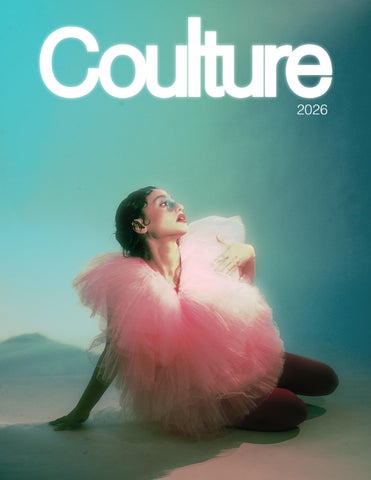
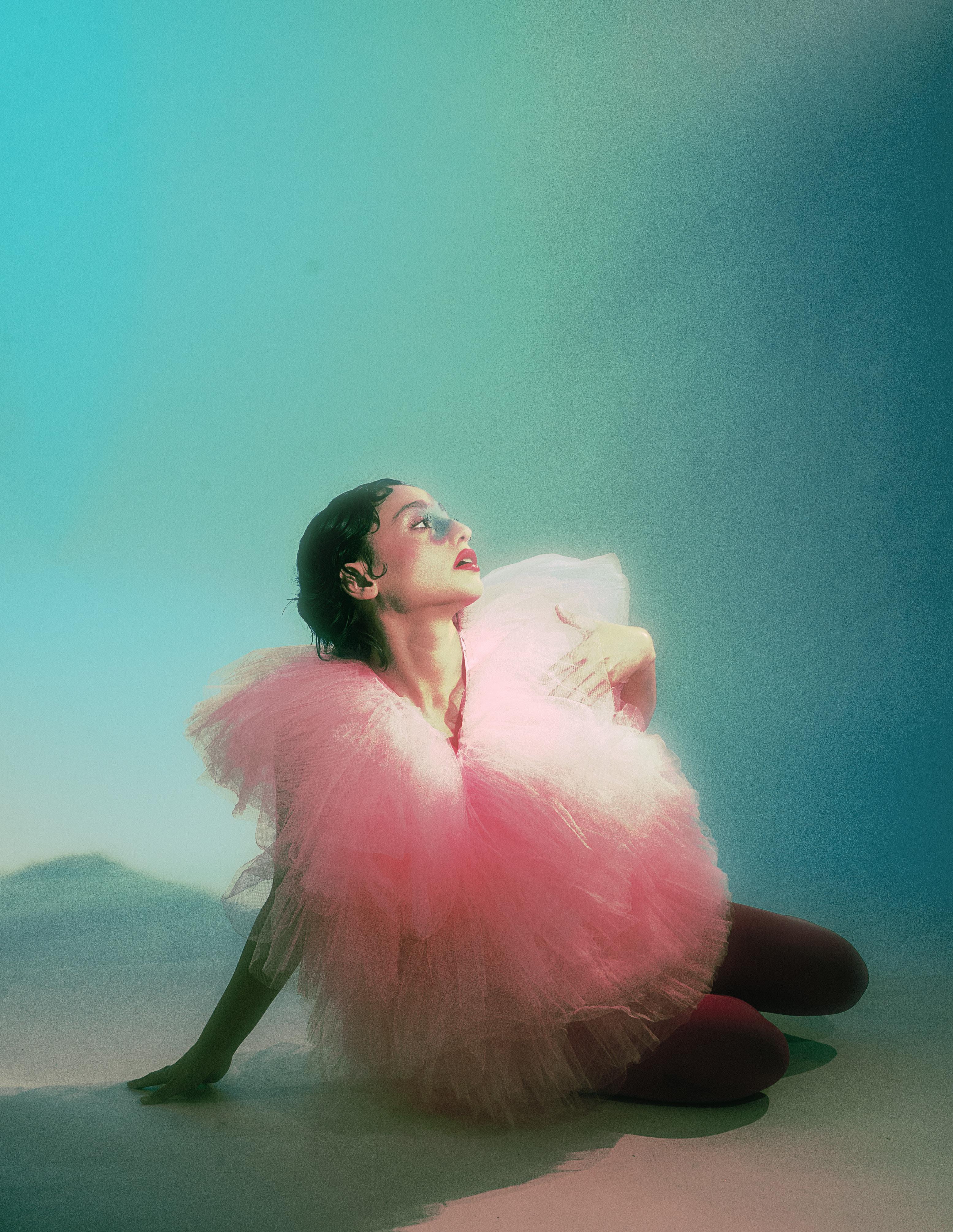
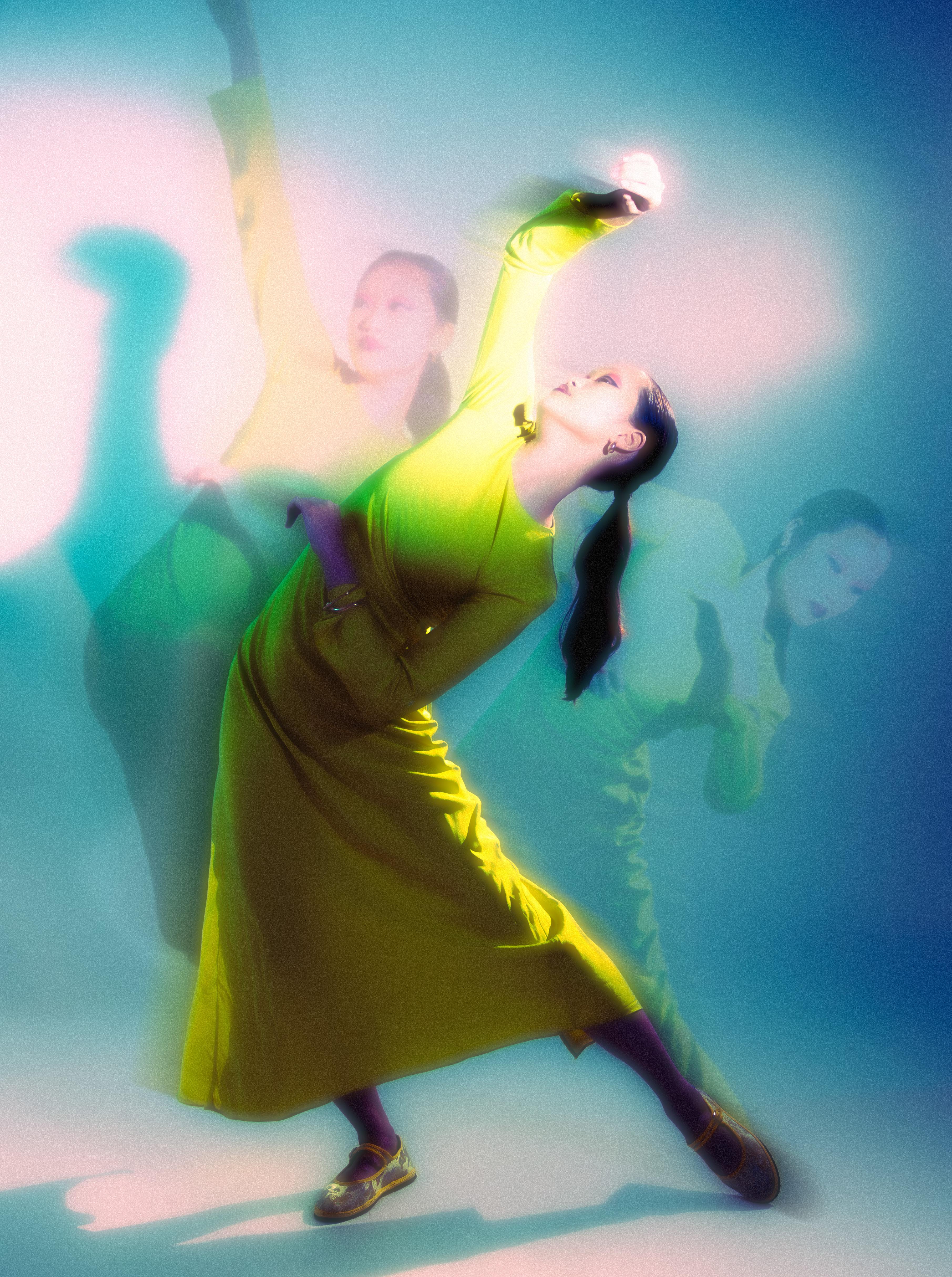
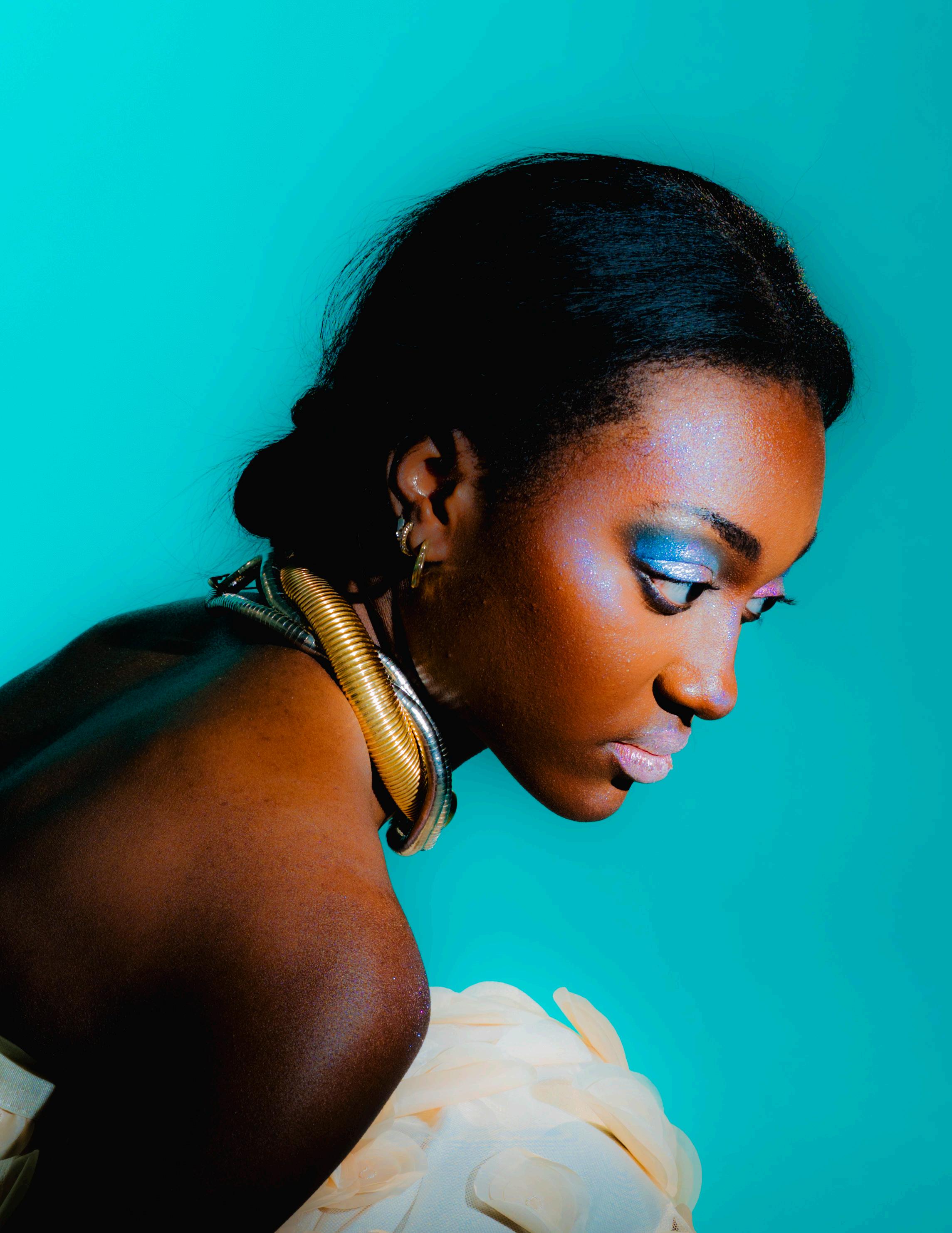
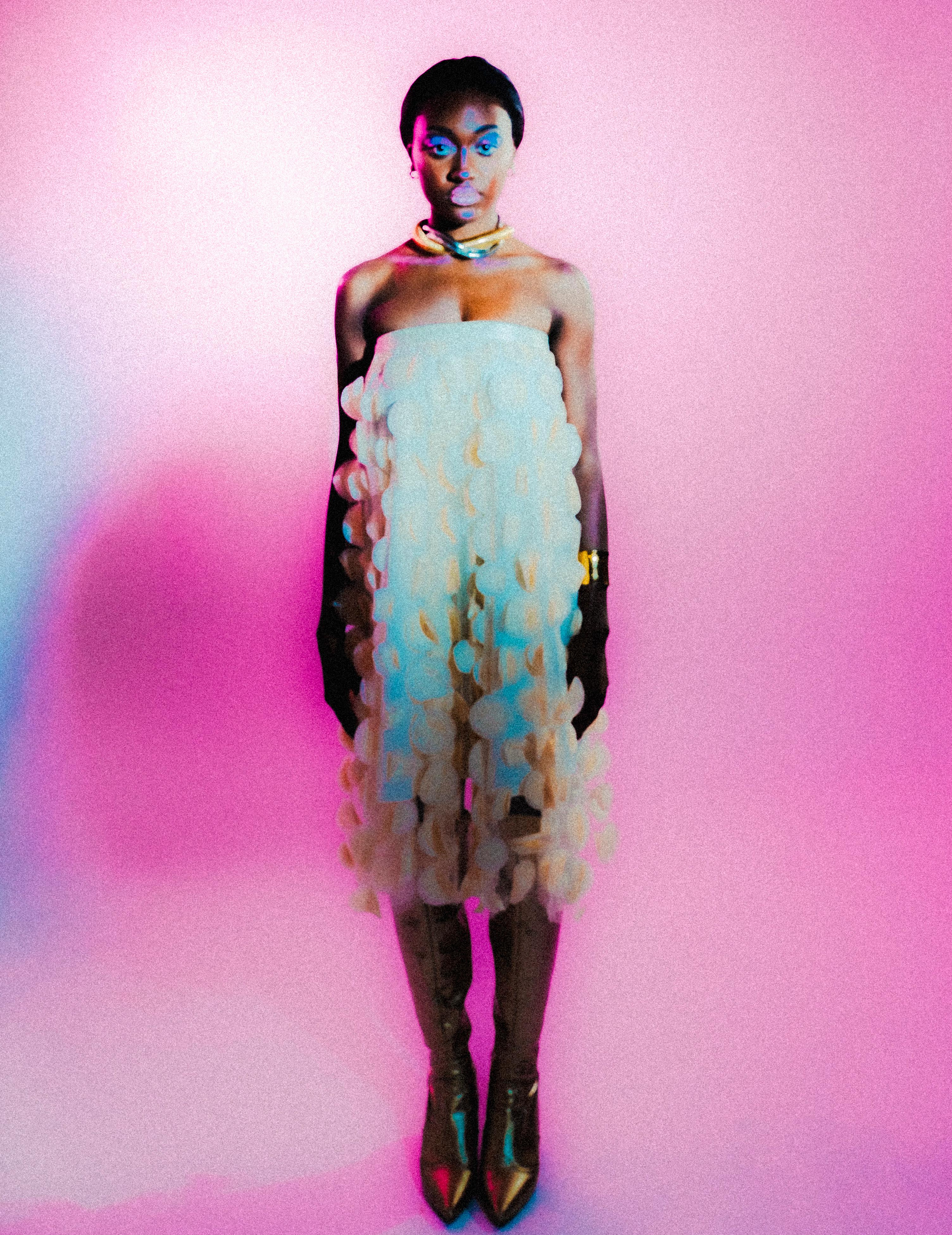
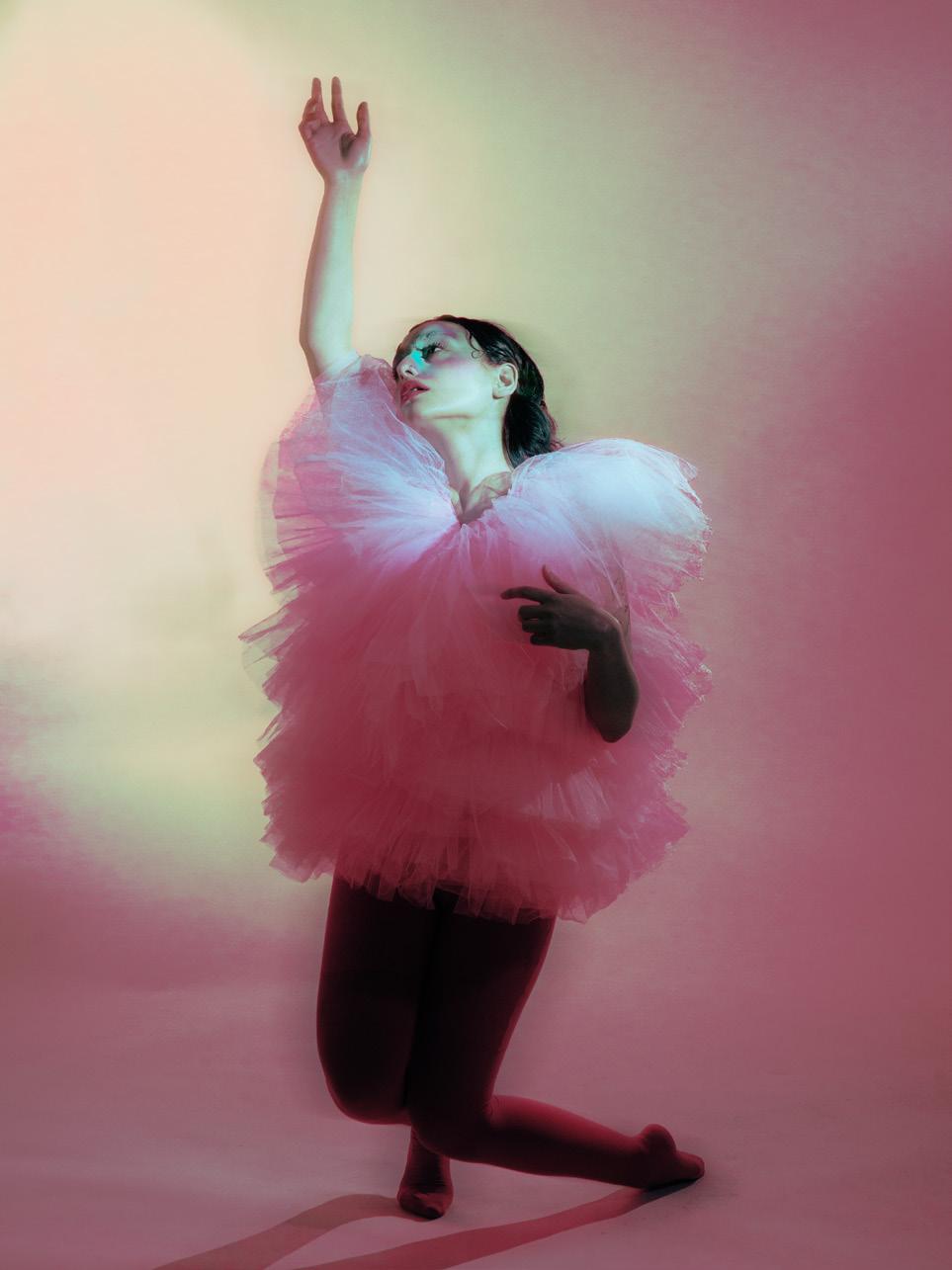
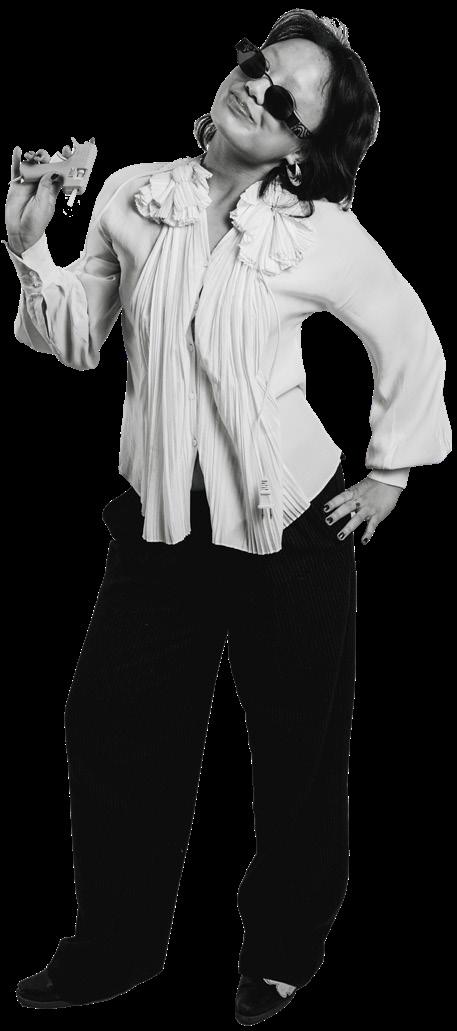
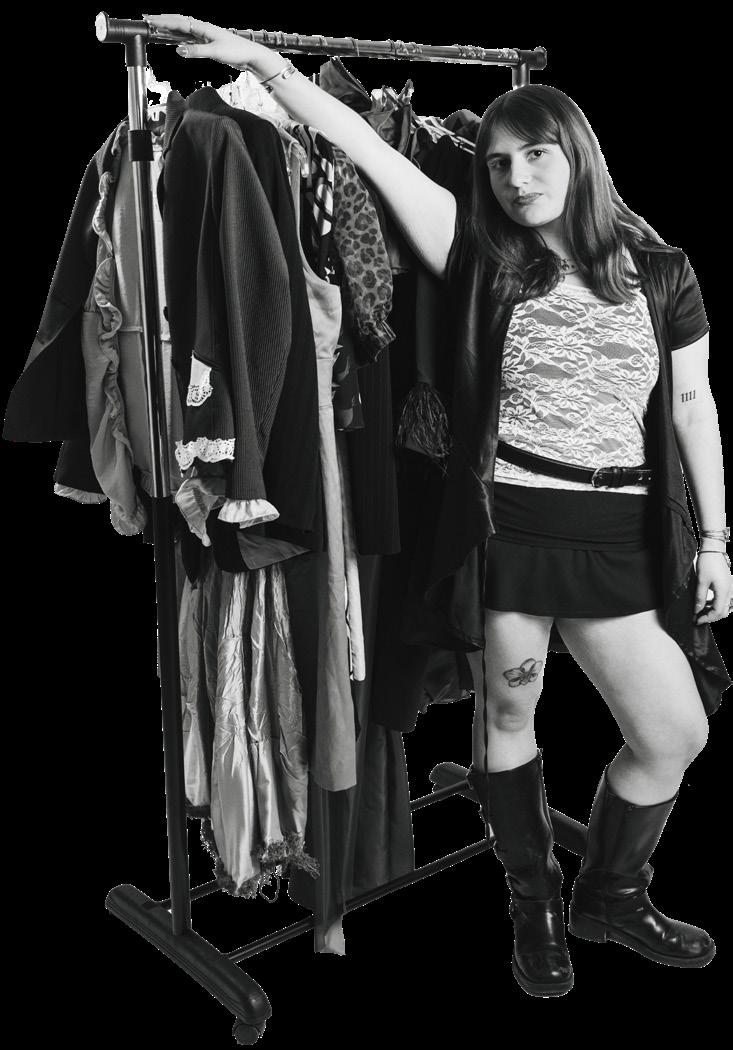
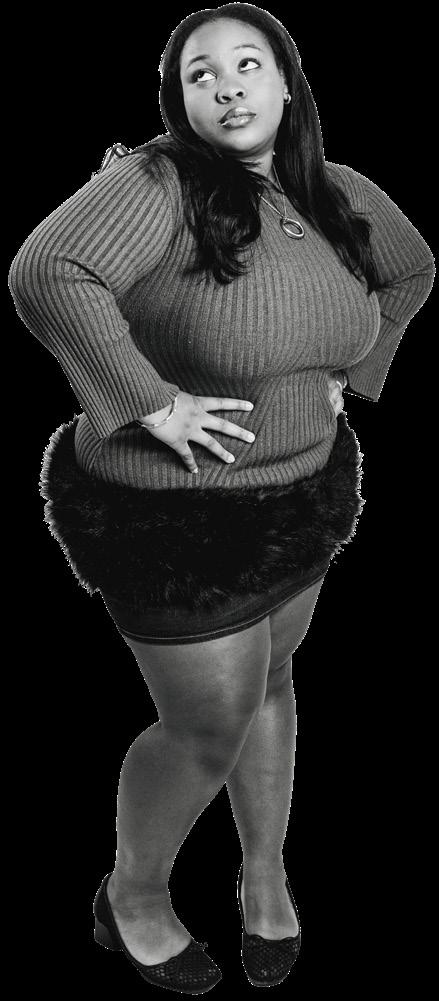
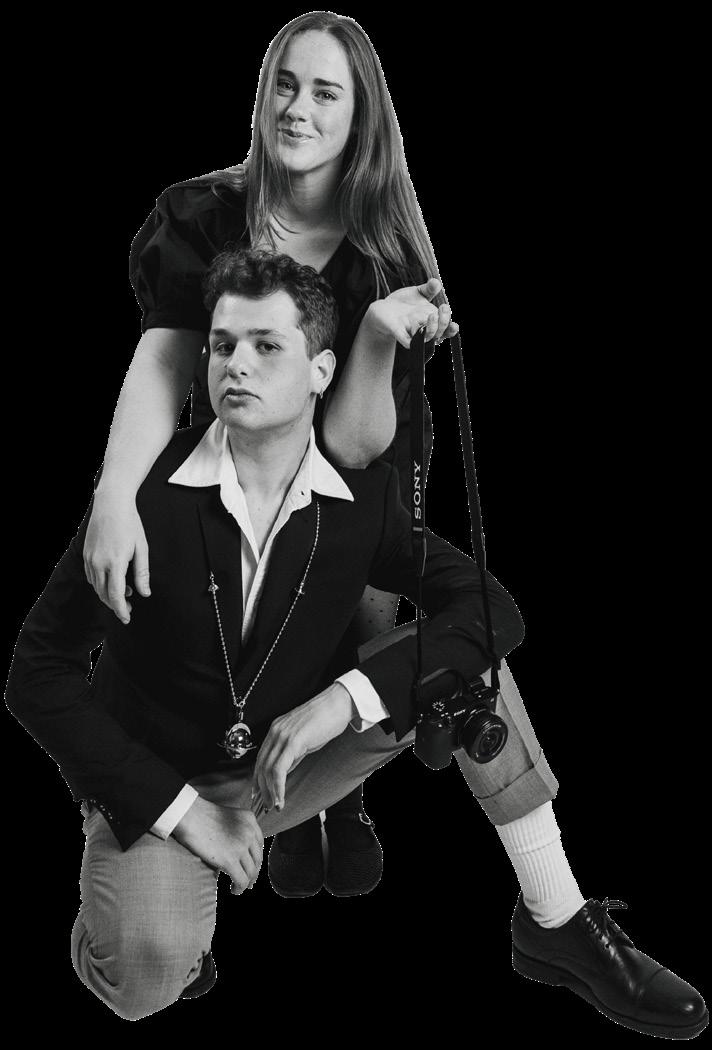
There is something inherently and profoundly human about magazines. They are an art form, a beautiful convergence of photography, writing, storytelling and design. In a society beset by over-consumption, one that is increasingly and hopelessly digitized, a magazine’s permanence offers something slow, long-lasting and, in turn, invigorating. They are a reminder of the power of art-making.
W“THERE
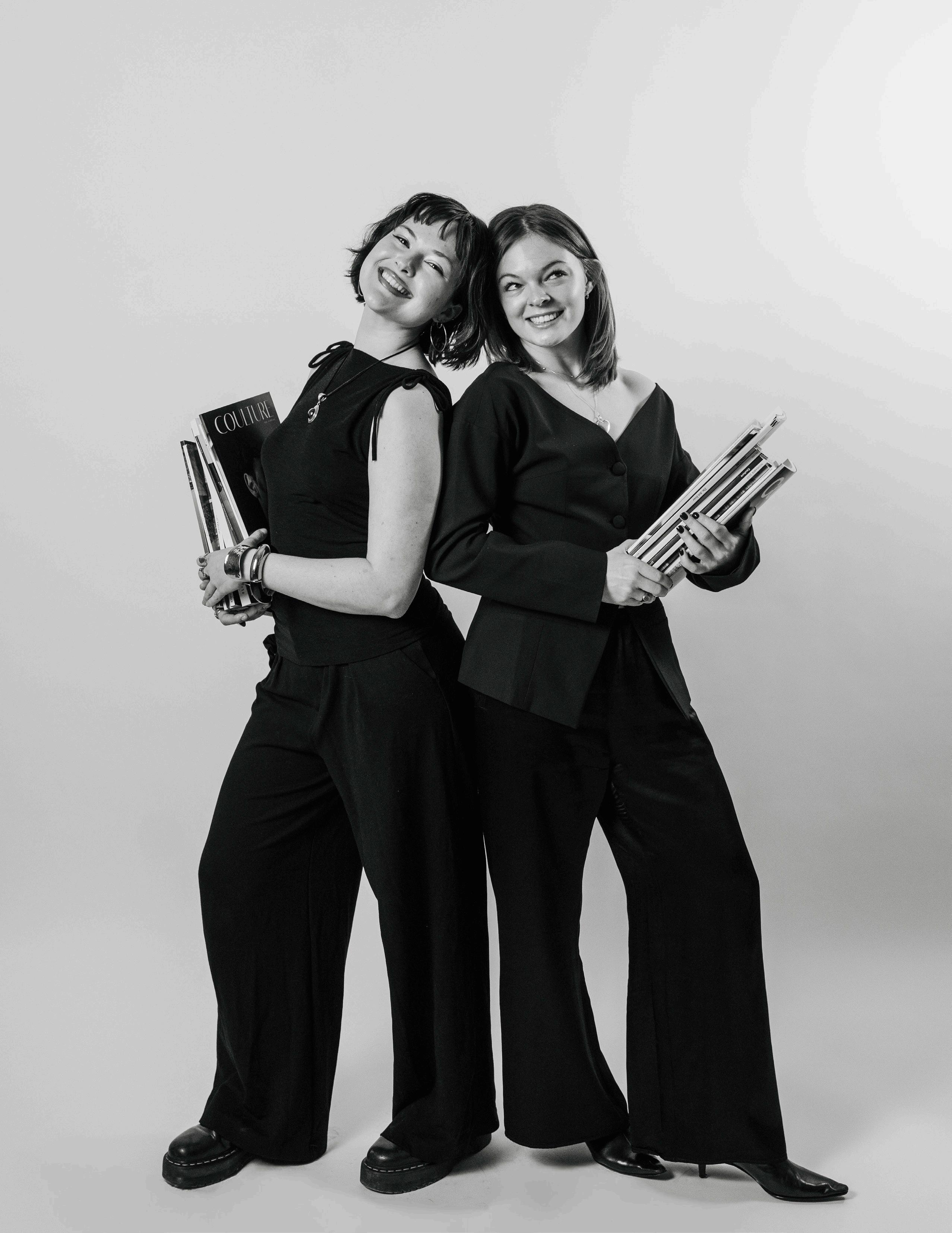
At the beginning of this year, Savannah and I immediately connected over a shared appreciation for print media. This led to countless conversations about the indisputable rise of –and encouragement of – artificial intelligence in the creative and fashion industries.
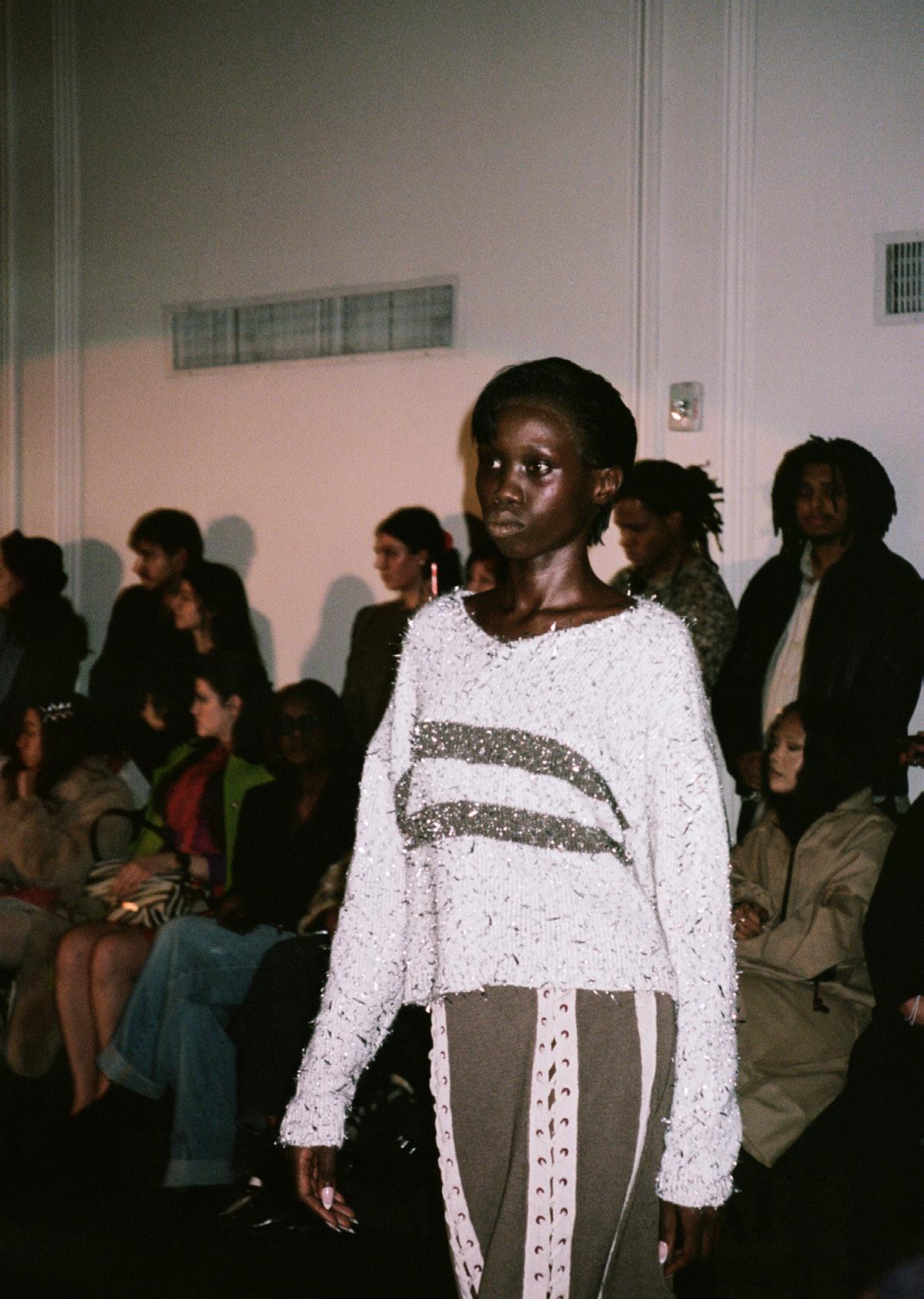
Inherence explores the undeniable and intrinsic humanness of art – something that time and technology will never replace. From explorations of themes like identity and color, to shooting editorial on film, to using real, tangible materials to build sets, we wanted the human experience to feel evident on every page.
This issue is an invitation to create. A reminder that humans were meant to create art, and that art is a way of searching for meaning.
As I conclude my time at Coulture, I feel an immense amount of gratitude for the ways in which this publication has allowed me to do exactly that. Not only has it allowed me to find meaning in this place and within myself, but it has surrounded me with an incredible community of unique individuals, bound by a shared passion for telling stories and creating worlds.
I hope that this issue inspires you to use your imagination, to make something tangible and to never acquiesce.
Vive la mode,
ELIZABETH COMER EDITOR IN CHIEF
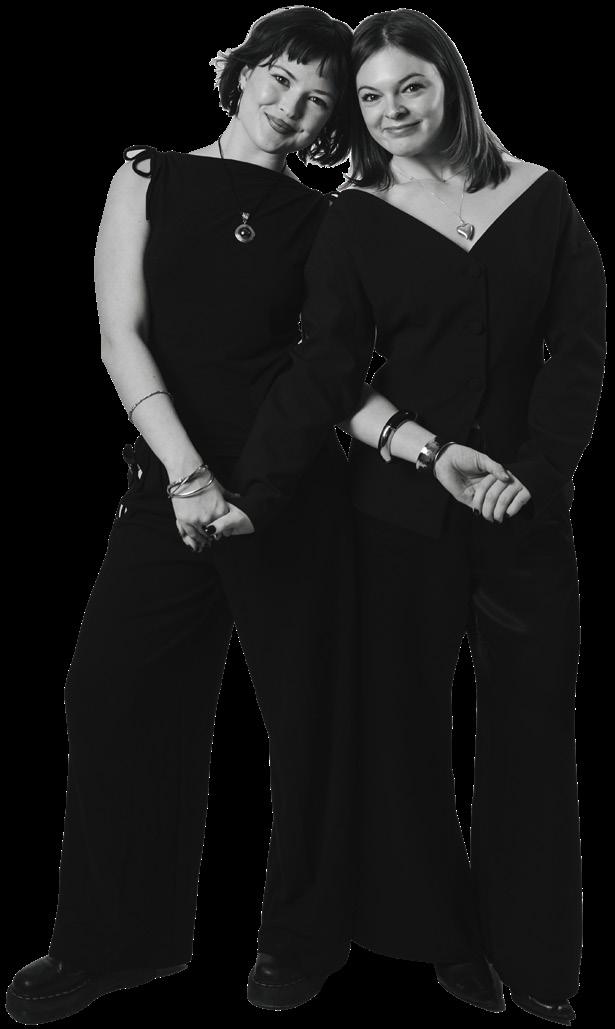
hile creating Issue 18: Inherence, I read “I Used to be Charming” by Eve Babitz. Early on, Babitz tangents on creating magazines with her friend Francis Coppola, saying, “Magazines are the most superior pastime of civilized man ... there’s no creative endeavor more fun than magazines.” My years with Coulture, and subsequently Elizabeth, have been some of the most rewarding and fulfilling of my life. Not only was I engaging with a medium I have been consuming since I was little, but I was constantly creating with someone who has become a dear friend. Throughout this time, we have had many conversations about the art of creation and how beautiful we find print media to be – how essential it is to the core of humankind.
The core of Inherence is a celebration of the evolution of art and finding the beauty in the details of life. Humans began by painting on cave walls, and now we are able to make beautiful art to share with people across the world. Art’s inherence in the human condition will never be erased, no matter the ebb and flow that changing societies bring. Working on this installment let me reconnect with what I am inspired by most: the niche, the nostalgic and the evocative. With this edition of Coulture, 11 years after its conception, I hope to have pushed the publication into a new era, pushing on an old boundary and reaching new creative heights.
From street style to the surreal, we urged ourselves to grow and deliver the best, most representative works to capture the vibrant, bustling energy of Coulture. Even in a world that relies so heavily upon art and creativity, we often don’t stop to properly admire the beauty and art in the everyday, so let Inherence be the time to pause and take it all in.
Vive la mode,
SAVANNAH MATTHEWS ASSOCIATE EDITOR IN CHIEF
IS NO CREATIVE ENDEAVOR MORE FUN THAN MAGAZINES.” - EVE BABITZ
Fashion & Beauty
Bou b
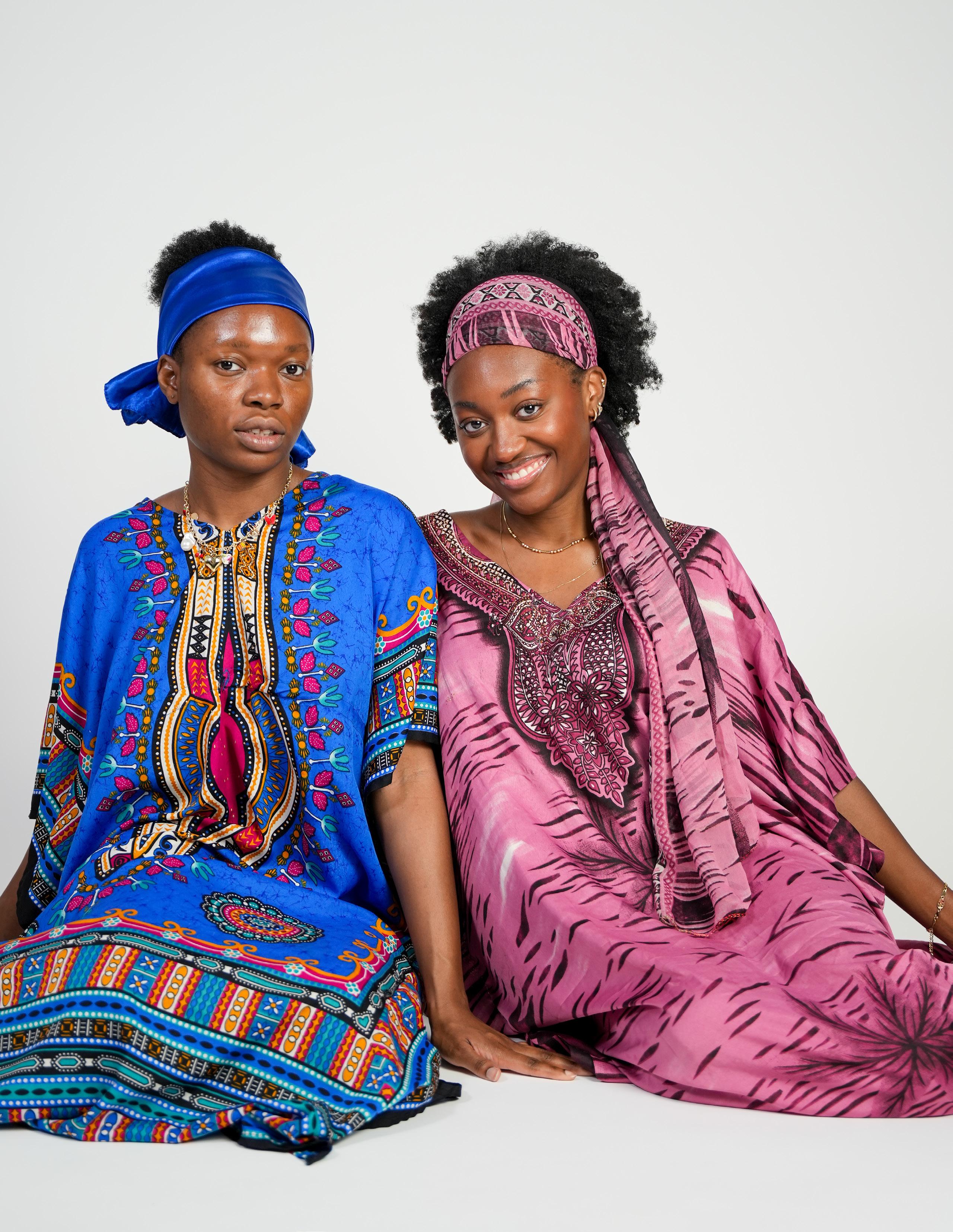
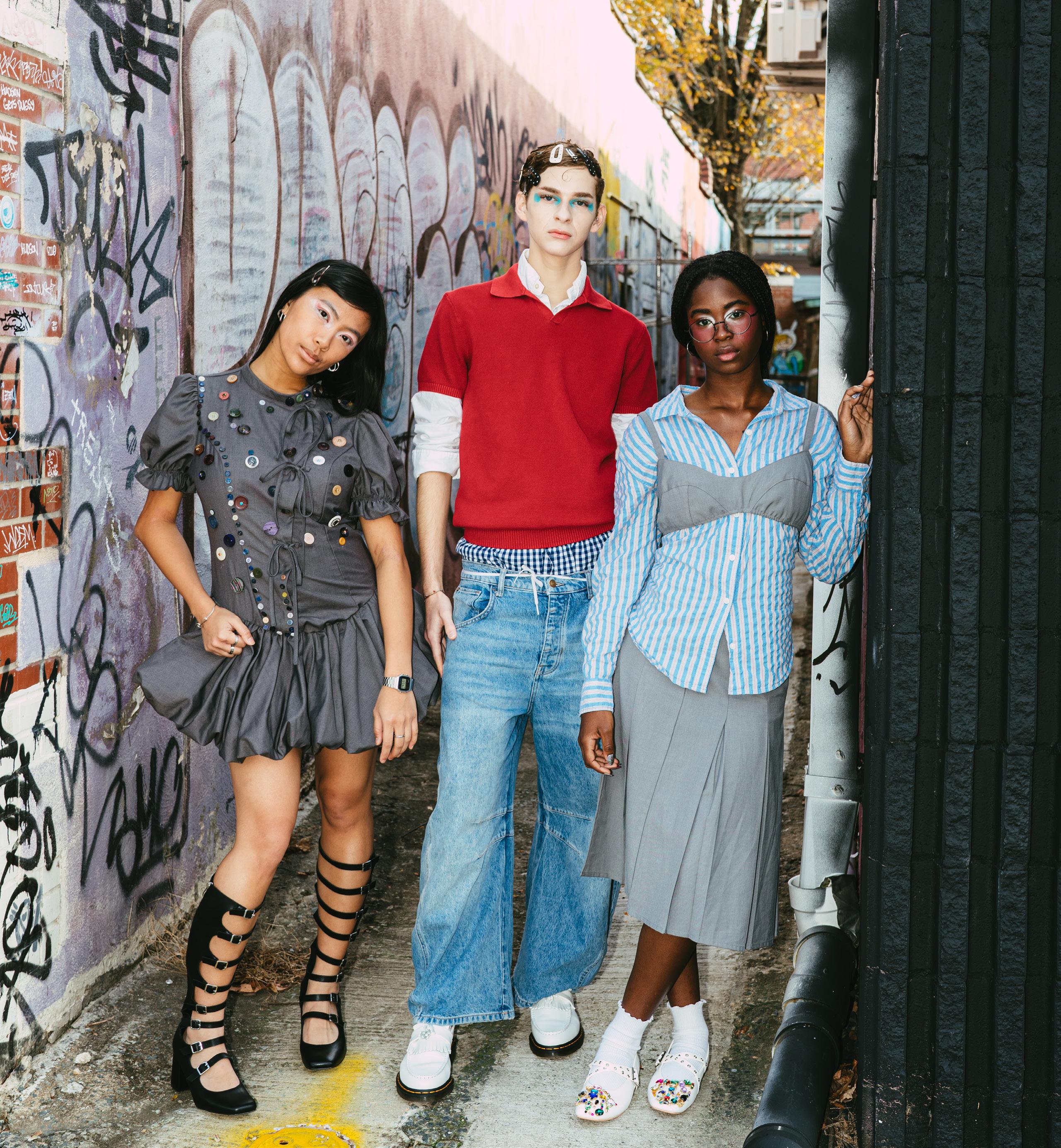
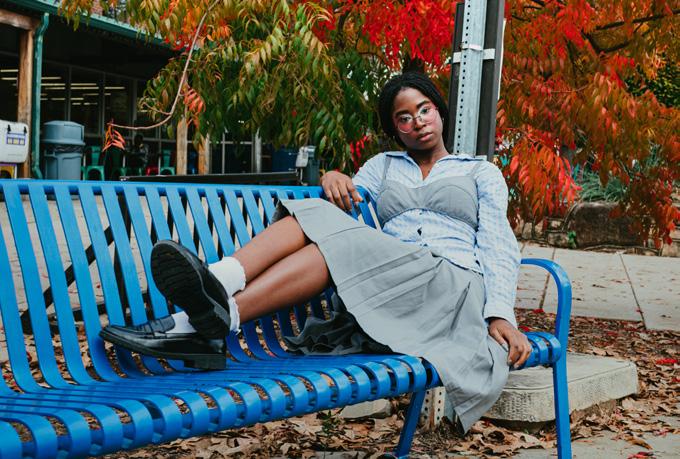
PHOTOGRAPHED BY UREDO AGADA
MODELED BY JESSICA WILLIAMSON AND TEMILOLUWA ALAGBE
ILLUSTRATION CREDITS VIA SHUTTERSTOCK
bous
The sphere of North American fashion tends to overlook the diversity of clothing pieces from African culture, and has glaringly emphasized European-centered designs over the past few decades. Because of that, many people miss out on the history, extensive creativity and cross-continental staples of Afrocentric fashion.
As a 21-year-old Nigerian-American woman, I usually get my traditional attire inspiration from scrolling the web and eyeing any fabrics my mom receives from relatives and friends.
Sometimes I feel like I do not have enough to represent my culture, but there are days when I sift through my closet and put on my in-house boubou, which I only wear on days when I am at my peak comfort. Wearing an article of clothing so connected to my Nigerian culture made me realize how central bou - bous have become in and beyond the African continent — spanning borders, traditions and hundreds of languages.
Boubous are loose-fitting garments usually made from wax prints like ankara, a cotton-based fabric, but depending on the style one wants, they can also be made from silk or chiffon.
They are worn in various regions of Africa, and their name is the French translation of “mbubb,” which is the name for boubous in Wolof, a West African language mainly spoken in Senegal, Gambia and Mauritania.
Boubous have a long history spanning as far back as the eighth century. Fashion historians believe the origin can be traced back to Berber or Tuareg cultures in Northern Africa, and spread to other African regions due to Islam.
Others believe Senegal is the country of origin.
These garments have long stood as a marker of prestige or high-class status in African cultures, but with fashion adapting over time, boubous have become more versatile and are now suitable for both formal and casual settings.
There has also been a shift in gender norms — the attire was once only worn by men, but women began to don boubous too in the 20th century.
Boubous are typically custom-made by tailors. The garments incorporate wide, open sleeves with a loose cut for the lower body, and men sometimes wear them over trousers. For women, they may be tailored with rounded necklines and accompanied by traditional jewelry, depending on the occasion. Boubous are designed by “folding the fabric in half, fashioning a neck opening, and sewing the sides halfway up to make flowing sleeves,” according to Fashion History.
Boubous are especially common in West African countries like Nigeria and Senegal, and fall under varying names depending on the culture and language. In the Yoruba tribe, their versions are known as “agbadas” which are mostly worn during ceremonies. Specific cultural boubous have their own customizations — Northern Ghana’s boubous, called “batakaris,” use thicker cotton blends with shorter hems. Meanwhile, Senegalese and Malian cultures incorporate shimmery, metallic embroidery called “riché,” which comes with matching headscarves for women.
Now, boubous are worn casually, with modern designers enhancing traditional features to make them more comfortable for relaxing at home or for everyday use, transcending the ceremonial purposes of the older generations.
WRITTEN BY TEMILOLUWA ALAGBE DESIGNED BY KAYA JORDANN
Boubous have always been celebrated by older African generations, but I found that the younger generations in the diaspora are beginning to embrace the garments as well. Since I started using TikTok in 2020, there has not been
a week when I did not see someone my age wearing a gorgeous, unique boubou. Before then, I was not as exposed to much variety beyond my culture’s attire. But my discovery of the garment’s online popularity completely transformed my taste.
Being a member of Gen Z, my eyes were so drawn that I made Pinterest boards inspired by my favorite boubou designs. One such design was made by Khadija Ba, a Senegalese fashion designer and founder of the fashion brand L’artisane, credited for modernizing boubous with her eccentric twists on their fabrics and style. Ba once designed a spectacular metallic gold and pink trimmed boubou, famously worn by Nigerian actress and blogger Temiloluwa Ajibade to a Basketball Africa League game in 2024.
Boubous that take up space are the best kind, and I adore those worn by Muslim women to Eid Mubarak celebrations. They are tailored with wide open sleeves and bright colors.
There are also boubous made with lace or woven from fabric with dimensional patterns. Some are made with cord lace, which gives a slight shimmer, or dry lace, with no glimmer but the same elegance.
This attire brings much to the conversation of African culture, which deserves more attention in the high fashion realm. With its rich history and diverse artistry, the extravagance of boubous and similar Afro-centered clothing merits celebration and prominence at the international level.
In the words of historian Hudita Mustafa, boubous are the “dynamic dialogue between tradition, modernity, hybridity, and authenticity.” They are an amalgamation of the traditional attire donned by our elders and modern style and culture.
Yet with time comes innovation, and the use of boubous in the diaspora, as well as the burgeoning artistry of African designers, expands the canvas for a bolder, brighter and beautiful evolution of African style.
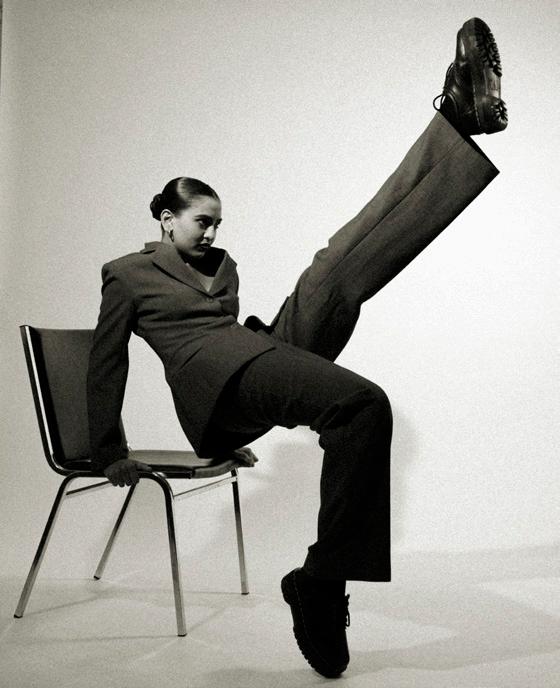
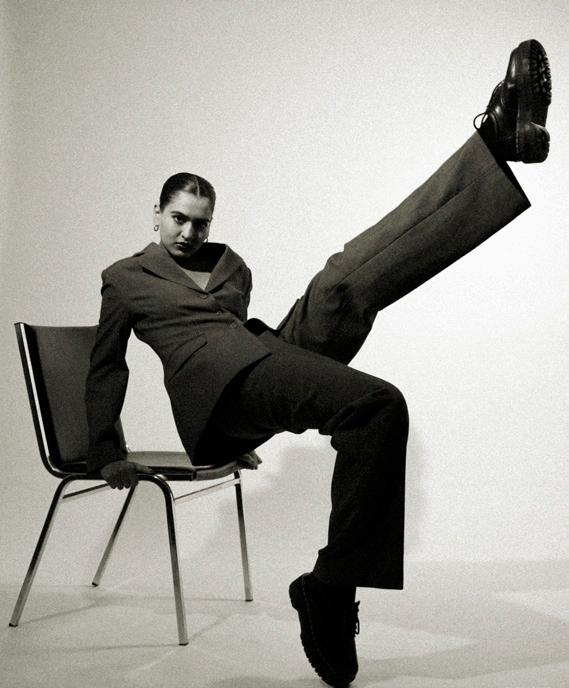
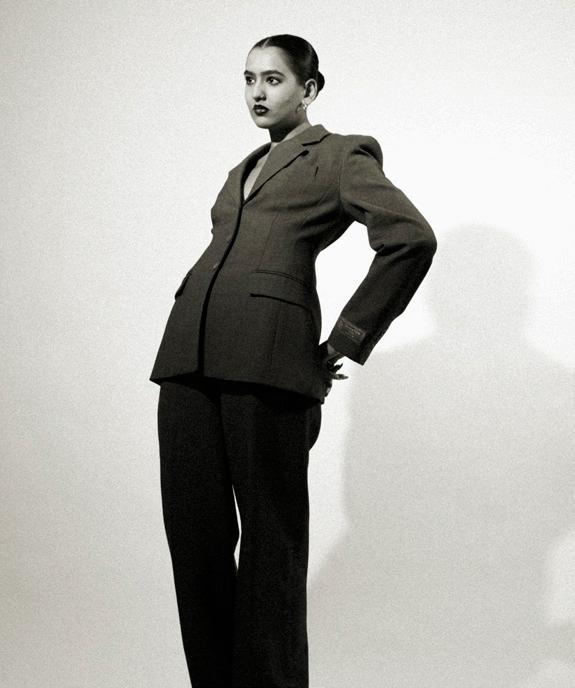
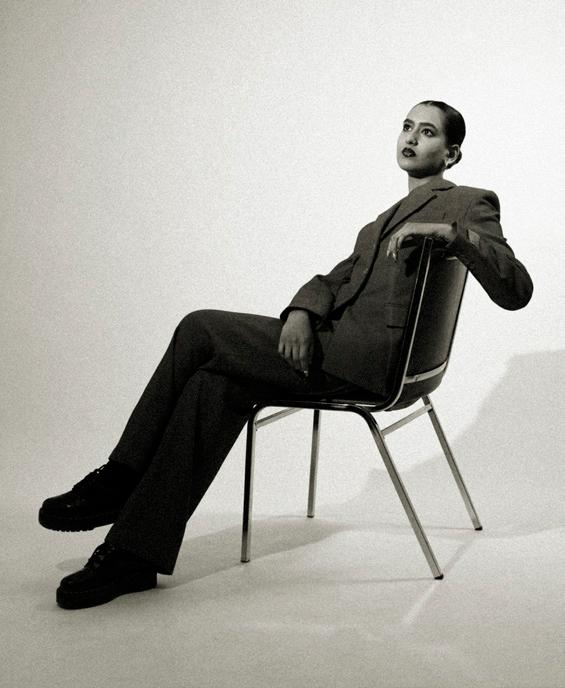
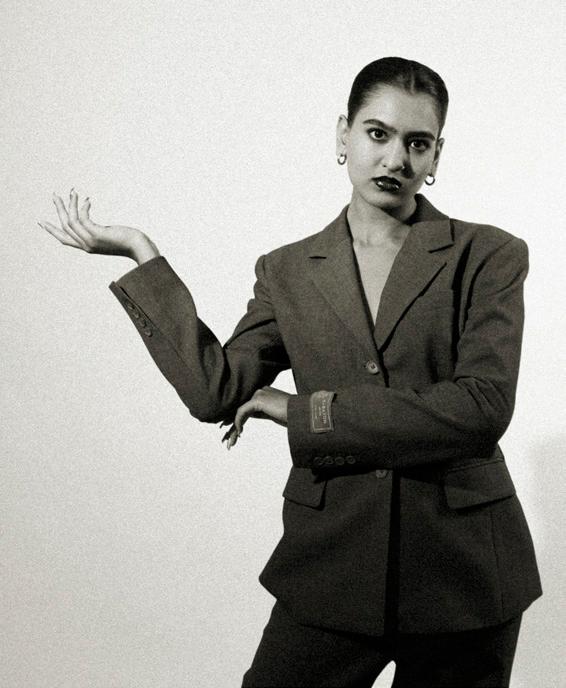
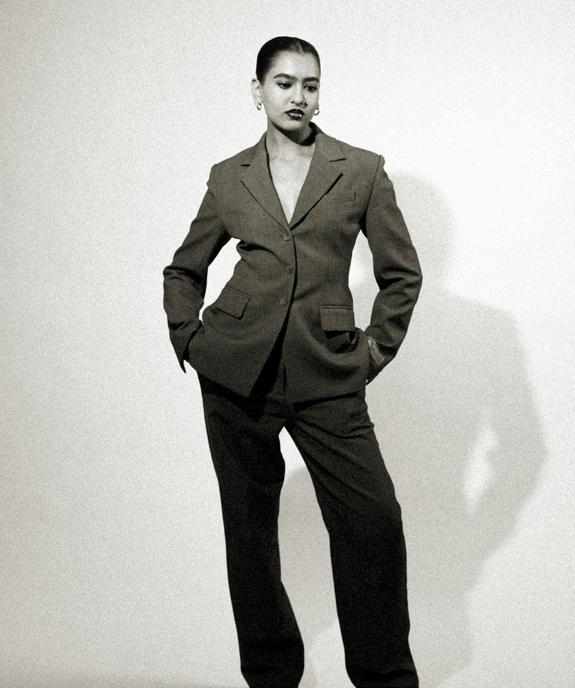
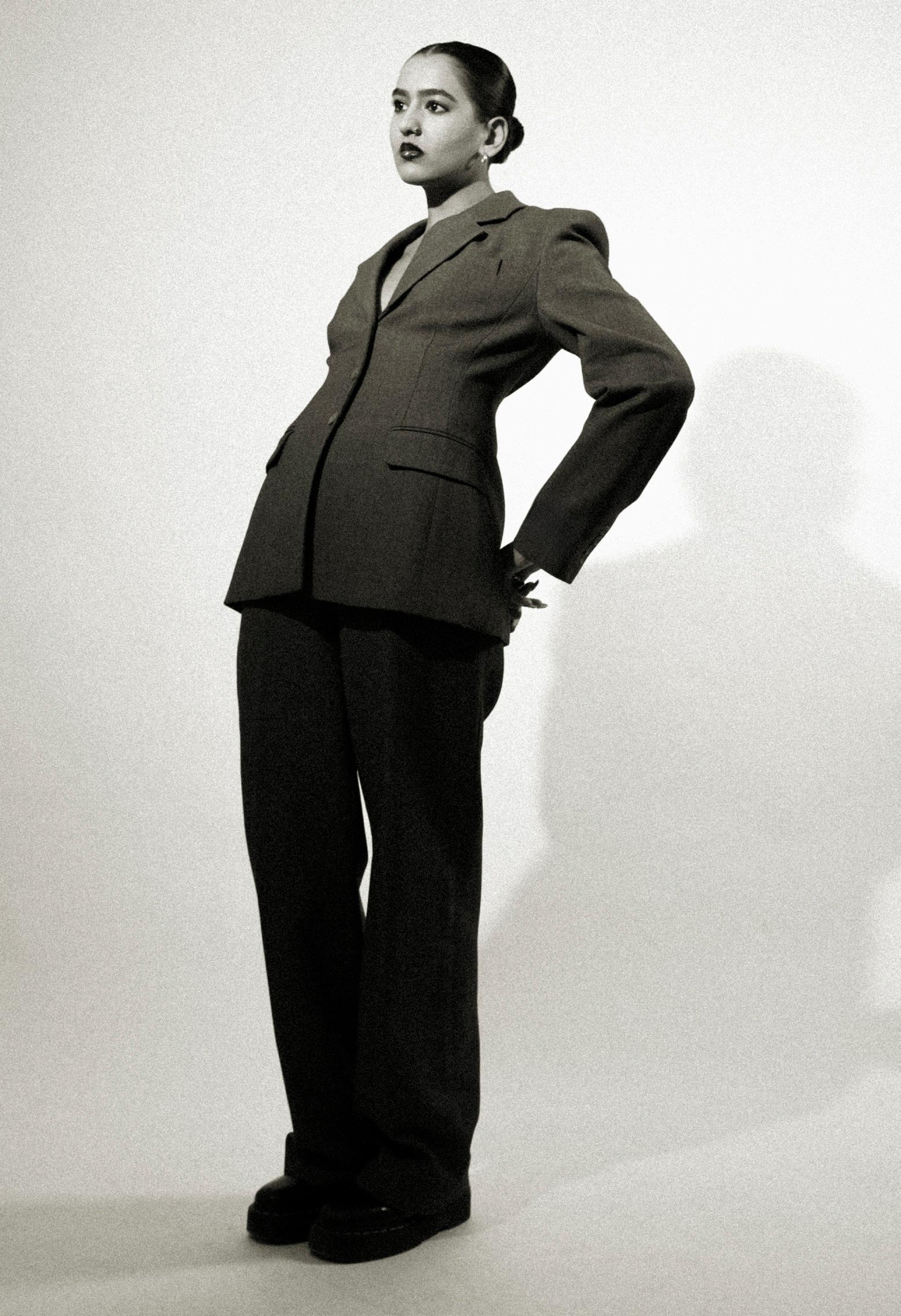
ODE TO ARMANI
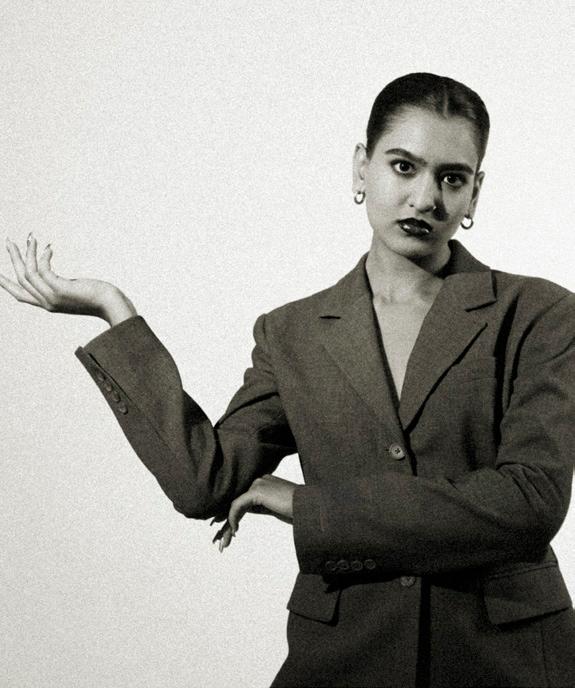
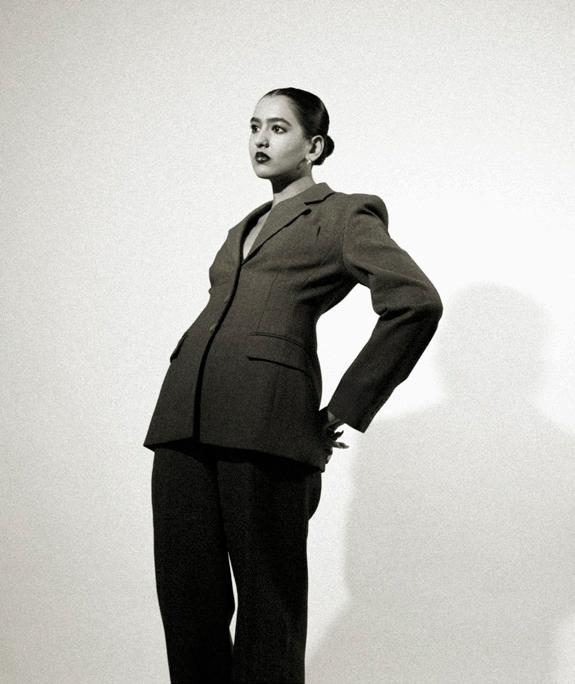
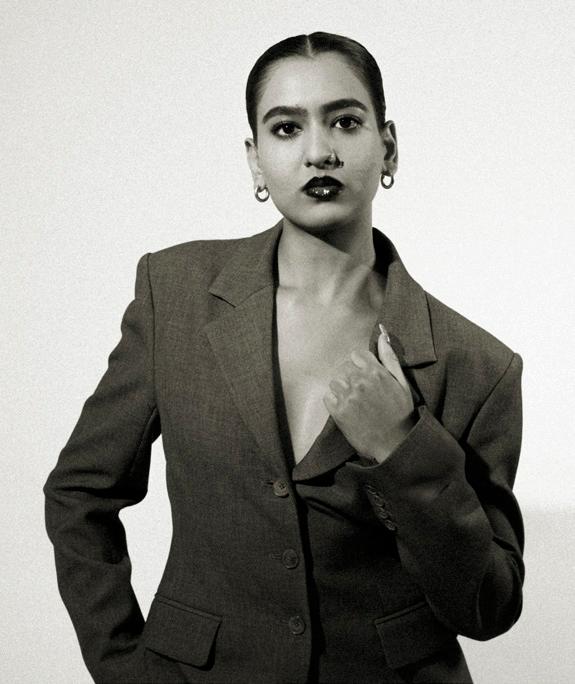
Before Armani, women’s suits always tried to mimic something: propriety, manliness or a compromise between the two.
Giorgio Armani reimagined women’s dressing, creating the power suit — a silhouette that will live on in fashion.
Power dressing’s origin is commonly attributed to Coco Chanel, who created hyperfeminine tweed suits in the 1920s. The suits were ultra-proper and impeccably restrained. The feminine silhouette was a safe choice for women, giving them an elegant but nonauthoritative uniform.
Decades later, Yves Saint Laurent released the first women’s suit with trousers. Yes, Saint Laurent’s work was radical, but it was imitative. The silhouette borrowed concepts from a man’s suit, slightly altered to fit a woman’s body. At a time when more women were entering the professional sphere, power dynamics were reinforced by the fact that women’s suits were not threatening. The tailoring pointed directly to male authority. Given the options available, women could choose between two extremes: hyperfemininity and hypermasculinity.
The incredible tension in women’s wear revealed itself: Women needed to look noticeable but not too girly; strong but not dominant.
WRITTEN BY MARGARET JESTER
This tension created a distinct need in the fashion world, and Armani stepped in to fill it.
Before entering the fashion world, Armani enrolled in medical school but quickly realized medicine was not his calling. He then worked as a window dresser, learning about the interpretive impact of display. Through medical school and window dressing, he came to understand how to represent and outfit the female anatomy.
THIS TENSION CREATED
A DISTINCT NEED IN THE FASHION WORLD, AND ARMANI STEPPED IN TO FILL IT.
While many other designers had celebrity muses or used women as metaphors for their designs, Armani looked to real, everyday women for inspiration and paid attention to how they lived. Executives, actresses and professionals needed credibility without a costume.
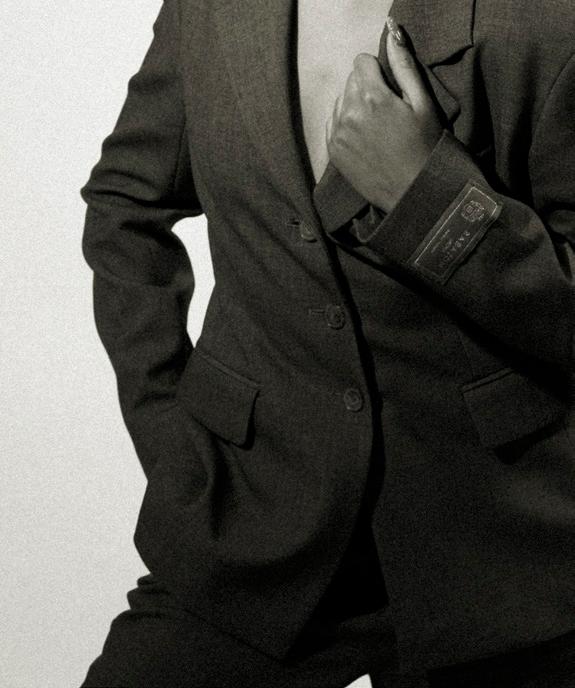
His tailoring rendered rigidity obsolete. The silhouettes featured sharp but unpadded shoulders,
silky fabrics and a fluid drape that followed the curves and contours of the female body. Armani was among the first designers to take the time to study and create for powerful women, achieving lines that respected their bodies and agency.
“Androgynous” is often used to describe Armani’s tailoring, but the term feels insufficient. His suits did not erase femininity or revert to masculinity. His designs were distinctly for women but broke free of rigid gender expectations, allowing those wearing them to feel respected and valued.
In Hollywood, his influence reigned supreme: Diane Keaton’s 1978 blazer look. Julia Roberts’ 1990 Golden Globes suit. Rihanna at the 2015 BET Awards. The suit was no longer a statement piece; it became a staple.
Armani, suit by suit and design by design, helped to establish women’s authority, sparking a broader trend toward more advanced women’s tailoring.
Armani may have died, but his silhouette will endure: a shoulder slightly stronger, a line flowing freer and a woman dressed on her own terms.
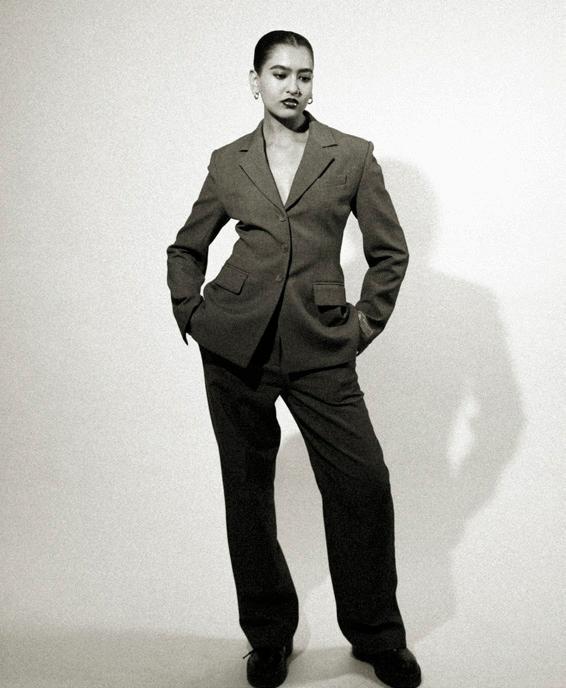
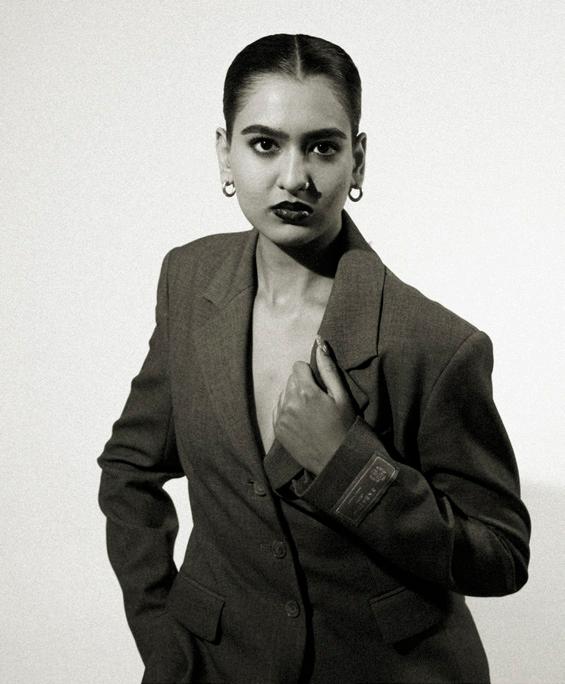
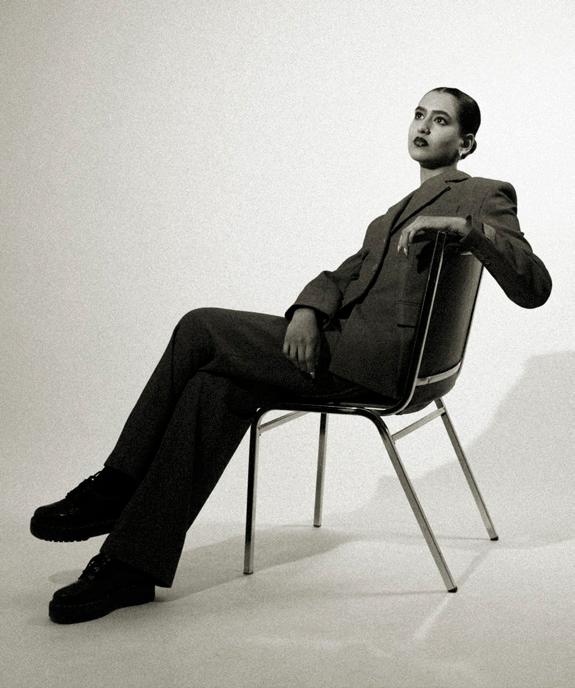
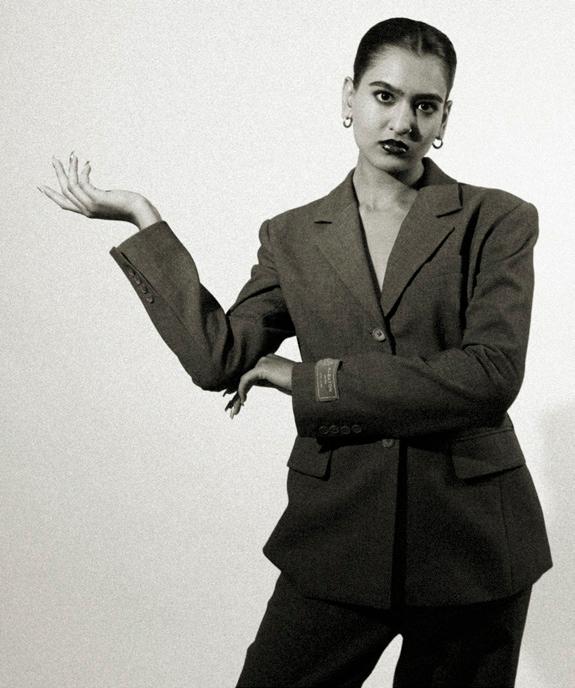
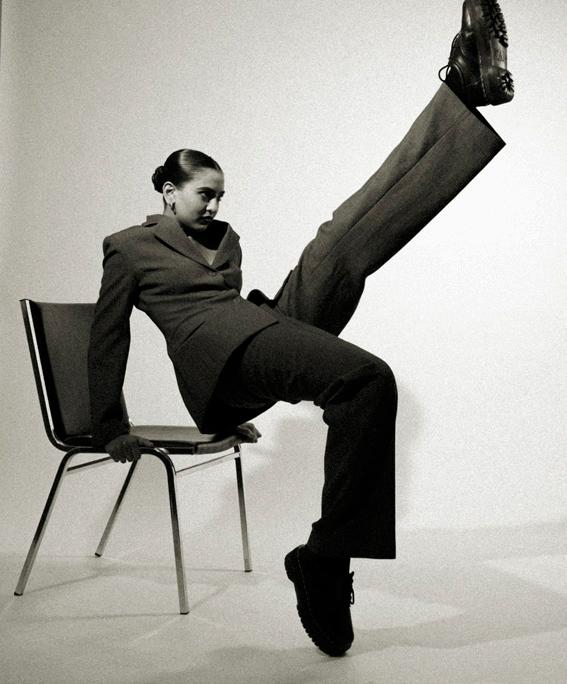
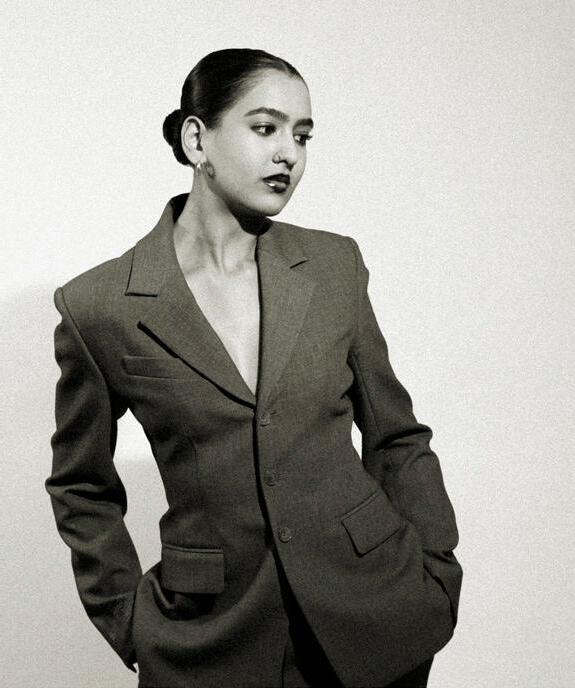
Designed by MK Ferrell | Photographed by Isabel Ebin | Styled by MC O’Brien and Dylan Kirshen | Hair and Makeup by Soraya Lewis | Modeled by Shreya Jajadiya
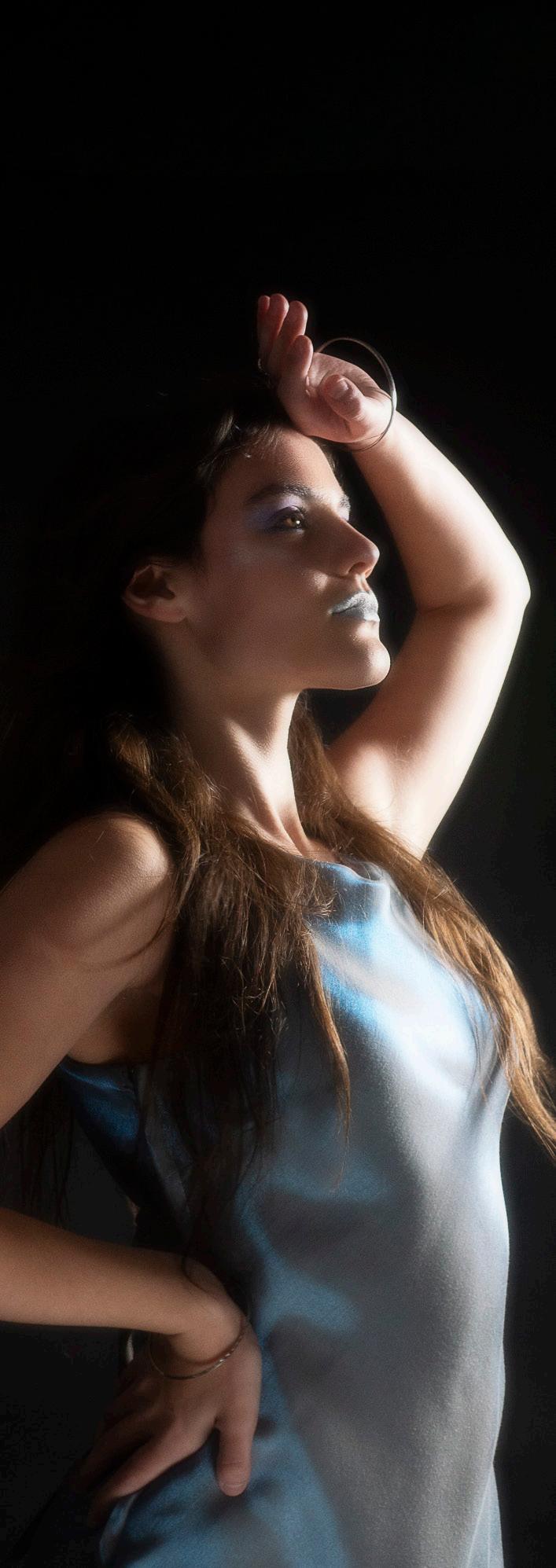
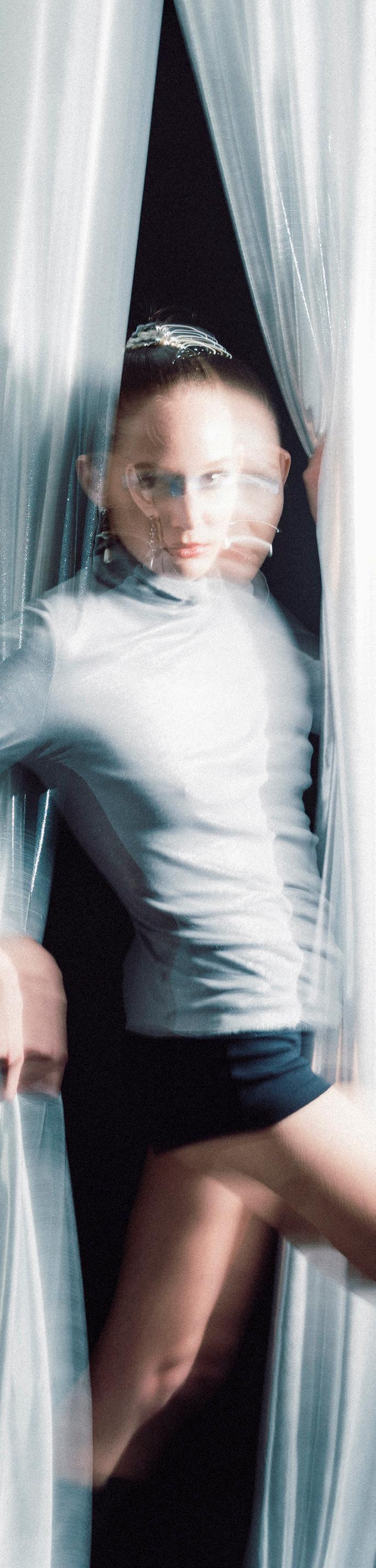
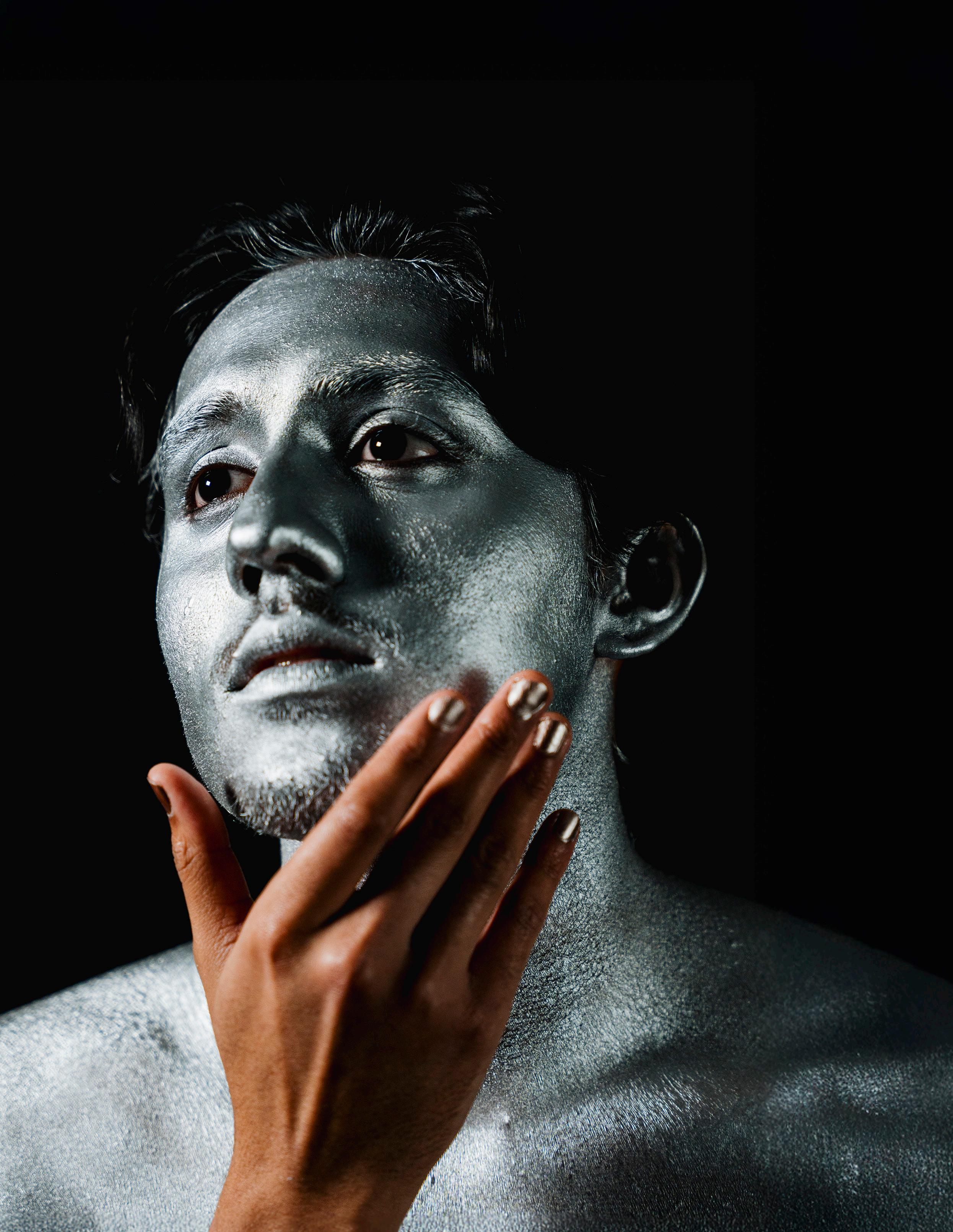
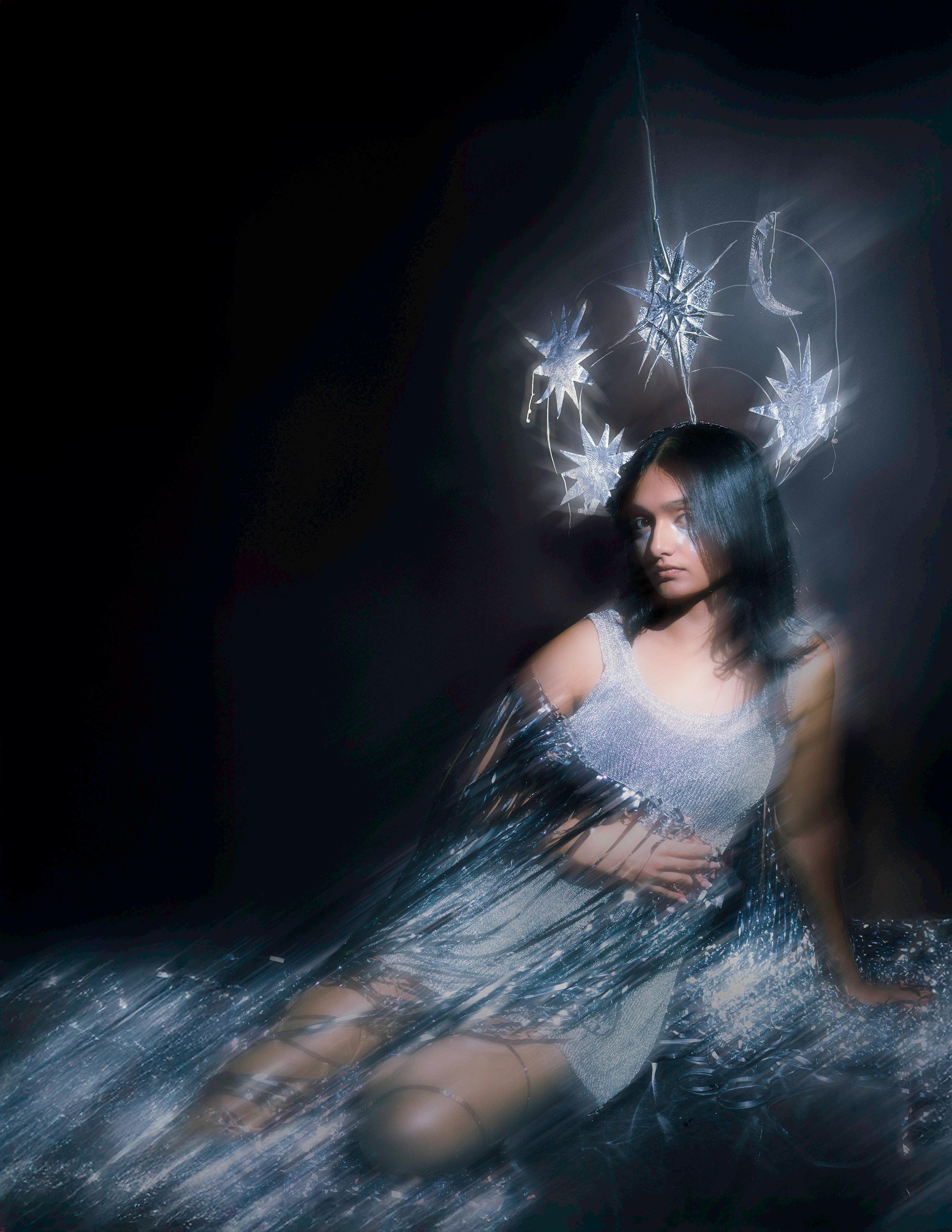
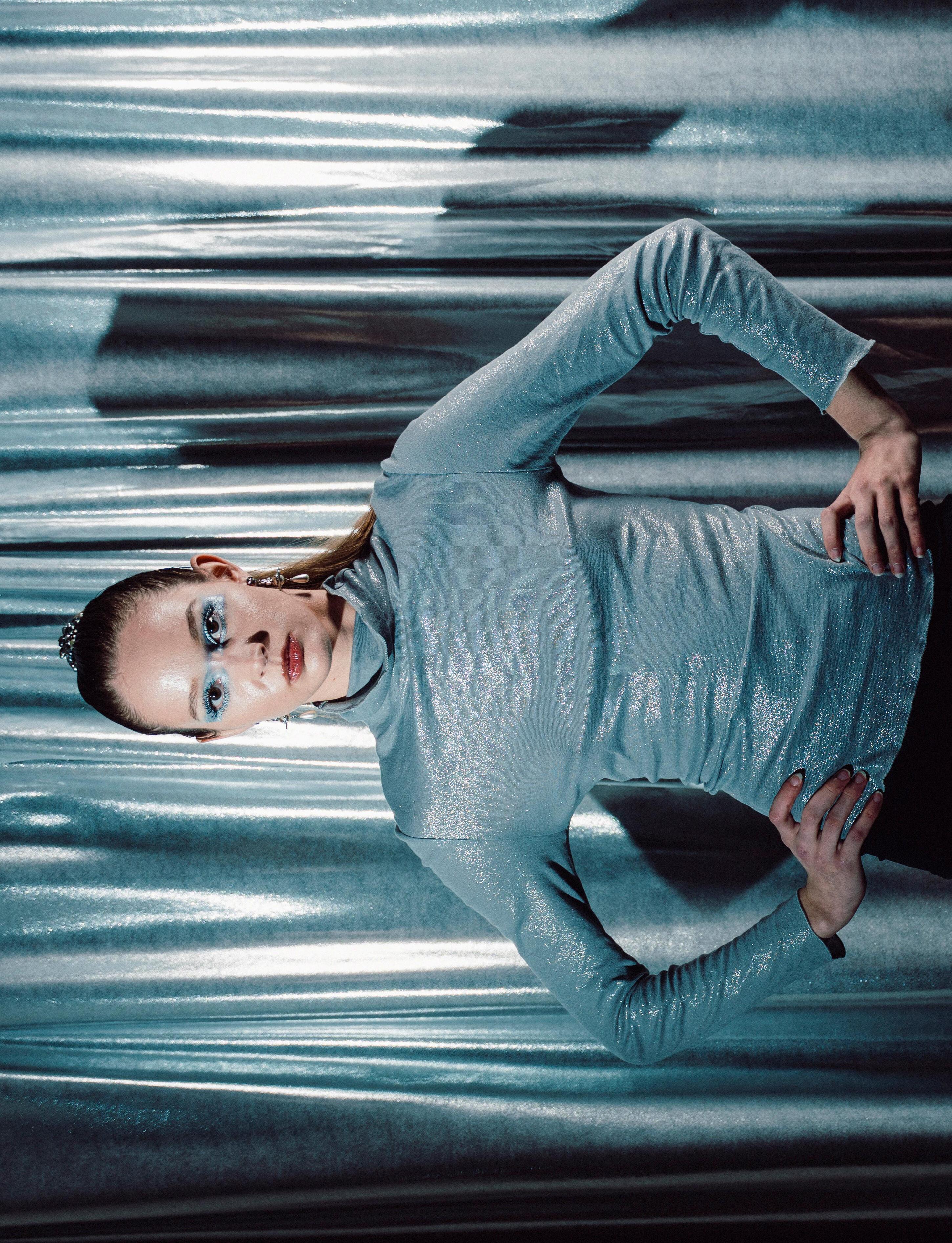
More than just a metal, silver is a color of resilience and radiance. Long associated with femininity and mystery, it has profound connections to mythology and the nocturnal, with some cultures poetically referring to it as “tears of the moon.” In this editorial, we pay homage to its history and symbolism, transforming it into a living, breathing aesthetic.
Directed by Elizabeth Comer, Savannah Matthews, Miguel Rodriguez Cardenas and Marguerite Stanley
Photographed by Allison Rikard, Nate Diers and Amry Rivera
Styled by MC O’Brien, Marguerite Stanley, Dylan Kirshen, Annika Duneja, Emma Amir and Sadie Donnelly Hair and Makeup by Karli Kennington and Soraya Lewis
Production by Aly Ignacio, Joseph McCudden and Ryan Neufeld
Modeled by Alivia Weum, Diya Joshi, Morgan Skalsky, Ria Elamaran and Vishal Varadarajan
Designed by Nora Lyons
ilver
Written By Jiya Gupta | Designed By Nora Lyons
What keeps metallics en vogue? How do they keep coming back, decade after decade? The answer seems rooted in optics, symbolism and practicality.
Long before the Y2K era, when shimmery tops, holographic skirts, reflective logos and shiny nylon were all the craze, Hollywood’s Golden Age was characterized by iconic figures in fabrics that symbolized glamour and allure. A memorable example is Hedy Lamarr’s iconic silverstarred headpiece in her role in “Ziegfeld Girl.” The look left a lasting cultural impact, referenced on red carpets, notably by Lana Del Rey at the 2021 Met Gala, and as inspiration for bridal hair accessories.
The Space Age of the 1960s saw models don gold and platinum fabrics, chain mail and aluminum headpieces as designers such as André Courrèges, Pierre Cardin and Paco Rabanne drew inspiration from the era’s fascination with space exploration.
The miniskirts, go-go boots and white and silver paired with the space optimism and science fiction of the 1960s lent inspiration to the bodycon shifts, bold makeup, metallics, chrome and new wave music of the 1980s. In between, the 1970s brought discotheques and the glamour of sequins, metallic jumpsuits and sparkling gemstone-encrusted jewelry.
The appeal of power dressing in the 1980s swept metallics along with it, with bold blazers in silver and gold fabrics.
Practically, the look is not unique to a subset of audiences. From metallic chain mail in couture designs to everyday metallic scarves, metallic looks are versatile and adaptable. Materially, nylons and foils were stronger and more durable by the 1990s compared to their 1970s counterparts, allowing complex couture designs to become wearable on a night out. This fabric development and improvement reflects the patterns of fashion’s evolution.
The turn of the century ushered in a cultural fascination with futurism. Tech optimism, rave culture and cyberpunk aesthetics joined forces to make metallics a quintessential uniform of the late 1990s and early 2000s.
In the tech world, silver appeared in CDs, video game consoles, digital cameras, MacBooks and phones, often in an aluminium-brushed, chrome-polished finish.
ht e ciglatson sdnert pfo
erullagnihctac-eye commun icates a des
oin to street wear their hctac-eye erullagni commun icates aoterised tuodnatsgihmorF. tnoihsafh o s treet wear t heir
tnemecnavda . scillateM deifingis na ag-tnava r de retrof u turis m, blending
u r i s m , b l e n d i n g eht glatsonci sdnert verpfo oi us decad es with exci tement rof larutluc
SRunways saw designers such as Versace, Chanel, Jean Paul Gaultier and Mugler feature iconic silver and metallic pieces. Versace incorporated Oroton, a mesh chain-mail fabric, into a series of slip dresses. Karl Lagerfeld designed silver leather miniature handbags for Chanel. Gaultier’s iconic silhouettes and corsetry appeared in mirror-black, reflecting under runway spotlights and he featured multiple futuristic
Beyond the runway, the 1990s also saw a silver streak in streetwear. The Nike Air Max 97, dubbed the “silver bullet,” was the it shoe of Italy in the
Designed by Christian Tresser, the shoe was inspired by industrial motifs, particularly the futuristic aesthetics of bicycles. Milan, Italy’s manufacturing and cultural hub, resonated with the shoe as a
are experiencing their own metallic resurgence. With chrome nails and frosted lids, accessories and makeup follow fashion’s descent into silver
In its Spring/Summer 2025 collection, Prada featured a silver mirror dress that immediately went viral and was later worn by Felicity Jones at the Golden Globe Awards. She was not alone in sporting this trend — shimmery metallic dresses dominated the red carpet.
Visual tricks are commonly used in runway shows and mirrored walkways.
Isabel Marant, a brand known for its bohemian contemporary looks, used silver accents throughout its Spring/Summer 2025 collection, highlighting the growing trend. Dior, McQueen and Fendi’s Spring/ Summer 2025 shows also featured multiple looks with silver and metallic adornments.
LThe renewed popularity of metallics today cannot be explained solely by nostalgia. Online culture also plays a significant role. LED lights on runways, camera flashes and short-form videos posted on social media highlight reflective surfaces.
I NLWalls and floors intensify the play of light on metallics and other shiny garments, making them appear more dynamic and expressive. Metallics catch runway LEDs and camera flashes, creating movement and adding depth into the look. These moments are perfect for a viral moment online, creating eye-grabbing content for viewers.
While the shine and glitter of metallics gleam, matte fabrics fade into the background. Curated photos of a metallic leather bag or silverfinish shoes become visual focal points, immediately grabbing viewers’ attention.
IThis effect is especially prevalent in social media algorithms on platforms such as TikTok and Instagram. Retailers are aware of this, creating a fashion pipeline in which the marketing team intentionally stages flashy moments — through design, lighting and camera angles — prompting audiences to latch onto specific items.
Metallics function as an eye-catching tool, cutting through the flood of visuals that accompany endless scrolling and cementing the style as a marker of prominence and relevance.
In a digitized world that accelerates trend cycles and rewards instant payoff, metallics provide high-visibility impact on screen.
So what makes silver evergreen? The opulence of gold and the minimalism of black remain constants in fashion history, but silver is luminous and grand, conveying a sense of evolution.
NSilver represents both physical advances in fabric and symbolic shifts in culture — an embodiment of growth.
The turn of the millennium featured chrome CDs, videogame consoles and digital cameras. Now, the moment belongs to mixed metals and shiny pieces, like metallic bags, arm cuffs and heels.
GMetallics have established themselves as staple pieces functioning less as bold statements and more as reliable wardrobe elements, almost in the same league as cashmere or sportswear. Culturally, we place immense value on effortlessness, and silver accessorizes it best, with cool tones and a polished finish that add just enough interest without trying too hard.
Photos by Amry Rivera, Nate Diers & Freepik
The State of
UNDRESS
HOW THE “NAKED DRESS” PHENOMENON BOTH REGRESSES AND PROGRESSES BODY POLITICS
WRITTEN BY MARY THOMAS WATKINS | DESIGNED BY ARUSHI RATHOD
AND NORA LYONS
When Marilyn Monroe sang “Happy Birthday” to the leader of the free world in that nearly melted into her skin, the blueblooded Washington audience was aghast.
That dress, as she surely knew, put the capital “S” on her title as Hollywood’s most enduring “sex symbol.”
With that dress, Monroe ushered in a decade of sheer, glitzy gowns, each more threadbare than the last. In response to the advance of second-wave feminism and the midcentury liberalization of sexual and social codes, the sparkling, sheer became a wearable
The naked consolidate celebrity status and sexual agency while positioning its wearers above everyday social expectations. In doing so, a double standard emerges between what is celebrated on white, thin, wealthy bodies and what is stigmatized for everyone else.
The ability to display one’s body in such a fashion and receive praise, rather than censure, is a liberty rooted in privilege. The many iterations of the naked dress have seen it move from an eye-catching costume, a declaration of self-worth, to a mechanical performance of status.
In the 1970s, Cher, Tina Turner and Barbra Streisand donned Bob Mackie’s fabulous designs that became synonymous with
mail dress that shone against her skin. She declared, “Hollywood, you want a body to use and throw away? Then I’ve got one for
For McGowan, the dress — or the lack of one — channeled her public affirmation of
Rihanna’s rhinestone gown, designed by Victoria’s Secret & Co. Creative Director Adam Selman in 2014, defines the naked dress as we know it. Shrouded in Swarovski crystals, with a matching head cap and a blush fur stole, Rihanna brought Monroe’s
Rihanna’s look became the prototype for the next two decades of celebrity undress: ornate, glittering embellishments on a
Over the past decade, the naked dress, with its reinvigorated popularity, has shifted from a liberatory declaration into an algorithmic production of celebrity and thinness.
As we scroll from one bedazzled body stocking to another, the obsession with thinness remains constant.
The near-identical, rhinestone-encrusted trappings of Emily Ratajkowski, Kendall Jenner and even Taylor Swift are praised for their singularity. These acclaimed “iconic” ensembles are almost always worn by slim, fair-skinned women. Furthermore, the moralization of bodies has long been racialized through colonialism and anti-Blackness.
As cultural critic Ivey Christie observes, “Black women and
women of color may face different scrutiny or sexualization compared to their white
involved a wearer that seemed totally disempowered. The naked dress, fashion journalist Bendara Tewari says, “yo-yos between female empowerment and the
Tewari argues that the naked dress “commodifies feminism” and thereby subverts its own aims towards women’s autonomy. The dress rewards those best aligned with exacting standards of femininity, while reminding the rest
So, when Dakota Johnson arrived at a gala for the prevention of gender-based violence in a sheer Gucci slip, I questioned if the naked dress does anything for women at all. Instead of the dress inspiring new heights of body positivity and confidence, it is wielded as a means of difference. Sydney Sweeney chose a
wearer, rather than amplifying the mission. This trend reveals the uncomfortable juxtaposition with the reality of women around the world whose privileges are far more limited, and whose modesty is often politically and physically policed. Cynic that I am, I doubt Sweeney’s bravery will uplift girls out of poverty, patriarchy or even purity culture.
The naked dress has long been celebrated as an emblem of sexual empowerment. But its liberatory promise holds true only for the narrow few who benefit from racial, economic and aesthetic privilege. Even amongst A-List celebrities, positive perception is dependent upon privilege of slimness and skin tone. For everyone else, the state of undress remains a site of surveillance, moralization and punishment. The freedom enjoyed on the red carpet is often stigmatized on the sidewalk.
“THIS REVEALING STYLE UNCOMFORTABLY CONTRASTS WITH THE REALITY OF WOMEN AROUND THE WORLD WHOSE PRIVILEGES ARE FAR MORE LIMITED, AND WHOSE MODESTY IS OFTEN POLITICALLY AND PHYSICALLY POLICED.”
2025 Cannes Film Festival broke the internet, as well as a few laws. Censori wore only a mesh body sleeve, a solemn demeanor and a nervous hesitancy. Her naked vulnerability contrasted with her fully-clothed partner, Kanye (Ye) West. The internet reacted with a frenzy of judgement, disgust and concern.
News pundits discussed the ordeal, with Meghan McCain writing that “[Censori] looks like a victim and hostage.” Social media users debated whether Censori may have been personally victimized by West.
In sharp contrast to previous sheer dress scandals caused by a woman’s bold declaration of autonomy, this controversy
Photos via U
Still Needs Fashion Week NewYork
“AMERICAN FASHION DOES NOT JUST KEEP THE INDUSTRY ALIVE: IT REJUVENATES THE INDUSTRY’S ENERGY.”
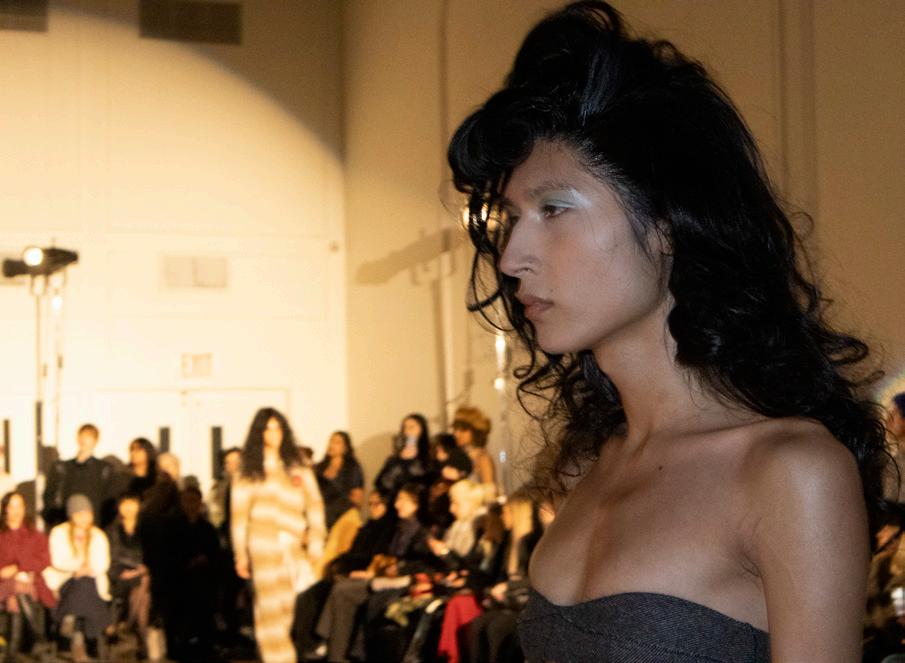
The fashion industry is built on exploitation and exclusivity, but also passion, creativity and ambition. New York Fashion Week, especially, fulfills this stereotype. The younger generations are the future of fashion, yet there is a thick, heavy barrier to entry.
Each season comes with a weight on your shoulders, a nagging pressure to see the biggest names, wear the most extravagant outfit and have the most thoughtful critiques on each collection. If all of our attention is on the grandiose, we may miss what truly makes fashion week — and the industry in general — so special: the community built and creativity fueled.
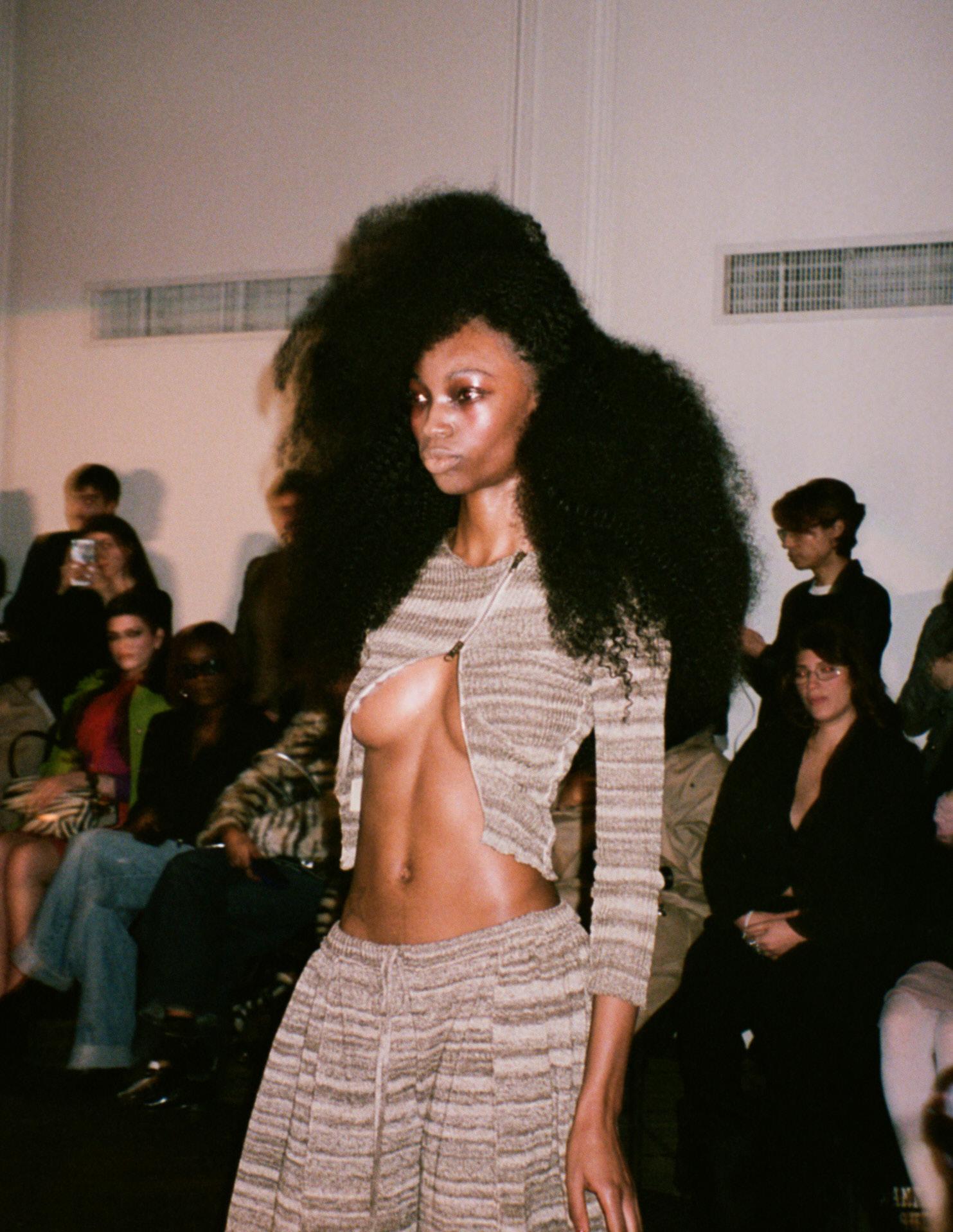
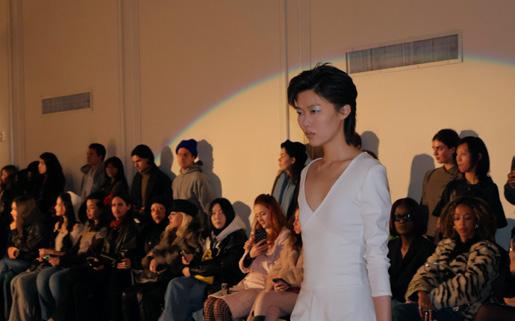
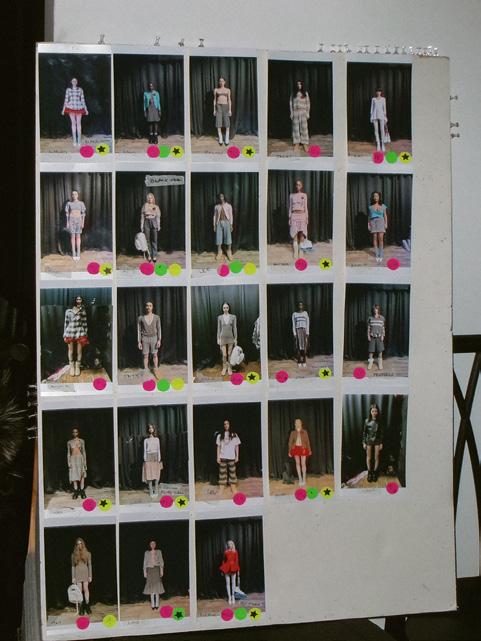
After pitching to 100+ brands, we finally received an affirmative response: an opportunity to attend the Alix of Bohemia presentation, and another to work the Gabe Gordon FW26 show. Two very different concepts, two very different worlds.
Our debut began as we walked into a whimsical safari wonderland overflowing with chatter, laughing and lots of champagne. It was hard to miss the 10-foot-tall giraffe standing watch over the tower of shattered champagne glasses at the center of the space. It brought a lightness to the atmosphere, a fun, flirty feeling, reminiscent of “Uptown Girls.” There was a heavy emphasis on community, drawing in large numbers of family and friends of the brand rather than an influencer majority.
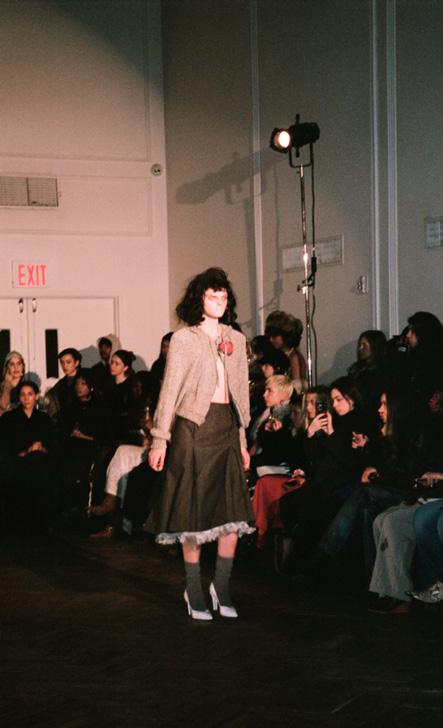
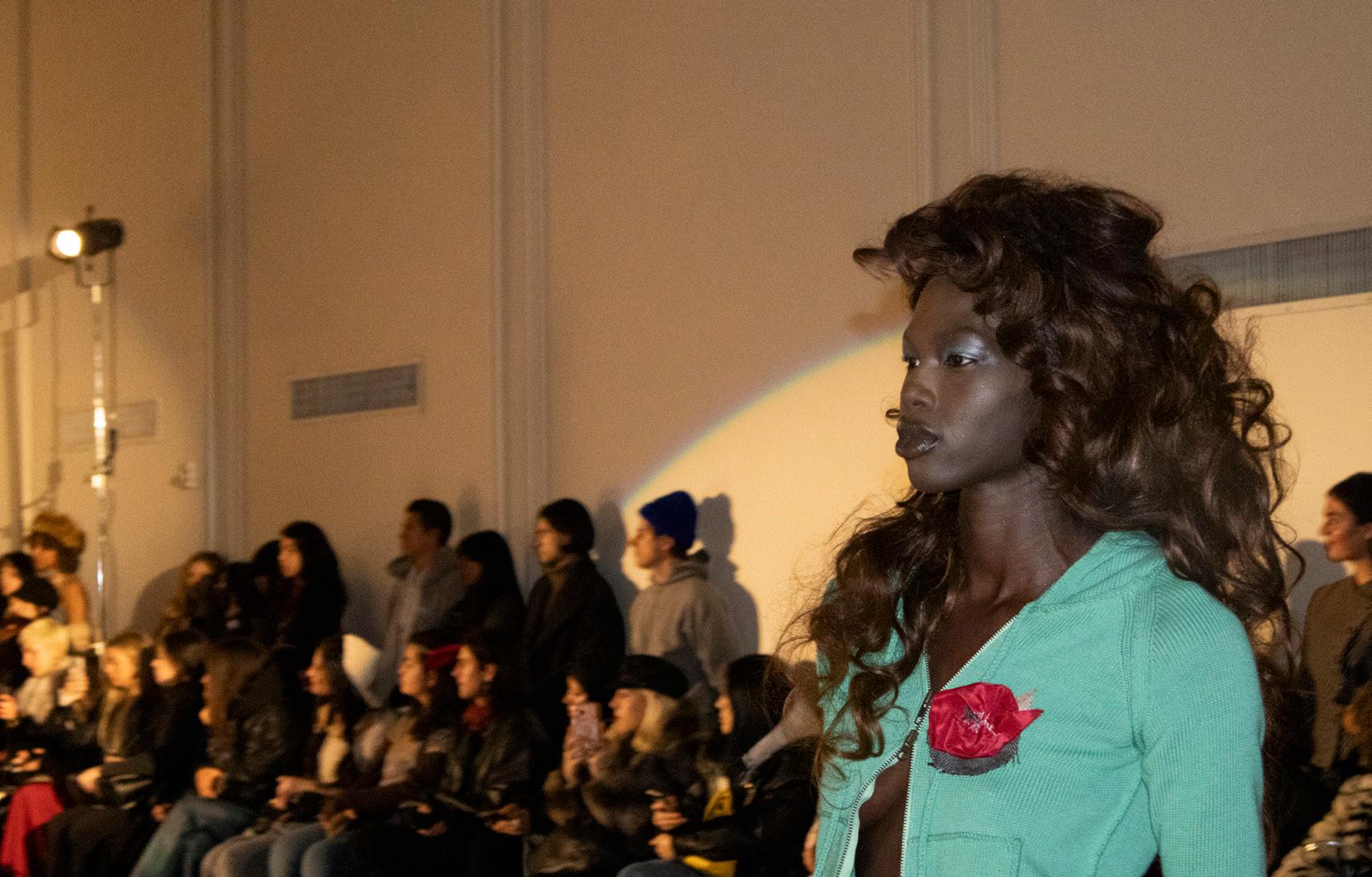
supernatural elements like werewolf claws meshed together to create a frostbite fantasy. A certain juxtaposition was present between the harshness of the claws, pointy heels and distressed details, and a softer array of textures: Ugg boots, knits and bouncing locks. Each element on its own didn’t make sense, but when combined with every other niche, it formed a highly conceptual and distinct vision of a 1980s skating slasher sleepaway summer camp; something we might not have imagined before, but made perfect sense when Gordon unveiled it on the runway.
Gordon nailed the concept’s head on the coffin and cemented the collection’s tribute to excellence, scandal and nostalgia; he closed the show with a reference to the infamous red dress Tonya Harding was captured wearing during the conspiracy attack against Nancy Kerrigan before the 1994 Winter Olympics.
There are whispers that New York no longer needs fashion week, but we digress. Shows like Gordon’s remind us that we need these conceptual, highly involved ideas to keep creative cogs flowing, pushing new designers into new spaces. It is a celebration of art, an exhibit showcasing the wide range of thought processes and designs within the fashion creative industry.
WRITTEN
AND
PHOTOGRAPHED BY ELIZABETH COMER AND SAVANNAH MATTHEWS DESIGNED BY ELIZABETH COMER AND ROSE KURIAN
Alix’s collection drew on her fascination with exotic animals, prints and patterns. Sequins, fine embroidery and structure made unique textures, and brought utilitarianism to each piece on display. Describing personal style as “second nature” and “dressing as preparation for adventure,” the collection aimed to equip the modern woman for whatever journeys lie ahead of her.
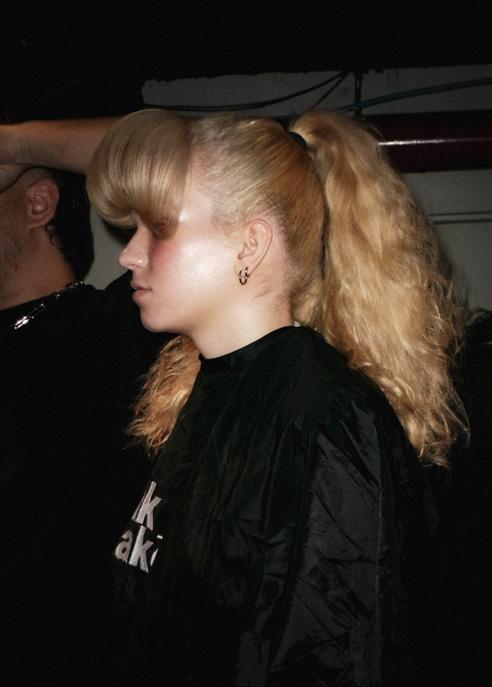
Meanwhile, in Brooklyn, frosty makeup looks, ponytails larger-than-life and
While many couture brands are flocking overseas, New York provides a safe haven for new indie designers to not only grow, but thrive. American fashion does not just keep the industry alive: it rejuvenates the industry’s energy. Shows during New York Fashion Week might be seen as a mere marketing opportunity, but we believe that they span much further. The smaller presentations combined with big-name shows foster a vibrant community of fashion enjoyers, critics and loved ones, bringing the community to the forefront in celebration of art, culture and life.
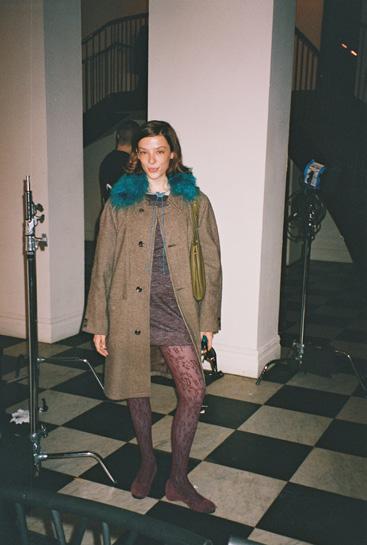
Fashion Week also provides a runway for attendees, in a different sense. It’s a platform to showcase one’s most daring, most experimental combinations of pieces, textures and accessories.
Lower East Side, New York, NY
Gabe Gordon, FW26.
Gabe Gordon, FW26.
Gabe Gordon, FW26.
Soap Collins, Gabe Gordon, FW26.
Gabe Gordon, FW26.
WRITTEN
BY
LANEY CRAWLEY
DESIGNED BY BELLA PIRES
Chloé Malle steps into the editor-in-chief role at Vogue, succeeding Anna Wintour. Antonin Tron replaces Olivier Rousteing as creative director at Balmain. Grace Wales Bonner succeeds Véronique Nichanian as artistic director at Hermès menswear. Maria Grazia Chiuri leaves Dior and becomes creative director at Fendi, with Silvia Venturini Fendi stepping back into an honorary leadership role after over 30 years. Jaden Smith becomes the first-ever menswear creative director for Christian Louboutin. Fernando Garcia and Laura Kim exit Oscar de la Renta. Rachel Scott is appointed creative director of Proenza Schouler. Meryll Rogge takes over Marni as Francesco Risso departs.
Jonathan Anderson leaves LOEWE to helm both Dior and Dior Men. Pierpaolo Piccioli takes over Balenciaga as Demna moves to Gucci. Casey Cadwallader steps down at Mugler; Miguel Castro Freitas steps in. Jack McCollough and Lazaro Hernandez depart Proenza Schouler to lead LOEWE. Donatella Versace steps down at Versace; Dario Vitale replaces her. Simone Bellotti replaces Lucie and Luke Meier at Jil Sander. Matthieu Blazy leaves Bottega Veneta to take over Chanel. Louise Trotter moves into Blazy’s former role at Bottega Veneta. Glenn Martens leaves Y/Project and joins Maison Margiela as John Galliano exits, and Michael Rider steps into CELINE following Hedi Slimane’s departure.
THE GREAT FASHION SHAKE -UP
This massive list of shakeups within an industry that values legacy so highly speaks for itself. It is rare to see so many
leadership transitions in such a tight window, and this year’s movements feel especially like a collective exhale — as though the industry has acknowledged that its leaders no longer match the consumers sustaining it.
To understand the significance of these shifts, one has to resist the temptation to view them as a jumble of unrelated corporate adjustments and instead notice a pattern of aesthetic and philosophical rebalancing that has been building for years.
Anna Wintour’s retirement is the most symbolic of these changes because it represents the end of an era in which fashion was steered by singular taste authorities. Wintour’s influence shaped American fashion for nearly four decades. The editor of Vogue was not simply a curator; she was, in many ways, the final yes. Wintour was an icon that even the person farthest removed from the fashion world could recognize. Her departure perhaps signals a shift where authority is distributed rather than concentrated. As for Malle, Wintour’s successor, we will have to wait and see what she does with the brand.
The plethora of new designers face similar challenges. They are inheriting not just houses, but legacies, and their work is measured against archives that are mythologized and indexed. Today, creative directors do so much more than simply design. They must interpret all that the brand is and imagine all that it could be. They enter into historical dialogue with their brand’s past, and the strongest debuts this year understood that role.
At the Spring/Summer 2026 fashion weeks that ran through September and October of 2025, 15 designers arrived as the new faces of their respective houses, each one trying to play with memory and originality. Some chose restoration as their starting point, some pursued rupture and some tried to thread an uneasy medium between the two.
At brands like Balmain, for instance, succession means more than a change in logo fonts and casting. Olivier Rousteing left behind a Balmain synonymous with amplified glamour and celebrity presence, so Antonin Tron’s quieter, construction-first sensibility appears to be a deliberate pivot. Meryll Rogge at Marni faces a similar balancing act. Francesco Risso’s decade there turned the label into
a cult favorite for maximalist, art-driven fashion. Rogge inherits that liberated spirit, but she also brings a sharper line and a steadier silhouette to the label’s designs.
Elsewhere, moves are less about correction and more about doubling down on a certain kind of intelligence. Grace Wales Bonner’s new role at Hermès menswear is a textbook example: Hermès does not need a shock to its system, but it does need a way to speak to a younger generation that has more fun with clothing and emphasizes individualized identity.
Bonner’s work has always existed at the intersection of tailoring, history and a strong sense of self. Her historic appointment — becoming the first Black woman to lead a major fashion house — challenges the old assumption that authority in luxury must look, think or behave a certain way. It shows that scholarship, perspective found through lived experience and a sense of style shaped outside of traditional Parisian lineage are not deviations from luxury but legitimate sources of it. It also reflects
It
also reflects something that the industry is only now beginning to articulate: leadership in fashion is no longer synonymous with inheritance or cultural proximity to Eurocentric norms.
something that the industry is only now beginning to articulate: leadership in fashion is no longer synonymous with inheritance or cultural proximity to Eurocentric norms.
The American houses undergoing transition this year also point to a shift in who is seen as a standard-bearer. Rachel Scott at Proenza Schouler represents an important recalibration of the narrative of the American woman in New York. Her work is grounded in craft, diaspora and handwork, and her appointment expands the image of who is entrusted
with a major American label.
At the same time, Fernando Garcia and Laura Kim’s exit from Oscar de la Renta and Jack McCollough and Lazaro Hernandez’s move from Proenza Schouler to LOEWE show how “American” talent is now part of a fully global circuit that starts — and arguably ends — with New York.
Underneath all of these moves is a question the industry has largely avoided asking out loud: Who is fashion actually for, and who is allowed to define it? Women’s clothing, in particular, sits at the center of this tension. For most of the 20th century, the female form in fashion was framed through male imagination. Designers like Dior, Saint Laurent and Lagerfeld shaped silhouettes that became visual shorthand for femininity, while the women who actually wore the clothes had no space for creative input behind the scenes.
While women have historically been some of the most prominent critics and fashion editors, it is only in recent years that we have seen them take the reins creatively and design-wise on a larger stage. This history is not inherently negative — men have designed some of the most impactful pieces ever made — but the imbalance is hard to ignore.
Now that women are stepping into these roles,
there should be a stark difference, much like what Chiuri started and championed for 10 years at Dior. A designer like Louise Trotter at Bottega Veneta or Rogge at Marni is not working with the female body as a mere concept.
When a woman is at the forefront, the questions asked at the sketch stage change: Can someone actually sit in this for five hours? What kind of underpinnings does this require? How does this feel on a day that is not a red carpet? Love and understanding of the female form, in this context, becomes less about idolizing a spectacle to be gawked at and more about respecting what it is. It is now not only a matter of who is aesthetically drawn to women, but of who understands the conditions under which women actually need and want to wear clothes. That is not to say male designers are disqualified from making profound womenswear. Many of them continue to do so. Pierpaolo Piccioli at Balenciaga, Dario Vitale at Versace, Michael Rider at CELINE and many more bring their own forms of care into their work. The real fault line is not gender alone, but a perspective that is becoming harder for houses to ignore, especially in an era where audiences and models are more vocal and informed than ever.
The sheer number of appointments and exits in 2025 also reflects the pressure cooker that the role of creative director has become. These designers are not only responsible for clothing — they are tasked with delivering sales growth, digital visibility, cultural relevance and archival sensitivity, cycle after cycle in a market that rarely allows rest. They must communicate fluently with investors, a global press corps, collaborators, celebrities and consumers who are all scrutinizing every detail in real time.
Even when the runway show ends, the work of sustaining a brand’s narrative is ever present. The revolving door of directors makes it apparent that very few people can sustain this kind of creative output indefinitely.
For the audience, this has created an unusual kind of season. Instead of watching for a single defining trend, observers are tracking how each new director chooses to answer the same prompt: What will this house look like now? Some answer by returning to early principles. Some answer with a risky rewrite. Some, more cautiously, try to keep one foot in the archive while reshaping the brand in their image.
Taken together, the great fashion shake-
up does not read as an industry lost at sea. It looks more like an industry finally admitting that its old chain of command no longer matches the realities of how fashion is made, seen and consumed. Power is moving away from a small circle of lifetime appointments and toward a more fluid, if sometimes unstable, network of voices. Editors are no longer unquestionable gatekeepers, creative directors are no longer untouchable geniuses and the consumers are becoming aware, no longer passive recipients.
For a field that has always traded on the illusion of effortlessness, this is an unusually transparent moment. Contracts are public and new appointments are debated the second they are announced. Directors can see the audience’s reactions to them and their designs though a Google search. Legacies are being weighed not only in museum retrospectives but in comment sec-
That can feel uncomfortable for institutions that thrive on a foundation of mystique, but it also means something important. Fashion is being taken more seriously, and taken in by more people.
collapse of the old order, but a recalibration. The houses are still standing. The shows go on. But the question of who is allowed to set the tone — and what they choose to say with the power they possess — is finally, productively, up for revision.
tions and group chats. That can feel uncomfortable for institutions that thrive on a foundation of mystique, but it also means something important: fashion is being taken more seriously, and taken in by more people.
In a decade, when the dust of this year has settled and some of these “new” directors have themselves become part of the establishment, 2025 will likely stand out as an inflection point. Not just because so many people changed jobs, but because the industry finally started to align its leadership with the culture around it. An industry that dresses the world cannot stay structurally frozen while
An industry that dresses the world cannot stay structurally frozen while everything else moves forward.
everything else moves forward. What is happening now is not a
THE MYTH OF THE ‘IT GIRL’
AMERICA’S LOVE STORY
WRITTEN BY OLIVIA SEWELL DESIGNED
BY
BETSY PORTER
Ryan Murphy’s “Love Story” is a new show centered on the long-mythologized public relationship of John F. Kennedy Jr. and fashion publicist Carolyn Bessette. The series is fueling a renewed cultural obsession with Bessette Kennedy, known as one of North America’s most iconic “it girls” and an emblematic figure of American elegance.
The public’s fascination with Bessette Kennedy’s character and wardrobe is similar to a parasocial relationship — a one-sided emotional attachment — which is only heightened by the age of social media and its instantaneous barrage of information.
But what made someone an “it girl,”
especially when information was so one-pointed and sacrosanct? And, such is the case of Bessette Kennedy — why do we still revere and idolize women who clearly divulged their desire for anonymity? Bessette Kennedy herself resisted the very spotlight that defined her; she shunned interviews, avoided public appearances and often pleaded with photographers to leave her alone.
Parasocial fascination has influenced fashion, culture and the idealistic view of feminine allure long before the internet sank its teeth into society. In a Vanity Fair piece on fashion history, Marie Vernet from 1858 is described as history’s first “model-influencer,” modeling the dresses her husband made in House Worth to a live audience. This reimagined fashion,
with the writer remarking that “dresses sell better when women can easily imagine themselves in them.”
Similarly, early “it girls” were women who captured the cultural imagination before it became synonymous with viral fame. Bessette Kennedy ruled the North American rolling hills, Jane Birkin presided over France’s sun-bleached balconies and Twiggy ran the English streets with pixie-cut precision. Bessette Kennedy was different from the other “it girls.” She was not an actor, model or famous in her own right; she was married to a Kennedy. But her celebrity status remained nonetheless.
Part of their “it girl” power came from carefully curated glimpses into a life just beyond reach that was aspirational
and enticingly private. Before there were likes, follows or algorithmic trends, there was allure: a subtler, slower form of fascination. Every photograph, outfit and public appearance was a carefully orchestrated event in its own right: mystique was their marketing. They knew how to command attention through absence, and how to let mystery do the work that constant visibility now attempts to replace.
It would be remiss not to mention that these women all have a similar look: white and skinny. These were still the driving beauty factors throughout their respective decades. Donyale Luna in the ’60s was considered the world’s first Black supermodel, but her stardom was heavily overshadowed by Twiggy and other white models of the era. By the 1990s era of Bessette Kennedy, Naomi Campbell was undeniably a tour de force in the fashion world. Beauty ideals, though beginning to broaden, remained narrowly defined, as many equally talented stars were excluded from that same “cult” status.
and infamous lack of jewelry made for simple, understated looks that screamed elegance and timelessness. Her muted color palette allowed for efficient fashion rewear in all seasons. But the brands she grew synonymous with — Calvin Klein, Narciso Rodriguez and Yohji Yamamoto — were worn as an armor of understated poise. Her lack of fashion risk unveiled that simplicity was a way for her to stay out of the media. But the less she revealed through her clothes, the more the public longed to understand her.
Glamour at a
Distance
Bessette Kennedy’s style still dominates mood boards and runways, her name shorthand for American minimalism. Birkin’s insouciance remains the golden standard of French chic: studied, then reinterpreted by countless designers. Twiggy’s influence resurfaces every time fashion returns to youth, rebellion or mod geometry. Their magnetism was a mix of self-
“THEY KNEW HOW TO COMMAND ATTENTION THROUGH ABSENCE, AND HOW TO LET MYSTERY DO THE WORK THAT CONSTANT VISIBILITY NOW ATTEMPTS TO REPLACE.”
Dressing the Myth: Fashion as Language
Life pre-social media saw people thumb through magazines and gossip spreads. The lack of immediate information made every scrap delectable, and fueled the intensity of paparazzi. To be popular was to be constantly discussed, and therefore constantly in print. A single image — Bessette Kennedy in her slip dress, Birkin with her wicker basket, Twiggy in her modern mini dress — could ripple across continents. What made these women so compelling was their careful balance of visibility and elusiveness, and fashion played a key role in shaping this language and mythology.
Bessette Kennedy’s style was easy to emulate for the modern 1990s woman. Her cream slip dresses, black turtlenecks, tailored trousers
possession, individuality and timing.
The “it girl” in every era reflects the cultural fantasy of femininity, what society most desires but cannot fully grasp. For Bessette Kennedy, it was refinement and control; for Birkin, freedom and sensuality; for Twiggy, energy and reinvention.
Murphy’s “Love Story” has delivered with aplomb. Social media is flooded with “The CBK Effect” and watchers are enamoured with the journey of what would become an iconic love story. But the show is not purely about romance — it is about America’s ongoing love affair with the idea of what makes the perfect woman.
These women were not just icons; they were archetypes. And Bessette Kennedy remains the most haunting of them all: the woman who wanted to say the least, and, in doing so, told the most.
WHERE Faith MEETS Fashion THE HIJAB:
WRITTEN BY DANEEN KHAN | DESIGNED BY ZARA ZIA
Every day, UNC-Chapel Hill junior, Sara Saraji, trades 30 minutes of extra sleep for picking out the perfect outfit. Staple pieces from her closet — blue jeans from Anthropologie, cozy sweaters from Zara and a mix of garments from smaller boutiques — pile on top of her bed.
It is chaotic. It is messy. It is 7:30 in the morning. It is also her favorite part of the day.
When Saraji finally decides on a combination that fits her desired aesthetic, she grabs her elegant gold jewelry and prepares to take on a day of classes. But before she walks out of her apartment, there is one more garment she throws on: her chiffon hijab.
The hijab is an Islamic headscarf that traditionally covers a woman’s hair, neck and ears. In the Quran — the holy book for Muslims — preserving modesty is held in high importance, and for many Muslim women, the hijab is a way to visually emulate that ideal.
Although not all Muslim women wear the hijab, some Islamic scholars argue that it is mandatory in the religion. Others take the stance that modest behavior, attitude and dress, are the actual requirements, with the hijab being one option for Muslim women seeking to portray modesty. Modesty looks different for ev-
ery Muslim, regardless of gender — and for Saraji, the hijab plays an important role in upholding that ideal.
Every day, Saraji strives to live her life as the best version of herself.
“That means, obviously, working out, reading the Quran, fueling my mind, my body — but first and foremost, that’s wearing the hijab,” she said.
The headscarf has increased in popularity alongside Islam’s explosive growth. Historically, non-Muslim colonizers viewed the hijab with disgust and disdain, placing it in direct opposition to
tinue to place bans on hijabs and other Islamic coverings, and hijabi women endure unique forms of discrimination, harassment and public scrutiny.
In reality, the hijab was never about the opinions of anyone other than the woman wearing it, nor was it to be judged by anyone besides Allah.
What appears to be a simple headscarf holds a deep, personal meaning to those who wear it. And for Generation Z hijabis, it is also a fundamental building block of their modest style.
The headscarf may be a symbol of
ideals of Western self-expression. To them, the modest headscarf was a backwards symbol of an oppressive religion that threatened a “liberated” way of life.
The rare colonizers who did not view the hijab as restrictive — and even some who did — became entranced with hijabis through an orientalist lens. The concept of a woman preserving her modesty with a style designed to avoid the gaze of hungry men indirectly captivated that very audience.
Many non-Muslims forced women who wear hijabs to be stripped of them and conform to Eurocentric ideas of femininity. A contrasting form of oppression also occurred with Islamic extremists forcing women to wear the hijab or other religious garments against their will. Because of these practices, the image of the hijab has become warped among Western audiences. Many countries con-
faith, but it is also a representation of decentering the male gaze, combating colonialist standards of femininity and finding creative ways to express oneself while balancing trending styles with spiritually timeless ideals.
ON THE RUNWAYS
In 2017, 19-year-old Halima Aden made history when she signed to IMG Models as the first hijabi signed to any major agency and to walk high fashion international runways.
Born in a refugee camp in Kenya to a Somali family, Aden moved to Minnesota at 6 years old. After competing in the 2016 Miss Minnesota USA pageant as its first hijabi contestant, she began receiving national attention and was scouted the year after. Since then, Aden has walked for brands like Yeezy and Max Mara. She was the first model to wear a burkini, a modest full-body swimsuit, on a Sports Illustrated cover, and the first hijabi to grace the cover of Vogue.
One of Aden’s most iconic styles was
for Christian Cowan’s New York Fashion Week 2019 show: She strutted in a black and neon green suit, bold editorial makeup and a chainmail hijab that glittered under the runway lights.
Although Aden made waves, the number of hijabis on the runway is still scarce. Even participating in the fashion industry is highly debated by Muslims who believe showing oneself off on a runway is counterintuitive to the basic principle of modesty. Earlier this year, Aden herself announced via social media that she would don the niqab — a loose, full-body Islamic garment — and step away from the spotlight.
Aden’s deci -
sion was sudden, but it was not out of nowhere; years before in an interview with the BBC, Aden explained how as her fame grew, she was also losing control over the clothes she wore and began agreeing to hijab styles that were less modest than she had wanted. She also recognized that she was being treated with more respect than other hijabi women in the industry, who were being pressured into outfits and scenarios that repeatedly compromised their modesty.
Muslim women may be scarce on the runways, but they are still there.
Ikram Abdi Omar fronted Burberry’s Festive Campaign in 2019 and walked for designers like Harris Reed and Tommy Hilfiger. Feriel Moulaï walked Paris Fashion Week in 2018 — a huge step for inclusivity in the heart of a country that has repeatedly banned hijabs and other Islamic garments in public spaces. As the Somali-British model Shahira Yusuf once tweeted, “I ain’t no Kendall Jenner but I’m a black muslim girl from east London that’s about to finesse the modeling industry.”
“I don’t want to be considered the token girl,” Yusuf said in a 2018 interview with the BBC. “I don’t want ethnic models or those from different religious backgrounds to just pave the way — I want the way to stay there, to become a norm
within society because it is a norm outside of the modelling sphere.”
Even when hijabis are not walking the runway, orientalist mindsets result in non-Muslim designers putting non-Muslim models in hijab-inspired pieces. Turbans, balaclavas and similar garments are frequently incorporated into high fashion, but hijabs are often perceived to be crossing an invisible line. In a conversation with Harper’s Bazaar Arabia, designer Safiya Abdallah voiced her frustration with hijab-like headscarves worn in the
clothes or styles look more modest,” she said.
While Saraji and Ahmad donned the hijab when they were teenagers, UNC junior Hawa Tejan-Sie put it on for the first time when she was around 10 years old.
“All the major women in my life always wore it,” Tejan-Sie said. “I never felt pressured, I just felt inspired by them to wear it.”
Tejan-Sie’s style, as she puts it, is “all over the place.” She loves thrifting funky pieces and putting them together like puzzle pieces — a hobby she inherited from her mother and her aunt, both hijabis themselves.
absence of actual hijabi models at Paris Fashion Week 2022.
“I searched high and I searched to the lowest pit of the Earth’s core beneath Paris Fashion Week, it was apparent that an actual hijab was not worn on an actual Muslim, and if it resembled the drape of a hijab on a model, it most definitely was not a modest look,” she said.
ON CAMPUS
Many Gen Z hijabis do not look to the runways for fashion inspiration — they find it in the women around them.
Saraji started wearing the hijab when she was 16, and she attributes her fashion sense to her mother and grandmother.
Her outfits often consist of shades of white, cream and blue, with an empha sis on dressing in a way that puts her in a more “professional” mindset for classes.
UNC junior Khizra Ahmad also strives for professionalism in her out fits. After starting to wear the hijab in high school, Ahmad says she began dressing to give a good impression to the professors and professionals she may encounter. She aims to balance that mature look with her desire for comfort, since she is “always run ning around.”
“I go on Pinterest a lot for hijabi fashion, but I also get inspiration from a lot of my friends and other hijabis I see around me, espe cially when it comes to making
Like Ahmad, Tejan-Sie gets outfit inspiration from her family and online. Her hijab inspires her to get
creative with layering — she gravitates toward combinations like short dresses over
stead of only looking to other hijabis for inspiration, she tries to incorporate aspects of any unique outfit into her own style.
“I look at non-hijabi outfits and I can just instantly convert them to hijabi-friendly outfits in my mind,” she said.
Countless other Muslim students incorporate the hijab into their personal style. On social media, Muslim fashion influencers give tips and tricks for styling modest, trendy outfits. Brands like Vela, Veiled and Haute Hijab produce beautiful hijabs in materials ranging from chiffon to jersey to cotton, with designs including solid colors, funky animal prints and elegant watercolor patterns.
Even off the runway, hijabis still face scrutiny from people around them. Ahmad, who is highly involved in campus government and political spaces, says wearing the hijab can be difficult because she has to work harder to prove that she is advocating on behalf of peers who may not look like her and judge her capabilities.
public reaction over the ongoing war in Gaza, have resulted in increased visible discrimination against Muslim Americans. In its recent annual report, the Council on
Ameri -
can-Islamic Relations stat- ed that in 2024, it received its highest ever number of Islamaphobia-related civil rights complaints.
Some Muslim women wear their hijabs with a newfound apprehension. Others wrap it over their heads with the
tagecore” dress and an apron is hoping to portray her femininity in a way that garners the approval of the men around her. It is not necessarily her fault — men still have the power in this political climate. Hijabis, on the other hand, purposefully dress in a way that empowers themselves without a second thought to the men surrounding them.
A woman who chooses to wear the hijab, regardless of whether she is strutting a runway or rushing to class, finds liberation in its fabric. Those who do not understand it may assume it is suffocating. In reality, the hijab — for those who have the free will and support systems to proudly wear it — is an inherently feminist piece of clothing.
“I don’t want ethnic models or those from different religious backgrounds to just pave the way — I want the way to stay there, to become a norm within society”
The hijab is such a big part of Tejan-Sie’s life that she often forgets she is wearing it. Yet the people around her, she feels, sometimes struggle to see past it.
“They come with their own preconceived notions of how they think I should act, or how I should talk or how I should dress,” she said. “I am a hijabi and a Muslim, but I’m also a person. I’m also me.”
IN TODAY’S POLITICAL CLIMATE
After the 9/11 terrorist attacks and an ensuing backlash of Islamophobia, many Muslim women took off their hijabs out of fear for their safety and security. In the United States today, Islamophobia is on the rise yet again.
Political actions like President Donald Trump’s 2017 “Muslim Ban” and the
added conviction of political expression, such as those who wear keffiyeh-patterned hijabs to show their solidarity with the people of Palestine.
Under the second Trump administration, there has also been a sharp rise of “trad-wife”-esque style emphasizing modesty and purity among American women. As the country veers toward conservative ideologies, many American women are donning vintage pieces, covering more skin and voicing their desires to serve their husbands by baking bread and raising children.
It is easy to equate the modesty of hijabi women with that of these tradwives. But there is a massive difference: conservative fashion revolves almost entirely around men. The woman in a “cot-
“I choose to be a hijabi every single day,” Tejan-Sie said.
She is not the only one. Every day, Muslim models wake up and make the conscious decision to put their hijab on, despite the difficulties it may bring them in their professional lives. Students deliberately choose the perfect hijab to match their outfit to show the world they can simultaneously value their religion and curate a fashion sense that reflects their personality.
The hijab may still be carving out its place in high fashion, but it has been around for centuries, and despite attempts to make it disappear, it will not be going anywhere anytime soon.
Photo via Deposit Photos
COULTURE
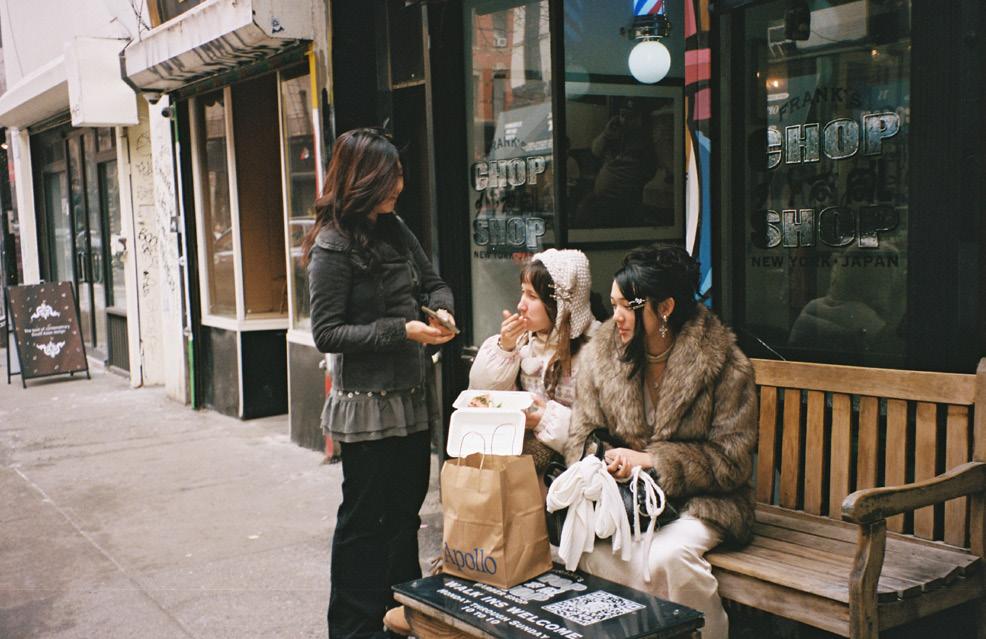
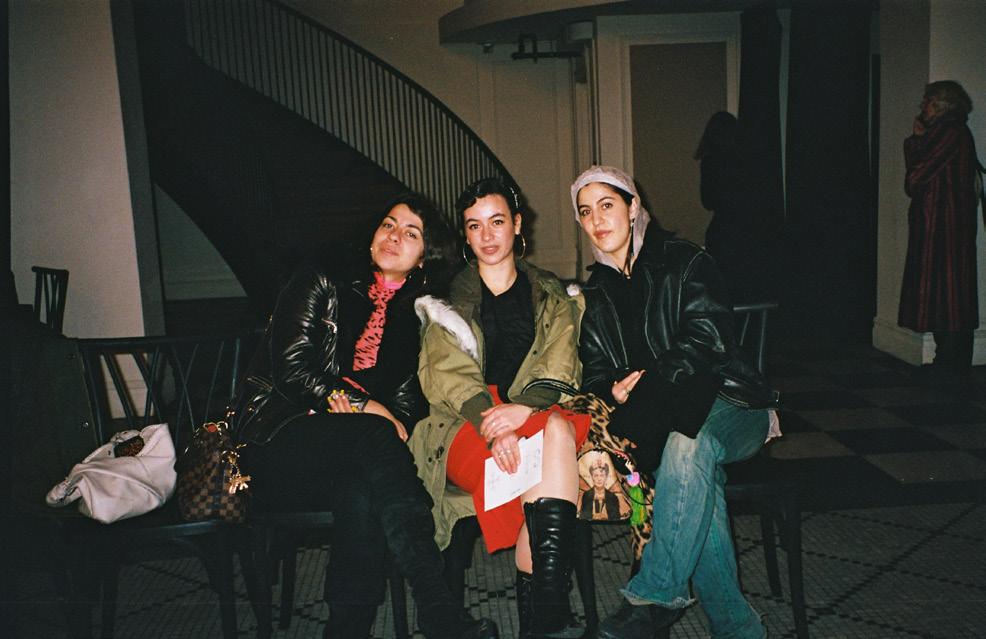
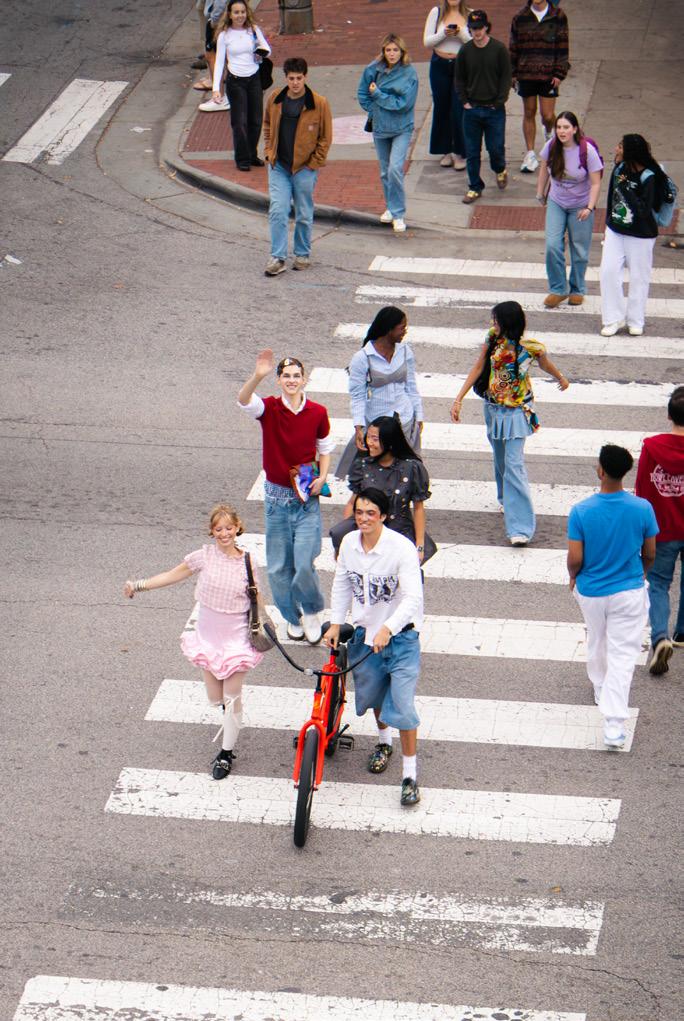
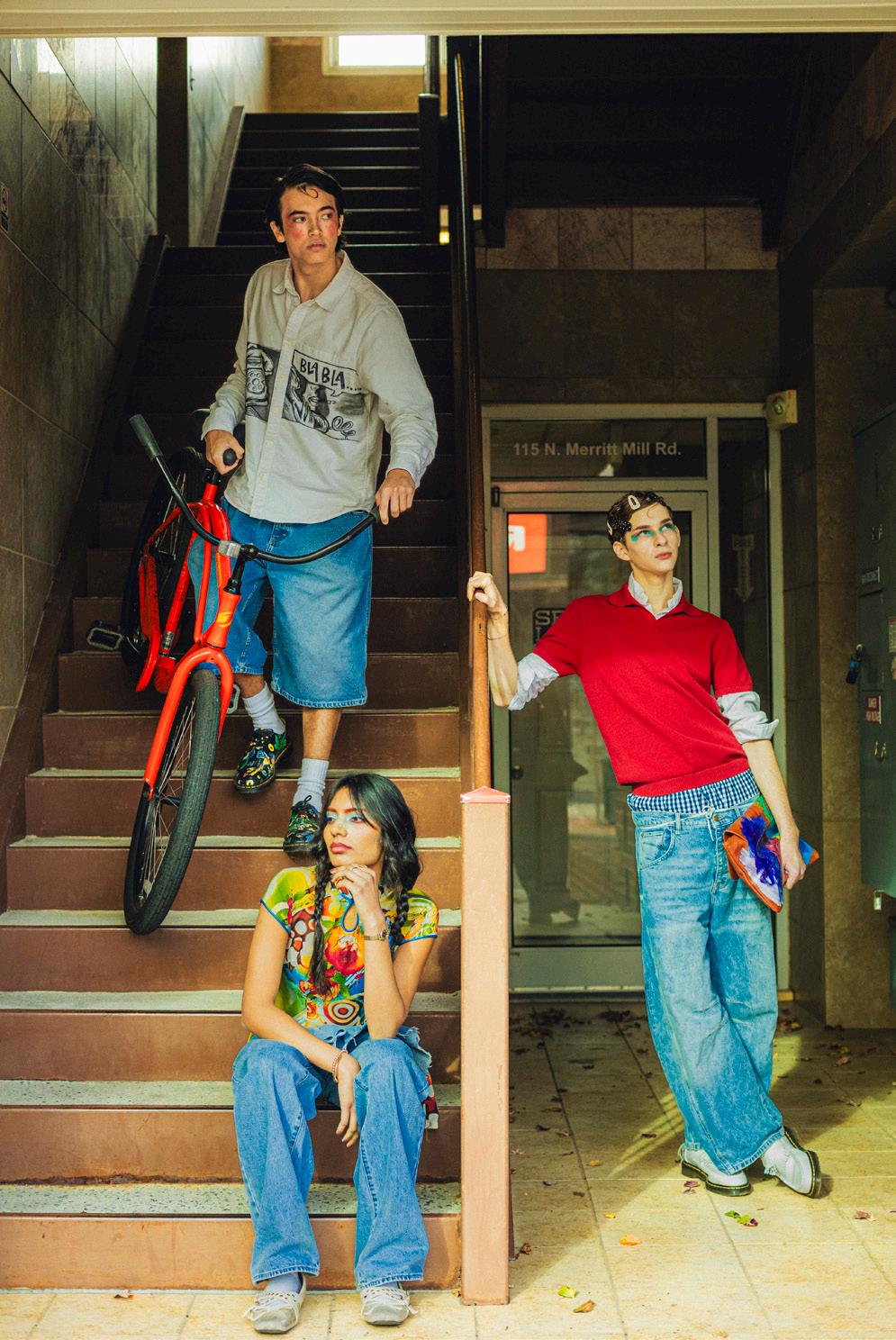
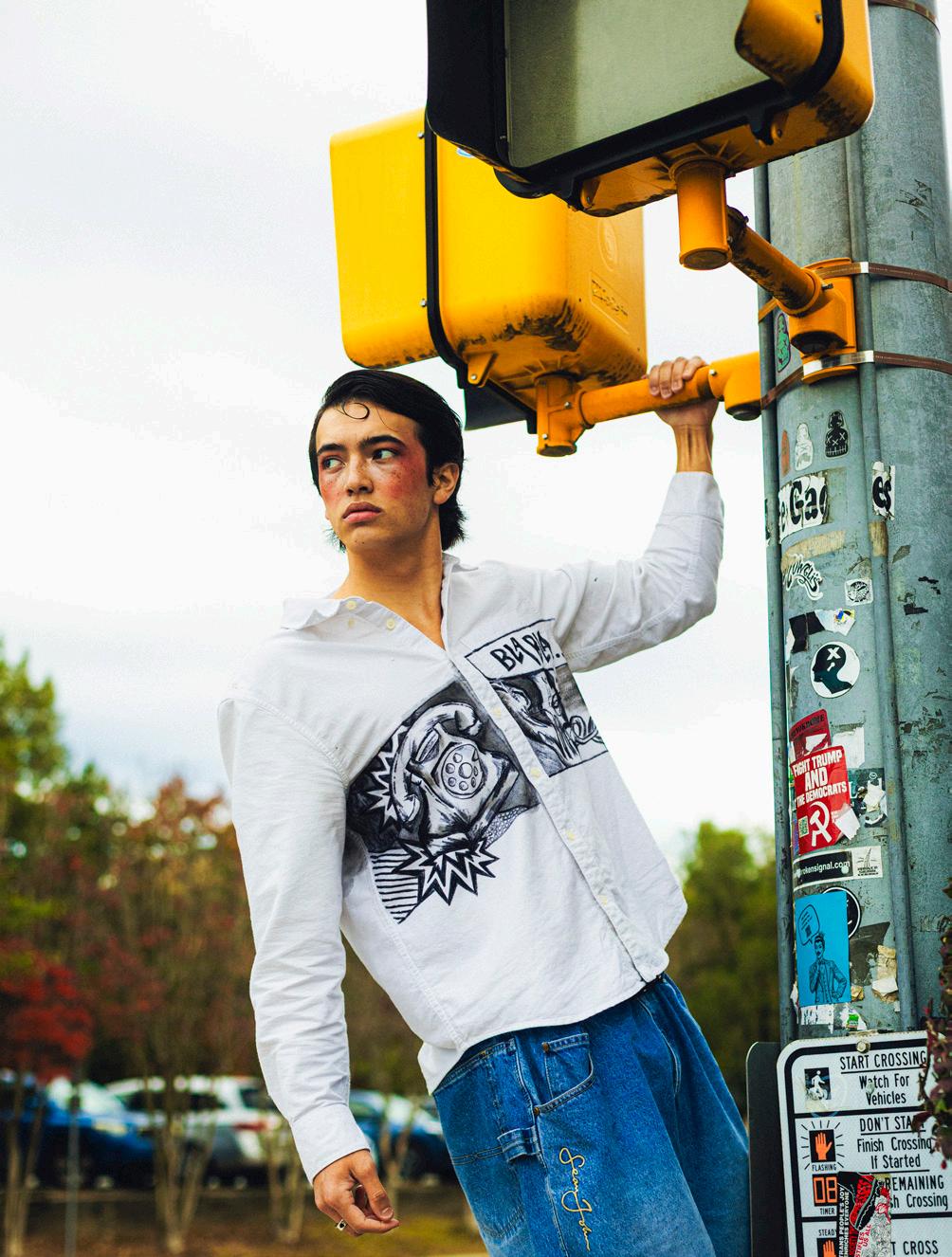
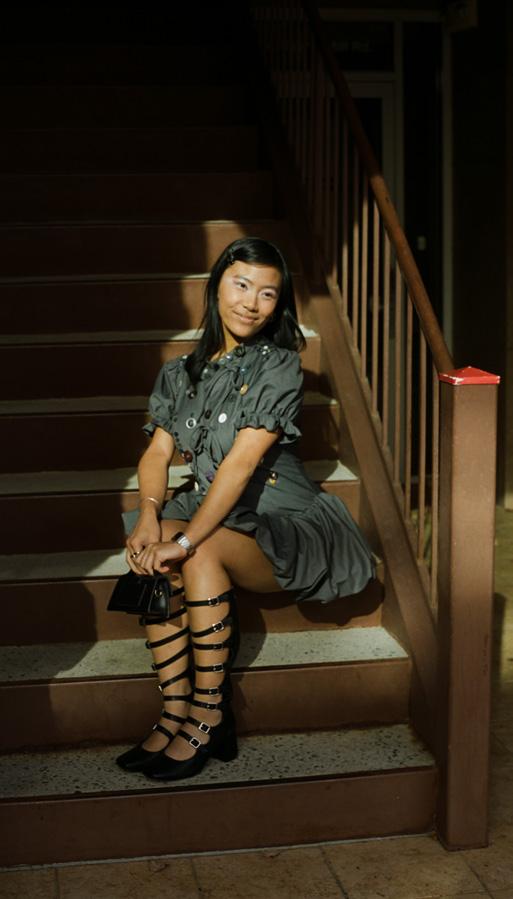
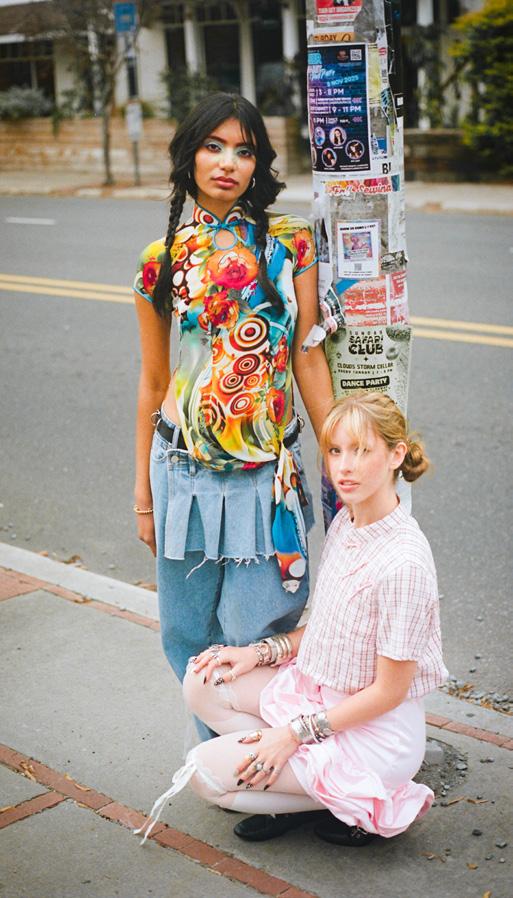
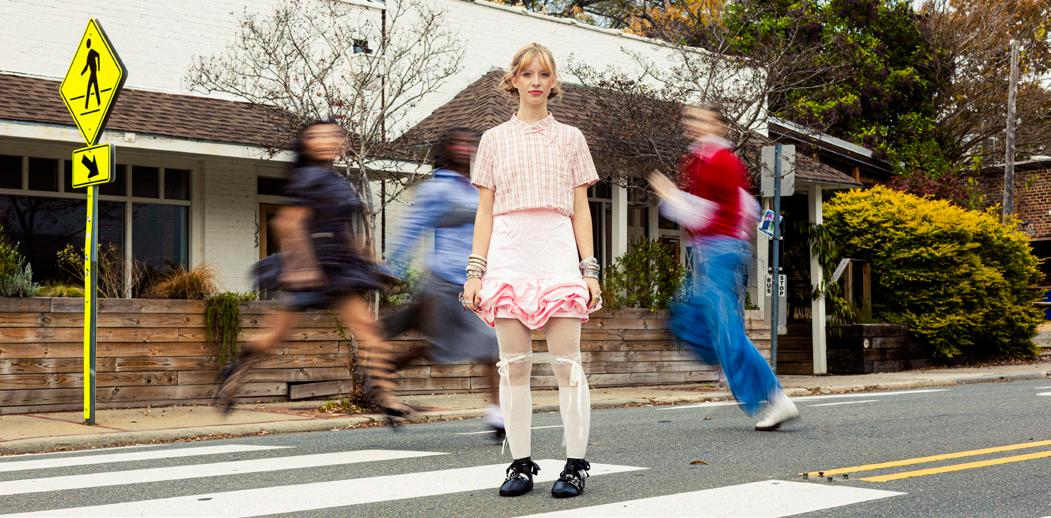
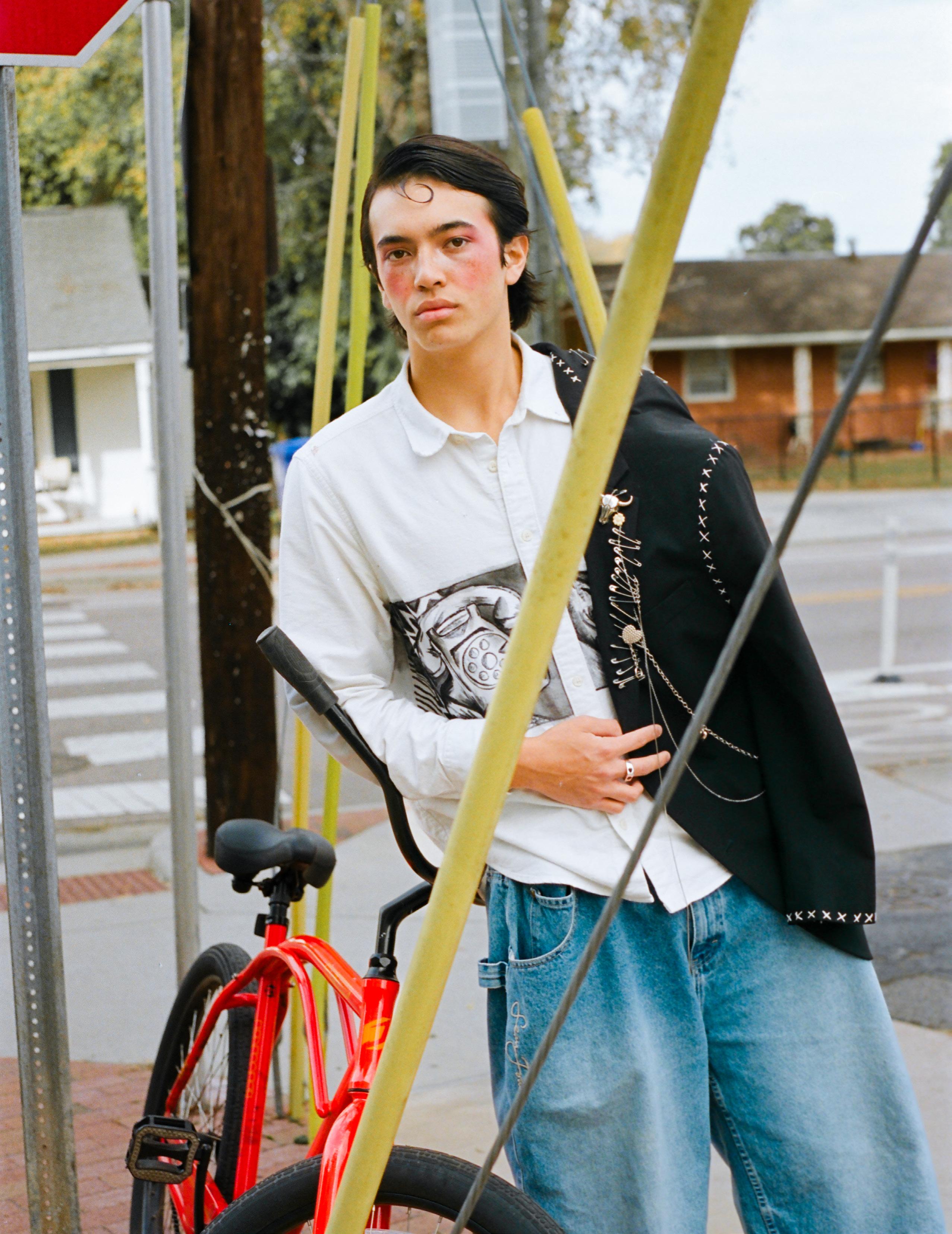
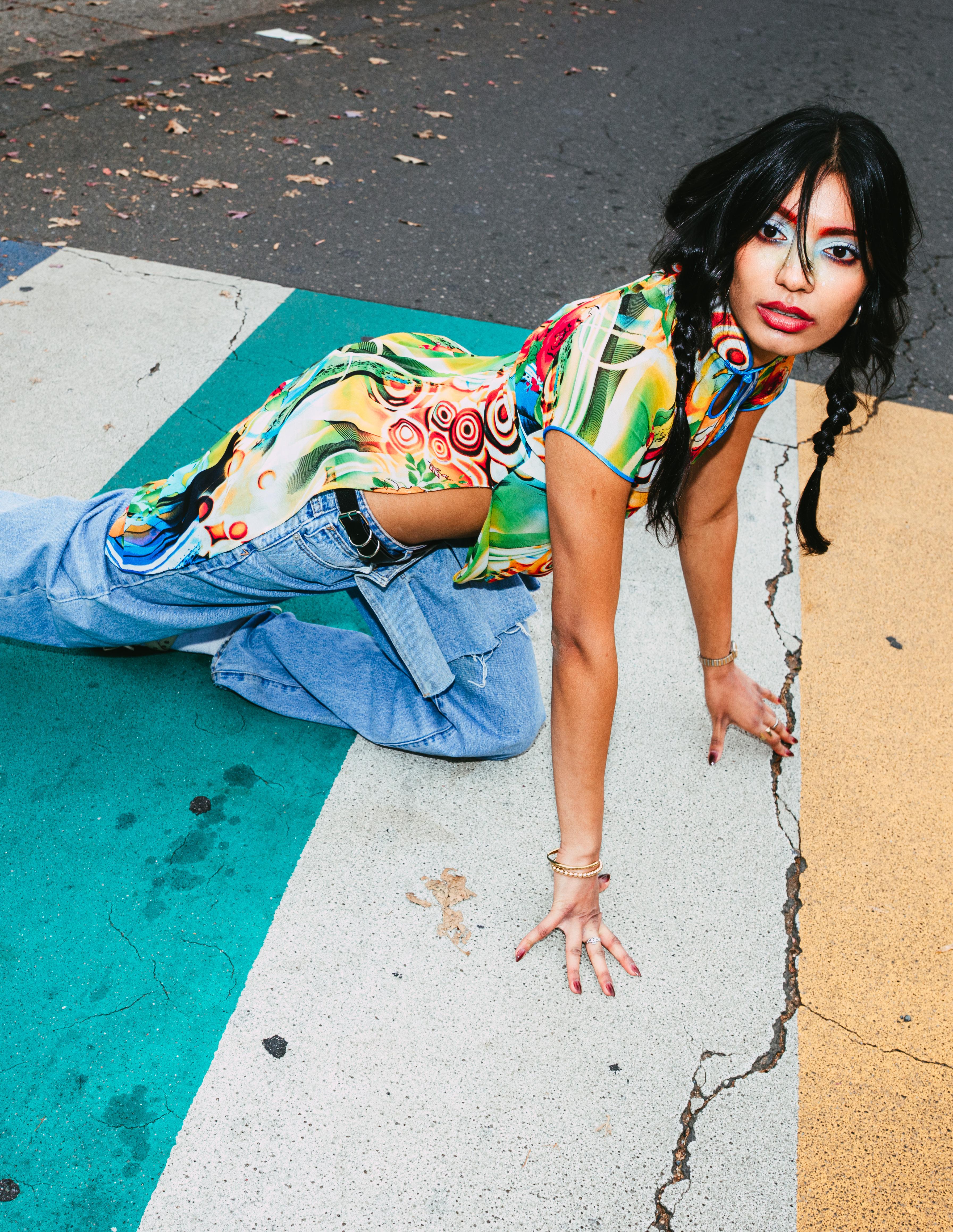
Renowned street style photographer Bill Cunningham has more than made his mark in fashion history, similar to the global phenomenon that became Japanese subculture streetwear magazine, FRU!TS. Mashing the two together, we find inspiration in the everyday: the mundane and the busy alike.
DIRECTED BY ELIZABETH COMER, SAVANNAH MATTHEWS, LANEY CRAWLEY, HELEN WICKETT, MIGUEL RODRIGUEZ CARDENAS AND LAYLA HUNTER
PHOTOGRAPHED BY GRACE RICHARDS, HAYDON BODE, JOEY FORGIONE AND NATE DIERS
STYLED BY MC O’BRIEN, DYLAN KIRSHEN, LUCY WHITFORD, MAGGIE KOONTZ AND SADIE DONNELLY
HAIR AND MAKEUP BY JOSIE SMITH, LEAH SUGG, KARLI KENNINGTON, LAYLA HUNTER AND SORAYA LEWIS
MODELED BY DIANNE CELEMEN, DREW HASS, GWEN STRAKER, LINDSEY SMITH, NOAH HUGHES AND SHWETHA KUNJUR
DESIGNED BY NORA LYONS
My mother used to beg me to let her paint my nails. As a kid, fashion and beauty felt too vulnerable; I was somehow convinced those small patches of color would cause a riot of attention that I was not ready for.
Each “no” shrunk me smaller and smaller until I was completely hidden behind the person I wanted to be. But my mother never hides — you will know exactly what she likes, and exactly what she does not.
My mother will curl her hair and wear the lacy dresses that make her happy. She will dance to the music she likes and sit for the songs she does not. And it does not matter who you are, my mother will lecture you for being a jackass if you are being a jackass.
Now, I am writing an article about fashion, so you can imagine how her confidence has inspired me over the years.
When it comes to maternal inspiration, pioneers of the fashion industry are not so different. Many sew what they have learned from their mothers into each garment that hits the runway.
From Stella McCartney, the trailblazer of sustainable luxury, to Jeremy Scott, the maximalist mastermind and the timelessly elegant Diane von Furstenberg, each has attributed their success to their favorite models: their mothers.
Stella McCartney’s mother put no serious thought into clothing. A musician, like her husband, Linda McCartney’s “fashion sense wasn’t strategic or thoughtful,” as Stella McCartney described in a L’Officiel interview.
She explained that her mother’s unconventional style “had a huge impact on [her] desire to do something a little more than just design a pretty dress and put it on a runway and make it glamorous.”
The liberty of wearing clothes for no particular purpose holds meaning in itself. It is true freedom of expression to think and feel just as you are, without factoring in the image you are presenting or how others may respond to it.
Stella McCartney carries her mother’s honest fashion freedoms onto the runway. Her recent collection, the Spring 2025 Ready-to-Wear, says it all.
Every look is its own person. Some outfits are flowy and sheer, while others are more rigid and constricting. Some have bright and vivid colors; others are muted and resigned.
Every outfit is an individual: free to exist on its own, and completely independent of
theme or connection. Inspired by her mother’s bohemian fashion sense, Stella McCartney creates unique pieces that refuse to be ignored.
Jeremy Scott has had an outlandish sense of style since childhood. Picture the outfit of a young boy whose mind would one day concoct a series of high-fashion food wrapper gowns.
Although school administrators were not the most receptive toward outfits like his, his mother would hear nothing of their protests.
Jeremy Scott reminisced on those days during a Vogue interview, stating, “When the school complained about my attire, my mother marched into their offices and gave them a piece of her mind and shut them down.”
His mother had a blatant intolerance for anyone telling him who to be. She advocated for honest self-expression through her fierce love. Jeremy Scott’s riotous, thought-provoking style has caused a stir in the fashion world that changed it forever — and, for that, we can thank Sandy Scott.
Diane von Furstenberg’s birth was “the triumph of love over misery,” as she described in an interview with The Guardian.
Her mother, Liliane Halfin, was an Auschwitz and Ravensbrück survivor. Von Furstenberg grew up knowing exactly how much it mattered that she was alive, and knew she wanted to make it count.
Her mother’s strength and perseverance inspired von Furstenberg’s creative brand of confidence which manifested itself in her iconic wrap dresses and countless runway shows.
The designer specifically illustrated her groundbreaking wrap dress as “a survivor, because it gives a woman the body language of confidence.” Like her mother, von Furstenberg’s timeless dress embodies self-empowerment, and has been sold to millions of women across the world.
A woman’s face is depicted on a piece worn by former actress and model Devon Aoki in von Furstenberg’s 2002 Fall/Winter
Runway Show. From a front facing view, you see the woman’s body turned slightly to the side, with her head partially turned toward you.
While your full attention is entirely on her, to her, you are an afterthought. Between bold, narrowed eyes, the woman on the dress dares us to look at her. She exudes confidence with her thick, dark hair and swallowed cheekbones — features comparable to von Furstenberg herself.
This self-empowering print was a statement inspired by her mother — the woman who lived. It is the very same statement that von Furstenberg has always ironed into each garment: “I am here.”
So, why do we say “no” to our mothers? They are the women who inspire the trends we chase, the same ones who unapologetically love and scold and laugh and dance. They are the women who inspire the art that we admire and feel existentially changed by.
Many of the cultural icons we look up to, the ones we praise for ingenuity, were once children. They were small dreamers, only at the beginning of their path toward the world’s spotlight.
It is by the nurturing of their mothers, the instillation of love and strength, that these icons’ creations have reached the spotlight today. Audiences across the globe are inspired by these top designers who, along with many others, attribute their success to their mothers.
Linda McCartney’s freedom allowed Stella McCartney to design without inhibition.
Sandy Scott’s fierce belief in self-expression was the support Jeremy Scott needed to believe that unconventionality has value.
Liliane Halfin’s inspirational strength carved a place in the world for Diane von Furstenberg, an unwavering woman whose designs personify confidence.
SPORT & styLe
WRITTEN
BY
SADIE DONNELLY
DESIGNED
BY
BETSY PORTER
There was a time when fashion belonged to the still, slim body: posed, preserved and perfected. Sport lived somewhere else — sweaty, physical and unglamorous.
You trained in one. You were photographed in the other. That separation no longer exists.
Today, the body in motion has become fashion’s most compelling subject. Athletes are no longer styled after the fact; they are actively shaping the industry. The runway does not simply borrow from the locker room — it studies it, repackages it and sometimes even worships it.
When Serena Williams stepped onto
the court at the 2018 U.S. Open in a black tutu, the moment marked a shift. Grace and athleticism occupied the same silhouette, reframing femininity as something that could hold power rather than soften it.
Since then, athletes have moved from muse to author. They are not asking for a seat at the table; they are changing the game and building their own arena.
That shift becomes clearest when they move beyond endorsement and into creative ownership.
Take WNBA player A’ja Wilson, for example. Her Nike A’One sneaker was not simply a campaign; it was a fully realized creative ecosystem. From design to cinematic rollout, Wilson did not just advertise the product; she helped build its narrative. She is not a traditional collaborator but a cultural producer.
Similarly, when Glossier partnered with the WNBA, it was not just a sponsorship; it was a cultural alignment. A beauty brand rooted in softness chose a league defined by strength, discipline and visibility. The collaboration signaled a broader shift: athletic power is no longer something fashion simply admires from the sidelines. It is something brands are actively building with.
The same instinct toward authorship surfaced when Naomi Osaka walked onto the court at the 2026 Australian Open. While Nike produced her jellyfish-inspired performance set, Osaka expanded the moment by commissioning couture designer Robert Wun to create her walk-on vision. Layered over her tie-dye kit, she appeared in a pleated miniskirt over wide-leg pants, finished with a widebrimmed hat and veil. Osaka described the look as symbolizing transformation and new beginnings — an entrance that treated athletic presence as conceptual storytelling rather than styling.
This is not athleisure. It is sport translated through luxury fashion: technical fabrics rendered precious, performance silhouettes softened by ballet flats and discipline reframed as chic. While this movement is new, it is important to acknowledge its beginnings.
The intellectual turning point came in 1997, when Miuccia Prada launched Prada Sport. Nylon and neoprene were elevated, utility became elegance and performance materials gained cultural legitimacy. Prada did not just utilize athletic codes: it validated them, opening luxury to movement.
“THE PAST DUALITIES OF DELICATE VERSUS STRONG, FEMININE VERSUS ATHLETIC,ARE COLLAPSING. FASHION IS BEING FORCED TO RECKON WITHMOTION, MUSCLE AND MEANING.”
From there, acceleration followed. Virgil Abloh transformed sneakers into cultural artifacts. And when Miu Miu x New Balance entered the conversation, the collaboration did not feel like luxury borrowing from sport; it felt like sport being absorbed into fashion’s luxury houses. Track-inspired silhouettes were reframed through quiet luxury, styling ballet flats with tracksuits. It was not about performance anymore; it was about cultural fluency. The crossovers only grew, each time feeling less like
endorsement and more like authorship. But the evolution is not seamless.
Luxury is captivated by the image of athletic power — strength, discipline and motion — without always reconstructing garments for athletic bodies or designing for lived movement. Fashion embraces muscle aesthetically while lagging structurally.
Still, some designers are beginning to bridge that gap. At Collina Strada’s Fall 2024 Ready-To-Wear show, femininity was framed through muscularity and motion, with garments constructed around strength rather than merely styled to suggest it. So is fashion actually changing?
Yes, because athletes now shape visual culture from the inside, directing campaigns and commissioning designers. But symbolic visibility does not automatically translate into structural transformation. Still, something real is happening. The contemporary female muse of style stretches and sweats and wins. She carries softness and edge all at once.
The past dualities of delicate versus strong, feminine versus athletic, are collapsing. Fashion is being forced to reckon with motion, muscle and meaning. This love affair between sport and style is not about comfort: it is about who defines beauty. And while luxury may still be catching up to the bodies it celebrates, one thing is clear: the sideline is no longer separate from the runway.
Strength has become style. And femininity is finding a new form.
Photo via Mia Anderson
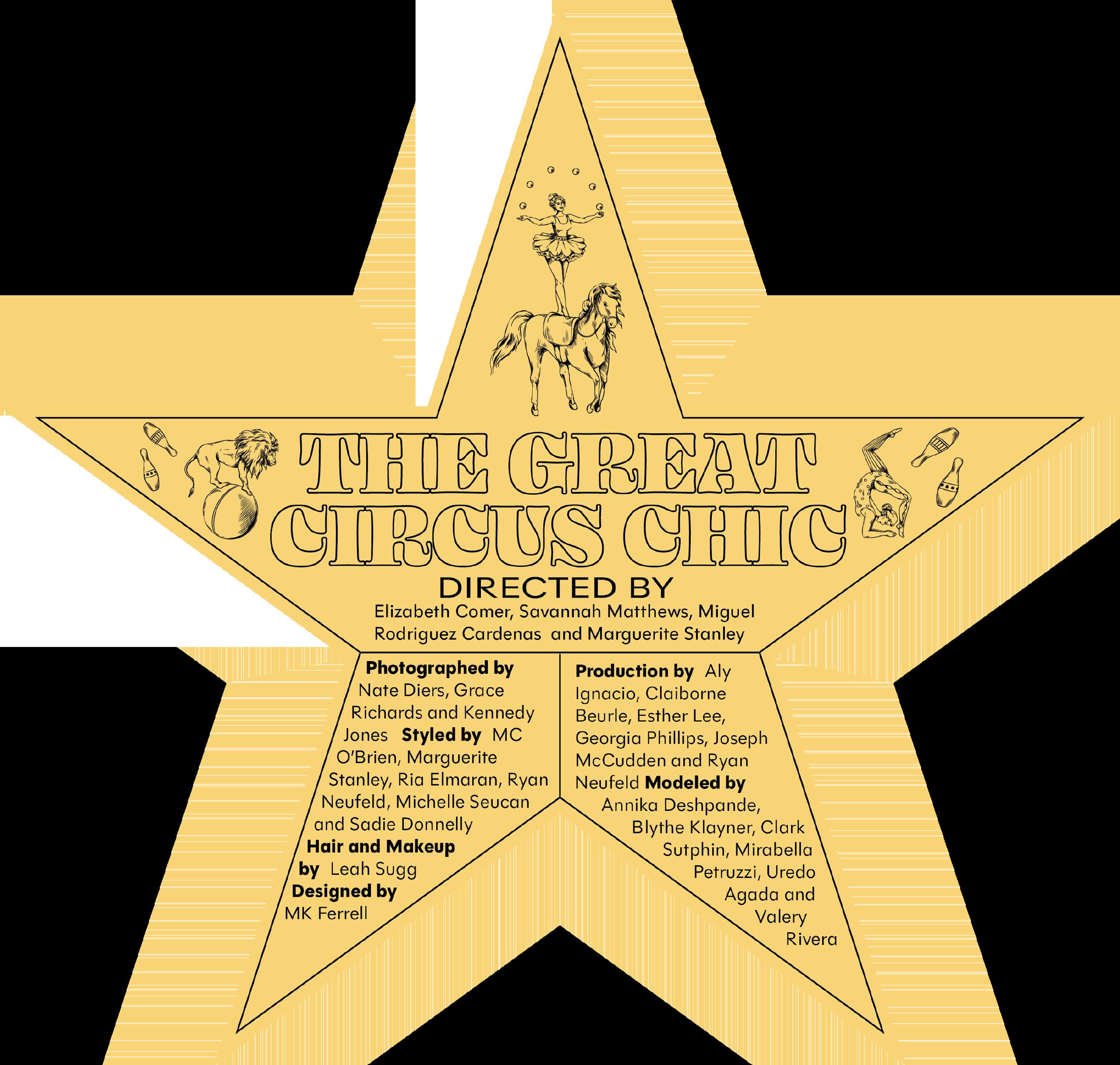
Circus
Circuschic
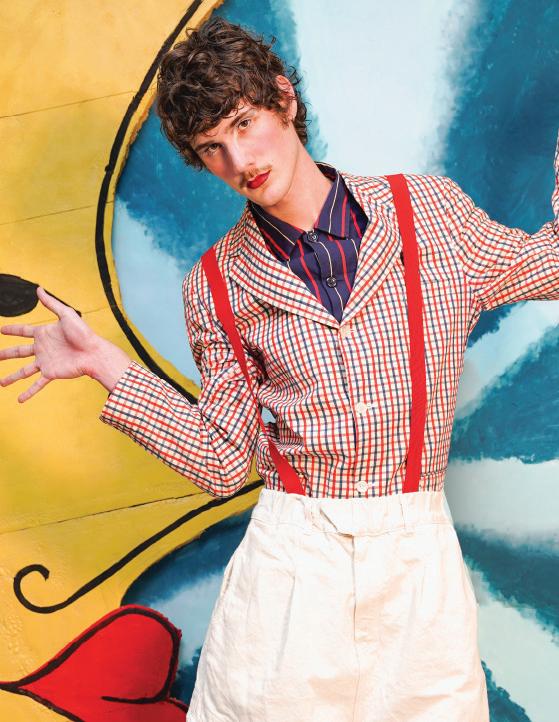
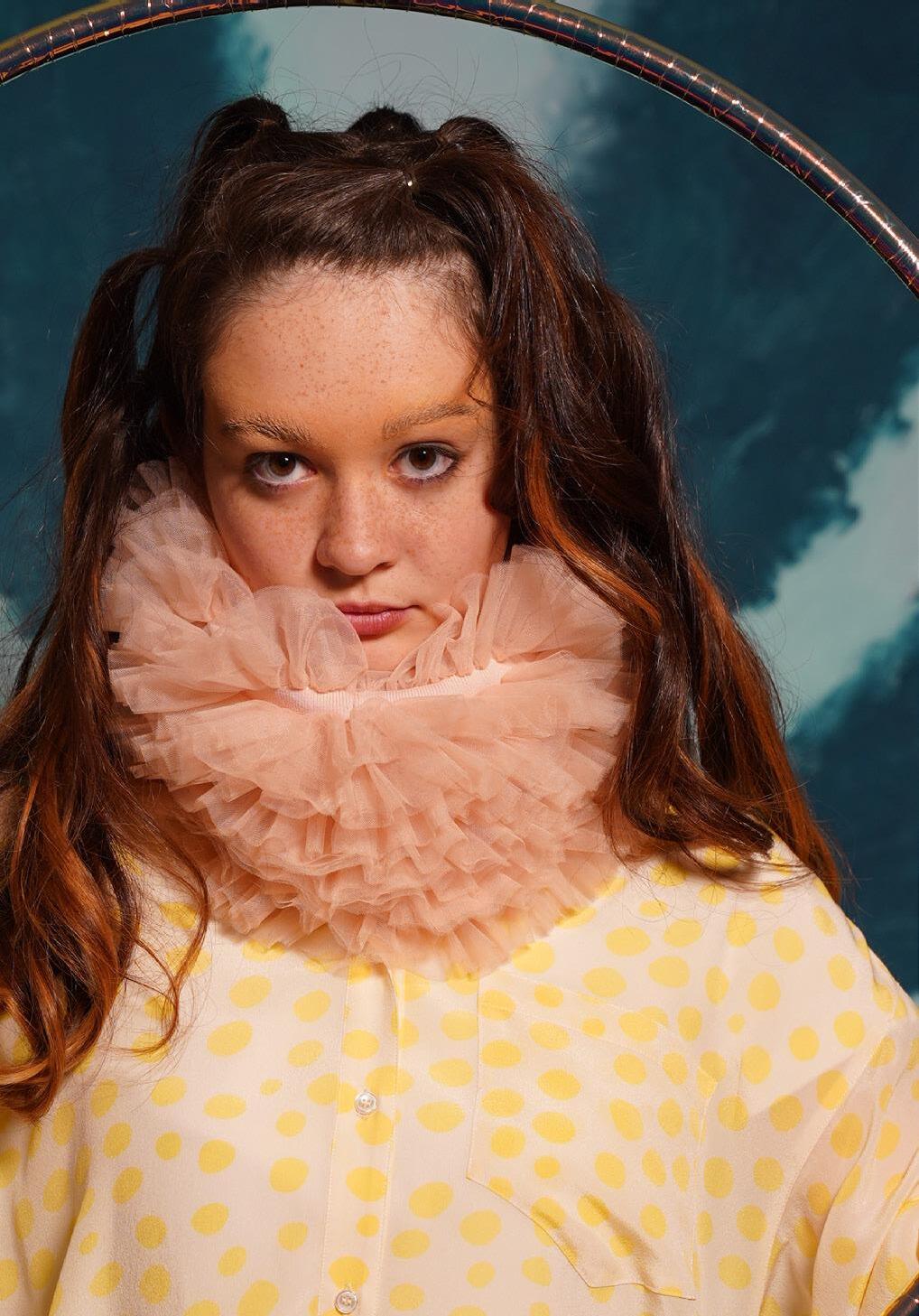
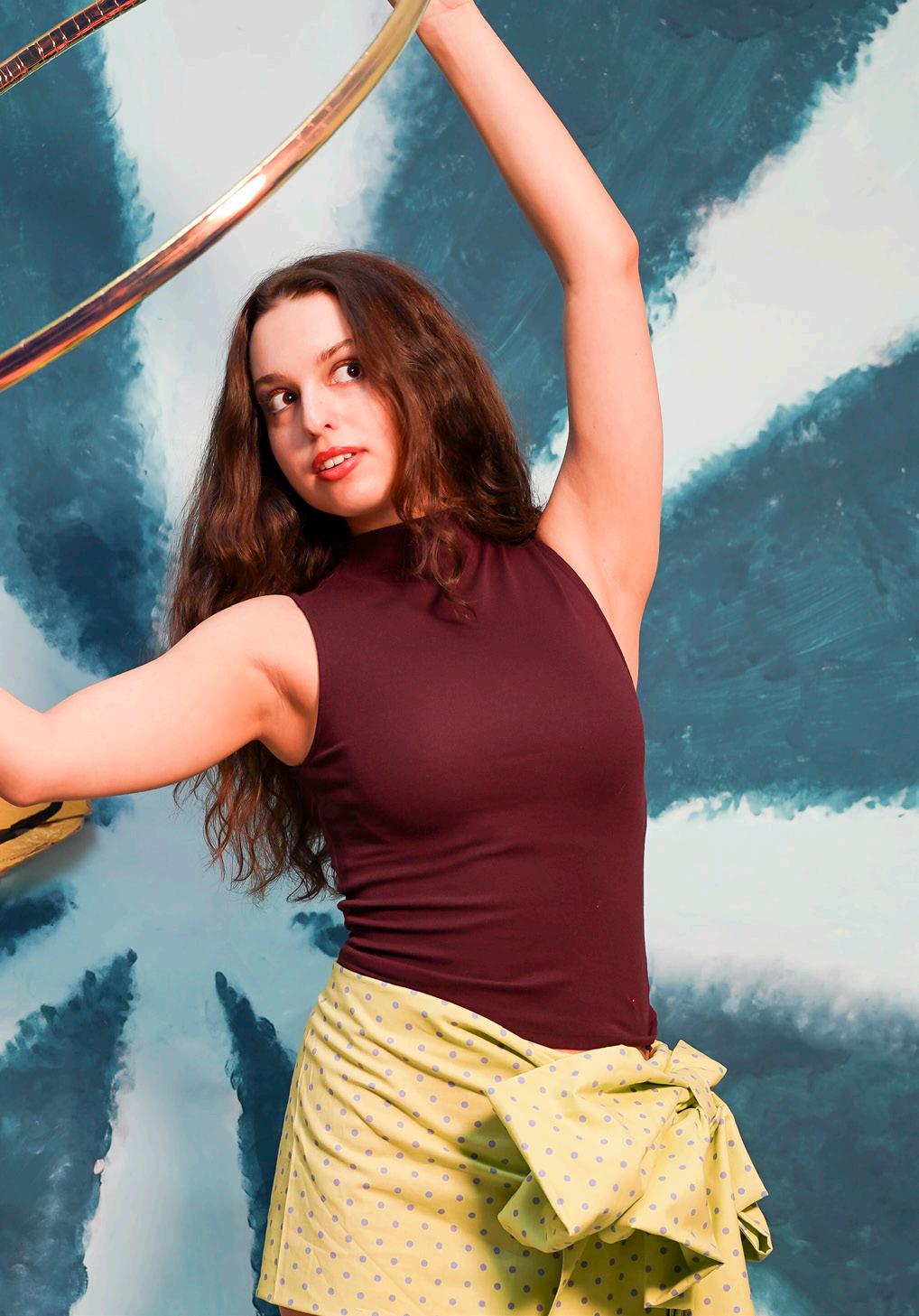
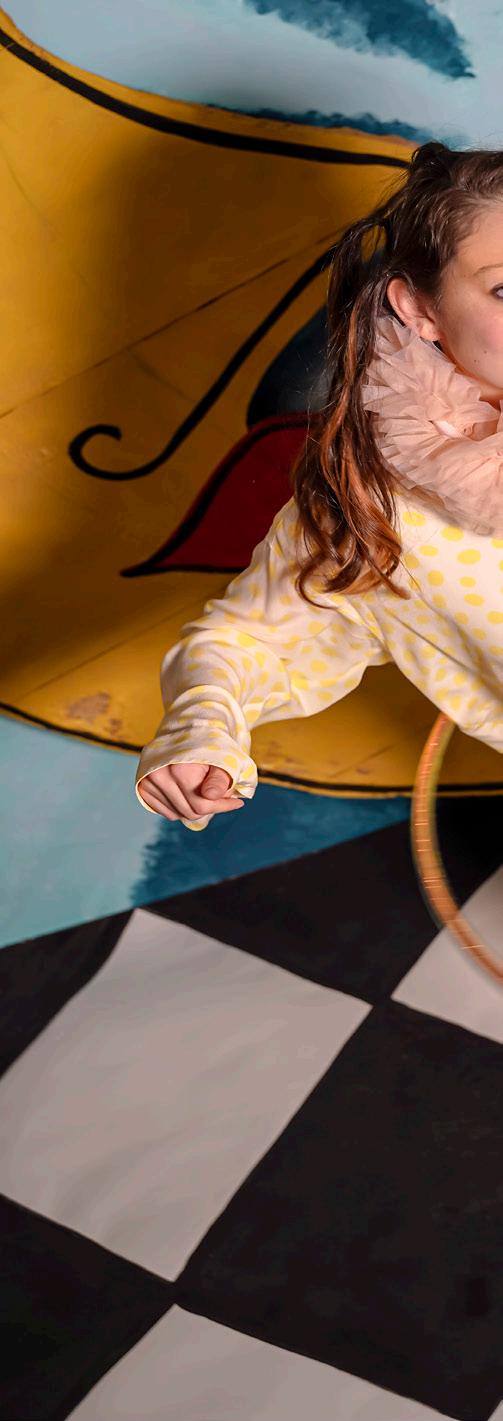
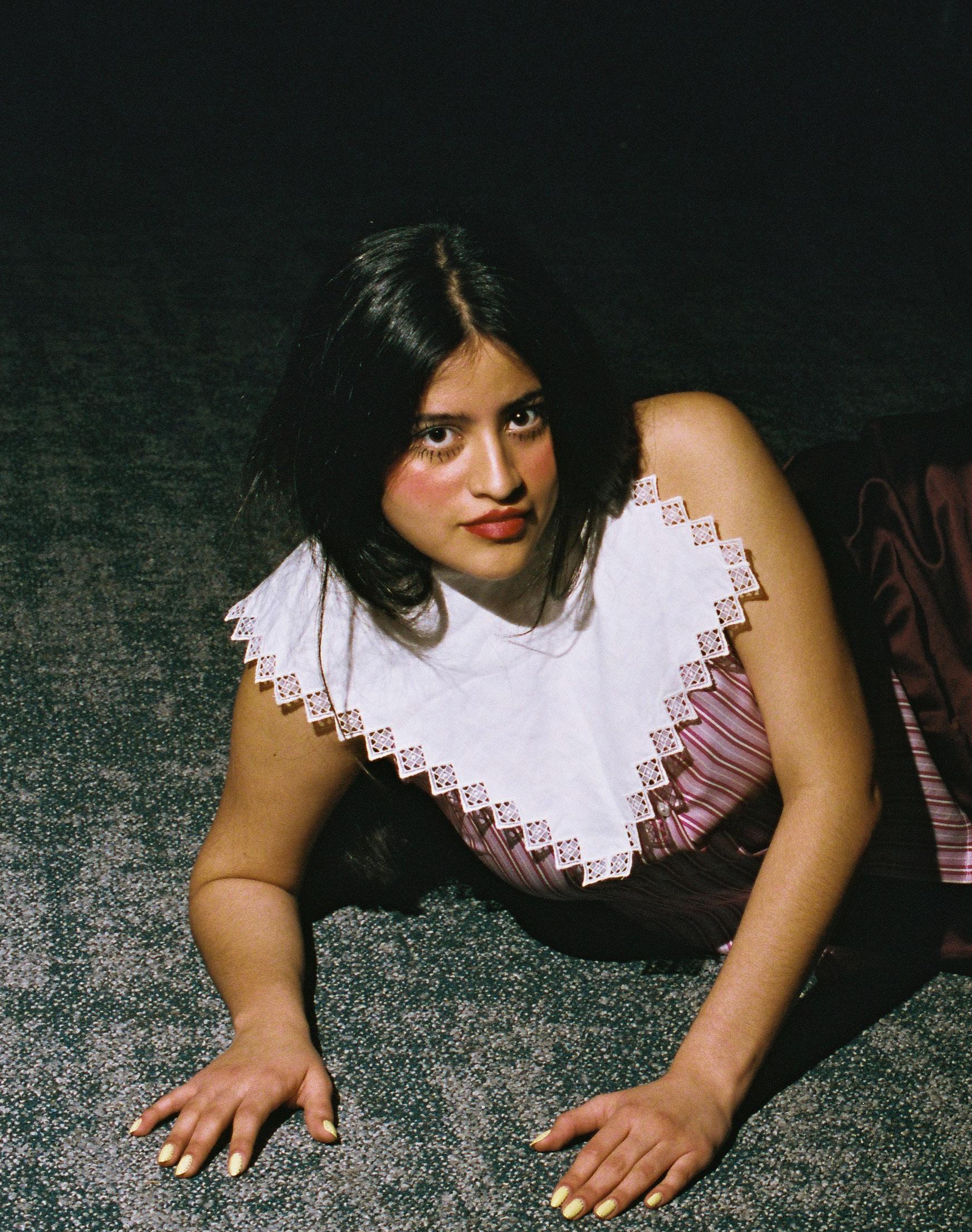
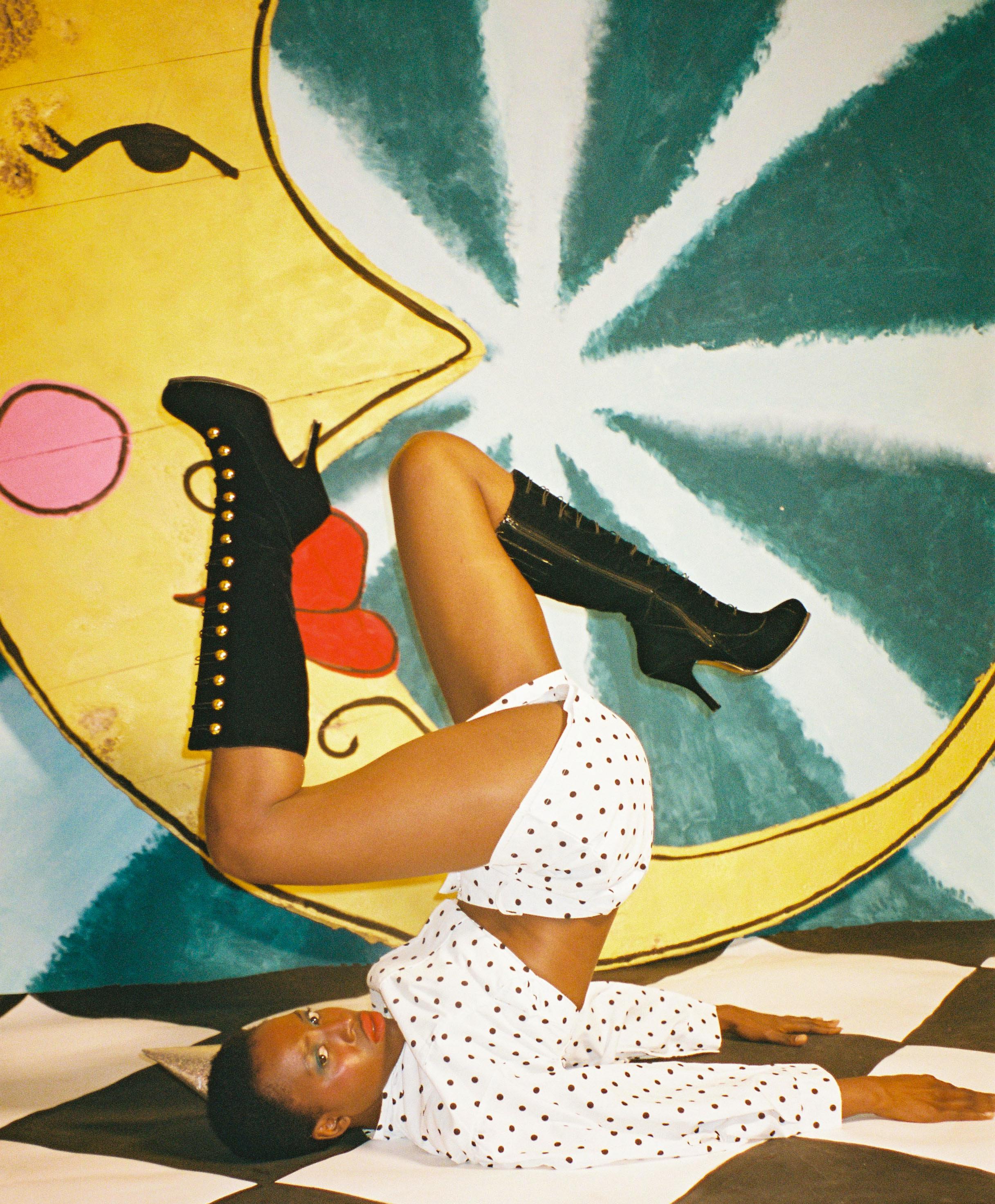
A tribute to bold, theatrical expressionist fashion, this high-drama editorial concept explores how performance and fashion collide through the lens of a circus. The lines between costume and couture are continually blurring, and fashion is redefining its limits as an art form in the process.
THE SHADES WE STILL CAN NOT FIND
WRITTEN BY SHREYA NARANG
DESIGNED BY MEGAN MACDONALD
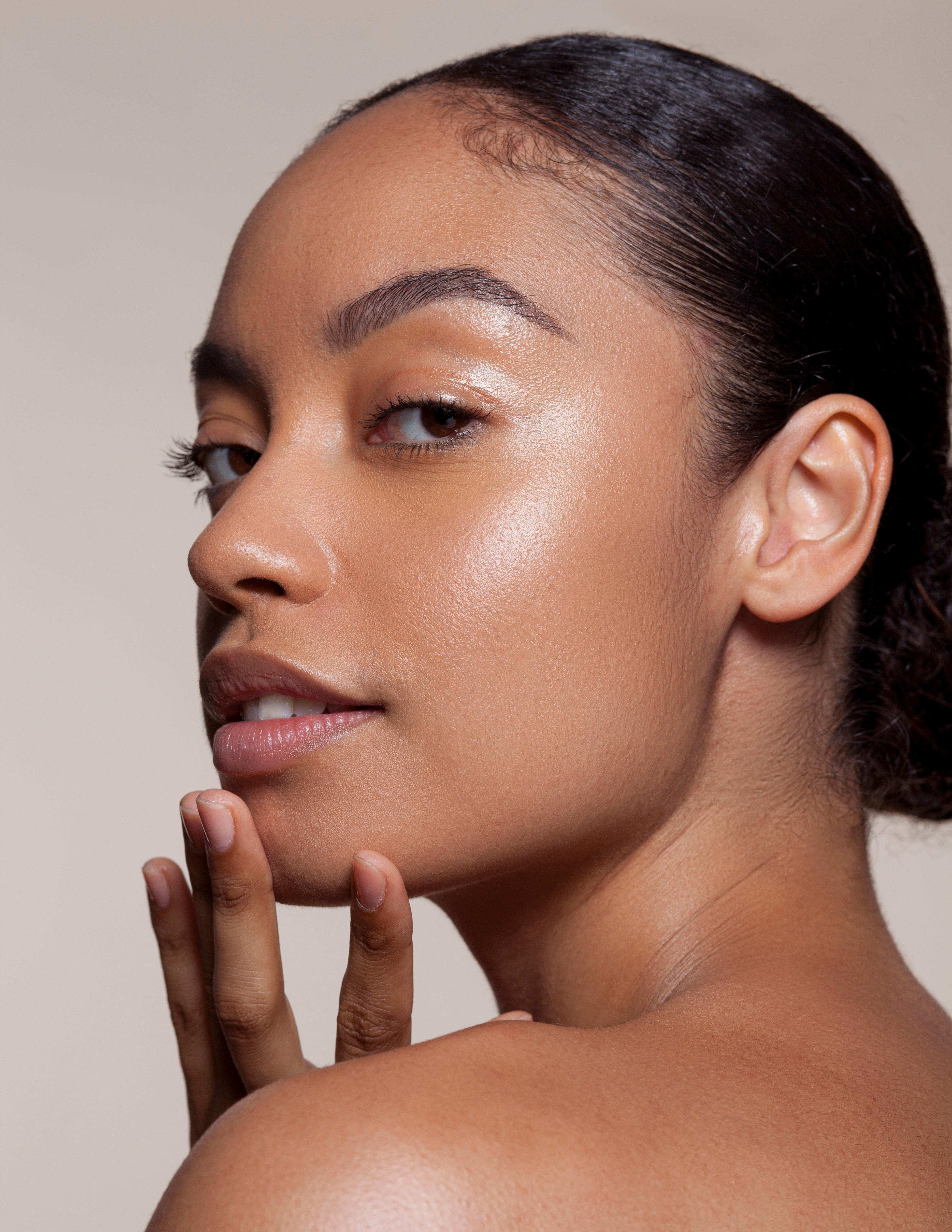
In the sprawling aisles of Sephora, under the gleaming lights and beside the intricately arranged palettes, there is a quiet reckoning occurring for many consumers of color. For years, the question has been wickedly simple: Which shade matches my skin?
Yet, for women like lifestyle creator Toni Bravo, the answer has been elusive. It was this frustration that drove Bravo to develop her own blush in collaboration with Tower 28 Beauty, producing a color that finally complemented her skin tone.
Her experience is not an anomaly. Rather, it is a mirror reflecting years of systemic oversight within the beauty industry, a space long dominated by a narrow, Eurocentric beauty standard. Bravo’s story is emblematic and serves as another reminder that even in 2026, inclusivity is still a work-inprogress.
Her collaboration was born from a mixture of frustration and ingenuity, a kind of self-advocacy that women of color have practiced for generations. It also revealed a truth that the beauty industry has been notoriously slow to embrace: adaptability and diversity are not afterthoughts. They are the blueprint for a future where no one has to create their own shade just to feel seen.
The history of shade expansion in beauty is punctuated by both successes and shortcomings. When Rihanna launched Fenty Beauty in 2017 with 40 shades of Pro Filt’r foundation, the industry was forced to confront a harsh reality: if you did not fit an age-old Eurocentric beauty ideal, you were often left behind.
Before Fenty and the nowmandatory “shade expansion” language peppered across various launch campaigns, the beauty aisles largely mirrored a singular, exclusive vision of beauty.
Lighter shades dominated displays while deeper tones sat like afterthoughts — limited, inconsistent and sometimes even nonexistent.
Fenty did not only satiate a market gap — it blew the conversation wide open, challenging other brands to think outside of
traditional consumer bases. According to an article from Vogue, Fenty proved that inclusivity could be lucrative and culturally transformative. For consumers, this was revolutionary, and they responded with unprecedented loyalty. For the industry, Fenty set the stage. “The Fenty Effect” became the shorthand for what occurs when a brand invests in producing more shades and publishing inclusive messaging.
Yet, progress has been incrementally uneven. Even now, walking into Sephora can feel like stepping into a maze where the deeper you go into the spectrum, the fewer options you find.
According to Refinery29, the beauty industry’s commitment to diversity, equity and inclusion has been fluctuating, with some initiatives losing momentum. Many brands currently rely on grant programs or funding initiatives, such as the Glossier Grant Program, Sephora Accelerate and the Pull Up For Change Impact Fund, to demonstrate some semblance of inclusivity.
While these programs provide critical support for Black founders, creators and consumers, they often act as a band-aid over a much deeper structural issue, which is that true accessibility in product development and market positioning is still far from equitable.
Depending solely on these types of grants is not sustainable — it is merely a method of survival to keep the heads of these brands above water.
Despite these hurdles, several Black-owned brands have leveraged DEI programs not only to survive, but to thrive. Rebundle,
founded by Ciara Imani May, transformed the synthetic hair industry with non-toxic, biodegradable braiding hair.
Similarly, The Original UnBraider, founded by Khadija Imara and her mother Natasha Anderson-Imara, addresses a specific consumer need while cultivating a loyal community. These brands illustrate what occurs when innovation reaches underserved markets: a cycle of growth and cultural resonance that benefits both the business and the audience it serves. As Imara notes in a Refinery29 article, “Glossier gave us a grant, and they not only talk the talk but they walk the walk.”
The roots of many initiatives can be traced back to 2020, during the height of the Black Lives Matter demonstrations. Brands faced unprecedented pressure to commit to inclusivity. Many responded with tangible programs: Glossier designated $500,000 for Black-owned beauty businesses, Ulta partnered with the Fifteen Percent Pledge to offer a 10-week curriculum and grants to emerging brands and Sephora Accelerate nurtured products that would enter mainstream recognition, including the skincare brand Topicals and fragrances like Moodeaux and Brown Girl Jane.
In 2023, NielsenIQ estimated that revenue generated by Black consumers reached $9.4 billion — clearly representing a powerful force within the beauty economy.
Yet, this economic influence does not always translate into support for Black -owned businesses, leading to what experts call
“economic leakage.”
Many systemic challenges — such as difficulty with obtaining bank loans or venture capital — hinder the ability of Black founders to expand product lines and develop new shades for diverse consumers. This is particularly concerning given the diminishing influence of corporate DEI programs, which threatens to exacerbate the gap in innovation and representation.
Some brands have faltered under the weight of this inaccessibility. Target, for instance, pledged over $2 billion in 2021 to invest in Black-owned businesses, but recent backtracking — partially influenced by broader political shifts, including the United States Supreme Court’s 2023 affirmative action ruling — reflects how tenuous corporate commitments can be. DEI became scapegoated in partisan discourse and was blamed for unrelated economic and infrastructural crises, further undermining meaningful progress.
On a more positive note, the rise of social media has recalibrated consumer power. Savanta’s 2023 DEI report indicates 31 percent of U.S. shoppers refuse to buy from brands that fail to demonstrate a commitment to diversity and inclusivity. Online platforms allow consumers to amplify their dissatisfaction and praise alike, fostering a climate where accountability is public, immediate and prevalent.
A mismatched shade range no longer goes unnoticed. A performative diversity campaign without action gets called out or “cancelled” within hours. And when a brand does the actual work that shows up in their product campaigns and leadership, consumers reward them with loyalty. This has empowered communities to assert their needs
directly, usually bypassing corporate gatekeeping altogether. Tomi Talabi, founder of The Black Beauty Club, emphasized the importance of internal community support: “If we want liberation, we have to create it. This includes establishing infrastructure, supply chains, distribtion, etc.”
Similarly, Eunice Cofie-Obeng, the scientist behind the skincare brand Nuekie, echoed this ethos: “I’ve always been a fan of creating your own table. I’ve heard thousands of nos, so I told myself, ‘Why should I wait to create this for me when I have everything in me to create it for myself?’”
These perspectives underline a crucial tension: While corporate DEI programs can provide visibility and resources, sustainable innovation and accessibility often emerge from within the communities themselves. Their words also reveal a philosophical shift — one that reframes inclusion as something to be created rather than given.
Still, the struggle for shade inclusivity continues as many consumers amble about beauty aisles feeling unseen. Vogue recently explored why shade inclusivity remains elusive in 2025. Many beauty brands currently stock most of their inventories in lighter hues, operating under the false notion that these shades yield the highest revenue and sales.
For consumers of deeper skin tones, this turns what should be a joyful experience into disappointment. Which shades will blend seamlessly into their skin? Which will make them look chalky? How many products will they need to mix to approximate their genuine skin tone? Consumers like Bravo recognize the difference between brands that embrace inclusivity as a performative ideal and those that invest in authentically diverse product lines. This is not to dismiss the financial and logistical realities of launching dozens of shades simultaneously. Many brands simply lack the funding to generate 50 iterations of product through research and development, and systemic inequities in lending and venture capital exacerbate these limitations. Yet innovation often finds a way, as seen with independent brands and founders who refuse to wait for the mainstream to catch up. Their dedication demonstrates that adaptability and diversity are not simply ethical imperatives —
they are competitive advantages in a globalized, socially aware marketplace.
What the next era of beauty requires is not perfection but a commitment to listening and funding those who understand the nuances of melanin-rich complexions because they have lived through them. The future of beauty is not solely in the hands of corporate giants. It is being molded by the communities they aspire to serve.
The attacks on DEI programs threaten to stall this future, but the cultural pressure from stockholders, consumers and communities remains more powerful than ever — because beauty is not simply a pigment or a formula. It is identity. It is history. It belongs. And belonging requires more than 30 shades. It requires an industry willing to see every individual who stands beneath its bright lights, searching for themselves.
Photo Credits via Grace Bukunmi and Toni Bravo Adobe Stock
WELLNESS
Looking vs. being
h e a l t
WRITTEN BY ELIZABETH NAM
The lack of research in social media discourse on women’s health >
Scroll through social media and you will quickly find content on how best to eat, sleep and move. It’s likely you will encounter at least one of these buzzwords: Pilates, clean girl, 5 a.m. club, 75 hard, or 75 soft. This wellness algorithm does not simply offer a blueprint for self-improvement — it supposedly defines what health is supposed to look like.
We watch influencers wake up at 5 a.m., go to Solidcore, take supplements, hit their protein count, maintain a calorie-deficit diet and go about their day. We see their toned bodies and effortlessness, and we assume they are living a perfectly healthy life. The voice in the back of our head may tell us to live like them to increase our worth or beauty.
Even after a successful trip to the doctor with a clean bill of health, there is a part of ourselves that relentlessly feels like we aren’t doing enough for our bodies. This doubt does not stem from medical advice; instead, it comes from cognitive biases. These supplements are not marketed as optional but as necessities for glass skin, hormonal balance or a healthy gut. The final key connecting the promotion to the consumer is the desire to achieve an optimized body.
not yet know their long-term effects. Despite not knowing the potential reactions — on top of affordability and accessibility issues — these weight loss drugs remain in high demand, which makes you wonder how many people truly need them.
Regardless of the — often high — price, products that show promise in erasing even the slightest physical flaw are purchased either until the trend dies down or until their lack of credibility is exposed. In 2016, SugarbearPro launched a blue gummy bear called “Sugarbearhair.” For a month’s supply, these gummy bears, packed with vitamins and biotin, cost a little under $30. The Kardashians promoted these gummies by posting on Instagram and Snapchat with aesthetic filters and photos. Sugarbearhair looked delicious and supposedly made your hair healthy like Kylie Jenner’s! Regardless, do teenagers and young adults truly need to take hair supplements?
The downfall of the gummies can be credited to YouTube beauty influencer drama, but what soon came after was the truth about the
they finally saw what it was worth: nothing. This chaos of spreading misinformation to promote wellness products and exposing the truth created a whirlwind of discourse on social media regarding women’s health.
So, all of this must make you wonder: How many of these products are scientifically proven to be beneficial? The products might make you appear physically healthy, but is appearing healthy the same as being healthy? And, how does this affect mental well-being? What kind of narrative does it portray about what “healthy” should look like? How can that narrative affect the development of young girls and women? To answer these questions, we turn to a host of social media, nutrition and psychology experts.
“There is a part of ourselves that relentlessly feels like we aren’t doing enough for our bodies.”
Beauty and health marketing often target women’s insecurities by capitalizing on aesthetic pressure. Regular bodily processes (e.g., acne, aging, bloating, etc.) are turned into problems that need to be solved. One of the biggest products on the market is GLP-1 medications. They make you feel fuller for longer, and your cravings are no longer loud. The public rarely questions the consequences of prolonged usage of GLP-1 drugs, even though we do
vitamins. The excess biotin resulted in people breaking out and experiencing skin rashes. Plus, the FDA does not regulate vitamins like Sugarbearhair for safety. The combination of public outrage and drama resulted in the downfall of the product, and the Kardashians never promoted it again.
Misleading filler words and statistics maintain the efficacy of the “miracle” product. However, when people began to separate the discourse and reality of Sugarbearhair,
In May 2025, researchers Elif Sahin and Nevin Sanlier conducted a cross-sectional study on nutrition knowledge, body image and social media usage among women. They discussed how extensive social media use has negative effects on women’s body image and relationships with food. Obsessing over healthy nutrition and categorizing foods as healthy or unhealthy is encouraged through social media usage and a lack of basic nutrition knowledge.
In the results of their analysis, Sahin and Sanlier encourage an increase in nutrition education and social media literacy, urging readers to question the legitimacy of the content they consume on social media about health to prevent dissatisfaction with their bodies. By expanding our knowledge of nutrition and health, we can learn to assess the legitimacy of health-related content and avoid unnecessary changes in our daily routines that can disrupt our mental health.
Looking further into specific health trends, Ladwig et al. (2023) studied social media trends and their impact on women’s body image and health. One of these trends is “fitspiration,” which inspires individuals to become physically fit. “Fitspiration” involves posting your body profile, inspirational quotes, sharing before-and-after weight loss pictures and following fitness accounts.
This term might seem outdated, but it illustrates how long social media has been involved in lifestyle and health trends. Unfortunately, “fitspiration” was closely linked to “thinspiration,” which has a more negative effect. Whether or not everyone has experienced this connection, viewing “fitspiration” content generally indicates being less satisfied with one’s body due to unfavorable social comparisons. However, Ladwig et al. did find that “body positivity” and “body neutrality” content lowers body dissatisfaction by discouraging comparison with others.
For all of these types of content, there was no credibility check to ensure that the information being shared was based on facts. However, for “body neutrality” content, all types of bodies were displayed as normal. When only one body type is highlighted as the standard to achieve — which content like “fitspiration” and “thinspiration” tends to do — it inevitably results in comparison and body shame.
Kaitlyn Burnell is the director of research at the Winston Center on Technology and Brain Development Research and an assistant professor in the Department of Psychology and Neuroscience at UNC-Chapel Hill. Burnell emphasizes that, “The few studies that examine men find similar results in that exposure to fitspiration content negatively affects body image and
mood in the moment. However, a key difference is the amount of exposure. Girls and women are much more likely to encounter fitspiration content, and similar content, in their daily lives. This allows for more opportunity for the negative effects of exposure to occur.”
With social media and technology infiltrating our daily lives, consequences for development and cognitive abilities are rising. Moreover, these consequences are a greater issue for adolescent girls. Burnell reminds us that misinformation is especially concerning for young women who are “particularly vulnerable to appearance-oriented influences.”
By targeting insecurities, advertisers will find ways to market their products as safe, easy, life-changing and necessary. Not to mention, with misinformation and AI clouding the Internet, it has become harder to distinguish what is real and fake. We have an innate desire to be physically and behaviorally attractive, and when we compare ourselves to influencers who have an artificial advertiser mindset, we become willing to do anything to become like them.
As consumers, it is easy to overlook the industry’s intentions with marketing. Why would I need to feel suspicious of a moisturizer if I see the before-and-after pictures of people who supposedly used the product? Why would someone deliberately sell a fake or harmful pill when the container lists a doctor’s approval? These marketing ploys mimic credibility and authenticity.
It is not the consumer’s fault for trusting the provided evidence. The average consumer is not equipped with the resources to tear apart each “scientific” claim. In fact, good marketing is supposed to blur the line between persuasion and proof by gaining the consumer’s trust and
exploiting insecurities.
We cannot control what we see, what we are fed and how we feel, however, these fads are not entirely out of our control. We can tackle the spread of misinformation by questioning the industry itself: ask how the study was conducted, all potential results and side effects from the product, and what they mean by “clinically tested” or “doctor approved.” Clinical testing may not indicate peer-reviewed trials, and the doctor’s approval may be a paid partnership. The truth can shift the burden of self-doubt to systemic accountability.
Ultimately, the issue is that social media obscures the line between looking and being healthy. A toned body or an early morning routine can be manipulated for aesthetic appeal, and it is crucial to note that health cannot be measured by aesthetics. Constant comparison leads to normalized dissatisfaction with idealized wellness content. When each ad and scroll encourages you to change one more thing about yourself, it becomes difficult to realize that there may be nothing wrong with you to begin with.
To know whether you are healthy requires heaps of information and medical context beyond physical appearance that an ad does not have access to. Until research and transparency are prioritized over resonance and aesthetics in the discourse of women’s health, people will continue to rely on the next fad. The next step is not to find the perfect product, but to question why it was framed as essential in the first place.
DESIGNED BY MK FERRELL PHOTO VIA ADOBE STOCK
FASHI ON
THE PSYCHOLOGY BEHIND HOW YOU DRESS
Our clothes and individual fashion style can communicate a lot about our emotions, mindset and personality. From the average person to high-fashion designers, getting dressed is an active thought process that involves deliberate decision-making. How you think and feel impacts the way you present yourself through clothing, and vice versa. While how you dress may seem meaningless, behind it lies stacks of proven psychology of enclothed cognition, color theory and sensory processing, leaving us to wonder — what are my clothes revealing about me?
Our daily fashion choices can cause shifts in our mood. The irritating itch from your woolen sweater or an ill-fitting shirt beating down your confidence and agitating your mood are minor occurrences, but their roots can be traced to scientific origins. An interview with University of North Carolina at Chapel Hill’s Art of the Brain, a student organization that explores the intersections of creativity and art, revealed that color and texture are often at the forefront of the psychology behind how we dress.
Fashion – especially color and textiles – goes far beyond aesthetics, and provides deep connections to psychological states. According to the National Institutes of Health, our brains interpret colors and connect them to certain emotions, which influences
our mood and others’ perceptions of us. This color theory is brought to life when merged with Plutchik’s Wheel of Emotions, which illustrates the association between colors and their emotional intensity.
Similarly, the textiles of our clothing play into emotional regulation and comfort. Texture, weight and fit are all involved in tactile processing. Some people may feel more comfortable in softer fabrics like cashmere, while others find stability in firm fabrics like denim. Just as weighted blankets can be used to calm nerves, heavier fabrics can have the same effect. Some may prefer tight-fitting clothing, finding ease in its hug, while others find this fit suffocating, inducing stress and irritability.
Combining color theory and an understanding of tactile processing when getting dressed, while seemingly insignificant, can play a large role in your mood. Using these elements and Plutchik’s wheel of Emotions in mind can help balance your mood: wear muted blues and greens with soft cotton when anxious or lightweight, warm tones when tired.
Beyond how an outfit physically feels, it can also change someone’s confidence based on how its silhouette lies on their body type. Co-President of Art and the Brain Shreeya Yarlagadda emphasized this when asked about body standards presented on social media.
“You realize that fashion is so
individual and it’s okay, it doesn’t have to be the same thing that everyone is wearing, [which] is daunting at times but over time becomes more comfortable,” she said.
Putting on a piece of clothing and feeling uncomfortable and dissatisfied is a universal experience that can break confidence almost instantly, but clothes are meant to fit you, not the other way around. Yarlagadda and Co-President Maren Molinaro embody this, making it a habit to dress mindfully on a daily basis to gear their minds and bodies toward being productive.
“[It] makes me feel like a different person,” Molinaro said, “I’m a very anxious person, but when dressed [and] put together [I] feel more confident and bold.”
Enclothed cognition is used to explain the psychology behind what we choose to wear, and demonstrates that our minds link what a piece of clothing represents to our own selfperception. So, if we associate a piece of clothing with power or professionalism, we may feel powerful and professional when wearing it. This association was demonstrated by Hajo Adam, a psychologist known for his work exploring enclothed cognition and its influence on psychological processes. Adam constructed a study that showed participants wearing lab coats held improved attention due to their belief in it as a symbol of intelligence and focus.
People around the world are dedicated to sharing the psychology of enclothed cognition. Fashion influencers like Aimee Song, an American fashion blogger and designer who has been open about her personal struggle with depression, and Justine Leconte, a French designer and advocate for sustainable fashion, use their platforms to educate audiences on mindful dressing as a form of selfreflection and boosting confidence. These influencers not only push the idea that how you dress impacts how you feel, but also that how you feel impacts how you dress.
In an interview with The Zoe Report, a digital lifestyle and fashion publication, Song dives into how her fashion sense has evolved as her confidence has increased. Many of us have seen ourselves or those around us go through a multitude of style changes that often correlate with stages of life, indicating how an evolving mindset affects our ever-changing fashion taste. Our taste in clothing changes over time, because our personalities and emotions do as well.
Negative emotions like terror, grief and sadness often align with darker hues, which is why it is common for people experiencing depression to gravitate toward wearing darker colors. A 2010 BMC Medical Research Methodology article on the Manchester Color Wheel
demonstrates this correlation through a study explaining that people who are experiencing depression tended to choose the color gray when asked to represent their mood.
The same can be said for fabrics as for colors: we gravitate toward certain textures depending on how we feel. If you are sick or sad, you may wind up wearing comfortable sweats and plain colors, whereas when you feel more excited, you may dress up in elevated fabrics or bold colors.
The correlation between how we feel and how we dress is evident through both everyday experiences and scientific studies, but also pertains to high fashion. Yves Saint Laurent, one of the top designers in fashion and founder of YSL, is a leading example of these theories.
Saint Laurent suffered from clinical depression, which made an evident impact on his work and designs; some of the most notable pieces exemplifying these effects include those from his Russian & Ballets Russes Collection (1976). These pieces were created during a turbulent period of Saint Laurent’s lifetime. While theatrical and vibrant on the outside, they carried qualities of escapism and nostalgia. Many biographers and journalists, such as Laurence Benaim and Alicia Drake, have suggested that these features and Saint Laurent’s romanticization of historical themes were used as a refuge from
depression, emotional breakdowns and substance abuse during this time of his life.
More recently, Violet Zhou, a student at Rhode Island School of Design, released a fashion collection, Within, based on personal experiences and emotional tribulations. Within shows her belief that these emotions and mental states (including being angry, weighed-down, sinking, wounded, numb and emerging) can be physically represented through fashion. We see the impact of internal and external experiences on fashion when artists and designers let their emotions influence their work. The correlation between emotion and fashion is clear: human feelings are intricately and inextricably tied to how we dress.
So, what do your clothes reveal about you? Quite a lot. Enclothed cognition has backed the idea that how you dress impacts how you feel, and that how you feel impacts how you dress. With countless influencers and high-fashion figures exploring this concept, proven by scientific studies, its relevance is hard to deny. By changing your dressing habits to align internal and external experiences, you can improve your daily mood and overall confidence. Instead of viewing fashion as a passive action, it should be recognized as a powerful form of expression and emotional regulation.
ANNALISE NGUYEN
Arts & Culture
southern-inspired rock music learning
&
SOuTHeRN BLack AmeRIcaNs
Afew months ago, I stumbled upon a guest essay in The Bitter Southerner written by Patterson Hood of the Southern rock band Drive-By Truckers in which the musician wrote that his relationship with the South was “love/hate/love.” I felt that this sentiment accurately describes the internal conflict faced by many Southern creatives who love the region, but are acutely aware of the painful, cruel history beneath their feet.
This led me to consider the rationale behind the recent boom in Southern-inspired indie rock music, specifically in my home state of North Carolina.
For decades, the South has been branded as an overwhelmingly white, bigoted region characterized by conservative politics and evangelicism.
“Country and folk [music], to a lot of people, can have negative connotations of being stupid, stale, conservative or otherwise because the South is thought of as a monolith,” Durham-based hip-hop producer Shane Peterson said. “The reality is that the South has every type of music from every type of perspective.”
The South actually has the highest concentration of Black Americans out of any region in the country, and Southern Black Americans are the origin of modern blues, folk and rock music. Thus, the majority of modern alternative music is a direct product of Southern music.
North Carolina specifically has produced incredibly influential Southern Black artists such as Elizabeth “Libba” Cotton, who grew up in Carrboro, Nina Simone, who was born in Tryon, Roberta Flack, who was from Black Mountain and John Coltrane, who grew up in High Point.
Even still, Southern Black musicians are influencing the trajectory of mainstream music — superstar Beyoncé released a country-inspired album, titled “Cowboy Carter,” which was
the first in a string of mainstream popstars taking a turn toward a twangier, country sound.
Now, even musicians like Chappell Roan and Sabrina Carpenter are emulating the country-pop drawl of artists like Lucinda Williams and Dolly Parton. Many of the same people who once said, “I’ll listen to anything but country or rap,” now listen to both every day.
This newfound mainstream acceptance and appropriation of Southern music and culture is partly thanks to the internet’s recent popularization of “Y’allternative” culture and the Americana aesthetic, but it has also been steadily increasing within the indie rock scene for decades.
The phenomenon of Southern culture seeping into indie rock began to take root in the ’90s and early aughts with artists like Wilco, who proudly made Americana-influenced indie rock music, and Pavement, who were not explicitly set on making twangy rock but were heavily influenced by bands with Southern roots, such as R.E.M.
In the ’90s, my hometown of Chapel Hill, North Carolina became a hot spot for indie rock music. Bands like Superchunk, Archers of Loaf and Polvo were
highly influential within the “college rock” subgenre but did not lean into the twanginess like other acts — such as Silver Jews and Songs: Ohia — did. However, the fact that a smaller Southern town could be such a hotbed for rock music primed the scene for this recent boom in Southern and Southern-inspired indie rock music.
In recent years, interpolating Southern twang and drawl into indie rock music has become a staple of the genre for those inside and outside the region. This sound is used by Southern artists like Waxahatchee and Wednesday, as well as by musicians from the North — including Philadelphia-based alt-country band Florry and Vermont-based Greg Freeman, who mixes alt-country with slacker rock.
For Texas-based musician Esme Dientes, this explosion of Southern-inspired alternative music comes as no surprise. He cites artists like Mac DeMarco, Ca-
nadian indie icon of the 2010s, and Atlanta native Faye Webster as mainstream, Americana-inspired trailblazers.
“Americana has crept its way into indie music in one way or another for decades,” Dientes said.
It would be impossible to discuss the boom in Southern-inspired and Southern-based indie rock without mentioning massively popular acts like Waxahatchee or MJ Lenderman, the latter of whom got his start playing house shows around Asheville, North Carolina and routinely incorporates Southern sounds and imagery — like twangy guitars, drawling vocals and hyperspecific regional references — into his music.
“There’s a lot to draw from creatively in the South,” Caelan Burris, frontperson of Asheville-based bands Tombstone Poetry and i26connector, said. “I’m drawn to Southern religious imagery and smalltown poverty, given my background. It’s strange to front a mostly queer band in
the South, but also rewarding. Creation here feels like an act of resistance against the bullshit I saw growing up.”
As someone who came of age in North Carolina, I feel a deep connection to this state and the Southeastern region as a whole. However, while I was growing up, I did not feel particularly proud of my state and was ashamed of the stereotypes and history that surrounded me.
As I began to interact with more art from the South, I came to understand the region for what it is — a nuanced place, rife with contradictions yet incredibly rich in culture. I owe a large part of my love for North Carolina to Southern musicians who embrace where they come from, and to them, I am so grateful.
Photographed by Kennedy Jones and Lola Oliverio
Photos via Unsplash
THE Death And
Over the past 20 years, printed newspaper consumption has fallen 40 percent, making one thing clear: print is dying. It is being buried under the digital avalanche of apps, the constant noise of “Breaking News” alerts and ill-informed TikToks. News has been reduced to easily digestible headlines that do not even scratch the surface, leaving readers starving for the whole story. But here in our very own Chapel Hill and Carrboro, something fresh and needed is happening — a new wave of print media. Newspapers, magazines and countercultural zines are at the forefront. This revival has been catalyzed by students and artists, fueled by a need for truth and creativity in a world drowning in distractions.
This is not nostalgia for nostalgia’s sake — it is a pushback against cuts to diversity programs, campus U.S. Immigration and Customs Enforcement raids and apathetic silence from higher education institutions that claim to protect their students. Student-led news has always been a weapon, a way to fight back against misinformation and silence and to amplify student voices.
Zines are scrappy, self-published mini-magazines originating in the 1930s and ’40s among science-fiction fan communities. The increase in popularity is due to the rise of Dadaism and Surrealism, starting a trend toward zines focused on art, design and storytelling. While zines have existed for decades, they have exploded in popularity among students hoping to tell their own stories. These are not glossy corporate mouthpieces — they are raw, personal and do-it-yourself in nature.
Carrboro’s annual Zine Fest is a tribute to this history — it is a free, open space where creators share their work, swap ideas, enjoy food from local trucks and continue a legacy of countercultural, self-published media. Artists like Adam Casey, Adam Rosenblatt and AnticapitalistCrafts pour their politics, passion and experiences onto pages that scream with
the energy of underground newspapers.
Zines have had their place in hell-raising history — from punks and their “copy machine manifestos,” to the queer-zine underground and their rallies for LGBTQIA+ rights in New York and even in Chapel Hill with artists like Bob Sheldon, handing out his own anarchist zines in the Pit. Now, Gen Z continues the countercultural tradition of zines, fighting to keep print alive.
Chapel Hill is hosting its own print renaissance. Take Beth Grabowski, a UNC-Chapel Hill art professor, who wrestles with print and photography to explore the strange, tangled stories of family and culture. She focuses on depictions of motherhood, sentimentality, familial hierarchy and expectation by utilizing newspaper clippings and magazines to piece together fragmented, chaotic narratives. Her work has been featured in The National Museum of Women in the Arts in Washington, D.C. and Art Helix in New York City, showcasing the versatility of the medium. Her workshops at Hanes Art Center do not just teach technique; they breathe life into narrative, making it more than just ink on paper.
Then there is Betty Martinez, who runs Duck Print Press like a one-woman printing factory just off campus. She produces intaglio and monotype prints that travel the world, passing on the craft through local print classes. Yet another symbol of a community fighting to treat print as a living, breathing art form rather than a relic of a bygone age.
So do not believe the eulogies. Print is not just surviving — it is thriving. Towns like Chapel Hill and Carrboro remind us that even in a world overwhelmed by digital noise, the tactile, the tangible and the personal are still cut through. They prove that print still matters. Where creativity and community are inked in the culture; print is not just a tradition — it is a revolution.
revivalof print
P rized Possessions
Prized possessions exist in a world of time frozen still, nostalgia and wonder hanging heavy in the air, a place where dreams come true, and fantasy is reality. In this Grace Coddingham-inspired dreamscape, we are asked the question: what do we cherish and still let go?
Directed by Elizabeth Comer, Savannah Matthews, Helen Wickett, Miguel Rodriguez Cardenas and Marguerite Stanley
Styled by MC O’Brien, Marguerite Stanley, Dylan Kirshen, Evelyn Ye, Madison Corgan and Sadie Donnelly
Production by Aly Ignacio, Claiborne Beurle, Ryan Neufeld, Savannah Matthews and Elizabeth Comer
Modeled by Amayah Stanley, Enoch Joo, Esther Lee, Rose Ellsworth and Temiloluwa Alagbe
Hair and Makeup by
Leah Sugg
Layla Hunter
Soraya Lewis
Stenna Stargell
Photographed by Allison Rikard
Nate Diers
Isabel Ebin
Uredo Agada
Designed by Nora Lyons
QUIET ART AND CRAFTING A LEGACY:
NORTH CAROLINA’S
LIVING ART TRADITIONS
WRITTEN AND PHOTOGRAPHED BY GEORGIA PHILLIPS | DESIGNED BY SHAE THOMAS
This summer, I spent time at the Penland School of Craft, an internationally recognized arts education center that offers workshops and residencies. Situated between the mountains of western North Carolina, I witnessed how much of our state’s artistic legacy exists beyond the walls of galleries and museums. Here, I encountered a side of North Carolina art that often goes unnoticed: craft. Pottery, fiber arts, glassblowing and metalwork are not merely traditional arts; they are living practices sustained through regional studios, mentorship and local materials, actively shaping creative communities across North Carolina.
Growing up in the Piedmont region of North Carolina, I was surrounded by echoes of this craft tradition. Local printmakers, potters and textile artisans formed a quiet but persistent presence throughout my childhood. I had an early recognition that artistry is not limited to what hangs on a gallery wall. Rather, it thrives in the hands at work, in techniques passed down through generations and in objects that are functional yet also beautiful. In Winston-Salem, institutions such as Piedmont Craftsmen played a significant role in maintaining the visibility of these practices, providing platforms for exhibition and public engagement that situated craft within broader conversations about art and labor.
metalworkers shape copper and steel in facilities outfitted for advanced fabrication. These spaces function as environments that cultivate sustained attention and material sensitivity. Within each studio, patience, process and technical rigor are valued as highly as the finished object, reinforcing Penland’s reputation as one of the most robust and respected craft institutions in the country.
Penland’s role as a center for craft ed-
“Artists from across the country and around the world arrive to participate in North Carolina’s craft heritage, engaging with processes refined over decades while simultaneously testing their contemporary possibilities.”
tinue to privilege painting or more “classic” art forms as primary measures of artistic seriousness. Printmaking often exists on the margins of these conversations, misunderstood as secondary, mechanical or purely reproductive. Yet at places like Penland, and throughout North Carolina more broadly, those assumptions quickly dissolve. Outside the narrow hierarchies of conventional art spaces, I encountered extraordinary willingness to teach, to demonstrate and to explain not only what works, but why.
The Penland School brings this tradition into sharp focus through its commitment to both technical excellence and experimental practice. Artists from across the country and around the world arrive to participate in North Carolina’s craft heritage, engaging with processes refined over decades while simultaneously testing their contemporary possibilities. Each medium is housed within its own dedicated studio, thoughtfully designed and exceptionally well equipped to support both instruction and independent exploration.
Fiber artists work in expansive dye studios stocked with natural pigments and looms, printmakers operate presses and workspaces comparable to those found in professional workshops and
ucation is reinforced by the breadth of artists it attracts as both instructors and participants. Established practitioners from across the country and abroad come to teach within its studios, bringing diverse professional trajectories into conversation with longstanding craft traditions. Artists such as Georgina Treviño, a jewelry designer whose work has included collaborations with global brands like Nike and Converse, and Erin Riley, a Brooklyn-based fiber artist with international recognition, exemplify the range of contemporary practices that intersect at Penland. Their presence situates the school not as an insular retreat, but as a site of active exchange, where conceptual and materially driven approaches coexist. Students and emerging artists travel from equally varied backgrounds to work alongside these figures, sharing studio space and dialogue.
As a printmaker, I am acutely aware of how easily certain forms of making are sidelined within art worlds that con
What is particularly compelling about craft art forms is the manner in which they engage with questions of identity and sustainability. When a weaver selects locally sourced wool or a ceramicist works with clay from nearby hills, they are not only preserving traditional materials and techniques; they are actively negotiating the relationships between art, environment and community. In fact, much of the clay on reserve in Penland’s ceramics studios was taken from the property itself during reconstruction after Hurricane Helene. Craft practices establish a tangible connection to a place that is often absent in largescale contemporary art. In an
ingly dominated by mass production and digital mediation, the deliberate, hands-on processes inherent in craft operate as a considered mode of care.
Communities of craft are also deeply supportive and collaborative. I witnessed printmakers and papermaking artists share material approaches, metalworkers offer structural insights informed by woodworking and students from diverse backgrounds find common ground through collective making. The craft world, with its focus on mentorship and collaboration, fosters a sense of belonging that feels urgent in today’s fragmented art sphere. These networks extend themselves beyond the studio, reinforcing the safeguarding of traditional knowledge and nurturing the development of new generations of artists.
The significance of North Carolina craft extends far beyond the studios of Penland. Towns like Seagrove or Bandana, renowned for their pottery, or the weaving collectives of Winston-Salem illustrate how craft sustains cultural memory and local economies. These spaces preserve techniques and stories that might otherwise vanish, and they do so while nurturing contemporary artistic voices.
When we look closely, we see that craft is also a medium for storytelling; about families, communities and the land itself. North Carolina’s craft landscape is distinguished not only by its breadth of media but also by the depth of its artistic community. Studios in Asheville and the Black Mountain region host intensive workshops, public demonstrations
and residencies that attract American and international artists alike. Craft’s emphasis on technical mastery, live collaboration and performative processes exemplifies the ways in which we can merge aesthetic innovation with communal engagement.
Institutional support has been integral to sustaining this network. The Blue Ridge Craft Trails, for example, constitute an extensive initiative linking studios, galleries and scenic locations across 25 counties in western North Carolina. By creating driveable routes that highlight craft production alongside natural landscapes, the project simultaneously helps tourism, preserves regional traditions and encourages public engagement with artisan practices. Visitors are invited not only to observe but to participate in a more expansive understanding of craft as both a heritage and a living practice.
The Folk Art Center, a prominent stop along the Blue Ridge Parkway, functions as both a major exhibition venue and an educational center. The center is dedicated to what the Southern Highland Craft Guild describes as the “preservation and advancement of traditional and contemporary craft,” a mission made visible through its galleries, demonstration spaces and public programs. Visitors encounter this artisanship not as a static display but as an active process: artists work on site, techniques are explained in real time and exhibitions foreground the material labor behind finished objects. The gallery shop further extends
this engagement by presenting work by regional artists in an accessible context. In this way, the Folk Art Center exemplifies how craft institutions can operate as spaces of public education, offering audiences sustained exposure to the skill, discipline and creative decision-making embedded in handmade work.
The Southern Highland Craft Guild is a historic organization that has long supported the recognition of artists across the region. By hosting major craft fairs in Asheville and facilitating ongoing professional development, the Guild nurtures both established and emerging makers. Its efforts illustrate how coordinated institutional frameworks can sustain craft communities, creating networks that connect artists to one another, to markets and to the broader public. Together, these organizations and initiatives demonstrate that North Carolina’s craft scene is neither insular nor static.
“What is particularly compelling about craft art forms is the manner in which they engage with questions of identity and sustainability.”
The Southern Highland Craft Guild’s current exhibition big/LITTLE exemplifies the ways in which contemporary craft practitioners actively test and expand the formal conventions of their disciplines. Whereas craft traditions have long emphasized balance, functionality and proportional harmony, the works in this exhibition deliberately disrupt those expectations through calculated exaggerations of scale. Objects that would ordinarily be understood through use — a carved animal, a textile form, a bag — are rendered oversized or visually disproportionate, prompting viewers to reconsider the relationship between function, form and meaning. Humor and play emerge not as superficial effects but as deliberate strategies, revealing how technical skill and conceptual experimentation can operate in tandem. In the broader context of North Carolina’s craft communities, big/LITTLE underscores the capacity of craft to remain responsive, inventive and culturally engaged, even in moments marked by environmental and social
disruption.
In the wake of Hurricane Helene, the resilience of North Carolina’s craft communities has become even more visible. The storm devastated much of western North Carolina, wiping out portions of Asheville’s River Arts District, flooding mountain-town studios and toppling more than half of the trees on the Penland property. Yet artists have continued to create despite the wreckage. Fallen trees were salvaged for woodworking, newly unearthed clay was used for ceramics and collective rebuilding efforts have turned destruction into renewal. Across Asheville and the smaller rural towns scattered throughout the Blue Ridge, artists and volunteers have gathered to restore studios, raise funds and reimagine what sustainable artmaking can look like in the face of climate catastrophe. In this way, the response to Helene has illustrated the values that have always defined North Carolina craft: resourcefulness, collaboration and a deep respect for place. The physical landscape may have shifted, but the daily acts of making, teaching and collective repair that define these communities remain unwavering.
For me, engaging with these quieter corners of the art world reshaped how I think about creativity. It challenged the hierarchy that often elevates painting and sculpture over craft, demonstrating that artistry emerges through the exchange between historical knowledge and experimentation, and through sustained dialogue between artist, material and place. Craft communities are proving the arts can be both deeply rooted and radically forward-looking, preserving inherited traditions while actively reimagining
them for contemporary social, cultural and environmental contexts.
The need to highlight this narrative is clear. Craft is too often marginalized, regarded merely as a historical artifact or a hobbyist pursuit. Yet North Carolina’s craft scene is not an antiquated tradition but an active and contemporary field of practice, shaped by social and environmental conditions. Its significance lies not only in aesthetic output, but in its structures of mentorship, community support and the formation of placebased cultural identity.
Leaving Penland, prints and inks in hand, I came to recognize that North Carolina’s craft traditions cannot be understood solely through the objects they produce. Their significance resides in the accumulation of practice itself: in repeated gestures, shared methods and material knowledge transmitted over time. These forms of making operate as durable systems of exchange between individuals, environments and communities, emphasizing attentiveness, responsibility and continuity.
North Carolina’s craft landscape is animated, resonant and abundant in nar-
ratives waiting to be told. I feel fortunate to live and work in such close proximity to a rare concentration of making. Craft here is not positioned as an alternative to contemporary art, nor as a nostalgic return to the past, but as a parallel mode of thinking through materials, time and labor.
From the Piedmont workshops of my upbringing to the mountain studios of Penland, these practices demonstrate that the hands shaping clay, thread and metal are also shaping culture itself. In doing so, they convey a fundamental principle: the arts are not solely acts of observation, but acts of making, sustaining and belonging.
EYES OF
A century after the golden age of Hollywood, film is part of everyday life rather than an exciting new experience. This golden age not only provided mass access to films for the general public but also introduced trailblazers in the industry. Film is a celebration of everything inherently human, making the human experience an art form in itself.
Directed by Elizabeth Comer, Savannah Matthews, Helen Wickett and Miguel Rodriguez Cardenas
Photographed by Khue Nguyen and Yuhan Shao
Styled by MC O’Brien, Marguerite Stanley, Dylan Kirshen and Sadie Donnelly
Hair and Makeup by Leah Sugg, Soraya Lewis and Marguerite Stanley
Modeled by Ariana Rivera Romo, Ashley Smith, Ava Boosey, Kathryn Chao and Lauren Morace
THE MOVIE THEATER IS IMPORTANT BECAUSE IS IMPORTANT life
WRITTEN BY HANNAH MERRITT
Imagine your life as a supercut playing before you. You watch yourself from a bird’s-eye view, witnessing your original experiences play out as common plot points, suddenly aware that the traits you once thought of as flaws are simply what make you human.
From the harsh and critical way your eyes narrow as you wordlessly examine your side profile in the mirror, to your proclivity to shy away from deserved compliments, your brain isolates you — confidently saying these moments alone are oddities confined to your own experience.
But just as you have counted yourself out, you witness a character in your favorite movie who experiences similar moments of weakness. Their eyes too are harsh and critical as they wordlessly laser in on their side profile, with shoulders hunched as they are showered with deserved compliments. These similarities are solidarity. Suddenly, the curtains are drawn back.
This recognition on the big screen is both uncanny and comforting.
Your idiosyncrasies are no longer a rarity, but more of a universal experience. You think, ‘Have they been spying on my life? How did they portray my experience so accurately?’
In an age where streaming offers instant gratification, it seems the world has forgotten what it means to truly watch a movie — to walk down those dingy retro carpets into the dark, surrounded by strangers.
The movie theater is one of the last places where those whispers of vulnerability in private meet the collective consciousness.
In actor Jacob Elordi’s words, the cinematic experience does “that kind of profound, unnameable thing that moves you and confirms you on this planet and in this life.”
The reality you once thought was rare, becomes beautifully ordinary. What better way to experience that confirmation than on the big screen? True transformation requires full submersion, because the theater is a place that showcases both the best and worst of humanity. A space that asks for vulnerability and rewards it with understanding.
Like how actress Nicole Kidman boldly declares at the beginning of every AMC Theatre screening, “Heartbreak feels good in a place like this.” Those contradictions that make us human do not have to be wrong. Movies remind us our thoughts are allowed to be inconsistent and not entirely figured out. We are allowed to be human — flawed, yet as lovable as our favorite characters.
Yet the cinematic mirror can also be a discomforting experience.
I think of the backlash to Celine Song’s “Materialists” last summer. Internet users described the film as “broke man propaganda” with a nonsensical storyline.
Classifying movies as either good or bad inevitably takes away from their cultural impacts. Movies are
about evoking emotion, not logic. I must not only bring myself to the theater, but also an open-mind, eager to rid myself of predispositions I may have about the human experience.
The premise of “Materialists” exposes the insecurities and judgments that define modern love. It is an uncomfortable mirror, and maybe that’s the point. Sometimes we don’t like being immersed in our own reflection.
“Materialists” was never supposed to be a classic rom-com like “How to Lose a Guy in 10 Days” or “Notting Hill” — instead, it was designed to make viewers reflect on why they are drawn to the rich guy who can offer everything but an emotional connection. When did we start to prioritize money over love? The backlash to the film only reinforces Song’s point — many viewers still fail to recognize their affinity for materialistic things over something as intangible and unconditional as love.
We say we want to be moved, but do we really? The big screen does not just project stories — it reflects who we are becoming. In the theater, we are supposed to slow down, to look inward and to get in deeper touch with our shared humanity.
Those dingy retro carpets should be comforting to you, because they lead to a place where transformation and confirmation are as natural as the air you breathe. Popcorn drizzled in glops of butter and cherry slurpees the size of your head sure have a hand in the joy of the experience, but I would argue that the dazzling reflection of insightful snapshots of humanity are what make it even better.
When the lights begin to dim, let your heart ramp up with excitement, because the confirmation you did not even realize you needed is soon to be forever yours.
E A T U R
GEN CREATIVITY
WRITTEN BY PHOEBE MARTEL DESIGNED BY SOPHIA BURGESS
In 2019, Jaylah Ji’mya Hickmon had hit an all-time creative low.
She had moved to Brooklyn in the hopes of being a songwriter for “The Voice.” When this aspiration did not pan out, Hickmon found herself couch surfing in Brooklyn and working a series of retail jobs that left her with little time and bandwidth to recover her stifled artist’s dreams.
One day, on the way to a friend’s apartment, she came across a tattered, wellloved workbook abandoned on the city pavement. The cover featured a snowcapped mountain and, in elegant red font, “The Artist’s Way: A Spiritual Path To Higher Creativity.”
Since its 1992 release,“The Artist’s Way” has been a cult favorite among recovering perfectionists and stunted artists, from blocked published writers to burnt-out mothers rediscovering watercolor. Its author, Julia Cameron, boasts the lofty monikers of “Queen of Change” and “The Godmother of Creativity.”
The self-help book’s 12-week course has two core building blocks, the Morning Pages and the Artist’s Date, both of which claim to prime participants for a “mystical union” between a reawakened
artist-self and a higher power.
The Morning Pages are three sides of paper, filled by free association, completed first thing upon waking up. Weekly Artist Dates are solo play dates — think museum dates, country drives and pottery classes — undertaken for the express purpose of reigniting your inner child whimsy.
Each week centers on a distinct step in the creative regeneration process, from recovering a “sense of safety” to rekindling “a sense of faith.” Exercises include writing prompts, weekly check-ins and generative cartographies, all meant to unearth buried dreams and self-sabotaging habits.
Hickmon began recording digital dispatches of her journey along “The Artist’s Way” in December 2019.
Over the next three months, she posted stream-of-consciousness musings on how the book was loosening her long-entrenched artist blocks, from a fear of rejection to a dependence on marijuana.
The raw footage is deeply confessional, often filmed on a grainy laptop camera with a filter as Hickmon speaks to a future self who has conquered all cre-
ative blocks.
“I’ll write badly, I’ll film badly, but I have a right to do that in order to get to the other side,” Hickmon affirms as tiny emoticon hearts prance around her head.
Five years later, she reached the other side in a grand way. Hickmon — known on stage as Doechii — is a Grammy award-winning, genre-straddling heavyweight. Her breakout single, “Yucky Blucky Fruitcake,” came six months after she completed “The Artist’s Way,” and Hickmon insists this timing is no coincidence.
For Doechii, her discovery of the abandoned workbook is a prime example of synchronicity, which author Julia Cameron frames as a moment where the universe’s grand calculus meets divinely inspired will.
I am 22, a year older than Doechii was when “The Artist’s Way” changed the course of her life. Similar to Hickmon, Julia Cameron’s teachings came to me in a flow of serendipity — an editorial assignment.
If you asked me to define myself, I would say I am a writer. I have tried my hand at live mixing, film photogra-
Z’S CREATIVITY BIBLE
phy and musical theater, none of which are my God-given gifts, but the written word is where I feel most comfortable.
The truth, however, is a bit more troubling. Being a senior in college is not always conducive to accessing my true artistic self; most days, I am just scrambling to combat existential anxiety about my post-graduate life.
My creativity is tied up with thornier, more intractable worries — how will I make rent? Am I talented enough to face the vicissitudes of the attention economy? Writers should market themselves, I hear. We should be dogged in our pursuit of visibility and advancing our point of view. These days, however, I have wondered whether I have anything to say at all.
Cameron would say these are limiting beliefs — my ability to write should not be contingent on my fickle moods, fear of the unknown or external validation. Abundance, monetary or otherwise, will come in due time.
“Leap, and the net will appear,” she writes.
My mother began doing the Morning Pages while studying creative writing at Johns Hopkins University.
Three decades later, she is a therapist who continues the practice, more as an exercise for spiritual wellbeing than anything else.
To this day, whenever I admonish myself for periods of creative stagnation, my mother invokes one of Cameron’s favorite aphorisms — “filling the well,” which I understand as populating your leisure time with joyful activities that intrigue and delight you in order to replenish your creative wellspring.
In Week 5 of “The Artist’s Way,” Cameron writes, “An artist must have downtime, time to do nothing.”
Although I did not know the association, I now look back on some of my childhood excursions as Artists’ Dates — reading in companionable silence at a burger restaurant, strolling through Baltimore’s free art museums and walking through the woods behind a strip mall to find bits of broken sea-glass.
I recently completed three weeks of the course, indulging Cameron’s generative prompts about childhood wounds and inner compasses and diligently completing my morning pages. My first Artist’s Date was a show at the Morehead Planetarium on the UNC-Chapel
Hill campus, followed by a solo movie matinee and a botanical garden stroll. At first, I regarded these excursions as frivolous time-suckers, precious hours in which I could have had my nose to the grindstone. In time, however, I began to eagerly anticipate them.
At the time of publication, I have not had any worldview-altering epiphanies, nor have I greatly dislodged the writer’s block currently plaguing my thesis draft. Still, I am beginning to ease open the locks I have had on my creativity, and am making inroads on divorcing the most toxic partner in my life — my inner critic.
Search “Artist’s Way” on TikTok in 2026, and you will encounter a steady stream of devotionals from Cameron’s disciples. #MorningPages and #ArtistsDates crop up across 8 million different posts.
Olivia Rodrigo swears by the Morning Pages. Bella Hadid credits the book with restoring her sense of self. Starpower may have put Cameron’s work on Gen Z’s radar, but its runaway success merits a closer study.
I harbored an initial skepticism toward “The Artist’s Way,” associating its positive affirmation lingo with internet
prophets who insist the best is yet to come if you press the like button. I had also regarded manifestation portals and “laws of attraction” as a recipe for stifling passivity and blind optimism.
Recently, however, I have grown increasingly receptive to spiritual content, a trajectory emerging across my age cohort. A recent survey found that Zoomers are far less likely to be atheists than their parents and grandparents. From evangelical Christianity to Vedic astrology, Gen Zers are embracing nonsecular coping mechanisms in an increasingly volatile world.
Freelance blogger and journalist Iris Kim began “The Artist’s Way” with GYOPO, a Korean artists’ collective in Los Angeles. This was in January 2025 on the heels of the devastating Palisades fires, during which many would-be participants lost their homes. For Kim, this tragedy gave the endeavor a greater magnitude, as GYOPO members grappled with what it meant to be an artist after losing all their material possessions.
At the time, Kim was working in a fastpaced newsroom that demanded an endless churn of content for digital readership. The book’s concrete toolkit helped her detangle such hyperproductivity from her creative identity.
“I can wake up and just journal, meander,” Kim said. “It doesn’t need to go anywhere or lead to some breaking news story — it can just be for me.”
It is striking that “The Artist’s Way” has become so popular among digital natives. An analog text, with an emphasis on longform landwriting and media detoxes, is antithetical to the information overload and hyperconnectivity that the “chronically online” generation knows so intimately.
Algorithms operate at a breakneck pace, a contrast to the 12-week commitment that Cameron demands. Internet rhetoric certainly flavors some “Artist’s Way” videos, as lifestyle vloggers market the book as a “75 Hard” for artists, borrowing parlance from a wellness trend that involves a highly regimented diet and lifestyle.
Temporarily silencing my cynicism, I continued my forays into TikToks of #MorningPages and #ArtistsDates, where I encountered countless testimonials to the book’s quasi-therapeutic healing powers. Most critiques fell into one of two camps. Some agnostics and atheists expressed unease with all of the “God talk,” while others took issue with Cameron’s chapters on fi-
nancial abundance and scarcity mindsets.
Blogger Alex Sujon Laughlin compared these teachings to the Prosperity Gospel, an evangelical Christian strand that associates structural poverty with insufficient faith.
Kim diagnoses Cameron with “lucky girl syndrome,” a spiritual posturing she links to the author’s background as an affluent white woman with access to rarefied spheres of influence. Cameron is Martin Scorsese’s ex-wife, after all — there is a line where she boasts about being a member of the first generation of her family to buy herself a horse.
As a second-generation Korean American, Kim grew up with a much more restrictive realism about the practicality of creative professions. Along with GYOPO members who shared her hesitations, Kim reworked certain prompts to integrate Koreanness, abundance and the immigrant experience.
Steffi and Casey Joye share this willingness to adapt “The Artist’s Way” for their own sensibilities, using the text as a launchpad rather than an infallible source.
The Joyes are a queer couple backpacking through New Zealand and recording a podcast, “The Wandering Artist,” about their creative recovery journeys. Between the two of them, they have practiced aerial arts, string bass, sculpting and massage therapy.
Steffi Joye refutes any wholesale understanding of affirmations and visualizations as passive idealism. For them, there is a natural marriage between Cameron’s “synchronicity” and the psychological concept of neuroplasticity.
“This book has made me better understand manifestation, and I’m more able to openly connect with the universe and release control of my own life a little bit,” Joye said. “Telling yourself what you want and knowing that is helping your brain’s neural pathways literally change to look for opportunities.”
The Joyes both said that certain exercises helped them work through painful points from their queer childhoods. Although neither believes the text is “inherently queer,” Steffi Joye has used the text to examine their femininity in a creative fashion that does not clash with their gender fluidity.
Casey Joye takes an unorthodox approach to Week 4’s media deprivation diet, a wholesale ban on watching television, reading novels and listening to music.
Cameron claims that blocked artists often rely on consuming other people’s work as a means to avoid their own troubled creative process. For Casey Joye, however, social media is much more pernicious than other forms of information overload, so they just eliminated Instagram and allowed themselves to read.
Although Cameron provides guidelines for “creative clusters” to meet and discuss their journeys, she emphatically states that Artist’s Dates are solo excursions. For Steffi and Casey Joye, however, there was no question that they would complete the challenge together — close travel quarters notwithstanding, they each consider the other to be a safe haven during their artistic journeys.
From GYOPO and the Joyes to a Subreddit where strangers crowdsource for Artist’s Date ideas, I found ample evidence that “The Artist’s Way” is a pilgrimage not necessarily meant to be taken alone.
Vivian Luther began “The Artist’s Way” as a student at Loyola Marymount University when a musical theater professor assigned the exercises. The book was the catalyst for a full-throttle pursuit of her singer-songwriter dreams.
Eight years later, Luther was working full-time and felt creatively stagnant. Her live shows had come to a standstill; she was directionless and could not pinpoint why. Before returning to the Morning Pages and Artist’s Dates, Luther posted a TikTok asking whether anyone in her orbit wanted to be accountability partners. Soon enough, she had 220 strangers in her direct messages expressing interest.
Luther created a Discord server with channels dedicated to each activity and week. She held live Zoom calls, akin to Cameron’s “creative cluster” model for a small group. From Luther’s experience, many participants end their recovery journeys after Week 4 because they cannot stomach the reading deprivation, but she advocates for a less stringent approach to the exercises.
“Perfectionism was the one thing that made a difference between someone finishing the book or not — it was so visible,” Luther said. “If people missed a day of Morning Pages, they’d be like, ‘Oh, I have to start over.’”
Luther grew up as Christian but later underwent a faith deconstruction period. The first time around, she struggled with Cameron’s religiosity. Five years later, however,
she found that holding space for a higher power was instrumental to her creative recovery.
“Faith and God can now be based on a bit of human proof,” Luther said. “I can look at my life and go, when I took risks, I have always been okay, or it’s led to something better.”
“The saplings of Cameron’s smash hit began with a different kind of recovery journey.
Cameron was a 30-year-old screenwriter and magazine journalist at the top of her game, but vicious alcoholism had ensnared her in self-inflicted spirals of shame and suffering. She had tied her creative output — and, by extension, her self-worth — to a romanticized ideal of a tortured artist who could only produce in frenzied spurts, leaving her unsatisfied and emotionally exhausted.
Alcoholics Anonymous’ spiritual principles ultimately helped her surrender her creative recovery to a higher power. Cameron shares AA’s definition of God as “Good, Orderly Direction,” a universal flow rather than a singular celestial being. At times, “The Artist’s Way” is unabashedly theistic — one of the guidebook’s core tenets holds that “creativity is God’s gift to us,” and Cameron rejects any disconnect between artistic achievement and divine will.
I spoke with a mental health professional in AA who found the book’s 12-step structure “really consistent” with sobriety teachings. For them, “The Artist’s Way” is about “getting free,” a transformation that extends well beyond artist’s block and into our very essence.
Cameron’s journey disrupts the notion that one can maintain a tether to sublime creativity only under the influence, a trope that addict artists from F. Scott Fitzgerald to Ernest Hemingway solidified in the popular imagination. She does not see artists as a select bold and obsessive few — rather, armed with her principles, anyone can take “small, daily steps in the right direction” of creative recovery.
Cameron’s Catholic upbringing also figures heavily in this theology. In the introduction, she recalls invoking prayers from her girlhood in the throes of her alcoholism, and she quotes medieval mystic Meister Eckhart throughout the text. Some monasteries and prayer retreat centers offer “The Artist’s Way” workshops as part of their faith formation programming.
ogy teacher based in Los Angeles, sees an undeniable alignment between the book and Catholic spirituality.
When Gerhardt first tried to work through the program in 2016, she abandoned the book halfway through. She was dating someone who drained all her creative reserves — a “crazy maker,” to borrow Cameron’s term. A year later, she returned to it with a group of artist friends. By the time she finished, she knew she owed it to herself to quit her job as a youth minister and pursue her music career in earnest.
While Gerhardt identifies as both a Catholic and a queer woman, she has a “heterodoxical” approach to faith. These days, she teaches at a progressive Catholic high school that welcomes Muslims, Wiccans and atheists alike.
Central to her curriculum is the concept of what Saint Ignatius calls the “false spirit,” which both Gerhardt and Cameron would call our inner critic. Sin, in this formulation, is separation from one’s true nature as an inherently worthy, creative being.
“We are made in God’s image,” Gerhardt says. “If we are created, it is our vocation, our call, to be creatives.”
Even though Gerhardt is no longer a fulltime touring musician, she finds that lesson planning and graduate studies “fill the well” in equal measure. She credits this outlook to Cameron.
“Everyone is an artist,” she said. “It’s just about having space in your life for creative play, versus this idea that you have to monetize and careerify any creative outlet.”
When Cameron published her creativity Bible, cyberoptimists were heralding the nascent World Wide Web as an information superhighway and global village, a portal to a more interconnected and democratic millennium.
to remain visible.
The internet that once promised a global village has hardened into a marketplace where Big Tech giants auction off our insecurities and flood our feeds with doomsday scrolling fodder. My peers and I toggle between burnout and despair as we try to navigate a job market in freefall and face dire predictions of AI-driven obsolescence.
everyone is an artist “
In that climate, it makes a strange kind of sense that I — someone raised on hyperstimulation — would turn to a 1990s workbook that asks me to be quiet, offline and attentive. In a world spinning faster than I can process, it offers me permission to slow down and surrender.
In the beginning, the universality of Cameron’s messaging discomfited me. Perhaps I did not want to admit that I too faced the same creative pitfalls as everyone else.
But Cameron’s insistence that “everyone is an artist” is not just saccharine egalitarianism. It is an intergenerational antidote to the isolating myth that creativity must be tortured, solitary or exceptional, and it is an affirmation that if we loosen our grip on what we cannot control, we can picture more clearly the things that we can.
Jessica Gerhardt, a musician and theol-
By the early aughts, that optimism had produced a DIY digital culture in which “net artists,” bloggers and lo-fi bedroom producers bypassed institutional gatekeeping, sharing work through forums, file-sharing networks and proto-social platforms. Creativity felt decentralized, unruly and radically accessible.
Early TikTok echoed this digital Wild West. Celebrity devotees of Cameron, such as Rodrigo and Hickmon, can thank TikTok’s user-propelled algorithm for catapulting their careers. But, as Doechii laments in her song “Denial Is A River,” the god of virality is fickle and ravenous, pressuring artists to produce “TikTok-friendly music”
CASSIL HAUS
WRITTEN BY VALERIE ARANGO DESIGNED BY MEGAN MACDONALD
A Convergence of Architecture, Art & Life
Nestled between Durham and Chapel Hill, Cassilhaus transcends the idea of a home. This unique art space embodies a dynamic synergy of art, architecture and community. Designed by architect and community advocate Ellen Cassilly and her husband, Frank Konhaus — a collector and serial entrepreneur — the environment harmonizes personal existence with societal intent.
Following a five-year search for land and a three-year design and construction process, the couple relocated to the property in 2008. Lying on the periphery of Duke Forest, the location provides expansive vistas of surrounding trees and the neighboring New Hope Creek. The arts project functions as a hybrid space, encompassing a gallery, a residence and an artist-in-residence program — an approach that seamlessly incorporates creativity into everyday living.
Cassilhaus characterizes itself as “a singular piece of architecture, a lifelong arts project and a love-filled partnership.” Constructed from wood, steel and glass, the contemporary home comprises three trapezoidal volumes: one designed for the couple’s living space, another for visiting artists and a bridging structure that interlinks them. The bridge accommodates an art gallery and a primary suite, seamlessly connecting private and public spheres in one fluid movement.
The founders articulate that the house was designed as a venue for creative interaction — serving as an intersection for artists, collectors and the community to engage in a space that merges public and private realms in a more intimate way than a museum. This guiding idea has influenced every aspect of Cassilhaus since its inception, from the design of its bridge
to the cadence of its programs.
A Home Designed for the Accommodation of the Arts
Cassilhaus was not designed merely to house belongings, but as a sanctuary for art and its creators. The architecture harmonizes precision with warmth, giving the surrounding forest equal prominence to the exhibited work within.
Cassilhaus’s timeline outlines over a decade of continuous exhibitions and artist collaborations, illustrating its transformation from a private architectural endeavor into a fundamental component of the Triangle’s arts community. Set among the trees, the structure serves as both residence and cultural center — a dynamic gallery that evolves with each visitor.
The Artist-in-Residence Program
In 2009, Cassilhaus inaugurated its Artist Retreat and Residency, inviting
artists to reside and create in a living space adjacent to the main house and gallery. The invitation-only program welcomes practitioners in all media, including visu al arts, film, music, poetry and writing, dance and choreography, theater and oth er artistic fields — providing time, space and concentrated solitude.
The program and its residents promote interdisciplinary collaboration and inter action with the Triangle’s artistic commu nity. Cassilhaus defines its goal simply: to provide “a supportive and stimulating environment that fosters creative growth.” The residency program has achieved sig nificant milestones, including hosting 70 artists to date. The founders endeavor to document the experiences artist during their residency, along with their contributions to the collection and exhibitions program. The archives play a crucial role in preserving the residency’s history, making each chapter accessible to future artists and scholars.
A Blooming Collection
The Cassilhaus Collection has evolved into what the founders describe as “an idiosyncratic and passionately assembled group of more than 725 contemporary im ages and objects.” It represents more than 350 artists of 42 nationalities, with almost 80 percent of the works in photography or photo-based media.
The collection is ever-changing and dy namic. Art is exchanged between private residences and galleries with numerous pieces loaned to museums or made
accessible for research purposes. Cassilhaus regards collecting as a participatory act, enhancing discourse between artist and observer well beyond the confines of the home.
The collection features works from internationally acclaimed artists and emerging talents, showcasing diversity in medium, nationality and generational
representation. The collection’s arrangement reflects the founders’ belief in art’s ability to capture and reimagine daily life. Exhibitions and the Fellowship of the Community
Cassilhaus has hosted over 50 major exhibitions since its inception, transforming its gallery and living areas into a dynamic display of contemporary art. The exhibitions often foreground photography and interdisciplinary work and frequently include the work of former resident artists from the permanent collection. Although a private residence, Cassilhaus regularly hosts public talks, screenings and gatherings that foster connections between visiting and exhibited artists and the surrounding arts community.
The founders have also formed a partnership with Duke University’s MFA program in experimental and documentary arts. Together, they support an annual Cassilhaus internship and sponsor the biennial Cassilhaus Travel Fellowship, a $10,000
award supporting an emerging student artist’s creative project.
A Continuous Odyssey
Over 17 years since its establishment, Cassilhaus continues to serve as a hub for exchange, fulfilling the vision of its founders. Cassily’s design evolves with every exhibition, while Konhaus’s curatorial vision persistently expands the collection.
Cassilhaus’s record reflects growth through collection loans and digital initiatives that capture its ongoing programming. Its core mission remains unwavering: to integrate architecture, art and hospitality into a cohesive experience.
The outcome transcends aesthetics, presenting a functional example of integrating art into daily life — allowing creativity to permeate ordinary environments and influence the lives of those around it. Cassilhaus
exemplifies the idea that architecture fosters connection, demonstrating that art can flourish beyond galleries and within the very spaces people call home.
Photos via Ellen Cassilly and Frank Konhaus
WRITTEN BY
BY
SOPHIE BAGLIONI | PHOTOGRAPHED
ALI KHATIB | DESIGNED BY ROSE KURIAN AND SAVANNAH MATTHEWS
This UNC artist is turning personal experience into powerful art that integrates faith, identitiy & the Black queer experience.
hen asked how they would define themself, award-winning North Carolina artist and UNC-Chapel Hill student Isaiah Kirkpatrick took a pensive breath. They sat still for a moment with this question at a table outside of the University’s student-run coffee shop.
It was a chilly autumn afternoon, and Kirkpatrick wore a cherry-red bomber jacket and a tawny scarf adorned with a gold, crystal-encrusted brooch.
Sunlight glimmered in the lenses of Kirkpatrick’s double-layered sunglasses, a combination of tinted and circular frames with a geometric and translucent pair.
Kirkpatrick answered, expressing that they just do not really think about that — how they are perceived, good or bad, or how to sell themself to an audience.
“If you think about yourself … even from a good lens, right, people view you through this lens and it’s good, and that, for me, can limit you because you might get a little comfortable, you might get complacent,” Kirkpatrick said. “You might kind of take that as that’s what you are. There’s always room to explore, not necessarily grow, but just to [explore].”
Their response reflects the same curiosity that drives their artistic endeavors — the urge to discover rather than to define.
Kirkpatrick is one of two Juror’s Honorable Mentions of the 2025 North Carolina Artists Exhibition — the largest juried exhibition in the state — which they earned for their Southern gothic-inspired photograph, “Made in Her Image.”
They said the piece was part of a larger series of work they created with their friend, N.C. A&T alum Naomi Ross. It was sold on the first day of the exhibition.
“We wanted to capture, how we put it was, a celebration and a critique of the Black American church, what it’s done for Black American culture and just American culture in general,” Kirkpatrick said.
Up until recently, Kirkpatrick had mostly showcased their art on Instagram. They featured a photo project that reimagined their favorite 2016 film, “Moonlight,” as a representation of how Blackness affects love in material, social and internal ways.
Kirkpatrick’s Instagram spotlights another photo project that pays tribute to the ongoing genocide in Palestine committed by Israeli military forces. The piece documents the names and ages of some of the deceased children by placing tags on children’s clothes.
“I determined that if I am to call myself a creative, I could not possibly continue posting content without using my artistry to address the horrors happening abroad,” they captioned the Gaza Strip photo project. “As a marginalized individual, my liberation is tethered to theirs — all of ours is.”
Moving their art from social media to a
physical form like the N.C. Artists Exhibition was a chance to see their work come alive in a tangible artistic space and to feel its impact beyond a phone screen, Kirkpatrick said.
“People were coming up to me [saying] ‘Wow, I was stopped in my tracks by your piece,’” and “‘What does it mean? What are you trying to say?’” they said.
In the first few years of their college experience, Kirkpatrick remembers honing in on curating their personal style as their defining identity rather than their art — mixing textures, experimenting with colors and discovering what most felt like them.
Kirkpatrick found community in the fashion scene on campus as others recognized and welcomed them and, later, former UNC student Iniobong Roberts reached out to them to participate as a model in a Harajuku-style photo project.
The moodboard for the project Roberts showed them was bold, bombastic and colliding, Kirkpatrick said, as is Harajuku-style clothing. Although they had begun the process of experimenting with clothing, they said they were just not at that level yet.
However, for Kirkpatrick, Roberts’s project ended up being the means to an end of a previously only aesthetic pursuit.
“When I walked on A&T’s campus in the outfit [Roberts] had styled [me] in, I remember, you know, students were like, ‘Ah, bro, that’s hard, y’all look good!’ and I was like, oh, OK,” they said.
After the project was released, Kirkpat-
rick said it received an incredible amount of traffic on social media, and notable figures within the Triangle’s Black fashion community reposted the project on their social media accounts — specifically the picture of Kirkpatrick.
“That was just really reaffirming, in a way, to see how that project touched people, and how it really resonated with people,” they said. “After that, [Roberts] really inspired me to kind of transition into just thinking about how I could use fashion to tell narratives and stories.”
That realization marked a turning point in Kirkpatrick’s artistic path, setting the tone for the intentional, impactful work that would define their career moving forward.
something existing in another realm that you cannot quite step into.
In a different photograph from the same body of work, Kirkpatrick and a model are under a white cloth posing as if they are exalting God, they said, but you cannot fully see them through the veil. You can see intense passion and emotion, they said, but it is made taboo because, for some reason, you are not actually allowed to see them.
“When I’m choosing, you know, the colors, the textures here, you see how it almost
class and every prayer deepened their feelings of alienation. One particularly memorable moment of isolation was a school field trip to protest gay marriage.
This is why Kirkpatrick’s art is not only made for Black audiences, they said, but especially for Black queer people — a dispersed community within a dispersed community. That sense of dispersion, they said, shapes how they see and create.
“There’s always room to explore, not necessarily grow, but just to [explore].”
As an artist, Kirkpatrick said deciding what is seen and what is not is a factor that cannot be taken for granted because it shapes the way the audience sees a piece — for everything an artist is showing, there is something the artist is not.
With “Made in Her Image,” they said they chose clothing textures that felt familiar to people who grew up in the Black church, but also ones that felt unearthly — like a place where life unfolds, where people have lived and worshipped, but that now feels distant and unreachable.
The photograph was meant to carry an eerie, ghostly quality, they said, so that when you see it, you understand it as a real site, a living space, but at the same time, as
looks like, I mean, it almost looks like we’re in body bags,” Kirkpatrick said. “It almost looks like we’re alive, but dead at the same time. For a lot of queer Black people, that’s how it feels to be in the church — feels like you’re living already as dead, right? To even be engaged in this religious practice when so many people are condemning you, and you’re trying to navigate [it], but you still have this yearning for God’s presence.”
Growing up as a queer Black person, this was their experience as well — although they were raised in a stable home with clear structure, they said emotional expression was not a part of that structure. Their internal world while handling their queer identity was never really addressed.
At their predominantly white evangelical Christian school, Kirkpatrick said every
Even when their work does not explicitly tell queer stories, it is still filtered through a queer lens, they said, and one that invites others across the Black diaspora to see themselves reflected in Kirkpatrick’s work. Their hope, they said, is for the liberation of Black queer people everywhere, from the United States to West Africa. They said they know the privilege of being able to make and share their art openly, and they carry that awareness with intention.
“I’m always…just very self-critical, and, you know, it’s a learning process — stripping yourself of anti-Blackness, or trying to learn what it means to be Black and make Black art,” Kirkpatrick said. “I’m not coming to a conclusion anytime soon, but I’m going to keep doing it.”
GONE BANANAS
Sarah Angold is an accomplished sustainability-driven leader and activist, published author and contributor to U.K. parliamentary roundtables for the fashion industry. She is the co-founder of 29acacia, a textile manufacturing company in London that produces fabrics from banana leaves to reduce CO2 emissions in the fashion industry and beyond. In this interview, she dives into her vision for the future of fashion and her philosophy on the industry’s transition to biomaterials, as well as her creative process as a designer and activist.
ELIZABETH COMER: Tell me about the work you’re doing at 29acacia and what you are creating there. What is the company’s mission?
SARAH ANGOLD: Absolutely. So at 29acacia we make textiles for the fashion industry out of agricultural waste, starting with bananas. So our mission is to revolutionize the way that the fashion industry, and in fact eventually other industries, even think about how we approach material sourcing. So we believe that land, water, energy, should be used to grow crops to feed our growing populations, and the byproducts of that food industry should be used to make our clothing …
EC: How did the idea of using banana leaves as a textile first come about?
SA: So I can’t take any credit for that at all. My co-founder Varun is based out in India. He started his first million dollar business using agri-waste — agricultural waste — when he was 16 and that was the … fruit waste that he saw on farms around his locality and along with that fruit waste, which was predominantly bananas, he could see that, not just the fruit, but that the plants themselves (i.e. the banana trees), were also going to waste.
So what we use to make our fiber — which we then turn into yarn, and that goes into fabric for fashion — is actually the banana tree trunk. It’s called the pseudostem, and the reason we use that is that the banana tree only fruits once ever. So you grow a banana tree, you chop … the fruit off, you chop the tree down and you burn it. That is 150 million tons of waste, tree waste, just incinerated every year. And if you go to one of the banana growing regions while this waste-burning is going on, it’s apocalyptic … You can’t see the sky … It’s like you’re in a dense, dense fog.
EC: I had no idea that banana trees were that wasteful.
SA: It is so insane … The bananas aren’t going
anywhere …
The reason why people aren’t doing this already is that it’s complicated and it’s difficult and it requires international collaboration between very, very different people like me and Varun. Weirdest co-founding team ever … What we need here is actually solving these kinds of relationships because it’s our supply chains that are broken. It’s our systems that are broken globally. At the heart of solving that is not … more … hard skills that you think of when you think of business. It is empathy, deep understanding.
EC: How did you get involved in the sustainable fashion textile industry? Was there something that sparked your interest in pursuing your passion for sustainability?
SA: Yeah, I’m afraid it’s a real cliché. I took a pause in work to have my kids. The knowledge I had in fashion was the stepping stone to making change … I’d be letting something down if I didn’t stay in fashion and make the change.
I spent about a year immersing myself in sustainable fashion … I went back to Cambridge and learned sustainability management and supply chain management … Five years was kind of a mishmash of learning and delivering and … experimenting with ideas … And so I went on a … venture builder program … I met Varun, my co-founder. I would never have met him any other way … It was the first time he left India. He got on an airplane and flew to the U.K. with very limited English to come on this venture builder because he was like, “I’ve got these ideas about waste streams, but I need to connect it to the fashion supply chain in the West.”
A few weeks later, I flew to India … We went to a fast fashion factory … I thought, “This isn’t as bad as I thought it would be.” … They had a translator there, and I said to the owner, like, “This can’t be your capacity, though, because I know the brands you work for.” They were like, “Oh, this is the show factory.” I’m like, “Right, well, like, where’s the real factory?” They were like “Oh, it’s behind that…wall…three meters away. The real factory’s behind that.” And I’m like, “Right, well,
WRITTEN BY ELIZABETH COMER | DESIGNED BY MIA RILETTE
can I go and see that?” They had a little bit of a chat. They were like, “Well, we don’t want to take you there because… we don’t think it’s appropriate for you. We think you’ll find it deeply upsetting.”
And I was like, “Alright, well, I’ve come ready to be deeply upset, like I’m expecting to be deeply upset...so take me in.”
And they were like, “OK, we will, but you can only take pictures in the show factory. You can’t take pictures in the other factory.”
And I nearly didn’t ask this question, and I’m so, so pleased that I did … I was like, “I think I know the answer to this, but why don’t you want me to take photos in the other factory?” And the factory owner sort of paused and looked really crushed and said, “Because I’m ashamed and I don’t want to embarrass India.” … We’ve had … long conversations with this owner, and what is there is … factory owners being caught between a rock and a hard place. Because he’s like, “I have … two options. I either undercut the prices of competitors … to get the job and I have … my team like this. Or I don’t get the job, and they die, because I house them, I feed them, I do everything. And they will die. So it’s literally live like this or die.” So I went
into the factory. Like, I am not of a weak disposition, but I had to step out halfway through. It was just so awful. The smell, the noise … it was just completely overwhelming … And I just looked at [Varun] and just said, “You know we’re gonna … do this, don’t you?”
… I know both of us go back to that moment quite a lot, because when things are hard, or we’re not understanding each other or it all feels impossible … you go back to that moment … You can’t unsee that.
EC: How do you balance creativity and sustainability? Can you tell me about your creative process as both a designer and activist?
SA: Design works best when you have narrow parameters to work inside. Because if you don’t have narrow parameters, then you’re not challenged as a designer. Like it’s very easy for a designer to get some beautiful, expensive, fluffy material in amazing colors and … construct something from that … The challenge comes — and I think the sense of achievement comes as well — when you’re like, “Well, actually, you can’t use that set of dyes, because that’s
really unsustainable.” … Now for me, I’m not designing clothes anymore … I’m designing supply chains and technologies in order to solve these challenges … This problem-solving is creative in a completely different way. And that is because I’m not crafting garments anymore, but I’m crafting narratives. I’m crafting storytelling. That storytelling to brands about why they would want this. That storytelling to investors to raise the money to fund this …
The reason why this partnership between me and Varun works is because I understand the fashion industry deeply, and the reason why people are prepared to give us money is because they know that I understand fashion really deeply and I know what products fashion needs and I know that Varun, in turn, has the back end. So … I feel like I’ve found my tribe now, and I’ve found my thing. This is the first time ever in my career that I feel like this is it. This is the thing I’m supposed to be doing. And everything else has been good and fun and interesting, but I’ve never felt like this is it. I have always felt like this is the thing that’s going to lead me to the thing. So, that feels like an exciting place to be at.
Photo via Adobe Stock
CO L OR P RiS M
Inspired by the surreal artistry of photographer Elizaveta Porodina and her exploration of the human experience, this shoot blurs the lines between art, perspective and fashion to create a dreamlike world where fashion and identity intertwine. Photography becomes both a medium and a mirror, reflecting the layered nature of identity and the ways in which people express themselves through fashion.
Directed by Elizabeth Comer, Savannah Matthews, Helen Wickett, Miguel Rodriguez Cardenas and Layla Hunter
Photographed by Allison Rikard, Nate Diers and Maria Staicu
Styled by MC O’Brien, John O’Brien, Maggie Koontz and Sadie Donnelly
Hair and Makeup by Leah Sugg, Josie Smith, Karli Kennington, Soraya Lewis and Layla Hunter
Modeled by Alexandria Shue, Jessica Williamson, Laura Roman and Michael Vineyard
Designed by Arushi Rathod
Stock Photos by Ravi Kant and Laura Lumima
SAV ON SAV
Savannah Eden Bradley, 25, is a writer, fashion editor and the editor-in-chief at Haloscope magazine. Bradley, a University of North Carolina at Chapel Hill alumna, is working on her first book, “Ladies of the Canyon,” an exploration of how 1960s and ’70s artists shaped popular culture though fashion, and it is set to be published in fall 2026. In addition to running Haloscope, Bradley runs a Substack titled, “Get Me Savannah.”
SAVANNAH LEIGH MATTHEWS:
How do you approach writing and creating something uniquely and authentic to you when there’s so much oversaturation in the media? What makes you and your work stand out from the rest?
SAVANNAH EDEN BRADLEY: I think that one of the things that I always, as I got started as a writer … was so sort of like battling in between, … which was I had an interest in a lot of different disciplines. I was at [University of North Carolina-Chapel Hill] talking about and doing fiction writing, and that was what I thought, like this is, what the path of my career is going to be. I’m going to go get my MFA. I’m going to be a fiction writer.
Also having worked as a journalist as a teenager, I got started when I was 14 and working in fashion journalism and music journalism.
And so, I felt pulled in all of these different directions, discipline-wise, despite working as a writer and a journalist now. And I was always really inspired, and still am today, by gonzo journalism … people working in on the ground, very literary approaches to journalism. I think for a very long time, and especially as a student, I felt like I had to pick one … It took me a very long time to realize that I could coalesce all of those things, and that’s sort of my strength, that I have this practical training in all of these different specific methodologies and approaches to writing, and I’m able to bring them all together.
In the case of fashion, that’s really, really interesting and rare and specific because
we don’t often allow fashion journalism to be exploratory, literary, in-depth, investigative, in the way of how we do that for other art disciplines, with art journalism, with music journalism, with film journalism and criticism.
So that’s always been my MO: how can we treat fashion with the same gravity as all of these other artistic practices?
SLM: With the goal of treating fashion as seriously as any other art, how do you cultivate Haloscope into the creative community that it is now?
SEB: When I first started [Haloscope], it was totally different than what it is now. It looked very different when I was 17 and in high school, and it was an art zine, and we published critical work just about art, culture, film, music. It was very different than the way it looks today, but we had built a community over the years: all volunteers, all people who wanted to write, just wanted to have an outlet where they could publish their work.
In about 2023, a little after I graduated, me and one of my very close friends, Gabrielle Valencourt — fashion photographer and creative director — tooled around with the idea of really sharpening up Haloscope to be just about fashion.
And so we have been very fortunate in that we’ve just had a really close-knit community of people who are not only into what we’re publishing and what we’re doing, but also believe in us as a larger sort of momentous concept. They love magazines and they love print journalism and they love the idea of being able to take fashion seriously. People get involved because they genuinely love what we do.
SLM: I think that’s so important to journalism and just like the creative community as a whole, contributing to wider access instead of exclusivity, which I think is so prevalent within the fashion sphere.
SEB: That’s something that we really thought about when we were restarting it as a fashion magazine, which is having
come from fashion journalism, there are so many hoops that you have to jump through in terms of any kind of genre journalism where you have to do this review, do this kind of profile, whatever, and have these specific pieces in your developed.
And it’s a very A to B, B to C process of gaining experience. But the problem with that is that fashion journalism has changed so much because it is so dependent on sponsorship and so dependent on access: there’s less emphasis on criticism than ever before. And for good reason, for really, really good reason, because obviously a writer doesn’t want to lose their job by maybe stating their opinion about how they really feel about a collection, a designer, whatever.
We want you to be honest and talk about your own feelings and your own opinions. And of course we will sometimes do more like newsy, investigative, more objective content, and we are certainly like very serious about that, but we also publish a lot of criticism. So I think that exclusivity and trying to combat that in fashion journalism was certainly something that was at the top of our minds when we were creating Haloscope.
SLM: My next question is from a North Carolina native to another. As a North Carolina native, I understand the struggle yet vast opportunity that our state provides in the fashion media world. How would you say that our state has influenced or changed your journey within the field?
SEB: We often, if not entirely, overlook the South in fashion … as a place of inspiration, influence, opportunity.
I had always been taken by the labor and the craftsmanship and the workmanship when it comes to fashion history and to the production of the clothes that were rare and tracing where that comes from, especially nowadays, which is often by immigrants, by very vulnerable people working in Los Angeles and working in new textile capitals here in the U.S.
But in the South particularly too, after all of those mills closed, it does, in a way, as a fashion atmosphere, feel kind of like a ghost
town. And it was incredibly interesting, I think, too, our sort of generation, growing up with the proliferation of the internet, where you could see other places in the country have vastly different fashion and search for temperatures, whether that be New York, whether that be Los Angeles, whether that be DC or Chicago, wherever. Before, fashion was sort of like this traded contraband that you would get from watching TV, from meeting people from other places; now you could see what anyone was wearing anywhere in the world at any given time.
You’re dueling with this thing, and this was something that I grew up with and certain everyone our age interested in fashion grew up with here in the South, which is what are the circumstances around us which often feel devoid of being able to have any kind of opportunity with fashion, whether that’s studying it, whether that’s learning more about it practically, whether that’s engaging with other people who are interested in fashion versus the internet where all of that’s happening.
And I think it’s something that I think about a lot in terms of the opportunities that we have in fashion, especially like in fashion journalism, just writing about it, how things can possibly change. Before he passed, Andre Leon Talley did a lot of work here in the South, especially in Charlotte, talking about fashion in the South and the South as like sort of an undiscovered land of opportunity for fashion because we have a very specific sartorial identity.
And even though there are so many facets of it that have been forgotten on a practical level, there’s still so much to be excavated. And I think being able to hold those two things together make people who are from the South, who love fashion, really introspective and intelligent and able to see fashion for all its nuances.
SLM: I think it’s so cool to see this kind of recognition and have other creatives see the same value.
My next question for you is about the rise of publications, especially print media.
I was curious as to what you think the rise in print media is attributing to that and how you expect the future of print media to continue?
SEB: Well, I think it’s that, you know, to connect this back to like the pandemic, I remember the years before everyone saying that movie theaters were going to go, no one was going to go out to go see a movie anymore. No one was going to pay an exorbitant amount of money to leave their house when they can watch something at home.
The pandemic really revealed something, which was among a lot of things. But one of the things it revealed in terms of art, which is that we are deeply human beings and we want connection. We want to have communal experiences. We will do whatever it takes to feel and to engage with art at its absolute apotheosis of the form.
And so you saw movie theaters bounce back on an incredible level during and after the pandemic. And in many ways, I feel the same way about print media, because we have learned time and time again, and I think this is very, very apropos during the AI era, that we don’t want, on a conscious level, digital replacement for things that feel completely perfect in their form, magazines, print media, are perfectly realized. And we can try to digitize them as much as possible, but truth be told, people want to feel. They want a print object in their hands. People want to go out and experience something. They want something tactile.
I think the magazine is an art object and also is a tool to feel connected to fashion in a much deeper way than I think anything online could possibly contribute. I think those are the two things that are really leading them as a kind of renaissance.
SLM: Continuing on that note, there’s been a rapid dissolution of some big-name independent magazines, like Teen Vogue, folding into Vogue. How do you expect smaller indie mags like yours to resist the change when the conglomerate forces conformity?
SEB: [Teen Vogue] was something that really affected me when I heard that news because I got started as a teenager. Some of the first magazines I ever worked for don’t exist anymore... so whenever you see a smaller print publication, and especially if it’s aimed at teenagers, and anything that is considered more niche, including fashion, it’s heartbreaking because I think what it’s saying to the people who read that work and are interested in that work, that ‘you don’t need this, don’t worry about it.’
And I think now more than ever before, people who love fashion, people who love and are interested in politics, like with Teen Vogue that aren’t making you want to doomscroll, like are actually well written and hopeful; we need that more than ever before. We need publications that exist on their own two legs. And so it, I think it is really deeply concerning seeing these magazines get folded, whether under larger brands or just shut down entirely. And I think a lot of the resistance to that comes down to building a community that is larger than anything you’re even publishing. And that’s something that we have tried to do, certainly, and something that we’re continuing to do.
I think that magazines and the magazines that you as a person love are a reflection of your taste. And anybody else who loves a magazine is going to have quite similar taste to you.
And so when you are able to talk to other people and you’re able to actually think like, ‘Oh, this is an actual community that I can be a part of, that I can like talk to the writer in the comments on Substack or over e-mail’ or whatever about their work and say, ‘I really like this piece, I wanted to ask you about this,’ or watching something with someone or sending in your own kind of thoughts about fashion, much like how magazines used to be.
That, I think, is the thing that’s going to sustain so many smaller publications that, yes, the work is incredibly important. We are very proud of what we do. We’re also
very deeply proud of the people who love and support what we do... I think magazines survive by the people who read them. And these smaller magazines will only continue to survive by serving them and giving them a little bit of power when I think traditionally print media is very allergic to having the audience be involved. So I think that that’s a really, really big thing.
SLM: What is the most hopeful and inspiring part about being a creative in the digital era?
SEB: I think the most hopeful thing is, it’s the people of the center.
I remember for a really long time feeling like if I devoted my life and I really grounded my work in fashion, I was afraid I wouldn’t be taken seriously. I knew that I was intelligent. I knew that I had all of this practical knowledge about fashion. But whenever you know, especially in the literary world, talking to people about it, you could feel this dissonance.
And so there’s often this feeling for the people who really love fashion, as editors, as stylists, as models, as designers, as whoever, that you’re constantly having to defend working in it. Despite the fact that fashion is something that influences and controls all of our lives, it’s something that you can’t
“We are deeply human beings and we want connection. We want to have communal experiences. We will do whatever it takes to feel and to engage with art at its absolute apotheosis of the form.”
love for it, not only as something visually appealing and hedonistic, but also respect as an art form, which I think was very important to what you were describing as the goal of Haloscope.
SEB: I’m so happy that there’s still a really rich fashion community at UNC because we need that. There’s a lot of hope that comes from that too, which is that there are so many more undergrads and students and people, especially in North Carolina, especially at UNC, who are interested in fashion and take it seriously. There’s hope on my end as well.
You meet so many people who are from all different parts of the world. I have friends that I’ve made through working at Haloscope … who have very different experiences of fashion. It is so hopeful to see how [fashion] is this thing that ties us. I think it gives me hope because it often feels, when you really love fashion, an isolating experience.
It is so much ‘inside baseball.’ It isn’t taken seriously by people who aren’t really in it. It’s seen as this superfluous, vainglorious kind of thing and industry under itself. And there are a lot of historical reasons for that like misogyny, homophobia: women and queer people make up the majority of fashion workers.
choose to opt out of.
And so, there is this incredible hope when you meet other people who are so understanding of that and are just as interested in fashion and all of its forms and all of its applications as you are. Because you understand that there is a possibility that fashion can be taken seriously and that the things that you are doing and that you’re interested in matter. I think the internet and working in the digital space has made me more and more attentive to that and to the fact that fashion doesn’t have to be an isolating experience and shouldn’t be.
SLM: It makes me so happy and hopeful when someone has the same passion and
DRESSING THE
BODY POLITIC
WRITTEN BY MARY THOMAS WATKINS
DESIGNED
BY
DANEEN KHAN
HOW EVERYDAY AMERICANS NEGOTIATE THEIR NATIONAL IDENTITY THROUGH DRESS
The Body Politic, first illustrated by Thomas Hobbes, is a concept of nationhood that envisions the nation as a single life constructed from the souls of its citizenry. The citizens who make up the nation shape its morals, its character and even its attire. This body is made up of flesh and bone, virtues and values.
The United States’ Body Politic is made up of our labor, hopes, convictions and even our clothes. Each citizen takes part in the construction of a shared nationhood, outlining who and what can be called “American.”
Clothing can be a means of affirming and challenging our national identity. From “God Bless America” ball caps to “Coexist” T-shirts, personal adornment is political. Every day, we clothe our Body Politic and put forth an ideal of Americanness through the rips in our blue jeans and the laces in our boots.
By examining three ubiquitous American garments, we can witness how our Body Politic is shaped by both the personal politics and sartorial preferences of its citizenry.
THE COSTUME OF AMERICAN MODERNITY
Among some of the most distinctly American garments are the baseball cap, the T-shirt and blue jeans.
These garments are nearly universal, having proliferated beyond American culture to becoming mainstays of daily attire anywhere from Tunisia to Thailand. Their ubiquity does not negate their cultural significance; rather, it exacerbates it.
Sociologist William Kelly proposed that the baseball cap, the T-shirt and blue jeans are “the common kit of late modern life.”
In nearly every American’s closet, these garments are wielded to assert identity and negotiate social position. Their unassuming appearance, rich history and near omnipresence make them especially potent sites of contention.
THE BASEBALL CAP
In the early development of baseball
leagues, players required sturdy caps to cover their eyes from the sun, but mostly, to align with the codes of men’s modesty at the turn of the 19th century. Borrowing from the design of the newsboy cap, the six-paneled cloth cap became cemented in American mythology as the baseball cap.
For decades, these caps were relegated to the players’ dugouts of the baseball stadium. Attendees wore professional hats, fedoras, top hats and straw hats. Not until after World War II and the popularization of little leagues did the baseball cap become acceptable headwear for the general public.
Little League Baseball’s popularity placed a cap atop many young Americans’ heads. Kids wore these unfussy hats far beyond the diamond and into daily life. Alongside the professionalization of Major League Baseball, broadcast television and the rise of headwear company New Era, the baseball cap quickly became a commonplace accessory of daily life.
The baseball cap acts as a “material performative,” a phrase coined by Kelly to explain the catalytic role of the cap in enacting fandom and affirming group membership. At games, an impenetrable sea of Carolina blue emboldens the crowd to watch intently, cheer louder and forge lasting bonds of kinship. The hat transcends mere identification; it acts as a means of social engagement, as fans can feel a sense of influence on the action unfolding on the field.
The baseball cap’s influence, however, has extended beyond the sporting stadium into the arena of national politics.
The “Make America Great Again” baseball cap has become a symbol synonymous with President Donald Trump and his supporters. The hat garners attention through its bright red hue, akin to a blaring firetruck’s color, demanding visibility. From its debut atop Trump’s head during his 2015 trip to the southern border, the hat gained instant infamy. Its slogan, wielded by a deeply partisan figure, incited inflammatory nationwide
conversations about what, and who, is allowed to be American.
The cap has become a flashpoint in various political squirmishes. The hat transforms space, inviting conversation among political allies and opponents alike. To some, including fashion journalist Robin Givhan, it is an “inflammatory declaration of identity” and an “open wound.” The wearers of the cap have made news headlines recounting stories of red hats being stolen, torn and burned. Its power to incite conflict has been likened to wearing a Boston Red Sox hat in New York, directly comparing sporting rivalries to partisan divides.
The cap’s instant recognizability strengthens feelings of kinship among supporters, as a wave of red hats at a Trump rally mirrors a sea of Dodger blue at a baseball game. As crowds cheer, leer and boo, the cap functions as a material performative, providing those up in the stands with a sense of influence over the happenings on the playing field.
Through a simple ball cap, Americans channel the power of group identity to bring about real political consequences.
THE T-SHIRT
The cotton T-shirt is a basic garment, cherished for its simplicity and neutrality. That very simplicity makes it fertile ground for individuality and rebellion.
Originally a men’s undergarment, the crewneck undershirt was considered improper for public wear. Worn unseen under coveralls, button-down shirts and suit jackets, the T-shirt was the foundational garment for working Americans.
Across two world wars, soldiers and sailors alike took a liking to the garment. In times of leisure and labor, the T-shirt was a reliable companion. Soldiers wore it as they slept in their foxholes or worked under the Pacific sun. In the battlefields of French forests and Japanese jungles, shirts were dyed with coffee to suit the rugged terrain. Even amongst the uniformity of the military, the T-shirt soon became customized and specialized by people’s individual creativity.
Wartime photography brought back
images of working soldiers in their undershirts, linking the T-shirt to labor, youth and masculinity. This association with postwar masculinity was further cemented by James Dean’s appearance in “Rebel Without a Cause.”
By the 1960s, the emergence of graphic T-shirts became tools of group identity and differentiation. Students printed slogans on shirts for sports teams and their favorite bands.
Counterculture communities encouraged original designs with bold colors and offbeat graphics. During Grateful Dead concerts, fans peddled shirts that were unofficially associated with the band, or they mixed the musical imagery with at-large political messaging. “Deadhead” shirts often featured peace symbols and countercultural slogans alongside the band’s logo. In the parking lots of concert venues, fans built community beyond shared music taste, organizing social circles and political action committees.
Even garments as simple as the T-shirt can be made individual through interpersonal connection and creativity. Making the uniform special requires only a marker and a message.
BLUE JEANS
Blue jeans are widely recognized as distinctly American. Official memory links denim to the California Gold Rush and to Levi Strauss, who patented riveted denim trousers in 1873. The often untold origin story, however, reveals denim’s diverse background.
Denim, referenced interchangeably with the terms jeans or dungarees, has a sartorial lineage tracing back through the Middle Passage back to Nimes, France; Dungri, India; and Genoa, Italy. These techniques and textiles took a unique form in the early United States, as denim’s composition also depended upon the expertise and skill of enslaved laborers producing cotton thread and indigo dye.
Some records indicate that jean cloth was used to clothe enslaved people upon their arrival in the United States. After emancipation and through the Jim Crow era, denim remained associated with manual labor. Denim overalls offered durable protection for sharecroppers, mechanics, miners and ranch hands. During World War II, munitions work-
ers wore denim workshirts and coveralls, cementing the fabric’s link to manual labor and social change.
Civil rights activists later adopted denim intentionally. Rejecting the “Sunday Best” attire of church-led groups, student organizers in groups like the Student Nonviolent Coordinating Committee wore jeans as they canvassed the rural South. The result was a sartorial challenge to restrictive gender norms, racial segregation and class divisions. In her essay “SNCC Women, Denim, and the Politics of Dress,” scholar Tanisha Ford writes that “young black women abandoned their ‘respectable’ clothes and processed hairstyles in order to adopt jeans, denim skirts, overalls, and natural hair.” This new attire was indicative of a youth-led revolution against anti-Black beauty standards and class stratification amongst African American communities that, to the SNCC, hindered Black solidarity.
The durability of denim also proved practical for social organizing. It allowed activists to work long hours, travel lightly and live frugally. The attire also fostered solidarity with the isolated sharecropping communities in the rural South. As the SNCC marched on Washington, their denim apparel reminded the nation of a common national heritage and humanity.
From miners and sharecroppers to factory workers and activists, denim’s many shades are evocative of the many shades of American life.
This fabric we have in common, the threads that bind us to one another, may be pulled on to tighten our understanding of nationhood.
CLOTHING THE BODY POLITIC
In dressing every day, we negotiate our place in this world. We argue for our sovereignty, our humanity, our unity and our individuality, all in the same ensemble.
Because the Body Politic is made up of the convictions and actions of its citizenry, it may also be clothed with the citizenry’s aesthetic ideals and sartorial preferences.
The act of getting dressed is an underappreciated exercise in self-expression. The cuffing of blue jeans, the safety pins on shirt collars, and the sideways baseball cap are all simple stylistic choices
imbued with immense social consequence. Status, personality and politics can all be communicated through even the simplest attire. The design motifs we embrace, the clothing traditions we discard and treat with disgust, are closely aligned to the vision we maintain of our “America.”
WHAT DOES YOUR AMERICA LOOK LIKE?
WHAT DOES YOUR AMERICA WEAR?
PHOTOGRAPHED BY WORKROOM FASHIONMASH EDITORIAL MODELED BY ISABELLA JARVIS
The Art of Rising Again
WRITTEN BY PIPER WINTON
When floodwaters rose through Saxapahaw, North Carolina this summer they did not just spill over bridges and take down trees. They found their way into a small studio that had, for 15 years, been home to the Paperhand Puppet Project. Not only was the town damaged, but so was the art that had, for years, carried stories of justice, equality and environmental resilience far beyond Saxapahaw.
Paper-mâché masks that once towered above crowds softened into pulp. Wooden frames gave way, and the studio floor became a layer of silt and memory. It is what makes Paperhand’s story feel so human, fragile, creative and resilient all at once. Their art returned to the land that once made it.
Yet even in ruin, their message endured. Just a month later, Paperhand returned to the stage with “The Gift,” a show rooted in the story of water — its cycles, currents and power to destroy and renew. For a group whose work has always celebrated connection and care for the Earth, the flood became a vivid
reminder of the fragility of the world they seek to protect. Quiet persistence and creativity became acts of resistance as Paperhand rebuilt puppets from cardboard and cloth, turning destruction into renewal.
Paperhand’s puppets symbolize something bigger than art. Their mission is to create beauty that inspires connection, reminds people that the natural world is sacred and endangered, and uses performance to promote justice, equality and social change. From climate marches to community performances, Paperhand advocates for environmental justice, restorative agriculture and peace. They call themselves celebrants, activists and puppeteers. In many ways, their art is a form of collective prayer enacted through recycled cardboard, cloth and hope.
I remember going to Paperhand shows when I was little, the late summer air thick with humidity and buzzing with cicadas, impossibly tall figures towering over me. I was transfixed by their size, their beauty, their terrifying humanness — by these 20-foot-tall puppets painted like gods and creatures of nature. I did not know what they meant. I did not understand what they represented, only that they seemed larger than life itself.
DESIGNED BY ZARA ZIA
Little did I know that they were paper and bamboo giants carrying stories about Earth, justice and resilience.
Now, after the storm, I see just how radical these puppets’ beauty is. This beauty grows from loss and insists the world is worth rebuilding. As a child, I watched these puppets rise in the dark. Now, I watch them rise again from the wreckage. In Saxapahaw, amid rain, mud and floodwaters, Paperhand Puppets remind us that art can be a form of resistance. They cannot stop disaster, and the waters will inevitably rise again, but beauty — deliberate, human and resilient — will keep us afloat, inspiring us to rebuild, resist and imagine a better world.
BLUE SKIES, WINDING FIELDS:XINJIANG
起风了(qǐfēnglè):thewindrising,hopeful,free.
WRITTEN AND PHOTOGRAPHED BY YUHAN SHAO DESIGNED BY MIA RILETTE
In the week-long road trip across the Chinese autonomous territory of Xinjiang, I learned the definition of freedom. This trip was unlike any planned venture or guided exploration I had experienced before. Each day was quiet: We drove for hours to arrive at a new destination, each with dramatically different terrain and landscapes — entirely different worlds. I walked through fields and mountains not out of obligation or from the quiet insistence that I had paid to be there and ought to enjoy myself. Instead, I was motivated by a pure humanistic instinct to find, to see and to understand.
How far does the horizon go? How does the sunlight glitter on the sea when viewing it from a mountaintop? What would it feel like to gallop to the other
side of the hill on horseback?
It was drive, but not binding or toxic, not like the motivation that fuels most parts of my life in school and extracurricular activities. I was reaching for the next best thing, but without standards; motivated, but just to experience all that I could. Instead of a sense of “I should” or responsibility, it was a pure, sparkling love for the world — joy in the simplest motions, fulfillment from just glances.
Xinjiang is known to carry a certain obscurity that keeps travelers away. Hidden in the northwestern corner of China, the province is characterized by harsh weather, high altitudes and biting winters. The land is unkempt and untamed; the wilderness evokes a foreboding sense that the landscape belongs wholly to nature.
The native Uyghur people are dedicated to maintaining their traditional customs despite the country’s rapid industrialization. Many are still nomadic: they ride horses, herd their cattle every winter and sleep in carefully engineered sheepskin yurts. They understand the wind and the grass. They are connected to the Earth in a way that a girl who grew up in a city or suburb could never fully understand.
We landed in Yining, where we were served a traditional Uyghur breakfast of lamb dumplings, corn and apricots, which were in season and bought fresh from the market that morning. The sunlight was warm but not scorching. A gentle trickle of water backdropped our breakfast. Staff and local residents warmly greeted our arrival with danc-
“I began to understand what the love of fate meant”
ing, singing and toasts to the long summer. For dinner, we were served whole lamb, a dish usually saved for celebrations or festivals.
The first stop of our trip was Sayram Lake (赛里木湖). After a six-hour drive, we were greeted by views of clear blue water stretching for miles and the picturesque snowcapped mountains. Children happily raced to skip stones on the pebble-lined beach.
As cool winds turned into summer breezes, jagged mountains gave way to softer hills, and we reached the grass fields of Nalati (那拉提草原). Littered with wildflowers, friendly cows with their calves and horses grazing under the open sun, the meadows felt kind. We were invited into a local family’s tent, where they served traditional summer snacks of watermelon, cantaloupe and homemade dried goat milk yogurt.
心之所动, 就随风 去吧
The family later invited us to dance,
of Bayanbulak
Grass -
land (巴 音布鲁 克). The stretch of endless blue sky, grass and fluffy clouds held different energy from Nalati; it was less warm and more wild. Service was nonexistent here. Sheep and horses roamed untethered. The people looked hardened by long winters and leather straps. Instead of wildflowers, the land was patterned with jagged rocks and evergreen pines.
sharing that they danced almost every night of the short summer. They liked to feel their joy purely, with their body, and felt none of the shame our society puts in being loud, expressive and full of energy. Their movements were relaxed and unchoreographed, guided by nothing but the night and their community. I danced too — somewhat awkwardly, shyly and self-consciously. I remember thinking that if I could live the rest of my life like this, I would run away from everything I knew for the grasslands.
Our final destination was the prairies
Mountains were steep, edges treacherous and the wind strident.
Bayanbulak held a beauty that felt pure. There was nothing here that was not meant to be: no curated viewing platforms, no crafted trails, no polite attempts to make nature convenient. It simply existed — vast and indifferent. I found myself wanting to run, open my eyes wide against the wind and feel myself become a speck in the grand scale of the world. It was liberating. It was enlightening.
Even the hours on empty roads did
not bother me as they usually would. The stretches of asphalt and the hum of the engine made conversation impossible. But the in-between became its own destination; each hour felt like a quiet meditation, a chance to reflect. The car window became a moving frame through which the world kept shifting — grasslands giving way to deserts, deserts softening into valleys, valleys rising into mountains.
I began to understand what the love of fate meant, what it meant to let the wind guide you, not forward or backward, not toward achievement or away from failure, but simply toward being present.
心之所动,就随风去吧 xīn zhī suǒ dòng, jiù suí fēng qù ba However your heart stirs, just let the wind take you