Thoracic Aortic Aneurysm
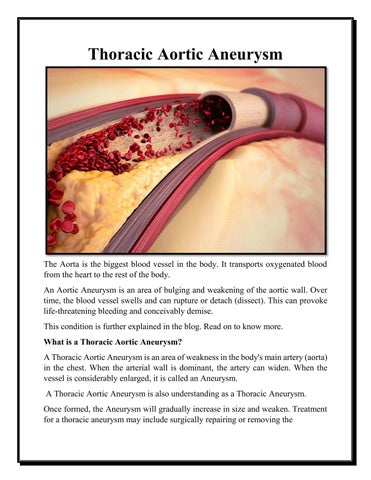
The Aorta is the biggest blood vessel in the body. It transports oxygenated blood from the heart to the rest of the body. An Aortic Aneurysm is an area of bulging and weakening of the aortic wall. Over time, the blood vessel swells and can rupture or detach (dissect). This can provoke life-threatening bleeding and conceivably demise. This condition is further explained in the blog. Read on to know more. What is a Thoracic Aortic Aneurysm? A Thoracic Aortic Aneurysm is an area of weakness in the body's main artery (aorta) in the chest. When the arterial wall is dominant, the artery can widen. When the vessel is considerably enlarged, it is called an Aneurysm. A Thoracic Aortic Aneurysm is also understanding as a Thoracic Aneurysm. Once formed, the Aneurysm will gradually increase in size and weaken. Treatment for a thoracic aneurysm may include surgically repairing or removing the
aneurysm or inserting a mesh coil (stent) to support the blood vessel and prevent rupture. The “Thoracic” is the part of the aorta that runs through the chest (thoracic aortic aneurysm). Aneurysms most commonly occur in the part of the aorta that passes through the abdomen (Abdominal Aortic Aneurysm).
What are the Causes of a Thoracic Aortic Aneurysm? Atherosclerosis, a hardening of the arteries that destroys the arterial walls, is the most common cause of thoracic aortic aneurysms. Although your veins are generally smooth on the inside, they might develop atherosclerosis as you become older. Plaque, a sticky substance, builds up in the arterial walls as a result of atherosclerosis. Excess plaque causes the aorta to harden and weaken over time. Whether you do any of the following activities, your chances of developing atherosclerosis increase.
If you smoke Blood pressure is too high Have a lot of cholesterol Are Obese Having a family history of cardiovascular disease or peripheral vascular disease (blood vessel narrowing)
What are the signs of a Thoracic Aortic Aneurysm?
Thoracic Aortic Aneurysms usually grow slowly. Often there are no symptoms, making it difficult to detect. Many starts small and stays small, although some grow larger over time. The rate at which a thoracic aortic aneurysm develops is difficult to predict.
As a Thoracic Aortic Aneurysm develops, signs and symptoms may include:
Back pain Cough Weak, hoarse voice Shortness of breath Chest tightness or pain
Signs and symptoms of a ruptured or dissected aortic aneurysm include:
Sudden sharp pain in the upper back that extends down Pain in the jaw, neck, chest, or arms Shortness of breath Low blood pressure Loss of consciousness Difficulty breathing Difficulty swallowing Some aneurysms may never rupture or lead to dissection.
What is the remedy for a thoracic aortic aneurysm?
Treatment for this condition might consist of:
Monitoring with MRI or CT: These checks are finished to test the dimensions and charge of the boom of the aneurysm.
Managing Hazard Elements: Steps, comprehensive of quitting smoking, controlling blood sugar when you have diabetes, dropping weight if overweight, and consuming a wholesome weightreduction plan might also additionally assist manage the development of the aneurysm.
Medicine: Used to govern elements inclusive of excessive LDL cholesterol or excessive blood strain.
Surgery: Thoracic Aortic Aneurysm open restore. The type of surgical operation will rely upon the area and type of aneurysm and your ordinary health. For an ascending or aortic arch aneurysm, a huge incision can be made thru the breastbone. If an ascending aneurysm entails harm to the aortic valve of the heart, the valve can be repaired or changed for the duration of the procedure. For a descending aneurysm, a huge incision might also additionally amplify from the return beneath the shoulder blade across the facet of the rib cage to simply beneath the breast. This shall allow the healthcare professional to peer into the aorta without delay to restore the aneurysm.
Endovascular Aneurysm Restoration (EVAR): EVAR calls for the simplest small incisions with inside the groin. Using X-ray steerage and specially-designed instruments, the healthcare professional can restore the aneurysm with the aid of placing a metallic mesh coil, known as a stent graft, with inside the aorta. Not all thoracic aneurysms may be repaired via EVAR. A small aneurysm or one that does not cause signs and symptoms won't require surgical remedy till it reaches a positive length or is hastily growing in over a brief period of time. Your medical doctor might also additionally suggest "watchful waiting." This might also additionally consist of a CT test or MRI test every 6
months to intently display the aneurysm, and blood strain medicinal drug can be used to govern excessive blood strain. Your medical doctor might also additionally suggest surgical operation if the aneurysm is inflicting signs and symptoms or is huge.
A word from the team A Thoracic Aortic Aneurysm is a serious health risk because, depending on its location and size, it can rupture or dissect (tear), causing internal bleeding that can be fatal. When detected in time, thoracic aortic aneurysms can often be repaired with surgery or other less invasive techniques.
If you need further information or assistance regarding this condition, then contact us right away!
Source:
Thoracic Aortic Aneurysm
www.corrieluscardiology.com www.corrieluscardiology.com/contactus