The City of Delta acknowledges that we are on the shared, traditional, ancestral, and unceded territories of the scəwaθən (Tsawwassen), x ʷməθk ʷəyəm (Musqueam), and other Coast Salish Peoples. We extend our appreciation to these First Nations for the opportunity to enjoy this land together.
Engagement Snapshot
How We Informed
40,779 mailouts
1,490 visitors to the website
1 digital advertisement
3 newspaper advertisements 14 stores with voice advertisements
14 bus shelter ads
12,533 reach of 15 social media posts
6,389 E-blast subscribers
2 advertisements in seniors newsletters
3 reader boards
How We Engaged
1,210 in-person conversations
9 pop-up events
12 ideas boards across City facilities
409 ideas box responses
1,142 sur vey responses
46 Community Group Questionnaires completed
74 community groups participated in discussion sessions
594 youth sur vey responses
33 Community Connector Team volunteers
46 Community Connector Team questionnaires completed
4 focus groups (CCT, accessibility and inclusivity)
2,082 community satisfaction sur veys completed
75 staff sur vey responses &
2 discussion sessions
“What We Heard” Summary
Summarized as follows are key findings and themes from the Phase 1 engagement conducted to inform Delta’s new Parks, Recreation and Culture Master Plan. For more information and updates on the project please continue to visit letstalk.delta.ca/prcplan. Concurrent with the Phase 1 engagement is a detailed research program that includes analysis of utilization data, trends, population and demographics, an inventory of current facilities and spaces, benchmarking, and policy review. The findings from the research will be compiled into a separate background report that complements this Phase 1 Community Engagement Report.
The protection of nature, sustainability, and conservation are strongly held values among Delta residents. A prevalent theme heard across all Phase 1 engagement opportunities was the importance of protecting sensitive ecosystems and green space. Many view parks as a critical land use mechanism to advance the protection of these spaces and create a broader appreciation for nature enjoyment.
Arts and cultural opportunities are highly valued and help create a sense of connection. Residents and groups believe that it is important to provide quality arts and culture programs, events, and other activities. There is also a strong belief that a more cohesive and focused approach to arts and culture service delivery is required.
A significant proportion of recreation and leisure activity in Delta occurs outside of structured programming. Activities like walking / hiking, gardening, cycling, nature / wildlife enjoyment, fitness, and public swimming are amongst the most popular in Delta. Correspondingly, many residents indicated that these types of spaces should be a priority for future investment (e.g. the top three outdoor facility and amenity priorities for investment identified by Resident Survey respondents were natural and conservation areas, beaches and water access, and natural surface trails).
The majority of sport and recreation organizations operating in Delta expect to grow. There is a general sense amongst a wide array of groups that additional facilities will need to be developed in order to meet these growth trends and ensure that local organizations can continue to meet their mandates. Groups also expressed strong desire to be involved in future facility planning to ensure that new or retrofitted facilities are aligned with key trends and requirements of their activity.
Mixed perspectives exist on the need for significant investment in parks, recreation and culture infrastructure. Previous findings from the Community Satisfaction Survey and the Resident Survey fielded for Master Plan’s Phase 1 engagement suggest that a perceived lack of facility capacity is a barrier to participation and a gap that requires addressing. Approximately half of Community Group Questionnaire respondents do not believe that there are adequate parks, recreation and culture facilities in Delta (approximately one-quarter are unsure and approximately one-quarter believe existing facilities are sufficient). During the discussion sessions with community groups, most groups identified the need for some level of infrastructure investment related to their specific sport or activity. However, when asked about current levels of service, well over half of Resident Survey respondents expressed that current recreation facilities and natural / passive park spaces meet or exceed expectations. No single aspect of parks, recreation or culture services asked about in the Resident Survey had more than 27% of respondents express that current services do not meet their expectations.
Youth in Delta have varying levels of engagement in recreation, sport, and cultural activities. Over half of youth survey respondents indicated that they go directly home after school, with just under half go to a wide array of other activities or commitments. Notably, over one-fifth of youth survey respondents also indicated that not being interested in what is available, being too busy to participate, overcrowded facilities, and being unaware of some opportunities are barriers to their participation.
Affordability and access to services is important. Many sport, recreation and culture groups expressed that providing affordable opportunities is core to their mandate. Additionally, engagement with representatives from service organizations validated the importance of providing positive, active living and creative opportunities to newcomers and other community cohorts that may face barriers to participation. “Affordability” also expressed as the second more important Guiding Value that should be used to set future focus areas among Resident Survey respondents.
Household demographics significantly impact parks, recreation and culture activity preferences, motivations, and demands. Sub-segment analysis of the Resident Survey findings validated how characteristics such as age, tenure in Delta, and the presence of children in a household impact wants and perceptions of need. As an example, households with children were more than twice as likely to identify indoor leisure swimming pools as a future priority compared to those households without children. Younger adults (aged 39 and under) were also more likely to identify the need for more convenient program scheduling compared to older adults (ages 65 and older).
Opportunities exist to further leverage the economic benefits of recreation, culture and sport. Many organizations, interest, and advocacy groups believe that local and regional organizations (including the City) can do more to market Delta as a destination. Future facility design and planning should also consider hosting needs and requirements.
1 Introduction
1.1. About the Master Plan
The City of Delta is developing a new Parks, Recreation and Culture Master Plan that will guide the delivery of these valued services for the next 25 years. More specifically, the Master Plan will:
• Identify priority facility projects;
• Guide focus areas for programming and other service offerings;
• Establish refreshed service delivery foundations; and
• Identify strategies to ensure all residents have access to quality parks, recreation and culture opportunities.
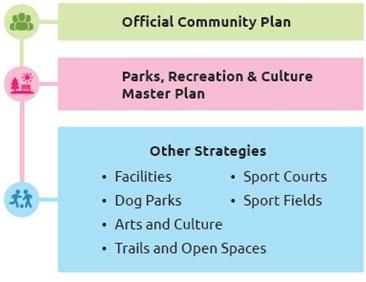
The Master Plan will be used as a key point of reference by City administration and Council when setting priorities and allocating resources. The Master Plan will also support, and in some instances suggest, future tactical planning specific to amenity types or projects. The adjacent graphic illustrates how the Master Plan fits into the City’s overall hierarchy of planning.
1.2. The Importance of Engagement
Engagement is a critical aspect of developing the Master Plan. Through engagement and other forms of research and analysis, several key topics were explored:
• Resident activity preferences, patterns and trends.
• Perspectives on current services (e.g. program and facilities).
• The need for new or improved facilities.
• The need for new or improved programming, events, and other activities.
• Potential barriers to participation.
• Factors that influence and motivate participation.
• Communication preferences (e.g. how residents learn about opportunities).
• The state of groups that deliver programming and other active living opportunities.
Garnering insights into the above topics through the Phase 1 engagement will ensure the draft Master Plan establishes priorities and focus areas based on a sound foundation of data and understanding. The following graphic provides an overview of the overall project process. As illustrated by the graphic, the Phase 1 engagement informs the draft Master Plan while a second phase of engagement will be convened in the spring of 2026 to review, refine, and validate the Master Plan direction.
Concurrent with the Phase 1 engagement is a detailed research program that includes analysis of utilization data, trends, population and demographics, an inventory of current facilities and spaces, benchmarking, and policy review. The findings from the research will be compiled into a separate background report that complements this Phase 1 Community Engagement Report. Phase 1
Exploring the current state and future needs through engagement and other research.
*SummerFall 2025
Translating the Phase 1 engagement and other research insights into an initial draft of the plan.
*Late 2025 / Early 2026
Sharing and getting feedback on the Draft Master Plan.
*Spring 2026
A 25-Year Plan for Parks, Recreation and Culture Ser vices in Delta.
*Mid 2026
2 Our Approach
The following is a description of all of the activities undertaken as part of the Phase 1 engagement to communicate the project objectives and provide opportunities for the community to get involved. A complete list of activities is available in the engagement timeline provided in Attachment A.
2.1. Who We Involved
At the start of the project, staff identified community groups who may have an interest in the Parks, Recreation and Culture Master Plan. Below is a list of groups that the City connected with to engage. A total of 148 groups were invited to participate in the engagement, below is a list of the 92 groups that participated in the engagement process.
Overall
• City Committees
• Community
• Indigenous
• Residents Ice User Groups
• Delta Ice Hawks
• Delta Ringette
• Delta Skating Club
• North Delta Minor Hockey
• Rae Hockey
• South Delta Minor Hockey
• Sungod Skating Club
• Tunnel Town Curling Club
Equity Deserving Groups
• Delta Stroke Society
• DiverseCITY
• Kennedy Senior Association
• KinVillage Association
• McKee Seniors Association
• Options
• Pacific Autism Family Network
• REACH
• Sources
• Youth Advisory Group
• Community Connector Volunteers
Arts and Culture Groups
• Boundary Bay Quilters
• Delta Community Band Society
• Delta Community Music School
• Delta Concert Band
• Delta Fishing Heritage Society
• Delta Heritage Society
• Delta Kirkland House Foundation
• Delta Potters
• Delta Stageworks Theatre Society
• Delta Studio Stomp
• North Delta Potters
• Sidekicks Players Club
• Watershed Artworks Society
Aquatic Groups
• BC Special Olympics Swim Group
• Boundary Bay Bluebacks Swim Club
• Delta Retreads
• Delta Sungod Swim Club
• Ladner Sting Rays
• North Delta Sunfish Swim Club
• Winskill Dolphins Swim Club
• Winskill Otters Swim Club
Environmental Groups
• Cougar Creek Streamkeepers
• Delta Geocachers
• Delta Naturalist Society
• Delta Sloughkeepers Group
• Ladner Estuary Church
Community Partners
• Delta Chamber of Commerce
• Fraser Health Authority
• Fraser Valley Libraries
• KidSport
• KPU
• Ladner Business Association
• Metro Van
• North Delta Lions Club
• Rotary Club of North Delta
• Rotary Club of Tsawwassen
• Tourism Delta
Court Sport Groups
• Delta Pickleball Association
• Ladner Tennis Club
• McKee SocietyPickleball
• Sunshine Hills Tennis Club
• Tsawwassen Tennis Club
Gymnasium and Dry Floor Sport Groups
• Adaptive Multi Sport
• BC Wheelchair Sports
• North Delta Basketball Association
• South Delta Basketball
• Coastal Ball Hockey
• Delta High School Ball Hockey Program
• Delta Minor Ball Hockey Association
Field Sport Groups
• BC Special Olympics
• Delta Falcons Field Hockey
• Delta Fastpitch Association
• Delta Lacrosse
• Delta Minor Lacrosse
• Delta Patriots Cricket
• Delta Stingers 60+
• Ex- Brits Rugby
• Ladner Minor Baseball
• Ladner Slo-pitch
• North Delta Baseball Association
• North Delta Football Association
• North Delta Football Club (Soccer)
• North Delta Mixed Slo-pitch
• Soccer Shots Fraser Valley
• South Delta Football Club 45+
• South Delta Rams Football
• South Delta United Soccer
• South Delta Sun Devils Football
• Tsa Amateur Baseball
• Tsa Masters Slo-pitch
• Tsawwassen Men’s Masters Slo-pitch
• Universal Athletics Clubtrack & field
• Urban Rec Volleyball
2.2. How We Informed
The City employed a wide variety of communication tools to ensure interested members of the community were aware of the Parks, Recreation and Culture Master Plan project, background information, and opportunities to get involved. Key communication activities are summarized on the following pages.
Project Website
A dedicated project website was launched on the City’s engagement platform, Let’s Talk Delta, at the start of the project. This provided a central resource for all information about the project and opportunities for involvement. As the project progresses, all supporting materials will be available for residents to view.
Neighbourhood Mailouts and Fact Sheets
A fact sheet was prepared to support informed participation in the process. The first page provided background on the project and the second provided information on how to get involved. The fact sheet (double sided) was mailed out to residents, included in newsletters, and was available at pop-up events and online platforms.
Newspaper Advertisements
To support awareness of community members who are not online, the City ran one full page and two half page advertisements in the Delta Optimist and the North Delta Reporter providing background and promoting opportunities for involvement.
Social Media and Digital Advertisement
The City leveraged its social media accounts to raise awareness of the work and promote participation. Posts were published on its main accounts for Facebook, Instagram, and X (formerly twitter). Digital ads were also placed on The Delta Optimist website.
Other Advertisements
The City promoted the What Moves YOU? engagement program through a mix of bus advertisements, reader boards, and in-store voice announcements to reach residents directly in community spaces. These channels were used to capture residents’ attention as they went about their daily lives, providing consistent and broad awareness on the Master Plan project while encouraging participation in the engagement process.
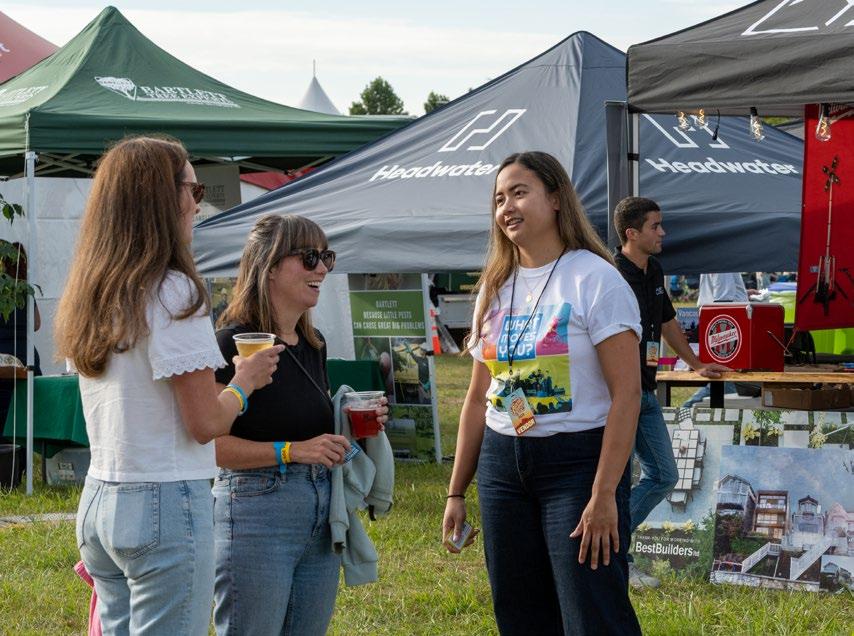
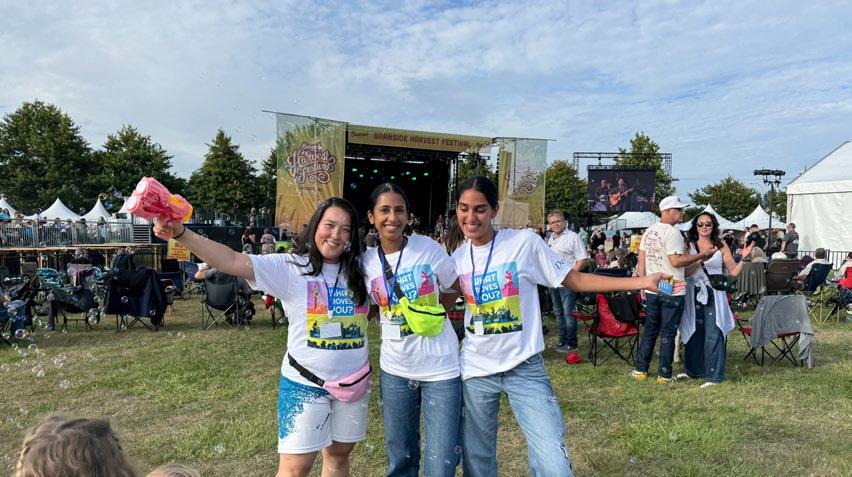
Branded T-shirts for Staff and Volunteers
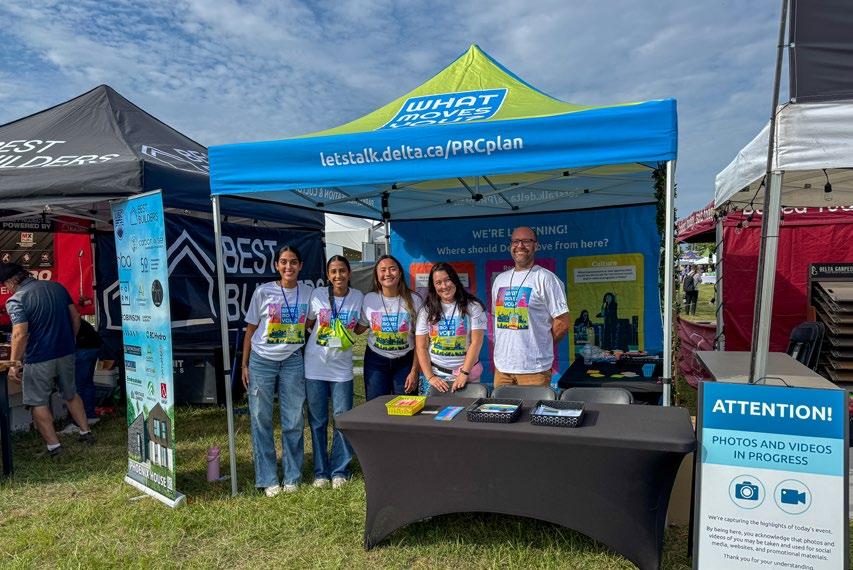
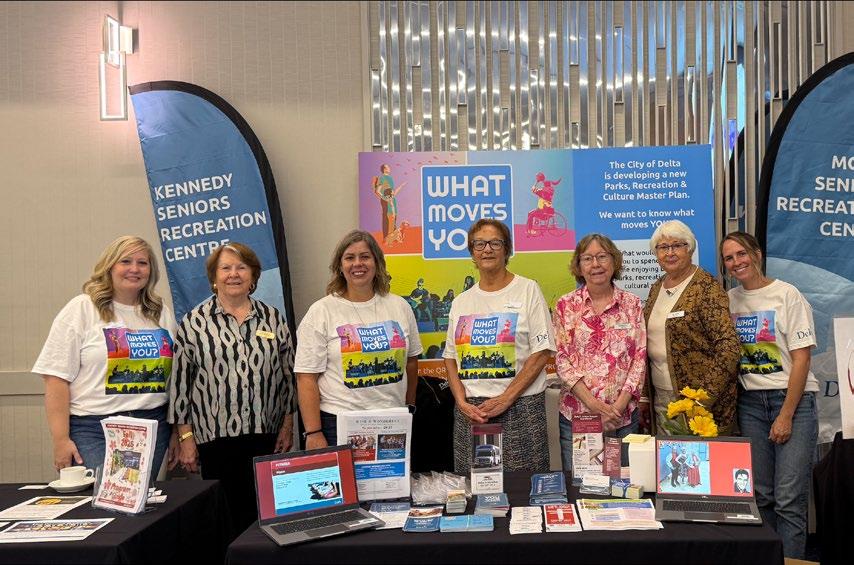
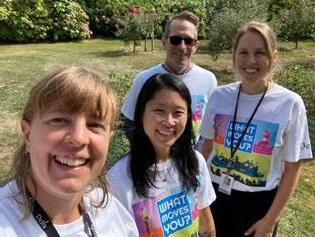
Staff and volunteers were outfitted with branded T-shirts to increase visibility and promote the project at pop-up events. This approach helped create a recognizable presence in the community and encouraged residents to engage directly with the initiative.
2.3. How We Engaged
To ensure diverse perspectives and viewpoints were given voice as part of the Phase 1 engagement, a number of different engagement methods were used that included a mix of in-person and electronic opportunities. A brief description of each is provided below.
Resident Survey
An online survey was available between September 10 and October 31, 2025, serving as the formal mechanism for community input. Paper copies were also made available to ensure accessibility. The survey was directed to households in Delta, and the City received 1,142 responses, offering valuable insight into resident perspectives and priorities.
Pop-Up Events
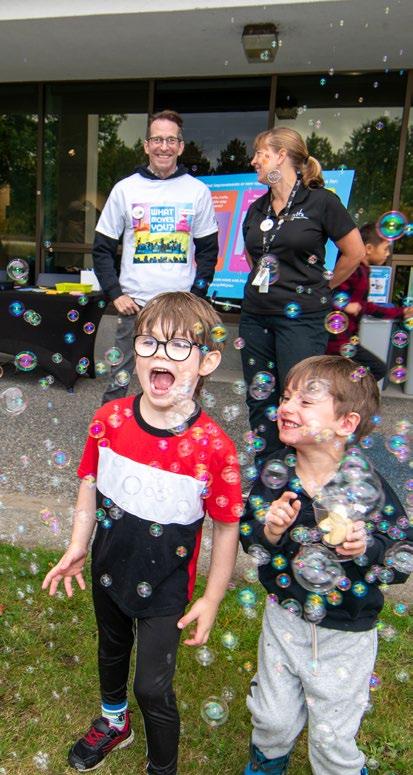
City staff and volunteers set up booths at 9 high traffic community events to harness where people already gathered, providing convenient opportunities for residents to offer input in informal, accessible settings while further raising awareness about opportunities to get involved. Across the 9 events, 1,210 in-person connections were made.
Idea Boards and Boxes
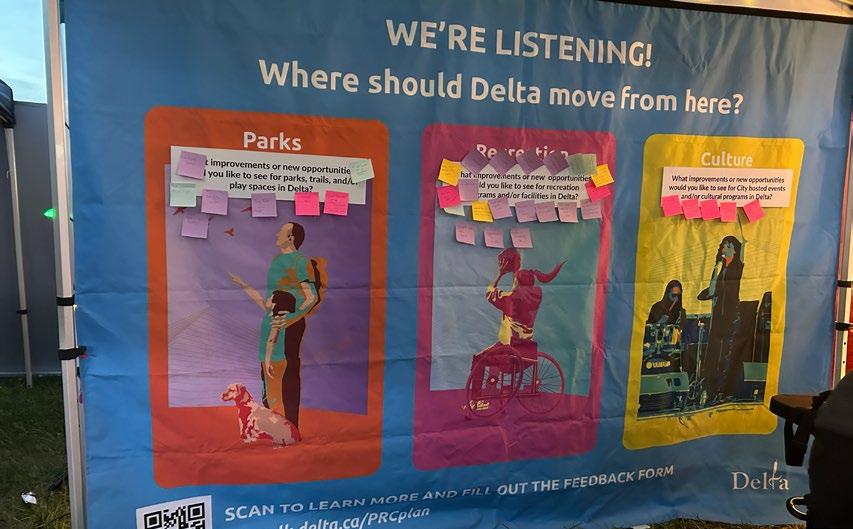
Twelve Ideas Boards with suggestion boxes were placed across Delta facilities to ask residents what would inspire them to enjoy Delta’s parks, recreation, and cultural spaces, creating convenient opportunities for users to provide input while visiting for other activities. 409 submissions were received.
Community Connector Team
To help extend the City’s reach into the community, the City piloted a Community Connector Team— 33 multi-generational volunteers representing diverse backgrounds, abilities, and identities. These volunteers supported engagement by collecting feedback within their own networks using a shortened questionnaire, promoting participation in the larger survey, and assisting staff at select pop-up events. Their involvement strengthened the inclusiveness, visibility, and reach of the engagement, helping ensure the feedback reflected the experiences and priorities of residents who may not otherwise have participated.
Focus Groups, Community Group Discussions and Questionnaire
The primary objective of the discussion sessions was to engage directly with recreation providers, facility user groups, service organizations, partners, and other identified participants. These sessions explored the current state of parks, recreation, and culture, identified observed changes and community trends, and highlighted gaps, opportunities, and priorities for the future. In total, 74 groups participated in the sessions, 3 of which participated in one of four focus groups (Community Connector Team, Accessibility, Inclusivity and Belonging, and the Youth Advisory Committee).
To complement these discussions, a Community Group Questionnaire was also fielded to capture additional perspectives from organizations that could not attend in person. This tool provided another avenue for groups to share their observations, priorities, and ideas, ensuring a broad and inclusive representation of community voices. In total, 46 responses were received.
Youth Survey
The City of Delta worked with Delta School District to field a Youth Survey in Grades 6 - 12 classrooms throughout the city. This occurred from October 6 to November 1, 2025. 594 youth responded to the survey in total.
City of Delta Community Satisfaction Survey
Overview
Earlier in 2025 (mid-February to mid-March) the City fielded a Community Satisfaction Survey to gather overall resident perspectives on a wide range of City services and operations. Methodology for this survey included mailing postcards to approximately 38,000 households to encourage participation. In total, 2,082 responses were received with the results weighted to reflect Delta’s population.
Key Findings
The survey reveals that parks, recreation, and culture services are among the highest-impact services in Delta and among the most strained. Highlighted as follows are additional parks, recreation and culture related findings from the survey.
Recreation Facilities and Programs
• Highly valued: Parks and recreation services are perceived as the number one driver of residents’ sense of good tax value (27% of residents who feel they receive good value identified recreation services).
• Under significant pressure: The system of facilities is perceived as facing notable gaps in supply, condition, and capacity across all three communities.
Service Gaps Are Viewed as Substantial
Importance-satisfaction gaps of 21–22% exist citywide for parks/trails, recreation facilities, and recreation programs. In some communities, gaps are even larger (up to 30% in Tsawwassen for recreation facilities). Residents most commonly cited insufficient capacity for swimming, skating, and pickleball, as well as the need for facility upgrades and more parks and trails.
Recreation Is a Top Community Priority
“Enhance Recreational Facilities” ranked as the #1 overall City priority (27% of respondents), with particularly strong support from younger respondents (39 and under) and Tsawwassen respondents.
Recreation Affects Livability and Belonging
Recreation access and quality influence more than just service satisfaction, they affect residents’ overall sense of belonging, livability perceptions, and value-for-taxes. Respondents with weaker feelings of community belonging frequently cited limited recreation facilities and communitybuilding opportunities as contributing factors.
3 What We Heard
This section includes the results of the Resident Survey, Community Group Questionnaire, Youth Survey, and key themes from the discussions sessions and other in-person opportunities to engage.
3.1. Resident Survey
The Resident Survey was available for completion for approximately six weeks from September 10 to October 31, 2025. Online and paper copy options were made available to maximize convenience for residents. Findings from the 1,142 responses are presented as follows in the general order that the questions were asked. Sub-segment findings are also presented for selected questions to highlight key similarities or differences between how different cohorts responded to some questions.
3.1.1 What, Where, How
The survey begins by exploring why, where, and how respondents participate in parks, recreation, and culture activities, helping identify participation drivers, activity locations, and reasons for going outside Delta.
To begin the survey, respondents were asked to indicate the reasons they participate in parks, recreation and culture activities. As illustrated by the accompanying graph, over three-quarters indicated they participate for physical health and exercise (85%). Reflecting the diversity of factors that motivate participation, over half of respondents also indicated that relaxation, mental health and wellbeing (62%), pleasure and entertainment (59%), enjoying nature (57%) and sport opportunities (55%) motivate participation among members of their household.
Sub-Segment Analysis
Those who have lived in Delta for less than 5 years were more likely to say they participate to connect and learn about culture (25%) than those who have lived in Delta for 15 - 20 years (9%).
Single parent households (43%) were more likely to say that they participate to meet new people than couples with children (27%).
Reasons to Participate
Physic al h ealth / exercis e
Rela xation, men tal health and wellbein g
Pleasure / enter t ainment
To enjoy nature
For spo rt
To be with family / f riends
Meet new p eople
Improve skill s or k nowledge
Enjoy a challenge
Hel p the community
Connect / learn about culture
To be creat ive
Something different than wor k
Satisf y cur iosit y
We don’t par ticipate
O ther
Next, respondents were asked to indicate where they participate in parks, recreation and culture activities. The majority of respondents indicated they participate in Delta (89%).
Where Do You Participate in Parks, Recreation and Culture Activities
O ther communities in Metro
O ther communities out side of the region
Respondents who participate in activities outside of Delta were asked to indicate why. The most common reasons were that desired programs or activities are not offered locally (50%) and that facilities in other communities are perceived to be better (44%).
Reasons Activities Take Place
Don’t have acce ss to the facilities needed in Delta Better facilities el sewhere Programs / activities don’t exist in Delta
Participation occurs as part of a daily commute to/fro m work or school
Programs / activities are too expensive in Delt a
Other reasons respondents participate in activities outside of Delta include:
• Seeking more diverse natural environments (forests, shade, long trails, remote-feeling spaces).
• Limited forested and shaded areas in Delta; existing ones feel too short or too busy.
• Preference for remote or higher-challenge outdoor recreation (e.g., Whistler, regional parks).
• Delta lacks specific nature-based experiences (e.g., ocean water sports variety, forested trails).
• Respondents travel elsewhere for higherquality walking/biking paths and green spaces.
When asked to further describe which activities household members leave Delta to pursue, respondents identified the following:
These questions capture which activities households regularly take part in, highlighting participation patterns, seasonal habits, and demand for different types of recreation and culture opportunities.
When asked about indoor activities they participate in on a regular basis (at least twice per month), the top five activities identified were fitness training and working out (39%), public swimming (38%), fitness classes (28%), pickleball (25%), and swimming lessons or programs (19%).
* ‘Other’ indoor activities respondents identified included: lacrosse, cheerleading, ball hockey, meditation, stationary/indoor cycling, indoor equestrian training, mall walking, indoor lawn bowling, library use, Special Olympics indoor programs, fitness/ working out at home or gyms, table tennis, ping pong, music lessons, baby and toddler music classes and mahjong.
Indoor Activity Participation
Fitness Training / Working Out at a Gym Public Swimming
Swimming Lessons or Programs
Senior s Programs
S ocial Events
Walking / running (in a gymnasium or other indoor space)
Public Skating
Visiting Museums or other Heritage Attractions
None of the above / not applicable
Visual Arts and Craf ts
Visiting Ar t Galleries / spaces
Hockey - Organized (part of a team or league) Dance
Arts
Sub-Segment Analysis
Those aged 60 to 64 years were more likely to say they participate in pickleball (47%) than those under 39 years (11%) and those aged 40-49 (15%).
Those aged under 39 (35%) and between 40 to 49 years (44%) were more likely to say that a member of their households participates in swimming lessons than those aged 50 to 59 years (13%), 60 to 69 years (11%) and those over 69 years (12%).
Single parent households (30%) and couples with children (22%) were more likely to say they participate in public skating than couples with no children (4%).
Visual Arts and Craf ts
Visiting Ar t Galleries / spaces
Indoor Activity Participation (Continued)
Hockey - Organized (part of a team or league)
Dance
Performing Arts
Skating Lessons
C amps (Spring Break, Summer, Winter Break)
Gymnastics
Youth Programs
B asketball
Volleyball
Curling
Badminton
Preschool
When asked about regular participation (at least twice per month) in outdoor activities , walking and hiking (74%) emerged as the most popular followed by gardening (48%), cycling (36%), nature/wildlife viewing (33%) and special events (28%). Notably, pickleball (27%), golf (24%), public swimming (23%), running / jogging (22%), and visiting dog off-leash parks were also selected by more than one-fifth of respondents.
* ’Other’ outdoor activities respondents participate in include: biking (trails, dykes, country roads), dog walking, playgrounds and kids’ play, beach visits and ocean swimming, kayaking and rowing, volleyball/beach volleyball, skiing and snowshoeing, field sports (field hockey, lacrosse, cricket), outdoor workout parks/ calisthenics, lawn bowling, water parks, kite flying, shooting/archery, racing RC cars and triathlon training.
Outdoor Activity Participation
Gardening (a t home or as part of a communi ty garden) Wa lking / Hiking
Nature / Wi ldlife Vi ewing / Bird Wa tching Cyclin g
Spec ial Even ts (e .g festiva ls)
Public Swimming (e .g la ne swimming, drop -i n swimmin g) G olf Pickleball
Joggin g / Runnin g
Off Leash Pa rk Vi sit s
La ke / Ri ver / Ocean Swimmin g Te nnis Pa ddling (e .g . ca noeing, kayaking, st and up paddle boarding)
C ampin g Picnicking
Sub-Segment Analysis
Respondents ages 49 and under (80%) were more likely to say that their household participates in lake, river or ocean swimming than those aged over 60 (22%).
Those aged 60 to 65 years (52%) were more likely to say their household participates in outdoor pickleball than those under 39 (18%) and between 40 to 49 years (11%).
Those aged under 39 (26%) and between 40 to 49 years were more likely to say they go camping than those aged 65 and older (7%).
Outdoor Activity Participation (Continued)
3.1.3 Barriers to Participation
This section identifies factors that may prevent residents from participating in parks, recreation and culture opportunities. These insights help to better understand key participation challenges and potential solutions.
Next, respondents were asked whether anything prevents them from participating in parks, recreation, and culture opportunities in Delta. As shown in the accompanying graph, overcrowded facilities (35%) and a lack of facilities that support their preferred activities (29%) were the most commonly cited barriers. Approximately onequarter indicated that nothing prevents their participation.
Barriers to Participation
La ck of facilities for my activit y Overcrowded facilities
Nothin g prevents our participatio n
Poor / inadequate facilities
Unaware of some opportunitie s
Inco nveni ent hour s
Better opport unities el sewhere To o bu sy to participate Admission fees
Cost of part icipation (e .g . registration fees , equipment cost s)
Pe rs onal health issues / conditions Tr anspor tation l imi tations (cost / avail a bilit y)
Sub-Segment Analysis
Single parent households were more likely to say that inconvenient hours is a barrier their household faces (30%) than households without children (11%).
Those who have lived in Delta for between 5 and 10 years (41%) were more likely to say the facilities are overcrowded than those who have lived in Delta for up to 5 years (28%).
Barriers to Participation (Continued)
Tr anspor tation l imi tations (cost / avail a bilit y)
Pe rs onal health issues / conditions
No t comfor ta ble / co nfident enough to participate O the r
No t interested in what is avail able
La ck of childcare
Th e spaces are not phy sic ally accessible
Th e programming avail able does not h ave es ta blished accommodations or modifications in pl ace
‘Other’ barriers respondents identified included:
Registration, Capacity, and Program Availability17 comments
• There were concerns about the difficulty of registering for programs due to high demand, limited availability, and a cumbersome online system. Programs fill up immediately, there are long waitlists, limited instructor availability, and challenges navigating the registration platform, particularly for older adults.
Indoor Courts, Tennis, and Pickleball Access10 comments
• Respondents cited a lack of indoor tennis facilities, insufficient court availability, and limited covered outdoor pickleball spaces. Access challenges, including courts perceived to be dominated by advanced players and a lack of inclusive spaces for all skill levels, were frequently mentioned.
Accessibility, Mobility, and Walkability Barriers9 comments
• Several comments highlighted issues with physical accessibility, including long distances from parking to trails, insufficient rest spaces and benches, unsafe or inaccessible trail connections, and concerns from residents with mobility limitations or disabilities requiring support.
Geographic Access and Travel Burden - 6 comments
• Respondents expressed challenges accessing programs or facilities because they are too far, require travel across Delta or to other municipalities, or are impacted by traffic congestion. Some do not wish to travel to North Delta for programs, while others cite long commute times.
Facility Space Limitations - 5 comments
• A number of comments indicated a need for expanded or improved indoor spaces, including additional rooms at Kin Village, more capacity at recreation facilities, and improved layouts that reduce noise and allow concurrent programming without disruptions.
Natural Environment and Outdoor Infrastructure Concerns - 4 comments
• Respondents noted concerns about loss of natural spaces, insufficient preservation of wildlife areas, limited bike lanes and cycling safety, and inadequate parking/access for equestrian users at dike entrances.
Equity, Inclusion, and Eligibility Barriers4 comments
• Some residents feel excluded from services due to eligibility rules, age-based admission thresholds, or lack of inclusive programming for people with disabilities who require 1:1 support.
Program Quality and Scheduling Limitations3 comments
• A few comments highlighted inconsistent lesson quality (particularly swimming), limited program schedules aligned with working hours, and the need for more beginner-friendly or gentle fitness options.
3.1.4 Tell Us About Your Experience
These questions assess how well existing parks, recreation, and culture facilities and programs meet expectations, pointing to strengths, gaps, and areas where satisfaction may be higher or lower.
When asked about certain aspects of outdoor facilities , natural spaces and passive park spaces had the highest overall level of satisfaction with 73% expressing some level of satisfaction. Outdoor sport facilities had the highest level of dissatisfaction with 28% expressing some level of dissatisfaction.
Respondents were asked to explain what factors of experience influenced their rating of parks and outdoor facilities. The responses are presented according to themes:
Pickleball court supply, capacity and scheduling190 comments
• Respondents noted that pickleball demand far exceeds available court supply (indoor and outdoor), resulting in overcrowding, long waits, limited evening access for working adults, conflicts between user groups, and calls for more dedicated, lit and/or covered courts in Ladner, Tsawwassen and North Delta.
Indoor tennis facility and tennis court quality110 comments
• Respondents highlighted the absence of indoor tennis in Delta and the poor or aging condition of several outdoor courts, often comparing Delta unfavourably to neighbouring municipalities and linking this gap directly to lower ratings.
Natural areas, trees and preservation of passive green space - 95 comments
• Respondents cited concern about the loss or degradation of forests, bog and natural areas (e.g., Winskill forest removal, Burns Bog condition), a perceived over-emphasis on sports fields versus passive green space, and a desire for more protected, quiet nature areas for walking, birding and mental wellbeing.
Trail, walking and cycling connectivity, safety and surfaces - 90 comments
• Comments referenced fragmented or unsafe trail and cycling networks (e.g., dyke routes, River Road, connections between Ladner and Tsawwassen), poor surfaces on dykes and paths, limited off-road routes, and interest in more continuous, accessible walking and cycling corridors.
Playgrounds, splash parks and child/family amenities - 75 comments
• Respondents noted aging playgrounds, limited destination play spaces, lack of inclusive/ accessible features for toddlers and children with diverse needs, and comparisons to newer, higher-amenity parks in other municipalities.
Facility capacity, crowding and field/court mix70 comments
• There is a perceived imbalance between baseball diamonds and rectangular fields, and insufficient space for emerging or growing sports (e.g., field hockey, soccer, basketball) relative to population growth.
Maintenance, cleanliness and amenities50 comments
• Respondents referenced inconsistent maintenance of trails and parks (e.g., Burns Bog boardwalk, Watershed, turf quality), garbage dumping, limited or poor washroom facilities, lack of lighting in some parks and courts, and uneven standards compared with other communities.
Accessibility, mobility and inclusion for seniors and people with disabilities - 40 comments
• Comments highlighted parking distance to trails, lack of benches and rest areas, narrow or uneven paths, challenges for wheelchair and walker users, and the need for better information on accessibility (e.g., walkability ratings, distances, surfaces and available supports).
Overall satisfaction and comparison with other municipalities - 25 comments
• Respondents expressed general satisfaction with the breadth of parks and facilities, but many also referenced higher-quality amenities, trails, playgrounds and court infrastructure in other cities, which directly influenced their ratings of Delta’s current provision.
Looking next at satisfaction levels with different aspects of recreation spaces and programming , recreation facilities had both the highest levels of satisfaction (60% expressed some level of satisfaction) and dissatisfaction (27% expressed some level of dissatisfaction).
Respondents were asked to explain what factors of experience influenced their rating of recreation and program expectations. The responses are present according to themes.
Capacity, Crowding, and Access to Programs –180 comments
• Indoor recreation facilities and programs are frequently described as overcrowded, with fitness classes, swim lessons, lane swims, day camps, ice times, and pickleball sessions filling within minutes of registration opening and leaving many residents unable to participate despite demand.
Registration, Booking Systems, and Process Barriers – 140 comments
• Respondents reported that registration systems can be difficult to use (especially for seniors), with online booking windows, lack of waitlists, “no-show” spots, and phone-based registration for some programs creating frustration and reducing equitable access.
Program Scheduling and Suitability for Working Adults and Families – 110 comments
• Comments highlighted that program times are heavily oriented to daytime/school-hour use, with limited evening and weekend options for fitness, aquafit, yoga, pickleball, and children’s programs, making it hard for full-time workers and families to participate.
Program Variety and Gaps Across Ages and Interests – 100 comments
• Residents perceive indoor program offerings as too narrow, noting limited options for adults and “middle years” (e.g., arts, culture, STEM, cooking, pottery, Tai Chi), insufficient adapted and specialneeds programs, and gaps for specific age categories such as 6–7-year-olds and teens.
Facility Size, Condition, and Modernization –95 comments
• Respondents described several indoor facilities (especially Ladner Leisure Centre, Ladner Community Centre, Winskill, and some gyms) as small, dated, or poorly laid out, and emphasize the need for expansion, modernization, and better alignment with current and future population growth.
Aquatic Facilities, Swim Lessons, and Aquafit Experience – 90 comments
• Indoor pools are seen as essential but overcapacity, with crowded lanes, limited casual swim space, hard-to-access lessons, variable lesson quality, constrained aquafit times, and concerns about temperature, cleanliness, and the future configuration of new facilities (e.g., Winskill).
Cost and Financial Accessibility – 60 comments
• Respondents flagged rising admission fees, pass expiry policies, camp costs, and differential pricing as barriers, particularly for families, low-income households, and seniors, suggesting that affordability is constraining indoor recreation participation.
Indoor Racket Sports Infrastructure – 55 comments
• There is concern about the absence of an indoor tennis facility in Delta and insufficient or suboptimal indoor pickleball capacity relative to rapid demand growth.
Pickleball Programming, Court Management, and User Experience – 50 comments
• Comments pointed to overcrowded indoor pickleball, limited time slots, mixing of wide ability levels, and occasional unwelcoming culture at some venues, with residents calling for more court time, skill-based sessions, and better structured programming.
Access, Inclusion, and Equity for Seniors, People with Disabilities, and TFN Residents – 45 comments
• Comments around those who have disabilities, mobility challenges, and those on TFN lands report physical access issues (ramps, changerooms, equipment), registration and pricing barriers, and gaps in gentle/rehabfocused programming.
Awareness, Communication, and Information about Programs – 30 comments
• Respondents noted limited awareness of what is offered, difficulty navigating the website, and the loss of printed program guides, suggesting that communication and program promotion are not fully supporting informed participation.
Positive Experiences and Overall Satisfaction with Indoor Recreation – 35 comments
• Despite challenges, many comments expressed satisfaction with indoor facilities and programs, citing good instructors, clean and functional spaces, strong senior programs (e.g., KinVillage, McKee), and optimism about projects like the new Winskill pool as important strengths to build on.
Shifting to arts and culture spaces and program expectations, levels of satisfaction were generally similar across all service category options. Notably, the highest level of dissatisfaction was with regards to public art with 26% expressing that their expectations are not being met to some degree.
Respondents were asked to explain what factors of experience influenced their rating of
Quality and community value of city events95 comments
• Respondents described major city events (e.g., Ladner Village Market, Luminary Festival, Boundary Bay Airshow, Barnside Harvest Fest, music in the parks) as well-run, enjoyable, and important for building community identity and pride, with a strong desire to see these types of free or low-cost events maintained and expanded.
Need for more arts and culture programming and variety - 80 comments
• Respondents want a broader range of arts and culture opportunities, more festivals, concerts, classes, and workshops across disciplines (visual arts, music, dance, theatre, crafts) and at multiple levels.
Limited access, awareness, and advertising of arts offerings - 70 comments
• Respondents noted that they rarely hear about arts and culture programs or events, find it hard to discover what is available or when it is happening, and suggested clearer, more proactive communication (e.g., seasonal guides, better online information, social media, and signage).
Gaps for working-age adults, teens, and non-sport options - 65 comments
• Respondents highlighted that many programs are geared to young children or seniors, with far fewer accessible options for teens and workingage adults (e.g., evening/weekend visual arts, dance, music, theatre, and creative learning programs), resulting in residents travelling to other municipalities to participate in these types of activities.
Condition, capacity, and suitability of arts and culture facilities - 55 comments
• Comments pointed to aging, undersized, or poorly designed facilities (e.g., Tsawwassen Arts Centre, North Delta Centre for the Arts, museum and storage spaces) and called for modern, purpose-built arts hubs with appropriate studios, performance spaces, and support areas.
Public art presence, quality, and character40 comments
• Respondents would like to see more public art, murals, and installations that better reflect Delta’s character and history (including Indigenous art), while a smaller number criticized specific pieces and expressed a desire for more imaginative, higher-impact pieces in prominent locations.
Geographic equity across Delta communities35 comments
• Those in North Delta and some parts of Tsawwassen, felt that arts and culture facilities, public art, and events are unevenly distributed, and expressed a desire for more local programming and visible cultural activity in their own neighbourhoods.
Cost and affordability of arts and culture participation - 25 comments
• Respondents noted that program and class fees, camp costs, and ticket prices can be prohibitive for families and lower-income residents, and suggested more affordable or subsidized options so access to arts and culture is not limited by ability to pay.
Heritage, museum, and archival preservation20 comments
• Comments raised concerns about how heritage resources and artifacts are stored and displayed, calling for better-resourced museum and archival facilities that respect donations, tell Delta’s stories more visibly, and integrate heritage more fully into community life.
Event crowding, logistics, and sustainability practices - 20 comments
• While generally positive about major events, some respondents cited crowding, parking, waste management, and lack of recycling/ composting or plant-based food options as drawbacks.
3.1.5 Future Priorities and Focus Areas
This section gathers input on priorities for future investment in indoor and outdoor facilities to help determine where limited resources could be focused.
Respondents were asked to identify which facilities and amenities should be prioritized for future investment by the City. As illustrated in the accompanying graph, court sports (38%), fitness and wellness facilities (37%), libraries (27%), and seniorsfocused spaces (26%) emerged as the most frequently cited indoor facility priorities for the City to consider as selected by over one-quarter of respondents.
* ‘Other’ indoor facility priorities identified by respondents include: Indoor tennis facility, indoor tennis bubble, indoor pickleball courts, indoor soccer facility, covered lacrosse/ hockey box, indoor running track, expanded dry sauna/ steam room amenities, music rehearsal space, indoor archery range, movie theatre, senior centre replacement/expansion, table tennis facility, wellness spaces (yoga/meditation studio), sewing/arts studio space, woodworking shop/maker space.
Indoor Facilities for Investment
Se nior s- f ocused
Gy mnasiu m- size d spaces
Befo re and af ter school ca re facilities
Leisure swimming poo ls
Wa lking / running trac k
Swimming t ank (e .g ., for la ne swimming, le ssons, aquafit , etc.)
Households with children were more likely to say that leisure swimming pools should be a priority for investment (30%) than households with no children (14%).
Those who have lived in Delta for up to 20 years were more likely to say that senior-focused facilities should be a priority for investment (30%) than those who have lived in Delta for 5 to 10 years (14%) and up to 5 years (18%).
Those aged under 39 (24%) and between 40 to 49 (24%) were more likely to say that indoor playgrounds should be a priority for investment than those over the age of 65 (6%).
Storage space (f or groups) Communit y group office / admi n sp ace
When asked about outdoor facility and amenity priorities , natural areas/conservation areas (35%), beach and water access areas (29%), and natural surface trails (26%) were identified as priorities by over one-quarter of respondents. Pickleball courts (23%), BBQ and picnic areas/park shelters (22%), and community gardens (20%) were identified by approximately onefifth of respondents.
* ‘Other’ outdoor priorities identified by respondents: connected cycling network, walking and trail upgrades, parks and natural areas, general outdoor recreation spaces, access improvements to park amenities (parking and trailheads, dyke access, etc.), and improvements to safety and wayfinding.
Sub-Segment Analysis
Households with children (24%) were more likely to say that neighbourhood playgrounds should be a priority for investment compared to other household typologies.
Outdoor Facility and Amenities for Investment
Natura l areas / conser vations area s
Natura l su rface t rail s Beach and water a ccess areas
Pickleball cour ts
BB Q and picnic areas / park shelte rs
Communi ty garden s
Ou tdoor fes tiva l and communi ty performance spaces Neighbourhood pl aygrounds
Do g off leash areas
Paved t rail s
Te nnis cour ts
Ou tdoor poo ls
Destinatio n pl aygrounds
3.1.6 Improvements to Programming
These questions look to understand what changes or enhancements residents would like to see in recreation and culture programming across all age groups.
Respondents were then asked to identify what improvements or changes are needed for recreation and culture programs and opportunities. As shown in the accompanying graph, the most frequently cited changes include accommodating more participants (27%) and offering programs more frequently (25%). Notably, approximately one-quarter (22%) of respondents indicated that no improvements or changes are needed.
Sub-Segment Analysis
Those aged under 39 (34%) were more likely to say that there needs to be a more convenient schedule than those aged over 65 (13%).
Recreation and Culture Program Improvements
Accommodate more participant s
Offere d more frequentl y
N o improvement s or changes needed
More convenient schedule
G reater var ie ty
I mproved mar ke ting o f programs
L ower cost
Enhanced content / better quali ty
More convenient lo ca tions
Bette r inst ruct io n
O the r
More focus on Indigenous culture s
‘Other’ improvements suggested by respondents included:
• Respondents would like to see lower senior admission fees, additional senior-focused programs, improved class availability, and attention to future facility closures (e.g., KinVillage). Crowding, booking processes, and higher fees at certain centres are noted barriers.
Customer Service, Staff Training & Program
Delivery - 6 comments
• There are calls for improved customer service, more qualified instructors, and resolution of inconsistencies in program management (e.g., open gym access, volleyball coordination, class cancellations).
Registration & Website Usability - 5 comments
• Respondents described registration as cumbersome, including weekly re-registration requirements, difficulty navigating the website, and insufficient clarity on program availability. A more intuitive digital experience is requested.
Program Variety & Expansion - 3 comments
• Respondents request more evening adult programs, multicultural celebrations, improved youth programming, and language courses, indicating a need for program diversification.
Pricing, Local Access Priorities & Policy Adjustments - 3 comments
• Respondents expressed interest in local resident priority, reconsideration of nonresident pricing, and ensuring fees reflect taxpayer contribution and age-based fairness.
Next, respondents were asked to identify the types of programs that should be more available in Delta by age groups. Summarized as follows are the top two program improvements identified by respondents for each age cohort.
• For children: Nature and outdoor programming (53%) & casual recreation programming (51%)
• For youth: Casual recreation programming (52%) & fitness and wellness programming (49%)
• For adults: nature and outdoor programming (49%) & fitness and wellness programming (47%)
• For older adults: nature and outdoor programming (51%) & fitness and wellness programming (47%)
Programming Need by Age
Children (ages 0-12) Youth (ages 13-18)
Adults (ages 19-59) Older Adults (ages 60+)
Performing arts programming Programs for children with barriers to participation (Adaptable programming)
Social & community connection programs Fitness & wellness programming
When asked about the types of events they would like to see more of in Delta, events in Tsawwassen (31%), family friendly and children’s activities across Delta (28%), and events in Ladner (26%) were the most frequently cited by over onequarter of respondents.
Types of Events Needed in Delta
Fa mily- friend ly and children’s activities Even ts in Ts aw wassen
Even ts in La dner
S enior-f ocused even ts
Even ts in Nort h Delt a
Heritage and cultural celebrations
Environmenta l
No opinion / no othe r even ts needed Communi typartnered even ts
Yo ut h-focused even ts
Inclusive or culturally dive rs e events
3.1.7 Values
This section of the survey aimed to understand what values matter most to residents and guide long term planning across all programs, facilities and services.
A series of statements regarding the provision of parks, recreation and culture in Delta were presented to respondents. These statements represent core values that could be used to help establish future focus areas for services. The top three values as identified by over half of respondents were supporting health and wellbeing (61%), affordability (60%) of services, and providing a range recreation and sport opportunities (54%).
Guiding Values
Heal th and We ll -b eing –Su ppor ting phy sic al , ment al , an d emotiona l we llne ss .
Aff ordabili ty –
Ensu ri ng pro grams an d amenities are fin ancially a cce ss ib le
Recreation and Sport
– Prov idin g a rang e of oppo rt unitie s fo r peop le to be acti ve, pl ay, an d co mpet e at al l leve ls .
Co nnection with Co mmunit y –Creating oppo rt unitie s to br in g peop le to gethe r an d create spaces fo r co nnection
Envi ro nmen ta l Stew ardshi p –Protecting an d enhancin g green spaces an d natura l area s.
Av ai la bili ty an d Ea se of Acce ss –Making it ea sy fo r peop le to find, regi ster fo r, an d at te nd pro grams , se rv ices , an d spaces
spaces fo r co nnection .
Envi ro nmen ta l Stew ardshi p –
Protecting an d enhancin g green spaces an d natura l area s.
Guiding Values (Continued)
Av ai la bili ty an d Ea se of Acce ss –Making it ea sy fo r peop le to find, regi ster fo r, an d at te nd pro grams , se rv ices , an d spaces .
Li felong Le arning –
Off er in g pro grams that su ppor t pe rs onal grow th at ever y age.
Acce ssibilit y –Ensu ri ng facili ties , spaces , an d pro grams ca n be e njoye d from resid en ts of va ry in g a bilitie s.
Incl usivit y and Be longin g –Creating we lco min g spaces that re flect an d re spec t di ve rs e identities , cultures , an d need s.
Innovation an d Ad ap ta bili ty –Pl annin g for emerging need s an d fu ture generations.
Cu ltural Ex pr ession – Su ppor ting di ve rs e cultura l identities , ar ts , an d traditions .
3.1.8 Accessibility and Inclusion Needs
These questions uncover how well current spaces meet accessibility needs and where improvements are required to better support inclusive participation.
When asked how well the City’s parks, recreation, and culture spaces meet their household’s accessibility or inclusion needs, the majority of respondents (56%) indicated that their household has no such needs. Among those who do, roughly one-third reported that their needs are met very or fairly well, while a small proportion (7%) continue to experience barriers that limit or prevent participation.
How well do Delta’s parks, recreation, and culture spaces meet your household accessibility or inclusion needs?
My household has no accessibilit y or inclusion need s.
Ve ry well – I/ We feel welcome and able to participate fully
Fairly well – I/ We ca n usually participate, with a few challenges
No t ve ry well –I/ We often face barriers that ma ke participation harder No t at all well –I/ We generally ca n not participate due to barriers
As a follow-up to the previous question, respondents were asked to identify ideas for making spaces for accessible or inclusive. The responses are presented according to themes:
Physical Accessibility of Facilities & Parks32 comments
• Respondents highlighted barriers for people with mobility challenges, including insufficient wheelchair-accessible parking, lack of paved or smooth pathways, inadequate trail surfacing, limited beach access (e.g., need for more matting), inaccessible washrooms and changerooms, and a need for more rest areas and benches.
Inclusive Programming for People with Disabilities & Neurodiverse Residents - 22 comments
• Respondents noted a need for more programs designed for neurodiverse children and young adults, more 1:1 support staff for camps and programs, sensory-friendly options, adaptive recreation opportunities, and greater investment in programs for people with disabilities, including dementia-friendly options and respite for caregivers.
• Cost was frequently mentioned as a barrier, especially for low-income households, seniors, and single parents. Respondents requested lower fees, age thresholds for free senior access to be reduced (e.g., free at 65 instead of 75), and more affordable or no-expiry pass options.
Transportation & Access to Destinations15 comments
• Comments emphasized that access is limited for residents who cannot drive, including seniors, youth, low-income households, and people with disabilities. Respondents identified a need for better transit connections between key recreation facilities, event shuttles, more accessible parking at events, and safe bike/walking routes that connect neighbourhoods to amenities.
Communication & Navigation Challenges10 comments
• Respondents reported difficulty finding information about accessible programming, event accessibility details (e.g., distance from parking, terrain), or understanding registration systems.
Inclusive Design of Events & Public Spaces12 comments
• Event accessibility issues included insufficient seating or rest spaces, lack of shade or covered areas, inadequate washroom access, and limited wheelchair-friendly viewing areas. Respondents emphasized that universal design must be integrated into all public events and public realm improvements to ensure participation for all abilities.
Policy and Equity Considerations - 8 comments
• Comments reflected a desire for Delta to ensure equitable participation for marginalized groups including calls for greater neutrality in civic spaces, improved inclusion across cultures, and prioritizing accessibility across all policies, planning, and investment decisions. Several comments emphasized that accessibility and inclusion should be the foundational lens for all future planning.
3.1.9
Communication Preferences
This section examines how informed residents feel and how they prefer to receive information, helping improve communication about programs and opportunities.
Respondents were presented with a list of communication mediums and asked to identify their top three preferences for hearing about parks, recreation and culture opportunities. Reflecting the diversity of ways in which residents like to hear about opportunities, approximately half identified newspapers / newsletters (54%) while over one-third of respondents also identified the City’s website (40%) and posters in community facilities / spaces (32%).
Sub-Segment Analysis
Those aged over 65 (73%) were more likely to say they like to learn about parks, recreation and culture opportunities through the newspaper than those under the age of 39 (32%).
Communication Preferences
/ newsletter s
ty of Delt a website
rd of mouth Poster s in community facilities / spaces
Communi ca tion throug h school s Communi ty events Ci ty of Delt a Fa cebook page Online ad ve rtis in g O the r Ci ty of Delt a social media
3.1.10 General Comments on Parks, Recreation and Culture
This open-ended section provided space for broader reflections, concerns, or ideas about parks, recreation, and culture in Delta.
The general comments responses are presented according to themes:
Physical accessibility of facilities and spaces –25 comments
• Comments identified barriers for people with mobility challenges, including insufficient accessible washrooms and entrances, unsafe ramps, limited or poorly designed accessible parking, and a need for more wheelchairfriendly trails, pathways, and seating in parks.
Inclusive access for seniors – 20 comments
• Comments around challenges for older adults, including interest in earlier free admission, more senior-focused programs, concerns about the potential loss of key senior hubs, and the need for accessible toilets, safe routes, and adequate seating to support continued participation.
Disability and neurodiversity-friendly design and programming – 15 comments
• Respondents highlighted the need for more options for neurodivergent children and adults, better-timed sensory-friendly hours, more dementia-related supports, and improved staff and volunteer training to better support individuals with disabilities.
Affordability as an inclusion barrier – 15 comments
• Cost is frequently cited as a barrier, with comments about high fees for low-income households and people on fixed incomes, concerns about pass expirations, and support for maintaining or expanding free and low-cost admission options.
Transportation and proximity barriers –15 comments
• Those without access to a vehicle noted difficulty participating when facilities are car dependent. Comments call for improved transit, community shuttles, safer walking and cycling routes, and more amenities located within residential neighbourhoods.
Information and communication gaps –10 comments
• Some residents feel programs and events are difficult to find due to limited advertising. Suggestions include more printed guides, school flyers, accessible email lists, and clearer online navigation to ensure information reaches all households.
Equity between communities and groups –10 comments
• A number of comments point to uneven access or service levels across Delta, including concerns about North Delta vs. South Delta, residents on TFN lands being treated as nonresidents, under-served adult age groups, and uneven investment across user groups.
Safe and welcoming environments – 8 comments
• Respondents describe experiences of feeling unwelcome or unsafe due to overcrowding, behaviour issues, or lack of dedicated spaces for certain groups. Suggestions focus on fostering respectful, inclusive, and comfortable environments for all ages and identities.
3.1.11 Tell Us About Yourself
Respondents were asked a variety of questions about their household to support analysis purposes. The findings are presented in the accompanying chart. Tenure in Delta
Household Composition
*For comparison purpose, the figures in (brackets) reflect the age distribution of Delta residents as per Statistics Canada, Census of the Population (2021)
Household Composition
Cultural Background/Ethnicity
You indicated that you self-identify as a person with a varying ability or impairment. Please select which of the following describes you.
3.2. Discussion Sessions with Community Groups
Virtual discussion sessions were convened with representatives from a wide array of community organizations, service providers and activity interest groups to gather input on emerging trends, the current state of their activities, emerging challenges, and future priorities. Most sessions were scheduled by activity interest or focus area and included representatives from multiple groups. A listing of participating groups is provided in Attachment C.
While diverse viewpoints and opinions were shared during the discussions, some common themes did emerge. These themes and other points of interest from the discussions are highlighted as follows and organized by the type / category of group.
3.2.1. Sport Groups
Gymnasium & Dry Floor Users
Overall Trends
• Ball hockey participation is growing significantly, with groups noting strong interest among girls.
• Basketball programs continue to expand, but users felt limited gym space is constraining youth participation.
• Providers of adult recreational sport highlighted increasing demand from younger adults, with growing interest in sports like pickleball.
Common Challenges
• Access & Space: Participants expressed frustration with limited indoor and outdoor facilities, and felt gymnasium availability is too restricted to support program growth.
• Affordability: Fees were described as a barrier, particularly for ball hockey groups.
• Facility Quality: Flooring issues, lack of storage, and inadequate teaching spaces were noted as ongoing concerns.
• Scheduling: Users felt scheduling conflicts and limited booking windows make it difficult to maximize participation.
Priorities Identified
• New Facilities: More indoor and outdoor spaces for dry floor sports, and additional multipurpose gymnasium facilities.
• Improved Infrastructure: Better flooring surfaces, expanded storage, and amenities that support both organized and drop -in use.
• Scheduling & Access: Collaborative scheduling approaches and maintaining drop -in gym time for community access.
• Programming Opportunities: Interest in winter programming and more flexible booking systems.
• Transit & Accessibility: Providers of adult recreation and sport programming emphasized the importance of transit-accessible locations and easy online booking tools.
Key
Takeaway
Gymnasium and dry floor user groups felt that enthusiasm and participation are growing faster than the facilities can support. They described frustration with limited space, affordability barriers, and quality concerns, and expressed that without new multi-purpose facilities and improved scheduling systems, their ability to expand programs and welcome new participants will remain constrained.
Sport Field Users
Overall Trends
• Strong growth in rugby, lacrosse, cricket, flag football, and youth baseball/softball.
• Decline or stagnation in some areas (e.g., youth field hockey, girls’ soccer programs).
• Adult participation is increasing, particularly in soccer and baseball/softball.
• Post- pandemic resurgence in youth baseball/ softball registrations.
Common Challenges Across Field Users
• Access & Scheduling: Overuse of fields, conflicts between groups, unauthorized bookings, and limited prime - time availability.
• Quality & Maintenance: Field conditions, inconsistent upkeep, and lack of amenities (washrooms, seating, storage).
• Communication: Gaps between leagues and user groups, unclear processes, and poor coordination.
• Safety: Overlapping field uses (e.g., baseball and soccer sharing space) create risks.
Priorities Identified
• Infrastructure & Amenities: More and better- maintained fields, improved spectator areas, lighting, dugouts, fencing, batting cages, and social spaces.
• Indoor & Year- Round Options: Interest in indoor facilities to support growth and provide reliable access.
• Scheduling & Allocation: Clearer, more equitable systems for booking and field use.
• Collaboration: Stronger communication tools and engagement processes between organizations and with the City.
• Safety & Design: Dedicated fields and improved layouts to reduce overlap and enhance user safety.
Key Takeaway
Field user groups consistently felt that demand was outpacing supply, with many describing frustration over limited access, uneven field quality, and scheduling conflicts. They expressed that without new or upgraded fields, amenities, and clearer communication systems, it will be difficult to sustain the growth and enthusiasm they are seeing in their sports. Overall, participants conveyed a sense that their programs are thriving but constrained, and that more investment would help them feel supported and able to meet community needs.
Ice User Groups
Overall Trends
• Users noted steady demand for ice sports, with women’s hockey growing and ringette participation declining.
• Minor hockey remains stable, but youth hockey saw a post- COVID surge that has added pressure on facilities.
• Participants felt that existing arenas are well- maintained and appreciated year- round ice availability at one location.
Common Challenges
• Access & Scheduling: Groups expressed frustration that prime ice time is at capacity, with weekday evening slots especially competitive.
• Allocation System: Many felt the historical allocation process prevents new groups from accessing ice and doesn’t reflect current needs.
• Facility Limitations: Users pointed to inconsistent spring/summer access, limited accessibility features, and poor audio quality in rinks.
• Growth Constraints: Participants felt constrained in their ability to expand programs or introduce new initiatives due to limited ice availability.
Priorities Identified
• New Facilities: Strong interest in a new multi -sheet ice facility, ideally in North Delta, with seating for 300–500 spectators.
• Accessibility & Amenities: Calls for improved accessibility features and better audio systems.
• Programming Opportunities: More ice would allow the City to run introductory programs and accommodate growing demand.
• Partnerships: Interest in exploring partnerships to support new facility development.
Key Takeaway
Arena user groups felt that demand for ice time far exceeds supply, leaving them unable to grow programs or welcome new participants. While they value the condition of existing arenas, they expressed that without additional sheets of ice and improved amenities, their sports will remain constrained. Many conveyed optimism that a new facility could unlock opportunities for broader programming, equitable access, and stronger community engagement.
Court User Groups
Overall Trends
• Tennis clubs reported steady growth, with membership increasing annually and strong junior programs in summer.
• Participants noted a demographic shift, with older members moving to pickleball and younger families joining tennis.
• Pickleball was described as experiencing rapid growth and high demand for facilities.
Common Challenges
• Access & Facilities: Tennis clubs felt constrained by the lack of an indoor facility in Delta, forcing them to travel to neighbouring municipalities.
• Maintenance & Amenities: Users expressed frustration with inconsistent court upkeep, limited spectator seating, and inadequate booking systems.
• Affordability & Fees: Pickleball players raised concerns about fee increases and questioned sustainability of current facilities.
• Growth Pressure: Both tennis and pickleball groups felt that rising participation is outpacing available space.
Priorities Identified
• New Facilities: Tennis clubs strongly emphasized the need for an indoor facility (John Oliver Park was suggested), while pickleball groups called for dedicated permanent courts.
• Upgrades & Maintenance: Improvements to existing courts, better signage, and more consistent maintenance schedules.
• Shared Spaces: Interest in exploring multi -sport facilities and shared storage or maker spaces to reduce costs.
• Accessibility & Visibility: Calls for improved spectator seating, clearer booking systems, and usage tracking.
Key Takeaway
Court user groups felt that their sports are growing quickly but not adequately supported by current infrastructure. Tennis participants expressed that the absence of an indoor facility is a major barrier to sustaining programs, while pickleball players felt their rapid growth requires dedicated courts and better maintenance. Overall, both groups conveyed that without new investment and upgrades, enthusiasm and participation risk being limited by space and facility constraints.
Aquatic Users
Overall Trends
• Swim clubs, Special Olympics, masters, and youth programs all reported strong demand, with younger age groups growing significantly.
• Participants felt that aquatics play a vital role in community health, aging in place, and youth development.
• Many noted that the pandemic disrupted teen participation, creating a gap in the swimmer pipeline.
Common Challenges
• Capacity & Access: Groups consistently expressed frustration with limited pool time, especially for younger age groups and special needs programs.
• Facility Limitations: Users described inadequate change rooms, noise issues, and inconsistent maintenance (e.g., clocks, lane ropes).
• Affordability: Rising fees were felt to be a barrier for families and organizations, with rental costs seen as inequitable compared to drop -in fees.
• Allocation System: Participants felt historical allocations don’t reflect current growth, leaving groups competing rather than collaborating.
Priorities Identified
• New Facilities: Demand among swim groups for a 50 - meter pool in Delta, described as essential for training, competition, and efficient lane use. More broadly, there is a perspective that North Delta is underserved by indoor aquatics.
• Amenities & Accessibility: Improved spectator areas, better change rooms, and solutions for noise.
• Affordability Measures: Revised fee structures to support families and community groups.
• Maintenance: More consistent upkeep of existing facilities.
Key Takeaway
Aquatic user groups felt strongly that current facilities cannot meet the demand they are experiencing, with many describing frustration over limited pool time, rising costs, and inadequate amenities. Desire for a 50 - meter pool in North Delta was identified as critical to sustaining growth, supporting athletes, and ensuring equitable access for all community members, however there is also some recognition of the costs of constructing and operating this amenity.
3.2.2. Community Partner Organizations
Service Clubs
Overall Role
• Participants described service clubs as central to community building, emphasizing volunteerism and engagement that reflect residents’ needs.
Challenges
• Clubs felt they are struggling to attract younger members, noting generational shifts in volunteerism.
• They expressed that current facilities don’t adequately support their activities or intergenerational engagement.
Priorities
• Improved park facilities and accessibility.
• Spaces that facilitate gatherings and community events.
• Infrastructure that supports service club activities and volunteer initiatives.
Key Takeaway
Service clubs felt that parks, recreation, and culture are essential infrastructure for the connections they foster, but they worry about sustaining their role without facilities that invite younger generations and support their activities.
Business Community
Overall Role
• Business groups emphasized that parks and recreation amenities contribute directly to quality of life, workforce attraction, and economic development.
Challenges
• Participants felt event costs are high and suitable venues are limited.
• They noted that not all businesses understand the value of PRC, and communication about benefits could be stronger.
• Growth and pandemic driven outdoor use have made spaces busier, creating pressure on facilities.
Priorities
• Diverse, youth friendly amenities (skateparks, bike parks, basketball courts).
• Aquatics facilities recognized as a major draw.
• Data driven planning to show economic impact and justify investments.
• Balance between upgrading existing spaces and building new ones.
Key Takeaway
The business community felt that PRC infrastructure is an economic development tool, but they want clearer data and communication about its return on investment. They emphasized the need for diverse, family friendly amenities that make Delta attractive for residents and workers.
Tourism Sector
Overall Role
• Tourism representatives highlighted sports as a strong driver of visitation, with events bringing people who spend locally.
Challenges
• Participants felt connectivity and wayfinding are weak, making it hard for visitors to know they are “in Delta.”
• They noted a major gap in accommodation, particularly the absence of a North Delta hotel, which limits multi day tournament hosting.
Priorities
• Infrastructure that serves both residents and visitors.
• Improved connectivity between recreation hubs and pathways.
• Better wayfinding and signage.
• Hotel development linked to facilities like Planet Ice.
• Stronger communication about the economic benefits of hosting events.
Key Takeaway
Tourism stakeholders felt that sports tourism represents a major opportunity, but requires investment in visitor serving infrastructure, improved connectivity, and better communication to build community support.
Environmental Groups
Overall Role
• Environmental advocates emphasized the importance of protecting natural spaces and integrating environmental priorities into PRC planning.
Challenges
• Participants felt development pressures threaten green space, citing concerns about artificial turf, runoff, and loss of habitat.
• They noted accessibility gaps and uneven resource management (e.g., plantings, fire risk).
Priorities
• A “no net loss” green space policy.
• Green infrastructure mapping and tree inventory.
• Integration of biodiversity and climate resilience into PRC planning.
• More accessible natural spaces and micro parks.
• Ongoing collaboration and dialogue with City staff.
Key Takeaway
Environmental groups felt strongly that recreation and environment should be integrated, not competing priorities. They emphasized that parks and natural spaces are essential for climate resilience, community health, and education, and called for clear policies to protect green space and sensitive ecosystems as development pressures increase.
3.2.3.
Arts and Culture Organizations
Overall Trends
• Participants described Delta’s arts and culture as diverse and vibrant, but some also feel that at times efforts have been unfocused.
• They felt that stronger municipal support, funding, and visibility are needed to sustain and grow the sector.
• Groups emphasized the importance of heritage preservation, youth engagement, and inclusive programming that reflects Delta’s changing demographics.
Current Strengths
• Established Organizations & Artists: Participants felt that long standing cultural groups and committed artists provide a strong foundation for Delta’s cultural ecosystem.
• Diversity of Art Forms: They highlighted a wide range of disciplines—music, theatre, visual arts, storytelling, and heritage preservation— as evidence of a rich and creative landscape. Events like the Barn Side Harvest Festival were seen as strong examples of this diversity.
• Canadian Content: Many groups expressed pride in showcasing Canadian work (e.g., Sidekick Players Club productions), which they felt supports both local and national talent.
• Volunteerism: Organizations described themselves as volunteer driven, with community passion sustaining activities. The Kirkland House Foundation was cited as a model of volunteer commitment.
• Adaptability: Participants felt proud of their ability to pivot during COVID 19, maintaining engagement despite uncertainty.
• Loyal Audiences: Groups emphasized the importance of dedicated audiences who return year after year, sustaining programming and building continuity.
• Geographic Reach: Cultural offerings were described as well distributed across Delta, ensuring accessibility in different neighbourhoods.
• City Engagement: Many participants appreciated recent City support, particularly Cultural Roundtables, which they felt created valuable platforms for dialogue and collaboration.
Common Challenges
• Space & Facilities: Need for affordable and suitable venues to support community programming, including: rehearsal halls, teaching spaces, and storage.
• Audience Engagement: Organizations felt that geographic dispersion and siloed programming limit cross- community participation. They noted challenges reaching newcomers and seniors due to limited outreach and marketing.
• Financial Sustainability: Rising costs and lack of multi -year operating funding were described as barriers to stability and growth.
• Planning & Transparency: Some groups feel excluded from early planning processes as facilities are conceived and uncertain about the City’s long - term vision for arts and culture.
• Cultural Space Priorities: Facility needs assessment, more multi - use and shared spaces, affordable rentals, and accessibility upgrades.
• Programming & Engagement: More inclusive programming, heritage storytelling, youth initiatives, public art, and creative placemaking.
• Capacity Building: Operational funding, stronger partnerships, and regular touchpoints with City staff.
• Visibility & Communication: Centralized marketing tools, coordinated calendars, and City - led promotion to raise awareness of local offerings.
Key Takeaway
Discussions with Delta’s arts and cultural groups highlighted the importance of arts and culture to Delta and the need for a long - term strategy to secure sustainable, multi - purpose cultural spaces that balance everyday use with future growth. Participants emphasized greater visibility and centralized promotion of programming to engage diverse audiences, stronger organizational capacity supported by stable funding and collaboration, and more consistent partnerships with the City and across communities. Together, these themes reflect a desire to ensure arts and culture remain visible, resilient, and integral to Delta’s identity.
3.3. Focus Groups and Meetings
A series of focus groups and meetings were held with equity - deserving communities, including youth, seniors, accessibility advocates, and community connectors similar to the community group discussions. These sessions highlighted valued strengths, persistent barriers, and priorities for more inclusive, affordable, and accessible opportunities. The following summaries reflect how each focus group expressed their perspectives and identified opportunities to strengthen equity and belonging across Delta.
Youth Advisory Committee
Current Strengths
• Youth praised drop in sports, community fairs, and youth nights at Sungod as fun, social spaces.
• Programs like the YAK Pass were valued for making recreation more affordable and accessible.
• Mural painting and arts opportunities were described as engaging and creative outlets.
Common Challenges
• Transportation barriers between North and South Delta limit access.
• Programs often mix wide age ranges, making older youth feel disengaged.
• Fees were described as too expensive, especially for students.
• Opportunities are geared toward active youth, leaving fewer options for those less physically inclined.
• Outdoor spaces were described as “not interesting enough,” and youth noted a lack of third spaces.
Priorities Identified
• More paved, engaging trails and outdoor spaces.
• Revamped indoor facilities (e.g., converting ice rinks in summer for rollerblading or basketball).
• More one off workshops to reduce financial barriers.
• Expanded swimming facilities and lessons.
• Age specific programming (10–13, 14–17, 18+).
• More diverse, culturally relevant events and celebrations.
Key Takeaway
Youth participants felt that while Delta offers valued recreation and arts opportunities, affordability, transportation, and program relevance limit engagement. They emphasized the need for more accessible, age specific, and creative spaces that reflect youth interests and diversity.
Accessibility Focus Group
Current Strengths
• Participants praised the Seniors Bus and highlighted adaptive programs like power soccer as promising.
• Rehabilitation in pools was described as an important opportunity for recovery and health.
Common Challenges
• Proximity and affordability were major barriers.
• Many older spaces (e.g., churches) are not accessible.
• North Delta lacks quiet, suitable facilities.
• Transit challenges make it hard to reach programs.
• Language, cost, and online registration limit access for immigrants and refugees.
• Families often travel to Surrey or Langley for accessible facilities.
Priorities Identified
• Aquatics opportunities for 0–5 years and rehab programs.
• Allocated hours for people with disabilities.
• Accessible parks and playgrounds (ramps, fencing, safe surfaces).
• More walking areas and safe spaces for people with physical limitations.
• Accessible washrooms and signage in multiple languages.
• Adaptive programs offered locally to reduce travel.
Key Takeaway
Accessibility participants felt that Delta’s current facilities and programs do not adequately meet the needs of people with disabilities, newcomers, or those facing medical recovery. They emphasized the importance of inclusive design, adaptive programming, and affordable access to ensure equity.
Inclusivity & Belonging Focus Group
Current Strengths
• Kennedy Senior Centre and Delta Senior Centre were valued as safe, welcoming spaces.
• Events like Diwali and the Luminary Festival were praised for fostering social cohesion.
• The Master Plan flyer was well received as a tool for outreach.
Common Challenges
• Seniors noted oversubscribed programs and technology barriers for registration.
• Language barriers and lack of culturally inclusive spaces limit newcomer engagement.
• Transportation and cultural relevance remain barriers to participation.
Priorities Identified
• More meeting spaces and culturally inclusive environments.
• Childcare, youth support, and newcomer healthcare services.
• Accessible design and culturally relevant seating in facilities.
• Translation services and multilingual materials for outreach.
• Integrating cultural activities into recreation programs.
Key Takeaway
Inclusivity and belonging participants felt that Delta must invest in culturally relevant spaces, programming, and communication to reflect its growing diversity. They emphasized that accessible design and inclusive events are critical to building community connection.
Seniors Centre Focus Group
Current Strengths
• Seniors valued welcoming hubs like Kennedy Senior Centre, affordable meals, and partnerships (e.g., Guru Nanak Food Bank).
• Fitness programs and social activities were described as highly popular.
Common Challenges
• Space constraints and oversubscribed classes.
• Technology barriers complicate registration.
• Rising costs and limited accessible parking.
• Recruitment challenges for instructors and volunteers.
• Stigma associated with the term “seniors” in facility names.
Priorities Identified
• Expanded facilities to meet growing demand.
• More therapeutic programming and support for social isolation.
• Multi-generational activities to foster inclusion.
• Improved accessibility and structured programming.
• Consider renaming centres to reduce stigma.
Key Takeaway
Seniors felt that while centres provide valued social and fitness opportunities, space, affordability, and accessibility barriers limit participation. They emphasized the need for expanded facilities, therapeutic programming, and ensuring that facilities are viewed as welcoming and interesting to a wide array of senior age groups.
Community Connectors Volunteers Focus Group
Current Strengths
• Participants praised well maintained parks, clean pools, and popular cultural events.
• Walking, swimming, skating, soccer, and fitness programs were described as central activities.
• The YAK Pass was valued for improving youth access.
Common Challenges
• Affordability was a recurring concern, with local fees higher than alternatives (e.g., UBC).
• Transportation barriers limit access for those without vehicles.
• Programs fill quickly, with limited swim and gym availability.
• Unexpected facility closures and overlapping schedules create frustration.
• Comfort concerns in changerooms and need for clearer etiquette signage.
Priorities Identified
• Expanded aquatic capacity (e.g., 50 metre pool).
• More indoor recreation space to support population growth.
• Multi-purpose fields and shaded seating in parks.
• Neighbourhood amenities for informal gatherings (e.g., benches for South Asian elders).
• Centralized, easy to access program information online.
• More diverse and inclusive events inspired by multicultural festivals.
Key Takeaway
Community connectors felt that Delta’s parks and recreation system is valued but constrained by affordability, capacity, and communication barriers. They emphasized the need for expanded facilities, culturally diverse programming, and clearer information to strengthen community connection.
3.4. Community Group Questionnaire
Community groups were also provided with an opportunity to provide feedback through a web-based Community Organization Questionnaire. The questionnaire explored topics such as anticipated growth trends, facility and amenity needs, and overall access to spaces. Groups were asked to provide a single response representing the viewpoints of their organization. Provided as follows is a summary of the results of the Community Group Questionnaire.
Please refer to Attachment C for a list of responding groups.
3.4.1. About the Responding Organizations
Group representatives were first asked to describe the purpose of their organizations and main activities. A wide breadth of organizations responded to the survey; from sports and recreation to arts, disability support, health recovery and seniors’ programs.
When asked to identify the types of activities that are part of their core mandate, just over half of organizations (57%) reported providing sports leagues or programs for children and youth. About one-third offer recreational programming for children and youth (33%), and a similar share provide fitness and wellness programs for children and youth (33%). In addition, 30% of organizations deliver sports leagues or programs for adults.
What types of activities are part of your organizations core mandate?
Spor ts leagues and/or programs for children/youth
Fitnes s and/or wellne ss programming for children/youth
Recreational programming for children/youth
Spor ts leagues and/or programs for adults
Vo lunteer communit y se rv ices (e .g . communi ty se rv ice clubs and organizations)
children/youth
Spor ts leagues and/or programs for adults
What types of activities are part of your organizations core mandate? (Continued)
Vo lunteer communit y se rv ices (e .g . communi ty se rv ice clubs and organizations)
Communit y events
Fitnes s and/or wellne ss programming for adults
Recreational programming for adults
O the r
Performing arts and/or culture programming for adults
Stewardship and educ ation
Resource, advoca cy, and sector serv ice suppor t
Vi sual ar ts and/or culture programming for adul ts
Vi sual ar ts and/or culture programming for children/youth
arts and/or culture programming for children/youth
When asked where their programs and services are provided, 34% of organizations reported operating across the entire City of Delta. Another 28% indicated that they primarily serve North Delta, while 26% said their programs are focused in Tsawwassen.
Primary Geographic Area
From 2023 to 2025, the majority of groups (60%) reported growth in participation. Looking ahead, 59% expect participation to continue increasing, 35% anticipate it will remain the same, and 7% are unsure.
Participation Expectations
Organizations described a range of ways they work with the City of Delta. The majority of groups (78%) reported that their relationship with the City of Delta involves renting or obtaining a permit to use City-owned space. Another 24% indicated they have a fee-forservice agreement, while 22% noted that they collaborate informally with the City. Those who selected ‘other’ clarified that their relationship was consistent with one of these existing categories.
What type of relationship does your organization currently have with the City?
R ental or permitted use of City-owned space
F ee-for-service agreement
Informal collaboration
Grant funding ( operational or project-specific) Other
Memorandum of Understanding (MOU) or formal partnership No current relationship
When we asked organizations how effective their current relationship with the City of Delta is in supporting their goals, the following theme emerged from the responses provided.
• Strong day-to-day relationships: Most groups describe staff as responsive, helpful, and easy to work with.
• Collaboration and support: Grants, facility access, and event sponsorships are valued; partnerships help advance community goals.
• Staff turnover and consistency issues: Frequent changes in personnel and inconsistent policy application cause frustration.
• Facility limitations: Ongoing concerns about pool time, ice sheets, indoor training space, and aging infrastructure.
• Environmental priorities: Development often outpaces gains in watershed health, stormwater management, and tree canopy protection; calls were made for earlier consultation.
• Cultural engagement: Positive experiences at the grant level, but limited support and engagement from senior Cultural Services staff.
3.4.2. Facilities and Spaces
When asked about where groups use facilities and spaces, 82% indicated that they use facilities within Delta for their activities.
Does your organization use any facilities or spaces in Delta for your activities?
Challenges identified with accessing facility time include the facilities lacking access to support amenities needed for programs (42%), that they cant access enough facility time overall (37%) and that they cant access the facilities at the time that they want (29%). Half of respondents wrote in their challenges when they selected the ‘other’ option. The following four key themes emerged from their comments.
• Access & Suitability: Arts and rehearsal spaces often lack essential features or affordability.
• Maintenance & Infrastructure: Court upkeep, limited parking, and aging facilities remain concerns, though new projects like the ND fieldhouse are expected to help.
• Inclusion & Coordination: Requests for quiet pool time, noise-free spaces, and better respect for permits highlight accessibility and user coordination needs.
• Independent Arrangements: Some groups rely on their own spaces or favorable lease terms, while others report little or no facility use.
Challenges in Accessing Facility Time or Space Needed
Other
The facilities you have access to lack the support amenities you need for your programming (e.g. change areas, spectator seating, etc.)
Can’t access enough facility time overall (limited in the number of overall hours available to be permitted)
Can’t access the types of facility that you need (e.g. game quality fields, spaces that can accommodate movement, performance or exhibition spaces, etc.)
Can’t access facilities at the time that you want
The facilities that you have access to aren’t in the ideal locations (e.g. transportation issues for your participants)
The facilities you have access to lack the accessibility features needed by your participants (e.g. physical barriers, washroom facilities)
The facilities that you have access to aren’t in the ideal locations (e.g. transportation issues for your participants)
Challenges in Accessing Facility Time
or Space Needed (Continued)
The facilities you have access to lack the accessibility features needed by your participants (e.g. physical barriers, washroom facilities)
Facilities are too expensive to rent or use consistently
Booking process is too complex or unclear (e.g., difficulty navigating booking systems, or lack of transparency around priority access, etc.)
Groups reported varying levels of use across Delta’s indoor facilities. Sungod Recreation Centre (25%) was the most frequently visited on a daily or weekly basis, followed by North Delta Recreation Centre (23%) and Ladner Leisure Centre (21%). The South Delta Recreation Centre (13%) was most often used on a monthly or infrequent basis, while the Pinewood Leisure Centre (96%) was identified as the facility least used by organizations.
Frequency of Indoor Facility Use
Nort h Delt a Recreation Cent re Sungod Recreation Cent re D aily or We ekly M onthly or Infrequently Do No t Us e
Leisur e Cent re
So uth Delt a Recreation Cent re La dner
Winskill Aqua ti c & Fitnes s Cent re
La dner Outdoor Pool
Ts aw wassen Arts Cent re
Nort h Delt a Ou tdoor Pool
Disc ove ry Cent re
Nort h Delt a Cent re for the Arts
La dner Communi ty Cent re Pinewoo d
Leisur e Cent re
Natural grass fields in North Delta (17%) were the most frequently visited outdoor facility type, followed by natural grass fields in Tsawwassen (14%) and artificial turf fields (14%). In Ladner, natural and passive park spaces such as picnic areas and trails (18%) were the most commonly used on a monthly or infrequent basis. By contrast, natural grass fields in Tsawwassen (96%) were identified as the facilities least used by organizations, highlighting a significant gap between general community use and organized activity.
Groups were asked to identify other facilities and spaces they use in Delta. They reported a wide range of locations, including Tilbury Arena, Planet Ice, school gymnasiums, theatres, and music rooms. Community and cultural venues such as Cammidge House, McKee House, Genesis Theatre, and local churches were noted as important spaces for meetings, performances, and workshops. For outdoor use, groups highlighted specific fields and court spaces that support recreation and programming.
Frequency of Outdoor Facility Use
Natura l Gras s Spor t Fiel ds in North Delta
Natura l Gras s Spor t Fiel ds in Ts aw wassen
Artifici al Tu rf Fiel ds in Delta
Natura l an d Pa ssiv e Pa rk Spac es (p icnic spaces , t rail s, et c. ) in Nort h Delt a
Ball Diamonds in Nort h Delt a
Pl ay Pa rk s (c hildre n’s pa rk s, sp lash pa rk s, et c. ) in Nort h Delt a
Natura l an d Pa ssiv e Pa rk Spac es (p icnic spaces , t rail s, et c. ) in La dner
Natura l and Pa ssiv e Pa rk Spac es (p icni c spaces , t rail s, et c. ) in Ts aw wassen
Ball Diamonds in La dner
Pl ay Pa rk s (c hildre n’s pa rk s, sp lash pa rk s, et c. ) in La dner
Pl ay Pa rk s (c hildre n’s pa rk s, sp lash pa rk s, et c. ) in Ts aw wassen
Ball Diamonds in Ts aw wassen
Natura l Gras s Spor t Fiel ds in La dner
Organizations reported limited use of facilities beyond Delta. Among those that did identify spaces, common mentions included the Richmond Ice Centre, Watermania in Richmond (for swim meets), and Chalmer’s Tennis Courts. Several groups noted renting fields and gymnasiums across the Fraser Valley or playing away games in dry floor arenas across the Lower Mainland. Other specific sites included Bear Creek Park in Surrey, church halls (valued for affordability and flexibility), and cultural venues such as PAL Studio Theatre in Vancouver and ArtsSpring Theatre on Salt Spring Island.
Ball Diamonds in La dner
Pl ay Pa rk s (c hildre n’s pa rk s, sp lash pa rk s, et c. ) in La dner
Frequency of Outdoor Facility Use (Continued)
Pl ay Pa rk s (c hildre n’s pa rk s, sp lash pa rk s, et c. ) in Ts aw wassen
Ball Diamonds in Ts aw wassen
Natura l Gras s Spor t Fiel ds in North Delta
Natura l Gras s Spor t Fiel ds in Ts aw wassen
Natura l Gras s Spor t Fiel ds in La dner
Artifici al Tu rf Fiel ds in Delta
Natura l an d Pa ssiv e Pa rk Spac es (p icnic spaces , t rail s, et c. ) in Nort h Delt a
Ball Diamonds in Nort h Delt a
Pl ay Pa rk s (c hildre n’s pa rk s, sp lash pa rk s, et c. ) in Nort h Delt a
Natura l an d Pa ssiv e Pa rk Spac es (p icnic spaces , t rail s, et c. ) in La dner
Natura l and Pa ssiv e Pa rk Spac es (p icni c spaces , t rail s, et c. ) in Ts aw wassen
Ball Diamonds in La dner
ay Pa rk s (c hildre n’s pa rk s, sp lash pa rk s, et c. ) in Ts aw wassen Pl ay Pa rk s (c hildre n’s pa rk s, sp lash pa rk s, et c. ) in La dner
l Gras s Spor t Fiel ds in La dner
Natura
Ball Diamonds in Ts aw wassen
Pl
When asked to what degree current parks, recreation and culture facilities and spaces in Delta meet their needs, 73% of organizations indicated that their needs are completely or somewhat met. Fourteen percent reported that facilities do not adequately meet their needs, while another 14% stated that they do not use parks and recreation facilities in Delta.
To
what degree do the current parks, recreation and culture facilities and spaces in Delta meet the needs of your organization?
The following themes emerged when organizations explained how Delta’s facilities meet or do not meet their needs:
• Ice and Pool Availability: Limited ice time in spring and inadequate pool facilities restrict programming, tournaments, and athlete development.
• Field and Court Conditions: Maintenance issues, lack of lighting, washrooms, storage, and safe amenities were frequently noted; some fields praised for upkeep, others described as poor quality.
• Accessibility and Inclusion: Requests for sensory spaces, quiet rooms, adult-sized change tables, and improved lighting to better serve people with disabilities.
• Arts and Culture Venues: Current performance spaces are outdated, undersized, or unavailable; strong calls for a new, professionally equipped performing arts facility managed by arts organizations.
• Scheduling and Space Allocation: Demand exceeds supply in gyms, studios, and arenas; organizations appreciate City support but face challenges with growth and waitlists.
• Collaboration and Stewardship: Desire for more partnerships on environmental projects (rain gardens, stormwater management) and transparent policies for arts and culture funding.
3.4.3. Successes and Challenges
When asked to describe their greatest strength(s), organizations highlighted the qualities that make their programs, services, and communities thrive. Their responses reflect a wide range of assets—from strong leadership and coaching to inclusivity and accessibility, to deep community engagement, resilience, and growth. The following themes summarize the strengths that groups see as central to their success.
• Youth and Sport Development: Strong commitment to growing soccer, flag football, basketball, skating, and softball programs for children and youth. Successes include provincial medals, national competitions, and year round training opportunities.
• Coaching and Leadership: Dedicated volunteer and youth coaches drive success across clubs, with recognition such as BC’s best swim coach and Olympian expertise strengthening programs.
• Health and Inclusion: Unique programs like stroke recovery services, peer support initiatives, and inclusive swim and skating clubs highlight Delta’s role in supporting diverse ages, abilities, and cultural backgrounds.
• Community Engagement and Fundraising: Organizations rely on strong community ties, hosting events like Barnside Harvest Festival, pancake breakfasts, and tournaments that raise funds reinvested locally.
• Seniors Programming: Expanding fitness and wellness programs for older adults, supported by certified instructors, with membership growth exceeding 1,400 participants.
• Arts and Culture: Delta’s first professional theatre company has established itself with sold out productions, touring shows, and programming rooted in equity, diversity, and inclusion, fostering creativity and social connection.
• Resilience and Growth: Many organizations emphasized their ability to grow despite challenges, whether through pandemic recovery, facility limitations, or funding constraints.
When asked to identify the challenges they are facing, organizations most frequently indicated funding and keeping costs low (50%), followed closely by operating costs (45%) and inadequate facilities and spaces (45%). These three areas emerged as the top concerns across groups, highlighting the financial pressures and infrastructure limitations that impact their ability to deliver programs and services.
Challenges Groups are Facing
Funding / keeping user costs low
Inadequate facilities and spaces (e.g. spaces are lacking, not enough space, or of poor quality)
Operating costs (e.g. facility costs, association costs, insurance)
Getting sufficient access to facilities and spaces for programming
Equipment storage
Attracting and maintaining coaches / instructors/ referees
Promotions and marketing
Attracting and retaining volunteers
Increasing participation (growth is stressing volunteers, equipment availability, or facility time)
Board sustainability and/or effectiveness
(e.g. recruiting new Board members, defining roles and responsibilities, developing or following strategic planning, etc.)
or facility time)
Board sustainability and/or effectiveness
(e.g. recruiting new Board members, defining roles and responsibilities, developing or following strategic planning, etc.)
Challenges Groups are Facing (Continued)
Increased competition from other activities
Other
Organizational management (accessing needed skills and expertise such as accounting services, grant writing, strategic planning, etc.)
Declining participation (struggle with getting enough participants)
When asked what supports or resources the City could provide to help with the challenges identified, the following themes emerged:
• Affordability: Keep rental costs low; provide affordable, dedicated spaces with storage.
• Facility Upgrades: More ice time year round, proper diving blocks, access to dive tank, improved fields/diamonds, scoreboards, off ice training rooms.
• Maintenance: Regular upkeep of courts, fields, and parks to ensure safety and usability.
• Environmental Stewardship: Promote eco friendly practices and awareness through PRC programs and staff initiatives.
• Partnerships & Promotion: Collaborate on volunteer opportunities, marketing support, and sponsorship connections.
3.4.4. Future Priorities
Groups were asked whether they believe Delta currently has adequate parks, recreation, and culture facilities. Responses revealed a divided perspective: around half (51%) indicated that facilities are not adequate, while 27% felt they are adequate. The remaining respondents were unsure, highlighting that while some needs are being met, many organizations see significant gaps in facility provision and future capacity.
Do you think there are adequate parks, recreation and culture facilities (indoor and outdoor) in Delta?
When asked to explain their views on whether Delta’s current parks, recreation, and culture facilities are adequate, organizations identified several recurring themes:
• Indoor & Specialized Facilities: More pickleball courts, additional ice sheets, a 50m competitive pool, and indoor multi-sport training spaces.
• Parks & Greenways: More neighbourhood parks, connected greenways, and improved quality of existing parks to support health, biodiversity, and stormwater management.
• Accessibility & Affordable Space: Affordable, accessible weekday space (especially in North Delta) and partnerships with the School District to reduce barriers.
• Planning for Growth: Anticipated population increases will require expanded facilities and proactive investment.
• Arts & Culture: Greater attention to cultural programming, public art, and inclusive events beyond summer concerts.
Groups identified clear priorities for indoor facility improvements, with storage space for groups (42%), multi - purpose program rooms (35%), and community meeting rooms (27%) emerging as top needs. Respondents who selected ‘other’ generally reiterated specific details about these same facility types, while also noting the need for food services and indoor walking space as additional considerations.
Indoor Amenities that Should Be Enhanced or More Readily Available
Groups were then asked to identify any additional spaces not covered in the question, groups largely reiterated the same priorities. Their responses emphasized the need for multi -sport facilities, expanded ice and aquatics facilities, enhanced arts and cultural spaces, and more visually appealing environments to make community spaces welcoming and engaging.
Year-round indoor flat surfaces (for activities such as lacrosse & roller derby)
Dance/program/martia l arts rooms
Museum/interpretive facilities
Groups were asked the same question regarding outdoor space. The top two responses were outdoor stadium space (21%), and natural areas/ conservation areas (18%). There were several facilities including ball diamonds, community gardens, natural surface (grass) sports fields, outdoor pools, outdoor public art, pickleball courts and track that all tied with 14%.
Outdoor Amenities that Should Be Enhanced or More Readily Available
Outdoor stadium
Natural areas/conservations areas
Ball diamonds
Community gardens
Natural surface (grass) sports fields
Outdoor pools
Outdoor public art
Pickleball courts
Track (for athletics as well as recreational walking and running)
Artificial turf sports fields
Beach and water access areas
Outdoor lacrosse boxes
Outdoor paved court spaces (e.g. for basketball, ball hockey, etc.)
Playgrounds
Tennis courts
Other
Amphitheaters/event spaces/band shelters
BBQ and picnic areas/park shelters
When asked to identify any additional spaces not covered in the question, groups largely reiterated the same priorities. Responses highlighted that groups are calling for heritage recognition, upgraded aquatics, enhanced natural areas with interpretive features, accessible pathways, and expanded sports amenities.
Other
Amphitheaters/event spaces/band shelters
Outdoor Amenities that Should Be Enhanced or More Readily Available (Continued)
BBQ and picnic areas/park shelters
Beach volleyball courts
Natural surface trails
Outdoor festival and community performance spaces (e.g. amphitheater and urban event plazas)
Paved trails
Archery range
Bike parks (BMX, mountain bike)
Dog off leash areas
Groups identified several key factors in determining facility priorities. The top responses were improving the quality of existing facilities (69%), keeping facilities affordable for all users (56%), enhancing the City’s capacity and appeal for hosting events and tournaments (46%), and addressing gaps in areas of the City that currently lack facilities (46%).
Most Important Considerations When Determining Facility Priorities
Improving the quality of existing facilities (even if it means not adding new facilities)
Keeping facilities affordable for all users
Addressing gaps where some areas of the city are lacking some types of facilities/ amenities
Improving the city’s event and tournament hosting capacity/appeal
Focusing on participant safety
Focusing resources on areas of the city experiencing growth
Meeting needs for new and emerging types of activities
Considering issues of equity
Prioritizing environmental and sustainability considerations
Enabling more use throughout the year
Prioritizing facilities that are cheaper to operate and maintain
In response to the question, “Are there any types of spaces, programs, or support you feel are missing in Delta that would help your organization better serve the community?” groups shared a wide range of perspectives. Feedback highlighted gaps that limit their ability to serve the community, with recurring themes emphasizing the need for:
• Heritage & Culture: Fishing Museum, Fraser River Estuary Centre, stronger investment in arts, greater public art visibility, and cultural spaces.
• Indoor & Specialized Facilities: Indoor tennis, basketball courts, affordable year round practice facilities, and expanded pool accessibility.
• Outdoor & Multi-Sport Facilities: Covered lacrosse boxes, ball fields, rugby amenities at John Oliver Park, and combined indoor/outdoor complexes.
• Equity & Inclusion: Safe spaces for vulnerable groups, senior focused programming, modest expansion of McKee House, and stronger school board partnerships.
• Natural Areas & Environment: Improved maintenance of forested parks, defined trails, and accessible pathways in natural settings.
• Collaboration & Support: Collective prioritization models (such as RAFT) and assistance with grants for facility development.
3.4.5. Final Comments
In their final reflections on the provision of parks, recreation, and culture in Delta, groups emphasized several recurring priorities:
• Investment & Maintenance: Calls for a larger PRC budget, consistent upkeep of existing facilities, and safe, accessible environments.
• Sports & Recreation: Requests for more indoor tennis courts, expanded ice allocations, enhanced rugby facilities at John Oliver Park, and improved traffic flow at South Delta Recreation Centre.
• Arts & Culture: Desire for reinvestment in arts infrastructure, expanded performing and visual arts spaces, and stronger public art visibility.
• Equity & Access: Need for inclusive, disabilityfriendly facilities, senior supports, flexible drop-in programs, and prioritization of Delta organizations when allocating limited space.
• Environment & Heritage: Protection of natural areas, tree canopy, and Ladner Village’s heritage character in future planning.
• Collaboration & Voice: Stronger partnerships, grant support, and meaningful engagement where groups are listened to rather than simply informed.
3.5. Youth Survey
In October, a Youth Survey was conducted in partnership with the Delta School District. Classrooms from grades 6 through 12 participated, providing valuable insights into the experiences, priorities, and perspectives of local students. Both online (web based survey) and paper copy (printable PDF) completion options were provided to schools to help facilitate and maximize participation. Provided as follows are the results from the 594 survey responses.
3.5.1. About the Respondents
There was a fairly even disbursement of participation across the grades, with Grade 10 students representing the highest proportion of respondents (20%). Grade 6 students (16%) and grades 11 and 12 students (14%) followed by with the next highest proportion of respondents.
The majority of respondents indicated that they live in Delta (96%).
Grade of Respondents
Do you live in Delta?
When asked where within Delta they live, 39% of respondents indicated Ladner, 36% indicated Tsawwassen and 22% indicated North Delta.
Where Youth Respondents Live
Just over half of respondents identify as female(51%), 44% as male and 5% either identified as non-binary, prefer to self describe or preferred not to answer the question.
Gender Identity
Tsaw wassen Ladner North DeltaRuralI do not
3.5.2.
Activity Preferences
Next respondents were asked about their activity preferences and what they normally do after school.
Respondents were asked to select up to three sport and recreation activities that are their favourite. Indoor sports (e.g., basketball, soccer and hockey) (39%), outdoor sports (e.g., soccer, baseball, golf) (37%) and social activities (e.g., getting together with friends/ family, going for coffee or lunch etc.) (33%) were the top responses.
Favourite Activity Types
spectator activities / special events
When asked if they play organized sports, over half of respondents indicated that they do throughout most times of the year (55%), 18% indicated that they do for only a few months of the year and 28% indicated that they do not participate at all.
Do you play organized sports?
About half of respondents indicated that they normally go directly home after school (51%), 23% indicated that they participate in a sport of fitness program at another facility, and 9% indicated that they participate in a sport of fitness activity at their school. Those that indicated ‘other’ and wrote in a response mentioned a sport of physical activity that they participate in (13 responses), noted an art or culture activity that they participate in (7 responses), others reiterated options already provided such as going home or to another family members (6 responses) or hanging out with friends at various locations (11 responses).
What do you normally do after school?
Go directly home
Participate in a sports or fitness program at another facility
Participate in a sports or fitness program at your school
Other
Hang out at the mall or another retail area
Go to my job
Hangout at a community park / beach
Participate in arts programming
Tutoring
Go to a youth centre
3.5.3. Barriers to Participation
When asked what, if anything, prevents them from participating in recreation, parks, and culture opportunities in Delta, respondents most often indicated that they were not interested in the activities currently available (24%). The next most common reasons were being too busy to participate (23%) and overcrowded facilities (22%). Among those who selected “lack of facilities for my activity” and provided written responses, the most frequent comments highlighted activities they would like to see more of (20 mentions), including indoor basketball, volleyball, hockey (more rinks needed), and soccer (not enough fields). Additional comments pointed to the need for better hours at fitness and pool facilities, concerns about fitness centre costs and equipment, and the lack of social or hangout spaces for youth. A smaller number of respondents also noted the need for arts and culture spaces (6 responses).
Barriers to Participation
Not interested in what is available
Too busy to participate
Overcrowded facilities
Unaware of some opportunities
Lack of facilities for my activity
Transportation limitations (cost / availabilit y)
Admission fees
Nothing prevents your participation
Not comfortable / confident enough to participate
Inconvenient hours
Cost of participation (e.g. registration fees, equipment costs)
Poor / inadequate facilities
Better opportunities elsewhere
Lack of facilities for my activity - Write In
Other
Personal health issues / conditions
The programming available does not have established accommodations or modifications in place for my inclusion
The spaces are not physically accessible
3.5.4. Future Priorities
The next set of questions asked respondents to identify their top five indoor and outdoor amenities that should be prioritized for investment.
The top 5 responses for indoor amenity priorities included
Priority Indoor Amenity Types for Investment (Continued)
Event hosting facilities
Art display spaces
Other
Performing arts / show spaces
Museum / interpretive facilities
Multi-purpose program rooms
Year-round indoor flat surfaces
Communit y hall / banquet facilities
Seniors-focused spaces
Communit y meeting rooms
Curling rinks
Storage space (for groups)
Communit y group office / admin space
The top fives (5) responses for outdoor amenity priorities included sports fields (28%), beach and water sport access areas (26%), playgrounds (25%), BBQ and picnic areas/ park shelters (25%), and outdoor pools (24%).
Priority Outdoor Amenity Types for Investment
When asked to describe any types of parks, recreation and cultural programs and/or events that they would like to see more of or improved the followed key themes emerged.
• Sport Facilities (17 responses): volleyball, soccer, basketball, and skate/ pump tracks are repeated priorities.
• Arts & culture (11 responses): pottery, theatre, concerts, and creative programs show demand for non-sport opportunities.
• Fitness and aquatics (9 responses): calls for more pools, cleaner facilities, trampoline parks, and gyms for youth.
• Education concerns (6 responses): more schools, better playgrounds, and investment in school activities.
• Environment & parks (6 responses): youth value natural areas, fishing ponds, and safe, clean spaces.
• Community/social spaces (5 responses): desire for youth centres, indoor hangouts, and family activities.
Outdoor festival and communit y performance spaces
Natural surface trail s
Priority Outdoor Amenity Types for Investment (Continued)
Skateboard parks
Pump track s / bike skills parks
Golf courses
Outdoor l acrosse / sport boxes Outdoor fitness equipment Spray parks Pickleball courts
3.6. Community Connector Team
Questionnaire
The Community Connector program plays a key role in strengthening engagement across Delta by linking residents, particularly those who may face barriers to participation, with local recreation, cultural, and social opportunities. Connectors contribute valuable perspectives grounded in lived experience and community knowledge, helping ensure that programs reflect diverse needs and voices. By fostering relationships, identifying gaps, and amplifying resident input, they serve as a bridge between individuals, service providers, and the City, creating more inclusive and responsive spaces for participation.
A survey of the program participants occurred in October 2025; 45 responses were collected from volunteers.
3.6.1. About the Respondents
Respondents were asked a series of questions to better understand their background and demographic characteristics.
The majority of respondents indicated that they live in North Delta (87%), only 7% of respondents live in Ladner and 2% in rural Delta.
The volunteer respondents represent a variety of age categories, with volunteers aged 40 to 59 representing the highest proportion of respondents (38%), followed by youth ages 0 to 19 (29%) and younger adults aged 20 to 39 (24%). The majority of respondents identified as being male (60%), and 40% identifying as female or preferring not to say.
What is your age group?
Gender Identity
The most prevalent cultural background/ ethnicity is South Asian (71%), followed by White/ Caucasian (10%), and Chinese (5%). 5 % of respondents preferred not to say.
Cultural Background / Ethnicity
33% of respondents identified as an immigrant, 7% identified with experiences of poverty and 4% identified as a person with mobility challenges.
Do you identify as belonging to any of the following groups?
Person with experiences of povert y Immigrant
Person with mobility challenges
Person with cognitive or developmental disabilities
3.6.2. Perspectives on Parks, Recreation and Culture in Delta
To begin respondents were asked about one thing they love about parks, recreation and culture in Delta and one thing they would like to see improved. The following key themes emerged from the comments:
What Respondents Love:
• Free access to recreation facilities for youth under 18
• Wide variety of programs for all ages and cultures
• Frequent community events and celebrations (e.g., Diwali, Christmas)
• Clean, safe, and well-maintained parks and trails
• Better promotion of events and transparency (e.g., swim lane closures)
• Lower costs for passes and programs
• Improve accessibility and safety across facilities
Next, respondents were asked about specific types of spaces, programs, and events.
Parks, trails and/or play spaces
(e.g., more shaded areas, upgraded playgrounds, better trail connections, more seating)
• Shade & Seating: Residents would like more shaded areas in parks and playgrounds, along with additional seating to make outdoor spaces more comfortable in summer.
• Trails & Pathways: Respondents want better trail connections, safer walking paths, and more seating along trails to encourage active use.
• Playgrounds: There is a call for larger, modernized playgrounds with inclusive equipment that supports children of all abilities.
• Sports Facilities: Strong demand exists for more sports infrastructure, including basketball courts, soccer fields, and upgraded hockey spaces.
• Amenities: People asked for more washrooms, water fountains, garbage cans, and fitness equipment that can be used by all ages.
• Communication & Access: Improved communication, such as SMS updates and clearer registration processes, would make programs easier to find and join.
• Overall Experience: Respondents emphasized the need for cleaner, more connected, and welcoming spaces that support both recreation and community gatherings.
• Youth Programs: Respondents consistently asked for more teen -specific opportunities (ages 13–18), afterschool programs, and lounge spaces.
• Young Adult Programs: There is demand for classes and activities tailored to ages 18–25, including fitness and learning opportunities.
• Fitness & Wellness: Many want larger weight rooms, more gym equipment, expanded fitness classes, drop -in sessions, and affordable fitness centres.
• Aquatics: Swimming programs are in high demand, with requests for more lessons, expanded pool space, additional indoor pools, and sauna upgrades.
• Drop - In Sports: Respondents highlighted the need for more accessible sports options such as badminton, soccer, tennis, ball hockey, stick-and - puck, and youth football.
• Seniors & Inclusivity: Seniors asked for seated exercise programs, concerts, and multicultural events, while others emphasized inclusive activities for people with different abilities.
• Accessibility & Scheduling: Respondents want easier registration, more evening and weekend activities, and expanded booking availability to reduce overcrowding.
Events and/or cultural programs (e.g., concerts, multicultural events, theatre, visual arts workshops, etc.)
• Multicultural Celebrations: Many respondents asked for more multicultural events, festivals, and opportunities to celebrate diverse cultures, including those less widely known.
• Arts & Culture Programming: There is strong interest in visual arts workshops, concerts, theatre, and movie nights, with requests for affordable booking options for non - profit groups.
• Youth & Student Events: Respondents highlighted the need for more events geared toward students and youth, such as outdoor concerts, university - focused activities, and interactive programs.
• Community Gatherings: People want more outdoor events in summer, including movie nights, sports viewing parties (e.g., Canucks, World Cup), and family- friendly activities in neighbourhood parks.
• Accessibility & Inclusion: Suggestions included seating for elderly at events, inclusive workshops for all ages, and programs that help residents learn about each other’s cultures.
• Event Quality & Promotion: Respondents noted that some concerts felt unorganized and asked for better advertising and clearer communication about upcoming events.
• Expanded Variety: Beyond cultural programming, people requested more food variety, financial literacy workshops, and pop events to diversify the community’s offerings.
3.6.3. Barriers to Participation
Respondents were asked about barriers that they may face when trying to take park in Delta’s parks, recreation or cultural opportunities. The following key themes emerged from their comments. Around 5 respondents indicated that they faced no barriers.
• Cost & Affordability: High program fees, membership costs, and expensive facility bookings were the most common barriers, especially for families, youth, and seniors with limited incomes.
• Program Timing & Availability: Inconvenient schedules (during school or work hours), limited seats, and crowded facilities made it difficult for many to participate.
• Transportation & Access: Lack of viable bus routes, limited parking (including for people with disabilities), and distance to certain facilities were noted as barriers.
• Child Care & Family Needs: Respondents highlighted limited child care options and busy family change rooms, making participation harder for parents.
• Awareness & Communication: Some residents were not aware of available opportunities or felt programs were not well advertised.
• Inclusivity & Welcoming Spaces: Barriers included language challenges, feeling disconnected due to race, and limited accessible activities for people with mobility challenges.
• Facility Conditions & Environment: Overcrowded gyms and pools, smoking/vaping in parks, and the need for more neighbourhood playgrounds were mentioned as issues impacting comfort and participation.
Subsequently, when asked about what could be done to overcome the barriers or make it easier to participate respondents suggested the following tactics the City could employ:
• Welcoming & Inclusive Spaces: Make environments more welcoming, offer programs in multiple languages, and improve accessibility for all ages and cultures.
• Affordability: Lower fees, provide flexible passes, and ensure pricing supports families, youth, and seniors.
• Program Access: Add more evening and weekend options, flexible drop in times, and additional slots.
• Child Care: Provide on site child care and expand family friendly supports.
• Facilities & Infrastructure: Build more courts, pools, and recreational spaces, improve changerooms, and expand parking and shuttle access.
• Communication: Strengthen advertising and outreach so residents are aware of opportunities.
• Comfort & Safety: Enforce smoke free policies and improve park environments.
• Youth & Community Engagement: Bring back teen nights, add game nights, and create interactive activities for all ages.
3.6.4. Priorities for the Master Plan
When asked to identify 1–2 priority areas for inclusion in the Master Plan, respondents highlighted a range of ideas reflecting both current needs and future growth. Their suggestions emphasized programming, facilities, affordability, and inclusivity as central to strengthening Delta’s parks, recreation, and cultural opportunities.
• Youth & Teen Engagement: More youth targeted events and programs, expanded free recreational passes for ages 0–18, after school activities, teen nights, and cultural programming to build skills and community connection.
• Affordability & Accessibility: Lower fees, income based pricing, affordable passes, and improved access to parks, events, and facilities for families, seniors, and low income residents.
• Facilities Expansion & Upgrades: Development of new recreation centres (including pools), larger weight rooms, more gym equipment, indoor sports facilities, rinks with summer ice, and bigger spaces to reduce crowding.
• Programming & Events: More slots and availability for existing programs, expanded fitness and aquatics scheduling, diverse cultural celebrations, art workshops, and community events that attract all ages.
• Parks & Outdoor Spaces: Improved trails, shaded seating and picnic areas, playground upgrades, water fountains, and enhanced cleanliness, safety, and smoke free environments.
• Communication & Outreach: Better advertising and promotion of programs and events, stronger community engagement, and outreach to ensure residents are aware of opportunities.
• Inclusivity & Diversity: Recognition of diverse cultural celebrations, programs in multiple languages, and activities that welcome people of all abilities and backgrounds.
• Extended Hours & Volunteer Support: Longer facility hours, including late nights, with volunteer involvement to expand access and build public support.
3.6.5.
Final Comments
Space was provided for respondents to share any final comments. Most respondents had no further comments, the following points summarize what was provided.
• Safety & Separation: A few asked for more police presence and separation of kids’ areas from pet areas.
• Children’s Skills: Some suggested ensuring all kids learn basic swimming and skating skills.
• Events & Activities: A handful mentioned more festivals, pop - up activities, and nightlife options.
• Cleanliness & Promotion: Comments included keeping parks clean and improving advertising of programs and fee options.
• Facilities: One suggestion was to add another recreation centre to meet population growth.
3.7. In – Person Opportunities
3.7.1.
Pop-Up Events
Staff held nine pop-ups at existing community events and facilities across Delta to create opportunities to provide feedback and ask questions. A total of 249 comments were collected. Feedback has been organized into themes.
Facilities
• Expand aquatic capacity (50 - metre pool, outdoor options, improved changerooms, water play features).
• Add recreation amenities: more ice surfaces, larger fitness and multi - use spaces, youth - focused areas, child - minding, and equitable investment across Delta.
• Address seniors’ needs with a new facility in Tsawwassen.
• Broader programs for children, youth, and adults (arts, dance, music, leagues, casual play).
• More opportunities for seniors and “junior seniors” (therapeutic, wellness, social).
• Inclusive and adaptive programming for all ages and abilities.
• Non - competitive options to foster community connection.
Cultural Activities & Events
• More theatre, live music, and creative workshops.
• Expanded arts facilities and representation of diverse histories.
• Larger and more diverse community events (concerts, festivals, cultural celebrations).
• More pop - ups and activation spaces, especially for younger children.
Parks & Outdoor Amenities
• Expanded active recreation (courts, turf fields, lacrosse, seasonal skating).
• More bike pump tracks, skate parks, and cycling routes.
• Additional dog parks with designated areas.
• Improved neighbourhood parks, playgrounds, shaded areas, and water features.
• Better trail connectivity, upkeep, and promotion.
• Stronger focus on conservation and biodiversity.
Accessibility & Barriers
• Simplify registration and website navigation; centralize program information.
• Strengthen affordability measures (expanded Leisure Access Program, YAK Pass, flexible memberships, discounts for seniors and equity - deserving groups).
3.7.2.
Ideas Boards and Boxes
Twelve Ideas Boards with suggestion boxes were placed across Delta facilities to ask residents what would inspire them to enjoy Delta’s parks, recreation, and cultural spaces, creating convenient opportunities for users to provide input while visiting for other activities. Feedback has been organized into themes.
Facilities
• Aquatics: Expand pool capacity with larger and additional pools, 50 - metre lanes, covered and adult- only options, and improved features at Sungod.
• Ice & Arenas: Add more rinks, outdoor/roller hockey spaces, and adaptive equipment access.
• Fitness & Sport: Increase gym and weight- training space, add outdoor gyms and walking tracks, and broaden access to indoor sports.
• Arts & Culture: Develop new performing arts centres, studios, and multipurpose creative/ social spaces for all ages.
• Courts: Expand pickleball and tennis facilities with indoor and lighted options.
• Libraries & Multi - Use: Create new library and flexible multi - use spaces.
• Maintenance & Comfort: Prioritize upkeep, cleanliness, lighting, and amenities, while improving seating, lobbies, and food options.
• Social & Family Spaces: Add family zones, youth hangouts, covered playgrounds, and intergenerational gathering areas.
• Aquatics: More variety and capacity in water- based programs, including aquafit, deep -water fitness, fun swim activities, adult- only nights, and expanded public swim times.
• Fitness & Wellness: Broader fitness offerings (yoga, Pilates, Zumba, outdoor classes), better scheduling and coordination, and added resources like exercise circuits and nutrition support.
• Sports Programs: Expanded opportunities across all ages, including soccer, volleyball, basketball, hockey, skating, gymnastics, climbing, rollerblading, and tournaments, with improved access to courts and drop -in play.
• Children & Youth: More creative and STEM - based programs, youth hangouts and tournaments, outdoor learning, and expanded free or low- cost family events.
• Multicultural & Community: Greater diversity in programming, with culturally relevant classes and social clubs that foster inclusion and belonging.
• Outdoor & Seasonal: Expanded outdoor fitness, drop -in intramurals, nature - based youth activities, seasonal skating and hockey, camps, waterslide activities, and family- focused events.
Cultural Activities, programs and Events
• Creative Arts & Heritage: Expand affordable workshops, pottery, crafts, writing, and multi - generational arts programs, alongside stronger support for exhibits, heritage programming, and public art.
• Social & Community Spaces: Grow social clubs and creative gathering spaces for art, games, music, dance, and cultural expression.
• Dance & Performance: Broaden dance and live - music offerings, from ballet and line dancing to culturally diverse styles like K- pop, Bhangra, and Gidha, plus community social dance events.
• Multicultural & Accessible Programming: Strengthen culturally relevant and multilingual programs to foster newcomer inclusion and deepen community connection.
• Placemaking: Enhance public spaces with murals, gardens, seating, and water features to create vibrant cultural hubs.
• Festivals & Celebrations: Expand live music, theatre, markets, block parties, and multicultural festivals (e.g., Diwali, Luminary) that reflect Delta’s diversity and build belonging.
• Family & Youth Events: Increase family- friendly activities (STEM, arts, movie nights, seasonal events) and youth - oriented programming (game nights, hangouts, tournaments).
• Recreation - Based Events: Add social-sport opportunities such as basketball tournaments and music-supported skating nights.
Parks, Trails, and Outdoor Amenities
• Bike Recreation: Redesigned bike parks, pump tracks, dirt jumps, durable surfaces, and stronger cycling trail connections.
• Playgrounds & Water Play: More child - friendly playgrounds with seating, all-ages structures, ziplines, tree - houses, and expanded splash/ water play features.
• Trails & Paths: Expanded and well- maintained walking, hiking, and cycling trails with better lighting, washrooms, and inter- community connections.
• Dog Parks: Larger, better- maintained off- leash areas with designated spaces, improved trails, and upgraded amenities.
• Sport Fields: More soccer pitches, upgraded baseball/softball diamonds, new turf fields, and neighbourhood spaces for organized and casual play.
• Green Space: Enhanced natural areas with trees, gardens, ponds, and wildlife - friendly features, protecting ecological corridors.
• Comfort Features: More benches, shaded rest areas, picnic tables, and outdoor seating to support families and seniors.
• Outdoor Fitness: Accessible fitness circuits, calisthenics stations, and exercise bars for adults and youth.
• General Amenities: Improved park upkeep and amenities including shelters, washrooms, skate/bike parks, family zones, and landscaped gathering areas.
Accessibility and Barriers
• Affordability: Expand discounts, maintain free turf access, and offer more free or low- cost programs to ease financial pressures for families, students, seniors, and non - residents.
• Program Access & Registration: Simplify website navigation and booking systems, strengthen phone/social media support, and explore priority registration for Delta residents to address fast- filling classes.
• Physical Accessibility: Increase adaptive recreation options, accessible playgrounds, wheelchair- friendly tracks, and barrier- free spaces with improved parking.
3.8. Correspondence from Sport Groups
As part of the engagement process, the City received correspondence from sport organizations and individual residents. Several emails submitted in relation to the John Oliver Park Master Plan included requests for additional indoor and outdoor court space for tennis, squash, and basketball. Because these needs align closely with the broader scope of the Parks, Recreation & Culture Master Plan, residents who emailed about John Oliver were also encouraged to complete the PRC Master Plan feedback form. Attachment B includes correspondence submitted by organizations; it does not include emails from individual residents.
3.9. Staff Engagement
Recognizing their important role in service delivery and knowledge of local trends, facilities, and programming, staff from the Recreation & Culture and Parks & Planning departments were provided with two ways to provide their input:
• Discussion session (2 sessions were convened)
• Web based survey
In total, approximately 75 staff participated in one or both of the above opportunities. Summarized as follows are key themes from the staff engagements.
Key Trends Identified
Staff identified significant shifts in community expectations and facility use patterns:
• More demand for spontaneous, unstructured, and casual recreation activities such as drop-in gym time and pick-up games
• Increasing expectations for support amenities including Wi-Fi, food services, comfortable seating, and accessible washrooms
• Rising demand for parks and outdoor spaces for informal recreation, gatherings, and wellness activities
• Growing desire for inclusive, multi-use, comfortoriented park features such as shaded seating and water fountains
• Increased demands on facilities to fulfill social service functions beyond programming, including warming centers and food security support
Service Area Performance
Staff assessed how well current services meet public expectations.
Key Strengths and Areas of Importance:
Staff express high satisfaction with several core service areas, highlighting strong performance in both community - building and outdoor recreation:
• City events
Signature events, especially the Boundary Bay Airshow, are seen as standout successes that build civic pride and community connection.
• Natural spaces and trails
Passive recreation areas are viewed as wellmaintained, accessible, and central to residents’ quality of life.
• Play parks and fitness programming
Family-oriented amenities and wellness programs provide a solid foundation for active living and community health.
Opportunities for Improvement:
Staff identify several areas where they believe that investment, increased focus, or changes to current practices could enhance service delivery:
• Public art
Staff see opportunities to refresh and elevate public art by improving visibility, renewing older pieces, and creating more integrated, high - quality art experiences across the community.
• Arts and cultural facilities and programming
Staff see opportunities to enhance cultural spaces and programming to reflect rising community interest and participation.
• Aquatic programming
Demand exceeds available pool time and facility capacity, creating waitlists and limiting program diversity. Staff recognize the costs associated with providing aquatics but pondered how the City can continue to meet emerging demands for facilities and programming.
• Accessibility barriers
Staff identify opportunities to enhance communication, awareness, access, and bylaw enforcement to ensure inclusive experiences.
• Staffing and resource capacity
Staff identify opportunities to enhance staffing, facility renewal, and workspace improvements to sustain service quality and meet evolving community needs.
Attachments
Attachment A: Engagement
Timeline
Below are the dates of key activities completed to support community involvement in the Parks, Recreation and Culture Master Plan.
Date Activity
June 26
Presentation to Delta Mobility and Accessibility Committee about project and engagement
July 28 Update to Council
September 2
September 6
September 10
September 10 –
October 29
September 10
September 10
September 10
September 10
Community Connectors Team Orientation
Survey to Panel
Let’s Talk Delta and Survey Launched
Social Media Campaign
News Release
Readerboards promotion to provide input
Flyers to households informing them of opportunity to provide input
Bus Stop Ads installed
September 10-24 In-store voice advertisements promotion to provide input
September 11
Newspaper Ad #1
September 12-14 Pop-ups at Barnside Harvest Festival
September 20
September 23
October 4
October 4
October 9
October 9
Pop-up at Ladders, Lights and Loaders
Focus Group #1: Inclusivity
Pop-up at Discovery Centre Open House
Pop-up at Sungod Recreation Centre
Pop-up at Winskill Aquatic and Fitness Centre
Focus Group #2: Accessibility
Date
October 14
October 16
October 16
October 17
October 22
October 23
October 29
October 30
October 31
November 5
Activity
Pop-up at North Delta Food Bank
Newspaper Ad #2
Focus Group #3: Community Connector Team
Pop-up at DIYAfest
Meeting with Youth Advisory Group
Newspaper Ad #3
City Open House #1 at North Delta Recreation Centre
City Open House #2 at City Hall
Survey and public input closes
Meeting with Provincial Sports Organizations
November 20 Presentation to Delta’s Inclusivity and Anti-Racism Committee about project and engagement
November 25 Meeting with Child and Youth Committee
November 25 Meeting with the Cultural Round Table
Attachment B: Correspondence
From: North Delta Basketball Association
Date: Friday, October 3, 2025 at 3:49 PM
To: Mayor George Harvie , Rod Binder , Daniel Boisvert , Jessie Dosanjh , Alicia Guichon , Jennifer Johal , Dylan Kruger
Subject: John Oliver feedback form - more basketball courts neededNorth Delta Basketball Association
Date: Friday, October 3, 2025 at 3:49 PM
To: Mayor George Harvie , Rod Binder , Daniel Boisvert , Jessie Dosanjh , Alicia Guichon , Jennifer Johal , Dylan Kruger
Subject: John Oliver feedback form - more basketball courts needed
Hello,
I find the JO feedback form biased towards indoor sports like Basketball which are not even mentioned in what we participate in one of the multiple choice questions
Multiple choice questions of ‘other’ has favorable outcomes for the outdoor sports mentioned like soccer, rugby and baseball.
I love all sport and still play soccer at the age of 50
However there is a massive lack of indoor courts in Delta for its residents. I grew up in Ladner I don;t think they even have a City of Delta indoor court!
I run programs out of Sungod and North Delta rec centers and it’s hard to get time for our organization to help kids
I am the president of the not for profit North Delta Basketball Association (https://www.deltabasketball.com).
We face a shortage of indoor courts for North Delta residents to use for Basketball. In fact it rains so much here a large indoor facility helps all sports since Delta residents especially youth and seniors can better train inside when the weather becomes unbearable for some of them.
I have coached in Delta and Surrey for over 30 years and in soccer when dealing with young kids indoor facilities help young kids play longer and engage the sport that they find cold at younger ages. Why do you think Coastal and Surrey United soccer clubs both opened indoor facilities with the City of Surrey?
It is shortsighted I believe to use City Resources at JO to only address outdoor activities - we can reach more Delta residents through outdoor and indoor programs and infrastructure
We need more basketball indoor courts in North Delta to help Delta residents stay or become more active to help their health through the very popular sport of basketball. We went from 0 to 160 members in one year with a shortage of gyms and volunteer coaches for North Delta.
What could happen if you built basketball courts for indoors that we could use to run our programs for North Delta? We as an organization are already trying to run programs in concert with SBDA how much would it help if we had more courts for all of delta indoors
i look forward to hearing more about this form all of you especially the inclusion of indoor basketball courts lots of them to help Delta residents
Regards
From: North Delta Basketball Association
Sent: October 6, 2025 1:09 PM
To: Josh Turner
Cc: Mayor & Council ; Dan Cooper ; Alexandra Atkinson ; Fiona Bartley
Subject: Re: John Oliver Feedback/Parks, Recreation & Culture Master Plan
Warning: This email came from outside the City of Delta. If the sender is not known, please do not open links or attachments. Contact the Service Desk (3215) if unsure of this email.
Thank you for the invitation
I would like to contribute so please contact me with details as they merge.
I believe our City has a chance to learn from their mistakes and needs voices that have been involved in our community for a long time with a total perspective of many things involved in our community, not just a single thing even if that thing is basketball.
I’ve lived in North Delta for over 20 years and before that in Ladner for over 30 and I’ve taught in Tsawwassen as a public school teacher (now I teach in Surrey as a Physical Education Department Head)
When the City of Delta had a chance to build a second recreation center for North Delta residents at the North Delta Recreation center around the outdoor pool major mistakes were made for our community as the choice to go small and save money means fewer North Delta residents were engaged in physical activity in their own community since the infrastructure created was limited. I think that was like a decade ago
It’s not just the pool is outdoors, it’s the size of the facility and its ability to be used for multiple indoor activities while maximizing the infrastructure for North Delta residents
For example the NDBA ran camps this summer for kids at both NDRC and Sungod
Yes NDRC is a nice gym, air conditioned, great floor with two nice hoops but those hoops limit how many students we can register and be effective basketball coaches. I was able to do ~12 students effectively I could push it to 15 and be an effective teacher/coach so the Delta kids and their families are getting the most out of their experiences
Sungod gym is not as nice. It’s old, the floor is beat up but I’d rather run our camps there?
Why, you ask? 6 hoops in one gym means I can run 24 students at once effectively in Sungod maybe even push to 30 - that’s effective use of space maximized for basketball as an example of something to think about when you build an indoor facility.
I know you need data so go to sungod use and NDRC use overall and see for yourself what I”ve seen when I go to those facilities regularly.....Sungod is used much more by ND residents because even though it’s older the infrastructure for ND residents built there is better
This isn’t about Basketball you have chance to build a world class facility to help all delta residents as the location of JO is on major Highways
For years the city of Delta has chosen to emphasize outdoor sports with infrastructure in part because it’s cheaper to build and maintain but it’s time in my opinion to help even those outdoor programs by giving them enough space to have indoor programs through the city of Delta like the City of Surrey does with clubs like Surrey United and Coastal.
I beg the City to do it’s research carefully I could be wrong but I have years of experience and insight in lower mainland sports and in Delta to humbly say you have a great opportunity here to help a lot of Delta residents
Start with research herehttps://richmondoval.ca/and the city of Richmond as this is the best indoor facility for multi sport I’ve seen ever (here are better but that’s when I”ve travelled to the states) also the city of langley and the Langley event center is excellent https://www.langleyeventscentre.com/
I highly encourage research to go deeper into other communities that do good work like abbotsford chilliwack etc....However Richmond is prime for a field trip being so close. Finally when you build an indoor facility talk to all your programs that run in Delta inside and out baseball, basketball, soccer, rugby, all ice sports, gymnastics, pickleball, volleyball etc.... Why since when it rains some of those can be played outside but pickleball, basketball, volleyball , all ice sports etc.... cannot be played at all
The facilities you create can be made multi use indoor for all of them to help all delta residents and programs not just a few and it especially helps younger children learn a sport or do a physical activity and enjoy it if the weather is bad. Same for seniors as we get older it;s better for us older athletes to stay inside for so many reasons
I’m thinking beyond basketball because North Delta population already needs more infrastructure and programs now and as population density increases we will need more as it was so hard to get gym time with the school district and city of Dleta - it took us years.
Please now when you have the chance build a huge indoor facility not a small one spend the money now so you can save money later - look at NDRC - how much money would the city have saved if they had built bigger then? how many residents more would you have engaged in activity with a bigger NDRC - you’ll never know
In the end a multi sport indoor facility built correctly will reach way more Delta residents than just simple outdoor infrastructure due to weather and the ability for a person to come at all hours to a indoor facility and do individual events, team events or Delta programs
Both Langley and Rihmond ru their indoor facilities like a business and it’s good to ask them how’s that business going since they took the risk built it big and with intelligence to be multisport to reach the most people - I think their business is booming and they are engaging a lot of their residents that would not engage with outside infrastructure
I’m sorry for the length of this e-mail but for over 20 years I’ve been asking for help for our ND community and here’s a massive opportunity to do just that with an outstanding indoor multisport facility built for the present and future coupled with great programs from the City of Delta and their partners
Regards
North Delta Basketball Association
From:
Sent: Wednesday, October 22, 2025 3:39 PM
To: Dan Cooper
Subject: Re: Larger indoor facility better for Delta residents at JO
Thanks. I have filled out the form
Big facility indoor needed with maximum flexibility of how different activities can be run in the space - it is not a basketball request it is a request for all Delta residents. Especially North Delta residents with the growth projected
Look how behind Surrey is trying to catch up with rec facilities to build an arena. Delta doesn’t want to get there
Look at langley event center and how it is used - there was nothing there 10 years ago now it is the hub of that part of the Langley community You should ask Langley sbout they’re finances - I think they make money from that facility and I know Richmond makes money on the Olympic oval they just misuse it after they get it
It’s your research letting you down if Delta believes they do not need a large flexible indoor facility near highways - Delta has to look at what others have done especially including lower mainland communities and learn from their successes and failures.
Yes look beyond as well but for Delta children and seniors especially create something special
It’s a long term vision for our community spend the money now save money and problems later since more of your population will be engaged in local activities making connections close to home
Thanks for considering my requests and if you think I can help in any way let me know I am very interested in doing what I believe is best for our community through research and discussion leading to a decision from Delta everyone can feel at least was well thought out even if you do not build an indoor facility at JO ( which would be the biggest wasted opportunity for North Delta Recreation since the North Delta recreation center was created with a limited budget leading to a limited facility for North Delta residents)
Regards
From:
Sent: October 27, 2025 12:50 PM
To: Alexandra Atkinson
Cc: Dan Cooper ; John Oliver ;
Subject: Re: Notification: Opportunity to Provide Feedback on John Oliver Park Master Plan
Hi Alexandra:
It was good talking to you this morning about the tennis groups engagement in the needs assessment. As mentioned, I believe you have received and captured the response from the 3 active clubs in Delta : Tsawwassen, Ladner and Sunshine Hils. However, the membership numbers from those clubs by itself does not account for other active users.
Of particular importance is the youth that play at our clubs and on public courts. The Tsawwassen club runs Junior camps and has run Junior tournaments. The youth numbers are in the hundreds but don’t get reflected in the membership. Not having a covered facility is a real disadvantage to the youth in our community. Especially for a life sport that is growing in popularity.
There is also the general population who access public courts (despite those that are in deplorable condition). Many would surely use covered courts if they were available. I don’t have any measure for this.
Hopefully you can account for the broader tennis communities’ interest in a covered facility when you compile the report. The other clubs may also wish to comment on this.