BUILT FOR DRILLERS, OPTIMISED FOR
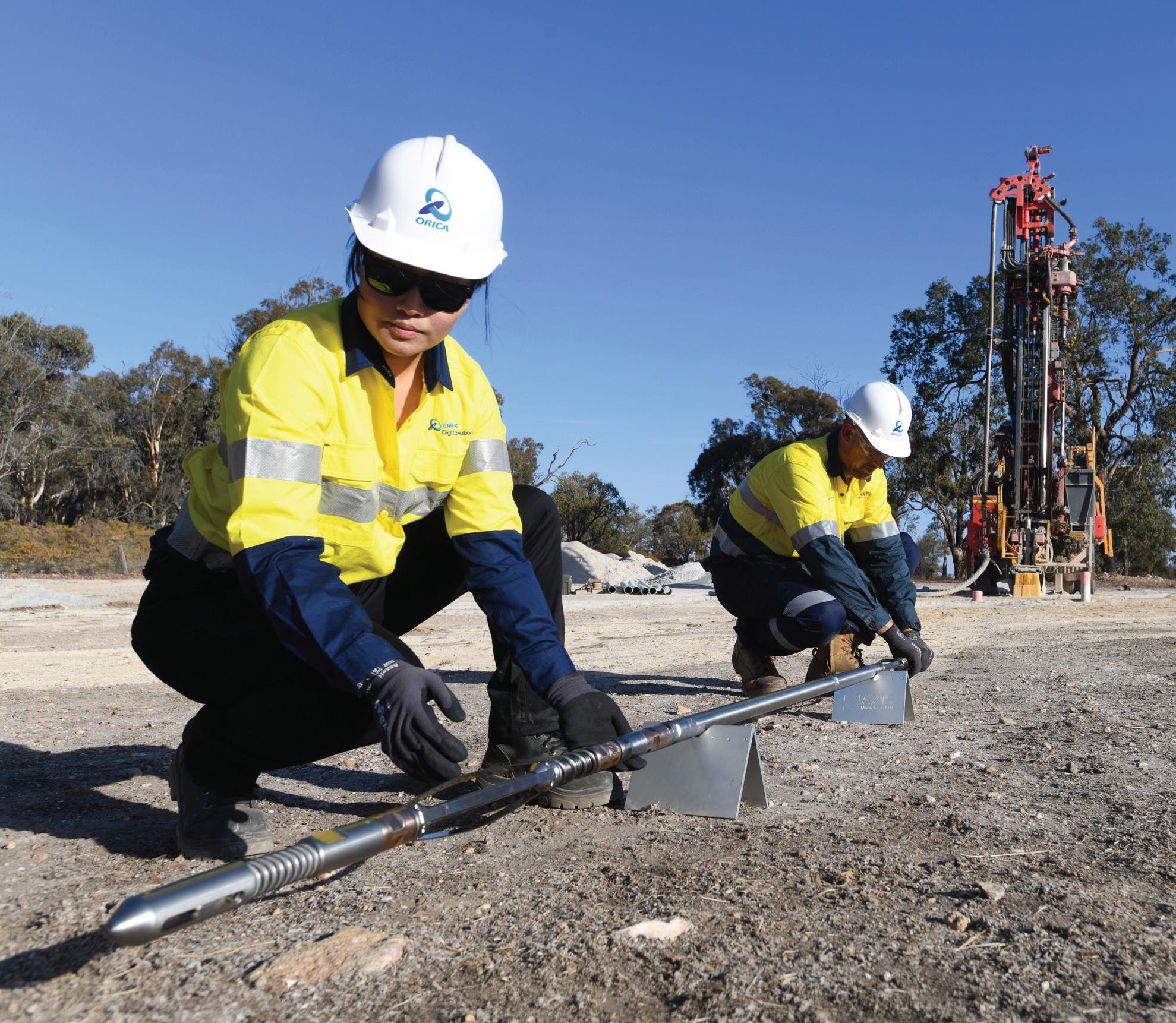
In Focus: Orica Digital Solutions and Axis Mining Technology
Induced Fractures and Damage in Diamond Core
In Conversation with Shaun Barker
How Space Exploration Made the Wireline Rod Cutter Possible


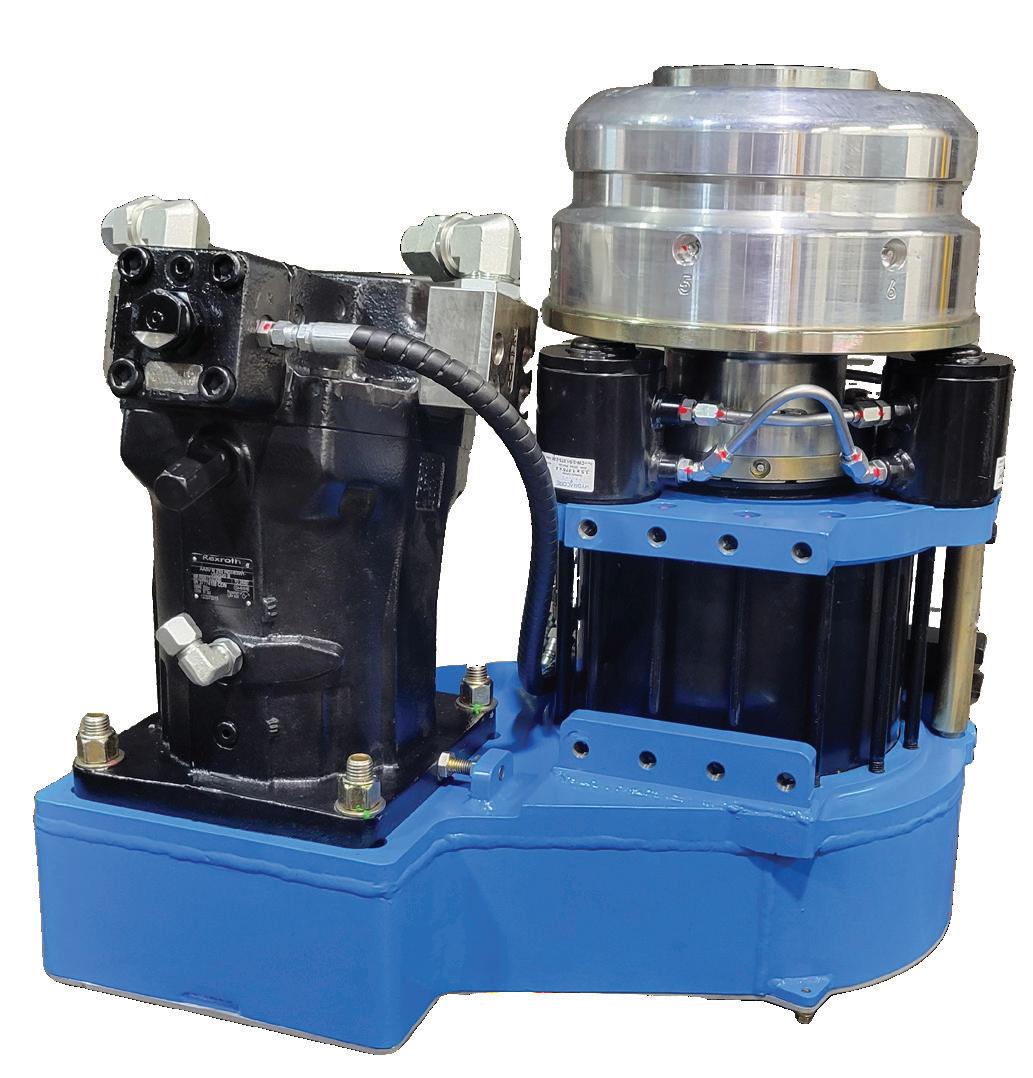
For over 50 years, Hydracore has been the leader in lightweight big-power drills and rotation heads. The new REVOLUTION P Nitro Head is proving itself across the globe with unmatched uptime, reduced maintenance, and performance that drillers can trust.
Gear-Belt Drive – half the parts, double the reliability
Belt rated for 500HP – built to handle extreme power
Low Maintenance – no leaks, no failures, no wasted time
Proven in the Field – tens of thousands of meters drilled with minimal to zero downtime
Lightest P Head on the market @ 431kg
EXPERIENCE THE REVOLUTION. UPGRADE YOUR FLEET TODAY.
www.hydracore.com graham@hydracore.com +1 778-980-0350
50 YEARS OF EXPERTISE SUPERIOR LIGHTWEIGHT POWER UNMATCHED RELIABILITY
Glen Sigstad, Assistant Operations Manager
@ Team Drilling
“Since we started using the Revolution in 2022, we have noticed a significant decrease in repairs which has led to more production hours and a reduced cost.” ~100,000 meters drilled with the Revolution P Nitro Head
Denis Desrosiers, General Manager
@ Rodren Drilling
“We have seen an increase in production time of 32% over a 12-month period on one program alone. Reliable and easy to maintain. Belt drive saves on leaks and possible environmental disasters.”
Jamie Lyons, Co-Owner
@ Atlas Drilling
“We’ve had the new Revolution on our two Hydracore 5000’s for the last two seasons, performing awesome with zero downtime. Both drills were doing 1,500–1,800 meters of NQ at the end and approximately 1,200 meters of HQ. Very happy with both versions of these heads and their dependability!”
Tyler Etches, Shop Foreman
@ Hy-Tech Drilling
“From the shop side, the Revolution - Tech 5000 drill integration was smooth. Out in the field, the feedback so far has been extremely positive. Drillers say it’s awesome to operate and easy to maintain.”
/FACTORY TOUR
6 From core to cloud: How Orica Digital Solutions’ Axis Mining Technology is redefining orebody intelligence by Peter Leckie, Senior Manager – Product (Marketing), Axis, Orica Digital Solutions /PRODUCT ADVERTORIAL
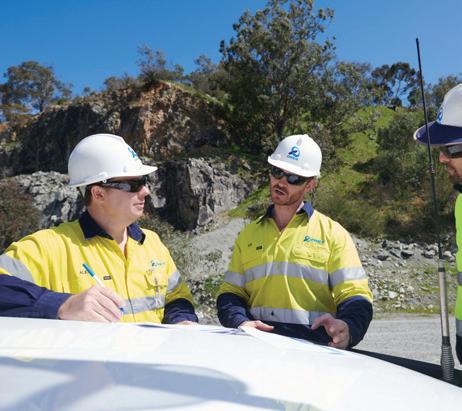
12 How space technology made the Wireline Rod Cutter possible
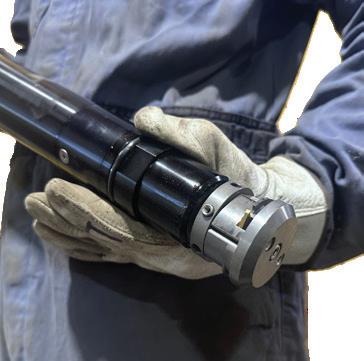
22 Increasing drilling operational performance for Vale using data science by Marcos Paulo Costa, Wavell Leite, Gabriel Leandro, Drilling Specialist Engineers, and Josival Junior, Drilling Specialist Geologist at Vale S.A.
26 Jinshi Drilltech
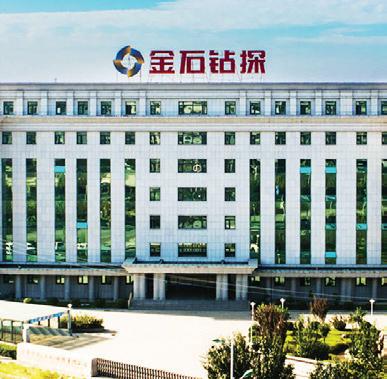
/EXPLORATION & MINING GEOLOGY
38 Datarock and the case for bespoke solutions in AI and mining by Brenton Crawford, Chief Geoscientist & Technologist and Co-Founder of Datarock
42 From bedrock to batteries Finland’s rising role in critical minerals by Hannu Lahtinen, Director, Availability of Raw Materials at Geological Survey of Finland (GTK) and Ilkka Keskitalo, Senior Specialist at the Finnish Safety and Chemical Agency (Tukes)
48 Q&A from the experts: In conversation with Shaun Barker, Director of the Mineral Deposit Research Unit at the University of British Columbia

54 Induced fractures and damage in diamond core by Callen Banff, Manager Open Pit Geotechnical Engineering at AngloGold Ashanti
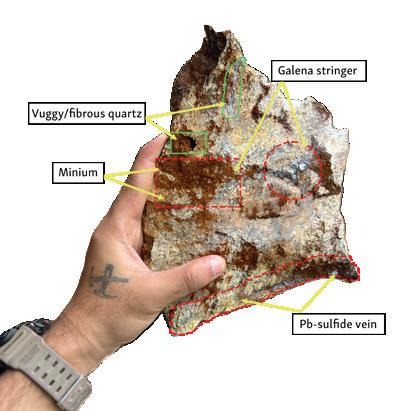
64 Unlocking polymetallic potential Integrated exploration of the Kargha Valley Pb–Cu system, northern Pakistan by Syed Nohman Gilani, Lead Geologist & GM Exploration at Chinar Group and Himalayan Earth Exploration Pvt Ltd
68 Women in mining: An Indian perspective by Ramya R Dodamani, Geologist
/INDUSTRY EVENT
70 FEXMIN 2026: Exploring the mines of the future Connecting exploration opportunities, capital, and territory in Chile
/EXPLORATION
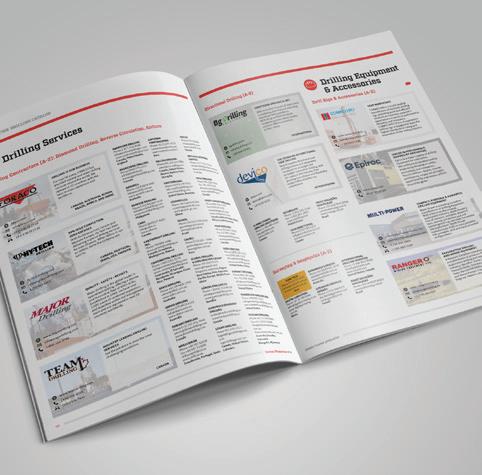
DRILLING CATALOG
72 Drilling services
73 Drilling equipment & accessories
77 Survey & Core orientation tools
78 Miscellaneous
24 Dimatec Inc: A journey of technical excellence and global expansion by Ian Klassen, Chief Revenue Officer and Vice President at Dimatec Inc
62 A tale from the mining super-cycle by Richard Fink, former Vice President - Technical (retired), Global Ferroalloys at Cliffs Natural Resources

Peter Leckie Senior Manager Product (Marketing), Axis, Orica Digital Solutions

Brenton Crawford Chief Geoscientist & Technologist and Co-Founder of Datarock

Callen Banff Manager Open Pit Geotechnical Engineering at AngloGold Ashanti
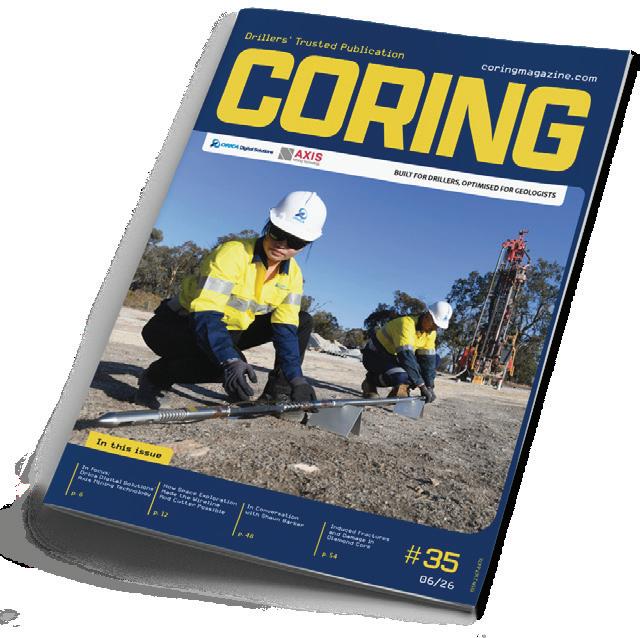
CORING MAGAZINE
June 2026
Cover photo
Orica Digital Solutions’ Axis Mining Technology Issue 35
ISSN 2367-847X
Not for resale. Subscribe: coringmagazine.com/subscribe
Contact Us
Coring Media Ltd.
57A Okolovrasten pat street, r.d. Manastirski Livadi, Triaditsa region, 1404 Sofia, Bulgaria
Phone +359 87 811 5710
Email editorial@coringmagazine.com Website coringmagazine.com
Ian Klassen Chief Revenue Officer and Vice President at Dimatec Inc



Richard Fink former Vice President - Technical (retired), Global Ferroalloys at Cliffs Natural Resources




Marcos Paulo Costa, Wavell Leite, Gabriel Leandro, Drilling Specialist Engineers & Josival Junior, Drilling Specialist Geologist at Vale S.A.
Hannu Lahtinen, Director, Availability of Raw Materials at Geological Survey of Finland (GTK) & Ilkka Keskitalo, Senior Specialist at the Finnish Safety and Chemical Agency (Tukes)
Syed Nohman Gilani Lead Geologist & GM Exploration at Chinar Group and Himalayan Earth Exploration Pvt Ltd
Publisher Coring Media
Executive Officer & Editor in Chief Martina Samarova
Editor
Maksim M. Mayer
Section Editor – Exploration & Mining Geology Dr Brett Davis
Digital Marketing Manager Elena Dorfman
Assistant Editor Adelina Fendrina
Graphic Design Cog Graphics
Want to contribute to Coring Magazine? Get in touch with us at: editorial@coringmagazine.com

Shaun Barker Director of the Mineral Deposit Research Unit at the University of British Columbia

R Dodamani
Coring Magazine is an international quarterly title covering the exploration core drilling industry. Published in print and digital formats, Coring has a rapidly growing readership that includes diamond drilling contractors, drilling manufacturers and suppliers, service companies, mineral exploration companies and departments, geologists, and many others involved in exploration core drilling.
Launched in late 2015, Coring aims to provide a fresh perspective on the sector by sourcing authentic, informed and quality commentary direct from those working in the field.
With regular interviews, insightful company profiles, detailed product articles, fieldpractice tips and illustrated case studies of the world’s most unique diamond drilling and mineral exploration projects, Coring provides a platform for learning about the industry’s exciting developments.


by Peter Leckie, Senior Manager – Product (Marketing), Axis, Orica Digital Solutions
Almost four years since it was acquired by Orica Digital Solutions, Axis Mining Technology still has exploration as its focus. The reason for that is simple: even with new backing, new capability, and a bigger platform behind it, the driller is still at the core.
Axis Mining Technology burst into the exploration market in 2014 at the forefront of the driller-operable gyro revolution, with tools that put surveying into the hands of field crews, while improving quality and reducing standby time. Understanding the realities of exploration life in the field is a part of Axis’ DNA and it goes into everything the business does, from hardware design through to support.
Orica is known globally for explosives and services across mining and infrastructure; more recently for the software, modeling, and measurement capability it has built in Orica Digital Solutions. With the acquisition of Axis Mining Technology, it formed a leading full-service orebody intelligence business and the industry’s first integrated, end-to-end, mine-to-mill solutions provider.
For Axis, that ownership hasn’t diluted the exploration focus. Instead, it has helped the business increase new product development and has also brought deeper software expertise, making Axis more connected with both drillers in the field, and with geologists—the owners of the data that the tools generate.
This isn’t about choosing one group over another. Drillers and geologists have related—but different—needs, and Axis needs to provide something for each of them: driller-friendly measurement at the point of work, and geologist-ready data at the point of decision.
Axis Mining Technology was built by a group of founders with diverse backgrounds: ranging from satellite signal processing in the UK, to drilling and wireline service operations in Kalgoorlie, Australia. This partnership was grounded in a shared belief that value is delivered by placing advanced technology directly into the users’ hands. In this case, that approach was used to enhance a core element of exploration—directional hole surveying—by equipping drillers with solutions that integrated seamlessly into their existing workflow. This led to the development of the AXIS Champ™ Gyro and that tool, alongside the Reflex Sprint-IQ, fundamentally changed the quality, process, and efficiency of surveying.
Becoming part of Orica Digital Solutions extended Axis’ global reach and strengthened development investment, but the core of the business remained: delivering outstanding support to the people on the ground. Even four years on, members of the original founding team remain involved, helping unlock the full potential of the business they launched 12 years ago.
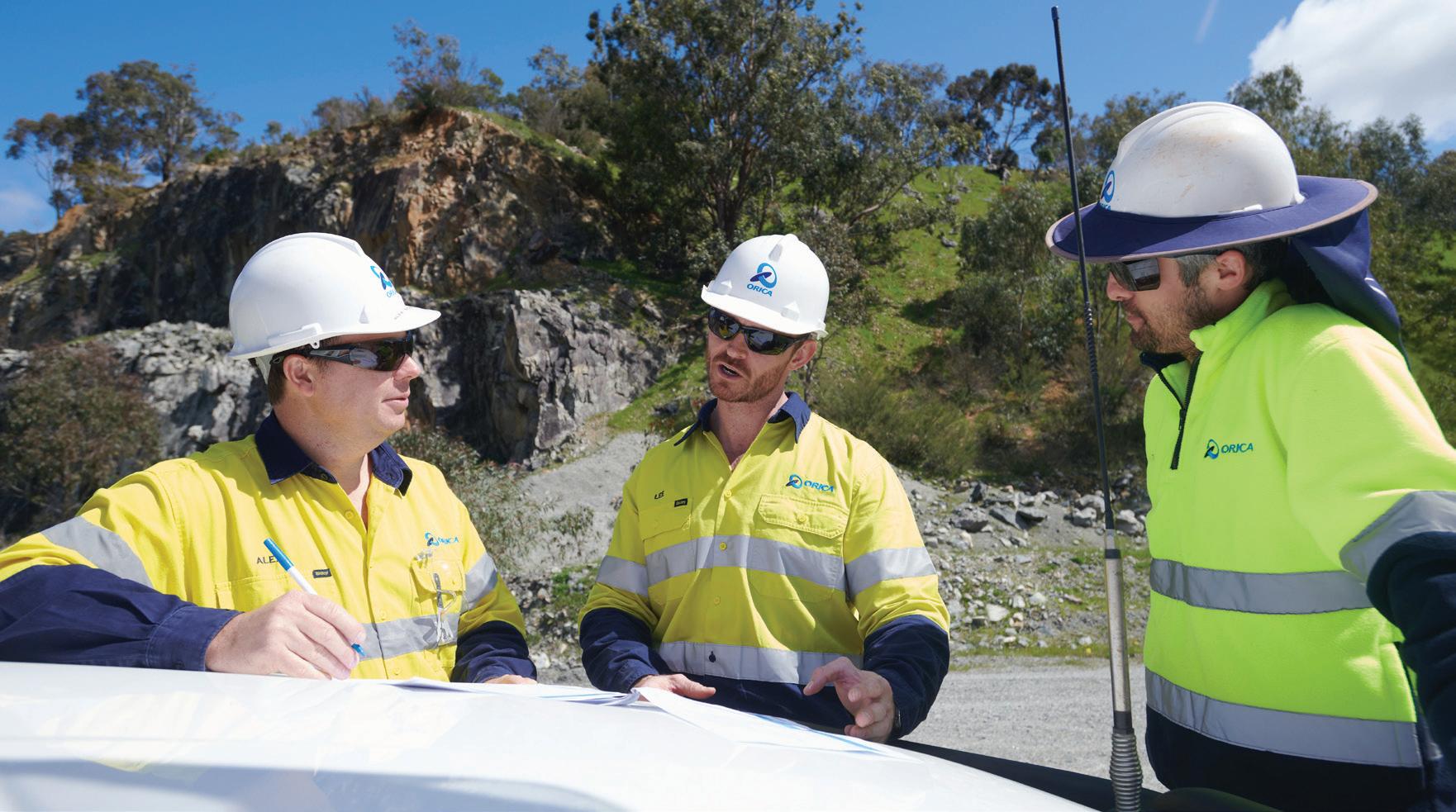
↑ We are committed to providing support from experts that understand the realities of a drill site.
To better support measurement workflows for both drillers and geologists, Axis shifted its focus from individual product performance to the overall user experience. This led to a ground-up rebuild of the hardware and software, aimed at delivering combined value greater than any single tool. The range seeks to deliver three objectives:
Hardware that excels in the specifications that matter
Axis focuses on specifications that directly impact real-work use, such as seamless integration into existing drilling equipment, ease of handling, and clear operational feedback. Prioritizing these factors supports more consistent use in the field and ultimately drives more frequent and accurate measurements.
AXIS Connect™ streamlines two-way data management between field instruments and the cloud, reducing manual entry and clicks, and enabling real-time visibility for geologists as surveys progress. Designed for interoperability, it integrates with established geology and drilling platforms to improve handoffs across teams.
At the Prospectors and Developers Association of Canada (PDAC) 2026, Axis demonstrated how this connected approach is extending through partnerships, most notably with Seequent®, helping link drilling workflows to geological modeling more seamlessly and reducing friction between teams.
This partnership delivers powerful integration between AXIS Connect™ and Leapfrog Geo (via Seequent Evo), enabling more seamless collaboration across field and office teams. By reducing friction in data movement and improving continuity between roles, it supports faster alignment, greater operational clarity, and a more connected exploration workflow.
More broadly, the collaboration is redefining how exploration drilling workflows operate end-toend. By connecting trusted field measurements with downstream interpretation and execution, it enables subsurface intelligence to flow unimpeded, from the rig to the model to action, delivering measurable gains in operational efficiency and exploration effectiveness.
Becoming the driller’s preferred solution in the field
Building on the principles that founded the business, Axis tools are designed to be dependable when they are needed most. Software is engineered to reduce complexity, minimize data entry, and streamline workflows, and it is supported by responsive teams who understand the realities of drill site operations.
A trusted partner for geologists
Axis delivers reliable hardware and guided field workflows that promote higher measurement quality, more consistently. This is complemented by cloud-based software that simplifies quality assurance and decision-making, while integrating effectively with the broader ecosystem of geological tools.
These three objectives underpin every product in the Axis portfolio.
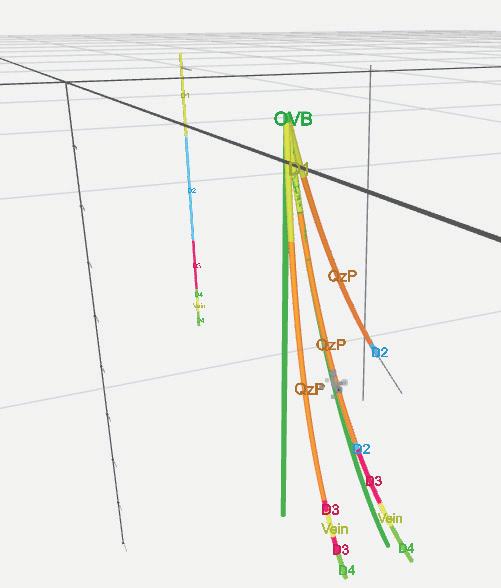
↑ Planned drill holes with geological data visualized in AXIS Connect™ via the Evo connector, compared against actual drill holes relative to plan
The history of Axis is built on tightly integrating hardware into the drilling workflow, with tools such as AXIS Champ™ ORI and Champ™ Navigator that were designed for drillers to use instinctively, without disrupting productivity. That same driller-first philosophy underpins newer hardware like the AXIS Aligner™ and AXIS All-Gyro™, where field-ready innovation improves safety, efficiency, and measurement confidence where it matters most.
Modern mining success still begins with knowing the orebody. What’s changed is how far that knowledge can travel, how quickly it can be trusted, and how easily it can be shared. Axis still starts with the driller, but with Orica Digital Solutions behind it, the story now continues further into the office, the model, and the decisions that follow, impacting the entire exploration value chain.
The AXIS Aligner™ is a new addition to the Axis range, developed in response to customer requests for an Axis-built system that fully integrates with the wider hardware and software stack. In designing the system, the team considered how to advance drill rig alignment technology; combining precision engineering with user-focused design. Featuring a stateof-the-art north-seeking gyro, ergonomic one-arm lift capability, and an innovative push-button clamping mechanism, it delivers safe and precise alignment in the field.
Built with the driller in mind, the AXIS Aligner™ is lighter and quicker to install thanks to its next-generation fiber optic gyro (FOG) and ergonomically designated housing. Safety is enhanced through a mechanical clamp that removes the need to reach around rods to attach the unit, while intuitive, high-quality software minimizes on-site data entry.
For geologists, the high-powered FOG provides fast initialization and robust north-seeking performance. Two-way data workflows through AXIS Connect™ allow real-time visibility of survey progress, while integration with leading platforms such as Seequent® and CorePlan ensures smooth data transfer.
Backed by expert global support, operators can rely on consistent performance and assistance wherever they work. Together, these capabilities make the AXIS Aligner™ an essential tool for achieving faster, safer, and more accurate drilling outcomes.
In mining, every inaccurate degree of azimuth or missing meter of survey density can cascade into dilution, mis-allocated energy, or lost recovery. These small errors compound across the value chain, affecting everything from drilling efficiency to blast performance and downstream processing stability. By making precision driller-operable, auditable, and fully connected, Orica Digital Solutions’ Axis Mining Technology is closing the gap between what happens at the rig and what happens in the model, ensuring that the data captured in the field seamlessly informs the geological understanding that underpins decision-making.
This alignment is critical as mines pursue deeper, more complex orebodies and tighter performance targets. When high-quality measurements flow directly into design tools, blast engineers can shape more accurate plans, operations teams can execute with greater confidence,
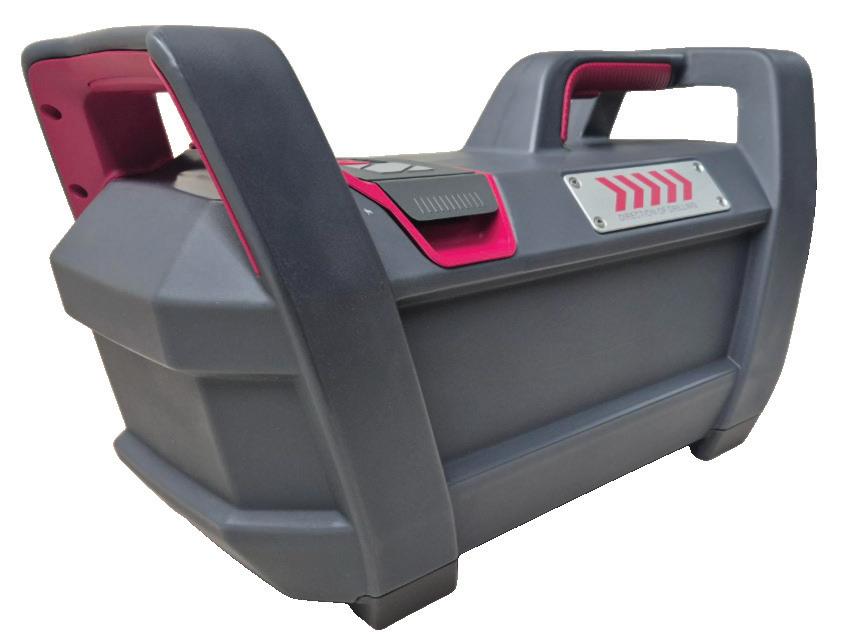
↑ AXIS Aligner™ unit
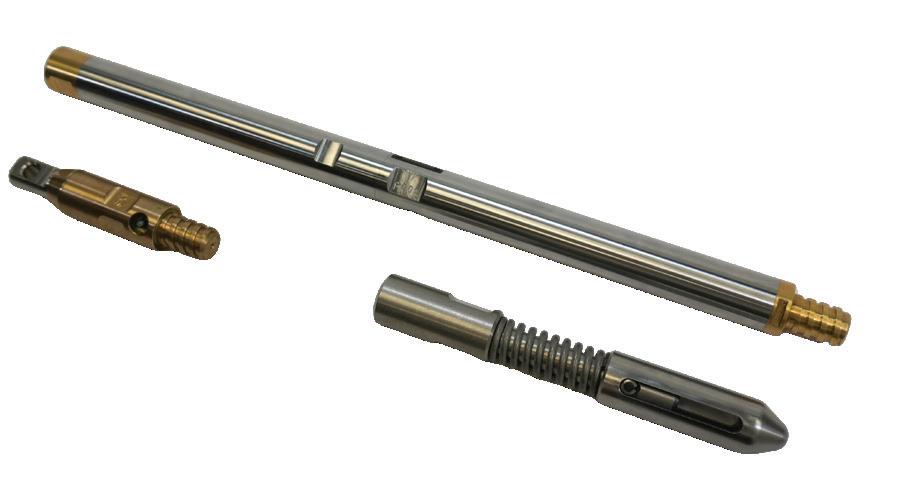
↑ AXIS All-Gyro™—safer and easier-to-handle hardware with significant reduction in weight and length
and processing plants can run more predictably with fewer surprises. The result is a value chain that behaves more like a coordinated system and less like a series of disconnected steps.
By strengthening the connection from drill accuracy to modeling, design, execution, and reconciliation, Axis is enabling a level of operational discipline that simply wasn’t possible before. That is how orebody intelligence turns into meaningful, measurable bottom-line results.
Savannah Resources is advancing a lithium exploration program in Portugal, targeting a potential new mining operation. The project involved drilling a five-figure number of meters within a compressed timeframe, using both reverse circulation (RC) and diamond drilling techniques. The campaign was part of Savannah Resources’ broader commitment to sustainable resource development, with a focus on operational efficiency and environmental responsibility.
For this project, Savannah Resources required surveying and orientation tools that could integrate smoothly into their workflow, while delivering consistent, high-quality data. Several boreholes were vertical, necessitating advanced capabilities for uninterrupted and accurate downhole measurements.
Orica Digital Solutions’ Axis Mining Technology supplied the AXIS Champ™ Navigator2 gyro and AXIS Champ™ Ori core orientation tools, which were deployed across the drilling campaign. The vertical continuous mode of the AXIS Champ™ Navigator2 was particularly valuable for surveying vertical holes, enabling seamless data acquisition without interruptions.
The AXIS Champ™ Ori offered a unique advantage—being driller-operable and replacing the guide bushing in the core barrel head assembly, thus eliminating the need for extensions or sacrificing core length. This simplicity and efficiency were well received by drill crews.
Additionally, the system’s flexible data transfer options—via cloud, USB, or email—allowed the Savannah Resources team to choose the method that best suited their operations, without being locked into a single workflow. This adaptability was especially appreciated in a multi-contractor environment.
Axis Mining Technology provided dedicated in-person training and support, ensuring smooth implementation and optimal tool performance throughout the campaign.
Savannah Resources achieved numerous outputs and benefits as a result of using the Axis Mining Technology instrumentation throughout the project, including:
• Successful surveying of a five-figure meterage of boreholes;
• Continuous tool operation over several months with no reported failures;
• Enhanced geological confidence and operational efficiency;
• Flexible data workflows supporting multi-team collaboration;
• Positive alignment with the sustainability goals of Savannah Resources.
The combination of robust technology, responsive support, and operational flexibility enabled Savannah Resources to meet exploration objectives efficiently and confidently.
‘Savannah has worked with Orica’s drilling and core orientation tools from Axis for the first time, and it was a great experience. Our exploration team and multiple drill contractors received
↑ AXIS Champ™ Navigator2 assembly on-site at Savannah Resources
in-person training and support, and the equipment was in continuous operation for several months without any problems,’ said John Morris Pereira, Exploration Manager at Savannah Resources.
We will continue expanding AXIS Connect™ integrations with leading geology, planning, and data management platforms, so whether you’re a driller, geologist, or a short-term planner, your measurement data flows cleanly and traceably into the next decision.
Recent announcements have emphasized interoperability to reduce manual handoffs. Our demonstrations at PDAC 2026 showcased our close relationship with Seequent® and how we are connecting drillers and geologists like never before, seamlessly linking from modeling to drilling, and back again.
From orebody to blast and beyond, our engineering teams are building on existing hardware and are progressing the next wave of breakthrough capabilities. The strategic intent behind integrating Axis remains clear: better orebody intelligence drives better blast design, better fragmentation, and better throughput—closing loops from mine to mill. Public statements from the acquisition and subsequent product releases reinforce this vision and Orica’s commitment to digital transformation at customer sites worldwide.
In parallel with the industry pursuing metals critical to decarbonization, orebodies are becoming deeper and more complex. Orica has highlighted how advanced geospatial tools improve the probability of discovery and characterization at depth, capability that becomes central to delivering the energy transition responsibly and profitably.
Visit Orica Digital Solutions’ Axis Mining Technology team to explore how we’re driving innovation to transform the future of mining.
• Diggers & Dealers, 3–5 August 2026, Kalgoorlie
• Mining Indonesia, 9–12 September 2026, Jakarta
• DRILL26, 22–24 September 2026, Adelaide
Or visit: orica.com/axis
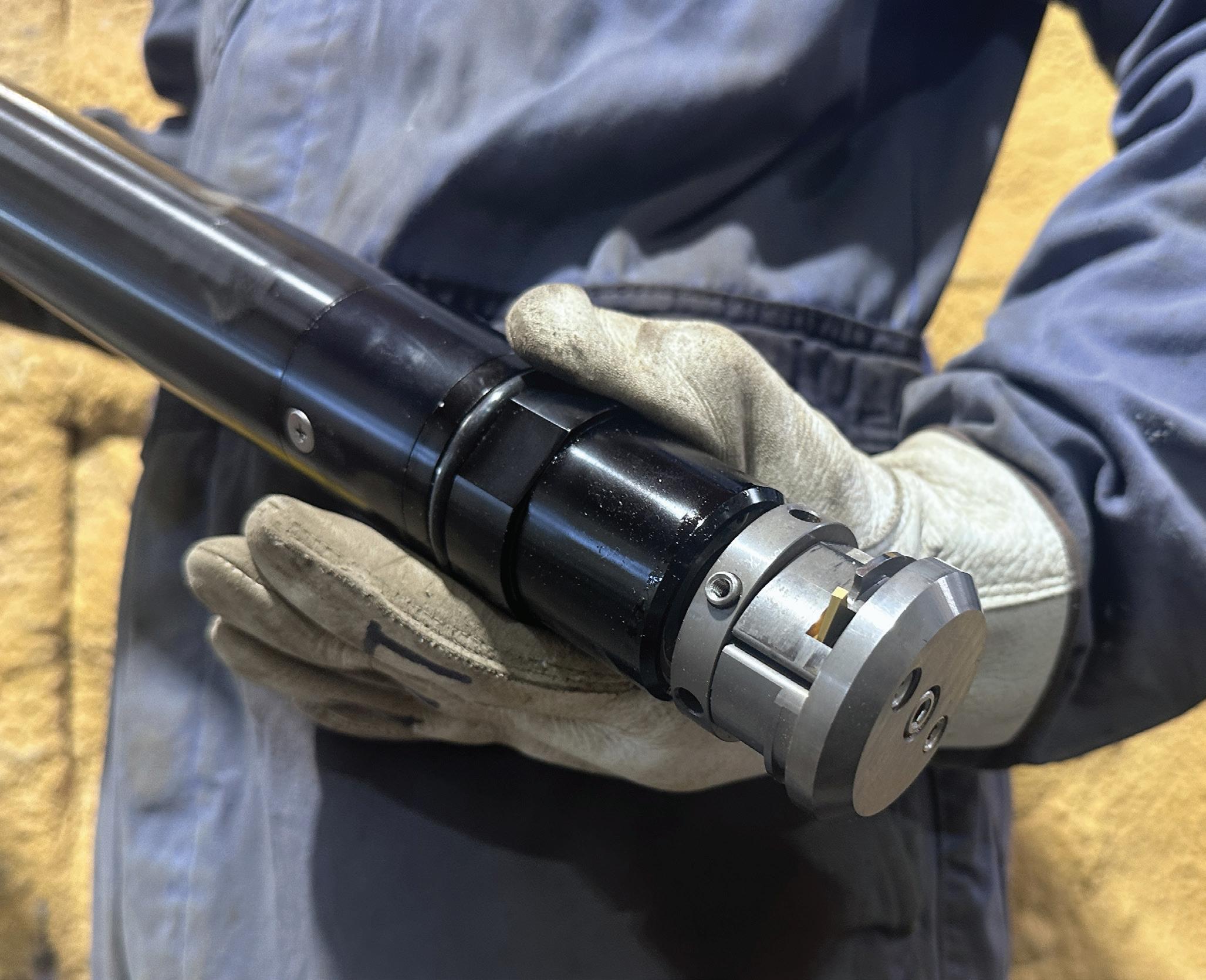
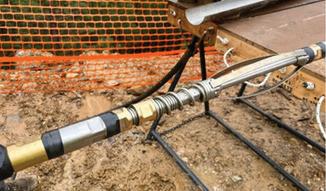
Launched in March 2026, the Pilot & Co, Drillware Wireline Rod Cutter was designed to solve a common drilling challenge: cutting rods that are stuck in a borehole reliably and in less time.
Drillware Tools, based in Smithers, British Columbia, develops innovative drilling technologies and offers its products under the Pilot & Co banner. Working closely with drilling contractors and field crews, the company focuses on solving real operational challenges encountered in mineral exploration drilling.
One of these challenges came from Hy-Tech Drilling, a contractor specializing in deep-hole and remote fly drilling operations where helicopters are often the only practical transportation method to access drill sites. In northern British Columbia, drilling seasons are short, and stuck rods can compromise the completion of an entire project.
Traditionally, recovering stuck rods is a costly and time-consuming process. Conventional casing cutters require lowering an additional drill string inside the stuck rods and using the drill rig’s rotation to cut through the string with a high-speed steel blade. Beyond the downtime involved, this method also requires transporting additional drill rods and equipment to site—a major challenge in remote operations.
To address this issue, Hy-Tech Drilling challenged the Drillware team with a simple but ambitious question: how can we design a battery-operated rod cutter that can be lowered directly down the hole to cut stuck rods quickly and safely?
That challenge became the foundation for the development of the Wireline Rod Cutter—the first product of its kind. Designed for fast and efficient downhole rod cutting, this battery-powered tool is deployed directly on the wireline to the required depth, where it performs the cut using an advanced timer-operated cutting system.
When it comes to product development, the first and most fundamental step is to create the project scope. In this case, it was critical to understand the depth where the rods could be cut, how the cutter is triggered or controlled, the amount of power necessary, the type of cutting inserts that are needed to do the job each time, in addition to developing a repeatable and reliable procedure to complete the cut. These steps required multiple brainstorming sessions with the drillers and the engineering team before the scope was fully defined.
After assessing several design iterations, a prototype was created. Prototyping was crucial so the team could see and touch the mechanism. Then they refined it, making improvements with each iteration.
After developing the cutter head design, the Drillware team had to test multiple motors, drive systems, battery systems, and seal combinations. Not many mechanisms can resist the high torque, heat, and other harsh conditions found deep in a borehole; the motor is isolated by a seal that would need to be able to withstand pressure of 2000 psi. After testing multiple different motor models, the team eventually found a supplier that builds motors used for Mars Rovers and space exploration. In collaboration with them, Drillware identified a motor capable of performing both in space and deep downhole: from outer space, to around 2000 meters (6562 ft) closer to the center of the Earth.
The first design hurdle to overcome was related to reliably clamping the rod cutter to the rods; the team needed to develop a clamping mechanism that is reliable, robust, compact, and can operate with fluids that can reach over 3000 psi.
Secondly, a lot of engineering and material science expertise was dedicated to creating a high-quality drive system for the cutter head. As the tool has to operate in the challenging conditions downhole, the Drillware team selected a high-precision motor from a supplier whose technology powers aerospace and satellite applications.
The final challenge was to create a seal inside the cutting mechanism that could handle the speed of the cutter head and withstand the pressure of cutting within a deep hole (up to 3000 psi). The seal also needed to be unaffected by the grit and polymers in drill muds.
‘One of the biggest engineering challenges was developing a compact system capable of delivering enough torque and reliability to perform consistently in harsh downhole conditions. The final design combines high-precision motors and drive systems, advanced sealing technology, and electronic control systems in a tool compact enough to be deployed directly using the wireline,’ said Alexander Christie, General Manager and Lead Engineer at Drillware Tools.
With traditional methods, the only comparable product that exists on the market is the standard casing cutter, which is lowered by another, smaller drill string. For example, in NWL size, you would use a BWL drill string to lower the cutter. Once the cutter has reached the area where you want to cut, the drill rig would be used to rotate the cutter. It would be activated with water pressure, rotating until the rods are thought to be released. The cutting rod string is then removed to test if the cut was successful. With drillers that aren’t experienced, the casing cutter could get stuck halfway down the hole, as sometimes the cutting tool is released prematurely.
With the Wireline Rod Cutter, no additional equipment is required: the tool is lowered down the hole using the overshot on the wireline. The cutter itself comes in a case with all necessary accessories. It can be easily transported in checked baggage and brought to the drill site quickly.
When deployed, the cutter gets activated according to a pre-set timer. To set the timer, it is important to understand how long it takes for
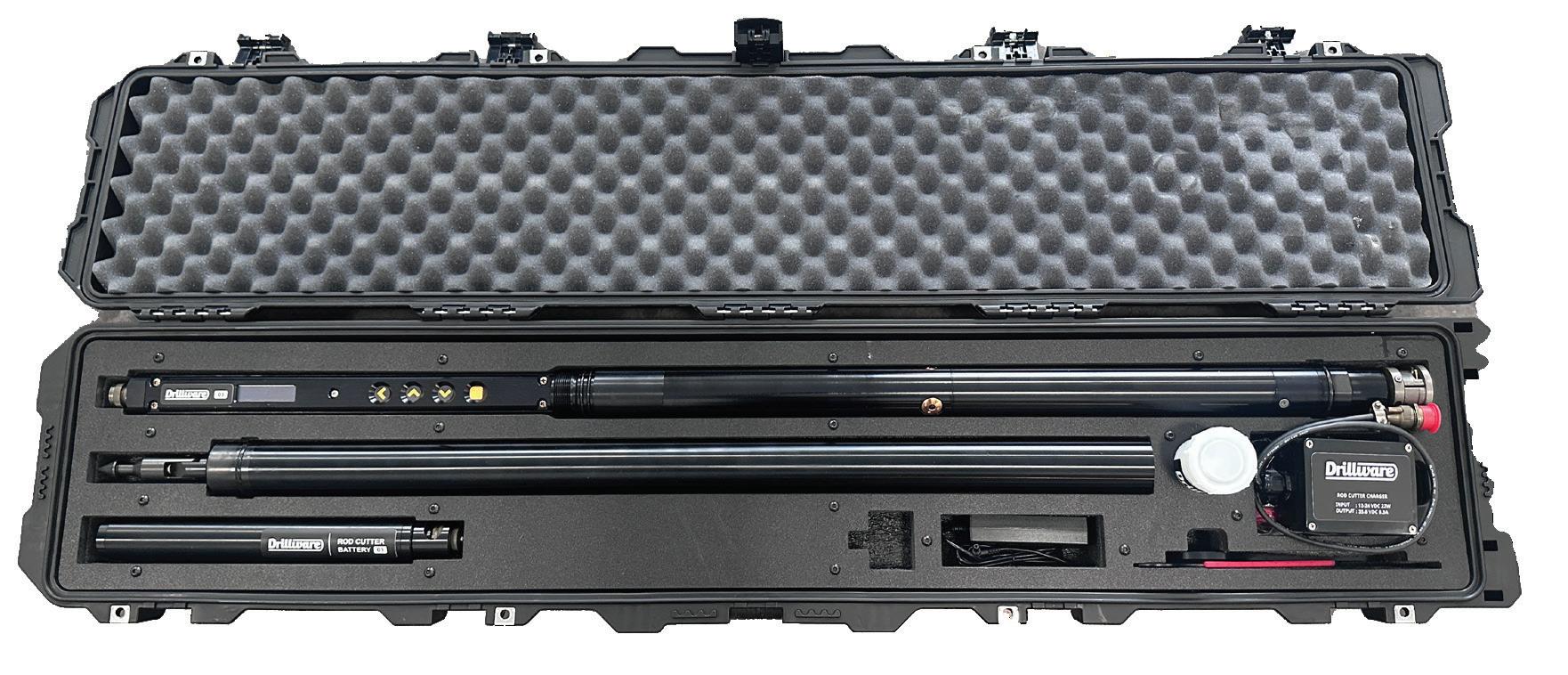
↑ Pilot & Co, Drillware Wireline Rod Cutter. In the case:
• 1 Wireline Rod Cutter;
• 1 battery, 1 charger;
• 5 replacement blades;
• 1 dummy assembly;
• 1 cutter head wrench, 1 spindle wrench;
• 1 User manual, USB key, log book;
• 1 spare parts kit, 1 maintenance kit.
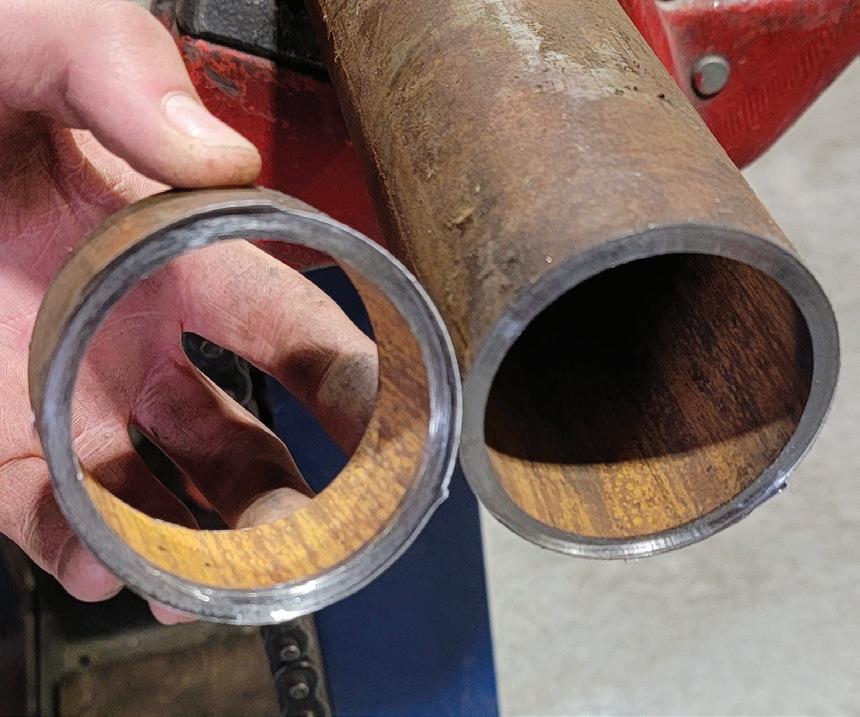
the cutter to reach the desired depth. The calculation is made with a ‘dummy’ cutter that weighs the same as the cutter and is lowered down the hole to measure the time of descent. This also confirms that there are no belled joints or obstructions in the hole and tests the wireline stretch. The method eliminates guesswork and ensures the cut is made at the correct location, typically just above the core barrel. Next, the cutter’s timer is set to match the dummy’s descent time, and the tool is sent down to the desired depth. The cut sequence will begin when the time has elapsed, which should be sufficient to reach the desired location. The cutter’s anchoring pins clamp the cutting system to the rods, and the tool will activate when it is stable. Cutting time is approximately 15 minutes. Generally, the tension in the string is released when the cut has been completed, indicating that the cut was successful. If the tension does not release, applying torque can complete the break in case a portion of the rod remains uncut. Sometimes, the rods are stuck above the cut. In this case, another cut can be made higher up without losing a lot of time. Slowly making more cuts as you progress up the string helps recover the maximum amount of rods from the hole. It’s quick and easy to make multiple cuts to test where the rods are stuck—minimal time is lost because you are not pulling the drill string all the way to the surface as you would with a conventional rod cutter; it’s just a quick wireline trip! When the cut is completed, the rod cutter is retrieved on the wireline. In most cases, drilling operators choose to wedge directly off the cut—if the rods are stuck at the core barrel, losing only about 3.5 m (11.5 ft) before drilling resumes.
The traditional recovery process when rods are stuck is long, costly, and labor intensive. The Wireline Rod Cutter can be easily transported and rapidly deployed, making it a cost-effective and time-saving solution; when the rods get stuck, you can cut fast and get back to drilling.
In deep holes, rods are most often stuck at the core barrel, but this is not always the case. Having a rod cutter on site gives you the ability to always cut the rods if you get stuck, reducing risk and allowing you to go deeper in the hole. In many ways, the Wireline Rod Cutter is like an insurance policy: you hope you never need it, but when a difficult situation happens, having the tool available can prevent operational disruption and save significant time and money.
In addition to that certainty and control, the Wireline Rod Cutter offers the following benefits:
• Acquisition cost for the initial cut is comparable to traditional methods. However, the tool becomes significantly more costeffective over time as it can be reused multiple times with minimal mobilization and setup costs;
• Can be set up in a day;
• Lightweight and easily transported, even in checked baggage, reducing freight costs and the need for handling heavy equipment;
• Cutting process is audible from the surface, providing confirmation that the tool is operating as intended;
• Provides immediate feedback on whether the cut was successful;
• Drastically lowers downtime associated with stuck rods.
‘This took time to develop and required believing in the project from the start. Once we had it dialed in, it became a complete game changer for our drilling operations. It gave us the confidence to push deeper without the constant risk that a stuck string could compromise the efficiency of the entire campaign. It also eliminated the need to keep a full BWL rod string on site, which alone represented major savings in transportation and mobilization costs,’ noted Mark Seilstad, Special Projects, Field Operations at Hy-Tech Drilling.
The Wireline Rod Cutter is an ideal tool for any contractor who needs to cut stuck rods so they can return to drilling, but it fits two specific types of customers best.
The first type includes contractors who drill deep holes, especially in grounds where there is a greater chance of the rods getting stuck in the hole. The product has been successfully used at depths of up to 1600 meters (5249 ft) and has been tested at pressure that replicates the hydrostatic pressure at the bottom of a 2000-meter hole (6562 ft). When a rod gets stuck in a very deep hole, even more rods need to be lowered and retrieved to perform a traditional cut; the opportunity for cost savings and reduced downtime by using the Wireline Rod Cutter is therefore much higher in deeper holes than in shallow ones.
The second type of customer are contractors who perform fly jobs. The Wireline Rod Cutter is compact and lightweight and can be transported to a drill site in a single trip with a helicopter. This eliminates the need to helicopter the smaller drill string from the laydown or staging area to the drill site.
where numerous successful cuts were completed prior to commercialization.
Throughout development, the engineering team continuously improved key aspects of the product, including battery performance, sealing systems, electronics, and overall reliability in harsh downhole conditions. Since the launch, the Wireline Rod Cutter has been very well received by the diamond drilling community.
‘We are extremely proud to launch a true innovation for the diamond drilling industry,’ said Hélène Coulombe, VP Sales & Marketing at Pilot & Co. ‘As drilling programs continue going deeper and becoming more technically demanding, contractors are looking for solutions that reduce risk, downtime, and mobilization challenges. The response so far has been very positive, and we see strong potential for this technology worldwide.’
The Wireline Rod Cutter is currently available in NWL size, with HWL expected to launch within the next year. Pilot & Co also offers limited on-demand emergency rod cutting services in Canada and plans to expand this support offering in the future.
What if a single infrastructure choice could eliminate manual core box lifting, accelerate drill core throughput, and reduce the data collection bottlenecks that plague mineral exploration programs?
In modern exploration, companies invest millions in high-tier drilling rigs and advanced analytical software to optimize deposit modeling. Yet the physical environment where this critical geological data is actually generated—the core shack—is frequently neglected. Improvised, poorly lit, and ergonomically challenging core sheds create operational backlogs, increase the risk of workplace injuries, and introduce inconsistencies into digital data capture.
To bridge this operational gap, Palsatech has developed industrial-grade core logging tables and modular accessories. A product of more than a decade of hands-on geological work and sample processing experience, these solutions transform core handling from a manual, high-strain chore into a streamlined, standardized, and future-proof workflow. By prioritizing workplace ergonomics and efficiency right from the start, Palsatech enables exploration companies to protect their workforce, maximize daily productivity, and establish an unshakeable foundation for high-fidelity geoscientific data acquisition.
Before examining the mechanical specifications of a modern core shack, it is vital to understand the direct operational and financial impacts they deliver to an active exploration project:
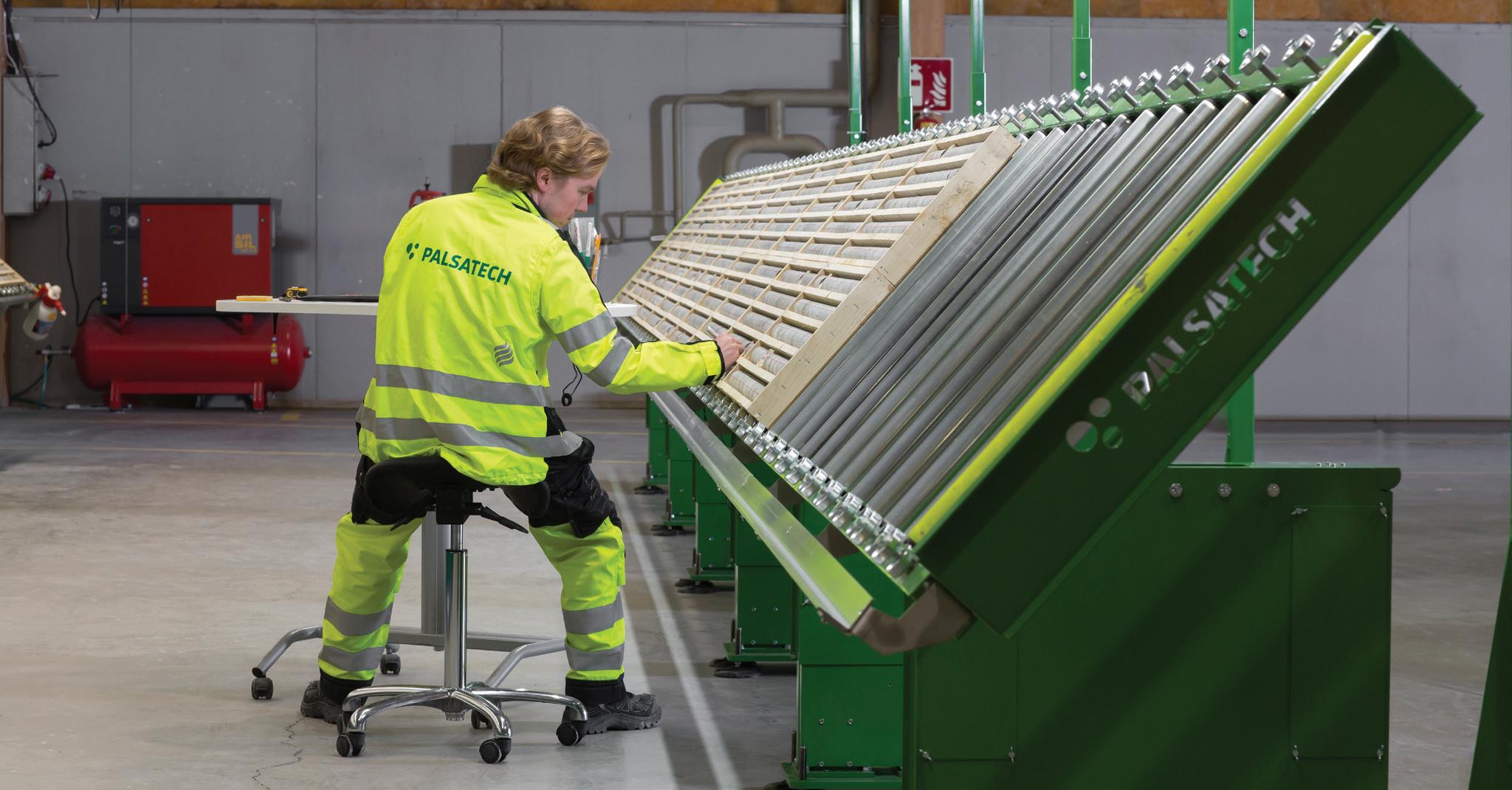
Core logging is notoriously demanding: geologists and technicians frequently suffer from musculoskeletal disorders caused by repetitive lifting of heavy core boxes and leaning over low, flat tables. Palsatech builds its systems with an unwavering focus on user well-being. Across all models, low-friction roller pathways, clean cable layouts, and the elimination of sharp edge exposures dramatically improve daily safety and posture. To make manual lifting history, height and angle adjustments allow operators to slide heavy trays directly onto the workstation safely, even when working solo. Paired with integrated track stoppers, this design ensures seamless, hoist-free box handling. These features are developed to prevent common workplace injuries, reducing organizational liability and employee downtime.
Without an optimized layout, exploration teams often waste time on unnecessary logistics, such as repeatedly moving heavy pallets. To eliminate these hidden inefficiencies, Palsatech offers comprehensive facility layout and workflow planning alongside its hardware. An efficient workflow significantly accelerates drill-to-data turnaround times and provides faster access to the reliable datasets required to optimize active drilling campaigns.
To turn these high-level operational benefits into reality, Palsatech builds equipment that is capable of withstanding the punishing mechanical demands of high-throughput logging facilities and remote regional field camps.
Palsatech provides different table models to adapt to diverse site layouts, sample volumes, and protocols:
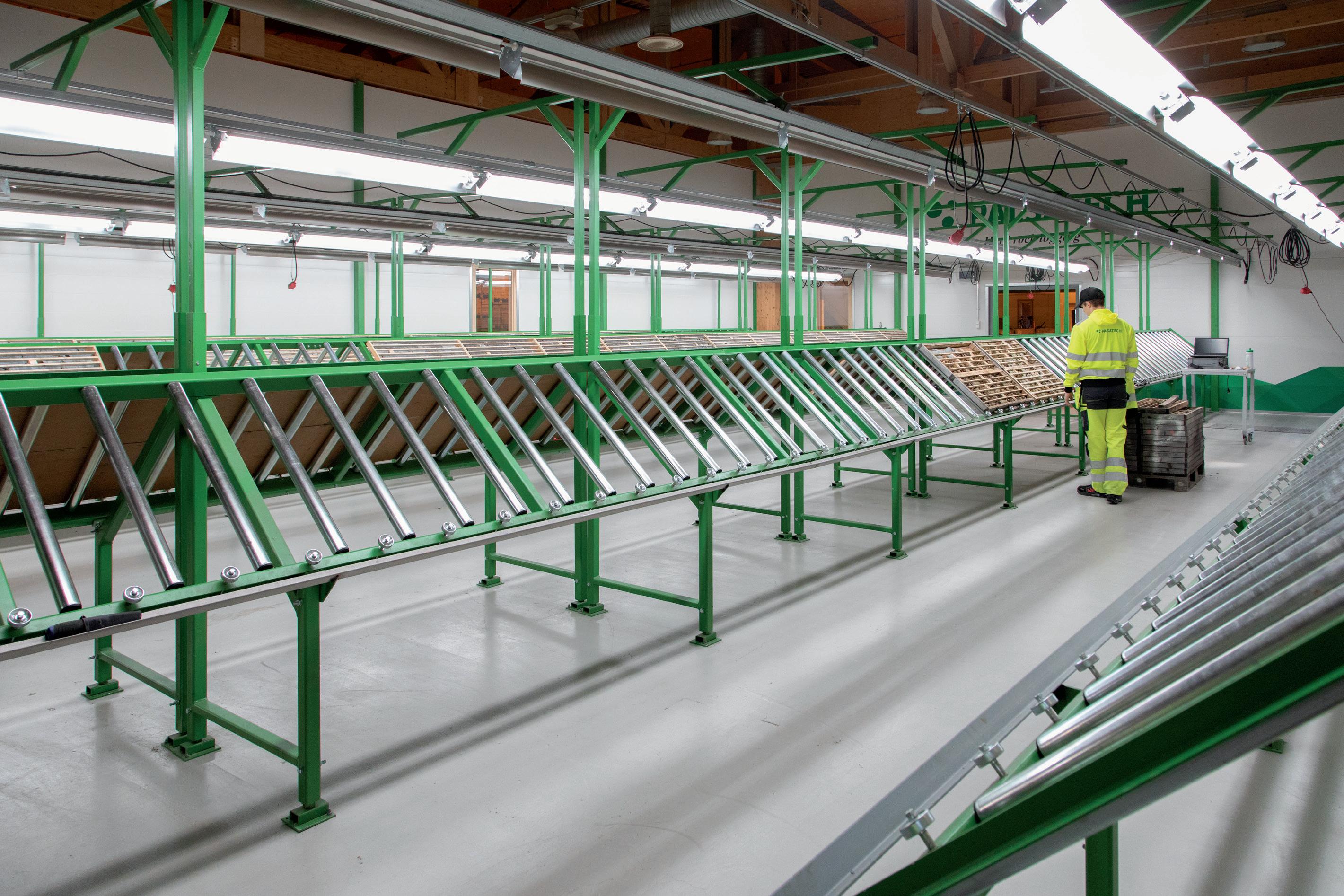
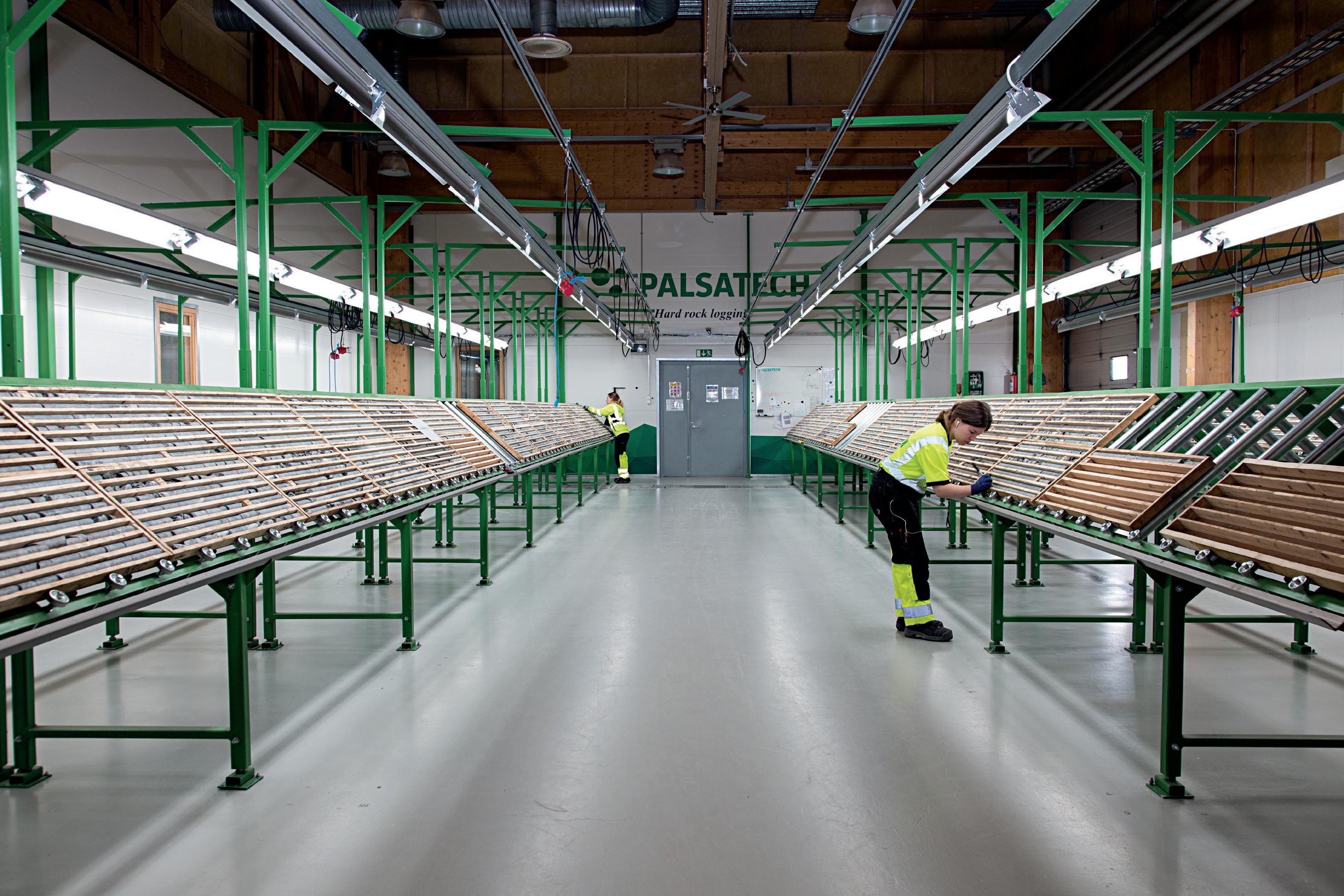
• The Standard Inclined Core Logging Table
This trusted industry workhorse features a fixed incline profile, with an optimized 40-degree standard configuration that can be customized to client needs. The height of the table is adjustable during installation on a 20 cm scale (74–94 cm, or 29–37 in).
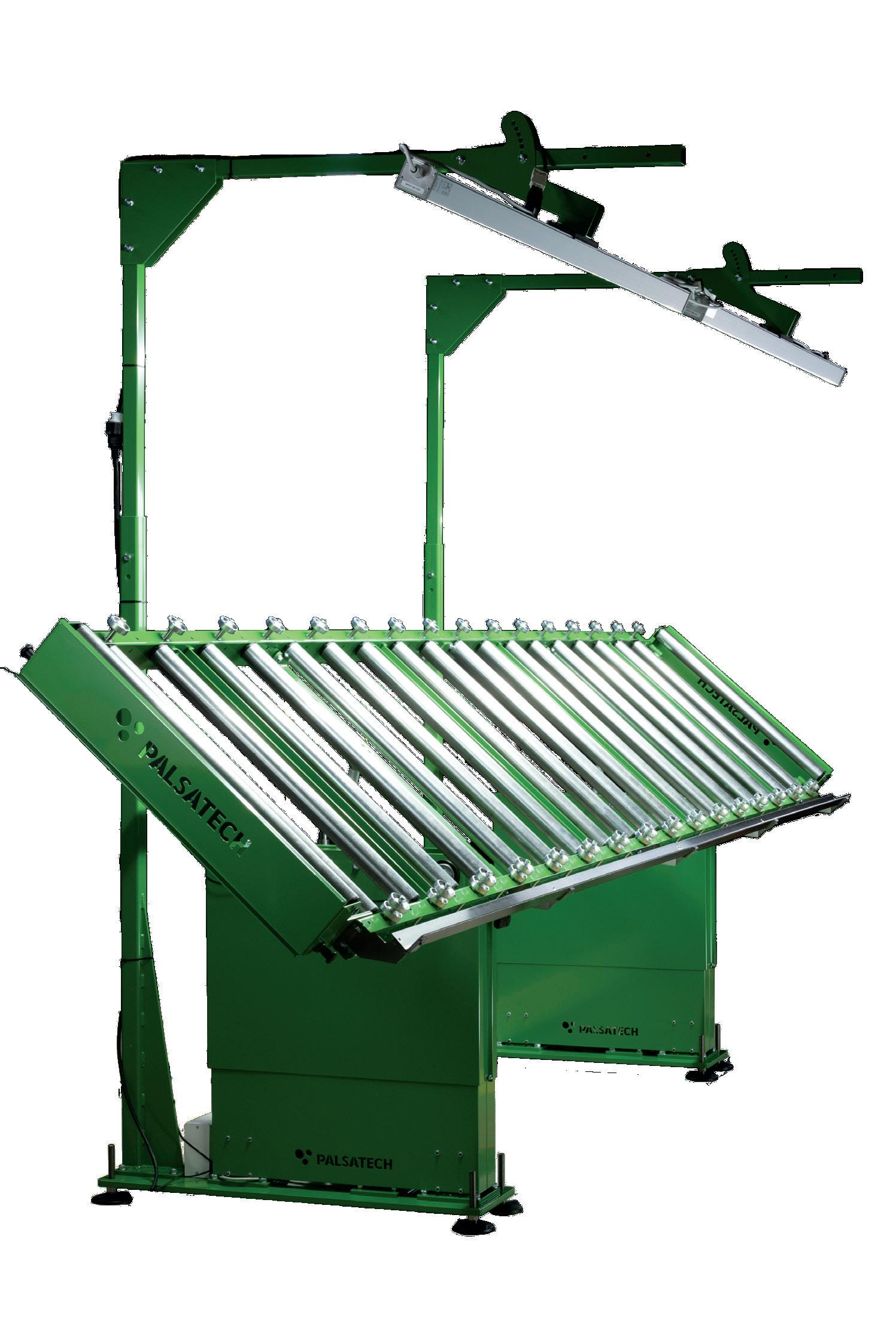
• The Electrically Adjustable Core Logging Table
Designed for maximum versatility, this model features stepless height and angle adjustment controlled via a cabled hand interface. Operators can instantly change the platform orientation from a flat presentation to an inclined view, allowing logging teams to alternate between sitting and standing positions effortlessly, and facilitating seamless sliding of boxes on and off the platform.
These models complement each other perfectly; adding an Electrically Adjustable module to a Standard Inclined row creates a highly efficient hybrid line.
Technical parameter
Platform configuration
Standard Inclined model
Customizable fixed incline
Electrically Adjustable model
Easy flat to inclined adjustment
Load capacity 145 kg / m (97.4 lbs / ft)
Core box orientation Horizontal alignment Length per module 220 cm (86.6 in)
Lower edge height
74–94 cm (29–37 in) (adjustable at install) 67–94 cm (26.4–37 in) (dynamic control)
Total height (incl. lights) 271–317 cm (106.7–124.8 in)
Structural frame
Double powder-painted steel
Roller tracks Galvanized steel, decelerating bearings
Core orientation rack
Linished stainless steel
Compliance standards All components CE, UL, and CSA certified
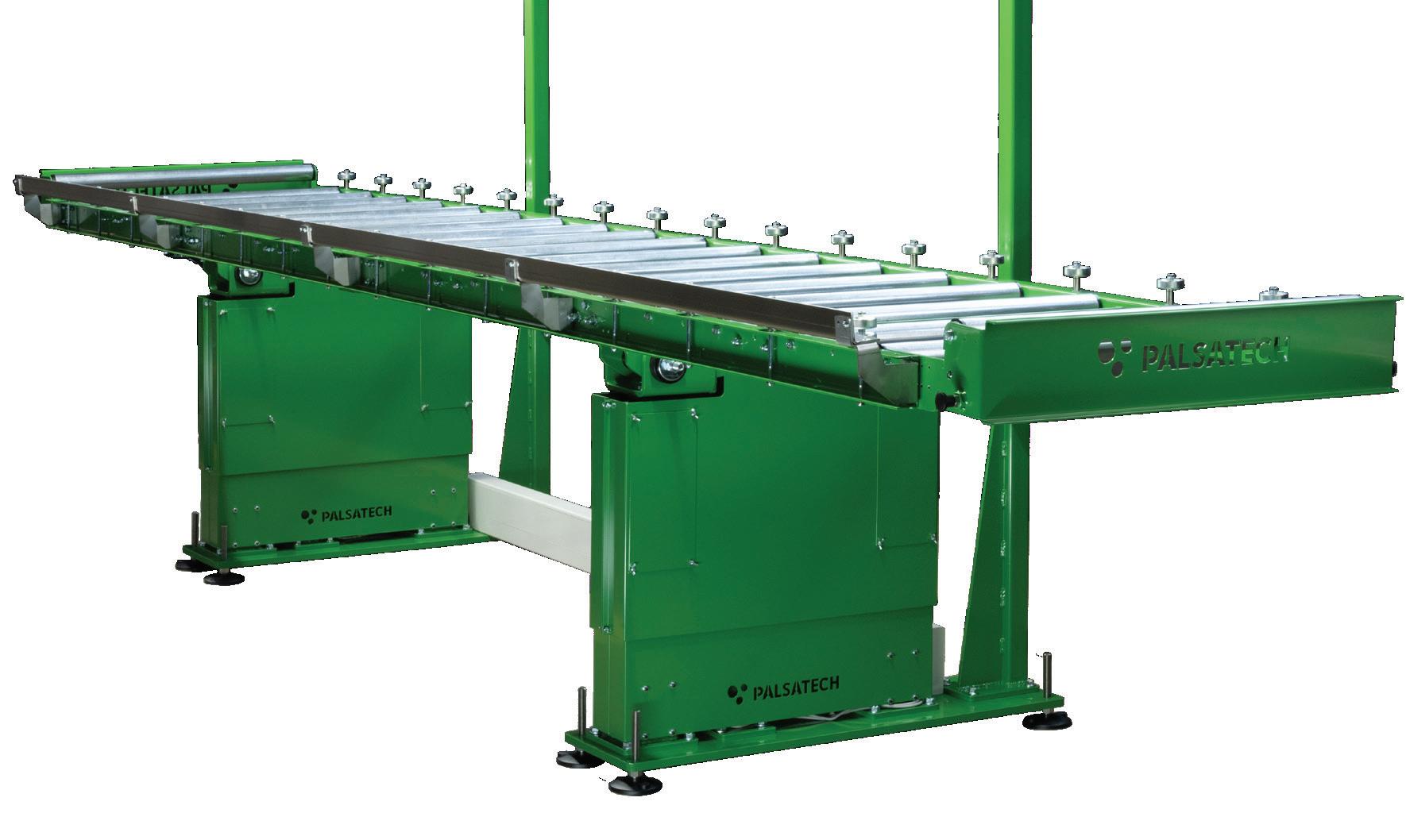
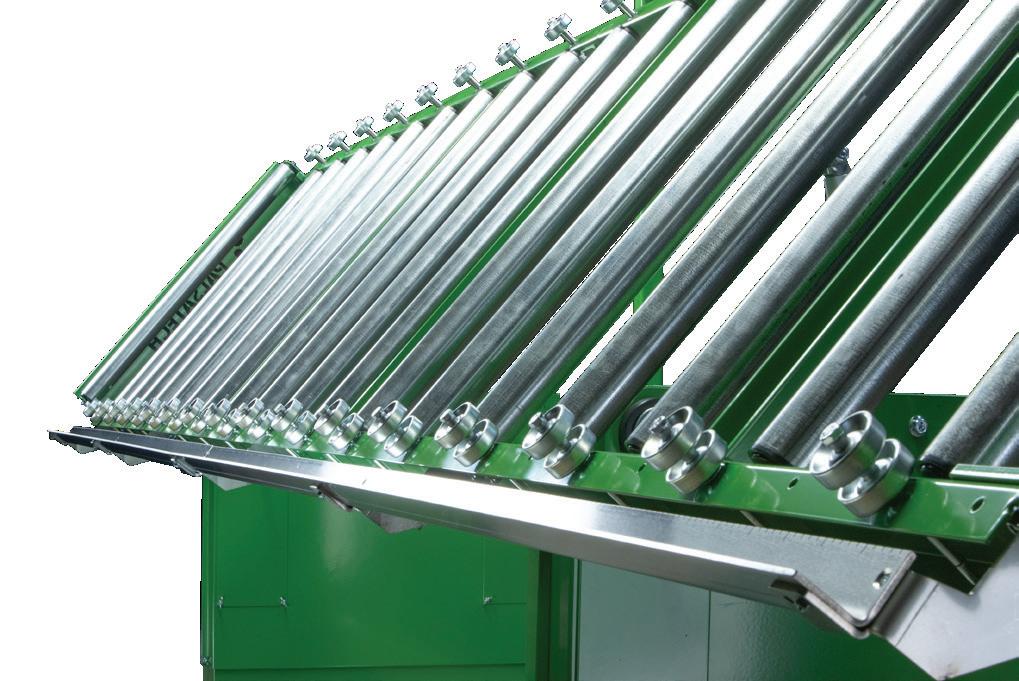
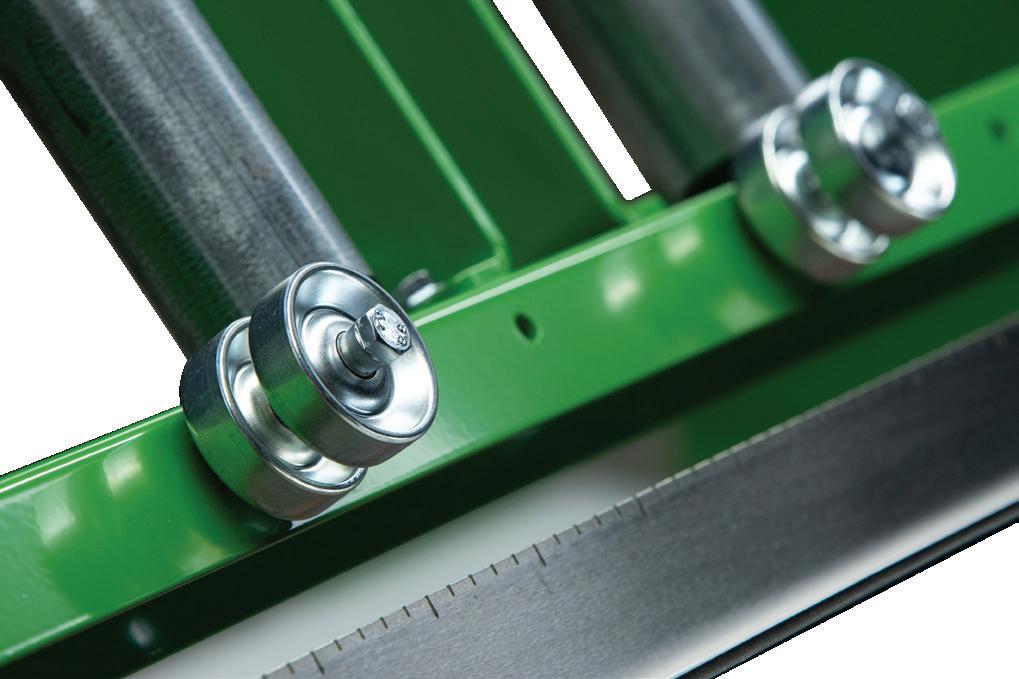
The primary framework of all Palsatech products is built from heavy-duty steel protected by double powder painting to prevent corrosion and wear. The core box pathways utilize galvanized steel rollers equipped with decelerating bearings. This choice of premium materials ensures a durable, long-lasting investment while allowing heavy trays to move smoothly along the track system with minimal manual effort, remaining securely under control at the same time.
To ensure seamless procurement integration for multi-national mining enterprises, all electrical and mechanical components within the logging table system are fully CE, UL, and CSA certified.
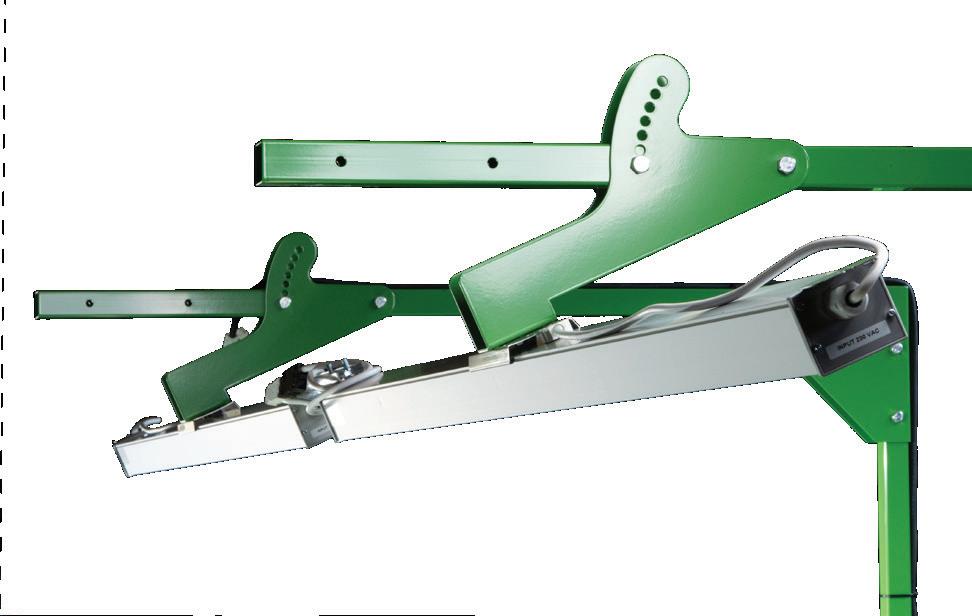
Traditional overhead tube lights work against both geologists and cameras. Inconsistent lighting is hard on the eyes and compromises the reliability of visual work, while introducing glare, deep shadows, and poor color rendering in photographs, frequently washing out fine mineralized veins or structural contacts.
Palsatech eliminates this issue by including an advanced overhead LED canopy as a standard feature built directly into the table framework. This provides an evenly illuminated field of view where both the distance and angle of the light are fully adjustable by the user. The system ensures that the geologist’s interpretation remains unaffected by varying light conditions and that every photograph taken exhibits visual consistency, protecting sample traceability and making images immediately report-ready.
Modular space-saving add-ons
To eliminate clutter and maximize the spatial efficiency of the core shack, Palsatech has developed integrated accessories that mount directly onto the table frames:
• Laptop desk
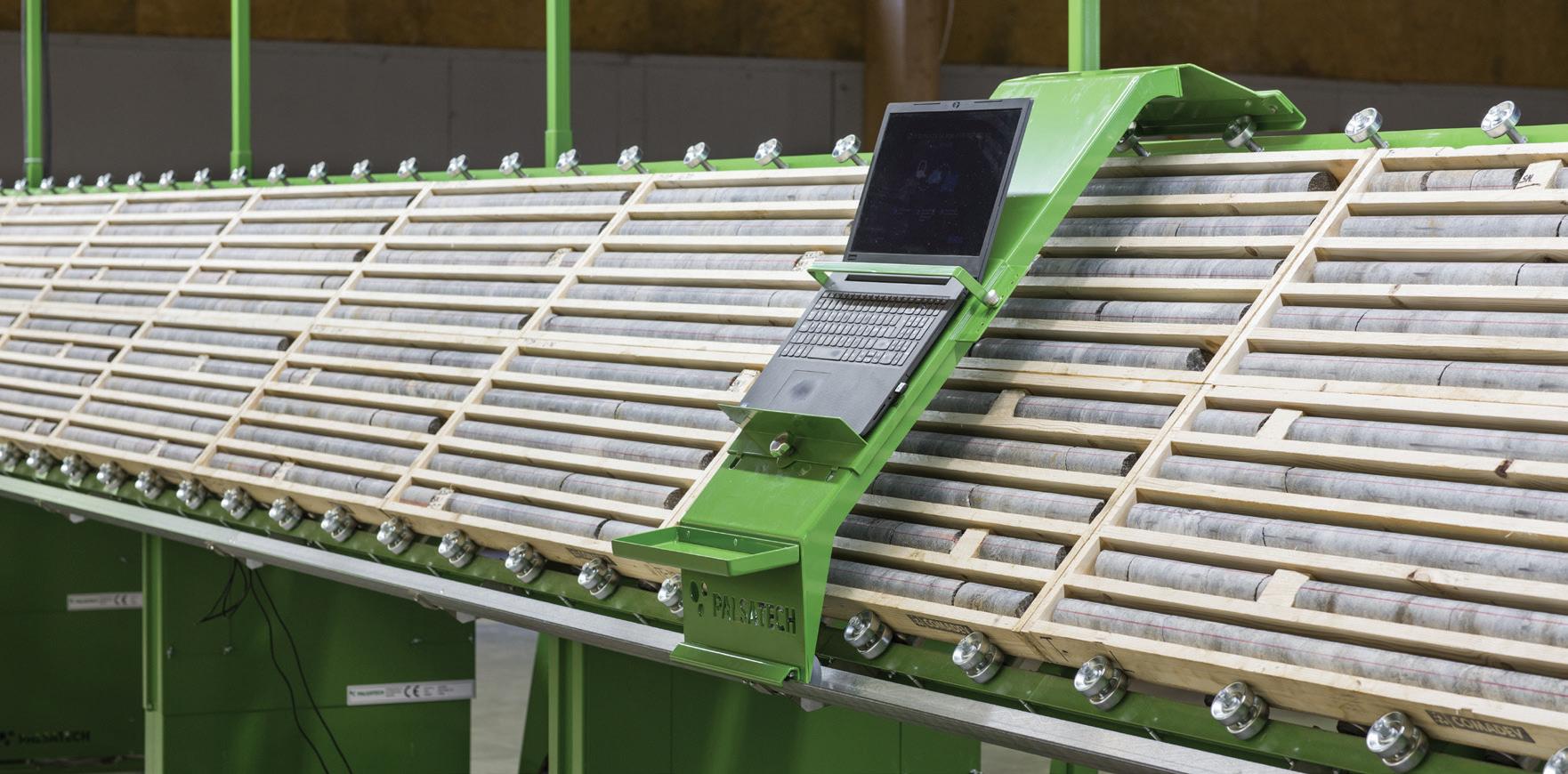
The adjustable-height steel desk slides laterally on dedicated rollers along the logging table, eliminating the need for separate, bulky stands. By moving smoothly alongside the geologist, it removes repetitive twisting motions and keeps the user’s focus continuously on the core samples. It also features integrated storage slots for essential tools like pens and markers.
• Photography station
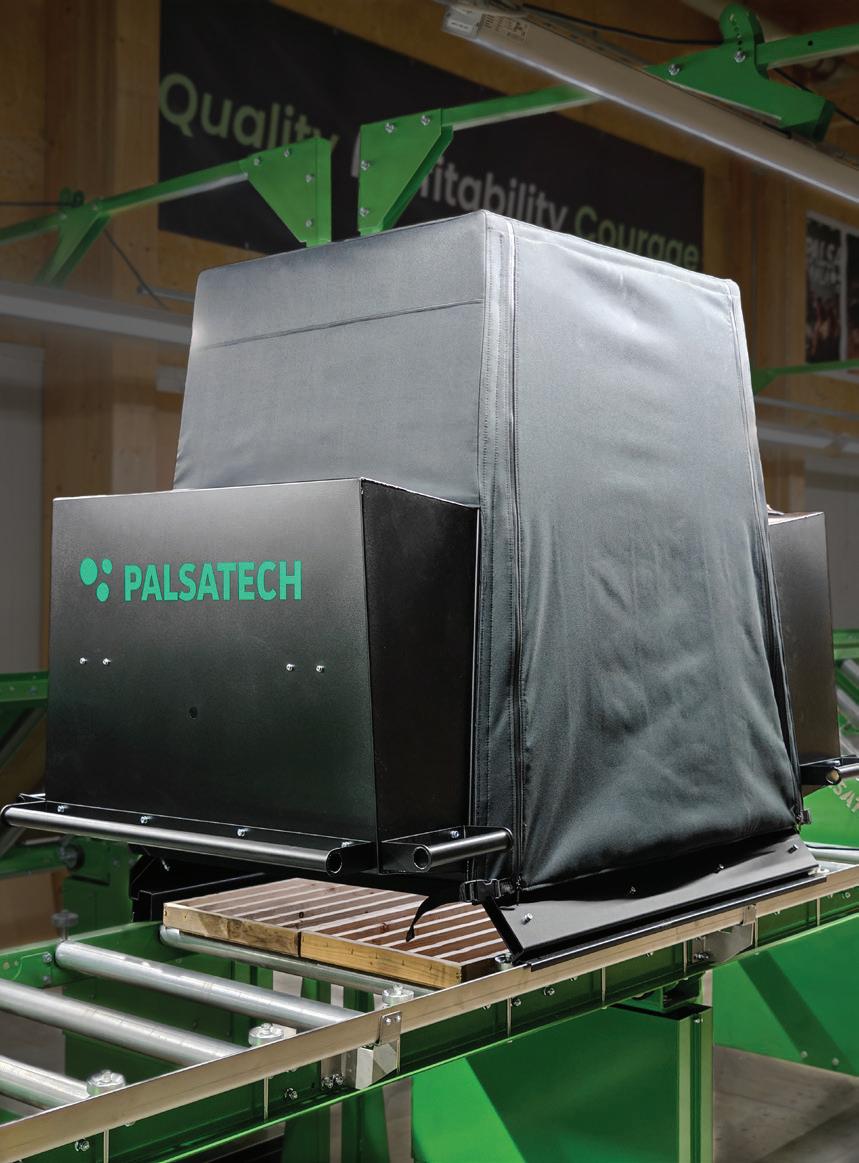
Equipped with rollers for easy movement along the tables, this lightweight frame offers a quick, plug-and-play camera setup. Its layout enables assembly-line efficiency, allowing core boxes to roll through the booth along the table’s track system. For streamlined data workflows, the station is 100% compatible with the Imago system.
Palsatech’s infrastructure solutions are backed by real-world validation. To measure the performance of the Electrically Adjustable Logging Table, a customer satisfaction survey was conducted among active exploration projects.
The statistical outcomes of the survey demonstrate an unprecedented level of market validation across a 1-to-5 rating scale:
• Investment performance: The statement ‘The tables have been a good investment’ achieved an average score of 5.0 out of 5.0;
• Ergonomic adaptation: The statement ‘The tables meet our expectations in terms of developing work ergonomics’ scored 4.8 out of 5.0;
• HSE risk mitigation: The statement ‘When used correctly, the tables reduce the risk of musculoskeletal disorders compared to our old tables’ scored 4.8 out of 5.0;
• Operational productivity: The statement ‘The tables improve work productivity and efficiency’ scored 4.3 out of 5.0.
The long-term value of these systems is further confirmed by an outstanding Net Promoter Score (NPS) profile across all surveyed tiers of the industry:
• Overall responders: 95% across the entire survey pool;
• Active daily table users: 93% from geologists and technicians working directly on the platforms;
• Management & HR personnel: A perfect 100% satisfaction rate from operations managers and human resource executives focused on workforce safety and long-term capital efficiency.
Feedback from active exploration projects emphasizes the physical relief and efficiency gains: ‘No more lifting boxes, which has significantly reduced the strain on my back.’
↑ Palsatech technicians sliding boxes onto the table
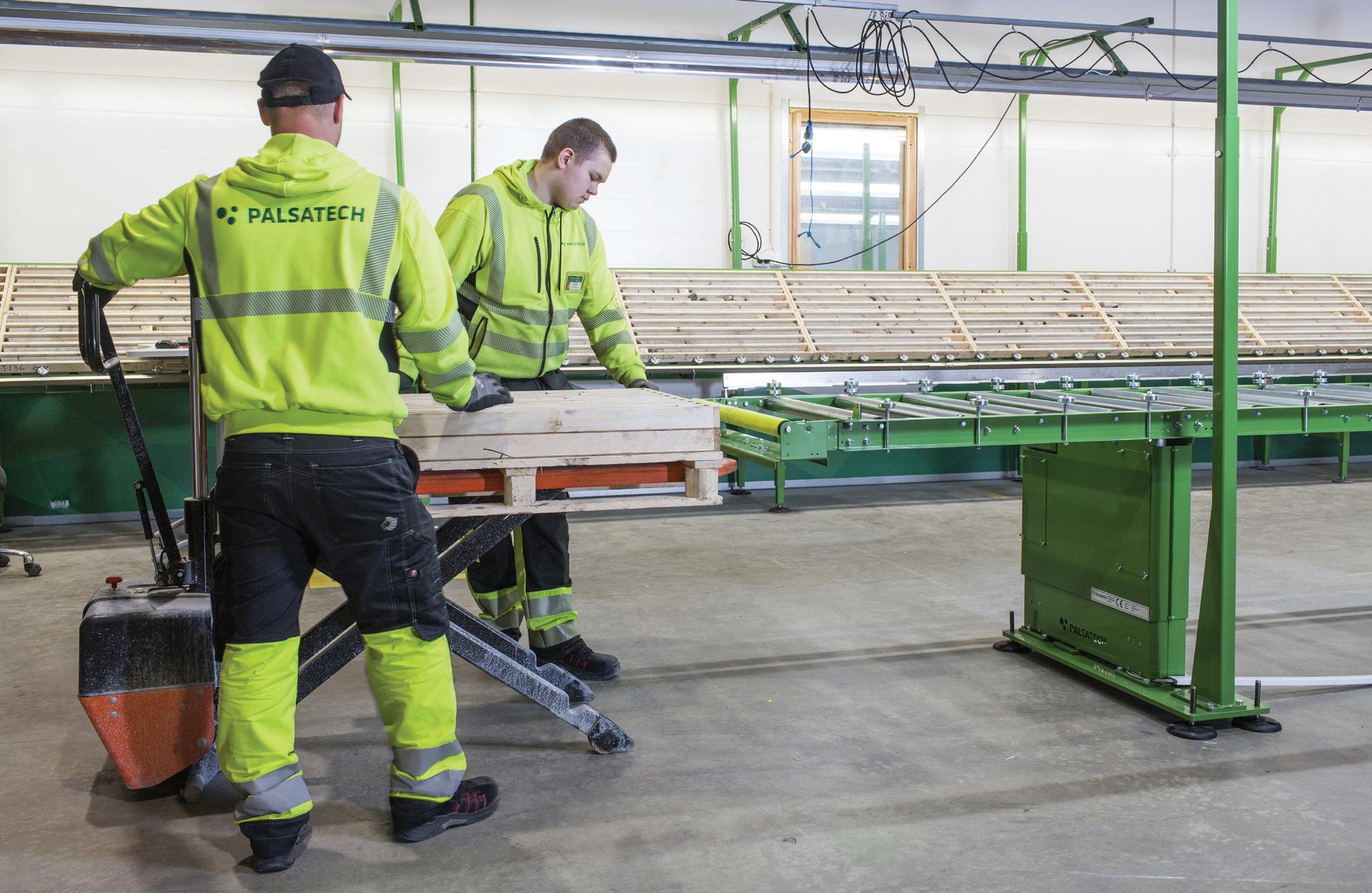
Another technician highlighting the speed of single-user operations added: ‘Lifting boxes onto the table is easier and faster, and you can do it alone.’
As the mining industry enters a highly digitalized era driven by advanced data capture, the role of physical infrastructure is undergoing a radical shift. Core logging tables can no longer exist as simple, isolated wooden benches; they need to serve as adaptable and technology-ready platforms capable of evolving alongside new geoscientific tools. Palsatech approaches these emerging digital opportunities from a foundation of customizability and modularity, positioning its infrastructure as a smart physical bridge that prepares traditional core shacks for the future integration of modern automated systems. Because Palsatech’s tables and accessories are fully modular, they are built to grow with the client’s operational needs. Companies can add, adjust, or upgrade their setups without hassle, creating a future-proof environment where emerging digital hardware can be seamlessly accommodated into the daily workflow down the road. This flexible architecture ensures that exploration programs can adopt tomorrow’s modern solutions smoothly, protecting their initial infrastructure investments while building a scalable pipeline for high-fidelity data acquisition.
Improvised core shacks introduce significant, unmeasured hidden costs through worker injury liabilities, processing backlogs, and poor
digital data quality. Palsatech’s core logging tables and modular accessories offer a field-tested, compliant alternative that brings structural safety, industrial-grade durability, and operational simplicity directly into daily core shed routines. By optimizing the physical workspace today and preparing it to scale alongside tomorrow’s expanding operational needs, Palsatech helps global exploration operators advance confidently from drill hole to data entry.
Palsatech is an international provider of integrated exploration support services and field-tested logging equipment designed to improve core shack efficiency. Backed by over a decade of field experience and active projects spanning multiple continents, the company specializes in comprehensive exploration and mining services such as geological consulting, core processing, and logistics.
Palsatech operates advanced regional support facilities, Palsacenters, alongside its product lines, allowing mining clients to scale up their exploration throughput rapidly and safely without heavy fixed capital investments or procurement delays. For


by Marcos Paulo Costa, Wavell Leite, Gabriel Leandro, Drilling Specialist Engineers, and Josival Junior, Drilling Specialist Geologist at Vale S.A.
Vale S.A. is globally recognized as a leader in iron ore production. As such, it recognizes that remaining competitive in the industry demands optimizing drilling operations in order to build accurate geological models that guide operations and reduce risks in iron ore mining over the coming years. In line with this goal, a project led by Marcos Paulo Costa, with team members Josival Junior, Wavell Leite, and Gabriel Leandro, aimed to structurally increase the operational performance of Vale’s Brazilian drilling operations.
Operational performance reflects what percentage of available hours are converted into productive drilling time. Improving this metric by optimizing physical utilization and mechanical availability directly impacts rig productivity, resource efficiency, and execution capacity, making it a key factor in increasing drilled meters without expanding the operational structure.
At the beginning of the project, the average operational performance was around 20%, driven by high process variability, a significant amount of contractual idle hours, and limited conversion of installed capacity into actual production.
Recognizing the opportunity for improvement, the project followed the Lean Six Sigma methodology (a systematic methodology for removing operational waste and reducing process variation) structured around the data-driven DMAIC cycle (Define, Measure, Analyze, Improve, Control). The initiative was led by a team of experts in drilling engineering, data analytics, and operations management.
The focus was on identifying key operational losses, statistically analyzing variables that affect performance, and distinguishing between systemic and special causes. The project then validated these causes in the field and implemented targeted actions to increase productive hours and improve drilling efficiency.
More than 1.2 million operational hours from different regions of Brazil were analyzed. These covered all drilling operations across various geological contexts, logistical conditions, and operational models. Data were extracted from corporate drilling management systems fed by operational records and daily drilling reports, and included details on worked hours, idle hours, downtime, productivity, field activities.
The dataset covered a 12-month period (April 2024 to March 2025), thus including seasonal variations related to weather conditions. This broad and diverse dataset ensured strong representation of real operating conditions and enabled consistent analysis that could be applied nationwide.
The analysis identified 190 potential causes using statistical tools such as Pareto analysis, sequential analysis, boxplots, control charts, normality tests, and performance analysis. Of these, 22 were prioritized and confirmed as root causes through field observation, with teams visiting all operational sites and shifts. Key causes included:
• Delays in starting shifts;
• Lack of supplies at drilling sites;
• Delays between site changes;
• Delays in site definition processes;
• Interference from mining operations (drilling in active pits);
• Inefficiencies in shift models;
• Excessive downtime for inspections.
Validation was carried out using applied statistical analyses to determine which variables truly impacted performance. Comparative tests and variability analyses were used to identify significant differences between operational conditions. Regression analysis quantified the effect of each variable on performance, enabling prioritization of the most impactful actions.
Analytical results showed that increasing productive worked hours has an approximately 6.7 times greater impact on operational performance than reducing idle hours. This guided the project strategy toward converting operational availability into effective production.
A key insight was that the main impacts were consistent across regions, indicating a systemic issue and the need to review internal processes. Based on these findings, the improvement plan focused on implementing the following structural and operational changes:
• Reconfiguring shifts for 24-hour drilling operations;
• Weekly, monthly, and quarterly planning of drilling activities;
• Integrating drilling contractors, mine planning, and operations;
• Optimizing drilling sites sequencing;
• Revising team transportation routes;
• Strengthening safety practices;
• Redesigning supply requests processes.
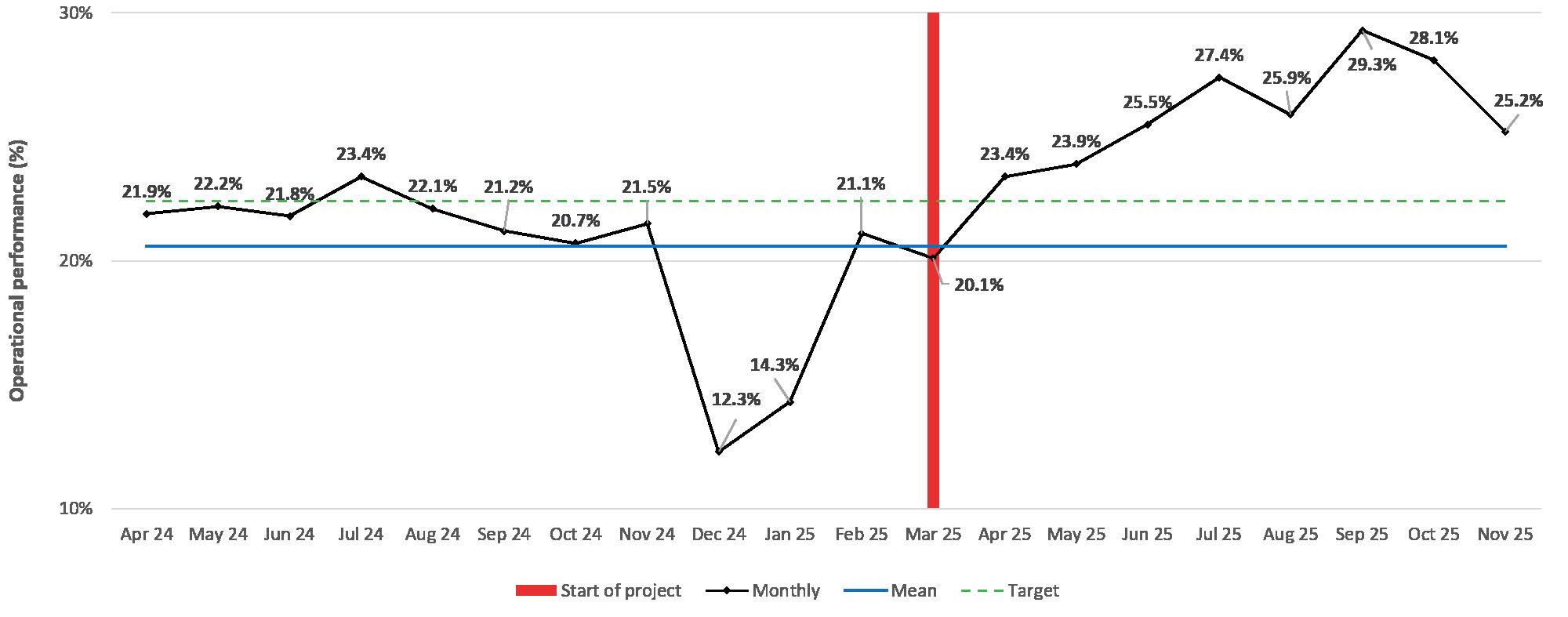
↑ Percentage of available hours spent on productive drilling activities. The project started in March 2025.
A simple yet high-impact action was optimizing the supply request flow at drilling sites. Data analysis showed that each rig was idle for an average of 13 hours per month due to lack of small but essential materials such as polymers and core lifters. Previously, this loss was not clearly visible because it occurred with no regularity. Once data was consolidated, it became evident that the cumulative impact exceeded one full shift per rig per month.
A straightforward solution was implemented using existing infrastructure: since all rigs have radio communication, a direct channel was established between the driller and the warehouse. This allowed immediate supply requests, with the warehouse staff responsible for organizing and dispatching materials via support drivers. This change reduced response time, eliminated intermediate steps, and directly reduced idle hours.
A more complex initiative involved redesigning the shift model to enable continuous 24-hour operations. Statistical analysis showed that the previous configuration limited the utilization of available hours due to inefficiencies in shift transitions and suboptimal work distribution. A new shift model was developed in compliance with Brazilian labor laws, which required coordination between teams and contractors. This change significantly increased effective time utilization and improved overall performance.
The results demonstrate not only significant improvements in operational indicators but also a structural transformation in how drilling operations are managed.
A 36% increase in productive hours and a 13% gain in productivity per rig per day reflect improved efficiency in converting available hours into production. Increasing operational performance from around 20% to over 29%, along with reduced variability owing to better long-term
planning, indicate greater operational stability and predictability, critical factors for planning and executing drilling campaigns.
Additionally, the project enabled more efficient asset utilization with the same production volume. This led to a 13% reduction in cost per drilled meter, reinforcing the economic impact of the improvements.
Maintaining these results involved updating operational procedures, training teams, and implementing Out of Control Action Plans that ensure structured and standardized responses to performance deviations: an approach informed by a commitment to sustainable operational efficiency.
The applied methodology shows strong potential for replication in other drilling projects, especially in operations with a high incidence of unproductive time and low productive-hour conversion. Using a structured approach based on real operational data and applied statistical analysis makes it possible to adapt the model to different operational scenarios, regardless of regional or logistical variations.
However, replicating the methodology may present challenges, particularly related to the quality and standardization of available data, the maturity level of operational processes, and the degree of integration between planning, operations, and suppliers. In some cases, resistance to change and the need to adapt operational recording systems may also affect the speed of implementation.
Overall, the results indicate that applying a structured, data-driven approach enables not only significant productivity gains but also the development of a more efficient, predictable, and scalable operational model, with potential application across different drilling operations.
For more information
Get in touch with Marcos on LinkedIn , or visit vale.com
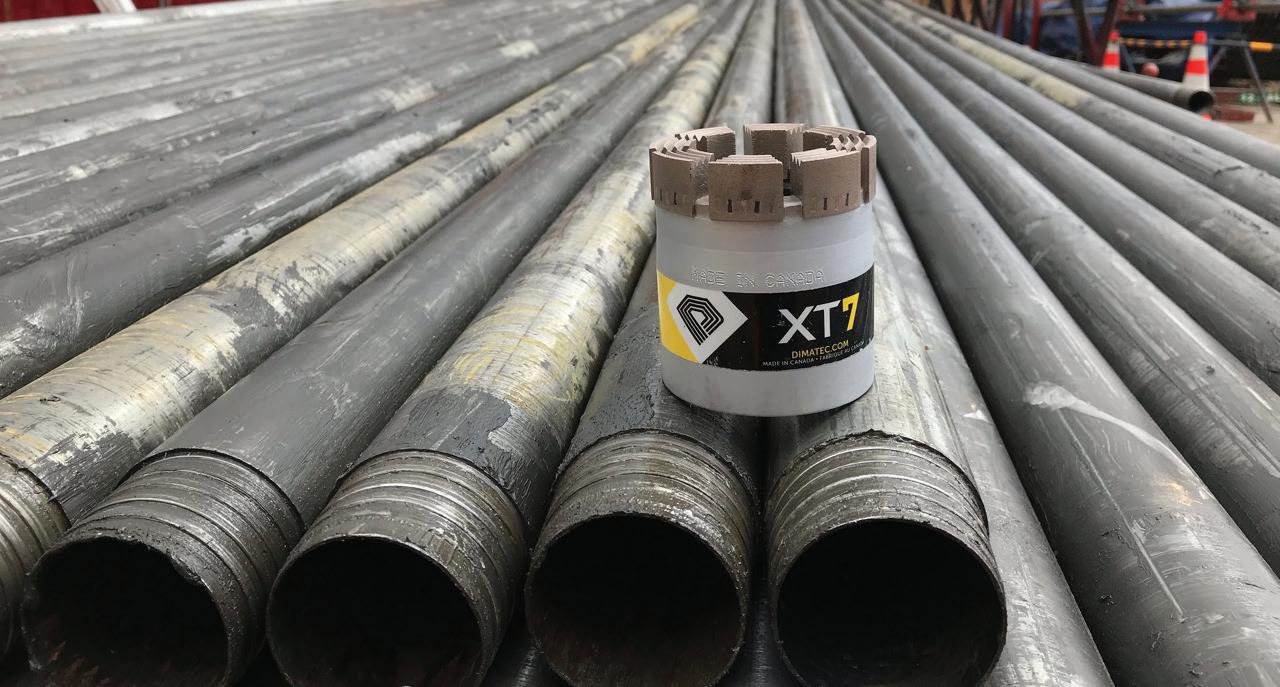
by Ian Klassen, Chief Revenue Officer and Vice President at Dimatec Inc
In 1988, Mr. Ivor Perry moved his family from South Africa to Winnipeg, a location more commonly associated with agriculture than advanced manufacturing. He brought diamond impregnated core drill technology with him, and founded Dimatec Inc. The company’s mandate was simple and focused: to design and manufacture high-performance diamond drilling tools for the mineral exploration industry.
From the outset, Dimatec positioned itself at the intersection of engineering precision and real-world field performance. Its early success came from working closely with drilling contractors operating in demanding geological environments—where equipment failure is not just costly, but operationally critical. Dimatec’s mission has remained consistent since its founding: to ‘craft quality products to access earth’s valuable resources in a way that sustains us all’.
Dimatec’s early growth was anchored in its specialization in diamond drilling technologies, particularly:
• Diamond impregnated core bits;
• Reaming shells & casing shoes;
• Surface-set and TSP-set tools;
• PDC-based drilling solutions.
These products are engineered to withstand extreme pressures, abrasive formations, and variable geological conditions.
What distinguished the company was not just product design, but a methodology rooted in continuous R&D, field-driven feedback loops, and application-specific customization. This approach enabled Dimatec to earn a reputation for reliability and performance, particularly in mineral exploration and geotechnical drilling—sectors where downtime directly impacts project economics.
Recognizing the synergies between drilling tool manufacturing and advanced machining, the company strategically expanded into precision CNC machining, marking a pivotal shift from a niche drilling supplier to a diversified manufacturing partner.
Today, Dimatec supports a wide range of sectors, including:
• Mining and mineral exploration;
• Oil and gas;
• Energy and industrial applications;
• OEM manufacturing across multiple industries;
• Aerospace and defense.
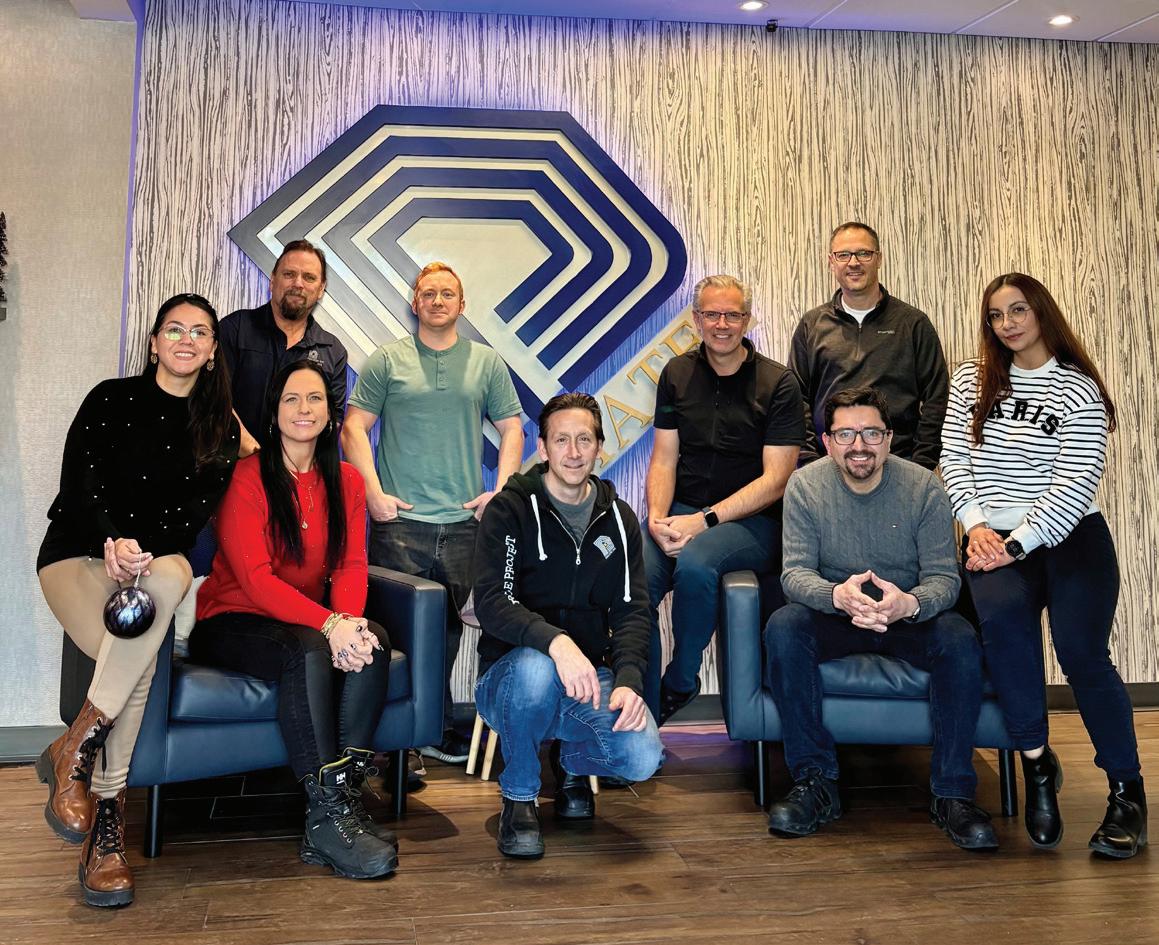
Dimatec’s machining capabilities include turning, milling, drilling, as well as complex multi-axis operations. These are complemented by secondary processes such as grinding, welding, and surface treatment. This vertical integration allows the company to control quality and traceability, production timelines, and customization at scale.
At the core of Dimatec’s growth is a disciplined operational philosophy built on engineering expertise, structured production systems, and international quality standards.
The company has implemented and maintained certified quality management systems aligned with ISO standards, reinforcing its commitment to consistency and continuous improvement.
Equally important is its workforce. Many employees have spent decades with the company, creating a deep institutional knowledge base and reinforcing a culture centered on long-term relationships, practical problem-solving, and accountability and trust. As leadership has evolved, the company has successfully blended experienced personnel with new talent. In doing so, it has positioned itself for sustained growth in global markets.
With a workforce of approximately 50–100 employees and a presence across multiple industrial sectors, the company operates as a privately held, 100% Canadian-owned and managed enterprise with a global footprint. From its Canadian facility, located at the geographic center of North America, Dimatec leverages logistical advantages to rapidly supply customers worldwide: in North and South America, Australia, Africa, Europe, and southeast Asia. In recent years, the company has intensified its focus on international market expansion, customer-driven innovation programs, and custom product development initiatives.
For example, programs such as its ‘Drillers Project’ emphasize collaboration with end users by developing tailored solutions based on real drilling conditions and performance data. At the same time, Dimatec continues to invest in automation and advanced equipment,
process optimization, and capacity expansion. These investments ensure the company remains competitive in both traditional resource sectors and in emerging industrial applications.
Dimatec’s contributions to Canadian manufacturing have not gone unnoticed. The company has received industry recognition, including the induction of Mr. Ivor Perry into the Canadian Manufacturers & Exporters Hall of Fame, underscoring its impact on export growth and manufacturing excellence.
As the global demand for resources, energy, and advanced manufacturing continues to evolve, Dimatec is positioning itself at the convergence of resource extraction, advanced machining, and sustainable industrial practices. Its long-term strategy focuses on:
• Expanding into new industries;
• Enhancing automation and efficiency;
• Deepening partnerships with OEM customers worldwide.
From a modest beginning in Winnipeg to a globally recognized manufacturing partner, Dimatec’s story is one of disciplined growth, technical excellence, and an unwavering focus on performance where it matters most—at the cutting edge of the earth itself.
For a long time, Coring Magazine had been hoping to visit a real drilling manufacturing facility and prepare a special feature focused not only on the products themselves, but on the people, technology, and production processes behind them - with photography playing a central role in telling the story.
The first company to participate was the Chinese manufacturer Jinshi Drilltech. Thanks to their excellent organization and
warm hospitality, our team was able to make the visit a reality in June 2026.
Jinshi Drilltech is one of China’s largest integrated manufacturers of mineral exploration drilling tools and equipment, covering drill bits, reaming shells, rods, casings, core barrels, and rigs, while also offering drilling services. The company is based in Tangshan, one of China’s oldest steel-producing cities, located around two hours from Beijing.
↑
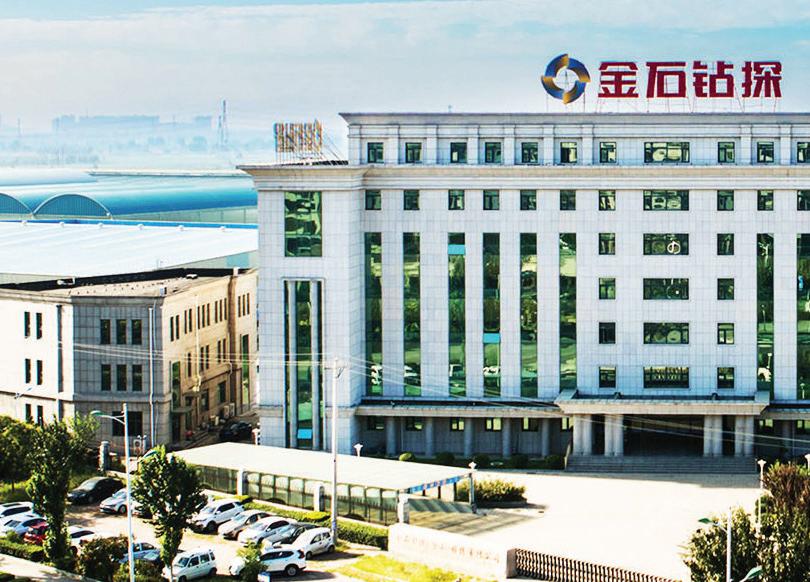
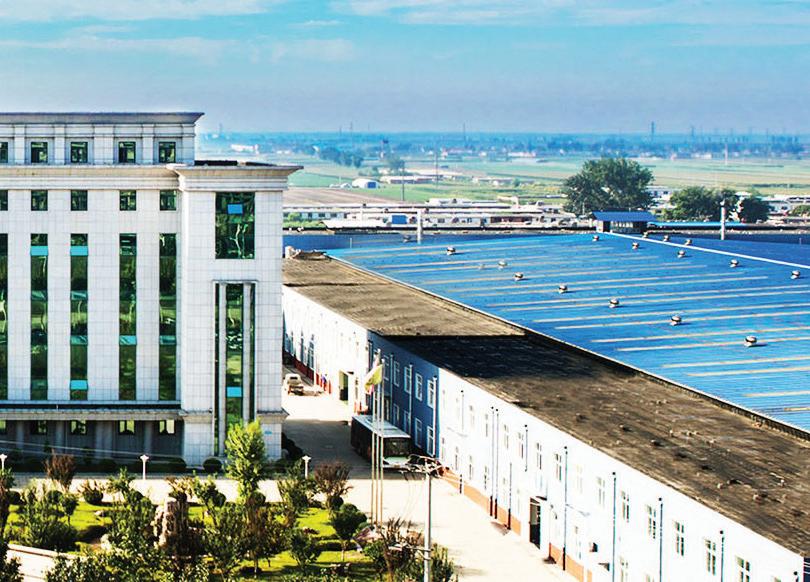
Our team was first welcomed at Jinshi’s corporate headquarters, an imposing seven-story building that houses the company’s management, sales, and administrative teams while also serving as a hub for guests from around the world. The visit began in an elegant reception room centered around a boutique-style solid wooden Chinese table with intricate carvings, where we were served excellent jasmine tea.
From there, we moved into Jinshi’s showroom, a space of more than 200 square meters (over 2152 square feet) displaying almost the full range of the company’s products. After a brief presentation introducing the breadth of this product portfolio, we were invited to continue the visit at the first manufacturing facility adjacent to the offices, dedicated to core barrel and drill bit production.
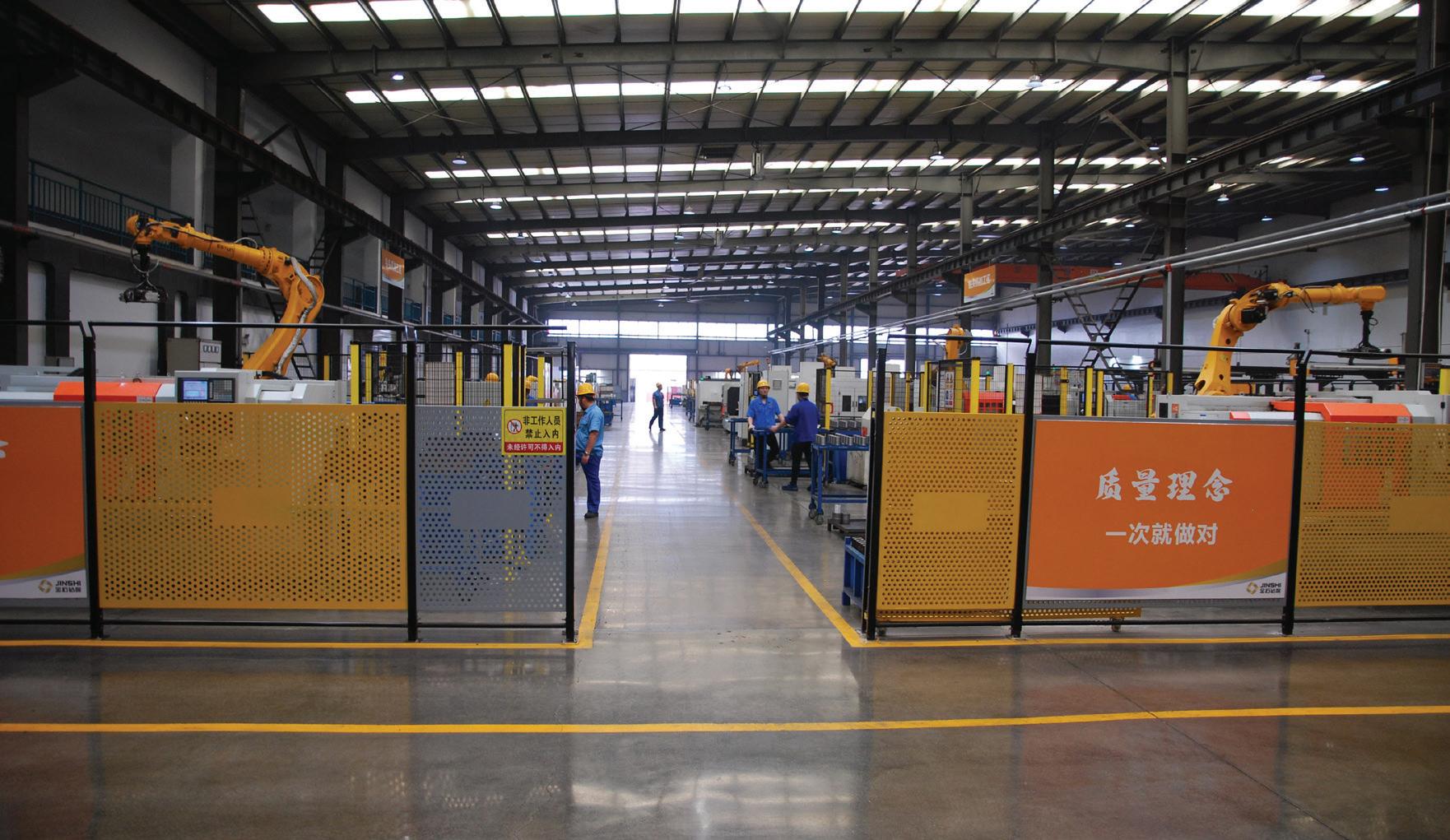
After a short walk —and a quick stop to put on our PPE—we entered the drill bit manufacturing complex. Covering 55 000 m2 (592 015 ft2), the facility spans several large structures. Its sheer scale was impressive, but our attention quickly shifted to the manufacturing line itself.
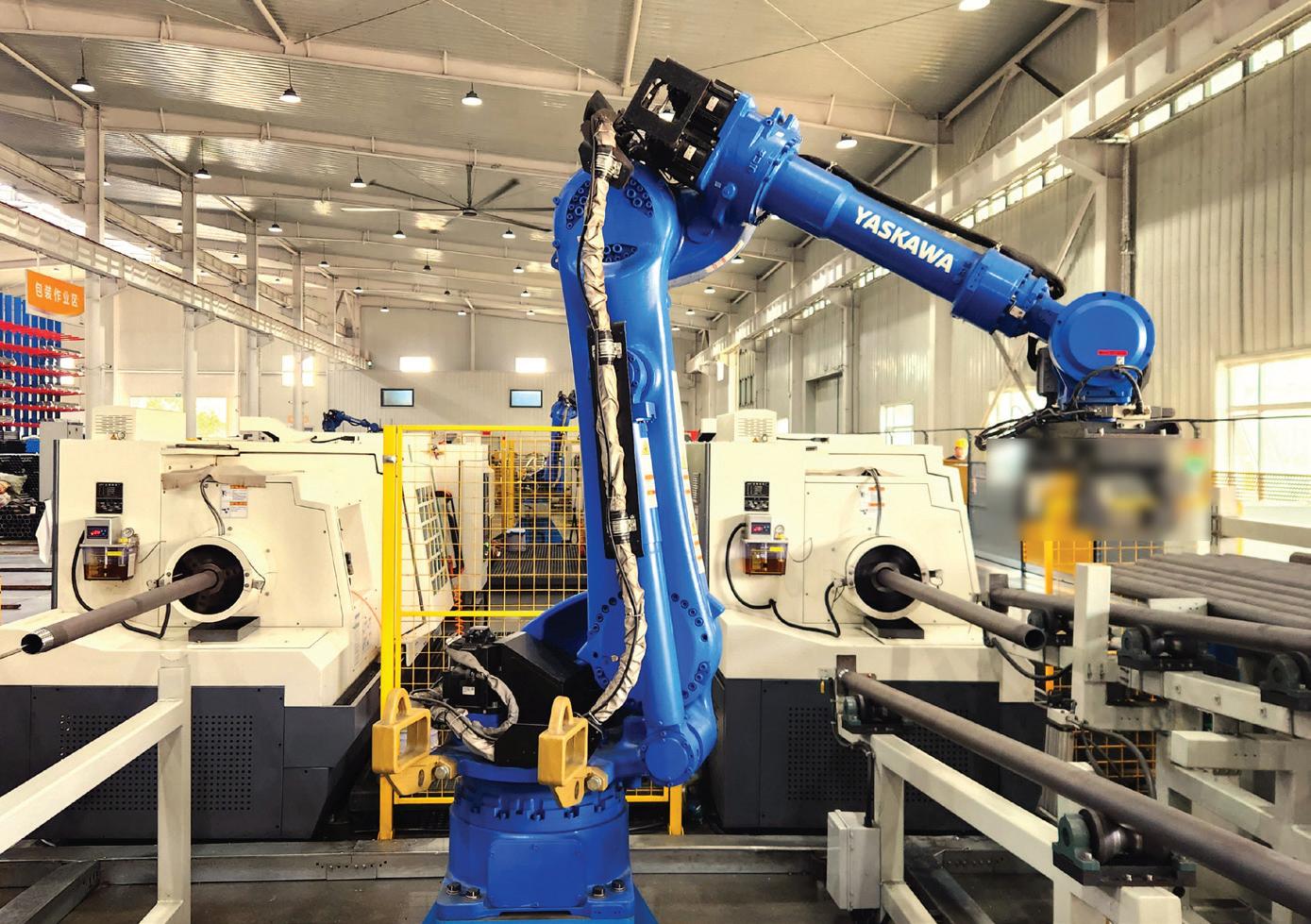
Around 20 Japanese-made robotic arms, positioned behind brightly colored steel safety barriers, moved with remarkable precision. Each robot was able to serve up to four CNC machines, carrying out a carefully coordinated sequence of movements designed to maximize production efficiency. While some were assigned to routine loading and unloading operations, others handled more demanding tasks, including processes that would be potentially hazardous if performed manually. The sight was so captivating that we nearly overlooked the workers stationed safely around the production floor.
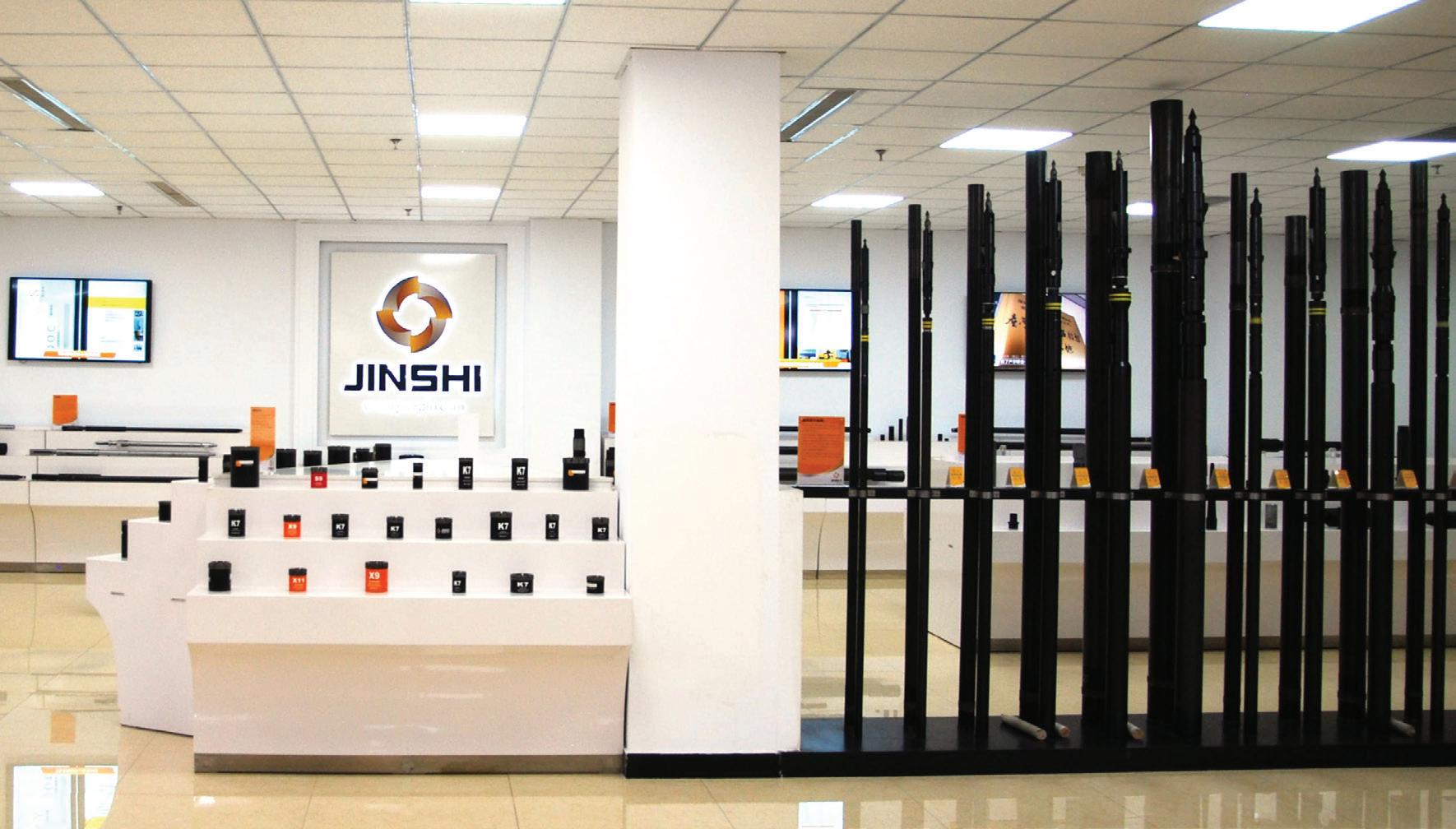
↑ The
exhibiting many of Jinshi’s products and awards.
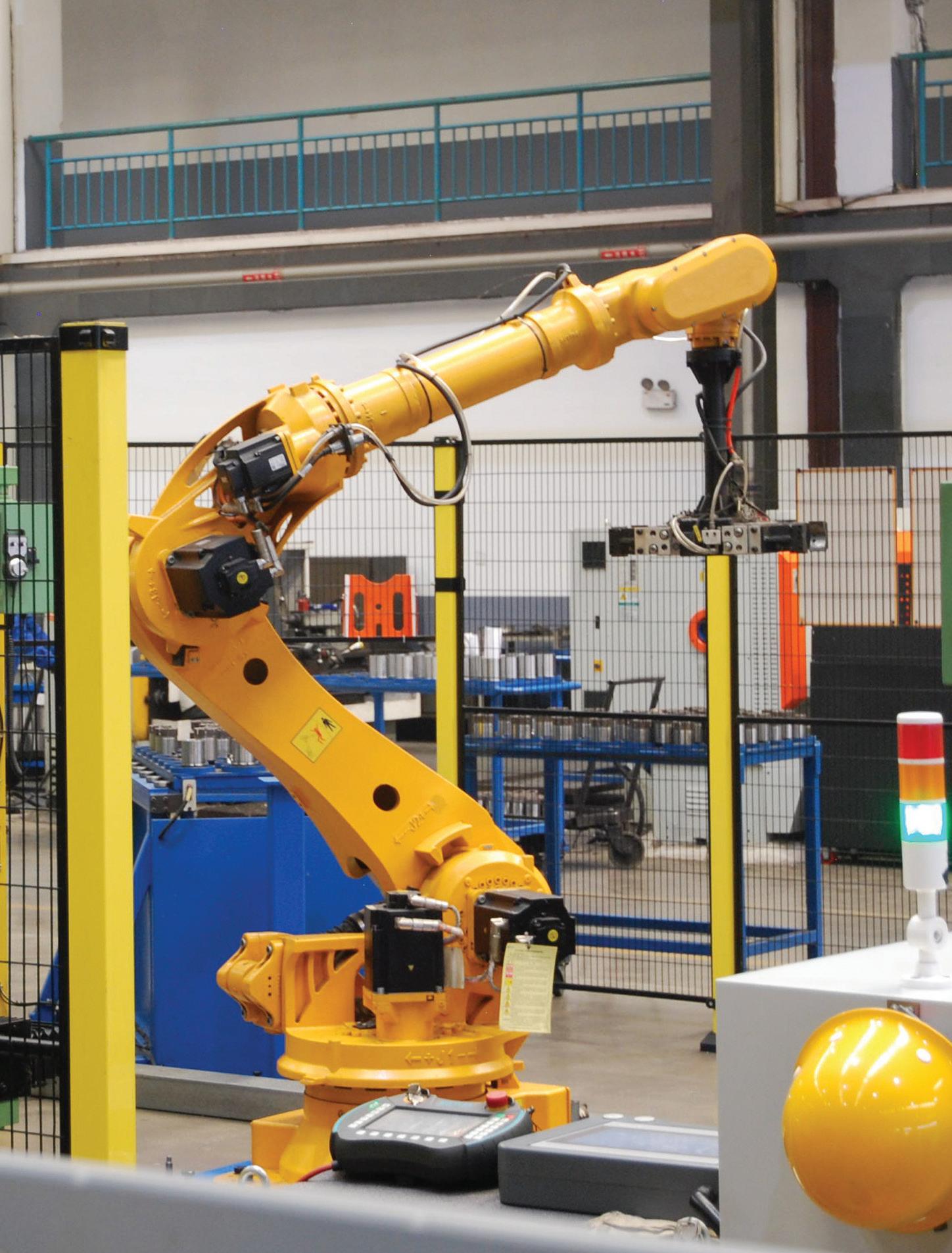
Moving into another building, we entered the drill bit and reaming shell manufacturing area and this is where things became noticeably hotter.
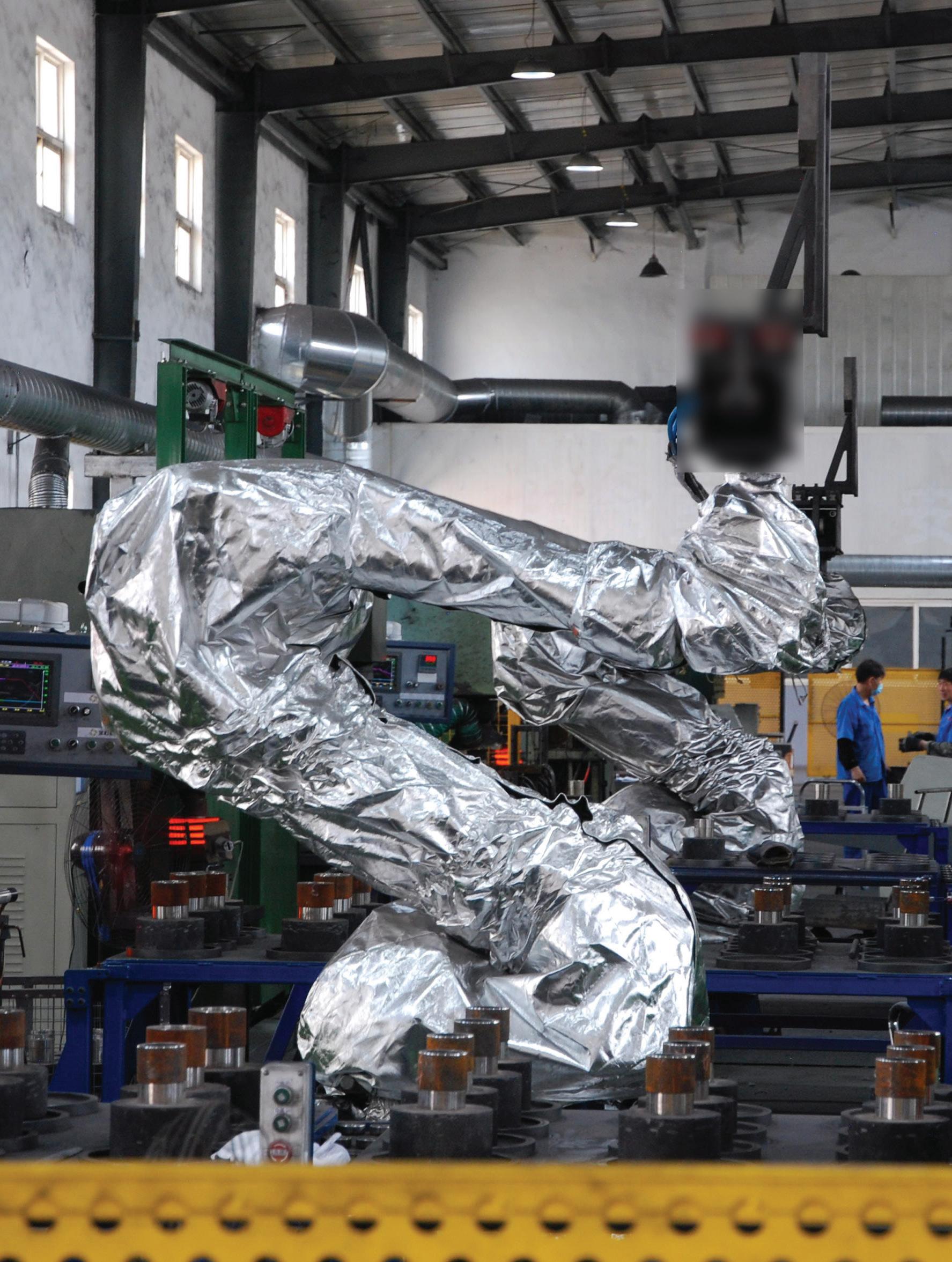
Here, another set of robots handled the red-hot components during the high-temperature sintering stage, in which metal powders are bonded into a solid matrix around the diamonds. The robots themselves were protected with heat-insulating covers, making them look almost like specialists in heat-resistant suits approaching lava.
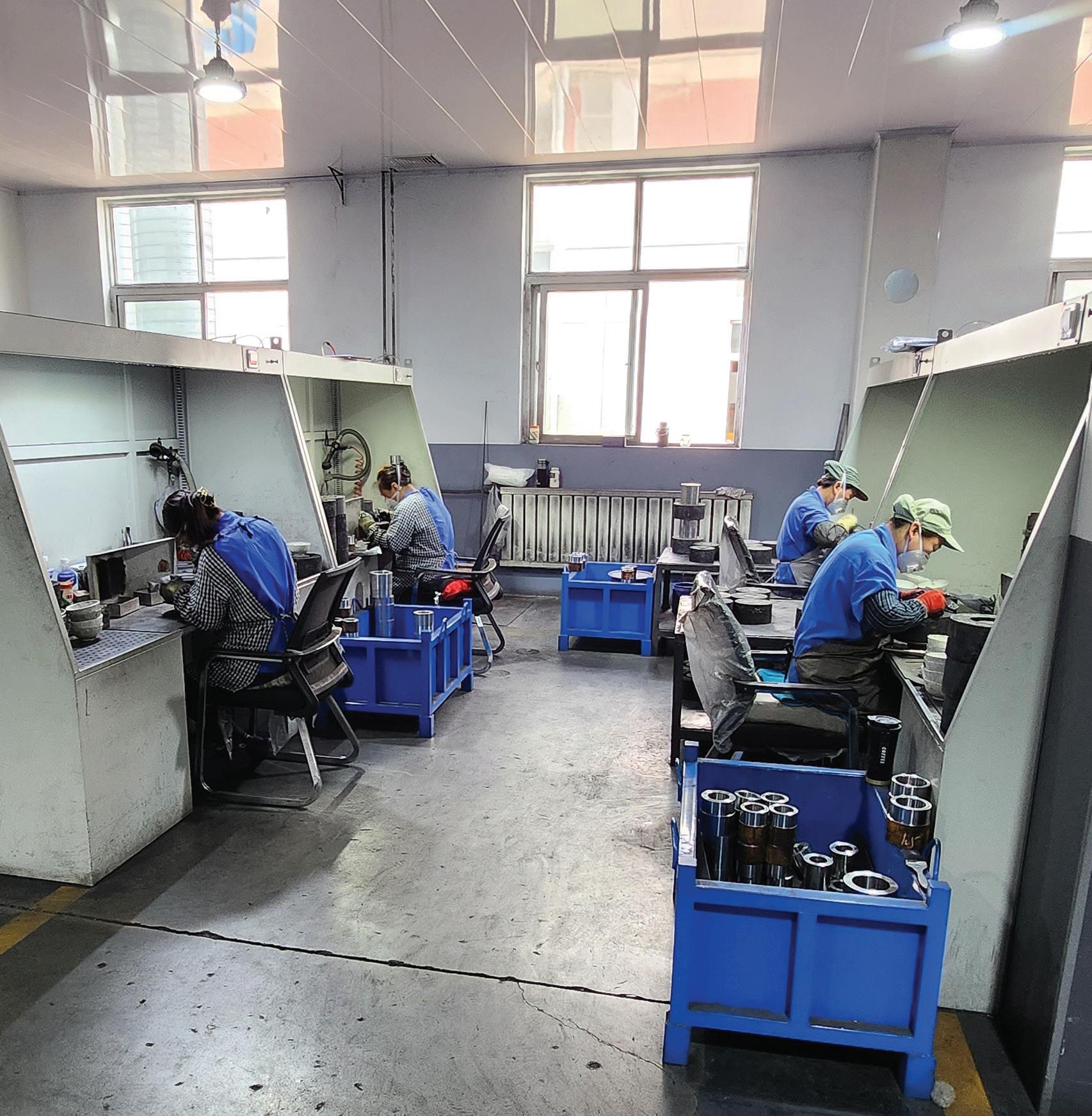
In a separate room within the same production area, the atmosphere changed completely. Here, diamonds and metal powders are still set by hand. After more than an hour surrounded by robotic arms,
CNC machines, and highly automated production lines, the contrast was striking. The rhythm of the machines gave way to the mastery of skilled hands.
It took only a few moments to understand why this stage remains manual. The workers were performing their task with remarkable precision and calm confidence, more like watchmakers or jewelry artisans than factory operators. Each diamond is placed with care, each movement contributing to the final performance of the bit.
Despite the delicate nature of the work, each specialist can complete as many as 70–80 bits per day, helping Jinshi reach an impressive daily output approaching 1000 bits.
Less than ten minutes away by car, in Tangshan’s newer industrial zone, is Jinshi’s drill rod manufacturing facility. Built in 2020, it is the company’s newest and most technologically advanced workshop, covering 18 000 m2 (193 750 ft2) and employing 50 workers alongside 15 robots.
Having already witnessed extensive automation at the first facility, the drill rod workshop impressed us in a different way: through the clear organization of the entire production flow.
The raw material passes through a sequence of dedicated production lines and mechanisms, each responsible for a specific stage of the process, from raw material inspection, sizing and cutting, tempering, mechanical properties inspection, and shot blasting, to straightening, thread machining, thread inspection, surface treatment, and final size and appearance inspection.
For drill rods, the value of this automation is not only speed, but repeatability: consistent heat treatment, thread quality, straightness, and inspection discipline are critical for performance in deep and demanding holes.
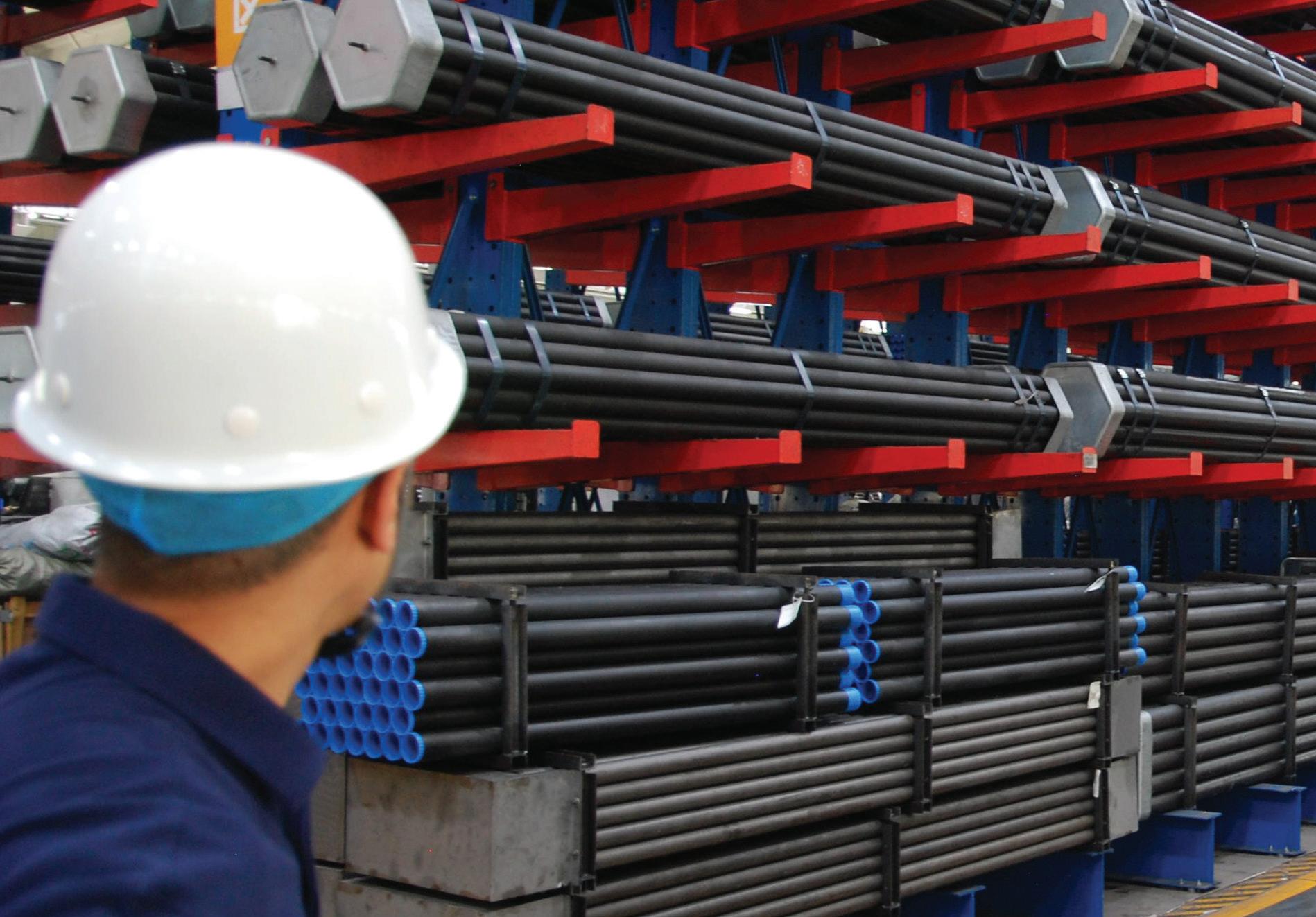
Equally impressive was the enormous inventory of finished drill rods. Giant storage racks stretched for tens of meters and rose more than ten meters high, holding thousands of completed rods, more than our team had ever seen gathered in a single location. For Jinshi, however, this represented only several days of production, as the workshop manufactures several hundred rods per day.
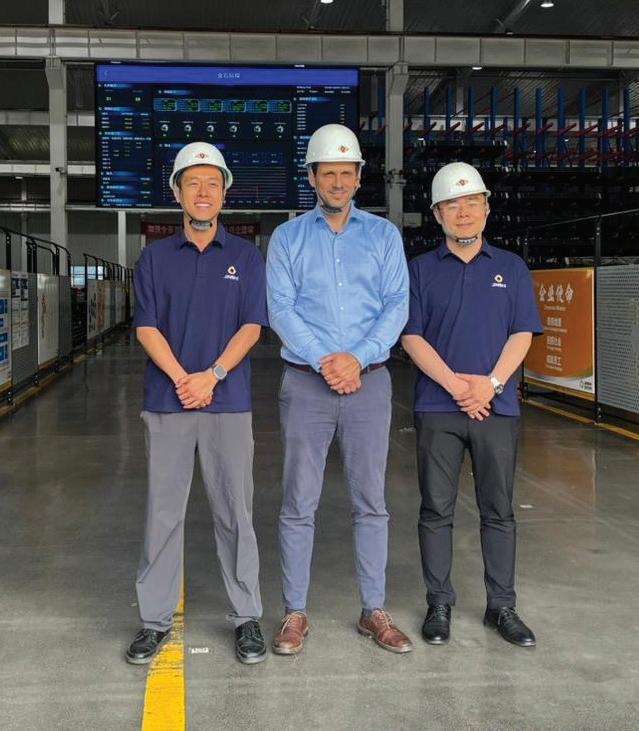
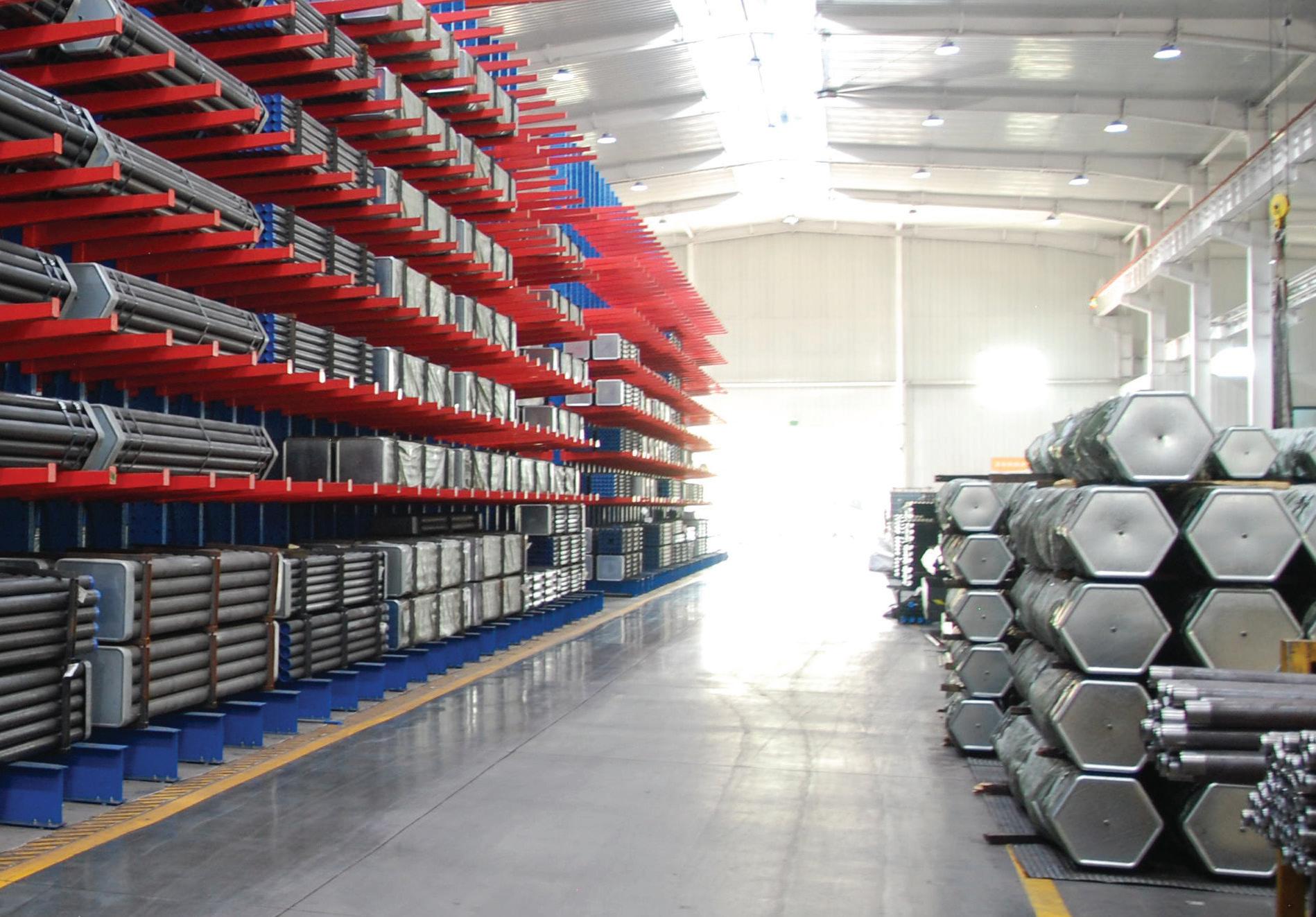
← Grigor Topev with our guides Boyuan Tian, Managing Director (left), and Robert Lau, Senior Sales Manager (right) in front of the digital display showing live production data. This large display gives the workshop the feeling of a highly controlled, modern manufacturing environment.
→ Once again, robotic arms worked in close coordination with CNC machines, with each arm able to serve two to four machines at a time. We watched as a robot picked up a rod, loaded it into a machine for threading, removed it once the operation was complete, rotated it, and passed it to another robot, which repeated the process at the next station.
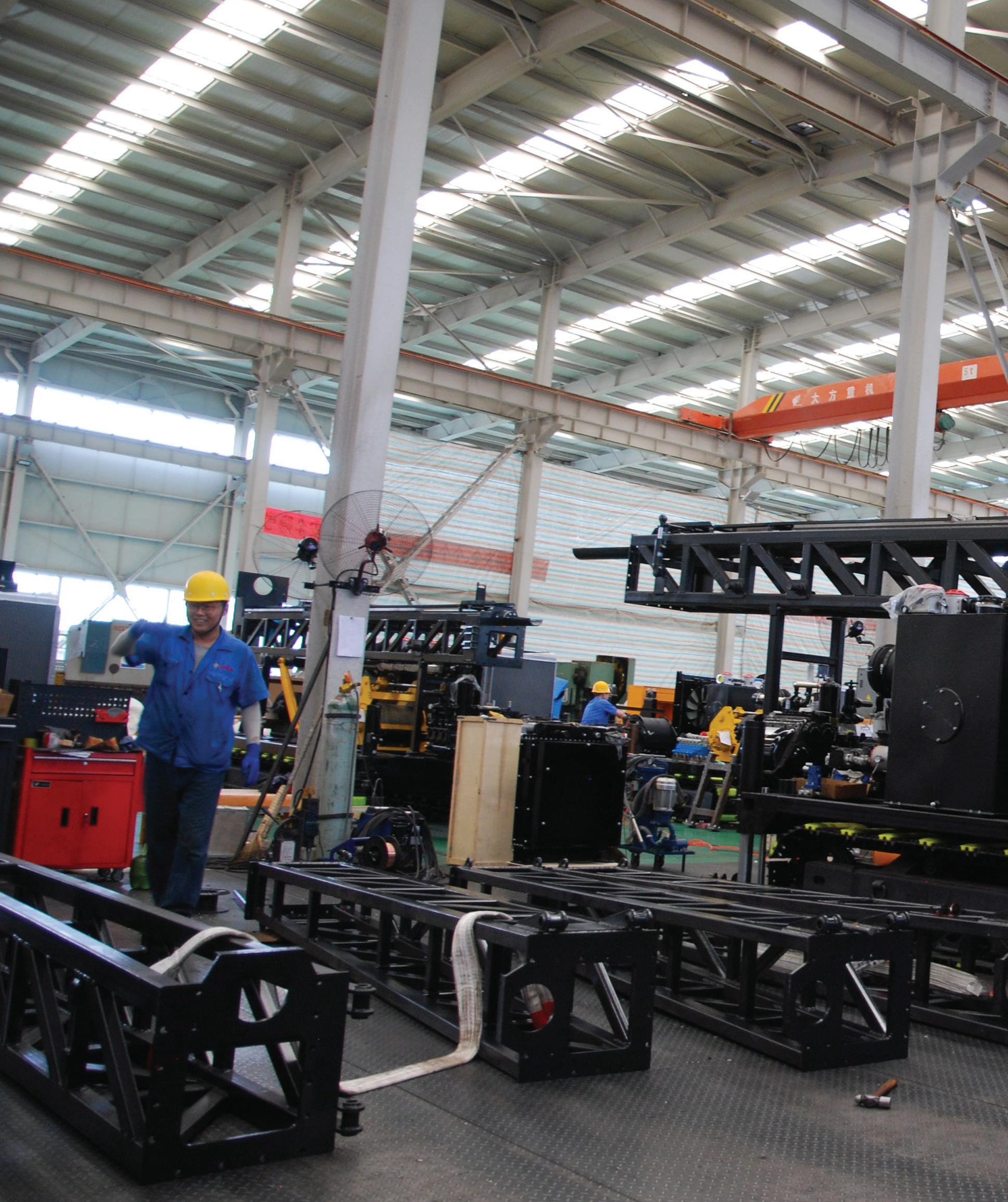
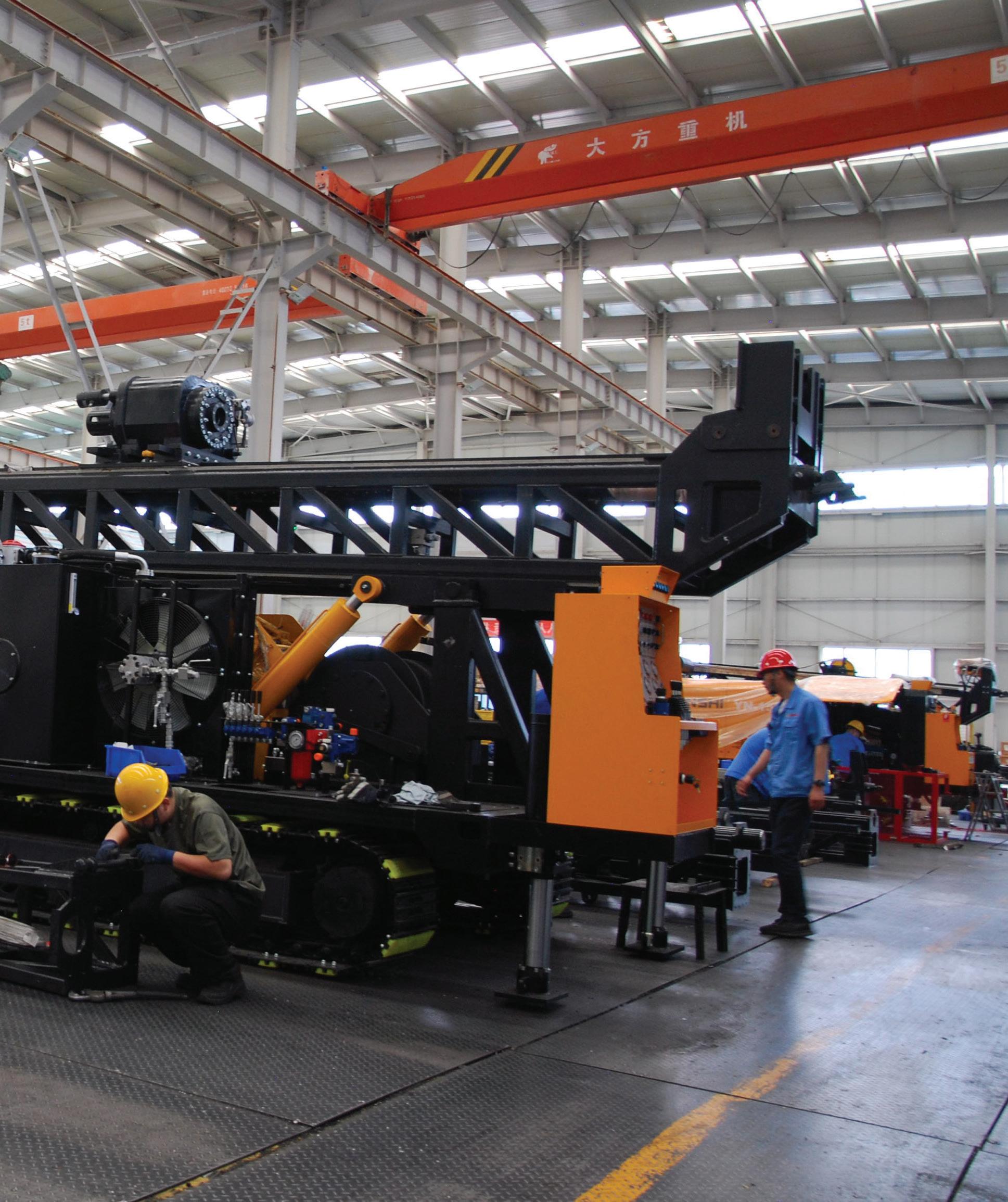
Our tour of the third facility, dedicated to drill rig production, came with a caveat. Jinshi is currently constructing a new, modernized workshop that will feature greater automation, expanded floor space, and significantly higher production capacity. The new facility is expected to cover 40 000 m2 (430 556 ft2), employ 90 workers, and be capable of producing more than 100 rigs annually.
For now, the existing workshop manufactures a range of bright-orange Y-series hydraulic rigs in various configurations. The Y-series rigs are designed around practicality, serviceability, and ease of operation.
These features are valued by contractors working in remote exploration environments where reliability and maintenance access matter as much as technical specifications.
Who’s buying all this?
This was the question that repeatedly surfaced throughout our tour. According to our hosts, aside from some supplies on hand for better lead times, approximately half of this production remains in China, which has quietly become one of the largest drilling markets in the world. The remaining products are shipped internationally to customers across dozens of countries on every continent.
During our discussions with the Jinshi team, we learned that the company’s international sales have grown significantly in recent years. According to our hosts, Jinshi has already reached a leading position in several South American countries, and this expansion appears to be continuing. At the same time, they also acknowledged that their global presence is not yet universal. Some markets remain difficult to enter, especially where long-established brands, local relationships, and conservative purchasing habits still play a strong role.
Celebrating its 30th anniversary in November 2026, Jinshi Drilltech stands as one of the leading providers of geological drilling equipment. Founded in 1996, the company has grown into a global enterprise with approximately 530 employees and operations serving customers across Europe, Asia, Africa, Latin America, and Antarctica.
Jinshi manufactures a comprehensive range of drilling products, including drill bits and reaming shells, drill rods and casings, coring systems, hydraulic drill rigs, and specialized drilling accessories. Backed by advanced intelligent manufacturing facilities, a dedicated research and testing center, and strategic partnerships with universities and research institutes, the company continues to drive innovation in drilling technology.
In addition to manufacturing, Jinshi operates a dedicated drilling division that delivers drilling projects and technical services throughout China, making the company one of the few industry players capable of providing fully integrated drilling solutions—from equipment design and production to on-site drilling execution.

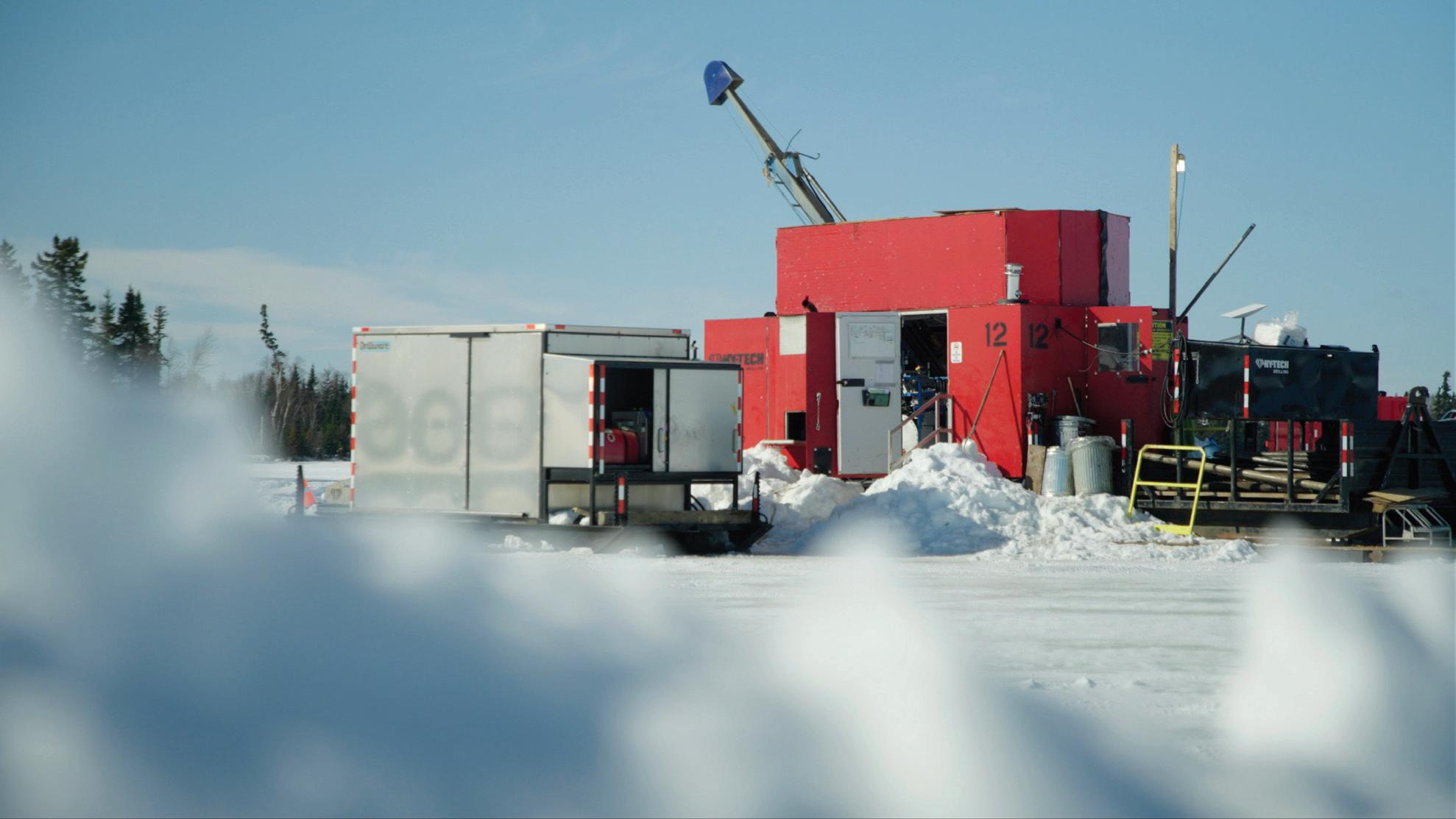

Datarock and the case for bespoke solutions in AI and mining by Brenton Crawford, Chief Geoscientist & Technologist and Co-Founder of Datarock
From bedrock to batteries: Finland’s rising role in critical minerals by Hannu Lahtinen, Director, Availability of Raw Materials at Geological Survey of Finland (GTK) and Ilkka Keskitalo, Senior Specialist at the Finnish Safety and Chemical Agency (Tukes)
Q&A from the experts
In conversation with Shaun Barker, Director of the Mineral Deposit Research Unit at the University of British Columbia
Induced fractures and damage in diamond core by Callen Banff, Manager Open Pit Geotechnical Engineering at AngloGold Ashanti
A tale from the mining super-cycle by Richard Fink, former Vice President - Technical (retired), Global Ferroalloys at Cliffs Natural Resources
Unlocking polymetallic potential: Integrated exploration of the Kargha Valley Pb-Cu system, northern Pakistan by Syed Nohman Gilani, Lead Geologist & GM Exploration at Chinar Group and Himalayan Earth Exploration Pvt Ltd
Women in mining: An Indian perspective by Ramya R Dodamani, Geologist
On the cover:
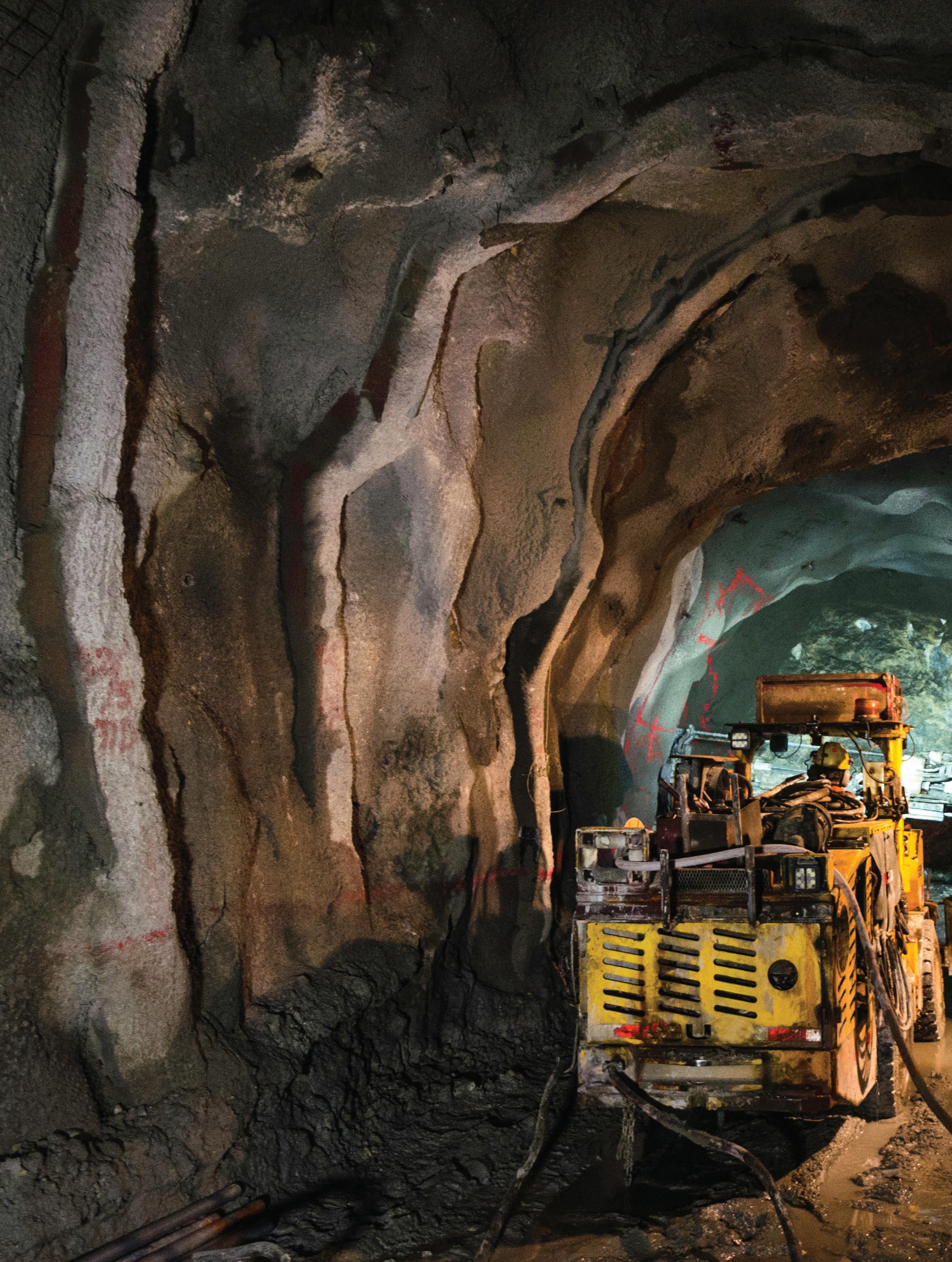


Since launching in 2020, Datarock has delivered more than 250 data science projects for the mining industry. The company has built a reputation for creating bespoke solutions to tackle the increasingly complex geoscience challenges the sector faces and the enormous surge in data its geoscientists are expected to cope with.
Here, Brenton Crawford, Chief Geoscientist and Technologist, and co-founder of the business, discusses the growing importance of AI and automation within the industry, why Datarock believes the custom approach of its products is essential to success, and the synchronicity of thought that led to their recent acquisition by IMDEX.
In 2017, three years before Datarock was founded, several of us were part of a company that was pure consultancy, applying machine learning to solve exploration and mining problems. But we found that we were basically doing the same types of projects over and over again, which wasn’t hugely rewarding. What we really wanted was something that could help us do those things at scale, and that ambition led to the creation of Datarock.
With the confluence of Machine Learning and the Cloud, it just seemed like a good time to put those things together and solve the problem of how we interpret rocks visually, instead of having people stare at them for hours and make choices that are often subjective.
That first product—Datarock Core—is still around now, and it’s used for analyzing core photography. Datarock Core is a way of automating and augmenting many different types of data collection from the drill core imagery. There’s also Datarock Chip, which replaces manual chip logging with an automated machine learning workflow that detects trays, segments compartments, and extracts measurable attributes, providing analytics-ready data within hours.
Since 2020, we’ve analyzed more than 30 million meters (over 98 million ft) of core and delivered significant time and cost reductions at the sites that use the software.
We aim to help the industry replace outdated models and fragmented workflows with production-ready, explainable AI and automation that reduces interpretive risk. Essentially, it’s about extracting reliable insights from your core imagery and getting them into the hands of your modelers faster than ever before.
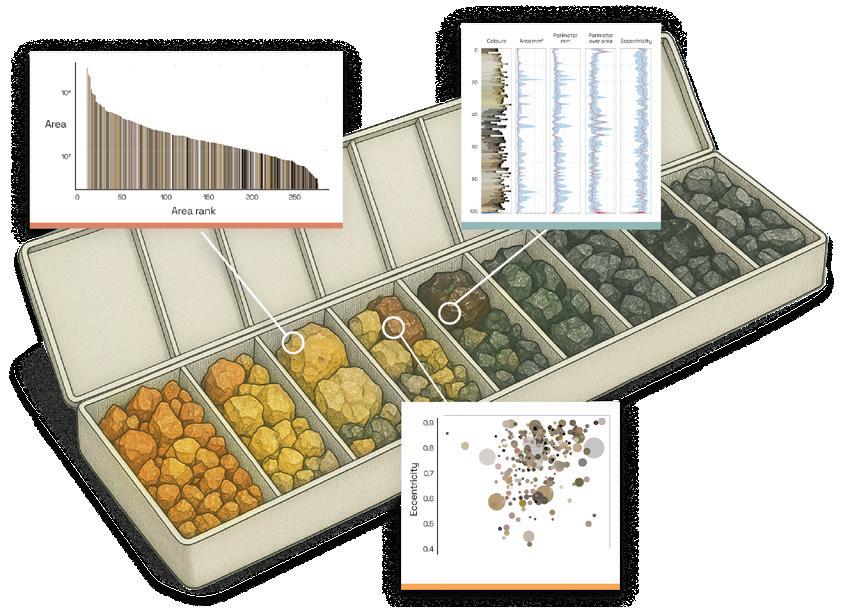
↑ Datarock Chip
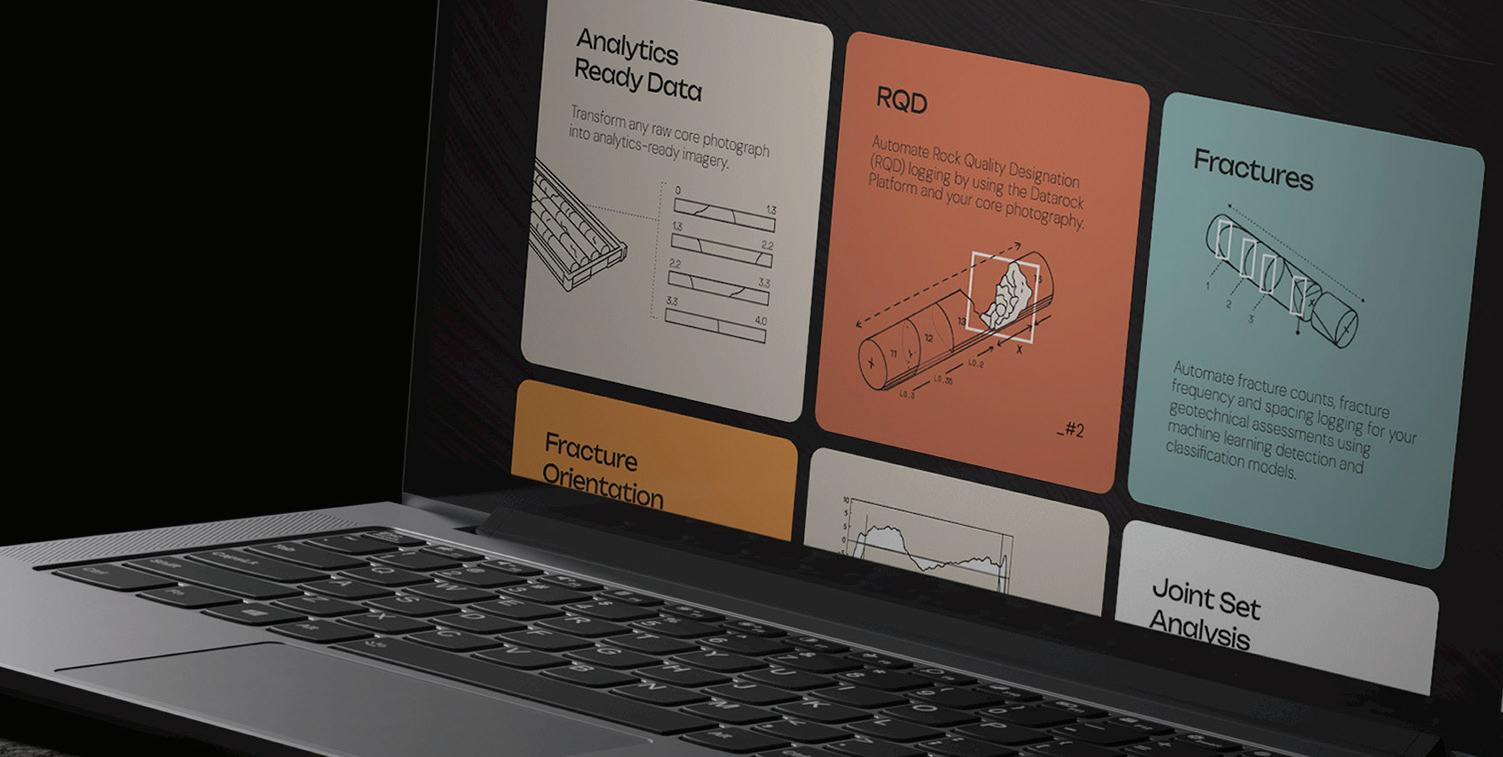
I think we’d say our philosophy is to create solutions that are bespoke and custom, rather than out of the box and one size fits all. But they’re also solutions that are scalable and rapid to deploy. Which I suppose is having your cake and eating it... It’s an approach we are passionate about, creating models tailored to the specific geoscience problems of just one mining company.
In our experience, that approach almost always delivers better and higher value. The difficult bit is how you make lots of those custom solutions, at scale, while ensuring that each one is excellent and solves the business problem at hand. That is something we do that I don’t think anybody else does quite like us.
We have been working in the areas of Machine Learning and AI for mining longer than many people, especially in the geoscience space. And even though Datarock is a product company, we have a very large consulting and applied science group. There are a lot of expert geoscientists and geotechnical staff hovering around our software offerings.
When you’re delivering solutions to complex, difficult-to-answer questions, you need a best-in-class team working alongside you. That element of consulting is still at the heart of what Datarock is and does. Today, we call it our Applied Science Team, and they are an amazing group of technical experts we put into companies to help us understand their problems and develop products to solve them.
One of our biggest areas of development now is what we call Managed Solutions, which is a productization of consulting or applied science. We build you a custom or bespoke solution, but we monitor it, maintain it, deploy it, and are responsible for its existence. So rather than carrying out a consulting job and then saying ‘ok, see you later, good luck’, we make sure the value we’re delivering is ongoing. We’re watching these complex algorithms to make sure they’re not going wrong, and that they’re still doing the job customers need them to do.
‘Machine Learning models are like Tamagotchis. You have to keep feeding and looking after them to make sure they stay alive!’
Ultimately, we went with IMDEX because we believed in the set of technologies they were assembling, and that we would plug into that well. IMDEX also has some real ‘rock star’ geoscientists to work with! People like Dave Lawie and Michelle Carey are famous in our field. I think IMDEX’s appetite for the digital side of geoscience is exceptional, and we very much feel aligned with that.
There are many tools from different groups that have either been acquired or built from within by IMDEX that create valuable synergies, for instance, in the structure and geotechnical space. Starting at the drill hole, there’s ACTx, which provides the orientation that is crucial for structural measurements, then LOGRx uses the orientation line from ACTx to get the structure from the drill core. Datarock Core then analyzes drill core imagery to automate elements of structural and geotechnical data. Then WellCAD from Advanced Logic Technology looks at the borehole, providing in-situ information that can’t be obtained from the core. Together, they offer a very complete ecosystem of data that is unique in the industry.
Two projects always come to mind. The first touches on our data fusion approach to domain and predict rock properties, a very common high-value workflow. The second showcases how we collaborate with our clients to build solutions on top of our software to maximize value.
One of our customers in Ontario was looking for a more consistent, scalable way to get value out of a big legacy dataset. With over 200 000 m (656 170 ft) of drilling across more than 400 holes, there’s heaps of data sitting there, and the goal was to pick out the combinations of alteration, lithology, and vein types that host gold mineralization, faster and more consistently than relogging it all by hand.
Realistically, no single dataset gets you there. Geochemistry tells you about elemental composition, but can’t see vein density or alteration intensity. Core photography captures texture but doesn’t have composition. And manual-logging geology, useful as it is, varies between loggers. The information you need is in the fusion of all this data.
We built a bespoke solution that paired our Datarock Core software with our Applied Science workflows. Datarock Core processed the core imagery at scale, and the Applied Science team fused those image features with the co-located geochemistry to produce a single feature set sensitive to both composition and texture.
The project has helped them better understand the domains in their deposit and which data types matter for defining them. These outcomes deliver real value downstream when it comes to prioritizing future data collection and designing how new programs are run.
Over the longer term, this is what unlocks automated classification models for the site. New drilling data gets ingested as it comes in, the model outputs the required classes and predictions, and that feeds straight into their broader orebody knowledge and geometallurgy programs. Rather than each new infill or exploration campaign needing a manual relog before the data can be used at scale, classification keeps pace with the drill rigs.
Geotechnical analysis for a West Australian gold miner
At Sunrise Dam in Western Australia, AngloGold Ashanti realized they needed a reliable discing dataset to characterize potential high-strain zones in their rock mass.
Discing is a phenomenon where diamond core fractures into thin, disc-shaped segments that can be an important visual marker in highstrain zones in the rock mass. Discing is tricky to log manually and is commonly only done sparingly (if at all) at most sites due to it being a tedious, labor-intensive process that is prone to inconsistencies. Very commonly, it is only logged in resource drill outs when problems arise.
The Sunrise Dam site was already using our Datarock Core product for other geotechnical outputs, but to log discing we needed something we didn’t have an established workflow for. So we developed a new discing analysis solution for them within Datarock Core, again leveraging computer vision to extract much more detailed data from drill core photography. The workflow we established included depth registration, angle-based analysis, and region-based detection, before combining all the results.
Ultimately AngloGold Ashanti were able to log discing in 85 000 m (278 871 ft) of drill core imagery, not in months, which a traditional manual approach would have taken, but literally in hours.
The study also revealed many discing regions that had not been logged. It improved the accuracy of discing zone detection, standardized logging data to help avoid inconsistencies, and enhanced geotechnical risk management. Just as importantly, they were able to create a standardized discing definition, giving them greater confidence in their data going forward.
This discing solution is now being used by geotechnical engineering consultancies and mining companies on projects globally.
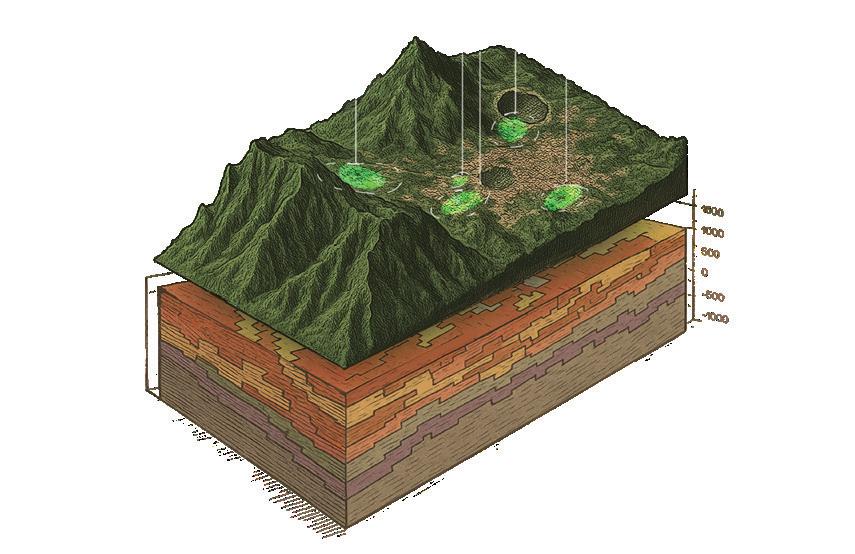
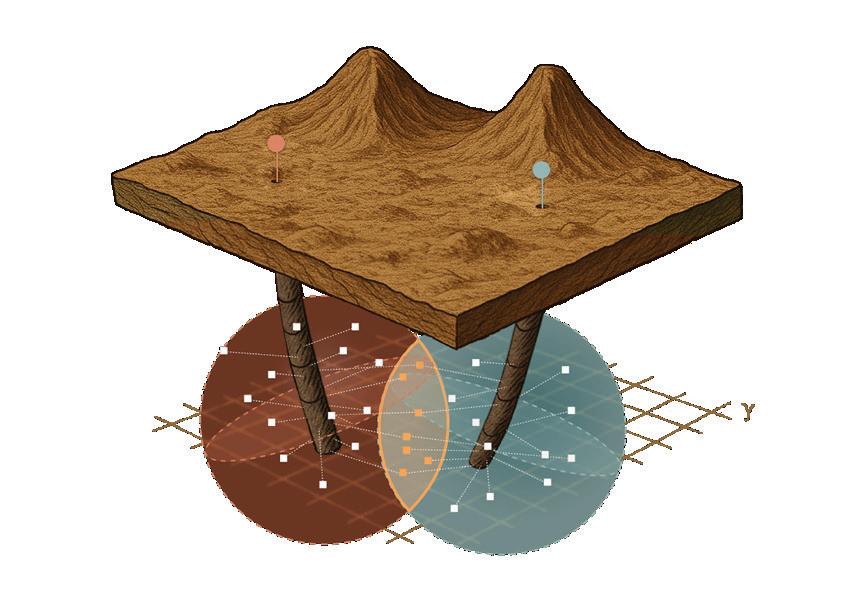
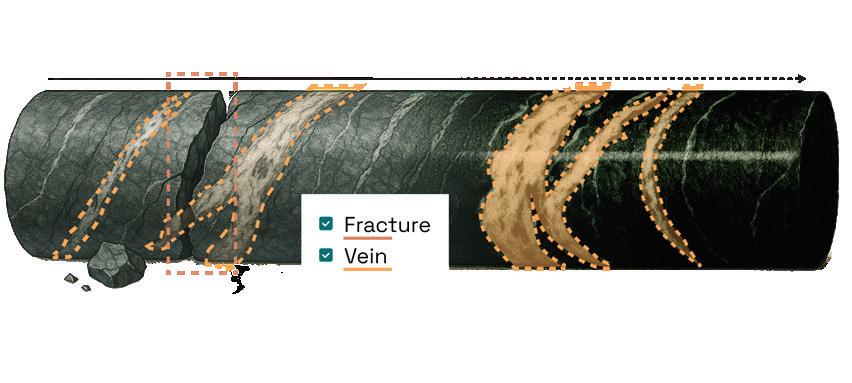
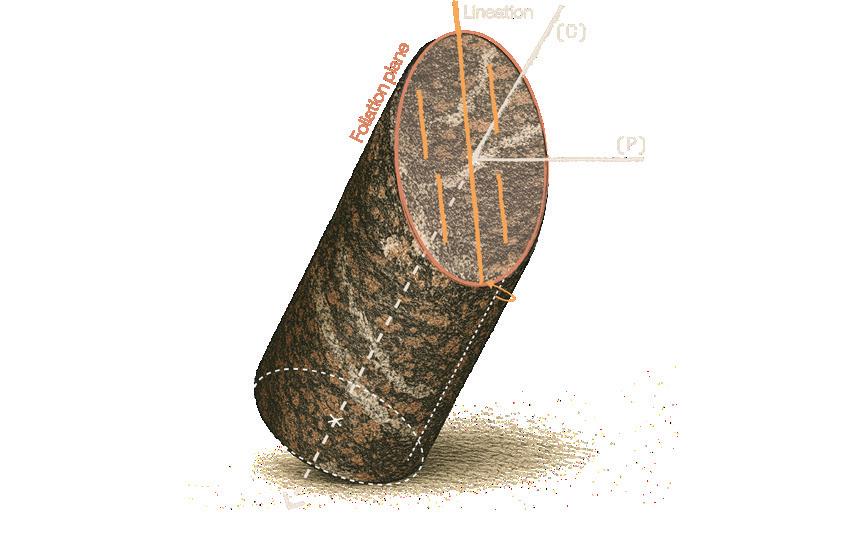
↑ Datarock’s solutions include Prospectivity Modeling, Vectoring & Near Miss analysis, Automated Logging, and advanced solutions for collecting structural & geotechnical data.
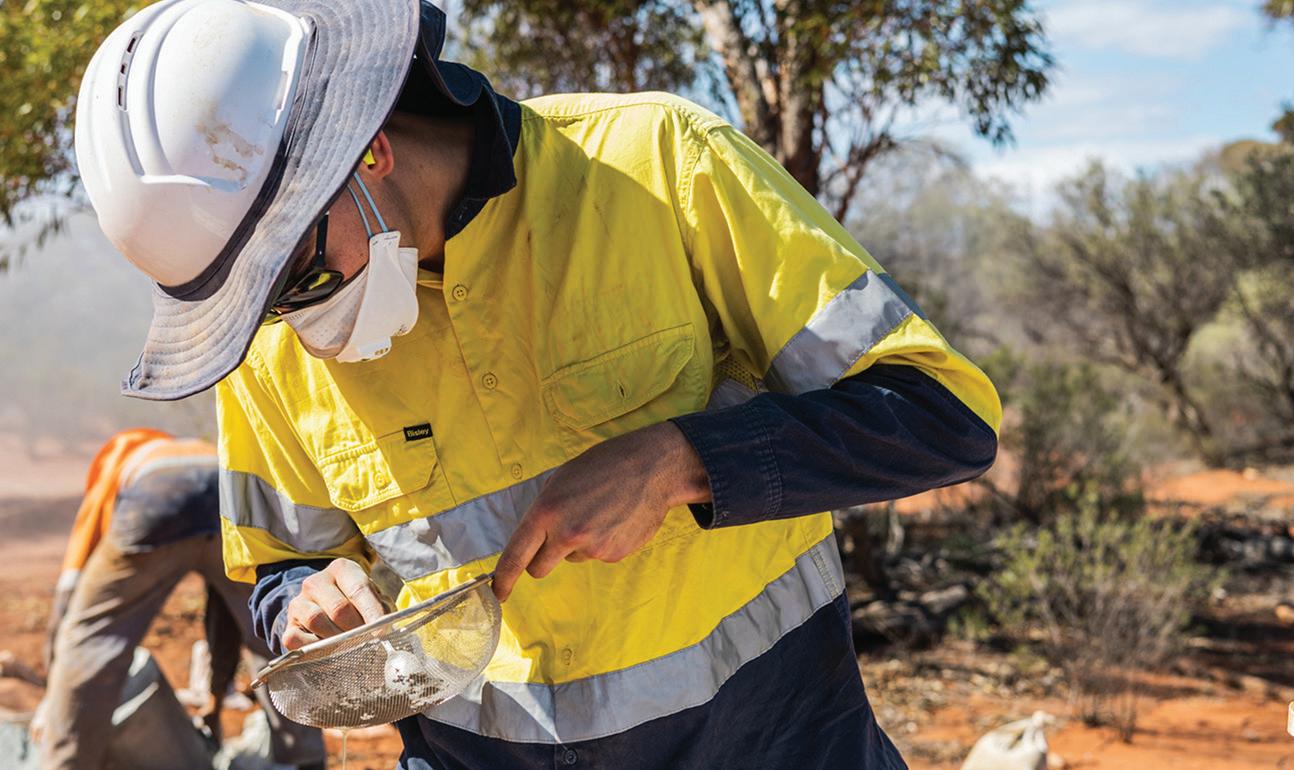
If you had to say one thing to geologists about their future in the industry, what would it be?
Human geologists are remarkable at many things. We’re creative. We see processes playing out in the rocks that nobody told us to look for. We interpret data in context, weighing history, structure, alteration, and a dozen other factors at once. That’s the heart of the job, and it’s the part that’s genuinely hard to replicate.
To be clear, geologists need to look at rocks for the right reasons. That’s not in dispute. But we’re often expected to behave like consistent, repeatable data-collection machines, and we’re just not built for that. Different people see things differently. Attention drifts. Repetition makes errors creep in. And it’s neither rewarding nor a great use of someone with the training to interpret and work further downstream. And look, the worry about AI isn’t unfounded. What it means for geology careers over the long term is a genuinely open question, and I’m not going to pretend otherwise. But right now, the best move I can see is to embrace these tools and use them to be better at your job. If we let AI sensors and automation handle the high-volume, repetitive data work, geologists are freed up to do exactly what they’re best at: the creative, interpretive, scientific thinking. The job gets more interesting, more engaging, and more rewarding, and the data quality goes up at the same time. That’s the best play right now.
How will AI impact the role of geoscientists?
Honestly, I don’t think anyone can predict exactly how AI is going to reshape geoscience careers, and anyone telling you they can is probably overselling it. There’s genuine uncertainty, and I’d rather be straight about that than pretend otherwise. But if there’s one thing I
am sure of, it’s that getting in front of this change is far better than getting blindsided by it.
What I see coming is geoscientists moving up the value chain. We’ll be less involved in the day-to-day data collection, since that’s where automation, sensors, and AI agents will do the heavy lifting, and we will be far more focused on the higher-level tasks. Interpreting, integrating, making the calls that matter. We’ll become the keepers of the models and algorithms, the people who understand not just what the data says but whether the models we’ve built to read it are still doing their job correctly. That’s a more interesting role for most people, and a more important one, than logging the ten-thousandth meter of core.
The geoscientists who lean into this, who get curious about the tools, understand their limits, and shape how they’re deployed, are the ones who’ll thrive. The ones who try to ignore it are taking the bigger career risk, in my view. Either way, the industry needs us. The job just looks different.
And one last word?
Everybody loves a new robot, don’t they? Machines are cool, and everyone gets excited about them. But all the data in the world won’t help you unless you interpret it correctly and act on it intelligently. This is often the much more difficult part of the equation than buying a new sensor; it requires complex data flows, algorithms, and teams that know how to build and manage them. The companies that are doing this well understand that puzzle and realize that geoscientists and our other SMEs need to be at the heart of them.
For more information Visit: datarock.com.au or imdex.com
2026
Industrial mineral Mine, operating
Metallic ore
Hannukainen, Kuervitikko Fe, Cu, Au
Kittilä Au, Ag
Metallic ore Mine, planned to reopen
Mine project*
Metallic ore
Industrial mineral
Tailings remining
COMMODITIES
Ag − silver Au − gold
Co − cobalt
Cr − chromium
Cu − copper
Fe − iron
Li − lithium
Nb − niobium
Ni − nickel
P − phosphorous
Pb − lead
Pd − palladium
Pt − platinum
REE − Rare Earth Elements
Rh − rhodium
Ti − titanium
U − uranium
Zn − zinc
Zr − zirconium
24.6.2026
Syväjärvi Li
Outovesi, Rapasaaret, Länttä Li
Koivusaarenneva, Peräneva, Kairineva Ti, Fe
LimbergSkräbböle
Jokisivu Au
Rajapalot Au, Co
Ikkari Au
Pahtavaara Au
Kevitsa
Ni, Cu, Co, Pt, Pd, Au
Sokli P, Nb, Zr, REE, Fe
Sakatti Cu, Ni, Pt, Pd, Co, Au
Suhanko Cu, Ni, Co, Au, Pt, Pd, Rh, Ag
Ni, Cu, Co, Pt, Pd Laiva Au Kemi Cr
Hietaharju, Peura-aho
Otanmäki Ti, Fe
Sotkamo
Ni, Zn, Co, Cu, U
Haaponen Talc
Silver Mine Ag, Au, Pb, Zn
Hosko Au Kuivisto Au
Siilinjärvi
Vasarakangas Talc Hautalampi Ni, Cu, Co, Fe, Zn
Kaapelinkulma Au
Pampalo Au
Muurinsuo, Kuittila Au
Ihalainen
Mining data: Finnish Safety and Chemicals Agency (Tukes) Basemap © The National Land Survey of Finland, 2020
*Mine project refers here to a project which is actively developed towards the start-up of mine production and environmental impact assessment programme has been announced by the contact authority
by Hannu Lahtinen, Director, Availability of Raw Materials at Geological Survey of Finland (GTK) and Ilkka Keskitalo, Senior Specialist at the Finnish Safety and Chemical Agency (Tukes)
While known for base metals and the EU’s largest gold production, Finland’s focus has been gradually shifting toward securing the critical minerals essential for the green transition. The country has a long history of mining and refining yet remains historically under-explored. Its rich geological landscape and untapped mineral potential make it a key destination for future exploration activities.
Finland’s mining and mineral exploration sector is characterized by a stable legal framework, clear permitting procedures, and a strong emphasis on environmental protection and safety. The operating environment requires thorough preparation, impact assessments, and active stakeholder engagement in regulatory processes. While demanding, the permitting system is transparent and predictable, and a leading reason why Finland has performed well in international surveys assessing the attractiveness of jurisdictions for mining and mineral exploration.
In recent years, environmental considerations, biodiversity, water management, and the involvement of local communities have become increasingly central, as they have globally. In this context, the Finnish Safety and Chemical Agency (Tukes) serves as a key nexus where legislation, technical expertise, and practical supervision come together.
Tukes supports the early stages of projects, particularly through its open and digital permitting system. On its website, it features a public map service with exploration permit areas and available reservations and also provides comprehensive guidance for permit applications. Beyond this, Tukes is responsible for monitoring compliance with the Finnish Mining Act (621/2011) and ensuring that new technologies and operating models are introduced in a controlled manner, with risks properly identified and managed.
In addition to the stable and transparent regulatory landscape, mining and exploration activities in Finland are aided by the availability of high-quality geoscientific data, robust infrastructure, and drilling contractors that rank among global leaders. This is further supported by an extensive road network and skilled workforce, which ensure efficient and reliable operations.
Currently, around 60 companies are exploring for minerals in Finland, with activities mostly concentrated on gold and base metals. Gold plays a role in many projects due to its high market price, but the
same deposits often contain significant quantities of other minerals. According to Finnish legislation, mining permit holders are required to utilize all economically recoverable minerals within a deposit. Several advanced mining projects are ongoing that will possibly add new metals to the list of valuable materials mined in Finland, such as iron, titanium, niobium, zirconium, and REE.
In 2025, Finland’s 41 active mines produced a total of 118.2 million tonnes of extracted material, of which 43.8 million tonnes were ore. Currently, there are nine metal mines operating in the country. In addition, there are several mining projects in permitting or development phase that are expected to be commissioned in the coming years.
A key actor in this environment is the Geological Survey of Finland (GTK), a research institution that supports decision-making in industry, academia, and wider society to accelerate the transition to a sustainable, carbon-neutral world. As one of the leading experts in the application of geosciences in Europe, GTK brings added value to customer projects in mining and exploration by providing unbiased research and geodata. To the mining industry, it also offers:
• Mineral potential evaluation and ore prospecting services;
• Potential for exploitation of primary and secondary raw materials;
• Geophysics services;
• Beneficiation studies from laboratory to industrial scale;
• Management of mining sites, mining waste and environmental matters.
One of GTK’s initiatives is Finland’s National Exploration Program, which aims to strengthen the country’s mineral potential and support the sustainable supply of critical raw materials. The program focuses on identifying new mineral-rich areas, improving geological knowledge, and attracting exploration investments. Developed under the
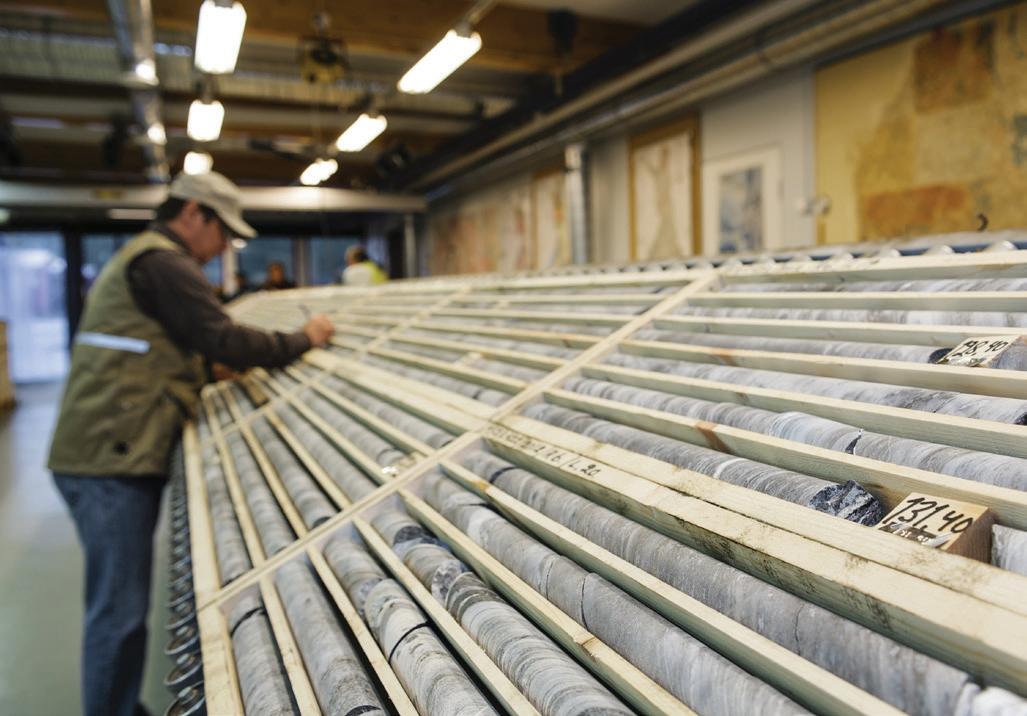
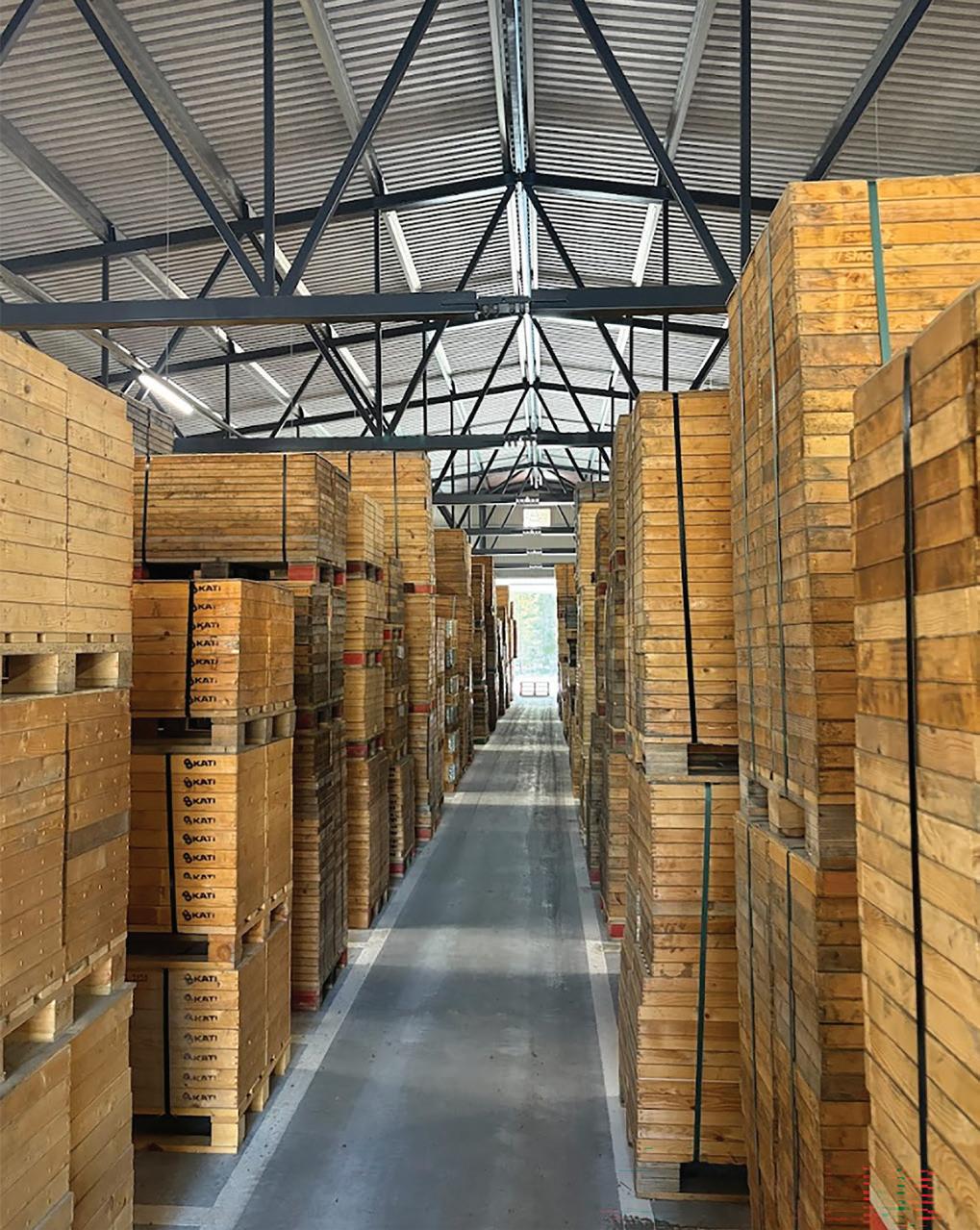
↑ The National Drill Core Archive facilities are available for exploration professionals, other industries, and academia. Located in Loppi (one-hour drive from Helsinki), with additional facilities in Rovaniemi (northern Finland). Photos: GTK.
EU Critical Raw Materials Act, it aims to secure the long-term availability of metals for the green transition.
In addition to this program, GTK supports early-stage exploration in a variety of ways. It carries out regional-scale research, mapping mineral systems and assessing ore formation processes to identify geological environments that are favorable for the occurrence of exploitable minerals. Beyond mineral characterization, it conducts geophysical studies, implements measurements, interprets the results, and conducts quality control using a wide range of methods.
GTK carries out regional-scale research while private companies focus on more targeted exploration by utilizing the geoscientific data and expertise produced by GTK to guide ore prospecting activities.
GTK has been assessing mineral potential in Finland for over 100 years, with a solid foundation of continuously updated digital material. Its central platform for up-to-date and high-quality geological data offers access to map services and geological interpretations, spatial datasets, reports and documents. The free-of-charge interface services provide direct online access to GTK’s spatial datasets. Users can search, download, view, or integrate data into their own applications.
• The Mineral Deposits and Exploration (MDaE) map service allows visual inspection and integration of Finland’s mineral deposits, mines, mining cadastre, geological and geophysical maps, observation and measurement data, and geological interpretations.
• The Hakku online service is the gateway to all material published by GTK; it includes Finnish spatial data, documents, and metadata from the 19th century to the present day and is continuously expanded. Most of the products can be browsed and downloaded free of charge. Paid products can be ordered through the Hakku service online store.
To promote the cost-efficient identification of areas with high mineral potential, the GTK also has an extensive drill core archive. A globally unique resource, the archive contains around 4 million meters of drill cores (over 13 million ft) that provide valuable insights into Finnish bedrock. The archive also contains thin sections, till geochemical samples, and rock samples. Some of the drill core samples have already been converted into a digital format through hyperspectral scanning, enhancing the quality and accuracy of drill core imaging.
Information on the drilling sites and the locations from which the core samples were collected can be found on the Mineral Deposits and Exploration map service, or at the National Drill Core Archive online database. Through the map service, it is possible to simultaneously study several data layers, useful for guiding exploration activities.
The drill cores from the archive are available for on-site investigation. The archive also offers the following services:
• Sampling and sawing services under controlled conditions;
• High-resolution photography and petrophysical measurements;
• Geochemical analysis options with external laboratories;
• Expert and research services related to local and target geology.
Sibanye-Stillwater’s Keliber lithium mine put Finland and Europe on the lithium producer lists for the first time. The entire process chain from the mining of the ore to the production of battery-grade lithium hydroxide will be managed by Keliber. GTK has cooperated with Keliber since the exploration phase, providing exploration and water management services as well as playing an important role in testing the project's lithium ores and concentration processes.
Outokumpu's Kemi chromium mine launched an extensive data-driven circular economy ecosystem that aims to be the first European model for utilizing mine side streams as raw material for new products and solutions. GTK is part of this ecosystem as a scientific partner. Kemi aims to become the world’s first carbon-neutral mine.
Boliden and the GTK have developed a long-term partnership to create environmentally sustainable, accurate, and cost-effective mineral exploration methods in Finland. During the years Boliden has been operating in Finland, it has relied on GTK’s expertise, datasets, and research methods to support exploration activities and operational development.
GTK discovered the Kevitsa multi-metal deposit in Sodankylä in the late 1980s. After the mine was established by First Quantum Minerals, ownership transferred to Boliden in 2016, marking the beginning of close cooperation between the companies. Kevitsa primarily produces copper and nickel, while concentrates also contain cobalt, platinum, palladium, and gold. In 2022, the mine produced approximately 133 000 tonnes of nickel concentrate and 100 000 tonnes of copper concentrate. Demand for these base metals continues to grow due to urbanization, renewable energy, and electric transportation.
GTK provides open datasets, drill core archives, and geophysical methods that help companies identify promising mineral deposits. Boliden has collaborated with GTK on structural geology surveys, seismic reflection studies, and electrical methods to better understand ore-forming structures. According to Boliden, GTK’s expertise, flexibility, and wide range of in-house services have strengthened Boliden’s exploration capabilities, improved team expertise, and supported operational transparency.
The partnership extends beyond exploration and into mineral processing, dam performance assessments, and geophysical research.
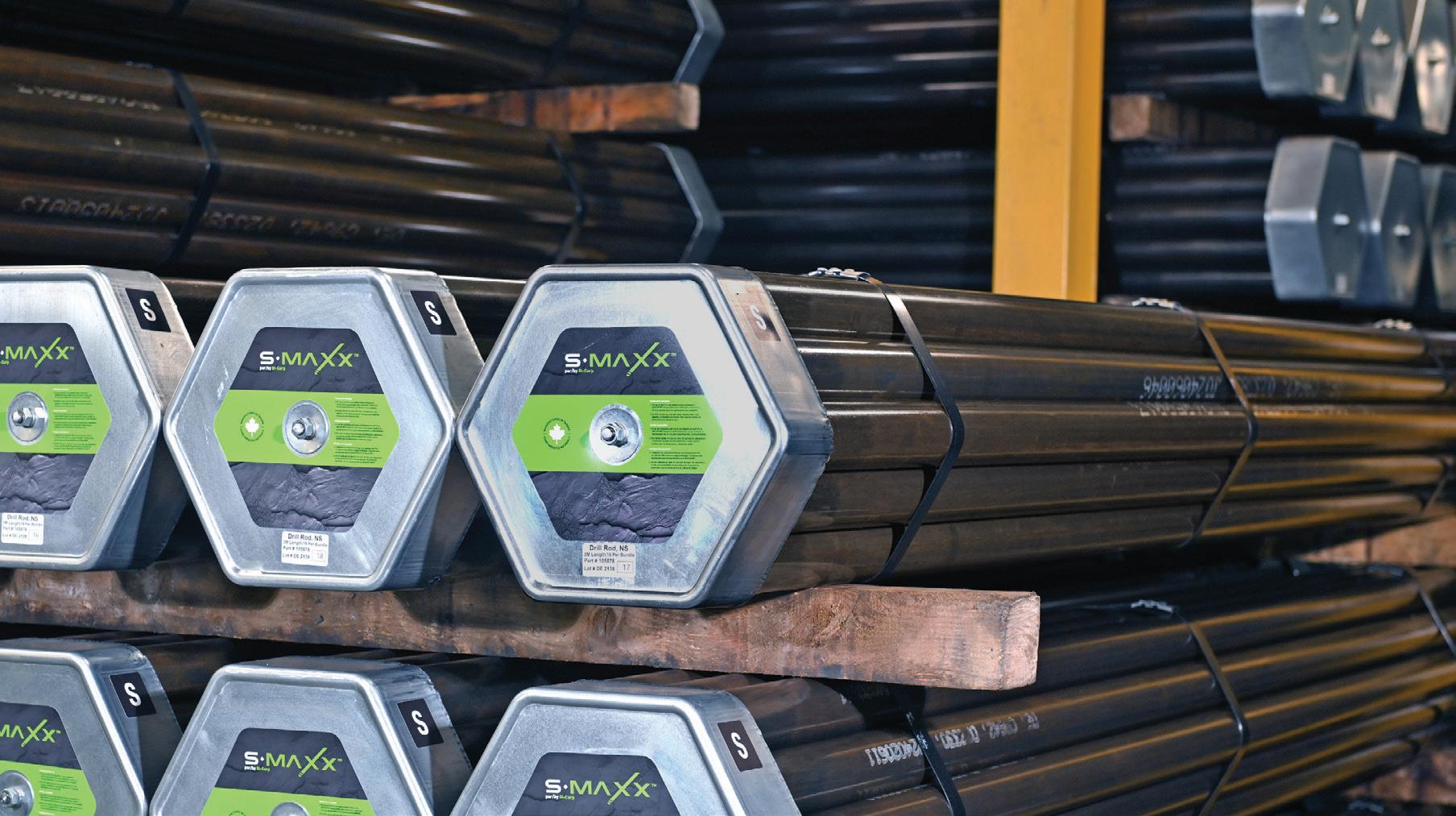
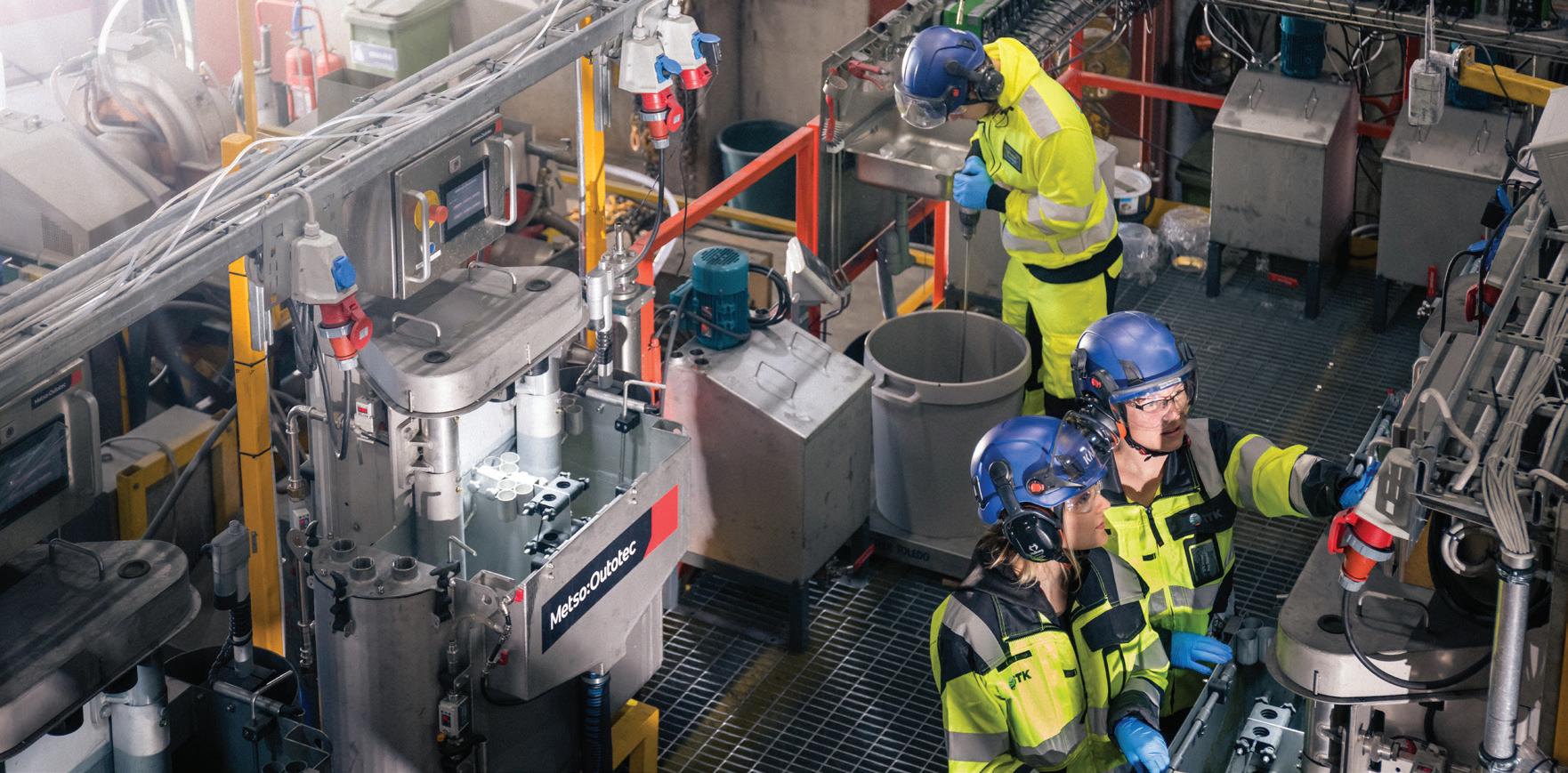
↑ GTK Mintec: a pilot plant and laboratories for the circular economy and mineral processing
Ongoing collaboration projects continue to provide innovation, knowledge sharing, and added value for Boliden’s future operations.
The future of the mining and mineral exploration industry in Finland is strongly influenced by the green transition, electrification, and the growing demand for critical minerals. Compared with major mining countries such as Canada and Australia, Finland has to date seen relatively limited detailed, target-specific exploration, despite its diverse geological history enabling the formation of a wide variety of mineral deposit types. However, recent significant corporate transactions related to mineral exploration support the view that there is still considerable potential for new discoveries within Finland’s bedrock. In this context, the transparent permitting system, supported by Tukes, combined with Finland’s robust infrastructure and high-quality geoscientific data and services provided by the GTK will be among the key factors for attracting future exploration investments.
Visit: gtk.fi/en or tukes.fi/en
MDaE map service: gtkdata.gtk.fi/mdae
Hakku online service: hakku.gtk.fi/en
GTK Mintec, one of GTK's projects for the mining industry, is a unique service provider combining mineral research laboratories with an industrial-scale pilot plant. The facility also includes a test area for studying the long-term behavior of tailings and extractive waste.
The GTK Mintec mineral processing pilot plant and research environment offer research and testing services throughout the value chain from ore deposits to the closing of mines and the reuse of materials. GTK Mintec studies and tests the beneficiation of minerals and mineral-based materials, as well as the recyclability of different types of side streams.
A leading research and innovation environment, it supports the transition toward more responsible and efficient mining practices. In addition, the recently upgraded facilities enable the processing of a wide range of different minerals and metals, increasing flexibility and supporting diverse industrial needs.
The unique setting is being developed with a new industrial-scale pilot plant. This will enable more comprehensive development of continuous beneficiation processes, supporting responsible mining practices, and enhancing resource efficiency.
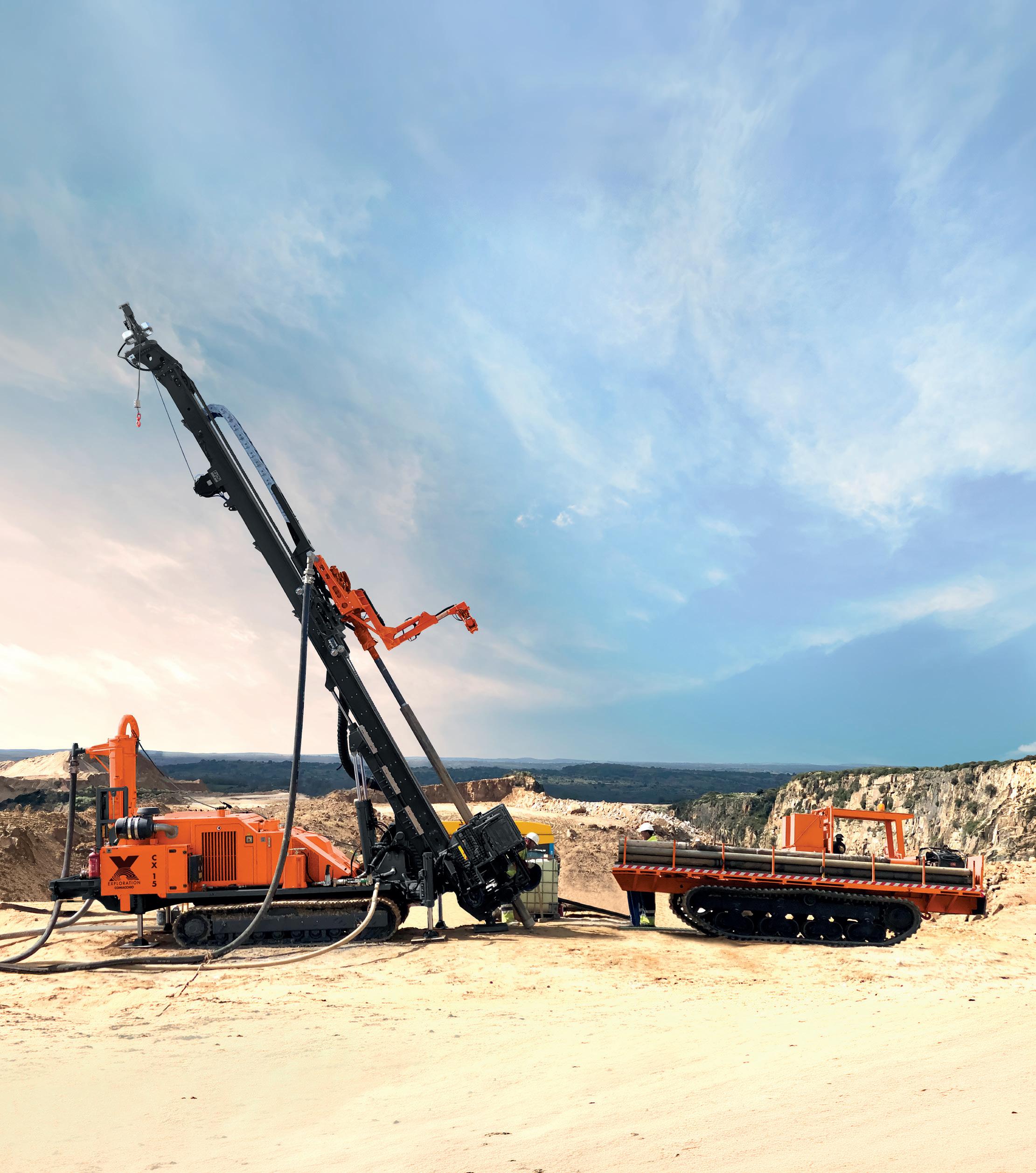
THE COMACCHIO CX LINE DELIVERS EXCEPTIONAL POWER, RELIABILITY, AND OPERATOR SAFETY FOR THE MOST DEMANDING REVERSE CIRCULATION DRILLING OPERATIONS.
DESIGNED FOR BOTH CRAWLER AND TRUCK-MOUNTED USE, THESE RIGS COMBINE MOBILITY WITH RUGGED CONSTRUCTION TO PERFORM EFFICIENTLY IN CHALLENGING CONDITIONS.
In conversation with
Director of the Mineral Deposit Research Unit at the University of British Columbia Shaun Barker is Director of the Mineral Deposit Research Unit (MDRU) and an Associate Professor in the Department of Earth, Ocean and Atmospheric Sciences at the University of British Columbia. He graduated with a BSc (Hons) in Geology from the University of Otago, and a PhD in Earth Sciences from The Australian National University. Following postdoctoral research at MDRU, he held academic positions at the University of Waikato and the University of Tasmania, including work with the Centre for Ore Deposits and Earth Sciences (CODES).
Since returning to MDRU in 2020, he has led major industry-supported research programs across Canada and internationally. These projects have emphasized porphyry copper systems, carbonate-hosted deposits, and ore body knowledge.
His research spans a wide range of ore deposit types, with a focus on mineral system footprints, mineral chemistry, and the development of practical exploration tools.

Brett Davis: Firstly, thanks for giving Coring the opportunity to interview you, Shaun. I openly admit to stalking your career summary on professional media. Let me first ask what got you interested in a career in geology?
Shaun Barker: I don’t really remember all that well. From an early age I was set on being a pilot, but in my mid-teens was convinced by a science teacher to pursue science (which I always enjoyed). We had a family friend who worked in the oil and gas industry (who was very well paid), and I’d always enjoyed dinosaurs and fossils as a kid. So, in my first year of university I thought I wanted to do either geology or chemistry (which was my favorite ‘mainstream’ science subject at school) and did five courses (two geology, three chemistry in first year, out of seven total courses). I was invited to the Honors stream in both subjects at the end of first year, but when the chemists told me that I would have to do organic chemistry (which wasn’t my favorite) to be a chemist, and geology had no such requirements (not that organic chemistry isn’t useful in geology), it was mostly geology for the rest of my Hons degree. I took almost all the papers (except, ironically, paleontology, as most of the paleontology in first year involved drawing fossils and I couldn’t see the point with digital cameras). It was ‘hard rock’ the rest of the way.
BD: Were there any genuinely formative moments in your early career and/or people who truly inspired you?
SB: I was lucky enough to be at the University of Otago when, in my view, it was well at its peak with a range of amazing faculty, each with varying technical and philosophical strengths. Notable in my mind are Dave Craw’s pragmatic lessons as an undergrad, including his patient supervision of my third-year geology field-mapping project, and my first exposure to the mining industry: a tour of Macraes Gold Mine and the old gold mine workings in the Otago Schist during a field trip in third year.
As a first year, my very first lecture in geology was from Rick Sibson, which, as anyone lucky enough to be lectured by him knows, was a type of performance art. In this case, it was led off by Rick dropping a large rock on the floor of the wooden lecture theater in geology. I was on Rick’s bus for my first field trip to North Otago; he led us through with a series of terrible puns and singing.
I was also lucky enough to work with Rick for my Hons project where I focused on understanding the controls and timing of pseudotachylyte in a shear zone near Alexandra (Central Otago, New Zealand). When reviewing your work, Rick would always read it aloud, red pen in hand with you sitting next to him. If you made it through without having the chapter handed back before he finished reading, then you knew it was in good shape. I credit Rick with a strong grounding in scientific writing and some particular phrasings that he loved (or hated), as well as with thinking about the linkages between field observation and theory as they relate to structural geology and earthquakes.
Otago had a firm focus on field-based training and field mapping. Most courses had at least two weekend field trips, held no matter what the weather was, unless roads were closed by snow. Although I don’t map much now, that hands-on training was an incredibly strong foundation for a career in geology.
BD: You did your undergraduate degree in New Zealand. Do you ever get back to that part of the world for work or pleasure?
SB: Not as much as I’d like, especially with Covid closing borders at the start of my time back in Canada. I do get back periodically to see family, and we just recently ran a fantastic field trip to the Coromandel Peninsula to view epithermal gold deposits, and to the Taupo Volcanic Zone to see hydrothermal fluid flow in real time! MDRU has recently joined a new, large research project on critical minerals led by Professor Julie Rowland at the University of Auckland. This will be a fiveyear collaborative project involving MDRU along with various New Zealand-based researchers.
BD: You are the currently the director of the highly respected Mineral Deposit Research Unit at the University of British Columbia in Canada. Does this position give you much time to do research? If so, what are your current research interests, and do you have students working on projects with you?
SB: Yes. My primary role is research, now mostly research leadership and project creation, as well as supervision of a team of postdoctoral researchers (currently 15) and graduate students (currently about 20, mostly MSc students with a few pursuing a PhD). My research interests are varied and broad, but if I am trying to summarize, they would be across four main themes.
Developing a stronger genetic understanding of controls on the formation of large high-grade copper and gold deposits: I’ve worked on a variety of deposit styles including epithermal gold-silver, Carlin-type gold deposits, porphyry copper-gold-molybdenum deposits, carbonate-hosted deposits (CRD/skarn), IOCG, and sediment-hosted copper, and I remain fascinated by the question of what series of triggers in the various systems leads to high-grade, large deposits vs small or low-grade systems… How can we be predictive?
Mineral system footprints: How can we recognize the signatures of world-class ore bodies from as far away as possible and then vector towards them? I was lucky enough to work with Greg Dipple as one of my postdoc supervisors at UBC. We applied extensively reactive-transport theory to develop vectoring tools based on mineralogy, geochemistry, and isotopic tracers. I continue to use those lessons and approaches today, and we have been particularly successful in applying these to carbonate-hosted ore deposits. Despite their reputation for having ‘cryptic’ footprints, they are huge and readily recognizable once you know what to look for.
Ore body knowledge: a bit of a ‘catch all’ phrase; anyone working on ore deposits is, of course, developing ore body knowledge. What I mean is understanding how geology impacts the mining value chain. How is value created, or destroyed, by a better knowledge of geology and mineralogy? I have a fantastic team of postdocs and students doing some important work on this at the moment. We’ll have some excellent papers and contributions coming out soon, I hope!
Technology: I have always been a bit of a technology geek, so I am interested in how technologies will enable us to be better geologists. Sometimes this can seem like tinkering or playing with toys, but every so often you see what I consider transformative technologies. We’ve done work in new stable isotope technologies applied to carbonate-hosted ore deposits, the first paper on
the use of nanoSIMS to image the distribution of gold in fine-grained arsenian pyrite in Carlin-type gold deposits, applying pXRF to geothermal logging (which was traditionally done primarily through visual logging of chips), etc. Most recently, we’ve been working with a new Zeiss slide scanning system which, in my view, completely changes how the industry can use and apply petrographic observations (arguably geology’s oldest technology after the geology hammer and measuring tape). So, I have a bit of a thing for thinking about how technology will impact geologists ‘now’, or in the future… And perhaps trying to call BS on technologies that don’t look likely to help us.
BD: In 2013 you were awarded the Waldemar Lindgren Award, which is offered annually to a young scientist whose published research represents an outstanding contribution to economic geology. Can you provide some details on this prestigious award?
SB: The Waldemar Lindgren Award is awarded by the Society of Economic Geologists (SEG). Before I started my postdoc, I really had very little exposure to economic geology. My earliest ‘formal’ research in ore deposits was in the enigmatic Carlin-type gold deposits of Nevada where deposit footprints are hard to distinguish, especially visually. So, we developed new exploration tools (based around emerging new stable isotope analytical technology) to determine the isotopic footprint of these systems, which led to the first large-scale stable isotope ‘mapping’ of carbonate-hosted deposits. This is an approach that we still use today and which has been adopted by a number of companies exploring for carbonate-hosted deposits. That research, as well as our paper on application of nanoSIMS, were cited as examples of applying novel approaches to develop new understanding at different scales of ore deposits. They were the main basis for the award.
BD: One of the key aspects of your work seems to be interfacing with industry. What are the critical elements of marrying a research-oriented institution with the pragmatic requirements of the mining and exploration industry?
SB: As far as I am aware, MDRU has a truly unique model for a research group related to the minerals industry. MDRU is an entirely industry-funded research organization. We draw our operating budget primarily through
our membership scheme and training offerings, with a modest endowment from industry. Being hosted inside the University of British Columbia makes this a true partnership between industry (which funds us) and academia (which provides us with a home and significant in-kind support).
For research initiatives, we draw funding from our industry partners, which are required to maintain MDRU membership for the duration of the research. We also seek further support from the truly world-class industry co-funding schemes in Canada, primarily the Mitacs and the NSERC Alliance systems. These are focused on providing support for training students and postdoctoral researchers (what Canada terms ‘HQP’, or highly qualified personnel).
To survive for over 35 years, MDRU has had to thread the needle of ensuring our operating budget is stable. This means delivering to industry what they are paying us to do—both research and innovation, as well as maintaining the training of graduate students, postdocs, and young industry professionals. At the same time, we must continue to deliver academic excellence and research productivity (scientific papers, research grants, etc.) to
ensure that we are seen as valued academic partners at UBC. It is a challenging model, but when we get it right, it is immensely rewarding for all parties.
BD: Working in academia can be tough. There are the constant battles for research funding, the pressure to publish, juggling administration with teaching and research, etc. What are your secrets to time management and what makes you stay in the research world as opposed to pursuing a career in the mining and/or exploration industry?
SB: My secret to time management is probably not much of a secret; knowing when you’ve done a good job on something (and having the confidence to call it) but not striving to be perfect, knowing when you’ve addressed the problem/question (without continuing to collect data), and learning how to say ‘No!’ to some things.
Academics are getting squeezed for time across most sectors. Generally, most universities are downsizing, but the amount of administration and service, including volunteer roles on editorial boards, peer review, etc.,
is increasing, especially with the continuing ‘publish or perish’ model of ‘more publications are better’—so more work and fewer people.
I’ve stayed in academia because across the roles that I’ve been in, you can clearly see the impact your research and training can have in aiding discovery and leading to better industry outcomes. That’s a huge incentive. Academia also offers a significant upside with the freedom to pivot and aim to impact where you can. I’ve had the opportunity to travel and see lots of different deposit styles around the world with various commodity types.
BD: Do you have a rock collection? If so, what are the favorite items in there and why? If not, why not—geologists without rock collections are hard to trust!
SB: I do have a decent rock collection (both at home and at work) of mostly curiosities, and it is not particularly organized! Favorite items: fossils are always a great thing, even if not in my professional wheelhouse, and especially when they remind you of places and people as well. A favorite is a crocodile? ankle? bone that my son and I found a couple of years ago. On the ‘professional’ front, it is hard to beat a couple of porphyry copper-gold samples—the paragenesis you can see in some of the quartz-magnetite-chalcopyrite veins, and overprinting vein textures allow you to unpick a whole story just from textures and mineralogy. It is amazing how much of a geological history you can extract from a single rock sample!
BD: What is your favorite dinosaur and why?
SB: I’ll take two. I’ve seen some spectacular T-Rex skeletons at several museums around the world—always hard to beat. However, I always liked ankylosaurus as a kid. Something about having a large weight at the end of your tail you could whack things with was appealing!
BD: Is there a particular mineralization style or deposit type that interests you, and why?
SB: I cut my teeth on Carlin-type gold deposits, and they are still interesting as there remain so many unknowns. I consider them to be relatively understudied considering the size and quality of the Nevada deposits, with discoveries continuing to be made. For
example, the new Four Mile discovery has much higher reported grades than classic Carlin-type gold deposits; so why is that? Are they truly amagmatic as some suggest, or is there a strong magmatic influence that’s closer than we perhaps think? Similarly, some unanswered questions remain in sediment-hosted copper, which I have worked on in one research project. What makes a ‘good’ vs an unproductive basin or sub-basin and why and how can we recognize that? In general, I am interested in most hydrothermal ore deposit types— while we have good working models for most deposits, there are enough exceptions to most to keep stimulating the ‘why’ question. And if you can address the ‘why’, then the applied outcomes are immediately obvious—if we understand drivers for grade or tonnage, then we can start being predictive.
BD: Do you undertake much work internationally, either as contract work or in a research capacity? If so, do you collaborate with other researchers or do it alone?
SB: MDRU has a long history of research all over the world and we currently have projects in Canada, Ecuador, Greece, the US, and New Zealand. We are generally very collaborative, both within UBC and more broadly, and particularly within Canada, which makes sharing NSERC funding possible. We also often collaborate ‘in country’ where we can. For example, MDRU has run multiple research projects in Colombia, and in each one either the Colombian Geological Survey and/or local universities were involved in the research.
BD: You deliver popular and highly respected technical courses through MDRU. What fundamental skills are you helping to develop, and where do you see some of the basics being underdone, either in undergraduate teaching or within exploration and mining companies?
SB: In our courses, we are often blending a mixture of very traditional skills (hand specimen mineral identification and paragenetic histories, petrographic work, field observations) with cutting edge tools and other data, such as micro-X-ray fluorescence, portable XRF, shortwave infrared or satellite imagery. We almost always look for industry or some type of hands-on experience with our incoming students, particularly those we are looking to put into field sites working with
mineral exploration or mining companies. Given our broad mix of incoming students, we see variable skills and skill gaps. Field mapping and observation skills, structural geology basics, and mineralogy are always core skills we value, and these are often quite variable depending on student backgrounds. We want our students to have those skills and improve them and then also add to that the more advanced technologies and data that they will encounter in industry.
You can’t effectively use lithogeochemical data unless you understand the basics of the geology and the mineralogy you are trying to predict from it. So, a big thing we try to teach our students is to use all the things you have available. How do your observations from the drill core or outcrop in front of you mesh with the more advanced datasets you might have, such as lithogeochemistry or SWIR core sensing data? Those data should send you BACK to the rocks, and the rocks should send you to the data (or encourage data collection) to check and test hypotheses. I always try to encourage our students to be constantly hypothesis testing—you should always have one or more models of ideas you are testing or trying to disprove.
BD: What is the most maddeningly common and frustrating thing that you have encountered when trying to get a research project up and running?
SB: University and company legal bureaucracy is normally the biggest challenge. All the technical people are aligned, and then the lawyers get involved and spend several months arguing over IP terms that aren’t ever likely to be invoked!
BD: Has there been any single satisfying moment in your career that rates above all the others?
SB: Seeing student success is always amazing—sending a student off with an idea or a concept and watching them go out and absolutely crush that idea and take it further is incredibly satisfying. A couple of examples stand out: Ben Andrews completed a PhD with me at Mount Isa. He revisited the oxygen isotope work that Chris Waring in an earlier PhD and Keith Hannan undertook and did a fantastic job of both validating their work and advancing it using new isotopic tools and 3D modeling. Then he went to work at Mount Isa Mines for several years and got his hands on 4-acid lithogeochemical data the company was collecting. The data highlighted previously unrecognized cryptic potassic alteration outboard of the main silica-dolomite visible alteration. Ben was able to put together a complete alteration footprint and exploration model (based on reaction-transport theory) using stable isotopes and lithogeochemical mineralogy
proxies—his model is broadly applicable to any carbonate-hosted deposit environment! That work is published in his PhD thesis and is currently in peer-review.
The second example that stands out is a very recent study from Carolina Marín Suárez (who completed her MSc at MDRU) where she has sought to map out data flows across the entire mining value chain, with a particular focus on where data collected in mineral exploration and resource definition is used ‘downstream’ in mine design and operations. Whenever Carolina presents her work (which started off as a whiteboard concept in February 2024) to industry collaborators, it leads to significant interest and has elicited comments from major producers which include, and I’m paraphrasing: ‘We tried to do this and failed, can we please have a copy’, or ‘We want that, please—we need it’, and ‘This work from Carolina is f****** fantastic!’. That sort of visceral response to a piece of research, particularly one led by a student, is incredibly satisfying.
BD: Have there been any incidents that really disappointed you and affected your career, e.g. loss of funding for a project, interaction with recalcitrant people/companies, global pandemics, etc.?
SB: Nothing specific, I’ve been lucky so far, I guess! Covid was certainly challenging for everyone but it was really amazing to me how the university sector pivoted so quickly to deliver high-quality virtual training. This illustrates just how much of a better job we can do using modern technology to communicate concepts to a broad global audience, including those without the financial resources to get to in-person training in the West.
There are always people in both academia and industry who ‘don’t get it’ and aren’t afraid to tell you so—whether they don’t understand why we need mining and mining-related research in universities, or those within the industry who don’t get why ‘we are paying all this money for research from a bunch of pointy-headed people that we’ll never use’. Generally, the way to deal with them is a mixture of trying to explain why we do need mining, and how our research could impact them, with a focus on the training value proposition. If that doesn’t work, then just try to ignore them and keep working with those who appreciate what we do!
BD: What has stressed you most in the roles you’ve had over the course of your
career? Dealing with people? Technical challenges? Financial constraints? Physical relocation? Travel? Other?
SB: Dealing with people can certainly be challenging, particularly in academia where there can be large egos, an embedded power structure, and often significant politics being played. Dealing with a rapidly changing industry is also challenging; people who are key supporters in a company one day are working for a different company a week later!
Certainly a few technical failures along the way where ideas or technologies don’t work. The best approach is to just be honest and explain why the failure occurred and what we could have foreseen, if it is worthwhile going again and what we could do
‘Dealing with people can certainly be challenging, particularly in academia where there can be large egos, an embedded power structure, and often significant politics being played.’
differently. I’ve also certainly moved around a bit. I’m very grateful to have a supportive family who mostly get why we’ve moved and then why I disappear on a regular basis.
BD: What is your favorite scientific paper and why?
SB: The seminal ‘Fault valve’ paper published in Geology in 1988 by Rick Sibson, François Robert, and Howard Poulsen is probably my favorite. A classic Sibson paper with an extremely important deposit type (orogenic gold). It integrated field observations, theory of fault, earthquake behavior, and hydrothermal fluid flow, all summarized in five pages. Truly a remarkable paper which is heavily cited and continues to be a useful model.
BD: This is a standard question of mine, because it never fails to elicit interesting and important answers. If you have abundant financial funding, is there a fundamentally annoying question or problem you’d like to solve or a topic you’d like to work on?
SB: Oh, yes. There are several, all related to the same fundamental thing: developing a better understanding of how fluids migrate through magmas and host rocks. How is it that we can form a massive sulfide or layer of skarn mineralization, yet limestone just a few centimeters from the boundary looks essentially untouched? What combination of permeability and fluid-rock reaction enables that to occur? And in porphyry systems, what controls whether the fluids remain mostly trapped in the magmas or escape out into the country rocks? Is that a magma property or a host rock property, and what role does it play in controlling porphyry copper grades?
BD: What is your opinion about people and companies ‘giving back’ to the industry, e.g. in terms of mentorship? Do you think we see enough of it?
SB: I think this is a tough one. When most people are ‘giving back’, they are in many cases giving up their ‘free’ time (and for many consultants paid work opportunities) to contribute—but then still have to complete their day job after hours. For other people, they are giving up family time or time when they could be relaxing, which is important in an increasingly fast-paced world. I see many people contributing a lot and volunteering, be it for organizations like SEG (someone like Bill Chavez comes to mind, who appears to be constantly running amazing student field trips), or someone like David Rhys giving talks to student chapters or for MDRU.
Personally, I think many in the industry do see this is important, but I’d also like to see the individuals who give up their time and money receiving recognition. I’d like to see industry more broadly recognizing how important this is and helping people create time to give back. Some companies are good at it, but I think the industry can do more. It’s amazing to see some companies racking up huge profits but then being unable to support staff attending professional development opportunities, or traveling to give talks to students, etc. All in the interests of reducing costs.
However, almost all companies are amaz-
ingly supportive of practical activities within the geosciences, such as enabling field and mine visits, providing funding both directly to universities and to organizations like SEG. That support is increasingly important, particularly at a time when we have a reduction in general geology training as well as increasing costs for students.
BD: Now to a personal question. What does Shaun Barker do when he isn’t thinking about rocks (does this ever happen)?
SB: I have a set of golf clubs that I don’t get to very often, but when I do that one good shot per round makes you want to come back next time. More commonly, a fair chunk of my thinking time and energy is directed toward food (and coffee)—cooking it and eating it! As with my research, I like applying ‘emerging’ technologies to cooking and using scientific approaches (thinking about heat transfer and chemistry) to understand what makes food taste better. I have both a sous vide machine (ironically made by a company that used to make temperature-controlled baths for laboratories and then recognized a far more lucrative opportunity in the home equipment sector) and an ice cream machine that I enjoy playing around with. The chocolate ice cream I make is pretty spectacular, probably because of the amount of molten chocolate involved!
BD: Finally, any concluding comments or words of wisdom from a geology veteran?
SB: In my opinion, geology is at a fascinating tipping point. We are now at a time when sensor-based data collection (handheld analytical instruments, core sensing systems, drones, satellites, aircraft, etc.) is becoming ubiquitous. I consider this geology’s ‘DNA’ moment. Just as biologists moved from being a largely descriptive science prior to molecular biology and the discovery of DNA, I believe that geology will go through a fundamental change where the ability of sensors to quantify and place probabilities around what geologists have largely been describing with words (e.g. grain size, rock types, and trying to identify minerals accurately and consistently) will fundamentally change how geology is done. Geologists will move from data collectors to data interpreters—and will be more important than ever! Both industry and academia are convinced that data science and AI are the future. Undoubtedly, they are part of the future. At the same time, basic geology and geological understanding, skills, and knowledge will remain as relevant as ever, if not more relevant.
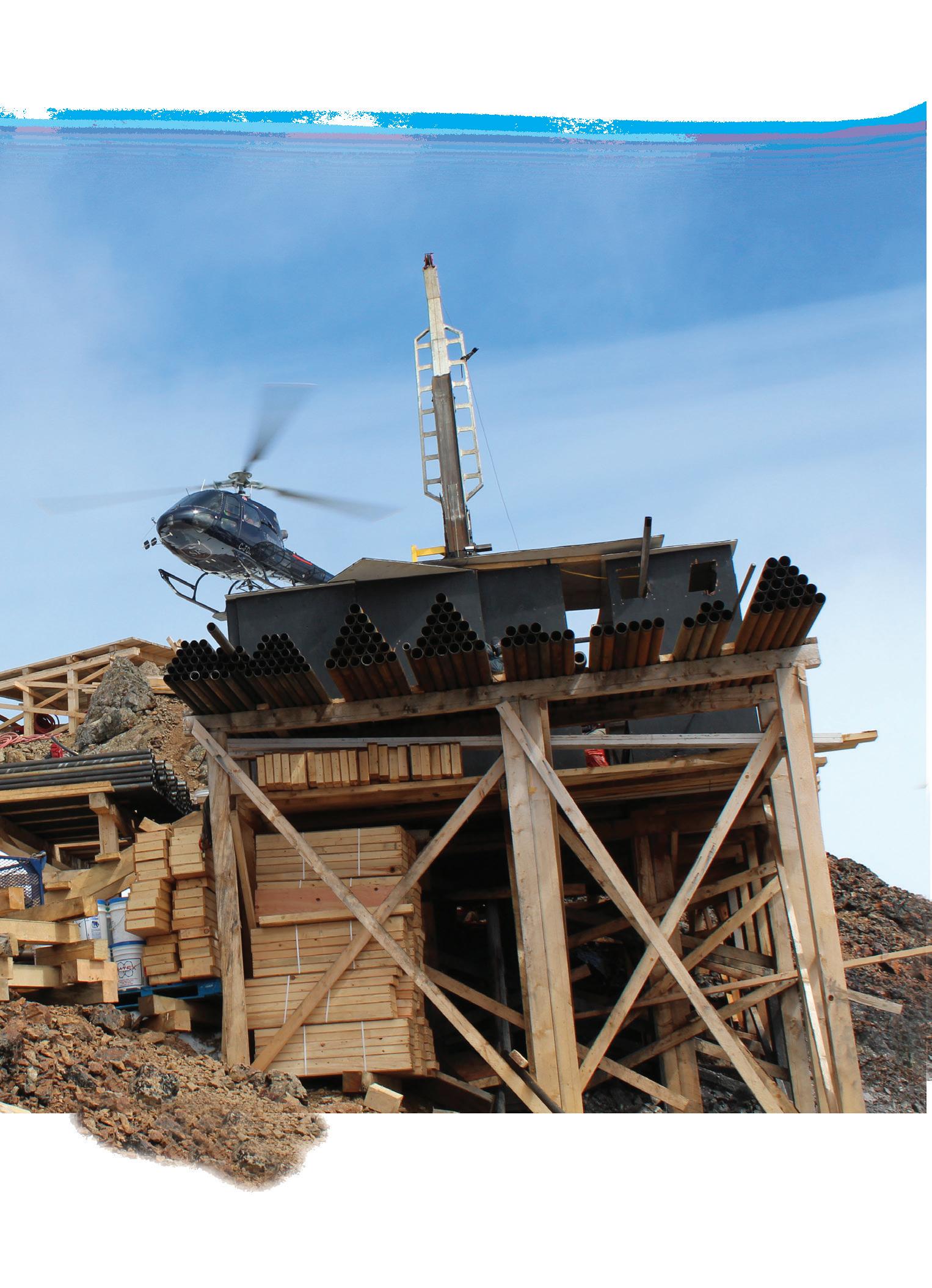
• B20 Drill Heads “H” & “P”
• 12HH Chuck Assy’s
• “H” & “P” Hydraulic Clamps
• Quality Repair Parts
• Jaw Sets
- Boyles 12HH, 35PH
- LY Nitro Chuck
- Christensen
- MiRoW “P” Clamp
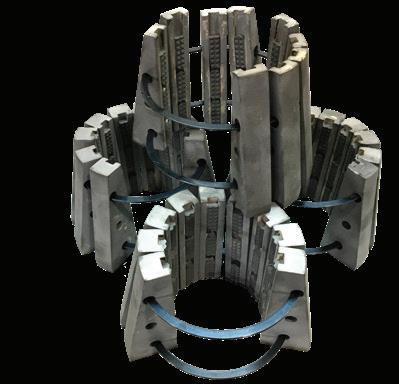
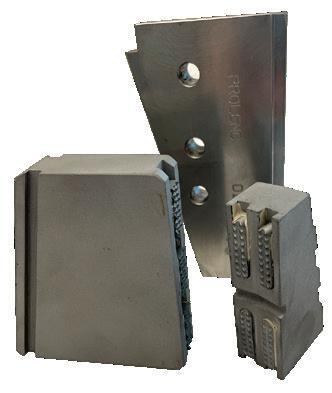
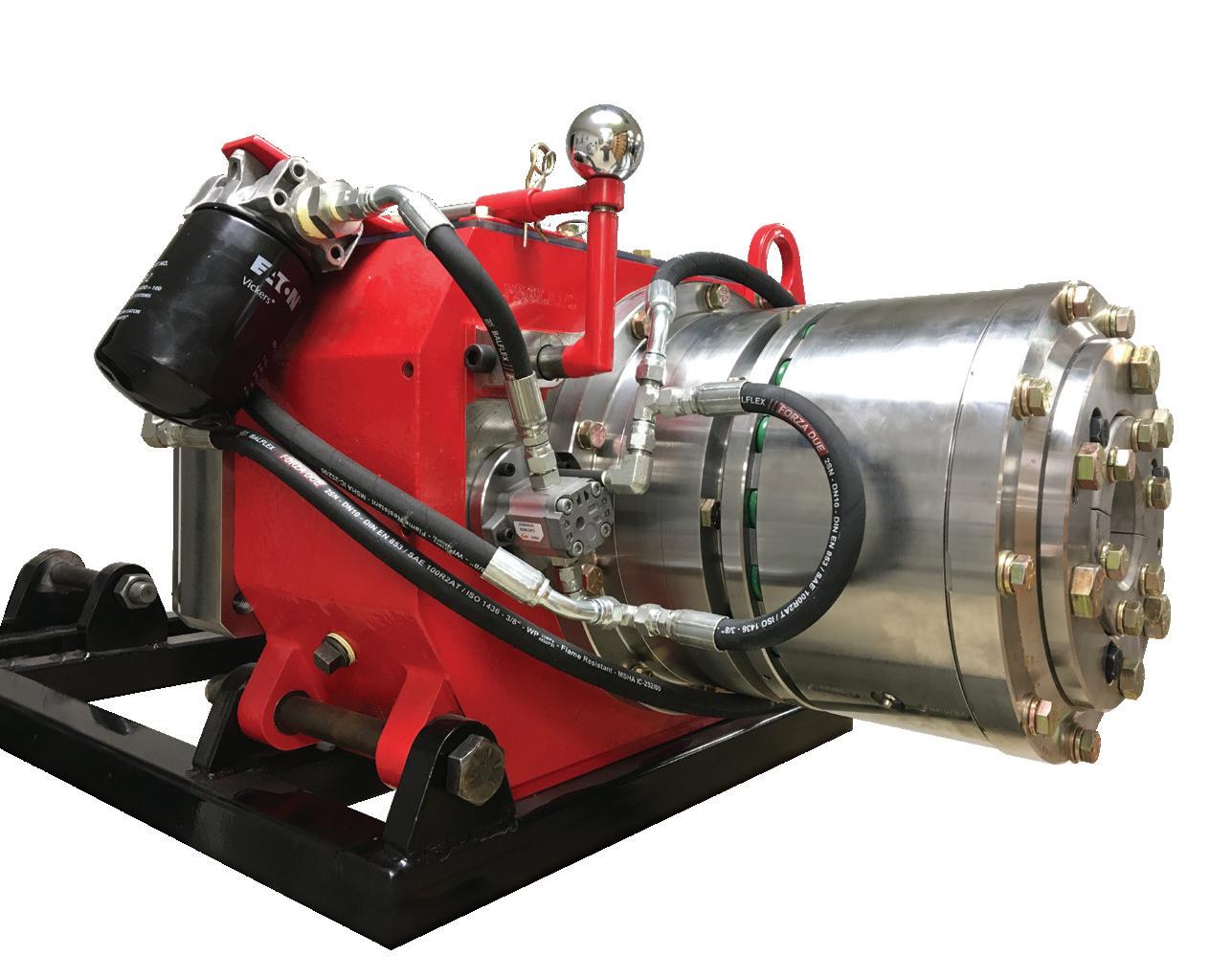
For
by Callen Banff, Manager Open Pit Geotechnical Engineering at AngloGold Ashanti
Over USD 4 billion was spent globally on diamond core drilling services in 2023 (Spherical Insights, 2024) by industries such as mining, oil & gas, construction, infrastructure, and geothermal energy. Within these industries, many professionals rely on the recovered core to understand subsurface conditions and anticipate what lies ahead. For example:
• Geoscientists (geologists and hydrogeologists) characterize lithology, stratigraphy, structure, alteration, mineralization, and groundwater systems to interpret geological history and develop predictive models of subsurface conditions.
• Metallurgists assess geochemistry and recovery characteristics.
• Geotechnical engineers (mining and civil) evaluate rock mass and soil behavior to assess excavation performance, ground stability, and foundation conditions.
• Geothermal engineers evaluate lithology, fracture networks, and thermal properties to assess reservoir potential and system performance.
All of these disciplines depend on representative, high-quality samples to make sound decisions regarding project viability and safety. Given the importance of this dataset, it is concerning that core quality is often given limited consideration and that logging and handling are frequently undertaken by relatively inexperienced personnel. Drill-induced damage is thus commonly overlooked or misinterpreted as natural fracturing, with potentially significant downstream consequences. For example, heavily fractured zones induced by drilling have the potential to be misclassified as fault zones which confuses geological interpretations, adds project complexity, and can increase costs.
Because many controls lie within drilling practices, it is appropriate to reconsider traditional drilling key performance indicators (KPIs). Drill contracts are still commonly structured around cost and recovery targets (e.g. >95%), which can incentivize speed over sample quality. Modern drill rigs increasingly provide telemetry and measure-while-drilling (MWD) data that are readily auditable. It is therefore reasonable to question why parameter-based conformance (e.g. acceptable ranges of torque, weight on bit, vibration) has not been more widely adopted, particularly when such approaches are well established in the oil and gas industry.
This article is intended as a practical reference describing common damage types, their likely causes, and potential remediation actions. The objective is to support both early-career and experienced practitioners in recognizing damaged core and initiating informed discussions when sample quality appears compromised.
Spiral fractures result from torque being transferred to the core. They are readily identified by a spiraling fracture pattern along its length. In half-core specimens, these fractures often resemble stacked conical segments, hence the alternative term ‘pinecone fractures’ (Figure 1).
In principle, the inner barrel should rotate independently of the drill string and torque should never be applied to the rock. However, a core break must be induced to allow retrieval of the inner tube using the overshot assembly. This should occur by lifting the drill string, which locks the inner barrel and creates a break at the bit interface. If the rod string rotates during this process, torque can be transferred into the core, inducing spiral fractures. Although this practice is sometimes used deliberately to facilitate breaking, it should be strongly discouraged as it can significantly degrade core orientation reliability.
A recent discussion (Cowan, 2026) illustrated the development of anti-clockwise beta smear on stereonets as a result of torque effects. Identifying such deformation is critical for structural geology and geotechnical interpretation, as it can compromise orientation data and reduce confidence in structural measurements used for design.
If spiral fractures are identified during logging, or systematic anti-clockwise skew is observed in stereonets, this should trigger a discussion with the driller to review recovery procedures.
Core-spin is among the most recognizable forms of drill-induced damage. These breaks occur at the drilling interface and are typically perpendicular to the core axis. The core effectively rotates against itself until sufficient friction allows the inner barrel to re-engage. In competent rock, the resulting surface is often polished with concentric circular markings; in weaker rock, circular ridges may be visible (Figure 2).
Core-spin breaks mark a loss of orientation confidence, as the downhole section of core may have rotated to an unknown position. Orientation can only be tentatively inferred where strong, consistent fabric (e.g. bedding) is present; however, this approach is unreliable when the fabric is orthogonal to the core axis and can itself contribute to the development of core-spin.
Geological factors such as bedding, foliation, or other anisotropy oriented perpendicular to the core axis increase the likelihood of corespin by introducing preferential weakness planes along which rotation can initiate.
Although occasional occurrences of it are common, frequent corespin typically indicates an external influence temporarily increasing
applied force. Contributing factors may include pump fluctuations, excessive rig vibration, or high rod friction. In practice, adjustments to drilling fluid properties or additional lubrication can often mitigate the issue.
A useful operational indicator is alternating fast and slow rod rotation, which can suggest the rods are sticking. This behavior is analogous to elastic energy storage and release (similar to a twisted rubber band), where accumulated torsion is suddenly released, contributing to core breakage. Differential polishing of the core, such as shown in Figure 3, is an indicator that extra attention is needed when considering if perpendicular breaks across the core are natural or induced.
Mushroom core represents an extreme form of core-spin in weak rock. Excessive water flow at the face can weaken the material to the point where it is abraded rather than fractured, leading to significant material loss and formation of clay-like coatings on subsequent runs (Figure 4).
Although the specific bit type is often unknown in retrospective examples, field experience suggests that open-channel bits exacerbate this issue in weak formations. Face-discharge bits, which direct flow toward the cutting interface and away from the recovered core, are likely to reduce this risk and should be considered where weak lithologies are anticipated.
The rough, scaly appearance observed on core surfaces is commonly attributed to vibration-induced damage during drilling (Figure 5). The root causes can be varied and may include excessive weight on bit, excessive torque, or loss of circulation.
Beyond aesthetic concerns, such damage often renders core unsuitable for geotechnical testing, as surface disturbance can significantly reduce apparent strength. Where this condition affects substantial intervals, additional drilling may be required to obtain representative specimens.
In most cases, pronounced vibration indicates that the rig is being operated beyond optimal conditions. Excessive vibration is typically perceptible to experienced drillers and should prompt immediate investigation before drilling continues.
Friction burns are of particular operational importance as they commonly indicate overheating of the drill bit, often due to insufficient cooling. Causes may include pump failure, reduced flow, loss of circulation into cavities, or blocked channels (Figure 6).
In severe cases, overheating can lead to catastrophic bit failure. The presence of metallic filings within core can also indicate abnormal wear and should prompt inspection of the bit and string (Figure 7).
Boart Longyear (2022) provided a comprehensive diagnostic guide for drill bit and string wear. The document is a practical and accessible reference for operational troubleshooting and a good resource to have in the toolkit.
Core diameter variability can result from several mechanisms. Gradual increases in diameter commonly reflect bit wear, as the internal face typically wears faster than the external. While this effect is commonly
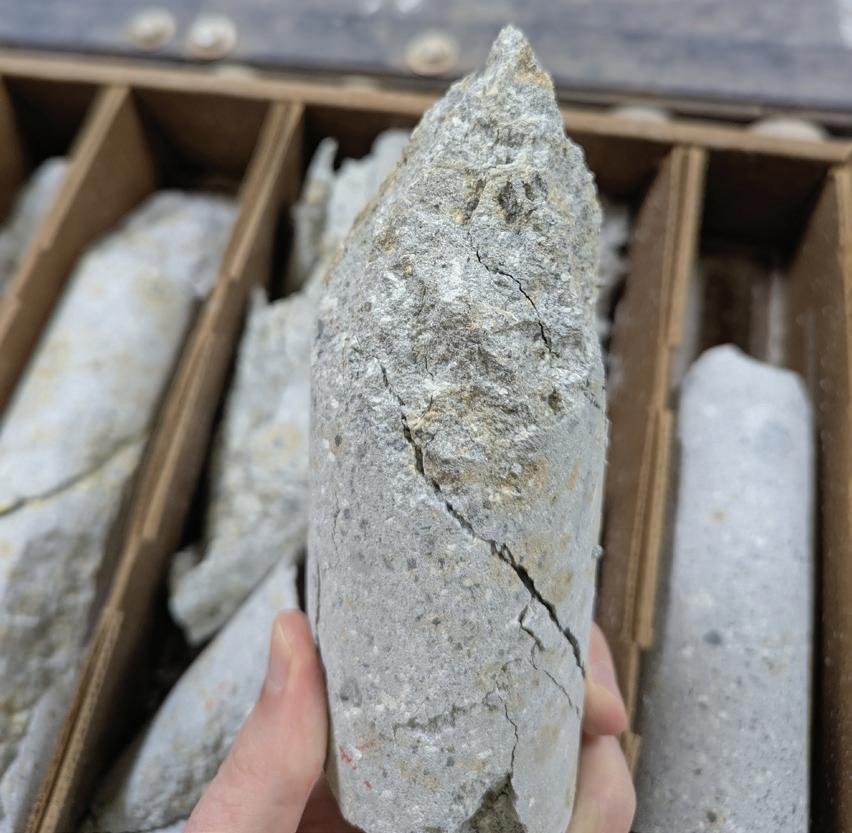
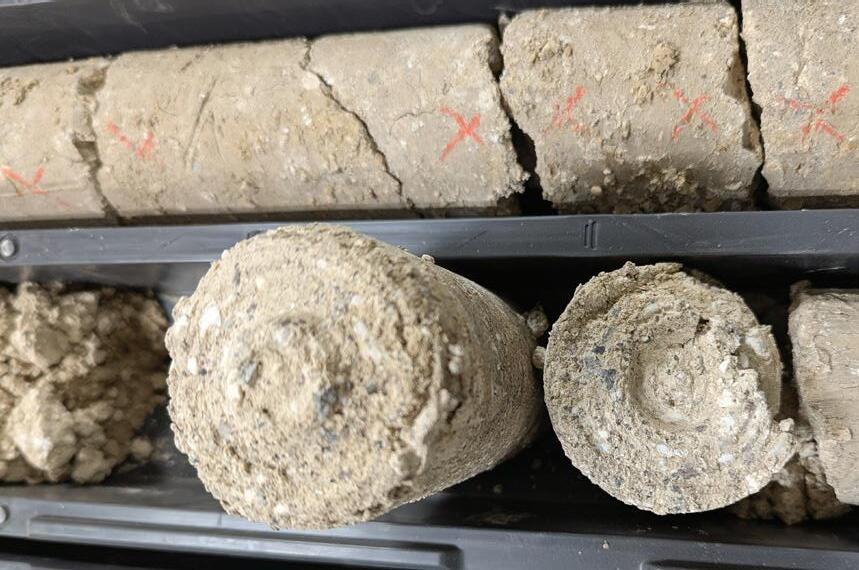
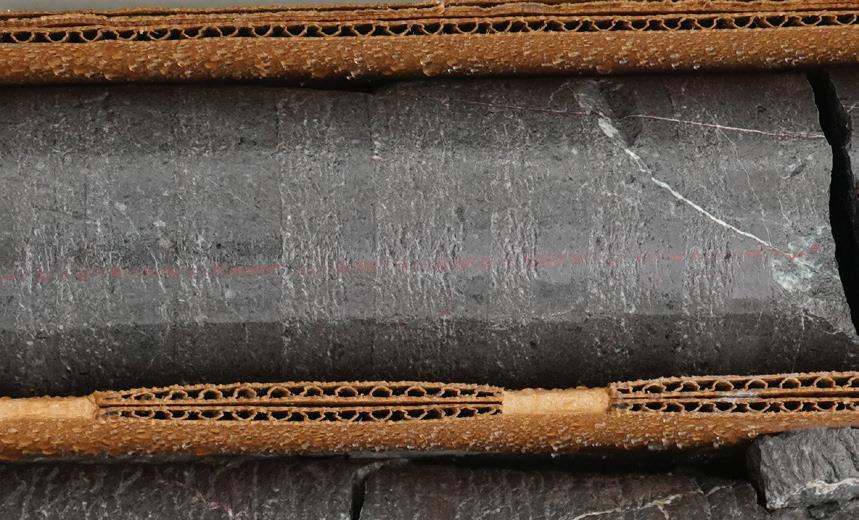
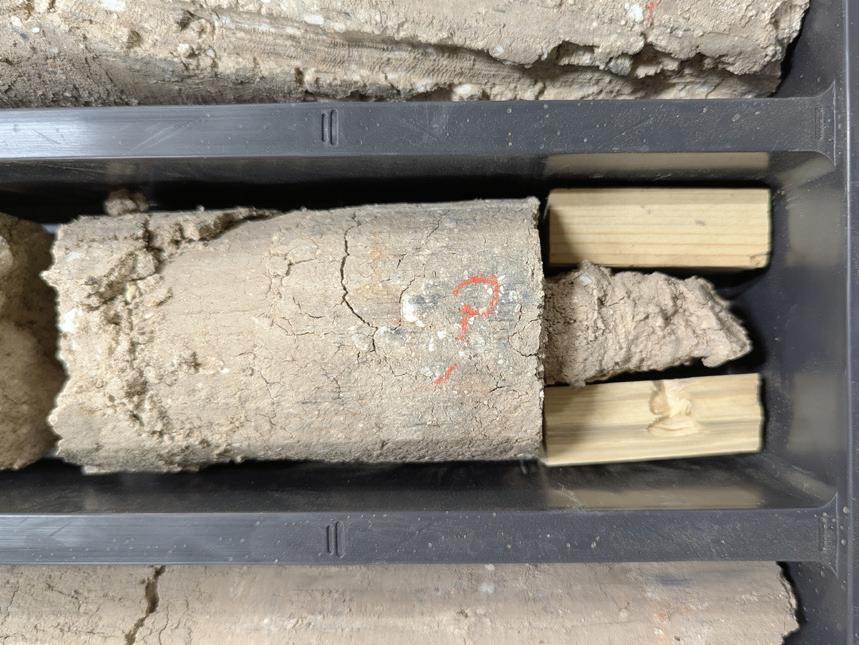
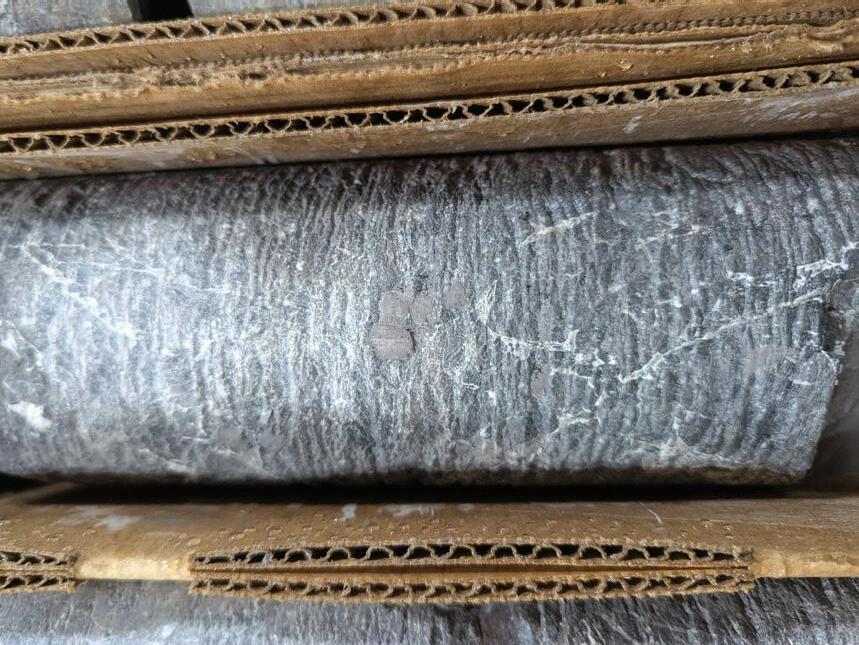
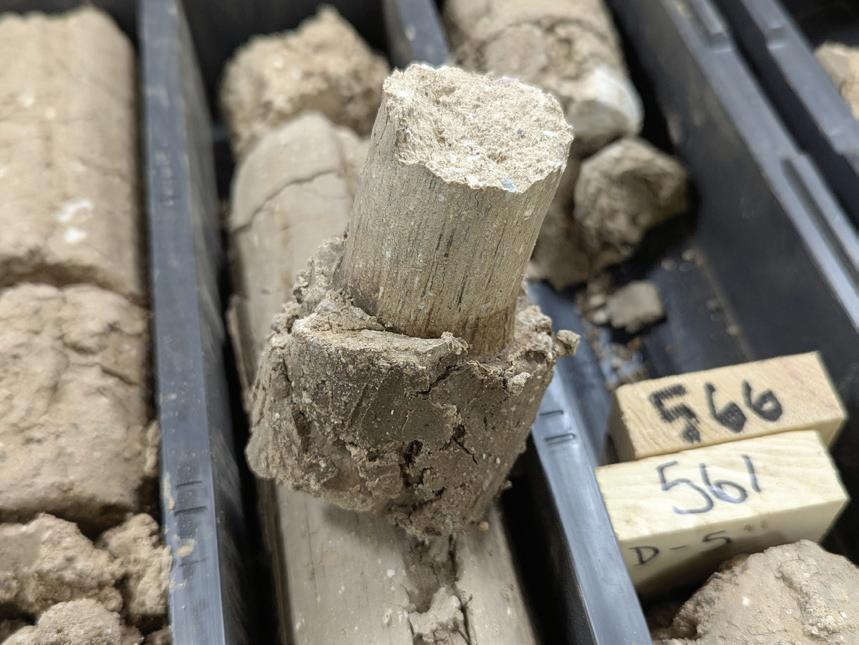
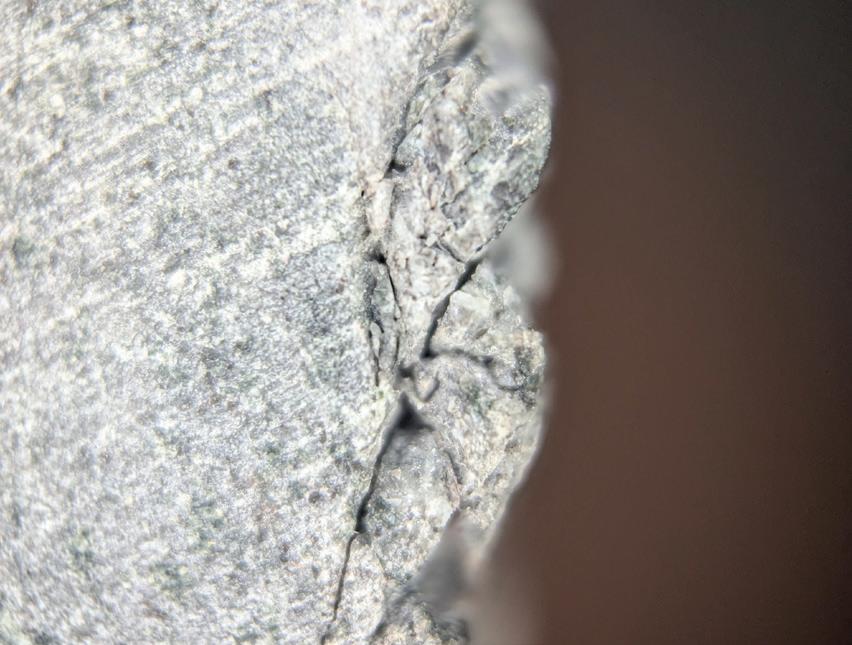
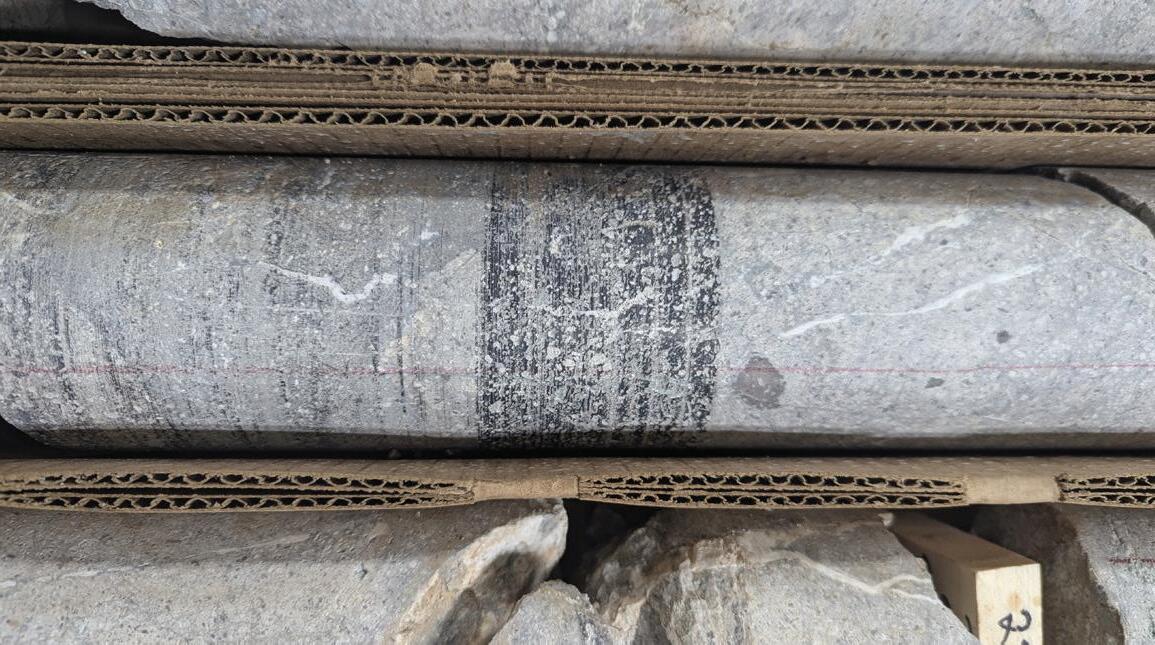
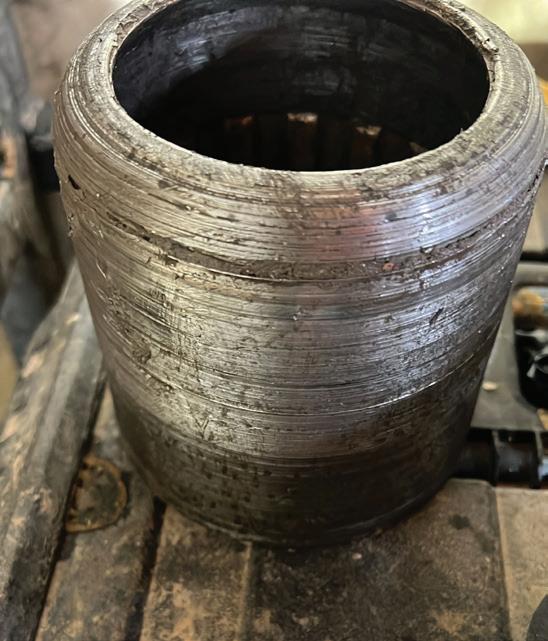
minor, it is included here for completeness.
Of greater concern are abrupt diameter changes that introduce stress concentrations and premature breakage in laboratory specimens (Figure 8). One cause is excessive weight on bit, which can induce a bowing effect at the drill face and lead to uneven loading. Examples from oil and gas demonstrate that extreme cases can produce corkscrew-like core geometries (Figure 9). Such effects are generally controllable through appropriate management of thrust and operating parameters.
Longer-wavelength undulations in core are more consistent with drilling using a bent barrel. In such cases, rods should be withdrawn and the faulty component replaced promptly, as continued drilling increases the risk of downhole equipment loss (Figure 10).
Oval or ‘football-shaped’ core fragments are commonly produced when pieces fall from the inner barrel and are subsequently overcored (Figures 11, 12). While occasional occurrences are difficult to avoid, persistent repetition may indicate that lifters require replacement or that fingers should be installed in the inner assembly. Repeated mid-run loss of core should prompt a direct review with the driller.
Tumbled core refers to rounded fragments resulting from repeated impact and abrasion within the barrel. This is widely recognized and generally easy to identify (Figure 13).
While often minor, this condition can also reflect suboptimal drilling practices. For example, drilling beyond tube length in an attempt to wedge the core may worsen fragmentation rather than improve recovery. Such practices should be discouraged, as they compromise sample quality (Figure 14).
Some drill-induced structures appear to be influenced by the in-situ stress field. These features may provide valuable insight for structural geology, seismology, and geotechnical engineering. This area remains under-researched, but emerging studies suggest that such observations warrant greater attention. The intent of this section is not to present definitive conclusions, but to highlight phenomena that may offer future value if systematically observed and documented.
Drilling induced segmentation
The term ‘Drilling Induced Segmentation’ (DIS) is used here to distinguish this phenomenon from classical discing. This is currently a working descriptor rather than a formally established classification. In this context, DIS refers to incipient disc-like features observed at shallow depth or under relatively low confinement. Laboratory work by Tang et al. (2023) demonstrated that disc-like features consistent with DIS could be induced in granite blocks without confining stress through increased weight on bit, and that these effects correlated with MWD parameters such as torque (Figure 15).
In the oil and gas industry, the concept of critical weight on bit (typically ~50% of expected rock strength) has been applied to minimize coring-induced damage (Hettema et al., 2002). While this specific threshold may not be directly transferable to other industries, it raises the possibility that alternative operational thresholds could improve recovery and reduce damage. Such approaches would require validation and adjustment for the drilling application but represent a potentially valuable avenue for future research.
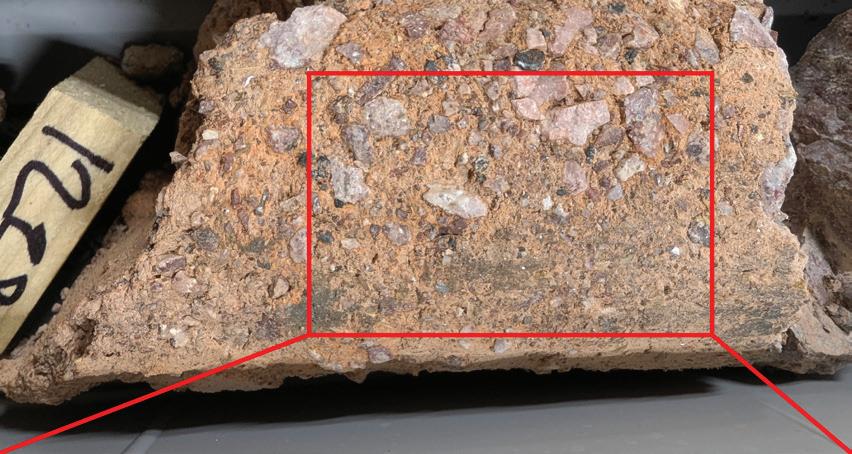
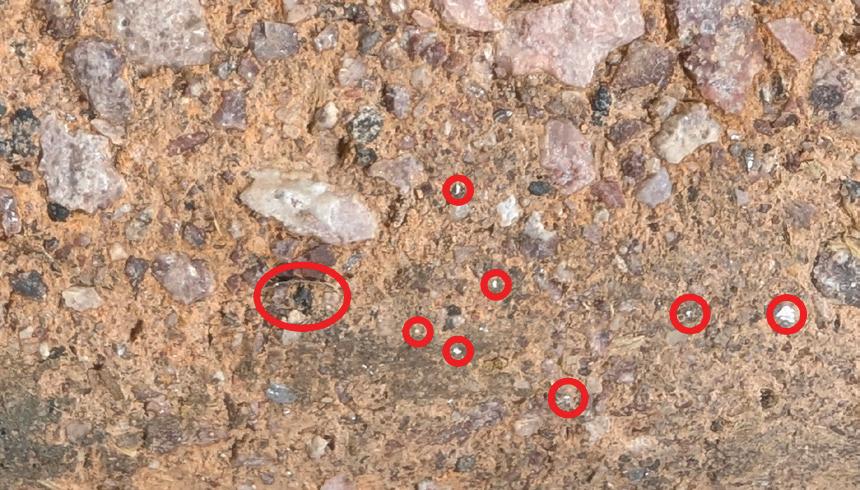
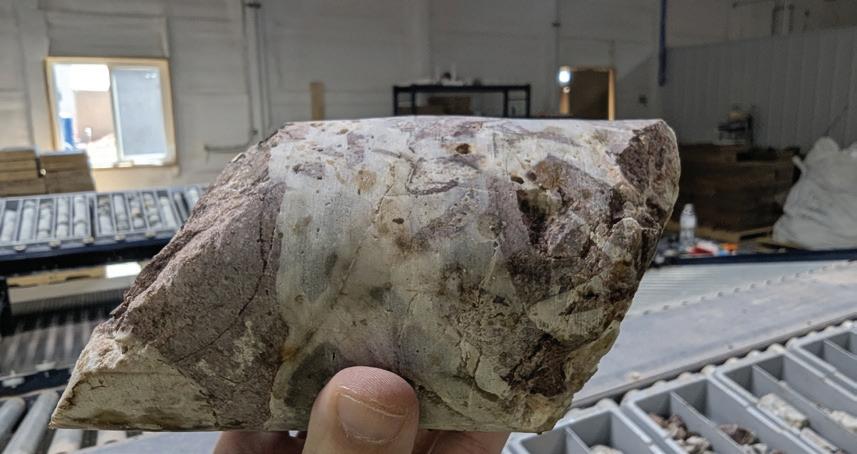
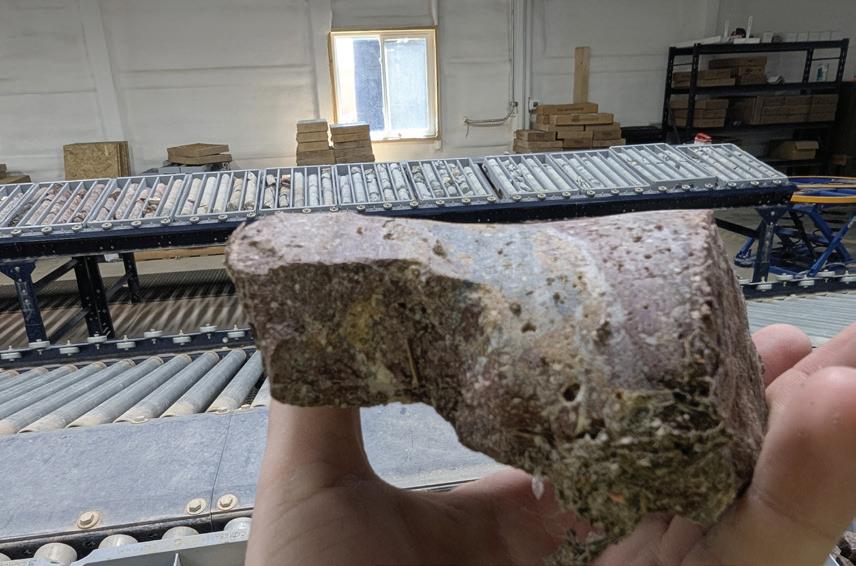
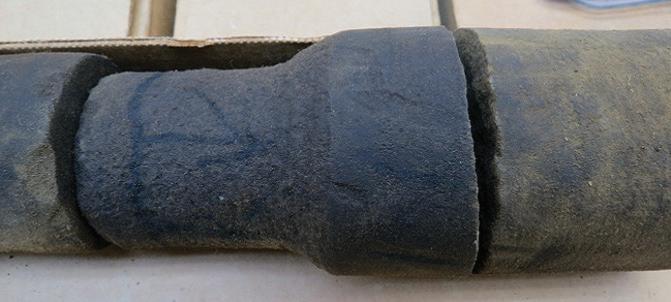
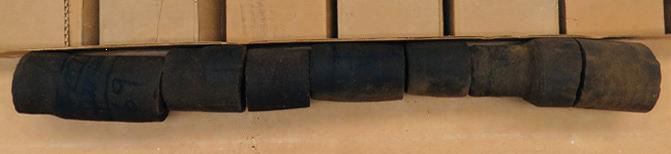
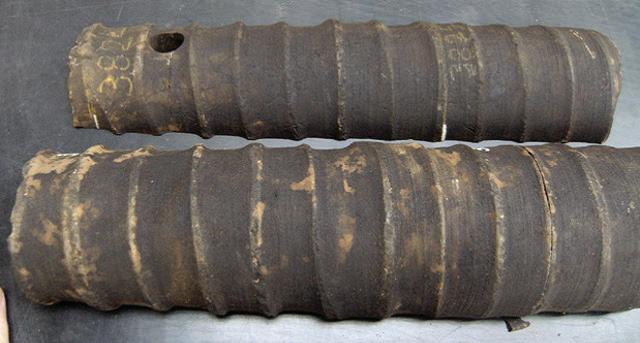
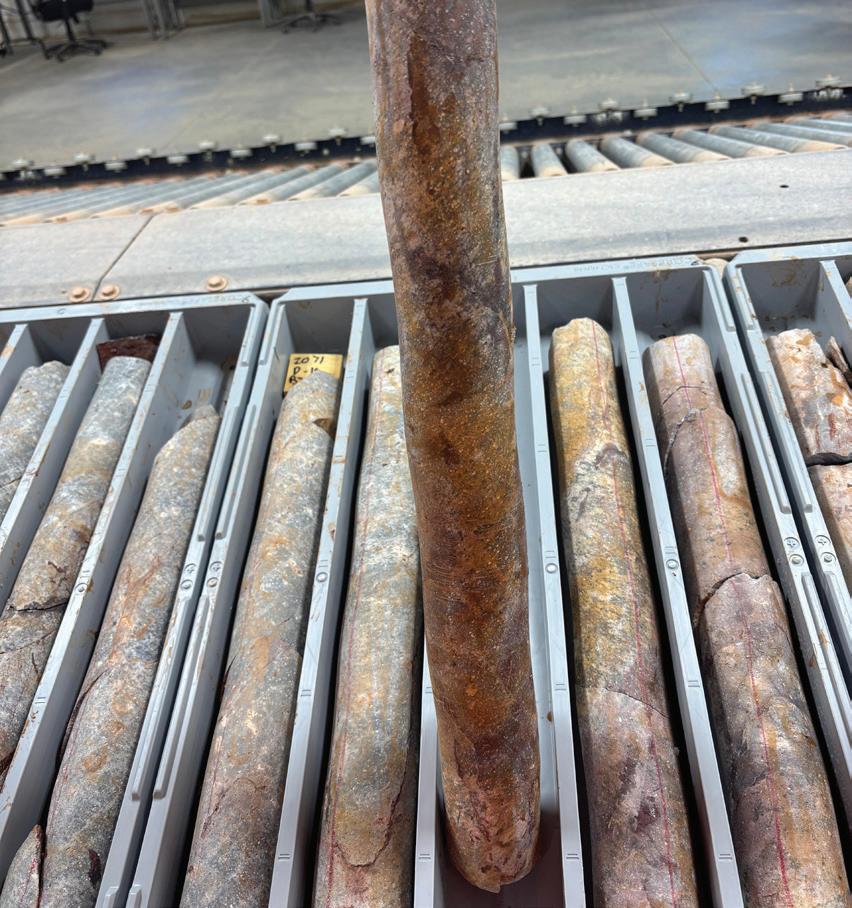
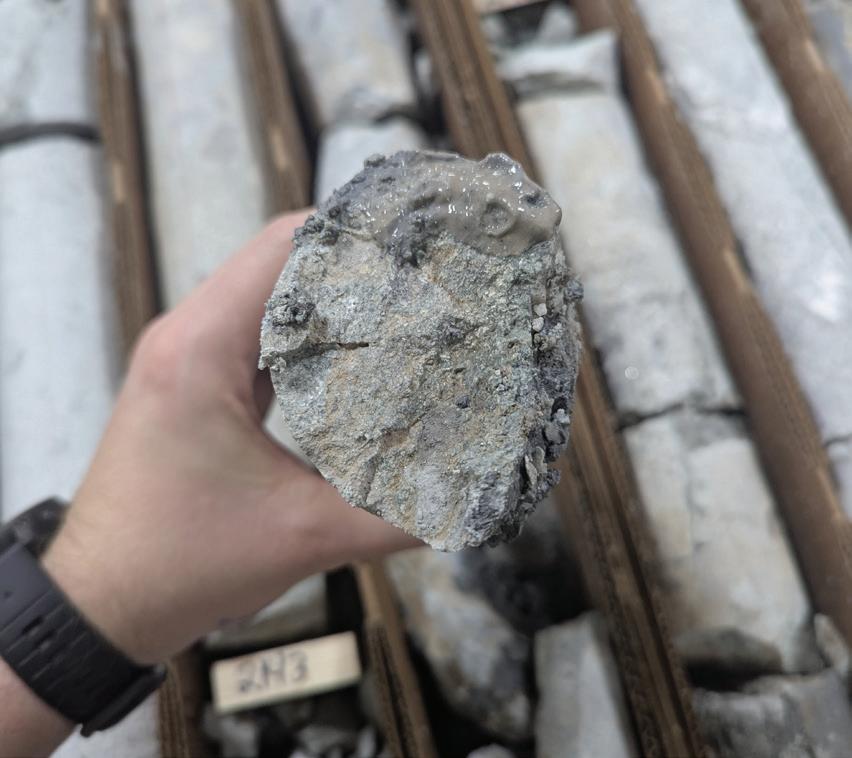
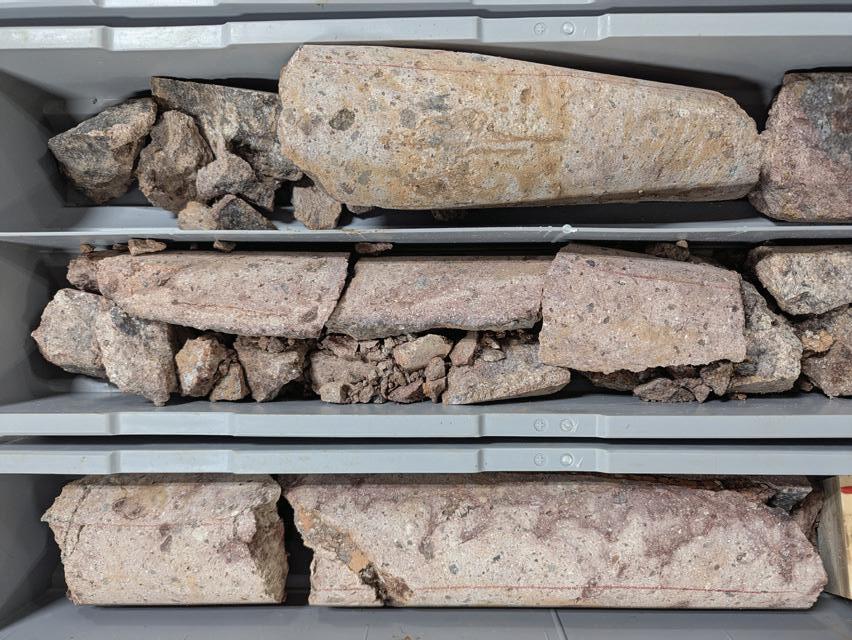
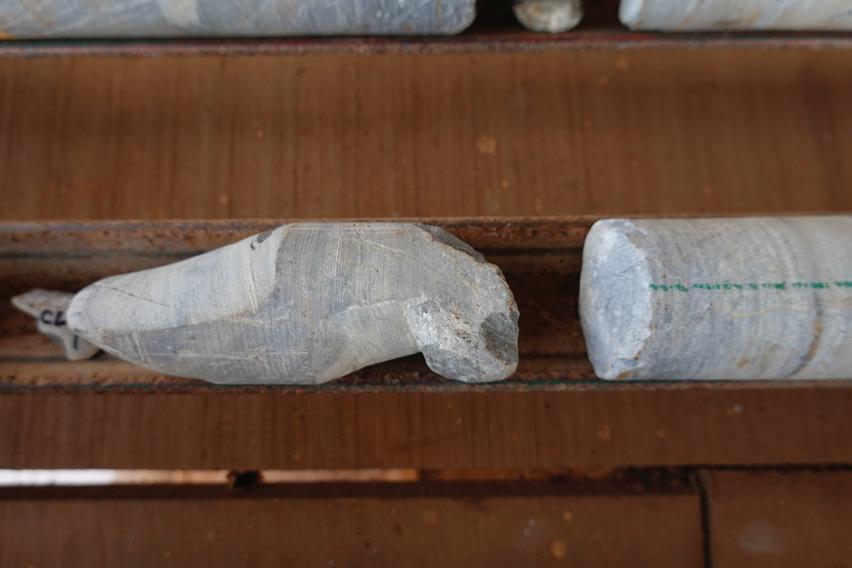
Another variation of low-stress discing can be attributed to vibration. In Figure 16, lost circulation caused the rig to vibrate and the core to break as it was drilled. Due to the loss of drill fluids, it could also be argued the weight on bit could have been a factor if the pull back pressure wasn’t adequate to deal with the loss of buoyancy provided by a full drill column.
Petal and petal-centerline fractures, well documented in oil and gas literature, are typically induced in the direction of minimum horizontal stress. These fractures therefore have potential value as indicators of stress orientation (Figures 17, 18).
They are characterized by short, concave, parabola-like fractures that converge toward the core centerline. They may occur on one or both sides of the core, but do not fully transect the diameter.
Their formation appears to be influenced by both stress conditions and applied weight on bit. Although not widely applied outside of the oil and gas industry, their recognition could provide useful supplementary information on stress directions where present.
Saddle fractures (Figures 19, 20) resemble petal-type features but occur under different stress regimes. They are more likely where horizontal stresses exceed vertical stress (analogous to thrust faulting when drilling from surface).
They may also be more prevalent when drilling from underground, where the drilling direction alters the relationship between applied load and in-situ stress. Where identified, the orientation of the saddle trough may indicate the direction of maximum stress.
Cupping is often grouped with discing, but field examples indicate that cup-and-bowl shaped fractures can also form outside highly stressed environments. These breaks appear tensile in nature and lack clear indicators of rotational movement associated with core-spin.
The mechanism remains under investigation. Hypotheses include shock-related Ortlepp shear processes or lower-frequency percussive loading ahead of the bit. Until laboratory work confirms the dominant mechanism, appropriate controls can only be inferred, but consistent drilling parameters, control of vibration, and careful management of weight on bit are likely to reduce the likelihood of such damage.
Discing and plumose (feathering) structures appear to share related fracture mechanisms. In fine-grained, weaker lithologies such as shale, feather patterns may be clearly visible and can indicate the direction of maximum horizontal stress. In stronger rocks where classical discing occurs, such features may not be apparent at the macro-scale but have been identified using scanning electron microscopy (Xiang et al., 2022). The growth pattern in plumose or traditional discing occurs in the direction of the greatest horizontal stress (Figure 22).
These observations suggest potential for estimating both stress orientation and magnitude where disc thickness can be reliably measured (Lim & Martin, 2010). Application of these concepts in routine industry practice remains limited and should be approached with appropriate caution.
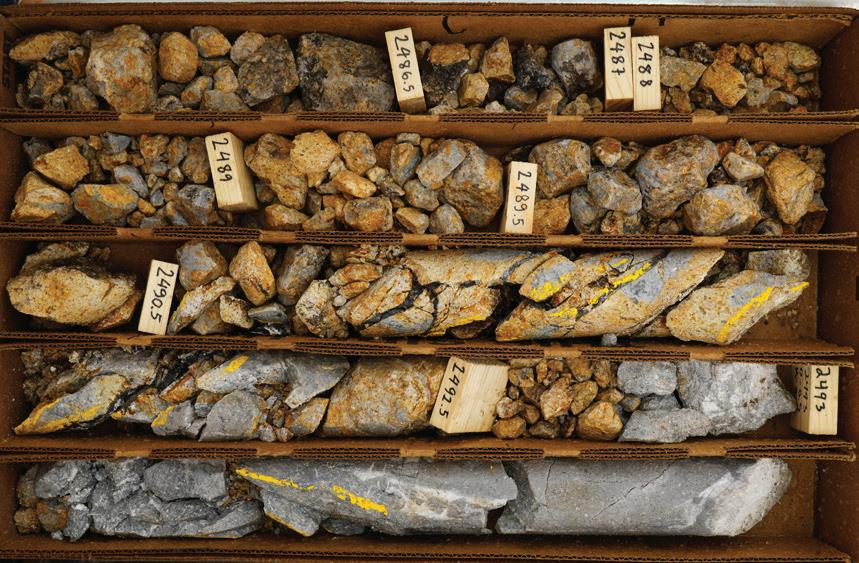
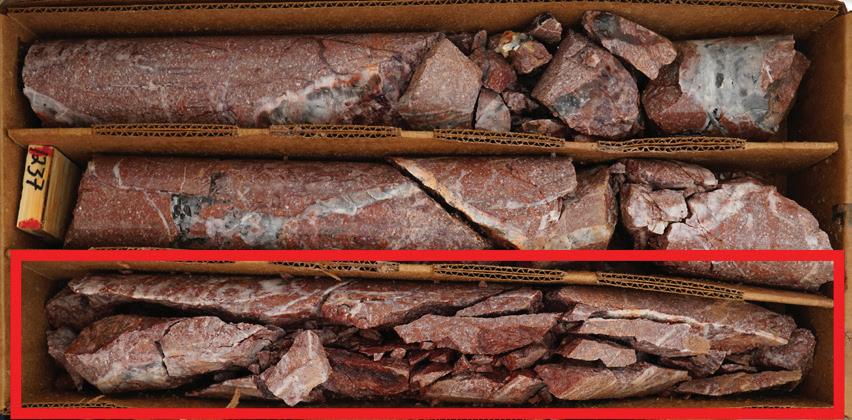
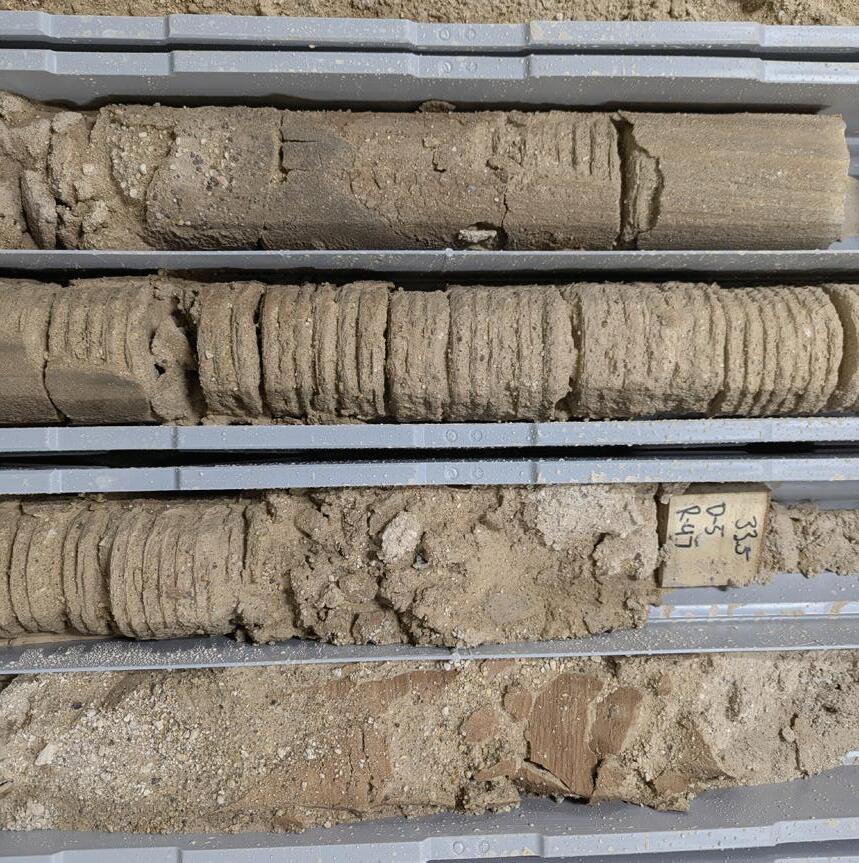
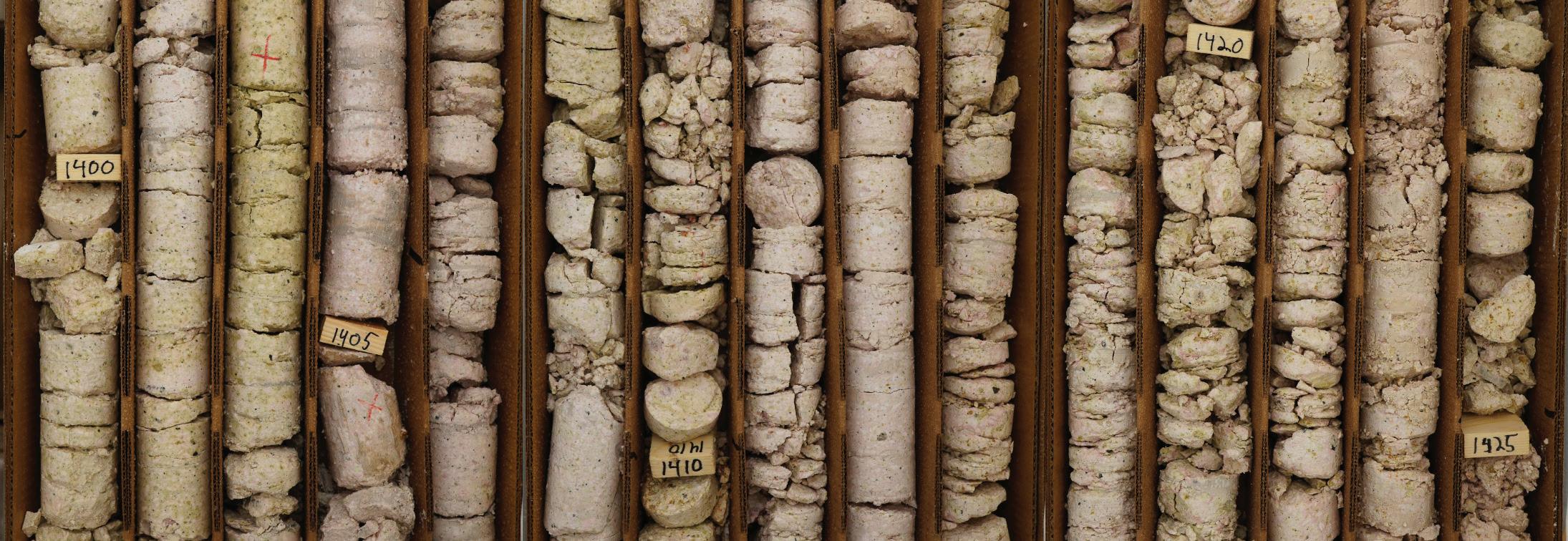
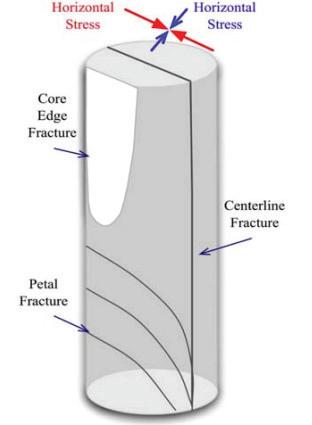
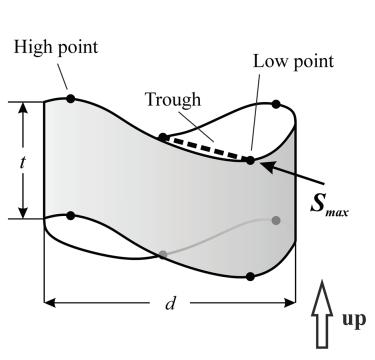
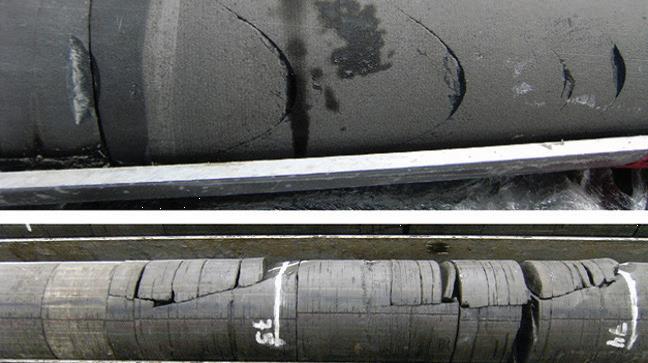
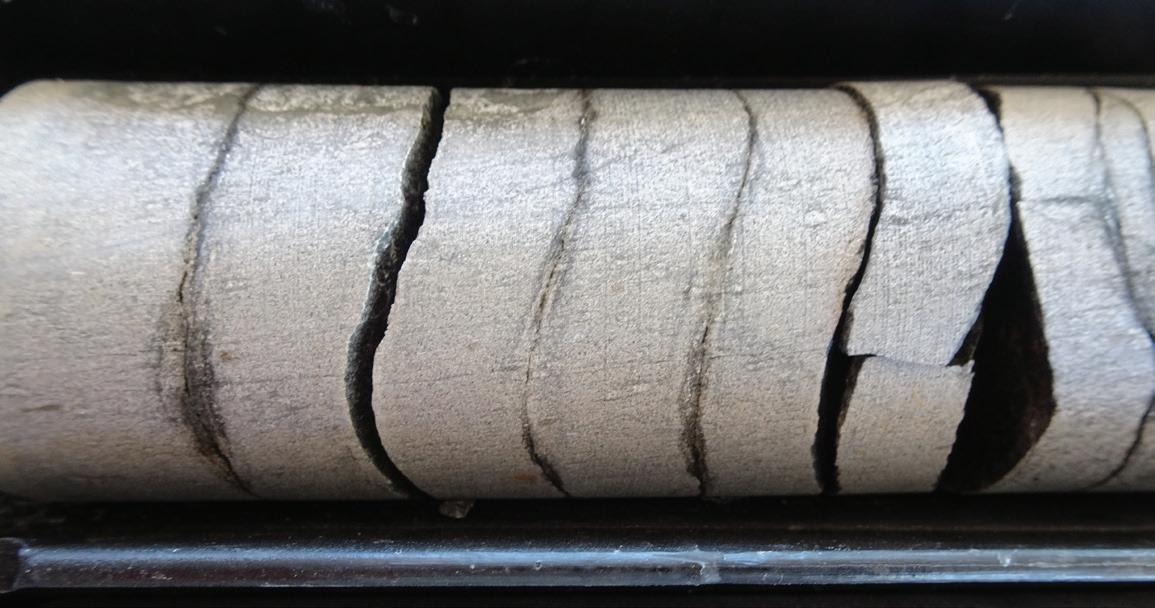
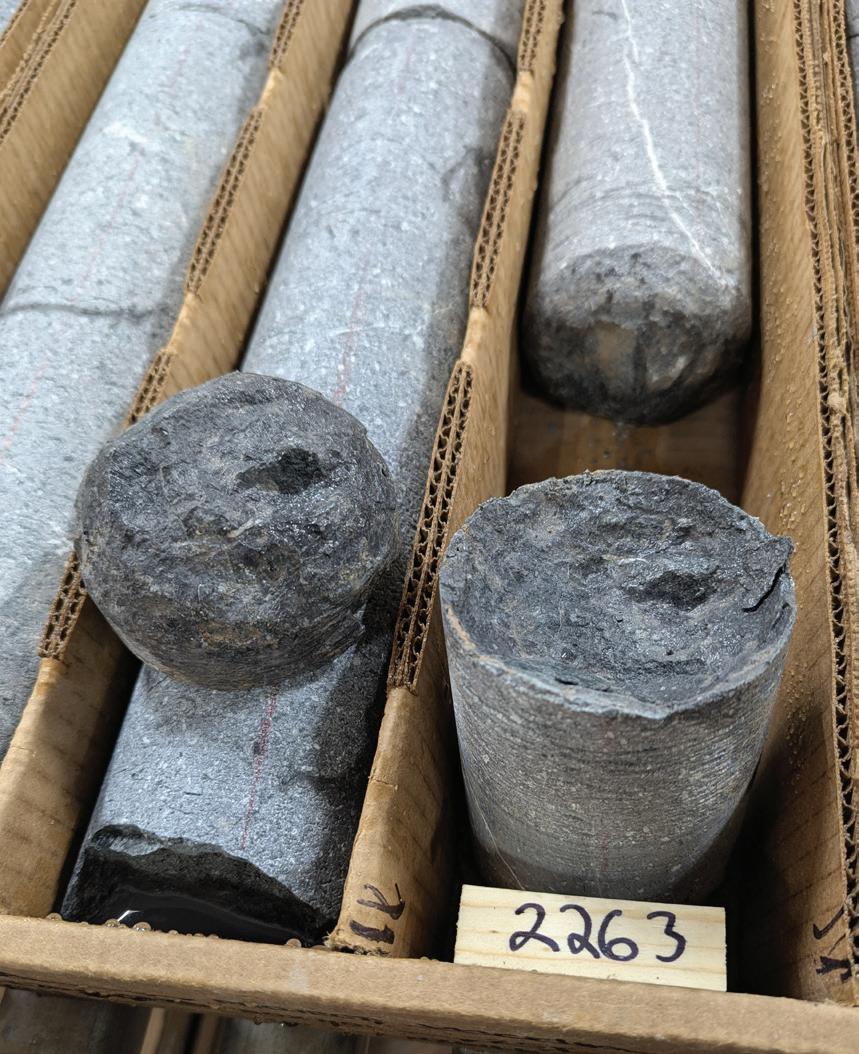
of AGA.
Despite the substantial investment in drilling, significant uncertainty remains in how data quality is controlled and optimized. There remains a clear need for geologists and engineers to maintain direct engagement with drilling operations and develop familiarity with common failure modes.
Oil and gas industries have long benefited from systematic use of MWD data. With improved connectivity now widely available, there is no technical barrier to closer integration between field and office. Parameter-based drilling ‘playbooks’ tailored to lithology could support real-time decision-making and improve overall sample quality.
KPI frameworks may benefit from evolving beyond recovery-based metrics toward conformance with defined operational envelopes. As demonstrated throughout this article, 100% recovery does not guarantee that core is fit for geotechnical or structural purposes if disturbance is significant.
Even relatively simple measures, such as mandatory camera systems at drill pads, could provide benefits for quality assurance, safety culture, and root-cause investigation.
The author thanks AngloGold Ashanti for supporting the sharing of these learnings and acknowledges the contributions of colleagues who have assisted in collecting examples and imagery to support this visual guide.
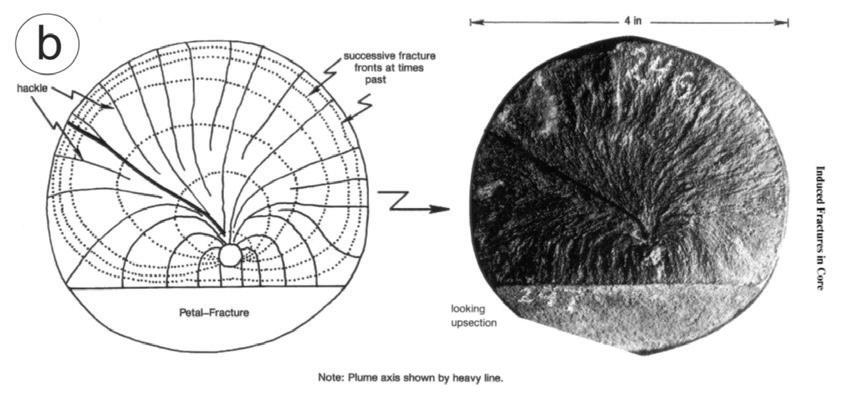
↑ Figure 22 - Annotated example of a plumose structure (Kulander et al., n.d.)
• Boart Longyear (2022). Discovering the undiscovered. Utah: Boart Longyear.
• Boart Longyear (2024). Diamond products field manual. Utah: Boart Longyer.
• Cowan, J. (2026). Reinventing the stereonet grid for the digital age. Available at: linkedin.com/pulse/reinventing-stereonet-grid-digital-age-structuralgeologydotcom-9zcge/
• Hettema, M., Hanssen, T. H., & Jones, B. L. (2002). Minimizing coring-induced damage in consolidated rock. SPE/ISRM Rock Mechanics Conference, Irving, TX, United States.
• Kulander, B. R., Dean, S. L., & Ward, Jr., B. J. (n.d.). Fractured core analysis: Interpretation, logging, and use of natural and induced fractures in core. AAPG Methods in Exploration Series (No. 8).
• Lim, S. S., & Martin, C. D. (2010). Core disking and its relationship with stress magnitude for Lac du Bonnet granite. International Journal of Rock Mechanics and Mining Sciences, 47(2), 254–264.
• Lorenz, J. C., & Cooper, P. S. (2018). Atlas of natural and induced fractures in core. Blackwell: Wiley.
• Spherical Insights (2024). Global diamond core drilling market. Available at: sphericalinsights.com/reports/diamond-core-drilling-market
• Tang, H., et al. (2023). Preliminary study on the phenomenon and mechanism of granite core discing in laboratory drilling test. Applied Sciences.
• Xiang, P., Ji, H., Geng, J., & Zhao, Y. (2022). Characteristics and mechanical mechansims of in situ unloading damage and core discing in deep rock mass of metal mine. Shock and Vibration
• Yatsenko, A. (2008). Tectonic implications of AND-1B and AND-2A borehole data, McMurdo Sound region, Antarctica [Master’s thesis, University of Utah].
• Ziegler, M., & Valley, B. (2021). Evaluation of the diametric core deformation and discing analyses for in-situ stress estimation and application to the 4.9 km deep rock core from the Basel Geothermal Borehole, Switzerland. Rock Mechanics and Rock Engineering
For more information
Get in touch with Callen on LinkedIn, or visit anglogoldashanti.com
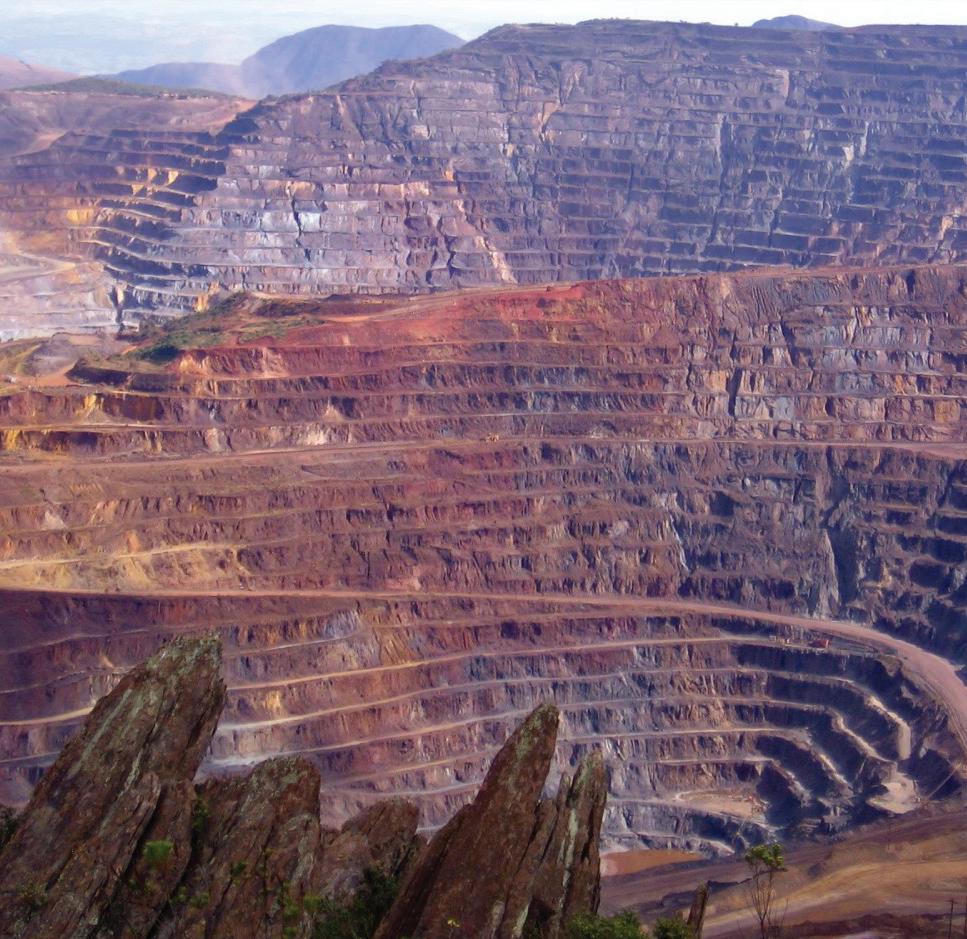
Issue 32 of Coring Magazine contained an insightful interview with Steve Beresford. In response to a question about a particular industry bugbear or fallacy, he responded:
‘An advanced project with a resource is not closer to a mine than greenfields exploration. In fact, they are often the highest-risk option and further away in time and money from a mine. I change my mind daily as to whether everyone knows this and just ignores it because it’s what everyone else is doing, or if some people really believe that an advanced project is closer to being mined?’
My answer to this question, based on 46 years of industry experience, is that most mining executives firmly believe an advanced project is always better than a greenfield one. The following tale is one example of this mentality.
The ‘super-cycle’, the one that was hyped as a ‘paradigm shift’ and the new reality for commodities, came to a crashing halt around 2011. However, the Global Financial Crisis (GFC) of 2007–2008 mortally wounded many large mining acquisitions and presaged this fin de siècle. The super-cycle was driven by hubris, absurdly inflating asset values, irrational exuberance, growth at all costs, fear of missing out (FOMO), and cursory due diligence followed by accelerated project (mis)management. Like cherry on an ice cream sundae, this was all capped by rampant disregard for shareholder interests cheered on by bankers, analysts, and deluded investors. While this is the tale of one megaproject acquisition that inexorably plodded to closure as the world economy collapsed in 2008, it is not intended to be a cautionary story, or to even have a moral. After riding through numerous booms and busts during my mining career, it is clear that the industry does not learn from experience or past mistakes, and that similar types of stories are destined to play out during the next commodity boom.
I took this photo of the impressive Casa de Pedra (Stone House) iron ore mine in the summer of 2008. Casa de Pedra is a world-class deposit located about 55 km (34 mi) south of Belo Horizonte, near the southwestern corner of the famous Quadrilátero Ferrífero, Minas Gerais, Brazil. It is within the Cauê Itabirite of the Minas Supergroup, Itabira Formation. It has been operated by Companhia Siderúrgica Nacional (CSN) since 1947, and mining is believed to have begun over 100 years ago. Production capacity at the time was approximately 13 Mtpa of lump ore and sinter feed. I was part of a due diligence exercise to evaluate friable and siliceous itabirites (sharp outcrops in the photo foreground) as source rocks for pellet plant feed. Itabirite is a Brazilian term for metamorphosed iron formation composed of iron oxides (mainly hematite and martite, minor magnetite), quartz, and rarely mica. It is generally schistose but may be compact.
CSN was proposing a complex ‘paper’ project, an iron ore megaproject called Nacional Minérios (Namisa). It would increase production about fourfold by combining disparate resources, reserves, and tailings from mining complexes spread over a wide area, adding concentrating and pelletizing facilities and upgrading logistics; all folded into a cumbersome business structure. CSN valued the project at about USD 8 to 10 billion, with an estimated CapEx requirement of approximately USD 15 billion over the next 5–7 years to realize project objectives. CSN was looking to sell off a portion of the project as a great way to pay down their debt.
Namisa was a bold, audacious, visionary project; a potential company-builder. The investment bankers estimated sky-high EBITDA values, and mining companies and consortia from around the world clamored to get in on the bidding. Of course, the scope and schedule for the project were quite insane, but nobody seemed to care. Reducing the scope along with better phasing could have resulted in an excellent project, but the mantra of the time was ‘go big or go home’.
In addition to project red flags (e.g. scheduling and execution, high capital costs, high failure rate of megaprojects, and a host of known unknowns), the bright economic promise of Brazil from the start of the century had begun to tarnish, the GFC dominoes had begun to fall as early as July of 2007 (although mainly in the US), and ROI depended upon iron ore prices remaining at historic highs.
We declined to bid. Even being pushed by senior management, I could only come up with a USD 2 billion price tag with lots of associated risk. However, a consortium of Japanese trading houses led by Itochu did close on the purchase of a 40% stake in this project for USD 3.1 billion in October 2008. I have no idea what possessed the preternaturally astute and analytical Japanese to complete this deal after the Lehman Brothers collapse in September, which opened the floodgates for the GFC. Several other deals in the mining and metals industries cratered at that time due to volatile market conditions and the plummeting world economy.
CSN did a brilliant job of using the super-cycle to leverage under-performing assets and monetize them at multiples of their intrinsic value. Unfortunately, CSN appears to have also believed in the project and took on the leadership role. As one would expect, project execution foundered on the rocks of reality, but that tale of woe is for another to tell.
P.S. I could never get the company to go for two modest, attractive greenfield projects in the region. I guess my years of experience never made me a great salesman!
Get in touch with Richard on LinkedIn
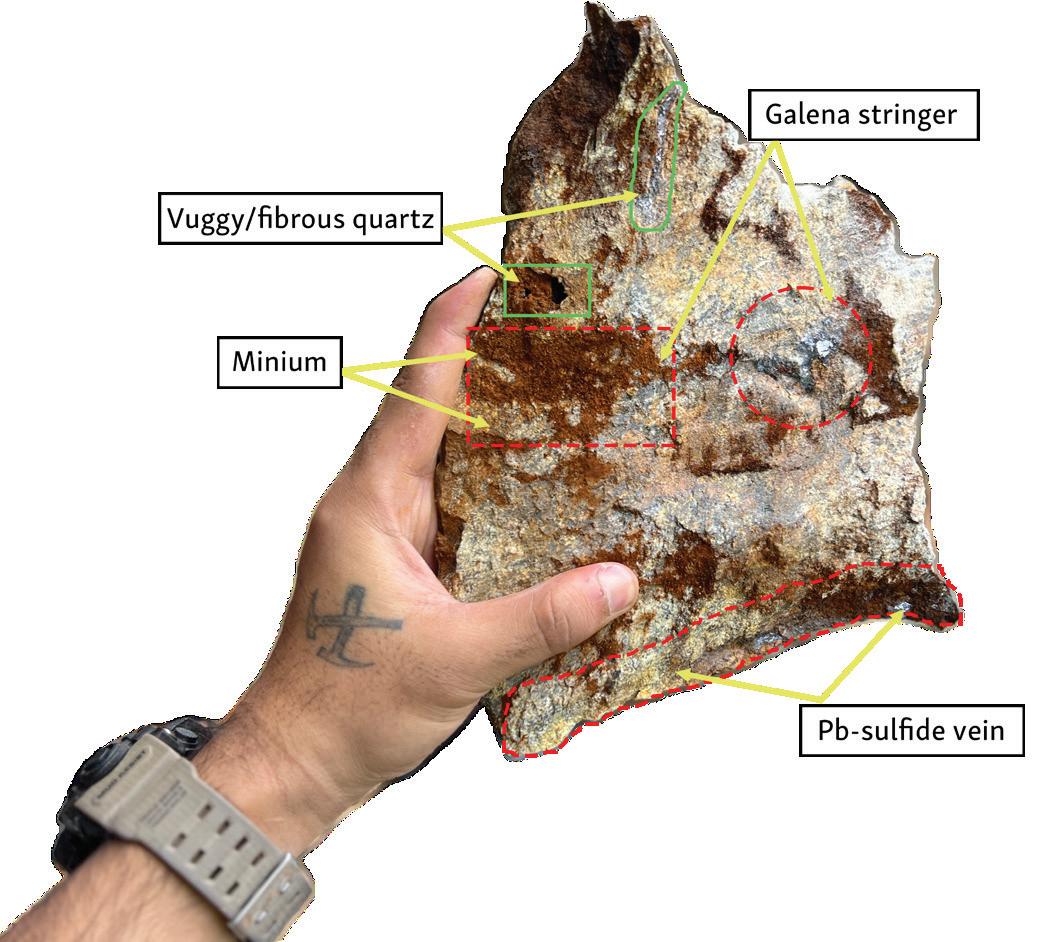
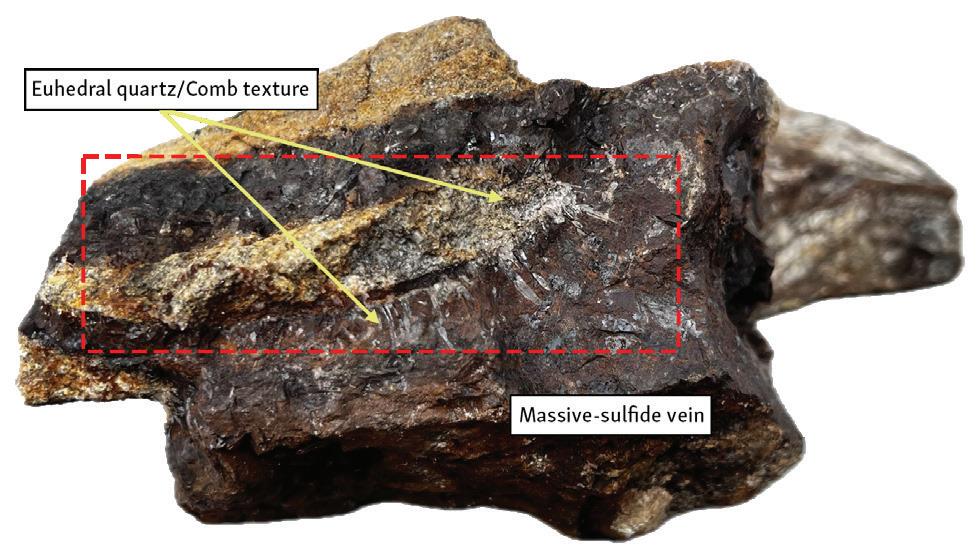
↑ Field mapping across the study area has revealed a variety of sulfide vein types, further supporting the structurally controlled nature of the mineralization at Jutt Lang.
by Syed Nohman
Gilani, Lead Geologist & GM Exploration at Chinar Group and Himalayan Earth Exploration Pvt Ltd
The success of mineral exploration in structurally complex terranes depends less on the volume of data collected and more on how effectively geological observations are integrated and interpreted. In many frontier regions, early-stage discoveries are driven by careful field mapping, structural analysis, and targeted geochemical sampling rather than large datasets or automated workflows. One such example is the Kargha Valley in Gilgit-Baltistan, northern Pakistan, where systematic geological work has revealed clear evidence of a polymetallic hydrothermal system with significant exploration potential.
The Kargha Valley lies approximately 10–14 km (6.2–8.7 mi) west of Gilgit city and forms part of the Kohistan Island Arc, a Cretaceous intra-oceanic arc accreted during the India–Asia collision. The region is tectonically active and structurally complex, located close to the Main Karakoram Thrust (MKT), a major crustal-scale structure separating the Kohistan Arc from the Karakoram Block (Figure 1). This tectonic environment has promoted repeated deformation, magmatism, and fluid circulation: key ingredients for the development of hydrothermal mineral systems. Recent integrated exploration in the Jutt Lang area of the Kargha Valley has identified Cu–Pb–Ag–Sb–Au mineralization hosted within quartz-sulfide veins and associated alteration zones. The mineralization is structurally controlled, well-exposed at surface, and spatially related to intrusive phases of the Kohistan Batholith. These characteristics collectively define a technically compelling target for follow-up exploration and drilling.
The local geology of the Kargha Valley is dominated by intrusive rocks of the Kohistan Batholith, including diorite, granodiorite, and subordinate granite. These intrusions cut older meta-volcanic and meta-sedimentary units belonging to the Thelichi and Gilgit formations. Xenoliths of meta-volcanic rocks preserved within the intrusive bodies indicate multiple intrusive phases and magma emplacement into an already deformed crustal framework. The entire area is strongly deformed, exhibiting well-developed schistosity, folding, brittle–ductile shear zones, and late brittle faults. These structures
play a fundamental role in controlling mineralization. Field mapping shows that most quartz-sulfide veins are localized along faults, shear zones, and intrusive contacts, particularly where competency contrasts exist between intrusive and country rocks. Vein orientations are predominantly NW–SE, consistent with regional deformation patterns related to Himalayan tectonics. Veins range from millimeter-scale veinlets to discrete structures several centimeters thick and traceable over multiple meters. Pinchand-swell textures, branching veinlets, and stockwork zones indicate repeated reactivation of structures and multi-phase fluid flow.
From an exploration perspective, this structural architecture is critical. The combination of brittle fracturing, repeated deformation, and intrusive heat sources provides ideal conditions for focused fluid flow and metal precipitation. Such settings commonly host economically significant polymetallic vein systems worldwide.
Exploration in the Kargha Valley followed an integrated workflow designed to rapidly identify and prioritize mineralized zones while minimizing early-stage uncertainty. The methodology combined detailed field geology, remote sensing analysis, and targeted geochemical sampling. Fieldwork focused on prospect-scale geological mapping, emphasizing lithological boundaries, structural features, vein systems, and alteration zones. Special attention was given to faulted and fractured areas where gossans, quartz veins, and secondary copper minerals were observed. All mineralized outcrops and key geological features were GPS-located to ensure spatial accuracy. Remote sensing analysis utilized ASTER Level-1T imagery to map hydrothermal alteration minerals. Band ratio techniques highlighted zones enriched in quartz, sericite, chlorite, and carbonate minerals assemblages typically associated with hydrothermal systems. These alteration zones were integrated into a GIS platform and compared with field observations, allowing rapid validation of targets and identification of areas requiring follow-up.
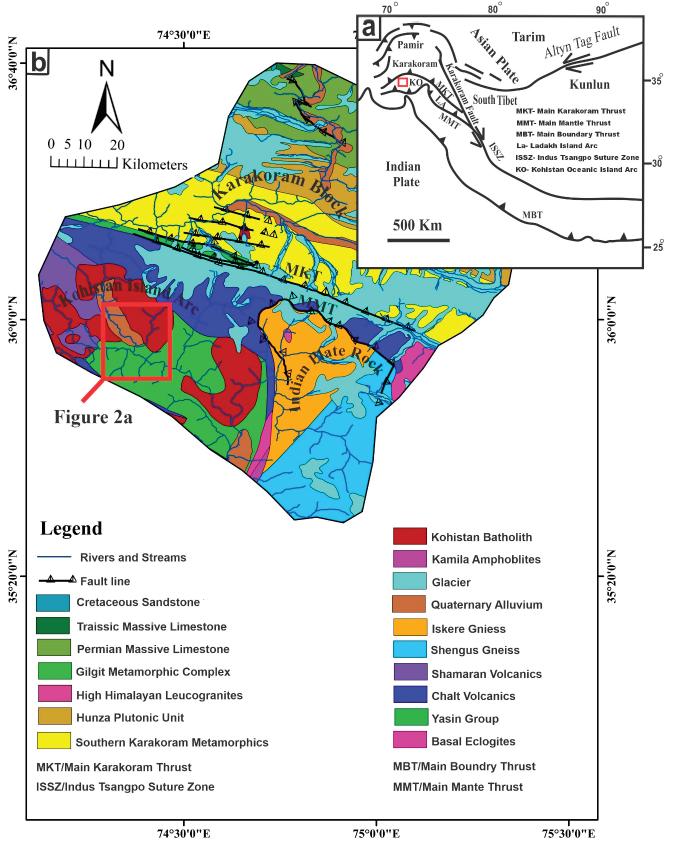
↑ Figure 1 - (a) Tectonic zones of northern Pakistan, modified after Mahéo et al. (2004), Pêcher et al. (2008), and Searle and Khan (1996) ;
(b) Regional geological map showing the main lithological units and tectonic zones of northern Pakistan, modified from Searle and Khan (1996) and Alam et al. (2019).
Geochemical sampling consisted of selective rock samples collected from mineralized veins, altered host rocks, and structurally favorable zones. Samples were analyzed using atomic absorption and ICPbased methods to quantify base metals, precious metals, and pathfinder elements. The strategy focused on understanding metal associations and vectoring toward potential feeder zones. This integrated approach ensured that each dataset informed the next, resulting in a coherent geological model rather than isolated anomalies.
Mineralization in the Jutt Lang area is best described as a structurally controlled hydrothermal polymetallic vein system. Ore is hosted predominantly within quartz-sulfide veins developed along faults, shear zones, and intrusive contacts, mainly within dioritic and granodioritic host rocks. Primary ore minerals include galena, chalcopyrite, pyrite, and covellite. These are commonly associated with massive to disseminated sulfide textures within quartz veins. Secondary minerals such
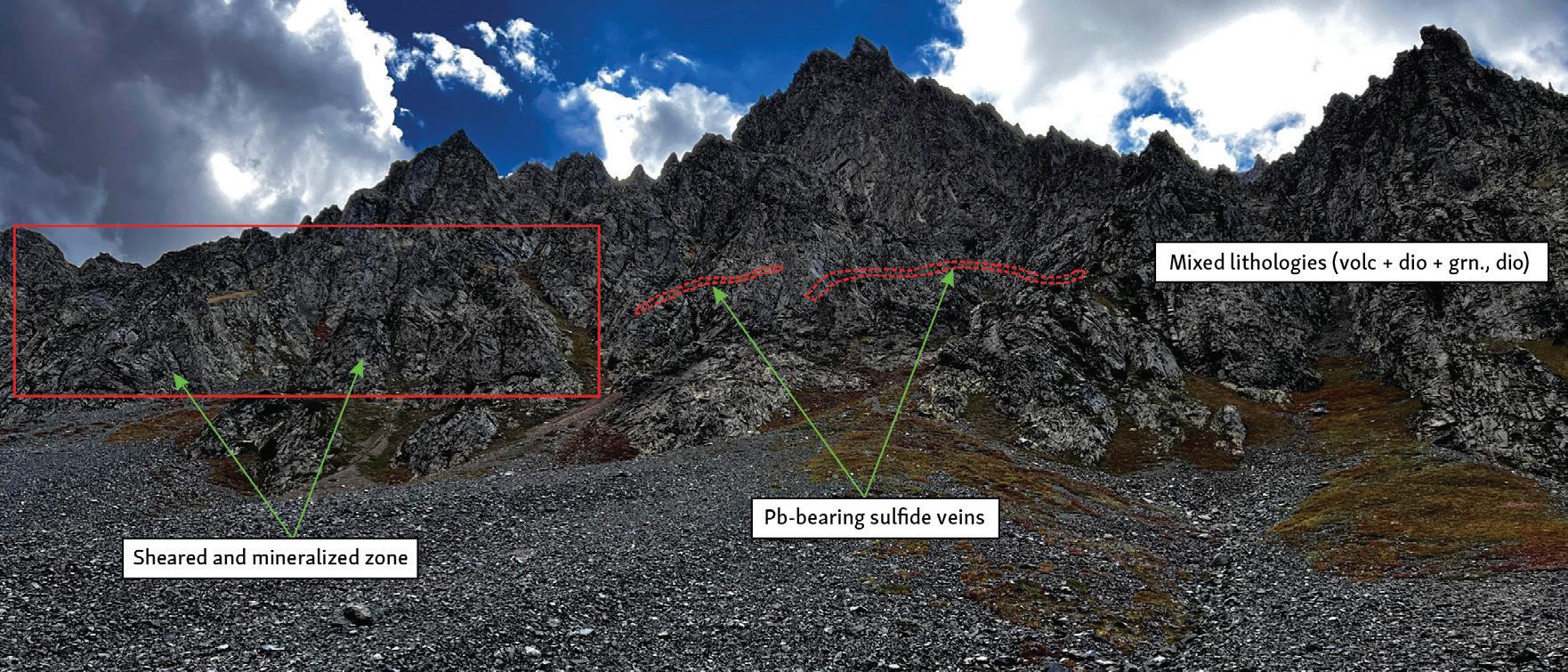
↓
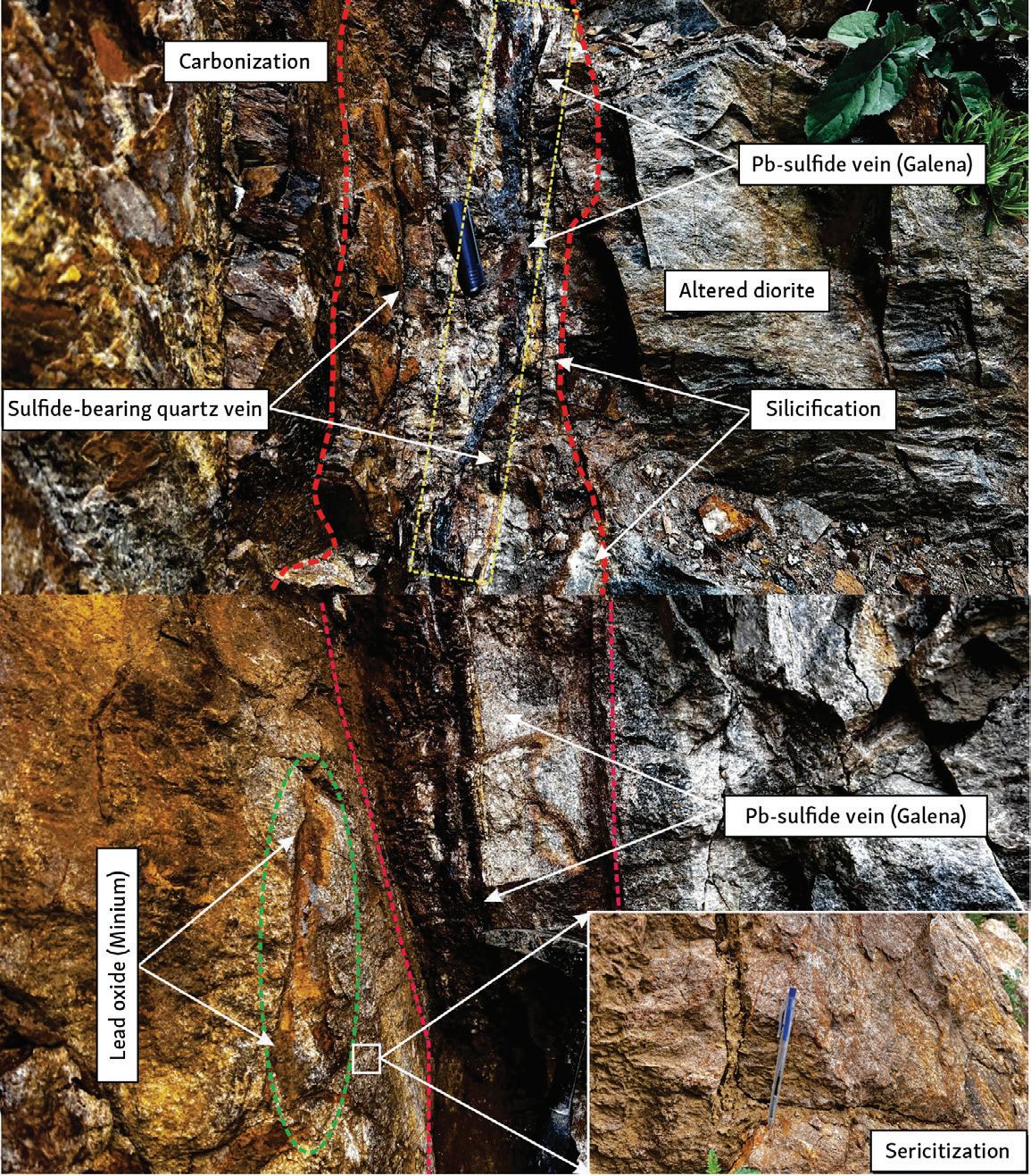
as malachite, azurite, minium, and massicot occur in oxidized zones near surface, reflecting supergene alteration and weathering of primary sulfides. Vein textures vary from massive sulfide bands to vuggy and fibrous quartz, with local stockwork development. These textures indicate episodic fluid flow and pressure fluctuations, consistent with structurally focused hydrothermal systems. Hydrothermal alteration is pervasive and spatially associated with mineralized zones. Alteration styles include silicification, sericitic alteration, propylitic assemblages, and localized carbonatization. Alteration is most intense within fractured diorites, where fluid–rock interaction was strongest. Oxidation is well developed near surface, producing iron oxides and copper carbonates that provide clear visual indicators of mineralization. From an exploration standpoint, the strong spatial correlation between alteration intensity, structural complexity, and sulfide mineralization provides reliable vectors toward higher-grade zones.
Geochemical results from the Kargha Valley confirm the polymetallic nature of the system and highlight its economic relevance. Copper concentrations reach up to 10 400 ppm, while lead values locally exceed 63 000 ppm. Silver values up to 451 ppm and
antimony values exceeding 3900 ppm further characterize the system as metal rich. The consistent association of Cu, Pb, Ag, Sb, and Zn suggests a hydrothermal system capable of transporting and precipitating multiple metals. Gold values of up to 2.41 ppm, although localized, indicate an additional precious metal component that warrants further investigation. Such metal assemblages are typical of vein-type polymetallic systems formed in arc-related or post-collisional settings. The presence of high-grade surface samples strongly suggests proximity to mineralized shoots rather than distal dispersion halos. Importantly, the variability in metal ratios between samples may reflect vertical or lateral zoning within the system: information that is highly valuable for drill targeting.
The Kargha Valley Pb–Cu system displays all the key characteristics required for successful advancement to the drilling stage: strong structural controls, favorable host rocks, well-developed alteration, and high-grade geochemical anomalies. Mineralization is exposed at surface and remains open along strike and at depth. Future exploration should prioritize trenching and channel sampling across structurally controlled veins to establish true widths and grade continuity. Ground geophysical surveys, particularly IP resistivity, would be effective in tracing sulfide-rich zones beneath shallow cover.
Initial drilling should target intersections of major NW–SE structures with intrusive contacts, oriented perpendicular to vein trends. Equally important will be high-quality core logging and structural data collection. In systems like Kargha Valley, where mineralization is structurally controlled, oriented core and detailed logging are essential for understanding vein geometry, continuity, and grade distribution, ultimately determining the success of resource definition.
The Kargha Valley represents a technically robust and underexplored polymetallic system within a proven metallogenic belt. Integrated geological work has demonstrated clear exploration upside, and systematic follow-up has strong potential to unlock significant value in this emerging mineral district.
Get in touch with Syed on LinkedIn
by Ramya R Dodamani, Geologist
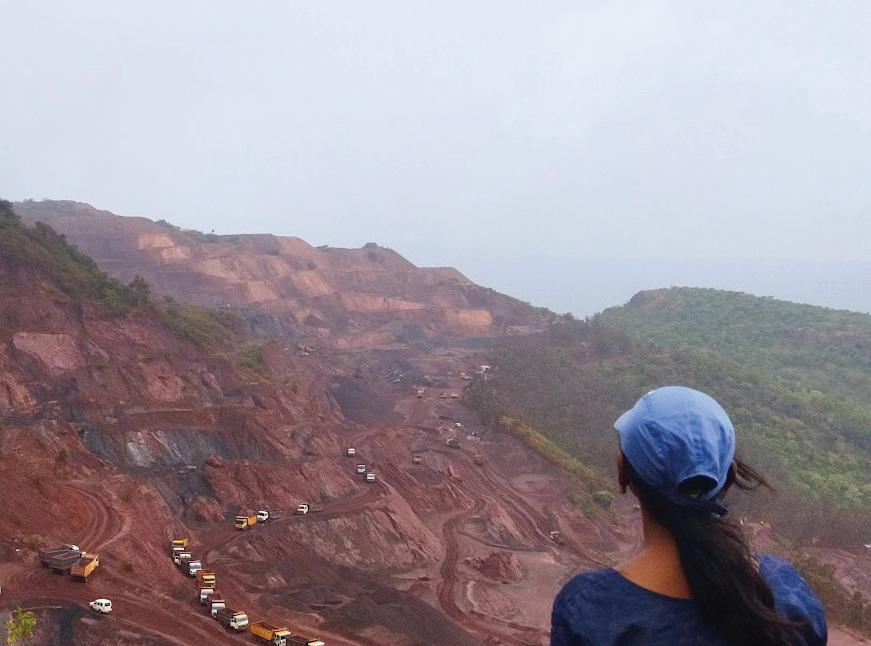
Mining has always been seen as a demanding and challenging profession, often shaped by the belief that it is primarily suited to men. Even today, when women have made remarkable progress in many fields, their presence in the global mining industry remains limited.
In my opinion, this gap is not due to a lack of ability or interest, but largely because of long-standing cultural perceptions and fewer opportunities available to women in core mining roles in India. The industry itself has evolved over time—modern mining is not only about physical labor; it is deeply rooted in science, research, technology, and innovation. Yet, the perception of mining as a male-dominated sector continues to influence career choices, workplace structures, and professional growth for women.
Understanding these challenges is important not to highlight limitations, but to recognize potential. When women are given equal opportunities, exposure, and support, they contribute with the same dedication, skill, and leadership as their male counterparts. Encouraging women’s participation in mining is therefore not just about inclusion; it is about strengthening the industry for the future. By reshaping mindsets and recognizing mining as a scientific and knowledge-driven profession, we can create a more balanced, resilient, and globally competitive mining sector in India—one where talent and passion define success, not gender.
My journey into the mining industry was not accidental; it was born out of challenge, determination, and self-belief. During my bachelor’s degree, geology was the subject in which I scored the least. This became a turning point. I took it as a personal challenge and decided to pursue my master’s degree in geology; I was determined to transform my weakness into strength. During my master’s program, a defining opportunity came through my dissertation work, which I carried out at SMIORE Ltd, Karnataka, India. The hands-on learning during my internship and the exposure to real-time mining operations deeply fascinated me and inspired my dream of becoming a mining geologist. My interactions with mining professionals and the belief that determination, skill, and passion matter far more than gender encouraged me to move forward with that dream without hesitation.
Soon after completing my master’s degree in geology, I was fortunate to get an opportunity at KSMCL, a multi-mineral mining company in Karnataka. Here, my learning expanded far beyond textbooks. I consciously chose not to restrict myself to assigned roles. Instead, I continuously sought knowledge, asked questions, and closely observed processes. I have been privileged to learn immensely from my colleagues and seniors and their guidance helped shape my professional approach. Throughout this journey, I built a strong professional network and developed a deeper understanding of mining geology, operations, and real-world challenges.
During moments of self-doubt, I found strength in reading about women who had carved their own paths in geoscience and mining. Women like Cynthia Carroll, Gina Rinehart, Jennifer Maki, Sandhya Rasakatla, Yogeshwari Rane, Sarita Dange, Sudipta Sengupta and many more broke barriers, challenged stereotypes, and proved that excellence has no gender. Their journeys became my source of motivation and resilience, reminding me that every field evolves when courage meets commitment. Among these women, Dr Sudipta Sengupta stands out as my greatest inspiration.
Today, I choose to continue my journey in mining geology with confidence and purpose, determined to build my own path, to contribute meaningfully to the field, and inspire others to do the same. I desire to analyze real-world problems in mining and explore innovative, practical solutions that can bridge science and sustainability. What began as a challenge has now become my purpose, and my commitment to mining geology continues to grow stronger with time and experience.
Discussing the challenges of women’s participation in the industry starts with outlining some of the reasons women might not perceive mining as a career option. Lack of female role models in leading positions and lower percentage of employment after graduation add to the general lack of exposure and the perception of mining as a male-dominated sector. Additionally, safety concerns lead to families discouraging pursuing mining as a career. This is especially true in India.
As part of the industry, women face further barriers: hiring committees often assume women are unfit for field work due to limited physical strength and requirements for extended shift work in remote areas. Smaller mines find it challenging to provide separate washrooms, rest halls, emergency transport, and other facilities. Women are often restricted to lab and compliance work roles and that lack of field knowledge and the limited mentorship fuel further self-doubts. The path to change starts with women realizing that they shouldn’t

limit themselves. I believe perceptions can be shifted by creating equal opportunities, encouraging the participation of women in mining programs, and establishing safe work environments. Community acceptance can be helped by showcasing women in leading roles. In the face of barriers within the industry, women must get stronger mentally as well as physically. Challenges can be overcome by enhancing practical and theoretical knowledge, by developing leadership skills, and excelling in technologically driven tools. Filling the gap between academic theory and real mining operations is essential; internship schemes and collaborations between industry and universities for research-based projects can be a solution.
In the past, cultural mindsets often acted as barriers for women in mining and geosciences. Today, while significant progress has been made, as exemplified by my own experiences at Karnataka, women still face limited opportunities rather than limitations in capability. By ensuring equal access to opportunities, training, leadership roles, and decision-making platforms in India, we can strengthen the sector and position it to compete confidently at a global level. The mining industry must be recognized not as a male dominated field, but as a scientific, systematic, and research-oriented sector that thrives on innovation, skill, and interdisciplinary knowledge. When diversity is embraced, mining evolves into a stronger, more sustainable industry that benefits from varied perspectives, advanced research, and responsible resource development. Empowering women in mining is not just about inclusion. It is about building a future-ready industry driven by science, collaboration, and excellence.
For more information
Get in touch with Ramya on LinkedIn
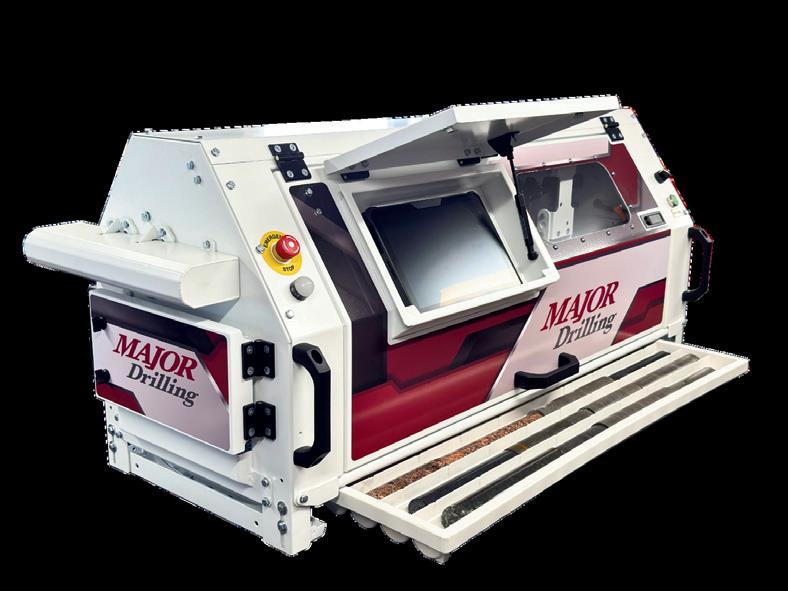

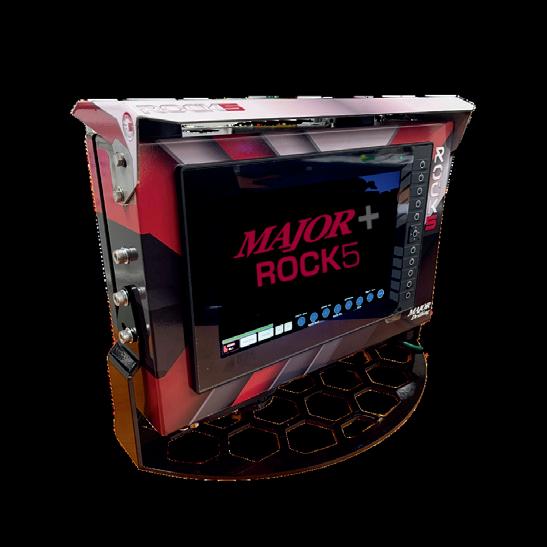





FEXMIN, the Exploration and Mining Convention of Chile, has become one of Latin America’s leading meeting points for the mineral exploration industry. Organized by the Colegio de Geólogos de Chile, the convention was created with a clear mission: to support and promote exploration projects by connecting them with investors, strategic partners, suppliers, and key industry stakeholders.
Over the years, the convention has evolved from a local geological gathering into an internationally recognized platform for business development, technical exchange, and investment opportunities focused exclusively on exploration. The
VIII edition of FEXMIN will take place from August 25-27, 2026, at Espacio Riesco in Santiago, Chile, under the theme ‘Exploring the mines of the future’.
FEXMIN stands out for its specialized focus on exploration and its ability to bring together the entire exploration ecosystem in one place. The event gathers junior and major mining companies, geological and drilling service providers, laboratories, technology companies, government institutions, universities, and investors, creating valuable opportunities for networking, collaboration, and business generation.
One of the convention’s main objectives is to increase visibility for emerging exploration projects that require access to international financing in order to advance. In recent years, FEXMIN has strengthened its relationship with global capital markets through collaboration with organizations such as the TSX and TSX Venture Exchange in Canada, opening new opportunities for Chilean and Latin American projects to connect with international investors and mining finance networks.
In addition to its exhibition area, FEXMIN offers a strong technical conference program featuring presentations by mining companies, geological experts, exploration managers, and industry leaders. The convention also encourages academic participation through its student competition, designed to showcase innovative geological studies and support the next generation of exploration professionals.
The 2026 edition of the convention is expected to host around 80 exhibition stands and attract a broad audience of mining professionals, geologists, executives, investors, and specialized suppliers from Chile and abroad. The sustained growth of the event reflects the increasing importance of exploration in securing the future supply of strategic minerals and strengthening collaboration across the mining industry.
As Chile continues to play a key role in the global supply of copper and other critical minerals, FEXMIN seeks to contribute to the development of a more dynamic, connected, and innovative exploration ecosystem. By bringing together opportunities, capital, technical knowledge, and innovation, the convention continues to support the exploration projects that will shape the future of mining in the region. Without exploration, there is no mining.
fexmin.cl


VIII VERSIÓN 2026 FERIA DE EXPLORACIONES Y MINAS CHILE
“EXPLORANDO LAS MINAS DEL MAÑANA”
Agosto 25-27
Santiago - Chile
Centro de convenciones ESPACIO RIESCO
VIII VERSION 2026 EXPLORATION AND MINING CONVENTION CHILE
“EXPLORING THE MINES OF THE FUTURE”
August 25-27
Santiago - Chile
Convention center ESPACIO RIESCO
Organiza
Organized by
Drilling Contractors (A-Z): Diamond Drilling, Reverse Circulation, AirCore
BRYSON DRILLING
Phone 306-323-2202 Fax 306-323-2203 info@brysondrilling.ca www.brysondrilling.ca Canada
CAPITAL DRILLING
Phone +230 464 3250 info@capdrill.com www.capdrill.com East, North, West Africa
DDH1 DRILLING
Phone +61 08 9435 1700 admin@ddh1.com.au www.ddh1.com.au Australia
DIAFOR Phone (819) 860-3957 info@diafor.ca www.diafor.ca Canada
KATI OY
Phone 0207430660 info@oykatiab.com www.oykatiab.com Finland
MITCHELL SERVICES
Phone +61 7 3722 7222 Fax +61 7 3722 7256 info@mitchellservices. com.au www.mitchellservices. com.au Australia
ATELIER VAL-D’OR
Phone (819) 824-3676
Fax (819) 824-2891
info@avddrills.com www.avddrills.com
BARKOM
Phone 90-312 385 60 50
Fax 90-312 385 35 75 info@barkomas.com www.barkomas.com
Machine Works (A-Z)
NORTH BAY MACHINING CENTRE
Phone (705) 472-9416
Fax (705) 472-2927 luc@nbmc.ca www.nbmc.ca
PROLENC
Phone (250) 563-8899
Fax (250) 563-6704 khodgins@prolenc.com www.prolenc.com
DISCOVERY DRILL
MANUFACTURER
Phone 1-506-542-9708
Fax 1-506-542-9709 info@discoverydrills.com www.discoverydrills.com
CORE TECH
Phone 1-801-972-6430
Fax 1-801-977-3374 www.boartlongyear.com
Phone +51 983 856 666 info@coretech.com.pe www.coretech.com.pe
Phone 1-800-663-5004
bits@diaset.com www.diaset.com
Phone (888) 465-1569
Fax (320) 631-0064
www.holeproducts.com BOART LONGYEAR
Drill Rods & Casings Cont.
CORE TECH
Phone +51 983 856 666 info@coretech.com.pe www.coretech.com.pe Peru
DIGITAL SURVEYING
Phone +27 18 788 6349 sales@digitalsurveying.co.za www.digitalsurveying.com.za Africa TRUST SOLUÇÕES
GEOLÓGICAS
Phone +55 62 992720023 contato@trustsg.com.br Brazil