S P E C I A L
E D I T I O N
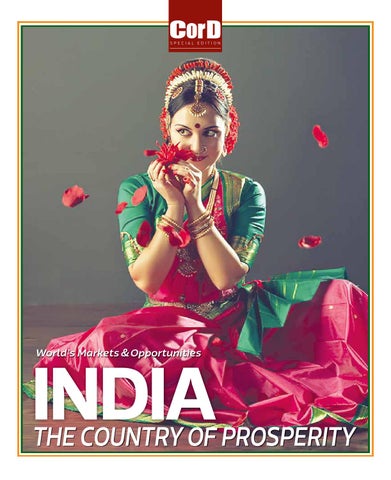
World’s Markets &Opportunities
INDIA
THE COUNTRY OF PROSPERITY
INTERVIEW
2 |
INDIA
| THE COUNTRY OF PROSPERITY
MANY 2012
Traditional Closeness, Despite Geographical Distance H.E. NARINDER CHAUHAN INDIAN AMBASSADOR TO SERBIA
G
ood mutual understanding is of the utmost importance to successful bilateral cooperation between the two countries, and that is most effectively realised through dynamic contact between businesspeople, but also political, cultural and diplomatic leaders. When it comes to cooperation between India and Serbia, the committee for economic cooperation between the two countries provides a major contribution to strengthening bilateral links. H.E. Narinder Chauhan, Ambassador of India to Serbia, is certainly among the welcome guests of all important gatherings of the diplomatic corps in Serbia. Always adorned in the colourful costumes of her country, Ambassador Chauhan works tirelessly to unite the people of the two countries which, despite the geographical distance, have cultivated friendly relations for decades. The extent to which she does not want to talk about herself is only matched by her desire to use every moment to promote India – from the country’s past to its present. She finds the ambassadorial role she performs a challenge, while she considers diplomacy to be, first and foremost, about creating friendships between peoples and nations. She enjoys all aspects of her job, which encompasses public, economic and cultural diplomacy, as well as political and strategic dimensions. And confirming that she has proved successful in her role are the new economic and cultural ties between Serbia and India, as well as upcoming projects.
India is today a major economic, military, technological and space power. India is an open market for Serbia in modern technologies, the ICT sector, energy, agriculture and biomedicine, while the entrance ticket is education and language skills. Investors from India also want to invest in this area in Serbia, and those who are already here are the best example for all potential investors
• You are one of the few women heading diplomatic missions in Serbia. From your perspective, how would you define the field of diplomacy generally, and the challenges you face on a daily basis? - Diplomacy is all about making friends and influencing people. Therefore, what you see me do is but one aspect of diplomacy, which goes by the rubric of ‘public diplomacy’ and that connects me with civil society, schools, universities, cultural institutions, libraries etc. Indian culture is popular in Serbia and I have exerted
political and strategic aspect of diplomacy, which undoubtedly lies at the core of relations between nations. I have enjoyed working on all of these aspects in a wholesome manner. • What do you think is the most important aspect in terms of Serbia and India cooperating more closely in the future? - Our past history provides a very good foundation on which to build the present day relationship. There are no outstanding issues. There is no historical baggage. In fact the
OUR PAST HISTORY PROVIDES A VERY GOOD FOUNDATION ON WHICH TO BUILD UPON THE PRESENT DAY RELATIONSHIP. THERE ARE NO OUTSTANDING ISSUES. SERBIA IS A TRANSITION ECONOMY AND INDIA IS AN EMERGING ECONOMY THAT IS RECORDING THE HIGHEST RATE OF GROWTH SPURRED BY DOMESTIC DEMAND efforts to build bridges through cultural manifestations, whether performance arts, exhibitions, tourism, books, photography etc. There is still another aspect of our job, i.e. economic diplomacy, which is becoming an increasingly important part of our portfolio. India is today a major economic, military, technoogical and space power. Here, media such as CorD play an important role in projecting India’s evolving policies, as well as how India can make itself relevant to Serbia and where Serbia can contribute to Indian economy. There is still a third dimension that is not so visible, the
baggage is only positive. Serbia is in transition and India is an emerging economy that is recording the highest rate of growth spurred by domestic demand. Serbia has a very important role to play in new economic projects in India, including Digital India, the Smart City project, Make in India etc. Serbia has a young, technically qualified, English-speaking population that is largely employed in the services sector, which contributes the bulk of GDP in both India and Serbia, where the ICT sector also plays an important role. We are in the advanced stages of negotiating a Memorandum
THE COUNTRY OF PROSPERITY |
INDIA
| 3
INVESTMENT
RELATIONSHIP
TOURISM
The Embassy Group, which operates in India’s Silicon Valley, Bangalore, has invested about 15 million euros to create a state-of-the-art IT Park in Inđija, near Belgrade. This is also the first Gold LEED certificated building in the Western Balkan region
Despite the breakup of Yugoslavia, our political relations continue to be exceptional, marked by a long tradition of mutual support on issues of core interest. This is amply demonstrated on the floor of many international organisations
We are seeing annual growth of 17 per cent in the numbers of Serbians visiting India and each one is a potential tourist. India recently provided electronic tourist visa facilities for a one-month stay for Serbians
of Understanding on ICT. Tech Mahindra is the online mentor to ICT Hub, Belgrade. The Embassy Group, which operates in India’s Silicon Valley, Bangalore, has invested about 15 million euros to create a state-of-the-art IT Park in Inđija, near Belgrade. This is also the first Gold LEED certificated building in the Western Balkan region. Several Serbian executives are visiting India regularly to provide tech support to Indian companies, which is a very positive sign. One Indian company has invested in the Car-Go start-up, which aims to provide urban transportation solutions in Belgrade. Another important sector is agriculture and biomedicine, where there is history of cooperation that needs to be revived. Indian agricultural and irrigation machinery companies such as TAFE, Mahindra, Sonalika and Jain irrigation enjoy a fine reputation here and elsewhere in the Balkans. Happily, Yoga, Ayurveda and Homeopathy are recognised in Serbian law, and we will soon open an Ayurveda Information Centre at the Embassy, in order to guide practitioners in the right direction. These alternative therapies can bring immense health benefits to our Serbian friends. Himalaya Herbal is well represented in Serbia as are other Indian drug companies.
port on issues of core interest. This is amply demonstrated on the floor of many international organisations. It is a matter of immense satisfaction that Serbia also supports India’s international role. India sees Serbia as a reliable partner. We are aiming at exchange of political level visits.
operation through Torlak Laboratories, which helped India eradicate polio. The sectors for enhancement of bilateral trade include retail medicaments, metals, petroleum products, agro and agro-chemical products, mobile phones, petrochemicals, personal care products, ayurveda amd herbal products etc. Intelligent production is what we are looking at doing in Serbia. ICT and renewable energy sources are other sectors with potential for joint projects. Other potential sectors for Indian FDI can readily be identified as pharmaceutical, chemicals and fertilizers, waste management, ago and agro-processing, power, construction and infrastructure, mining and metals etc. About 135 mid-level Serbian executives in the government, public and private sectors have benefited from our capacity-building programmes, which results in the sharing of experiences and thus an ethos of cooperation in the economic domain. Given that investment leads to trade, we would also like to see structured economic delegations from Serbia visiting India in order to familiarise themselves with the Indian market and invite Indian industry to invest in Serbia. The Joint Economic Committee can prove itself to be a potent instrument in this direction.
WE REPRESENT A SIXTH OF HUMANITY, SPEAKING DIFFERENT LANGUAGES, PRACTICING DIFFERENT RELIGIONS, WEARING DIFFERENT KINDS OF CLOTHES AND EATING DIFFERENT KINDS OF FOODS • Political relations between Serbia and India have a long tradition and a stronghold in the Non-Aligned Movement, while the leaders of our two countries have close personal relations. How would you assess current bilateral relations between Serbia and India, and what do you think should be the next step in their development? - Despite the breakup of Yugoslavia, our political relations continue to be exceptional, marked by a long tradition of mutual sup-
4 |
INDIA
• What should Serbia do in order to increase its export to India or attract Indian investors, and in which areas could that be done? - I think we need to do a joint economic survey on how we can boost bilateral trade. Obviously Serbia needs to export more to India and to identify which agricultural products and industrial goods would meet the requirements of the Indian market, apart from the defence sector and vice versa. Biomedicine is another area where there is a history of excellent co-
| THE COUNTRY OF PROSPERITY
• As an official representative of India, has diplomacy changed and enriched your personality, or has it perhaps taken more away from you? - Every day is different. I meet different people and deal with different issues. Every day I respond to new developments. One is always reinventing oneself and in a constant process of rediscovering different aspects of one’s own personality. What is eclectic about my work is the diversity and range it offers, and there is never a dull day. • Indian TV shows are very popular in Serbia. How would you explain the popularity of India television serials in Serbia and around the world? - It is incredible that Indian TV serials have a large fan base in Serbia. India is entering the living
rooms of Serbia every day, which is such a boon. Bar the dramatic storylines, these TV serials are a mirror of Indian society, family relationships, costumes (saris), jewellery, beliefs, cuisine etc. One important element in the India story is the triumph of good over evil. This is the everlasting theme around which Indian folklore and mythology is built. Another important element is the diverse nature of Indian society, which makes it a very interesting place to be. Over and above this is the unity in diversity around which the social fabric of the Indian nation is woven. We represent a sixth of humanity, speaking different languages, practicing different religions, wearing different kinds of clothes and eating different kinds of foods. We are simultaneously an ancient civilisation and a youthful nation, with 40 per cent of the population under the age of 25 and 65 per cent under 35. There are more than 600 million women in India who are making themselves useful in every aspect of human endeavour, including in non-conventional areas, such as working as fighter pilots and astronauts. There can be no denying that the cultural continuity which has characterised the Indian civilisation has resulted in India being by far the most diverse and culturally tolerant country. India has the largest number of mosques in the world (300,000) and New Delhi has the largest number of churches (271) of any capital city! All of this, despite the fact that the country is approximately 80 per cent Hindu and is the birthplace of four major religions – the oldest being Hinduism, Buddhism and Jainism, while Sikhism is the youngest. Hindi is understood the length and breadth of our country and we will very soon be offering Hindi language classes in Serbia’s universities.
are very popular and draw full houses. Our two governments have decided to renew the cultural cooperation agreement on the arts, media, sports and youth cooperation. This will lead to several projects through institution-level cooperation, including museums, archives, media, theatres, film institutes, youth organisations etc. Film shootings have already begun both ways. Very soon we should have Indian performance art experts attached to the cultural institutions of Serbia. • India participated in this year’s Belgrade Tourism Fair. What would you recommend Indian tourists see in Serbia and how can we
Online Visas for India
India recently introduced the possibility of electronic visas for all Serbian citizens who intend to visit India for up to one month. Applicants do not need to go to the embassy in Belgrade, as they can do everything online – including completing application forms and paying fees - and they don’t even need to collect their visa in person from the embassy, rather they receive online confirmation and can go straight to the airport and onwards to India.
Ayurveda Info Centre to Open in Belgrade
THERE CAN BE NO DENYING THAT THE CULTURAL CONTINUITY WHICH HAS CHARACTERISED THE INDIAN CIVILISATION HAS RESULTED IN INDIA BEING BY FAR THE MOST DIVERSE AND CULTURALLY TOLERANT COUNTRY • Serbian film director Goran Paskaljević made a film about India and you helped him to bring this complex project to fruition. How much does cultural cooperation unite peoples and nations, and do you think there are also opportunities for the further development of joint projects in other segments of culture? - Nothing succeeds like culture when it comes to bringing two nations together. The Indian cultural manifestations we bring to Serbia
spiritual tourism, touring forts and palaces etc. We are seeing annual growth of 17 per cent in the numbers of Serbians visiting India and each one is a potential tourist. India recently provided electronic tourist visa facilities for a one-month stay for Serbians who can complete the visa application form online from the comfort of their home, submit documents online, pay online and carry the downloaded document to the designated Indian airports. They do not have to come to the Embassy, though, frankly, I would like them in our Chancery so that we can share a lot of information with them. ■
increase tourist activities in both directions? This year’s theme of the India Pavilion at the Belgrade Tourism Fair was Ayurveda tourism, which can be planned for the monsoon months (June to August) in the Southern part of India and the Himalayan region. India is otherwise a year-round tourism destination, including medical tourism and destination weddings. There is something for everyone in India, including adventure tourism, desert tourism, beach tourism, Himalayan tourism,
We will soon open an Ayurveda Information Centre at our Embassy in Belgrade, in order to focus and train those wishing to apply to deal with this alternative medicine method that has proven to be very successful. At the recent Belgrade Tourism Fair, the focus of the India Pavilion was Ayurveda tourism, particularly in the southern part of India and the Himalayan region during the monsoon months, from June to August.
Country of Diversity and Tolerance
Did you know that India has the most mosques in the world? New Delhi is the capital city with the most churches – a total of 271. This is the country with the greatest diversity and tolerance. It is an old civilisation with the youngest population: 40 per cent under the age of 25 and 65 percent under 35. More than 600 million women in India contribute every day to a better life and the country’s development, and among these are fighter pilots and astronauts.
THE COUNTRY OF PROSPERITY |
INDIA
| 5
BRICS 2016 SUMMIT: INDIA HAS TO PLAY A LEADING ROLE AS CHAIRMAN AT BRICS 2016 SUMMIT
Urgent Steps Needed to Strengthen Alternative Financial System
B y N I T YA C H A K R A B O RT Y
India will be hosting the eighth summit of BRICS – Brazil, Russia, India, China and South Africa in Goa in October this year and as the Chairman of the BRICS group, the Indian Government has been entrusted with a major responsibility to contribute to the process of easing the global economic crisis by identifying the areas where immediate action is needed to correct the distortions
T
he five members of BRICS represent more than two-fifth of the world population and a combined GDP of over US$ 16 trillion. As a multilateral organization, BRICS has a crucial role to play in the global economy apart from expanding the scope of cooperation between the members of the grouping. India has to impart an innovative leadership to the BRICS summit this
6 |
INDIA
year by focusing on the issues which have been ailing the global economy due to the partisan policies of the rich nations led by the United States.
Right now, India is having most comfortable situation in terms of both economy and polity among the BRICS nations. All other countries are having serious economic problems. That way, India is better placed to give the leadership for taking concrete steps to some of the decisions which were taken at the 2015 summit at UFA in Russia. The 2015 summit expressed its disappointment at the prolonged failure by the United States to ratify the IMF 2010 reform package which continues to undermine the credibility, legitimacy and effectiveness of the IMF. Further, the BRICS declaration
RIGHT NOW, INDIA IS HAVING MOST COMFORTABLE SITUATION IN TERMS OF BOTH ECONOMY AND POLITY AMONG THE BRICS NATIONS. ALL OTHER COUNTRIES ARE HAVING SERIOUS ECONOMIC PROBLEMS
| THE COUNTRY OF PROSPERITY
shared concerns regarding the challenges of sovereign debt restructurings. Debt restructurings have often been too slow and too late thus failing to reestablish debt sustainability and market access in a durable way. India has to take the lead in ensuring that the handling of sovereign debt restructurings be improved to the benefit of the developing countries. BRICS members are aware of the need for a strong alternative to the existing international financial institutions like IMF, World Bank and ADB. This can be done in phases and to start with, the arrangement can be a supplement to the existing operations of the West backed international financial institutions. But the process has to start and the setting up of the BRICS Bank New Development Bank as also the Asian Infrastructure Investment Bank (AIIB) are good signs that the alternative financing mode has a place in the global system and this will be in the interests of the developing countries for their speedy infra development and this will expand the areas of infra cooperation among the BRICS nations also.NDB has already approved its investment projects for 2016 and India is going to get projects in the
to the west backed international financial institutions. At UFA summit, the ratification was done to the treaty establishing a Contingency Reserve Arrangement (CRA) of the BRICS .Further the BRICS members welcomed the signing of the BRICS Inter Central Bank Agreement that sets technical parameters of operations within BRICS CRA. In fact the creation of BRICS CRA is an important step in the financial cooperation of the BRICS members. This mechanism is a valuable contribution to the global financial safety net. The strategy for the BRICS Economic Partnership that was adopted at 2015 summit, is presently the key guideline for
THE STRATEGY FOR THE BRICS ECONOMIC PARTNERSHIP THAT WAS ADOPTED AT 2015 SUMMIT, IS PRESENTLY THE KEY GUIDELINE FOR EXPANDING TRADE AND INVESTMENT, MANUFACTURING AND MINERALS PROCESSING, ENERGY, AGRICULTURE COOPERATION, SCIENCE AND TECHNOLOGY, CONNECTIVITY AND FINANCIAL COOPERATION BETWEEN THE BRICS MEMBERS first lot. Apart, the NDB is cooperating with AIIB and this ensures a sort of synergy in operations to the benefit of the borrowing countries and this gives a competition to the existing financing agencies like World Bank and ADB. In fact the time has come to take more concrete steps to strengthen the alternative financial system on behalf of BRICS. Russia and China have already moved in this direction and India also can take a leading role to coordinate the BRICS positions and make use of its chairmanship in 2016 to push forward the global financial system reform and prepare the alternative
expanding trade and investment, manufacturing and minerals processing, energy, agriculture cooperation, science and technology, connectivity and financial cooperation between the BRICS members. As the present Chairman of BRICS, India must ensure that the member countries ministries take appropriate steps to implement the programmes mentioned in the Partnership and urgent steps are taken for corrective steps if there is some critical gaps. The Economic Partnership strategy has to be put into action by the joint efforts of NDB, BRICS Business Council, BRICS Think Tank Forums and InterBank Cooperation Mech-
anism. India has to give the lead in preparing a feasibility of developing a BRICS trade, economic and investment cooperation roadmap for the period upto 2020. The issue of taking concrete measures for stepping up investment cooperation is very much on the agenda at Goa summit. Indian Government is preparing a list of priority projects for which investments could be sought from the other four members of the BRICS group. Investments will be sought for the projects, mostly in infrastructure sector from other member countries Brazil China, Russia and South Africa. At the last summit, Russia also submitted a list of 60 projects in oil and gas, coal, water resources, high tech manufacturing, mining, engineering, aviation, agriculture, transport & logistics, and information technology. Prime Minister Narendra Modi has innovative ideas on cooperation among the BRICS members. At the last summit, he mentioned of the scope for investments in India by the BRICS members in his pet Make in India programme. Now India wants to hold a trade fair and investors forum to promote the government’s flagship schemes such as Make in India, Digital India, Smart City Project. Start Up India, Stand Up India and National Mission for Clean Ganga. Indian officials feel that there are immense opportunities for the four other BRICS members to be benefited by investing in these innovative projects in India. Indian economy is now among the fastest economies in the world. Despite some problems, all other BRICS economies are also looking for new investment opportunities. India can really play a big role at BRICS summit by preparing a concrete roadmap for the maximum utilisation of the BRICs nations capabilities for their respective economic growth. At the global level, it is also an opportunity for New Delhi to raise its international role as a global and regional actor by steadfastly protecting the interests of the developing countries by fighting the western pressures and interests led by the USA. ■
THE COUNTRY OF PROSPERITY |
INDIA
| 7
AGRICULTURE: INDIAN COMPANIES GEAR UP TO PARTICIPATE IN NOVI SAD AGRICULTURAL FAIR (MAY 2016)
Lots of Room for Dynamic Cooperation Agriculture plays a vital role in India’s economy and is the principal source of income for more than 58 per cent of the country’s population. Agriculture and allied sectors (livestock, fisheries and forestry) are among the largest contributors to India’s Gross Domestic Product (16%)
I
ndia’s arable land area of 159.7 million hectares (over 60 % of land area) is the second largest in the world, after USA. Agricultural products of significant economic value includes rice, wheat, potato, tomato, onion, mangoes, sugar-cane, beans, cotton, etc. Over the recent past, increase in agricultural exports together with growth in household income& consumption and expansion in the food processing sector have resulted in growth in the agriculture sector in India. Rethinking on antipoverty priorities and the recent economic slowdown are among the factors that are causing a positive shift in the Indian economic policy in favour of greater support for agriculture. The Indian agriculture sector is now moving towards another green revolution. The transformations in the sector are being induced by factors
8 |
INDIA
like newfound interest of the organised sector, new and improved technologies, farming becoming more mechanised, new markets and demands, easy credit facilities, rapid growth of contract farming, agriculture friendly policies from the government, etc. Agriculture is now evolving from just a traditional way of life to a professionally managed industry the agriculture industry.
MARKET SIZE
India is the largest producer, consumer and exporter of spices and spice products. India’s fruit production has grown faster than vegetables making it the second largest fruit producer in the world. India’s horticulture output, comprising fruits, vegetables and spices was a record 283.5 million tonnes in 2014-15. It ranks third in farm and agriculture outputs. Agricultur-
| THE COUNTRY OF PROSPERITY
al export constitutes 10 per cent of the country’s exports and is the fourth-largest exported principal commodity. India is the world’s second largest producer of wheat and rice. As per Indian Ministry of Agriculture, food grain production is estimated at 253.16 million tonnes (MT) for 2015-16 and production of pulses estimated at 17.33 million tonnes. India is the largest producer of pulses in the world. With 6.51 million tonnes of cotton in 201415, India beat China to become the largest producer of cotton. With an annual output of 146.3 MT, India is the largest producer of milk, accounting for 18.5 per cent of the total world production. It also has the largest bovine population. India, the second-largest producer of sugar, accounts for 14 per cent of the global output. It is the sixth-largest exporter of sugar, accounting for 2.76 per cent of the global exports.
Spice exports from India are expected to reach US$ 3 billion by 2016–17 due to creative marketing strategies, innovative packaging, strength in quality and strong distribution networks. The spices market in India is valued at Rs 40,000 crore (US$ 5.87 billion) annually, of which the branded segment accounts for 15 per cent.
ishi Corp for manufacturing agrochemicals in India. ● Rabo Equity Advisors, the private equity arm of Netherlands-based Rabo Group, raised US$ 100 million for the first close of its second fund – India Agri
State Bank of India (SBI) and State General Reserve Fund (SGRF), invested Rs 95 crore (US$ 13.94 million) in GSP Crop Science, a Gujarat-based agrochemicals company. ● The world’s seventh-largest agro-
INVESTMENTS
According to the Department of Industrial Policy and Promotion, the Indian agricultural services and agricultural machinery sectors have cumulatively attracted Foreign Direct Investment equity inflow of about $ 2,261 million from April 2000 to December 2015. Some major investments and developments in agriculture in the recent past are as follows: ● Agri-research institute ICRISAT’s incubation arm is looking to set up a Rs.100 crore (US$ 14.67 million) fund in a year, an initiative that could help small entrepreneurs from the agri-business and nutrition space raise money. ● Mahindra & Mahindra (M&M), India’s leading tractor and utility vehicle manufacturer, announced its entry into pulses retailing under the brand ‘NuPro’. Going
INDIA IS THE LARGEST PRODUCER AND EXPORTER OF SPICES, LARGEST PRODUCER OF PULSES, MILK AND BOVINE IN THE WORLD. INDIA IS THE SECOND LARGEST PRODUCER OF FRUITS, WHEAT, RICE AND SUGAR chemicals firm, Israel-based ADAMA Agrochemicals plans to invest at least US$ 50 million in India over the next three years.
INITIATIVES BY THE GOVERNMENT
forward, the company plans to foray into e-retailing and sale of dairy products. ● Fertiliser cooperative IFFCO launched a joint venture with Japanese firm Mitsub-
Business Fund II. The fund plans to invest US$ 15–17 million in 10–12 companies. ● Oman India Joint Investment Fund (OIJIF), a joint venture (JV) between the
The Government of India realizes the importance of agriculture to the development of the nation and hence has adopted several initiatives and programmes for this sector’s continuous growth. In its Budget 2016–17, government proposed measures to improve agriculture and increase farmers’ welfare such as 2.85 million hectares to be brought under irrigation, Rs 287,000 crore (US$ 42.11 billion) grant in aid to be given to gram panchayats (village councils) and municipalities and 100 per cent village electrification targeted by May 01, 2018. Steps have been taken to improve soil fertility on a sustainable basis through the soil health card scheme and to support the organic farming scheme ‘Paramparagat Krishi Vikas Yojana’. Other steps include
THE COUNTRY OF PROSPERITY |
INDIA
| 9
improved access to irrigation through ‘Pradhanmantri Gram Sinchai Yojana’; enhanced water efficiency through `Per Drop More Crop’; continued support to Mahatma Gandhi National Rural Employment Guarantee Act (MGNREGA) and the creation of a unified national agriculture market to boost the incomes of farmers. The budget placed a renewed focus on the farm sector in a bid to revive agricul-
ture growth and improve farm incomes. Finance Minister Arun Jaitley of India said that farmers and rural india will get the government’s immediate attention and that government aims to double farm income in the next five years. The Indian Ministry of Agriculture has inked MOUs/agreements with 63 countries including Serbia for bilateral partnerships. These agreements would provide better agricultural facilities in areas such as research and development, capacity building, post-harvest management, value addition/food processing, plant protection, animal husbandry, dairy and fisheries etc and help in enhancing bilateral trade.
ROAD AHEAD
The agriculture sector in India is expected to generate better momentum in the next few years due to increased investments in agricultural infrastructure such as irrigation facilities, warehousing and cold storage. Factors such as reduced transaction costs and time, improved port
10 |
INDIA
gate management and better fiscal incentives would contribute to the sector’s growth. Furthermore, the growing use of genetically modified crops will likely improve the yield for Indian farmers. Realizing the importance of storage infrastructure, Indian Government plans additional 35 million MT warehousing capacity for storage of all major crops in order to curb wastage.
lations with good potential for trade and investment growth. Indian tractor manufacturers Mahindra & Mahindra (represented by Agropanonka), Sonalika (represented by FPM Agromehanika) and TAFE (represented by Amalgamations Group) have been regularly participating in International Agricultural Fair in Novi Sad. Priority objective of Serbian agriculture is to increase general level of compet-
INDIA AND SERBIA CAN IMPROVE COOPERATION IN AGRICULTURE SECTOR BASED ON THE AGREEMENT ON COOPERATION IN THE FIELD OF AGRICULTURE AND ALLIED SECTORS SIGNED BETWEEN THE TWO COUNTRIES IN MARCH 2009 INDIA- SERBIA COOPERATION
India Serbia bilateral relations in the agricultural and food processing industry are mainly in the field of import of agricultural products from India such as coffee, sesame seeds, dehydrated onion etc. India also exports tractors (Mahindra, TAFE and Sonalika) as well as irrigation equipment from the brand Jain irrigation. Mahindra and Sonalika tractors are being assembled in Serbia through their Serbian partners. Serbian exports of agricultural products are mostly tobacco and cigarettes. Agriculture & food processing and agricultural machinery are crucial industry segments in India-Serbia trade re-
| THE COUNTRY OF PROSPERITY
itiveness, find new markets, adapt to rules and standards of the EU and WTO, conquer new know-how and technologies that will change the existing structure of agriculture and be ready to meet competition on local and international market. India and Serbia can improve cooperation in agriculture sector based on the Agreement on Cooperation in the field of Agriculture and Allied Sectors singed signed between the two countries in March 2009. The agreement envisages establishment of a Joint Commission which is supposed to monitor the realization of the Agreement, and to propose measures for improving cooperation in Agriculture and food industry. ■
‘BABASAHEB’ DR B.R. AMBEDKAR:
Maker and ConscienceKeeper of Modern India A pioneering social reformer, jurist, economist, author, polyglot orator, scholar of comparative religions and thinker Dr. Bhimrao Ramji Ambdekar, the principal architect of Indian Constitution and independent India’s first law minister, was a multi-faceted man who remapped the frontiers of human achievement by his sheer tenacity, perseverance and the will to excel against all odds
B
abasaheb, as he was fondly called by friends, admirers and followers, braved the walls of prejudice and caste discrimination in early 20th century India to emerge as an exemplar and an unflinching crusader against the inequities of caste system and socio-economic deprivation that afflicted millions of Indians. His life is an inspirational story of achievements despite trying circumstances and the indomitable will to move beyond individual strife for the larger cause of social justice and national renaissance. Born into the Hindu Mahar caste, which was scorned as “untouchable” by the upper class of the time, Babasaheb did not allow the limitations of his background to come in the way of acquiring firstrate education and pushing the bar for academic excellence. He earned a law degree from Lincoln’s Inn and doctorates from Columbia University in the
Minister Jawaharlal Nehru spoke eloquently about at the fateful hour of India’s independence, saw Dr. Ambedkar being entrusted with a monumental responsibility: he was appointed Chairman of the Constitution Drafting Committee on August 29, 1947. He fashioned a pluralistic and inclusive Constitution that guides and animates India to this day, guaranteeing equal opportunity and freedom of expression and faith for all citizens in a secular democracy. Famous scholar Granville Austin has evoked the revolutionary spirit of Dr. Ambdekar that is reflected in the Indian Constitution. “The majority of India’s constitutional provisions are either directly arrived at furthering the aim of social revolution or attempt to foster this revolution by establishing conditions necessary for its achievement,” wrote Austin. The Constitution, drafted under Dr. Ambedkar’s leadership, abolished untouchability, and outlawed all
THE CONSTITUTION, DRAFTED UNDER DR. AMBEDKAR’S LEADERSHIP, ABOLISHED UNTOUCHABILITY, AND OUTLAWED ALL FORMS OF DISCRIMINATION US and the London School of Economics, carving a place of eminence as a scholar extraordinaire for his research in law, economics and political science. His early career saw him donning many hats: economist, professor, and lawyer. In the next stage, he emerged as a national leader with a pan-India vision of modernity underpinned by the ideals of social justice and equality. As India’s freedom movement gained traction, he harnessed his formidable intellectual energies to script an anthem of an inclusive India and strove tirelessly for political rights and social freedom for Dalits and the marginalized groups. India’s tryst with destiny, as India’s first Prime
forms of discrimination. An ardent proponent of the rights of women, minorities and the socially underprivileged, he argued eloquently and won the Constituent Assembly’s support for introducing a system of reservations of jobs in the civil services, schools and colleges for members of Scheduled Castes, Scheduled Tribes and Other Backward Class. This was later reflected in the policies of affirmative action adopted by the Indian government. An erudite economist and institution-builder, Dr.Ambedkar authored many scholarly treatises on economics and was the driving force behind establishment of the Finance Commission of India. His
ideas also laid the foundation for the setting up of India’s central bank, the Reserve Bank of India. hile Dr. Ambedkar’s achievements were manifold and straddled a wide spectrum, his inner life was richer and marked by spiritual vitality. In 1956, he converted to Buddhism. He later died in the same year in New Delhi while working on “The Buddha and his Dhamma”, which was published posthumously. The popularity and esteem he enjoyed among all lovers of social justice was seen at his funeral at Dadar Chowpatty beach on December 7, 1956, which was thronged by at least half a million mourners. Babasaheb’s myriad contributions to the forging of a modern inclusive India were recognized posthumously through the Bharat Ratna in 1990. Dr. Ambedkar’s ideals of social inequality redesigned the contours of Indian politics. His surging popularity was reflected in scholarly biographies, numerous statues and memorials across the country. In 2012 Ambedkar was voted the “Greatest Indian” by a poll organized by History TV18 and CNN IBN. Today, Ambedkar is revered nationally, and figures in the national pantheon as one of the makers of modern India, along with Gandhi, Nehru and Tagore. His birthday, April 14, has been christened as ‘Ambedkar Jayanti’ or ‘Bhim Jayanti’ and is celebrated as a public holiday. As India celebrates the 125th birth anniversary of this national icon, Babasaheb remains an inspiration for millions of Indians and proponents of equality and social justice across the globe. Fittingly, although it’s a matter of coincidence, one can see the trace of Babasaheb’s radiant vision in the “Sustainable Development Goals” that are set to be formally adopted by the UN General Assembly to eliminate poverty, hunger and socio-economic inequality by 2030. ■
THE COUNTRY OF PROSPERITY |
INDIA
| 11
INDIA TOURISM
Get, Set and Go Adventure tourism is rapidly gaining popularity in India as tourists seek vacations of a different kind
T
ravelling to remote areas, trying challenging adventure sports and testing one’s endurance to its limits account to what we know as adventure tourism. Be it in the east, west, north or south, the country has ample options that offer the desired adrenaline kicks to the adventure enthusiasts.
ROCK CLIMBLING The possibilities for rock climbing in India are immense and to a large extent, unexplored. Classified into free climbing, aid climbing and free and aid climbing – rock climbing can be performed throughout the year, expect monsoon months. The ecstasy of reaching the top and calling out to the world is simply inexpressible. Some of the best sites for rock climbing in India are Sar Pass in Himachal Pradesh, Miyar Valley in Himachal Pradesh, Shey Rock in Kashmir, Paithamala in Kerala, Madhugiri in Karnataka, Malshej Ghat in Maharashtra and Hampi and Badami in Karnataka. ■
HERITAGE: JOURNEY THROUGH HYDERABAD’S ROYAL PALACES Hyderabad’s true beauty lies in its historical core from where the modern city took shape Hyderabad, home to monuments like Charminar and Mecca Masjid, is known for the opulence of its fascinating palaces and havelis. A number of these architectural wonders lay hidden in its narrow alleys which few, except locals, were aware of. But the most splendid ones, however, are the ones built and occupied by the Nizams themselves. SOUTH SIKKIM
12 |
INDIA
| THE COUNTRY OF PROSPERITY
WALKING DOWN For over half-a-century, these palaces remained a mystery. It was in the late 1990s when they were thrown open to public that these palaces made news. The aura of romance and mystery surrounding them is still strongly embedded in peoples’ imagination, be it Falaknuma, Chowmahalla or Purani Haveli, the once official residence of the Nizams. The Nizam rule in Hyderabad started in 1724 under Nizamul-Mulk who established the Asaf Jahi dynasty after the fall of the Golconda Qutb Shahis in 1687. Subsequently, seven generations of his successors who came to be known as the “Nizams” ruled Hyderabad and parts of Deccan for almost two-and-one quarter centuries. The period, mainly during the reign of the sixth and seventh Nizams, was marked by a flood of construction activities as many of the great edifices the city is proud of today were built back then. These are largely concentrated in the southwestern and southeastern quarters of the city. “The total area of the palaces built by the successive Nizams in the Old City alone would be more than a million cubic feet which is three times more as compared to that of their predecessors, the Qutb Shahis,” says Narender Luther, a former civil servant and historian based in Hyderabad. If you travel from anywhere in the Old City in southwestern or southeastern direction with Charminar as the starting point, you can witness some of these magnificent palaces. “In recent times, Hyderabad’s cyber techno-hype,” as Luther says, “has overshadowed its historic charm, nawabi lifestyle and elegant courtesies”. But the pageantry and extravagant exploits of the royal courts that once enthralled the world hungry for something “exotic” have left an imprint in these intriguing palaces. From Charminar, the three important palaces: Falaknuma in south, Chowmahalla in west and Purani Haveli in east form Old City’s golden triangle. ■
BEAUTY GALORE Sikkim is beyond forested hillsides and snowcapped peaks. Take a tour to discover some of the state’s hidden jewels GANGTOK You can start a Sikkim tour from the southeast where the capital, Gangtok, introduces you to the state’s rich culture. The city became a Buddhist
WALKING DOWN
centre after the Enchey Monastery, first built in 1840s, was blessed by “flying” tantric master Drupthob Karpo. From then, its importance grew and Gangtok became the capital of the kingdom of Sikkim in 1894, ruled by a dynasty with the hereditary title of Chogyal. The monastery is scenically set at the top of the town with a thick tree cover. You can watch masked dances during festivals like Detor Chaam in December and January. The Namgyal Institute of Tibetology, established in 1958, has a wide collection of artefacts related to Vajrayana Buddhism and Tibetan culture including stunning painted and embroidered thangkas, tantric ritual objects, Buddhist icons and scriptures. A library on the first floor houses precious Buddhist tomes while a revamped souvenir shop sells a collection of jewellery, mementos, books, ritual objects and documentaries on Sikkimese culture and tradition. From here, visit Do-Drul Chorten, a large white stupa surrounded by glasswalled galleries with innumerable flaming butter lamps and a monks’ hostel. Walk along the ridge to see the exterior of the Chogyal Place and the impressive Tsuglhakhang Temple. From Enchey Monastery, head north to Ganesh Tok, one of the best viewpoints in Gangtok together with Tashi Point and
Hanuman Tok. The Himalayan Zoological Park near Ganesh Tok is one of the best places to see clouded leopard, snow leopard, Himalayan bear, red panda and mountain birdlife. ARTS, CRAFTS AND CUISINE Head west from Ganesh Tok to the Government Institute of Cottage Industries that promotes skills like paintings, weaving, woodcarving and mask-making. Watch artists paint Buddhist scenes, mandalas or deities on cotton or silk cloth on what is called thangkas. Else observe Lepcha and other women weave on traditional back-strap loin-looms. Another interesting art form they create here are the masks made by carving wood or in papier-mache worn during lama dances. Woodcarving is done to produce low tables called Choktse which are exquisitely carved, polished and painted in red, blue, pink, orange, brown and golden. About 24 km from Gangtok, Rumtek is famous for carved Buddhist figures. It has an extensive monastic complex, one of the most important institutions of Tibetan Buddhism and seat of the Black Hat sect. The impressive flat-topped main building has gold finials and a beautiful silver and gold chorten is studded with semi-precious stones and houses relics of the 16th head of the Black Hat sect.
THE COUNTRY OF PROSPERITY |
INDIA
| 13
CUSINE: RELISHING THE BEST TICKLE YOUR TASTEBUDS WITH THESE MOUTH-WATERING DISHES
Kashmiri Kofta Curry
Preparation Time: 50 minutes Cooking Time: 30 minutes Serves: 4 persons
GANGTOK
Gangtok is an excellent place to try Sikkimese cuisine which has distinct links to Tibet. Dumplings called momos with various stuffings and different noodle broth collectively called thukpas are common delicacies. Stinging nettles called sisnu, ferns called ningro, local cheeses called churpi, fermented soyabeans, bamboo shoots and wild mushrooms are used in dishes along with locally grown vegetables. SOUTH SIKKIM Head south from Pelling to Ravangla in south Sikkim. This part of the state has coniferous forests, tea plantations, breathtaking sceneries and religious monuments. The hamlet of Namchi is known for its religious structures like the 33 m high Shiva statue in a complex called Char Dham and the 45 m high statue of Guru Rinpoche (Padmasambhava) in the Samdruptse complex. ■
THE GOLDEN TEA STORY Tea tours in India have gained popularity in the past one decade and have now become an important part of many travel itineraries WEST BENGAL One of the most popular hill stations in the state, Darjeeling is surrounded by tea gardens that produce the famous light-coloured and aromatic Darjeeling tea. It is interesting to note that around 25 per cent of the country’s total tea outcome is from Darjeeling which has about 80 operational tea plantations. Makaibari Tea Estate and Homestay is one of the oldest tea estates of the region. Located at Kurseong, 37 km from Darjeeling, it is one of the top tea producing gardens in the world. The Happy Valley Tea Estate is another wellknown estate. Located 3 km north of Darjeeling, it
14 |
INDIA
is one of the highest tea gardens in the world. The estate grows some of the finest tea. It was established by an Englishman in 1854. Later, it was taken over by an Indian aristocrat from Kolkata. Best time to go March to November. ASSAM Assam is the largest tea producing region of the country. The tea is mostly cultivated in the Brahmaputra Valley region. Tea-lovers should not miss the tea estates that are integral to the state. There are several stay options here too where one can relax and rejuvenate amid tea gardens. Every year, the Assam Tourism Board organises the Assam Tea Festival where tea enthusiasts visit magnificent tea gardens and enjoy exciting river cruises while sipping hot tea. One can visit the Guwahati Tea Auction Centre, the largest in India. Best time to go May to June. KERALA Soak in the fresh aroma of tea leaves as soon as you enter Munnar as the region is dotted with lush tea plantations. The tea journey must start with a visit to the country’s first Tea Museum at Nallathanni Estate to have a captivating look at the history of tea production in the region. One can opt to stay at the KTDC Tea County in Munnar. Nestled between two hills, it is an important destination for ecotourism activities centred around Eravikulam National Park, Chinnar Wildlife Sanctuary and Pampadum Shola National Park and the newly developed Neelakurinji Sanctuary. Kundala Tea Plantation is another must-visit unit in Munnar. Surrounded with a lake, it will be a heart-warming moment to witness the entire tea-making process here. One can also visit The Tea Sanctuary that has a series of refurbished old colonial bungalows in the middle of a huge tea estate. ■
| THE COUNTRY OF PROSPERITY
Ingredients For the koftas: ½ kg well-ground minced mutton, 1 tsp aniseed powder (saunf), ½ tbsp dry ginger powder (saunth), 1 tbsp Kashmiri red chilli powder, ½ tsp garam masala powder, ½ tsp powdered black cardamom seed (badi elaichi), ½-1 cup beaten yogurt and salt to taste.
For the gravy: 3 tbsp mustard oil or ghee, ¼ tsp asafoetida powder (hing), 5-6 cloves, 1 tsp Kashmiri red chilli powder, ½ tsp aniseed powder (saunf), 2 tsp dry ginger powder (saunth), 2-½ tsp coriander powder, ½ cup yogurt, beaten; 1 cup water, almonds to garnish and whipped cream or yogurt to garnish. Method: Put all the ingredients for the koftas in a bowl, knead well, cover with a damp cloth and keep aside for 30 minutes. Divide the mixture and shape into small balls or koftas; bake the koftas in a pre-heated oven for 10 minutes. Put the oil/ghee in a pressure cooker. Add the asafoetida, cloves and red chilli powder. Add the koftas and stir for 2 minutes. Sprinkle the aniseed, ginger and coriander powders. Add yogurt and water. Cover and bring to pressure. Cook for about 10 minutes and remove the cooker from the stove. Allow to cool. Remove the lid and simmer on low heat till the gravy thickens. Transfer to a serving dish and garnish with almonds and swirls of cream/ yogurt. Serve hot.
AYURVEDA
Naturalistic System of Medicine Benefits of Ayurveda
The word Ayurveda is composed of two Sanskrit terms – Ayu meaning ‘life’ and Veda meaning ‘knowledge’. Therefore Ayurveda means the knowledge of life or science of life
A
yurveda is the oldest healthcare system in the world and it combines the profound thoughts of medicine and philosophy. Today, it is seen as a unique, indispensable branch of medicine, a complete naturalists system that depends on the diagnosis of your body’s humours-vata, pitta and kapha-to achieve the right balance. In Ayurveda, diagnosis is always done of the patient as a whole which sums up the principal objectives of Ayurveda, i.e. maintenance and promotion of health, prevention of diseases and cure of sickness. According to Ayurveda all objects in the universe including human body are composed of five basic elements namely, earth, water, fire, air and vacuum(ether). There is a balanced condensation of these elements in different proportions to suit the needs and requirements of different structures and functions of the body matrix and its parts. The growth and development of the body matrix depends on its nutrition, i.e. on food. The food, in turn, is composed of the above five elements, which replenish or nourish the like elements of the body after the action of bio-fire (Agni). The tissues of the body are the structural whereas humours are physiological entities, derived from different combinations
and permutations of Panchamahabhutas. The basic therapeutic approach is, that alone is the right treatment which makes for health and he alone is the best doctor who frees one from disease. This sums up the principal objectives of Ayurveda, i.e. maintenance and promotion of health, prevention of disease and cure of sickness. Treatment of the disease consists in avoiding causative factors responsible for disequilibrium of the body matrix or of any of its constituent parts through the use of Panchkarma procedures, medicines, suitable diet, activity and regimen for restoring the balance and strengthening the body mechanisms to prevent or minimize future occurrence of the disease. Normally treatment measures involve use of medicines, specific diet and prescribed activity routine. Use of these three measures is done in two ways. In one approach of treatment the three measures antagonize the disease by counteracting the etiological factors and various manifestations of the disease. In the second approach the same three measures of medicine, diet and activity are targeted to exert effects similar to the etiological factors and manifestations of the disease process. Today, large number of people from all over the world visit India for specialized Ayurvedic treatment.
* Ayurveda aims at removing the cause of illness and not just curing the disease itself. Based solely on herbs and herbal compounds, Ayurvedic remedies do not operate against the body’s metabolism. * Ayurvedic and herbal medicines ensures physical and mental health without side effects. The natural ingredients of herbs help bring ‘arogya’(health) to human body and mind. * Ayurvedic treatment is non-invasive and non-toxic, so it can be used safely as an alternative therapy or alongside conventional therapies. * Ayurvedic physicians claim that their methods can also help stress-related, metabolic, and chronic conditions. * Ayurveda has been used to treat acne, allergies, asthma, anxiety, arthritis, chronic fatigue syndrome, colds, colitis, constipation, depression, diabetes, flu, heart disease, hypertension, immune problems, inflammation, insomnia, nervous disorders, obesity, skin problems, and ulcers.
In pursance of furthering the cause of Ayurveda, the Embassy of India participated in the recently held Belgrade international Tourism fair with ‘Ayurveda Tourism’ as the main theme. Soon there will be an Ayurveda Centre in the Embassy of India in Belgrade to guide the practice of Ayurveda in Serbia in the right direction. An International symposium on Ayurveda is being organized on 9-10 May, 2016 in Belgrade in association with Ayurveda Association of Serbia. Indian Ayurveda companies such as Himalaya Herbal and Maharishi Ayurveda have a presence in Serbia and in other parts of Europe. To guide the international practice of Ayurveda, the Government of India has created a separate Ministry AYUSH. Ayurveda is legal in Serbia. Ayurveda Panchkarma centres can be found in different parts of Europe including Switzerland, Austria, Netherlands etc. ■
THE COUNTRY OF PROSPERITY |
INDIA
| 15
INTERNATIONAL DAY OF YOGA 2016
Harmony Between Mind and Body While addressing the 69 session of United Nations General Assembly (UNGA) on September 27, 2014, the Honorable Prime Minister of India Shri Narendra Modi urged the world community to adopt an International Day of Yoga
“Y
oga is an invaluable gift of ancient Indian tradition. It embodies unity of mind and body; thought and action; restraint and fulfillment; harmony between man and nature and a holistic approach to health and well-being. Yoga is not about exercise but to discover the sense of oneness with ourselves, the world and Nature. By changing our lifestyle and creating consciousness, it can help us to deal with climate change. Let us work towards adopting an International Yoga Day,” Shri Modi said. On December 11, 2014, the 193 member UNGA approved the proposal by consensus with a record 177 co-sponsoring countries a resolution to establish 21 June as “International Day of Yoga”. In its resolution, the UNGA recognised that Yoga provides a holistic approach to health and well-being and wider dissemination of information about the benefits of practicing Yoga for the health of the world population. Yoga also brings harmony in all walks of life and thus, is known for disease prevention, health promotion and management of many lifestyle-related disorders. On the occasion of celebration of the 1st International Day of Yoga (IDY) on 21 June, 2015 New Delhi, two Guinness World Records were made viz. the Largest Yoga Lesson involving 35,985 participants and maximum number of Nationalities (84) participated in a single yoga lesson. The IDY
16 |
INDIA
celebration in Serbia were held across Serbia in more than 50 cities and municipalities. It is planned to celebrate the IDY 2016 in Serbia on 19 June 2016 (June 21 is a working day). The IDY celebrations will be along the Common Yoga Protocol devised by Yoga experts of India. Yoga shirts will also be distributed on the occasion. The IDY celebration in Belgrade will be held outside the National Assembly of Serbia.
WHAT IS YOGA? Yoga is essentially a spiritual discipline based on an extremely subtle science which focuses on bringing harmony between mind and body. It is an art and science for healthy living. The word “Yoga” is derived from the Sanskrit root ‘yuj’meaning “to join”, “to yoke” or “to unite”. According to Yogic scriptures, the practice of Yoga leads to the union of an individual consciousness with the universal consciousness. According to modern scientists, everything in the universe is just a manifestation of the same quantum firmament. One who experiences this oneness of existence is said to be “in Yoga” and is termed as a yogi who has attained a state of freedom, referred to as mukti, nirvāna, kaivalya or moksha. “Yoga” also refers to an inner science comprising of a variety of methods through which human beings can achieve union between the body and
mind to attain self-realisation. The aim of Yoga practices to overcome all kinds of sufferings that lead to a sense of freedom in every walk of life with holistic health, happiness and harmony. The concepts and practices of Yoga originated in India about several thousand years ago. Its founders were great Saints and Sages. The great Yogis presented rational interpretation of their experiences of Yoga and brought about a practical and scientifically sound method within every one’s reach. Yoga today, is no longer restricted to hermits, saints, and sages; it has entered into our everyday lives and has aroused a worldwide awakening and acceptance in the last few decades. The science of Yoga and its techniques have now been reoriented to suit modern sociological needs and lifestyles. Experts of various branches of medicine including modern medical sciences are realising the role of these techniques in the prevention and mitigation of diseases and promotion of health. Yoga is one of the six systems of Vedic philosophy. The yoga steps are believed to have a potential for improvement of physical health by enhancing circulation of oxygenated blood in the body, retraining the sense organs thereby inducing tranquility and serenity of mind. The practice of Yoga prevents psychosomatic disorders and improves an individual’s resistance and ability to endure stressful situations. ■
The Embassy of India invites yoga enthusiasts to come and participate in the IDY 2016 celebration in their respective cities/municipalities. More details are available on Embassy’s Facebook page https://www.facebook.com/IndiaInSerbia and Embassy’s website: www.eoibelgrade.gov.in.
| THE COUNTRY OF PROSPERITY