THINKING GREEN & LIVING CLEAN
THE NEW ENERGY REALITY



By
Dubravka Đedović Handanović Serbian Minister ining and Energy
Katarina Kulić Sustainability and ESG Expert,
Aleksandra Čupić Head of
Đurđa Radivojević General Manager, Smurfit Westrock Avala Ada
As climate regulation, carbon pricing and energy security reshape global markets, green transition is becoming less a question of sustainability rhetoric and increasingly one of economic resilience and competitiveness
For years, discussions about green transition were dominated by climate goals, renewable energy and environmental responsibility. Today, however, both Europe and Serbia are entering a new phase in which the green agenda is increasingly defined by economics, industrial competitiveness and long-term energy stability. What was once largely viewed as a sustainability issue is rapidly becoming a central question of investment, technology and market survival.
The introduction of the EU’s Carbon Border Adjustment Mechanism (CBAM) marks a turning point in that transformation. What initially appeared to be another regulatory instrument is rapidly becoming a powerful economic force capable of reshaping investment flows, industrial strategies and export competitiveness. For economies like Serbia’s, strongly connected to the European market while still significantly dependent on fossil fuels, the implications are profound.
The green agenda is no longer a matter of corporate image or sustainability reporting alone. It is increasingly becoming a question of production costs, access to capital, technological readiness and market survival. The price of carbon emissions is no longer theoretical; it is entering financial calculations, investment models and strategic planning across industries.
This shift is already visible throughout the energy and industrial sectors. Companies are being forced to rethink supply chains, energy sources and long-term investment priorities. Financial institutions are integrating climate risk into lending policies. Governments are balancing decarbonisation with energy security and industrial stability. The debate has moved far beyond environmental policy and entered the core of economic strategy.
At the same time, the transition itself is becoming more technologically complex. Renewable energy expansion today cannot be discussed without addressing grid stability, energy storage, digital infrastructure and the growing energy demands of artificial intelligence and data centres. Eu-

rope’s return to questions of nuclear energy, strategic raw materials and industrial resilience reflects this new reality.
For Serbia, this moment represents both a challenge and an opportunity. The country’s future competitiveness will increasingly depend on its ability to modernise energy infrastructure, accelerate industrial transformation and integrate more deeply into Europe’s evolving green economy. The pace of adaptation may ultimately become as important as the transition itself.
This edition of Thinking Green & Living Clean therefore focuses less on sustainability as an abstract concept and more on the economic, financial and technological realities of transition. The questions are no longer whether green transformation will happen, but how quickly economies and companies can adapt to it — and at what cost.
Because in 2026, green transition is no longer only about protecting the future. It is increasingly about remaining competitive in the present.
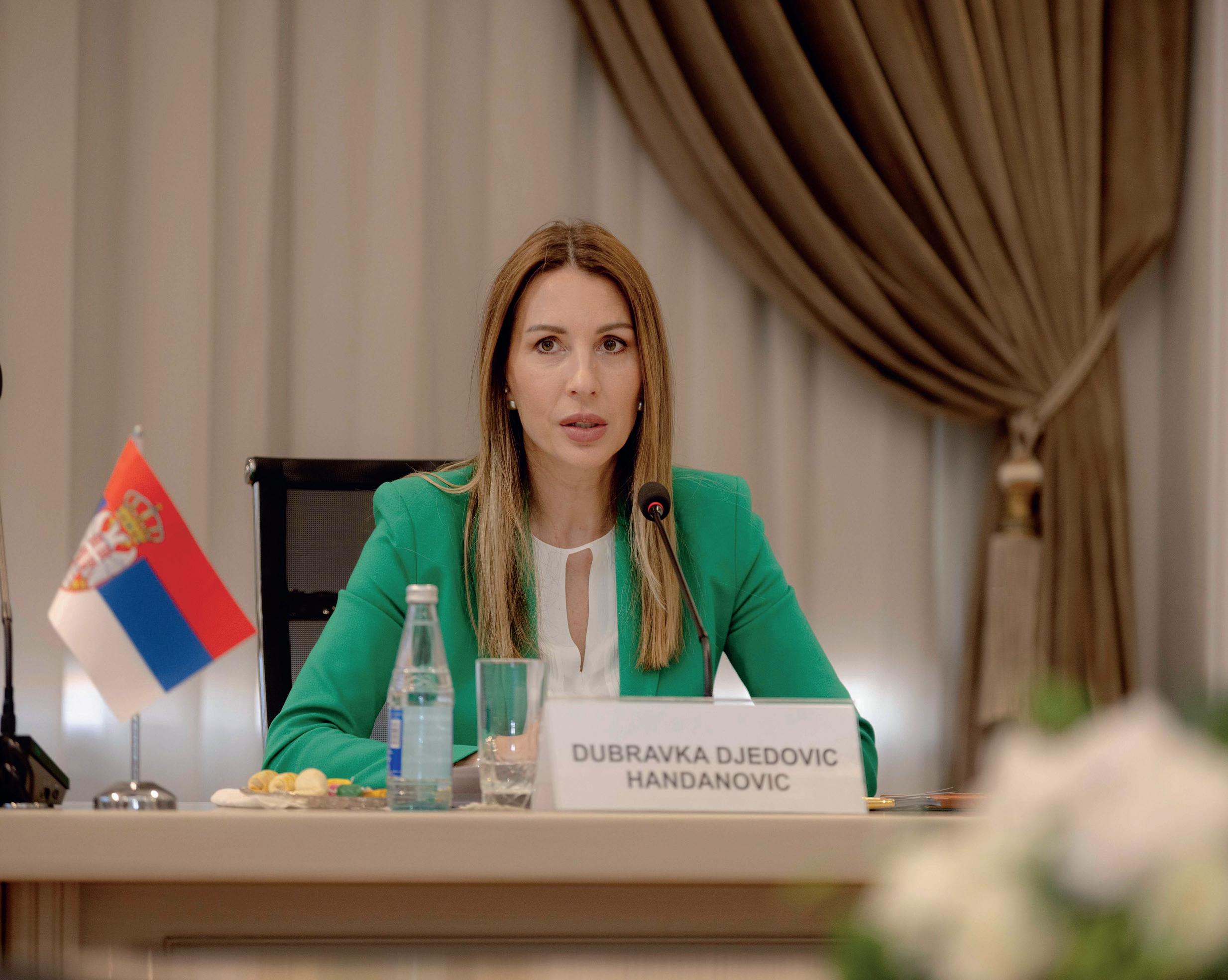
Serbian Minister of Mining and Energy
As European climate rules become increasingly stringent, Serbia is attempting to balance decarbonisation, energy security and industrial competitiveness
Europe’s green agenda and the introduction of the CBAM mechanism are raising new questions for countries that still rely heavily on coal. For Serbia, the energy transition is no longer solely a climate issue, but also a matter of industrial competitiveness, investment sustainability and the long-term stability of the energy system. In an interview with CorD, Dubravka Đedović Handanović, Serbia’s Minister of Mining and Energy, discusses the challenges of decarbonisation, the role of EPS, financing the transition and Serbia’s place within Europe’s future energy architecture.
How does Serbia plan to balance decarbonisation with preserving industrial competitiveness following the introduction of CBAM? — Serbia follows global, and gradually also European, climate policy. Due to the high share of coal in its energy mix, Serbia must carefully manage the decarbonisation process and changes in carbon pricing. The growth of variable renewable energy sources needs to be aligned with the system’s integration capacities and with the gradual replacement of coal by other forms of baseload energy, including gas-fired power plants, nuclear energy and, eventually, hydrogen where necessary.
CBAM, through which the EU seeks to protect its industry, will encourage the implementation of measures that can accelerate sustainable decarbonisation in Serbia as well. To support this process, Serbia has begun implementing the Law on GHG Emissions Taxation, with an initial carbon price of four euros per tonne of CO₂, significantly lower than the current EU ETS price of around 70 euros per tonne.
Maintaining a low carbon price helps avoid sudden increases in energy costs for citizens, while preserving industrial competitiveness, energy security and the operational stability of energy companies. By the time Serbia joins the EU, the country is expected to be prepared for integration into the EU ETS.
However, we still do not see a solution for countries with a high share of coal that would overcome the incompatibility between CBAM implementation and the functioning of interconnected electricity markets. This raises questions regarding market coupling with the EU, which remains one of the key objectives of European integration and the EU’s common energy policy.
How can Serbia secure a sustainable financing model for the energy transition?
— Sustainable financing of the energy transition requires a combination of funding sources, including the state, international financial institutions, commercial banks and the energy companies’ own resources. This approach is also embedded in the “Serbia 2035” development plan, whose objective is to make the country more energy secure, better connected to European and regional markets and positioned as a stable energy hub in Southeast Europe.
The total estimated value of projects under the plan for the 2028–2035 period amounts to approximately €14.4 billion and includes budget financing, loans and the companies’ own investments.
EPS is expected to receive a credit rating by the end of the year, which could improve its access to capital markets, including the issuance of green bonds. At the same time, the government is attempt-
strengthened its production portfolio through new green energy capacities, while the Bajina Bašta pumped-storage hydropower plant has been revitalised for the first time in more than four decades. The completion of desulphurisation facilities at TENT A and TENT B has also reduced harmful emissions at Serbia’s largest thermal power plants.
Additionally, the government is being asked to recognise up to 80 per cent of EPS investments in renewable energy sources as a tax credit. This would enable faster decarbonisation through a more financially sustainable transition model.
Where does Serbia see its competitive advantage within the green transition?
— Expanding generation capacities is a prerequisite not only for industrial growth, but also for
ing to design a transition model that does not significantly undermine citizens’ living standards or the competitiveness of the domestic economy.
How important is the transformation of state-owned energy companies to the success of Serbia’s green transition?
— There can be no strong energy sector without strong and stable energy companies. EPS has advanced the furthest in the reform process so far, recording more stable operations for the third consecutive year while continuing to invest in new generation capacities. Alongside the new 350 MW thermal unit in Kostolac, EPS has
the broader transformation of the economy towards new technologies and artificial intelligence. Without stable energy capacities, it is impossible to develop infrastructure such as data centres, whose electricity consumption is becoming increasingly significant.
The “Serbia 2035” plan envisages investments of around €6.5 billion in new generation capacities, including gas-fired plants, the Bistrica and Đerdap 3 pumped-storage hydropower projects, as well as more than 1.2 GW of new renewable energy capacity. Significant investments in transmission and distribution networks are planned in parallel.
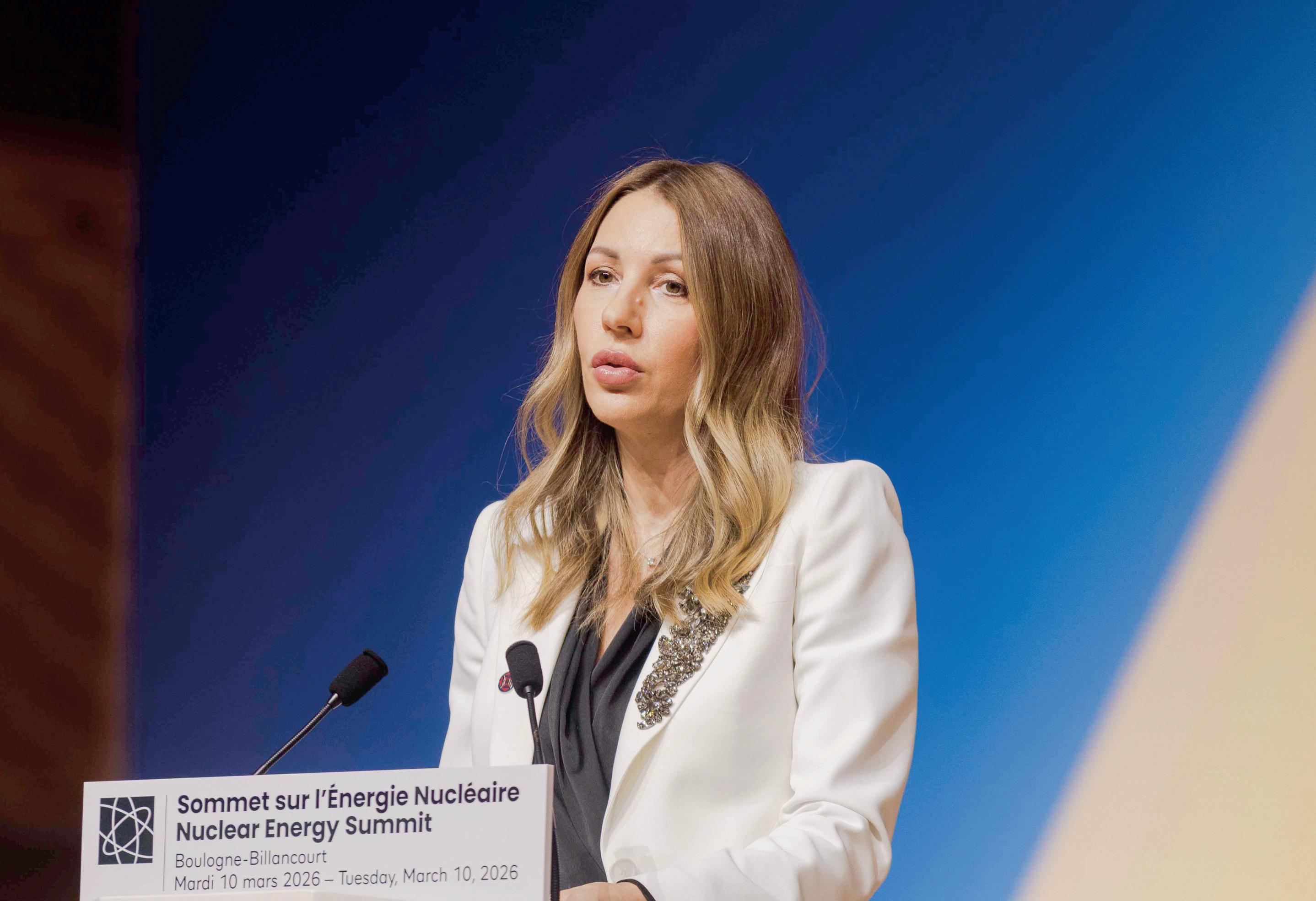
Serbia has also launched the development of a national nuclear programme, which is currently in its initial phase. The objective is to complete all studies required for the Government to make an informed decision on the implementation of the nuclear programme by mid-next year.
Is the green transition already reshaping Serbia’s investment landscape?
— The energy transition is already affecting the investment structure of Serbia’s energy sector. Four
years ago, Serbia had just over 400 MW of wind and solar capacity, while today — including prosumers — the country has more than 1,200 MW.
This growth is largely the result of regulatory reforms and market premium auctions, which have opened the door for stronger private-sector participation in renewable energy investments.
Serbia’s objective is that by 2030 nearly every second megawatt-hour of electricity produced should come from green energy sources.
THE OBJECTIVE IS TO COMPLETE ALL STUDIES REQUIRED FOR GOVERNMENT TO MAKE AN INFORMED DECISION ON THE IMPLEMENTATION OF THE NUCLEAR PROGRAMME BY MID-NEXT YEAR
How quickly could hydrogen become part of Serbia’s energy system?
— Serbia aims to become part of Europe’s hydrogen transition and is already working on the development of a regulatory framework and pilot projects with the support of the European Union and international partners. Amendments to the Energy Law adopted in 2024 opened the possibility for hydrogen to be systematically integrated into the development of the country’s energy sector.
At the same time, demonstration projects are being developed, including cooperation with Germany’s KfW development bank and a project at the Vinča Institute. Nevertheless, the development of the hydrogen economy remains at an early stage and will require long-term investment and deeper integration with the European energy market.
Sustainable construction is becoming a key factor in preserving long-term property value and securing easier access to financing
Rising energy costs and increasingly selective capital markets are reshaping the real estate sector, making sustainability an important indicator of long-term project resilience. Banks today place greater emphasis on energy efficiency, operational costs and asset liquidity, while investors increasingly view green standards as a prerequisite for easier access to financing. Aleksandra Čupić, Head of Real Estate Financing at Erste Bank Serbia, explains how these changes are redefining the market.
You recently said that sustainable architecture is no longer a “luxury upgrade”, but a factor in preserving longterm project value. How do banks assess that value today?
— Energy efficiency lies at the core of preserving long-term asset value and can be clearly measured through energy consumption per square metre. At the same time, buildings are designed around user needs, which means functionality, comfort and overall user experience are becoming increasingly important competitive advantages. Projects that provide greater comfort with lower energy consumption are ultimately more sustainable and market resilient.
Banks assess such projects as lower-risk because they support more stable operations for owners and investors. In addition, they achieve stronger market liquidity and retain value even under distressed-sale conditions, which makes them highly valuable as collateral.
Has the attitude towards green construction in Serbia changed — is it still mainly a reputational advantage, or is it becoming a condition for easier financing?
— In recent years, investors were able to place projects successfully even without major investments in energy efficiency, largely due to strong market liquidity and attractive real-estate returns. Today, how-
PROJECTS THAT DELIVER HIGHER LEVELS OF COMFORT WITH LOWER ENERGY CONSUMPTION ARE ULTIMATELY MORE SUSTAINABLE AND MARKET RESILIENT
ever, amid geopolitical uncertainty and tighter access to capital, sustainable construction is becoming an important factor in securing financing more easily.
Most banks in Serbia are now committed to sustainable finance principles, including monitoring energy performance and emissions, and are ready to support development, acquisition and energy-efficiency improvement projects.
What distinguishes a genuinely “green” project from one that merely follows ESG trends formally?
— A quality green project today must demonstrate measurable profitability,

stable cash flow and tangible operational effects, rather than simply formal ESG compliance. This primarily includes low primary energy consumption for heating, cooling and ventilation, as well as reduced GHG emissions.
Equally important are flexible spaces that can adapt to changing user needs, supported by advanced BMS systems that enable proactive energy management, cost optimisation and more efficient decision-making. International certifications such as LEED, BREEAM and WELL also add value by ensuring transparency and standardised reporting.
How can programmes such as SME Go Green help smaller companies see green transition as an investment rather than a cost?
— For many SMEs, particularly micro-enterprises, such programmes fundamentally change the perception of investment. Costs become subsidised investments with faster and more predictable returns. Initial energy-renovation costs typically range from EUR 50 to more than EUR 200 per square metre, depending on the scope of works, while the payback period is usually between five and ten years. Financial support and grants significantly lower entry barriers and shorten return periods.
At the same time, technical assistance is becoming increasingly important. Support in identifying efficiency measures, selecting technologies and supervising implementation often proves decisive, particularly because this type of practical expertise is still not widely available on the market.
From the circular economy to environmental infrastructure investments, sustainability is shaping the way companies produce, invest and grow
ndustrial production and sustainability are no longer opposing concepts. Companies seeking long-term growth are increasingly investing in solutions that enhance business performance while reducing environmental impact. Smurfit Westrock bases its development strategy on the principles of the circular economy, sustainable packaging solutions and investments that help preserve natural resources. Đurđa Radivojević, General Manager of Smurfit Westrock Avala Ada, discusses the results of this approach and the company’s plans for the future.
How do you align industrial production with sustainability principles?
— At Smurfit Westrock, sustainability is an integral part of our business strategy. We focus on improving energy efficiency, optimising resource use and advancing a circular model built around paper – a renewable and fully recyclable material.
This includes continuous investment in equipment modernisation, emissions control and efficient waste management, while maintaining the highest environmental standards. Through our Better Planet Packaging initiative, we develop innovative packaging solutions that replace less sustainable materials and help reduce plastic use wherever technically and commercially feasible.
We also focus on optimising our partners’ entire value chains – from packaging design that uses less material to improvements in logistics and transportation. In
doing so, we reduce CO₂ emissions while helping our customers achieve their own sustainability goals.
How important are investments in wastewater treatment systems?
— They are one of the key pillars of our sustainability strategy. In Serbia, we were among the first companies to invest in an advanced aerobic and anaerobic wastewater treatment system, which was further upgraded and brought to its current configuration in 2023.
The system enables efficient treatment of industrial water and its return to the natural cycle through biological processes based on microorganisms. This directly supports the preservation of natural resources, improves water quality and reduces environmental impact.
Beyond operational benefits, such investments contribute to raising environmental standards and promoting respon-
THE PRIMARY FOCUS IS ON DECARBONISING PRODUCTION PROCESSES THROUGH IMPROVED ENERGY EFFICIENCY AND THE GRADUAL TRANSITION TO RENEWABLE ENERGY SOURCES, SUPPORTED BY CONTINUOUS TECHNOLOGICAL DEVELOPMENT

sible business practices within the local community.
What are the key steps towards Net Zero operations and energy-sustainable production?
— Achieving climate neutrality requires an integrated approach across the entire value chain, from raw materials to the final product. Our priority is the decarbonisation of production through greater energy efficiency, increased use of renewable energy sources and continuous technological development.
At the same time, we are developing innovative paper-based packaging solutions that replace less sustainable materials and help reduce product carbon footprints. Digitalisation and logistics optimisation also play an important role in lowering emissions throughout transport and distribution.
By 2030, we aim to reduce Scope 1 and Scope 2 emissions by 28% compared to 2019 levels, cut water intake by 22% and reduce landfill waste by 24%. We also plan to invest more than $40 million in social and environmental initiatives within local communities.
In Serbia, these goals are being advanced through targeted investments, technological upgrades and close cooperation with customers, reflecting our belief that strong partnerships are essential to long-term progress and sustainable growth. I believe that one of our key responsibilities as business leaders is to consider the legacy we leave to future generations and to work together towards a more sustainable future.
At Saga, sustainability is built on responsible governance, continuous learning and a corporate culture that places people, trust and long-term value at its core
By Ivana Gajović, HR Director of Saga Group
In today’s business environment, companies are assessed not only by financial results, but also by how they manage people, processes, knowledge, partnerships, and their impact on the community. ESG recognitions therefore matter because they reflect not only what a company achieves, but also how those results are delivered.
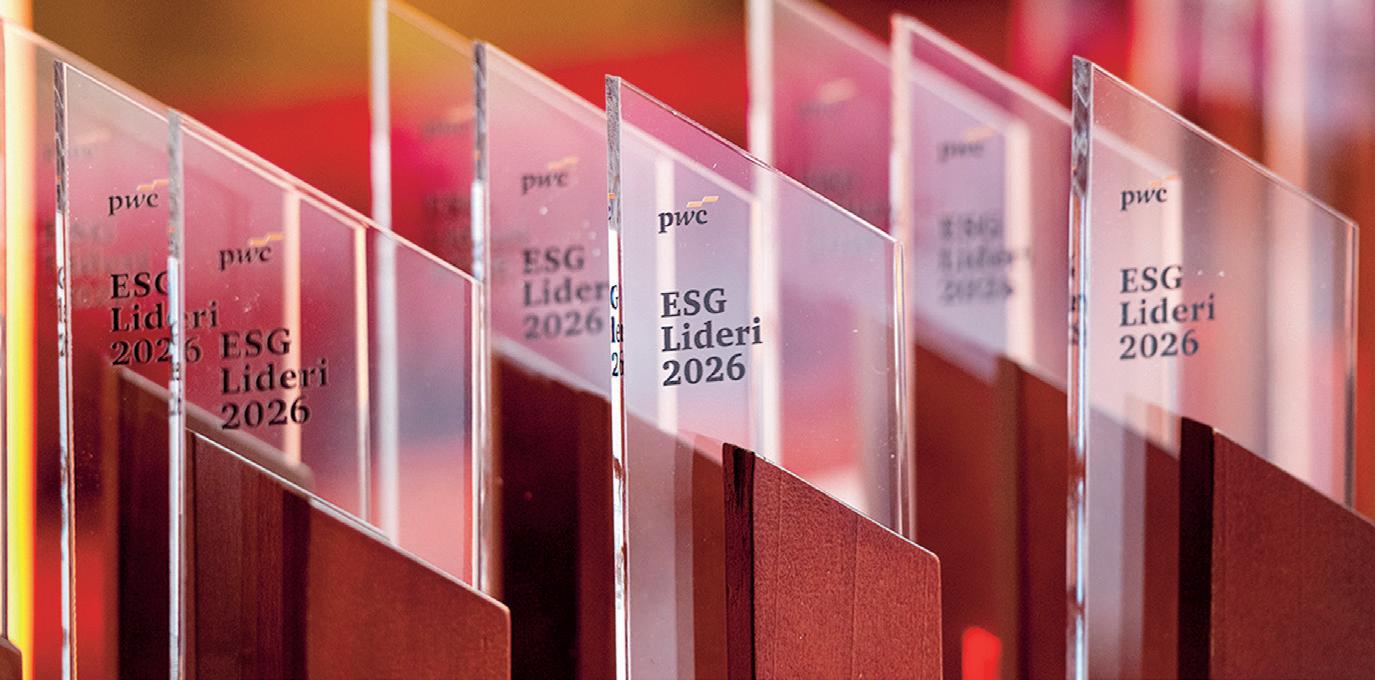
For Saga, the “ESG Leaders 2026” recognition, awarded by PwC Serbia in the category “Responsible Governance and Internal Training” for small and medium-sized enterprises, confirms the direction of our development. It is not merely recognition of one initiative, but confirmation that sustainability is built through everyday decisions, clear processes, ethical standards, knowledge, and continuous investment in people.

It is particularly important that this recognition follows the regional “Regional ESG Leader” award for Central and Southeast Europe, which Saga received for its positive impact on society. Together, they reflect something essential: responsibility does not begin only when a company presents itself to the market or community. It begins much earlier — in how we communicate with employees, develop their skills, make decisions, cooperate with partners, and build trust.
As part of the Noventiq Group, we operate in line with responsible corporate governance, professional integrity, respect
for human rights, equal opportunities, data protection, and ethical business conduct. For us, ESG is not a topic reserved for reports; it is a framework for long-term development, relationships with employees, clients and partners, and responsibility towards the wider community.
From an HR perspective, it is significant that internal training and responsible governance have been recognised. In technology, knowledge changes rapidly and the market requires adaptation. Yet the values that underpin a strong team remain unchanged: trust, collaboration, responsibility, a willingness to learn and respect for diversity. This is why we invest in employee development, education, and open communication.
Our philosophy, “People Move, Tech Improve”, best describes what we believe in. Technology advances when driven by people who understand its purpose, responsibility, and impact. We create solutions that transform clients’ businesses, while ensuring growth based on knowledge, integrity, and lasting relationships.
For the business community, recognitions such as these speak to reliability. Partnerships today are built not only on expertise and delivery, but also on trust, reputation, compliance and a commitment to responsible business practices.
For us at Saga, this award recognises the people who build the company every day through their knowledge, professionalism, and attitude towards colleagues, clients, and the community. It is also an encouragement to continue building an organisation whose growth is driven not only by technology and business performance, but also by trust, responsibility and positive impact.

KATARINA KULIĆ
Sustainability and ESG Expert, UN Consultant
CBAM is becoming far more than a regulatory obligation, with its impact already reshaping investment decisions, access to capital and long-term corporate competitiveness
According to Katarina Kulić, sustainability and ESG expert, the main gap between European climate requirements and the readiness of Serbian companies is no longer a question of
awareness, but of decision-making speed and implementation capacity. In this interview for CorD, she discusses the growing financial implications of CBAM, the challenges companies face and the risks of delaying decarbonisation.
Based on your work with companies and financial institutions, where do you currently see the biggest gap between CBAM requirements and the actual readiness of Serbian companies to respond?
— In the early stages, the main issue was a lack of knowledge –what should be measured, who is responsible and how embedded emissions are calculated. Today, the challenge is increasingly managerial. Companies understand that the issue is important, but many still postpone key decisions related to data, systems, responsibilities and investments until direct market pressure appears.
That delay is now becoming costly. The CBAM certificate price is linked to the EU ETS allowance price, and the first reference price published in April 2026 reached EUR 75.36 per tonne of CO₂. This clearly shows that CBAM is no longer only a regulatory requirement, but also a direct financial factor that will increasingly influence investment and financing decisions.
What are the biggest practical challenges companies face in implementing CBAM?
— The primary challenge is the availability and quality of data. Most companies still lack internal capacities for collecting and verifying emissions data across products, facilities and supply chains. Without reliable data, companies face the risk of inaccurate cost assessments and a weaker market position.
The second challenge is the absence of clear decarbonisation plans and technological transformation strategies. The third is financing – how to fund decarbonisation investments and under what conditions.
Financial institutions are increasingly integrating climate and CBAM-related risks into credit risk assessments, meaning companies without credible transition plans may face more diffi-
cult access to capital and less favourable financing conditions.
Do companies today fully understand that CBAM is not only a compliance issue, but also a factor shaping competitiveness and investment decisions?
— The most advanced companies already see CBAM as a signal of broader market transformation and are integrating it into investment decisions, technology choices and supplier management strategies.
The difference between companies that reacted early and those that did not is already visible. Those that started calculating emissions and building data-management systems earlier are now in a much stronger position when communicating with financial institutions and planning investments.
Companies that continue to react ad hoc often make decisions under pressure, without reliable data or a clear investment strategy. That usually leads to higher costs, less efficient technologies and weaker financing conditions.
Where does Serbia currently stand compared to the EU when it comes to implementing decarbonisation strategies, particularly in sectors such as steel, cement and chemicals?
— Serbia has made important progress in its regulatory framework, including the introduction of a national CO₂ tax from January 2026. This sends a clear signal that decarbonisation is becoming an important business issue for the private sector.
However, the difference compared to the EU becomes visible at the implementation level. The EU is significantly ahead in carbon-market integration, financing
mechanisms and industrial investments necessary for decarbonising sectors such as steel, cement and chemicals. Serbia is no longer at a stage where having a strategy is enough. The key question now is the speed of implementation. If the transition remains slow, there is a real risk that parts of the industry could lose competitiveness, access to EU markets and investment attractiveness.
Where do you see the greater risk today – among companies that have not yet started adapting to CBAM or among those that believe they have already completed the process?
— The greater risk is often among companies that believe the pro -
THE MOST EXPENSIVE
CBAM SOLELY AS A REGULATORY OR CUSTOMS ISSUE, INSTEAD OF AS PART OF A LONG-TERM COMPETITIVENESS AND DECARBONISATION STRATEGY
cess ends with calculating their carbon footprint and CBAM emissions. In reality, CBAM requires much more – from data quality and supply-chain management to investment planning and longterm decarbonisation strategies. The most expensive mistake is treating CBAM solely as a regulatory or customs issue. When companies approach it that way, key departments such as finance, procurement and production are involved too late, leading to delayed decisions, unreliable data and inefficient investments.