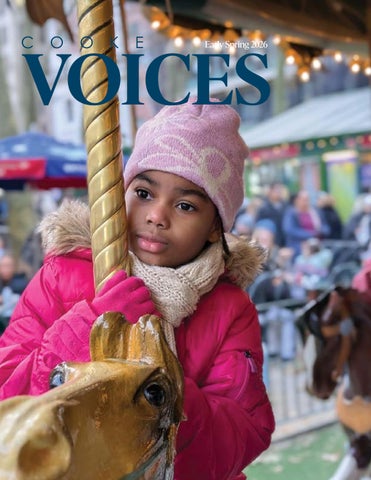
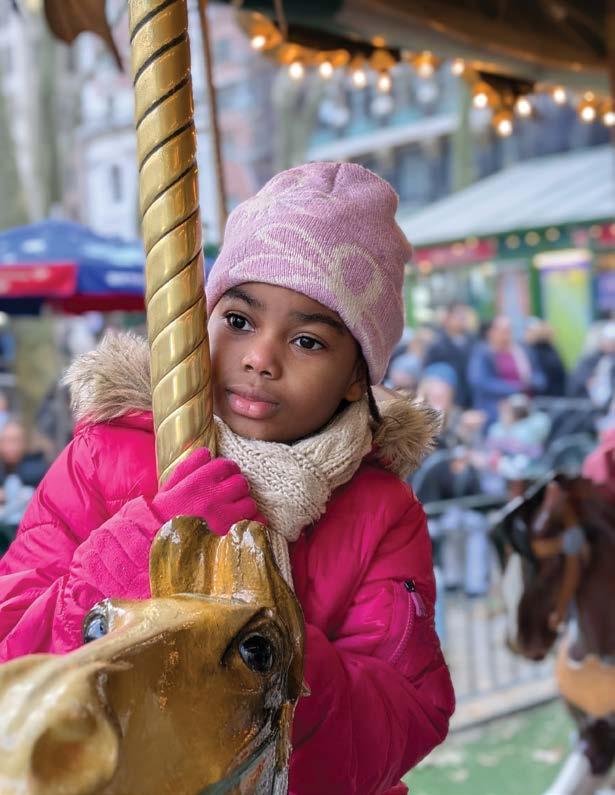
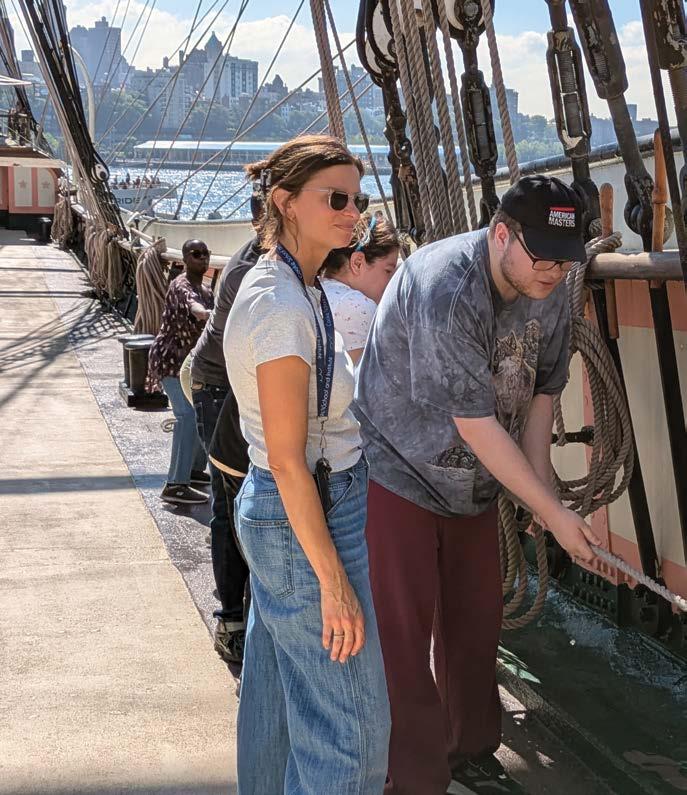
Welcome to the premiere issue of Voices, Cooke School and Institute’s new print magazine.
While preparing my remarks on Cooke’s internship program for our Food for Thought gala this year, I was once again reminded how much work goes into creating those student experiences. From the outside, the internships can appear seamless. Students arrive prepared, engage confidently with their responsibilities, and contribute meaningfully in the workplace. Yet those moments are the result of years of careful preparation, collaboration, and intentional teaching and coaching.
Over the past forty years, as Cooke graduates have moved out into the world to pursue purposeful and independent lives, the results of our work have become increasingly visible. We have been invited to present some aspects of our work along the way through speaking engagements, most recently presenting on Universal Design for Learning and on Executive Function at the 2026 Everyone Reading Conference held at the CUNY Graduate Center. We exchange ideas with school leadership colleagues. Through Cooke Institute, we have been fortunate to share our thinking with schools, cultural institutions, and educators interested in learning from our experience on a practical level.
What has perhaps been less discernable to the general public is the why behind our practices and the thoughtful methodology that guides them.
This magazine was created to open that conversation. Through the voices of our educators, students, and community partners, we hope to offer a deeper look at the concepts, values, and daily practices that shape the work of Cooke School and Institute.
In 2025, Harvard University Center on the Developing Child published a working paper titled Mattering in Early Childhood: Building a Strong Foundation for Life. The paper gives language to a founding principle that informs everything we do: the importance of every student recognizing themselves as someone who matters, someone whose presence and contributions have meaning in the lives of others.
Since its beginning, Cooke has practiced a healthy irreverence for tradition. After all, tradition once dictated that there was no place for our students in school or in society. The early work of Cooke educators was therefore not simply instructional but quietly activist: insisting that our students belonged in classrooms, communities, and workplaces, and then building the structures that would make that belonging real.
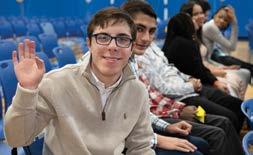
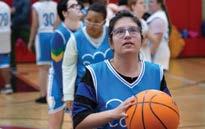
You’ve seen our students star in school musicals and basketball tournaments. A television spot featuring an interview with one of our Transitions students shows him tending plants at a bonsai shop. Photos capture students caring for neighbors at the food pantry and animals at an equestrian center. Maybe you have observed Cooke students giving speeches at graduations and performing in talent shows. Enjoy this glimpse at what occurs behind the scenes to make these experiences possible, along with insight into our pedagogy, philosophy, history, and culture.
Thank you for reading, and for being part of the Cooke community.
Warmly,
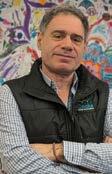
Dr. Francis Tabone Head of School
A BLUEPRINT
by Mary Clancy
On any given day at Cooke, beginning with the morning bell, you can watch students step off school buses or arrive on foot to the warm smiles of faculty and staff. They exchange hellos, high fives, and knowing glances as they head toward their classrooms, their internships, or their friends. Julia offers a triumphant high five. Julian runs in—his backpack slightly too big for his body. Alice strides forward to greet her teacher and complete their daily ritual. Joey shares excitedly what he plans to do after school.
These subtle, everyday moments are so much more than routine. It’s not just students moving through the hallways or following a schedule. It’s not as simple as opening a locker or picking a seat in the cafeteria. They are the daily practice of belonging, of agency, of purpose, of inclusion. They reflect what happens when a school community centers dignity and possibility at every turn.
This year, as the country marks the 50th anniversary of the Individuals with Disabilities Education Act (IDEA), the legislation that transformed the landscape of special education, we find ourselves at a moment of reflection. IDEA secured access and mandated inclusion. But 50 years later, we must ask a deeper question: what comes next?
FROM ACCESS TO BELONGING
Special education in America has always been a story of progress (sometimes slowly or seemingly out of order) and of persistent reinvention. The first
generation of advocates, Cooke’s founders among them, fought for access. As the story goes, Karen and Tom Robards approached their local school with their four-year-old son and asked what support could be provided for a young learner with Down syndrome. The school replied that there was none. So they gathered their friends around a kitchen table and asked the most essential questions: Where do our kids belong? How can we make a school for them? How do we ensure that students with disabilities are part of a community at all?
These are simplified versions of the profound reckoning our country was, and still is, engaged in. But at its core, this is what it came down to. And so in 1987, with the support of Michael Termini and the Archdiocese of New York, Cooke’s first class took shape: seven students with Down syndrome, five teachers and staff (including Karen Espinoza), and a willingness to try something new, something hard, and something deeply right.
From the beginning, Cooke has never wavered from its mission: to ensure that high-quality educational settings were accessible to all, regardless of diagnosis and independent of a family’s ability to pay tuition.
In the 1990s, with the introduction of prospective funding for families seeking specialized placements (Connors v. Mills, 1998), Cooke’s ability to serve a diverse range of students expanded significantly. What began as a handful of classrooms tucked throughout the city grew into enough classrooms to envision a standalone school of our own. In Cooke’s first 20 years, our founding families and principal leaders laid down the road for something much larger than a few classrooms that accepted students who fell outside the margins.
The next generation fought for inclusion, for access to peers and friendships, for high-quality teaching, for a curriculum that offered rigor and connection to the wider world. IDEA’s 2004 reauthorization ushered in expanded IEP supports, ICT classrooms, and accommodations that facilitated access to standards. At Cooke, this era brought the formation of our first buildings that were our very own. Cooke Center Academy (CCA) launched in 2005 with a 9th grade class, a prime SoHo location, and a team of educators ready to build (sometimes, literally) a standalone program from the ground up. CCA was a home for our first Transition Coordinator, our Off-Site Education Director, departmentalized schedules, and the cohort model that followed soon after.
Each step continued to echo the same idea that has guided Cooke since its founding: our students belong. In high school, that means you can be the star of the school play, be on the basketball team, attend a school dance.
Special education in America has always been a story of progress (sometimes slowly or seemingly out of order) and of persistent reinvention. The first generation of advocates, Cooke’s founders among them, fought for access.
As national debates about the future of special education intensify, Cooke offers a blueprint.
In just a few years, we realized that four years wasn’t quite enough time and knew that the law offered formal education through age 21. We saw how much growth could happen in four years and wondered what we could offer if we had a few more. Full year internships? Young Adult Living? More time for community integration, peer models, functional academics. SKILLs (now Transitions) followed soon after, moving into an unused office floor on 29th Street with access to nearly every transit option imaginable.
Following a decade of building this space for high-schoolers and our young adults, we saw the value in having a home for each division. The schools leaders and Board saw what was coming together: communities of students, families, and staff that were laser focused on school programs that made sense for our kids, that took them seriously, knew them well, and saw potential.
We expanded to a building for our K-8 students and opened the Cooke Center Grammar School (CCGS) in 2013. In younger grades, you can find your best friend, have a crush in middle school, take care of a class pet, and play at recess. New rituals and traditions were solidified in the fabric of the Cooke folklore, from Harvest Fest to the Halloween parade, winter concerts and town meetings. Our youngest students were no longer guests at another school’s concert or assembly, they were the stars of their own show. CCGS was their school, with its own version of school pride.
While these moments may seem on the surface to be simple, when you think that at the time Cooke was creating these programs, our students were denied access to school at all just 30-40 years before, you can see how important this work has been to our children and their families, but also our society.
But what does belonging mean when, just a generation earlier, students with disabilities were denied access to school entirely? For Cooke, belonging meant creating a space where community, independence, and identity could take shape—where families, educators, and leaders could build something new, something designed specifically for learners who had long been overlooked. In these years, Cooke deepened its community partnerships and became widely recognized for pioneering work with students whose support needs extended beyond what most “learning disability–focused” schools could provide.
If access was the first step, and inclusion the second, then belonging must be the third. As IDEA reaches its 50th year, Cooke reminds us that the promise of special education is not fulfilled by opening doors but by creating places where students can build lives of purpose, connection, and independence. This is the work ahead—and the work Cooke has been quietly leading all along.
THE NEXT 50 YEARS
In 2020, Cooke opened the doors to our gorgeous facility at 1713 Madison Avenue. This was not merely an expansion of our program, it was an act of imagining possibilities. For decades, our classrooms were spread out over borrowed spaces throughout the city, stitched together with IKEA furniture, some duct tape, and a whole lot of heart. Bringing our community together, under one roof, was the culmination of our founders’ vision—something they could not have imagined in 1987.
And so, the Board and the Cooke faculty got to work again. Scouting locations, meeting with real estate consultants and architects. Once a location was secured, each department held focus groups asking “what would a dream space look like?” Not only were we focused on ADA compliance and the typical “bright, clean, cheerful” spaces, but we were able to talk through what a classroom should look like for 12 students with sensory regulation needs. How many OT/PT gyms would serve a full school with 240 students? What did a daily living lab need in order to be used 40 periods a week? Could we have a full size gymnasium? Spaces for outdoor play? The answer was yes, of course, why couldn’t our students have a real school?
Madison Avenue opened with a small, socially distanced and fully masked ribbon cutting ceremony in September of 2020. Certainly not the celebration we imagined, but significant nonetheless. You could say that’s where Cooke’s growing and revising could stop, but of course that’s not the way. In just the past five years, Cooke’s Transition program has expanded to add a fourth year program through age 22, our Alumni programming grew to encompass day
programming in Life Skills, Social Enrichment and Academics, and the Board is on the hunt for a new location for the programs housed at MacDougal Street since currently, the facilities are bursting at the seams.
The field of special education now faces a pivotal moment. As national debates about the future of special education intensify, Cooke offers a blueprint. We are a living reminder that the most powerful progress comes not from policy, but from communities who believe enough to reimagine something new, and something better. We have already had the opportunity to ask hard questions and do hard work. Cooke’s standalone schools, serving over 300 students annually, our growing alumni networks, and our thriving Institute are a testament to what the next 50 years of special education can look like: places where everyone belongs and thrives.
We are hopeful this magazine will become part of the next chapter of special education and of Cooke. The next 50 years of education will ask new questions, bring new leadership, and new policies, new successes and new bumps in the road. It will require a space for stories, for sharing and connecting,
for advocating—parts of Cooke’s story we already know well. Cooke’s journey from seven students around a kitchen table to a multi-campus community, is only just the beginning. Cooke’s standalone schools, serving over 300 students annually, our growing alumni networks, and our thriving Institute are a testament to what the next 50 years of special education can look like: places where everyone belongs and thrives.
Voices Coeditor Mary Clancy, EdD joined the Cooke community in 2007 as a special education teacher at what was then known as Cooke Center Academy. Since then, she has served in a range of roles at Cooke, most recently as Associate Head of School. Now an Assistant Professor of Education at SUNY Empire State University, her work reflects a deep belief that education should expand opportunities for all students and prepare learners, whether kindergarteners or graduate students, to thrive in the world beyond the classroom. Though she has stepped aside from her leadership role at Cooke, she is thrilled to be supporting behind the scenes, forever one of Cooke’s biggest cheerleaders.
“The city is our students’ classroom. Offsite learning experiences are intentionally woven into rich, thematic investigations and have always been a defining feature of the Cooke School curriculum.”
— Head of School Francis Tabone, PhD
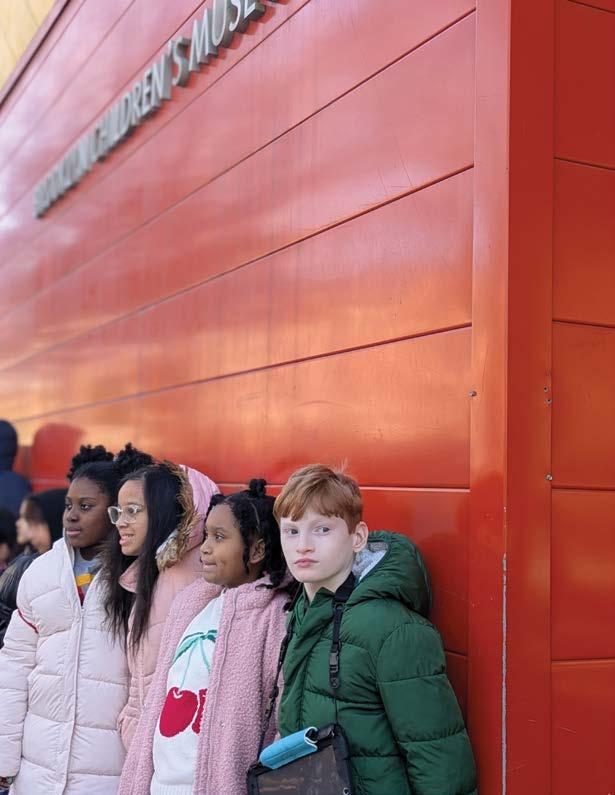
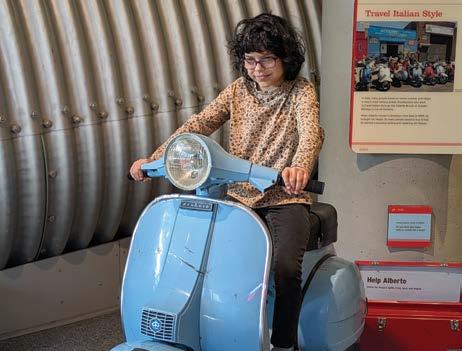
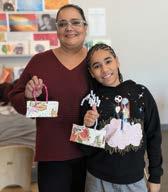
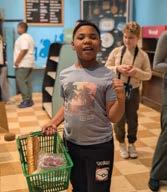
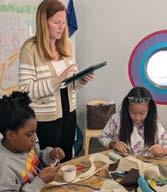
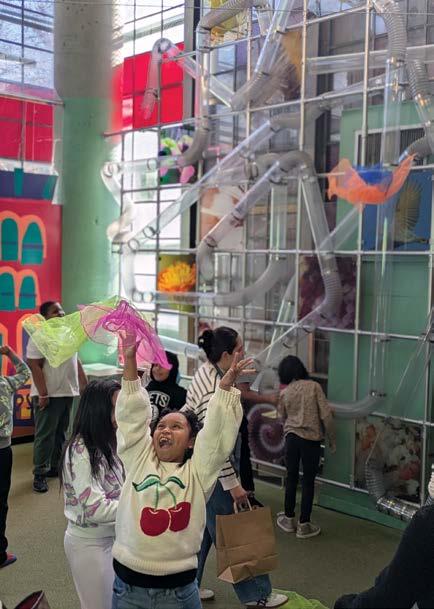
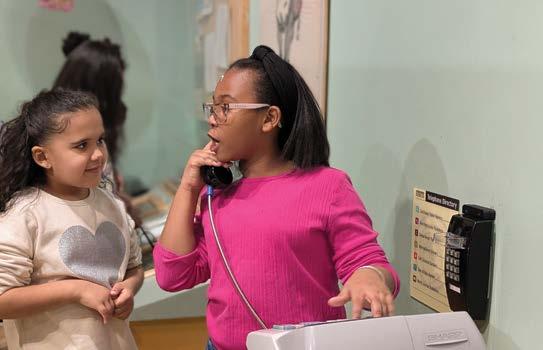
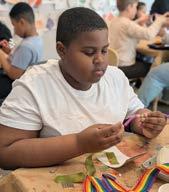
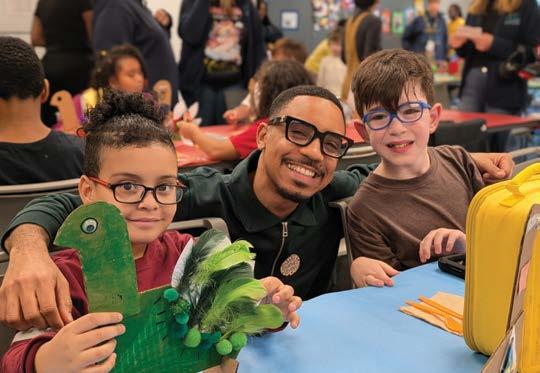
In addition to investigating the kid-sized shops representing Brooklyn’s diverse community, an air maze, and ocean life area, students were introduced to the concept of adornment in a museum-guided program. They learned that people across the world use adornment for protection, self-expression, and celebration. Then, they had the opportunity to create their own adornments in the art studio!
“My students are studying the seven continents of the world this semester, and the Brooklyn Children’s Museum’s cultural marketplace provided the perfect fit for their classroom learning.”
— Grade 4/5 Head Teacher
Christie DiStefano
CLUB S !
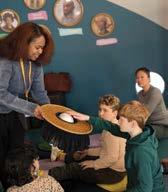
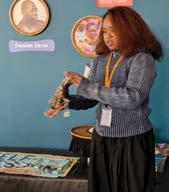
Students were invited to examine and touch a haathphool, a piece of jewelry worn on the hand and wrist by brides in India and northern Pakistan. The piece is both decorative and traditionally believed to offer protection, as the small bells in the harness are said to ward off negative spirits. They also viewed a traditional hat worn by farm women in Singapore, designed to provide protection from the intense sun.
Back in 2008, before we had a robust (and free!) after-school program and while the Upper School was still taking shape, one of the most requested class periods was simple: Electives.
Of course it was. The chance to choose an activity based on personal interest, to self-select peers, and to spend dedicated time immersed in something not entirely teacher-directed is a hallmark of adolescence. It signals growing independence, identity, and belonging.
Limited by funding and bus constraints, we couldn’t build a traditional after-school program at the time, so Clubs was born! For more than fifteen years now, every Friday during 8th period, Upper School students have had a standing block in their schedules dedicated entirely to them: a self-selected, interest-based, peer-centered way to end the week. Over the years, dozens of clubs have taken shape, each one reflecting the passions of our students and the special talents (and generous time) of our staff. Now, Clubs has even expanded into Middle School grades with semester-long collaborative projects that bring together peers, related services, and project-based learning.
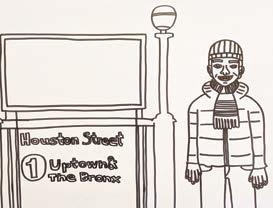
Some favorites along the way include, Subway Club, formed by a group of transit enthusiasts who diligently researched weekend service changes, designed hand-made train announcement posters, and ended each week with conductor-style announcements over the PA system.
Karaoke Club often concludes in full-group sing-alongs of whatever pop anthem topped the Billboard Hot 100 that week. There’s not a commute home on a Friday where you aren’t humming that tune.
Student Council provided aspiring young leaders opportunities to plan school initiatives—and even participate in the nationwide 2019 Walkout Against School Violence.
Photography Club gave budding artists space and strategies to capture their perspective of the world and see their work showcased in the Yearbook.
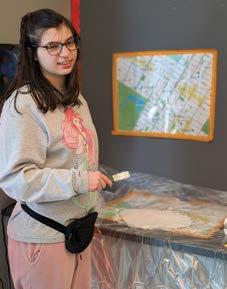
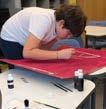
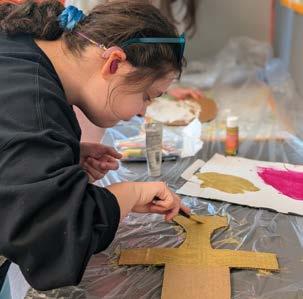
This year’s Stage Crafts Club (pictured above) continues that tradition of creativity and contribution. Students play a key role in our annual musical, designing and constructing the props and materials that bring the production to life. For some, it’s a first step into the world of theater. For others, it’s a meaningful way to be part of the magic, even if stepping onto the stage doesn’t feel right this year.
Clubs have always been about more than activities. They are about choice, autonomy, and independence, some of Cooke’s most important values!
— Mary Clancy
Contributing to the Community
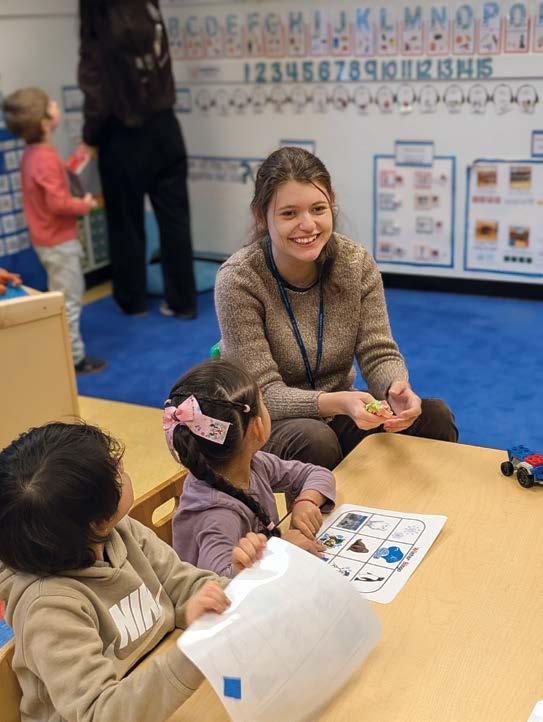
Cooke Transitions student Sara Popa had an idea on the spot while assisting with Alphabet Bingo in her internship at the Association to Benefit Children: Cassidy’s Place. Sara offered the threeand four-year-old students playful hints to support their learning in the game. When the head teacher selected the letter “L,” Sara asked the students, “What is yellow and a fruit?” For “Z,” she followed with, “What is an animal that has black and white stripes?”
“What is significant here is that Sara came up with the idea on her own and then implemented it, without any verbal or nonverbal prompting from me,” says Julia Sternberg, who serves as Sara’s Community Inclusion Assistant (CIA) and is the Lead CIA at Cooke Transitions. “She is actively engaged in her role and independently seeking opportunities to contribute value.”
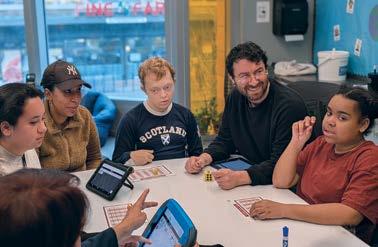
Sara’s initiative, support of the head teacher, and full engagement on the job, demonstrate three of the ten skill areas addressed in the Work Readiness Assessment (WRA). Adapted by Cooke from a workforce assessment protocol developed by the U.S. Department of Labor, the WRA measures a student’s potential employability skills, levels of independence in workplace settings, and need for accommodations and support from Cooke job coaches. CIAs, Related Service Providers (RSPs), and the Chair of Vocational Services collaborate to complete these objective evaluations twice annually, underscoring their programmatic significance.
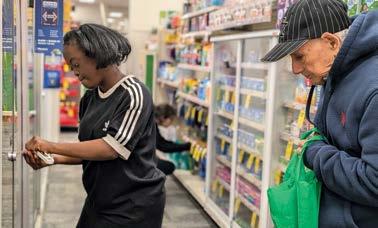
WRAs assess transferable soft skills applicable across internship placements and future employment settings. When referencing a position with tasks like unlocking cabinets at CVS or pulling weeds in the park, Julia adds, “these soft or interpersonal skills may not be the most obvious ones, but they are vital. Students can apply them to any job.” Julia also teaches Vocational Forum, a course where Transitions students unpack and practice these skills in the classroom.
The assessment serves as both a longitudinal record of student development and a framework for identifying targeted vocational objectives and goals. In addition to functioning as a benchmark for growth
and career planning, final WRA results may support students’ post-graduation employment efforts, as they are recognized by many potential employers and partner organizations as credible, industry-informed instruments.
WRAs capture proficiency levels in the following skill areas: attendance, punctuality, workplace appearance, initiative, quality of work, communication, response to supervision, teamwork, critical thinking and problem-solving as well as knowledge of workplace culture, policy, and safety. Continually evaluating these competencies places them top of mind for the CIAs who accompany students on their internship sites, where they are observing, reinforcing, and supporting ongoing capacity building. In their findings, CIAs assign numeric ratings on a fourpoint scale to indicate levels of skill attainment and provide anecdotal commentary and supporting evidence for their determinations.
Level One: Did not demonstrate the skill
Level Two: Demonstrated the skill with the maximum number of prompts and cues
Level Three: Demonstrated the skill with the minimum number of prompts and cues
Level Four: Demonstrated skill independently
An ongoing challenge for CIAs is avoiding inadvertent cueing. Because the degree of verbal and nonverbal prompting is central to the accurate evaluation of student skill development, and many students are highly responsive to such cues, CIAs are advised to maintain neutral posture, facial expressions, and speech patterns, including tone and intonation on the internship site.
“We meet each student where they are. In the beginning, might act as the student intern’s co-worker where am directly modeling behavior alongside them,” says Julia. “Then, as the student becomes increasingly independent on the job, will pull back and become more of an observer. At that point, I’ll only step in if necessary.” CIAs usually start with visual cues to elicit a desired behavior from a student since verbal prompts are considerably more intensive than visual prompts.
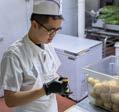
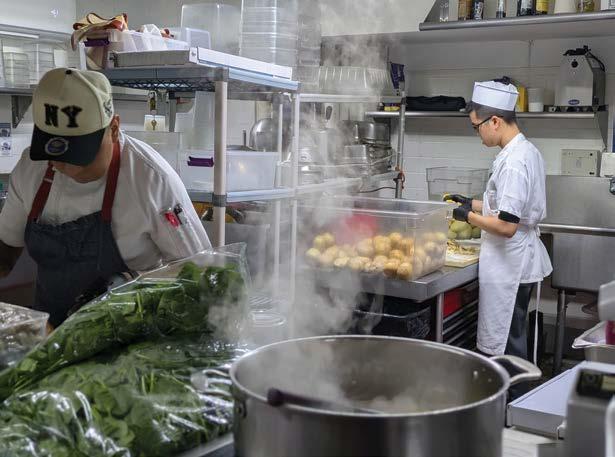
Meeting students where they are means recognizing each student’s strengths and interests, anticipating their individual challenges, and accounting for the specific demands of a given work setting. In the midst of the tidy and busy Steak Frites Bistro kitchen, CIA Michele Edouarzin softly coaches intern Henry Chiu on the cleaning procedures for his workspace and the need for spatial awareness of the ovens and hot surfaces. She keeps an eye out for knives
“ We meet each student where they are. In the beginning, I might act as the student intern’s co-worker where I am directly modeling behavior alongside them.” —
Lead CIA
Julia Sternberg
CIA Michele Edouarzin is pictured here
student intern Henry Chiu
and fellow cooks carrying loads in and out of the walk-in freezer. Perhaps more importantly, she encourages Henry to self-advocate when he has questions.
Recently, after several hours of peeling, interrupted only by a lunch break in the lovely restaurant upstairs, Henry finished filling his plastic bin with peeled potatoes. He checked his watch. “27 more minutes!” he said, “What’s next?!” At Michele’s prompting, he approached his manager with the question. “Oh WOW!” Henry happily responded when the chef gave him a stack of french bread to cut in his remaining time.
“Students need to feel comfortable speaking up and asking questions or advocating for support,” says Julia. “Having a disability is part of their identity, but it does not define them. This attends to their pride and sense of self. It’s about being able to say to themselves, ‘This is what might need to succeed, and deserve to have it.’”
Julia shares an example: Mercy Sanni is a third-year intern whom Julia coaches at Brooklyn Kindergarten Society in their administrative office. On her own initiative during her orientation, Mercy chose a paper and pad from the stack displayed on the conference room table to record her notes from the company slideshow. Later that day, she inquired about the tea bags in the break room and was told they were free for employees. Mercy has now incorporated enjoying the complimentary tea as part of her regular lunch routine.
“Mercy takes great pride in holding a job. She wants to be out there doing her best every day. Once walk her through any process up to three times, she’s unstoppable.”
Janet, Mercy’s supervisor, assigned a stack of handwritten thank-you notes to fold and place in their matching envelope. Mercy performed the threepart fold flawlessly after Julia’s demonstration. “In general, if a mistake is pointed out, Mercy doesn’t repeat it. She is consistently careful, produces very neat work, and, once you show her, she’s off and running. just have to stand back,”
“
27 more minutes!
What’s next!?”—
Transitions student
Henry Chiu
“Employing Cooke interns creates a different vibe. Providing someone with meaningful work and watching them thrive in the kitchen instills a sense of community and pride among our staff. I know I feel it.”—
Steak Frites Manager
Todd McMullen
The intentionally neutral stance, the calm demeanor, and the unobtrusive presence that CIAs maintain on site can mask the intensity of their work and their deep commitment to the student’s successful independence. At their best, the CIA may look like they are just standing by and doing nothing! In reality, that quiet restraint is purposeful in pursuit of the ultimate goal for Transitions graduates: To confidently step into the workplace and succeed on their own.
A Win-Win for Cooke Sponsorship Partners
“The best cooks are people who love to cook,” says Todd McMullen, manager of Steak Frites. “Prior to Henry’s interview with us, Jen [Cooke Transitions Chair of Vocational Services Jennifer Dinney] mentioned that he frequently emailed photos of the dishes he prepared at home to his teachers. That indicated a lot to me. He has done a wonderful job in our kitchen. Henry understands the importance of prep work and clearly enjoys it!”
Henry is the bistro’s second Cooke intern. “Emery, our intern last year, was very different from Henry, but both of them have been a perfect fit!”
“Students choose the type of work they want to do, and then meet with them individually to discuss what would be the best fit. We put a great deal of thought into matching each student’s strengths and talents with the job requirements and culture of the sponsorship site,” says Jen.
Several years ago, Transition student Molly Gerstein-Hairston’s two mothers, who were regular Steak Frites customers, introduced Todd to the concept of Cooke interns. Although he initially had concerns about insurance and student safety in the
kitchen, Jen assured him in subsequent meetings, that Cooke would manage all necessary paperwork, cover associated costs, and provide on-site job coaching.
When Inclusion Strengthens the Whole Community
“Employing Cooke interns creates a different vibe,” says Todd. “Providing someone with meaningful work and watching them thrive in the kitchen instills a sense of community and pride among our staff. I know feel it.”
Cassidy’s Place Volunteer Coordinator, Brenda Viloria, echoes Todd’s sentiments. “Cooke interns provide one-to-one interactions with our students and support larger group activities. We were looking for someone with strong leadership skills who would work well with the children and actively participate in implementing our lesson plans. Sara holds a valued role in the classroom in assisting with daily activities.”
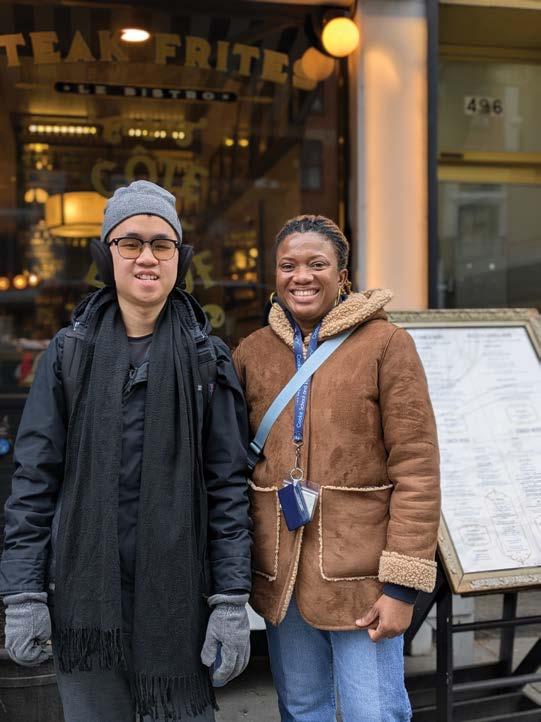
From top, Transitions student Henry Chiu with Steak Frites manager, Todd McMullen; Transitions student Sara Popa with Lead CIA Julia Sternberg; and Mercy Sanni performing customer service duties for her internship last year at CVS.
A Man for All Seasons
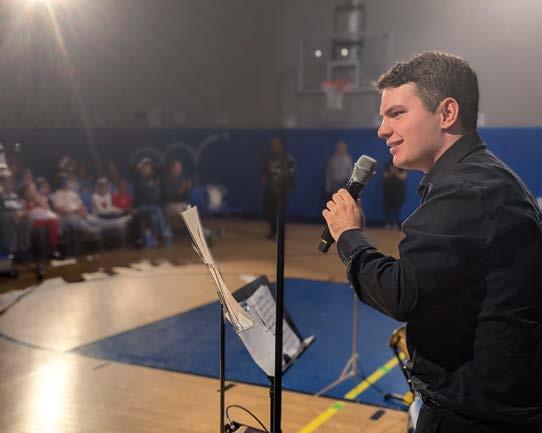
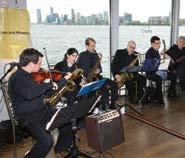
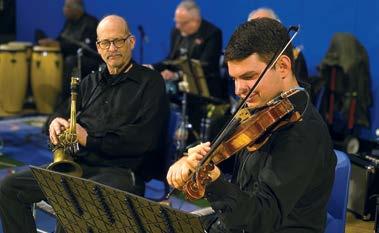
This December, when his jazz group, SAM (Special Audiences and Musicians, Inc.), visited Cooke’s Madison campus for the third time, Cooke alumnus Lev Garfein served as master of ceremonies in addition to his roles as ensemble violinist and guest instructor.
SAM’s well-received concerts feature jazz standards from the Great American Songbook and are conducted for Cooke’s Lower and Middle School students, with a separate performance for the Upper School.
To prepare for his new role as MC, Lev drew upon his own memories as a Cooke student. “I’ve learned to take what learned here at Cooke and apply it in the real world,” says Lev. “I remember wishing that the musicians had shared more information prior to their concert when Jazz at Lincoln Center visited our school.” In the weeks leading up to the concerts, Lev makes presentations in appearances in Cooke music teacher Vera Fichtelberg’s classrooms as a guest instructor and mentor. This year, he previewed several of the songs planned for the program during those presentations to enhance the students’ experience.
“It’s really special when a former student comes back to teach your class!” says Vera. “The students now look forward to his visits both as a teacher and as a member of the band.”
Lev also polished his emcee skills independently, playing music on his device and rehearsing how he would introduce each piece. “I even practiced in the shower!” he shares. “I was inspired by watching YouTube videos of musicians and hosts. When asked the audience to repeat something after me, and said ‘Let’s try that one more time, just to be sure!’ to encourage them, that was a direct quote from a video of Dan Zanes performing live in concert. Dan Zanes is a singer/ songwriter I have performed with in the past.”
Lev wrote his own speeches and considered his audience in the delivery. “I changed the way I spoke depending on the environment. introduced songs slower for the younger students and with high energy for the Upper School,” says Lev. “I know that there are distractions in the room for the students because have distractions myself as a performer. always choose a focal point so can stay in the zone. (In this case, I focused on the basketball hoops!) I tried to make it as easy as could for students to pay attention by giving engaging remarks for each song and inviting them to dance and clap along.”
On the day of the concert, Lev had to exercise flexibility. Despite his careful speech planning and practice, the ensemble was called to respond to a last-minute request from a Cooke staff member. Deputy Facilities Manager Mike Ortiz asked them to add the song Temporal to their setlist.
“Naturally, we wanted to accommodate his request,” says Lev. “It was such a huge compliment that he asked us! Temporal translates to ‘Big Storm’ in Spanish, and the song felt especially fitting given the weather that morning.”
“They played it so well the last time,” says Mike. “That song brings back childhood memories from my holidays in Puerto Rico.”
The band also decided on the spot to add Jingle Bells to the program for the younger students. Lev adjusted to both updates accordingly.
In addition to being held at his alma mater, this concert held another fun surprise for Lev when Trinity Allen, an old friend from Cooke, appeared in the audience. Her family was in town from Florida for the holidays, so she came to see Lev play.
“I am happy to return to Cooke regularly,” says Lev. “I’m happy to report that we’ve been asked to perform again this year at Cooke’s Food for Thought gala. We’re really excited!”
“ It’s
really special when a former student comes back to teach your class. The students now look forward to Lev’s visits both as a teacher and as a member of the band.”
— Cooke
Music Teacher
Vera Fichtelberg
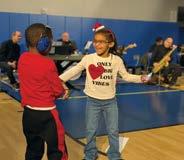
Lev has played violin for Cooke events for over a decade. Above, he is performing with his band, SAM, in the school’s gym this winter, and in the small photo at right, 10 years earlier at the 2015 Cooke Center Family Picnic. Founded in 2017, SAM presents jazz concerts for assisted living institutions, hospitals, and nursing homes, providing playing opportunities for musicians with disabilities as well as senior musicians.
Lower School students demonstrated some swing dancing moves in response to the music.
For the second year in a row, Lev’s band will perform at Cooke’s Food for Thought Gala. The 2026 Food for Thought Gala, Cooke’s anual fundraiser, will be held on Wednesday, May 6. Visit cookeschool.org for more information and to purchase tickets.
MISSION IN ACTION
Reduce, Reuse, Recycle
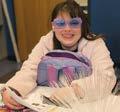
The morning after introducing the concept of sustainability to his science class, Science Department Chair Evan Bieber was approached by one of his students who proudly presented her new reusable water bottle.
“Of course, Valentina bought a pink glitter water bottle,” says Evan. “I always say that if any student has a brand, it’s Valentina! If it is pink, purple, unicorn, or covered in sequins, it’s hers!”
“Valentina is bright, sweet, and kind,” shares Evan. “And she is good at advocating. As an introvert, she is sometimes quiet in class, but know that she is listening. She certainly heard the message in science that day.”
The class concluded their unit on sustainability with a visit to Beacon’s Closet, a vintage clothing store with locations throughout New York City and Brooklyn, to practice thrifting firsthand. As a teen who loves fashion, Valentina knew exactly what she was looking for. Upon entering the store, she made a beeline for a pair of purple flower sunglasses to go with her white fur coat.
“Valentina is also a good, caring friend. I’ve observed her exhibiting support for her classmates many times. Her two best friends are in another cohort this
year, and they do not share recess or lunch,” says Evan. “They get so excited when they happen to pass each other in the hall. They hold hands and jump in a circle. It’s like a reunion every time!”
“Valentina knows that she makes a difference in the world. She cares for her friends as well as the wider community.”
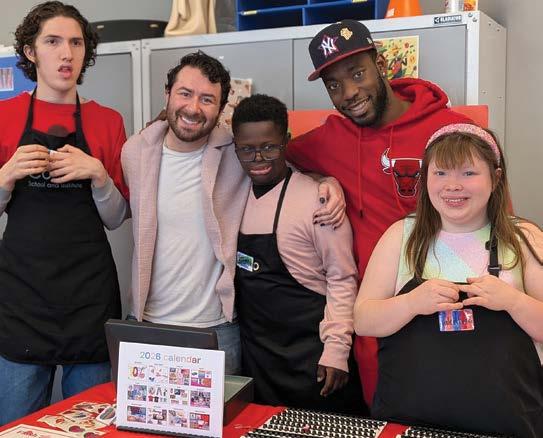
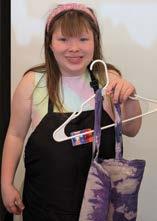
Pictured here and above: Evan Bieber’s science class tie-dyed canvas totes for their booth at the Hearts & Crafts Fair in keeping with the sustainability theme. Students and faculty across departments collaborated to create the merchandise and refreshments for sale at the fair.
PARENT SCHOOL ASSOCIATION
A Beverage Truck Makes a Surprise Visit to Cooke School!
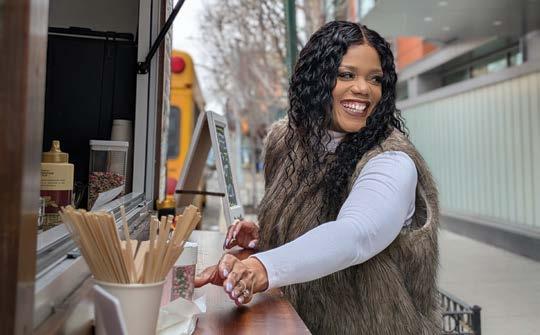
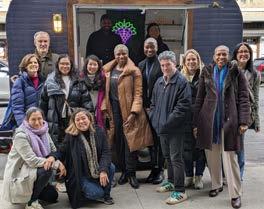
Beverly James-Reese, parent of Cooke senior Langston, collaborated with Associate Head of School Dr. Gardner and led the Cooke parents in a new initiative. The Winter Appreciation Day at the Madison campus was created to celebrate and thank Cooke’s dedicated staff with a “grand surprise” fully funded with generous donations from K-12 Cooke parents. The mobile hot chocolate and coffee truck, The Grapevine Mobile Bar, served complementary warm drinks for two hours outside the main entrance.
“Throughout my four years at Cooke, I have been deeply impressed by and grateful to everyone who has inspired, taught, welcomed, and cared for Langston. The beverage truck was my gesture of appreciation. The generosity of parent support was so great that funds remained to also contribute to the Teacher Appreciation Luncheon in the spring.”—Beverly James-Reese
Rebecca Ramdass
Get to know Cooke’s new grade 4/5 head teacher
I am so happy to be teaching here at Cooke! It is such a pleasure to wake up every morning to come to work each day. We do great things that continually inspire me. The students are cherished, and you get to watch the growth over time.
1. What attracted you to teaching as a profession?
had volunteered as a tutor for Middle School students while still in college, helping them with their reading and math homework.
My path to special education was motivated by my work after graduation in an ICT [Integrated Co-Teaching] classroom. I was the general education teacher and found that it was challenging to meet the needs of the students in my classroom due to my limited expertise in special education work. This led me to pursue a special education certificate; wanted to meet the needs of all learners in my classroom.
2. How would you describe your teaching philosophy?
Students come to us with many talents and gifts; therefore, think it’s important to celebrate each individual student and teach the importance of student voice. As a classroom team, we work to empower students to advocate for their needs. place a large emphasis on community. I teach students the importance of working together and being inclusive. As a team, we encourage students to support their community in many ways, from helping another student to cleaning up around the classroom or school building. want students to leave my class feeling confident and empowered. want
them to understand that they play a significant role in any community they are part of.
3. How does your teaching approach or philosophy align with Cooke’s culture?
believe strongly in fostering the students’ independence and encouraging them to advocate for themselves. At Cooke, every lesson, interaction, and classroom activity is designed by collaborative teams of professionals to help students recognize their own strengths, use their voices, and take ownership of their learning. My classroom reflects Cooke’s commitment to empowering students not just academically, but as active, valued members of their communities.
4. What stood out to you at Cooke School that you did not notice at your previous schools? What is uniquely Cooke?
Cooke does really well with meeting each student where they are. There’s a genuine culture of collaboration, with the team working together toward a shared goal of supporting every learner. I also really appreciate the strong home-to-school connection. While had seen parent-teacher communication at other schools, it’s even more intentional and consistent at Cooke.
Through tools like SeeSaw, email, and phone calls, we keep families closely connected to the classroom, ensuring they’re continually informed and involved in their child’s learning journey.
5. Is there a particular student story that has stayed with you throughout your career? What did it teach you about teaching, learning, or life?
Last year at my other school, had a student who struggled with reading. He was reading at the K-level in second grade, and at such a young age, he had already defined himself as a poor reader. This negative perception may have been a factor in hindering his progress.
All students can and will learn. tried many different phonetic programs to support him, and by the end of the year he was proudly reading at grade level. Having someone believe in him and work in a strong partnership with his family elevated his confidence and created an environment where he could become a competent reader.
6. If you could give one piece of advice to a new teacher or someone just starting at Cooke, what would it be?
First, would strongly recommend learning from those around you. Visit other classrooms and talk to your colleagues. You do not need to reinvent the wheel for every challenge.
Secondly, would encourage them to see the beauty in each child. Learn not just the academic facts about the student, but also some personal ones. Considering the whole child will make you a better educator.
Teaching with Intention offers a window into the thinking behind the work of our educational professionals. In each issue, the column features a conversation with a different member of the Cooke staff, exploring the motivations, values, and experiences that shape their practice in the classroom and beyond.
“
As a team, we encourage students to support their community in many ways, from helping another student to cleaning up around the classroom or school building. I want students to leave my class feeling confident and empowered.”
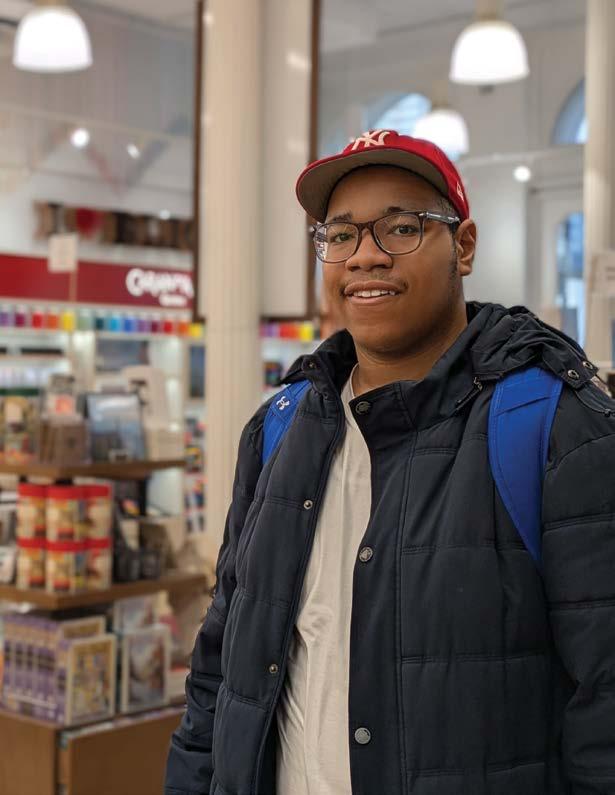
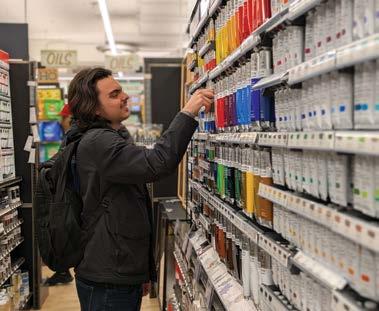
Anyone who has ever shopped for the first time for a new sport or interest knows how quickly the undertaking can become overwhelming. For art lovers and creators, the sheer abundance of supplies at Blick can feel glorious and exciting, but also daunting. On a field trip for their SVA/Community Arts elective, Transitions students ventured to the Blick Art Materials’ flagship store on Broadway, a two-floor, 14,953-square-foot extravaganza bursting with nearly everything imaginable for making art. Although they genuinely enjoyed the experience with their friends, students experienced firsthand the decision fatigue, distractions, and small problem-solving moments that accompany independent choice-making in the real world.
“I did my best to prepare them,” says Yilkari Castillo, Head Art Teacher at Transitions. At her direction, students were encouraged to consider their potential purchases in advance, estimate costs, and speak with their families to determine budget and payment methods in the week leading up to the trip. Blick Store Manager Braden, a considerate and welcome ally of Cooke, collaborated with Yilkari in the planning for the shopping trip. On the day of the visit, he opened the store a little early for the class, allowing them time to explore the selections before the usual bustle. He staffed a register himself at checkout time to bolster his team and allow for personalized service.
“I wanted to give my students an opportunity to practice self-advocacy by locating items on their wish list, making their own choices, and interacting with store personnel,” said Yilkari. “That productive struggle builds skills our students will need in the real world.”
One student, after spending nearly an hour carefully selecting the perfect combination of marker colors, faced tough decisions at the register when the total exceeded her budget. Another solicited help from the clerk to find the correct aisle for his materials after an extended search on his own. A third encountered challenges with a credit card at checkout, while a fourth realized he had forgotten his money altogether. Each of these incidents served as an occasion to learn, staged in a joyful, supportive retail environment bursting with color and possibility.
Students thoroughly enjoyed this segue to the world beyond their school. When presented with Blick’s vast collection of coloring books, Lulu Grevenitis was thrilled to find a good one on fashion design. Chris Andreou and Izaiyah Thomas took delight in the amazing array of color options offered in each paint medium. Pharoah Holmes, bought an oversized box of crayons on the trip for an assignment in his general art class. He stated that both the purchase itself and using the crayons with a mirror to create his self-portrait were among his favorite activities of the school year so far.
Navigating the World
“
From the moment a Cooke student first steps onto campus, our work is guided by a clear mission: to support each student in building an independent, purposeful life, however they define it,”—
Associate Head of School Nefertari McKenzie-Davy
Students interested in pursuing art, whether as a career or a lifelong interest, shared many first-time real-world engagements in this immersive course. For another field trip, they walked together to engage in the quintessential New York City art experience: perusing a gallery in SoHo. Housed in a former sewing machine factory, the YveYANG Gallery is dedicated to discovering emerging artists and elevating historically overlooked practices from around the world. Students explored the gallery’s group exhibition, where a striking collection of tapestry works vividly brought the Transitions course’s focus on color theory to life and provided inspiration for future projects.
This gallery tour, along with additional excursions to the Color Factory, the Jewish Museum, and the Dear New York exhibit held in Grand Central Station, facilitated conversations among the students and informed their work. In class, they discussed how color can express emotion and how to apply the principles of the color wheel in their art projects. As part of the elective, students also participate in a series of School of Visual Arts (SVA) classes taught by college professors, further expanding their exposure to diverse artistic practices and perspectives.
“My hope is that students in this art elective will use their cultural awareness to become artists of the world, communicating their knowledge and discourse in their general arts classes; maybe even extending to the greater community,” says Yilkari.
A Framework for Art and for Life
Many parents of Cooke students, including former Board member Dag Folger in his remarks at the 2025 Founders Celebration, speak of the metaphorical cliff looming just beyond the horizon, a cliff that comes into sharp focus after graduation. School leadership and faculty see it too.
“From the moment a Cooke student first steps onto campus, our work is guided by a clear mission: to support each student in building an independent, purposeful life, however they define it,” says Associate Head of School Nefertari McKenzie-Davy. “At Transitions, we have only a few short years to give students as many tools and experiences as we can to become who they want to be as young adults.”
“My Community Art class provides students with a framework for a life as an artist after they leave Cooke,” says Yilkari. “They learn where to find inspiration, how to gather the materials they need, how to advociate for themselves and engage comfortably in the activities artists pursue. These lessons are specifically designed for their role as artists, but hope they are something more. Learning to ask for help at a store, feeling comfortable exploring an art gallery or university campus that might feel unfamiliar at first, and confidently attending the City’s iconic venues are skills that will benefit any young adult stepping out into New York, no matter their path.”
“My student Kahlil Alicea once shared ‘You are a teacher, and am a teacher.’ In that simple statement, he captured something deeply true. Teaching is not a one-way exchange. learn from my students just as much as hope they learn from me.
The art lessons are shaped by our communities, personal interests, identities, and our stories as we navigate the world by thoughtful conversations that unfold as we create. Together, we create an art space that is welcoming, reflective, and rooted in the arts around us,” says Transitions Head Art Teacher Yilkari Castillo.
A Celebration of Cooke
Student
Storytelling
If I could have a super power, it would be time travel because I could then fix the mistakes I did in the past or at least better myself as well as improving myself in the future. While that’s going on I will try to prevent myself to talking to myself so it won’t break my own multiverse and the space time continuum.—Transitions student Sean Worgs
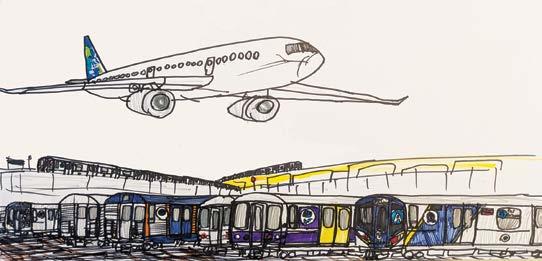
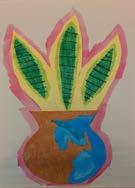
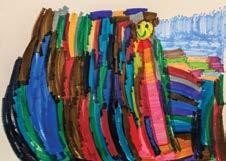
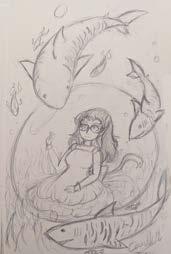
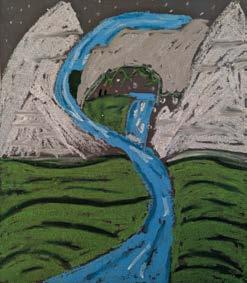
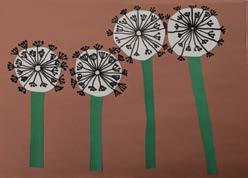
Pictured across the spread clockwise, artwork by: Justin, William, Mei Mei, Dahlia, William, Sam, Sebastian, Camili.
HAR
F ESTIVAL VEST
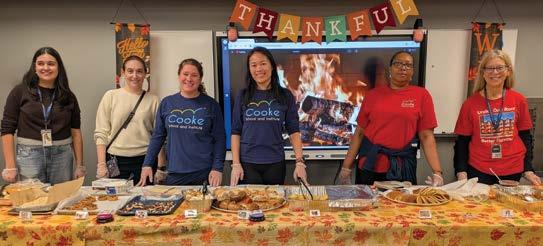
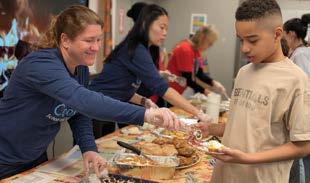
This November, Cooke celebrated its 13th consecutive Harvest Festival, a beloved Lower and Middle School event held each year on the Wednesday before Thanksgiving break. (In 2020, the festivities moved to Zoom, with students gathering virtually from their living rooms.)
Art therapy staff and students design the centerpieces, eighth graders assist with setup and welcoming guests, and the Counseling Department prepares and serves the meal. The older students model behavior for the younger students, and each group contributes to this celebration rooted in shared effort and community.
“Harvest Fest is my favorite time of the year!” says Counseling Department Chair Robyn Feer. “I inherited the job of managing the event from my predecessor. We’ve worked hard to preserve the festival’s warmth and sense of community even as it grows and evolves.”
Since the beginning, each class has taken responsibility for preparing one dish. Together, they choose their contribution, shop for the ingredients, and follow the recipe to produce enough to share with the school.
Transitions Custodian Alberto Garcia recalls roasting three or four 12-pound turkeys each year, complete with gravy, mashed potatoes, and cranberry sauce, for staff and students.
“I see some of the Transitions students now, and can remember serving them turkey when they were in grammar school,” says Alberto.
In 2021, the festival shifted from a traditional Thanksgiving menu to a brunch celebration featuring bagels as the main course. Classes now prepare favorites such as banana bread, fruit kabobs, and pumpkin pie.
“I look forward to reengaging with my former students and seeing how they’ve progressed,” Robyn adds. “We intentionally mix grades in the cafeteria and during gym activities so students can celebrate alongside a broader circle of peers, and teachers can reconnect with students from their previous classes.”
Through all of the innovations, one Harvest Festival tradition remains constant. “We always seem to conclude the event with a spontaneous conga line of students and staff.”
“Harvest fair on November 21st was a date to remember. Each class prepared a seasonal dish which was shared by students and staff. Students did all the shopping and planning. Cooking lessons and kitchen tips were shared. No canned stuffing or instant potatoes allowed!
. . . As we prepared and cooked, students were involved in kitchen safety lessons, basic food prep, lessons in budgeting, measuring, and cooperative learning. We hope this remains a tradition of CCGS.”
—November 2012 Cooke Center Grammar School Newsletter
“ I remember when Everyone loved it!” our class made pasta salad.
Class Notes
News and Milestones from Cooke Alumni
Do you have news or milestones to share with the Cooke community? Alumni are invited to send photos and updates to communications@cookeschool.org.
Maryanna Castillo, ’19
Maryanna has been accepted into a training program as a Pharmacy Technician through Consortium for Worker Education (CWE). After being employed in retail at the children’s clothing store, KID CITY, she now works at the spa, Silver Mirror Facial Bar, supporting the receptionist and performing maintenance.
Maryanna also enjoys knitting blankets and hats.
Nicolas Charbonneau, ’22
Nicolas is scheduled to graduate from John Jay College of Criminal Justice, CUNY, in spring 2027 with a major in human services and community justice, and a minor in political science.
Janae Pena, ’19
Janae holds a seasonal job working in The Patio located near the Children’s Zoo at the Bronx Zoo. She runs the “cards only” register and buses tables during the Holiday Lights festival and other special events.
In her free time, Janae likes to create bead paintings that employ a technique “like paint-by-number, but with beads.” In addition, she is learning to crochet.
Aly Malcolm, ’22
Having recently completed the Melissa Riggio Higher Education Program, Aly is continuing her artistic studies through jewelry-making and abstract painting classes at the School of Visual Arts and the Art Students League of New York.
She also works at Featherstone Design, a jewelry atelier founded by renowned designer and Cooke parent Deirdre Featherstone.
T aina Martinez, ’19
Taina has worked in retail at Victoria’s Secret for more than five years. She also runs her own lash extension business from home, where she manages all of her own marketing. Her work can be found on Instagram at @lashes_by_taina.
Kiana Dwarka, ’23
Kiana is enrolled in the CUNY Unlimited Melissa Riggio program at the Borough of Manhattan Community College (BMCC/CUNY). After graduation, she hopes attend City College and major in communications. Her work-study job is in social media management for the Office of Student Activities. She also works at a dance studio, National Dance Institute, on the project management team.
Pictured here: Cooke Transitions Custodian Alberto Garcia, who used to roast 3-4 turkeys for Cooke Grammar School’s Festival, and Transitions student Ayumi Mullins quoted below.
Daily Living Lab
with Julie Greenberg, OTR/L Upper School Department Chair, Occupational Therapy
For many students, especially those who struggle with communication and social interaction, mobile screens are more than just an entertaining distraction.
Left to Their Own Devices: Reflections on Our Role in Supporting Adaptive Skills
At the beginning of this school year, there was some staff trepidation about enforcing a school-wide ban on recreational screen time. Some of us worried about how students might react and the conflict that it might create. Others expressed concerns about whether it is realistic in our current world, where screens are an important part of our daily lives. They wondered if it was unfair or unnatural to take an important “tool” away from teens. Over the past few months, have been observing our students without TikTok, YouTube, or FaceTime during lunch and recess, and can confidently say that it was the right decision. Students are now present in the sensory world, observing, participating, and interacting in ways that are crucial to thinking and learning.
For many students, especially those who struggle with communication and social interaction, mobile screens are more than just an entertaining distraction. Our devices are a refuge from boredom, discomfort, anxiety, and social uncertainty. Last year, a Cooke student heading to lunch or recess might have immediately retrieved their phone or tablet, voice-texted a family member about a missing water bottle, and pressed the start button on a favorite YouTube video while navigating the stairs to the cafeteria or roof. During lunch and recess, they may have been absorbed by videos, video games, and texting family members. While this may sound like the way we all operate now, is this comfortable “goto” helping us avoid the important and possibly
uncomfortable experience of transitioning through unique environments? wondered if relying on a screen was interrupting the critical foundational skills of adapting, observing, and engaging in the 3D sensory world. As an occupational therapist, focus on the environmental modifications and “just-right challenges” that make learning, connection, and growth more accessible.
Every Friday, a specific student engages me by tossing a ball in my direction. A table of teens connect over a collection of toy trains. Others draw or read at a picnic table. Some dance or chase each other. A continuously evolving group plays basketball. Some students sit on the sidelines and watch. They may appear to be doing “nothing,” which can be so important for sensory processing, making cognitive connections, and self-regulation. They are developing secure attachments as they learn they can be safe, supported, and successful at school, even with brief separation from their families.
am deeply grateful that this policy was implemented, and for how confidently our students and staff have embraced it. What once felt uncertain has quickly become the expected way of life at Cooke. hope this transformation reinforces for both families and educators that, through intentional limit-setting, we can design environments that maximize accessibility and support meaningful participation for all students.
Across the country, schools are grappling with how to manage cell phone use in classrooms, hallways, and throughout the school day. “Bell-to-bell” bans, policies that limit cell phone use during school hours, are becoming increasingly common. In the past year alone, both New York and New Jersey have implemented statewide guidance. These policies reflect growing concerns about adolescent mental health, social development and peer interactions, as well as the impact of screens on attention and learning.
At Cooke, we thoughtfully considered what a cell phone policy should look like within our unique school community for more than two years. Ultimately, our shared commitment to creating spaces for authentic connection guided our decision. We observed students becoming increasingly disconnected from their surroundings, more
frequent power struggles with teachers during instructional time, and a growing reluctance to pause, look around, and be fully present—a feeling many of us can relate to. Since implementing a limit on cell phone use during the school day, students have approached this transition with flexibility and openness, adapting quickly and embracing the change with ease.
Cooke’s new phone policy is not about rejecting technology. Technology is intentionally and meaningfully integrated throughout our school day. Students regularly use laptops, Smartboards, and instructional software to support learning across content areas. Dedicated technology classes further build skills in digital citizenship, media literacy, accessibility features, and responsible technology use, with a focus on preparing students to use technology independently and confidently in their communities. Together, these efforts reflect our commitment to teaching students not only how to use technology, but also how to use it wisely, safely, and in ways that support their independence. This policy reflects our commitment to using technology intentionally and in ways that enhance learning, foster relationships, and promote community.
— Cassie Manzo, Division Head, Upper School
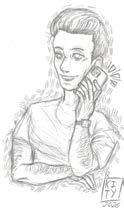
Illustration by Cooke Transitions student Emma Suazo
RingCeremony Power
Memories are a kind of Magic.
They have the to transport us back in time. ”
Perspectives
What experiences in school and out of school helped you develop pride in your disability identity?
In the winter of 2024, I attended a Lunch and Learn in honor of Disability Identity and Pride month that considered the question above. A member of the speaker panel composed of Cooke Transitions students recounted a story that has remained with me ever since. Kahlil described his arrival at Cooke Lower School after attending another school.
“There were people here who liked doing the same things that did.” Then he paused for a long moment before adding, “And they liked to do them with me.”
In his Head of School letter here and in past issues of Cooke Chronicles Dr. Tabone has introduced the concept of mattering, as described in a new working paper produced by the Center on the Developing Child at Harvard University. Researchers at Harvard maintain that feeling seen, valued, and significant to others is a fundamental human need as vital to the young child as the adult. Although the term was not in use at the time, Cooke has been concerned with student mattering since its founding. Listening to Kahlil speak that day, it was hard not to hear his words as a simple and powerful declaration for every Cooke student from our beginning: Even as a primary grade child, he recognized the importance of belonging and mattering.
“Whereas belonging refers to whether or not we fit into a community, mattering encompasses whether we feel valued within our communities and whether what we do makes a difference.”— Mattering in Early Childhood: Building a Strong Foundation for Life
In education, practitioners often talk about removing barriers to learning, and indeed, Cooke’s practices rooted in Universal Design for Learning eliminate obstacles to understanding and expand access to instructional materials. This year’s integration of executive functioning skills into academic classes tackles learning barriers from yet another angle. In the same way, we have always actively addressed the barriers to mattering and the results are clearly evident. You will often hear Dr. Tabone note with pride that every one of our students has friends. Children, starting in Lower School, express their feelings and are empathetic to others. Eighth graders help prepare the table and greet students and faculty at the annual Harvest Fest (see page 34). Students of all ages engage in service to their school and neighborhood communities in project-based learning activities for civics, science, and ELA.
Here are two everyday examples. After noticing his friend at the classroom window seat dysregulated and surrounded by teachers, a first grader had an idea. Without prompting, he selected his friend’s favorite truck from the bin and quietly brought it over, setting it beside him without a word.
When the introductory session of a Transitions class on hydroponic gardening systems ended early, the teacher offered students a five-minute break be-
fore the next class and asked them to help choose the music. Two students were adamant that Rihanna’s “Umbrella” should play, while another student, who uses a device to communicate, also had a strong preference. And it was definitely not Umbrella! Knowing what you know about the dedication of Cooke staff, it would not surprise you that his paraprofessional ensured the student’s choice, the Monkees’ “I’m a Believer,” was heard by the head teacher. His vote mattered, and time was made to play both songs.
In addition to removing barriers, faculty models behavior and provides experiences that reinforce the significance of mattering. Communicating primarily through a device did not prevent Upper School student Chris from rehearsing and performing a well-received musical number with classmates Molly and Gianni. Audience members at the revival of the beloved talent show in February sang and clapped along to the group’s rendition of Under the Sea, which opened the program.
In Upper School science (see page 24), students learn that they can make a difference in the world by extending the care they already demonstrate to family, friends, and their community to the planet through conservation.
At Transitions internships, students build competency and confidence in posing questions to their manager (see page 16) without prompting from their CIA when they do not fully understand the responsibilities or the company culture.
The ultimate goal for Cooke students, with all of this access and exploration and practice, is to internalize a sense of their inherent worth and ability to contribute, and to advocate for themselves. Living lives of meaning and independence filled with friends, the hallmark of a Cooke education, requires this.
“Art is fun!”
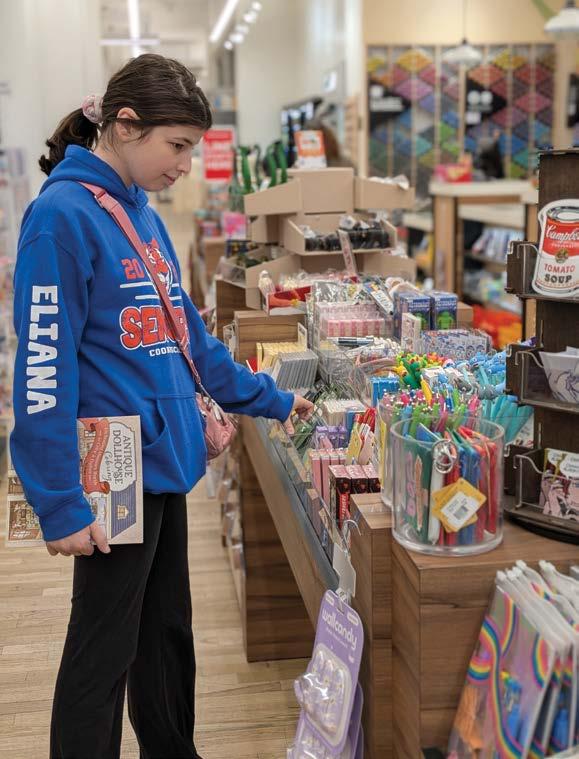
“Eliana, in one word, describes art as ‘FUN.’ Learning ways to express yourself, experimenting with different materials, having the freedom to be creative, interacting with others, and seeing your ideas come to life: Art should be fun.” — Transitions Art Teacher Yilkari Castillo.
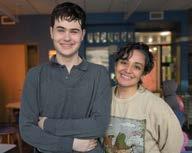
The drawing of our K-12 building for this column’s header and artwork featured in the Tiger Tales column were created by Cooke Upper School student, Justin, pictured above with his art therapist, Ayde Rayas.
1713 Madison Avenue
New York, NY 10029
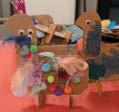
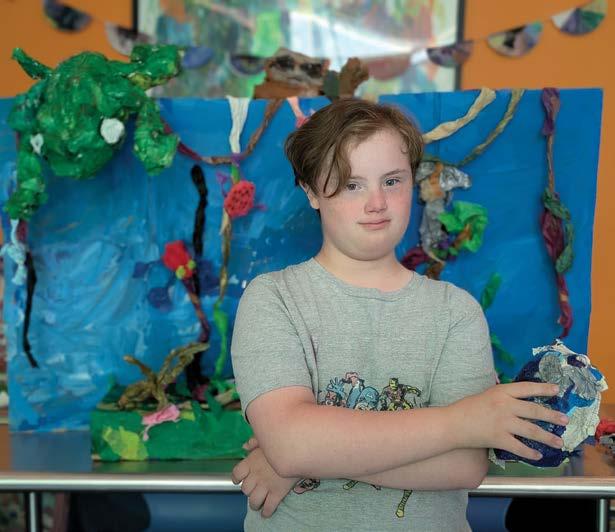
Thematic units at Cooke Summer Academy (CSA) build community among K-12 students while offering teachers and related service providers the flexibility to plan individualized, fun, and rigorous lessons. In the project featured here, the BBC’s documentary series Planet Earth inspired students to connect art and science by creating their own papier-mâché animals, masks, and habitats.