


In industrial environments where uptime, precision, and long-term efficiency are non-negotiable, the performance of every component matters. Whether you're managing a high-speed packaging line, a CNC machining center, or a centralized vacuum system, choosing the right pump can mean the difference between seamless operations and costly disruptions.
Among the many options in the industrial vacuum space, Becker pumps have earned a strong reputation for reliability. But what exactly makes them dependable and how do they fit into real-world industrial applications?
This blog explores the factors that contribute to the reliability of Becker vacuum pumps, how their design supports different industries, and what B2B buyers should know before investing in one.
control-specialties.com
Vacuum pumps play a critical role in processes that require pressure control, air movement, suction, or vacuum sealing. Their applications are wide-ranging, from printing and woodworking to food packaging and medical device manufacturing.
In a typical production facility, vacuum pumps may be used to:
● Hold materials in place during cutting or machining
● Remove air during packaging to preserve product life
● Transfer components via suction in automated assembly lines
● Maintain environmental control in cleanrooms
Given this variety, reliability isn't just about how long a pump lasts it’s also about how consistently it performs in harsh or variable conditions.
One of the first things engineers and facility managers will notice is the variety in Becker's pump technologies. The availability of both oil-free and oil-lubricated models means you can tailor the pump to your specific operational or regulatory needs. Oil-free options are particularly useful in industries like food, beverage, and pharmaceuticals, where contamination must be avoided. These design variations allow Becker vacuum pumps to meet industry standards across:
● Medical technology
● Environmental testing
● Semiconductor manufacturing
● Packaging and printing
● Plastics and composites
control-specialties.com
For readers looking to explore specific Becker vacuum pump models and how they’re applied across different industries, there’s a detailed breakdown available in a related blog published on Medium.
The range of use cases for Becker pumps is impressive and that’s a large part of what makes them dependable. Rather than specializing in a single type of application, they’re adaptable to a wide set of operational environments.
Common applications include:
● Vacuum chucking in CNC machining
● Air supply for printing and envelope machines
● Vacuum forming in plastics
● Product handling and pick-and-place automation
● Vacuum packaging in food processing
This adaptability means fewer replacements, less training for staff, and reduced parts standardization headaches for engineers managing multiple lines.
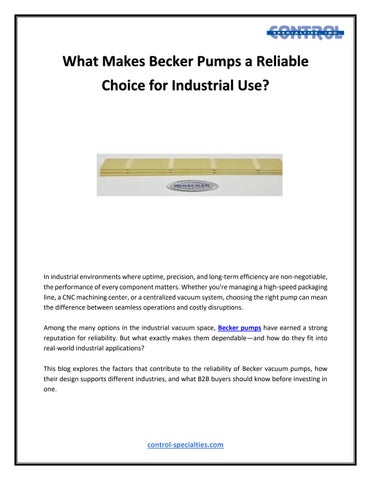
Many models rely on rotary vane technology a proven mechanism in vacuum engineering. Highquality carbon vanes ensure even wear and minimal friction, allowing pumps to run for extended periods with predictable performance.
A major contributor to their industrial reliability is the low-frequency maintenance schedule. Many Becker pumps can run for thousands of hours before requiring inspection or replacement of wear components. This is especially valuable in 24/7 operations where shutdowns are costly.
control-specialties.com
Thermal overload is a common failure point in vacuum pumps. Becker models incorporate efficient air cooling and integrated thermal protection to prevent overheating extending their operational life and safeguarding surrounding equipment.
Lifespan is naturally a top concern for B2B buyers. While exact life expectancy varies by model and workload, most users can expect:
● Oil-free rotary vane models: ~10,000 to 15,000 operating hours
● Oil-lubricated models: ~15,000 to 30,000 hours with proper service
With proactive maintenance, some Becker pumps continue performing reliably even after 40,000+ hours especially in stable, climate-controlled environments.
Several operational and environmental factors can impact a pump's lifespan, including:
● Ambient temperature and humidity
Excessive heat or moisture can degrade internal components faster.
● Duty cycle and run time
Continuous operation at maximum load shortens service intervals.
● Air quality
Dust or contaminants entering the system reduce vane and bearing life.
● Maintenance discipline
Neglecting basic upkeep like filter changes or oil monitoring is one of the most common failure causes.
Regular checkups based on your facility’s workload can dramatically improve both performance and longevity.
In modern industrial environments, there’s growing awareness around ergonomics and environmental impact. Becker pumps are often praised for their low vibration levels and relatively quiet operation important in cleanrooms, labs, or worker-heavy areas.
Some newer models even come with integrated sound-dampening enclosures or smart monitoring systems for real-time diagnostics, further reducing the risk of unexpected downtime.
Signs a Pump May Be Going Bad:
● Drop in vacuum pressure
● Loud or irregular noises during operation
● Visible oil leaks
● Excessive motor temperature
● Vibration outside of normal tolerances
Before a full replacement, it’s often possible to service wear components such as vanes, bearings, or filters to restore performance.
For facilities running mission-critical processes, many engineers recommend a predictive maintenance schedule based on vibration analysis or run-hour logging.
In the B2B world, the phrase “industrial-grade” is often thrown around. But what does it really mean in the context of vacuum pumps?
Generally, it refers to:
● Material durability (aluminum or cast iron housings, high-performance seals)
● Longevity under 24/7 workloads
● Tolerances that hold up over thermal cycling and pressure variation
control-specialties.com
● Ease of service with accessible replacement parts and modular designs
Becker pumps, by these standards, comfortably qualify. They're often favored in industries where failure could mean hours of downtime or even product loss.
When selecting a pump for your facility, here are some key B2B-specific questions to evaluate:
● Is it compatible with our existing systems or control panels?
● How easy is it to get replacement parts?
● Does it meet our cleanroom or ISO requirements?
● What is the total cost of ownership, including service intervals and energy usage?
● Is there local technical support or service coverage?
Answering these upfront ensures your purchase supports both short-term performance and longterm reliability.
The reliability of Becker pumps isn’t just about their build quality it’s about how well they meet the real-world demands of B2B operations. From flexible application support to long-lasting components and low-maintenance designs, they tick the boxes that matter most to engineers, maintenance teams, and procurement managers.
If your industrial operation depends on stable, continuous vacuum or pressure applications, Becker vacuum pumps offer a combination of performance and peace of mind that’s hard to ignore.
For a deeper dive into model-specific insights, don’t miss this breakdown of Becker vacuum pump types and their uses across industries.
control-specialties.com
Source: https://medium.com/@controlspecialtiesga/what-makes-becker-pumps-a-reliablechoice-for-industrial-use-270e4154da77
control-specialties.com