It is hard to take in just how much has changed since I wrote my Editor's Letter for the previous issue. Then the theme was uncertainty, primarily over the prospects for IMO's proposed Net Zero Framework. I will come back to that in a minute, but priorities are very different now. We have uncertainty in bucketfuls but of a sort that caught us all by surprise.
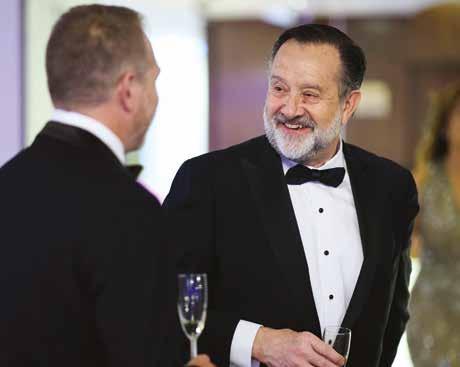
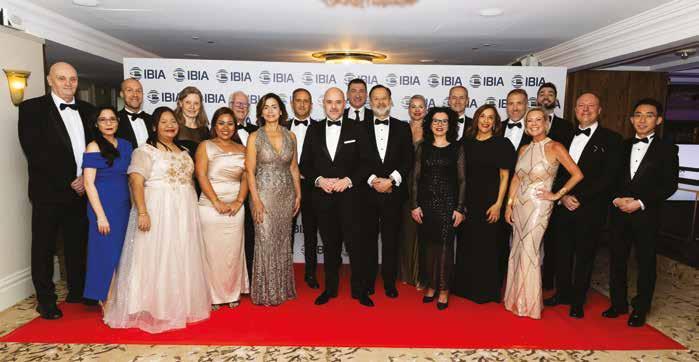
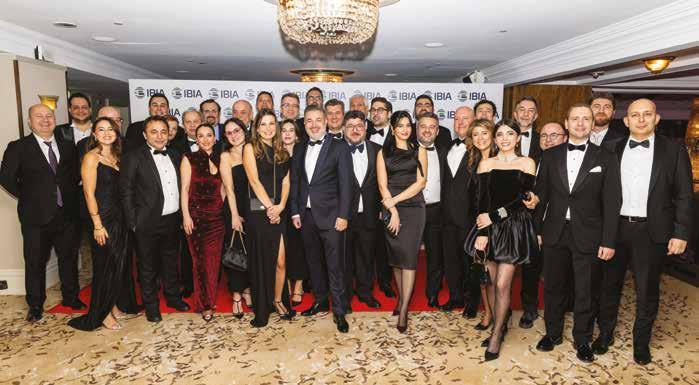
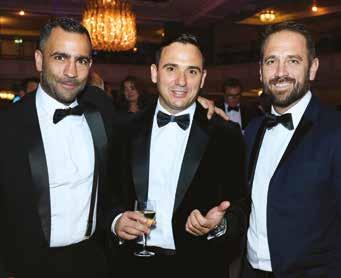
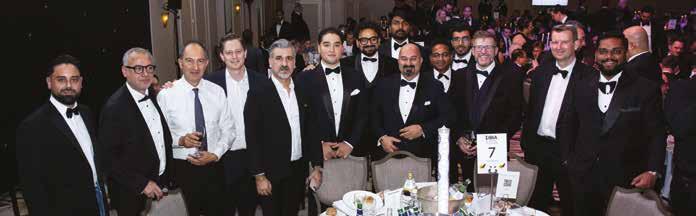
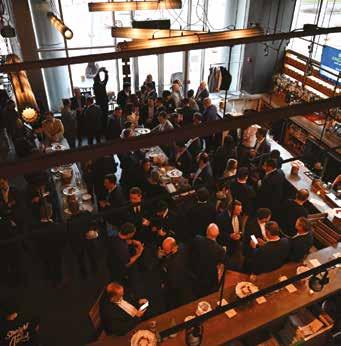
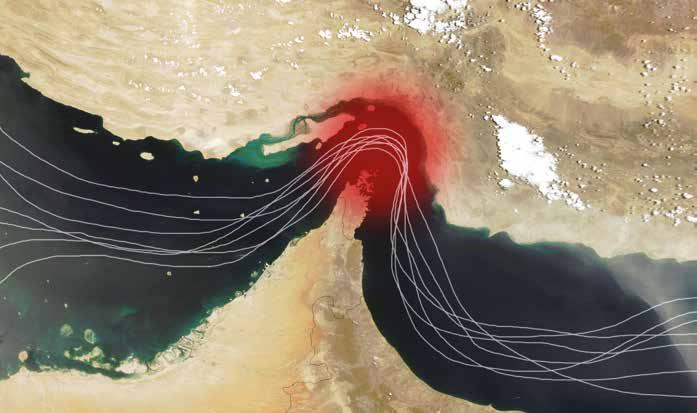
A war in the Middle East had been the fear of many since 7 October 2023, with world shipping forced to cope with the effective closure of the Red Sea for much of the time since. Nevertheless, few of us who were sitting in the Grosvenor House Hotel in early February enjoying the IBIA Annual Dinner can claim to have predicted an all-out war would break out in the region a few weeks later, or the blocking of the Strait of Hormuz to most vessels for, so far and at time of writing still counting, two months.
So, this issue of World Bunkering, of course, reflects the tumultuous events that have disrupted global trade to, arguably, an unprecedented extent. We carry a special feature on Geopolitics and Bunkering. It looks at the already evident impacts on the global economy and therefore shipping and bunkering. Our Industry News leads with the very different effects the Hormuz closure is having on major bunkering hubs. And the disruption of trade to and from the Gulf has already significantly impacted the bunkering industry in Africa and the Western Mediterranean, two of our geographical features this issue.
As this issue goes to press how this crisis will end remains anybody's guess. What does seem clear is that there will be long-term implications for the bunkering industry, and this was emphasised by newly elected IBIA Chair Adrian Tolson in a statement on the crisis.
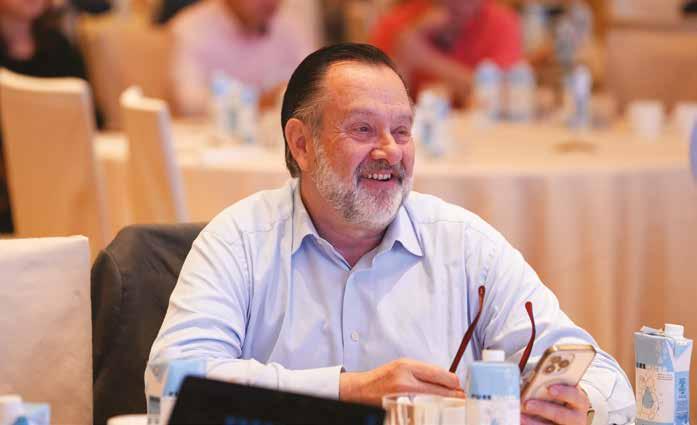
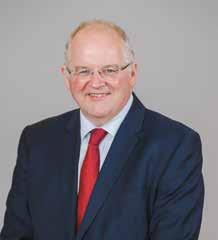
Tolson is also the subject of this issue's Interview. The current crisis in the Middle East is but one of the challenges facing IBIA as Tolson notes in the Interview. Perhaps surprisingly for most of us, he reveals his career started in the wine industry before apparently accidentally finding himself in the bunker sector. However, he has now been in bunkering for forty years and gives a succinct overview of how the industry has changed, is changing and must change further still.
To return to last October's vote by IMO's Marine Environment Protection Committee (MEPC) to defer a decision. I asked Tolson if he believed progress on decarbonisation has stalled? The answer was: “No”. Read the Interview to find out why.
Inconveniently, just as this issue was going to press, MEPC 84 came to an end with a statement on the decarbonisation framework. While a lot of work had been done on ensuring the process moves forward real decisions will still have to wait until near the end of this year.
As usual, this issue includes expert analysis by IBIA's representative at IMO, Dr Edmund Hughes. This just predates MEPC 84 but gives an unrivalled insight into the political background and the manoeuvrings that are taking place at IMO.
Meanwhile our Environmental News gives more context to the saga that is being played out at IMO. This includes a report from Reuters that many shipping, port, bunker supply and marine technology companies are continuing green investment despite the postponement of the IMO’s global carbon-pricing decision. It said long asset lives; regional regulation and customer expectations are still supporting investment in dualfuel vessels, alternative fuels, and emissions-reduction technologies.
While bunker industry companies may justifiably feel that they have sufficient headaches to contend with for now our Legal page flags up that the Texas Supreme Court has ruled that bunker fuel sales are taxable at the point of delivery. That could have major implications for the US bunker sector.
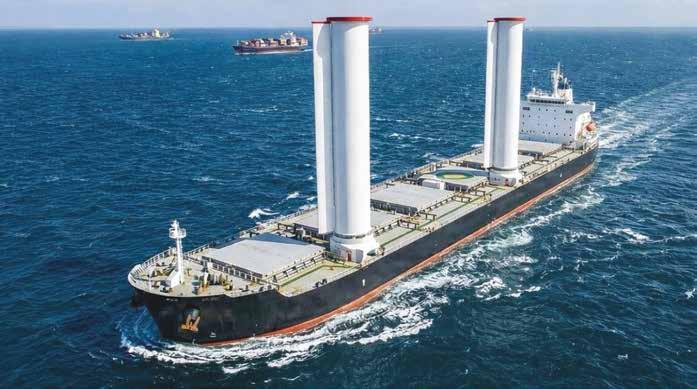
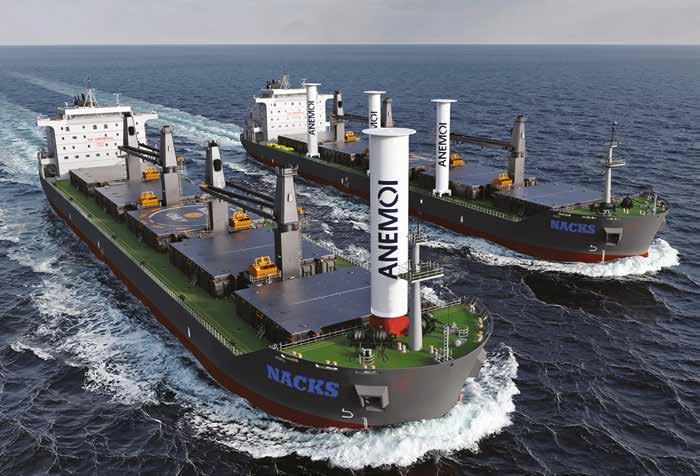
It may seem that good news is in rather short supply this issue, but our Alternative Fuels and Technologies features continue to report on a wide range of positive developments. Wind assist systems seem to be surging forward while LNG proponents have received a boost from two new reports arguing that methane-based marine fuels have a significant role to play in shipping’s decarbonisation. So, there is still some justification in these pages for looking on the bright side of life.
Best wishes
David Hughes Editor
DH: You are a very experienced participant and observer of the bunker industry. Could you sketch out how you became involved in bunkers and how your career progressed.
AT: This last April marked my 40th year in bunkering! Quite a surprise for me after leaving university and embarking on five years in the wine and liquor industry that took me from Harlow, Essex to Napa Valley, California.
Anyway, to cut a long story short, a response to a job advertisement in The Wall Street Journal led me to an office in San Francisco that belonged to Bob Chandran, Owner and CEO of Chemoil, and so began my career in bunkering.
To this day, I maintain I was only hired because Bob wanted to buy a winery, but that dream soon came to an end and my career in bunkering began. I worked for 25 years at Chemoil, then the largest independent bunker supplier in the world, in various roles of increasing responsibility, which is where most of the industry got to know me until I left in 2011, one year after the company was acquired by Glencore.
The following four to five years were spent at very large companies that all seemed to go bankrupt or get close to bankruptcy.
None of it was my fault but it provided enough incentive for me to become my own boss and start a consultancy business in early 2016. This is now 10 years old and happily I seem to have a great relationship with clients and non-clients alike!
DH: You have been closely involved in IBIA for many years and are now its chair. Why is IBIA so important to you?
AT: Actually, my involvement with IBIA is relatively new phenomenon. Chemoil was active in IBIA from its earliest days but with IBIA being UKfocused in those days our engagement (we were headquartered in San Francisco) was quite limited. For me it was the realisation at the beginning of the last decade as to how valuable IBIA could be on many levels for a startup and even a sizeable business. Initially, it was mostly about gaining connections to different parts of the marine fuel value chain and IBIA’s engagement at IMO was also very valuable to me.
I had spent many years strongly expressing my opinions on the industry and finally friends and colleagues suggested (perhaps to improve my level of humility!) that I might want to run for the IBIA board. The freedom of running my own business really helped in my decision-making, which is why I
still feel that individual members are hugely important to IBIA. Anyway, I ran for the board first in 2019 and failed to get elected which was a blow to the ego! I ran again in 2020 and made it, only to join board as the world shut down and went to Zoom. Constantinos, our former Chair, and I still joke that our first two years on the Board were spent with no in-person meetings! Still a lot of good work was done at this time, engaging at IMO and decarbonisation activity, not to mention strengthening IBIA’s finances to weather the covid storm and well beyond.
It goes without saying that succeeding as IBIA Chair is a great honour, especially at a time when IBIA’s role in the marine fuel supply value chain and as a global maritime association has never been stronger. There is, however, still significant opportunity ahead for IBIA on many levels.
We have the chance to become even more active as a global representative for the industry, not only at key forums such as the IMO and the EU, but also by strengthening engagement with port authorities and governments around the world. Our close relationships with the MPA and, more recently, with the Port of Rotterdam demonstrate the value we can bring through collaboration and dialogue.
World Bunkering's editor David Hughes recently had the opportunity to ask newly elected IBIA Chair Adrian Tolson about his career in bunkering, views on the current market and global challenges, and his hope for IBIA's future
The workings of our industry have been relatively opaque in the past and for this reason our contribution and importance is only just being recognised. By continuing to improve transparency and communication, we can further strengthen our position. In particular, increasing awareness among local regulators and administrators will be an important focus for IBIA as we move forward.
DH: How has bunkering changed over the years since you have been in the industry. In particular, how have relationships between the various players changed? Does it make sense to talk about oil majors, independents, traders, brokers and suppliers anymore?
AT: At the beginning of my career, we only talked about majors, independents and brokers. Majors had their own refineries or exchanged fuel with other majors that had their own refineries, and some refiners also sold fuel to independent suppliers.
The term commodity trader hardly existed and although Marc Rich & Co had already opened its lucrative business with Iran, the bunker business had little interest for them or similar types of companies. Suppliers either dealt directly with buyers or via a global network of regional bunker brokers that serviced locally owned fleets.
Fast forward to this century and the industry had already changed. Majors had in many areas divested from refineries and no longer pursued bunker buyers whose companies in many cases were both fragmented and challenged financially. Independent suppliers had seized market share but were often limited in their marketing efforts and always tight on credit.
Along came innovative bunker trading firms that emerged as aggregators of demand and providers of credit, companies that rapidly replaced or absorbed the bunker brokers of the previous century.
Today the market structure is very different, majors have limited refinery production and even more limited retail bunkering operations. Commodity/oil traders dominate in supply, selling to smaller oil companies or via their own retail bunkering operations. Independent suppliers still exist but, in many cases, they have merged into bunker traders as so called “hybrid” suppliers. Bunker buyers who were once relatively weak and small have grown in size and sophistication, particularly when it comes to alternative fuel strategy. Today they assert more power, demanding better quality and transparency than they had in previous decades, combining not only by mergers but also, via purchasing pools.
The old delineation of tightly defined bunker supply chain roles is not what we see today. For example, commodity traders, bunker traders and even shipowners now take part in retail bunkering. IBIA’s growth is closely linked to this evolution, as stakeholders across the value chain increasingly take on multiple roles and recognise how interconnected the industry has become. In this context, IBIA stands out as the one entity uniquely positioned to represent all participants across this value chain.
DH: IT and now AI are transforming the technical aspects of bunkering at all levels. What are the consequences for the industry?
AT: I think our industry has only really touched the tip of the iceberg as far as digitalisation is concerned. We join shipping in being backward in this respect as industries that feel uncomfortable removing the personal touch from our transactions or sometimes even our paperwork. So, while we see small elements of transformation, I don’t think even widespread adoption of E-BDNs can be called anything more than a minor leap. Much more is needed and much more is to come.
IBIA is actively leading the industry towards this future. We are blessed to have a very active and successful Digitalisation Working Group composed of those who recognise the industry challenges but are both committed to and engaged in moving forward.
Realistically though our digital transformation is slow, we will see much more with planning, operations and financial record keeping before we see automated bunker transactions.
They will come, and one day trading or buying bunkers may indeed be done by computers, but the race is on to see which comes first, the full transition to low carbon or zero carbon fuels or the full automation of the bunker transaction, perhaps they arrive at the same time?
DH: Decarbonisation has been the driver of change for several years now. Do you believe progress has stalled?
AT: No. Even the strongest opponents of the IMO’s Net Zero Framework don’t’ believe this. Shipping is still committed down a decarbonisation path. Some may have reasons to try and delay the trajectory or have different solutions, but the planet will decarbonise and it’s clear the majority of the world’s population wants this. The challenges at IMO during recent months have slowed progress in shipping but we will still see energy transition even if delayed from original plans.
IBIA will remain focused on this journey, engaging wherever these discussions take place and representing the industry throughout. We are committed to this path and, while we recognise that the years ahead may present greater challenges, we will continue to engage constructively with regulators and governments whenever and wherever possible.
DH: Given the many challenges facing the industry, what do you see as IBIA's priorities for the next few years?
AT: Hopefully it’s clear from my previous answers that we recognise that IBIA is the only industry body able to engage with governments, regulators and other NGOs to both explain and educate them about this vital $200 billion industry. Our plan is to provide input to their decisionmaking regarding all aspects of bunkering, reaching naturally into their plans for decarbonisation.
Industry knowledge and education are one vital input IBIA can provide to regulators, but it is also important that we, as an association, lead in training both new entrants and the veterans of our industry. Training the value chain for its present and future roles will continue to be part of IBIA’s core focus. This level of engagement or education cannot be achieved without investing in our Secretariat. We are committed to raising the industry knowledge of the existing Secretariat and we will add key members where we need them.
None of these goals can exist without a continued focus on membership. Of course, it is important to add members and that priority is always there. But it is also very important to be reactive to our membership and understand their needs in today’s bunkering market.
Our membership is evolving every year as we welcome new members from the value chain, and in today’s world, the new entrants are often disruptors to the status quo. While at times we do provide guidance and leadership to our members, at other times, we need to learn from and listen to them.
I am always struck when meeting with members that they have very strong ideas on which direction IBIA should take, with many ideas and suggestions for new working groups focused on industry issues. In recent years, we have significantly increased the number of buyers that are active in IBIA and it’s clear that many of them need a forum to share their concerns and ideas. For this reason, we are highly supportive of the new Buyers Working Group that is a key initiative of our past Chair, Constantinos Captenakis.
There are lots of challenges to come in this very complex geopolitical world. IBIA’s Board and Secretariat recognise these as do many of our members.
Looking ahead, I remain optimistic about what we can achieve together. The bunker and marine energy sectors have always demonstrated resilience and adaptability, and those qualities will be essential as we move forward. By building on the strong foundation already in place and continuing to evolve as an association, IBIA is well positioned to take the next step.
Adrian Tolson IBIA Chair
RESILIENCE IN CHALLENGING TIMES: NAVIGATING UNCERTAINTY, MOVING FORWARD
When I started writing this article, there were hopes that a ceasefire in the Middle East could soon bring some relief. As I finish these lines, the situation remains deeply concerning. The central question many of us are asking is when we may return to a sense of normality, or whether that remains out of reach for now?
Our first and overriding concern is, and must be, the safety of our seafarers, the backbone of our industry. These men and women continue to operate on the front line of global trade, often in difficult and uncertain conditions. Closely linked to this is the need for shipping to continue operating safely and with as little disruption as possible. Shipping underpins the global economy, moving energy, food, and essential goods around the world, especially during periods of uncertainty.
Despite the pressure created by geopolitical tensions, the bunker and shipping industries have once again demonstrated their resilience. Time and again, our industry has shown an ability to adapt, respond, and continue operating even when circumstances are far from ideal. This resilience is not accidental; it is built on experience, professionalism, and strong cooperation across the value chain.
The year started on a very positive note for IBIA. Our Annual Dinner during IE Week was fully booked and welcomed more than 1,200 members and guests. I would like to thank everyone who attended and supported this premier event.
Its continued growth underlines IBIA’s relevance and the role it plays as a trusted platform for engagement across the maritime industry.
This strong momentum carried through to CMA Shipping, where IBIA once again hosted a successful networking reception attended by more than 200 industry professionals.
These gatherings are not just social events; they provide valuable opportunities for discussion, connection, and the exchange of views at a time when communication across the industry is more important than ever.
As I write this article, I am, preparing to travel to Singapore Maritime Week, where we will host the IBIA Asia Dinner. This event is also fully booked, with more than 400 attendees. It is particularly encouraging to see how the dinner has grown over the past years, from around 150 participants to the strong numbers we see today. This growth reflects the increasing engagement of our membership in Asia and the importance of the region to the global bunker market.
Looking ahead, I am pleased that IBIA’s flagship event, the Annual Convention, will take place in New York this year. This is a timely and very fitting choice of location. New York is a major global city and an important centre for finance, trade, and policy discussions. It provides the right environment to address the key issues currently shaping our industry. At this year’s convention, we will be able to openly discuss topics ranging from geopolitics and the work of IMO’s MEPC, to decarbonisation, digitalisation, and the growing role of AI in shipping and bunkering.
As we navigate a complex geopolitical landscape, some longer term policy discussions, including well awaited developments on market based measures, remain in the background. In many cases, immediate concerns around safety, security, and regional stability have taken priority.
Nevertheless, the issues of energy transition and decarbonisation remain critical, and they will return to the forefront as conditions allow. Ensuring energy security and fuel availability remain essential for our industry and for global trade as a whole.
In times like these, caution is essential. We strongly advise members to carefully verify the information they receive, understand the sources, and avoid taking unnecessary risks. Working with trusted partners and maintaining open and transparent communication is more important than ever. IBIA remains available to support members, provide guidance where possible, and facilitate constructive discussion across the industry.
At the same time, it is encouraging to see members remain engaged, pragmatic, and focused on cooperation. Open dialogue between suppliers, buyers, shipowners, regulators, and other stakeholders is essential. IBIA will continue to act as an impartial forum where these conversations can take place in a constructive and informed manner, always with the aim of supporting safe, efficient, and responsible bunkering worldwide.
As always, our industry will continue to move forward, adapting to challenges and finding solutions. With best hopes for improved stability, safety for seafarers, and more predictable operating conditions ahead, I thank you for your continued engagement, trust, and support of IBIA.
Alexander Prokopakis
IBIA Executive Director alexander.prokopakis@ibia.net
Marine Fuels in the UAE and now in Salalah Oman
A STRONG START TO 2026
As always, the first quarter of the year has been both busy and energising for IBIA, with a calendar defined by meaningful engagement and strong global participation.
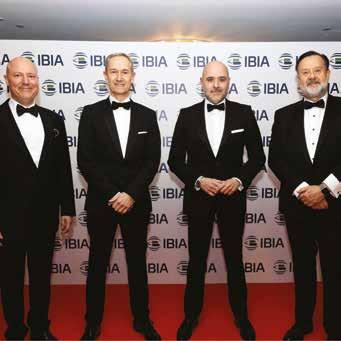
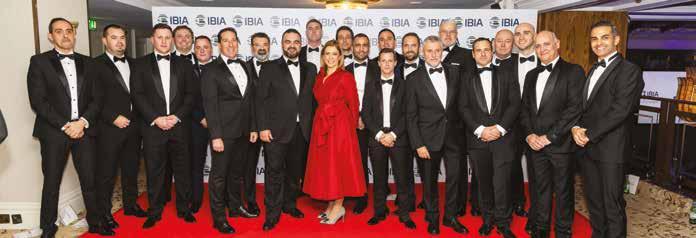
We began the year with our premier event, the IBIA Annual Dinner, held in February at Grosvenor House London. Once again, the event was fully sold out – marking the fourth consecutive year at capacity – and welcomed over 1,200 industry professionals from across the global marine fuels value chain. The atmosphere in the room reflected not only the scale of the event, but the strength and resilience of our community.
This flagship evening would not be possible without the continued support of our sponsors. We extend our sincere thanks to our Platinum Sponsor, The Hawks PVT; Gold Sponsors Arte Bunkering, Island Oil Limited, PEMA Corporation, Sea Crown Marine Services DMCC and Sohar Port & Freezone; Silver Sponsors ExxonMobil, Gulf Petrol Supplies and the Port Authority of Santa Cruz de Tenerife; and our Advertising Sponsors Asmira Petrol, DrumoCoin, StormGeo and the Turkish Chamber of Shipping. Their contributions are integral to the success and continued growth of this event.
The evening’s programme featured reflections and insights from IBIA’s leadership, including Executive Director Alexander Prokopakis, Chair Constantinos Capetanakis, and Adrian Tolson, who formally stepped into the role of Chair on 1 April. We were also honoured to welcome IMO SecretaryGeneral Arsenio Dominguez as Guest of Honour, whose address called for greater alignment and collaboration across the industry at a time of increasing complexity and change.
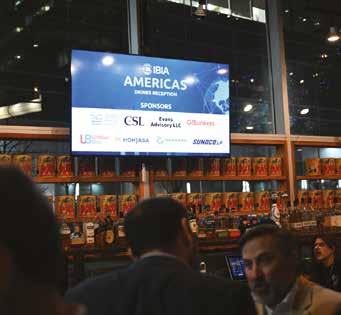
In March, IBIA continued its engagement at CMA Shipping 2026 in Stamford, Connecticut. Alongside our participation in the conference programme, we hosted a well-attended networking drinks reception, bringing together around 150 industry guests. The evening provided a valuable opportunity to reconnect with colleagues and strengthen relationships across the Americas region.
We are grateful to our event sponsors – 2050 Marine Energy, CSL Group Inc., Evans Advisory LLC, GT Global, Lindsay Blee, Monjasa and Sunoco LP – whose support enabled us to deliver another successful and welcoming gathering.
IBIA was also strongly represented across the CMA Shipping conference programme. Executive Director Alexander Prokopakis contributed to the keynote panel “Maritime Horizons: Industry Landscape and Global Trade Priorities”, while Adrian Tolson participated in the keynote session examining geopolitical impacts on US shipping and moderated the IBIA Forum panel “Next-Gen Fuels: Charting Shipping’s Low-Carbon Future”. We were also pleased to see engagement from our Regional Board Americas Chair, Frank Dahan, further reinforcing IBIA’s role in shaping key industry discussions.
Continuing this momentum, IBIA recently convened a Members Meeting focused on Geopolitical Developments and Market Implications. Moderated by Chair Constantinos Capetanakis, the session brought together expert insights from Arne Lohmann Rasmussen of Global Risk Management and Christopher Aversano of Wood Mackenzie. The discussion explored how geopolitical tensions, sanctions, tariffs and regional instability are influencing shipping, energy markets and marine fuel supply chains –a timely and important conversation for our members.
Bringing
Looking ahead, we are pleased to announce our upcoming IBIA Posidonia Reception, taking place on 31 May 2026 in Athens. We are honoured that South Africa’s Ambassador to the Hellenic Republic, Dr Lindiwe Msengana-Ndlela, will host the evening at the South African Official Residence. This exclusive cocktail reception will bring together IBIA members, partners and senior leaders from across the global marine fuels and maritime sectors for an elegant evening of connection and conversation.
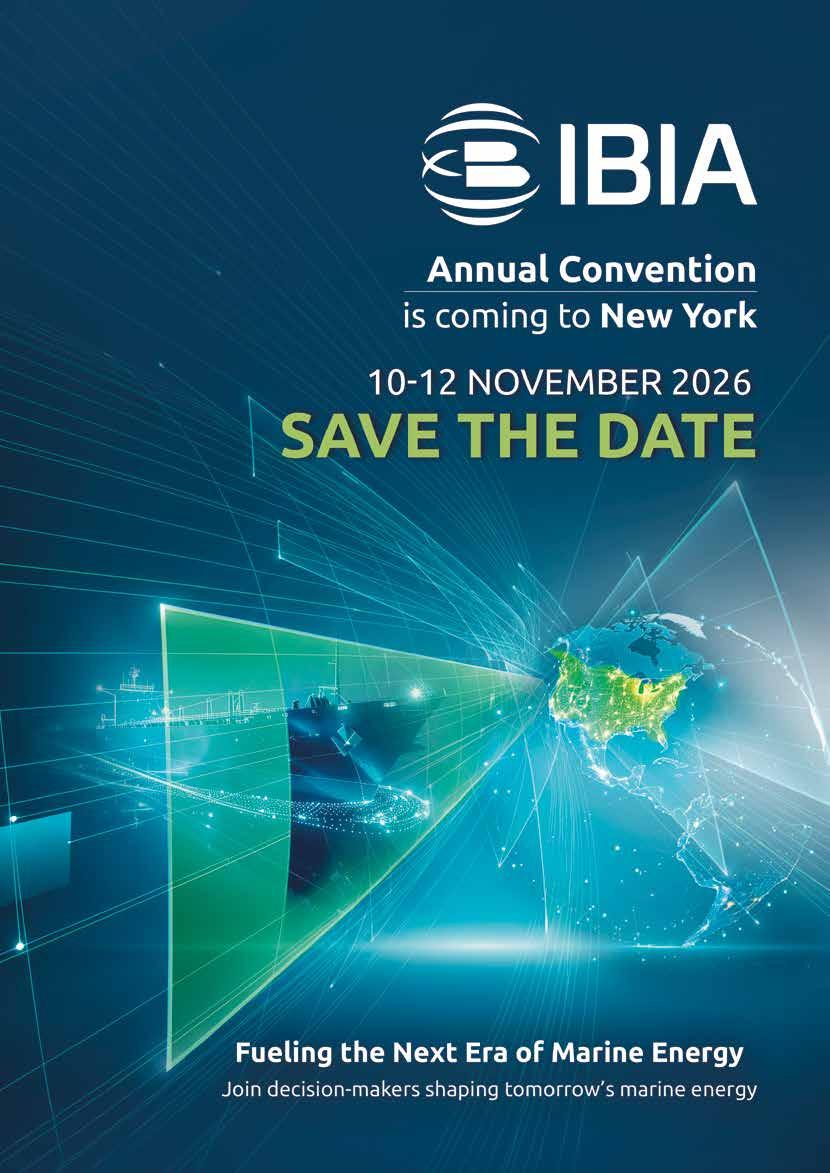
And finally, in what is very special news for our community, we are proud to announce that the IBIA Annual Convention 2026 will take place in New York from 10–12 November.
As our flagship global event returns to the United States, this moment represents more than a change in location. It reflects where conversations are heading, where markets are evolving, and where new opportunities are emerging. Bringing our international community to one of the world’s most dynamic commercial hubs underscores the importance of connection, insight and forward-thinking dialogue.
From senior decision-makers to technical experts, the IBIA Annual Convention remains the industry’s leading platform for collaboration. In 2026, we look forward to delivering a programme that is globally relevant, commercially grounded and futurefocused.
To close, I would encourage both our members and the wider industry to keep an eye out for our bi-monthly IBIA Bulletin, our electronic newsletter where we share updates across all of our activities, including highlights from past events and details of what is coming next.
As always, your engagement is at the heart of everything we do. You are very welcome to reach out to me directly at any time to explore opportunities within our events, or to share your thoughts and suggestions.
These conversations are invaluable as we continue to shape a programme that reflects the needs and ambitions of our global membership.
I look forward to continuing the dialogue in the months ahead.
Tahra Sergeant Regional Manager (Africa) & Global Head, Events tahra.sergeant@ibia.net
BUILDING MOMENTUM THROUGH COLLABORATION AND CLARITY
Steady progress across Africa, with stronger engagement, growing membership, wand increasing regional alignment in bunkering
The past quarter has marked a positive and purposeful step forward in IBIA’s engagement across Africa, with a clear emphasis on strengthening industry alignment, deepening regulatory relationships, and expanding regional participation. While progress remains measured, there is a growing sense of momentum, supported by a shared understanding that collaboration will be central to unlocking the region’s bunkering potential.
A key milestone was the series of industry forum discussions initiated alongside ship.energy’s Maritime Week Africa. These sessions brought together a broad cross-section of stakeholders, including the South African Maritime Safety Authority (SAMSA), Transnet National Ports Authority (TNPA), FIASA, and emerging local bunker associations. A consistent theme emerged: the absence of a coordinated platform for dialogue across the bunkering value chain. This gap presents a clear opportunity for IBIA to support a more structured, inclusive forum that enables alignment on priorities and facilitates practical, industry-led progress.
Engagement with SAMSA has been particularly encouraging. Discussions with CEO Captain Dennis Mqadi reflected a renewed sense of leadership and openness to collaboration, alongside a clear reaffirmation of SAMSA’s regulatory mandate. This balance provides a strong foundation for constructive engagement between industry and regulator.
Building on this, a proposal has been put forward to establish a South African Bunkering Forum. Envisaged as a strategic platform rather than an operational body, the forum would cover both import and offshore bunkering, led by SAMSA with support from IBIA. There is strong alignment within the Regional Board that such an initiative should complement existing regional efforts, including those in Algoa Bay, ensuring a cohesive and coordinated approach.
At the time of writing, developments in the Arabian Gulf continue to influence global energy markets, with a direct impact on African bunkering dynamics. Shifts in vessel routing, pricing volatility, and supply considerations are being closely monitored across the region, reinforcing the importance of resilience, flexibility, and regional preparedness.
Alongside these developments, IBIA’s membership across Africa continues to grow steadily, reflecting increasing engagement and interest across the region. As this momentum builds, there is a clear need to strengthen representation across North, South, East and West Africa to ensure a truly balanced regional voice. There also remains a valuable opportunity to reconnect with previously active members, particularly in Nigeria, as part of a broader effort to further expand and strengthen the regional network.
Looking ahead, a focused Africa webinar is under consideration. This initiative is intended to provide a practical platform for engagement,
allowing members to connect on key regional topics, while also supporting outreach to new and lapsed participants.
Overall, the past quarter reflects a region moving forward with greater alignment, stronger institutional engagement, and a clearer sense of direction. While challenges remain, the foundations are being laid for a more coordinated and resilient bunkering landscape across Africa.
IBIA warmly encourages members and industry stakeholders to engage further and contribute to this ongoing dialogue. For continued involvement and regional engagement, please reach out to the Regional Manager, Tahra Sergeant.
Tahra Sergeant Regional Manager (Africa) & Global Head, Events tahra.sergeant@ibia.net
BUILDING EXPERTISE FOR THE FUTURE OF MARINE FUELS
As the maritime industry moves faster toward low carbon energy, the need for practical, accessible training has never been more important.
IBIA is continuing to grow its education portfolio to help people across the fuel value chain keep pace with new regulations, technologies, and operational realities.
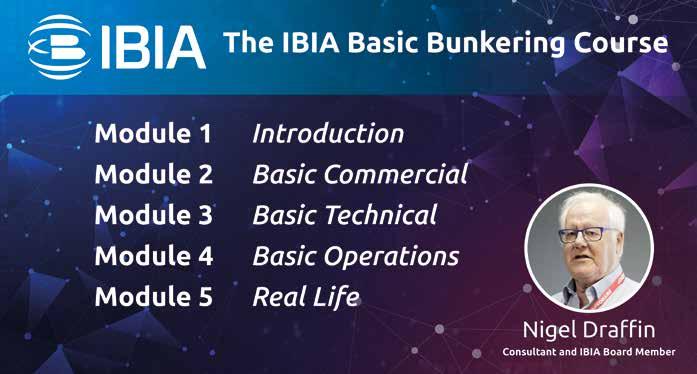
In March, IBIA launched its refreshed online training module on biofuels, designed to reflect the latest thinking on sustainability frameworks, lifecycle emissions, and real world industry practices. The self paced course is built around four short, focused presentations - each about 15 minutes long - covering the fundamentals of biofuels, operational considerations for liquid biofuels, key insights into gaseous alternatives, and the evolving landscape of emissions performance and compliance.
The course is intentionally designed to be approachable for newcomers while still offering meaningful depth for more experienced professionals.
IBIA is also strengthening in person learning opportunities at major industry gatherings. During Singapore Maritime Week 2026, we are hosting a Half Day Workshop on:
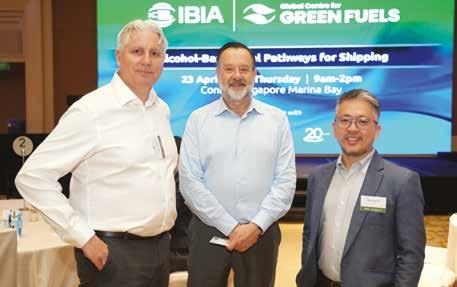
Alcohol Based Fuel Pathways for Shipping, in partnership with the Global Centre for Green Fuels and the Maritime Ethanol & Methanol Alliance. With ethanol and methanol gaining momentum thanks to their scalability, existing supply chains and compatibility with emerging multi fuel engines, the workshop will dive into their practical use in shipping, from supply and infrastructure readiness to bunkering, safety, compliance and commercial deployment. It also highlights Singapore’s growing influence as a global hub for marine fuel innovation and standards.
Meanwhile, regulatory changes in Europe are creating demand for more specialised technical training. Since January 2026, mandatory Mass Flow Meter (MFM) systems at the Ports of Rotterdam and Antwerp Bruges have reshaped bunkering operations, improving transparency and accuracy while redefining the role of marine surveyors.
To help the industry adapt, IBIA has once again teamed up with C4 Fuel to deliver a one day course, Mastering MFM for Bunkering. The programme offers clarity on MID and ISO 22192 compliance, builds technical understanding of MFM
systems, and explores how the surveyor’s role is evolving in a more data driven environment. Participants will also gain hands on insights into troubleshooting and optimising onboard MFM operations.
Looking ahead, IBIA is placing strong focus on expanding its digital training ecosystem. Guided by its Training Working Group, the association will roll out new modules and update existing ones throughout 2026, responding directly to industry feedback. The goal is to support both newcomers and senior professionals across the operational, regulatory, commercial, and strategic aspects of the marine energy transition.
In a period of rapid change, continuous learning is essential. Through its growing training portfolio, IBIA is helping build a more resilient, transparent, and future ready bunkering industry.
For more information on all our training courses and to register, visit our website:
www.ibia.net/training or contact
IBIA Secretariat
Tel: +44(0)203 951 9615
Email: ibia@ibia.net
Training
NAVIGATING A SHIFTING LANDSCAPE
As we enter the second quarter of 2026, the operating environment for Asia's marine fuels sector
grown considerably more complex
Tensions surrounding the Strait of Hormuz continue to cast a shadow over regional supply routes, prompting questions around bunker availability and trade flows, with sentiment effects rippling across investment confidence, operational planning, and decision-making at every level of the supply chain.
In Asia's trade-dependent markets, these pressures make resilience, transparency, and meaningful industry engagement all the more critical. The value of trusted platforms for practical dialogue has never been clearer.
Singapore Maritime Week: Engagement in Action
The centrepiece of Q2 for IBIA Asia is Singapore Maritime Week (SMW), which once again serves as a vital gathering point for the maritime and marine fuels community.
On 22 April 2026, the IBIA Asia Dinner will brought together industry leaders, regulators, members, and regional stakeholders. A longstanding fixture of Singapore Maritime Week, the dinner offered a valued opportunity to reconnect, deepen relationships, and exchange perspectives at a moment when in-person collaboration carries particular weight.
We are also co-organising the IBIAGCGF Half-Day Workshop on Ethanol & Methanol: Alcohol-Based Fuel Pathways for Shipping.
With regulatory clarity still evolving and geopolitical tensions adding a further layer of complexity, it would be easy for the longer-term decarbonisation conversation to take a back seat. Yet the industry recognises that progress cannot be deferred indefinitely.
The workshop offers a grounded platform to explore ethanol and methanol as credible fuel pathways, examining readiness, safety, and operational realities as part of the broader transition.
Together, these engagements reflect IBIA Asia's resolve to sustain meaningful dialogue on decarbonisation, even as the industry navigates uncertainty on multiple fronts.
Looking Ahead
As the industry works through continued uncertainty, IBIA Asia remains focused on its role as a connector, bridging people, policy, and practice.
Through trusted engagement and practical platforms, we will keep supporting a marine fuels sector that is resilient, well-informed, and ready for what lies ahead.
Q2 promises to be a significant quarter for regional collaboration, and we look forward to continuing these conversations with our members, partners, and colleagues across Asia.
Siti Noraini Zaini
Regional
Manager,
IBIA Asia siti.zaini@ibia.net www.ibia.net
CODE OF CONDUCT
Abiding by this Code of Conduct shows that members support our common goal: to promote the widespread adoption of a common set of ethical values within our industry. We believe that when the entire industry acts with the highest ethical standards that this will be to the benefit of us all.
FAIR BUSINESS
3 We conduct our business in a fair and transparent manner
3 We will always act in the best interest of each business partner and are honest with the stakeholders involved in our business
3 We only engage in business using compliant products, and deliver the quality and quantity agreed with our business partners
3 We always act in good faith
BEST PRACTICE
3 We always act in accordance with applicable legislation, including sanctions
3 We always meet contractual obligations in a timely manner
3 We always do our best to avoid disputes and seek resolution promptly if disputes occur
3 We comply with all applicable competition and anti-corruption laws
3 We respect confidential information and do not unlawfully use any intellectual property
SOCIAL RESPONSIBILITY
3 We seek to minimise our environmental impact and the risk of environmental damage
3 We will always ensure employees’ health, safety and security
3 We offer equal opportunities, prohibit unlawful discrimination and respect human rights
3 We offer the same opportunities for professional development to all our employees
TRANSPARENCY
3 Our accounts and records are kept accurately and reflect the true state of the company and its operations
3 During audits or investigations, we fully cooperate with the authorities
3 We will not receive or give any gift or entertainment of disproportionate value
3 We are fully committed to preventing both money laundering and terrorist financing
This Code of Conduct is endorsed by the IBIA – The International Bunker Industry Association. IBIA encourages members to abide by this Code of Conduct and to endorse it.
STRENGTHENING DIGITAL ENGAGEMENT
Highlights from recent digital and strategic initiatives
At IBIA, we have recently introduced a series of marketing and digital initiatives designed to strengthen engagement with our members, modernise our digital infrastructure, and expand our global outreach. From launching a dedicated mobile application to investing in a new website and exploring the role of artificial intelligence in maritime, these developments reflect our commitment to improving how our global community connects, communicates, and accesses industry information.
First mobile app
In December 2025, we launched our first official mobile application, marking an important milestone in improving accessibility and connectivity for our members worldwide. Announced through the IBIA Bulletin, the app provides a centralised and user-friendly platform where members can easily access information and interact with the wider IBIA network.
The application offers streamlined access to IBIA updates, industry news and event information, while also enabling members to communicate directly with one another and with the association. By bringing these functions together in a single platform, we aim to simplify engagement and make it easier for members to stay informed and connected wherever they are.
Available on both iOS and Android devices, the app has already seen encouraging early adoption. To date, it has recorded close to 200 downloads on iOS and Android. As awareness of the platform grows, we expect usage to increase further, supporting more dynamic communication and interaction across our global membership base.
New IBIA website soon
Alongside the launch of the mobile app, we have also begun development of a new IBIA website. The upcoming platform will be fully integrated with our customer relationship management (CRM) system, creating a more cohesive and efficient digital ecosystem for the association. We aim to launch the
new website in the second half of this year; once operational, the platform will serve as a central hub for our communications, resources and digital engagement activities.
The new website is designed to deliver a more streamlined and user-friendly digital experience for our members, partners and stakeholders. In addition to modernising our online presence, the project will improve internal workflows and strengthen the way we manage and share information across our global network. Integration with the CRM platform will enhance data management, communication processes and event coordination, enabling us to provide more responsive and personalised services to our members.
The role of AI
As a separate initiative, IBIA has partnered with Intent Communications to explore the role of artificial intelligence and assess how effectively leading AI platforms respond to industry-related questions. The campaign, titled “De-mystifying Digitalisation and AI in Maritime,” focuses on large language model platforms including ChatGPT, Gemini, Microsoft Copilot, Claude and Grok. These tools are increasingly used across the maritime sector for tasks such as analysing reports, summarising regulations, generating market insights and supporting operational documentation. However, their reliability and accuracy remain key topics of discussion within the industry.
To test these platforms, each AI tool was asked the same question: “What are the top three ports to bunker in today? And do you think these ports will still be the global leaders for alternative fuels in 2050?”
The responses were then reviewed by IBIA’s Executive Director, Alexander Prokopakis. IBIA members were invited to assess the answers and vote for the AI platform that delivered the strongest overall response, taking into account accuracy, completeness, level of detail and the use of supporting sources.
This initiative not only provides insight into the current capabilities of AI tools but also encourages members to engage with emerging technologies and consider how digitalisation may shape the future of maritime operations.
New partnership
Beyond these digital developments, we are also strengthening our international engagement through a new partnership with XINDE Marine News. China plays a critical role in global shipping, bunkering and energy markets. Strengthening our engagement in China is therefore an important strategic priority.
XINDE is a well-established maritime media and events organisation with a highly targeted professional audience reaching industry professionals across mainland China, Hong Kong, Singapore and Taiwan, including shipowners, bunker suppliers, ports, traders, energy companies, financial institutions and regulators. Through this collaboration, XINDE will support IBIA in establishing and managing our official presence in China and ensuring consistent visibility within the Chinese maritime sector.
The partnership represents an important step in expanding our reach in one of the world’s most influential maritime markets while reinforcing IBIA’s role as a global platform for the bunkering industry.
Elena Wilson
Marketing & Business Development Lead elena.wilson@ibia.net
NEW IBIA MEMBERS
CORPORATE
Bunker Fuel Supplier (Physical)
BE BUNKER
Begum Dogulu
Europe
Other (Marine Fuel and Lubricant supplier)
Certas Energy UK Ltd
Chris Joyce Europe
Industry Association
Clean Shipping Alliance
Michael Kaczmarek
Global
Shipping Company
CMA CGM
Francois-Xavier Accard
Asia
Finance and Banking, Financial, Foreign Exchange Corpay
By joining IBIA, you will become part of a global network of bunker industry experts who collectively form one of the world’s leading authorities on bunkers.
Not only will you have access to a wealth of information and insight (we publish newsletters and industry updates on current issues), which offer pragmatic advice for managing the industry’s challenges; members also have the potential to shape and influence both international and local legislation. This happens through IBIA’s Working Groups, which are responsible for developing industry guidance, participating in IMO correspondence groups, solving long-term industry issues, and addressing both commercial and technical aspects.
(Updated 2026)
MAY 2026
IBIA & INDUSTRY 2026 CALENDAR
13 - 14 2 Days Advanced Bunkering Course (SS600:2022 & SS648:2024) Singapore, Asia
15 ESG Shipping Awards International 2026 Awards Ceremony and Gala Dinner Athens, Greece 18 - 21 Maritime Week Americas Panama 19 - 21 IBC - The International Bunker Conference Oslo, Norway
31 IBIA Posidonia Reception Athens, Greece
JUNE 2026
1 - 5 Posidonia 2026 Exhibition Athens, Greece
2 ship.energy summit 2026 Athens, Greece
23 - 24 BunkerExperience 2026 Athens, Greece
SEPTEMBER 2026
1 - 4 SMM Hamburg, Germany
7 - 11 The Oxford Bunker Course Oxford, United Kingdom
7 - 10 Asia Pacific Petroleum Conference (APPEC) Singapore, Asia
7 - 8 Shipping Forum & Awards 2026 Beirut, Lebanon
13 - 15 SIBCON Singapore, Asia
19 - 23 Pudong Shipping Week 2026 Shanghai, China
22 - 23 ARACON 2026 Rotterdam, Netherlands
NOVEMBER 2026
3 - 6 IAPH World Ports Conference London, United Kingdom
10 - 12 IBIA Annual Convention 2026 New York, United States
15 - 21 Hong Kong Maritime Week Hong Kong
18 Xinde Marine Forum Hong Kong 2026 Hong Kong
DECEMBER 2026
3 - 4 Marintec Innovation Conference 2026 Shanghai, China
*All dates were correct at time of going to print but may be subject to change, please refer to IBIA's website (https://ibia.net/events/) for any updates
DÉJÀ VU AT IMO
Can the impasse be broken?
By the time you read this article the outcome of IMO’s Marine Environment Protection Committee (MEPC 84) taking place in late April will be known. Ahead of that meeting we have seen new proposals submitted to amend the draft IMO Net-Zero Framework (NZF) which if taken forward have significant implications for both the content but also timeline for implementation. Those proposals are considered below along with the implications of the current impasse. It remains the case that there is the distinct possibility the current impasse will continue as even if the current NZF were to be adopted later this year the latest proposals suggest successful implementation could soon run into problems. How the lack of global rules is impacting investment decisions, not just in alternative fuels but even between different shipping sectors due to their differing commercial risk profiles, is also considered.
Two of the submissions propose significant differences. One by Argentina, Liberia and Panama and another by Japan. Both these two proposals seek to address the key issues where there is a lack of consensus including the imposition of a “global carbon tax” and its impacts on economies especially consumers, and that the draft GHG fuel intensity targets and time limit on validity of surplus units de facto eliminated the potential use for compliance of certain alternative fuels such as LNG and sustainable biofuels.
The proposal submitted by Argentina, Liberia and Panama (remember Liberia and Panama flag over 30% of the world fleet by gross tonnage) goes furthest in restructuring the framework. It removes remedial unit pricing, keeps the surplus unit trading architecture, replaces the fixed reduction trajectory with one derived from commercial fuel availability, fuel scalability and fuel cost limited by affordability criterion whereby the price does not exceed 15% above the current market average for standard marine fuel e.g. VLSFO.
Provisional analysis of this proposal appears to indicate that fossil LNG is currently the only option for meeting the proposed affordability criterion. Finally, and most significantly, the proposal eliminates the IMO Fund.
In effect the Liberian paper seeks for the market to drive the decarbonisation of shipping in that decarbonisation would follow the availability and scaling of alternative fuels, assuming that this would bring about cost reduction for those fuels, rather than the primary driver being regulatory compliance which increasingly strengthened marine fuel GHG intensity reduction requirements as set out in the draft IMO Net-Zero Framework.
The Japanese proposal seems a more concerted attempt to find a compromise as it is more aligned with the IMO Net-Zero Framework architecture but with one major difference, that is, it also suggests that compliance now be achieved with “A new scheme without the IMO Fund” based on trading surplus units alone. Rather than paying fees for noncompliance, and to address concerns about the impacts of the targets and feasibility, the framework would initially have weakened GHG marine fuel intensity targets until mid-2030’s that ships would primarily comply through obtaining surplus units from compliant ships. The suggestion that if there were insufficient surplus units available then ships would donate to maritime related projects seems unlikely to be accepted and leaves open whether surplus units could be obtained from out of the sector?
Removal of the IMO Fund has significant implications as it would mean no resources to “reward” use of zero or near-zero fuels, technologies and energy sources, nor to support efforts in developing countries to decarbonise their maritime sectors, which is politically significant and for many IMO Member States what they perceive as their “reward” for supporting the IMO framework.
At this moment in time there is no clear way forward for the simple reason that the key decision at the session will be whether to accept any of the new proposals? If accepted, then the implication is that it would require the current draft text to be re-opened for negotiation. If the text is re-opened for re-negotiation, then this is likely to further delay adoption of the framework, as no doubt opponents would argue that the text would need to be re-approved which at the earliest could be at MEPC 85 in November this year, for the mandatory 6-month circulation period before adoption at MEPC 86 next year. The consequence is clear, adoption would now be in 2027 (at the earliest), and this would mean that the IMO requirements could not come into force much before 2029.
The US has made clear its staunch opposition to the IMO’s GHG Fund in which monies are raised from the purchase of remedial units to comply with annual GHG fuel intensity requirements when compliant fuel is not used. The US will not be compromising on its position, not least because the US always had this position on a ‘global levy’ even before the approval of the IMO NZF in April 2025, and it is just that the stated position has been amplified by the current US administration.
Of the proposals put forward there is no doubt the Liberian proposal most closely aligns with the US red lines. If this were the case, then this would also be important on the issue of how the adopted amendments are “accepted” under international law before the rules can enter into force. The US has called for the framework to be accepted under the “explicit” amendment procedure (as opposed to the usual tacit acceptance procedure) that requires governments to formally notify IMO of their acceptance of the amendment. Even IMO acknowledges on its own website “This process is very time consuming and most of the amendments adopted this way never entered into force”! It may be that if
the Liberian proposal is supported the US would remove its objection to the use of the tacit acceptance procedure thus providing significantly greater certainty on the entry into force date of the provisions and therefore when they would start becoming effective at signalling demand to the market.
Importantly, unlike several other UN bodies, the US has not withdrawn from IMO and last November was re-elected to the IMO Council. As such the US remains committed to IMO as the regulatory body for international shipping and so no doubt wishes to achieve a satisfactory outcome with a global measure if only as it would put pressure back on countries that already have in place regional/national measures or are considering doing so.
To gain a consensus there will need to be concessions made. Last October the US was quite exposed as an opponent (being that whilst it has significant shipping interests it does not have a large international registry) but with the new proposals coming forward from Liberia, Panama and Japan there is clearly now a significant minority that cannot be ignored. For me it would be utmost folly if governments sought to force the issue against those interests.
Indeed, in the wake of the failure to adopt the draft NZF during last October’s extraordinary session of the MEPC, there has been an increased focus on regional regimes like FuelEU Maritime, the EU and UK ETS, and potentially other national GHG measures that would impact the global maritime industry. Each regional/ national scheme presents a compliance risk for ships trading internationally and adds to administrative burden for the shipowner and flag State. Ultimately, they each present a barrier to global trade and risk the introduction of distortions to the shipping market. It should be noted that rules set by a regional/national body can only be readily enforced by that regional/national jurisdiction. As such their impact is that they amplify the importance of a global agreement being made by IMO to reduce risks
of market distortion but also reduce the uncertainty about the adoption of alternative fuels.
The commercial realities and bottlenecks in the marine energy value chain IMO continues to develop the regulatory framework for alternative fuels and technologies especially for safety. Also, recently, the lack of a regulatory framework for the liability of alternative fuels has been highlighted. Work will continue on these issues to support international shipping’s energy transition and address risks associated with alternative fuels and technologies. As confidence grows more owners are likely to invest in alternative fuels but until there is a global agreement this is likely to be on the basis of seeking to address risks for a specific sector or route.
Shipping demands a lot of fuel but for future clean fuels shipping will be a user like many other sectors and so in many respects the decision about availability at scale will depend on those sectors and their demand for the fuels. Clear demand signals for alternative fuels will remain primarily related to cost both actual (spot market) and, increasingly, net when you take into account compliance costs. In many respects this is why there is talk of quoting prices in terms of energy supplied rather than per tonne to ensure there is greater transparency when decisions on which fuel to purchase/invest in are being made.
In April 2025 IMO strengthened the Carbon Intensity Indicator (CII) requirements for ships of 5,000 gross tonnage and above such that the Reduction factor for the CII relative to the 2019 reference line will increase from 11% in 2026 to 21.5% by 2030. Whilst CII remains under “soft” enforcement, with requirement only being to produce a corrective action plan, the costs of compliance with EU and potentially other requirements are increasing and so CII is considered as providing a greater incentive for focusing on operational energy efficiency technologies such as wind.
Furthermore, there is no doubt the recent significant spike in fuel cost due to geo-political issues and concerns about availability is making companies reassess their long term strategies both in terms of energy efficiency but also fuels they will look to use in the future.
Shipping is also often talked about in terms of a single transport sector but in actual fact there are over 10 different sectors/business models operating in the maritime industry and each has a different perspective on pricing the risks that need to be mitigated and as such perspective on the returns on any investment that may be made. The clearest distinction is between the liner and tramp shipping trades, the largest emitting sectors of the market, where the difference is the split incentive. Whereas owner operators prevail in the container shipping sector, and as such direct investment decisions are based on the strategy of that operator and its investors and as such returns are tangible, in the tramp trades the connection between investment and return is broken as it is the charterer who pays for the fuel. As such decisions about investments are based on different sets of criteria and certainly whilst we do not have global GHG regulations for international shipping one of those criteria will be “do we have to do this to comply?”. If the answer is no, because the ship will not be subject to regional/national GHG rules, then there is no incentive to invest.
Wishing you safe seas and a fair wind.
Edmund Hughes
THE BIMCO & IBIA SHIPMASTER’S BUNKERING MANUAL 2022
The Shipmaster’s Bunkering Manual 2022 is the first practical industry guide for both owners and suppliers, seeking to create a common understanding of best practices when bunkering to facilitate a smoother process and safe bunkering globally.
The manual is a unique result of cooperation between IBIA and BIMCO to create insight and practical understanding of bunkering across the shipping sectors.
Bunkering operations are routine, critical and high-risk operations which require accurate planning from both the owner and supplier to ensure a safe and successful operation.
The publication consists of background information as well as checklists and key notes for the entire process for shipowners, masters and crew on how to prepare, execute and follow up on bunkering, including what to do when it goes wrong.
Totalling 4 chapters and phases of the bunkering process, the manual covers the following topics:
Chapter 1:
Background insight on fuel types and key regulation
Everything you need know from fuel oil types, safety, and environmental regulations to ISO standards and contractual issues related to bunkering.
Chapter 2:
Origin and supply chain of marinebunkers
An overview of bunker blends before the ship arrives for bunkering followed by a detailed description of the ship’s preparation and planning prior to bunkering. Advice is also given on how to handle a situation if compliant fuel is unavailable in a specific port. Paperwork including the bunker delivery note and certificates of quality are described and recommendations are given that aim to help to use them correctly.
Chapter 3:
Bunkering procedures
Bunker sampling is one of the most important aspects of bunkering. This chapter covers preparations, practical issues and what to do if something goes wrong. Details of the role each stakeholder ashore and on board undertakes during the process including actions required before, during and after the bunkering.
Chapter 4:
Calculation of bunker quantity and after completion procedures
Details on how to create a solid background for calculating the bunker quantity and determine if the ordered bunker stem has been delivered. For ships carrying equipment to undertake onboard testing of marine fuels, testing procedures are referred to and detailed description of how to interpret test results provided. Keeping an accurate and up to date oil record book is, together with the bunker delivery note, important as records for internal and external use for example during port state control.
The book is available to buy from Witherbys on this link: https://shop.witherbys.com/shipmaster-s-bunkering-manual-2022/ IBIA members receive a 20% discount on all publications. Please enter “IBIA” in the “Coupon/Gift Certificate” box to receive your 20% IBIA member discount.
CONFLICT OF INTEREST
A fresh impetus for ships to continue diverting around the Cape should mean that the expanding bunker market on both sides of the continent should remain buoyant for a while, writes John Rickards
It’s a little hard to make firm predictions for the African bunker market at the time of writing, as it’s entirely possible that, by the time World Bunkering goes to print, the US-Iran conflict will have ended (or the ceasefire tentatively in effect at the time of writing will have held up) and traffic will be swinging back to normal. And it’s equally possible given the nature of the conflict and its protagonists that something will have happened to spark it off again and any vessel that can will still be avoiding the region.
Whatever happens in the Gulf, and the Red Sea as a result, has a massive effect on the bunker market at key African hubs. Following the launch of US-Israeli strikes on Iran, March this year saw vessels calling for bunkers at Port Louis in Mauritius climb 42% to 294, and fuel volumes jump 57% to 109,708 tonnes for the month, according to figures from the Mauritius Ports Authority. The island state saw a similar jump during the months of Houthi attacks and diversions away from Suez – Mauritian bunker sales in 2025 hit 1m tonnes in 2025 – diversions that had only just begun to end for major lines before the conflict with Iran began. The current surge in demand has
been such that while Mauritian bunker suppliers have been able to meet it so far, the MPA has warned that it might become tighter if the conflict went on and supply pressure increased and at the time of writing availability was reported as “very tight”.
There’s certainly plenty of competition for business from ships heading around the Cape instead of through Suez or looking to bunker en route somewhere other than Fujairah. The height of the diversion period has seen various international suppliers launch operations in western and southwestern Africa in particular.
Dubai-based Flex Commodities took the plunge at the end of November last year by launching physical supply at Walvis Bay in Namibia in conjunction with GAC’s investment arm. Via its barge Splendour Opal , the company offers offshore and anchorage deliveries; only cruise vessels are permitted to bunker at berth. The tentative returns to Suez initiated by ship operators like CMA CGM and Maersk in the month or so before the Iran conflict erupted might have left them feeling a little late to the party - but even if Middle East Gulf waters return to something like normal it now seems very likely that significant
numbers of carriers will continue to take the longer but safer trip around the Cape.
Vitol Bunkers also expanded its African presence last year, bringing a barge to serve the overall WAF region from Dakar to Lomé, with initial deliveries of VLSFO and MGO. Vitol’s Ammar Hussaini said that “supplying bunkers by barge to the WAF market allows us to support our customers flexibly in the location and with the fuels that they need.”
Supply of fuel is one thing, but the supply of crude to refineries is another, and interruptions in some of the supply out of the Gulf and the risk of shortages (not to mention the reality of much higher costs) mean a need for others to pick up the shortfall. March saw Nigeria double the crude supply from state-run Nigerian National Petroleum Co to Dangote Refinery from five cargoes to ten, though Africa’s largest refinery is still reliant on increasingly expensive imports to come close to running at full capacity. That hasn’t stopped it ramping up exports to other African countries.
Angola has also been ramping up production to cushion the impact
of price surges locally, state-owned Sonangol insisting it has the situation in hand, albeit with its refining and investments in production and upgrades at an earlier stage.
The country’s bunkerers are certainly well-placed to take advantage of ongoing diversions in the main eastwest trades. Global Fuel Supply picked Luanda as the base for its first African supply operations last year, jockeying for business with local competitors like Famar Energies, Seago and Pumangol, backed by solid local production of VLSFO. GFS announced the addition of its first owned, rather than chartered tonnage to its Angolan operation in December. The upgraded and renamed MV Blue Alliance was fitted with an MFM – making it the first vessel in the Angolan market to have one – in the course of post-purchase drydocking in Dubai. The refit was fortunately completed just in time for the ship to clear the Gulf before the conflict started, and by the time World Bunkering goes to print, it should have started supply operations.
The country that continues to lag somewhat through a combination of lack of capacity, financial disputes, and disruption to services despite seeing all that traffic passing its doorstep is South Africa. While bunkering restarted in Algoa Bay last year, with suppliers including Glencore subsidiary Astron Energy, after shutting down in the wake of a string of vessel
detentions by the South African Revenue Service in 2023 over claims of customs and tax breaches, it was promptly hampered again when SARS seized Astron’s chartered tanker Essien , one of the company’s three bunkering vessels, along with its cargo, in an ongoing legal case claiming that the Singapore-flagged ship wasn’t correctly declared as an import for VAT purposes. In late February this year, Astron announced it was bringing in a South African-flagged replacement, the Pearl Kate, to fill the gap.
Peninsula, in collaboration with longstanding South African bunkerer Linsen Nambi, entered the Algoa Bay supply market in October last year on the back of revamped regulations for ship-to-ship bunkering in South African waters, broadening its African operations from Mauritius and Egypt.
At the time, Guillermo Cancela, the company’s regional supply manager for the Middle East and Africa, said: “Algoa Bay is an area that, crucially, enables vessels to bunker without berthing, significantly reducing waiting times and lowering costs. Together with our established presence in Mauritius, Algoa Bay allows us to create operational synergies across both markets. By making key fuels available at these locations, we are opening doors for new opportunities and providing a reliable service to customers across the continent.”
Linsen Nambi CEO Durand Naidoo said: “Peninsula’s entry into this market is a strong vote of confidence in the South African bunker industry and highlights its long-term potential. The growth of Algoa Bay as a bunkering destination benefits the region and strengthens South Africa’s role in global shipping.”
In the context of the shift in bunker traffic towards southern and western Africa in the wake of the Red Sea crisis, this is another move that might have seemed a little slow in coming –albeit given the time it took for Algoa Bay to reopen and the authorities to settle on a new regulatory framework, largely unavoidable – but with a fresh wave of impetus to avoid active or potential conflict zones in the Middle East Gulf and near Iranian proxies like the Houthis, the timing may have been ideal.
The new rules for Algoa Bay are intended to protect the local marine environment in the wake of a string of incidents in the preceding years. They include stricter limits on weather conditions, pollution control and crew environmental training, and in Algoa Bay, ship operators will now have to deploy hydrophones to monitor marine mammals and African penguins. STS operations will be banned entirely within protected areas and within three nautical miles of the shore.
TANGER MED:
MOROCCO’S RISING POWERHOUSE IN THE GIBRALTAR STRAIT BUNKERING MARKET
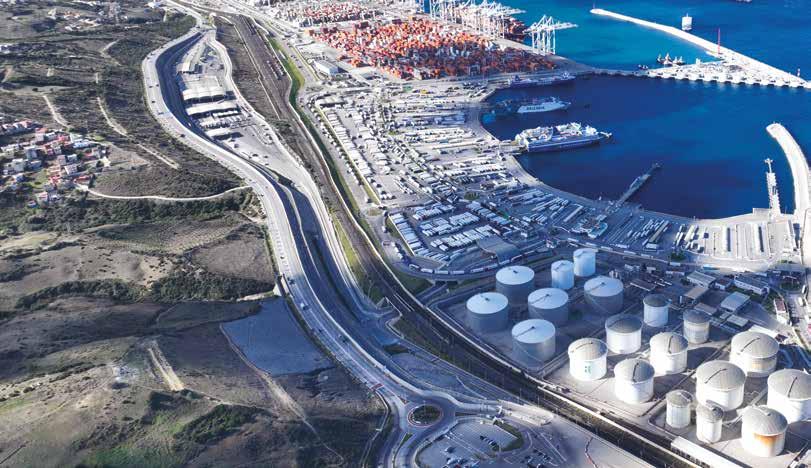
Commanding the gateway between the Atlantic Ocean and the Mediterranean Sea, Tanger Med Port is rapidly emerging as one of the most dynamic players in global trade, logistics, and maritime services. With an expanding focus on bunkering, Morocco’s flagship port is now challenging established regional leaders in the competitive Strait of Gibraltar fuel market.
Strategically located just 14 kilometers from the European Union and flanked by the high-traffic corridors of Algeciras and Gibraltar, Tanger Med has combined world-class infrastructure with consistent growth to reinforce its position as a critical maritime hub.
In 2025, the port set new benchmarks by handling an unprecedented 11.1 million TEUs a 8.4 % year-on-year surge that underpins its rising profile among the world’s top container ports and signals growing bunkering potential alongside increased vessel traffic.
Record-Breaking Growth and Global Connectivity
Since surpassing 5.77 million TEUs in 2020, Tanger Med has charted an extraordinary growth trajectory.
In 2025, the port shattered its own benchmarks, handling 11.1 million TEUs - a 8.4 % year-on-year surge.
This stellar performance reflects deep collaboration among terminal operators and global shipping alliances, paired with optimized port call management that minimizes vessel turnaround times. As Tanger Med accelerates toward joining the ranks of the world’s top 20 container ports, its expanding throughput is also fueling demand for auxiliary services such as bunkering.
The Tanger Med Port Complex processed 526,862 vehicles across its two terminals in 2025, down 12% on the prior year. Renault's plants in Melloussa and SOMACA led exports with 327,569 units, followed by Stellantis in Kenitra at 126,874, and 39,751 vehicles in transshipment.
The decline reflects production adjustments in response to softer demand, as well as a broader reshaping of global automotive supply chains - a transition the port is well placed to weather.
Meanwhile, passenger traffic staged a robust recovery, reaching 3,220,422 travelers, a 5.7 % uplift buoyed by a successful Marhaba operation. The port recorded 16,686 vessel calls in 2025, down 4.5% compared with 2024. This decrease is primarily explained by changes in the RoPax segment, with certain vessels replaced by highercapacity units capable of carrying more passengers and freight. At the same time, the port welcomed 1,319 megaships exceeding 290 meters in length, up 8.4% year on-year, supported by call optimization measures aimed at improving operational efficiency and enhancing service quality for shipping lines.
A Smart Port Underpinned by Innovation
At the heart of Tanger Med’s ascent is a forward-thinking digitalization strategy. Its Port Community System integrates e-payments, just-in-time (JIT) logistics, artificial intelligence, and machine learning, all designed to accelerate cargo flows and optimize service delivery. A strategic alliance with Wärtsilä further enhances its Smart Port capabilities, deploying advanced data analytics to fine-tune operations and support predictive logistics.
Such innovation ensures Tanger Med delivers the operational precision modern shipping lines demand, an advantage that seamlessly translates into the efficiency of its bunkering activities.
Rising Force in the Bunkering Arena
Tanger Med, long established as Morocco’s leading export hub handling over 50% of the country’s trade, is now positioning itself as a premier marine fuel supply center in the Strait of Gibraltar.
With a strategic focus on bunkering, the port competes head-to-head with established giants like Algeciras and Gibraltar, offering shipowners a highly competitive, congestion-free alternative supported by state-of-theart infrastructure and comprehensive services.
Key assets in its bunkering portfolio include three dedicated oil berths, seven operational bunker barges, and two offshore anchorage zones free from congestion, with an annual bunkering capacity of 6 million tonnes and total oil handling capacity reaching 15 million tonnes per year.
Central to this offering is Horizon Tangiers Terminals, with over 530,000 m³ of storage capacity.
In partnership with Minerva Bunkering, one of the world’s leading marine fuel providers, the terminal guarantees flexible 24/7 fuel delivery, both at berth and at anchorage, complemented by integrated services such as fuel sampling, laboratory analysis, and rapid turnaround.
With the introduction of ECAMED Horizon, Tangiers Terminals and Minerva have collaborated closely to ensure a seamless transition, effectively supporting their partners in complying with the new regulations.
Tanger Med’s increasing vessel calls, and rising tonnage point to a sharp uptick in bunkering activity, further fueled by shifting regional dynamics.
Tanger Med has capitalized on its modern facilities and minimal congestion to steadily capture a larger share of the regional marine fuel market.
Strategic Location Meets Operational Advantage
Tanger Med’s competitive edge lies not only in its infrastructure but in its enviable geostrategic location. Situated directly on major EastWest trade routes, it offers fast access to offshore anchorage points, minimal waiting times, and seamless connectivity to North African and European markets.
Its consistently low congestion levels provide shipowners with operational predictability an increasingly valuable proposition in an era of tight sailing schedules and mounting decarbonization pressures. For bunker suppliers and traders, Tanger Med offers a gateway to expanding West African, Mediterranean, and transatlantic markets.
Pioneering Sustainability in Marine Services
Beyond operational capability, Tanger Med is advancing ambitious environmental initiatives aligned with the evolving priorities of the global bunkering sector.
Tanger Med is fully committed to the energy transition and aims to achieve carbon neutrality across all its activities by 2030.
In this context, an ambitious decarbonization roadmap was launched in 2022, supported by a $200 million investment program, with the main objective of meeting electricity needs through renewable energy sources.
The port has deployed Onshore Power Supply (OPS), enabling vessels at berth to plug into the electrical grid, significantly reducing greenhouse gas emissions and cutting pollutants associated with auxiliary engines.
Outlook: A Future-Ready Bunkering Hub
Looking ahead, Tanger Med’s trajectory remains exceptionally strong. With sustained investment in infrastructure, advanced digitalization, and a bold sustainability agenda, the port is primed to deepen its footprint as a world-class logistics and bunkering hub. Its unique blend of technical sophistication, strategic location, and operational agility continues to attract leading shipping lines, fuel suppliers, and global traders.
In short, Tanger Med today stands not just as Morocco’s trade linchpin, but as a dynamic, future-ready maritime gateway delivering competitive, efficient, and sustainable bunkering services. As global shipping evolves and environmental mandates intensify, Tanger Med’s integrated strategy positions it firmly at the vanguard of international bunkering for years to come.
CLEANING UP
The ports of the Western Med continue to enjoy strong trade on the back of rerouted traffic, but it’s the future which is taking a central role in ports’ planning, John Rickards reports
The western half of the Med is facing conflicting economic forces, with perhaps the greatest exposure to the complexities of the current EU-ETS system as it applies to journeys in/out of regulated waters but also the chief European beneficiaries of the current conflict-driven shift in traffic away from Suez and around the African coast. At the same time, in Spain in particular, it’s also one of the key drivers in future fuels production and uptake.
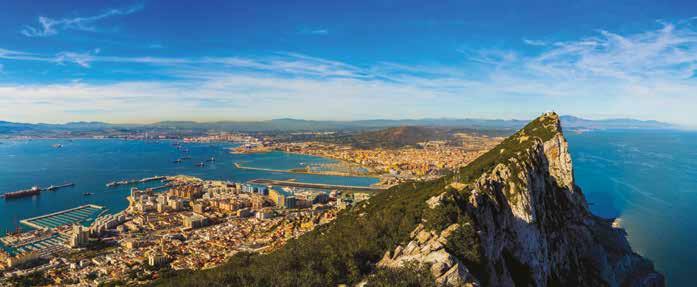
Meanwhile, in the wake of the UK-EU Treaty agreement affecting cross border arrangements between Gibraltar and Spain, the territory's government has moved to reassure the bunker market that port operations will not be disrupted. The Gibraltar Chronicle reported that Gibraltar’s delegation to International Energy Week and the IBIA Annual Dinner used the London meetings to stress that the Treaty would not affect bunkering operations. That message was followed by stronger monthly figures.
Government of Gibraltar statistics, sourced to the Gibraltar Port Authority, show 468 bunker calls in March, up from 357 in February and taking the first-quarter total to 1,184. Captain of the Port John Ghio described International Energy Week as “an important forum for maintaining and building relationships within the maritime and bunkering sectors”.
Minister for Business and the Port Gemma Arias Vasquez said Gibraltar remained a “competitive and reliable maritime hub”.
Across the Strait in Morocco, the gateway port of Tanger Med enjoyed an excellent year in 2025 despite a drop in dry bulk cargo due to delayed cereal imports and car exports due to global market challenges. Container traffic was up 8.4% to 11.m TEU on the back of its fourth container terminal opening, vehicle and passenger traffic were both up, and liquid bulk rose 13% to 8.6m tonnes, “largely driven by hydrocarbon traffic” while vessel calls by the largest ship segment were up 8.4% and overall cargo handled was up 13.3% to 161m tonnes.
A similar pattern was seen further into the Med. Marseille-Fos saw container traffic stay level at 1.45m TEU, liquid bulk up 8% to 47.6m tonnes, with
LNG up 7% and refined products up 23%, which the port said was “due to a rise in import needs linked to works stoppages in local refineries and the tense energy context in Europe”, and total cargo traffic was up 5% to 74m tonnes . “This rise came amid an international context of geopolitical tensions, shifting alliances and accelerated energy transition,” the port authority said.
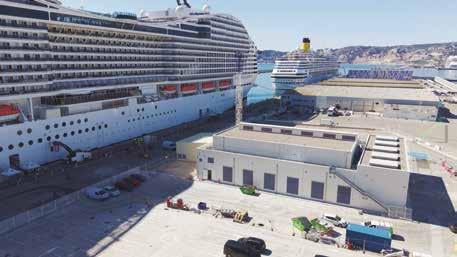
Marseille is investing heavily in energy transition projects, particularly renewable power generation and shore-to-ship power (for which 40MW of capacity was added over the past year), and from this year it will be the first port in France and one of the first in Europe to be able to connect three cruise vessels needing up to 16MW each simultaneously, four years ahead of the EU regulatory deadline.
By 2029, Marseille aims to have 150MW connected, including 22MW produced renewably in the port itself (the current cruise ship power hookups are, the port said, 100% renewable, supplied by PV on port buildings themselves), covering 80% of commercial port calls.
Christophe Castaner, president of the Port of Marseille Fos Supervisory Board, said at the facilities’ unveiling in April this year: “Providing shore-side electrical connections for cruise ships is a genuine feat of technical prowess, made possible by the expertise and commitment of the teams at the Port of Marseille Fos. In passing this new milestone, the port has confirmed its position as a pioneer in shore-side electrification, always staying one step ahead of the regulations. I would like to pay tribute to all the institutional partners and the companies that embraced this initiative and supported this groundbreaking project. This major investment is essential for the region; it enables us to reconcile the port’s appeal, environmental performance and sustainable improvements in air quality.”
The French Minister for Transport Philippe Tabarot echoed the sentiment: “In the wake of the Prime Minister’s announcements to accelerate the electrification of our country, today’s inauguration at the Grand Port Maritime de Marseille of this shore power connection for cruise ships at berth demonstrates the importance of relying more heavily on our domestic electricity generation: to improve residents’ quality of life, to reduce the carbon footprint of maritime transport, and to strengthen our sovereignty. This major project, in which the State is investing over €50 million, is part of the ambition set out in the new Charter for Sustainable Cruises in the Mediterranean, which I signed in Nice in June 2025 to support more sustainable tourism.”
The port authority was also keen to highlight its progress in LNG bunkering. Across 2025, 175 bunkering operations were carried out from the
port’s methane terminal. “This momentum stems from strategic cooperations enabling LNG supply to cruise ships, container ships and roro,” it said. “Due to growing demand, initiatives for the installation of a second bunkering vessel are under discussion.”
Heading further east still, the ports of Genoa and Savona enjoyed only some of the traffic benefits seen closer to the Strait. Container volumes for 2025 were up 6.3% to 3m TEUs, mostly in gateway rather than transshipment cargo, which the port authority again described as “an absolute record for the port system… in an international context still characterised by geopolitical uncertainty, reorganisation of global logistics chains and tensions on the main maritime routes.” Overall cargo tonnage was steady, including a 1.9% drop in liquid bulk energy products.
Port authority president Matteo Paroli said: “For the first time the ports of Genoa and Savona-Vado touch the threshold of three million TEUs handled. An unprecedented result, which represents a turning point for our port system and certifies its full operational and competitive maturity. Reaching this level of container traffic in a still unstable international scenario, marked by geopolitical tensions, redefinition of routes and reorganisation of global logistics chains, makes this even more significant.
It is the concrete demonstration of the ability of our ports to attract traffic, to adapt quickly to market changes and to confirm themselves as a reference logistics platform for the country.”
Genoa also saw its first LNG bunkering operation in December last year to the ferry GNV Virgo , followed by an announcement that LNG bunkering at the port was “progressively entering full operation” with the first regular LNG fuelling of its sister ship the GNV Aurora in March. The addition of LNG bunkering to the port’s capabilities is part of a €110m investment in energy transition, with €70m of that accounted for by – again like Marseille – a cold ironing system due to enter operation around the time World Bunkering finishes printing.
“What today is still an innovative initiative will become ordinary in the coming months,” Paroli said. “We will see more and more ships powered by low-environmental-impact fuels and increasingly faster and safer [bunkering] procedures.”
In Spain, despite an “intense and complex” year, Algeciras saw throughput hold steady and marked its tenth year in a row with 100+ million tonnes of cargo. It’s also going to be deploying shoreside power, alongside 36,500 tonnes of CO 2 in emissions reductions and an overhaul of the port’s internal cargo flows as part of a €580m business plan taking the port through to 2030.
Algeciras carried out 78 LNG bunkering operations in 2025 totalling 333,833 cbm, putting it in top spot for the Iberian Peninsula and third in Europe after Rotterdam and Marseille Fos, according to data provided by SpanishPortuguese energy transition platform Gasnam. Almost 16% of the product supplied, a total of 51,923 cbm, was renewable liquefied biomethane (bioLNG) derived from urban and agricultural waste, making Algeciras the largest international supply point of this nascent fuel type.
The port authority of Algeciras (APBA) credited the commitment to bioLNG of the three operators authorised by the APBA to carry out this type of operation in the Bay – Axpo, Shell and Peninsula – as well as Enagas, through its subsidiary Scale Green Energy, to the necessary infrastructure for the supply of both LNG and bioLNG, with demand growing due to European regulation like ETS and FuelEU (it’s worth noting that the port’s chairman and APBA’s president Gerardo Landaluce at the turn of the year was citing “great difficulties” in applying the ETS in its current form, welcoming a review of it “in light of factual evidence that proves market distortion”, and insisting that emissions regulation should be global via the IMO’s Net Zero proposals; these things do tend to cut both ways).
At the time of writing, APBA’s board had just approved the port’s next fiveyear strategic plan (“a 2030 strategic plan with a 2040 vision”). APBA said the plan seeks to address “the current challenges posed by maritime trade, geopolitics, and EU regulatory requirements – a very different context from that of the last strategic review in 2020”, Landaluce said it “aims to consolidate the positioning of the ports of Algeciras Bay and Tarifa as an advanced intercontinental logistics platform, reinforcing its role as a key node in global trade, promoting the energy transition of maritime transport and strengthening the contribution to the economic and social development of our regional environment.”
“Competitiveness, decarbonisation, and social commitment are the three strategic lines that frame the objectives projecting the ports of Algeciras and Tarifa toward a more innovative, sustainable, and connected future, and which already constitute the Port Authority’s roadmap for the coming years,” APBA said.
According to Gasnam, 2025 was a turning point not only for Algeciras but for the peninsula as a whole, which has “ceased to be a spectator, to become the main player in sustainable maritime transport”.
The organisation predicts that if the trend continues, 2026 will see Spain and Portugal together overtake Northern Europe, principally Rotterdam, in the race for sustainable
bunkering, given that gas bunkering in the peninsula has quadrupled in the last two years while remaining relatively flat in Rotterdam.
“The future of global maritime transport is being decided today in the Iberian Peninsula. Not only do we have the location, but we have shown that we have the infrastructure and production capacity to lead Europe,” Eugenia Sillero, general secretary of Gasnam, said.
Barcelona is another cornerstone port and a proponent of decarbonisation. Its energy transition plan announced at the turn of the year, set a goal of halving emissions by 2030 and reducing them by 85% by 2040 on the back of €1.7bn in investment.
GIRONE TRADING OIL
Your trusted partner for bunker fuel and marine lubricants in Italy and Europe
Girone Trading Oil delivers dependable, efficient, and high-quality bunker and marine lubricant solutions throughout Italy and across Europe. With a strong logistics network and strategic partnerships, we ensure timely supply, competitive pricing, and consistent product quality for vessels of all sizes.
From major Mediterranean ports to key European hubs, our experienced team provides tailored fuel and lubricant solutions designed to optimize performance, reduce downtime, and support your operational needs.
At Girone Trading Oil, we combine flexibility, speed, and industry expertise to keep your operations running smoothly — wherever your journey takes you.
Tel: 0039 347 3392064
E-mail: gtosrl@yahoo.it I Pec: gironetradingoil@pec.it
Reliable Bunker & Lubricant Services Across Italy and Europe
“However,” the port said in a statement, “the Energy Transition Plan goes further than simply setting emission reduction targets to fight against climate change. With this Plan, the Port of Barcelona will no longer treat energy as a commodity but as a strategic factor key to bolstering the competitiveness of the port and the surrounding area in an increasingly demanding global market. This transformation will simultaneously consolidate the Port of Barcelona’s leadership in both the maritime and port sectors and in the entire logistics chain, promoting the energy transition far beyond the port area.”
The plan includes 150 actions, grouped into four main areas: decarbonising port activity; sustainability of energy consumption; resilience to guarantee energy supply and innovation to facilitate the emergence of new business models; and the adoption of emerging technologies.
By 2030, it aims to see 50% of port activity electrified and 65% of container ship and cruise ship calls connected to OPS systems, a figure that will increase to 90% by 2050. The port aims to have 100 MWp of photovoltaic energy installed by 2030,
but there are also plans to produce 100,000 tonnes of sustainable fuels per year in both biomethane and synthetic fuels.
“These fuels are key to decarbonising maritime transport; being able to supply them allows us to be part of maritime green corridors and attract the most efficient and sustainable ships,” the port said.
Developing the hydrogen economy is also very much an aim, with the connection of the H2MED gas pipeline “representing a great opportunity to make the Port of Barcelona a hub for this sustainable fuel”, alongside carbon capture and storage and other synthetic fuels.
MARINE SURVEYOR & SERVICES S.L.U.
Our Surveyors are locally based in Spanish Ports of (Ceuta, Tenerife, Las Palmas, Algeciras, Vigo, Bilbao and Gibraltar), Portugal (Sines, Lisbon, Leixões and Setúbal), Moroccan Ports (Tangier, Casablanca, Safi, Jorf Lasfar, Mohamedia), Algerian Ports (Algiers, Mostaganem, Skikda, Oran).
Dry Cargo Survey
Liquid Cargo Survey
Goods Certification Quality Inspection
“The energy transition plan marks port planning for the coming years and will transform our energy model, generating new business areas. All the actions currently underway, and those still to be carried out at the Port of Barcelona, have been designed and conceived with the energy transition in mind. Sustainability already permeates the entire port business,” said port president José Alberto Carbonell.
“The port has a key role in the energy sector and must act as a strategic node that not only imports, stores and distributes, but also produces and ensures the supply of different sustainable energies.”
TENERIFE STRENGTHENS ITS POSITION AS A MID-ATLANTIC ENERGY AND BUNKERING HUB
Boasting an impressive 98% operability rate, the Port of Santa Cruz de Tenerife’s anchorage area, internationally promoted as “Tenerife’s Natural Dome”, continues to consolidate its position as one of the most reliable and strategically located maritime hubs in the Mid-Atlantic.
The anchorage area remains one of Tenerife’s strongest competitive advantages. With operability close to 98% throughout the year, it is considered one of the safest and most efficient anchorage zones in the Atlantic.
The seabed is clean and free of shallows or obstacles, allowing vessels to anchor safely, while currents remain minimal and largely tide-dependent, reducing the risk of unexpected vessel movement during operations.
In addition, the geographical configuration of the Anaga massif provides natural shelter from prevailing winds, creating a protected operational environment ideally suited for bunkering, offshore support activities, and ship-to-ship operations. Tugboats and pilots remain available 24/7, ensuring immediate operational assistance whenever required.
This unique natural advantage is complemented by a growing portfolio of energy, bunkering, logistics, and offshore services designed to respond to the evolving needs of the global shipping industry and the ongoing maritime energy transition.
Strong Growth in Bunkering Activity
The ports of Tenerife have recorded significant growth in fuel supply activity during the first quarter of the year, outperforming several competing Atlantic hubs amid ongoing geopolitical instability and disruptions affecting traditional shipping routes.
The renewed tensions in the Red Sea and broader Middle East have once again highlighted the strategic importance of safe and operationally reliable Atlantic bunkering locations. In this context, Tenerife has strengthened its role as a preferred alternative for vessels requiring bunkering, crew changes, technical calls, and operational flexibility.
The combination of geographic location, year-round operability, and high service reliability continues to position Tenerife as a trusted port for operators navigating increasingly uncertain global conditions.
The Port of Santa Cruz de Tenerife has long been recognised as one of the Atlantic’s leading bunkering hubs, supplying almost 800.000 tonnes of fuel annually and offering 24/7 services for a wide range of vessel types.
LNG and Bio-LNG: Tenerife Advances Its Energy Transition
Liquefied Natural Gas (LNG) continues to consolidate its role as a transitional fuel within the maritime sector, and Tenerife already holds a leading position in this field.
In 2018, the port carried out Spain’s first LNG bunkering operation for a cruise vessel, becoming one of the pioneers in Europe. Today, LNG supply operations are fully authorised in the southern harbour area, and LNG deliveries to cruise ships have grown significantly in recent seasons, reinforcing Tenerife’s role as a strategic energy node in the Mid-Atlantic.
Recently, the Port of Tenerife also entered the emerging bio-LNG market. Supported by Shell, the port completed pioneering green methane bunkering operations, opening the door to a new generation of lower-
More than a port...
carbon marine fuels capable of reducing emissions while leveraging existing LNG infrastructure.
In parallel, Tenerife continues advancing the availability of sustainable fuels. Later last year, Moeve and Grupo Armas Trasmediterránea signed the largest agreement to date for the supply of second-generation marine biofuels in the Canary Islands, securing 40,000 tonnes of marine biofuel supply.
These advanced fuels can reduce lifecycle CO₂ emissions by up to 90% and can be used immediately within existing engines and bunkering infrastructure, without requiring major technical modifications.
This development places Tenerife at the forefront of sustainable bunkering solutions and strengthens its attractiveness for shipowners seeking compliant and future-ready fuel supply options.
A Turning Point: Tenerife Hosts the Bunkering & Sustainability Forum
March this year marked a major milestone for the Ports of Tenerife with the successful celebration of the Bunkering & Sustainability Forum, held in Santa Cruz de Tenerife and attended by leading international shipping companies, fuel suppliers, energy firms, port authorities, and maritime experts.
The event has widely been regarded as a turning point for the island’s positioning within the alternative
fuels sector and could become the prelude to new strategic investments in Tenerife.
Far beyond a conventional industry conference, the forum addressed the future of maritime fuels from both operational and industrial perspectives. Discussions focused not only on next-generation marine energies but also on the practical challenges ports and shipping companies face during the transition towards lower-emission operations.
One of the most innovative aspects of the forum was the launch of a pioneering training programme in Spain aimed at nautical students and the wider port community. This initiative reinforced Tenerife’s ambition not only to host the energy transition, but also to actively build the talent and operational knowledge required to support it.
The forum also facilitated direct engagement with major multinational companies that expressed interest in establishing bunkering and energyrelated operations on the island.
In this context, the Port of Granadilla was showcased as a highly competitive location for the development of industries linked to alternative fuels, not only in terms of supply, but also production and storage.
Among the initiatives discussed was the potential development of a biogas plant capable of transforming organic waste into marine fuel, representing a
clear opportunity within the circular economy and renewable fuels segment.
Why Tenerife? Supporting New Maritime and Energy Investments
Beyond its operational strengths, Tenerife offers a highly attractive framework for companies seeking to establish new maritime, logistics, and energy-related activities.
Through Why Tenerife? - a partnership dedicated to attracting and supporting investment in the island - companies can access comprehensive assistance including:
• Guidance on establishing operations, including legal and administrative procedures
• Connections with local partners, suppliers, and institutions
• Support in recruitment, training, and integration into the local economy
• Tailored information on infrastructure, logistics, and sectorspecific opportunities
The Port of Granadilla continues to emerge as a major investment platform for renewable energy projects, fuel storage facilities, and offshore industries, while the Port of Santa Cruz de Tenerife is positioning itself as a future hub for the storage and redistribution of fuels and alternative energies.
Combined with Tenerife’s strategic Mid-Atlantic location and the fiscal advantages offered by the Canary Islands Special Zone (ZEC), this creates a uniquely competitive environment for companies looking to expand their footprint across Europe, Africa, and the Americas.
Ports of Tenerife remains committed to supporting the evolving needs of the global shipping industry, providing a safe, efficient, and future-oriented gateway for bunkering, offshore operations, logistics, and maritime energy development.
www.puertosdetenerife.org whytenerife.com
ACCURACY MATTERS
Fuel management is taking on a wider role for ship operators as emissions rules tighten and reporting demands increase. What was once treated mainly as a procurement and consumption issue is becoming more closely tied to voyage planning, compliance workflows and ownercharterer cost allocation. For many operators, the question is no longer simply how much fuel a vessel consumes, but how well that fuel use is measured, documented and translated into commercial decisions.
That change has been driven by regulation, but its effects are being felt in day-to-day operations. FuelEU Maritime has applied since 1 January 2025, and the first FuelEU report covering the 2025 reporting period is due to a verifier by 31 January 2026. At the same time, the EU Emissions Trading System is increasing the share of emissions that must be covered by allowances, from 40% of reported 2024 emissions surrendered in 2025 to 70% of reported 2025 emissions surrendered in 2026. For operators, that means fuel data has become both a technical record and a cost exposure.
The wider direction of travel is also clear at IMO level. In April 2025, the organisation said its netzero framework would combine “mandatory emissions limits and GHG pricing” across shipping. That language matters because it helps explain why fuel management is moving closer to the centre of operational control. Once fuel choice, consumption and documentation feed directly into
compliance and cost, they stop being back-office matters.
One consequence is that monitoring has become more granular. FuelEU Maritime requires annual ship-specific reporting, while the EU ETS links verified emissions data directly to surrender obligations. In practice, that leaves less room for approximation. Shore teams need information that can withstand verification, while crews are under greater pressure to ensure that onboard records match what is later reported externally. That is making fuel management a more structured discipline, particularly for companies with mixed fleets and multiple chartering arrangements.
The commercial implications are becoming just as important as the technical ones. BIMCO’s ETS Allowances Clause says owners must monitor the ship’s emissions and provide the relevant emissions data and the basis of calculations to charterers, after which charterers transfer the appropriate allowances monthly. In practice, that means fuel reporting now feeds directly into financial obligations between counterparties. Data quality is no longer only about internal performance management. It can also shape the timing and scale of settlements between owners and charterers.
BIMCO has made a similar point in its FuelEU guidance. Its FuelEU Maritime clause for time charterparties places responsibility on owners to ensure the monitoring plan is recorded in the
FuelEU database, while charterers are responsible for providing compliant fuel or paying the FuelEU penalty. In commentary published in February 2025, BIMCO said charterers need to be aware of a vessel’s past compliance record in order to “strategically plan” their approach and avoid unexpected costs. That is a useful summary of the operational reality. For ship operators, fuel management increasingly depends on how well technical, commercial and legal teams work together rather than how well each function performs in isolation.
This is also where fleet strategy starts to matter more than single-vessel efficiency. Under FuelEU Maritime, compliance is assessed ship by ship, but companies are having to think more carefully about how vessels are deployed, what fuels they use and how any compliance exposure is managed across chartering and operational decisions. Even where owners are not trying to do anything especially novel, the regulation encourages a broader view of fuel performance. A ship that underperforms on one route may still be manageable within a wider commercial strategy, but only if the company has robust information and a clear internal process. That is a different mindset from traditional bunker management.
Digitalisation is reinforcing that trend. In Singapore, bunker suppliers have been required since 1 April 2025 to provide digital bunkering services and issue electronic bunker delivery notes by default.
Fuel management becomes an operational control function
The Maritime and Port Authority of Singapore says the initiative aims to streamline operations, enhance security and transparency, and is expected to save up to 40,000 mandays annually. For operators, the significance is not only administrative convenience. A cleaner documentation chain makes it easier to connect procurement, delivery, onboard records and later compliance reporting.
That view is also appearing in company reporting. Wallenius Wilhelmsen said in its 2025 annual report that “Accurate and complete emissions data is essential...”, underlining how fuel and emissions data are now being treated as a core operating capability. The full sentence, in the climate section of the report, says accurate and complete emissions data is essential for the company to reach its 2027 and net-zero 2040 ambitions. That is notable because it reflects how large operators are presenting fuel and emissions data as a core operating requirement rather than a supplementary sustainability exercise.
The same report links that data focus to commercial and technical measures. Wallenius Wilhelmsen said it introduced a transparent multi-fuel surcharge in 2025 and continued work on reducing vessel energy demand. It also said it operated seven dual-fuel LNG vessels on medium-term charters by the end of 2025, giving it more flexibility to switch between fuel types depending on availability and cost. That does not mean optionality is simple or inexpensive. It does, however, suggest that operational fuel management is increasingly about resilience and flexibility as well as straightforward consumption reduction.
The shift is unlikely to be reversed. The IMO’s net-zero framework points towards tighter long-term emissions control, the EU ETS is already attaching a rising carbon cost to shipping activity, and FuelEU Maritime has created a reporting timetable that operators cannot ignore.
BIMCO’s clauses show how quickly those pressures are feeding into charter-party wording and commercial allocation. Singapore’s digital bunkering regime points in the same direction from an operational angle, placing more weight on documentation efficiency and traceability. Taken together, those changes suggest fuel management is becoming less a support function and more an operating discipline in its own right.
For ship operators, the practical task is now clear enough. Fuel must still be procured competitively and consumed efficiently, but it must also be measured accurately, documented cleanly and reported in a way that supports both compliance and commercial recovery. That is a broader brief than the industry used to attach to fuel management. It also explains why some companies are starting to treat fuel and emissions data as part of the core operating system rather than an afterthought.
Delivering reliability, value, and trust across global ports
WELLS BUNKERING is a trusted distributor of marine fuels and lubricants which operates in Greece and Cyprus. With a company operated tank truck fleet Wells ensures the smooth and timely deliveries in Greek and Cypriot ports. Further to that, Wells is actively engaged in worldwide trading with partnerships with leading global brands and carefully selected local suppliers that ensure product reliability, fast response times, and highly competitive pricing.
GEOPOLITICS
Hormuz closure tests bunker supply resilience
The closure of the Strait of Hormuz has turned the US-Iran war into a global energy, freight and bunkering shock. For marine fuel buyers and suppliers, the immediate concern has been price, but the wider issue is whether the industry’s supply chains, credit arrangements and risk-management systems are robust enough for a prolonged crisis.
A Global Chokepoint Under Pressure
The Strait of Hormuz has long been recognised as one of the world’s most important energy chokepoints.
The International Energy Agency (IEA) says an average of 20 million barrels per day of crude oil and oil products moved through the Strait in 2025, representing around 25% of world seaborne oil trade. It also notes that 80% of those flows were destined for Asia, underlining the exposure of Asian economies and refining systems to any prolonged disruption.
The gas market is also exposed.
The IEA says a closure would strand liquefied natural gas (LNG) exports from Qatar and the United Arab Emirates, which together account for almost 20% of global LNG exports.
While Saudi Arabia and the UAE have some capacity to redirect crude away from Hormuz, other Gulf exporters remain heavily dependent on the route.
The economic effects are already visible. In its April 2026 Oil Market Report, the IEA said global oil demand was now expected to decline by 80 kb/d in 2026, compared with expected growth of 730 kb/d in the previous month’s report. It also estimated that demand fell by 800 kb/d year-on-year in March and by 2.3 mb/d in April, as higher prices and policy responses began to affect consumption.
The World Bank has described the conflict as a historic commoditymarket shock. Its April 2026
Commodity Markets Outlook forecast a 24% rise in average energy prices this year and a 16% increase in overall commodity prices, with Brent expected to average $86/bbl in 2026. Its baseline assumes the most acute phase of disruption ends in May and that Hormuz traffic gradually returns close to pre-war levels by October, but it warned that risks remain tilted towards higher prices.
UN Trade and Development (UNCTAD) has taken a wider trade view, warning
that higher energy, fertiliser and transport costs, including freight rates, bunker fuel prices and insurance premiums, may increase food costs and intensify cost-of-living pressures, particularly in vulnerable economies. ASEAN economic ministers have made a similar point, saying disruptions to Hormuz are increasing freight, insurance and logistics costs and could significantly slow regional growth.
From Oil Shock To Bunker Shock
For bunkering, the effect has been more complex than a simple pass-through from crude prices. Ship & Bunker reported that bunker prices rose sharply at all ports in March, with premiums to crude futures widening significantly after US and Israeli strikes on Iran and Iran’s closure of the Strait in response. By April, its G20-VLSFO Index averaged $890/mt, down 2.4% from March but still carrying a 16.3% premium to Brent, compared with 1.1% in the six months before the war.
Middle distillates have remained under particular pressure. Ship & Bunker said its G20-MGO Index gained 13.7% in April to average $1,606/mt, with the premium to Brent rising to 110%. The publication linked this to the importance of Middle Eastern refineries, and Asian refineries reliant on Middle Eastern crudes, in global distillate production.
Hormuz disruption exposes weaknesses in marine fuel supply, pricing and risk systems
There are signs that the first phase of panic buying and defensive pricing has eased. The Loadstar reported in mid-April that bunker shortage for containerships had not been as severe as initially feared, although prices remained high and local availability varied. It also quoted market participants in Singapore suggesting that ample stocks were available, even as some buyers questioned whether all price increases reflected genuine supply pressure.
That distinction matters. The crisis is not only a question of whether fuel exists, but where it is available, at what price, on what credit terms and with what operational certainty. Maersk said 20% of global fuel moves through Hormuz and introduced a temporary Emergency Bunker Surcharge from 25 March, saying the measure was needed to cover fuel availability, cost and mix outside its existing Fossil Fuel Fee. The surcharge applies globally, subject to regulatory approvals, and will be adjusted as fuel availability and cost change.
Hapag-Lloyd has also introduced an Emergency Fuel Surcharge for sailings from 23 March, with separate dry and reefer charges for long-haul and intraregional trades. It has also applied war-risk charges for cargo linked to the Upper Gulf, Arabian Gulf and Persian Gulf. These measures show how bunker disruption is moving rapidly into freight contracts and customerfacing cost structures.
Alternative Ports And Changed Patterns
The closure has also changed the geography of bunkering demand. DanBunkering’s late-March market report pointed to increased activity at ports such as Port Louis, Durban and Walvis Bay as vessels considered alternative routes and avoided higher-risk areas.
It noted much higher demand than before the crisis at Port Louis, selective fixing by suppliers in Durban and tightening availability in Walvis Bay.
Singapore appears to have been both exposed and resilient. Ship & Bunker said Singapore saw initial supply concerns in March, but these concerns later eased, partly because the port’s scale gives it the ability to pull supply from smaller regional ports and from further afield.
That does not mean it is insulated. Asian supply chains are more directly exposed to Middle Eastern crude than those in Rotterdam or Houston, which helps explain why the price effect has been uneven across major bunkering centres.
Risk, Quality And Counterparty Scrutiny
Industry sources suggest the next phase of the crisis may place more emphasis on risk control.
NorthStandard has warned that disrupted oil flows and tighter availability could push operators towards unfamiliar suppliers or sources. It said the less visible risk is fuel quality, including the potential use of unfamiliar cutter stocks and blending components.
That concern is familiar to the bunker sector. In a high-price market, buyers may be under pressure to accept unfamiliar counterparties, shorter notice stems or alternative specifications. That may increase the importance of supplier vetting, representative sampling, independent testing and clearer contractual language on quality and delay.
Safety is now part of the same calculation. IMO Secretary-General Arsenio Dominguez told member states and industry representatives on 24 April that there was “no safe transit anywhere” in the Strait of Hormuz.
The IMO said it had verified 29 attacks on vessels in the Persian Gulf and around the Strait since the start of the conflict, with at least 10 seafarers killed and around 20,000 seafarers remaining in the Gulf.
The International Chamber of Shipping has urged ships in the region to conduct thorough risk assessments, maintain vigilance and rely on verified information from trusted sources.
INTERTANKO has similarly advised members to follow Best Management Practices, monitor official guidance and, where possible, delay Hormuz transits until the situation is clearer.
Structural Shift For Marine Fuels
IBIA has framed the crisis as both immediate and structural. Its newly elected chair Adrian Tolson said that even if the situation were resolved quickly, the implications would not disappear.
He said concerns around energy security were likely to persist, with increased focus on diversification, including alternative fuels, and longer-term changes in how bunker supply and demand are structured.
Alexander Prokopakis, IBIA’s executive director, has also stressed the importance of safety-led messaging. He described political calls for tanker crews to transit the Strait as “highly problematic”, saying they clouded the industry’s message to prioritise caution at a time of extreme risk.
For the bunker industry, the lesson may be that resilience is no longer measured only by fuel availability at the quayside.
It also depends on diversified sourcing, transparent pricing, robust credit control, quality assurance and realistic contingency planning.
The Strait may eventually reopen, but many observers suggest the assumptions behind marine fuel procurement have already changed.
THE GREEN SCENE
Ferry emissions report increases pressure on ports and short-sea operators
A new analysis by Transport & Environment (T&E) has put ferry emissions under renewed scrutiny, arguing that ferries are responsible for more air pollution than cars in several major European port cities. The campaign group said ferries operating in Europe’s ports emit more carbon dioxide than 6.6 million cars and, in some cities, more air pollutants than all local road vehicles. The report focused on sulphur oxides, nitrogen oxides and particulate matter from passenger and cargo ferries operating close to urban populations.
T&E said ferries in 13 of Europe’s 15 largest port cities emitted more sulphur oxides than local road vehicles, naming Dublin, Helsinki, Stockholm and Tallinn among the cities where ferry emissions were a significant concern.
For the bunkering sector, the report is a reminder that local air quality is likely to remain a regulatory and reputational issue even where vessels comply with existing sulphur limits. Sulphur emission control areas have already reduced ship sulphur emissions substantially, but environmental groups argue that compliance with current rules is not the same as alignment with future port-city expectations.
ferry services and more investment in port charging infrastructure. It said a significant share of Europe’s ferries could be technically suitable for electrification this decade, particularly where vessels operate fixed, short and predictable routes.
The report may add to pressure on ferry operators, ports and fuel suppliers serving short-sea trades. Many operators are already considering battery-electric, hybrid, biofuel, methanol or other loweremission options, but the pace of change is likely to depend on port power availability, route economics, vessel age and the ability to recover higher capital costs.
FuelEU database rules add compliance detail
The European Commission has published Implementing Regulation (EU) 2026/394, setting out access rights and functional and technical specifications for the FuelEU Maritime database.
The regulation is a practical but important part of the FuelEU Maritime framework, as it will support the submission, verification and administration of fuel and emissions data. The database is intended to support companies in reporting ship energy use and emissions, verifiers in
assessing compliance and authorities in accessing the information needed for enforcement.
For bunker buyers and suppliers, the development underlines the increasing commercial importance of accurate fuel documentation. Fuel type, energy content, sustainability certification, delivery documentation and emissions factors are becoming central to compliance as well as procurement.
EU ETS phase-in raises carbon cost exposure
The European Union (EU) Emissions Trading System maritime phase-in continues during 2026. Shipping companies are required to surrender allowances for 70% of their 2025 maritime emissions in 2026, rising to full coverage for reported emissions from 2027 onwards.
This is likely to increase the focus on voyage emissions, contractual cost allocation and the price differential between conventional and loweremission fuels.
The combined effect of FuelEU Maritime and the EU ETS is that bunker decisions are no longer judged solely on delivered fuel price. Operators increasingly need to consider well-towake emissions, regulatory treatment, pooling options, allowance costs and the reliability of supporting evidence.
T&E called for faster electrification of
Our round-up of environmental developments
UK ETS extension brings domestic shipping into scope
The United Kingdom (UK) Emissions Trading Scheme will extend to domestic maritime transport from 1 July 2026, covering ships of 5,000 gross tonnage and above, operating on domestic UK routes and in UK ports.
The scheme will cover carbon dioxide, methane, CH₄, and nitrous oxide, N₂O, from qualifying ships. It will apply to voyages between two UK ports and to in-port activities, including hoteling, cargo operations and movements within a UK port of call.
Regulated companies will be required to purchase and surrender UK allowances equivalent to 100% of emissions from domestic voyages and in-port activities, and 50% of emissions from voyages between Northern Ireland and Great Britain.
The first reporting period will cover 1 July to 31 December 2026, with the first verified emissions report due by 31 March 2027. A one-off double surrender arrangement means allowances for the 2026 and 2027 scheme years will both be surrendered by 30 April 2028, although annual reporting deadlines remain in place.
The extension is likely to affect shipowners, operators, managers and masters operating domestic UK services. It will also be relevant to bunker suppliers, as fuel choice, consumption monitoring and emissions records become more closely linked to carbon exposure.
Exemptions include several public service and specialist vessel categories. Offshore vessels are exempt only until 31 December 2026, meaning affected operators have limited time to prepare systems, contracts and data flows.
IMO pollution sub-committee advances alternative fuel work
The International Maritime Organization’s (IMO) Pollution Prevention and Response SubCommittee, PPR 13, agreed draft
amendments to the 2008 NOx Technical Code to support certification of engines using non-carbon fuels, including hydrogen and ammonia.
The amendments are expected to provide a route for assessing nitrogen oxide emissions from engines using fuels that do not fit easily into existing certification arrangements.
This is an important technical step for future bunkering. Hydrogen and ammonia are often discussed as possible zero- or near-zero carbon marine fuels, but their wider use will depend on agreed standards for engine certification, safety, emissions measurement and operational control.
PPR 13 also continued work on Exhaust Gas Cleaning System discharge water and measures affecting Particularly Sensitive Sea Areas. Scrubber discharge remains an area of active debate, with some regulators and environmental groups pressing for tighter controls or further scientific assessment.
Black carbon in the Arctic also remained on the IMO agenda. The sub-committee discussed the concept of ‘polar fuels’, which could restrict the use of heavy residual fuels in Arctic waters and encourage fuels associated with lower black carbon emissions.
GreenVoyage2050 expands developing-country support Colombia, Senegal and South Africa have been selected as new partner countries under IMO’s GreenVoyage2050 Programme.
The programme supports developing countries in implementing the 2023 IMO greenhouse gas (GHG) strategy and in preparing national action plans for reducing shipping emissions.
The additions extend the geographical reach of IMO’s technical cooperation work on maritime decarbonisation. For each participating country, the programme is expected to help
identify policy priorities, capacitybuilding needs and practical measures to align maritime activity with IMO’s target of reaching net-zero GHG emissions from international shipping by or around 2050.
The bunkering relevance may become clearer as national action plans develop. Such plans can influence port readiness, alternative fuel infrastructure, training requirements, pilot projects and incentives for loweremission vessels.
EU strategies point to ports as energy transition hubs
The European Commission has adopted new EU Ports and Industrial Maritime Strategies aimed at supporting competitiveness, sustainability, security and resilience across the wider waterborne sector.
The strategies cover ports, shipping, shipbuilding and maritime manufacturing, with decarbonisation and digitalisation presented as central policy themes.
The World Shipping Council welcomed the focus on renewable fuel availability, a multi-fuel approach and faster deployment of onshore power. It also said EU measures should be reviewed to avoid double payment if a global IMO measure is introduced.
For bunker suppliers, the policy direction points towards a more diverse marine fuel market. Conventional fuels will remain significant for some time, but ports are increasingly being asked to prepare for methanol, ammonia, hydrogen, biofuels, electricity and other energy carriers.
Investment continues despite IMO uncertainty
Reuters reported in February that many shipping, port, bunker supply and marine technology companies are continuing green investment despite the postponement of the IMO’s global carbon-pricing decision.
It said long asset lives, regional regulation and customer expectations are still supporting investment in dual-fuel vessels, alternative fuels and emissions-reduction technologies.
The report said dual-fuel vessels now account for a large share of newbuilding orders in some sectors, particularly container ships and vehicle carriers. Regional measures such as FuelEU Maritime and the EU ETS are also giving companies reasons to continue preparing for lower-carbon operations.
The message for the bunkering sector is mixed but significant. Uncertainty over the final shape of global rules may slow some decisions, but it has not removed the underlying direction of travel.
Industry bodies press for IMO progress
Ahead of MEPC 84, several major shipping associations issued a joint statement supporting IMO as the global regulator for shipping and calling for progress on GHG measures.
The statement was made on behalf of BIMCO, Cruise Lines International Association, the International Chamber of Shipping, INTERCARGO, INTERFERRY, INTERTANKO and the World Shipping Council.
The associations said the industry remains committed to the 2023 IMO GHG Strategy and has already invested heavily in alternative fuels and technology. Their intervention followed the postponement of the Net-Zero Framework decision in October 2025 and continuing debate over fuel standards, economic measures and implementation timelines.
The International Bunker Industry Association also backed consistent global implementation, stressing that delivery of marine energy to the global fleet will be critical to meeting IMO GHG reduction measures.
Environmental groups took a different emphasis. The Clean Shipping Coalition urged governments not to weaken or delay the IMO package and called for stronger Carbon Intensity Indicator enforcement, robust lifecycle criteria and continued attention to black carbon in the Arctic.
For bunker suppliers, the debate is central. The final balance between fuel standards, carbon pricing, lifecycle accounting and revenue use will influence which fuels scale, where infrastructure is built and how compliance costs are passed through the market.
North-East Atlantic ECA under consideration
IMO listed the proposed designation of the North-East Atlantic as an Emission Control Area for nitrogen oxides, sulphur oxides and particulate matter among the MARPOL Annex VI amendments for consideration at MEPC 84.
If adopted, the measure would extend stricter air pollution controls across a major sea area serving European and transatlantic trades.
The proposal has direct bunker implications. Ships operating in the area would need to meet tighter sulphur requirements, use compliant fuels or approved equivalent arrangements, and account for NOx requirements depending on vessel age and engine certification.
For suppliers, the potential ECA would strengthen demand for compliant distillates, very low sulphur fuels and alternative fuels in relevant ports. It may also renew debate over scrubber use, fuel availability and price spreads in North-East Atlantic trading patterns.
OceanScore takes over Environmental Ship Index administration
OceanScore has been appointed administrator of the Environmental Ship Index, following a mandate from the International Association of Ports and Harbours. The change took effect from 1 January 2026.
The Environmental Ship Index is a voluntary scheme that enables ports to reward vessels performing beyond applicable regulatory requirements. Incentives can include port fee reductions, based on independently assessed environmental criteria.
For ports, the scheme provides a consistent framework for recognising environmental performance. For shipowners and operators, it offers a route for turning lower-emission performance into commercial benefit where port incentives are available.
OceanScore said it would work with IAPH, the ESI Board and the ESI Technical Advisory Group to ensure continuity, transparency and consistent application. The change may also support further alignment between port incentive schemes, emissions data and evolving maritime regulation.
Marine engine lubricants are moving into sharper operational focus as shipowners adopt alternative fuels and engine designers tighten performance requirements. Recent developments suggest lubrication is no longer being treated simply as a consumable, but as a system-critical element in managing reliability, emissions and fuel flexibility.
One of the most significant shifts is linked to the growing use of methanol as a marine fuel. Engine designers including MAN Energy Solutions and WinGD have continued to expand their methanol-capable engine portfolios, with early operational experience now feeding back into lubrication strategies.
Compared with conventional fuels, methanol introduces different combustion characteristics and a greater risk of corrosion and water contamination, placing new demands on cylinder oil formulation and monitoring regimes. Industry guidance is becoming more specific.
OEM recommendations increasingly emphasise tighter control of feed rates and closer alignment between lubricant performance and engine settings.
In practice, this is shifting responsibility towards a more integrated approach, where fuel choice, lubrication strategy and engine configuration are treated as a single operational framework. Technical managers’ report that this reduces the margin for variation between suppliers, particularly in dual-fuel engines where operating conditions can change frequently.
Although ammonia-fuelled vessels are not yet in widespread service, lubricant development is already being shaped by anticipated requirements. Concerns around corrosive combustion products and material compatibility are influencing early formulation work, with suppliers working alongside engine designers to prepare for future deployment. This forward planning reflects a broader recognition that lubrication constraints could become a limiting factor in the adoption of new fuels if not addressed early.
LNG-fuelled engines continue to generate their own set of lubrication challenges. Recent technical discussions have highlighted the interaction between lubricant behaviour and methane slip, particularly in dual-fuel engines. Deposits and oil film characteristics within the combustion chamber can influence the level of unburnt methane released, bringing lubricants into closer alignment with greenhouse gas performance. This represents a notable shift, linking lubrication not only to engine protection but also to emissions outcomes.
At the same time, digitalisation is moving beyond condition monitoring towards more automated decisionmaking. Suppliers including TotalEnergies and Shell are expanding platforms that combine lubricant analysis with engine and operational data. These systems are increasingly designed to support predictive adjustment of feed rates and maintenance intervals, rather than simply reporting oil condition. While uptake varies across fleets, the direction of travel suggests
lubrication management is becoming part of wider vessel-performance optimisation.
OEM involvement is also becoming more pronounced. Engine designers are issuing more detailed operational guidance and, in some cases, narrowing the range of approved lubrication strategies. This reflects the increasing complexity of modern engines, where fuel flexibility, emissions compliance and mechanical reliability must be balanced within tighter tolerances. For operators, this can mean reduced flexibility but greater clarity on expected performance outcomes.
Environmental and regulatory pressures are reinforcing these trends. As emissions reporting frameworks develop, there is growing interest in understanding the wider impact of consumables, including lubricants, on overall vessel performance. Although still at an early stage, some suppliers are beginning to position lubricant selection within broader carbonaccounting discussions, extending the role of lubrication into lifecycle considerations.
Taken together, these developments point to a clear change in emphasis. Lubricants are no longer viewed solely as a maintenance input, but as an active component in achieving compliance, efficiency and fuel flexibility. As shipping continues to diversify its energy pathways, the ability to align lubrication strategy with engine design and operational data is likely to become an increasingly important part of fleet management.
Lubrication is moving from support function to critical control point as alternative fuels, emissions targets and engine design converge
SHIFTING BUNKER VOLUMES
Market responds to regulation, pricing and disruption, with Singapore continuing to show resilience while some established hubs record sharp swings
In Singapore, bunker demand remained firm in March. The Maritime and Port Authority of Singapore’s Deputy Chief Executive, David Foo, told the IBIA Asia Dinner on 22 April that bunker sales had reached “about 4.77 million tonnes” in March, a 6.6% year-on-year increase. He added: “That is encouraging. But it is not a reason for complacency.” MPA’s monthly statistics also continue to underline Singapore’s position as the world’s largest bunker port.
Rotterdam moved in the opposite direction. The Port of Rotterdam Authority said bunker sales in the first quarter of 2026 were about 25% lower than in the same period of 2025. The largest fall was in fossil fuel oil, with VLSFO down 44%, HSFO down 25% and ULSFO down 13%. Fossil distillates also weakened, with MGO down 7% and MDO down 11%. The port said possible explanations included the implementation of RED III in the Netherlands, higher prices compared with neighbouring countries, operational effects from regulation and policy, and price volatility.
That shift appears to have benefited Antwerp-Bruges. Ship & Bunker reported that the Belgian port recorded total first-quarter bunker sales, excluding marine lubricants and LNG, of 2.12 million tonnes, up 37.7%
from the fourth quarter and 13.4% from the first quarter of 2025. The report said RED III implementation in the Netherlands appeared to have helped push Antwerp ahead of Rotterdam in the quarter.
Fujairah, meanwhile, recorded a severe fall in March. Reuters, citing Fujairah Oil Industry Zone data published by S&P Global Energy, reported that bunker sales excluding lubricants totalled 158,852 cubic metres, about 157,300 tonnes, the lowest on record in data available since 2021. Volumes were down by more than 70% from both February and March 2025.
Panama showed a steadier trend. Ship & Bunker reported that Panama’s first-quarter bunker sales reached 1.43 million tonnes, up 2.7% year on year and the highest quarterly total since the fourth quarter of 2024. March sales were put at 497,900 tonnes by Manifold Times, citing Panama Maritime Authority data.
Omani bunkering merger completed O Bunkering Company and Marafi Services Company have completed a merger to create a unified national entity operating under the O Bunkering name. The companies said the move brings together infrastructure, assets and operational expertise, creating a more scalable
marine fuel supplier serving vessels at key Omani ports. Times of Oman described the merger as a “qualitative shift” in the structure of the sector.
PS Energy launches MGO Go
Singapore-based PS Energy Group has launched MGO Go as its marine fuel and bunkering brand. PS Energy says the new brand brings together coastal, offshore and bunkering capabilities into one integrated marine fuel solution.
Manifold Times reported that MGO Go will cover coastal barges, islands, shipto-ship supply and worksite deliveries, streamlining customer access to the group’s marine fuel services.
Sing Fuels adds specialist desks
Singapore-based bunker trader Sing Fuels has launched dedicated New Fuels and Offshore Desks. The company said the move would strengthen its ability to serve more complex energy requirements as offshore markets remain active and alternative marine fuel pathways continue to evolve.
Managing director Sanket Naik said the desks bring “sharper execution focus” to two complex segments of the business.
CBL expands in Malaysia
CBL International, the listed arm of Banle Group, has acquired a 50.5% majority stake in Green Marine Energy Holdings. The deal expands CBL’s
Malaysian bunkering footprint and adds exposure to biofuel feedstock trading and sustainable fuel supply chains. Ship & Bunker reported that the acquisition gives CBL a platform in Malaysia, while other coverage said GMH’s activities include bunkering and sustainable energy supply chain operations.
ITOCHU secures green ammonia link
L&T Energy GreenTech has entered into a long-term partnership with Japan’s ITOCHU for green ammonia supply from a proposed project at Kandla, India. Larsen & Toubro said supplies from Kandla are expected to support ITOCHU’s bunkering operations in Singapore and other locations, enabling early adoption of green ammonia as a next-generation marine fuel. Hydrogen Tech World reported the proposed annual supply at 300,000 tonnes.
Portland adds LNG STS capability
Portland Port, in Dorset, has received approval to carry out LNG ship-to-ship transfer operations. Ship & Bunker said the approval adds LNG to the port’s existing oil and LPG transfer services. Portland Port’s own STS page says the new licence will allow LNG transfers directly at the port, helping to reduce transit time and streamline operations for customers needing LNG logistics services.
CNOOC completes
Mawan LNG bunkering
CNOOC Gas and Power Group has completed its first bonded LNG bunkering operation at Mawan Port in Shenzhen. Manifold Times reported that bunker vessel Hai Yang Shi You 301 supplied about 5,000 cubic metres of bonded LNG to the MSC Sabrina at berth No 4 of Mawan Port on 15 April. The operation adds another LNG supply point in China’s Greater Bay Area bunkering network.
FortisBC reaches LNG milestone
FortisBC has completed its 10,000th LNG refuelling event for marine vessels. The Canadian energy company said the milestone underlined its growing role in supporting lower-carbon marine transportation on the west coast of Canada. FortisBC said the development
followed work with ferry operators and a series of LNG firsts at Vancouver, including ship-to-ship transfer and fuelling of cruise, car carrier and container vessels.
Carnival deploys Shiptech
Carnival Corporation has fully deployed Inatech’s Shiptech platform for bunker procurement across more than 90 vessels worldwide. The Maritime Executive said Carnival selected the system to unify and standardise enterprise-wide data, improve access to real-time fleet information and streamline processes. Cruise Industry News quoted Carnival’s vice president of strategic fuel sourcing, Michael McNamara, as saying: “Modern cruise operations demand precision at scale.”
StormGeo adds bunker pricing data
StormGeo has partnered with Tideform to integrate real-time bunker pricing data into its Bunker Management platform. StormGeo said the move would help shipping companies strengthen cost control and strategic decision-making. Ship & Bunker reported that the integration is intended to replace fragmented or delayed information with live pricing data inside procurement workflows.
Veson links with DNV platform
Veson Nautical and Veracity by DNV have announced an integration designed to bring verified emissions data into commercial shipping workflows. Veson said the product link connects its IMOS platform with Veracity, allowing emissions figures verified by DNV to flow into voyage financials and profit-and-loss
calculations. Smart Maritime Network said the move should reduce manual data re-entry and help operators embed compliance checks into decision-making.
OOCL orders LNG newbuilds Orient Overseas Container Line has ordered 12 LNG dual-fuel container vessels of 13,600 TEU from HudongZhonghua Shipbuilding. The vessels will be capable of running on LNG and conventional fuel and will become the first LNG-powered ships in OOCL’s fleet. OOCL chief executive Tao Weidong said the order demonstrated the company’s commitment to supporting “the green transition and sustainable development of the shipping industry” while diversifying its fleet.
Monjasa volumes hold steady Monjasa’s 2025 annual report showed marine fuel volumes of 6.8 million tonnes, broadly in line with the group’s record 2024 level. The group reported revenue of US$4 billion, net profit of US$39 million and consolidated equity of US$472 million. Manifold Times noted that total supply operations rose to 16,741, from 15,870 in 2024, although trading and supply conditions were affected by muted marine fuel demand and weaker tanker markets.
World Kinect is now World Fuel again World Kinect Corporation has announced that it is realigning its corporate brand to World Fuel. The company said World Fuel will be used as the unified brand for substantially all internal and external purposes, while World Kinect will remain the legal company name and existing ticker.
Portland Port, in Dorset
IN TODAY’S BUNKER MARKET, PREDICTABILITY HAS
BEEN REPLACED BY PREPAREDNESS.
Harro Booth is the founder and CEO of the ElbOil Group, an internationally active trading company for maritime energy with offices across Europe, Asia, and the Middle East.
Over the past 15 years, he has built ElbOil into one of the world’s leading independent marine fuel traders, supplying more than 15,000 vessels globally and generating multibillion-dollar turnover.
Under his leadership, ElbOil has developed a strong reputation for reliability, compliance, and innovation in a highly dynamic market environment shaped by geopolitical volatility and regulatory transformation. Booth has strategically positioned the company at the forefront of the energy transition in shipping.
He continues to drive ElbOil’s global expansion and its role as a trusted partner for shipowners, operators, and energy stakeholders worldwide.
World Bunkering: Mr Booth, how would you describe the geopolitical environment currently shaping bunker markets?
Harro Booth: We are clearly operating in what I would describe as a VUCA world, characterised by volatility, uncertainty, complexity and ambiguity. The term comes from military strategy after the Cold War, but today it perfectly describes global energy markets.
We are seeing overlapping developments: the war in Ukraine, instability in the Middle East, the Strait of Hormuz, tensions in the Red Sea and trade disputes between the United States and China, including additional tariffs on imports. Each of these factors influences freight flows, insurance costs and price structures in marine fuels.
What has changed fundamentally is the time horizon for planning. In the past, companies could work with multiyear assumptions.
Today, many strategic decisions are reviewed quarterly. That shift alone has transformed bunker trading.
WB: Which challenges currently dominate discussions within your organisation?
HB: Across our teams we consistently see three structural themes shaping the market. First, geopolitical developments and regulatory frameworks are increasingly intertwined. Sanctions regimes, trade restrictions and evolving environmental regulation directly influence market access, supply chains and pricing structures. At the same time, they raise the bar for compliance, requiring robust legal, financial and ethical decision-making.
Second, the transition toward alternative fuels remains a central industry challenge. While regulatory pressure is accelerating change, the practical implementation is still uneven. Infrastructure gaps, limited availability and technical uncertainties continue to slow large-scale adoption.
Third, we see a fundamental shift driven by digitalisation and artificial intelligence. Data-driven tools are becoming essential for managing volatility, improving price forecasting and supporting faster, more informed trading decisions. At ElbOil, we view AI not as a replacement for experience, but as a powerful extension of it. Taken together, these developments require traders to operate with a broader strategic perspective than in the past.
WB: The situation around Iran and the Strait of Hormuz has escalated again recently. How significant is this corridor for bunker markets?
HB: The Strait of Hormuz is one of the most critical chokepoints in global energy logistics. Roughly a quarter of the world’s seaborne oil trade passes through that corridor, and even short disruptions can immediately affect prices and freight dynamics worldwide. What we are currently seeing is not necessarily a complete closure, but a shift from open transit conditions toward politically conditioned transit. That already changes market behaviour significantly. Insurance premiums increase, vessel routing decisions become more cautious and freight rates react immediately.
From a trading perspective, the key issue is uncertainty rather than physical shortage. Markets price risk very quickly when such corridors become unstable. In addition, Russia’s increasing energy alignment with Asian markets and broader regional realignments mean that disruptions in the Gulf now interact with structural shifts elsewhere. That makes the overall system more complex than in previous crises.
WB: Sanctions compliance has become increasingly complex in recent years. How do you structure decision-making in that environment?
HB: Sanctions management operates across three dimensions: legal, financial and ethical.
Legally, companies must understand exactly who they are dealing with, under which jurisdiction and under which flag structure. That requires detailed counterparty screening and vessel vetting.
Financially, there is an obligation to maintain trust with banks, insurers, shareholders and employees. Stability is essential in volatile markets.
And ethically, companies must define their own standards. That includes how they interpret developments in politically sensitive regions such as Russia, Iran or Venezuela.
Finding the right balance between these three areas is not always straightforward. The regulatory environment often contains grey zones that require interpretation rather than simple rule-following.
Over the past three years, we have invested significantly in strengthening our compliance structures, including dedicated personnel, monitoring technologies and specialised training. The objective is continuity for our business and for our clients.
WB: Do you expect global energy flows to continue shifting toward Asia?
HB: Yes, and this is already happening. Russia’s increasing reliance on Asian buyers is only one example of a broader structural realignment. Energy trade is becoming more regionalised, and political relationships increasingly shape logistics patterns.
For bunker markets, this means price formation is becoming more fragmented. Traders must operate across multiple regulatory systems simultaneously and adapt sourcing strategies accordingly.
That requires both geographic presence and strong information networks.
WB: Environmental regulation is accelerating across shipping. How difficult is the transition toward alternative fuels in practice?
HB: The transition is clearly underway, but implementation remains complex. Availability of alternative fuels still differs widely between regions. Infrastructure is developing unevenly. And shipowners must evaluate compatibility with existing fleets while managing higher costs compared with conventional fuels.
So the challenge is not only technical. It is also financial and organisational. In many ways, the industry is facing a classic “chicken-and-egg” situation. Infrastructure depends on demand, and demand depends on infrastructure. At the same time, regulation is pushing the transition forward faster than markets alone might have done.
And there is another aspect that is often underestimated: transition is cultural. Companies must adapt their mindset, their strategies and their expertise simultaneously.
WB: How is ElbOil positioning itself within this transformation?
HB: We recognised early that decarbonisation would become a structural topic for the industry.
As early as 2020, we obtained REDcert certification and began supplying certified biofuels. Since then, we have expanded our involvement across several initiatives supporting the transition. Today, this includes active involvement in advanced biofuel solutions, as well as a growing engagement in methanol as a future marine fuel. At the same time, we support our clients in navigating regulatory frameworks such as the EU ETS by facilitating access to emission allowances as part of our extended service offering.
In addition, we are involved in initiatives such as XFuel, which is focused on developing advanced fuels from waste-based feedstocks.
And through Blue Forrest in Mozambique, we support largescale mangrove restoration projects that enable industrial-scale carbon offsetting.These initiatives are not isolated projects. They reflect a longterm strategic direction.
At ElbOil, our role is clear: we make the energy transition executable by securing supply, managing risk and keeping global energy flows moving.
WB: How do digital tools change the way bunker traders support customers today?
HB: Digital tools are increasingly important in improving transparency and timing in procurement decisions.
At ElbOil, we started developing our own forecasting platform, 4seee, in 2017. Since 2018, our algorithms have been running continuously and currently achieve about 63 percent accuracy in predicting price developments in key fuel segments. Our clients also benefit from real-time supply data and digital documentation processes that increase visibility across transactions. But technology alone is not enough. Especially in volatile markets, experience and judgement remain essential components of successful trading.
WB: Finally, what will determine success in the bunker industry over the next decade?
HB: Shipping has always adapted to new realities, and this period is no exception. Regulation will continue to expand, alternative fuels will scale gradually, and geopolitical fragmentation will remain a defining factor. Companies that succeed will be those able to adapt quickly without losing operational reliability.
Ultimately, however, the decisive factor remains people. Owners, operators, suppliers, brokers and traders all operate in a shared ecosystem that depends on trust, reputation and informed decision-making.
In an environment as complex as today’s maritime energy sector, strong teams are the most important asset any company can have.
LOCALISED RISK, LATE-CYCLE VOLATILITY
New reports say fuel quality remains broadly stable at headline level, but increasingly complex beneath the surface
Acomparison of the April 2026 Bunker Quality Trends report and the FOBAS Fuel Insight: Fuel Quality Report H2 2025 highlights a shared conclusion: risk is not evenly distributed, and operational exposure is shaped more by location, supply chain behaviour and timing than by global averages.
Both reports indicate that most fuels continue to meet ISO 8217 specifications. However, this overall compliance masks a more uneven pattern. The Integr8 dataset describes a “broadly stable” global picture with risk concentrated in localised spikes, while FOBAS identifies a rise in both the frequency and severity of offspecification events in the second half of 2025, particularly towards year-end.
Taken together, the findings suggest that bunker quality is not deteriorating structurally, but is becoming more variable and less predictable in specific locations.
Residual fuels: stability at macro level, pressure at the margins Across residual grades, the two reports align on the key drivers of quality risk. Sulphur, total sediment potential (TSP), aluminium plus silicon
(cat fines), and water content remain the dominant parameters behind offspecification results.
The FOBAS report indicates that around 15% of residual fuels exceeded ISO 8217:2010 limits in H2 2025, with a concentration of more severe outliers emerging late in the year. These included high sulphur cases in Rotterdam and Algeciras, as well as extreme sediment results exceeding 1.0% m/m in isolated instances.
By contrast, the Integr8 data presents a more moderate picture. HSFO quality improved slightly over the same period, with only 2.1% of samples testing beyond 95% confidence limits, down from 2.6% previously.
This apparent divergence reflects differences in framing rather than contradiction. The Integr8 report focuses on statistical distribution across a large dataset, while FOBAS places greater emphasis on operational incidents and extreme cases. The combined view points to a market where most fuel remains usable, but where the consequences of outliers are becoming more significant.
A consistent theme across both reports is the importance of fuel stability. Elevated TSP values, often linked to asphaltene instability, are highlighted as a persistent issue. FOBAS notes repeated high sediment cases in ARA ports and elsewhere, while Integr8 identifies rising TSP and cat fine pressures in locations such as the US Gulf Coast.
This reflects broader changes in blending practices and feedstock variability, particularly as refiners optimise margins and reduce blend giveaway.
VLSFO: increasing variability and compliance pressure
Very low sulphur fuel oil (VLSFO) continues to present a more complex quality profile. Integr8 data shows that 2.7% of VLSFO samples tested beyond 95% confidence limits, an increase of 0.6% compared to the previous period.
Sulphur compliance remains a key area of focus. The April 2026 report highlights a widening gap between regions, with the Amsterdam–Rotterdam–Antwerp (ARA) complex showing significantly higher rates of borderline and non-compliant sulphur results compared with Singapore.
FOBAS observations support this trend, noting repeated high sulphur outliers across major hubs including Rotterdam, Port Said and Hong Kong. These cases are typically linked to blend inconsistency or misclassification within supply chains.
At the same time, both reports emphasise that critical parameters such as cat fines and sediment, while still important, remain relatively contained in absolute terms. The implication is that VLSFO risk is increasingly linked to compliance margins and operational variability rather than widespread contamination.
Regional concentration of issues is another shared finding. Integr8 identifies specific pressure points such as Greater Houston, where TSP and aluminium plus silicon levels have trended upwards over time.
FOBAS similarly highlights clusters of elevated sediment and cleanliness issues in ARA and Asia, reinforcing the view that port-level dynamics are becoming more important than global averages.
Distillates: generally stable, but safety risks persist Distillate fuels continue to show a higher level of overall quality control compared with residual grades. FOBAS reports that Marine Gas Oil (MGO) remains largely on-spec, with relatively low levels of noncompliance.
However, both reports highlight flash point as a persistent and operationally significant risk. As a SOLAS-regulated parameter with a hard minimum of 60°C, even marginal deviations can render fuel unusable.
FOBAS identifies several severe breaches during H2 2025, with flash points as low as 47–55°C recorded in Mediterranean ports.
The Integr8 dataset presents a more measured picture, with flash point and sulphur accounting for a large
share of LSMGO compliance issues, but generally within narrower margins.
The difference again reflects perspective: routine compliance versus incident-driven analysis. Both point to the same underlying issue, tight blending around specification limits increases the likelihood of marginal failures, particularly in fragmented supply chains such as truck deliveries.
Cold flow properties and viscosity also remain relevant, particularly in colder climates and in regions supplying waxier distillate streams, as noted in both datasets.
Localised
risk and supply chain behaviour
A central theme running through both reports is the growing importance of local supply chain dynamics. Variability is increasingly linked to specific ports, suppliers or blending practices rather than regional or global trends.
The Integr8 report repeatedly highlights “localised spikes” in quality exceptions, whether in the US Gulf Coast, Panama, or individual European ports.
FOBAS echoes this, describing clusters of incidents tied to particular locations such as Singapore, ARA and Mediterranean ports, often linked to blending practices, contamination risks or operational handling.
This reflects a broader shift in the bunker market, where tighter margins, more complex feedstocks and evolving regulatory requirements are placing greater pressure on supply chains.
In practical terms, this means that fuel quality risk is increasingly datadependent. Historical averages provide limited guidance without portlevel and supplier-specific insight.
Beyond specification: value, compliance and operational impact
Both reports also point to a shift in how fuel quality is assessed.
Compliance with ISO 8217 remains the baseline, but it is no longer sufficient on its own to define fuel suitability.
The Integr8 report frames this as a move “beyond specification”, where factors such as energy content, combustion performance and carbon intensity become part of the decisionmaking process.
FOBAS reaches a similar conclusion from an operational perspective, emphasising the importance of onboard fuel management, segregation and testing in managing increasingly variable fuels.
Biofuel blending adds a further layer of complexity. FOBAS notes increased use of FAME blends, particularly at B30 levels, with no major quality issues directly attributed to the biocomponent. However, variability in the conventional fuel fraction remains a key factor.
A more complex operating environment
Overall, the comparison points to a bunker market where quality is not declining in absolute terms, but is becoming more nuanced and operationally sensitive.
Global averages continue to provide reassurance, but they do not fully capture the risks associated with localised variability, late-cycle outliers and tightening compliance margins.
Reflecting recent trends in the sector, fuel quality management is shifting from a compliance-based approach towards a more integrated model, combining procurement discipline, data-driven decision-making and onboard operational control.
As regulatory and commercial pressures continue to evolve, this more granular approach is likely to become increasingly important in managing fuel-related risk.
FUEL QUALITY
WASHWATER SQUEEZE
Gard’s latest claims review shows scrubbers are now as much an operational issue as a
Gard’s new report shifts the discussion away from theory and back to ships. Published on 12 March 2026, Scrubber risks: Lessons from six years of claims is a loss-prevention paper built from Gard’s hull and machinery claims experience between 2020 and 2025. Rather than debating whether scrubbers still make sense in principle, it looks at where they are failing in practice and what that means for operators.
That matters because scrubbers are no longer marginal. Gard says the global fleet of scrubber-fitted vessels has reached nearly 7,000, up by more than 60% since 2020, and that nearly 1,000 scrubberequipped newbuildings are on order. Those are not the numbers of a fading technology. They describe a substantial installed base that will remain in service for years and need to be managed accordingly.
The report’s strongest finding is that water ingress dominates the claims picture. Gard says about 60% of scrubber-related claims by frequency, and more than 70% by cost, stemmed from corrosion and leakage in overboard discharge piping. In practical terms, the problem is often
not the scrubber tower itself but the chain of connected components around it, especially where acidic washwater, poor drainage geometry, stagnant liquid, coating breakdown or poor material selection are allowed to combine. In the worst cases, what begins as a piping problem can become engine-room flooding.
Fire is the second big warning. Gard says 22% of claims by count, and 26% by cost, involved fires. These incidents were linked to loss of cooling water, faulty dampers or valves allowing hot exhaust gas into the scrubber, and sparks entering the system during yard hot work. Just as important is where these failures occurred. Gard says roughly 75% happened while vessels were at sea, compared with 10% during port operations and 12% in shipyards. That is an important corrective to the idea that scrubber risk is mainly a retrofit issue.
This is not, however, a report arguing that scrubbers are inherently unmanageable. Gard says the average claims frequency over six years was 0.43%, or about four claims per 1,000 vessels annually, and that the trend has improved since 2020. That suggests owners, yards and
manufacturers have been learning. But it also means the next phase of the scrubber story is likely to turn less on the original decision to fit the equipment and more on inspection, maintenance and operating discipline once the system is on board.
The wider market picture supports that view. Alphaliner data reported on 22 January 2026 said 42% of the global cellular fleet was scrubberfitted as of 20 January, equal to 1,543 ships and 13.9M teu. That is a record share, but the same reporting said growth had slowed sharply as the HSFO-VLSFO spread narrowed, environmental regulation tightened and alternative-fuel newbuildings increased. Scrubbers remain significant, but the expansion phase appears to have passed.
Even so, new orders have not disappeared. In January, Frontline said it had agreed to acquire nine latest-generation scrubber-fitted ECO VLCC newbuilding contracts from an affiliate of its largest shareholder. That does not amount to a market surge, but it does show that in some large-vessel segments the commercial case remains intact.
What has changed is the discharge environment. At IMO’s PPR 13 meeting in London from 9 to 13 February 2026, the Sub-Committee continued work on discharge water from exhaust gas cleaning systems. It did not produce a global scrubber discharge ban, but the IMO’s summary makes clear that work is continuing, while DNV’s account notes that future Particularly Sensitive Sea Areas could include restrictions on EGCS discharges through the established IMO process.
For owners and operators, reality is still a growing patchwork of local and regional measures. Harwich Haven Authority said on 2 February 2026 that hybrid scrubbers operating within its statutory harbour limits must be used in closed-loop mode. Milford Haven Port Authority’s 2026 port policy prohibits open-loop scrubber washwater discharges within its jurisdiction. Drogheda Port Company’s Notice to Mariners 9 of 2026 prohibits the discharge of exhaust gas scrubber washwater within its jurisdiction, and Dublin Port’s 2026 notice maintains a similar prohibition. Together these measures point towards narrower freedom to discharge washwater in port and nearshore environments.
Behind those local measures sits the larger north-west Europe picture.
OSPAR (Convention for the Protection of the Marine Environment of the North-East Atlantic) is now central to the compliance outlook. OSPAR says it adopted a 2025 measure to significantly reduce scrubber discharge water in waters under national jurisdiction, while DNV said the 16 contracting parties had agreed restrictions on open-loop discharge from 1 July 2027 and on all EGCS discharge from 1 July 2029. Those dates sit outside the latest threemonth reporting window, but they are shaping owner behaviour now and make it harder to see openloop capability as a straightforward long-term answer for ships trading regularly into European waters.
Supplier messaging is shifting in much the same direction. PureteQ’s current public material puts heavy emphasis on service, support and monitoring rather than on hardware alone. The company says its systems are available in open-loop, hybrid-ready and fully hybrid configurations, and it highlights remote monitoring, crew guidance, spare-parts support and certified service of gas analysers and Water Monitoring Systems. That suggests the supplier side also sees the next phase of the market less as a simple equipment-sales story and more as a question of uptime, troubleshooting and compliance support.
Taken together, these strands suggest that scrubbers are entering a more mature and more demanding phase. The installed base is large.
Orders continue in selected sectors. But the commercial case is now intersecting more sharply with operational reliability and with a regulatory map that is becoming more restrictive, especially in ports and coastal waters. Gard’s report is valuable because it shows where the immediate pressure points lie: corrosion, leakage, drainage, alarms, interlocks, fire prevention and crew response. Those are practical issues, not abstract ones.
The result is that scrubbers still have a place in the marine fuels mix, but they no longer look like a simple fuelarbitrage tool. In 2026, they look more like a technology that can still deliver value, provided owners are willing to manage both its engineering risks and shrinking operational freedom.
That, more than anything, is the significance of Gard’s 12 March 2026 report. It reminds the market that the next scrubber debate will be decided not in PowerPoint, but in pipes, valves, alarms, maintenance plans and the daily routines of ships at sea.
FLEXIBLE POWER
Arecent update to an ammoniafuelled engine reflects ongoing efforts to expand alternative fuel options in marine propulsion. According to a company release, the upgraded version of the Wärtsilä 25 ammonia engine now delivers higher output, aligning its performance more closely with existing LNG-fuelled equivalents.
The revised engine offers 315 kW per cylinder at 900 rpm and 345 kW per cylinder at 1000 rpm. This brings it in line with the power range of the Wärtsilä 25DF LNG engine, which may simplify comparisons for operators considering fuel transitions. One implication is that fewer cylinders may be required to meet a given power demand. This is expected to reduce installation complexity and may ease maintenance requirements over time.
This development forms part of wider efforts to make ammonia a more practical marine fuel. By increasing output within an established engine platform, the update addresses design constraints that have previously limited adoption.
The revised power range of 1.9–3.1 MW is suited to both main and auxiliary engine roles across a range of vessel types.
The upgrade also supports fuel flexibility. Aligning ammonia engine performance with LNG equivalents may improve retrofit potential, allowing shipowners to consider future fuel changes without extensive redesign. This is consistent with a broader shift towards adaptable propulsion systems as regulatory requirements evolve.
The engine’s development has been supported by testing under classification society supervision, with type approval trials completed in 2025. While manufacturers highlight reliability and safety, operational performance over time is likely to remain a key consideration.
The updated engine is scheduled for commercial delivery from 2028, indicating a medium-term timeframe for deployment.
Smart Ship Hub and ORBYT Global Group
A new partnership between Smart Ship Hub and ORBYT Global Group integrates operational data, connectivity and regulatory reporting into a single platform and combines onboard data capture systems with managed satellite communications and digital services.
The combined offering is designed to consolidate functions that are often handled through multiple systems, including vessel performance monitoring, emissions reporting, compliance tracking and fleet management. This reflects ongoing efforts to address inefficiencies associated with fragmented digital tools.
Smart Ship Hub’s technology collects high-frequency data from onboard sensors, covering both newbuild and existing vessels. This information is integrated with historical and regulatory datasets to generate performance insights and alerts. ORBYT Global contributes hybrid satellite connectivity alongside services such as digital logbooks and navigation support.
The resulting platform provides a single source of auditable data, supporting reporting obligations linked to frameworks such as the EU Emissions Trading System (ETS) and the Carbon Intensity Indicator (CII).
Automated reporting and real-time analytics form part of the system, with outcomes dependent on data quality and onboard integration.
Power increase for Wärtsilä 25 ammonia engine supports design flexibility
New modification boosts efficiency of 100-year-old design
EcoNavis Solutions is developing a next generation wind-assisted propulsion system designed to enhance the performance and commercial viability of Flettner-type rotor sails for deep-sea shipping.
The company’s Eco Rotor Sail introduces a patented tail-appendage device designed to increase thrust, reduce power demand, and widen the range of wind angles in which rotor sails can operate efficiently.
Flettner rotors – rotating cylindrical sails first introduced in the 1920s – are enjoying a comeback as shipowners seek credible ways to cut fuel consumption and greenhouse gas emissions. Anton Flettner’s underlying principle has changed little in more than a century.
But a major deterrent to much wider take-up is performance reliability when the wind direction changes. The EcoNavis design, however, essentially broadens the rotor’s effective ‘wind window’ by reshaping the wind flow in the rotor’s wake to deliver higher thrust with lower torque demand.
According to the Glasgow-based innovator, initial simulations indicate
an increase in thrust of up to ten per cent alongside a five per cent reduction in torque.
The Eco Rotor Sail retains the conventional rotating cylinder but introduces a fixed aerodynamic appendage downstream to stabilise the airflow behind the rotor, reducing losses and allowing the system to continue generating thrust as wind conditions change.
“Flettner rotors already offer one of the highest lift-to-drag ratios among wind-assisted devices, with a relatively modest footprint, but the main drawback has been the narrow band of wind angles – typically beam and stern-quarter winds,” said EcoNavis CEO and founder Dr Batuhan Aktas. “The Eco Rotor Sail expands the range of wind angles over which the rotor can operate efficiently.”
Aktas said compared to existing rotors, the new design strengthens the case for the technology on larger commercial tonnage. “It offers more energy savings and lower operating costs,” he said.
“By recovering energy that would otherwise be lost and optimising
the flow behind the rotor, we can provide a Flettner rotor design with a greater operational range. This means shipowners can have greater flexibility in route planning and more consistent performance over a typical trading year, without fundamental changes to vessel operations.
“If you can maintain performance across a wider range of conditions, you change how the technology is used. It becomes something operators can plan around, rather than something that depends on favourable weather,” Aktas said.
Eco Rotor Sail development is backed by a £100,000 research grant from Scottish Enterprise to take the £265,000 project through to validation and demonstration stages. The next phase will move into physical testing.
EcoNavis plans to build a scale model for wind tunnel trials at Politecnico di Milano, Italy, to validate performance and correlate results with simulation data.
Subject to successful validation, a full-scale prototype could be built this year for shipboard trials as part of an integrated power system.
TEXAS COURT TIGHTENS TAX ON BUNKERS
Aruling by the Supreme Court of Texas is set to sharpen the tax treatment of marine fuel sales, after judges rejected an attempt by NuStar Energy to exclude bunker fuel transactions from state franchise tax calculations.
In a judgment handed down on 13 March 2026, the Court confirmed that receipts from bunker fuel sales should be sourced to Texas where the fuel is physically delivered, regardless of where it is ultimately consumed.
The case centred on claims by NuStar for a tax refund of approximately $2.4 million covering the period 2011 to 2013. The company argued that fuel sold to vessels engaged in international voyages should not be treated as Texas receipts because the fuel was used outside the state.
However, the Court rejected that argument, holding that the relevant test under Texas law is the location where the purchaser takes possession of the goods. In practical terms, this means that marine fuel lifted at Texas ports remains taxable in the state, even if it is burned entirely beyond US territorial waters.
According to reporting of the judgment, the Court emphasised that goods are considered delivered at the point where the buyer receives them, reinforcing a physical delivery test rather than a destination-based approach.
Commenting on the decision, tax specialists at CohnReznick said the ruling “clarifies that receipts are sourced to Texas when the property
is delivered to a purchaser in the state,” adding that the decision reinforces the Comptroller’s long standing interpretation of franchise tax rules.
Legal analysis from Texas-based firm, Vinson & Elkins similarly noted that the judgment confirms a delivery based sourcing framework, observing that the Court’s reasoning leaves limited scope for taxpayers to argue that outof-state consumption alters the tax treatment of in state sales.
For bunker suppliers, the implications are immediate. Companies operating in Texas ports will need to ensure that all sales where custody transfers in-state are properly included in franchise tax calculations, irrespective of the vessel’s trading pattern or the eventual use of the fuel.
The case also highlights a broader tension between traditional tax frameworks and the operational realities of international shipping.
As the Society of International Gas Tanker and Terminal Operators has previously noted in guidance on custody transfer and documentation, marine fuel is frequently purchased in one jurisdiction and consumed across multiple others, underscoring the complexity of aligning tax regimes with operational practice.
By reaffirming a delivery-based test, the Texas Supreme Court has effectively aligned tax treatment with physical supply chain events such as custody transfer and bunker delivery note issuance. As CohnReznick noted, the approach “provides clarity for taxpayers but may require changes
to sourcing methodologies where alternative interpretations had been applied.”
The decision may also have implications beyond Texas. Other jurisdictions with significant bunkering activity could look to similar principles when assessing how to treat cross border marine fuel transactions for tax purposes.
While the ruling does not directly address international tax coordination, it reinforces the importance of clear documentation at the point of supply. Accurate recording of delivery location, timing and ownership transfer will be critical in managing compliance risk.
For companies that have historically taken a destination-based view of bunker fuel taxation, the judgment may prompt a reassessment of prior positions. As the Texas Comptroller of Public Accounts has consistently maintained, sourcing based on delivery location provides a clear and administratively workable standard.
More broadly, the case serves as a reminder that, despite the inherently global nature of shipping, tax liabilities can remain firmly anchored to local, physical transactions. As regulators continue to refine frameworks around maritime fuels, including alternative energy carriers, similar questions over jurisdiction and sourcing are likely to re-emerge.
For now, the message from Texas is clear. Where bunker fuel is delivered in state, it will be taxed in state.
In a significant ruling the Texas Supreme Court has clarified that bunker fuel sales are taxable at the point of delivery
TESTING THE MARKET
Indonesia is trying to turn location and fuel policy into bunker growth, but regulation, operations and palm oil politics complicate it
Over the past year, Indonesia’s bunkering story has centred on two linked themes: a renewed push to develop floating storage unit and bunker activity at Pulau Nipa, and the rollout of B40, the country’s 40% palm-based biodiesel blend. Indonesian-language sources suggest the commercial opportunity is real, but they also show that regulation, onboard fuel handling and the politics of palm oil are all part of the picture. Antara, Indonesia’s national news agency, has been central to that reporting.
Geography is a large part of the argument. Batam, in the Riau Islands, sits on the strategic route of the Strait of Malacca and adjacent to Singapore and Malaysia. BP Batam says Singapore lies about 20 km to the north-west of Batam Island. Pulau Nipa, meanwhile, is a small outer island in the Batam area close to the Indonesia-Singapore border and directly relevant to traffic moving through one of the world’s busiest shipping corridors.
That helps explain why Nipa has returned to the policy agenda. On 9 April 2026, Antara reported that PT Asinusa Putra Sekawan wanted to build FSU and bunkering business there, but that the project had been held back by the lack of a clear regulatory framework covering licensing, supervision and operations. Company data cited in the report said
about 130,000 ships used the route in 2025 and 35% undertook bunkering activity, with bunker sales of 56mn mt worth about $23bn. Finance minister Purbaya Yudhi Sadewa said he expected the rules to be completed “within a month”. Earlier, energy minister Bahlil Lahadalia had also said the government planned oil storage at Pulau Nipa, tying the location to the wider energy-security agenda.
The second strand is fuel policy. Indonesia’s Ministry of Energy and Mineral Resources said B40 took effect from 1 January 2025, defining it as diesel blended with 40% biodiesel derived from palm oil. The ministry set a 2025 B40 allocation of 15.6mn kl. That matters for bunker markets because it means the marine-fuel debate is tied directly to Indonesia’s palm oil economy, not simply to a generic biofuel policy.
For bunkering, the Indonesianlanguage reporting adds a more cautious layer. A June 2025 article from Indonesia's Plantation Fund Management Agency (BPDP) said high-concentration biodiesel in maritime use can create problems including filter blocking, injector deposits, degradation during long storage and sludge contamination when the fuel absorbs water. The article pointed to the need for tighter fuel conditioning, filtration and onboard handling.
That suggests marine uptake depends not only on the mandate itself, but also on whether operators can use the fuel reliably in day-to-day service.
This is also where the controversy around palm oil enters the story. Official commentary tends to emphasise energy security, import savings and domestic value creation. Shipping commentary is usually more restrained, but it does acknowledge the issue. In January 2026, the Indonesian National Shipowners’ Association (INSA) said the challenge was not only emissions efficiency, but also infrastructure readiness, storage costs and sustainable fuel supply, “without sacrificing food needs or causing deforestation”. Beyond shipping, Reuters has reported pressure on biodiesel funding through higher palm oil export levies and environmental criticism linking Indonesia’s wider bioenergy push to rising forest loss.
Indonesia’s bunkering opportunity is therefore real, but conditional. Batam offers proximity to a major shipping corridor, and Nipa has re-emerged as a potentially strategic location. Yet the past year’s reporting suggests that clearer rules, dependable operations and a more credible answer to questions around palmbased fuels will matter more than headline ambition alone.
The past year has seen positive developments in Malaysia’s bunkering scene. Regulatory work on green fuels, repeated alternative-fuel operations at Port of Tanjung Pelepas (PTP), and new investment plans in Melaka and Sarawak all point to a market moving forward. Even so, competition from Singapore and the need for firmer enforcement mean progress will be judged by consistency as much as ambition.
Policy Starts To Take Shape
Malaysia has spent much of the past year laying policy groundwork for greener bunkering. At the ASEAN Future of Maritime Conference during Malaysia Maritime Week 2025, the Ministry of Transport highlighted a Green Bunkering Regulatory Roadmap developed with Australia’s Partnerships for Infrastructure.
That theme continued later in 2025. A Ministry speech said the transport ministry had held a “Green Bunkering Regulatory Roadmap: Towards A National Policy” workshop on 3 October 2025, bringing together more than 100 participants from government agencies and maritime industry players. Partnerships for Infrastructure said in February 2026 that the roadmap is intended to support a target of 40% low-carbon maritime fuel by 2050.
This matters because Malaysia is not presenting bunkering simply as a port service. There is a growing view among policymakers that stronger bunkering capability could also support logistics, ship repair and oil and gas services, especially if the country can position itself early in lower-carbon marine fuels.
PTP Builds Operational Momentum
PTP remains the clearest operational example of that wider push. By Malaysia Maritime Week 2025, the port said it had completed seven subsequent successful simultaneous operations (SIMOPS), following its earlier LNG bunkering work.
That is significant because it suggests the port is building routine operating experience rather than relying on one-off demonstration activity. PTP has also pointed to supporting work behind the scenes, including risk workshops, scenario-based HAZMAT drills, LNG and methanol safety training, and joint operating plans involving both bunker and receiving vessels.
Many industry respondents would see that as an important step.
Bunkering markets are built not only on infrastructure, but on trust in procedures, safety standards and repeatable delivery capability.
In that respect, Malaysia appears to be moving in the right direction.
The broader port backdrop is also supportive. Port Klang handled a record 15.14 million TEUs in 2025, while PTP ended the year at 14.03 million TEUs. Stronger container throughput does not automatically translate into bunker sales, but it does reinforce the commercial case for expanding marine fuel services.
Expansion Beyond Johor
Developments outside Johor suggest the story is beginning to widen.
In August 2025, Bintulu Port signed three memoranda of understanding linked to Sarawak’s clean-energy strategy, including a study into
Bio-LNG production, Bio-LNG bunkering infrastructure and the use of Bio-LNG for port support vessels.
In Melaka, Malaysia-listed marine fuel supplier and bunker company, PSP Energy, said after its December 2025 listing that it would support a future bunkering hub at Tanjung Bruas with RM15 million for an additional bunker tanker. The move is intended to strengthen deliveries across ports in the Malacca Strait and Johor Strait.
These remain early-stage moves, but they indicate that both port operators and private suppliers see scope for a broader Malaysian bunker network rather than a single-port narrative.
Progress, But Pressure Remains
A cautious reading is still warranted. Singapore remains the regional benchmark in both scale and systems, with digital bunkering now an established part of its offering and alternative-fuel volumes continuing to grow.
Malaysia also still needs to show that governance can keep pace with expansion. The detention of two tankers off Penang in April 2026 over an alleged illegal ship-to-ship diesel transfer was a reminder that compliance and oversight remain central to market credibility.
Overall, the direction of travel is positive. The past year has brought tangible progress in policy, operations and investment. The next test is whether Malaysia can turn those gains into dependable multi-port supply, credible regulation and the operational confidence needed to win a larger share of regional bunkering demand.
Policy work, LNG bunkering progress and fresh investment are giving Malaysia’s bunker sector more shape
TIGHTENING OVERSIGHT
Regulation, supply pressure and early alternative-fuel moves have made compliance, not expansion, the defining theme in Philippine bunkering
Over the past year, the Philippines bunker market has been shaped less by a single large infrastructure announcement than by a firmer push on sulphur compliance, fuel-quality standards and supply resilience. Measures from the Maritime Industry Authority (MARINA) and the Department of Energy (DOE) point to a market moving towards tighter documentation and more formal oversight. At the same time, recent fuel disruption has shown how exposed domestic shipping remains to global shocks.
Compliance Moves Centre Stage
The clearest shift was the move from policy to enforcement on low-sulphur fuel. MARINA’s advisory framework set out that ships using high-sulphur heavy fuel oil must shift to 0.50% sulphur fuel from 1 January 2025. It also required ship-specific implementation plans, Bunker Delivery Notes (BDNs), retained delivered samples and Fuel Oil Non-Availability Reports where needed.
The same framework established a “no sail” condition for non-compliant ships. A separate MARINA advisory also required imported ships entering domestic trade to submit BDNs or fuel records as proof of compliance. Taken together, those measures suggest that sulphur compliance in the Philippines is now being treated as an operational requirement rather than a policy objective alone.
For bunker suppliers, the regulatory net tightened further in February 2025 when the DOE issued two circulars.
One prescribes the specifications for marine fuels and adopts PNS ISO 8217:2024 as the product quality standard for marine fuel sold in the country. The second sets compliance rules for marine fuel bunker traders, including monthly reporting, random quality sampling and testing, issuance of a BDN for every sale, attachment of a Certificate of Analysis and provision of a MARPOL delivered sample.
That is significant because compliance is no longer only a shipowner issue. The DOE framework brings bunker traders more directly into documentation, traceability and fuel-quality assurance. In practice, the market appears to be moving towards stricter record-keeping and more standardised product controls before any larger expansion in bunker volumes or alternative fuel supply.
Regional Activity, National Pressure
At port level, the pattern has been steady regional permitting rather than concentration around one new national hub. Philippine Ports Authority permit lists published through 2025 and early 2026 show bunkering operators active across ports including Dumaguete, Roxas, San Jose in Mindoro, Bicol and Ozamiz.
Enforcement also appears to be becoming more routine on the ground. In Negros Oriental, Philippine Information Agency reporting said 289 foreign and domestic vessels were inspected during bunkering operations for MARPOL and pollutionprevention compliance.
The cautionary note came in March and April 2026. As Middle East tensions tightened fuel supply and pushed up prices, domestic shipping lines began notifying customers of bunker fuel surcharges.
The Philippine Liner Shipping Association said fuel accounts for about 30-40% of vessel operating cost. The ports regulator then temporarily eased accreditation and permit-tooperate rules for bunkering so marine fuel could continue reaching vessels at Philippine Ports Authority ports.
Early Alternative-Fuel Signals
Alongside those near-term pressures, MARINA has also sharpened its futurefuels message. It signed an agreement with Maersk in March 2025 focused on alternative fuels such as methanol and related training.
It later issued guidance on training for the safe operation of ships using alternative fuels and new technologies.
Filipino-language government reporting around the naming of the methanol dual-fuelled Brave Pioneer in Cebu in January 2026 presented the vessel as part of a broader push towards cleaner fuels and sustainable shipping corridors.
For now, though, the Philippine bunker story is still centred on compliance, documentation and supply resilience. Multi-fuel bunkering may follow, but the groundwork is still being laid.
ethanol’s progress as a marine fuel is now moving from vessel design and fuel theory into the practical business of bunkering. The latest developments point to a more joinedup chain, with regulatory procedures, trained personnel, fuel storage, port infrastructure and shipboard tank design all advancing at the same time.
A significant development came in the United States, where US-based World Fuel Services and West Coast Clean Fuels, a specialist clean fuel delivery company, completed an over-thewater methanol bunker fuel delivery in South Florida. The companies said the operation demonstrated a safe, scalable and regulatory-compliant model that can be deployed across US ports. More importantly for shipowners, the service is backed by US Coast Guard-approved procedures, trained personnel and purpose-built equipment.
West Coast Clean Fuels says it is currently the only operator in the US whose truck-to-ship methanol bunkering procedures have been approved by the US Coast Guard. Matt Campbell, the company’s Technical Manager, said its procedures “didn’t just meet regulatory requirements, they helped shape them”. Brad Hurwitz, senior vice president, supply and trading at World Fuel, said shipowners considering methanol
need “both technical expertise and marine fuel delivery experience”.
That combination is becoming increasingly important. Methanol is attractive because it is liquid at ambient conditions, familiar to the chemical shipping sector and potentially capable of major lifecycle greenhouse gas reductions when produced from biomass or renewable electricity. However, it still brings different toxicity, handling and storage requirements from conventional marine fuels, making class approval, port procedures and emergency response planning central to its wider take-up.
Recent port developments show that the US is not moving alone. In February, Exolum, Methanex and Ørsted launched what they described as the UK’s first commercially-ready biomethanol storage and supply service for shipping at the Port of Immingham. Exolum is providing storage and fuelling infrastructure, Methanex is supplying biomethanol and Ørsted is expected to be the first user for offshore wind farm maintenance vessels.
In Asia, CMA CGM and SIPG Energy completed the bunkering of 3,643 tonnes of biomethanol for the 13,000 TEU CMA CGM OSMIUM at Yangshan
Port, a volume described as China’s largest single biomethanol bunkering operation. Hong Kong also completed its first green methanol bunkering operation in March, involving the methanol dual-fuel ro-ro vessel CM Hong Kong.
The shipboard side of the equation is also developing. Classification and engineering group RINA has granted Type Approval to SRC Group’s Methanol Superstorage system, which uses a sandwich plate structure to address the space penalty associated with methanol and ethanol. RINA says the system can allow nearly twice the storage volume compared with conventional tank arrangements, while maintaining equivalent safety.
There is still a note of caution. Ship & Bunker’s latest orderbook demand analysis, updated for the first quarter of 2026, found that conventional oil fuels still accounted for most new bunker demand in the orderbook, although methanol added 0.4 million tonnes of oil equivalent.
Even so, the direction is clear. Methanol bunkering is no longer only a future-fuel discussion. The necessary, regulatory approval, port infrastructure, storage technology and operating procedures, are increasingly being lined up.
Regulatory approval from US Coast Guard is a major step towards viable methanol bunkering
The UK is seeking to strengthen its position in the push to decarbonise shipping with the launch of the Maritime Nuclear Consortium, a Lloyd’s Register-led initiative aimed at developing the framework for nuclear-powered commercial vessels. The project brings together expertise from reactor design, shipbuilding, regulation, law, insurance and nuclear security.
For supporters, the case is clear. Nuclear power offers zero carbon emissions at the point of use, long operating cycles and the prospect of ships sailing for years without refuelling. For a sector under growing pressure to cut emissions without sacrificing range or speed, that makes maritime nuclear an increasingly serious topic rather than a distant concept.
A Push For Standards
Lloyd’s Register said the consortium’s immediate aim is to establish the conditions needed for safe, secure and commercially viable nuclearpowered ships. Core members include Rolls-Royce, Babcock International Group, Global Nuclear Security Partners, Stephenson Harwood and NorthStandard.
Its first programme will focus on five areas: demonstrating a Statement of Design Acceptability for a generic site-licensed advanced modular reactor, developing a class certification framework, defining security and safeguards architecture, establishing insurability pathways and publishing guidance for industry and government.
Nick Brown, chief executive of Lloyd’s Register, said nuclear is ready to play a larger role in shipping decarbonisation. He argued that the UK is well placed to lead because of its long maritime history, engineering base, regulatory credibility and decades of naval nuclear experience.
That view is shared by consortium partners. Rolls-Royce said multisector cooperation is an essential first step if the UK is to help shape future international rules for nuclearpowered vessels. NorthStandard, meanwhile, pointed to the importance of risk assessment, safety and regulatory compliance in building confidence around any civil nuclear marine application.
A Narrowing Window
The broader argument behind the consortium is not only environmental. It is also industrial. Lloyd’s Register and its partners say the UK has an opportunity to influence global standards early, while building activity across shipyards, engineering centres, insurers and capital markets.
There is, however, a note of urgency in that message. Other countries are also exploring maritime nuclear technology and the regulatory frameworks that may eventually govern it. Many observers suggest that first movers could have an advantage in shaping standards, supply chains and specialist employment, particularly if commercial deployment begins to accelerate through the 2030s.
Even so, important questions remain. More than 700 marine nuclear reactors operate in naval fleets worldwide but adapting that experience to commercial shipping involves a different set of requirements. Civil vessels will need accepted rules on licensing, port access, liability, security, insurance and public confidence, alongside technical assurance.
From Concept To Vessel Design
The consortium launch comes soon after a related Lloyd’s Register milestone. In February 2026, the classification society announced Approval in Principle for a hybrid nuclear-ready concept developed with Australian ship designer Seatransport.
That design combines nuclear micro modular reactors with conventional diesel-electric systems for 73 metre and 90 metre stern landing vessels. Lloyd’s Register said sea trials on an existing conventionally powered platform supported the design assumptions used in the concept, while wider adoption is anticipated in the early 2030s.
Taken together, the two announcements suggest that maritime nuclear is moving beyond broad advocacy and into practical framework building. The commercial case is still at an early stage, and regulation will determine how quickly progress is made. But for shipping, the direction of travel is becoming clearer: nuclear power is now part of the decarbonisation discussion, and the UK intends to help write the rules.
UK-led Maritime Consortium launches project for nuclear-powered fleet
SAFETY, VERIFICATION, SCALE
A growing emphasis on safety management, performance verification and repeatable installation methods
Recent developments in windassisted propulsion reflect a sector that is becoming more structured. At regulatory level, one of the clearest signals came from the IMO’s SubCommittee on Ship Design and Construction. It agreed to incorporate wind propulsion into its draft safety framework for greenhouse gasreducing technologies, with interim guidelines for wind propulsion systems due by 2029.
Wind-assist equipment manufacturer BAR Technologies, described the decision as a pivotal step for the sector, saying it offers a clearer pathway for safe and scalable deployment.
It says that the main point for the market is that wind systems are being drawn more formally into the regulatory process. Until now, developers and owners have often had to work through issues such as visibility, installation and operational safety on a project-by-project basis. A dedicated IMO workstream does not remove those challenges, but it
does suggest wind propulsion is being treated less as an exception and more as a technology category requiring its own guidance.
BAR Technologies chief executive, John Cooper said the move marked “a vital milestone in the decarbonisation of the global fleet”, while Lauren Eatwell, head of the company’s wing sail business, WindWings, said the commitment was about enabling safe scaling rather than regulation alone and would help support wider deployment.
The comments point to a practical issue for owners, namely the need for greater clarity on how wind-assist systems will be treated by regulators, class and insurers.
A second, and in some ways more immediately practical development came from the Maritime Technologies Forum, which has published new guidelines on developing and implementing Safety Management Systems for ships using wind-assisted propulsion systems.
The guidance focuses on the procedural and organisational implications of WAPS rather than the merits of any one technology. It identifies manoeuvrability, visibility, emergency preparedness and maintenance as areas requiring specific attention within the SMS.
The report also recommends structured risk assessments and adaptation of company reporting systems so that WAPS-specific non-conformities, near misses and hazardous events can be tracked more clearly.
That is likely to be one of its more useful contributions. Much discussion around wind- assist has centred on fuel-saving potential, whereas the MTF material focuses on how such systems are managed in service. It also notes the absence of WAPS-specific certification and recommends role-specific training linked to system functionality, operating limits and emergency procedures. In effect, it treats wind assist as something that must be absorbed into normal ship management practice, not simply added as a piece of equipment.
The document carries weight because MTF members include the UK MCA, the Maritime and Port Authority of Singapore, the Norwegian Maritime Authority, Japan’s Maritime Bureau, and class societies ABS, DNV, LR and ClassNK. Cristina Saenz de Santa Maria, interim CEO Maritime at DNV, said the guidance was intended to help the industry operate windassisted propulsion systems safely during a period of technological transition, while Lars Lippuner of the MCA described it as a practical contribution to managing WAPS within the SMS framework.
If the IMO and MTF developments point to a more formal framework around wind assist, the project announcements in the draft show how suppliers are trying to build momentum through approvals, verified methodologies and segmentspecific designs.
Meanwhile BAR Technologies continues to develop its product range. In March, Bureau Veritas completed a technical review confirming BAR’s calculation of available effective power for the two 37.5 metre WindWings installed on vessels in Union Maritime’s LR2 programme. According to the material, BV found the company’s computational fluid dynamics approach and resulting force matrix to be consistent with IMO guidance for innovative energy-efficiency technologies. The review covered code specification, boundary conditions, grid independence, validation against experimental data and installation-specific force matrices.
From a market perspective, the value lies in methodology as much as in the hardware itself. Suppliers increasingly need not only to claim fuel and emissions benefits, but to show those benefits can be assessed through a process that class is prepared to review and accept.
BAR and Union Maritime also announced formal approval from the Marshall Islands flag administration and Bureau Veritas for SOLAS equivalency proposals covering two MR2 tankers under construction at Wuhu Shipyard. These proposals dealt with important integration issues, including bridge visibility, navigation-light placement and radar line of sight.
GT Wings’ latest announcement addresses another of the sector’s persistent themes, namely how performance claims are measured and validated. The company said in February that Lloyd’s Register had verified the sea-trials performance assessment methodology for its AirWing Jet Sail technology after around ten months of deployment aboard Carisbrooke Shipping’s Vectis Progress. Installed in March 2025, the 20 metre AirWing has since operated on commercial routes across the Atlantic, the Great Lakes and the Caribbean. According to GT Wings, Lloyd’s Register found the methodology aligned with recognised standards including ISO 19030 and ITTC performance analysis practices.
ClassNK said it has issued a Statement of Fact confirming the validity of the performance analysis evaluation for Seawing, the automated kite system being developed by “K” LINE and its French subsidiary OCEANICWING. Based on analysis documents using data from land-based testing with a 300 m² kite, the society said it had confirmed the appropriateness of the verification processes covering both traction-generating tension and wider system performance. ClassNK had previously granted Approval in Principle for Seawing in 2020.
Econowind, meanwhile, is moving further into the oceangoing market with the launch of its 5-series VentoFoil, a 30 metre steel suction wing aimed at deep-sea vessels.
The Dutch company said the model builds on the principles of its earlier 3-series units and follows sales of more than 150 suction wings across a range of vessel types and trades. The first 5-series unit is due to be installed this summer on a Boomsma Shipping vessel. Boomsma has also said its eight newbuilds will be delivered wind-ready, an indication that some owners are now planning for future wind-assist integration from the outset rather than treating it solely as a retrofit option.
Anemoi’s latest announcement similarly points towards standardisation in a commercially significant vessel segment. Working with Nantong COSCO KHI Ship Engineering, the company has received Approval in Principle from ClassNK for two Rotor Sail integration designs for Ultramax bulk carriers in the 60,000 to 65,000 dwt segment. One arrangement uses a single Rotor Sail on the forecastle deck, while the second uses a longitudinal rail system to deploy three sails on the upper deck. According to the draft, ClassNK’s review covered sail arrangement, foundations and supporting structures, trim and stability, fire and safety arrangements, and EEDI-related calculations.
Taken together, these announcements do not suggest a sector that has resolved every commercial or regulatory question. They do, however, show where the effort is now being concentrated: dedicated safety guidance, SMS integration, classreviewed methodologies, validated performance assessment and designs intended for repeat use across identifiable vessel segments.
On that basis, wind assist appears to be advancing less through broad claims about its potential, and more through the steady accumulation of approvals, procedures and project experience.
RENEWABLE ENERGY
Apartnership in the Asia-Pacific region is exploring how floating solar power and electric vessels can be integrated into a single energy and transport system for island and coastal operations.
Candela and Canopy Power have signed a memorandum of understanding to develop a combined solution linking on-site renewable energy generation with electric ferry operations. The collaboration focuses on deploying electric hydrofoil vessels alongside floating solar-powered charging infrastructure in remote locations where energy supply remains constrained.
The approach reflects wider efforts to reduce reliance on diesel in island environments, where fuel logistics, cost volatility and emissions continue to shape operational decisions.
Linking energy generation and vessel operations
At the centre of the project is the integration of Canopy Power’s microgrid systems with electric ferry technology developed by Candela. The microgrids are based on floating solar installations, using Ocean Sun’s technology, combined with battery storage to manage supply and demand.
Electricity generated on the water’s surface is used to charge vessels directly, creating a system in which energy production and consumption are closely aligned. This is intended to reduce dependence on imported fuels while improving energy resilience in remote locations.
Such configurations are in line with broader developments in distributed
energy systems, particularly in regions where grid infrastructure is limited or absent.
Application in island and resort environments
The initial focus is on island resorts and coastal communities across Asia-Pacific. In these settings, diesel generators and conventional marine transport remain common, contributing to both operating costs and emissions.
By replacing diesel-powered ferries with electric alternatives and pairing them with local renewable energy generation, the partnership aims to address both factors simultaneously. The model also reflects increasing attention on environmental performance within the tourism sector.
Candela’s Regional CEO for APAC, Björn Antonsson, said fuel dependency remains a central cost issue for remote operators, adding that integrated systems linking energy and transport “offer a way to reduce exposure to fuel costs while supporting loweremission operations”.
In addition to emissions reduction, electric propulsion reduces noise and vibration, which may influence passenger experience in resort environments.
Vessel efficiency as a key enabler
A central component of the concept is the energy efficiency of the vessels themselves. Candela’s P-12 electric ferry uses hydrofoil technology to lift the hull above the water during operation, reducing drag and lowering energy consumption compared with conventional designs.
This reduction in energy demand supports longer operational ranges and higher service speeds, while maintaining compatibility with renewable energy supply. The approach is consistent with a broader shift towards combining efficiency improvements with alternative energy sources in maritime applications.
Mahasti Motazedi, Strategy Director at Canopy Power, said the combination of floating solar charging and electric vessels enables “a more consistent and locally generated energy supply for marine transport in island settings”.
Cost considerations and next steps
The partnership also highlights potential changes in operating cost structures. In many remote locations, fuel represents a significant proportion of expenditure, particularly where supply chains are complex.
By shifting to locally generated electricity, the model aims to reduce exposure to fuel price volatility and logistics constraints. While upfront investment remains a consideration, the long-term economics are expected to depend on utilisation, energy costs and maintenance requirements.
The companies plan to engage with regional stakeholders to identify suitable deployment opportunities. Demonstration projects are expected to assess technical and commercial viability under operational conditions.
Reflecting recent trends in the sector, integrated energy and transport models of this kind are likely to remain focused on specific use cases where local generation and controlled operating environments support adoption.
Floating solar and electric vessels combine in island transport model
PAST THE TRIAL STAGE
The marine biofuels market is becoming more structured, as buyers weigh near-term emissions reductions against questions over feedstock, certification and fuel quality. Recent developments in Rotterdam, Singapore and the wider European market suggest that FAME blends and bio-LNG are increasingly being treated as practical compliance options, although industry confidence still depends on transparent documentation.
Rotterdam’s changing bunker mix
The Port of Rotterdam reported that total bunker sales were approximately 25% lower in the first quarter of 2026 than in the same period of 2025, with the sharpest falls seen in fossil fuel oil grades. VLSFO was down 44%, HSFO 25% and ULSFO 13%, while fossil distillates also declined. The port linked part of the movement to regulatory shifts and changing demand patterns.
At the same time, Rotterdam has reported clear growth in renewable fuel activity. In February, the port said maritime shipping had bunkered more than 1 million m³ of LNG in Rotterdam in 2025 for the first time, including 17,644 m³ of bio-LNG. That represented more than a sixfold increase from 2,775 m³ in 2024. Biomethanol bunkering also increased, reaching 11,819 tonnes in 2025 compared with 3,946 tonnes the year before.
This does not yet mean that bio-LNG or other renewable fuels are displacing conventional bunkers at scale.
However, many observers suggest the figures show that alternative marine fuels are moving beyond isolated demonstrations and into more regular bunker planning, particularly where existing infrastructure can be used.
FAME becomes more specialised Fatty Acid Methyl Esters (FAME) remain central to the marine biofuel discussion, particularly in blends such as B24 and B30. However, recent market developments indicate that buyers are now paying closer attention to the origin of the bio-component.
In March, Platts launched Rotterdam B30 Biobunker Advanced FAME assessments. These cover marine fuel blends containing 30% Advanced FAME with either very low sulphur fuel oil or marine gasoil. Platts said the launch followed Dutch legislative changes affecting feedstock eligibility under Renewable Energy Directive rules, while noting that UCOME-based biobunkers remain relevant for other regimes, including FuelEU Maritime.
The change matters because it highlights a more complex compliance landscape. A bunker buyer may no longer be able to assess a biofuel blend only by its headline percentage. Feedstock classification, greenhouse gas savings, proof of sustainability and the intended regulatory use are all becoming part of the purchasing decision.
Bio-LNG gains from existing infrastructure
Bio-LNG is also attracting increased attention because it can, in principle,
use much of the existing LNG bunkering chain. Recent European activity supports that view.
In February, Bahía de Bizkaia Gas said it had begun offering bio-LNG loading services for tankers and ships at its LNG storage and regasification plant in Bilbao after securing ISCC certification. Separately, Anew Climate and Avenir completed what was described as Europe’s first joint bio-LNG bunkering operation at Klaipėda, using certified waste-based bio-LNG for onward supply to vessels operating in Sweden.
For LNG-fuelled ships, this creates a possible route to lower lifecycle emissions without major changes to onboard systems. The cautious view is that availability, cost and certification remain limiting factors.
Documentation becomes central The direction of travel is clear. Biofuels are gaining credibility as near-term decarbonisation tools, especially under FuelEU Maritime and related European compliance regimes. Yet the market is also becoming more technical.
For bunker suppliers, this creates an opportunity to provide lower-carbon products with stronger traceability. For buyers, it increases the need for careful contract wording, fuel testing and documentation checks. The next phase of marine biofuel growth is therefore likely to depend less on whether ships can burn these fuels, and more on whether the supply chain can prove exactly what has been delivered.
Biofuels move from potential fuel to compliance tool
LNG’s supporters have received a boost from two new reports arguing that methane-based marine fuels have a role to play in shipping’s decarbonisation.
Lloyd’s Register and DNV have both published studies setting out the case for LNG, not as a final destination, but as a deployable fuel option that can support lower emissions now and provide a pathway towards bio-LNG and synthetic methane later.
For shipowners facing tightening global and regional regulation, that distinction matters. The debate over LNG has often been polarised between those who see it as a useful transition fuel and those who argue that it risks locking shipping into another fossil fuel. The latest reports do not remove that tension, but they do sharpen the question. If LNG infrastructure is already being installed at scale, can it be used to carry shipping towards lower-GHG methane fuels?
Lloyd’s Register’s latest Fuel for Thought report, LNG for Cruise, focuses on the passenger ship sector. Launched at Seatrade Cruise on 14 April, the report says LNG remains the most mature and immediately deployable alternative fuel available to cruise operators as emissions rules tighten.
That is a significant conclusion for a sector operating under close public scrutiny. Cruise ships call at highprofile ports, often close to cities and tourist destinations where air quality, visible emissions and local environmental impact are sensitive issues. LR says LNG is already delivering improved air quality and emissions performance and remains the most widely adopted alternative fuel in the cruise sector, both in the existing fleet and the orderbook.
The report examines LNG’s lifecycle performance, its treatment under IMO and EU regulatory regimes, and the economic implications of compliance mechanisms including FuelEU Maritime and the IMO Net Zero Framework. It also makes clear that LNG’s future credibility depends on continued progress in reducing methane slip, improving fuel supply, developing onboard abatement technologies and creating robust verification systems.
Francesco Ruisi, LR’s VP global passenger ship segment director, said: “For cruise operators, the report positions LNG not as an end point, but as a practical enabler of the industry’s decarbonisation pathway.
“With cruise ships operating in a highly visible and tightly regulated
environment, the need to reduce emissions today while retaining the flexibility to adopt future fuels and technologies remains a critical consideration.”
DNV’s white paper, Methane in Shipping: LNG-fuelled ships and the switch to low-GHG methane, takes a wider view of the shipping market. It says the LNG-capable fleet now numbers around 800 vessels in operation, with more than 600 on order. That installed base is supported by established bunkering infrastructure, decades of operational experience and international safety standards.
DNV’s central point is that low-GHG methane, including biomethane and e-methane, is chemically compatible with LNG. That means it can be used in existing LNG-capable ships, tanks and bunkering systems. Existing LNG infrastructure can also handle liquefied low-GHG methane, offering a potential drop-in route for owners that have already invested in LNGfuelled tonnage.
Cristina Saenz de Santa Maria, Interim CEO Maritime at DNV, said: “LNG to low-GHG methane is one viable pathway among several, and its role will vary by segment and trading pattern.”
New reports find LNG to be a viable decarbonisation pathway
She added that owners need to assess how different fuel options align with their routes, regulatory exposure and long-term fleet plans, while building flexibility into fuel strategies and maintaining strong energy-efficiency measures.
The DNV report also sets out the barriers. Low-GHG methane remains expensive, supply is limited, and there is no fully harmonised global rule set on chain-of-custody models such as mass balancing or book-and-claim. That creates uncertainty for shipowners, particularly where future compliance depends on whether a fuel’s certified emissions benefit is recognised by regulators.
DNV says liquefied biomethane bunker prices are currently several times higher than fossil LNG in major hubs such as Rotterdam. However, the effective gap can narrow once EU ETS and FuelEU Maritime costs are included. In some EU trades, liquefied biomethane has been reported as cost competitive with fossil fuel oil after those mechanisms are accounted for, although DNV stresses that this is not yet representative of the global picture.
However, environmental groups continue to challenge LNG’s transitionfuel credentials. Transport & Environment (T&E) has argued that EU port infrastructure policy risks locking in fossil gas infrastructure rather than driving full decarbonisation, while campaign groups including the Clean Arctic Alliance say methane slip and life-cycle emissions mean LNG cannot simply be treated as climate progress. That criticism applies not only to fossil LNG, but also to future methane pathways where, T&E argues, engine slip, upstream leakage and certification remain unresolved.
That challenge is likely to intensify as the LNG-fuelled fleet grows. For LNG advocates, the answer lies in three linked developments, reducing methane slip from engines, improving the greenhouse gas performance of the fuel supply chain, and scaling certified bio-LNG and e-methane.
Recent industry announcements suggest that some of that transition is beginning to take shape. Japanese shipping company Kawasaki Kisen Kaisha, better known as “K” Line, has signed an agreement to support longterm procurement of carbon-neutral bio-LNG, or liquefied biomethane, and has started to use the fuel in LNG-fuelled car carriers. The company says the move is expected to reduce greenhouse gas emissions by about 60,800 tonnes a year.
“K” Line says the bio-LNG is produced from organic waste streams such as livestock waste and food residues. It is ISCC-EU certified, providing assurance that the fuel complies with sustainability and greenhouse gas reduction requirements under the European Union’s Renewable Energy Directive framework. The key operational point is that bio-LNG can be used in existing LNG-fuelled ships without major modification.
Infrastructure is also developing. Technology group Wärtsilä said in February that its Gas Solutions business will supply cargo handling and fuel gas supply systems for two new LNG bunkering vessels being built at Zhejiang XinLe Shipbuilding in China. The vessels, each of 20,000 m³ capacity, will be owned by a Hong Kong based shipowner and are expected to be delivered in the second half of 2027.
Wärtsilä’s scope includes LNG cargo handling systems, fuel gas supply systems, engineering and integrated control and monitoring for the complete cargo handling operation.
Barry Yang, General Manager, Sales, China, Wärtsilä Gas Solutions, said LNG bunkering vessels are essential as LNG becomes more widely used as an interim marine fuel.
In Japan, Osaka Gas has also added to the infrastructure picture. The company has started ship-to-ship LNG bunkering, giving it capability across the three main supply methods, shipto-ship, truck-to-ship and port-to-ship.
Osaka Gas said its first ship-to-ship operation was carried out using the LNG bunkering vessel Seto Azure to supply a dual-fuel Capesize bulk carrier at JFE Steel Corporation’s West Japan Works in Fukuyama, Hiroshima.
SEA-LNG has also highlighted moves towards e-methane supply. In April, Titan Clean Fuels and TURN2X agreed an e-methane offtake arrangement intended to supply the maritime sector from 2028. Titan operates seven bunker vessels and says it can deliver in about 52 ports, underlining how existing LNG logistics could be used to bring renewable methane into the marine fuel market.
LNG remains both important and contested. It has scale, safety experience, a growing bunker network and a plausible route to lower-GHG methane. But its environmental case depends on measurable progress, not aspiration. Methane slip, upstream leakage, certification and regulatory recognition will determine whether LNG is seen as a major bridge to decarbonisation.
The necessary infrastructure and certification for ammonia bunkering is developing rapidly
Ammonia has been discussed as a future marine fuel for several years, but the industry is now moving from concept work into the more difficult phase of practical implementation. The question is no longer only whether ammonia can be used as a bunker fuel. It is whether ports, suppliers, shipowners, engine makers, class societies and regulators can put enough of the necessary pieces in place at the same time.
A series of developments through the opening months of 2026 suggests that work is accelerating. They include the first commercial green ammonia bunkering operation in South Korea, new supply-chain agreements in Singapore, the US Gulf Coast and Northwest Europe, further class approvals for ammonia-fuelled ship designs, and factory testing of onboard ammonia fuel supply systems.
The numbers remain modest compared with LNG and methanol, but they are no longer theoretical. TradeWinds reported in April that there were 53 ammonia dual-fuel vessels on order, plus several smaller pilot vessels. That compares with DNV’s statement last year that 39 ammonia-capable ships, mainly ammonia carriers and bulkers, were on order by August 2025.
Lloyd’s Register also recorded six ammonia-fuel capable vessel orders during 2025.
From Trial To Commercial Supply
A significant development came at Ulsan. On 23 April 2026, LOTTE Fine Chemical supplied around 600 tonnes of clean ammonia to a 45,000 cbm ammonia-powered vessel built by HD Hyundai Heavy Industries, alongside a berth. South Korea’s Ministry of Oceans and Fisheries described the operation as a world-first demonstration for an ammonia-propelled medium gas carrier, while LOTTE presented it as the first commercial green ammonia bunkering operation.
The Ulsan operation matters because it links several stages of the chain.
The ammonia was produced from renewable energy by Envision in Inner Mongolia and imported by LOTTE in March. It was then stored and supplied as marine fuel. The fact that it moved through cross-border trade, port infrastructure and final bunker delivery gives the industry a more concrete example of how ammonia fuel supply may work in practice.
The caveat is also clear. One operation does not create a global market. Ammonia remains highly toxic, and its use as bunker fuel requires strict procedures, trained personnel, emergency response capability and well-defined responsibilities between ship and shore. The Ulsan case is therefore best seen as a practical reference point, not a finished model.
Singapore Builds The Last
Mile Singapore has also moved quickly. On 17 March 2026, Sumitomo Corporation, “K” Line and NYK Bulkship entered into a memorandum of understanding to conduct a Front-End Engineering Design study and explore ownership of a new-build ammonia bunkering vessel for Singapore. The work will cover basic design, technical specifications, safety and operational requirements, and the ownership model for the Singapore ammonia bunker market.
The project sits within the wider ammonia value-chain initiative led by the Maritime and Port Authority of Singapore and the Energy Market Authority. In October 2025, MPA and EMA appointed a Keppel-led consortium to take forward the next
phase of a low- or zero-carbon ammonia project on Jurong Island for power generation and bunkering. Sumitomo is to lead the FEED study for the bunkering proposal.
In April, another Singapore-focused partnership was announced. NYK Line, Golden Island and Yara Clean Ammonia signed a non-binding agreement to explore the marketing and supply of low-carbon ammonia as marine fuel in Singapore. The partners said they had been in discussions since early 2024 and were aiming to begin operations within this decade. Singapore’s position is significant: NYK noted that the port supplies approximately one-fifth of global marine fuel demand.
A further step came on 23 April, when Sumitomo, “K” Line and NYK said their proposed ammonia fuel supply demonstration project in Singapore had been selected for a Japanese Ministry of Economy, Trade and Industry grant. The demonstration is intended to trial ship-to-ship ammonia fuel supply using a bunkering vessel meeting Singapore Government requirements. The partners said the work would help develop safety standards and operational procedures before commercial services are launched.
This follows work by DNV at its Centre of Excellence for Maritime Decarbonization & Smart Shipping Asia Pacific (COE) on safe ammonia bunkering guidelines developed for the Global Centre for Maritime Decarbonisation.
Supply Chains Beyond Asia
Outside Asia, CF Industries, Trafigura and TFG Marine have signed an MoU to support the adoption of lowcarbon ammonia as a marine fuel. The collaboration will initially focus on the US Gulf Coast and Northwest Europe, bringing together CF Industries’ low-carbon ammonia production and export capabilities at Donaldsonville, Louisiana, Trafigura’s commodity logistics and market development expertise, and TFG Marine’s bunker supply network.
The agreement is important because it addresses one of the recurring problems for alternative fuels: supply and demand have to develop together.
Shipowners are reluctant to order ammonia-capable tonnage without confidence in fuel availability, while fuel suppliers need a credible demand signal before committing capital to terminals, bunker vessels and logistics. The CF, Trafigura and TFG Marine framework is therefore less about a single physical project and more about aligning production, transport, lastmile delivery and customer demand.
Certification Moves Forward
Technical certification is advancing in parallel. On 22 April, ClassNK issued an Approval in Principle for an ammonia-fuelled Panamax bulk carrier equipped with an International Maritime Organization (IMO) Type B independent fuel tank developed by Planning and Design Center for Greener Ships. ClassNK said it was the world’s first AiP for a ship with Type B tanks installed on the exposed deck.
This is a practical design issue. Type C tanks have commonly been used for alternative-fuel ships because of productivity and cost advantages. However, for ammonia-fuelled vessels requiring larger fuel capacity, Type B tanks are gaining attention because they can offer better cargo efficiency and more flexibility in outfitting. For bulkers, where cargo capacity is central to the business case, those design details may affect whether ammonia becomes commercially acceptable.
Alfa Laval has completed a classcertified Factory Acceptance Test for its FCM Ammonia fuel supply system, confirming the unit’s readiness for commercial integration with twostroke ammonia-fuelled engines. The system is the first of seven ordered for Tianjin Southwest Maritime’s dual-fuel ammonia carriers.
The significance of such testing should not be underestimated. Ammonia bunkering depends not only on port infrastructure and fuel availability, but also on the safe integration of the fuel into propulsion systems. For bunker suppliers, any weakness in onboard handling systems would quickly become a supply-chain risk.
Engines
And Ships Enter The Picture Engine technology is also becoming more tangible. Wärtsilä announced on 27 January that it will supply its Wärtsilä 25 Ammonia solution for a new cargo vessel for Norway-based Skarv Shipping Solutions.
The ship will be built at Huanghai Shipyard in China and will be the first newbuild to use the solution. The package includes the engine, AmmoniaPac fuel gas supply system, Wärtsilä Ammonia Release Mitigation System and selective catalytic reduction equipment. Equipment delivery is scheduled to begin in the fourth quarter of 2026.
Wärtsilä says total greenhouse gas emissions can be reduced by at least 90% when the engine runs on sustainable ammonia compared with equivalent diesel engines. That claim depends on the fuel pathway. It will not apply to all ammonia, and this distinction is likely to become increasingly important as regulators, charterers and cargo interests look more closely at lifecycle emissions.
In South Korea, Exmar has named the ammonia dual-fuel mid-size gas carriers Antwerpen and Arlon
The 46,000 cbm vessels, developed with HD Hyundai, are described by Exmar as the world’s first ocean-going vessels capable of using ammonia as fuel.
The vessels have 45,000 cbm cargo tanks and two 500 cbm deck tanks, and Exmar says the technology can cut CO₂ emissions by up to 90% during navigation.
A Market Still In Formation
The overall picture is one of acceleration, but also of uneven progress. DNV data reported by Manifold Times showed that only five alternative-fuel vessel orders were placed in March 2026, with first-quarter alternative-fuel ordering down around 40% year on year and dominated by LNG-fuelled container vessels. That does not undermine ammonia’s long-term prospects, but it does indicate that owners remain cautious.
Many observers would argue that this caution is justified. Ammonia offers the attraction of no CO₂ emissions at the point of combustion, but it brings safety, cost, availability and emissionsaccounting questions. A bunker buyer will need to know not only where fuel is available, but also whether it is low-carbon, how it is certified, what liabilities apply during transfer and how crew and port personnel are protected.
What has changed is the quality of the evidence. Ammonia bunkering is no longer only a set of concept drawings and conference presentations. It now includes a commercial port-to-ship supply operation, Singapore-based vessel and marketing initiatives, major producer-trader-bunker supplier collaboration, class-approved ship designs, certified fuel supply equipment and newbuild engine orders.
That does not mean all the ducks are in a row. It does suggest that they are starting to gather in the same place.
PLAYING IT SAFE A
study by Norwegian classification society, DNV concludes that design-based safety is required for hydrogen-fuelled ships and recommends secondary enclosures across all hydrogen carrying components, including on open deck.
The European Maritime Safety Agency (EMSA)-commissioned multi-year study, Safety of hydrogen for use in ships, comprises a final report and a non-mandatory guidance document. Hydrogen is emerging as a potential fuel option for shipping, but wider uptake is expected to take time. The study shows that hydrogen hazards differ from those of other alternative marine fuels such as LNG. Even smaller leaks can quickly form ignitable gas clouds and combined with hydrogen’s low ignition energy and challenges associated with leak detection, this implies the need for additional onboard technical barriers to reduce explosion risks, particularly where leakage management and protection systems are concerned.
Cristina Saenz de Santa Maria, Interim CEO Maritime at DNV said: “Hydrogen has a viable path as ship fuel but carries safety risks. As new fuel technologies develop, robust safety principles must be built in from the outset. That requires new thinking, early stage integration, and close collaboration across the value chain, while keeping seafarer safety firmly at the centre.”
Due to its high flammability and the low storage temperatures of its liquefied form, hydrogen also introduces new occupational hazards for seafarers. According to the study, this changes the conditions under which crews operate. As a result, seafarers must be trained to recognise the specific hazards related to using hydrogen as ship fuel and how to mitigate them. This should be supported by clear procedures for operation and safety management systems, with human behaviour and organisational safety culture providing an additional layer of risk control.
Advantages and challenges
Meanwhile, Lloyd’s Register (LR) has published the latest report in its Fuel for thought series, providing a “comprehensive assessment of hydrogen’s potential role in maritime decarbonisation”.
Fuel for thought: Hydrogen examines hydrogen from production and supply through to onboard use, highlighting the fuel’s advantages alongside the safety, infrastructure and cost challenges that currently restrict its adoption.
Green hydrogen has the potential to deliver zero tank-to-wake greenhouse gas emissions when used in fuel cells and has a vital role as the building block for e-fuels such as ammonia and methanol. But hydrogen’s low volumetric energy density, the need
for cryogenic storage at –253°C and heightened safety risks means that the fuel is far from a ready-made solution for most ship types.
The report notes that while interest is rising, particularly as regulatory measures tighten, hydrogen-capable vessels still represent less than 0.5% of the global orderbook.
LR says infrastructure, or the lack of it, remain a critical challenge. Despite a few emerging bunkering projects, low-emissions hydrogen as a whole – including hydrogen produced via renewable-energy powered electrolysis (green hydrogen), biomass and fossil fuels with high levels of carbon capture and permanent storage (blue hydrogen) – accounted for less than 1% of global production in 2025, according to IEA figures 1.
As with the DNV study, safety emerges as a key theme. Hydrogen’s wide flammability range, low ignition energy and potential for embrittlement require rigorous design standards and specialised crew training.
LR says its own hydrogen requirements, set out in Appendix LR3 of its Rules for Ships Using Gases or Other Low-Flashpoint Fuels, provide a framework to manage those issues, supported by guidance on fuel cells, composite cylinders, liquid hydrogen systems and bunkering arrangements.
DNV study calls for design-based safety approach for hydrogen-fuelled ships
HYDROGEN FROM SEAWATER
Aresearch programme led by Brunel University London, in partnership with UK clean-energy start-up Genuine H2, is examining whether hydrogen produced directly from seawater can fuel a conventional marine internal combustion engine. The work is aimed at smaller and medium-sized vessels that may need a lower-emissions option without depending on a fully developed alternative-fuel bunkering network.
Electricity remains the decisive input. Seawater is the feedstock; electricity provides the energy needed to split water and hydrogen acts as the energy carrier. The project’s distinguishing feature is its attempt to combine production, storage and combustion in a single onboard system.
Electricity First
The concept depends on how electricity is generated, stored and managed. In the proposed configuration, batteries would provide stable power for the electrolyser, buffer transient loads and support propulsion during manoeuvring and low-power operation. In practical terms, the vessel would operate as a battery and hydrogen hybrid rather than a conventional liquid-fuel design.
For the vessel types being considered, shore power is expected to be central. Hydrogen could be generated while the vessel is alongside, including during overnight lay-ups, reducing the need for continuous electrolysis at sea. Solar panels may support hotel loads or very slow hydrogen production, while windassist technologies could help indirectly by cutting propulsion demand and slowing hydrogen consumption.
The concept does not rely on burning conventional fuel onboard to produce
electricity for electrolysis. That remains technically possible, but it would introduce extra conversion losses and weaken the efficiency case.
From Seawater to Storage
Conventional electrolysers usually require demineralised water because dissolved salts can drive corrosion and unwanted side reactions. The Brunel and Genuine H2 programme is instead investigating direct seawater electrolysis, using filtered seawater without a separate desalination stage. A central challenge is suppressing chlorine evolution at the anode while maintaining durability in a chloride-rich environment.
Professor Xinyan Wang, who leads the project at Brunel, said the aim is to demonstrate a complete onboard fuel pathway. He described a system that would take seawater, use renewable electricity to produce hydrogen, store it onboard as a molecular solid and then use it in an engine instead of diesel.
Rather than compressed gas tanks or cryogenic liquid hydrogen, the project centres on solid-state hydrogen storage. In this approach, hydrogen is absorbed into engineered materials at low pressure and close to ambient temperature, then released when required. This may carry weight and cost penalties, but the partners appear to see safety, lower-pressure handling and easier integration as important advantages for ferries, workboats and other coastal craft.
Why Use an Engine?
A notable feature of the programme is its focus on hydrogen internal combustion engines rather than fuel cells. Fuel cells can offer high efficiency, but they remain comparatively
expensive, sensitive to fuel purity and less familiar to many marine operators.
The engines envisaged are based on heavy-duty compression-ignition platforms, modified for hydrogen through revised injection systems, alternative ignition strategies and combustion-chamber changes. Hydrogen’s flame speed and wide flammability range mean combustion control is critical, particularly for vessels with frequent load changes.
From an emissions perspective, hydrogen combustion eliminates CO2 at the exhaust, as well as sulphur oxides and particulate matter. Nitrogen oxides remain a consideration, although these can be addressed through lean-burn operation, exhaust gas recirculation and after-treatment. Any commercial use would also need to align with evolving guidance from the International Maritime Organization (IMO) and class societies.
A Defined Niche
Supported by UK clean maritime funding, including the UK SHORE programme, the project remains at demonstrator stage. Several hurdles remain, including long-term reliability in corrosive conditions, the durability and cost of solid-state storage, and the need for regular shore power access.
For that reason, the Brunel and Genuine H2 programme is not presented as a universal solution or a direct rival to methanol or ammonia for deep-sea shipping. Instead, it points to a possible decarbonisation route for short-sea and coastal vessels where battery-electric propulsion may not provide enough range and hydrogen bunkering infrastructure is still limited.
Onboard carbon capture and storage (OCCS) is moving into a more practical phase for shipping. Full-scale demonstration, supplier launches and formal regulatory work at the International Maritime Organization (IMO) have given the technology more weight than it had only a few years ago. Even so, the industry remains cautious. The key question is no longer simply whether CO2 can be captured on board, but whether it can be measured, discharged and permanently handled in a way regulators will recognise.
That makes OCCS more than a technical side story. It now touches fuel strategy, retrofit decisions, port services and emissions compliance. Many in shipping see it as a possible transitional option for vessels that are not yet ready to move fully to low- or zero-carbon fuels. Others argue that its commercial role will depend less on capture hardware than on the rules and infrastructure needed to support it.
In shipping, OCCS generally refers to systems that capture CO2 from exhaust gas, condition it and store it on board until it can be discharged ashore. The most mature route today is post-combustion capture, usually using chemical absorption, although alternative approaches are also emerging.
The technology is increasingly being discussed not only as a decarbonisation tool, but also as a way of extending compliance flexibility for ships that are likely to remain in service well into the next decade.
The clearest reference case remains Solvang’s Clipper Eris, fitted with Wärtsilä’s carbon capture system. Wärtsilä said in May 2025 that the solution had become commercially available after the success of the full-scale installation, and more recent company material says the vessel is already capturing around 50 tonnes of CO2 per day. The company calls this “proven onboard CCS performance at sea”. That phrase neatly captures how the conversation has shifted. OCCS is no longer being presented only as a future possibility, but as something with real operational evidence behind it.
That matters because shipowners are still weighing difficult choices over fuel pathways, vessel life and retrofit timing. OCCS offers a different route, allowing continued use of carbon-based fuels while reducing emissions, provided the captured CO2 can be properly accounted for. It is this promise of flexibility, rather than any claim of simplicity, that is driving much of the current interest.
Regulation is beginning to catch up. IMO’s MEPC 83 approved a work plan to develop a regulatory framework for OCCS, and the committee summary makes clear that the work now spans both shipboard and shore-side considerations. That is an important step forward, but it also shows how much remains unresolved. Testing, survey, certification, traceability and recognition are all still being worked through.
This gap is significant because the commercial case depends on more than engineering. A vessel may be able to capture CO2 on board, but owners will still want clarity on whether that carbon counts towards compliance, how it should be reported and where it can be safely discharged. Until those questions are settled, OCCS is likely to remain strongest in pilot projects, controlled corridors and technically ambitious fleets rather than across the wider market.
The real bottleneck may be ashore. One of the clearest themes in recent work is that capture hardware is only one part of the chain. Offloading, temporary storage, transport and final destination are all crucial if OCCS is to become a credible emissionsmanagement tool.
Onboard carbon capture moves closer to market reality
GCMD highlighted this point in June 2025 when it announced what it described as “the world’s first maritime pilot demonstrating the full value chain” of onboard captured CO2 That pilot involved onboard capture, ship-to-ship transfer, ship-to-truck transfer and onward transport in China.
This shift in emphasis has made ports and infrastructure central to the OCCS discussion. Recent corridor work for Rotterdam argues that wider uptake will depend on a functioning liquidCO2 chain, with predictable offloading points and access to permanent storage. That suggests OCCS may first gain traction on regular liner or fixed-route services, where port calls and logistics can be planned more easily, rather than in trades with less predictable patterns.
For ports, suppliers and shipowners, this is where the story becomes especially relevant. OCCS does not replace bunkering, but it may add a parallel handling stream around the port call. In time, that could mean some ports are dealing not only with marine fuels and emissions compliance, but also with the reception and onward movement of captured carbon. The result is that OCCS is beginning to look like part of a wider maritime logistics question rather than a narrow exhausttreatment issue.
The manufacturer landscape reflects that early-stage complexity. Wärtsilä remains the clearest example of a supplier moving from pilot work into a commercial maritime offer. Value Maritime is another important name, particularly in retrofit and exhausttreatment applications, where it has been building a position around integrated cleaning and carbon capture packages. Babcock, through its LGE business, has taken a different route, securing Approval in Principle from Lloyd’s Register in September 2025 for its ecoCPTR concept, which links capture with liquefaction. Together, these companies show that the supplier base is widening, but also that the market is still far from settled.
PureteQ sits slightly differently in that landscape. Its current positioning is that its maritime scrubbers are “onboard carbon-capture-ready”, with room for later solvent-based OCC integration, rather than being marketed primarily as a standalone OCCS package today. As the company puts it: “To capture carbon efficiently, exhaust gases must first be pre-cleaned by a high-performance scrubber.” That makes PureteQ relevant for a different reason. It shows how scrubber makers are trying to keep exhaust-treatment systems relevant in a market that is now focused on carbon as well as sulphur.
This distinction is important. Some suppliers are marketing full capture
systems; some are advancing classbacked concepts and others are adapting scrubber platforms so they can support OCC later. That tells its own story about the stage the industry is in. OCCS is real enough to attract engineering investment and commercial positioning but not mature enough for a settled hierarchy of winners.
The overall tone, then, is one of cautious optimism. OCCS now has enough momentum to be taken seriously. There is a live full-scale reference case, an expanding supplier field and a formal IMO work programme. At the same time, the technology still depends on decisions that lie beyond the engine room, including accounting rules, safe handling requirements and the availability of reception and storage infrastructure.
The most balanced conclusion is that onboard carbon capture is becoming more plausible, but not yet straightforward. It may prove especially useful where route structure, port access and compliance pressures align. Its wider future, however, will depend on whether the industry can build a credible chain from shipboard capture to recognised emissions reduction ashore. Until then, OCCS looks less like a universal answer than a potentially important option in shipping’s broader decarbonisation toolkit.
HIGH-SPEED ELECTRIC
Technology group Wärtsilä will supply a fully integrated electric propulsion system with waterjets for a new high-speed catamaran ferry being built for Danish ferry operator Molslinjen. This is the third in a series of battery-electric vessels being built at the Incat shipyard in Tasmania. Wärtsilä solutions will drive all three ships.
“Our commitment is to have fully sustainable ferry operations,” says Kristian Durhuus, CEO, Molslinjen. “Wärtsilä’s electrification technology will enable us to make harmful smoke emissions a thing of the past, and we had no hesitation in opting for their solutions again for this third ferry.”
Wärtsilä will supply the integrated electric propulsion system, the DC power conversion system, its energy management and automation systems, eight electric propulsion motors and waterjets, as well as the Wärtsilä ProTouch propulsion control system for smooth and efficient sailing.
“This series of battery-electric ships highlights the ferry industry’s focus towards decarbonised operations. Wärtsilä is similarly committed to supporting the decarbonisation of shipping, and our technology reflects our emphasis on sustainability, innovation and performance. The move towards net-zero emissions is well underway, and we at Wärtsilä are
proud to be at the forefront of this transition,” comments Roger Holm, President of Wärtsilä Marine & Executive Vice President at Wärtsilä Corporation.
The three 129 metre long ferries will be able to carry up to 1,483 passengers and 500 cars. They will serve the Kattegat route and are expected to join the fleet in Denmark during 2027 and 2028.
“Electrification is very much the future for ferry operators around the world, and battery- based propulsion is a very viable option for owners and operators looking to increase the sustainability of their fleets,” says Stephen Casey, CEO, Incat. “Large-scale, low-emission transport solutions are not only possible, but are ready and available today. Incat Tasmania supports this trend through its record of pioneering new technology and design.”
The electric driven waterjet configuration features low weight, shallow draft operation, low maintenance and easy access, safety and reliability. Manoeuvrability is superb, thanks to the integrated steering and reversing with quick response times. The waterjets have been designed for the highest overall propulsion efficiency. As the power is divided over more jets, the power density is lower, which delivers higher efficiency.
The Wärtsilä equipment for this third vessel is scheduled for delivery to the yard in 2027.
Protecting vessels from battery faults
Finnish marine power electronics specialist The Switch says it has expanded its portfolio of ultrafast DC protection technologies with its new electronic current limiter (ECL) to “address a growing challenge in modern hybrid and electric vessels: how faults in large battery systems can affect the rest of the ship”. The ECL enables batteries to connect directly to DC systems “while preserving ridethrough and system stability”.
The company notes: “As batteries play a larger role in vessel propulsion, power generation and energy storage, a fault on the battery side is no longer a local issue. Without sufficiently fast protection, sudden fault currents can pull voltage down across the shared DC system, causing healthy equipment to trip or shut down and turning a contained technical issue into a wider operational disruption.”
Installed between batteries and the DC-Hub, the ECL limits fault current during abnormal conditions before it can propagate into the DC system. By acting at microsecond speed, it preserves DC-link voltage and ridethrough capability, allowing other equipment to continue operating.
Three Tasmania-built battery-electric ferries for Denmark
CUROIL, YOUR RELIABLE ENERGY SUPPLIER IN THE CARIBBEAN.
As a trusted regional energy supplier, Curoil fuels the Caribbean with a legacy defined by reliability and excellence.
Founded in 1985 in Curaçao, Curoil has grown into a leading supplier of energy products and services, with a well-established presence throughout the Southern Caribbean.
Supported by a solid foundation and a proven track record, the company holds a leading position in the energy sector in Aruba, Bonaire, and Curaçao, while actively expanding into new markets across the wider Caribbean region.
Over the past 40 years, Curoil has earned a reputation as a reliable, customer-focused energy supplier, consistently operating at the highest standards of safety, quality, and operational excellence.
As the global energy landscape evolves toward cleaner and more sustainable alternatives, Curoil continues to invest in research and development to drive innovation and support the energy transition.
Guided by a firm commitment to sustainability and operational excellence, Curoil is recognized as the Caribbean’s preferred energy partner.
By delivering reliable, high-quality energy solutions, the company creates long-term value for its stakeholders while contributing positively to the communities it serves.
For more information, visit www.curoil.com
ENACOL, CONNECTING CONTINENTS
Based in Cape Verde, strategically located on the main maritime routes between Europe, West Africa and the Americas
ENACOL, offers high quality fuels and lubricants and ensures efficient delivery service to all types of vessels:
Guaranteed Marine fuels quality according with ISO 8217: 2017 standards:
• LS MGO Max 0,1%S (constant availability)
• IMO 2020 Compliant Fuel Oil with max 0.5% Sulphur Content
• Competitive prices in the region
• Safe and efficient supply service
• Fleet compliant with international standards: MARPOL, SOLAS, ISPS and ISM
• High quality lubricants in partnership with GALP-LUBMARINE
Enacol can deliver bunker fuels to international fleets in Cape Verdian main ports of Mindelo (alongside berth and anchorage) and Praia (service alongside berth only) by barge, truck or pipeline.
Mindelo have been reinforcing its position as a recognized and specialized “bunker-only” port due to its perfect anchorage conditions for a safe and efficient quick turnaround bunker operation without congestion, bad weather or security risks.
The port, supported by an international airport nearby and quality hotels for accommodations, offers a wide range of maritime
services, such as crew changes, spare parts supply, ship chandling, sludge disposal, fresh water, among others.
We look forward for your enquiries! Phone: (+238) 5346065; Mobile: (+238) 9968405; (+238) 991 5964 E-mail: bunker@enacol.cv I energia@enacol.cv www.enacol.cv
SCRUBBERS, FUEL ECONOMICS
AND THE COST OF NEGLECT
For shipowners and operators who invested in exhaust gas cleaning systems (EGCS), scrubbers were meant to secure one crucial advantage: long term fuel flexibility.
The ability to continue burning high sulphur fuel oil (HSFO) while remaining compliant with MARPOL sulphur limits can deliver substantial savings—but only if the system performs as designed.
Across the global fleet, a quieter issue is undermining that value. Insufficient scrubber maintenance rarely causes immediate failure; instead, it erodes fuel efficiency, increases compliance exposure and ultimately drives costs that often exceed the price of proper upkeep.
Fuel efficiency: where margins quietly disappear
Scrubber performance depends on a delicate interaction between pumps, fans, spray nozzles, automation and sensors. When components foul, corrode or drift out of calibration, system resistance increases. Exhaust backpressure creeps up, washwater flow destabilises and control systems compensate inefficiently.
These changes are incremental, making them difficult to detect. Vessels continue to trade, and higher fuel consumption is often absorbed into normal variance. Over time, however, degraded scrubber performance raises Specific Fuel Oil Consumption (SFOC). In a market where bunker costs dominate operating expenditure, even small efficiency losses can result in significant annual overspend - often without a clear or visible cause.
Compliance risk that impacts fuel choice
The financial impact does not stop at fuel burn. Scrubbers rely on continuous, verifiable monitoring of exhaust gas and washwater parameters. Gas analyzers, PAH sensors, turbidity meters and pH probes all require certified calibration and timely replacement.
When this work is postponed, sensors may still appear functional but can no
longer deliver reliable or certifiable data. The result is growing compliance exposure. Vessels may unknowingly operate outside permitted limits or fail port state inspections due to incomplete records or uncertified equipment.
As scrutiny of CEMS and washwater monitoring data increases, delayed maintenance risks enforced fuel switching, detentions, penalties and off hire - directly undermining the very fuel cost advantage scrubbers were installed to protect.
Small issues, large repair bills
Poor scrubber care also accelerates physical deterioration. Corrosion and erosion are inevitable, but their rate is strongly influenced by system stability, monitoring accuracy and maintenance quality. Outdated configurations and unstable sampling arrangements add stress to pumps, piping and internals.
Failures rarely occur at convenient moments. Emergency repairs during a voyage or in remote ports drive up costs and frequently reveal deeper, long standing issues.
What could have been addressed during planned service windows becomes a reactive, disruptive event.
Drydocking:
a missed opportunity
Many of these risks are avoidable. Drydock periods offer the best opportunity to inspect, service and improve scrubber systems, yet scrubber scope is often treated as a basic compliance task rather than a strategic intervention. Without thorough pre dock
assessments, monitoring upgrades and crew support planning, owners may leave drydock with systems that are already struggling to meet tightening regulatory and operational demands - placing crews under pressure and fuel economics at risk.
Restoring scrubber value
A structured service strategy transforms scrubbers from liabilities back into assets. Through its certified global service organisation, PureServ, PureteQ supports shipowners across all scrubber brands with end to end maintenance, certified sensor calibration, onboard service and 24/7 remote technical support.
Proactive sensor management ensures calibrated replacements are supplied before existing units are removed, eliminating downtime and compliance gaps.
Practical crew training and digital remote assistance tools reduce operator induced faults and improve consistency across fleets.
At a strategic level, PureteQ delivers pre dock inspections, performance assessments and retrofit guidancefocusing on simplified system design, modern monitoring solutions and long term operational stability.
Pay now... or pay later Scrubbers were never intended to be “fit and forget” systems. When neglected, they quietly erode fuel savings, increase compliance risk and generate costly disruption. When maintained properly, they preserve fuel choice, cost control and operational resilience.
The question for owners is not whether scrubber care has a costbut whether that cost is managed proactively, or absorbed later through inefficiency, penalties and unplanned repairs.
PureServ - PureteQ’s Certified Global Scrubber Service Your trusted partner in reliability and compliance
ELBOIL AT 15: NAVIGATING VOLATILITY AND SUPPORTING THE ENERGY TRANSITION IN GLOBAL BUNKERING
The global bunker industry is entering one of its most complex phases in decades. Geopolitical tensions, regulatory transformation, energy transition pressures and shifting trade routes are redefining how marine fuel markets operate.
Against this backdrop, Hamburgbased marine fuel trader ElbOil marks its 15th anniversary as a company shaped by change and increasingly positioned to help customers navigate it.
Founded in 2011 as a specialist broker and trader for marine fuels, ElbOil has grown into an international energy trading group with offices in Hamburg, Zug, London, Singapore, Dubai and Shanghai. Today, holding sufficient credit lines with all major and independent suppliers worldwide and supplies vessels across all major bunkering hubs and shipping routes, handling around two million tonnes of marine fuels annually. Over the past decade and a half, the company’s development has closely mirrored the structural transformation of the bunker sector itself.
Operating in a geopolitical risk environment
Few industries reflect global political developments as directly as marine fuel trading. The war in Ukraine, instability in the Middle East, the Strait of Horumuz and the continuing shift of Russian energy exports toward Asia are influencing fuel pricing, availability and route planning across global shipping networks.
For bunker traders, this means managing risks across legal, operational and financial dimensions simultaneously. Transport insurance, sanctions exposure, payment security and regulatory compliance have become integral elements of daily trading activity. ElbOil has responded by building a multidimensional compliance and risk-management framework that combines vessel vetting, structured KYC procedures and digital tracking technologies with close cooperation between trading, legal and financial teams.
Over the past three years alone, the company has made substantial investments in compliance infrastructure and monitoring capabilities to ensure continuity for customers even in volatile environments.
In today’s bunker market, reliability increasingly depends on transparency and preparation rather than predictability.
Expanding along global shipping corridors
As trade flows shift, physical presence along key maritime routes has become more important for energy traders.
Since its foundation in Hamburg, ElbOil has steadily expanded its international footprint with offices in Switzerland, the United Kingdom, Singapore and the Middle East.
Most recently, the opening of a representative office in Shanghai strengthened the company’s position in one of the world’s most important maritime fuel markets. The expansion reflects both the growing strategic relevance of Asia and the company’s long-term commitment to supporting customers across regional supply chains.
This global network enables ElbOil to combine local execution capabilities with international sourcing flexibility, an increasingly valuable advantage in fragmented fuel markets.
Supporting customers through regulatory transition
Alongside geopolitical uncertainty, decarbonisation policies are reshaping procurement decisions across the maritime sector. The inclusion of shipping in the EU Emissions Trading System and the implementation of additional regional regulations are accelerating the need for transparent emissions management strategies.
At the same time, the postponement of further decisions on a global IMO Net Zero framework continues to create uncertainty for shipowners planning investments in alternative propulsion technologies.
In this regulatory environment, bunker suppliers are increasingly acting as strategic partners rather than purely transactional fuel providers.
ElbOil supports customers by combining fuel trading expertise with advisory capabilities related to emissions compliance and carbon allowance management. Through its involvement in ESG NRG, the company contributes to solutions that help shipowners monitor, manage and pool EU ETS allowances efficiently within evolving regulatory structures.
This integration of compliance support into fuel supply reflects a broader transformation across the bunker industry.
Advancing biofuel solutions and alternative energy pathways
Alternative fuels are widely recognised as essential to maritime decarbonisation, but their adoption remains uneven. Availability differs significantly between regions, infrastructure is still developing and cost differentials continue to slow implementation across large parts of the global fleet.
ElbOil began addressing this transition early. Since 2020, the company has been REDcert-certified and actively trading sustainable marine biofuels worldwide, positioning itself among the first independent B2B traders able to support customers with certified low-carbon fuel solutions.
Beyond trading activities, ElbOil is also investing directly in future supply chains. Through its partnership with XFuel, the company supports the development of advanced biofuels derived from waste materials, with production expected to begin in 2026. In parallel, its involvement in the Blue Forrest mangrove restoration
initiative in Mozambique contributes to large-scale carbon offsetting while supporting coastal ecosystems.
Together, these initiatives demonstrate how sustainability strategies in the bunker sector increasingly combine operational solutions with long-term investment perspectives.
Digital tools supporting smarter procurement decisions
While fuel availability remains the foundation of bunker trading, decision timing has become a key factor in procurement efficiency.
To support customers in volatile markets, ElbOil developed its proprietary analytics platform 4seee, which applies machine-learning models to forecast bunker price developments and improve purchasing decisions. The system complements traditional trading expertise by providing additional transparency and timing support in dynamic market environments.
At the same time, the company emphasises that digitalisation is not a substitute for experience. Complex negotiations, claims management and strategic sourcing decisions still depend on human judgement and long-standing relationships across the supply chain.
This combination of data-driven analysis and practical trading expertise remains central to ElbOil’s operating philosophy.
Financial flexibility as part of modern bunker services
Market volatility and regulatory transition are also increasing financial pressure on shipping companies. As a result, bunker suppliers are increasingly expected to contribute flexible financing solutions alongside fuel supply.
ElbOil supports customers with tailored payment structures of up to 90 days while maintaining efficient settlement processes for suppliers.
In 2025, the company further expanded its financial services activities by arranging bridging finance for a Turkish shipowner’s newbuilding programme in China and structuring follow-up post-delivery financing through its international network of maritime lenders and leasing partners.
Such initiatives illustrate how bunker trading is evolving into a broader service platform connecting fuel supply, compliance expertise and financing support.
Combining technology, experience and relationships
Despite rapid advances in digitalisation, bunker trading remains a relationshipdriven business. Trust, adaptability and experience continue to play a decisive role in managing supply disruptions, interpreting regulatory developments and resolving operational challenges.
As a mid-sized, family-owned company with flat management structures, ElbOil combines decision-making speed with global execution capability, an advantage in a market environment defined by volatility and structural change.
Looking ahead, the maritime fuel sector is expected to undergo further transformation as alternative fuels scale gradually and emissions regulation expands worldwide. For shipowners, the challenge will be managing this transition without compromising operational certainty.
For ElbOil, the objective remains clear: supporting customers with reliable supply, regulatory guidance and flexible solutions while navigating the shift toward a more diversified maritime energy landscape.
www.elboil.com
EXPERT MARINE SOLUTIONS
We serve as a central hub for sales, engineering, research and development, after-sales support, and spare parts for the worldwide marine industry. With more than 60 years of experience, our team of skilled engineers has consistently delivered certified systems, precision instruments, and accurate measurement solutions.
Our history is built on technical excellence and continuous innovation. From the start, we have been committed to advancing maritime measurement and monitoring technologies. Today, KROHNE Marine is known for reliability, efficiency, and sustainability within the modern maritime engineering landscape.
Our strong position in the industry is reinforced by long-term partnerships with ship owners, managers, and shipyards. These relationships give us valuable insight into real operational challenges and help guide the development of our monitoring and performance systems. As a result, our solutions are used on a wide variety of vessels, from inland waterway ships to some of the most advanced seagoing vessels in the world.
Sustainability through digitalisation is at the center of our mission. KROHNE Marine supports environmentally
responsible ship operations by providing comprehensive ship fluid monitoring solutions. These systems help operators improve performance, ensure compliance, safety, and reduce environmental impact while contributing to a cleaner and more sustainable maritime sector.
Our monitoring portfolio includes advanced and reliable systems that meet the needs of ship operators and shipyards. We offer precision instruments and integrated solutions for fuel measurement, tank monitoring, safety system, ballast water management, and certified bunker MFM system. Every system is designed to increase operational efficiency, meet regulatory demands, and support sustainable practices at sea.
A major strength of KROHNE Marine is our fully in-house approach. We design and manufacture our own systems and instruments, from producing our OPTIMASS Coriolis flowmeters to developing the EcoMATE software.
This complete integration gives us full control over each stage of measurement, analysis and removes inconsistencies. It delivers validated, trustworthy fuel consumption data you can rely on, even in demanding conditions.
The outcome is accurate data, actionable insight, and full confidence in the numbers that guide compliance, efficiency, and smarter voyages.
Our commitment continues well beyond delivery. We provide comprehensive after-sales support throughout each system’s lifecycle. Whether customers need troubleshooting, upgrades, or routine service, our global team is ready to respond quickly and effectively.
The success of KROHNE Marine is driven by both our technology and our people. Our engineers, researchers, and specialists share a common goal: to push maritime innovation forward and deliver measurable value to our customers. We invest continuously in training, development, and research so that we remain ahead of emerging trends and technologies.
Looking ahead, KROHNE Marine is focused on growth and on shaping a more sustainable and data-driven future for global shipping. With more than six decades of experience and a clear vision for the years ahead, we remain committed to delivering excellence, building strong partnerships, and contributing to a more efficient and environmentally responsible maritime industry.
www.krohne-marine.com
KROHNE Marine is a key division of the globally recognised KROHNE Group.
BUNKEROIL.
PHYSICAL SUPPLIER AND BUNKER TRADER IN ITALY
Passionately engaged in the bunkering and supply of marine lubricants for over 40 years
Bunkeroil is a trusted physical supplier of marine fuels and lubricants in Italy, with over 40 years of experience. Operating directly in key ports across the Tyrrhenian Sea in Italy, the company ensures reliable supply, full operational support, and seamless coordination on every delivery.
In addition to its physical presence, Bunkeroil offers a dedicated international trading desk designed to support foreign shipowners and fuel buyers. With fast responses, competitive pricing, and a single point of contact for all bunker enquiries in Italy, the team provides efficient and transparent handling from enquiry to completion.
Bunkeroil manages the entire process on behalf of its customers, coordinating with ship agencies, terminals, and service providers to guarantee timely, safe, and compliant bunkering.
This combination of strong local operations and responsive international trading support makes Bunkeroil a dependable partner for any vessel operating in the region.
For reliable bunker supply across Italy, and support throughout the wider Mediterranean, choose Bunkeroil as your partner.
BUNKEROIL CONTACTS:
For bunker enquiries please send an e-mail to: bunker@bunkeroil.it
For lubricant enquiries please send an e-mail to: lubricant@bunkeroil.it
Phone: +39 0586 219214
Address: Via Pietro Paleocapa 11, 57123, Livorno, ITALY.
DELIVERING UNPARALLELED SERVICE
For over two decades, OMTI has stood as a distinguished and privately-owned enterprise, demonstrating unwavering dedication to its customers
Operating Uninterrupted for 22 years within the esteemed bunker hub of Fujairah, ranked among the world's top three, OMTI has consistently delivered unparalleled service to discerning clients. The company's commitment to being a dependable and adaptable partner in the Gulf region has solidified its reputation as a premier choice for those seeking superior service. Over 2000 vessels put their trust in OMTI in 2022 for their legacy of reliability and flexibility in an important hub of the global maritime industry.
Boasting a collective experience exceeding 150 years, OMTI's operations team expertly manages a dynamic fleet of SIRE approved and Oil Majors recognized vessels as well as a barge with a mass flow metre capable for quantity determination. Charterers can take pride in selecting OMTI's services, confident in the team's seasoned proficiency. To complement the operations team, strategically positioned offices in Fujairah, Dubai, Singapore, and Greece provide a 360° perspective and seamless contact with the majority of the world's ports and clients.
Experience unparalleled connectivity without delays or disruptions, as OMTI brings a global reach to clients' fingertips. Trust OMTI for a comprehensive maritime solution that seamlessly integrates operational excellence and strategic trading acumen.
OMTI ensures each interaction is marked by punctuality, personalization, and seamless execution.
The company adopts a ONE-STOP shop approach, providing tailored fuel procurement, risk management, and bunkering solutions that meet the specific needs of each partner, reflecting OMTI's commitment to elevating clients' businesses.
In addition to its supplying operations, OMTI maintains a floating storage of 75,000MTs with a mass flow metre fitted for accuracy in quantity and enabling uninterrupted loading –supplying – loading cycles independent of terminal congestions and shortages.
This strategic approach offers flexibility and assurance to both OMTI and its clients, aligning with the practical needs of shipping companies. The proximity of neighbouring ports, Kalba and Khorfakkan, further expands supply options, accommodating the schedules and routes of OMTI's clientele.
The company delivers a comprehensive and adaptable approach to fuelling success in the maritime industry, grounded in operational efficiency and strategic foresight.
OMTI specializes in the supply of all distillate and residual grades of bunkers, deploying experienced barge crews and officers for seamless operations. The company pioneered the provision of high-quality Very Low Sulphur Fuel Oil (VLSFO) following the enforcement of the IMO 2020 regulation, maintaining this commitment across all bunker grades.
Integral to OMTI's operational success is a robust supply chain management system that ensures the quality of its products. With meticulous oversight from sourcing to delivery, OMTI adheres to stringent quality standards at every stage.
This dedication to a meticulous supply chain empowers the company to consistently deliver bunkering solutions that meet or exceed industry regulations. OMTI stands as a reliable and quality-focused leader in the Fujairah fuel sector.
Since April 2022, OMTI has strategically aligned with Fujairah Engineering Company (FECO), the exclusive fuel supplier in Salalah, Oman. As the operator of the port's bunker terminal and the sole bunker barge in the region, FECO has been providing fuel and Marine Gas Oil (MGO) at the anchorage and berths of the bustling port since April 2022.
Remaining forward-focused, OMTI and FECO are well-prepared to address and fulfill the biofuel requirements of their clients.
With established facilities and enduring relationships cultivated over two decades, the forthcoming milestone in bunkering comes with the assurance of OMTI's steadfast commitment and guarantees.
Coral Marine, operating under Coral S.A. and member of the Motor Oil Hellas, is one of the leading marine fuel suppliers in the Eastern Mediterranean, combining a long-standing presence in Greece with an expanding regional footprint.
Built on nearly a century of experience / know how in the Greek energy market, the company benefits from Coral S.A.’s extensive infrastructure, diversified business lines, and integration within the broader Motor Oil ecosystem.
With approximately 300 employees, multiple subsidiaries, and significant storage capacity across owned installations, Coral delivers scale, reliability, and supply flexibility.
Coral Marine was established to focus exclusively on marine fuels and has evolved into a significant regional bunkering player, delivering more than 500,000 cubic meters of fuel oil (FO) and marine gasoil (MGO) annually. Its sourcing model combines direct imports with supply from major domestic refiners, enabling competitive pricing and supply security while maintaining consistent product availability across key ports.
Operational excellence remains central to Coral Marine’s strategy. The company has been among the first worldwide to deploy Mass Flow Metering Systems (MFMS), enhancing measurement accuracy and transaction transparency in bunker deliveries. Complementing this, the proprietary E Vessel digital platform enables real-time monitoring of fuel deliveries, integrating data
streams from multiple systems such as metering equipment, tank gauging, control valves, CCTV, and enterprise software. This integrated digital approach strengthens operational control, minimizes disputes, and enhances customer confidence.
Innovation also extends to Coral Marine’s logistics processes, including electronically sealed truck deliveries, which ensure product integrity and traceability throughout the distribution/supply chain. These systems reinforce high standards of operational integrity while minimizing handling and delivery risks.
Quality assurance is another key component of Coral Marine’s strategy. Coral Marine operates an in-house laboratory staffed by experienced chemists and equipped with advanced testing systems, ensuring that all products comply with relevant international specifications and standards. Rigorous testing procedures are applied throughout every stage -receipt, storage, handling, and delivery—safeguarding product consistency, quality and compliance.
Strategically, Coral Marine aims to further strengthen its position as the preferred bunkering partner in the Eastern Mediterranean.
This ambition is supported by its strategically located terminals, diversified sourcing, strong supplier relationships, and commitment to high operational excellence, HSSE (Health, Safety, Security, and Environment) standards, and business integrity.
The company also places strong emphasis on its people, recognizing its experienced workforce as a key competitive differentiator in delivering reliable and customer-focused services.
Supported by the financial strength and continued investment activity of the broader Coral Group, Coral Marine systematically invests in growth, innovation and digital transformation, reinforcing its role in an evolving international marine energy market.
Coral Marine combines scale, technological leadership, and operational discipline to deliver highquality marine fuel solutions.
With a strong focus on transparency, digitalization, and quality assurancealong with a strong regional presence the company is well positioned as a reliable and forward-looking partner in a rapidly evolving marine energy landscape.
www.coralmarine.gr
CPG BUNKERING:
MOZAMBIQUE'S MARINE FUEL PARTNER OF CHOICE
CPG Bunkering has quietly become the most reliable name in marine fuel supply along Mozambique's coastline - and the numbers speak for themselves. With established operations at both Nacala and Maputo, the company is delivering a level of efficiency and dependability that vessel operators across the region have come to rely on.
Nacala. Where reliability meets the open sea.
Since 2021, CPG Bunkering's Nacala operation has set the benchmark for offshore bunkering in the region.
Sheltered anchorage, minimal weather disruption, and three fuel grades, VLSFO 0.5%S, HSFO, and MGO, mean vessels are fueled and back on their way without delay.
Maputo. Exclusive by design, dependable by nature.
Holding an exclusive supply position at Maputo since 2022, CPG Bunkering offers operators a rare combination of dedicated access and consistent service, with VLSFO 0.5%S and MGO always on hand when it counts.
Beira & Pemba. Extending our reach along the coast.
Beyond our established bases at Nacala and Maputo, CPG Bunkering’s bunker barges have also been supplying vessels from time to time at Beira and Pemba, demonstrating the operational flexibility and geographic reach that sets us apart. Where vessels need fuel, CPG Bunkering finds a way to deliver.
No agents. No full port call. No wasted time.
That is the CPG Bunkering promise. Fast turnarounds, lower port costs, and a process stripped of unnecessary complexity - because in shipping, time is money.
We own the supply chain, so you don't have to think about it. From floating storage to a fleet of five delivery vessels, CPG Bunkering controls every link in the chain. Modern, compliant, and built for speed, the infrastructure behind every bunker call is as solid as it gets.
Fueling Mozambique's maritime future — one voyage at a time.
www.cpgbunkering.com
Two ports. Five vessels. One seamless operation.
THE PORT OF CHOICE
Gibraltar’s strategic location at the crossroads between the Mediterranean Sea and Atlantic Ocean has made it the port of choice of many vessels
An average of 60,000 vessels pass through the Straits annually and Gibraltar works extremely hard on making it attractive for them to stop at the port for different services.
Gibraltar has developed into the largest bunkering port in the Mediterranean. Not only has the attractive price been the reason for this but the high safety standards in place too. Being able to provide other services like spare parts and provisions has contributed to this. From tankers to super yachts to cruise ships, Gibraltar has seen an increase year on year.
During the pandemic the Port of Gibraltar was open for business as usual. While other nearby ports closed down Gibraltar rolled up its sleeves, put in the right safety protocols and kept on providing the best service possible to its clients. With the airport only 5 minutes away from the port and having a 4 weekly flights to London at the height of the pandemic ensured that Gibraltar could maintain contact with the outside world.
No doubt, the main business for the Port is bunkering. 2021 showed an increase of bunkering vessels calling at Gibraltar by 6.54% compared to 2019, the last pre pandemic year.
The port has also granted its first LNG bunkering license two years ago. This is a market that Gibraltar is keen on developing. There is already interest from cruise lines who have introduced LNG vessels in their fleet. This could be very good business for Gibraltar at the same time as showcasing its green credentials.
Interest in Gibraltar continues to grow on wanting to provide further bunkering services.
The Port Authority is studying all these proposals and only wants to grant licenses to the best operators. It is looking to protect its reputation as the preferred port in the Mediterranean.
The Government of Gibraltar has set a net zero target of 2050, with the port being included in this.
A lot more needs to be done and there is substantial work going on in the background to make sure that this is achieved.
Alternative fuels is only one aspect but Gibraltar is also looking at shore power. This has to be the target if Gibraltar wants to show its true ambitions in the maritime industry.
As Gibraltar looks ahead, it is clear that it does so with great optimism.
In these challenging times one needs to have targeted initiatives. Gibraltar certainly has that and coupled with its proactive people it will no doubt achieve its goals.
www.gibraltarport.com
DEDICATED LOGISTICS
Agataz Energy is a global bunkering and marine lubricants trading company supporting ship owners across key maritime hubs.
We deliver high-quality, compliant fuel and lubricant solutions tailored to each vessel’s needs ensuring reliability, efficiency, and timely delivery worldwide.
Operating in line with ISO, MARPOL, SOLAS, and IMO standards, and as a member of IBIA, we uphold the highest industry practices.
With 24/7 assistance, strong risk management practices, and efficient logistics, we help ensure your vessels stay fueled, secure, and on schedule wherever they operate.
World Bunkering is the official magazine of the International Bunker Industry Association (IBIA) and provides in-depth analysis of issues that affect the suppliers and users of marine fuel. With four quarterly editions and an online news service World Bunkering is your guide to a rapidly changing industry.
CIRCULATION: Worldwide on a name and title basis.
World Bunkering is sent to IBIA members and trusted non-members covering the whole industry of fuel supply from the producers to the end users including servicing companies.
TARGET AUDIENCE: bunker suppliers, bunker brokers, bunker traders, barging companies, storage companies, surveyors, ship owners and operators, charterers, port authorities, lawyers, maritime consultants, industry manufacturers, non-profit organizations IMO, BIMCO, INTERTANKO, Society of GAS Tanker and Terminal Operators, local shipping and bunkering associations etc.
EVENTS: These include all major international and regional shipping and bunkering events throughout the year. (Nor- Shipping, Posidonia, CMA, SMM Hamburg, Sibcon, IBIA Convention, IBIA Dinner and IP Week etc.).
In addition a wide range of regular items, including a news round-up and a review of recent environmental regulatory developments, each issue has several special features. These home in on particular topics of interest to the industry.
Over the course of a year World Bunkering carries special features on: Traders, Fuel Quantity, I.T., Oil Majors, Fuel Management, Scrubbers, Independents, Fuel Quality, Blending, Fuel Additives and Barge Design. Other topics are added as they emerge as important concerns to the industry.
Each issue also covers several geographical regions, highlighting the particular characteristics and challenges of the various markets. Over a year we cover the entire global industry, talking to the major players and looking at commercial and regulatory environments in which they work.
Also covered in every issue are Testing, Risk Management, Innovation, Legal, Lubricants and Equipment & Services. In addition our comprehensive Diary page keeps readers up to date with the busy conference and events scene.
31 MAY 2026
ATHENS, GREECE
IBIA POSIDONIA RECEPTION
IBIA will host its Posidonia Drinks Reception on Sunday, 31 May 2026 at the South African Official Residence in Athens, kindly hosted by Ambassador Dr Lindiwe Msengana-Ndlela. This invitation-only gathering offers a warm and informal setting for IBIA members and industry peers to connect ahead of Posidonia week.
For more information: https://ibia.net/event/posidonia-drinks-reception-athens-2026/
2 JUNE 2026
ATHENS, GREECE
SHIP.ENERGY SUMMIT 2026
The ship.energy Summit 2026 will take place in Athens, bringing together maritime stakeholders to assess the practical realities of shipping’s decarbonisation. Against a backdrop of evolving regulation and continued pressure to meet IMO emissions targets, the summit will focus on what is achievable across newbuilds and existing fleets, while exploring policy, technology, finance and collaboration shaping the industry’s energy transition.
For more information: https://ship.energy/conference/ship-energy-summit-2026/
22 SEPTEMBER 2026
SINGAPORE, ASIA
10TH
CLEAN MARINE FUEL FORUM
The 10th Clean Marine Fuel Forum (CMFF) 2026 will take place in Singapore on 22 September, bringing together global industry leaders to advance dialogue on sustainable marine fuels. The programme will explore regulatory developments, fuel adoption pathways and commercial viability, with a focus on practical solutions across emerging fuels and technologies shaping the future of shipping.
For more information: https://mediacomz.com/events/10th-clean-marine-fuel-forum-2026/
6 – 7 OCTOBER 2026
NEW DELHI, INDIA OIL SPILL INDIA 2026
In a rapidly changing world where coastal vulnerabilities and climate-induced risks are increasing, OSI 2026 aims to bring together thought leaders, responders, regulators, industry stakeholders, research institutions, and international partners to foster dialogue, share cutting-edge practices, and build regional resilience.
For more information: https://www.oilspillindia.org/
7 – 8 OCTOBER 2026
BEIRUT, LEBANON SHIPPING FORUM & AWARDS 2026
The Robban Assafina Shipping Forum & Awards 2026 will take place in Lebanon on 7–8 October, bringing together maritime leaders and stakeholders to address key industry challenges, emerging trends and growth opportunities. The forum will focus on collaboration, innovation and sustainable development, followed by an awards ceremony recognising excellence and achievement across the maritime sector.
For more information: https://awards.assafinaonline.com/
13 – 15 OCTOBER 2026
SINGAPORE, ASIA SIBCON SIBCON 2026, organised by the Maritime and Port Authority of Singapore, will bring together global leaders across the marine fuels value chain for one of the industry’s most influential events. Through keynotes, panel discussions and workshops, the conference will explore the transformation of marine fuels, alongside extensive networking opportunities that support collaboration and business engagement across the sector.
For more information: https://www.sibconsingapore.gov.sg/
22 – 23 OCTOBER 2026
LONDON, UNITED KINGDOM IAPH WORLD PORTS CONFERENCE
This year’s #IAPH2026 will be held in London, UK. The conference will reunite global port leaders with their counterparts in shipping, policymaking, financing and technology. Delegates can attend in-person plenaries, breakouts, site visits and workshops as well as the conference gala dinner celebrating the winners of the IAPH Sustainability Awards.
For more information: https://www.worldportsconference.com/event/WPC/home
10 – 12 NOVEMBER 2026
NEW YORK, UNITED STATES
IBIA ANNUAL CONVENTION
The IBIA Annual Convention, the Association’s flagship global gathering, will take place in New York City, bringing together senior decision makers from across the marine fuels value chain. Designed to foster meaningful dialogue, commercial insight and high-value networking, the Convention connects regional perspectives with global ambition, supporting collaboration and progress across an evolving industry landscape. For more information, contact ibia@ibia.net
All dates were correct at time of going to print but may be subject to change, please review the related websites
WORLD BUNKERING
Q3 2026... NOW OPEN FOR BOOKINGS
Q3 2026
SPECIAL FEATURES:
This issue will be available for the IBIA Convention
SPECIAL FEATURES:
Fuel Quality
Under tighter regulation and narrowing margins, fuel quality remains a material risk for shipping. Conventional, residual and distillate fuels, including VLSFO and ULSFO, continue to present issues around stability, compatibility and contaminants. Are inconsistent specifications and variable testing practices sustaining disputes and increasing operational risk.
MEPC Update
As discussions at MEPC continue to evolve, the industry is weighing the implications of forthcoming regulatory measures against a backdrop of geopolitical tension and operational uncertainty. This article reviews recent MEPC developments and outlines how major classification societies, including ABS, BV, DNV, LR and RINA, are assessing the developments. Their contributions highlight a largely pragmatic approach, focused on safety, feasibility and maintaining competitiveness as decarbonisation progresses.
GEOGRAPHICAL FOCUS:
North America
North America’s bunkering sector is entering a pivotal phase, and we will examine how LNG has become the region’s leading transition fuel, driven by major Gulf Coast developments such as the Galveston LNG Bunker Port. We will also explore emerging methanol initiatives and the prospects for fuel diversification, alongside continued reliance on conventional fuels in hubs such as the Port of Houston. And to what extent are tightening supply conditions and market forces, rather than regulation, shaping the pace of change?
South America
South America’s bunkering sector is evolving unevenly, and we will look at how LNG is beginning to gain traction across key markets including Brazil, Argentina and Chile, while conventional fuels continue to dominate regional demand. The feature will explore Brazil’s growing influence as a supply hub, alongside emerging infrastructure investment and regulatory fragmentation, assessing how commercial drivers, rather than policy, are shaping the pace and direction of change across the region.
Caribbean
This feature will examine the main developments shaping Caribbean bunkering over the past year, including Panama’s continued dominance, growing competition from Freeport and other regional hubs, and evolving fuel supply dynamics linked to global refinery trends. It will assess early biofuel activity, digitalisation efforts to improve transparency, and the impact of regulatory signals on buyer behaviour. Industry participants hold differing views on how quickly these shifts will translate into structural change.
Indian Subcontinent
We will examine the main developments shaping bunkering across the Indian Subcontinent over the past year, including India’s expanding role, Sri Lanka’s hub ambitions, and infrastructure progress in Bangladesh and Pakistan. It will assess evolving supply dynamics, early discussion around alternative fuels, and the influence of regulatory measures on market behaviour. How are suppliers and buyers responding to changing demand across this diverse and developing regional landscape.
Increase your visibility to the global bunker industry with an advert in World Bunkering. The ONLY official magazine to IBIA. For more information about our media packages or to make a booking please contact our Projects Manager Alex Corboude.
Alex Corboude - Project Manager, IBIA’s World Bunkering
Tel: + 44 203 935 1474 • Mob: +44 7957 472 317
Email: alex@worldbunkering.net
TANGER MED YOUR STRATEGIC BUNKERING HUB
Situated at the crossroads of major global shipping routes and just 14 km from Europe, Tanger Med
Port Complex offers world-class bunkering services operated by MINERVA BUNKERING, under Horizon Tangiers Terminals (HTTSA).
1.7M+ TONS of fuel delivered annually
24/7 operations for mega container ships and car carriers
3 Strategically positioned on the Strait 3 Up to 16 anchoring points