



A look at textured paint
Davis & Shirtliff turns 75
Equipment maintenance tips
Small bathroom design ideas









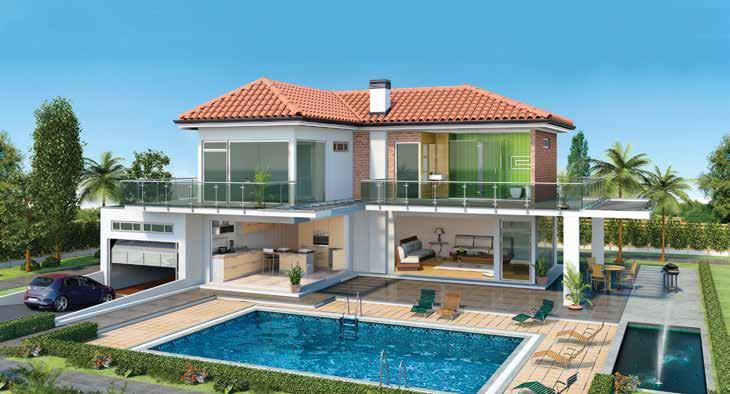
Roofing
• SikaBit® Pro – APP Range
• Sika® RainTite® Kit – Roof Waterproofing
• Sikalastic®-560 – Roof Waterproofing
• Sikadur®-31 CF - Secure Pipe Penetration
• SikaBit® Pro – APP Range
• Sika Top® Seal-107 – Cementitious Waterproofing Membrane
• Sika® Ceram 100GP/200 – Tile Adhesives Balcony
• Sika® 1 / Plastocrete® -N – Concrete Waterproofing
• Sika® Waterbars - Joint Sealing Profiles
• SikaBit® Pro – APP Range
• Sika Cemflex® – Waterproofing System Basement
Driveway
• Sika® Fibers – Concrete Reinforcement/Reduce Cracking
• Sikafloor®- 3 QuartzTop – Floor Hardener
• Sikaflex® – Pro 3 – Joint Sealant
Garage
• Sikafloor® 161/264 – Flooring System
• Sikafloor®- 3 QuartzTop – Floor Hardener
• Sikaflex® – Pro 3 – Joint Sealant
Façade
• Sikagard®-701 W - Water Repellent
• Sikasil® SG-18 - Structural Glazing
• Sikasil® WS 605 - Weatherproof Sealant
Sika Kenya Limited
2nd Floor Semco Industrial Park Mombasa Road
Nairobi, Kenya
• SikaCeram® – 100 GP – Tile Adhesive
• SikaCeram® Tile Grout
• Sikasil® MultiPlus-T – Joint Silicone Kitchen
Living Room
• SikaCeram® – 100 GP – Tile Adhesive
• SikaCeram® Tile Grout
• Sikadur®-31 CF - Secure Pipe Penetration
• Sika Seal® -105 – Waterproofing Mortar
• SikaCeram® – 100 GP – Tile Adhesive
• SikaCeram® Tile Grout
• Sikasil® MultiPlus-T – Joint Silicone Bathroom
Patio
• SikaTop® Seal -107 – Cementitious Waterproofing Mortar
• SikaCeram® – 100 GP/200 – Tile Adhesives
Swimming Pool
• Sika®-1 / Plastocrete®-N – Concrete Waterproofing
• Sika® Waterbars - Joint Sealing Profiles
• Sikadur®-31 CF - Secure Pipe Penetration
• SikaTop® Seal -107 – Cementitious Waterproofing Mortar
• SikaCeram® – 201 – Tile Adhesive
• SikaCeram® Tile Grout
• Sikasil® Pool - Joint Silicone
Tel: +254 711 140 234/786 140 234
MANAGING EDITOR
Robert Barnes
DEPUTY MANAGING EDITOR
Francis Makari
Francis Makari
EDITOR - in - CHIEF
EDITOR
Dennis Ayemba
COUNTRY EDITORS
Uganda - Betty Nabakooza
Nigeria - Boladale Ademiju
- Boladale Ademiju
South Africa - Jimmy Swira
WRITERS, Pascal Musungu, Anita Anyango, Patrick Mulyungi
WEB & GRAPHIC DESIGN
Gerald Oswald
Sales and Marketing Manager
Faith Mburu
ADVERTISING
Kenya: William Mutama, Lilian Khavosa, Joyce Ndamaiyu, Wendy Kinya
South Africa: Thuli Nkosi, Winnie Sentabire, Angeline Ntobeng,
Uganda: Nobert Turiyo, Selina Salumah Namuli
Botswana: Dickson Manyudza, Gerald Mazikana
Ethiopia: Haimanot Tesfaye, Ruth Girma
Tanzania: Tom Kiage
Malawi: Anderson Fumulani
Ghana: Samuel Hinneh, Caleb Donne Hadjah
Zambia: Susan Kandeke
Zimbabwe: Chiedza Chimombe
Rwanda: Collison Lore
Nigeria: Seni Bello
China:Weng Jie
The editor accepts letters and manuscripts for publication from readers all over the world. Include your name and address as a sign of good faith although you may request your name to be withheld from publication. We reserve the right to edit any material submitted .
Send your letters to: info@constructionreviewonline.com
Construction Review is published eleven times a year and is circulated to members of relevant associations, governmental bodies and other personnel in the building and construction industry as well as suppliers of equipment, materials and services in Africa, the Middle and Far East. The editor welcomes articles and photographs for consideration. Material may not be reproduced without prior permission from the publisher. The publisher does not accept responsibility for the accuracy or authenticity of advertisements or contributions contained in the journal. Views expressed by contributors are not necessarily those of the publisher.
© All rights reserved.
Uganda Agent Projects Unusual Uganda Ltd. Jemba Plaza, Luwum St. Kampala, Uganda Tel: +256 776 883181 bettykatongole@yahoo.com
Botswana Agent Cadline (Pty) Ltd. P/Bag 494 Gaborone, Botswana. E-mail: botswana@constructionreviewonline.com
South Africa Agent Mining and Constriction News Network 14 Ballyclare Drive, Bryanston, Sandton +27 (0)011 875 4328,
Luxury in small bathrooms 16
Textured paints
Textured paint is a simple and creative way to transform even the most basic of living spaces 28
A look at the many ways you can make the most of a small bathroom space and make it luxurious!
Choosing a construction guarantee
As a contractor you need to be aware of the risks and liabilites when taking on a project and mitigate them with a construction project guarantee

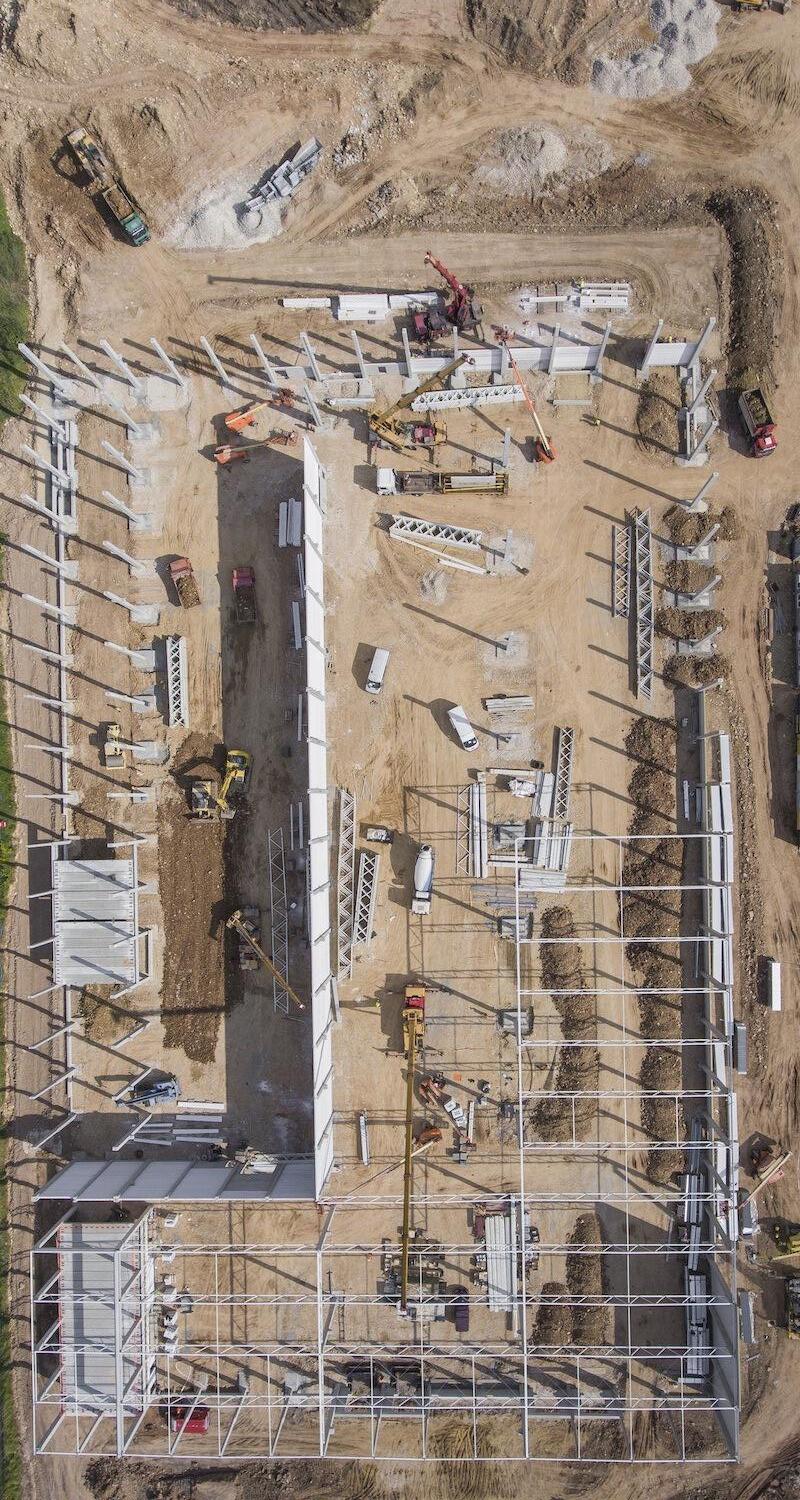
Drones in the Construction Industry are becoming a common sight. Also known as Unmanned Aerial Vehicles (UAVs), they are no longer just a hobbyist tech gadget.
Many industries and commercial fields have started utilizing drones seeing the wide extent of information they are capable of providing. Construction industry is now proving to be one of the main adopters of drone technology as it provides a bird's-eye view of the construction site, machinery and people.
Drones has redefined the way buildings are designed and constructed by improving the design accuracy, quality, implementing personnel safety and simplifying the maintenance of the building.
Drones in the Construction Industry are able to assist project managers and supervisors to fulfill their roles much more effectively and also in identifying differences between asdesigned plans and as-built plans.
Cell: +251 930 099 152
Email: ethiopia@groupafricapublishing.com
Ghana Agent
Image Consortium
1st Floor, The Ecobank Building, Tesano.
Tel: 233(0)30 223 2728 I 233(0)274807127 I +233(0)206299159
Fax: 233(0)24 882 8286
Email: ghana@groupafricapublishing.com, Calebhadjah@gmail.com
Kenya Agent Northwest Ventures Ltd
P.O. Box 16414 - 00100
G.P.O
Nairobi, Kenya
Tel: +254 20 2679808
Email: kenya@constructionreviewonline.com, info@northwest.or.ke
Nigeria Agent Rahma Associates
B23/24, Aishetu Emoewa Plaza, 196, Iju Water Works Road, Ifako Ijaye Lga,Agege, Lagos. Tel: 234-1-7347860
Email: nigeria@constructionreviewonline.com
Rwanda Agent Kolline & Hemed Inc., B.P. 3328, Kigali, Rwanda E-mail: rwanda@constructionreviewonline.com
Zambia Agent Dayflex Limited, Dedan Kimathi Road, Lusaka, Zambia. Email: zambia@constructionreviewonline.com
Tanzania Agent: Group Africa Publishing Ltd tz@constructionreviewonline.com Dar-es-salaam
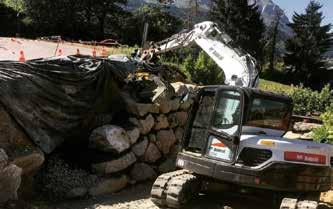
At the end of 2017, UNESCO intervened and confirmed how valuable the art of dry stone walling is. They’ve added this building technique to the Intangible Cultural Heritage list, to protect and safeguard it.
However, over time, even the most ancient techniques have incorporated more modern methods to how “artisans” work – a skilled type of labor that is unfortunately disappearing – by adding equipment, which lets them finish the job faster and guarantees maximum precision: the MB-G sorting grapples have claws that grab, move and arrange rocks or stones of various types and sizes, with extreme precision and accuracy.
On three different construction sites: one in France, in Germany and another in Slovenia, the companies chose the MB-G grapple to build dry stone walls, because the grapple’s inclined plate allowed them to have a broader range of action and place the stones precisely. This would have been impossible with tools, like a digging bucket. It’s also possible to install a multipurpose blade kit, which helps facilitate how well the unit grips and controls materials with a variety of weights and shapes.
Grupel establishes commercial partnership with Benza Energía (Internaco)
Grupel and Benza Energía, from the Spanish group Internaco, have recently joined in a bilateral commercial agreement, which will enable the worldwide growth of both brands of the power generation sector.
The partnership will allow the sharing of technical know-how and market experience, for the realization of increasingly versatile and robust projects, as well as more adapted to the real needs and contexts of customers.
Both companies have many years of experience in the genset market and come to this agreement with expectations of growth and expansion, improvement and diversification of their energy solutions, with products of higher quality and aligned with market trends, and with the desire to strengthen ties of proximity with customers around the world and to ensure their satisfaction.
Since 1976, Grupel produces and sells power generators (open or soundproofed) from 3 to 3500kVA, equipped with components of the best quality from internationally recognized brands, in addition to its own brand.
High power Grundfos CR pump hits Africa
With the launch of the Grundfos XL CR 185 vertical stainless steel multistage pump, customers can achieve higher flow rates and delivery heads while still achieving optimal energy efficiency.
“This extra-large addition to our wellknown CR range pushes the limits of pumping capability,” says Niren Rohanlal, Senior Regional Product & Solutions Manager – CBS Advanced Core & Systems – India, Middle East and Africa at Grundfos. The model’s maximum flow rate is 240 m3/h and it can generate pressures of up to 40 bar.
“The pump’s maximum head is a remarkable 400 m, which is roughly the height of the Empire State Building in New York,” says Rohanlal. “To reach these demanding heights, it can be fitted with an electric motor of up to 200 kW in size.”
He highlights that the design approach of this robust pump is based on reliability, quality and efficiency, aiming to ensure customers a significant cost saving in terms of energy consumption, maintenance and total cost of ownership.
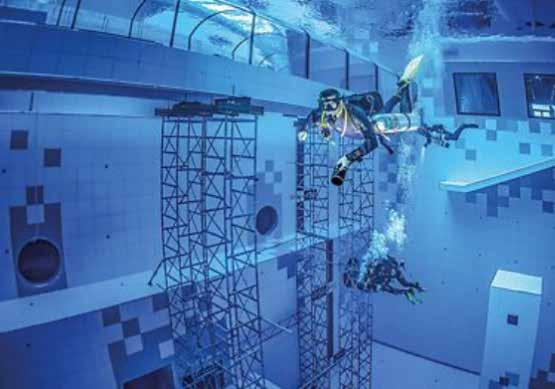
Near the Polish capital Warsaw you can find Deepspot, currently the deepest multi-zone simulator on the diving scene. Deepspot offers divers optimal conditions to pursue their passion away from the world’s oceans: always perfect weather, clear and warm water, as well as an exciting underwater world with a boat wreck, underwater caves, a glass-enclosed underwater footbridge sloping walls and ropes, for an experience that rivals the hustle and bustle of the oceans. Deepspot opened to the public at the end of 2020 after a construction period of around two years.
Static challenge of the highest order
From a static point of view,
the difficulty of building this submersible system is comparable to building an underground system. The static system of the pool is composed of a reinforced concrete floor slab, load-bearing walls with reinforced concrete piers and monolithic slabs. A variety of geometrically and technologically complex PERI Formwork solutions were used which were delivered pre-assembled to the construction site. The sloping walls of the diving pool were constructed with preassembled elements of TRIO Panel Formwork, while pre-assembled VARIO GT 24 Girder Wall Formwork was used for the circular diving tube.
Enlit Africa will host our three day, not-to-bemissed digital event during 8 – 10 June 2021 on our digital platform, Enlit Africa-Connect, as our community of 5 000+ attendees join us to connect and engage. If you’d like to connect with our community, build your brand equity and position yourself as a thought leader at the forefront of the industry’s most sought after solutions then you should chat to our team on how you can become a sponsor.
Why you should attend:
Interact as a TEAM MEMBER from your organisation page on Enlit-Africa-Connect with registered participants.
LEARN more about the role and opportunities of the energy transition in Africa. DISCOVER the implications of climate change for the energy sector.
ACCESS the world’s leading suppliers advancing the progress of the energy sector.
ENGAGE with participants in real-time.
CONNECT with like-minded professionals and industry experts through our AI-powered matchmaking.
- Architectural Association of Kenya
- Institute of Quantity Surveyors of Kenya
- Institute of Engineers of Kenya
- Association of Consulting Engineers of - Kenya
- Association of Professional Societies of East Africa APSEA)
- Kenya Property developers Association
- Institution of Surveyors of Kenya
BIM Africa recognizes the talents and efforts of leading industry professionals and organizations in the construction sector going above and beyond to deploy innovative solutions towards Africa’s development. BIM Africa is a civil society organization that identifies itself with the most innovative and cutting-edge ideas in the African AEC Industry. The community has become a network of bright minds within Africa and the diaspora, pioneering innovations cross various spheres of the industry.
Here’s a chance to shine the lights on exceptional individuals, firms, or projects in the Architecture, Engineering, Construction and Operations (AECO) sector across Africa. Some categories of the awards include:
• Innovation in the Built Environment
• Research Excellence Award
• Best Woman in African construction
• Outstanding Start-up Award
• Institutional Award

- Institute of Botswana Quantity Surveyors
- Association of Ethiopian Architects
- Ethiopian Association of Civil Engineers
- Construction Contractors Association of Ethiopia
-Town and County Planners Association of Kenya (TCPAK)
South Africa - ASAQS - SAICE
- South African Council for the Quantity Surveying Profession
- Khuthaza ( Women for Housing)
- Concrete Manufacturers Association
- Green Building council of SA
- South African Property Owners Association
- Master Builders South Africa
Uganda
Institute of Surveyors of Uganda
Uganda Institute of Professional Engineers (UIPE) & Uganda society of Architects
- Zimbabwe Institute of Quantity Surveyors
- Zimbabwe Institute of Engineers
- The Construction Industry Federation of Zimbabwe (Cifoz)
Ghana
- Ghana Institute of Engineers
- Architects Registration Council
- Ghana Institute of Surveyors
- Ghana Green Builders Association
- Ghana Institute of Planners
- Association of Building and Civil Engineering Contractors of Ghana
Namibia
- Institute of Namibian Quantity Surveyors
SACAP Stakeholder Convention 26th August 2021
The South African Council for the Architects Profession (SACAP), and leading event company, dmg events, have finalised their partnership for the inaugural SACAP Stakeholder Convention taking place on 26 August 2021.
The Convention forms a part of dmg events’ 8th annual African Construction and Totally Concrete Expo, which offers 360-degree solutions for the Southern Africa’s built environment and acts as a hub for industry experts, buyers and manufacturers of services and products, from all over the world who have an interest in Southern Africa’s construction sector.
The hybrid format of the event will bring together 250 in-person attendees to the Sandton Convention Centre, Johannesburg and a further 500-participants will join through the digital platform. The theme will be , ‘rebooting and repositioning the architectural profession’.
- Association of Consulting Engineers of Namibia
Tanzania
- Tanzania Institute of Quantity Surveyors
- Construction Regulation Board (CRB)
- Tanzania’s Registration Board of Architects and Quantity Surveyors (AQSRB)
- Association of Consulting Engineers Nigeria
- Association of Professional Women Engineers Of Nigeria
- Council of Registered Builders of Nigeria
- The Nigerian Institute of Architects
- American Association of Petroleum Geologists Africa Region
- Nigeria Society of Engineers
- Nigeria Institute of Architects
- Building and Construction Skilled Artisans Association of Nigeria (BACSAAN)
- Zambia Institute of Architects (ZIA)
- Association of Building and Civil Engineering Contractors (ABCEC).

Drones in the Construction Industry are becoming a common sight. Also known as Unmanned Aerial Vehicles (UAVs), they are no longer just a hobbyist tech gadget. Many industries and commercial fields have started utilizing drones seeing the wide extent of information they are capable of providing. Construction industry is now proving to be one of the main adopters of drone technology as it provides a birds-eye view of the construction site, machinery and people. Drones have redefined the way buildings are designed and constructed by improving the design accuracy, quality, implementing personnel safety and simplifying the maintenance of the building.
Drones in the Construction Industry are able to assist project managers and supervisors to fulfill their roles much more effectively and also in identifying differences between as-designed plans and as-built plans. Recent technological innovations in drones are now capable of
Before purchasing the land, it is important for landowners to fully understand the terrain and the land distribution. The traditional land surveillance methods required a lot of labor, time and money. These methods are now being replaced by drones since they provide a bird’s eye view of the entire land. With the use of drones, the captured images can help land owners get a better understanding of the lay of the land before the investment.
Drones eliminate all of the human error involved in the land inspection with much higher accuracy and also save a lot of time required for collecting all the necessary data. The data acquired by the drones can be used by engineers to measure the land dimensions, elevation changes and also help with an estimate of the material volumes.
Drones in the Construction Industry can also be used for photogrammetry: creating 3D models by scanning existing structures. This is helpful especially in renovations and retrofitting, since it allows for the creation of a detailed model with actual conditions.
BIM software can be used for importing the model and used as a reference. The data from drones can also be converted into virtual building models which will allow the clients to view the final outcome of renovations and retrofitting before the construction work even begins. This allows clients to also have a better understanding of spaces.
One of the most common applications of drones in building projects is to use them for inspection throughout the site construction lifespan, and also to check whether the schedule is being followed or not. For supervision, drones help project contractors with getting consistent construction images that can be compared throughout the progress by setting up weekly predetermined flights, and also for supervising construction quality.
They can also monitor the progress by overlaying the captured images onto the building designs and drawings so project owners can confirm that the work is moving according to the plan.
The high-quality images can be compared to the actual building progress to identify any flaws like misplaced or misaligned elements.
Drones eliminate the human error aspect in building inspection and supervision with the ability of providing the project manager with high-quality images and necessary data from any viewpoint.
UAVs are useful not only during the construction process, but also after the completion. One of the important applications of UAVs post building completion is, maintenance planning. Also, drones coupled with as-built drawings, can be used for future renovations and upgrades.

Drones can assist with damage assessment during natural calamities like tornado or hurricane. Drones can fly around the site, identify the extent of damage caused and provide information on areas that need immediate attention.
Drones equipped with thermal imaging can be used to detect hot air leakage and poorly insulated areas in the building site.
Traditional construction methods involved a lot of labor for inspections and supervisions. This included inspecting construction areas that would expose workers to risks like accident and injury at heights.
At such times, project owners can use drones to gather all the necessary information without exposing surveyors to injury and with a higher level of accuracy as well. UAVs can be extremely helpful in emergency situations like the COVID-19 outbreak by limiting the need for personnel. This allows project managers to implement the recommended safety precautions at all times and ensuring the project runs as smoothly as possible.
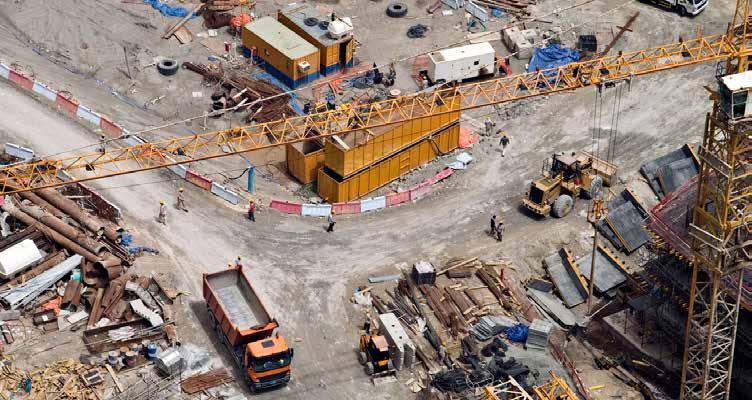
According to Jacques Lourens of Easy UAV in South Africa, lack of information and the use of consumer products has led to people not trusting the technology.
“However, training and finding the right seller and team to service and repair the drones forms an essential part in the success of the project,” comments Best Drone from South Africa.
“Additionally, working with the right drone operator and teaming up with the local authorities can make it easier and reduce the challenges,” affirms Braam Botha of UAV Industries in South Africa.
According to Mr. Fearghus Foyle of Aerial Eye in Ireland, Unmanned Aerial Vehicles (UAV’s) are a disruptive technology changing the way land surveys are carried out on construction projects across Africa, automating the entire field-to-plan workflow. In simple terms, drones
are flying computers which can carry an array of sensors to collect data, enabling companies to make intelligent and informed decisions about their projects in a faster, safer and ultimately more efficient way.
Mr. Gideon Gerber of Airborne Drones in South Africa recapitulates that the lack of infrastructure in Africa provides the continent with the unique opportunity to leapfrog the infrastructure development phases that first world countries have had to go through because Africa is not bound by legacy infrastructure that has to be upgraded. In other words Africa can start by developing “Smart” Infrastructures (“smart” buildings, “smart” cities, etc) rather than the slow, expensive process of ‘smartening’ old infrastructure. This is similar to what Africa has done with the adoption of cellular telecommunications rather than fixed line infrastructure.
















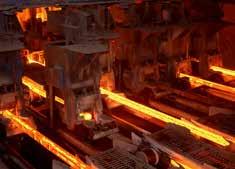
Since the last article in the March-April edition, our local situation with Covid-19 has progressed drastically less than we had hoped. True, the April lockdown measures eased and curfew in the main zoned area was returned back to its previous time of 10:00pm locally. But one feels this was more to do with saving the economy from further disruption than a progress against the pandemic itself. The new Indian variant poses a serious threat to our safety, with numerous cases of it being diagnosed within Kenya itself. And although the only protection remains the vaccine program, this has also stifled due to India’s own struggles against the pandemic. After all, it was India who came to the aid of Kenya with the initial 1m vaccination doses. And if this isn’t enough, the steel market has a lot of people worried even more.
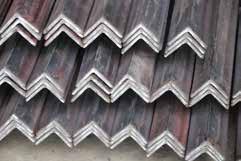
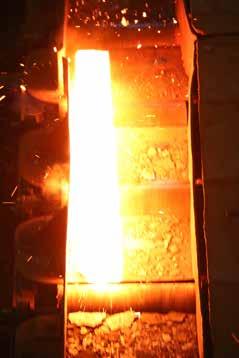
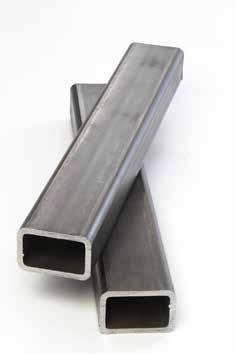
The prices of Hot Rolled Coils (HRC) have topped $1000/MT FOB, whilst the price of billets (the raw material in producing deformed bars) touched $740/MT FOB. It seems that nothing can stop the market rise in raw material prices, although most in the industry do not seem to understand why. Here is a quick explanation.
In past articles, we have talked about how freight rates had become the primary driver of increased raw material prices, as the shortage of ships and containers made it more and more expensive to move material between countries. Now, that primary driver has shifted strongly back to Chinese demand. In basic terms, China was a net exporter of raw materials (HRC mainly) and therefore, effectively drove the competitiveness of the sector.
However, as a result of their willingness to reduce their carbon emissions and footprint to comply with global carbon emission reductions, they signed a treaty to reduce their output. The easiest way to do so came in the form of taking away the export rebates. Simply explained, the government was incentivizing local companies to export their products around the world, subsidizing the portion of the cost in the form of rebates to the tune of 13% of the value of the product. This meant that they were able to offer the finished product 13% cheaper on final sale. With the swift removal of these rebates, Chinese manufacturers took advantage of moving the entire additional cost onto the consumer and raw material prices saw a minimum of 13% increases in a matter of days.
Furthermore, the demand in China remains very strong. Most global trading firms are now citing the difficulty in procurement of material at current levels from Africa and the Middle Eastern markets, with China consistently pushing prices up with strong buying demand.
Therefore, as advice on how to position yourselves with steel purchase for whatever purpose, we believe that the costs will continue to rise with each passing month. We have noticed a lot of projects trying to forward book their project materials to save costs, and we believe this to be a smarter idea, especially with raw material shortages we see in the coming months ahead.
Accurate Steel Mills continues to remain at your service, whatever the market situation. We are proud to announce that we are providing FREE MEDICAL GRADE OXYGEN to hospitals within the country, as approved by KEBS from our internal facilities. All we require is requisition orders and serial numbers of cylinders, drop off and pick up of the cylinders once they are filled.
We will continue to support the economy and do our part, whilst you do yours and stay safe during this time!
Avraj Bhachu










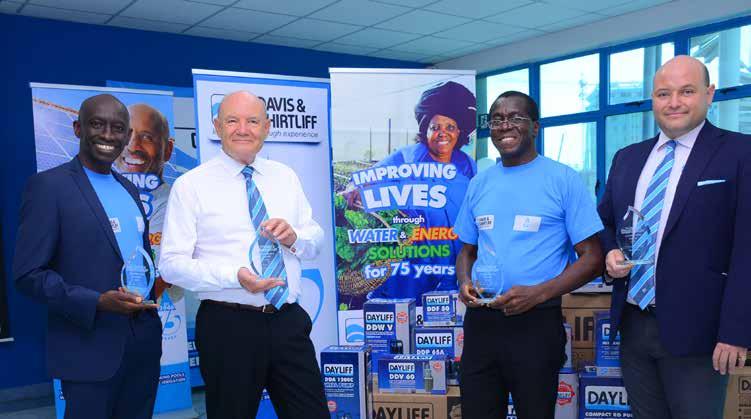
Davis and Shirtliff, the region's leading water and energy equipment supplier is celebrating its 75th Anniversary, a major milestone in its corporate history. Davis & Shirtliff Group Chairman Alec Davis noted this as a most unusual achievement for any organisation, especially one that has the same family shareholding and essentially the same market focus since its founding.
“There are few companies anywhere with this claim and Davis & Shirtliff is therefore extremely proud of the achievement,” said Davis & Shirtliff Group Chairman Alec Davis.
The company was founded in 1946 by exsoldiers Eddie Davis and Dick Shirtliff after leaving the army, initially being based at Westlands. It grew rapidly as the country recovered after the war focusing on boreholes, water supplies and the coffee industry and in the mid-1950s the base was moved to new larger premises at the present Dundori Rd location in the industrial area.
An added activity was swimming pools, both residential and commercial and water treatment was another diversification.
In 1970 partner Dick Shirtliff retired and after a period the Davis family, then represented by Eddie's son Alec Davis, assumed control. The 70's and 80's saw slow but steady growth as the country grappled with various economic and political challenges, though there was a particular focus on building the pump business for which the company is so well known.
“The year 1993 was a significant year for both Kenya and Davis & Shirtliff due to economic liberalisation which was the catalyst for the company's rapid growth since. It was also the year that Pedrollo pumps from Italy were first introduced, now the Group's largest supplier. These two developments enabled a distribution strategy to be developed as supply constraints were removed and the branch network was then established, initially with Kenya branches being opened in Westlands, Eldoret and
Kisumu. Subsidiaries in Uganda and Tanzania soon followed as well as establishing a presence at the Coast though the merger with partner Butech. The pump business grew hugely with Pedrollo and the now well-established Solar and Power Generation activities were then added,” Mr Davis added.
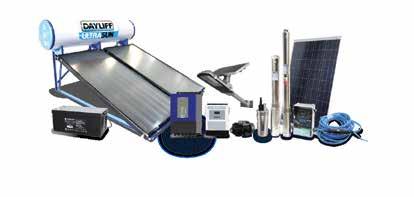
Since the Millennium growth has greatly accelerated with revenue increasing many times. Major initiatives have included a complete redevelopment of the Dundori Rd site with expansion into adjacent plots, the opening of subsidiaries and associate companies in Rwanda, Zambia, Ethiopia, South Sudan, Zimbabwe and DRC, considerable growth of the branch network, introduction of the successful Dayliff range of own-brand products and a huge expansion of the product range with Solar being especially successful as the company developed its focus on renewable energy.
More recently a major development has been establishment of a 10,000m2 Distribution Centre at Tatu City that provides the resource for increased stockholding and has transformed distribution efficiency throughout the region, this facility being completed in 2020. Staffing has also grown correspondingly, the Group now employing over 1000 committed staff operating from over 70 locations.
“It is often said that success is transitory and sometimes unsustainable, though Davis & Shirtliff has managed to maintain unbroken growth for an exceptional period of time. This has been achieved by commercial focus, manageable ambition, continuous physical and organisational investment and, importantly, living the values established by the founders of Quality, Integrity and 'Altiora Peto', which translates to embracing continuous change.
D&S is now a widely respected company in the region and is proud of the contribution it has made, summarised by its slogan 'Improving Lives' which is demonstrated both by the important nature of its activities and also by an active programme of community support that focuses on providing water to underprivileged communities, many thousands of people having benefited,” added Mr Davis during the 75th anniversary celebrations in Nairobi.
The Group continues to expand in product and markets with a particular focus on digital business and looks forward to keep serving the region with essential products that certainly Improve Lives and also to demonstrate that an indigenous African company can compete internationally and be a world-class organisation.




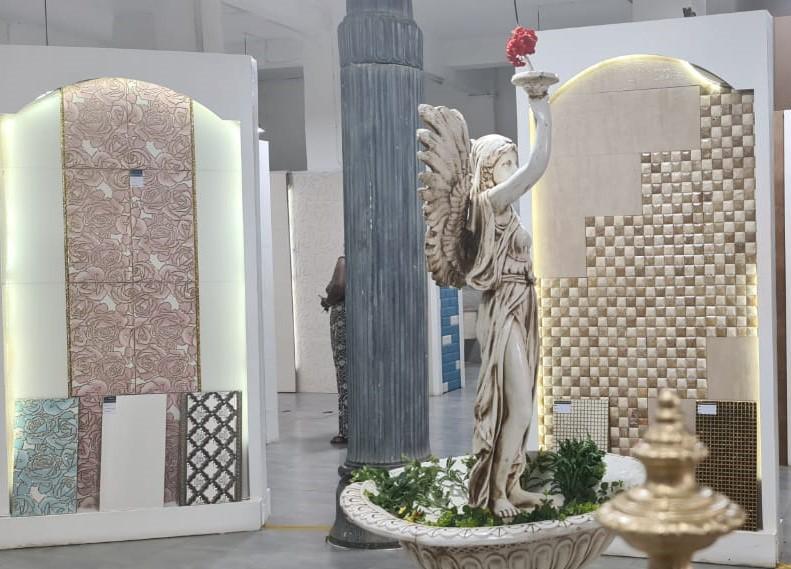



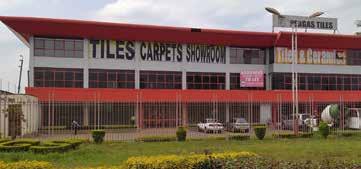
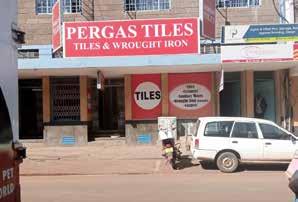
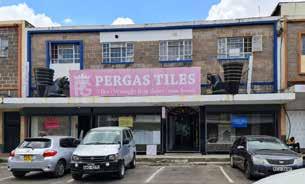
Founded in 2016, Pergas Company Limited has become a leading Tiles, Wrought Iron and Persian Carpets importer in Kenya.
Pergas Company Limited was incorporated after extensive market research. The research was done over 6 months and a gap in the tile market was identified.
There was a need for good quality tiles at an affordable price. Having 3 factories in Iran, Pergas Company is able to produce, import and sell European Quality tiles in Kenya at an affordable price.
Specializing in high quality tiles, Pergas Company also boasts of high-quality Wrought Iron, something that is not easily available in East Africa.
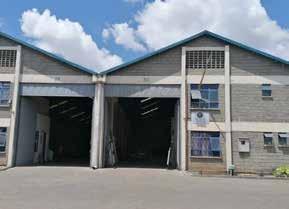
Walking into any of Pergas branches is an experience on its own, with over 100 different types and sizes of tiles and wrought iron on display, we ensure it is an experience for everyone to remember. Mombasa road is our oldest branch, this is where our journey started.

Mr. Mohammad Salimian Managing Director. Pergas Company
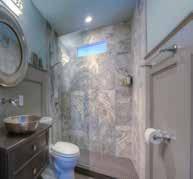
Do you have a small bathroom? Are you having difficulty making it look elegant? Having a small bathroom should not hinder you from making the most of the space. It may be challenging to work with small bathrooms. But small spaces, when utilized creatively, can appear spacious and elegant.
Moreover, you can get up your game without putting pressure on your wallet. Fortunately, there are various tricks you can use to make your small bathroom look grand and feel luxurious.
Renew the tiles
To give a new and clean look, renew your tiles by either painting them with tile paint or adding a different type of tiles. You can also keep renewing the grout so that your bathroom floor does not look shabby but clean and new.
Add floating vanity
Floating vanities are the new trend for luxurious bathrooms. So you can add a floating vanity in your bathroom to create
a high-class ambiance. Moreover, these vanities will also make your bathroom appear bigger, so get yours today at Victoria Plum.
Use open vanities
If you can keep things organized, then go for open vanities. These vanities provide a chic and stylish look to your bathroom.
Use glass
Instead of dividing your bathroom with a wall to take a shower, you should go with open glass showers. By using glass, you can easily separate the shower area and also make your bathroom appear more spacious. Glass will also add a stunning ambiance to your bathroom.
Install new fixtures
Updating the fixtures in your bathroom can instantly make your bathroom look stylish and elegant. Black, gold, copper, rose gold fixtures look impressive, and they are sure to capture the eye.
Add large mirrors
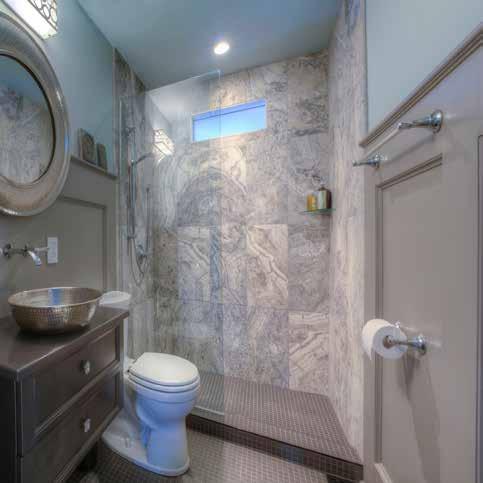
Mirrors not only look amazing, but they also reflect light and will help in creating an optical illusion of added space in your small bathroom.
Put up artworks
Similarly, add artworks in your bathroom. They give an elegant appeal to the surroundings and thus will make your bathroom more luxurious.
Install more lights
Lights brighten up a room. They reflect off surfaces and allow you to perceive where everything is. So you need good lighting in your small bathroom to make it look bigger and better. You can also add LED lights to your bathroom.
Play around with light colors
Use light colors in your small bathroom. For instance, an all-white bathroom will look bigger than it actually is because white reflects the most light, so it creates an illusion of space. So going for light colors for walls, floors, toilets, and vanities will not only make your bathroom bigger but also luxurious.
Recessed storage spaces
If you are renovating your bathroom, then it is a good idea to make recessed storage spaces. These will not only allow you to store easily in a small space, but you can also free up space in your small bathroom, thus making it look cleaner and bigger.
Add luxurious accessories
You can upgrade your bathroom by adding accessories for ambiance. For instance, add in scented candles, oil diffusers, beautiful dispenser bottles, bath mats, and customized towels.
Conclusion
So now you know that small spaces can be easily made to look bigger, luxurious, and stylish. So if you have a small bathroom that needs renovating, then use these tips and tricks to make your small bathroom look chic and elegant.
Having the option of not touching certain objects has always been important, especially when we talk about public spaces. As we live, the existence of this option has gained new relevance.
When exists the necessity to use a public bathroom, it is normal that we want to avoid touching when unloading the toilet.
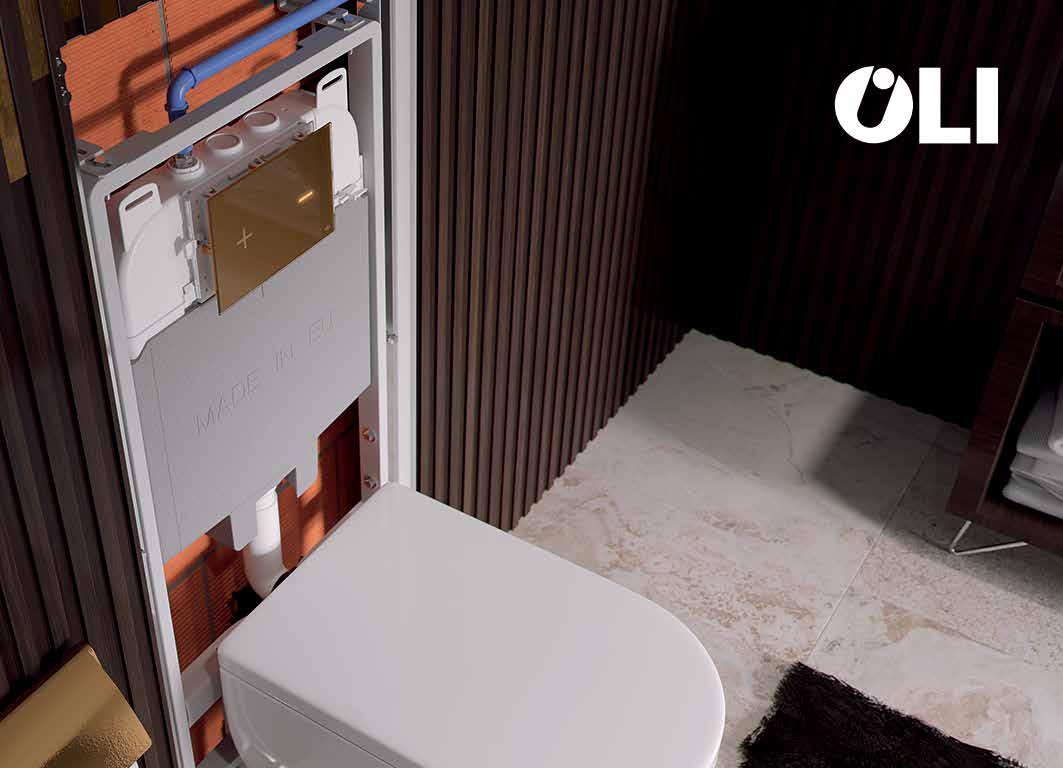
With this need in mind, OLI develops toilets that allow the discharge to be carried out only with the approach of the hand, avoiding contact and transmission of bacteria. We talk about Hydroboost, a sustainable technology that allows you to generate energy through the entry of water into the flush.
Electronic flush plates, such as the Electra III model, also have the advantage of having a system that makes it resistant to eventual acts of vandalism, which is also ideal for bathrooms in public spaces such as shopping centres or airports.
Ultra-thin thick glass flush plates are another of the options available in various colours and follow the latest trend because they have LED light to activate the discharge.
The first porcelain flush plate winning 4 world prizes, Moon, completes the wide range of OLI products where unloading into the toilet can also be activated without resorting to touch.
Thinking about who wants to renovate the bathroom without having to resort to deeper works, maintaining the No-Touch feature to activate the unloading, OLI has developed a solution with the most demanding quality standards on the market - QR-INOX. The best option for rapid remodelling of the bathroom. It doesn't require intervention on the walls and you can use the existing water inlet and outlet connections.
OLI is the largest cistern manufacturer in Southern Europe. Its brand is present in 80 countries on five continents. Over the years, OLI has created products that have, on a global scale changed the daily experience in the bathroom. Their “Inspired by water” signature concept embodies the company’s mission to place innovation at the service of water conservation, aiming to make the world a better place, thus protecting the planet and all life. OLI is recognized for constantly studying new and better solutions that increase water efficiency and accessibility for people with reduced mobility. Committed to sustainable development, the brand develops versatile solutions with a contemporary design for application in new construction, rehabilitation and renovation projects. OLI believes in a water-efficient bathroom that is comfortable, accessible and safe for all to use. OLI will continue to be defined by innovation.
OLI is looking for business partners and projects to join their portfolio in Africa.

Both Simon Woods and David Beglin had worked as Architects in Kenya for 15 years before the formation of Beglin Woods in 1992
"Within a week of forming the practice, we were awarded the refurbishment and extensions of both the Mayfair Hotel Nairobi and Hemingways Hotel Watamu. These Projects led us into work for Hospitality clients and the Projects included:"
• Flame Tree Restaurant at the Panaf ric Samburu Intrepids Lodge
• Mara Simba Lodge
Buffallo Springs Lodge
• Tortilis Camp in Ambosli Hemingways Watamu

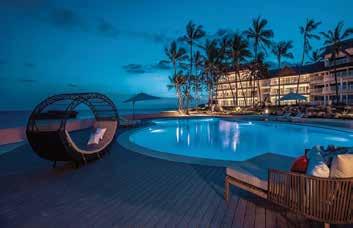
Work on these projects sought to develop a strong design and construction language for Hotels and Lodges in Kenya and allowed us to explore and use techniques to develop the use of local crafts, and building methods of sustainability, including energy reduction and waste recycling.
We are still working on Hotels and Lodges, having most recently completed.
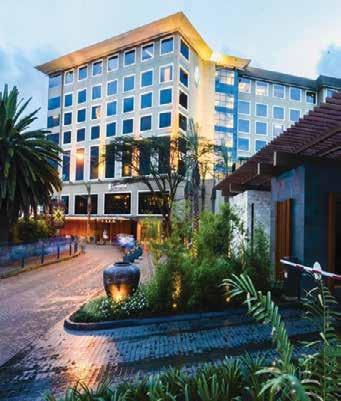
• Crowne Plaza Hotel, JKIA
Dusit Princess, Westlands Sankara, Westlands
• Avani Hotel at Capital M Westlands. OUR FIRST 30 YEARS.
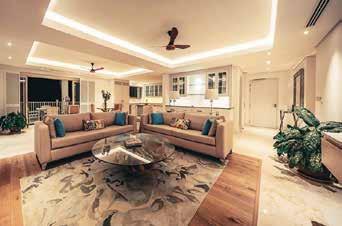
From 2000 onwards, we undertook a series of Residential Projects. These projects included Rosslyn Ridge Housing Developments for the US Government, Miotoni Woods and Miotoni West Road Karen for First Assurance, Lower Kabete Mews for Cannon Assurance, Marula Gardens, Karen, Lone Tree Estate Rosslyn....... and many others.



In recent years, there has been a move away f rom this style of building design towards a more modern streamlined aesthetic. The new Projects include: Housing at Chalbi Drive, Applecross Road, Miotoni Road and Loresho. There has also been a big increase in high rise high density Residential Development in the form of Apartments for sale or rent as service apartments.
These projects continued established forms of traditional, domestic design which had been common in Kenya for many years and which featured the use of pitched tiled roofs, dormer windows, stone walls, steel windows, hardwood floors and large landscaped gardens. These projects were highly profitable investments for both developers and current owners and are still highly sought-after residential locations.
This corresponds to an increase in the middle-class and more afluent population. These developments ust be built at an extremely high density to justify the extremely high cost of urban land which now exceeds 3 million dollars an acre over most of Nairobi’s high end residential areas.
These developments now offer a complete on-site community with entertainment, retail and social facilities including cinemas, gyms, restaurants, shops, spas and pools. They offer good profit returns to developers.


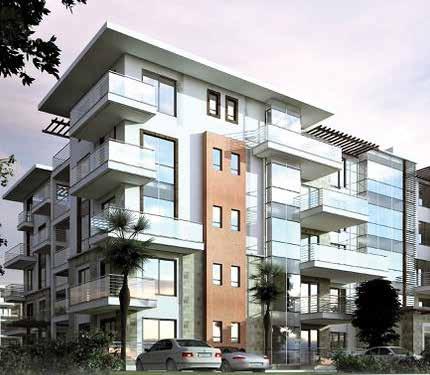
These high end Apartments offer alternative and attractive Residential options to city dwellers seeking comfort and security in urban locations. We have recently completed Nova apartments on Waiyaki Way (sold out), Dusit Princess in Westlands, and Capital M Apartments on Muthithi Road (now converted to Dusit and Avani Hotels).

Office buildings fall into several categories. Offices for sale or rental by developers and offices for their own use by Corporations. Office accommodation now requires social facilities, informal meeting areas, daycare centers, recreational areas, shops, restaurants, medical facilities, and transport back up areas. Our recently completed building at UNON, Gigiri is fully supplied with PV generated electricity. Our office designs at Watermark, Karen and AWF Karen now recycle all waste for irrigation.
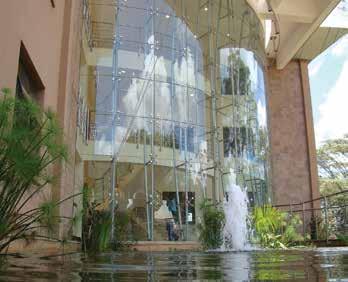



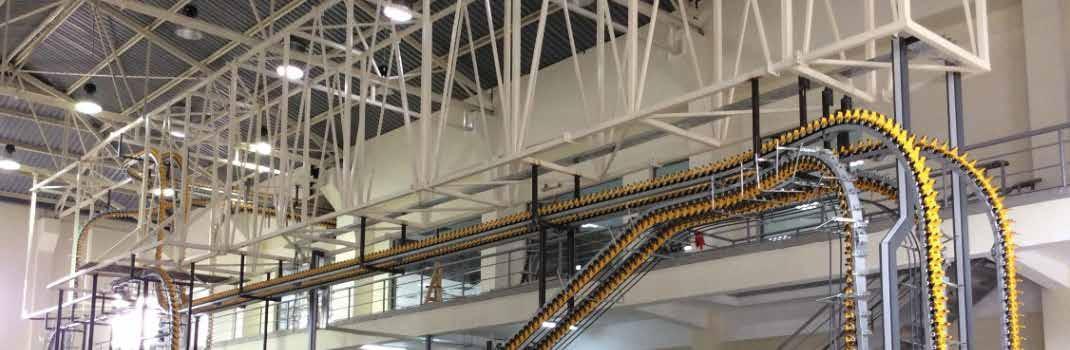
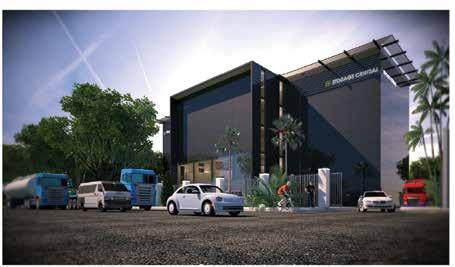
Industrial buildings also give us an opportunity to develop alternative solar energy systems on the large roofs, togeather with wastewater recycling and disposal systems.
Since we started Beglin Woods in 1992, we have been fortunate to be asked by generations of clients to assist with their building development projects. This has given us the opportunity to work with the country’s premier consultants, contractors, subcontractors, and suppliers.
Through computers and more recently through internet and social media, we have seen our business and associated industries grow into a true global marketplace where virtually anything can come f rom anywhere in an instant. This has increased quality and economy greatly and many of the small businesses we worked with 30 years ago, have now grown into major international players.
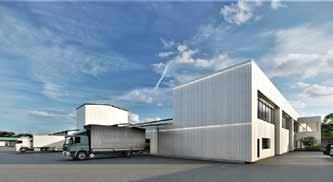
AVOCADO OIL FACTORY

USIU SCHOOL OF HUMANITIES & SOCIAL STUDIES

We have completed 2 press hall buildings for Nation Newspapers in Mavoko, a Feed mill building for Bidco Nakuru and are working on an Avocado Oil processing building in Athi EPZ
Industrial Buildings f requently have relatively simple structures but have sophisticated and complex plant installations often supplied by overseas specialists.
We are completing the School of Humanities building, our 8th Project at USIU. The Library Building, completed in 2005 is still the Hub of the USIU complex.


Private houses are all the time becoming more sophisticated and f requently involve state of the art security, home automation, cinemas, pools, gymnasiums, barbeques, and guest accommodation. We have several such houses, built and under construction in Nairobi and in towns outside Nairobi.
Individual residences are now being commissioned more f requently by high earning individuals, who have land in the inner suburbs. Houses also take a long time to construct and do not offer contractors an attractive profit margin. For this reason, we need to come to design decisions quickly, and must select contractors and subcontractors carefully






Our clients and ourselves are influenced on a daily basis by innovation in design and building components. Computer software now assists in making building shapes and configurations that were unthinkable even 20 years ago We grow with the evolution of the profession and the market
We gratefully applaud and congratulate every individual, firm and contractor who has kindly assisted us on our privileged journey We look forward to many more and better projects with everybody in future years.
Asanteni f rom David Beglin, Simon Woods, Katherine Mung’au, Kunal Patel, Kimani Muchene, Benson Odoyo, Xan Woods, John Hangalla, Aaron Ogutu, William Shisia, Maurice Ogutu, Emma Moraa, Justus Gichuhi, James Mwangi, Nelly Wanjiru, Samson Thiong’o, Samwell Mburu and all at Beglin Woods Architects.








& Civil Engineering Contractors.
www.dclkenya.co.ke

CONGRATULATIONS BEGLINWOODS ARCHITECTS ON YOUR 30TH ANNIVERSARY. WE ARE PROUD TO BE ASSOCIATED WITH YOU.
dcl House, Mandera road, Kileleshwa | P.O. Box 49057, G.P.O 00100 Nairobi, Kenya
Tel: 020 - 3747654, 020 - 3751401, 020 - 3741222, 020 - 3743937 | Mob: 0772 511714, 0722 511714, 0733 511714 Fax: 020 - 3744774 | Email: dcl@dinconkenya.com | info@dclkenya.co.ke



DMJ Architects, is one of the best known architectural firms in Nairobi. The firm was founded in 1965 by Robert Marshall and Freddy Wilkinson. It was known as Dalgliesh Marshall + Associates.
Although it is a relatively small studio, it has executed some landmark projects not only in Kenya but also elsewhere on the African continent including Tanzania, Ethiopia, Uganda, Botswana, Rwanda, Sudan, Somalia, Namibia and Ghana. Today, as it looks back over the last 55 years, the firm is proud of its impact on the built environment in East and Central Africa.
Currently, DMJ Architects has three principal architects who are supported by a team of experienced architects and technicians as well as administration staff. The three principals are Simon Johnson, Willi Atkins and Kavit Mediratta. The size of the staff means that they operate well as a team, with everyone getting involved. The firm offers services ranging from urban

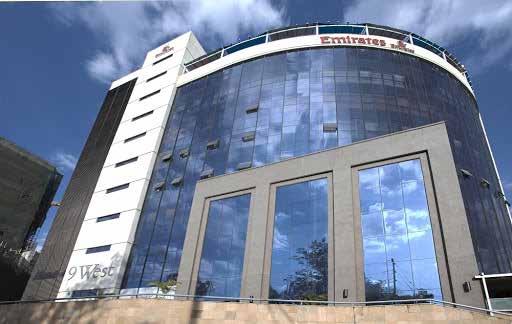
9 West Building, Westlands, Nairobi
design/master planning to the detailing of office fit-outs. It designs and administer contracts for its clients.
“We have always considered that we listen to our clients and seek to give them
solutions based on their requirements”, says Simon Johnson, who joined the firm in 1979 and became a partner the following year. Simon is a chartered RIBA Architect with a diploma from the Oxford Polytechnic (now Oxford
Brookes). He also is a registered architect with ARB and BORAQS and a member of the AAK.
As stated, DMJ’s projects are dotted all over East and Central Africa. Robert Marshall, one of the firm’s founders, was part of the Arthur D Little tourism study for Ethiopia selecting and preparing sketch designs for lodges across the country.
“We established an office, Dalgliesh Lindsay Group, in Botswana and have always had a good relationship with our associate office, MD Consultancy, in Tanzania”, reveals Simon.
Some of the projects executed by DMJ Architects in the region include Lobo Lodge in the Serengeti; International Life House and Bruce House in Nairobi; the ILRI Campus at Kabete and the Benedictine Priory on Thika Road.
More recently, the firm has done Eden Square on Chiromo Road, Nairobi and the Oyster Bay Hotel complex in Dar es Salaam. Others include 9 West in Westlands and the Galleria Residential and Office Complex on Lang’ata Road. “We have just completed eight town houses in Muthaiga for Muthaiga Associates”, adds Simon.
“Of late, we have continued to work on industrial, commercial and residential projects. Kenya is still developing which means providing better facilities to complete on the world stage.”
So what projects do they consider their most outstanding? “It is difficult to pick out particular projects as ‘the best’”, reckons Simon. “They have all been enjoyable in their own way. Indian Ocean Beach Club (now Jacaranda) at Diani was particularly pleasurable. This we did with Mruttu Salman & Associates.”
“We hope that DMJ will continue to thrive in Kenya – and the region - during the next 10years”, concludes Simon.


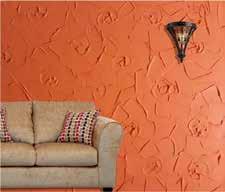
Mention “textured paint” and most people might be drawn to expensive high end décor. However, textured paint is a simple and creative way to transform even the most basic of living spaces. With the right materials it can be quite affordable too, and in fact, is often a fun way to try out one’s DIY painting and décor skills.
Ordinary paint often has a simple and plain look to it, with the colour, type, and quality of the paint being the main separating elements of the finished look. However, if you are going for a unique, rustic, casual, or chic look that boasts more than a plain finish, textured paints might be what you need.
Textured paint can be bought premixed with different size finishes (such as with 0.5mm-2mm textures). Regular paint can also be mixed with non-chemical aggregates like silica sand and other additives. The coarseness or fineness of the final texture will depend on the constituent size of the aggregates.
Textured paints can give life to the plainest of living spaces, and they are of great use to commercial space owners who are always trying to attract new customers and clients with unique designs and special effects. Beyond the decorative application, textured paints can also be used to hide imperfections such as damages and cracks in walls that cannot be easily repaired and painted over using regular paint without affecting the aesthetic integrity of the wall.
additives and resins that are fungi-resistant, tougher aggregates, fast-drying pigments, and various admixtures making them suitable for external application. This can be a great way to improve the longevity and maintenance life of external walls that are often damaged by moisture and UV from sunlight.
Other advantages of special textured paints include crack resistance (important due to their higher film thickness), heat resistance, and flexibility to withstand extreme temperature fluxes.
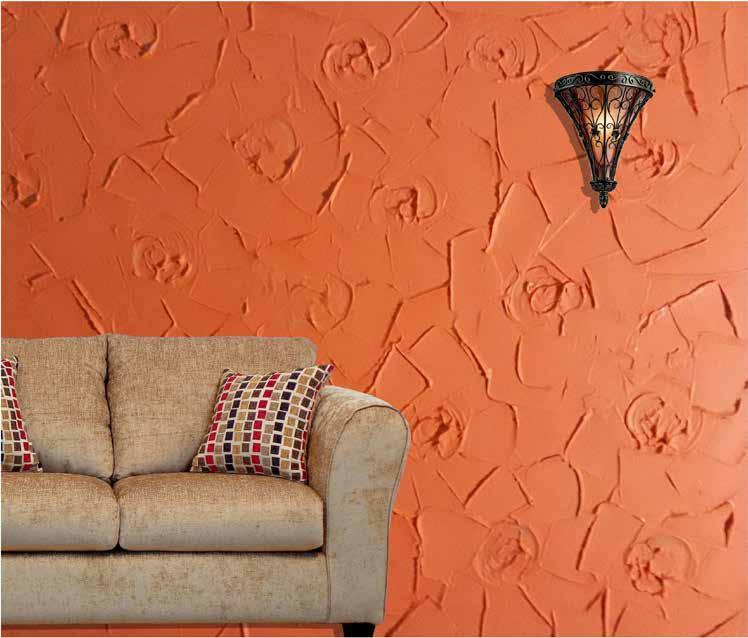
The application process of textured paint depends on the desired objective and final pattern or finish. Usually, the process would begin as normal, with the preparation of the base surface and application of a suitable undercoat. This can be done with a regular paintbrush. It is recommended that the color of this undercoat should be as close as possible to that of the desired final product. It is also recommended to avoid the process on external walls when it is raining or if rain is anticipated within a few hours.
The desired textured paint, usually Acrylic paint with a percentage of aggregates of different sizes should be chosen and a paint color test done to determine the right color specification for the finish. For a rustic feel, a coarser aggregate size may be more suitable. The acrylic paint may be diluted with water or other recommended agents to achieve the required application thickness and consistency.
The base coat may be applied with an exterior emulsion paint roller. Microfiber rollers are also recommended for light-to-
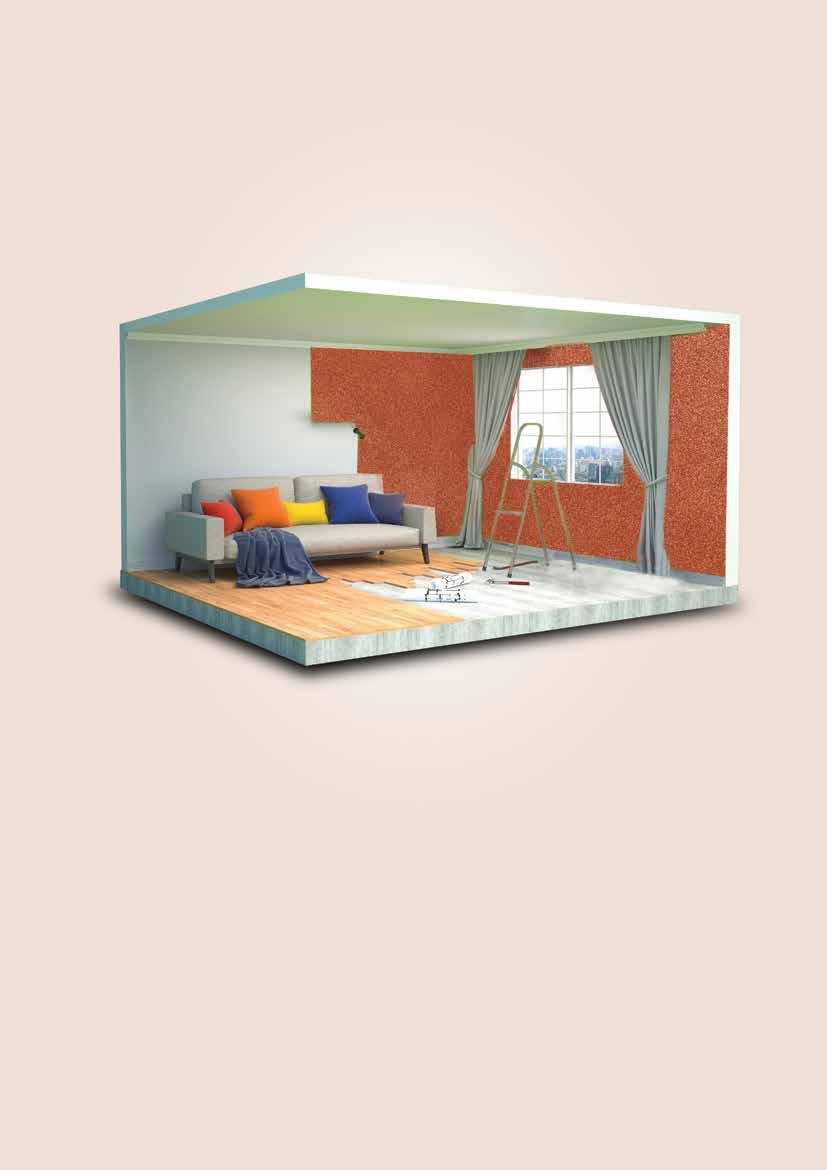
As the property market evolves each day, the question of what Paint & texture effects to achieve a beautiful and durable Finish should be applied on completion of any structure is always very important. This is the reason why the Concept stores, Duracoat Home Solutions, were established a few years ago to be able to provide a significantly large range of expert solutions in this area.
Duracoat Home Solutions are the signature showrooms of Basco Paints located in selected key strategic areas to provide a variety of special textured finishes for internal and external surfaces for customers. Each such Showroom also has the state of the art Tinting system that gives you any of the normal range of Decorative Paints, as well as the Duracoat Real Roc range tinted in minutes while U Wait! A number of Home Solution stores have been set up since 2013 in strategic areas such as Forest Road, the Sarit Centre, Laxcon Hardware, Eldoret Paint Centre, Ramco Hardware and Muthokinju Paints and Hardware to name a few, to address the emerging market needs and showcase available paint possibilities.
The brand was created for consumers to touch and feel textured paints while seeking various colour and technical solutions that could suit their project needs. This would also enhance
Continued from page 28
medium applications. A honeycomb roller can also be used to achieve a much more intricate pattern, with the direction of the paint application being alternated at varying angles. It is important to get this first step of the base coat application right to ensure the consistency of the design to the final finish. The base coat should be let to rest for 2-8 hours depending on the thickness of the coat, the temperature, and the aggregate size. Any excess paint can be lightly sanded or brushed off.
After the base coat has dried, a single coat of primer should be applied with the exterior paint roller. Alternatively, a fine-textured emulsion roller can be used, again depending on the desired pattern or coarseness of texture. After about 2
consumer confidence when selecting the required paints for use. But how does one transform paint into a subject of décor in their space? Textured paints effects add dimension and vibrancy while giving an insight into one’s personal taste, be it in the office or the home space.
Basco Products (K) Ltd, located in Embakasi on Airport North Road Nairobi, with 45 year experience in the manufacture of paint and paint related products have ascertained itself in the market by providing solutions to players in the construction industry for many years. The firm has specialized textured finishes such San Deco from Turkey, San Marco from Italy and Duracoat Real Roc.
The firm’s Research & Development department plays a critical role in the product cycle at “Duracoat” and constant feedback from the market is always sought for in the quest to provide relevant products that meet the demands of the discerning consumer. The company has enjoyed many firsts in the paint industry such as Duracoat Eco-friendly range, Duracoat Lead and Chrome Free range and Duracoat Antibacterial range and has consistently emerged top in market research in innovation.
Less than two decades ago, paint was available
hours of drying, a single coat of royal matte emulsion paint can be applied, with different colors to add effect. At this point, the final design with various colors can be implemented with the emulsion paint.
The steps outlined above for applying textured paint are not cast in stone, although they are good practice. As a DIYer, you have the flexibility to try out different colors and designs (use a piece of cardboard or waste drywall for this
in a very limited range of shades and this has steadily soared over the years. Duracoat prides itself in providing a range of over 7,000 shades. These products are availed to consumers at nearly 500 convenient locations in the region, through the Duracoat Colourmania Centres which have Automated Computerized Tinting Systems (ACT) that dispense tinted paint shades in a matter of minutes. Basco Paints’ growth trajectory has seen it expand its product offering from the initial Basco Economy range of paints to the Duracoat premium range that are widely distributed in Kenya and East Africa.
The Kenyan consumer has evolved and modernized at more or less the same pace as the international populace. The demand for all kinds of Solutions, from the type of paint finish to buy, to the facility to employ the services of the Professional Applicator to provide Supply & Apply and Decorating Services and end to end solutions is definitely on the increase. We are proud to say with Confidence that our Duracoat Brigade Team has performed over the years to deliver superlative completed jobs, and are in a class of their own, second to none!
As they say, the proof of the pudding lies in the eating, and Beauty is in the Eye of the Beholder…well, that Beauty is only a phone call or a visit to the Showroom away!
purpose). Always test various alternatives before implementing the actual paint job as this will provide better quality and more consistent results.
One final advantage of textured paints worth mentioning is that you don’t have to paint entire rooms with this technique. You can choose a single wall or a section that is heavily trafficked, for example, a patio, or a single living room or bedroom wall. Or, you could try out your DIY skills in a much more closed and hidden space and see how it pans out.

The impact of COVID-19 pandemic has left no African economy unscathed, resulting in a slowdown, which in some sectors, as commentators have predicted, may take years to recover to - what can be termed‘normal’ levels. And in the construction sector, this is situation is no exception. It is no longer ‘raining’ projects as before; projects are only coming in dribs and drabs. Thus, this calls for employers (project owners) and contractors involved in complex or major projects to work together in order to deliver on time, within budget and to the expected standards better than ever before.
For contractors who do the actual ‘dirty’ work on site, the stakes could not have been higher. This should prompt them to be more clued up than before on the risks they may face and their implications on the ability to deliver on a project. This is because the reality is that no matter how consistently committed contractors may be to the project, there could be some unforeseen circumstances that could prevent them from performing as expected. For this reason, they have to be very conversant with the scope of the construction guarantees to the owner (employer) guaranteeing the contractor’s performance
undertaken in terms of the construction contract or the principal building agreement (PBA). Of course, the dilemma they are likely to face is telling the wheat from the chaff amongst scores of construction guarantee offerings out there, with every service provider proclaiming have ‘the best and proven’ solutions.
At the outset, the need for contractors to be more prudent as they cherry-pick a 'fair' guarantee becomes clear considering the scope of construction guarantees and their contractual implications. Impulsive decisions may leave them very susceptible to being short-changed by employers.
Under the PBA, construction guarantees are used to indemnify (cover) the employer against damages suffered in the event of the contractor defaulting. Short-term insurance companies (or guarantors) issue construction guarantees on behalf of contractors to provide a benefit to employers. In South Africa, this governed by terms of the Short-Term Insurance Act, which defines a guarantee policy as “A contract in terms of which a person, other than a bank, in return for a premium, undertakes to provide benefits if an event, contemplated in the policy as a risk
Contractors involved in projects in Africa should apply thorough due diligence when choosing a construction guarantee to cover an employer’s interest in a project, not least in the current economic climate.

Nothing is guaranteed, except a guarantee
Uncertainty about the future has proven the crucial need for construction contractors to provide employers with the security of a performance guarantee.
There have been shockingly hard lessons and knocks for a broad range of contractors over the past five years. For those who survived the pre-COVID-19 economic meltdown, the pandemic may have been the final straw, causing many defaults of contracts relating to construction work. These disruptions have challenged project execution and vastly changed attitudes towards the acquisition of performance guarantees, which have generally been considered a grudge purchase.
Clinton Spence, Head of Santam Guarantees, explains: “Unlike with traditional insurance, here, a third party is involved. Construction projects are based on an agreement between a contractor (the principal debtor), working on behalf of a beneficiary (employer/owner/ creditor). Should a contractor fail to meet its obligation in fulfilling that contract, the project is at risk.
“This is where a performance guarantee comes in. It indemnifies the beneficiary of the project against a default or non-performance by a contractor, which, in return, puts an obligation on a guarantor (the insurer) to make payment should a specific event occur. But although contractors facilitate and pay for the premium on a guarantee, they do not realise any direct financial benefit should there be a claim.”
The construction sector comprises 90% of Santam Guarantees’ underwriting, 70% of which is performance-based. “It is a highly specialised and extremely technical, risky business,” says Spence. “A guarantee issued today pushes our resources because the underwriting is made far more intensive. For example, we can’t judge how a company will be performing in a year’s time, let alone in six.”
Full-spectrum offering
There are three types of guarantees that together contribute to the majority of business within the Santam Guarantees product suite: Performance, which covers elements of quality, specification, and scheduling; Advance, which covers the expenses incurred to create the facilities that a site requires and addresses initial negative cash flows relating to
the procurement of capital goods, and Retention, which comes into play at the end of the construction period, and addresses employer risk associated with defects.
“This full-spectrum offering makes it incredibly difficult for underwriters. They have to consider whether the contractor has the financial and technical means to complete a job, and not fail. Ultimately, that’s what we are guaranteeing – non-failure!” says Spence.
Insurance good and proper
Underwriters have to consider an immensely complicated list of checkboxes, including contractor liquidity, performance over the previous five years, application of building standards, risk ratings, and technological and finance audits, to name but a few.
Time frames vary, but generally, the process from the day the application is submitted to when the guarantee is issued, can take up to a month. However, this only applies to the local market; foreign clients can expect the process to take up to three months because of the varying security checks and compliances.
Currently, 40% of the business Santam Guarantees underwrites is local; the balance is foreign. “At any one time, we have some 30 foreign guarantees in play, and only 25% of those are motivated through SA companies looking for support of their projects in other nations.”
Spence concludes: “There is always a point in processing this type of insurance where you hold your breath because the risks are so great and so complicated. But ultimately, we abide by our decadesold mantra: to provide insurance good and proper. And we believe we do that well.”
Call Santam Guarantees on 011 912 8478/8354/812 or send an email to surety@santam.co.za for more information.
relating to the failure of a person to discharge an obligation, occurs.”
Based on information which Construction Review has sourced from some of the leading insurers and brokers in South Africa, mainly members of the South African Insurance Association, insurers cover the eventualities of non-delivery, non-performance and nonpayment through construction guarantees. Generally, the following are the common categories:
• Advance Payment Guarantee: The employer will require an advance payment guarantee where they have made an advance payment to the contractor.
• Bid Bonds or Tender Guarantee: In instances where a tendering process was done, all contracts are accompanied with a tender guarantee. This is aimed at covering the employer against costs incurred where the contractor fails to take up the tender.
• Performance Guarantee: Should the contractor fail to perform in accordance with the contract, the employer is covered by the performance guarantee. It therefore covers the cost of completion.
• Retention Guarantee: The retention guarantee is a form of security against default or defective work.
More often than not, there are always problems in the area of retention money guarantees. Certainly, this is one of the areas where contractors should more pay attention to.
Overlooked fine print in retention guarantees
Problems often arise in the area of retention money guarantees, where contractors sign agreements hastily, overlooking reading the fine print.
Retention money is money an employer withholds to protect it from any potential defects that may arise under the maintenance period of the contract. In an instance the contactor reneges on returning to site to repair defects, the money is used to pay an alternative service provider to do the work.
There have been instances where contractors would encounter a challenge after signing an unconditional retention guarantee, which gives away all their rights to the employer. Later,
they would have no grounds for legal recourse should they have an objection.
Though this is no cast in stone, the rule of the thumb is: Contractors have to be well-informed about the kind of contract guarantee they are entering into – whether it is a demand or a conditional retention guarantee1.
Demand guarantees (unconditional)
Typically unconditional in form, a demand guarantee is a contract in which the guarantor promises to pay the beneficiary a certain sum of money upon the beneficiary’s first demand alleging a certain event. The event — usually insolvency or breach of contract by the contractor — does not need to be proven by the beneficiary (the contractor’s employer). Upon receipt of a compliant demand from the beneficiary, the guarantor is obliged to pay, irrespective of a dispute relating to the contract between the employer and the contractor.
If there is a claim on a contractor’s guarantee, the guarantee will have a right to claim the full amount from the contractor. Thus, the onus is upon the contractor to provide the guarantor with confidence and security that a full recovery from the contractor with no problem in the event there is a claim a guarantee. The amount of the guarantee that can be covered is dependent on three factors: the risk profile of the industry in which the contractor operates; the risk profile of the contractor; and the specific contract.
Standard forms of contract used in demand guarantees mainly include FIDIC, NEC, JBCC or GCC. However, employers may elect to have their own contract requirements. Risk averse employers are likely to ask for a demand guarantee to be included in tender requirements of complex contracts. More to the point, a guarantor is prohibited from informing the contractor that there has been a claim on a guarantee.
Due to the principle on which they are based, demand guarantees can be abused by an employer to force an outcome that favours them, with contractor getting the short end of the stick. The only area where a contractor may have grounds to dispute a claim is when there is concrete proof that the employer has been involved in some fraudulent activity.
A suretyship or a conditional guarantee, due to its accessory nature, places the burden on the guarantor for any failure of the contractor. It is worth highlighting that, due to the accessory nature of the suretyship, the guarantor’s and contractor’s obligations closely correspond. And so, due to this, the guarantor carries the obligations of completing construction works, delivering material and repaying cash in advance. Furthermore, when needs be, the contractor can intervene to resolve a contractual dispute by establishing whether or not the employer is making a valid claim against a guarantee.
From the foregoing, it clear that conditional guarantees or suretyships would be a ‘fair’ option for a contractor. However, the importance of reading the fine print of guarantee requirements either at the tender or commercial negotiation stage of a contract to prevent does need to be overemphasised. Moreover, onerous demand guarantees have to be avoided as far as possible.
In the current atmosphere of a depression in the construction sector. More often than not, contractors find themselves in a liquidity squeeze. They would be at a receiving endemployers paying late, at best, or not paying at all, are all too common.
Contractors have to engage reputable guarantors with the most convenient packages for their construction projects in Africa. The few types of construction guarantee packaged under names, with seemingly little differentiation. There is no better way than doing the due diligence thoroughly. In this way they would be able to separate the wheat from the chaff.
Information on “Retention guarantees” sourced from “The role of guarantees in contracting”, by Peter Suremann, underwriting manager in the Construction Guarantee business of Lombard Insurance Company, and adapted for Construction Review. The article was published on Civils Online, 9 April 2019

Heavy machinery, especially Mining, Industrial or Farming Equipment, requires constant maintenance to keep it in good working order. Conversely, poorly maintained large machinery equipment runs inefficiently. Breakdowns are costly and safety is also an important consideration.
Tips for large machinery maintenance:
Stay on top of large machinery operator training
Many types of large machinery have multiple operators. One of the ongoing inspections on any checklist should be overseeing the correct operation of the equipment.
Large machinery should be inspected as soon as it is purchased. Operator training is usually done at that point, but training needs to be kept up. Employees come and go, skills become rusty and poor operation leads to breakdowns.
Operator manuals can be revised for the specific work situation. They can be rewritten in simpler language. A short manual can be provided to each operator for easy reference. And, if you operate in a paperless environment, you can rest assured operators use the most current version of each manual.
One other note is to identify best practices, which can then be applied to other facilities or geographic locations. The knowledge you learn about how to maintain your equipment can become quite valuable – be sure to best leverage this important knowledge and use it at every applicable location.
Add and test lubricants frequently

Lubricants reduce friction around any moving part. A schedule of good lubrication maintenance extends the life of large machinery equipment and parts.
Lubrication is one of the first and most important of maintenance checks. Look for signs of excess oil or grease build-up on pistons. Check for leaks around oil seals.

Be sure to use the right lubricant. There are specific kinds of oil and grease for every component. Check the manufacturer’s recommendations.
Market leader in Generator sales, installations and back up support in Kenya.

Getting the lubricants checked is a good way to diagnose problems with large machinery. Experts analyze particles in the used oil. The makeup of any contaminants will indicate which part may be suffering from wear or breakdown.
An Authorized Distributor for KOHLER-SDMO(France) POWER GENERATORS over 25 years in the entire region of Kenya.
Check for signs of wear
Vibration, shock, high temperatures, friction and age all contribute to the breakdown of parts

in heavy machinery.
• Vibration can come from gears and belts that are out of alignment
• Shock can come from accidents and from poor operator technique
• High temperatures can come from extended use, friction, poor lubrication and worn parts, among other reasons
Age affects many key components. Over time, belts will warp. Seals will dry and crack. Bolts will loosen and stretch out of shape. Age is a factor to monitor in equipment.
Should you discover wear and tear on any moving parts within your heavy equipment, be sure to quickly perform the necessary replacement of any worn parts.
Keep large machinery clean, and maintain a clean environment
There are many seals and filters in place on heavy machinery to keep working parts clean and free of contamination. Seals should be inspected regularly to make sure they’re in good condition. Filters should be inspected and changed regularly. Breathers should be kept clean to avoid creating a vacuum in the cab which will suck contaminants into the cab. The electronics in the cab are susceptible to breakdown if contaminated. This impacts the clutch, for example.
Large machinery should be stored in a shed or other building if at all possible. Exposure to wind and weather can lead to rust and rot. The machinery should be run periodically if it is not in use.
Have a maintenance and repair schedule, and keep good records
Fluids, tires, tracks and electrical systems are among the components that have to be checked regularly for preventive maintenance. Know what needs to be
inspected and when. Here are some examples.
• Power transmissions have many moving parts that need to be maintained in top condition. Gearboxes need to be checked for lubrication, vibration, and damage to parts.
• Friction materials, seals, gaskets and bearings all need to be inspected for wear and replaced. Gears and shafts usually last a long time and don’t need to be replaced often, if at all.
• Drive train components need constant monitoring. Check pulleys and v-belts on CVT transmissions for alignment and wear. Check sprockets for correct meshing with chains and for breaks.
Test the oil to diagnose problems. Change filters frequently.
Bearings keep great amounts of force running smoothly and are vital to large machinery performance. Check bearing lubrication often. Maintaining bearings well extends their life.
Lubricate gears frequently.
Do a seal check to prevent bearing raceway contamination.
Run torque checks on the bolts. Bolts can elongate and creep over time.
To conclude, following the above 5 steps can significantly extend the useful life of heavy machinery, improving the Return on Investment from these important purchases. In today’s global manufacturing world, even greater value can be extracted if you have a global knowledge capture and distribution system such that this knowledge of machinery maintenance can be effectively shared across your organization –letting you reap even greater benefits on a much wider scale



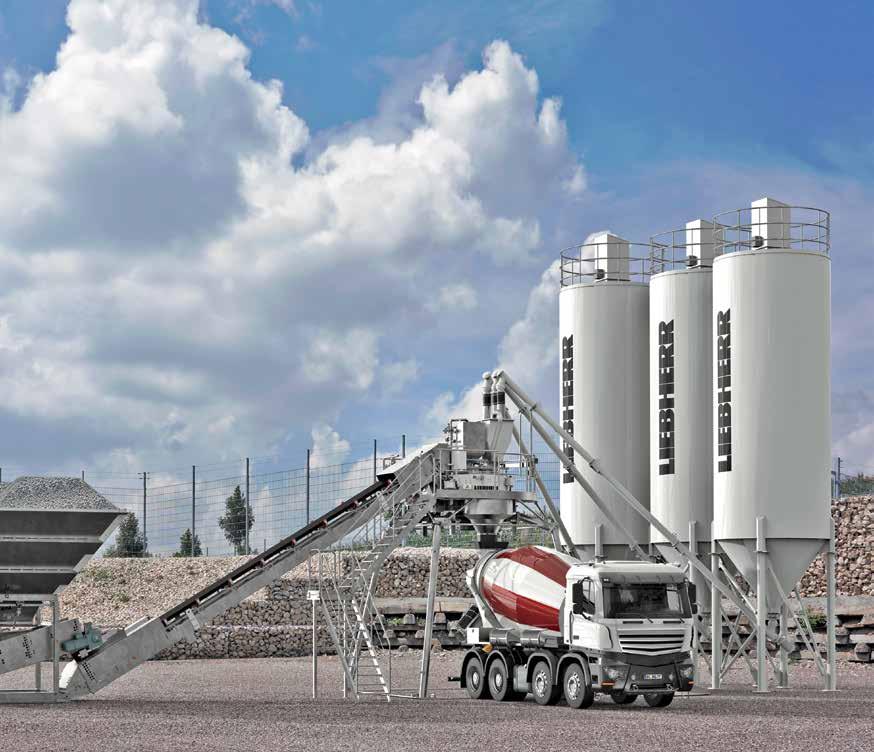
LCM 1.0 – an economic mixing plant with unique advantages
Efficient concrete production with high reliability
Easy and intuitive control system via laptop
Cost-efficient transport in 2 x 40ft. HC containers
Quick and easy assembly leads to minimal foundation work
…But it may have been, had the Romans purchased insurance from Hollard Guarantees. Our Construction Guarantees ensure that building projects – no matter how complex – are completed on schedule.
Just as all roads lead to Rome, our Trade Guarantees provide the freight forwarding, clearing and logistics industries with the peace of mind that their businesses are covered, no matter which route their cargo takes.
Major benefits of insurance-backed guarantees include:
• Comfort from non-performance of contractual obligations
• Increased cash flow and working capital
• Protection against non-payment of retained funds
Hollard Guarantees: we help you get it done – guaranteed.
Speak to our team today: