Groundwater-Capture Trench to Aid Response


 By Caroline Clauson 88TH AIR BASE WING PUBLIC AFFAIRS



One line of effort is being set in stone, clay and gravel at WrightPatterson Air Force Base (WPAFB), where an army of construction workers and machines are digging a 420-ft.long trench toward a way to environmental progress.


The project targets the hazardous materials storage facility on Area B, which accidently released a firefighting agent called aqueous film-forming foam (AFFF) containing per- and polyfluoroalkyl substances (PFAS) on two occasions in 2008 and 2011. Officials said the fire-suppression system at this facility used an earlier version of AFFF before EPA identified PFAS for possible health risks. The released AFFF soaked into the soil and entered the ground and surface water near the site.
The constructed trench will intercept impacted groundwater, and a downgradient-collection basin will catch affect-
ed surface water so it can be treated before it’s discharged near the Dayton drinking water wellfield.
The 2-ft.-wide trench extends about 30 ft. below ground surface, reaching all the way down to bedrock, according to Ed Coggin, technical director of the water engineering group at Weston Solutions LLC, the contractor awarded the project in 2021 as part of the U.S. Army Corps of Engineers’ Rapid Response Program.
As groundwater seeps out the trench’s sides, gravity will pull it down through the gravel fill material and into a slotted pipe, preventing groundwater from migrating further from the site. Next, the collection pipe will convey the water to a sump at the trench’s low point. Finally, a pump installed in the sump will send 15 to 25 gal. of water per minute to the downgradient-treatment system, which will use a special type of organically engineered clay to filter out PFAS.
TRENCH page 4
SHIP WITHIN 48 HOURS SAME DAY PARTS AVAILABILITY 24 HOUR TECHNICAL SUPPORT BACKED BY A 75 YEAR BUSINESS State Supplement sponsored by: Thousands in Service!
OHIO STATE EDITION A Supplement to: Your Ohio Connection: Ed Bryden, Strongsville, OH • 1-800-810-7640 23 30 422 68 80 76 75 77 ®
April 1 2023 Vol. XVII • No. 7
see
“The Nation’s Best Read Construction Newspape
U.S. Air Force photo by Hannah Carranza
A worker drives an excavator Nov. 21 toward a pile of gravel at Wright-Patterson Air Force Base, Ohio.
Environmental Protection Agency officials survey the work site Nov. 22 at Wright-Patterson Air Force Base, Ohio. A 450-ft. trench construction project in Area B is under way to help remove substances previously used in firefighting from groundwater.
ODOT Is Launching Record $2.5B Construction Season
The Ohio Department of Transportation announced that it expects to invest a record $2.5 billion into more than 1,000 projects during this year’s construction season to improve transportation and make Ohio’s roads safer across the state.


“There is no better place to be than right here in Ohio, and these new projects will
ing serious or deadly crashes. More than 5,700 mi. of pavement will be improved, and 823 bridges will be repaired or replaced.
“These investments are made possible by hard-working Ohioans who use these roads and bridges every day to get to work, school, medical appointments and family vacations. It is our duty to ensure the resources entrusted to us are used wisely,” said ODOT Director Jack Marchbanks.
r g a t Introducin B T
ith e w achin e m niqu y u ul


s d i isk lee Te C e J Th
e m h n t o retes idsk t if n l a t c n. I ee r s eve o c b scopi lee h a t wit
ow. l n nti , u possible
r a ete d s ik y s nl d o n t a s r e fi ht
ats re t v os e m h t t g i inka , m oom
r




ou s y are s a scce n a a d c n t a arke
roade k l ac r t t ompac d c n
g d i d d n r a the ur h f ac e , r r,igheh
jcb.com/tteleskid /


Buck and Knobby JCB
Covering Northwest Ohio 9127 Airport Highway Holland, OH 43528
419-491-2362
www.buckandknobbyjcb.com
Burns JCB
Covering Northeast Ohio
8155 Roll & Hold Pkwy.
Macedonia, OH 44056
866-459-6713
www.burnsjcb.com
rthe y o n n a ah r t peee ve ’ ou e y achin e m il
hought e t v av t h ’wouldn
ossibilities. s p endles a
5338
Company Wrench JCB


Covering Central Ohio 866-262-4181 Toll Free 4805 Scooby Lane Carroll, OH 43112
740-654-5304
920 Deneen Avenue Monroe, OH 45050 513-649-8105
www.companywrenchjcb.com
help us keep our infrastructure in a good state of repair,” said Gov. Mike DeWine. “Everyone in our state benefits from safe roads, and I am looking forward to seeing the end results of this year’s roadway improvement projects.”
This year’s construction program includes 31 new projects that are considered “major” with a value above $10 million. There are 190 safety projects aimed directly at reduc-
This construction season isn’t all about building new roads. About 95 cents of every dollar is being invested back into preserving existing roads and bridges.
It is important for motorists to pay extra attention when driving through work zones. According to the Ohio State Highway Patrol, there were 4,628 work zone-related crashes in Ohio last year, 21 were deadly resulting in 23 deaths and 85 involved serious injuries. Summit County recorded the most in the state with 814 work zone crashes. June is the top month for work zone crashes (585) with Wednesday being the top day (833). Most occur between 3 – 5 p.m.
In 2022, there were 133 ODOT crews (workers, vehicles and equipment) struck while working along Ohio roadways.
“These workers are out there ensuring that your travels are as safe as possible. They just ask for your attention and patience in return,” said Marchbanks.
Ohio’s Move Over law requires drivers to move over a lane for vehicles with flashing lights. If drivers cannot safely move over, they are required to slow down.
Page 2 • April 1, 2023 • www.constructionequipmentguide.com • Ohio State Supplement • Construction Equipment Guide
The Ohio Department of Transportation announced that it expects to invest a record $2.5 billion into more than 1,000 projects during this year’s construction season.

Construction Equipment Guide • Ohio State Supplement • www.constructionequipmentguide.com • April 1, 2023 • Page 3
Trench Intercepts Groundwater, Helps Remove Contaminants
TRENCH from page 1
“The intercepted groundwater will be combined with captured surface water from the drainages south and west of the storage facility,” said Greg Plamondon, the WPAFB remedial project manager of the site. “All accumulated water will then be treated by a series of passive pretreatment and primary treatment beds before being discharged to the base stormwater network. This system will effectively reduce the concentrations of PFAS leaving the base.”
The Ohio EPA holds a direct stake and role in WPAFB’s water remediation, overseeing the project to ensure it meets state and federal regulations.
“We are very supportive of taking early actions like this that Wright-Patterson Air Force Base is doing,” said Bonnie Buthker, chief of the Ohio EPA’s southwest district office. “By installing this trench and collecting the contaminated groundwater and the rainwater from this particular site, they’re preventing that contamination from impacting Dayton’s production wells and also base production wells.”
Slated to finish the site-remediation treatment system by the end of next summer, the project team is employing a host of equipment to do the heavy lifting, starring the large DeWind “one-pass” trencher.
“We like yellow iron,” Coggin said. “The main piece of equipment is the trencher itself; it really drives the whole thing.”
The Area B project is the first of two to use the USACE Rapid Response Program for PFAS remediation, which features fast preparation, initiation and funding for time-sensitive environmental needs. Solutions at the current and former fire-training locations on Area A are in the works as well.

“I’m just really excited that we’re getting to do something,” Crocker said. “It’s nice to be breaking ground.”

Page 4 • April 1, 2023 • www.constructionequipmentguide.com • Ohio State Supplement • Construction Equipment Guide
U.S. Air Force photo by Hannah Carranza A 3A worker uses an excavator Nov. 21 to prep a gravel pile at Wright-Patterson Air Force Base, Ohio.





















































































Construction Equipment Guide • Ohio State Supplement • www.constructionequipmentguide.com • April 1, 2023 • Page 5 SO SO MU OLITTL UCH IN LETIM VENT ME ,ORY ME! RENT O LITTLLE TIM me? How about OU TRY UT! ME FOR A AKE ME TA T my rollers! Check out ME! PICK SPIN! C offe an constitute not does ad his ifts, and heavy d Southeastern car l This not limited to, damages, cleaning fe ALL 800-798-LIFT loc by varies and availability to subject Products er uty construction equipm e s ries quality rentals lik r. ees, over hours, fuel and delivery/pickup. Credit a OR VISIT US ONLIN substitu to right the Southeasternreserves cation . ent at rates you’ll love mall hand tools, aerial cation. pproval and insurance required for all rentals. Sou ST T SOUTHEA E A equipmen like for rented equipment the of any ute theastern reserves the right to refuse rentals for a AL.COM AERNRENT a responsiblefor be may Customer time any ntat nt at responsible for ny reason. but including additionalcharges additional charges ,
Western Specialty Installs New Pad for Packaging Machine
Western Specialty Contractors’ Cleveland branch recently installed a concrete equipment pad to support Tap Packaging + Design’s newest printing machine.

The industrial printing facility has been based in the Cleveland area for nearly 120 years. Located in a 208,000-sq.-ft. modern production facility, Tap offers a variety of equipment and services from graphic and structural design to printing, converting, inventory management and fulfillment.

Western contracted with Tap in August 2022 to install the 13 by 33 ft. 2-ft.-thick concrete pad, according to engineering specifications, for a large printing machine that prints beer cases and packaging for other consumer products.
Because the plant operates 24-hours-a-day, Western’s craftsmen utilized an electric mini-excavator and other electrical equipment to minimize fumes and noise while digging a trench in the plant’s 5-inch-thick concrete floor for the new pad.




Western’s craftsmen then created a foundation to pour the 5000-psi concrete mix using #6 rebar running both directions every 12 in., with hook bars at the end of each run to create a pair of rebar mats.

Western completed the project in October 2022, on time and within budget and has plans to install concrete pads at the plant later this year for three additional pieces of machinery.

For more information, visit westernspecialtycontractors.com.




and
electrical





to









Page 6 • April 1, 2023 • www.constructionequipmentguide.com • Ohio State Supplement • Construction Equipment Guide SPHALT A Y 85 LEEBO VER PA 520 d and r COMMIT We are LeeBoy. The name behind the world’s m equipment: pavers, graders, distributors, maintai most trusted and requested around the world. B OU. O Y . COMMITTED T ALITY O QU e understand TTED T m ost dependable and productive commercial asphalt paving ners and more. The LeeBoy family of products are among the ecause we understand what drives you and we deliver. Each u, day, lik e you we p q put it all on the line . It’s how w eeBoy ’reL e W e ’rebuilt. eL y . As depen d OW y able as your day is long. N Fax: Phon Colum Fax: 330-655-5969 Phone: 330-665-5900 Hudson, OH 44236 6681 Chittenden Road3155 LeeBoy, Ros available at HUDSON C SELLING N WESTCHESTER Fax: 513-777-4494 Phone: 513-777-5556 West Chester, OH 45069 614-475-0069 e: 614-475-2880 mbus, OH 43219 o 8131 Regal Lane 5 E. 17th Avenue b sco and LBPerformance brand equipment this reputable Dealer’slocations: COLUMBUS
Western Specialty Contractors photo
Western Specialty Contractors photo Western’s craftsmen utilized an electric mini-excavator
other
equipment
minimize fumes and noise while digging a trench in the plant’s 5-in.thick concrete floor for the new pad.
Western Specialty Contractors photo Western Specialty Contractors’ Cleveland branch recently installed a concrete equipment pad to support Tap Packaging + Design’s newest printing machine.



Construction Equipment Guide • Ohio State Supplement • www.constructionequipmentguide.com • April 1, 2023 • Page 7
Page 8 • April 1, 2023 • www.constructionequipmentguide.com • Ohio State Supplement • Construction Equipment Guide


When you’ve b natural to deve of the needs of Equipment Co owners and op













been in a relationship fo elop a well-tuned intuiti f your partner. Since 19 mpany has done just th perators across Ohio an

























r 70 years, it’s on for taking care 52, Columbus at with equipment d beyond.
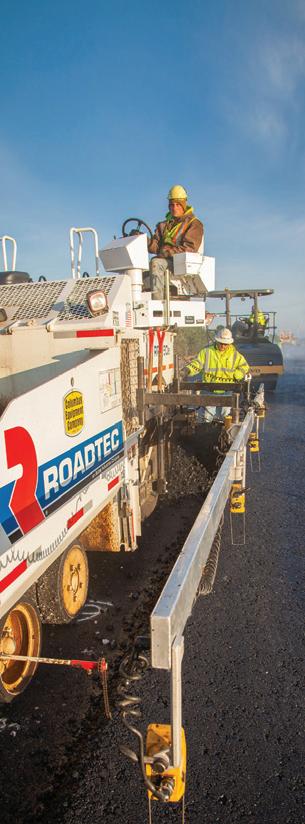
when they’re most n e support—as well as ro key piece of equipmen
eded; critical produc t outine maintenance—w nt in the chain goes dow
Columbus Equipment

Company is here for yo
when that wn; or ou.
Whether you n technology fro to supplement in lean times w to secure relia
need state-of-the-art eq om the industry’s leadin t production or manage with quality used and/or ble OEM, Reman or of



uipment and g manufacturers; the bottom line rental equipment; f-branded parts Ohio’ smoothly
















Columbus (614) 443-6541 wwww. .
Cadiz ) 942-8871 Dayto (937) 879
n -3154 Massillon (330) 833-2420
ly sell you a product, o o ensure your operation hat’s the commitment y r. Ohio’s Dep


Toledo (419) 872-7101 Ci (513) columbusequi Zaneville (740) 455-4036
ncinnati 771-3922 (330) 659 pment.com

-6681



or a n runs you can (740 pendable Dealer
Piketon (740) 289-3757
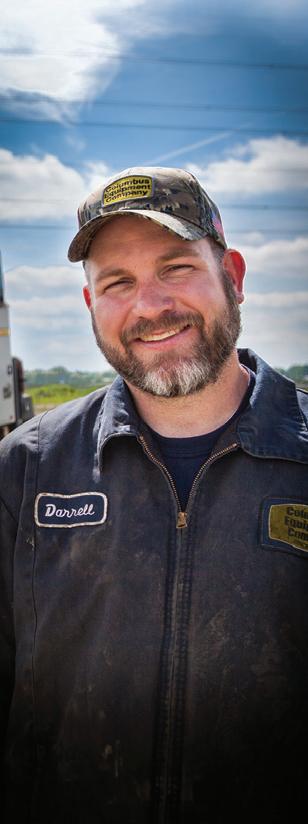
S
Seer
Equipment ts ar t, P v
, e
vice … i Sat t issffac ion on n 2 24/7/365
We’re not here to simp service. We are here to y, , 24/7/365. Th count on from ’s s D Dependable Dealer
