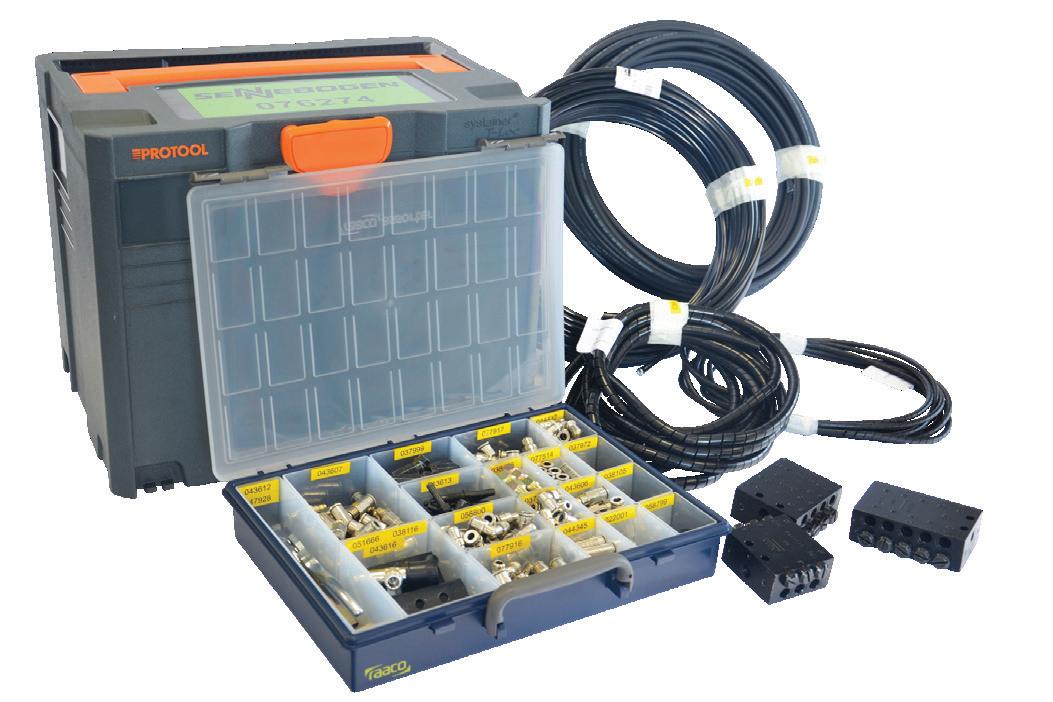
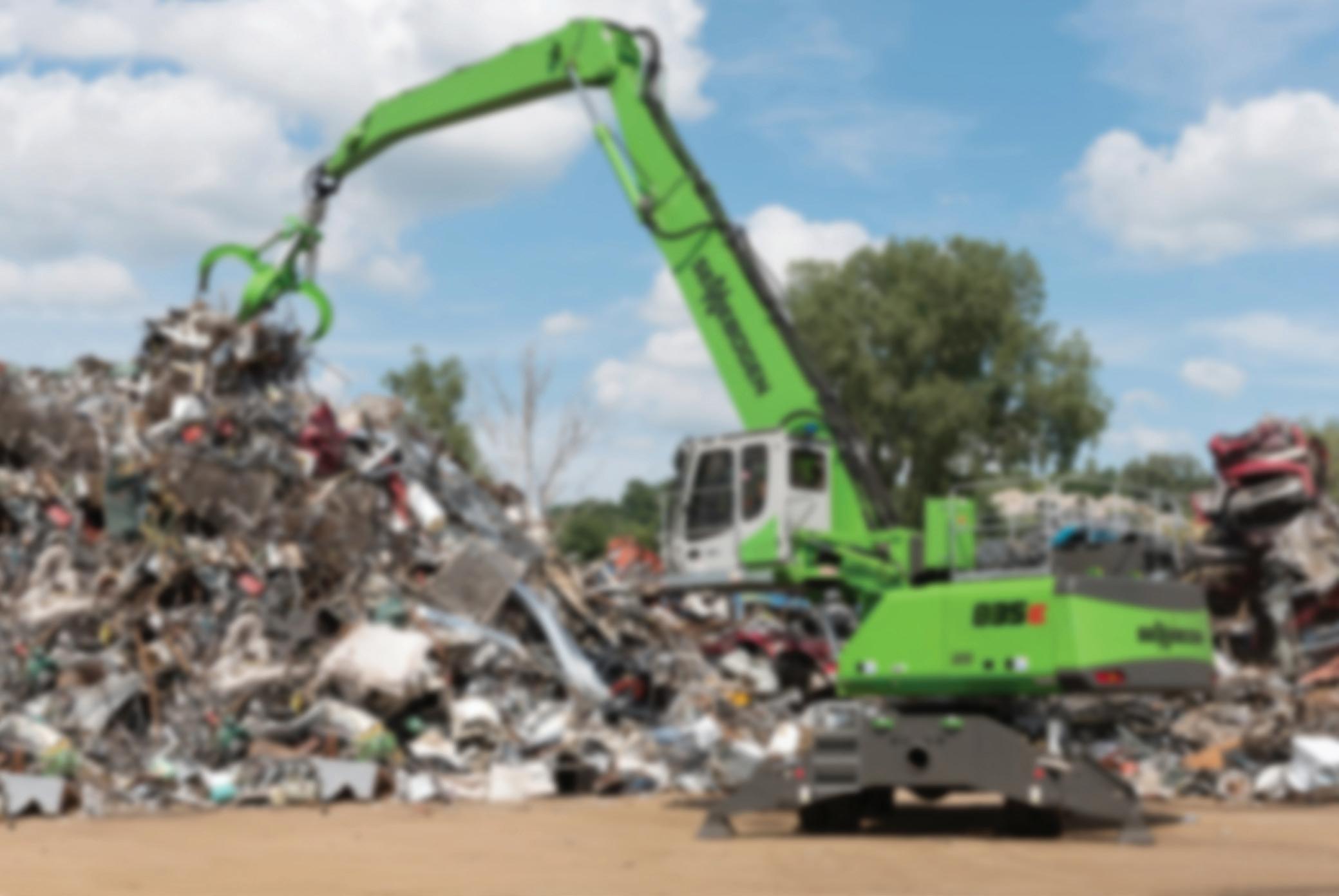
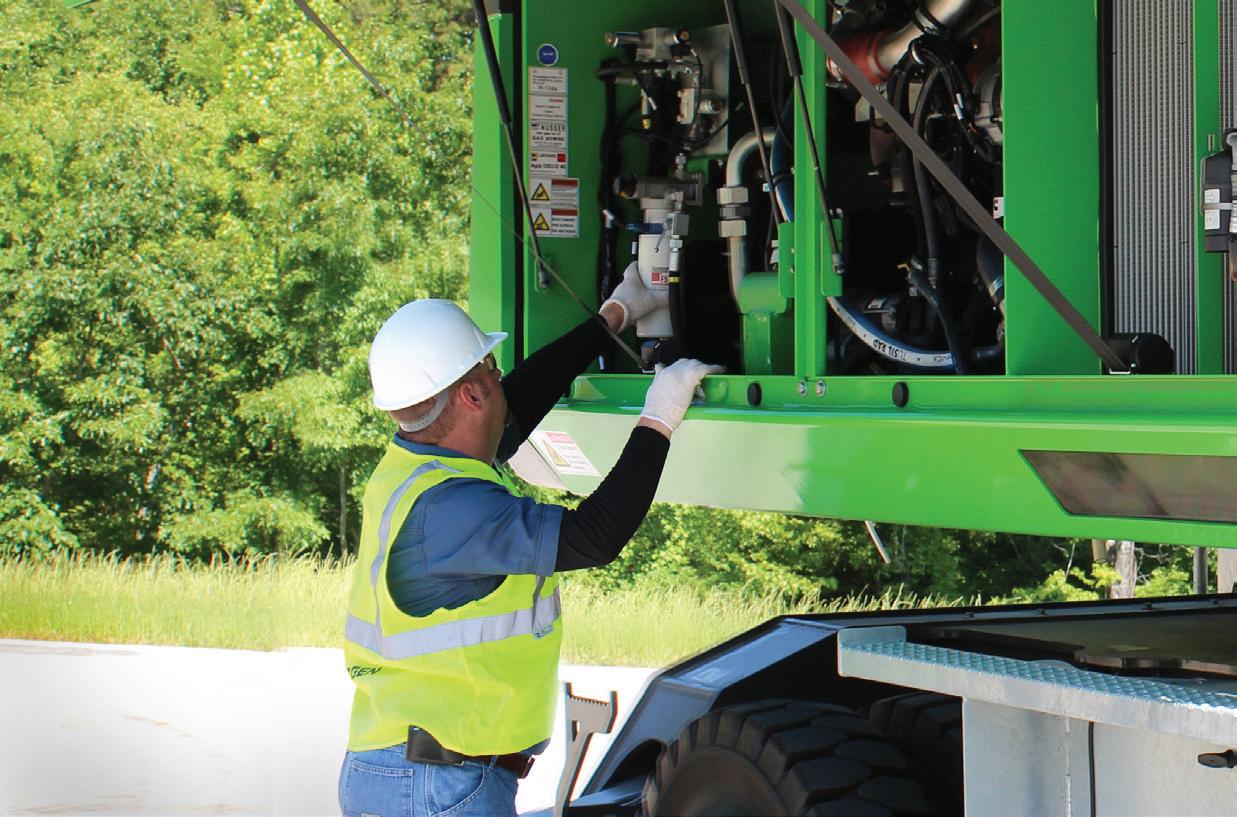
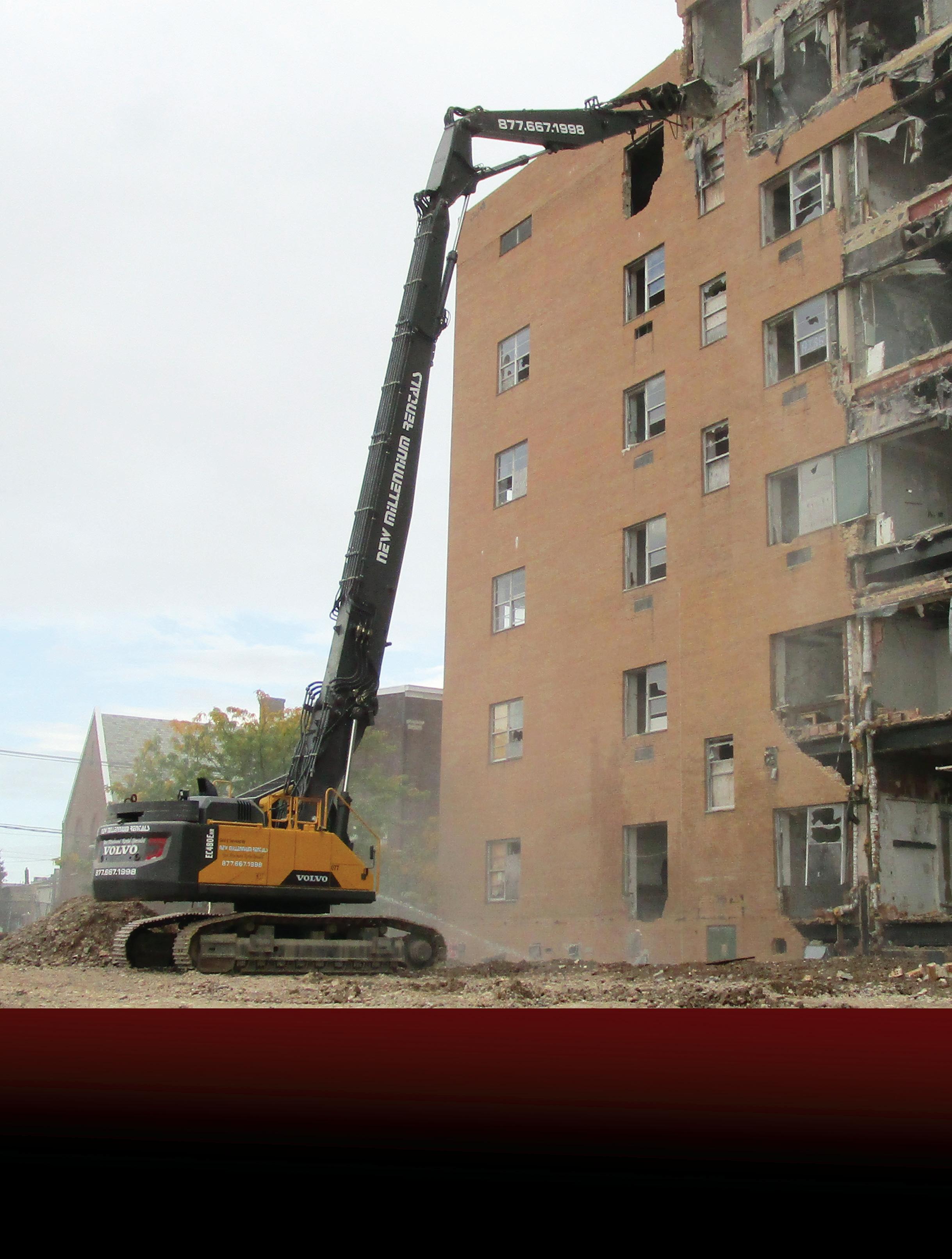
SENNEBOGEN, in keeping with their philosophy to maximize uptime, has created UPTIME Kits. Whether you are a service technician in-house or on the road, these kits have everything you need for every service, maintenance and PM task in one place. They were created to save you time and money. Managing hundreds of related service parts, from belts and nuts to O-Rings and special tools becomes easy with a single part number to order and stock.
They are:
• Easy to order and easy to stock
• Packed with job specific components and tools
• Ideal for stocking service shops and trucks
Choose from the following kits:
• Central lubrication system kits
• Preventive maintenance service kits
• O-Ring kits
• Electrical service kits
• Hydraulic service kits
And the best thing is that these kits, in stock and ready to go, are custombuilt to match your machine model and series. Count on SENNEBOGEN to meet your needs in the field or in-house. For more information on UPTIME Kits, scan the QR code.
BEYOND THE MACHINE
I virtually lose NO downtime
They have a technician come through once a month to go over every machine, front to back. If I have a situation, [they] just bring in another machine and I virtually lose no downtime… Since they have the repair parts in stock. I get the unit back quickly. Demolition Contractor, Bloomfield Hills, MI
Read more about how our “Beyond the Machine” aftersale commitment maximizes uptime for SENNEBOGEN customers with complete inventories of ready-to-ship parts in our North American warehouse.
SENNEBOGEN factory-trained technicians
SENNEBOGEN is committed to leading the industry in aftersale support throughout the life of its equipment. We’re thinking “beyond the machine” to deliver dependable uptime and lower Total Cost of Ownership (TCO) for every customer.
Seabrook Bridge Work Progresses With Major Milestones
project will replace the
SEABROOK from page 1
entrance to Hampton Harbor.
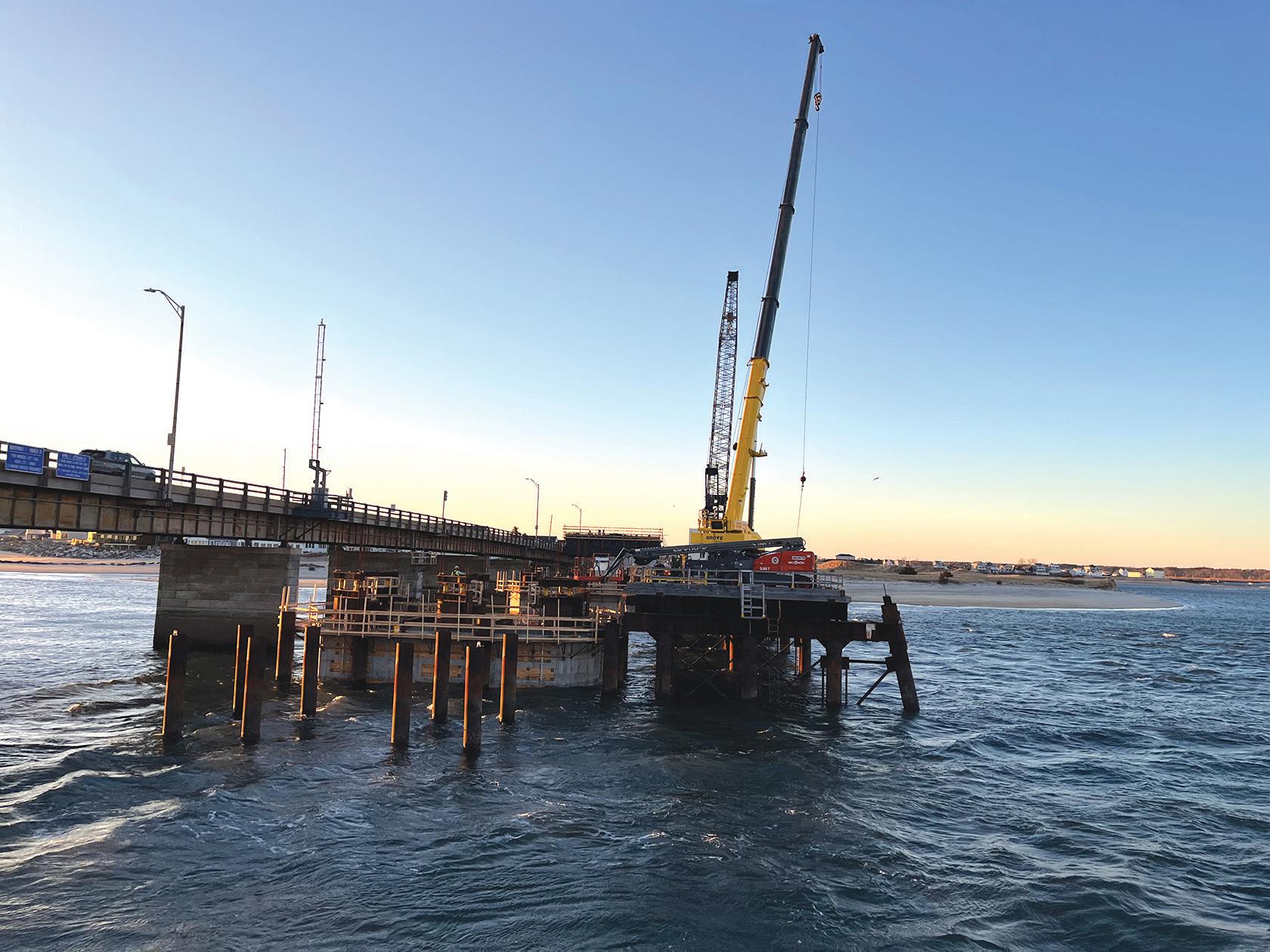
According to a New Hampshire Department of Transportation post, “The project is currently in phase two traffic configuration where off-alignment work for the proposed substructure and superstructure can be completed.”
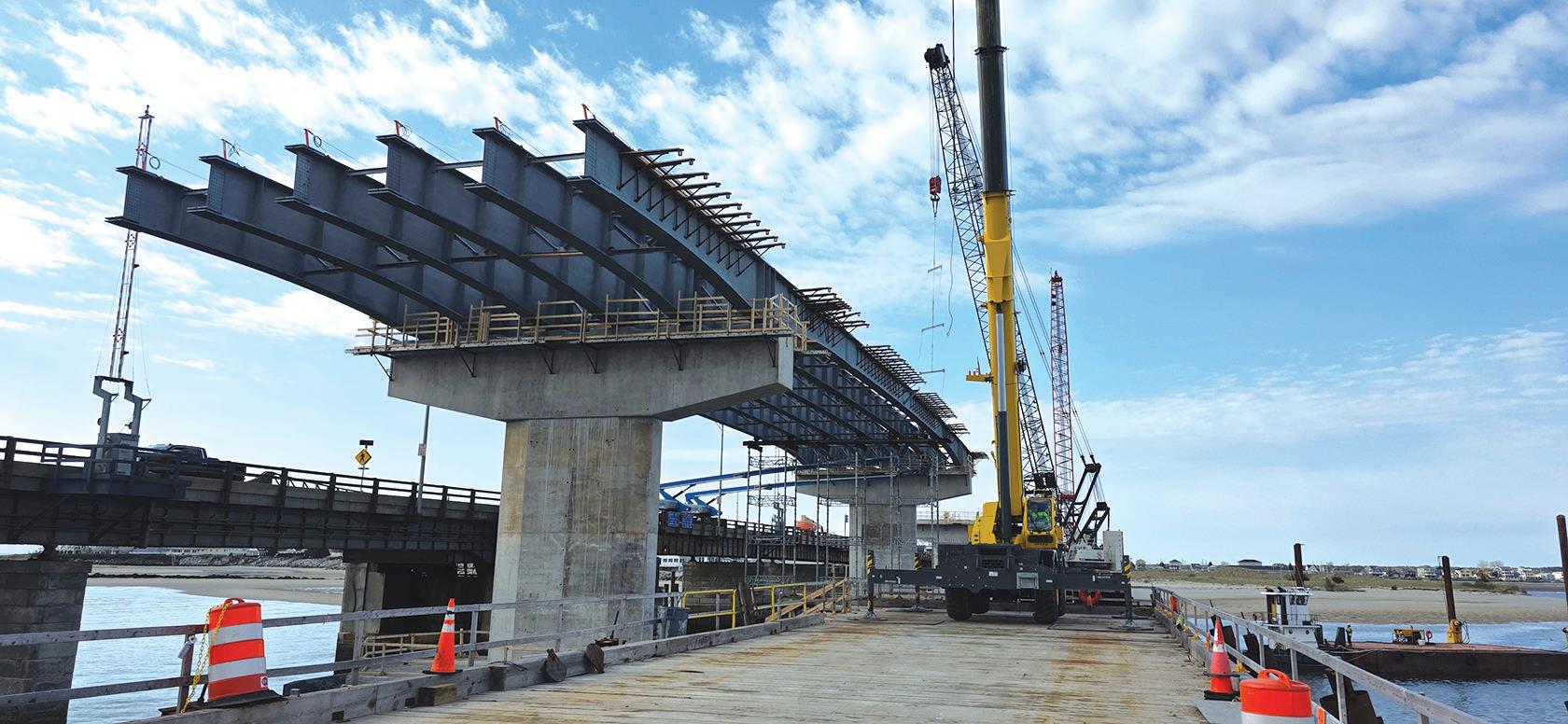
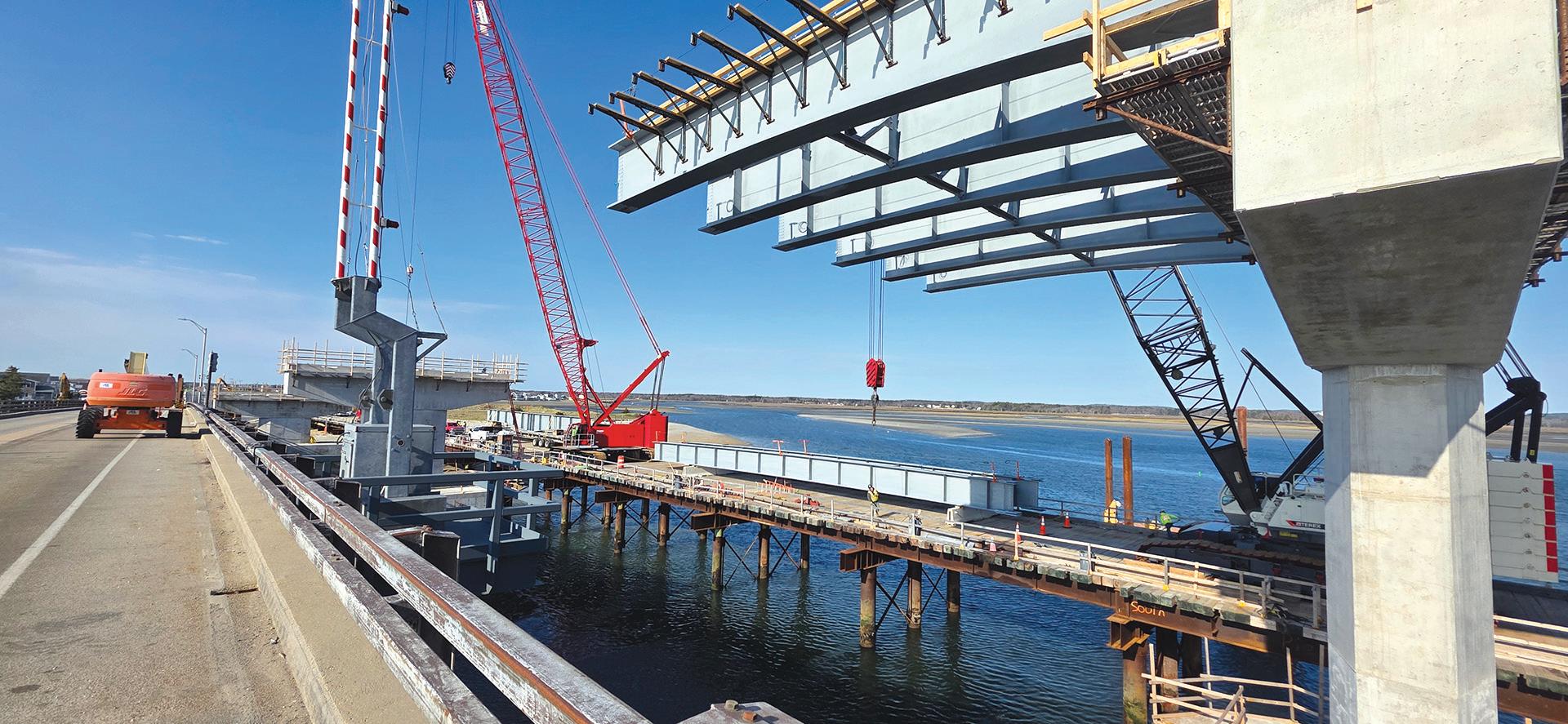
The post also stated, “The new bridge will be a fixed highlevel steel girder structure located west of the existing bridge on a horizontally curved alignment. The bridge will span 1,300 feet with seven spans and will feature a wider roadway — 38 feet between curbs, including two 11-foot travel lanes and 8-foot shoulders. It will also incorporate two 6-foot sidewalks with designated overlooks while maintaining the full 150-foot-wide federal navigation channel with a vertical under-clearance of approximately 48 feet. Beyond the bridge itself, the project includes full reconstruction of NH 1A’s approach roadways. A pedestrian walkway will also be built beneath the bridge’s north span.”
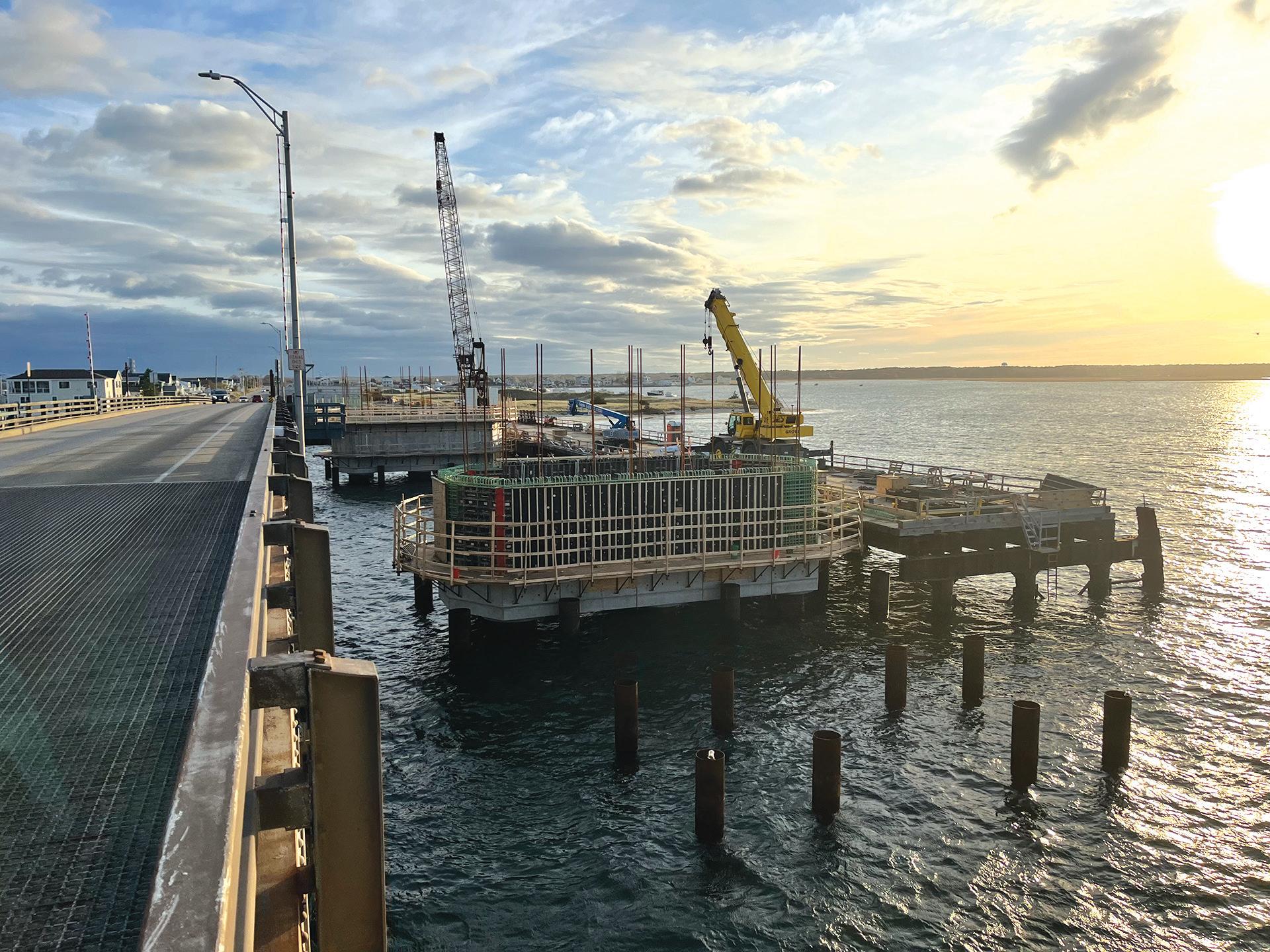
SPS New England is the lead contractor on the project. According to an SPS New England post, “We are nearing completion of the deep foundations for the future bridge structure. Construction crews have started work on the substructure concrete for the piers, and the first pier footing was completed with a total concrete volume of 700 cubic yards.”
construction.
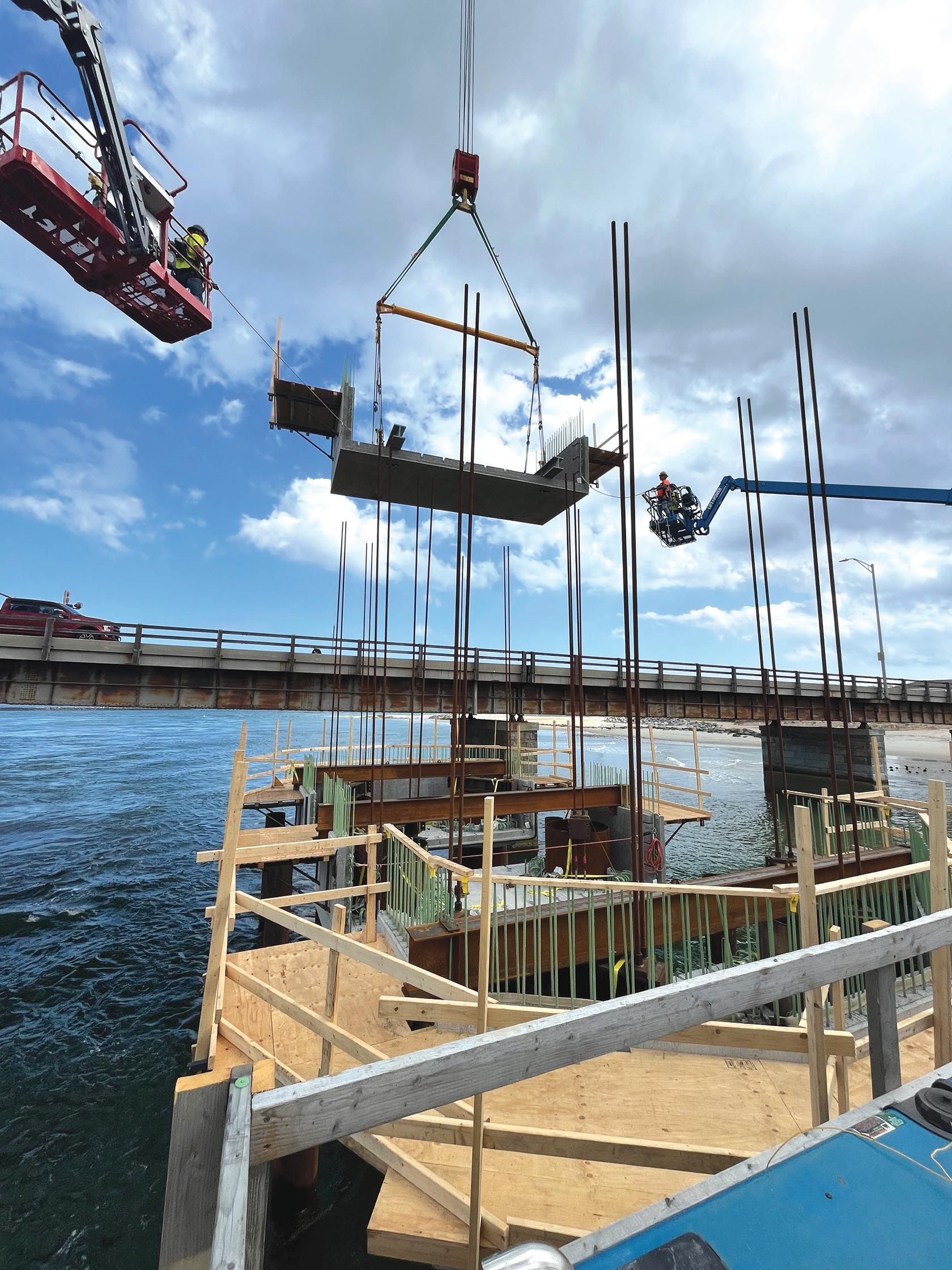
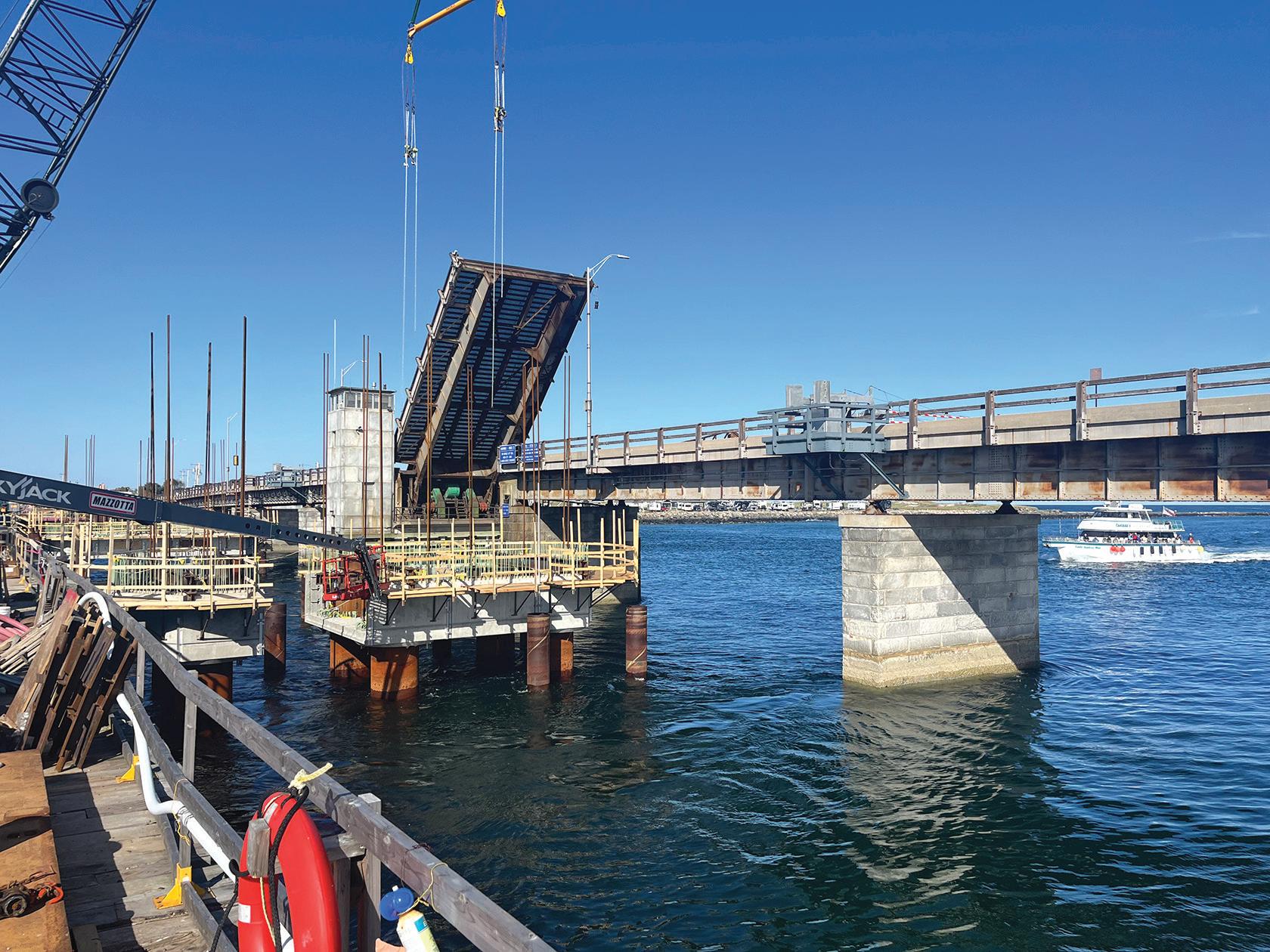
Proposed bridge pier drilled shafts and precast tubs were constructed in a raised position to improve worker access.
Proposed bridge pier drilled shafts and precast tubs were constructed in a raised position to improve worker access.
The project has completed all initial gas, water and existing bridge electrical utility relocations. Construction
During the winter, the precast tubs were lowered using hydraulic jacking to their final elevations and filled with concrete to form the footings for Piers 1 through 6. All piers
steel, installing structural backfill behind both abutment approaches and completing installation of the northwest and northeast sheet pile approach walls with a cast-in-place architectural pattern. Throughout the summer, crews will install precast concrete deck panels on the proposed bridge,
see SEABROOK page 6
The
Neil R. Underwood Bridge, which carries NH 1A (Ocean Boulevard) over the Hampton River at the entrance to Hampton Harbor.
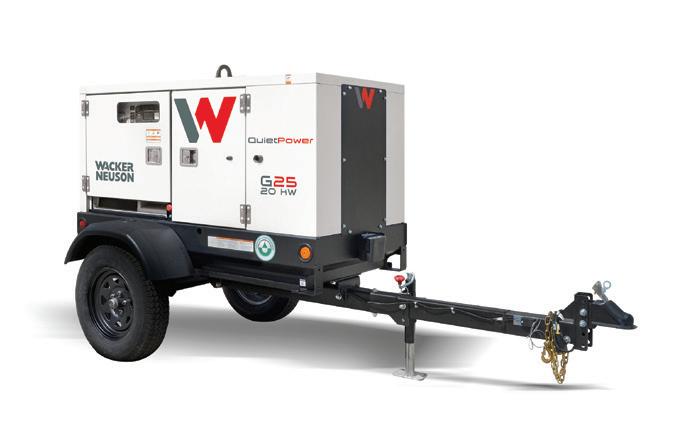
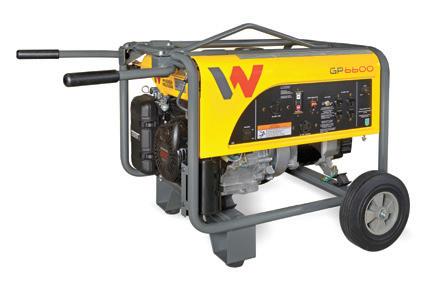
The Gas Pumps & Generators you’ve used for decades... A new & improved range of mobile generators.
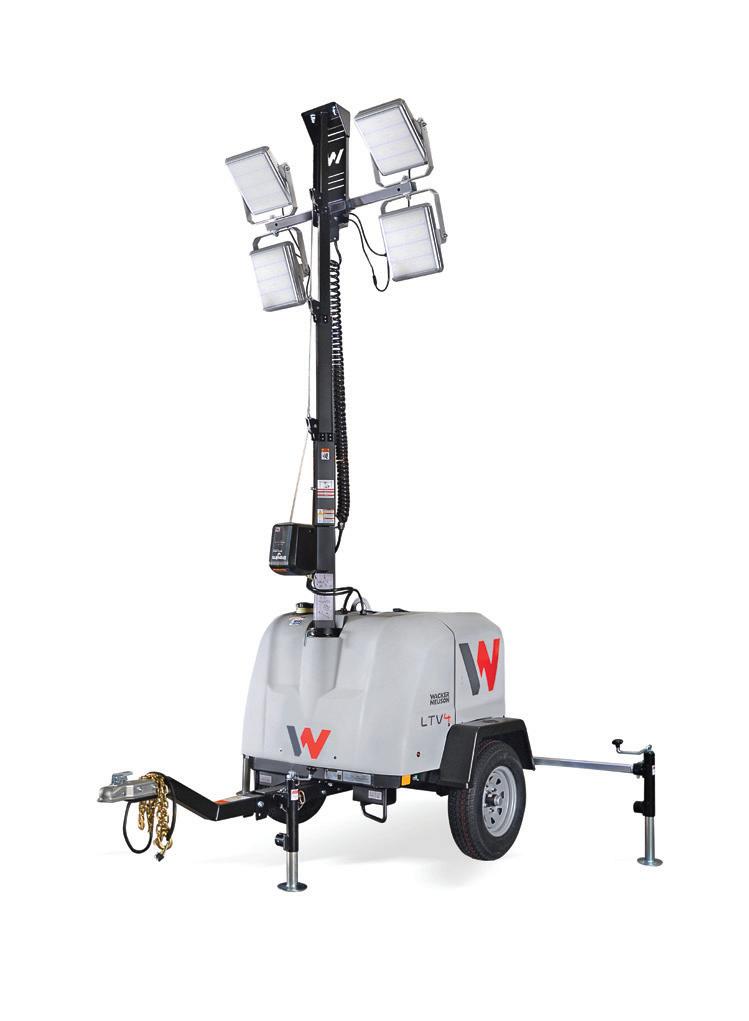
Widest Range of Light Towers
• Local Ownership with flexible approach
• Trained staff for repairs and maintenance
• Dedicated Parts personnel on site
• Focused on the Heavy Construction Industry
• Providing the BEST support equipment available
• Experienced outside sales staff
SPS New England Leads N.H. Bridge Work Toward Finish
Conn. Advances I-91 Interchange Project in Meriden
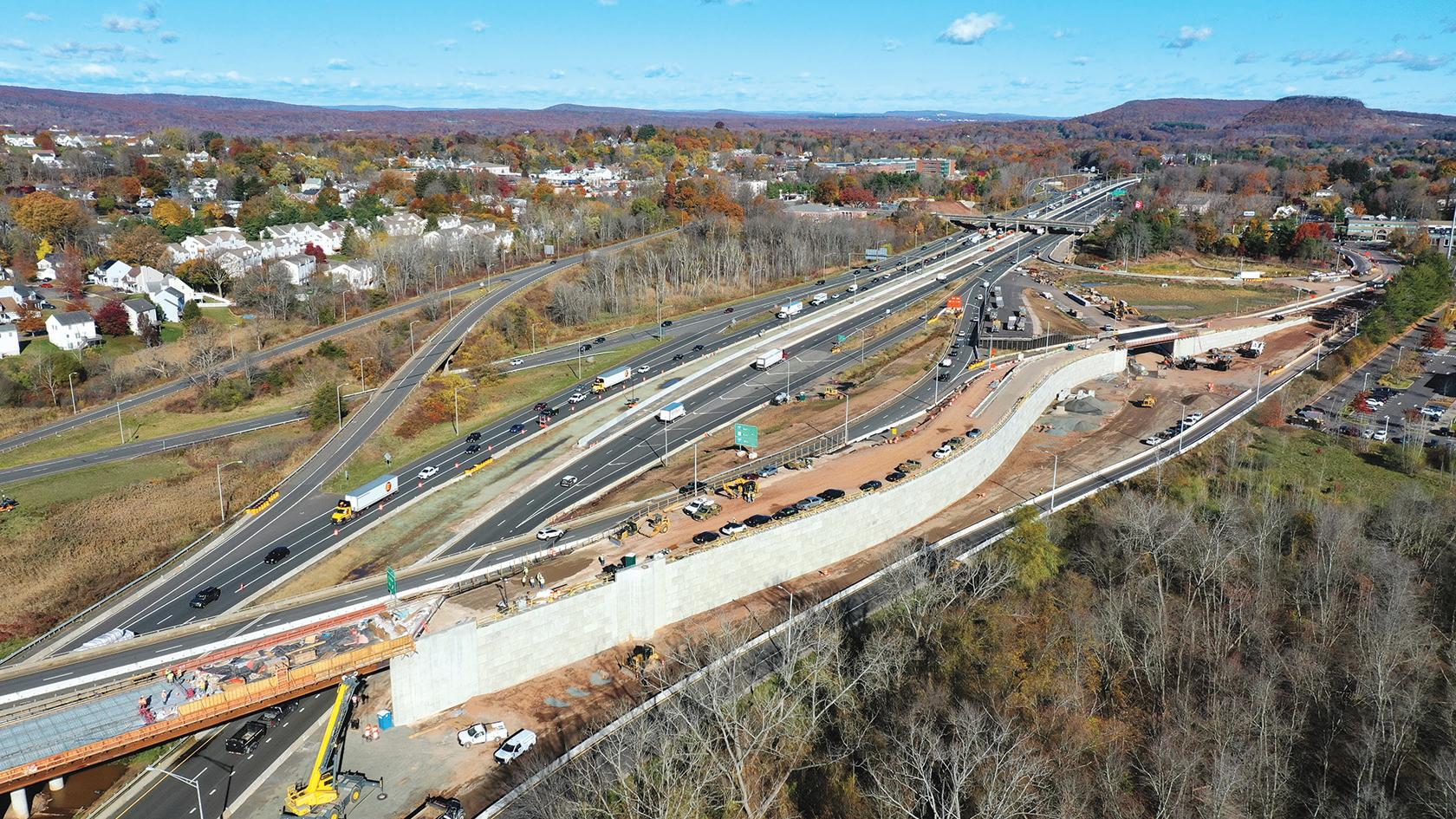
Gov. Ned Lamont announced on April 27, 2026, major progress on the ongoing Interstate 91, Interstate 691 and Route 15 interchange reconfiguration project, including the on-time and on-budget completion of phase one, continued advancement of phase two and the start of phase three.
Phase two, which has been under way for two years, remains on track for completion by 2028, while the full three-phase program is expected to be complete by 2030.
The announcement was made during a news conference at the newly constructed ramp to East Main Street from the new Route 15 northbound bridge over I-91 in Meriden, which is scheduled to open to traffic on May 1, 2026. The first half of the bridge is complete, and the second half will be constructed in the next stage.
Phase three is now under way, with early work that began in April. Crews are preparing the corridor for full reconstruction, including overnight work to maintain traffic flow. This phase will focus on the southbound side, adding new two-lane ramps and reconfiguring key connections to reduce congestion and improve traffic flow, with major bridge work including the Murdock Avenue Bridge scheduled to begin later this summer.
“This project to improve this major traffic corridor in central Connecticut was seriously needed and is focused on supporting the needs of our state’s infrastructure for decades to come,” Gov. Lamont said. “By modernizing this critical interchange, we will ease congestion for commuters, improve the movement of goods across our state and support long-term economic growth. From day one, we committed to delivering these improvements on-time and on-budget, and today’s progress shows we are getting it done for the people and businesses who rely on this corridor every day.”
The project is being administered by the Connecticut Department of Transportation.
“We are making strong progress across every phase of this project, thanks to crews working day and night to keep construction moving while maintaining traffic flow,” said Garrett Eucalitto, Connecticut Transportation commissioner. “As work continues, we urge drivers to slow down, stay alert and give our crews the space they need to work safely so we can keep this project on track.”
Funding comes from combination of state and federal resources. The cost of the first phase is $83.7 million and is entirely funded by the state. The second phase is supported by $50 million in state funding and $200 million federal funding. The third phase will
follow a similar model, with approximately 80 percent federal funding and 20 percent state funding. The total cost for all three phases combined is anticipated to be more than $712 million. Federal funding is primarily from the 2021 Infrastructure Investment and Jobs Act (also known as the Bipartisan Infrastructure Law).
The three-phase project is expected to be complete by 2030.
The project’s first phase, which was completed between 2023 and 2025, was aimed at repairing bridges, adding a lane of traffic to I-91 and making related road improvements. This included:
• realigning and reconfiguring the ramp from I-691 eastbound to I-91 northbound (Exit 1A old Exit 11) to improve traffic flow and reduce collisions;
• bridge replacement due to the proposed ramp realignment;
• adding an auxiliary lane on I-91 northbound to relieve congestion caused by a steep uphill grade; and
• bridge upgrades due to the added lane.
This second phase currently under way includes:
• adding a new two-lane exit ramp from Route 15 northbound to I-91 northbound to reduce traffic congestion on the Exit 68 N-E ramp;
• closing the existing Exit 17 ramp from I-91 northbound to Route 15 northbound and re-routing traffic to Exit 16 to provide a two-lane exit ramp with a right-side traffic merge onto Route 15 northbound;
• updating the existing Exit 68W ramp from Route 15 northbound to I-691 westbound to two lanes; and
• reconfiguring the acceleration and deceleration lanes to provide adequate traffic weaving distances.
Third phase improvements include:
• a new two-lane exit ramp from Route 15 southbound to I-91 southbound to reduce traffic congestion on the existing Exit 67 ramp;
• a new two-lane I-91 southbound ramp to Route 15 southbound to reduce traffic congestion on the existing Exit 17 ramp;
• upgrading the ramp from I-691 eastbound to Route 15 southbound (Exit 10) to two lanes;
• reconfiguring the ramp from I-91 southbound to I-691 westbound (Exit 18) to two lanes.
The project includes a project labor agreement with the building trades, supporting good paying jobs and workforce development for the next generation.
For more information and future updates, visit i-91i-691route15interchange.com.
The three-phase project is expected to be complete by 2030.
Connecticut Department of Transportation photo
CTDOT Advances Major I-384 Bridge Rehabilitation Project
remains in a state of good repair.”
CTDOT is responsible for inspecting 5,513 roadway bridges statewide, including 1,823 National Bridge Inventory (NBI) structures on the National Highway System (NHS). Of these, 4,004 bridges are maintained by the state, while the remaining 1,509 fall under local or other jurisdictions.
Currently, 151 state-maintained bridges are rated in poor condition. The average NHS-NBI bridge in Connecticut is 55 years old—nine years older than the national average of 46 years. Additionally, 7.4 percent of the state’s bridges (by deck area) are classified as poor, exceeding the national average, while 79 percent are rated in fair condition.
The project, designated 0076-0227 and located in District 1, includes rehabilitation of the following structures:
• Bridge 03574 – State Road 502 over I-384
• Bridge 03575 – Hillstown Road over I-384
• Bridge 03576 – I-384 westbound over Bidwell Street
• Bridge 03577 – I-384 eastbound over Bidwell Street
• Bridge 03578 – Keeney Street over I-384
• Bridge 03580 – Prospect Street over I-384
• Bridge 03582 – South Main Street over I-384
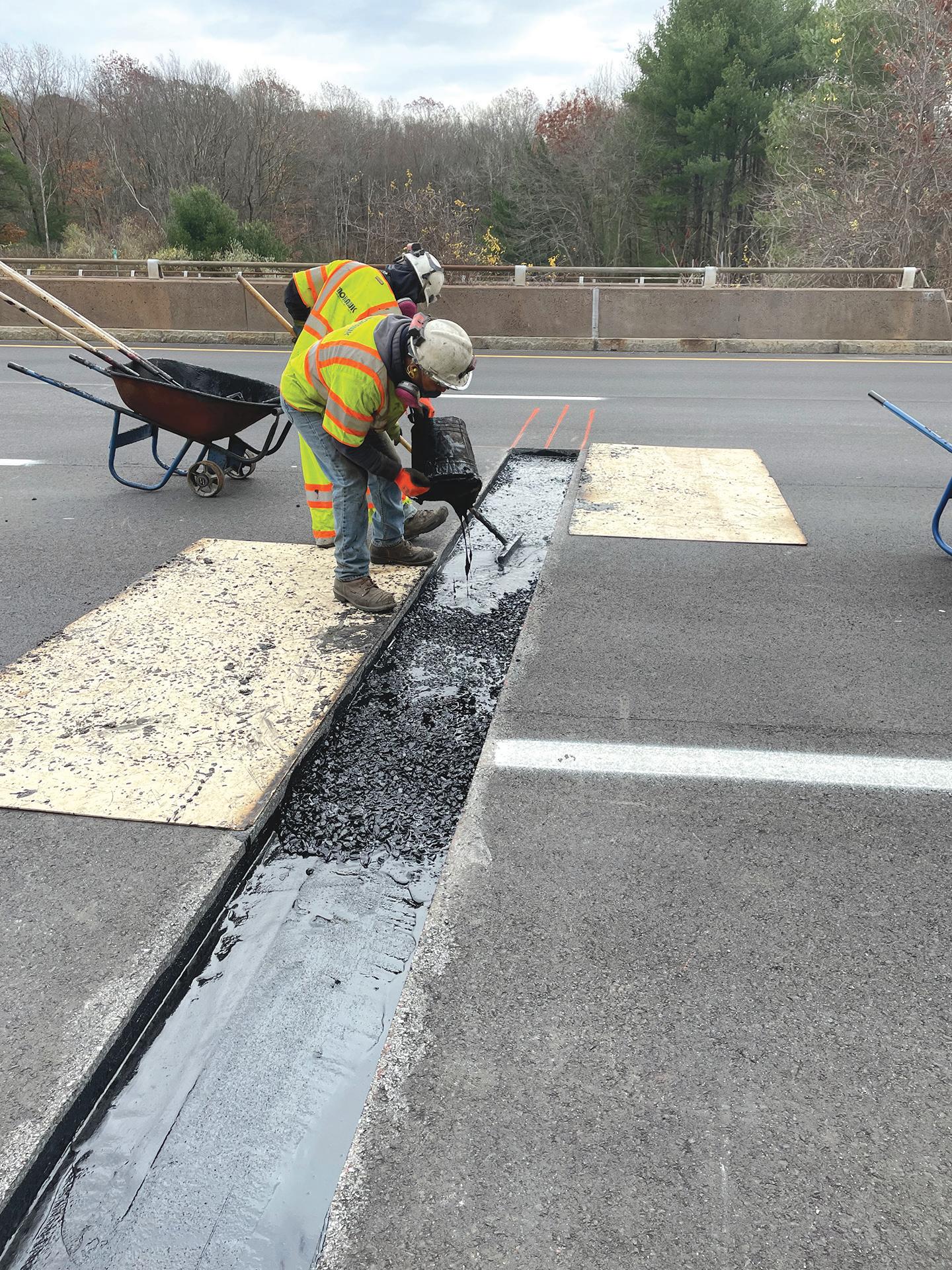
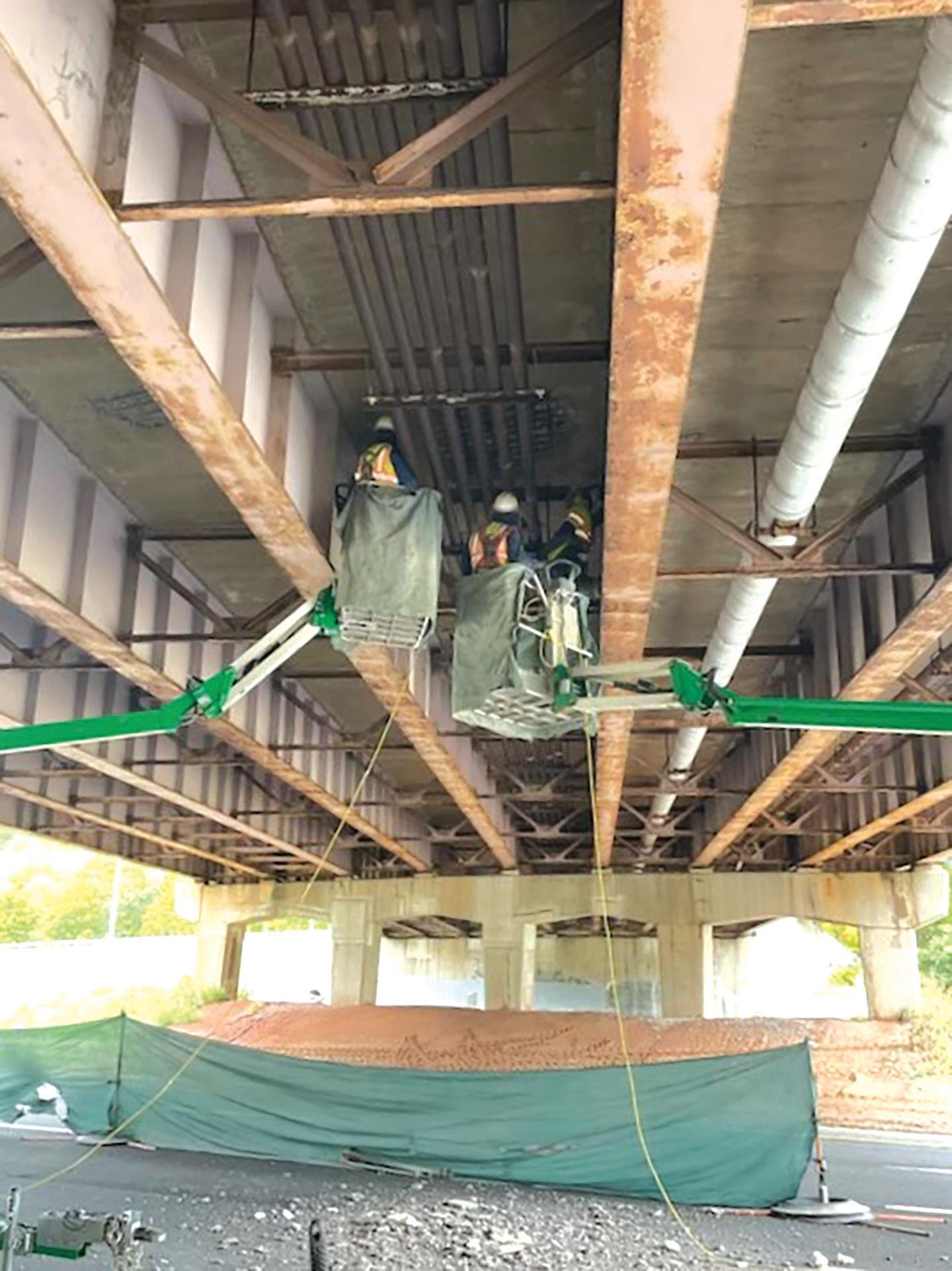
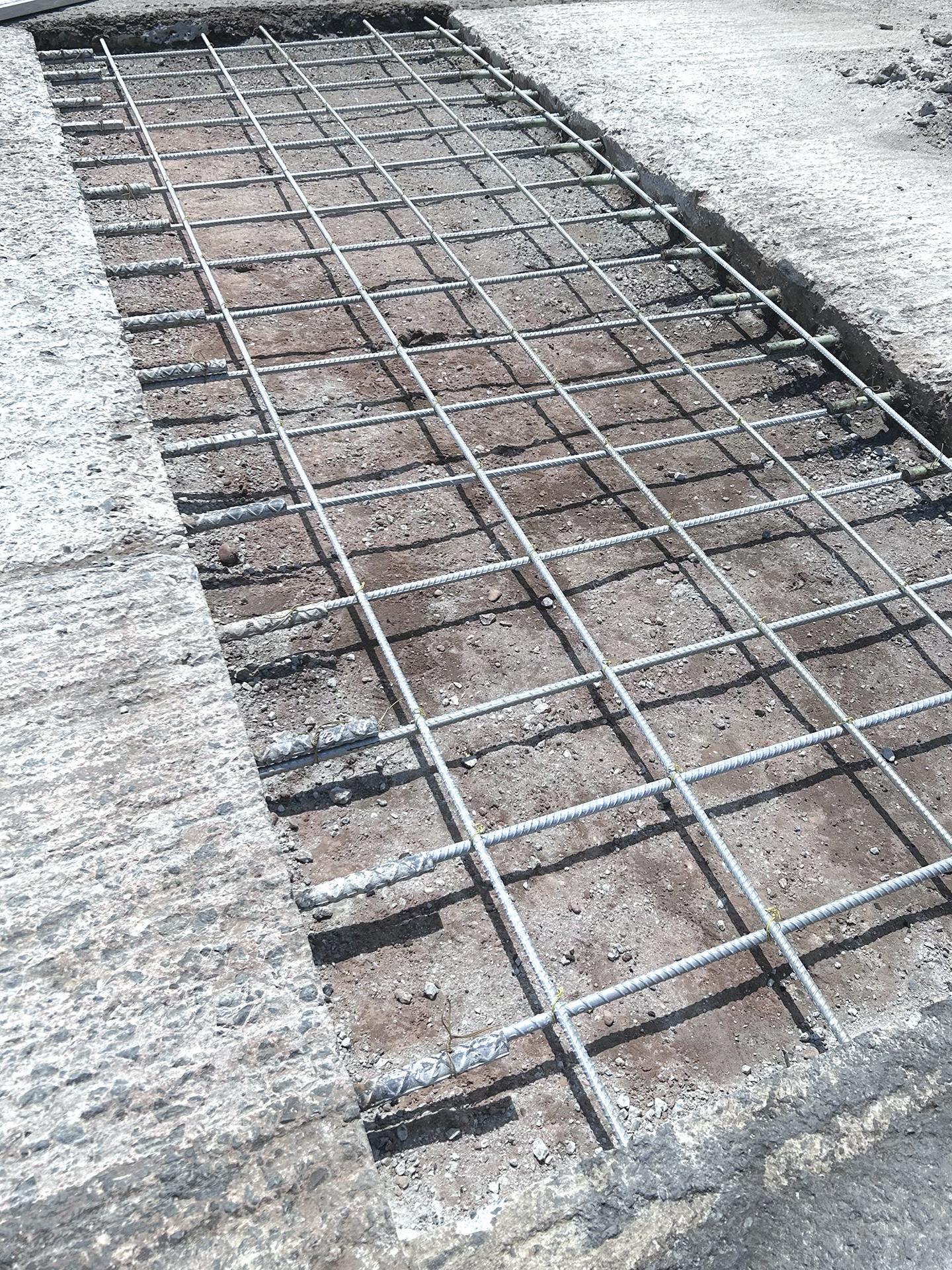
The project is focused on extending the service life of these structures by removing the existing wearing surface, repairing the concrete deck (both full-depth and partial-depth as needed), applying membrane waterproofing and installing a new asphalt overlay. ditions.
• Bridge 03588 – I-384 eastbound over Greenway (pedestrian traffic)
• Bridge 03589 – I-384 westbound over Greenway (pedestrian traffic)
• Bridge 03590 – Garner Street over I-384
• Bridge 03591 – I-384 westbound over Birch Mountain
Brook
• Bridge 03592 – I-384 eastbound over Birch Mountain
Brook
• Bridge 03593 – Wyllys Street over I-384
• Bridge 03594 – I-384 westbound over State Road 534
• Bridge 03595 – I-384 eastbound over State Road 534 (three lanes)
• Bridge 03596 – I-384 eastbound over Finley Street
• Bridge 03597 – I-384 westbound over Finley Street
• Bridge 03598 – Route 85 over I-384
• Bridge 00485 – Route 6 westbound to I-384 over the I-384 ramp to Route 44
The $17.3 million project, funded through a combination of state and federal sources, was awarded to Southington-based contractor Mohawk Northeast on Dec. 5, 2024. Construction began in spring 2025 and is scheduled for completion on Nov. 30, 2026. The contract includes a penalty of $3,000 per day for delays beyond the agreed completion date.
Crews averaging 30 workers per day are operating seven days a week from 7 a.m. to 8 p.m., with adjustments
as needed for weather or unforeseen conditions. Lane closures are in effect along I-384 and on several state and local roads. Flaggers and uniformed police officers are present to guide traffic safely through the work zones.
Zymaris emphasized the importance of driver awareness: “We’re reminding the public of the important role they play in keeping themselves and our workers safe. When approaching work zones, please slow down, move over, remain vigilant, eliminate distractions, and always drive sober. These actions save lives.”
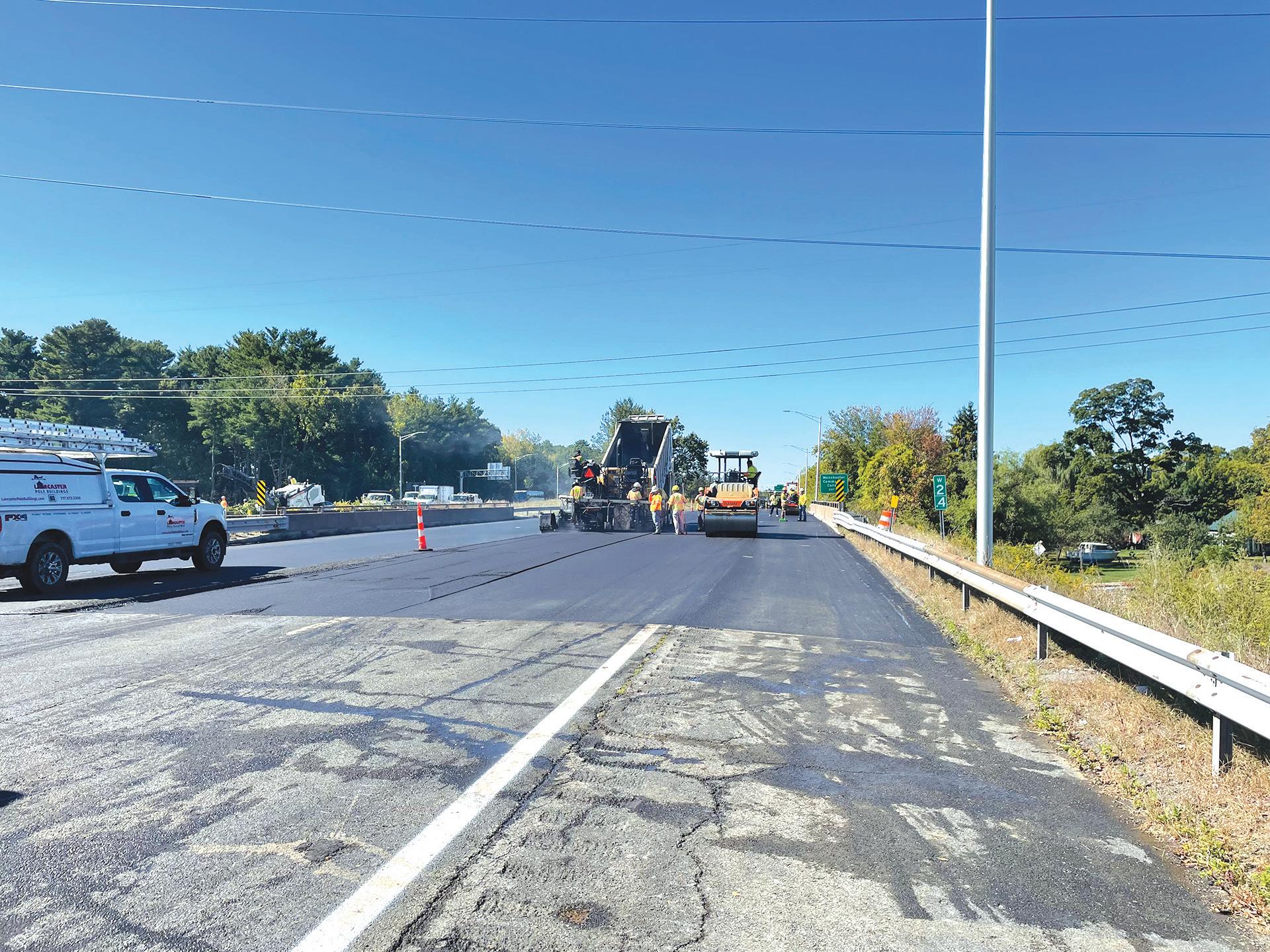
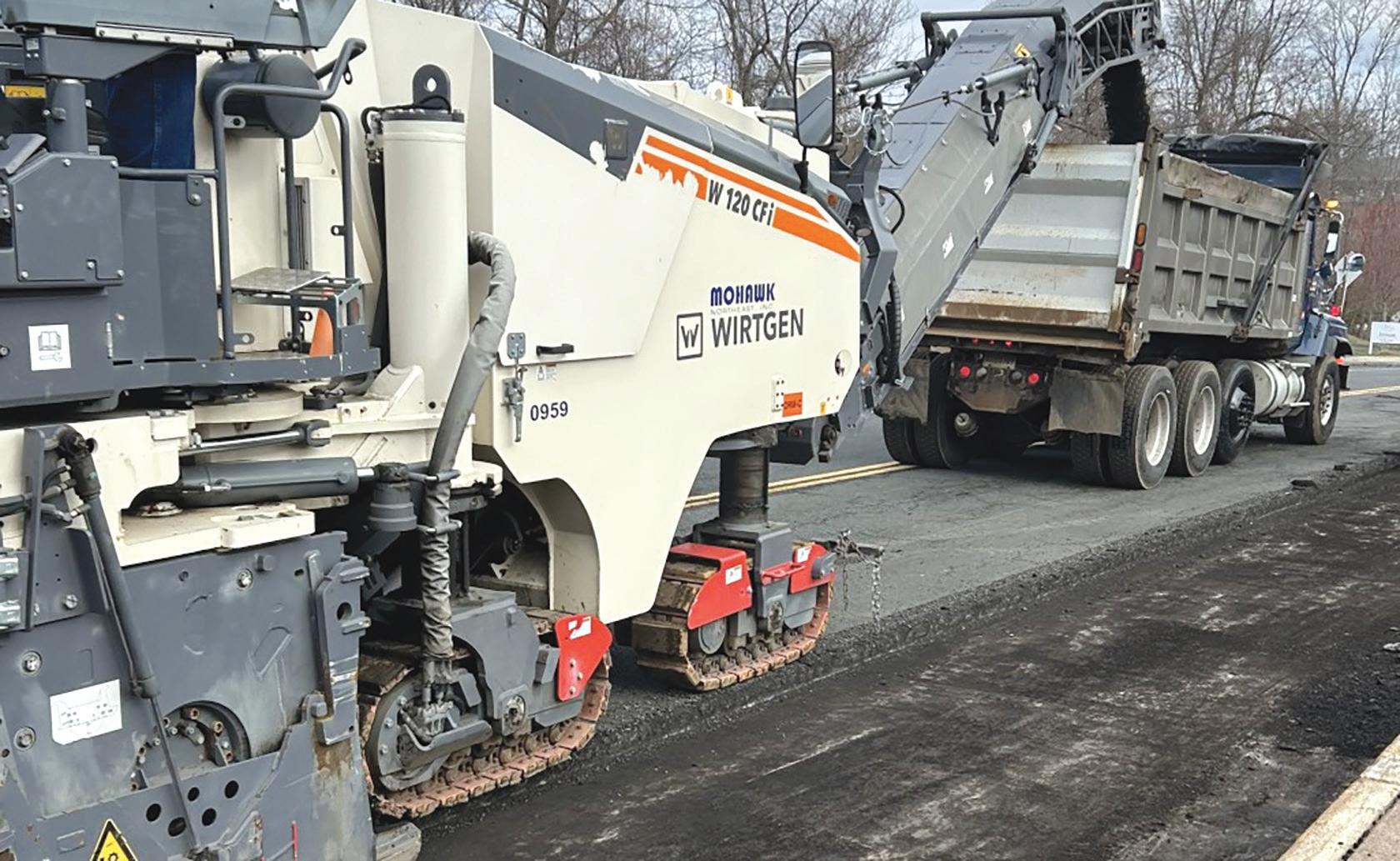
Initial construction activities included clearing and grubbing, excavation, water pollution control, pavement cutting, and subgrade preparation. Under the supervision of subcontractor A&J Construction, Island Pavement Cutting Co., Inc. crews utilized equipment such as road milling machines, asphalt pavers, triaxle dump trucks, and truck-mounted attenuators.
Materials used in the rehabilitation process include concrete, reinforcing steel (rebar), elastomeric membrane waterproofing, and bituminous concrete. Removed materials are transported off-site for recycling. Concrete for deck patching and surface repairs is mixed on-site using a ZimMixer.
In addition to the bridge work, a separate $7.4 million project is underway on I-384 to replace highway signs and supports, including updates to exit numbering to meet federal standards. Similar work is also being performed on I-291, with both projects expected to be completed later this year. CEG (All photos courtesy of CTDOT.)
BRIDGES from page 1
CTDOT is responsible for inspecting 5,513 roadway bridges statewide, including 1,823 National Bridge Inventory (NBI) structures on the National Highway System (NHS).
MassDOT Wins 2025 Sorenson Award for Preservation
The Massachusetts Department of Transportation (MassDOT) is the winner of the 2025 James B. Sorenson Award for Excellence in Pavement Preservation, for its dedication to pavement preservation principles over the last two decades.
Recognizing exemplary agency pavement preservation practice, the Sorenson award is presented at the discretion of FP2 Inc., usually to municipal or county road agencies, or state departments of transportation.
As an agency, MassDOT is committed to delivering safe, reliable and sustainable pavement infrastructure. In the past two decades, MassDOT has adopted a preservation-first strategy centered on proactive, data-driven and equitable pavement management.
“By prioritizing preservation and embracing new approaches, we are making a real difference in communities across the state,” said Phillip Eng, interim secretary of MassDOT.
“There are many ways that we, as FP2, can advocate for the advancement of pavement preservation and recycling,” said Bobby Betsold, FP2 vice president, at the presentation of the award to MassDOT at the May 2026 Northeast Pavement Preservation Partnership (NEPPP) meeting in Springfield, Mass.
“One the most important and rewarding opportunities we have each year is to recognize the outstanding work of a local, county or state agency with the Sorenson Award,” he said. “For over 20 years, MassDOT has proactively collaborated with local and state officials, academia and industry to continuously lead in the implementation of the latest pavement preservation and recycling processes and applications.”.
2000s, the commonwealth formally created its pavement preservation program in 2005 as part of the highway division’s Pavement Management Section.
This group, under the direction of former pavement management engineer Matthew Turo and current pavement management engineer Edmund Naras, has developed into an integral part of the department’s overall highway division maintenance plan.
From the start of the program until today, the agency has emphasized the importance of pavement preservation to extend budget dollars and keep good roads good by employing the philosophy of the right treatment, on the right road, at the right time.
Over the last 20 years, some of the highlights of MassDOT’s pavement preservation program have included:
• implementation of a centralized pavement condition database and pavement management system since the early 2000s, providing the basis for informed preservation and maintenance planning;
• being a founding member of the Northeast Pavement Preservation Partnership (NEPPP), as well as hosting the first NEPPP meeting in 2006;
• legislative creation of the Performance and Asset Management Advisory Council (PAMAC) in 2013, helping increased preservation projects based cost-effectiveness and condition metrics;
• participation in SHRP2-R26 Guidelines for the Preservation of High-Traffic Volume Roads program in 2016 with a more than 1.4 million sq. yd. preservation project including more than 10 different treatments;
• participation in the FHWA Every Day Counts (EDC-4) preservation initiative in 2017, creating pavement preservation guidelines for increasing the implementation of pavement preservation treatments; and
• launch of the Municipal Paving Program in 2021, bringing much needed funding and resources to preserve and maintain state-numbered municipal roadways.
MassDOT continues to explore more ways to improve its pavement management program and efforts, with pavement preservation and recycling treatments serving as a cornerstone of the successes at the state and local levels.
For more information, visit fp2.org/fp2-awards-programs/sorenson-award/.
FP2 Inc. photo
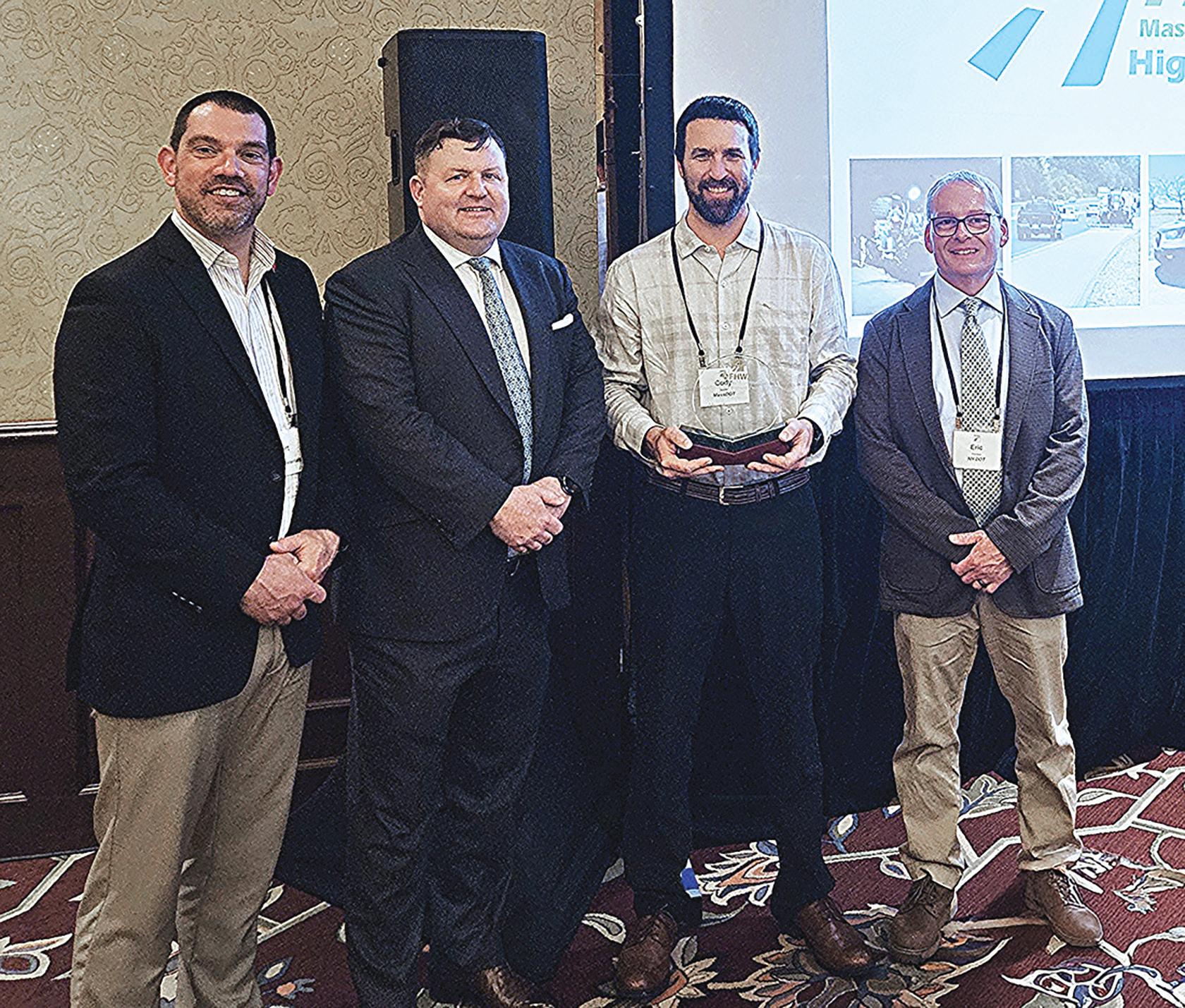
The Sorenson Award is presented at an NEPPP meeting May 5. (L-R) are Bobby Betsold, FP 2 vice-president; Brian Kelleher, MassDOT deputy administrator and chief of construction; Cody Holemo, MassDOT pavement preservation engineer; and Eric Thibodeau, NE PPP chair.
www.equipmenteast.com
61 Silva Lane
Dracut, MA 01826
978-454-3320
196 Manley Street Brockton, MA 02301
508-484-5567
1474 Route 3A
Bow, NH 03304
603-410-5540
30 Birch Island Road Webster, MA 01570
508-949-0005
7 Harry’s Way Webster, MA 01570
508-949-0005
72 Olde Canal Way Gorham, ME 04038
508-949-0005
1608 John Fitch Blvd
South Windsor, CT 06074
860-288-4600 Rhode Island
508-949-0005
PC Construction Earns Third Honor for UMaine Arena Work
PC Construction has earned a third major industry honor for its work on the Shawn Walsh Hockey Center and Harold Alfond Arena Renovation and Expansion at the University of Maine, this time from the Construction Management Association of America (CMAA) New England Chapter, which presented the project with its prestigious 2026 Mark H. Hasso Project of the Year Award.
The honor caps a remarkable run of recognition for a project that fundamentally redefined collegiate hockey in the Northeast.
The project has now received three major industry awards:
• MEREDA Notable Project Award — recognizing commercial projects across Maine that champion responsible real estate growth
• AGC Build Maine Awards — celebrating outstanding projects evaluated on safety, innovation, environmental sensitivity and client satisfaction
• CMAA New England Mark H. Hasso Project of the Year Award — honoring innovative design and engineering solutions applied to the most challenging construction environments
“The entire PC team is proud to have been a part of something truly special for the University of Maine and its fans,” said Matt Cooke, president/CEO of PC Construction. “From day one, this was a project built on collaboration, and these awards reflect the extraordinary work of everyone involved. Delivering innovative
solutions inside a beloved, active facility while keeping the arena’s historic character intact is exactly the kind of complex challenge our team thrives on.”
About the Project
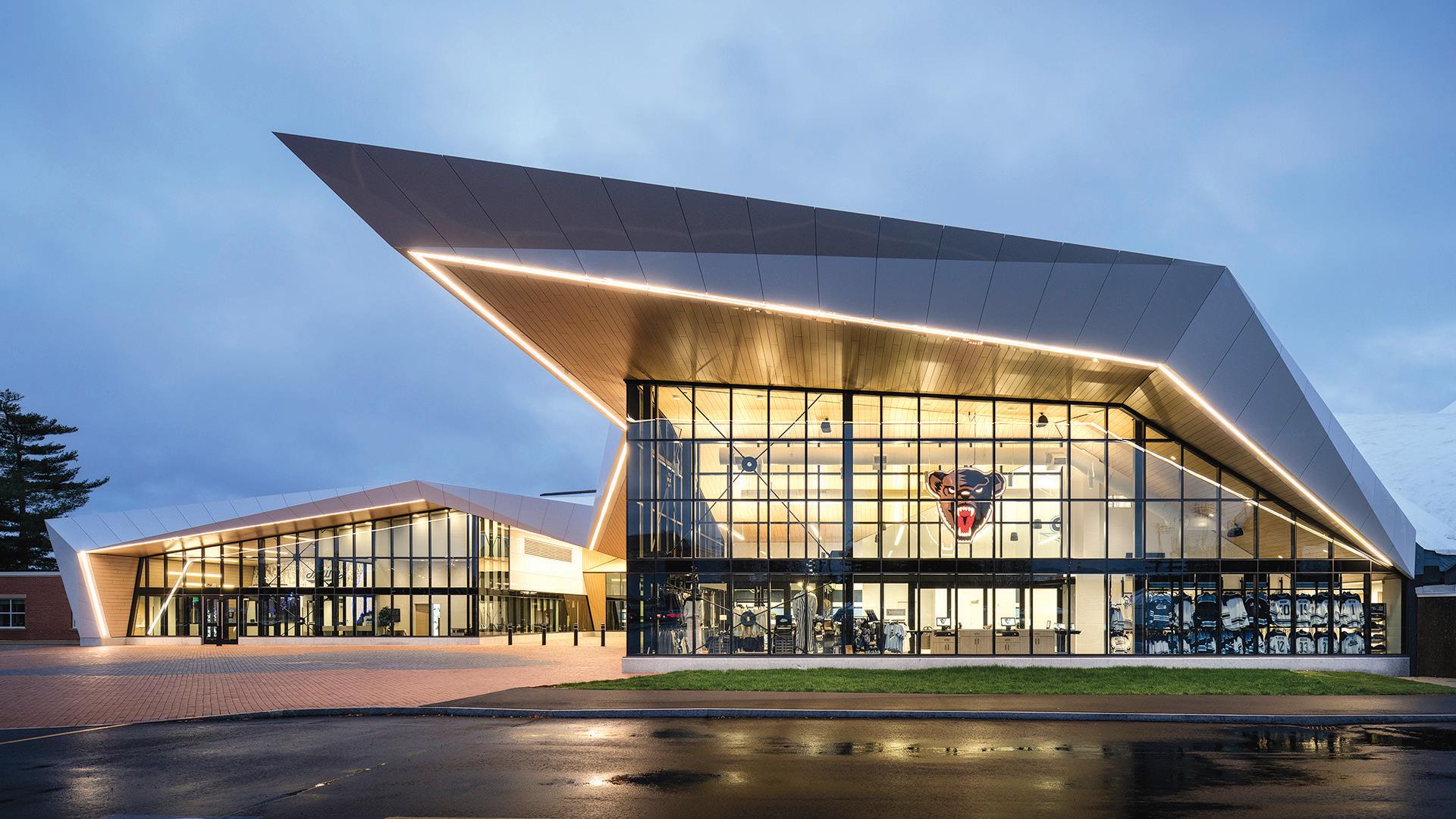
The project represented a significant transformation of Maine’s only NCAA Division I hockey venue, encompassing 31,000 sq. ft. of renovations and 21,000 sq. ft. of new construction, all without compromising the arena’s iconic profile.
Inside the reimagined Harold Alfond Sports Arena, fans now arrive through a dramatically expanded entryway and concourse featuring dedicated fan shop and concession spaces, the UMaine Hockey Hall of Champions and new ticket sales facilities, creating an arrival experience worthy of a premier collegiate program.
The upgraded Shawn Walsh Hockey Center delivers elite-level amenities for student-athletes: state-of-the-art locker rooms for both the men’s and women’s ice hockey programs advancing gender equity across the athletics department, a player development center with sports medicine and strength and conditioning facilities, a 42-seat film room, new and renovated coaching offices and expanded lounges and equipment rooms.
The result is a facility that serves UMaine’s hockey programs and positions Alfond Arena as a premier destination for high school championships,
competitions and community events across the state of Maine.