seated Massachusetts construction legacy. Based out of Burlington, Mass., the company is owned and operated by Monsignore, who has spent his entire life immersed in the
excavation field. While the company is relatively young, its operational footprint is backed by decades of hard-earned local experience.
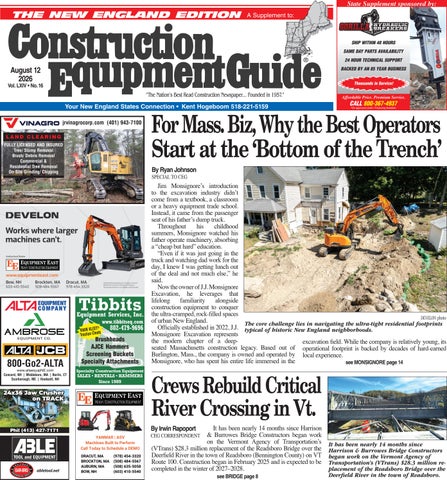
Crews Rebuild Critical River Crossing in Vt.
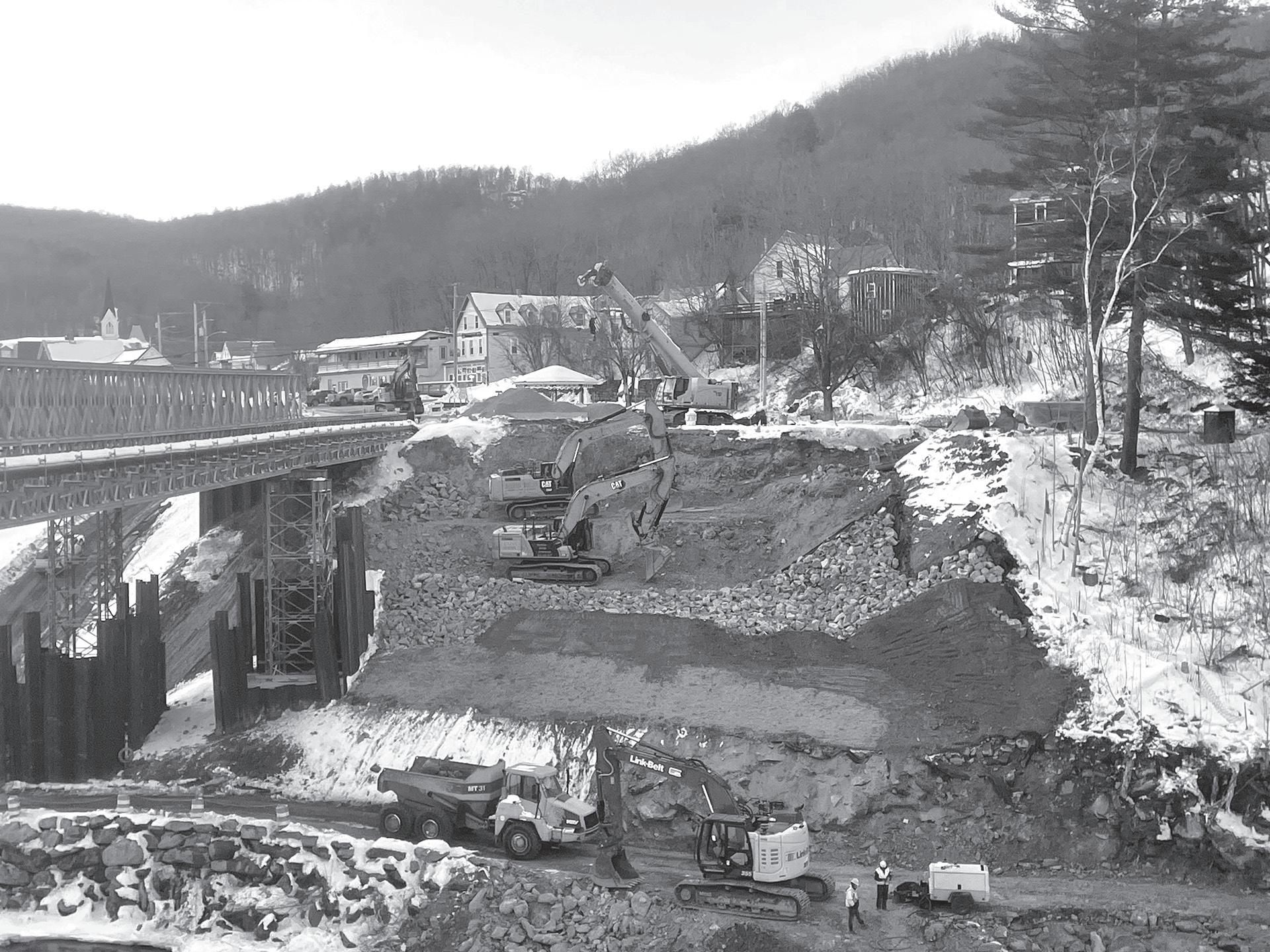
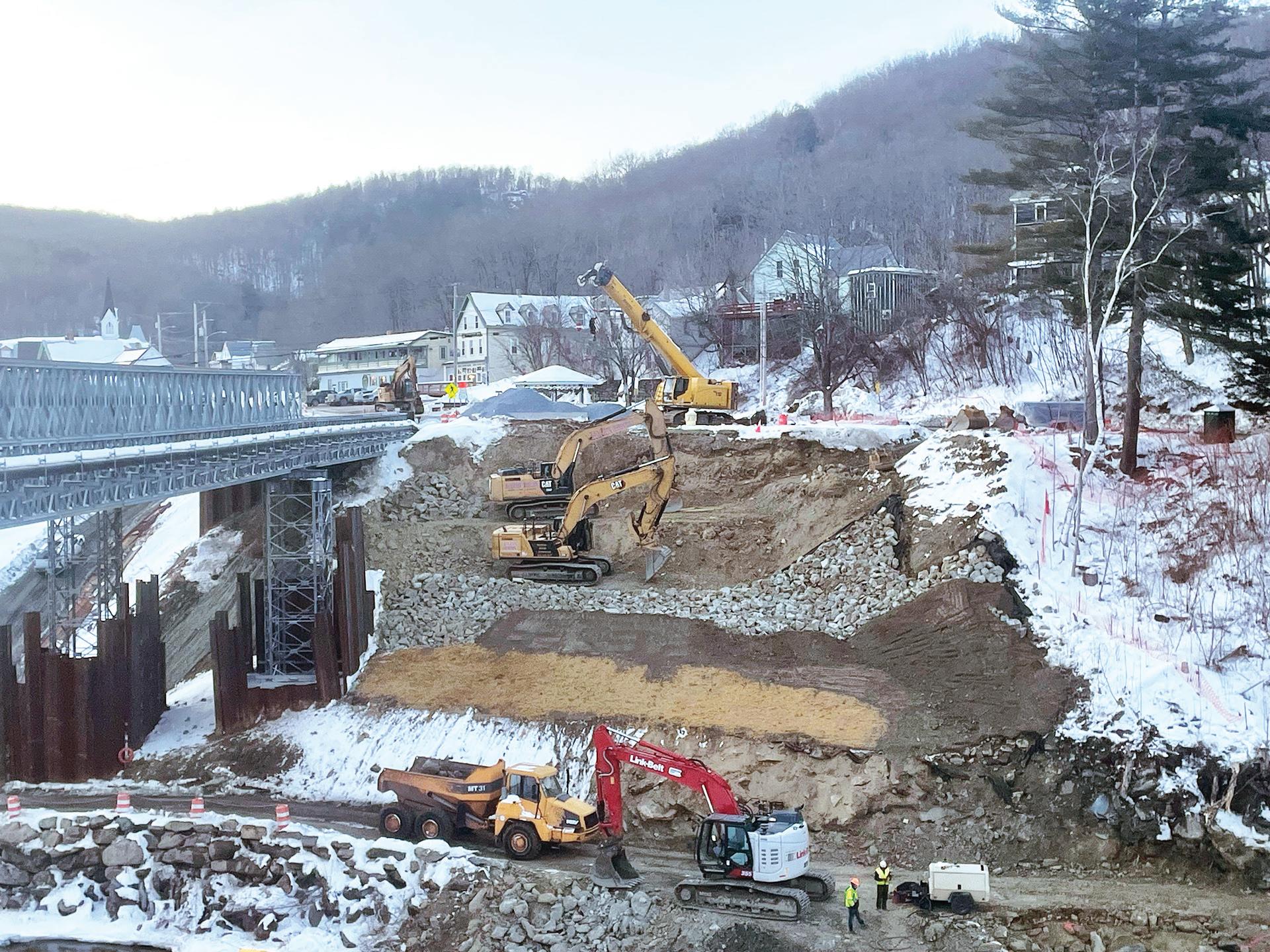
It has been nearly 14 months since Harrison & Burrowes Bridge Constructors began work on the Vermont Agency of Transportation’s (VTrans) $28.3 million replacement of the Readsboro Bridge over the Deerfield River in the town of Readsboro (Bennington County) on VT Route 100. Construction began in February 2025 and is expected to be
PROVEN UPTIME WITH UPTIME KITS
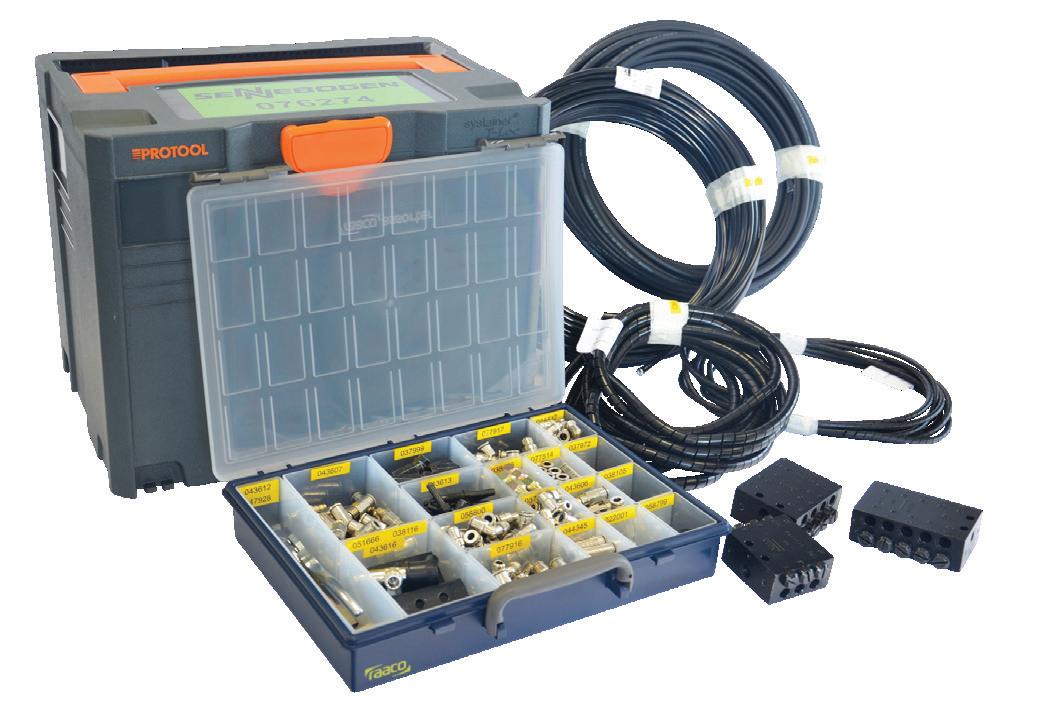
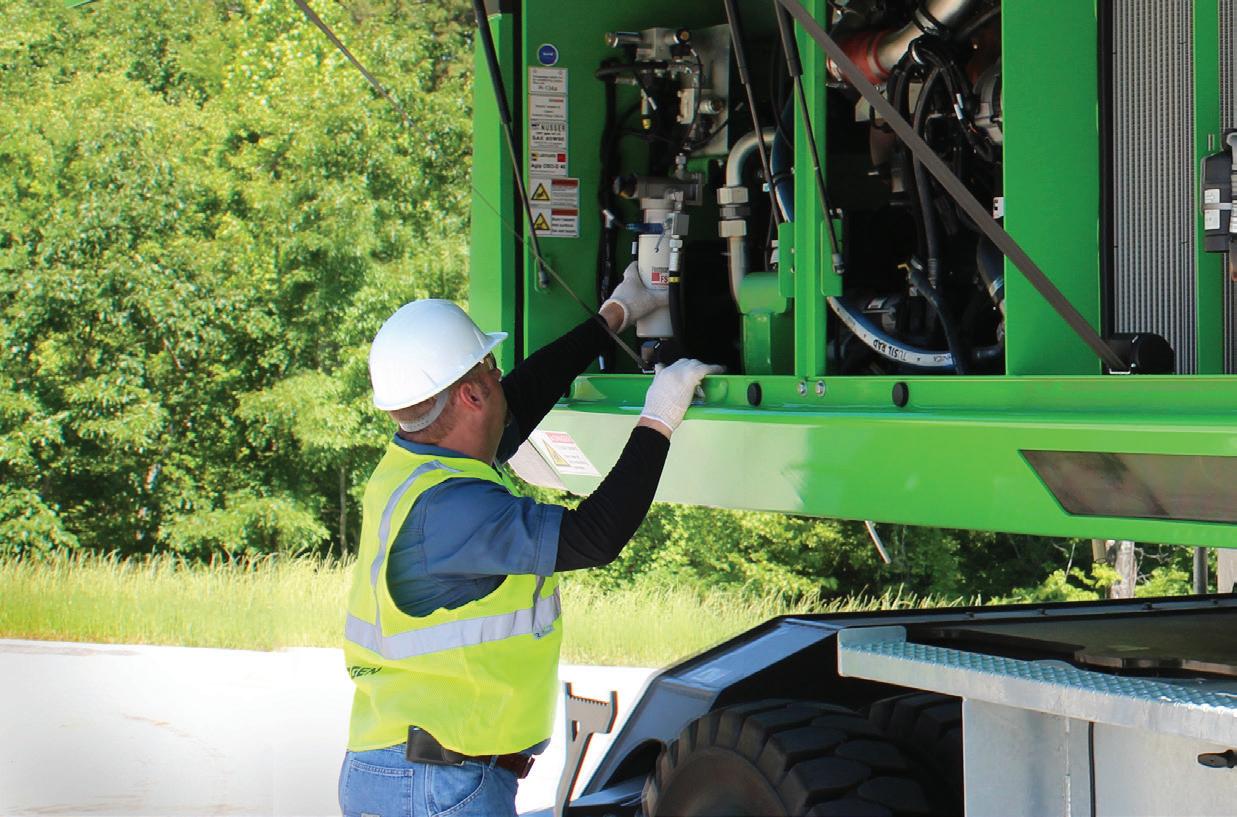
SENNEBOGEN, in keeping with their philosophy to maximize uptime, has created UPTIME Kits. Whether you are a service technician in-house or on the road, these kits have everything you need for every service, maintenance and PM task in one place. They were created to save you time and money. Managing hundreds of related service parts, from belts and nuts to O-Rings and special tools becomes easy with a single part number to order and stock.
They are:
• Easy to order and easy to stock
• Packed with job specific components and tools
• Ideal for stocking service shops and trucks
Choose from the following kits:
• Central lubrication system kits
• Preventive maintenance service kits
• O-Ring kits
• Electrical service kits
• Hydraulic service kits
And the best thing is that these kits, in stock and ready to go, are custombuilt to match your machine model and series. Count on SENNEBOGEN to meet your needs in the field or in-house. For more information on UPTIME Kits, scan the QR code.
BEYOND THE MACHINE
I virtually lose NO downtime
They have a technician come through once a month to go over every machine, front to back. If I have a situation, [they] just bring in another machine and I virtually lose no downtime… Since they have the repair parts in stock. I get the unit back quickly. Demolition Contractor, Bloomfield Hills, MI
Read more about how our “Beyond the Machine” aftersale commitment maximizes uptime for SENNEBOGEN customers with complete inventories of ready-to-ship parts in our North American warehouse.
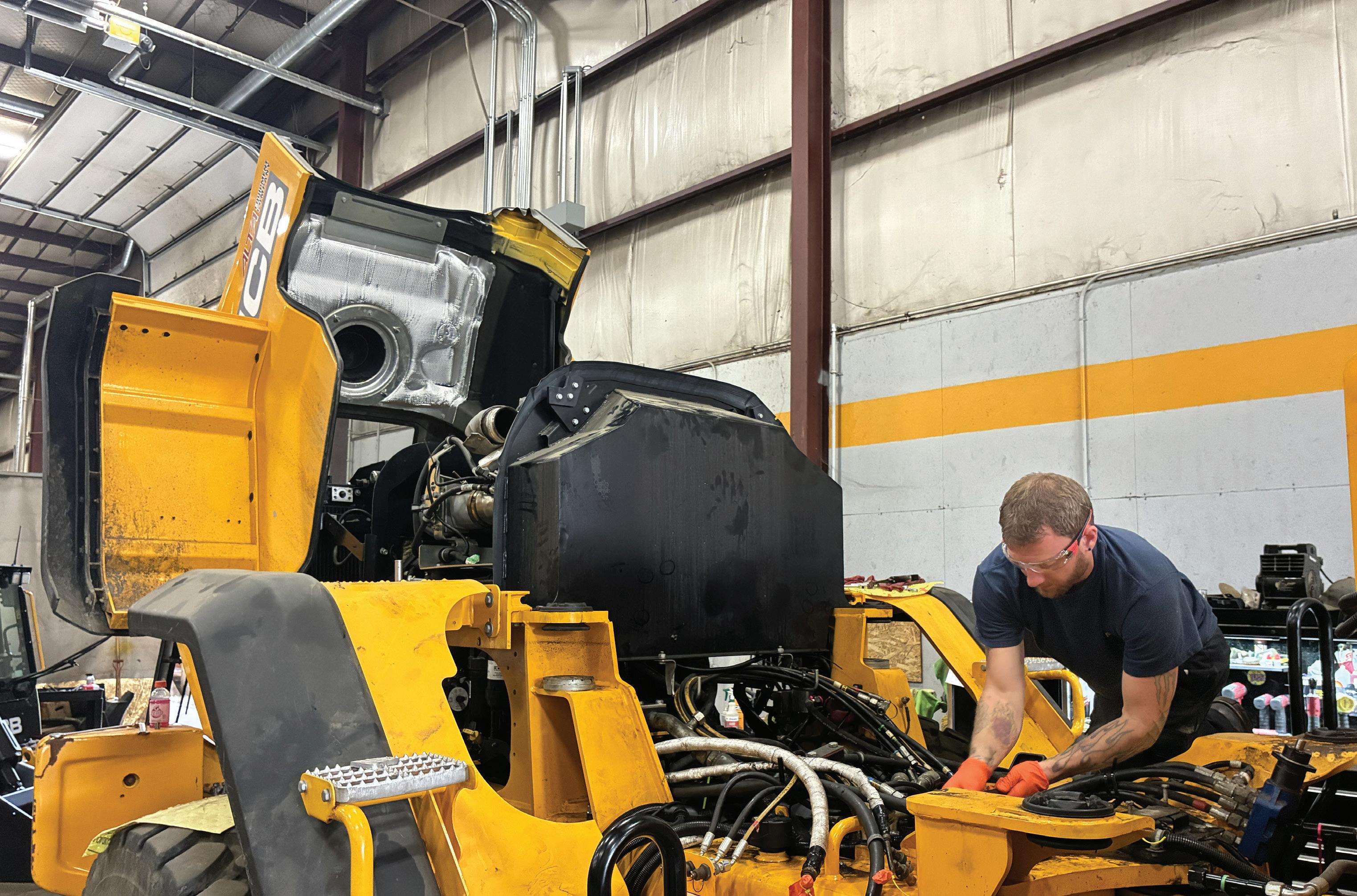
SENNEBOGEN factory-trained technicians
SENNEBOGEN is committed to leading the industry in aftersale support throughout the life of its equipment. We’re thinking “beyond the machine” to deliver dependable uptime and lower Total Cost of Ownership (TCO) for every customer.
Mass. Reveals New Sagamore Bridge Design Renderings
The Healey-Driscoll Administration unveiled new design renderings of the replacement Sagamore Bridge as Massachusetts continues making historic investments to replace the aging Cape Cod bridges.
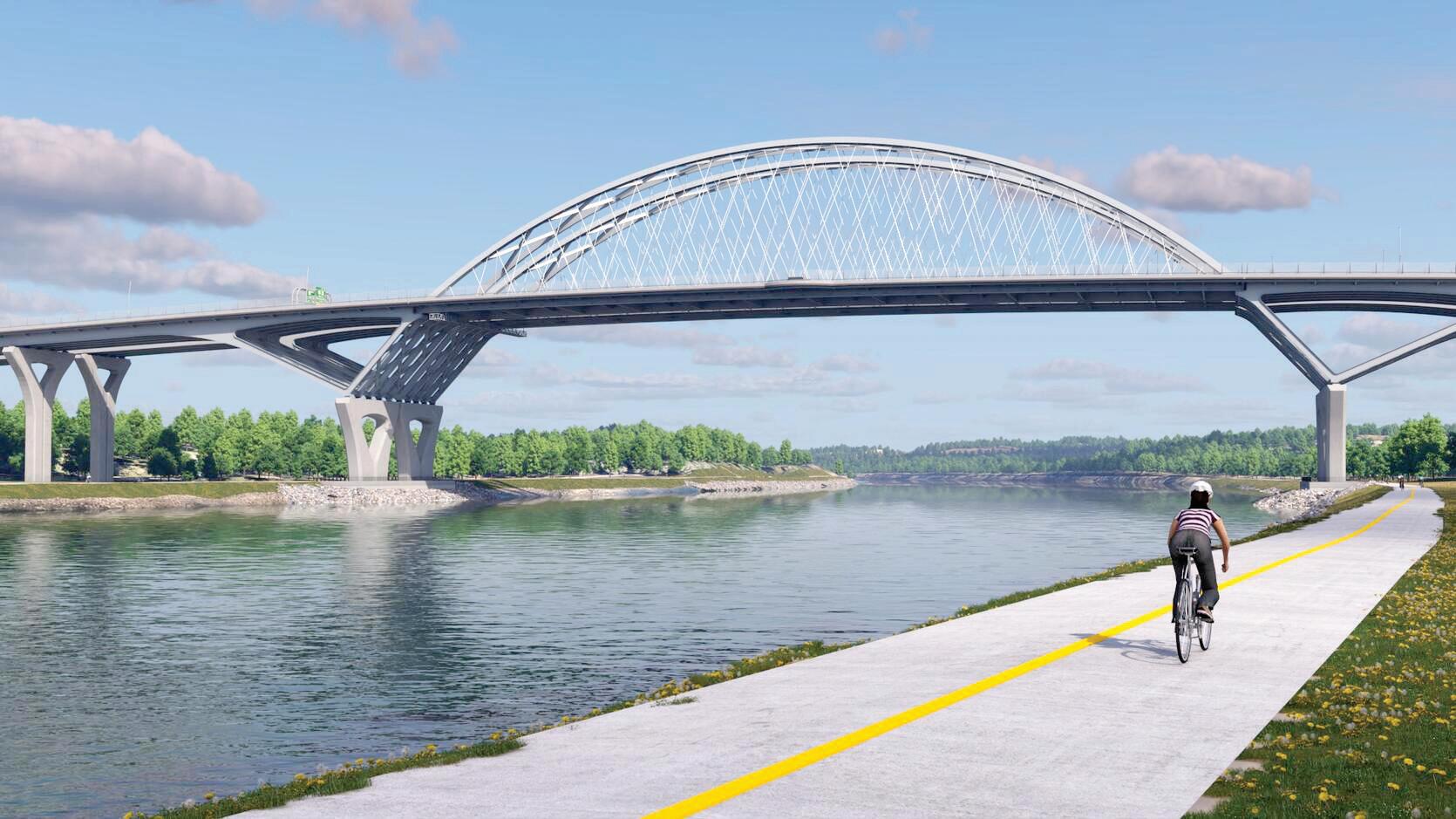
The new renderings showcase key design features, including separate bridge spans to improve safety, a barrier-separated shared-use path for pedestrians and bicyclists, upgraded roadway connections and architectural features that reflect the character of the region, according to the Commonwealth of Massachusetts.
“For decades, people have talked about replacing the Cape Cod bridges,” said Healey.
“Our administration is getting it done. These new renderings give people a look at the safer, stronger bridge we’re building for residents, businesses and everyone who depends on these crossings every day. We’re making historic investments to improve transportation, strengthen the Cape’s economy and make it easier and safer for people to get where they need to go.”
“These new renderings allow residents, businesses and communities across the region to begin seeing what the future of this vital transportation connection will look like,” said Interim Secretary of Transportation and MBTA General Manager Phillip Eng.
Commonwealth of Massachusetts photo
The new renderings showcase key design features, including separate bridge spans to improve safety and a barrier-separated shared-use path for pedestrians and bicyclists.
“Replacing the Cape Cod Bridges is a oncein-a-generation investment in the safety, reliability and economic future of Cape Cod, the Islands and the surrounding region.”
The Sagamore and Bourne bridges are more than 90 years old and carry more than 38 million trips each year, serving as critical
connections for residents, businesses, visitors and emergency responders.
The new renderings highlight several major improvements, including twin bridge spans carrying one direction of traffic each to improve safety, a barrier-separated shared-use path with a scenic overlook for pedestrians and bicyclists, enhanced lighting and bridge foundations designed to better accommodate marine traffic through the Cape Cod Canal, according to the Commonwealth of Massachusetts. Construction is expected to begin in spring 2028.
Conn. Awards $16.8M For Local Bridge Improvements
Connecticut Transportation
Commissioner Garrett Eucalitto announced the Connecticut is providing $16.8 million in state grants to 11 towns and cities to support the reconstruction of 13 bridges on locally owned roads.
Awarded under the latest round of the State Local Bridge Program, which is administered by the Connecticut Department of Transportation (CTDOT), this state-funded program operates as a cost-matching grant that provides municipalities with 50 percent of the project costs necessary for the reconstruction of municipal bridges.
The Connecticut General Assembly established the State Local Bridge Program in 1984 under the state’s Infrastructure Renewal Program.
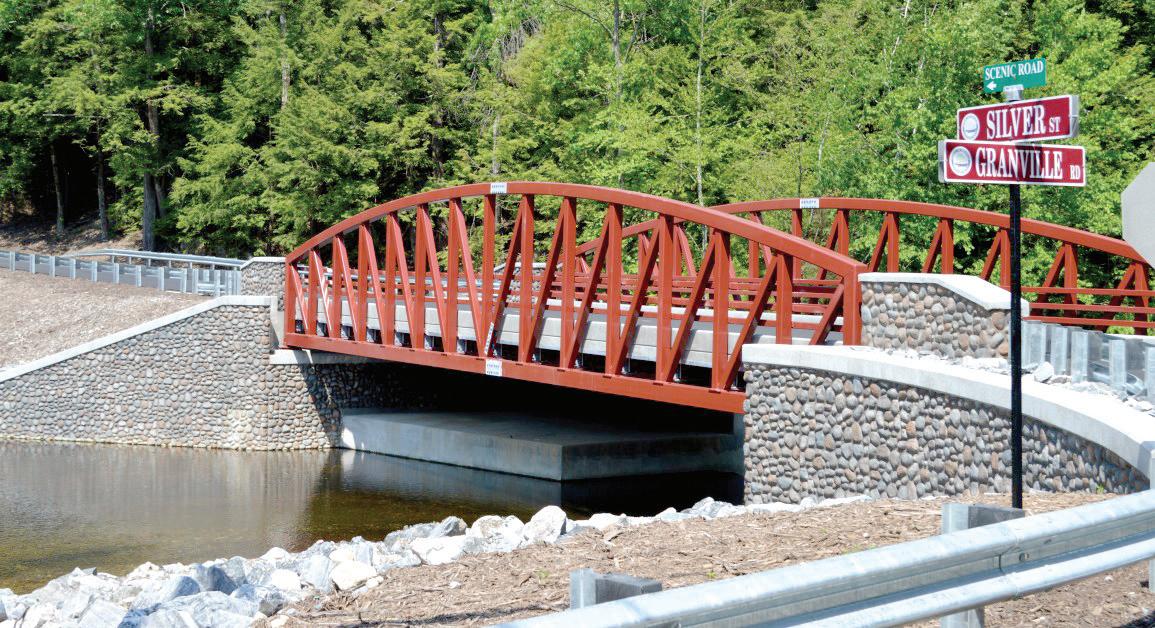
CTDOT photo
Connecticut has approximately 4,200 local bridges and culverts on municipally maintained roads.
Connecticut has approximately 4,200 local bridges and culverts on municipally maintained roads. Because these structures are the responsibility of the towns and cities that own them, the State Local Bridge Program offers significant financial relief for their construction and upkeep, according to CTDOT.
Since 2016, approximately $180 million in grants have been awarded to Connecticut cities and towns through the program, added CTDOT.
“Whether it’s kids going to school, people heading to work
or traveling to visit friends and family, every community depends on bridges that are safe and built to last,” Gov. Ned Lamont said. “This grant program provides significant relief to our towns and cities, helping them tackle costly infrastructure projects they couldn’t take on alone.”
“By partnering with our cities and towns, we are helping move these projects from planning to construction while making travel safer and more reliable for everyone,” Eucalitto said.
The grants awarded under this latest round of the program include:
• Suffield: Replace Bridge #139009, Copper Hill Road over unnamed stream ($841,929)
• West Hartford: Replace Bridge #155014, Old Brook Road over Mountain Farms Brook ($978,075)
• Winchester: Replace Bridge #162008, Newfield Road over Fox Brook ($612,500)
Equipment East Names New Parts, Service Director
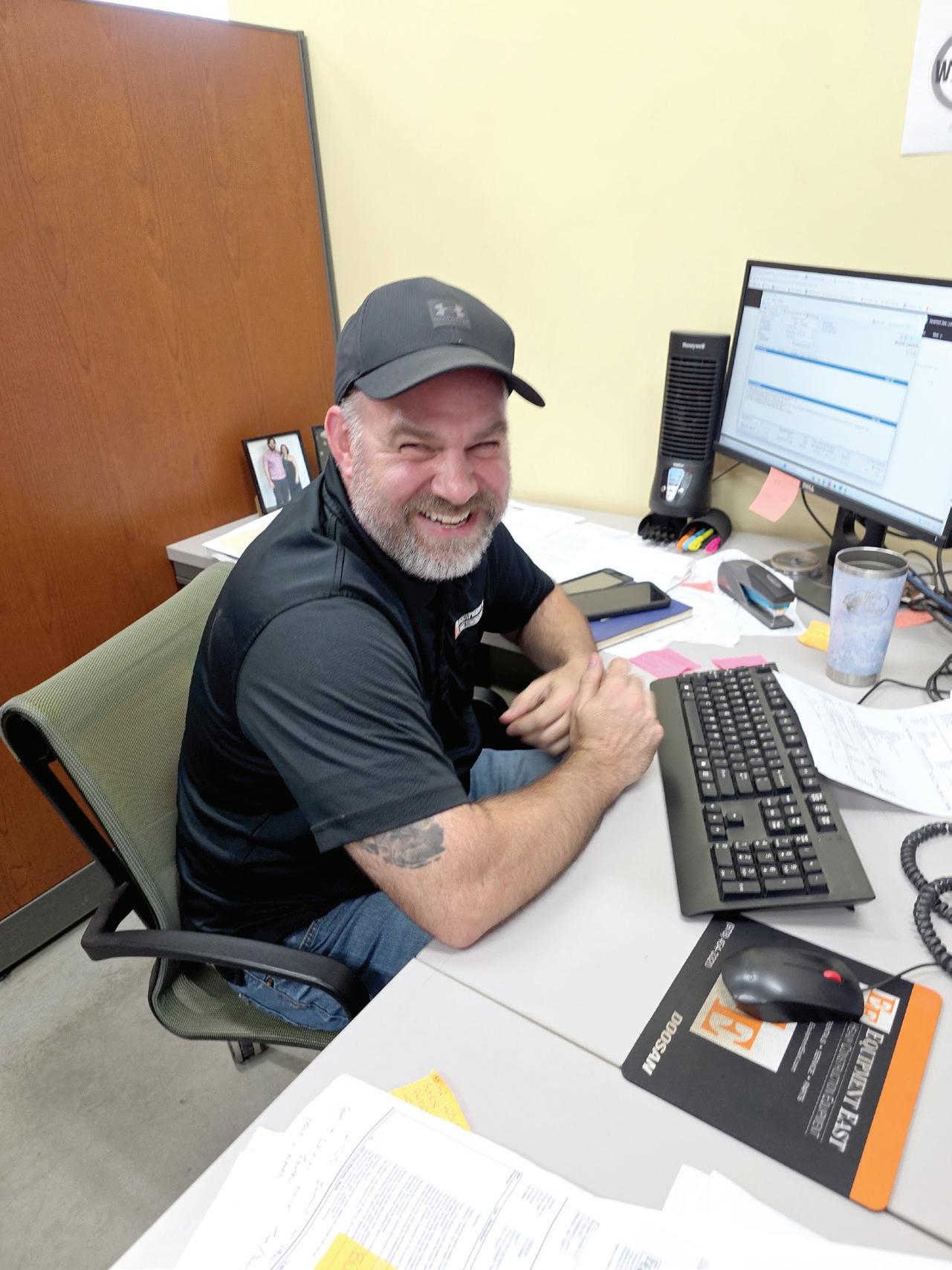
Equipment East has strengthened its leadership team with the addition of Matt Naughton as parts and service director, overseeing aftermarket operations at the company’s locations in Bow, N.H.; Dracut, Mass.; Auburn, Mass.; and Brockton, Mass.
In his new role, Naughton is responsible for supporting all aspects of Equipment East’s parts and service operations, including customer support, technician assistance, diagnostics, warranty concerns, inventory management and day-to-day service operations. He will work closely with the company’s service managers, parts personnel, field technicians and sales representatives to ensure customers receive the support they need long after the equipment is delivered, according to the company.
Naughton brings more than 30 years of service and product support experience to Equipment East. During his career, he has held virtually every leadership position within the service department of a heavy equipment dealership, including product support specialist, service manager, field service manager, regional service manager, warranty manager and regional operations manager. Prior to entering the construction equipment industry, he spent more than two decades working in the automotive
and forklift service industries, building a reputation for solving technical challenges while keeping customers productive.
For Naughton, joining Equipment East was an opportunity to become part of a company whose values closely matched his own.
“What attracted me to Equipment East was that it’s a family-owned company where the decision-makers are right here,” Naughton said. “If there’s an issue affecting a customer, we don’t have to wait for approvals from somewhere across the country. We have the ability to do what’s right for the customer, and that’s something I really appreciate.”
Naughton said Equipment East’s philosophy of putting customers first sets the dealership apart.
According to Naughton, Giovanni Albanese, president of Equipment East, often reminds employees that if you take care of your customers and take care of your people, everything else takes care of itself.
“The financial success is simply a byproduct of doing things the right way,” Naughton said. “That customer-first mindset is one of the reasons I wanted to be here.”
Although Naughton serves as the company’s parts and service director, he is quick to credit the team around him.
“Every manufacturer builds machines that move dirt. The real difference is what happens after the sale.”
“I’ve inherited an outstanding group of people,” he said. “We have excellent service managers, knowledgeable service writers, experienced technicians and dedicated parts professionals. Any success we have comes from working together as a team to support our customers.”
Naughton believes that in today’s equipment market, service support has become one of the most important factors in a customer’s purchasing decision.
“Every manufacturer builds machines that move dirt,” he said. “The real difference is what happens after the sale. When a machine needs parts or service, customers need to know their dealer will respond quickly and keep them working. That’s where we strive to make a difference every day.”
Having joined Equipment East earlier this year, Naughton said he looks forward to helping the dealership continue building on its reputation for responsive service and long-term customer relationships throughout New England.
A lifelong New England resident, Naughton was raised in Massachusetts and now lives in New Hampshire. Away from work, he enjoys hiking, reading and spending time with his three children — Grace, Max and Colten. Equipment East is the authorized New England dealer for DEVELON, Yanmar, ASV, Ammann and SullivanPalatek equipment, providing contractors, municipalities and equipment owners with a full range of sales, rentals, parts and service throughout the region.
Matt Naughton Equipment East
Equipment East photo Equipment East has strengthened its leadership team with the addition of Matt Naughton as parts and service director.
BRIDGE from page 1
The existing Bridge 25 — a three-span structure consisting of two 105-ft. spans and one 130-ft. span — was constructed in 1954. The 340-ft.-long, continuous two-girder bridge carries one lane of traffic in each direction and includes a sidewalk on one side. It is located approximately 5.2 mi. north of the intersection of VT Route 100 and VT Route 8.
“The bridge is structurally deficient, with a very poor deck and superstructure condition,” according to the project web page. “VTrans evaluated alternatives for rehabilitation or replacement of Bridge 25 in an engineering study completed in October 2013. The study assessed design criteria for the bridge and roadway alignment, right-ofway impacts, hydraulics and historical and archaeological resources. Several alternatives were considered, including no action, deck replacement, superstructure replacement and full replacement both on and off alignment. Due to the age and condition of the existing bridge, full replacement was selected.”
The new 374.5-ft., two-span bridge will be supported by four plate girders. It will feature two 11-ft. travel lanes, 3-ft. shoulders on each side and a sidewalk on one side.
“The substructure will consist of concrete abutments supported by piles at one end and on ledge at the other, with a concrete pier supported on drilled shafts extending to ledge,” the project page states. “Because the bridge has sufficient hydraulic capacity, the new structure will eliminate the significant skew present in the old bridge.”
The project entered the delivery program in 2013.
“This bridge is a critical link for local traffic,” said Resident
Engineer Vincent Polhemus. “There are no alternative crossings over the Deerfield River for a significant distance on either local or state routes. Without this bridge, traffic would face a substantial detour.”
Designed by VHB, the project presented several challenges.
“There were diverse geotechnical conditions across the site, from shallow bedrock at one abutment to drilled shafts at the pier and driven H-piles more than 100 feet deep at the opposite abutment,” Polhemus said. “In addition, global slope stability on the west side of the project required careful consideration.”
The bridge is designed to current AASHTO standards and has a projected service life of 75 years.
“The original bridge was a fracture-critical, two-girder structure,” Polhemus said. “The new bridge eliminates that vulnerability.”
The design incorporates partial-depth precast deck panels, fiber-reinforced polymer bridge drains and weathering steel plate girders.
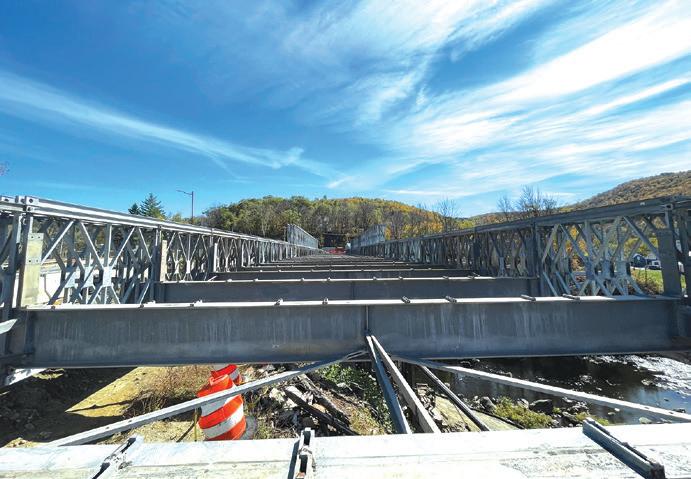
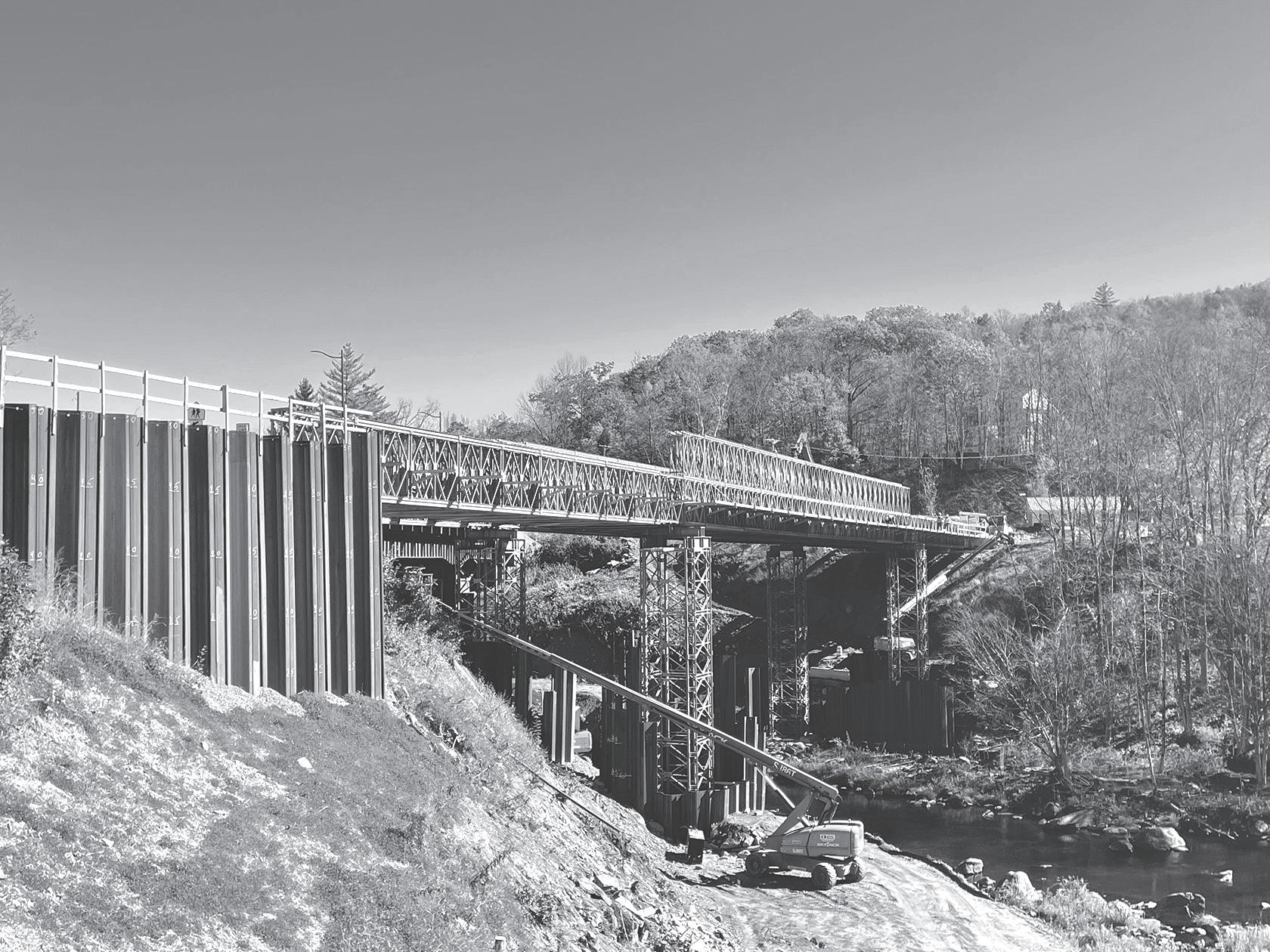
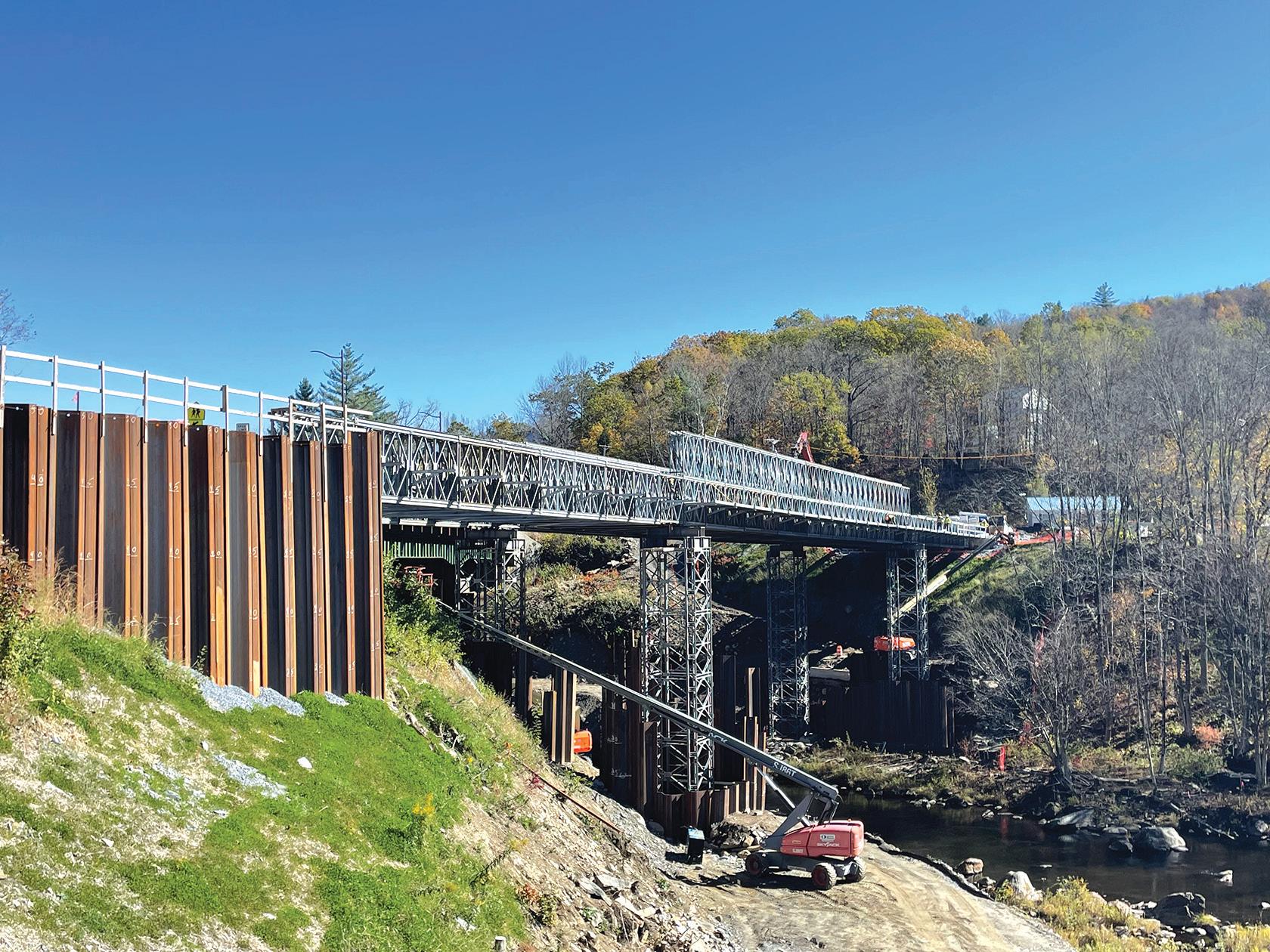
Traffic is being maintained via a downstream, 360-ft.-long temporary three-span ACROW bridge.
“The contractor is allowed up to four weekend closures, during which traffic will be detoured off site for major construction stages such as removing the existing bridge or erecting steel girders,” Polhemus said. “The temporary bridge is currently in service, and the original structure has been removed. Work is actively progressing on the substructure.”
Harrison & Burrowes secured the contract on Dec. 5, 2024.
panels and potential superstructure concrete placements.
To date, the team has completed installation of the temporary bridge, relocation of waterline utilities, demolition of the existing structure and installation of H-pile foundations and rock anchors for the abutment bedrock foundation.
The 2026 construction season is focused on substructure work, girder erection, installation of precast deck panels and potential superstructure concrete placements.
“Subsurface conditions have been a challenge,” Polhemus said. “However, the contractor is advancing critical path activities, including abutment and pier construction. Contaminated soils required coordinated disposal, which has already been successfully executed. The project also involves temporary relocation of municipal water infrastructure.”
Crews are working year-round on day shifts at what is considered a tight and complex site due to steep slopes and the size of the crossing.
“Access is challenging,” Polhemus said. “There are also side roads within the work zone on three corners of the new bridge.”
Despite these challenges, the project reflects strong collaboration.
“VTrans and Harrison & Burrowes are working closely to ensure successful completion,” said Project Manager Alex Williams.
The original bridge was demolished between November and December 2025 by Sessler Wrecking.
“They began by removing the bridge rail along the deck, then demolished concrete starting at the center and working toward each abutment,” Williams said. “Steel components were then cut and removed, followed by demolition of one of the two piers. The remaining pier will be removed once the new bridge is complete.”
To prevent debris from entering the river, demolition blankets were placed on a suspended platform beneath the bridge deck.
“As concrete was removed, it fell onto the platform and was lifted out using an excavator,” Williams said. “This system allowed controlled removal while protecting the river from debris and contaminants.”
Sessler used equipment including a Cat 335F excavator and a Komatsu PC228 excavator.
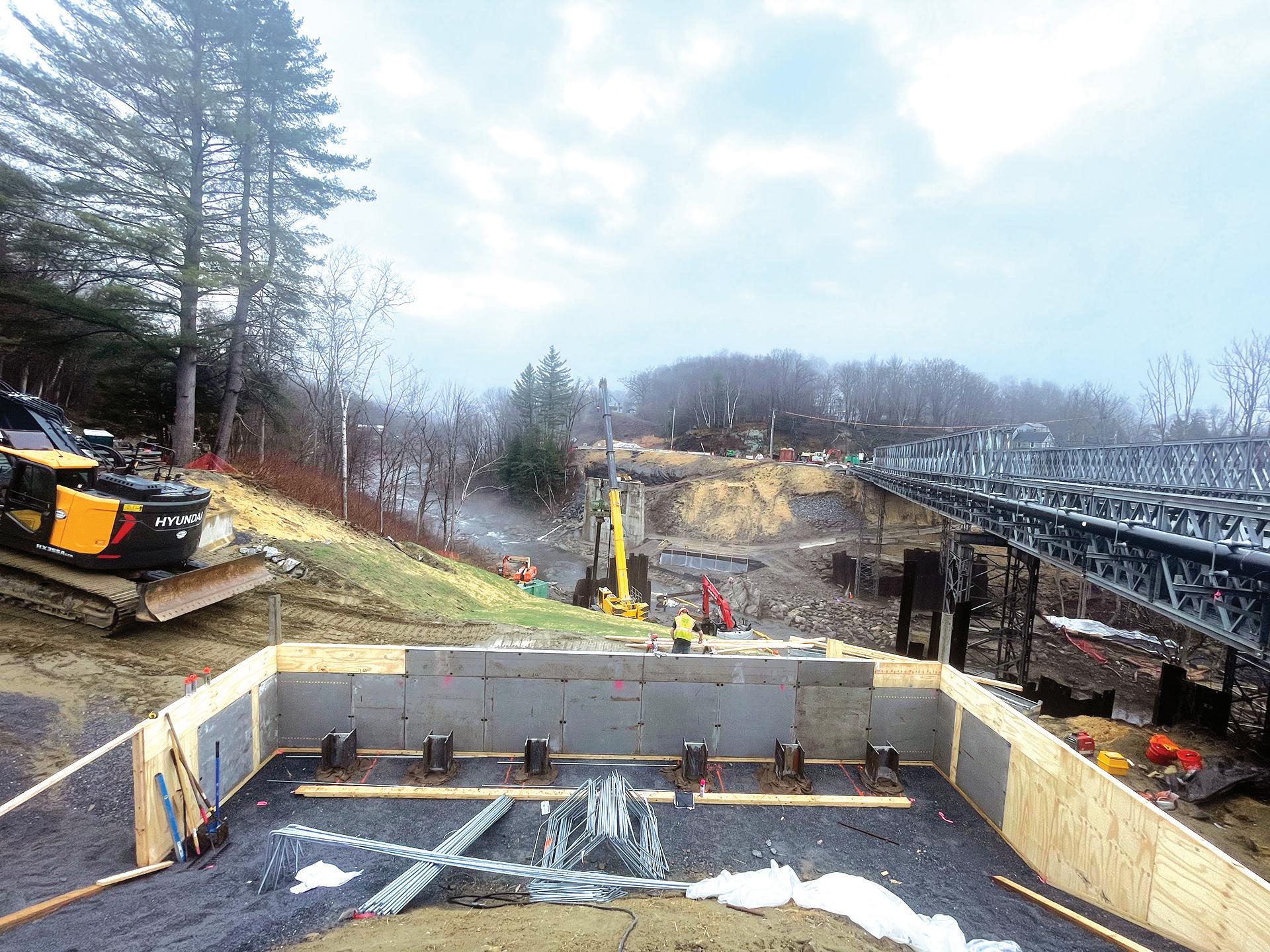
Construction of the new bridge began in February 2026. The two spans — each approximately 185 ft. — are supported by abutments at both ends and a central pier with a single 8-ft.-diameter column, along with four plate girders spaced at 9 ft. 6 in.
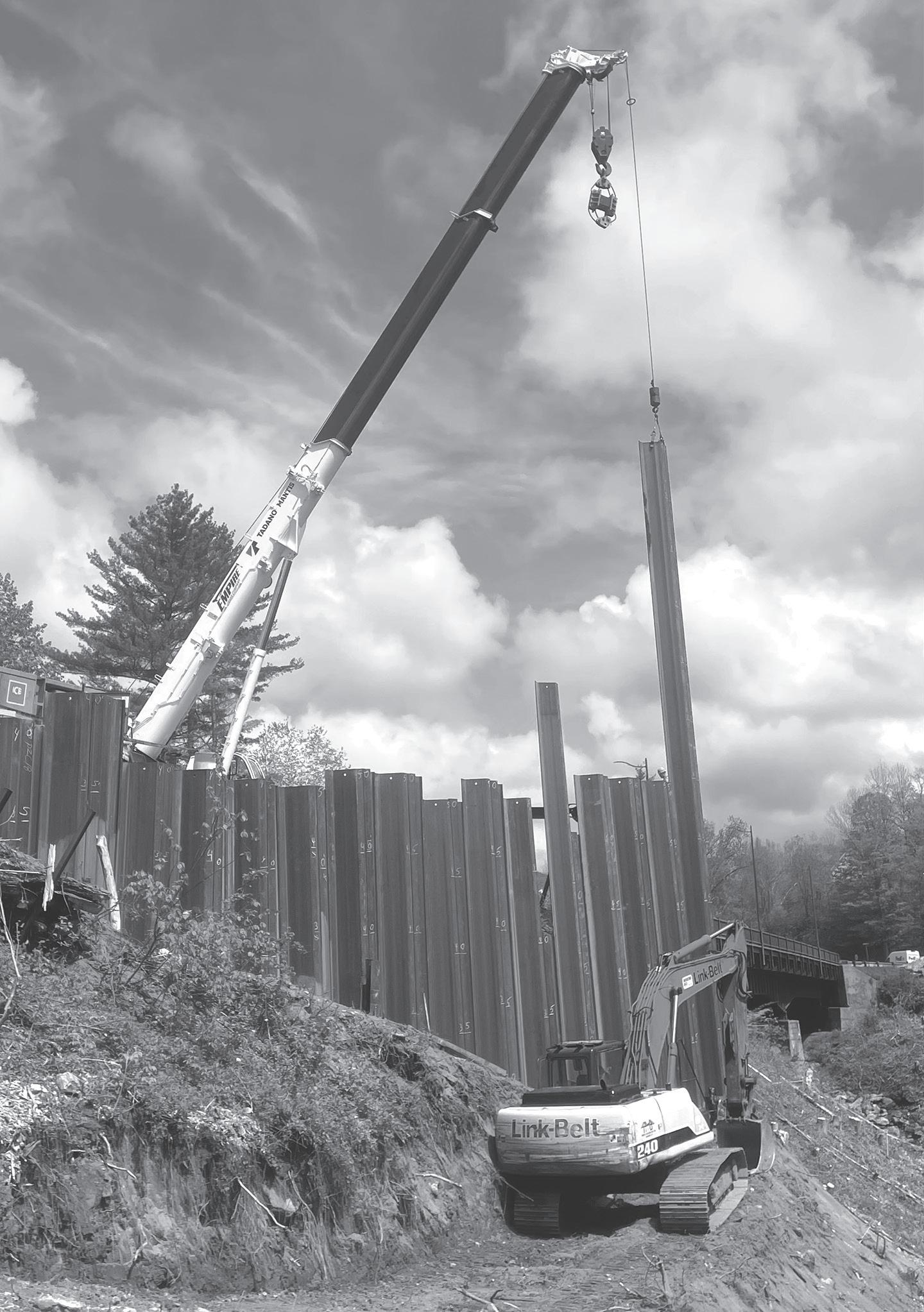
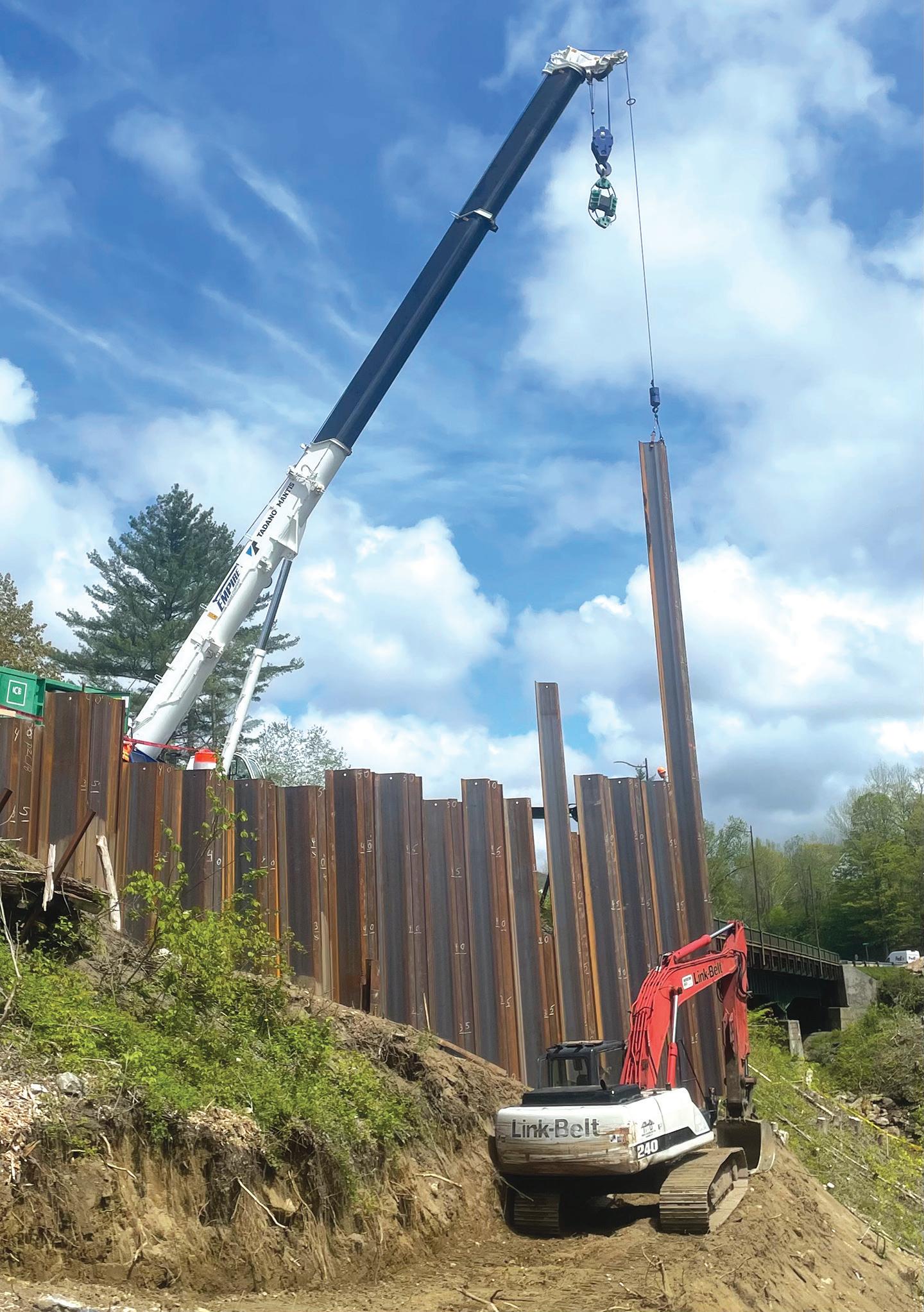
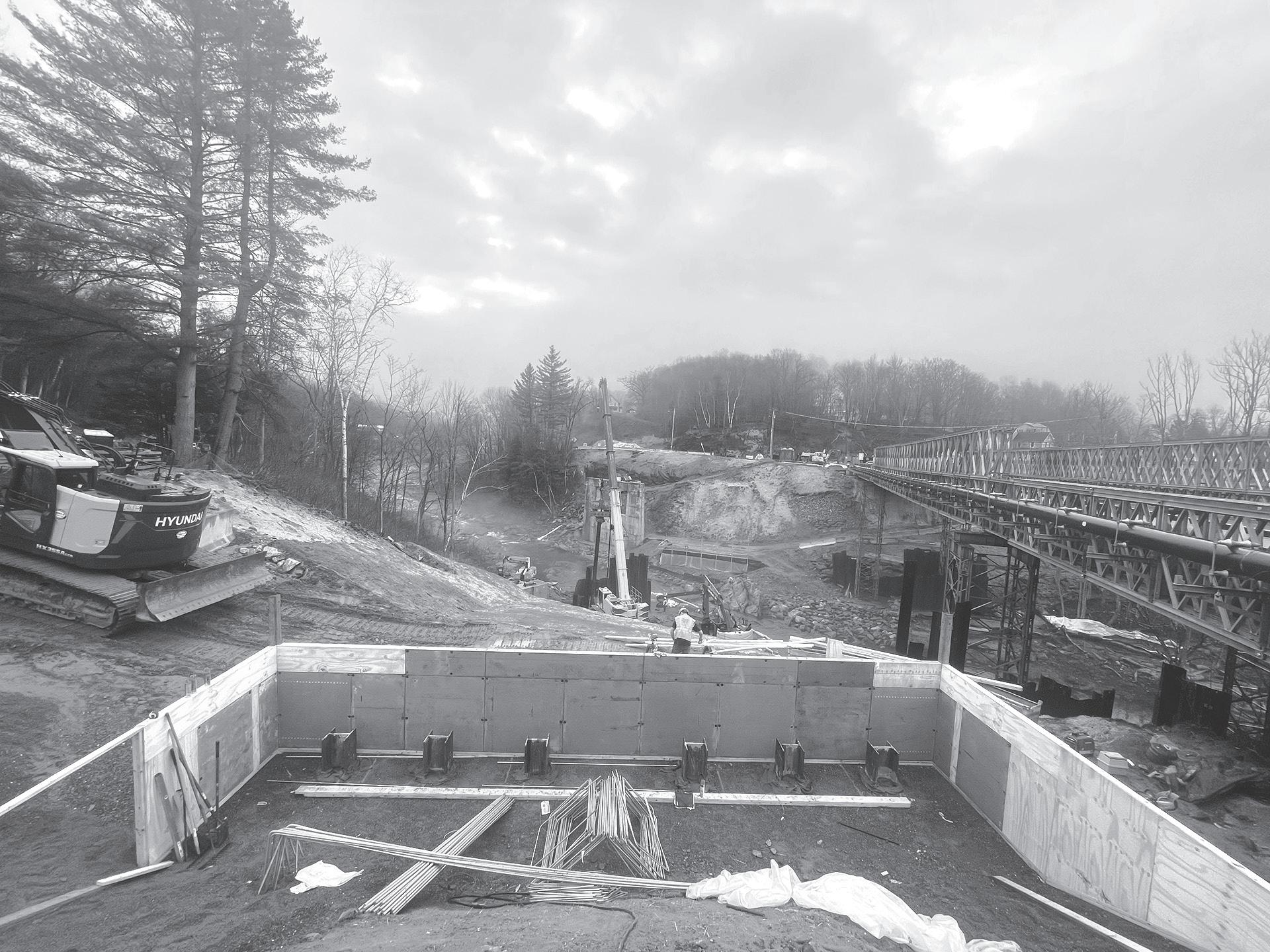
“The west abutment includes six driven piles installed using a Grove GHC 110 crane and an ICE D30 pile hammer,” Williams said. “It will stand approximately 13 feet tall and incorporates performance-based
Crews work on the Readsboro bridge in February 2026.
approximately 185 ft. — are supported by abutments at both ends and a central pier with a single 8-ft.-diameter column, along with four plate girders spaced at 9 ft. 6 in.
concrete, which requires seven days to cure.”
The east abutment is founded on ledge that has been stepped through excavation.
“A subfooter and footing will support the abutment wall, which will be approximately 14 feet tall and tied into wing walls up to 22 feet tall,” Williams said. “Additionally, 32 rock dowels drilled 20 feet into bedrock provide foundation anchorage.”
A Hyundai HX355 excavator was used to shape the ledge for the east abutment.
Pier construction involves drilling shafts approximately 35 ft. deep and 4.5 ft. in diameter, installing rebar cages and placing
concrete.
“A pier footing will be constructed on top of the shafts, followed by a single column approximately 50 feet tall,” Williams said. “The pier cap — about 12 feet tall and 35.5 feet wide — will support the steel girders.”
A 500-ton Liebherr LTM 1400 crane, supplied by Burt Cranes, will be used to erect the girders.
Following girder installation, crews will reinstall the waterline along the bridge, place prestressed concrete deck panels, install reinforcing steel and pour the deck. A new bridge railing also will be added.
Each of the four girders consists of three sections. The end sections are approximately 125 ft. long and weigh about 50,000 lbs. each, while the center sections vary in depth and weigh roughly 96,000 lbs.
“The steel will be delivered in stages to minimize site congestion,” Williams said.
The Harrison & Burrowes management team includes CEO Chris DiStefano, COO Dane Insogna, Executive Vice President Greg Domermuth, CFO Brian Mirochnick and Senior Estimator Nate Kurykendall.
“The Readsboro crew is a tight-knit team that works well together under a variety of conditions,” Williams said. “Weather and slow progress can be challenging, but they remain motivated and productive.”
On busy days, approximately 12 Harrison & Burrowes and subcontractor personnel are on site. Key subcontractors include Sessler Wrecking, Bazin Brothers Trucking and Excavation and HUB Foundation.
Material quantities from demolition and new construction are still being finalized.
The demanding conditions have taken a toll on equipment.
“Usage varies depending on the task, but excavators and underwater hammers experience significant wear,” Williams said.
“The crew handles minor maintenance, while larger issues are addressed by our mobile mechanic or equipment suppliers, typically within a day.” CEG
or
from page 1
Operating as a tight-knit family crew, the business prioritizes top-tier equipment and exceptional craftsmanship over sheer size. This focus allows the company to complete highstakes residential projects right the first time, ensuring that they maintain an unblemished reputation with general contractors throughout the region.
Heritage Meets Modern Innovation
At the heart of J.J. Monsignore Excavation is a delicate balancing act: honoring a rich family heritage while aggressively adopting cuttingedge machinery. Monsignore’s father has operated Monsignore Excavating in Burlington for 38 years, and the family’s dirt-moving lineage stretches back through generations of equipment salesmen and municipal utility workers. However, surviving — and thriving — in the modern greater Boston market requires more than just old-school grit.
“A lot of contractors say they work on tight job sites, but that’s pretty much all we work on,” Monsignore said.
The core challenge lies in navigating the
ultra-tight residential footprints typical of historic New England neighborhoods like Cambridge, Mass. To conquer these restricted work zones, Monsignore balances his inherited trade knowledge with precise technology. By investing in advanced machinery, his company can squeeze high-production performance into backyards where traditional machines simply cannot safely operate.
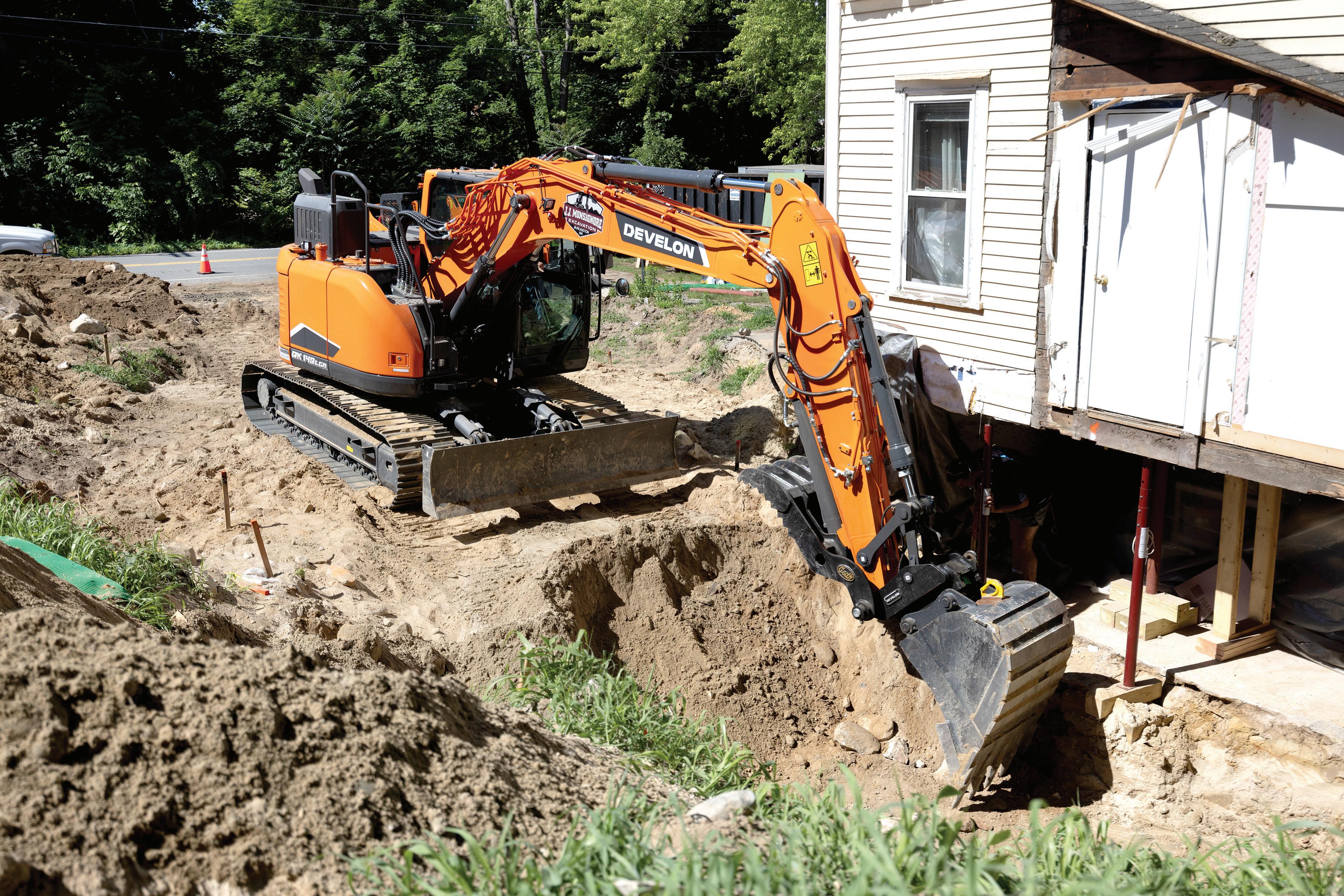
A recent project perfectly highlights this urban constraint. The team was tasked with digging out 6.5 ft. of dirt to install a 9-ft. full basement beneath an existing, intact 16-by-20ft. room.
“Ordinarily, a contractor would have to rely on a costly vacuum truck or a slow-moving army of laborers wielding picks, shovels and wheelbarrows,” Monsignore said. Instead, his crew bypassed the manual headache by deploying an ultra-narrow, 3-ft.wide mini-excavator straight under the structure to handle the heavy lifting mechanically. Compounding these spatial limitations is New England’s notorious subterranean geology, Monsignore faces a constant battle against stubborn rock and heavy ledge, an
DEVELON photo
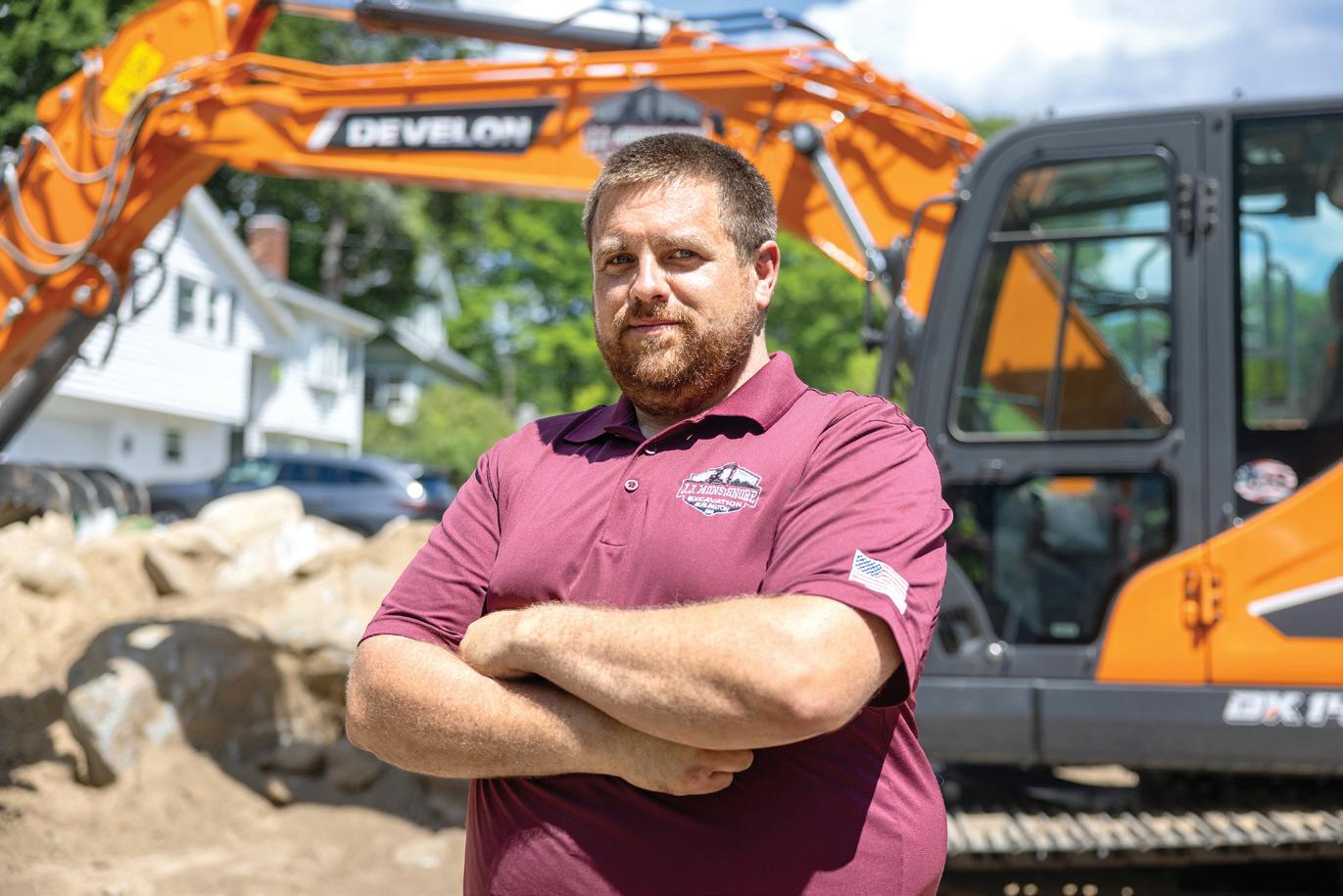
Jim Monsignore’s introduction to the excavation industry didn’t come from a textbook, a classroom or a heavy equipment trade school. Instead, it came from the passenger seat of his father’s dump truck.
MONSIGNORE
DEVELON photo
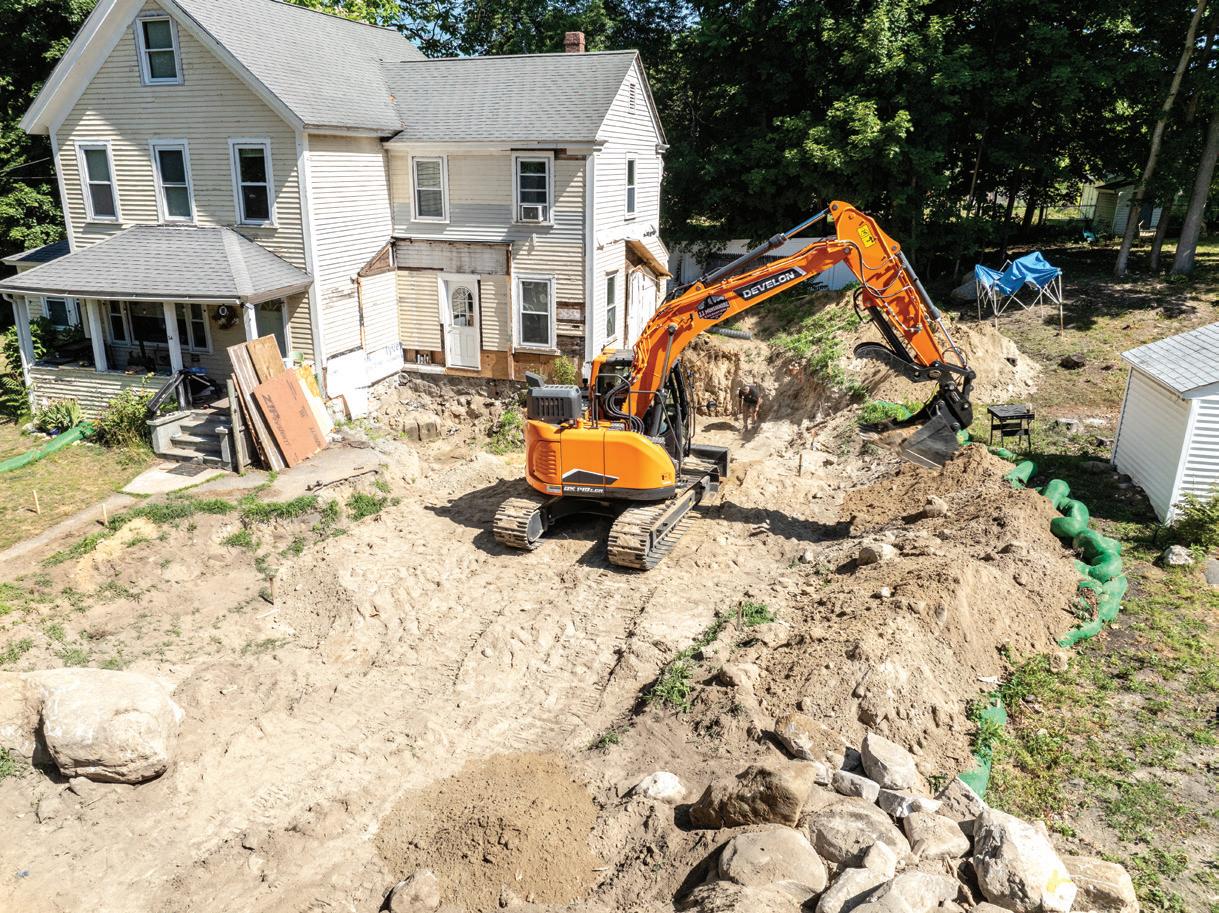
The reduced tail swing design minimizes concerns about striking adjacent buildings
other equipment on congested job sites.
Conn. Breaks Ground On Historic TIME-1 Rail Project
Gov. Ned Lamont and Connecticut Transportation Commissioner Garrett Eucalitto held a groundbreaking ceremony in Stratford to mark the start of construction on TIME-1, the largest component to date of TIME FOR CT, the Lamont administration’s comprehensive, multi-year initiative to rebuild, improve and expand Connecticut’s rail network.
The three-phase, $1.6 billion TIME-1 project will modernize critical sections of the New Haven Line, creating the infrastructure necessary to deliver faster, more frequent and more reliable rail service between New Haven and New York City. The New Haven Line is the busiest individual commuter rail line in the United States.
TIME-1 is expected to deliver one of the largest rail improvement upgrades in recent state history.
“The New Haven Line connects thousands of people to jobs, businesses, and destinations across Connecticut and the region every day,” Lamont said. “Every minute we save on a commute gives people more time with their families, more time in their communities and more opportunities to enjoy all that Connecticut has to offer. Shaving minutes off New Haven Line commute times will have a real impact on
“The New Haven Line connects thousands of people to jobs, businesses, and destinations across Connecticut and the region every day. Every minute we save on a commute gives people more time with their families, more time in their communities and more opportunities to enjoy all that Connecticut has to offer.”
Ned Lamont
Connecticut Governor
passengers who travel the New Haven Line each weekday.
“We are building the rail system Connecticut needs for the future — one that gets people where they are going faster, delivers more reliable service, and provides modern, accessible stations,” Eucalitto said. “This ambitious project is possible because of the partnership between Governor Lamont, the Federal Railroad Administration, our federal delegation, state and local partners and the skilled crews who are turning this vision into reality through their hard work in the field.”
the economic future of these towns, bringing new families and investment to communities up and down the line. TIME FOR CT is a historic investment in a faster rail system that will spur our economy and improve quality of life for generations.”
Upon completion of all three phases in 2035, trains will be able to operate at speeds of up to 90 mi. per hour. in designated sections of the corridor, an increase from today’s maximum of 70 mi. per hour. in the project area. Additionally, the improvements will upgrade these sections of the line to the
Federal Railroad Administration’s Track Class 6 standards, an increase from today’s standards of Track Class 4. The project, along with other capital projects and service enhancements, will enable Connecticut rail passengers to enjoy reduced travel times between New Haven and New York, culminating in a total of approximately 25 minutes saved. Together, these investments will strengthen one of the nation’s busiest rail corridors, improving reliability for Metro-North Railroad, Amtrak, freight operators, and the approximately 100,000
The first phase of the TIME-1 project focuses on a 3-mi. section of track between Bridgeport and Stratford. Crews are installing new catenary structures that power trains, adding turn outs to the East Bridgeport Rail Yard, replacing the Longbrook Avenue Bridge in Stratford, upgrading track and signal infrastructure and adding new track connections to improve train operations through the corridor. The first phase is a $340.7 million project that will support approximately 125 jobs. Funding includes $184 million from the Federal Railroad Administration, $145.5 million from the State of Connecticut and $11.2 million from Amtrak.
see RAIL page 22
Small Crew Tackles Big Residential Challenges Efficiently
MONSIGNORE from page 14
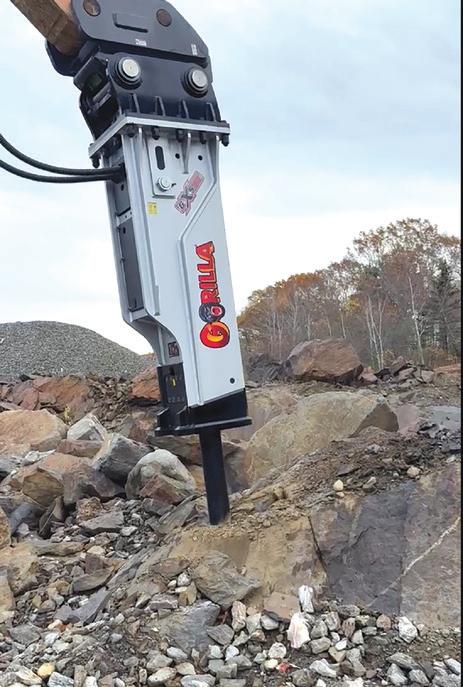
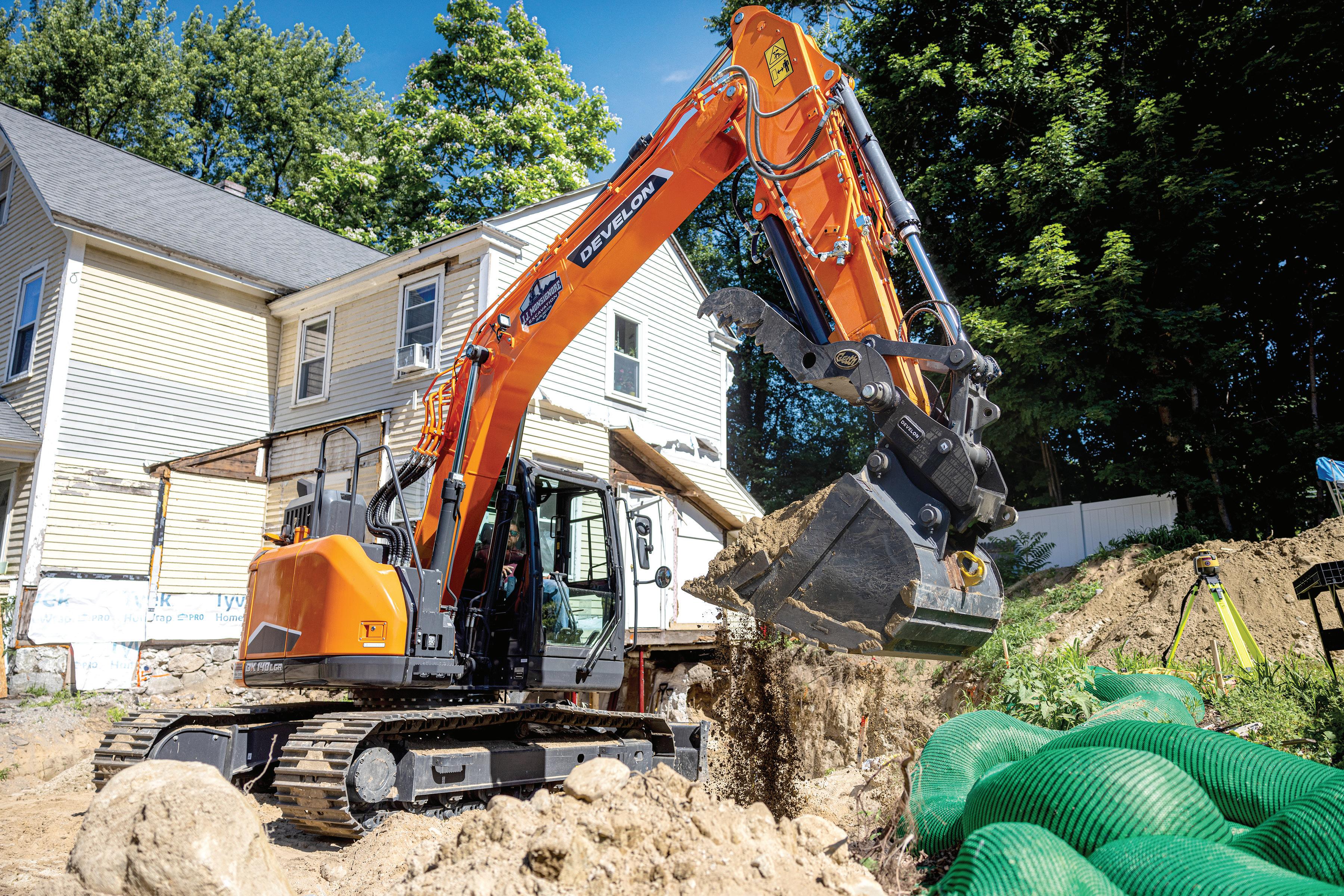
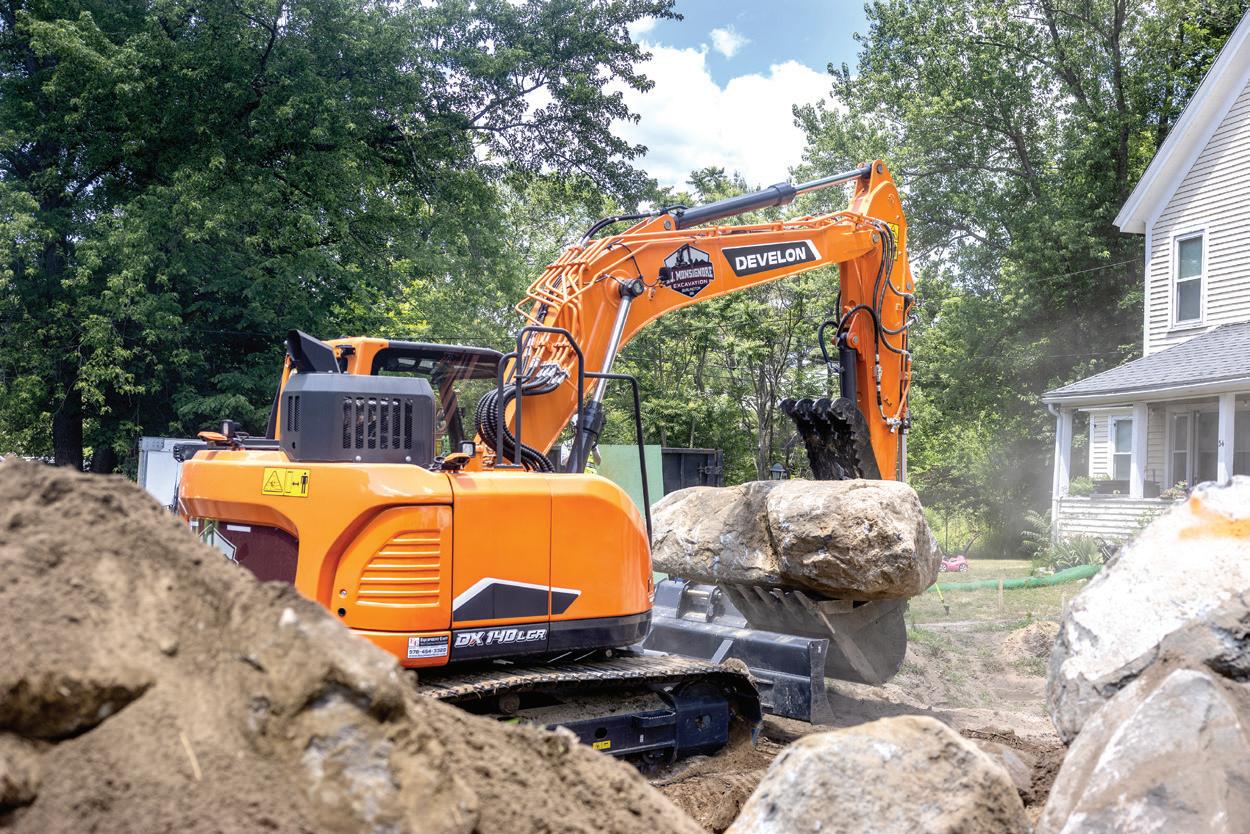
environment that subjects equipment to punishing wear and tear. To punch through these obstacles, he couples his DEVELON DX140LCR-7 excavator with a heavy-duty, 4,000-lb. hydraulic breaker attachment. This gives him the necessary brute force to crack regional stone out of the ground without sacrificing the tight operational footprint required to protect nearby structures.
For J.J. Monsignore Excavation, the DX140LCR-7 excavator represents the sweet spot for residential projects. The 14-metric-ton excavator delivers heavy-
environments where downtime is not an option, having a responsive dealer partner is critical.
machine’s real-world performance in heavy lifting environments.
Monsignore’s crews can easily self-mobilize the excavator on a 22-ton trailer towed directly behind the company’s own dump trucks. This capability eliminates the need to contract out an expensive low-bed transport, saving critical time and money during construction projects.
The reduced tail swing design minimizes concerns about striking adjacent buildings or other equipment on congested job sites.
“If you’re constantly looking in your mirror to make sure that your counterweight is not striking something, then you’re not going to be productive,” Monsignore said. “We know this machine pretty much turns around inside of itself so there’s not a whole lot to worry about.”
The machine’s quick coupler enables him to make quick swaps between various bucket sizes and his ledge-breaking hammer. The dozer blade acts as an active stabilizer and an essential rear counterweight, while also giving him the ability to lower the excavator
boom and increase maximum digging depth in deep trenches.
Dealer Partnership Behind the Machine
Equipment East has played an important role in supporting J.J. Monsignore Excavation’s growth by providing more than just equipment — it provides a complete ownership experience. As a local DEVELON dealer, Equipment East works closely with contractors throughout New England to understand their applications and help match them with the right solutions for their job sites.
From the initial equipment selection process to ongoing service, parts support and field assistance, Equipment East’s team is focused on maximizing uptime and helping customers get the most productivity from their machines, according to the company.
For contractors like J.J. Monsignore Excavation, operating in demanding urban
“At Equipment East, we believe the relationship doesn’t end when a machine is delivered — that’s when it begins,” said Giovanni Albanese, owner of Equipment East. “Our team works closely with our customers to understand their challenges and provide the equipment, service support, parts availability and expertise they need to keep their businesses moving. We are proud to partner with DEVELON and support customers like J.J. Monsignore Excavation with solutions that improve productivity and efficiency on the job site. Jim’s operation is a great example of what happens when you combine a skilled contractor, the right equipment and a strong dealer partnership.”
The success story is not just the machine. It’s the ecosystem that supports the machine — manufacturer, dealer and customer.
Marketing the Unseen
Running a construction business today requires smart networking alongside field experience. Before pulling the trigger on his DEVELON excavator, Monsignore used Instagram to connect with peer operators like Matt Quinnell of Advanced Wall Structures in Minnesota. Doing so validated the
Social media also allows Jim to market “the unseen.” Since many of his residential projects are tucked away in suburban backyards hidden from the street, Instagram acts as a transparent portfolio that showcases his crew’s precision and successfully attracts high-quality general contractors.
Advice for the Next Generation
For young people entering the trade, Monsignore’s advice is clear: Start at the bottom of a trench as a laborer.
“If you don’t know how to do the laborer’s job, then once you’re up in the machine, you’re not going to have an appreciation for actually being in the trench,” he said. “You realize how difficult it is to shovel all day when your excavator operator can’t carry a grade.”
Mastering manual groundwork builds a vital appreciation for grade management, onsite safety and subterranean dirt mechanics. Only by understanding how the earth behaves from below can an operator truly command the cab above.
(Ryan Johnson is public relations and content strategy manager of Two Rivers Marketing.)
DEVELON photo
For contractors like J.J. Monsignore Excavation, operating in demanding urban environments where downtime is not an option, having a responsive dealer partner is critical.
DEVELON photo
J.J. Monsignore Excavation faces a constant battle against stubborn rock and heavy ledge, an environment that subjects equipment to punishing wear and tear.
Conn. Begins $1.6B New Haven Line Upgrade Project
RAIL from page 16
The second phase, expected to begin in 2030, will deliver targeted improvements at Stratford Station, including track and platform upgrades, ADA accessibility improvements, enhanced passenger communications systems and modernized electrical infrastructure with improved lighting and emergency power. This phase also will advance major corridor improvements, including catenary upgrades, bridge replacements and retaining wall installations.
The third phase, expected to begin in 2031, will continue these efforts with additional bridge replacements, catenary upgrades and infrastructure improvements to further enhance rail operations and reliability.
Combined, the second and third phases have an anticipated cost of approximately $1.3 billion. Lamont, in partnership with the Connecticut Department of Transportation and Connecticut’s Congressional delegation, will continue pursuing federal and partner funding to advance the full program.
“This historic $1.6 billion project will deliver faster and more reliable rail service for the thousands of people who use the New Haven line every day,” Sen. Richard Blumenthal said. “With improved speeds, modernized stations
MaineDOT
The Maine Department of Transportation (MaineDOT) announced it will advance transportation projects that were considered for temporary delay due to funding concerns earlier following Gov. Janet Mills’ commitment of $136 million to support Maine’s transportation program.
Gov. Mills announced $136 million in funding to address an anticipated shortfall in MaineDOT’s capital program, ensuring the Department can continue delivering critical transportation investments across the state. During her administration, Mills and the Legislature have secured approximately $1.4 billion through a variety of funding mechanisms to address recurring transportation funding shortfalls, helping MaineDOT continue investing in safer roads, bridges, ferries, transit, aviation, rail and active transportation infrastructure that the people of Maine rely upon every day, according to MaineDOT.
As a result of this new funding, MaineDOT will begin advancing the transportation projects that were considered for temporary delay while
and upgraded infrastructure, TIME FOR CT is a serious investment in our state’s economy and future.”
“Connecticut’s rail lines are vital to our state and regional economy,” Sen. Chris Murphy said. “The TIME FOR CT program is a transformational infrastructure investment that will make train travel safer, faster and more reliable.”
“The start of construction today symbolizes the continued and coordinated effort at the federal, state and local levels for more reliable and safer transportation in Connecticut,” Congresswoman Rosa DeLauro said. “This historic project, supported by millions in federal funding, will provide relief to commuters who rely on the New Haven Line by cutting down travel time, improving reliability and modernizing our rail.”
The overall TIME FOR CT program is transforming Connecticut’s rail system through investments in rail infrastructure and fleet, bridge replacements and service improvements. Ongoing work includes the replacement of aging movable bridges, such as the WALK Bridge in Norwalk and Devon Bridge in Milford, as well as continued modernization of the power, signal and communications systems that support passenger rail service.
the Department evaluated the impacts of the projected funding gap.
While this funding addresses the Department’s immediate needs, it does not resolve the long-term structural challenges facing Maine’s transportation program.
Inflation, increasing construction costs, aging infrastructure and transportation revenues that have not kept pace with those costs continue to create significant funding pressures, according to MaineDOT. The $1.4 billion added to the highway fund over the past eight years demonstrates the scale of Maine’s transportation funding needs and the lack of a sustainable, long-term funding solution, added the Department. Even to preserve current conditions and make only limited programmatic improvements, MaineDOT estimates an additional $195 million in state resources are needed in State Fiscal Year 2029 (beginning July 1, 2028) with that funding gap expected to continue growing as inflation drives costs higher, according to MaineDOT.