

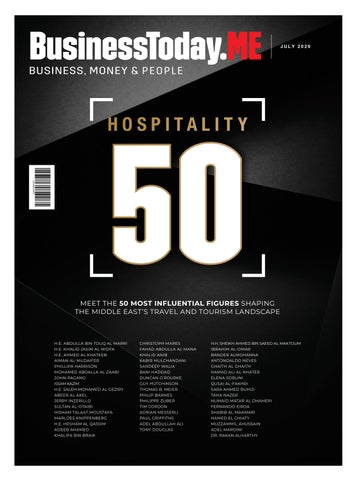
MEET THE 50 MOST INFLUENTIAL FIGURES SHAPING THE MIDDLE EAST’S TRAVEL AND TOURISM LANDSCAPE
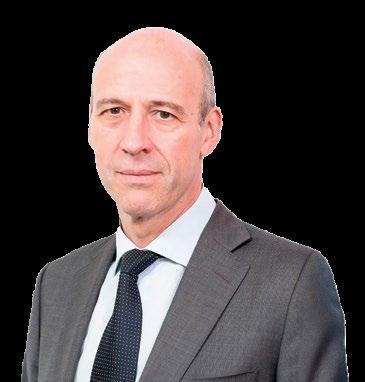
H.E. ABDULLA BIN TOUQ AL MARRI
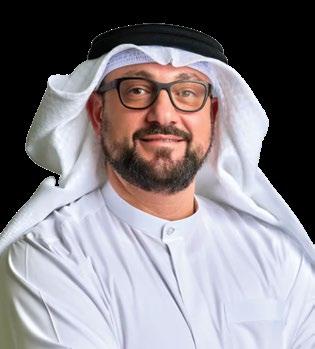
H.E. KHALID JASIM AL MIDFA
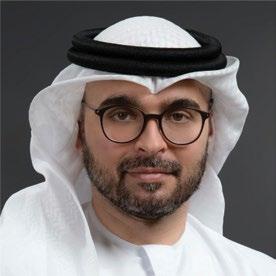
H.E. AHMED AL KHATEEB
AIMAN AL-MUDAIFER
PHILLIPA HARRISON
MOHAMED ABDALLA AL ZAABI
JOHN PAGANO
ISSAM KAZIM
H.E. SALEH MOHAMED AL GEZIRY
ABEER AL AKEL
JERRY INZERILLO
SULTAN AL-OTAIBI
HISHAM TALAAT MOUSTAFA
MARLOES KNIPPENBERG
H.E. HESHAM AL QASSIM
ADEEB AHAMED
KHALIFA BIN BRAIK
CHRISTOPH MARES
FAHAD ABDULLA AL MANA
KHALID ANIB
KABIR MULCHANDANI
SANDEEP WALIA
BANI HADDAD
DUNCAN O’ROURKE
GUY HUTCHINSON
THOMAS B. MEIER
PHILIP BARNES
PHILIPPE ZUBER
TIM CORDON
ADRIAN MESSERLI
PAUL GRIFFITHS
ADEL ABDULLAH ALI
TONY DOUGLAS
H.H. SHEIKH AHMED BIN SAEED AL MAKTOUM
IBRAHIM AL-OMAR
BANDER ALMOHANNA
ANTONOALDO NEVES
GHAITH AL GHAITH
HAMAD ALI AL-KHATER
ELENA SORLINI
QUSAI AL-FAKHRI
SARA AHMED BUHIJI
TAHA NAZER
HUMAID MATAR AL DHAHERI
FERNANDO EIROA
SHABIB AL MAAMARI
HAMED EL CHIATY
MUZZAMMIL AHUSSAIN
ADEL MARDINI
DR. RAKAN ALHARTHY
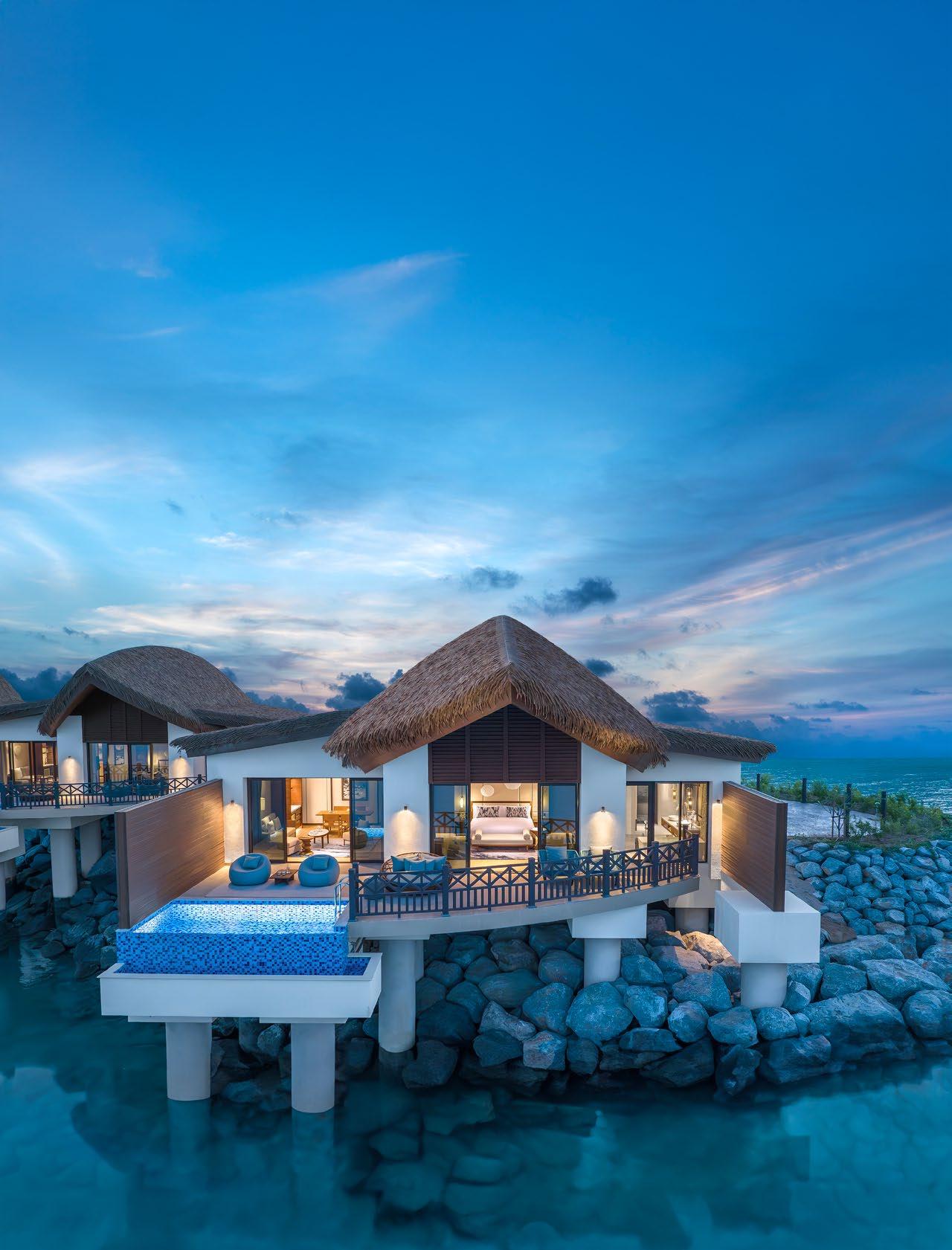
When space and setting matter.
A villa experience shaped by nature and a calm coastal environment. Thoughtful dining venues and well-appointed wellness facilities support both focused days and relaxed moments, creating a stay that feels balanced and complete.
Villa stays starting from AED 3,750.





CEO
WISSAM YOUNANE | wissam@bncpublishing.net
Managing Director
RABIH NAJM | rabih@bncpublishing.net
Group Publishing Director
JOAQUIM D'COSTA | jo@bncpublishing.net
Editor
AYA ZHANG | aya@bncpublishing.net
Digital Reporter
REEBA ASGHAR | reeba@bncpublishing.net
Creative Lead
CHRISTIAN HARB | chriss@bncpublishing.net
Junior Art Director IKA WAHYUNI
Business Development Director
ANDY SOULAHIAN | andy.soulahian@bncpublishing.net
Commercial Director
ANDREA MOCAY | andrea@bncpublishing.net
KSA country manager
AMJAD FAKHOURI | amjad@bncpublishing.net
Marketing Executive
AARON JOSHUA SINANBAM | aj@bncpublishing.net
Videographers
EDUARDO BUENAGUA
HARTON OTLANG
JOEL AMPARO
Contributors
AMAL FARUK SALIK
DR FLORIAN MEIER
FARIS AL KHATTAB
GILBERT BOUSTANY
subscriptions@bncpublishing.net
PROFESSOR ANGUS LAING
ZAID ABOOBAKER
PO Box 502511 Dubai, United Arab Emirates P +971 4 4200 506 | F +971 4 4200 196
For all commercial enquiries, contact jo@bncpublishing.net T +971 50 440 2706
All rights reserved © 2026.
The opinions expressed are solely those of the contributors. Business Today Middle East and its affiliated publications in the MENA region are exclusively licensed to BNC Publishing. No part of this magazine may be copied, reproduced, or transmitted in any form or by any means without prior written consent from the publisher.
Printed by United Printing and Publishing | upp.ae
Images used in Business Today Middle East are credited where necessary. Copyrighted images are used with permission. All uncredited images courtesy of Shutterstock.

BEGA pole-top luminaires with Dark Sky technology direct the light in a highly efficient manner only where it is required. Light pollution of the night sky is avoided. bega.com/darksky
In this part of the world, there is a feeling that is difficult to describe to someone who has not experienced it. It is not only ambition. It is the sense that things are actually moving, that even the most impossible-looking ideas have a real chance of becoming something.
This month, we built our biggest feature around hospitality, a sector that has quietly become one of the most important stories in the Middle East. The Business Today Hospitality 50 is our attempt to put names and faces to that story. We wanted to go beyond the announcements and the numbers. The industry is full of people
doing serious work, and we thought they deserved to be recognised properly.
We also held our Power Breakfast in June, at Sofitel The Palm in Dubai. I moderated a conversation with three people who know this market intimately, and what struck me most was how candid they were willing to be. About what the data is actually telling us, about where they would put their own money, about what wealth means beyond the numbers. That conversation is in these pages, and I think you will find it worth your time.
This region moves fast. Keeping up with it is the job. I hope this issue does that well.

Aya Zhang Editor
aya@bncpublishing.net


Require formwork and scaffolding? Check out Doka’s extensive list of products and systems, which now includes scaffolding for a variety of applications. At Doka, our philosophy is to provide a broad range of services under one umbrella based on a growing demand for single-source solutions that adhere to the highest standards.
/DokaMEA /company/doka-middle-east-africa /doka_mea
meaapmarketing@doka.com | www.doka-me.com
International Resources
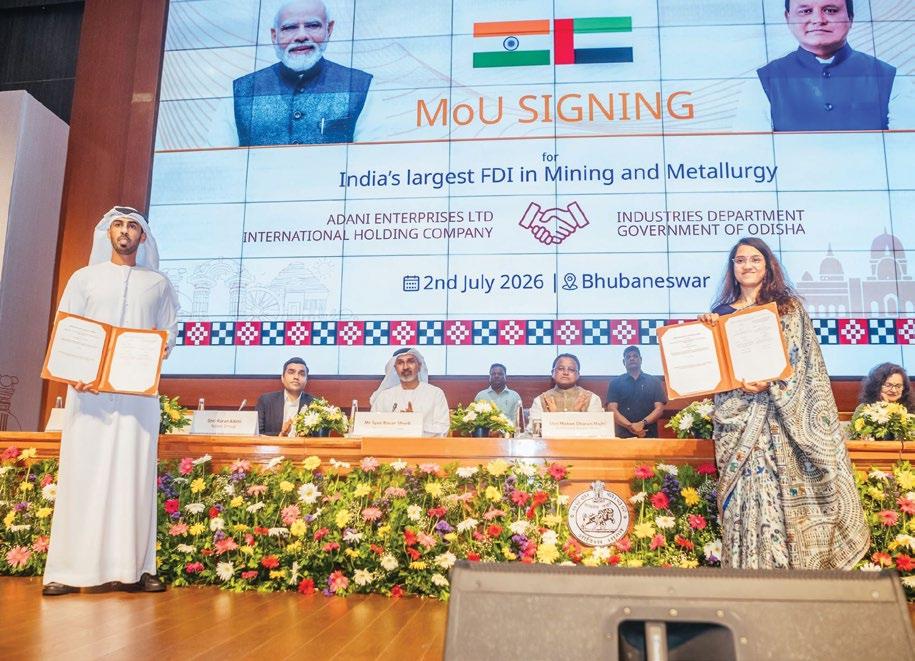
Holding, the Abu Dhabibased natural resources platform backed by IHC Group, has signed an MoU with Adani Enterprises and the Government of Odisha to develop a greenfield integrated aluminium project in India valued at approximately $11.5 billion. The 50:50 joint venture between IRH and Adani Enterprises will include a

4 million metric tonne per annum alumina refinery, a 2 million metric tonne aluminium smelter, a 4,000 MW captive power plant and a downstream manufacturing park. The project is projected to generate around 53,500 jobs across construction and operational phases and is expected to be Odisha’s largest foreign direct investment proposal.
The deal builds on the broader strategic partnership
between IHC and Adani Group, which spans energy, transmission and artificial intelligence. IHC CEO Syed Basar Shueb said the investment aligns with the group’s strategy of building long-term platforms in industries shaping the global economy.
Construction is expected to begin following land acquisition, statutory approvals and infrastructure planning.
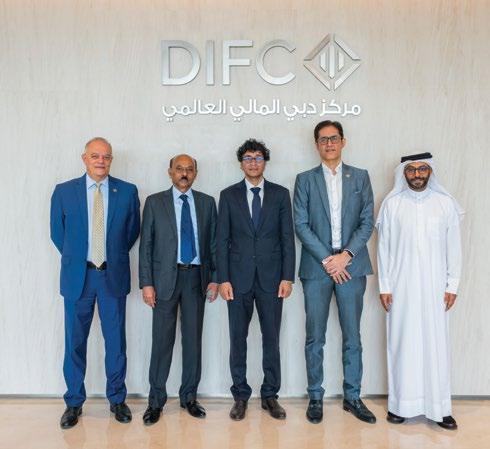
Dubai International Financial Centre has awarded the main construction contract for DIFC Heights Tower to Al Basti and Muktha LLC, marking a key milestone for the AED 3 billion mixed-use development in Gate District.
Located on the final remaining plot within DIFC’s original land bank, the tower will deliver 366 luxury residences alongside premium commercial office space and retail and dining offerings. Completion is targeted for 2029.
The contract was awarded at a meeting attended by DIFC Authority CEO Arif Amiri and Al Basti and Muktha Chairman Tushar Pathak.
The Abu Dhabi Fund for Development deployed AED 562 million across six strategic investments last year, targeting healthcare, education, food security and economic development in India, Vietnam, Indonesia and Uzbekistan.
The investments are projected to deliver healthcare services to more than two million beneficiaries annually, quality education to over 34,000 students, and more than 10,000 jobs across priority sectors.
Key investments include SIS Hospital and Tam Tri Medical in Vietnam, Phase Education across Vietnam, Cambodia and Thailand, and Korzinka, Uzbekistan’s leading food retail chain, backed through ADFD’s Abu Dhabi Uzbek Investment Company.
Mohamed Saif Al Suwaidi, Director-General of ADFD, said the investments reflect the fund’s approach of directing capital toward high-impact initiatives that strengthen economic resilience in partner countries.
Revolut has received approval from the Central Bank of the UAE for a Stored Value Facilities licence and a Retail Payment Services licence, marking a significant regulatory milestone for the global fintech as it prepares to expand operations in the country.
The dual licensing will enable Revolut, which serves more than 75 million customers worldwide, to offer digital financial services under the UAE’s regulated payments framework. Once operational, customers will be
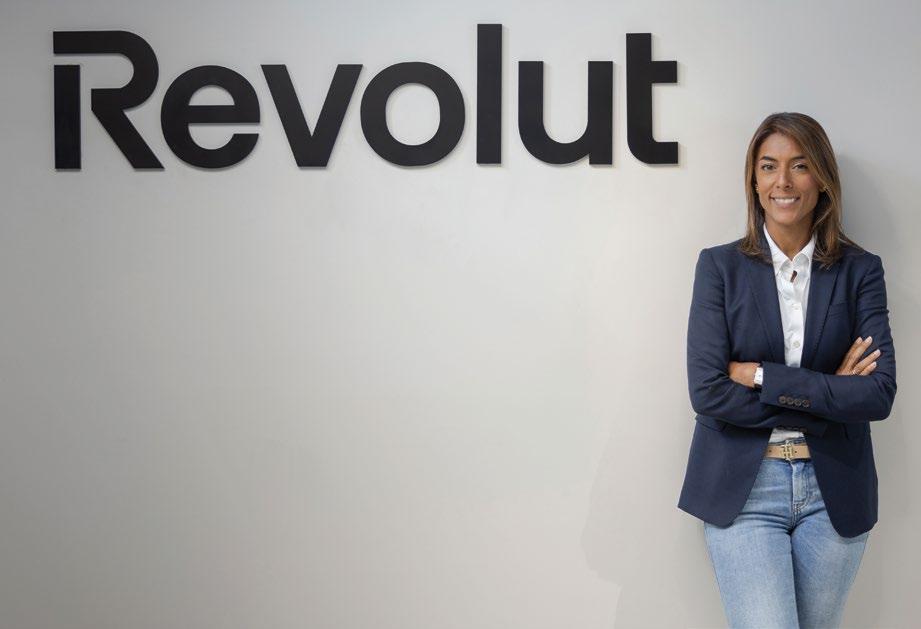
able to hold and manage multiple currencies, conduct domestic and international transfers, and make payments via physical and virtual cards through a single application.
Ambareen Musa, GCC CEO of Revolut, said the UAE represents one of the world’s most forwardthinking financial markets. Mohammad Abdulrahman Alhawi, Undersecretary of the Ministry of Investment, said the approval further strengthens the UAE’s growing knowledge-based economy.
Saudi Arabia imported approximately 1.9 million vehicles over 2024 and 2025, with China ranking first among source countries for the first time, ahead of Japan, India, Thailand and South Korea.
Annual imports reached around 959,000 units in 2025, following approximately 942,000 in 2024. Chinese manufacturers including BYD, Chery, MG, JAC and Geely have gained ground by offering vehicles in the SAR 50,000 to SAR 120,000 range with equipment levels matching or exceeding Japanese and Korean competitors at equivalent price points.
The shift has been supported by rapid after-sales
network expansion across Riyadh, Jeddah, Dammam and secondary cities, addressing a historical weakness of Chinese brands in the region. Growing consumer interest in SUVs, hybrids and electric vehicles has also worked in their favour.
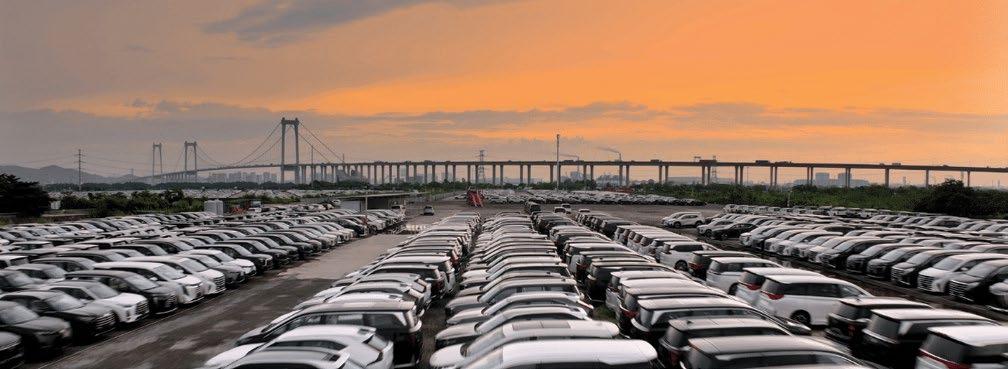
Toyota, Hyundai and Kia face the most direct competitive pressure, though Toyota’s Land Cruiser and Hilux retain strong positions in the utility and pick-up segments. Whether Japanese and Korean manufacturers can arrest the market share shift will be a defining question for the Saudi automotive sector through 2026 and 2027.
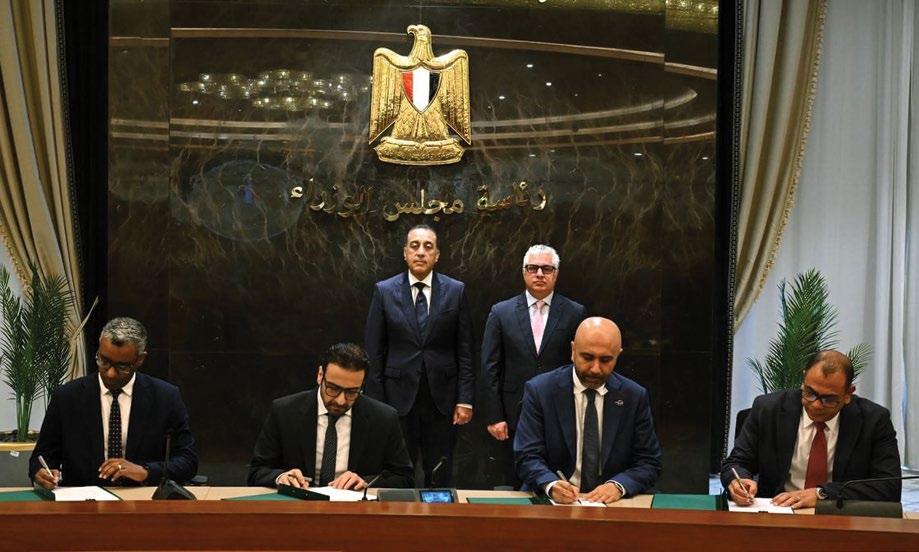
DP World has launched Egypt’s first fully integrated Logistics Distribution Centre at Sokhna Logistics Park, positioned within the Suez Canal Economic Zone with direct access to Sokhna Port.
The facility offers end-to-end supply chain services including international freight forwarding, warehousing, customs clearance and valueadded services such as assembly, packaging and product customisation. It is designed to allow businesses to serve multiple markets from a single regional hub while retaining inventory ownership until final distribution.
The inauguration was attended by Egyptian Prime Minister Mostafa Madbouly and coincided with the first official visit to Egypt by Essa Kazim following his appointment as DP World Chairman. Three global customers signed agreements at the launch, including a Kenyabased tea exporter, a global consumer goods distributor serving eight markets, and a German multinational specialising in fibre-optic cables.
DP World has invested more than $1.4 billion in integrated logistics infrastructure across Egypt, including the expansion of Sokhna Port and the development of Sokhna Logistics Park.
Abu Dhabi’s Masdar has agreed to acquire a 49.99 per cent stake in a renewable energy portfolio in Spain from Repsol, in a transaction valuing the portfolio at €849 million.
The portfolio comprises 705 MW of operational capacity across 13 wind farms and six solar parks, all of which entered operation in 2025 and the first quarter of 2026. It also includes more than 565 MW of potential hybridisation pipeline growth spanning wind, solar and battery storage.
Once completed, Masdar will hold 4.1 GW of operational capacity across the Iberian Peninsula, with around 1 GW under development. The acquisition forms part of Masdar’s strategy to reach 100 GW of global renewable capacity by 2030.
The transaction is expected to close by the end of 2026, subject to regulatory approvals.
Oman has signed a series of agreements with EDF Power Solutions covering three major projects totalling 3,500 MW of clean energy capacity alongside a digital infrastructure platform.
The 2,000 MW Jabal Abyad pumped hydro energy storage project, to be developed with EDF, ONEIC, TAKHZEEN Oman and Green Universe Enterprise, would be the largest project of its kind in the Middle East. Located near the Wadi Dayqah Dam, it will provide long-term energy storage and support grid stability.
A separate agreement covers the 500 MW Al Kamil Solar PV Independent Power Project, to be financed, built and operated by a consortium including EDF, ONEIC and OQ Alternative Energy.
In parallel, Oman, EDF and Synergy Investments signed an MoU to develop a 1,000 MW sustainable digital infrastructure platform supporting Oman’s ambitions in AI, advanced computing and cloud services.
Invest Qatar has launched a Venture Capital Funding Module on the Invest Qatar Gateway, developed in collaboration with the Qatar Investment Authority, giving startups a single platform to discover, apply to and pitch participating VC funds.
The module consolidates fund discovery, eligibility criteria and pitch submission into one platform. Participating funds include QIAbacked vehicles such as Shorooq, Speedinvest, B Capital, Builders VC MENA and Greycroft, alongside Tech Venture Fund by Qatar Science and Technology Park.
QIA supports the participating funds through its $3 billion Fund of Funds programme. Dr. Hamad Rashid Al-Naimi, Chief Strategy Officer at Invest Qatar, said the module offers startups a clear, direct path from idea to institutional capital.
ALMARAI REPORTS SAR 5.87 BILLION IN Q2 2026 REVENUE, UP 11%
Almarai reported an 11 per cent year-on-year increase in revenue for the second quarter of 2026, reaching SAR 5.87 billion, driven by sustained demand across its core product categories.
The strong quarter lifted first-half 2026 revenue to SAR 12.03 billion, a 9 per cent increase on the same period in 2025. Net profit for Q2 reached SAR 635.7 million despite ongoing external cost pressures.
CEO Fawaz Al Jasser attributed the performance to strong consumer demand for poultry and dairy products, disciplined cost management and an improved product mix. The poultry, dairy and juice divisions all recorded solid growth during the quarter.
From Gulf booms to global disruption, two decades on the ground reveal a hard truth: the old model of project delivery no longer fits the complexity of what comes next.
BY GILBERT BOUSTANY
Iremember a conversation I had early in my career, on site, somewhere between a late delivery and a heated client meeting. A much more experienced consultant pulled me aside and said: “The project doesn’t lie. Schedules lie. If you’re willing to listen, the project will always tell you the truth.”
Twenty-plus years later, I still think about that.
I’ve had the privilege of spending more than two decades delivering projects across the MENA region, from retail flagships and luxury brand
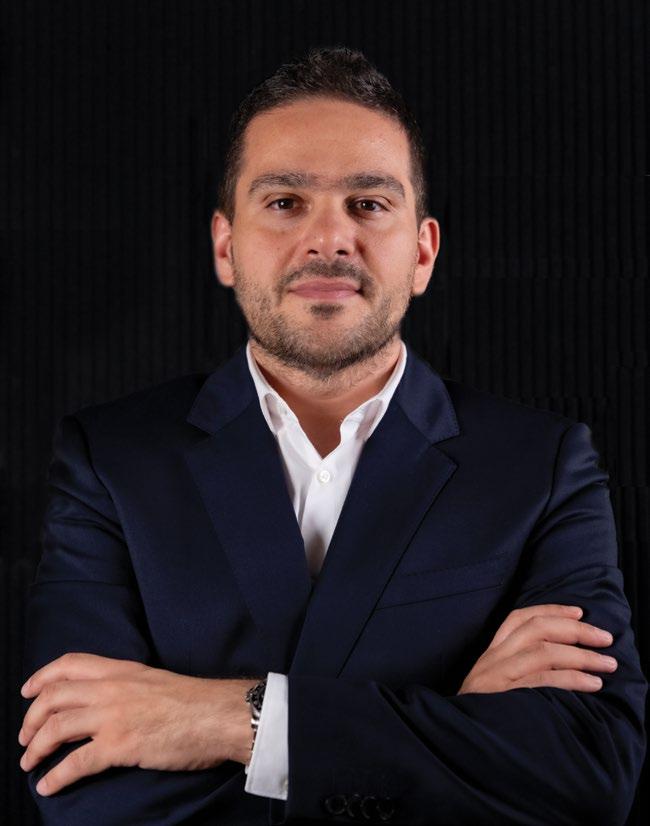
Gilbert Boustany, Vice President, Project Delivery at Chalhoub Group
environments to logistics infrastructure and mixed-use developments. I have worked through Gulf booms and global recessions, through periods when the region could not build fast enough and periods when everything stopped. What I want to share is not a retrospective. It is an observation about where we have been, what has quietly shifted, and an honest suggestion about how we need to work going forward.
THE FIRST PHASE TAUGHT ME THAT SPEED WAS THE CURRENCY.
The GCC in the early 2000s was a region in a hurry. Governments were building nations. Brands were entering markets. The brief was simple: deliver fast, and figure out the rest on site. Contractors who could move quickly were rewarded. Those who paused to ask the right questions were sometimes left behind.
The cost of that mindset showed up later: in defects, in disputes, in projects handed over and immediately handed back. Speed without structure is not delivery. It is deferral.
THE SECOND PHASE TAUGHT ME THAT THE CLIENT HAD CHANGED.
The regional client, whether a government entity, a private developer, or a global luxury brand, had become considerably more sophisticated. They understood programmes, challenged cost plans, and compared notes with peers in other markets.
The conversation moved to quality: of finish, of experience, of the relationship between the built environment and the brand it was meant to carry. In luxury retail especially, the store is not a container for products. It is the first, most physical expression of what a brand believes about itself. Getting that wrong is not a construction defect. It is a brand failure.
THE PHASE WE ARE LIVING THROUGH NOW IS ASKING HARDER QUESTIONS.
A global pandemic, supply chain fractures, rising material costs, labour shortages, geopolitical tensions, these were not exceptional events that passed. They were accelerants of a structural change already underway.
What they revealed is that the old model of project delivery, reactive, relationship-dependent, built on informal understanding rather than documented process, is not fit for what comes next. The market did not slow down. It became more complex. And complexity does not forgive loose planning.
First , the front-end of projects will matter more than ever. The decisions made in the first 10% of a project’s timeline typically determine 90% of its outcome. Getting into the ground quickly feels like progress. It often isn’t. The organisations that will consistently outperform will be those that invest serious rigour in feasibility, briefing, and design development before a single tender goes out. This is how you protect the back end of the project.
Second , integrated delivery capability will become a competitive differentiator. The era of fragmented project teams, designer here, cost consultant there, PM somewhere in the middle, is giving way to a model where those functions need to operate as a single, aligned unit. Not just contractually, but culturally. The projects I have seen fail most visibly did not fail because of bad intentions. They failed because the left hand and the right hand were pointing in different directions.
Third , pressure is a permanent condition, not a temporary one. We spent years treating disruption as an anomaly, something to survive until things returned to normal. We have to accept that this is the new normal. The teams thriving now have
accepted pressure as the baseline and built their systems, their reporting, their escalation paths accordingly. Structured decision-making under pressure is a skill. It has to be built before you need it.
The MENA region remains one of the most dynamic project environments in the world. The ambition is real. The investment is real. The opportunity is real. But the tolerance for the old ways of working is narrowing, and it should.
The fundamentals of great project delivery are not complicated; plan with rigour, communicate without ego, and treat the project as the truthteller it always was. The difficult part is having the discipline to do those things consistently, especially when the pressure is on.
That is what the industry has normalised to, and what it will demand for the next twenty years.
Scale, regulatory clarity and sustained investor demand are positioning Abu Dhabi as one of the region’s most compelling long-term real estate markets.
BY FARIS AL KHATTAB
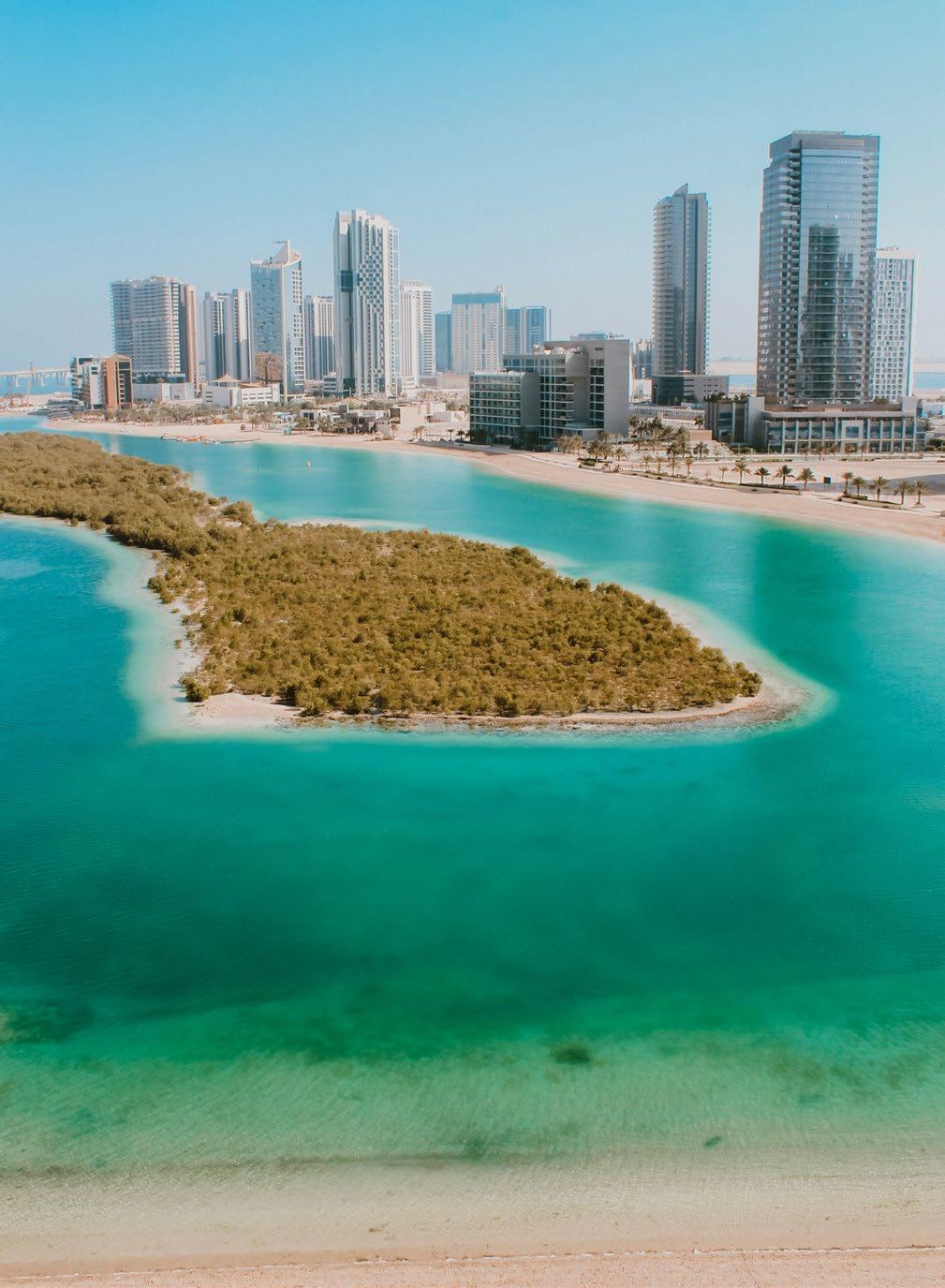
Abu Dhabi, which was once viewed as a secondary market within the UAE, is now standing firmly on its own, driven by scale, long-term planning, and a growing base of global investors. In 2025, its property market reflects a deeper level of maturity, shaped by economic diversification, regulatory clarity, and lifestyle-led demand that is proving resilient across cycles.
At a macro level, the fundamentals of Abu Dhabi are difficult to ignore. The emirate’s population is forecast to exceed 6 million by 2040, guaranteeing sustained demand for urban infrastructure. Abu Dhabi’s non-oil economy is also growing, accounting for more than 55% of total GDP in Q2 2025. For real estate, this creates depth and resilience across residential segments.
The market closed 2025 reaching $44.6 billion in sales according to dubizzle, with transaction volumes 50% higher compared to 2024. This growth has been supported by both ready and off-plan developments, with off-plan demand signalling confidence in the emirate’s long-term outlook.
Concurrently, Knight Frank’s Destination Dubai 2025 report shows that 75% of HNWIs with assets between $30 million and $50 million are actively considering homes in Abu Dhabi. This growing interest underscores the emirate’s appeal as a long-term base rather than a shortterm investment play.
While financial returns remain essential, they are no longer the sole driver. Buyers today are placing greater emphasis on how a property supports daily living. Stability, safety, and a measured pace of life are increasingly valued alongside connectivity and career opportunity. Calm surroundings, access to greenery, wellness-oriented design, and generous living space have become central to decision-making, particularly among families and young professionals relocating for the long term.
Off-plan developments also continue to attract attention, particularly when backed by strong planning, flexible payment structures, and credible delivery timelines. For many investors, these projects offer a structured path to long-term capital growth while meeting the expectations of end users who intend to live in the city rather than trade in and out of the market.
Waterfront and lagoon-facing properties with access to promenades and landscaped areas consistently achieve stronger rental benchmarks and demonstrate greater price resilience. These developments in Abu Dhabi are recording price growth of up to 69%, according to analysis by MERED, significantly ahead of the wider market. This trend extends beyond the luxury segment into the mid-tier market, where buyers are balancing lifestyle quality with longterm value.
These trends converge most clearly on Al Reem Island, which has established itself as one of Abu Dhabi’s most liquid and dependable residential sub-markets. Its appeal lies in a rare combination of proximity to the city’s commercial core and a sense of waterfront tranquillity that is difficult to replicate at scale. Lagoon-facing plots and high-rise apartments overlooking the Arabian Gulf create scarcity-driven demand, particularly among buyers seeking both connectivity and quality of life.
Al Reem Island has dominated the mid-tier apartment market, with average annual rents reaching AED 119,000 reported by dubizzle. The area has also benefited from strong off-plan activity, which played a significant role in Abu Dhabi’s property growth throughout 2025. Rather than speculative turnover, this demand reflects confidence in longterm occupancy, rental stability, and gradual capital appreciation.
The district continues to attract global investors and HNWIs who view Abu Dhabi as a lifestyle destination within one of the world’s most developed and well-governed cities. Object 1 has acquired four waterfront
plots, spanning over 2 million square feet, with a total sales value of AED 4.5 billion. The investment reflects long-term conviction in Al Reem Island’s role as a cornerstone of Abu Dhabi’s residential growth.
Transparency, governance, and legal clarity in the emirate have improved markedly in recent years, reinforcing investor trust. Foreign ownership frameworks, zero personal income tax, and a stable political environment continue to differentiate the emirate from many global markets facing regulatory uncertainty.
Institutions such as Abu Dhabi Global Market have played a critical role in attracting international firms, capital, and talent. As financial institutions establish regional headquarters and senior leadership relocates, demand follows for residential communities that support long-term settlement. This institutional presence adds depth to the market and supports sustained demand across multiple price points.
Looking ahead, Abu Dhabi’s real estate market is well-positioned for its next phase. New supply is entering the market, helping to keep price growth moderate and sustainable. Demand remains underpinned by international investors, end users, and residents drawn by the emirate’s stability and quality of life. Lifestyle-led, waterfront, and master-planned communities are expected to continue outperforming as buyers prioritise longevity over speculation.
With strong fundamentals, disciplined development, and a clear long-term vision, Abu Dhabi offers something increasingly rare in global real estate: scale, predictability, and enduring value built for generations rather than cycles.
Artificial intelligence is narrowing the information gap that has long defined professional services. For the UAE, where both sectors are strategic priorities, the implications run deeper than efficiency.
Professional services are becoming an increasingly important part of Gulf economies. As the UAE continues to expand its role as a centre for finance, healthcare, education and business services, an important challenge sits at the heart of these sectors: they are often remarkably difficult for consumers to evaluate.
Much of our understanding of markets is shaped by tangible products. When buying a car or a smartphone, consumers can compare features, inspect quality and make reasonably informed judgements before making a purchase.
Professional services, however, are different. Both individual consumers and organisations investing in professional services face three unique challenges when trying to decide which services to trust and ultimately consume.
First, cognitive intangibility. Professional services are not only physically intangible; they are often mentally intangible too. Most consumers find it difficult, if not impossible, to evaluate the quality of a medical treatment, an investment product, or legal advice given the complexity involved.
As a result, consumers rely on surrogate indicators, or signals, to help them decide. They focus on qualifications,
reputation, rankings, reviews and recommendations. These signals may be useful, but they often tell us more about how a service is delivered than about the quality of the expertise itself.
Second, both individual and corporate consumers face the time horizon between purchase and outcome.
The value of financial advice may not become clear for decades. The benefits of an educational experience may only emerge years later. By the time consumers know whether a decision was the right one, it may be too late to revisit it. This makes the prospect of selecting a service provider feel difficult and uncertain,
even when ample information is available to help customers decide.
Third, consumers are often intimately involved and inseparable from the production of the service itself.
Healthcare depends not only on the expertise of the clinician but also on the ability of the patient to communicate symptoms, engage with treatment and follow advice. Education depends not only on the institution but also on the commitment of the student. In many professional services, the consumer is not simply the recipient of the service but part of the process through which outcomes are created.
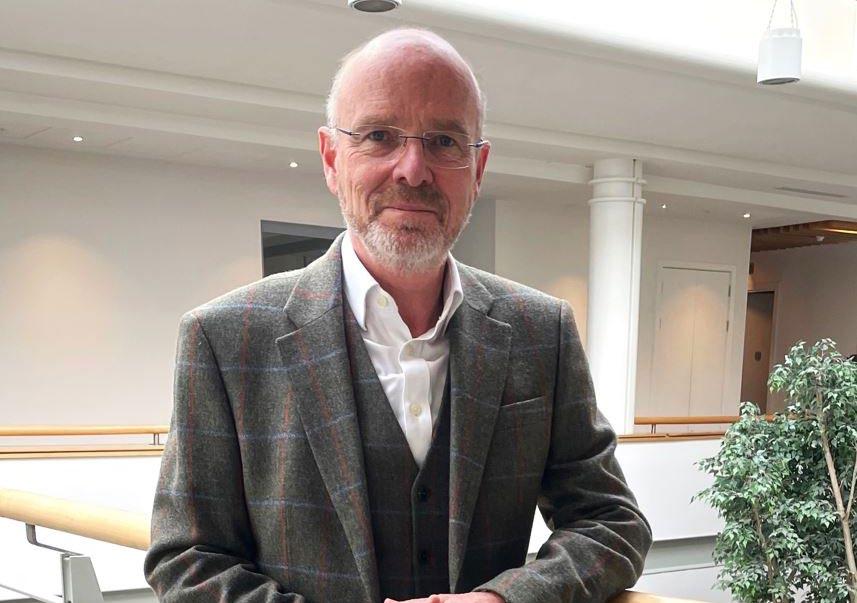
Professor
Angus Laing, Executive Dean, Edinburgh Business School and School of Social Sciences at HeriotWatt University
This means that two people can receive broadly the same service and experience very different outcomes.
Taken together, these three characteristics of professional services selection create significant challenges for consumers seeking to choose between providers and evaluate quality. They also help explain why satisfaction can be a poor proxy for quality. Someone with modest expectations may be delighted by an average service. Someone with very high expectations may be disappointed despite receiving technically excellent professional advice.
Faced with these challenges, consumers naturally seek additional sources of information. They rely on recommendations from friends and colleagues, online reviews, discussion forums, rankings and league tables. These mechanisms help reduce uncertainty, but they are imperfect. Most focus on process rather than outcomes, and many rely on the experiences of other consumers who may themselves lack the expertise needed to judge quality.
Even more formal sources of information can create unintended consequences. Rankings and performance measures are designed to help consumers make better decisions, yet they can sometimes encourage organisations to optimise for the metric rather than the outcome. Informing consumers and improving services are not always the same thing.
Historically, this challenge has been compounded by information asymmetry. Professionals have had access to specialist knowledge that was unavailable to consumers. Expertise, by definition, was scarce.
The internet began to shift that balance. And now, artificial intelligence may accelerate it dramatically.
Much of the current discussion about AI focuses on how it might improve the delivery of professional services. Law firms are using AI to review documents. Accountancy firms are automating routine tasks. Healthcare providers are exploring AI-assisted diagnosis and treatment planning.
These developments are important and will undoubtedly improve efficiency and productivity.
However, AI may prove equally significant because of what it does for consumers.
A patient receiving a diagnosis can already access information once reserved for medical professionals. A prospective student can compare institutions across multiple measures. A client considering financial products can increasingly use AI tools to analyse alternatives, interpret technical information and identify questions they should ask professional advisers.
AI therefore has the potential to reduce the information gap that has historically characterised professional services. Yet informational empowerment is a double-edged sword.
Better access to information can help consumers make more informed decisions, but it can also create confusion, uncertainty and greater purchase anxiety. More information does not always lead to better decisions, and this concept of empowerment is not always distributed evenly. Those with the skills, confidence and resources to use these tools effectively may benefit disproportionately, while others may feel increasingly overwhelmed.
There may also be consequences for professional service providers themselves.
As consumers become better informed, firms may face greater scrutiny of pricing, value, and professional authority. In some sectors, these changes are already visible, particularly where AI-driven efficiencies are prompting clients to question traditional charging models.
For countries such as the UAE, where both professional services and artificial intelligence are strategic priorities, these developments are likely to be particularly significant.
Much of the debate surrounding AI focuses on how it will change professional services. The more interesting question may be whether it changes the relationship between professionals and those they serve.
If professional services have traditionally been built upon expertise that consumers struggle to evaluate, what happens when consumers become far better informed?
The answer may shape the future of professional services as much as AI itself.
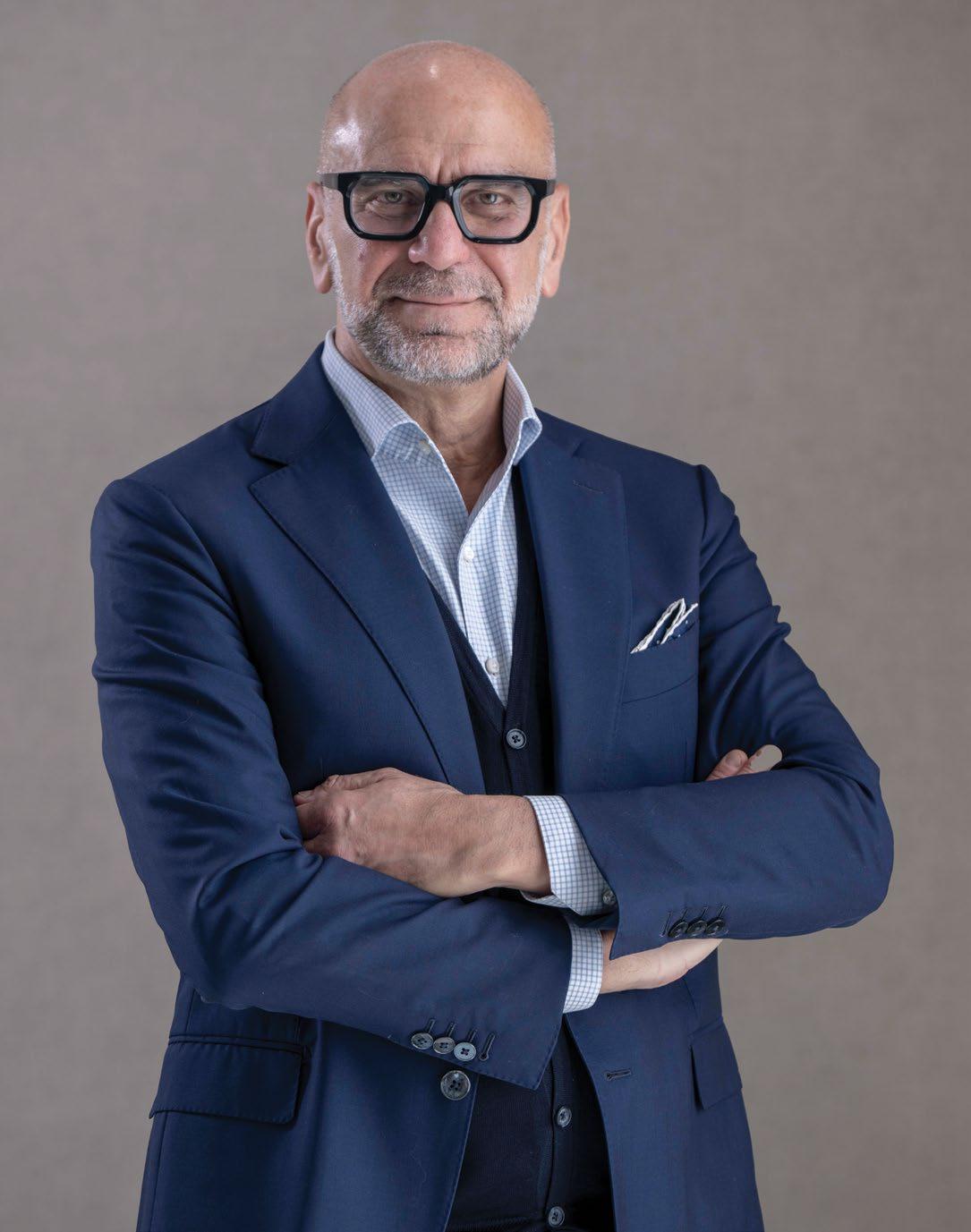

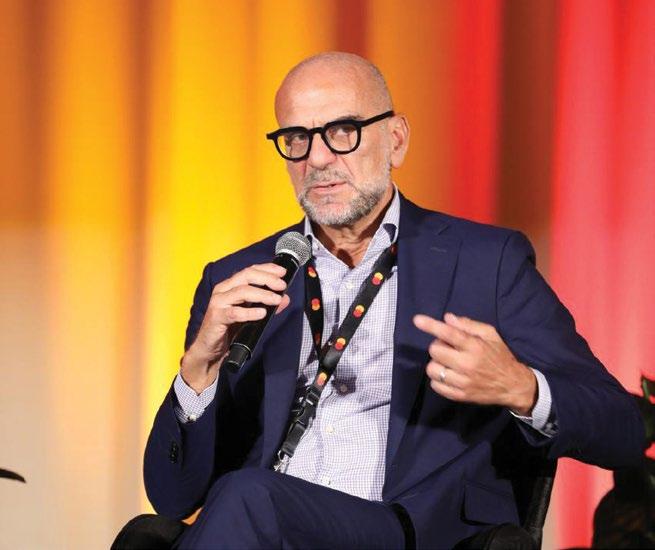
Newly appointed as CEO of du Pay, Roberto Mancone is pushing the platform well beyond payments and into lending, insurance and investment, with financial inclusion at the centre of his mandate.
BY AYA ZHANG
TELECOM COMPANIES LAUNCHING FINANCIAL PRODUCTS IS NOT NEW, BUT MOST HAVE STRUGGLED TO BE TAKEN SERIOUSLY AS FINTECH PLAYERS. WHAT MAKES DU PAY DIFFERENT — OR IS THAT SCEPTICISM STILL SOMETHING YOU HAVE TO OVERCOME?
du Pay was never conceived as an add‑on to a telecom business. It was architected as a regulated digital financial services platform, licensed by the Central Bank of the UAE, with the same compliance, risk, and operational standards as any financial institution in the country. That matters, because in fintech, credibility is earned through governance, not branding.
Consumer trust can quickly disappear when a financial product lets them down. We have to earn it. For du Pay, the recognition from Visa’s Partnership Excellence Award and the E Payment Solution of the Year accolade at the 2025 Entrepreneur Leaders in E Business Award was a good external signal. In two years, du Pay surpassed 1.4 million unique downloads and processed over AED 4 billion in transactions. Those are real people using the platform for remittances, everyday payments, and digital salary deposits. When people trust you with their money and keep coming back, that is the real answer.
EVERY BANK, FINTECH AND SUPER-APP IN THE UAE WANTS
A SHARE OF THE DIGITAL WALLET. IN A MARKET THIS SATURATED, WHAT IS THE ACTUAL UNMET NEED THAT DU PAY EXISTS TO SOLVE?
The UAE is one of the largest sources of remittances in the world. For business leaders and investors, the financially underserved population here represents substantial transaction volume, significant remittance flows, and in time, real demand for credit and insurance. This is a huge market with commercial depth. This is not a saturated market; it is an under penetrated financial inclusion market with deep commercial potential across payments, remittances, credit, and insurance. That is where du Pay is focused, and it is a commercially serious position to be in.
There are residents in the UAE who run into real obstacles with documentation requirements, minimum balance thresholds while approaching traditional banking services. Expatriates make up approximately 88 percent of the UAE’s population, and a large proportion of them are low to middle income workers sending money home every month. For those people, that friction has a genuine human cost.
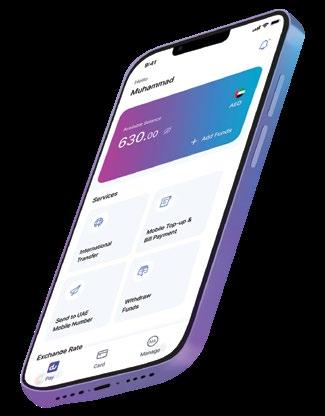
du Pay was built to remove those barriers. We offer zero balance digital wallets with free IBANs and international remittances to over 200 countries. In 2025, we launched “Salary in the Digital Wallet,” enabling direct digital salary disbursement for workers without a traditional bank account. That product alone illustrates the gap we are closing: access to income is the first step to financial inclusion.
WE USE THE DU RELATIONSHIP AS A STARTING POINT AND A TRUST SIGNAL, AND YES IT ALSO GIVES US THE REACH, BUT WE RUN THE BUSINESS WITH A FOCUS ON PRODUCT AND CUSTOMER EXPERIENCE.
DU’S CORE BUSINESS IS CONNECTIVITY. HOW MUCH OF DU PAY’S ADVANTAGE COMES FROM THAT EXISTING CUSTOMER RELATIONSHIP, AND HOW MUCH DO YOU HAVE TO BUILD FROM SCRATCH AS IF YOU WERE ANY OTHER FINTECH STARTUP?
du serves millions of customers across the country and that familiarity and customer trust in the brand is a real advantage. But everything that real financial services require had to be built from scratch. du Pay was engineered to financial services standards from the ground up, and that distinction shows in the product. The regulatory infrastructure, the compliance framework, the fraud and risk systems, the customer support that can handle a genuine financial problem under pressure.
We have to remember that in financial services, trust is earned one transaction at a time. Every time a remittance arrives or a complaint gets resolved is how you earn the right to stay in someone’s financial life. So the honest answer is this: we use the du relationship as a starting point and a trust signal, and yes it also gives us the reach, but we run the business with a focus on product and customer experience.
CASH IS STILL DEEPLY EMBEDDED IN PARTS OF THE UAE ECONOMY, PARTICULARLY AMONG CERTAIN EXPATRIATE AND LABOUR POPULATIONS. IS THAT DU PAY’S REAL OPPORTUNITY, AND WHAT WOULD IT TAKE TO ACTUALLY SHIFT THAT BEHAVIOUR?
Yes, and it is one of the most significant opportunities in the UAE right now. A large share of the workforce here
still relies heavily on cash for daily transactions. The Central Bank of the UAE’s Financial Infrastructure Transformation programme reflects a clear national commitment to changing that, and du Pay is positioned to contribute directly to it.
That means building something easy to use for everyone, whether it is someone who arrived in this country recently or who may be managing their finances, or does not have time for a complicated process.
“Salary in the Digital Wallet” is a clear example of how the shift happens in practice. When your salary lands digitally and you can handle your remittances, bill payments, and top ups from the same place, the habit starts to form. The key is making the first experience simple enough that people give it a real chance. Once they do, the product does the rest.
AI IS BEING USED ACROSS FINTECH FOR FRAUD DETECTION, CREDIT SCORING AND PERSONALISATION, BUT IT IS ALSO RAISING NEW RISKS AROUND DATA AND TRUST. WHERE IS DU PAY LEANING IN ON AI, AND WHERE ARE YOU BEING DELIBERATELY CAUTIOUS?
Data trust is not negotiable. Our customers share sensitive financial information with us and that is a serious responsibility. I have seen what happens when new technology gets deployed without enough thought about the consequences. So we are deliberate here.
The big opportunity for AI is in credit and risk scoring, which we will activate as we launch our lending products. AI can help us build more accurate and more inclusive models, especially for customers who are invisible to traditional scoring. It also

THIS IS NOT A SATURATED MARKET; IT IS AN UNDERPENETRATED

has significant advantages in fraud detection and real‑time monitoring that strengthen customer safety.
At du, every model goes through rigorous testing, human oversight, and full compliance with Central Bank regulations. Those safeguards exist because this is someone’s financial life, and we take that seriously. For us, AI is not about speed; it is about trust. And trust is the real currency in financial services.
IF YOU LOOK AT THE DIGITAL WALLETS THAT HAVE FAILED TO GAIN TRACTION IN THIS REGION, WHAT DO YOU THINK THEY GOT WRONG, AND HOW IS DU PAY AVOIDING THE SAME MISTAKES?
Too many platforms have been launched with an impressive feature list designed to generate

attention rather than solve a genuine everyday problem for a specific user. Developers also underestimate how trust is built in financial services. People do not recommend their wallet the same way they share a video on a social media platform. They make their decision based on their own experience, and that takes time. Patience and consistency matter here more than a campaign. Also, it is important not to mistake downloads for engagement. Acquisition is not retention. If users don’t come back after the first
session, the product hasn’t earned its place. At du Pay, we started with a clear customer in mind, the resident who needs a reliable and affordable financial tool and built from there. Surpassing 1.4 million unique downloads while processing over AED 4 billion in transactions tells me the product is working. Both numbers moving together is the real measure.
FIVE YEARS FROM NOW, WHAT DOES IT LOOK LIKE IF DU PAY HAS GENUINELY SUCCEEDED — NOT JUST IN TERMS OF USER NUMBERS, BUT IN TERMS OF CHANGING HOW PEOPLE IN THE UAE ACTUALLY USE MONEY DAY TO DAY?
The version of success we’re working towards is straightforward: every person living and working in the UAE has access to financial tools that are reliable and built for their needs. Someone who has arrived in the UAE recently and doesn’t qualify for a traditional bank account should still receive their salary digitally, pay their bills, send money home to family, and eventually access credit and insurance.
On the product side, we are building du Pay to expand well beyond payments into lending, insurance, and investment, building the kind of comprehensive digital financial ecosystem where a traditional bank account is no longer a prerequisite for full financial participation.
This is in line with the financial inclusion objectives of the country and its cities. du Pay strives to be a direct contributor to that agenda. The addressable market is significant: millions of residents, substantial transaction volumes, and a clear path into credit and insurance. The measure of success will be whether we have changed the financial reality for people living and working here. That is what I want du Pay to be known for.



WHY EXECUTIVE ACCESS CHOSE ABU DHABI OVER DUBAI FOR ITS FIRST MOVE OUTSIDE INDIA
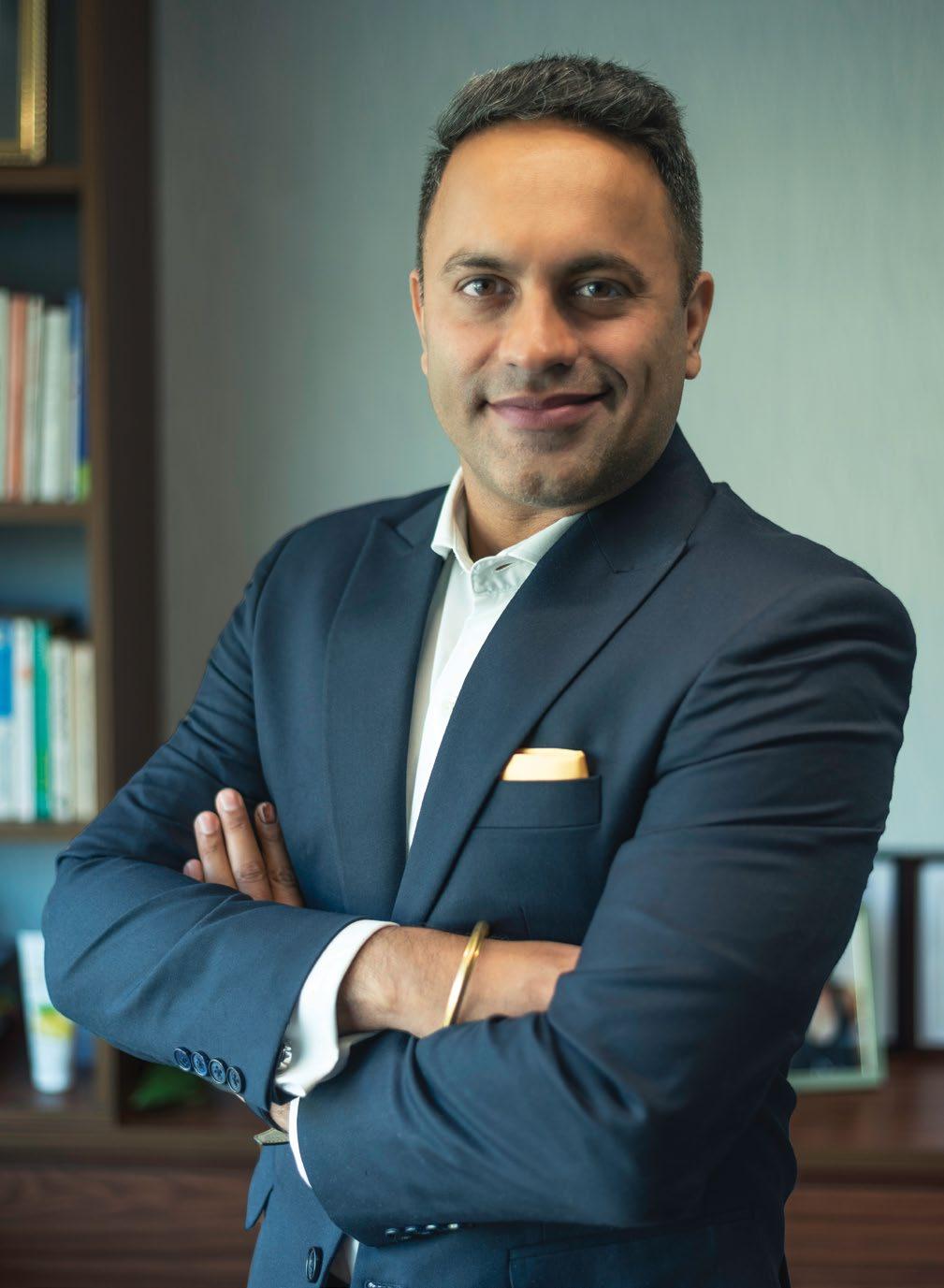
Dang, CEO, Executive Access
After 31 years building one of India’s most respected leadership advisory firms, Executive Access is expanding into the GCC, and the choice of ADGM over Dubai says everything about the kind of business it intends to build.
BY AYA ZHANG
EXECUTIVE ACCESS HAS SPENT 31 YEARS BUILDING ITS REPUTATION IN INDIA. WHAT MADE THE MIDDLE EAST THE RIGHT MARKET FOR YOUR FIRST MOVE OUTSIDE IT, AND WHY NOW?
Executive Access started out as the India office of an Asia-centric search firm back in 1995, and over three decades we have grown into one of the largest and most diversified leadership advisory firms in the country. For much of that time India kept us busy – there was always more to build at home – and we built our reputation deliberately, on relationships, discretion and a genuine understanding of leadership rather than transactional search. Having established that depth, we now feel primed to extend it beyond India. So, when we did decide to move, both the market and the timing had to be right.
The GCC is one of the few places in the world where ambition matches the pace of change. Governments and businesses across the region are pursuing some of the most significant economic diversification agendas anywhere – across AI, financial services, energy transition, healthcare and advanced manufacturing. That kind of transformation demands a very
different calibre of leadership, and that is precisely the conversation we have been having with boards and CEOs for three decades.
The timing also reflects how closely India and the GCC are now tied. Capital, talent and ambition are flowing between the two regions at a pace we have not seen before, and very few firms genuinely understand both ends of that corridor.
After 31 years of building depth at home, we felt ready to extend that understanding into a market where it is genuinely needed – rather than
expanding for the sake of a flag on the map.
YOU CHOSE ADGM AS YOUR BASE RATHER THAN DUBAI, WHICH IS THE MORE OBVIOUS ENTRY POINT FOR MOST FIRMS. WHAT DOES THAT DECISION SAY ABOUT THE KIND OF BUSINESS YOU ARE BUILDING HERE?
THE GCC IS ONE OF THE FEW PLACES IN THE WORLD WHERE THE AMBITION
THE PACE OF CHANGE.
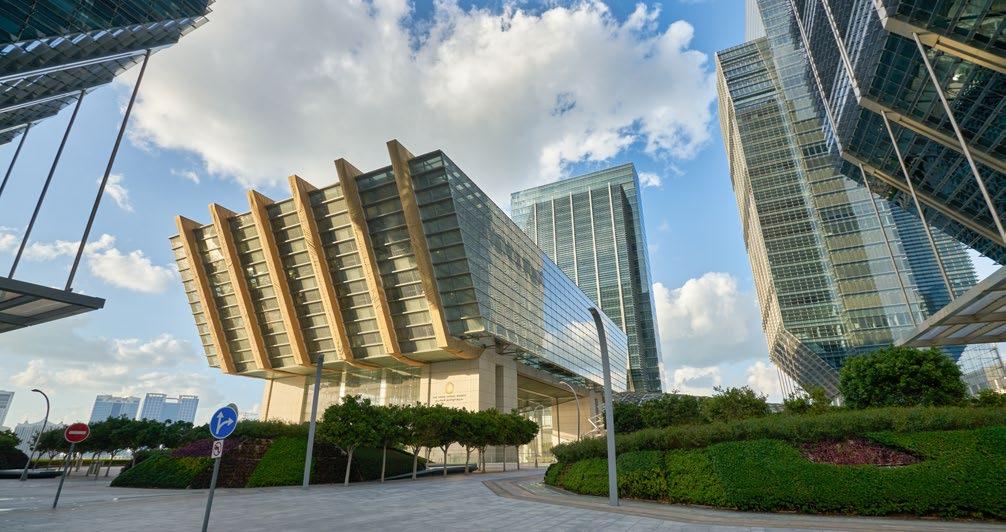
It says a great deal about who we are building this business for. ADGM has established itself as one of the most respected financial and business ecosystems in the world, and it attracts a particular kind of organisation – sovereign investors, financial institutions, family offices and serious global businesses that take governance and leadership seriously.
That is exactly the company we want to keep. We are not setting out to be the highest-volume search firm in the region. We are building a leadership advisory practice – anchored in board, governance, succession and family business work – for clients who think about leadership as a longterm, institutional question rather than an immediate vacancy. Basing ourselves in ADGM places us at the centre of that ecosystem.
Dubai is a remarkable market, and we will absolutely serve clients there. But the choice of Abu Dhabi and ADGM as our home reflects
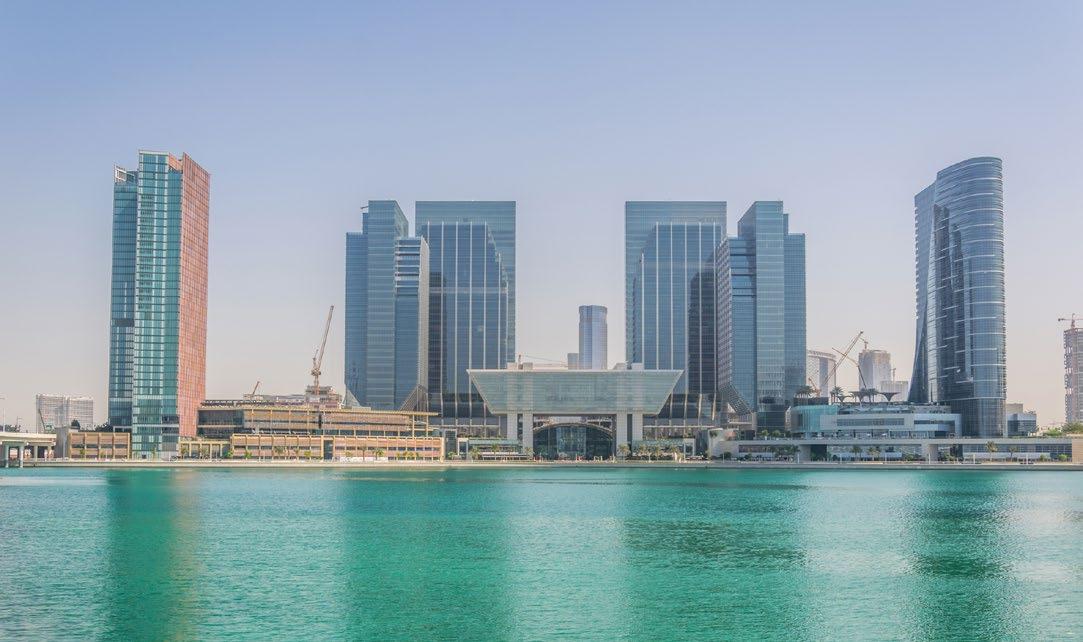
the kind of firm we are: deliberate, relationship-led, and focused on depth over scale.
YOU HAVE FLAGGED AI-READY LEADERSHIP AS A PRIORITY DEMAND ACROSS THE GCC. WHAT ARE BOARDS AND CEOS ACTUALLY ASKING FOR WHEN THEY USE THAT LANGUAGE, AND HOW DOES IT CHANGE THE SEARCH BRIEF?
It is a phrase that gets used loosely, so it is worth being precise. When boards and CEOs in the region talk about AI-ready leadership, they are almost never asking for someone who can build the technology themselves. They are asking for leaders who understand what AI and digital transformation mean for their industry, their workforce, their customers and their competitive position – and who can lead the organisation confidently through that change.
In practice, that changes the brief fundamentally. A traditional search would index heavily on domain pedigree and a track record of running an established operation. The AIready brief still values that, but it adds a different set of questions. Can this leader ask the right questions of their technology and transformation teams? Are they comfortable making informed bets under uncertainty? Do they have the adaptability to lead through ambiguity, and the courage to decide before the picture is complete?
So we spend far more time assessing judgement, learning agility and change leadership than we once did, alongside the conventional measures of experience. The best candidates are rarely the most technical people in the room. They are the ones who combine genuine digital fluency with the human leadership skills – trust, communication and conviction – that technology cannot replace.
WE BUILT OUR REPUTATION DELIBERATELY, ON RELATIONSHIPS, DISCRETION AND A GENUINE UNDERSTANDING OF LEADERSHIP RATHER THAN TRANSACTIONAL SEARCH.
THE INDIA-UAE BUSINESS CORRIDOR IS DEEPENING AT PACE. IS THAT A SPECIFIC STRATEGIC FOCUS FOR EA MENA, OR IS THE AMBITION BROADER THAN THAT RELATIONSHIP?
The India-UAE corridor is a genuine strategic focus, not a by-product. It is one of the most important economic relationships of the next decade, and we are unusually well placed to serve
it – with three decades of depth in India and now a strong base in the UAE. For clients operating across both, that bridge is real, and it sits at the heart of what EA MENA offers.
That said, the ambition is broader. We think in terms of corridors that strengthen India and connect it to the markets shaping its future, and two stand out for us: the GCC and South East Asia. We want to be a firm with genuine, distinctive strengths across both, not simply a single bilateral specialist.
Beyond those corridors, we continue to serve clients globally through our Panorama alliance, which gives us reach into every major economy without diluting our focus. So the honest answer is that the IndiaUAE relationship is the anchor – but it is not the ceiling.
YOU ARE ENTERING A MARKET WITH ESTABLISHED PLAYERS AND STRONG LOCAL NETWORKS. WHAT IS THE HONEST CASE FOR WHY A COMPANY HERE SHOULD CHOOSE EXECUTIVE ACCESS OVER A FIRM THAT HAS BEEN OPERATING IN THIS REGION FOR YEARS?
The premise of the question assumes we are new to the region, whereas the reality is that Executive Access has invested in bringing together highly experienced executive search leaders, Alister Wellesley (Chief Executive Officer, EA MENA) and Kirti Maini (Director, EA MENA), both with deep roots across the Middle East. Between them, they bring more than four decades of executive search experience in the region.
Alister has spent the last eight years advising clients across the GCC and broader Middle East on senior leadership appointments, while Kirti has spent the last fourteen years in executive search across the Middle East. Their networks, market knowledge and understanding of the region’s business culture have been built over many years and across multiple countries.
Clients are therefore not choosing between local knowledge and Executive Access; they are gaining both. What differentiates us is the combination of deep regional connectivity, global reach, and the agility of a firm that is singularly focused on delivering exceptional leadership outcomes for its clients.

According to Simon Ulmann, Vice President Operations & Supply Chain, IMEA, at Henkel Adhesive Technologies, the future belongs to organisations that combine digital innovation with operational resilience, sustainability and a skilled workforce.
BY REEBA ASGHAR

THERE IS A GREAT DEAL OF EXCITEMENT AROUND AI, BUT WHERE DO YOU BELIEVE AI IS CREATING THE MOST TANGIBLE VALUE IN MANUFACTURING AND SUPPLY CHAINS TODAY, AND WHERE IS THE INDUSTRY STILL OVERESTIMATING ITS IMPACT?
AI is undoubtedly transformative, but it is important to separate reality from hype. Today, the most tangible value it delivers in manufacturing and supply chains lies in predictive capabilities, safety and complexity management. We are seeing measurable returns in demand forecasting, where machine learning algorithms analyse historical data, market trends and external variables to predict demand fluctuations with a level of accuracy that traditional models struggle to achieve. On the factory floor, AI-powered vision systems are enhancing workplace safety, while predictive maintenance is helping to prevent costly downtime by identifying equipment issues before they escalate into failures.
Where the industry tends to overestimate AI is in the notion of fully autonomous decision-making. The idea of a completely self-managing, end-to-end supply chain remains some distance from reality. AI is exceptionally good at processing vast datasets and recommending actions, but it cannot replicate human judgement, empathy or the ability to navigate complex supplier relationships during periods of disruption.
I often describe AI as a powerful co-pilot rather than an autopilot. Our focus is on augmented intelligence –equipping supply chain professionals with better insights so they can make faster, smarter and more informed decisions.
IF WE WALKED INTO A HENKEL MANUFACTURING FACILITY IN 2035, WHAT WOULD LOOK FUNDAMENTALLY DIFFERENT COMPARED TO TODAY IN TERMS OF AUTOMATION, WORKFORCE ROLES, AND DECISION-MAKING?
The most striking difference would be the seamless connectivity across the entire manufacturing ecosystem and the natural collaboration between advanced robotics and human talent. Our vision for 2035 is centred on operations that are inherently safe, agile, efficient and sustainable. We see our facilities becoming industry-defining blueprints, combining advanced automation with high-value human expertise and leveraging scalable technologies that can be adopted across the wider manufacturing sector.
In this environment, technology becomes a key driver of operational resilience. Planning and execution will be supported by integrated, real-time data, enabling facilities to respond rapidly to changing market conditions while maintaining a strong commitment to sustainability. The future factory will not simply be more automated; it will be more intelligent, connected and adaptable.
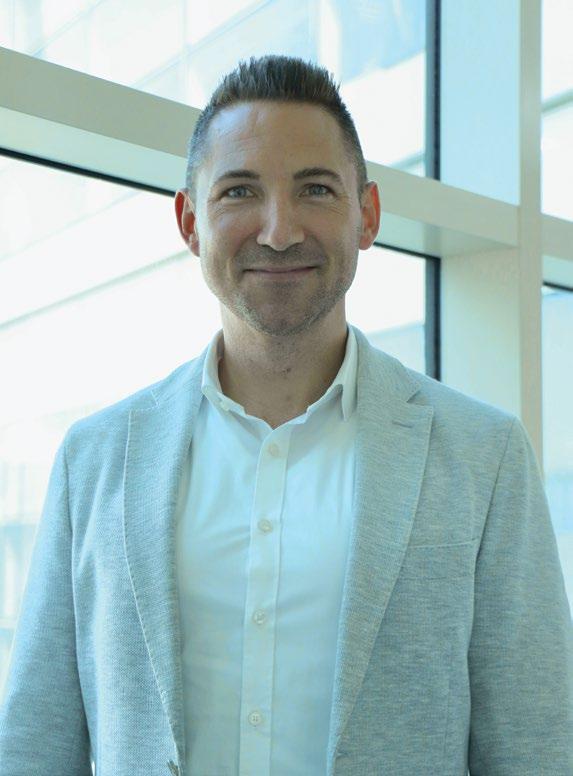
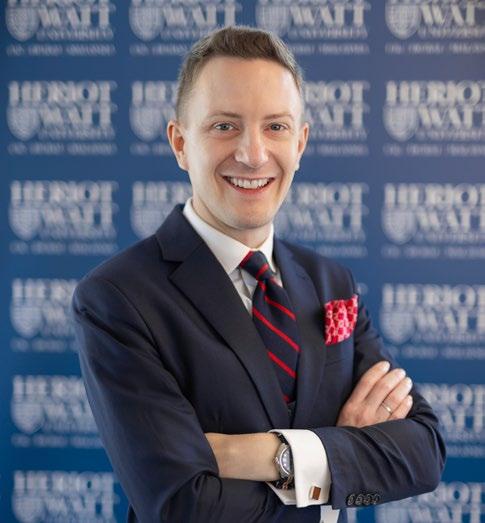
Ulmann, Vice President Operations & Supply Chain, Henkel Adhesive Technologies IMEA
HOW DO YOU BALANCE RESILIENCE WITH EFFICIENCY WHEN BOTH CAN SOMETIMES PULL ORGANISATIONS IN DIFFERENT DIRECTIONS?
This is arguably the defining supply chain challenge of our time. For decades, efficiency was the dominant objective. Just-in-Time models were designed to eliminate waste and maximise productivity. More recently, global disruptions prompted a sharp shift towards Just-in-Case strategies, leading organisations to build significant inventory buffers and tie up working capital. Neither extreme offers a sustainable long-term solution.
The answer lies in what we call “smart resilience”. It is not about
holding more inventory everywhere; it is about positioning the right inventory in the right locations based on a clear understanding of risk exposure. At Henkel, we use digital twin technology to model our supply chain network and simulate disruption scenarios in seconds. This allows us to identify the most cost-effective mitigation strategies before risks materialise. We also balance resilience and efficiency through greater visibility and regionalisation. By operating on an “in the region, for the region” approach wherever possible, we reduce lead times, minimise exposure to global shipping disruptions and lower transportation costs.
Ultimately, resilience is rooted in agility. Organisations with real-time visibility across their supplier networks can operate leaner because they have the ability to respond before disruptions reach their operations. Efficiency pays the bills, but resilience keeps the business moving. The two must work hand in hand.
The distinction is critical. Digitisation often means taking an existing process and moving it onto a screen. If a manual approval workflow is transferred from a paper form to a digital platform, the process may be faster, but the underlying inefficiency remains unchanged.
True transformation requires organisations to challenge the operating model itself. It begins by asking, “Why do we do it this way?” rather than “How can we digitise this?.”Transformational organisations use technology to eliminate unnecessary steps altogether. For example, IoT-enabled systems can automatically trigger replenishment orders without the need for manual
intervention, fundamentally redesigning the process rather than simply digitising it.
The greatest differentiator, however, is culture. Organisations can invest in the most advanced technologies available, but if employees do not trust the data or feel empowered to act on it, those investments will fail to deliver their full value. The most successful transformations invest as heavily in change management, upskilling and organisational culture as they do in technology itself.
Transformation is ultimately a human endeavour enabled by digital tools.
DO YOU SEE SUSTAINABILITY BECOMING A GENUINE SOURCE OF COMPETITIVE ADVANTAGE IN MANUFACTURING AND SUPPLY CHAINS, OR IS IT INCREASINGLY BECOMING A BASELINE EXPECTATION FOR DOING BUSINESS?
At present, it is both, although the direction of travel is clear: sustainability is rapidly becoming a baseline expectation. Regulators, customers and business partners increasingly expect organisations to demonstrate measurable progress on sustainability. In the near future, companies that cannot provide transparency around carbon footprints, ethical sourcing and environmental performance may simply find themselves excluded from procurement processes. Sustainability is becoming a licence to operate. At the same time, the way organisations pursue sustainability can create significant competitive advantages. Sustainability and operational efficiency are often closely aligned. Investments in energyefficient manufacturing, renewable energy and water recycling not only reduce emissions but also lower longterm operating costs and provide greater protection against energy market volatility.
Within adhesive technologies, sustainability also creates opportunities for innovation. By developing solutions that support circularity and help customers achieve their own ESG objectives, sustainability moves beyond compliance and becomes a driver of commercial growth and customer value.
ARE THE BIGGEST
HENKEL IS MAKING TODAY TO ENSURE ITS OPERATIONS AND SUPPLY CHAIN REMAIN COMPETITIVE OVER THE NEXT
As Henkel approaches its 150th anniversary, we recognise that long-term success depends on a continued commitment to futurefocused investment. Our priorities are centred around three pillars: digital infrastructure, sustainable operations and people.
The first is strengthening our digital backbone. This includes scaling Industry 4.0 applications, expanding our use of AI-driven analytics and standardising data architecture across our global operations. Agility is impossible when critical data remains fragmented across different systems.
The second pillar is sustainability. We are investing significantly in renewable electricity, advanced water and waste reduction technologies and site upgrades that support our journey towards carbon neutrality.
We are already seeing the results of these efforts. Our flagship sites in Kurkumbh, India, and Gebkim, Türkiye, have achieved carbon-neutral production through the adoption of high-efficiency electric systems and a transition to 100 per cent renewable electricity, eliminating direct fossil fuel use and reducing Scope 1 and Scope 2 emissions to zero.
Most importantly, we continue to invest in people. The factory of the future demands new capabilities, and we are equipping our operators,
engineers and supply chain professionals with the skills needed to thrive in an increasingly automated and data-driven environment. Technology evolves rapidly, but an adaptable workforce remains the most valuable long-term investment.
The IMEA region is one of Henkel’s most dynamic growth engines, although the opportunities differ significantly across markets.
In the Middle East, rapid industrial localisation and investment in world-class infrastructure are creating compelling opportunities. Programmes such as Saudi Arabia’s Vision 2030 and the UAE’s Operation 300bn are accelerating the transition towards advanced manufacturing and highly digitised logistics ecosystems. India offers opportunities on an extraordinary scale. The country’s manufacturing ambitions, combined with its strong digital capabilities and deep technology talent pool, make it an ideal environment for advanced analytics, AI-driven supply chain platforms and next-generation operational innovation.
In Africa, growth is being driven by a rapidly expanding and increasingly urbanised consumer base. The challenge lies in overcoming infrastructure constraints and improving distribution networks, creating significant opportunities for decentralised supply chains, mobilefirst technologies and last-mile innovation.
Across all three regions, the common thread is clear: immense potential for transformative growth, innovation and long-term industrial development.

When business slows, the instinct is to cut fast and chase revenue. That instinct is usually wrong.
BY ZAID ABOOBAKER
Every business goes through slow periods. Macroeconomic conditions. Geopolitical tensions. A large client leaves. In the GCC, where we have become spoiled by positive momentum and an environment designed for businesses to thrive, a slowdown can feel like a failure.
In my experience, it is part of the cycle, and how a business responds to it reveals far more than how it behaves when everything is working. Leadership and cultural values are tested when things are not going well.
The instinct when revenue and profits decline is to react fast and visibly. Cut costs across the board. Chase any revenue available. Reassure everyone that nothing is wrong. Each of those instincts is understandable. A slowdown is precisely the moment a finance function becomes more important. The need to be informing decisions. This is where a CFO’s lens changes the response.
The first question is not what to cut. It is what is actually happening. A slowdown has a cause, and the right response depends on it. Is this cyclical or a temporary softening that will recover? Is it structural, a permanent shift in the market that demands a different model? Or is it self-inflicted, the result of decisions the business made and can therefore reverse? These three demand completely different responses. Cutting hard into a temporary dip can damage a business that would otherwise have recovered. Waiting out a structural shift can be fatal. The discipline is to diagnose before acting, and that requires data the business can trust.
When conditions are uncertain, the single most valuable asset is a clear view of what is coming. Most businesses run on backward-looking reporting. The accounts arrive weeks after the month-end and describe what already happened. In a slowdown, that is far too slow.
What is needed is a rolling cash flow forecast that looks forward, updated frequently, showing the runway under both realistic and pessimistic scenarios. This is where modern, technology-enabled finance earns its place. Reporting that used to take days can be delivered in hours, and a forecast becomes a living document rather than a quarterly event. You cannot navigate a slowdown on numbers that only describe the past.
Under pressure, the instinct is to protect the top line. Discount to keep clients. Take work at thin margins to keep the team busy. This feels like fighting for survival. Often it accelerates the decline because it exacerbates already challenging cash positions.
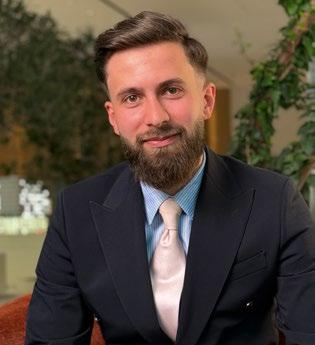
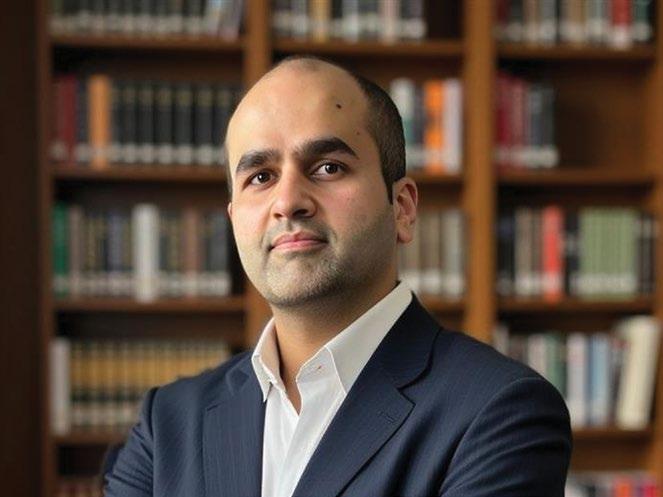
Zaid Aboobaker, Founder & CEO, CompassPoint Consulting
Revenue that does not carry margin consumes cash and capacity while creating the illusion of health. A CFO’s job in a slowdown is to keep leadership focused on profitability and cash generation, not just the headline number. Sometimes the right decision is to let low-margin revenue go, even when the top line is already falling. That is a hard call, and one CFOs should be making.
If costs do need to come down, the across-the-board cut is often done in a panicked way.
It’s far better to cut surgically. Identify what is essential, what is discretionary, and what was never delivering a return even in good times. A slowdown is a useful moment to remove the last of those permanently. Precision protects the capacity you will need when conditions turn.
A downturn is not only about defence. When competitors retreat, talent becomes available, customers reassess their suppliers, and assets
can be acquired at sensible prices. A business with visibility and cash discipline can invest counter-cyclically while others are struggling. The strongest businesses I have seen do not simply survive a slowdown. They use it to come out ahead.
Banks, investors and boards respond far better to a business that comes to them early with a clear, evidencebased plan than to one that goes quiet in a crisis. Visibility is not only an internal tool. It is what allows you to have a credible conversation with the people whose support you may need. A sophisticated lender or investor can always tell the difference between a management team in control and one hoping the problem passes.
A slowdown exposes everything. Weak reporting, thin margins, undisciplined costs, and absent forecasting all become visible at the moment they matter most. Disciplined financial management becomes of paramount importance during these periods.

FOO Co-Founder and CEO Ghady Rayess and OMPAY CEO Sami Elloumi tell Business Today Middle East what it actually takes to build a digital payments ecosystem from the ground up and why Oman is further along than most people realise.
BY AYA ZHANG

When Ghady Rayess launched FOO in 2009, banks in the region were still deeply traditional. Checking your balance or withdrawing cash meant visiting a physical branch. The idea of a fully digital financial services platform was not just ambitious — it was premature. “I launched FOO, one of the first fintech solution providers in the region dedicated to helping banks streamline their services and enhance customer satisfaction,” he says. What followed was more than fifteen years
of building the kind of infrastructure that now quietly powers some of the region’s most significant digital payment platforms.
One of those platforms is OMPAY, the Oman-based digital wallet backed by Omantel and regulated by the Central Bank of Oman, for which FOO serves as the long-term technology partner. The partnership brings together two organisations with different vantage points on the same challenge: how to move a market from cash dependency to digital adoption at scale, quickly, and
without losing the trust of the people it is meant to serve.
For Sami Elloumi, CEO of OMPAY, the early signals from users have been more than encouraging. “What has been particularly encouraging is the way users are engaging with the platform beyond basic payments,” he says. “We are seeing growing interest in tools that help people manage their money more effectively, whether through card spending, transfers, budgeting features, or day-to-day financial tracking.” Perhaps most revealing, he adds, has been the
speed at which users have embraced the idea of having multiple financial services within a single platform. “Customers are looking for simplicity and control, and they increasingly value solutions that bring payments, transfers and money management together in one seamless experience.”
The numbers behind that appetite are significant. According to data from the Central Bank of Oman, digital payment transactions surged 150 per cent between 2024 and 2025 — a pace of growth that few markets in the region have matched. For FOO, serving as the technology backbone of a platform operating in that environment means getting the architecture right from the start. “Scalability is vital in fintech, as mobile applications need to be able to seamlessly handle more users, transactions and data, to meet demand without experiencing a decline in performance or any deterioration in customer experience,” says Rayess. FOO’s approach is built on a modular platform using microservices — what Rayess

describes as a “plug and play” model that allows for flexibility and speed without sacrificing stability.
Oman’s large expatriate population has made international transfers a particularly critical part of the OMPAY proposition. But Elloumi is careful to frame the remittance opportunity more broadly than the obvious narrative. “While expatriate communities represent a significant part of that demand, the need to move money across borders extends much further,” he says. “Many Omanis also rely on international transfers to support family members abroad, manage education expenses, fund travel, or meet personal commitments overseas.” What users want, he
adds, is straightforward: confidence that their money will arrive quickly, securely and at competitive rates. “Convenience matters just as much as cost. Customers appreciate being able to complete transfers directly from their mobile device, at any time, while maintaining visibility over their transaction journey.”
Financial inclusion sits at the centre of both organisations’ stated missions, but Elloumi is direct about what it actually requires in practice. “Technology alone does not solve the challenge,” he says. “The solution must be built around trust, accessibility and relevance to everyday needs.” People do not adopt financial services because they are digital, he argues — they adopt them

because they solve a real problem.
“Whether that is managing spending, sending money internationally, making secure payments or helping young people build healthy financial habits, the value proposition must be clear and meaningful. Financial inclusion is therefore not a single initiative. It is the result of consistently designing products that meet people where they are.”
On the technology side, the hardest problem to solve has been onboarding. “Requiring users to complete long applications and difficult new account opening processes leads to lost business,” says Rayess. FOO’s response has been to build a fully automated digital onboarding framework powered by artificial
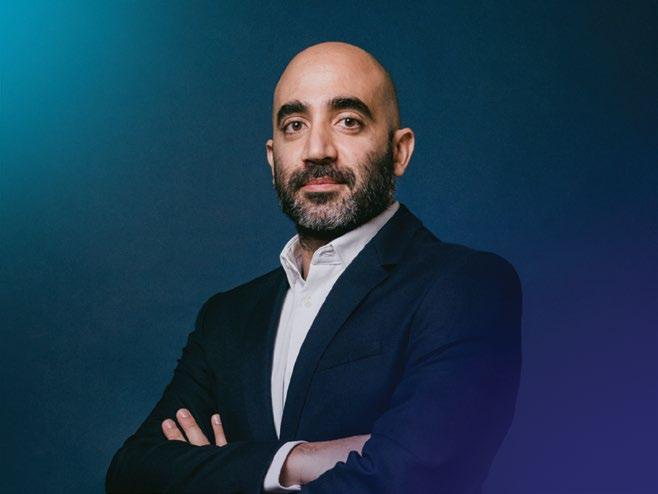
Ghady Rayes, FOO Co-Founder and CEO
intelligence, enabling ID document validation and KYC compliance without manual intervention. “The solution provides a fast, secure, and reliable verification process, making onboarding smooth and efficient while protecting the business by preventing financial crimes.”
The OMPAY platform’s regulatory and corporate structure has shaped how the product is developed and how partnerships are approached. Being backed by Omantel and operating under Central Bank oversight, says Elloumi, provides a foundation that allows the company to move with confidence. “Omantel brings scale, reach and a deep understanding of the local market, while the Central Bank’s regulatory framework provides the trust, security and governance that are essential in financial services.” The result, he says, is an ability to balance innovation with reliability — every new feature must deliver genuine customer value while maintaining the highest standards of security and compliance. “We view trust and innovation as complementary rather than competing priorities. Strong foundations allow us to move faster.”
For FOO, defending its position in an increasingly competitive GCC fintech landscape comes down to a combination of longevity, deep client relationships and a fully in-house build approach. “We control our roadmap and can respond to market shifts faster than platform-dependent competitors,” says Rayess. The client roster — which includes Al Maryah Bank, Benefit, Mastercard, Visa, Zain Group and MAF — reflects more than a decade of sustained regional presence.
What the FOO-OMPAY partnership ultimately illustrates is something broader about how digital financial infrastructure gets built in emerging markets: not through a single breakthrough product, but through the patient assembly of trust, technology and regulatory alignment over time. Oman’s digital payments surge did not happen by accident. It was built, piece by piece, by organisations willing to do the unglamorous work of getting the foundations right.
“Ultimately, trust, ease of use and relevance remain the factors that drive long-term adoption,” says Elloumi. It is a simple formula. Executing it consistently is the hard part.
JULIA SCHAMNE:
As Cluster General Manager of Novotel and Adagio Premium Dubai Al Barsha, Julia Schamne has a clear philosophy: in a market obsessed with complexity, the hotels winning are the ones getting the basics right.
BY AYA ZHANG
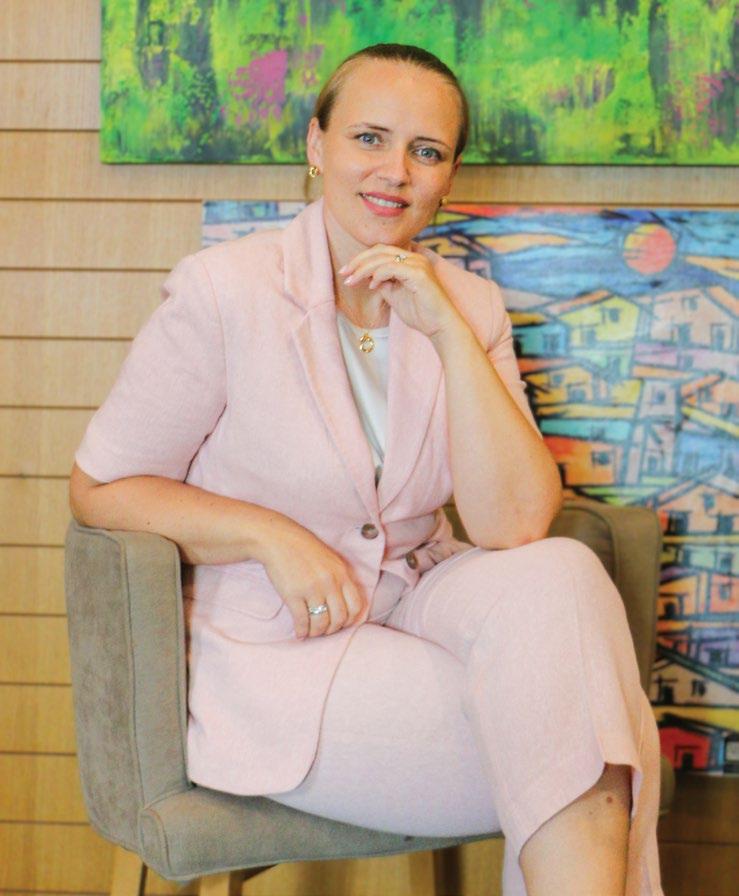
There is a quiet shift happening in the way guests experience hotels, and Julia Schamne, Cluster General Manager of Novotel and Adagio Premium Dubai Al Barsha, has a front-row seat to it.
“What has changed most is that guests are no longer impressed by complexity,” she says. “They are impressed by simplicity done exceptionally well.”
It is a deceptively straightforward observation, but one that carries significant operational weight. In one of the world’s most competitive hospitality markets, where properties
compete on technology, design and experience at every price point, Schamne’s philosophy runs counter to the instinct to add more. Today’s traveller, she argues, is not necessarily searching for the most technologically advanced hotel. They are seeking a seamless, intuitive and problem-free experience.
There is also a clear shift toward authenticity and meaning. “Guests want to feel something,” she says. “They want design that resonates, spaces that inspire, and experiences that connect.” Aesthetic value, once considered a differentiator, is now simply expected. Wellness, too, has
evolved from being an add-on to becoming central to the stay, with a more holistic focus on balance, longevity and personal wellbeing.
For Schamne, a great hotel experience in 2026 is about the flawless execution of meaningful indulgences — engineering a stay where the guest feels valued, not processed. At Novotel and Adagio Premium Dubai Al Barsha, that translates into what she describes as an end-to-end mindset. “We look at the entire guest journey from prearrival to post-departure and leverage every CRM touchpoint available to personalise that journey. It is not
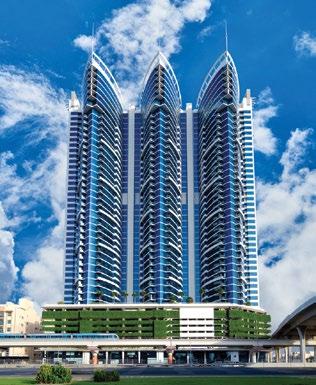

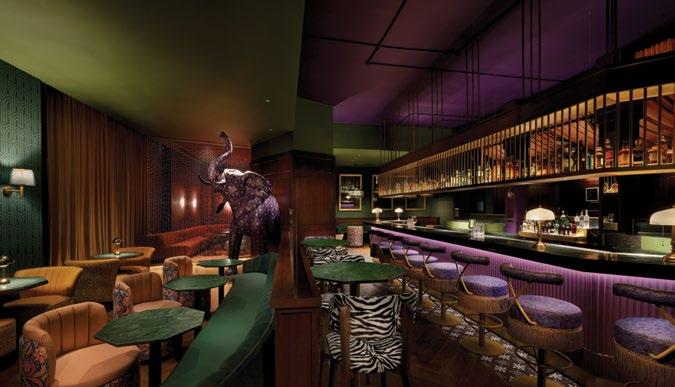
Running two distinct hospitality concepts under one roof demands a particular kind of operational discipline. Differentiation, in Schamne’s view, is never about one big idea. “It is about consistently doing many small things exceptionally well. In a market like Dubai, guests notice the details. It is about precision in execution, attention to the basics, and then elevating the experience with one or two standout peak moments that leave a lasting impression.”
Social media, rather than being a source of pressure, has become a tool for innovation. Schamne sees it as an opportunity to tap into global trends and reinterpret them for the local market. “It allows us to bring global experiences into our hotels and create moments that are not only memorable in person but also shareable.” At the same time, she is clear that the experience must deliver substance beyond aesthetic appeal. “It has to be meaningful beyond the camera.”
just about recognition; it is about relevance.”
Operationally, this means strong preparation, consistent execution and a culture of innovation. Every interaction, she says, should feel considered and intentional.
Authenticity, in Schamne’s view, begins with people. “Selecting the right teams is where it starts — people who naturally care and understand the value of detail.” From there, it is about empowerment. She encourages her teams to create what she calls an “emotional spike” — those small but powerful interactions that guests genuinely remember long after checkout. “By combining human intuition with the data we have available, and real-time access to the guest, we are able to shape experiences that feel personal, relevant and emotionally engaging rather than designed or scripted.”
Staying relevant in a market that moves as quickly as Dubai also requires a willingness to evolve. Schamne speaks about the importance of continuously learning, unlearning and relearning, and of surrounding yourself with passionate, curious people who are willing to do the same.
That philosophy extends to how she thinks about culture. “I believe in hiring people who are often more knowledgeable than me in their respective fields and then giving them the space to excel,” she says. “Empowerment is critical. My role as a General Manager is to remove obstacles, not create them — to clear the path so the team can perform at their best.” When teams feel trusted and supported, she adds, they naturally deliver more personalised, thoughtful and exceptional experiences.
Looking ahead, Schamne sees the biggest opportunity in deepening personalisation and strengthening the property’s position as a lifestyle destination. This includes further investment in technology and data to better understand guests and tailor experiences in a more intuitive way. “The goal is to anticipate needs, not just respond to them.”
Food and beverage also represents significant potential. By refining concepts and elevating the experience, the aim is to position the property as a destination for the local community, not just hotel guests.
“Ultimately, the focus is on creating a property that feels dynamic, relevant, and deeply connected to both our guests and the neighbourhood,” she says.
In a market that never stops competing, that might be the most ambitious goal of all.
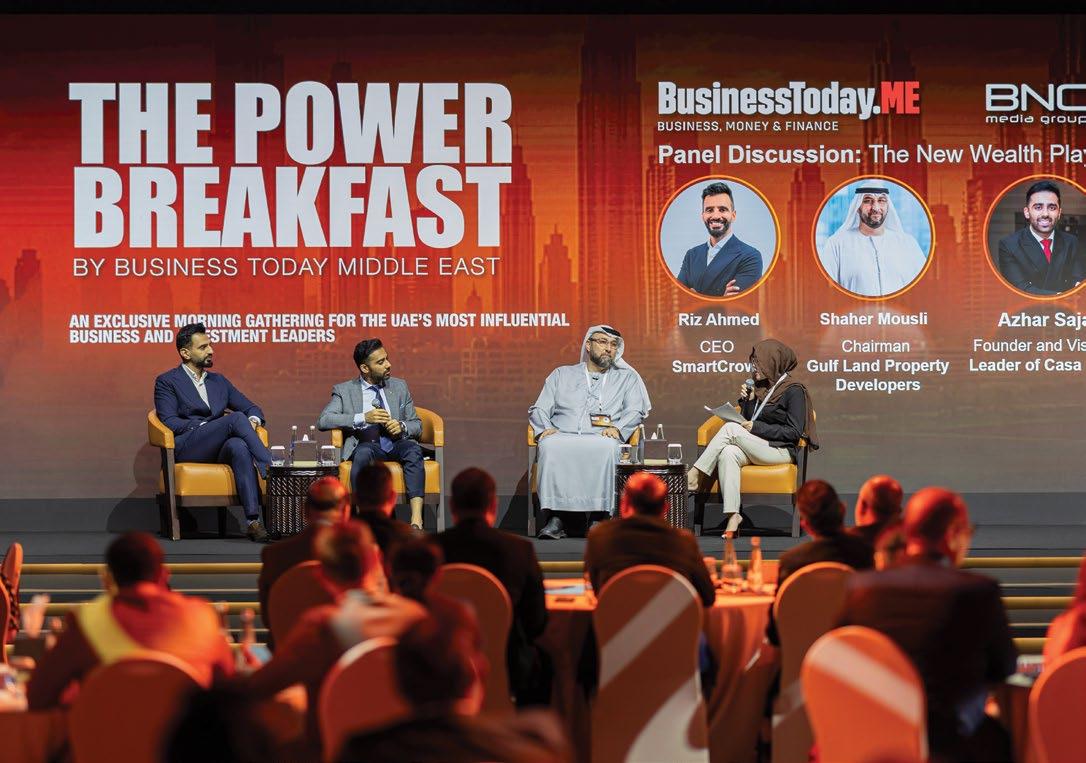
At Business Today Middle East’s Power Breakfast, three of Dubai’s most candid voices in real estate and investment gathered at Sofitel The Palm to talk about what the market is actually doing, where smart money is going, and what wealth really means.
On the morning of 24 June, with extra chairs being brought into a room that was already full, Business Today Middle East held its Power Breakfast at Sofitel The Palm Dubai. The theme was the New Wealth Playbook: a conversation about how wealth is being created, preserved and deployed in the UAE today, and what the next chapter looks like.
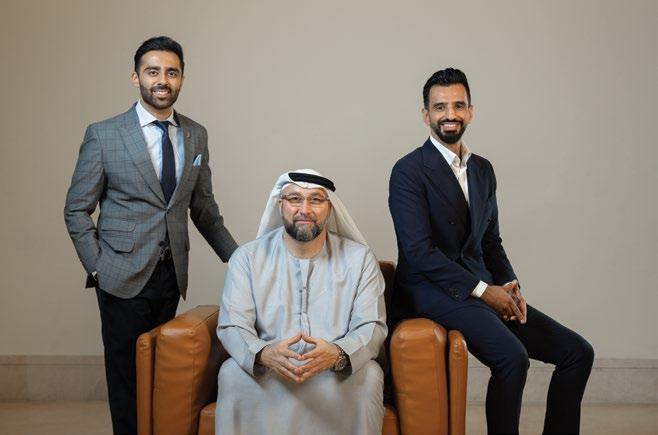
The panel brought together Riz Ahmed, Chief Executive Officer of SmartCrowd; Azhar Sajan, Founder and Visionary Leader of Casa Milano; and Shaher Mousli, Chairman of Gulf Land Property Developers. The session was moderated by Business Today Middle East Editor Aya Zhang.
What followed was an hour of unusually frank conversation, about market data that cannot be trusted, about where smart money is actually going, and about what wealth means when you strip away the numbers.
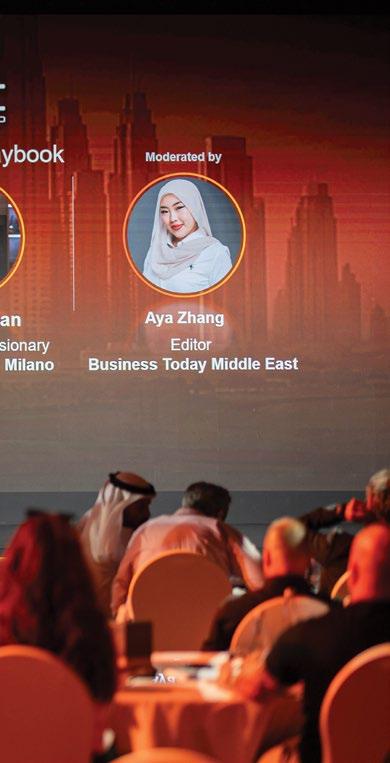
conflict began in late February was misleading — not because of bad intentions, but because of how real estate data works.

READ THE DATA CAREFULLY. VERY CAREFULLY.
The first thing Riz Ahmed wanted the room to understand was that most of what they had been reading about the Dubai property market since the
“Be very, very careful with the data and the headlines,” he said. “Transactions are still going, billions and billions of transactions are happening — but they were transactions that were signed before the conflict happened. You have a lag. If you’re buying a property, there’s a 60-day MOU. So for the first two months, there were all these headlines saying Dubai is doing amazing, but that was not necessarily reflective of the lack of confidence at that point.”
He went further. Around April, he received a call from a friend of a friend who had panicked at the start of the conflict and sold her Palm apartment — worth AED 6.5 million — for AED 4.7 million. She had driven to Oman and flown to the UK via Istanbul. “That’s how panicked she was,” Ahmed said. That transaction now exists in the data. When valuers look at comparable sales in the months following the conflict, they will find it. It will pull prices down. And it will not tell the full story.
Then there were the brokers who listed properties at inflated prices and
advertised 25 per cent discounts that were, in reality, simply market price. And there were the news articles citing the DFM real estate index — which tracks listed developers and reflects sentiment more than actual transaction value.
“I think we have to be very, very careful with the data,” Ahmed said. “What I’m seeing in the market is a lot of confidence in Dubai.”
His most memorable line came when he described a conversation he used to have with friends before the conflict. When asked what could really damage Dubai, he would say privately: if a bomb went off, then Dubai is finished. “What this has shown us is even that can’t finish off Dubai. Dubai is so resilient to this, and it surprised me, hugely surprised me.”
When asked the most personal question of the morning — where they would invest their own money in this market today — all three panellists converged on the same unexpected answer: renovation.
Ahmed was direct. “I think there’s a great opportunity still in the renovation game. There’s a lot of old properties in
Dubai that could do with renovation.”
He gave a concrete example: SmartCrowd bought a property in Dubai Hills ten months ago for AED 12 million, invested AED 4 million in renovation and fees, and sold it for AED 19.5 million — below the AED 21 million they had originally targeted, but still a significant return. “All of the people we’re selling to are end-users. We’re not finding investors buying these kinds of properties.”
Sajan agreed, and added a dimension the room had not considered. As the founder of a premium building materials business, he is watching the renovation market from the supply side. “Everybody’s continuously going to be building properties, but what about the old ones? They have to be refurbished at some point or the other.” During the conflict period, his phone had not stopped ringing — including from developers who had never worked with Casa Milano before. “Because if you have stock today, you’re king.”
Mousli went even further, describing a new category of developer that is emerging: buyers who acquire entire buildings in prime locations — Business Bay, for example — renovate them completely, brand them in some cases with a hospitality flag, and sell at AED 3,500 per square foot within a year. “The turning cycle is only a year. Six months to renovate, another six months to sell. The capital exit will be very, very quick.”
He also shared an anecdote about a developer he had come across who was buying out individual apartment owners in a building he had targeted for full renovation. When Mousli asked what he planned to do with the residents who refused to sell, the developer’s answer was simple: upgrade their apartments and share the profit with them.
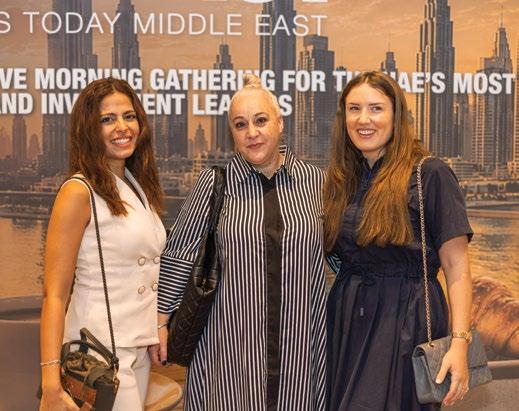
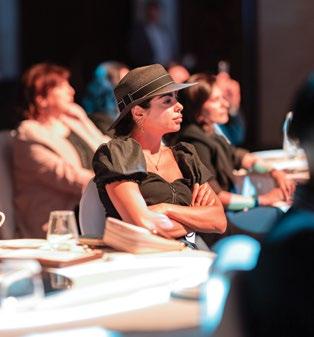
Mousli’s most significant contribution to the morning was his argument that Dubai’s property market has undergone a structural shift that most investors are still processing.
“In the old days, it was an investor’s market,” he said. “Right now, it’s shifting to an end-user’s market.” The people moving to Dubai now are not buying to flip or to collect rental yields. They are buying because they intend to live here — families relocating from Europe, from Asia, from across the region, looking for schools nearby, for green space, for community. “That

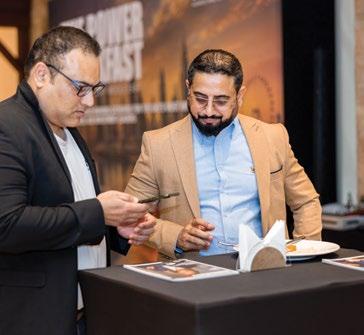
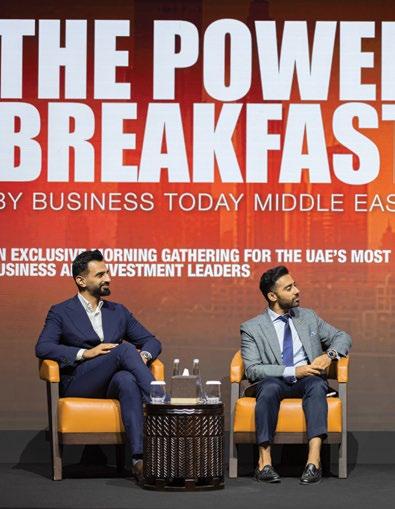
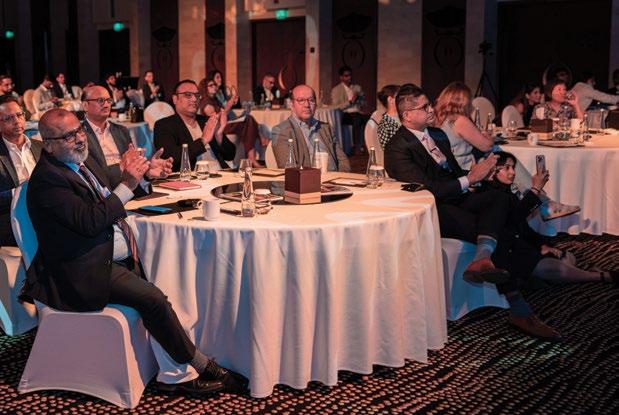
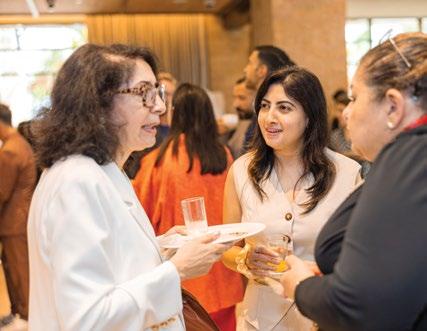
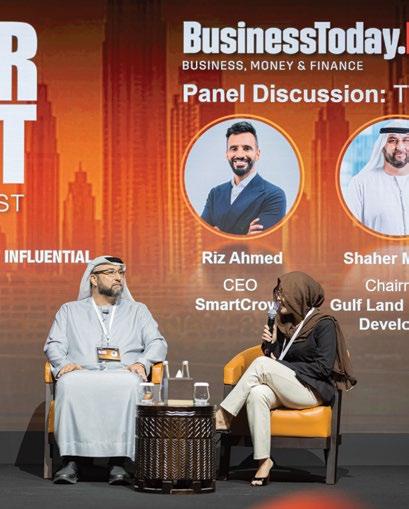
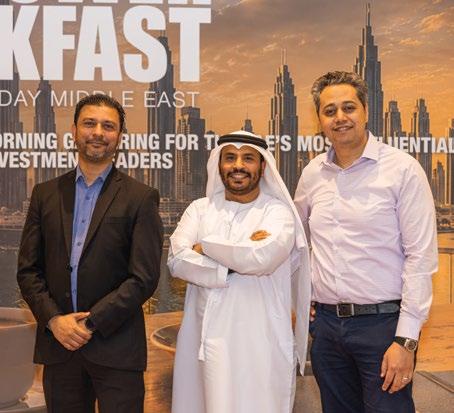

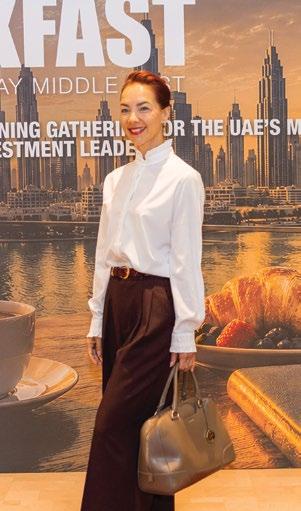
segment is increasing and is going to keep on increasing.”
His advice to anyone investing in property was unambiguous: stop looking for the cheapest option and start looking for the right one. “Don’t look always for the cheapest property to buy in these times. Always look at the right property to buy, because sometimes the cheapest will not get you the return, especially on the long run.” The criteria he laid out — reputable developer, family-oriented community, strong surrounding infrastructure — reflect a market where liveability now drives value more than speculation does.
Ahmed’s data supported the argument. Rents are softening as tenants negotiate harder and landlords accept lower rates rather than leave properties empty over summer. Sellers are holding firm on price because they remember the regret that came with discounting during COVID. Buyers want deals. The market is in a standoff. “I think what’s going to happen is you’re going to see in quarter four where the real transactions are actually happening, and that’s going to set the benchmark for going forward.”
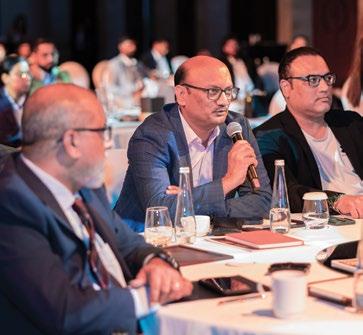
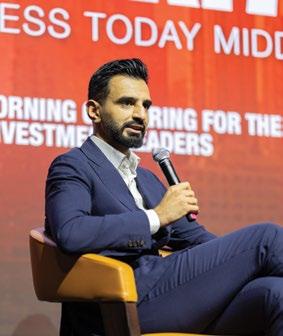
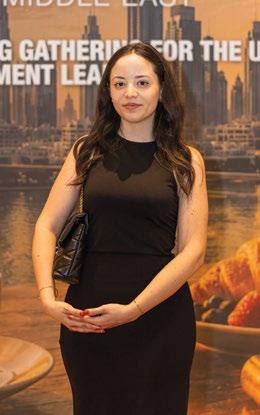
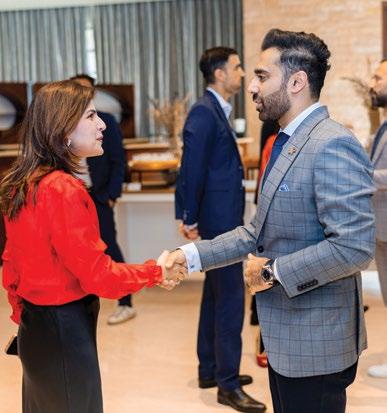
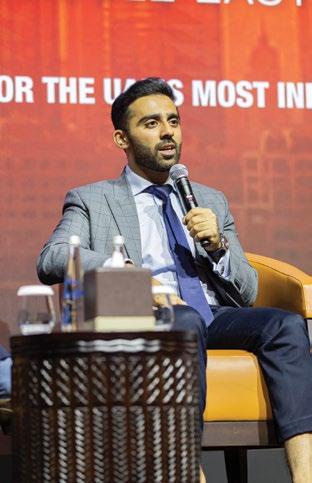
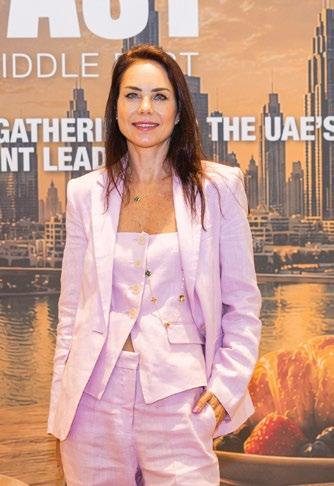
His confidence remained intact throughout. He described touring one of Dubai’s most expensive schools the day before the Power Breakfast and finding approximately 50 families there for enrolment tours — in summer. “That again gives me a lot of confidence on the market.”
The most unexpected exchange of the morning came from an audience question near the end of the session: in a broader sense, what is wealth?
Ahmed answered first, and his answer was the most personal of anything he had shared that morning. “I don’t attribute a lot of value to monetary wealth, except that it is the ability to help others.” He described his time as CFO of GEMS Education and the question he used to ask himself: are we providing education to make money, or are we making money to provide education? “For me, the accumulation of wealth is actually what you can do to help others and lift everyone up.”
Sajan, speaking as the second generation of a family business, framed wealth as a question of preservation and legacy. “First generation creates it, second generation runs it, third generation drops it down.” His concern was not accumulation but continuity — how to take what was built and make it last. “You have to understand where do you see yourself in your perspective to build for that future.”
Mousli’s answer was the most architectural. “Wealth is how to make a statement. Bring something that is not there. Give a landmark, give a legacy that will live after you’re gone.”








MEET THE 50 MOST INFLUENTIAL FIGURES SHAPING THE MIDDLE EAST’S TRAVEL AND TOURISM LANDSCAPE
Adecade ago, the conversation was largely about Dubai and Abu Dhabi. Today, it spans an entire region. Saudi Arabia is building destinations from the ground up, investing hundreds of billions into tourism infrastructure, and welcoming an entirely new generation of international visitors. Oman is positioning itself as a nature and culture destination with genuine global appeal. Qatar, energised by a decade of investment and the platform of the 2022 World Cup, is deepening its hospitality credentials. Bahrain and Ras Al Khaimah are carving out distinct identities in a market that rewards differentiation.
The numbers reflect the ambition. Dubai welcomed nearly 20 million international visitors in 2025, its third consecutive record year. Saudi Arabia is targeting 150 million visitors annually and has set itself a timeline that would
have seemed impossible not long ago. Aviation capacity across the region is expanding at pace, with new carriers, new routes and new airports reshaping how the world connects to and through the Middle East.
But behind every record and every announcement is a person making decisions, building teams, managing risk and turning vision into something real. The Business Today Hospitality 50 is about those people.
This list spans five categories: Destination Makers and Tourism Visionaries, Hospitality Owners, Investors and Developers, Global Hotel Group Leaders, Aviation and Travel Connectivity, and Experiences and Events. Together, they represent the full ecosystem of an industry that is no longer just growing but genuinely transforming.
These are the 50 people at the centre of it.
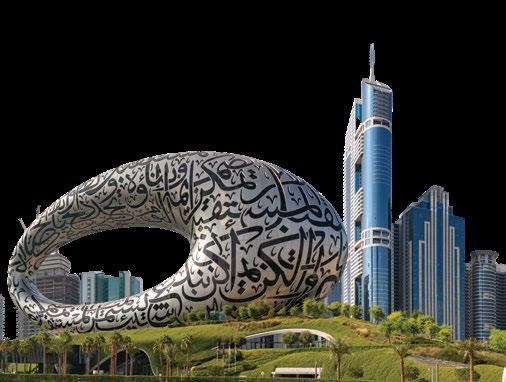
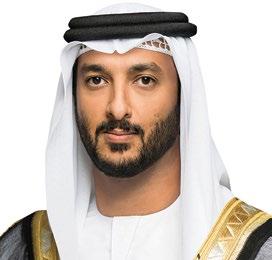
When the UAE merged its economy and tourism portfolios into a single ministry in June 2025, Abdulla bin Touq Al Marri was already holding the brief. Appointed Minister of Economy in 2020 under a restructured government, he has since become the federal face of the UAE’s tourism response — most visibly during the conflict period earlier this year, when he led the sector’s recovery effort and was unequivocal in his assessment: “A 40-day conflict will not determine the future of the UAE economy.”
He served as Secretary General of the UAE Cabinet from 2017, was CEO of the Dubai Future Foundation, and led the launch of Dubai 10X — initiatives that positioned him as a builder of long-term institutional frameworks. That background is visible in how he approaches tourism: as an economic lever and a policy tool, not just an industry. Al Marri chairs the General Civil Aviation Authority and the UAE International Investors Council and holds a degree in Civil Engineering from the University of Sheffield.
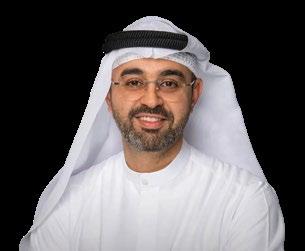
H.E. Khalid Jasim Al Midfa chairs one of the GCC's most culturally distinctive tourism authorities, overseeing Sharjah's positioning as a destination defined by heritage, arts and family-oriented experiences. Under his leadership, the authority has pursued a digital transformation of its tourism services, launched an international classification model for hospitality buildings in the emirate, and established an annual hospitality sector forum bringing together regional and international stakeholders. He also launched Al Jawhara, an initiative developed in collaboration with the Nama Foundation to empower women in the tourism sector — now an established annual programme.
Beyond SCTDA, H.E. Al Midfa chairs the Sharjah International Marine Sports Club, heads the Sharjah National Day Celebrations Committee, and sits on the Emirates Tourism Council. He holds a BA in Business Administration from the Higher Colleges of Technology.
Few figures have done more to reshape how the world thinks about Saudi Arabia as a destination. As Minister of Tourism, Ahmed Al Khateeb has overseen a transformation that is as much structural as it is statistical. The sector’s contribution to GDP has risen from 3.5 per cent in 2019 to 5 per cent currently, with a target of 10 per cent, while employment in tourism has surpassed one million jobs, up from around 750,000. The ambition is equally striking: GDP contribution from tourism is targeted to grow from SAR 300 billion to SAR 600 billion, with visitor numbers expected to reach 150 million.
H.E. Ahmed Al Khateeb sits at the centre of Saudi Arabia’s tourism architecture, chairing the Tourism Development Fund and the Saudi Tourism Authority, and serving on the boards of the Public Investment Fund, NEOM, and the Red Sea Company. His career spans finance, entertainment and public service — he founded Jadwa Investment Company, led the General Entertainment Authority during its transformative early years, and served as Minister of Health before taking on the tourism brief. That breadth of experience across sectors is visible in how he has approached the role: not as a promoter of a single destination, but as an architect of an entire visitor economy.
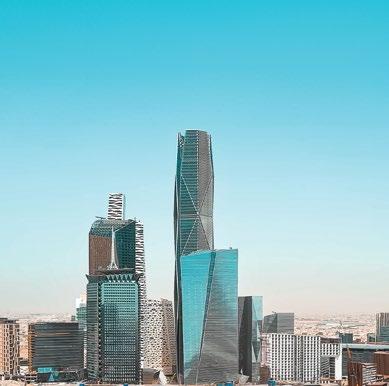

Member of the Board, Managing Director and CEO, NEOM
Aiman Al-Mudaifer took the helm at NEOM bringing with him a career that spans both the public and private sectors, most recently as head of the Local Real Estate Investment Division at the Public Investment Fund since 2018. In that role, he oversaw Saudi Arabia’s five giga projects — NEOM, Red Sea Global, Qiddiya, Roshn and Diriyah — as well as a portfolio of more than 50 investments across leisure, retail and entertainment.
His board positions have included Chairman of King Abdullah Financial District and board membership at Diriyah Gate. Earlier in his career, he served as CEO of Shomoul Holding Company, founded Andalus Company, and began his professional journey as a Credit Consultant at the Saudi Industrial Development Fund. He holds a Bachelor’s degree in Systems Engineering from King Fahad University of Petroleum and Minerals.
CEO, Ras Al Khaimah Tourism Development Authority
Phillipa Harrison joined Ras Al Khaimah Tourism Development Authority with a clear brief: accelerate the emirate’s ambition to attract over 3.5 million visitors by 2030 and ensure the growth delivers long-term value for the region.
She brings to the role a track record built at Tourism Australia, where as Managing Director she guided the organisation through a period of significant growth, expanding its appeal across key international markets with an emphasis on indigenous, regional and experiential tourism. By 2024, Australia was welcoming 8.3 million international visitors annually — its strongest inbound performance in five years.
At RAKTDA, she is now applying that experience to one of the GCC’s most distinctive tourism propositions — an emirate increasingly recognised for adventure, nature and a quieter alternative to the region’s more established destinations. She holds a BA in Mass Communication and Psychology from Macquarie University and an MBA from the Australian Graduate School of Management at the University of New South Wales.
Group CEO, Miral
Mohamed Abdalla Al Zaabi has led Miral since 2015, overseeing the company’s transformation of Yas Island into one of the world’s most visited entertainment destinations. In 2023, Yas Island recorded 34 million visits, a 38 per cent increase from 2022. That same year, visits to Saadiyat Island — where Miral took on destination management in 2022 — grew by 44 per cent.
Under his leadership, Miral has forged partnerships with Ferrari, SeaWorld and Warner Bros., cementing Abu Dhabi’s position as a global leisure hub.
Before Miral, Al Zaabi held senior roles at Aldar Properties. He holds an Executive MBA from INSEAD and an MSc in Strategic Project Planning from Heriot-Watt University, and was the first Emirati to receive the Cisco Certified Internetwork Expert certification.
Group CEO, Red Sea Global
John Pagano has led Red Sea Global since 2018, building the developer of The Red Sea and Amaala from the ground up. Both projects sit along the northwestern coast of Saudi Arabia and are central to the kingdom's Vision 2030 tourism ambitions.
With nearly 40 years of experience delivering large-scale, multi-billiondollar developments internationally, Pagano has positioned Red Sea Global around a regenerative tourism model — one that aims to contribute positively to biodiversity and address climate change rather than simply minimise environmental impact.
Before RSG, he founded Old Fort Capital Investments, an international strategic advisory firm focused on large-scale real estate developments. He holds a degree in Mechanical Engineering from the University of Toronto and studied Corporate Finance at London Business School.
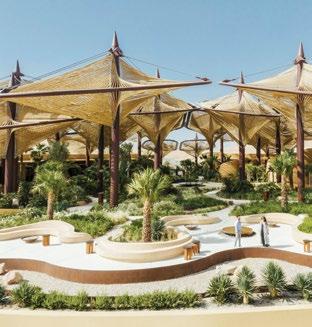
CEO, Dubai Corporation for Tourism and Commerce Marketing
Since joining the Dubai Corporation for Tourism and Commerce Marketing in 2014, Issam Kazim has built the organisation into a team of more than 200 people operating across 40 international offices. Under his leadership, Dubai welcomed 19.59 million international visitors in 2025 — its third consecutive record year — and was named the world’s top destination in the Tripadvisor Travellers’ Choice Awards for the third year running in 2024.
Kazim’s view of tourism goes beyond visitor numbers. He sees it as a gateway through which investment, talent and long-term residency flow into the city — a thesis that informs how DCTCM engages more than 80 source markets globally. Earlier this year, Dubai introduced Dh2.5 billion in support measures for the hospitality sector, with Kazim emphasising the importance of close collaboration between the public and private sectors throughout the disruption. Before DCTCM, he served at Dubai World Trade Centre and holds positions on the Dubai International Communications Committee and the Dubai Media Council.
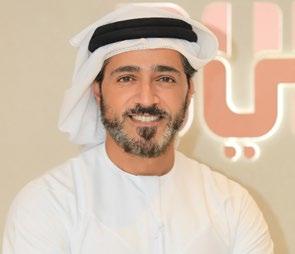
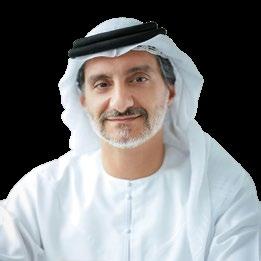
Director General for Tourism, Department of Culture and Tourism,
Appointed to lead Abu Dhabi’s tourism sector in 2022, Saleh Mohamed Al Geziry oversees DCT Abu Dhabi’s network of 15 international offices across 25 countries. He previously served as Director General of Ajman Tourism Development Department. Before that, he spent over a decade at Dubai’s Department of Tourism and Commerce Marketing, rising to Director of Overseas Promotions. In Abu Dhabi, he has spearheaded initiatives including the USD 100 million Abu Dhabi Culinary Investment Fund announced in 2023.
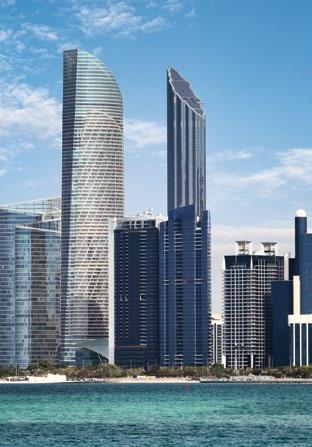
Abeer Al Akel has been part of AlUla’s transformation from the beginning. As a founding member of the Royal Commission for AlUla, she has spent six years leading and overseeing key strategic initiatives before taking on the role of CEO — making her one of the most consequential figures in Saudi Arabia’s cultural tourism agenda.
Her tenure spans the full arc of AlUla’s development. She launched Winter at Tantora, establishing the destination on the global cultural calendar and achieving two Guinness World Records — for the largest hot air balloon show and the largest mirrored building, Maraya. She
led the rollout of the Journey Through Time masterplan, oversaw a global design competition for the Museum of Incense Road, and was instrumental in the Saudi-French intergovernmental agreement for AlUla’s comprehensive regeneration.
Her network-building has been equally significant, expanding RCU’s global partnerships to include UNESCO, IUCN, Panthera and the World Bank. Before RCU, she worked at PwC leading transformation projects for the Saudi government. She holds a degree from King Saud University and is a graduate of Harvard Business School.
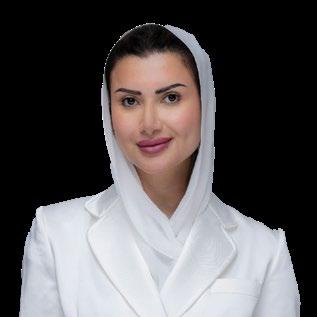
Group CEO, Diriyah Company
Jerry Inzerillo started as a busboy at 13. Decades later, he was appointed by HRH Crown Prince Mohammed bin Salman to lead the transformation of Diriyah — a UNESCO World Heritage Site and one of the most ambitious destination development projects in the world.
The USD 50 billion development is designed to become Saudi Arabia’s most iconic lifestyle and tourism destination, with projections of 27 million annual visitors, 55,000 jobs and a SAR 27 billion contribution to the kingdom’s GDP. Before Diriyah, Inzerillo served as
CEO of Forbes Travel Guide and CEO of Morgans Hotel Group, accumulating more than five decades of experience across some of the industry’s most recognised institutions.
Born in Brooklyn to a family of five generations of bakers, he has described hospitality as bringing people together and making strangers feel at home. At Diriyah, that philosophy is being applied at a scale few in the industry have ever attempted.
CEO, Taiba Investments
Sultan Al-Otaibi became CEO of Taiba Investments in January 2024 following its merger with Dur Hospitality, where he had served as CEO since 2019. As of early 2026, Taiba manages a portfolio of more than 40 properties with over 8,000 hotel keys across seven Saudi cities.
The group operates Saudi hospitality brands including Makarem Hotels, Nur by
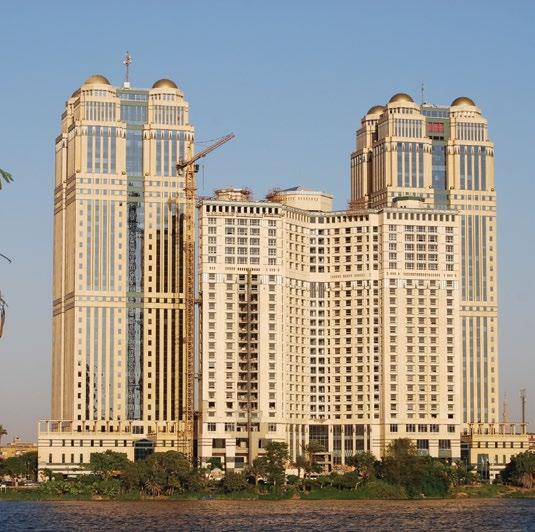
Makarem and Aqeeq Hotels, and holds partnerships with Hilton, IHG, Marriott International and Accor. Recent openings include Rixos Obhur Jeddah, the first Rixos property in Saudi Arabia, and Makarem Burj Al Madinah near the Prophet’s Mosque. The Sheraton Taiba Hotel in Madinah is among the group’s upcoming developments.
Al-Otaibi sits on the Marriott EMEA Owner Advisory Distribution Council and the Tourism Committee at the Riyadh Chamber of Commerce. He holds an MBA in International Hospitality Management from the Emirates Academy of Hospitality Management and a Bachelor’s degree in Accounting from King Saud University.
CEO and Managing Director, Talaat Moustafa Group
Hisham Talaat Moustafa leads one of the region’s most significant hospitality and real estate groups, with a portfolio that includes Four
CEO, Kerten Hospitality
Seasons Nile Plaza in Cairo, Four Seasons San Stefano in Alexandria, Four Seasons Sharm El Sheikh and Four Seasons New Cairo Capital at Madinaty.
Since taking the helm at Talaat Moustafa Group in 2017, Moustafa has expanded operations across Egypt, Saudi Arabia and Oman, with a land bank exceeding 115 million square metres. In 2025, TMG reported $9.1 billion in total assets and $8 billion in contracted sales. The group’s most recent announcement, The Spine, is a $27 billion mixed-use city planned east of Cairo.
Marloes Knippenberg has led Kerten Hospitality as CEO since 2015, growing the company to nearly 60 projects across multiple brands and countries. A former Hilton executive, she has built the group around a purpose-driven model that embeds ESG principles into its community-focused destinations. She serves on several industry boards and is recognised as one of the leading figures in the sector.
CEO, Wasl Group
Hesham Al Qassim has led Wasl Group since its establishment in 2008, growing it into one of Dubai’s most significant real estate
and hospitality operators. The group today manages over 60,000 residential and commercial properties, more than 1,000 buildings and 5,500 land plots across Dubai. Its hospitality division operates more than 35 hotels and hotel apartments, while Jumeirah Golf Estates spans 4.68 million square metres. In October 2025, Wasl expanded beyond Dubai with the acquisition of a beachfront site at Marjan Beach in Ras Al Khaimah. Al Qassim also serves as Chairman of Türkiyebased DenizBank and Vice Chairman and Managing Director of Emirates NBD.
Adeeb Ahamed founded Twenty14 Holdings in 2014 and has since led the company in acquiring more than $750 million worth of assets globally. As Managing Director, he oversees the strategic direction of the firm and sits on its Board of Directors.
Before launching Twenty14 Holdings, he established Lulu International Exchange, a financial services company now operating more than 200 branches across 11 countries, and Tablez, a retail
CEO, Majid Al Futtaim Asset Management
Khalifa Bin Braik leads Majid Al Futtaim Asset Management, overseeing a portfolio of 29 shopping malls and seven hotels across the Middle East and North Africa.
He began his career at Dubai Holding before joining Sharjah Holding, a joint
venture between Majid Al Futtaim Properties and the Government of Sharjah. He moved to Majid Al Futtaim Properties in 2014, serving as a director
CEO, Boutique Group
Christoph Mares was appointed CEO of Boutique Group in January 2025, taking the helm as the company prepares to introduce its portfolio of iconic Saudi palaces to the world. The group’s first hotel, The Red Palace, is set to open in Summer 2026. Mares brings more than 25 years of luxury hospitality experience to the role, having previously served as Chief Operating Officer at Mandarin Oriental Hotel Group, where he spent the majority of his career, and as COO at Emaar Hospitality Group. Boutique Group’s mandate is to present Saudi hospitality and culture through a portfolio of historic palaces converted into luxury hotel experiences — a concept that sits at the intersection of heritage preservation and high-end tourism.
firm running home-grown and franchise concepts across the UAE and India. Earlier in his career, he held positions in the hospitality sector with Grosvenor House, JW Marriott and Baglioni Hotel in London. He holds a BBA from Les Roches, Switzerland and an MBA in International Management from Royal Holloway, University of London.
in the Shopping Malls business unit and subsequently as Managing Director of the Hotels Business Unit, where he was responsible for the operating and financial performance of the group’s hotel portfolio and its relationships with international hotel partners.
He holds a Master’s degree in Financial Economics from Boston University and a BSc in Economics from Northeastern University.

CEO, Katara Hospitality
Fahad Abdulla Al Mana was appointed CEO of Katara Hospitality in July 2025, having served on its Board of Directors since 2019. He joins from the Qatar Investment Authority, where he has been a senior member of the Local Portfolio Department since 2010, focused on corporate
governance and real estate investments. He also serves on the Board of Directors of Nebras Power since 2014.
Katara Hospitality is a global hospitality asset owner and manager with over 50 years of industry experience, and a portfolio spanning four continents including Qatar, Egypt, Morocco, the UK, France, Italy, Spain, Switzerland, the Netherlands, Singapore, Thailand and the United States. The company owns and manages over 7,188 keys across its international portfolio and plays a central role in supporting Qatar’s longterm economic vision.
He holds a Bachelor’s degree in Business Administration with a specialisation in Finance and Accounting from Qatar University.
Chairman and CEO, FIVE Holdings
Kabir Mulchandani has built FIVE Holdings into a global luxury and entertainment group with more than 1,700 keys across FIVE Palm
CEO, Abu Dhabi National Hotels
Khalid Anib has led Abu Dhabi National Hotels as CEO since 2016, overseeing a portfolio that includes Park Hyatt Abu Dhabi Hotel and Villas, Le Meridien Abu Dhabi, Sofitel Dubai Jumeirah Beach and JW Marriott Hotel Marina Dubai, among others. Founded in 1976, ADNH has evolved into an integrated hospitality group spanning hotels, restaurants, destination management and transport services.
In 2025, the group reported a 21 per cent growth in revenues, with Abu Dhabi's hotels recording average occupancy of around 80 per cent. ADNH is expanding its footprint with a new mixed-
use waterfront development on Al Marjan Island in Ras Al Khaimah, in partnership with Marriott International, featuring the Nasim Al Bahr Resort and Spa alongside branded residences. The group is also exploring opportunities in North Africa and Europe.
Before joining ADNH, Anib led the Hospitality Division at Al Hokair Group in Saudi Arabia. He holds an MBA from the University of Strathclyde.
Jumeirah, FIVE Jumeirah Village and FIVE LUXE JBR in Dubai, and FIVE Zurich in Switzerland. In 2023, he expanded into Europe through the acquisition of The Pacha Group for €302.5 million, adding Pacha Ibiza, Destino Five Ibiza Hotel and Pacha New York to the portfolio.
In 2025, FIVE Holdings
reported hospitality revenues of AED 1.98 billion, a 20 per cent year-on-year increase, with hospitality EBITDA reaching AED 703 million. In 2022, FIVE became the first hotel group in the UAE to operate entirely on renewable electricity, and its properties now hold over 1,500 LEED Platinum-certified keys.
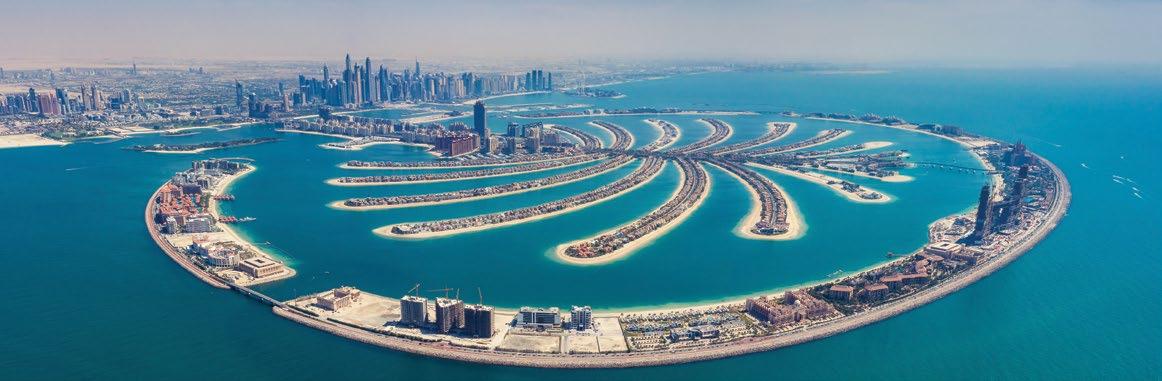

ONE LEAP AWAY
From 31 Aug - 3 Sept 2026 Riyadh Exhibition and Convention Center - Malham, Saudi Arabia
SECURE YOUR PASS NOW

COO, Middle East and Africa, Luxury EMEA, and Global Leader, Design Hotels, Marriott International
Sandeep Walia oversees Marriott International’s operations across the Middle East and Africa, including Türkiye, a portfolio spanning over 410 properties and nearly 90,000 rooms in operation, with more than 250 projects in the pipeline. He also leads the company’s luxury portfolio across EMEA, encompassing close to 200 hotels and residences across brands including The Ritz-Carlton, St. Regis, BVLGARI Hotels
Founder and Co-CEO, Aleph Hospitality
Bani Haddad founded Aleph Hospitality and has built it into the largest independent hotel management company in the Middle East and Africa. The company reached its goal of 50 operating hotels in 2025 and has since set a new target of 100 hotels by 2029, with more than 50 properties currently in operation and over 30 in the pipeline across 23 countries and 39 cities. Aleph manages hotels on behalf of owners across both internationally branded and independently branded properties, working with partners including Marriott, Hilton and Hyatt.
and Resorts, EDITION, The Luxury Collection, JW Marriott and W Hotels. In addition, he serves as Global Leader for Design Hotels.
Walia joined Marriott International in 2005 and has held senior leadership roles across EMEA, including General Manager of The Ritz-Carlton Moscow and several Area Vice President roles in Europe and the Middle East. He holds an Executive MBA from the Kellogg School of Management at Northwestern University and a Leadership certification from Harvard Business School, and is a graduate of the Oberoi Centre of Learning and Development.
CEO Middle East, Africa and Asia Pacific, Accor
Duncan O’Rourke has spent more than 30 years in the hospitality industry, holding executive positions across Europe, the United States and
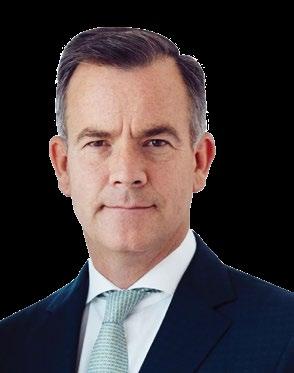
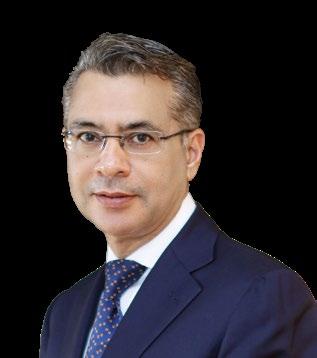
the Middle East. He began his career with Kempinski, serving as General Manager across multiple destinations from 2004 before being appointed Chief Operating Officer and joining the Management Board in 2008.
He joined Accor in 2016 as COO Europe for the Luxury and Premium segment, later taking on responsibility for more than 470 hotels and 13 brands across Germany, Austria and Switzerland as COO Central Europe. In October 2020, he was appointed CEO Northern Europe, overseeing more than 1,100 hotels across 32 countries. In January 2023, he moved into his current role as CEO Middle East, Africa and Asia Pacific within Accor’s Premium, Midscale and Economy division.
He holds a degree from César Ritz Colleges in Switzerland and an MBA from Reims Management School.
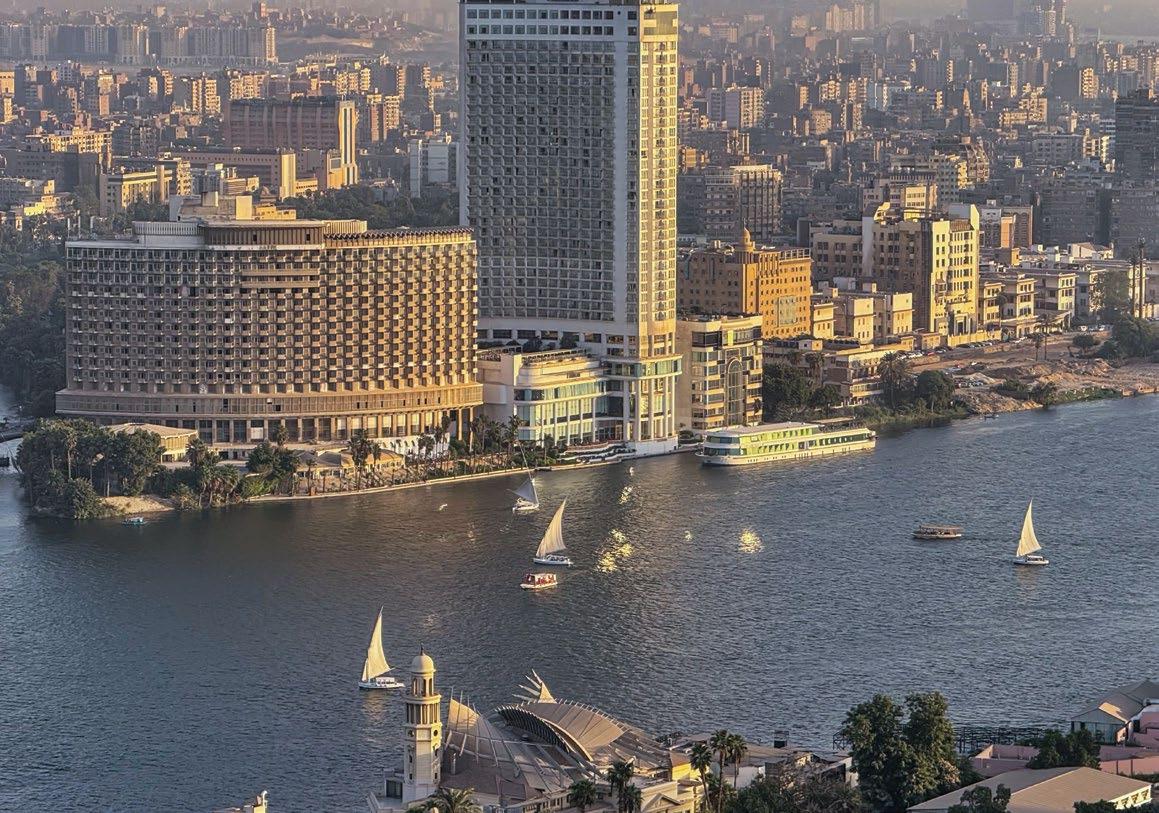
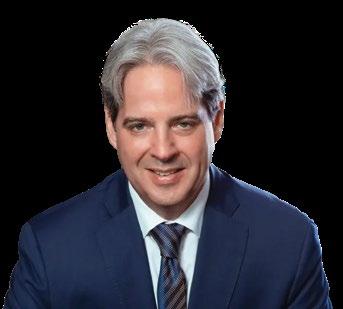
President, Middle East and Africa, Hilton
Guy Hutchinson has served as President of Hilton’s Middle East and Africa region since early 2024, overseeing the group’s growing portfolio across the region. Based in Dubai, he is a member of Hilton’s EMEA Executive Committee.
He returned to Hilton after nearly a decade, having previously served as CEO of Rotana. His earlier career at Hilton spanned 16 years across the Middle East, Europe, Japan, China, Australia and India. In Saudi Arabia alone, Hilton has more than 100 hotels trading and under development, representing a combined owner investment of more than $8 billion.
CEO, Jumeirah
Thomas B. Meier leads Jumeirah as Chief Executive Officer, driving the group’s ambition to become one of the top five luxury hospitality companies in the world. A graduate of the Ecole Hotelière de Lausanne, he began his career in general hotel management across Asia before rising to lead global operations for Raffles. He subsequently led new openings and integrations for the Fairmont, Swissotel and Raffles brands, and served as Senior Vice President of Operations for Asia at Minor Hotels before joining Jumeirah. His remit spans business performance, acquisitions, owner relations and transformation across hotel operations, development and systems integration.
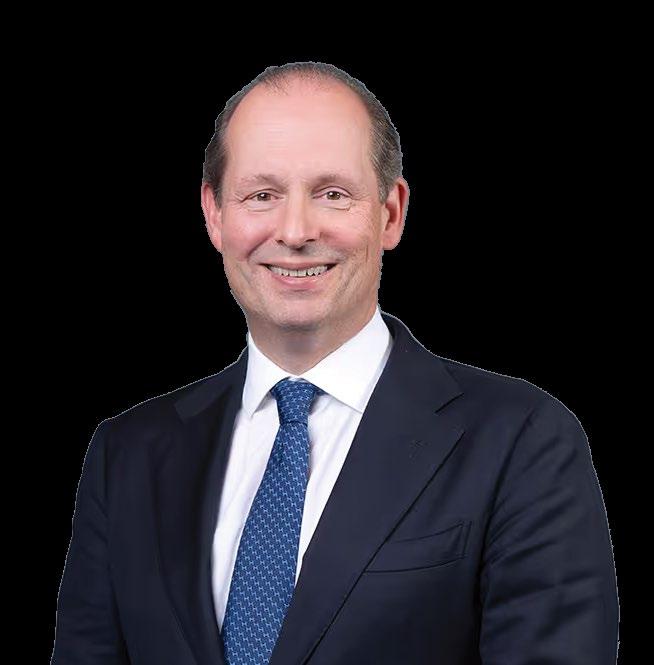
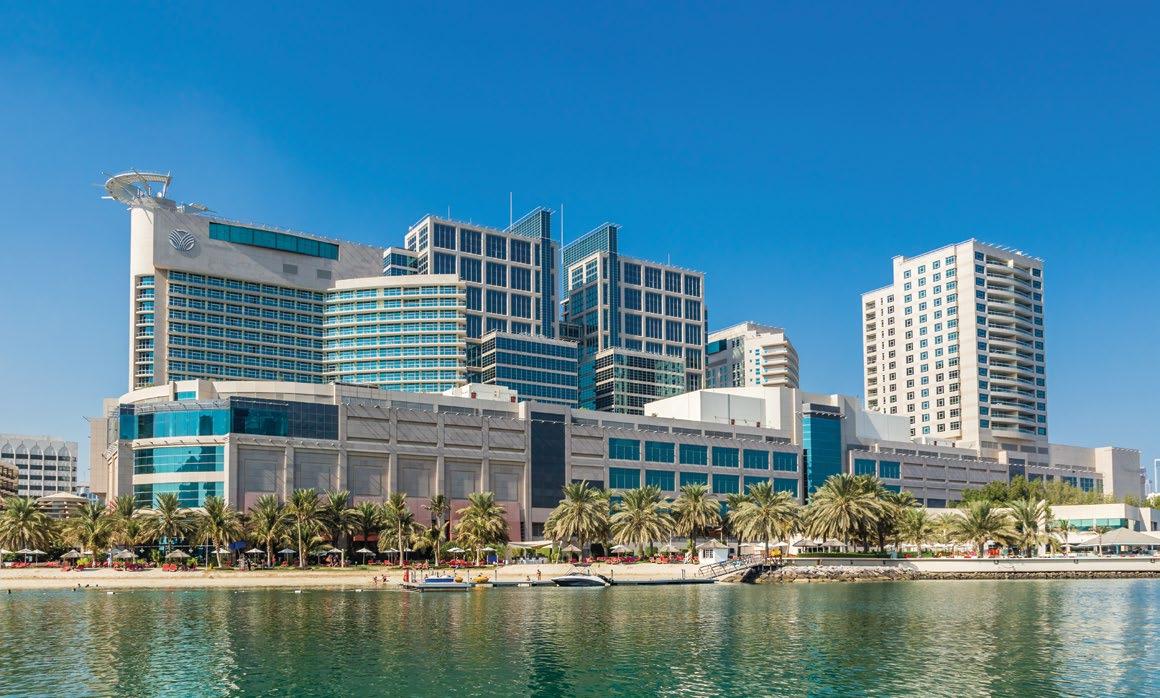
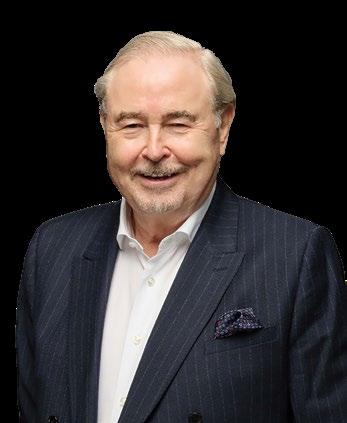
Philip Barnes was appointed CEO of Rotana in March 2024, bringing more than 40 years of hospitality experience across five continents. He spent nearly 25 years with Fairmont Hotels and Resorts, holding senior leadership positions across Canada, the United Kingdom and the United States, including Regional Vice President of Southern California. In the Middle East, he previously served as Fairmont’s Regional Vice President for
CEO, Kerzner International
Philippe Zuber has led Kerzner International as CEO since joining the company in 2015, overseeing its portfolio of Atlantis Resorts and Residences and One&Only Resorts and Private Homes, and launching two new brands — SIRO, focused on wellness, and Rare Finds, positioned around sustainability and discovery.
Before Kerzner, Zuber served as COO of Emaar Hospitality from 2013, leading a team of nearly 5,000 and overseeing
a portfolio of hotels, residences and dining outlets. In that role he played a part in developing Downtown Dubai as a destination and launched the Vida, Manzil and Rove hotel brands. He joined Emaar in 2011 as General Manager at The Address Downtown Dubai.
His earlier career took him through Hyatt International across France, Spain, Germany and Morocco, rising to General Manager of Park Hyatt Seoul, where he was named Monocle’s Best General Manager of the Year. He holds a degree from EMH Strasbourg and is based in Dubai.
the UAE, overseeing properties including Fairmont Palm Dubai and Fairmont Bab Al Bahr Abu Dhabi. He has also worked with Four Seasons Hotels and Resorts and Shangri-La Hotels and Resorts.
At Rotana, Barnes leads a portfolio of more than 100 properties across the Middle East, Africa, Eastern Europe and Türkiye, spanning six brands including Rotana Hotels and Resorts, Centro Hotels and Rayhaan Hotels and Resorts. Saudi Arabia is among the group’s fastest growing markets, with plans to operate 23 properties in the kingdom by 2027.
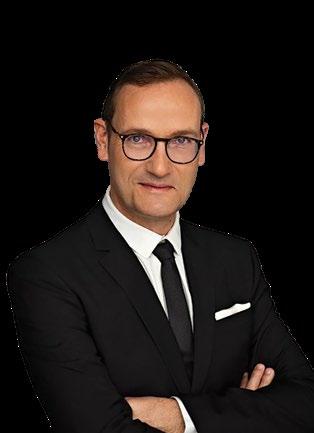
COO, Middle East, Africa and South East Asia Pacific, Radisson Hotel Group
Tim Cordon has spent more than two decades with Radisson Hotel Group, currently serving as COO for the Middle East, Africa and South East Asia Pacific since 2024. He oversees a regional portfolio of 168 operating hotels with 103 in the development pipeline, and more than 18,000 team members across over
35,000 keys.
He joined Radisson in 2003 as General Manager in the UK, moved to Dubai in 2015 as Regional Director for the Middle East and Africa, and was appointed Area Senior Vice President for MEA in 2017 before taking on his current COO role. His remit expanded to include South East Asia Pacific following the region's strong growth performance. He holds a BSc in Mechanical Engineering from Nottingham Trent University and is based in Dubai.
President, Hotel Operations EMEA, Four Seasons
Adrian Messerli oversees Four Seasons hotel operations across Europe, the Middle East and Africa, a portfolio of more than 40 operating properties and 20 under development. Swiss-born and raised in a fourth-generation family hotel, he joined Four Seasons in 2005 and has since held leadership roles across the
US, Caribbean, South America, Europe, the Middle East and Africa.
His regional assignments have included Four Seasons Hotel Cairo at Nile Plaza, Four Seasons Resort Sharm El Sheikh and Four Seasons Hotel Madrid, where he served as Regional Vice President and General Manager before assuming his current EMEA remit. He holds a Bachelor of Science in International Hospitality from Ecole Hotelière de Lausanne and is based in Dubai.
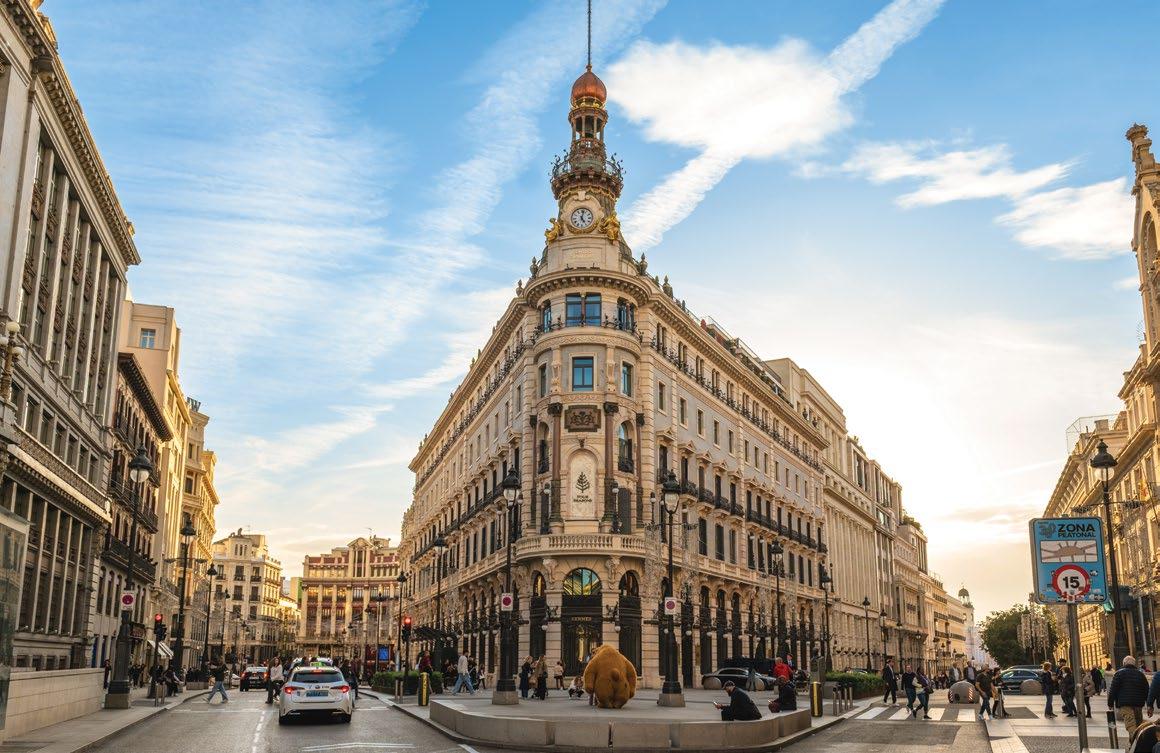
CEO, Dubai Airports
Paul Griffiths has served as CEO of Dubai Airports since 2007, overseeing Dubai International (DXB) and Dubai World Central — Al Maktoum International. Under his leadership, DXB welcomed 92.3 million guests in 2024, its highest annual traffic in 65 years.
His tenure has included the opening of Terminal 3 in 2008, the inauguration of Dubai’s second airport in 2010, the launch of Concourse A in 2013 — the world’s first purpose-built A380 facility — and the opening of Concourse D in 2016. He also led DXB’s recovery from the Covid-19 pandemic, returning the airport to record passenger volumes ahead of industry projections.
Before Dubai, Griffiths served as Managing Director of London Gatwick Airport and spent 14 years with the Virgin Group, working as a Board Director of the Virgin Travel Group overseeing Virgin Atlantic Airways and Virgin Trains.
Group CEO, Air Arabia
Adel Abdullah Ali has led Air Arabia since its founding in 2003, making him one of the longest-serving airline CEOs in the region. Under his leadership, the carrier grew from the Middle East and North Africa’s first low-cost airline into a group operating six hubs across the UAE, Morocco, Egypt and Pakistan, with 92 aircraft in service and 120 on order.
In 2025, Air Arabia carried 21.8 million passengers and reported revenue of AED 7.78 billion, the strongest year in the group’s history. In March 2026, the airline launched its first scheduled service to the United Kingdom with a double-daily Sharjah to London Gatwick route on the A321neo LR.
Before Air Arabia, Ali served as Vice President of Commercial and Customer Services at Gulf Air and spent more than 20 years at British Airways, rising to General Manager for the Middle East and Africa.
CEO, Riyadh Air
Tony Douglas is the Chief Executive Officer of Riyadh Air, Saudi Arabia’s new national carrier owned by the Public Investment Fund. Appointed in 2023, he is responsible for establishing and leading the airline’s strategy, operations and long-term growth as it prepares to become a key contributor to the Kingdom’s Vision 2030 aviation and tourism ambitions.
A highly experienced aviation and infrastructure executive, Tony previously served as Group Chief Executive Officer of Etihad Airways, where he led a major transformation programme focused on improving operational performance and efficiency. Prior to this, he held senior leadership roles as Chief Executive
Officer of Abu Dhabi Airports Company and Abu Dhabi Ports Company, as well as senior positions within the UK Ministry of Defence and BAA/Heathrow Airport, where he led major infrastructure and transport programmes.
He is widely recognised for his track record in leading large-scale aviation, transport and infrastructure organisations across the UK and Middle East.
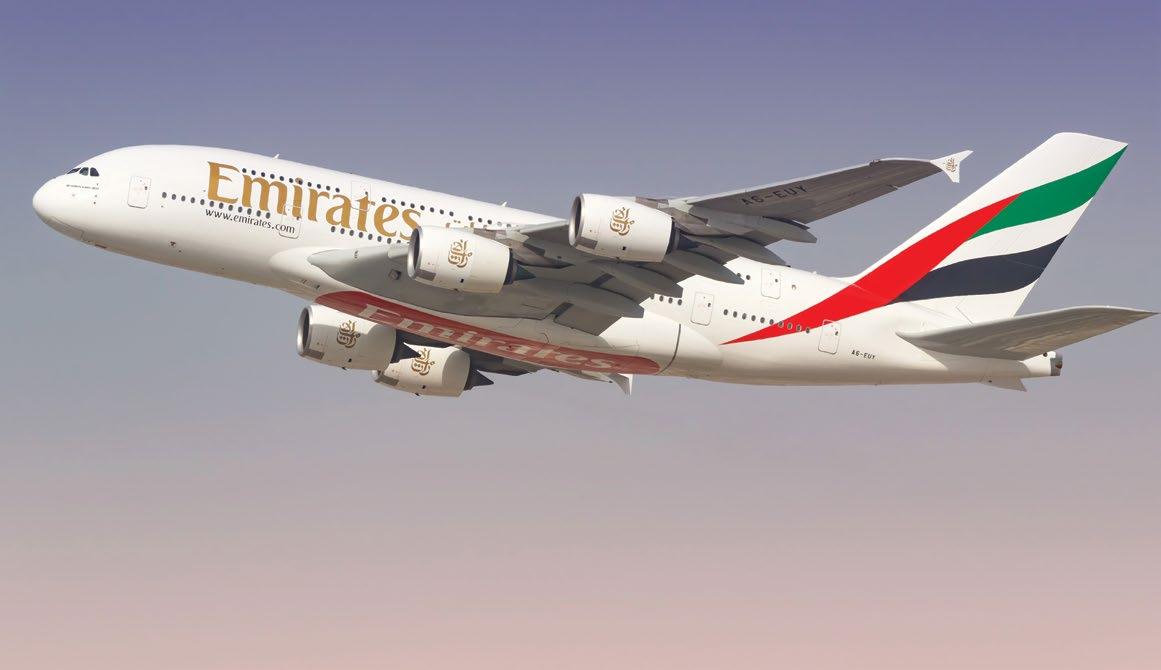
Chairman and CEO, Emirates Airline and Group
H.H. Sheikh Ahmed bin Saeed Al Maktoum has been central to Dubai’s economic development for more than 39 years. As Chairman and CEO of Emirates Airline and Group, which includes dnata, he has overseen the growth of one of the world’s most recognised aviation and travel brands.
Beyond Emirates, he serves as President of Dubai Civil Aviation Authority, Chairman of Dubai Airports, Chairman of Emirates NBD, Deputy Chairman of The Executive Council of Dubai and Chairman of Dubai’s Supreme Fiscal Committee. He is also a Board Member of the Investment Corporation of Dubai. He holds a degree in Political Science from the University of Denver and has received international honours including the Legion of Honour from France, one
of Germany’s highest honours, and an honorary Doctor of Science from City University London.
Director General, Saudia Group
Ibrahim Al-Omar has served as Director General of Saudia Group since 2020, overseeing 60,000 people and a fleet of 193 aircraft across Saudia and flyadeal. In 2024, the group carried 35 million passengers across 193,000 flights. Under his leadership, Saudia secured
the largest aircraft purchase deal in Saudi aviation history — an agreement with Airbus for 105 A320neo and A321neo aircraft. Before Saudia, he held senior roles at Bahri, STC and Mobily. He holds a degree in Electrical Engineering from King Fahd University of Petroleum and Minerals and attended the Programme for Leadership Development at Harvard Business School.
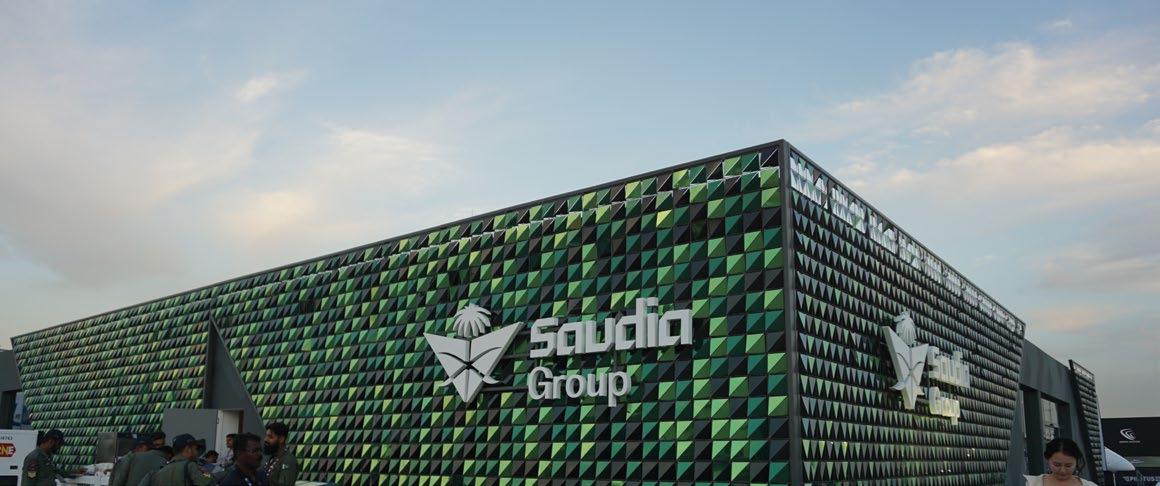
CEO and Managing Director, flynas
Bander Almohanna is the Chief Executive Officer and Managing Director of flynas, Saudi Arabia’s leading low-cost airline. Since taking on the role in 2015, he has led the airline’s strategic growth, overseeing significant network expansion, fleet development and continued operational excellence. Under his leadership, flynas has received numerous international awards, reinforcing its position as one of the region’s leading low-cost carriers.
With more than 20 years of experience in aviation, finance and corporate leadership, Bander joined flynas as Chief Financial Officer in 2006 before becoming Executive Vice President in 2008. He holds degrees from King Saud University, the University of Michigan and the American University in Washington, D.C., and has completed the Advanced Management Program at Harvard University.
Antonoaldo Neves was appointed Group CEO of Etihad Aviation Group in October 2022, bringing a career defined by airline turnarounds and growth strategy. He previously served as CEO of TAP, Portugal’s national airline, where he led a major recovery effort that contributed to significant growth in the country’s tourism sector. Before that, he was President of Azul Airlines in Brazil, guiding the carrier to a successful IPO on the New York Stock Exchange. Earlier in his career, he was a partner at McKinsey & Company, where
he developed the long-term strategy for Brazil’s aviation sector.
He holds an MBA from the University of Virginia’s Darden School of Business and a Master’s degree in Corporate Finance from IAG Business School at PUC-Rio.
CEO, Flydubai
Ghaith Al Ghaith is the Chief Executive Officer of flydubai, having led the airline since its inception in 2008. Under his visionary leadership, flydubai has grown into one of the region’s leading carriers, connecting more
than 140 destinations across 58 countries while delivering record financial performance, expanding its fleet and network, and continually enhancing the customer experience. His strategic focus on innovation, operational excellence and sustainable growth has played a pivotal role in strengthening Dubai’s position as a global aviation hub.
A highly respected leader in the aviation industry, Ghaith has been recognised for his outstanding leadership and significant contribution to the travel and tourism sector. His achievements reflect a steadfast commitment to innovation, strategic growth and operational excellence, earning him industrywide recognition for his lasting impact on airline strategy and leadership.
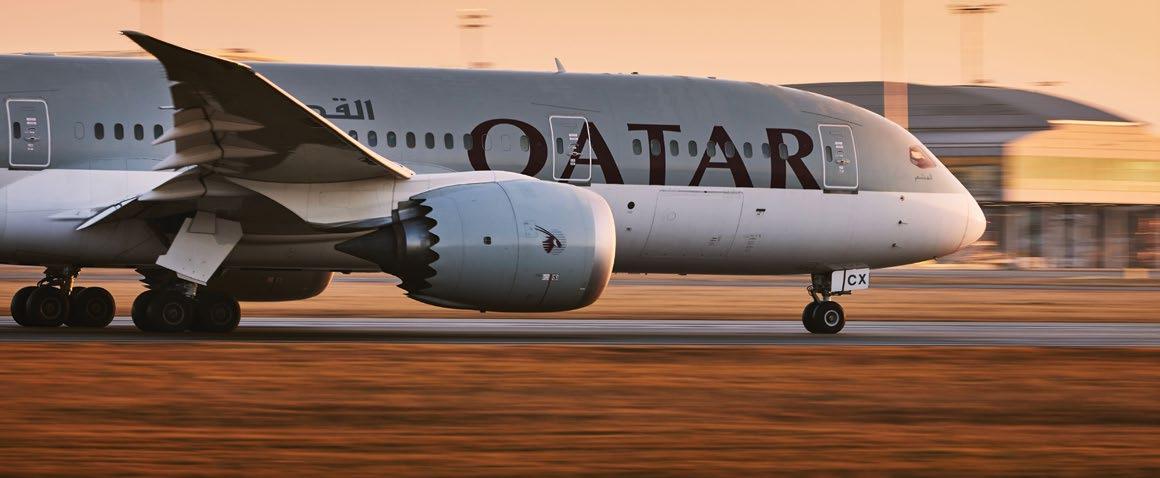
Hamad Ali Al-Khater was appointed Group CEO of Qatar Airways Group in December 2025, succeeding Engr. Badr Mohammed Al-Meer. He joined from Hamad International Airport, where he served as Chief Operating Officer, responsible for safety, operational excellence, infrastructure expansion and passenger experience. Before that, he

ELENA SORLINI
Director and
held senior roles at QatarEnergy leading business development and large-scale strategic initiatives.
He takes the helm of an airline that won the World’s Best Airline title for the ninth time at the 2025 Skytrax World Airline Awards, alongside recognition for World’s Best Business Class and Best Airline in the Middle East for the 13th consecutive year. Qatar Airways flies to over 160 destinations worldwide, connecting through Hamad International Airport, itself recognised as the Best Airport in the Middle East for 11 consecutive years.
Elena Sorlini is the Managing Director and Chief Executive Officer of Abu Dhabi Airports, bringing more than 20 years of international experience across the aviation sector. She leads the strategic development and growth of Abu Dhabi’s airports, driving operational excellence and supporting the Emirate’s long-term aviation ambitions.
In addition to serving on the Board of Abu Dhabi Airports, Elena is a board member of Etihad Airways, Abu Dhabi Aviation and ADQ Aviation and Aerospace
Services. Prior to joining Abu Dhabi Airports, she held senior leadership roles in airport strategy and asset management with Oman Aviation Group, Copenhagen Airports and Macquarie Airports, where she played a key role in shaping the growth and performance of major international airport assets.
Elena holds a Bachelor’s degree in Business Administration from Bocconi University, a Master’s degree in Corporate Finance, and an Executive MBA from Copenhagen Business School.
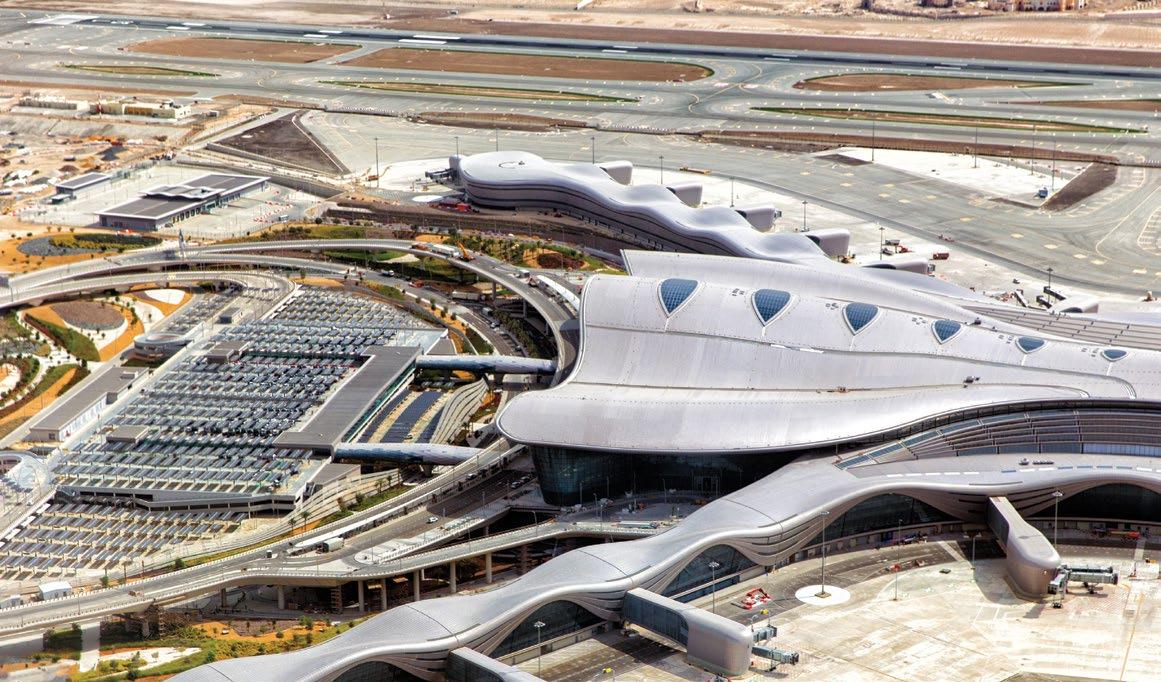
Acting CEO, Events Investment Fund
Qusai Al-Fakhri is the Acting Chief Executive Officer of the Events Investment Fund (EIF), where he oversees the development and strategic direction of investments that support Saudi Arabia’s growing events, tourism, and entertainment ecosystem in line with Vision 2030. He plays a key role in
enabling high-impact partnerships and initiatives that strengthen the Kingdom’s position as a leading global destination for major events. With extensive experience in investment and strategic leadership, Mr Al-Fakhri has contributed to shaping initiatives that drive sector growth, economic diversification and long-term value creation within the events industry in Saudi Arabia.
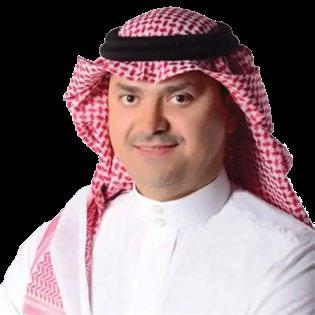
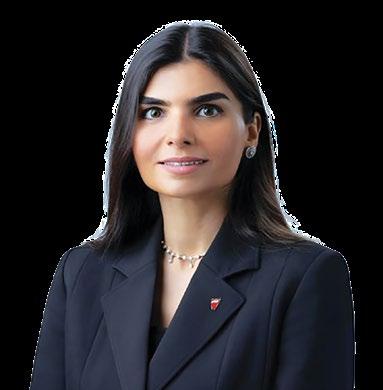
CEO, Bahrain Tourism and Exhibitions Authority (BTEA)
Sara Ahmed Buhiji is the Chief Executive Officer of the Bahrain Tourism and Exhibitions Authority (BTEA) and Chairperson of Exhibition World Bahrain. She leads the strategic development of Bahrain’s tourism and events sector, driving initiatives that strengthen the Kingdom’s position as a leading regional destination for business events, exhibitions and leisure tourism.
In her leadership role, she also oversees Exhibition World Bahrain, one of the region’s largest and most advanced exhibition and convention centres, supporting the growth of the MICE industry and the delivery of major international events.
Sara brings extensive experience in communications, government and public sector leadership, having held senior roles across Bahrain’s Prime Minister’s Office and corporate communications functions. She also serves on several boards, including Gulf Air Group Holding and the Supreme Council for Youth and Sports.
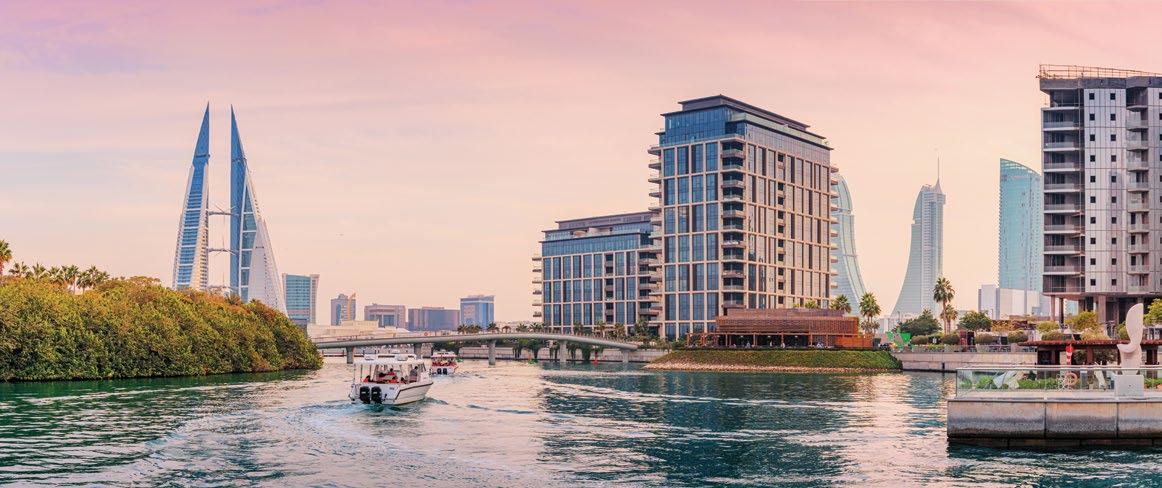
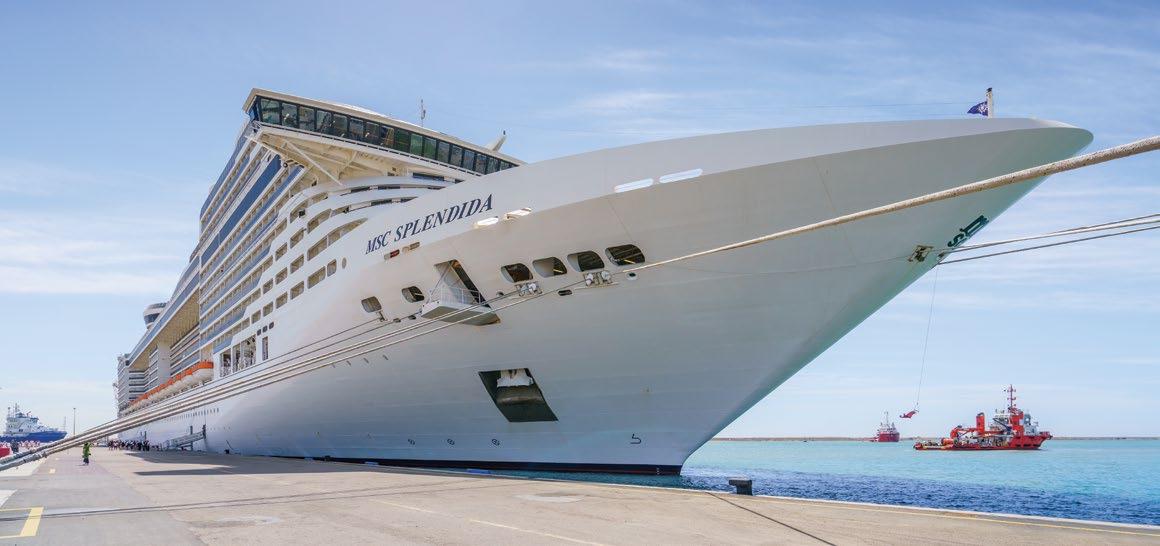
Taha Nazer is the Acting Chief Executive Officer of Cruise Saudi, where he leads the company’s strategic, operational and financial agenda as it advances the development of Saudi Arabia’s cruise sector in line with Vision 2030. He was appointed to the role in 2026, following his tenure as Chief Financial Officer, during which he played a key role in strengthening financial governance,
performance and operational efficiency within the organisation. With over 19 years of experience across finance, energy, aviation and maritime sectors, he brings extensive expertise in corporate finance, investment planning and large-scale transformation programmes. Prior to Cruise Saudi, he held senior roles in major organisations, building a strong track record in financial leadership, risk management and business development.
Managing Director and Group CEO, ADNEC Group
Humaid Matar Al Dhaheri is the Group Chief Executive Officer of ADNEC Group, where he leads the organisation’s strategic direction and global expansion across exhibitions, events and venue management. Under his leadership, ADNEC Group has strengthened its position as a leading international player in the business events sector, contributing significantly to Abu Dhabi’s
economic diversification and global competitiveness.
He is also Chairman of ExCeL London and serves on the Board of Abu Dhabi Airports Company, reflecting his broader influence across key strategic infrastructure and aviation assets in the UAE.
Humaid holds a Master’s degree in Strategy and National Security Studies from the National Defence College in Abu Dhabi, a Master’s degree in International Accounting and Financial Management from the University of Glasgow, and a Bachelor’s degree in Accounting from the United Arab Emirates University.
CEO, Dubai Holding Entertainment
Fernando Eiroa is the Chief Executive Officer of Dubai Holding Entertainment, with more than 20 years of international leadership experience in the entertainment and leisure industry. He leads a diverse portfolio of worldclass attractions and destinations, driving strategic growth, innovation and operational excellence.
Before joining Dubai Holding Entertainment, Fernando held senior executive positions at Sky Zone Holdings, Palace Entertainment and Parques Reunidos, where he successfully led the company's IPO. He holds an MBA from Anglia Ruskin University, a Master's degree in Engineering Management from Marconi University, and is a Chartered Manager accredited by the Chartered Management Institute.
Managing Director, Visit Oman
Shabib Al Maamari has led Visit Oman since its launch in 2021 as a subsidiary of OMRAN Group, Oman’s executive arm for tourism development. The platform operates as the Sultanate’s digitally native destination management system, providing travellers and travel agents with access to accommodation, transport and experiences across Oman. In 2024, hotel guests in Oman grew by 3.6 per cent to 2.1 million, with occupancy rates rising by 2.1 per cent. In 2025, the MICE segment generated approximately OMR 15 million in economic returns and hosted 24 major international conferences. Recent partnerships include TBO Holidays and Expedia Group to strengthen Oman’s presence in the B2B travel trade sector across the Middle East and India. Before Visit Oman, Al Maamari held senior roles at Oman Aviation Group and Transom. He holds a BSc in Business Administration from the University of Missouri.

Hamed El Chiaty founded Travco Travel Company of Egypt in 1979 and built it into one of the Middle East’s largest leisure and tourism conglomerates, with assets exceeding EGP 90 billion. The group operates 58 hotels and resorts, 21 Nile cruises, a transportation fleet of over
700 vehicles, and travel offices across Egypt and the GCC.
Travco’s hospitality arm is managed through the Jaz Hotel Group, overseeing the Jaz, Iberotel and Sol Y Mar brands. Its travel division has been recognised as Egypt’s number one incoming agency for 21 consecutive years. El Chiaty has served on the board of the Egyptian Hotels Association and as a supervisory board member of TUI AG, Europe’s leading tourism group.
CEO, Almosafer
Muzzammil Ahussain has led Almosafer as CEO since January 2023, overseeing Saudi Arabia’s largest travel platform. Part of Seera Group, Almosafer operates across consumer travel, corporate and government travel through Almosafer Business, and destination management through Discover Saudi. The consumer business reported approximately $1.5 billion in gross booking value in 2024.
Under his leadership, Almosafer has embedded AI across more than 100 internal initiatives, with its WhatsApp sales channel now accounting for up to 10 per cent of daily bookings. A pending investment from Saudi Arabia’s Public Investment Fund and a planned IPO on the Saudi stock exchange reflect the platform’s growing commercial significance.
Before Almosafer, Ahussain served as Senior Manager at Accenture Strategy. He holds an MBA with distinction from INSEAD and a degree in Economics from the University of California, Irvine.
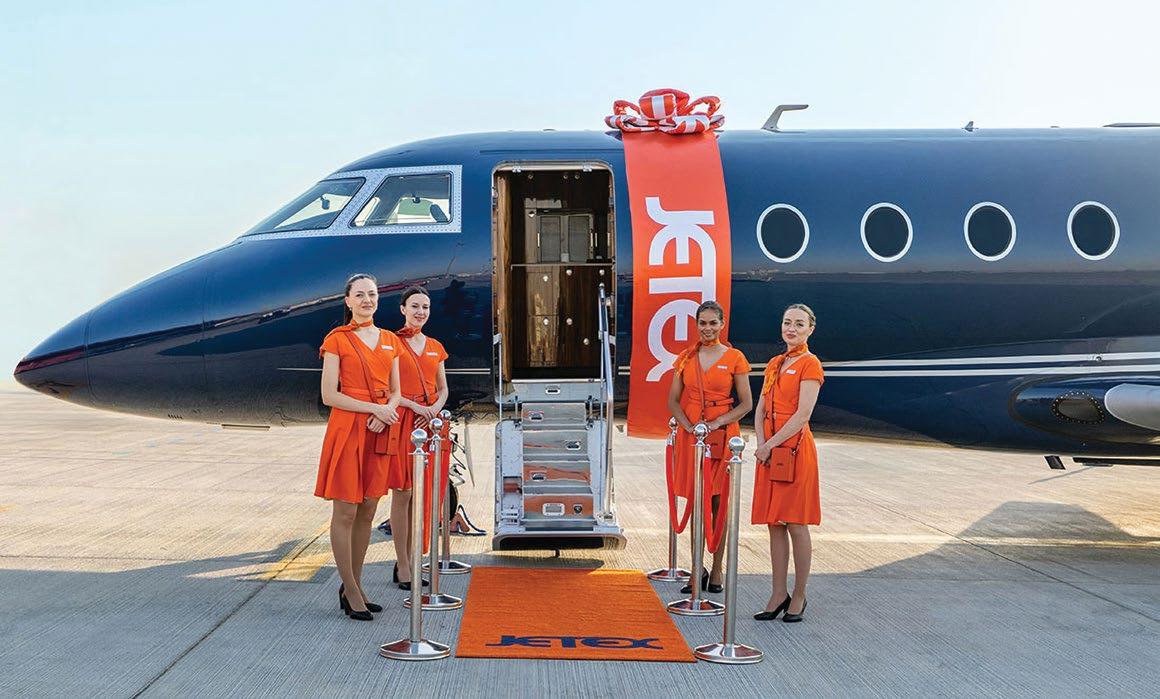
Founder and CEO, Jetex
Adel Mardini founded Jetex in Dubai in 2005 and has grown it into a global network of 38 private jet terminals across more than 25 countries, with over 1,000 employees. The company has recorded 100 per cent growth since 2023 and is
targeting 75 locations by end of next year. Born in Damascus, Mardini has built Jetex into a luxury aviation and lifestyle brand serving heads of state, ultrahigh-net-worth individuals and global executives. He serves on the board of MEBAA and participates in the World Economic Forum and Young Presidents’ Organization.
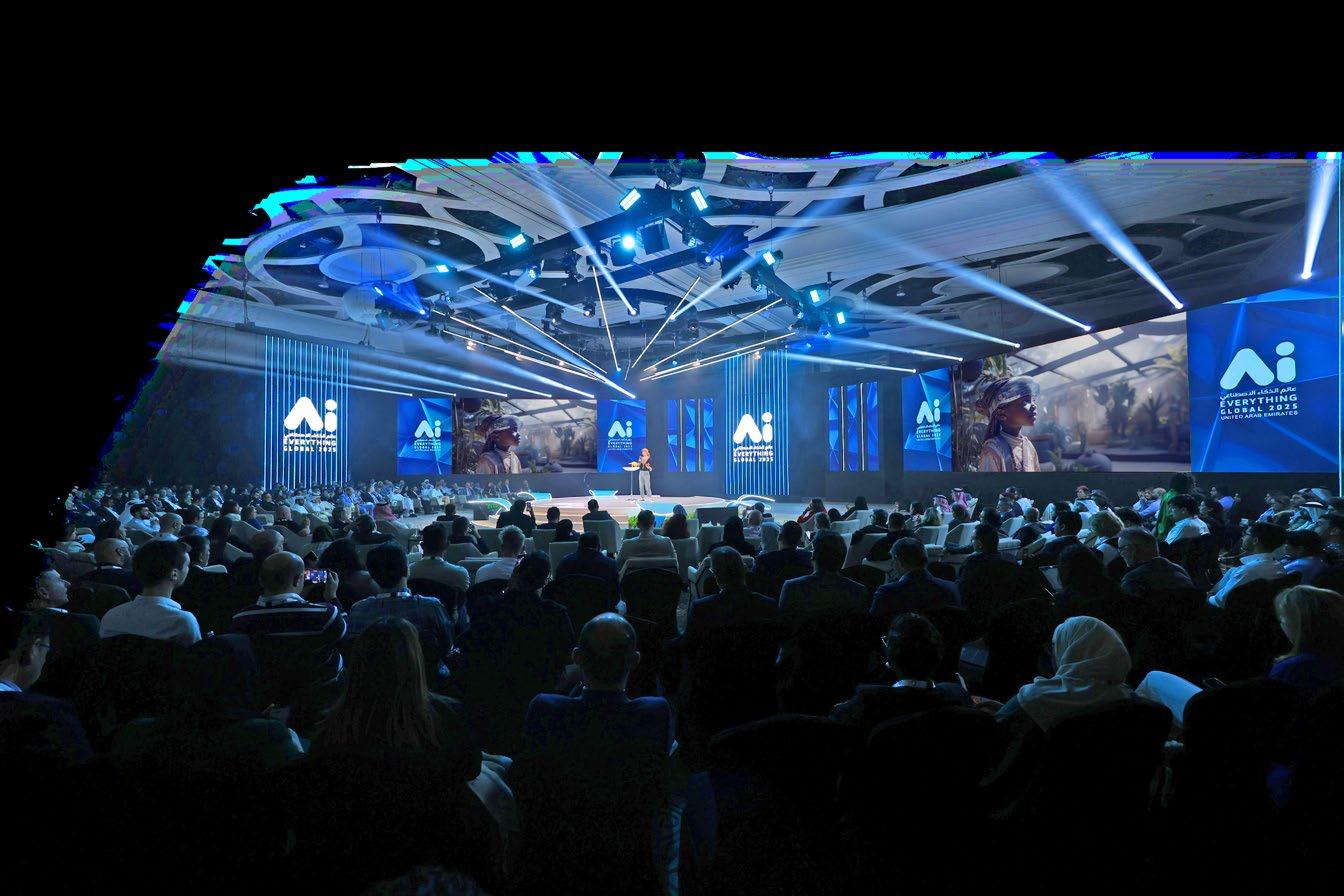
Founder, Managing Director and CEO, Sela
Dr. Rakan AlHarthy founded Sela in 1997 and has led it into becoming the Middle East and North Africa's leading operator of sports, entertainment and live experiences. The company's portfolio spans Riyadh Season, Jeddah Season, Formula E, the Italian Super Cup and major
international boxing events. In March 2025, Sela launched an international headquarters in London, extending its expertise to global markets. The same month, Sela announced a multi-year partnership with TKO Group Holdings to launch a new boxing promotion company. AlHarthy also serves on the boards of Qiddiya Investment Company and the Events Investment Fund. He holds an MBA from HFB Business School in Frankfurt.

At this year’s INJAZ UAE Company Programme, 808 young entrepreneurs across 99 ventures offered the clearest signal yet that the UAE’s talent pipeline is real and growing fast.
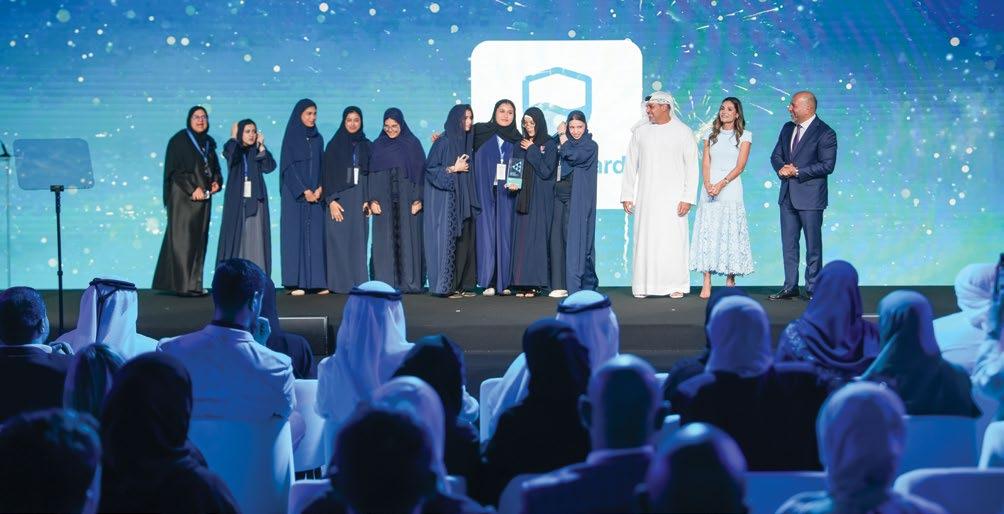
The numbers are striking. In a single year, INJAZ UAE reached 808 students across 99 student ventures, with 23 finalist teams competing for recognition at this
year’s Company Programme finale. For H.E. Faisal Belhoul, Chairman of the Board of INJAZ UAE, the scale of participation reflects something deeper than enthusiasm. “This high level of engagement highlights the effectiveness of initiatives like INJAZ UAE’s company programme in creating platforms where young people can explore their ideas, take risks, and start their entrepreneurial journeys in a structured and supportive environment,” he says.
But numbers only tell part of the story. The more interesting question is what separates the entrepreneurs who make it from those who don’t, and what the people investing in this generation are actually seeing when they look at the pipeline.
For Razan Bashiti, CEO of INJAZ UAE, the defining factor among this year’s finalists was not the quality of the idea but the ability to execute it. “The teams that made it to the finals stood out because they brought together a combination of vision, execution, and adaptability,” she says. “What truly separated them was their ability to translate ideas into action. These teams demonstrated resilience in overcoming challenges, sought feedback to refine their strategies, and maintained a consumer-focused mindset.”
The moment that most reveals whether a young entrepreneur has what it takes, she adds, often comes not during a pitch but in response to criticism. “How they respond to feedback often reveals their potential.
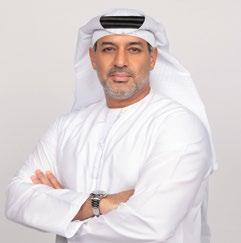
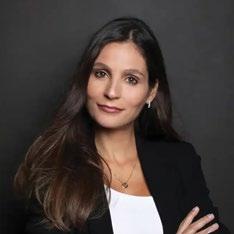
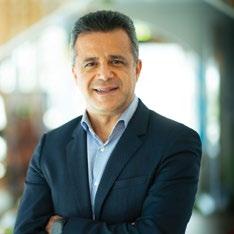
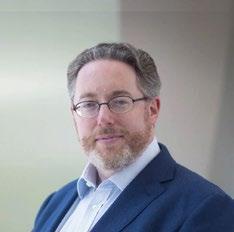
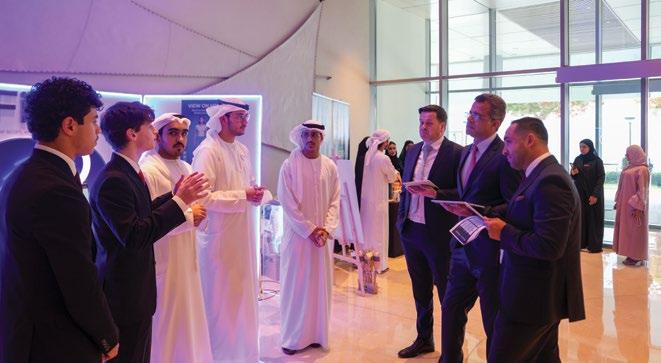
Do they take it as an opportunity to learn and improve, or do they resist change? Those who embrace feedback and evolve are the ones who tend to succeed.”
From where Fadi Moukaddem, SVP and Group General Manager for UAE, Kuwait and Qatar at Visa, is sitting, what stands out about this generation is how instinctively they think beyond traditional boundaries. “For many of the students here, digital payments aren’t an innovation; they’re the baseline,” he says. “They’re designing solutions that are mobilefirst, platform-driven, and inherently inclusive from day one.” More striking still is the sense of purpose behind the ideas. “They’re not just building businesses; they’re thinking about impact. That mindset aligns closely with what we’re trying to do at Visa, expanding access and bringing more people into the formal economy in a meaningful way.”
Moukaddem is equally direct about what young people entering fintech today need to develop. Technical skills matter, but adaptability matters more. “The tools and technologies will evolve quickly, AI is a great example of that, but the fundamentals remain the same: understanding customer needs, managing risk, and building trust.” Those who thrive, he says, will be the ones who can
connect technology with real-world applications and do so responsibly.
The broader economic context makes that challenge both harder and more urgent. Anthony O’Sullivan, Partner at Ernst and Young, argues that periods of complexity are precisely when entrepreneurial thinking is most needed. “In a period of uncertainty and complexity we need adaptive minds who can see through the noise to identify solutions to new problems and become change makers. So we need entrepreneurs now more than ever.”
For Bashiti, the message to corporate partners and policymakers is equally clear. “INJAZ UAE is not just building student ventures. We are contributing to the foundation of the UAE’s future economy. We are equipping young people with the skills, mindset, and experiences they need to succeed not just as entrepreneurs, but as contributors to the broader economic and social fabric of the UAE.”
The 99 ventures that came through this year’s programme will not all become businesses. But the habits of mind being built, the willingness to take a risk, respond to criticism, and build something from nothing, are exactly what a diversifying economy needs more of.
The world’s most powerful particle accelerator is offline for four years. For business leaders in the UAE and Saudi Arabia, the upgrade underway may be more relevant than it first appears.
BY AMAL FARUK SALIK
When most people hear that the world’s largest particle accelerator has been switched off, their first thought probably isn’t, “How does this affect business?”
BUT PERHAPS IT SHOULD BE.
The Large Hadron Collider (LHC), operated by CERN on the France–Switzerland border, is the world’s most powerful particle accelerator. In simple terms, it allows scientists to smash tiny particles together at incredibly high speeds to better understand how the universe works. It was also the machine behind the discovery of the Higgs boson in 2012, one of the biggest scientific breakthroughs of this century.
Now, the LHC has entered Long Shutdown 3 (LS3), a planned fouryear upgrade that will prepare it for its next chapter. When it returns in 2030 as the High-Luminosity Large Hadron Collider, it will be capable of producing far more particle collisions than ever before, giving scientists the opportunity to make even more precise discoveries.
On the surface, this sounds like a story for physicists. But in reality, it is just as much a story about technology, innovation and the future of global business.
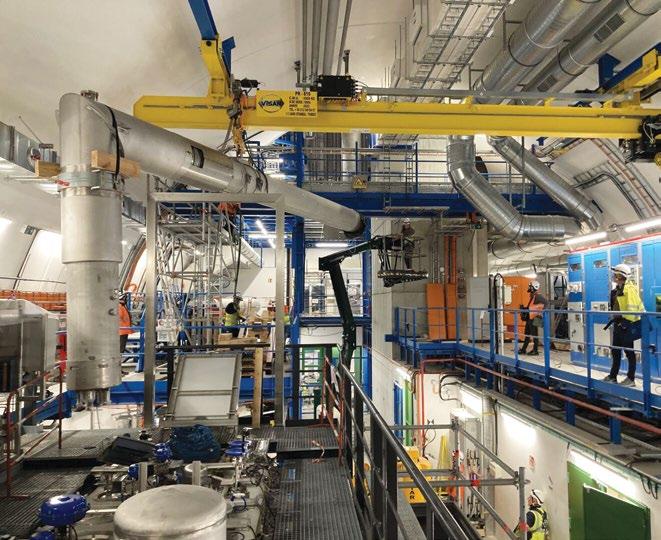
What makes CERN fascinating is that it has never been just about answering scientific questions. Every upgrade pushes the limits of engineering, computing and data processing.
The new collider will generate an extraordinary amount of information

every second. Managing that data requires faster computing systems, smarter software, advanced sensors and increasingly sophisticated AI tools. These are the very same technologies that businesses around the world are racing to develop and adopt.
History has shown that investments in scientific research often create benefits far beyond the laboratory. The World Wide Web was invented at CERN to help scientists share information. Today, technologies developed for scientific research continue to influence industries ranging from healthcare and finance to manufacturing and logistics.
That is why this upgrade deserves the attention of business leaders, not because they are interested in particle physics, but because they are interested in where the next generation of innovation is coming from.
For the UAE, this story feels particularly relevant.
Over the past few years, the country has made it clear that artificial intelligence and advanced technology are central to its future economy. From investing in AI infrastructure and cloud computing to supporting research and attracting global talent, the UAE is positioning itself as a leader in the next wave of technological innovation.
Companies such as G42 and MGX, along with wider investments in digital infrastructure and advanced computing, reflect a long-term strategy that extends well beyond adopting AI tools. The goal is to help build the technologies that will power tomorrow’s economy.
Although the UAE is not building particle accelerators, it is investing in many of the same capabilities that

projects like CERN rely on: highperformance computing, advanced engineering, data centres and worldclass technical talent.
The same can be said for Saudi Arabia.
Under Vision 2030, the Kingdom is investing heavily in artificial intelligence, advanced manufacturing, research and digital infrastructure as it works to diversify its economy.
Projects such as NEOM and the continued expansion of research institutions demonstrate a growing focus on creating an innovationdriven economy. Like CERN’s upgrade, these initiatives depend on skilled engineers, researchers and data scientists capable of solving some of the world’s most complex technical challenges.
What stands out is that the most valuable outcomes of projects like the Large Hadron Collider are often impossible to predict.
Few people could have imagined that research carried out at CERN decades ago would contribute to technologies that millions of people now use every day. That is the nature of frontier science. Its greatest commercial impact often comes from solving problems that no one initially set out to solve.
In a world where businesses are under constant pressure to deliver quick returns, CERN offers a different perspective. It reminds us that some of the most transformative innovations require patience, long-term investment and a willingness to back ambitious ideas before their value is fully understood.
For the UAE and Saudi Arabia, that lesson may be just as important as any scientific discovery.
As both countries continue investing billions into AI, deep technology and research, the real opportunity is not simply to adopt the next breakthrough, but to help create it.
The Large Hadron Collider may be offline today, but the technologies being developed during its biggest-ever upgrade could influence industries for decades to come. And for the Middle East, that is a future worth paying attention to.
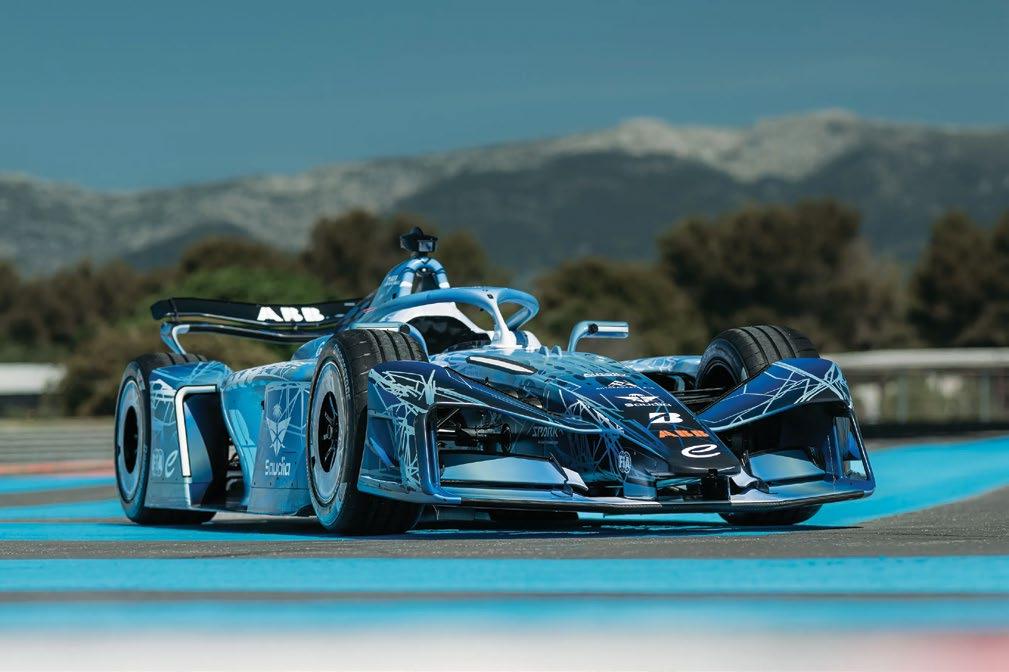
The ABB FIA Formula E World Championship has officially announced its most expansive calendar to date for the 2026–2027 season, featuring a record-breaking 21 races across 13 global cities. This milestone season will also mark the debut of the next-generation GEN4 race car, a high-performance, sustainabilityfocused machine delivering 600 kW of power (over 815 hp) and constructed entirely from 100 per cent recyclable or reusable materials.
Formula E has confirmed a record 21-race calendar for 2026-2027, a new generation car, and a fresh race format. The season opens in Jeddah this December.
The upcoming season introduces a new competitive format designed to elevate race weekends, featuring a dual-race structure that combines the traditional E-Prix with a shorter, more intense sprint-style event titled the “E-Prix Unleashed.” This addition is expected to amplify on-track action and enhance fan engagement across race weekends.
In response to the GEN4 car’s increased performance capabilities, the championship will expand its presence on permanent, world-class circuits while continuing to preserve its signature street-racing identity. New venues for


the season include the Circuit of the Americas in Austin, United States, and the MASCOT Zandvoort Circuit in the Netherlands. Additionally, the London E-Prix will relocate from its previous ExCeL Circuit setting to the historic Brands Hatch circuit.
The 2026–2027 season will commence with a double-header opener in Saudi Arabia, featuring two night races at the Jeddah Corniche Circuit on December 18 and 19, 2026. From there, the championship will embark on a global tour spanning the Americas, Europe, and Asia, with the calendar strategically optimised by region to reduce logistical complexity and lower shipping-related emissions.
The season will conclude in July 2027 with back-to-back double-header finales in Shanghai and Tokyo, bringing the record-setting championship to a close after a landmark year of innovation, performance, and sustainability in electric motorsport.


One of jewellery's most iconic designs gets a bold new chapter.

Few pieces in fine jewellery carry the cultural weight of the Cartier LOVE Bracelet. Since its introduction in 1969, the bracelet’s distinctive oval form and signature screw motifs have made it one of the most recognised designs in the world, worn across generations and markets as a symbol of enduring commitment. Now, Cartier is adding a new dimension to that legacy with the launch of an exclusive colour capsule, the first annual colour release for the collection.
The capsule comprises six new models, each reimagining the LOVE Bracelet’s iconic silhouette through colour. Three of the models take a fully pavé approach, set entirely with a single gemstone across the surface of the bracelet. Pink sapphires, blue sapphires and tsavorite garnets each form their own monochrome version, with ten diamonds replacing the classic LOVE screws to complete the look. The effect is immersive,
transforming the bracelet into a continuous ribbon of colour that reads as much as jewellery as it does as an accessory.
The remaining three models take a more layered approach, replacing the LOVE screws with ten stones arranged in a gradient of warm or cool tones. The yellow and rose gold versions draw from a warm palette, combining pink and yellow sapphires, orangey spessartite garnets, green tsavorites and amethysts. The white gold bracelet moves in the opposite direction, pairing aquamarines, pink and blue sapphires, tanzanites and amethysts for a cooler, more restrained effect.


Together, the six models reflect a broader evolution in Cartier’s jewellery vocabulary. The house describes its colour palette as expanding from bold, saturated hues toward softer pastel tones, a shift that is visible across several of its current collections. The LOVE colour capsule sits within that trajectory, offering both long-standing collectors and new buyers a fresh way into one of the most enduring designs in fine jewellery.

For those who already own the original, the capsule presents a natural companion piece. For those discovering the LOVE Bracelet for the first time, it offers an entry point defined not by the classic gold and diamond version, but by something more unexpected and personal.
For GCC collectors with an eye for provenance and rarity, Paris has a compelling reason to visit this autumn.
Fine Arts Paris returns to the Grand Palais from 19 to 23 September 2026 for its fifth edition, its first under the presidency of Xavier Eeckhout. The fair brings together 100 internationally renowned dealers spanning fine art, furniture, antiquities and jewellery, with a strong representation of Islamic art and Old Masters alongside Impressionist, Post-War and contemporary works.
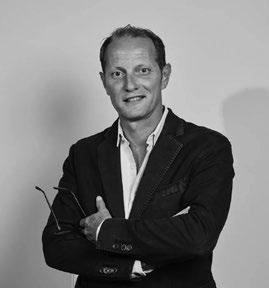
This edition places sculpture at its centre, with a dedicated group of dealers covering the discipline from antiquity to the present day. Galleries include Chenel, specialising in archaeological objects, alongside Brimo de Laroussilhe for Medieval and Renaissance sculpture and Univers du Bronze for works spanning the past two centuries.
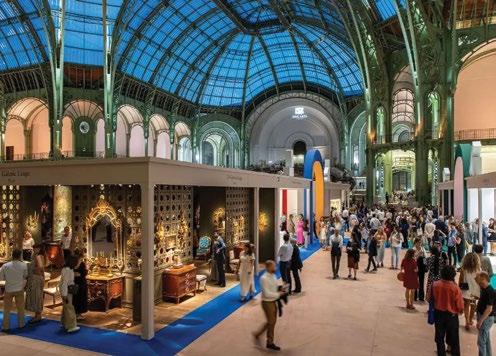
A new section, New Horizons, expands the fair’s commitment to emerging dealers and contemporary makers across jewellery, ceramics and textiles — offering collectors an entry point into new areas of the market.
The edition will also host a special exhibition drawn from the future Musée du Grand Siècle, set to open in 2028 within the historic Domaine de Saint-Cloud. The 40-work display offers a first glimpse into a collection devoted entirely to 17th-century France, anchored by a donation from former Louvre director Pierre Rosenberg.
Fine Arts Paris runs from 19 to 23 September 2026 at the Grand Palais, Paris.

Aeron never stops.