For the first time in more than a decade, the momentum has shifted in Madison. Because you fought for and won fair maps, the partisan divide and petty politics are hitting a wall. We witnessed a legislature that was more accountable to voters—many legislators had to listen to their constituents for the first time in years. And it’s just the beginning.
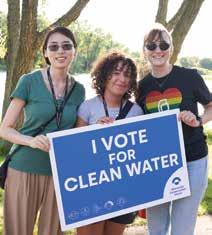
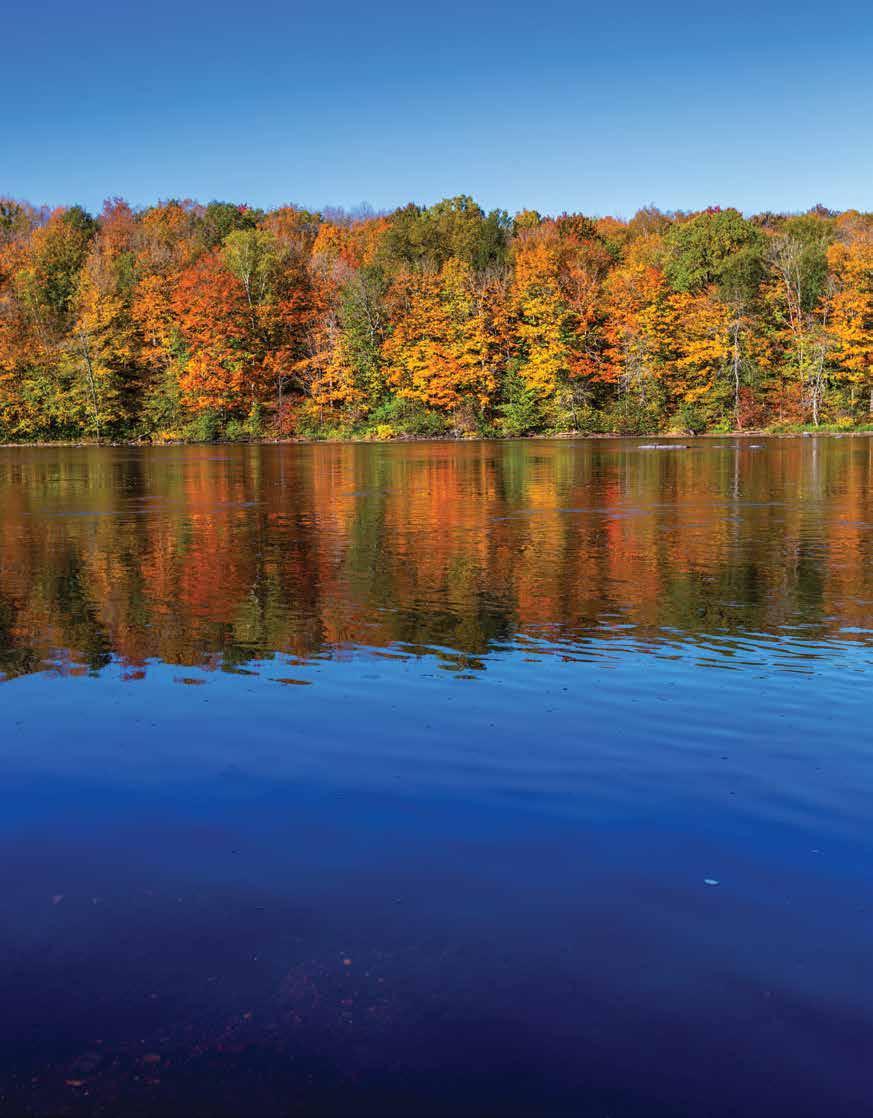
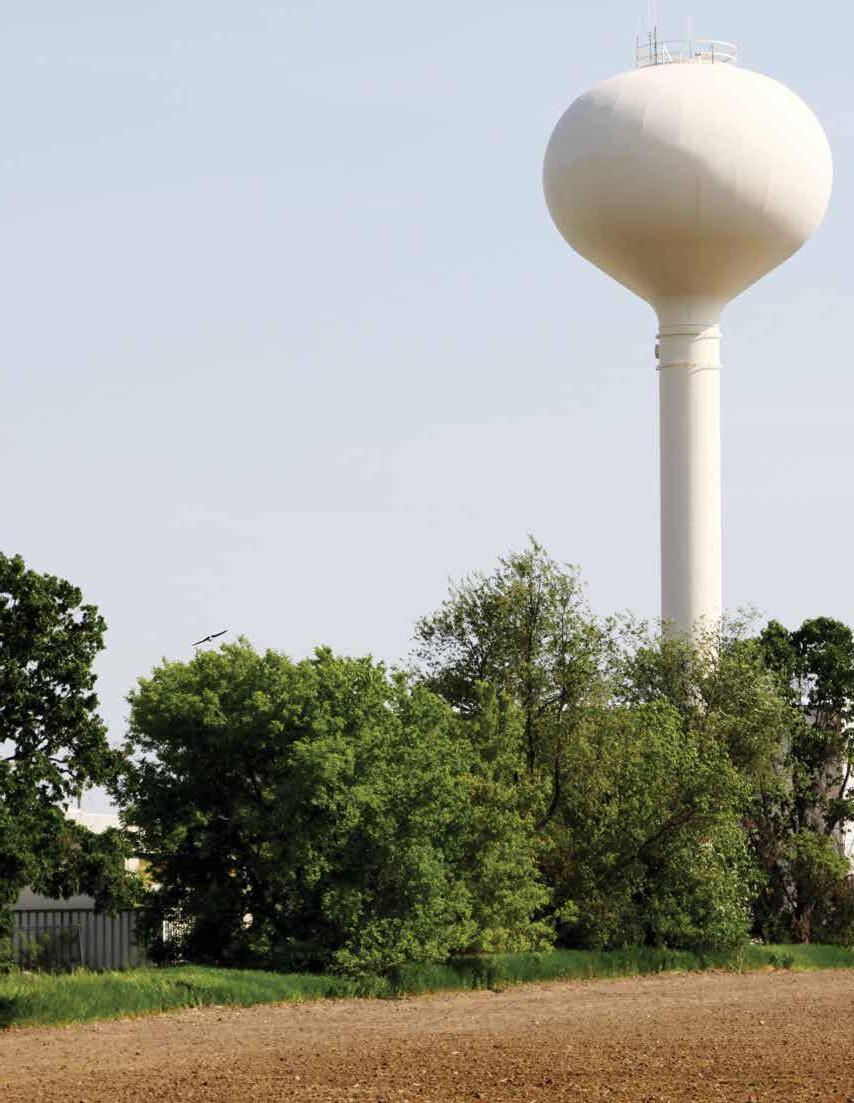
We saw the impacts of that accountability with massive wins for clean water. Your action on water quality had significant impact. Together, after a seven year effort, we secured nearly $900 million for water infrastructure and finally pushed PFAS remediation funding across the finish line. These victories are a direct result of voters demanding their health and their communities be a priority.
But let’s not mistake progress for a finished job. While we celebrate these wins, the legislature fell short on a long list of critical issues. Most notably, they continue to do nothing on clean energy and climate, a failure causing our utility prices to skyrocket. Even where there was significant momentum, like data center accountability, the inaction was shocking. Addressing these energy and water-hungry behemoths is a common-sense way to keep costs down, yet the opportunity to help Wisconsinites was squandered.
Frustratingly, they also failed to reauthorize the Knowles Nelson Stewardship Program, neglecting one of the most successful conservation programs in state history. It’s a stark reminder that many politicians still prioritize partisan positioning and corporate interests over public will.
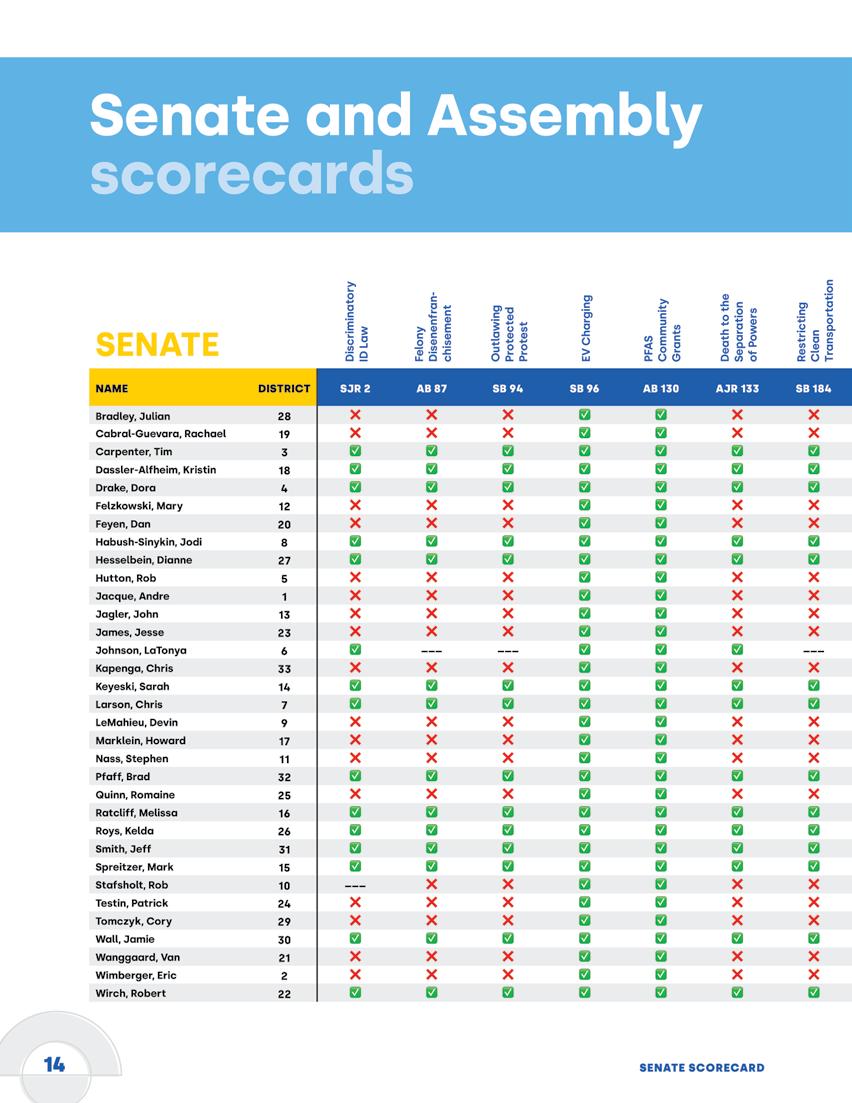
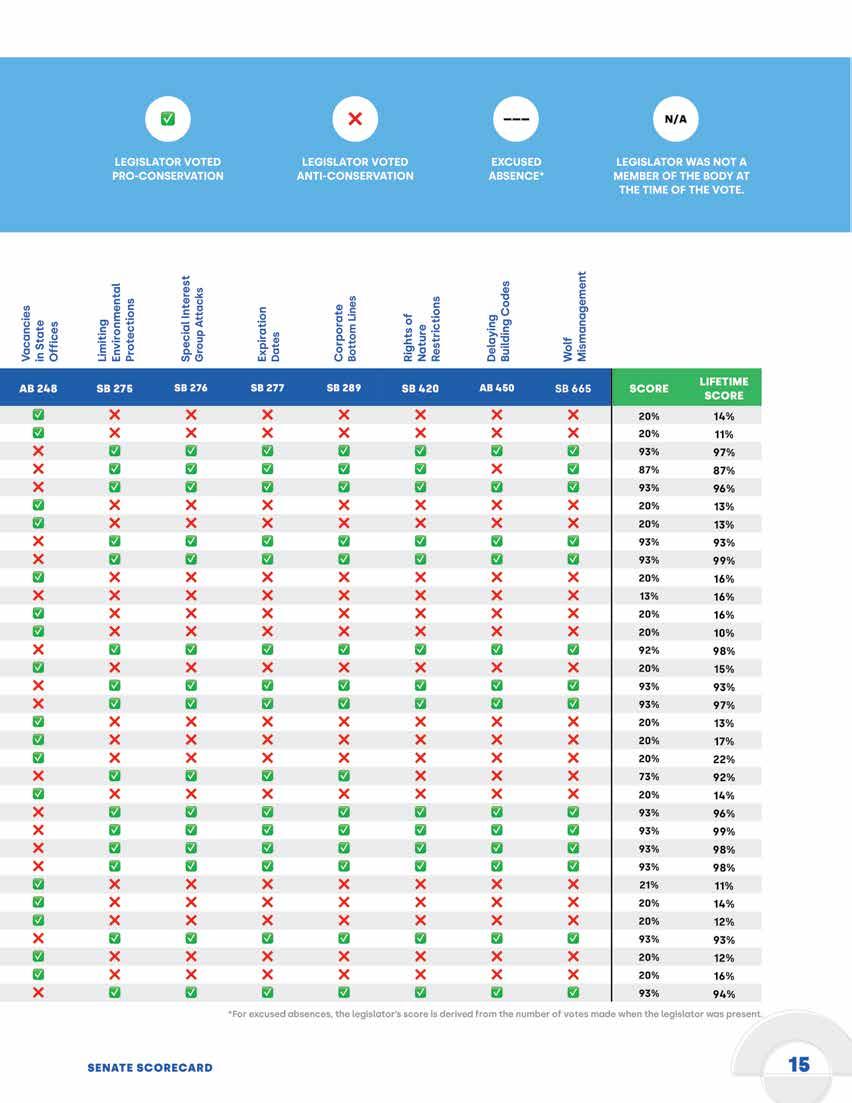
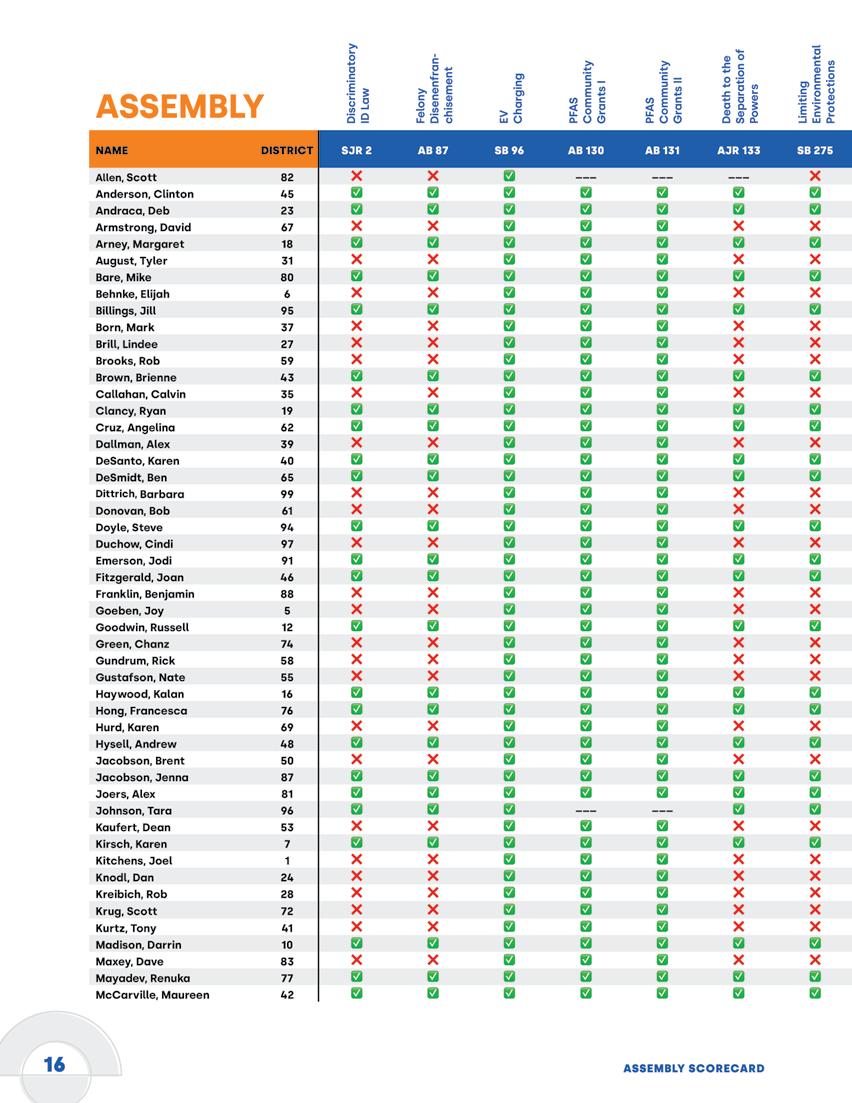
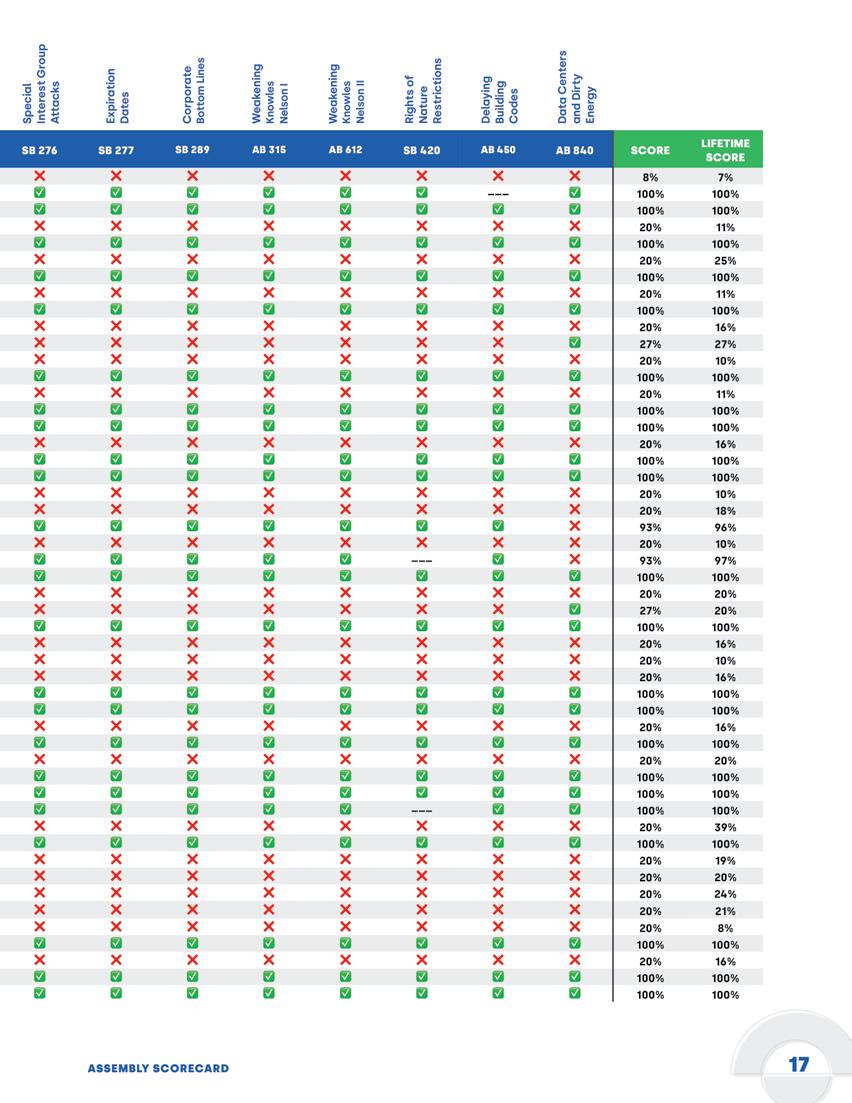
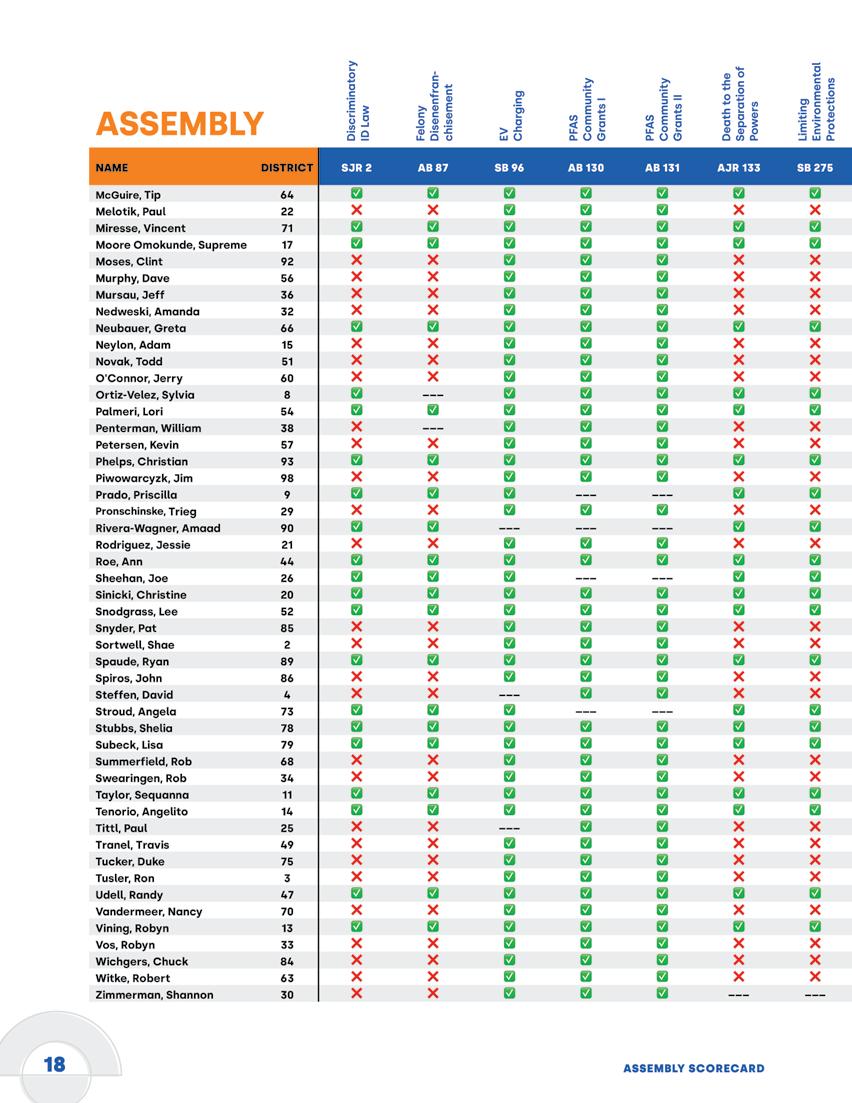
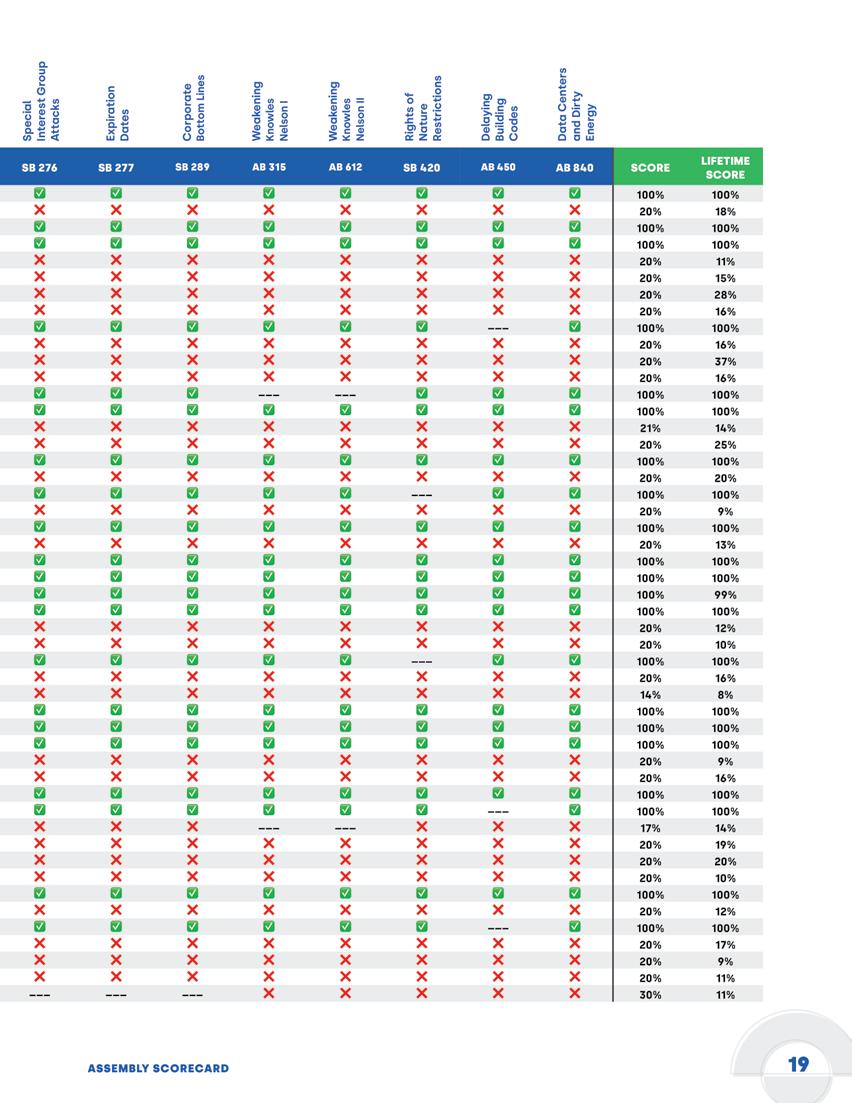
This scorecard shows exactly where each member of the legislature stands. It’s not about what they put on mailers or what corporate backers post for them. It’s that simple axiom: judge them by what they do, not what they say.
We’ve built a firewall for Wisconsin’s environment, but that firewall only holds if we stay engaged and press the fight. Fair maps are helping change the story, but we must expect more next session. We encourage you to use this scorecard to see how your representatives in the legislature measure up to your values, then use your voice to hold them accountable to the standards we all deserve.
Priority issues
Safe drinking water
Every Wisconsinite deserves equitable access to safe and affordable drinking water. In the 2025-26 session, the Wisconsin Legislature made real progress on tackling PFAS, lead, and nitrate pollution. That includes $732 million in new revenue bonding authority for our Environmental Improvement Fund, which finances our drinking water, stormwater, and wastewater infrastructure. It also includes the unanimous passage of AB 130 and AB 131, which released $133 million for PFAS remediation. Separately, thanks to the Wisconsin Supreme Court’s decision in Evers v. Marklein, the DNR was able to finalize new health-based standards for PFAS and lead without interference from the Joint Committee for Review of Administrative Rules. Progress has been made but we must do more to fund cleanup efforts, hold polluters accountable, prevent pollution, and keep the public informed about water risks.
Data centers and utility accountability
Massive data centers are springing up across Wisconsin and are creating enormous hidden costs to our wallets, our health, and our environment. Meanwhile, utility bills continue to go through the roof. Pro-conservation champions offered a solution: the Data Center Accountability Act (SB 729), which required new data centers to be powered by 70 percent clean energy and be transparent with their energy and water use. Other data center legislation (AB 840) was introduced to promote transparency, but contained a poison pill that made low-cost clean energy a non-viable option for powering data centers. Both bills failed to advance.
Stewardship
Despite being one of the most popular and successful conservation programs in the country, the Knowles Nelson Stewardship Program was stripped out of the state budget process by Republican legislators. There was an effort (AB 315) to hold the funding for the program hostage in exchange for unworkable changes to the program that would limit land acquisition—the primary purpose of the program—but it failed to advance. The legislature left without reauthorizing the program, leaving Knowles Nelson Stewardship program to run out of funding by June 2026.
Conservation Honor Roll
Wisconsin Conservation Voters understands the data-driven nature of a scorecard sometimes makes it difficult to recognize instances in which legislators went the extra mile for conservation. The Conservation Honor Roll recognizes the following decisionmakers for the extra effort they put forth to protect our air, water, land, and democracy.
Rep. Jill Billings and Rep. Jeff Mursau
Rep. Jill Billings and Rep. Jeff Mursau know that protecting our drinking water can bring Democrats and Republicans together. Over half the legislature co-sponsored Rep. Billings’ Water Pollution Notification Act (AB 635), driving attention to the need for better groundwater pollution notification processes. And Rep. Mursau’s leadership on AB 130 and 131 ensured that PFAS grant programs were signed into law with unanimous legislative support.
Sen. Jodi Habush-Sinykin and Rep. Angela Stroud
Before concerns about data centers became widespread, Sen. Habush-Sinykin and Rep. Stroud sought to put common-sense protections for ratepayers and the environment into place by drafting the Data Center Accountability Act (SB 729). They not only crafted comprehensive legislation, but they engaged a wide variety of stakeholders and built a durable coalition that will enable meaningful legislation to pass next session.
CONSERVATION CHAMPIONS
Wisconsin Conservation Voters extends a special thank you and congratulations to this year’s Conservation Champions!
Conservation Champions are legislators who received a perfect 100 percent score.
Clinton Anderson
Deb Andraca
Margaret Arney
Mike Bare
Jill Billings
Brienne Brown
Ryan Clancy
Angelina Cruz
Karen DeSanto
Ben DeSmidt
Joan Fitzgerald
REPRESENTATIVES
Russell Goodwin
Kalan Haywood
Francesca Hong
Andrew Hysell
Jenna Jacobson
Alex Joers
Tara Johnson
Karen Kirsch
Darrin Madison
Renuka Mayadev
Maureen McCarville
Tip McGuire
Vincent Miresse
Supreme Moore Omokunde
Greta Neubauer
Sylvia Ortiz-Velez
Lori Palmeri
Christian Phelps
Priscilla Prado
Amaad Rivera-Wagner
Ann Roe
Joe Sheehan
Christine Sinicki
Lee Snodgrass
Ryan Spaude
Angela Stroud
Shelia Stubbs
Lisa Subeck
Sequanna Taylor
Angelito Tenorio
Randy Udell
Robyn Vining
The DNR drives safe drinking water relief
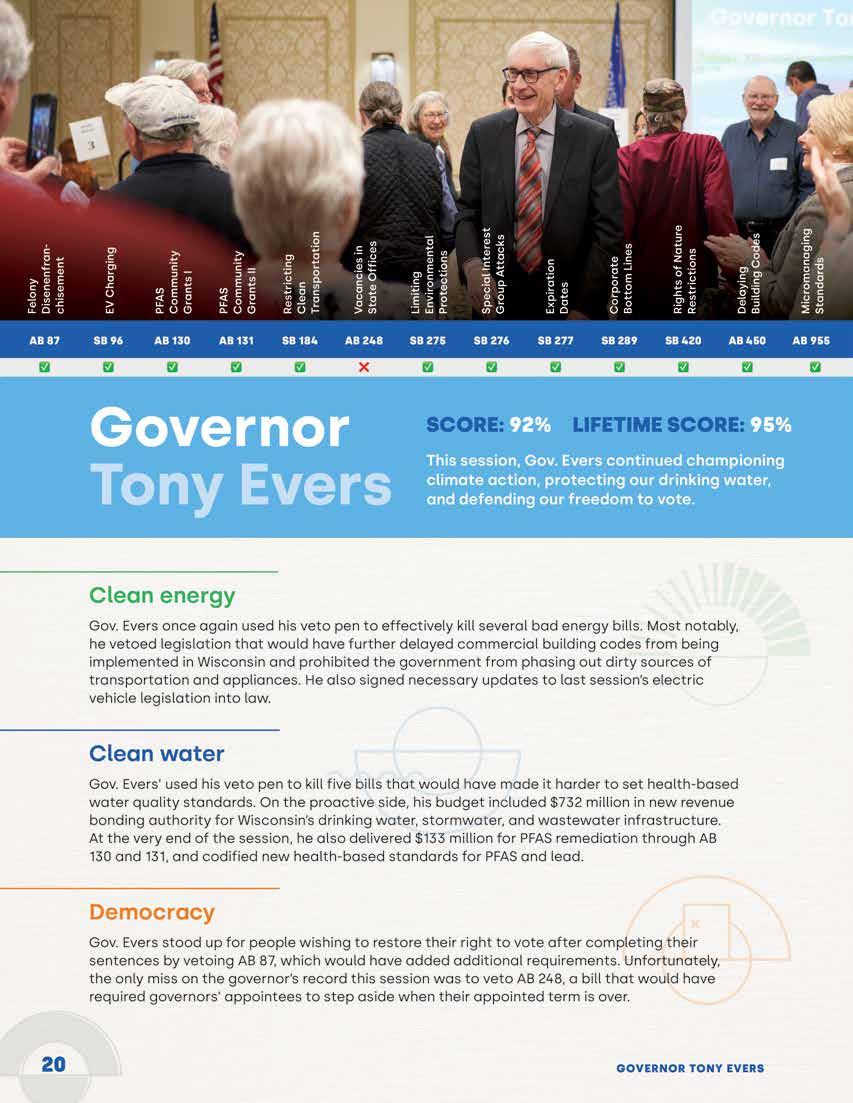
Despite losing 29 percent of their funding since 2010, the Wisconsin Department of Natural Resources (DNR) continues to muddle through with leadership, grit, and issue-area expertise. Thanks to Gov. Evers and Secretary Karen Hyun’s leadership, the agency took important strides toward protecting Wisconsinites’ drinking water during the 2025-26 Legislative Session.
The DNR was central in getting needed relief to impacted communities. With the help of $732 million in new revenue bonding authority from the 2025-26 State Budget, the DNR continued serving as the central conduit for drinking water, stormwater, and wastewater infrastructure financing via their Safe Drinking Water Loan Program and Clean Water Fund Program. In 2026 alone, the DNR managed nearly $4.5 billion in water infrastructure requests, and listed over 1,000 projects on their project priority lists.
The agency also led the charge to finalize a bipartisan agreement on PFAS relief through AB 130 and 131. The final versions of the bills received unanimous legislative support and included $80 million in grants for cities, villages, towns, Tribal governments, and other community water systems. The legislation also includes $35 million for private well owners impacted by PFAS, through an expanded version of Wisconsin’s Well Compensation Grant Program.
Meanwhile, the DNR successfully defended Wisconsin’s Spills Law, our number one tool for holding polluters accountable. Through weeks of ongoing, behind-the-scenes conversations, DNR leadership ensured that AB 130 and 131 excluded broad Spills Law exemptions that would have let PFAS polluters off the hook.
And on proactive action, the DNR codified two sets of health-based standards. This includes more protective drinking water standards for PFAS, which are key to ensuring that 94 public water systems improve the drinking water they deliver to their communities. It also includes more protective standards on lead, which will ensure over 70 Wisconsin communities remove their remaining lead service lines within 10 years, while also improving sampling, inventory, education and notification requirements.
The Wisconsin State Budget
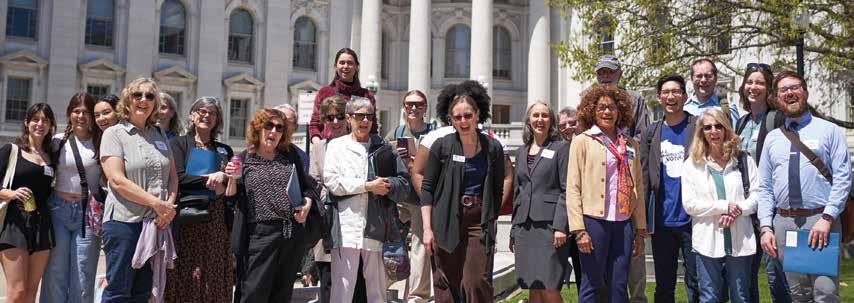
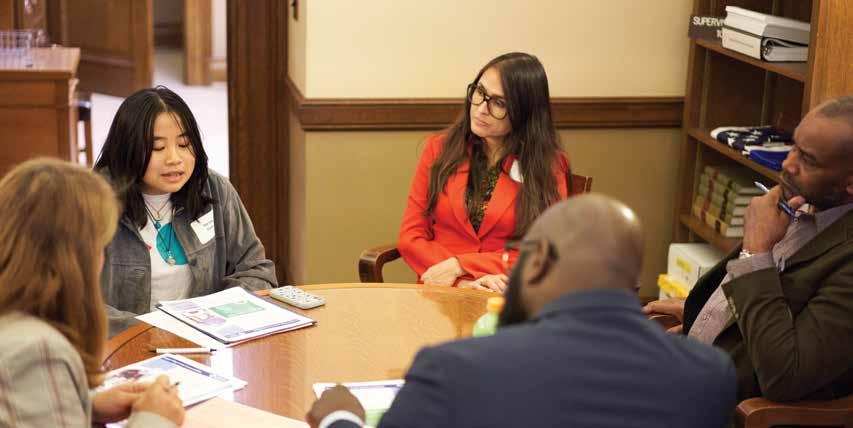
Our state budget is the ultimate statement of what Wisconsin values and is the only must-pass bill in the legislature. That is why Wisconsin Conservation Voters engages our members and partners so thoroughly on our budget priorities. Leading up to the 2025-26 Legislative Session, Wisconsin Conservation Voters held listening sessions in six communities around Wisconsin to ask what priorities communities had for the state budget. We then built a coalition of over 60 groups to advocate for our top budget priorities. Gov. Evers included many of our priorities in his budget submitted to the legislature. Our budget work culminated in our Conservation Lobby Day where over 300 people came to lobby their legislators in support of our shared values. Our top priorities in the 2025-27 budget included:
Supporting a constitutional amendment that would give Wisconsinites the right to propose and approve laws and constitutional amendments through referendums.
Supporting at least $1 billion in increased bonding authority and grant funding for capital investments that remediate PFAS, lead, and nitrate contamination statewide.
Supporting the reauthorization of the Knowles-Nelson Stewardship Program for 10 years at $100 million a year.
Supporting bringing Integrated Resource Planning (IRP) to Wisconsin to ensure a transparent, accountable, and forward-thinking energy strategy.
Supporting Wisconsin stepping in to replace any federal funding withheld by the federal government, so that our communities can continue to access critical substance use disorder treatment and health care services.
While many of our initial budget requests were stripped out of the budget, we were successful at securing $732 million dollars for clean water infrastructure.
Bill descriptions
Wisconsin Conservation Voters tracks every bill related to our priority issues as it moves through the legislative process. The Conservation Scorecard includes those bills that received a recorded vote by the full Assembly and/ or Senate.
SJR 2 | Baking the discriminatory voter ID law into our constitution
Pro-conservation vote: no | Status: Approved by voters in the April 2025 election
The right to vote is a fundamental aspect of our democracy. Wisconsin should be finding ways to ensure every person eligible to vote has access to the ballot. SJR 2 works against this goal by proposing a constitutional amendment that would bake our discriminatory voter ID law into the Wisconsin Constitution. This would disproportionately impact voters of color, transgender voters, voters with disabilities, and low-income voters.
AB 87 | Exacerbating felony disenfranchisement
Pro-conservation vote: no | Status: Vetoed by Gov. Evers
Voting is a right. Currently, Wisconsin has one of the most stringent voting rights restoration policies in the nation, only allowing rights restoration after fully completing the terms of a sentence—including probation, parole, and extended supervision. AB 87 would have made this problem even worse by adding additional requirements before rights are restored. This would have taken us backward in the fight to protect Wisconsinites’ freedom to vote.
SB 94 | Outlawing protected protest
Pro-conservation vote: no | Status: Died when the Assembly did not take it up
The right to protest is central to the ability to advocate for a world where every person can breathe clean air, drink safe water, and protect the lands we love. SB 94 would have created a vague definition of “riot” that could penalize whole groups of people for the actions of a few. SB 94 left too many questions of legality up to interpretation by police under rapidly changing conditions.
DEMO CRACY
DEMO CRACY
DEMO CRACY
SB 96 | EV charging technical corrections
Pro-conservation vote: yes | Status: Signed by Gov. Evers
Electric vehicles help save consumers money at the pump and reduce air pollution. SB 96 is a necessary technical fix to last year’s Act 121 and Act 122 that clarifies all levels of chargers are exempt from the 3c/kwh tax that are at a residence. It also clarifies the process for charger owner operators that need to register for the tax.
AB 130 & AB 131 | Creating PFAS grant programs
Pro-conservation vote: yes | Status: Signed by Gov. Evers
To protect Wisconsinites from PFAS contamination, we need to support remediation in both our public and private water infrastructure. AB 130 and AB 131 create a new community grant program for public water infrastructure, and fund relief for private well owners through the well compensation grant program.
AJR 133 | Death to the separation of powers
Pro-Conservation vote: no | Status: The Governor does not take action on proposed constitutional amendments. If AJR 133 passes both the Assembly and Senate in the 2027–28 legislative session, it will go before Wisconsin voters. The Wisconsin Constitution establishes three co-equal branches of government to ensure appropriate checks and balances over policies that impact our families and environment. AJR 133 would concentrate power in the hands of the Wisconsin Legislature by proposing a constitutional amendment allowing the Wisconsin Legislature to kill any health-based standards, without oversight from the executive branch.
SB 184 | Restricting the transition to clean, cost-efficient transportation and appliances
Pro-conservation vote: no | Status: Vetoed by Gov. Evers
To make our air cleaner to breathe and help combat climate change, we need to quickly transition to clean transportation and appliances. SB 184 would have worked against this transition by prohibiting state agencies and local communities from phasing out the use of dirty, gas powered transportation and appliances.
AB 248 | Specifying vacancies in appointive state offices
Pro-conservation vote: yes | Status: Vetoed by Gov. Evers
Unless reappointed, officials in public office shouldn’t be able to stay in their position once their term expires. AB 248 specifies that a vacancy is created when an official’s term expires.
DEMO CRACY
DEMO CRACY
SB 277
SB 275 | Limiting DNR’s ability to advance environmental protections
Pro-conservation vote: no | Status: Vetoed by Gov. Evers
Our DNR needs to be able to advance health-based environmental standards that ensure our water is safe to drink, our food is safe to eat, and our air is clean to breathe. SB 275 places new limitations on the DNR’s ability to promulgate these standards, leaving our communities vulnerable to emerging contaminants.
SB 276 | Incentivizing special interest group attacks on environmental protections
Pro-conservation vote: no | Status: Vetoed by Gov. Evers
Wisconsin shouldn’t incentivize special interest group challenges to health-based environmental standards. SB 276 would allow special interest groups to recover attorney fees and costs from attacks on environmental standards.
SB 277 | Expiration dates on environmental protections
Pro-conservation vote: no | Status: Vetoed by Gov. Evers
Permanent health-based environmental standards ensure our water is safe to drink, our food is safe to eat, and our air is clean to breathe. SB 277 would put expiration dates on these protections, threatening our health and the health of future generations.
SB 289 | Corporate bottom lines over environmental protections
Pro-conservation vote: no | Status: Vetoed by Gov. Evers
Corporations shouldn’t have control over our process for setting environmental standards. SB 289 would let corporations block new environmental standards by focusing solely on the cost to businesses while ignoring the health, environmental, and long-term economic benefits of stronger protections.
AB 315 & AB 612 | Weakening the Knowles Nelson Stewardship Program
Pro-conservation vote: no | Status: Died when the Senate did not take it up Wisconsin has one of the premier land acquisition programs in the country. It gives all people a place to swim, boat, fish, hunt, and relax in our beautiful state. This program is overwhelmingly popular and a critical component of our state’s economy. AB 315 and AB 612 would make this program unworkable by requiring a full legislative vote on any project larger than $1 million.
SB
420 | Preventing local governments from passing rights of nature ordinances
Pro-conservation vote: no | Status: Vetoed by Gov. Evers
Local governments are at the forefront of strategies that ensure Wisconsin is home to clean air, safe water, healthy soils, and rich biodiversity. SB 420 and AB 421 would undermine local control and limit local governments’ ability to protect our environment by preventing our cities, towns, and villages from enacting ordinances as they see fit.
AB 450 | Further delaying needed updates to commercial building codes
Pro-conservation vote: no | Status: Vetoed by Gov
Updated commercial building energy codes lower energy bills, while improving the health, safety, and comfort of building occupants. AB 450 would further delay the update of our state’s building codes until April 2026, after already being delayed by 10 years.
SB 665 | Setting an arbitrary wolf population goal in statute
Pro-conservation vote: no | Status: Died when the Assembly did not take it up
Wisconsin now has an adaptive, science-based wolf management plan focused on supporting a healthy wolf population and minimizing depredations. SB 665 works against this plan by requiring the Department of Natural Resources to establish a numeric statewide wolf population goal. This undermines the ability of the DNR to balance multiple goals and respond to the changing populations.
AB 840 | Failure to protect communities from data center impacts
Pro-conservation vote: no | Status: Died when the Senate did not take it up
Wisconsin residents should not have to pay for large tech companies looking to site data centers in their communities. Data centers should have to pay the full costs of their energy load, including being connected to the electrical grid. AB 840 would drive up costs and pollution for Wisconsin residents by limiting lower-cost renewables to having to be on-site. It also would not explicitly require that tech companies have to pay the full costs of their energy and being connected to the energy grid.
AB 955 | Politicians micromanaging health-based standards
Pro-conservation vote: no | Status: Vetoed by Gov. Evers
To protect our families from environmental contamination, our state agencies need the ability to efficiently and effectively advance health-based standards, based on the latest science. AB 955 would disrupt this process by requiring explicit statutory authority for any new administrative rule.
Your membership powers our work
Thank you for believing in the power of Wisconsin Conservation Voters!
As a member, you are a critical partner in this changemaking work:
• You’re ensuring people have clean water to drink. Thanks to you, we passed the bill unlocking $133 million in funding that will bring much-needed relief to people dealing with PFAS contamination. As we go into the next legislative session, we’ll work to pass a state budget and bills that allocate more funding for remediation and hold polluters accountable.
• You’re helping elect candidates who will protect ratepayers and fight for clean energy. We’re making sure candidates understand the top issues on voters’ minds going into the fall election: affordable utility bills, utility and data center accountability, and clean energy implementation. We’ll be organizing and knocking doors to make sure candidates who will champion these issues are the ones elected.
• You’re safeguarding our voting rights. We’re building a coalition of partners and stakeholders who will work to pass transformative voting rights legislation in the next session. Ensuring voters have access to the ballot is critical to safeguarding our environment for future generations.
Online
Make a secure online donation at conservationvoters.org/donate
By mail
Send your check to WCV, 133 S. Butler St., Ste. 320, Madison, WI 53703
Visit conservationvoters.org/ways-to-give for info on planned giving, gifts of stock, and gift memberships.
The robin is the harbinger of spring, carrying the promise of new life and renewed hope under its wings. When you become a monthly donor and join the Robin’s Nest, you are helping us build a stronger organization that will protect future generations from environmental harm—just as a robin piles the branches to protect its young.
The Robin’s Nest makes donating easy. Your monthly contributions process automatically, so you never need to worry about whether your support is up to date.
As the state bird of Wisconsin, the robin is integral to our state’s ecosystem—just as you are integral to building a Wisconsin where everyone can thrive, drink clean water, and breathe clean air. Become a monthly donor at conservationvoters.org/ give-monthly
How to communicate with your legislators
Building a good relationship with your legislator is critical to protecting your community and Wisconsin. Use every opportunity to communicate with your legislators about your concerns and to express your values. Here’s how you can be an effective pro-conservation, pro-democracy advocate through every step of the legislative process:
The Vote Tracker
From committee votes to bill summaries to actions taken by legislators and the governor, the Vote Tracker serves as your eyes on the State Capitol. This powerful tool is updated in real time, meaning you can get the information you need when it’s most important. Visit our website at: conservationvoters.org/vote-tracker.
Vote your conservation values
Your vote is the most important way you can stand up for your conservation values. Wisconsin Conservation Voters can help you find information about how to register and where to vote on Election Day. Visit our website for more voting resources at: conservationvoters.org/elections.
Attend Conservation Lobby Day
Conservation voters gather from across the state to share values and expectations with their state legislators. On lobby day, we reach every legislator at the most critical decision-making times. We’ll alert you by email and social media to let you know when the next one is happening. Sign up for our emails at: conservationvoters.org/sign-up.
Write a letter to the editor
Legislators really do read the opinion section of local newspapers. Check the editorial page or website for directions on submitting a letter. You don’t need to know bill specifics to write an influential letter. Just share your story about why you are concerned. If you need guidance, you can contact our communications team at: info@conservationvoters.org.
Contact your local organizer
You can’t top personal interaction when it comes to influencing conservation policy. The organizers on our field team will alert you to opportunities when your physical presence in the Capitol or a personal phone call or text to your legislator is most effective. Connect with your Wisconsin Conservation Voters organizer by filling out our volunteer form at: conservationvoters.org/volunteer.
Invite your legislator to meet with you in your district
Meeting with your legislator is a great way to get to know them better. You can invite them to one of your organization’s meetings, a coffee shop, or on a tour of a place you care about. The legislator’s staff will often set up a time for you to meet while they are in your district.