2025 PARTNERSHIP IMPACT
Conservation Legacy, in partnership with the US Forest Service, provides crew-based and individual placement opportunities for youth, young adults, and veterans to serve and work on public lands.
These opportunities foster an awareness of natural and cultural resources and develop skills in the stewardship and science of their management while actively contributing to the preservation of the public lands legacy. America's lands, parks, waterways, and open spaces provide essential ecosystem, economic, and community resources, including clean water, clean air, flood control, food, fuel, and recreation access. Conservation Legacy is dedicated to the partnerships and work crucial needed to protect, enhance, and steward our National Forests and recreational shared lands.
In 2025, Conservation Legacy participants worked on projects in all U.S. Forest Service functional areas except law enforcement. By completing these projects, participants from all backgrounds helped build capacity for the U.S. Forest Service to meet critical needs facing public lands.
Conservation Legacy programs provide opportunities for job training, personal development, conservation service, and natural resource education while at the same time accomplishing needed work benefiting our public lands. Conservation Legacy provides high-quality, locally-focused conservation service programs that are customized to meet the unique needs of participants, partners, and communities. This approach allows for uniquely tailored programs that establish closer community bonds and leave deeper lasting impacts. In all, over 800 unique conservation corps and individual placement opportunities were provided.
TOTAL FUNDING
$6,579,900
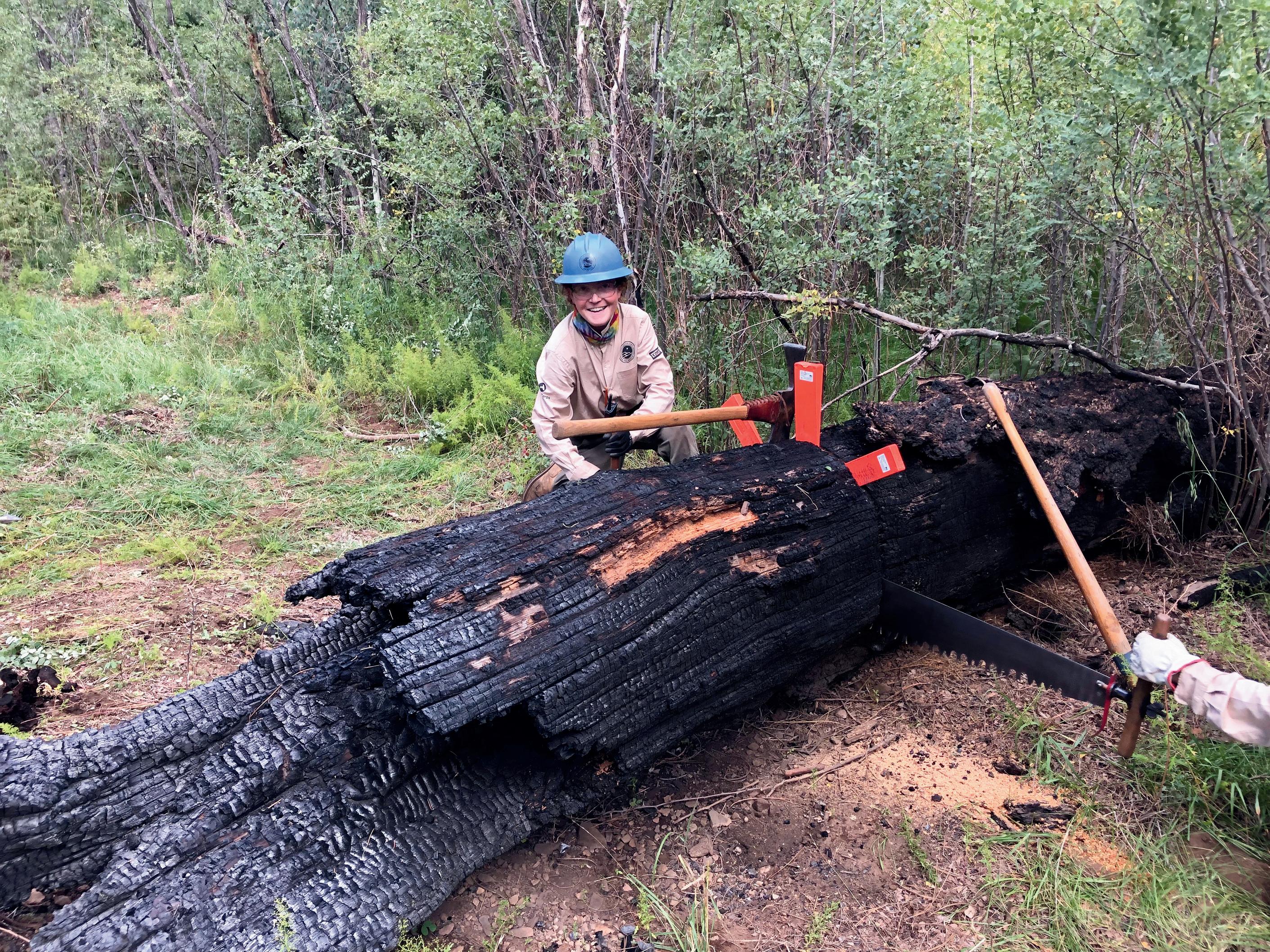
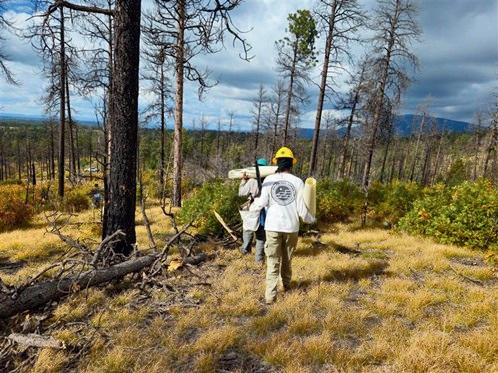
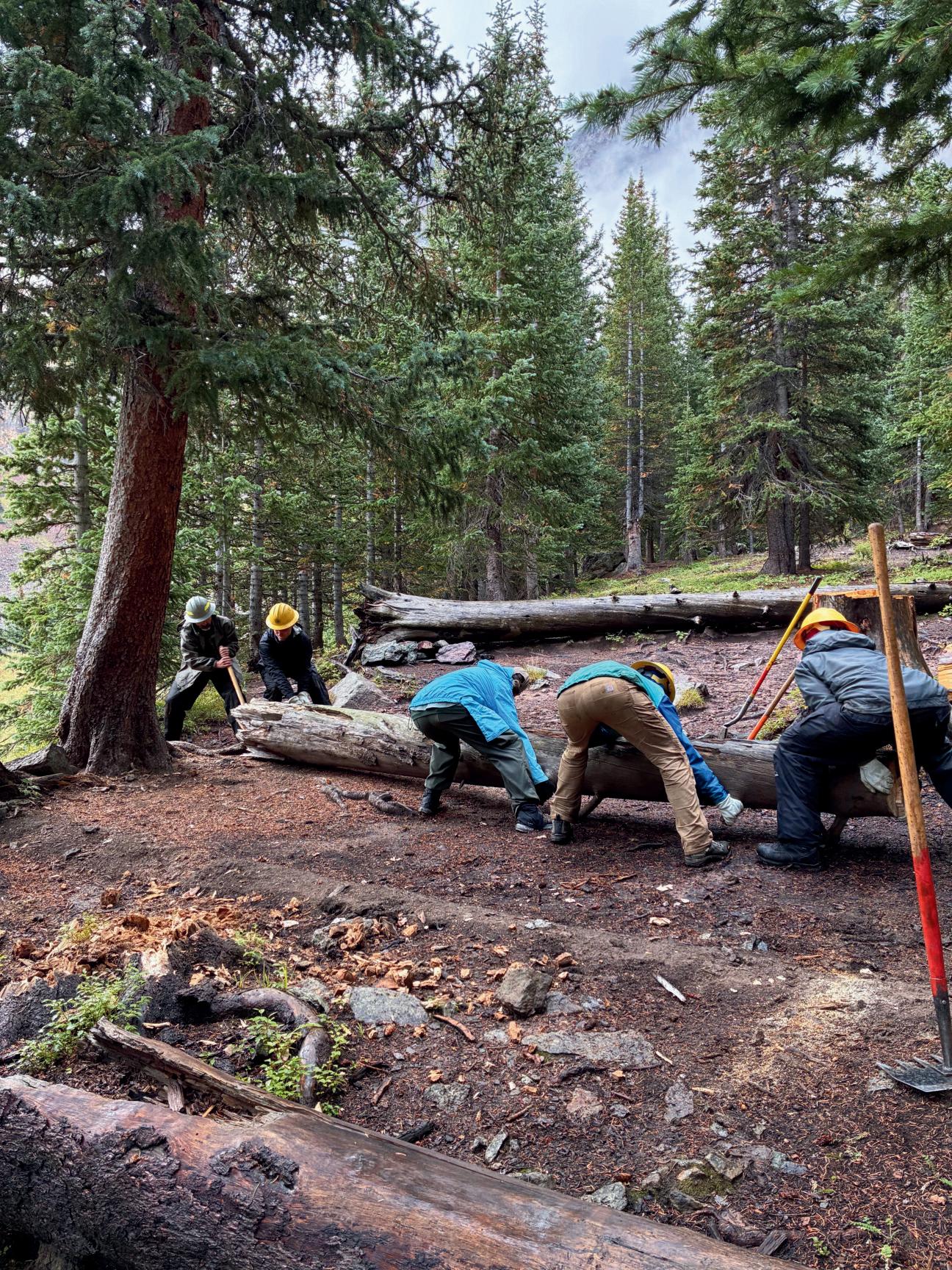
Cross cut action with a member of CCNM Crew 579
PROJECT WORK
PROJECTS WERE COMPLETED IN THE FOLLOWING NATIONAL FORESTS & REGIONAL OFFICES:
REGION 2
Grand Mesa, Uncompahgre, and Gunnison National Forests, Gunnison Ranger District
Rio Grande National Forest, Conejos Ranger District
San Juan National Forest, Columbine National Forest
REGION 3
Apache-Sitgreaves National Forest; Alpine Ranger District, Clifton Ranger District, Black Mesa Ranger District
Carson National Forest, Canjilon Ranger District
Cibola National Forest; Mt. Taylor Ranger District, Sandia Ranger District
Coconino National Forest, Flagstaff Ranger District, Mogollon Rim Ranger District
Coronado National Forest; Santa Catalina Ranger District
Gila National Forest; Black Ranger District, Wilderness Ranger District; Silver City Ranger District; Glenwood Ranger District; Black Range Ranger District
Lincoln National Forest, Smokey Bear Ranger District
Cibola National Forest, Mt Taylor Ranger District
Kaibab National Forest, North Kaibab Ranger District
Prescott National Forest, Chino Vallet Ranger District
Santa Fe National Forest, Pecos Las Vegas Ranger District
Tonto National Forest; Payson Ranger District, Red Rock Ranger District, Mesa Ranger District, Globe Ranger District
REGION 4
Manti La Sal National Forest, Monticello Ranger District
REGION 8
George Washington and Jefferson National Forest; NNIS (RMEF/ National Turkey), RAC (Mike Scales), Joint Chiefs, 24 Disaster, GAOA
Daniel Boone National Forest
Chattahoochee-Oconee National Forest
Cherokee National Forest
Francis Marion & Sumter National Forest Ouachita NF
The Land Between the Lakes National Recreation Area
Bankhead National Forest
REGION 9
Mark Twain National Forest Monongahela National Forest; NNIS, Red Spruce Release
Wayne National Forest
ACCOMPLISHMENTS
NUMBER OF MILES OF FIRE BREAK CREATED / MAINTAINED
30.35
TOTAL ACRES TREATED:
7,195.5
MILES OF TRAILS CREATED/ CONSTRUCTED :
2,233
TOTAL PARTICIPANTS:
Total Conservation Corps Crews & IPs service terms during the reporting period
562
USFS SOUTHERN AND EASTERN REGIONS
GAOA | GEORGE WASHINGTON AND JEFFERSON NATIONAL FORESTS
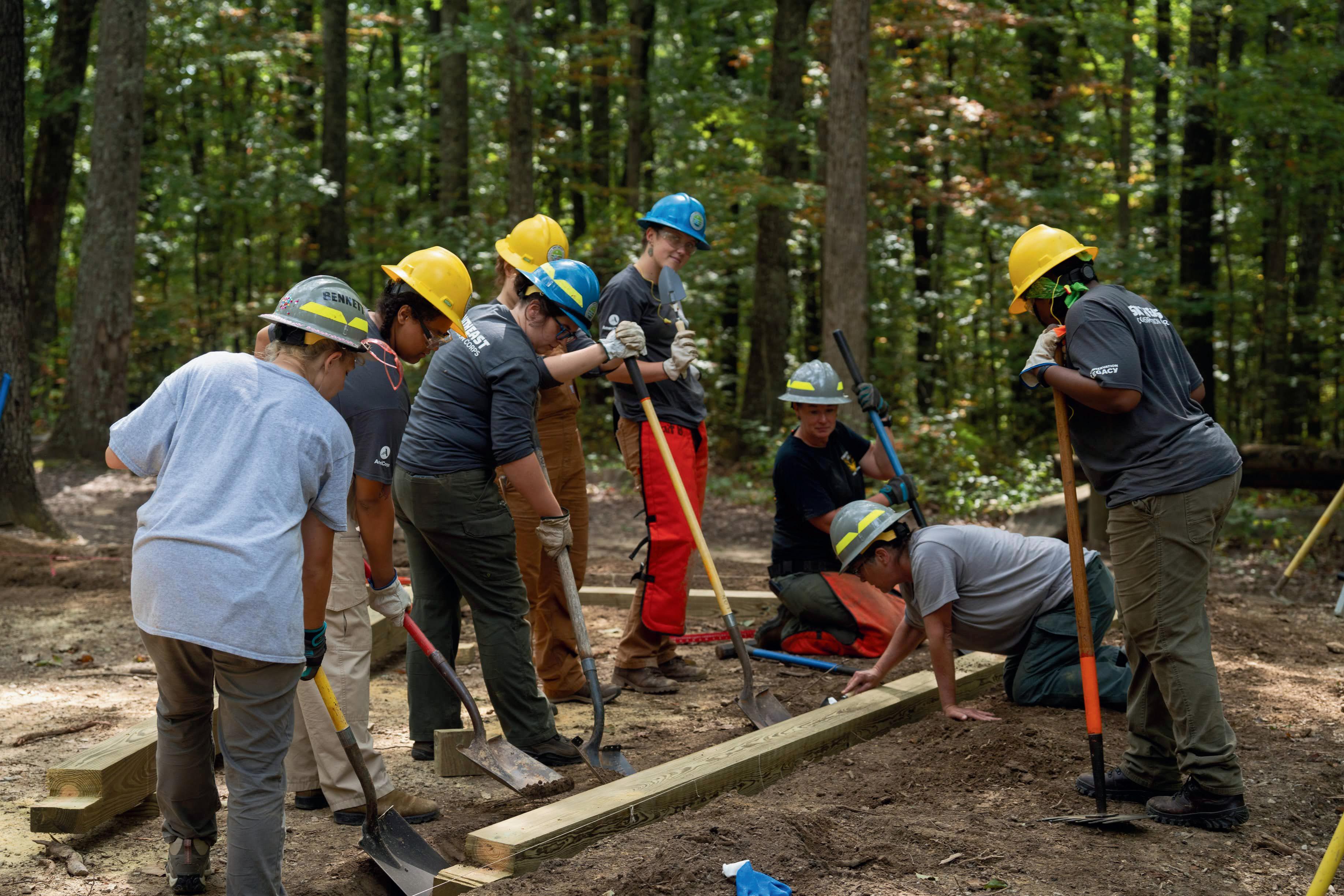
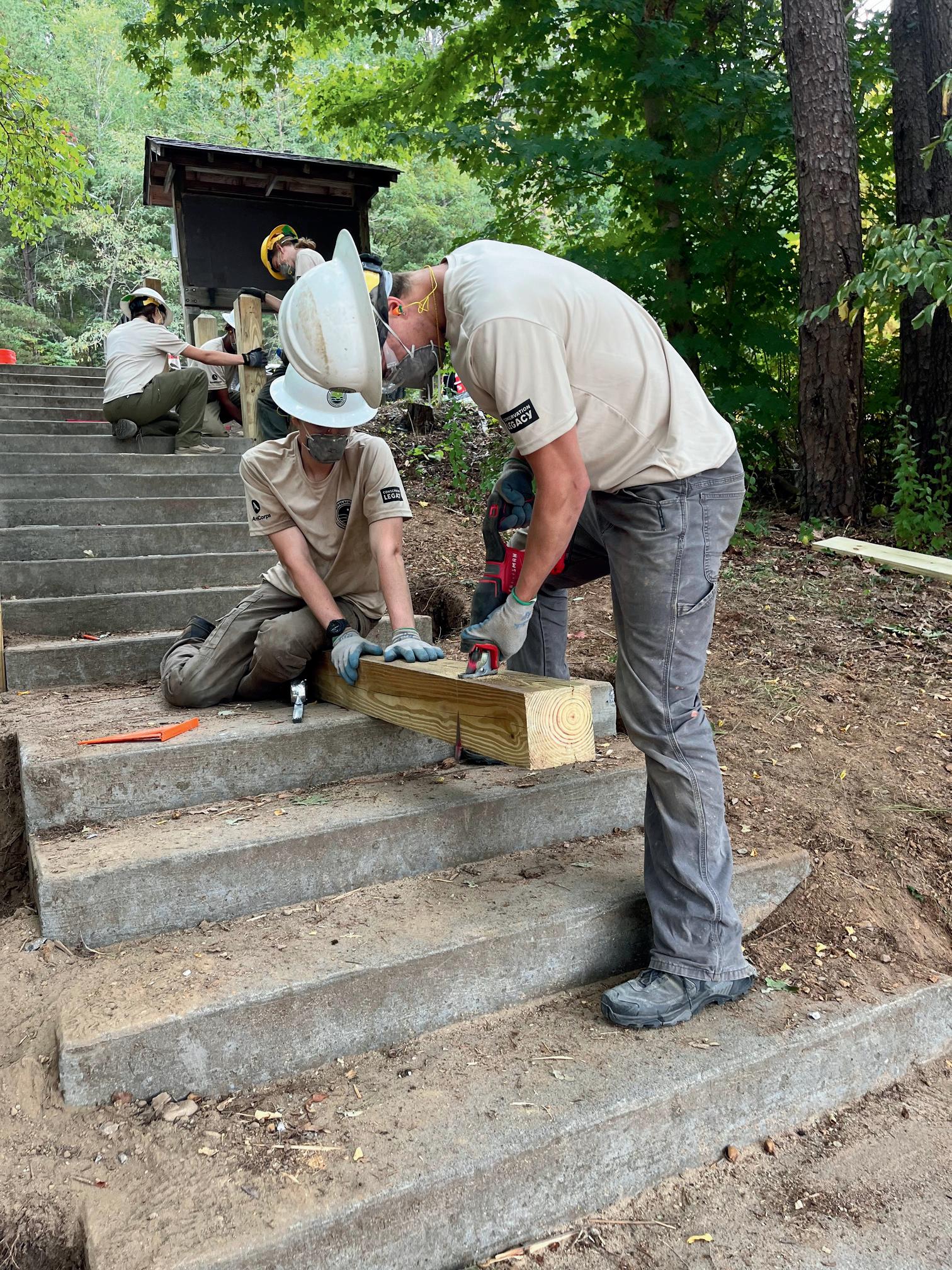
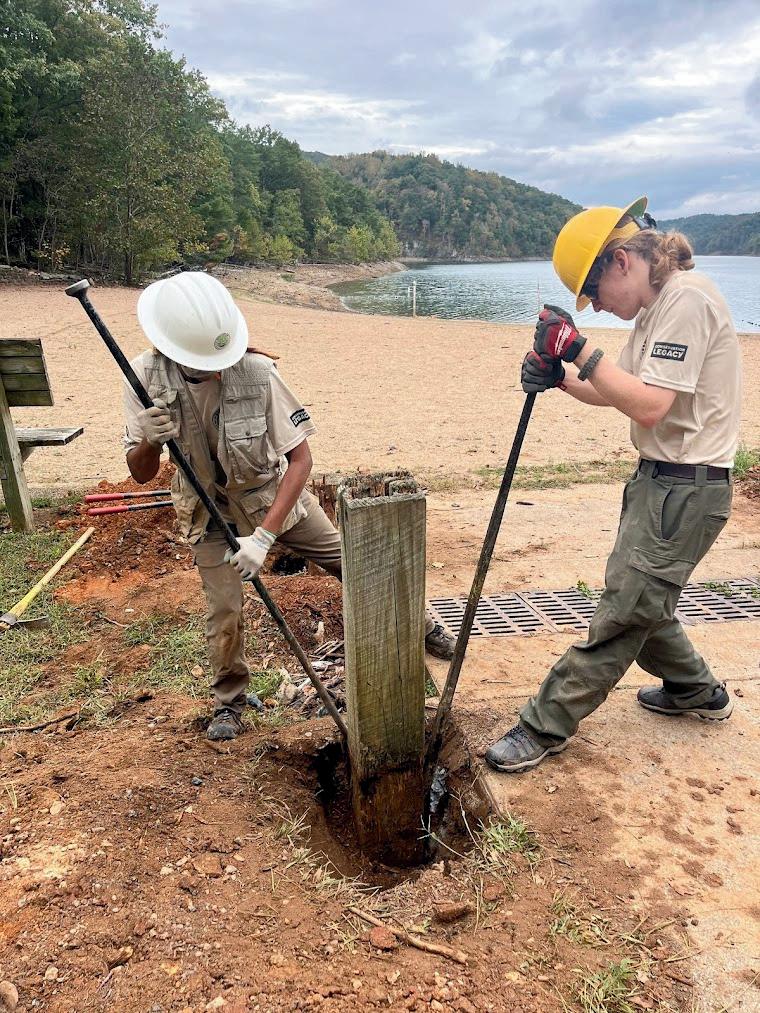
This year we completed our GAOA project with the George Washington and Jefferson Forest. We focused our efforts on the Warm Springs Ranger District working alongside their trails and developed rec shops to help complete vital infrastructure work in and around day use areas. In total, the crews served 1,441 hours across 6 weeks of work. Their primary projects were carpentry projects that helped maintain front country campgrounds and developed recreation areas. They built 35 picnic tables, installed directional trail signs, replaced handrails and posts for 2 different walkways, and renovated 4 different staircases. The staircase projects included the crew using 26 bags of concrete to install 38 new 6x6 posts which held the 16 new handrails that they secured. The project partner was thrilled with how quickly this crew worked, taking what he swore was his first ever selfie with the crew on the last day. Overall, this crew had a lot of impact on the local community that uses the Lake Moomaw Developed Recreation area on the Warm Springs Ranger District. Between the benches, picnic tables, steps, and walkways that they either built or renovated, this Rec Area is now safer and more userfriendly for the public.
NATIONAL FOREST
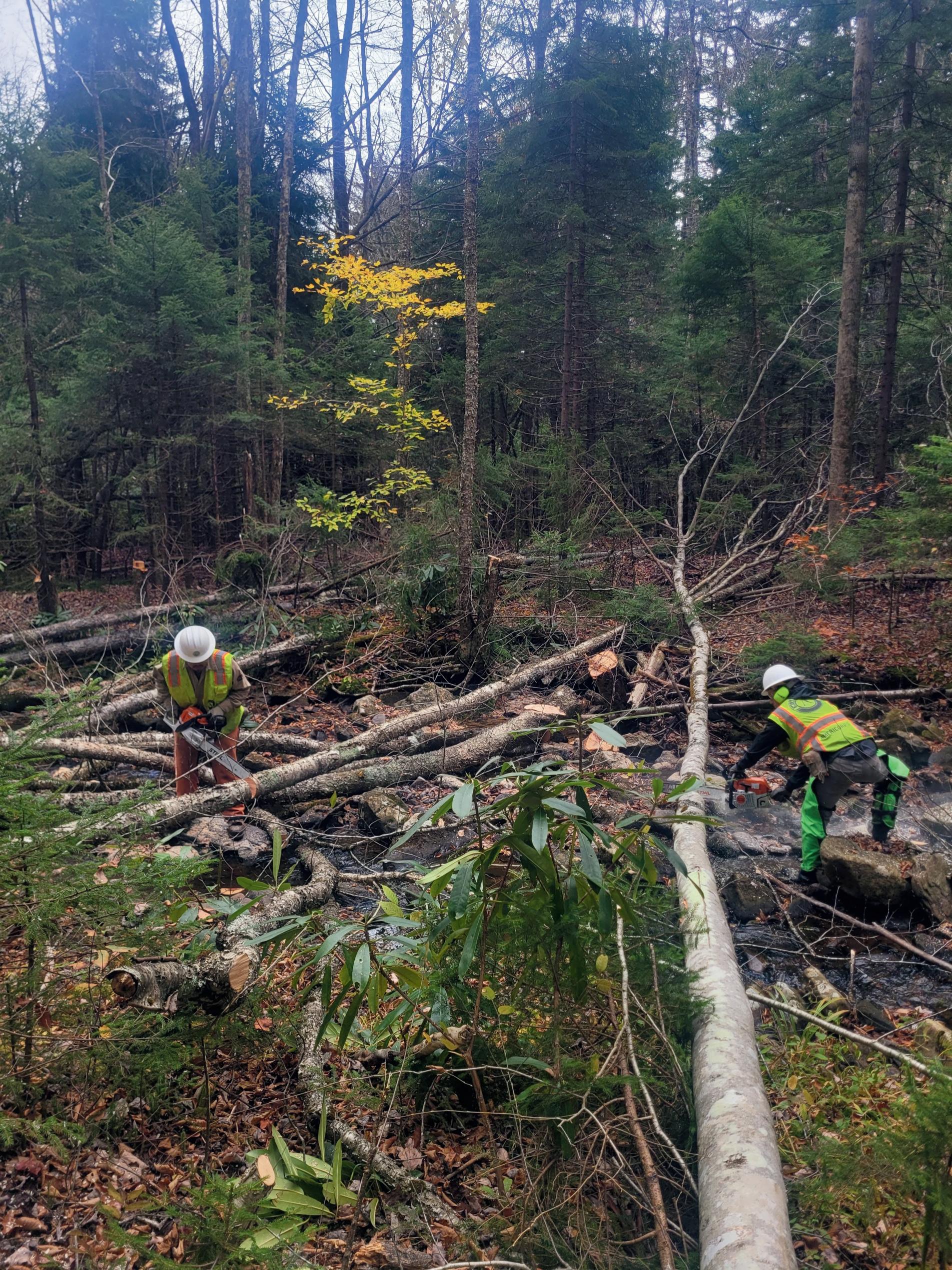
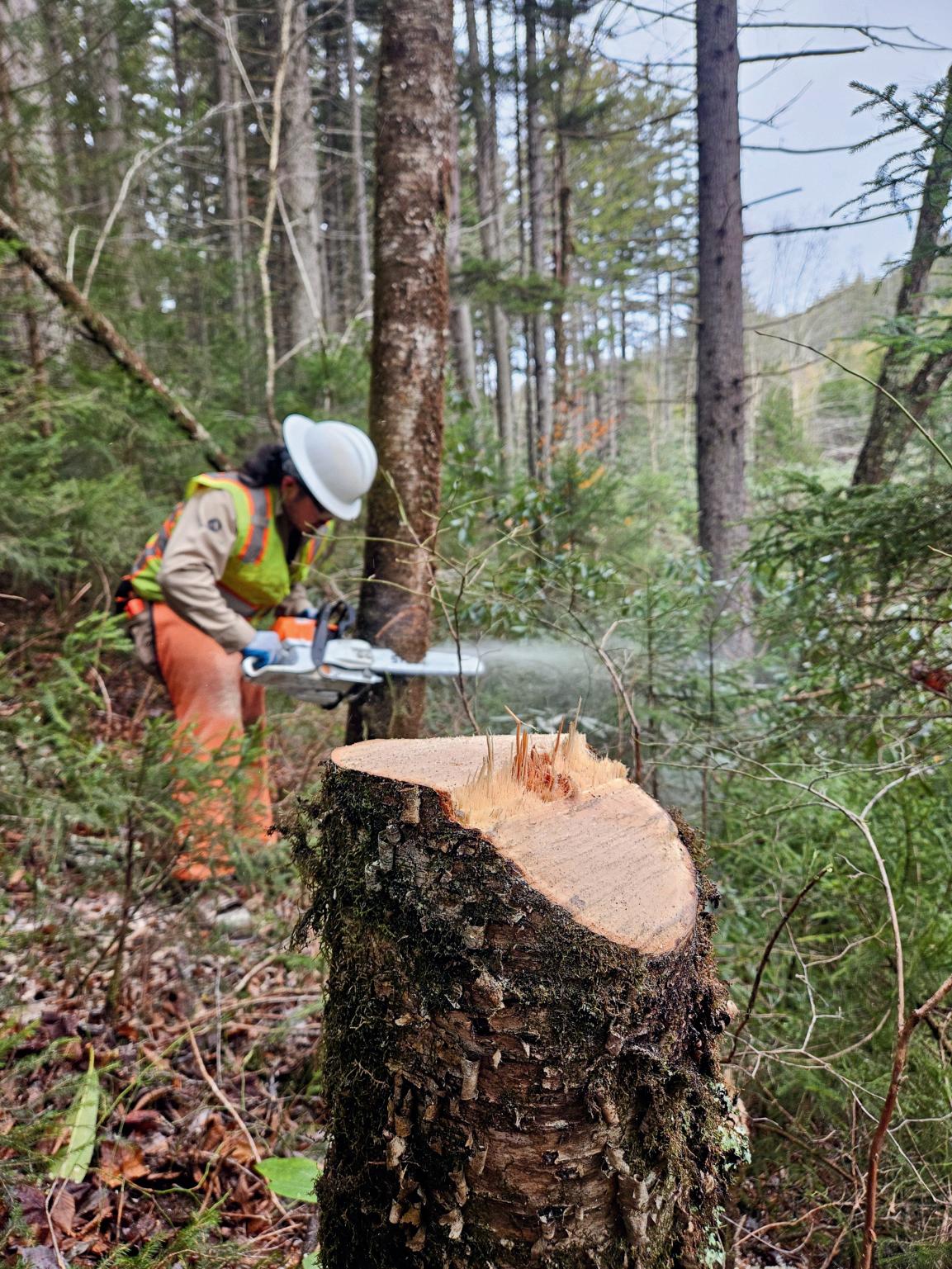
In 2025, ACC partnered with The Monongahela National Forest to conduct vital Red Spruce release work in the North Zone of the Mon. This work is vital for the Spruce stands in the area, allowing these Native trees to grow and support the local ecosystem. With trees that they felled, crews built woody debris structures in the streams to help establish better native trout habitat as well. In total, the three crews working on this project simultaneously, served over 5,000 hours, felled over 3,000 trees, and built roughly 130 woody debris structures. Their prescription was to work along the streams and cut roughly 10 trees per 100 feet with a work corridor of 300 feet from the stream banks. These crews were able to work alongside National Forest staff to learn about the importance of their work, specifically as it related to the woody debris structures that they built to improve habitat and stream banks in the area. This was an important opportunity to support ongoing work in partnership with Virginia Tech, USFS, and The Nature Conservancy, and it was funded through a National Fish and Wildlife Foundation grant. We will continue to have crews working on this project in 2026 not only on the Monongahela National Forest, but also on the George Washington and Jefferson National Forest as well.
MONONGAHELA
Red Spruce Release
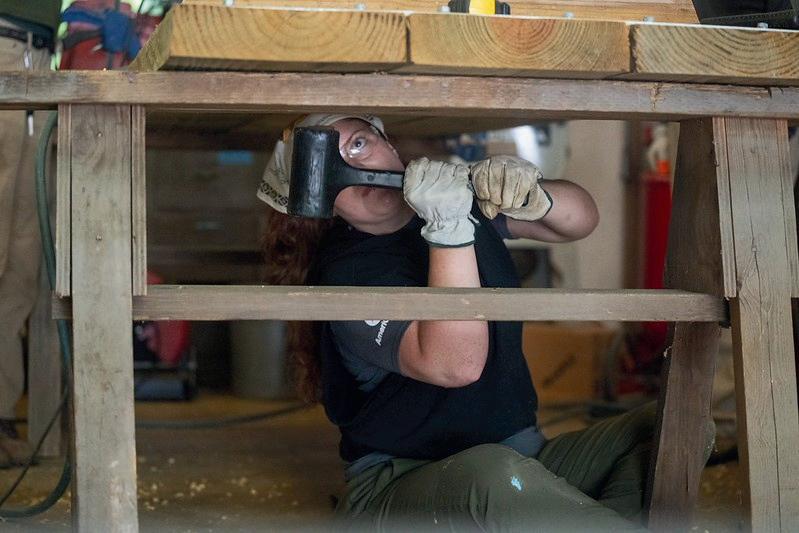
Crew members cut new posts to size and set them in concrete to replace a rotten handrail on a staircase leading down to the beach at Coles Point Day Use Area, one of many recreation sites on Lake Moomaw
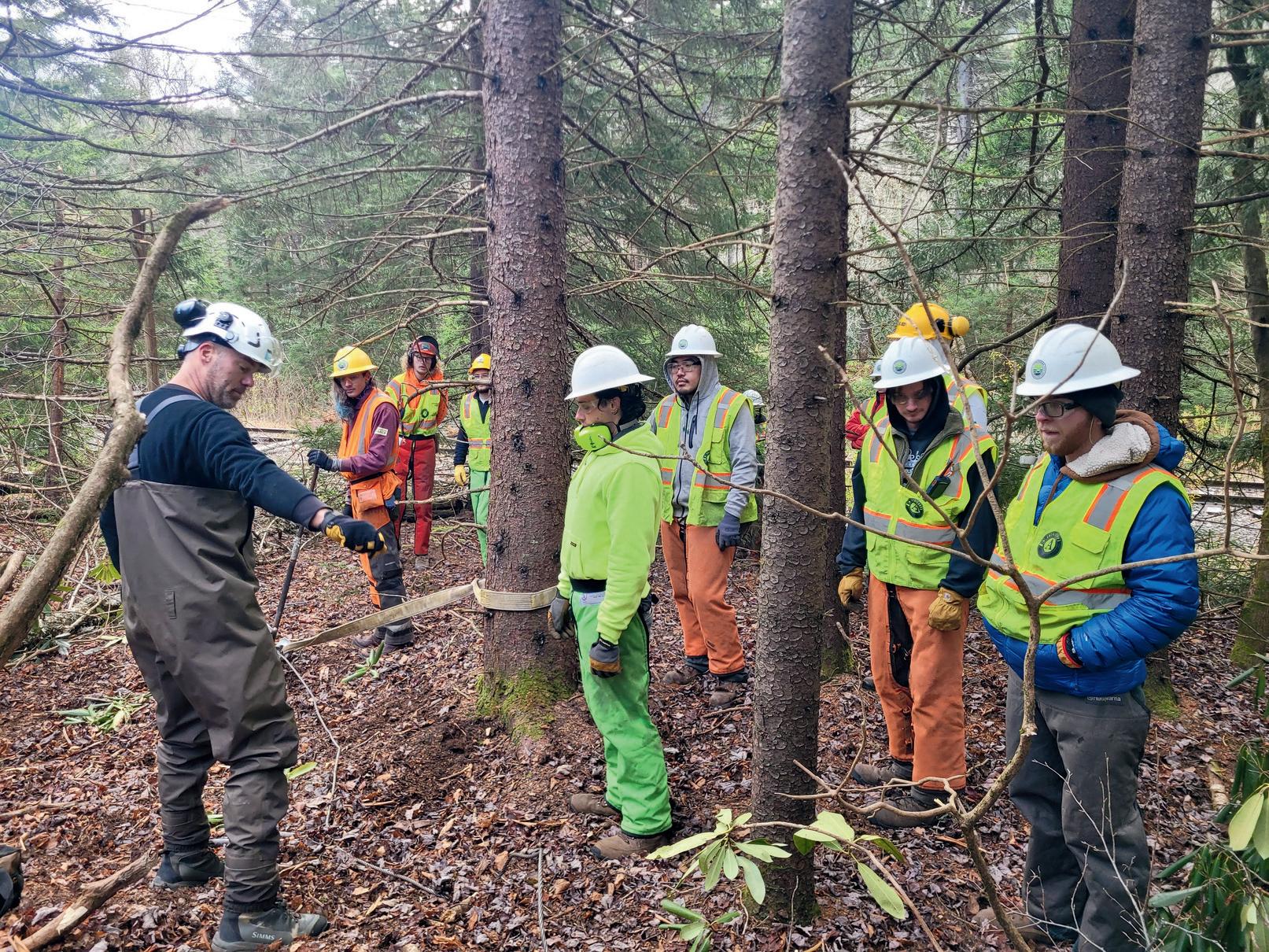
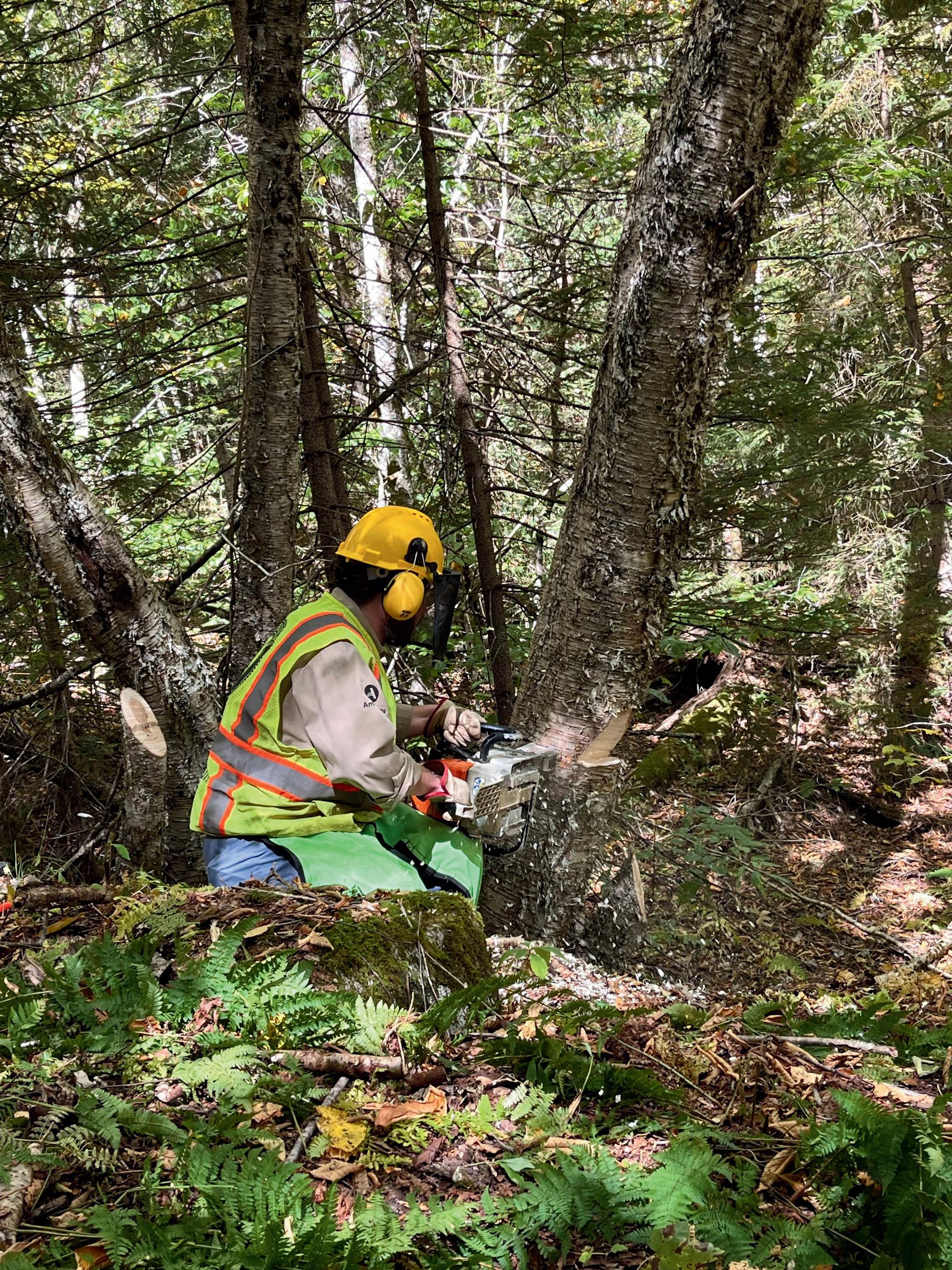
Crew member felling trees at George Washington and Jefferson National Forest
CONSERVATION LEGACY
APPALACHIAN CONSERVATION CORPS
USFS SOUTHERN AND EASTERN REGIONS
GEORGE WASHINGTON AND JEFFERSON NATIONAL FORESTS
Silviculture Individual Placement Project
During this reporting period, Cole Harris, Silviculture Individual Placement with the George Washington and Jefferson National Forests, inventoried 50 acres and surveyed timber on 300 acres of National Forest. They began mapping invasive species and training on pesticide injection for targeted tree removal and timber value estimation. Cole joined the program with an educational background in Forestry and made a great impact in their short term with the program, and was offered to return in 2026 to continue their Silviculture work. “I gained transferable skills in my field with mapping and data collection applications and developed my knowledge of forest ecology and silvicultural techniques,” said Cole when reflecting on their service.
“I gained transferable skills in my field with mapping and data collection applications and developed my knowledge of forest ecology and silvicultural techniques,”
-Cole Harris
In the aftermath of Hurricane Helene, the Heritage Disaster Recovery IP Team has been working hard conducting archaeological surveys in some of the highest damaged areas, with a lot of time focused on southwest Virginia. The GW&J NF contain a multitude of sites representing past human events, beginning with Native American occupations dating as earlier as 8000 B.C. During these surveys the team discovered and recorded 3 new archaeological sites and extended two previously known sites, leading to the protection of these cultural resources, and allowing for other disaster recovery projects to begin.
Over their term, the members each developed a research project based on their work in the Forests and were able to present it at the Middle Atlantic Archaeological Conference in October 2025. All three members will be returning in 2026 as Team Leads, where they will help train and continue the important work to preserve Virginia’s rich cultural history.
Rigging Training
Moomaw Steps
USFS SOUTHWESTERN REGION
GAOA | GILA NATIONAL FOREST
Catwalk Trail Rehabilitation
In 2025, Conservation Corps New Mexico (CCNM) partnered with Gila National Forest to repair trails and recreation use areas impacted and damaged by recent wildfires and flooding. Funding secured through the Great American Outdoors Act provided 42 weeks of project work to occur in multiple districts and trails within the forest, 10 of these weeks were dedicated to repairing and rehabilitating sections of the Catwalk National Recreation Trail in late spring and early summer. Serving on the project were two young adult conservation CCNM crews #577 and #578. The Catwalk National Recreation Trail and use area lies within the Glenwood Ranger District of Gila National Forest. The Gila National Forest is the sixth largest forest within the contiguous United States and is home to three unique wilderness areas; the Gila Wilderness, Aldo Leopold Wilderness and Blue Range Wilderness. The Catwalk trail particularly offers an exciting entrance and access to the Gila Wilderness, designated as the world’s first wilderness area in 1924. The forest and wilderness areas are sought-after destinations for many groups including hikers, cyclists, equestrians, hunters and fishers.
The Catwalk trail and picnic area provide historic context and value tousers;much ofthehistoricinfrastructure wasconstructedprior to the wilderness designation to supportthe mill town of Grahamwith some of the original historic features existingto thisday.The first two miles of the trailwere improved in the 1930s by the Civilian ConservationCorps. The CCC built and installedbridges, concrete walkways and fords, retainingstructures, and of course sections of “catwalk” like features elevating hikersabovenarrow slottedout sections of the canyon above the streambedbetween cliffs.In the1960s, the catwalk sections built by the CCC were replaced with a metal structure.
“Absolutely awesome and what a treat to see some real work done on the ground. Hope the crew is proud as they should be for a job well done.”
-USFS Project Partner
In 2012, the Whitewater-Baldy fire, a merging of two small lightning-caused fires, erupted and burned through large sections of the Gila National Forest and Gila Wilderness totaling 297,845 acres. The Gila National Forest and surrounding areas receive an average minimum of 180 days of precipitation per year. In the year following the fire, much of the trail infrastructure, metal catwalk and suspension bridge, and additional features built by the CCC were destroyed and washed away during a massive flooding event.
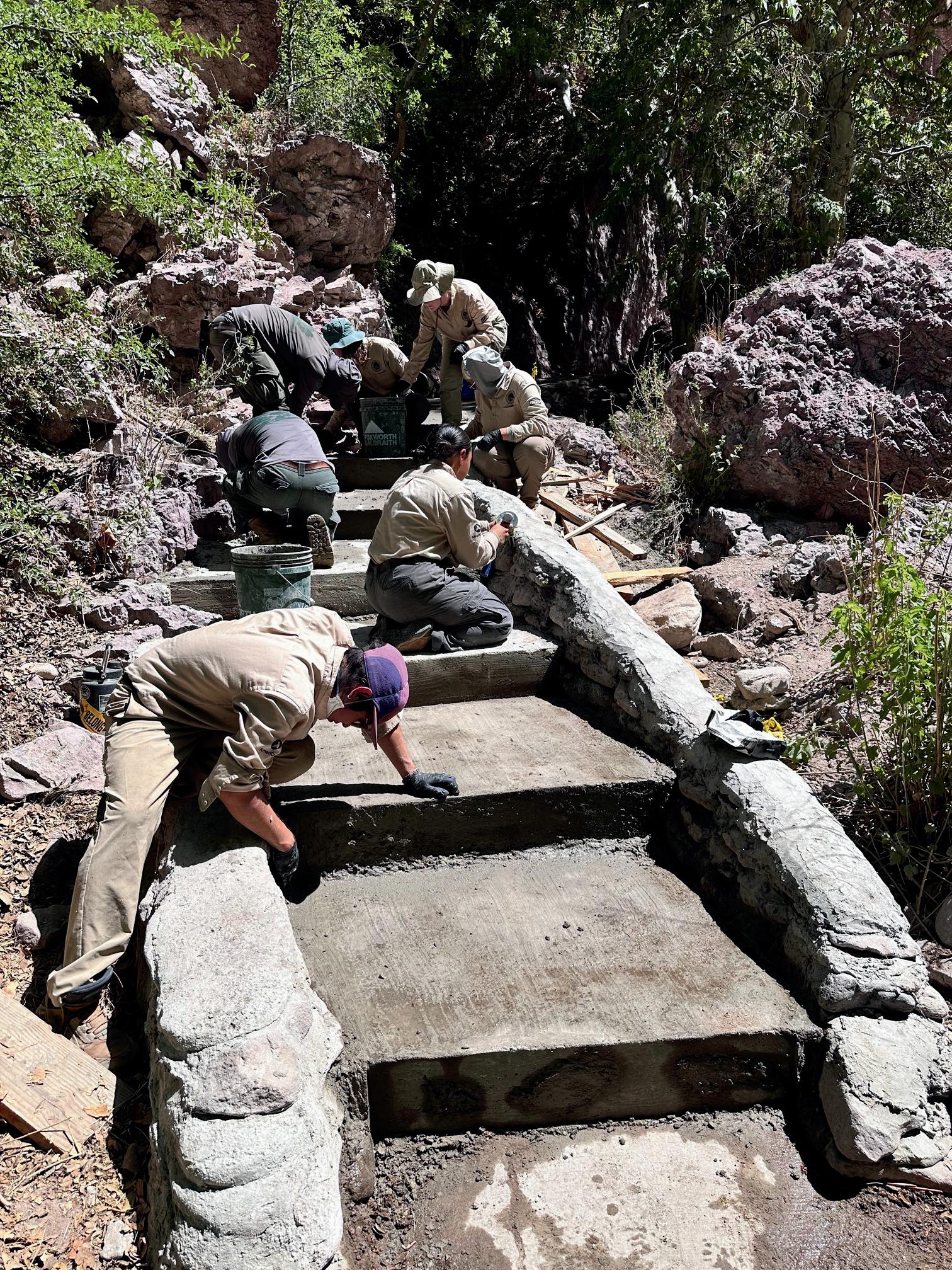
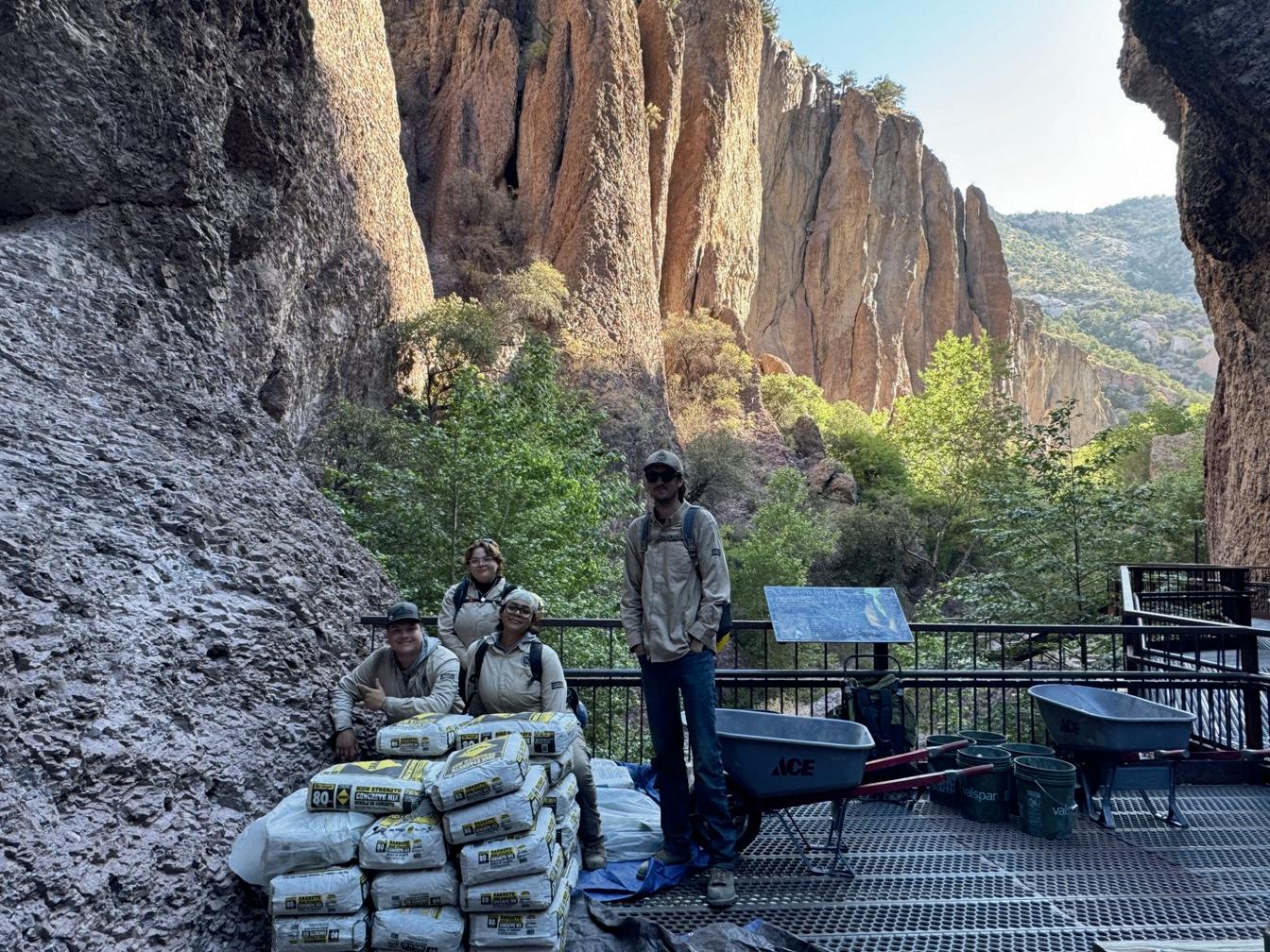
The two CCNM crews were tasked with repairing structures and the overall trail experience within the first two miles of the trail. Equipped with hand tools, wheelbarrows, and lots of drinking water and tarps for shade, the crews set out during the swelteringly hot weather to work on the trail. They hauled bags of concrete, along with all their tools and gear up the trail each day, with many sections of the trail being steep, narrow, and hard to navigate. Once onsite, the crew prepared each work location by measuring and setting forms, mixing and pouring concrete, and leveling out the surfaces. The crews also spent time clearing vegetation from within the trail, installing and rebuilding rock stairways and check steps. The crews received guidance and support from forest staff and were able to develop their skills throughout each hitch.The work that the crew completed restored many of the structures and overall experience for visitors of the catwalk and users of the wilderness area.
Crew 578 working on stairway
CCNM and a portion of the concrete moved
USFS SOUTHERN REGION
OLD FORT Youth Conservation Corps
CCNC’s Old Fort Youth Conservation Crew completed a three week service term based in supporting trail restoration and community recovery efforts following the impacts of Hurricane Helene, which caused significant damage across Old Fort and the surrounding forests.
CCNC’s Youth Conservation Corps are designed as an introductory conservation and workforce development experience, where teens (aged 14-18) learn tangible handson skills and how to show up professionally in a job setting. Over the course of the term, the crew maintained and touched up approximately 30 trail drains, completed extensive deburming to restore proper water flow, cleared trail corridors, and removed invasive plant species throughout the Old Fort Picnic Area. A significant portion of the work focused on post hurricane recovery, including removing large amounts of wood, debris, and material that had been staged or displaced during cleanup efforts following Hurricane Helene. Crew members also disposed of trash and litter from trails and waterways. Additional projects included rock work, gravel movement, stream crossing maintenance, brushing trail corridors, and constructing new trail tread using hand tools and a gravel compactor to improve trail stability and safety.
One of the most impactful days of the term involved hauling hurricane related debris and heavy lumber out of Catawba Falls, a popular USFS hiking trail in the community. “Most of the people we passed said ‘thank you’ or just greeted us with smiles. It was enjoyable to see the crew be so proud of their work and to see the local community be so appreciative.” Spencer Sibold, (Crew Leader). By the end of the three week term, crew members had not only contributed to tangible hurricane recovery outcomes, but also gained confidence, technical skills, and a stronger connection to their community. “This experience has helped me grow personally by giving me more confidence in my own abilities.” Jackson Hamrick, (YCC Member).
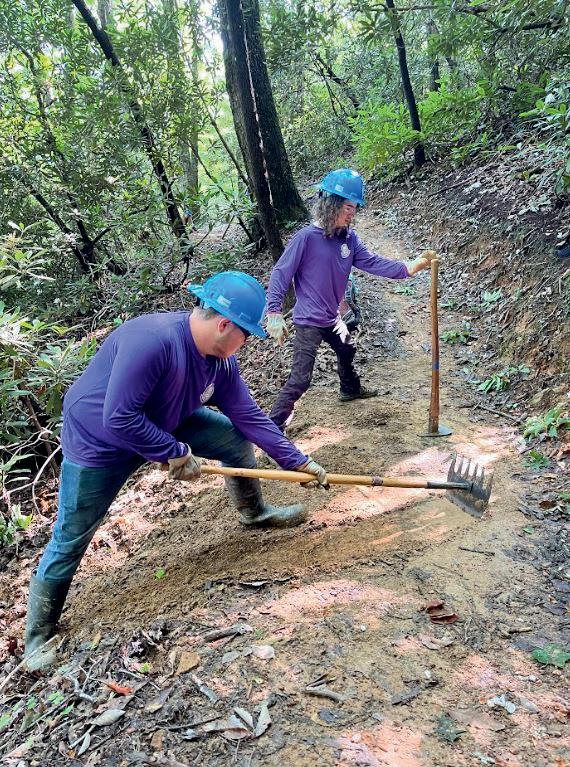
YCC members completing trail work.
“This experience has helped me grow personally by giving me more confidence in my own abilities.”
-Jackson Hamrick, YCC Member
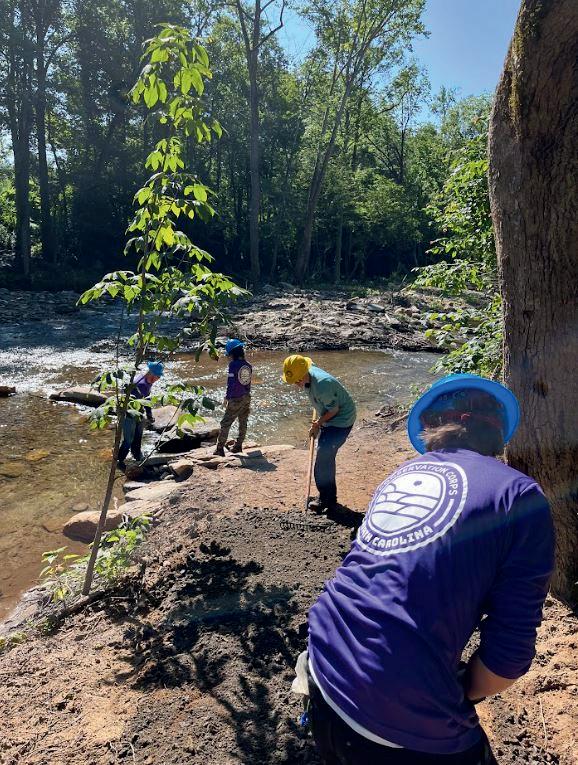
CCNC winter crew restoring a trail at Croatan National Forest and on the Outer Banks with NPS.
ANCESTRAL LANDS CONSERVATION CORPS
USFS SOUTHWESTERN REGION
GMUG NATIONAL FORESTS
Reforestation project
This fall, two Diné (Navajo) crews from Ancestral Lands Conservation Corps (ALCC) partnered with the Grand Mesa, Uncompahgre, and Gunnison National Forests (GMUG) to complete an important reforestation project — planting trees across areas impacted by past disturbances and ensuring the health and resiliency of these forest ecosystems for years to come. The crews planted over 30,300 trees, contributing over 800 hours of service on the project.
“I worked in Colorado doing reforestation, planting ponderosa trees in an area that had been hit hard by lotus beetles. Being out there and seeing how we could help bring that land back kind of stuck with me. It reminded me why I loved archaeology in the first place, watching landscapes change, seeing what came before and being part of rebuilding something. It made me want to get back into it.” – Heidi Mahkee (646 Crew Member)
“The Colorado reforestation project is amazing as it was a reintroduction of the impacts of how important renewing and encouraging the natural growth of any forest negatively impacted.” – Kaylen Yazzie (646 Assistant Crew Leader)
Being out there and seeing how we could help bring that land back kind of stuck with me. It reminded me why I loved archaeology in the first place, watching landscapes change, seeing what came before and being part of rebuilding something.
-Heidi Mahkee, Crew Member
“Thank you so much for being a large part in our successful tree planting over the past week with ALCC’s two Diné crews! I am beyond grateful that we were able to complete this reforestation work given all the administrative hurdles we’ve been through this year. The crew produced excellent quality work at good production rates and asked great questions as we were working and brought great energy and enthusiasm to the work. Your organization has a great culture of safety, production, and empowerment and it shines through with your people. Hearing the crew talk through their favorite parts of hitch at the end and several mentioning micro-siting and other more technical details was very satisfying as a resource manager. I’m hoping we can get a crew back next year to survey their reforestation work for survivorship and continue the ALCC’s involvement in this project area.”
-Ian Reiling Silviculturist U.S Forest Service (Grand Mesa, Uncompahgre and Gunnison National Forests Grand Valley, Paonia, Norwood, and Ouray Ranger Districts)
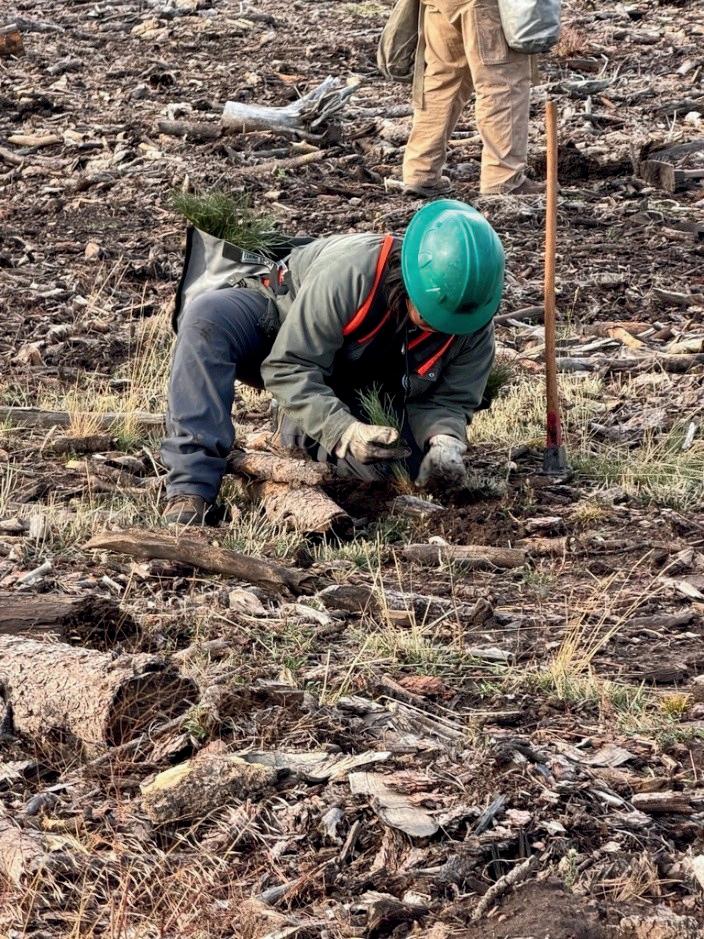
GMUG NF Project - 646 Crew Leader Andrelene Chapo planting Ponderosa Pine seedlings on the project
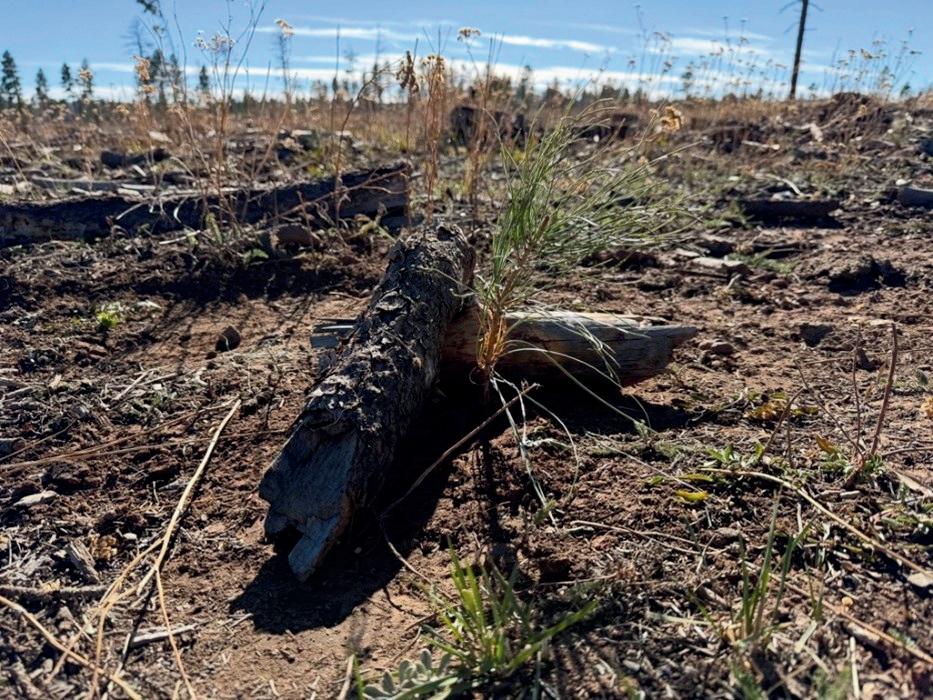
GMUG NF Project - A Ponderosa Pine seedling successfully planted with ALCC crews planting in the background
This was a collaborative project led by Trees, Water & People (TWP), the Santa Fe National Forest (SFNF), Jemez Pueblo, and Rocky Mountain Youth Corps (RMYC). TWP secured Indian Youth Service Corps funding to support reforestation on the Jemez Ranger District, which was impacted by high-severity wildfire. The project focused on restoring forest structure and ecosystem function within the Cerro Pelado (2022) and Las Conchas (2011) burn scars while simultaneously investing in Native American youth workforce development.
The project was designed to strengthen costewardship relationships between SFNF and Tribal communities while engaging with youth from Jemez Pueblo, Rocky Mountain Youth Corps (RMYC) and Ancestral Lands Conservation Corps (ALCC)- Albuquerque, Gallup, and Hopi offices. The project also provided hands-on forestry experience for Native American youth ages 18–30. The project aimed to support longterm recovery of fire-impacted landscapes that are culturally, ecologically, and economically significant.
CONSERVATION LEGACY
ANCESTRAL LANDS CONSERVATION CORPS
USFS SOUTHWESTERN REGION
SANTA FE NATIONAL FOREST Collaborative Reforestation Project
The project goal was to plant 10,000 seedlings, consisting of 6,000 Ponderosa pine and 4,000 Douglas-fir, spaced at approximately 15x15 feet. These species were selected to support long-term forest resilience, improve watershed health, and help stabilize soils vulnerable to erosion. While final seedling and acreage totals are still being confirmed, the effort represents a substantial step toward restoring forest cover across burned ancestral lands.
The final tally is yet to be confirmed for all programs involved. ALCC had recorded 5,746 saplings being planted in 26 acres. 23 members of ALCC had served 1,163 hours in the 2 week duration.
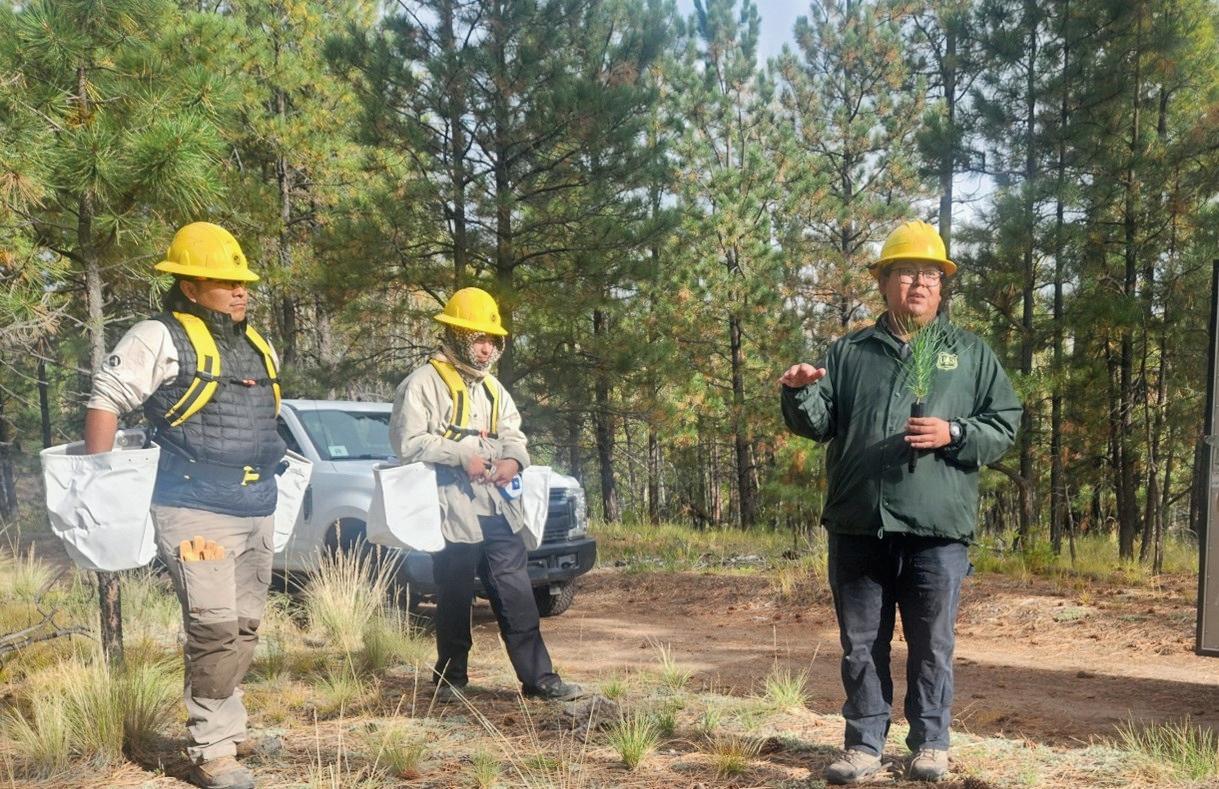
Santa Fe NF Project - USFS staff showing ALCC crew members the anatomy of the seedlings on the project
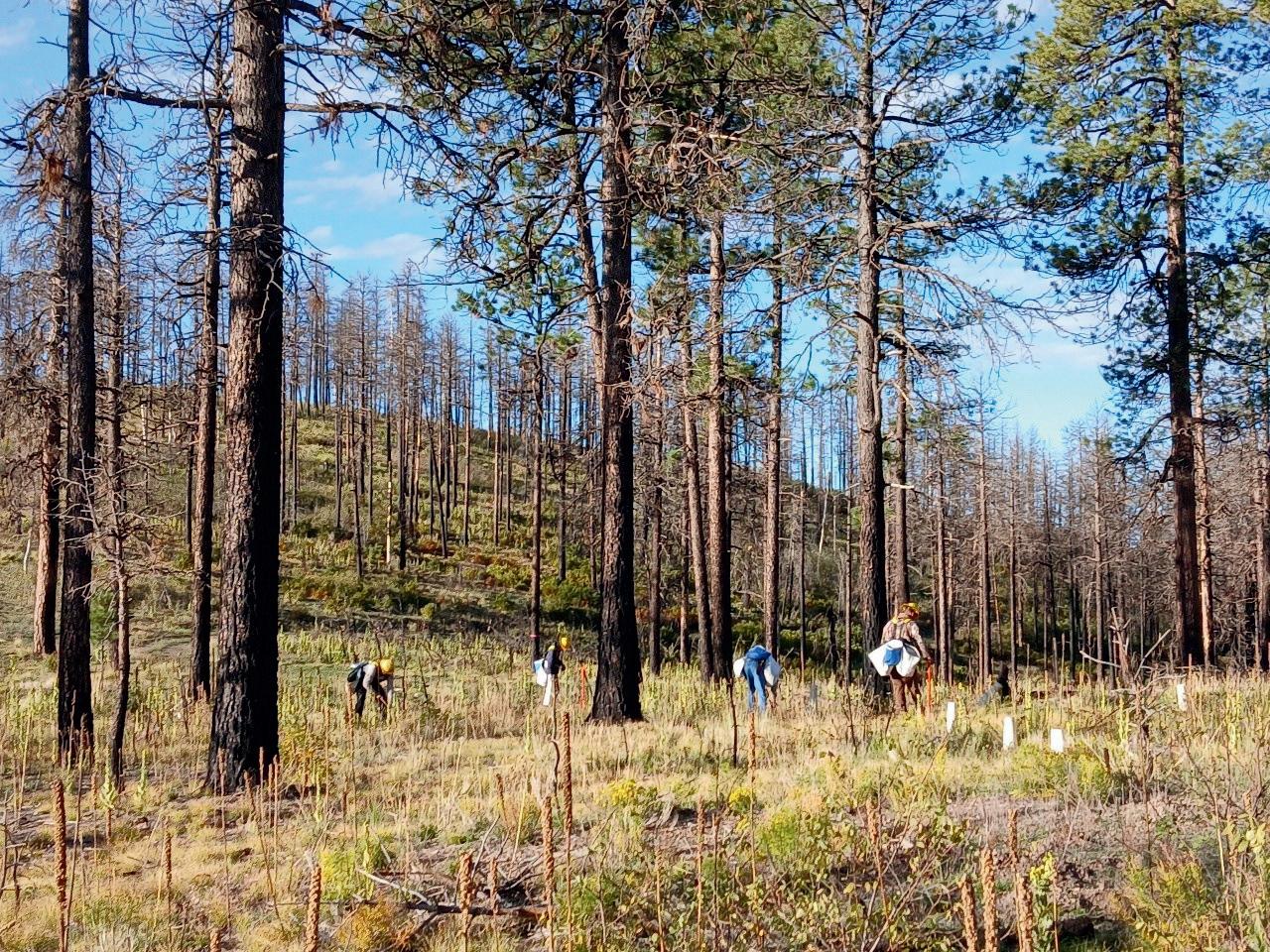
Santa Fe NF Project - ALCC crew planting on project Site
Santa Fe NF Project - Crew Members of ALCC walking to project site with equipment
SECC, in partnership with the Daniel Boone National Forest – London Ranger District, supported a trail crew to assist with the rehabilitation and maintenance of STree campground from 10/29/2024 - 11/20/2024 (4weeks). This campground is a rustic spot in Jackson County, Kentucky. This campground is known for its location on a ridge near Horse Lick Creek, and its focus on off-road trail activities. There are many primitive campsites in the campground along with a historic picnic shelter that was built in the 1930s by the Civilian Conservation Corps.
This crew consisted of one non-AmeriCorps crew leader, one AmeriCorps assistant crew leader, and two AmeriCorps crew members. Members assisted USFS partners with a variety of service projects at the campground including installing bollards, construction of campsites which included framing, gravel spreading, and installation of lantern posts and fire rings, removing downed trees, construction of picnic tables, and construction of new fence.
The campground caters to ATV and dirt bike enthusiasts. The crew service projects help provide the community with a pleasant campground to enjoy –with designated campsites with picnic tables, fire rings, and lantern posts.
CONSERVATION LEGACY
SOUTHEAST CONSERVATION CORPS
USFS SOUTHERN REGION
DANIEL BOONE NATIONAL FOREST
“I trust myself a lot more now—both physically and mentally. I know that I am strong enough to continue this work and that I have the willpower and drive to overcome tough or inconvenient situations. I am going to continue to pursue a career in forestry.”
-SECC Crew Member
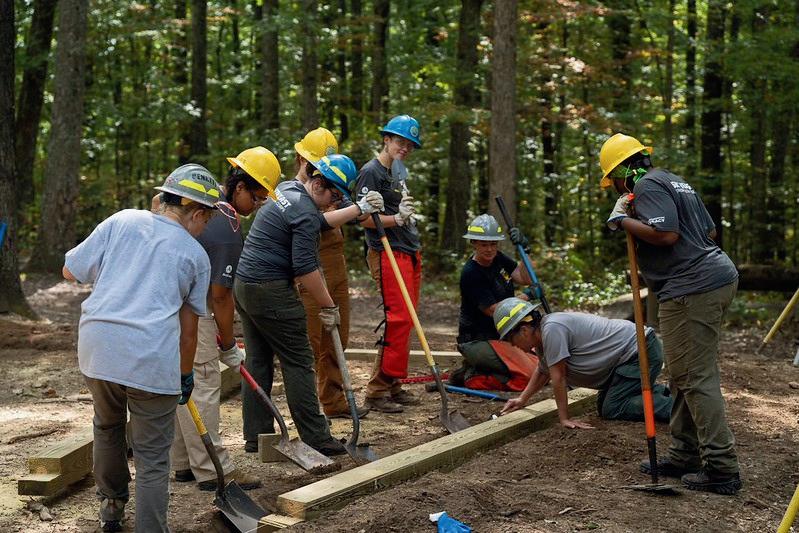
Crew members, program staff, and USFS partners working together to install framing for a campsite.
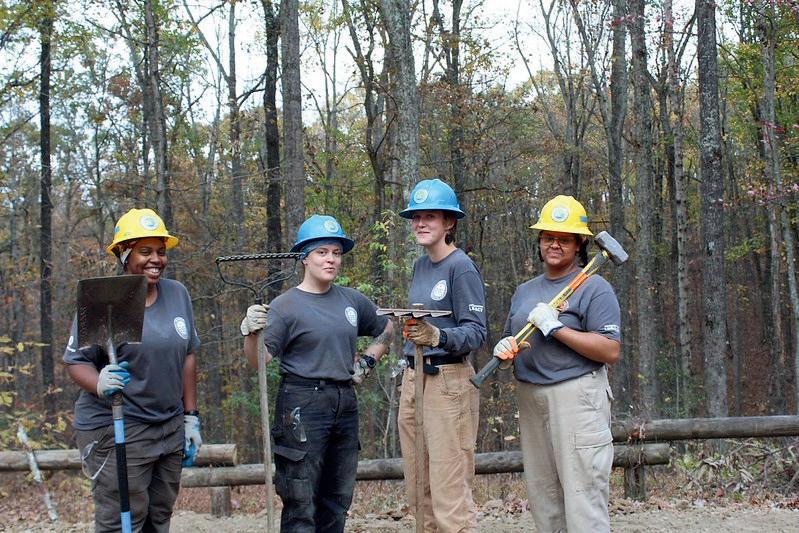
Daniel Boone Trail Crew
Crew member building a picnic table
CONSERVATION
SOUTHEAST
USFS SOUTHERN REGION
DANIEL BOONE NATIONAL FOREST
SECC, in partnership with the Southern Region of the U.S. Forest Service, hosted a roving boundary maintenance crew from 01/13/2025 - 04/30/2025 (16weeks). This was the fourth year that SECC has partnered with the USFS to support this crew model. The Boundary Marking crew consisted of one nonAmeriCorps crew leader, one AmeriCorps assistant crew leader, and two AmeriCorps crew members. All members on this crew were SECC alum, serving within the program prior to their season.
This crew spent their season roving across the southeast, serving in multiple forests including the Francis Marion and Sumter National Forest in South Carolina, the Daniel Boone National Forest in Kentucky, and for the first time in SECC history, Ouachita National Forest in Arkansas.
At each site, the crew assisted with the renewal/maintenance of US Forest Service exterior boundary lines. They also assisted with maintenance of existing USFS exterior boundary corners, collected field data relating to leasing and maintenance activities, and other surveying and mapping land boundary activities. Their service helps aid the USFS in verifying oil and gas lease applications as well as mining and prospecting claims. It also helps ensure the accuracy of all mineral lease applications.
The leadership of the crew on the ground and from above made the absolute most out of what was a series of roadblocks that could have easily derailed everything. Very happy with the outcome under the circumstances faced. The work done by this crew has already proven helpful in our recovery efforts. I have come to expect no less, so yes, we will be working with Conservation Legacy again.”
During their 16-weeks, this crew served 1,741 project hours, marked 45 miles of USFS boundary lines, blazed 4,481 trees, referenced 91 exterior boundary corners, and blazed 230 monuments.
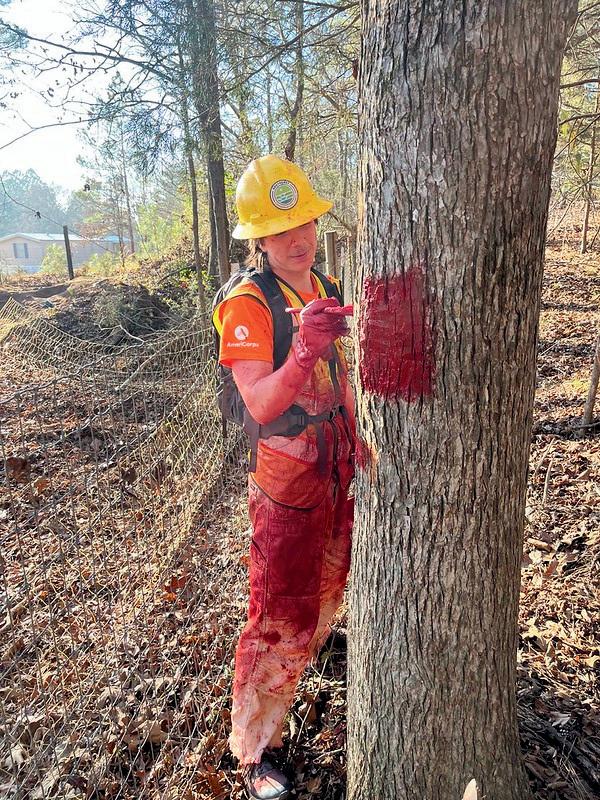
Aksel, marking USFS boundary by “blazing” a tree with red paint.
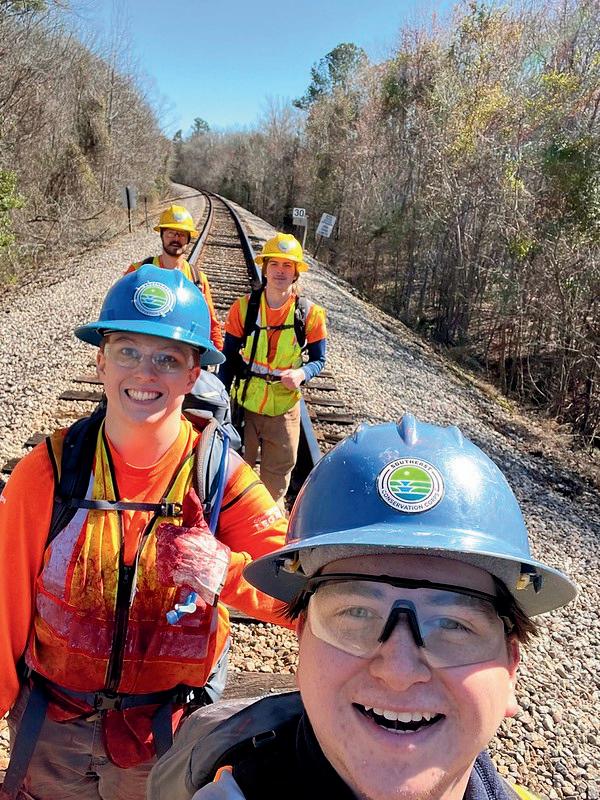
Boundary Marking Crew 938 walking to their next site
-Glen Dalton, Forest Land Surveyor, Francis Marion & Sumter National Forest
SOUTHWEST CONSERVATION CORPS
USFS SOUTHERN REGION
SAN JUAN NATIONAL FOREST
In 2025 SCC partnered with the SJNF to pilot a program in which fifteen Individual Placement members served throughout the Forest. Although this partnership allowed them to place Individual Placements Forest Wide, each member was assigned a specific District as their primary service location and was provided with an individual site supervisor and mentor from the Forest Service. This combination was a huge benefit to both the forest and the members. It meant the Forest benefited from the flexibility of members serving forest wide, while members were able to serve in specialized positions while also having the support of other members and be exposed to service areas and specialties outside of their specific project and site description.
“During my placement in Pagosa, I worked for both wildlife and timber resources assisting on a variety of different projects. A majority of the first half of my placement was spent working for wildlife, working on wildlife monitoring, habitat assessments, and data entry. Specific projects I’ve worked on include raptor nest monitoring, placing acoustic monitoring devices for bat species and owls, placing wildlife cameras to track lynx populations, and habitat surveys for butterfly species. Working with timber has mostly included working on timber sale layouts, which required taking initial field measurements, walking and laying out units, painting unit boundaries and GPSing units. This project allowed me to become very familiar with specific areas of the forests, learning about silviculture and forest ecology. I’m most proud of my work monitoring Osprey nests, as that became something I was in charge of, as well as my work on timber layouts, learning the entire process of timber sales and feeling accomplished with the work I was able to complete.”
Mia Mastrangelo – Forestry Technician
Throughout my term with the Forest Service, I have earned valuable skills and experience in different fields, including wildlife biology and forestry. I’ve collaborated with many people in different positions within the agency, and now have a better understanding of potential future career fields I may want to explore in the future. I have definitely grown both professionally and personally throughout this experience.
-Mia
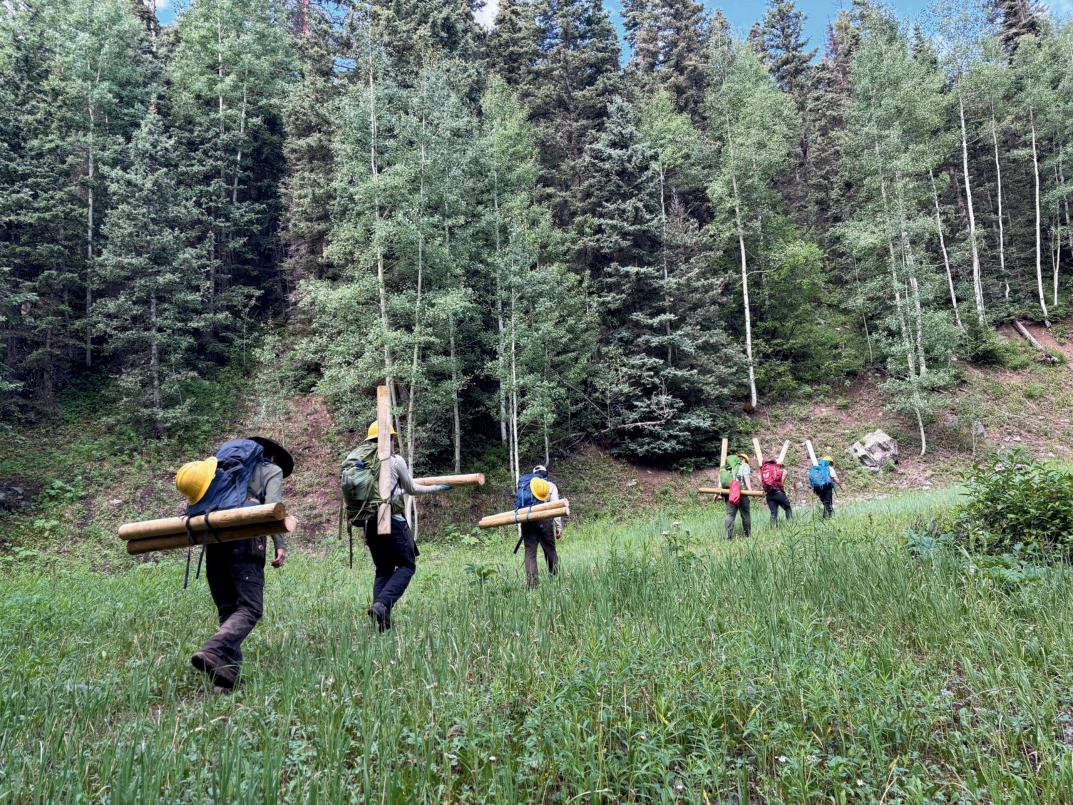
Crew Members carrying and installing posts through the Wilderness Area for closing restoration areas
Mastrangelo – Forestry Technician
STEWARDS INDIVIDUAL PLACEMENTS
GEOSCIENTISTS
IN THE FORESTS
TONGASS NATIONAL FOREST
INDIVIDUAL PLACEMENT REILLY BLACKWELL
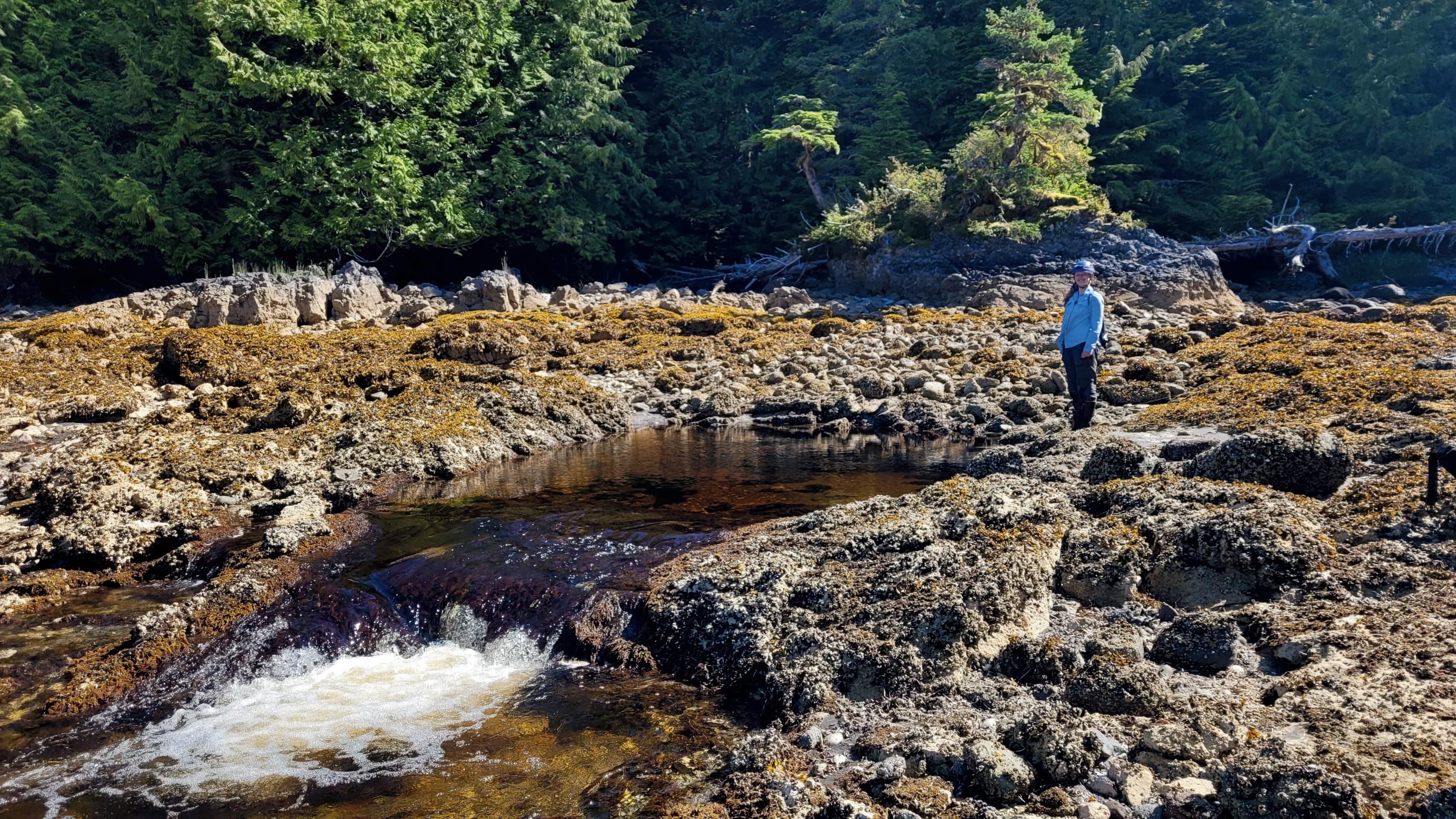
During her Geoscientists in the Forests (GSF) AmeriCorps term, Reilly worked projects that support healthy streams, forests, and wildlife on the Tongass National Forest, including walking and mapping streams in the Staney watershed. These surveys help the Forest Service understand how streams are shaped, how water moves through them, and where important fish habitat is located—information used to guide future restoration and management. Reilly also helped assess sensitive karst landscapes, took part in dye-tracing work on Heceta Island to understand how water travels underground, and helped check road crossings across Prince of Wales Island to see whether fish can move through them safely. She joined a week of hands-on restoration in the Shaheen watershed, placing wood in streams to improve habitat, and helped monitor how well previous restoration work is performing. She also spent time at El Cap Cave, sharing the story of the area's geology with visitors.
Reilly sighted stream surveys in the West Wales area of Staney as a highlight of her term. Her background in geology and hydrology meant that she could make valuable contributions to the project, helping the crew better understand how the landscape affects the streams they were mapping. She also appreciated the chance to lead an early-season interpretive tour at El Cap Cave and her role in the physically demanding Shaheen restoration project.
Reilly’s GSF experience also shaped how she sees her future career, giving her a clear view of how the Forest Service operates and the kinds of work available for geologists and hydrologists. It strengthened her interest in stream restoration—from project design to advanced monitoring—and in using mapping and survey tools to support natural resource management.
“This term helped me understand where my skills fit within the Forest Service and what kind of work I want to keep building toward.”
-Reilly Blackwell
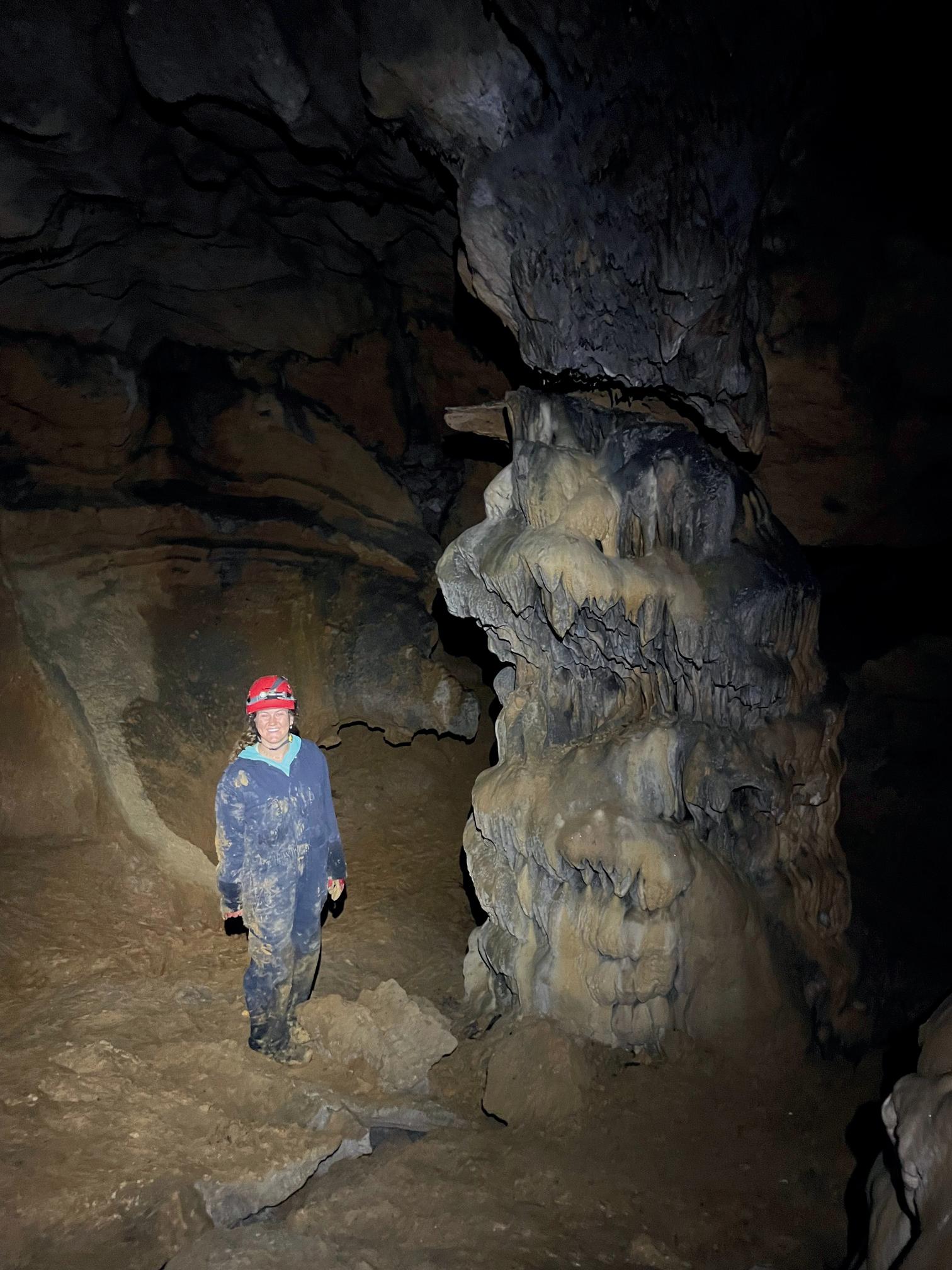
Reilly at El Cap Cave
Mapping streams in the Staney watershed
STEWARDS INDIVIDUAL PLACEMENTS
BIA WATERCORPS
NATIONAL FORESTS IN NORTH CAROLINA
Biologic & Hydrolic Technician Riley Crowe
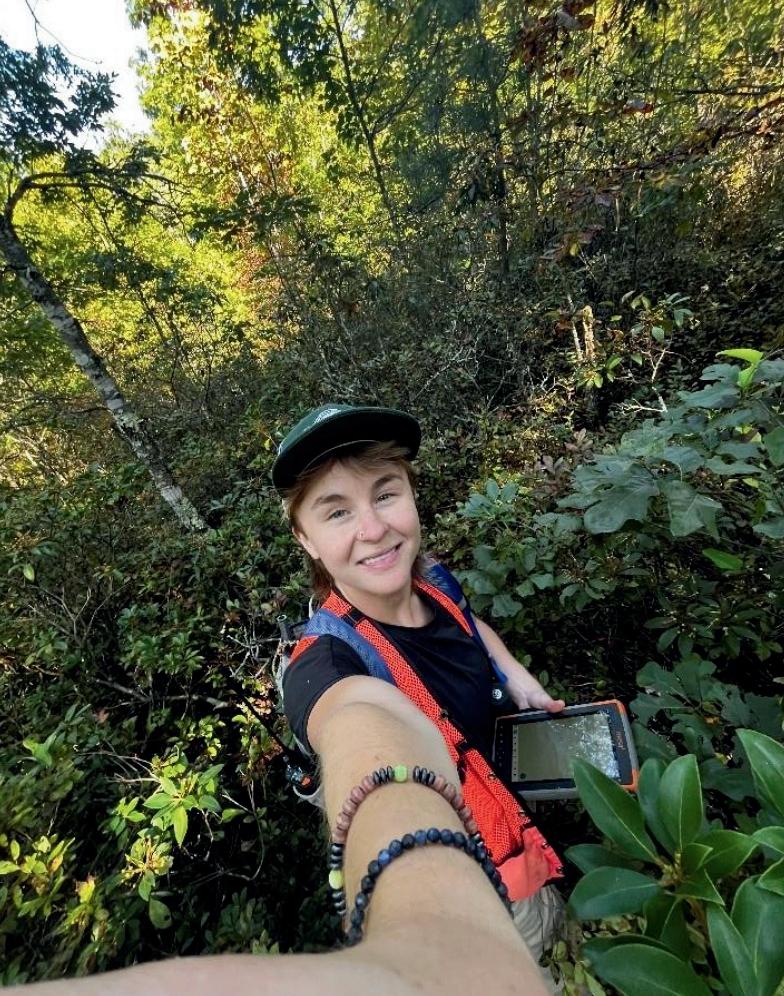
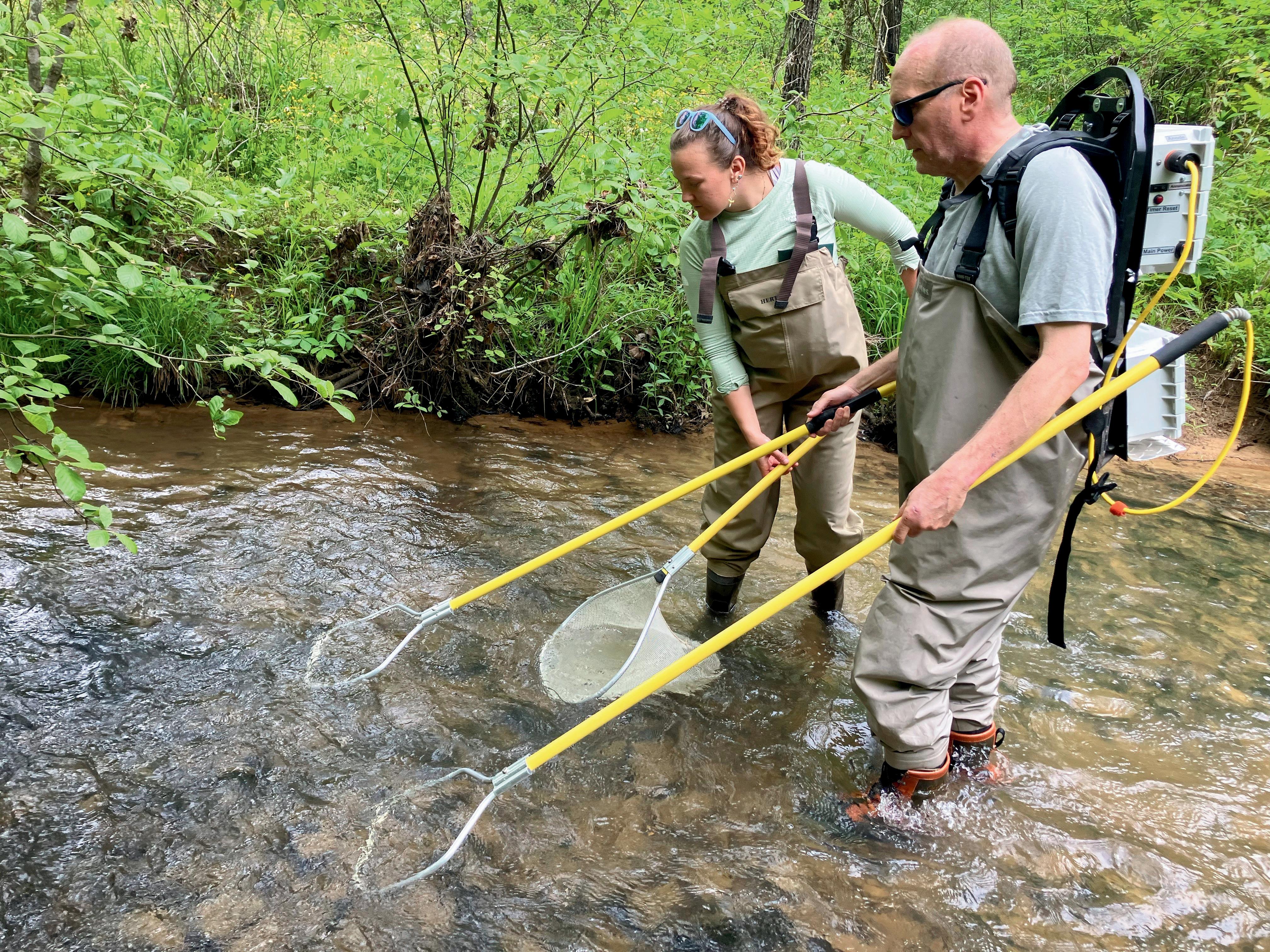
BIA WaterCorps Member Riley Crowe served as a Biologic and Hydrologic Technician at the Cheoah Ranger District in the National Forests in North Carolina. Riley’s service helped support the Santeetlah Watershed Restoration Project through aquatic surveys to assess fish species concentration, fish spawning activity, assessments on fish barriers, and stream morphology.
Riley also had the opportunity to conduct crawfish and hellbender surveys which will help give an improved assessment of the stream composition. Riley truly enjoyed his experience and he fondly recounts being proud of every project he was given because it gave him a great snapshot of what the day-to-day life looks like in the Forest Service. He quotes, “I can’t really say what projects I was most proud of because I loved doing all of them.”
Not only did Riley enjoy the aspects of conducting comprehensive aquatic surveys, but he also found meaning when he had an opportunity to assist clearing fallen trees across forest service roads in order to improve local community access. This position helped him discover the possibility of going back to school and learning more about fisheries and working with the Forst Service. He also recommends participating in a program like this to anyone so they can gain insight into a potential career path with the Forest Service. Riley’s host site supervisor appreciated his contributions to the projects saying that he “provided reliable and very competent assistance with fisheries and watershed restoration work.” The site only has one full time Biological Technician so having Riley’s help significantly improved their ability to “collect quality data in preparation for habitat improvement projects.” The projects Riley contributed to will be used to provide science informed decisions to garner community support for the restoration plan and will provide background to community members regarding habitat improvement needs.
“I can’t really say what projects I was most proud of because I loved doing all of them.”
-Riley Crowe
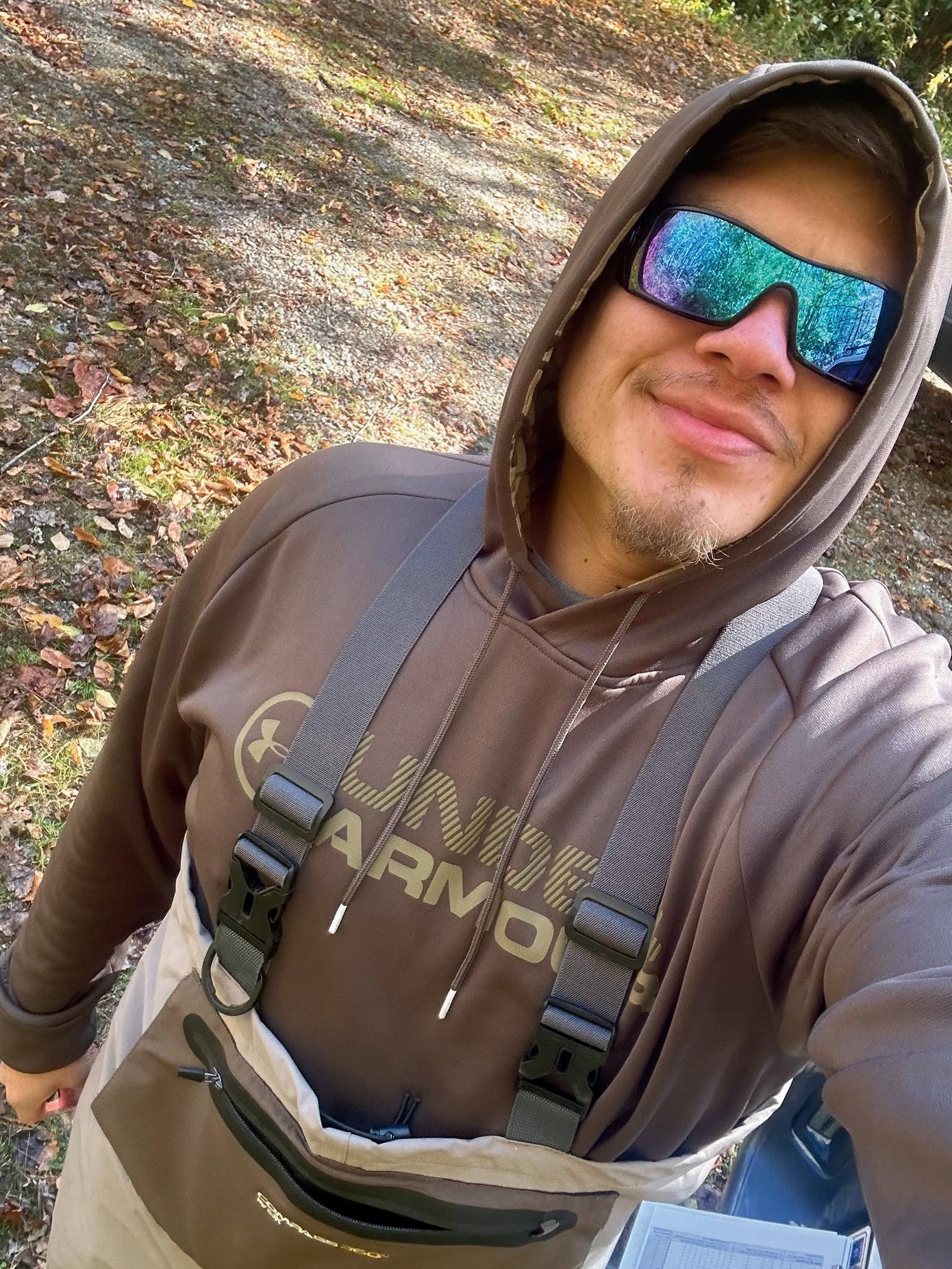
IP Riley taking a selfie while serving in the National Forests of North Carolina
ARIZONA CONSERVATION CORPS
USFS SOUTHWESTERN REGION
COCOCINO NATIONAL FOREST
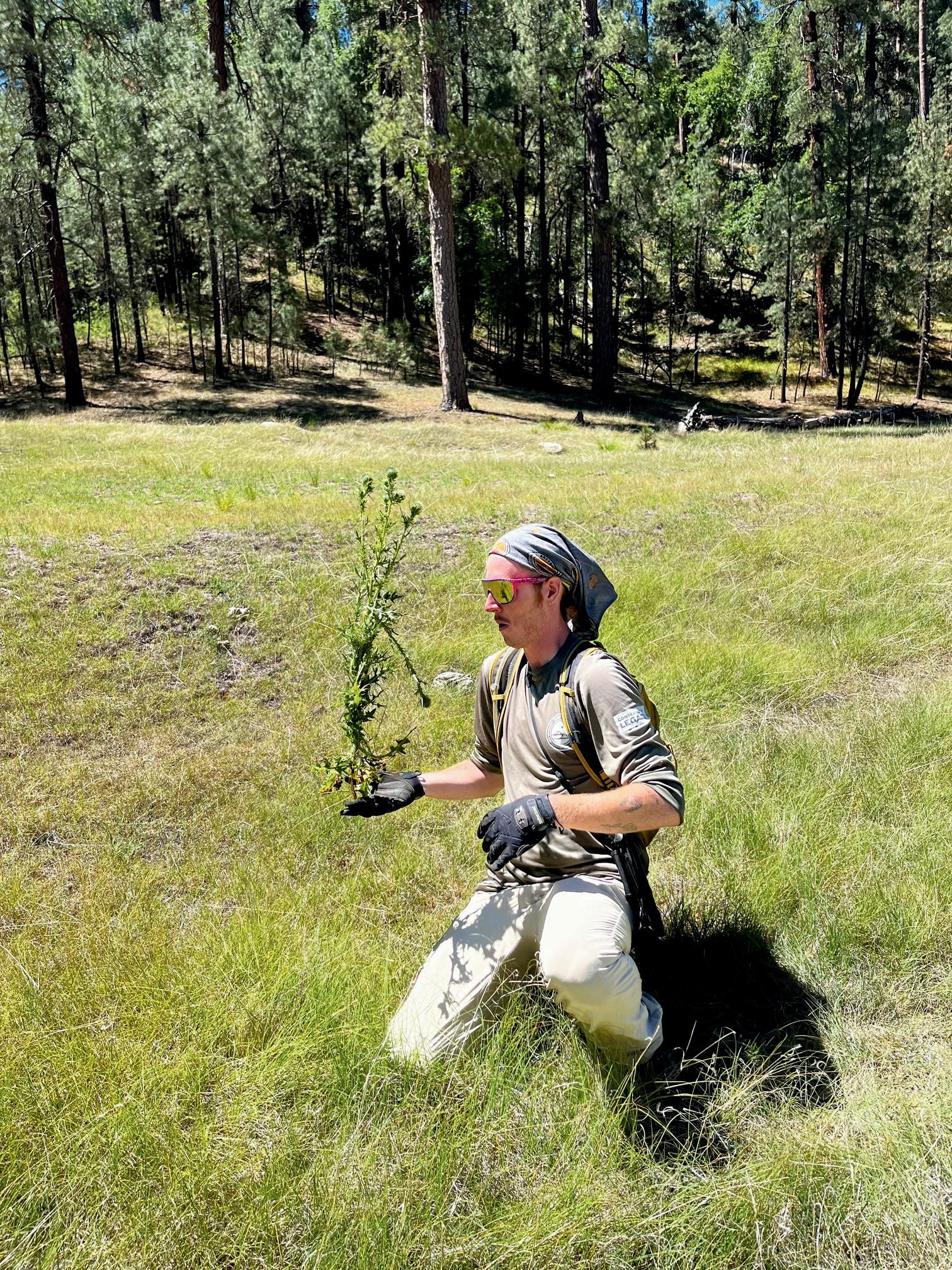
Weeds Crew 23-28
During the summer of 2025 and in partnership with the Coconino National Forest, Arizona Conservation Corps served on 14 weeks of project work with two Flagstaff-based young adult conservation crews #387 and #390. In conjunction with and under guidance and strategies lined out by the Four Forest Restoration Initiative (4FRI), AZCC crews set out to identify, survey, and map the locations of invasive and rare plants and to eradicate invasive species.
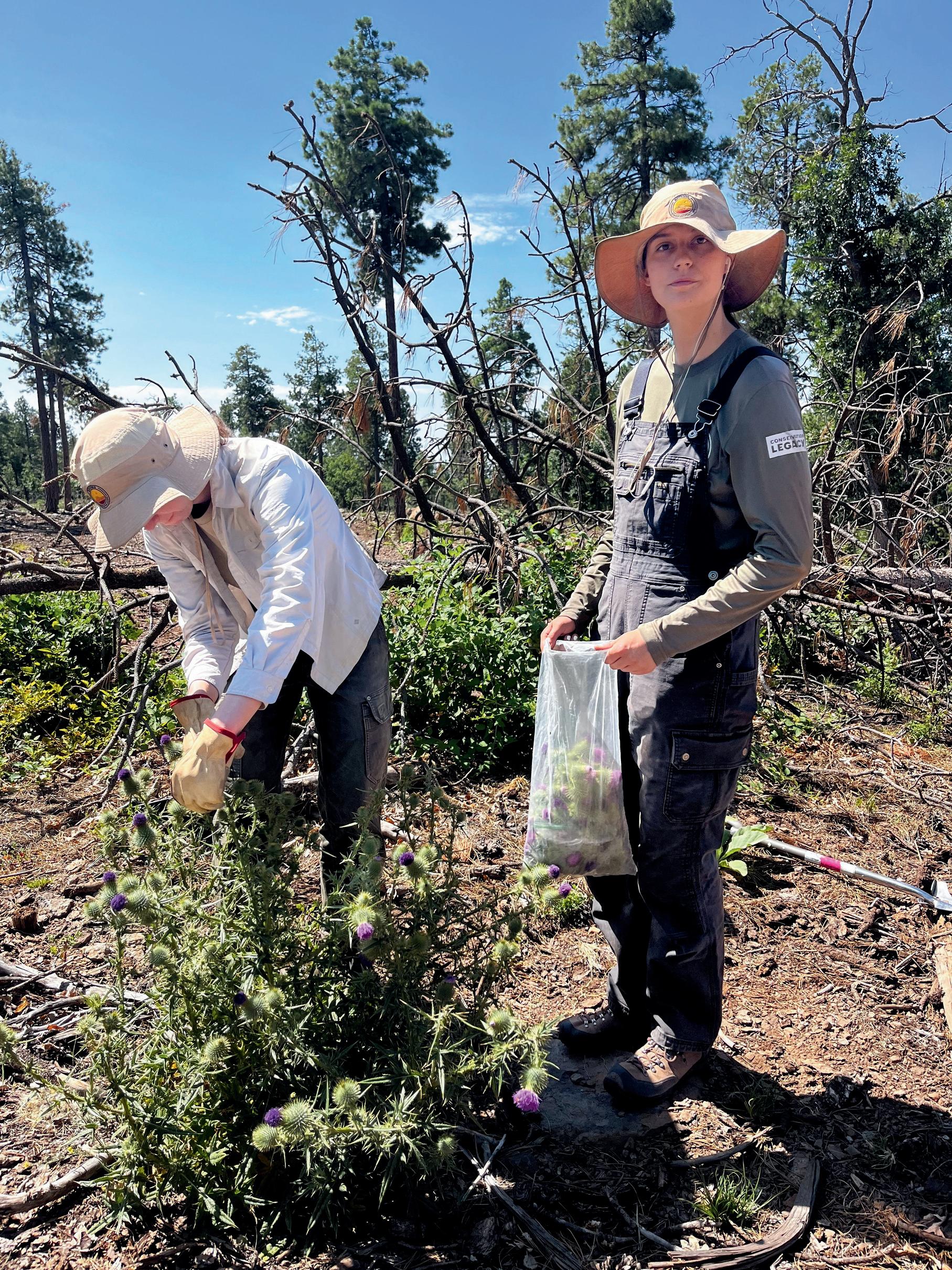
During the project, the typical day involved several miles of hiking in summer weather searching for plants. Once located, the crews inventoried and organized what plants they found into digital data on handheld tablets to pass on to forest partners. Crews regularly worked alongside forest staff who helped guide and mentor the crew throughout the project. For pre-treatment, project work involved surveying rare plants and manually removing invasive species in addition to identifying avoidance areas for ground disturbing restoration activities. For post-treatment, crews surveyed areas where mechanical treatments had occurred and where prescribed fire and slash piles had burned, resulting in soil disturbance.
“Over this past hitch, we had the opportunity to remove noxious weeds from the Coconino National Forest and map the prevalence of species of concern.”
Our days were drawn out and sweltering hot, but we can rest assured, knowing that some 73 acres of obnoxious weed populations, including both thistle and scotch thistle, have been sufficiently thinned. Although our crew celebrates this achievement, we recognize that countless more labor hours are required to dampen the prevalence of these noxious weeds in Arizona. Still, we are confident not only in our own ability, but that of future AZCC crews and Coconino staff and volunteers to effectively amplify these critical conservation efforts.”
-Field Note from
Logan Williamson, Crew member of Flagstaff Crew #387
Crew #387 member Logan Williamson hand pulling invasive thistle
Crew #387 member Rachel Priniski (photo right) and Assistant Crew Leader Antonia Green collecting thistle seed pods
CONSERVATION
ARIZONA CONSERVATION CORPS
USFS SOUTHWESTERN REGION
TONTO NATIONAL FOREST
Botany Tech Strike Team
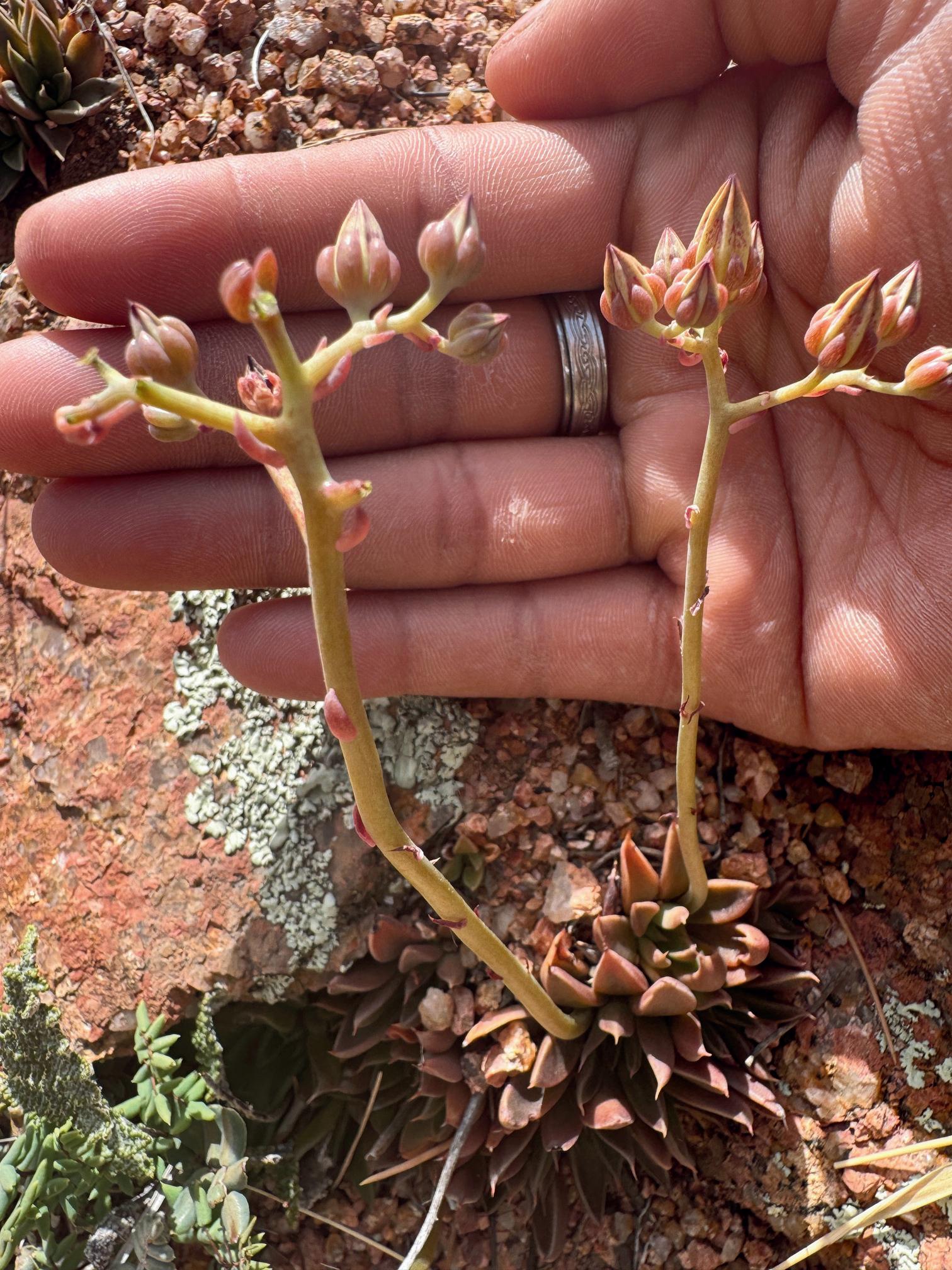
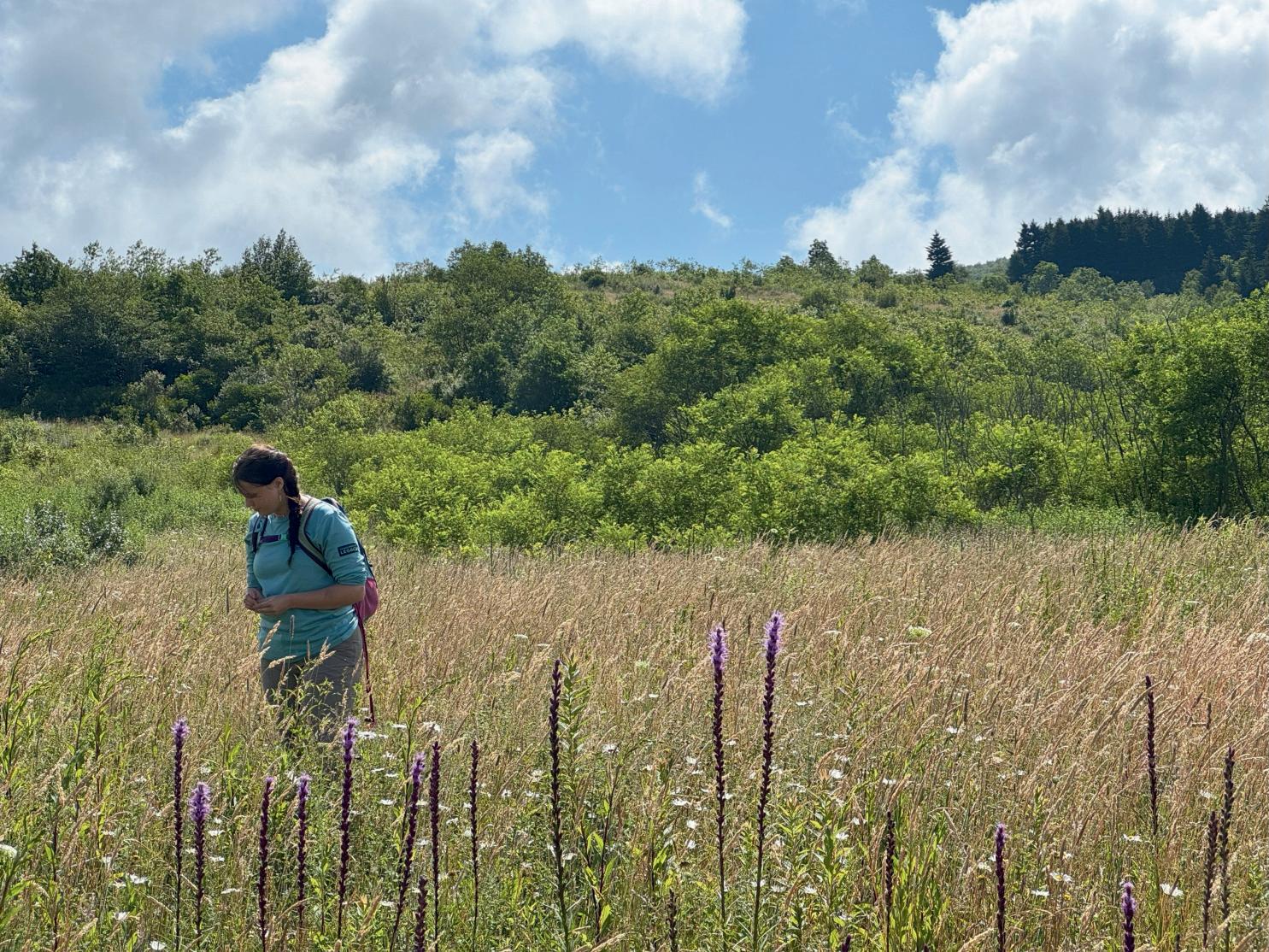
During the 2025 field season, Arizona Conservation Corps partnered with the Tonto National Forest–Payson Ranger District to support critical botany, fire ecology, and restoration work across ecologically diverse landscapes in central Arizona. Serving as the Botany Survey Technician Crew Lead, the AZCC individual placement led a threeperson crew conducting vegetation surveys, mapping rare plants, and documenting invasive species across more than 20 Forest Service project areas. The data collected directly supported fuels reduction planning, habitat conservation, and long-term restoration strategies for the district.
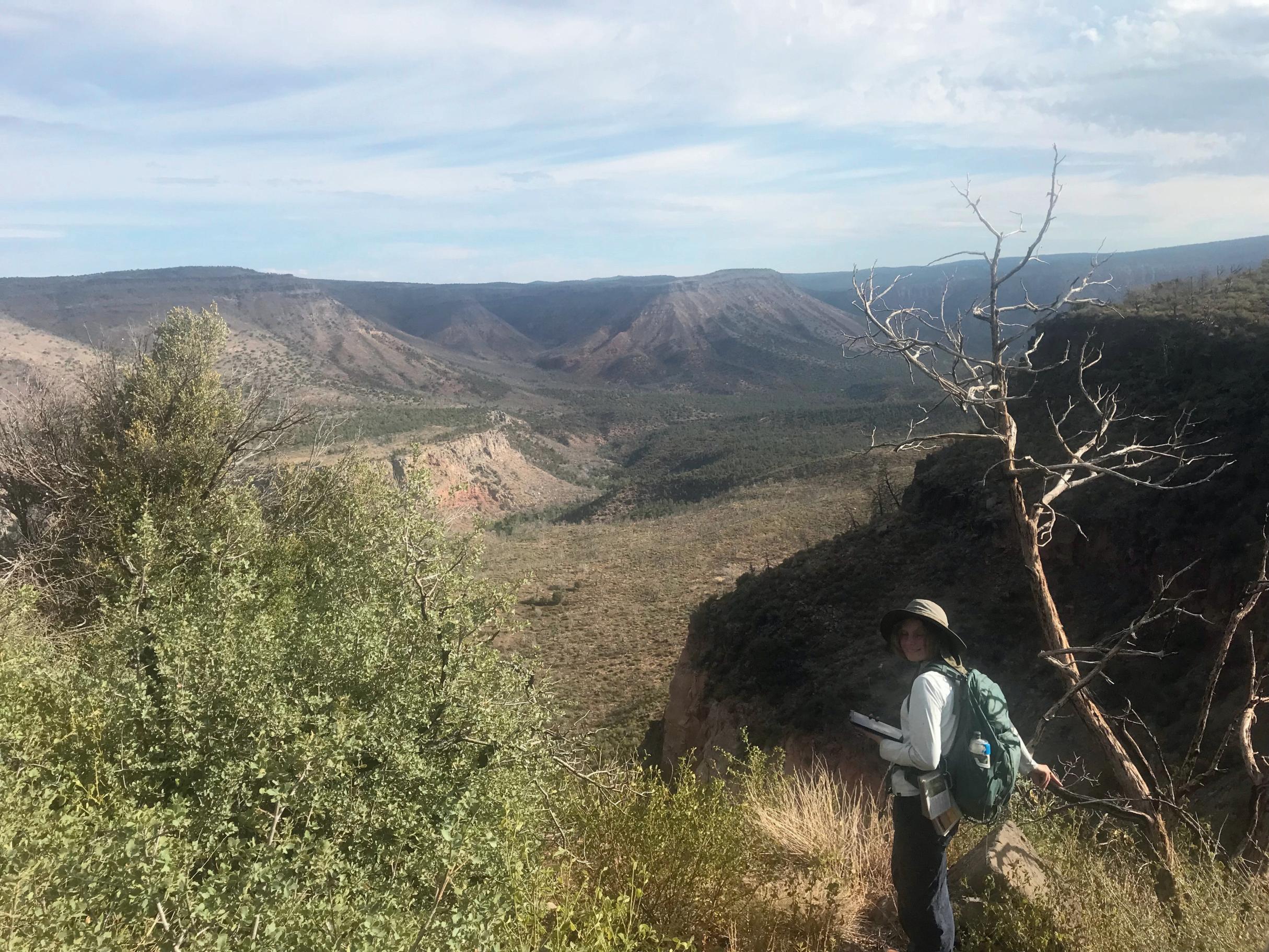
The Tonto National Forest contains a wide range of habitats —from riparian corridors and desert grasslands to rugged pine-covered uplands—making it both biologically rich and highly vulnerable to wildfire and ecological disturbance. Throughout the season, the AZCC placement and crew hiked steep, uneven terrain, often covering 6–8 miles a day while carrying 30-pound packs filled with GPS units, field guides, and sampling gear. Their work resulted in more than 1,000 spatial data points, including 50 documented occurrences of Threatened, Endangered, and Sensitive Plant (TESP) species and over 100 invasive plant populations, all of which were incorporated into districtlevel planning and resource assessments.
A significant portion of the team’s work supported the district’s fire ecology program, including Brown’s line transects, vegetation plots, and stand structure measurements used to quantify fuels, describe vegetation communities, and evaluate post-fire recovery. This data contributes directly to prescribed fire planning and monitoring within the Payson Ranger District.
In addition to data collection, the placement assisted in hands-on restoration, including seeding dozer lines after wildfire and manually removing invasive species such as yellow bluestem and scotch thistle. The team collaborated with wildlife biologists, hydrologists, archaeologists, and silviculturists on projects ranging from cuckoo surveys to macro-invertebrate sampling, gaining a deeper understanding of interdependent resource management.
“This term strengthened my confidence, resilience, and teamwork, while reaffirming my passion for ecology and land stewardship. The mentorship and field experience I gained have prepared me to take on greater responsibility in future ecological research and natural resource management roles.”
-AZCC Member
AZCC Botany Survey Technician documenting a rare plant occurrence duringfield surveys on the Tonto National Forest
Botany Survey Technician Mikayla conducting field work in the Tonto National Forest
PARTNER AND PARTICIPANT EXPERIENCE
INDIVIDUAL PLACEMENT MEMBER,
APPALACHIAN CONSERVATION CORPS
“I gained transferable skills in my field with mapping and data collection applications and developed my knowledge of forest ecology and silvicultural techniques,”
USFS PARTNER
ARIZONA CONSERVATION CORPS
“The crew was able to complete work that we typically are unable to get done dueto the small program size and constraints of the field/fire season. Aaliyah's workwasinvaluable to both our Timber and Fuels programs. Sites surveyed by thecrew are now ready for NEPA approval, where the projects will help to improveWildlife-Urban Interfaces, forest health, and timber production.”
CREW LEADER
ARIZONA CONSERVATION CORPS
“Serving as a Botany Survey Technician Crew Lead with the Tonto National Forest was a deeply rewarding and transformative experience. This role allowed me to apply my environmental and biological science background to real-world conservation while developing strong field, leadership, and problem-solving skills. Leading a three-person crew taught me how to plan, adapt, and maintain safety and accuracy in dynamic field conditions...This term strengthened my confidence, resilience, and teamwork, while reaffirming my passion for ecology and land stewardship. The mentorship and field experience I gained have prepared me to take on greater responsibility in future ecological research and natural resource management roles.”
CREW MEMBER
ARIZONA CONSERVATION CORPS
“Over this past hitch, we had the opportunity to remove noxious weeds from the Coconino National Forest and map the prevalence of species of concern. Our days were drawn out and sweltering hot, but we can rest assured, knowing that some 73acres of obnoxious weed populations, including both thistle and scotch thistle, have been sufficiently thinned. Although our crew celebrates this achievement, we recognize that countless more labor hours are required to dampen the prevalence of these noxious weeds in Arizona. Still, we are confident not only in our own ability, but that of future AZCC crews and Coconino staff, and volunteers to effectively amplify these critical conservation efforts.”
CREW MEMBER
ANCESTRAL LANDS CONSERVATION CORPS
“I worked in Colorado doing reforestation, planting ponderosa trees in an area that had been hit hard by lotus beetles. Being out there and seeing how we could help bring that land back kind of stuck with me. It reminded me why I loved archaeology in the first place, watching landscapes change, seeing what came before and being part of rebuilding something. It made me want to get back into it.”
ASSISTANT CREW LEADER
ANCESTRAL LANDS CONSERVATION CORPS
“The Colorado reforestation project is amazing as it was a reintroduction of the impacts of how important renewing and encouraging the natural growth of any forest negatively impacted.”
USFS PARTNER
ANCESTRAL LANDS CONSERVATION CORPS
“Thank you so much for being a large part in our successful tree planting over the past week with ALCC’s two Diné crews! I am beyond grateful that we were able to complete this reforestation work given all the administrative hurdles we’ve been through this year. The crew produced excellent quality work at good production rates and asked great questions as we were working and brought great energy and enthusiasm to the work. Your organization has a great culture of safety, production, and empowerment and it shines through with your people.”
CREW LEADER
CONSERVATION CORPS NORTH CAROLINA
“While I came into this role expecting a summer of hard work in the field, I walked away with a much stronger connection to my identity, a clearer vision for my future career, and lasting lessons in leadership and collaboration.”
YOUTH CONSERVATION CORPS MEMBER
CONSERVATION CORPS NORTH CAROLINA
“This experience has helped me grow personally by giving me more confidence in my own abilities.”
CREW MEMBER
CONSERVATION CORPS NORTH CAROLINA
“I was able to learn many techniques like how to remove invasive species properly, why burning is useful and how to do it properly, and so much more! I’d say this job has had an huge impact in helping me learn more about my culture and meeting people who have helped me grow as a person.”
CREW LEADER
CONSERVATION CORPS NEW MEXICO
“Working at the Catwalk was one of the most physically demanding and rewarding stretches of work I’ve done. Most of my days were spent hauling bags of concrete up the catwalk in wheelbarrows, mixing concrete with tarps, and rebuilding stairs that have seen better days. It was slow, gritty work–carrying water, setting forms, and making sure every pour is consistent and bonded.”
USFS PARTNER
CONSERVATION CORPS NEW MEXICO
“Absolutely awesome and what a treat to see some real work done on the ground. That Catwalk area isn’t easy to work in and I understand the real work it takes to make those things happen. Hope the crew is proud as they should be for a job well done. Always appreciate seeing things like this.”
CREW MEMBER
SOUTHEAST CONSERVATION CORPS
“Office support was great. Project partners were knowledgeable and all-around good people. I've become more knowledgeable about the struggles other people face. I've learned more about how to speak to project partners and generally how USFS employees carry themselves.”
INDIVIDUAL PLACEMENT
SOUTHWEST CONSERVATION CORPS
“Throughout my term I have worked on a number of projects for different threatened or sensitive species, ensuring that forest activities minimally impact populations and habitat. One separate project that I am very proud of is the Citizen Science Project that I started as an independent effort to gather preliminary data on species of concern to better focus monitoring efforts.”
BIA WaterCorps Member
STEWARDS INDIVIDUAL PLACEMENTS
“I can’t really say what projects I was most proud of because I loved doing all of them.”
GEOSCIENTISTS IN THE FORESTS MEMBER
STEWARDS INDIVIDUAL PLACEMENTS
“Working alongside scientists from multiple disciplines showed me how interconnected land management really is, from water and soil to timber and wildlife. It helped me understand where my skills and interests fit into real-world conservation.”