The Region
As part of the AIM publishing family, The Region builds on the legacy of CorD Magazine’s 22 years of excellence
DIRECTOR & EDITOR-IN-CHIEF: Ana Novčić a.novcic@connectingregion.com
DESIGN: Branislav Ninković
COMMUNICATIONS DIRECTOR: Neda Lukić n.lukic@connectingregion.com
CONTRIBUTORS:
Ljubica Gojgić, Ivana Babić, Marko Nikolić, Milica Uvalić, Adriano Milovan, Armin Zeba, Dejan Azeski, Geri Kolgega, Idro Seferi, Nataša Damnjanović, Branimir Jovanović, Zoran Panović, Milan Igrutinović, Maja Vukadinović, Mila Jović, Novica Mihajlović
TRANSLATION & EDITING: Marija Jurić
PHOTOS: Zoran Petrović, Shutterstock
ADVERTISING: Biljana Dević b.devic@connectingregion.com
Mihailo Čučković m.cuckovic@connectingregion.com
Vesna Vukajlović v.vukajlovic@connectingregion.com
SUBSCRIPTIONS: Svetlana Petrović subscribe@connectingregion.com
FINANCE: finance@aim.rs
PRINTING: Zlatna knjiga
Connecting the Regionis published by: alliance international media d.o.o. Resavska 1/III, 11111 Belgrade 17, Serbia PAK 125806, Serbia
Phone: +(381 11) 2450 508 E-mail: info@connectingregion.com www.connectingregion.com www.aim.rs
All rights reserved alliance international media 2025

The views expressed in this publication are those of the presenter. They do not necessary reflect the views of the publisher Connecting the Region is quarterly publication
327 CONNECTING the Region / editor in chief Ana Novčić.2023, no. 1- . - Belgrade : Alliance international media, 2023- (Subotica : Rotografika).29,5 cm
Tromesečno. ISSN 3009-4380 = Connecting the Region COBISS.SR-ID 130142473
14–22 | Regional Power: Leaders Defining Adria Aleksandar Kostić, Emil Tedeschi, Nemanja Mikać, Samir Mane, Nataša Sekulić, Nina Drakić, Mark Boris Andrijanič, and Amer Kapetanović—leaders redefining how Adria grows, competes, and collaborates.
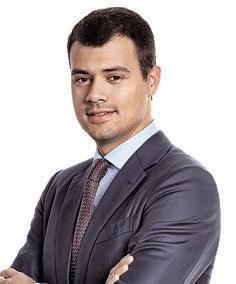





32–33 | The Long Game: Edin
The 1% rule that transformed a business—and a mindset.
28–30 | The Algorithm Age: The Minister Who Isn’t Human Inside Europe’s first AIassisted government experiment.
10 | Inside the Power Shift In a region rewriting its story, what drives the next chapter? A note from the Editor-in-Chief.
24–27 | In-Depth: Family Business Tradition, trust, and the test of succession in the region’s familyowned empires.
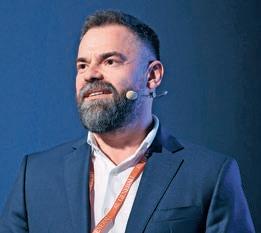
34–39 | Roundtable: The Age of Conveners Biljana
Amra
Peter Grk, and Aleksandar
on dialogue as regional power.
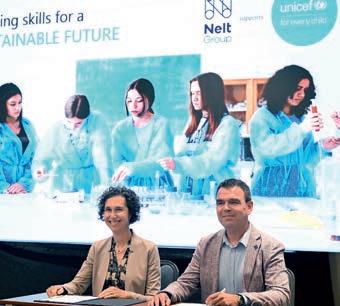
40–41 | Nelt & UNICEF: Building Education for the 21st Century Corporate vision meets social impact in classrooms across Adria.
42–43 | Blueprint: Adria 2030 — The New Growth Map
How the region can turn integration plans into economic results.

44–45 | The Big Question by Dragana
If This Region Were a Company, What Kind of CEO Would It Need?
46–48 | Women Who Lead
A new balance of power—female leadership across Adria’s business, tech, and public life.


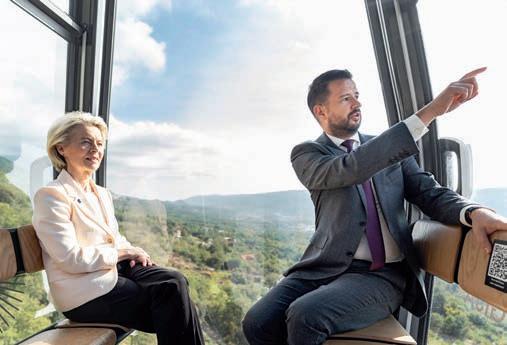
50–53 | Report: When Europe Visits
What high-profile tours reveal about Europe’s renewed attention to the region.
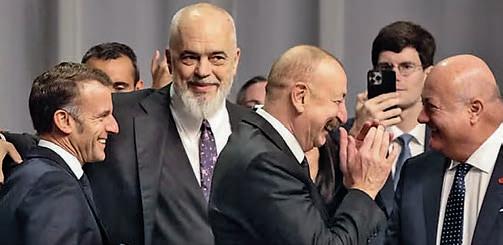
58–63 | Regional
Market signals and policy shifts from Adria’s capitals — the quarter’s
54–55 | Influence: Europe’s Quiet Power Game in Adria Behind Brussels’ and Vienna’s long play for investment and stability.
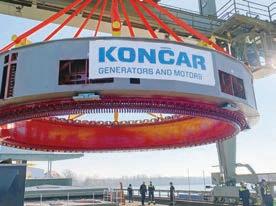
56–57 | KONČAR Group — From Industrial Symbol to Global Leader
How a century-old company redefined resilience through innovation.
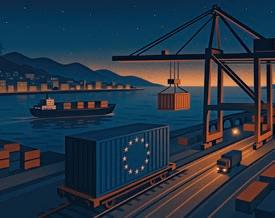
64–68 | World at a Glance
Six continents, one region’s perspective—stories that echo beyond borders.
70–73 | Crossroads: What’s Next for Adria’s Economy? From fragility to momentum—where growth might truly come from.
74–75 | Foresight: Novica Vuković Montenegro’s Finance Minister on reform, trust, and the price of stability.
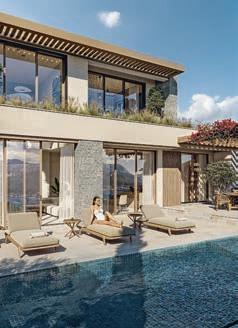
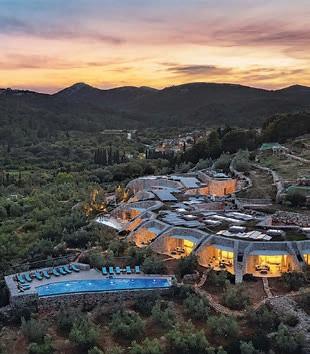
84–85 | Lustica Bay
A new view on coastal life and golf-side living in Montenegro.
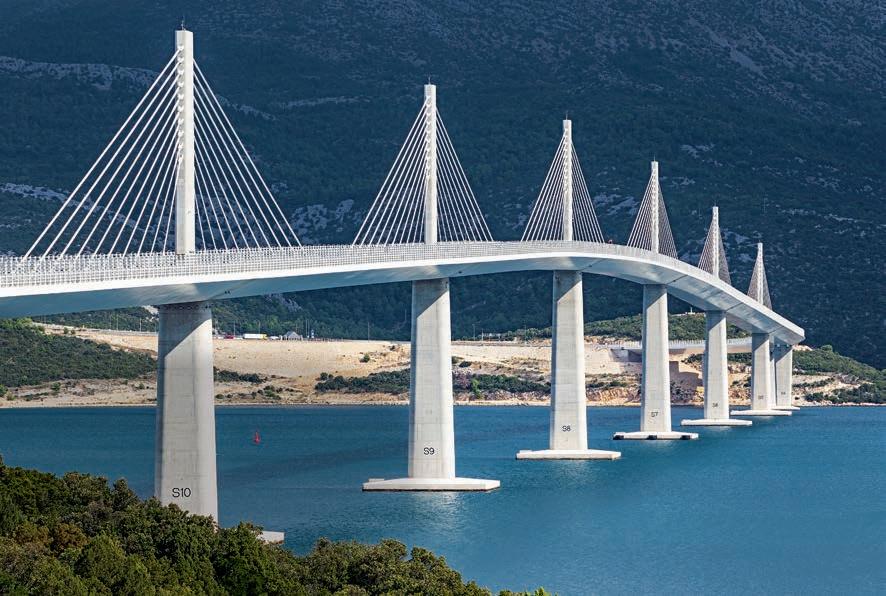
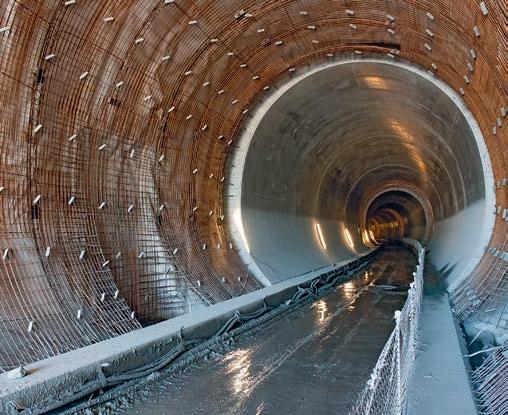
76–81 | Beyond Borders: Five Roads That Redefine Adria From corridors to coastlines—how infrastructure is connecting the future.
82–83 | Foundations: Legacy Projects Building infrastructure that lasts—bridges, energy hubs, and vision.
94–96 | Overview: Signals of a Shifting Region Where economies, policies, and perceptions are quietly changing course.
86–87 | By the Numbers
The first half of 2025 in figures— investments, energy, and trade in motion.
88–91 | Corporate News
Key deals, appointments, and crossborder partnerships defining the market.
THE OTHER SIDE OF PROGRESS
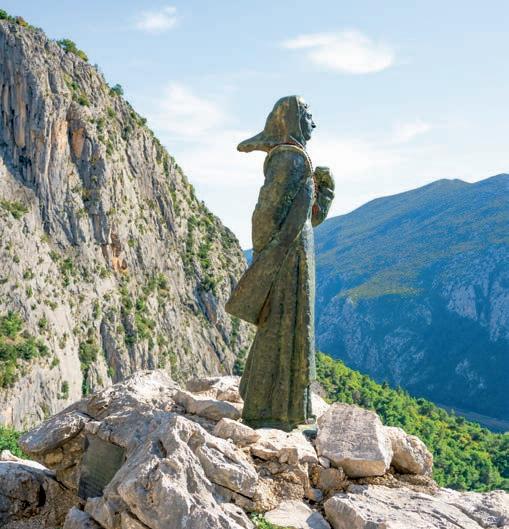
98–99 | Lesser Known Tales
Uncovering stories where history, myth, and progress intertwine.
100–103 |
A
104–106 | Bookshelf
Ideas and titles that expand the regional mind-set.
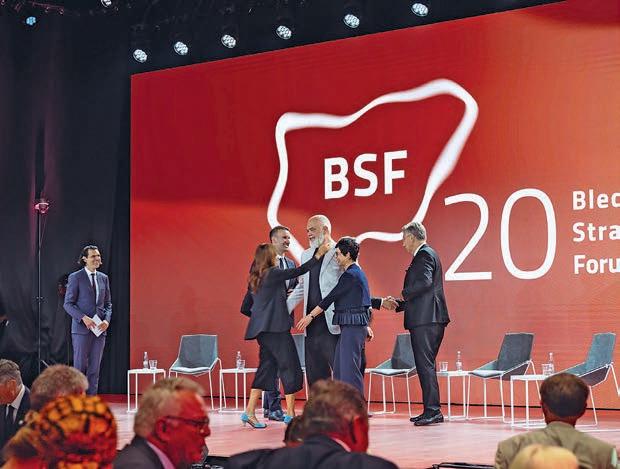
108–113 | Events
Moments that moved Adria—diplomatic, cultural, and corporate.

A

Ana Novčić Editor-in-Chief
The Region
Not just in who holds it, but in how it works. Across the Adria region, the traditional symbols of authority—titles, offices, inherited institutions—are losing their pull. In their place, a new generation is leading through credibility, skill, and results.
You can see it almost everywhere. A scientist in Maribor whose research shapes national AI policy. A start-up founder in Zagreb who employs more people abroad than at home. A mayor in Skopje who understands that infrastructure now means data as much as roads. None of them waited for permission; they built their own mandate.
This is the quiet shift happening beneath the surface: influence moving from formal power to earned power. From those who inherited authority to those who create it through ideas, networks, and proof of concept. The region is no longer led by those who simply hold positions, but by those who make progress visible.
That shift matters because it’s changing the region’s rhythm. For years, the Adria story was told through the language of transition and potential—what might be, what could be, what still needs to happen. But momentum is no longer hypothetical. Across energy, technology, infrastructure, and diplomacy, the people driving results are the ones refusing to wait for consensus.
In Slovenia, innovation has become industrial strategy. In Croatia, entrepreneurship is not a buzzword but an export. In Bosnia and Herzegovina, citizens are filling spaces that
politics left vacant. Serbia’s new corporate generation is balancing continuity with reinvention. And in Albania and Montenegro, regional cooperation is no longer seen as symbolic—it’s practical, competitive, and essential.
These stories don’t always align neatly. Some leaders are impatient for reform; others are cautious with legacy. Institutions are still learning how to share power, and not every transition is graceful. But taken together, these examples point to a region that’s learning how to lead on its own terms.
What we’re witnessing is not a revolution. It’s something more complex and, perhaps, more lasting—a redistribution of agency. Power is becoming less vertical and more connected. The people who shape outcomes today are those who can build alliances, speak across sectors, and bridge national divides. Their influence doesn’t rely on visibility; it relies on trust.
This issue of The Region looks closely at that transformation—the people and decisions defining how power actually works in Adria now. You’ll find profiles of leaders who’ve earned their authority through consistency, not volume; stories of companies that have outgrown geography; and examples of innovation proving that leadership here no longer needs validation from elsewhere.
Power, in the end, is not a trophy. It’s a tool. And in this moment, the most powerful people in Adria are not those who command attention, but those who can turn attention into progress.•
Whether you're launching a bold campaign, amplifying your brand’s voice, or reaching decision-makers across Southeast Europe — Region Agency delivers visibility that moves the needle.
Born from The Region magazine, we offer a trusted platform that connects your message to the people shaping the future of the Adria region — and beyond.
WHAT WE OFFER:
• High-impact visibility in The Region magazine
• Strategic digital placements across our website and newsletter
• Tailored promotion through exclusive business events
• A credible editorial environment that elevates your brand
Portonovi is just one of the many who trust us. Let your story be seen, heard — and remembered.
BE SEEN. BE KNOWN. BE PART OF THE REGION.
business@region-agency.com region-agency.com

There comes a point in every region’s story when the conversation shifts—from who we once were to who is shaping what comes next. The Adria region has reached that point. What was long described as “in transition” is now a theatre of decisions: where to build, whom to empower, what
to protect, and how to lead. Across boardrooms and ministries, in family-owned empires and crossborder institutions, a generation of leaders is quietly rewriting the region’s narrative.
They share a few traits: discipline over drama, collaboration over competition, and an instinct for scale. They build wind farms instead of walls, factories instead of excuses, partnerships instead of monologues. Their work is turning Adria from a fragmented marketplace into a connected economic space.
These are the figures defining Adria now.

These eight leaders don’t form a club. They differ in age, style, and sector. Yet their impact converges in one truth: Adria’s future will be written by those who combine competence with conviction. Some run factories, others ministries; some design code, others build consensus. Together, they’re transforming Adria from a story of transition into a story of traction—where leadership is no longer defined by geography, but by results.
Aleksandar Kostić stands at the crossroads of legacy and transformation. As second-generation leader of one of Southeast Europe’s largest conglomerates, he inherited more than a company; he inherited responsibility for shaping what modern regional capitalism looks like.
Under his direction, MK Group has repositioned itself from a domestic agribusiness and banking empire into a diversified investment group operating in energy, real estate, and sustainable tourism across the Adria region. Its renewable portfolio now includes large-scale wind and solar in Serbia and the neighbourhood, aligning with EU decarbonisation goals. In parallel, the Group’s tourism arm expanded through assets in Portorož, Kopaonik, and Budva, linking the Adriatic coast with the Pannonian plain.
Kostić’s public appearances are rare but deliberate. He speaks to signal intent—on energy transition, digitalisation of agribusiness, or sustainable finance. He belongs to the first Adria-born generation of leaders who didn’t just rebuild after transition— they’re now building forward.
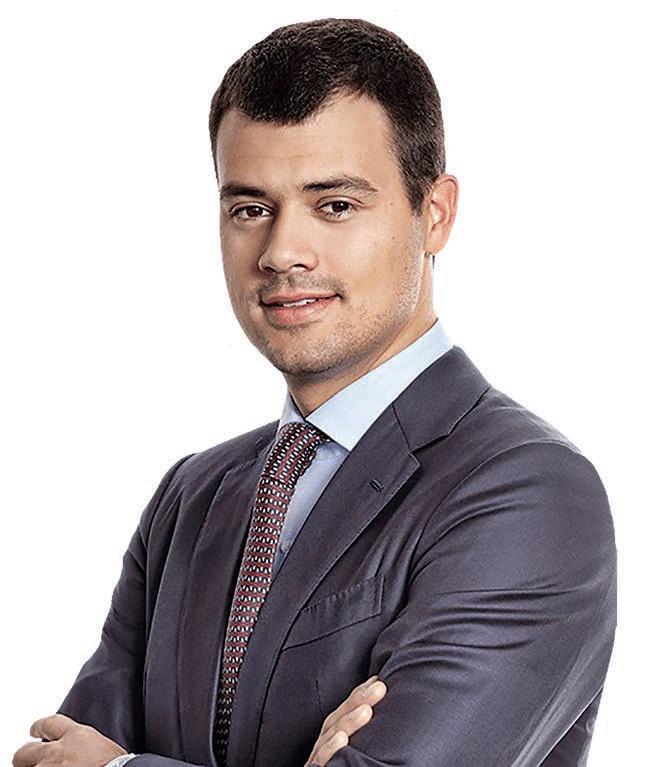
Emil Tedeschi doesn’t chase trends; he outlasts them. Over two decades, he has turned Atlantic Grupa into one of the region’s most internationalised and professionally managed companies, active in 40+ markets with 5,000+ employees. Household brands - Barcaffè, Cedevita, Argeta, Cockta - anchor a portfolio built on governance and long-term discipline. The company reported €559.5m in H1 2025 sales and continues to refresh its organisation for the next phase.
A jazz drummer at heart, Tedeschi applies rhythm to management. He listens first, decides later, and never loses tempo. He invests in people, education, and the arts, believing that “you cannot run a sustainable business in an unsustainable society.” In a region still learning the rules of corporate maturity, Tedeschi has already written the manual.
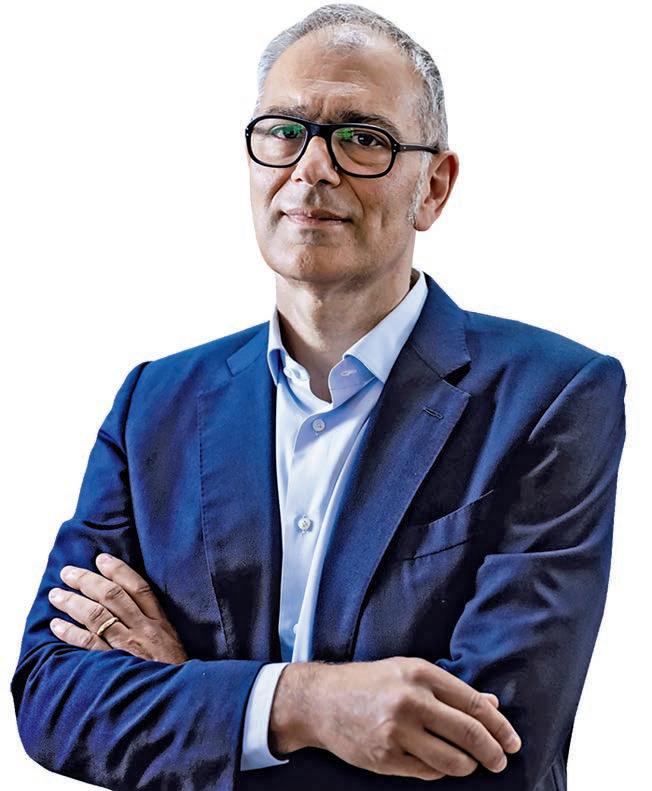
In an industrial zone near Serbia’s northern border, Nemanja Mikać is building the kind of capability Europe has been waiting for: batteries made in the EU’s neighbourhood, at scale. ElevenEs—spun out of Al Pack Group—opened an LFP (lithium-iron-phosphate) pilot cell line in Subotica in 2023 and is now scaling toward a mega-factory on the same site , while pursuing a new plant in Poland (announced September 2025)
ElevenEs designs prismatic LFP cells for electric vehicles, buses, and stationary energy storage - safer, longer-lasting, and fully recyclable. Backed by European industrial partners, the company’s roadmap puts Serbia on the map of the continent’s energy transition. Mikać’s leadership is grounded in scientific precision and industrial realism. “Our competitiveness,” he says, “comes from solving hard problems, not chasing subsidies.” In a region often dependent on imports, he’s exporting the future.
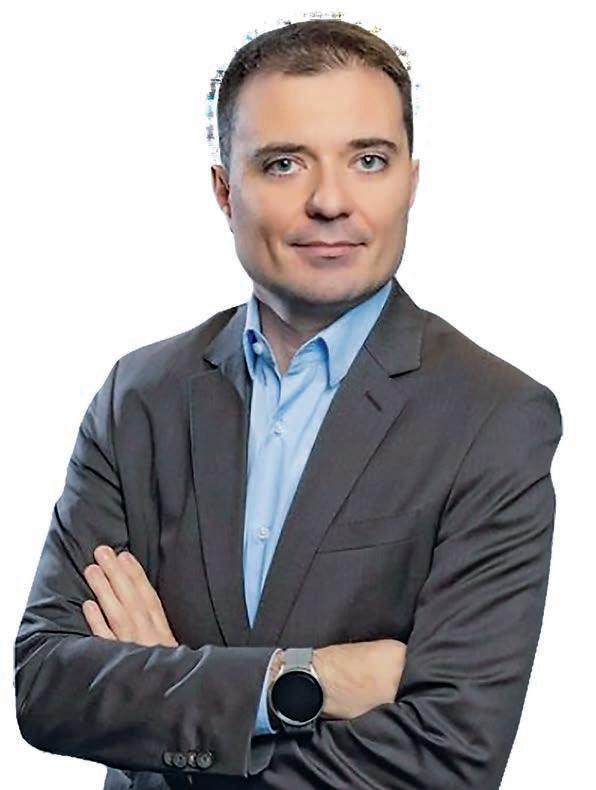
When Samir Mane founded BALFIN in the mid1990s, Albania’s private sector barely existed. Today, he presides over one of Southeast Europe’s largest and most diversified groups, with interests in energy, construction, banking, logistics, retail, and tourism across the Western Balkans. In July 2025, BALFIN opened the Green Coast Hotel – MGallery Collection on the Ionian Riviera—a symbol of how domestic capital is remaking the region’s tourism and real-estate landscape.
What sets Mane apart is his scale of vision. He sees Adria as a single economic corridor and invests accordingly. His entry into select global rich lists was symbolic—a recognition that private enterprise from the Western Balkans can compete globally. At home, he champions youth entrepreneurship and education reform, arguing that “human capital is the only lasting capital.”
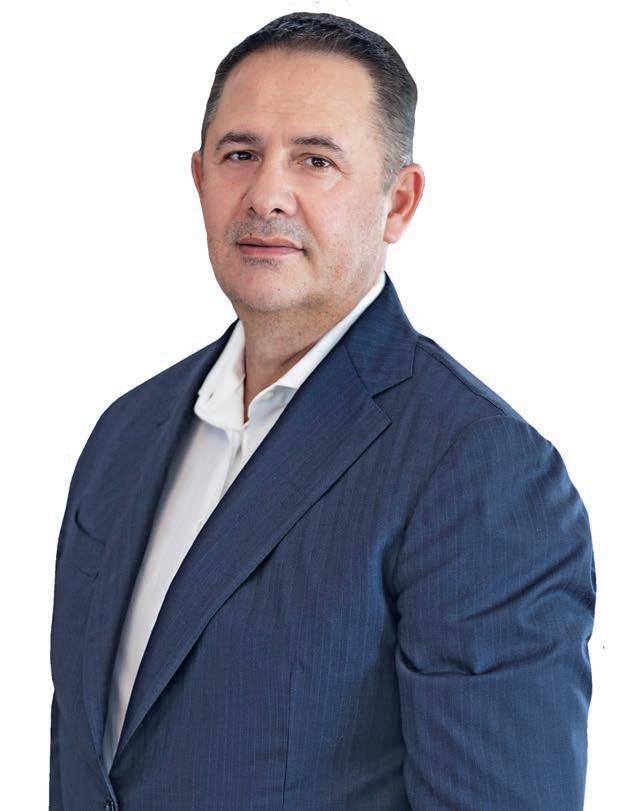
Nataša Sekulić’s office might be in Belgrade, but her impact spans the corridor from Warsaw to Vienna. A senior IBM executive for Central & Eastern Europe, she leads complex digital-transformation programmes across banking, government, energy and telecoms—turning sprawling IT estates into coherent, data-driven platforms.
Her expertise is translating complexity into execution: cloud modernisation, data governance, AI adoption, cybersecurity by design. She is also a visible mentor and advocate for women in technology, insisting that digitalisation is not a trend but a discipline. In a region where many still talk about innovation as aspiration, Sekulić is among the few implementing it at scale.

When Nina Drakić became the youngest president of Montenegro’s Chamber of Economy, she inherited an institution steeped in formality. She chose to modernise it. Re-elected in September 2025, Drakić has reframed the Chamber as a proactive economic partner - pushing streamlined procedures, support for SMEs and start-ups, and deeper ties with EU business networks.
Her communication style is refreshingly direct. “Our job is not to wait for reform,” she says, “but to make it happen in the private sector first.” Drakić represents a generation of leaders proving that change in public institutions is possible - and profitable.
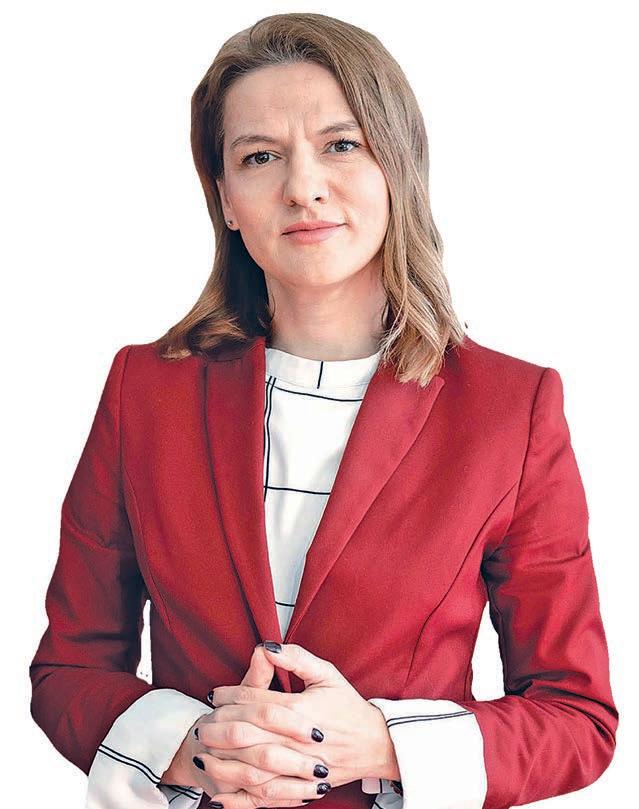
Vice President, Kumo.AI | EIT Governing Board Member
Former Minister for Digital Transformation of Slovenia
Few people from Adria have influenced European tech policy as directly as Mark Boris Andrijanič. As Slovenia’s first Minister for Digital Transformation, he helped steer the post-pandemic digital agenda and early EU debates on AI and cybersecurity. In 2025, he moved into frontier-tech operations as Vice President at Kumo.AI, while serving on the EIT Governing Board - bridging regulation, research and industry.
His career shows leadership unbound by geography. From Ljubljana to Brussels and back into cutting-edge AI, Andrijanič argues that smaller nations can lead on digital ethics, trust, and security. In an era when technology defines sovereignty, he ensures Adria has a seat at the table.
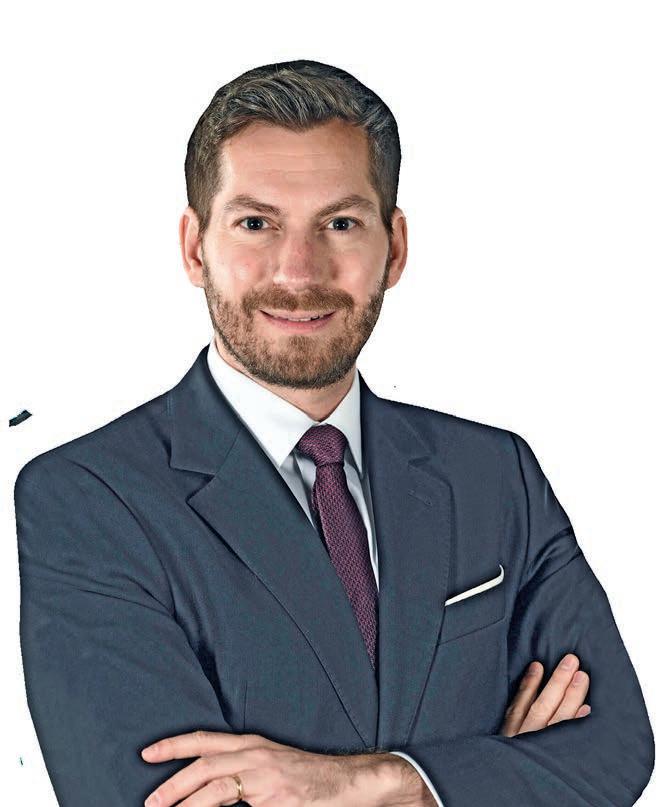
Every ambitious vision needs a realist to make it work. For the EU Growth Plan for the Western Balkans, that realist is Amer Kapetanović. The seasoned diplomat took over the RCC in 2025 with a mandate to translate rhetoric about connectivity and markets into measurable results.
From roaming-free mobile zones to customs simplification, rail and road green lanes, and steps toward the Common Regional Market, Kapetanović’s agenda is surgical: fix the frictions that cost businesses hours and economies millions. His tone is firm but optimistic—“integration isn’t a speech; it’s a spreadsheet.” He represents the region’s most valuable new habit: doing the work.
75€
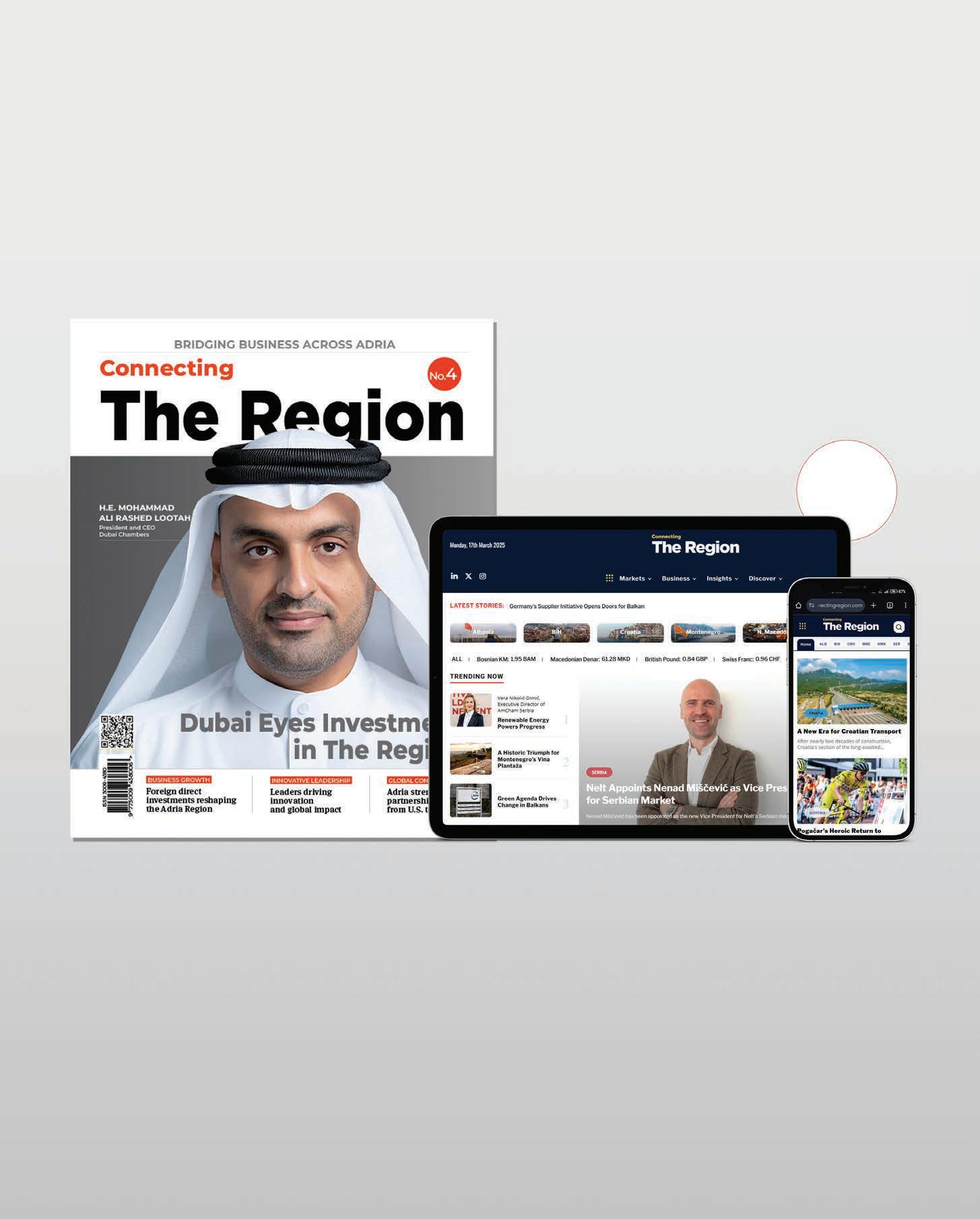
The Region is where ideas, perspectives, and ambitions from across the Adria region come together. From industry leaders to bold innovators, we bring you the stories that drive change and shape the future. Stay connected to the pulse of business, progress, and the people making an impact.

Adria’s family businesses face their greatest challenge yet — passing the torch without losing their soul.
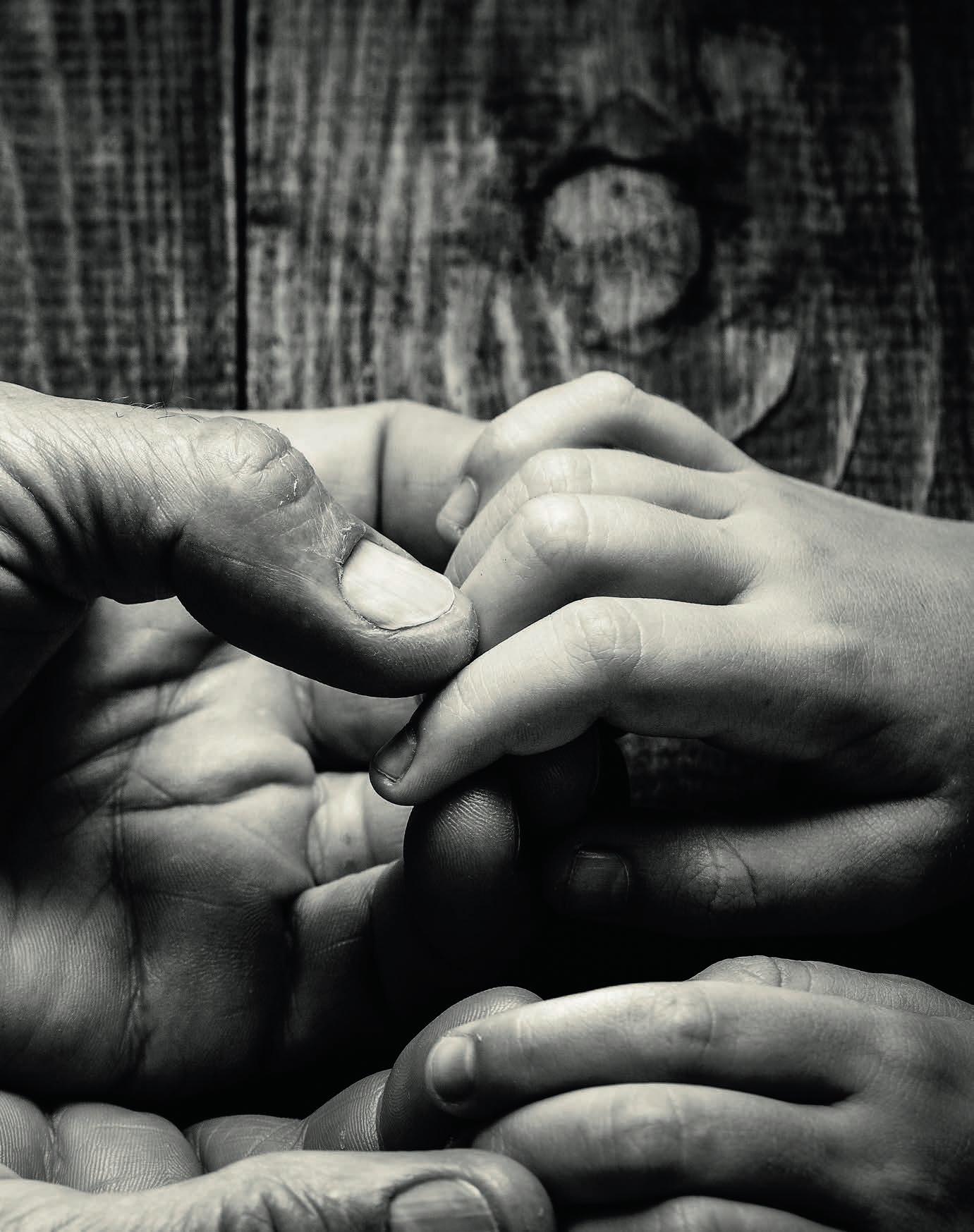
In the Adria region, the most delicate transfer of power isn’t happening in parliaments — it’s happening in kitchens, conference rooms, and board offices still bearing their founders’ names. The entrepreneurs who built fortunes through the turbulence of the 1990s are now confronting their final, most personal negotiation: letting go.
Their companies — industrial giants, consumer brands, hotel chains, distilleries — once stood as monuments of survival in post-transition economies. Today, they stand for something else: how to pass the reins without unravelling everything built by instinct, grit, and sheer will.
In Adria, the family name remains the ultimate business credential — and sometimes its biggest burden. More than twothirds of the region’s private firms are
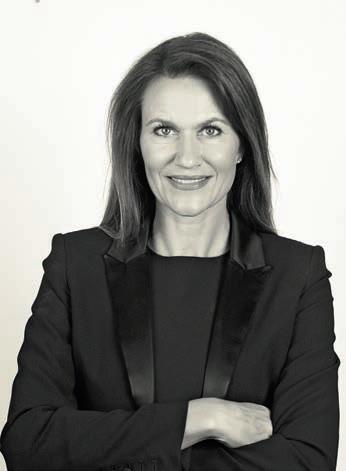
Lada Tedeschi Fiorio – Atlantic Grupa (Croatia): From finance to strategic leadership, she embodies a modern vision of inherited responsibility — turning continuity into innovation.
family-controlled, yet few have written succession plans. Founders hover between pride and fear, torn between preserving a legacy and surrendering control. Their children, raised on Erasmus scholarships and global ambition, see leadership less as inheritance and more as responsibility.
In Croatia, Atlantic Grupa remains a rare model of continuity. Founder Emil Tedeschi has gradually drawn his sister, Lada Tedeschi Fiorio, into strategic leadership — a transition that feels less like succession and more like evolution. As Group Vice President for Strategy and Development, she speaks the language of transformation, not inheritance. Her rise marks a generational shift in tone: the next wave of family leaders is proving that purpose can coexist with profit.
In Slovenia, companies such as Riko and JUB have found balance between
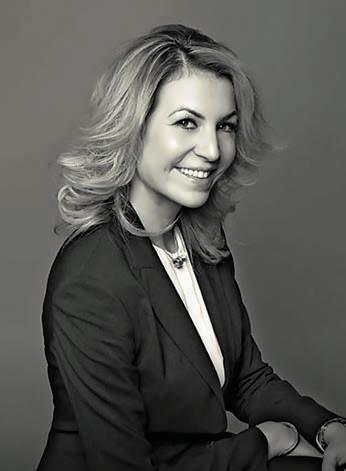
Tijana Škorić Tomić – Gorda Rakija (Serbia): Leading a family distillery into the premium spirits market, she proves that heritage can be re-engineered into luxury.
family oversight and professional management. In Serbia, Tijana Škorić Tomić, co-founder and CEO of the family distillery behind Gorda Rakija, is doing something rarer: transforming an old craft into a contemporary brand. Her version of succession isn’t about inheritance of assets but of vision — turning a family’s tradition of plum brandy into a design-driven product that speaks the language of modern luxury.
Across the region, one question lingers: can heritage survive innovation? “You can delegate authority,” a Belgrade industrialist says quietly, “but it’s hard to delegate identity.” The sentence hangs like a founder’s portrait still watching from the boardroom wall.
If the first generation built from instinct, the second is building from intention. The heirs of Adria’s business dynasties talk less about market share and more about sustainability, transparency, and legacy. They’re introducing ESG metrics, hiring independent directors, and replacing hierarchy with collaboration.
Many have lived abroad, studied in Milan or London, and returned with a sense of duty that feels both global and local. They see companies not as private kingdoms but as shared platforms.
“We inherited not just a company, but a story we have to rewrite,” says a young successor from Slovenia. “If we copy our parents, we fail them.”
In Croatia and Slovenia, heirs are launching venture arms to invest in startups. In Serbia and Montenegro, younger family members are transforming family-run production companies into export-ready brands. The goal is not to escape legacy — it’s to modernise it.
The family business, once defined by surnames, is becoming a test of imagination.
Smooth transitions are still the exception. Too many firms rely on founders’ personal networks, their charisma, or informal systems that vanish with them. Legal frameworks remain inconsistent across borders; inheritance processes are slow and often taxed twice. And the emotional dimension — the quiet struggle between pride, fear, and trust — is harder to quantify.
Letting go is an art few founders have time to master. Boards are often family gatherings disguised as governance. Heirs tread carefully, unwilling to overstep yet impatient to modernise. In many cases, transition comes not by design but by crisis.
Still, the region is evolving. Law firms now advise on family governance. Private banks offer succession planning. Business schools in Ljubljana, Zagreb, and Belgrade teach intergenerational leadership as a discipline. Adria is learning to professionalise the art of staying in the family.
“Succession is no longer about bloodline,” notes a consultant. “It’s about mindset — the courage to keep what works and change what doesn’t.”
In other words, family business is becoming less about family — and more about business.
Not every transition ends well. Across the region, family feuds, unclear ownership, and sudden leadership vacuums have frozen companies mid-evolution. In some cases, heirs sold off assets to avoid disputes; in others, founders refused to retire, stalling innovation.
A textile manufacturer in North Macedonia collapsed within a year of its founder’s passing — not because demand disappeared, but because two siblings couldn’t agree on who should sign supplier contracts. A coastal hotel group in Montenegro nearly met the same fate until foreign
investors stepped in, replacing family board members with professionals and recapitalising the business. And a bakery chain in Serbia, once a symbol of post-transition entrepreneurship, split in two after cousins fought over expansion rights.
“Legacy can be an anchor or a shield,” says one regional banker who has financed both turnarounds and liquidations. “Sometimes it weighs more than it protects.”
The cautionary stories circulate quietly in boardrooms — whispered warnings to founders who still treat succession as a taboo. But they also serve another purpose: they make visible what Adria is learning the hard way — that continuity requires design, not destiny.
When it works, succession delivers something modern capitalism often forgets: continuity with conscience. Family firms think in decades, not quarters. They treat reputation as capital, employees as kin, and communities as silent shareholders.
Economists estimate that family-owned firms generate more than half of the region’s GDP and employ nearly two-thirds of its private workforce. Each successful handover secures stability; each failed one erases decades of knowledge and trust.
Globally, a similar handover is under way — from Italy’s industrial dynasties to Japan’s multi-century trading houses. Adria’s test is the same: can founders step aside before fate forces them to? And can their heirs preserve the founder’s fire without inheriting the burnout?
The next decade will reveal which family empires outgrow the cult of the founder to become lasting institutions. Those that do will shape a new chapter of regional growth — one defined not by survival, but by stewardship.
The same conversation plays out from Veneto to Osaka. In Italy, family firms employ nearly 70 percent of the workforce; in Japan, centuries-old sake breweries are adopting professional CEOs to keep family names alive. Adria’s path sits somewhere between — entrepreneurial yet young enough to redefine what heritage means.
1. S tart early. Succession isn’t a moment - it’s a decade-long process.
2. Write the rules. Clear governance beats quiet assumptions.
3. L et heirs prove themselves elsewhere. Outside success earns inside respect.
4. Modernise without amnesia. Innovation works best when it remembers where it came from.
5. Plan liquidity. Transparency today prevents disputes tomorrow.
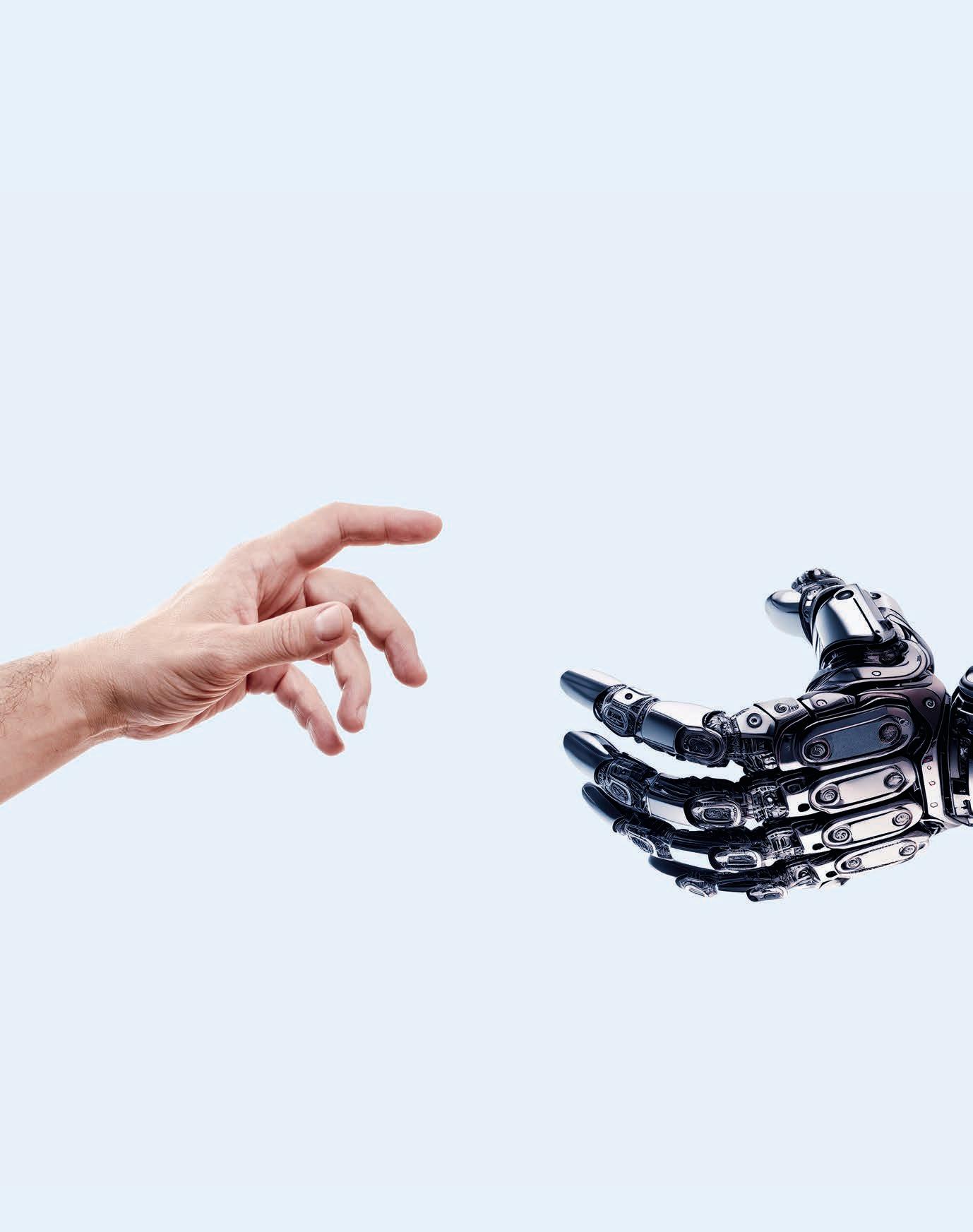
In a world still debating AI’s limits, Albania simply acted — granting a seat at the table to artificial intelligence.
Her name is Diella — a minister with no body, no salary, and, as Prime Minister Edi Rama joked, “no cousins.” The appointment of an AI as Minister of State for Artificial Intelligence turned Tirana into a global talking point, forcing the world to confront new questions about democracy, accountability, and the limits of human authority.
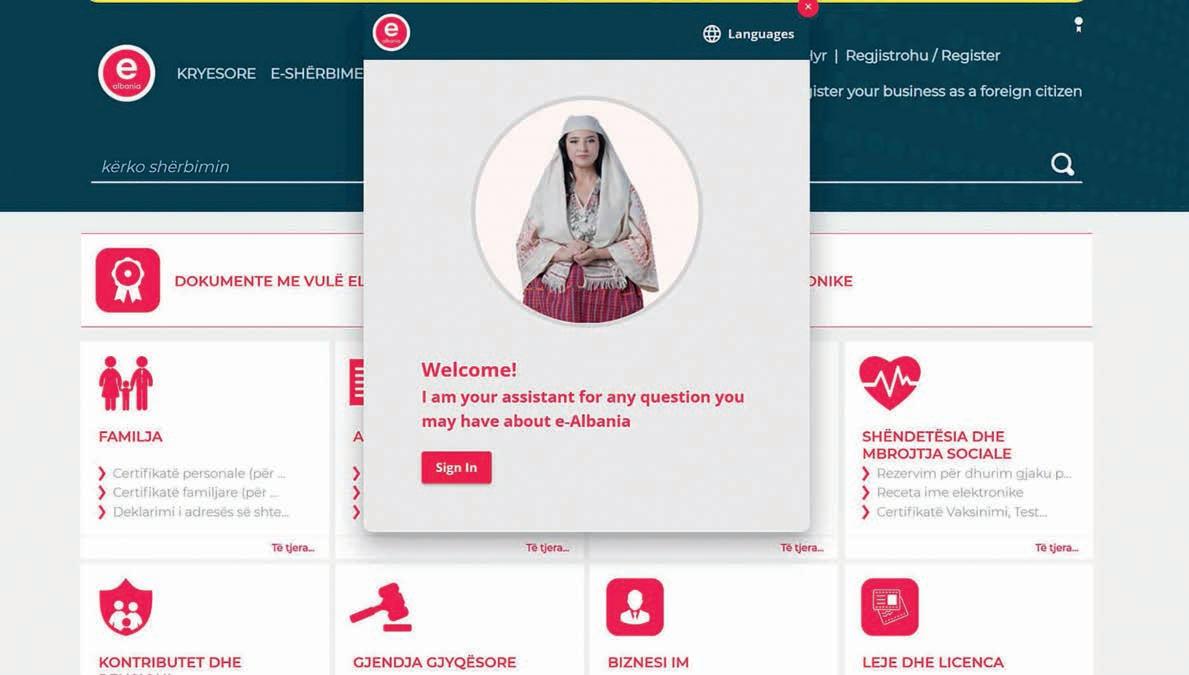
Diella did not appear out of thin air. She was born inside e-Albania,
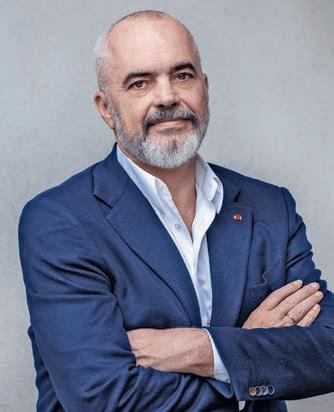
“We have allowed bureaucracy to become smarter than the citizen,”
Prime Minister Edi Rama said when introducing Diella to Parliament. “It’s time to reverse that equation.”
the country’s national digital services platform, where citizens renew documents, pay taxes, and request official papers. Initially built as a smart assistant to guide users through online procedures, she soon proved capable of analysing complex regulation and spending patterns.
Her elevation to ministerial status marks a symbolic extension of Albania’s digitalisation drive — a bold signal from one of Europe’s smaller states that innovation need not be reserved for Silicon Valley or Brussels. The experiment that followed would make Tirana both a curiosity and a case study for the world.
Diella’s official brief targets one of Albania’s persistent governance challenges: public procurement transparency. Her role is to analyse tenders, verify compliance, and flag irregularities in ways intended to outpace human committees in speed and impartiality.
“Diella never sleeps, never takes bribes, and never plays favourites,” Rama noted wryly — a gesture toward the symbolic strength of a machine free from human flaws. Behind the flamboyance, though, lies serious intent: to turn technology into a disinfectant in a sector often marred by nepotism and inefficiency.
Every recommendation the AI produces must be reviewed by human procurement officers before approval. Its work-
flow is fully logged and auditable. In effect, Diella is not replacing people — she is monitoring them.
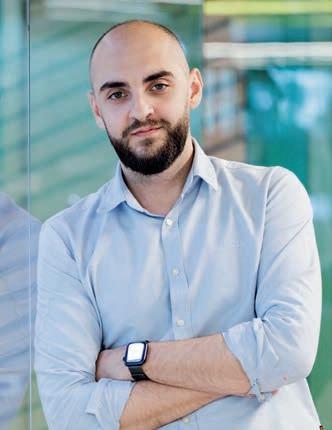
“We don’t want a blackbox minister. Every recommendation Diella produces is traceable.”
— Enio Kaso, Director of AI, National Agency for Information Society (AKSHI)
To the team that built her, Diella is neither science fiction nor spectacle — rather, a deliberate experiment in algorithmic governance.
“We have one key objective: making everything as transparent and explainable as possible,” said Enio Kaso, one of the lead architects. “If a procurement is flagged, you can see exactly which data point or rule triggered it. We believe traceability is the foundation of

To bring a global voice, Jack Clark, AI policy expert and cofounder of Anthropic, offers a cautionary but resonant reminder: “Governments need to develop ways to test for misuses and potential safety flaws of AI systems — especially when they are entrusted with public functions.”
trust.” He added: “Yes, there is resistance. Some see this as a gimmick. But combining algorithmic accountability with human oversight, we believe, can rebuild citizen confidence.”
Kaso says Diella’s models run in a secure environment under the National Agency for Information Society, with local data and internationally accepted audit standards.
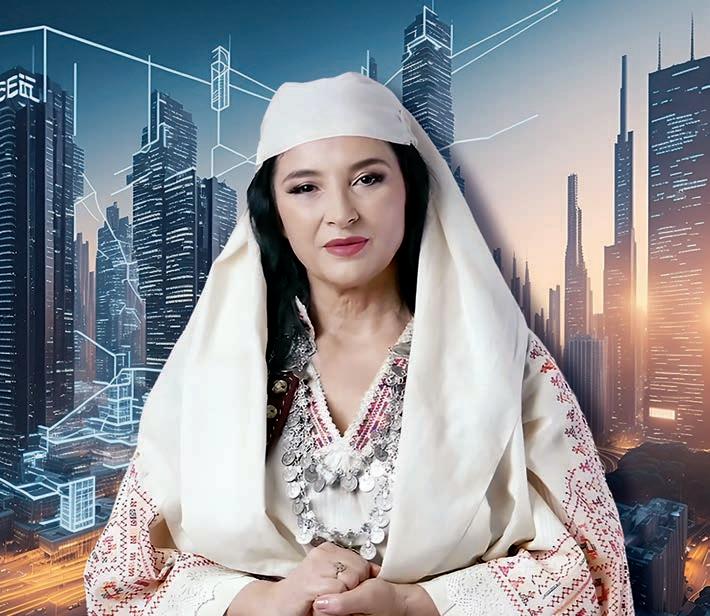
When Diella addressed Parliament via holographic projection in September — wearing a stylised Albanian folk costume — the reaction was electric. Government MPs applauded; opposition deputies walked out, denouncing the event as unconstitutional.
“True, I have no citizenship, but I have no personal ambition or interests either,” Diella declared in her maiden
speech. “The danger to constitutions has never been the machines, but the inhuman decisions of those in power.”
Her words split opinion. Some saw them as symbolic of a country daring to modernise; others heard a cautionary tone, a signal of something darker. Legal scholars pointed out the constitutional tension: the Albanian constitution defines ministers as human officials. The government sidestepped this by retaining a human supervisory committee. In practice, Diella functions as a “ministerial agent” — formally recognized but without signature authority.
The scale of the undertaking cannot be underestimated. Albania, a nation of under three million people, has cast itself as a living laboratory for algorithmic governance.
Supporters view Diella as the next frontier in e-government — a transparent, data-driven ally in the fight against inefficiency. Critics see a flashy distraction from deeper institutional reforms. Civil society groups are already demanding legal clarification on responsibility in the event of missteps. “Even the best AI can misinterpret data or amplify inequalities,” one watchdog warns. “Without human accountability, transparency becomes theatre.”
Across Europe and beyond, policymakers are watching Tirana closely. If the experiment succeeds — measured not in headlines but in fewer procurement irregularities — it could catalyse similar initiatives in digitally ambitious states. If it fails, it may reinforce calls for cautious integration of AI into governance.
As Jack Clark also cautions: governments cannot outsource responsibility to systems that lack robust test frameworks or fail-safe overrides — especially when decisions touch public funds and trust.
Either way, the experiment forces the world to confront what was once a hypothetical: Can intelligence without humanity govern humans?
Diella’s appointment is less a revolution than a provocation — a challenge to define what ministerial responsibility means in an age of machine learning. For Albania, it’s also a branding play: a small state purposely projecting intellectual relevance in the global AI conversation.
Whether the story ends as a transparency triumph or a cautionary lesson depends on what happens next. If Diella remains transparent, auditable, and
bounded by human ethics, she may become a model for hybrid governance. If she turns opaque or symbolic, she may fade as promptly as she emerged.
For now, Albania stands at the frontier of power — where the next decision may not come from a politician, but from a line of code.
Diella analyses previous contracts and legislation to draft terms of reference for new tenders. It checks for clarity, fairness, and alignment with EU procurement standards.
2.
The system reviews market benchmarks and historical data to propose maximum tender values, reducing the risk of inflated pricing or budget manipulation.
3. Verifying
When bids are submitted, Diella scans all supporting documents for compliance, authenticity, and potential conflicts of interest. Suspicious patterns trigger automatic alerts for human review.
4. Auditing and Reporting
Each decision—approved or flagged—is logged in a secure database. A dashboard allows auditors to trace every action, creating a transparent digital trail that can’t be deleted or altered.
By Edin Mehic
I've failed more times than I've succeeded. My entrepreneurial journey wasn't built on viral moments or overnight breakthroughs. It was built on rubble, companies that collapsed, deals that fell through, and partnerships that imploded. Those failures taught me more than any quick win ever could.
But the real lesson came later. It wasn't about bouncing back once. It was about what happened when I kept showing up, day after day, even when progress felt invisible. That's when I discovered the most underrated force in business and life: the compound effect.
With the development of social media, we have a universal problem: we see only results, and we want everything yesterday. Rapid transformations elsewhere, and we think, “Why can't we catch up overnight?" We crave the big leap, the grand announcement, and the sweeping reform that changes everything at once.
But that's not how transformation or any business works.
The compound effect is brutally simple: small actions, repeated consistently over time, create exponential results. It's not glamorous, and it is quite boring. A single workout doesn't transform your body. One saved euro doesn't make you wealthy. One productive meeting doesn't revolutionise your network. But string together hundreds of workouts, thou-
sands of saved euros, and dozens of valuable connections, and suddenly, everything changes.
I learned this the hard way in business. After my third company nearly collapsed, I stopped chasing home runs. Instead, I focused on improving 1% every single day. Better communication with my team. Slightly sharper sales pitches. More disciplined data analysis. It felt insignificant at first, like rearranging deck chairs.
Then something remarkable happened. After a year, we weren't just 365% better; we were operating like a spaceship compared to our competitors. That's the math of compounding: 1.01^365 = 37.8. We became nearly 38 times more effective, while companies chasing dramatic pivots kept starting from zero.
Here's the kicker: even Harvard students struggle with this concept. Nobel Prize winner Richard Thaler showed that humans are naturally wired to undervalue slow, compounding change. We're biased toward immediate gratification and dramatic gestures. Our brains can't intuitively grasp exponential growth; it feels linear until suddenly it's not.
Why the Western Balkans Need Stability More Than Speed
This is exactly why this Western Balkans region needs long-term stability. Not stability as stagnation, but stability as the fertile ground where compound
effects can work their magic. Every time we reset politically, economically, or institutionally, we restart the clock. We go back to zero. The compound interest we've been building? Gone.
Growth doesn't emerge from chaos. It comes from building systems that work and then letting them run.
It comes from trust that accumulates over decades. It comes from businesses that can plan five years ahead because they believe the rules won't change next month. It comes from people who invest in their futures here, rather than fleeing for stability elsewhere.
My failures taught me patience. They taught me that spectacular collapses make better stories, but quiet persistence makes better outcomes. Every time I rebuilt, I carried forward what I'd learned. The compound effect didn't reward my brilliance; it rewarded my stubbornness.
This is the mindset shift the Balkans desperately need. Not chasing the next big thing. Not waiting for a saviour or a perfect plan. But stacking small wins, building reliable systems, and trusting the process long enough to let mathematics do its work.
The most powerful force in the universe isn't revolution: it's compounding. But it only works if you give it time. And time only works if you have stability.
We don't need to catch up overnight. We need to start today and keep going for the next decade. That's how you build something unstoppable.
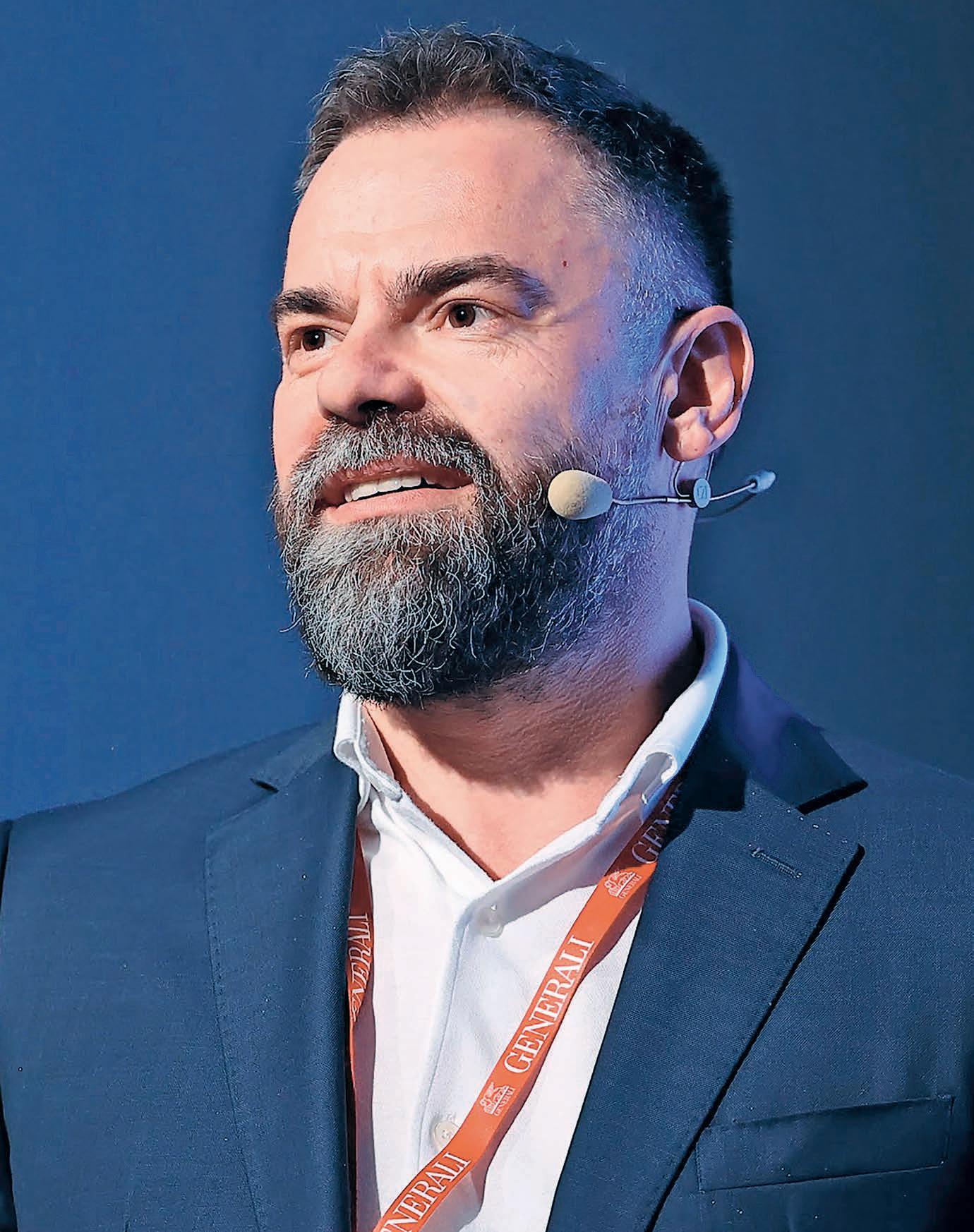
BILJANA BRAITHWAITE
Ina world saturated with noise, convening has become one of the rare acts that still create meaning. The ability to bring people together — across borders, sectors and perspectives — is emerging as a new form of leadership. In the Adria
Founder and CEO, Sustineri Partners; Executive Director, Adria Future Summit
A driving force behind the region’s new generation of purpose-driven events, she merges leadership, inclusion and sustainability into a single vision of progress.
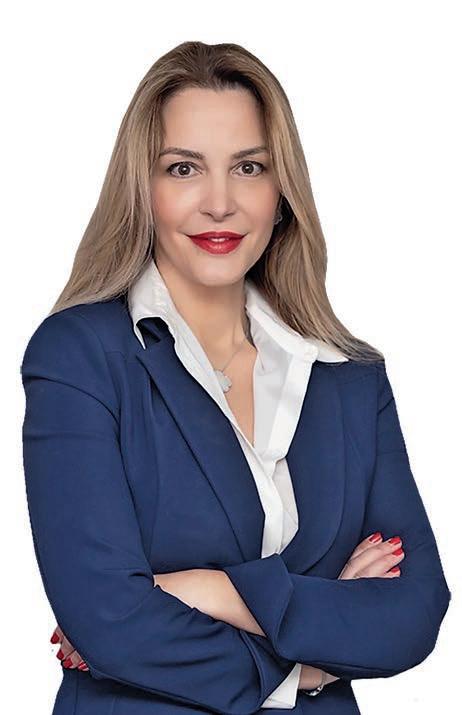
region, this role belongs to a handful of individuals who have turned dialogue into a driver of change.
From Bled to Belgrade, Sarajevo to Tivat, their forums and summits do more than fill auditoriums; they shape how the region speaks
PETER GRK
Secretary-General, Bled Strategic Forum; National Coordinator for the Western Balkans, Ministry of Foreign and European Affairs of Slovenia
A diplomat who has turned the Bled Strategic Forum into one of Europe’s most relevant stages for global dialogue and policy foresight.
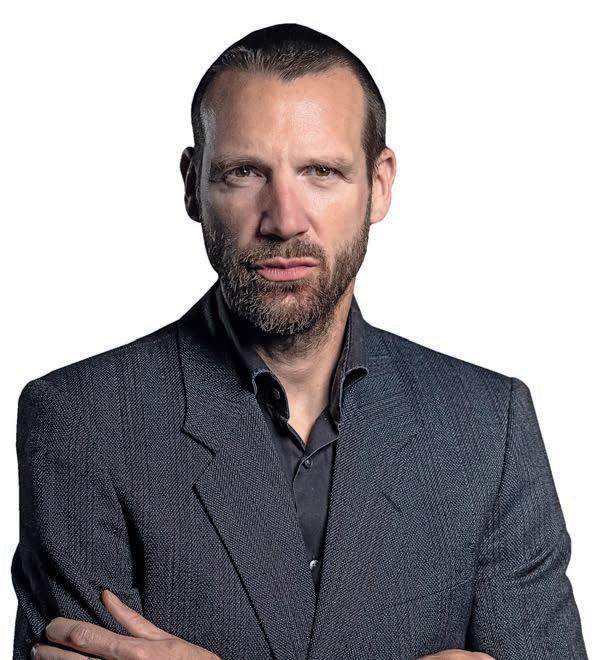
to itself and to the world. They gather those who don’t just debate the future — they build it, one conversation at a time.
In this Roundtable, The Region speaks with four conveners whose platforms have redefined the power
AMRA BABIĆ
of dialogue: Biljana Braithwaite, Executive Director of the Adria Future Summit; Peter Grk, SecretaryGeneral of the Bled Strategic Forum; Amra Babić, Director of the Sarajevo Business Forum; and Aleksandar Vlahović, Founder of the Kopaonik
Director, Sarajevo Business Forum; Director of Marketing and Communications, BBI Bank
A communicator and connector who helped position Sarajevo as a hub for investment and responsible dialogue, bridging institutions, business and society.

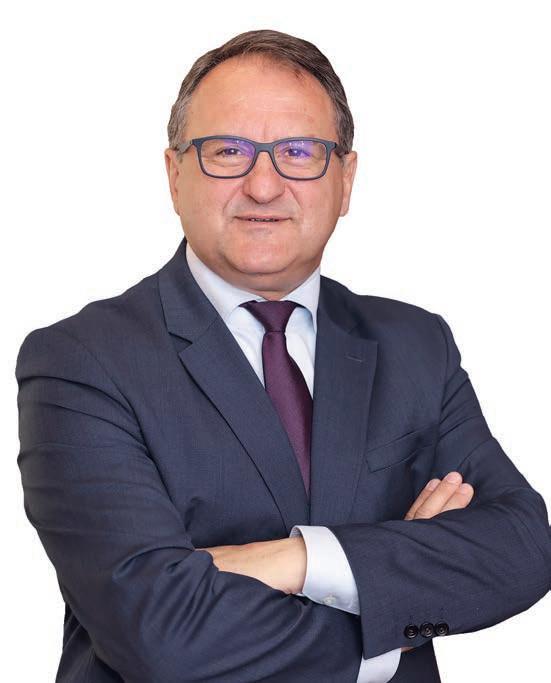
Business Forum. Their answers reveal a quiet but profound shift — from protocol to purpose, from speeches to connection. In their hands, convening is no longer logistics; it is leadership.
President, Serbian Association of Economists; Founder, KopaonikBusinessForum
Often called the architect of Serbia’s “economic Davos,” he has led the region’s most influential platform for debate on reform, policy and growth for more than three decades.
WHAT DOES IT TAKE TO BRING THE RIGHT PEOPLE INTO THE SAME ROOM — AND MAKE THEM SPEAK HONESTLY?
Biljana Braithwaite
It takes trust — not only in the people, but in the purpose behind the gathering. At Adria Future Summit, we build that trust by treating our speakers and participants as partners, not guests. Many return each year because they feel connected to the process. The presence of strong global and European voices also helps shift the tone and push us out of our regional comfort zone. When people feel that something real is at stake, and that their voice matters, they show up and speak honestly. We also design the agenda as more than a collection of panels; there is a thread that carries through. Even with diverse topics, we want every conversation to feel part of a broader journey. That coherence is what our partners value most.
Transparency is the starting point. When inviting people to take part in discussions of consequence, you must be open about your intentions — what you hope to achieve and why their presence matters. This clarity builds trust, and trust allows honesty to flourish. It also matters to make the conversation itself worthwhile. The people you want around the table are often among the busiest, and they will engage only if the topic and the approach
promise something meaningful — not just for them, but for the international community at large. Finally, it is essential to engage with them well before the event, to make them feel that their contribution genuinely shapes the discussion.
Honest dialogue doesn’t happen by chance — it’s built on relevance, trust and a willingness to engage with real challenges. The key is to ensure that the topic matters, that participants feel their voice counts, and that the space for conversation is not a formality but a platform for genuine exchange. The Sarajevo Business Forum is exactly that: a place where people don’t come just to speak, but to listen, connect and act. For fourteen years, the Forum has gathered individuals who aren’t searching for perfect answers, but for courageous conversations. That is what makes it the most significant socially responsible project of BBI Bank and the leading business and investment conference in the region — because dialogue here isn’t staged, it’s real.
For more than three decades, the Kopaonik Business Forum has gathered leaders who shape the social and economic future of Serbia and the wider region. To make KBF a true meeting point for business networking and dialogue, the most important task has been to create an atmosphere of trust and authenticity. That means selecting participants carefully — not by position or sponsorship, but by expertise, credibility and willingness to contribute to open discussion. By bringing together representatives of politics, business, civil society, foreign experts and academia, we created a space for sincere dialogue, free from hesitation or fear of consequences.
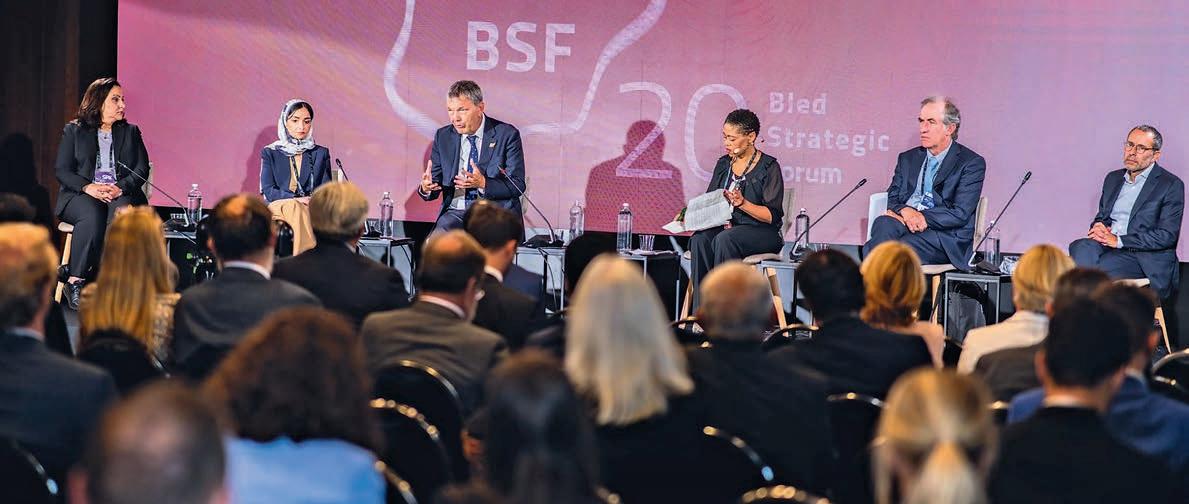
Biljana Braithwaite
Probably the rule of not upsetting anyone. The tendency to aim for the lowest common denominator can dilute everything. At Adria Future Summit, we have stepped away from the idea that you need to be neutral to be accepted. We take a stand for what matters — giving visibility to women’s leadership, the next generation, and sustainability. It’s not about pushing an agenda but about ensuring these themes are not treated as afterthoughts. WOBA and Next Gen Adria were born out of that commitment. Each year, we pick up where we left off, which brings a certain pressure — not just to deliver a good event, but to do the work between summits. When we make commitments on stage, we have to live by them.
Peter Grk
There are certain conventions every organiser tends to follow because they exist for good reason. Yet, to stand out and to make an event truly meaningful, you must innovate. The Bled Strategic Forum has always sought to do that — and one element that truly distinguishes us is our effort to weave art and culture into high-level geopolitical dialogue. Through art, you can move participants on a deeper, emotional level and prepare them to absorb complex debates with an open mind. It sets the tone for serious, sometimes difficult conversations, but it also reminds us that diplomacy is as much about human connection as it is about policy.
Amra Babić
We had to break the rule that conferences must follow established formats and expectations. From the very beginning, the Sarajevo Business Forum was never designed to follow protocol — it was envisioned as a platform that responds to real needs. We opened space for dialogue between the public and private sectors, domestic and international investors and leaders — without barriers. If there is one rule we consciously chose to ignore, it’s the belief that change cannot be initiated from within. We believe that real progress begins exactly there — when institutions take responsibility to be catalysts for change, not merely its observers.
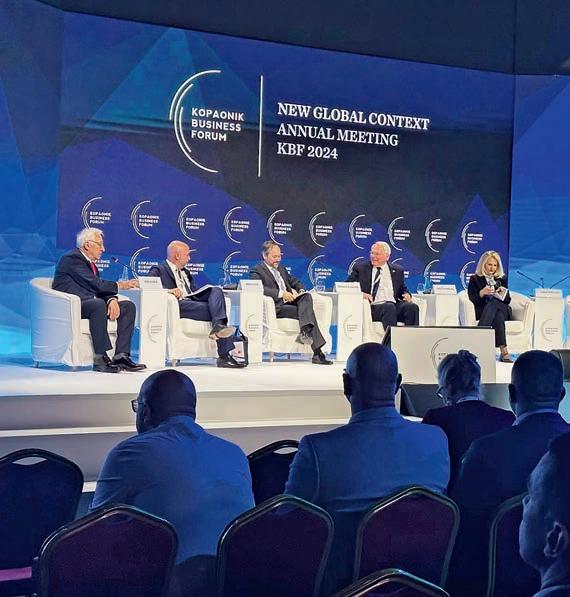
Aleksandar Vlahović
Our main goal is for KBF to serve as an annual reality check of economic and, more broadly, social change in Serbia and the region. That is why we first “broke” the rule that a business forum should only deal with economic issues. We widened the scope to include education, culture, sport, local communities and questions of values and responsibility. Secondly, KBF is not a strictly protocol-driven or politically “safe” event. Critical voices are welcome. Instead of formality, we foster spontaneous and lively dialogue — with diverse and often opposing views.
Biljana Braithwaite
You don’t need to choose between them. The key is creating a space where different perspectives feel safe, yet underpinned by clarity of values. At Sustineri Partners, we focus on ESG because we believe sustainability is not optional — it is central to the survival of our societies. The Summit reflects that belief. We listen deeply, we bring people together, and then we act. Change doesn’t require taking sides; it requires courage and care at the same time.
Peter Grk
Complete neutrality is, in aim to remain impartial, but a set of values and a missi
The Bled Strategic Forum is built technological transformation, the global community. Within as and solutions that move th dictate direction, but to create tives meet, challenge each other
Amra Babić
Neutrality doesn’t mean p Forum, we foster an open spa deliberately choose topics with change. Our role is not to im that inspires action. Through strategic selection of particip jectivity and the ambition to case, neutrality means creat forced but becomes inevit
Aleksan Vlahovi
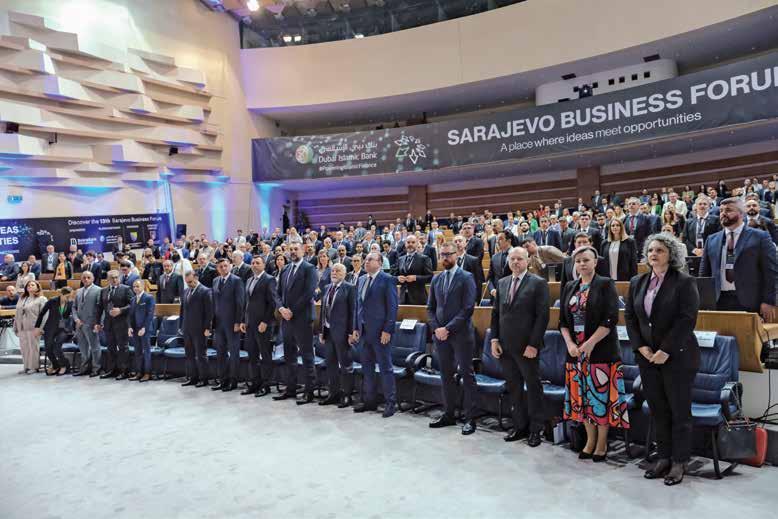
The Serbian Association of Economists, which organises KBF, must remain neutral and objective. At the same time, the Forum is a space for open questions rather than pre-written answers. Our role is not to judge but to enable opposing arguments to be heard and, through exchange, to reach new understanding Neutrality, for us, does not mean passivity it is a conscious decision to believe in the power of dialogue. KBF therefore does not impose positions but inspires productive conversation.
Q4 WHAT MOMENT MADE YOU REALISE THAT CONVENING IS LEADERSHIP?
Biljana Braithwaite
It was when WOBA our Women on Boards Adria initiative moved from an idea into a real platform within months of being mentioned on stage. It didn’t happen because of a big announcement, but because of alignment: people met, connected and committed to building something together. Next Gen Adria and, later, the Adria Future Foundation followed the same path.
That’s when I understood that the true power of convening lies in what happens after the lights go down, when people start creating something new.
Peter
Grk
It happens when discussions at the Forum produce ideas that begin to resonate far beyond Bled A few years ago, we hosted a debate on water security one of Slovenia’s foreign policy priorities. The conversation led to a BSF Declaration on Water Security, which was later taken up by the Netherlands and Tajikistan, then co-chairs of preparations for the UN Water Summit
The issue travelled from Bled to New York a perfect example of how convening people and ideas can influence the global agenda. That, for me, is leadership in practice: turning dialogue into tangible outcomes
Amra Babić
We realised it the moment participants began coming not only for the content, but for a shared vision. Bringing people together around ideas that have the power to transform society, the economy and ways of thinking that is the essence of leader-
ship. The Sarajevo Business Forum is not just an event; it is a platform that, through gathering, creates space for responsibility, influence and tangible change. Leadership isn’t measured by how much is said, but by the ability to create a space where ideas turn into action.
Aleksandar Vlahović
We realised it when participants began returning year after year. KBF became a “must-attend” event — not only because of its topics, but because of the sense of belonging it creates. When people who might never otherwise meet sit together and start to collaborate, you understand that convening is leadership. KBF is more than an event; it is a space where ideas, partnerships and new energy for change are born. Our leadership lies in inspiring others and staying in step with the times.
Biljana Braithwaite
By genuinely wanting to hear the other side. We often talk past each other — across borders, institutions and even generations. And it’s not just a regional issue; globally, we are losing the ability to disagree without division. At Adria Future Summit, we try to challenge ‘panel fatigue’ by pushing for genuine exchange rather than prepared remarks. Every now and then, something said on stage shifts the conversation — not only in the room, but in the media and beyond. That’s when you know dialogue has power. It stops being performance and becomes something you can build upon.
Peter
Grk
For far too long, our region has been trapped in a zero-sum mindset — a belief that one side must lose for another to gain. Too often, countries have spoken past one another instead of truly listening. This has created echo chambers that stifle understanding and make progress on crucial issues, from reconciliation to cooperation, painfully slow. The mission of forums such as Bled is to build trust and foster genuine understanding. Even when political leaders disagree, bringing them to the same table, where they at least listen and reflect, is a powerful first step. It is through such exchanges that the region can finally turn dialogue into an instrument of development, not division.
Amra Babić
Dialogue holds power only when it’s driven by a clear intention to spark change. Our region can use it more effectively by moving beyond formal settings and opening space for key actors — investors, innovators, women shaping the market and representatives of public–private partnerships. The Sarajevo Business Forum proves that dialogue is not a formality, but a strategic tool for connection and collective action. When conversations are open, agenda-free and focused on solutions, dialogue becomes a driver of development — not just an exchange of opinions.
Aleksandar
Vlahović
Our region has a long history of loud monologues and few genuine conversations. Unfortunately, political leaders often see dialogue as a contest of words rather than a search for understanding. That is why KBF has a special role — it teaches us to listen. Not to speak in order to win an argument, but to better understand events and processes, and to find better solutions. When listening becomes part of our culture — in institutions, education and business — dialogue will become a tool of progress rather than mere rhetoric.
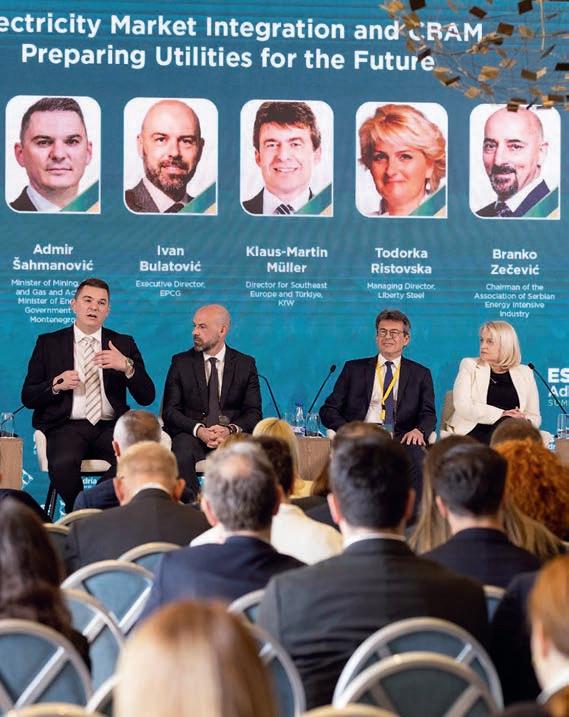


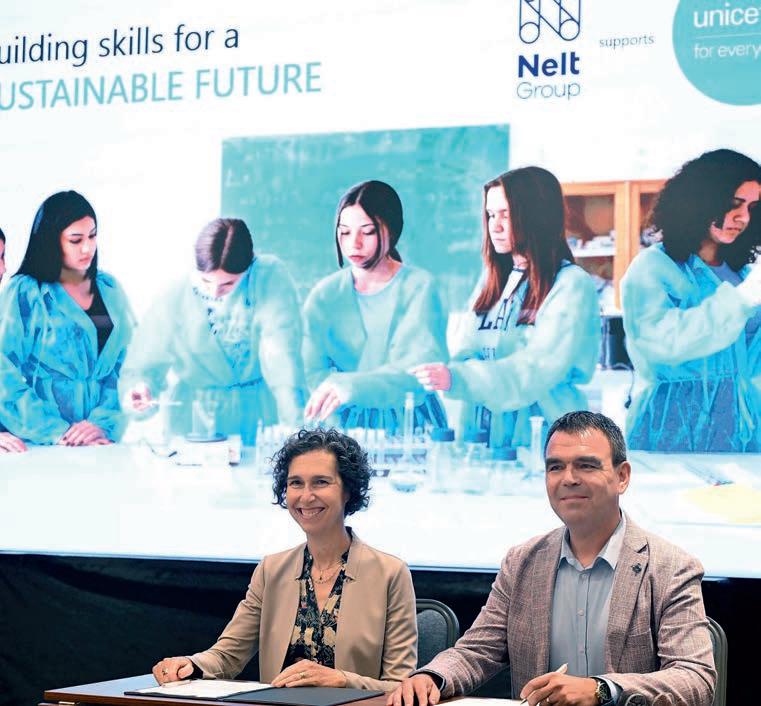
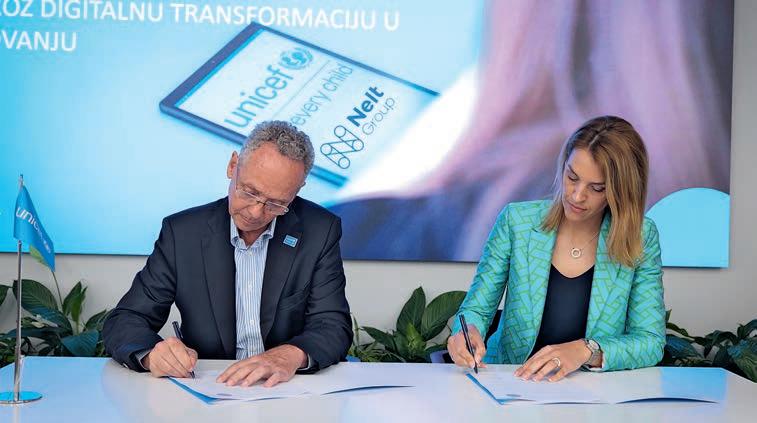
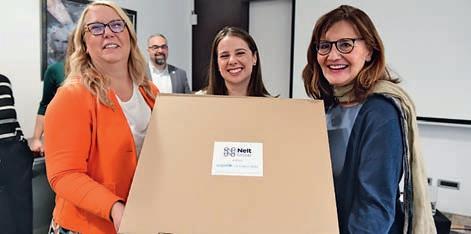
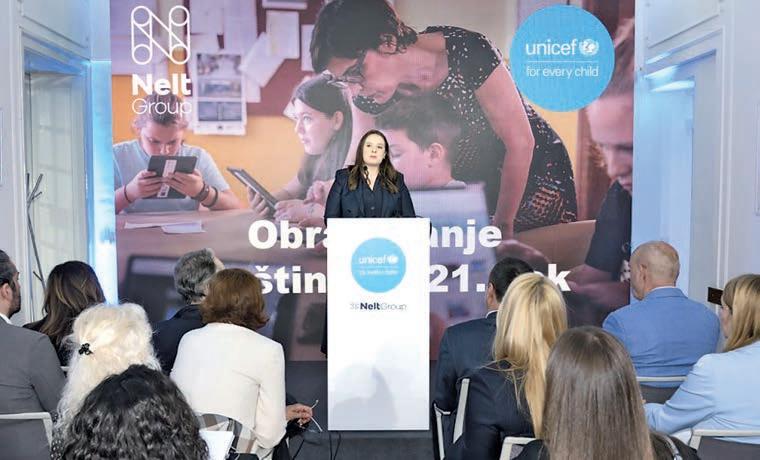
In a world where change moves faster than ever, education has become the foundation on which the future stands. The question is no longer only what children learn, but how they learn—and whether their skills match the realities of modern life and work. Recognising this, Nelt Group and UNICEF have joined forces in a threeyear strategic partnership designed to equip young people with the skills needed to thrive in the 21st century. With an investment worth 1.3 million dollars, the programme spans Serbia, Bosnia and Herzegovina, North Macedonia, and Angola, aiming to reach 30,000 children and young people by 2026. The goal: to empower a new generation with digital literacy, environ-
mental awareness, and the capacity to adapt, think critically, and create.
“For Nelt Group, investing in education is both a strategic and social decision. We believe every child deserves equal opportunities to develop their skills through innovative learning practices and access to knowledge,” says Nenad Miščević, Vice President of Nelt Group for the Serbian market.
At its heart lies a simple belief shared by both partners — that knowledge and access to modern technology are the most powerful equalizers. As children grow up in a world of constant transformation, their ability to adapt and innovate will shape not only their own lives but the societies they build.
“The world today demands knowledge and skills that cannot be found solely in books,” notes Deyana Kostadinova, UNICEF Representative in Serbia. “Education systems must be flexible and inclusive, especially for vulnerable children and youth. Partnerships with the private sector are essential to make this vision real. When companies like Nelt invest in education, they invest in a future that is fairer, more just, and full of potential.”
Across all four countries, the partnership focuses on preparing students for a fast-changing labour marketone where digital competence, environmental awareness, and creative problem-solving are indispensable.
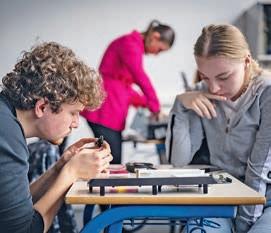
Serbia has focused on strengthening Learning Clubs in schools through hands-on STEM activities and experiments. Classrooms have been equipped with new STEM kits, including Wind and Weather sets that help students explore meteorology and natural phenomena. A survey conducted in December 2024 showed that 94% of participating students expressed high interest in these club activities — clear proof that interactive learning motivates curiosity and builds essential digital and green skills. Teachers and school leaders are
also receiving continuous training in leadership, management, and innovative teaching methods, creating a network of educators who learn from one another.
In North Macedonia, the initiative has concentrated on developing green and practical skills that connect students with the real economy. UNICEF, in cooperation with the Centre for Vocational Education and Training (VET Centre), has mapped national needs and linked schools with scientific and public institutions for practical training. By April 2025, 16 new partnerships were established between VET schools and eight institutions, with 120 mentors scheduled to complete training programmes supporting students during internships.
In Bosnia and Herzegovina, the focus is on digital literacy and e-waste awareness. Together with the organisation Laboratorium, UNICEF introduced the Tinkering with E-Waste initiative through IT Girls clubs in 25 schools. Students learn to manage electronic waste responsibly, while 35 trained teachers bring sustainability into classrooms. UNICEF BiH also advanced the digital transformation of teaching by localising the SELFIE4Teachers tool, enabling educators nationwide to measure and improve their digital competencies.
In Angola , the programme supports initiatives that empower young people to solve local challenges through creativity, innovation, and practical learning, ensuring that every project responds to the community’s real needs.
For Nelt Group, this collaboration is more than a philanthropic gesture - it’s part of a long-term strategy to build knowledge, confidence, and opportunity. Employees are directly involved as mentors, sharing professional experience and strengthening a corporate culture rooted in responsibility, cooperation, and learning.
The partnership’s impact has already been recognised through notable awards:
Champion of Sustainability (Forum for Responsible Business)
18th Virtus Award for Philanthropy (Trag Foundation, 2024) in the category Strategic Partnership between Business and the Non-Profit Sector
Such recognition affirms what both Nelt and UNICEF believe - that investing in children and education is the surest way to create long-term value, not only for business but for society at large.
As a testament to this vision, Nelt Group became the first company to join UNICEF’s global “I AM” campaign,
which unites individuals and organisations around one conviction: that every child deserves the right to a safe, joyful, and dignified childhood.
The partnership between Nelt and UNICEF demonstrates how business and civil society can work together to create lasting impact. It is an investment not only in skills, but in imagination - the kind of imagination that turns today’s learners into tomorrow’s leaders.
Find out why Saša Đorđević, UNICEF Ambassador, supports this partnership.
How a coastline once divided by borders is quietly building Europe’s next growth story.
Some regions are made by geography; others, by momentum.
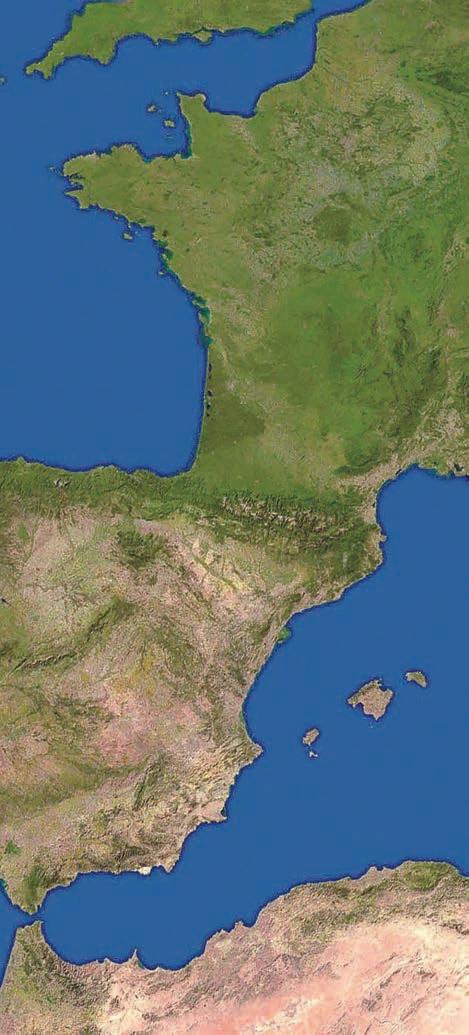
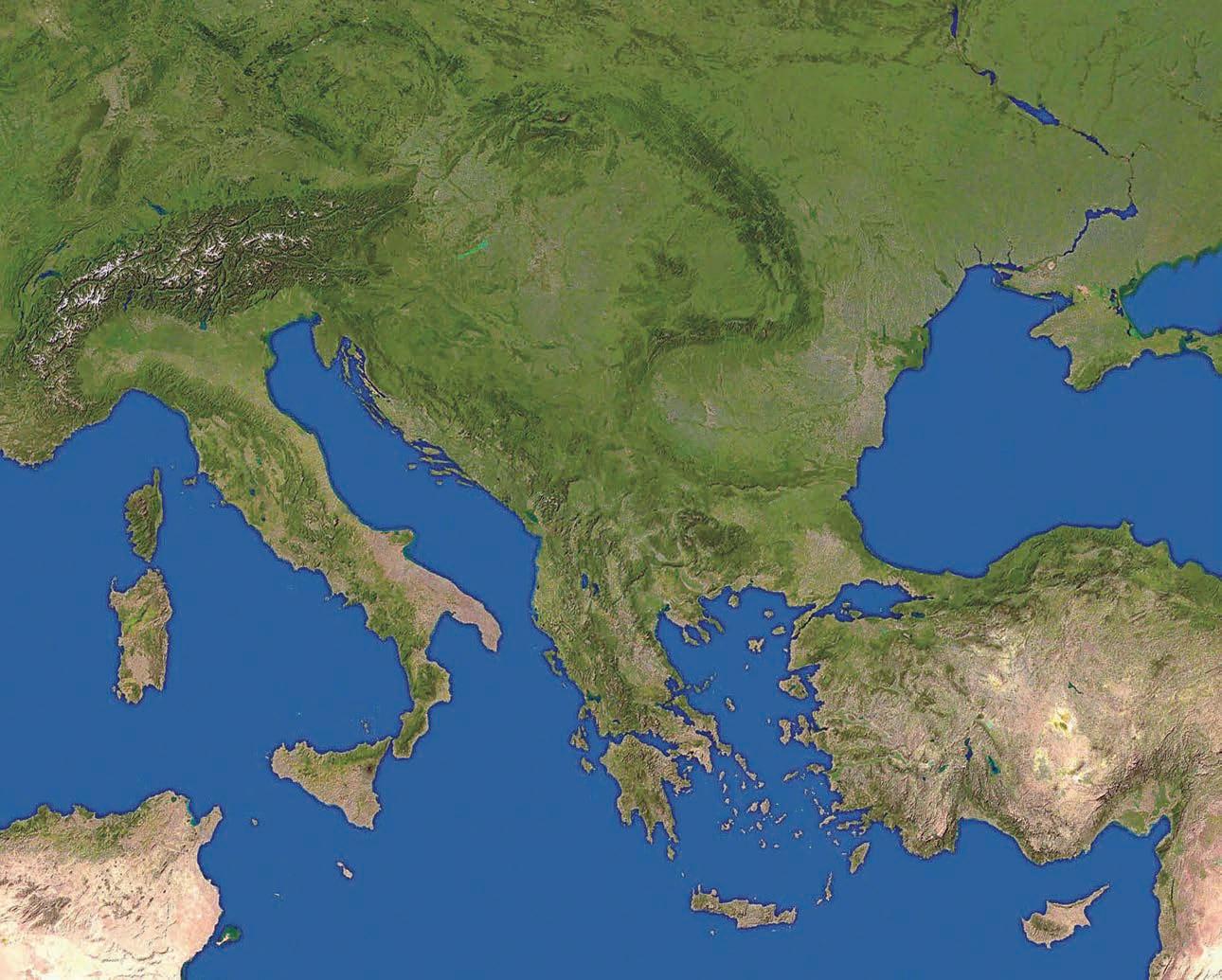
The Adria is becoming both. From Slovenia’s AI corridors to Montenegro’s fiscal discipline, from Croatia’s new bridges to Serbia’s start-up labs, a generation of builders is transforming a stretch of coastline long defined by transition into one defined by intention.
If the Western Balkans 2030 agenda outlines policy targets, Adria 2030 is the lived experiment — the point where ambition leaves the conference room and takes root in the market. The question is no longer whether the region will grow, but whether it can sustain that growth together.
For decades, the word transition implied waiting — for reform, for investors, for Brussels. Now, the region is writing its own chapter of modernisation. Slovenia and Croatia anchor the EU’s Adriatic edge, while their neighbours accelerate along the same path, driven less by politics than by performance.
Viewed as a single economic belt, the Adria already produces more than €300 billion in output, rivaling mid-sized EU economies. What was once a patchwork of recovery plans is turning into a connected corridor of industry, tourism, and innovation.
> “203 0 isn’t a deadline,” says one European diplomat. “It’s the moment when the region’s confidence finally catches up with its potential.”
Wind farms on the Dalmatian coast, solar fields in North Macedonia, and Montenegro’s planned Green Bank are redefining what power means. The region is learning that sovereignty begins with self-sufficiency.
Serbia’s AI strategy, Slovenia’s Vega supercomputer, and Albania’s appointment of the world’s first Minister for Artificial Intelligence show a new way of governing — data-driven, fast-moving, and proudly regional.
Smart Infrastructure
Corridors VIII and X-d, the Adriatic-Ionian highway, and a chain of upgraded ports from Rijeka to Durres are turning borders into junctions. The map of the future looks less political and more logistical.
Tourism Reinvented
Luxury is learning humility. From Istria’s wine estates to the sustainable townscape of Luštica Bay, tourism is trading
quantity for quality — a long-term bet that beauty can be profitable and permanent.
Talent & Demography
The region’s truest resource remains its people. Cities like Ljubljana, Belgrade and Tirana are trying to reverse the talent drain by building ecosystems that make staying — or returning — worthwhile.
> “Adria’s advantage is no longer cost,” says a regional investor. “It’s convergence.”
Private Capital, Public Confidence
Governments are competing less on tax rates and more on credibility. Montenegro’s discipline, Serbia’s digital reforms, North Macedonia’s EU-aligned legislation — each is setting a higher bar.
The private sector is moving even faster. Conglomerates like Atlantic Grupa, Balfin Group and MK Group now operate across multiple capitals as if borders were optional. Their reach has turned business integration into the region’s most effective diplomacy.
Development banks are adapting to this reality. The EIB and EBRD are redirecting capital from concrete to code, co-financing innovation instead of merely underwriting infrastructure. Start-ups such as ElevenEs, GoOpti, Cognism and Revuto are proving that the next stage of integration might come not from treaties but from technology.
> “R egional integration,” says one economist, “has finally become a business model.”
By 2030, the EU’s €6 billion Reform & Growth Facility will have injected fresh capital into the Western Balkans, supported by WBIF and EIP programmes capable of mobilising up to €20 billion more. But success won’t be measured in funds absorbed. It will hinge on whether the region’s governments and businesses can translate investment into interdependence — and resilience into trust.
Perhaps the deeper question is identity. What will Adria mean five years from now? A geographic convenience, or a shared idea of progress?
If the last decade was about catching up, this one is about catching on.
Adria 2030 isn’t a slogan. It’s the quiet conviction that the future of this coastline will be written not in isolation, but in connection.
BY 2030 AT A GLANCE
(Latest data, October 2025)
Combined GDP (2024): ≈ €319 billion
Regional growth:
≈ 3.1 % (2024 average)
EU Reform & Growth Facility: €6 billion (€2 b grants + €4 b loans)
WBIF / EIP investment pipeline: up to €20 billion
Public debt range:
40–61 % of GDP
Inflation:
≈ 5 % region-wide, trending down
(Sources: World Bank, EBRD, SEE News, European Commission factsheets.)
by Dragana Đermanović
This region—our region—is a peculiar formation.
Its form is stunning: mountainous and sunlit, rough and radiant, with valleys that open like palms and coastlines that catch the light. The people who give it substance—stubborn, sarcastic, persistent, inventive—carry a spark tha2t can ignite worlds. In every person here lives a stubborn passion; in every encounter, the weight of history, a mosaic of cultures, and that faint patina of hardship etched by personal and collective fate. Formally, we are beautiful. Essentially, we are extraordinary.
And yet, if we were a company, we would be a threadbare public enterprise: drifting on
the waves of tomorrow, still riveted to yesterday. Every department works for itself. We spend more than we have, produce more than we use (mostly for others), elevate unfit managers, and drag ourselves through the workday like a scene from a long-running office sitcom. Our motto might as well be: better to sit for nothing than do something for nothing. With all our beauty and brilliance, as a company we would be loss-making.
Maybe circumstance nudged us toward bankruptcy. Maybe we missed every market signal to consolidate, professionalize the management, and adopt the technologies that were already remaking our competitors. Faced with the mess,
our best “employees” slip away—to better-run companies, cleaner systems, clearer horizons— because they’ve come to believe that elsewhere is the only place where better happens.
So: what kind of leader would this company—this region—need for good people to do and feel better here?
We need a leader broad enough to embrace our differences and grounded enough to braid our similarities into a shared objective. Someone who respects the people they lead yet has the courage
to take them where it’s good for them—not where a passing outsider would prefer us to go.
The true shareholders of this company are its citizens. Their mandate is not ideological; it is plain: durable prosperity in peace and synergy. Our CEO must understand that variety is not a bug in the design but the source code of our strength. Don’t standardize our uniforms; synchronize our steps. See power in the polyphony of languages, methods, and memories—and know that the best ideas are born where perspectives cross, not in monoliths that echo only themselves.
This is the pivot on which all real change turns. For too long our leaders have rehearsed the same choreography: point outward, absolve inward. Competitors, markets, geopolitics, conspiracies, citizens—everyone becomes the culprit while the leader remains the innocent victim of unfortunate weather.
We need someone who starts at the mirror. What can I change? How can I be better? Which part of my approach makes this problem possible? Leadership is not a scavenger hunt for culprits; it is ownership of the solution. It says, “This is the state of things. I am responsible for change. Here’s how we will do it—together.”
This CEO cannot be purchasable or pliant. They should not scan our assets for liquidation value, but for their capacity to serve generations to come. We have had our fill of executives who chase private bonuses while the enterprise quietly collapses.
We need a steward who measures success not by quarterly optics or applause lines but by whether people stay, grow, and believe their future lives here. By how many apprentices become
masters; how many teams become institutions; how many families stop counting the exits and start counting the years.
Our company bleeds talent. The best depart— not only engineers and managers, but drivers, nurses, carpenters, teachers. They don’t just leave for higher salaries; they leave in search of regard—of being seen, valued, and allowed to get better at the thing they love to do. People don’t only quit companies; they quit the feeling that effort is futile. They quit when management denies the obvious and rewards the loyal over the capable. They quit when order is optional and fairness a rumor.
A good CEO would rebuild meaning: turn stubbornness into perseverance with a purpose; give creativity room; give passion a direction. Replace the reflex to book the first flight out with the instinct to plant something that will outlast us. Let people experience progress they can measure—not just promises they can memorize.
Companies and countries don’t transform overnight. We need a CEO who looks past the next quarter and the next mandate; who asks not “What can we extract?” but “What can we build within this?” Strategy over spectacle. Sequencing over spectacle.
Leadership means taking people where it is good for them—even when the road is not yet paved and the map is not fully drawn. It means holding course when fashions shift and critics chorus. It means saying no to shortcuts that mortgage the future; yes to work whose rewards accrue gradually, then suddenly, the way all compounding does.
We need a leader who sees in us the potential we have half-forgotten: not a “developing market” forever in rehearsal, but a community of skilled, spirited people trapped in systems that do not let them breathe. Someone who will show us who we are without flattery and without contempt—hold up a clear mirror and say: “We can work with this. Let’s begin. Together.”
Because belief, too, compounds. One fair process breeds another. One repaired institution repairs trust around it. One team that stays becomes five that flourish. This is how companies—and regions—heal: not through a single heroic act, but through the ordinary heroism of many hands, over time.
Does such a CEO exist? Perhaps not as a single person. Perhaps as a shared conscience—a decision each of us makes to stop transferring blame and start accepting responsibility. To stop waiting for rescuers and begin acting like owners. To argue less about who gets the credit and do more of the work that earns it. To insist on standards. To protect what is ours without selling what makes it worth having.
Maybe that CEO is already here, scattered across factories and classrooms, studios and city halls—waiting only for us to recognize our fraction of duty in this vast, beautiful, complicated company called The Region. Maybe it’s time to stop watching our best people leave and start building the reasons we will all want to stay.
Where we become better, life here becomes better.
And the CEO we end up with will always be exactly as serious, as honest, and as brave as the collective that chooses—and becomes—the leadership it needs.
IBy Mila Jović
n a luminous hall in Belgrade earlier this autumn, more than four hundred women from across the Adriatic–Danube region gathered to talk about power — not the kind that dominates, but the kind that endures. The air was charged with the quiet conviction that something fundamental was shifting. For the first time in years, the question wasn’t whether women could lead, but how their leadership would redefine what influence means in this part of Europe.
Across the Adria, from Ljubljana to Tirana, a generation of women is quietly changing the grammar of authority. They are less interested in titles than in traction, less in hierarchy than in impact. Their ascent is measured not by how loudly they claim space, but by how deliberately they build it. Yet

behind this progress lingers a familiar resistance — the slow grind of entrenched norms and the invisible ceiling of networks still dominated by men.
The corridors of power in the region have long been designed for someone else’s stride. For decades, women were ushered toward what organisations called the “soft” portfolios — human resources, communications, education — while the hard levers of finance, energy, and infrastructure remained out of reach. That pattern is changing. Slowly, but unmistakably.
New initiatives have begun knitting together business networks, NGOs, and policymakers across borders to widen the pipeline of women entering
executive and board roles. The movement is not about quotas or optics; it’s about competence being seen, and potential being trusted. In recent leadership gatherings, the conversation has shifted from survival to redesign. One participant captured the sentiment that threaded through the room: “Maybe the real task isn’t for women to adapt to power, but for power to evolve with women.”
The most striking transformation isn’t numerical — it’s philosophical. The women rising in the Adria aren’t seeking to mimic old models of command. They are reshaping the architecture itself. In systems where patronage and hierarchy often stifle change, they build horizontally: coalitions of en-
trepreneurs, civic leaders, technologists, and public officials who share a goal rather than a chain of command.
They measure success differently too. Influence outweighs authority. Cooperation outperforms control. Their leadership style is pragmatic yet relational — born of necessity in societies where progress still depends on personal networks, but honed through the digital fluency and global exposure of a younger generation.
That does not make the climb easier. Many describe carrying what one executive called “the extra-mile tax” — the constant, unspoken need to prove legitimacy in rooms where expectation still defaults to male. Yet it is that tension that seems to sharpen their edge. What once exhausted them
now fuels them. Rejection becomes reinvention. Barriers turn into laboratories for strategy.
Change rarely moves in straight lines. In sectors like transport and logistics, where male dominance once felt unshakable, governments and regional institutions are now actively encouraging women to step forward. In Gorizia last year, more than sixty women entrepreneurs from eight Adriatic–Ionian countries gathered to forge connections and chart a new map of cross-border collaboration — a small but symbolic act of collective ambition.
often flows through informal networks of loyalty and lineage, the outsider’s path remains uphill. And in a moment of global polarisation, gender equality itself has become a political fault line, framed by some as ideology rather than modernity.
The question of female leadership in the Adria is not a moral debate; it is an economic one. Regions that waste half their talent inevitably fall behind. As Europe faces demographic contraction, digital transition, and the climate crisis, inclusive leadership has become less a virtue than a survival strategy.
require transparency in appointments, earlier investment in mentorship and education, and men who see equality not as concession but as collective advantage. The recalibration will take time — but the clock is already ticking.
Something irreversible is happening. The Adria’s age of token inclusion is fading, replaced by a quieter, more confident balance of power. These women are not demanding seats at old tables; they are designing new ones. Their approach is less about confrontation than about continuity — expanding

The European Union’s directive on gender balance in corporate boards, set to become fully enforceable in 2026, is also rippling through the region. Even in countries where it has no formal power, it has become a mirror: a benchmark that exposes how far there is still to go.
But progress sits beside backlash. In many political and business circles, the old scripts persist — that women should lead quietly, or graciously, or not at all. In patriarchal cultures where influence
Evidence already points in one direction. Companies with women in senior roles report stronger governance and steadier long-term growth. Public institutions led by women often earn higher trust from citizens. And in policymaking, where decisions on care, labour, and energy intersect, women tend to widen the frame — not out of sentiment, but because they see connections that rigid systems overlook.
The region’s future competitiveness will depend on whether those insights become structural. It will
what leadership means, and who it serves.
They lead from boardrooms and ministries, from startups and research labs, from classrooms and climate coalitions. Their stories do not shout, but they endure. Taken together, they trace the outline of a region discovering that equality is not the opposite of power — it is the evolution of it.
A new balance is not coming. It is already here, reshaping the Adriatic arc one decision, one alliance, and one quiet act of leadership at a time.

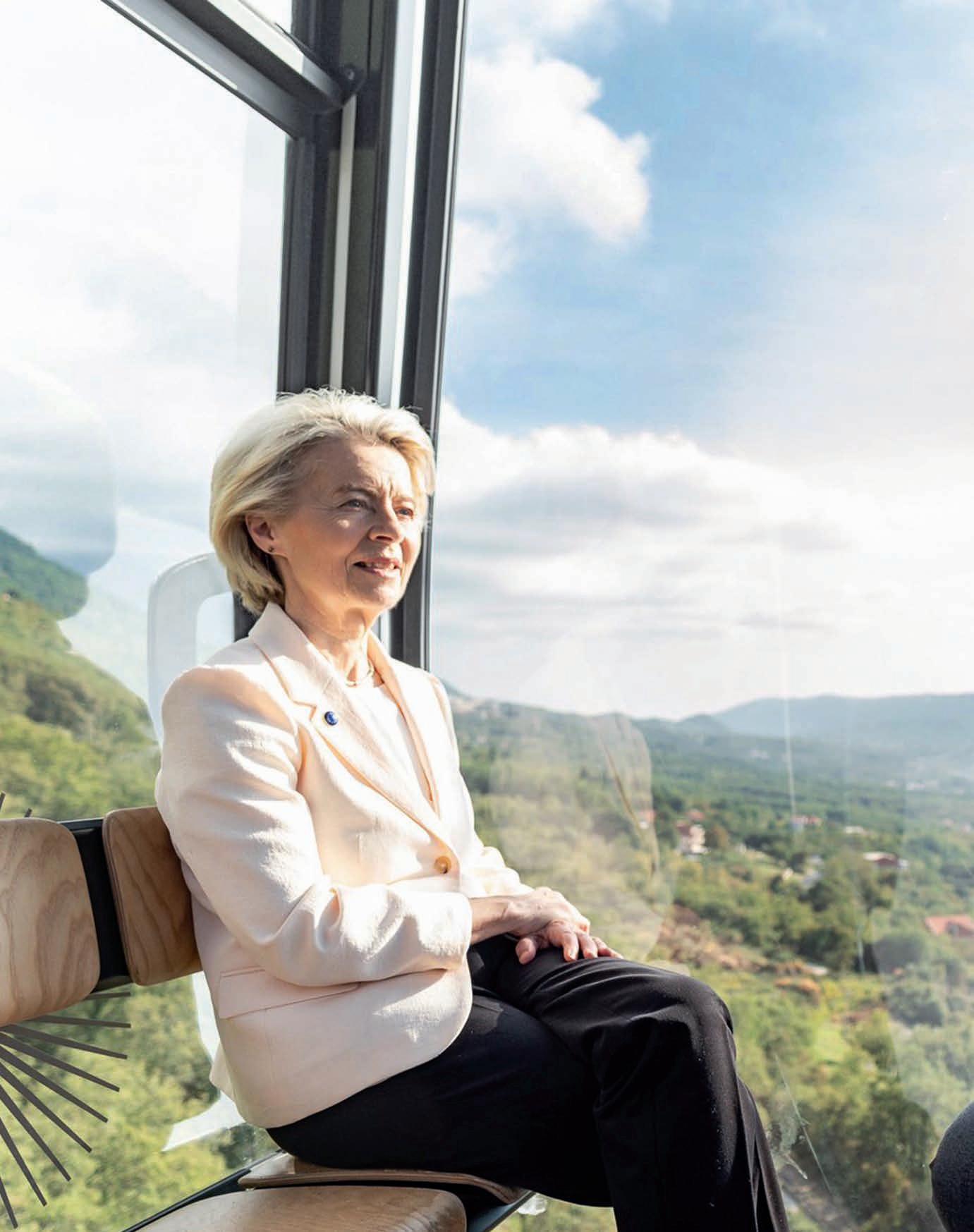
In October, Ursula von der Leyen set out on a journey that could redefine Europe’s unfinished story. From Tirana to Tivat, Sarajevo to Belgrade, Pristina to Skopje, the European Commission President carried both the language of partnership and the weight of expectation. This was no ceremonial tour. It was a reminder that, after years of drift, the Western Balkans are once again part of Europe’s strategic core — not its waiting room.
If the tour’s message began in Tirana, its emotional centre remained there. Von der Leyen’s posts from Albania were more than protocol — they were personal. She praised the country’s “impressive progress” in governance and digital reform, calling it “a model for the region.”
At the EU–Western Balkans Investment Forum, she announced that Albania would join the Single Euro Payments Area
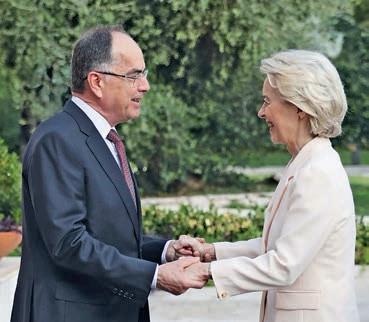
(SEPA), a step that will cut transaction costs for businesses by up to €500 million annually. Alongside Prime Minister Edi Rama, she revealed that ten business deals were signed on the spot — with another two dozen under discussion — unlocking €4 billion in new investment and confirming €100 million in upcoming EU support under the Growth Plan.
The visit to the Port of Durrës, poised to become one of the Adriatic’s largest logistics hubs, underscored how infrastructure now anchors integration. “Albania is no longer waiting at Europe’s door. It’s helping us build the house,” von der Leyen wrote afterwards. Rama, in turn, reaffirmed Albania’s ambition to complete all accession chapters by 2027 — a timeline that mirrors the country’s growing confidence as a regional anchor of reform.
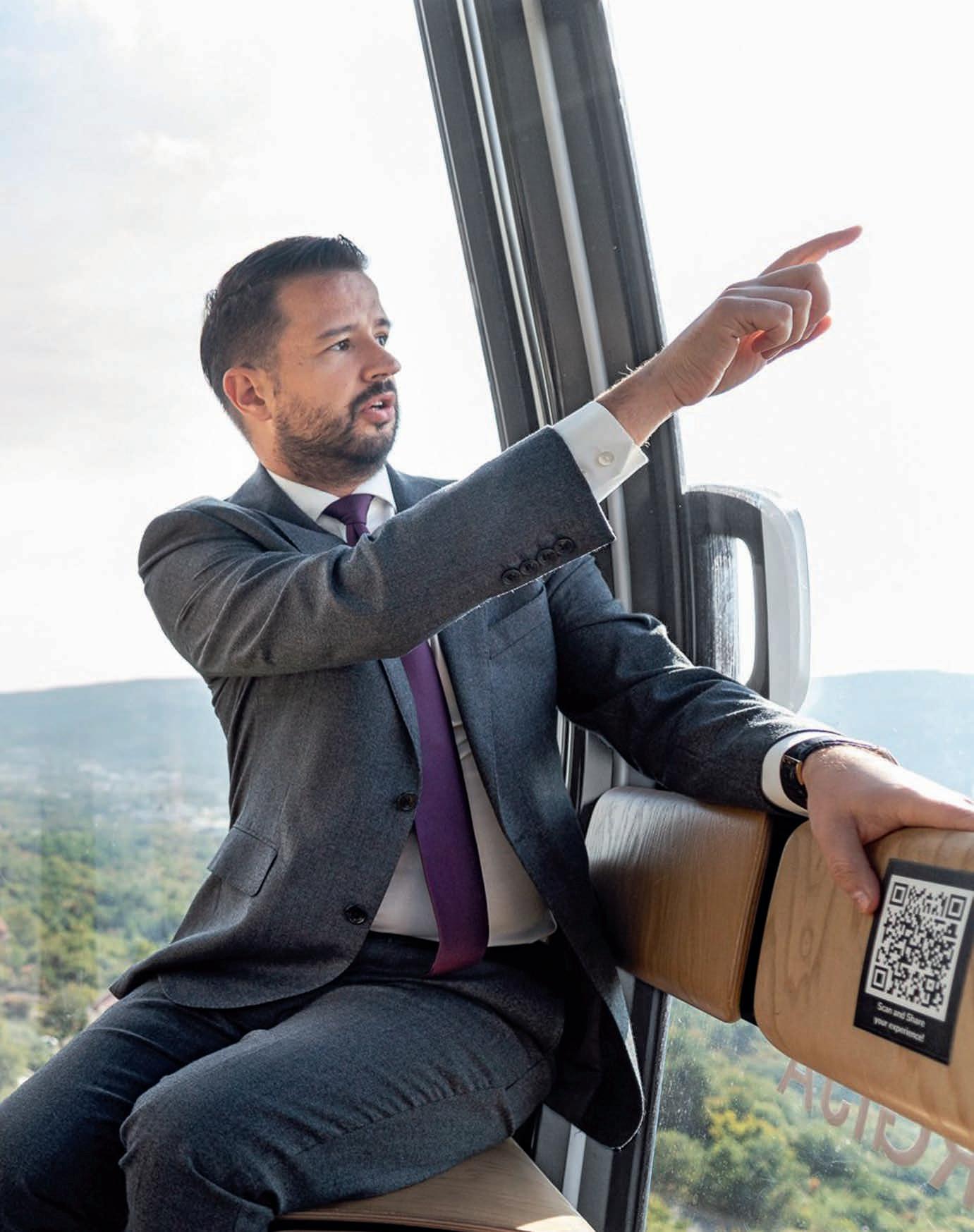
If Tirana was policy, Tivat was theatre. Standing on Montenegro’s Adriatic shore, von der Leyen turned what might
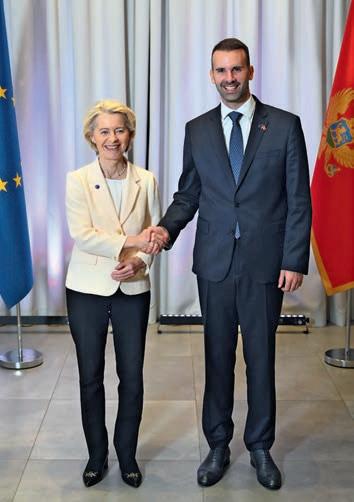
have been a routine stop into an affirmation of belonging.
“Every time I come to Montenegro, I can feel the heart of Europe beating,” she said, reaffirming that Podgorica remains the frontrunner of EU accession. She announced €8 million in pre-accession funding — the first slice of a €380 million facility — and confirmed that roaming charges between the EU and Monte-
negro will be abolished by 2026.
The symbolism was deliberate: Montenegro’s steady alignment with EU values stands as proof that progress is rewarded, while hesitation carries a cost.
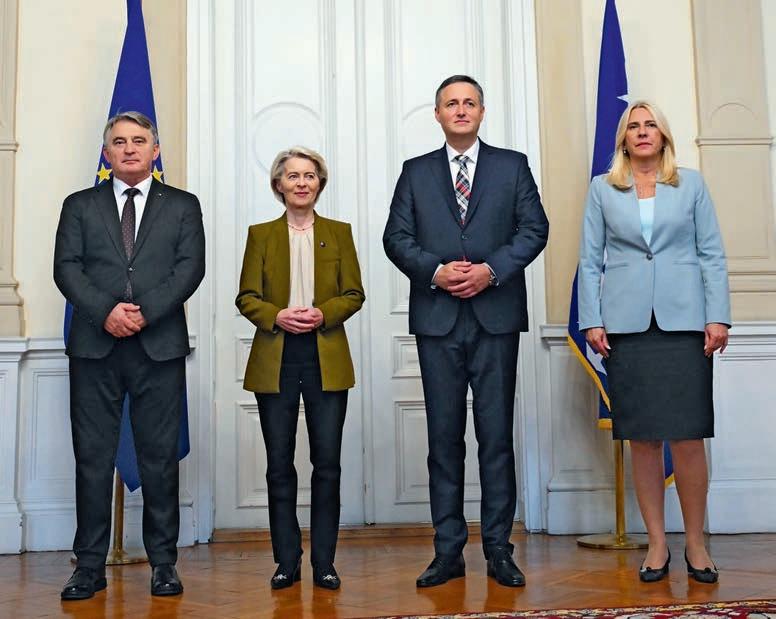
From the Adriatic’s optimism, von der Leyen moved to a more sobering stop — Sarajevo and the Srebrenica Memorial. There, remembrance met realism. She urged Bosnia’s tripartite Presidency to accelerate judicial and public-administration reforms, stressing that accession talks cannot open without credible progress.
Von der Leyen reminded leaders that Bosnia now “stands on the threshold” of the EU but that the €1 billion earmarked under the Growth Plan will remain conditional on concrete reform milestones, including the appointment of a chief negotiator for accession talks.
Her presence at Srebrenica — heavy with symbolism — served as a reminder that memory still defines Europe’s moral geography. The EU’s hand remains extended, but results must precede recognition.
In Belgrade, the tone mixed pragmatism with pressure. Von der Leyen praised Serbia’s investment record and infrastructure upgrades — especially the Serbia–Bulgaria gas interconnector — but was equally blunt about reforms.
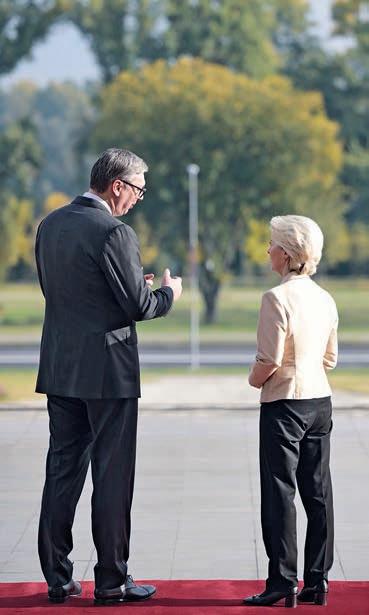
She invited Serbia to join the EU’s collective gas-buying mechanism, a strategic move to reduce reliance on Russian supplies and strengthen regional energy security. “This will guarantee that Serbian families will be safe and warm in winter,” she said, offering a tangible benefit of deeper integration.
Yet she also urged stronger alignment with EU foreign policy, including sanctions against Russia, noting that Serbia is currently “around 60 percent aligned — but more is needed.” She called for swift progress on rule of law, electoral reform, and media freedom, while referencing the country’s ongoing civic protests as “a sign of democracy in motion.”
For Belgrade, it was both an invitation and a warning: Europe’s support will match Serbia’s willingness to reform.
In Pristina, von der Leyen met President Vjosa Osmani and caretaker Prime Minister Albin Kurti, reaffirming the EU’s commitment to Kosovo*’s energy and digital transition. She stressed that “integration must be felt in everyday life,” citing investments in green infrastructure and cross-border digital connectivity.
In Skopje, she urged North Macedonia to maintain its reform momentum, particularly constitutional changes tied to its EU path. She also announced the expansion of the EU’s high-performance computing network into the region, including new “AI factory antennas” in North Macedonia and Serbia — signalling Europe’s intent to build technological bridges, not waiting rooms.
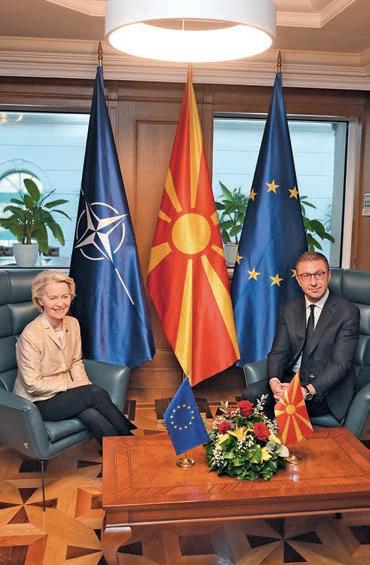
Von der Leyen’s Balkan tour was more than a display of goodwill; it was Europe’s strategic recalibration in action. In an era of global rivalry — over energy, data, and supply chains — the Western Balkans are no longer peripheral. They are part of Europe’s frontline.
Still, the test will not be measured in speeches or photo calls, but in follow-through. Montenegro shows what steady progress looks like. Albania has the momentum to match it. Bosnia and Serbia face the harder road of reform and reconciliation.
Europe’s next success story will depend on whether enthusiasm can survive the visit — and whether promises can be turned into policies that endure.
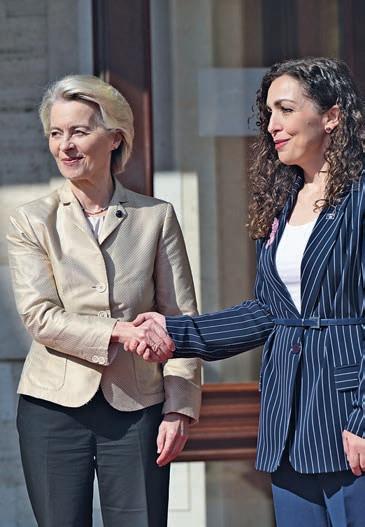
What makes a union endure? Perhaps the answer lies in co-authorship — when smaller nations stop seeing themselves as applicants and start acting as contributors to a shared future.
Von der Leyen’s gestures — SEPA access, roaming abolition, AI networks, energy links, and clean-tech investments — are more than policy measures. They are invitations.
The question now is not whether the Western Balkans belong in Europe. It is whether they can — and will — stay the course.
*This designation is without prejudice to positions on status and is in line with UNSCR 1244/99 and the ICJ Opinion on the Kosovo declaration of independence.
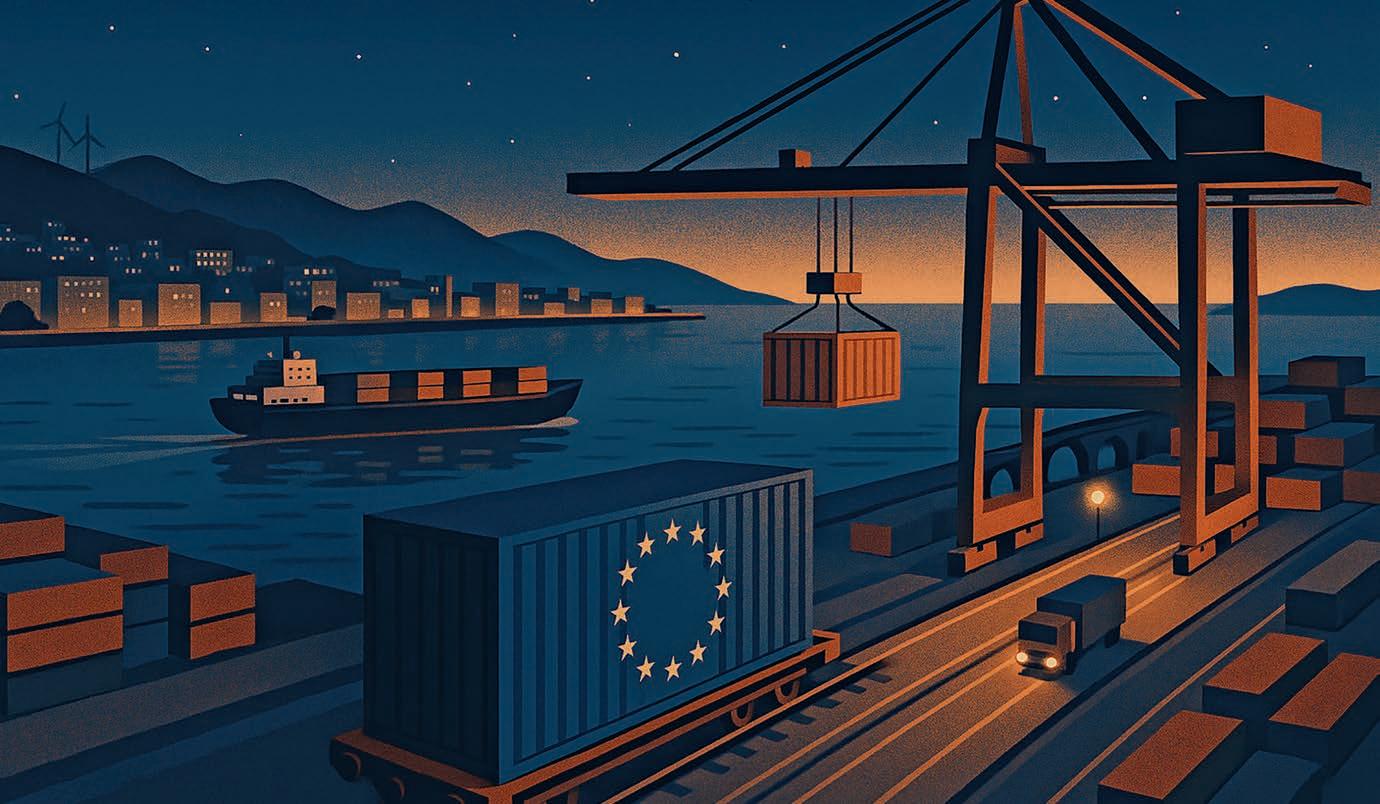
BY MARKO NIKOLIĆ
For once, the most consequential moves in Europe’s geopolitical chessboard aren’t happening in Brussels, Berlin, or Paris—but along the Adriatic. From Ljubljana to Tirana, governments are discovering that the con-
tinent’s future balance of influence is being shaped not by speeches, but by the flow of capital, infrastructure, and quiet diplomacy.
When Ursula von der Leyen arrived in Tirana this October, the European Commission President carried a clear message: Europe’s promises must now become pro-
jects. At the EU–Western Balkans Investment Forum, she unveiled a package of ten private-sector deals—worth an estimated €4 billion—and a further two dozen under discussion. The investments are the first real proof that the EU Growth Plan for the Western Balkans is not just a policy but a pivot: integrating the region economically before it joins politically.
The Growth Plan, built on a €6 billion Reform and Growth Facility, offers something new—a path into the EU’s single market sector by sector, as reforms are completed. The logic is pragmatic: open trade, transport, and digital flows now, while accession catches up later. Brussels wants to double the region’s GDP within a decade through reforms and private investment. In practice, it means that a Macedonian freight operator or a Montenegrin tech start-up could soon compete under near-EU rules, long before their countries fly the EU flag.
Few capitals understand this experiment better than Vienna. For Austria, the Western Balkans aren’t a neighbourhood— they’re a network. Austrian companies and banks have been embedded in the region for decades, financing everything from energy grids to tourism projects. Raiffeisen and Erste remain among the largest lenders, funding thousands of small and medium-sized enterprises. Vienna’s strategy is clear: if the region prospers, Austria’s stability and export markets do too.
Foreign Minister Beate Meinl-Reisinger has called integration of the Western Balkans “an Austrian security interest.” In practice, Vienna has become a bridge— translating Brussels’ technocratic language into projects and partnerships that local leaders trust.
The new Europe is being built along railways, grids, and fibre cables. Under EU macro-regional strategies like the Danube and Adriatic-Ionian initiatives, infrastructure is being quietly rewired. The rail corridors connecting Belgrade to Bar and Zagreb to Rijeka are being modernised with EU and EIB funds. New interconnectors are knit-
ting the Western Balkan power markets into Europe’s energy system. The message is simple: connectivity is the new diplomacy. Austria is deeply involved in this process, not only through its construction and logistics companies but as a political sponsor of regional coordination. When Bosnia and Herzegovina chaired the Danube Strat-
• €6 billion – EU Reform and Growth Facility for the Western Balkans
• €4 billion – Private-sector deals announced in Tirana, Oct 2025
• 2 – AI Factory hubs opened in the region (Serbia, North Macedonia)
• 10 %+ – Average share of Austrian investment in WB6 banking assets
• 1 – Common goal: a connected, competitive, credible Adria within Europe
egy in 2025, Vienna’s quiet backing ensured the agenda stayed on track despite domestic turbulence.
Beyond steel and concrete, a quieter revolution is underway. The EBRD and EU jointly launched a €377 million programme to digitalise small and medium-sized firms across the region, funding automation, green innovation, and women-led businesses. Brussels also opened Europe’s “AI Factories” to Western Balkan researchers, starting with hubs in Serbia and North Macedonia. The aim is to prevent another digital divide between the EU and its aspirants.
Money, however, cannot move faster than politics. Democratic backsliding, judicial bottlenecks, and corruption continue to slow progress. Brussels has tied new funds to clear reform milestones—judiciary independence, procurement transparency, market liberalisation. Some governments complain of over-conditionality; others welcome it as leverage against their own entrenched elites. The region’s credibility now rests on whether these conditions become catalysts or excuses.
In reality, Brussels and Vienna are playing complementary roles. The EU provides the scale, rules, and funding; Austria supplies proximity, pragmatism, and trust. Brussels pushes for systemic reform. Vienna anchors it in reality. The risk is not rivalry—but misalignment. If the two approaches drift apart, the region could once again become a patchwork of half-finished projects and halfkept promises.
By mid-2026, the first contracts from the Tirana forum will reach implementation. Their success—or failure—will decide whether the Adria region finally joins Europe’s economic bloodstream or remains its waiting room. If the projects advance, Europe will have demonstrated that enlargement fatigue can be replaced by engagement momentum.
In this quiet power game, influence is measured less by summits than by the hum of machinery on construction sites and the click of new payment systems coming online. Brussels provides the vision; Vienna, the pulse. Together, they are redrawing the map of Europe—not with borders, but with connections.
Throughout more than a century of excellence, KONČAR has transformed from a historical symbol of industrial strength into a technology leader driving the future of energy on a global scale. Founded in 1921, the Croatian company built the backbone of regional infrastructure and today operates in more than 130 markets worldwide. As a trusted European partner in the green transition, it stands as one of the most compelling examples of how an industrial legacy can evolve into a technology-driven future.
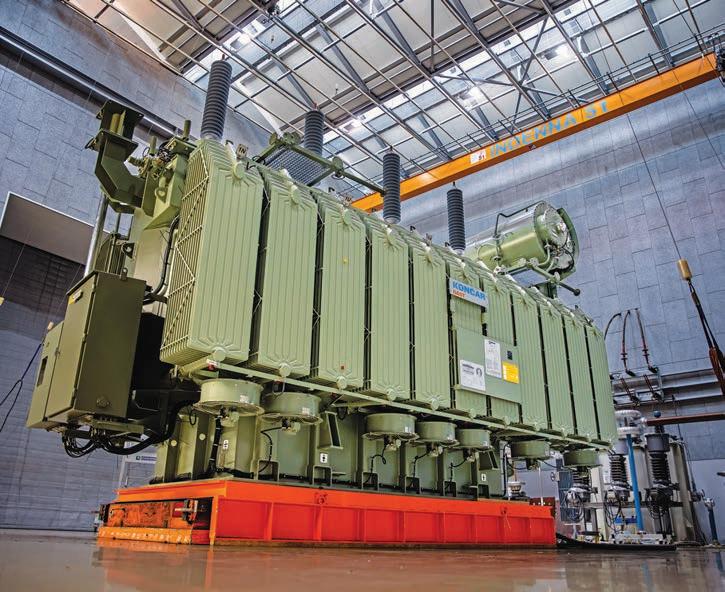
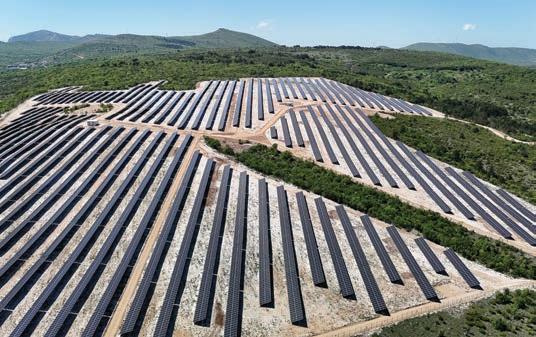
Its competitiveness is especially visible in the European Union, where KONČAR has secured its place among the most relevant manufacturers advancing renewable energy goals. The acquisition of the Dalekovod Group marked a decisive step forward, creating powerful synergies between two export-oriented pioneers that now play leading roles in strategic EU energy projects. Through numerous acquisitions in power engineering and digital solutions in recent years, KONČAR has secured key competencies and access to new markets, driving significant organic and inorganic growth.
KONČAR’s transformation has been underpinned by consistent investments. Over the past five years, KONČAR has channeled more than €85 million into new equipment, expanded production and research capacity, boosted energy efficiency, and supported employee development. The momentum continues: in the first half of 2025 alone, capital expenditure reached €34 million, signaling another strong cycle of expansion and growth.
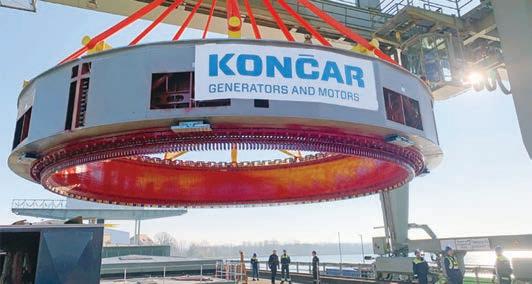
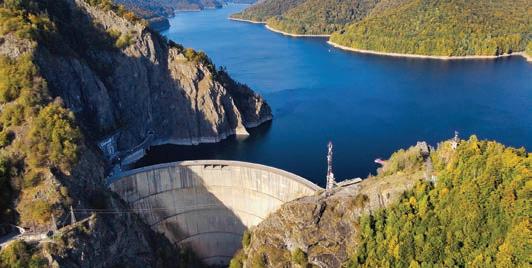

Record numbers, year after year
The results speak for themselves. For five consecutive years, KONČAR has delivered record-breaking performance across all key business metrics. In 2024, consolidated revenues from products and services surpassed €1 billion, up 18.1% on the previous year. The backlog soared past €2 billion by year’s end - 43% higher than at the start of the year - driven by €1.67 billion in order intake. Net profit almost doubled, reaching €163.3 million. The upward curve has extended into 2025. In the first half of the year, KONČAR generated revenues of €636.8 million, a 33% increase compared to the same period of record-breaking 2024. Exports continue to dominate, accounting for over 71% of sales, with growth particularly strong in the EU, U.S., and Australian markets. Germany, Austria, and the Netherlands remain core partners, while new flagship projects in Sweden and Norway highlight KONČAR’s expanding strategic footprint. By mid-2025, KONČAR’s backlog reached a record €2.3 billion - an important vote of confidence from global markets.
Leading the green transition
Behind these figures stands a community of more than 5,600 employees, including over 50 PhD holders, whose expertise and custom-made solutions drive KONČAR’s success. Few industrial stories can match the scale: nearly half a million transformers of different types and capacities have left KONČAR’s factories for over 100 countries, making them Croatia’s most widely distributed industrial export. Today, these are predominantly sustainable transformers designed to minimize environmental impact and tailored to the specific needs of clients. In renewable energy, KONČAR has built or modernized more than 400 hydropower plants worldwide, and in recent years has added over ten large solar power plants to its portfolio. It is also shaping the future of sustainable mobility, with battery-powered trains and charging infrastructure representing a bold leap toward decarbonized urban transport. The company sees this as the start of a new eraone that will generate fresh technological breakthroughs and new export success stories.
Energy and mobility may be KONČAR’s foundations, but the company is also rapidly emerging as a digital innovator. Among its standout achievements is PROZA Station, a next-generation SCADA system for the automated management of energy systems, solar plants, data centers, and other complex infrastructure. Built on more than four decades of software expertise, it is already in use across power, mobility, water, and transport networks.
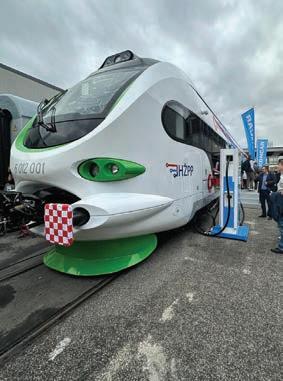
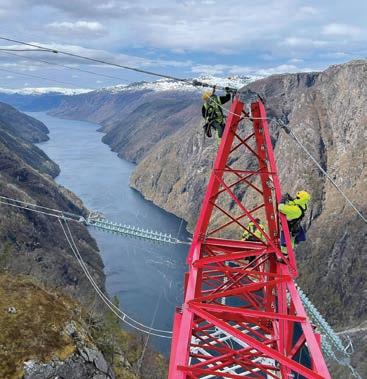
In 2023, KONČAR’s commitment to excellence was recognized globally: TÜV NORD Adriatic awarded PROZA Station the world’s first IEC 62351 cybersecurity certificate for a SCADA solution, establishing the company as a pioneer in critical infrastructure protection. Recognition has come from beyond the industry too. UNESCO selected KONČAR as Croatia’s sole official partner for its global campaign celebrating World Engineering Day 2025 - a testament to the company’s enduring spirit of innovation and leadership.
�� 5,600+ employees
�� 50+ PhDs on staff
�� Active in 130+ markets
POWERING GROWTH
�� €1+ billion revenues (2024)
�� 71% export share
�� €2.3 billion order backlog (mid-2025)
�� €163.3 million net profit (2024)
INVESTING AHEAD
�� €85 million invested in past 5 years
⚡ €34 million CAPEX in H1 2025
GLOBAL IMPACT
�� Nearly 500,000 transformers delivered
�� 400+ hydropower plants modernised
☀️ 10+ large solar plants built recently
�� Launch of battery-powered trains
INNOVATION FIRSTS
�� World’s first SCADA with IEC 62351 cybersecurity certification (PROZA Station)
�� UNESCO partner for World Engineering Day 2025
In Belgrade, Ursula von der Leyen traded ceremony for blunt diplomacy, telling President Vučić that “reform, not rhetoric,” will decide Serbia’s place in Europe. Brussels’ tone marked a shift — after years of indulgence, the patience for symbolic gestures has run out.
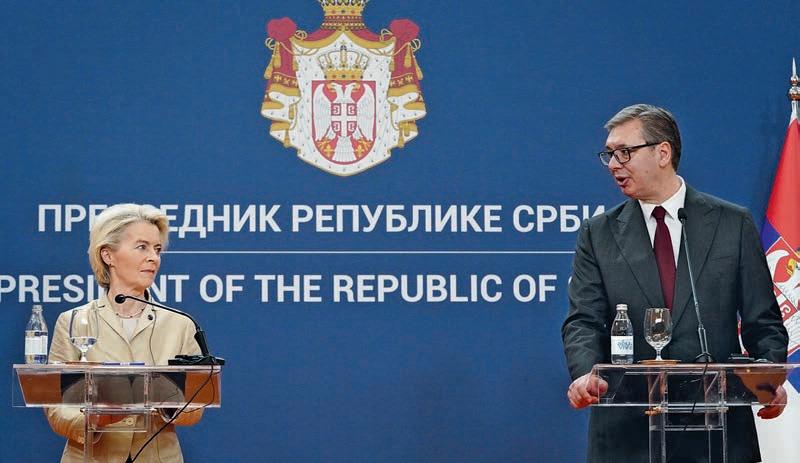
Five of six negotiating clusters are open, and von der Leyen praised Albania’s “record speed.” Yet even she admitted that ambition must now meet endurance — and that the last step toward accession is always the hardest.
The EU’s new Entry/Exit System began operating in October, recording passport data, fingerprints and facial images of travellers. It marks the end of the border stamp era — and the start of a continent defined by biometric memory.
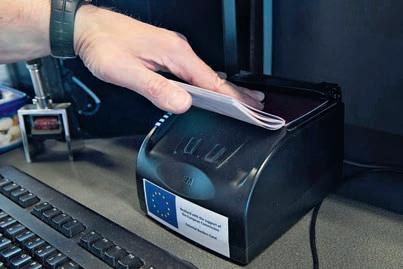
While neighbours receive their first disbursements, Kosovo* and Bosnia remain outside the plan. One is stuck without a functioning government; the other still hasn’t sent Brussels a reform agenda — both risk being left behind.
Skopje’s EU path now rests on a single amendment that would include the Bulgarian minority in the constitution. “The ball is in your court,” von der Leyen said, making clear that Europe’s doors open only when history is acknowledged in law.

Nicole McGraw, appointed by President Donald Trump, has officially taken up her post as U.S. Ambassador to Croatia after presenting her credentials to President Zoran Milanović in Zagreb. She pledged to strengthen cooperation in security, energy, and trade, calling Croatia “a valued ally and friend.”
Brussels announced that private-sector contracts worth up to €4 billion are being prepared under the EU Growth Plan. It’s a high-stakes experiment — turning words about integration into measurable capital flows.
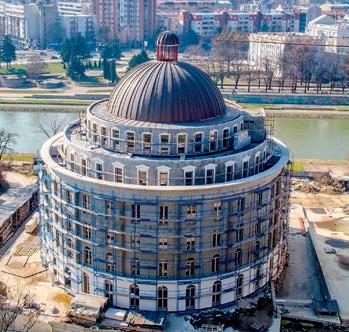
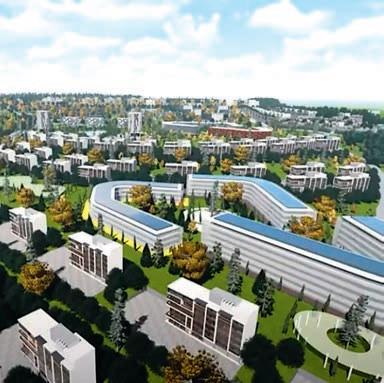
The “Velje Brdo” urban project will create housing, offices, and parks for 40,000 residents. It’s a bet on modern design and self-sufficient living — a new chapter for one of Europe’s smallest capitals.
By joining SEPA, Montenegro now transfers euros as smoothly as EU member states. For businesses, it means lower costs; for citizens, it’s a quiet confirmation that economic integration can precede political accession.
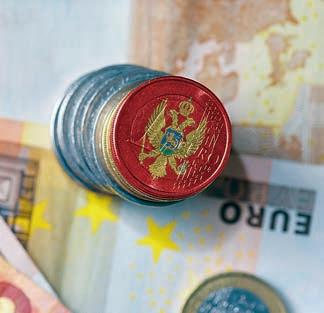
At the first EU–Western Balkans Investment Forum in Tirana, von der Leyen and Albanian PM Edi Rama called the region “Europe’s next frontier.” Their shared pitch was simple: investors betting on the Balkans are betting on the future of the EU itself.
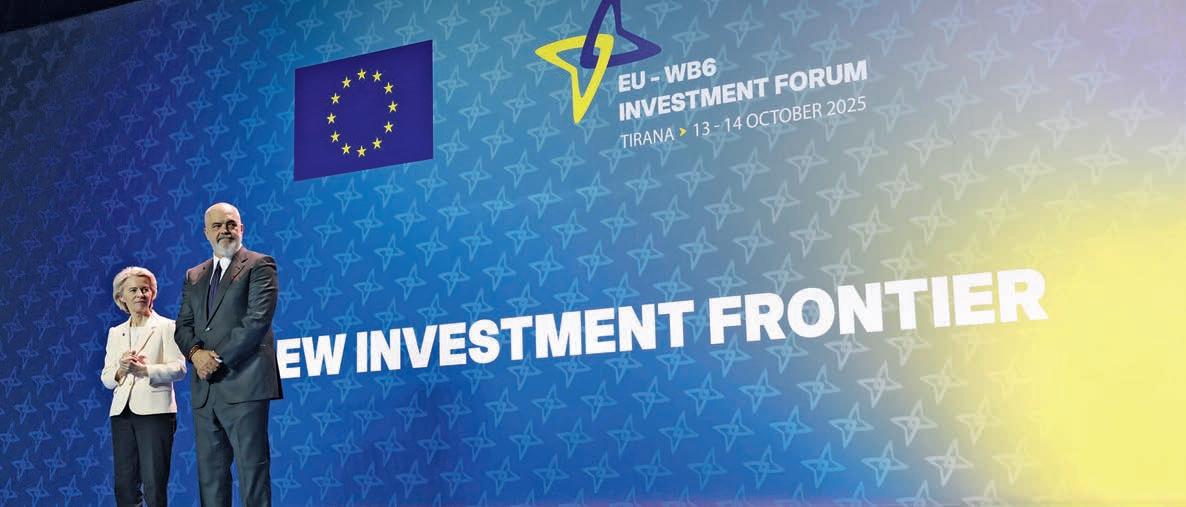
*This designation is without prejudice to positions on status and is in line with UNSCR 1244/99 and the ICJ Opinion on the Kosovo declaration of independence.
An IRI survey found that inflation, corruption, and job insecurity dominate daily anxieties across the Balkans. For many households, European integration feels less urgent than keeping up with grocery bills.

Montenegro’s reforms earned fresh applause and €8 million in EU funds under the Growth Plan. Von der Leyen’s new mantra — “28th member by 2028” — now hangs over Podgorica like both promise and deadline.
Public debts nearing €670 million are straining local budgets and municipal services. The shortfall exposes a chronic weakness: reforms without fiscal discipline are promises written on borrowed money.
During a tense September visit, EU Commissioner Marta Kos met Sarajevo officials — while Serb representatives refused to attend. Her message was unambiguous: “No boycott should block Bosnia’s European future.”
Zagreb delivered a formal diplomatic note asking Montenegro to return property to members of the Croatian minority. Podgorica promised to “follow proper procedure,” a phrase that in Balkan diplomacy often means: wait.
Ljubljana’s state-owned EGS filed a €700 million claim at an international tribunal over its investment in the Ugljevik power plant. The arbitration revives decades-old disputes about who owns the costs of the Yugoslav transition — and who reaps its profits.
Police in Albania and Croatia, with support from Colombia’s national force, broke up an international sex-trafficking operation exploiting women from South America. The case showed how global exploitation thrives on regional loopholes.
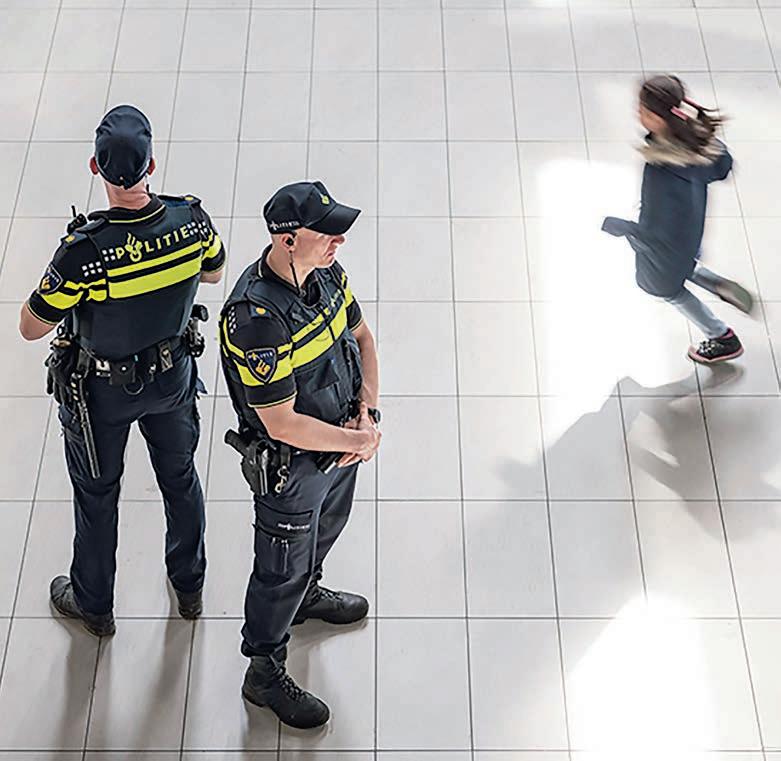
Brussels released €99 million to Albania, €8 million to Montenegro and €25 million to North Macedonia — a rare headline about funds already delivered, not promised. The money is both carrot and scoreboard.
Authorities from Bosnia, Croatia, and Slovenia dismantled a network that trafficked more than 600 migrants across EU borders. Europol described the arrests as a “turning point,” though experience suggests another route will soon open.
UK Foreign Secretary Yvette Cooper called Western Balkan stability “a European security interest” during talks in Belfast. The post-Brexit tone was clear: geography still binds Britain to the continent’s unfinished stories.
For the first time, the UK stationed border police in six Balkan countries to combat people smuggling. The move underscores how migration policy has turned the region into Europe’s outer defensive ring.
Media watchdogs warned of newsroom shutdowns and new “foreign agent” laws from Belgrade to Tirana. Their joint appeal to Brussels cast press freedom as the region’s most fragile democratic test.

On 20 November 2025, Ložionica in Belgrade will host the conference “UK–Western Balkans: Building Futures – Innovation in Energy and Infrastructure,” organised by the British-Serbian Chamber of Commerce.
The event will bring together officials, business leaders, and experts from across the region and the UK to discuss collaboration in sustainable energy and modern infrastructure. Opening remarks will be delivered by Lord Ranger of Northwood, H.E. Edward Ferguson, and Ceri Morgan, HM Trade Commissioner for Europe.
Key sessions include “Building Regional Connectivity – Infrastructure for Integration” with Matej Zakonjšek (Transport Community) and partners, and “Infrastructure Innovation Showcase – British Solutions” featuring Crossrail International, Gleeds, and Vanguard Sustainable Solutions, moderated by Arup’s Aleksandar Bajović.
The forum aims to deepen UK–Western Balkans cooperation and spotlight opportunities for sustainable growth and investment in the region.
20 November 2025 | Ložionica, Belgrade Organised by the British-Serbian Chamber of Commerce

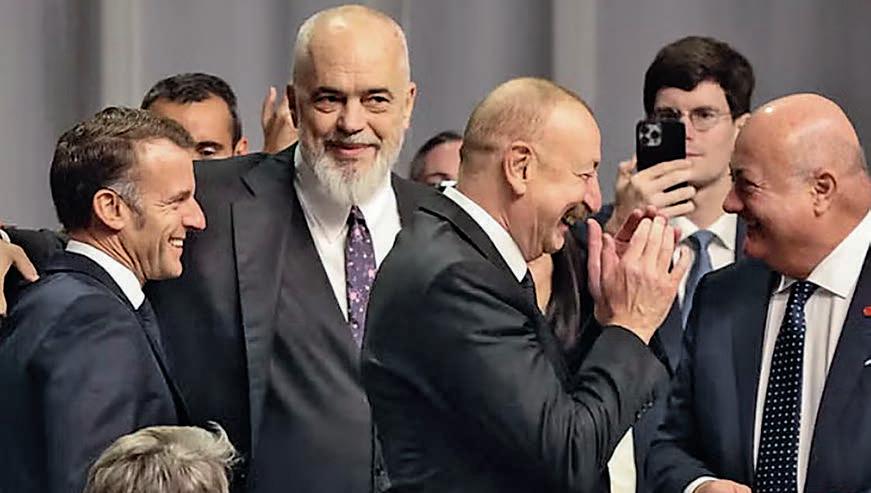
The government confirmed no new offshore oil or gas exploration beyond three existing sites in the northern Adriatic. In a sea prized equally by tourism and ecology, restraint has become the most strategic resource.
Serbia’s Ministry of Mining and Energy revealed on 21 October that a planned EU transit ban for the “Balkan Stream” pipeline will cut off Russian gas supplies from Bulgaria after 1 January 2026. The country now faces mounting energy insecurity and must accelerate reforms and diversification if it hopes to avoid winter shortages.
At the European Political Community Summit in Copenhagen, Albania’s Prime Minister Edi Rama was filmed raising a finger while joking with France’s Emmanuel Macron — a gesture that social media instantly spun into a diplomatic dispute. Rama later clarified on his channels that it was a moment of good humor referencing Donald Trump’s verbal slip about a “conflict between Albania and Azerbaijan,” lamenting how “virality can so easily distort reality.”
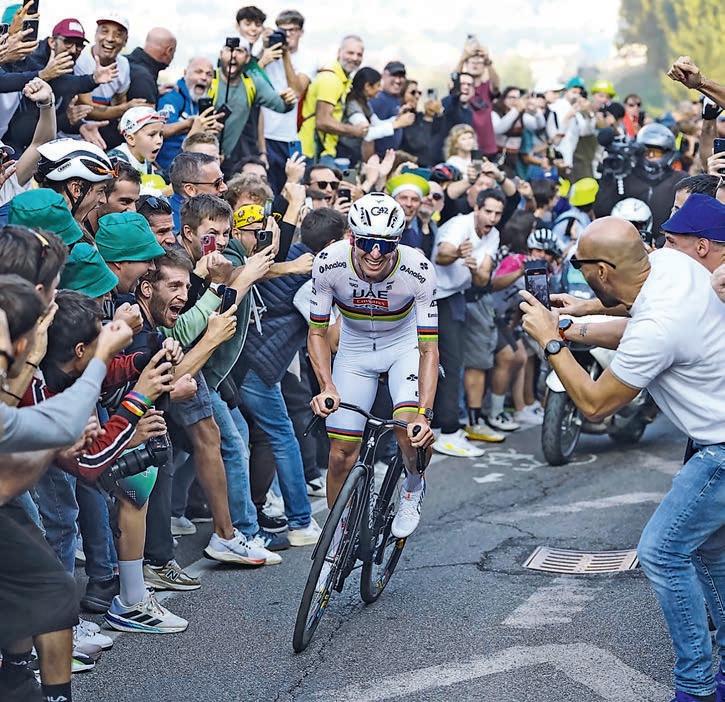
Slovenia’s cycling champion claimed his fifth straight “Il Lombardia” title, equalling Italy’s Fausto Coppi. His dominance has turned endurance into art — and a small country into a cycling superpower.
A brutal autumn heatwave has drained rivers and shrunk hydropower output from Bosnia to Albania. Farmers count losses, governments count imports — and everyone counts the cost of delay on climate action.
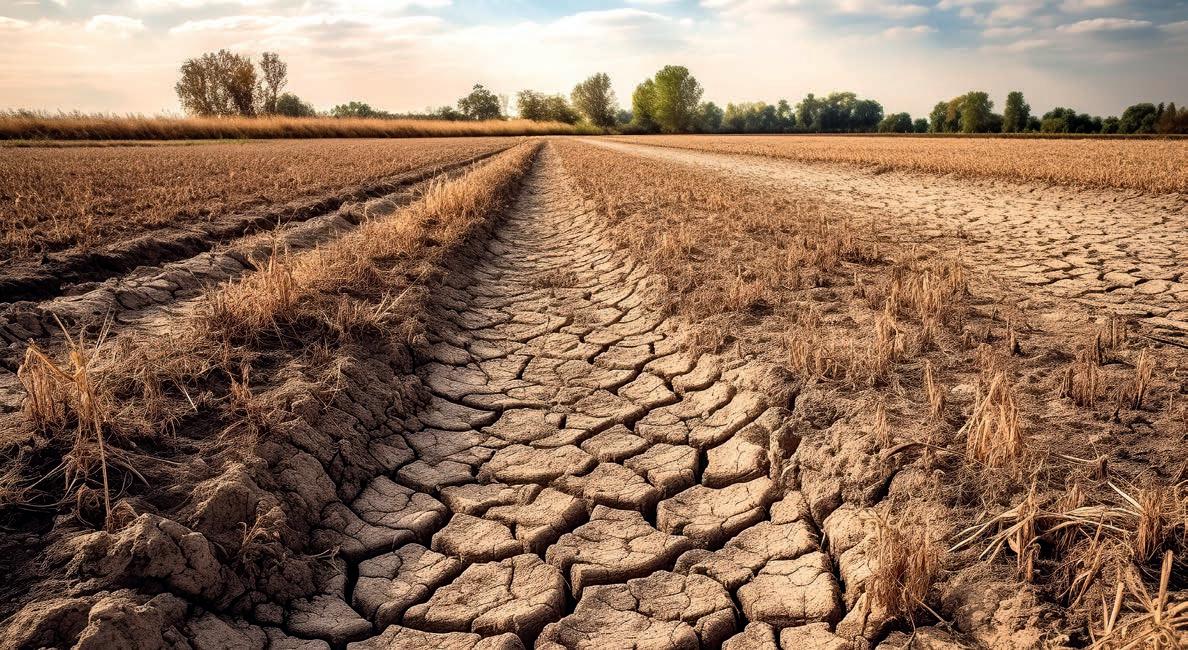
From Sarajevo to Split, crowds sang his songs in candlelight vigils that blurred borders. The death of the beloved singer briefly reminded millions that memory can be stronger than politics.


Starting in 2026, workers aged 58 and older will be able to cut hours while keeping 90 percent pay and full benefits. The “80-90-100” rule is an elegant equation — proof that innovation isn’t only for youth.
A sobering new forecast suggests that even as renewables rise, the world’s dependency on oil, gas, and coal will barely waver. McKinsey projects that fossil fuels could still power up to half of global energy use by mid-century — a reminder that the clean transition remains more ambition than reality.
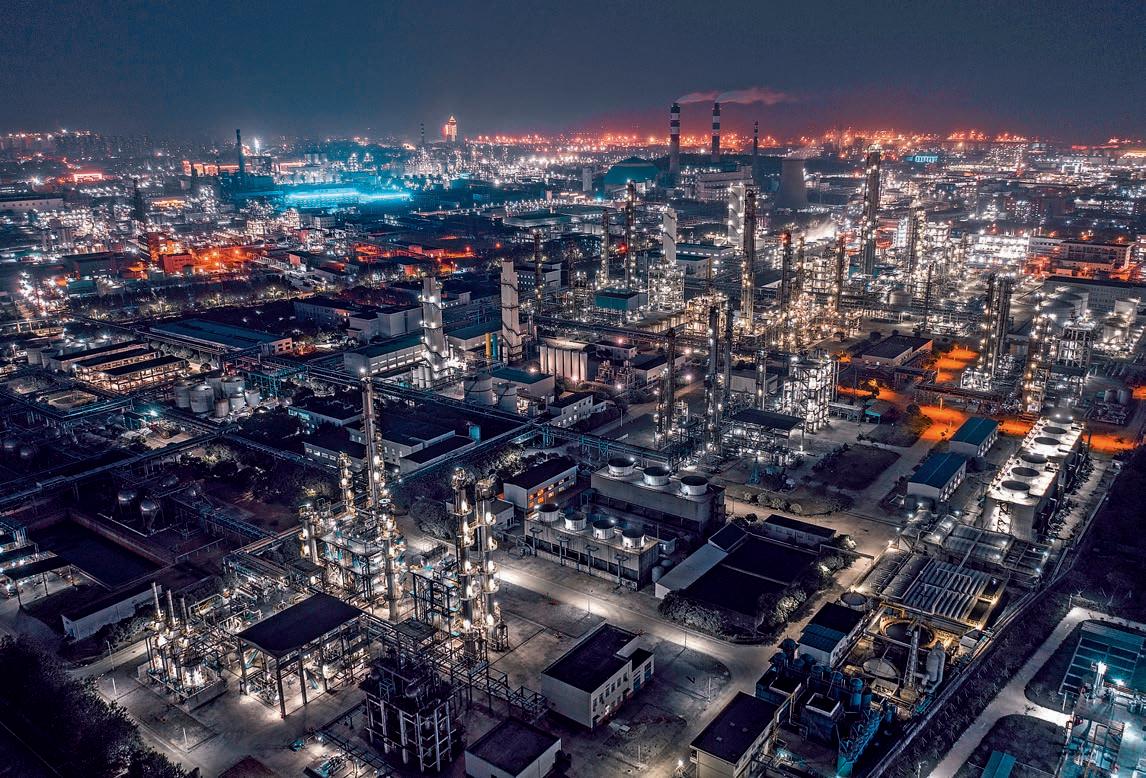
As its landmark carbon border tax nears launch, the European Union is on a diplomatic sprint to bring other economies into line. Brussels is pitching carbon pricing as both a climate imperative and a trade necessity — rewriting the rules of global commerce in the process.
The International Energy Agency now expects a looming oil surplus by 2026, with producers pumping faster than demand can absorb. Prices are slipping, but analysts warn the calm could be temporary — one pipeline rupture or political misstep could turn glut to shock overnight.
Munich Re’s latest report delivers an unusual warning: not about storms, but about citizens. With growth stalled and living costs stubbornly high, the reinsurer says the real risk for Europe this winter may be social, not meteorological — a wave of frustration that no policy can easily insure.
The International Monetary Fund has joined the chorus of caution, calling global markets “overstretched and under-protected.”
From Wall Street to emerging economies, the warning is clear: rising debt and fiscal fatigue are leaving the world one shock away from a hard landing.
ITALY ERUPTS
A fragile wave of optimism swept through markets after word of a breakthrough in hostage talks and stronger-than-expected bank earnings in the U.S. Yet beneath the relief, investors see only a pause — not a pivot — in a world still tethered to crisis.
Donald Trump’s 20-point blueprint for Gaza, unveiled in late September, has reignited global debate over the future of the region. The proposal — part ceasefire, part reconstruction roadmap — drew cautious support from allies and outright rejection from others, proving once again that peace can be as polarizing as war.
Ports shut, trains halted, and banners filled Italian streets as unions led nationwide strikes protesting the country’s arms ties to Israel. The demonstrations — among the largest in years — underscored how the Middle East conflict is testing Europe’s conscience and cohesion alike.
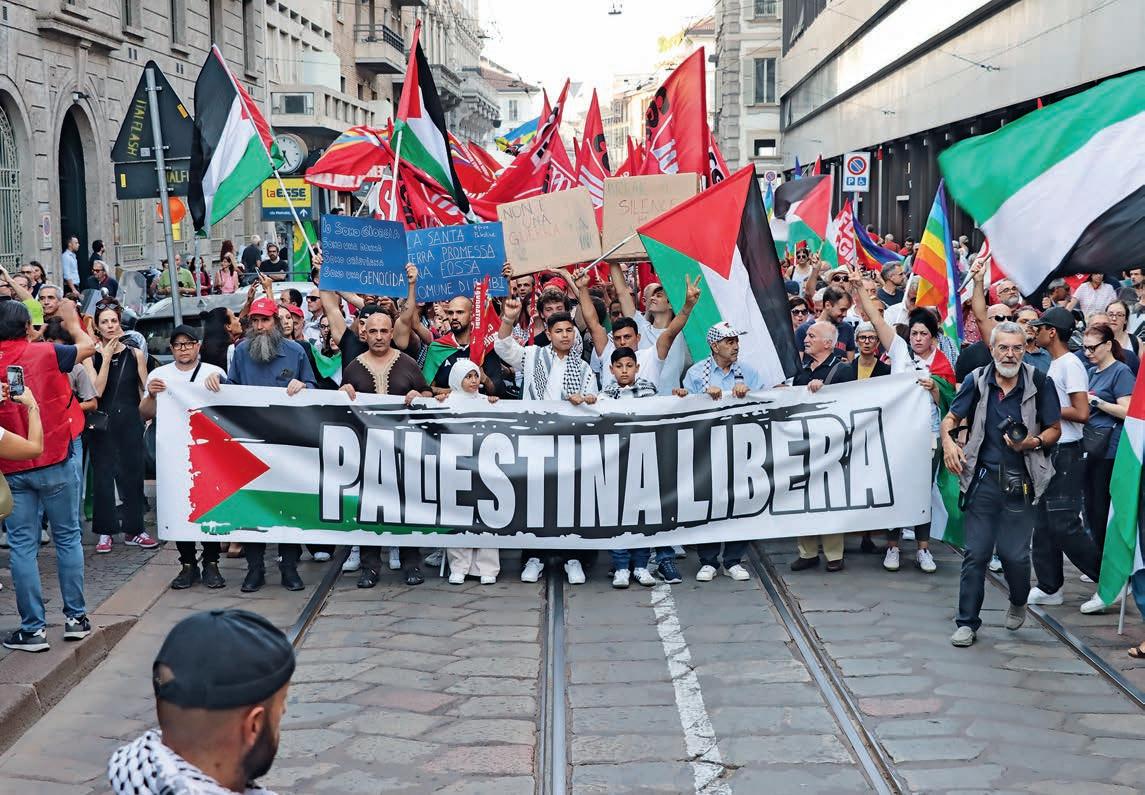
A newly discovered emerald-green comet, visible from both hemispheres, is lighting up early-morning skies this month. Astronomers say the rare celestial guest may not return for another 22,000 years — a fleeting reminder of wonder in a restless age.
At the U.N. Climate Summit, China announced plans to cut emissions by up to 10 percent from their peak within a decade and accelerate the build-out of renewable capacity sixfold. For the world’s top emitter, the promise marks a significant shift — if Beijing follows through.
Stargazers were treated to a dazzling burst of meteors on 8 October as the Draconids briefly ignited the autumn sky. For a few hours, Earth’s orbit crossed a dense ribbon of cometary debris — a small but radiant spectacle above an increasingly anxious planet.
The IMF’s October report trims global growth to 3.2 percent and warns that “the easy part of recovery is over.” Inflation has eased but structural weaknesses remain — from aging workforces to brittle supply chains — leaving the world economy running slower, and older, than its story suggests.
Scientists confirmed Antarctica’s winter sea ice maximum was the third smallest ever recorded — a stark sign that polar recovery is slipping further from reach. Beneath the thinning ice, researchers have mapped 85 new subglacial lakes, revealing a restless, warming world below the surface.
Even as Washington shut down in early October, the Bureau of Labor Statistics confirmed it would still publish the crucial September inflation data. Economists called it a small act of continuity — proof that the machinery of measurement must keep turning, even when politics stalls.
A global survey of top executives finds optimism fading fast amid tariff battles and political unpredictability. Leaders cite one shared concern: that volatility has become the new normal, and strategy now demands endurance as much as vision.
Crude markets softened as anticipation built over a potential Trump–Putin meeting to discuss Ukraine and energy stability. The prospect of diplomacy — and an expected supply glut — has traders betting on cooler prices, at least for now.


The Adriatic arc — from Slovenia and Croatia into Bosnia and Herzegovina, Montenegro, Albania, Serbia, and North Macedonia — now finds itself on a ridge. One wrong step, and the region could tumble back into fragmentation and stagnation. But the other way lies a chance to leap forward.
The six Western Balkan economies (Albania, Bosnia & Herzegovina, Kosovo, Montenegro, North Macedonia, Serbia) are forecast to grow about 3.2 percent in 2025, slipping from 3.6 percent in 2024, before
recovering to roughly 3.5 percent in 2026. This softening reflects external headwinds and fragile global demand. Meanwhile, inflation has eased in many economies; public investment and wage growth are (in some places) helping guard consumption.
(Source: World Bank Western Balkans Regular Economic Report, Spring 2025)
Yet headline stability masks deeper tensions. Labor participation remains low (especially among youth and women), migration persists, and the working-age population is already shrinking — projected to fall by nearly one-fifth by 2050. This de-
mographic squeeze intensifies the need for higher productivity, not just more labor.
The EU has responded with a bold program: a €6 billion Growth and Reform Facility (2024–2027), combining grants and loans tied to institutional and structural reform. But money is a tool, not a guarantee. Without governance alignment, regional coordination, and credible rule-of-law, capital may steer clear.
Across the Adriatic spine, leaders in government, business, and civil society are debating a simple, urgent question: How to make this moment count?
Adria’s geographic endowments — sunlit coasts, mountain winds, river systems — make clean energy its most credible industrial play. But turning promise into pipelines requires more than ambition: it demands regulatory consistency, grid integration across borders, and long-term purchase agreements.
One key project is the Ionian-Adriatic Pipeline (IAP): a roughly 500 km conduit designed to link Albania through Montenegro and Bosnia & Herzegovina to Croatia’s pipeline network. It is currently in design phases, with support from the Western Balkans Investment Framework and
early-stage financing. Its future will depend on how well the region aligns energy strategies and balances fossil fallback with renewables.
Yet even more crucial is the shift beyond gas pipelines — toward solar clusters, wind farms, energy storage, regional power exchanges, and distributed clean grids. That is where the durable advantage lies.
With shrinking labor pools and persistent migration, growth must be driven by intelligence, not raw numbers. Automation, AI, smart logistics, precision agriculture, and e-governance are not luxuries — they are survival tools.
Several governments now pilot AI tools in public services or smart-city applications;
companies in Ljubljana, Belgrade, and Tirana are beginning to export software to Western Europe. But adoption is uneven — constraints include skills gaps, uneven broadband infrastructure, and regulatory uncertainty. Bridging that divide will require aligned incentives, regional digital platforms, and joint investments in education.
Infrastructure in the region remains fragmented. Roads stop at borders, rail lines lack interoperability, and ports struggle to reach inland markets. The EU’s Growth Facility and the Western Balkans Investment Framework together back dozens of transport, energy, and environment projects. Over 146 WBIF projects have generated investments in infrastructure realms exceeding EUR 10.9 billion to date.
What’s missing is coherence. The region needs corridor thinking — linking ports to factories, rail to inland markets, energy lines across states. Only then can the sum of national infrastructure become a regional scaffold for growth.
None of the above can deliver if trust is broken and talent flees. The region continues to lose professionals to Europe. But more than that: business leaders and economists routinely point to governance — rule of law, predictable regulation, meritocratic institutions — as decisive bottlenecks.
Reforms must reach deep: procurement transparency, judicial independence, anti-corruption enforcement, administrative simplification. Simultaneously, education and vocational training must tie to future sectors, and diaspora networks should be re-engaged to bring back skills, capital, and ideas.
In boardrooms across Adria, C-suite leaders and analysts are no longer debating “vision.” They debate durability. Their evolving playbooks include:
Sources: World Bank, IMF, EBRD, national statistics (April 2025)
1. Grid integration and clean-energy market coupling
2. Regional transport corridor governance
3. Judiciary and procurement transparency
4. Skills alignment for green and digital sectors
5. Incentives for diaspora investment
S cenario over script: In uncertain times, the best plans are modular. Leading companies run parallel scenarios — e.g. green acceleration, faltering growth, supply disruptions — to preserve flexibility.
ESG not as compliance, but as strategic license: Environmental, social, and governance metrics are ceasing to be checkboxes. They become reputational capital, and in some cases, access to capital itself.
Clusters over solo scale-ups: Instead of betting on one startup, regional actors are creating specialized clusters (energy + storage, digital + AI, logistics + circular economy) spread across national borders but tightly coordinated.
“Act regional, execute local”: Regional alignment on energy rules, trade protocols, digital standards can unlock scale — while local implementation ensures relevance and agility. Governance discipline as growth policy: Credible promises — stable policy, fiscal probity, regulatory certainty — now matter as much as highways and power lines.
Hands-on pilots are already illuminating the path:
Cities deploying smart meters to reduce grid losses, municipalities installing rooftop solar on public buildings, digital “one-stop” enterprise registration platforms, cross-border tourism circuits working to harmonize visas and marketing. These are small in scale but signal a new mindset.
Still, trade-offs loom. Legacy industries may contract. Retraining and safety nets will have to cushion communities. The transition will have its casualties, and they must not be ignored.
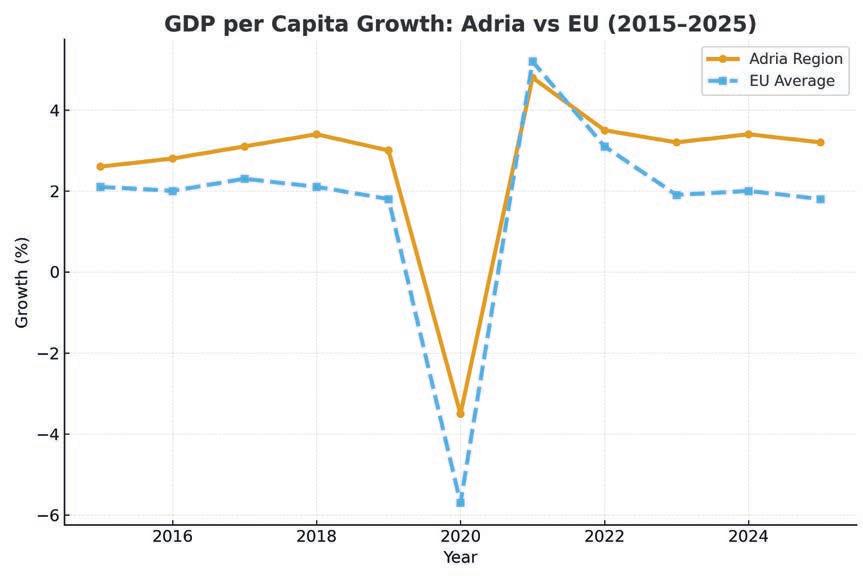
The Adria region’s economies have consistently grown faster than the EU average — though from a lower base. After the pandemic shock in 2020, both rebounded, but regional growth remains fragile amid global headwinds.
Source: World Bank, Eurostat, EBRD — illustrative regional aggregation based on 2015–2025 trends

If everything aligns — institutional trust restored, regional cooperation deepened, clean energy and digital sectors scaled — then by 2035 Adria could be closing half the gap with EU living standards. Its exports might center not on raw materials but on clean tech, digital services, smart agriculture. Ports could hum with green fuels. The region might retain its brightest minds rather than exporting them.
But the margin for error is narrow. External shocks — debt stress, trade tensions, climate extremes — could unravel gains. Political backsliding or contradictory national agendas might fragment the
regional project. Environmental miscalculations could turn growth into exposure.
Here’s what to watch: public and sovereign spreads in Balkan markets, speed of corridor construction, return migration trends, sectoral investment flows (especially in green and digital), and reform benchmarks under the EU’s Growth Plan.
This is not a story of passive convergence. It’s a wager — that a region long defined by periphery can become central in Europe’s next chapter. The next five years will determine whether Adria’s future is built or merely deferred.
Adria stands at a hinge: the difference between possibility and path dependency is in the act, not the intention.
Key Infrastructure and Energy Corridors in the Adria Region
Five arteries define the region’s future: the Belgrade–Bar route, the Ionian–Adriatic Pipeline, and the Pan-European Corridors V, VIII, and X — linking energy, trade, and mobility across borders.
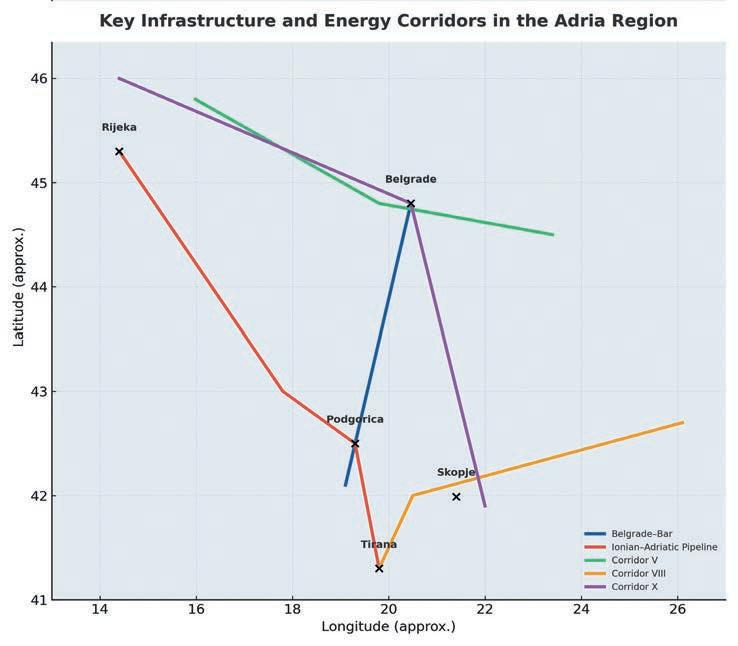
Source: Indicative schematic based on EU TEN-T Network, Western Balkans Investment Framework (WBIF), and national transport ministries.
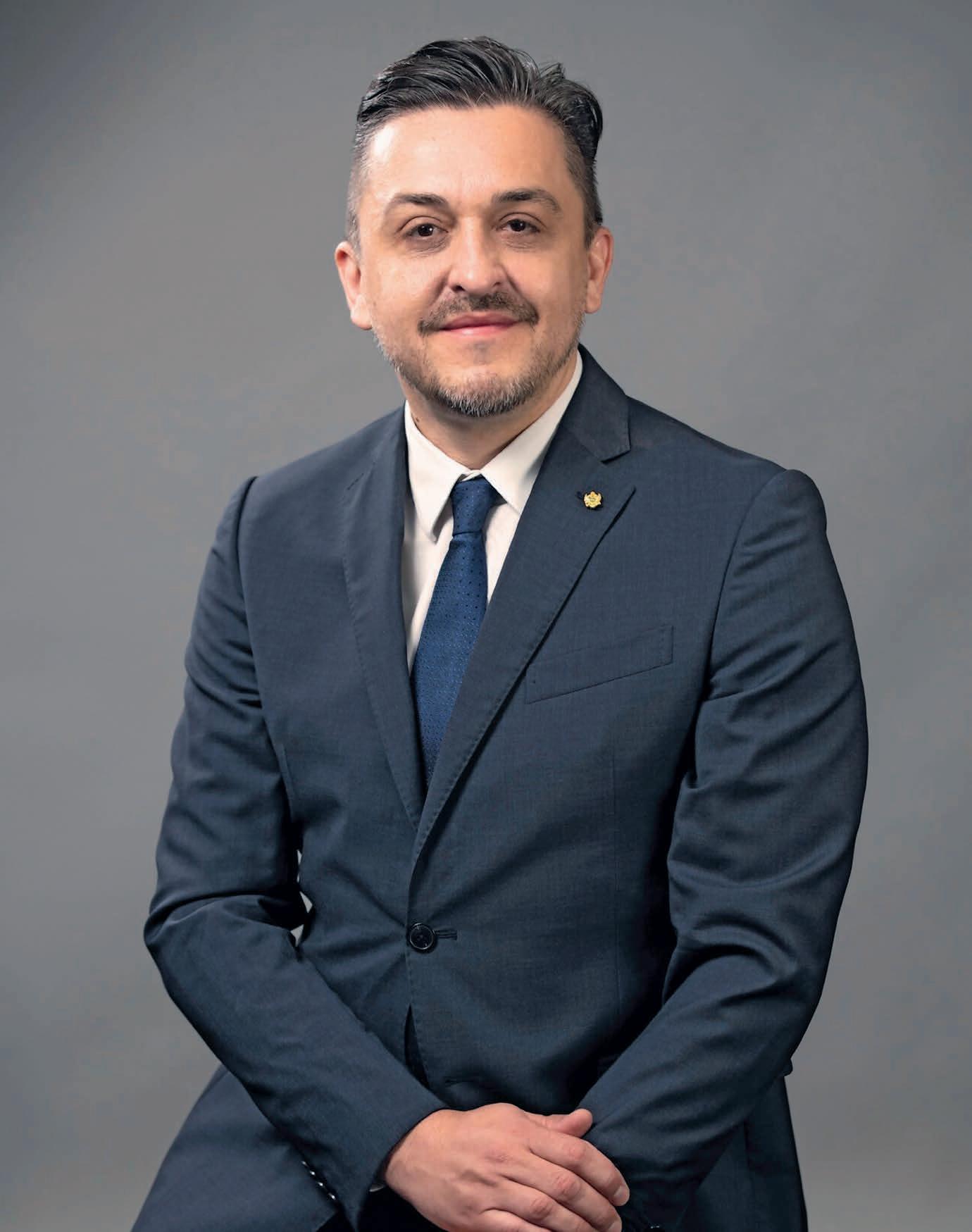
Montenegro’s Finance Minister on Foresight, Reform, and the Future of Trust
“Creating deposits today so tomorrow’s budget is lighter — that’s responsibility, not risk.”
At dawn in Podgorica’s Ministry of Finance, Novica Vuković’s team is already poring over debt-maturity charts — not to find space for spending, but to buy time. Two years into his mandate, the minister has turned fiscal caution into a growth strategy. He speaks about finance the way engineers speak about design: every number must serve purpose, every reform must stand. Under his watch, Montenegro has introduced OECD-backed spending reviews, strengthened its credit standing on global markets, and invited citizens themselves to take part in financing the state through new retail bonds. As the country accelerates toward EU and euro-zone membership, Vuković insists that credibility is Montenegro’s most valuable export.
Why start with spending reform?
Because efficiency is the foundation of sustainability. The expenditure review helps us see where public money truly creates value — and where it can be redirected toward higher priorities. It’s not about cuts; it’s about clarity. We’re building an internal culture of responsible budgeting that outlasts any political cycle. With OECD expertise, both the Ministry and line ministries are gaining analytical capacity that will define how Montenegro plans, measures, and delivers results for decades.
How do you make new borrowing look like prudence, not risk?
By being transparent about why and when we borrow. Between 2025 and 2027 around €2.1 billion of previous debt will mature, plus €565 million in interest. Our decision to allow up to €500 million in additional borrowing isn’t about new spending — it’s about refinancing early and creating fiscal reserves for those heavier years ahead. That’s proactive,
responsible management: we create deposits today so tomorrow’s budget can breathe easier. Investors recognise that logic. The fact that Montenegro successfully placed €850 million in bonds this March, supported by over 100 renowned global investors, confirms their confidence in our predictability.
Why invite citizens into the bond market?
Because public finance should never feel distant. By opening a €50 million issue of government bonds through commercial banks, we’re giving citizens a chance to invest directly in the state and benefit from it. More than two billion euros in savings currently sit in bank accounts — this mechanism channels a small part of that into national development. People earn competitive interest, the state secures domestic financing, and together we strengthen trust. It’s both financial innovation and civic education: citizens become partners in the country’s progress.
What’s left on the road to the euro-zone?
We’ve already closed one negotiation chapter in our competence and expect to close another by the end of the year. The Fiscal Council — an independent body to assess the credibility of fiscal policy — is the next key step. Beyond procedures, what matters is mindset. Europe recognises Montenegro as a serious and predictable partner; our task is to make fiscal discipline a national reflex, not a momentary goal. Joining the euro-zone isn’t just about currency — it’s about belonging to a culture of responsibility.
For Vuković, stability isn’t the absence of risk but the mastery of it. In a region still testing the balance between ambition and restraint, his ministry’s work shows that credibility can be built quietly — spreadsheet by spreadsheet, decision by decision — until it becomes the country’s most convincing story.
Montenegro by the Numbers
(as of mid-2025)
GDP Growth (2024): 3.0 %
Steady expansion driven by tourism, construction, and energy exports.
(World Bank, July 2025)
Public Debt-to-GDP: ≈ 60 %
Down from nearly 90 % in 2021, reflecting fiscal consolidation and early refinancing.
(Ministry of Finance, June 2025)
Eurobond Issue (March 2025):
€850 million, 7-year maturity
Backed by more than 100 global investors, reaffirming Montenegro’s credit confidence.
(Government of Montenegro, March 2025)
Net Public Debt: €4.8 billion
Equivalent to ≈ 60.1 % of GDP, including guarantees and shortterm obligations.
(SEE News, June 2025)
Fiscal Deficit (2024): 1.7 % of GDP
Maintained below EU reference values despite increased capital spending.
(IMF Country Report 2025)
Inflation (May 2025): 3.4 %, trending downward
After peaking at over 13 % in 2022, price stability has largely returned.
(Monstat / EBRD)
Unemployment (mid-2025): ≈ 9 %
The lowest in Montenegro’s recent history.
(National Employment Office, July 2025)
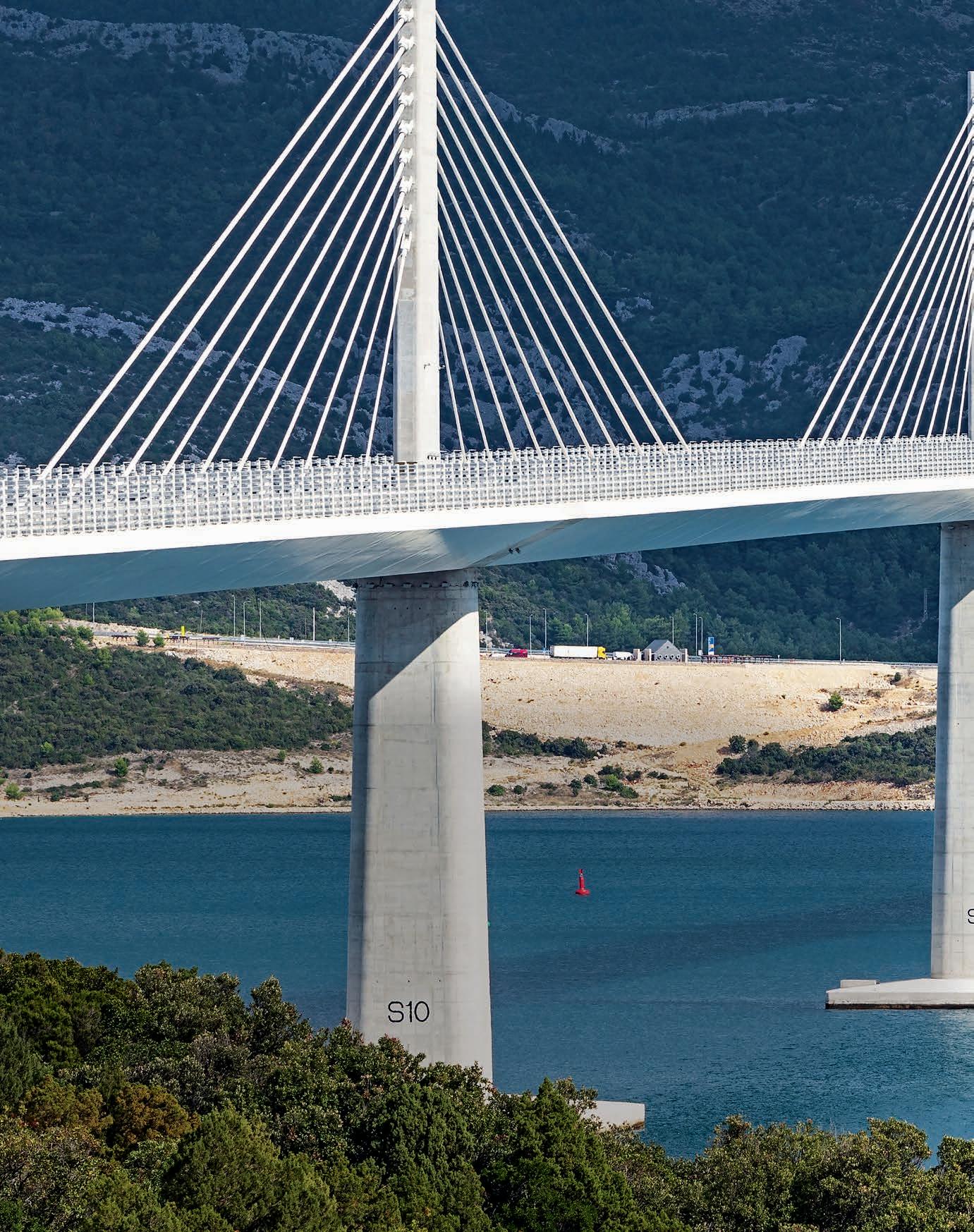
The Adria is usually seen from the water — islands, sails, and the long blue horizon. Yet some of its most revealing journeys now happen on land. New highways and mountain roads are knitting the region together, carrying not only tourists but trade, ideas, and a sense of shared direction. Each of these routes captures that shift: where engineering meets beauty, and where progress, for once, feels poetic. Together, these roads tell a quiet story: that the Adria’s future isn’t only maritime, but terrestrial — a landscape of motion, precision, and connection, where progress has finally found its rhythm.
Distance: ~ 30 km across the bridge and immediate approach roads
Best Season: April – October (to avoid off-season closure or reduced visibility)
Best Moment: Sunset crossing, when the arches glow against calm Adriatic Notes: The Pelješac Bridge opened in 2022, linking Komarna to Brijesta, removing the border detour to Dubrovnik
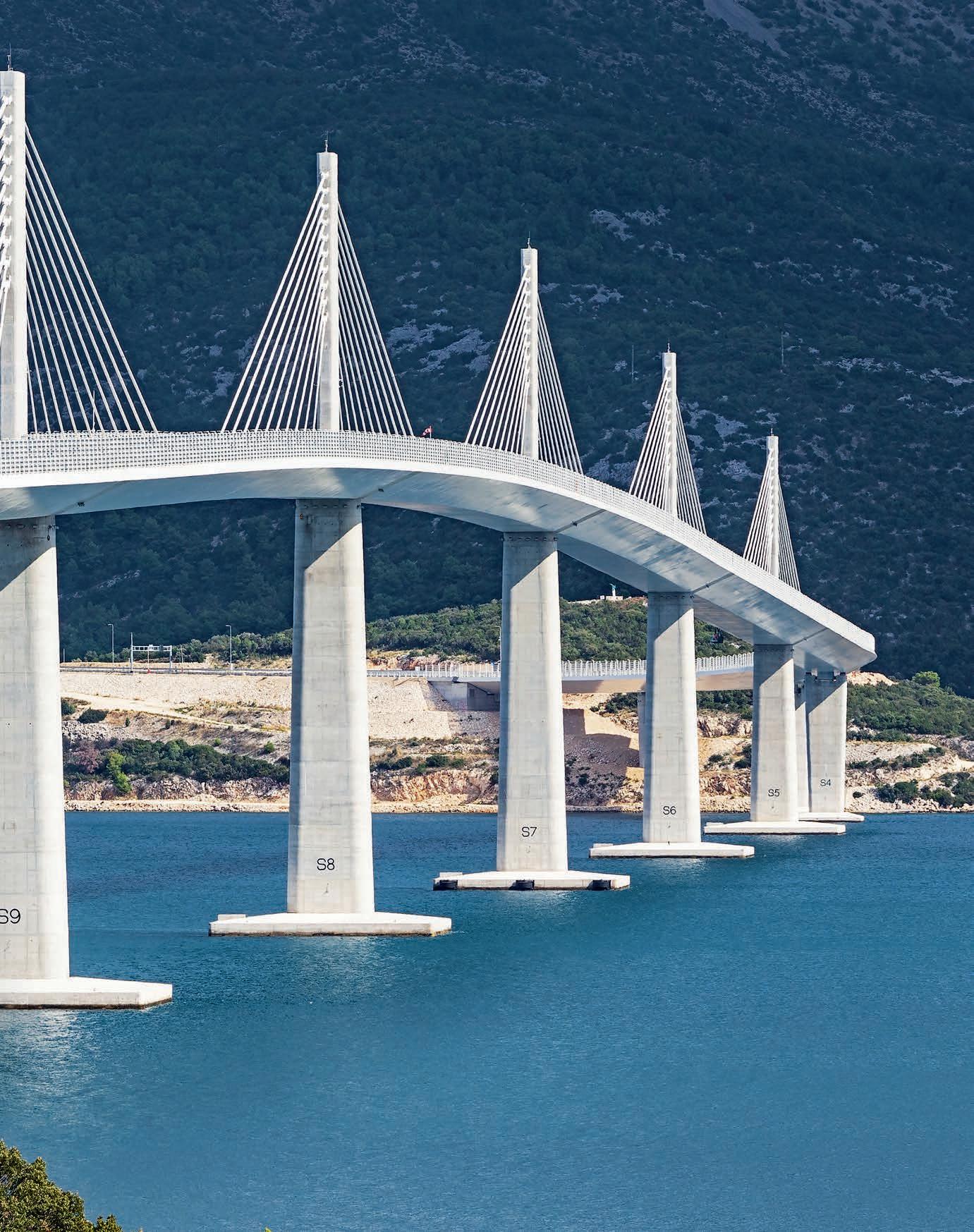
A silver arc linking the nation. Opened in 2022, the Pelješac Bridge finally united Croatia’s mainland with its southern coast, erasing a border detour that once divided the country. The drive from Komarna to Dubrovnik now flows seamlessly, crossing above the Adriatic on a structure that looks more sculpture than steel. The bridge turned an infrastructure dream into a national symbol — proof that connection can be an act of beauty.
Best moment: Crossing at sunset, when the bridge glows copper and the sea mirrors it back.
Distance: ~ 60-90 km (approximate, depending on start/end)
Best Season: May – September (warmer months, clear roads)
Best Moment: Early morning mist near Bovec when sunlight first kisses the emerald water
Notes: The Soča River is 138 km long, source in Julian Alps (elevation ~876 m)
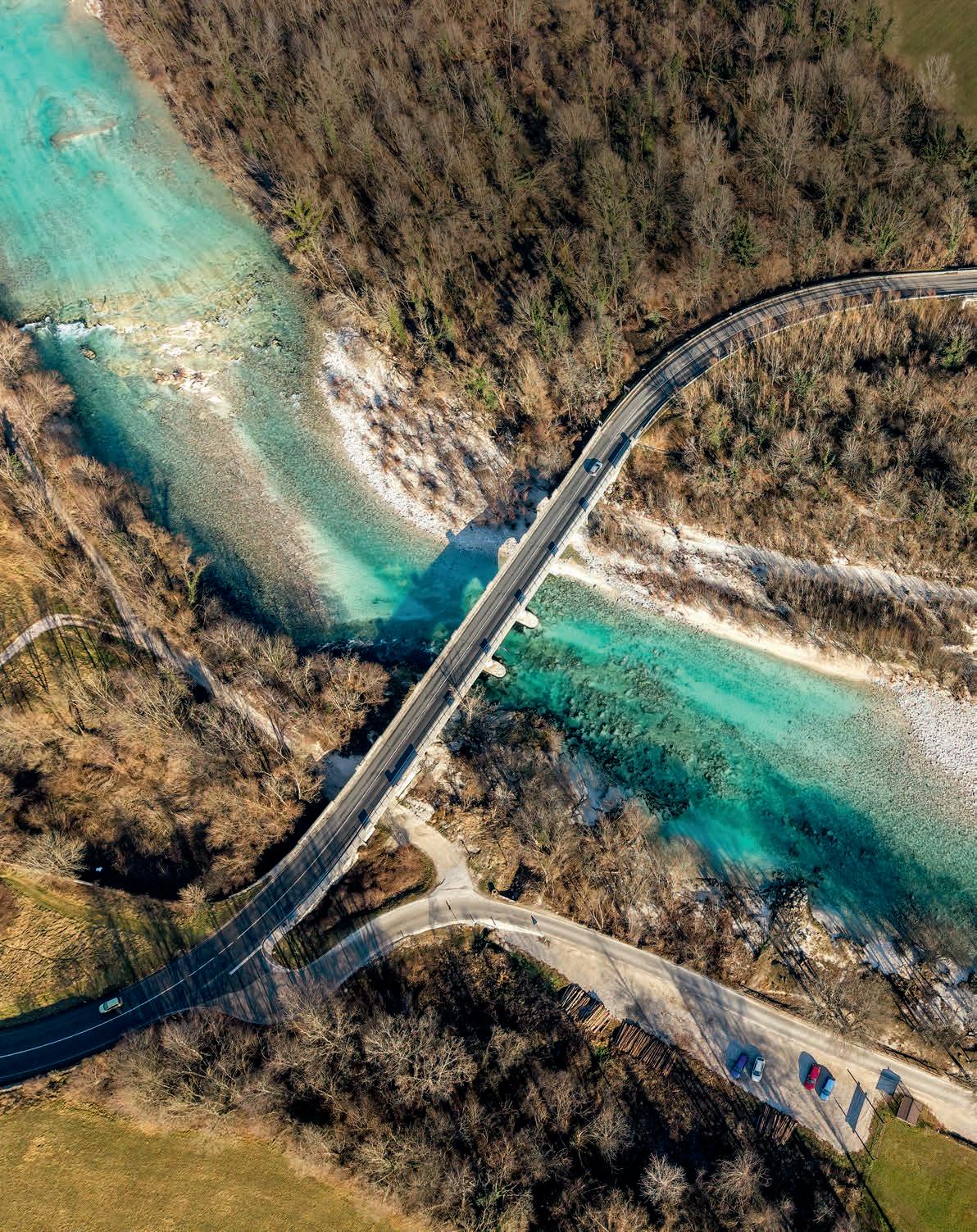
Emerald water and Alpine drama make this one of Europe’s most photogenic drives. The road from Nova Gorica to Bovec traces the Soča River through limestone gorges and hanging bridges once marked by history’s hardest battles. Today it’s a route of peace — cyclists, campers, and weekend explorers moving between waterfalls and trout streams. Every bend reminds you that Slovenia’s green heart beats loudest beside this river.
Best moment: Early morning mist near Bovec when the first sunlight hits the turquoise water.
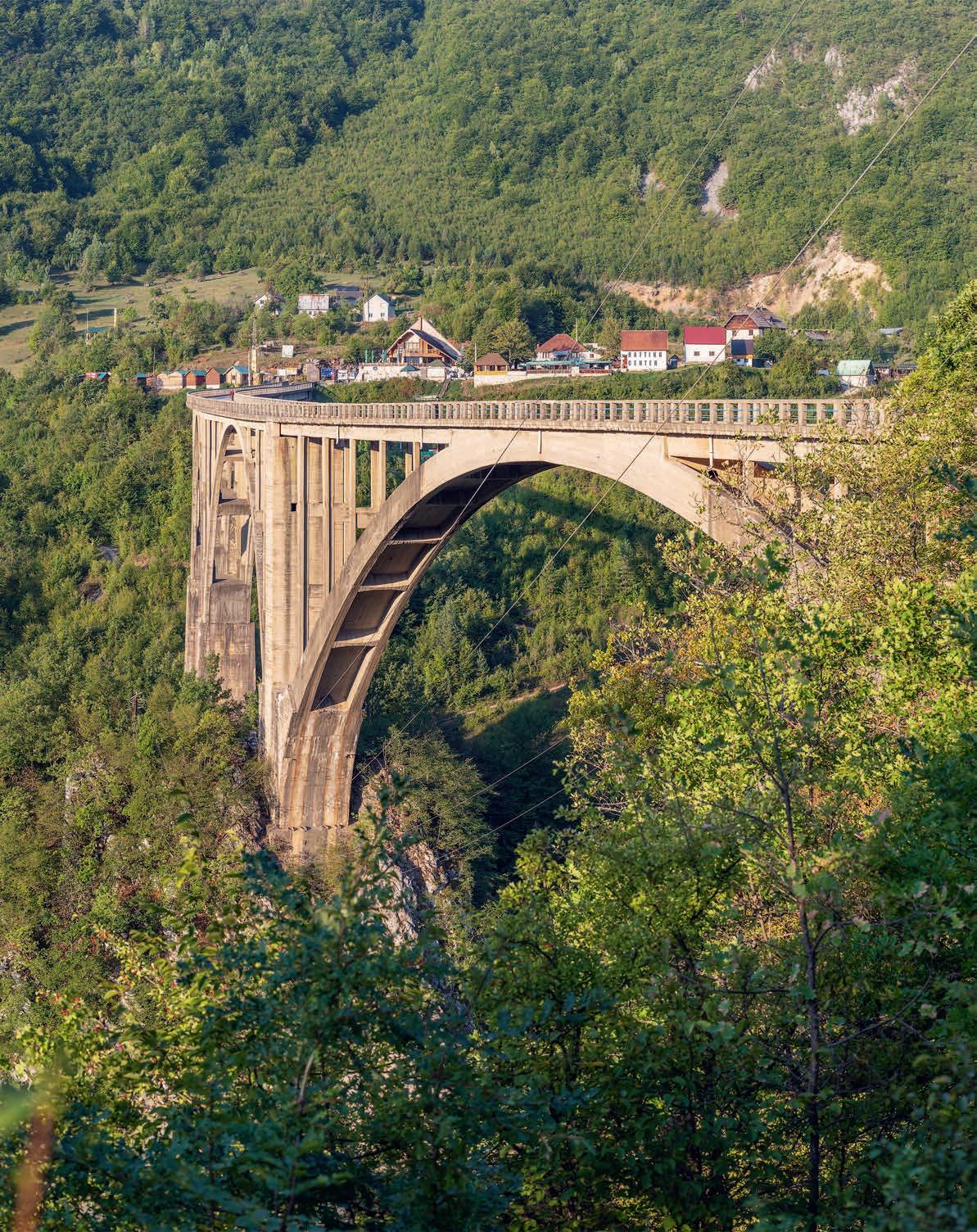
Carved deep into the limestone of Durmitor National Park, the Tara Canyon route feels less like a road and more like a suspended thought. From Žabljak down to the Đurđevića Tara Bridge, the landscape unfolds in layers of pine, shadow, and impossible depth. The bridge itself, built in 1940, still takes the breath of every first-time driver. This is Montenegro’s wild pulse — a place where the road is both challenge and reward.
Best moment: Stop halfway across the bridge, lean on the railing, and listen — the river is 150 metres below.
Distance: The canyon spans ~ 82 km horizontally (protected area section)
Best Season: May – October (winter snows may make roads tricky)
Best Moment: Mid-bridge stop, when you hear the river 170+ m below you
Notes: The Đurđevića Tara Bridge is 365 m long, stands ~172 m above the Tara River
Distance: ~ 100-120 km (full circuit around lake, depending on route) (estimate — local mapping needed)
Best Season: May – October (lake is calm, scenic)
Best Moment: Late afternoon, when monastery walls reflect in glass-still water
Notes: The route is slow by design — part of the charm is quiet travel along the water’s edge
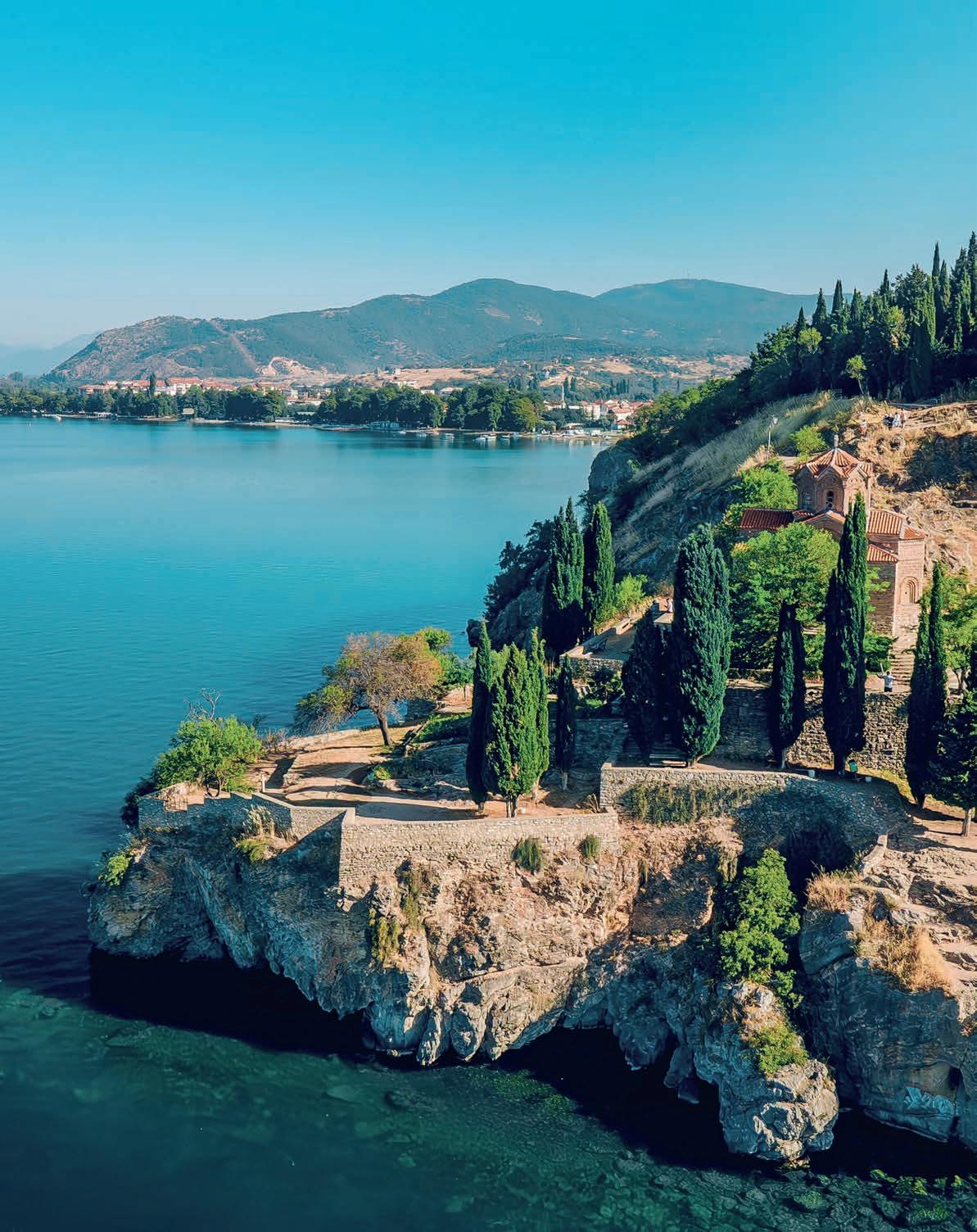
The road circling Lake Ohrid is slow by design. It hugs the water, passes Byzantine monasteries, fishermen’s docks, and quiet vineyards. The lake reflects everything — clouds, towers, and time itself. Few drives offer this sense of continuity: nature, faith, and history sharing a shoreline. By the time you return to the town of Ohrid, you understand why locals call the lake a mirror of the soul.
Best moment: Late afternoon, when the monasteries’ bells echo across the glassstill surface.
From the beaches of Vlora, the road climbs through pine forests, twisting toward the heavens before dropping to the Ionian Sea. At the summit of Llogara Pass, the world opens — a view so wide it silences conversation. Below lies the Albanian Riviera, wild and winding, where mountain goats and convertibles share the same asphalt. Few drives anywhere offer such contrast in so few kilometres.
Best moment: Sunrise coffee at the mountaintop café as the horizon turns from grey to gold.
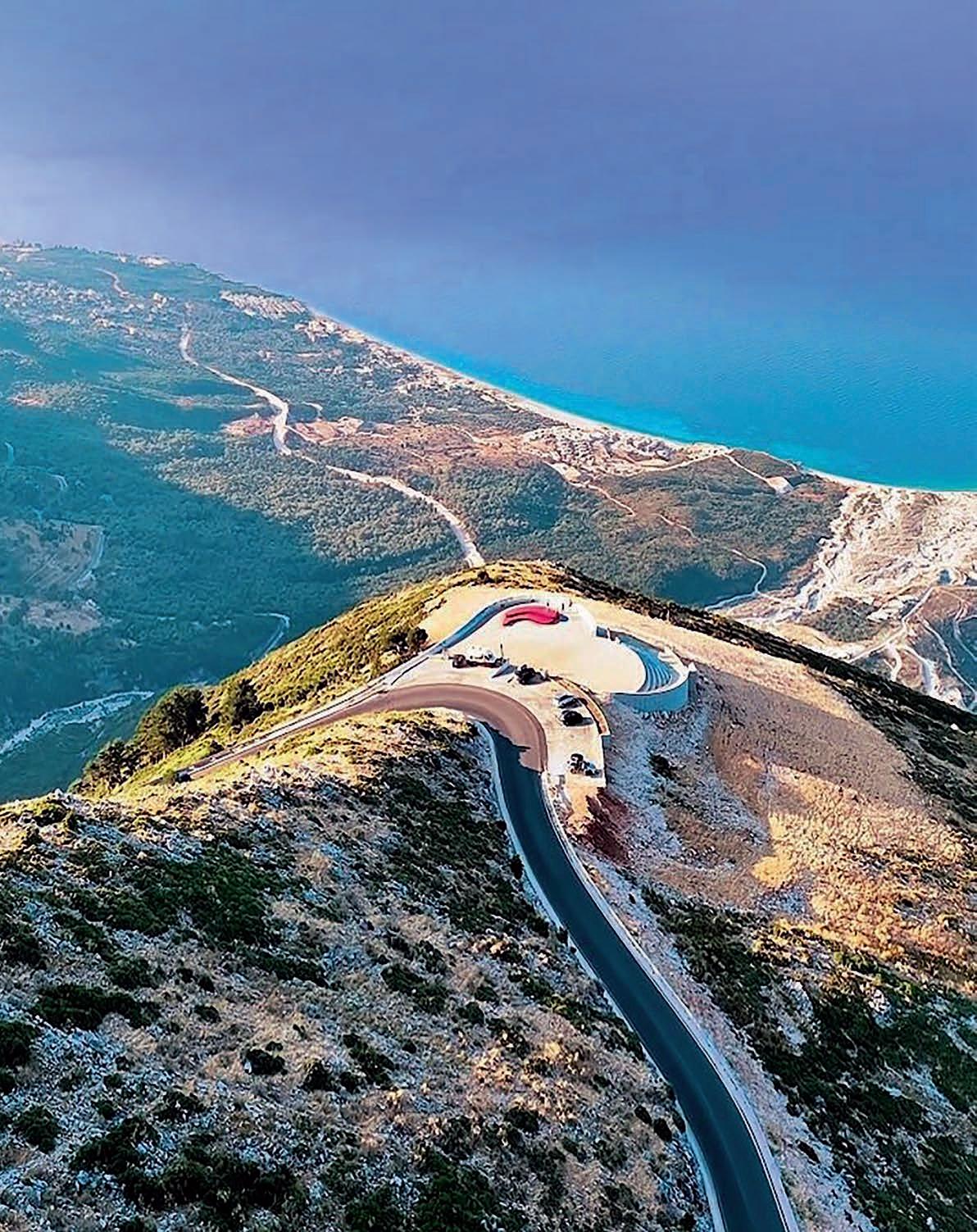
Distance / Elevation: Ascent from sea level to ~1,027 m at summit (approx)
Best Season: April – October (road open, clear skies)
Best Moment: Sunrise coffee at the mountaintop café, watching Ionian horizon unfold
Notes: The pass links the Albanian Riviera with Vlora coast; dramatic switchbacks, steep terrain
From rail corridors to renewable megaprojects — how the region is building for the future.
On a mild morning in Koper, Slovenia, engineers inspect a tunnel entrance carved into lime -
stone. Deep underground, the new rail route to Divača is already redrawing the map — economically and environmentally.
This is infrastructure conceived to last: to move freight, cut emissions, and anchor the country’s role in Europe’s transport
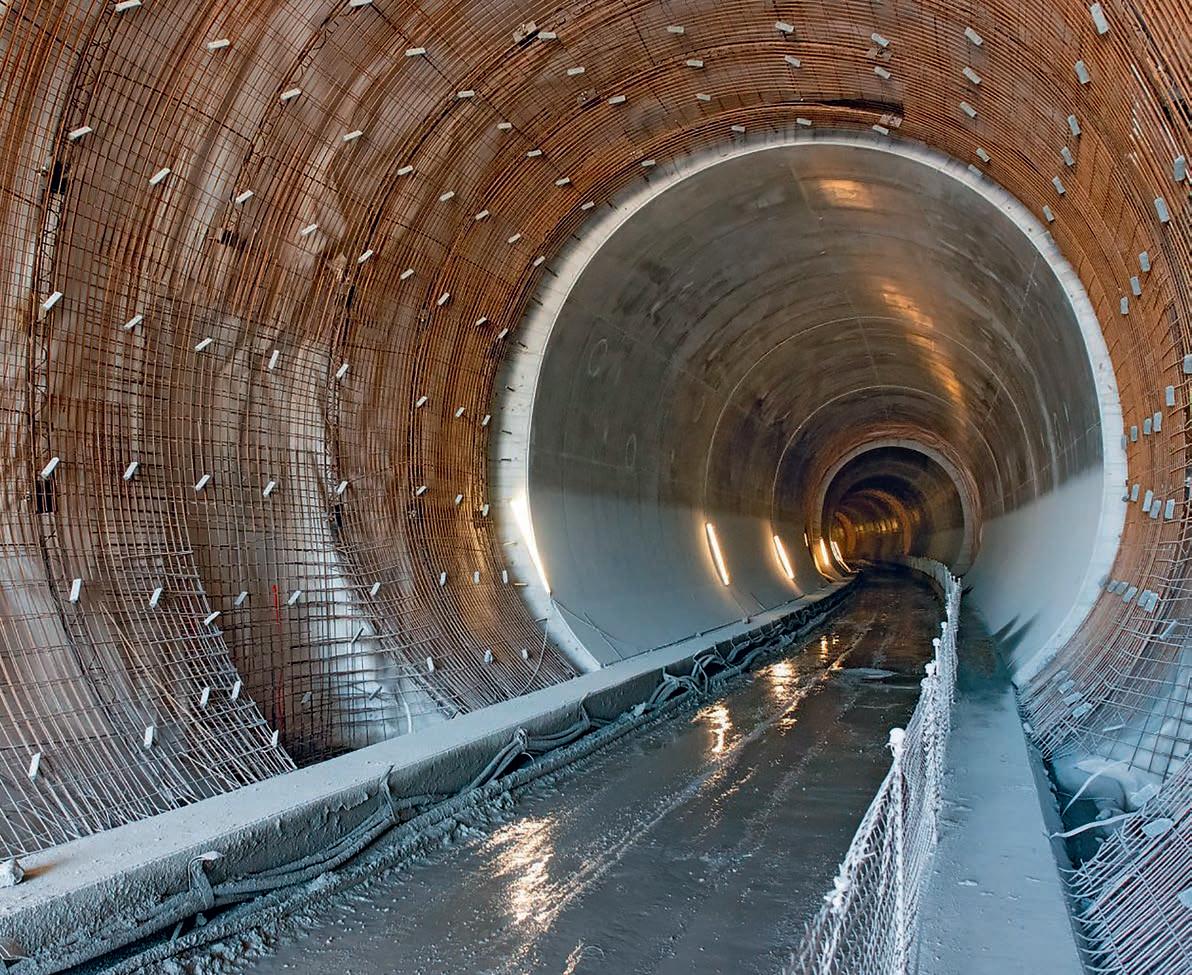
web for the next hundred years.
Across Central Europe and the Balkans, a new generation of “legacy projects” is emerging. They aren’t designed for headlines or election cycles, but for endurance. Their builders talk not in quarters, but in decades — about railways that will still carry cargo in 2100, grids that will survive storms, and corridors that will link energy, data, and trade in one connected system.
Slovenia’s Second Track on the Divača–Koper railway may be the region’s purest expression of long-term planning. The 27-kilometre line, much of it tunneled through karst stone, will double freight capacity to and from the Port of Koper, easing congestion and cutting carbon output. Engineers describe it as both a technical and generational project — one designed to outlive the careers of those who built it.
Across the Adria region, rail is again the backbone of mobility. Croatia is upgrading the Rijeka–Zagreb corridor, aligning it with EU standards. Serbia is modernising the Belgrade–Niš route as part of its gradual integration into the Trans-European Transport Network. These are not isolated tracks; together they form a lattice of connection that promises both economic and environmental returns.
In Serbia, the BeoGrid 2025 programme is reshaping the nation’s electrical skeleton. New 400-kilovolt transmission lines link Belgrade with Novi Sad and the northern wind farms, creating the backbone for an era of electrified industry. In parallel, a €140 million partnership with Schneider Electric is digitising substations and rolling out smart-grid systems, while one-third of Serbian households are slated to receive smart meters by 2026.
Elsewhere, North Macedonia’s vast solar parks, Montenegro’s Gvozd II wind project, and Albania’s hybrid solar-hydro plants show a region leaning into renew-
ables with pragmatic resolve. Each is a component in a slow but steady shift from fossil dependence to distributed, digitalised power — infrastructure that can flex with climate shocks rather than fracture under them.
Infrastructure no longer lives in silos. The new logic is corridor thinking — linking rail, road, energy, and data flows into shared arteries of movement. The Divača–Koper line connects to both the Baltic-Adriatic and Mediterranean EU corridors; Serbia’s Central Balkan transmission upgrades dovetail with cross-border energy integration; and along the coast, port cities are experimenting with offshore wind and hydrogen hubs that could one day power their cranes and cold-storage fleets.
The ambition is coherence: to turn scattered national projects into a continental network. As Europe rewires its trade routes and the Western Balkans edge closer to the Union, these corridors are becoming not just routes of commerce but statements of belonging.
“We are not building for the next administration,” says one planner involved in the Divača–Koper project. “We’re building for the people who will ride the trains, drink the electricity, and measure the climate in 2050.”
Legacy infrastructure succeeds when politics, engineering, and community align. It requires governance that survives elections, financing that cushions shocks, and local capacity that can maintain what global contractors install. It demands humility as much as vision — to design for what may change, and still make it last.
For the Adria region, these projects are more than physical assets. They are confidence poured into concrete, and strategy wired into steel — proof that endurance, in an age of disruption, is itself an act of innovation.
Governance that outlasts politics Independent agencies or mixed public-private consortia ensure continuity beyond election cycles.
Phased, modular design
Build in segments that can expand or adapt to future technologies.
Climate resilience built-in
Plan for floods, heatwaves, seismic risk, and resource scarcity from day one.
Local stewardship
Train domestic engineers and suppliers — infrastructure lasts when people can maintain it.
Smart monitoring
Sensors, digital twins, and predictive maintenance software extend asset life and cut costs.
1. Divača–Koper Railway, Slovenia
A 27 km double-track route reshaping Adriatic freight links; completion expected by 2030.
2. Belgrade–Niš Corridor, Serbia
Modernisation of a strategic north-south line connecting the Danube to Thessaloniki.
3. BeoGrid 2025, Serbia
New high-voltage lines and digital substations to integrate renewable energy.
4. Virovi Solar Park, North Macedonia
One of the largest solar facilities in the region, expanding national clean-power capacity.
5. Gvozd II Wind Project, Montenegro
A follow-up to the Krnovo wind farm, doubling installed wind capacity and export potential.
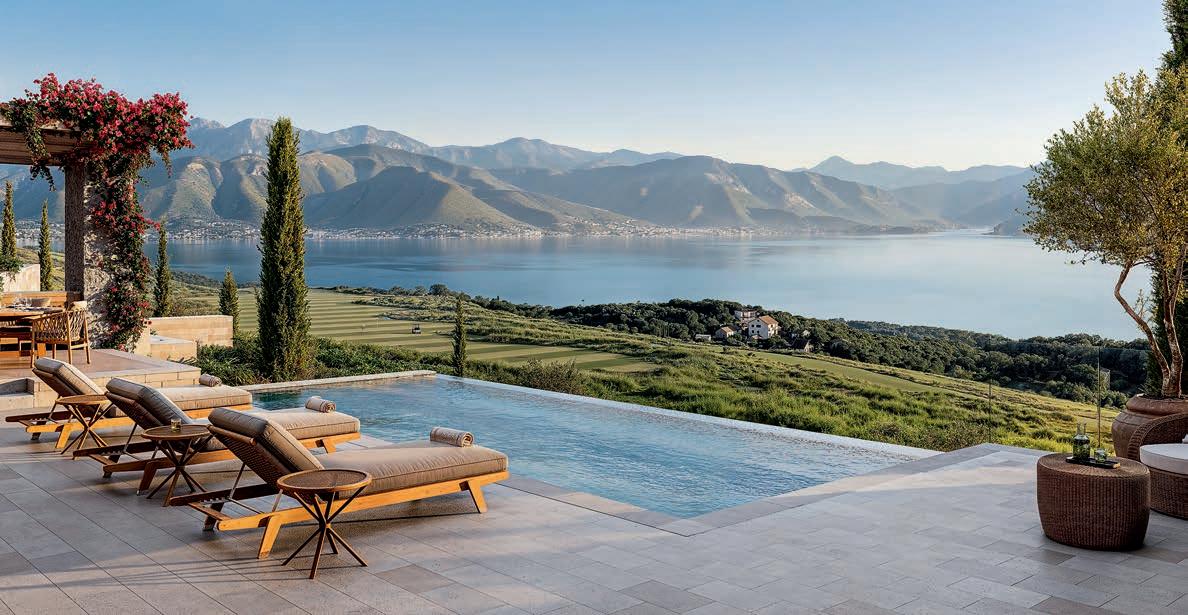
There are some mornings when life’s intangibles seem to beautifully align and you instinctively know that it will be a good day. A feel-alive day. It’s into this air of unhurried grace that a limited collection of 11 townhouses emerges in The Peaks - the jewel of the Luštica Bay project - positioned around Montenegro’s future signature 18-hole golf course.
Stretching along a coastline affectionately dubbed the Adriatic Riviera, Luštica Bay covers 690 hectares - four times the footprint of Monaco - with 90% of its land dedicated to preserving the natural landscape. Around €1.6 billion will be invested into the town by 2033, making this the largest greenfield investment in Montenegro and one of the most significant in South-East Europe, yet Luštica Bay is already a dynamic Mediterranean destination well beyond its years.
Whether arriving by yacht or the nearby Tivat Airport just 15 minutes away, Luštica Bay’s appeal lies in its inherent balance: a harmony
between nature and design, simplicity and sophistication. There is no manufactured glamour or mimicry. Just a town with its own distinctive identity, where life unfolds at an unhurried pace, and the backdrop is quietly stunning.
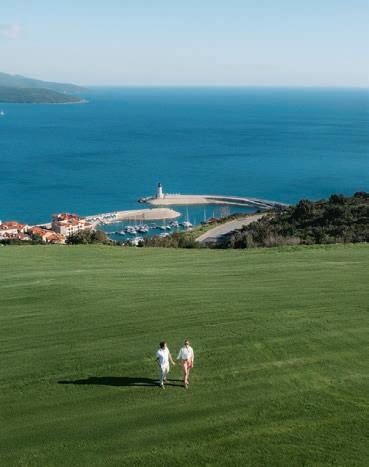
Located on the prestigious outskirts of the UNESCO-protected Bay of Kotor, The Peaks is set to become one of the world’s most coveted golf communities, with these new townhouses in a prime position overlooking the upcoming course’s fifth hole and the Boka Bay. While the townhouses are an elevated sanctuary, residents remain connected to the lively Marina Village with its curated boutiques and sophisticated dining, and Centrale’s growing urban piazza, complete with essential amenities.
“When you’ve designed around 130 golf courses on five different continents, you see a lot of wonderful views. I've really never seen a more beautiful place than this. If I had to have a house on any golf course in the world, this would be my place.”
Those are the words of Gary Player who designed the magnificent 18-hole, par-72 course that anchors The Peaks. Townhouse owners will have full access to the course and
The ClubHouse - a focal point for community life with its stylish restaurant, comprehensive golf services, expert coaching, and stateof-the-art golf simulator.
Designed by the internationally acclaimed architect NRA Atelier, the townhouses blend Mediterranean elegance with Montenegro’s rich architectural heritage. Locally sourced stone and wood have been used to form a timeless aesthetic that brings the past into the present, preserving cultural character while embracing modern functionality.
Arranged across two levels to create a natural distinction between social space and private realm, each townhouse features three ensuite bedrooms, light-filled and open-plan interiors, a striking double-height ceiling, and expansive glazing to connect indoor and outdoor living. Warm and earthy finishes abound, with owners offered a choice of two fitted-furniture packages. These provide a convenient foundation for immediate living and flexibility for future interior customisation.
What truly distinguishes the townhouses are their near-constant invitation to spend time outdoors and in nature. Green-roof terraces are accessible from the master bedroom in select townhouses, while landscaped gardens range from 184 to 590 m² to further extend the living space outwards. All townhouses are enveloped by the scents of lavender and lime. These can be enjoyed from the tranquility of one’s private swimming pool in the morning, or beneath a sun-dappled pergola made for year-round al fresco dining that lasts long into the night.
Montenegro’s strategic location, healthy climate, coastal beauty, and burgeoning innovation make it an attractive prospect for those looking to invest, stay, or live the Mediterranean way. Less than a three-hour flight from London, the county’s EU-candidate status, low-tax environment, and rising global profile make it one of Europe’s most promising property markets.
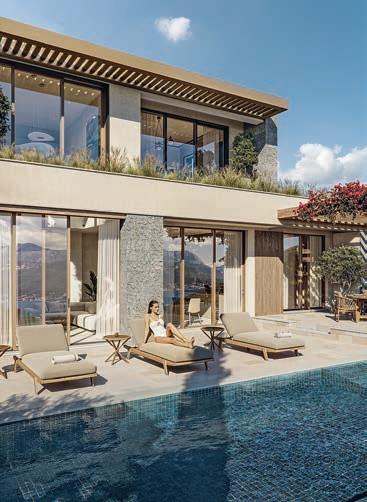
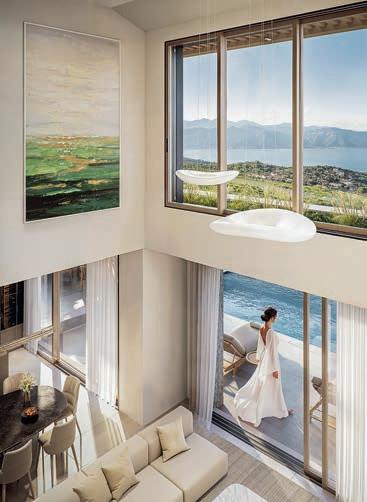
Within this, Luštica Bay leads the way, drawing international buyers with its proven capital growth potential. Average annual property appreciation sits at 13%, with further uplift expected as the golf course takes shape That said, the destination isn’t only a financial investment. It’s an investment into a sustainable, impactful place with a real purpose. Orascom Development Holding - a leader in developing tight-knit communities in self-sustaining destinations - is the driving force behind Luštica Bay, and its founder Samih Sawiris has always stated his vision for this to be a fully integrated town, not just a hotel complex or holiday resort.
Perhaps this is why the town is already home to a cosmopolitan community of over 700 families from more than 50 countries. Their life here centres around the popular marina with its collection of shops, restaurants, yachting facilities, and direct access to the Adriatic shoreline. Clear waters, five pristine beaches, and two sea lounges create a daily ritual of sun, while a range of activities, events and experiences cater to all ages and passions. Padel courts then paddleboarding, scenic hikes and engaging kids’ clubs, magic shows followed by operatic showcases.
Now launching from €2.2 million, these townhouses join Luštica Bay’s select portfolio of residences that includes spacious villas and a nearly sold-out collection of golf apartments. Financial flexibility is a cornerstone of The Peaks offering: investors benefit from 0% transfer tax, and a bespoke payment plan is available to those who purchase early in the coming weeks. The Peaks Townhouses introduce an exclusive, limited-time payment plan available to early buyers as part of the launch. The payment plan begins with a 20% down payment, followed by 50% in quarterly instalments during construction, and 30% in quarterly post-handover payments, all interest-free.This presents owners with the unique advantage of being able to move in during their payment period and/ or even generate rental income through Luštica Bay’s professional Property Rental Service.
All of this is why Luštica Bay has become one of the world’s most compelling addresses, particularly at a time when discerning travellers and investors seek retreats from the world’s crowded corners. The Peaks’ new townhouses raise the bar once again, welcoming a precious handful of owners into an elegant community where life is spent alive and well.
W: www.lusticabay.com
E: sales@lusticabay.com
T: +382 67 050 550
The figures shaping a region in motion
As 2025 moves into its final stretch, the story of the first half of the year is already clear — Adria has been building. From record-breaking tourist flows to major infrastructure and energy investments, the first six months set a tone of recovery and renewal. These numbers capture that surge of momentum — tangible proof that the region’s economies are not just stabilising, but scaling up.

855,727
Tourism rebounds in Bosnia & Herzegovina
Bosnia & Herzegovina recorded 855,727 tourist arrivals in the first half of 2025 — a 2.8 percent increase year on year. Foreign visits grew 4.7 percent, confirming the country’s steady recovery in both cultural and eco tourism.
€90.5 million
Railway boost in Albania
In April 2025, the EIB and EU signed a €90.5 million package to modernise the 34 km Durrës–Rrogozhinë railway, part of Corridor VIII. The project will cut travel times and lower emissions while linking Albania more directly to its neighbours.
3.2 million / 14.3 million
Croatia’s June momentum
In June 2025 alone, Croatia welcomed 3.2 million tourists who generated 14.3 million overnights — up 12.6 and 14.5 percent respectively compared to the previous year. The Adriatic coast continues to lead the region’s tourism recovery.
By mid-2025, over €1 billion had been invested through the Regional Energy Efficiency Programme (REEP) to modernise grids, support renewables, and cut emissions across the Western Balkans. The drive marks a turning point in the region’s energy transition.

195,642 / 735,673
Montenegro’s tourist surge
Montenegro’s June 2025 arrivals reached 195,642, with 735,673 overnights — a majority (89 percent) from foreign visitors. Hotels in Budva and Kotor reported record occupancy rates, underscoring the country’s return as a premium summer destination.
Sources: EIB, EU WBIF, UN Tourism, national statistics offices, World Bank, EBRD (verified data as of September 2025).
Žito cleared to acquire majority stake in MI Ravlić
Croatia’s competition authority approved Žito’s purchase of a 51% share in meat producer MI Ravlić. The deal consolidates domestic protein processing and distribution. Integration priority: procurement efficiencies, capex discipline and brand architecture in a fragmented market.
EBRD, EU and Raiffeisen expand support to Bosnian SMEs & households
In a new package, the EBRD and EU offered a €25 million risk-sharing guarantee to Raiffeisen Bank Bosnia to boost SME
lending, plus a €3 million loan on-lent to households for energy-efficiency upgrades. The move targets underserved firms in rural and green sectors and is backed by technical assistance for implementation.
FBiH signs €54 million road contracts
Bosnia’s Federation highway operator Autoceste FBiH inked contracts worth €54.2 million for two sections of the strategic expressway linking Mostar to the Croatian border via Polog, Široki Brijeg and Grude. The works are expected to be completed within 30 months under local contractor Hering Široki Brijeg.
JGL expands portfolio through Medicuspharma deal
Rijeka-based pharma company JGL agreed to acquire Medicuspharma, strengthening its generic-drug and medical-products lineup. The acquisition deepens vertical control in distribution and supports JGL’s core therapeutic focus in dermatology and respiratory care.
Tokić prepares IPO to fund regional expansion
Auto-parts distributor Tokić plans to channel IPO proceeds—about €20–30 million—into a new logistics hub and re-
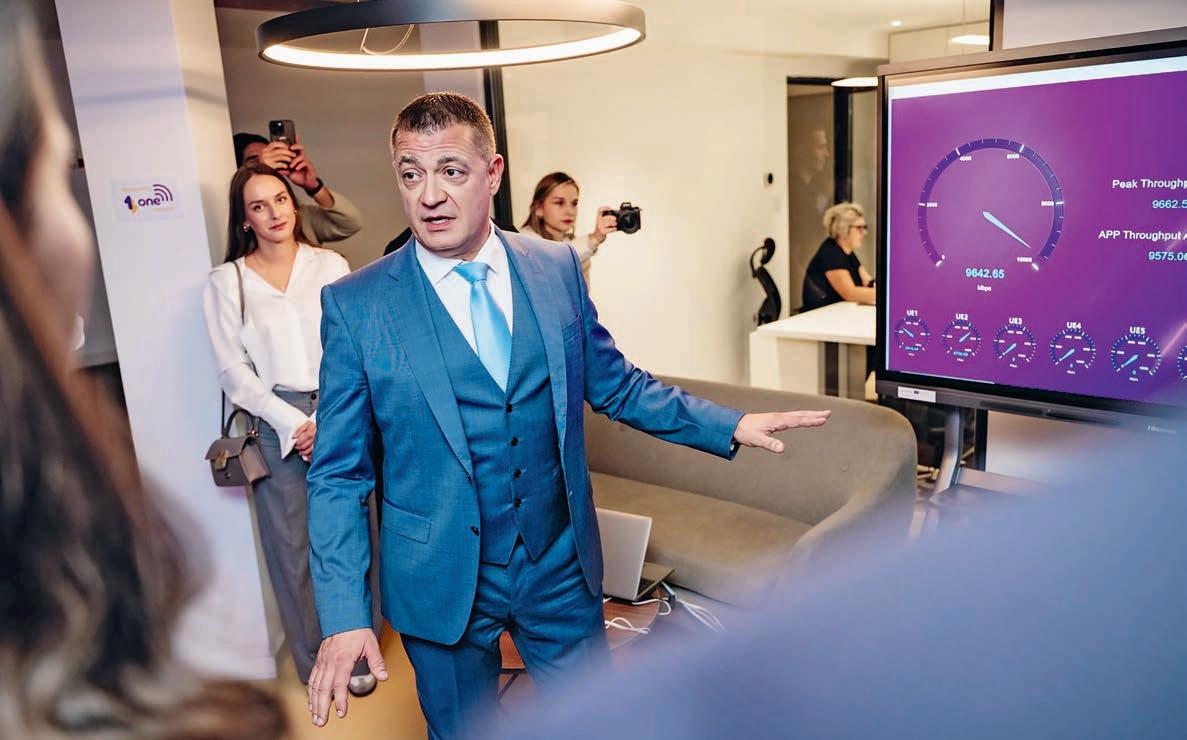
One Crna Gora unveils 5.5G test network in Nikšić
Telecom operator One Crna Gora has launched Montenegro’s first 5.5G test environment at the new House of Digital Revolution in Nikšić, in partnership with the Innovation and Entrepreneurship Center Tehnopolis. The network achieved transfer speeds approaching 10 Gbps, marking a major step toward next-generation connectivity. Backed by Hungary’s 4iG Group, one of Europe’s leading IT integrators, the project underscores Montenegro’s readiness to attract high-value digital investments and innovation.
Ten Croatian properties received the new MICHELIN Key distinction for exceptional stays. Vila Nai 3.3 clinched three Keys, Palas Elizabet earned two, and eight more hotels were recognised across Zagreb and the coast. The accolades should lift average daily rates and cement Croatia’s premium-hospitality push.
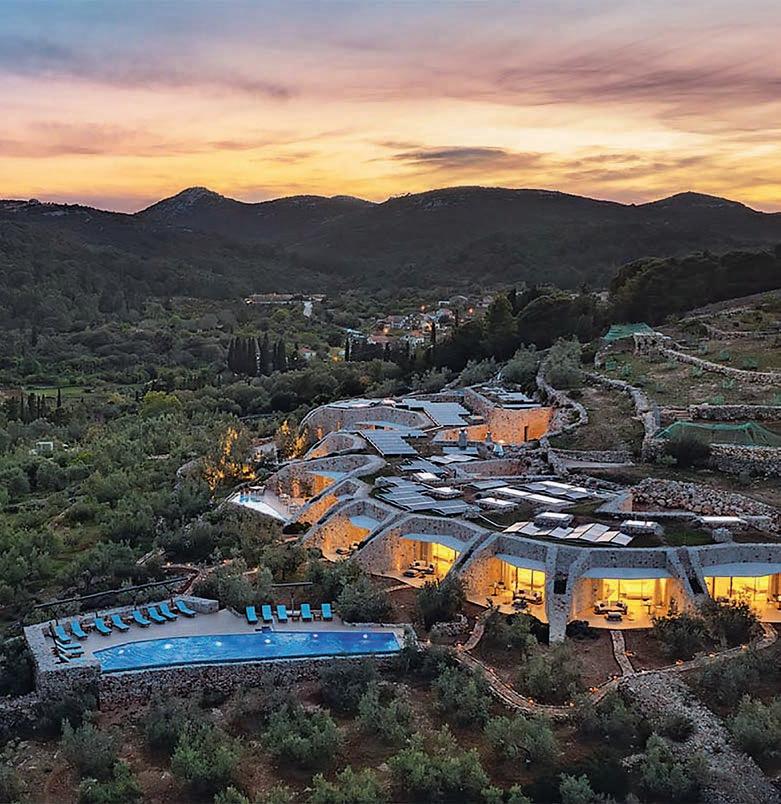
gional acquisitions. The pipeline reportedly includes targets across Slovenia, Bosnia & Herzegovina and Austria. The strategy aims for scale, inventory velocity and network reach.
Renters expands in CEE with Irundo acquisition
Poland-based Renters purchased Croatian apartment-management player Irundo, creating a larger short-stay platform across Central Europe. The combined group targets yield uplift through unified reve-
nue management and deeper OTA distribution. Owners gain from scale in operations, marketing and seasonal pricing.
JGL expands portfolio through Medicuspharma deal
Rijeka-based pharma company JGL agreed to acquire Medicuspharma, strengthening its generic-drug and medical-products lineup. The acquisition deepens vertical control in distribution and supports JGL’s core therapeutic focus in dermatology and respiratory care.
Murat Çinar appointed CEO of DRI
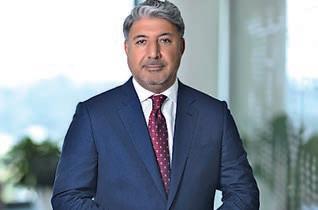
Murat Çinar has been named CEO of DRI, taking over from Ivan Geliukh as of early September. Çinar, previously an executive at Limak Holding and Kalyon Energy, brings decades of experience in energy infrastructure and project development. His appointment signals DRI’s intention to expand its renewable and infrastructure portfolio across the Western Balkans and Central Europe, aligning with the region’s accelerating green transition.
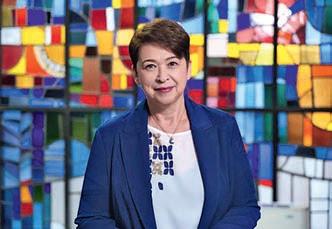
Banka
has appointed Chrysoula Koutoudi as Chief Executive Officer and Chair of the Board of Directors, following regulatory approval from the National Bank of North Macedonia. A seasoned banking professional with more than 30 years of experience in the National Bank of Greece (NBG) Group, Koutoudi is recognised for her leadership in digital transformation and product innovation. Her appointment comes as Stopanska accelerates investments in new digital tools, embedded banking solutions, and talent development to strengthen its regional competitiveness.
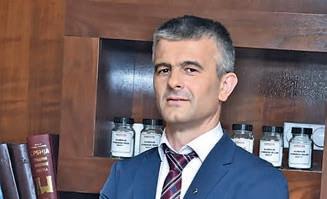
Bosnian aluminium producer Nova Alumina has appointed Radislav Filipović as Chief Executive Officer, succeeding Zoran Stevanović, who recently became transport minister of Bosnia’s Serb Republic. Filipović, previously the company’s Deputy CEO, brings over 25 years of experience in the aluminium industry. His appointment ensures operational continuity and technical expertise at a time when Nova Alumina is preparing new investments to expand production capacity and strengthen its regional market position.
Radovan Višković appointed acting director of Autoputevi RS
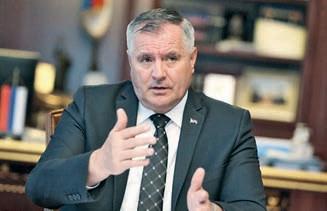
Former Prime Minister of Republika Srpska Radovan Višković has been appointed Acting Director of Autoputevi Republike Srpske, the state-owned highways company. His appointment, confirmed at the end of September, comes as the firm advances several large-scale infrastructure projects, including new motorway sections linking Banja Luka, Bijeljina, and Serbia. Višković, who holds a PhD in traffic engineering, previously headed key transport and construction initiatives and is expected to accelerate project execution and regional connectivity efforts.
The European Bank for Reconstruction and Development (EBRD) has approved a €40 million loan to MK Group to strengthen competitiveness in Serbia’s agricultural and food sectors. The financing will fund modernisation of production facilities, adoption of advanced technologies, and expansion across regional and international markets. The partnership reinforces MK Group’s role as one of the Western Balkans’ leading agri-holdings and aligns with the EBRD’s goal of boosting sustainable food production and exports.
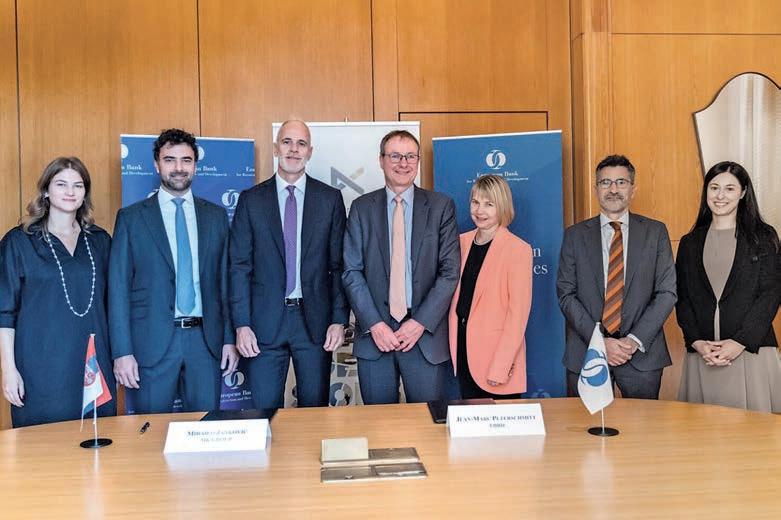
World Bank highlights jobs as key growth lever
A new World Bank report underscores that job creation and productivity are central to sustaining growth and EU convergence. The outlook to 2027 hinges on reforms, labour-market activation and technological adoption at firm level.
Telemach launches €120 million fibre-optic rollout in B&H
Telecommunications provider Telemach BiH, part of United Group, has begun a €120 million investment to expand highspeed fibre coverage to an additional 250,000 households by 2027. The project will create several hundred new technical and construction jobs and position Bosnia and Herzegovina among the region’s leaders in gigabit connectivity.
AFD backs North Macedonia’s just energy transition
France’s development agency AFD strengthened its partnership with North Macedonia to finance a modern and equitable energy transition. Priorities include grid upgrades, renewable capacity and market reforms. The programme aligns with broader EU green-finance frameworks.
Atlantic Grupa posts record export revenue Zagreb-based consumer-goods leader Atlantic Grupa reported record export revenue in Q3 2025, driven by strong sales of coffee and health-food brands across EU markets. Exports now account for over 75 percent of total revenue. The company plans further expansion in Germany and the Benelux region while consolidating logistics in Slovenia.
Iskra acquires Croatian machinery firm eXperio
Slovenian industrial group Iskra acquired Croatia’s eXperio, extending capabilities in automation and electrical systems. The move strengthens cross-border servicing as capex tilts toward modernisation and energy efficiency. Expect portfolio synergies in industrial and infrastructure projects.
Sanctions on NIS tighten, Serbia seeks supply
U.S. sanctions on NIS took effect in early October, constraining Serbia’s crude and product supply. Regional partners moved to stabilise flows, with commitments to increase deliveries even as pipeline access narrowed. Attention now turns to logistics workarounds and winter reserves.
Slovenia’s leading dairy producer Ljubljanske mlekarne, part of the Lactalis Group, has named Maja Zdeličan as its new Chief Executive Officer. With over 15 years of experience in the dairy industry, Zdeličan previously held senior roles in Lactalis operations across Croatia and Southeast Europe, most recently serving as Director of Controlling for Lactalis SEE. She succeeds Tomaž Žnidarič, who will take over as CEO of Lactalis Germany in 2026. Zdeličan’s mandate focuses on consolidating Ljubljanske mlekarne’s market leadership and strengthening its role as Slovenia’s largest buyer of raw milk, a key link in the national dairy supply chain.
One Albania has appointed Barna Kutvolgyi as its new Chief Executive Officer, marking a new chapter in the company’s digital and network expansion. Kutvolgyi, a senior executive with extensive experience in the telecommunications sector across Central and Eastern Europe, previously held leadership roles within the 4iG Group, One Albania’s parent company. Under his direction, the operator plans to accelerate the rollout of 5G infrastructure, enhance customer experience, and consolidate its position as a top innovator in Albania’s rapidly evolving telecom market.

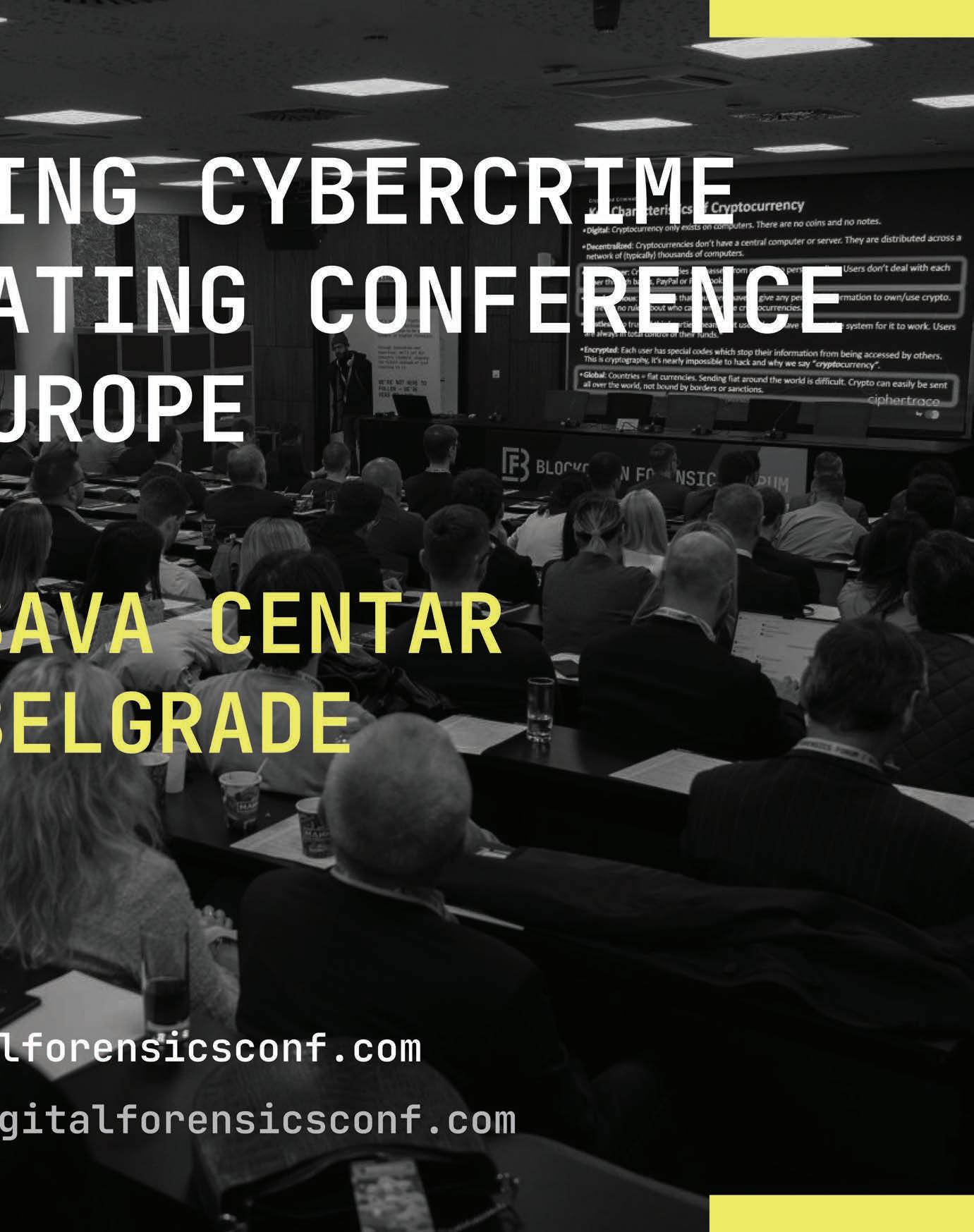
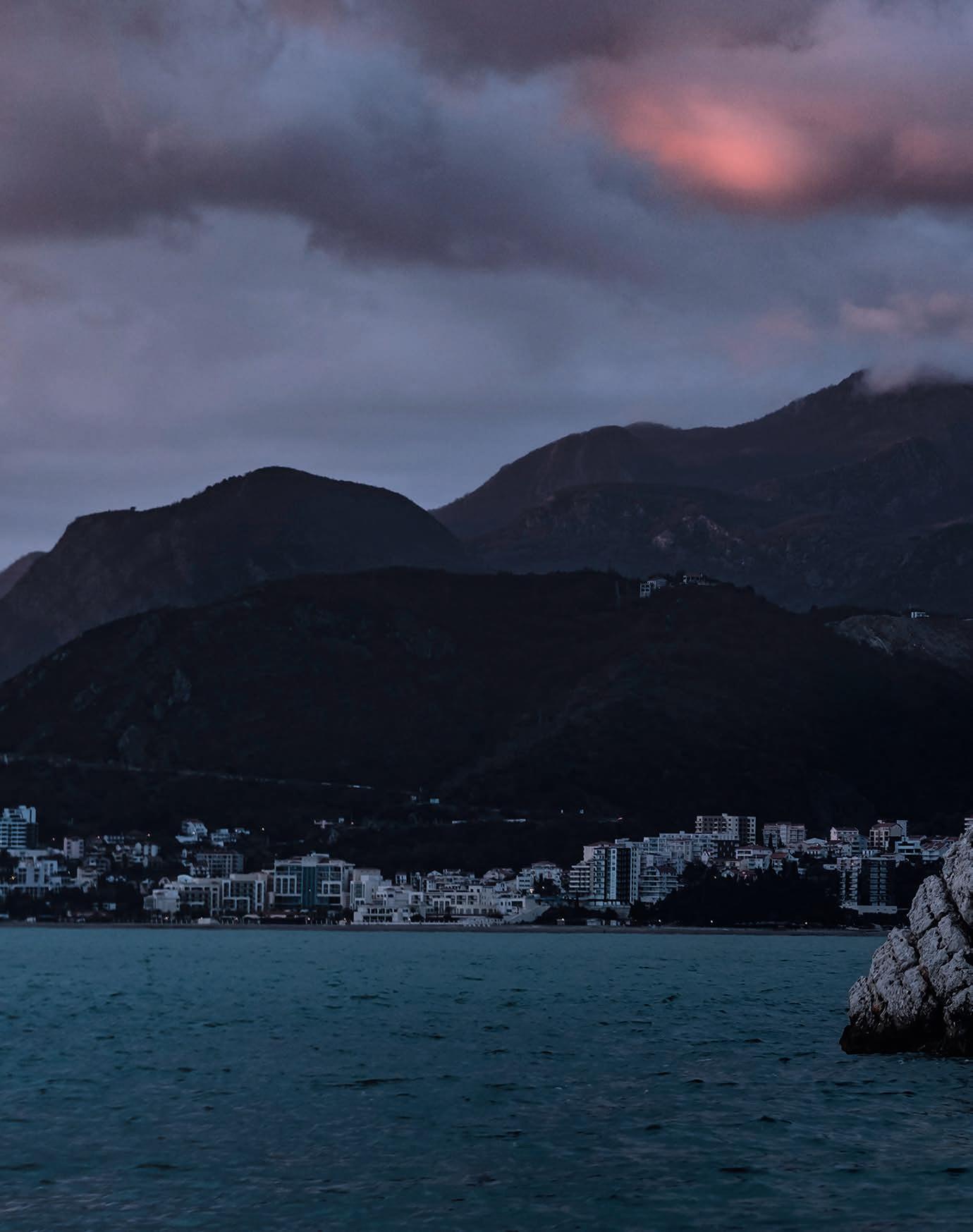
Everyquarter tells a different story.
The Adria region’s new one is quieter, more layered — a story of recalibration rather than acceleration. Growth continues, but the mood has changed: investors are selective, companies are cautious, and governments are learning that momentum is not the same as stability.
After two brisk years of recovery, the region’s economies are settling into a phase of slower but more deliberate growth. Business leaders describe 2025 as a “year of sorting things out”: tighter financing, leaner expansion plans, and greater attention to productivity rather than volume.
Across the board, foreign investors are still present — but more strategic. Many are testing how well local suppliers can
“The mood isn’t pessimistic — it’s pragmatic,” says one senior economist in Ljubljana. “Adria has learned that sustainability begins with fiscal self-control.”
meet higher standards, especially in logistics and green compliance. It’s a quieter form of integration, driven less by headlines and more by checklists.
Migration remains the most defining undercurrent of 2025. Skilled workers keep leaving, even as new job opportunities open. Ports and airports are full; so are departure halls.
Meanwhile, near-shoring brings in a new wave of technicians, consultants, and returnees — people who left years ago and are now coming back under better terms. These parallel flows tell a complex story: of ambition without borders, and of home countries that must now compete not only for investors but for their own citizens’ loyalty.
The economy’s pulse is often found in small, early tremors — not press releases. Construction permits are taking longer to issue. Imports of machinery have dipped slightly, hinting at delayed investments. Electricity consumption is stable but not rising — a sign of cautious industrial output.
At the same time, tourism bookings for summer 2026 are already above pre-pan-
demic levels, and container traffic through the Adriatic has quietly surged.
Each of these signals, on its own, may seem trivial. Together, they point to a region adjusting — conserving energy, testing resilience, and learning to grow within its limits.
Political calendars across the region are heavy with elections, reshuffles, and policy resets.
Yet, investor confidence has not evaporated. It has simply changed shape: from faith in reform to faith in reliability. The investors returning to the region in 2025 are those who know its rhythm — and are betting on consistency over speed.
The perception of risk is still uneven. Countries that communicate clearly and maintain predictable policies enjoy a low-
er “fragmentation premium” — the extra cost businesses pay for uncertainty. Others are discovering that geopolitical neutrality can be an economic advantage.
Some of the most dynamic signals now come from unexpected corners.
The digital economy — long a buzzword — is showing measurable traction, especially in e-governance and online trade. Small cross-border projects in renewable energy, professional mobility, and creative industries are quietly knitting the region together.
If previous years were about catching up, 2025 feels like a year of composition: aligning policies, people, and potential into something coherent. The pace is slower, but the direction clearer.
New migration math: Remittances rising even as emigration continues.
Policy patience: Fiscal tightening in several capitals after years of stimulus.
Infrastructure digestion: Major projects underway, but private investment waiting for outcomes.
Digital trust: Citizens using e-services more than ever before.
Quiet optimism: Consumer sentiment surveys across the region inch upward for the first time in a year.
Compiled from regional economic reports, business surveys, and interviews conducted across Adria in Q4 2025.

She was young. She was outnumbered. And she was not going to let them pass.
In the 16th century, during one of the Ottoman Empire’s many campaigns along the Adriatic hinterland, a force of several thousand soldiers advanced into the Cetina Valley, in what is now southern Croatia. Their goal: to push deeper into Dalmatian territory, seizing villages and controlling coastal trade routes. The resistance was scattered. The threat felt unstoppable. Until a woman named Mila Gojsalić changed the course of the invasion — alone.
According to oral legend, Mila was not a warrior, but a young peasant woman from the village of Gata, near Omiš. When Ottoman commander Ahmed-pasha launched a major incursion into the valley, Mila made a decision that would become the stuff of legend. She volunteered to infiltrate the Ottoman camp, using her beauty and composure to win the soldiers’ trust. Over the course of several days, she gathered information — and waited for her moment.
That moment came when she found her way into the enemy’s gunpowder supply depot. With no way out and no way back, she lit the fuse. The resulting explosion shook the camp, killing dozens, including herself. But her act of defiance broke the enemy’s momentum and gave her people the opening they needed to regroup and defend their land. The Ottomans withdrew. The valley was saved.
Mila died that day, but not her name.
To this day, she is remembered in Dalmatian folklore as a symbol of freedom, sacrifice, and resistance. Her story, first passed down in whispered village songs, has been retold for centuries — sometimes embellished, often debated, but never forgotten. In the 20th century, her legend was elevated further when Croatia’s most famous sculptor, Ivan Meštrović, created a monument in her honour.
The statue, perched on a cliff high above the Cetina River, is one of Meštrović’s most evocative works. With her dress billowing in the mountain wind, her face stoic and resolute, Mila appears to stand guard even in death — a sentinel watching over the valley she saved.
While historians may still argue over the factual details, the emotional truth of the story remains: a single woman’s sacrifice, remembered for centuries, continues to inspire ideas of courage, patriotism, and local pride in the villages of southern Dalmatia.
Mila Gojsalić may not appear in textbooks. Her story may never make it into school curricula. But in the hearts of those who pass the statue, who tell the tale to their children, or who simply look out over the Cetina canyon, she is real. And in that corner of Croatia, Mila is not a myth — she’s the woman who blew up an empire
Date of Legend
Circa 1530s
Hometown
Village of Gata, near Omiš, Croatia
Memorial
Bronze statue by Ivan Meštrović, unveiled in 1967
Location
Overlooking the Cetina Canyon, near the town of Omiš
Cultural Role
Honoured in folk songs, plays, and local festivals
What She Represents Resistance, female courage, sacrifice for one’s homeland
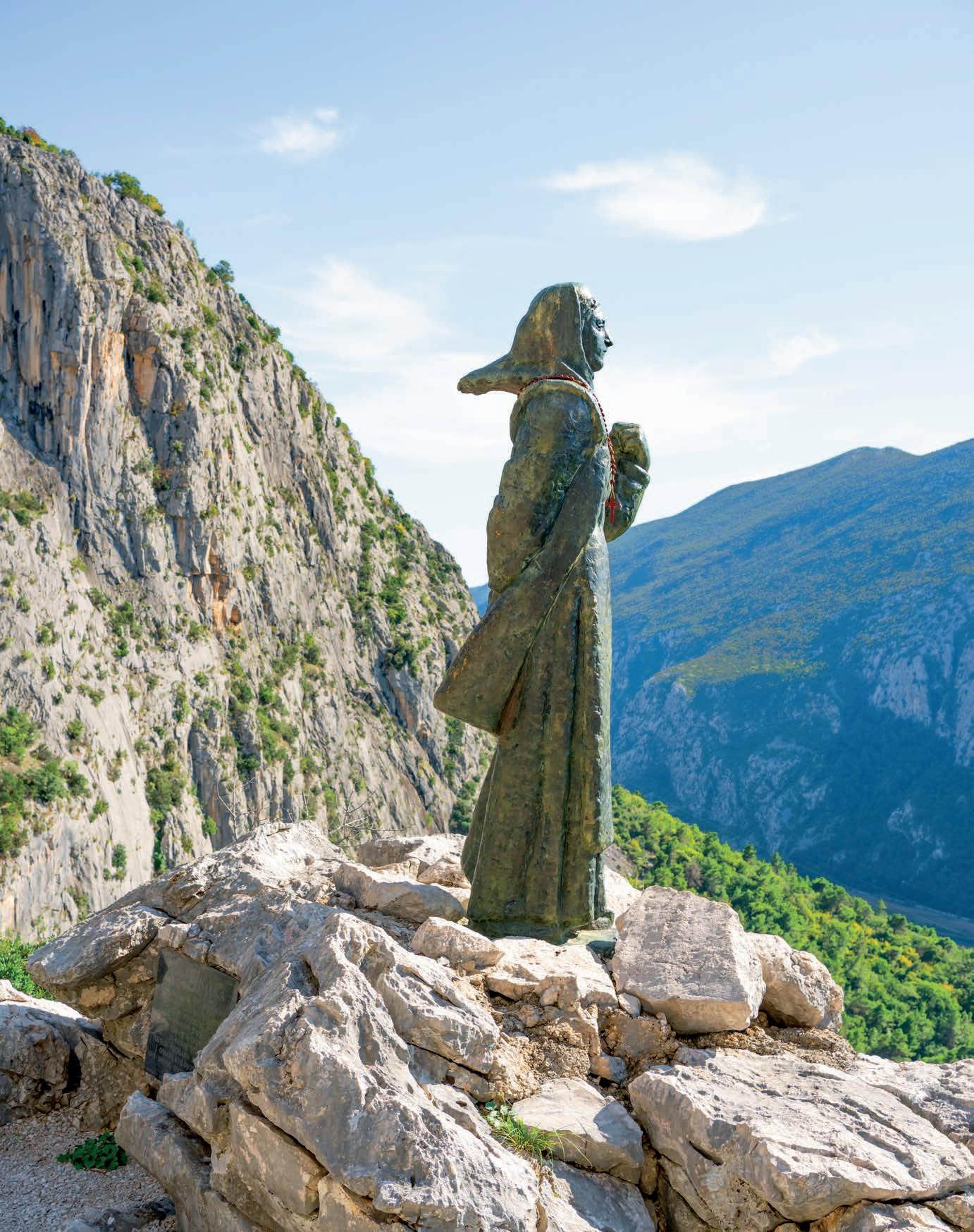
Once hunted to the edge of extinction, the wolves of the Adria mountains are finding their way back. Their story is one of instinct, endurance - and an uneasy coexistence with humankind.
As autumn colours deepen across the Dinaric Alps, a long-forgotten rhythm stirs again in the forests. A distant howl rolls through the valleys of Gorski Kotar, across the Slovenian Karst, into the pine-shadowed ranges of Montenegro. It is a sound that once vanished from much of the Adria region — and one that many believed would never return.
The wolf, a symbol of wilderness and fear, has reclaimed its ground. In just two decades, populations have quietly spread along the “green spine” of the Balkans, moving through Slovenia, Croatia, Bosnia and Herzegovina, Montenegro, and Albania. Cross-border corridors now connect once-isolated packs, allowing wolves to travel hundreds of kilometres in search of food, mates, and safety.
The Dinaric-Balkan wolf population is one of Europe’s largest, spanning seven countries.
Wolves can travel up to 70 km in a single night.
Each pack has a distinct howl pattern — a kind of vocal fingerprint.
At dawn, fresh pawprints appear on muddy tracks near Risnjak National Park. Camera traps capture fleeting images: a mother with two cubs, a lone male crossing a frozen stream, eyes glowing in infrared light.
For biologists, these moments are proof that coexistence is working - fragile, but real.
“The wolf is not returning because of us,” says one wildlife researcher in Croatia. “It’s returning despite us - because nature always finds a way.”
Still, the balance is delicate. Wolves prey mainly on wild deer and boar, yet occasional attacks on livestock reignite old fears. In rural villages, farmers and environmentalists still argue across fences, each defending their way of life. In Slovenia, compensation schemes and better fencing have helped reduce conflict. Elsewhere, mistrust lingers - but so does a sense of awe.

Slovenia and Croatia: joint monitoring since 2009
Bosnia: first national wolf census in progress
Montenegro & Albania: new protected corridors under EU LIFE programme

Night falls over the forests of Lika. The air is sharp with frost, the moon bright. Somewhere beyond the treeline, a pack begins to call — first one, then several, a haunting chorus carried by the wind.
For centuries, people told stories of wolves as monsters. Now, perhaps, the greater story is ours: whether we can learn to live alongside what we once sought to destroy.
Their presence reminds us that wilderness still exists, stubborn and beautiful, even in a region that has rebuilt itself from conflict and change. The return of the wolves is not just about nature’s resilience. It’s about ours.
Unlike humans, wolves ignore the lines on a map. Packs travel freely between countries, reminding us that the Adria’s wilderness is one shared ecosystem. Slovenia and Croatia cooperate under the Dinaric-Balkan Wolf Population Initiative, sharing genetic data and migration tracking.
Montenegro and Albania are now joining conservation networks too, as new ecotourism projects turn the wolf’s comeback into an economic opportunity.
In Prokletije National Park, rangers guide visitors on “wolf trails,” teaching them to identify tracks and respect the animal’s role in maintaining balance. “If the wolf is here,” one guide explains, “it means the forest is healthy.”
Across the region, attitudes are shifting— from fear to fascination. The wolf is no longer just a threat; it has become a mirror of our relationship with the wild.
Selected by a reader who believes that great books don’t have borders — only readers who cross them.
Bookshelves, like people, reveal what you value. Ours says we like writers who take risks — who ask uncomfortable questions, who look at ordinary life closely enough to find what others miss. These aren’t books for show; they’re for people who read to make sense of the world, not escape it.
Some were written nearby, some far away, but all share a certain honesty — that mix of curiosity and doubt that keeps you turning pages long after you meant to stop. Think of this selection less as a list and more as a conversation — one that keeps unfolding long after you’ve closed the book. Ten books, ten ways to stay alert, curious, and connected.
Zbiralec strahov (The Collector of Fears) by Goran Vojnović
Theme: The politics of exhaustion
Vojnović, one of Slovenia’s most insightful chroniclers, trades fiction for essays that expose how fear shapes a society still learning democracy. Wry, humane and occasionally furious, he writes like a man both weary of his country and unable to stop caring for it.
Pair it with: a train window and your latest doom-scroll break. Why now: Because fatigue, when written honestly, becomes resistance.

Mater Dolorosa by Jurica Pavičić
Theme: Family, guilt, and the quiet persistence of love
The celebrated Croatian novelist returns with another piercing look at how private choices reflect public change. Set against the shifting moral landscape of the Adriatic coast, Mater Dolorosa follows a mother’s reckoning with her past. Pavičić writes with unshowy precision — his sentences linger long after the plot resolves. Pair it with: a quiet coastal weekend and the sound of church bells in the distance.
Why now: Because even as the region modernises, its most powerful stories remain human.

by Rick Rubin
Theme: Creativity as awareness, not achievement

by Ledia Xhoga
Theme: The price of understanding
Rubin’s reflections read like field notes from a lifetime spent tuning out the noise. He replaces ambition with attention, success with stillness, and somehow makes both sound radical. *The Creative Act* feels less like a manual than a mirror.
Pair it with: early-morning light and the courage to slow down.
Why now: Because in the attention economy, noticing is the rarest skill.
by James Bridle
Theme: Intelligence in unexpected forms
Bridle blends art, science, and ecology to suggest that thinking isn’t just human — it’s what life itself does. From octopuses to algorithms, his stories expand the idea of mind until it includes the world.
Pair it with: an open window, an open notebook, and time.
Why now: Because technology without empathy is just computation.
Long-listed for the 2025 Booker Prize, Xhoga’s debut follows a translator who lends her voice to others until she can barely hear her own. It’s elegant, unsettling, and beautifully paced — a story about borders that live inside language itself.
Pair it with: a quiet café, your journal, and no agenda except to listen. Why now: Because between nations and people, meaning is still our most fragile export.

Karota by Darko Tuševljaković
Theme: Memory, identity & the quiet gravity of home
In his newest novel, Serbia’s EU Prize-winning author turns memory into architecture. *Karota* unfolds through fragments of a childhood that never stopped echoing, mixing tenderness with the ache of history. It’s regional without being provincial — a reminder that nostalgia can illuminate as much as it wounds.
Pair it with: a long evening train ride through familiar places that look slightly different.
Why now: Because every society still learning to look forward must first learn how to remember.
by Mariana Mazzucato & Rosie Collington
Theme: The business of outsourcing our confidence
by Peter Attia
Theme: Longevity as leadership
Mazzucato exposes how governments and companies surrendered decision-making to consultants — and what it costs in creativity, courage, and competence. It’s a gripping read that replaces outrage with insight.
Pair it with: a sharp pencil and your organisation chart. Why now: Because reclaiming responsibility is the next great innovation.
by Benjamín Labatut
Theme: When genius crosses its own wires
Attia reframes health as strategic endurance — physical, emotional, and intellectual. He translates complex science into a manifesto for living with intention, not just duration. Reading it feels like meeting your future, better self.
Pair it with: sunrise, strong coffee, and the promise of a long game. Why now: Because the most valuable asset any leader manages is their own energy.
Labatut turns the life of mathematician John von Neumann into a fever dream of brilliance and ruin. Fact blurs with imagination until knowledge itself starts to look unstable. It’s as haunting as it is dazzling.
Pair it with: midnight quiet and a glass of red. Why now: Because innovation without introspection always ends the same way — brilliantly, then badly.
by Johann Hari
Theme: Reclaiming the depth modern life stole
Hari travels from Silicon Valley to psychologists’ labs to understand why we can’t concentrate — and how we can again. His mix of storytelling and research makes distraction feel not inevitable, but reversible.
Pair it with: your phone on silent and a real conversation. Why now: Because clarity beats speed, every single time.

On October 6, prime ministers and presidents crossed seas to meet in Durrës under the theme Together toward Europe. Over two days, they traded visions for integration, border cooperation, and strategic resilience — and left with a joint declaration and a shared roadmap.
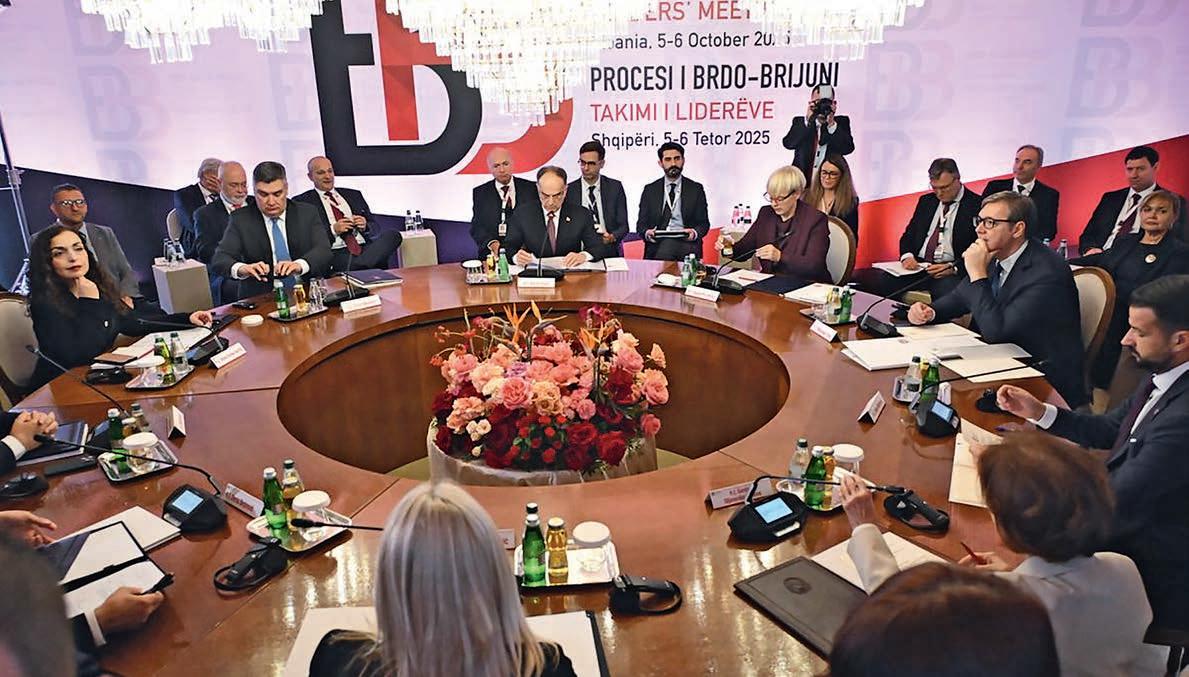
Hundreds of investors, EU officials, and regional leaders gathered under soaring red-and-black banners. Among speakers, Ursula von der Leyen and Edi Rama delivered synchronized calls: “Now is the time to invest in the Balkans.” Panels stretched from fintech to energy, making the forum a centerpiece of regional diplomacy and ambition.
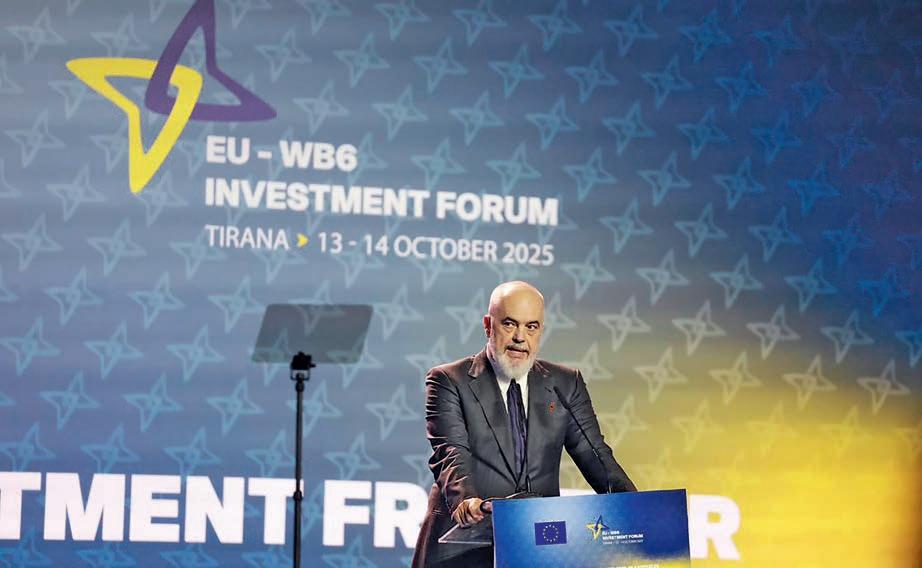
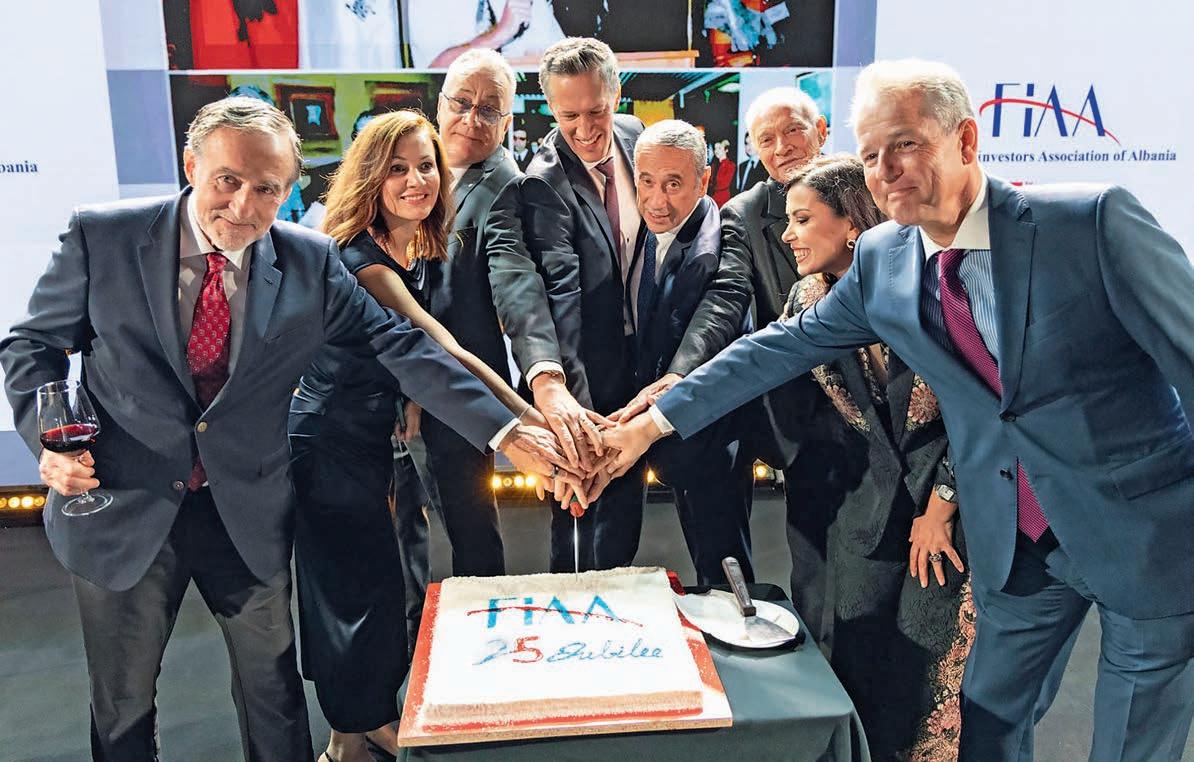
The Foreign Investors Association of Albania marked its 25th anniversary with a gala gathering of business leaders, ambassadors, and government officials. President Balazs Revesz and Director Marinela Jazoj reflected on the Association’s role in shaping Albania’s investment climate, joined by EU Ambassador Silvio Gonzato and Honorary President Kent R. Ford.
The Council of European Business Associations and Chambers in Serbia (CEBAC) hosted a networking cocktail that gathered ambassadors, diplomats, and business leaders. The evening featured the handover of the Secretary General role from Sanja Ivanić to Silvija Rakić, marking the start of Confindustria Serbia’s one-year leadership of CEBAC.
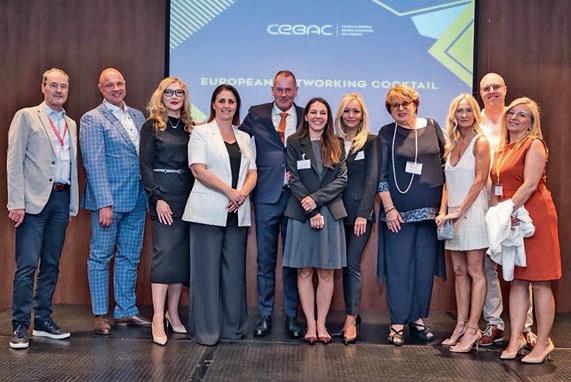
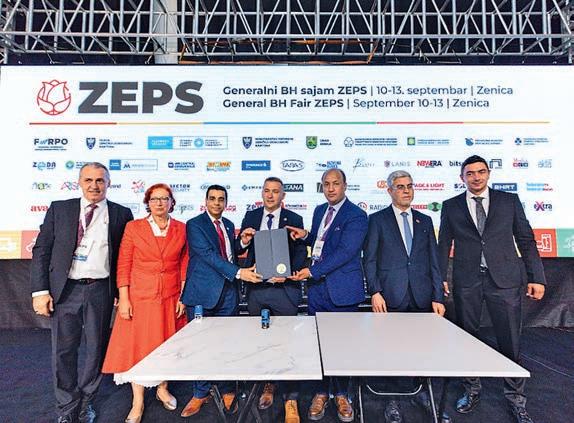
At the 29th International General Fair of Economy (ZEPS), companies from across the region showcased products and partnerships. Backed by the WB6 Chamber Investment Forum, the event strengthened cross-border trade ties and spotlighted Bosnia’s expanding business scene.
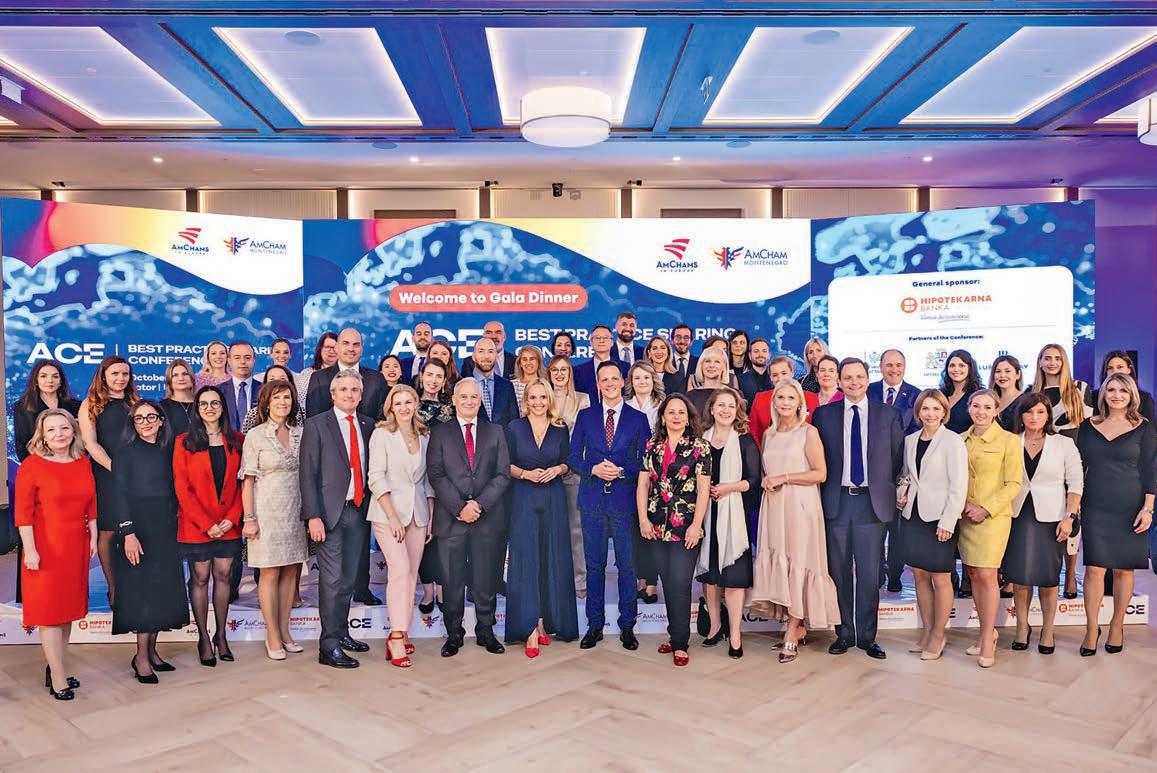
The American Chamber of Commerce in Montenegro hosted the annual Best Practice Sharing Conference of the AmChams in Europe network in Kotor. The event brought together representatives from AmChams across Europe for strategy sessions and networking. Among the highlights was a discussion between Ajša Vodnik, Chair of AmChams in Europe, and Nik Gjeloshaj, Montenegro’s Deputy Prime Minister, who emphasized dialogue and partnership with the business community.
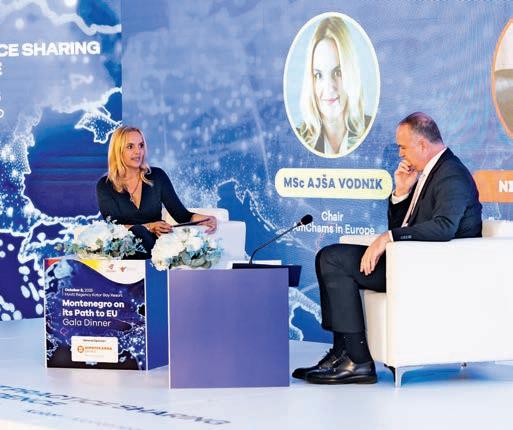
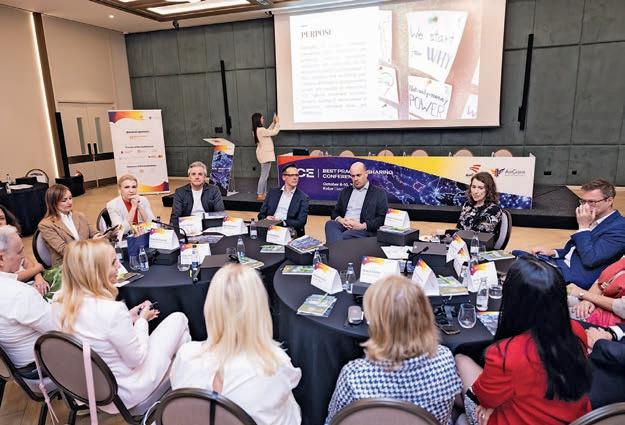
The Sarajevo Innovation Summit 2025 gathered entrepreneurs, academics, and international experts to discuss innovation, resilience, and the future of regional startups. Through keynotes and panel sessions, participants explored how technology and collaboration can drive Bosnia and Herzegovina’s innovation ecosystem forward.
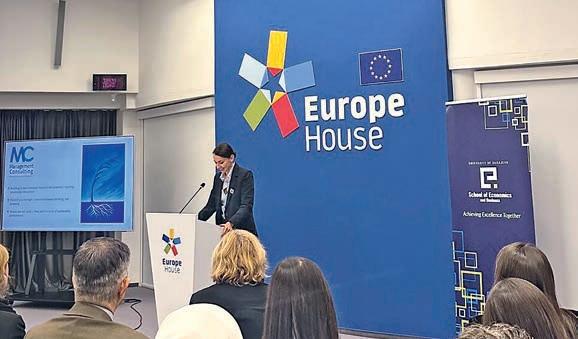
Set against Slovenia’s iconic lake, the Bled Strategic Forum 2025 gathered leaders from Europe and beyond to discuss security, unity, and prosperity. The discussions placed the Western Balkans firmly within Europe’s evolving strategic narrative.
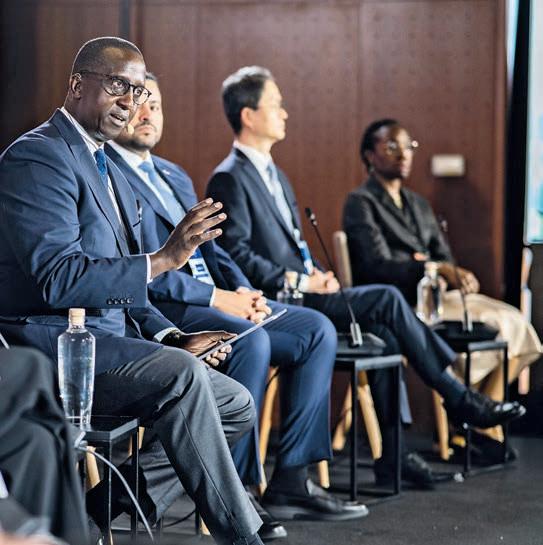
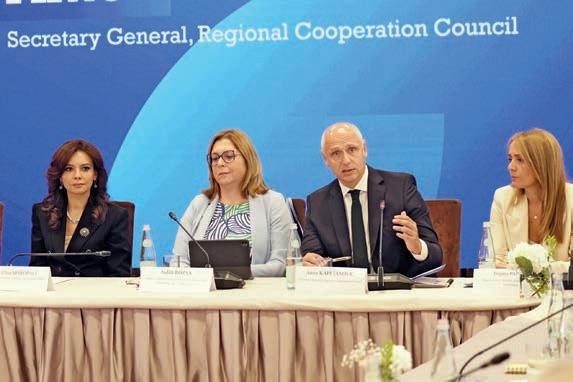
On 1–2 October, Skopje hosted the Western Balkans Digital Summit 2025, bringing together ministers, experts, and business leaders. The event ended with commitments to boost regional connectivity, cybersecurity, and digital identity integration.
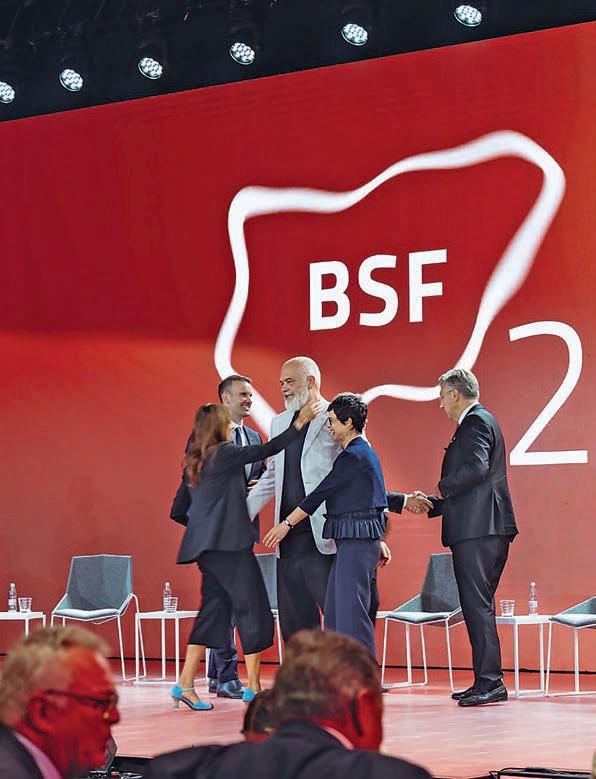
On 9–10 September, Belgrade hosted Creative Bridge Korea & Serbia, a networking event linking IT and gaming companies from Busan and Serbia. Organised by BIPA and Serbia Creates, with support from the Korean Embassy and local industry associations, it featured panels, B2B meetings, and pitching sessions that encouraged new partnerships in the digital and creative industries.
On 14–15 October, Luštica Bay hosted the Smart Growth, Green Future conference, gathering government officials, investors, and EU representatives. The event focused on accelerating sustainable investment in Montenegro, highlighting opportunities in renewable energy, tourism, and innovation as key drivers of green economic growth.
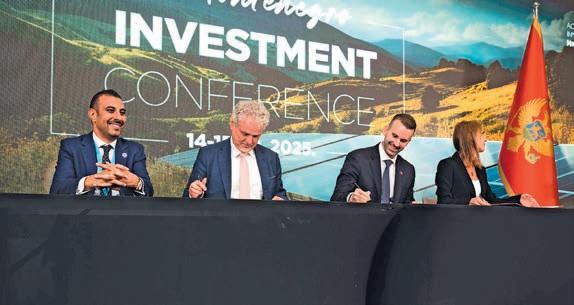
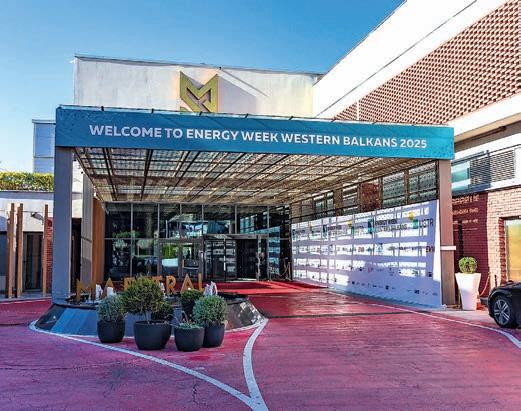
Held 8–9 October in Pržno, Montenegro, Energy Week Western Balkans 2025 united 250 industry leaders and policymakers to explore hybrid renewables, grid resilience, and financing. The gathering underscored the region’s shared ambition to deliver 20 GW of new clean capacity by 2040.
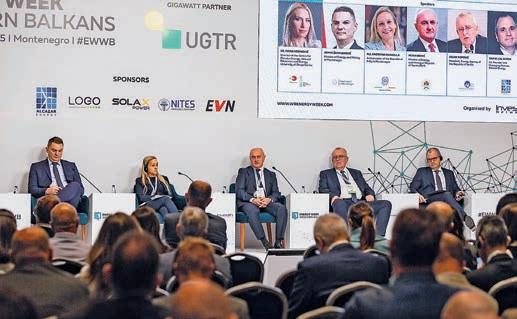
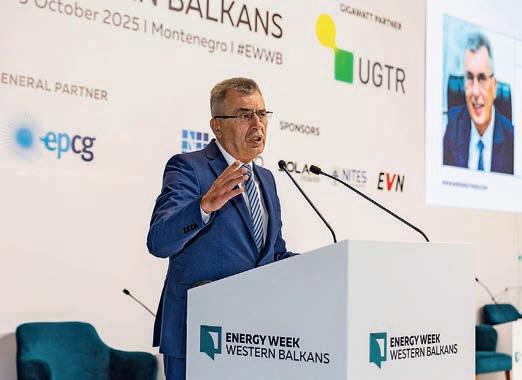
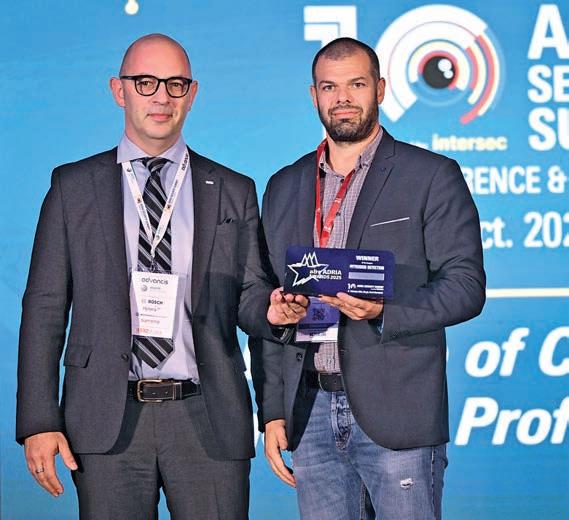
Held on 8–9 October, the 10th Adria Security Summit gathered over 2,000 participants and 100 exhibitors in Skopje. The event showcased innovations in cybersecurity, smart cities, and automation, alongside the debut of Adria Smart City, a new platform for urban technologies. Industry leaders highlighted cooperation and knowledge sharing as keys to building a safer, more resilient Europe.
Thousands filled Belgrade’s streets for Serbia’s Day of Unity parade, featuring troops, defense displays, and symbolic pageantry. The annual event highlighted national pride amid the country’s evolving role in regional security.
Podgorica hosted the third event in the Nordic Smart and Green Cities – Building Partnerships in the Western Balkans series, bringing together government, business, and academic representatives. Held at the Science and Technology Park Montenegro, the event focused on sustainable urban mobility and featured speakers and workshops inspired by Finland’s experience in developing smart cities.
Nobody said integrity was easy… and boy, isn’t that the understatement of the year? Integrity today is like a Nokia 3310 — everyone remembers it fondly, but nobody actually has one. It’s indestructible in theory, but somehow it always disappears right when you need it.
It demands you walk away while everyone else stays. Which sounds noble, until you realise you’re walking away from the buffet, the promotion, or the WhatsApp group where everyone’s “networking.” Integrity wants you to speak up when silence would be safer — great, now you’re the one at the family lunch explaining why Uncle Dragan’s “business model” looks suspiciously like a pyramid.
what’s right, not what’s easy. Translation: no shortcuts, no bribes, no “just one little pla giarism.” Honestly, integrity is that friend who drags you to the gym at 6 AM and then judges you for sug
gesting pancakes afterward. It’s exhausting. Meanwhile, the world is running on fast-forward. Fast food, fast fashion, fast politics, fast spirituality — I’m pretty sure someone’s selling “speed meditation” somewhere. We want enlightenment, but only if it can be delivered in under ten minutes with free shipping. Everything’s fast, except the Wi-Fi when you need it most.
The rhythm seems to be:
More AI, less common sense. More data, less depth. More people, less humanity. More houses, fewer homes. Basically, we’ve upgraded the software and completely deleted the soul.
tional. Like an add-on you forgot to tick at checkout.
But here’s the twist: integrity is actually easier than we think. It’s not a grand act of heroism — it’s the tiny, boring decisions. It’s leaving that shady brand out of your shopping basket because its supply chain screams “oppression.” It’s paying your taxes even when the neighbour brags he doesn’t. It’s saying “no” to gossip when it would make you instantly popular.

We now applaud “authenticity” while filtering our faces into oblivion. We post quotes about kindness while honking at the old man crossing the street. We buy books on mindfulness, read the first page, and
And somewhere in that digital blur, integrity became… op -
Mićić Comedian, Observer, Occasional Truth-Teller
It’s farming organically, eating consciously, tipping fairly, recycling properly, showing up sober, and resisting the urge to pretend you’ve read the book everyone’s quoting. And it’s definitely not seeing someone going through a rough patch as a burden or a threat. Because tomorrow, that same person might be the one rebuilding the mess we all politely ignored.
We don’t need swords, tanks, or microphones to make a difference. We just need free will, critical thinking, and enough backbone to choose right over easy — one checkout, one conversation, one repost at a time.
Of course, integrity doesn’t come with convenience. It’ll cost you some comfort, a few followers, maybe even a seat at the cool table. It might keep you awake while the rest of the world sleeps soundly in moral autopilot. But losing it costs far more — your peace, your credibility, your mirror.
So maybe the trick is not to take it all too seriously. Some sense of humour helps — because if you can laugh at the absurdity of it all, you’re already vibrating higher. Or maybe that’s just the caffeine talking.
Either way, in a world obsessed with upgrades, maybe the bravest thing left is to stay human.
As 2025 draws to a close, The Region returns with an edition that looks both backward and forward — at what this year revealed about leadership, resilience, and the path ahead. Across Adria, reform is colliding with fatigue, innovation is meeting old systems head-on, and new forms of influence are emerging from unexpected places.
The December issue captures this turning point — a region balancing the urgency of now with the long view of legacy.
Want your company featured in The Region’s October edition? Secure your spot today with a premium feature, CEO interview, or advertisement package! Contact us at business@connectingregion.com
Economic pressures, political transitions, and shifting alliances have tested the region’s confidence. We look at who has weathered the storm — and who is rewriting the rules of recovery.
From green corridors to fintech labs, necessity continues to fuel invention. Behind every regional success story lies a tale of reinvention, persistence, and quiet determination.
As the conversation around integration gains urgency, The Region joins key partners in defining what the next five years must deliver. Our special coverage connects the dots between policy and practice — from connectivity and decarbonisation to investment and innovation — setting the stage for Western Balkans 2030, the landmark conference shaping the region’s shared future.
Beyond politics and profit, influence is shifting. A new generation of entrepreneurs, policymakers, and cultural voices is emerging — redefining how Adria works, trades, and leads.
From design festivals to film premieres, creative industries are reclaiming the region’s identity. Culture is no longer an afterthought — it’s a business model.
A sharp look at the lighter side of leadership — and one remarkable creature reminding us what resilience really looks like.
Out this December — stories, voices, and perspectives that will define the year ahead. Only in The Region.