In the wake of Time magazine naming the architects of AI as the person of the year in 2025, the Spring 2026 edition of SCAN will focus on the innate connection between humans and the rest of our living world. From flora to fauna and from the depths of the sea to the far reaches of our universe, we all have our own unique way of connecting to what we know of as life. Biophilia, which essentially translates to “love of life,” is the human tendency to strive for this connection to the living. As climate change becomes more prominent and society immerses itself deeper into a world of technological advancement, it is imperative that we prioritize the natural world just as we have for the last 2.5 million years that humans have roamed the Earth.
We want this edition to show the ways in which our generation connects to nature, our need for companionship from people and animals alike, how we go back to our roots in our family, our urge to travel the world, our hopes for a better future, a plan for how we can build a better future, and much more.
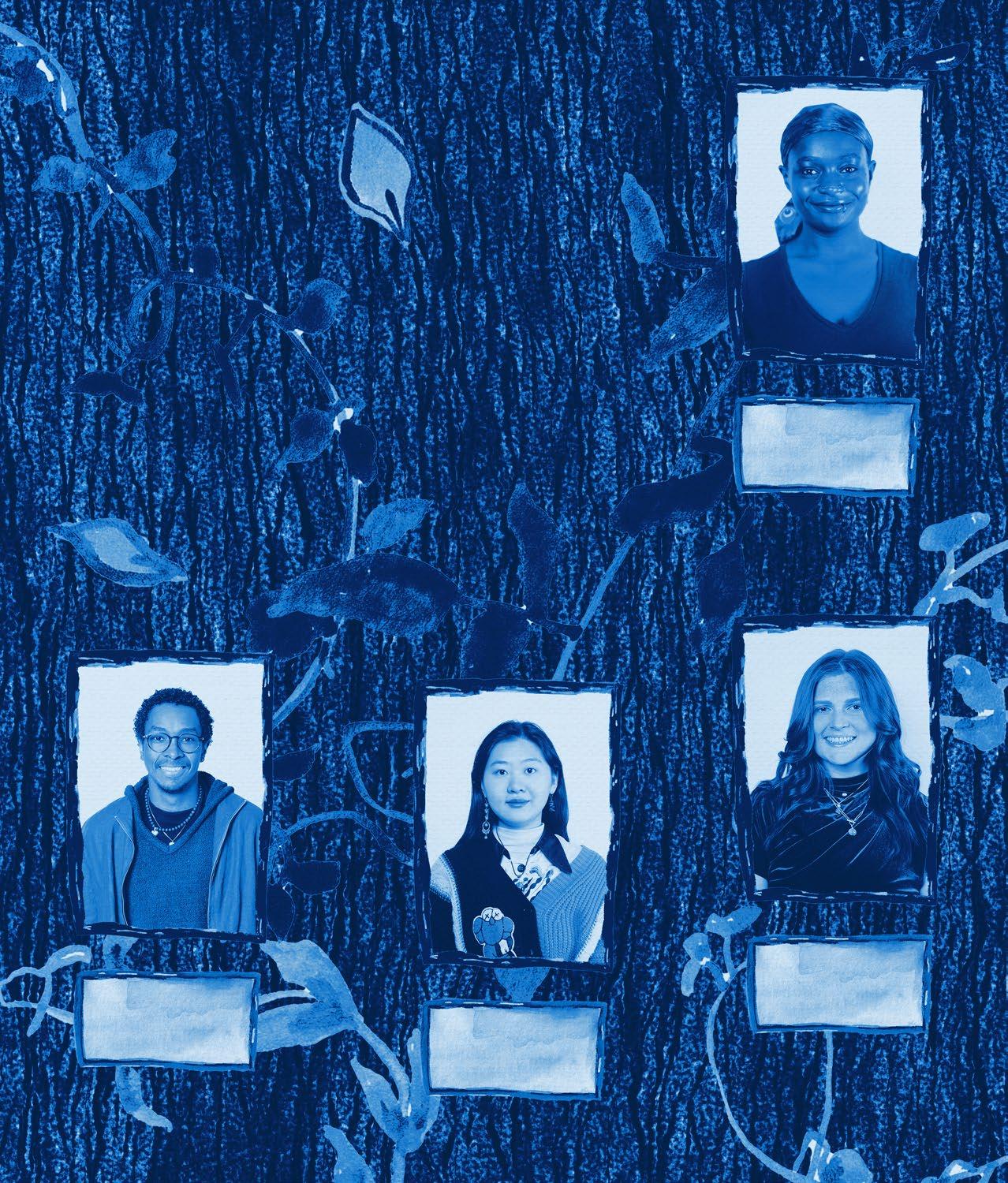
Creative Director
Jordan Yates
Art Director
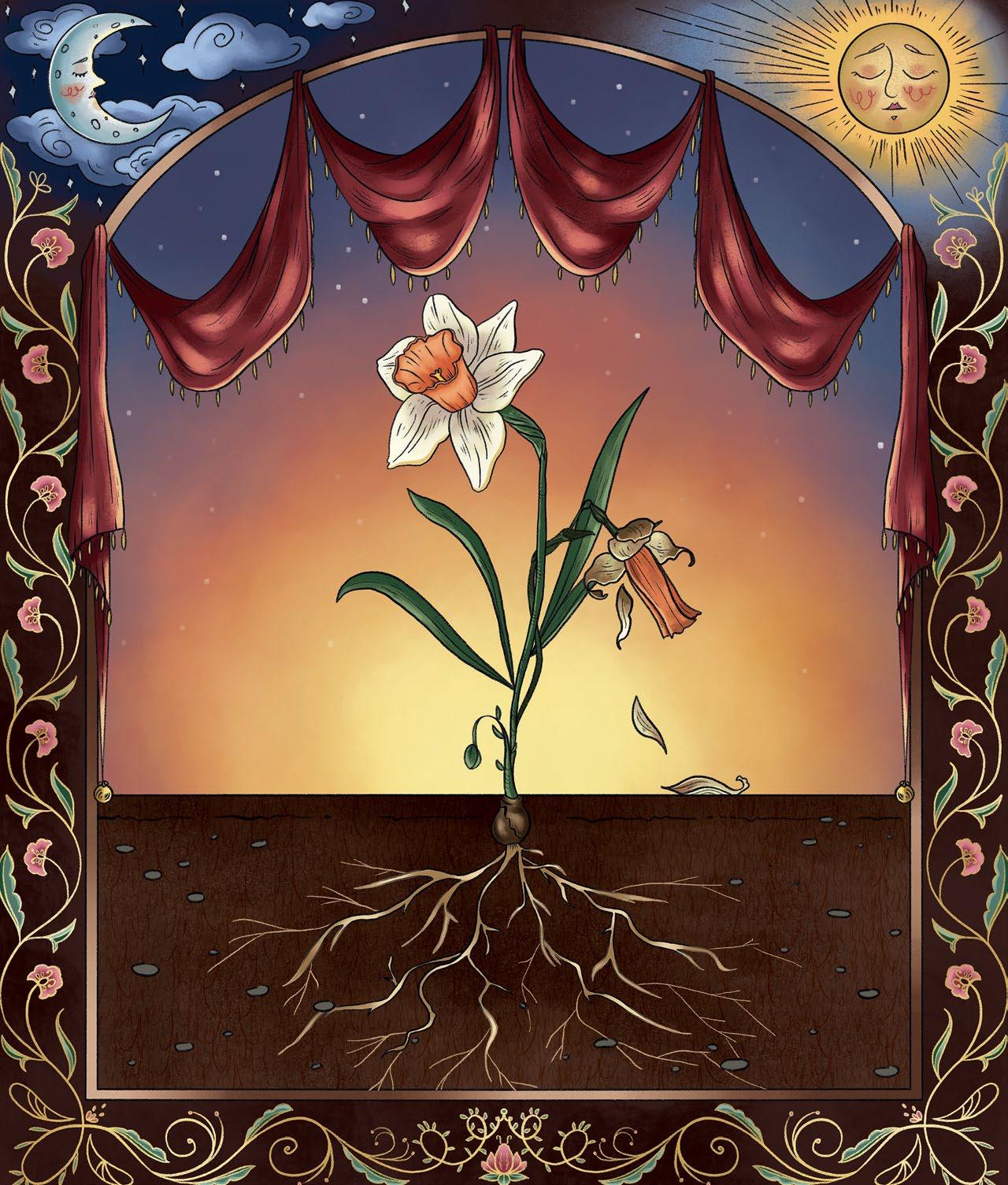
A Bud: the seed opens wide, summertime sun peers within born again is earth
A Flower: wick greenery blooms soft rains permeate the ground from chasms, life grows Back to the Roots: petals fall down, slow verdant vines decompose now again, home below.
The first real tree Anita had seen was a picture. When she was old enough to understand the concept of a secret, her mom ushered her into her office. Anita's first time stepping into the room. The office door was always closed, but Anita would catch glimpses of the space each time her mom walked in and out. She’d pretend to be focused on something else. Her dolls, a stain on her shirt, and a crooked photo frame. Then, as the door swung open and her mom turned her back, she’d strain her neck to see as much as she could. It was never enough time.
In those seconds between open and closed, Anita had seen flashes of brown and green: a desk, a lamp, a computer, images hanging on the wall, green ribbons in various shades and shapes, some with pretty, crafted flowers that seemed to bloom. Standing in the space for the first time, Anita realized how silly she’d been to think she knew anything about this office or her mother. She looked at the contents of the desk and the wall and understood why her mother locked this room up like it was dangerous.
It was not what her eyes could see but what her lungs could feel. The smell in there didn’t have the hint of rust that was in every other space in the house, in the neighborhood, in the city. The government-approved synthetic oxygen was not funneling into the room. Anita remembers needing to close her eyes.
She remembers having to rush out of the room back to the air she was used to. It’d taken her a moment. Her body, even after generations, seemed to respond to the air in that office. It made her head feel light; her body instantly relaxed despite the tension in her head. When she went back inside, she really let herself look. It required a lot of concentration. Her brain wanted to focus on breathing, lungs, and heart, starving for the sustenance it needed but had been refused for so long.
Her mother had pictures of real trees. The ribbons of green she’d spotted weren’t ribbons at all. These were vines, real vines spilling from the dirt. What she’d assumed to be fabric or some other synthetic material that her mother had shaped into flowers was in fact real flowers. This office was filled with illegal material. As a result of the images of real nature, the real plants, to the papers on the desk, which Anita realized were also real, from real trees. Her mom could be sent to prison. They wouldn’t even offer her a trial. It was considered a grave offense to remind people of what they’d lost. The government didn’t appreciate when someone mentioned the times before, when oxygen came from real trees and not synthetic stuff you need to buy.
That was the evening Anita learned about her grandma and her great-grandma, how they’d been archivists, and how now Anita’s mom was an archivist, but not really. It wasn’t work she got paid for because it was work that was considered a crime. How could people mourn what they did not know they lost? So, the mass erasure happened. In some cases, rather than waiting for a piece of nature to die out, they simply burnt it down them-
selves. Anyone who tried to stop it, anyone who tried to record and preserve the old, was imprisoned or murdered.
People slowly forgot that once, air did not smell like rust. Anita had never known any other kind of air until that evening. Her mother always told her she could be and do whatever she wanted. There was no need for her to continue her family’s work. There were others dedicated to preservation, to ensuring materials remained so that, when the time came, people could be reminded. For a while, Anita tried. She’d been scared to follow in the footsteps of the women who came before her. That evening, she’d thanked her mother for the trust and the gift of seeing real nature, but she wanted nothing to do with it.
Even as her mother grew older and her mind with her, Anita resisted the call deep within her lungs, the need to breathe real air. Even as she grew up, finding reasons to lounge in her mother’s office. Even as it became harder and harder to leave that room and go back into the real world. She did not want the burden of history.
Then the rumors started. They came to her mother, but the whispers had not found her; instead, they found Anita. This did not seem to deter them. She was her mother’s daughter after all. The whispers told her about the island that remained. The conflict between nations over it. Whether to destroy it or not. Who owned it and who didn’t. They wanted an archivist. Someone to go and remember.
The first thing Anita saw was a forest on a rock on a beach. Like the island knew it was the sole survivor, and it needed to
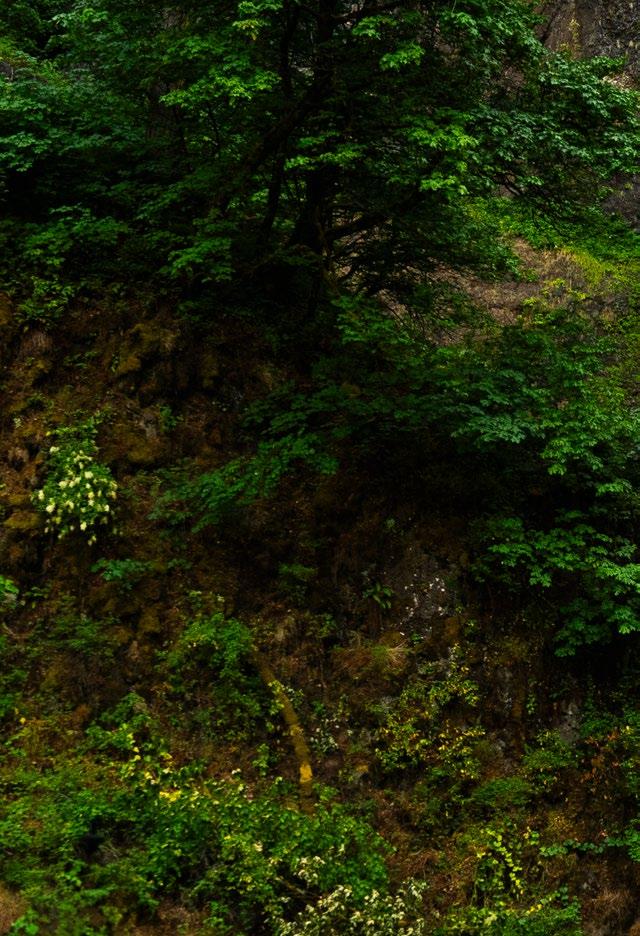
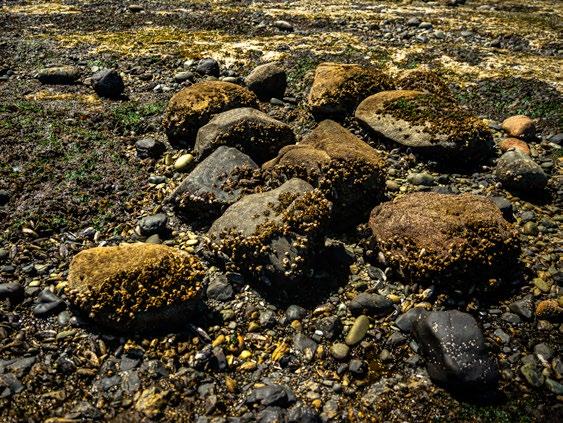
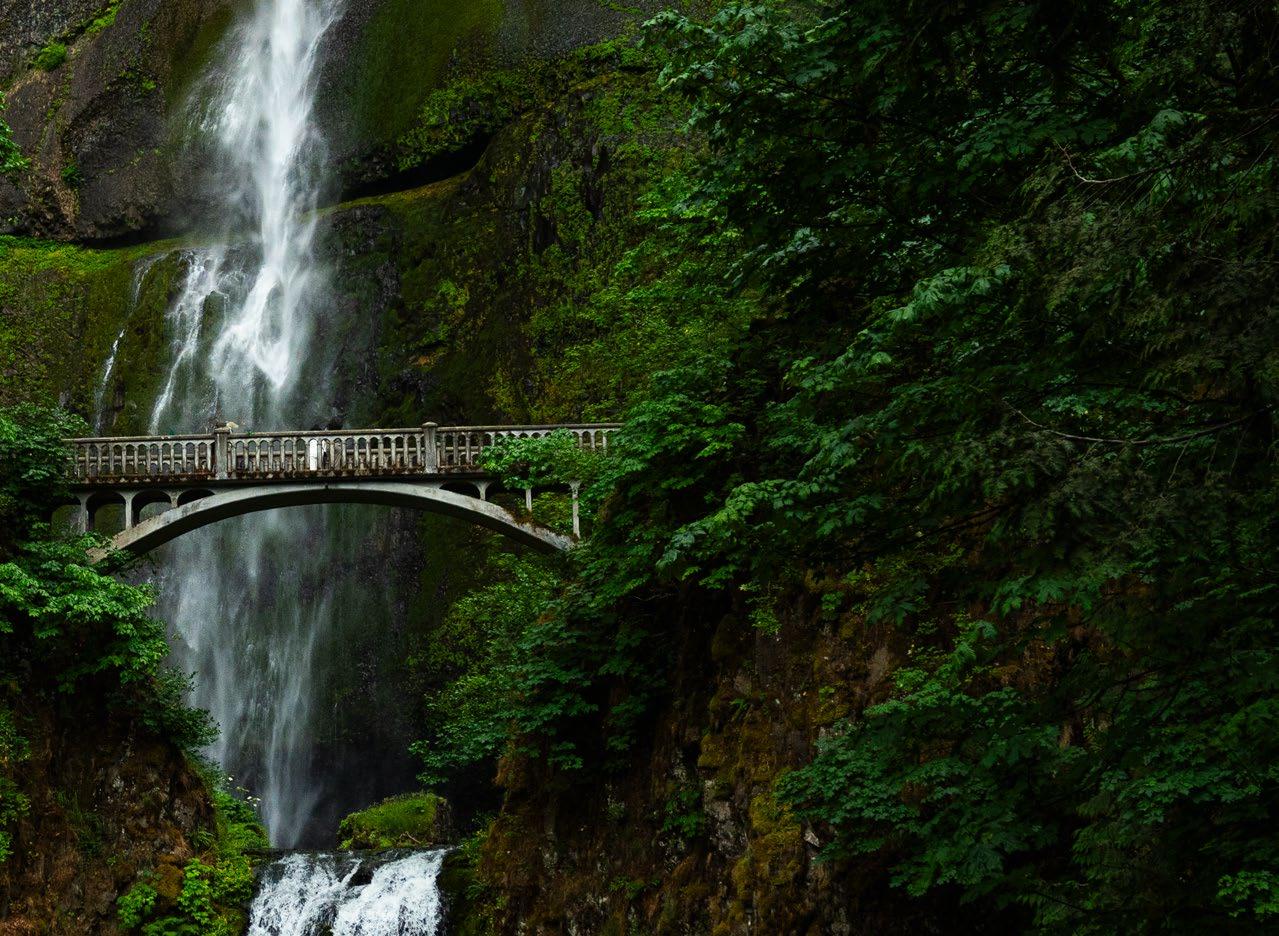
be not just one island but many islands. A woman, Helen, one of the reclusive scientists, approaches and stands at her side. From afar, Anita’s brain could not comprehend how a rock could hold an island. Rocks are small, or at least the ones she’d seen in her mother’s office.
“I think we can take off our masks now,” Helen says.
Anita touches the mask over her nose and mouth, but doesn’t move to remove it. It’s designed with technology that makes it feel seamless on the skin. Ap-
parently, a few generations back, a massive number of people died because the masks provided were too uncomfortable. People wouldn’t keep them on even if it meant protecting themselves. These masks lie perfectly on the face; there is no need for strings of any kind to be hooked over ears. It’s also designed to completely disappear once it's on. Giving the illusion that there’s no mask between you and the world. Sometimes, if you squint at someone during a conversation, you can see a faint line above the arch of their nose, but then people start looking at you funny for staring too long.
Her mother’s room retained real oxygen because it was an enclosed space. It came out as synthetic oxygen because there are vents that can be controlled.
“The air here is safe.” Helen looks annoyed at not being believed right away. The tightness around her eyes and lips completely falls away the moment her mask comes off. Anita watches as this woman breathes in real oxygen. It might be the first time. Maybe as a scientist she’s gotten the privilege of real oxygen, but as her back arches and her eyes close, it seems like the first time.
Anita holds her breath as the mask comes off.
It’s not until tears start to sting her eyes that she’s forced to inhale and exhale. Unlike Helen, who stood gracefully pushing her body towards the invisible force they could not see, Anita fell to her knees. This is not the clean, crisp air of her mother’s office. She had no idea that the ocean had a smell or that Helen had a smell, that she did. They’ve been living on a ship for almost a year. Unable to be without a mask except in their rooms. It wasn’t affordable to have oxygen available throughout the whole ship. Her room was nearly a replica of her mother’s office, without the real plants. Those she had gifted to a conservation group who knew how to better care for them and ensure their survival. The photos, though, the video archive she’d been given access to much later, and her mother's and grandmother’s journals, they all came with her.
Then Helen is crying. Anita looks up from her fetal position. No, Helen is laughing. She’s clinging to the railing so tightly the black skin around her knuckles turns three shades lighter. Anita is unsure if it’s to keep herself steady or from throwing herself overboard.
"Come, kid, get up. You're going to miss everything if you stay on the floor like that,” Helen says.
Anita wants to say she’s not a kid. She’s almost 27, but it probably wouldn’t be a believable statement from her current position. Slowly, feeling each muscle lock into position, she stands. She counts her breaths as she moves to stand beside Helen, who is now crying.
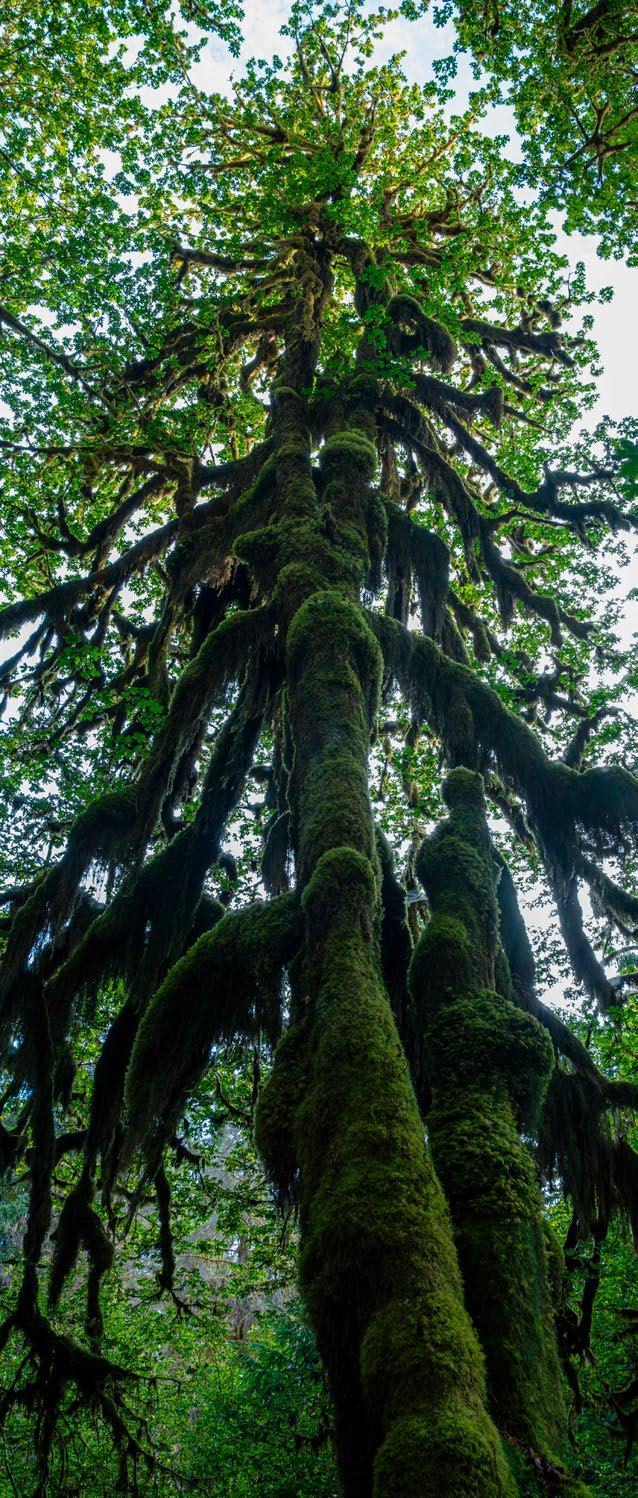
Anita looks up at the island again. They’re nearly there. The ship stops before it reaches shallow waters. They’ll need to board smaller boats to take them the rest of the way. She, a few of the scientists, and three other people with what Anita assumes is some type of image-capturing equipment board the small ship. Anita greets them all, but she’s focused on what’s ahead of her. Her mother’s trees didn’t look like this. They were wide; their trucks took up most of the frame, and their trucks were brown and didn’t get green with leaves until further up. These trees are long, and they have tentacles that seem to reach towards each other as if sensing the need to remain together. Their many arms longing to connect. Do not leave me. So many have left, they say. From top to bottom it seems these trees are covered in green, but it doesn’t look like leaves or flowers. It’s something new. Something not in her mother’s archives.
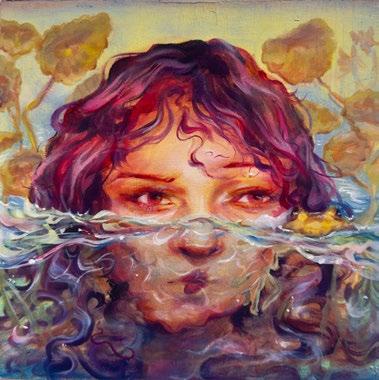
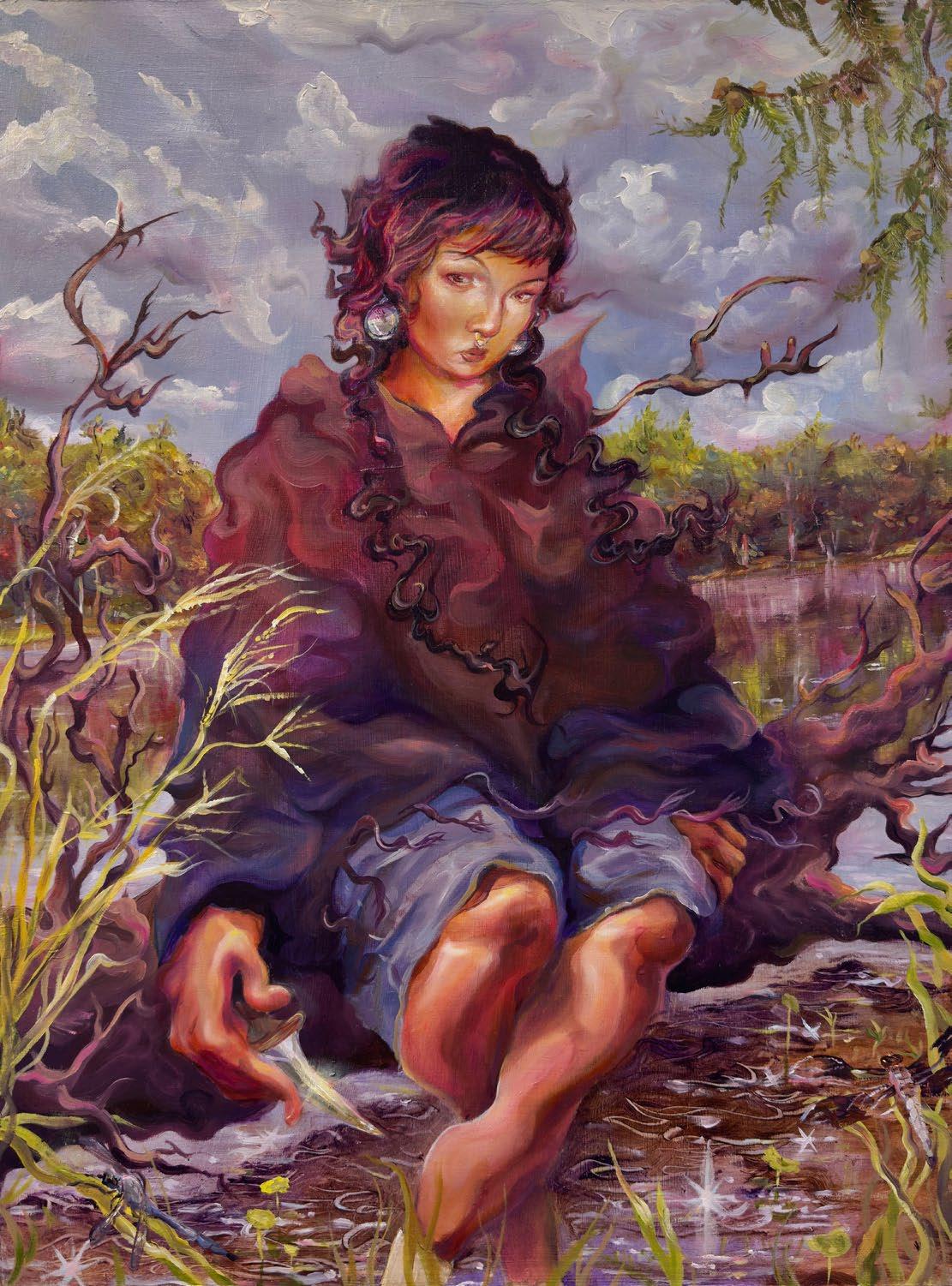
By Alexia Burgos
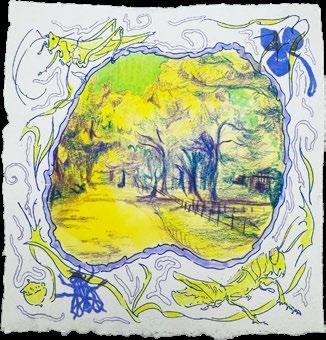
No matter the scale, there’s an unspoken rule that we must follow where the waves lead. So I sit here with my feet dangling over the many fish in the lake. Waterbugs and not so fortunately trapped winged insects float atop the greenish, murky water. The sun’s heat gives me goosebumps as my dark, thick, wavy hair begins to warm.
I am looking to find my proximity to all things, exploring what Americana means to me. I incorporate my Texas upbringing, Indigenous heritage, and my time living in the Deep South. I connect with familial ties and the land by rendering and depicting my own experiences in bucolic scenes.
Oscillating between history, location, and experience, I create intimate, ephemeral scenes interpreted through my unique cultural lens. The goal is to blur the lines between the earthly and the metaphysical. I stylize and obscure both the body and the space it exists in, creating compositions that are grounded yet otherworldly. SCAN Magazine Spring 2026
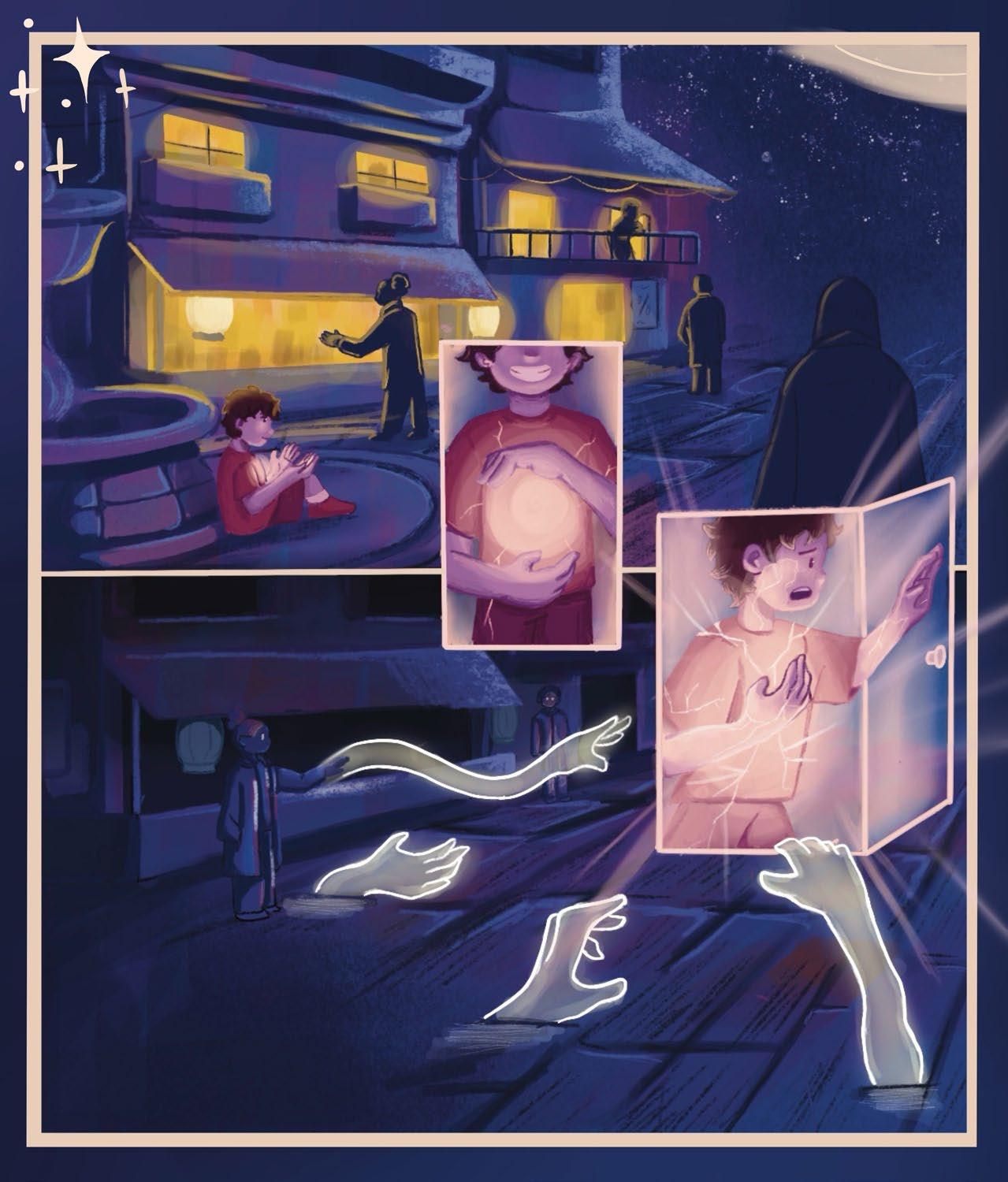
In a small town, beings emerge from amity stemmed from trust
A small boy stands far too thin with dreams too big to catch fire and attention
His heart pulsing with a light not yet extinguished by the indigent town which housed his two feet two hands and beating heart
It is strange to say that stars can be born out of nothing but dust
scattered throughout the universe.
Turbulence gives rise to knots of dust and gas which heat up and become stars.
Telescopes land on this muse of light and suddenly everyone throws out names and signatures trying to claim the imminent beauty.
Written
Corinne Sherwin
Before the star has fused all the hydrogen in its core and begins to burn up
Furiously pushing itself apart as skin breaks from bone
Nails push away from fingers
until all that is left is a splatter of blood in the sky from supernovae
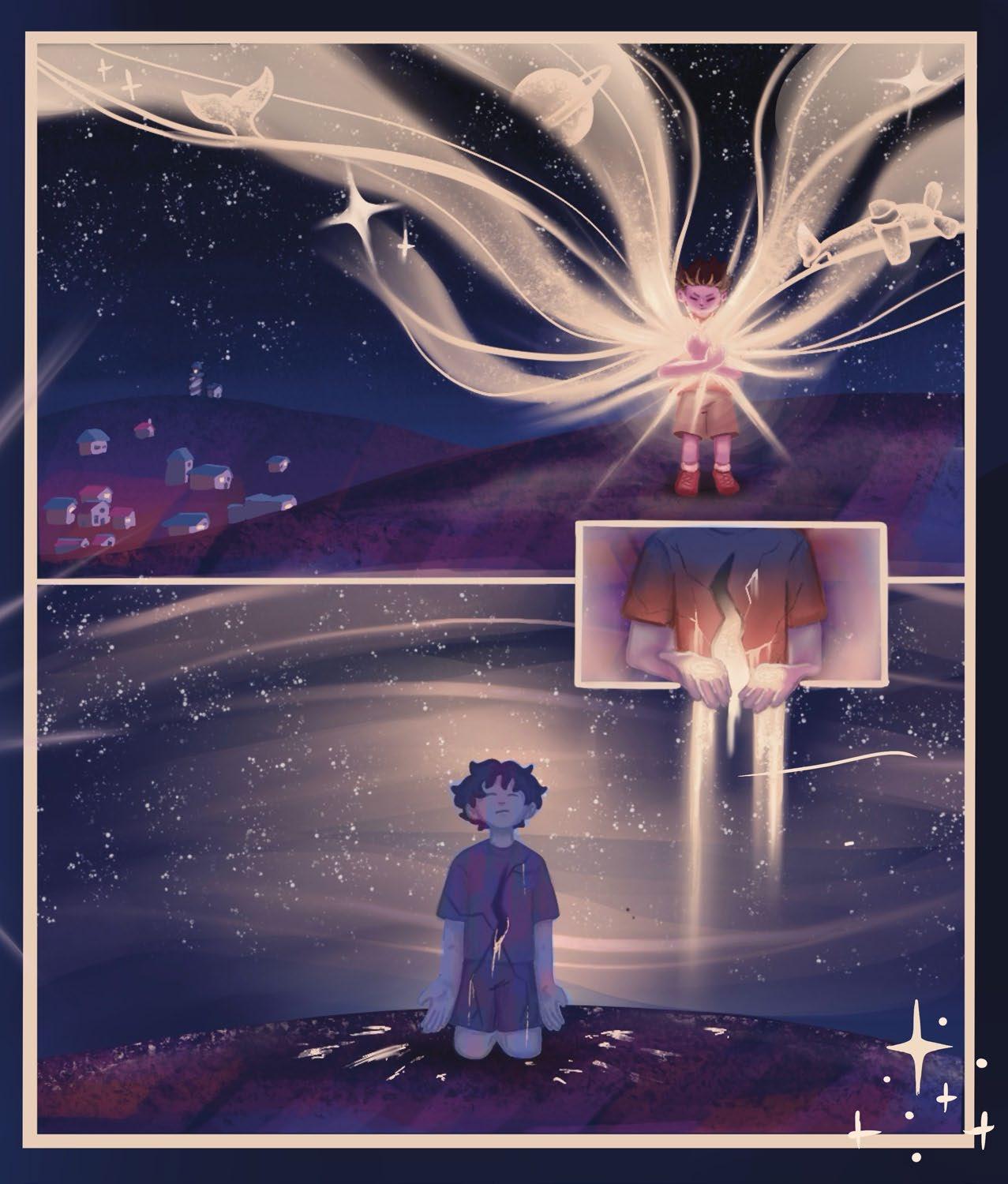
Entity limited by magnitude, a star takes a million years to be created and billions of years to die
Before the effects of a single dot of molten gold disappearing from the sky
is felt by the souls which so eagerly wanted something conspicuous
to prove that a bed of dust could still be luminous.
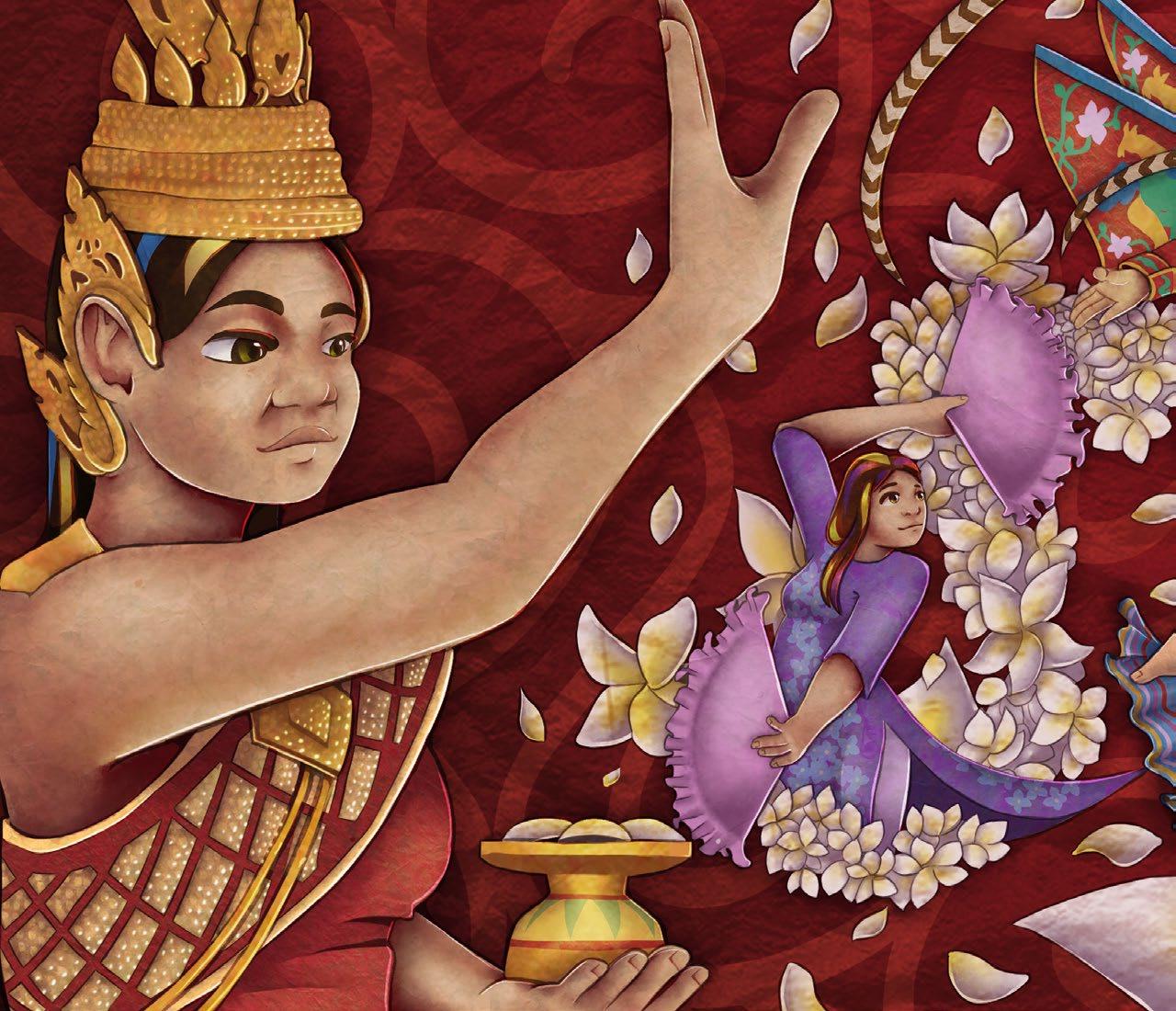
I drew this piece to celebrate the different cultures that exist in my closest friend group and women in the arts—in this case, dance and performance art. This illustration is heavily influenced by my city's fervent love of
diversity, as well as by the Buddhist artwork I grew up admiring. Cultured Pearls was spurred on by a trend online that played a snippet from the song 'Honor to Us All' from the movie Mulan, while images or videos of similar subjects appear in sync with the beat.
My best friend, who is Cambodian, is performing the blessing dance ‘Robam Jun Por’ which is performed ahead of ceremonies, celebrations, or important events to give blessings to guests. Historically, the dance was used to cast away bad spirits or negative energy, with the champey flowers inside the goblets representing beauty, resilience, and grace. The flowers from the small plate in her hand blow the flowers to the other dancers in the composition.
The first dancer in a purple ao dai, the traditional dress of the Vietnamese people, is performing a traditional Fan Dance. This dance is accompanied by music and is used to welcome the beginning of important events, and now is used to showcase the beauty of Vietnam in international showcases. It emphasizes grace, aiming to mimic the fluidity of water, and is performed in groups to promote unity and community among the people watching it.
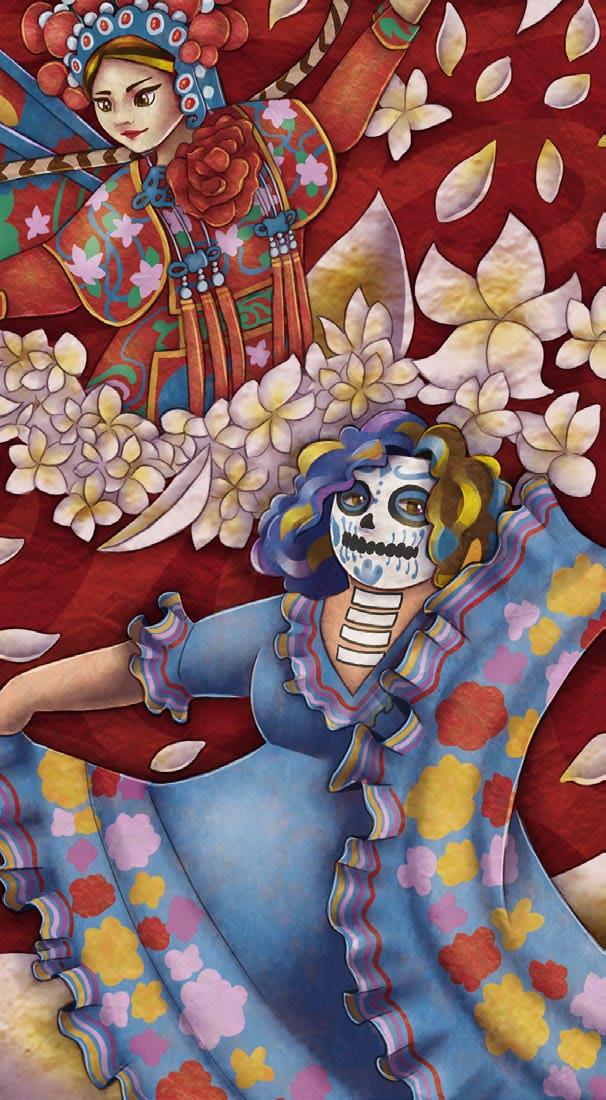
The woman in the blue dress is celebrating Día de los Muertos, a holiday honoring life and ancestors. A large part of the holiday includes dance as a way to honor the dead, dancers don colorful makeup and costumes, dancing to lively music. Big, playful movements and the representation of the dancers as ‘skeletons’ promote the idea of continuity and a continued dialogue between those who have passed on and those still in the living realm.
Lastly, the woman on the top is in the traditional costume of Peking Opera, a theater form that involves dance, singing, and acting. The art form is used to pass on mythology like the famed Journey to the West or to instill morals within the audience. It is traditionally performed on a stage, but has spread to television and other forms of digital media. Growing up, I would wake up to Chinese Opera every morning, and while I could not quite understand what the characters were saying, I was always enamored by the artistry of its distinct, high-pitched sound and elaborate costuming—particularly in its iconic headdress and striking makeup.
Our connection to these performances largely lies in our growing up interacting with these dances during important festivities—as the Clayton County area hosts a variety of cultures within its space. As children of immigrants, dance is one of the many ways we get to connect and experience our cultures authentically. The dances not only represent commemoration, blessing, and good luck, but they largely rely on women to carry on the tradition. In the case of Robam Jun Por and the Vietnamese Fan Dance, it is mainly women who perform them. While dances on Día de los Muertos can be performed by either gender, women have been at the forefront of representation in this art form. Meanwhile, women were outlawed for much of Chinese history from performing in Peking Opera. This changed during the 1930s, when actors were willing to take on female apprentices. This is symbolic of the female resilience in a male-dominated field, and the idea of the 'Nan Dan'—a character archetype popular before the 1950s, where a man plays a female character so well he is indistinguishable from a woman, is also proof that even when women are outlawed from expressing themselves, they are necessary for the preservation of story and therefore, art."
By ShaRron Van
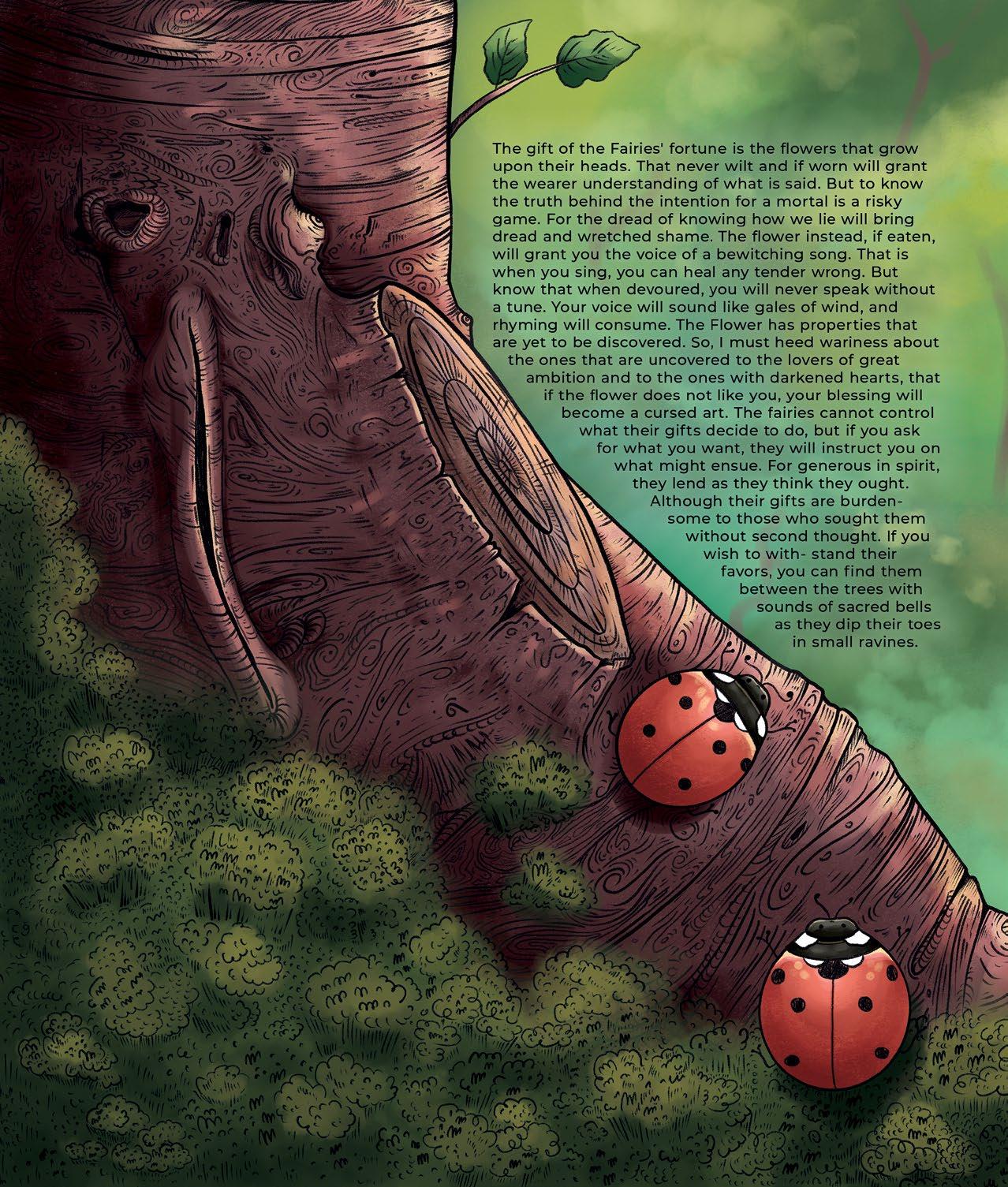
a i r i e s o F F o r t u n e
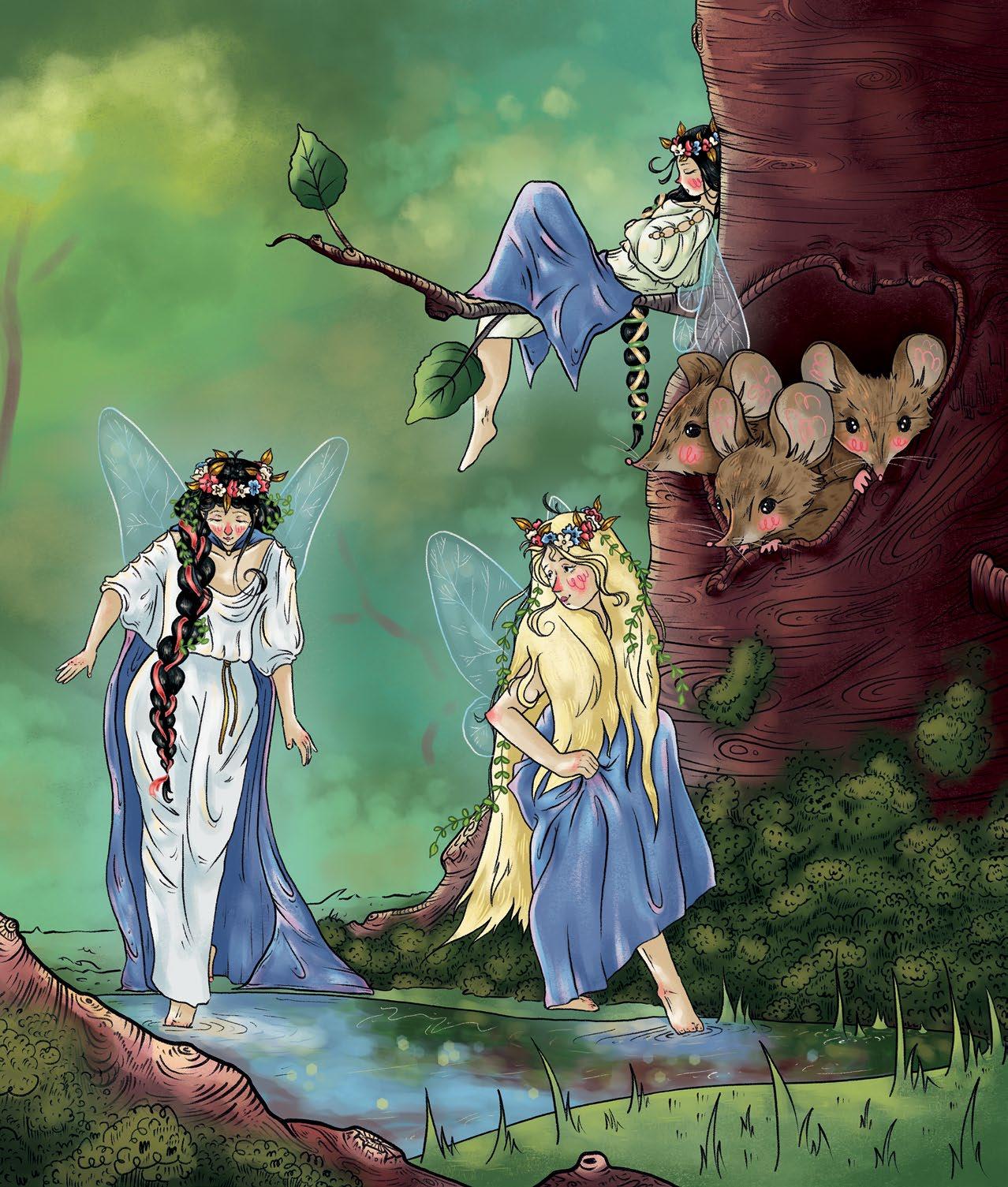
By Sana Fathima
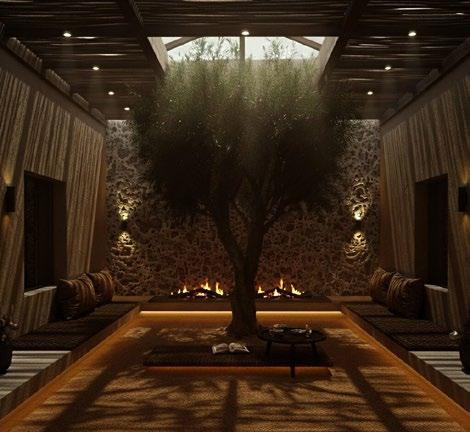
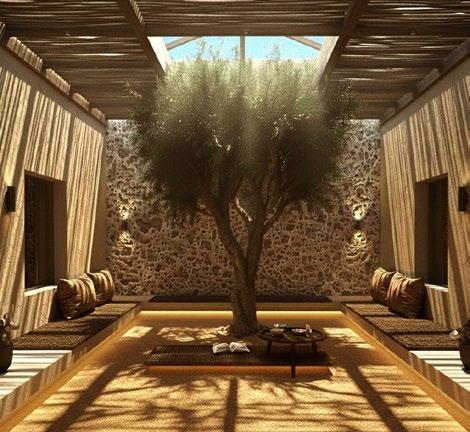
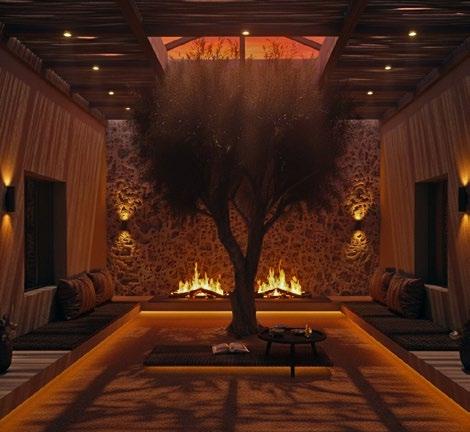
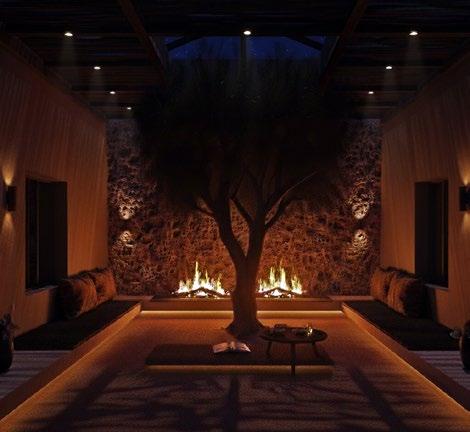
The desert has always shaped how I understand space. Light moving across sand, trees surviving with patience, and the glow of a fire at night stay with me long after the moment passes. Growing up in the United Arab Emirates (UAE), these elements felt familiar and grounding, quietly teaching me that environments hold memory and meaning.
This project grew from that realization. I call the approach localized biophilic attachment. It is a way of designing spaces that build emotional bonds through nature, culture, and time. It draws from biophilia, our innate connection to natural systems, and biomimicry, which looks to nature as a guide for form and process. It is also informed by place attachment, the idea that people connect to spaces through repeated experiences, memory, and cultural recognition.
The Desert Courtyard Alcove translates this thinking into a majlis-inspired space rooted in the ecology of the UAE. A majlis is traditionally a gathering space within Emirati homes, used for hospitality, conversation, and communal reflection. It is shaped by both social rituals and architecture. In this courtyard, a mature Ghaf tree anchors the space, growing directly from the sandy floor and acting as both spatial and symbolic center. Coral-like stone walls reference vernacular Gulf architecture, grounding the space in regional material traditions. Above, a pergola filters sunlight, casting shifting
shadows that echo palm groves and desert shade structures.
Time plays a central role in how the courtyard is experienced. Early morning light is soft and quiet, with subtle warmth from the fireplace and artificial lighting. By midday, the sun sharpens shadows and reveals the textures of sand, stone, and leaves, connecting the space directly to the desert beyond. In the evening, amber light and fire introduce intimacy, recalling desert camping traditions and shared moments of gathering. At night, under a full moon, the Ghaf tree becomes a silhouette and lighting recedes, allowing stillness to take over.
What matters most is not any single design element but the accumulation of sensory cues over time. The Ghaf tree, the coral walls, the movement of light, and the presence of fire work together to create familiarity. Attachment forms gradually, through recognition rather than spectacle.
While this courtyard is deeply rooted in the UAE, the idea of localized biophilic attachment can travel. In different places, local landscapes, materials, and traditions would take its place. The principle remains the same. Design can foster belonging by listening closely to local ecologies and cultural rhythms, allowing spaces to feel familiar and worth returning to.
By Zina Graham
Look up
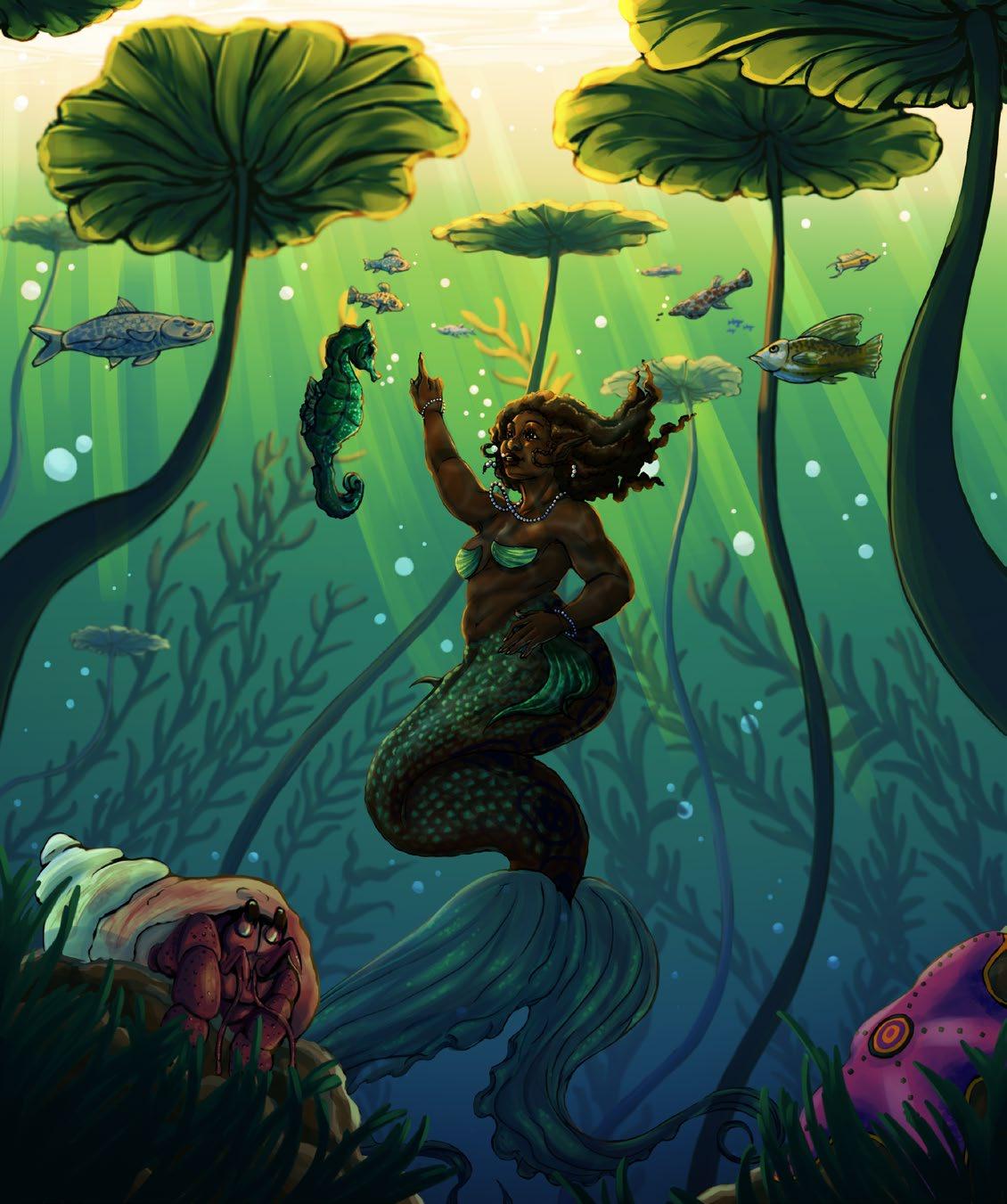
The sun is out again, making the water hot
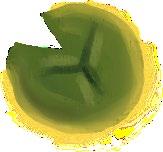
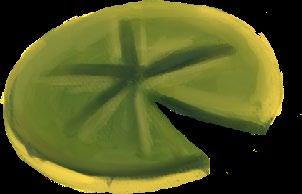
The lily pads spin and float
Look up
The fish are swimming past you
Searching for a meal or an escape
Look down
The seaweed looks taller this year
The seagrass weaves a pattern just for you
Look down
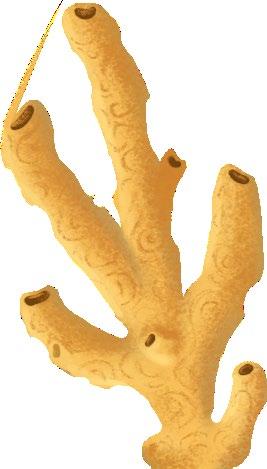
The sand is still Crabs and starfish occupy every rock and pebble

Look right
Blues and greens cloud your vision, nothing to see here
It’s always the same afterall
Look right
Bubbles rise, leaving you behind
Maybe you can too?
Look left
More fish, how tiresome
More rocks, more sand, more crabs…
Look ri– Look left!
There’s something new here!
A green friend, a small pal for the day
Maybe you and this friend can greet the surface

By Alex Robinson
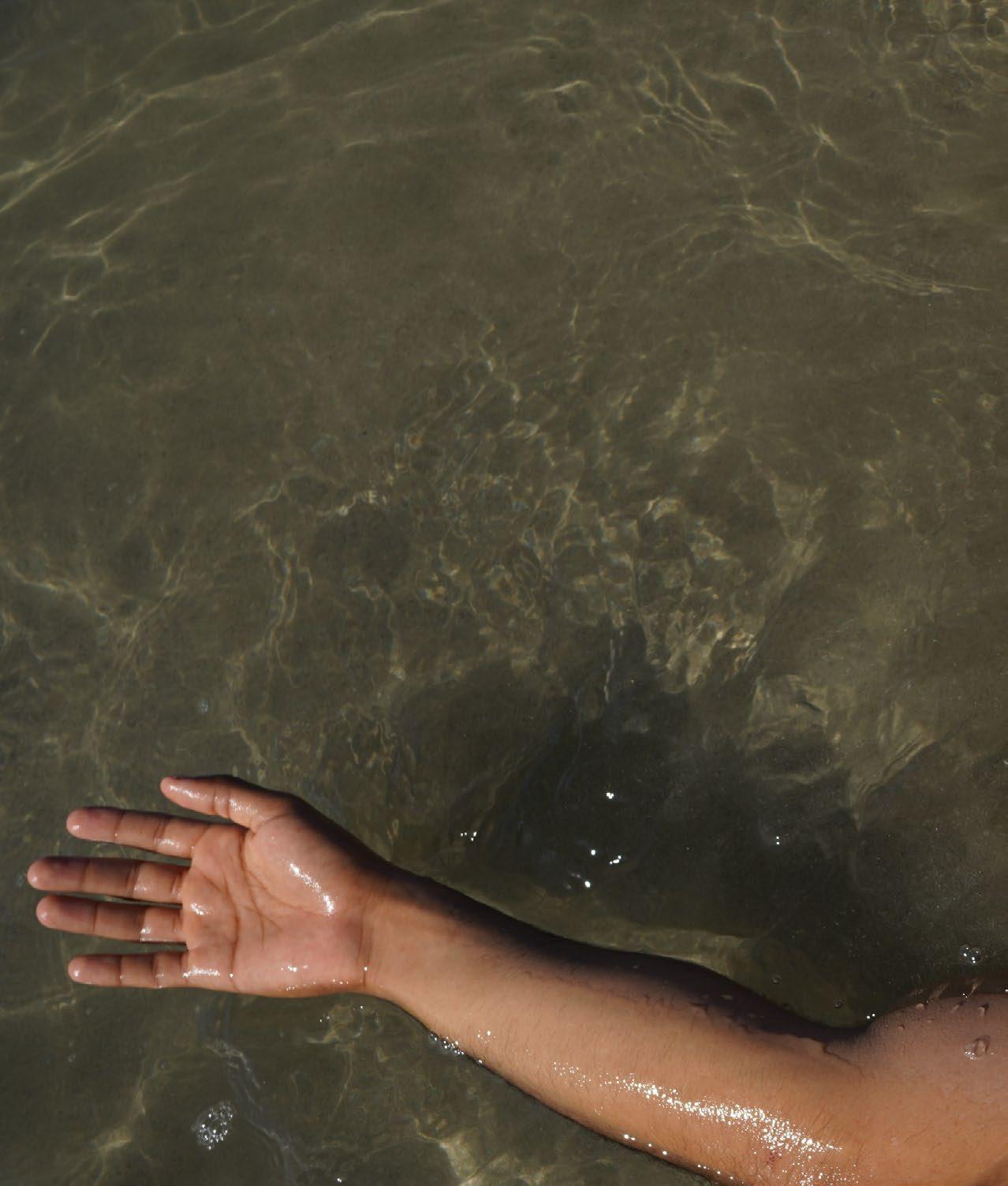
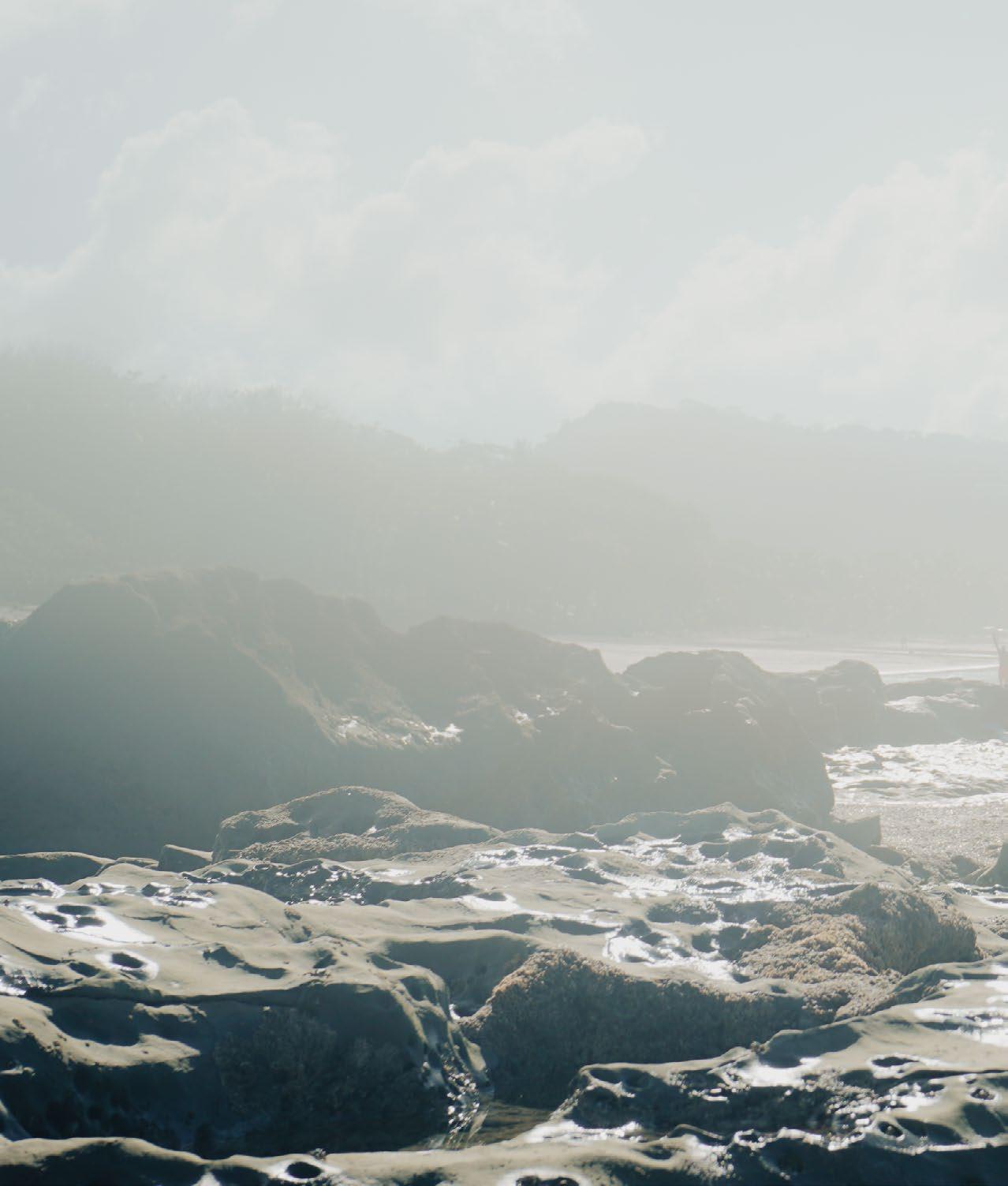
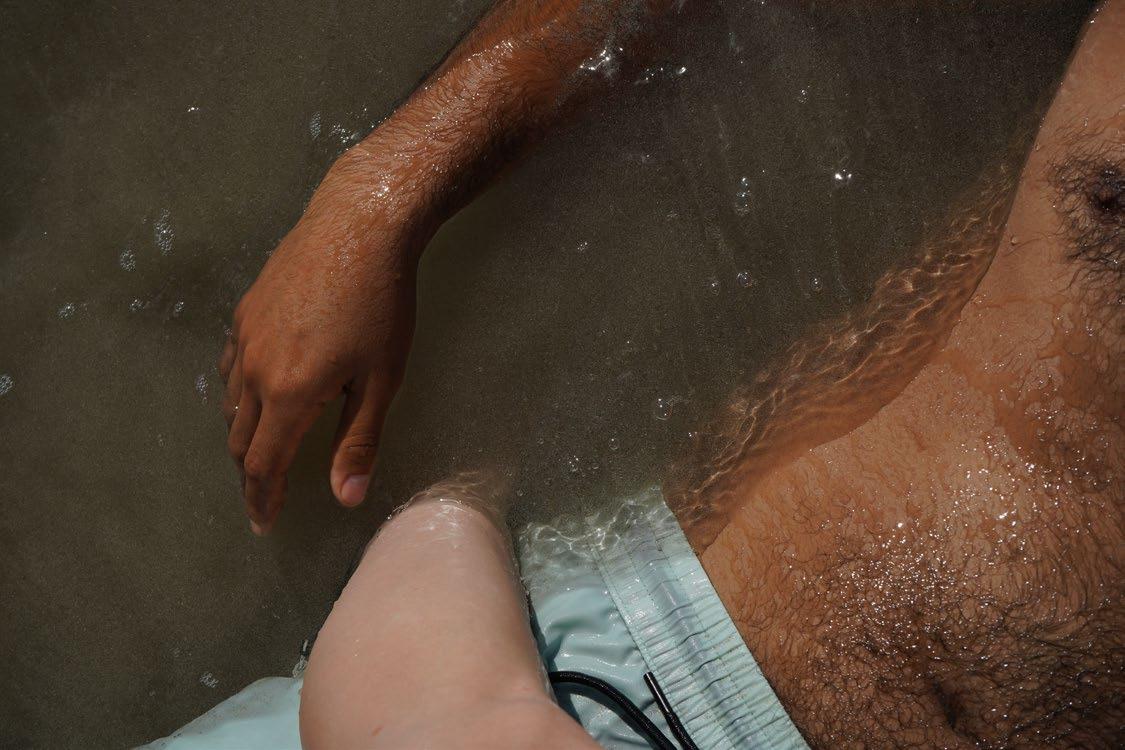
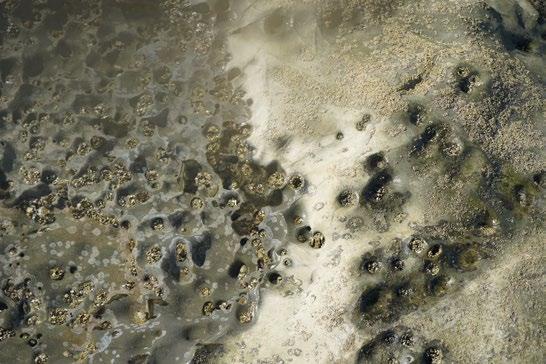
The landscape persists as both witness and boundary between bodies that move within it, touching or reaching for one another, sometimes held back by the terrain. Intimacy is held in tension: distance does not diminish desire but heightens presence. Gestures are neither touch nor farewell, but something unresolved, existing in transit, mirroring the relationship itself. The images linger on persistent gestures of closeness: shared rituals carried across distance, repeated movements that become familiar, memories held as if they might collapse the space between them.


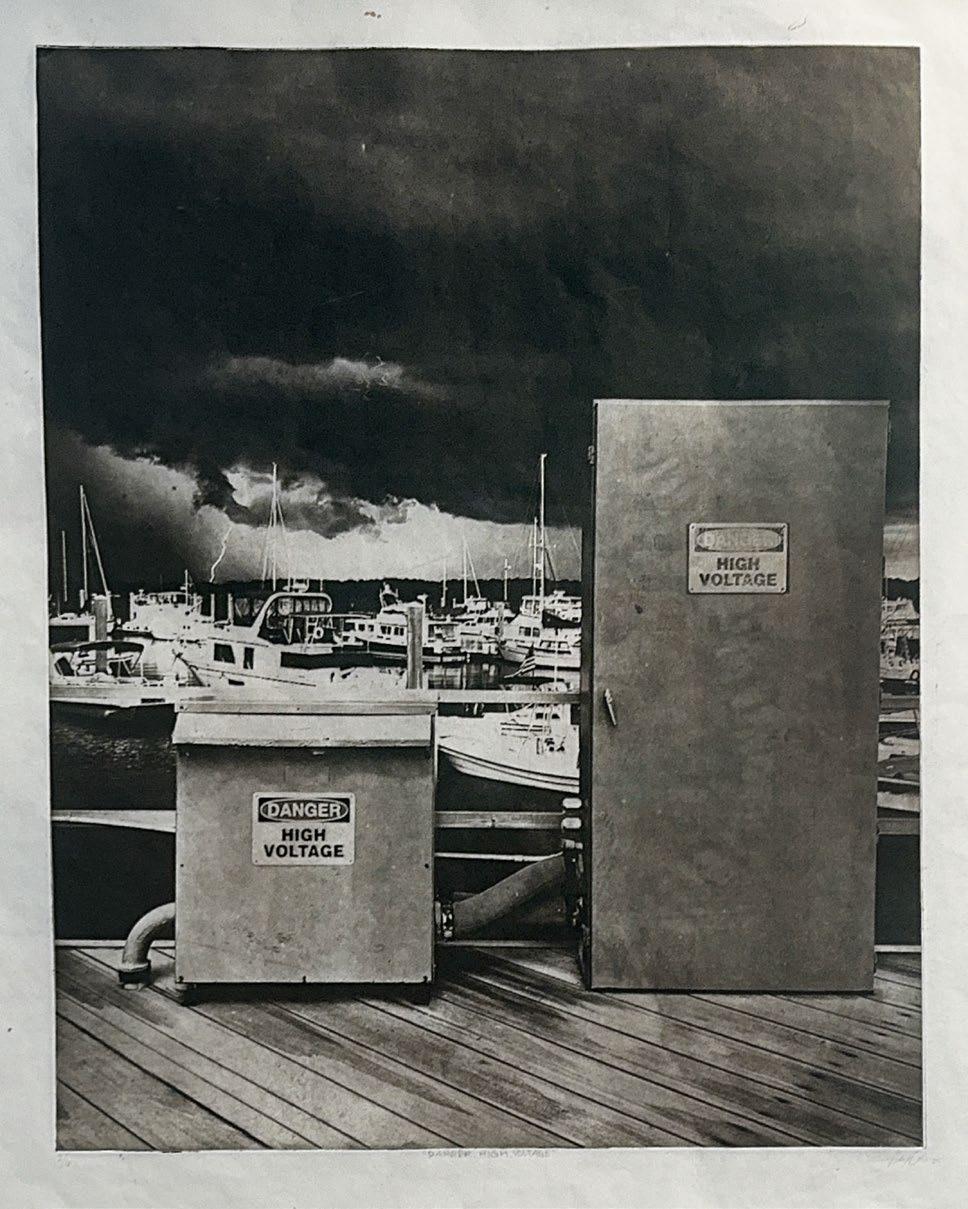
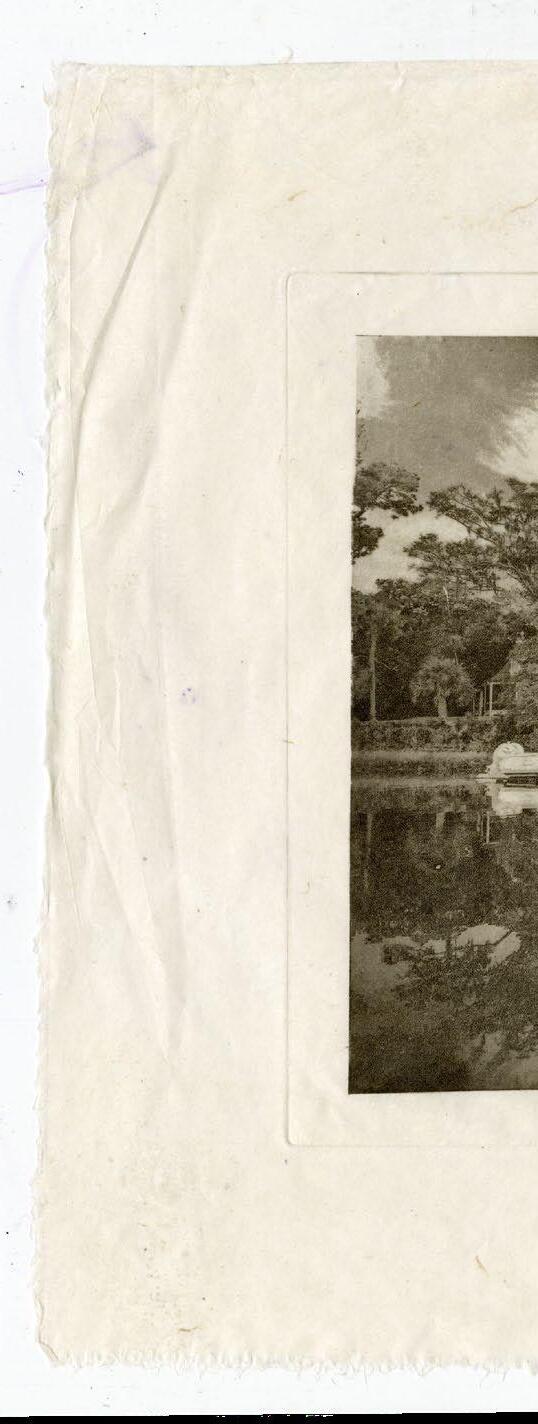
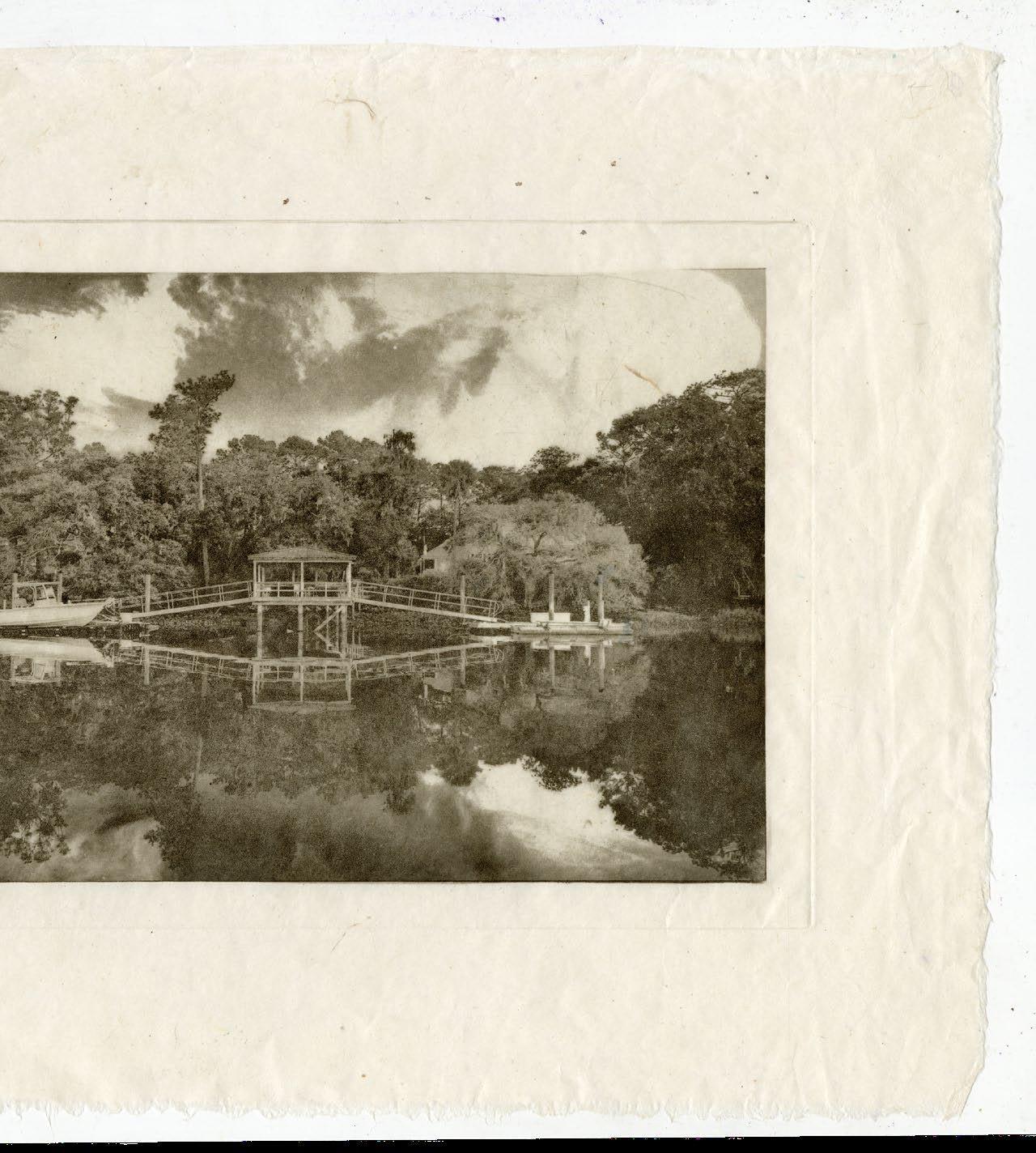
“Danger, High Voltage” and “Water Forgets Nothing” are two images from my photographic printmaking series, Black and Blue. Both are conceptual landscapes shaped by the time I spent in Beaufort, South Carolina, in the years following my father’s death, during the height of the global pandemic (2020–2023). Created as photogravure etchings, these works trace a personal narrative of grief and transformation while also reflecting the shifting tensions and bonds within my family after his loss. COVID-19 imposed isolation, yet I found myself held within a landscape that was at once haunting and beautiful. The Lowcountry became both my witness and guide. The Spanish moss and tidal waters cradled my grief and quietly supported my growth.
By Alex Cole
“Danger, High Voltage” depicts a lightning strike in the distance behind a crowded marina. In the foreground, two electrical boxes marked “Danger, High Voltage” stand side by side. The image speaks to the darker dimensions of healing: storm clouds gather over the intracoastal waterway, while the boxes take on a human presence, evoking the steadfastness my mother and I embodied as we endured the early stages of grief together. Numeric motifs appear throughout the co position as metaphors for family members, grief, and a sense of connection to something beyond the visible.
“Water Forgets Nothing,” also drawn from the Intracoastal landscape, presents a near-perfect reflection of a dock and two boats in still water. The image explores the duality of grief—its weight and generative potential. Numerology again informs both subject and structure: the two boats stand in for my brother and me, while the dock represents my mother, the anchor who held us together during this difficult period. The mirrored surface underscores the tension between grief and growth, suggesting that the two are not opposites but reflections that coexist.
Written by Essence Quigley Illustrated by He Truong
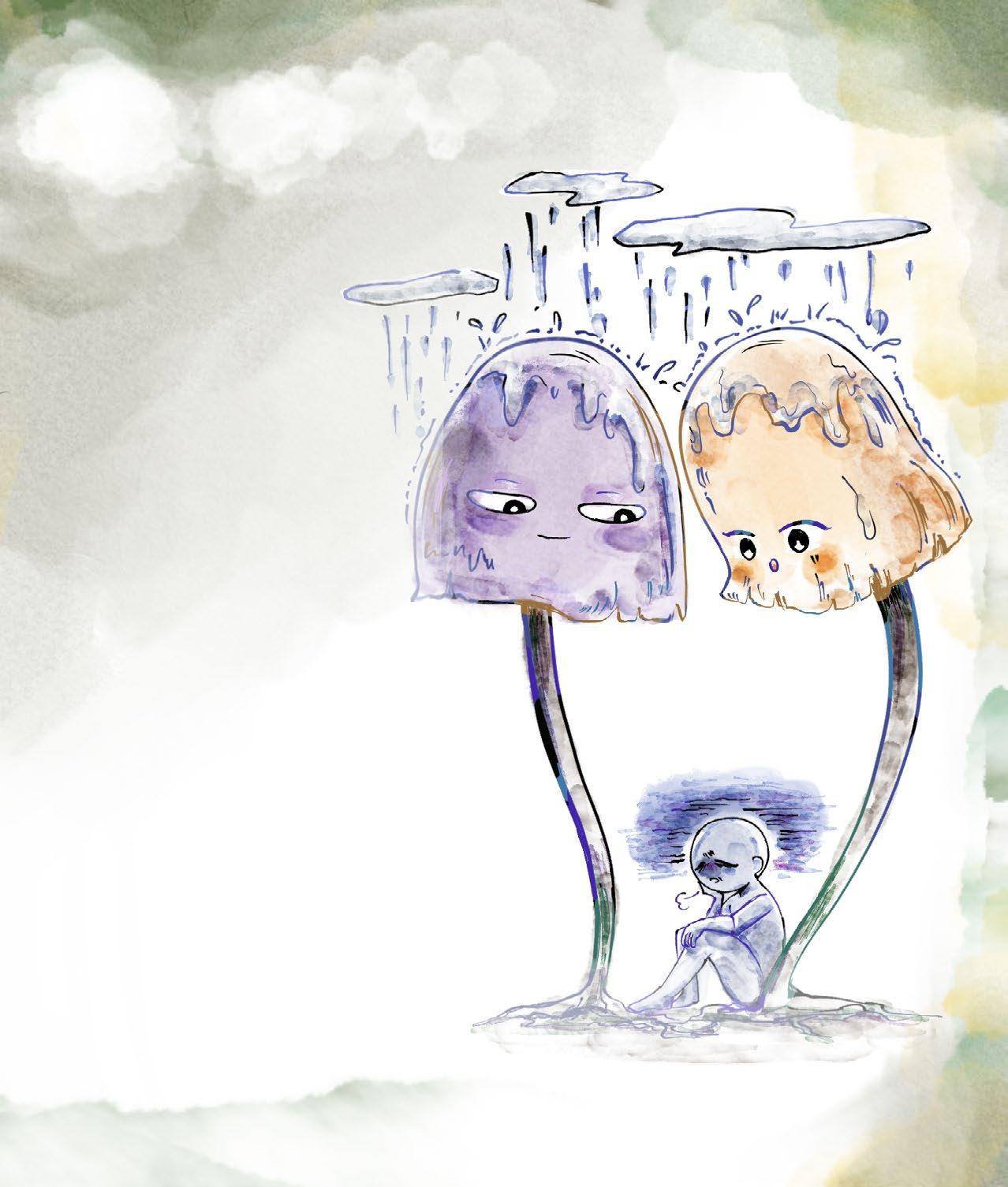
Magic mushrooms are typically associated with EDM raves and Coachella, but it is possible they may also be one of the most effective antidepressants. Shrooms contain psilocybin, which converts to the psychoactive compound psilocin. Its properties are similar to those of LSD, affecting a person's mood, perceptions, and thoughts. The compound has been widely used by indigenous peoples around the world for thousands of years. For example, in Mesoamerica, its use in rituals, therapy, and recreation dates back 3,000 years.
The drug is known to produce vivid imagery, but others report reliving memories or experiencing perceptual changes such as ego death. "[The compound helps us] put together our picture of what reality is," said David Nichols, a professor emeritus at Purdue University's School of Pharmacy, who has been studying psychedelics since the late 1960s.
Research into psilocybin's effects began in the 1960s, but during United States' war on drugs, it was outlawed and classified as a Schedule I controlled substance. Stigma and regulatory barriers of the time slowed any research into its therapeutic potential.
Even with psilocybin deemed illegal under federal law, some people continued to use the drug to microdose. It can be eaten fresh, dried, or mixed into food or drinks such as tea. More recently, research suggests this method may be effective, especially if partnered with psychotherapy.
Private organizations in the mid-2000s helped to fund clinical studies, reigniting the conversation around psilocybin's medical use. As a result, current researchers have been able to focus on how the drug could be helpful in treating psychiatric conditions including depression, anxiety, substance abuse, obsessive-compulsive disorder, and even Alzheimer's. In 2018, the U.S. Food and Drug Administration granted "breakthrough therapy" designation to psilocybin-assisted psychotherapy
for treatment-resistant depression, and in 2019 the same status was granted for major depressive disorder.
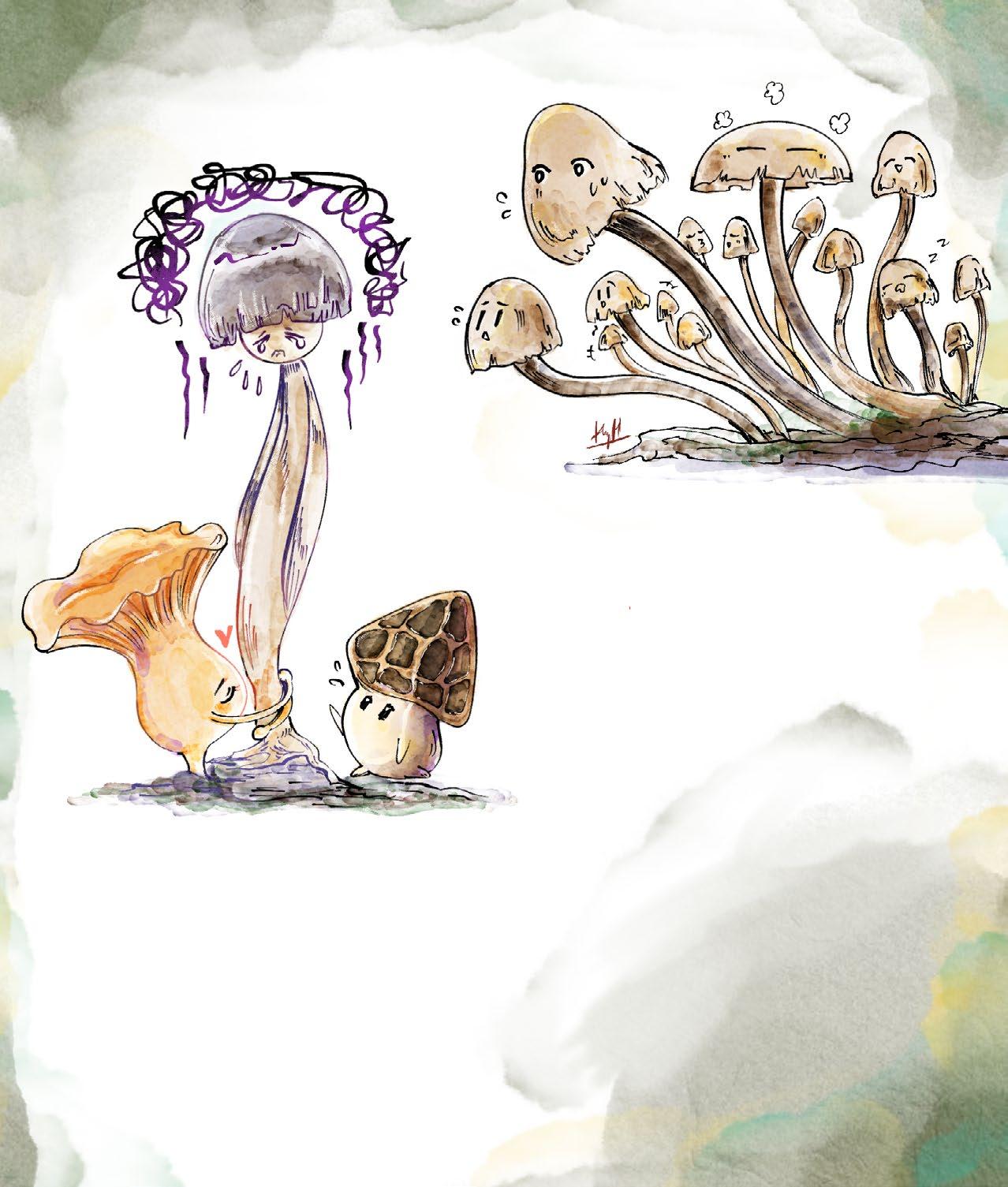
Multiple trials support psilocybin's ability to reduce depression severity. According to the American Society of Microbiology, "A recent phase 2 double blind trial—the largest to date—showed that a single 25 mg dose of synthetic psilocybin administered in conjunction with psychotherapy led to significantly lower levels of depressive symptoms after 3 weeks compared to the control dose (1 mg)." Researchers are unsure why it is so effective as an antidepressant, but suggest the drug may limit behaviors like rumination and regulate emotions.
Psilocybin's speed and efficacy are two of its key advantages. Standard antidepressants can take weeks to kick in, while psilocybin only takes a few days. Antidepressants may need to be used consistently over the course of several years or even a lifetime, but a dose of psilocybin could be administered every few months or maybe even once a year. Its transdiagnostic nature also increases its appeal; it is effective not only for depression but also for other psychiatric disorders.
Psilocybin isn't for everyone, though. For some, it can cause panic attacks, confusion, or fear. Some individuals report experiencing headaches, nausea, fatigue, dizziness, or suicidal ideation. People with psychotic disorders such as schizophrenia, bipolar disorder, or borderline personality disorder are generally advised not use it.
Psilocybin is not a perfect remedy at all, but it could be an alternative treatment option for people struggling with mental health disorders. In the same way, marijuana had a stigma from that era of drug criminalization in the 1970s, shrooms could transition to a similar classification. The more these studies are funded, the more incentive there might be to it push towards mainstream acceptance.
by Lia Lee
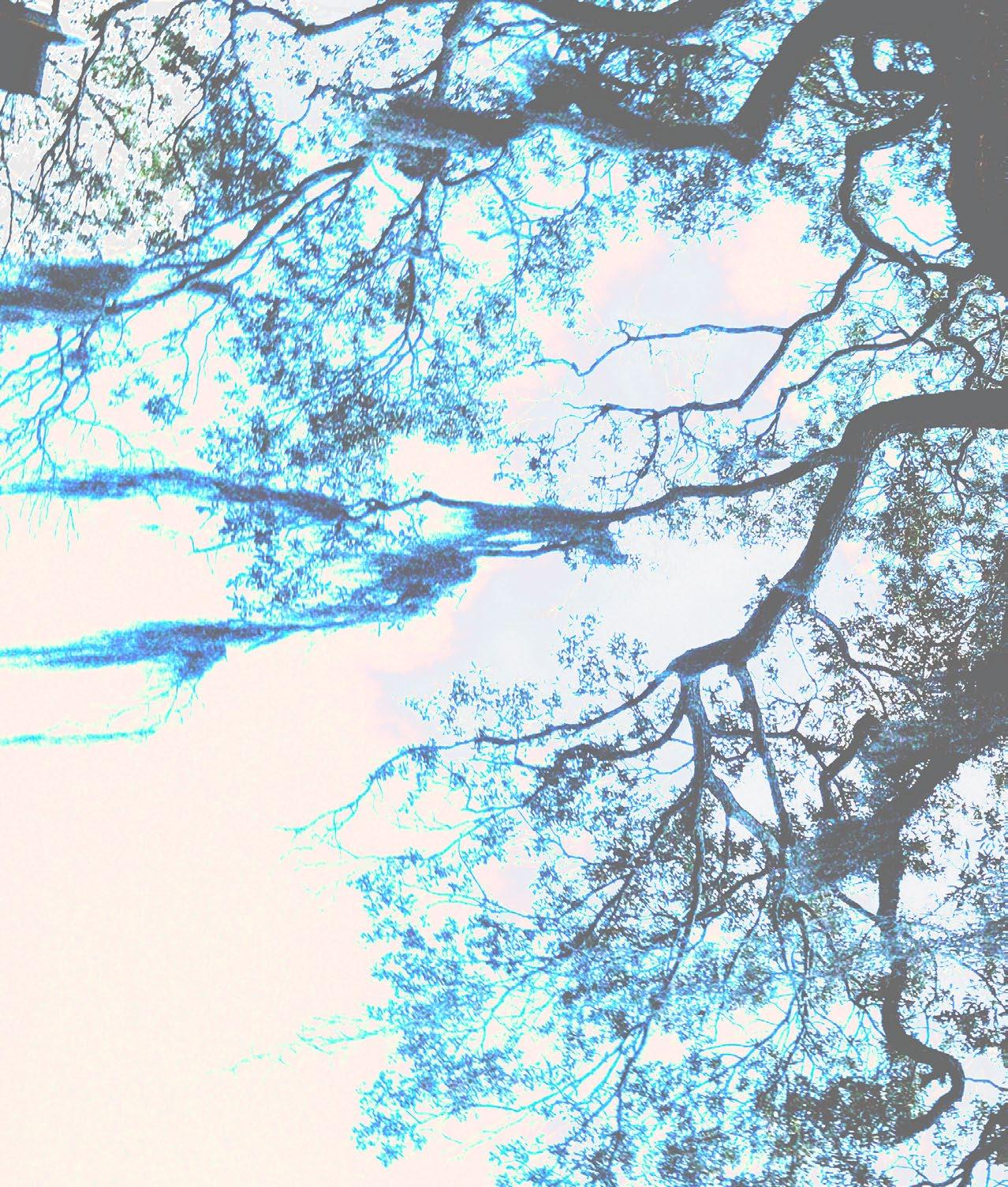
When I was small, I was scared of trees. As a sensitive child, I was full of fear.
I was scared of the sun. How the breeze felt on my skin. How bark was rough, and how the ground could be eerily chilly. I didn't like bugs. I especially didn't like bugs.
Now two decades later, I wonder what changed.
When I was two I was stung by a bee; it cemented my fear that all these furry little buzzers with stingers were out to get me. When I was 21, I stared at a bee colony inside a glass showcase in a museum. They were just there, existing.
I remember the first time I saw a spider on my car seat, I screamed. My arms flailed while my father laughed his head off beside me and tried to brush off the spider.
"You're so much bigger than it. Who do you think is more scared?"
I didn't know. I just knew that I didn't understand it; that freaked me out.
Then I read a poem—Ten Legs, Eight Broken. It removed something inside of me.
I thought maybe it had something to do with the way my mother scrubbed all the floors clean with lemon-smelling bleach. How she screened the doors closed and our house smelled lovingly of artificially produced perfume from a luxury bottle, plucked from the fields of Japan or France. I had always wondered what she was so afraid of; I am starting to think it may have been the same thing.
An entire generation of us grew up like this: indoors and sealed off. Gen Z spends whole afternoons in darkened bedrooms, phone screens lighting up dim faces while they compare themselves to strangers on TikTok and the sun sets outside unnoticed. Most of us know that it is good for us to eat on time,
talk to our loved ones, or take a damn walk outside. Instead, the world passes us at our fingertips.
We are increasingly removed from nature. We no longer know who makes our textiles or what our daily items are made from. We use but do not understand; we consume but do not digest. We just try to exist in a world that convinces us technology will bring happiness. In some instances it has. But if entertainment were sugar, we would all have diabetes. Convenience has pushed us further from where we began.
We’ve somehow built an entire culture around staying inside a virtual world and it seems it’s only going to get worse. Every day the world is heading toward an AI-driven future, and a little further away from the origins of humans. We are increasingly enamored by what exists on screens. Warmth can be manufactured through a gentle bot voice, love can be paid for in bottomless online simulations. Obedience and convenience, delivered at the cost of patience and a willingness to communicate. We allow strangers on the internet to see the nooks and crannies of our deepest desires, while hiding away from the rest of the natural world.
One thing I've noticed is our collective fear of bugs. Tiny critters that have lived be-
neath our feet for thousands of years. When they appear in our sterile homes we freeze. We scream. While we domesticate beasts and predators into lap pets, the real nature of animals is forgotten.
Touch grass has become a shitpost, something to remind people that reality is worth interacting with. It’s sad that the reminder is necessary.
A four-year study of over 3,800 adolescents published in JAMA Pediatrics found that each additional hour of social media use correlated with a measurable rise in depressive symptoms, year over year. Upward social comparison, measuring ourselves against others with seemingly perfect bodies and lives, erodes self-esteem and feeds depression. Adolescents exposed to idealized images on social media and television consistently reported lower self-esteem, which is strongly correlated with worsening depressive symptoms (Boers et al., 2019).
The physical cost of staying inside compounds this. A synthesis of systematic reviews in the ACSM Training & Conditioning Journal found that screen time in children is linked to lower self-esteem, social behavior problems, reduced physical fitness, and poorer academic achievement. In adults, the consequences grow grimmer still: associations with cardiovascular disease, type 2 diabetes, and all-cause mortality. Sedentary screen-bound living is making us sicker, sadder, and more removed from what was once familiar to us.
All this is to say, maybe it is not good to stray too far from our roots. Sometimes it does not lend well to forget what we came from, why we strove for better lives, and what we were searching for all along.
Written by Tobias Lindsley
When I was a child, I watched a man die.
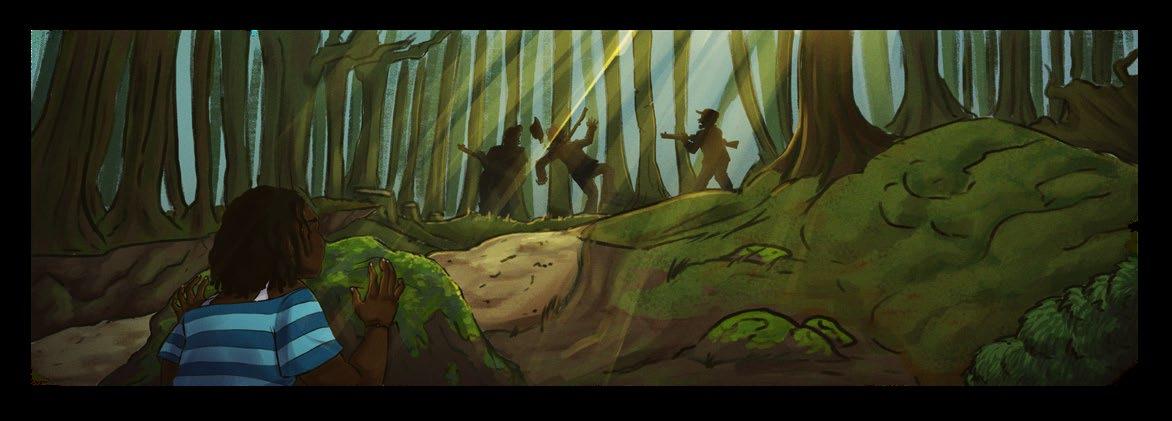
He was trying to cut down a fragile spruce and I was hiding a few feet deeper in the forest, trying to blend in with the undergrowth. He had two friends with him, and they carried large guns and scary looking knives on their gear. I had seen people like them before, trying to kill the animals in the forest and take their dead bodies. The spruce was defenseless, and as the man raised his machete, the forest shuddered, an unnatural stillness settling before the wind raged. The man was knocked off balance and his grip on the machete loosened, the momentum changing its trajectory and lodging itself in his throat. Eyes wide, I stood frozen, watching as his body fell, spurts of blood looking unnatural against the vibrant green of the moss beneath him. Not knowing if he would survive, I
ran as far as I could until I tripped over an exposed root. Breathless, the image of his body, and his blood, was all I could think about. I emptied the contents of my stomach onto the forest floor, but I only felt shock, not fear nor pity.
“The forest is sacred,” Mum always said. They were trying to selfishly end innocent life, therefore he received judgement from Mother, protector of nature. Mum and I lived a few minutes away from the forest’s edge and we would go into the greenwood every day to commune with nature.
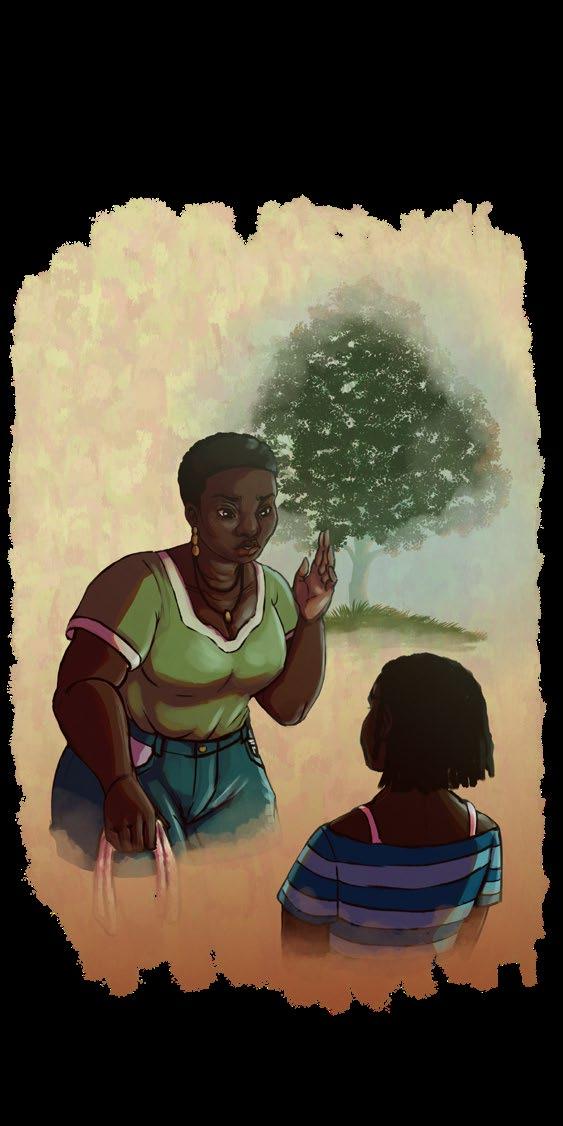
I once broke off a branch from a sapling and when I told Mum, the slap rang in my ears before I felt it.
“We do not harm the forest, Finn!” Mum screamed, gripping crescent moons into
my arms. “We do not kill Mother’s children.”
She pushed my face into the ground and as I struggled, she pressed my head down even more, imprinting the shape of the moss and bits of foliage into my cheek.
“Listen!” she hissed.
It took a few moments for me to stop moving, but when I did, I heard it. The forest was not as quiet as I thought. It spoke to me. The moss, the trees, the birds—everything. Voices so sweet and pure, tears came to my eyes and I found myself sobbing uncontrollably at what I had done. Mum wrapped her arms around me, and we wept together. The wind fanned over us, and the smell of fresh rain filled my lungs, calm washing over me. Mother’s presence was overwhelming, and I felt protected and loved in that moment.
When Mum died of an illness, I felt lost, scared, and upset. I sought comfort from Mother, going to the forest everyday but she never came. Alone and angry, I wondered if Mother was even real. She was supposed to take care of her children, so where was she in my time of need?
I made friends of course. Colleagues, mutual friends, and I tried very hard to adapt and move on. I worked hard to have a stable career, and while I learned new things and had meaningful friendships, I never felt like I could truly be myself. I felt like a shell of who I once was. What made it worse was whenever I allowed myself to go on a nature trail hike, it all came back to me, nature came to life, and it made me second guess my decision to leave every single time.
Writing
Florence Kahuhu
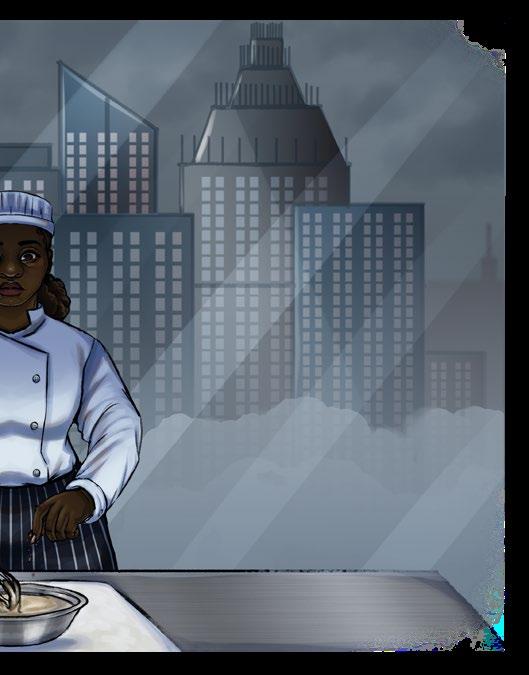
My mentor, Richard—a senior, much more accomplished chef—had invited me to go on a culinary trip with him to source fresh ingredients from different regions. The start of the trip was not so bad, but when he said we would be hunting for wild hogs, memories of the poacher filled my mind. I was completely against it. Walking through forests was one thing, I could ignore the voices of nature, but I could not harm any creature. I still believed they should be protected. The option of cancelling the entire trip was put on the table and I paused. I had worked so hard for so many years, so I thought maybe if I closed my eyes when they killed it, I would be all right.
Every step through the vegetation was painful. Ignoring nature’s children became harder and when we spied a hog running from us, we sped up, but secretly, I hoped he escaped. The voices grew in volume and I wanted to hang my head in shame, feeling like I had betrayed my kin.
Apparently, the area was a common hunting ground for hogs since about half an hour later, we found one caught in a trap.
“OK, Finn. The plan is to shoot the hog then load him up in the truck,” Richard said, pulling out a gun. “If he gets out, we’ll jump on top of the cage and wait until he goes away or we shoot him.”
Bile rose in my throat and I felt tremors all through my body. I could hear the hog cry out. It was a mix of anger and fear, but he was asking me to save him. I never should have agreed to go on this stupid trip.
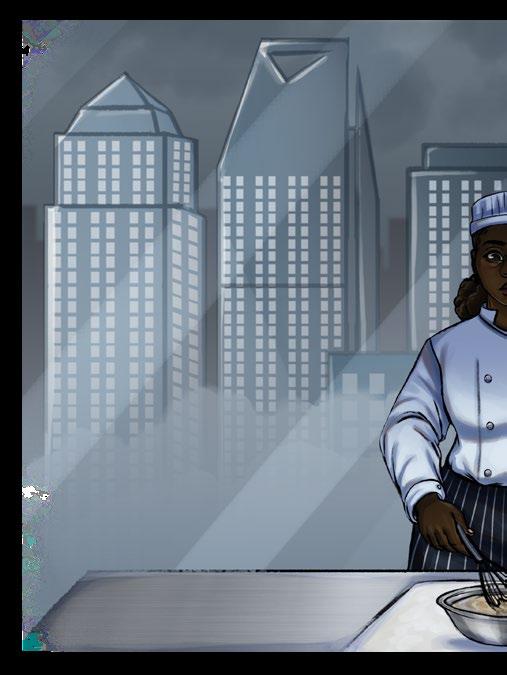
Years later, I moved to the city, as far away as I could from everything that reminded me of Mum and the forest. I was twenty-five, I had a stable job as a chef, and things were going great for me, but being away from the forest left me feeling empty inside.
I could no longer hear nature. The city was not Mother’s territory, so it made sense, but the knowledge did not bring me comfort. The concrete jungle seemed to suck the life out of me.
A breeze brushed against my skin, and the fog in my mind cleared. The reality of what I was about to let happen finally registered and as we lifted the cage, a strange delicate calm grew within me. I looked directly at the hog and hummed a melody that had Richard and our guide looking at me weird at first un-
til delirious smiles took over their faces. Opening the cage, the hog stepped out cautiously.
“I’m sorry. I almost allowed a terrible thing to happen to you. Runaway now, child.”
Huffing, the hog turned and ran into the forest. The breeze grew a bit stronger before dying away and the feeling within me fading. I blinked. What the hell had just happened? Glancing back, Richard and our guide looked at me in fear and took a few steps away.
When we got back to the city, Richard threatened to get me institutionalized because apparently, speaking to wild animals like they understand makes you look crazy. We settled on me seeing a shrink just to get him off my back.
Now, as I sat in a room full of potted
plants and very earthy décor, I wonder if I should have just chosen to go to a hospital. My eyes roamed in an effort to not look at the lady who sat on the grandfather chair opposite me. She had observed me like a science project, which irritated me to no end, so the plants were the next best view. At least I felt some sense of comfort with them.
“Why do you look at them like that?” she asked.
I looked at her. Her thick silver hair left unbound tumbled past her shoulders, and glasses perched on the bridge of her nose, the glare concealing her eyes. It was my fifth visit and I hated how perfect she looked. She probably thought I was crazy, just from the way I glared at her plants.
“What?
“The plants, why do you look at them with such scorn?” she asked.
I scoffed. “It’s not the plants I have a problem with, it’s their Mother.”
“Their mother?” she asked, tilting her head.
“You know what, I won’t even bother.” I looked away. “You wouldn’t understand. You probably think I’ve lost my mind too.”
“I assure you such is not the case.” At my silence, she continued, “Let’s assume I do think you are crazy, whatever you say would just be in line with what I ‘think.’ So, speak your mind.”
I observed her. She seemed to genuinely want to hear what I had to say, unlike Richard. I still remember the pitiful look on his face when I attempted to tell him a version of the truth.
Frustrated, I stood and walked to the plants, taking a moment to calm myself. “My mother practically raised me in the forest. She always said the forest was sacred and needed to be protected, and the person to protect all was Mother. A being she never saw in her lifetime but she was fiercely loyal to.”
I turned to her. “I believed too. I mean, the forest was alive. Everything has a voice: the vegetation, the animals—sometimes Mother would come with the wind.” Tears pricked my eyes.
I turned and hovered my fingers over some seedlings. “Mother is supposed to protect and be there when her children are in distress, but she wasn’t there when Mum died. A woman who believed without ever seeing her, and she was conveniently on vacation when I felt like I had lost everything.”
“Is that why you have run away from everything that reminds you of her?” she asked.
“Yeah,” I sniffled, opening the window, and looked out on the concrete jungle. “I wonder if she looks at me and thinks what a disgrace I am.” I hesitated, feeling a swell in my throat.
“Truth is, I just felt abandoned. I miss home, I miss the forest, I miss the feeling of being myself. I miss Mother and, deep down, I selfishly hope she hasn’t forgotten me.” I bit my lip, holding back a sob and discreetly wiping tears from my eyes.
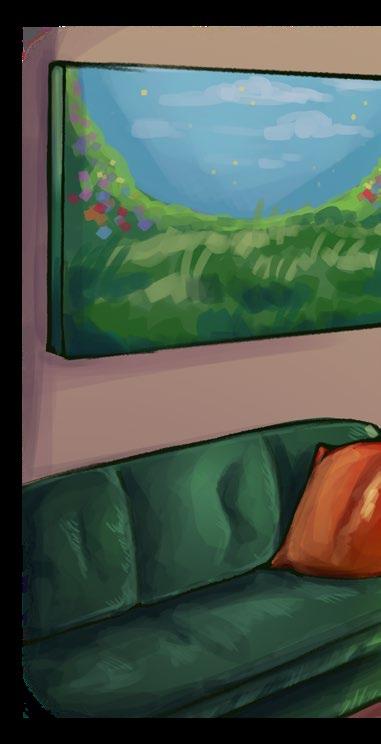
It felt good to admit the truth. Even though I would probably be thrown in the looney bin after this, a weight had been lifted from my shoulders.
I turned away when she placed a hand on my shoulder. A breeze caressed my face, and I closed my eyes, imagining I was still home, listening to the plants sing. The smell of fresh rain invaded my senses and Mother’s overwhelming presence weighed over me, stronger than it had ever been before.
“I did not abandon you child,” the lady said. Looking up at her, she had taken off her glasses and her emerald green eyes locked with mine, with such depth and the patterns seemed to swirl and hypnotize me. A gentle smile graced her gorgeous visage.
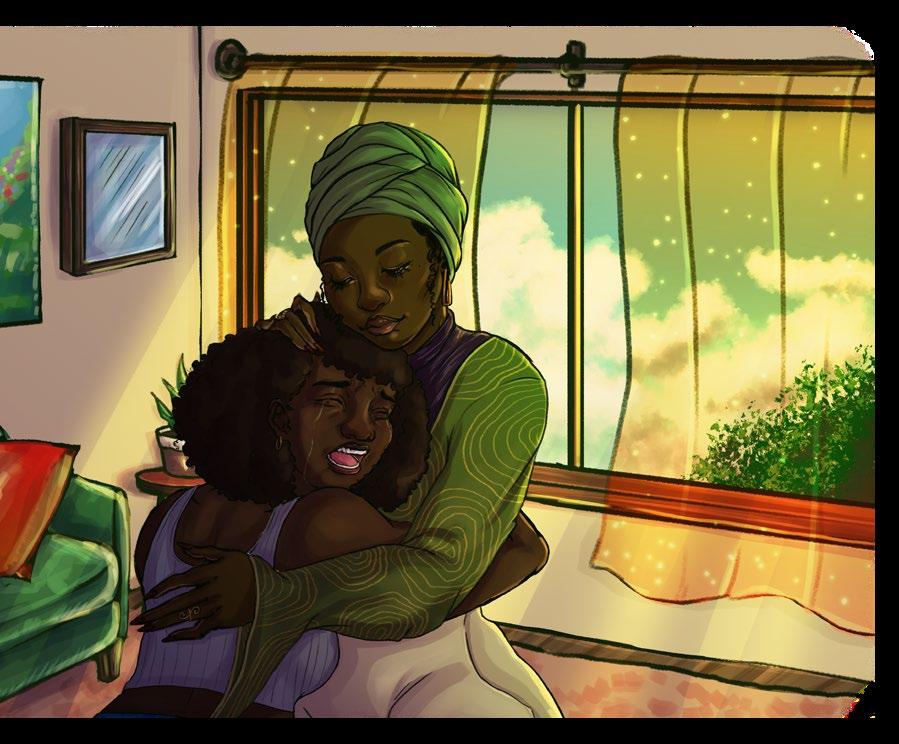
“Your mother did not need proof to believe in me because she followed what her mother taught her, just as you did. Her loyalty grew stronger when she had you and understood what it is like to be a mother.” She looked out the open window, tendrils of hair danced in the breeze.
“You needed me when your mother passed on and I see how my absence at that time caused you to hate me. I too grieved her loss, but I want you to know that even though you do not feel my presence, I am always there.” She touched the plant beside her, and it sang with joy. “My children live through me and, where my children are, I am there.”
My jaw went slack, I could only gaze at her. Tears flowed freely and, though there was no doubt, I needed confirmation.
“M-Mother?”
Her adoring smile widened, and the corners of her eyes crinkled, “Yes, Finn. I am here.”
I could only collapse into her embrace and wail. I felt exhilaration, but also grief and solace. I wept for Mum, for the years I wasted running away. Yet in Mother’s arms, I felt home, protected. In that moment, I received everything I had been yearning for. But I also realized, Mother had been watching me, so I had it all along.
By Jordan Yates
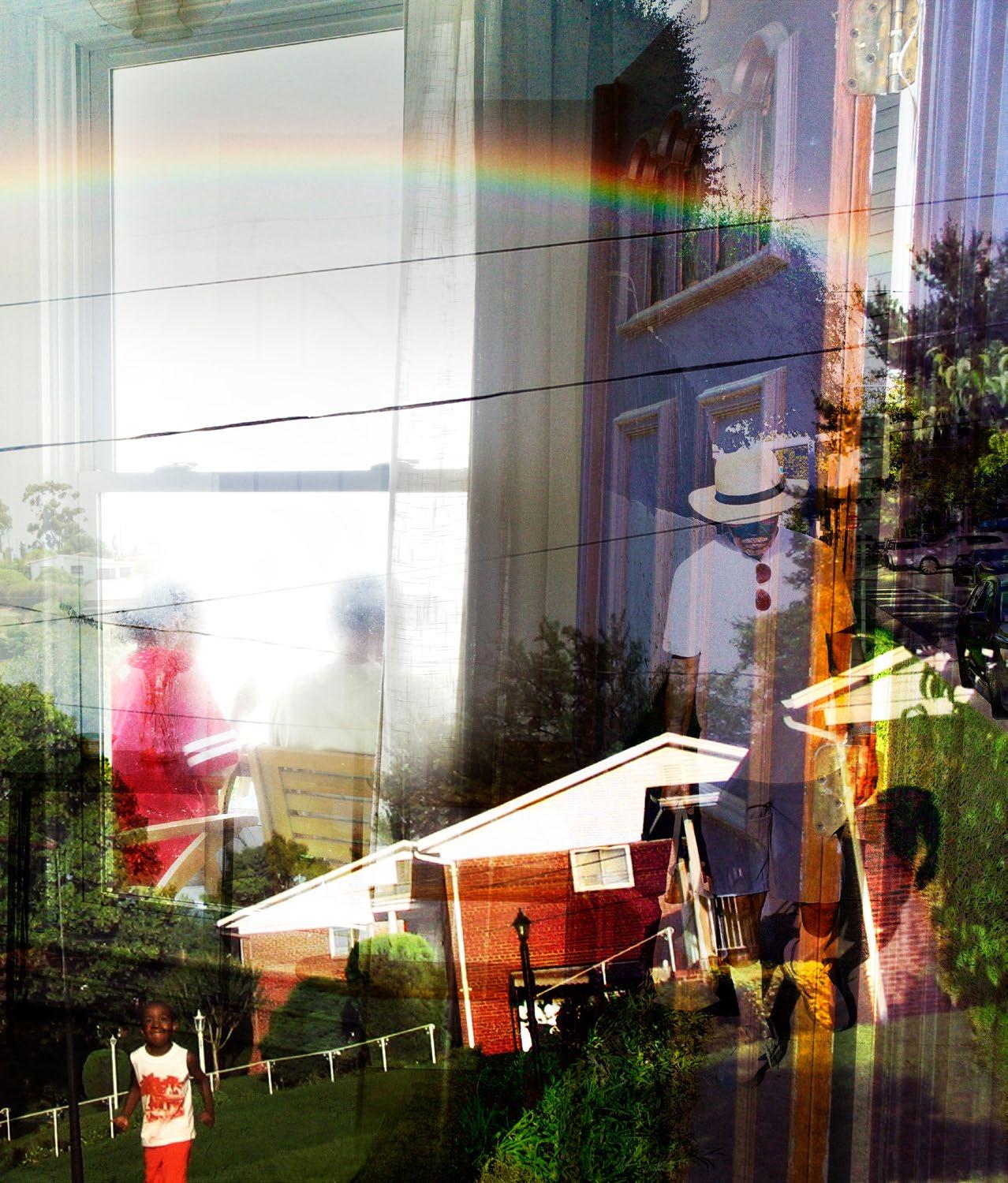
Agape is a word of Ancient Greek origin that translates, roughly, to selfless, unconditional, or divine love. While it is often used in religious contexts to define the love between humans and God, I am using it to represent the highest form of love that one can experience or evoke.
As I came of age, I entered a period that showed me what it meant to lose. I was raised between two families full of adults and the elderly. This set me up for life in ways that I simply could not have imagined as an adolescent. An unconditional love from my family and friends provided me with a perfect system to see the rights and wrongs about navigating growing up in the modern world. Realistically, I couldn’t ask for more. Alas, our lives ebb and flow.
In my first year of college I slowly lost my grandmother, Evangeline, to pancreatic cancer. She is the first and only person in my immediate family that I’ve lost. In the wake of her passing I learned a lot about her life, what she did, and how she was a monumental force of life for everyone she touched. As I looked inward I came to better understand the power of love in the connections we share with everyone. It is what moves us forward and bring us life, time after time.
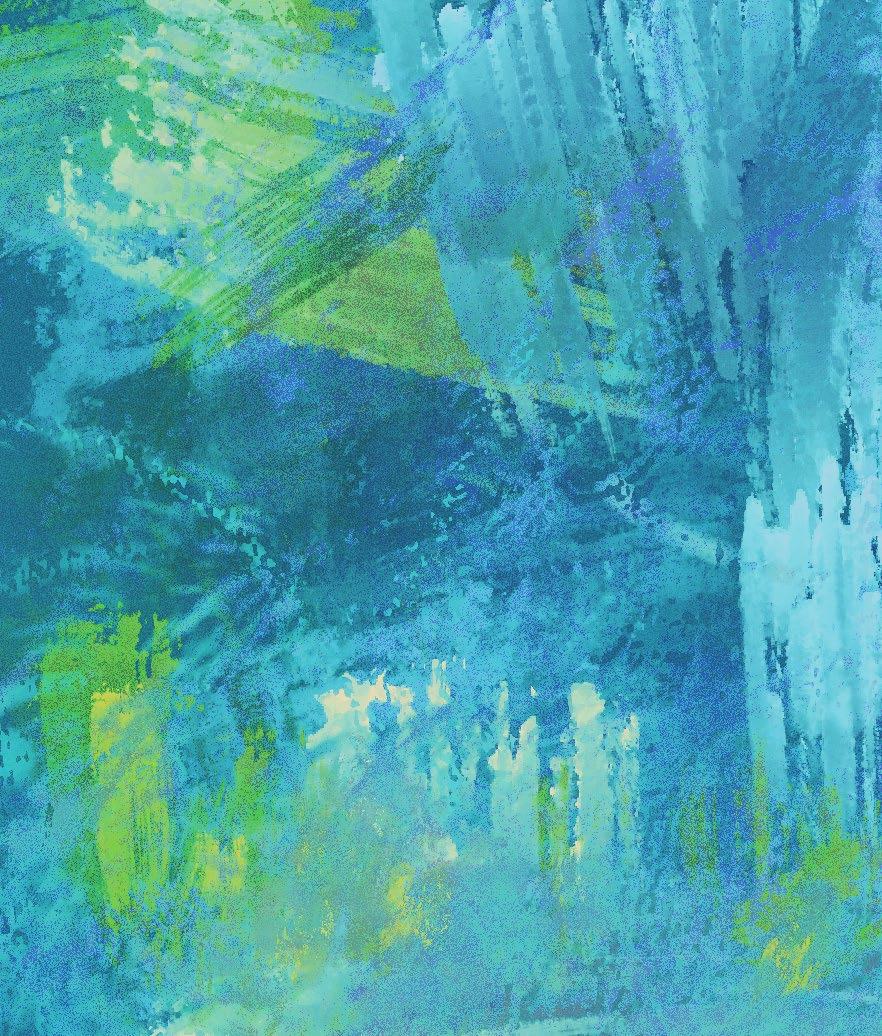
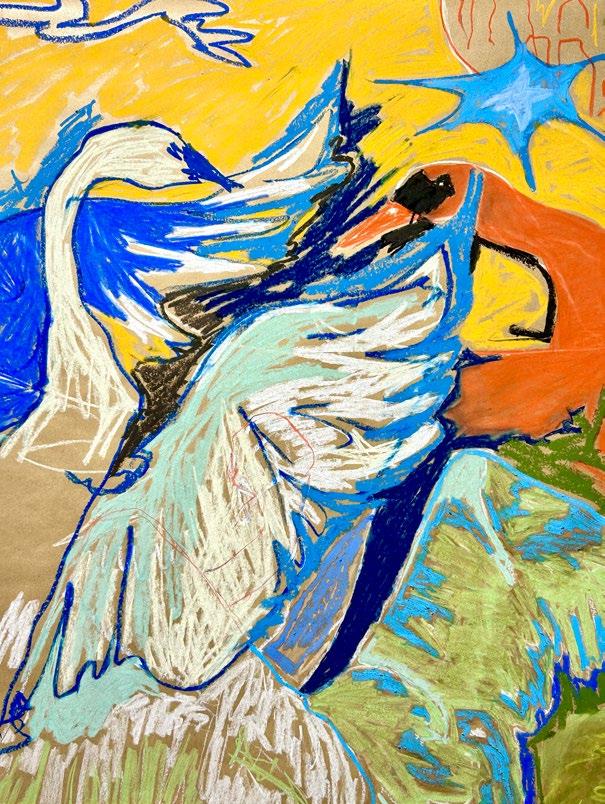
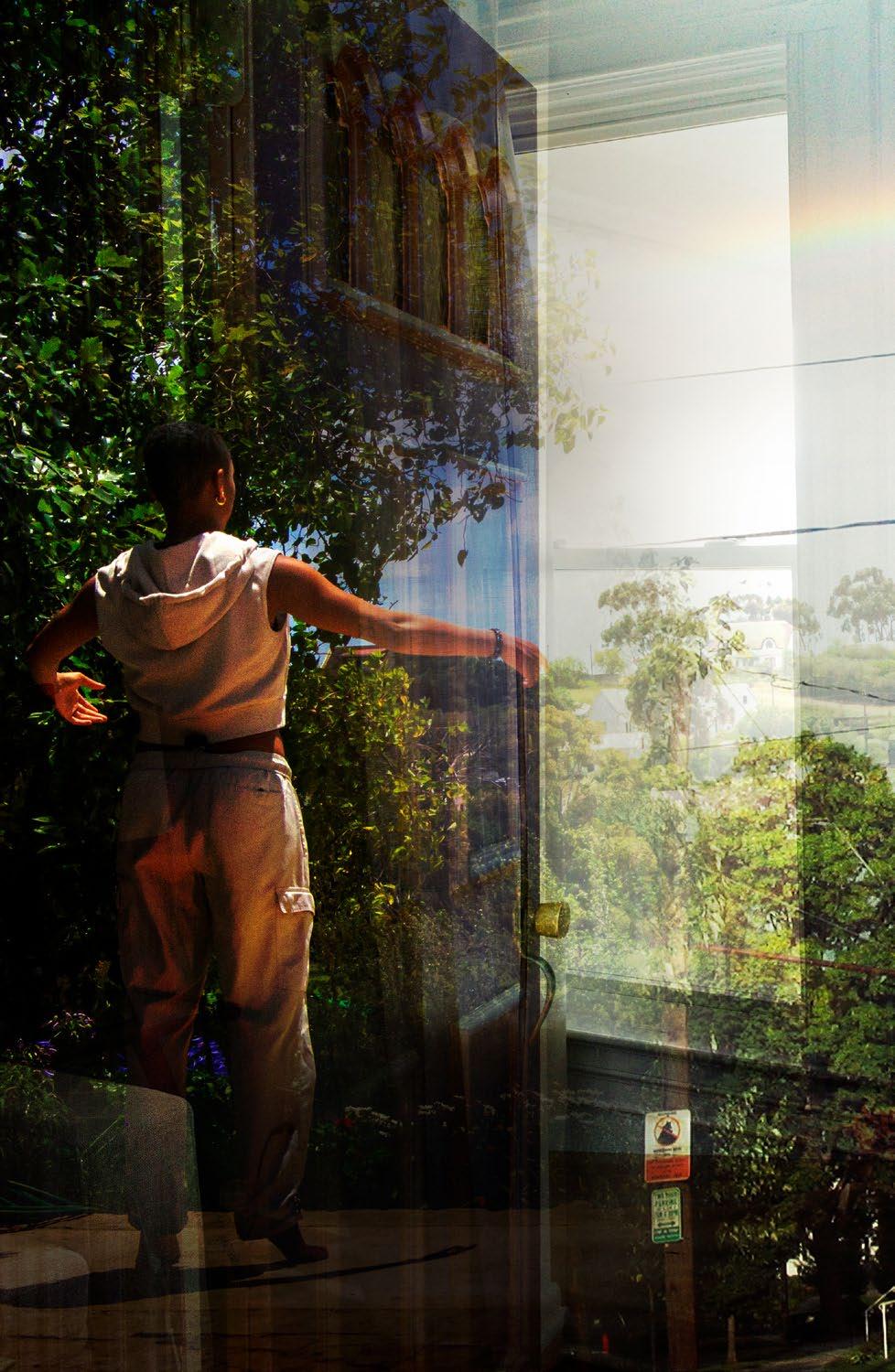
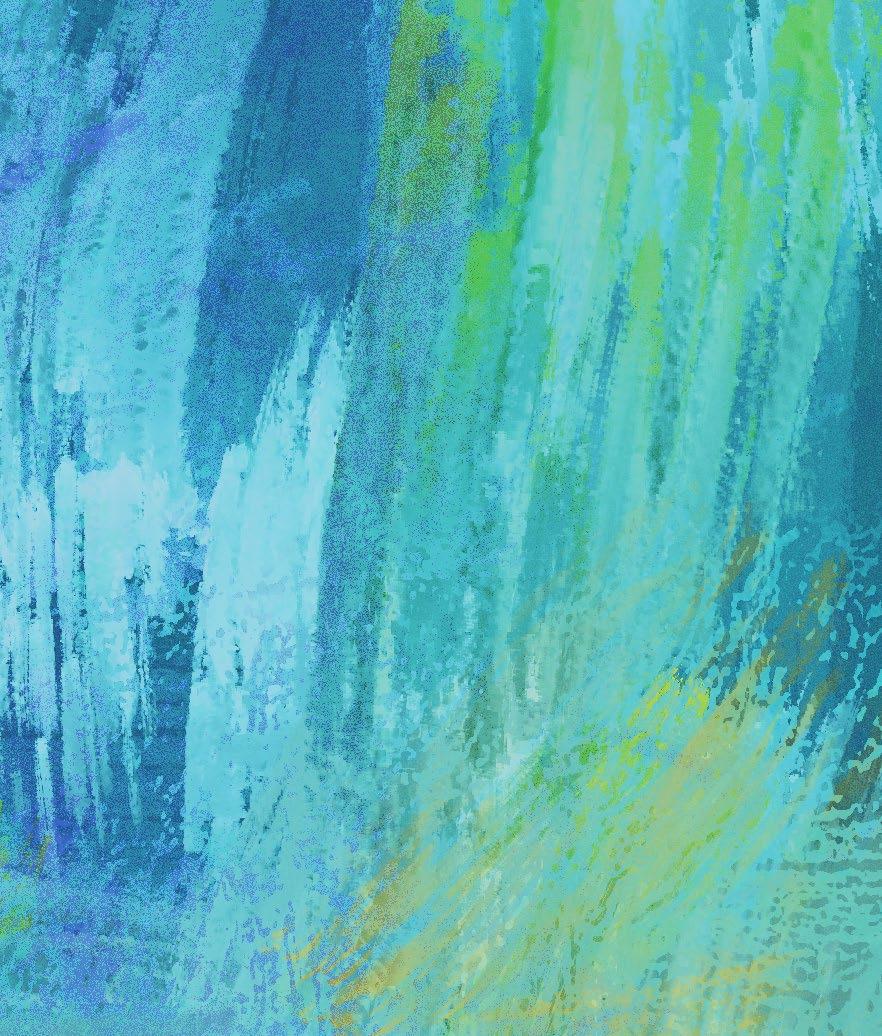
A Swan’s Lake emerged from a quiet need to reconnect—with nature, and with myself. In a time that felt loud and overwhelming, I turned to the subtle rhythms of the natural world: the sway of trees, the patterns in the breeze, the stillness that invites you to breathe more deeply. Creating this piece became less about output and more about restoration. Through that process, I found a sense of relief and clarity that had been missing. It opened a new creative path—one where I felt more honest, more grounded, and more in tune with my own voice after a long period of feeling stagnant. A Swan’s Lake represents that turning point: a moment of returning, listening, and allowing something real to surface.
If there’s anything to take from it, it’s this: step outside, slow down, and let nature meet you where you are. Sometimes, that’s where everything begins again.
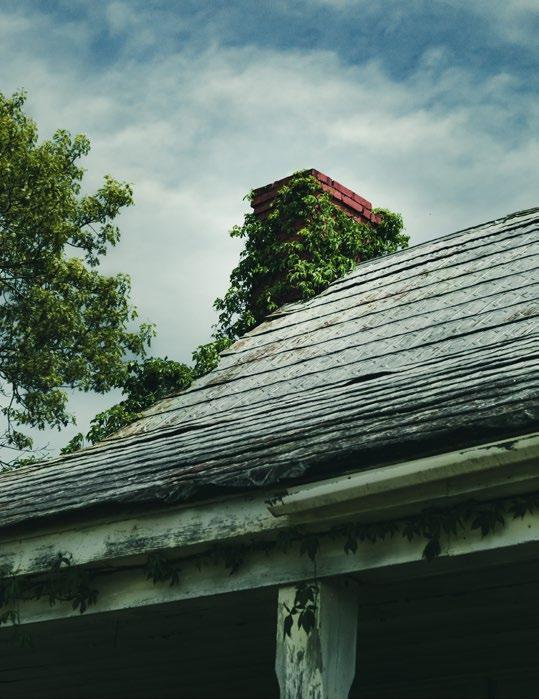
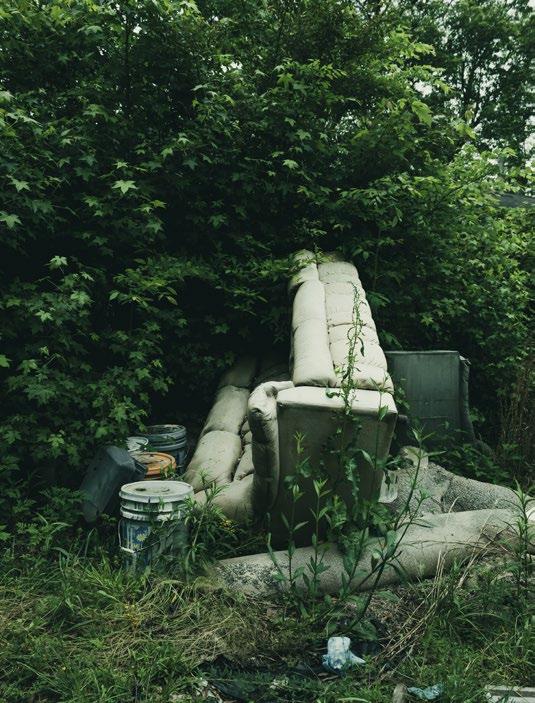
B.F.A. Photography
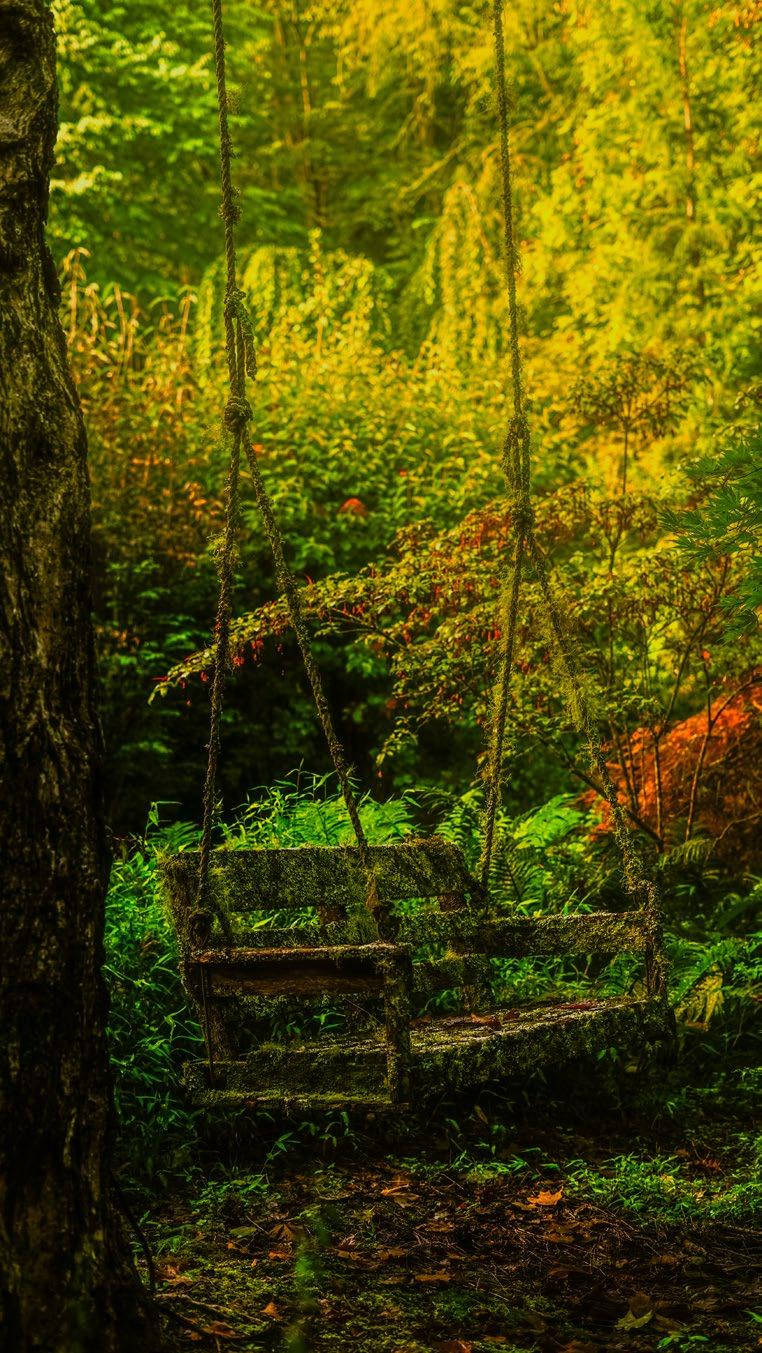
I have always been drawn to the way humans and nature intersect, especially how the natural world quietly reclaims the objects and spaces we leave behind. This curiosity shaped a series that visits quiet, forgotten places where man made structures are being slowly overtaken by vines, moss, and rust. There is a stillness in these sites that feels as if time has paused, as if you have stepped into a post-apocalyptic landscape where people once lived and only their traces remain. Most passersby overlook these scenes, yet they speak loudly about change, neglect, and how quickly our presence can fade. I photograph each location using only natural light, allowing the sun and shadows to preserve the raw, untouched quality of the moment, as if the space is frozen exactly as nature left it. Through this work, I hope viewers will slow down, feel the quiet discomfort of impermanence, and reflect on how temporary our marks are while the earth patiently takes them back, whether we abandon them intentionally or not.

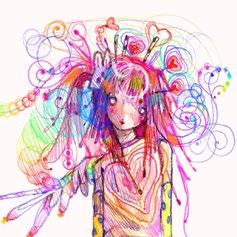
Juanita Pareja is a visual artist from Medellín, Colombia, whose work translates subconscious narratives of emotion and connection through vibrant, nostalgic imagery. She is currently in the process of completing a BFA in Illustration from Savannah College of Art and Design to graduate in 2026.
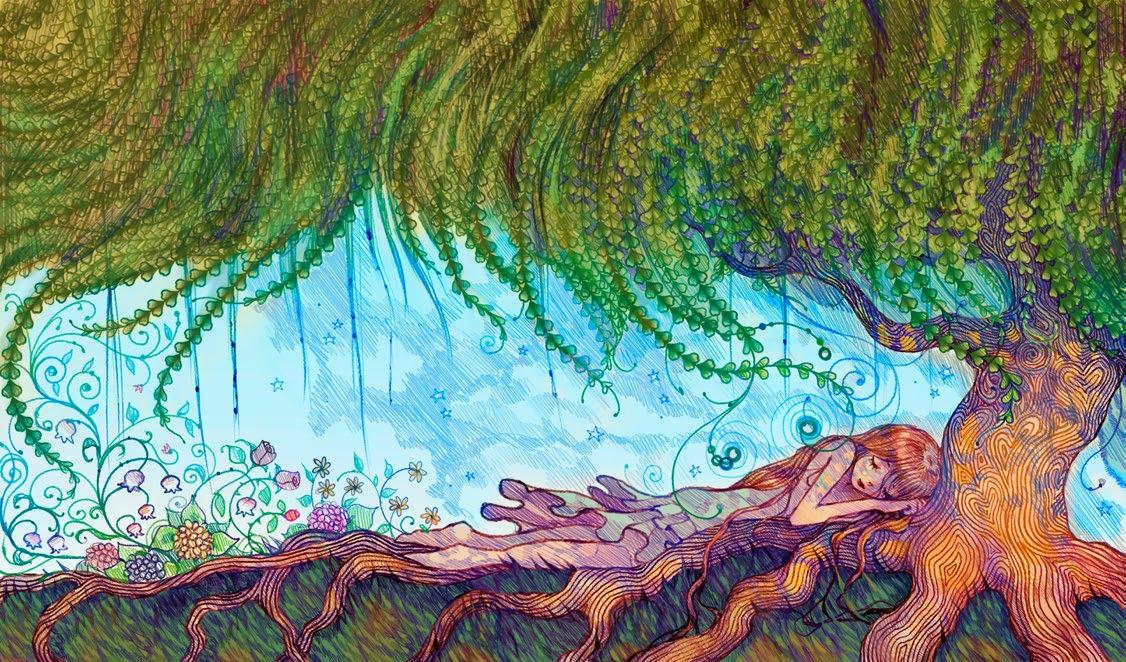
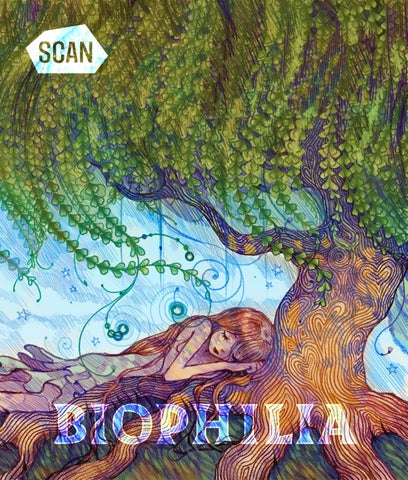
For this edition of SCAN, we wanted our cover to emphasize the feeling of love. The physical connection between the woman on the ground and the tree represents the attitude everyone needs to have towards nature in order to preserve our world for future generations. The creative team selected flowers containing personal meanings to each of us from different aspects of our lives.