AUSTRALIAN MADE
Revitalising local manufacturing: a spotlight on Australia’s cabinet making and board industries

Concept to Completion

The 2026 ACFA x KBDi Conference brings together Australia’s design and manufacturing community for a full day of insight, connection, and industry-leading ideas.
This is more than a conference. It’s where ideas are challenged, perspectives broadened, and the future of our industry is shaped—together.
Through our carefully curated agenda, delegates will gain:
• Fresh global design perspectives
• Practical business and legal insights
• Human-centred design strategies
• Leadership tools for a rapidly changing industry
• Meaningful connections with peers, partners, and suppliers
From the Trade Expo floor to the keynote stage, this experience is designed to inform, inspire, and connect.
Scan the QR Code to learn more and register.






From the editor

Welcome to issue 7 of Connect magazine!
This issue is packed with a range of stories that all fit our main theme of “business, economy and finance." I always find these stories so interesting because, in any creative industry, there are business realities to be faced. Whether you are designing or making, it’s important to ensure you have the business tools and knowledge to be successful in your field.
I’m indebted to the wide range of industry experts who contributed their time, passion and specialist knowledge to help make sure these stories support all types of businesses in our sector. Take a look as we shine a spotlight on the Australian manufacturing industry to see how global supply chains and mass production have affected this integral part of our landscape, plus a forecast of what we might see in the next three to five years.
Ben Fewtrell brings us vital information about budgeting and controlling your numbers as we head into a new financial year; Pam Kershaw dives into how to set up a business from the start in order to ensure success; and Selina Zwolsman brings us her expert tips on how to sell as a creative.
As well, we’ll take a look at how to stand out in a sea of sameness, with some great marketing tips on how you can make an impression. Plus, you won’t want to miss our special feature on concept to completion with a real-life case study that showcases how cabinet makers and designers can collaborate for success.
In addition, Rob Ditessa brings us the story behind Jake Sawyer of Marshall Wood, a self-taught, one-man woodworking business in Perth. And, check out the new ACFA supervisory skills course and Employer Best Practice Guide for Apprenticeships in Furnishing.
Pay special attention to the industry updates from our amazing advertisers. These guys deserve our wholehearted thanks for their support so please show them a lot of love!
Lastly, don’t forget to register for the ACFA x KBDi Conference in August and take a sneaky peek at some of the fun we had in April on the ACFA 2026 International Tour.
Enjoy!

Connect magazine is published by the Australian Cabinet & Furniture Association.
ABN 80 000 071 787
Publisher: Dean Brakell, CEO, ACFA
Editor: Melanie Gardener
Advertising Sales: Fiona Joynes
Art Director: Liza Jane Smith, liza@monava.com.au
Contributing Writers:
Rob Ditessa, Pam Kershaw, Selina Zwolsman, Ben Fewtrell, Dean Brakell, Glen Qi (HIA)
Printer: Neo Pty Ltd
Correspondence to: PO Box 157, Gosford NSW 2250
Front cover: Kate Vale from Reset-Co l Exclusive Cabinetry
Subscriptions: Connect magazine is produced as a hard-copy print publication as well as an online digital magazine. If you wish to subscribe please visit connectmagazine.com.au
@connectmagazineaus

@connect-magazine-aus

Copyright © Connect magazine (Property of the Australian Cabinet and Furniture Association). All rights reserved. The magazine or any part thereof may not be copied or reproduced without written permission from the publisher. Any specifications and/or claims here within are those of the manufacturer and/or supplier.
Disclaimer: Statements by advertisers, expressed editorial opinion and/ or contributors’ comments are not necessarily representative of those of ACFA Ltd or its members unless expressly stated. The publisher and editor assume no responsibility for errors or omissions or any consequence of reliance on this publication.
The Australian Cabinet and Furniture Association Ltd is a trade association that represents the interests of the cabinet making, kitchen, design, joinery, furniture, fit-out, and other wood, timber, stone and panel processing industries. Membership and advertising enquiries are welcome.
FEATURES
6 Australian Made
Revitalising local manufacturing: a spotlight on Australia’s cabinet making and board industries. By Melanie Gardener
14 Bespoke Talent
Jake Sawyer owns and runs Marshall Wood, a oneman woodworking business, in Perth. By Rob Ditessa
20 Build Your Budget
Stop guessing and start controlling your numbers. By Ben Fewtrell.
24 F rom Concept to Completion
Best-practice communication, shared digital tools, and smarter handover processes for smoother, more successful projects. By Melanie Gardener
30 Thinking Of Starting Your Own Business?
Then plan thoroughly and manage well. By Pam Kershaw
34 Selling the Vision
How to get your clients across the line. By Selina Zwolsman
38 Standing Out in a Sea of Sameness
How design and cabinetry businesses can cut through the noise in a crowded, low-trust market. By Melanie Gardener
66 Product Update
Give your next project a lift with our editor’s pick of the latest kitchen, bathroom and interior products
81 The Last Word: Developing Effective Supervisors
The missing link in many workshops. By Dean Brakell

INDUSTRY NEWS
44 Beautiful Natural Stone
CAV’ART Designer Stone tells a unique story in every space
46 myBlum
Your ideas, your projects — powered by myBlum
48 Modar Handles
A refined approach to modern hardware
50 E uropean Design for Australian Homes
The new Häfele Lifestyle Appliances catalogue is now available
52 CABINET VISION Wizard Award
Celebrating innovation, automation and intelligent manufacturing
54 M ovement That Defines Modern Furniture GRASS and Häfele elevate design through precision engineering
56 A ll You Need is YOU
Hettich Australia is driving efficiency through platform thinking
58 Smarter Quotes, Stronger Margins
Why outdated quoting systems are quietly costing renovation businesses more than they think

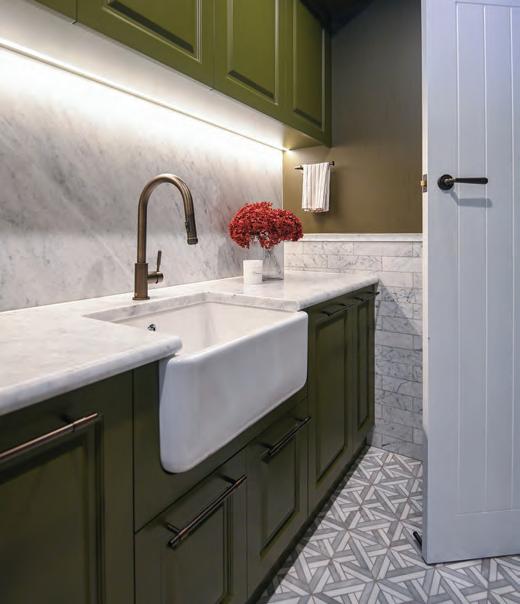
60 polytec: Supporting the Future of Australian Manufacturing
In today’s global market, maintaining a strong local manufacturing base matters more than ever
61 Concelo® Bathroom Bin
Following continued demand for clean, concealed bathroom storage solutions, Hideaway Bins is pleased to introduce the new Concelo® Bathroom Bin
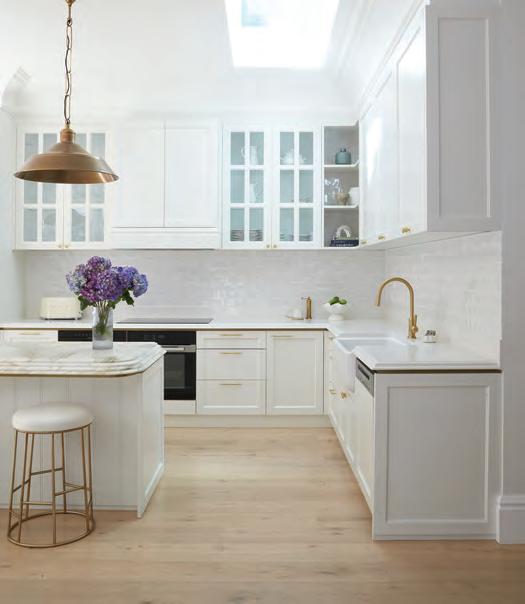
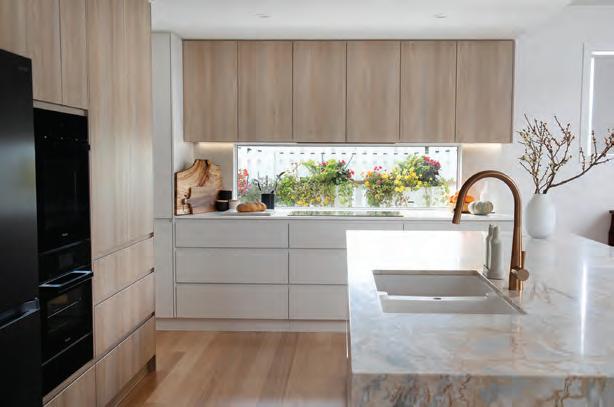
62 M eet Your New Go-To Site for Cabinet Makers
Cabinetrylabels.com.au brings together the products cabinet makers rely on with straightforward categories, practical info, and a layout built for speed
63 Peka Pleno Maxi Plus Larder Pull-Out
This unit offers a refined, highly engineered solution that redefines pantry storage functions
ASSOCIATION
UPDATES
64 Spotlight on Housing Building capacity, not just targets. By Glen Qi, HIA economist
68 ACFA 2026 Design Tour
Attendees on the ACFA 2026 Design Tour soaked up the best of Milan Design Week plus immersive visits to sponsor facilities
72 ACFA x KBDi 2026 Conference
Join Australia’s design and manufacturing community for two days of insight, connection and industry-leading ideas
74 New Supervisory Skills Course
As the industry evolves to demand greater efficiency, safety, and leadership accountability, the role of the supervisor has never been more critical
76 ACFA x KBDi x AWISA
A unified voice for Australia’s cabinetry, design and supply industry
78 E mployer Best Practice Guide for Apprenticeships in Furnishing
ACFA worked with Skills Insight and FurnishingWorks (part of ForestWorks) to help develop the guide
82 Index
Australian Made
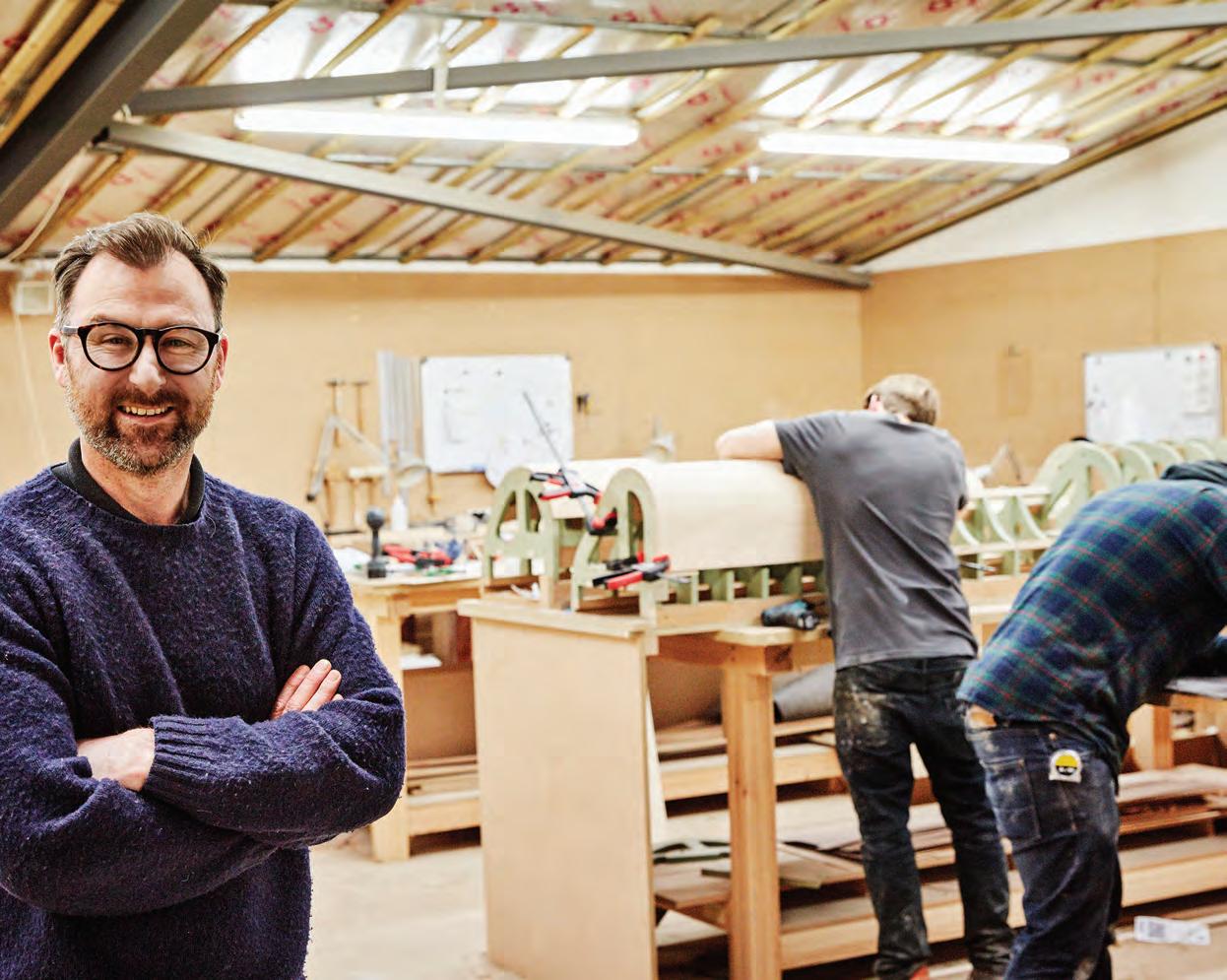
IRevitalising local manufacturing: a spotlight on Australia’s cabinet making and board industries
By Melanie Gardener
n an era dominated by global supply chains and mass production, Australia's local manufacturing sector is ideally placed for a resurgence, particularly within the cabinet making and joinery industry. At the heart of this resurgence are the board products that form the foundation of every cabinet and furniture piece crafted locally. As global supply chains face unprecedented disruptions, the spotlight turns towards local manufacturers who are not just sustaining but innovating in this crucial sector.
Recent developments in local manufacturing
Resurgence of local production: Over the past few years, there has been a noticeable trend towards revitalising local manufacturing in Australia. This resurgence is driven by factors such as a desire for higher quality and more customisable products, together with the growing emphasis on sustainability and reduced carbon footprints associated with shorter supply chains.
Technological advancements: Local manufacturers are increasingly adopting advanced technologies such as automated production systems and digital manufacturing techniques. These technologies not only improve efficiency but also enable customisation and rapid prototyping, giving local producers a competitive edge.
Government support: Initiatives and policies from the Australian government aimed at supporting local manufacturing have played a pivotal role. These include incentives for innovation, funding for research and development, and financial support for apprentices.
IndustryEdge provides expert market analysis, trade data, reporting and analysis for the food and forestry, and pulp and paper industries in Australia and New Zealand. The organisation combines a focus on this defined sector together with historical data and up-to-the-minute analysis to help the industry make sound business decisions.

Tim Woods, managing director of IndustryEdge, says that the international competitiveness of Australian wood products compared to imports is different across sectors. “Some are under real pressure from imports; others face less pressure,” he states. “What is increasingly clear is not all import competition is fair, because not all imports meet required standards for the Australian market, including some legal obligations.
“The reality is, though, that if we stand still — no matter what sector — we become more susceptible to imports. Innovations and investment in wood panels, value-adding and end-to-end supply chain integration all help defend and grow market share,” he adds.
The Engineered Wood Products Association of Australasia (EWPAA) is a member technical association for manufacturers of engineered wood products (EWPs) across Australasia, including sawn timber, panel products, plywood, glue laminated timber, cross-laminated timber, and laminated veneer lumber. EWPAA coordinates a program covering product certification, standards development, education and training, R&D facilitation, market development, and technical promotion. Gavin Matthew, EWPAA CEO, says “imported products are part of Australia’s supply chain but the market must be vigilant about addressing instances of potential non-conforming building products, especially with the current volatile international market."
“Kitchens and bathrooms are key areas to get right in construction, predominantly due to the presence of wet areas,” he adds. “These are rooms and applications where we see a higher risk of failures, particularly in high-rise and multi-res developments."
Gavin explains EWPAA’s product certification schemes focus on products manufactured for structural applications as they have a higher
risk and consequence of when things go wrong. “There is a lot of hard technical work that goes into obtaining our certification,” he says. “But it gives the market confidence that certified products are being manufactured to comply with the standards claimed. Our regular audits look at process control, quality management systems, and require product testing both internally and externally in a lab, that’s NATA accredited to test a huge range of product properties."
Government support & initiatives
Recent commentary from federal ministers underscores a renewed urgency around rebuilding Australia’s manufacturing base. Industry Minister Tim Ayres has warned the global economic order is being “remade,” calling for stronger domestic capability (news.com.au — 24 March 2026), while Prime Minister Anthony Albanese has framed local production as essential to “economic resilience” and national self-reliance (press release — 21 February 2025). Yet for manufacturers in sectors such as board products, critical to the cabinet making industry, this ambition sits alongside persistent challenges, including high energy costs, workforce shortages and ongoing price pressure from imported alternatives.
Minister Ayres, in his address at the Australian Manufacturing Awards in October 2025 said “… manufacturing and industrial capability are going to be central to Australia and Australians being able to make our way through the next few decades. And that means that we have to have a focus on what it is as a government that we can contribute to building our industrial capability to be able to meet those challenges."
Timber, panels and cabinetry sit precisely in the “value chain” the minister is describing, with board manufacturers taking the role of critical value-add processors, not just suppliers.
Skills and Training Minister Andrew Giles, in his speech at the launch of the Manufacturing Industry Skills Alliance Workforce Plan in August 2025, added that “like most sectors, Australian manufacturing continues to navigate challenges driven by global economic and geopolitical uncertainty."
Yet, across this issue, there is a clear contradiction between government narrative and industry reality. Announcements about rebuilding manufacturing,
Business & Finance
increasing our self-reliance and support for local industry are offset by the reality of high energy costs, an ageing workforce, skills shortages, difficulty with scaling local production, cheaper imported alternatives and global competition.
Challenges faced by local manufacturers
Cost competitiveness: One of the primary challenges faced by local manufacturers is cost competitiveness compared to imported products, especially from countries with lower labour costs and economies of scale. This price pressure often creates a challenge for local manufacturers to maintain profitability without compromising on quality.
Supply chain disruptions: Global disruptions, such as those experienced during the COVID-19 pandemic, exposed vulnerabilities in worldwide supply chains. Dependence on imported raw materials and components can lead to delays and increased costs, highlighting the importance of resilient local supply networks and onshore warehousing.
Skills shortages: Finding skilled labour remains a persistent challenge for the manufacturing sector. As older generations retire, there is a pressing need to attract younger talent and invest in training programs to ensure a skilled workforce capable of meeting industry demands. The past four years has seen a 27 per cent decline in apprenticeship starts in our sector.
Market access and regulations: Navigating regulatory frameworks, both domestically and internationally, adds complexity and costs to local manufacturing operations. Exporting products overseas often requires compliance with varying regulatory standards, which can be a barrier for smaller manufacturers.
Head of polytec, Christina Elvin, points to ABS data that indicates imports of furniture and joineryrelated products have increased significantly over the past decade, sharply increased during COVID, and have remained elevated since 2022. “Although local manufacturers have largely restored capacity, imported products have continued to gain market share due to cost competitiveness, scalability and the availability of pre-fabricated joinery systems,” she adds. “At the same time, domestic manufacturers have absorbed increases in labour, compliance and regulatory costs, which have contributed to the relative cost gap."
Tim Woods adds that “based on analysis we conducted for the softwood sawmilling sector, we know that even when imports are less than 20 per cent of total supply, import prices impact local pricing and, at around 40 per cent of total supply, imports drive the Australian market price."
He notes that in an open trading country such as Australia, imports are often exported here as excess material and often at rock bottom prices. “That sounds fine,” he says. “Until that forces a local supplier out of the market, resulting in almost immediately higher prices because what was once optional supply has now become critical to sustained supply."
Gavin Matthew feels that, while there is building regulation already in place for product compliance, the challenge is with identification, enforcement and monitoring of products. “The higher the building application risk, the more scrutiny is needed so that’s why regulation and standards tend to focus on structural products,” he explains. “Key functions such as durability, moisture resistance and product emissions are relatively harder to measure over time, and therefore, harder to monitor and regulate."
But Gavin is adamant that information and education — across industry as well as consumers — is imperative to making lasting change in the specification market. “We have regulation; what we need is more education, monitoring and enforcement,” he adds. “Product compliance reporting frameworks need to be both accessible and resourced so that the state building regulators can do this essential work."
Pressure from imported products
Price competition: As mentioned above, imported products often benefit from production cost savings due to economies of scale and lower labour costs in exporting countries. This places significant pressure on local manufacturers to reduce costs or differentiate their products based on quality and customisability.
Market dominance: In some segments, imported products have established strong market dominance, making it challenging for local manufacturers to compete solely on price. Differentiation through innovation, quality, and sustainability practices becomes crucial to maintaining market share.
Trade agreements and tariffs: Trade agreements and tariff structures can influence the competitiveness of imported products. As we have seen with the current ever-changing international tariff arrangements, changes in tariff rates or trade policies can impact the cost advantage of imported goods, affecting market dynamics for local manufacturers.
Christina Elvin says the key challenge is not the presence of imported products but the differences in cost structures and levels of transparency. “Imported products can appear more competitive on upfront price, but Australian manufacturers operate within higher labour, compliance and certification frameworks,” she adds.
She notes unsustainable pricing models that can see imported products introduced into the market at artificially low price points during periods of softer demand which place undue pressure on local manufacturers.
“Additional challenges for cabinet makers and builders come when there is limited visibility over product consistency, traceability and long-term performance the risks associated with specification, installation and warranty obligations can increase,” Christina says.
IndustryEdge has found that imports can be highly disruptive because, in travelling long distances, they

are not as reliable as we might suppose. “We learnt this in the pandemic and with these ongoing global disruptions,” adds Tim. “Reliance on imports is very precarious for our distant, island nation."
Tim states that our imports come from a few different sources including mainland China and some south-east Asian countries such as Malaysia which both have strong supply lines to Australia. However he also highlights excess production from Eastern European countries as well as South Africa as being quite common.
He points to the “grand and important idea that trade should be equal, in order to advance the interests of the trading nations and their population." He says tariffs are supposed to help achieve fairness, balance and defence of legitimate domestic interests. But he points to the current “weaponised tariffs” which he feels serve no purpose but to increase prices in the countries which impose them.
Gavin feels that now is an ideal time to have the conversation about Australian manufacturing and how that helps ensure our industry has the capacity to produce and source quality local products. “We need to maintain manufacturing capability in Australia especially in our renewable timber-based sector,” he states firmly. “If international markets implode, and recent events have certainly shown us how quickly the landscape can change, we need to ensure our essential building industry can still access vital quality products."
Gavin emphasises, while maintaining sovereign capacity is a key factor in the success of our building and renovation industry, accessing quality conforming imports are still an important part of the picture. “Whether it’s a locally made or imported product, we need people to ask the right questions and push for the right information,” he says.
Compliance, Standards and risk reduction
For Australian cabinet makers and joinery and furniture businesses, compliance is no longer just a box to tick; it’s a growing part of winning work and managing risk. Locally manufactured board products and machinery offer a clear advantage when it comes to meeting Australian Standards, low-emission requirements such as E0 and E1, and increasingly strict project specifications across residential and commercial builds.
Business & Finance
Using locally produced materials reduces the uncertainty that can come with imported products, including inconsistent quality, incomplete certification, or changes to compliance status after shipment. For workshops tendering on commercial projects or working with tier-one builders, this reliability helps protect margins, avoid costly rework, and reduce exposure to liability issues, while also simplifying documentation and audit requirements.
“Compliance, certification and consistency are now central to procurement decisions,” says Christina Elvin. “These are directly linked to risk management, regulatory alignment and long-term product performance. We are seeing purchasing decisions increasingly influenced by verified compliance and traceability alongside price."
“On a like-for-like basis, Australian manufacturing is able to be competitive,” says Tim Woods. “Once fair and legitimate conditions are met in each country, competitiveness is driven by a mix of capital investment, supply chain integration, productivity and, of course, service quality. We cannot stand still but being competitive is clearly achievable."
Gavin Matthew points out that Australian manufacturers are sometimes regulated beyond the levels of producers in other countries and that can create an uneven playing field. “We want our manufacturing industry to be competitive, but we have some workplace requirements that don’t exist or are significantly tighter than in some key trade competing countries and that does place additional costs on business. This is the challenge

for governments — to adequately manage risk without over regulation that can stifle industry,” he says.
Local manufacturing delivers benefits that extend well beyond the factory floor. When cabinet components and joinery products are produced in Australia, the value generated supports local employment across the entire supply chain; from manufacturing and machining through to logistics, installation and maintenance.
These businesses also contribute directly to the national economy through company tax, payroll tax and other levies that help fund public services and infrastructure. By contrast, when finished joinery products are imported, much of that economic value leaves the country. While imports may offer short-term price advantages, they do not generate the same level of domestic employment, skills development or tax revenue, meaning opportunities to strengthen Australia’s industrial capability and economic resilience can be lost.
Buying decisions: invest vs outsource
As local manufacturing strengthens, many cabinet makers are re-evaluating whether to continue outsourcing components or invest in machinery to bring more processes in-house. Improved access to locally made board products, combined with advancements in CNC nesting routers, beam saws, edgebanders and point-to-point machining centres, is tipping the balance for workshops with steady production volumes.
Investing in equipment such as CNC routers or automated edgebanders allows greater control over cut accuracy, edge quality and turnaround times, reducing reliance on external suppliers and minimising scheduling delays. While outsourcing remains a practical option for smaller shops or lowvolume runs, mid-sized workshops are increasingly finding that machinery investment delivers better margin control, workflow efficiency and long-term resilience in a tightening market.
“Investments in wood panels and supply chain integration have been very ambitious from some companies over the last half-decade,” says Tim Woods. “Much of that has increased capacity but, still, imports are growing in the engineered wood products market. Much of that import growth is driven by failures to make strategic investment in
local manufacturing." He adds that the evidence says focused end-to-end investments can secure the entire supply chain, reducing vulnerability.
What it means for small vs medium workshops
The resurgence of local manufacturing does not affect all workshops in the same way. For smaller cabinet making businesses, the key benefits lie in more reliable access to locally produced board products, shorter lead times and reduced risk, allowing them to remain flexible and responsive without the need for large capital investment.
Medium-sized workshops, however, are increasingly positioned to capitalise on the shift by scaling production and investing in machinery that brings cutting, edging and drilling in-house.
With consistent material supply and growing demand for locally made work, these businesses can justify automation to improve throughput, reduce labour pressure and compete more effectively on both quality and turnaround. In both cases, local manufacturing supports greater certainty, whether through supply stability for smaller shops or growth opportunities for workshops ready to expand.
Tim Woods says that Australia has experienced a rapid increase in flat-pack and prefabricated cabinet and joinery imports, including some available via retailers. “From what we understand, apartments and developments are routinely being fitted out by flat-pack imports and most of that is supplied on a cheapest-price, not best-quality, basis,” he adds.
He further opines that the leading indicator of the impact of lower-standard building materials is claims against new home warranty schemes.
“The number of claims is increasing and so is the average size and cost of each claim,” he laments.
“It seems the cost of quality housing is being shifted onto insurance schemes, so the consumer is ultimately the loser."
The impact of local manufacturing on
machinery businesses
The necessity to upgrade or invest in machinery:
As local manufacturing expands, there will likely be a spike in upgrades or investment in new machinery and equipment used in production processes. This includes machinery for cutting, shaping, finishing,
and assembling materials used in cabinet making and other manufacturing sectors.
Diversification of product offerings: Machinery supply companies can expand product lines to cater to the specific needs of local manufacturers. This could involve offering specialised equipment tailored to the production requirements of different industries, including cabinet making and joinery.
Service and maintenance demand: With more machinery in operation, it’s logical that there would be an increased demand for maintenance, repair, and technical support services. This ongoing support ensures optimal performance and uptime for their customers.
Supply chain relationships: Local manufacturing growth may strengthen relationships between machinery supply companies and local manufacturers, fostering long-term partnerships and collaboration on technology upgrades and process improvements.
Technological advancements: Increased demand for machinery could drive innovation and technological advancements in manufacturing equipment. Machinery supply companies may invest in research and development to offer more efficient, automated, and environmentally sustainable solutions.
Economic impact: A thriving local manufacturing sector can contribute to broader economic growth, potentially benefiting machinery supply companies through increased business opportunities and a more robust market environment.
Forward look: Three- to five-year trade outlook
Looking ahead, the next three to five years are likely to see Australian cabinet making continue its shift toward smarter, more efficient local production rather than a return to labour-heavy manufacturing. Workshops can expect increased uptake of compact CNC routers, automated edgebanders and integrated software systems that allow smaller teams to produce more consistent, higher-quality work.
Local material supply is expected to play a growing role as builders and clients place greater emphasis on compliance, sustainability and reliable delivery timeframes. For tradespeople, the focus will be on investing selectively; choosing machinery and

processes that improve productivity, reduce risk and support long-term business stability in a market where efficiency and reliability will matter as much as price.
Tim Woods advises that Australia’s home building sector is very fragmented. “When consolidation occurs — and it is happening, just slowly — supply sectors such as cabinet making will also consolidate,” he says. “A smaller number of larger cabinet makers will be more capable of weathering the competitive storms than a large number of smaller businesses can ever be."
“Government policy plays an important role in supporting a transparent and consistent market,” says Christina Elvin. “The focus should be ensuring that all products, local and imported, are assessed against the same standards." She adds that the objective is not to restrict competition, but to ensure that it operates on a consistent and informed basis.
Christina feels that, in the next three to five years, the balance between local and imported supply will largely depend on how consistently compliance and regulatory frameworks are applied. “Where standards are applied evenly, local manufacturers are better positioned to compete on quality, reliability, speed of supply and service,” she says.
She further notes that, while the industry is likely to remain influenced by global supply chains and imported products continue to play a significant role, “Australia has a strong track record in developing engineered products and improving material efficiency and this remains and area of competitive advantage."
Gavin Matthew would like to see more digestible technical information included with products that describes, promotes, and encourages conversations around specification decisions. “Let’s bring more technical and application use information to the table, backed by hard data, so products are fit for use, reflect quality differences, and we are not all in a cost race to the bottom."
He reminds us that we are an industry that works with a renewable product. “We are heavily invested in chain-of-custody certification and sustainable forestry management certification,” he says. “Our forest plantations are monitored to ensure they are managed sustainably, harvesting is managed, and a replanting program is in place."
With carbon miles playing a significant role in sustainability, choosing to use a locally grown, locally produced and locally manufactured product can play an important part in this story. “If we’re talking about economic sustainability as well, the people who grow, harvest and manufacture also contribute to employment opportunities, pay taxes and are a key part of the local community,” adds Gavin. “In regional areas this can be a vital element of the town’s ecosystem."
Tim cautions that Australia has to avoid a race to the bottom which will result in the hollowing out of our manufacturing sector. “That means having more than price as a tool,” he says. “Australia has to invest, increase productivity, integrate supply chains, build durable partnerships and demonstrate we are meeting national housing needs."
He adds that the biggest risk is “failing to be collectively ambitious." ■
Bespoke Talent
Jake Sawyer owns and runs Marshall Wood, a one-man woodworking business, in Perth
By Rob Ditessa

Last year, Jake chalked up what he calls “a high point” in his career. With the completion of his biggest project to date, he realised he had vanquished the big bugbears, pricing, self-affirmation, and administration, that bedevil solo artisanal woodworkers such as himself.
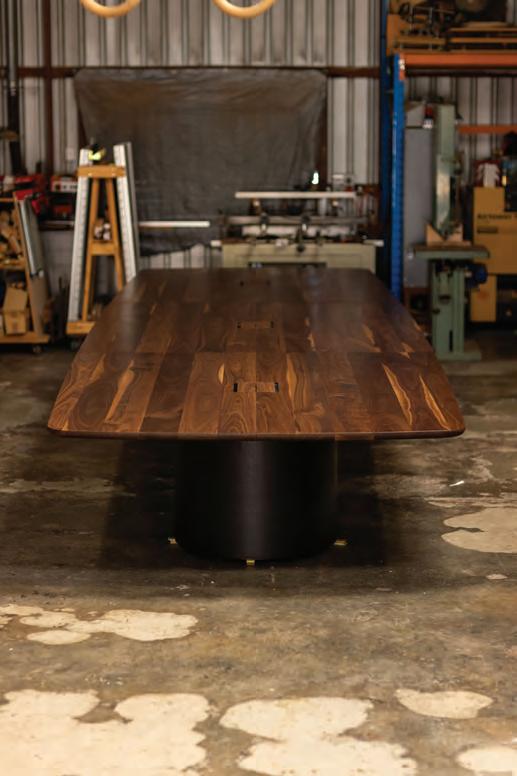
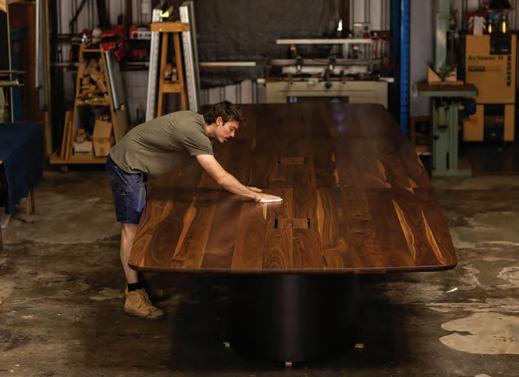
The project was to make a bespoke boardroom table, a piece that was at least four times greater in financial value and physical size than the largest dining table he had ever made. He finished the huge undertaking in a very short timeframe of 32 days, largely on his own with a touch of help, such as in lifting.
Self-affirmation
“I proved to myself how capable I can be when put under extreme pressure,” he explains to Connect. It also affirmed his faith in the goodness of other people, including the architect who put Jake forward for this job based on his confidence in Jake’s ability.
When Jake started out as a hobby woodworker, he soaked up any information he could from YouTube
videos, books, and magazines. With some cheap tools, he simply began to make small products, and also a tonne of mistakes. When he purchased the equipment for his business, he received the benefit of mentorship from the previous owner. Ultimately, he says, he has learned his craft through a series of experiments and mistakes.
“I was initially ashamed to say, but am now proud to say, that I am entirely self-taught when it comes to woodworking,” Jake affirms.
Confident pricing
The boardroom table was a financial success, and Jake finally felt confident with no qualms in setting a price to properly cover his hourly rate, materials, as well as an appropriate profit. It was a confidence that evolved from when he realised how much he was undercharging for his work, and he drew a line in the sand. In a heart-felt reflection he says, “Sure, I always knew the technically correct way to price my work, but what good is that when I don’t have the confidence to actually charge the clients that much?”
Pricing formula
Using a formula to set a price is easy enough, Jake says, but one challenge has been guessing how much time a project would take. He explains in detail that he sets up a spreadsheet with a list of every single piece of material that will go into the item with a little extra included for miscellaneous products. Then he adds the anticipated labour cost, and a reasonable profit margin.
“Historically, I’ve been terrible at guessing the right amount of hours as every single job I did was new and I had a massive learning curve. I often couldn’t charge for this time, and I found myself burning a lot of hours just figuring things out. I was also lazy with my materials’ calculation and would often just add the cost of timber to the job, but would overlook things such as laser cutting, powder coating, finish, glue, fasteners, CNC work, etc …” he explains.
By adding a column to his spreadsheet, Jake took a leap forward in calculating costs. “I have another column in each quote where I come back after the job and add the actual dollar value of everything against the budgeted amount for the quote. I track all my time and hours spent on the job and put this into the actual column as well, so I can analyse
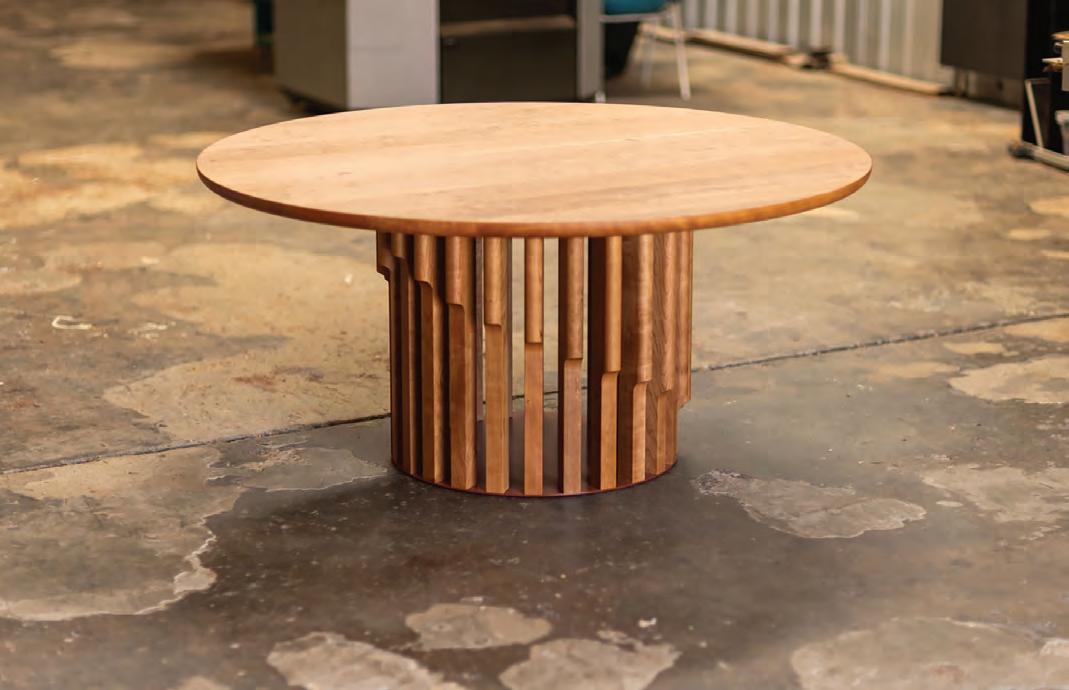
Hill dining table. Image credit: Bryce Twyman
Walnut boardroom table. Image credit: Bryce Twyman
how I went against my budgeted quote,” he says. “As my experience and consistency increased, I found these numbers became closer and closer to the point where I now get most jobs priced correctly to within a few hours of time and almost no variance in materials."
The competition
Another important thing to consider, Jake says, is where this pricing model places you against other people. He always cross-checks his final price from a quote against past work, pieces produced by colleagues and peers, as well as what furniture stores are charging for the same type of product. He considers the quality of the work coming in the furniture store, or the quality, and experience, of the other makers with whom he is benchmarking himself.
Desk work
Enthusiasts such as himself, Jake points out, simply do not understand the business of business when they open shop. “The difficulty of it really blew me away,” he says, continuing with passion, “I think most budding woodworkers start a business thinking they are going to be on the tools all the time, but this just isn’t the case. There’s admin, emails, bookkeeping, tax, client liaison, marketing, social media, photography, design work, and a tonne of other things that will have you stuck behind a desk in front of a screen. Then there’s maintenance and cleaning at the workshop, supply runs, and client deliveries, or meetings to win new jobs, and you’re rushing around like a headless chook.”
But, he adds, eventually he manages to keep track of everything with a paper diary, numerous to-do lists and reminders, and what many readers will admit is an impossible dream, a zero inbox.
A pleasant surprise
“I think the thing I found most surprising about the business is that there were more reasons a client would purchase my work than just the quality or design of a piece. I feel like I have won so many jobs because clients love the back story, or by being personable and easy to get along with. Some clients love to support ‘local’ and this is as big a reason as any for some people to buy from me,” Jake says.
Commissions and spec pieces
When he is not working on commissions or undertaking administrative tasks, Jake makes speculative pieces for future sales. But he is very selective about the commissions he takes on. “I take on and will only accept a commission if my gut tells me it is the right type of work for me,” he explains. “This also means the piece has to be aligned with my style and the price point has to match my preferred level of quality. I also have to get a sense that the client is going to be enjoyable to work with.”
Design
Jake uses SketchUp to show the client how the piece will look, as part of his process to quote accurately, and in order to construct the piece. He keeps
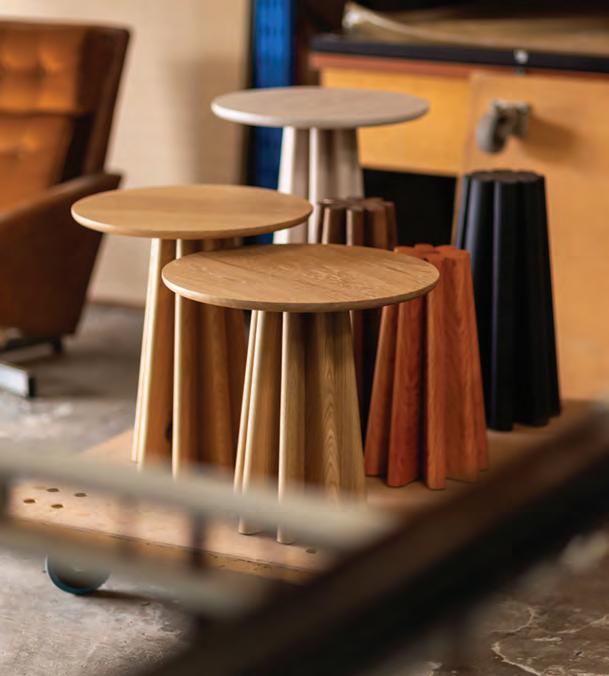
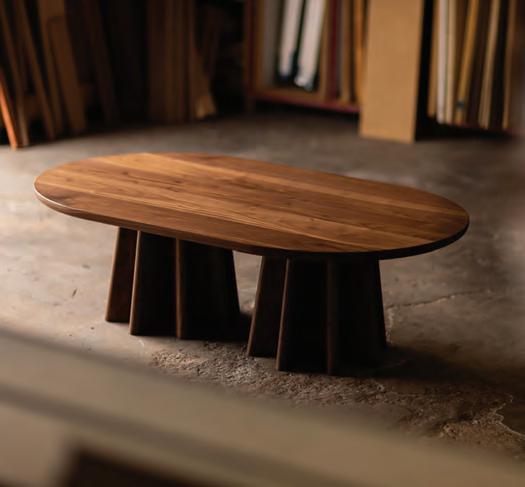
Skirt coffee table. Image credit: Bryce Twyman
Skirt side table in sheaok. Image credit: Bryce Twyman
drawings up to date to refer back to them in order to make iterations of pieces in the future. When he is unsure about a design or he is trying something new, Jake will sketch everything down to the domino and fastener locations, so as not to miss anything.
Premium timbers
“I love working with premium, imported timbers such as French oak, American walnut and cherry and European ash. I’m somewhat of a perfectionist and I just love the quality and consistency I can get from my supplier in these species,” he says, explaining that because they are available in a huge range of dimensions, he is rarely limited by standard sizes. He has found local species can be inconsistent to source, difficult to work with, prone to movement, often require lots of resin-filling, and are of a lower quality than he would like. He concludes, “Yes, the beauty of solid timber lies in the variation, and the defects, but I also like predictability, and consistency, and I aim to use the more premium timbers where possible.”
Favourites in the workshop
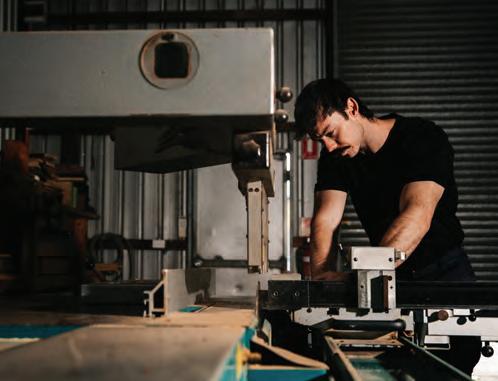
“Some of the coolest things in my workshop are the four old Martin machines that I was very lucky to have purchased from the previous owner, T72A, T54, T44, and T26. These machines are almost 30 years old and are still running beautifully, and accurately. Having these machines has enabled me to perform a lot of mundane tasks very quickly, and efficiently.
“Owning these machines has turned me into more of a machine and power tool-oriented woodworker than a hand tool woodworker.
I have some nice Veritas hand planes, and Lie-Nielsen chisels, but I find myself rarely reaching for these due to the surface and cut quality and accuracy from my machines.
“That said, my favourite hand plane is the HNT Gordon smoothing plane which is a joy to use. I’ve never had a hint of tearout when using this plane. Sadly, I hate sharpening so my planes and chisels are rarely as effective as they could be.
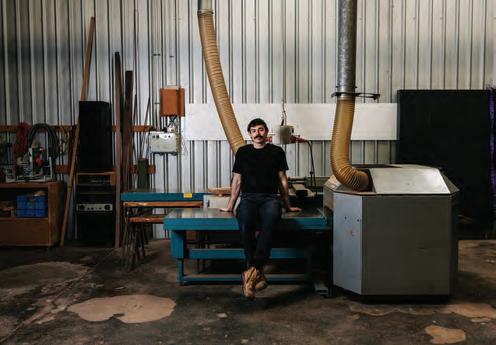
“Another cool thing is the huge dust extractor and hopper which is exceedingly overpowered for my setup but it used to run a workshop twice the size. My dust all gets sucked into a hopper which has a chute to open and fill up a skip bin below it, which means I only have to take it out and empty it every few months, unless I’m really busy, and then it fills up more quickly.
“The most useful pieces of equipment for a one-man shop might be my two Felder FAT300 lifting tables. These tables allow me to move materials around between the infeed and outfeed of my machines, or to move finished goods around. I often make large dining tables and I bought these to help me cart these pieces around in a way that my walkie stacker can’t manage. I can roll these carts under a three-metre dining table and jack them up off the ground to swivel them around on a dime, or I can be sanding or assembling a piece of furniture at just the right height using the height adjustability. These two tables were absolute game changers for me, and I use them more than anything else.”
Image credit: Adam Kenna
Image credit: Adam Kenna
Left/right balance
Rather than either a creative or artisan, Jake sees himself as a left-brained accountant with a creative streak, who sees woodwork as a logical process of adding and subtracting things to create a final product. “I’m happiest when I’m completely absorbed by the work and I’m in a flow state. The hours or days fly by and before you know it there’s a finished piece in front of me. I think this feeling of satisfaction is what keeps me going, but it’s only a fleeting moment before I have to deliver the piece and get started on the next one,” he laughs.
The workshop
Jake explains the workshop is a 200-square-metre unit in an industrial complex of roughly 20 other units.
“It’s long and skinny at roughly 10 x 20 metres, and I have most of my machines running down one side with the longest possible infeed and outfeed. This keeps them mostly in a good line for the dust extraction to run down a single line. On the other side is my dust extractor, material storage and workbenches. Most of my machines are fixed in place and hooked up to electrical, air, and dust extraction. They are ready to turn on and start without any inconvenience.
“In the middle there is a big open space which I use to work on and construct all my pieces, and there’s enough space here to store a few big dining tables for a short period of time while they await delivery. The only time space was really a problem was for the boardroom table.
“I try to keep anything that isn’t fixed down on mobile trolleys so things can be moved around as necessary. This includes materials I’m part way through processing or finished goods.
“I have old mercury halide lighting that deteriorates over time. Luckily, I have a big front roller door and a rear window which allows a lot of natural light in, along with some skylights. That said, it’s high on my list to swap to LED lights as soon as I can afford it.
“My dust extractor is always on when the machines are running, so there’s very little dust in the air. The guards are almost always in use on the saw, jointer and spindle moulder, unless I can’t physically make the cut with them in place.
“I’ve had a few trips to hospital from near misses on the machines and I’ve witnessed some horrific injuries in the past so I’m extremely careful and focused whenever I’m on the machines. I try to wear safety glasses almost all the time due to a few experiences with debris flying into my eyes. I always have AirPods in to help cut down on the noise but to also communicate with my phone in a way that doesn’t require me to take my hands or eyes off my work. I’m always in steel caps when I’m on the tools and I make sure the floors are regularly vacuumed for good grip and to keep the place tidy.”
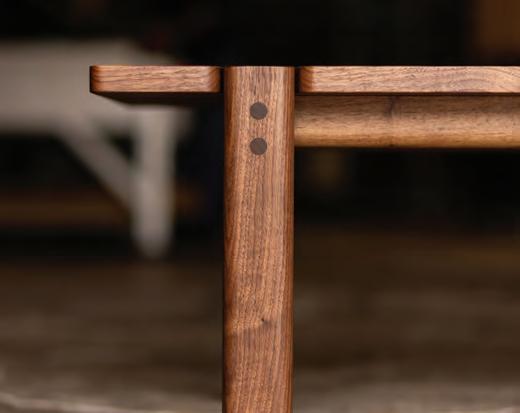
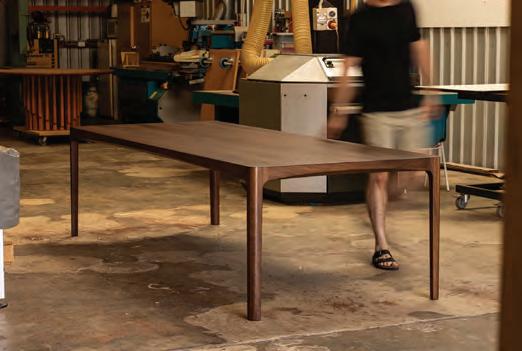
Image credit: Bryce Twyman
Walnut dining table. Image credit: Bryce Twyman
Walnut dining table. Image credit: Bryce Twyman
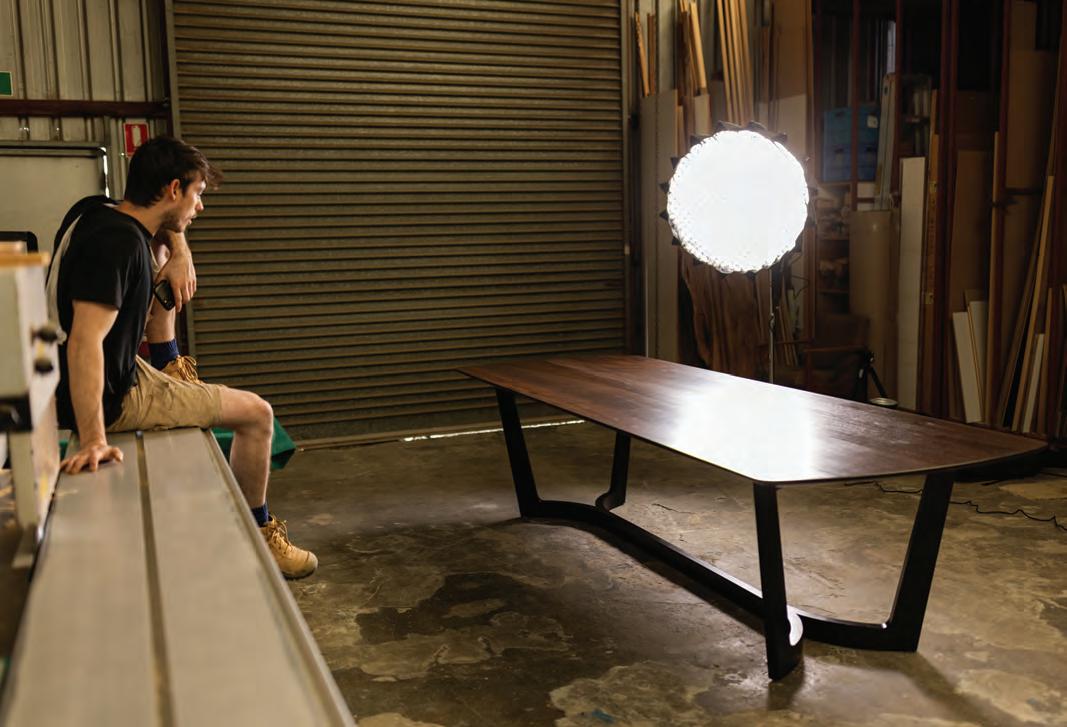
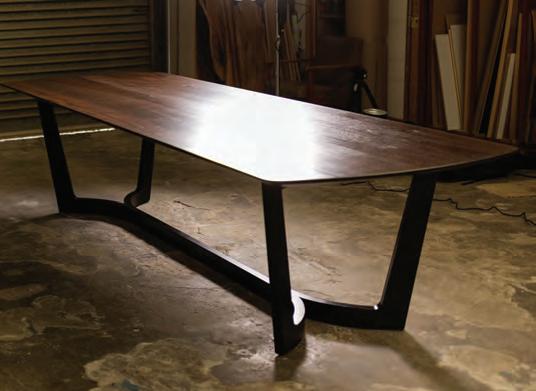
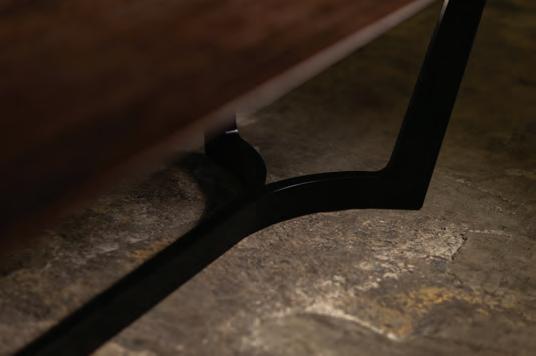
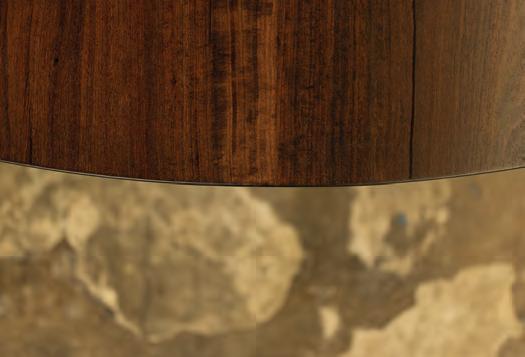
Davis dining table
Jake’s most challenging product was the Davis dining table. It included many tricky angles and bent laminations, “and some serious manual labour on the top to tame the book-matched slabs and create the curved shape, under bevel and thin edge. This job took me 100 hours more than I anticipated to complete and was a real eye opener for where my time was going and why I wasn’t making any money.” ■
Image credit: Bryce Twyman
Build Your Budget
Stop guessing and start controlling your numbers
By Ben Fewtrell

Most business owners don’t have a profit problem, however they have a planning problem.
Every year around EOFY, I see the same pattern. Business owners look at their numbers and wonder what happened, then hope next year will be better, and then carry on doing more of the same. They take on more work, push harder, and stay busier than ever … yet their bank balance doesn’t reflect the effort.
If you want the next financial year to be more profitable, it starts with one simple shift, stop budgeting for survival and start budgeting for profit. Or in some cases, just start budgeting!
Although I am encouraging you to create a budget, the reality is, most budgets don’t work. They’re either done once and forgotten, based on rough guesses, or built entirely around what happened last year. The issue with that approach is simple, last year’s numbers don’t automatically create a better future. If your margins were tight, your overheads were creeping up, or your pricing
wasn’t right, copying those numbers into a new spreadsheet just locks in the same result.
A proper budget isn’t a report. It’s a plan. And more importantly, it’s a decision.
Start with the end in mind
The biggest shift you can make is to start with the end in mind. Instead of asking, “How much will we make next year?”, ask a better question, “How much profit do I actually want to make?”
This is where most business owners hesitate, because they’ve never set profit as a target. It’s usually whatever is left over at the end.
It’s also important to understand what profit is. Profit is not your wages.
If you’re working in the business day to day, the money you pay yourself for that role is a wage, just like any other team member. You’re being paid for the job you do. Profit is what’s left over after all expenses are paid, including your wage. That’s your return as the business owner. It’s what allows you
to take dividends, build wealth, and benefit from owning the business, whether you’re on the tools or not. Once you understand that, profit stops being an afterthought and becomes the goal.
Say you want to make $500,000 net profit next financial year. That’s your starting point. From there, you work backwards. Add your fixed expenses, things such as rent, wages, vehicles, insurance, software, and admin costs. Then factor in your cost of goods, such as materials and subcontractors. What you’re left with is your required revenue.
And this is where the lightbulb moment usually happens, because the number is often higher than expected. That’s not a problem. That’s clarity.
Turn numbers into daily actions
Once you’ve got your revenue target, the next step is to make it real.
All these numbers are meaningless if you don’t translate them into something actionable. A $2.4 million target might sound impressive, but it doesn’t help you on a Tuesday morning when you’re trying to decide what needs to happen that day.
To start we need to break it down. $2.4 million per year becomes $200,000 per month. That breaks down further to around $10,000 per working day. Now you’ve got something tangible. You can start asking better questions:
• Do we have enough work booked to hit that?
• Are our average job values high enough?
• How many jobs do we need each week?
This is where your team can also get on board, because they can clearly see what the target is and what needs to happen to achieve it.
The real lever … pricing, not just costs
When margins are tight, the default reaction is to cut costs. And yes, there’s a place for that. But there’s a limit to how much you can cut before it starts affecting quality, your team, or your ability to deliver. There is no such limit when it comes to pricing properly.
If your budget shows you need to generate $10,000 per day, but your current average job value only gets you to $7000, the issue is likely to be pricing. This is where a lot of businesses get stuck. They’re busy but undercharging. So instead of fixing the real problem, they try to make up for it with volume. More jobs, more pressure, longer hours.
That leads straight to burnout
When you understand your margins properly, everything changes. You can price your work with confidence, knowing exactly what needs to be made on each job. You can identify and avoid work that isn’t profitable instead of taking it on

Business & Finance
“just to stay busy.” And you can make small pricing adjustments that have a significant impact on your bottom line.
Instead of chasing more work, you start focusing on better work. That might mean reviewing your labour rates, tightening up your margins on materials, or improving your quoting process to make sure all time and costs are accounted for. In many cases, even a small increase in pricing can have a major impact on profit without increasing your workload. Because in the end, profit doesn’t come from doing more jobs. It comes from doing the right jobs, at the right price.
Build in a buffer (because reality happens)
No year ever goes exactly to plan. There will be delays. Quiet periods. Jobs that blow out. Costs you didn’t expect. If your budget only works when everything is perfect, it’s not a good budget. Build in a buffer. That might mean aiming slightly higher with your revenue targets or allowing extra margin in your pricing. It gives you breathing room and reduces the pressure when things inevitably shift. A good plan isn’t about being perfect, it’s about being resilient.
A simple way to build your budget
If you’re not sure where to start, here’s a simple structure you can follow:
1. Start with your profit target. Be clear on what you want to take home each month, then multiply it by 12 to get your annual goal.
2. Next, list all your fixed costs. This includes wages, rent, insurances, software, vehicles, admin. Anything that doesn’t change much month to month. These are your overheads. The easiest way to do this is to look at your P&L for the past year and take the average of the past 12 months, which will give you a realistic number.
3. Then, work out your cost of goods as a percentage. This includes materials, subcontractors, and anything directly tied to doing the job. Don’t try to guess a dollar figure, just look at your past numbers and work out roughly what percentage of each job gets eaten up by costs.
Now, here’s the simple way to think about it:
For every $1 you bring in, a portion of that disappears straight away to cover job costs. So, if your cost of goods is around 50, that means you keep 50 cents in the business to cover overheads and profit. If it’s 60, you keep 40 cents.
Once you know that, you can start to piece it together.


Take your fixed costs plus your profit target, this is the amount of money your business needs to “keep” after job costs. Then ask yourself: “If I only keep X cents in every dollar, how much do I need to sell to end up with that amount?” That gives you your revenue target without needing to rely on guesswork or copying last year’s numbers.
From there, you can break it down into monthly, weekly, and daily targets so it becomes something you and your team can work towards.
Common budgeting mistakes to avoid
There are a few traps I see all the time. The first is underestimating costs. It’s easy to be optimistic, but small expenses add up quickly over a year. If anything, slightly overestimate to stay safe.
The second is overestimating capacity. Just because you were flat out last year doesn’t mean you can sustain that every week. Be realistic about what your team can handle.
The third is ignoring margins. Revenue means nothing if there’s no profit left at the end. Focus on what you keep, not just what you bill.
And finally, not reviewing the numbers. A budget is only useful if you look at it regularly and adjust as you go.
Review It Monthly (This Is Where the Magic Happens). A budget isn’t something you set once and forget. It should be a living document that
you review every month. Look at how your actual numbers compare to your targets. Check your margins. Identify where you’re ahead and where you’re falling behind, then adjust.
Final thought: profit is planned
The businesses that consistently make money aren’t lucky. They’re intentional. They know what they need to make. They understand what it takes to get there. And they track their progress along the way. So, as you head into the next financial year, don’t just hope it’s better. Plan for it. Because, when you start budgeting for profit, not just revenue, everything changes. ■
Max My Profit maxmyprofit.com.au
Ben Fewtrell is the co-founder and managing partner at MaxMyProfit. With more than 20 years of experience in business growth, Ben is also the co-creator of the "Business Exceleration™ Blueprint" and co-hosts the Max Your Business Podcast. He’s known for his dynamic presentations and effective business coaching, helping companies boost their sales and efficiency.
From Concept
to Completion
Best-practice communication, shared digital tools, and smarter handover processes for smoother, more successful projects
By Melanie Gardener

The most successful interior projects don’t just rely on great ideas, they depend on great collaboration. In the world of cabinetry and interior design, the relationship between designers and makers is pivotal to this success. When that partnership flows, magic happens: projects run smoother, details shine, and clients enjoy a seamless experience. When communication falters that’s when timelines blow out, budgets strain, and frustration mounts on all sides.
Today, as projects become more complex and clients more demanding, strengthening collaboration from concept to completion is not just beneficial, it’s essential. Designers and cabinet makers are increasingly looking to refined processes, clearer communication, and shared digital tools to ensure that ideas translate accurately into buildable, beautiful results.
Understanding the designer/maker partnership
Designers and cabinet makers or joiners bring different yet equally critical expertise to a project. Designers visualise the big picture including concepts, layouts, material palettes, and client vision. Makers translate that vision into functional, precise, technically sound joinery.
The magic happens when both perspectives inform each other. A designer’s creativity paired
with a cabinet maker’s practical insights leads to solutions that are aesthetic, durable, and constructible. The challenges emerge when assumptions go unspoken, drawings lack detail, or specifications don’t align with real-world limitations. Improving collaboration means closing these gaps.
Communication is the foundation of success
Strong communication is the backbone of every successful project. It begins with clarity of roles and continues with consistent, structured dialogue throughout the project.
Start with a shared briefing session: Before drawings begin, a joint meeting with the designer, maker, and client allows everyone to align on goals, constraints, and expectations. This early collaboration prevents later misunderstandings and helps identify potential technical challenges early.
Establish preferred communication channels: Agree on how updates will be shared: email, project management apps, in-person meetings, or scheduled check-ins. A consistent system prevents scattered information and missed details.
Create a safe feedback loop: Makers should feel comfortable raising concerns or proposing alternatives, and designers should welcome practical insights. When collaboration is framed as partnership rather than hierarchy, the project benefits.
Business & Finance
Shared digital tools
Technology has transformed the way designers and cabinet makers work together. Shared digital platforms bring clarity to the process, reduce misinterpretation, accelerate approvals, and ensure everyone is working from the same information.
3D modelling and visualisation: Today’s powerful design programs allow makers to see exactly what designers intend. They reduce ambiguity around joinery construction, clearances, and proportions. 3D models also help clients understand the design, reducing late-stage changes.
Cloud-based documentation: Tools such as Google Drive, Dropbox, or project-specific platforms ensure that the latest drawings, specifications, and revisions are accessible to all parties in real time.
Digital revision control: Clear versioning avoids the common problem of multiple drawing sets floating around. Makers always know which version is current, and designers can track changes.
Shared project management tools: Apps such as Trello, Asana, or Monday.com streamline communication, especially for larger projects. Tasks can be assigned, timelines set, and progress tracked collaboratively.
Best-practice drawings and documentation
The more precise the documentation, the smoother the build. Clear drawings bridge the gap between design intent and construction reality.
Detail is everything: Power points, lighting, appliance models, hardware specifications, shadow lines, edge profiles, ventilation needs — every detail matters. Providing thorough documentation prevents costly adjustments later.
Dimension for real-world conditions: Designers should consider tolerances, material warping, uneven walls, skirting boards, and service cavities. Makers appreciate drawings that reflect site realities rather than idealised dimensions.
Include material and finish specifications early: Late changes to finishes or hardware ripple through the entire build. Early confirmation supports accurate quoting and prevents delays as well as ensures clients understand exactly what has been specified and quoted.
Provide context drawings: Elevation views alone are not enough. Plans, sections, and context diagrams help makers understand how cabinetry interacts with adjacent elements.
A well-planned handover between designer and maker is essential for a smooth build.
Pre-production handover meeting: Walk through drawings together, clarify assumptions, and confirm measurements. This is especially critical for custom or complex pieces.
Site verification: Makers should verify conditions on site, even if designers provide preliminary measurements. This eliminates costly discrepancies during installation.
Client sign-off checkpoints: A structured signoff process ensures all parties agree before production begins:
• Concept approval
• Detailed drawings approval
• Final materials and hardware confirmation
Clients appreciate transparency, and makers gain certainty.
Collaboration during installation
The final stage is where details matter most. Supportive collaboration ensures the design is installed as intended.
Designers should be available to answer questions during install days, whether in person or via video call. Makers can provide real-time insights and adjustments to maintain design integrity. Clear documentation of site conditions and final checks helps reduce post-install issues and improves the client experience.
A stronger partnership for better outcomes
When designers and makers collaborate effectively from concept to completion, the result is more than well-built joinery. It’s a refined, cohesive design outcome that reflects shared craftsmanship, clear communication, and mutual respect.
In an increasingly competitive market, these strong partnerships differentiate both designers and cabinet makers. They lead to smoother projects, happier clients, and higher-quality work. Ultimately, great collaboration is not just a process — it’s a professional advantage.
Business & Finance
Case Study: One cabinet maker — three designers
Exclusive Cabinetry was founded in 2014 by Brandon Darmanin. The business specialises in working with high-end, bespoke designers to craft cabinetry for every room in the home. We spoke to Brandon, and three designers who work closely with Exclusive Cabinetry (among others) about their process of communication to provide a real-life example of collaboration in practice.
Brandon says, as a cabinet maker, it can make a big difference being involved in a project from the concept stage. “We can all get aligned with what’s realistic and what’s not and, if we’re involved early, we can help shape things in a way that still achieves the design intent but also works from a build perspective,” he adds.
He cautions that being brought in at a later stage in a project can then become more about working around problems than adding value and that’s where friction can build. “We try to pick things up early and if something’s unclear we’ll flag it straight away, rather than make a guess,” he says.
“When things don’t run smoothly it’s usually down to assumptions that haven’t been worked through,” he explains further. “Sometimes we can see what’s intended visually but not how it actually gets built or installed." He muses that the jobs that run well are always the ones where the details have been properly thought through, planned and documented.
He also feels strongly that clear design intent, correctly dimensioned materials, confirmed details for appliances, fittings and fixtures, realistic tolerances and an understanding of how an element is going to be fixed or assembled can impact the success of the project. “Material awareness is a huge part of planning,” he expands. “Aspects such as grain direction, durability and longevity all need to be considered early along with details such as hardware or edge finishes."
Brandon points to the longevity of relationships with a number of key designers as an integral part of his business success. “Because we’ve worked together across multiple jobs we’ve developed a rhythm,” he says. “Ideas get talked through, adjusted
and refined at multiple points in the process which means by the time the project hits our factory floor it’s been well thought out and planned."
The understanding built from multiple collaborations means Brandon and the designers he works with are on the same page right from the start. “We have a shared understanding of what’s realistic, what different budgets allow for and how things actually come together,” he adds. “It also comes down to mutual respect, which sounds simple but really does make such a big difference when we trust each other’s input."
He says most resolutions can come from a quick clarifying conversation but he’ll also use sketches or 3D models if needed to ensure the visual matches the description. “Digital tools have definitely made things easier, especially when it comes to clarity,” he says. “3D modelling helps everyone understand what’s being built before it gets to site and it gives us a chance to pick up issues early."
But he cautions that, while a 3D model can look completely resolved on screen, that doesn’t always mean it’s straightforward to build. “The tools help but they don’t replace the practical thinking and problem solving that come from experience, understanding tolerances, and how things actually go together,” he laughs.
Brandon concludes with the warning that conditions on site are rarely as perfect as they can appear on paper. “Materials move, walls aren’t always straight and tolerances stack up sometimes,” he explains. “The designs that work best are the ones that allow for that — whether it’s adjustability during install, proper sequencing or correct material specification."
Brandon Darmanin from Exclusive Cabinetry
Danielle Bonello from Danielle Victoria Design Studio
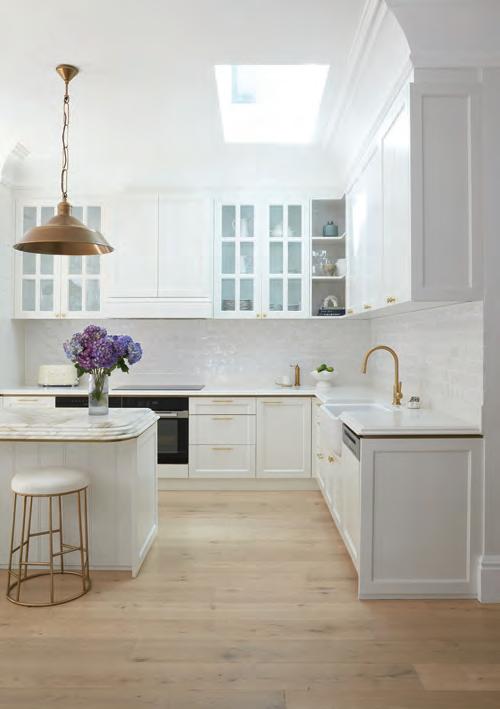
Danielle says she likes to involve her cabinet makers early in the project, ideally during the concept design phase and particularly if a new detail is being introduced. “It works best if this detail is fully resolved before documentation progresses,” she explains. “I prefer a collaborative process to ensure that the original intent is carried through and I always insist on being present for handle placement, as I feel this should always be done by eye."
In Danielle’s experience, challenges often arise in the technical buildability, tolerances and carcasses. “What reads simply on paper can become complex once it’s actually being built,” she adds. Danielle mitigates these challenges by resolving details early and taking the time to discuss how the details will translate into real life. She says her team “relies on close collaboration with the cabinet maker during the shop drawing stage and we review every
drawing page in detail with our cabinet maker — sometimes this takes multiple revisions but it’s worth the effort."
Danielle points to mutual respect and clarity as the cornerstones of a successful collaboration and says a good cabinet maker understands the intent behind the design, not just the drawings, and is able to bring a level of problem solving to the process. “I always encourage my cabinet makers to show me better ways to resolve details,” she says. “Their expertise often helps me provide a better option for my clients.
“Our drawings are detailed, considered and layered. Nothing is left to be assumed." Danielle’s team documents junctions, finishes and key dimensions to ensure the shop drawings showcase all the details needed to ensure the project can be fully resolved. “If something isn’t drawn it will be interpreted!” she exclaims. “And I recommend to always have your joiner provide the internal measurements of drawer heights."
But she also points out that digital tools and detailed documentation help clients understand clearly what’s being proposed which she finds leads to more confident decisions and fewer changes during construction. “If we can’t clearly communicate a detail through our drawings we’ll often include an image of the finished product for reference,” she says. “Using ‘old school’ hand sketches are great, too."
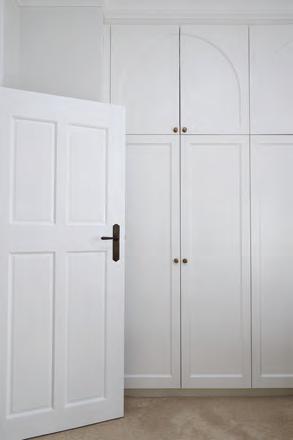
Image credit: Sue Stubbs Photographer
Image credit: Sue Stubbs Photographer
Image credit: Sue Stubbs Photographer
Business & Finance

Kate explains that she prefers to bring her cabinet makers into the process much earlier than many might expect; well before construction begins. “I’ll typically develop the design intent first including layouts, spatial planning and material direction then align with the cabinet maker to ensure what’s being designed is achievable, efficient and costaware,” she says.
“From there it becomes a collaborative refinement process,” she adds. “I place strong emphasis on working through options for materials, construction methods and detailing so we can align on the best possible solution early. By the time we reach shop drawings nothing should feel unresolved or improvised."
Kate says that, importantly, collaboration doesn’t stop once documentation is issued and she stays in close communication with her cabinet makers throughout the build. “If anything on site impacts the joinery process or timeline we work through it together to ensure the best possible outcome,” she explains.
“The biggest issue is when something looks resolved on paper but hasn’t been resolved technically. This is exactly why clarity, timing and communication are so important." She adds that a strong relationship with your cabinet maker allows for an open dialogue whether when reviewing drawings, asking questions, or seeking a better way to achieve the same design intent. “It’s often not about changing the outcome but it’s about refining how you get there,” Kate says.
Kate’s approach to documentation is to use it as a communication tool and not just a deliverable. “A great cabinet maker brings construction knowledge, problem-solving and practical insight; as a designer I’m bringing the vision, cohesion and overall intent. When both sides respect that the collaboration becomes very strong." Kate adds that this common goal creates the best possible outcome for the project.
“This process has refined my drawings significantly,” Kate explains. “The more I understand how trades work and what information they need, the more intentional and detailed my documentation becomes. Drawings are 2D but what we’re building is not."
Kate understands that digital tools are essential, particularly in the early stages of a project. “3D modelling and visualisation help bridge the gap between concept and construction but they need to be supported by strong documentation,” Kate opines. “One without the other is not enough."
“The key to collaborative success is understanding that design decisions are rarely arbitrary,” Kate concludes. “They are part of a larger, cohesive vision for the home. When that’s understood and respected the collaboration becomes much stronger and the final outcome reflects that."
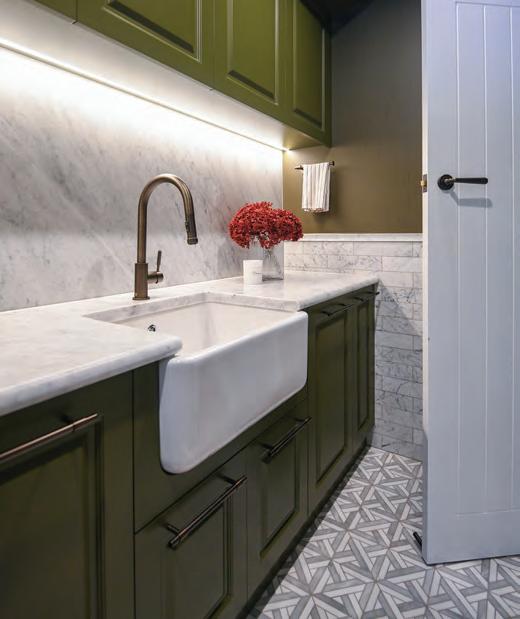
Kate Vale from Reset-Co
Renee Richmond from Sage Interiors
Renee explains that during the concept phase of a project she prefers to design freely while still considering form, proportion and how the joinery anchors the space. However, she says she tries to stay conscious of how the space could be built.
“Once we move into design development I prefer to have a working relationship already in place so I can sanity-check ideas before we go too far,” she says. “Then, by documentation stage, it becomes a proper collaboration where we refine details, shop drawings, materials, tolerances etc…."
She adds that the best projects are where the joiner is part of the process from the start, rather than simply relegated to executing the installation.
Renee says the biggest challenges in translating design intent into buildable joinery are never usually a single element; rather it is a combination of factors. “The gap between what looks beautiful in design verses what is actually practical, cost-effective and possible on site is what can bring you undone”, she adds. “Things such as overly ambitious detailing without considering construction sequencing or materials behaving differently in real life as opposed to how they are visualised can be avoided by early consultation."
Renee cites the knowledge that comes from experience as a key driver of design decisions.
“I’ve learnt not to work in silos,” she says. “Check key details early and ensure builder provisions and budgets are aligned to what will actually be built."
She also recommends sighting material samples in person rather than relying on images to ensure suitability and applicability.
“Mutual respect and transparency are essential,” she adds. “I don’t expect a cabinet maker to just say ‘yes’ to everything — in fact I value
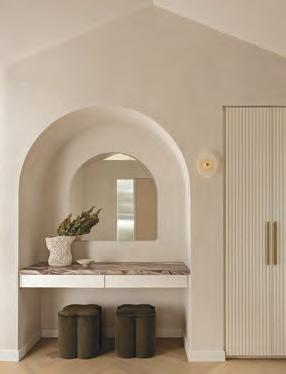

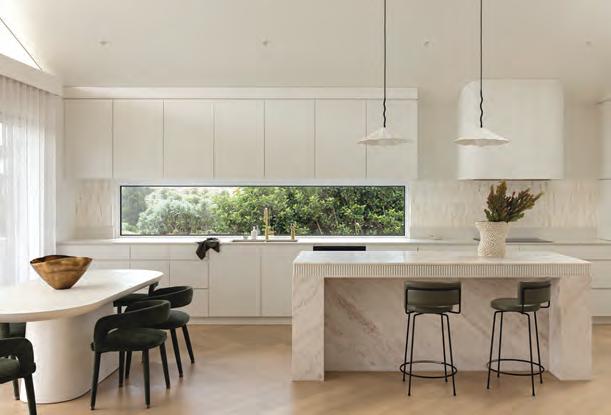
when they push back if something doesn’t make sense or could be done better." Renee says the best relationships are where communication is direct and honest, where ego is removed and the focus is on problem solving, and when details can be workshopped together. “It should feel like you’re on the same team, trying to achieve the same outcome,” she adds.
“I document quite heavily, especially for important spaces such as kitchens and custom joinery. I try to make sure everything ties back to one clear source of truth with documentation that is clear, logical and not open to interpretation." She has learned that if something is not documented properly it will be interpreted and adds that assumptions can be dangerous. “Don’t ever rely on verbal conversations,” she counsels. “If it matters, it needs to be documented."
Renee uses digital tools in her business but cautions that they're only useful if used properly to enhance document sharing and tracking, visualising concepts and improving client understanding.
She concludes that collaboration must come from both sides. “I’d like cabinet makers to understand that design decisions aren’t arbitrary and that there is a lot of thought behind proportion, alignment, materials and how everything sits within the overall home,” she says. “However I also think designers need to better understand the realities of construction. The best outcomes happen when both sides respect each other’s expertise and meet in the middle." ■
Thinking of Starting Your Own Business?
Then plan thoroughly and manage well

SBy Pam Kershaw
etting up a small business can be enormously challenging. It’s hard work, it’s often unpredictable and while it can be rewarding on many levels, there’s a high degree of risk involved if you don’t plan thoroughly and manage well.
While almost 98 per cent of Australia’s businesses are classified as small businesses (turnover of $10 million or less), failure rates are high. Up to 20 per cent collapse in their first year, and up to 50 per cent close within five years, according to the Australian Bureau of Statistics.
So how do you give yourself the best chance of success? Start by honestly assessing your skills. You may be an excellent craftsperson or designer, but if you don’t develop your financial and management skills, you could quickly become one of those sad statistics.
A business management course is highly recommended, especially if this is your first business.
“A lot of people are very capable at what they do but haven’t had to manage aspects such as pricing and margins, cash flow timing, overheads, tax and
compliance,” says Andrew Gill, taxation specialist at the Carbon Group, a national financial services firm providing accounting, bookkeeping, finance, insurance and wealth services.
Building business confidence
“Even a basic business course can help connect the dots,” Andrew says. “It’s less about becoming an expert and more about building confidence in how the business operates.”
Your accountant becomes vitally important right from the start, so look for one who is a member of a recognised professional body such as CPA Australia or Chartered Accountants Australia and New Zealand.
They should be experienced in small business advice, and familiarity with trade- or construction-related businesses is useful in dealing with issues such as project costing and subcontractor payments.
You don’t need a full market report before meeting with your accountant, but you should have a clear view of how the business will actually make money.
Business & Finance

This includes:
• Who your target clients are
• Where your work will realistically come from in the first six to 12 months
• How your competitors are pricing and positioning themselves
• Whether work is consistent, seasonal or project based.
“We often see people rely on ‘there’s plenty of work out there’,” Andrew says. “That might be true but the more important question is whether that work is profitable and consistent.”
Do you need a business plan and a marketing plan? Yes, but keep them practical. For your business plan, you should be able to state what you’re offering, how you’re pricing it, what it costs to deliver and how you’ll keep the work coming in.
Your marketing plan should answer where the leads will come from, how you’ll build trust early (through your portfolio, referrals, and relationships), and how you’ll stay visible over time.
You’ll also need to discuss your business structure — sole trader, company, trust or partnership. This will depend on factors such as the level of risk in the business, the expected income, whether staff will be employed and your long-term goals.
Ten reasons small businesses fail
Banks are right in the firing line when a small business fails. The Bank of Queensland’s analysis of failures shows the 10 most common reasons:
1. Lack of research: Make sure there’s a need for your product in your planned location. Check out the target market and the competition. Who will do business with you and why?
2. No business plan: You need to clarify your business direction, set your strategies and devise an action plan. If you need finance, this may help you get it.
3. Not having sufficient business funding: Not understanding the fixed and variable costs involved in setting up and running a business can bring you down.
4. Financial mismanagement: Understanding how to manage your cash flow is critical, including ensuring prompt payment from clients and good payment terms with suppliers.
5. Poor marketing: A good marketing strategy will cover attracting new business and building a base of loyal customers. Consider a website, social media and offline activities such as locally targeted flyers.
6. Not keeping abreast of customer needs or the competition: Understand your customers’ expectations through feedback surveys, monitoring and responding to social media and face-to-face conversations. Watch your competitors, too.
7. Failing to adapt: Responding constructively to industry trends, economic issues, serious illness and even pandemics or natural disasters is a key leadership role.
8. Growing too quickly: Plan for anticipated growth: staffing, technology, business funding, supply chain management, expansion of premises and new equipment.
9. Failing to hire and retain the right people: Attract the right people with complementary skill sets, create the right work culture, be clear about your values and expectations of your team.
10. Not asking for support: It’s there: your accountant or business banking expert, a business mentor or local business-tobusiness support group, online business course or podcasts.

“Many people start simple, but as the business grows, a different structure often becomes more appropriate,” Andrew says. “Thinking ahead here can save a lot of restructuring later.”
Getting your systems right
Cloud-based platforms such as Xero or MYOB are generally the best fit as they allow you to track income and expenses in real time, manage payroll and superannuation, and keep systems organised and compliant.
Because your business will likely operate on projects, you need systems that support:
• Job or project costing
• Tracking labour and subcontractor costs
• Monitoring materials against quotes
• Identifying variations and scope changes
“Without this level of visibility, it’s very easy to stay busy but not actually understand where profit is being made or lost,” Andrew says.
Setting up your budget and cash flow early is critical.
A good cash flow forecast should clearly map money coming in and money going out, including:
• Expected income and when it will actually be received
• Rent, insurance and overheads
• Wages and super
• Materials and subcontractor costs
• Loan repayments
• Tax obligations
The key challenge for most new businesses is the timing gap: materials and wages are often paid upfront or weekly, while invoices may not be paid for 14, 30 or even 60 days. Ensuring progress payments on sizeable jobs is a must.
Loan, lease or mortgage your home?
You may need initial funding — but understand the risks.
Borrowing for equipment, vehicles or setup costs is common, but can the business comfortably service that debt, particularly in the early stages?
Using your home as security increases the level of risk significantly. You need to know what repayments look like under lower-income scenarios, how much buffer you have if work slows down and whether the business can support those repayments consistently.
What happens if you have an accident, can’t work and therefore can’t make those repayments? Here’s where personal accident or income protection comes in. Your ability to earn income is your biggest
asset, so protecting that is just as important as protecting the business itself.
Essential insurance
Your minimum insurance portfolio should include public liability, workers' compensation (if employing staff), premises and contents or tools and equipment cover. Also consider product liability, professional indemnity, business interruption and equipment breakdown.
And don’t forget that superannuation payments through payroll are a compliance requirement for employees, even if you delay your own superannuation payments early on while cash flow is tight.
Once your business is up and running, a monthly check-in or quarterly meeting with your accountant should look at cash flow and upcoming obligations, profitability and pricing, tax positions and any changes in the business.
“One of the most valuable things you can do early is build a habit of reviewing your numbers regularly,” Andrew says. “You do need visibility over your cash flow, an understanding of your costs and margins, and a process for reviewing your position.
“The earlier you get comfortable with this, the easier it becomes to make confident decisions. Also, don’t wait until something goes wrong to ask for advice. The biggest difference Carbon Group sees is between businesses that stay proactive and those that only react once pressure builds.”
Managing growth
Growth brings both opportunity and complexity. Your staffing costs are likely to rise, as are overheads. There’s more pressure on cash flow, and larger financial commitments loom.
Make sure you don’t fall into one of the most common traps when the cost of taking on additional work can exceed the profit generated from it. This can happen when pricing hasn’t been adjusted, additional staff or subcontractors are required, inefficiencies increase with scale and overheads grow faster than revenue.
Without clear visibility over costs and margins, it’s possible to grow in size without improving profitability. ■
How can ACFA help you?
ACFA can provide valuable assistance to startups, particularly around employment and contracts. Resources include:
Employment
• Hiring and managing apprentices
• Workplace contracts
• Secure jobs, better pay — small business fact sheets including bargaining
• Award snapshots and pay rates
• Employer guides
• Mental health and workplace wellbeing
• Workplace resources, including managing bullying, performance management, long service leave, probation, recruitment, salary review, termination and unfair dismissal.
Contracts
• Business agreements and home building contracts
• Independent contractor agreements

Selling the Vision

How to get your clients across the line
There’s an expectation in the kitchen and bathroom industry that isn’t shared by many other disciplines. In our field, the person who designs the space (the one with the creative vision) is often also responsible for sealing the deal.
Interior designers and cabinet makers are not only tasked with creating functional and beautiful spaces; they’re expected to guide clients through uncertainty, justify the investment, manage objections, and ultimately secure a ‘yes’ to an idea the client can’t yet fully see.
For many creatives, ‘the sale’ is where things begin to unravel.
In most professions, sales is a distinct discipline. In design, it’s embedded in the role. Every client meeting, presentation, and email is part of a continuous sales process. The ability to communicate value, build trust, and confidently guide a client towards a decision is not separate from design, it is design.
The challenge is that many designers view selling as uncomfortable or inauthentic. But
By Selina Zwolsman
when reframed, selling isn’t about persuasion or pressure. It’s about clarity, confidence, and effective communication.
Like any design skill, selling can be learned. In this article, we’ll share strategies for overcoming the ‘ick’ of sales and leaning into the art of the deal.
Busting the myth: ‘good design sells itself’
While we’d love this to be true, the reality is that clients don’t always recognise genuinely good design More often than not, they’ll need your guidance to get there.
High-quality 3D renders are extremely helpful, but it’s increasingly likely that your competitors can put together pretty pictures, too. In fact, many clients will come to you with AI-generated images, so visualising the aesthetics is no longer the issue it once was.
We all have fun spotting the signs of AI image generation, but the parallel between the slightly off imagery and real-life design missteps is tight. While we can laugh at the kitchen tap with no sink in your client’s virtual ‘dream kitchen’, a poorly
placed sink will have your clients grumbling for real when they’ve moved into a space. An above-island pendant could look perfect in the perspectives, but when it impedes the client’s view when they’re actually in the kitchen, you’ll be the first to hear about it.
Good design is more than a beautiful image, and it’s your job to communicate this to the client.
As a designer, you’ll have thought carefully about the layout of the space: what goes where and why. You’ll have considered accessibility and ergonomics and mapped out what matters for the household’s particular makeup. If your clients hope to ‘age in place’, you’ll have planned for future modifications to accommodate their changing needs. Or if they’re at the beginning of their family journey, your design will be ready to support toddler-to-teen dynamics.
Conversely, if the home is an investment, you will have considered resale attributes or potential tenancy issues. Your design and specifications will meet these needs, and the return on investment will matter to the client.
Highlighting the design's value is what will really sell it. Yes, a stunning image will get your client’s attention, but your best sales strategy is to show them what makes your design work.
Begin with the brief; sell with the statement
Of course, to get the best design solution — one that really does work for the clients — your process needs a clear starting point and an equally clear narrative.
That starting point is the brief.
A design brief is more than a form or a checklist. It’s a summary of what matters: what your client wants, needs and values, and, just as importantly, the constraints and opportunities presented by the space. It captures the essence of your early conversations and site investigations, translating them into a clear set of objectives that will guide every subsequent design decision.
For designers, the brief is a working compass. It keeps the process focused and intentional, ensuring creativity is on track. For clients, it provides reassurance and confidence that they’ve been heard
and understood, and that the design is being developed with their priorities front of mind.
Formalising this brief, ideally with client sign-off, does something even more powerful: it establishes a shared reference point.
Because as any experienced designer knows, projects rarely stand still.
As ideas evolve, new suggestions emerge; sometimes from clients, sometimes from wellmeaning friends, family, or external influences. While these moments can spark opportunity, they can also push the project beyond its original scope. Without a clearly defined brief, those shifts can blur expectations, strain resources, and quietly erode time and profitability.
A well-documented brief helps you clearly identify these changes. It gives you the confidence to say, ‘This falls outside what we originally agreed,’ and to manage variations professionally and transparently. In this sense, the brief isn’t just a design tool, it’s a business tool.
But the brief is only half the story
If the brief defines the problem, the design statement articulates the solution.
A design statement is your opportunity to present your thinking clearly and thoughtfully and can serve as a script for your face-to-face presentation. It connects the dots for your client, demonstrating how your design responds directly to their brief, resolves constraints, and makes the most of the space’s potential.


This is where many designers unknowingly miss the sale.
They present realistic renders, comprehensive drawings and impressive sample selections, hoping the work will speak for itself. But without a clear narrative, clients are left to interpret the design themselves, and that’s where uncertainty creeps in.
A well-prepared design statement removes that uncertainty.
It allows you to guide your client through the design with purpose, linking each decision to something they told you, something you observed, or what the space required. It transforms your presentation from a collection of ideas into a cohesive, thoughtful response.
In many ways, preparing a design statement is no different from rehearsing a presentation. It clarifies your thinking, strengthens your confidence, and ensures you can communicate your ideas with intent.
And when clients can clearly see how a design works for them (how it solves their problems, supports their lifestyle, and reflects their priorities) the decision to move forward becomes significantly easier.
Reframing the sale
‘Selling’ your design is easier when you frame it this way: you’re not pushing your clients into a sale; you're guiding them into an understanding of what makes your design work for them. You’re not convincing them to spend money; you’re helping them avoid costly mistakes by spending it where it matters.
You aren’t selling a product, but you are selling an outcome.
Where designers get stuck
When you’ve prepared a comprehensive brief, developed a great design solution and have prepared your statement (or script), your in-person presentation should be a breeze. But, as they say, the best laid plans of mice and men can often go awry. Here, we’re outlining the top three ways we see designers get stuck when sealing the deal, along with some (hopefully) helpful solutions.
#1 Using Joinery Jargon
Avoid the temptation to lean on industry jargon when presenting your design solution. Terms that feel second nature to you (carcass construction, filler panels, shadow lines) can quickly overwhelm or alienate clients, shifting their focus from the overall concept to details they don’t fully understand.
#2 Presenting Too Many Options (Decision Fatigue)
Presenting too many options is one of the fastest ways to lose a client’s confidence. While it can feel generous or collaborative to offer multiple layouts, finishes or directions, an excess of choice often leads to confusion rather than clarity. Clients aren’t designers and they don’t have the framework to assess competing ideas quickly. So, instead of feeling empowered, they can feel overwhelmed and unsure how to move forward. This hesitation is often misread as indecision, when in reality it’s a lack of clear guidance. Strong designers don’t just generate options; they curate them. By presenting a considered solution (supported, where appropriate, by one or two well-explained alternatives) you position yourself as the expert, reduce decision fatigue, and make it far easier for your client to say yes.
#3 Taking It Too Personally
It’s important to recognise that client feedback is not a personal critique of your design. When a client questions a layout or hesitates over a selection, it’s easy to become defensive — after all, you’ve invested time and expertise in the solution. But defensiveness can quickly shut down communication and erode trust. The most effective designers approach feedback with curiosity rather than defensiveness, treating it as an opportunity

to better understand the client’s perspective. By reframing the conversation (asking why something doesn’t feel right and linking the discussion back to the agreed brief) you shift the dynamic from confrontation to collaboration. In doing so, you reinforce your role not as someone trying to win the argument, but as a professional guiding the client towards the best possible outcome.
Confidence, not charisma
One of the biggest misconceptions about sales in design is that it requires a particular personality — that you need to be naturally persuasive, outgoing, or (dare we say) pushy. In reality, selling has very little to do with charisma and everything to do with clarity and preparation. Clients aren’t looking to be impressed by a performance; they’re looking to feel confident in their decision. That confidence comes from how clearly you explain your thinking, how well you’ve anticipated their concerns, and how calmly you guide them through the process. When you have a structured approach, grounded in a strong brief and a well-considered design statement, confidence becomes a by-product of preparation rather than personality. And that’s something any designer can develop.
Why this matters more now
The ability to communicate and sell your design has never been more important. As project costs rise, so does client hesitation — every decision carries greater weight — and the stakes feel higher. At the same time, clients arrive with more inspiration than ever, often sourced from social media or AI-generated imagery that prioritises
aesthetics over functionality. This combination of high investment and high exposure can lead to unrealistic expectations and decision paralysis. In this environment, clients don’t just want good design; they need guidance. Designers who can clearly explain their thinking, justify their decisions, and lead clients with confidence deliver better outcomes and stand out in an increasingly crowded and competitive market.
Clarity is what closes the deal
Selling your design isn’t about changing who you are as a creative; it’s about strengthening how you communicate what you already do so well. In an industry where the designer is ultimately responsible for securing the ‘yes,’ the ability to bring clients along on the journey is as critical as the design itself. The most successful designers aren’t just those with the best ideas; they’re the ones who can clearly and convincingly show others why those ideas matter. In the end, a design only works if it’s understood, trusted, and brought to life. ■

Selina Zwolsman CKD Au, CBD Au is a qualified interior designer and experienced writer specialising in design and building-related content. She produces technical and editorial content for industry and training organisations, and assists small to medium business owners with web and media copy, email marketing campaigns and more. Selina has shared many design-related presentations with trade and consumer audiences and loves to promote the work of Australia’s best designers and manufacturers. Contact Selina via her website at nicelysaid.com.au.
Standing Out in a Sea of Sameness
How design and cabinetry businesses can cut through the noise in a crowded, low-trust market
By Melanie Gardener
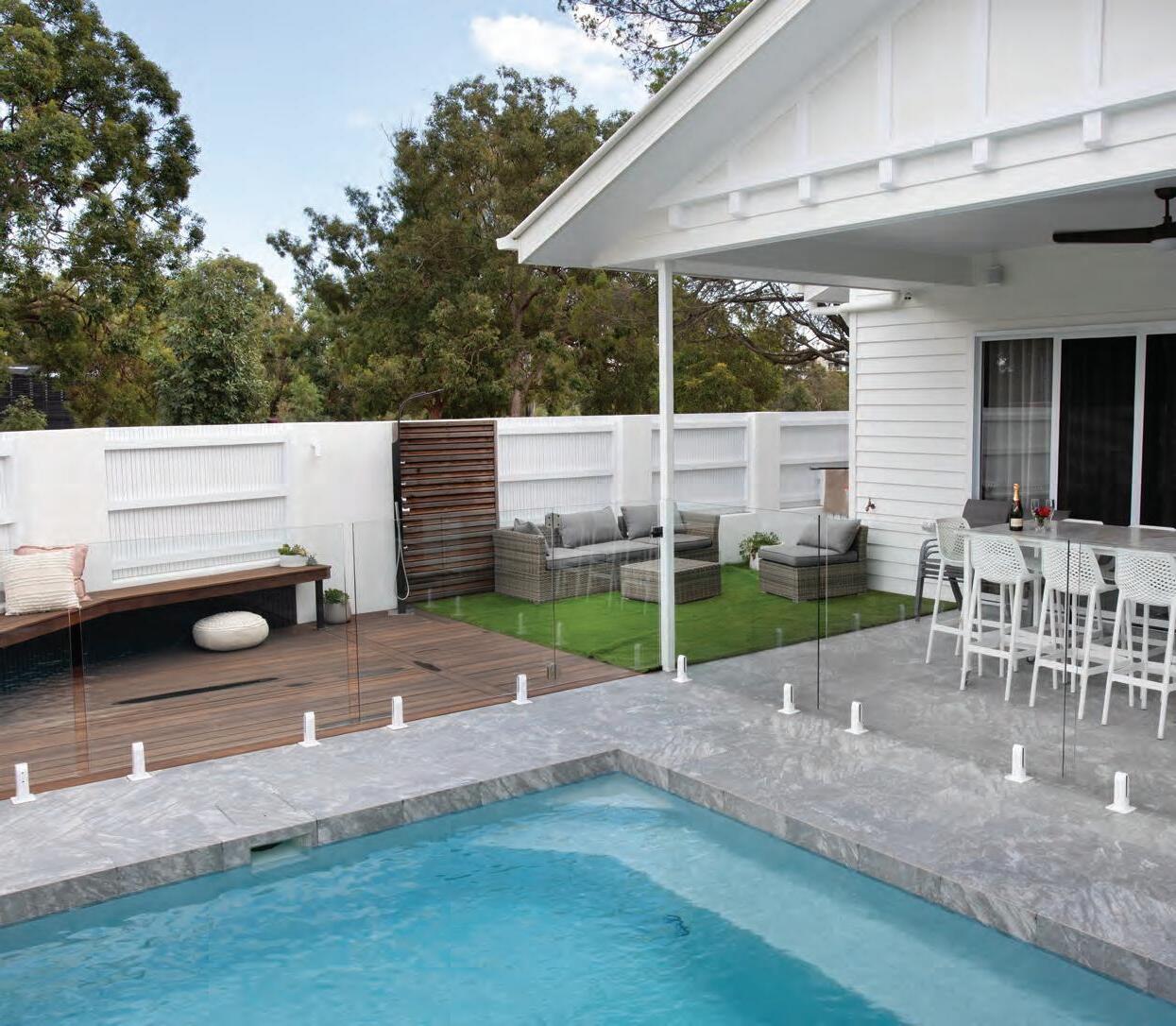
Type any home renovation keywords into a search engine as a first-time or inexperienced renovator and you’ll quickly notice something: everything looks and sounds the same.
Websites blur together and social media feeds echo the same language: “quality craftsmanship”, “custom design solutions”, “end-to-end service” and more.
To the industry, these phrases feel standard but necessary. To the consumer, they feel indistinguishable. And that’s the problem.
In a market where many businesses genuinely do offer similar services, the real battleground isn’t capability, it’s perception and trust.
The commoditisation trap
Of course, businesses don’t set out to look the same. It happens gradually through universal language, shared methods, similar visuals, and safe positioning. Add in the ability to ask your preferred AI program to generate standard captions and copy and you have a recipe for sameness.
The result? Clients compare on price, timelines, or gut feel because nothing else separates you from your competition. To break out of that, differentiation needs to be intentional.
Marketing specialist Bec Chappel says the key to differentiation lies in identifying your true Unique Selling Proposition (USP) and notes that it’s not effective if you are relying on a generic term such
All images from Project St Clair — Marilena Baynes Interior Design Studio. Photography — John Downs Photography.
as “good customer service." As a starting point, she finds it useful for clients to create a career map or a life map as this helps to identify points of passion, uncover what the business stands for and pinpoint why the business should matter to your customers.
To prompt them, she will ask questions such as:
• What motivated you to start your business?
• What keeps you going day-to-day?
• Why does your business matter so much to you?
• What do you want your legacy to be?
“The really pressing question is ‘what hill are you willing to die on?’,” she laughs. “The reason your career map or life map is so important is that it is 100 per cent personal to you — no one else shares your life experience and that helps meet the definition of ‘unique’ in Unique Selling Proposition."
Bec has spent many decades helping clients unlock this buried information but she says the gold that results is well worth the effort. “It’s about identifying what you care about the most and then finding ways to articulate this to your ideal customer,” she explains. “The life map is a really effective way to give you insight into what keeps you going."
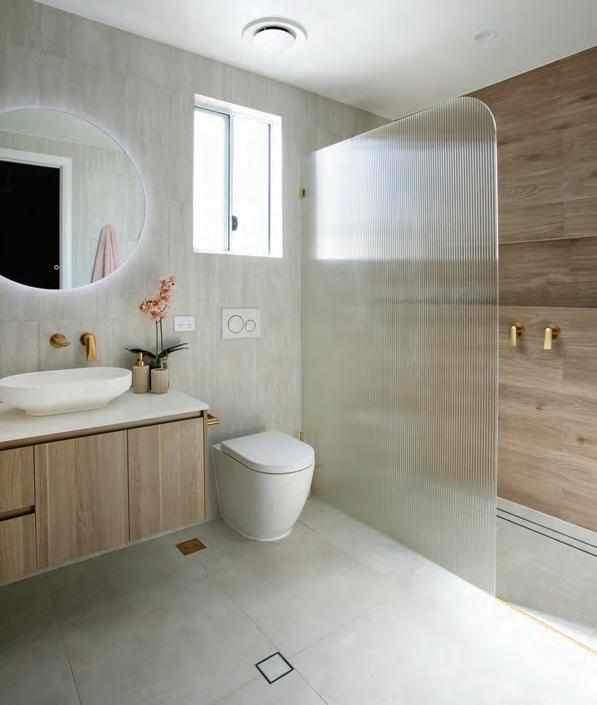
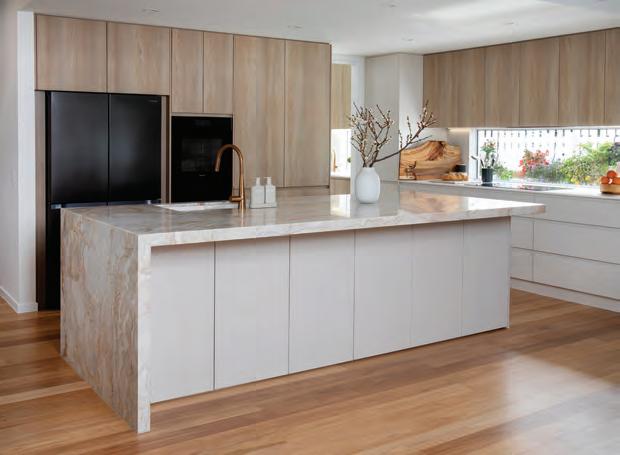
Marilena Baynes, lead designer and founder of Marilena Baynes Interior Design Studio, agrees, saying that standing out in a crowded market doesn’t mean shouting louder, it means getting clearer. “One of the biggest shifts I made in my own business was reducing the size of my audience — on purpose,” she says. “When you narrow your audience, your message becomes sharper, more relevant, and far more effective."
In addition to running her own successful design business, Marilena has a Bachelor of Business with a major in Marketing and held a number of senior marketing, sales and communications roles before retraining in interior design.
She adds that a key part of the puzzle is to identify clearly who you are talking to. “When you understand your ideal client’s lifestyle, values and pain points you stop competing with every other designer or cabinet maker in your city,” Marilena says. “You’re no longer part of a giant marketplace; you’re speaking directly to a small group of people who feel like you ‘get’ them."
“When you speak to the problem instead of the service, people lean in,” she adds. “When your brand and your behaviour align, you don’t just stand out; you become memorable."
1. Define (and use) your point of view
Most businesses describe what they do because that comes most naturally and they assume (incorrectly) that’s what matters to their customer. Very few clearly communicate how they think, showcase their expertise or highlight their passion
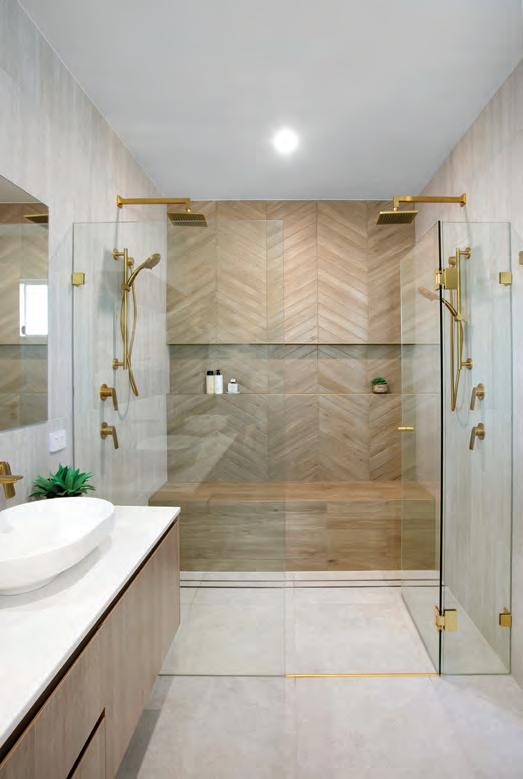
— also known as your why. This provides your first opportunity.
Practical step: Write a simple positioning statement using a structure similar to: “We help [type of client] achieve [specific outcome] by focusing on [your priority or philosophy].”
Examples:
• “We help busy families create highly functional kitchens by prioritising storage and durability over trends.”
• “We help design-focused homeowners create statement joinery by cleverly combining materiality and detail.”
How to apply it:
• Put it clearly on your website homepage (not buried) and reiterate it throughout internal pages
• Use it prominently in your Instagram bio and other social platforms
• Brief your team so that everyone communicates it consistently and it becomes part of the sales process
If a potential client can’t quickly tell how you’re different, they’ll assume you’re not. If you’re not memorable, you’ll melt into the sea of search results never to be found again.
2. Turn your process into content
Clients don’t just buy outcomes. They buy confidence in and reassurance about how you’ll get there. If most of your value is hidden it will be hard for your potential client to see a clear reason to choose you over another option.
Practical step: Document one recent project and break it into three parts:
1. The problem (what wasn’t working) — your client hears: “we care about your specific needs and listen to what you’re telling us”
2. The decisions (what you changed and why) — your client focuses on: “our areas of design expertise and specialisation are …”
3. The outcome (what improved) — your client starts to dream about what you can achieve for them: “here are the measurable results from working with us”
How to apply it:
• Turn it into a short case study on your website
• Share it as a carousel on Instagram
• Create an article on LinkedIn
• Include it in your next eNews
• Use it as an example during your sales process
Important: Use simple language and avoid jargon. Your goal is not to show off your design vocabulary but rather to engage with your potential clients and start to develop that relationship.
In-depth explanations build trust fast and highlight your expertise and problem-solving credentials. To maximise this to your advantage, profile your process and provide reasons for your design solutions and recommendations, rather than just showing a finished kitchen and hoping the images speak for themselves.
3. Choose a clear entry point (even if you do everything)
Trying to communicate everything you do makes your business harder to remember. Clarity and focus beat completeness every time.
Practical step: Pick one of these to lead your messaging:
• A type of client (for example, downsizers, families, luxury builds)
• A type of project (for example, small kitchens, high-end joinery)
• A specific outcome (for example, maximising storage, design-led spaces)
How to apply it:
• Make this the headline focus of your website
• Apply this consistently across all of your your social platforms
• Align your recent project selection to reinforce it
• Adjust your language to reflect it digitally, verbally and in print
You don’t have to stop doing other work; you just need to lead with something clear and memorable. Double check that all visual cues on your website and your social media underscore this message and provide consistent reminders to your potential clients. If an element is out of place, it will stand out immediately.
4. Reduce risk before you’re even contacted
In a low-trust market it’s easy to undermine confidence. Businesses that feel “safe” and “honest” will win clients faster and with less hassle, plus you won’t have to resort to “hard sell” tactics to win work.
Business & Marketing
In today’s online world, trust is built long before the first phone call.
Practical step: Audit your website and ask:
• Are we clear about our principles/ philosophy/process?
• Do we explain what happens step-by-step?
• Do we give realistic pricing guidance and explanations?
• Do we acknowledge that things can go wrong and show how we manage when it does?
How to apply it:
Add to your website:
• A simple “What to expect” section
• An explanation of how projects are priced and what can influence this
• A timeline overview to manage expectations
• FAQs that answer real concerns
Clarity removes friction. And less friction means more enquiries.
5. Take a position (even if it’s not for everyone)
Safe messaging blends in. Strong opinions stand out. The idea is not to alienate your customer with wild or untrue statements but to be able to
articulate your vision and passion in a way that makes them feel as though they want to be a part of your process.
Practical step:
Write down three things you believe that many competitors wouldn’t say out loud. For example:
• “Most homeowners prioritise the wrong things in a kitchen” then explain how you help clients prioritise the right things
• “Custom cabinetry isn’t always worth the cost” then explain how your process makes sure every dollar works hard
• “Open shelving rarely works in real homes” then explain how you would find a solution
How to apply it:
• Turn each one into a short article or post
• Use it as a talking point in client conversations
• Build content around it over time to create consistent messaging
You’re not trying to appeal to everyone; you’re trying to resonate with the right people and create a memorable experience. But, for this to work, there has to be a positive message to wrap up; focusing on a negative statement will only backfire.
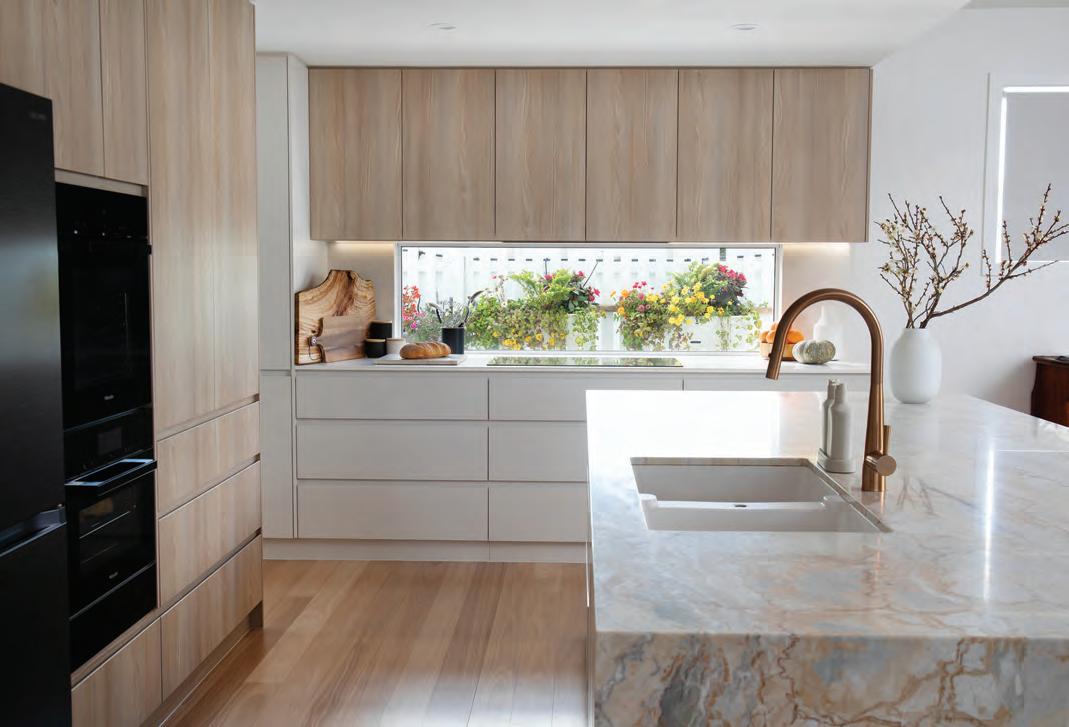
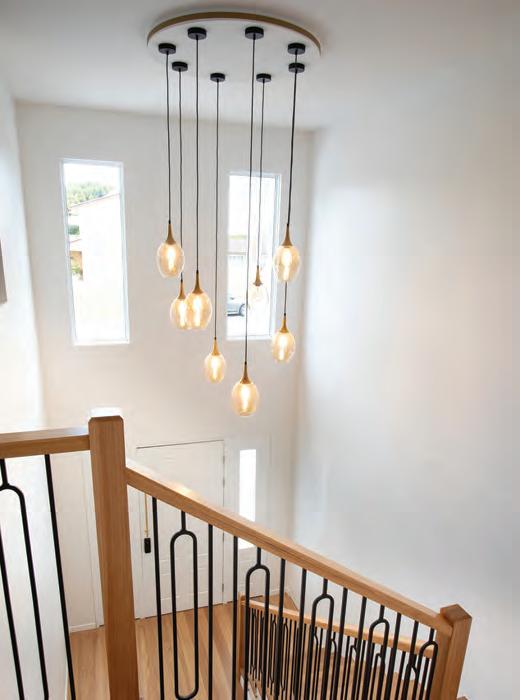
6. Make sure your visuals match your positioning
If your brand looks like everyone else’s, your message won’t land or be memorable. And it can be hard to stand out when your work looks very similar to everyone else’s.
Practical step:
Review your last 10 project photos and ask:
• Do they reflect the type of work we want more of?
• Do they look clearly distinctive or are they easily interchangeable?
• Do they reflect our core customer or project style?
How to apply it:
• Prioritise showcasing aligned projects, not just recent ones
• Consider tighter cropping to highlight detail or craftsmanship
• Use consistent lighting/editing styles
Even subtle visual consistency can shift perception from “generic” to “recognisable.” This could be your brand colour used to highlight features or an editorial style that’s just yours.
Marilena Baynes says that strong branding matters more than most people realise. A clear
positioning statement, a cohesive colour palette and a willingness to show up on camera all help clients feel connected before they’ve even met you. “Consistency builds trust and trust builds referrals,” she explains. “In my studio, I am part of the brand with my face, my voice and my personality. We only work with a handful of clients at a time so our branding reflects that level of care: attentive, responsive, creative, practical and genuinely invested in their home."
7. Build consistency into your weekly workflow
Differentiation isn’t a one-off exercise; it’s repetition. On average a customer will interact with your content online up to eight times before reaching out. So, you need to be consistent across your platforms as well as with your timing.
Practical step: Set a simple weekly rhythm:
• One project insight (what you learned or solved) – highlights your problem solving and collaboration skills
• One opinion or tip (your perspective) –highlights your design expertise
• One visual post (finished or in-progress work) –highlights happy, fulfilled clients
How to apply it:
• Keep it simple; don’t overproduce
• Focus on clarity over polish
• Reuse content across platforms, tweaking as needed
Over time, this builds familiarity. And familiarity builds trust.
The Takeaway
In a crowded market, standing out isn’t about doing something radically different. It’s about being clearly different.
That comes down to:
• A defined point of view
• Visible thinking and process
• Focused positioning
• Consistent communication
For designers and cabinet makers, the opportunity isn’t to shout louder; it’s to remove confusion faster and create lasting relationships.
Because when everything looks the same, the business that wins is the one that’s easiest to understand and easiest to trust. ■
Materials Beautiful Natural Stone
CAV’ART Designer Stone tells a unique story in every space
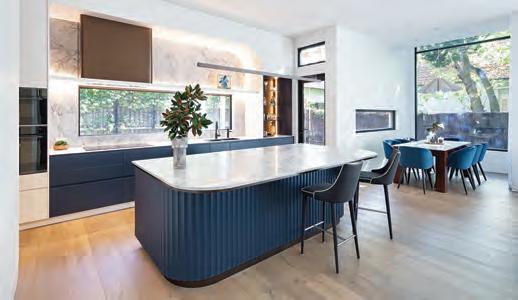
CAV’ART Designer Stone celebrated its five-year anniversary in May this year and the brand continues to cement its position as one of Australia’s leading suppliers of premium natural stone, shaping some of the country’s most beautiful homes and projects along the way.
Since its inception in 2021, CAV’ART has built a reputation for curating an exceptional collection of natural stone slabs sourced from around the globe. Today, it stands as a trusted partner to designers, architects, cabinet makers, joiners and homeowners alike, known not only for its remarkable range but for its commitment to quality, expertise and service.
Natural stone remains one of the most compelling materials in design, celebrated for its individuality, depth and timeless appeal. No two slabs are ever the same, allowing each project to tell its own unique story. It’s this authenticity that continues to inspire designers seeking to create spaces with lasting impact, whether in residential, commercial, retail or hospitality settings.
At the heart of CAV’ART’s success is its highly experienced and passionate team. Taking a personalised, consultative approach, they guide clients through every step of the selection process ensuring each stone not only aligns with the design vision but also suits the way a space will be lived in and used. The focus is never rushed; instead, it’s about education, inspiration and confident decision-making.
Visitors to the Sydney warehouse can explore an extensive and ever-evolving range of natural stone slabs in person. And, if the perfect piece isn’t
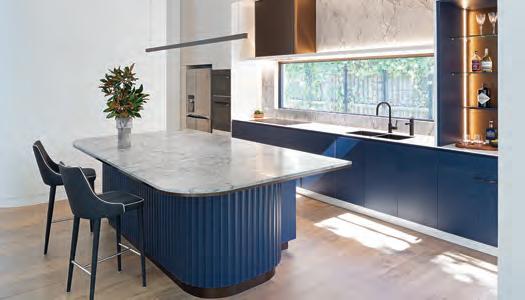
immediately on hand, CAV’ART’s global network of trusted suppliers allows the team to source something truly special.
Over the past five years, this dedication to service and sourcing has seen CAV’ART contribute to a growing portfolio of standout and award-winning projects, with many clients returning time and again for both the experience and access to stones that are simply not available elsewhere.
As the company celebrates this milestone anniversary, CAV’ART Designer Stone continues to look ahead, driven by a passion for beautiful materials, meaningful collaborations and the creation of spaces that leave a lasting impression.
To explore the collection or arrange a personalised consultation, visit the website or experience the range firsthand at the Sydney warehouse. ■
Image credit: Concepts by Gavin Hepper featuring CAV’ART Designer Stone’s Super White.
CAV’ART Designer Stone cavart.com.au
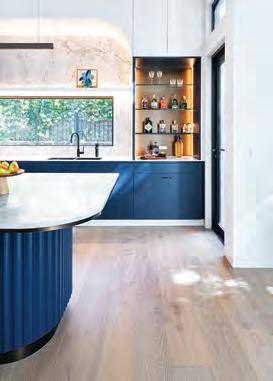
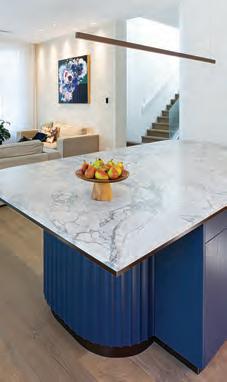
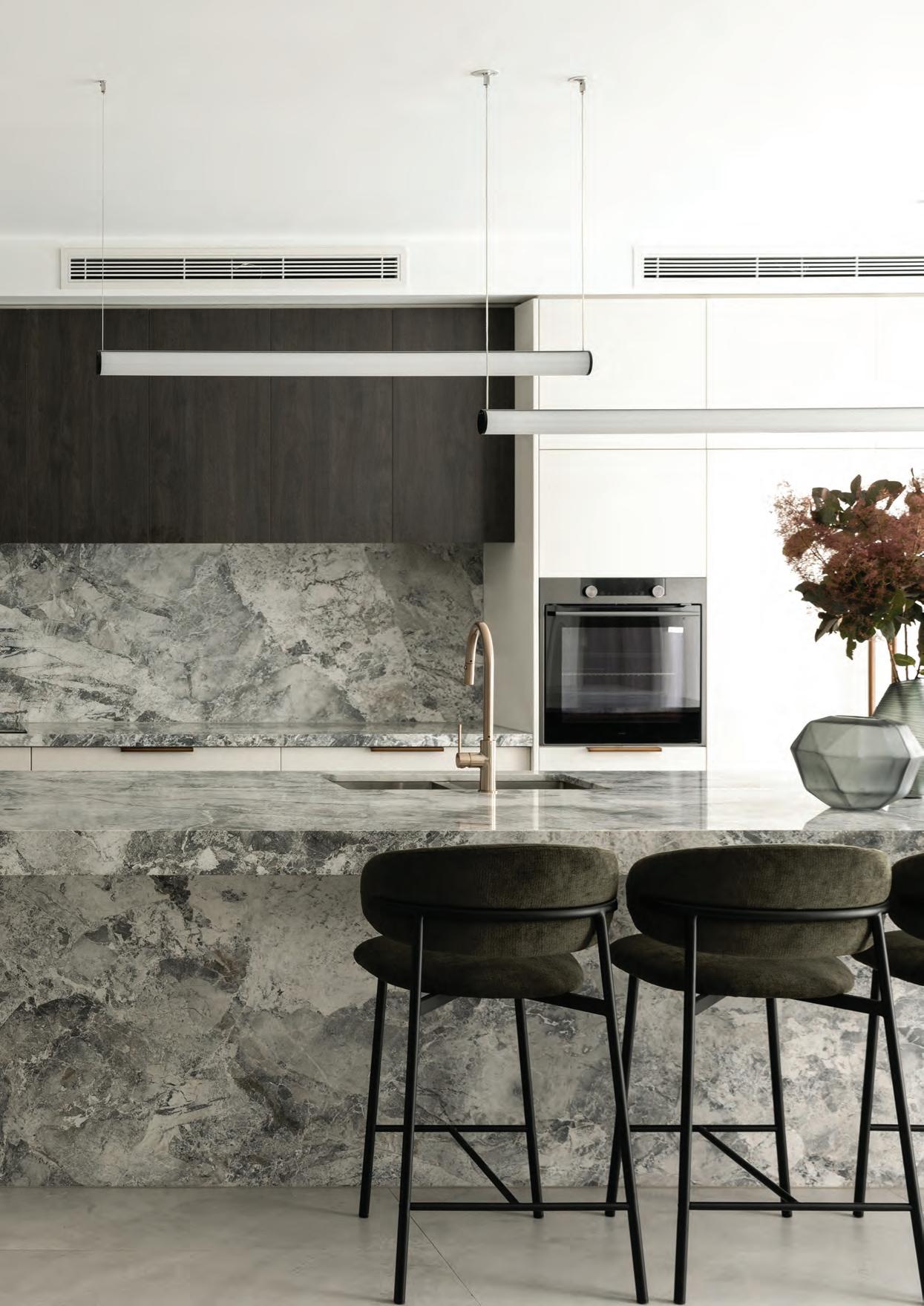
Hardware
myBlum
Your ideas, your projects — powered by myBlum


With myBlum, the entire Blum ecosystem is at your fingertips. The new central, digital platform delivers a comprehensive and personalised range of services, tools and information that contains everything needed to make your everyday work easier.
With a combination of all existing and new services plus comprehensive product information, myBlum also provides the option to configure Blum products in a project-oriented manner which can then be transferred directly to the preferred distributor channel.
myBlum is also a hub for exchange and information, proposing a collaborative exchange of ideas and learning from conversations with customers that supports enhanced cooperation and mutual success.
Packed with personalised information and news, workshops and product training, as well as essential resources such as installation videos and assembly instructions, the new platform provides Blum’s customers with end-to-end support via the digital workflow. The user interface has been designed as a logical, practical and project-oriented system that ensures customers can always find what they are looking for.
Product range overview
myBlum provides a structured overview of the full Blum product range, allowing you to quickly find the perfect solution for your project. All the information
you need is available at the click of a button — from technical information and CAD/CAM data through to installation drawings and instructions.
Digital services on myBlum
All Blum’s digital services come together on myBlum. The Cabinet and Product Configurators make planning and ordering a breeze while the Marketing Media Library and comprehensive tender documents take the complication out of everyday tasks and streamline your processes. Best of all, the digital platform is free of charge and available around the clock.
myBlum dashboard
The myBlum dashboard is your personal gateway to the world of Blum. Packed with news, product updates, training courses, trade fairs and events, stay up to date with all the latest developments and feed your creative imagination. You'll also find an overview of all your activities and pending tasks here, ensuring you never lose sight of the big picture and can plan your next steps with ease.
Everything in one place
myBlum is your own digital workspace for efficiently managing your projects, data and documents. The platform allows you keep track of all your project data, configurations, lists, and much more at all times.
Assembly devices
Find the right assembly device for every product on myBlum accompanied by clear instructions to give confidence and help you avoid mistakes. ■ Blum Australia blum.com/au/en/services/services-for-

Our tools, One place, Your way
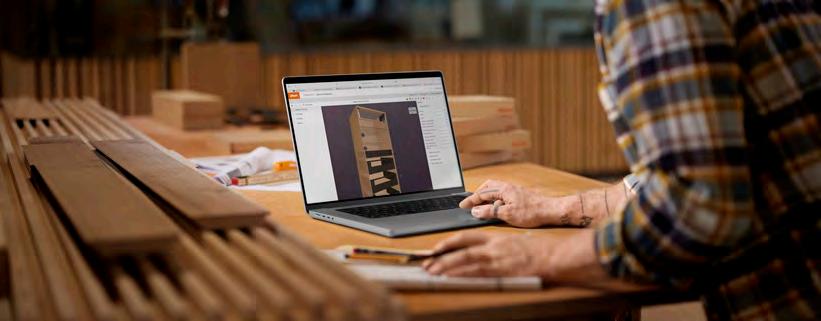

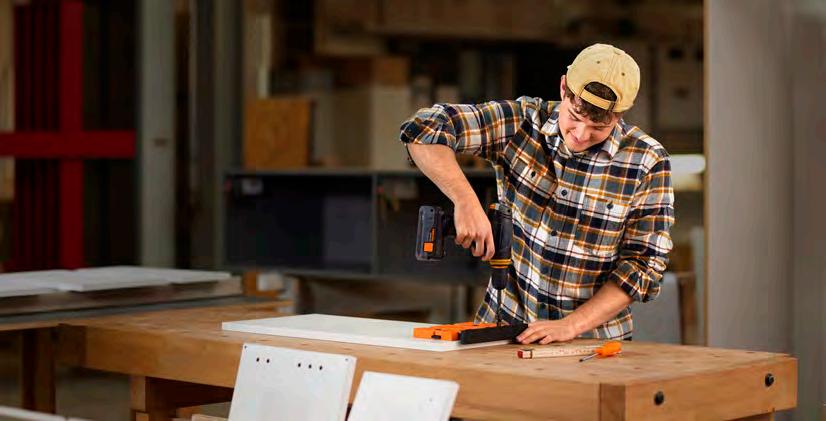

Modar® Handles
A refined approach to modern hardware

The latest evolution of Modar ® handles from Lincoln Sentry delivers a thoughtful balance of design, functionality and versatility tailored for today’s cabinet makers and interior designers. With an expanded selection of styles and finishes, the refreshed collection responds to shifting trends across residential, commercial and custom joinery projects.
Launched on 1 April, the update introduces 17 new designs across the redefined Contemporary and Traditional collections, alongside the debut of Modar® Timber; a design-led addition that brings natural materiality to the forefront.
A natural shift: Introducing Modar Timber
Leading the refresh is the new Modar ® Timber range, developed in response to growing demand for organic finishes and tactile materials. Featuring solid American oak timber paired with clean, minimalist profiles, these handles introduce warmth and texture into modern interiors without compromising on refinement.
Ideal for kitchens, bathrooms and bespoke furniture, Modar ® Timber handles come in oak and walnut colour finishes to integrate seamlessly with timber cabinetry, neutral palettes and custom joinery. The result is a subtle yet impactful hardware solution that enhances the overall design narrative while maintaining architectural clarity.
Contemporary design, reimagined
The updated Modar ® Contemporary range reflects the latest trends in interior and architectural design. With forward-thinking forms and modern finishes, this collection offers a sophisticated yet practical solution for contemporary spaces.
A core palette of Brushed Nickel, Matte Black and new Brushed Brass finishes across the new handle
and knob ranges makes it easy to create a cohesive look and finish throughout the space. With a focus on comfort of use and unique textured designs, cabinet makers and designers can be confident in selecting beautiful handles and knobs that meet both function and aesthetics.
Timeless appeal: The Traditional range
For projects requiring a more classic touch, the Modar ® Traditional collection continues to deliver enduring style. Defined by elegant detailing and robust construction, these handles suit a wide variety of interiors, from heritage-inspired kitchens to transitional living spaces.
Versatility ensures they remain a reliable choice for designers seeking longevity without sacrificing visual appeal.
Streamlined solutions: Profile handles
Completing the collection, the Modar ® Profile range offers a sleek, handle-free look while maintaining everyday usability. Designed for streamlined cabinetry, these integrated solutions are ideal for minimalist interiors where simplicity and function are key.
Designed for versatility
Across all ranges – Timber, Contemporary, Traditional and Profile – Modar ® handles are engineered with precision and attention to detail. The expanded offering along with new website selection pages to make it easier to shop online provides cabinet makers and designers with greater flexibility and ease of selection across residential, retail and commercial projects.
Modar ® handles are exclusively available through Lincoln Sentry. ■

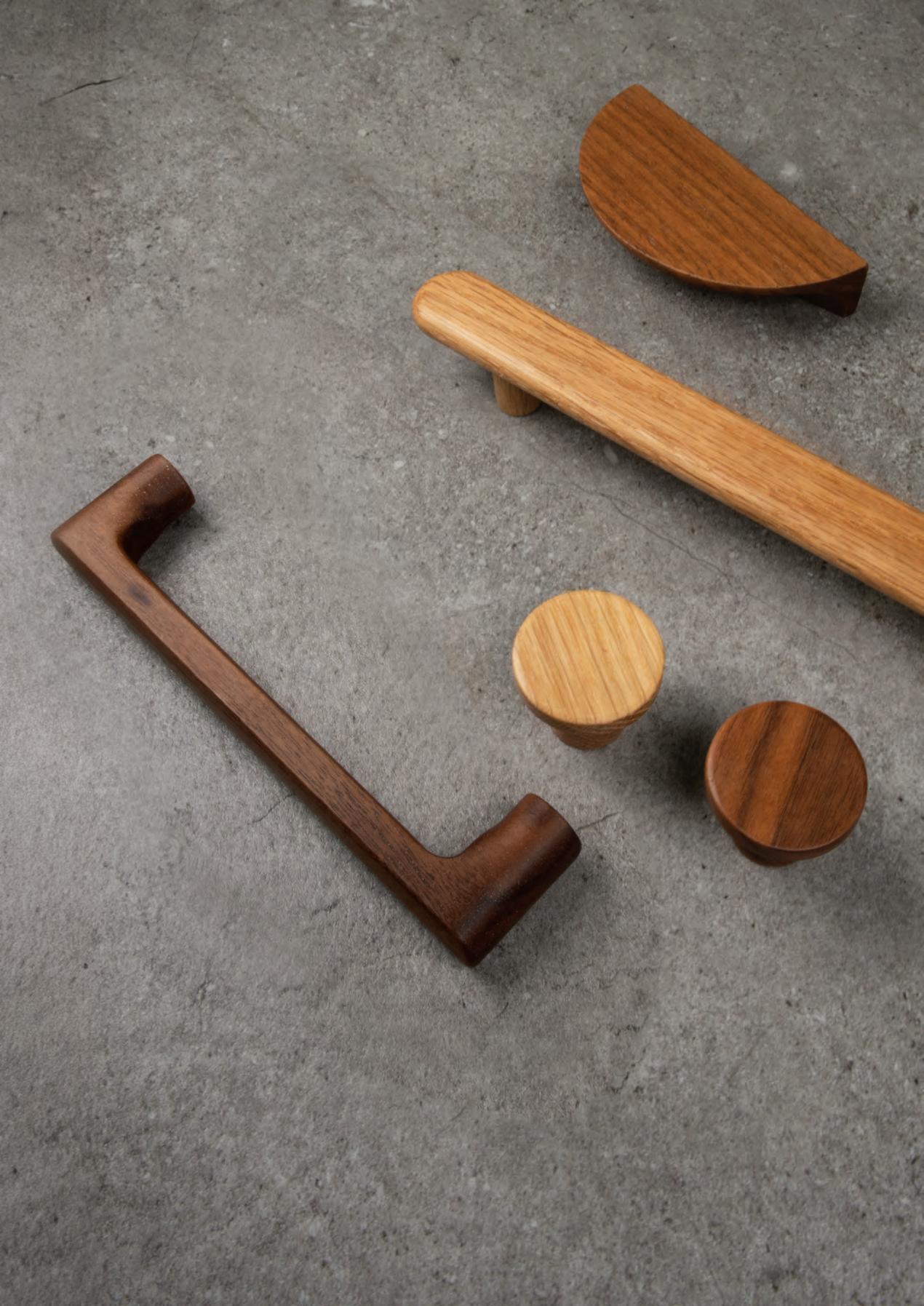
HANDLE RANGE
EXPRESS YOUR STYLE IN ANY SPACE WITH OUR TIMBER, CONTEMPORARY, TRADITIONAL AND PROFILE RANGES.
Engineered with meticulous attention to detail, the comprehensive Modar ® handles selection offers unique choices for residential, commercial, retail and custom furniture applications.
From modernising an existing room right through to a new build, Modar ® has the solutions that will suit your space beautifully.
Appliances
European Design for Australian Homes
The new Häfele Lifestyle Appliances catalogue is now available
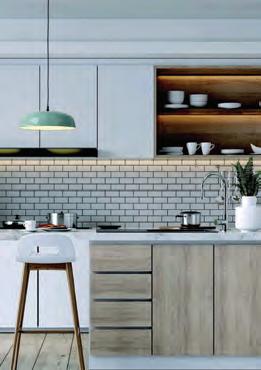
Häfele Lifestyle
Appliances celebrates the iconic Australian lifestyle and brings European design together, backed by Häfele’s renowned commitment to quality. For more than 100 years, Häfele has led the way for innovative kitchen solutions and its appliance range continues its mission to foster connections to family life in every Australian home.
The brochure features the full spread of Häfele appliances available from ovens, cooktops and rangehoods, to microwaves, dishwashers, refrigerators and laundry appliances. Packed with technical information essential to accurate specification, the catalogue is a valuable tool when walking through options with your clients and helping them make a purchase decision.
All Häfele appliances come with a five-year manufacturer warranty for true peace of mind for your clients.
Ovens
The catalogue includes the complete range of ovens with options that include features such as defrost, grill, convection, fan bake, and multicooking as well as pyrolytic and easysteam cleaning programs, plus an air-fry function.
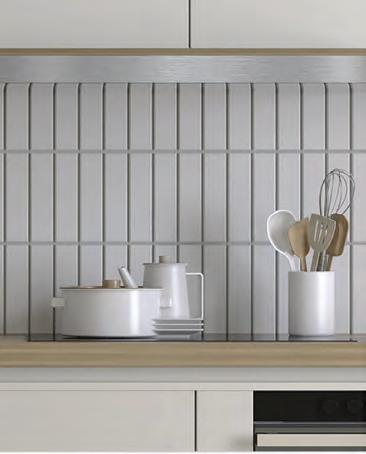
Cooktops
Choose from a variety of ceramic or gas cooktops available in a range of sizes with features such as child lock and auto safety switch, residual
heat indicators, power boost, enamel trivets and Italian Sabaf burners. Three induction cooktops are also available in 60cm and 90cm widths. All feature Schott ceramic glass tops with child lock, residual heat indicators and pot/pan detection among other benefits.
Rangehoods
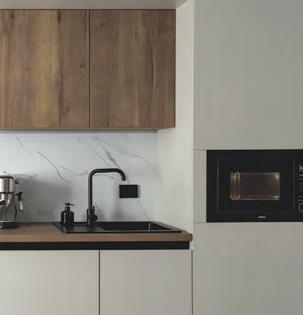
Peruse the collection of rangehoods including undermount, slide-out models, and canopy rangehoods available in stainless steel and black. All units feature powerful extraction and charcoal filters.
Microwaves & Dishwashers
The 25-litre built in microwave in black is the perfect accompaniment to any kitchen you are building or designing, while the range of freestanding and compact dishwashers can take their place in a wide range of design environments.
Refrigeration
One of the hardest-working and most-accessed appliances in the kitchen, the fridge/freezer is a key specification choice in any project. The 244-litre integrated fridge/freezer features an easyfit integrated design with eco-mode, Total No Frost setting and versatile storage.
Laundry
The laundry range includes an 8kg front-load washing machine in white with 15 wash programs including a pre-wash function. The matching 8kg heat pump dryer features 16 drying programs as well as a child lock and anti-crease function, while the 7kg vented dryer features four drying programs and can be freestanding or wall-mounted as needed to suit the design. ■
Häfele Australia Pty Ltd 1300 423 353 hafele.com.au
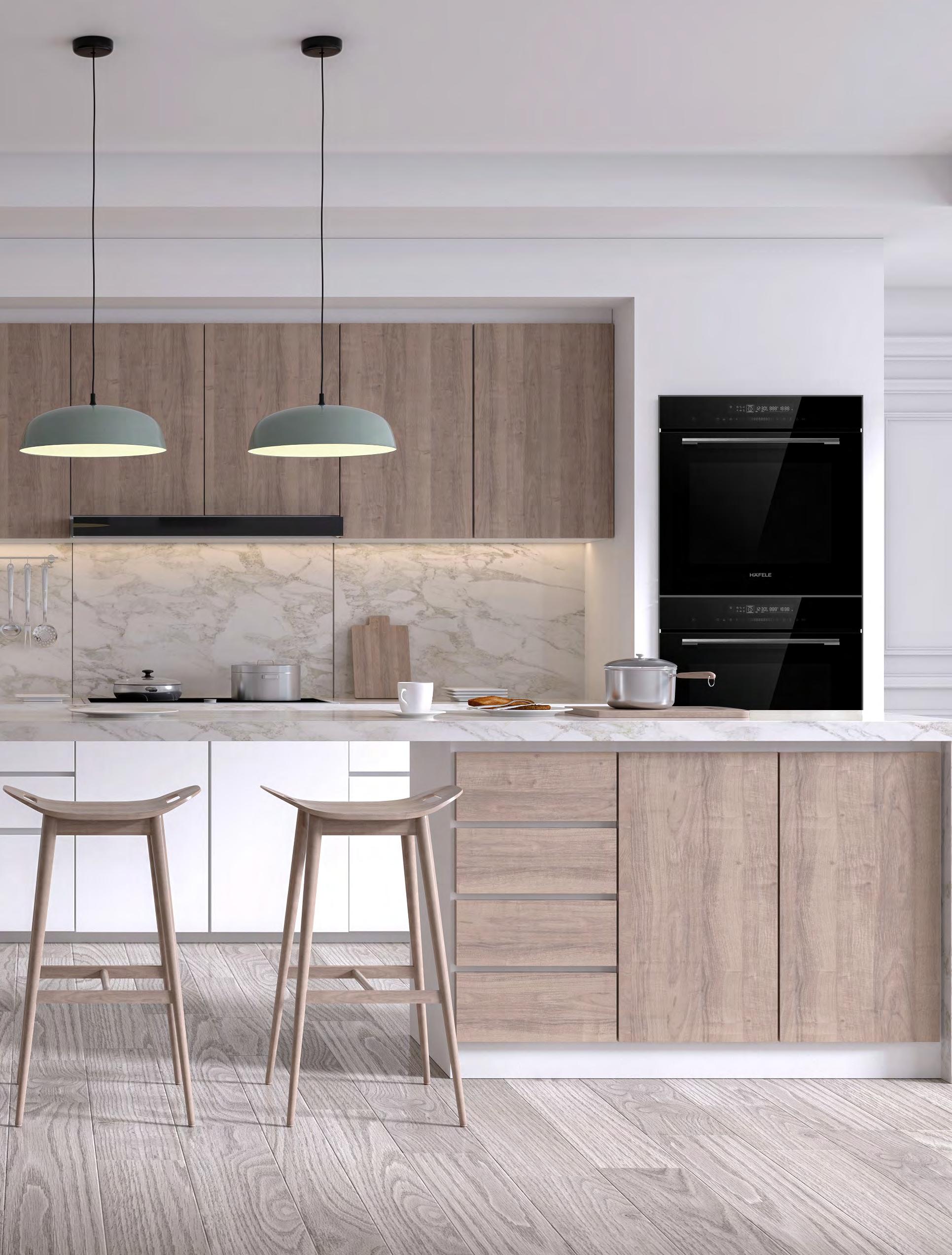
Inspired by the Australian way of life, Häfele Lifestyle Appliances unite European design and enduring quality crafted to elevate everyday cooking and effortless entertaining.
Awards CABINET VISION Wizard Award
Celebrating innovation, automation and intelligent manufacturing

Planit Australia is proud to introduce an exciting new industry initiative: the CABINET VISION Wizard Award. A recognition program designed to celebrate the most forward-thinking cabinetry manufacturers across Australia.
As technology continues to reshape the woodworking and cabinetry sector, businesses are increasingly embracing smarter, more efficient ways to design, manufacture, and deliver their products. The CABINET VISION Wizard Award shines a spotlight on those leading this movement; showcasing companies that are not only adopting digital tools but mastering them to drive real business outcomes.
At its core, the award recognises excellence in two key areas: Automation and Intelligence. From streamlined workflows and CNC integration to advanced parametric design and rule-based engineering, entrants will demonstrate how they are leveraging CABINET VISION to reduce manual processes, minimise errors, and unlock new levels of productivity.
But this award is about more than just technology, it's about impact. Judges will be looking for
businesses that can clearly demonstrate measurable improvements, whether through time saved, increased output, enhanced consistency, or scalable growth. Innovation and creative problemsolving will also play a key role, particularly where companies have pushed beyond standard workflows to develop unique, customised solutions.
To enter, participants are invited to submit a short video (two to four minutes) showcasing their operation in action. This visual format allows businesses to bring their processes to life, highlighting automation on the factory floor, intelligent design systems, and the tangible results achieved through their investment in technology.
The CABINET VISION Wizard Award is also an opportunity for industry-wide recognition. The winner will receive their award, along with a feature on the Planit Australia website and dedicated promotion across social media channels. In addition, both the winner and finalists will be showcased in Connect magazine, offering valuable exposure to peers, partners, and potential clients across the sector.
As the cabinetry industry continues to evolve, initiatives such as this play an important role in highlighting best practice and inspiring others to innovate. Whether you are a small workshop embracing automation for the first time or a largescale manufacturer refining advanced workflows, the CABINET VISION Wizard Award is your chance to share your story and be recognised as a leader in smart manufacturing.
Entries for the 2026 CABINET VISION Wizard Award are now open! Scan the QR code for more information and to enter.
Step forward, showcase your expertise, and show the industry what’s possible when automation and intelligence come together. ■ Planit
Use CABINET VISION your way
Subscription options available

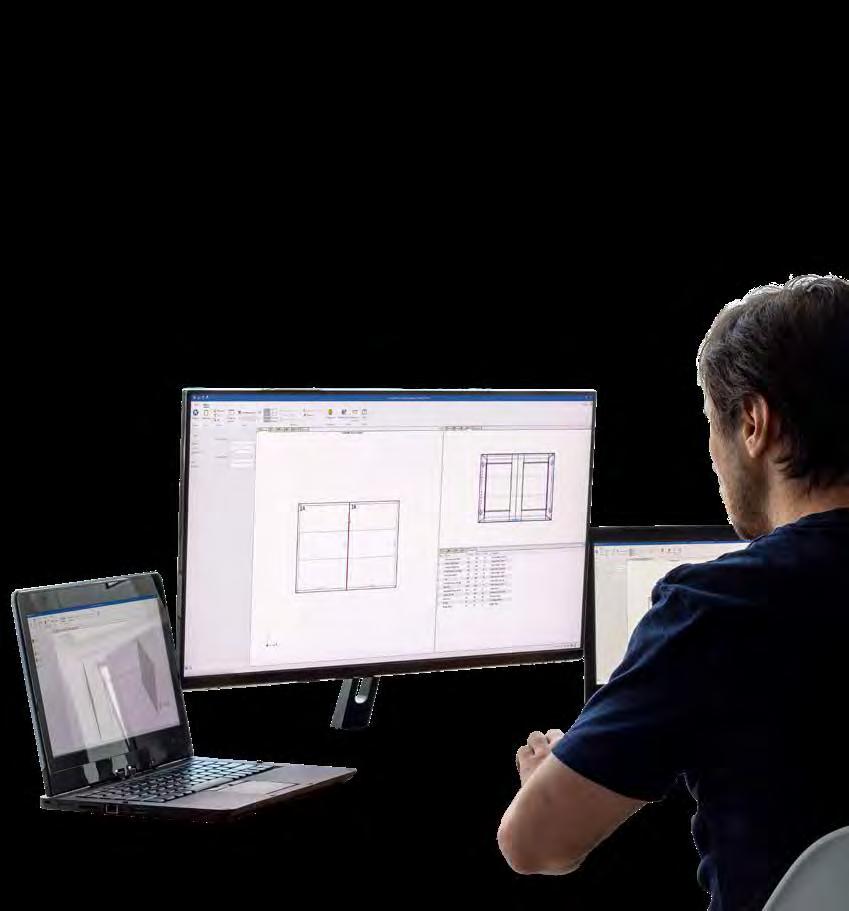
A CABINET VISION subscription connects you to a complete ecosystem designed to help your business run smarter, not just faster. With access to Planit+, you get the tools, knowledge, and support to keep improving every step of the way.


The 2026 Planit Australia CABINET VISION Wizard Award
Entries are now open! Scan the QR code for more info and to enter.
Movement That Defines Modern Furniture
GRASS and Häfele elevate design through precision engineering
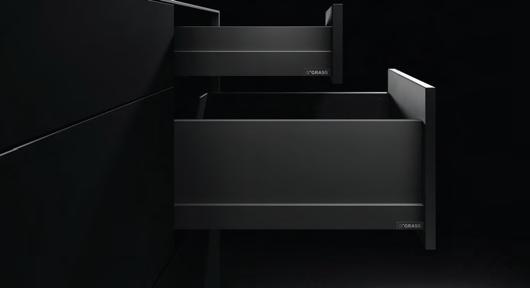

In today’s premium furniture landscape, excellence is defined not just by appearance, but by experience. The way a drawer glides or a cabinet closes has become a hallmark of quality; an area in which GRASS has built a global reputation over more than 75 years.
Now, through its partnership with Häfele in Australia, GRASS continues to bring its advanced movement systems to local manufacturers, cabinet makers and designers. The GRASS by Häfele Catalogue unites a comprehensive offering of drawer systems, concealed runners and hinges, each engineered to transform everyday furniture into something exceptional.
At the heart of the range is the Nova Pro Scala, soon to be available in a new colour 'Zircon'. Defined by clean lines and refined contours, its double-wall metal sides deliver both structural strength and timeless design appeal. Behind its minimalist exterior lies sophisticated engineering that ensures smooth motion, high load capacity and long-term reliability. With finishes including Ice White and Stone, along with options such as glass sides and inner drawer fronts, Nova Pro Scala offers versatility across a wide range of interior styles.
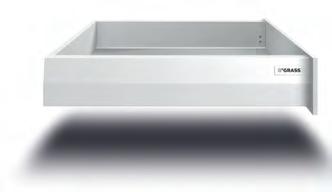
For projects requiring efficiency without compromise, the Nova Pro One simplifies complexity. Compact in design yet high performing, it delivers dependable functionality through a streamlined system that meets diverse application needs with precision.
Beneath the surface, GRASS’s concealed runner systems further enhance performance. The Dyna Pro provides a universal undermount solution, supporting both handle-free and traditional designs with soft-close and Tipmatic Soft-Close functionality. Meanwhile, the Dyna Neo introduces a new level of refinement in the mid-range segment, combining innovative centre rail engineering with smoothrunning rollers to deliver stability and effortless operation for drawers up to 30kg.
What sets GRASS apart is its holistic approach to movement. Every product is developed not only for function, but for haptic quality; how it feels to use. This philosophy ensures that movement becomes an integral part of the design, enhancing the overall value of the furniture piece.
Backed by the Würth Group since 2004, GRASS maintains a strong global presence while continuing to focus on innovation and craftsmanship. Its commitment to quality has been recognised through international design awards, while its sustainability efforts (including ISO 14001 certification and highly recyclable product designs) reflect a long-term vision for responsible manufacturing.
Through precision engineering and thoughtful design, its movement systems don’t just support furniture; they bring it to life. ■
Häfele Australia Pty Ltd 1300 423 353 hafele.com.au
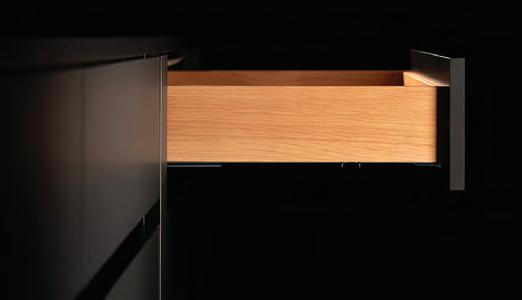
DYNAPRO Concealed Runner
Nov Pro Scala Zircon
NovaPro Scala Stone
Nova Pro One
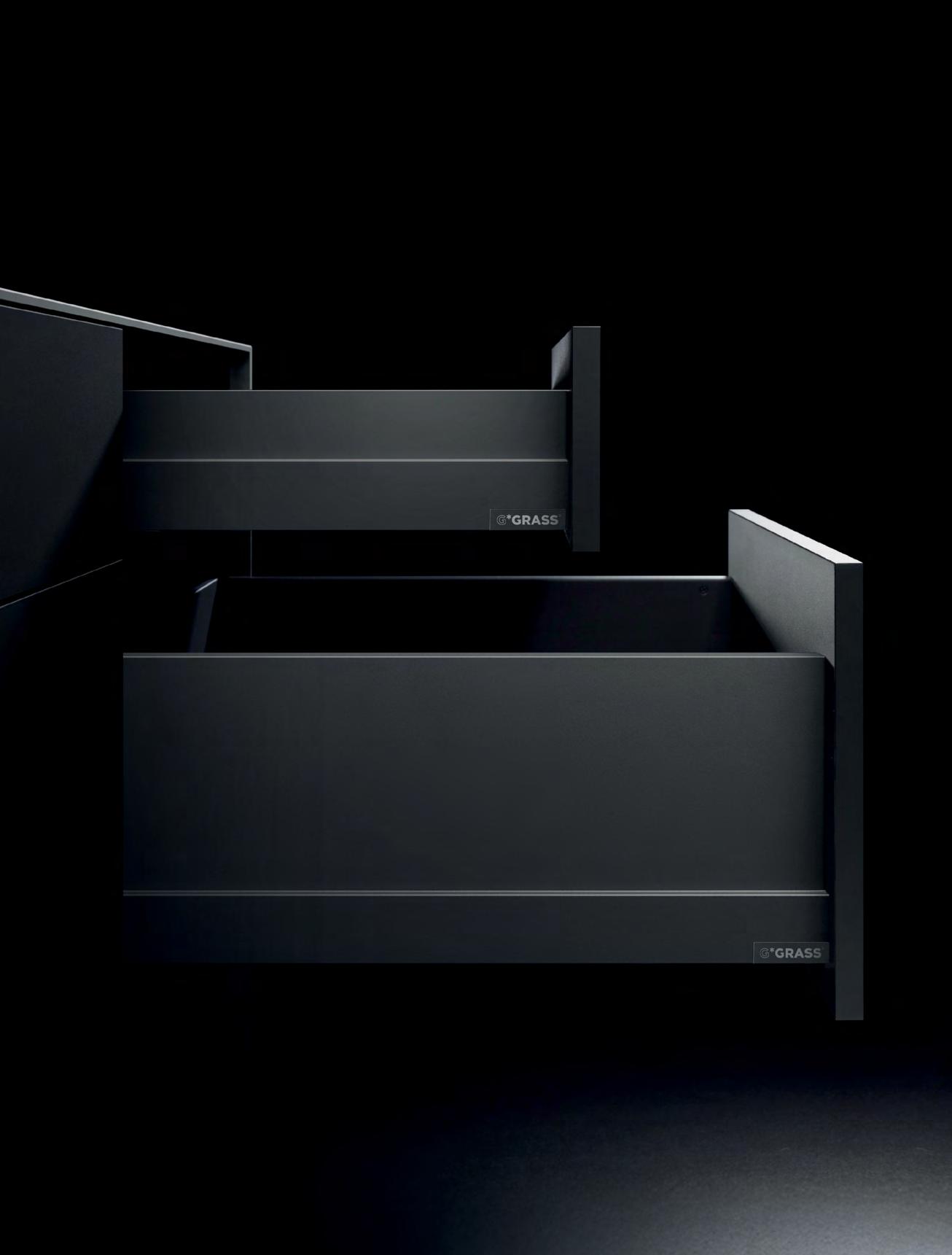
We bring furniture to life!
The all-new GRASS by Häfele catalogue is a comprehensive collection of Drawer systems, Concealed runners and Hinges for the Australian kitchen and furniture manufacturing industry and interior design markets.
All You Need is YOU
Hettich Australia is driving efficiency through platform thinking
Hettich Australia’s All You Need is YOU campaign highlights a growing shift in cabinetry design and manufacturing, moving away from fragmented product selection towards a more streamlined, platform-based approach.
Developed with both cabinet makers and specifiers in mind, the YOU platform focuses on simplifying how cabinetry is designed, produced and delivered, without compromising on flexibility or finish.
At the centre of the platform is a consistent drilling pattern that allows multiple runner and drawer options to be used within the same cabinet construction. For cabinet makers, this translates to reduced complexity on the factory floor, fewer variations in setup, and improved efficiency across projects.
For specifiers, the platform provides a reliable foundation that can adapt across different applications. Rather than redesigning cabinetry to accommodate different hardware systems, the same base construction can be retained while adjusting internal components to suit budget, performance or design intent.
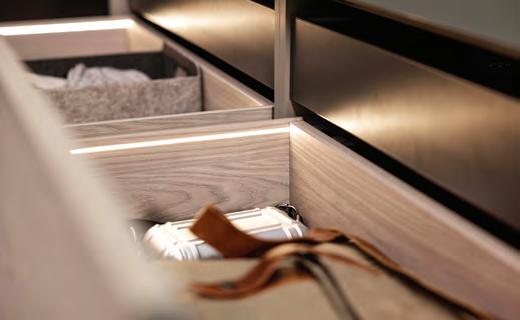
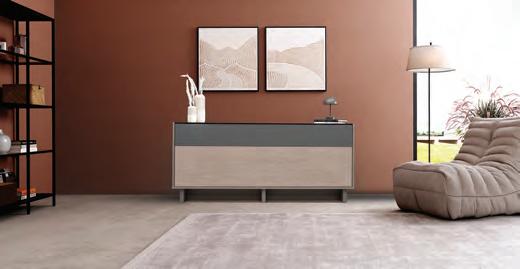
This becomes particularly relevant in projects that require a mix of outcomes, such as premium kitchen spaces alongside more cost-conscious areas. The ability to maintain consistency while varying internal specifications supports better coordination between design and manufacturing teams.
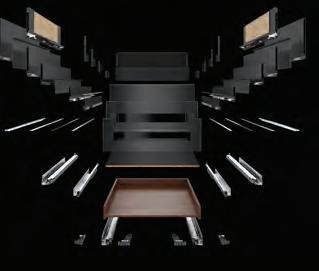
The platform integrates seamlessly with systems such as AvanTech YOU, enabling high-end outcomes including slimline drawer profiles, internal organisation and integrated lighting. These features can be incorporated without introducing additional complexity into the production process.
From a workflow perspective, standardisation across drilling and installation helps minimise errors and reduce production time. It also supports scalability, allowing cabinet makers to manage multiple projects more efficiently while maintaining consistent quality.
For larger residential or multi-unit developments, the benefits extend into procurement and installation. A unified platform simplifies ordering and allows for late-stage adjustments without requiring a complete redesign.
Through the All You Need is YOU campaign, Hettich Australia is reinforcing a broader industry direction; one that prioritises smarter systems.
For cabinet makers and specifiers, this approach offers a practical advantage, the ability to streamline workflows, maintain design flexibility, and deliver consistent results across a wide range of projects.
See the YOU platform on display at the Hettich Experience Centre Sydney. ■
Hettich Australia designwithhettich.au/showroom-appointment designwithhettich.au/all-you-need-is-you
REVIEW YOUR INSURANCE COVERAGE TODAY
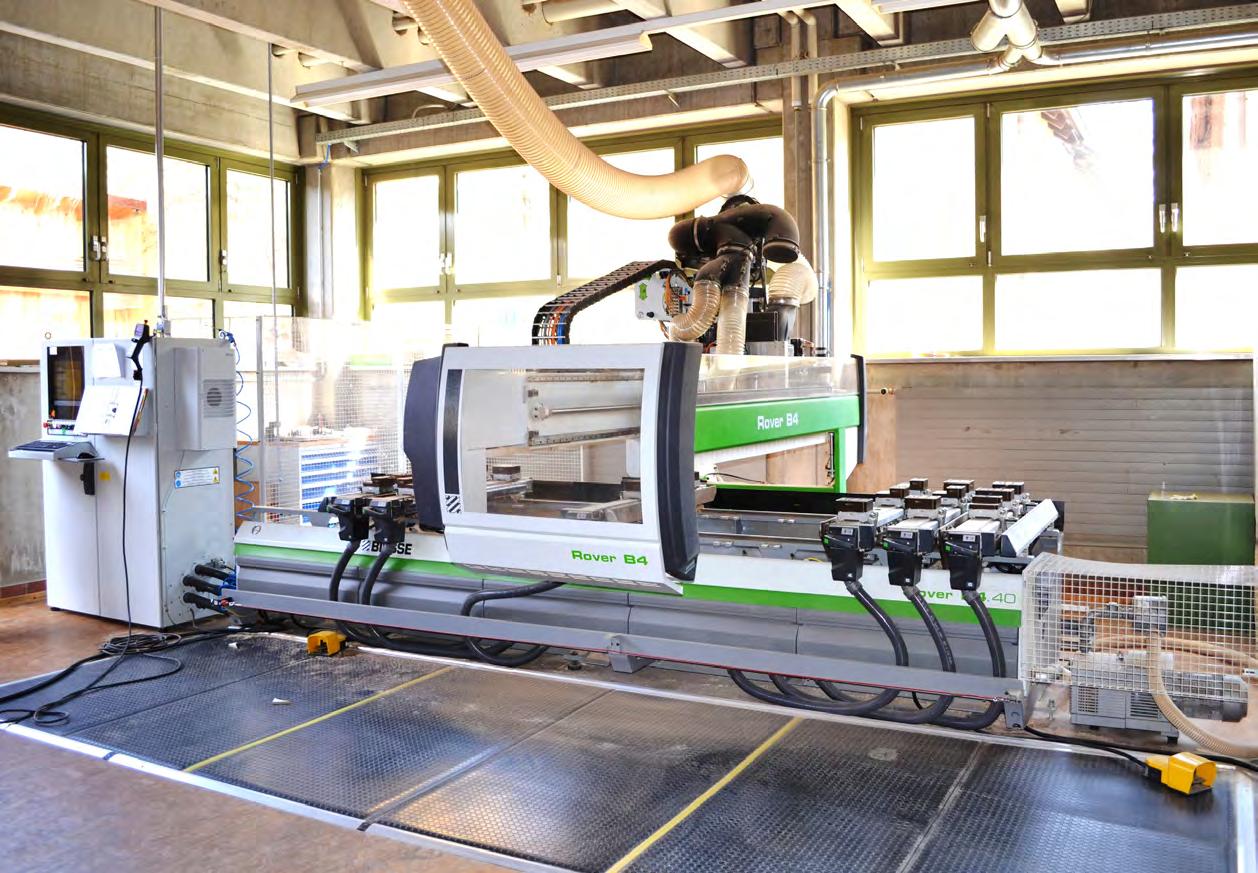
If you’re a cabinet maker, shopfitter, joiner or in associated industries, you know that your work requires precision, skill, and attention to detail. Unfortunately, even the most careful craftsman can run into unexpected problems on the job. That’s why it’s important to have the right insurance coverage in place. Cabinet Makers Insurance Brokers is the best insurance broker for the joinery industry, and here’s why:
• Broader Industry Specific Coverage
• Greater Premium Savings
• Personalised Service
• Claims Management Support
Software
Smarter Quotes, Stronger Margins
Why outdated quoting systems are quietly costing renovation businesses more than they think
Ask designers, sales staff and cabinet makers across the kitchen and bathroom sector which part of their role they dread most, and the answer is almost always the same: quoting.
It’s the task that gets pushed to the margins of the day; done after client meetings, design work, site visits, and supplier coordination. It’s also where pressure builds, because when a quote is wrong, the consequences don’t stay small.
The quoting issue hiding in plain sight
In many renovation businesses, quoting is still treated as an admin task rather than a critical business function. That mindset leads to:
• Pricing that isn’t consistently updated
• Important items overlooked in the rush
• Underquoting to stay competitive
• Profit margins slipping away after contracts are signed
Most quoting mistakes aren’t about capability, they’re the result of inefficient systems and processes. But by the time these issues surface, the client has accepted the quote, expectations are locked in, and the project is moving forward.
When pressure drives duplication and errors
Designers, sales teams and cabinet makers regularly repeat the same data entry across multiple platforms:
• Client information
• Site details
• Project specifications
• Design notes
Every manual step increases the likelihood of inconsistencies and missed details. Add tight deadlines and outdated pricing into the mix, and quoting quickly becomes reactive instead of controlled.
Bringing structure to a critical process
Ayrmont ARMS was developed to tackle this challenge head-on by simplifying and streamlining the quoting workflow for all businesses in the sector, whether showroom-based designers or manufacturers. Quoting becomes part of an integrated, structured process:
• Seamless data flow: Client information moves from initial enquiry through to quote without duplication.
• Accurate, current pricing: Quotes are built using controlled, up-to-date data instead of relying on memory or old spreadsheets.
• Clear client presentations: Consistent, professional formats improve understanding and reduce back-and-forth.
• Automated communication: Quotes are delivered promptly with standardised templates and documentation.
The outcome isn’t just speed, it’s consistency, professionalism and reliability.
The often-overlooked role of project scheduling
Beyond quoting, effective project scheduling plays a crucial role in maintaining profitability and control. A clear overview of all scheduled projects allows businesses to track current job status at a glance, ensuring timelines remain realistic and achievable. Structured scheduling also helps manage and document site instructions, reducing confusion and miscommunication across teams. Just as importantly it prevents the costly issue of doublebooking trades, ensuring the right people are on the right job at the right time. When scheduling is aligned with quoting and project data, the entire operation runs more smoothly and predictably.
It’s time to rethink quoting
In an environment where costs continue to rise across materials, labour, and overheads, relying on manual, rushed quoting processes is no longer viable.
The strength of the quote shapes the success of the entire project for both the client and the renovation business. Ayrmont ARMS doesn’t just streamline quoting, it brings structure, accountability, and consistency to a process that directly impacts the bottom line. ■
Ayrmont Technologies ayrmont.com.au
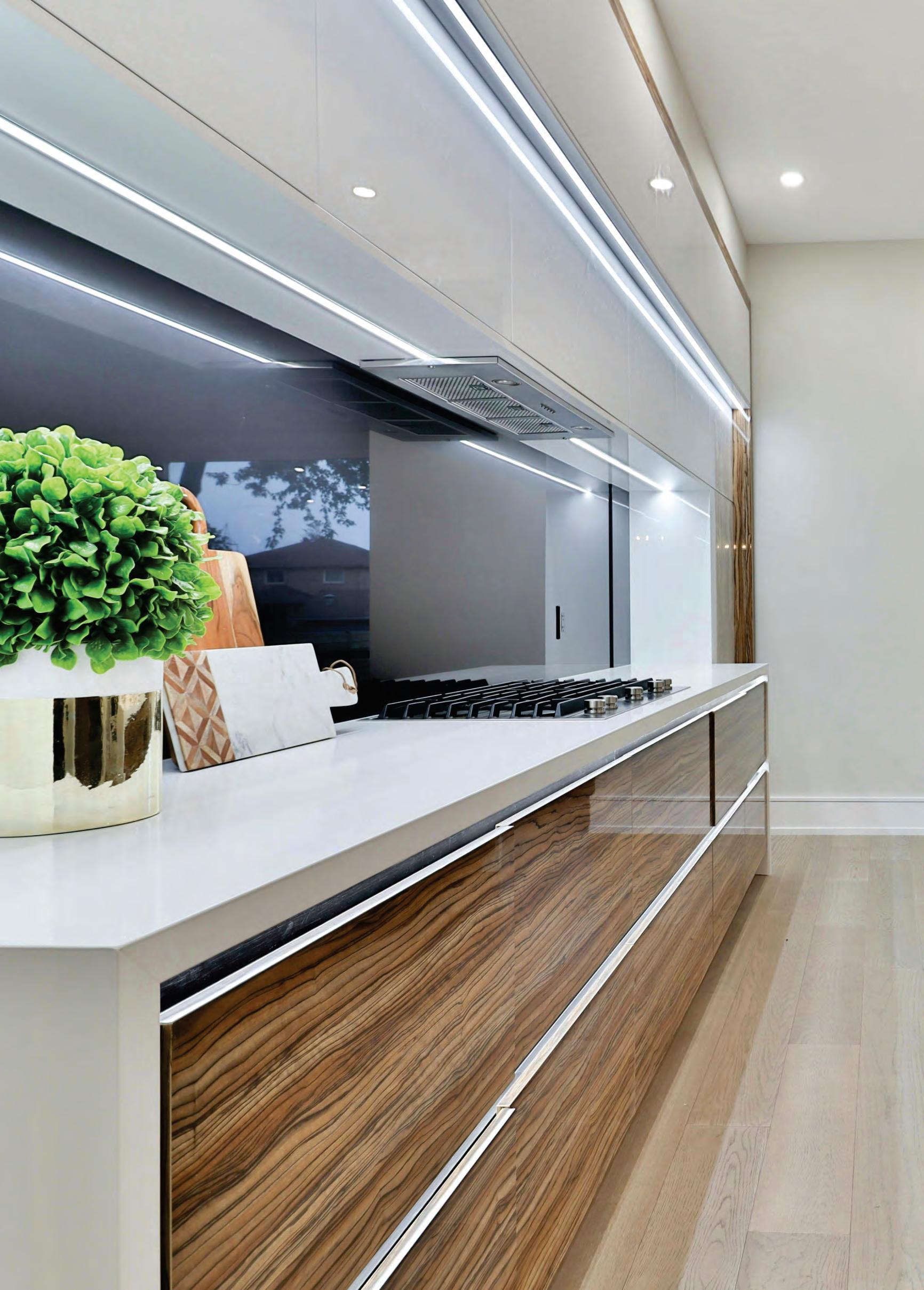
Ayrmont ARMS is built for busy renovation showrooms that need to win more jobs and run smoother operations. From accurate, professional quoting to real-time project tracking and customer updates - ARMS replaces the spreadsheet chaos with clarity and control.

Materials
polytec: Supporting the Future of Australian Manufacturing
In today’s global market, maintaining a strong local manufacturing base matters more than ever
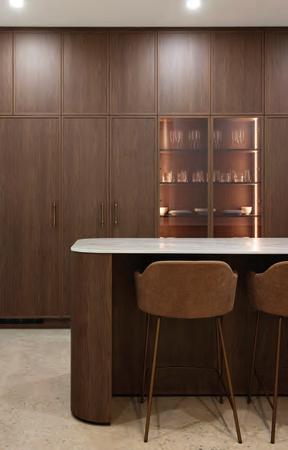
For polytec, manufacturing in Australia is a longterm commitment that supports cabinet makers, local communities, and the broader industry.
polytec, a brand of Porta Products Pty Ltd (part of the Borg Group), is Australian owned and manufactures its core decorative board, benchtop and door ranges locally. More than individual components, these products are designed to work together as a complete system, giving you consistency across finishes, reliable supply, and confidence on every job. Whether it’s kitchens, wardrobes, commercial fitouts or full interior spaces, polytec provides an integrated range that simplifies fabrication, ensures compatibility, and delivers a cohesive result from start to finish, backed by local knowledge, consistent standards, and accountability.
Built local. Backed by people.
Local manufacturing starts with people. For decades, polytec has been a regional employer, creating jobs across manufacturing, design and customer support. These roles help sustain skilled trades and contribute to stronger local communities.
For cabinet makers, this means dealing with people who understand the job. polytec’s sales representatives, customer service, technical support, warranty, and after-sales teams are all based in Australia. When questions arise on site or in the workshop, support is local, practical, and aligned with Australian standards.
Certified and traceable
Local manufacturing also means greater transparency. polytec’s MDF and particleboard products manufactured in Australia are supported by recognised certification frameworks, including Responsible Wood and PEFC Chain of Custody. These systems verify that timber is sourced from responsibly managed forests and tracked through the supply chain.
polytec also continues to develop Environmental Product Declarations (EPDs), which provide independently verified data on environmental impacts across a product’s life cycle. These documents are designed to support informed specification and compliance with green building requirements. This focus on certification and traceability gives cabinet makers and their clients confidence in what they are specifying and installing.
Designed for Australian conditions
Manufacturing locally keeps polytec close to how its products are used.
From kitchens and laundries to commercial fitouts, Australian conditions demand materials that perform over time. By developing its core ranges in Australia, polytec maintains a clear link between design, production, and real-world application.
polytec’s commitment also extends beyond manufacturing. It supports local communities, invests in long-term careers, and contributes to a resilient industry.
Local manufacturing is not just about where products are made. It is about the people behind them, the support available when it counts, and the confidence that comes with working with a local partner. ■
polytec
polytec.com.au 1300 300 547
Concelo® Bathroom Bin
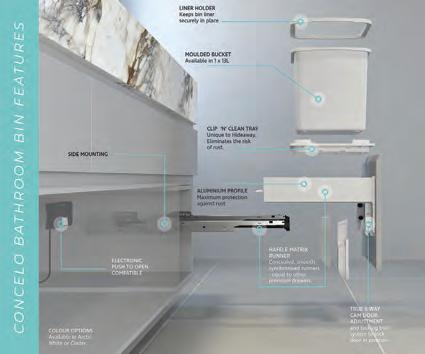
Following continued demand for clean, concealed bathroom storage solutions, Hideaway Bins is pleased to introduce the new Concelo® Bathroom Bin. With a shallow depth 350mm runner, the Concelo 1x13L Bathroom Bin has been designed to fit spaces where traditional bins simply cannot.
The Concelo Bathroom Bin addresses many longstanding issues by relocating waste management into the cabinetry itself, keeping bathroom floors clear and creating a more hygienic, streamlined space.
At its core is the Clip’n’Clean tray, moulded from virgin polypropylene for maximum durability. Fully removable, fully recyclable, and rust proof, the tray allows the area to be wiped clean with ease. The bucket also includes a matching liner holder.
The Häfele Matrix Premium Soft Close runner, made in Germany and rated to 35kg, allows the 13L bucket to clear the cabinet fully for easy emptying, while the aluminium profile adds another layer of rust-proof durability to withstand high-moisture environments such as bathrooms.
The unit features six-way concealed door adjustment for precise alignment, along with locking bolts designed to keep cabinetry aligned over time. Protective covers help shield moving parts from moisture and debris, supporting long-term reliability. ■
Hideaway Bins hideawaybins.com.au/concelo-entro Concelo Bathroom Bin is available via Hideaway Bins' distribution partners, Häfele and Nover.
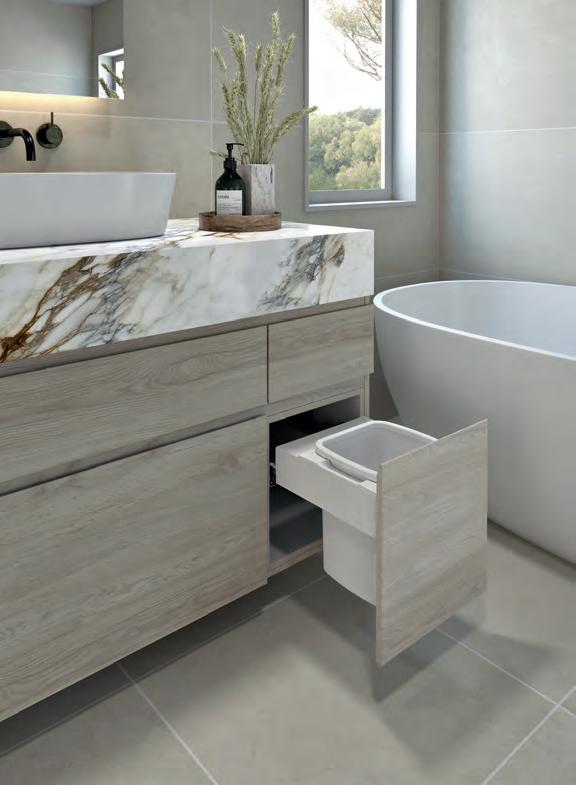
Meet Your New Go-To Site for Cabinet Makers
All About Labels has spent years working directly with cabinet makers, and that insight drives every product the company creates.
All About Labels understands the pressure of tight schedules, the need for clear identification, and the value of labels that simply do their job without fuss. Its new, focused mini site — cabinetrylabels.com.au — brings together the products that cabinet makers
rely on with straightforward categories, practical info, and a layout built for speed. It’s now quick and easy to find the right labels for your business.
Every label featured is the result of long-term industry experience and ongoing feedback from real workshops. The mini site puts that knowledge in one focused place — giving you a simple way of ordering for the first time or reordering the products you love.
Once products are selected and you’re ready to finalise your order, checkout is completed securely through the main All About Labels website, keeping the process simple and familiar. Jump in and check it out! ■
All About Labels cabinetrylabels.com.au 1300 762 603





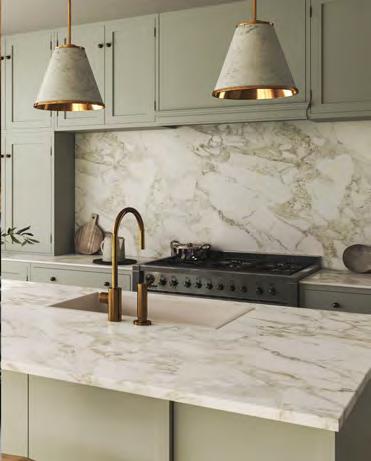


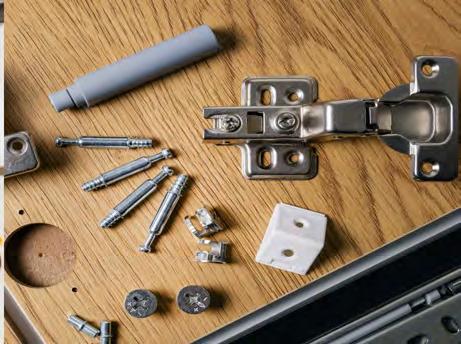




Peka Pleno Maxi Plus Larder Pull-Out Unit
The Peka Pleno Maxi Plus Larder Pull-Out Unit offers a refined, highly engineered solution that redefines how pantry storage functions within contemporary cabinetry.
Unlike conventional pantry systems that often leave underutilised zones or hard-to-reach areas, this unit impresses with its extra-large shelves and optimal use of cabinet space. The result is a storage system that not only increases capacity but also ensures that every item remains visible and accessible.
When two units are installed side by side, forming
door, all shelves glide out in unison, presenting the entire contents of the unit in a single, fluid motion. The system’s thoughtful design extends to its upper storage area, which is intelligently divided between the door and the interior of the cabinet. Central to this performance is the kinematic runner design, a hallmark of Peka innovation. This mechanism allows the unit to open smoothly and effortlessly, even when fully loaded. ■
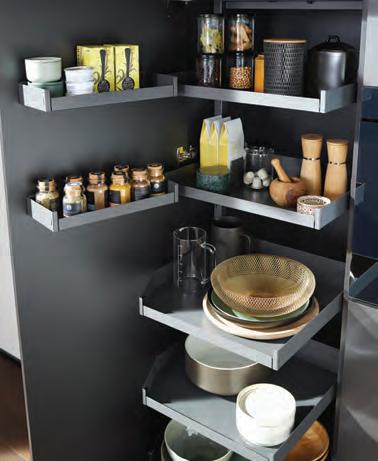
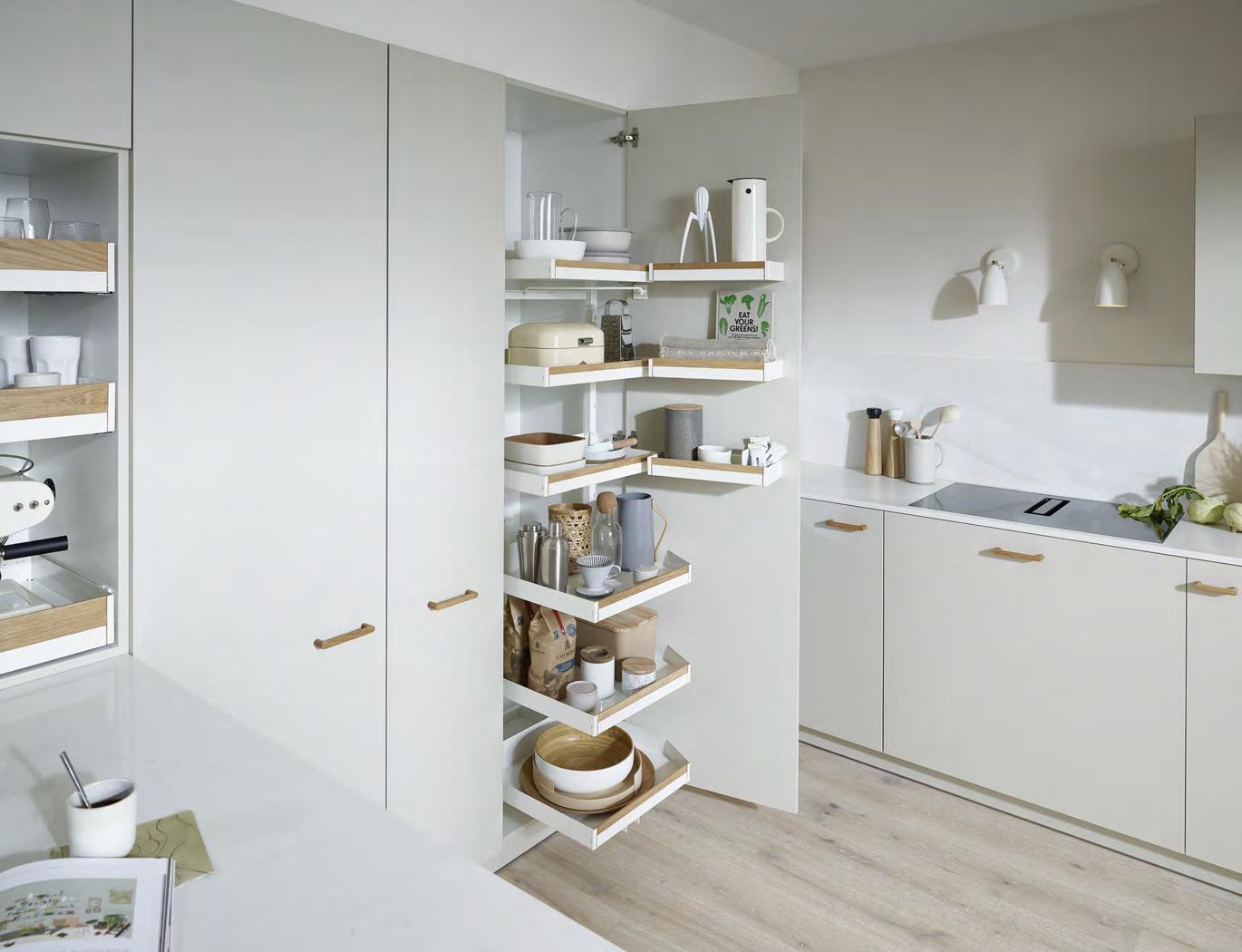


Peka Pleno Maxi Plus Pull-Out Unit.

Spotlight
Building capacity, not just targets
By Glen Qi, HIA economist
Ton Housing
he Australian Government’s target of delivering 1.2 million new homes in the five years to June 2029 has put housing firmly in the spotlight. It is an ambitious goal, but the story playing out in the housing market goes beyond any single target. There remains a strong mismatch between the supply of new homes relative to demand.
Low unemployment and strong population growth continue to drive demand, which may persist beyond the Housing Accord’s five-year target. These drivers are already evident in different housing indicators, including very low rental vacancy rates and rising established home prices, which are unlikely to materially change even as interest rates have risen multiple times in 2026.
The challenge for governments of all levels is to create a system that can deliver enough homes, quickly enough, and at a price that stacks up. That means lowering the cost of shovel-ready land and removing the tax and regulatory imposts on new homes.
On the topic of new homes, the volume of new home contracts sold in the month of March 2026 continued to increase despite the rise in interest rates and the evolving fallout from recent overseas turmoil. The March quarter 2026 result was 31.9 per cent higher compared to the same quarter in the previous year. This is a reflection of the underlying shortage of homes in Australia.
Just as important, cancellation rates have fallen to their lowest level on record. This is a timely
indicator of a household’s ability to proceed with projects sold in any given month, and a low level indicates that households are doing so. That tells us something critical about the type of demand in the market. Buyers are not rushing in on sentiment alone, but rather they are signing contracts they are confident they can service and complete.
The volume of new homes commenced during 2025 was up by 16.4 per cent on the previous year. In part, that reflects earlier declines in interest rates and strong demand supported by population growth and a tight labour market.
But even with this improvement, housing supply remains constrained and behind target. Labour availability, construction costs and long delivery timelines continue to limit how quickly approvals can turn into completed homes. Increasing the volume of investment in housing is needed to increase the supply of homes.
Over the past year, investors were responsible for building more than 40 per cent of new homes across Australia. These homes add to overall supply. Discouraging this part of the market does not reduce housing demand, but rather it reduces the number of homes delivered.
At the same time, housing mobility remains low. Transfer duties make moving expensive, particularly for downsizers and upgraders. As a result, renovation activity is rising as households choose to stay put and improve existing homes rather than move. This is not a lack of housing demand; it is demand adapting to constraints.
If governments want to increase housing supply and raise revenue, building more homes is the most effective way to do it.
Lifting supply increasingly depends on reducing the cost of bringing new homes to market. Housing remains one of the most heavily taxed goods in Australia, despite being an essential service. Direct tax imposts alone can add more than $200,000 to the cost of a new home, while indirect taxes through delays and regulation add even more.
Australia commenced around 282,500 new homes in the first 18 months of the government’s five-year housing target. That leaves the industry roughly 77,500 homes behind schedule. To reach the Housing Accord Target, multi-unit construction needs to do more of the heavy lifting and recent commencement figures are tracking positively. Most of these have come from New South Wales, likely because of policy changes from state government.
Housing cycles rarely turn on a single event. They shift as behaviour, confidence and constraints gradually change. New home sales are improving; demand remains strong and there is continued momentum. The challenge is not finding people who want homes. It is ensuring the system has the capacity to deliver them. ■
Housing Industry Association hia.com.au
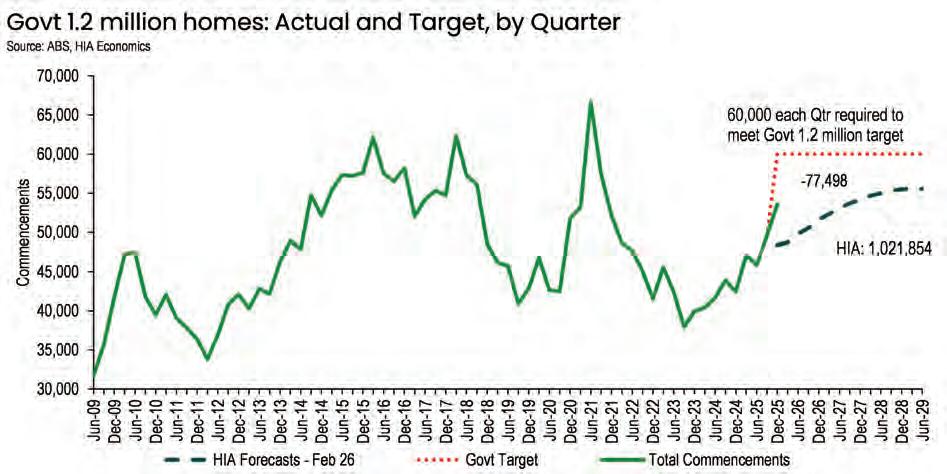
Listone Giordano Supernova
Supernova is an innovative proposal designed by Pietro Olioso from Studio Oliosopatras that combines the poetry of form with technical expertise in flooring to create an explosive new design. listonegiordano.com/en
Ceramica Cielo Itaca
A collection of washbasins and sanitaryware featuring sculptural, primordial forms which both stand out from the wall as well as integrate harmoniously within the architecture. ceramicacielo.it/en
Noël & Marquet Allegretto
Allegretto, a new collection of 3D wall panels, takes its name from the musical tempo that combines lightness with determination. With a linear, bold and asymmetrical pattern, Allegretto transforms surfaces into dynamic wall compositions. noel-marquet.net/en
Product
Give your next project a lift with our editor’s pick of the latest kitchen, bathroom and interior products
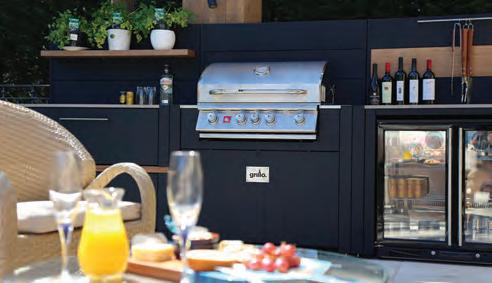
Grillo Outdoor Kitchen range
The Grillo outdoor kitchen range is designed and built in the UK using heavy-gauge cabinetry, rich iroko hardwood, and porcelain work surfaces. Grillo outdoor kitchens are designed to suit every setting and built to last in every environment. grilloliving.com
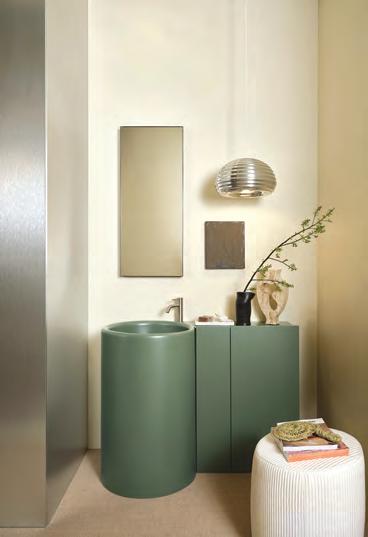

Multiforme Stimma collection
The Stimma collection, designed by Debonademeo, is a multifunctioning system of lighting utilising diffused light, artistic Murano glass and polished metal, and resembles flower branches extending from a central core.
multiforme.eu/en
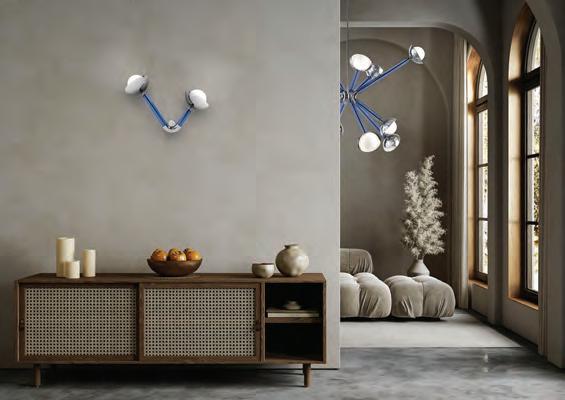
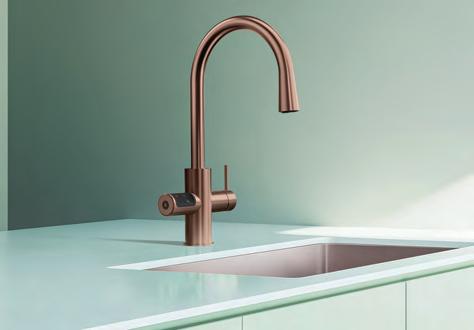
Zip HydroTap new brushed bronze finish
The new brushed bronze finish offers warmth and depth, providing an alternative to cooler metallic tones while remaining refined and timeless. In addition, Brushed Gunmetal and Brushed Brass are now available across all Zip HydroTap styles, expanding finish consistency across the range. zipwater.com

Designed by Elena Salmistraro, the Succulentia collection pays homage to the universe of succulents, described by the company as “guardians of strength and perseverance”. The collection features vases and centrepieces within playful forms and amplified proportions to enhance the decorative dimension of the objects.
bosatrade.com
Antrax IT Tavolina
The Tavolina is a smooth heating panel created from 100 per cent recyclable aluminium. Each piece in the collection — which also includes Tavola and Tavoletta — can be arranged horizontally or vertically, stacked or parallel to achieve the desired thermal power for each room.
antrax.com/en
ASKO Laundry Care 2.0
Combining timeless craftsmanship with ground-breaking innovation, ASKO Laundry Care 2.0 features its signature Steel SealTM and Quattro ConstructionTM 2.0 for an exceptional experience. Durable steel replaces rubber for a cleaner, more hygienic wash with an exclusive suspension system that eliminates noise and vibrations. au.asko.com
Touch Handles turned timber handles
Turned timber handles are now available in two new finishes, Clear Coated American Oak and Black Stained American Oak. Each is sealed beneath a silky, durable pre-catalysed lacquer coating that allows the warmth and beauty of the oak to shine through.
touchhandles.com.au

Polis by Lithos Design
A refined and elegant marble from Brazil, Polis, designed by Raffaello Galiotto, uses a chiaroscuro effect to enhance the strong texture of this vertical surface. Now available in Calcite Blue, the surface is defined by its cloudy structure enriched with various shades of sky blue.
lithosdesign.com
Bosa Succulentia
International Tour
ACFA 2026 Design Tour
Attendees on the ACFA 2026 Design Tour soaked up the best of Milan Design Week plus immersive visits to sponsor facilities
The ACFA 2026 Design Tour kicked off on Monday 20 April with Welcome Drinks on the rooftop terrace and a Welcome Dinner at our centrally located Milan hotel. Attendees had an opportunity to meet one another and enjoy a sumptuous meal before heading to bed to rest up for a busy week.
Tuesday morning saw us head off (along with, it seemed, everyone else in Milan!) on the metro to Salone del Mobile.Milano. Once inside the show entry gates, the group dispersed to explore the myriad halls and focus on those areas of particular interest. We met up for guided tours of a number of stands then enjoyed more free time at the show, before heading into the heart of Milan as guests of French Living in Motion with a private tour of its Le Design Defile installation. A few keen tour members even stuck around for the fabulous cocktail party afterwards.
The next morning we repeated our trip on the metro and spent individual time at the show before meeting up in groups at our hotel or at the show for the Gessi Milano extravaganza event. Held at the Casa Gessi Milano showroom, guests were given time to explore these extraordinary spaces before heading over to join the party (which, we are told, continued into the early hours).
Thursday saw us head into the heart of the Brera Design District. Milan has eight Design Districts and Brera is the centre for all things kitchens, bathrooms and interiors. We met our guides, Michele and Leonardo from The Mentors of Design, who took us on a three-hour walk through Brera with curated visits to some of their favourite showrooms. We enjoyed lunch at Idea Group as guests of Luxe by Design then we took ourselves to the fantastic Grohe installation at Piccolo Teatro together with drinks afterwards. In the evening we headed to the Cosentino x Tom Dixon cocktail party at Casa Manzoni to present its new surface, Eclos and the table collection Axis.
Friday morning brought a change of pace as we headed out to the Molteni&C showroom and then to its wonderful Responsive Nature installation. Despite the planned train strike, a number of our crew jumped on the metro to attend Alcova, a key fixture in Milan Design Week. Alcova is an evolving exhibition concept that brings together a range of established designers with emerging young talent. This year, our group found plenty of inspiration in the reclaimed Baggio Military Hospital space which featured a wide variety of lighting, textiles, art and objects.
Later that afternoon we met back at our hotel to collect our bags and make the bus trip to our next stop in Brescia.
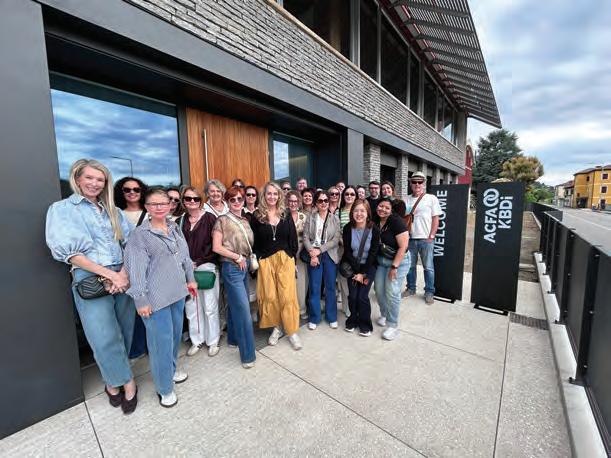
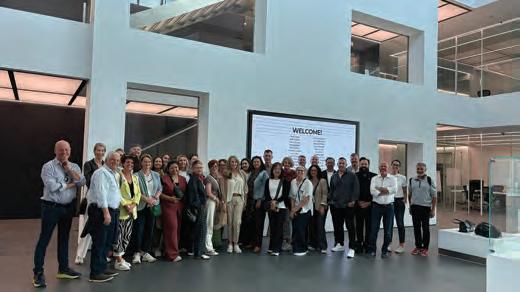
Group at UNOX Casa
Group at Latho Components


Saturday 25 April, as well as being ANZAC Day at home, is Italian Independence Day so was a public holiday. After a sleep in and breakfast at the hotel, we took a short walk to our lunch location in the heart of Brescia. Following lunch we met up with our tour guide Stefan who took us on a twohour walking architectural tour of this amazing city which saw us visit most of the important architectural and cultural sights of Brescia. The group enjoyed free time for the rest of the afternoon and evening.
Sunday 26 April was an incredible experience. As guests of e&s we headed off to explore historic Sirmione on the shores of the stunning Lake Garda. We were joined by Rob Sinclair and the senior leadership team of e&s. Our group enjoyed an
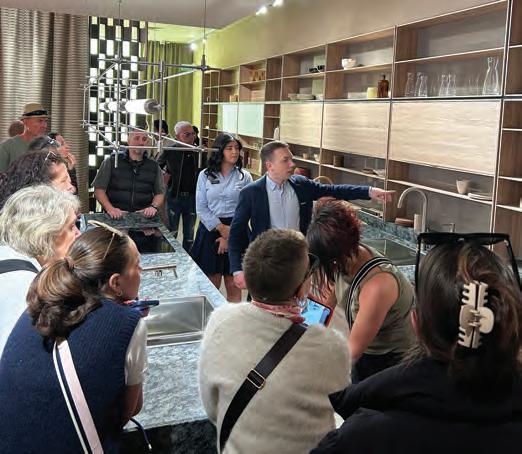


Tour Day 1 — Salone del Mobile
Rho Fiera Showgrounds
Group at Valcucine
Group at La Speranzina
Milan Duomo
International Tour


indulgent, fine dining lunch at La Speranzina and a visit to Castello Scaligero di Sirmione and before making the short trip back to our hotel. The rest of the evening was free for rest and relaxation.
Our time in Brescia was at an end, so on Monday morning we packed up and jumped on the bus to make our transfer to Treviso. On the way we stopped at Le Vie Angarano winery located in the grounds of Villa Angarano, a Venetian villa designed by architect Andrea Palladio in 1548. We enjoyed a tour of the villa and winery, complete with wine tasting and a light lunch. Following lunch we continued on to Treviso and checked into our hotel.
On Tuesday we were hosted by our wonderful sponsors Latho Components + Cabinetti Panels. Latho Components is located in the town of Paderno del Grappa, in the province of Treviso. Latho Components and its parent company Gizia have been producing surfaces and components for the furniture and interior design industry here for more than 50 years. Our day included a tour of Latho and Gizia’s factory, showroom and facilities, as well as an incredible lunch with an amazing view then a free evening.


Group at Gessi
Le Vie Angarano winery
Molteni&&C Responsive Nature
EuroCucina
Rooftop pre-dinner drinks — Milan hotel
On Wednesday, we were hosted by our wonderful sponsors UNOX Casa + UNOX Australia. The company’s headquarters are located in Cadoneghe in the province of Padua, approximately 50kms from Venice. Our visit to UNOX’s facilities included a factory tour where we were able to see how a number of the integral components came together, followed by a cooking demonstration experience like no other, which allowed our guests to experience the full gamut of functionality of the UNOX Casa ovens.
Once we returned to the hotel, we gathered for a farewell dinner to finish the tour. The following morning our guests breakfasted at their leisure then made their way on for more adventures, or to start their trip home.
All agreed it had been an incredibly experience, packed with inspiration with new friendships formed and life-long relationships established. ■


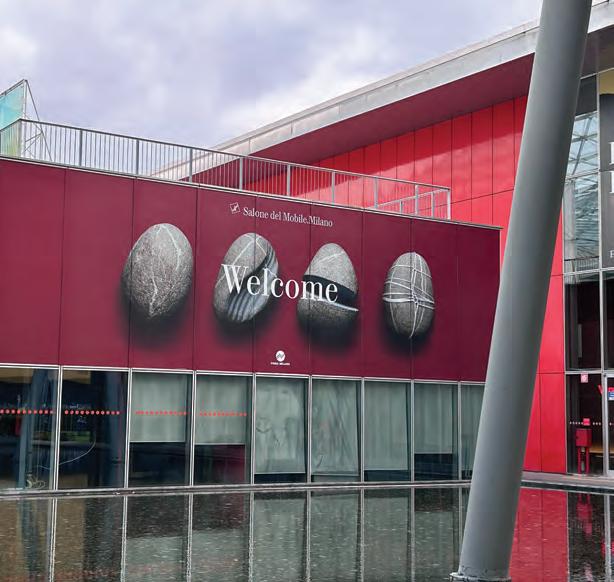
International Bathroom Exhibition
Salone del Mobile.Milano
Lunch at Idea Group
Brescia walking tour
ACFA x KBDi 2026 Conference

The ACFA x KBDi 2026 Conference will be held on 15 and 16 August at the Hyatt Regency, Sydney and will include visits to the Art Gallery of NSW and the Sydney Botanic Gardens, as well as the KBDi Design Awards.
More than a conference, this event will challenge ideas, expand perspectives and shape the future of our industry. From the Trade Expo floor to the keynote stage; from gallery tours to the Gala celebration; this is an experience designed to provide insight, highlight innovation and foster industry connection.
If you are committed to your craft, your business and your future in this industry, this is the place to be.

Day 1 — Trade Expo
At the core of Day One is the carefully curated Trade Expo which brings together a premier group of suppliers from the kitchen, bathroom, furniture and design industries.
Designed to complement the conference program, the Trade Expo provides delegates with the opportunity to explore new products, reconnect with trusted brands and discover innovative solutions that support projects from concept to completion.
Join Australia’s design and manufacturing community for two days of insight, connection and industry-leading ideas

Day 1 — Session 1
Everything looks the same – until you know what to look for | Dana Tomić Hughes from Yellowtrace
In this insightful session, proudly sponsored by Lincoln Sentry, globally respected design voice Dana Tomić Hughes shares a compelling framework for seeing beyond trends. Drawing on her Sightline research together with 15 years of editorial experience, Dana introduces six emerging design territories and provides you with the language and filters to incorporate them into your work. Dana will answer the compelling question: “in a world of algorithm-driven sameness, how do designers stay original?”.

Day 1 — Session 2
AI, design & ownership: who really owns the work? | Andrew Seaton from Easton Belle Lawyers
In this practical session, proudly sponsored by Momo Handles, Andrew Seaton breaks down what every designer and business owner needs to know including ownership of AI-generated work, risks in marketing and client presentations, safeguarding intellectual property and reputation, and using AI confidently without legal exposure.
Day 1 — Lunch & Trade Expo
Enjoy a delicious working lunch, with thanks to the generous support of Zip Water, and continue working your way through the Trade Expo.

Day 1 — Session 3
Designing for dementia: why designers are on the frontline of care | Daniel Jameson from HammondCare
In this compelling session, proudly sponsored by Blum Australia, Daniel Jameson explores how thoughtful kitchen and bathroom design can support people living with dementia, helping them remain independent, safe and connected to their homes for longer. Daniel will explore practical strategies around layouts, lighting, materials and contrast; creating intuitive, supportive environments; and designing for long-term liveability.

Day 1 — Session 4
The art of concept to completion leadership; resilience, communication and craft in a changing industry with Barry Du Bois
In this inspiring session, sponsored by CAV’ART
Designer Stone, Barry Du Bois draws on decades in building, design, media and personal adversity to deliver a powerful keynote on leadership, resilience and communication. Barry shares his expertise on how to strengthen client relationships, lead teams through pressure and change, reduce friction across projects, and stay grounded while delivering exceptional outcomes.


Day 1 — Conference Welcome Party
Join your conference cohort for fantastic food, drinks and informal networking in a vibrant setting as you unwind, connect and celebrate. Proudly sponsored by e&s.
Day 2 — Sydney Experience
Day Two starts with a carefully curated cultural experience designed to inspire creativity and build connections. Delegates will enjoy an exclusive viewing of the Archibald, Wynne and Sulman Prizes; a guided exploration of Australian Art Stories; and lunch at The Terrace on the Domain in the Botanical Gardens.
Day 2 — KBDi Design Awards Gala
The conference wraps up with the 2026 KBDi Design Awards Gala where we celebrate excellence, innovation and creativity, and honour the best in Australian kitchen and bathroom design. ■

For more information and registrations visit kbdi.org.au/kbdi-events/ conference-2025777

Training New Supervisory Skills Course
As the industry evolves to demand greater efficiency, safety, and leadership accountability, the role of the supervisor has never been more critical

The new supervisory skills course for Australian cabinet and furniture makers is designed to equip current and aspiring workshop leaders with the essential knowledge, practical skills, and confidence needed to lead high-performing teams in a tradebased environment.
This eight-module program focuses on real-world challenges faced by supervisors in cabinet and furniture manufacturing settings.
It covers a broad range of leadership responsibilities, from managing people and prioritising tasks, to fostering continuous improvement and navigating workplace change.
Grounded in best practices and aligned with Australian workplace legislation and standards, the course supports participants in developing a leadership mindset, understanding legal responsibilities, and applying practical tools to improve team performance, safety outcomes, and overall productivity.
Whether stepping into a supervisory role for the first time or looking to refine your leadership style, this course will provide the foundation for success as a supervisor. The course is interactive in its design and includes video and audio elements, interactive activities, and knowledge check questions to answer at the end of each module. Once the modules are completed, a final assessment is carried out to complete the course, followed by the issuing of a certificate of completion.
ACFA/KBDi members will receive the course cost at a discounted rate as a benefit of their membership.
The course covers the following topics:
Module 1: Stepping into supervision
This module introduces the course program and covers the roles and responsibilities of a supervisor and leader. Grounded in best practices and aligned with Australian workplace legislation and standards, the course supports participants in developing a leadership mindset, understanding legal responsibilities, and applying practical tools to improve team performance, safety outcomes, and overall productivity.
Module 2: Supervision, leadership and effective communication
This module examines the qualities that distinguish effective supervisors from ineffective ones, with a focus on the practical realities of trade-based environments. Effective supervisors have a measurable impact on team performance, morale, safety, and job satisfaction. The module explores a variety of leadership styles and asks you to reflect on your own leadership style, and how to be effective in communication with the team.
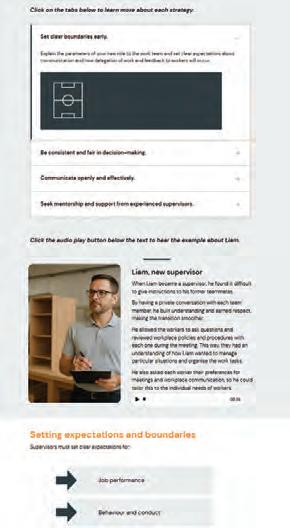
Module 3: Effective time management
This module focuses on managing time and tasks effectively. It explores tools and techniques for planning for daily,
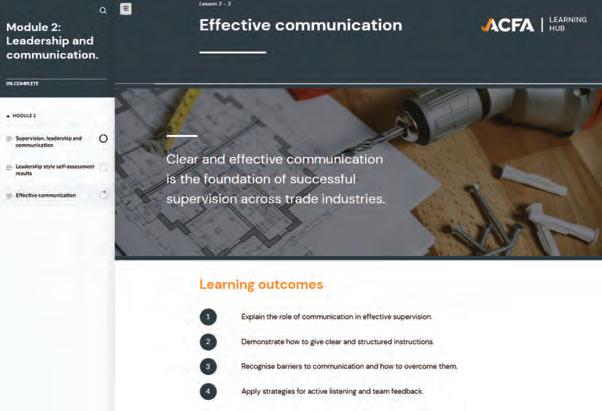
and weekly tasks, and longer-term project work. It also covers effective prioritisation and delegation for supervisors to maximise productivity.
Module 4: Creating a high-performing team
High-performing teams don’t just happen by chance. They are built with intention, leadership, and collaboration. In today’s workplaces, especially in trades and workshop environments, the ability to create strong, cohesive teams is a key skill for supervisors. This module focuses on fostering team motivation and explores both traditional and modern models of team development as well as practical strategies supervisors can use to unlock the potential of their people.
Module 5: Coaching, feedback and managing performance
As a supervisor, one of your most important responsibilities is guiding your team to meet both production and quality standards while supporting their personal growth. Effective coaching and feedback not only addresses performance issues but also motivates workers, strengthens trust, and builds pride in their work.
This module explores practical tools you can use to set goals, deliver constructive feedback, and handle performance challenges confidently.
Module 6: Principles of Lean manufacturing for workshops
Lean thinking in workshop environments aims to minimise waste, enhance workflow, and foster safer, cleaner, and more productive environments. While Lean thinking originated in large-scale
manufacturing, its principles can be easily adapted for use in small workshops, where space, time, and resources are often limited. This module introduces the core principles of Lean manufacturing and shows how to apply them in day-to-day production on the workshop floor.
Module 7: Continuous improvement
Continuous improvement is the ongoing effort to enhance products, services, and processes by making small, incremental changes rather than large-scale overhauls. This module focuses on how to enact continuous improvement through learning, problemsolving, and teamwork in the workshop.
Module 8: Leading and managing change
Change is inevitable in any modern trade environment. Change comes in many forms. It could be new machinery, software systems, materials, safety procedures, or production methods, or new staff joining the team. This module focuses on practical strategies for leading change with confidence and compassion. ■
ACFA Learning Hub acfalearninghub.net.au/acfa/all-acfa-courses
5 Signs You May Need Supervisory Training
1. You were promoted because you were a good tradesperson but have never been trained to manage people.
2. Communication issues regularly occur on the workshop floor and jobs are misunderstood or repeated.
3. Apprentices are unsure who to ask for guidance or are not progressing as expected.
4. Production delays occur because priorities or responsibilities are unclear.
5. Supervisors feel constant pressure managing people, production and safety without the tools to do the role effectively.
ACFA x KBDi x AWISA
A unified voice for Australia’s cabinetry, design and supply industry

For many years, Australia’s cabinet making, furniture manufacturing, kitchen and bathroom design, and industry supply sectors have been represented by separate organisations — each serving an important role in supporting their members and advancing their part of the industry.
The recent mergers allow these sectors to take a significant step forward together.
The Australian Cabinet & Furniture Association (ACFA), the Kitchen & Bathroom Designers Institute (KBDi), and the Australian Woodworking Industry Suppliers Association (AWISA) have joined forces to create a unified organisation representing the full spectrum of Australia’s cabinetry, furniture, design and supply industries.
The merger marks an important evolution for the industry bringing together designers, manufacturers and suppliers under one coordinated body with a shared vision for growth, collaboration and stronger representation.
Bringing the industry together
While each organisation has long supported its members with training, networking, advocacy and industry development, the sectors they represent are deeply interconnected.
Designers rely on manufacturers to bring concepts to life. Cabinet makers depend on suppliers for materials, hardware and machinery. Suppliers, in turn, work closely with both designers and manufacturers to drive innovation and efficiency across the industry.
By bringing these groups together under one umbrella, the new merged organisation creates a platform that reflects how the industry actually operates; as a connected ecosystem rather than separate segments.
Members will benefit from greater opportunities for collaboration, knowledge sharing and business connections across the entire supply chain. Instead of operating in parallel, designers, suppliers and manufacturers can now work more closely together to strengthen the industry as a whole.
Greater value for members
For members of all three organisations, the merger brings an expanded network and broader access to industry resources.
Members will benefit from:
• A larger national community spanning designers, cabinet makers, furniture manufacturers and suppliers
• Expanded networking opportunities across the full industry supply chain
• Broader professional development and training programs
• Access to shared industry knowledge and expertise
• Stronger national events, exhibitions and awards programs
For designers, closer engagement with manufacturers and suppliers will provide greater insight into materials, manufacturing capabilities and emerging technologies.
For cabinet makers and furniture manufacturers, stronger links with designers and suppliers will open opportunities for collaboration, innovation and new business relationships.
Suppliers will gain deeper engagement with both designers and manufacturers ensuring they remain closely connected to the needs and future direction of the industry.

Ultimately, the merger creates a more connected and supportive industry network for everyone involved.
A stronger voice for the industry
One of the most significant benefits of the merger is the ability to represent the industry with a single, stronger voice.
Government, regulators and policy makers often engage more effectively with industries that are represented by unified peak bodies. By bringing together three established organisations, the new entity now represents a much broader crosssection of the sector.
This strengthens the industry’s ability to advocate on key issues such as:
• Skills and workforce development
• Apprenticeships and training pathways
• Manufacturing capability and innovation
• Industry standards and regulations
• Supply chain challenges
• Sustainability and responsible material use
A larger, unified membership base also provides stronger data, insights and industry intelligence helping ensure that decision makers better understand the economic and employment contribution of the sector.
With one organisation representing designers, manufacturers and suppliers, the industry can speak more clearly and more effectively about the challenges and opportunities it faces.
Dean Brakell, ACFA CEO, adds that the merger will strengthen relationships throughout the sector. “When designers, cabinet makers and suppliers are connected, the entire industry benefits. This merger creates new opportunities for collaboration, knowledge sharing and innovation across the full supply chain,” he says.
Building a stronger future together
Beyond advocacy and member services, the merger reflects a broader commitment to the long-term success of Australia’s cabinet making, furniture and design industries.
The combined organisation will be better positioned to support:
• Industry innovation and technology adoption
• Skills development and workforce growth
• Collaboration across the supply chain
• National events, exhibitions and awards that celebrate industry excellence
• Greater visibility and recognition of the sector’s contribution to the Australian economy
Most importantly, it acknowledges that the strength of the industry lies in the connections between designers, manufacturers and suppliers.
By working together under one organisation, the industry is creating a foundation for greater collaboration, stronger representation and new opportunities for members across every part of the sector.
“A unified organisation gives our industry a stronger voice when it comes to advocacy and representation. By bringing together designers, manufacturers and suppliers, we can more effectively engage with government and stakeholders on the issues that matter most to our members,” says Dean.
A new chapter for the industry
The merger of ACFA, KBDi and AWISA represents more than a structural change. It signals a new chapter for Australia’s cabinetry, furniture and design industries.
One where the entire industry stands together.
With a unified voice, stronger networks and a shared commitment to supporting members, the new organisation is well positioned to help the industry navigate future challenges and seize new opportunities.
For designers, suppliers and cabinet makers alike, the message is clear: the industry is stronger when it works together.
Richard Curley, ACFA chairperson, adds that “this merger is about positioning the industry for the future. By working together as one organisation, we can support innovation, strengthen skills development and ensure our industry continues to grow and thrive in the years ahead”. ■
Employer Best Practice Guide for Apprenticeships in Furnishing
ACFA worked with Skills Insight and FurnishingWorks (part of ForestWorks) to help develop the guide
To empower employers in their role supporting trainees and apprentices, Skills Insight and FurnishingWorks (part of ForestWorks) embarked on a project in the last quarter of 2025 to develop best-practice guidance materials in consultation with a range of stakeholders.
The report was driven by the recognition of the range of career options within the furnishing industry, and that many small businesses do not have a dedicated human resources team to help navigate the apprenticeship system and provide the full range of support learners require in order to complete their training.
A Steering Committee was established to provide advice throughout the project, including the development of initial draft materials. The project team contacted a range of stakeholders for participation in the committee, including employers, industry associations, unions, Apprenticeship Connect Australia providers, and peak associations that represent priority cohorts.
ACFA played a key role in providing input on the draft framework as well as eliciting broader stakeholder input to ensure the guide and supporting tools were practical and accessible for employers.
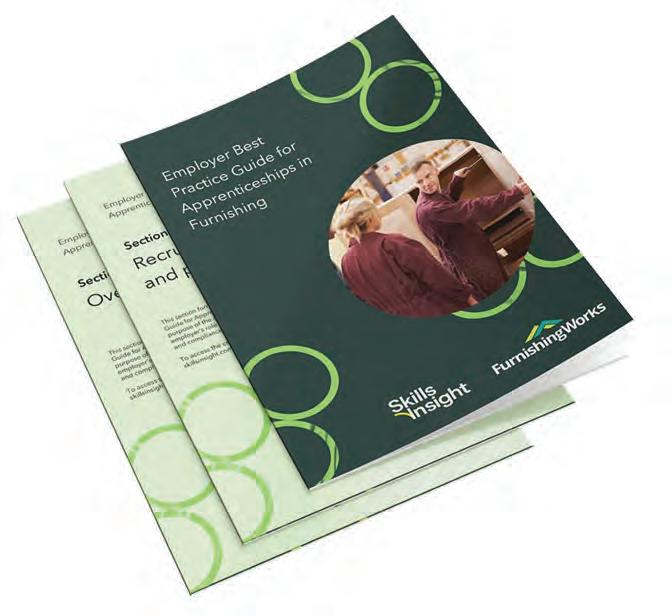
contracts and quick reference information to support best practice implementation.
The guide contains sections on recruitment, induction and probation which provides practical guidance on recruiting apprentices and setting them up for success; supervision, mentoring and support which focuses on effective communication to improve apprentice wellbeing, capability and retention; becoming an employer of choice which explains how employers can create positive, compliant and sustainable workplaces that attract and retain apprentices; plus a resources section that provides tools, templates,
“ACFA was proud to contribute to the development of this guide to ensure it reflects the real-world needs of furnishing businesses and apprentices. We believe practical support tools like this are essential in helping employers create positive apprenticeship experiences and improve completion outcomes across the industry,” says Kristy Archibald, ACFA training manager.
The guide has now been approved by the Department of Employment and Workplace Relations and is available online for download. Employers can download the full guide or can access specific sections as needed. ■

Skills Insight skillsinsight.com.au/project/ furnishing-apprenticeship-guidance
Get your skills recognised with RPL qualifications through NSW funding
Have years of experience in the industry, but no formal qualification to show for it?
Could a formal qualification improve how you quote, lead projects or train others?
RPL Qualification
Need a qualification to take the next step in your career or apply for a licence?
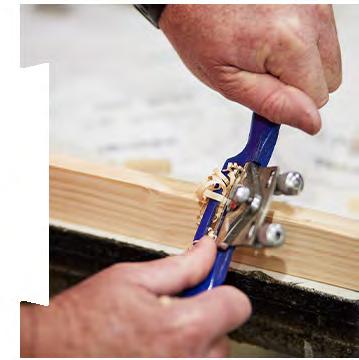

Looking to strengthen your workforce with qualified and confident tradespeople?
- Fully Funded through the NSW Trade Pathways for Experienced Workers Program
Have you been working in the cabinet making, furniture, or timber industry for years, but don’t hold a formal qualification? You’re not alone—and more importantly, you don’t have to start over.
ACFA is offering a fully subsidised RPL qualification (Recognised Prior Learning) in MSF30322 Certificate III in Cabinet Making and Timber Technology under the NSW Subsidised Trade Pathways for Experienced Workers Program (TPEW).
The Trade Pathways for Experienced Workers (TPEW) Program, funded by the NSW Government recognises the skills and experience of trade workers through recognition of prior learning (RPL) and gap training.
Achieve your qualification by demonstrating your existing skills and experience. Submit evidence such as photos and videos, projects, and plans through our online platform, supported by your resume and work history. Complete a short technical interview with an assessor to finalise the RPL. This is a self-paced program, completed in your own time with assessor support, as long as all requirements are finalised by 31st May 2027.
Receive a nationally recognised qualification in cabinet making by demonstrating your experience and skills
EXPRESSIONS OF INTEREST
MSF30322 Certificate III in Cabinet Making and Timber Technology
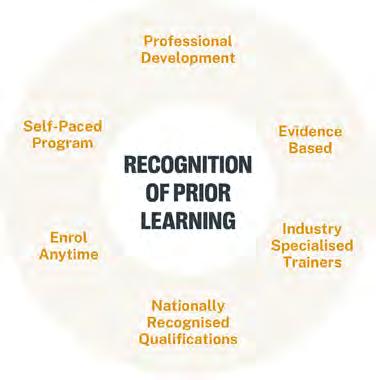

Expressions of interest to apply for this funding are open until 31st July 2026. Once your details have been checked for eligibility, one of the ACFA Team will be in contact with information on the next stage of the application.
*This training is fee-free and fully subsidised by the NSW Government ” Eligibility Criteria Apply.
Train Future Cabinet Makers with ACFA’s SBAT Programs
A Pathway to MSF30322 Certificate III in Cabinet Making and Timber Technology
SCHOOL-BASED CABINET MAKING TRAINING
through NSW Government
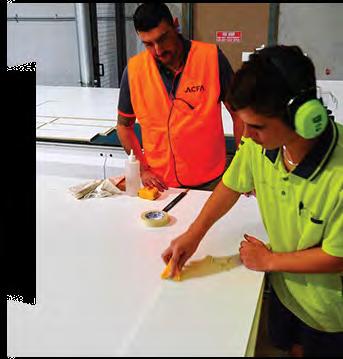

Build your business’ long-term productivity while nurturing the next generation of our industry -with training costs subsidised. A School-Based Apprentice is a paid, part-time role with set work times in your factory. They build skills and experience and you help develop the next generation and a staff member who understands your operations, culture, and safety standards.
Students in Years 10 -12 undertake this program alongside their regular schooling, building essential, hands-on skills in cabinet making. Upon completion, they receive a Statement of Attainment, with a clear pathway into a full-time apprenticeship - equivalent to Stage 1 of a full-time apprenticeship — with a clear pathway into second-year full-time training.
By employing an apprentice through the SBAT programs, you gain a motivated team member who combines paid part-time work with formal study towards a nationally recognised qualification, all whilst in school.
In NSW, the School Based Apprenticeships & Traineeships (SBAT) program is subsidised by the NSW Government’s Smart and Skilled program.
ACFA’s team of Trainers and Assessors both train and mentor these students as part of our Workplace-Based Training Model. Our “We come to you” model means one-on-one guidance and support to give everyone the best outcome.


One-on-one, hands-on training provided by our Industry Specialised Trainers

TRAINING AT YOUR FACTORY ONEON-ONE TRAINING NATIONALLY RECOGNISED QUALIFICATIONS INDUSTRY SPECIALISED TRAINERS
*ACFA does not guarantee employment on completion of training
This Nationally Recognised Training is subsidised by the NSW Government’s Smart and Skilled program. Eligibility Criteria Apply
Developing Effective Supervisors
The missing link in many workshops
By Dean Brakell
In many cabinet making and joinery businesses, supervisors are promoted for the right reasons. They are usually excellent tradespeople. They understand the machinery, the materials, and how work flows through the factory. They are reliable and respected by their fellow workers. But being a great tradesperson does not automatically make someone a great supervisor.
Across the furniture, cabinet making and joinery industry, one of the most common challenges we hear from business owners is that supervisors are expected to manage people, performance, safety and production — often without any formal training in how to do it.
For many workshops, supervision is learned by experience or observation. In other words, supervisors manage the way they were managed when they were apprentices (or learning via osmosis). Sometimes that works well. Other times it creates frustration, miscommunication and unnecessary pressure for both the supervisor and the team.
Why supervision matters
A supervisor plays a critical role in the day-to -day performance of a workshop. They sit between management and the production floor. They translate business goals into daily work, coordinate staff, and ensure jobs are completed safely, on time and to the required quality.
When supervision is strong, the benefits are clear: better communication with staff, higher productivity, improved workplace culture, stronger support for apprentices and fewer safety incidents.
When supervision is weak, miscommunication leads to mistakes, small problems become bigger issues and productivity suffers.

Key skills of an effective supervisor
Communication: Clear instructions and listening to staff are essential to avoid mistakes and delays.
Respect and Fairness: Supervisors must treat all team members consistently and respectfully.
Supporting Apprentices: Good supervisors mentor younger workers and help develop the next generation of tradespeople.
Observation and Problem Solving: Effective supervisors identify issues early before they impact production or safety.
Time and Workflow Management: Planning work, allocating tasks and keeping jobs moving through the workshop.
Leadership: Supervisors set the tone of the workplace through their behaviour and example.
A gap in industry training
Despite the importance of supervision, there has traditionally been very little structured supervisory training available specifically for the cabinet making, furniture and joinery sectors.
Most supervisors have learned their skills through trial and error.
Recognising this gap, ACFA has developed a supervisory skills course designed specifically for our industry. The course focuses on practical skills supervisors need in a workshop environment including communication, managing people, supporting apprentices, planning workflow and creating productive workplaces.
Supporting the industry
Strong supervision benefits everyone. For business owners it improves productivity and reduces costly mistakes. For supervisors it reduces stress and provides leadership skills. For employees it creates a safer and more supportive workplace.
Developing supervisory capability is one of the most important steps that our industry can take to strengthen businesses and improve workshop performance. ■

Australian Cabinet and Furniture Association Ltd (ACFA)
Connect The Magazine
Connect magazine will be published quarterly and distributed free to subscribers involved in the cabinet making, kitchen, design, furnishing and joinery industries. Every issue of Connect magazine brings you the most relevant and impactful stories from each sector of our industry. Our content is curated to keep you informed and be inspired. Summer Edition — Industry Awards & Design; Autumn Edition — Machinery & Safety; Winter Edition — Business Insights, the Economy and Finance; Spring Edition — Design Trends & Sustainability.
ACFA The Association
ACFA is a not-for-profit industry association with members situated all around Australia. ACFA, incorporated since June 1948, has a proud history of representing the needs of businesses in the sector. ACFA, formerly named the Furnishing Industry Association of Australia (FIAA), and the Cabinet Makers and Designers Association (CMDA) merged in 2018 and ACFA was born. In 2025 ACFA merged with the Kitchen & Bathroom Designers Institute (KBDi) and in 2026 with the Australian Woodworking Industry Suppliers Association (AWISA) to now represent businesses across all three sectors of the industry — design, machinery and manufacture — from concept to completion.
ACFA’s goal is to assist members in trade and commerce and to deliver high-quality education, training, information and resources to those who
are involved in the cabinet making, joinery, interior design and renovating industries.
Membership can be located at our website: acfa.net.au/membership/
ACFA The Registered Training Organisation (RTO) RTO National Code: 90432
ACFA has been a Registered Training Organisation for more than 25 years. In that time, ACFA has served the needs of the furnishing, cabinet making and kitchen sector with structured, flexible, accredited, and nationally recognised trade training. ACFA exists purely for the industry — the organisation speaks as a united voice to the community, consumers and all levels of Government to ensure the best interests of the industry.
ACFA offers both accredited and non-accredited training and more information can be found at: acfa.net.au/training/
Distribution
Connect magazine is distributed free of charge to ACFA and KBDi members, subscribers, ACFA database, and client databases of major suppliers and partners of ACFA. To be added to the distribution list, please visit the Connect magazine website: connectmagazine.com.au





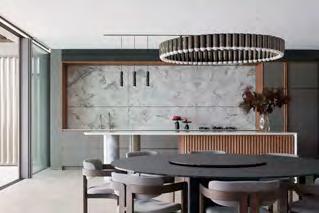
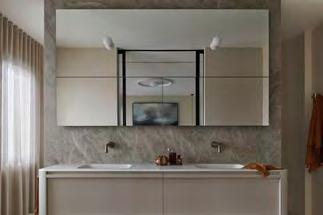
Recognising Craftsmanship, Design & Innovation
The ACFA Industry Awards celebrate the outstanding craftsmanship, innovation, and leadership across Australia’s cabinetmaking, furniture, and design industries. Whether you’re an emerging talent or an established professional, the Awards provide the perfect platform to showcase your work, gain industry-wide recognition, and elevate your brand.
Don’t miss the opportunity to boost your profile, attract new clients, and inspire your team by being recognised among the best in the industry.

4 Major Categories

fb | ig hettichaustralia website designwithhettich.au