BBG’s top five goals for 2026 03 A community service: Therapeutic Phlebotomy

BBG’s top five goals for 2026 03 A community service: Therapeutic Phlebotomy






Accountability:
Stewardship: Serve others selflessly and responsibly
Pioneer: Create and deliver innovative products and services
Integrity: Build trust and unity by doing the right thing
Respect: Treat all with dignity and kindness
Excellence: Surpass team, customer, and community expectations Our Vision Statement To be a global leader in human cellular services
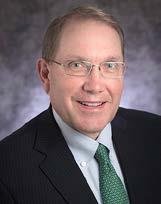

Marty Landon Chief Executive Officer
As I sat down to write this note, I took a moment to think about who and where we are as a group going into 2026, and I came up with this: We are an 800-person, nonprofit, innovative healthcare services enterprise enabling/supporting approved cancer cures and saving thousands of lives per year through best-in-class blood, tissue and laboratory services. Pretty cool – right?
Whether you are that kid in school who answered the question “What do you want to be when you grow up?” with “I want to cure cancer,” or “I want to save lives” or “I want to change the world,” you definitely are having the chance to live out your dreams here. Thanks for all you do to support our organization and fulfill and grow our lifesaving mission!
Last year was an exciting yet challenging climb. We launched BBG Advanced Therapies, rolled out the world’s first Mobile Leukapheresis Center, signed our first two biomanufacturing agreements for commercially approved products; expanded and/or opened microbiology testing labs in both San Antonio and Atlanta; developed and launched several new assays for our testing and advanced therapies customers; rolled out a novel media supplement (RUO Releasate) through a collaboration of BBG’s Center for Innovation and Biodesign and the Components Lab team at South Texas Blood & Tissue.
At the same time, we faced numerous headwinds this past year, particularly in source plasma testing and customer funding in cell and gene therapy, which resulted in overall
financial results that were below our early expectations - although we once again increased our overall annual product and service revenue to all-time highs. So, what can we expect in 2026?
As this truly is a Mission Possible, we should expect more growth in 2026! This is reflected in our top 5 organizational goals, which for 2026 are as follows:
Increase blood collections to meet the needs of our growing community by collecting 132,000 RBCs in 2026 (+5%) and adding at least 400 new donors from South Texas and/or the Rio Grande Valley.
As noted in prior years, this perennial goal is part of our legacy, and because blood is perishable, we must continue to replenish our blood supply on a regular and recurring basis.
We also want to expand our lifesaving mission further
This edition of Heart to Heart is the first produced under its new editor, Amanda Lozano. Amanda, who is the organization’s Multimedia Communication Specialist, coordinated November’s Innovation and Resilience edition as her capstone project in the Aspiring Leaders program. With this edition, which kicks off the second decade of your quarterly employee magazine, she now is in charge of everything from planning to execution, as well as writing, editing and photography.
Amanda has been with us since August 2023 and is a familiar face around the organization thanks to her writing and photography on the BBG Employee of the Month stories, Pillars employee profiles, news releases and content for previous magazines.
She also works closely with class groups and interns from local universities on special communication projects.
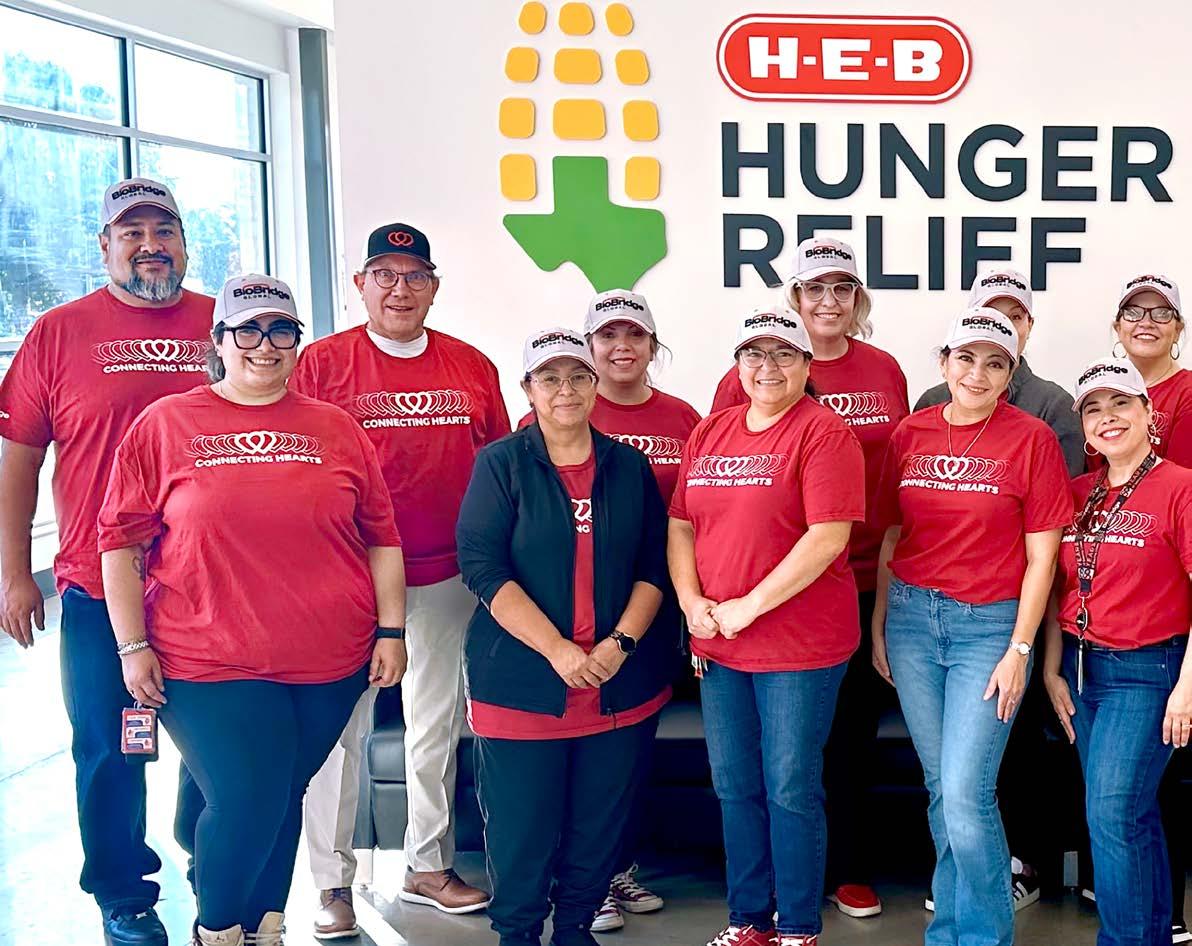




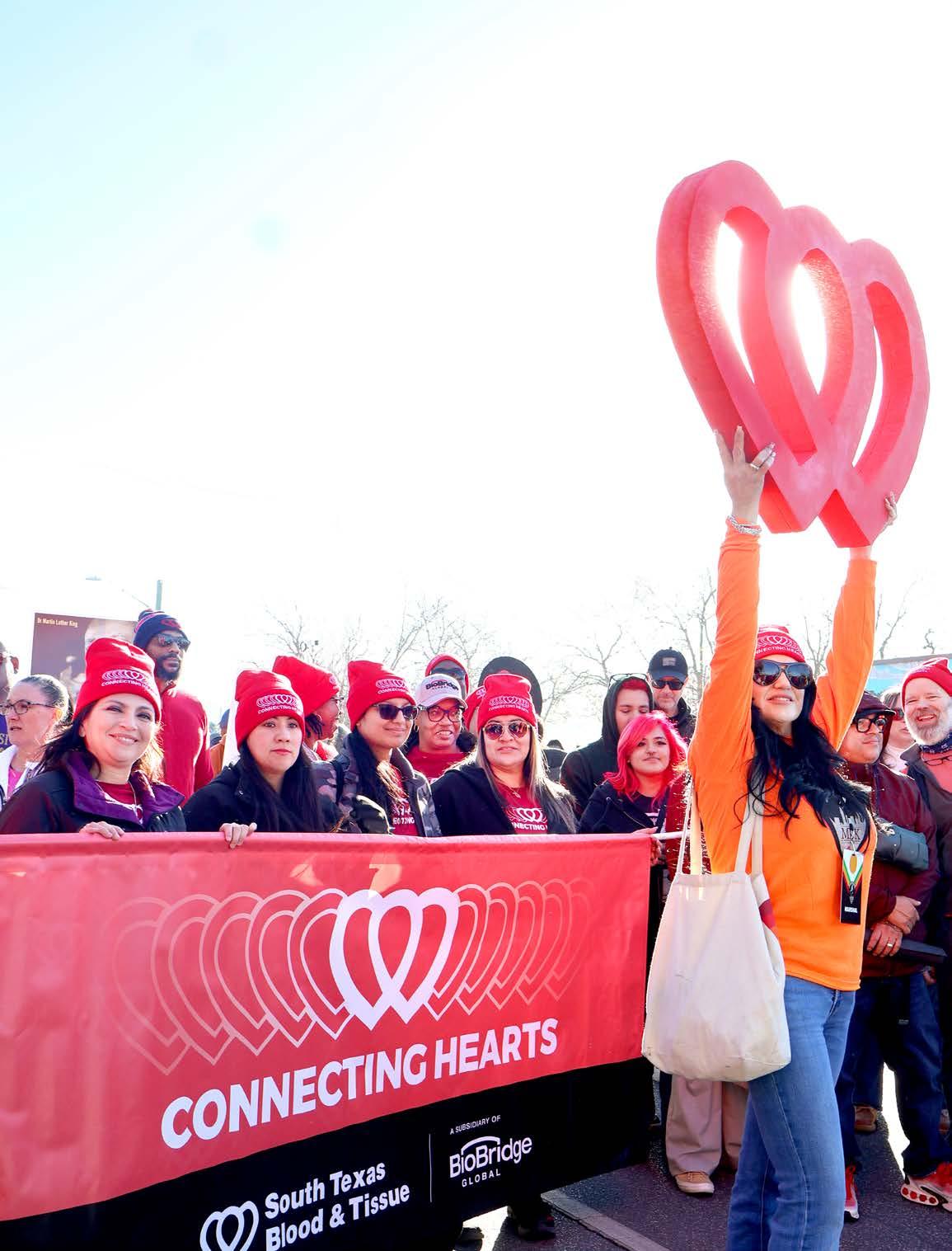
ong before Connecting Hearts had a name, logo, or committee, it existed through the quiet dedication of people who understood that saving lives goes beyond science.
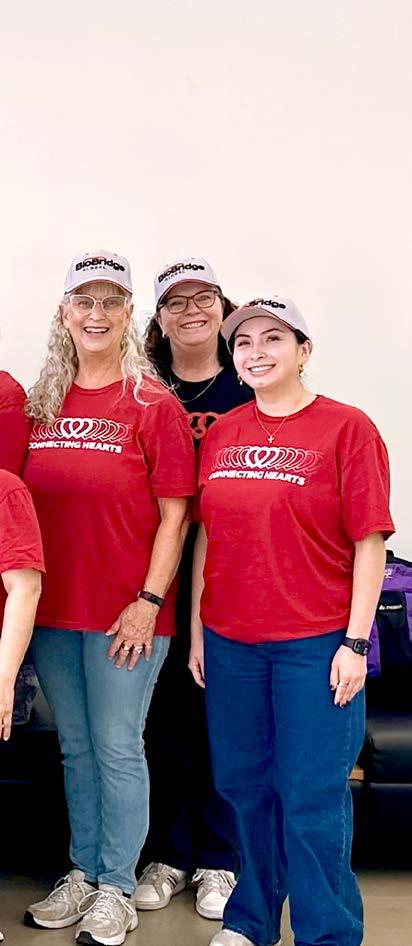
It lived in the belief that service is not an initiative, but a way of showing up for one another.
Today, Connecting Hearts has grown into a vibrant, employee-led program that continues to engage BioBridge Global employees in meaningful, hands-on service across our community.
The story begins with Susan Smith, who joined BioBridge Global in 2008 to rebuild the organization’s external volunteer program. Her role involved
welcoming students, technical school participants, and community members who wanted to support BioBridge Global’s mission on campus.
Susan understood that volunteering is both hopeful
respect, and community.”
Her vision shaped a 2019 Aspiring Leaders project that created an internal employee volunteer program called Helping Hands.
Momentum was building until the COVID-19 pandemic halted in-person efforts. Even then, the spirit behind the program never faded.
and humbling — and that it was something employees needed to experience firsthand.
“It’s about walking the walk,” she said. “Not just talking about culture, but building one based on love,
In 2022, Helping Hands was revived through the combined passion of Susan, Jay Podjenski, Executive Director, The Blood & Tissue Center Foundation, Donor Marketing & Public Affairs, and Emmanuel Casasola, Vice President of Laboratory Operations for QualTex.
For Emmanuel, service had always been personal. Through LeadershipSA, he had gained deeper awareness of issues facing San Antonio, including mental health, homelessness, and access to health care.
“I wanted to be part of the ecosystem making a local impact,” he said. “That’s what I’ve tried to model through Connecting Hearts.”
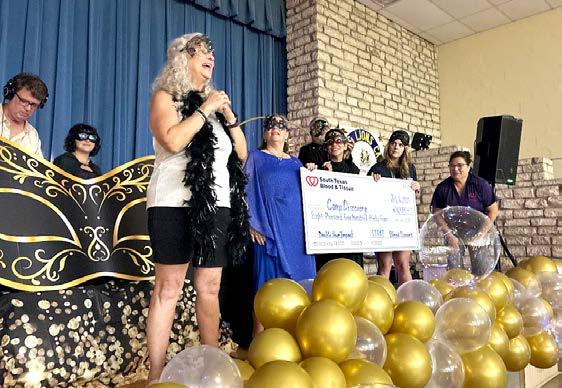
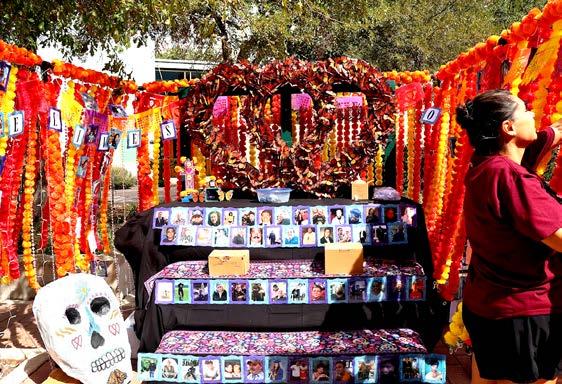
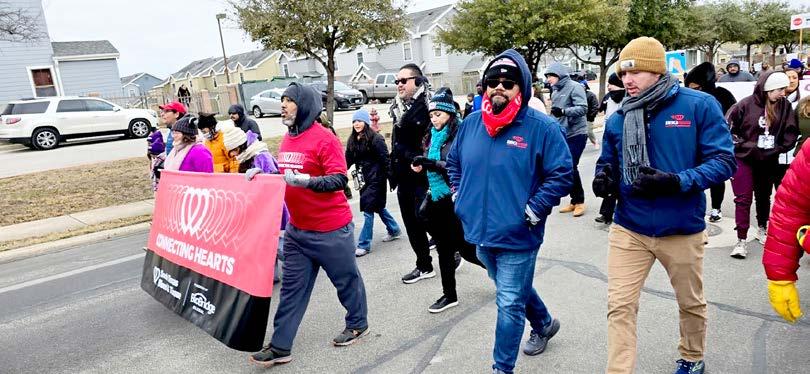
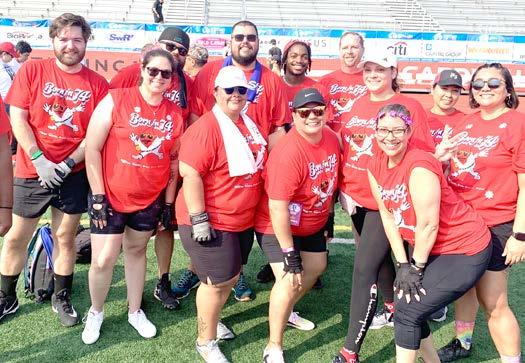
Over the next two years, the program quietly took shape through consistent participation in events like the Martin Luther King Jr. Day March, Muertos Fest, Basura Bash, Camp Discovery, Corporate Cup,
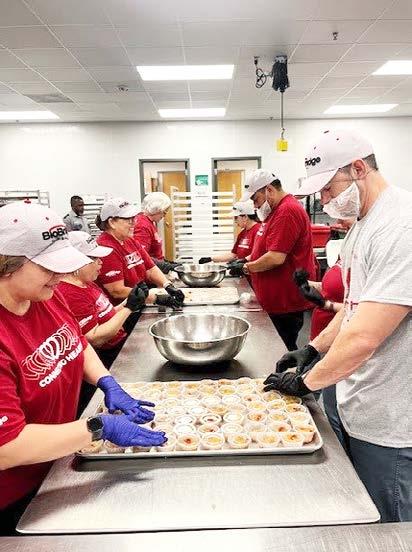
and volunteer days at the San Antonio Food Bank. These efforts were never about visibility — they were about listening, learning, and showing up.
In late 2024, Connecting Hearts reached a major milestone by becoming an officially employee-led committee. This shift empowered
“We don’t just save lives from a distance,” she said. “We get our hands dirty and connect with the communities we serve.”
“The organization always had people with servant hearts,” Emmanuel said. “I was just able to connect them.”
As the program evolved, so did its name. Helping Hands became Connecting Hearts, reflecting something deeper: employees, leadership, families, and communities coming together — many hearts, united in service.
employees across departments and business units, ensuring the program would continue to grow organically.
The committee met employees where they were, offering both offsite volunteer opportunities and in-house drives. Familyfriendly events allowed children to participate, passing empathy and service to the next generation.
Angelica Sandoval, chair of the Connecting Hearts committee, sees the program as a natural extension of BioBridge Global’s mission.
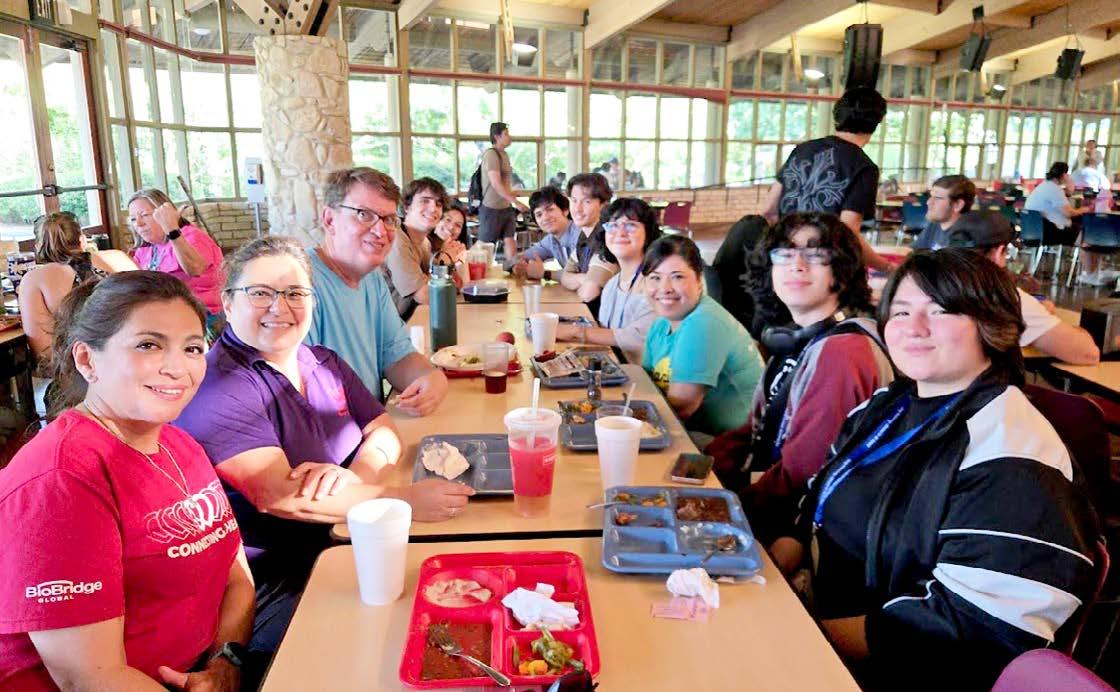
For Angelica, the impact lives in the memories — laughing together in hair nets at the food bank, reflecting during community marches, and watching children light up at Camp Discovery.
“You don’t just remember the task,” she said. “You remember who stood beside you.”
Emmanuel sees it too. “That endorphin rush is real,” he said. “You can see it on people’s faces when we finish.”
From the start, Connecting Hearts was strengthened by leaders who didn’t just approve the work — they
joined it. Senior leaders volunteered alongside employees, serving meals, marching, and listening.
When CEO Martin Landon volunteered at the San Antonio Food Bank, it reinforced what Connecting Hearts represents: service is not a program, but a shared value. That value was further affirmed
with the introduction of eight hours of paid volunteer time off for employees participating in Connecting Hearts events.
Susan said the decision sent a powerful message. “When leadership says, ‘Yes, we’ll pay you for that time,’ it shows they value the person, not just the work.”
The policy removed barriers and validated what many employees already felt — that giving back should feel like an extension of who we are.
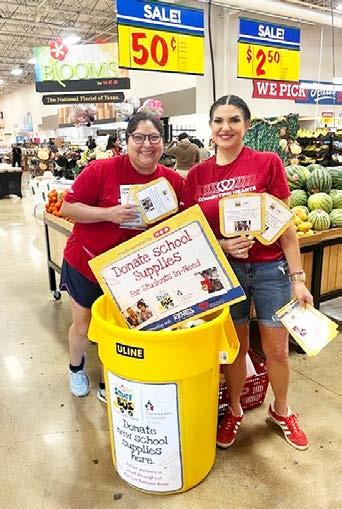
In 2025 alone, 120 employees volunteered through Connecting Hearts, supporting nine community organizations, including the San Antonio Food Bank and SA Hope Center. Volunteers collected 1,200 hygiene items and helped prepare more than 21,000 meals.
As Connecting Hearts looks toward 2026, the vision is clear: deepen partnerships, expand focus areas such as mental health, veterans support, and homelessness, and continue nurturing a culture where service feels natural and supported. In a world where traditional giving is often limited, Connecting Hearts reminds us that presence matters. Time matters. Heart matters. n
With paid volunteer time now in place, the committee hopes to expand its reach even further.
Continued from page 3
into South Texas and the Rio Grande Valley (RGV). This area contains a donor population potentially rich in type-O donors, which is important given the high demand we continue to experience for type-O blood. We will increase the number of mobile blood drives that we do in the RGV during 2026 while also exploring the opportunity to add a fixed donor collection site in a strategic location.
Demonstrate the value of recent investments in microbiology testing and biomanufacturing by generating microbiology testing revenue of $6.9 million and biomanufacturing revenue of $10 million - and retain at least 98% of 2025 (existing) customer accounts to help us generate total product and services income (revenue) of more than $230 million in FY2026.
In 2024 and 2025, we remodeled and expanded our Microbiology Laboratory in San Antonio and built out a new Microbiology Laboratory in our Atlanta facility. We spent the time necessary to improve our processes such that we now consistently produce high-quality results at “best-in-class” turnaround times, and we improved/expanded our service offerings to meet market needs.
With additional sales resources and focus, we anticipate notable growth in our microbiology testing volumes during 2026. At the same time, with our two commercial biomanufacturing accounts signed and onboarded, we expect a significant increase in biomanufacturing revenue within our BBG Advanced Therapies segment.
These two growth areas, combined with account growth in our existing customer base, will provide a significant lift to our overall enterprise revenue over the coming year. Maintaining satisfied customers - ensuring customer success - will be key to our efforts here.

Execute our annual operating plan, while demonstrating good stewardship, by meeting or exceeding the 2026 budgeted net operating surplus of $4.6 million, with a net operating margin of at least 2%AND ensure long-term sustainability by achieving a net contributed surplus in BBG Advanced Therapies in Q4 2026.

Our mission is critical to the life and health of others in this community and beyond. We are innovators by nature and legacy. We have big plans to fulfill and expand our mission. Flawless execution is a key ingredient to our success.
If we execute well and stay true to our core values of ASPIRE, then we should continue to fulfill and expand our mission while producing a small surplus to help fund initiatives like our employee health clinic; new collection, testing and production facilities; flat employee healthcare premiums; etc.
The 2026 net operating surplus goal is a bit lower than 2025, reflective of the impact of pricing pressure we have experienced in QualTex during the past year.
Maintain an annualized voluntary turnover rate below 14% and improve net overall culture survey scores compared to October 2025.
Our growth, innovations, process and service improvements, have been happening because we have great people. We want to keep this great team in place going forward.
So we’ll continue to work on creating a great working
environment and culture, where employees can feel valued and excited about fulfilling BBG’s mission, and maintaining fair compensation, attractive benefit programs and career progression opportunities so we can continue to attract and retain talent . . . and of course, growth leads to more opportunities for all of us. When we inevitably do lose someone to retirement, etc,, our goal is to ensure we have the talent depth necessary to fill gaps from within.
Continue to expand our lifesaving mission through product and service innovations by commercializing at least one of the following by year-end 2026: Releasate, Premiva and/or Amnion Patch.
Over the past few years, we’ve been working with

our customers to help them resolve challenges in their businesses. As a result of this work, our teams have come up with novel and innovative solutions - first for our customers, but then leading to additional work/experiments that create potential solutions to unasked questions. These innovations are sometimes so novel that they warrant patent protection, and in 2026, we expect to receive word of another “first of firsts” – our first issued patent as an enterprise!

1. Collect 132,000 RBCs and add 400 new donors
2. Generate $6.9M microbiology and $10M biomanufacturing revenue; exceed $230M
3. Achieve $4.6M net surplus with 2% margin
4. Keep voluntary turnover below 14% and improve culture scores
5. Commercialize at least one advanced therapy product
We use our cross-functional new product commercialization process to help identify which opportunities are significant enough to pursue, and for 2026 we have at least three good candidates for commercialization: RUO Releasate, a media supplement made from human platelets not needed for transfusion; Premiva, a microfluidics, predictive testing platform that may serve as the next great new approach methodology desired by the FDA; and our own Amnion Patch, utilizing novel supercritical CO2 sterilization to maintain the key biological properties that make the tissue advantageous for clinical applications.
In 2025, we worked hard to improve customer relationships, improve our operating processes, and set the stage for our next phase of growth which should begin to manifest itself this year. Our team is competent and ready, the mission possible, and the need never ending – let’s go make 2026 another year to be proud of!
Best regards,
Marty
It all began over a cup of coffee.
A medical revolution that would change trauma care in South Texas began with something just that simple.
Back in 2017, at a trauma conference in Norway, military surgeon Dr. Donald Jenkins happened to strike up a conversation with the then-South Texas Blood & Tissue COO Elizabeth Waltman.
He told her he’d seen first-hand on the battlefield how giving whole blood to severely injured soldiers saved lives. He also admitted that bringing that lifesaving practice into civilian EMS seemed nearly impossible. Too many moving parts. Too many unknowns. Not enough donors.
Elizabeth listened, thought for a moment, and said something that would change the trajectory of emergency care across the country:
“I might be able to help you with that.”
From that moment, the low-titer O whole blood program — a civilian first in the United States —was set into motion.
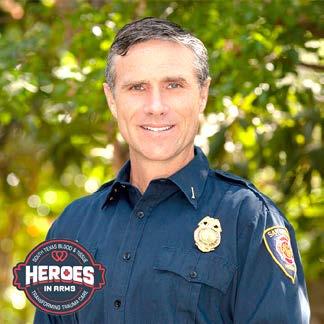
But if you ask Lt. Bill Bullock of the San Antonio Fire Department and South Texas Blood & Tissue educational specialist for the system, the story that includes the Heroes in Arms donor program isn’t about the logistics, blood bags, coolers or protocols.
“It’s a story about relationships,” he says. “Every part of this program exists because people trusted each other enough to say ‘yes.’”
THE ‘YES’ THAT STARTED IT ALL
That first “yes” grew to many, many more.
Elizabeth brought the idea to hematologist and STB&T Medical Director Dr. Samantha Gomez Ngamsuntikul, affectionately referred to in the Heroes in Arms world as “Dr. G.”
The program would require new blood processing protocols, new workflows and new risks. It was going to be a lot of extra work for everybody involved.
She didn’t hesitate.
“Dr. G literally changed the face of EMS in this country,” Bill says. “Her willingness to say ‘yes,’ when ‘no’ would have been so much easier, is why Heroes in Arms exists.”
Then came more relationships: the previous Director of Product Management and Customer Relations, John Barry, and his successor, Belinda Flores. EMS leadership. Surgeons at University Hospital. Administrators. Telemarketers. Lab technicians. San Antonio city councilmembers. Paramedics. Trauma nurses.
It was a lot of connections to make, a lot of relationships to maintain, but in the end, it paid off.
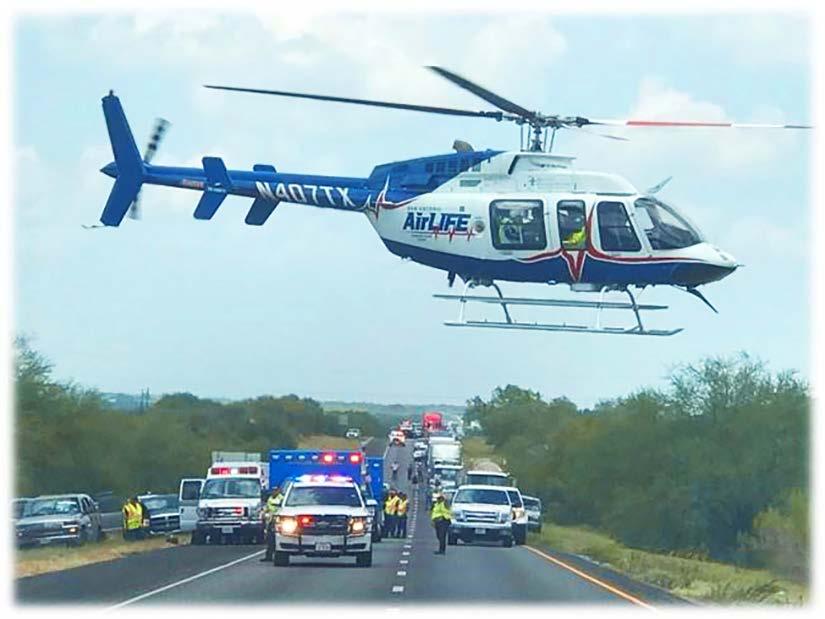
Eventually, nearly every EMS agency across a wide arc of South Texas — from Fredericksburg to Del Rio, from Austin down to the border, signed on.
Every new connection created momentum, every partnership made the program stronger.
“The bottom line,” Bill says, “is that you have to get all the stakeholders together. We break bread. We have monthly meetings. We eat lunch. We talk about what’s working and what isn’t. That’s where the magic is.”
For a program built on relationships, transparency is
literally its lifeblood.
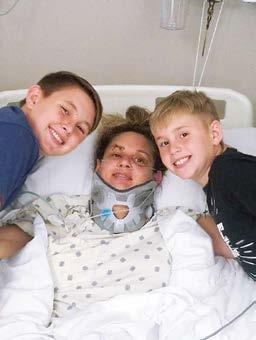
Tiffany Keischnick was saved by HIA.
Every day, the blood supply for Heroes in Arms is posted on a shared GroupMe channel. EMS crews, physicians, and BioBridge Global staff all can see how much is available.
If supplies dip, the message goes out: We need donors. Our community needs you.
“You show us your shelves, we show you ours,” Bill explains. “That trust is everything.”
And above all, donors are at the heart of it.
“There is no synthetic blood. None,” Bill emphasizes. “We have to rely on one another. Donors are the foundation. Without them, this doesn’t exist.”
Bill handwrites notes to many of them: real letters on Heroes in Arms stationery, telling them exactly how their donation saved someone’s life: A mother in hemorrhagic shock after childbirth. A victim of a severe car crash. A child from the Uvalde Robb Elementary tragedy.
“These letters matter,” he says. “People want to know their blood stayed here, helping Texans. Helping their own community. And it does.”
The program’s waste rate is under 1% thanks to a rotation system that ensures that virtually every drop is used either in the field or at University Hospital’s trauma center.
“In San Antonio, when you donate, it will save someone,” Bill says simply.
Relationships don’t just keep
Heroes in Arms going, they keep it growing.
Bill presents about Heroes in Arms everywhere: UTSA, SAC, high schools, paramedic courses, nursing programs, military medical units, EMS and blood conferences. He meets donors faceto-face at community events. He shares real-life rescue stories with colleagues and community partners.
“The human element is what keeps it going,” he says. “Someone rides with me on my EMS truck, sees how the blood is stored, how it’s used, how fast it can make a difference — and they become believers. Then they go tell someone else.”
That word-of-mouth spark has now ignited across the country. Cities like Austin, Lubbock, Houston, New Orleans - and most of Floridahave built their own programs after learning directly from San Antonio’s model.
“It’s a legacy,” Bill says. “And it started right here.”
The purpose behind Heroes in Arms remains profoundly simple: someone is dying, and the community steps in to save them.
“It’s color-blind, apolitical, socioeconomic-agnostic,” Bill says. “When someone is in need, nothing gets in the way of helping them.”
Today the program is closing in on a major milestone: 40,000 units of whole blood donated.
Bill pauses, his voice getting emotional.
“I’m honestly speechless,” he says “The generosity of our donors, it’s overwhelming. And we’re just getting started.”
For him, relationships are the real lifeblood of Heroes in Arms — relationships built on trust, service, compassion and the shared belief that every life in this community is worth saving.
“It almost sells itself,” he says, “because at its heart, it’s a story about people choosing to show up.” n
y the time a partnership reaches its third decade, it’s no longer transactional: It is built on trust, shared purpose and a willingness to grow together.
For BioBridge Global, our collaboration with Abbott Laboratories — a partnership that began in the late 1980s - has quietly helped shape diagnostic technologies used far beyond our region.
“South Texas Blood & Tissue converted to assays from Abbott in 1987,” said Starr Bailey, Senior Strategic Account Manager at Abbott, who has supported QualTex Laboratories since 2016. “That kind of longevity is rare in this industry.”
Dr. Scott Jones, Chief Scientific Officer at BioBridge Global, joined the organization in 1999. By then, Abbott already was firmly embedded in laboratory operations.
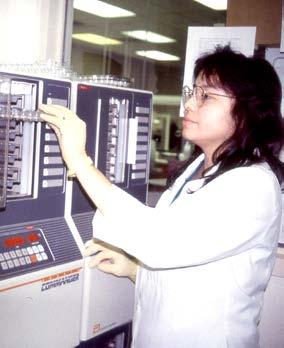
“At that time, we were primarily using Abbott for serological testing,
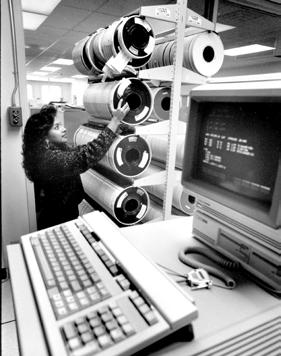
screening blood donations for infectious diseases,” Jones recalled. “The technology was far less automated than what we have today. It was very hands-on and laborintensive, and required deep technical understanding.”
But he would play a much bigger part in solidifying the bond.
As testing volumes grew and BioBridge Global expanded into source plasma testing in the late 1990s, the organization’s reliance on Abbott technology deepened — and so did the relationship.
“In 1997, you all started running plasma,” Bailey noted. “That’s when PRISM (testing platform) really entered the picture, and from there, things continued to grow.”
What ultimately sets the relationship apart is not instrumentation but talks.
“Abbott began asking us questions,” Jones said. “They wanted to know what worked, what didn’t, and what
we needed from the technology.”
That curiosity marked a shift from vendor and customer to collaborators working toward shared goals.
As Abbott began developing nextgeneration diagnostic platforms, BioBridge Global was invited into the design process. Engineers, researchers and user-interface teams observed how instruments function in real-world, high-volume laboratory environments.
“They would sit with our staff, watch them run tests, and ask for feedback,” Jones said. “Even details like reagent packaging, screen symbols and accessibility: those conversations mattered.”
Bailey confirmed that BioBridge Global’s input directly influenced Abbott’s innovations, particularly during the transition from PRISM to the Alinity family of analyzers.
“With the development of Alinity S, we relied heavily on feedback from Dr. Jones and his team,” she said. “A lot of what you see on Alinity today came from those conversations. What made life easier in the lab, what reduced rework, and what improved consistency.
“It’s not just something that goes into the recycle bin. We truly listen.”
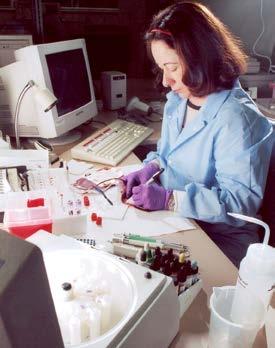
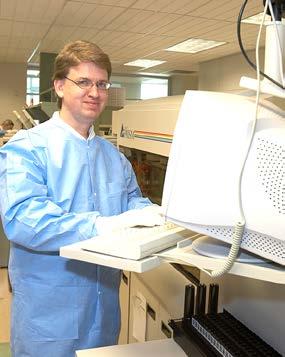
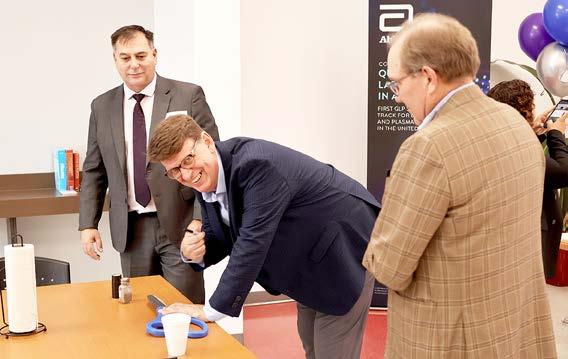
That trust opened doors few customers ever see.
Jones and other BioBridge Global leaders have been invited to Abbott Park, the company’s headquarters and research campus in Illinois, where they were given early looks at technologies still in development.
“They didn’t just show us finished products,” Jones said. “They showed us what was coming. We brainstormed. We asked questions. We tested demo systems.”
On another visit, Jones toured Abbott’s Dallas-area manufacturing facility, where diagnostic instruments were assembled by hand under meticulous protocols.
“It was like watching something custom-built,” he said. “Seeing that level of craftsmanship gave you a different appreciation for the technology.”
He’s traveled to Abbott facilities many times during his career, Jones laughs.
For Bailey, the visits reflect Abbott’s commitment to transparency and
partnership at every level.
“There’s open communication between our laboratory teams, our R&D departments, and even senior leadership,” she said. “That’s what keeps the relationship moving forward.”
Perhaps the most powerful illustration of that trust came when Abbott invited Jones to speak directly to their global research and development teams.
What he expected to be a small presentation turned into a live, international broadcast, much to Jones’ dismay. (He’s a shy fella, camera shy.)
“I walked into a studio with cameras, lights, and a live audience,” Jones recalled. “The presentation was streamed to teams in Chicago, Dublin, and Germany.”
From Dallas, Jones fielded questions from engineers and scientists around the world, offering a front-line perspective on automation, workflow and laboratory realities.
He laughs when he thinks about the experience. He may have been camera-shy but in the long term, his expertise helped progress science across the globe.
“That experience really underscored how much Abbott values real-world input,” he said. “They wanted to hear directly from the people using the systems every day.”
Innovation through trust
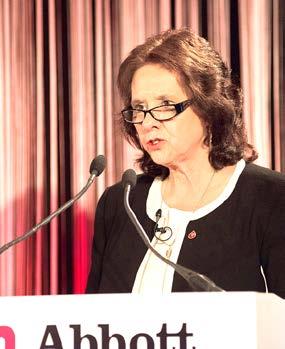
continues to serve as a key clinical partner for Abbott, supporting clinical trials and generating data required for FDA approval of new diagnostic assays.
The work involves rigorous protocols, regulatory oversight, and audits — evidence of the confidence Abbott places in BioBridge Global’s scientific integrity.
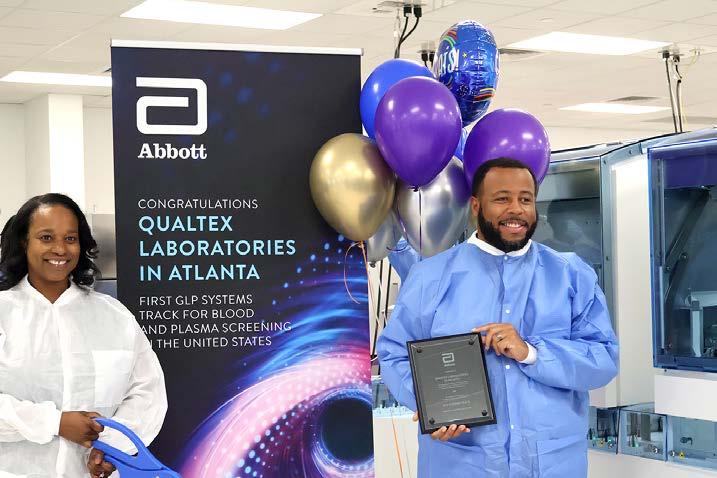
The partnership also has driven major operational advancements, including the implementation of large-scale automation systems such as the Accelerator A3600 and the next-generation GLP systems track.
“These solutions weren’t off-theshelf,” Bailey said. “They were built in collaboration with QualTex leadership to reduce human error, improve turnaround time and streamline workflow.”
For Jones, the success of the relationship comes down to mutual respect.
“Their innovation helps us do our work better,” he said. “And our experience helps them build better tools.”
Nearly four decades after the relationship began, Abbott continues to seek our organization’s insight as new technologies emerge. Visits still happen. Feedback still matters. Conversations continue.
“They listen,” Jones said simply. “And they try to use what they hear.”
In an industry driven by precision, safety and trust, that willingness to listen has made all the difference.
For Abbott and BioBridge Global, the relationship is no longer just history, it is a shared future, built one conversation, one innovation, and one collaboration at a time. n
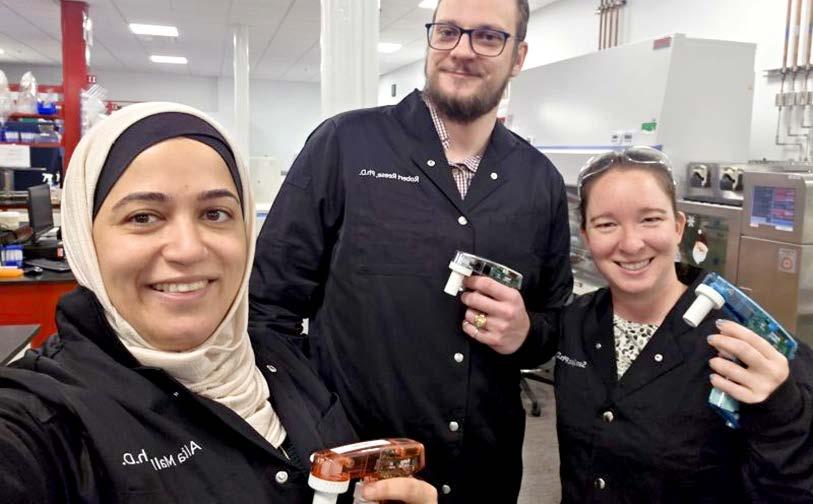
For Sami Dykes, the Senior Scientist of Process Development at BBG Advanced Therapies, the great culture downtown is built the same way science is:
Deliberately, collaboratively, and with care.
BBG Advanced Therapies operates with a startup mindset rooted in trust and communication.
That openness makes the environment welcoming for new hires, like Brooklyn Wilkinson, Digital Experience Specialist.
“People explain things in a way that includes you,” Brooklyn says. “You’re encouraged to learn - don’t feel intimidated.”
A sense of joy shows up most clearly in how employees celebrate one another. They’ll all sit together at lunch, laughing, sharing recipes and genuinely enjoying each other’s company. Their easy banter transcends the lunch table and helps keep the team engaged during long cleanroom runs.
“If we’re going to do work that matters this much, we should build a culture that matters just as much.”
One of the most visible expressions of that culture started as a joke. Years ago, a group of employees showed up wearing khakis and teased the one person who didn’t. The next day, everyone wore plaid. From there, an unofficial dress code was born. Khaki Monday, Plaid Tuesday, Pink Wednesday, Free Day Thursday, and Floral Friday.
“It’s a micro inside joke,” Sami says. “Only some people follow it, but it makes work fun. You spend more waking hours here than at home — you should enjoy being here.”
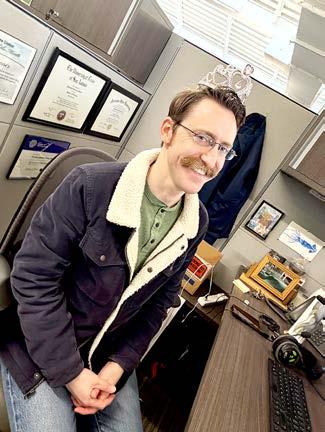
“Science never sleeps,” Sami says. “If your cells are ready on a Sunday, then you’re here on a Sunday. You can’t change biology’s schedule.”
That reality makes culture essential. When the work is demanding, the environment has to be supportive.
“The difference between science and magic is writing it down,” Sami says. “When something goes wrong, we document it, talk about it, and solve it together.”
She notes that even during quality investigations, the focus is collaboration, not blame.
“Science, like food, is better when it’s shared,” Sami said.
Transparency and open communication fuel a trusting culture and a passionate and collaborative team.
SO
The BBG Employee of the Month program is driven by peer nominations, and Sami is known for writing detailed, passionate submissions. Her care for her colleagues shows in her writing.
“You can’t just say someone is good,” she explains. “You have to say why. What they contributed, how they led, what changed because of them.”
Winners are celebrated with team gatherings, shared desserts, a dedicated parking spot and a tiara that’s passed from one honoree to the next.
“The tiara is a big deal,” Sami laughs. “It’s exciting when it shows up at your desk.”
Recognition isn’t just ceremonial, it’s instructional.
“Employees of the month become examples,” Sami explained. “They show younger employees what excellence looks like and how we want people to grow.”
The culture extends beyond
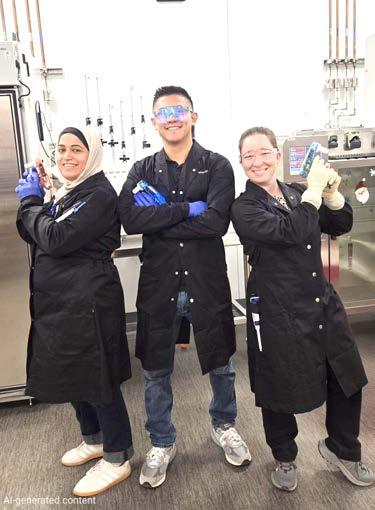
recognition into how teams work together.
For Sami, the laughter, traditions and transparency support the real work.
BBG Advanced Therapies often manufactures therapies that have never been made before, destined for clinical trials and patients.
“What gets me out of bed every morning is knowing we’re pushing medicine forward,” she says. “If we’re going to do work that matters this much, we should build a culture that matters just as much.” n
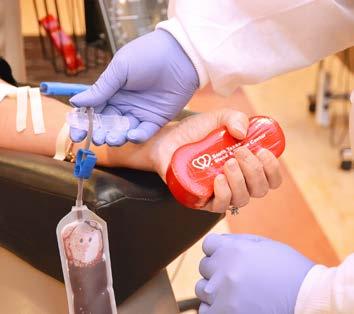

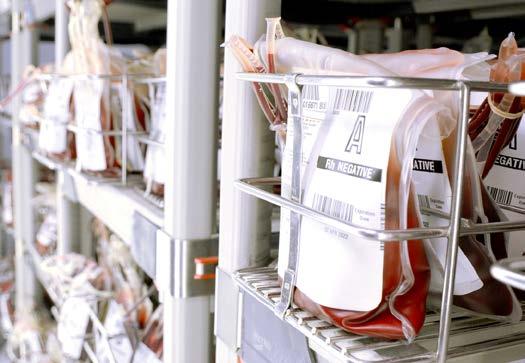
The blood that once had to be discarded is now going to hospital shelves.”
At South Texas Blood & Tissue, serving the community doesn’t always mean innovations.
Sometimes, it’s rethinking a long-standing practice to better serve patients, physicians and the community we call home.
One of the oldest medical treatments, therapeutic phlebotomy, is doing just that. (In olden days, leeches did the deed; it really is that old of a practice.)
Today, through a no-cost program from South Texas Blood & Tissue, this essential therapy is improving access to care for patients across San Antonio while also strengthening the region’s blood supply.
No leeches are involved.
It’s a good example of what happens when patient needs, regulatory collaboration and community responsibility come together.
Therapeutic phlebotomy is the removal of blood as part of medical treatment. It commonly is prescribed for patients with hereditary hemochromatosis, an inherited condition that causes excess iron to build up in the body.
It also is for individuals receiving testosterone therapy, which can increase hemoglobin and hematocrit, sometimes making blood dangerously thick.
Dr. Samantha Ngamsuntikul, Medical Director at South Texas Blood & Tissue, oversees the clinical aspects of the program and witnesses its
impact first-hand.
“When there is too much iron or when the blood becomes too thick, patients face serious risks,” she said. “Routine phlebotomy helps restore balance and protects them from complications like organ damage, blood clots, heart attacks and strokes.”
For many patients, this treatment isn’t a one-time event. It’s an ongoing part of managing chronic conditions.
Until recently, access to therapeutic phlebotomy came with an obstacle: money.
“Decades ago, there were valid concerns about donor screening and disclosure,” Dr. Ngamsuntikul explained. “To protect the blood supply, those units were discarded, and patients absorbed the cost of treatment.”
Their blood could not be added to the community supply because of regulations designed to protect patient safety and blood system integrity.
The result was a system that placed a financial burden on patients while wasting valuable blood — concerning in South Texas, which regularly faces blood shortages.
That changed when South Texas Blood & Tissue pursued and received a variance from the U.S. Food and Drug Administration.
“With the variance, we do not charge eligible or ineligible donors,” Dr. Ngamsuntikul said. “And for eligible donors, their blood can now help save lives.”
This shift removed a critical barrier for patients, transforming a clinical service
into a community benefit.
SOLIDIFYING THE BLOOD SUPPLY
The results were immediate.

type.
“The blood that once had to be discarded is now going to hospital shelves,” Dr. Ngamsuntikul said. “That’s a
secondary iron overload, and polycythemia related to testosterone therapy or other causes.
“Our goal is seamless care,” Dr. Ngamsuntikul said. “We want providers to know this service exists and that patients will be supported.”
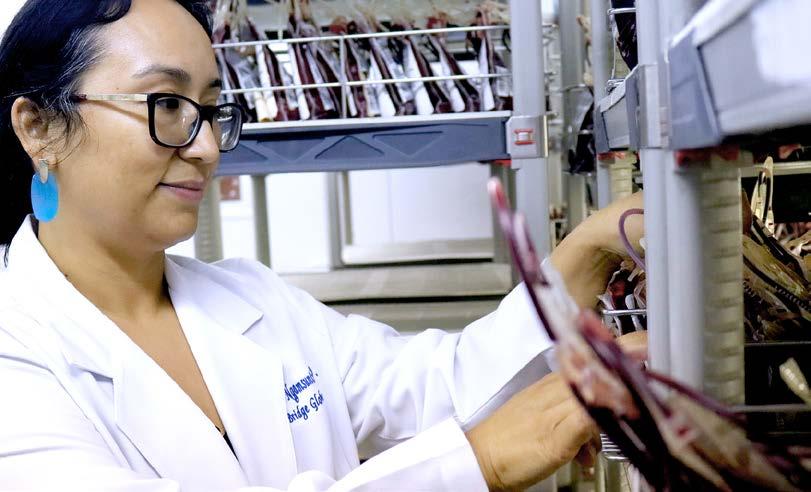
What began as a pilot program with about 20 patients in October 2024 officially launched in February 2025. Since then, the program has grown rapidly, enrolling more than 1,180 donors.
Of those, 927 are eligible allogenic donors, meaning their blood goes into the community inventory.
More than 2,370 red blood cell units have been added to the regional blood supply, with nearly half being type O, the most commonly needed blood
huge impact.”
At the heart of the program is collaboration with physicians, regulators, and patients.
South Texas Blood & Tissue is working closely with medical providers across Bexar County, offering streamlined referrals and scheduling for conditions such as hereditary hemochromatosis,
As awareness grows, so does the program’s ability to serve more people—and strengthen relationships throughout the healthcare community.
“This program helps patients and helps our community,” Dr. Ngamsuntikul said. “It’s an important service, and we want people to know it’s available.”
MISSION IN ACTION
BioBridge Global’s mission is to save and enhance lives through the healing power of cells and tissue. The therapeutic phlebotomy means access to safe, timely, cost-free care, and a stronger blood supply across South Texas.
Sometimes, the most meaningful progress comes not from reinventing medicine, but from reimagining how care, compassion and community can work together. n
Tilley Stone | Senior Instructional Designer
Your Human Resources Learning and Development Team is excited to announce the rollout of Absorb LMS, our new learning management system that replaces SuccessFactors LMS for employee learning and development.
Absorb LMS offers a modern, userfriendly platform with enhanced features that make training easier to access, track and complete.
While Absorb LMS serves as our primary system for organizational learning, SuccessFactors will continue as our
human resources information system, and MasterControl remains the designated learning management system for all quality-related training requirements.
Absorb LMS training videos are available on the L&D page on One BBG. This overview walks users through basic Absorb functions for individual contributors and supervisors, including enrolling in courses, tracking progress, setting learning goals, accessing transcripts, and earning badges and certificates of completion.
Please contact Tilley Stone or Madeline Moreno to learn more about how your team can leverage this technology to build training systems, onboarding curricula or professional development.
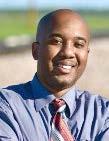
Mike Wilson | Compensation Analyst
The Career Progression Framework (CPF) is a simple roadmap that shows how you can grow in your job over time. It explains the education, skills and experience needed to move to the next level, helping remove the guesswork around promotions.
The CPF gives everyone — from entry level to senior staff — a clear picture of how today’s work connects to future opportunities. It also helps you track your progress and understand what steps can lead you toward the roles you want.
The CPF helps you identify what skills or experience you might need for the job you want next. It gives you confidence by showing clear expectations, so you’re not left wondering whether you’re doing enough or how long growth might take. It supports fair, consistent promotion decisions across all teams.
With your manager’s guidance and feedback, you can build a plan that fits your goals, adjust it when needed, and stay focused on what matters most for your development.
Career development tools like the CPF help the organization keep valuable knowledge and experience by supporting employee growth.

While the framework gives helpful guidance, it doesn’t guarantee a promotion — your progress depends on your goals and effort, with your manager’s support along the way. When employees and managers work together and stay aligned on expectations, career growth becomes clearer, fairer and more achievable for everyone.
SUBSIDIARIES:
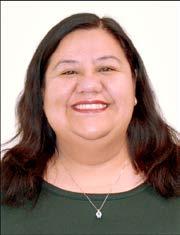
Melissa Villarreal | Senior Benefits Specialist
BioBridge Global (BBG) offers many unique benefits to our employees, including a Total Rewards Statement.
What is a Total Rewards Statement? It provides you with an overview of your compensation beyond your salary and provides information on the pay package provided to you on an annual basis, including:
Here’s how to connect with them:
• Direct compensation, which is all compensation (such as your base salary) and/or incentive pay that is paid directly to you.
• Indirect compensation, which is compensation you receive, calculated in addition to your base salary
and incentive pay, that is paid by BBG such as the employer-paid portions of your medical insurance, life and disability insurance, and 401(k) retirement matching and discretionary contributions.
Other non-monetary rewards:
• ASPIRE Award program
• RocketLawyer
• PerkSpot discount program
• Employee Assistance Program (EAP)
• Employee events
• BBG Employee Health Clinic
• AIMM, ScriptSourcing, Tria Health
• LifeMart Discount Program
You can locate your total rewards statement in ADP Workforce Now under Myself > Pay > Total Rewards. Total rewards statements are not available on the ADP mobile app.
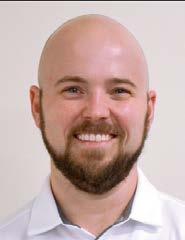
Jordan Hooten | Director, Human Resources Operations
Everything boils down to good, regular communication. This certainly transcends current circumstances and is always true, but it’s especially important following tumultuous periods.
In the absence of communication from leadership, employees will fill in the blanks on their own - and their input usually will be negative.
Leaders tend to think of transparency as all-or-nothing and worry about having to share every detail with employees. However, it’s much simpler. Transparency is about informing employees of matters that are important to their
SUBSIDIARIES:
jobs and to the organization as a whole in a timely manner.
Employees want their leadership team to communicate openly and honestly about:
• What’s going on with the organization now and in the near future
• Changing policies, procedures or expectations – and the “why” behind these decisions
• Organizational goals and purpose
• How their role supports the overall organization
This helps to provide a sense of stability and consistency, and it helps people to feel prepared for what’s coming. Furthermore, everyone wants to know whether and how they’re making a difference to remain engaged.
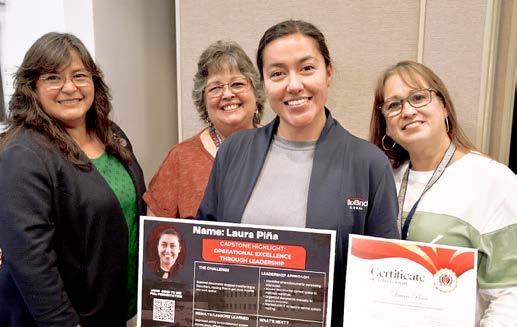
Laura Pina was one of the 2025 Aspiring Leaders graduates. Here she poses with her proud treammates
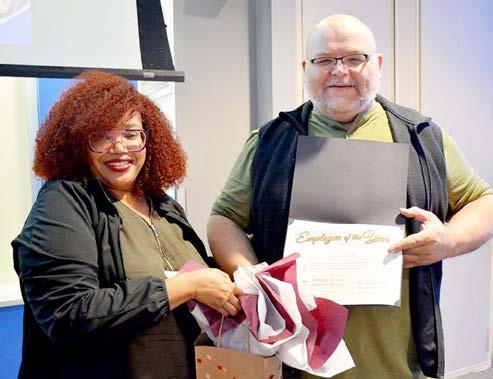
David Mills won employee of the year. Tareka Beasley presented him with the accolade at the BBG Holiday Party.
UPCOMING EVENTS
• Feb. 26: Food Truck Rally
• Feb. 12: Go West Breakfast, Donor Pavilion Auditorium
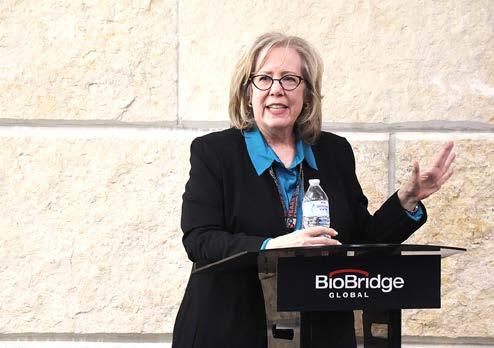
Mary Uhlig, Executive Director, Community Affairs, announced her retirement and spoke during a reception held for her in December.
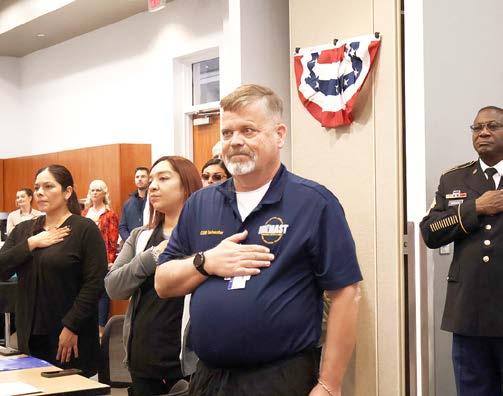
Dr. Bob Sylvester says the Pledge of Allegiance during the 2025 BBG Veterans Day commemoration.