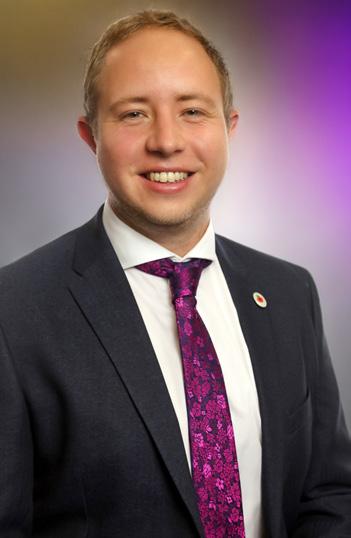
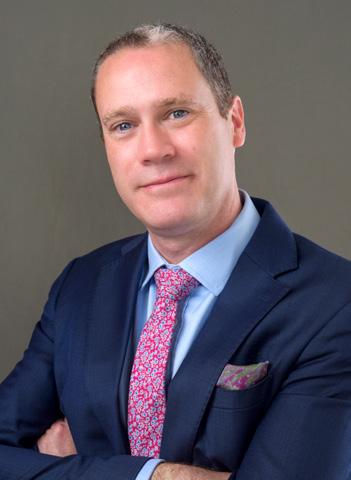
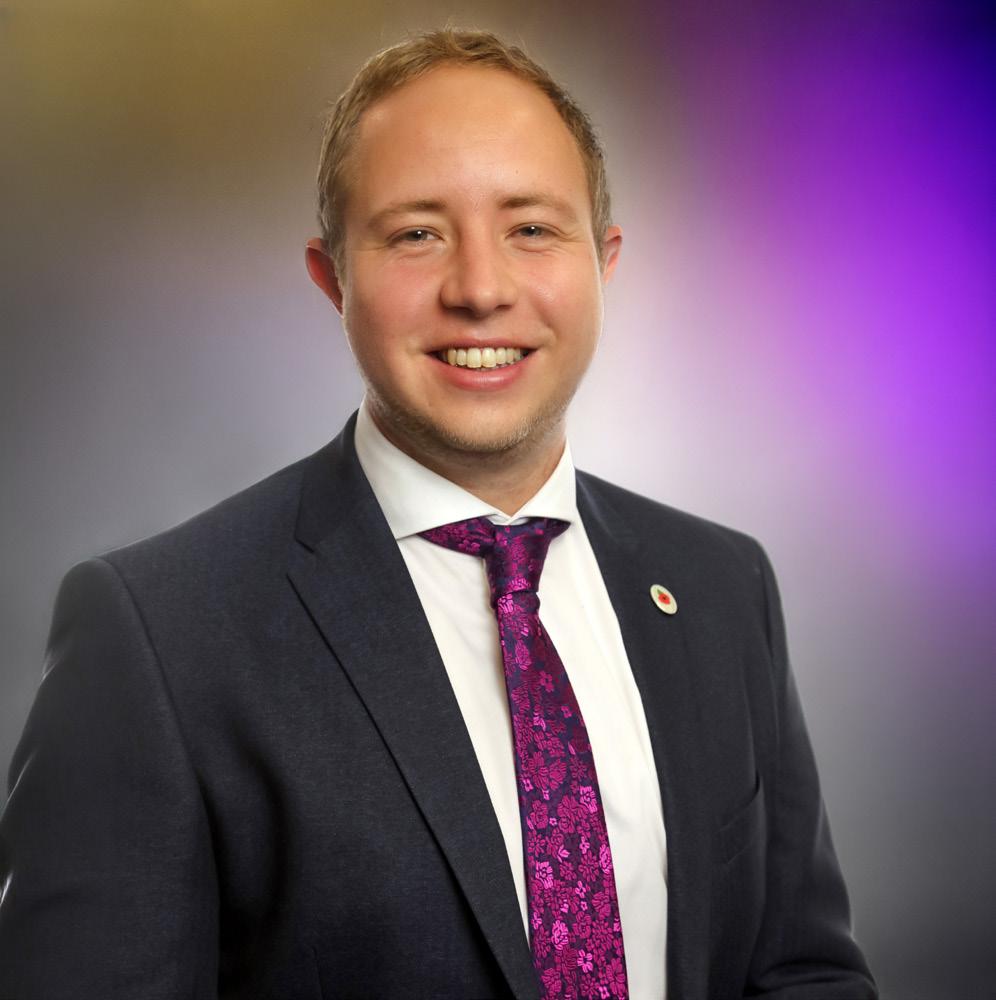
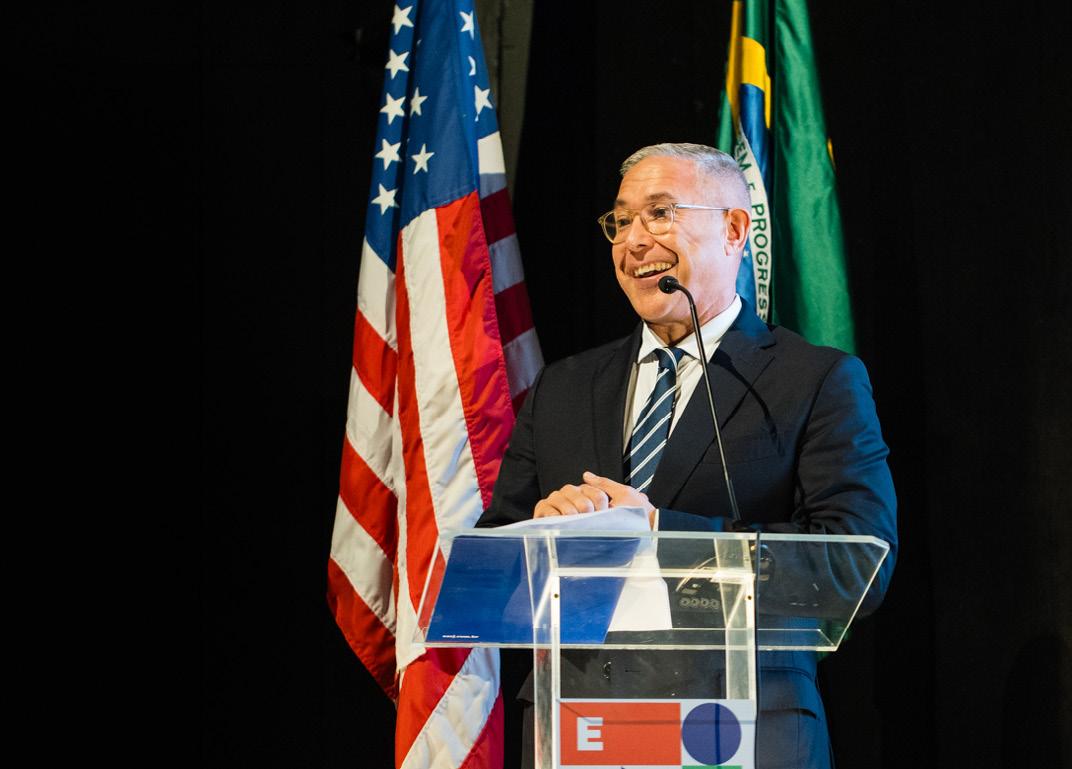
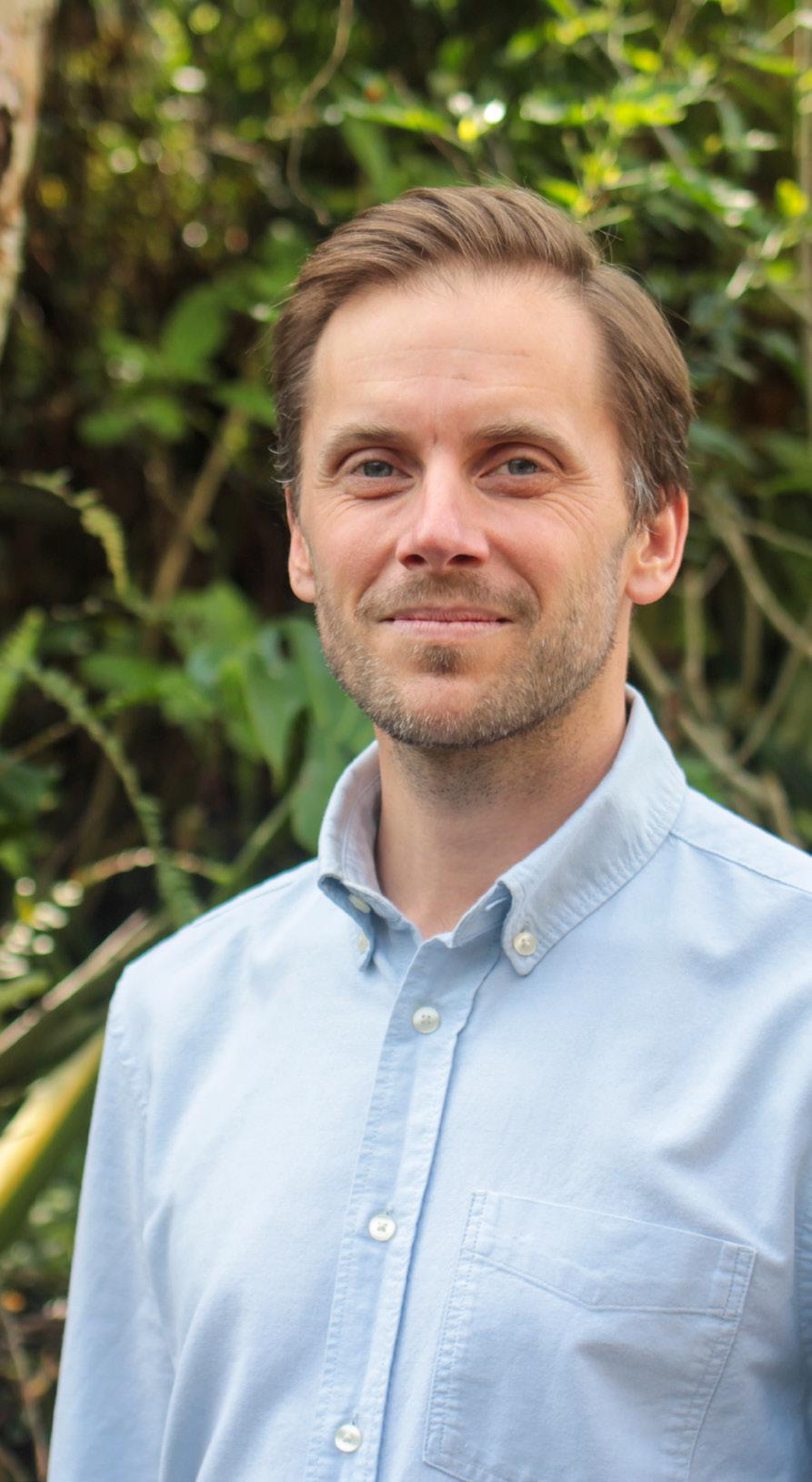
Adam Beeson Strategic Enrollment Director, New Summit Academy Costa Rica
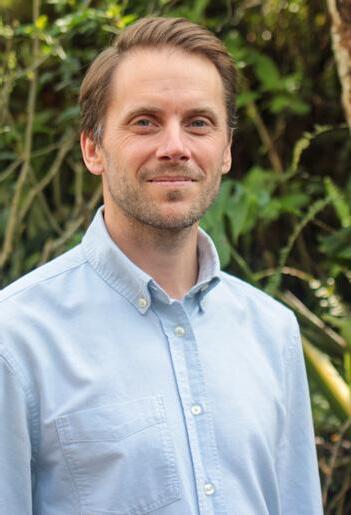
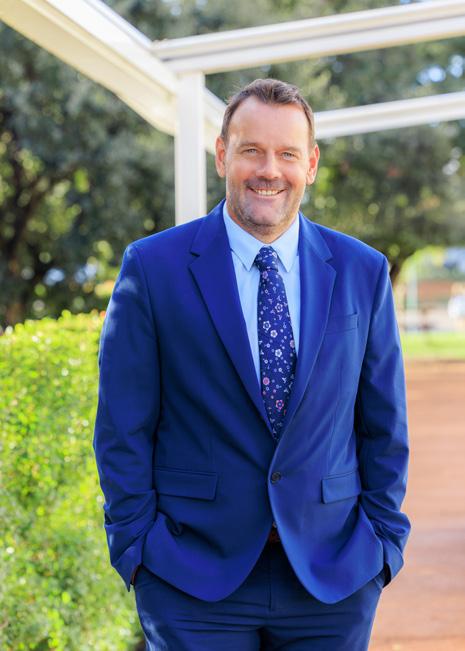
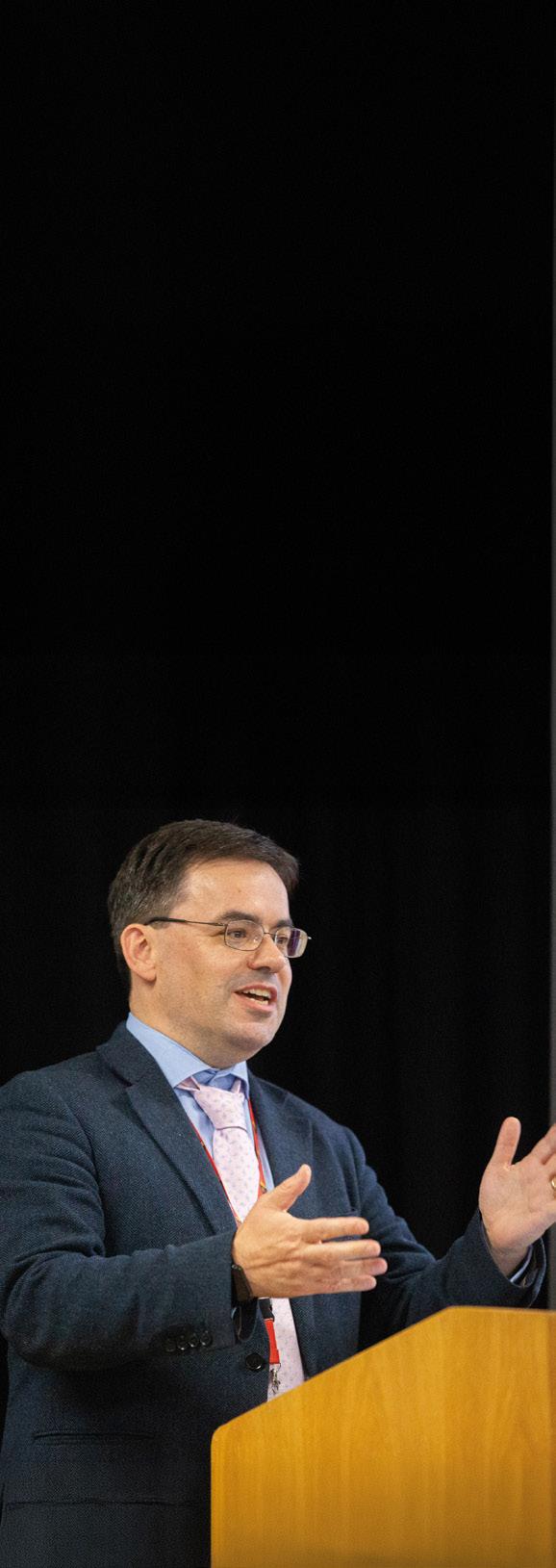
Ciaran CunninghamWatson Executive Principal, Invictus International School, Singapore
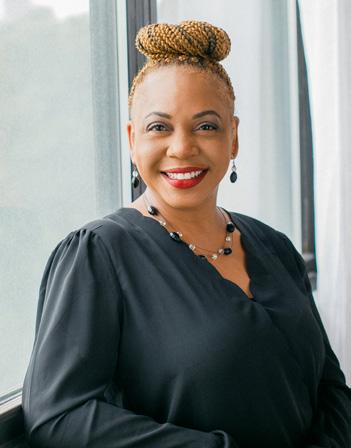
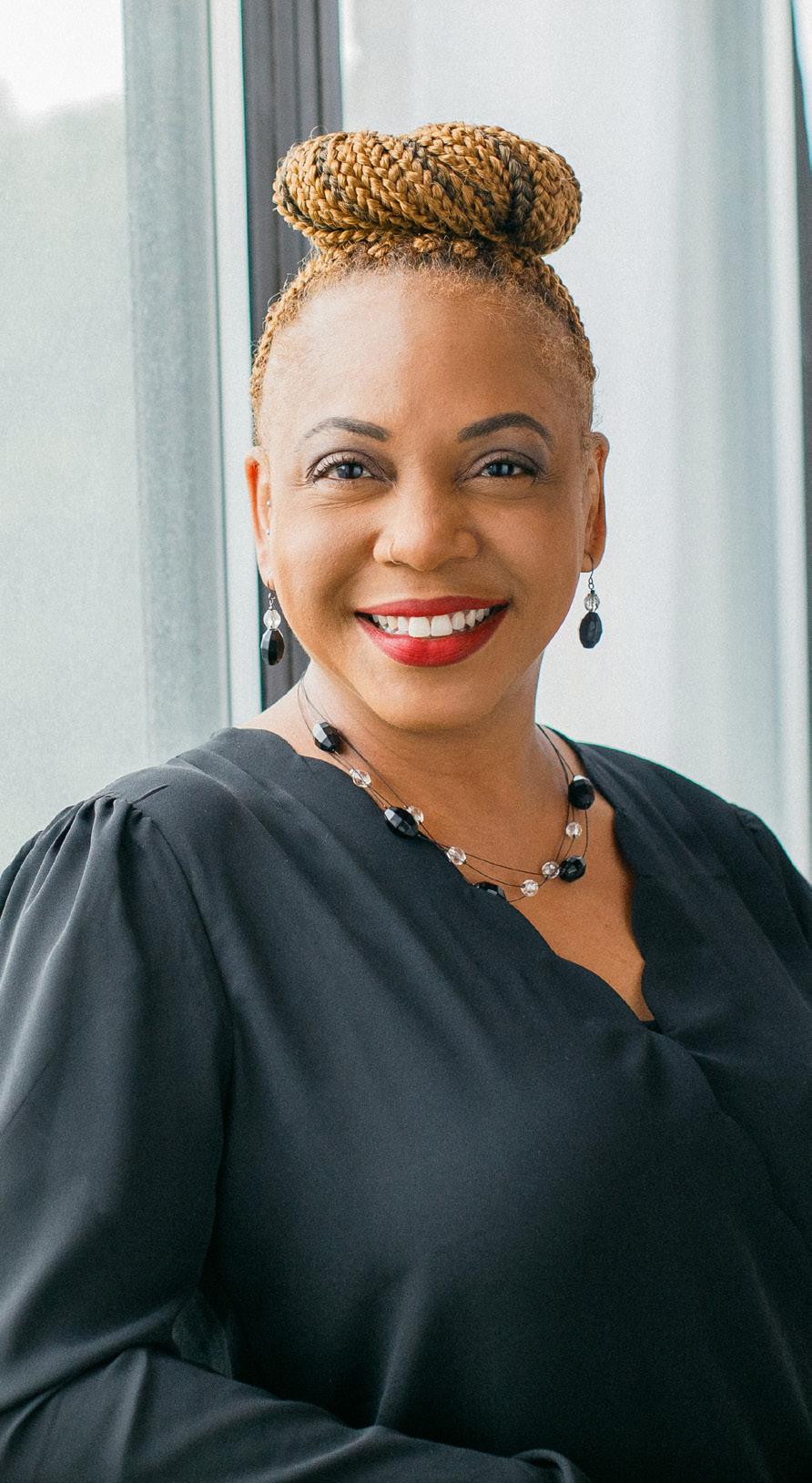
Dr. Kesha Carter Director of Culture, Belonging & Engagement, Gates Chili Central School District
FEATURING INSIDE
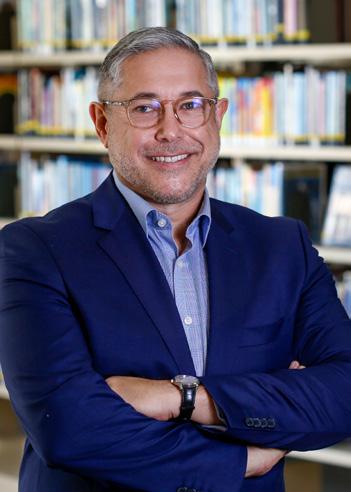
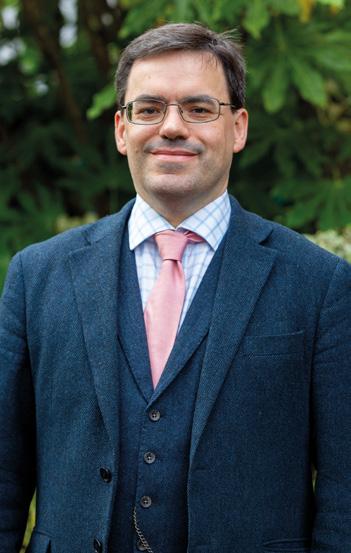
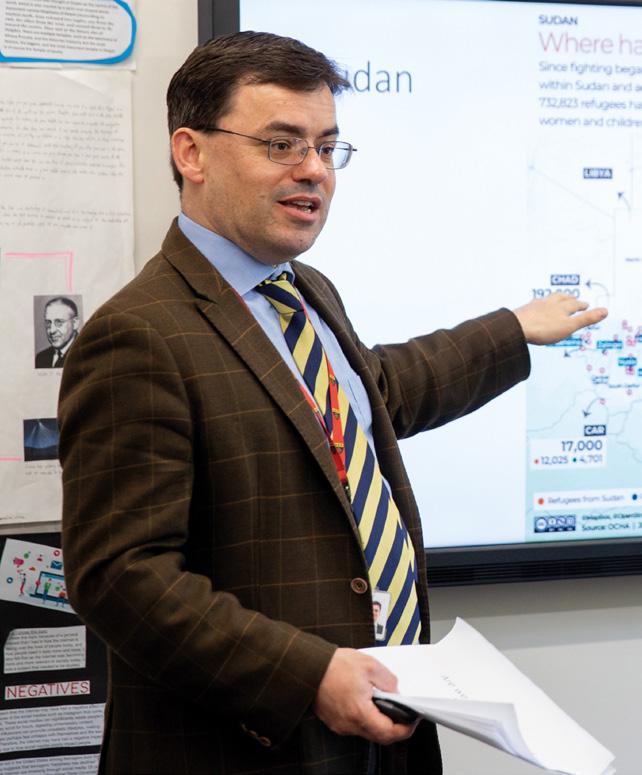
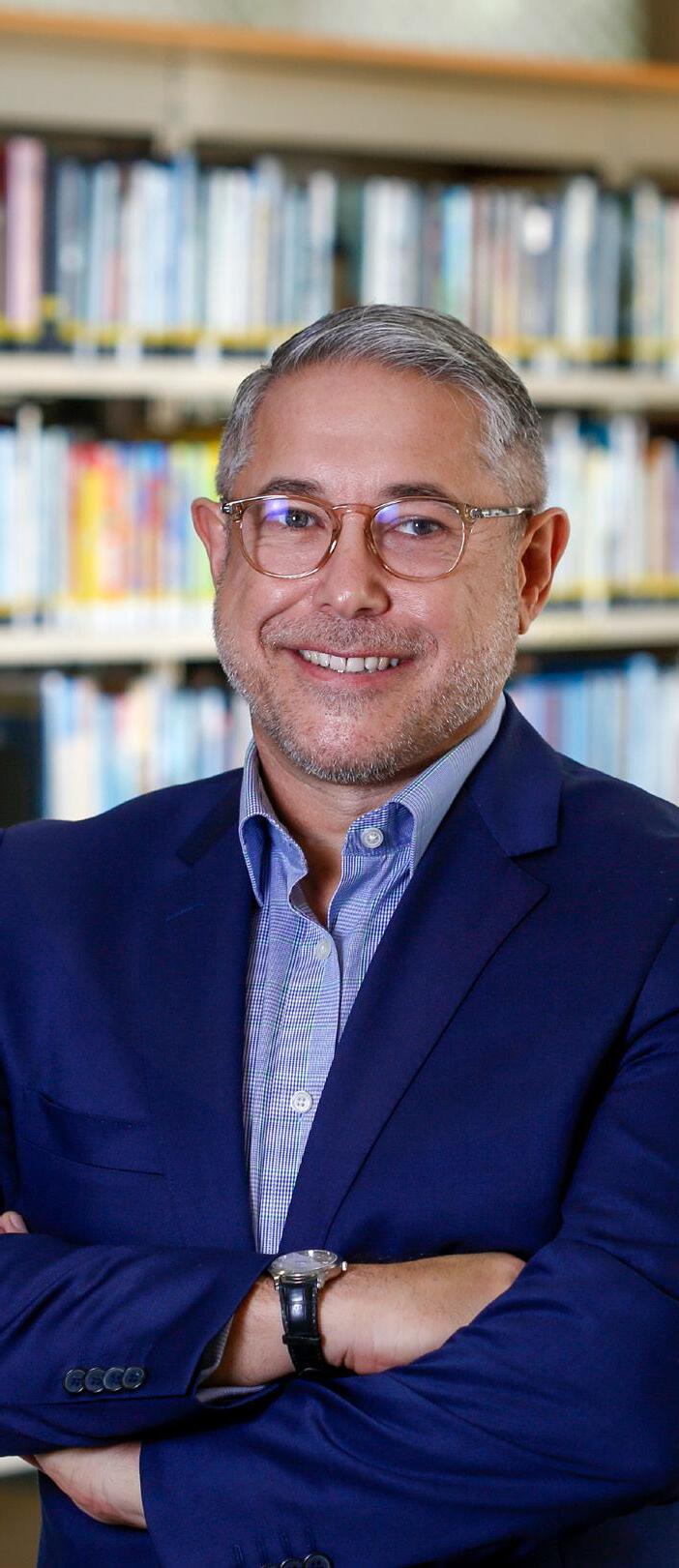
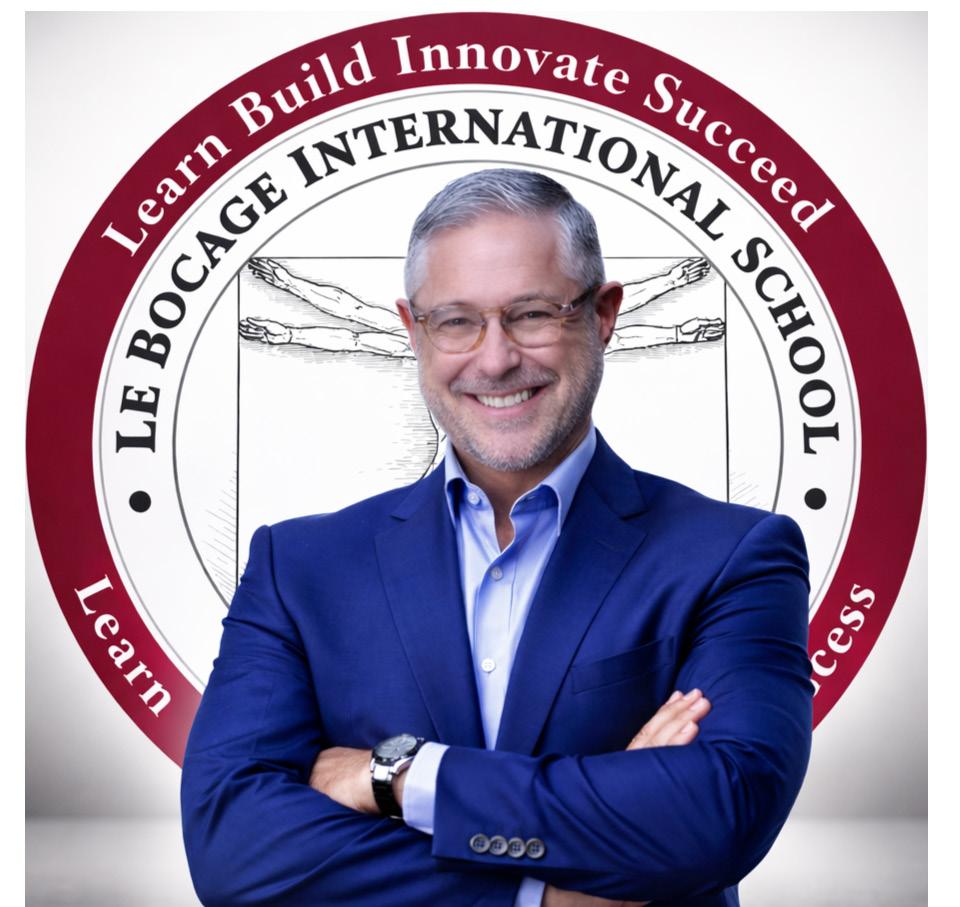
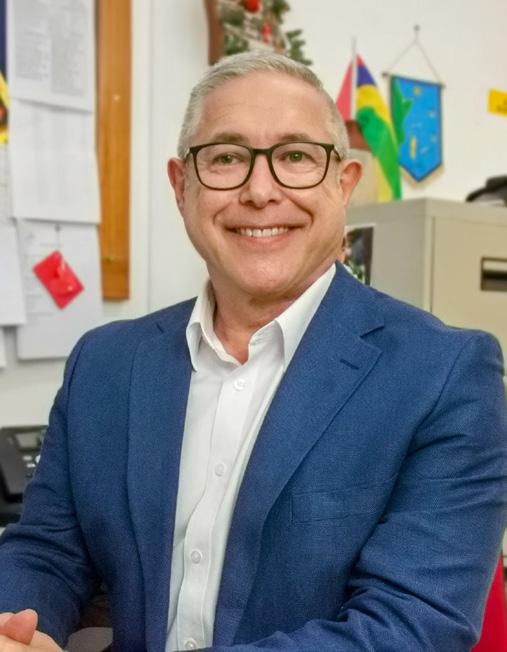
Dr. Nigel Winnard Head of School, Le Bocage International School
Luke Ramsden Senior Deputy Head, St Benedict’s School
Stephen Crinall Headteacher, Laleham CofE VA Primary School
Managing Editor
Sarath Shyam
Consultant Editors
Dr. John Andrews
Emma James
Andrew Scott
Naomi Wilson
Stanly Lui
Joseph Alex
Art & Design
Charlie Jameson
Sales & Marketing
Jennifer Anderson
Alice Smith
Monica Davis
Anna Elza
K12 Digest www.k12digest.com is a global knowledge sharing digital platform published by Connecta Innovation Private Limited. All rights reserved. The opinions expressed in the content and pictures provided are those of the authors. They do not purport to reflect the opinions or views of Connecta Innovation Private Limited or any of its members and we do not assume any responsibility. The publisher does not assume any responsibility for the advertisements, its content, pictures, and all representation of warranties made in such advertisements are those of the advertisers and not of the publisher. K12 Digest www.k12digest.com is a Free Subscription and Free-to-read digital platform strictly not for sale and has to be strictly for internal private use only. Publisher does not assume any responsibility arising out of anyone modifying content and pictures, printing a copy of this digital platform in any format and in any country and all matters related to that.
The Skills That Will Always Matter
Not long ago, success in school was often measured by how much information students could retain and reproduce during an examination. Today, that equation is changing. Artificial intelligence can retrieve facts in seconds, solve complex equations, and even generate essays. As technology becomes increasingly capable, the question facing educators is no longer how much students know, but how well they can think.
Over the years, I have had the privilege of speaking with school leaders from around the world, and one theme continues to emerge. The most forward-thinking educators are not focused solely on preparing students for the next exam. They are preparing them for a future that cannot yet be fully defined. The World Economic Forum consistently ranks analytical thinking, creativity, resilience, and lifelong learning among the most essential skills for the future workforce. These are qualities that cannot be developed through memorization alone, yet they will determine how today’s students navigate tomorrow’s opportunities.
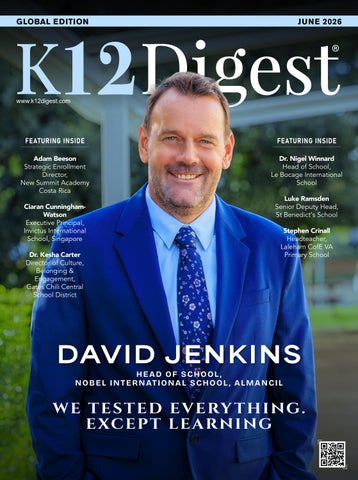
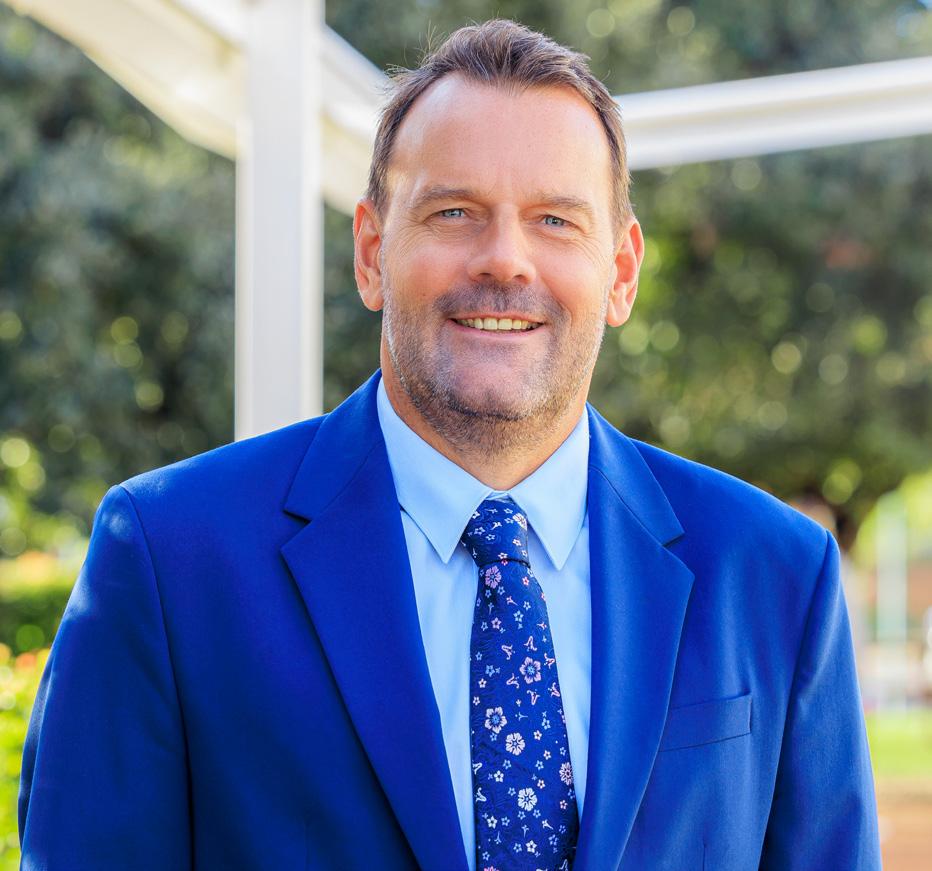
This perspective forms the foundation of our cover story. David Jenkins, Head of School at Nobel International School, Almancil, brings nearly three decades of international education leadership to an important discussion on the limitations of standardized testing. Rather than dismissing assessment altogether, he makes a compelling case for balance. His article demonstrates that schools can achieve strong academic outcomes while nurturing curiosity, critical thinking, creativity, and student wellbeing. It is a timely reminder that education should measure what truly matters, not simply what is easiest to quantify.
Beyond our cover story, this edition of K12 Digest brings together thought-provoking articles, expert interviews, and fresh perspectives from educators and leaders who are reimagining learning in meaningful ways. Together, they explore the evolving responsibilities of schools, the changing expectations of learners, and the innovative practices shaping classrooms across the globe.
The future will undoubtedly bring technologies we cannot yet imagine and careers that do not yet exist. Yet one truth will remain constant: human potential will always be education’s greatest investment. Schools that encourage curiosity, independent thinking, empathy, and adaptability will not simply prepare students for the future. They will empower them to shape it.
Happy Reading!
Sarath Shyam
COVER STORY
ACADEMIC VIEW
BEST PRACTISES
BUILDING SCHOOLS WHERE VALUES DRIVE EXCELLENCE AND COMMUNITY SHAPES LEARNING
Stephen Crinall, Headteacher, Laleham CofE VA Primary School
28
BELONGING IS NOT A PROGRAM: WHY SCHOOL CULTURE IS BUILT THROUGH SYSTEMS, NOT MOMENTS
Dr. Kesha Carter, Director of Culture, Belonging & Engagement, Gates Chili Central School District
24
48
DEVELOPMENT IN MOTION: HOW STUDY AWAY PARTNERSHIPS ACCELERATE GROWTH FOR STUDENTS AND SCHOOLS
Adam Beeson, Strategic Enrollment Director, New Summit Academy Costa Rica
EMPOWERING SCHOOLS TO LEAD THE AI CONVERSATION TOGETHER
Luke Ramsden, Senior Deputy Head, St Benedict’s School
16
ADMIN PERSPECTIVE
34
TRANSFORMING EDUCATIONAL VISION INTO GLOBAL REALITY
Dr. Nigel Winnard, Head of School, Le Bocage International School
REDEFINING SUCCESS BEYOND GRADES TO PURPOSE
Ciaran Cunningham-Watson, Executive Principal, Invictus International School, Singapore
42
COVER STORY
After nearly thirty years in international education across the UK, Europe, the United States, and Africa, I have worked with multiple curricula, accountability systems, and assessment models. I have been a classroom teacher, examiner, curriculum coordinator, and, for many years now, a Head of School. Few elements of education policy have proven as persistent, or as problematic, as our reliance on standardised testing. Indeed, if there were a standardised test for longevity in education policy, it would score exceptionally high.
From a leadership perspective, the appeal is obvious. Standardised tests offer clean data, comparability, and the comforting sense that something as complex as learning can be neatly captured in a number, preferably one that fits easily into a spreadsheet. They allow schools to be benchmarked, systems to be evaluated, and performance to be summarised in a way that appears clear and decisive. Whether that clarity reflects reality is, of course, another matter.
One of my earliest encounters with this came during my time in Texas in the early 2000s, working within a system shaped heavily by the Texas Assessment of Knowledge and Skills (TAKS), while also offering three IB programmes. In my first year there it was clear that the pressure associated with these tests was immediate and unmistakable. Schools were judged publicly on their results, and that pressure filtered quickly into classrooms, often with remarkable efficiency.
I recall how, in the months leading up to testing, the curriculum narrowed noticeably. Lessons became increasingly focused on test preparation; drilling question types, practising timing strategies, and rehearsing formats with
Standardised tests offer clean data, comparability, and the comforting sense that something as complex as learning can be neatly captured in a number, preferably one that fits easily into a spreadsheet
a level of precision that would have impressed even the most disciplined athletic coach. The richness of the curriculum began to give way to repetition and technique. One could be forgiven for thinking that the ultimate aim of education was to become exceptionally good at answering questions about education.
As a leadership team, we made a deliberate decision to take a different approach. Rather than intensifying test preparation, we chose to remain committed to our International Baccalaureate philosophy of teaching and learning, prioritising inquiry, conceptual understanding, and student wellbeing. We also made a conscious effort to remove as much of the drama from the testing process as possible, presenting it to students as something to be completed rather than feared (a surprisingly radical idea at the time).
What we found was both reassuring and, in some respects, slightly inconvenient for the prevailing narrative: our students performed just as well on the standardised tests.
The difference, however, was in how they got there. Classrooms remained places of discussion, exploration, and deeper thinking. Students were less anxious, more engaged, and, perhaps most tellingly, still willing to ask questions that did not have a single correct answer. They were not being trained to pass a test; they were being educated. The fact that the test results held steady suggested that these two aims are not, in fact, mutually exclusive, despite what some systems might imply.
That experience has stayed with me, not least because it challenged one of the central assumptions underpinning high-stakes testing: that better results require greater focus on the test itself. In our case, the opposite appeared to be true.
I have since seen similar patterns across different contexts.
Early in my leadership career, I remember sitting in a results meeting analysing examination data. One student stood out: high scores across the board, comfortably exceeding expectations. On paper, this was a success story. Yet this same student had struggled throughout the year with independent thinking. In classroom observations and teacher feedback, there was a consistent pattern, strong recall, excellent technique, but a noticeable reluctance when asked to venture beyond what had been rehearsed. Is this the type of learner we wanted to send to university?
At the same time, another student (who happens to also be my son), whose results placed them below the benchmark, had been identified by multiple teachers as one of the most intellectually curious learners in the cohort. This student asked difficult questions, challenged assumptions, and demonstrated genuine depth of understanding. Unfortunately, none of these
qualities appeared to be particularly helpful when faced with a tightly timed paper and a selection of well-crafted distractors.
As a school leader, I was left with a fundamental question: which of these students had truly been more successful in their learning?
Standardised assessments reward a specific profile of learner—one who is efficient, wellprepared for the format, and able to perform under timed conditions. These are valuable skills, but they are not synonymous with understanding, nor do they necessarily predict who will thrive when faced with complexity, ambiguity, or problems that have not been conveniently pre-formatted; all important traits in 2026.
Their influence extends far beyond individual students. In schools, they shape behaviour at every level. I have led teams through curriculum reviews where the unspoken question is not “What do students need to learn?” but “What are they likely to be asked?” The distinction is subtle, but significant.
This is not an argument for abandoning assessment, but for rebalancing it, and perhaps for exercising a degree of caution before placing too much faith in anything that can be summarised quite so neatly
From an international perspective, the issue of equity becomes even more pronounced. While tests may be standardised, student experiences are not. Differences in language, background, and support structures all play a role in shaping outcomes, factors that do not always fit neatly into the margins of an answer sheet.
Perhaps the most concerning aspect, however, is the weight we attach to these results.
As a Head of School, I have been involved in decisions related to student progression, university placement, and school evaluation, decisions in which standardised data plays a significant role. Yet I am acutely aware that this data represents only a fraction of what we know about each learner, and, on occasion, not even the most interesting fraction.
In contrast, some of the most meaningful assessment practices I have seen, particularly within IB programmes, are those that value process as well as outcome. Extended essays,
coursework, oral assessments, and reflective components provide a far richer picture of a student’s abilities. They are more complex to administer, certainly, but then meaningful things often are.
This is not an argument for abandoning assessment, but for rebalancing it, and perhaps for exercising a degree of caution before placing too much faith in anything that can be summarised quite so neatly.
After three decades in education, my concern is not that standardised testing exists, but that it has come to dominate our definition of success. It offers clarity, but at the cost of depth. It provides comparability, but at the expense of context.
Education is complex, nuanced, and deeply human. Our systems of assessment should reflect that. Until they do, we risk continuing to measure what is easy, while hoping it is also what matters.
Empowering Schools to Lead the AI Conversation Together
Luke Ramsden, Senior Deputy Head, St Benedict’s School
Luke Ramsden is an award-winning Senior Deputy Headmaster and Director of Safeguarding for the St Benedict’s family of schools. In September of this year he is taking up the position of Headmaster at St John’s College, Cardiff. Named NAPCE Pastoral Leader of the Year 2021–22, he has worked with technology companies to develop practical safeguarding software, and he writes and speaks regularly on education leadership, pastoral care, and the ethical use of AI in schools. He also chairs the Schools Consent Project charity and advises the Global Equality Collective among other organisations that he works with.
Recently, in an exclusive interview with K12 Digest, Luke shared insights into leadership, safeguarding, and the ethical use of AI in schools. Looking at AI and wellbeing, he said the next frontier isn’t new tech but answering whether AI will ultimately help or harm young people, balancing its promise for organisation, revision, and pastoral insight against risks of dishonesty, image manipulation, and shrinking attention spans. He also shared his future plans, words of wisdom, and much more. The following excerpts are taken from the interview.
What I value most is the ability to change things that matter, and to see that change play out quickly in the life of the school
Your career spans some of the most respected schools in the UK, from Ampleforth to Tonbridge to St Benedict’s. How did your early experiences as a teacher of History shape the leader you’ve become today?
I have always found it slightly artificial when people try to draw a sharp distinction between teaching and leadership, as though one is left behind when the other begins. In practice, the habits that make you effective in a classroom are the same ones that determine whether you are any good at leading a school.
My first years in teaching particularly taught me the importance of judgement. In the classroom, you are constantly making small, high-stakes decisions. When to intervene, when to hold back, when to challenge, when to support. That instinct carries through into
whole-school leadership, particularly in areas like safeguarding or behaviour, where there is rarely a perfect answer but always a need for timely, defensible decisions.
There is also something about presence. Good teaching is not about performance in the theatrical sense, but it does require authority, consistency and a sense that the room is being held with purpose. The same applies across a school. Staff and pupils notice very quickly whether expectations are real or not. At St Benedict’s, for example, that has shaped how I have approached things like our phone policy or our work on behaviour. Clarity, consistency, and follow-through matter more than the policy document itself.
Finally, teaching keeps you anchored in the day-to-day reality of the school. It is easy in senior roles to become abstract, to think in
A school with a strong culture should not need a rule for every possible situation. It should have adults who understand the mission well enough to apply it intelligently
terms of strategy without testing it against what actually happens in a Year 9 lesson on a wet Thursday afternoon.
What do you love the most about your current role?
What I value most is the ability to change things that matter, and to see that change play out quickly in the life of the school. In the classroom you can have a real effect on the pupils in front of you. In a senior role, you can shape the conditions in which every pupil and every teacher operates. When you get it right, that is genuinely transformative. You see it in very practical ways, like a clearer behaviour system that allows teachers to teach without interruption or a curriculum change or use of technology that gives students more confidence and independence in their learning.
AI is moving from novelty to infrastructure in schools at remarkable speed. Which current trend in educational technology do you think is overhyped, and which is being underestimated?
I think some of the most overhyped elements at the moment are the ones that look impressive on the surface. AI-generated videos, polished presentations, synthetic media. They photograph well, they demo well, and they give the impression of rapid progress. But in most schools they do not meaningfully change how students learn. They risk becoming a layer of gloss rather than something that improves understanding.
What is being underestimated is the much less flashy element of AI. The ability to take a set of class notes and reshape them for a
particular student. Simplifying language, adding scaffolding, adjusting the level of challenge, or presenting the same material in a different way. That is not especially eye-catching, but it goes to the heart of what good teaching is. It is differentiation done well, and done consistently.
The reason for the imbalance is fairly straightforward. Schools, like most organisations, are drawn to what is visible and easy to showcase. It is much simpler to demonstrate a striking video than to evidence incremental gains in understanding across a class. Technology companies also tend to prioritise features that attract attention quickly, because that is how products are adopted. The risk is that we focus on the technology rather than the learning. The more useful framing is the opposite. Start with the student. What do they need to understand next, and what is getting in the way. Then use the technology in a very targeted way to address that.
In 2024, you hosted the first Education in AI conference at St Benedict’s, followed by another in 2025. What convinced you that a school, not just a tech company, should lead that conversation?
I felt strongly that this conversation needed to be led by schools because the starting point has to be pupils. Too much discussion around AI begins with the technology itself. What can it do? How impressive is it? How quickly can we roll it out? Those are not the right first questions for schools. The better question is what our students need from us, and how technology can help us support them more effectively.
There is also a need for schools to work together. AI is moving too quickly for each
Be clear, be reliable, notice what is not working, and do something practical about it. Senior leadership is not a different species of work. It is the same habits applied at a larger scale
school to sit behind its own walls and try to solve everything alone. We are facing shared questions about assessment, academic integrity, staff training, data protection and pupil use of AI. Sharing good practice is essential to help all our schools move more confidently in this fast changing area.
Leaders are shaped as much by what they read as what they do. Which book has most influenced your philosophy of education, and why does it still sit with you?
The book that has probably stayed with me thinking specifically about education leadership most is actually Langley Sharp’s The Habit of Excellence. It is not a conventional education book, which is partly why I have found it useful. It looks at British Army leadership, but the central idea has real relevance for schools. In simple terms, the best organisations (in this case talking about the arm( are not those where every decision is referred upwards. They are organisations where the people closest to the situation understand the purpose, values and direction so clearly that they can act with confidence and judgement without constantly needing permission.
That matters enormously in schools. A good school cannot be run by senior leaders trying to control every interaction. It depends on teachers, tutors, heads of year, support staff and middle leaders making good decisions every day. They are the people in the classroom, in the corridor, on the trip, in the difficult pastoral conversation. If they understand the ethos of the school properly, they should be able to respond in a way that is consistent with what the school stands for.
For me, that is one of the central tasks of leadership. Not to create dependency on senior leaders, but to create alignment. Staff need to know what matters, why it matters, and where the boundaries are. Within that, they need trust and freedom to act. That has shaped the way I think about education. A school with a strong culture should not need a rule for every possible situation. It should have adults who understand the mission well enough to apply it intelligently.
History teachers often have a favourite era or figure they return to. Which period of history do you find yourself drawing on most when talking to students about character?
Rather than looking at one particular period what interests me most about the past is the evidence we have for ordinary lives, from modern diaries and letters all the way back to ancient papyrus fragments from Egypt. There is a danger in teaching history that character becomes attached only to the great political and military figures. Kings, generals, revolutionaries, emperors. Of course they matter, but they can also make history feel remote. When students encounter ordinary people, the distance often collapses. They see people worrying about their families, complaining about work, making jokes, trying to do the right thing, falling short, recovering, showing loyalty, courage or generosity in small ways.
That is where I think character becomes most teachable. Not as a list of abstract virtues, but as something lived by people who were not so different from us. A Roman soldier writing home, a Victorian child describing school, a twentieth-century diarist trying to remain moral in terrible circumstances. Again and again, you
find humour, irritation, affection, duty, guilt, hope and a recognisable sense of right and wrong. So I tend to draw on the lives of ordinary people across history, rather than one favoured age. They remind students that the past was not inhabited by a different species. It was full of people like us, making choices under pressure. That is usually where the most useful lessons about character are found.
St Benedict’s is now seen as a leading voice on ethical AI in schools. What’s the next frontier you want the school to explore with technology and wellbeing?
I am not sure I am looking at the next frontier because there is so much to do where we are in our current thinking about technology and wellbeing. The ongoing central question is whether AI will, on balance, be good or bad for the wellbeing of young people, and at the moment, I do not think anyone can answer that confidently. There is obvious promise. AI could help pupils with organisation, confidence, revision, feedback, accessibility and personalised learning. It can also help staff notice patterns earlier and respond more intelligently to pastoral need. But there are also so many risks, ranging from academic dishonesty through to image manipulation and the worry that AI will further reduce attention spans. This continues to be work then of all schools, and wider society of course, to ensure that AI is being used ethically and can be used to promote wellbeing.
Where do you see yourself in the next 5 years?
I have an exciting 5 months ahead of me in fact, as I move from Ealing to be Headmaster
of St John’s College in Cardiff. In five years, I hope I will be fully settled into my role as Head of St John’s, and that the school will be even more thriving and confident than it is at present. St John’s is a very special school. It has an excellent academic reputation, a long musical tradition as the Catholic cathedral choir school, a strong sense of community, and the kind of scale where you can really know pupils and families properly. I am looking forward to settling in Cardiff and getting to know this new community and hopefully it will be sooner than five years before I can drop a little Welsh into conversation without causing too much alarm!
Aspiring leaders read these interviews for direction. What advice would you give to a Head of Department today who wants to shape whole-school culture tomorrow?
I would say start by leading your own area exceptionally well. Whole-school culture is not shaped by people who talk impressively about leadership while their own department is inconsistent. It is shaped by people who build trust, set clear standards, support colleagues properly, and show that pupils can thrive under their care. A Head of Department has more influence than they sometimes realise. They shape curriculum, expectations, staff morale, pupil confidence and the daily habits of learning. If they do that well, they are already contributing to the culture of the whole school. Become known as someone who improves things without creating drama. Be clear, be reliable, notice what is not working, and do something practical about it. Senior leadership is not a different species of work. It is the same habits applied at a larger scale.
Belonging is Not a Program: Why School Culture is Built Through Systems, Not Moments
Dr. Kesha Carter, Director of Culture, Belonging & Engagement, Gates Chili Central School District
In K–12 education, we often talk about belonging as something we want students to feel. We plan assemblies, celebrate cultural heritage months, and implement new initiatives designed to build connection. These efforts matter. They can create moments of visibility and affirmation. However, at some point, many educators and leaders realize that belonging is rarely shaped by a single moment. It is built through the systems, patterns, and
daily decisions that define a student’s experience over time. The question is not whether schools care about belonging. The question is whether belonging is embedded into how schools actually operate.
When Belonging Becomes a System
In my work with schools, I have seen a consistent pattern. Schools often approach belonging as an initiative rather than a condition.
While accountability is important, an over-reliance on punitive responses can unintentionally disconnect students from the very environment we want them to feel part of
Dr. Kesha Carter is the Director of Culture, Belonging, and Engagement at Gates Chili Central School District in New York. With over 18 years of experience in organizational culture and leadership, she works at the intersection of student experience, staff engagement, and system-level change. Dr. Carter specializes in helping schools move beyond isolated initiatives to build aligned, sustainable practices that support belonging, access, and engagement for all students. She also serves as a facilitator with the New York State Department of Education (NYSED) Leaders Network and consults with organizations nationwide on culture and leadership strategy.
It lives in a program, a committee, a training during conference days, or a series of events. Meanwhile, the systems that shape students experience like discipline practices, classroom interactions, access to opportunities, and adult responses to conflict operate separately.
Students notice this disconnect immediately. A student can attend a school-wide celebration in the morning and feel completely unseen in the classroom that afternoon. They can hear messages about inclusion while also experiencing inconsistent responses to behavior or unclear expectations across classrooms.
Belonging does not live in what we say. It lives in what students experience repeatedly. When schools shift from thinking about belonging as a program to treating it as a system, the work changes. It becomes less about adding something new and more about examining what already exists.
The Power of Consistency
One of the strongest predictors of whether students feel a sense of belonging is consistency. Not perfection, but consistency.
Do students experience predictable expectations across classrooms?
Do adults respond to behavior in ways that are aligned and equitable?
Do students know that they will be heard, even when mistakes are made?
Inconsistent systems create uncertainty. And uncertainty erodes trust. This is where structures like a Multi-Tiered System of Supports (MTSS) become critical. When implemented effectively, MTSS is not just about intervention. It provides a framework for ensuring that academic, behavioral, and social-emotional supports are aligned across a student’s experience.
At the Tier 1 level, every student benefits from a strong, predictable environment where expectations are clear and relationships are prioritized. When Tier 1 is strong, belonging becomes part of the foundation rather than something reserved for students who are struggling.
When belonging is embedded into systems, it becomes something students can feel without it being announced
Rethinking Discipline as a Relationship System
Discipline is one of the clearest reflections of a school’s culture. It is also one of the most common places where gaps in belonging appear. Traditional approaches to discipline often focus on compliance and consequences. While accountability is important, an over-reliance
on punitive responses can unintentionally disconnect students from the very environment we want them to feel part of.
An alternative approach is to view discipline as a relationship-centered system. This does not mean removing accountability. It means expanding the goal. Instead of asking, “What rule was broken and what is the consequence?” we also ask, “What happened, who was impacted, and how do we repair the harm?”
Restorative practices offer one pathway for this shift. When students are given opportunities to reflect, take responsibility, and repair relationships, they are more likely to remain connected to the school community rather than pushed to the margins. Over time, this approach changes not just individual interactions, but the overall climate of the school.
Adult Behavior Shapes Student Experience
One of the most important and sometimes overlooked truths about school culture is that adult behavior is the system. Policies matter. Frameworks matter. But the daily decisions adults make in classrooms, hallways, and offices are what students experience most directly.
How do adults respond when a student uses harmful language?
How do they handle moments of conflict?
How do they engage students whose behavior challenges expectations?
Silence communicates permission. Inconsistency communicates unpredictability. Intentional, aligned responses communicate safety. Supporting adults in this work requires more than a single training session. It requires ongoing opportunities for reflection, practice, and feedback. When adults feel equipped and
supported, they are more likely to respond in ways that reinforce belonging rather than unintentionally undermine it.
Moving from Initiative to Integration
For school leaders, the shift from initiative to integration is both the challenge and the opportunity.
It requires asking different questions: 1)
Where are students experiencing inconsistency across our system? 2) Which processes unintentionally create barriers to connection? 3) How do our current practices align with the culture we say we want to build? This work is not about doing more. It is about doing things differently.
It also requires patience. Systems change takes time. But the impact is cumulative. Small, aligned shifts across multiple areas like discipline, instruction, communication, and support, create a stronger and more cohesive student experience.
A Culture Students Can Feel
When belonging is embedded into systems, it becomes something students can feel without it being announced. They feel it when expectations are clear and consistent. They feel it when adults respond with both accountability and care. They feel it when their voice is heard and taken seriously. And importantly, they feel it not just on the best days, but on the hardest ones.
Belonging is not created through a single initiative or moment of recognition. It is built through the repeated, aligned actions of a school community committed to creating environments where every student can feel seen, supported, and connected. That kind of culture does not happen by accident. It is designed.
ACADEMIC
VIEWS
Building Schools Where Values Drive Excellence and Community Shapes Learning
Stephen Crinall, Headteacher, Laleham CofE VA Primary School
Your journey into school leadership reflects a steady progression through teaching and leadership roles. What were the defining moments that shaped your path to becoming Head of School?
Looking back, my route into leadership hasn’t been driven by a single moment, but by a growing sense that I wanted to make a difference beyond my own classroom. From my first moments in the classroom, and when preparing for my PGCE, I loved teaching, but I also found myself drawn to the bigger picture. I found the work behind decisions about curriculum, assessment and culture and how shape the experience for every child fascinating and something I wanted to be a part of.
A key turning point came during my time as Assistant Head, when I had the opportunity to lead on whole-school developments. In particular, working with staff to refine our
approach to assessment and teaching really brought home the impact that thoughtful, collaborative leadership can have. It wasn’t just about improving outcomes; it was about creating clarity, reducing unnecessary workload and helping colleagues feel confident in their practice.
Alongside that, engaging with research and professional learning through my partnership with colleagues at St Mary’s University played a big part in shaping my thinking. It encouraged me to reflect more deeply on what effective leadership looks like and how we build cultures where both staff and pupils can thrive.
Stepping into the role of Head of School and now into the Headteacher role at Laleham felt like a natural next step. I see my current work as an opportunity to bring those experiences together and help shape a school community in a meaningful and lasting way.
Stephen Crinall is Headteacher at Laleham Church of England VA Primary School in Surrey, leading a thriving, community-focused school grounded in a strong Christian ethos. He is committed to fostering a culture where pupils and staff flourish, balancing high academic expectations with wellbeing, inclusion, and personal development.
He has taught across all primary phases, with particular expertise in Key Stage 2. Previously, he was Assistant Headteacher at Bedfont Primary School in West London, where he led curriculum, assessment, and teacher development. There, he oversaw the accreditation of the ‘Bedfont Baccalaureate’ with the National Baccalaureate Trust.
Stephen has a strong track record in whole-school improvement, refining assessment systems and strengthening teaching through professional development. His interests include leadership development, reflective practice, and inclusive, knowledge-rich curricula. He contributes to the wider education community and is completing his NPQH. He is also a Fellow of the Chartered College of Teaching and the Royal Society of Arts.
In an exclusive conversation with K12 Digest, Stephen talks about his journey from classroom teaching to school leadership, and the experiences that shaped his approach to building strong school communities. He reflects on how values-based education and academic excellence work together in practice, the importance of clarity and simplicity in managing modern school challenges, and the growing yet balanced role of AI in primary education. He also shares insights into fostering inclusion, strengthening partnerships with families, and creating meaningful initiatives like outdoor learning spaces that bring communities together.
At Laleham CofE VA Primary School, how do you balance academic excellence with the values-based education that Church of England schools are known for?
For us, it’s not really about balancing the two as they go hand in hand. Our starting point is always our vision of being a Christ-centred community, learning, growing and celebrating together in the love of God. This vision, and our ethos, shapes both our academic and pastoral work and drives the school forward.
We want children to achieve highly, of course, but we also want them to feel safe, valued and understood. When that’s in place, children are much more able to engage, take risks in their learning and succeed.
In practice, that means our values aren’t something separate: they’re woven through everything. You’ll see them in our collective worship, in the way staff and pupils interact and across the curriculum itself. We place a strong emphasis on inclusion, ensuring that every child can access learning and feel a sense of belonging.
Ultimately, we want our pupils to leave not just with strong outcomes or opportunities to succeed in sports, music or arts, but as kind, thoughtful individuals who understand their place in the world and the impact they can have on others.
Primary education is evolving rapidly. What are the biggest challenges you currently see in the sector, and how is your school responding to them?
One of the biggest challenges at the moment is the sheer range of expectations placed on schools, alongside the need to keep things
manageable for staff. There’s a real risk of trying to do too much, which can lead to complexity and pressure without necessarily improving outcomes.
At Laleham, we’ve tried to respond by focusing on clarity and simplicity. For example, we’ve refined our assessment systems so that they’re more meaningful and less burdensome, helping teachers to focus on what pupils actually need next rather than generating data for its own sake.
Inclusion is another key area. We’re continuing to develop our approach to adaptive teaching, making sure that lessons are accessible and appropriately challenging for all pupils, rather than relying too heavily on separate interventions.
We’ve also placed a strong emphasis on communication: being open, clear and responsive with families. Initiatives like “You said, we did” have helped to build trust and show that feedback genuinely leads to action, creating a meaningful partnership with our parents and families.
With AI and digital tools entering classrooms, how do you see technology shaping teaching and learning in primary schools over the next few years?
There’s definitely a lot of potential, particularly in terms of supporting teachers. If used safely and effectively, AI can help reduce workload. This could be through generating ideas for lessons, supporting planning or helping to analyse information more efficiently.
That said, in primary education especially, technology should never replace the fundamentals. Strong relationships, high-quality, inclusive teaching and a deep understanding of how children learn will always come first.
For pupils, digital tools can open up new ways of engaging with learning, but it’s important that this sits alongside opportunities for discussion, creativity and real-world experiences.
Looking ahead, I think the focus will need to be on using technology in a balanced and thoughtful way to ensure that it is supporting teaching rather than driving it, ensuring that both staff and pupils develop the skills to use it critically and responsibly.
Can you share a key initiative or achievement at your school that you are particularly proud of, and the impact it has had on students or staff?
One project I’m particularly proud of is the development of our outdoor learning space, The Worrell. It’s more than just a physical area as it represents a real shift in how we think about learning and how we use our environment. What made it especially meaningful was the way it brought the whole community together. Staff, pupils and families all played a part in shaping it, and it’s named in memory of someone who was hugely important to the school, which gives it an added sense of significance.
The impact has been really positive. Pupils are often more engaged in outdoor sessions, particularly those who thrive in a more practical, hands-on environment. It’s also given staff the confidence to try different approaches and think creatively about how learning can happen. Perhaps most importantly, it’s strengthened that sense of belonging and shared identity within the school.
Leadership in education often extends beyond the classroom. How do you personally stay grounded and motivated outside of your professional responsibilities?
For me, it comes down to keeping a sense of balance. Family life is really important (I’m a husband and a father of two young children) and spending time at home helps me to switch off and keep things in perspective.
My faith also plays a big role. It gives me a framework for reflection and reminds me of the importance of leading with humility, care and a sense of purpose.
I also try to stay connected to the wider profession, whether that’s through reading, research or conversations with colleagues.
We’re continuing to develop our approach to adaptive teaching, making sure that lessons are accessible and appropriately challenging for all pupils, rather than relying too heavily on separate interventions
Education is a team effort, and the ability to work well with others is just as important as subject knowledge or pedagogy
That helps me to stay motivated and keep learning, modelling the beliefs that I hold about there always being room to improve to the wider staff team at Laleham.
Ultimately, I am a firm believer that taking time to step back is essential. It allows me to return to school with a clearer head and the energy to lead well… The phrase ‘you can’t pour from an empty cup’ is one that many readers will be familiar with but should never be undervalued!
What advice would you offer to young educators or students who aspire to build a meaningful career in education today?
I’d say focus first and foremost on becoming a great teacher. The classroom is where everything starts, and the impact you have there really matters. Be open to learning from others: watch colleagues, ask questions, engage with research and take time to reflect on your own practice. That habit of reflection will stay with you throughout your career and it took me a long time to fully appreciate how valuable it is!
Build strong relationships as well. Education is a team effort, and the ability to work well with others is just as important as subject knowledge or pedagogy. Having a network of colleagues to share ideas with and call upon is what gets me through the most challenging moments we face.
And finally, hold on to why you came into education in the first place. It absolutely can be a demanding job, but it’s also incredibly rewarding. If you stay connected to that sense of purpose, it will carry you through the challenges.
Transforming Educational Vision into Global Reality
Dr. Nigel Winnard, Head of School, Le Bocage International School
Dr. Nigel J. Winnard is a seasoned international school educator, leader, researcher, and consultant with over 20 years of headship experience across Africa, the Middle East, Europe, Asia, and South America. Holding a Doctorate in Educational Leadership from USC and an MA from Michigan State, he founded Sudan’s first IB World School at Khartoum International Community School, then led the American School of Rio de Janeiro’s growth and transition to become a two-campus IB World Continuum School. He currently serves as Head of Le Bocage International School, Mauritius’s oldest IB World School.
Recently, in an exclusive interview with K12 Digest, Dr. Winnard shared insights into the realities and reimagination of international education drawn from more than 20 years of headship across Africa, the Middle East, Europe, Asia, and South America. Addressing teacher mobility and shortages, he argued that successful schools will grow communities of belonging and philosophical alignment, building local capacity rather than relying on transient expat labor — true internationalism, he stressed, is a mindset, not a passport. He also shared his personal hobbies and interests, future plans, words of wisdom, and much more. The following excerpts are taken from the interview.
The most successful international schools in terms of teacher retention will be those that grow their own professional communities of belonging
Hi Nigel. With more than 20 years of headship across continents, you’ve led in Sudan, Brazil, and now Mauritius. Looking back at your first headship, what moment convinced you that international education was your calling?
There wasn’t a single “Aha!” moment. It was more a pull to do something that broke new ground. My first headship in Sudan was an absolute privilege. I was part of an incredible project inspired by someone else’s vision. I will always be grateful to the school’s founders, Osama and Samia, for showing me that real change is possible if you are prepared to go all in, no matter what the obstacles. And trust me, there were more than a few of those. For me, the pull of international education is the potential to reimagine schooling as a truly intercultural
enterprise. That said, the reality on the ground is that such reimagining often encounters incredible resistance, but that is where the work is. I sometimes wonder if humans are courageous enough to really reimagine schools beyond tinkering with the edges. But that doesn’t stop me trying and hoping.
What do you love the most about your current role?
Well I’ve been here for three weeks so maybe it’s a little early to say what I love the most! But what I will say is that I am loving the process of asking questions. There is huge pressure on school leaders to ‘do’ things, and not enough value placed on the learning and listening dimension of school leadership. What I am really loving is being in that space. I get a deep satisfaction from those foundational
Sustainable headship is not about quick wins or shiny new projects. It is about discerning cultural undercurrents, cultivating trust among diverse stakeholders, and then transforming personal conviction into unified action that others agree makes sense
conversations with parents, students and staff. I’ve grown to value collective momentum over top-down control, though never at the expense of the needs of students here and now. We don’t have any right to waste time in schools: childhood is too precious.
You’ve built IB programs where none existed and stewarded the oldest IB school in a nation. What trend in the IB’s evolution do you think is most critical for its next 10 years?
Now there’s a question. Ask me on my best day and I will share my hopes for the IB achieving deliberate balance: upholding its signature intellectual rigour while intensifying focus on student wellbeing, personal agency, and realistic hope. But in my darker moments I worry that the IB won’t be able to free itself of factory-like
compliance or token diversity initiatives that merely veil privilege without dismantling it. The IB has an incredible opportunity to develop ethical, adaptable thinkers for a staggeringly complex world. Or it could just keep shuffling the pieces on the board without admitting that, in so many ways, we need a whole new board.
Teacher mobility and global shortages are reshaping staffing. Five years from now, what will the most successful international schools do differently to attract and keep educators who thrive?
The most successful international schools in terms of teacher retention will be those that grow their own professional communities of belonging. They will be less about attracting the travelling expat and more about building
cultures of philosophical alignment and shared values. The enormous growth of the international schools market will only be sustainable if schools develop local capacity. They cannot rely on the traditional transient international labor market, and nor should they. International schools can become catalysts for local educational enrichment if they commit to developing local teachers whose international mindset and global outlook are what makes them international, not the colour of their passport - or the colour of their skin.
Many educators aspire to international headship. What skill do aspirants consistently undervalue until they sit in the Head of School chair?
There is a case to be made for the undervalued skill of coalition-building. It is a skill subtler and more vital than bold vision or swift decisiveness. Sustainable headship is not about quick wins or shiny new projects. It is about discerning cultural undercurrents, cultivating trust among diverse stakeholders, and then transforming personal
I would like every teacher in every staffroom to know and believe something that I know eats away at all of us when we question if we did everything we could have done to help our students:
“Remember - you are enough”
conviction into unified action that others agree makes sense. That requires relational trust and coalitions of support. How far can any leadership extend without first drawing people into shared forward motion? The other undervalued element of headship that comes as a bit of a surprise to some new heads, is that the work is not about learning per se, but ensuring the conditions for learning are in place.
Books shape how we lead and learn. What book lives on your desk after 20 years of headship, and what margin note from it still guides you? Good question. For many years it was John Rae’s Letters from School. It framed much of my thinking about stewardship, parenting, and the importance of forgiveness and mistakes in a school. I go back to Montaigne’s On the Education of Children quite often, with his lessons from 1575 bizarrely still relevant. But the one constant on my desk is not about education or schooling, but poetry. It is escapism from the day-to-day, and a reminder that we can often see things more clearly if we use fewer words.
Rest fuels sustainable leadership. What hobby, ritual, or weekend activity helps you return to school on Monday ready for the complexity of headship?
This might get me into trouble, but John Lewis spent a life arguing for the importance of “good trouble”, so here goes. The truthful answer is that it is next to impossible for heads today to find that balance to which we all supposedly aspire. We can try to switch off with hobbies, long walks on the beach, meditation and mindful breathing and so forth, but the 24/7 demands of the
WhatsApp-Online-iVerse are unrelenting. We are called upon to be leaders, mentors, marriage and grief counselors, teachers, and saints: legal experts, strategic planners, medical experts, financial analysts, politicians and saviors of the planet. And that is just a typical Tuesday. None of that is either reasonable nor sustainable. But that is part of the larger question of what schools have become in the world in which we live. Yet despite all of that I still believe 100% that It is the most incredible job in the world.
Where do you see yourself in the next 5 years?
I once spent an hour as the head of a large and prestigious school, with a multi-million dollar budget and a 350 employee workforce, searching for a lost water bottle with a young student who was beside himself. We searched that entire campus. I cancelled meetings and postponed whatever else I had planned. It took us a while but we found it. I will spend the
next 5 years, 10 years, however long I have left in this business, helping young people find whatever matters to them. Even if it is a water bottle.
If you could put one sentence on the wall of every staff room, what would it say?
Staff rooms have a bit of a tendency to concentrate fatigue, pressure, and sometimes competing ambitions. But if Ted Lasso can have a statement on the locker room wall to inspire AFC Richmond then maybe I can come up with one that I hope would inspire teachers in a staff room. But my choice wouldn’t be so much about inspiring learning, or praising teaching, or kindling passion. I would like every teacher in every staffroom to know and believe something that I know eats away at all of us when we question if we did everything we could have done to help our students: “Remember - you are enough”
Redefining Success Beyond Grades to Purpose
Ciaran Cunningham-Watson, Executive Principal, Invictus International School, Singapore
Ciaran Cunningham-Watson is an experienced international school leader with over 20 years of educational experience, including headships in schools in the UK, Spain, Mexico, the UAE and Singapore. With a proven record of driving improvement and building inclusive, values-based communities. His leadership is grounded in kindness, respect, and integrity, principles that guide his approach to empowering staff, engaging students, and fostering trust within school communities. Over the course of his career, he has served in headships across both the UK and international contexts, often in challenging environments where resilience and collaboration were critical to success. Ciaran has a particular strength in revitalising schools, restoring morale, stabilising staff turnover, and improving student outcomes through servant leadership. He has established new teams, strengthened operations, and inspired colleagues to grow in skill and confidence. His experience in international schools has also broadened his cultural awareness, reinforcing his commitment to inclusivity and collaboration.
Currently Executive Principal of Invictus International School in Singapore, Ciaran combines strategic clarity with empathy to create environments where people feel respected, valued, and motivated to excel. He brings not only the breadth of international experience but also the depth of commitment to stability and excellence. He is currently a Council of British International Schools (COBIS) and lead PENTA international school accreditor, as well as a Fellow of the Chartered College of Teaching. Beyond his professional role, he is an avid reader, lover of music and live events, keen sports enthusiast, and passionate cook, all of which shape the balance, creativity, and empathy he brings to his leadership.
Recently, in an exclusive interview with K12 Digest, Ciaran shared insights into how 20+ years as a principal, inspector, and COBIS accreditor across the UK, Spain, Mexico, the UAE and Singapore have shaped his belief that K–12 education must move toward greater clarity and honesty about success — where students leave not just with qualifications, but with confidence, independence, and purpose. He stressed that while technology will keep advancing, teachers will remain the decisive factor and most valuable resource, and by 2030 curriculum will be more adaptive and data-informed, yet impact will depend on confident teachers using tech to remove inefficiency so they can focus on relationships, mentoring, and thinking. The following excerpts are taken from the interview.
The
future I’m committed to is one where schools are judged not just by attainment, but by the quality of the people they develop
Hi Ciaran. With experience as a principal, inspector, and accreditor, you’ve seen schools from every angle — the classroom, the boardroom, and the inspection team room. Standing at that crossroads, what is the one future you are determined to help K–12 education move toward? If I had to describe it simply, I want education to move towards greater clarity and honesty about what success actually looks like for young people. We’ve become very good at measuring outcomes, but less good at ensuring those outcomes translate into confidence, independence, and a
Equity requires high expectations for all, supported by strong teaching, intelligent use of data, and a culture where success is expected and supported
genuine sense of purpose. From my perspective, having seen schools as a leader, an inspector, an accreditor and also a parent, the strongest schools are not just those with high results, but those where students leave knowing who they are and how they contribute to other people and the world.
Plenty of people can leave school with qualifications. It is possible to leave school without learning that much. There is a difference. So the future I’m committed to is one where schools are judged not just by attainment, but by the quality of the people they develop.
Technology will keep advancing, but pedagogy determines impact. What will the relationship between teachers, curriculum, and technology look like in 2030?
Technology will continue to evolve quickly, but the core relationship will not fundamentally change: teachers will remain the decisive factor and the most valuable educational resource. I hope that in the future, teachers gain greater recognition, respect and reward.
By 2030, curriculum will be more adaptive and informed by data, but effective use will depend on confident teachers. The best schools will use technology to remove inefficiency, allowing teachers to focus on relationships, mentoring/ coaching, and thinking.
Parent expectations are shifting from grades to wellbeing, skills, and purpose. How will the “promise” a school makes to families evolve in the next five years?
Parents are asking more sophisticated questions. The promise will shift from results alone to knowing, developing and preparing each child for life.
Trust will come from clarity, consistency and delivery, not just messaging. Promises are all well and good, but trust and actions define how we are, what we do, how we do it and the impact it all has. I think it is of fundamental importance to remember that people are the purpose, especially in schools; schools are people.
Equity and access remain unfinished work. What will it take for the industry to ensure that “good in almost all subjects” becomes the floor, not the ceiling, globally?
Equity requires high expectations for all, supported by strong teaching, intelligent use of data, and a culture where success is expected and supported. It is about consistency of standards, support and belief.
Books often shape a leader’s philosophy over 20+ years. What book sits on your shelf with the most notes in the margins, and how has it influenced the way you lead schools?
Legacy: What the All Blacks can teach us about the business of life, by James Kerr. I am passionate about sports, particularly team sports. I have enormous amounts of respect for people who can put so much focus into the pursuit of excellence and the world of sport gives endless opportunities to see this in abundance. I think that Rugby is the ultimate team sport in terms of sheer grit and determination on display to see. What goes on behind the scenes, in preparation and practice, is as important in sport as in business, education and much of life. I often refer to the lessons from Legacy, as a servant leader. I highly encourage others to read it, ask what lessons they can learn from each section
and apply to help improve the culture and performance of school teams.
Every leader has a tool that isn’t digital. What physical item in your office reminds you daily why you do this work, and what’s the story behind it?
I keep handwritten notes from students and staff. They remind me that schools are the people. They also remind me of my why…why I do what I do; it is to do my best to help others. I also have messages and mementos from my family in my office. They help me put everything into perspective.
If you could put one sentence on the wall of every staff room, what would it say and whose words are they?
“Unify, Simplify, Amplify.”
It reflects how schools operate best. First, unify around purpose. Then simplify systems and expectations. Finally, amplify what works so it becomes consistent across the school.
When those three things are in place, schools feel calmer, staff feel more confident, and standards rise naturally.
Clarity, Culture and Consistency in School Leadership
Across more than twenty years in education, I have led schools in the UK and internationally, including headships in Europe, Mexico, the Middle East and Asia. My work has often involved leading schools through periods of change; stabilising provision, strengthening leadership teams and improving culture, enrolment and outcomes. Most recently, as Executive Principal at Invictus International School in Singapore, I led improvement across multiple campuses,
securing successful inspection outcomes and increasing our reputation in the region.
Those experiences have reinforced a simple but important belief: the most effective schools are not defined by constant innovation, but through following the three Cs: Clarity, Culture and Consistency.
Clarity is the starting point. Staff need to understand expectations, students need to know where they stand, and parents need confidence in what the school stands for. Without clarity, even strong ideas become diluted. Clarity is key.
Culture follows. It is not created through statements, but through daily actions in how staff interact, how expectations are reinforced, and how challenges are addressed. Culture is what is lived, not what is written. Culture is life.
Consistency is what turns intention into impact. When expectations are applied consistently, behaviour improves, teaching
strengthens, and students feel secure. Where consistency is lacking, even strong systems struggle. Consistency feeds culture.
My leadership is values led, grounded in kindness, respect and integrity, and data informed. I believe in building strong teams, empowering colleagues and creating environments where people feel trusted and supported. When that happens, confidence grows, and outcomes follow. Mapped out with the three Cs.
Looking ahead, education will continue to evolve, but the fundamentals will remain. Schools succeed when they are clear in purpose, strong in culture and consistent in practice. Ultimately, schools are the people and the measure of a school is how it cares and caters for the development of its members. To paraphrase the sentiment of the educationalist John Dewey: Education is not preparation for life. Education is life itself.
Development in Motion: How Study Away Partnerships Accelerate Growth for Students and Schools
Adam Beeson, Strategic Enrollment Director, New Summit Academy Costa Rica
Independent and international school campuses in the late afternoon can feel predictable.
Students move from class into the rhythms of their extracurricular activities. A game starts on the field. Music lessons begin in the band room. A dress rehearsal takes place in the theater. A few students gather around a table to finish homework. The structure is familiar, and for many students, it works.
At a glance, everything appears to be unfolding as expected. But beyond the activity, what kind of growth is actually taking place?
In a time when young people are asked to build impressive resumes, manage digital identities, and keep pace with an increasingly efficient world, much of their development happens within systems designed to optimize outcomes.
When students are removed from familiar cultural and social contexts, they are forced to confront assumptions they did not know they held
Adam Beeson is Strategic Enrollment Director at New Summit Academy Costa Rica, a supportive boarding school and study abroad experience for high school students, and The Bridge Costa Rica, a supportive gap program for young adults. He brings nearly two decades of international school teaching and leadership experience in Europe and the Americas. Adam is actively involved in the wider field of international and independent school education, contributing as a presenter at the Small Boarding Schools Association (SBSA), The Boarding Schools’ Association (BSA), and the International Baccalaureate (IB) Global Conference of the Americas. He previously served as an IB Examiner and as a member of the International Schools Anti-Discrimination Taskforce, and he is a contributor to various publications, including the Wellbeing in International Schools Magazine, where he was also a founding member of the editorial team. Adam holds an M.A. in International Education from the University of Bath (UK), a B.A. in English from Brevard College (USA), and an International Teacher Certificate from the European Council of International Schools.
What is often missing is space for reflection, perspective, and intentional disruption.
Study abroad and study away experiences offer a different pathway. By placing students in unfamiliar environments, these programs break up routine and invite a level of engagement that is difficult to replicate on a traditional campus. Research points to salient personal growth among students who participate in immersive semester and year-long programs.
What emerges is not just change, but developmental acceleration.
The Individual: Growth in Real Time
One of the clearest outcomes of a study away experience is values clarification. When students are removed from familiar cultural and social contexts, they are forced to confront assumptions they did not know they held.
I experienced this firsthand as a study abroad student in Austria, where I found myself in conversation with peers explaining perspectives I had never before questioned. The realization set in that many of my beliefs were not universal but contextual, and that awareness has shaped how I have made decisions ever since.
Alongside values, identity development also accelerates. Immersive programs are learning environments where students gain a clearer sense of who they are and who they want to become. This is not surprising. When students leave behind established roles and reputations, they are given space to experiment with new ways of being.
In practice, this shift can be striking. Students often arrive to our Supportive Immersion experiences in Costa Rica carrying a narrative about themselves that has been reinforced over time. In a new environment, that narrative
Students who have experienced greater autonomy often return with a stronger inclination to participate and contribute
begins to loosen. These changes emerge over time in environments where different behaviors are both possible and expected.
Confidence grows in a similar way. When students navigate unfamiliar environments, they are required to solve problems, communicate across differences, and manage uncertainty. Rather than simulated classroom exercises, students navigate real experiences with real consequences, leading to increased self-efficacy and a greater willingness to take initiative.
Over time, competence builds, and students begin to see themselves as contributors to the world around them, capable of shaping their life rather than reacting to it.
Interpersonal skill development is another consistent outcome of immersive study away programs. While academic gains are present, students point more often to communication, collaboration, and conflict navigation as the most meaningful areas of growth.
These interpersonal skills carry particular weight at a time when our interactions with others are increasingly mediated by screens.
The Community: Growth That Spreads
What makes these experiences especially relevant for schools is that the impact does not stop with the individual.
Students return to their home campuses with new ways of thinking, interacting, and participating, and these shifts have measurable effects on school communities.
One of the most immediate changes can be seen in how students engage with others. Increased perspective-taking leads to more thoughtful conversations, and students who have learned to navigate difference in one context bring that skill into another.
In independent and international school settings, small shifts in communication can have an outsized impact. A student who approaches conflict differently can influence how a peer group handles tension. Over time, these interactions shape the tone of a community.
Leadership is another area where the effects of study away become visible. Students who have experienced greater autonomy often return with a stronger inclination to participate and contribute. They take initiative and engage more fully. In some cases, they step into formal leadership roles; more often, they lead by asking new questions and modeling different behaviors.
Taken together, these changes begin to influence school culture. When even one student returns with a higher level of engagement and reflection, the effects ripple outward.
Rethinking the Role of Study Away
For schools, this raises an important question. How should study away experiences be positioned within a school’s broader educational offerings?
Too often, semester schools and year abroad programs are viewed as interruptions. The research suggests a different perspective. These experiences can function as extensions of a school’s mission, offering developmental opportunities that are difficult to replicate within a single setting.
Study away programs are not one-size-fitsall, with Semester Schools Network offerings emphasizing leadership, sustainability, and global education, and therapeutic settings like New Summit Academy Costa Rica focusing on social-emotional growth, executive functioning, and wellbeing.
The research is clear. When students step into unfamiliar environments, development accelerates
This is particularly relevant for independent and international schools. With close-knit communities and strong relational cultures, they are uniquely positioned to feel the impact of returning students. When approached as a partnership rather than a departure, study away can strengthen both the individual and the institution.
Development by Design
Returning to our independent school campus, the afternoon scene may look the same. Students still gather, play, and move through their routines.
But beneath the surface, something shifts: a student asks a different kind of question.
Another steps forward where they might have held back. A conversation takes a more thoughtful turn.
These interactions are easy to miss, but not accidental. They are the result of experiences that place students in motion, challenge their assumptions, and invite them to engage more fully with themselves and the world around them.
The research is clear. When students step into unfamiliar environments, development accelerates.
The opportunity for schools lies in how intentionally they create those moments, and how they welcome students back ready to contribute in new ways.