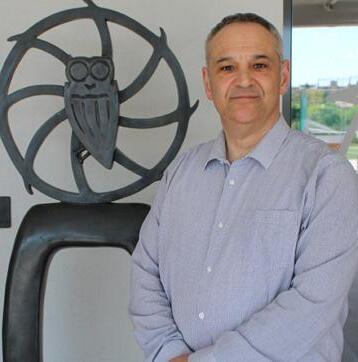
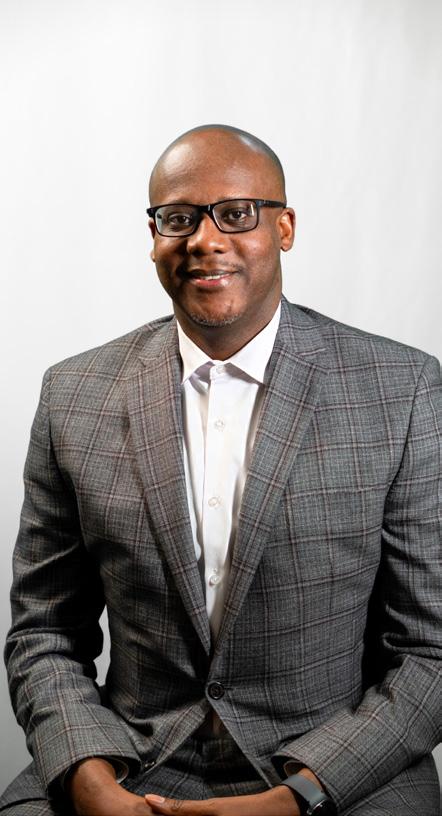
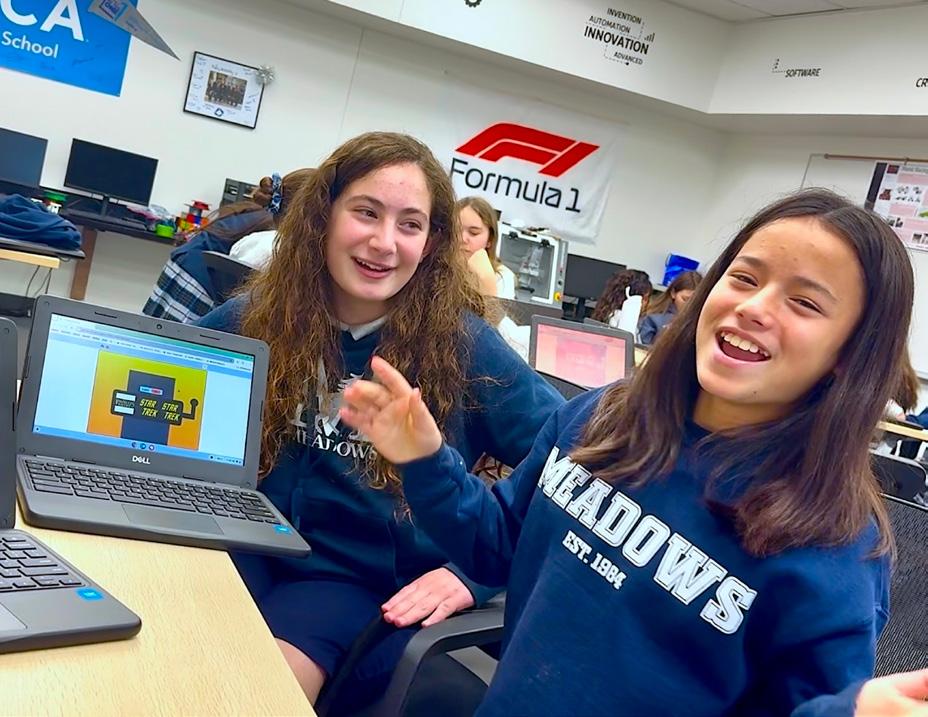
Camille McCue, PhD Director of Innovation, The Meadows School in Las Vegas
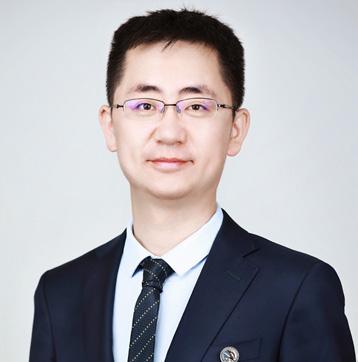
Ever Li Principal, Beijing Haidian Kaiwen Academy
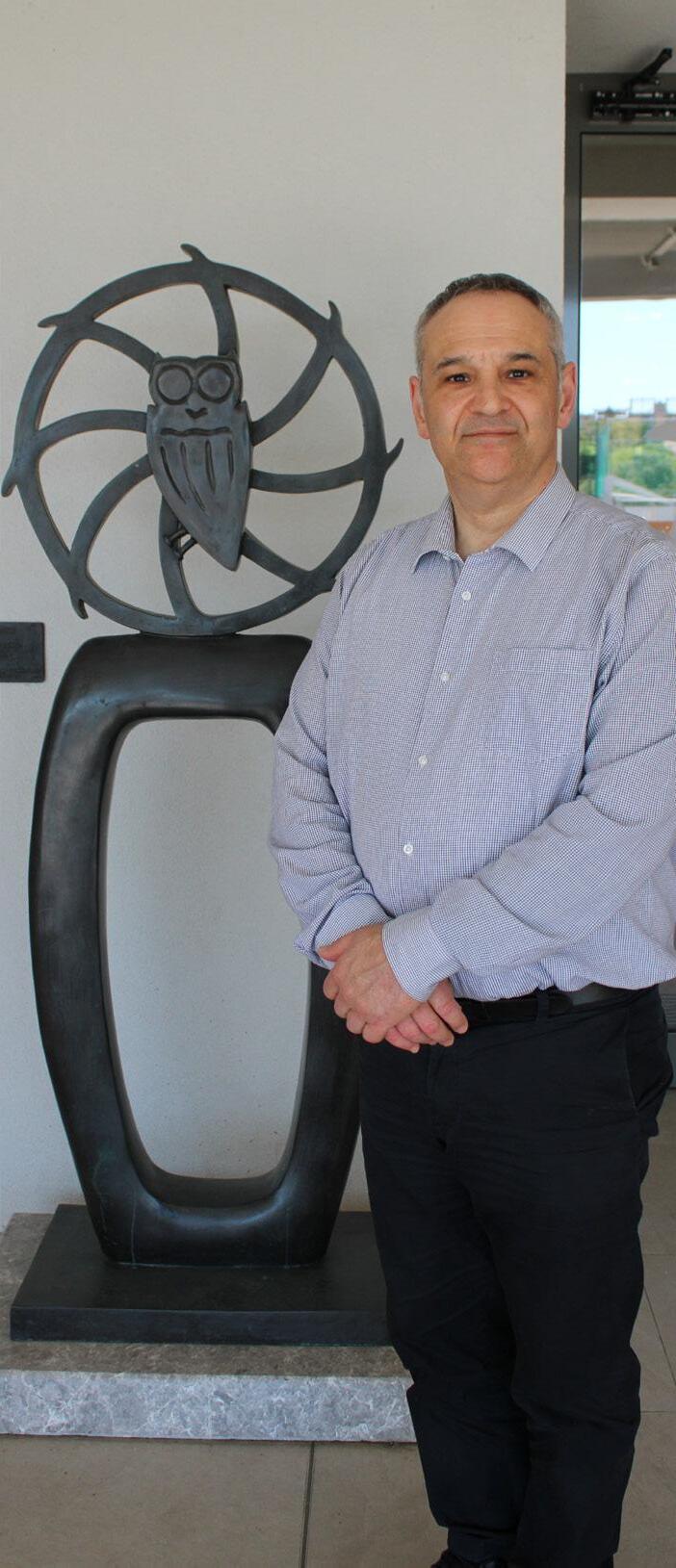
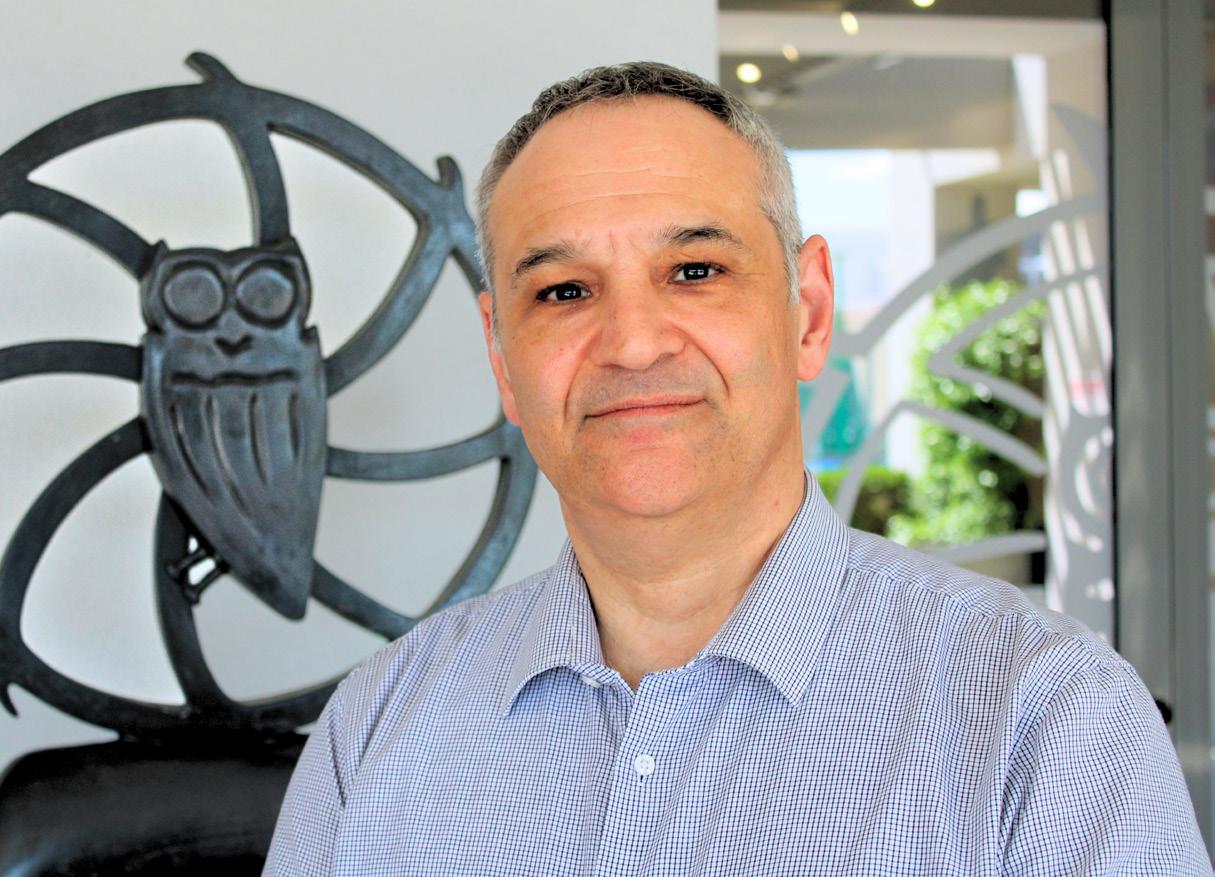
Mercedes Mateo Diaz Chief of Education, Inter-American Development Bank
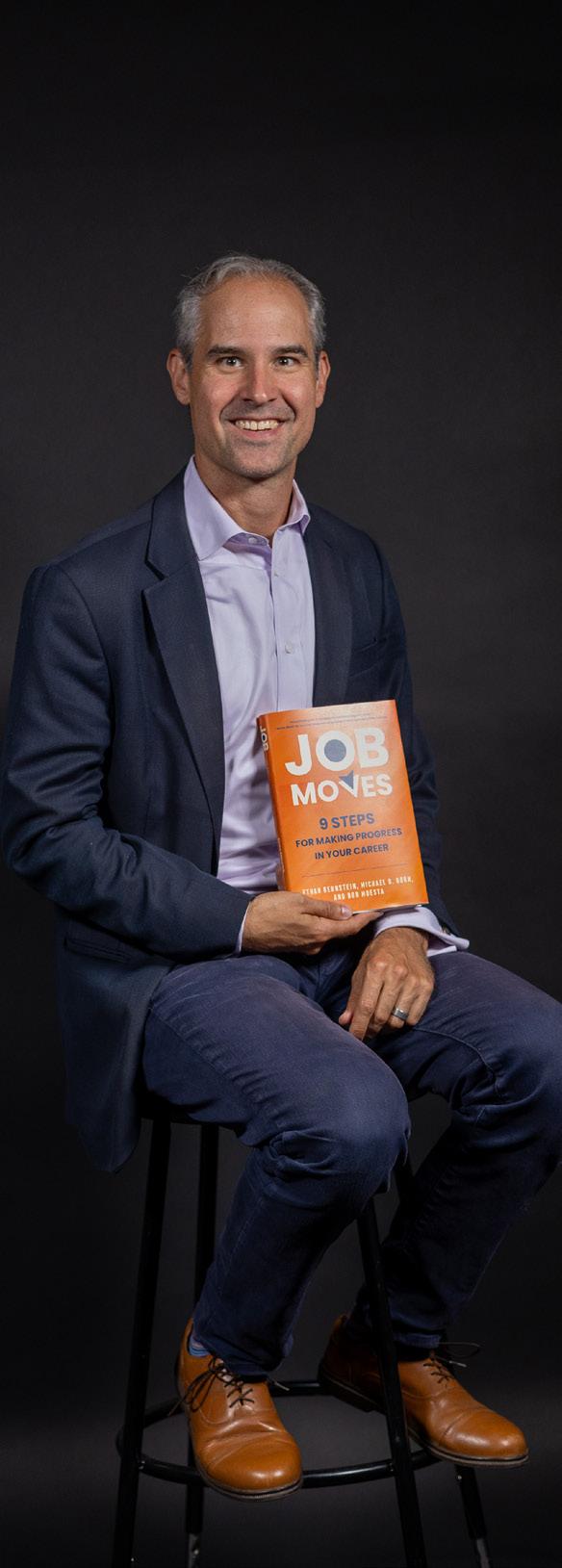
Michael Horn Adjunct Lecturer, Harvard Graduate School of Education
FEATURING INSIDE
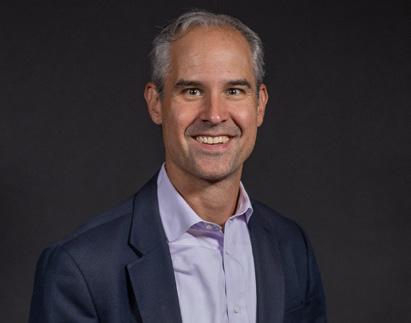
Sacha van Straten Head of Digital Innovation, St Catherine’s British School
Sethi De Clercq Computing Lead, Head of Key Stage 1, Rugby School Thailand
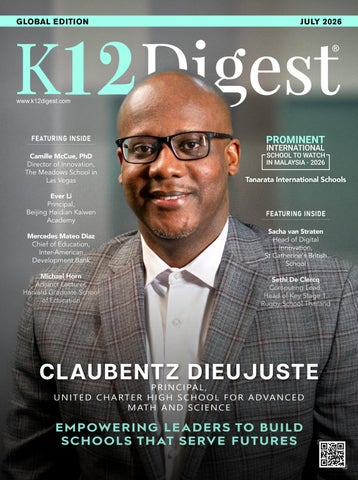
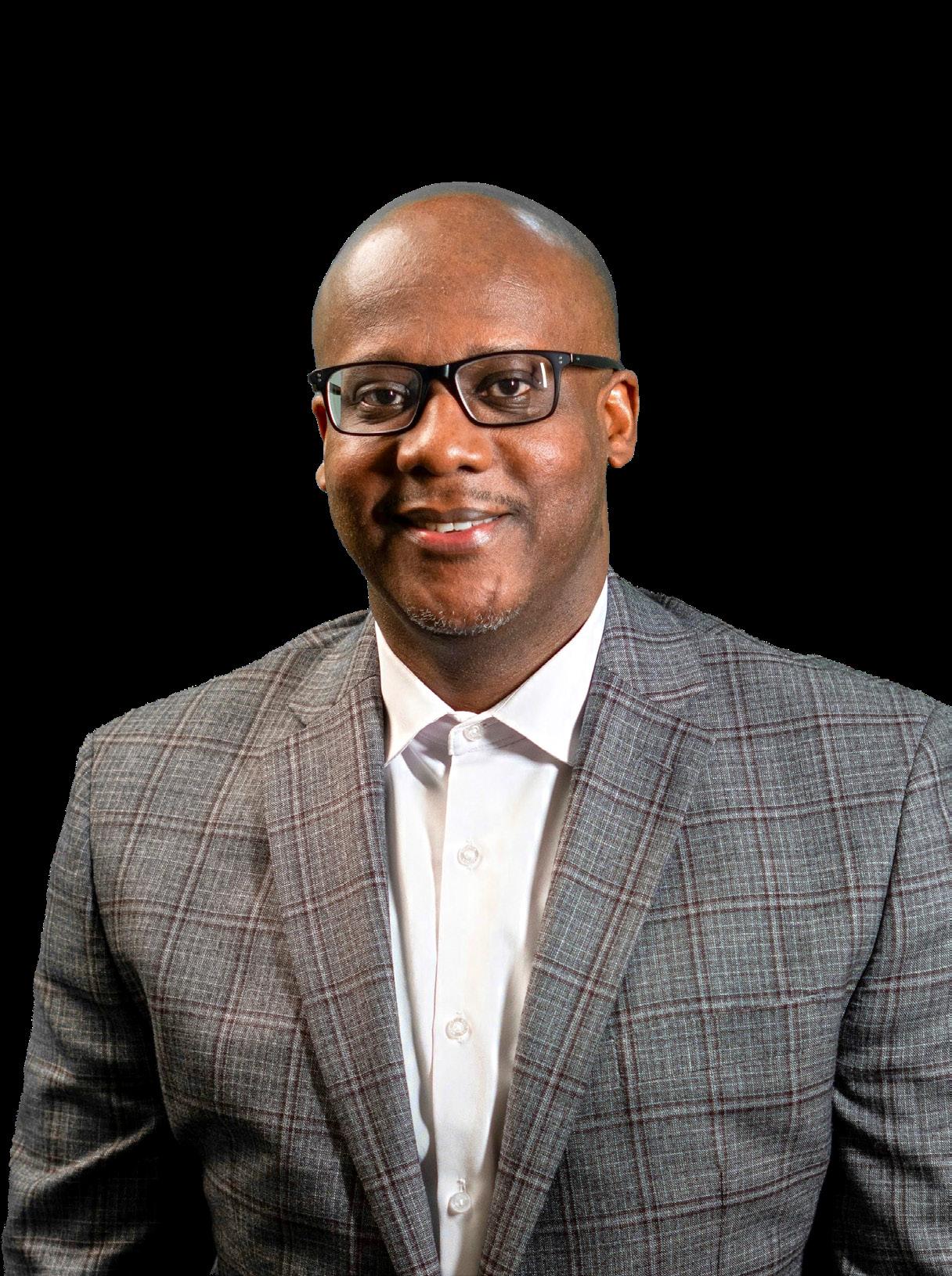
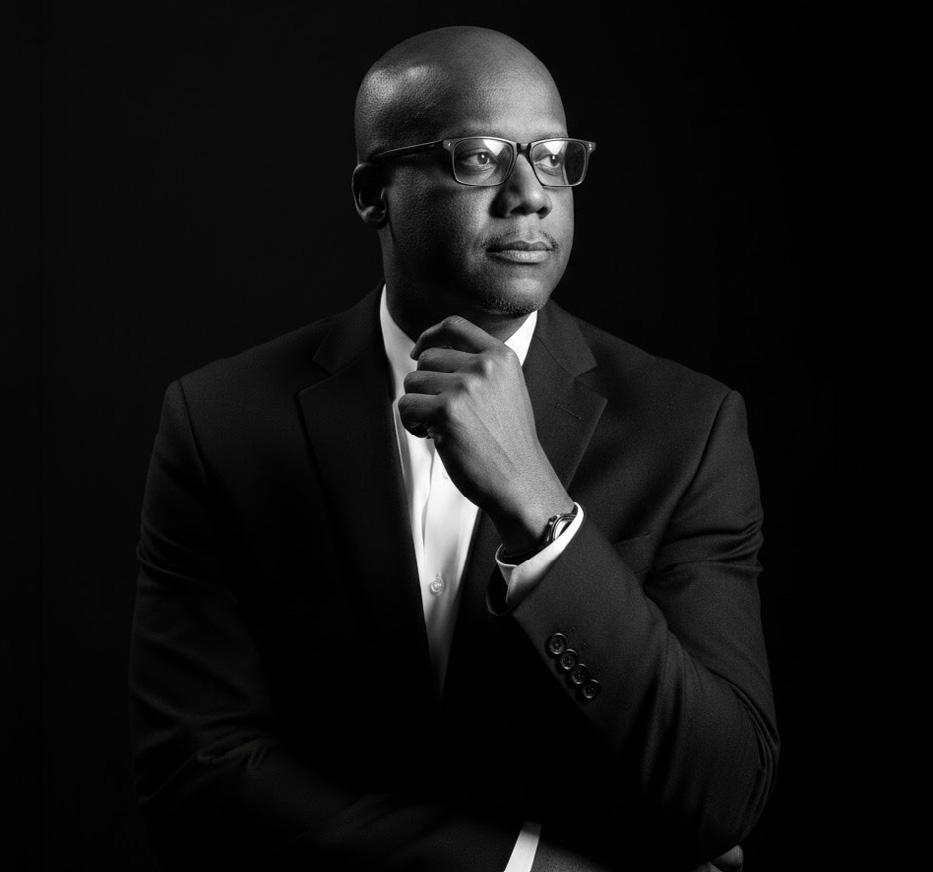
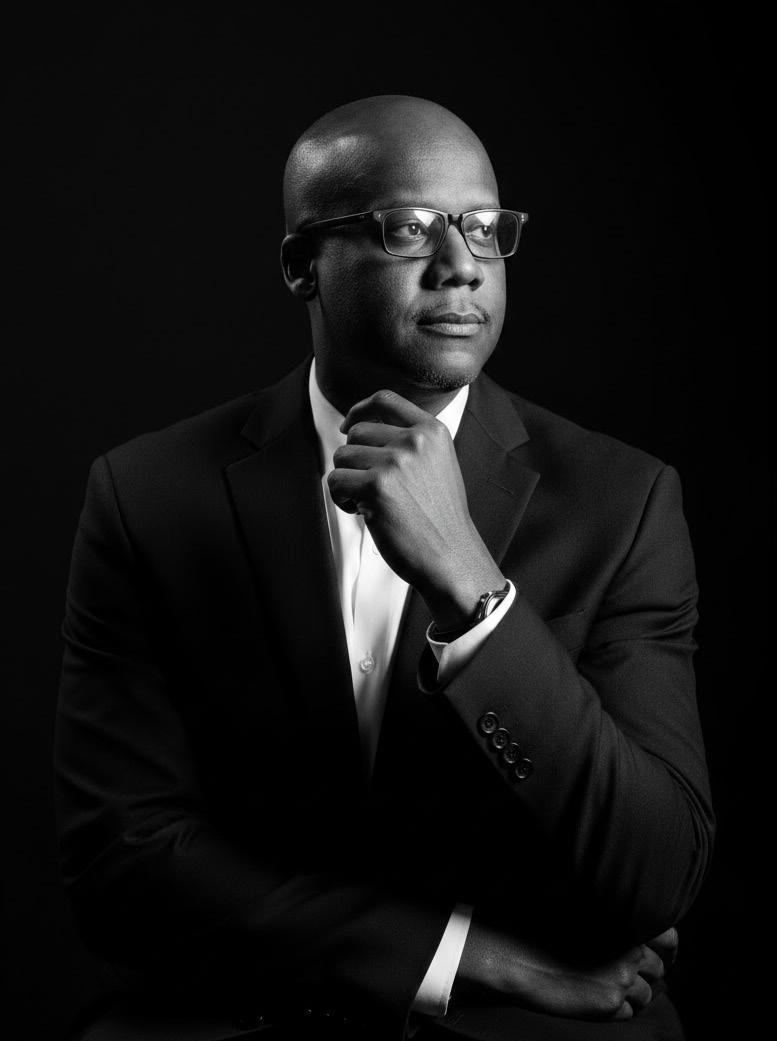
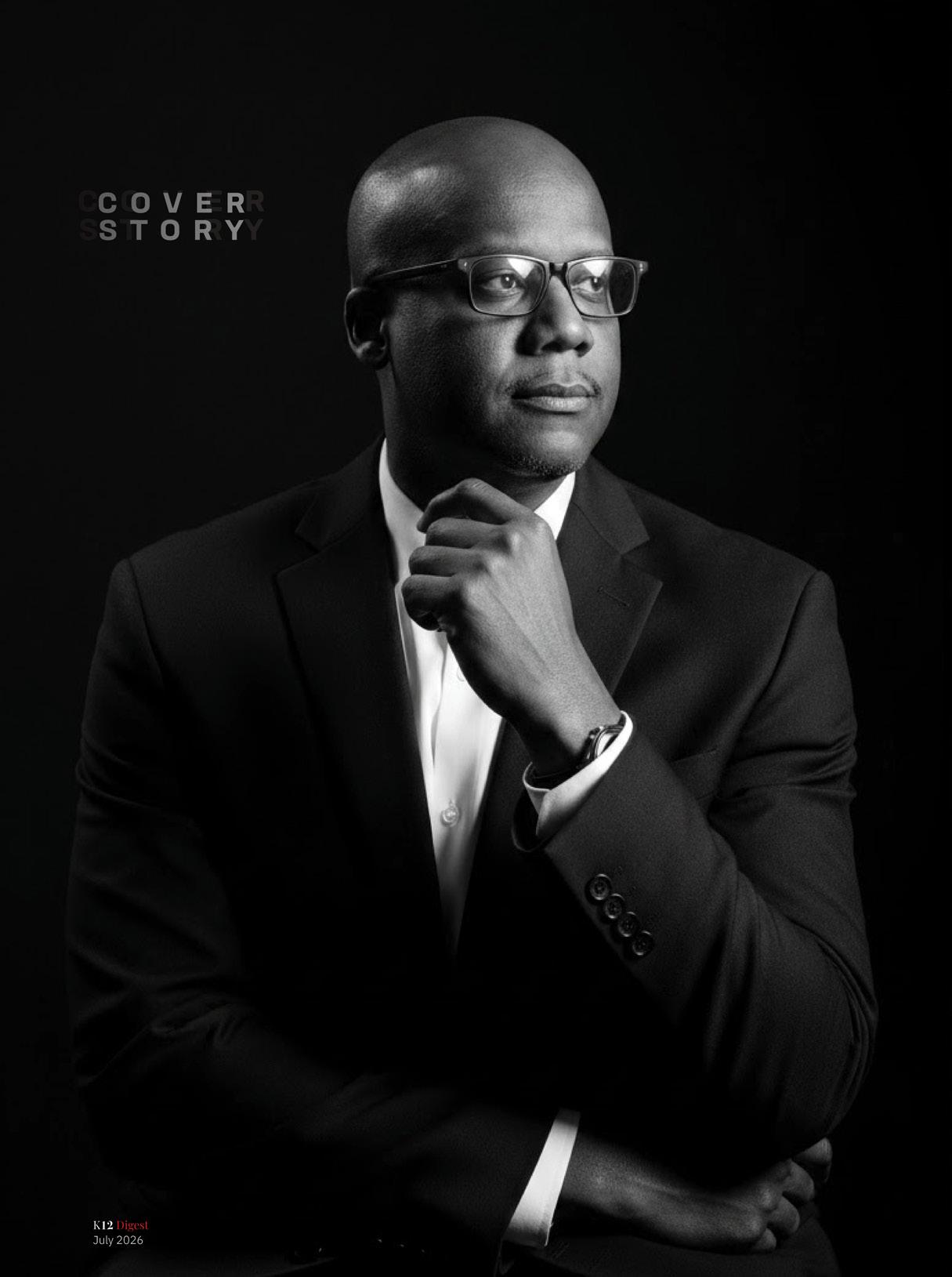
CLAUBENTZ DIEUJUSTE
PRINCIPAL, UNITED CHARTER HIGH SCHOOL FOR ADVANCED MATH AND SCIENCE
Tanarata International Schools
Managing Editor
Sarath Shyam
Consultant Editors
Dr. John Andrews
Emma James
Andrew Scott
Naomi Wilson
Stanly Lui
Joseph Alex
Art & Design
Charlie Jameson
Sales & Marketing
Jennifer Anderson
Alice Smith
Monica Davis
Anna Elza
K12 Digest www.k12digest.com is a global knowledge sharing digital platform published by Connecta Innovation Private Limited. All rights reserved. The opinions expressed in the content and pictures provided are those of the authors. They do not purport to reflect the opinions or views of Connecta Innovation Private Limited or any of its members and we do not assume any responsibility. The publisher does not assume any responsibility for the advertisements, its content, pictures, and all representation of warranties made in such advertisements are those of the advertisers and not of the publisher. K12 Digest www.k12digest.com is a Free Subscription and Free-to-read digital platform strictly not for sale and has to be strictly for internal private use only. Publisher does not assume any responsibility arising out of anyone modifying content and pictures, printing a copy of this digital platform in any format and in any country and all matters related to that.
MANAGING EDITOR’S NOTE
The Lessons That Matter Most Cannot Be Automated
Not long ago, the biggest question in education was whether technology belonged in the classroom. Today, that conversation has evolved. Artificial intelligence has moved from being a distant possibility to an everyday reality, reshaping how students learn, how teachers teach, and how schools operate. Yet amid all the excitement surrounding AI, I find myself returning to a far more important question: What becomes uniquely valuable when intelligence is no longer exclusively human?
As I speak with educators and school leaders across the world, one observation continues to stand out. The schools making the greatest impact are not those racing to adopt every new technology, but those that remain deeply committed to developing empathy, curiosity, resilience, ethical thinking, and meaningful human connections. While AI can generate answers within seconds, it cannot replace the encouragement of a teacher who believes in a struggling student or the confidence built through collaboration, creativity, and shared experiences. According to recent global studies, AI adoption in education continues to accelerate, but concerns around critical thinking, academic integrity, and student well-being are growing just as quickly. The challenge before educators is no longer whether to embrace AI, but how to ensure it enhances rather than diminishes the human experience of learning.
That is why our cover story with Claubentz Dieujuste, Principal of United Charter High School for Advanced Math and Science, arrives at such an important moment. His perspective moves beyond the technology itself and focuses on what truly matters: building adaptive leaders, empowering teachers, and creating school cultures where AI amplifies human potential instead of replacing it. His insights into leadership, continuous learning, and the future of education offer a thoughtful roadmap for schools navigating unprecedented change.
This issue of K12 Digest also brings together an inspiring collection of conversations, expert opinions, and feature stories that examine the evolving landscape of K-12 education from multiple perspectives. Together, they explore the challenges, innovations, and opportunities shaping classrooms around the world.
The future of education will not be defined by the sophistication of the machines we build, but by the character, compassion, and curiosity we cultivate in the young minds entrusted to us. As you turn these pages, I hope you find fresh ideas, meaningful inspiration, and renewed confidence that the most important lessons our schools teach will always be the ones that make us more human.
Enjoy Reading.
Sarath Shyam
CLAUBENTZ DIEUJUSTE
PRINCIPAL, UNITED CHARTER HIGH SCHOOL FOR ADVANCED MATH AND SCIENCE IV
EMPOWERING LEADERS TO BUILD SCHOOLS THAT SERVE FUTURES
TANARATA INTERNATIONAL SCHOOLS
16 Where Curiosity Finds Purpose
INDUSTRY PERSPCTIVE
TRANSFORMING LEARNING IN THE AGE OF AI
Mercedes Mateo Diaz, Chief of Education, Inter-American Development Bank
THE NEW ELECTRICITY: LEADING SCHOOLS AND FAMILIES THROUGH THE AI SHIFT
Sethi De Clercq, Computing Lead, Head of Key Stage 1, Rugby School Thailand
BEST PRACTISES
32
66 WE CAN’T AFFORD TO LOSE HALF OUR INNOVATORS
Camille McCue, PhD, Director of Innovation at The Meadows School in Las Vegas
EMPOWERING EVERY STUDENT TO BUILD A LIFE OF MEANING
Michael Horn, Thought Leader, Author, Speaker & Adjunct Lecturer at Harvard Graduate School of Education
ACADEMIC VIEW
ADMIN PERSPCTIVE
TRANSFORMING SCHOOLS WITH VALUES LED DIGITAL INNOVATION
Sacha van Straten, Head of Digital Innovation, St Catherine’s British School
THE FUTURE OF EDUCATION IS PERSONAL
Ever Li, Principal, Beijing Haidian Kaiwen Academy
Hi Claubentz. You started as a classroom teacher in NYC in 1999 and now lead a high-performing charter school while consulting across the country and co-founding a leadership academy in Ghana. When you think back to your first classroom, what was the moment you realized leadership — not just teaching — was your calling? Early in my teaching career, I moved into a role focused on school culture. That’s when I discovered I had a genuine gift for working with adults and shaping their thinking about their practice. I was trusted with real responsibility: holding the building when leadership was out, managing operations, setting the tone for culture. It wasn’t abstract. It was tangible. That’s when I understood that my impact multiplies when I lead systems and people, not just teach students. Being trusted with those stakes showed me that leadership was where I belonged.
What do you love the most about your current role?
I came into my current position at a pivotal moment when the school needed reimagining. I’ve had the privilege of building something special from that pivot point, starting with shaping the mission and vision statements that guide our work. I’ve created academies, built coherence across departments, established college and career pathways, and I see systems coming together. We will watch students graduate with the credentials we designed for them, whether that’s college credits, industry certifications, or other measurable outcomes. That full arc from conception to student success is irreplaceable.
There’s real fear that AI will replace teachers, but once we understand AI as a tool for amplifying impact, the teacher’s role becomes something different entirely
Urban public and charter schools are navigating enrollment shifts, AI, and new accountability models. Five years from now, what part of the traditional high school experience will be unrecognizable?
The obsession with standardized testing will fade. That’s coming. But more fundamentally, the role of the teacher will shift dramatically. There’s real fear that AI will replace teachers, but once we understand AI as a tool for amplifying impact, the teacher’s role becomes something different entirely. Assessment will move from measuring recall to measuring what students create and imagine. And here’s what becomes even more critical: the conversations teachers have with students will operate at a higher level. The care, the targeted support, the knowing of each student, those things only a human can provide. That relationship becomes more essential, not less.
Student discourse is a cornerstone of your schoolwide expectations. What guardrails do K-12 leaders need to set so AI enhances rather than replaces authentic academic conversation?
I resist the word “guardrails” because it implies restrictions. AI is a thought partner, not just a magic box with all the answers. The student has to own the thinking. At my school, we’ve made a deliberate choice about device use. Laptops are available when they solve a real problem in the task at hand, but we’ve suspended daily classroom use. There is time for devices and time for the human dialogue that happens organically, our meaning is made together. When we walk into classrooms, we want to see and hear students engaged in conversation, not
distracted by screens. Families supported this because they were struggling with the device used at home, too. Most teachers embraced it because it freed them to amplify the discourse happening in their rooms.
Teacher workload and burnout are real. How can K-12 leaders use AI to reclaim principal and teacher time for coaching, relationships, and culture — not just efficiency?
We adopted an AI-driven platform that teachers can use to plan and use their data faster, saving hours every week. Teachers upload what they want to teach, the standards they’re targeting, and the platform generates engaging options for instruction and assessment. Instead of building lessons from scratch, they review and tweak. It can also automate grading by uploading rubrics, so teachers spend time reviewing rather than manually scoring. When you give teachers those hours back, you have to be intentional about how they’re spent. The culture you build determines whether that time becomes meaningful. And you trust your coaching conversations to reveal whether it’s working.
Every educator has a “north star” thinker. Which historical figure in education, policy, or social justice do you consider a personal mentor from afar?
I am a fan of John Maxwell’s work. His work emphasizes humanity and people first, which aligns with my core belief: my students come first, but that means my team comes first too. I want to encourage them, show genuine appreciation for the work they do each day in service of our children. Their work contributes
directly to how young people navigate their futures. I’ve returned to his book LeaderShift repeatedly over the past few years, especially during periods of significant change. Good to Great has also been essential for understanding how systems and disciplines compound impact over time. Both texts ground me when change is happening faster than I can process.
Leaders carry ideas with them for years. Is there a book — education or otherwise — that you reread before every major school year?
LeaderShift by John Maxwell has been in my rotation for the last five years. I don’t reread it cover to cover, but I always have it readily available. I browse back through it for inspiration and recalibration. Other texts shift
seasonally, depending on what I’m wrestling with, but LeaderShift is the anchor. It reminds me of the essential changes every leader must embrace, and that’s a message I need to hear before every new year.
Where do you see yourself in the next 5 years?
I see myself working with multiple leaders, helping develop their capacity and increase their impact. I’m not chasing roles or visibility. I want to do meaningful work with leaders building systems that better serve students. A book may travel ahead of me, but I’m not interested in becoming a constant voice or public figure. I believe in staying quiet until I have something meaningful to say. The message gets diluted if you’re talking all the time. My focus is on the work itself: partnering with leaders to build systems that multiply their impact on the young people they serve.
If you were mentoring a new school head today, what would you tell them is the single most important leadership muscle to develop for the AI era?
Adaptive thinking. Continuous learning. Not lifelong learning as something you write on a resume and then ignore, but actual, active evolution alongside a world that won’t stop changing. New leaders need to know AI well enough to speak credibly about it. They should try things themselves, so their teams see them as partners in the work. But underneath that is something deeper: the ability to learn constantly, to stay uncomfortable, to shift when the landscape shifts. Everything is evolving. Your schools are evolving. Your students are evolving. You have to evolve as well.
TANARATA INTERNATIONAL SCHOOLS
Where Curiosity Finds Purpose
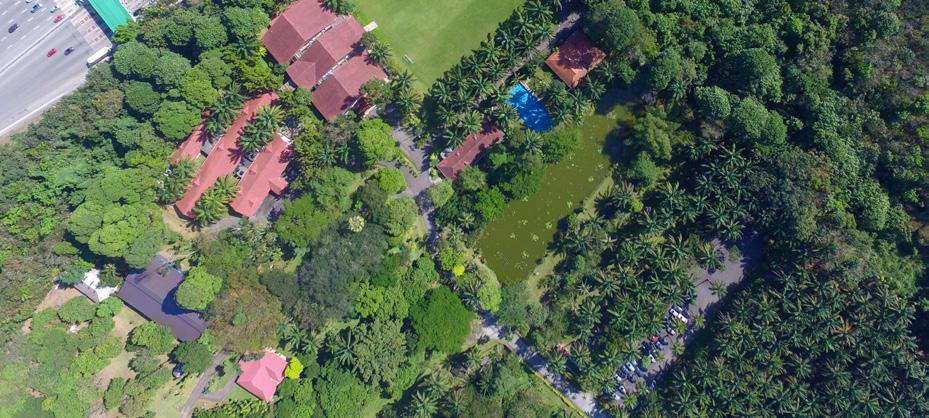
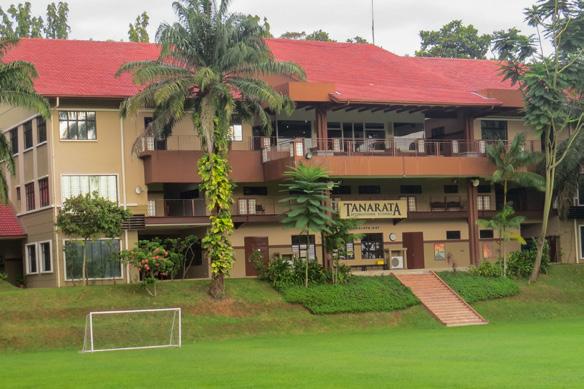
Nestled amidst lush greenery on the southern edge of Malaysia’s Klang Valley, Tanarata International Schools offers a learning environment where nature and education exist in harmony. Since opening its doors in September 2007, the school has remained guided by a clear and purposeful vision: to create a place where children are not only educated but also inspired to grow, explore, and discover their potential.
For Founder and Principal Barnali Guha, the goal was never limited to academic achievement alone. “We wanted to build a learning community that balanced academic excellence with character and skills development, creativity, and a love for lifelong learning,” she explains. That vision continues to shape every aspect of the school today.
and
Barnali Guha is the Founder and Principal of Tanarata International Schools, a role she has held since establishing the school in 2007. With a deep passion for education and student development, she has dedicated her career to creating learning environments that combine academic excellence with strong values, character formation, and community engagement.
Under her leadership, Tanarata International Schools has grown into a respected international school known for its nurturing atmosphere, multicultural community, and commitment to developing well-rounded individuals. She believes that education should extend beyond examination success to include creativity, critical thinking, leadership, resilience, and social responsibility.
Throughout her career, Guha has championed a student-centred approach to learning, emphasising the importance of meaningful relationships between students, teachers, and families. She has also been a strong advocate for experiential learning, project-based education, entrepreneurship, and holistic development.
Her vision for Tanarata continues to be guided by the school’s philosophy of “Prepared, Engaged, Inspired,” — ensuring that students are equipped not only for academic achievement but also for success and fulfilment in an ever-changing world.
Barnali Guha, Founder
Principal of Tanarata International Schools
Set within an ecosensitive campus near Kajang, Tanarata provides students with space to learn beyond the confines of traditional classrooms
Set within an eco-sensitive campus near Kajang, Tanarata provides students with space to learn beyond the confines of traditional classrooms. The natural surroundings serve as a daily reminder of curiosity, reflection, and connection with the wider world. Here, learning is designed to nurture intellectual growth while supporting students’ social, emotional, and physical development.
Tanarata thrives on a deep sense of community. By bringing together students, families, and educators from diverse cultural, racial, and national backgrounds, the school creates an environment where differences are respected and individuality is celebrated. The atmosphere is warm and personal, built on meaningful relationships and a genuine commitment to every child’s success.
“Tanarata is best described as a closeknit learning community where relationships matter,” says Guha. That philosophy is visible across the campus. Teachers know their students well, classrooms encourage participation and collaboration, and families play an active role in the educational journey. Small class sizes allow educators to provide individual attention, helping students build confidence while discovering their unique strengths and interests.
The result is a school culture that feels both nurturing and ambitious. Students are motivated to challenge themselves, embrace
new opportunities, and pursue excellence with confidence. At the same time, they know they are supported by a community that values kindness, respect, and personal growth as much as academic success.
As Tanarata continues to evolve, its founding vision remains firmly intact: to nurture wellrounded young people who are prepared not only for future careers, but also for meaningful lives and responsible citizenship in an increasingly interconnected world.
Growing with the Times, Staying True to the Mission
Over nearly two decades, Tanarata has grown alongside a rapidly changing educational landscape. While the school remains firmly rooted in the Cambridge curriculum, its approach to learning has continually evolved to meet the needs of a new generation of students and the demands of an increasingly interconnected world.
For Guha, adaptation has always been part of the school’s DNA. “Education is constantly evolving, and we have evolved alongside it,” she says. Guided by that mindset, Tanarata has steadily expanded its educational framework, integrating experiential learning, projectbased learning, entrepreneurship, leadership development, technology, and global citizenship into everyday learning experiences.
The result is a learning environment where academic knowledge is strengthened through real-world application. A science lesson may extend into a hands-on investigation. A classroom discussion may spark a community project. The curriculum prompts students to ask questions, explore possibilities, and connect their learning to the world around them.
At the same time, the school has remained deeply committed to the values that inspired its creation. Strong relationships, individual attention, and a genuine sense of community continue to define life on campus. Communication with families has become more collaborative, while student wellbeing programmes have grown in both scope and importance, ensuring that young people feel supported as they navigate the challenges and opportunities of modern life.
The belief that education should nurture the whole child forms the bedrock of Tanarata’s philosophy. Academic achievement is important, but it is only one part of a much broader journey. “Each student is an individual with different personalities and talents that need to be developed to their best potential,” Guha explains.
This belief is clearly visible across classrooms, sports fields, performance spaces, and leadership activities. The school inspires students to strive for excellence while cultivating qualities that go far beyond examination results. Curiosity, resilience, empathy, communication,
Tanarata has steadily expanded its educational framework, integrating experiential learning, project-based learning, entrepreneurship, leadership development, technology, and global citizenship into everyday learning experiences
and self-confidence are cultivated through experiences that challenge students to think independently and engage meaningfully with others.
Teachers play a vital role in this process. Rather than simply delivering content, they act as mentors and guides, helping students become active participants in their own learning. Through thoughtful questioning, collaborative projects, and practical applications, students learn not only to acquire knowledge but also to use it with purpose. As Guha puts it, the goal is for students “to be doers as well as communicators.”
Small class sizes further strengthen this approach. Teachers know their students as
individuals, understanding their strengths, challenges, and learning styles. This enables them to provide personalised guidance, meaningful feedback, and opportunities for each learner to grow at their own pace.
There is a quiet confidence that develops when students feel both challenged and supported. At Tanarata, that balance is carefully nurtured. Here, students feel safe to stretch beyond their comfort zones, knowing they are backed by educators who are genuinely invested in their wellbeing and success. It is an approach that helps young people build not only academic competence but also the resilience and self-belief needed to thrive far beyond the classroom.
Nurturing Thinkers, Creators, and Changemakers
Walk through a classroom at Tanarata and one thing quickly becomes clear: learning is an active process. Students are questioning, debating, creating, investigating, and collaborating. Ideas are explored from different angles, and curiosity is welcomed as an essential part of the learning journey.
This culture embodies a core belief that innovation, creativity, and critical thinking are no longer optional skills. They are essential qualities for success in a world defined by constant change and new possibilities. “The future will belong to individuals who can create, solve problems, adapt to change, and think independently,” says Guha. Preparing students for that future requires more than strong academic foundations. It calls for learning experiences that encourage exploration, initiative, and intellectual courage.
Across the school, students are challenged to move beyond memorisation and engage in deeper thinking. Through project-based learning, entrepreneurship initiatives, debates, scientific investigations, community engagement projects, and interdisciplinary learning experiences, they learn how to analyse information, evaluate perspectives, and develop solutions to real-world challenges.
The process is as important as the outcome. Students learn to collaborate with peers, communicate ideas effectively, and navigate uncertainty with confidence. They are encouraged to question assumptions, test their thinking, and view challenges as opportunities for growth.
Yet for Guha, education ultimately extends beyond skills and qualifications. The school’s
broader mission is to help students develop into individuals of character who understand their responsibilities to others and to the communities they serve. “We hope our students leave Tanarata with integrity, compassion, resilience, curiosity, and a strong sense of purpose,” she shares. Those qualities are woven into daily life at the school, shaping interactions in classrooms, leadership opportunities, service initiatives, and co-curricular activities.
At Tanarata, parents are viewed as partners rather than spectators. Open communication, transparency, and mutual trust form the foundation of that relationship
The vision for every graduate is both ambitious and deeply human. Academic success may open doors, but the ability to lead with empathy, act with integrity, and continue learning throughout life will determine the impact they make on the world around them. “We want our graduates to be confident enough to pursue their ambitions, humble enough to continue learning, and compassionate enough to
contribute meaningfully to their communities,” Guha adds.
Learning Beyond the Classroom Walls
At Tanarata, some of the most meaningful lessons happen outside traditional classroom settings. A student leading a community initiative, a team collaborating on a business idea, or a young performer stepping onto a stage for the first time may be developing skills that last far beyond their school years.
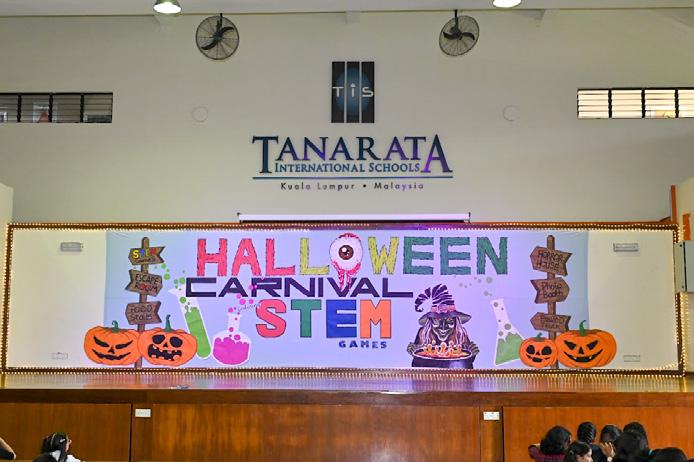
Life at Tanarata is intentionally designed to be rich with experiences. Throughout the year, students immerse themselves in sports, performing arts, leadership programmes, clubs, competitions, cultural celebrations, outdoor activities, and community service projects. These opportunities allow them to discover new passions, build lasting friendships, and develop the confidence to contribute as part of a team.
For Guha, these experiences are an essential part of a well-rounded education. “Our aim is
for students to look back on their school years not only as a period of academic growth and skills development, but also as a time filled with meaningful experiences, personal discovery, and lasting memories,” she says.
That philosophy comes to life through programmes that connect learning with authentic challenges and real-world contexts. Project-based learning initiatives encourage students to draw knowledge from multiple disciplines as they work together to solve problems, develop innovative ideas, and create practical solutions. The focus extends beyond understanding concepts. Students are encouraged to apply what they learn, collaborate effectively, and take ownership of their work.
“These initiatives encourage students to tackle authentic problems, collaborate across disciplines, and create innovative prototype products and services,” Guha explains. The experience helps transform learners into active contributors who understand how knowledge can be used to make a meaningful impact.
Entrepreneurship programmes provide another avenue for growth. Student-run markets and business ventures give learners firsthand exposure to planning, communication, leadership, and financial decision-making. The excitement is often palpable as students pitch ideas, engage with customers, and see their efforts translate into tangible results.
The same spirit of exploration extends to Model United Nations conferences, environmental sustainability projects, community outreach initiatives, field trips, and outdoor learning experiences. Whether debating global issues, working on conservation efforts, or engaging with local communities, students
are encouraged to view the world through a broader lens.
Many graduates look back on these moments as defining experiences. They are the opportunities that spark confidence, reveal hidden strengths, and inspire new ambitions. They remind students that education is not confined to textbooks or examinations. It is a journey of discovery that unfolds through experience, connection, and action.
Building a Community Where Every Voice Matters
Walk through the corridors of Tanarata and there is an unmistakable sense of connection. Students greet teachers by name. Conversations continue beyond the classroom. Younger learners look up to older students, while older students embrace opportunities to mentor and lead. This culture is not accidental. It has been carefully nurtured through a shared belief that every member of the community has a role to play in shaping the school experience.
Students take ownership of their learning and actively contribute to school life. Through leadership positions, clubs, community projects, cultural events, and everyday interactions, they help create the collaborative and respectful environment that defines Tanarata.
Guha believes that a thriving school culture begins with trust and participation. “We encourage students to take ownership of their learning and to contribute their ideas, talents, and perspectives,” she says. When students feel heard, valued, and empowered, they become active partners in building a stronger community.
This sense of agency helps cultivate confidence and responsibility. Students learn that leadership is not limited to formal titles.
It can be expressed through service, initiative, teamwork, and the willingness to support others.
The same spirit of partnership extends beyond the student body. Families are integral to school life, creating relationships that strengthen the educational experience for everyone involved.
At Tanarata, parents are viewed as partners rather than spectators. Open communication, transparency, and mutual trust form the foundation of that relationship. School events, information sessions, celebrations, newsletters, and community gatherings create regular opportunities for meaningful engagement. “The strong family atmosphere at Tanarata means that parents are not simply observers of their children’s education; they are active participants in the life of the school,” Guha shares.
This collaborative approach creates a support system that benefits students at every stage of their journey. When educators and families work together, students gain the confidence to take risks, embrace challenges, and pursue their goals with greater assurance.
The result is a community where relationships matter, voices are valued, and success is celebrated collectively. It is a culture that continues to distinguish Tanarata and provide a strong foundation for future growth.
Preparing Learners for an Unwritten Future
The future promises remarkable opportunities, but it also presents unprecedented complexity. New technologies, evolving industries, and global challenges are reshaping the way people learn, work, and connect. Preparing students for that future requires more than academic knowledge alone. At Tanarata, the focus is on helping young people develop the skills,
mindsets, and character needed to navigate uncertainty with confidence and purpose.
According to Guha, the qualities that will matter most are increasingly human in nature. Adaptability, creativity, collaboration, critical thinking, and emotional intelligence are becoming essential for success across every field. Students must learn how to analyse information, solve complex problems, communicate effectively, and work alongside people from diverse backgrounds.
At the same time, qualities such as integrity, empathy, resilience, and ethical decision-making remain equally important. While technology will continue to transform society, these human values will continue to shape how individuals lead, contribute, and make a positive difference in the world around them.
This perspective informs Tanarata’s longterm vision. The school is committed to continuously enhancing learning environments, expanding opportunities for experiential and
interdisciplinary learning, and strengthening international connections that prepare students for a globally connected future.
As educational practices evolve, Tanarata remains focused on preserving the qualities that have defined the school since its founding: meaningful relationships, individual attention, and a deep commitment to student growth.
Looking ahead, Guha’s aspirations are both ambitious and deeply rooted in the school’s founding purpose. The goal is to continue strengthening Tanarata’s reputation as a school where academic excellence is matched by a genuinely caring community culture, where innovation is balanced with character development, and where every student is encouraged to discover their unique potential.
While the world around them continues to change, the school’s mission remains remarkably consistent. “We want to ensure that every student is engaged, prepared, and inspired to reach their full potential,” Guha concludes.
The Future of Education Is Personal
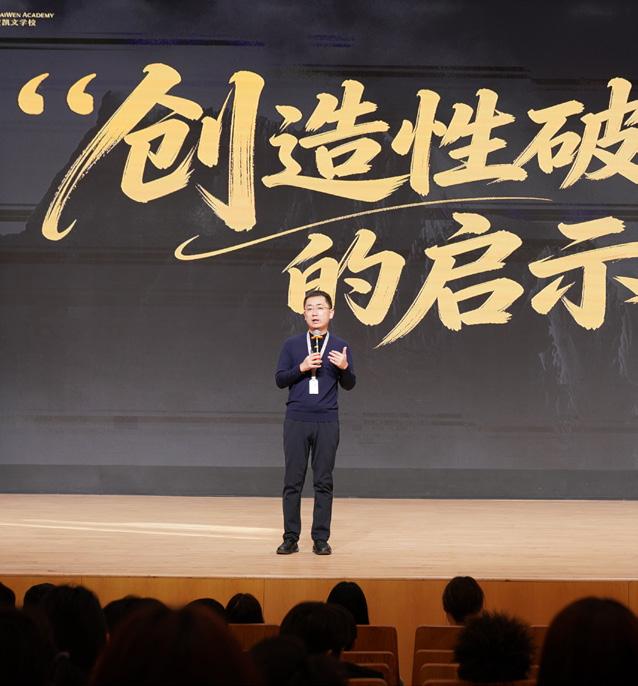
Ever Li, Principal, Beijing Haidian Kaiwen Academy
From IB Economics teacher and SAT teaching authority to international school administrator, Mr. Ever Li has spent decades in international education. In recent years, Mr. Li has researched and creatively practiced pathways for transforming traditional schools, promoting reforms centered on efficiency and vitality. Mr. Li is also a popular and charismatic mentor deeply trusted by students and families. He has personally mentored students admitted to Harvard, Yale, and other prestigious universities. His most recent book, Educating in the BANI Era, explores theoretical and practical guidance for parenting. He remains a firm idealist in education.
For many years, schools confused fairness with sameness. We believed that treating every child equally meant giving them the same lesson, the same pace, the same test, and the same definition of success. But in education, sameness is not always fairness. Sometimes, it is precisely what prevents a child from being truly seen.
This realization is becoming urgent across education systems around the world. For decades, standardized systems have played an important role in creating structure,
opportunity, and shared expectations. The challenge is not to abandon standards, but to stop mistaking standardization for fairness. As society changes, schools must ask a more difficult question: how can we preserve academic rigor while allowing children to develop through more than one path?
This question is not abstract to those of us working inside schools. After more than a decade as a school principal and educational leader, one truth has become increasingly clear to me: children do not grow, think, or learn in identical ways. Some grasp abstract concepts
As society changes, schools must ask a more difficult question: how can we preserve academic rigor while allowing children to develop through more than one path?
quickly but need support in emotional regulation. Some need more time with foundational literacy but show remarkable creativity, leadership, or empathy. These differences are not exceptions to education. They are the very material education must work with.
I have seen students who were quiet in lectures become confident during project presentations. I have also seen mathematically gifted students lose motivation when asked to wait too long for the rest of the class to catch up. These moments remind us that the child in front of us is always more complex than the system designed to measure them.
This is why personalized education is not simply a teaching strategy. It is becoming central to how schools think about excellence, human development, and the deeper meaning of equity. The paradox is that education becomes more equitable not when every child receives the same thing, but when every child receives what allows them to grow. At its core, personalization is a way of recognizing the intrinsic value of every student.
The question then is how schools can put this belief into practice. It requires change in two areas: how we teach, and how we support moral and character development.
Redefining How We Teach
First, we must move away from a standardized approach to academics. Every student learns at a different pace and absorbs information in different ways, so both teaching and assessment must become more flexible.
We can no longer stand at the front of a classroom and deliver the same static lecture,
Personalization in moral education requires teachers to practice a high level of emotional intelligence
expecting twenty different learners to process it in the same way. In practice, this means creating multiple pathways for learning. At our school, Beijing Haidian Kaiwen Academy, one example is the Jingrun Mathematics class, which offers students with strong mathematical potential a more focused and challenging pathway. The purpose is not to label students, but to ensure that ability, pace, and interest are met with greater precision. Students who are ready to move ahead should not be held back by the average pace of the class. Likewise, students who need more time to strengthen foundational literacy should be supported without being made to feel behind.
Assessment must also become more personalized. Project-based learning, presentations, and interactive simulations allow students to demonstrate mastery in different forms. A student may struggle with formulas but excel at leading a team, explaining a concept, or applying knowledge to a real world problem. A multiple-choice exam should not be the only lens through which that student’s ability is recognized.
Guiding Moral and Character Education With Greater Precision
Personalization must also extend into moral and character education. Character building is not a standardized process. Every student walks into the classroom carrying unseen experiences: family background, emotional patterns, personality, and a different level of trust in adults. As a result, students respond differently to correction, guidance, and emotional support. We cannot discipline or guide every child in the same manner. Personalization in moral
education requires teachers to practice a high level of emotional intelligence. There are several layers to this work: reading the setting, refining tone, and choosing the right moment.
Reading the setting is essential for teachers. For a highly sensitive child, a public correction in the middle of the classroom might trigger a defensive shutdown. For them, character guidance should take place in a safe, one-onone setting. For another student, a brief and respectful redirection in a group setting may be entirely appropriate. The setting must protect the child’s psychological safety.
In moral guidance, tone often determines whether the message can be received at all. An educator should distinguish the difference between firmness and harshness, and between gentleness and permissiveness. When teachers read a student’s emotional state and choose a tone that fits the moment, they are more likely to reduce defensiveness and build trust.
Timing also matters. Some students process emotions externally and need timely guidance soon after an incident, while the connection between action and consequence is still clear. Others become emotionally flooded. For the latter group, attempting to communicate in the heat of the moment will not work. An educator must know when to let the situation cool down, allowing the student to calm down before engaging in meaningful dialogue.
Education should be a process of one life encountering another. As educational leaders and practitioners, we must move beyond uniform models that appear fair but become rigid in practice. Every child is a distinct being, with their own talents, temperaments, needs, and possibilities. True equity is not
As educational leaders and practitioners, we must move beyond uniform models that appear fair but become rigid in practice
the uniformity of an assembly line. It is the commitment to see each child clearly, understand what they need, and create the conditions in which their strengths can emerge.
The industrial model of education was designed for efficiency. A personalized model asks for something more difficult: attentiveness.
It requires more nuance, more empathy, and greater adaptability from teachers and school leaders. But this is precisely where real education begins.
When we move toward personalization, we stop merely managing students. We begin educating the whole person.
The New Electricity: Leading Schools and Families Through the AI Shift
Sethi De Clercq, Computing Lead, Head of Key Stage 1, Rugby School Thailand
We are currently navigating a fascinating, albeit at times overwhelming, era in technology. This past year, it has felt as though every software vendor, platform, and application has suddenly integrated artificial intelligence into its core offering. Tech companies are moving at breakneck speed, fiercely competing in an AI arms race that leaves many educators and parents
feeling as though they are constantly struggling to catch up. The news won’t stop talking about how AI and its uses are impacting real everyday life. And above all, moral panic, not unlike that which we’ve seen when calculators came out, or the printing press revolutionised the spread of information, or the internet entered our living rooms is back for another round!
However, as school leaders, our most vital role right now is to step back, take a collective
Once we move beyond the initial anxiety surrounding this technology and shifting landscape, we can begin to lead with clarity
Sethi De Clercq is a passionate educator with experience across Early Years, Primary, and Secondary education. As Year 2 Teacher, Head of Key Stage 1, and Computing Lead at Rugby School Thailand, he leads with a focus on inclusive practice, high expectations, and meaningful integration of technology. Beyond the classroom, Sethi is a keynote speaker and trainer who has presented at conferences worldwide on EdTech and the future of education. He also runs the YouTube channel Flipped Classroom Tutorials, where he shares practical tools and strategies to empower teachers. His work centres on supporting educators globally to make confident, thoughtful choices about teaching, learning, and digital innovation.
breath, and reframe the narrative. Artificial intelligence is not a looming threat to be feared, nor is it a passing fad to be ignored. Instead, it must be respected as an inevitable, worldchanging technology, fundamentally shifting our landscape much like the advent of electricity or the internet and mobile devices.
Applying the Pedagogy-First Filter
Once we move beyond the initial anxiety surrounding this technology and shifting landscape, we can begin to lead with clarity. The goal is no longer about simply getting technology into the classroom; it is about acting as a critical filter between the aggressive push of the technology industry and the wellbeing of our school communities.
For years, there has been a tendency to adopt new technology simply for technology’s sake, driven by a fear of being left behind. Yet, true leadership in the AI era requires the confidence to say no. We must examine artificial intelligence and its impact with the exact same rigour and unbiased approach we apply to our most important school decisions, and in a wider sense we must approach this attitude when thinking of all technology integration efforts. When we look at a new curriculum framework or decide which vendors we trust with personally identifiable information, we employ strict, uncompromising standards. AI tools must face this same scrutiny. We must apply a “pedagogy-first” filter to every piece of software. If an AI feature does not serve a clear, demonstrable pedagogical purpose, or if it obscures the cognitive heavy lifting we want our students to engage in, it does not belong in our classrooms. The learning objective must
always dictate the technology, never the other way around. At the end of the day, technology companies are in the business of user-adoption and user-retention, not meaningful pedagogical impact, although some will no doubt claim this.
Rethinking Modern Safeguarding
This rigorous approach naturally extends into how we manage safeguarding. Historically, digital safeguarding in schools leaned heavily on web filters and restricted access. In the age of open information access and generative AI, this reactive model is no longer sufficient.
AI awareness must become, if it isn’t already, an embedded, foundational part of our safeguarding practices, staff training, and overall provision. It is no longer an isolated issue for the IT department to manage; it is a whole-school responsibility. We need to ensure our staff are equipped to understand the nuances of AI-generated content, the potential for algorithmic bias, and the critical data privacy implications of the platforms our students use daily.
Strengthening the Home-School Alliance
This brings us to a crucial, often overlooked element of navigating this landscape: the homeschool-student partnership triangle. Parents are understandably overwhelmed by how fast the digital world is shifting beneath their feet.
We are raising a generation of digitally comfortable learners who can navigate a tablet interface with astonishing ease before they can tie their shoelaces. However, it is a dangerous misconception to confuse this digital comfort with digital literacy. Our students may know
The technology will continue to evolve rapidly, and the noise from the corporate sector will only grow louder
how to operate the devices, but they lack the critical compass required to evaluate a flood of generated content or understand the mechanisms driving the platforms they use.
As modern educational leaders, we must actively partner with families to bridge this gap. We need to provide parents with the reassurance and the practical frameworks necessary to foster a balanced, healthy digital life at home. This means shifting the conversation away from anxious, restrictive battles over ‘screen time’ and moving towards meaningful discussions about purposeful ‘screen use’. Concepts such as ‘over-sharenting’, ‘digital footprints’, and ‘online identity sub-cultures’ should not be avoided as topics for discussion.
By opening clear, continuous lines of communication with families, we demystify the technology. We can share the language and frameworks we use in school to evaluate information, allowing parents to reinforce those same critical thinking skills at the dinner table.
From Consumers to Creators
While it is easy to focus on the challenges, this shift also presents an opportunity to rethink how schools consume technology. We are currently witnessing the democratisation of coding and custom software development. In the past, schools were almost entirely reliant on purchasing expensive, bloated
corporate software packages that offered a onesize-fits-all solution to nuanced educational challenges. Today, the barriers to creating bespoke digital tools have been dramatically lowered. Educators and school leaders now have the capability to build custom, accessible software solutions in-house.
By leveraging these democratised tools, we can shift our schools from being mere consumers of corporate technology to creators of our own tailored, safe learning environments. Building our own solutions allows us to maintain absolute control over our data, strip away unnecessary features that distract from learning, and design interfaces that perfectly match our specific pedagogical needs. It is an incredibly empowering shift that allows us to take back control from large
vendors and ensure that the technology we use is perfectly aligned with our school’s ethos.
Leading with Confidence
Ultimately, navigating the AI shift is a test of our leadership and our grounding. The technology will continue to evolve rapidly, and the noise from the corporate sector will only grow louder. By anchoring ourselves in rigorous evaluation, embedding modern safeguarding practices, building strong partnerships with our families, and seizing the opportunity to create our own bespoke solutions, we can lead our communities confidently into the future. We can ensure that as the landscape changes, our focus remains exactly where it should be: on the holistic growth, wellbeing, and education of the children in our care.
Transforming Learning in the Age of AI
Mercedes Mateo Diaz, Chief of Education, Inter-American Development Bank
Hi Mercedes. Your work spans institutional reform, inequality, early childhood, and digital skills across a broad region. What moment in the field made you realize the unique leverage you had to influence education systems?
There wasn’t a single moment. It was more of a process, a journey. I came into this work through academia, genuinely in love with research. I believed that rigorous knowledge was a powerful instrument for change. And it is, but the accumulation of evidence is just the beginning. What my academic work taught me, even before I entered the field, was the importance of politics and institutions, and the political economy of reform. I understood it theoretically. But it was when I joined the IDB that I saw it alive.
Take early childhood development. The data is unambiguous. We know what works, we have decades of rigorous evidence, and yet policy doesn’t automatically follow. Sometimes the bottleneck is genuinely knowledge or data. But far more often it is something else entirely: the architecture of the system, the incentive structures, the trust or lack of it between technical teams and decision-makers, and the political economy of reform. In a context of fiscal constraints, how do you convince a Minister of Finance to prioritize education investments over infrastructure, over debt servicing, over a dozen other legitimate competing demands? You have to find a common language between ministries of finance and education. You have to
Mercedes Mateo is the Division Chief of Education at the Inter-American Development Bank (IDB), where she leads a team of specialists and professionals to support the transformation of educational systems in Latin America and the Caribbean. Her work covers different areas of social policy, with an emphasis on inequality. She has coordinated the research, design, execution, and evaluation of innovative projects in education, as well as contributions to institutional reforms, education, childcare policies, soft skills development, female labor participation, and social cohesion. She has a PhD in political science from the University of Louvain in Belgium. From 2002 to 2004, she was a Marie Curie Postdoctoral Fellow at the Robert Schumann Center of the European University Institute.
Recently, in an exclusive interview with K12 Digest, Mercedes shared insights into how her path from academia to the IDB revealed that real leverage in education comes not from producing research alone, but from bridging knowledge, political understanding, and implementation design in the rooms where decisions are made. For teachers shifting from knowledge deliverers to learning designers, Mercedes called for a recentering of the profession built on pedagogical content knowledge, collaborative professional time, and metacognitive capacity — skills no algorithm can replicate. Ultimately, she sees the urgent task as ensuring that AI becomes a tool for augmentation, not substitution, and that education systems distribute human capability rather than concentrate it. The following excerpts are taken from the interview.
communicate results in terms that speak to their constraints, not just your convictions. And you have to be willing to work through compromise without losing sight of what actually matters. That experience crystallized something for me. The real leverage is not in producing better research alone. It is in bringing together knowledge, political understanding, and implementation design, and being present in the room where decisions are made with enough credibility in both the technical and political worlds to bridge them. That rare combination of intellectual depth, operational experience, and institutional fluency is what transforms evidence into change. Once you understand that, the whole nature of the work shifts.
As artificial intelligence reshapes how students access information, what do you believe will define a “new education model” that prepares learners to think, not just search?
The new education model will be defined by a fundamental recalibration of what we consider valuable. We have in front of us a complete reshaping of which skills matter and which don’t. For centuries, educational institutions
were custodians of knowledge because it was a scarce resource. Today, any student with connectivity has access to more information than any library in history. What remains irreplaceably scarce, and therefore genuinely valuable, is the capacity to do something useful, ethical, and creative with that information.
But when I talk about fundamental recalibration I am not only referring to the shift from accumulating facts to connecting them. I am also talking about a recalibration in the value we assign to different kinds of education and formation. Let me give you a striking example. Daniela Amodei, President of Anthropic, one of the leading AI companies in the world today, studied music and literature. A humanist, leading the frontier of artificial intelligence. That is not a coincidence or an anomaly. It is a signal. Humanistic education develops something that is fundamentally needed in this moment: the capacity to think across boundaries, to hold ethical complexity, to ask not just how to build something but whether it should be built, and for whom. The leaders shaping AI are not only the ones who can code it. They are the ones who can think about what it means.
The new education model will be defined by a fundamental recalibration of what we consider valuable
So what does this new model actually look like? It starts with what neuroscience tells us clearly: you must build the analog skills first. Critical thinking, the ability to construct and deconstruct an argument, to read a complex text and find its fundamental architecture, to tolerate ambiguity and reason under uncertainty. These are not soft skills. They are the cognitive infrastructure upon which everything else is built. At the same time, we cannot isolate students from digital reality. They need to learn with technology, but more importantly they need to learn about it, understanding its logic, its limits, its embedded values and biases. That combination, analog foundation and digital literacy, is what produces a person who uses AI rather than one who is used by it.
And we must be honest that this transformation is not incremental. It is not about integrating AI tools into existing classrooms and calling it innovation. It requires reimagining the purpose of learning itself. But perhaps the most urgent dimension of this recalibration is equity. It cannot be that children from wealthy families learn about AI while children from poor families simply learn with it. The first group develops agency and judgment. The second risks becoming a passive consumer of intelligence designed elsewhere. That is not a digital divide. It is a human one.
Finally, the new model demands that we change what we evaluate and reward. We have spent generations celebrating the correct answer. We must now develop the capacity to ask better questions, to analyze, to synthesize across disciplines. We should be designing curricula around problems that do not respect disciplinary boundaries, because the most important challenges of our time certainly don’t.
We’ve spent decades closing the digital divide, yet AI tools are now widely available. Why might the next major inequality be cognitive rather than digital, and how would we recognize it in schools today?
The digital divide was always about access. Who had the device, the connection, the platform. And closing that gap was and it is still today necessary and important. But I think we have made a quiet assumption along the way: that access to tools was equivalent to access to opportunity. The AI moment holds that assumption up to a mirror, and what we see reflected is not comfortable.
The inequality I worry about most is not who has access to an AI assistant. It is who has developed the cognitive foundation to use that assistant as a tool for augmentation rather than a substitute for thought. And that divide is already forming, not along lines of connectivity, but along lines of educational philosophy and family resources. What we are seeing is that families with greater means are choosing schools that offer rich humanistic formation. Schools that prioritize reading on paper, the arts, music, physical engagement with the natural world. These environments develop the foundational analog capacities that become decisive in an AI-agentic world. Meanwhile, more affordable and scalable educational solutions tend to rely heavily on technology-mediated instruction, which is not without value, but which, if applied without the right foundations, risks producing what I call passive consumers of intelligence rather than active generators of it. We need to make sure that when students are exposed to AI as a pedagogical tool have the cognitive architecture that would allow them to use it well.
And the neuroscience here is sobering and we need to take it seriously. In the first years of life, when the brain is in its most critical period of development, indiscriminate exposure to screens floods the developing nervous system with stimuli it is not yet equipped to process. Neuroscientists describe what follows as accelerated maturation: the brain, overwhelmed by input, skips foundational developmental stages in order to cope. What sounds like precocity is in fact a deficit. Those skipped stages show up later as reduced resilience, lower cognitive flexibility, and diminished capacity for sustained attention, precisely the capacities most needed in a complex world. Jean Twenge’s longitudinal research on adolescents documents the sharp correlation between rising screen time and rising rates of anxiety, depression, and loneliness among teenagers, particularly girls. More recently, Jonathan Haidt’s work in The Anxious Generation synthesizes a broad body of evidence linking smartphone adoption and social media use in early adolescence to deteriorating mental health outcomes across multiple countries and demographic groups.
At the university level, the evidence is equally
striking. A study led by Nataliya Kosmyna and colleagues at MIT’s Media Lab, titled Your Brain on ChatGPT, tracked students over four months using EEG technology to measure brain activity while they wrote essays under three conditions: using ChatGPT, using a standard search engine, or working with no tools at all. The AI-assisted group showed the lowest levels of neural engagement, and when tested afterward on retention and comprehension, they remembered less and showed weaker understanding than students who had written independently. A striking 83% of ChatGPT users were unable to quote from the essays they had just written. The researchers coined the term cognitive debt to describe this phenomenon: while AI
tools spare the user mental effort in the short term, they generate long-term costs including diminished critical thinking, reduced creativity, increased vulnerability to bias, and shallow information processing.
Perhaps most telling was a detail about subjective experience: the AI-using students reported feeling more confident about their work, even as less actual learning had taken place. This is why the emerging cognitive inequality is so difficult to see and so dangerous to ignore. The smooth, effortless quality of AI-assisted thinking masked the fact that the cognitive work required for genuine understanding had simply not occurred. The brain, like any complex system, develops through use. Capacities that are not exercised do not simply remain dormant. They atrophy.
We need to make sure that when students are exposed to AI as a pedagogical tool have the cognitive architecture that would allow them to use it well
Teachers are moving from knowledge deliverers to learning designers. In a world where cognitive capacity may become the new equity line, what support do educators need to lead that shift?
If we are serious about recalibrating what students learn, what we consider valuable, and which skills matter, then we need an equally fundamental reconceptualization of the role of the teacher. And that begins with how systems value what teachers do.
In the new education model I described earlier, the goal is no longer the transmission of codified knowledge. It is the development of cognitive infrastructure: critical thinking, the capacity to construct and deconstruct arguments, to tolerate ambiguity, to reason under uncertainty, to ask better questions rather than retrieve stored answers. If that is what we want students to develop, then the teacher can no longer be a deliverer of content. They must become designers of learning environments, an architect of experiences where curiosity, judgment, and synthesis are not occasional activities but daily practice. That requires preparation, support, and recognition.
For too long, teaching has been assessed by coverage: how much of the curriculum was transmitted, and how students performed on standardized recall. That model made sense when knowledge was scarce and the school was its custodian. Now, if we want teachers to lead the shift toward cognitive formation, we have to evaluate and reward them accordingly. That means measuring not just what students know at the end of a unit, but whether they can think independently, construct original arguments, and engage productively with problems that have no
single correct answer. And for that, teachers need pedagogical content knowledge, collaborative professional time, and the development of their own metacognitive capacity. To achieve that, we need to fundamentally rethink preservice and in-service training.
Pedagogical content knowledge requires not just mastery of subject matter, but genuine understanding of how learners develop and understand it. Where are the conceptual sticking points? How do you design a sequence of experiences that moves a student from surface familiarity to genuine intellectual ownership? This kind of knowledge is not intuitive and it is not acquired in a single training session. It requires sustained professional training and practice.
Collaborative professional time is structurally rare. The most effective school systems in the world treat teacher learning as an ongoing collective practice. Teachers co-design lessons, observe each other in classrooms, and reflect together on what is working and why. What builds teaching quality is structured, disciplined collaboration between practitioners who trust each other enough to be honest.
Teachers’ own metacognitive capacity is the ability to observe and articulate one’s own thinking processes, to notice when reasoning is going well and when it is being shortcut or influenced. It is not just a skill we want students to develop. It is a skill teachers must embody and model. Because the most powerful thing a teacher can demonstrate in an AI-agentic world is not how to find the answer. It is how to reason through genuine uncertainty, how to recognize when one’s own judgment is being shaped by unconscious biases, and how to maintain intellectual agency in a world
specifically designed to shortcut it. That capacity, metacognitive awareness as a lived practice and a condition of freedom, is what great teachers will transmit to their students. And it is something no algorithm can replicate or replace.
Books shape how leaders think about power, policy, and people. What book on development, politics, or learning has the most notes in your margins, and what idea from it shows up in your work?
Two intellectual obsessions have genuinely shaped how I think about education and development, and I find them inseparable.
The first is the question of why some countries create wealth, and others don’t, and more specifically, why some nations that started with very little became engines of prosperity, while others richly endowed with natural resources remained trapped in low growth and inequality. I remember being in Gothenburg during part of my PhD program, deeply puzzled by the Nordic countries. I asked a professor what had driven Sweden toward such high levels of equality. His answer was vert straightforward: we were poor. We had no natural resources. When you have a lot to extract, some people own the resources and the rest work. Here, we had to do something else. Since then, the literature that traces the institutional and political foundations of prosperity has been very influential in my work. Hirschman’s Exit, Voice, and Loyalty gave me a framework for understanding how individuals and institutions respond to decline and opportunity. Acemoglu and Robinson’s Why Nations Fail extended that into a systematic argument about inclusive
When I think about where to direct investment in education, whose learning outcomes we measure and whose we ignore, which children have access to the kind of formation that unlocks human potential, I am always, somewhere in the background, behind that veil
versus extractive institutions. The idea that what separates prosperous from failing states is not geography or culture, but whether political and economic institutions distribute power broadly or concentrate it. Ray Dalio’s The Changing World Order adds the temporal dimension, showing how even great empires follow cycles of rise and decline, often determined by the same institutional dynamics. These books are present in how I think about education systems. They are not just about schooling. They are about whether a society is investing in the distributed development of human capability or extracting value from the many to concentrate it among the few.
The second obsession then follows naturally from it: distribution. Not just how wealth is created, but who benefits from it. And here the most influential text for me has been John Rawls’s A Theory of Justice. The concept of the original position and the veil of ignorance is one of the most powerful thought experiments in the history of political philosophy. If you did not know which position you would occupy in a society, rich or poor, majority or minority, born in a capital city or a remote rural community, how would you design its institutions? Rawls argues that behind that veil, rational people would choose a society that protects basic liberties for all and arranges inequalities only to the benefit of the least advantaged. That framework lives in my work every day. When I think about where to direct investment in education, whose learning outcomes we measure and whose we ignore, which children have access to the kind of formation that unlocks human potential, I am always, somewhere in the background, behind that veil. The question is not what is most efficient on average. It is what is just for the child who had no say in where she was born.
Rest fuels sustainable leadership. What hobby or ritual helps you return to work with fresh energy for policy, partners, and teams?
I believe the answer to sustaining energy rests in a combination between the self and the others. Resilience lives in the tension between two needs that can feel contradictory: the need for stillness and reflection and the need for belonging and connection. To store energy and resource, one needs time to be alone without feeling abandoned, and time to be with others without feeling lonely.
The first part therefore is time with myself. Not idle time, but reflective time. I talked earlier about metacognition as something we need to cultivate in teachers, the capacity to observe one’s own thinking, to notice when reasoning is going well and when it is being distorted by fatigue, pressure, or bias. That practice is not only pedagogical. It is deeply personal. Leadership without self-reflection is leadership on autopilot, and autopilot in complex, high-stakes environments eventually leads somewhere you didn’t intend to go. The moments I carve out for myself, whether in the early morning, in movement, or simply
Protecting the conditions that make us capable of sustained, high-quality work as individuals and teams is not selfishness. It is responsibility
They remind me, constantly, of what actually matters and of the world they will inherit from decisions being made right now. Being their mother has made me a better leader in ways I could never have anticipated.
My parents and friends are another irreplaceable source of strength. Through good times and bad, they hold the fort. They tell me the hard truths, but they also know how to celebrate life. That combination of honest counsel and shared joy is rare, and I do not take it for granted.
At work, I have had the privilege of building relationships with people who read me and I can read. People with whom I can genuinely think through hard problems rather than simply get things done. There is a profound difference between those two things. A team that simply gets things done collectively is exhausting. A team built on deep professional trust, mutual inspiration, where you can think out loud, be wrong, change your mind, and still be taken seriously, is generative. That kind of trust does not happen automatically. It is built over time, through consistency and through the courage to be honest even when it costs something.
That network, family, close friends, and colleagues with whom you feel genuinely safe, is not a peripheral benefit of a good life. It is the infrastructure that sustains life itself and leadership. Without it, you can perform for a while. You can push through on willpower and discipline and a sense of duty. But you cannot endure. Reflection and connection can be sacrificed when urgency takes over. And in this kind of work, urgency is always present. Protecting the conditions that make us capable of sustained, high-quality work as individuals and teams is not selfishness. It is responsibility.
From Ph.D. to Chief, you’ve built technical and political capital. What advice would you give a researcher who wants to move into implementation?
The journey from academia to public policy is fascinating. Development is one of the “messiest jobs”, to borrow Luis Garicano’s concept. Not the clean, well-defined, single-task role. Rather the kind of work that requires you to navigate ambiguity, combine multiple disciplines, read people and contexts, and make judgment calls that no algorithm can make for you.
The first thing I would say to that researcher is that the skills that make you excellent in academia are a great asset for policy. Analytical skills, the ability to hold complexity, and intellectual honesty about uncertainty: these are all enormously valuable qualities. But they need to be translated. Not simplified. Translated. Policymakers are operating under fundamentally different constraints, with different incentive structures, shorter time horizons, and the weight of political accountability that no academic paper ever carries. Your job is not to water down your ideas. It is to learn to communicate their essential logic in a language that speaks to the decisions actually being made. That requires a kind of situational intelligence that no PhD program teaches explicitly, but that you need to develop deliberately.
The second thing I would say is develop your political intelligence without sacrificing your intellectual integrity. Understanding power, who holds it, what they want to protect, what they might be willing to risk, is not cynicism. It is the condition of effectiveness. The researchers who move successfully into policy are those who learn to navigate institutional complexity without losing clarity about what actually
Change happens when technical credibility and political fluency meet in the same person or the same team
matters and why. Walking into a Ministry of Finance with a stack of evidence is not enough. You have to understand what that minister is trying to protect, and the pressures they are navigating. Change happens when technical credibility and political fluency meet in the same person or the same team. Building both, without letting either crowd out the other is the real work of change management.
Third: take implementation seriously as an intellectual discipline. There is sometimes an implicit hierarchy in academic culture that treats ideas as noble and execution as administrative. That hierarchy is wrong and costly. The distance between a well-designed policy and a well-implemented one is where most reforms go to die. Understanding how institutions actually work, how incentives shape behavior at every level of a system, how trust is built between technical teams and decision-makers, how you sequence reforms in a context of fiscal constraints: these are genuinely complex intellectual problems. Treat them that way.
And finally, find your people. Leadership in implementation can be demanding in ways that research rarely is, because the feedback loops are slower, the variables are harder to control, and the stakes are human and immediate. What sustains you through that is not a hobby or a ritual. It is the people around you, at work and at home, whom you genuinely trust, admire and can think alongside. That network is not a peripheral benefit. It is the infrastructure that makes everything else possible over the long run. As messy as this work is, as demanding and unpredictable and humbling as it can be, I would not trade it for anything.
Empowering Every Student to Build a Life of Meaning
Michael Horn,
Thought Leader, Author, Speaker & Adjunct Lecturer at Harvard Graduate School of Education
Hi Michael. Your career spans Harvard, Yale, the Clayton Christensen Institute, and multiple bestselling books.
Looking back at your BA in history at Yale, what first sparked your interest in how people learn and how systems change?
My interest in this topic didn’t start at Yale. 9/11 occurred at the beginning of my senior year at Yale. I graduated only knowing that I wanted to make a positive impact in the world—but I didn’t know what that would look like for me.
My passion for how people learn and how to change systems didn’t take off until after I was a student at the Harvard Business School, and Clay Christensen tapped me to write the book that became Disrupting Class with him. His theories around innovation had changed my understanding of so much, and the opportunity to write a book with him applying those ideas to
help public schools innovate was exciting to me. A clear place for impact. As I got into the work, the broader questions became more exciting to me as well.
In a recent article, you highlighted that layering technology onto the existing classroom model rarely transforms anything and often amplifies what’s broken. What specific “broken” practices in K–12 do you see AI most at risk of amplifying if schools don’t rethink their model first?
Most conventional classrooms deliver wholeclass learning in the same way at the same pace. They naturally must teach to the “average” child in the class—even though teachers know that each student isn’t at the same place in their understanding, background knowledge, mastery and the like. There’s typically a pacing guide
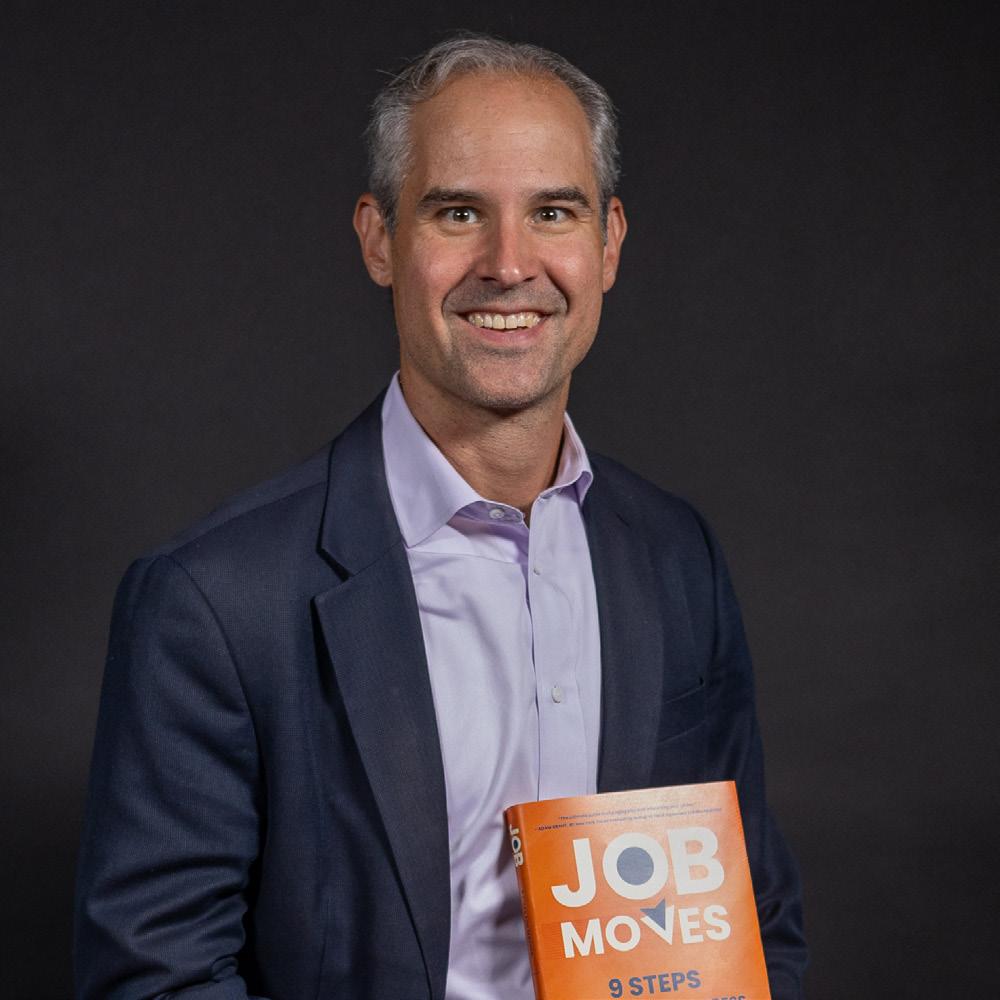
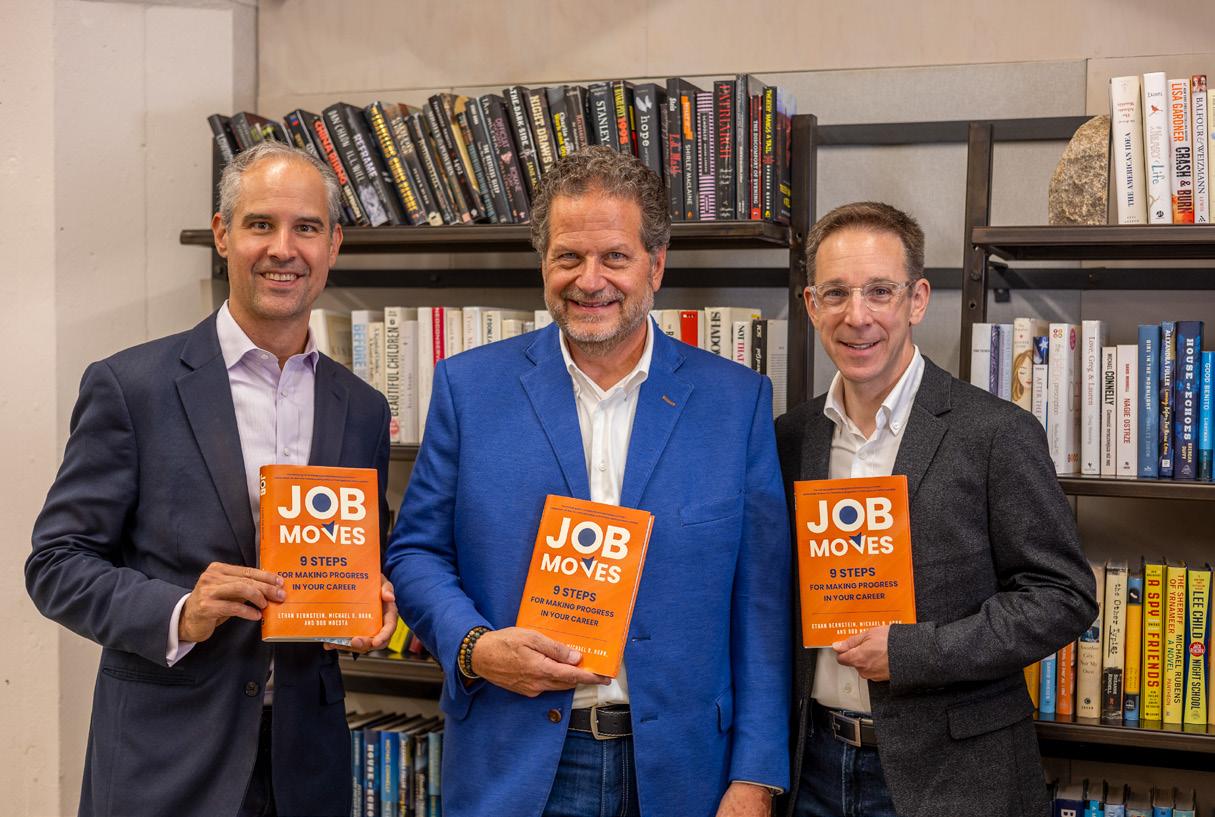
Michael Horn is the award-winning author of several books, including the national bestseller, Job Moves: 9 Steps for Making Progress in Your Career; teaches at the Harvard Graduate School of Education; and cofounded the Clayton Christensen Institute for Disruptive Innovation, a non-profit think tank. He strives to create a world in which all individuals can build their passions, fulfill their potential, and live a life of meaning through his writing, speaking, and work with a portfolio of education organizations.
Michael is also the author of From Reopen to Reinvent: (Re)creating School for Every Child; Disrupting Class: How Disruptive Innovation Will Change the Way the World Learns; Blended: Using Disruptive Innovation to Improve Schools; Choosing College; and Goodnight Box, a children’s story. He cohosts the top education podcasts Future U and Class Disrupted and writes the Substack newsletter The Future of Education.
Recently, in an exclusive interview with K12 Digest, Michael shared insights into his journey from a Yale history graduate unsure of his path after 9/11 to becoming a leading voice in education innovation. He cautioned that layering AI onto today’s K–12 model risks amplifying what’s already broken — whole-class instruction paced to an imaginary “average,” delivery over learning, assessments that sort rather than support, and an impossible job description for teachers — because technology that threatens the dominant process either gets ignored or forced to conform. For principals, he advises against leading with tech and instead starting backward from purpose: choose one part of the school, define what children should learn and why they’re there, design the experiences that deliver that purpose, decide how to know every child reached it, and only then select curriculum, teaching models, and technology. The following excerpts are taken from the interview.
that dictates what must be covered when. The focus is on delivery, not learning. The purpose of assessment isn’t to help learning, but to sort and label. And classrooms with one teacher and many students ask teachers to do heroic jobs and be all things to all people—an impossible job description. So you have a system that is
focused on time being the constant, not learning, and an impossible job for teachers. When you implement technology into that system, if it helps a teacher be more efficient in their work, it gets implemented. But those technologies that interrupt the classroom model—personalize parts of learning, for example, or drive toward
Classrooms with one teacher and many students ask teachers to do heroic jobs and be all things to all people—an impossible job description
mastery, fly in the face of the processes. And the processes win, so the tech either doesn’t get used or conforms to the dominant processes.
Your advice is “don’t lead with the technology” and to design backward from student outcomes. For a principal starting this work tomorrow, what does that first backward-design conversation with staff actually sound like?
It starts with focusing on one part of the school—not trying to turn over the entire model tomorrow. Start a school within a school, or focus on one grade level or class. And then start with purpose—what do we want children to learn. Why are they here? What do we do and not do in this school? What are the experiences we would need to offer to help every single child accomplish that purpose? How would we know if every child had reached those goals? And then we can ask what do we put in place to provide those experiences to deliver on that purpose. That’s where the curriculum, teaching model, technology and the like factor in.
From Reopen to Reinvent came out of the pandemic moment. What conversation with a school leader or parent during COVID most shaped that book’s thesis?
Diane Tavenner, who was leading Summit Public Schools at the time, and I started a podcast together during the pandemic called Class Disrupted. It was those conversations that shaped the book’s thesis. We were answering real questions that parents and educators were asking us at the time—and hoping we could really move education at last and not go back to the traditional model.
You also wrote a children’s book, Goodnight Box. What story from your own family life inspired it, and what do you want kids to feel when they hear it?
Wellness and health and exercise became a huge part of my life with my wife starting in 2011. It transformed our lives—and it’s something we’ve passed down to our kids as well. That was a story that my wife and I wrote to help introduce these movements to kids much earlier just to be fun—and hopefully inspire more people to live lives that make them feel better.
History was your major at Yale. Which historical figure do you find yourself quoting or channeling when you talk about innovation and resistance to change?
Oh boy, that’s a great question! I think it depends. I actually like taking quotes from historical figures that they didn’t actually say— misattributed quotes to Henry Ford and Gandhi are two of my favorites. But I also think a lot about motivation in society—and how when extrinsic motivation to do hard work dissipates, you often need to make subjects or schooling more intrinsically motivating. Still hard, but something kids will dig into. For that, I think a lot of President John Adams’ writings to his wife about his hopes for his future generations.
Podcasts are part of your craft with Future U and Class Disrupted. What podcast episode changed your mind on an important issue?
The fun thing about those conversations is that my mind shifts quite a bit! Just the other day, Jeff Selingo changed my mind on what different funding formulae in higher education could do
I actually like taking quotes from historical figures that they didn’t actually say— misattributed quotes to Henry Ford and Gandhi are two of my favorites
to tackle mission creep in higher education. I had never even considered that part of the equation before!
Where do you see yourself in the next 5 years?
I try not to imagine that actually—because I find it closes me off to exciting opportunities that may come unexpectedly. But I’m quite happy with the work right now—and clear in how I’m trying to make a difference.
If you could put one quote on the wall of every school board room, what would it say and whose words are they?
Live. Love. Learn. And leave a legacy. Ben Bergeron, a CrossFit coach, lives by that motto. I think it’s a great one. Encapsulates so much.
Transforming Schools with Values Led Digital Innovation
Sacha van Straten, Head of Digital Innovation, St Catherine’s British School
Sacha van Straten is an award-winning educator and change agent with a track record of innovation using digital solutions. After an award-winning radio, TV, web TV, and interactive TV career, Sacha moved into education. In his current role as a senior leader delivering digital innovation, he explores how digital strategies can improve the learning experience for students and staff, using AI, curiosity and metacognitive capture to reframe assessment, learning outcomes, and business practices.
Sacha holds an MA in Computing Education from King’s College London and is a certified Apple Teacher and Microsoft Innovative Educator Expert (focusing on AI development). A founder member of Google UK’s ‘Innovators in the Cloud Education group’ he has presented at the BETT show in London, as well as the Independent Schools Council digital conference. He is an ambassador for Canva, and a member of the 2026 Toddle Global Advisory Council. Sacha is the Head of Digital Innovation at St Catherine’s British School in Athens, Greece.
Recently, in an exclusive interview with K12 Digest, Sacha shared insights into how his journey from award-winning radio, TV, and interactive media into K–12 education shaped his belief that pedagogy trumps technology at every turn, and that digital tools succeed only when deployed with purposeful intent inside a considered governance framework. He noted students are already creating AI-powered YouTube channels, publishing books via Kindle Direct Publishing, and acquiring entrepreneurial skills schools don’t teach — making it vital to amplify authenticity, creative integrity, copyright awareness, and productive struggle so AI doesn’t narrow the “novel ideas gene pool.” The sentence he’d project in every staff meeting is his own: “The person in the chair must be the expert in the room,” a reminder that AI assists cognitive skills, never replaces them. The following excerpts are taken from the interview.
Learning tools deployed to satisfy a desired image without planning for the context and culture within which they will operate, are doomed to fail
Hi Sacha. Your path bridges communications, computing, and the classroom — from MA in Computing in Education to award-winning multimedia work. What first showed you that digital tools could change how a child learns, not just how a school runs?
In education, it is always about learning first. I would challenge the view that digital tools are seen only as instruments for school administration. We live in a world where everything has contact with digital practice. From a learning perspective, pedagogy trumps technology at every turn. My previous career in the media taught me the importance of building relationships. Humans are social animals and finding common ground opens up opportunities for communal growth. Technology, used with purposeful intent inside a considered governance framework, can empower that. Learning tools deployed to satisfy a desired image without planning for the context and culture within which they will operate, are doomed to fail.
Over the years I have had many ‘wow!’ moments.
Many years ago, I was asked to teach a class of Year 8 students English for a year. The department at Berkhamsted School had seen what I was doing in Media Studies, building cross-curricular digital literacy skills. They wanted to set me loose to discover what would happen. My first degree is Classics, so there was also an element of wanting to observe how someone with a strict grammatical background in Latin and Ancient Greek would tackle contemporary English. This is going back to 2008 when smartphones had not fully emerged. I bought some cheap mobile phones without SIM cards and connected them via Bluetooth to my
school laptop. I got the students to try writing haiku poems on the phone, then send them to me. It was a powerful way to demonstrate the importance of register in language, while exploring how form impacts function. It made a change from writing on paper and helped students reflect on technology’s impact on communication.
More recently, I have been wowed by Canva Code. Canva is an incredible design platform that’s transforming into a powerful learning ecosystem. The team at Canva are working hard to provide educational tools that teachers and students can use. Their use of
There’s a real buzz to the school, with a genuine curiosity about how digital technology, and AI in particular, can be a force for positive change
AI is designed for younger students, and it’s become one of my go-to tools for impactful learning. It enables students to have authentic experiences of bringing their ideas to life, with AI that assists rather than completes their vision. Canva Code launched last year and has unleashed remarkable opportunities for students to produce complex websites and apps. I entered teams into the world’s first student Canva Code competition and was delighted that two of them won awards. A group of Year 8 students from Merchant Taylors’ Prep came third overall, with an app that used multiple simulations to show how changes to the environment impact our oceans. They also built an app where the user can dive into the depths and learn more about the marine life that lives there. It also had a quiz and a chatbot. These are 12 year olds, and they built all of this, including writing the design specification, in two one-hour lessons. A pair of Year 6 students won the inclusion award. They built an app that places the user in the shoes of the Nigerian president. You are presented with increasingly complex challenges to address in real-time. You play until the money runs out. These Year 6 students built accessibility tools, to help those with dyslexia and vision impairments. It’s incredible what young people can create, when given the chance and the tools to bring their thinking to life.
What do you love the most about your current role?
I joined St Catherine’s British School in Athens last January as its first Head of Digital Innovation. It’s a warm and welcoming school with high aspirations for students and staff. We have four core values that are dear to my heart: care , integrity , curiosity , and dedication.
There’s a real buzz to the school, with a genuine curiosity about how digital technology, and AI in particular, can be a force for positive change. I’ve spoken to multiple year groups, co-taught a Science project using Google’s NotebookLM, explained the dangers of deepfakes to Year 9, and addressed our IB Senate on how we can give students safe and equitable access to AI tools. The parents I have spoken to are keen to understand how the digital experiences they encounter at work can be mapped to safe learning environments for their children.
I’m also working with our support teams to streamline school operations, using AI to assist us in assessing and refining how we function. It’s a wide-ranging role that covers everybody within the organisation. There’s a shared dedication to giving everybody, staff and students, the best opportunities possible. I love the fact that I get to channel my curiosity about the rapidly changing world we inhabit, with a brief to plan for now and the future, using ethics and pedagogy as my bedrock for careful and transparent deployment.
Whole-school digital learning is now mainstream, yet AI is rewriting what “digital” means. Five years from now, what will separate a school that’s transformed by AI from one that’s just digitized?
We’re seeing the digital divide expand already. Tools like ChatGPT or Claude require increasingly expensive subscriptions. We have bought Google Workspace for Education Plus accounts for everybody. That brings a wealth of integrated AI-powered tools into the hands of teachers, students and administrators. The cost is not huge for what is provided, but it is a cost.
No school can embed AI into its curriculum, or its culture, without explicitly deciding how the tools support the values and aims of the institution
Not all schools can afford it. The pace of change is remarkable. This is my twenty-fourth year as an educator. I cannot remember a time when digital capabilities improved at such a pace. No school can embed AI into its curriculum, or its culture, without explicitly deciding how the tools support the values and aims of the institution.
At St Catherine’s, the Principal, Jon Perriss, reminds us that we seek ‘excellence in every interaction.’ The smallest of details can have the biggest of impacts. Jon likes to point out that a rising tide lifts all boats. When it comes to the vision, strategy and policies I am writing, that translates into anchoring the tools with the why and the how of our values and ethics.
I know schools where senior leadership are waiting to see what will emerge. That is not a good strategy. Students are using AI already. We need to provide the moral framework that enables them to see AI as a learning tool, not a thinking replacement. Schools that fail to put in the governance foundations now will find themselves adrift, as AI embeds further and deeper into the curriculum and day-to-day life.
Media Studies and Computing are both subjects you teach. What trend in how students create, not just consume, media should schools amplify now?
I have not taught Media Studies since 2012, focusing instead on the delivery of Computing
from Key Stage 1 to Key Stage 3. In my current role I do not have a teaching timetable. I drop in to co-plan and co-teach lessons across the school. I have noticed that skills which previously were constrained to older students receiving academic lessons are now learnt independently by younger pupils.
I had a fascinating conversation last year with a thirteen year old student. He had a particular interest in Americana and loved all things technological. With support and oversight from his parents, he started an AI-powered headless YouTube channel. This means there is no visible presenter in the videos. He used AI to help him produce scripts for his videos and generate an AI created voiceover. Quickly, he acquired
a decent following and was able to generate money through adverts. I must stress his parents were overseeing all of this - he wasn’t old enough to set up the financial elements. After that, he was curious to see what self-publishing a book would be like. So, he used AI to help him write some guides to videogames he liked. He used Amazon Kindle Direct Publishing to promote and distribute it. He had some sales, and it taught him a huge amount about how to plan, produce and distribute content. These are not skills we teach directly in school curricula, but increasingly these are the skills our students are acquiring on their own.
It’s wonderful that such creative and entrepreneurial opportunities are available
beyond the school boundary, but they come with risks of not knowing about authorship, copyright, creative integrity, and the ethical use of AI. Schools need to consider how they can adapt what experiences students have, to prepare them for a world where creativity can be harnessed without the need for hundreds or thousands of hours of practice. If everything seems easy, the risk isn’t only an excess of AI Slop. There’s the distinct possibility that key creative disciplinary practices are lost.
Throughout human history, those who innovate are the ones who analyse the rules or social norms, question them, and create an alternative. AI feeding on AI may narrow the novel ideas gene pool. That is why it is vital schools promote and amplify the necessity of authenticity in the creative process.
To link today with my media past, when I began working in radio, we recorded on tape. I would edit by marking cut points with a chinagraph pencil, slicing the tape with a razor blade, followed by stitching using sticky tape. Now, an editor presses Copy, Paste, or Undo on a keyboard. The freedom to experiment can be both liberating and distracting. Sustained focus and attention to detail in digital production are skills schools should explicitly encourage, as well as copyright, deepfakes et al. Students need to experience productive struggle to reinforce the importance of human contribution.
Our students are learning without us. We need to catch up. I encourage schools to review where the uniquely human traits appear in the learning process. Amplify them to give young
Throughout human history, those who innovate are the ones who analyse the rules or social norms, question them, and create an alternative
people a fair chance of navigating the future with success.
Co-curricular life is where culture lives. What trend in blending digital and cocurricular experiences is most promising for student agency?
A student with a great idea is no longer limited to holding it in their imagination. They can bring whatever they can imagine to life. Apps like Canva make podcasting accessible and easy. The same is true for screen recording programs. I like to get students to make fly-through videos of their projects. Hearing their voices describe the development of ideas and the progression from idea to delivery reveals far more about their thinking and state of mind than a written report only. Before we dismiss the idea of content creators, I think it is important to consider that multimodal communications have the power to spark interests in students who would otherwise not discover them, if they were in a more traditional format. We forget how liberating it could be for students to produce complex content, about ideas that fire up their passions, without recourse to large crews, expensive kit, and time-consuming location trips. Yes, we need to be mindful of copyright and human agency, versus AI-only generated content, but the bigger picture is exhilarating.
My most popular clubs have been Minecraft Education based. An outside observer might look into my classroom and see noise and excitement. What’s actually happening is the development of key life skills. Students are debating and agreeing on game rules, deciding who will enforce them, which teams do they make, depending on respective skills (design, building, coding, game strategy, etc.). They are working out a shared language for communication in different
scenarios. They are thinking under pressure about what types of collaboration work best. The students decide all of this. My role is to be the arbiter when teams get stuck, and show students communication or practical tools that help remove obstacles. It is learning, but within a less structured environment.
Books shape how we think about learning and media. What book on education, computing, or storytelling has the most notes in your margins, and why?
Matthew Wemyss is a teacher who has made a mark with his thoughtful and visionary uses of AI in education. I have all of his guides, written for both teachers and students. Matthew also runs the successful AIDucation conference from his school in Bucharest. He is always a solid source of excellent information. I am about to start annotating his latest book, Every Teacher, Every Subject: A Practical Guide to AI Literacy Across the Curriculum.
Amelia King’s book, Thinking With AI, is another well-thumbed book in my collection. Amelia is superb at challenging educators to think about what we are teaching, why we are teaching it, and the unavoidable pace of change, now that AI is infusing every classroom.
Dan Fitzpatrick has made a global name for himself as a strategic visionary when it comes to AI at the whole-school level. He publishes a new guide each year, co-written with educators working at the cutting edge of AI in education. I have my copy of The AI Educators’ Guide 2026 on my desk. I refer back to his book, Infinite Education: The Four-Step Strategy for Leading Change in the Age of Artificial Intelligence, on a regular basis.
Laura Knight is someone I have known for almost twenty years. Her skill in enabling schools to plan strategically for well-being in a digitally connected world is unmatched. She has one book out that is superb as a brief guide for schools looking to train staff in generative AI. It’s called A Little Guide for Teachers: Generative AI in the Classroom. She has a new book coming out next year. Its working title is Raising Humans To Flourish In An AI World - A Parenting Guide to Childhood and Digital Thriving. I’ll be sure to order a copy as soon as it is published.
Lastly, anything by the inspirational father of British Ed Tech, Al Kingsley MBE, is a must-read. I can recommend his latest offering, The Awkward Questions in Education: The Elephants in the Room from AI to Teacher Retention. Al is brilliant at seeing the details in the larger picture, drawing together disparate threads that build the tapestry of education into a tangible image for progress. Anything he writes comes highly recommended.
As an award-winning photographer and filmmaker, you see frames others miss. What image you captured — still or moving — taught you the most about teaching?
I have many photos taken over the years where students are huddled around a tool for learning - that could have been a drone, a programmable trainset, or running a mixing desk. There’s a common thread that appears in all of them. The students are in a state of flow, totally focused on the task they are doing. Most importantly, there is eye contact, communication and collaboration visible. It’s that human element that makes teaching the
most wonderful profession in the world. It brings together people with disparate interests, who are learning about themselves, the culture they inhabit, and what motivates them to be better today than they were yesterday. Humans are social animals, and schools are so much more than places where curricula are delivered. They’re a living laboratory for personal improvement. We have four core values at St Catherine’s: Care, Dedication, Integrity, and Curiosity. No machine can replicate those. They need human connection and involvement to create well-rounded global citizens who can make the world a better place.
Where do you see yourself in the next 5 years?
I arrived at St Catherine’s British School in January. It’s an amazing school that’s committed to a journey of sustained evolution. I see myself still here, enjoying living in one of the most famous capital cities in the world, creating new opportunities with emerging technologies for teachers and students to think, engage, and create. We’re looking at workload, assessment, creativity, and how we can develop curious and independent-minded citizens of the world. To be part of a team that’s looking ahead and building for the future is a remarkable privilege.
If you could project one sentence onto the screen of every staff meeting, what would it say and whose words are they?
‘The person in the chair must be the expert in the room’. It’s a phrase I use with my students, to remind them that AI is a tool that helps them develop cognitive skills, not replace them.
OWe Can’t Afford to Lose Half Our Innovators
Camille McCue, PhD, Director of Innovation at The Meadows School in Las Vegas
ur nation rises and falls on its supply of innovators – intrapreneurs and entrepreneurs in STEM, including computer science – and women are the largest untapped source of them. The case for getting more women into STEM has been made for decades, but the strategy of starting earlier has not gained sufficient traction. Women
are roughly half the U.S. population and more than half of all college graduates. Yet, according to the National Science Board’s 2026 report, women are just 27% of America’s scientists and engineers. We’re losing half our innovators. Even as artificial intelligence reshapes the computing workforce, the U.S. Bureau of Labor Statistics projects STEM occupations will grow
According to the National Science Board’s 2026 report, women are just 27% of America’s scientists and engineers. We’re losing half our innovators
Camille Moody McCue, PhD, is Director of Innovation at The Meadows School in Las Vegas, where she teaches innovation courses spanning computer science, engineering, and entrepreneurship. Previously, she served as High School Principal at The Adelson School, where she built a K-12 Startup Incubator and led a schoolwide innovation program. A longtime Dummies series author for Wiley, Camille writes the Most Likely to Succeed blog at camillemccue.com, where she explores how schools can cultivate the next generation of innovators. Across thirty years in classrooms, Camille has championed early, equitable STEM experiences for every student.
approximately three times faster than nonSTEM fields over the next decade, driven in part by demand for AI development itself. With a median annual wage above $100,000 – more than double that of non-STEM work – these are among the most economically rewarding careers a young person can pursue. The country is paying the price of women’s absence from these careers, and the reasons start much earlier in school than most conversations about STEM tend to acknowledge.
How early does the gender gap in STEM begin? It takes shape in the earliest years, as children explore, build, and figure out how things work – experiences that carry into preschool. Yet most efforts to close the gap come a decade later, aimed at teen girls and college women entering advanced STEM pathways. That work matters – but by then, the gap isn’t forming; it’s already formed. If we want different outcomes, we have to go back to the moment when interest
first begins to diverge. And increasingly, that moment points to preschool, long before we even think of it as a STEM environment.
And the research backs this up. Gender stereotypes around STEM begin forming as early as age two. By ages three and four, children can reliably sort toys and activities into “boy” and “girl” categories. In other words, children arrive at the classroom door already carrying these assumptions – and early childhood teachers see the effects of them every day. I’ve seen them firsthand. A few years ago, I observed a 4-year-old classroom with a colleague. We set out buckets of Lego bricks along with several books showing castles, oceans, and space builds – colorful, simple photos the children could copy or remix. The boys dove in confidently, fishing through bins and either inventing their own designs or using the books as blueprints. Far fewer girls did. Several of the boys shared excitedly that they “had Legos at
home!” The girls more often asked how to put the bricks together and what they should make. A meaningful gap in comfort with building materials was already visible inside this preK classroom.
Free choice rewards prior experience. The children who already feel at home with building materials use them, while the others pick something else. Even Montessori classrooms rely on teachers to introduce unfamiliar materials when a child is ready, rather than
leaving children to stay with what they already know. The reason this matters is that block play, which builds spatial reasoning, is a predictor for success in mathematics, engineering, and computer science. A preschool girl not encouraged to create with blocks is missing a cognitive development opportunity that compounds year by year. By kindergarten, some children have years of building experience and others have almost none, and the gap only grows from there.
A preschool girl not encouraged to create with blocks is missing a cognitive development opportunity that compounds year by year
Why does the gap keep widening? Because STEM doesn’t level out – it climbs. Think of STEM as a ladder. Every rung, from the first set of blocks and puzzle toys to the first programming class and robotics kit, requires hand-over-hand effort to level up. By the time a girl in middle or high school discovers an interest in building and creating, many of her male classmates have been climbing since preschool. Those boys have been steadily pulling themselves up the ladder through afterschool programs, summer camps, coding clubs, and peer groups. A student who joins the climb later is reaching for rungs the others passed years ago. The catch-up is real work, but what many girls feel most acutely isn’t just the gap – it’s walking into a space where boys seem ahead, more confident, and not always eager to include them.
The encouraging news is how actionable this is for educators. Counterstereotyping – when
teachers deliberately place trucks, blocks, and engineering kits into the hands of girls – shifts children’s assumptions measurably and quickly. A few examples: invite a specific child to the block corner by name. Set out a half-built tower at the start of free choice, so the first move is continuing rather than starting. Display photos of women engineers and inventors at child eye level. Read books where girls are the builders and innovators. Send a note home about what a child designed today, so the classroom experience carries into family conversation.
The payoff at the top of the ladder reveals why all this matters: gender-diverse teams produce better outcomes. Research from McKinsey & Company (2023) shows that companies in the top quartile for gender diversity in executive teams
are significantly more likely to outperform their peers financially. Products built with women’s perspectives serve a wider range of users, from voice recognition that works across a variety of voices to car safety features calibrated with both male and female crash test dummies. When half the population is underrepresented at the design table, needs are overlooked. Products designed by everyone work for everyone.
This instructional throughline from preschool to career isn’t theoretical – it’s the work I do every day. I have spent thirty years in classrooms watching girls light up when handed a circuit board, a 3D printer, a coding challenge, or an entrepreneurial business sprint. At my current school, I teach a downstream pipeline of innovation courses, from Computer Science 6 to
upper school DECA. I am working to extend that pipeline in two directions. The first is fortifying the late middle school bridge, a time when girls begin self-selecting out of STEM, even when they’ve had prior positive experiences with it. I am extending the momentum of CS6 with a new Innovation Studio for grades seven and eight, grounded in the idea that creativity drives technological and entrepreneurial advancement as powerfully as it drives the arts. Students will build apps and IoT gadgets – games for good, remote fish feeders, wearables – and pitch them at an Innovation Expo. The goal is a culture that tells every student, and especially every girl, that this is their space.
The second is pushing the starting point earlier. Middle school is a wonderful place to do this work, but as I share, it is nine years beyond the preschool classroom where the first rungs of the ladder are set – and some children are already climbing with more confidence than others.
Beginning next school year, I will work with our lower school to build structured time for K-5 Innovation courses, collaborating with teachers on age-appropriate experiences in design thinking, engineering design, computational thinking, and entrepreneurship that cultivate an innovation mindset from the start
Beginning next school year, I will work with our lower school to build structured time for K-5 Innovation courses, collaborating with teachers on age-appropriate experiences in design thinking, engineering design, computational thinking, and entrepreneurship that cultivate an innovation mindset from the start. From there, we will partner with our beginning school to bring that work to our littlest learners, where the most critical starting point lives.
The interventions work, but the challenge is sustaining them. The strategy is straightforward: start early, make experiences
equitable, and build on their momentum year after year. Parity won’t happen unless equal experiences begin in early childhood and continue through every grade. A strong fifthgrade unit can’t compensate for five years of gendered messages about who builds, who fixes, and who tinkers. Every student needs to reach high school STEM with the lower rungs of the ladder already steady beneath them. Because by the time we try to fix the gap, we’re no longer building it – we’re repairing it. And we can’t afford to lose half our innovators before they even get started.