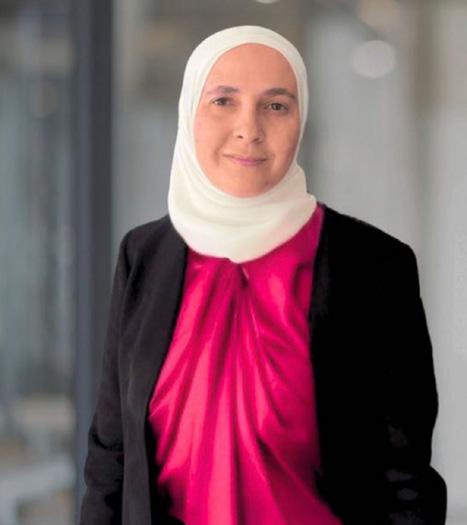
Adriana Hoyos Professor of AI Economics, Digital Ecosystems, and Geopolitics, IE University
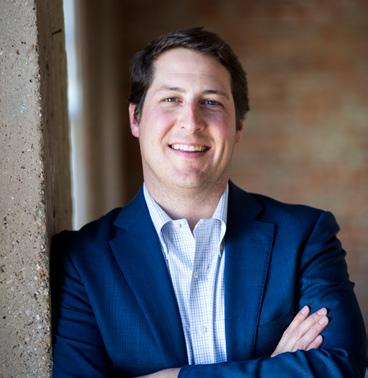
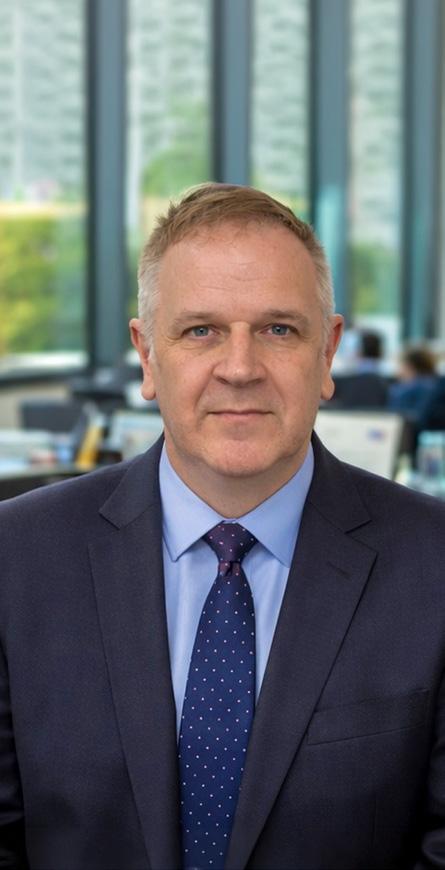
Anthony Owen Head of Market Development for Europe and the USA, Dublin Business School
Dr. Lisa Clark Associate Vice President, Academic Transformation, Blackboard
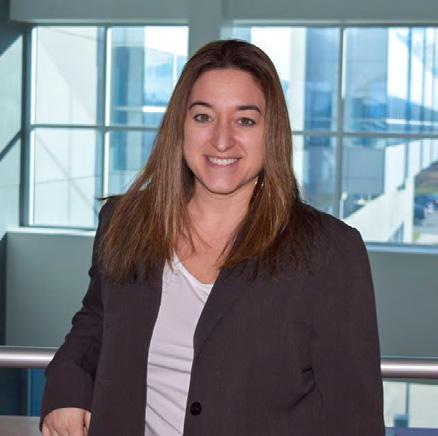
Dr. Patricia Baia Assistant Dean of Teaching Effectiveness, Touro University Jacob D. Fuchsberg Law Center
Dr. Rachel Bonaparte Associate Vice President, Teaching Learning and Student Success, Prince George’s Community College
Paxton Riter Co-Founder and CEO, iDesign
Managing Editor
Sarath Shyam
Consultant Editors
Dr. John Andrews
Emma James
Andrew Scott
Naomi Wilson
Stanly Lui
Joseph Alex
Creative Consultants
Charlie Jameson
Edwards Gonzalez
Branding & Marketing Partnerships
Jennifer Anderson
Alice Smith Lucy Jones Anna Elza
www.highereducationdigest.com
International Partnerships admin@highereducationdigest.com
Americas Europe Middle East & Africa Asia-Pacific Follow Us On www.linkedin.com/company/ highereducationdigest www.facebook.com/HigherEducationDigest
Higher Education Digest www.highereducationdigest.com is a global knowledge sharing digital platform published by Connecta Innovation Private Limited. All rights reserved. The opinions expressed in the content and pictures provided are those of the authors. They do not purport to reflect the opinions or views of Connecta Innovation Private Limited or any of its members and we do not assume any responsibility. The publisher does not assume any responsibility for the advertisements, its content, pictures, and all representation of warranties made in such advertisements are those of the advertisers and not of the publisher. Higher Education Digest www.highereducationdigest.com is a Free Subscription and Free-to-read digital platform strictly not for sale and has to be strictly for internal private use only. Publisher does not assume any responsibility arising out of anyone modifying content and pictures, printing a copy of this digital platform in any format and in any country and all matters related to that.
When the Price of Learning Redefines Its Purpose
For generations, higher education was seen as a long-term investment, one that promised opportunity, stability, and upward mobility. But somewhere along the way, many students and families began asking a difficult question: At what cost? Across the world, rising tuition fees and mounting student debt are reshaping not only how students choose universities, but also how they define the value of education itself.
In conversations with educators, professionals, and even young graduates over the past year, one sentiment has surfaced repeatedly: people are no longer impressed by prestige alone. They are looking for relevance. They want education that leads somewhere tangible, skills that translate into real careers, and learning environments that understand the economic realities students face today. According to recent global studies, affordability and employability now rank among the top factors influencing university decisions, often ahead of institutional reputation.
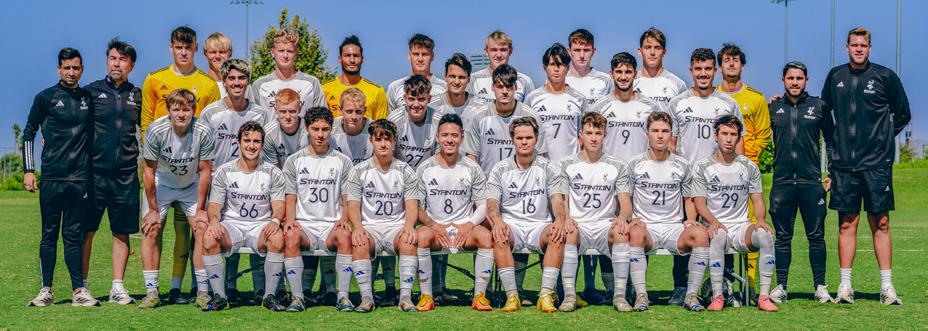
This shift in mindset makes this month’s cover story especially timely. In this issue of Higher Education Digest, we feature Stanton University,
an institution that is quietly challenging many of the conventional assumptions surrounding higher education. At a time when universities often compete through rankings, exclusivity, and branding, Stanton University has remained focused on accessibility, affordability, and practical learning. Its continued investment in programs such as Business Administration and Information Systems Management reflects a growing understanding that quality education should prepare students not just for graduation, but for long-term career success.
Beyond the cover story, this issue brings together a diverse collection of perspectives from academic leaders, innovators, and industry experts who are examining how education continues to evolve in response to economic, technological, and societal change. Together, these conversations reveal a sector at an important crossroads.
Perhaps the future of higher education will not be defined by how expensive or exclusive it becomes, but by how meaningfully it serves the people who place their hopes in it. And that, in many ways, may be the most valuable lesson of all.
Enjoy Reading.
Sarath Shyam
STANTON
ACADEMIC VIEW
18
SHAPING TOMORROW’S LEADERS THROUGH QUALITY EDUCATION
Dr. Rachel Bonaparte, Associate Vice President, Teaching Learning and Student Success, Prince George’s Community College
RETHINKING POWER POLICY AND PROSPERITY IN THE AGE OF AI
Adriana Hoyos, Professor of AI Economics, Digital Ecosystems, and Geopolitics, IE University
42
Dr. Patricia Baia, Assistant Dean of Teaching Effectiveness, Touro University Jacob D. Fuchsberg Law Center 62
EMPOWERING EDUCATORS FOR STUDENT SUCCESS
INDUSTRY PERSPECTIVE
LEADING ACADEMIC TRANSFORMATION WITH PURPOSE AND VISION
Dr. Lisa Clark, Associate Vice President, Academic Transformation, Blackboard
TRUST LED GROWTH IN A DIGITAL FIRST GLOBAL EDUCATION LANDSCAPE
Anthony Owen, Head of Market Development for Europe and the USA, Dublin Business School
56
TRANSFORMING HIGHER ED WITH AI AND DESIGN
Paxton Riter, Co-Founder and CEO, iDesign
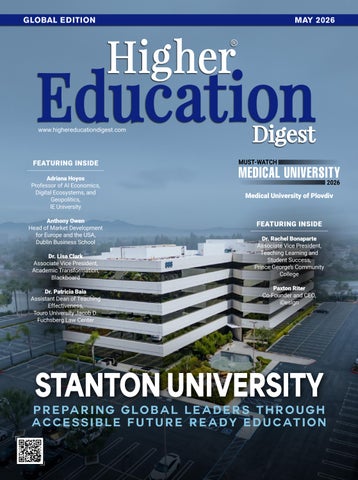
STANTON UNIVERSITY
UNIVERSITY IN THE USA TO WATCH IN 2026
PREPARING GLOBAL LEADERS THROUGH ACCESSIBLE FUTURE READY EDUCATION
ADr. Louna Al Hallak Chief Academic Officer, Stanton University
Stanton University’s curriculum combines academic foundations with practical learning experiences that reflect real industry expectations
t a time when many global higher education institutions compete through rankings and prestige, Stanton University focuses its education on accessibility and affordability. Located in Southern California, the private nonprofit university places strong emphasis on the quality of higher education being practical and relevant. Dr. Louna Al Hallak, the Chief Academic Officer, believes
this balance is one of the university’s defining strengths. Stanton continues to invest in programs such as Business Administration and Information Systems Management that prepare students for long-term career success while keeping the tuition affordable.
Education Built for the Workforce
The university’s curriculum combines academic foundations with practical learning experiences
that reflect real industry expectations. Students are encouraged to understand theory while also applying what they learn in ways that connect directly to professional environments. Faculty members prepare them by facilitating discussion, collaboration, and critical thinking. And in turn, students are taught to respond thoughtfully, share perspectives, and ask questions. This approach helps them to be self-sufficient with their acquired skills before entering the workforce.
“Our goal is to prepare our students academically, professionally, and personally,” says Dr. Al Hallak. “We want them to leave Stanton ready to contribute with confidence and integrity.” That focus on engagement and realworld preparation continues to shape the student experience across the university’s academic programs.
Industry expectations also play an important role in refining classroom learning. Coursework is aligned with professional standards and real-
world applications so students can develop skills that employers actively seek. This connection between academics and industry helps students transition smoothly into their careers after graduation.
Preparing Students for a Changing Global Workforce
Stanton’s Business Administration and Information Systems Management programs address the fast-changing needs of today’s
global industries. The university regularly updates its academic offerings to ensure students graduate with the skills that remain relevant in our technology-driven world.
Information Systems Management is designed to prepare students for modern workplace challenges. The curriculum covers areas including cybersecurity, systems integration, data governance, and ethical decision-making. Students are also encouraged to understand the growing influence of artificial intelligence and emerging technologies across industries.
Dr. Al Hallak explains that staying current is an important responsibility for any modern university. “Innovation and industry alignment are embedded within our academic framework,” she says. “We continuously review and refine our programs to ensure they remain relevant and forward-looking.”
The university also makes space for discussions around current global issues and evolving workplace challenges. Students are encouraged to think critically, evaluate practical solutions, and understand the broader impact of their decisions. These conversations help
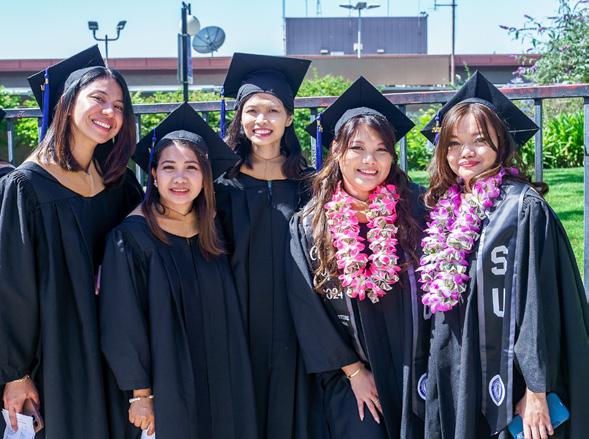
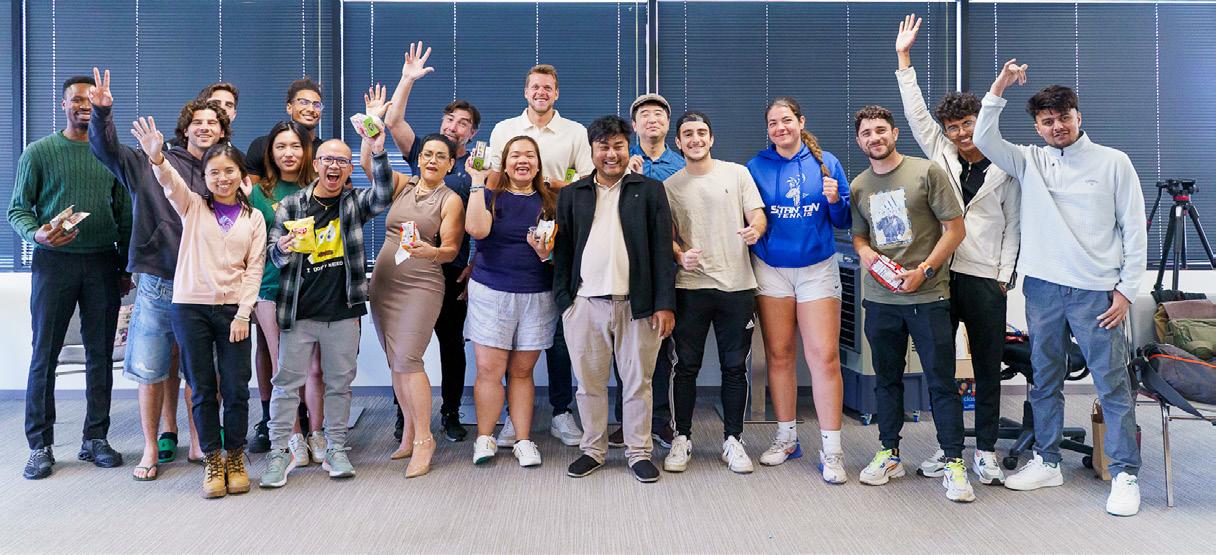
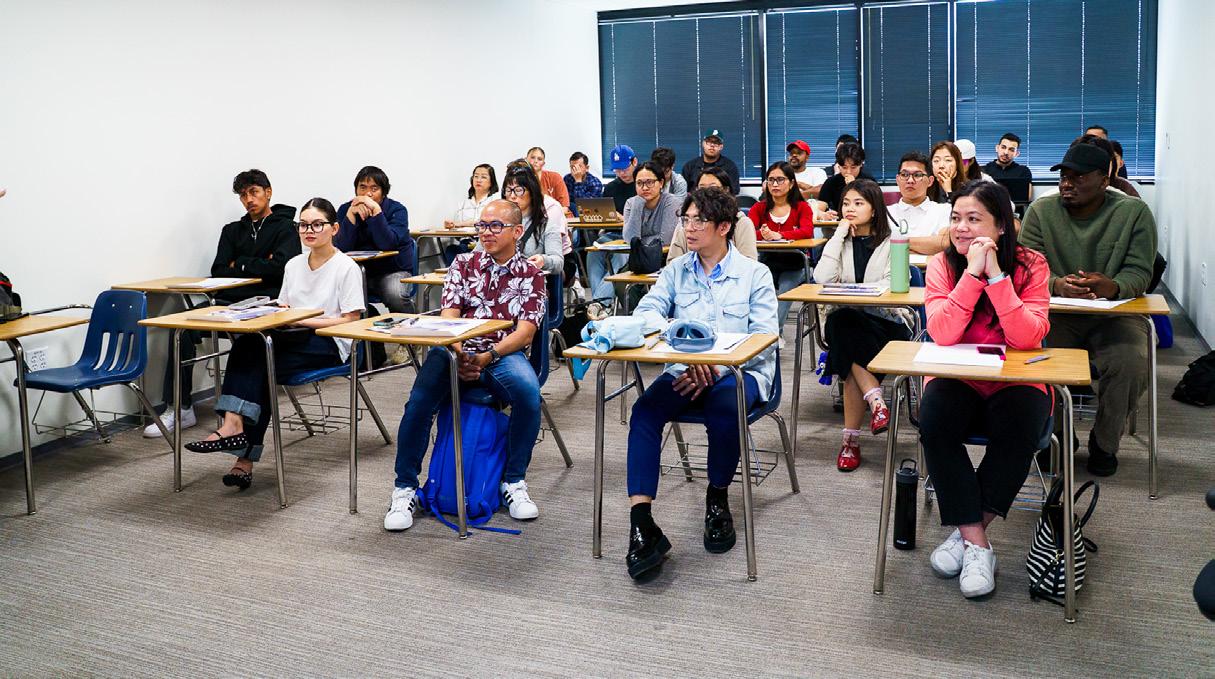
With students representing more than 40 countries, Stanton University celebrates a myriad of cultures, experiences, and perspectives students develop adaptability, awareness, and stronger decision-making skills.
Building a Global Learning Community
International students are an important part of Stanton University. With students representing more than 40 countries, the campus celebrates a myriad of cultures, experiences, and perspectives. This diversity enriches both the academic environment and the student experience.
Dr. Al Hallak shares the university works intentionally to help students feel welcomed and supported as they adjust to a new academic and cultural environment. From classroom interactions to student services, the focus remains on helping students build confidence and a sense of belonging.
“Supporting international students is central to who we are as an institution,” she says. “We want students to feel seen, supported, and prepared to succeed wherever
Through its student-focused approach, commitment to accessibility, and emphasis on future-ready education, Stanton continues to build a model that upholds the changing needs of modern higher education while staying grounded in purpose and opportunity
life takes them.” That support extends beyond academics. Students have opportunities to engage with different perspectives, collaborate across cultures, and develop the communication skills needed in today’s interconnected world. These experiences help them grow personally while preparing for careers in diverse professional environments.
Stanton’s broader educational philosophy also reflects this global outlook. The university aims to equip students with practical skills, cultural awareness, and the confidence to contribute in meaningful ways after graduation. Many alumni go on to work in international markets or return to their home countries, where they contribute to innovation, business growth, and community development.
Dr. Al Hallak shares that the university’s commitment to serving a diverse international
student population. She places strong emphasis on inclusivity, adaptability, and ethical leadership while creating opportunities for students from different backgrounds to succeed.
“Our responsibility is to continue evolving while staying true to our mission. We want to provide students with an education that is practical, accessible, and meaningful,” Dr. Al Hallak says. Through its student-focused approach, commitment to accessibility, and emphasis on future-ready education, Stanton continues to build a model that upholds the changing needs of modern higher education while staying grounded in purpose and opportunity.
As the university looks toward the future, Stanton continues to focus on expanding programs that align with emerging workforce needs while remaining relevant for students from diverse backgrounds.
ACADEMIC
VIEW
Shaping Tomorrow’s Leaders through Quality Education
Dr. Rachel Bonaparte, Associate Vice President, Teaching Learning and Student Success, Prince George’s Community College
Dr. Rachel Bonaparte is the Associate Vice President for Teaching, Learning, and Student Success at Prince George’s Community College, where she leads academic innovation, student success strategy, and key operational initiatives across the area. A purpose-driven higher education leader, she works at the intersection of equity, learning, and workforce development. Dr. Bonaparte is also the founder of The Blacklining, a digital platform open to all that centers Black entrepreneurs across the diaspora by expanding visibility, networks, financial literacy, and experiential learning opportunities. Her leadership is grounded in curiosity, creativity, and a deep belief in collective purpose as a catalyst for transformation.
Recently, in an exclusive interview with Higher Education Digest, Rachel shared insights on her passion for education, leadership approach, and vision for the future. Looking ahead, Rachel sees trends in higher education shifting towards technological agility, pedagogical resilience, and equitymindedness, emphasizing the need for educators to be adaptable and supportive. She also shared her personal hobbies and interests, future plans, words of wisdom, and much more. The following excerpts are taken from the interview.
In this digital age, the modalities of teaching will continue to evolve, but the foundational elements of sound pedagogy will remain essential
Hi Rachel. As a leader in higher education, what sparked your passion for teaching, learning, and student success, and how did you develop your expertise in this area?
My passion for teaching, learning, and student success comes from witnessing firsthand how education can completely reshape a person’s lifenot just economically, but through the confidence and self-understanding that knowledge creates. Growing up, I experienced moments that made this clear. As a child in a predominantly white school in Missouri, a teacher told me I wouldn’t amount to much. A neighbor once “explained” my dark skin by saying I’d been “left in the oven too long.” Experiences like these could have diminished me, but instead they fueled a commitment to speak life into students, especially Black and Brown students who are too often navigating inequitable systems alone and being mischaracterized as incapable.
My expertise developed through lived experience and years of practice- listening deeply, leading with empathy, identifying systemic gaps, and envisioning what equitable education should look like. Each role strengthened my ability to connect with others, serve with intention, and model the kind of leadership that creates real opportunity. Those early experiences didn’t just spark my passion; they shaped the educator and leader I’ve become.
What do you love the most about your current role?
What I love most about my current role is the opportunity to imagine and help implement operations and policies that create a more supportive and equitable experience for our faculty and staff - and, ultimately, for our students. I’m energized by the fact that the work happening behind the scenes directly shapes
Educators must be able to design learning environments that are culturally responsive, supportive, and attuned to the diverse realities students bring with them
how students experience Prince George’s Community College.
I also value the space I have to encourage my team to think creatively, to brainstorm boldly, and to envision what ideal operational practices could look like in their areas. Helping them see what’s possible, and then working together to bring those ideas to life, is incredibly rewarding. It’s the kind of work that allows us as an institution to continually push the needle forward. It also helps when your team is just simply amazing and have an intrinsic motivation to do whatever it takes to support our students!
As higher education evolves, what trends do you see shaping the future of teaching, learning, and student success?
I see several key trends shaping the future of teaching, learning, and student success. In this digital age, the modalities of teaching will continue to evolve, but the foundational elements of sound pedagogy will remain essential. Instructors will need a solid understanding of emerging technologies- especially AI- and how to integrate them in ways that genuinely enhance learning rather than distract from it.
At the same time, faculty will increasingly need to refresh or deepen their own industryspecific skills. Students expect instructors who can help them make real-world connections, build networks, and bridge the long-standing gap between earning a degree and securing meaningful employment. That human elementcontext, mentorship, and connection-is something technology can’t replace.
The fear that AI will make instructors obsolete becomes far less concerning when we recognize that the real shift ahead isn’t about
replacing educators, but about reimagining how we teach, how we support students, and how we prepare them for a rapidly changing world.
Finally, the future of student success will depend on how well institutions address equity-not as an initiative, but as a design principle. Students need holistic support, culturally responsive teaching, and systems that recognize the diverse realities they bring with them.
What are the key skills educators
need to develop to lead in a rapidly changing landscape?
Educators today need a blend of adaptive, relational, and future-focused skills to lead in a rapidly changing landscape. First, they must cultivate technological agility- not just understanding emerging tools like AI, but knowing how to integrate them in ways that genuinely enhance learning. Equally important is pedagogical resilience: the ability to hold onto the core principles of good teaching while continuously evolving their practice.
They also need strong industry awareness so they can help students make real-world connections, understand current trends, and navigate pathways into meaningful careers. That relevance is becoming a critical part of student success.
Leadership in this moment also requires equity-mindedness. Educators must be able to design learning environments that are culturally responsive, supportive, and attuned to the diverse realities students bring with them. Equity can’t be an add-on; it has to shape how we teach, support, and lead.
Finally, educators need human-centered skills- empathy, effective communication,
collaboration, and the ability to build trust. As higher education continues to evolve, these relational skills will be just as important as technological ones in ensuring students feel seen, supported, and prepared for the future
Many congratulations on being recognized as one of the Top 50 Voices from around the globe in Higher Education for 2026. Our readers would love to know the secret mantra behind your success.
This question just put a huge smile on my face. Thank you. I wish I could say there’s a notable secret mantra behind my success, but the truth is much simpler: I try to stay deeply aware of - and aligned with - my purpose. Whatever I do, I want people to feel seen, heard, and motivated to walk in their own purpose.
I genuinely believe we all carry unique gifts that shape who we are, and it’s our responsibility to use those gifts to positively impact others. When we each bring our strengths to the table, we begin to see the full picture. It’s like completing a puzzle -every piece matters, and we need everyone’s contribution to create something meaningful. That commitment to purpose, connection, and collective impact is what guides me every day and even led to the creation of The Blacklining a digital platform designed for everyone to participate, learn, and grow while intentionally centering Black entrepreneurs. It also helps them understand how to offer internships that strengthen their businesses while giving students real-world experience.
For me, that’s what living in purpose looks like, building systems that uplift others and create pathways for shared success.
Are there any particular books, articles, or resources that have significantly influenced your thinking or approach?
One resource that has significantly influenced my thinking is Forward Together: The Black Policy Playbook for an Equitable America. What resonates with me most is how the playbook reframes equity - not as a side initiative, but as a structural imperative. It pushes leaders to think boldly about systems change, policy alignment, and the intentional design of environments where historically marginalized communities can thrive.
The playbook’s emphasis on data-driven strategies, community-centered solutions, and long-term accountability has shaped how I approach my work in higher education. It reinforces the idea that equity must be embedded into every decision we make - from operations and policy to teaching and student support. It also challenges me to think beyond institutional boundaries and consider how higher education can partner with communities, employers, and policymakers to create more just and sustainable pathways for students.
In many ways, the playbook serves as both a mirror and a roadmap. It validates the lived experiences that inform my leadership, while also offering concrete strategies for building systems that are more inclusive, more responsive, and more aligned with the future our students deserve.
My biggest goal is to continue building and shaping systems that expand access, equity, and opportunity- especially for students and communities who have historically been overlooked or underestimated
What’s a favorite quote or mantra that guides you in your work?
There are a couple of mantras that really guide my work. The first is, “How does this positively impact students and minimize unnecessary burden on faculty or staff?” That question keeps me grounded in what matters most- ensuring that every decision, policy, or process ultimately supports student success while honoring the people who make that success possible.
The second mantra I live by is, “If I can see it, I can build it.” Vision is powerful. When I can clearly imagine a better system, a better experience, or a better outcome, I’m confident we can bring it to life. That mindset pushes me to think boldly, innovate intentionally, and create structures that move institutions forward.
What are some of your passions outside of work? What do you like to do in your time off?
With a two-year-old, I’m not sure “time off” truly exists- at least not until she’s asleep, and even then it’s debatable. But it is an absolute joy, honor, and privilege to be the proud momma of my little sunshine, Zora. As someone who never envisioned having a child of my own, she has been the beautiful gift that keeps on giving.
I’m also incredibly grateful for the person who has become the best partner I could ask for in this journey - someone whose expression of love toward her is unmatched and who creates the space for me to continue growing as a mom, advancing professionally, and reacquainting myself with who I am in this new chapter. That latter part is probably the most underrated gift of all.
And as cliché as it might sound, traveling has always been a passion of mine. It’s hard
not to love travel when you grow up with a Ghanaian father and a Trinidadian mother who were always on the move. They passed down the travel bug - along with so many other giftsand now I get to share that same love with Zora, all while carrying the prayers, presence, and example they’ve poured into every part of my life. Having parents who show up with intention, faith, and consistency is something I hold with so much gratitude. One morning she woke up and simply said, “I go the beach,” and in that moment I knew the tradition was continuing.
What is your biggest goal? Where do you see yourself in 5 years from now?
My biggest goal is to continue building and shaping systems that expand access, equity, and opportunity- especially for students and communities who have historically been overlooked or underestimated. I want my work to consistently open doors, remove barriers,
Leaders who want to drive real change need to stay rooted in curiosity. Curiosity is what pushes you to ask hard questions, reflect honestly, stay open to change, keep creativity alive, and look for ways to do things better and more intentionally
and create environments where people feel empowered to step fully into their purpose.
In the next five years, I see myself leading at an even broader scale- whether that’s within higher education, policy, or a cross-sector space where education, community impact, and innovation intersect. I want to be in a role where I’m not only influencing institutional strategy, but also helping to reimagine what equitable education and workforce pathways can look like nationally.
At the same time, I’m committed to growing The Blacklining into a powerful platform for connection, visibility, and opportunity. I see it becoming a national resource that strengthens Black entrepreneurship while creating meaningful experiential learning pathways for students. It will be a space where people can build financial literacy, engage in real conversations, and access strong support networks. And while it’s open for everyone to participate, learn, and grow, it intentionally centers Black entrepreneurs across the diasporahonoring Blackness in all the ways people understand and express it.
Ultimately, my five-year vision is about alignment: continuing to walk in my purpose,
expanding my impact, and building systems that allow more people - students, educators, entrepreneurs, and communities- to thrive.
What advice would you give to leaders looking to drive positive change in higher education and beyond?
My biggest advice is to make sure your purpose for serving is bigger than you or any personal benefit you might gain. A great mentor once told me, “Whatever your role is, do it well.” Your work will always speak for itself.
Leaders who want to drive real change need to stay rooted in curiosity. Curiosity is what pushes you to ask hard questions, reflect honestly, stay open to change, keep creativity alive, and look for ways to do things better and more intentionally. It’s also what helps you understand the shifting environment around you rather than reacting to it.
Somewhere along the way, many in higher education stopped dreaming, piloting, and challenging the status quo. Curiosity brings that spirit back. It’s the engine that helps you grow into the kind of leader this moment demands, one who can imagine something better and then help build it, in higher education and beyond.
Educating Future Healthcare Leaders
Through Clinical Excellence Research and Global Collaboration
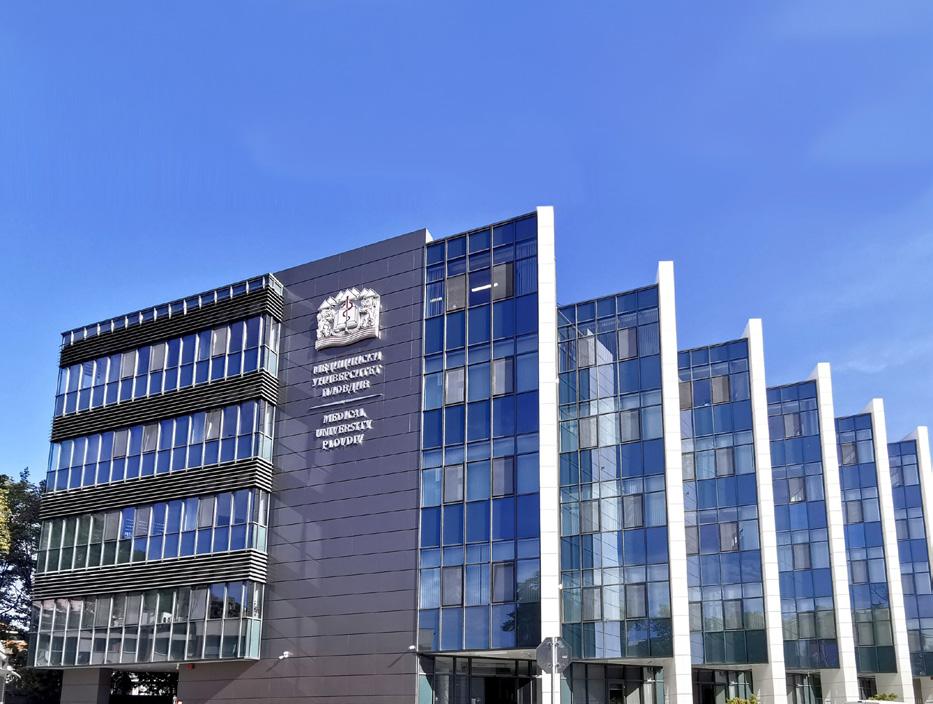
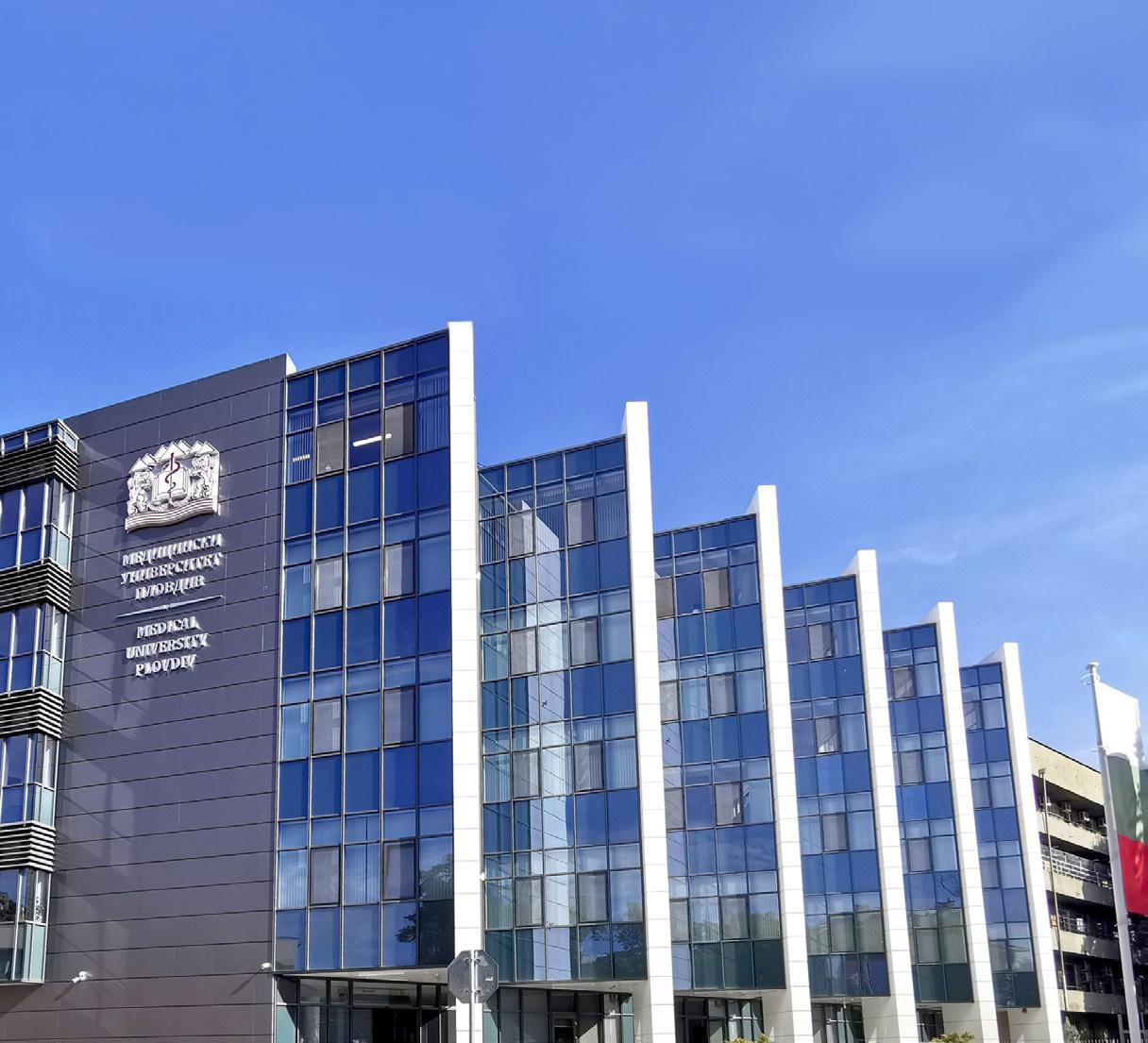
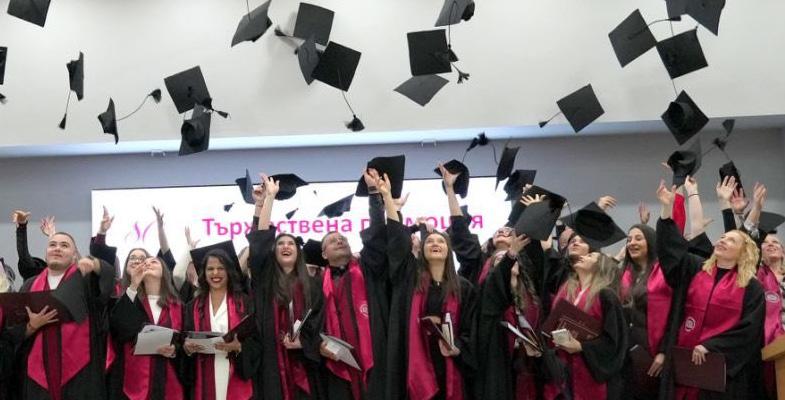
Founded in 1945, Medical University of Plovdiv has grown into one of Bulgaria’s most respected medical institutions.
Over the past eight decades, the university has built a strong reputation for academic rigor, clinical training, and international education. Today, it brings together the Faculty of Medicine, Faculty of Dental Medicine, Faculty of Pharmacy, Faculty of Public Health, Medical College, and the Department of Languages and Specialized Training under one academic community focused on preparing future healthcare professionals for a rapidly changing world.
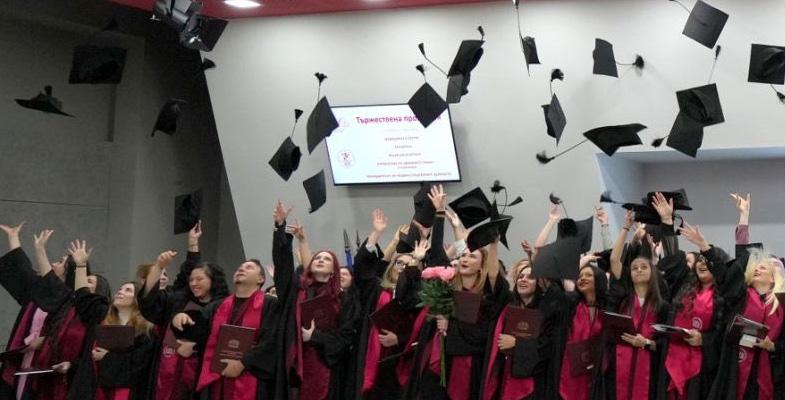
The university offers English-taught programs in Medicine, Dental Medicine, Pharmacy, and Nursing, attracting students from more than 65 countries across Europe, Asia, Africa, and the Americas. More than
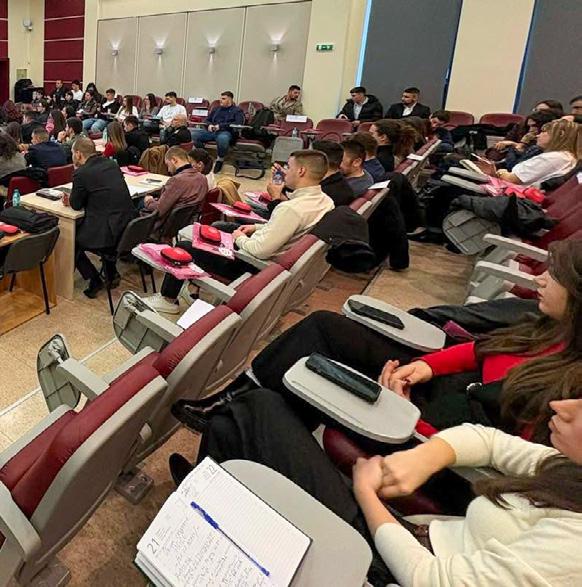
Medical University of Plovdiv offers English-taught programs in Medicine, Dental Medicine, Pharmacy, and Nursing, attracting students from more than 65 countries across Europe, Asia, Africa, and the Americas
Prof. Dr. Angel Uchikov, Rector, Medical University of Plovdiv
Prof. Dr. Angel Uchikov, MD, DMSc, graduated in major “Medicine” at the Medical University of Plovdiv in 1991, holds two recognized specialties in “Surgery” (1996) and “Thoracic Surgery” (1998) and had specializations in laparoscopic, thoracoscopic and liver surgery in France and Austria.
In 2012, he was elected Head of the Department of Special Surgery at the Medical University of Plovdiv. For eight years he was Deputy-dean for international cooperation and project activity, and for the last four years he was Dean of the Faculty of Medicine of MU-Plovdiv.
For more than 13 years, he has been involved in the management of University Hospital St. George as Head of the Second Surgery Clinic and Vice-chairman of the Board of Directors.
Prof. Uchikov has over 190 publications in Bulgarian and foreign specialized journals, of which 116 are included in the Web of Science and Scopus databases, as well as 24 publications with an impact factor, over 200 citations and a Hirsch index of 6. He has a significant contribution to 6 textbooks and monographs and is the scientific supervisor of 9 doctoral students and 18 specialists in “General Surgery” and “Thoracic Surgery”.
Prof. Dr. Angel Uchikov, PhD, is among the leading specialists in thoracic and abdominal surgery in Bulgaria. He is a member of the Bulgarian Surgical Society, ESTA and is a Republican consultant on surgery and thoracic surgery (2013).
38,000 Bulgarian and international students have studied at the university over the years, highlighting its growing global reach and reputation.
A strong connection between academic foundations and real clinical experience defines the institution’s approach to medical education.
Students train in six university hospitals, including the University Hospital “St. George,” the largest hospital in Bulgaria. Equipped with advanced technologies for diagnosis, treatment, teaching, and research, the hospital gives students direct exposure to modern healthcare environments from the early stages of their education.
The university’s commitment to practical learning is equally visible in its Faculty of Dental Medicine, which houses one of the country’s largest and most modern dental education facilities. Students learn in fully equipped lecture halls, phantom laboratories, preclinical training
rooms, and clinical halls where they work directly with patients. The Faculty of Pharmacy also demonstrates the university’s investment in modern education through updated laboratories and comprehensive practical training.
Prof. Dr. Angel Uchikov, Rector of Medical University of Plovdiv, believes the university’s long-standing success comes from its ability to preserve academic values while remaining open to change. “We balance our historic legacy with innovation by seeing tradition as a living academic continuum, in which knowledge is passed on by distinguished teachers, clinicians, and researchers whose careers have shaped Bulgarian medicine for eight decades,” he says.
That sense of continuity remains deeply connected to the present. Many of the university’s academic leaders are active clinicians who bring real-world medical practice directly into the classroom. Several have also trained or specialized at internationally recognized
Professor Veselina St. Goranova-Marinova, Vice-Rector for Education, Medical University of Plovdiv
Professor Veselina St. Goranova-Marinova is Vice-Rector for Education at Medical University of Plovdiv, a role she has held since November 2023. She is a distinguished haematologist, professor, and academic leader with extensive experience in medical education, clinical practice, and research.
She holds specialties in Internal Medicine and Clinical Haematology and earned her PhD in Clinical Haematology in 2007, focusing on multiple myeloma and bone lesions.
Professor Goranova-Marinova’s international training includes advanced studies in Germany, Israel, Sweden, the United Kingdom, Italy, and the United States, including Harvard Medical School and MD Anderson Cancer Center. She serves on the Executive Board of the Bulgarian Society of Haematology and chairs its Scientific Working Group on Plasma Cell Neoplasms. Her research interests include multiple myeloma, lymphoma, immunotherapy, cellular therapies, and stem cell transplantation.
institutions such as Harvard University, University of Oxford, and Heidelberg University. Their experience helps the university stay connected to global academic and healthcare developments while preserving the standards that have defined it since its founding.
As the university continues to expand, its leadership remains focused on strengthening both education and research. Investments in modern
infrastructure, simulation-based learning, and advanced research facilities are helping shape a more dynamic academic environment. The university is also recognized among Bulgaria’s leading research university centers, with active work in fields such as translational neuroscience, regenerative medicine, innovative diagnostics, pharmaceutical technologies, dental medicine, patient safety, and simulation training.
International collaboration also plays a central role in the university’s growth. Through more than 150 academic partnerships and participation in over 15 international academic organizations and networks, the university continues to deepen its global engagement while creating new opportunities for students, researchers, and faculty members.
For Prof. Angel Uchikov, the mission is clear. “Our goal is to strengthen MU-Plovdiv as a modern European medical university that combines educational quality, internationally connected research, and practical impact on healthcare and society.”
Learning Through Real Clinical Experience
At Medical University of Plovdiv, students learn in an environment where different healthcare disciplines work closely together. Medicine, dental medicine, pharmacy, nursing, midwifery, rehabilitation, and healthcare management are all part of one connected academic system. This
structure helps students understand early in their education that modern healthcare depends on collaboration between professionals from different fields.
The university’s campus setting also strengthens this experience. Located in the center of Plovdiv, the campus sits between two of the city’s well-known hills and offers
students a compact and connected academic environment with large green spaces nearby. The setting combines the energy of city life with a strong sense of academic community.
Students also have access to one of the country’s most modern academic resource environments through the university’s Library and Information Center. With digital resources, specialized databases, and virtual library services, students across all faculties are encouraged to build strong research and evidence-based learning habits throughout their studies.
Professor Veselina St. Goranova-Marinova, Vice-Rector for Education, believes one of the university’s biggest strengths is the way students learn across disciplines while sharing access to advanced clinical and laboratory infrastructure. This gives them a broader understanding of how diagnosis, treatment, prevention, rehabilitation, and pharmaceutical care connect in real medical practice. “Our students learn from the beginning that modern healthcare depends on teamwork across professions,” she says.
Clinical exposure begins early and remains a central part of the educational experience. Students are introduced to real healthcare settings from the first years of study, allowing them to connect classroom learning with patient care in a meaningful way.
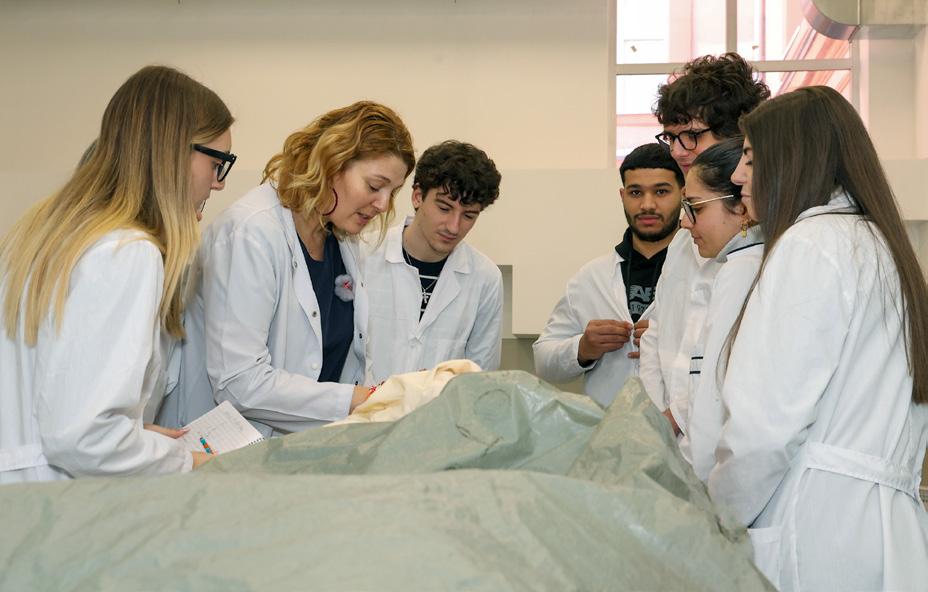
Medical students develop their foundational knowledge through anatomy training on real human cadavers and other biomedical sciences before moving into clinical observation and hospital practice. Dental medicine students progress from simulation and phantom training to direct patient care in modern clinical facilities. Pharmacy students combine scientific study with applied laboratory and professional training that prepares them for real-world therapeutic practice.
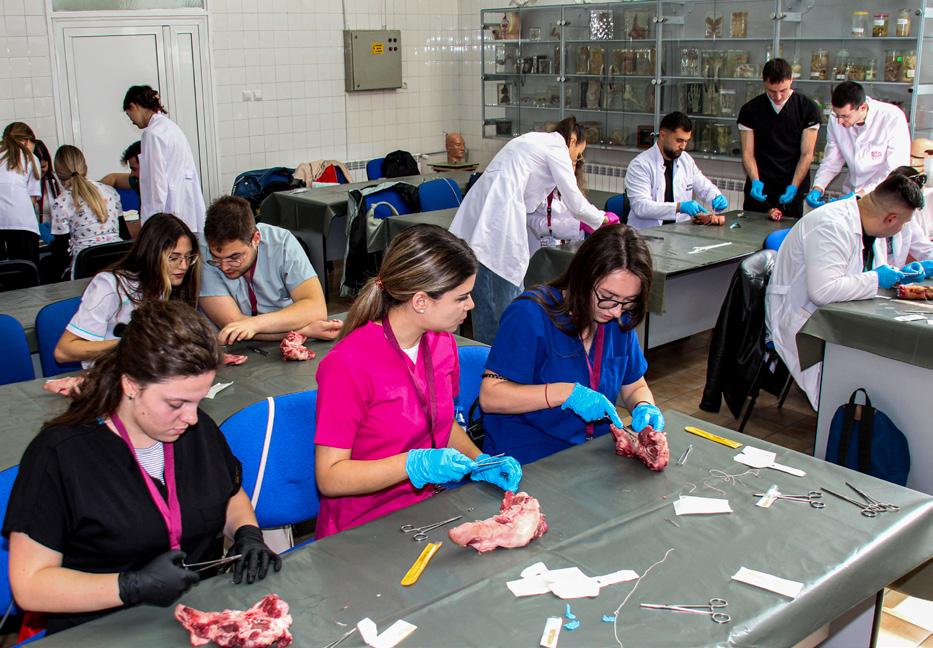
The university also places strong emphasis on simulation-based learning, laboratory practice, and bedside teaching. These experiences help students build confidence, technical skills, and professional judgment alongside their academic knowledge.
According to Professor Goranova-Marinova, this consistent contact with real patients plays an important role in shaping students as healthcare professionals. “This early, continuous contact with real patients gives our students exceptional clinical maturity, professional confidence, and readiness for the demands of modern healthcare,” she explains.
Preparing Future Healthcare Leaders for a Changing World
As healthcare systems continue to evolve, Medical University of Plovdiv is preparing students and researchers to respond to new medical, scientific, and social challenges with confidence and responsibility.
The university combines early clinical training with advanced simulation-based education and research in areas that are shaping the future of medicine. Students gain experience in real hospital settings from the early stages of their education, while the university’s modern Simulation Center allows them to strengthen technical skills and patient-safety awareness before working directly with patients.
Research is another major focus area. Through its Research Institute and Strategic Research and Innovation Programme, the university is expanding work in fields such as translational neuroscience, regenerative medicine, innovative diagnostics, patient safety in surgery, dental technologies, and pharmaceutical innovation.
Professor Goranova-Marinova says the university is committed to preparing students for a healthcare landscape that is changing rapidly across the world. “We are preparing future professionals not only to respond to today’s healthcare needs, but also to lead in areas such as precision medicine, advanced diagnostics, safer surgery, innovative therapeutics, and digitally supported medical education,” she says.
The university also encourages interdisciplinary collaboration and international scientific exchange. Academic forums in
translational medicine regularly bring together researchers, doctoral students, faculty members, and young scientists from across Europe. These interactions help students and researchers stay connected to global scientific developments and emerging healthcare priorities.
To meet the growing demands of modern healthcare, the university integrates training in digital health, innovative medical technologies, interdisciplinary teamwork, preventive medicine, public health, and patient-centered care. These areas are becoming increasingly important as healthcare systems adapt to aging populations, emerging diseases, and ongoing transformation across the medical sector.
Alongside academic and scientific progress, the university continues to place strong emphasis on human values and student development. Its leadership believes healthcare education should prepare graduates not only with knowledge and technical expertise, but also with empathy, professionalism, and a clear sense of responsibility toward society.
Today, Medical University of Plovdiv continues to strengthen its position as a modern European medical university that values academic quality, international collaboration, and practical impact on healthcare and communities.
Medical University of Plovdiv’s scientific work is closely connected to the changing needs of modern healthcare and focuses on areas that can improve patient care, medical practice, and public health
Building a Research Culture with RealWorld Impact
Research plays a central role at Medical University of Plovdiv. The university’s scientific work is closely connected to the changing needs of modern healthcare and focuses on areas that can improve patient care, medical practice, and public health.
Its current research agenda includes personalized medicine, pharmaceutical technologies, chronic diseases, preventive healthcare, medical and dental innovation, and public health research. The university also supports work in areas with strong social relevance, including child development, speech and language pathology, environment and health, phytotherapeutics, and clinical morphology.
According to Prof. Maria Tokmakova, MD, PhD – Vice Rector of Science and Research Activities, the goal is to ensure that scientific work remains connected to real healthcare needs and practical outcomes. “MU-Plovdiv is shaping a scientific agenda that connects laboratory discovery, clinical application, and the evolving needs of modern society,” she says.
Research activities are supported through specialized research infrastructure, university centers, and participation in national and international scientific projects. Faculty members actively involve students in research culture from an early stage, encouraging them to think critically and engage deeply with their studies.
At the university, students are expected to do more than memorize information. Faculty members encourage them to ask questions, compare ideas, defend their reasoning, and make thoughtful professional decisions. Many professors are also practicing physicians,
dentists, pharmacists, and researchers who bring direct clinical and scientific experience into the classroom and hospital environment.
This connection between education and practice leaves a strong impression on students. They quickly learn that healthcare is built around people and human responsibility. Professor Goranova-Marinova believes this understanding is essential in medical education.
“Students understand that patients are not abstract clinical cases, but human beings who are ill, vulnerable, and often suffering,” she explains.
Students are also encouraged to join scientific conferences, research societies, and academic sessions throughout their education. These opportunities help build curiosity, confidence, and a habit of lifelong learning.
The university wants students to continue growing professionally long after graduation.
Doctoral education has become another major strength of the institution. Doctoral students play an active role in teaching, research projects, and scientific collaboration. The university currently offers 63 accredited doctoral programs and continues expanding its research capacity with new doctoral fields and updated accreditation processes.
Research training includes access to modern facilities, interdisciplinary collaboration, publishing opportunities, and international mobility. Doctoral students also participate directly in university research projects. In 2025 alone, 37 doctoral students served as leading investigators in university-funded projects, reflecting the university’s strong support for early academic involvement.
The university also participates in Bulgaria’s national program for Young Scientists and Postdoctoral Fellows. In 2025, 49 researchers from MU-Plovdiv were approved through the initiative, including postdoctoral fellows and young scientists receiving institutional support for their work.
For Prof. Maria Tokmakova, doctoral education is closely tied to the future of healthcare and scientific progress. She sees it as a space where future researchers, innovators, and academic leaders develop through mentorship, collaboration, and hands-on scientific work.
Creating a Culture of Care, Collaboration, and Responsibility
At Medical University of Plovdiv, collaboration extends far beyond the classroom. The university works closely with hospitals, clinical
departments, research groups, and industry partners to connect academic knowledge with practical healthcare solutions.
These collaborations support clinical trials, applied research projects, educational initiatives, and technology transfer activities. The university also participates actively in European and international research programs, helping researchers and students stay connected to global scientific developments.
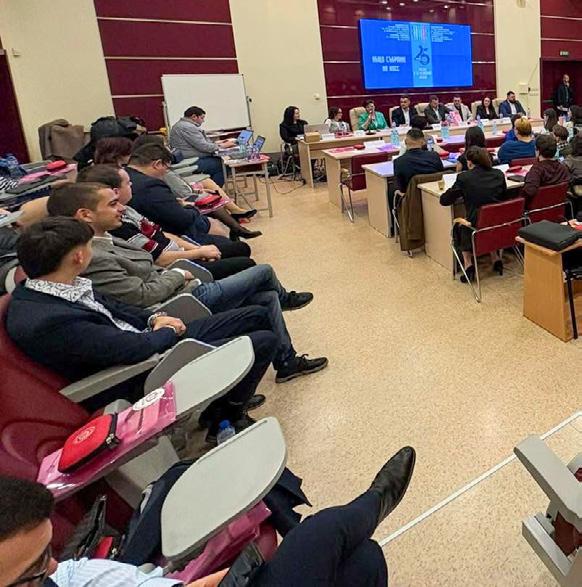
In recent years, the university has strengthened interdisciplinary cooperation through forums and scientific events that bring together experts from different healthcare and research fields. Events such as the International Forum on Translational Medicine and the interdisciplinary oncology forum “Oncological Compass” create opportunities for dialogue between clinicians, researchers, faculty members, and young scientists.
The university’s growing research partnerships are also reflected in its participation in national and international projects. In
2025, MU-Plovdiv reported involvement in 32 research projects and contributed expertise through Bulgaria’s National Science-Business cooperation platform.
Professor Goranova-Marinova believes these efforts are important because they help move scientific ideas into practical healthcare applications. “MU-Plovdiv is creating the mechanisms needed to translate discovery into diagnostics, technologies, and healthcare solutions with real-world impact,” she says.
Alongside academic achievement and scientific development, the university places strong emphasis on empathy, ethics, and social responsibility. Its motto, “Dedicated to Humanity,” reflects a culture that encourages students to care deeply about the people and communities they serve.
Medical University of Plovdiv has built a strong support system to help students from different countries feel welcomed, informed, and connected from the moment they begin their journey
Student involvement in volunteer and outreach activities plays a major role in shaping this mindset. One example is the student-led organization Medical Students On a Mission (M.S.O.M.), which focuses on supporting communities with limited access to healthcare. In one outreach initiative in Southern Bulgaria, international medical students participated in healthcare screening activities for underserved populations.
The university has also provided ongoing support for students from Ukraine through accommodation and financial assistance organized with the help of the Student Council. Final-year medical students regularly participate in health education campaigns focused on hygiene, nutrition, immunization, and public awareness.
During the COVID-19 pandemic, many students volunteered alongside doctors, nurses, pharmacists, and trainee physicians on the front lines. Their contribution reflected the strong sense of professional responsibility encouraged throughout the university.
The same values are visible within the Faculty of Dental Medicine, where students participate in volunteer initiatives such as “Children’s Smile,” “Teddy Bear Hospital,” “Blue Wednesdays” for oral cancer prevention, visits to elderly homes, refugee support missions, and international charity work including Gambia Mission 2025.
In the Faculty of Pharmacy, patientcentered thinking is built into the curriculum
through courses such as Pharmaceutical Care, Clinical Pharmacy, Pharmacoeconomics, and Pharmaceutical Legislation. These subjects encourage students to think carefully about the people who rely on medicines for safe and effective treatment.
Across the university, students are constantly reminded that technical knowledge alone is not enough in healthcare. Compassion, communication, patience, and ethical responsibility are equally important parts of becoming a trusted healthcare professional.
Professor Goranova-Marinova believes this balance defines the university’s identity. “Science and skill are essential, but they achieve their highest value only when placed in the service of the patient,” she says.
Building a Global Student Community
At Medical University of Plovdiv, international students are seen as an important part of the university community. The institution has built a strong support system to help students from
different countries feel welcomed, informed, and connected from the moment they begin their journey.
This support starts even before enrollment. Prospective students and their families receive guidance throughout the application and admission process, helping them better understand academic requirements and student life in Bulgaria. The university’s Welcome and Information Center plays a central role in helping newly admitted students adapt to life at the university and settle into their new environment.
Prof. Neshka Manchorova, DMSc – Vice Rector of International Relations and Student Integration, says the university places strong emphasis on helping students feel part of the academic community from the very beginning. “Our goal is not only to welcome students from around the world, but to help them truly become part of the University community,” she explains.
Throughout the year, the university organizes Open Days for Bulgarian and international applicants. These events give future students the opportunity to visit faculties, meet professors and current students, and experience the atmosphere of the campus firsthand.
Student integration also continues beyond academics. The university encourages international students to engage with the cultural and social life of Plovdiv and Bulgaria through organized city tours, cultural visits, and shared student activities. In 2025, with support from the Bulgarian Ministry of Education, international students visited several well-known Bulgarian destinations including Shiroka Luka, Koprivshtitsa, Melnik, and Sandanski. These experiences helped students develop a stronger connection to the country and its traditions.
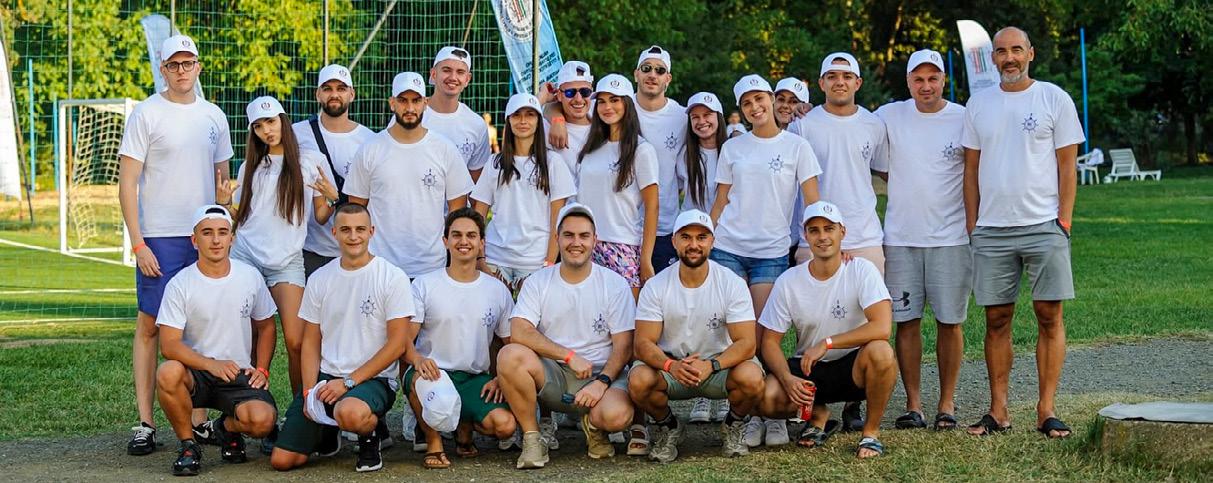
Student life at MU-Plovdiv extends well beyond lecture halls and laboratories. Students participate in sports tournaments, cultural activities, and peer-led initiatives throughout the academic year. Indoor and outdoor sports facilities are available on campus, and students regularly represent the university in national and international sporting events.
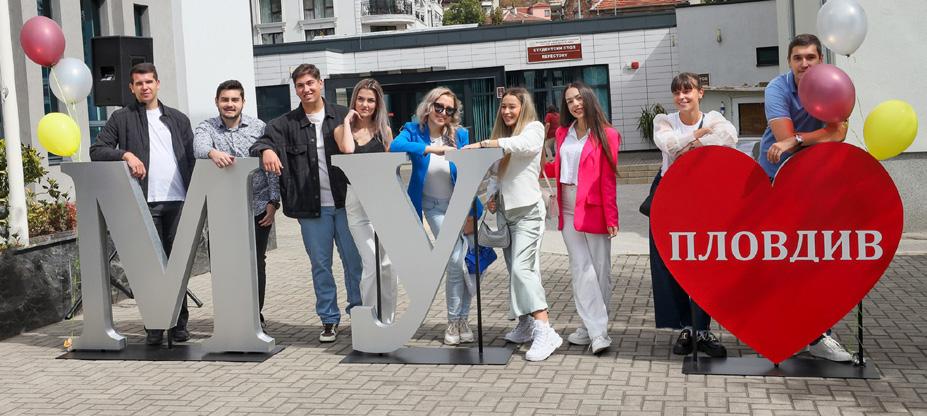
New student-led initiatives are also helping strengthen connections between Bulgarian and international students. One example is “The Bridge,” a club founded in 2025 by students from the English-language medical program. The club creates opportunities for mentoring, discussion, and cultural exchange among students from different backgrounds.
Music also brings students together through the university choir, UniVoices, where students from different countries share their interest in music, medicine, and community life in Plovdiv.
International academic experience remains another important focus for the university. Through programs such as Erasmus+ and CEEPUS, students can participate in exchanges, traineeships, internships, and mobility programs across Europe and beyond. These opportunities allow students to experience different healthcare systems, educational approaches, and professional environments.
The university actively supports students in accessing these opportunities through its international offices and academic partnerships. Cooperation agreements with universities and institutions abroad continue to expand mobility and collaboration opportunities for students and faculty alike.
One important partnership is with the USC Alfred E. Mann School of Pharmacy and Pharmaceutical Sciences, where pharmacy
students from MU-Plovdiv participate in international schools and academic programs organized by partner institutions.
Student organizations also maintain active participation in international networks and professional associations, including European Dental Students’ Association, International Federation of Medical Students’ Associations, and European Pharmaceutical Students’ Association. These activities give students opportunities to exchange ideas, collaborate on projects, and build international professional connections early in their careers.
Shaping the Future with Purpose and Innovation
As Medical University of Plovdiv looks toward the future, its leadership remains focused on balancing academic tradition with steady innovation and long-term development.
The university’s strategic priorities include expanding digital education, strengthening research capacity, modernizing infrastructure, and deepening international partnerships and academic exchange. These efforts are designed to help the university continue growing as one of the leading medical institutions in the region and across Europe.
Professor Goranova-Marinova believes the university’s future depends on staying responsive to the changing needs of healthcare and education while maintaining strong academic standards. “We remain committed to maintaining high academic standards, modernizing teaching approaches, expanding international cooperation, and further strengthening our student-centered character,” she says.
The hospital has also introduced advanced imaging technologies and robotic surgery equipment, giving students and clinicians access to modern medical tools and treatment methods within the university’s clinical environment.
Across the wider campus, infrastructure development continues to support both education and research. New buildings for the Faculty of Public Health and the Department of Languages and Specialized Training have strengthened the university’s academic environment. Students also benefit from facilities such as the Dental Laser Center, the modern University Library, the advanced Simulation Center, and the renewed Museum of Medicine.
These investments reflect the university’s ongoing effort to create an educational environment that aligns closely with the realities of modern medicine and healthcare practice.
At the same time, the university continues to place students at the center of its long-term vision. Academic quality, practical learning, research growth, and international collaboration remain closely connected to the broader goal of preparing future healthcare professionals who are skilled, adaptable, and socially responsible.
For Professor Goranova-Marinova, this vision is ultimately about building a university community that continues to evolve while staying grounded in its educational mission and human values.
In recent years, the university has invested significantly in its educational, clinical, and research infrastructure. University Hospital “St. George” has expanded its clinical capacity through the development of modern facilities including the new University Children’s Hospital, advanced hematology and oncology clinics, a Cellular Therapy Center, nephrology and dialysis clinics, and upgraded radiology and nuclear medicine facilities.
ACADEMIC VIEW
Rethinking Power Policy and Prosperity in the Age of AI
AdrianaHoyos, Professor of AI Economics, Digital Ecosystems, and Geopolitics, IE University
Adriana Hoyos brings over 25 years of global experience as a board director, advisor, banking executive, strategy consultant, and academic. Her work centers on AI economics, digital transformation, platform markets, public policy, ESG, and geopolitics.
She serves as an independent board member and Chair of the AI Taskforce at Nesma United Industries in Saudi Arabia, and sits on advisory and trustee boards in Spain and the United States, including the Nasdaq Center for Board Excellence and the GCC Board Directors Institute. Her previous board roles include Sacyr and several international nonprofit and development organizations. She has also led as CEO of Women’s World Banking and held senior corporate banking positions at Citibank.
An adjunct professor at IE University and longtime senior fellow at Harvard University, she contributes to global AI and policy initiatives, including collaborations with Google AI Labs and the United Nations. A former Colombian Economic Attaché to Spain, she brings a uniquely global perspective shaped by triple citizenship in the United States, Spain, and Colombia.
In an exclusive conversation with Higher Education Digest, Adriana talks about the structural transformation of the global economy under the influence of artificial intelligence and digital ecosystems. Drawing from her experience across public policy, banking, diplomacy, and academia, she explores on how AI is redefining value creation, national competitiveness, and geopolitical power. She examines the urgent need for universities to move beyond outdated curricula and embed AI literacy across disciplines, while preserving intellectual rigor and character formation. Below are the excerpts of the interview.
Frontier technologies —AI, in particular, represent a structural economic layer, one that influences productivity, capital allocation, social mobility, and national competitiveness simultaneously
Your career bridges economics, digital ecosystems, and geopolitics. What key milestones shaped your journey toward specializing in AI Economics?
My early professional formation was rooted in economic development and public policy. Serving in diplomatic roles representing Colombia in Europe and at the United Nations, and later advising in political and multilateral environments, gave me direct exposure to the structural drivers of poverty, institutional fragility, and uneven growth.
In parallel, my work in banking and inclusive finance —particularly at Women’s World Bank, placed me in direct contact with entrepreneurs and communities navigating systemic constraints. Those years of fieldwork were decisive. They demonstrated to me that while traditional development tools matter, technology consistently outpaced them in
speed, scale, and cost-efficiency when it came to expanding opportunity. Digital infrastructure, mobile banking, and data-driven decision systems were not abstract innovations; they were materially improving livelihoods.
That realization prompted a deliberate intellectual shift. I began to examine how digital platforms, data economies, and later artificial intelligence were reshaping value creation, labor markets, and geopolitical power balances, while improving access to markets for all. My academic work, research affiliations, and board service increasingly converged around this intersection.
Frontier technologies —AI, in particular, represent a structural economic layer, one that influences productivity, capital allocation, social mobility, and national competitiveness simultaneously. Specializing in AI Economics was therefore not a departure from development
or geopolitics; it was a continuation. It became clear to me that if technology is the most powerful poverty alleviator of our time, then understanding its economic architecture and governance is not optional, it is essential.
How has your understanding of global economic systems evolved with the rapid rise of AI-driven platforms and digital ecosystems?
Over time, I have come to see that AI-driven platforms are not simply participants in the global economy; they are redesigning its architecture. Traditional economic systems were organized around nation-states, industrial sectors, and capital markets. Today, digital ecosystems operate across jurisdictions, aggregate demand at scale, and internalize entire value chains within platform environments.
This has altered how value is created and captured. Competitive advantage is increasingly determined by ecosystem orchestration, control over standards, and the ability to integrate data, compute, and distribution into cohesive strategic models.
What has also evolved in my perspective is the geopolitical dimension of these systems. AI capabilities are now directly linked to national security, industrial resilience, and long-term strategic autonomy. The rise of platformbased economic power has introduced new dependencies, particularly for countries that rely on external digital infrastructure. As a result, economic policy can no longer be separated from technology policy.
Governments are compelled to think in terms of digital sovereignty, talent pipelines, and regulatory frameworks that balance innovation
with systemic risk. The global economy is no longer only interconnected through trade; it is interdependent through code, data flows, and algorithmic governance.
In your view, what are the most pressing challenges higher education institutions face in preparing students for an AI-dominated economy?
The most pressing challenge is that many institutions are still educating for a labor market that is disappearing. Curricula remain organized around stable occupations and linear career paths, while AI is reshaping roles into dynamic task portfolios, where judgment, problem framing, and cross-functional execution matter as much as technical knowledge. Universities also face a pace problem: academic cycles move slowly, but AI capabilities and business adoption move quickly.
This creates a structural lag between what is taught and what organizations actually need. Compounding this, there is often an artificial separation between disciplines—technology on one side, and economics, law, ethics, and policy on the other—when, in practice, AI work requires fluency across all of them.
A second challenge is cultural and institutional. Many universities struggle to integrate AI as a general-purpose tool across the entire learning model, not just as a specialized subject for computer science students. Preparing students for an AI-dominated economy requires embedding AI literacy into core formation: how to work with intelligent systems, how to audit outputs, how to understand incentives and externalities, and how to make decisions under uncertainty.
Equally important is preserving what higher education has always done best: developing character, intellectual rigor, and the ability to reason independently. In an era of ubiquitous automation, the differentiator will not be who can produce more content, but who can think more clearly, ask better questions, and apply technology responsibly in complex real-world environments.
How is IE University integrating emerging technologies such as AI into its academic and research frameworks to stay ahead of global trends?
In my opinion, IE University is at the forefront of higher education when it comes to technology systems, integration, and the cultural shift required to make AI truly additive rather than superficial.
What I see is not a “tool adoption” approach, but an institutional effort to treat AI as a foundational capability across teaching, learning, and research. That matters because staying ahead of global trends is less about having the newest technology and more about building the right academic operating model: one that is agile, interdisciplinary, and connected to real-world practice.
IE is also advancing the conversation beyond technical proficiency into application and governance. The most meaningful integration happens when students learn to use AI in decision-making contexts — strategy, markets, policy, and organizational design, while developing the discipline to question assumptions, validate outputs, and understand second-order effects.
This combination of systems integration and mindset shift is what makes a university future-ready. It preserves the rigor of traditional academic formation, but updates the methods and frameworks so graduates can lead in environments where AI is embedded in how value is created, how institutions operate, and how societies adapt.
You often discuss AI as both an economic and geopolitical force. How should policymakers and business leaders approach this dual impact responsibly?
It is not really possible to generalize responsibly, because the dual impact of AI depends on sector, national capacity, regulatory maturity, and strategic exposure; what is prudent for a hospital system is different from what is prudent for a defense supplier, a bank, a port operator, or an education ministry.
Leaders should start from a shared discipline: treat AI simultaneously as an engine of productivity and as a source of strategic dependency. In practice, that means scenarioplanning around where AI concentrates power (compute, data, models, talent), defining which AI capabilities are “must own” versus “safe to source,” and then aligning governance to that reality, not to slogans. The reason this matter is that the race is being led primarily by the United States, with China closely behind, while Europe is not in the same competitive tier on core AI scaling metrics such as private investment and infrastructure intensity.
On the business side, responsible leadership also needs to be operational, not theoretical: build adoption roadmaps with measurable
Leaders should start from a shared discipline: treat AI simultaneously as an engine of productivity and as a source of strategic dependency
productivity and risk controls, invest in workforce redesign, and audit supply chains for model and cloud dependencies the same way firms once audited financial counterparty risk. Here again, the pattern is uneven.
American companies, benefiting from capital markets, platform scale, and deep AI vendor ecosystems, have generally been moving faster, followed by Asian companies, including China, South Korea, Taiwan, and India, where industrial policy, manufacturing strength, and rapid commercialization cycles are pushing adoption. Europe has strong regulatory and policy frameworks, but the recurring challenge is translating ambition into scaled deployment across sectors.
What leadership principles guide you when navigating interdisciplinary fields that combine technology, policy, and economics?
In interdisciplinary environments where technology, policy, and economics intersect, the leadership traits I rely on most are disciplined
rationality and ethical clarity. It is essential to analyze incentives, second-order effects, and systemic risk with precision, but rational analysis alone is insufficient. Decisions around AI shape labor markets, institutions, and social cohesion.
For that reason, leadership must integrate ethical judgment into strategic thinking. Efficiency and scale are important, but they cannot become the sole metrics of success. I hope this technological transformation remains human-centered, ensuring that AI systems augment human productivity and wellbeing rather than diminish human agency or undermine stability.
A second trait is responsible stewardship. Leaders in this space must be willing to set boundaries, insist on legality and transparency, and communicate both opportunities and risks with honesty. Those working on AI-related issues should also act as constructive advocates, demonstrating how these technologies can be used in positive, lawful, and socially beneficial ways. At a pivotal moment such as this,
I envision a better world emerging from the intersection of AI, robotics, and quantum computing —an era in which productivity expands dramatically, supply chains become more intelligent, scientific discovery accelerates, and barriers to market participation decline
leadership is defined not only by innovation, but by the ability to align innovation with enduring ethical principles.
Outside your academic and research commitments, what personal values or interests continue to influence your perspective on innovation and global development?
Outside my academic and research commitments, what continues to influence my perspective is a conviction that technological progress should translate into shared prosperity. I envision a better world emerging from the intersection of AI, robotics, and quantum computing —an era in which productivity expands dramatically, supply chains become more intelligent, scientific discovery accelerates, and barriers to market participation decline. If deployed responsibly, these technologies can reduce structural poverty by lowering costs, expanding access to services, and connecting individuals to global economic systems in ways that were previously impossible.
At the same time, I remain attentive to the institutional and social foundations required to sustain that progress. As these powerful technologies converge, societies will need greater coordination, not fragmentation. I hope that polarization diminishes so that governments, businesses, and civil society can find pragmatic consensus in navigating this very different and increasingly complex future. The promise of this technological convergence is significant, but realizing it will depend on our collective ability to align innovation with stability, inclusion, and long-term human advancement.
INDUSTRY PERSPECTIVE
Trust Led Growth in a Digital First Global Education Landscape
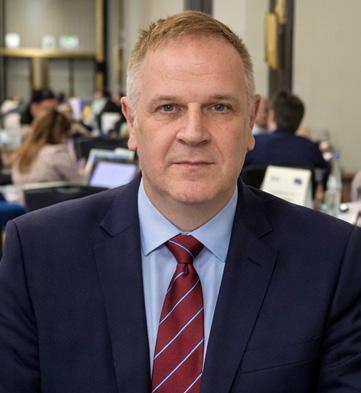
AnthonyOwen, Head of Market Development for Europe and the USA, Dublin Business School
Your career has focused on international market development. What pivotal experiences shaped your journey into global higher education, and what milestones stand out most?
My journey into global higher education has been shaped by a simple, recurring lesson: international growth only works when what you promise matches what you deliver. A pivotal period for me was my long tenure at International House Madrid, where I was immersed in large-scale international marketing and recruitment and saw first-hand how quickly trust can be built — and how quickly it can be lost — if quality and student support don’t keep pace with demand. That experience gave me
a practical, student-centred mindset that I’ve carried into every role since.
Milestones that stand out include leading international recruitment and marketing strategy at Wrexham University, conducting global quality audits as an International House auditor, and more recently driving partnership and market development for Dublin Business School across Europe and the USA. I’m particularly proud of work that moves beyond “good intentions” into structured outcomes: partnerships that are clear on entry requirements and progression, and pathway models (including 3+1 and 2+2 routes) that give students confidence that their investment will translate into real opportunity.
When partners and students feel informed, supported, and confident in what happens next, relationships deepen and reputation grows over time
Anthony(Tony)OwenisHeadofMarket Development for Europe and the USA at DublinBusinessSchool(DBS),whereheleads international recruitment, market expansion, and strategic partnership development across key European markets and the United States. With over 25 years’ experience in international education and marketing, he has built partner networks and recruitment strategies spanning agent channels, institutional collaborations, and progression models including 3+1 and 2+2 pathways.
Prior to joining DBS, Tony held senior international recruitment and marketing roles at Wrexham University and spent many years at International House Madrid, where he led large-scale growth and brand positioning in a regulated education environment. He has also served as an International School Auditor for International House World Organisation, assessing governance, academic delivery, compliance, and student experience globally.
Tony’s work is underpinned by an interest in digital transformation and responsible innovation; in2023hecompletedanMScinDigitalMarketing, with research focused on the use and adoption of AI as assistive technology in student recruitment and admissions.
In an exclusive conversation with Higher Education Digest, Tony talks about building sustainableinternationalgrowththroughtrust clarity and long-term partnership thinking. He shares how structured pathway models and strong governance frameworks protect both student experience and institutional reputation, and explores the practical role of AI as an assistive tool that enhances human judgement rather than replacing it. Below are the excerpts of the interview.
As Head of Market Development for Europe and the USA, how do you identify emerging opportunities while navigating the regulatory and competitive challenges of international recruitment?
I look for opportunities where market demand, academic fit, and deliverability meet — and where we can genuinely add value for both partners and students. In a competitive environment, growth is rarely sustained by promotion alone; it comes from being consistently useful: clarity, responsiveness, realistic pathways, and support that stands up in practice. That’s the difference between a short-term intake and a long-term pipeline.
I often spot changes early through partner conversations — a sudden shift towards shorter mobility, more price sensitivity, or a request for clearer outcomes — and that’s usually the prompt to adjust messaging and offer more value, not just more marketing. From there, I apply a disciplined filter: is the opportunity compliant, financially sustainable, academically aligned, and resourced to deliver a strong student experience?
To navigate regulatory and competitive challenges, I prioritise structure and transparency. That means setting expectations early on entry requirements, timelines, fees, and recognition of prior learning where progression is involved — and ensuring internal stakeholders are aligned so delivery matches what we communicate externally. Trust is the real differentiator. When partners and students feel informed, supported, and confident in what happens next, relationships deepen and reputation grows over time.
If students experience a well-supported journey and graduate with demonstrable skills and confidence, employability outcomes improve and reputation strengthens — and that is what sustains demand over time
Dublin Business School has built a strong reputation for industry-aligned programmes. How do you ensure that market insights directly inform academic offerings and student outcomes?
Market insight only becomes valuable when it changes something for the better. My role is to translate what we’re hearing from partners, employers, agents, and students into practical intelligence that academic and professional services teams can act on. I’m especially attentive to employability signals: which skills are being requested, what types of applied learning resonate most, and where students need clearer guidance once they arrive.
That insight helps us add value in the places students feel it most: clearer expectations, stronger real-world relevance, and smoother progression and support. It can influence programme positioning, how we describe outcomes, how we design partner pathways, and how we prepare students for the academic and practical realities of studying in Dublin. I don’t believe in chasing trends for the sake of it. The goal is alignment: DBS’s academic strengths articulated in a way that is relevant, evidence-based, and genuinely useful to students.
AI and digital technologies are transforming both education delivery and student recruitment. How are these technologies influencing your strategy across European and U.S. markets?
AI is accelerating expectations. Prospective students increasingly want fast, accurate, personalised answers, and they judge institutions by how clear and responsive the journey feels. That shift reinforces a wider point: institutions
remain competitive when they use technology to add value — improving relevance, speed, and guidance — while keeping trust and a human relationship at the centre.
In my MSc research, I explored AI as assistive technology in recruitment and admissions: its potential to personalise communications, streamline repetitive tasks, and support betterinformed decision-making, alongside the risks when data quality, governance, and ownership aren’t in place. A key takeaway for me was that AI delivers the most value when it supports staff judgement rather than trying to replace it. That’s non-negotiable.
In practice, this means using AI to triage and route enquiries, improve consistency across markets, surface the right information at the right time, and free teams to focus on complex cases and relationship-building. But it also means being deliberate: integrating data properly, defining accountability, monitoring outputs, and being transparent about how tools are used. The goal is a healthy synergy of “human-led, tech-enabled” recruitment that improves the experience for both students and staff.
International students are increasingly focused on employability and return on investment. How do you address these expectations when positioning DBS globally?
I position DBS through the lens of added value, because in a crowded market the programme alone is rarely the only differentiator. Students want confidence that their investment will lead somewhere meaningful, and employability is central to that. Added value, for me, is the practical layer around the degree that helps
students translate learning into outcomes: clearer guidance, stronger preparation, and real-world relevance that builds both competence and confidence.
When we speak about employability, I avoid vague promises and focus on what students can actually evidence. That includes the development of practical, workplace-relevant skills through applied learning, the ability to articulate those skills clearly, and support that helps students navigate the transition into an international study environment so they can perform academically from the outset. In many markets, value is also created by reducing uncertainty — being transparent about costs, timelines, expectations, and the student journey — because students who arrive prepared are far more likely to succeed and progress.
Ultimately, added value must be delivered, not described. If students experience a well-supported journey and graduate with demonstrable skills and confidence, employability outcomes improve and reputation strengthens — and that is what sustains demand over time.
Leadership in market development requires both strategic thinking and cultural sensitivity. How would you describe your leadership philosophy, and what principles guide your decisionmaking?
My leadership style is based on clarity, accountability, and respect. International growth is a long game, so I focus on setting a direction people can trust, building a disciplined plan, and then enabling colleagues across functions to execute well. Cultural sensitivity matters because good partnership work is rarely about
“selling”; it’s about understanding what the other side values and why, and building something that works for both institutions and for students.
The principles that guide me are transparency, student-first decision-making, and long-term reputation. I’m also governance-aware, and I prioritise growth models that are compliant and scalable rather than volume-driven. I try to be direct in a kind way. It saves time, reduces confusion, and it strengthens relationships.
Outside of your professional responsibilities, what personal values or interests shape your perspective on education and global collaboration? What advice would you offer to students and young professionals aspiring to build international careers?
Living and working internationally has reinforced a simple belief: education is most powerful when it expands capability and empathy at the same time. Global collaboration works when you stay curious, listen properly, and respect local context rather than forcing a one-size-fits-all approach. I’m also grounded by family, and that keeps my focus on what really matters in education: supporting people through change and helping them grow in confidence, not just credentials.
My advice to students and young professionals is to treat an international career as a craft. Build strong fundamentals, communicate clearly, and develop cultural intelligence by observing and asking good questions. Seek mentors, take feedback seriously, and choose roles that teach you how systems work. Above all, protect your integrity — in international education, reputation travels quickly, and trust is the most valuable currency you have.
INDUSTRY
PERSPECTIVE
Leading Academic Transformation with Purpose and Vision
Dr. Lisa Clark, Associate Vice President, Academic Transformation, Blackboard
Hi Lisa. What sparked your passion for transforming higher education, and how did you develop your expertise in digital learning and academic transformation?
Spending over 20 years in higher education gives you a pretty solid view of how much this space continues to evolve. I started in computer science and then spent more than a decade teaching digital media at the university level and creating online content, so innovation was always part of my world. I was constantly thinking about how to redesign content, how to make it more engaging, how to push it forward. Over time, that naturally expanded into broader questions about transformation inside courses
and across institutions. What I do today really feels like the culmination of all of that. It’s not something I planned step by step. It just evolved…and honestly, it’s a beautiful fit.
What do you love the most about your current role?
I love being on campuses, whether in person or virtually, and working alongside educators who care deeply about their students. There is something incredibly powerful about seeing how thoughtfully implemented technology can remove barriers and expand opportunity. When used strategically, platforms like Blackboard can open doors to engagement, accessibility, and new approaches to assessment. I also
The acceleration of AI and emerging technologies is reshaping long-standing assumptions, and being able to research, write, and speak to that while helping institutions think strategically about it, is both energizing and meaningful
Lisa A. Clark, Ed.D., is Associate Vice President of Academic Transformation at Anthology, where she leads global innovation efforts for Blackboard Learn. Named one of the Top 50 Voices to Follow in Higher Education for 2026, she is recognized for her thought leadership in AI, pedagogy, and academic transformation. Dr. Clark serves on the Board of Directors of the United States Distance Learning Association and speaks internationally on the future of teaching, learning, and digital innovation.
Recently, in an exclusive interview with Higher Education Digest, Lisa shared insights into her passion for transforming higher education. Looking ahead, Lisa sees AI and technology transforming higher education by rethinking teaching, learning, and assessment, and emphasizes the importance of developing skills like adaptability, curiosity, and sound judgment. She also shared her personal hobbies and interests, future plans, words of wisdom, and much more. The following excerpts are taken from the interview.
Technology will continue to evolve and influence practice, and new tools will emerge, but institutional mission should remain constant
find this current moment in higher education fascinating. The acceleration of AI and emerging technologies is reshaping longstanding assumptions, and being able to research, write, and speak to that while helping institutions think strategically about it, is both energizing and meaningful.
How do you see AI and technology transforming higher education in the next 5 years?
Immeasurably, but not in the way people sometimes assume. I do not think the biggest shift will be about automation. I think it will be about how we rethink teaching, learning, and especially assessment. We’re already starting to question whether a single test or assignment really captures learning. I see us moving toward
more of an “evidence over time” approach and looking across curriculum instead of keeping everything siloed. AI is prompting us to revisit foundational questions about what learning looks like and how we measure it. That’s where the real transformation is happening.
What are the key skills educators need to develop to lead in a rapidly changing educational landscape?
This may sound simple, but an open and adaptable mindset is foundational. We are navigating a level of change that naturally brings uncertainty, especially with AI’s rapid emergence in education. Higher education is at the precipice of meaningful assessment reform, influenced in part by AI and digital transformation. The professionals who will
have lasting impact are those who focus first on purpose and pedagogy rather than tools.
Beyond that, I think educators need sound judgment. Leaders need the ability to ask deeper questions about pedagogical impact, equity, and long-term institutional mission. Curiosity, ethical awareness, and a commitment to lifelong learning will distinguish leaders who guide thoughtful innovative transformation from those who simply react to trends.
Are there any particular books, articles, or resources that have significantly influenced your thinking or approach?
I regularly engage with organizations such as EDUCAUSE and the United States Distance Learning Association (USDLA), as they constantly surface thoughtful analysis on emerging trends. The Horizon Report remains a valuable source for sound research and understanding the broader landscape of higher ed. One recent influence has been Dr. Ethan Mollick’s book, Co-Intelligence: Living and Working with AI, which frames generative AI as a collaborative partner rather than a replacement. That perspective strongly influenced my reframing of Bloom’s Taxonomy for the AI-era. I’m also looking forward to diving into Super Shifts by Ja-Naé Duane and Steve Fisher, which explores how technologies are reshaping industry and leadership mindsets and provides a playbook for navigating transformational change.
What’s a favorite quote or mantra that guides you in your work?
As silly as this sounds, I have always loved this quote, “We are the music makers, and we are the dreamers of dreams.” Now, grant it, I heard this spoken by Gene Wilder in the original Willy Wonka and the Chocolate Factory, and for years, I thought that was its origin (I know now this is the first two lines of “Ode” by Arthur O’Shaughnessy). For me, it always represented creativity and the expansion of thought, hope, and inspiration…an unbiased view of how great one can become.
Another one, by Eleanor Roosevelt, I had written on a sticky note which I kept attached
to the side of my computer monitor for years: “The future belongs to those who believe in the beauty of their dreams.” For me, this was about believing in my abilities without restriction. Of course, there are many other influences – Nelson Mandela to Maya Angelou to John Dewey to Lev Vygotsky – but I would say those are my favorite two.
How do you stay updated on the latest trends and innovations in digital learning and AI in education?
Three ways, really: reading, “playing”, and listening. I try to read through at least a couple of articles a week related to my work and research interests. By ‘playing’, I mean experimenting and pushing the limits of technology. Whether it is inside Blackboard, testing the boundaries of AI, or checking out the latest tech innovation, real understanding comes from doing. Finally, I listen. For me, listening is about having conversations with instructors, academic leaders, and peers on how they are using technology and navigating transformation in real time. Some of the most valuable insights come from thoughtful conversations and asking follow-up questions about what is truly working and what remains challenging.
When you’re not leading academic transformation, what’s a favorite way to unwind and recharge?
My family is my greatest source of renewal. I have the most amazing blended family. My husband is my closest friend, my children are my life’s work, and my grandkids are my heart. Outside of work, I enjoy reading for pleasure, cooking for family and friends, and even crocheting some
fun winter gear when I have some down time. Having creative outlets helps me keep everything in perspective.
What is your biggest goal? Where do you see yourself in 5 years from now?
These types of questions are always reflective for me and somewhat difficult, honestly, because my career has evolved in ways I would have never predicted. There have been broken paths and rebuilt bridges along the way. What I do know is that I want to continue to shape how institutions think about technology in teaching and learning. I am passionate about helping academic leaders navigate change in ways that remain grounded in pedagogy and student success. If that path evolves into a Chief Academic Officer-type role, I would welcome the opportunity. At the end of the day, I want to continue contributing to meaningful, strategic, and innovative change in higher education.
What advice would you give to professionals looking to make an impact in higher education and edtech?
Be prepared for change and be clear about why you are doing the work. Technology will continue to evolve and influence practice, and new tools will emerge, but institutional mission should remain constant. Stay on top of technology while maintaining focus first on purpose and student learning rather than chasing the next innovation. Spend time understanding the culture of higher education. Know its values, history, and its overall responsibility to learners. Meaningful transformation happens when innovation is aligned with mission, so approach change with intention, long-term thinking, and with responsibility.
ACADEMIC VIEW
Empowering Educators for Student Success
Dr. Patricia Baia, Assistant Dean of Teaching Effectiveness, Touro University Jacob D. Fuchsberg Law Center
Patricia Baia, Ph.D., is Assistant Dean of Teaching Effectiveness at Touro Law, Adjunct Professor at Touro University’s Graduate School of Technology, and Touro University’s AI Fellow for 2026. A nationally recognized leader in instructional design and faculty development, she brings more than 25 years of experience in higher education and has designed over 350 online, hybrid, and face-to-face courses. Dr. Baia partners with faculty to strengthen teaching, integrate emerging technologies (including AI) into legal education and promote meaningful student engagement. She consults nationally and is widely respected for advancing innovative and responsible approaches to teaching and learning across disciplines.
Recently, in an exclusive interview with Higher Education Digest, Patricia shared insights into her passion for curriculum development and faculty professional development. Looking forward, Patricia sees technology as a transformative force in higher education, shifting the focus from information delivery to judgment, analysis, synthesis, ethics, and creativity. She also shared her personal hobbies and interests, future plans, words of wisdom, and much more. The following excerpts are taken from the interview.
Helping Faculty rethink an assignment, redesign an assessment, or experiment with a new classroom strategy or innovation and then seeing the positive effect on students is incredibly rewarding
Hi Patricia. What sparked your interest in curriculum development and faculty professional development in higher education?
At its core, my commitment to curriculum design and faculty development is personal. I grew up in Amsterdam, New York, in a closeknit, hardworking Italian family where education meant opportunity. It wasn’t abstract, it was the pathway to growth and stability. My parents and grandparents modeled perseverance and pride in doing meaningful work, which shaped how I view learning as both empowerment and responsibility.
I wasn’t a standout student in K–12, but I was deeply aware of how much teachers mattered. I could feel the difference between a classroom that was thoughtfully designed and one that simply delivered content. That awareness stayed with me and evolved into a belief that education should open doors, especially for students who may not immediately see themselves reflected in traditional spaces. That perspective guides my work today. Faculty development, to me, is about a partnership honoring professors’ expertise while helping them build structures that allow more students to thrive with or without technology.
What do you love the most about your current role?
What I love most about my role at Touro Law Center is the intersection of people and possibility. I get to work with faculty who care deeply about their craft and students who are navigating one of the most intellectually demanding professional programs there is. Helping Faculty rethink an assignment, redesign an assessment, or experiment with a new classroom strategy or innovation and then seeing the positive effect on
Educators who want to lead digital transformation need adaptive expertise, data literacy, ethical fluency around AI, and strong communication skills
students is incredibly rewarding. I also value being a bridge-builder, connecting committees, administrators, and faculty around shared goals.
How do you see technology transforming teaching and learning in higher education?
Tools powered by artificial intelligence are fundamentally shifting how students research, write, and think. I don’t see technology as replacing faculty, rather it is forcing us to clarify what we truly value in learning. If information is abundant and instantly accessible, then higher education must lean harder into judgment, analysis, synthesis, ethics, and creativity. Technology also offers powerful opportunities for accessibility, data-informed advising, and more personalized learning pathways. We also must think in terms of an “AI/Tech Sandwich” (Human in, AI/Tech out, Human edit).
What trends will drive innovation in student support and academic advising?
This is really not my area, but I think trends that will drive innovation will promote accountability, professionalism, and kindness. There is growing recognition that belonging and identity development are central to persistence, not to mention the importance of students who are encouraged to become strong critical thinkers.
Are there any particular books, articles, or resources that have significantly influenced your thinking or approach?
Many resources have shaped my thinking and pushed me toward evidence and responsible based design including, Diffusion of
innovation by E. Rodgers, How We Think by J. Dewey, Savage Inequalities by J. Kozol, The Vygotsky Reader by R. Van Der Veer & J. Valsinger, Toward a Theory of Instruction by J. Bruner, Rethinking University Teaching by D. Laurillard, Designing Groupwork by E. Cohen, Pedagogy of the Oppressed by P. Freire, Constructivism in Education edited by D.C. Phillips, Professional Evaluation by E. House, Interdisciplinary Curriculum edited by S. Wineburg & P. Grossman and Mind in Society by L.S. Vygotsky .
What are the key skills educators need to develop to lead in digital transformation?
Educators who want to lead digital transformation need adaptive expertise, data literacy, ethical fluency around AI, and strong communication skills. They must be comfortable experimenting publicly and iterating transparently. Perhaps most importantly, they need the humility to remain learners themselves. It is less about mastering tools and more about cultivating a mindset that embraces change while remaining anchored in core educational values.
What is your favorite quote?
Only those who can see the invisible can do the impossible, by Patrick Snow. Fun note: this was also my high school yearbook quote. It was as true then as it is now.
What are some of your passions outside of work? What do you like to do in your time off?
Outside of work, I am a wife and mom and love spending time with my husband (Dan), our kids (Katelyn, Kevin, and Cameron) and our dog
(George) and cat (Smitty). I adore time with my parents and sister and spend any extra time I have with them as well. It is important to me to be with family and close friends. I genuinely like to cook, attend my kids’ events, go to casinos and the beach, slow dance with my husband, go on coffee and shopping runs, and travel as much as possible. I also like to binge watch Netflix shows and go out to a movie and get cinema popcorn.
What is your biggest goal? Where do you see yourself in 5 years from now? My biggest goal is to equip every faculty member with the vision, tools, and support to
redefine what excellence in teaching can be. In five years, I see myself continuing to lead Touro Law Center by supporting change, promoting rigor, and encouraging innovative initiatives.
What advice would you give to leaders looking to drive positive change in education?
My advice to leaders seeking positive change in education is to start with clarity of purpose and transparency. Change fails when it is imposed without context or collaboration. Invite stakeholders in early, communicate often, use active listening, and align innovation with shared values rather than trends.
Wa n t t o S e l l o r fi n d
I nve s t o rs f o r yo u r
B u s i n e s s ?
INDUSTRY
PERSPECTIVE
Transforming Higher Ed with AI and Design
Paxton Riter, Co-Founder and CEO, iDesign
Hi Paxton. Please tell us about your background and areas of interest.
I’m a North Texas native and have spent my career at the intersection of higher education, workforce needs, and digital learning innovation. Early on, I worked alongside the founding team of Academic Partnerships (now Risepoint) in Dallas, where I had a front-row seat to how universities build and scale online programs—and how much opportunity existed to improve the experience for faculty and students. That experience helped shape my belief that the future of higher education depends on combining strong academic integrity with modern learning design and outcomes that truly matter in the labor market.
Today, my focus is on helping colleges and universities create online and hybrid experiences that are rigorous, engaging, and aligned to student success and career outcomes. I’m especially interested in instructional design, faculty empowerment, and how emerging technologies like AI can strengthen the impact and quality of online learning.
What was the inspiration behind establishing iDesign? What sets it apart from other market competitors?
iDesign was created out of a simple observation: too much of online education was being built around institutional systems and business models, rather than around educators
Today, my focus is on helping colleges and universities create online and hybrid experiences that are rigorous, engaging, and aligned to student success and career outcomes
Paxton Riter is Co-Founder and CEO of iDesign, an education technology company that helps universities design, build, scale, and continuously improve highquality online and blended programs. Under his leadership, iDesign has evolved from a traditional instructional design firm into a multidivision organization spanning instructional design services, online program management support, and AI-powered SaaS products that equip academic teams to work smarter and deliver better student outcomes.
In recent years, Paxton has led iDesign’s expansion into AI-enabled solutions, launching platforms such as Align and Build to productize the company’s instructional design expertise. These tools are designed to augment—not replace—designers and faculty, embedding quality standards, workflow automation, and data-informed decision-making into the course development lifecycle. Paxton holds a Bachelor of Arts from Washington and Lee University and an MBA from Southern Methodist University.
Recently, in an exclusive interview with Higher Education Digest, Paxton shared insights into his background and areas of interest, including his passion for improving online education and empowering faculty. He discussed the inspiration behind establishingiDesign,highlightingitsfacultyfirst and outcomes-driven approach. By 2030, Paxton sees AI transforming instructional design, accelerating course development and improving quality. He also shared his future plans, words of wisdom, and much more. The following excerpts are taken from the interview.
and learners. I had seen how quickly online could scale, but I also saw how often faculty were treated as an afterthought in the design process—despite being the heartbeat of the academic experience. In 2013, I wanted to build something different: a model where faculty are central partners in designing high-quality learning experiences, not just content providers inside someone else’s machine.
What sets iDesign apart is that we’re facultyfirst and outcomes-driven. We collaborate deeply with professors and campus teams to design courses and programs that preserve academic rigor while meeting the expectations of today’s learners. We also broke from legacy business models by building a transparent, flexible and sustainable path forward for universities.
What are the ways in which AI will disrupt or transform instructional design by 2030?
By 2030, AI will fundamentally change instructional design by accelerating how courses are built, improved, and aligned to outcomes—while raising the bar for quality expectations. We’re moving into an era where design teams and faculty will be able to iterate faster, personalize learning more effectively, and ensure stronger consistency across courses and programs. AI will help identify gaps between learning objectives, assessments, and content, and it will support continuous improvement based on learner data and performance signals.
At the same time, the most important transformation will be how AI frees humans to focus on what they do best. Great learning experiences still require empathy, academic judgment, creativity, and a deep understanding of how people learn. AI will never replace the
faculty voice or the instructional designer’s expertise, but it will become an indispensable partner—supporting smarter workflows, better measurement, and faster translation of workforce needs into curriculum. The winners will be institutions that use AI not as a shortcut, but as a tool to strengthen rigor, engagement, and real-world relevance.
What forces are shaping the growth of online and hybrid education today?
What
are the biggest challenges?
Online and hybrid education are being shaped by multiple forces at once: shifting student demographics, rising expectations for flexibility, economic pressure on institutions, and a more skills-focused labor market. Students increasingly need options that fit work and family responsibilities, and employers are pushing for programs that translate more clearly into job readiness. At the same time, technology has matured to the point where online learning can be truly high-quality—when it’s built intentionally.
The biggest challenge is that scaling digital education is not just a technology problem— it’s a design and change management problem. Institutions have to support faculty, protect academic integrity, ensure accessibility, and align to accreditation expectations, all while staying responsive to evolving workforce demands. Another core challenge is trust: students and families are asking harder questions about value and outcomes, and institutions need to demonstrate that online and hybrid programs can deliver meaningful learning and strong return on investment. That requires a relentless focus on quality, transparency, and measurable results.
AI will never
replace
the faculty
voice or the instructional designer’s expertise, but it will become an indispensable partner—supporting smarter workflows, better measurement, and faster translation of workforce needs into curriculum
What’s the role of digital media in student engagement, particularly in the online context?
Digital media plays a central role in engagement because it shapes how students experience learning moment to moment. In an online environment, media isn’t decoration—it’s part of the instructional strategy. When used well, it can improve comprehension, increase motivation, create a stronger sense of connection, and support different learning preferences. It can also help instructors bring complex concepts to life in ways that static text alone often can’t.
The key is intentionality. The best online courses use digital media to reinforce learning outcomes, encourage interaction, and build community. That might include short videos, interactive demonstrations, real-world simulations, discussion formats that promote dialogue, or assignments that allow students to apply knowledge in authentic settings. Ultimately, student engagement improves when the learning experience feels human, relevant, and well-structured—and digital media is one of the most powerful tools we have to achieve that.
Are there any particular books, articles, or resources that have significantly influenced your thinking or approach?
I’m deeply influenced by work that centers learning science, human behavior, and practical design thinking. I’ve always appreciated research and frameworks that focus on how students actually learn, rather than how we assume they learn, including the writing of my cofounder, Dr. Whitney Kilgore, who is an academic expert in instructional technology and author who has taught courses on building online courses.
In your opinion, what qualities constitute a good leader?
A good leader creates clarity, builds trust, and empowers others to do their best work. That starts with
My biggest goal is to help build a future where online and hybrid education are not seen as secondary options, but as high-quality, trusted pathways that expand opportunity
listening—especially to the people closest to the real problems and the real customers. Leadership also requires integrity and consistency, because culture is shaped more by what leaders do than what they say. I believe strong leaders stay grounded in mission while being willing to adapt strategy based on new realities.
In a field like education, good leadership also means balancing urgency with discipline. You have to move quickly, but you can’t sacrifice quality when it comes to student outcomes. And you have to take a long-term view, because meaningful change in education takes time. Ultimately, the best leaders are those who help others grow, who make teams stronger, and who keep the focus on impact—not ego.
What is your biggest goal? Where do you see this work in 5 years from now?
My biggest goal is to help build a future where online and hybrid education are not seen as secondary options, but as high-quality, trusted pathways that expand opportunity. I want more learners—especially working adults and underserved students—to have access to programs that are engaging, rigorous, and clearly connected to career advancement and upward mobility. At the same time, I want faculty to feel
supported and proud of what they’re building, with the tools and partnership they deserve. In five years, I see this work becoming even more outcomes-driven and more personalized, with institutions using data and AI to continuously improve learning experiences at scale.
What piece of advice would you give to aspiring edtech founders and leaders across the globe?
Start with a real problem that educators and students actually feel, and build with humility. Education is full of complexity and nuance, and it’s easy to underestimate how hard change can be inside institutions. The founders who succeed are the ones who listen deeply, build trust over time, and design solutions that respect the realities of teaching and learning—not just the ambitions of technology.
I’d also say: focus on sustainability, don’t chase trends. The sector has seen hype cycles come and go, but long-term impact depends on creating value that lasts. Build a model that institutions can afford, that educators believe in, and that students benefit from in measurable ways. If you can do that, growth becomes a byproduct of trust, which is the hardest thing to earn, but the greatest advantage of all.