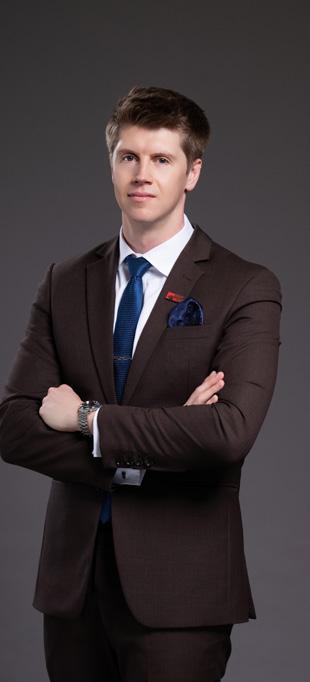
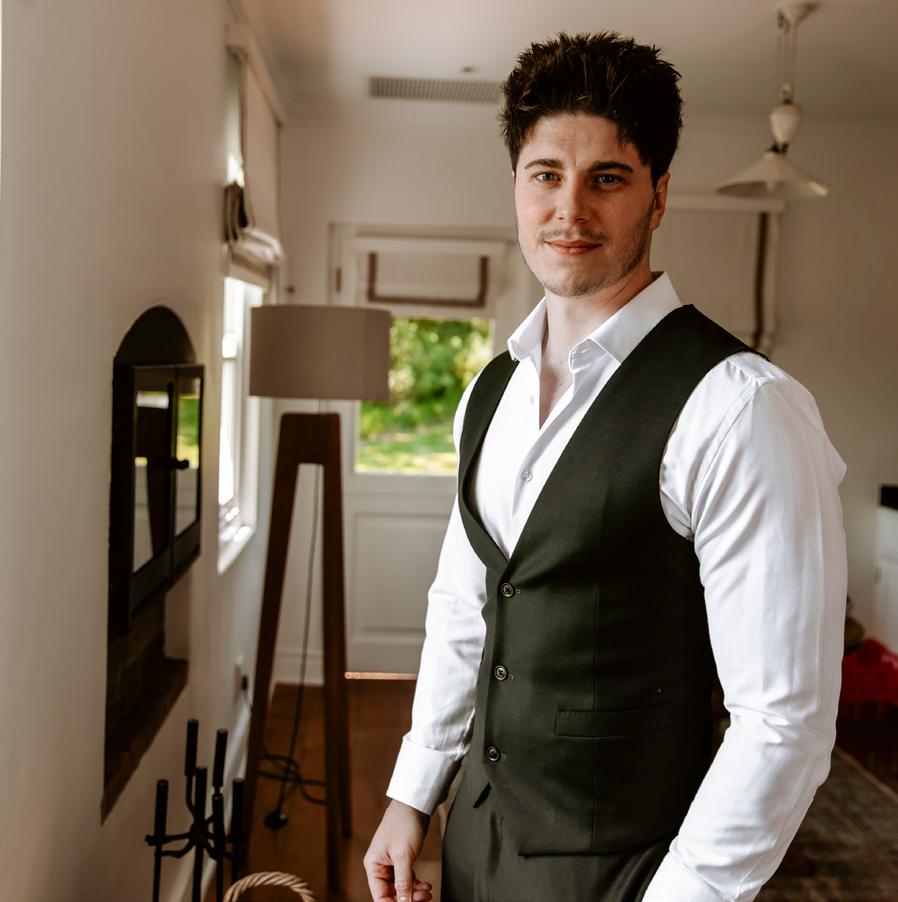
Adam Gottlich Director of Nudge Labs South Africa, Behavioural Economics Lecturer, Henley Business School
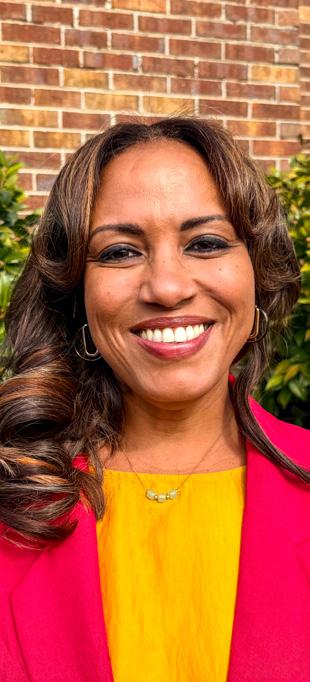
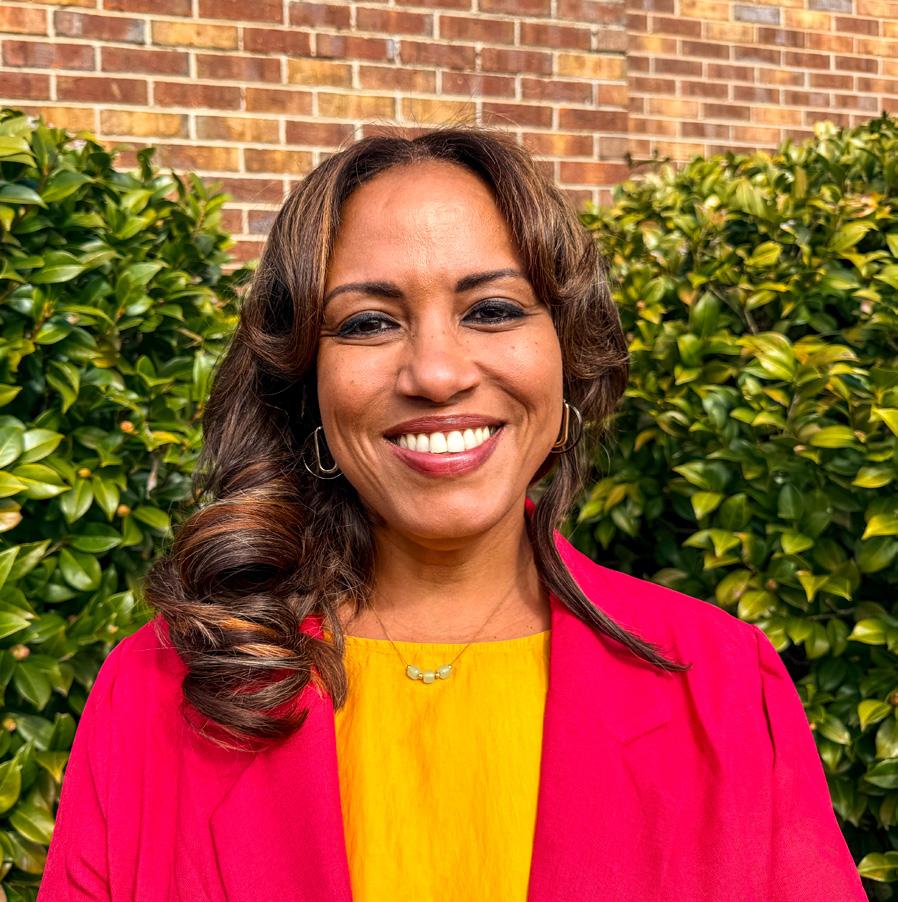
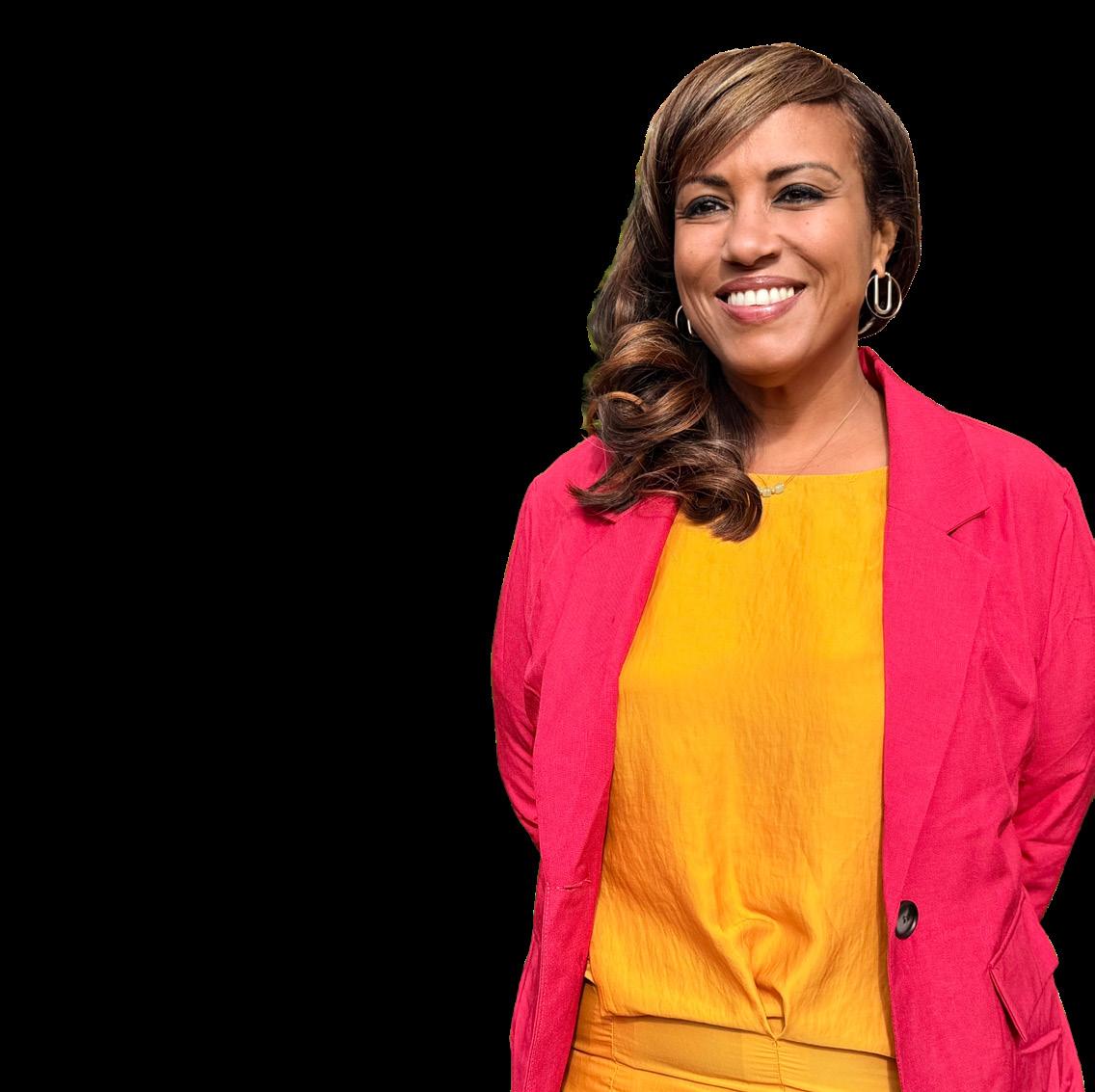
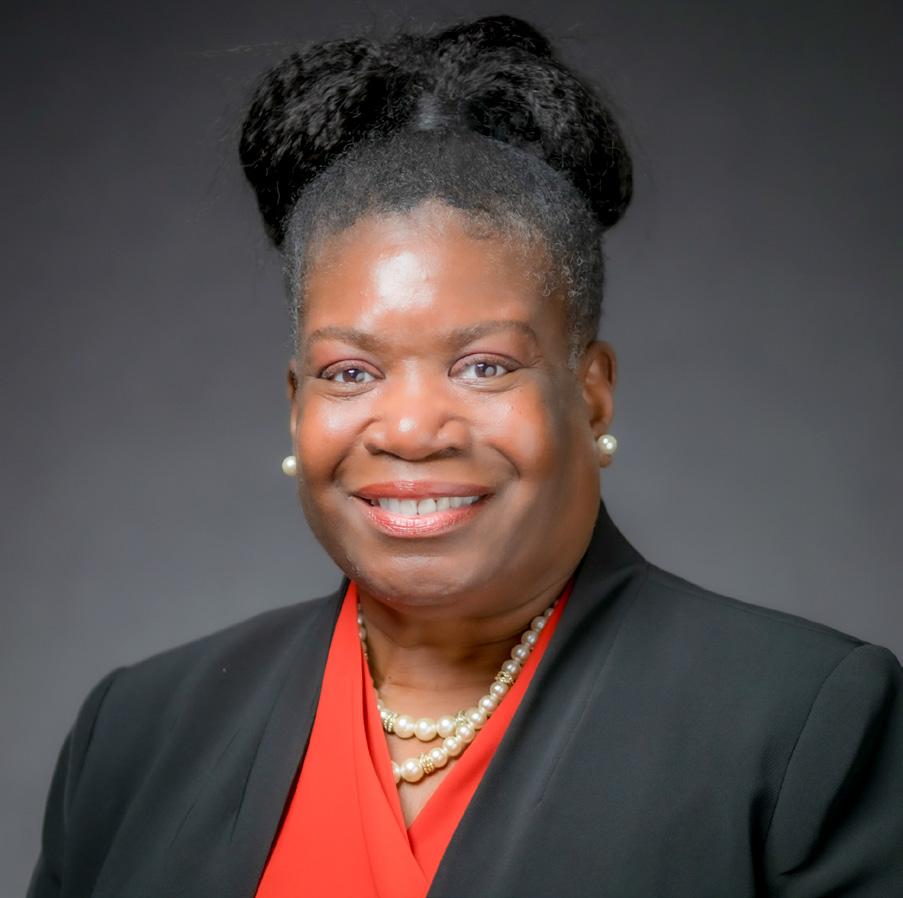
Dr. Darleny Cepin Chief Student Affairs Officer, Dean of Campus Life, Oxford College of Emory University
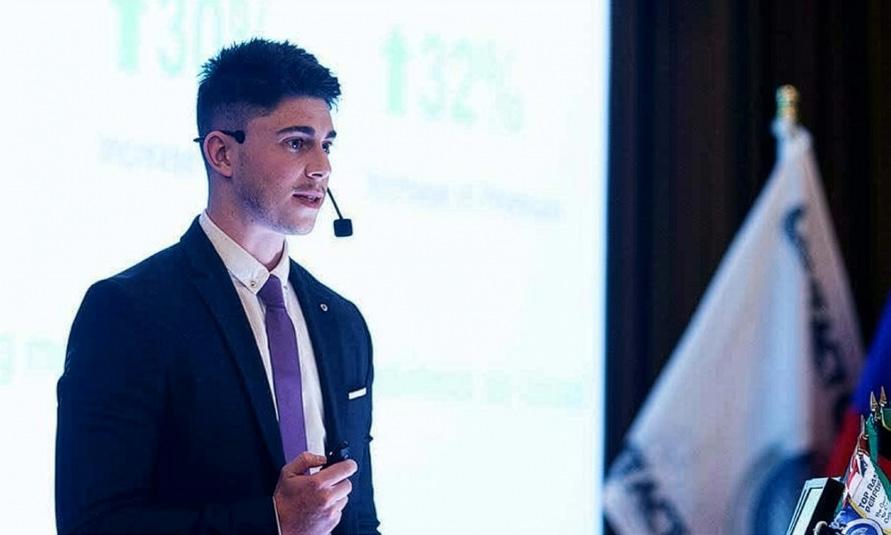
Dr. Mike Perkins Head, Centre for Research & Innovation, Associate Professor, British University Vietnam
FEATURING INSIDE
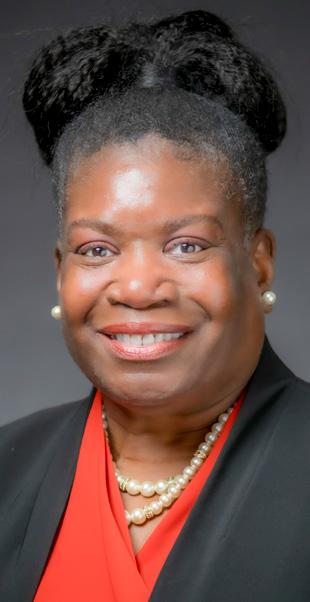
Dr. Theodorea Regina Berry Dean of Bloomfield College, Montclair State University
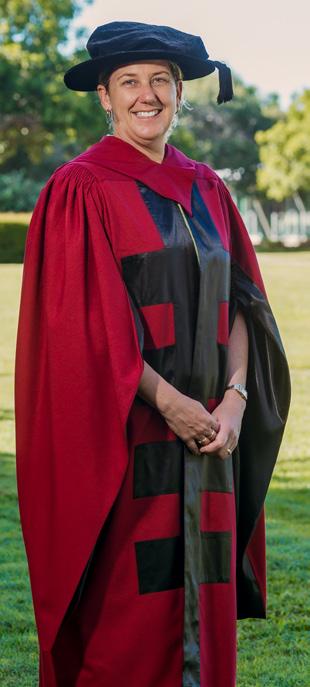
Prof. Kate Ames Pro Vice Chancellor, Engagement and Access, Torrens University Australia
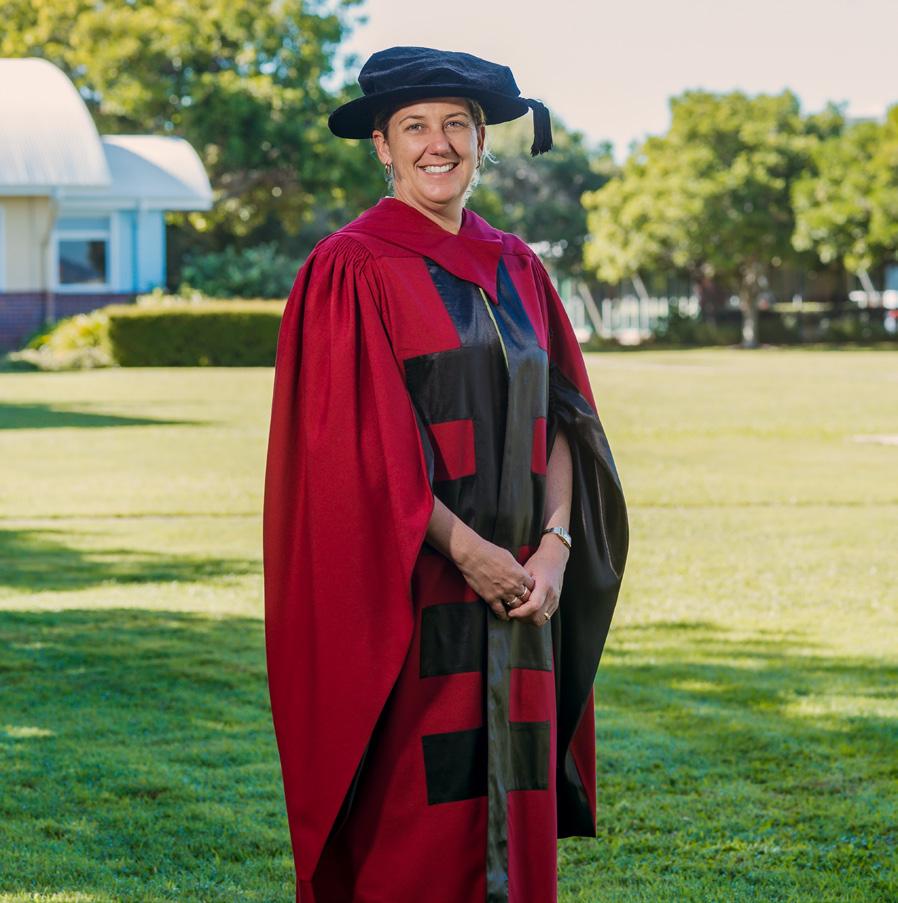
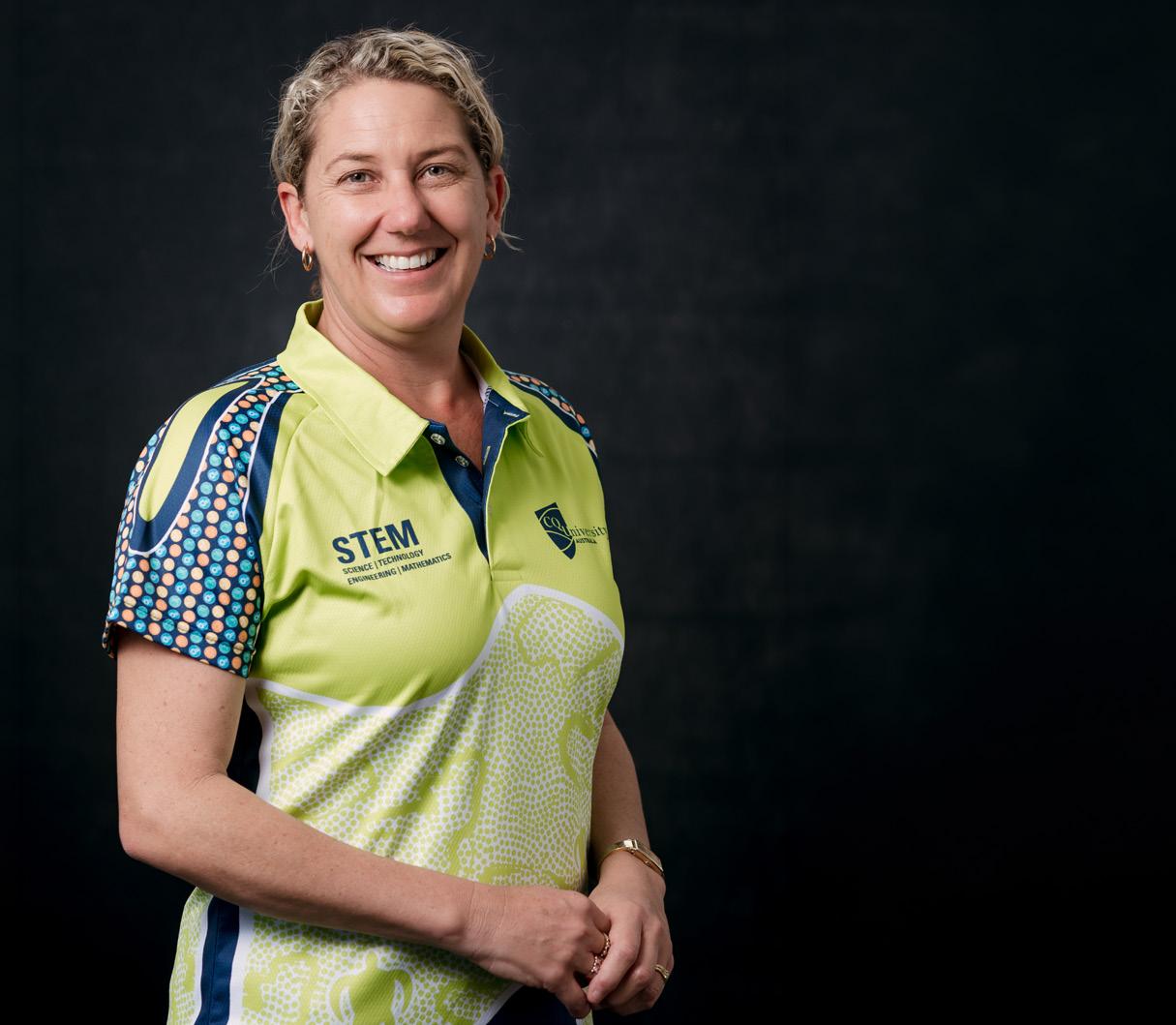
Associate Professor Linda Pfeiffer
Deputy Dean Research, School of Education and the Arts, CQUniversity Australia
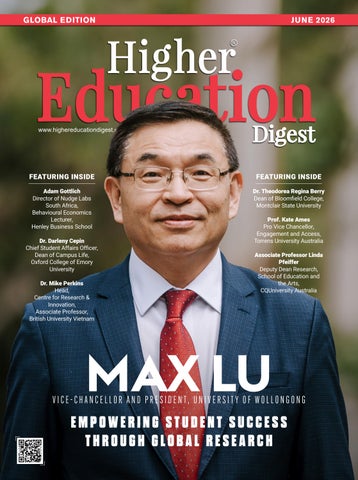
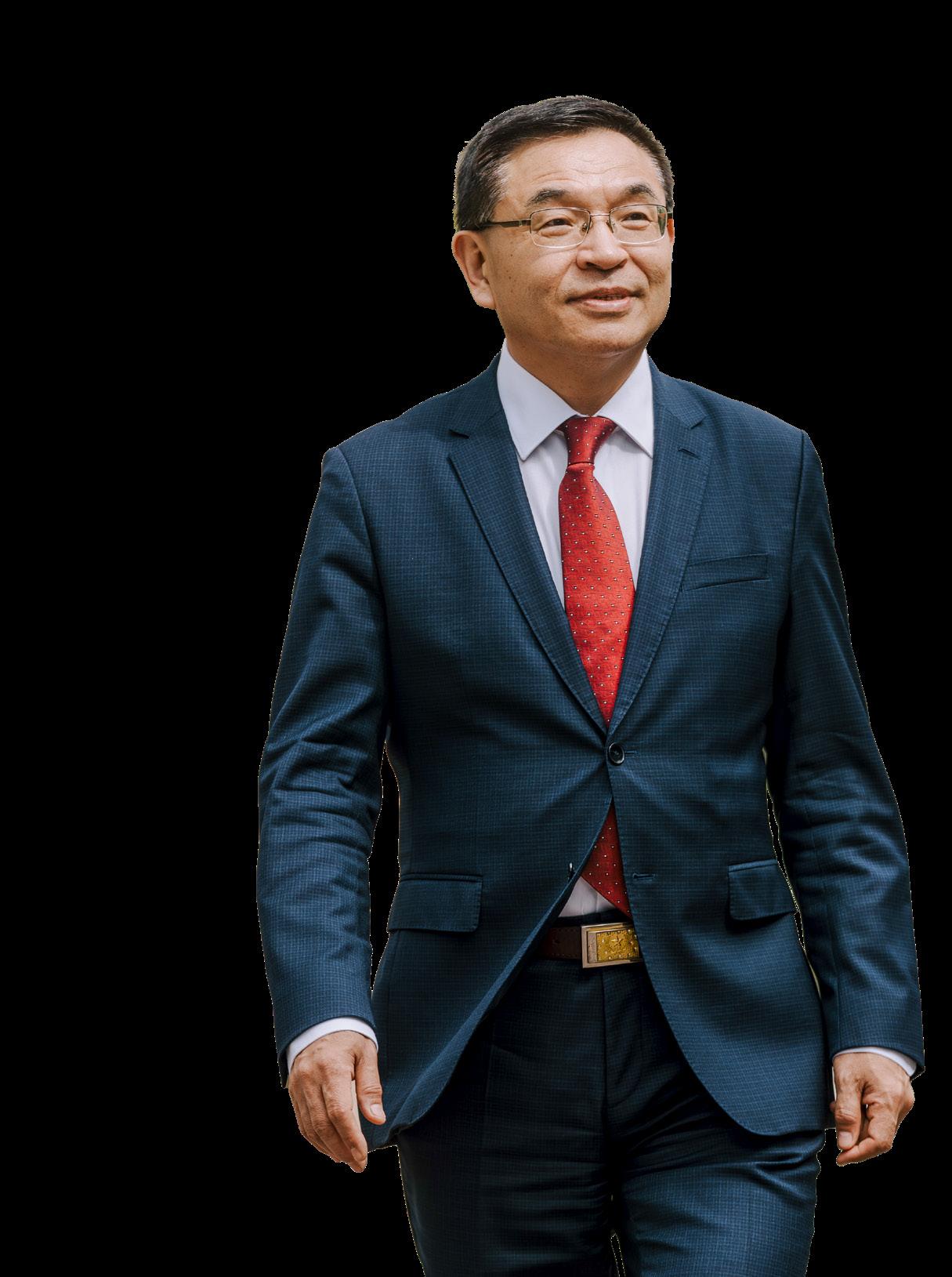
MAX LU
VICE-CHANCELLOR AND PRESIDENT, UNIVERSITY OF WOLLONGONG
EMPOWERING STUDENT SUCCESS THROUGH GLOBAL RESEARCH
Managing Editor
Shyam
Consultant Editors
Dr. John Andrews
Emma James
Andrew Scott
Naomi Wilson
Stanly Lui
Joseph Alex
Creative Consultants
Charlie Jameson
Edwards Gonzalez
Branding & Marketing Partnerships
Jennifer Anderson
Alice Smith Lucy Jones Anna Elza
www.highereducationdigest.com
International Partnerships admin@highereducationdigest.com
Americas Europe Middle East & Africa Asia-Pacific Follow Us On www.linkedin.com/company/ highereducationdigest www.facebook.com/HigherEducationDigest
Higher Education Digest www.highereducationdigest.com is a global knowledge sharing digital platform published by Connecta Innovation Private Limited. All rights reserved. The opinions expressed in the content and pictures provided are those of the authors. They do not purport to reflect the opinions or views of Connecta Innovation Private Limited or any of its members and we do not assume any responsibility. The publisher does not assume any responsibility for the advertisements, its content, pictures, and all representation of warranties made in such advertisements are those of the advertisers and not of the publisher. Higher Education Digest www.highereducationdigest.com is a Free Subscription and Free-to-read digital platform strictly not for sale and has to be strictly for internal private use only. Publisher does not assume any responsibility arising out of anyone modifying content and pictures, printing a copy of this digital platform in any format and in any country and all matters related to that.
Sarath
The Campus as a Catalyst
For generations, universities have been viewed as places where knowledge is created and shared. While that remains true, their role today extends far beyond classrooms, laboratories, and lecture halls. Around the world, higher education institutions are emerging as powerful engines of innovation, entrepreneurship, sustainability, and economic growth. Increasingly, the success of a university is measured not only by the graduates it produces but also by the ideas it commercializes, the industries it supports, and the communities it helps transform.
Over the years, I have had the opportunity to interact with leaders from universities across different regions and disciplines. One common theme has consistently stood out: the most forward-thinking institutions are no longer operating in isolation. They are building partnerships with industry, nurturing startups, creating innovation hubs, and preparing students to solve real-world challenges. As technological change accelerates and workforce needs evolve, universities are being called upon to play a much larger role in shaping the future.
This shift makes our cover story particularly timely. In this edition, we feature Max Lu,
Vice-Chancellor and President of University of Wollongong. A globally recognized researcher, innovator, and academic leader, Max shares insights from a remarkable journey that took him from rural China to leading one of Australia’s most globally connected universities. His perspective on curiosity, service, and the growing importance of industry-linked research offers valuable lessons for educators, policymakers, students, and business leaders alike. His call for stronger connections between doctoral education and industry needs highlights an important challenge facing higher education today: ensuring that research excellence translates into meaningful societal and economic impact.
Beyond our cover feature, this issue brings together a diverse collection of thought-provoking articles, expert interviews, and insightful perspectives from across the higher education landscape. Together, they explore the trends, challenges, and opportunities shaping the future of learning, leadership, and innovation.
As you turn these pages, I hope you find inspiration in the ideas, experiences, and possibilities shared within. The future of higher education is being written today, and universities are increasingly at the heart of that story.
Happy Reading!
Sarath Shyam
VICE-CHANCELLOR AND PRESIDENT, UNIVERSITY OF WOLLONGONG
COVER STORY
ACADEMIC VIEW
18
INSPIRING THE NEXT GENERATION OF STEM LEADERS
Associate Professor Linda Pfeiffer, Deputy Dean Research, School of Education and the Arts, CQUniversity Australia
TRANSFORMING STUDENT LIFE THROUGH EMPATHY AND INNOVATION
Dr. Darleny Cepin, Chief Student Affairs Officer, Dean of Campus Life, Oxford College of Emory University
BUILDING A CULTURE OF RESEARCH EXCELLENCE
Dr. Mike Perkins, Head, Centre for Research & Innovation & Associate Professor, British University Vietnam
ACADEMIC VIEW
40
BREAKING DOWN BARRIERS TO STUDENT SUCCESS
Prof. Kate Ames, Pro Vice Chancellor, Engagement and Access, Torrens University Australia
EMPOWERING FUTUREREADY LEARNERS THROUGH CURRICULUM
Dr. Theodorea Regina Berry, Dean of Bloomfield College, Montclair State University
46
50
HELPING PROFESSIONALS MAKE BETTER DECISIONS IN A COMPLEX WORLD
Adam Gottlich, Director of Nudge Labs South Africa and Behavioural Economics Lecturer at Henley Business School
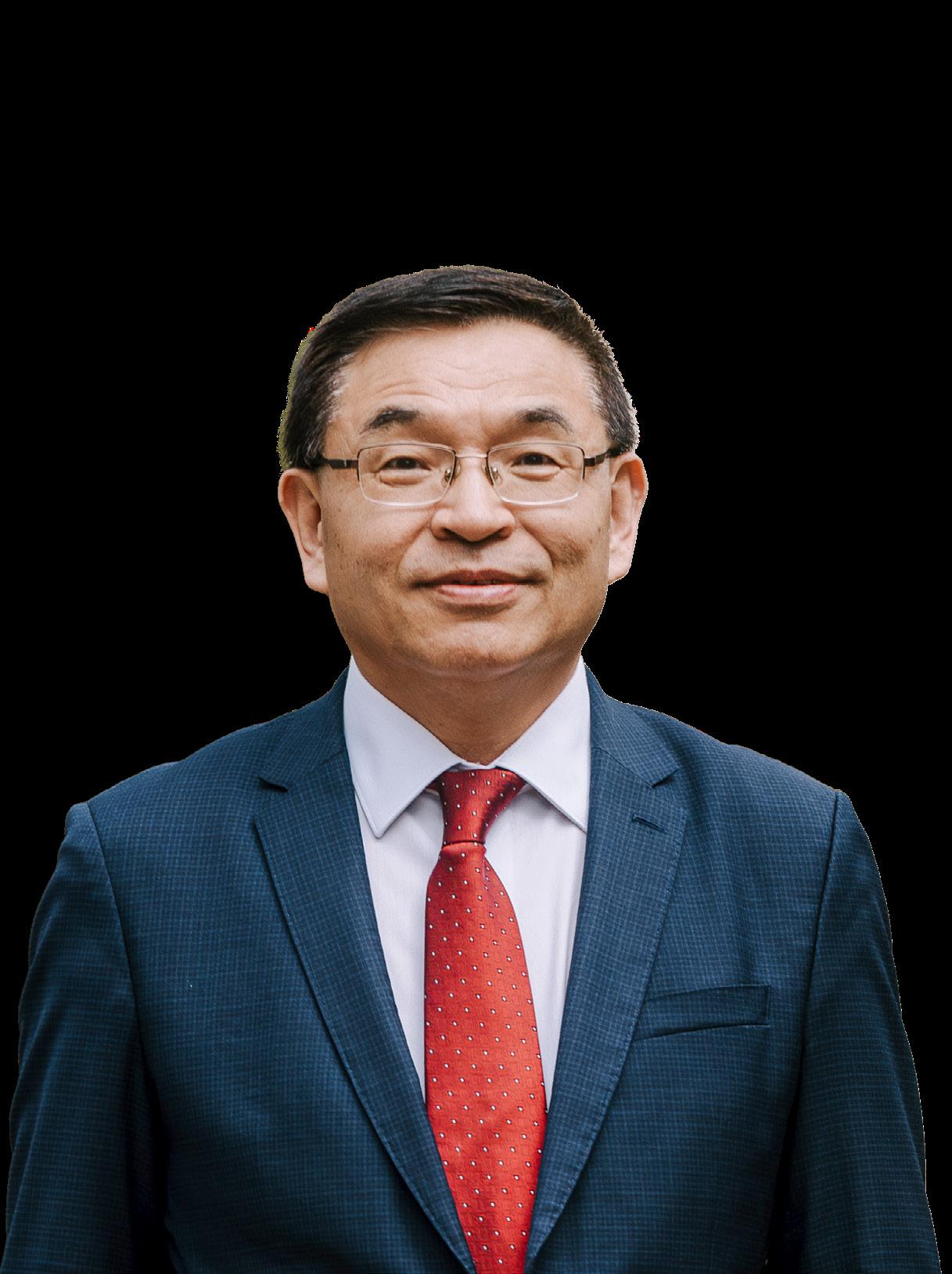
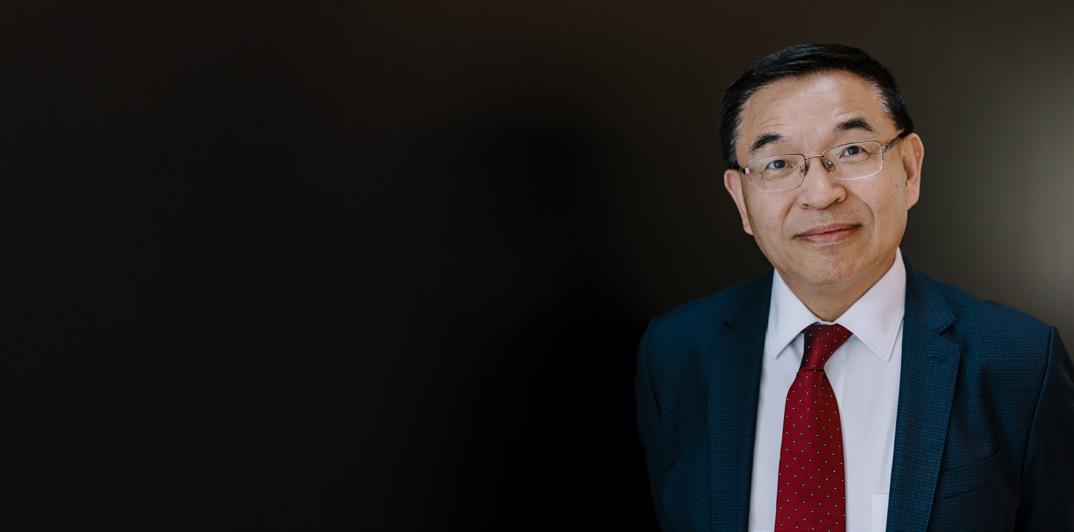
Professor G.Q. Max Lu AO is a globally recognised chemical engineer and advanced materials scientist who became the sixth Vice-Chancellor and President of the University of Wollongong in May 2025. He brings more than 35 years of academic leadership, research excellence and industry engagement to the role. Before UOW, he was Vice-Chancellor of the University of Surrey and held senior leadership roles at the University of Queensland. An internationally renowned researcher, he has published more than 600 papers, holds 25 patents, and was appointed an Officer of the Order of Australia in 2017 for distinguished service to education and international research.
Recently, in an exclusive interview with Higher Education Digest, Max shared insights into how curiosity, service, and disciplined attention have shaped his journey from rural China to leading one of Australia’s most globally connected universities. To meet industry’s outpacing demand for talent in advanced materials and clean tech, he called for greater investment in PhD research linked to business needs and broader doctoral training with industry-linked PhDs, internships, co-designed projects, and entrepreneurial skills that bridge academia and workforce demand. As students enter as AI natives, he believes curricula must embed AI literacy alongside critical thinking, ethics, systems thinking, and communication so graduates can lead technology responsibly, not just use it. To aspiring leaders and scientists, his advice is to stay focused, stay humble, and listen carefully before acting, because progress comes from collaboration, persistence, and keeping purpose and people at the center. The following excerpts are taken from the interview.
Hi Max. Your academic journey spans over 38 years across chemical engineering and nanotechnology, with more than 600 publications and 111,000+ citations. How did your early research interests evolve into the globally impactful work you lead today?
My early curiosity was always about how things work, and how they can be improved. Growing up in rural China, I saw firsthand how education and opportunity can change a life and that stayed with me when I came to Australia to study chemical engineering. Over time, my research moved from chemical engineering into nanotechnology and advanced materials for energy and environmental applications, but the core motivation never changed: to use science and engineering to solve real
problems and improve people’s lives. That is also why I have always been interested not just in discovery, but in translation – turning knowledge into impact for society.
What do you love the most about your current role?
What I love most is the people – students, staff, alumni and the wider community. Being ViceChancellor is a privilege because it allows me to bring people together around a shared purpose and to help create conditions in which others can thrive. I also enjoy the daily learning that comes from listening carefully, because universities are full of insight in every corner, from labs to classrooms to community conversations. It is deeply rewarding to be part of shaping a university that changes lives and contributes to the future of the region and the country.
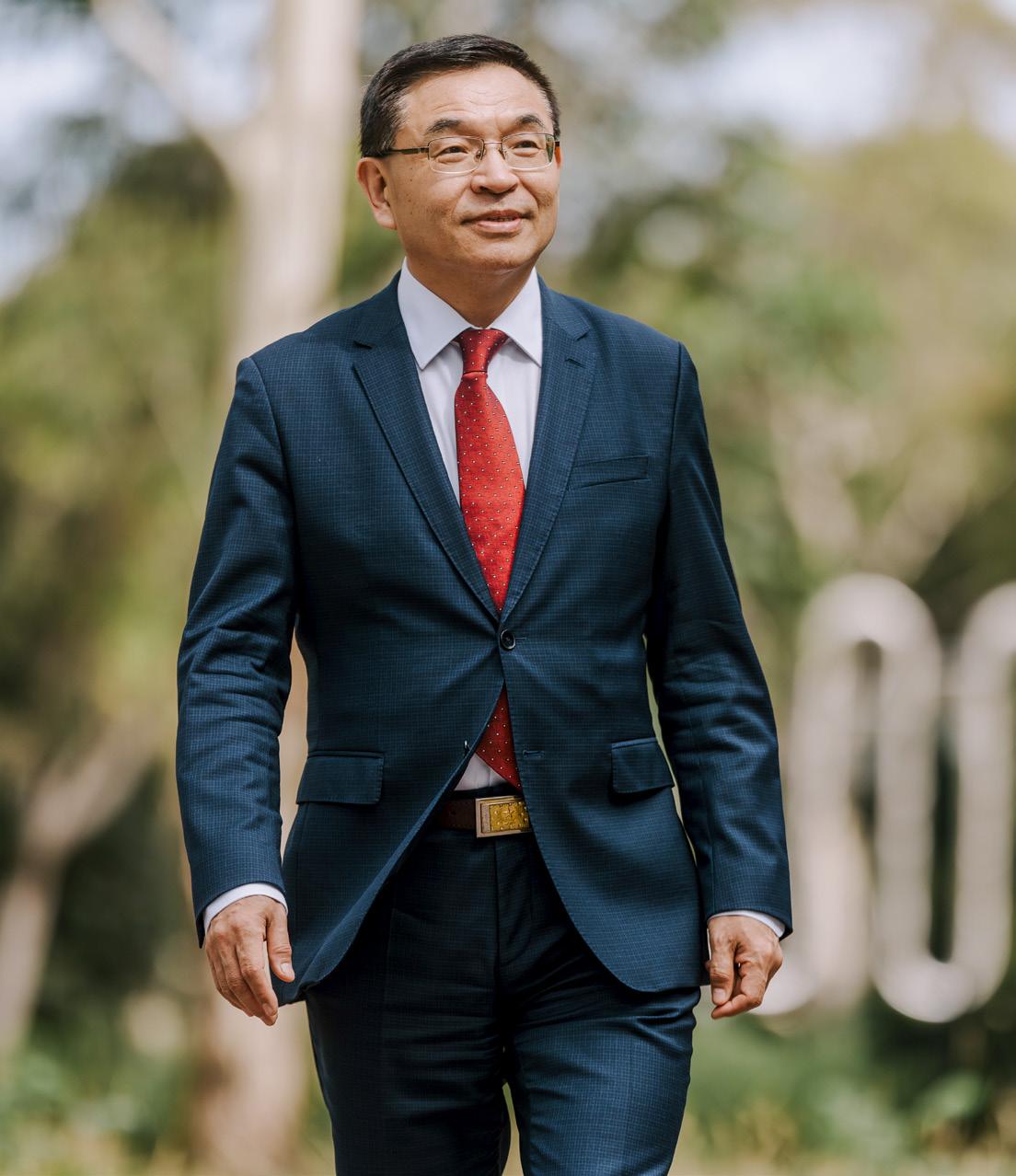
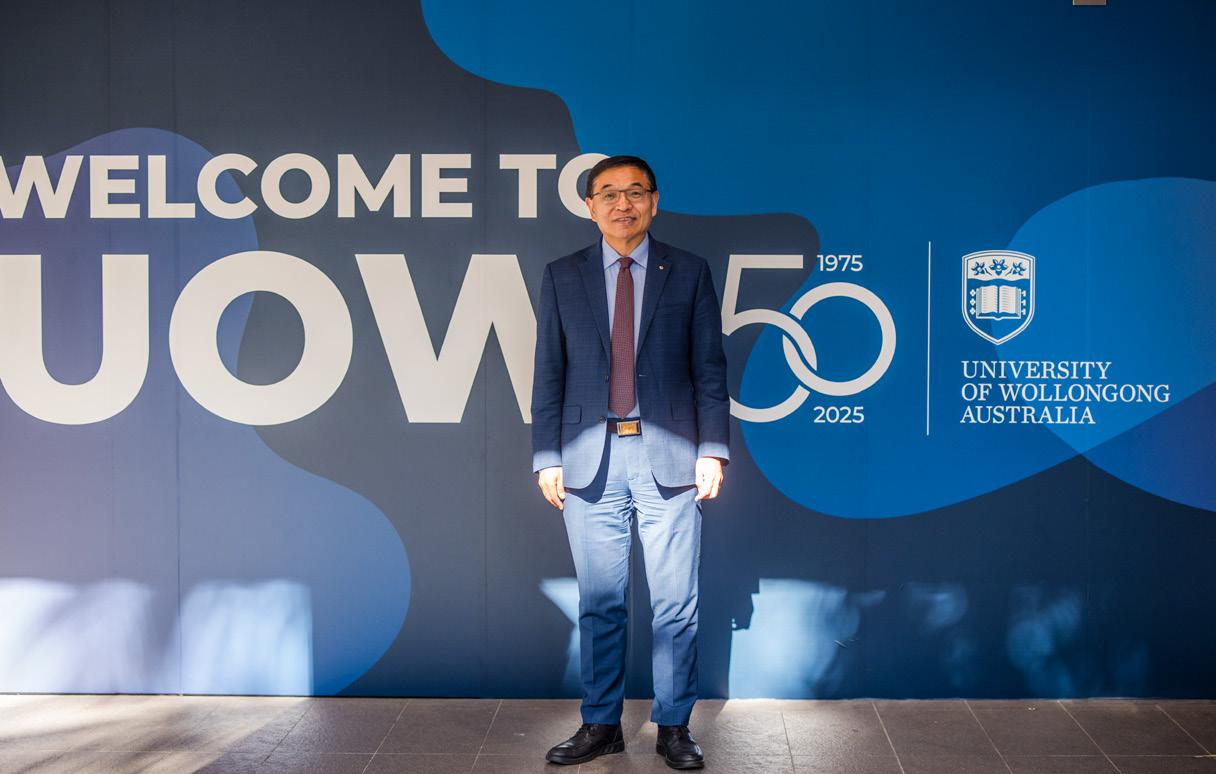
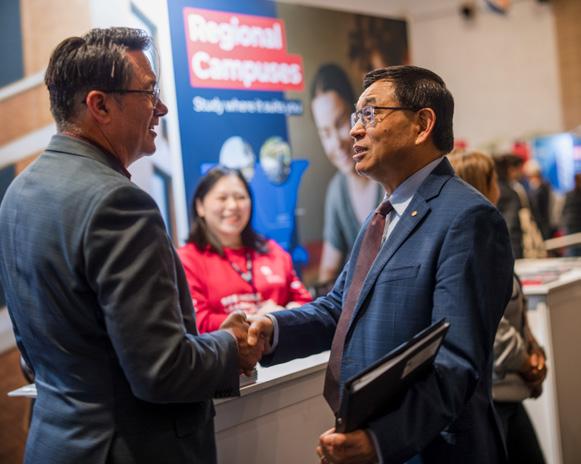
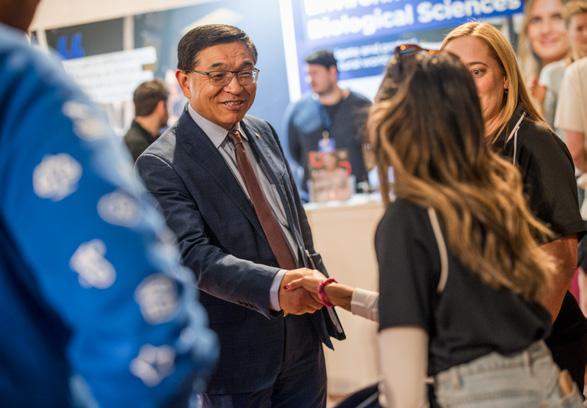
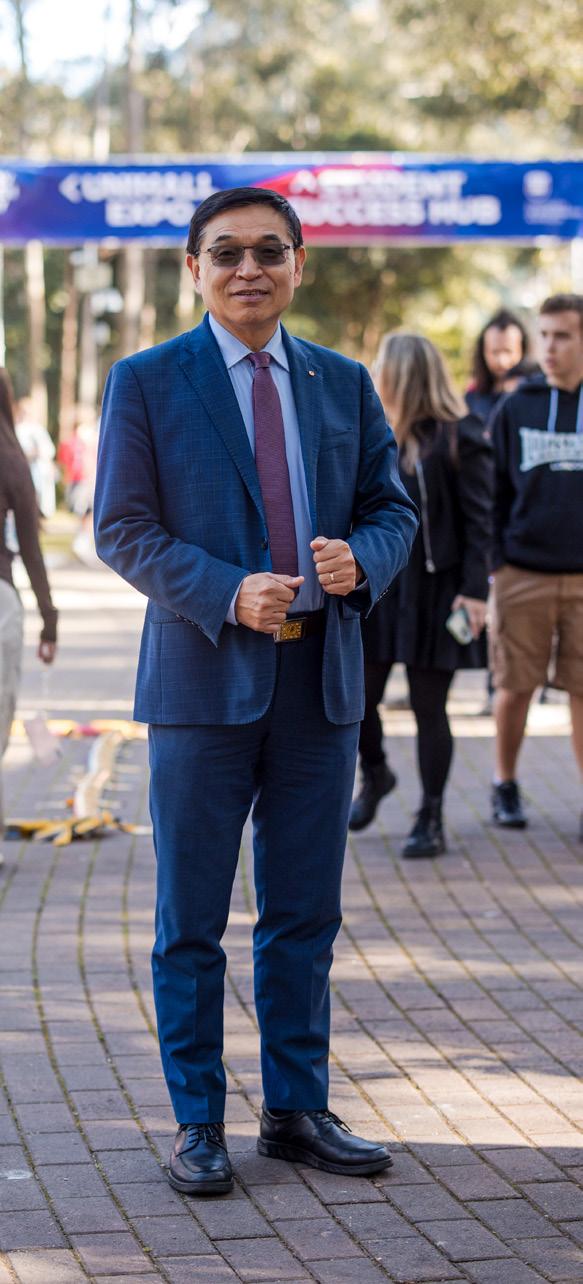
Vice-Chancellor Professor Max Lu at AN Open Day event at UOW’s Wollongong campus in 2025
Being Vice-Chancellor is a privilege because it allows me to bring people together around a shared purpose and to help create conditions in which others can thrive
Universities are under pressure to deliver both basic research and commercial outcomes. How should research universities rebalance discovery science and industry translation in the next five years? We should not think of discovery and translation as competing priorities – they are part of the same pipeline of value creation. Universities must continue to support curiositydriven research, because that is where many breakthroughs begin, but we also need stronger pathways that help promising ideas move into application, through entrepreneurship and commercialisation. That means deeper partnerships with industry and government, more support across the research lifecycle, and a clearer focus on national priorities such as clean energy, advanced materials, AI and health. If we get that balance right, universities can remain engines of knowledge while also powering productivity and prosperity.
Industry demand talent in advanced materials and clean tech is outpacing supply. How should universities evolve doctoral training to meet industry’s needs?
First and foremost, we need to recognise the importance of doctoral level skills in innovationdriven economic growth and productivity uplifting, therefore there should be more investment in PhD research, particularly linked with business and industrial needs. Doctoral training also needs to become broader, more connected, and more outward facing. We should absolutely maintain rigorous research standards, but we also need to give HDR students more exposure to industry-relevant problems, collaborative projects, translational pathways and entrepreneurial skills. Industry-linked PhDs, internships and co-designed research projects can help bridge the gap between academic training and workforce demand. At UOW, this sits very naturally alongside our
focus on research that strengthens workforce capability and delivers practical impact.
Higher education itself is being disrupted by AI, micro-credentials, and global online platforms. What part of the traditional university model must adapt fastest to stay relevant by 2030?
The fastest adaptation must be in how universities design and deliver learning. Students increasingly expect flexible, blended and lifelong learning pathways, not just a one-time degree. That means universities need to embrace micro-credentials, online and offshore delivery, work-integrated learning and technology-enhanced teaching – while still protecting academic quality, human connection and belonging. The model must become more responsive, more personalised and more connected to the real world. One of the key challenges we must meet is to reimagine how we assess learning, shifting from product of learning to process and critical thinking.
Science and engineering education should combine AI with critical thinking, problemsolving, systems thinking and communication, so graduates can shape technology responsibly rather than simply consume it
Vice-Chancellor Professor Max Lu at AN Open Day event at UOW’s Wollongong campus in 2025.
Vice-Chancellor Professor Max Lu at AN Open Day event at UOW’s Wollongong campus in 2025.
Students are entering universities as AI natives. How should curricula in science and engineering evolve so graduates can lead, not just use, AI tools?
AI literacy should be embedded across the curriculum, but leadership requires more than technical competence. Our graduates need the ability to question outputs, understand limitations, work ethically and apply AI in context. Science and engineering education should combine AI with critical thinking, problem-solving, systems thinking and communication, so graduates can shape technology responsibly rather than simply consume it. The goal is to produce people who can lead innovation in a world where AI is becoming part of every profession.
Great leaders are shaped by ideas outside their field. What book outside science or engineering has stayed with you, and what idea from it still guides your decisions?
Yes, definitely! For example. I really enjoyed Daniel Goleman’s Focus –the Hidden Driver of Excellence, and Steve Sample’s Contrarian’s Guide to Leadership. From Focus, I learned that excellence rests on the disciplined deployment of three kinds of attention: inner (self-awareness, emotional regulation), other (empathy, reading people and relationships), and outer (systems thinking, grasping the wider context). In an era of many distractions, attention is the scarce resource that compounds and it can be trained. Whereas Sample’s Leadership lessons are so powerful in that effective leaders deliberately think and act differently from the herd. They think grey, think free, read the “supertexts”
Vice-Chancellor Professor Max Lu at AN Open Day event at UOW’s Wollongong campus in 2025.
My biggest goal is to help UOW realise its vision of empowering student success, delivering worldleading teaching and research, and driving local and global impact
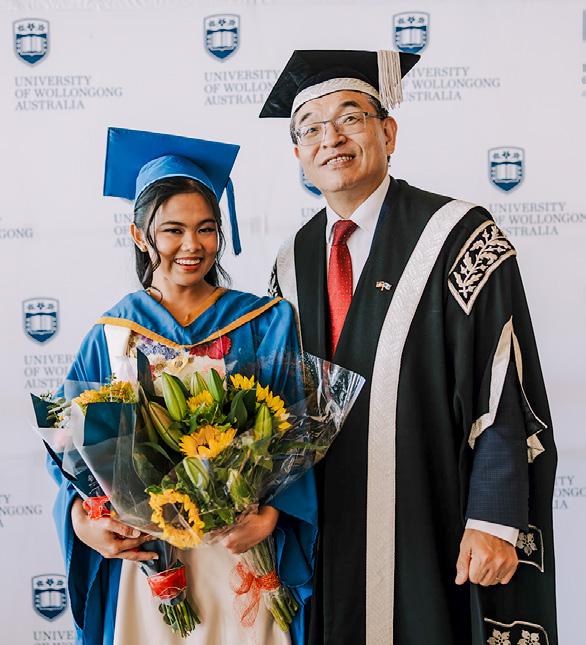
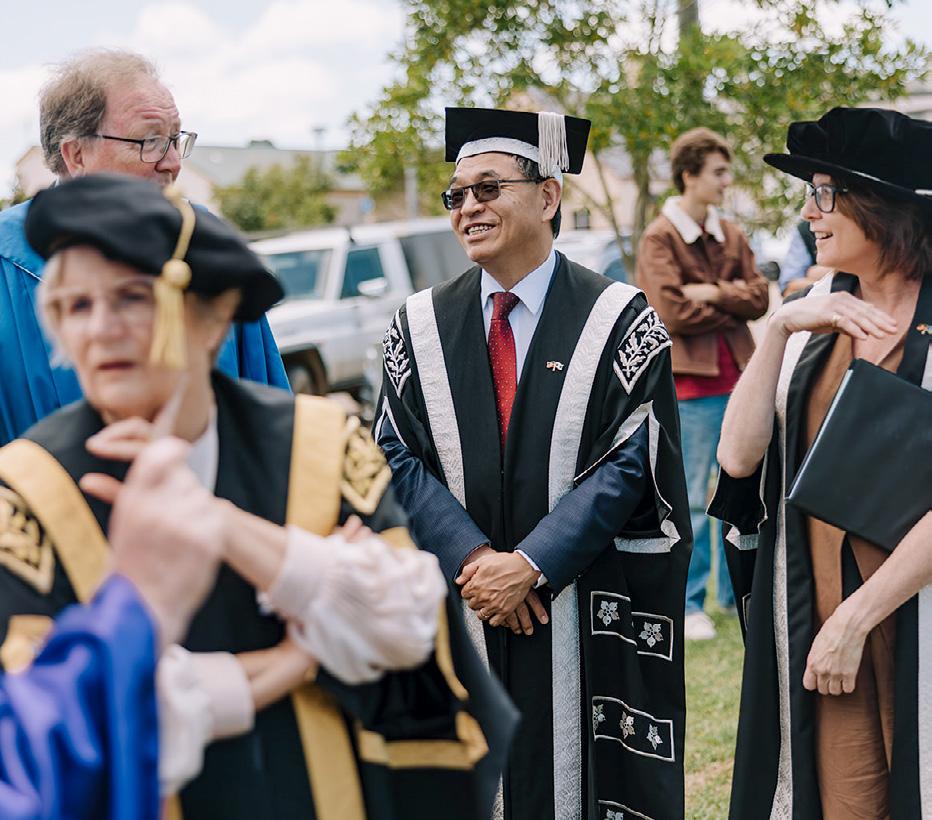
Vice-Chancellor Professor Max Lu at the 2026 graduation ceremony at the University of Wollongong’s Eurobodalla campus.
rather than chase the news cycle. They work only on what truly matters and requires them to do and delegate most decisions to others closer to the problem.
Both books are, at root, about what a leader chooses not to attend to. Goleman frames it as cognitive architecture; Sample as political and temperamental discipline. Read together, they argue the scarce executive asset is curated attention and the discipline to protect it from the urgent, the loud, and the consensus.
Innovation requires curiosity beyond the workplace. What’s a hobby or interest people would be surprised to learn you’re passionate about?
People may be surprised that I really value simple things like walking and spending time in quiet reflection, especially by the ocean or while walking across campus. Those moments
help me think clearly and stay grounded. I also enjoy the everyday conversations that come from being out and about in the community, because they keep me connected to what matters most. In that sense, curiosity is not just something I bring to science – it is part of how I live and lead.
What is your biggest goal? Where do you see yourself in 5 years from now?
My biggest goal is to help UOW realise its vision of empowering student success, delivering world-leading teaching and research, and driving local and global impact. In five years, I hope to see UOW stronger, more resilient and more connected – with even greater global recognition for the quality of its education, research and partnerships. I would also like
to see us making a measurable contribution to regional prosperity, national productivity and global challenge-solving. Personally, I want to know that I have helped build something lasting with our people and our communities.
If you could only pass on one piece of advice to an aspiring university leader or scientist, what would it be?
Stay focused, stay humble, and listen carefully before you act. The best leaders are those who can combine ambition with service, and expertise with empathy. In science and higher education, progress rarely comes from one person alone – it comes from collaboration, persistence and a willingness to keep learning. If you keep your focus on purpose and people, the rest can follow.
Vice-Chancellor Professor Max Lu at the 2026 graduation ceremony at the University of Wollongong’s Eurobodalla campus.
ACADEMIC VIEW
Inspiring the Next Generation of STEM Leaders
Associate Professor Linda Pfeiffer, Deputy Dean Research, School of Education and the Arts, CQUniversity Australia
Associate Professor Linda Pfeiffer is the Deputy Dean Research for the School of Education and the Arts at CQUniversity, based at the Gladstone Marina campus. In the past 7 years Chief Investigator Linda has received almost $2m in external income. Linda won the 2016 Women in STEM Research Prize, and currently leads the Australia Pacific LNG STEM Central project, an industry-funded project which incorporates STEM experiences in a state-of-the-art facility in Gladstone, regional Queensland. This project includes the Buraligim Weiber (place of learning) program for Year 4 Indigenous students which won an Education Queensland Showcase Award in 2023.
Recently, in an exclusive interview with Higher Education Digest, Linda shared insights into her journey in STEM education, sparked by her regional upbringing and influenced by her physics teacher. Linda emphasized the importance of teacher and family support in making STEM accessible and engaging for young learners. She also shared her personal hobbies and interests, future plans, words of wisdom, and much more. The following excerpts are taken from the interview.
Above the technical skills required, the future generations need to be able to communicate, listen and make informed decisions
Hi Linda. As a passionate advocate for STEM education, you’ve made significant contributions to transforming learning experienceswhat sparked your interest in STEM, and how did your journey begin?
My journey began growing up in a regional town in NSW (Dubbo). I originally wanted to be an art teacher, but when I was in year 11 art and physics were on the same “line” and
I elected physics. When I completed Year 12, I was ineligible to apply to be an art teacher, so I wanted to do mathematics teaching, but I didn’t get high enough marks so I went to university studying science teaching hoping to transfer after a year. While at Uni, I absolutely loved science and the innovation and creativity involved so I continued as a Chemistry teacher. I see science everywhere and I strive to try and motivate people of all ages to see life through
I see and hear what goes on in the regions and that influences how I can be a part of the changes required to move forward as an innovative society
the lens of science, to make informed decisions and to have confidence in science. I also hope to try and change science misconceptions.
What do you love the most about your current role?
I love the flexibility and the opportunity to be able to conduct research in areas of interest to me, and that can transform lives. I love being able to help others – researchers, peers, teachers, students, youth, elderly, First Nations people, people with a disability, equity groups, industry and government.
Having developed innovative Science and STEM units for primary education courses, what’s the key to making STEM accessible and engaging for young learners?
The key is the teachers and families. If we can ensure all teachers, from early years educators, primary and secondary right through to university academics have the tools necessary to collaborate with experts in the field, community, industry and university then these partnerships can make learning contextual, innovative and engaging for all.
You’ve supervised pre-service teachers and led projects like STEM Central and Gladstone Connects. How do you empower emerging educators and leaders?
It all comes down to networks and partnerships. The old saying it takes a village is true – we need to ensure all stakeholders have a seat at the table so to speak, and that everyone can have input into the learning, including the students. You also need to do the work – show up and be reliable.
What skills will be most critical for STEM educators and professionals in the next decade?
Problem solving, communication and collaboration. Above the technical skills required, the future generations need to be able to communicate, listen and make informed decisions. Human skills (sometimes referred to as soft skills) are critical for effective teams.
Your STEM Education in the Primary School book won a prestigious award - what inspired you to share your expertise, and what’s the impact of your work?
The inspiration came from the team – Anne Forbes, Vinesh Chandra and Rachel Sheffield. We came together because we were all teaching pre-service teachers about STEM, yet there was not any resource (textbook) that provided teachers with explanations of STEM and what it can look like in the primary classroom. This book has enormous impact on the primary teaching profession as we can now see projects being implemented in classrooms across Australia that incorporate the essence of STEM education.
Are there any particular books, articles, or resources that have significantly influenced your thinking or approach?
The main influence on the direction of my work comes from community. I see and hear what goes on in the regions and that influences how I can be a part of the changes required to move forward as an innovative society. This includes being on committees but also listening to people in public and how they talk to their children.
You need a team – you cannot do it alone. You need people around the table with different skills than you so that you can have the greatest impact
What are some of your passions outside of work? What do you like to do in your time off?
I like to spend time outdoors on the water. I wouldn’t say I’m any good at fishing, but I love boating. There’s something calming about being on the ocean and it seems to give me the strength to face any challenges.
What is your biggest goal? Where do you see yourself in 5 years from now?
I would love to be able to make an even greater impact and change more lives. My goal is to develop a framework for Citizen Science (or community science) to ensure the community are effective participants in science. Five years from now I would like to be in a position to do
that. I have aspired to be the first regionallybased Chief Scientist, but now I think any role that gives me the opportunity to have impact on as many people and influencers as I can, would be great.
What advice would you give to emerging leaders in STEM education who want to drive change?
You need a team – you cannot do it alone. You need people around the table with different skills than you so that you can have the greatest impact. You also need to get yourself out there –people cannot help you if they don’t know who you are and what you are doing. Communication and collaboration are key. Finally, if you face a barrier, find a way to go around.
ACADEMIC VIEW
Transforming Student Life through Empathy and Innovation
Dr.DarlenyCepin, Chief Student Affairs Officer, Dean of Campus Life, Oxford College of Emory University
Darleny Cepin, Ed.D., is the Senior Associate Dean of Campus Life and Chief Student Affairs Officer at Oxford College of Emory University. She leads strategic initiatives that cultivate student belonging, wellbeing,andengagementthroughaholisticcampusexperience.Withover 20 years in higher education, she previously served in leadership roles at Princeton University and Columbia University, where she advanced innovative residential and student development programs. Darleny holds degrees from Teachers College, Columbia University, and is a certified meditation teacher and professional coach. She integrates mindfulness, emotional intelligence, and strategic leadership to foster transformative, student-centered institutional growth.
Recently, in an exclusive interview with Higher Education Digest, Darleny shared insights into her journey, passions, and leadership philosophy. As a first-generation immigrant, Darleny’s experiences shaped her commitment to student well-being and success. She also shared her personal hobbies and interests, future plans, words of wisdom, and much more. The following excerpts are taken from the interview.
College students are the key to our collective future. The decisions they make, the confidence they build, the wounds they heal, the purpose they discover during these years ripple far beyond campus
What’s the story behind your journey to becoming a leader in student affairs, and how did you develop your passion for student well-being and success?
I am a first-generation immigrant from the Dominican Republic. I was raised in a collectivist culture where community was everything. We did not succeed alone. That foundation shaped how I see the world and how I lead.
Education became my superpower. It changed the trajectory of my life. Not just because of the degrees, but because of the people. The mentors I encountered were living textbooks. They did more than teach content to span my sense of self and imagination. And it was not only my mentors, but my classmates were also part of that transformation. Many of them were navigating their own firsts, their own sacrifices, their own quiet battles. We sharpened one another, challenged each other’s thinking, held space for each other’s doubt, mistakes, and ambition.
I come alive in this work because it sits at the intersection of my gifts and my purpose. I deeply believe in meeting students where they are. Not where we assume they should be. Not where policy places them. Where they truly are in their developmental journey. Every student
carries a story shaped by family, culture, expectation, fear, and hope. When we take the time to see them fully, we unlock possibilities.
Community is the throughline of my journey. I experienced what it feels like to be held by people who believe in you before you believe in yourself. That experience changed me. It became a quiet standard for how I show up in the world. I try to offer that same belief and steady presence to every person who comes my way, hoping that our interaction leaves them feeling more capable, more seen, and more grounded in their own strength than before.
At Oxford College, we value a small and personalized environment where every student is known. That belief resonates deeply with me. I know what happens when a student feels unseen. I also know what happens when they feel known. The difference can shape whether they stay, whether they flourish, and whether they step into leadership with confidence.
My passion for student well-being and success is personal. I understand the pressure of being the first. I understand navigating institutions that were not built with you in mind. I understand what it means for education to feel both liberating and weighty at the same time.
Education is often reduced to workforce preparation alone, as though its highest purpose is economic productivity. That narrowing of vision worries me
My leadership is grounded in three commitments.
To build community that cultivates real belonging and connection where everyone flourishes.
To ensure that education remains transformational for every student we serve.
To design systems that remove barriers and open doors.
Student affairs allows me to focus on the whole student — their intellectual growth, emotional development, social connection, and sense of purpose. I care deeply about creating spaces where students can grow in all of these dimensions. I want them to leave not only as strong scholars, but as thoughtful leaders and active contributors to their communities. That’s the part of the work that keeps me here.
I am here because someone once saw me. Now I dedicate my work to making sure our students are seen, supported, and challenged to rise to their fullest potential. And that work continues to shape me as much as I hope it shapes them.
What do you love the most about your current role?
I love everything about it. I honestly believe I was born for this work.
There is something sacred about college years. It is a serendipitous window in a person’s life. Students arrive at this incredible experimental bubble where they are allowed to question, to expand, to fail safely, to rebuild, and to imagine new versions of themselves. Few spaces in the world offer that kind of protected transformation.
What I love most about my role is that I get to stand at the center of that magic.
College students are the key to our collective future. The decisions they make, the confidence they build, the wounds they heal, the purpose they discover during these years ripple far beyond campus. When a student finds their voice, chooses courage over fear, or realizes they belong in rooms they once doubted, the world changes in small but powerful ways.
Higher education is one of the last places where humans are invited to experiment with identity. To try leadership. To wrestle with ideas. To stretch intellectually and emotionally. To make mistakes and recover. To ask, “Who am I becoming?” and have time to sit with the answer. I love the conversations in hallways. The breakthrough moments in crisis. The quiet victories no one else sees. The late-night doubts that turn into clarity. The student who walks unsure and walks out steady. I value that my role allows me to help design the conditions for that becoming.
This work is alive. It is human. It is complex. It demands heart and strategy at the same time. And every single day, I get to contribute to shaping an environment where transformation is not accidental, but intentional.
That is what I love most.
As student affairs evolve, how do you see the field shifting towards more holistic and equity-centered approaches?
I am deeply concerned about higher education right now. This moment is calling us to evolve. We are living in a time marked by evolving public trust, increased scrutiny of higher education’s value, and renewed focus on expanding access and opportunity for students. Education is often reduced to workforce
preparation alone, as though its highest purpose is economic productivity. That narrowing of vision worries me.
The field has always carried a wide portfolio - programming, support services, case management, operations, crisis response, and policy implementation. Those functions are vital. Now we have an opportunity to be even more explicit about the throughline: student development. We must lead as educators and architects of environments that advance wellbeing, belonging, and learning.
That evolution also requires deep integration with academic affairs. At Oxford, we speak of an inspired academic experience where intellectual rigor and developmental support are not parallel tracks but mutually reinforcing. Student affairs cannot sit adjacent to the classroom; we must continue to be in active partnership with faculty, shaping conditions where academic challenge is sustained by belonging, purpose, and holistic support. When the curricular and co-curricular are aligned, students do not experience their education in fragments. They experience it as coherent, demanding, and transformative.
That is the shift I see happening.
Holistic practice means we stop fragmenting students into academic performance, mental health, conduct, or engagement silos. Students are whole human beings. Their intellectual growth is connected to their emotional safety. Their sense of belonging affects their persistence. Their identity development shapes their leadership capacity. Our field has long articulated learning and development outcomes that affirm this integrated approach. Now we must operationalize it with courage and clarity.
An equity-centered lens requires us to examine systems, not just support students
within flawed systems. It asks harder questions. Who is thriving here and why? Who feels invisible? Who leaves early? What hidden curriculum advantages some and disadvantages others? In a climate where equity language is increasingly scrutinized or politicized, we have to be even more disciplined, more strategic, and more rooted in evidence about why this work matters.
I also believe student affairs must help rebuild trust. Roosevelt, in Rescuing Socrates, reflects on education as a space where individuals learn to think deeply, wrestle with complexity, and strengthen democratic values. That work feels urgent right now. If higher education retreats from cultivating critical thinkers who can engage difference with courage, we weaken the very fabric of our civic life.
So, I see the field shifting in three critical ways.
First, from programming to developmental design. Every experience should intentionally move students toward greater self-authorship, resilience, and civic responsibility.
Second, from access alone to true belonging. Representation is not enough. Students must feel psychologically safe and meaningfully connected.
Third, from reactive support to proactive transformation. We cannot wait for crisis to intervene. We must build environments that cultivate capacity before crisis arrives.
I worry about higher education. But I also believe this is a defining moment. If we lean into adaptive leadership, developmental theory, and a liberatory vision of education, student affairs can become even more central to shaping ethical, thoughtful, courageous leaders. And right now, the world desperately needs them.
What are the key skills student affairs professionals need to develop to lead in a rapidly changing landscape?
My dissertation explored how student affairs professionals learn to meet student needs while navigating institutional expectations. What I found is that the landscape is not just changing. It is constantly shifting. And professionals must learn in ways that are informal, relational, and adaptive. Several key skills emerged from that work.
The rapidly changing landscape of higher education demands professionals who are reflective learners, adaptive thinkers, collaborative partners, and resilient leaders
reading, research, professional associations like NASPA and ACPA, and advanced study. The most effective leaders did not wait for formal training. They actively sought knowledge and refined their practice continuously.
Fourth, the ability to engage in various levels of learning.
My analysis identified three levels: instrumental, communicative, and transformational learning. Instrumental learning helps professionals acquire skills and procedures. Communicative learning deepens understanding through dialogue and shared meaning-making. Transformational learning shifts how professionals see themselves and their role within the institution. Leading in today’s environment requires all three, but especially the willingness to undergo transformational growth.
Fifth, adaptability paired with resilience.
Adaptability was a defining characteristic across participants, but it showed up differently. Drivers leaned into change. Reactors adjusted when necessary. The disengaged resisted or withdrew. In a rapidly evolving profession, adaptability is not optional. Burnout emerged as a real impediment to effectiveness. Sustainable leadership requires emotional regulation, boundaries, and reflective practice.
Sixth, the ability to build and sustain mentoring relationships.
Mentorship and supervisory support were critical factors in effective practice. Professionals who felt supported were more willing to experiment, reflect, and grow. Leadership in this field is relational. No one learns this work alone.
Ultimately, my dissertation revealed that leading in student affairs requires comfort with
I
am influenced by thinkers who challenge comfort and push toward depth. That is the kind of growth I try to model
in my own leadership
tension. Professionals must hold student needs and institutional expectations simultaneously. They must advocate, translate, and sometimes negotiate between both worlds without losing sight of purpose.
The rapidly changing landscape of higher education demands professionals who are reflective learners, adaptive thinkers, collaborative partners, and resilient leaders.
That learning never stops. And it rarely happens in isolation.
Are there any particular books, articles, or resources that have significantly influenced your thinking or approach?
Ronald Heifetz has shaped how I think about navigating institutions. His work helped me understand that leadership is often about regulating distress and helping people stay in
the work when it feels uncomfortable. That lens has been invaluable in complex campus environments.
Robert Kegan influenced how I think about adult growth, especially for professionals. His ideas helped me see that leaders are also evolving, not just the students we serve. That awareness has changed how I approach supervision and team development.
Paulo Freire pushed me to think more critically about power, voice, and whose knowledge gets centered. His work reminds me to question assumptions and to stay attentive to whose experiences are being overlooked.
Within student affairs, the scholarship emerging from NASPA and ACPA around professional competencies and assessment has influenced my commitment to grounding our work in evidence and accountability. And beyond books, I pay attention to practitioners who are building new models in real time. I learn a great deal from conversations with colleagues who are experimenting, assessing, and adjusting as the landscape shifts.
I am influenced by thinkers who challenge comfort and push toward depth. That is the kind of growth I try to model in my own leadership.
What is your favorite quote
One of my favorite quotes is from Anaïs Nin: “We do not see the world as it is. We see it as we are.”
That quote humbles me. Every colleague, every conflict, every moment, is filtered through perspective. It pushes me to pause and ask, What am I bringing into this moment? And what am I not seeing?
It keeps me grounded in curiosity instead of judgment.
How do you prioritize work-life balance amidst a demanding career in student affairs?
I don’t actually believe in work life balance.
Balance suggests that work and life are competing forces that need to be weighed evenly. That has never felt true to me. I believe in integration and prioritization.
When my work is aligned with my purpose and my why, it does not feel separate from my life. It feels like an expression of it. The key for me is alignment. If I am clear about why I am doing something, I can give it my full presence without resentment.
That said, integration requires intentional prioritization. There are seasons where work demands more. There are moments where family, faith, or health must come first. I am disciplined about protecting what grounds me. My meditation practice. My time in nature. My family. Those are not luxuries. They are anchors.
I also pay attention to energy. If something pulls me away from my purpose or depletes me without meaning, I reassess. Alignment is the filter.
For me, it is less about dividing hours evenly and more about ensuring that how I spend my time reflects what I value most. When my purpose, my work, my spiritual life, and my relationships are in deep alignment, that is when I feel most whole.
What
are some of your passions outside of work? What do you like to do in your time off?
Outside of work, my spiritual life anchors me. I have a daily meditation practice, and I am also a meditation teacher. That practice is not separate
from who I am. It shapes how I listen, how I lead, and how I move through the world. My relationship with God is central. It keeps me grounded in gratitude and perspective.
Nature is my refuge. It disarms me into the present moment. When I am outside, walking, sitting quietly, feeling the sun or the wind, everything unnecessary falls away. It brings me back to myself.
My family grounds me in the most beautiful way. They remind me what truly matters.
I also love community. I love bringing people together. Cooking for friends, hosting dinner parties, music playing in the background, deep conversation mixed with laughter. Dancing. Connection. I am passionate about people. I am energized by being the one who gathers everyone around the table.
Joy is important to me. Celebration is important to me. Stillness and movement both have a place in my life.
All of those passions: spirituality, nature, family, community — keep me whole.
What is your biggest goal? Where do you see yourself in 5 years from now? This is a difficult question for me because I am working intentionally to stay grounded in the present. I care deeply about what is in front of me right now, and I want to give it my full attention.
That said, I do see myself continuing to evolve. In five years, I hope to be contributing even more deeply, building communities rooted in purpose, values, and belonging. I want to continue leading in ways that feel aligned, thoughtful, and human.
A friend recently said to me, “You cannot claim your mom’s stew as the best if you have never left your village.” I want to keep learning from people, cultures, ideas, and experiences beyond my own. Success for me is beyond professional growth. It is drinking good coffee, enjoying the rain and the sunrise, building meaningful relationships, and doing work with integrity. If in five years I am living expansively, building strong communities, and doing the best I can each day — that is where I hope to be.
What advice would you give to professionals looking to make an impact in student affairs leadership?
Imagine speaking to yourself at 80 years old. What would that future version of you say truly mattered? What would they tell you was worth standing for?
So often we get caught in the urgency of the moment — the immediate challenge, the email, the conflict, the politics. But I try to ask myself: is this issue a defining moment in the long arc of my life, or is it simply a grain of sand? That perspective shifts everything.
Connect deeply to your why. Give life to your purpose beyond job titles or promotions. The most impactful leaders are not those chasing external validation; they are those guided by an internal compass. When you know what you stand for, decisions become clearer, reactions soften, and leadership becomes more grounded.
Student affairs is human work. It requires courage, empathy, and clarity of values. Stay anchored in what is worth standing for. Discard the need for applause. Lead from conviction. That is what endures.
ACADEMIC
VIEW
Building a Culture of Research Excellence
Dr.
Mike Perkins, Head, Centre for Research & Innovation & Associate Professor, British University Vietnam
Associate Professor Dr. Mike Perkins heads the Centre for Research & Innovation at British University Vietnam, where he leads the GenAI Academic Research Cluster and trains Vietnamese educators and policymakers on this topic. Mike is one of the authors of the AI Assessment Scale, which has been adopted globally across schools and universities. His research focuses on GenAI’s impact on education and has explored various areas within this field. This has included AI text detectors, attitudes to AI technologies, and the ethical integration of AI in assessments through the AI Assessment Scale. His work bridges technology, education, and academic integrity.
Recently, in an exclusive interview with Higher Education Digest, Mike shared insights into his journey in management and higher education, sparked by a performance improvement project in policing. In the next 5 years, Mike sees Generative AI transforming higher education, particularly in distance and blended education, and emphasized the need for educators to develop adaptability, critical AI literacy, and assessment design skills. He also shared his personal hobbies and interests, future plans, words of wisdom, and much more. The following excerpts are taken from the interview.
Distance and blended education will feel the impact most sharply, because assuring learning becomes more challenging as tools get more powerful and more accessible
Critical AI literacy is not just knowing how to use tools, it’s understanding their limits, where they fail, and how to check outputs quickly, and then being able to pass that judgement on to students
Hi Mike. What sparked your interest in management and higher education, leading you to pursue a PhD from the University of York?
My interest in management started during my undergraduate degree, and it became much more real when I worked on a performance improvement project in policing. That experience stuck with me because it showed how complicated improvement is in public services, and how much outcomes depend on systems, incentives, and decision-making rather than just individual effort. My PhD at the University of York grew out of that. I wanted my research to properly study how improvement happens in complex systems, and to develop new knowledge that could help public services get better.
What do you love the most about your current role?
As Head of the Centre for Research & Innovation at BUV, I get to build a research culture inside an institution, and I have been able to do that from the ground up. That’s genuinely satisfying work. The best part is supporting new researchers and seeing the moment it clicks, when they realise they can contribute to the field. Watching someone get their first publication out, and seeing research actually shape practice, is a great feeling.
How do you see Generative AI transforming higher education in the next 5 years?
I think distance and blended education will feel the impact most sharply, because assuring learning becomes more challenging as tools get
more powerful and more accessible. As a sector, we will need to rethink what institutions are for, not just delivering content, but supporting students through change and helping them build judgement and confidence. Assessment is where the pressure will be highest. We will need major redesigns so assessment still validly measures learning in a world where AI can generate plausible output very quickly.
What are the key skills educators need to develop to effectively integrate AI in their teaching?
The big three are adaptability, critical AI literacy, and assessment design. Adaptability matters because the tools and norms will keep changing. Critical AI literacy is not just knowing how to use tools, it’s understanding their limits, where they fail, and how to check outputs quickly, and then being able to pass that judgement on to students. Assessment design is the glue that brings it together. It’s often treated as an afterthought, but it’s the difference between acknowledging AI exists and being able to still assess student learning fairly and validly. That alignment between what AI can do, what it should not be used for, and how we test learning is the real skill set.
Many congratulations on being recognized as one of the Top 50 Voices in Higher Education 2026. Our readers would love to know the secret mantra behind your success.
No secret mantra, honestly. If there’s one thing I’d encourage, it’s putting your work out there rather than waiting for the perfect moment. In a fast-moving space like AI and education, it’s
important to share early and iterate, so educators can benefit sooner. A lot of the attention my work has received has come through preprints and open discussion, and that cycle of sharing, learning, and improving. In areas like the effectiveness of AI detectors, I hope that work helped more educators and institutions realise that detection is not a reliable solution to the assessment challenges we are facing, and that the durable answers are better assessment design and clearer expectations.
Are there any particular books, articles, or resources that have significantly influenced your thinking or approach?
Sarah Elaine Eaton’s work on postplagiarism has been a huge influence for me, because it captures a key shift: if you cannot stop academic integrity breaches through technology alone, then the response has to be better education, clearer
ethics, and smarter design. Phillip Dawson’s work on assessment validity and security has also shaped my thinking, especially around questions like, what are we actually measuring when we set a task, and is it testing what we mean to test. That line of thinking has been central to how I approach the AI Assessment Scale and the broader assessment reset we are all working through.
What is your favorite quote?
My favourite quote is, “What gets measured gets managed.” I like it because it’s both helpful and a warning. In performance improvement work, metrics can focus attention and drive real progress, but they can also distort behaviour if you choose the wrong measures. That’s very relevant to my current work too, because building a healthy research culture means being thoughtful about research metrics, what
In five years, I’d like to be in a role where I can directly influence that kind of improvement at scale, whatever the big challenge is at the time, whether that’s technology, assessment, or something else entirely
they incentivise, and how to measure what matters without pushing people toward quantity over quality.
What are some of your passions outside of work? What do you like to do in your time off?
I’m a big fan of anything active. Running and cycling are my go-tos, and I also love squash and weightlifting. Skiing is the one I miss most, as after 12.5 years in Vietnam I haven’t had as many chances to get to the mountains as I’d like.
What is your biggest goal? Where do you see yourself in 5 years from now?
My biggest goal is to help higher education’s key stakeholders, students, educators, and institutions, fundamentally improve through periods of change. In five years, I’d like to be in a role where I can directly influence that kind of improvement at scale, whatever the big challenge is at the time, whether that’s technology, assessment, or something else entirely.
What advice would you give to early-career academics looking to make an impact in higher education and technology?
Try to work on the challenges that are coming next, not only the ones already dominating the conversation. That’s what keeps your work ahead of the field. For me, starting to explore academic integrity concerns around generative tools before ChatGPT meant I was ready when interest surged. Also, don’t wait for perfect. Share drafts, share preprints, and let others pressure-test your thinking. Most importantly, stay loyal to the evidence. If the evidence takes you somewhere new and it means your view changes from one paper to the next, that’s not a problem, it’s a sign you’re learning and adapting.
Breaking Down Barriers to Student Success
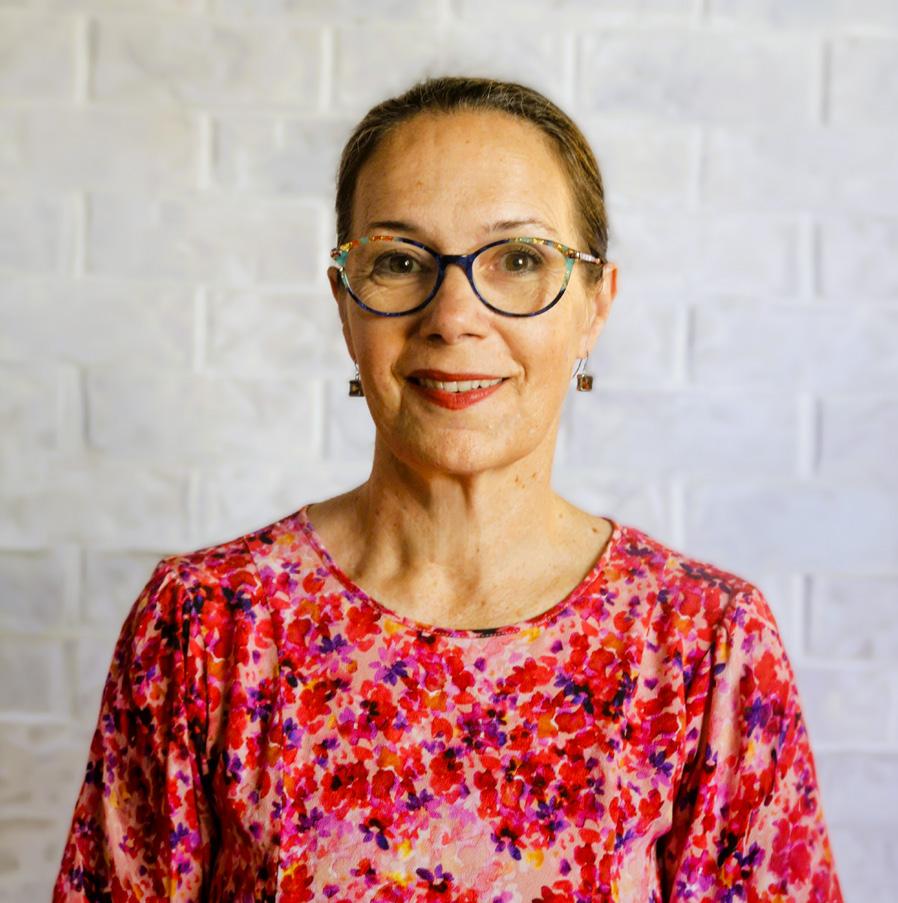
Prof. Kate Ames, Pro Vice Chancellor, Engagement and Access, Torrens University Australia
Professor Kate Ames is a senior academic leader with extensive experience in higher education, engagement, and organisational transformation. Her career spans strategic leadership, curriculum innovation, and advancing equity in education. As Pro Vice-Chancellor (Engagement & Access), she is recognised for driving innovative partnerships, widening participation, and strengthening studentfocused initiatives across diverse sectors to improve learning outcomes.
Recently, in an exclusive interview with Higher Education Digest, Kate shared insights into her passion for equity and access in education, sparked by her experiences in regional Queensland and her commitment to social justice. In the next 5 years, Kate sees AI and data analytics transforming learning and teaching. She also shared her personal hobbies and interests, future plans, words of wisdom, and much more. The following excerpts are taken from the interview.
In this digital age, the modalities of teaching will continue to evolve, but the foundational elements of sound pedagogy will remain essential
Hi Kate. What sparked your passion for equity and access in education, leading to a career as a sociologist, communicator, and leader?
Across my 30 -year career, many experiences have shaped my focus on equity in education. The turning point was living in regional Queensland in the mid-1990s during a period of economic and perceived social decline. Seeing communities struggle with limited support made me realise how powerful education could be as an enabler, but also how hard some communities had to work to get access to learning and opportunities.
I started my career as a journalist. I transitioned to work as a media educator and researcher at a regional university that pioneered distance education—an approach grounded in equity and access. Since then, as both a student and a teacher, I’ve remained committed to asking the critical question: How will this work for the student who can’t be in the room?
My curiosity has always driven me, even though learning didn’t come easily to me (and still doesn’t) and frequent moves meant I was often the “new kid.” A strong sense of justice and lived experience also shaped my path. My brother is a quadruple amputee and disability advocate, I’m a parent of neurodivergent children, and my current research focus is on community building and access to information and education via media. These influences continually reinforce my commitment to inclusive, equitable education.
What do you love the most about your current role?
I’m the inaugural Pro Vice Chancellor, Engagement and Access at Torrens University—
one of Australia’s newest private universities. I had wanted to come to Torrens for a while because of its reputation for innovation – I was surprised at just how inclusive it was. Although we’re not publicly funded in the way most other universities are, we have a strong social mission at our core. I enjoy the challenge of identifying opportunities to grow our student community and strengthening the support that underpins their success. I need to be creative and work across the University and our communities and bring together seemingly disparate areas to create new programs and approaches. It’s exciting and challenging, but we are about to launch some great new initiatives to support students new to university, so it’s an exciting time to be here.
In the next 5 years, how will trends like AI and data analytics impact learning and teaching?
I’m a strong supporter of the potential of generative AI, especially for improving equity, while still recognising the challenges around digital access and privacy. As we become more skilled in how we use AI, I believe we’ll also become more thoughtful about what it means to be human and how we interact with technology. Greater access to data doesn’t automatically give us the right answers, so we need to continually question and interrogate it—especially as some people retreat from digital visibility.
As a cultural sociologist, I feel it’s more important than ever to understand power relationships between (and within) people and systems, and the influence of socio-economic and cultural contexts. I would expect to see rising demand for both tactile learning experiences in both techno and human forms as
AI becomes embedded in everyday practice. As humans, we’re better at understanding what we can see, feel and talk about safely.
Resisting technology isn’t helpful to our learners, and being curious, adaptable, and willing to try is really important – but I will add that we need to include innovation and opportunities to be curious within our workload assumptions. Cognitive load is real
As President of the Australasian Council of Open and Digital Education, I’m fortunate to see sector wide trends firsthand, and it’s encouraging to witness a growing maturity in how institutions approach education technology. There’s a clear commitment to embracing the opportunities AI brings for students and educators, alongside the significant upskilling needed across an ageing and at times fearful workforce. I challenge the premise that AI will make us ‘dumber’ and am hopeful that it will bring back some of the opportunities to play and create while we learn.
What are the key skills educators need to develop to lead in digital transformation?
For me, it’s less a skill and more a mindset: staying open and curious about how things work. Many people are hesitant to experiment with new tools or technologies, and it has become harder to simply “have a play” when tool and platform trials, data tracking, and subscription loopholes create barriers. Institutions add another layer of constraints (rightly so) through budgets and processes.
I’m often surprised by how many people still haven’t engaged with generative AI at all— even in a playful, exploratory way. Ignorance can limit us and I think we need to work hard to boundary span – look over the fence and try to identify connections. It’s entirely possible to be critical while also being open to new approaches. Resisting technology isn’t helpful to our learners, and being curious, adaptable, and willing to try is really important – but I will add that we need to include innovation and opportunities to be curious within our workload assumptions. Cognitive load is real.
Are there any particular books, articles, or resources that have significantly influenced your thinking or approach?
Journey On, a podcast by horse trainer Warwick Schiller, comes highly recommended for some alternative thinking about life and connection with others generally. Two books have influenced me deeply as an educator. A Thousand Brains by Jeff Hawkins reminded me that we ourselves are walking machine learning systems, constantly updating and adapting. What Happened to You? by Bruce Perry and Oprah Winfrey reinforced that we never truly
know what learners bring with them into the classroom each day. Together, they remind me to lead with kindness, empathy, and curiosity— and to be mindful of my own experiences and biases, making an effort to name them rather than letting them shape my teaching unnoticed.
How do you mentor and support emerging leaders in education and edtech?
I mentor in a variety of ways—formally through my role with ACODE, and informally through initiatives like writing groups and collaborative supervision at Torrens. I’m always keen to bring others along on the journey, whether that’s developing researchers, supporting emerging leaders, or sharing what I’ve learned from nearly 30 years connected to the defence sector. My approach is grounded in “building as you climb,” so that when I eventually step away, I leave the people I have worked with confident in themselves to continue initiatives and find new opportunities.
What is your favorite quote?
Do one thing every day that scares you. It’s inspired by my almost 30 years of service in the Australian Army part-time. Being willing to lean into being brave, but being smart about what that looks like, is a learned skill.
What are some of your passions outside of work? What do you like to do in your time off?
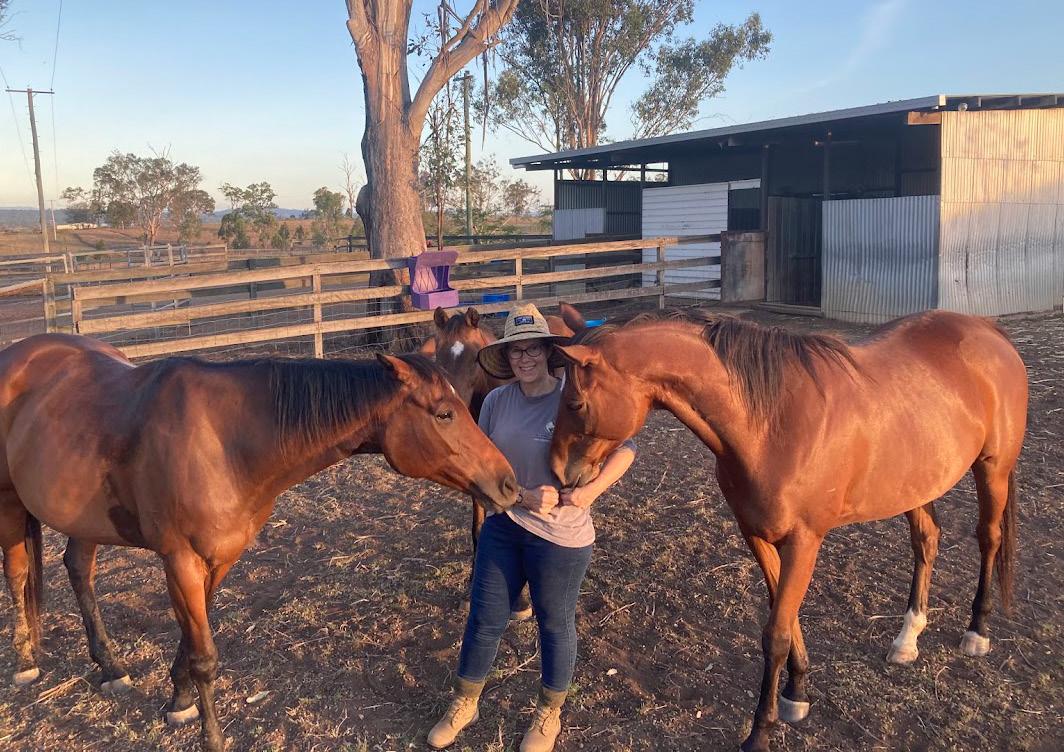
I actually don’t get a lot of time off as I’m still studying and I am still active in Defence Reserves. But I do ride horses through the bush most weekends. I am very lucky to continue to live in a regional area, with access to great
Ask hard questions and get comfortable with discomfort; challenging privilege and dismantling hidden barriers will create tension and includes risk, and that’s part of the work
trails and forests. My family are cricket mad, so while they’re playing local cricket, I’m heading to the local dam with my neighbour and our horses. It’s a great way to unwind. I am in my final subject of my last ever degree (a Master of Educational Neuroscience) so once that’s finished, I’ll be working on renovating our little farm.
What is your biggest goal? Where do you see yourself in 5 years from now?
I feel very privileged to be moving toward the final decade of my career in a leadership rolewhere I have the potential to make an impact. I hope to remain in leadership within tertiary education – I think it’s a really challenging time for us, but education is so transformative that it’s worth fighting for. My ideal “retirement job” is volunteering at a regional study hub, helping students navigate the increasingly complex systems they face when trying to enrol in university—an area we still need to improve as a sector. If I can contribute to making that journey easier, I’d consider that meaningful work.
What advice would you give to professionals looking to make an impact in education and equity?
Ensure people with lived experience are in the room—and create real platforms for diverse voices. Ask hard questions and get comfortable with discomfort; challenging privilege and dismantling hidden barriers will create tension and includes risk, and that’s part of the work.
Help others see and feel experiences from different perspectives, and use an appreciative, strengths based approach. People from nontraditional or equity backgrounds aren’t “problems to solve”—their resilience and insights are assets that strengthen teams, decisions, and outcomes.
ACADEMIC VIEW
Empowering Future-Ready Learners through Curriculum
Dr.TheodoreaReginaBerry, Dean of Bloomfield College, Montclair State University
Dr. Theodorea Regina Berry serves as Dean of Bloomfield College of Montclair State University and Professor of Curriculum Studies, Department of Education Foundations, College of Education and Engaged Learning. Dr. Berry’s research appears as journal articles, book chapters and books including Latinx Curriculum Theorizing (Lexington Books, 2019), From Oppression to Grace: Women of Color and their Dilemmas Within the Academy (Stylus Publishing, 2006) and States of Grace: Counterstories of a Black Woman in the Academy (Peter Lang, 2018). Dr. Berry serves as the 2023-2026 Vice President for Division B (Curriculum) of the American Educational Research Association.
Recently, in an exclusive interview with Higher Education Digest, Dr. Berry shared insights into her journey in curriculum studies, sparked by her undergraduate studies and influenced by scholars like John Dewey and bell hooks. She highlighted the value of women of color in academia and advocates for inclusive environments. She also shared her favorite quote, personal hobbies and interests, future plans, and much more. The following excerpts are taken from the interview.
Future readiness is connected to the idea of social futures and what communities will look like one generation forward and what these communities will need
Hi Dr. Berry. As a renowned educator and researcher, you’ve made significant contributions to the field of curriculum studies - what sparked your interest in this area, and how did your journey begin?
My interest in the field began as an undergraduate student enrolled in a communication theory course that was required for my major. The course focused on the use of dialogue and discourse (from Socrates and Plato) as sources of knowledge and the ways in which knowledge is disseminated, constructed, and produced. As a student enrolled in a masters degree program, I was introduced to the work of John Dewey and his perspectives on lived experience as knowledge as well as the scholarship of bell hooks and her conceptualizations of engaged pedagogy and the ways in which culture influences knowledge construction.
What do you love the most about your current role?
I love working with faculty on ways to connect curriculum to lived experiences and I love connecting faculty and community stakeholders to curriculum in relation to community engagement. I thoroughly enjoy serving as a voice of the university to the community about the value of higher education.
As the education landscape continues to evolve, what emerging trend excites you most, and why?
The emerging trend that excites me most is the notion of guiding college and university students to be future-ready. Future readiness is connected to the idea of social futures and what communities will look like one generation forward and what
these communities will need. I am excited about the ways in which higher education can significantly engage in the development of the future-ready citizen.
Your work focuses on issues of race, ethnicity, and education - what drives your passion for addressing these critical topics?
My passion for addressing these critical topics rests not only in my own lived experiences but also in the lived experiences of my parents and my ancestors. My parents placed a high value on the acquisition of a solid education and attaining maximum education was a goal they had for me and my siblings. I learned at an early age that access to education was not the same for everyone in this country and that, for many years, was predicated on race and ethnicity. My works strives to value the lived experiences of people of color while, at the same time, offer lessons for errors not to be repeated.
You’ve written about the experiences of women of color in academia - what’s the significance of this work, and how can we create more inclusive environments? Historically, higher education was not available to women and women of color. This country has made great strides from that moment to this moment in history. My work strives to highlight the value of the experiences of women of color in academia and the lessons we have learned from creating spaces for productivity in the academy. I also believe there is always something more to learn. We can create more inclusive environments by, first, examining the ways academia has benefitted from the productivity and innovations of women of color. Second, by making more
spaces for such voices to be included in decisionmaking. Finally, mentorship from seasoned administrators and scholars, regardless of the mentor’s race or gender, should be part of the academic landscape --- for everyone.
As a professor and researcher, you’ve mentored many students and earlycareer scholars - what’s your approach to mentorship, and how can others pay it forward?
My approach to mentorship starts with a conversation with the mentee about their goals and aspirations. I use a scaffolding approach that starts with a small or simple task. Each task or project should build upon foundational knowledge and skills and develop new knowledge and/or skills. Paying it forward can be something as simple as having a conversation with a student or early-career scholar, reading a manuscript for review before submitting for publication, doing a mock interview for a student who is preparing to interview for jobs, or writing a letter of recommendation. Each of these things (or other
things) can serve as another layer in the scaffold that helps get the mentee along the path toward their next destination.
Are there any particular books, articles, or resources that have significantly influenced your thinking or approach?
The scholarship of bell hooks has greatly influenced my thinking and I have read almost every book she has written. I am also drawn to the books written by former president Jimmy Carter.
What is your favorite quote?
“Education is not preparation for life; education is life itself.” John Dewey
What are some of your passions outside of work? What do you like to do in your time off?
When I take time off, I travel internationally. Being in other places and spending time with other people is a reminder that human beings are, essentially, the same all over the world. I also enjoy reading, cooking foods from other countries, and singing.
What is your biggest goal? Where do you see yourself in 5 years from now?
I hope to be a leading voice in the value of higher education and the multi-dimensional ways higher education can continue to support communities and
society
My biggest goal is to play a significant role in elevating access to higher education, globally.
I hope to be a leading voice in the value of higher education and the multi-dimensional ways higher education can continue to support communities and society. Five years from now, I hope to be a part of a coalition of academic researchers, scholars, administrators, and stakeholders who are connected globally to see this vision into fruition.
ACADEMIC VIEW
Helping Professionals Make Better Decisions in a Complex World
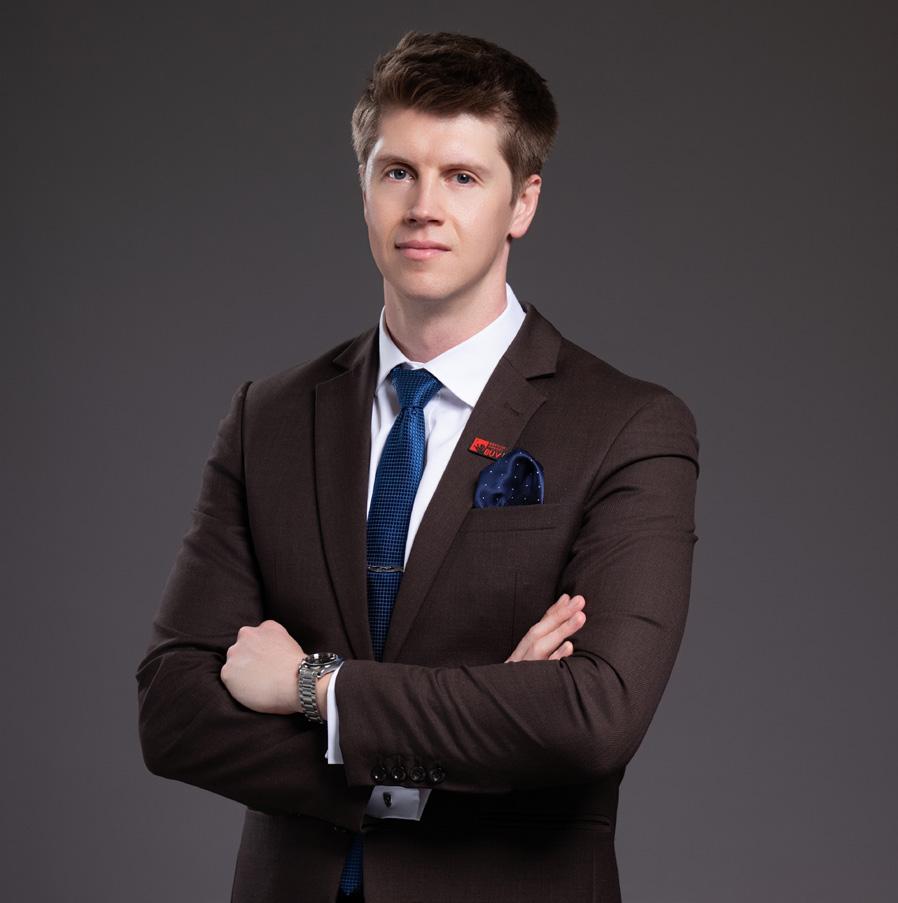
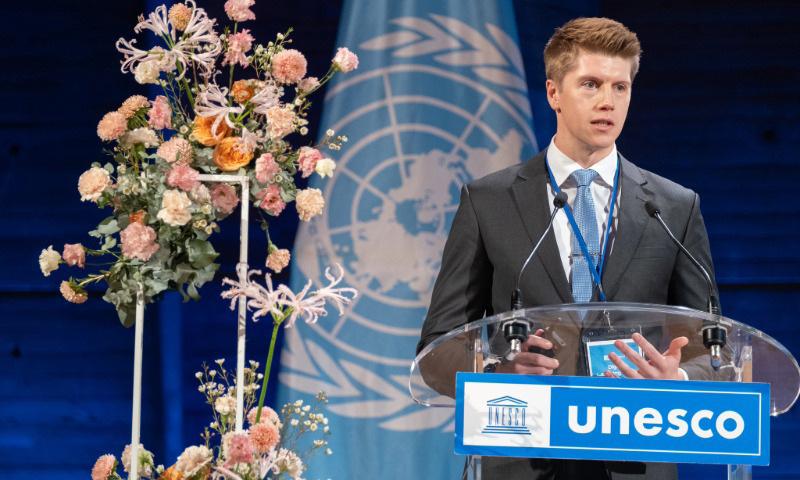
Adam Gottlich, Director of Nudge Labs South Africa and Behavioural Economics Lecturer at Henley Business School
Adam Gottlich is an award-winning behavioural scientist, executive leader, and lecturer specializing in applying behavioural science to commercial strategy, product innovation, and customer decisionmaking in financial services. With nearly a decade of leadership experience across banking, insurance, and consulting, he is known for translating behavioural insights into measurable business outcomes. He previously served as Executive Head of Behavioural Science and Innovation at Standard Bank Group, where he built the bank’s behavioural science capability across nine African markets and led more than 300 behavioural experiments across digital products, insurance, investments, and customer journeys.
Adam is the founder of Nudge Labs and lectures behavioural economics at Henley Business School South Africa. He holds a Master’s degree (cum laude) in Economic and Consumer Psychology from Leiden University and is a two-time Overall Winner of the Global Association of Applied Behavioural Scientists (GAABS) awards.
In an exclusive conversation with Higher Education Digest, Adam talks about his journey into behavioural economics and how his interest in human decision-making shaped his work across banking, consulting, and academia. He discusses the real-world impact of behavioural science in improving customer experiences and organisational decision environments, while also reflecting on the growing complexity facing higher education today.
One of the biggest challenges facing higher education today is the growing complexity of the learners themselves.
Your career sits at the intersection of behavioural economics and applied consulting. What initially drew you to this field, and what have been the defining milestones in your journey so far?
From early on I was fascinated by people and how they make decisions. This interest led me to study psychology and neuroscience at the University of the Witwatersrand, where I discovered behavioural economics through the work of authors such as Richard Thaler and Dan Ariely.
Because the field was still developing in South Africa, I pursued a master’s degree in Economic and Consumer Psychology in the Netherlands, where I deepened my understanding of the behavioural drivers behind decision-making.
After returning to South Africa, I joined Standard Bank and helped build behavioural science capability across the organisation, eventually serving as Executive Head of Behavioural Science across multiple markets
Behavioural science has long shown that decisions are shaped by context, and AI is becoming a powerful part of that environment
in Africa. During that time I also became one of the youngest executives in the group and received the Global Association of Applied Behavioural Scientists’ overall award twice.
Alongside this work, I began teaching behavioural science through Henley Business School, helping professionals across South Africa apply behavioural insights to real organisational challenges.
As Director of Nudge Labs South Africa, what are some of the most impactful projects you’ve led, and what measurable changes did they bring to organizations?
Across my career I have worked on behavioural science projects across Africa, North America and Europe. The most impactful work is often not the most complex, but where a small behavioural insight creates measurable value.
In one insurance contact centre, high error rates were traced not to training but to environment. Consultants seated near speakers playing lyrical music made more errors because competing language inputs interfered with complex conversations. Replacing the music with instrumental tracks reduced errors by 91 percent, saving around R5 million annually.
In another case, we examined Net Promoter
Score data and found that customers rating experiences eight and nine often expressed very similar feedback. By redesigning the scale with colour-coded cues, we increased the organisation’s NPS by 22 percent without changing the service itself, demonstrating how measurement design can shape outcomes.
These examples highlight a key principle of behavioural science: meaningful impact often comes from small, well-designed interventions that improve real decision environments.
From your perspective at Henley Business School, what are the biggest challenges currently facing higher education, particularly in preparing leaders for an increasingly complex world?
One of the biggest challenges facing higher education today is the growing complexity of the learners themselves. Many students are mid-career professionals balancing demanding roles, personal responsibilities, and academic commitments, meaning education can no longer assume a uniform learning environment.
One opportunity is using behavioural data and diagnostics to better understand learners upfront. In my work I developed the Behavioural Learning Profile, a psychometric tool that assesses traits such as adaptability, resilience, learning orientation, and decision-making style. The goal is not to label individuals, but to create more personalised learning journeys that build on strengths and support development.
At the same time, programmes must recognise the realities of professionals returning to study after years away from formal education while managing demanding careers. Institutions like Henley place strong emphasis on designing learning experiences that respect this context while maintaining academic rigour.
A third project involved a digital banking feature allowing debit order reversals, which unintentionally led customers to cancel insurance policies. By introducing a small amount of friction that clearly explained the consequences, we significantly reduced cancellations and preserved an estimated R100 million in annual value.
More broadly, leaders today face overwhelming complexity and information. Higher education therefore plays an important role in helping individuals filter that noise and develop clearer frameworks for better decisionmaking.
Behavioural economics is deeply connected to decision-making. How do you see AI and emerging technologies reshaping the way we understand and influence human behaviour in business and education?
Artificial intelligence is reshaping how we understand and influence human behaviour, representing the next evolution of choice architecture. Behavioural science has long shown that decisions are shaped by context, and AI is becoming a powerful part of that environment.
Through what is sometimes called the “extended mind,” individuals increasingly outsource elements of cognition to systems such as large language models. This expands access to knowledge and insight, but it also creates tension in education, where deep learning requires active engagement. The challenge for institutions is ensuring AI augments curiosity and critical thinking rather than replacing them.
In business, AI enables behavioural science to operate at scale through real-time personalisation of decision environments. Platforms can adapt prompts, options, or interfaces based on behavioural signals, helping individuals make more deliberate choices.
As organisations move toward adaptive behavioural ecosystems powered by AI, ethical responsibility becomes critical. These technologies should support better decisions,
not exploit behavioural vulnerabilities. When used responsibly, AI has the potential to deepen our understanding of behaviour and improve decision-making.
Leadership today requires both analytical rigour and emotional intelligence. How do you define effective leadership in the context of behavioural science?
In the context of behavioural science, effective leadership begins with understanding people. Individuals are motivated by autonomy, achievement, purpose, and recognition, and leaders need to create environments where people feel trusted, supported, and able to contribute meaningfully.
A principle that has shaped my approach is “paying it forward.” Leadership is not about hoarding opportunities but about creating them for others. Throughout my career I have tried to ensure that the opportunities I received are extended to those around me.
Behavioural science also reminds us that people make decisions through heuristics, biases, and context. Effective leadership therefore requires understanding individual differences and moving away from a one-sizefits-all management style. Leaders must design environments and cultures that encourage the right behaviours and allow different people to perform at their best.
At the same time, strong leadership balances autonomy with support. People perform best when they are trusted to take ownership of their work while knowing their leader will advocate for them and hold them accountable when necessary. Cognitive diversity is equally important. Teams that include different perspectives and ways of
Leaders must design environments and cultures that encourage the right behaviours and allow different people to perform at their best
thinking ultimately make better decisions and create stronger outcomes.
Outside your professional roles, what personal values or interests most strongly influence the way you approach your work and leadership responsibilities?
Several personal values shape how I approach my work and leadership. One of the most important is my commitment to sport and exercise. Training has taught me two key principles: progressive overload and consistency. Improvement comes from pushing beyond what is comfortable and showing up repeatedly over time. I apply the same mindset professionally by continually stretching my thinking and maintaining high standards in how I work and lead.
My love of football has also influenced my thinking, particularly around the human need
for belonging and shared identity. People are naturally drawn to communities that give them a sense of connection and purpose, and I try to cultivate that same sense of unity in professional environments, often bringing people together around a shared interest in behavioural science.
Respect and empathy are equally important. I believe people should be treated as capable adults who deserve trust and support. Leadership is about creating an environment where individuals feel empowered to do their best work while maintaining strong standards of accountability.
Finally, reading fantasy literature helps keep my thinking creative and open. Authors who build entirely new worlds challenge conventional thinking and encourage curiosity. Together, these influences shape a leadership approach grounded in discipline, collaboration, respect, and creativity.
Leadership is about creating an environment where individuals feel empowered to do their best work while maintaining strong standards of accountability
What advice would you offer to students and young professionals who want to build careers at the intersection of academia, consulting, and behavioural science?
For students and young professionals pursuing careers in behavioural science, one of the most important lessons is the value of relationships. Early in my career I invested a great deal of time meeting people over coffee, simply to understand how organisations work and build trust. Professional environments ultimately run on relationships, and strong ones create opportunities for collaboration, insight, and growth. They also require reciprocity and genuine contribution.
It is also important to become comfortable with failure. Behavioural science relies on experimentation, and not every intervention will work. What matters is approaching outcomes with curiosity, learning from what did not work, and improving the next iteration. Being transparent about failures can also build credibility and trust.
Finally, find your area of strength within the field. Behavioural science spans many disciplines, and individuals contribute in different ways, whether through experimental design, communication, or creative intervention design. Developing a clear “superpower” and investing deeply in it helps build both expertise and a distinctive professional identity.