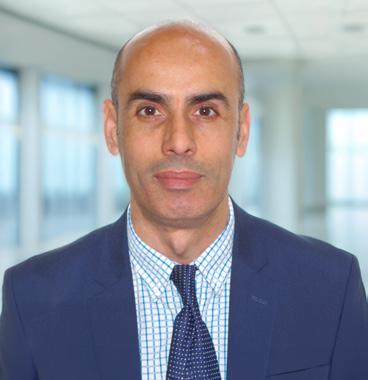
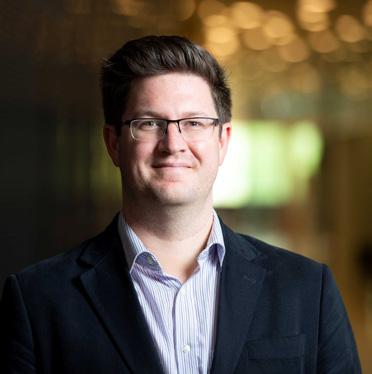
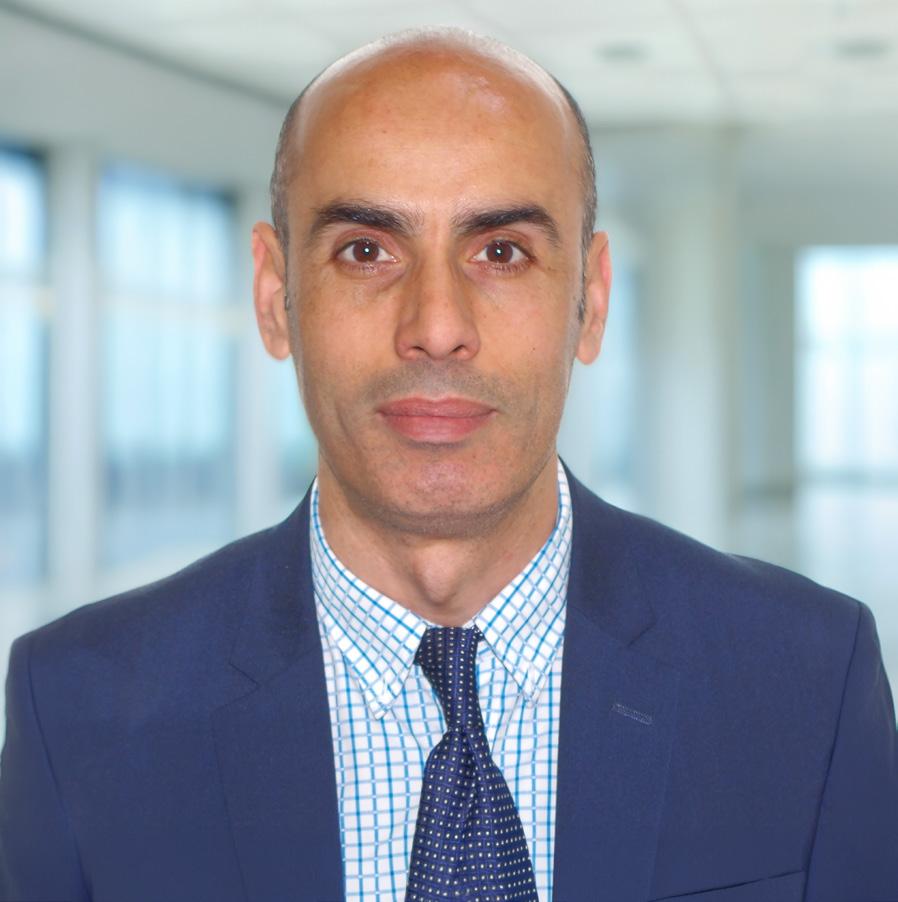
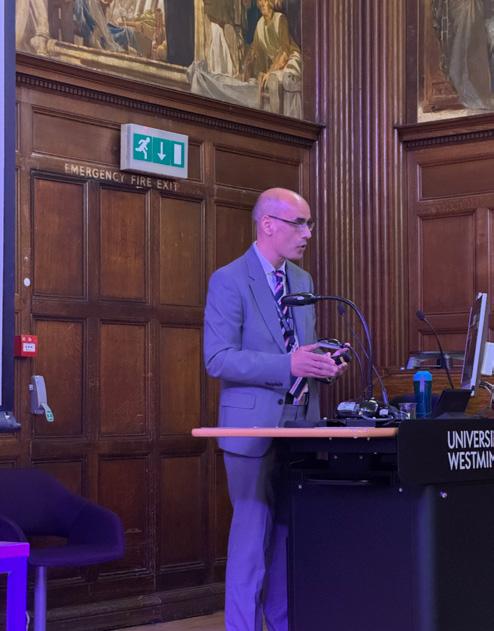
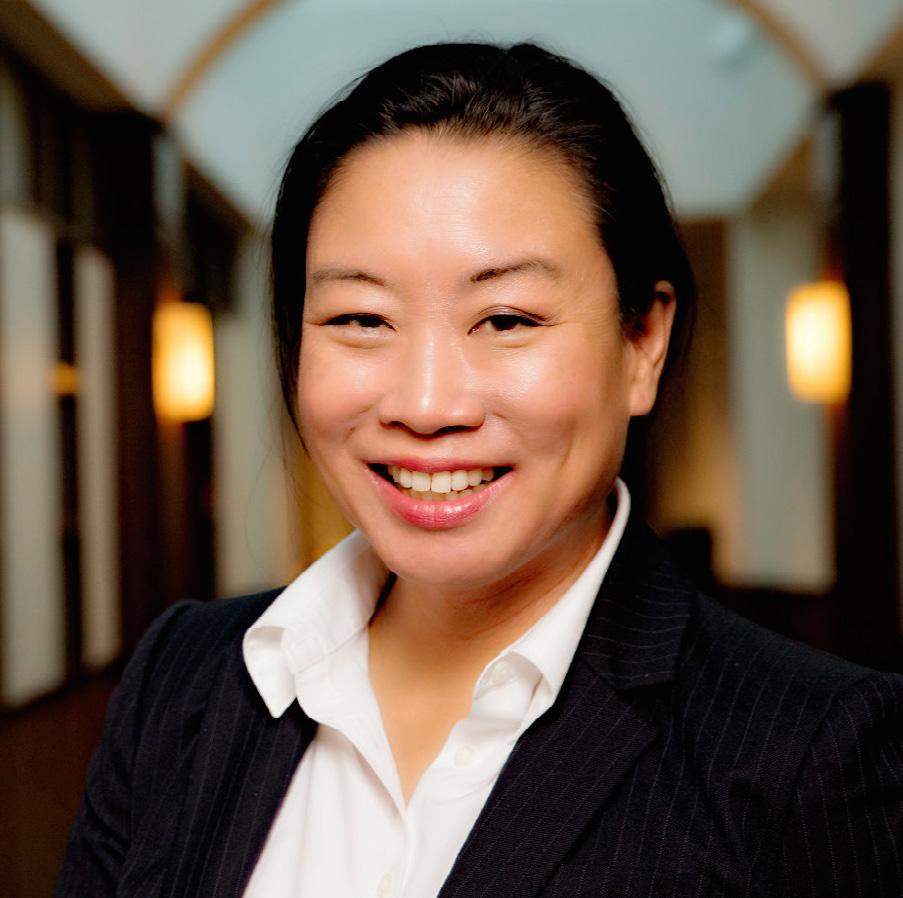
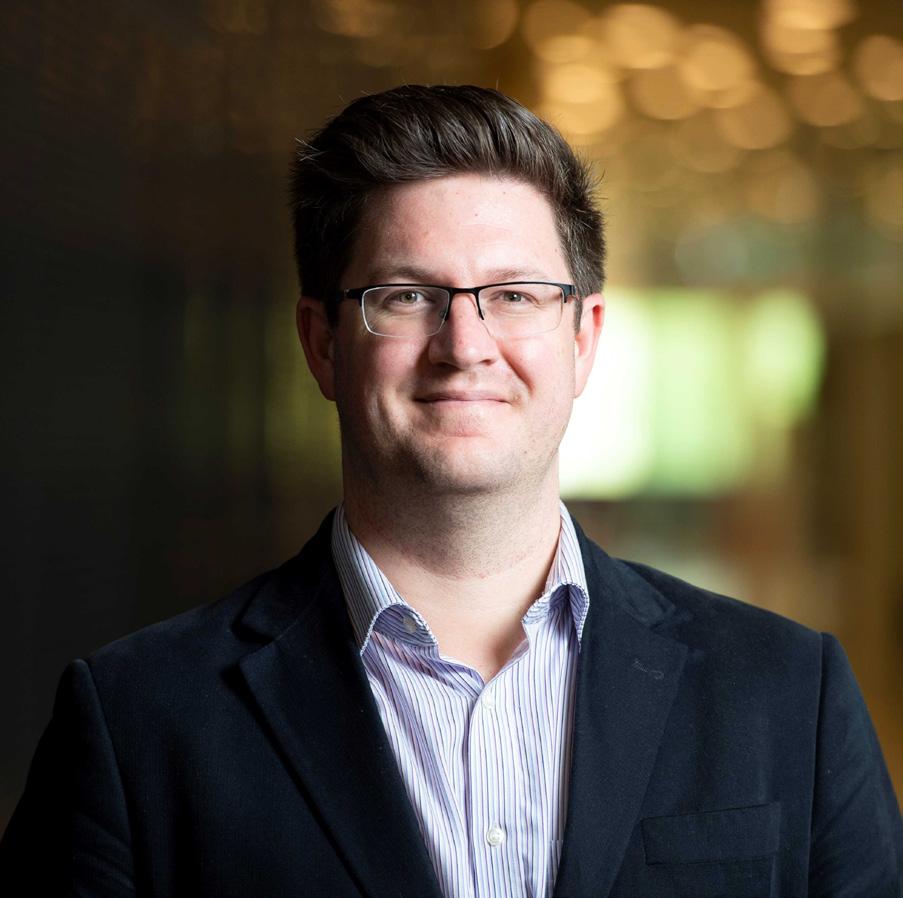
Abdelhafid Benamraoui Professor of Finance, University of Westminster
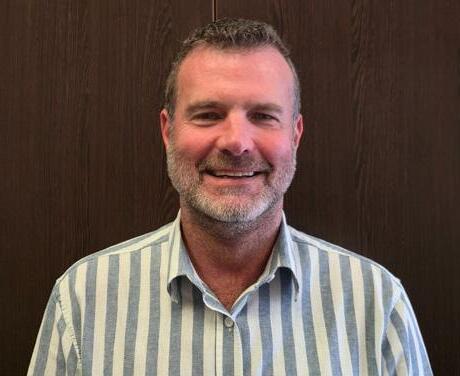
Dr. Craig Peck Head Paediatric Dentistry, Senior Lecturer, University of the Western Cape
Dr. Yetunde A. Omede Pracademic, Global Affairs Scholar, Author & Civic Leader
FEATURING INSIDE
Hortense Le Ferrand Associated Professor, Nanyang Technological University, Singapore
Maria Toyoda President & CEO, WASC Senior College and University Commission
Professor Matt Mundy Executive Dean, Health and Education, Torrens University Australia
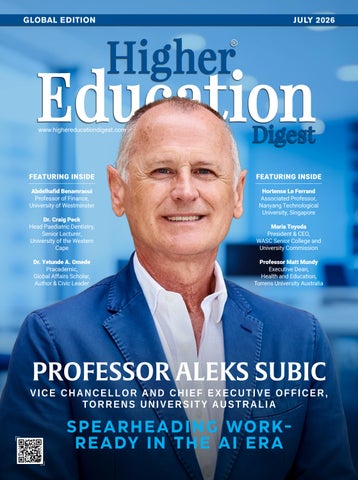
PROFESSOR ALEKS SUBIC
Managing Editor
Shyam
Consultant Editors
Dr. John Andrews
Emma James
Andrew Scott
Naomi Wilson
Stanly Lui
Joseph Alex
Creative Consultants
Charlie Jameson
Edwards Gonzalez
Branding & Marketing Partnerships
Jennifer Anderson
Alice Smith Lucy Jones Anna Elza
International Partnerships admin@highereducationdigest.com
Americas Europe Middle East & Africa Asia-Pacific Follow Us On www.linkedin.com/company/ highereducationdigest www.facebook.com/HigherEducationDigest
Higher Education Digest www.highereducationdigest.com is a global knowledge sharing digital platform published by Connecta Innovation Private Limited. All rights reserved. The opinions expressed in the content and pictures provided are those of the authors. They do not purport to reflect the opinions or views of Connecta Innovation Private Limited or any of its members and we do not assume any responsibility. The publisher does not assume any responsibility for the advertisements, its content, pictures, and all representation of warranties made in such advertisements are those of the advertisers and not of the publisher. Higher Education Digest www.highereducationdigest.com is a Free Subscription and Free-to-read digital platform strictly not for sale and has to be strictly for internal private use only. Publisher does not assume any responsibility arising out of anyone modifying content and pictures, printing a copy of this digital platform in any format and in any country and all matters related to that.
Sarath
Beyond the First Job: Why Universities Must Teach Reinvention
Not long ago, earning a university degree was widely seen as the gateway to a stable career. Today, that certainty has given way to a different reality. New technologies are reshaping industries at an unprecedented pace, job roles are evolving faster than curricula, and many graduates will likely work in professions that do not yet exist. According to the World Economic Forum, nearly 40 percent of workers’ core skills are expected to change within the next five years, making adaptability one of the defining competencies of the modern workforce. As I reflect on conversations with educators and industry leaders, one message continues to stand out: the true measure of higher education is no longer how well it prepares students for their first job, but how effectively it equips them for a lifetime of learning, unlearning, and reinvention.
A broader purpose for universities is now essential. Beyond imparting knowledge, institutions must cultivate curiosity, resilience, critical thinking, entrepreneurial mindsets, and the confidence to navigate uncertainty. Success in the decades ahead will belong to graduates who can continuously acquire new skills, embrace emerging technologies, and create opportunities in environments that are constantly changing.
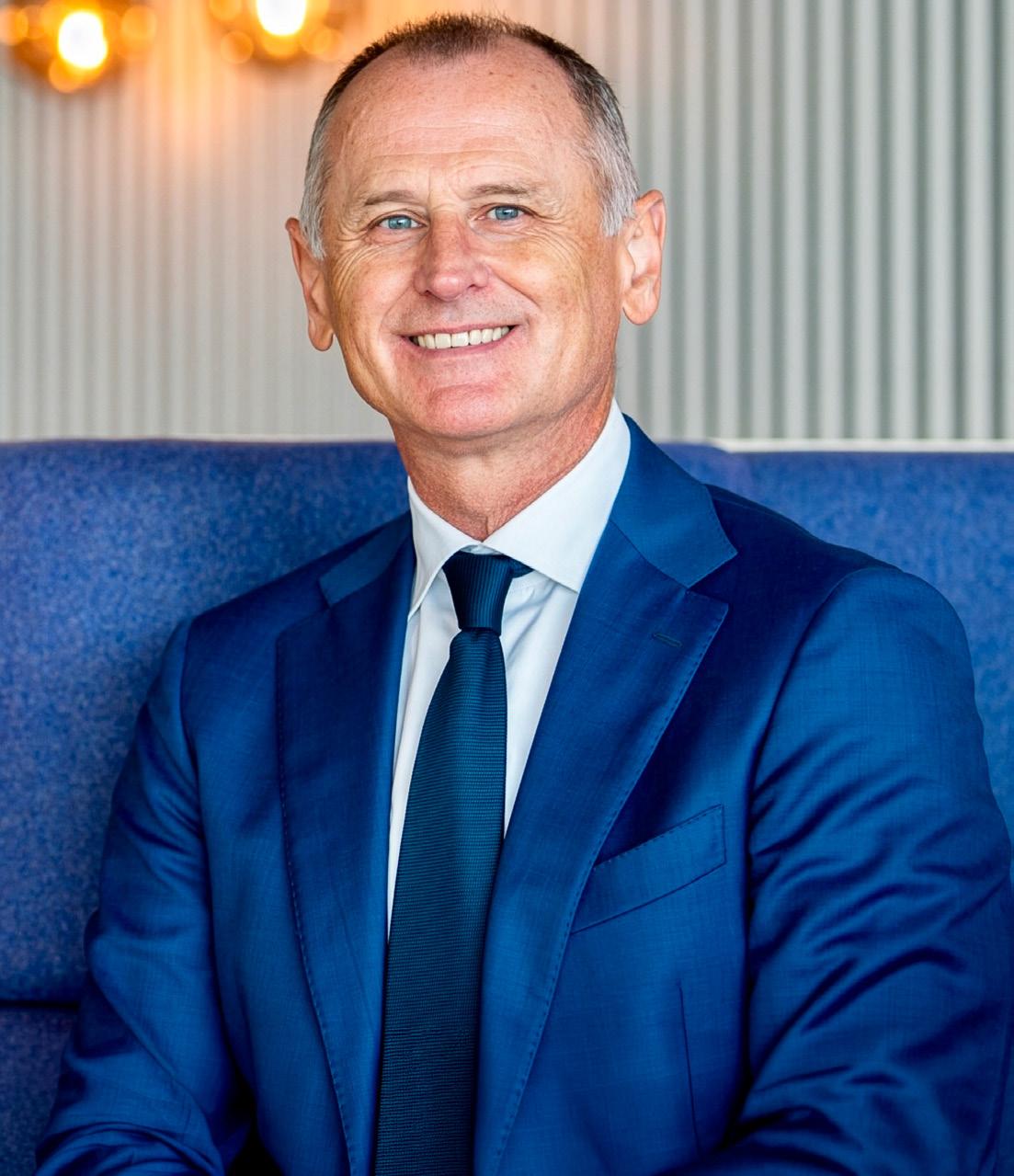
Such a philosophy resonates strongly with our cover story featuring Professor Aleks Subic, Vice-Chancellor and Chief Executive Officer of Torrens University Australia. His vision extends beyond traditional notions of employability, championing a model of higher education that prepares students to work alongside artificial intelligence while developing the adaptability, digital fluency, and lifelong learning mindset required for careers that will evolve many times over. His insights offer a compelling perspective on how universities can remain relevant in an era defined by transformation.
Our latest edition of Higher Education Digest brings together an inspiring collection of interviews, expert opinions, and thought-provoking articles from leaders across the global education landscape. Together, they explore the challenges, opportunities, and innovations shaping the future of higher education from multiple perspectives.
As you turn these pages, I hope you find ideas that challenge familiar assumptions and inspire new possibilities. The future cannot be predicted with certainty, but it can be prepared for. Universities that embrace reinvention today will empower the leaders, innovators, and lifelong learners who shape tomorrow.
Enjoy Reading.
Sarath Shyam
PROFESSOR ALEKS SUBIC
VICE CHANCELLOR AND CHIEF EXECUTIVE OFFICER, TORRENS UNIVERSITY AUSTRALIA
SPEARHEADING WORK-READY IN THE AI ERA
ACADEMIC VIEW
SHAPING THE NEXT GENERATION OF ENGINEERS
Hortense Le Ferrand, Associated Professor, Nanyang Technological University, Singapore
RETHINKING FINANCE EDUCATION FOR A TECHNOLOGY DRIVEN WORLD
Abdelhafid Benamraoui, Professor of Finance, University of Westminster
26
EMPOWERING THE NEXT GENERATION OF CIVIC LEADERS
Dr. Yetunde A. Omede, Pracademic, Global Affairs Scholar, Author & Civic Leader
ACADEMIC VIEW
INTERPROFESSIONAL EDUCATION (IPE) AND COLLABORATIVE PRACTICE (IPECP): THE ROLE OF CHANGE MANAGEMENT AND CONFLICT MANAGEMENT PROCESSES
Dr. Craig Peck, Head Paediatric Dentistry / Senior Lecturer, University of the Western Cape
TRANSFORMING ACCREDITATION FOR STUDENT SUCCESS AND INSTITUTIONAL EXCELLENCE
Maria Toyoda, President & CEO, WASC Senior College and University Commission
46
Professor Matt Mundy, Executive Dean, Health and Education, Torrens University Australia 52
STUDENT MENTAL HEALTH AND WELLBEING IS A CRITICAL ACADEMIC PRIORITY
From Executive Dean of Engineering to leading universities in Melbourne, Birmingham, and now across Australia, your career spans continents, and sectors. Thinking back to your earliest days as an academic in engineering, what was the moment you realised university leadership — not just research — was where you could create scale?
Early in my academic career, I realised that the greatest impact came not from individual research projects alone, but from building partnerships and innovation ecosystems where universities, industry, government, and communities could work together to solve complex challenges, transform organisations, and drive meaningful socio-economic impact. It was that ambition to create change at scale,
beyond the boundaries of a single discipline or institution, that ultimately drew me toward a leadership career.
At RMIT University, I played a key role in establishing the Advanced Manufacturing Precinct with world-leading additive manufacturing and Industry 4.0 capability. At Swinburne, I led development of the Factory of the Future as the national Industry 4.0 Hub initiative with Siemens and CSIRO. Those experiences showed me that universities can become catalysts for industrial transformation, workforce capability, and economic growth.
That perspective later shaped my work at Aston University, where I led the creation of the Birmingham Innovation Precinct as part of the Birmingham Knowledge Quarter and West Midlands Investment Zone strategy. Seeing
The future belongs to universities that can seamlessly integrate education, employability, innovation, and enterprise
universities act as anchor institutions for regional transformation reinforced my belief that leadership can shape not only institutions, but cities, industries, and future generations.
Congratulations on your new role as Vice-Chancellor and President at Torrens University Australia. What do you love about leading a university at the intersection of industry, innovation precincts, and global education right now?
What excites me most is that universities are no longer operating at the edges of industry and innovation - they are becoming central to them.
Torrens is uniquely positioned because of its strong industry orientation, national footprint, and connection to a global education network. That creates enormous opportunities to rethink how education is delivered and how students engage with work and lifelong learning. Across my previous leadership roles, I have seen firsthand the transformative impact
universities can have when they position themselves at the centre of innovation, industry, and community ecosystems. At Aston University, I led the transformation of our campus into an innovation precinct as a major platform for collaboration across AI, digital technologies, and health innovation, supported by partnerships with organisations including Microsoft, Adobe, and Capgemini. But innovation alone is not enough. Equally important is the social impact universities create through education, opportunity, and inclusion. Through these partnerships, Aston strengthened its position as one of the UK’s leading universities for social mobility, ranked 2nd in the UK, demonstrating how universities can simultaneously drive economic growth, innovation and life-changing opportunity for individuals and communities. To me, that combination represents the true purpose of a modern university.
The future belongs to universities that can seamlessly integrate education, employability, innovation, and enterprise.
With innovation precincts, digital transformation, and social mobility in your DNA, what do you think about the impact Torrens can make on Australia’s skills and innovation landscape over the next 5 years?
Australia’s future competitiveness will depend on how effectively we develop advanced skills at scale, accelerate innovation, and improve productivity. Universities have a critical role to play in that transition.
I believe Torrens has the opportunity to become one of Australia’s leading realworld universities - deeply connected to industry, committed to widening access and transforming lives through education, and relentlessly focused on student success in response to the rapidly evolving needs of the workforce and society.
Through my leadership roles chairing the global 4th Generation Universities network with Elsevier and the GFCC Global University Research and Leadership Forum, I have worked closely with universities internationally that are redefining their role around real-world impact, place-based innovation, and socioeconomic transformation. Combined with Torrens University Australia being part of Strategic Education Inc., a US-based global education group at the forefront of digital transformation in education and workforce development, I believe Torrens is uniquely positioned to evolve as a leading nextgeneration university - globally connected, deeply industry-integrated, digitally enabled, and highly responsive to the rapidly changing needs of learners, industry and society.
I believe Torrens is exceptionally well positioned to evolve in that direction over the
next five years, integrating seamlessly higher education, vocational education and lifelong learning within a highly industry-connected model that expands opportunity, responds rapidly to workforce transformation, and prepares students for long-term career success in an emerging AI-enabled economy.
Torrens is part of Strategic Education Inc., a global education group. How will the economics of higher education shift in the next five years between public, private, and global providers? Higher education is entering a period of significant structural change driven by technology, changing student expectations (and indeed public expectations) and rising economic pressures.
Students increasingly want flexibility, employability, lifelong learning pathways, and clear return on investment. Institutions that are agile, industry-connected, and globally networked will be better positioned to adapt. Traditional higher education operating models are challenged.
Private and global providers will continue to grow because they can often move faster and innovate more rapidly in response to industry needs. At the same time, public universities remain vital national institutions with deep research capability and civic missions. The rapidly changing socioeconomic environment demands diversity of institutions and models that offer greater opportunities and choice.
Ultimately, the future will not be defined by public versus private. It will be defined by which institutions can demonstrate genuine value, relevance, and impact in people’s lives.
Graduates of the future will not compete against AI. They will compete based on how effectively they work with it
You’ve led digital transformation across universities and national taskforces. In your view, what is the single biggest mindset shift leaders must make when AI moves from tool to teammate?
The biggest shift is moving from seeing AI as automation to understanding it as augmentation.
The real transformation is not simply about efficiency. It is about how AI changes the way humans learn, work, create, and make decisions.
At Aston University, I approached AI as an institution-wide transformation, by embedding AI capability into every degree programme, and through employability and digital literacy initiatives. Torrens has embraced AI as an enabling platform, and we are actively scoping our next horizon.
My broader work through the Australian Prime Minister’s Industry 4.0 Taskforce and the National Industry 4.0 Skills Committee reinforced that technology transformation is ultimately about people and capability, not technology alone.
Graduates of the future will not compete against AI. They will compete based on how effectively they work with it.
Leaders carry mental models with them. Is there a book, paper, or engineering concept that sits on your desk and still shapes how you think about systems and leadership?
Systems engineering has probably shaped my thinking more than anything else, particularly the idea that optimising individual parts does not necessarily optimise the entire system.
Universities are highly complex, interconnected organisations. Sustainable transformation requires leaders to understand
Graduates will need adaptability, digital fluency, critical thinking, entrepreneurial capability, and the ability to work effectively alongside AI systems within rapidly changing work settings
how academic, operational, financial, and human systems interact, influence one another, and at times create competing tensions. Effective leadership depends on navigating those interdependencies thoughtfully - aligning people, strategy and culture in ways that resolve tensions, unlock capability, and enable institutions to move forward with clarity and purpose in a sustainable manner.
I have also been strongly influenced by the Triple and Quadruple Helix models of innovation, which emphasise collaboration between universities, industry, government, and community. Much of my work, from Industry 4.0 initiatives in Australia to the Birmingham
Innovation Precinct in UK, has reinforced that innovation and success at scale emerge through connected ecosystems rather than silos. Through this integrative way of thinking and working new frontiers emerge. This is what ecosystem leadership or frontier expanding leadership is all about. That’s the blueprint of future leadership at Torrens and SE Inc.
Music, sport, or art often reveal how leaders decompress. What is one nonacademic pursuit that keeps you grounded when board papers pile up?
I have always enjoyed sport because it reinforces team success, discipline, resilience, and endurance.
It reminds you that sustained performance comes from consistency rather than intensity alone.
I also enjoy hiking in the countryside, travelling and exploring cities, cultures, architecture. Some of my best thinking happens outside formal work settings, simply observing how people, communities, nature, culture, and public spaces interact and shape life.
For me, there has never been a sharp distinction between work and life. The experiences that inspire and ground me personally are often the same ones that shape how I think professionally about leadership, universities, and the kind of society we want to create. They continually reinforce the broader purpose of higher education - not simply to deliver qualifications, but to improve lives, expand opportunity, strengthen communities, and create a positive and lasting difference in people’s lives and society more broadly.
Looking five years ahead, what is the impact you want Torrens to make on how “work-ready” is defined when AI reshapes entry-level jobs across every industry?
The definition of “work-ready” will change profoundly over the next five years.
Technical or content-based knowledge alone will no longer be enough. Graduates will need adaptability, digital fluency, critical thinking, entrepreneurial capability, and the ability to work effectively alongside AI systems within rapidly changing work settings.
At Aston University, we embedded industry placements and “Power Skills” across all degree programs, including digital literacy and AI, innovation and entrepreneurship, sustainability, inclusive leadership, and professional readiness.
Aston has evolved into a leading UK university for graduate outcomes and employability.
I want Torrens to build further on that type of model by deeply integrating employability, industry experience and real-world problem solving throughout the student journey. Universities must prepare students not just for their first job, but for continuous reinvention across their careers. We call this the Torrens Career Advantage - our blueprint for the future of work.
Many academics aspire to executive leadership. What three capacities should they be building in their faculty roles today if they want to lead at VC level tomorrow?
First, they need to develop an institution-wide perspective rather than viewing leadership solely through the lens of their own discipline or faculty.
Successful academic leaders understand deeply the interplay between the academic strategy, people, finance, operations, and how to connect effectively across the whole enterprise.
Second, they need to lead with clarity through influence rather than authority. Universities are collaborative environments, and leadership depends heavily on trust and alignment.
Third, they should build strong external engagement and strategic commercial perspective. Modern university leadership sits at the intersection of education, industry, government, and society.
My own leadership journey was shaped significantly by work beyond the university sector - through industry partnerships, work on government bodies, and global innovation networks. Those experiences broadened my perspective from institutional leadership to system-level impact.
ACADEMIC
VIEW
Rethinking Finance Education for a Technology Driven World
Abdelhafid Benamraoui, Professor of Finance, University of Westminster
Abdelhafid Benamraoui is Professor of Finance at the University of Westminster, School of Finance and Accounting. He completed a PhD in finance from the University of Greenwich Business School in 2003. Abdelhafid held several managerial positions including Subject Area Leader in accounting, finance, economics and law, Director of Teaching, Learning and Quality, and Director of Employability. He also served as a Course Leader for both undergraduates and postgraduate courses and involved in the design of executive education programmes. He taught various subjects in finance and banking for more than 25 years.
Abdelhafid’s long-term research interests are in the area of corporate finance, financial markets, corporate finance and banking. Abdelhafid’s research has been published in a number of high calibre-refereed academic journals. He has also published book and book chapters and served in the editorial team of key international journals. Abdelhafid’s research work is cited in a numerous refereed articles and international banks’ reports and has been used to inform a number of policies in the field of finance and banking.
In an exclusive conversation with Higher Education Digest, Abdelhafid talks about his 25-year journey in academia, reflecting on the pivotal decisions that shaped his approach to finance education and leadership. He shares insights on the growing complexities in corporate governance and financial markets, especially in emerging economies, and highlights the need for stronger regulations and strategic adaptability. He also discusses how universities are redesigning curricula to align with industry expectations, with a sharper focus on AI, data analytics, and employability.
With rise in AI and other technologies, corporate leaders in emerging economies need to invest in cyber security so that corporates and financial markets are better protected
Your academic journey spans teaching, research, and industry engagement. What pivotal moments or decisions have most shaped your career in finance education?
I have been as an academic for over 25 years. I started as a part-time lecturer in accounting and finance at the University of Greenwich in 2000 then in 2003 I moved to the European Business School as a Lecturer and become a Subject Area Leader for accounting, finance, economics and law in 2005. Then in 2006 I went to the University of Westminster as a Senior Lecturer in finance and accounting. After eight years I was promoted to a Principal Lecturer in finance in 2014, then I have been promoted to a full Professor in finance in 2023. During my academic career I held several leadership
roles including Directors of Teaching, Learning & Quality and Director of Employability. My research is in the area of finance with specific focus on corporate finance, financial markets, corporate governance and banking. I have more than 35 research articles published in highly classified peer reviewed academic journals, a book and book chapter. This is in addition to more than 40 conference papers and received a number of research awards for the research papers presented. In terms of industry engagement, I have organized several employability-based debates and discussions involving key financial institutions such as Barclays, HSBC and Lloyds. My research also involves real data from SMEs, non-profit organizations and banks contributing to the key policy areas for those institutions and business entities.
AI and data-based technologies are becoming very critical in both teaching and research although still evolving and with caveat
The key moments and decisions which shaped my academic career in finance education are taking the PhD programme in 1999 which has transformed me as a person as I become more critical and thinking deeper into the issues faced in my teaching and research or life in general. Taking the role of Program Director, Subject Area Leader, and Director of Teaching, Learning and Quality have also transformed me as an academic as they allowed me to think holistically about what we teach, looking for better methods and tools to enhance curriculum and assessments, and to devise strategies to develop the quality of the study programmes and to make them more enriched. Similarly, taking the role of Director of Employability has been a critical decision or moment as it allowed me to see teaching and learning from a different angle with more focus on students’ skills and capabilities. Integrating technology into my teaching and research has also been critical in shaping my academic journey and pedagogical approach with more emphasis on skill development and students learning growth.
You have worked extensively in areas like corporate governance and financial markets. What are the most pressing challenges these fields face today, particularly in emerging economies? The main pressing areas for corporate governance and financial markets in emerging economies are the increase in uncertainties, due to the new geopolitical environment and the challenges brought by Artificial Intelligence (AI), and how to effectively manage corporate resources and finances and still create more value for the firm or institution. There is also need for more robust regulations to protect
the interest of the investors and to create more confidence in the financial markets. At corporate level having diverse boards in terms of gender or educational background is likely to result in better financial performance. Finally, with rise in AI and other technologies corporate leaders in emerging economies need to invest in cyber security so that corporates and financial markets are better protected.
Higher education is evolving rapidly. How do you see universities like the University of Westminster adapting to meet the changing expectations of students and employers? With rise in students and employers’ expectations, universities, such as University of Westminster, are revisiting their study programmes to make them more innovative
We need to use AI and data driven technologies as supporting tools but not as replacement for human intellect, both for teaching and research
and aligned with those expectations. This includes incorporating more skills into those programmes, such as those related to the use of AI, programming, data analytics, and more knowledge about FinTech and sustainability. Advanced features of Blackboard are also used to enhance the study delivery. Similarly, more innovative assessments are being introduced with more focus on authentic types of assessments, such as simulations, casebased problem solving and pitch presentations. A number of employability-based events are also organized with employers being invited to participate in those events. Additionally, dedicated finance and banking workshops are run using Bloomberg terminals and AmplifyMe as well as creating more opportunities for students to gain work experience through placements and micro-internships.
With AI and data-driven technologies transforming finance, how are these innovations influencing your teaching methods and research priorities?
AI and data-based technologies are becoming very critical in both teaching and research although still evolving and with caveat. The way AI influencing teaching and research is its ability to collate and analyze large data in very short space of time. However, in terms of decision-making AI is still subject to errors as it relies on algorithms and some form of programming. Therefore, in teaching methods students are encouraged to use relevant data analytics and AI applications but need to demonstrate knowledge development and how data or AI is used and the actual input by the student. Likewise, in research AI is to large extent effective at collating the relevant
literature review, but still as a researcher you need to drive the research itself including devising the theoretical framework, setting the research hypotheses, creating the models, and articulating the research results. Hence, we need to use AI and data driven technologies as supporting tools but not as replacement for human intellect, both for teaching and research.
As a professor, you have mentored many students and young academics. What qualities do you believe are essential for success in today’s finance and business landscape?
The key qualities for success in the current finance and business environment are: to develop the necessary soft and hard skills with latter becoming very critical as AI is reshaping the employers skills expectations; to have the knowledge of coding and programming in addition to the core knowledge of finance and business; to gain work experience through placements, ideally in large corporates, or at least in small businesses or charity organizations; to be technology minded person with awareness of recent tech developments; to be agile and resilient as the job market is becoming competitive; and to keep growing through continuous learning and upskilling.
Leadership in academia often requires balancing research, teaching, and institutional responsibilities. How do you approach this balance, and what has it taught you about effective leadership?
Yes indeed, to balance the institutional, teaching and research duties requires effective
To balance the institutional, teaching and research duties requires effective time management, setting clear goals, reviewing progress and adjusting to changing working environment, and being strategic in decision making
time management, setting clear goals, reviewing progress and adjusting to changing working environment, and being strategic in decision making. Besides, it does necessitate working collaboratively and showing high level of collegiality. In terms of what it taught me about being effective in leadership is to set specific and measurable targets, to communicate shared goals and to set clear plan, to be an example and role model, to manage the team based on capability and supporting colleagues’ growth, to identify the gaps and aim to fill those through training and upskilling, and to celebrate successes and achievements to boost staff morale and productivity.
Beyond your academic work, what personal interests or values continue to inspire your perspective on education and professional growth?
I do play football and enjoy going for a walk after finishing my daily work. This helps me to energize and to reflect. Football is a team game that allows a person to bring collaborative educational experience into something which is fun while walking for about 20 minutes after work enables me to clear the mind and rethink how the day went in terms of the goals set. In terms of other values to inspire educational and professional growth is to always aim high, to be up to date and curious with recent technologies and developments, to keep learning in life and to enjoy the challenges faced.
ACADEMIC
VIEW
Shaping the Next Generation of Engineers
Hortense Le Ferrand, Associated Professor, Nanyang Technological University, Singapore
Dr Hortense Le Ferrand is Associate Professor at the schools of Mechanical and Aerospace Engineering and Materials Science and Engineering at Nanyang Technological University (NTU) in Singapore. She leads a research group on sustainable manufacturing for high-performance materials using principles from biomimicry and microstructural designs. She graduated from ESPCI Paris, France and ETH Zurich, Switzerland. In 2020, Hortense received the National Research Foundation Fellowship (NRFF) from Singapore. She was MIT innovator under 35, Nature awardee, inspiring women in science and Nanyang awardee in 2023, top 50 Asia Women Tech Leaders and Singapore 100 Women in Tech in 2025.
Recently, in an exclusive interview with Higher Education Digest, Hortense shared insights into her passion for developing high-performance materials, her approach to sustainable manufacturing, and her love for leading a research group. In her new book, “Reflections from the Tenure Track: Insights and Advice for Early-Career Academics in STEM”, she offers guidance on navigating the tenure process and making informed career decisions. Hortense finds joy in mentoring students and shaping the next generation of engineers and believes that creativity and experimentation are essential for innovation. The following excerpts are taken from the interview.
What I believe for the future of manufacturing is a stronger focus on remanufacturing, recycling, and waste reduction along the production lines
Hi Hortense. As a pioneer in sustainable manufacturing, what drives your passion for developing highperformance materials?
Our high-performance materials are essentially metal-based, but they pose a number of challenges. The most important challenge I see is the need to mine those metals which is often causing a lot of pollution, socio-economic issues, and now we see also a depletion of those resources. I hope to find ways to obtain materials with similarly high performance, or even better performance, but made in a simpler way, using more abundant resources and hopefully at lower energy consumption. This is where the bioinspired approach comes in. Bioinspiration is a design approach which consists in looking into nature to find mechanisms and models and transposing those mechanisms and models to our engineering needs. Nature excels at fabricating amazing materials only using water, carbon, nitrogen, oxygen, etc. and nature does all this at room temperature and ambient pressure.
What do you love the most about your current role?
I enjoy leading a group of students and researchers at a top research university. It is really a privilege. What I love the most is to have the independence to lead the research towards directions I find the most promising, and to see my students and researchers coming with even better ideas. In academia we enjoy a lot of flexibility which allow us to fully develop our areas of interests. It is very rewarding to see students developing into independent researchers and leaders themselves.
The world is shifting towards sustainable practices - What emerging trends do you believe will shape the future of manufacturing?
Industrial manufacturing tends to be resistant to change. It is hard to entirely change a production line that has been optimized for the last 20 years. However, the materials to use in these production lines can be more easily changed. What I believe for the future of manufacturing is a stronger
My biggest goal is to see some of the developments from my research group being translated into real products
focus on remanufacturing, recycling, and waste reduction along the production lines.
As technology advances, what skills do you think will be essential for the next generation of engineers and scientists? While technology advances quickly, as we are witnessing with Artificial Intelligence, I believe that the next generation of engineers and scientists should more than ever be able to develop a holistic way of thinking. By this I mean for them to see “the big picture” and to remain consistent and focused, rather than being pulled in different directions by emerging trends.
Congratulations on your new book “Reflections from the Tenure Track: Insights and Advice for EarlyCareer Academics in STEM”. What inspired you to write this book, and what message do you hope your book conveys to women and other underrepresented groups in STEM, and how can it help shape the future of academic careers?
Thank you for mentioning my new book. My main motivation for writing the book was simply that I wished I had read something like this when I was only a student. Before becoming a professor, I found a number of online blogs, interviews, and journal articles that explained a little bit what it is to be a professor in tenure-track at a research university and what they really do, but I did not find a more comprehensive overview of the job in one single manuscript. In the book, I reference those resources I have previously read, many of which were written by women and have been a source of inspiration to me. I hope that the insights I
share will help future professors better prepare for their academic careers. In particular, women and other underrepresented groups in STEM may not have access to informal advice and guidance. Hence, I hope this book can contribute to address that gap.
What insights do you offer on navigating the tenure process, and how can academics make informed decisions about their career paths?
As a student or early career researcher, we tend to think that research is the most important, but to be able to navigate the tenure process, one needs to not only conduct excellent research, but also manage the budget, hire the best people, supervise and mentor students, write reports, contribute to organizing meetings and symposia, network, teach, etc. Having a better understanding of the expectations, academics can identify their strengths and weaknesses, identify learning opportunities and which area they should focus more.
As an associate professor at NTU, what do you enjoy most about mentoring students and shaping the next generation of engineers?
What I enjoy most about mentoring students is when I offer a suggestion, they try it, and then come back with an even better idea. This is the moment when a student becomes the leader of their own research: they bring new ideas, develop them further, and push the work beyond what I had initially anticipated. Ideally, every PhD student reaches this stage at some point in their studies. I also value when students begin collaborating with one another and proposing creative, innovative projects.
You’re known for your innovative approach to research - What’s your favorite book or resource that inspires your creativity?
Thank you for qualifying my approach to research innovative. I think creativity comes from thinking “outside the box”. There can be several factors that support this. For example, my background in chemistry and materials science, combined with a strong interest in biology-related fields, allows me to approach topics such as manufacturing or mechanical engineering from a different perspective. I am also naturally drawn to the arts and enjoy visiting museums, reading essays and philosophy, which might further nurture my creativity.
What are some of your passions outside of work? What do you like to do in your time off?
I am quite active outside of work. I enjoy reading, traveling, group exercise classes, hanging out with friends, visiting museums, … but my stronger passion would be doing pottery. I have been doing pottery (or ceramics) for a very long time as a hobby, and especially now that I am not doing experiments in the laboratory anymore, I feel pottery is really the time of the week where I am experimenting and fully expressing my creativity.
What is your biggest goal? Where do you see yourself in 5 years from now?
My biggest goal is to see some of the developments from my research group being translated into real products. This is a well-known gap (the Valley of Death), between laboratory research and real applications. But I also have seen translation successes in academia, through spin-offs or industry collaborations, hence I am confident that it is achievable. In 5 years from now, I hope to progress within the academic ranks and take on greater leadership roles, particularly in research and faculty development.
Wa n t t o S e l l o r fi n d
I nve s t o rs f o r yo u r
B u s i n e s s ?
ACADEMIC
VIEW
Empowering the Next Generation of Civic Leaders
Dr. Yetunde A. Omede, Pracademic, Global Affairs Scholar, Author & Civic Leader
Dr. Yetunde A. Odugbesan-Omede has built her career at the intersection of higher education, global affairs, civic engagement, and policy, not just studying institutions but building them. A pracademic in every sense of the word, she teaches courses in political science and global affairs while consistently bridging the gap between theory and practice. As Director of Community and Civic Engagement at Farmingdale State College (SUNY), she leads institution-wide initiatives that develop the next generation of civic leaders. A fourtime author, Guardian Newspaper contributor, and international speaker on governance, leadership, and women’s empowerment, she was named to the Most Influential People of African Descent Top 100 Under 40 in Politics and Governance and is an inductee of the Rutgers University African-American Alumni Hall of Fame. Visit www.dryetunde.com.
Recently, in an exclusive interview with Higher Education Digest, Dr. Omede shared insights into her journey as a pracademic who builds institutions rather than just studying them, tracing a leadership path that began as a high school class president and expanded to influencing bilateral agreements at the United Nations and transforming academic departments in higher education. She expressed concern over the reduction of higher education to workforce metrics, arguing that its true mandate is to develop civically minded, globally conscious citizens, and she praised SUNY’s system-wide civic discourse requirement, Empire Service Corps, and Civic Fellows program as proof that civic impact is central to education. She also shared her favorite books, future plans, words of wisdom, and much more. The following excerpts are taken from the interview.
In higher education, I have had the incredible opportunity to transform academic departments and make decisions that shape entire institutions and the people they serve
Every leader’s path begins with a moment of awakening. Can you take us back to the first experience that made you realize institutions could be built, not just studied, and how did that shape your career?
There was never one singular moment. It was a compounding. As far back as high school, where I served as class president, I was already making decisions that affected people and understanding the weight of that responsibility. From there, my path took me into spaces where the stakes grew exponentially. At the United Nations, I had the privilege of influencing global politics and contributing to bilateral agreements that extended well beyond any one country or conversation. In higher education, I have had the incredible opportunity to transform academic departments and make decisions that shape entire institutions and the people they serve. Over the years, the opportunities to lead and wield influence have been many. I have served as president for numerous associations and organizations, held seats at tables where consequential decisions were made, and built initiatives that outlasted the moments that inspired them. But if I am honest, it was never really about the title. It was about the ability to look at a problem, cut through the noise, and offer clarity, passion, and direction. That is what people saw. That is what they gravitated toward. And that is the thread that connects every chapter of this journey.
What do you love the most about your current role?
What I love most is watching an idea take root and grow into something that genuinely moves an institution forward. My journey at
Farmingdale State College began in the faculty, and over time I was able to build out a full institutional mandate for community and civic engagement. That process required bringing the right people into the room, working across academic departments, units, and divisions, and convincing people at every level that civic engagement was not a peripheral program but an institutional priority worth investing in. What emerged from that work was a real strategy built on sustainable initiatives, and I am proud that SUNY Farmingdale is now recognized on a national stage for its approach to community and civic engagement, often referenced as a best practice model. There is still much work to be done, and that in itself is something I love. But what drives me every single day is seeing how an academic institution, when it is truly intentional, can impact not only the students it graduates but the entire community it serves.
Higher education’s mandate has always been to develop citizens, people who are not only professionally competent but civically minded, globally conscious, and genuinely equipped to engage with a world that is growing more complex by the day
The social contract between universities and communities is being renegotiated. From your seat at SUNY, what trend is most reshaping how higher ed connects to civic impact, and how should institutions respond?
The trend that concerns me most, and that I believe institutions must urgently reckon with, is the narrowing of what we believe higher education is for. There has been a creeping reductionism in how we talk about the value of a college degree, one that measures return on investment almost exclusively in starting salaries and workforce placement. And while economic mobility absolutely matters, we have allowed that framing to crowd out something far more consequential. Higher education’s mandate has always been to develop citizens, people who are not only professionally competent but civically minded, globally conscious, and genuinely equipped to engage with a world that is growing more complex by the day. What gives me tremendous hope is that systems like SUNY are leading the way in reclaiming that mandate. SUNY’s new system-wide General Education requirement in civic discourse, alongside bold priorities like the Empire Service Corps and Civic Fellows program, sends an unambiguous message. Civic impact is not an extracurricular. It is central to what education at all 64 SUNY campuses is meant to accomplish, and by extension, what it means for the countless communities surrounding those campuses. The problems our students will inherit do not respect disciplinary boundaries or job descriptions. They require people who can think critically, collaborate across difference, and lead with both knowledge and conscience. When we produce graduates like that, the return on investment
is not just a good job and a respectable salary. It is a better functioning democracy. It is communities that are more just, more informed, and more resilient. You cannot put a price on that. And institutions that forget this dimension of their purpose are not just doing their students a disservice. They are failing society itself.
Gen Z and Gen Alpha bring new expectations. How are students today different in how they approach civic leadership and global issues, and what must educators unlearn to meet them?
These students arrived already awake, and I say that as a millennial who has watched this generation come of age with a front row seat. They are digital natives who understand the power of social media and technology in ways that are genuinely reshaping what civic leadership looks like. They are not waiting for an institution, an organization, or an educator to create an opportunity for them. They build it themselves. They see a problem and they believe, with full conviction, that they can change it. And honestly, their patience for bureaucracy and slow-moving systems is thin, rightfully so. What they are looking for from us is competence, authenticity, and access. They want educators who treat them as collaborators, not recipients. They want civic education that is honest about history, including the complicated parts. What educators must unlearn is the assumption that we are the final authorities on what civic life should look like. Our role now is to create the conditions for students to develop their own frameworks and then trust them to run with it. When I launched the Global Civic Initiative and took a group of students for a private briefing at the United Nations, I knew exactly what I
was doing. I know the power of what exposure, access, information, and representation can do all at once. Applied learning, high impact practices, engaged scholarship, and civil discourse are not buzzwords. They are the tools that meet this generation where they are and give them something real to work with.
Women’s empowerment is central to your work. What emerging trends give you the most hope for gender equity in governance, and what barriers are proving most stubborn?
What gives me the most hope is the growing refusal among young women to accept limitations that were never theirs to begin with. They are not shrinking themselves to fit old molds or overcompensating to be taken seriously. They are arriving whole, confident, and clear about what they bring to the table. More young women are taking up space in every sense of the word, pursuing fulfilling, wellrounded careers and refusing to be boxed into a single dimension of who they are. The data reflects that momentum. Women now hold 27.4 percent of parliamentary seats globally, up from 11 percent in 1995 when the Beijing Declaration set the global benchmark for women’s political participation (IPU and UN Women, Women in Politics: 2026). In the United States, women have grown to nearly 30 percent of the STEM workforce (U.S. Census Bureau), slightly above the global average of 28 percent (Society of Women Engineers Global Research, 2024), yet they still represent only about 15 percent of engineers (Society of Women Engineers) and less than a quarter of computer professionals (U.S. Bureau of Labor Statistics). The stubborn truth is that women lead in only 28 countries
worldwide, 101 nations have never had a woman head of state, and at the current pace, gender parity at the highest levels of power will not be reached for another 130 years (UN Women, 2026). The institutions and governments that close this gap fastest will have a measurable competitive advantage. That is not idealism. That is evidence based strategy and it should be driving policy decisions at every level. The most persistent barrier is the quiet architecture of institutional life that still rewards a particular kind of leadership, one that tends to look and sound like the people who built those institutions. The resources and institutional will to change these numbers exist. What must match that is the commitment to actually use them. And I will say this because it matters: the goal is not simply to have more women in these spaces. It is to have women of integrity in these spaces, women who lead with honesty, accountability, and genuine commitment to the people they serve. Representation without character is not progress. It is just a different face on the same problem.
Mentors come in many forms. Beyond formal titles, who is someone, living or historical, you consider a personal role model for governance and empowerment, and what trait of theirs do you emulate?
My influences span governance, global affairs, literature, and faith, which I think reflects the kind of leader I am. I do not draw from one well. I have been blessed to have great mentors over the years from all walks of life, but I will speak on some of the notable ones who have also served as inspirational role models. This question could fill an entire book, and honestly
Representation without character is not progress. It is just a different face on the same problem
it might one day. But if I have to name the voices that have shaped how I lead, five come to mind immediately.
Shirley Chisholm. She understood something I have carried my entire career: that you do not wait for permission to lead. You show up prepared, purposeful, and unapologetic about the value you bring. What I emulate most is her ability to hold both conviction and grace simultaneously. She led with clarity and courage but never lost her humanity or her compassion for the people she served. She never allowed the weight of opposition to diminish her vision or her voice. I think about her often when navigating complex institutional and political dynamics. You can hold your ground without losing your heart.
Mary McLeod Bethune. She built an institution from the ground up with little more than vision, determination, and an unshakeable belief that education was liberation. She advised four sitting presidents while never losing her connection to the communities she served. That balance of institutional influence and grassroots accountability is something I aspire to every single day.
Nelson Mandela. My connection to South Africa is personal. I have walked the grounds where his story unfolded, stood on the long road to freedom, and had the profound honor of meeting Winnie Mandela. Through my work with the Teboho Trust and my multiple visits to South Africa, his legacy is not abstract to me. What I emulate is his use of reconciliation as a governance strategy. He taught the world that you can dismantle systems of oppression without becoming what opposed you. That takes a quality of character very few leaders ever reach.
Ngozi Okonjo-Iweala. As a first generation Nigerian-American, watching her ascend to become Director-General of the World Trade Organization was deeply personal and deeply inspiring. She sits at the intersection of global governance, economic policy, and African leadership at the absolute highest level. She did not arrive in those spaces seeking validation. She arrived on merit, on excellence, and on a body of work that was undeniable. That is the standard she sets and the one I hold myself to.
Paulo Coelho. As an author myself, his philosophy has always resonated with me at a
foundational level. He writes that every person has a Personal Legend, a calling they are destined to pursue, and that the greatest failure in life is to never pursue it. That belief is woven into everything I do, from the programs I build to the books I write to the stages I stand on. What I emulate from him is the courage to lead in your own voice across every border, cultural, professional, and personal, and to never stop pursuing the work you were called to do.
Leaders are shaped by what refuels them. When you step away from policy briefs and global summits, what is your favorite way to recharge, and why does it restore your clarity?
My family restores me. There is something about being in the presence of people who need you to be fully present, not impressive, not strategic, just present, that strips away everything that is not essential. I am a wife and mother of three, and each of them teaches me something different about what truly matters. Beyond family, I am a woman of deep faith, and prayer and stillness are not optional for me. They are structural. When I get quiet enough, the clarity I need almost always surfaces. I also love writing, listening to good music, watching a great series when life allows, and treating myself to a good spa day. These are not indulgences. They are intentional acts of restoration. And travel is non-negotiable for me. Experiencing different cultures, sitting in spaces far from my own context, and being a genuine student of the world is not separate from my leadership. It is part of it. I believe you cannot truly lead on global issues without having lived curiously, and I carry that spirit into every aspect of my life. It is no coincidence that my latest book is titled Balance: Balancing
Life, Love, Family, Career and the Pursuit of Your Dreams. These are not just things I talk about. They are things I practice. You cannot pour from an empty vessel, and I take that seriously.
Books can be lifelong mentors. Which book, academic or otherwise, sits on your desk year after year, and what idea from it shows up in your leadership today?
My desk and my shelves tell the story of who I am and how I think. If you walked into my space you would find Paulo Coelho’s The Alchemist, a Civic leadership is fundamentally relational. It is built on trust, on human connection, and on the ability to meet people where they are not just where you want them to be
book I return to whenever I need to be reminded that the pursuit of your Personal Legend is not optional, it is the whole point. You would find William P. Young’s The Shack, which speaks to faith, healing, and the kind of inner clarity that no leadership manual can give you. On the leadership side you will find the classics, Robert Greenleaf’s Servant Leadership, Jim Collins, Brene Brown, books that have shaped how I think about building teams, leading with purpose, and showing up with courage. But then you will also find Dead Aid by Dambisa Moyo sitting right alongside Chinua Achebe and Chimamanda Ngozi Adichie, because I believe you cannot lead globally without understanding the African narrative on its own terms, not through someone else’s lens. How Democracies Die by Steven Levitsky and Daniel Ziblatt is one I keep close as well. In the current global climate it is not just an academic text, it is a warning and a roadmap, and anyone serious about civic leadership and governance needs to have read it. Christian D. Larson’s work is always nearby as well, his philosophy on belief, potential, and the power of the mind is something I come back to consistently. And there is always something on global politics within reach because the world does not stop moving and neither can your thinking. I am also a published author myself. My first book Young Woman’s Guide and my most recent Balance: Balancing Life, Love, Family, Career and the Pursuit of Your Dreams, you will also find those on my shelves as well.
What is your biggest goal? Where do you see yourself in 5 years from now?
I used to answer questions like this with a very precise five year plan, titles, institutions,
timelines. And while ambition and intentionality still matter deeply to me, I have arrived at a place where I can answer this with something more grounded than a career roadmap. In the next five years I will have continued to move in the direction I have always been moving, upward, forward, and with purpose. I will be in a leadership position that reflects the full breadth and scale of what I am capable of. I will have written more books, because I have more to say and more people I want to reach. And I will still be doing work that is good, that is important, and that makes a genuine difference in the lives of people and communities.
If you could hand one mindset to every reader, what’s the single belief you wish every aspiring civic leader would adopt before their next project, speech, or policy memo?
If I could hand every aspiring civic leader one mindset it would be emotional intelligence. Not as a soft skill but as a strategic discipline. You can have the best policy, the most compelling vision, and the deepest commitment to your community and still fall short if you cannot discern what people need beyond what they say, regulate yourself under pressure, lead across difference, and make those around you feel genuinely seen and heard. Civic leadership is fundamentally relational. It is built on trust, on human connection, and on the ability to meet people where they are not just where you want them to be. The leaders who understand that and do the inner work to show up with both clarity and empathy are the ones who do not just hold positions but actually move people and change things. That has always been my approach and it has never led me wrong.
ACADEMIC VIEW
Transforming Accreditation for Student Success and Institutional Excellence
MariaToyoda, President & CEO, WASC Senior College and University Commission
Maria Toyoda is president and CEO of WASC Senior College and University Commission (WSCUC). She joined WSCUC March 2025. Toyoda brings strategy expertise and political acumen cultivated over nearly three decades in higher education. As executive VP and provost at Western New England University, Toyoda led strategy and financial sustainability efforts and oversaw several key areas. She previously held roles at Stanford, Villanova, and Suffolk universities. A distinguished international finance and government scholar, Toyoda has spearheaded interdisciplinary programs domestically and abroad. Toyoda earned a bachelor’s degree in human biology from Stanford and master’s and doctorate degrees in government from Georgetown.
Recently, in an exclusive interview with Higher Education Digest, Maria shared insights into her passion for driving accreditation reform and improving student outcomes. She revealed that her experience in teaching, advising, and working directly with students has been a significant motivator, helping her understand the challenges students face and the importance of prioritizing their needs. Maria emphasized that accreditation is shifting its focus from inputs to outcomes, with a growing emphasis on transparency, accountability, and student success. She also advised institutions to prioritize student needs, align their mission with their audience, and track progress to drive innovation and improvement. The following excerpts are taken from the interview.
Accreditation should help institutions better understand how they’re serving students and how they can continue to improve
Hi Maria. With your extensive experience in higher education leadership, what sparked your passion for driving accreditation reform and improving student outcomes?
The times in my career I spent teaching, advising, and working directly with students. Advising, especially, helped me understand the challenges students face and how important it is to really understand what students need to succeed. The experience has stayed with me. As I’ve moved into accreditation work, that student-centered perspective has remained the most motivating part of the job.
How do you see the role of accreditation evolving in response to growing demands around transparency, accountability, and student outcomes? Accreditation has been shifting away from its traditional focus on inputs and more toward outcomes. The question I keep coming back to is: what are students actually leaving college with? What did they learn, did they complete, and are they prepared for what comes next?
At WSCUC, we try to keep those questions at the center of our work. That means carefully examining evidence and data, and also having conversations with institutions about what the information is telling us and where improvement is needed. Accreditation should help institutions better understand how they’re serving students and how they can continue to improve.
In an era marked by increasing competition in accreditation reform, what are your agency’s biggest differentiators?
One of WSCUC’s biggest differentiators is our strong focus on outcomes. Our standards are intentionally written to reflect what institutions should be able to demonstrate. That means things like student learning, student success, and institutional effectiveness. This allows institutions with very different missions to meet the standards in ways that make sense for them. Another area where we stand out is transparency. Over the years, we’ve built public data tools, including our Key Indicators Dashboard, that provide information on student outcomes such
Accreditors need to be flexible enough to evaluate new models, including competency-based learning, apprenticeships, and other emerging approaches
as completion, debt, and earnings. The goal is to provide students, institutions, and policymakers with better information on outcomes and value.
How can we balance the demand for innovation and new delivery models with the need for effective institutional oversight?
I don’t see the solution as an either-or. Accreditors need to be flexible enough to evaluate new models, including competency-based learning, apprenticeships, and other emerging approaches. At the same time, quality matters, as do outcomes. My view is that innovation and experimentation should be encouraged, but it must be grounded in empirics and backed by a real commitment to student success.
How has the use of data evolved in U.S. accreditation in recent years?
I think the biggest shift has come from collecting data for reporting purposes to using data to actually drive action. Colleges already sit on a great deal of data, but they often need help turning that information into decisions and improvements. At WSCUC, that’s been a major focus through our Better, Better Conversations work, and through KID, our public dashboard. We’ve also added measures tied to earnings, debt, and return on investment, because questions about cost and value are now central to any conversation about higher education.
As the higher education landscape continues to evolve, what do you believe are the most significant trends shaping the industry?
A few things stand out to me. One is the growing pressure around accountability and public value,
especially regarding employment outcomes, student debt, and affordability. Another is the changing student population. More adult learners are entering higher education, and they often come with very different needs and life circumstances than traditional students. Institutions have to understand those learners better and design support around the reality of who they are serving now.
What kind of work are you doing internationally? How are you hoping to work with institutions outside of the U.S.?
WSCUC works with a growing number of institutions outside the United States, and they go through the same accreditation process and meet the same standards as our U.S. members. They’re part of the same peer-review system and participate in the same professional development and improvement work that we offer to all of our institutions. Our core questions about quality, student learning, and institutional integrity are universal. Our international institutions are also seeking a like-minded peer group, and global recognition of their excellence.. Given my own background in international education, I find that cross-border work especially meaningful.
Are there any particular books that have significantly influenced your thinking or approach?
I’m a pretty voracious and eclectic reader. Nicholas Nassim Taleb’s various books shape a lot of my thinking, as does a lot of scholarly work on brittle systems, cascading failure, and complexity. Albert Hirschman’s works on development have also been influential. Weapons of Math Destruction by Cathy O’Neil
I wish we, as a sector, could have more conversations about how values are embedded in the data we collect and use
is a must-read. It’s not so much the subject matter but the way of thinking that I glean from my favorite works.
As an accreditation leader, how do you stay ahead of the curve in terms of industry trends and innovations?
I pay close attention to the work our institutions are doing. WSCUC works with a very diverse group of colleges and universities, and they’re often experimenting with new ideas and approaches. Watching that work up close gives me a great sense of where the sector is heading. WSCUC also remains engaged with the broader higher education community through webinars, convenings, and other discussions. Data also plays an important role. When institutions and accreditors have access to better data, they can have better conversations about what’s working and where improvement is needed. I wish we, as a sector, could have more conversations about how values are embedded in the data we collect and use.
What advice would you give to institutions looking to stay ahead of the curve and drive innovation while working in concert with their accreditor?
Start with your students and check your mission against your audience. Know who they are, understand what they need, and be clear about the outcomes you’re trying to improve. It’s not about innovation for its own sake, it’s making sure your mission is aligned with the students you serve, that meaningful changes are aligned with your mission, and that you track your progress and be prepared to show evidence of improvement. You should consider your accreditor as a good interlocuter who needs to stay informed of your plans.
ACADEMIC
VIEW
Interprofessional Education (IPE) and Collaborative Practice (IPECP): The Role of Change Management and Conflict Management Processes
Dr.CraigPeck, Head Paediatric Dentistry / Senior Lecturer, University of the Western Cape
Dr Craig Peck is currently the Head of Paediatric Dentistry at The University of the Western Cape’s Dental Faculty. He obtained a B.Med.Sc Degree (Medical Virology & Medical Physiology, 1994), a B.Ch.D Degree in Dental Surgery (1997), a Master’s Degree in Philosophy (M.Phil.) in Health Professions Education (2018) and a Postgraduate Diploma in Interprofessional Education in Health (Magna Cum Laude, 2022). His interest in interprofessional education (IPE) stems from the lack of interprofessional collaborative practice (IPCP) globally, which manifests as poorer health outcomes for patients. The need to infuse IPE into university curricula is clear, but the degree of its success will ultimately be determined by faculty members through optimal buy-in, engaging consultation and the awareness of change and conflict management, as well as attention to value-ethics.
Change Management
The need for introducing undergraduate students to the principles and aims of interprofessional community-based care (through IPE) within a University is clear and aligns with the WHO’s transformative approach to improve collaboration between healthcare professionals. In order to effectively bring about this level of transformation, the journey needs to be effectively spear-headed to guarantee
continual growth and development of the departments through appropriate and effective change. Change is therefore a normal and essential entity to ensure that a University is better positioned within the marketplace, while addressing the ever-growing healthcare needs of the community through IPECP.
Leadership style is intrinsically and intricately linked to the way this change is managed. The more one is able to inspire
Any proposed change management plan is 80% dependant on effective leadership and only 20% dependant on good managerial skills
and motivate others to follow the process for the common good of themselves and the organisation, the more effective and sustainable the change process will be. This transformation process is delicate and requires conscious attention to aspects such as communication, collaboration, empathy, understanding, trust, ability to listen and addressing the fears/ concerns of others.
Organisational change can only truly happen when each individual actively changes themselves to be better aligned with the change process and its objectives. Therefore, any plans relating to change, must take the people it affects and intends using to effect its action into account (such as attitudes and behaviours). Any proposed change management plan is 80% dependant on effective leadership and only 20% dependant on good managerial skills.
Faculty leaders of all healthcare disciplines must understand what the adaptive capacity of all staff and stakeholders is – as well as that of the University as a whole. A key function will be to successfully develop and nurture this adaptive capacity of all stakeholders, thereby developing faculty (and University) resilience with positive intent. As Charles Darwin theorised in his 1859 epic book “The Origin of Species by Means of Natural Selection”, it is not the strongest or the fittest of a species that survives, but the ones who have the best ability to adapt to their changing surroundings.
In order to better control this change management process before, during and after the change, attention should be given to the variety of possible organisational change barriers (and community change barriers) which could derail the process. These are essentially humanity factors which regulate the way in
which people will react to change (positive or negative), showing that behaviour is the real way in which things get done. Such factors include emotions, priorities, strengths and weaknesses, personality types, expectations, emotional intelligence, competition and perceptions, to mention but a few. This would similarly relate to barriers amongst the student populations (with regards to learning IPE and actioning IPECP), as well as to the stakeholders where IPECP will be formalised.
Leadership styles such as Autocratic Leadership, Dictatorships and Transactional Leadership, as well as those strategies which emphasise management of function/ situation over that of individuals, will not be able to reflect the positive effect of change in the way that others do. The approach to the successful integration of change management and leadership strategies for IPE introduction should occur on both a top-down and bottoms-up manner. The bottom-up approach will require faculty leaders (HOD’s) to better learn how to effect a desired change within the organisational culture of the University. Unless augmented with a concurrent top-down learning process, the bottoms-up approach is likely to fail if used in isolation. A top-down approach results in the creation of structure and continual motivation for employees, thereby maintaining their engagement throughout the change process. If executed well, it could also provide emotional and social support to all stakeholder involved with the implementation of IPE and IPECP.
Before making any decisions with regards to the change (i.e. the mission and vision of IPE and IPECP respectively) within the undergraduate healthcare curricula, it is advisable to develop a suitable change management plan. Such a plan
The approach to the successful integration of change management and leadership strategies for IPE introduction should occur on both a top-down and bottoms-up manner
should include aspects such as what the intended size/ scope of the change is, the reasons for the change (detailed clearly and specifically, with supporting evidence) and what the possible impact of the change on all individuals could be. It should also identify the level of expectant disapproval of the change and recognise any associated problems with the change - actioning and/ or implementing it.
Twelve critical success factors should be considered when developing an organisational change management plan. These provide a useful framework to draw insights from for the inclusion of IPE and a drive towards IPECP, which include: shared vision, planning, communication, integration, motivation, confidence, workload management, evaluation, accountability, stakeholder involvement, enabling behaviours and understating resistance. Having a greater awareness of the importance and relevance of the above-mentioned factors and addressing them with transparency, will enable all role players to manage the proposed change in the University with a greater degree of success and harmony.
A variety of suitable change management models are available which could be implemented
to facilitate the change associated with introducing interprofessional community-based education at the University. The most appropriate models which would yield greatest success, include Kotter’s 8-Step Model, the ADKAR Model and the CHANGE Model. Kubler-Ross’ 5-Stage Model would also be of benefit as this model is focussed on the stakeholder’s reaction to the change process – their acceptance of it and its effects on them. These models provide a step-bystep and detailed plan of action throughout the change process - the road maps which are used to guide and warn people along the path of change. They also demonstrate action and identify how the various steps of the change process lead into each other and result in unity of action. While the models illustrate a very linear association between the steps, more often than not, they tend to overlap each while sequential driving towards the common goal. It is also possible to employ different models in different situations depending on the specific demands of the organisational culture (or even merge various models into a tailor-made and more specific one).
Given that the introduction of IPE as a concept might be novel for a University, it would seem
reasonable to expect some degree of deviation, amendment and/ or supplementation of a defined model, and it is suggested to adopt the most appropriate one(s) and incorporate the key tenants thereof in a flexible and adaptive manner.
Conflict Management
Conflict can be defined as the internal discord that results from differences in ideas, values or feelings between two or more people and is to be expected (on some level) with the introduction IPE into the undergraduate curricula.
Any effective leader should be able to fully address and successfully transform spoken and unspoken tensions into positive and productive solutions. They are able to achieve this through a deep and genuine understanding of all issues, parties concerned and the final outcome. In order for this process to reach its fruition the necessary level of maturity, effective communication and a positive mind-set must be applied to all conflict areas. Conflict is a natural and expected part of any transformational process and in itself, is a growing experience – for individuals and the University alike.
The main causes of conflict within the workplace include include poor communication, differences in personalities, differences in values and competition. Additionally, personal problems, previous experiences resulting is preconceptions and assumptions, the protection response or defensiveness and pressure points, could be a trigger for a specific personality type. For optimal interaction during IPE implementation, inclusiveness and mutual respect must be prioritised and perhaps staff development workshops are needed in this regard as well, so that issues of the past do not hamper this process moving forward.
Knowing where the conflict is rooted and remaining sensitive to human values, opinions, circumstances and feelings of others, one can approach conflict from all perspectives. It is important to establish and maintain effective communication and negotiation throughout conflict management. All communication should be relevant, transparent and focused on the positive outcomes of conflict resolution. These include team building/ unification, empathy, improved co-operation and harmony which results in increased productivity. Communication during conflict management resulting from IPE introduction should discuss both the good and the bad (of the situation, event and/or those
Any
effective leader
should
be able to fully address and successfully transform spoken and unspoken tensions into positive and productive solutions
involved), addressing both verbal and non-verbal communications. Focus on the importance of developing a mutually acceptable plan forward, based on fairness for all. The implementation thereof should involve all parties on all levels at all stages, in order to ensure unity and harmony. This plan should be both doable and sustainable and steps for its implementation fully and openly discussed with all stakeholders.
The creation and maintenance of bonds between all respective stakeholders involved with the implementation of IPE in the University is vital – and similarly when IPE gets actioned as IPCP. When relationships fail, conflict is inevitable but when they are nurtured, the risk of future conflict is greatly reduced. This bond should be based on mutual respect, cooperation and positivity where people regard each other as ally’s working towards a common goal, which is encompassed by the concept of “Positive Regard”. Effective leaders should be able to separate the ‘person from the problem’ by remaining impartial, avoiding negative responses/ reactions and exaggerated emotions and have a genuine desire to diffuse a situation. Everyone needs to feel that their basic needs (acceptance, worthiness, value) are being met, as well as respected, understood and upheld by their colleagues.
One’s ‘minds-eye’ needs to switch negative emotions to positive ones by focusing on the benefits on effective conflict management (beyond fear, failure, pain, danger). Conflict situations should be regarded as opportunities and not obstacles - opportunities to build stronger bonds through honest and safe dialogue, thereby effecting transformational change within your organisation. The emphasis should be on the positive aspects of conflict such as innovation,
personal and professional growth and improved productivity. For the most part, this remains person-specific, but a University should be sensitive to these emotions and create a culture of active engagement for collaborative problemsolving when introducing IPE.
The law or reciprocity, which is the foundation for co-operation and meaningful collaboration (i.e. what one gives out, one receives) is vital to instil positive beliefs of social responsibility, awareness and maturity amongst all followers. This implies being able to identify and acknowledge the views, values and feelings of those involved in the conflict in order to allow for concessions to be made in reaching resolutions through mutual understanding and empathy. This might apply equally well within a University (with staff and/ or students), as well as at the community level where IPECP will be ‘housed’.
Specific tools and models can be applied to assist during conflict management which would help to methodically deal with specific issues of conflict and issues which are not directly related to the conflict. These include The Circle of Conflict, The Conflict Resolution Model, The Human Needs Theory, The Conflict Tree or The Conflict Map and can be applied on an individual as well as in a participatory/ group manner. By applying such tools, the root cause of the conflict can be properly and directly addressed through effective communication and empathetic understanding.
For this reason, it would be deemed essential that the established University IPE task team work and engage with all relevant stakeholders on a regular basis, acting as proactively as possible with regards to the identification of possible causes of internal or external conflict.
ACADEMIC VIEW
Student Mental Health and Wellbeing is a Critical Academic Priority
ProfessorMattMundy, Executive Dean, Health and Education, Torrens University Australia
Matthew Mundy joined Torrens University Australia in October 2022. He brings a breadth and depth of academic experience from his previous roles as Academic Director for Monash Online and Education Director for Psychology at Monash University. A cognitive neuroscientist by training, he has built an international reputation for expertise in human learning and memory; as well as in education-focused research of teaching and learning innovation. Prof Mundy’s aim is to infuse research-driven change into tertiary teaching, through understanding of the psychological science behind learning and memory. He is particularly driven to ensure healthy mental health and wellbeing sit alongside effective and engaging learning ensuring high quality outcomes for all students. Prof Mundy studied Psychology and Neuroscience (BSc Hons, MSc) at the University of Liverpool (England) and obtained his PhD in Psychology from Cardiff University (Wales).
Effective learning depends on the brain’s ability to focus, regulate emotion, form memories and sustain effort over time, and these functions rely heavily on the prefrontal cortex and its network of neural connections, which are particularly sensitive to stress
A system under strain
Anyone working in higher education today can sense that something fundamental has shifted in the way students are experiencing university life. Students are arriving on campus carrying heavier psychological loads than we have seen in previous generations, and the signs of strain are visible everywhere: rising levels of distress, declining confidence, and a growing sense that the path through university has become more complex, more pressured and, for many, more overwhelming.
As a cognitive neuroscientist, I see this reflected not only in national wellbeing data but also in the way stress alters the brain’s capacity to learn. When students are overwhelmed, their ability to absorb, process and retain information is compromised in ways that have real and lasting academic consequences. This is one of the most pressing challenges facing the sector.
How the brain learns
Learning is often described as a matter of motivation or discipline, yet the science tells a more layered and revealing story. Effective learning depends on the brain’s ability to focus, regulate emotion, form memories and sustain effort over time, and these functions rely heavily on the prefrontal cortex and its network of neural connections, which are particularly sensitive to stress.
When a student is experiencing psychological distress, these systems become disrupted: stress hormones interfere with attention, reduce working memory capacity and make decisionmaking more difficult, meaning the brain simply cannot operate at its full learning potential. This is why student wellbeing must be understood as an academic priority rather
than an optional support service. Research consistently shows a reciprocal relationship between wellbeing and academic performance, with students who have stronger social connections, greater resilience and lower psychological distress achieving better grades and being more likely to complete their degrees, even when accounting for prior achievement and socio-economic backgrounds.
Students who feel connected -to peers, teachers and their institution - are more likely to engage deeply with their studies and to keep going when challenges arise
A sector facing high distress
National surveys show that between one quarter and one third of Australian university students report moderate to severe symptoms of depression or anxiety at any given time. The 2024 Uni Student Wellbeing Survey found that 28 per cent of students reported high psychological distress and 30.2 per cent reported low wellbeing, with 42.8 per cent experiencing one or the other and 15.4 per cent experiencing both.
These figures translate directly into academic risk. Among students experiencing both high distress and low wellbeing, just over half feel confident they will complete their degree, compared with more than 80 per cent of all students.
Nearly half rate their university experience as “poor” or “fair,” and more than 40 per cent have seriously considered withdrawing. From a neuroscience perspective, this is exactly what we would expect: chronic stress narrows cognitive bandwidth, making tasks that should be manageable feel overwhelming and eroding the confidence students need to persist.
The scale of this challenge means it can no longer be viewed as an individual issue; it is a structural one that affects retention, equity and the long-term sustainability of the sector.
Why belonging matters
Neuroscience shows that belonging activates reward pathways in the brain, increasing dopamine and strengthening motivation. Students who feel connected -to peers, teachers and their institution - are more likely to engage deeply with their studies and to keep going when challenges arise.
This creates a reinforcing cycle: when students feel they belong, they learn more effectively, and as they learn more effectively, they feel more capable and connected. Universities that invest in belonging are not only improving the student experience; they are strengthening the neural foundations of learning itself, and this is particularly important for students from equity backgrounds who may be navigating additional pressures.
The student support gap
Despite the availability of services, more than half of students experiencing poor mental health are not accessing professional help. Stigma, concerns about confidentiality, limited opening hours, cost and cultural or language barriers all play a role.
Only around half of students feel they receive enough information about mental health and wellbeing, and just over 60 per cent believe they have access to trusted support. Among students with poor mental health, these figures drop sharply.
This is not an issue of individual responsibility; it is a systemic challenge. Universities have built services, but many students still cannot or do not access them, and this gap between provision and uptake remains one of the most significant barriers to improving student outcomes.
What universities can do
A whole of university approach is essential if we are to respond meaningfully to this challenge. Institutions need consistent, validated measures of wellbeing, belonging and engagement, along with regular surveys that inform planning and resource allocation.
Online cognitive behavioural therapy, mindfulness programs, virtual clinics, and mental health apps provide evidence-based support for anxiety, depression, and stress
Staff capability is equally important. Student facing staff are often the first to notice distress, and mental health literacy, referral skills and cultural competency can make a significant difference in whether a student receives timely support.
Curriculum and pedagogy also play a critical role. Embedding wellbeing into learning design - through flexible assessment, inclusive teaching and explicit instruction in self-regulation - supports both academic and psychological outcomes. This is particularly important for first-year students and those from equity backgrounds, who often face the steepest transition into university life.
Digital mental health and cognitive resilience
Digital mental health interventions are becoming one of the most scalable ways to support students. Online cognitive behavioural
therapy, mindfulness programs, virtual clinics, and mental health apps provide evidence-based support for anxiety, depression, and stress.
At Torrens University, Associate Professor Steven McKenzie’s evidence-based research on mindfulness shows consistent improvements in stress, anxiety, depression, emotional regulation and cognitive flexibility – which is a core part of mental health and academic resilience.
We have an Essentials for Wellbeing and Life Success digital module for all new students, and our Practice Wellbeing Centre are low-cost student run multidisciplinary clinics offering wellbeing support to students and public.
The path forward
Universities that invest in wellbeing are not only supporting student welfare; they are strengthening the cognitive foundations of learning, improving retention, and building a more resilient student population.